<?xml version="1.0" encoding="UTF-8"?>
<?xml-stylesheet type="text/xsl" media="screen" href="/~d/styles/rss2enclosuresfull.xsl"?><?xml-stylesheet type="text/css" media="screen" href="http://feeds.feedburner.com/~d/styles/itemcontent.css"?><rss xmlns:geo="http://www.w3.org/2003/01/geo/wgs84_pos#" xmlns:content="http://purl.org/rss/1.0/modules/content/" xmlns:media="http://search.yahoo.com/mrss/" xmlns:yt="http://gdata.youtube.com/schemas/2007" xmlns:atom="http://www.w3.org/2005/Atom" xmlns:itunes="http://www.itunes.com/dtds/podcast-1.0.dtd" xmlns:feedburner="http://rssnamespace.org/feedburner/ext/1.0" version="2.0">
   <channel>
      <title>One in Three Campaign Podcast</title>
      <description>Pipes Output</description>
      <link>http://pipes.yahoo.com/pipes/pipe.info?_id=de9ad51e987646e53474332ce8a68af7</link>
      <atom:link rel="next" href="http://pipes.yahoo.com/pipes/pipe.run?_id=de9ad51e987646e53474332ce8a68af7&amp;_render=rss&amp;page=2" />
      <pubDate>Mon, 20 May 2013 07:08:49 +0000</pubDate>
      <generator>http://pipes.yahoo.com/pipes/</generator>
      <atom10:link xmlns:atom10="http://www.w3.org/2005/Atom" rel="self" type="application/rss+xml" href="http://feeds.feedburner.com/1in3podcast" /><feedburner:info uri="1in3podcast" /><atom10:link xmlns:atom10="http://www.w3.org/2005/Atom" rel="hub" href="http://pubsubhubbub.appspot.com/" /><media:copyright>Copyright © 2009-2010, One in Three Campaign. All rights reserved.</media:copyright><media:thumbnail url="http://www.oneinthree.com.au/storage/images/logo.png" /><media:keywords>family,violence,domestic,male,victims,men,issues,abuse,prevention,intimate,partner,children,battered</media:keywords><media:category scheme="http://www.itunes.com/dtds/podcast-1.0.dtd">Government &amp; Organizations/Non-Profit</media:category><itunes:owner><itunes:email>info@oneinthree.com.au</itunes:email><itunes:name>One in Three Campaign | oneinthree.com.au</itunes:name></itunes:owner><itunes:author>One in Three Campaign | oneinthree.com.au</itunes:author><itunes:explicit>no</itunes:explicit><itunes:image href="http://www.oneinthree.com.au/storage/images/logo.png" /><itunes:keywords>family,violence,domestic,male,victims,men,issues,abuse,prevention,intimate,partner,children,battered</itunes:keywords><itunes:subtitle>The One in Three Campaign Podcast features interviews with leading researchers and practitioners in the family violence field.</itunes:subtitle><itunes:summary>The One in Three Campaign Podcast features interviews with leading researchers and practitioners in the family violence field.  The One in Three Campaign aims to raise public awareness of the existence and needs of male victims of family violence and abuse; to work with government and non-government services alike to provide assistance to male victims; and to reduce the incidence and impacts of family violence on Australian men, women and children.  http://www.oneinthree.com.au/</itunes:summary><itunes:category text="Government &amp; Organizations"><itunes:category text="Non-Profit" /></itunes:category><item>
         <title>One in Three Campaign Podcast 013: Meeting the needs of male victims of domestic and family violence - Part 5</title>
         <link>http://feedproxy.google.com/~r/1in3podcast/~3/TJKYZd9AgLY/013-meeting-the-needs-of-male-victims-of-domestic-and-family.html</link>
         <description>&lt;p&gt;This is a broadcast of a Panel Session called &lt;em&gt;Meeting the needs of male victims of domestic and family violence&lt;/em&gt;, presented at the Australian Institute of Criminology's &lt;em&gt;&lt;a rel="nofollow" class="offsite-link-inline" target="_blank" href="http://www.aic.gov.au/events/aic%20upcoming%20events/2011/~/media/conferences/2011-victim/victim_program.pdf"&gt;Meeting the needs of victims of crime&lt;/a&gt;&lt;/em&gt; conference held in Sydney on 19 May 2011.&lt;/p&gt;
&lt;p&gt;Part 5 of the Panel Session features &lt;a rel="nofollow" class="offsite-link-inline" target="_blank" href="http://www.drceli.com.au/"&gt;Dr Elizabeth Celi&lt;/a&gt;, psychologist, author and media commentator, hosting a panel comprised of Toni Mclean, Greg Andresen and Greg Millan, taking questions from the floor.&lt;/p&gt;
&lt;p&gt;&lt;a rel="nofollow" target="_blank" href="http://www.oneinthree.com.au/storage/audio/One_in_Three_Campaign_Podcast_013.mp3"&gt;&lt;img title="html#ixzz0n5xrz7qv" src="http://www.menshealthaustralia.net/mambots/editors/jce/jscripts/tiny_mce/plugins/filemanager/images/ext/mp3_small.gif" border="0" alt="html#ixzz0n5xrz7qv"/&gt;&amp;nbsp;Listen now (MP3)&lt;/a&gt;&amp;nbsp;| &lt;a rel="nofollow" class="offsite-link-inline" target="_blank" href="http://www.vimeo.com/oneinthree/aic5"&gt;&lt;img title="html#ixzz0n5xrz7qv" src="http://www.menshealthaustralia.net/mambots/editors/jce/jscripts/tiny_mce/plugins/filemanager/images/ext/swf_small.gif" border="0" alt="html#ixzz0n5xrz7qv"/&gt;&amp;nbsp;Watch presentation&lt;/a&gt;&lt;/p&gt;
&lt;p&gt;&lt;a rel="nofollow" name="transcript"&gt;&lt;/a&gt;&lt;/p&gt;
&lt;p&gt;&lt;strong&gt;Elizabeth Celi:&lt;/strong&gt;&amp;nbsp;Thank you to all of our speakers today. Time certainly has moved on as we now come to the question time. So in starting to raise some of this discussion with our panel members and amongst the audience members I&amp;rsquo;ll just remind you of some of the myths and assumptions and misperceptions that have developed to date. And having worked in this field, all of us in our various capacities are very clear that male victims are there, they&amp;rsquo;re in dire need of the support and we also know the blocks in resources that they face. And we do our best in our capacity to help them on that one-on-one level.&lt;/p&gt;
&lt;p&gt;Clearly social awareness, community awareness and various service provider awareness is required so that re-victimisation or misjudgements don&amp;rsquo;t inadvertently occur. There&amp;rsquo;s still the shock and surprise that a male could experience this and how that could possibly occur.&lt;/p&gt;
&lt;p&gt;As I open it up to any questions, given we&amp;rsquo;ve got short time left, we&amp;rsquo;d be certainly interested in everyone having a chance to ask a question. Please keep any commentary as brief as possible as you get to your question and we&amp;rsquo;ll aim to have some good discussion with you. So I saw a hand up the back there.&lt;/p&gt;
&lt;p&gt;&lt;strong&gt;Q:&lt;/strong&gt;&amp;nbsp;Hi. Thanks for the speeches. I just wanted to ask, you know, one of the main things that you pinpointed is that men are scared to lose their kids, and access to their kids. I've got lots of friends who are not in abusive relationship but when it comes to the family court it's very hard for them even as good fathers not in a domestic situation to get access to their children. Is there any sort of progress in the family courts to, I guess, take note of these domestic situations and how do they perceive it?&lt;/p&gt;
&lt;p&gt;&lt;strong&gt;Elizabeth Celi:&lt;/strong&gt;&amp;nbsp;(to the panel) Any of you &amp;nbsp;want to take that? The same kind of barriers and blocks are happening there. The system being able to assist female victims in this area may have the same kind of paradigm and perception, but nonetheless they&amp;rsquo;re still male victims as well. What we&amp;rsquo;ve found in work we&amp;rsquo;ve done is to keep on informing men about these difficulties they may face in that sphere and being aware, it&amp;rsquo;s another layer that they&amp;rsquo;re needing to deal with, whilst also being distressed, going through these difficult times and incredibly concerned for their children in the mere fact of protecting them. His thinking &amp;ldquo;If I leave or if I don&amp;rsquo;t really do my best for this situation, they&amp;rsquo;ll be exposed to the same abuse and violence&amp;rdquo;. So they&amp;rsquo;re incredibly protective and loyal, obviously to their kids, and loyal to their partner in that they don&amp;rsquo;t really want to go through that system anyhow. They&amp;rsquo;ll be the last to really bring up any slander toward their ex-partner.&lt;/p&gt;
&lt;p&gt;I think it&amp;rsquo;s slow, but steady. There&amp;rsquo;s a service up in Queensland, Men&amp;rsquo;s Rights Agency, that assists in this process and is certainly more informed of the details of that, so if you want to look up their website.&lt;/p&gt;
&lt;p&gt;&lt;strong&gt;Greg Andresen:&lt;/strong&gt;&amp;nbsp;Dad&amp;rsquo;s in Distress as well.&lt;/p&gt;
&lt;p&gt;&lt;strong&gt;Elizabeth Celi:&lt;/strong&gt;&amp;nbsp;And Dad&amp;rsquo;s in Distress certainly looks specifically at the legal system with that. It (law system) is a very slow system as we all know. Yeah.&lt;/p&gt;
&lt;p&gt;&lt;strong&gt;Q:&lt;/strong&gt;&amp;nbsp;Thank you.&lt;/p&gt;
&lt;p&gt;&lt;strong&gt;Elizabeth Celi:&lt;/strong&gt;&amp;nbsp;You&amp;rsquo;re welcome. Were there any other questions? Comments? Should I take this as shock?!! Go for it.&lt;/p&gt;
&lt;p&gt;&lt;strong&gt;Q:&lt;/strong&gt;&amp;nbsp;I think it was Greg Andresen mentioned the research, sorry I wrote it down, I've got a bad memory&amp;hellip; predictability. The greatest predictor of perpetration down the track was the female to male violence. I didn't write down the study but it did sound interesting. Can you tell me the name of it or where I would look that up?&lt;/p&gt;
&lt;p&gt;&lt;strong&gt;Greg Andresen:&lt;/strong&gt;&amp;nbsp;Absolutely. If you go to oneinthree.com.au it&amp;rsquo;s linked to there, but I will give it to you again here. So it was the National Crime Prevention Study (2001), and the title was Young People and Domestic Violence. It was produced by the Attorney General&amp;rsquo;s Department in Canberra. Because of the change of government, they&amp;rsquo;ve archived their document from their website, but there&amp;rsquo;s an active link from the One in Three website to the full PDF of that.&lt;/p&gt;
&lt;p&gt;&lt;strong&gt;Elizabeth Celi:&lt;/strong&gt;&amp;nbsp;Okay, other questions? Greg, perhaps you can let us know about some of the outcomes and achievements that have come since One in Three was launched 18 months ago.&lt;/p&gt;
&lt;p&gt;&lt;strong&gt;Greg Andresen:&lt;/strong&gt;&amp;nbsp;Okay, well the public response has been overwhelmingly positive. We&amp;rsquo;ve had many emails of support from around Australia and across the globe. Many supporters have joined the campaign and they&amp;rsquo;re listed on the website, many high profile supporters. We&amp;rsquo;ve got a lot of media coverage, in the print press, radio and online. I just talked about three-quarters of a million dollars recently committed to Mensline Australia to support male victims of family violence. I can&amp;rsquo;t say we&amp;rsquo;re directly responsible for that, but these things have been happening since we started, so we hoped we&amp;rsquo;ve played a part in that.&lt;/p&gt;
&lt;p&gt;The New South Wales Government domestic violence website now has a page for male victims. They&amp;rsquo;ve never had a page previously and we think that&amp;rsquo;s a big step forward. There is, as I mentioned, Mensline Australia now has tip sheets for male victims of domestic violence on their website, which they didn't before. We&amp;rsquo;ve commissioned some new data from the ABS from the Personal Safety Survey that was done in 2005, which shows there&amp;rsquo;s no significant difference between the levels of physical assault experienced by men and women in the home or from persons known to them, so that wasn&amp;rsquo;t teased out in the published report, so we had to commission some data for that.&lt;/p&gt;
&lt;p&gt;We&amp;rsquo;ve lodged submissions with a number of inquiries including family law inquiries to try to make sure that the family law system is responsive to the needs of male victims and their children. We&amp;rsquo;ve attended consultation processes around the National Plan to Reduce Violence Against Women and Their Children and around the New South Wales Domestic Violence Behaviour Change Programs. And I&amp;rsquo;ve been assisting Greg where I can with some information and resources for his training program.&lt;/p&gt;
&lt;p&gt;We&amp;rsquo;re collaborating with an organisation in Western Australia you may not be aware of called the Global Good Foundation, which is a charity that works in the area of domestic and family violence. And we&amp;rsquo;re working together with them so that their domestic violence campaigns and resources include the voices of both men and women. And we&amp;rsquo;ve assisted with the program I mentioned that&amp;rsquo;s running in the Hawkesbury region of Sydney, where Windsor police are referring male victims to the Hawkesbury District Health Service for phone counselling. We&amp;rsquo;ve established a data collection program with them so that we can actually keep tabs on the data around these men.&lt;/p&gt;
&lt;p&gt;So a number of things. It&amp;rsquo;s a slow, steady process of chipping away, but we feel that things are changing and it&amp;rsquo;s going to be a long road. And of course, none of that would ever take away from the need for services for women.&lt;/p&gt;
&lt;p&gt;&lt;strong&gt;Elizabeth Celi:&lt;/strong&gt;&amp;nbsp;So one of the key things that we&amp;rsquo;ve often found along the way, and having done several radio and TV interviews on this topic, one of the things that never ceases to amaze me is, shortly after, the myriad of phone calls and emails that come in from men absolutely relieved that someone&amp;rsquo;s spoken about it. Just relieved &amp;ndash; in tears. And just there listening if they&amp;rsquo;ve called, or reading their emails sharing their story and offering (to me) &amp;ldquo;&amp;hellip;if you need more information or if you need this for somewhere else, please let m know&amp;rdquo;.&lt;/p&gt;
&lt;p&gt;To be able to receive non-judgmental support and some initial understanding, knowing that they won&amp;rsquo;t be ridiculed or judged by unfortunate misconceptions that many have unfortunately received just by unawareness of people working in the field and needing to come to grips with this level of information, the dynamics involved and that men aren&amp;rsquo;t likely to tell you anytime soon.&lt;/p&gt;
&lt;p&gt;So in our capacity, in our working levels, the screening and the questioning is important. Asking the questions we may not feel comfortable to ask, or haven&amp;rsquo;t even been alerted to ask, which hopefully today has given you some thoughts of other questions to consider. Not only of men, in terms of &amp;lsquo;do you experience certain types of abuse&amp;rsquo;. Typically a starting point would be the verbal abuse. The level of criticism, insults, being demeaned, being belittled and the pattern or frequency of that over time and the psychological impact that can have on anyone, in particular masculine thinking, normal manhood strengths being demeaned, if not their fatherhood role or their sexual performance. And unfortunately, in this case, women&amp;rsquo;s increased verbal literacy can most certainly maim with a &amp;ldquo;sugar-coated viper-tongue&amp;rdquo;. Often men can relate to that description when you&amp;rsquo;re asking them about this kind of experience or they just start to bring it up themselves.&lt;/p&gt;
&lt;p&gt;And similarly asking women about their patterns of potential abuse or if they use any physical means. For example; &amp;ldquo;Do you throw a pan, do you threaten, do you scratch, do you throw insults or criticisms?&amp;rdquo; The kind of things that even unconsciously happen for women because of frustration or anger or the various reasons that Greg mentioned earlier, and don&amp;rsquo;t realise that, over time it creates an abusive pattern and a difficult situation in their partnerships. It&amp;rsquo;s certainly not helping them develop a respectful relationship and one where they can generate more satisfaction and fulfilment with each other. So these are very important questions to keep in mind for yourselves.&lt;/p&gt;
&lt;p&gt;Just prior to us closing up, we&amp;rsquo;d be interested to hear, in terms of your working capacity or chatting with other colleagues about this topic, what you&amp;rsquo;ve tended to come across or any thoughts, questions, uncertainties and opinions that you may have come across, if you&amp;rsquo;re willing to share.&lt;/p&gt;
&lt;p&gt;&lt;strong&gt;Q:&lt;/strong&gt;&amp;nbsp;I would really like to ask a question about how effective Victim Services have been in responding to the needs of male victims of domestic violence.&lt;/p&gt;
&lt;p&gt;&lt;strong&gt;Elizabeth Celi:&lt;/strong&gt;&amp;nbsp;What we&amp;rsquo;ve encountered so far is the shock that Greg Millan had initially mentioned. It&amp;rsquo;s initially a bit of a jaw drop, initially, of &amp;lsquo;oh, how do I handle this?&amp;rsquo;&lt;/p&gt;
&lt;p&gt;&lt;strong&gt;Q:&amp;nbsp;&lt;/strong&gt;From Victim Services, not from...&lt;/p&gt;
&lt;p&gt;&lt;strong&gt;Elizabeth Celi:&lt;/strong&gt;&amp;nbsp;From Victim Services, yeah from Victim Services. And unfortunately at times, through many anecdotes and clients I&amp;rsquo;ve worked with and perhaps the others may comment as well, of unfortunately certain comments like, &amp;ldquo;What did you do to deserve it? You must have done something wrong.&amp;rdquo; Or &amp;ldquo;Come on, man up.&amp;rdquo; or &amp;ldquo;Suck it up, she couldn&amp;rsquo;t possibly hurt you that much.&amp;rdquo; So flippant comments that have come out that, unfortunately, re-victimise. And the silence is then encouraged. He&amp;rsquo;s taken a step to come out, already in a psychologically abused state, if not socially abused, financially abused and so on, and that unfortunately perpetuates him to just go back into the cave again.&lt;/p&gt;
&lt;p&gt;Similarly though, depending on the services, they have also gained some support. When people have been able to overcome some of the initial thoughts of shock and surprise, of going, &amp;ldquo;oh okay, it&amp;rsquo;s a human issue. We need to help you regain your strength and your resilience.&amp;rdquo; So there&amp;rsquo;s anecdotes and evidence on various sides.&lt;/p&gt;
&lt;p&gt;&lt;strong&gt;Q:&lt;/strong&gt;&amp;nbsp;I think some of the strengths have been where services have networked together and it's more the relationship of the expertise of the counsellor he's being referred to, the social worker, the psychologist, the victim services support group, and then you get a very close clique, and you know that client is going to be supported, male or female.&lt;/p&gt;
&lt;p&gt;&lt;strong&gt;Elizabeth Celi:&lt;/strong&gt;&amp;nbsp;And that&amp;rsquo;s why on this level we want to keep raising this social awareness on the worker level, on the service provider level so that we can be the beacons of light for the men so they don&amp;rsquo;t have to face too many barriers beyond what we face systemically anyway, in knowing what our work&amp;rsquo;s about. And being able to network and knowing he may need to be in touch with the court system somehow or a lawyer or other counsellors. Greg?&lt;/p&gt;
&lt;p&gt;&lt;strong&gt;Greg Millan:&lt;/strong&gt;&amp;nbsp;Sorry, I just neglected to say. I mentioned my training program: there&amp;rsquo;s some postcards here at the front if people what to know more about the training program and how you contact me. The program&amp;rsquo;s been run here in Sydney and Perth and up in the Hunter region. Every time we run a program for about 25 people, they form a network, which is what you&amp;rsquo;re saying, which is great. So they can support each other and share information and that&amp;rsquo;s how it works.&lt;/p&gt;
&lt;p&gt;There&amp;rsquo;ll be another one in Perth in September and we&amp;rsquo;re planning&amp;hellip; I&amp;rsquo;m planning, if there&amp;rsquo;s interest, Brisbane and Melbourne. So if you live in an area where you&amp;rsquo;d like the program run, we can do it if you contact me. So there&amp;rsquo;s some information up here if you&amp;rsquo;d like that.&lt;/p&gt;
&lt;p&gt;&lt;strong&gt;Elizabeth Celi:&lt;/strong&gt;&amp;nbsp;Thanks Greg. Greg or Tony, do you want to make any final comments before I wrap up? Okay, well, we won&amp;rsquo;t hold you up from afternoon tea, it is the second day! So just in wrapping up with you, we do hope that your awareness is raised on variable levels as you return in to your professional capacities and hopefully open up these discussions with your colleagues in raising awareness and understanding.&lt;/p&gt;
&lt;p&gt;Please bear in mind:&amp;nbsp;&lt;strong&gt;&lt;em&gt;he&amp;rsquo;s not likely to tell you any time soon&lt;/em&gt;&lt;/strong&gt;, so if we can invite you to consider the questions that I&amp;rsquo;ll put up in a moment in your own context. Just before that, each of us are happy to have a chat with you during the tea break if you&amp;rsquo;d like further information or our contact details again. So please feel free to approach us with any questions or discussion points.&lt;/p&gt;
&lt;p&gt;If we can leave you with these questions to consider within your own context.&lt;/p&gt;
&lt;p&gt;Question: &amp;ldquo;Where are we at in our views and approach toward male victims of abuse and violence?&amp;rdquo;&lt;/p&gt;
&lt;p&gt;Hopefully it&amp;rsquo;s either expanded or we&amp;rsquo;ve shifted some things for you. Importantly on the other side of the coin,&lt;/p&gt;
&lt;p&gt;Question: &amp;ldquo;Where are we at in terms of female perpetrators?&amp;rdquo;&lt;/p&gt;
&lt;p&gt;They need some assistance as well and both sides of the coin will help the overall dynamic for men and women and children, naturally.&lt;/p&gt;
&lt;p&gt;So with that, please enjoy your afternoon tea and the remainder of the conference and thank you so much for being with us for this hour-and-a-half. We appreciate your attention.&lt;/p&gt;&lt;div class="feedflare"&gt;
&lt;a href="http://feeds.feedburner.com/~ff/1in3podcast?a=TJKYZd9AgLY:7h-v6NhTi7U:yIl2AUoC8zA"&gt;&lt;img src="http://feeds.feedburner.com/~ff/1in3podcast?d=yIl2AUoC8zA" border="0"&gt;&lt;/img&gt;&lt;/a&gt; &lt;a href="http://feeds.feedburner.com/~ff/1in3podcast?a=TJKYZd9AgLY:7h-v6NhTi7U:63t7Ie-LG7Y"&gt;&lt;img src="http://feeds.feedburner.com/~ff/1in3podcast?d=63t7Ie-LG7Y" border="0"&gt;&lt;/img&gt;&lt;/a&gt; &lt;a href="http://feeds.feedburner.com/~ff/1in3podcast?a=TJKYZd9AgLY:7h-v6NhTi7U:qj6IDK7rITs"&gt;&lt;img src="http://feeds.feedburner.com/~ff/1in3podcast?d=qj6IDK7rITs" border="0"&gt;&lt;/img&gt;&lt;/a&gt; &lt;a href="http://feeds.feedburner.com/~ff/1in3podcast?a=TJKYZd9AgLY:7h-v6NhTi7U:V_sGLiPBpWU"&gt;&lt;img src="http://feeds.feedburner.com/~ff/1in3podcast?i=TJKYZd9AgLY:7h-v6NhTi7U:V_sGLiPBpWU" border="0"&gt;&lt;/img&gt;&lt;/a&gt; &lt;a href="http://feeds.feedburner.com/~ff/1in3podcast?a=TJKYZd9AgLY:7h-v6NhTi7U:-BTjWOF_DHI"&gt;&lt;img src="http://feeds.feedburner.com/~ff/1in3podcast?i=TJKYZd9AgLY:7h-v6NhTi7U:-BTjWOF_DHI" border="0"&gt;&lt;/img&gt;&lt;/a&gt; &lt;a href="http://feeds.feedburner.com/~ff/1in3podcast?a=TJKYZd9AgLY:7h-v6NhTi7U:gIN9vFwOqvQ"&gt;&lt;img src="http://feeds.feedburner.com/~ff/1in3podcast?i=TJKYZd9AgLY:7h-v6NhTi7U:gIN9vFwOqvQ" border="0"&gt;&lt;/img&gt;&lt;/a&gt; &lt;a href="http://feeds.feedburner.com/~ff/1in3podcast?a=TJKYZd9AgLY:7h-v6NhTi7U:7Q72WNTAKBA"&gt;&lt;img src="http://feeds.feedburner.com/~ff/1in3podcast?d=7Q72WNTAKBA" border="0"&gt;&lt;/img&gt;&lt;/a&gt; &lt;a href="http://feeds.feedburner.com/~ff/1in3podcast?a=TJKYZd9AgLY:7h-v6NhTi7U:F7zBnMyn0Lo"&gt;&lt;img src="http://feeds.feedburner.com/~ff/1in3podcast?i=TJKYZd9AgLY:7h-v6NhTi7U:F7zBnMyn0Lo" border="0"&gt;&lt;/img&gt;&lt;/a&gt;
&lt;/div&gt;&lt;img src="http://feeds.feedburner.com/~r/1in3podcast/~4/TJKYZd9AgLY" height="1" width="1"/&gt;</description>
         <guid isPermaLink="false">455174:7177218:11546108</guid>
         <pubDate>Sun, 03 Jul 2011 23:10:24 +0000</pubDate>
         <enclosure length="5667913" type="audio/mpeg" url="http://www.oneinthree.com.au/storage/audio/One_in_Three_Campaign_Podcast_013.mp3" />
      <author>info@oneinthree.com.au (One in Three Campaign | oneinthree.com.au)</author><media:content url="http://www.oneinthree.com.au/storage/audio/One_in_Three_Campaign_Podcast_013.mp3" fileSize="5667913" type="audio/mpeg" /><itunes:explicit>no</itunes:explicit><itunes:subtitle> This is a broadcast of a Panel Session called Meeting the needs of male victims of domestic and family violence, presented at the Australian Institute of Criminology's Meeting the needs of victims of crime conference held in Sydney on 19 May 2011. Part 5</itunes:subtitle><itunes:author>One in Three Campaign | oneinthree.com.au</itunes:author><itunes:summary> This is a broadcast of a Panel Session called Meeting the needs of male victims of domestic and family violence, presented at the Australian Institute of Criminology's Meeting the needs of victims of crime conference held in Sydney on 19 May 2011. Part 5 of the Panel Session features Dr Elizabeth Celi, psychologist, author and media commentator, hosting a panel comprised of Toni Mclean, Greg Andresen and Greg Millan, taking questions from the floor. &amp;nbsp;Listen now (MP3)&amp;nbsp;| &amp;nbsp;Watch presentation Elizabeth Celi:&amp;nbsp;Thank you to all of our speakers today. Time certainly has moved on as we now come to the question time. So in starting to raise some of this discussion with our panel members and amongst the audience members I&amp;rsquo;ll just remind you of some of the myths and assumptions and misperceptions that have developed to date. And having worked in this field, all of us in our various capacities are very clear that male victims are there, they&amp;rsquo;re in dire need of the support and we also know the blocks in resources that they face. And we do our best in our capacity to help them on that one-on-one level. Clearly social awareness, community awareness and various service provider awareness is required so that re-victimisation or misjudgements don&amp;rsquo;t inadvertently occur. There&amp;rsquo;s still the shock and surprise that a male could experience this and how that could possibly occur. As I open it up to any questions, given we&amp;rsquo;ve got short time left, we&amp;rsquo;d be certainly interested in everyone having a chance to ask a question. Please keep any commentary as brief as possible as you get to your question and we&amp;rsquo;ll aim to have some good discussion with you. So I saw a hand up the back there. Q:&amp;nbsp;Hi. Thanks for the speeches. I just wanted to ask, you know, one of the main things that you pinpointed is that men are scared to lose their kids, and access to their kids. I've got lots of friends who are not in abusive relationship but when it comes to the family court it's very hard for them even as good fathers not in a domestic situation to get access to their children. Is there any sort of progress in the family courts to, I guess, take note of these domestic situations and how do they perceive it? Elizabeth Celi:&amp;nbsp;(to the panel) Any of you &amp;nbsp;want to take that? The same kind of barriers and blocks are happening there. The system being able to assist female victims in this area may have the same kind of paradigm and perception, but nonetheless they&amp;rsquo;re still male victims as well. What we&amp;rsquo;ve found in work we&amp;rsquo;ve done is to keep on informing men about these difficulties they may face in that sphere and being aware, it&amp;rsquo;s another layer that they&amp;rsquo;re needing to deal with, whilst also being distressed, going through these difficult times and incredibly concerned for their children in the mere fact of protecting them. His thinking &amp;ldquo;If I leave or if I don&amp;rsquo;t really do my best for this situation, they&amp;rsquo;ll be exposed to the same abuse and violence&amp;rdquo;. So they&amp;rsquo;re incredibly protective and loyal, obviously to their kids, and loyal to their partner in that they don&amp;rsquo;t really want to go through that system anyhow. They&amp;rsquo;ll be the last to really bring up any slander toward their ex-partner. I think it&amp;rsquo;s slow, but steady. There&amp;rsquo;s a service up in Queensland, Men&amp;rsquo;s Rights Agency, that assists in this process and is certainly more informed of the details of that, so if you want to look up their website. Greg Andresen:&amp;nbsp;Dad&amp;rsquo;s in Distress as well. Elizabeth Celi:&amp;nbsp;And Dad&amp;rsquo;s in Distress certainly looks specifically at the legal system with that. It (law system) is a very slow system as we all know. Yeah. Q:&amp;nbsp;Thank you. Elizabeth Celi:&amp;nbsp;You&amp;rsquo;re welcome. Were there any other questions? Comments? Should I take this as shock?!! Go for it. Q:&amp;nbsp;I think it was Greg Andresen mentioned the research, sorry I </itunes:summary><itunes:keywords>family,violence,domestic,male,victims,men,issues,abuse,prevention,intimate,partner,children,battered</itunes:keywords><feedburner:origLink>http://www.oneinthree.com.au/podcast/2011/7/4/013-meeting-the-needs-of-male-victims-of-domestic-and-family.html</feedburner:origLink></item>
      <item>
         <title>One in Three Campaign Podcast 012: Meeting the needs of male victims of domestic and family violence - Part 4</title>
         <link>http://feedproxy.google.com/~r/1in3podcast/~3/hCA5HGCvhHk/012-meeting-the-needs-of-male-victims-of-domestic-and-family.html</link>
         <description>&lt;p&gt;This is a broadcast of a Panel Session called &lt;em&gt;Meeting the needs of male victims of domestic and family violence&lt;/em&gt;, presented at the Australian Institute of Criminology's &lt;em&gt;&lt;a rel="nofollow" class="offsite-link-inline" target="_blank" href="http://www.aic.gov.au/events/aic%20upcoming%20events/2011/~/media/conferences/2011-victim/victim_program.pdf"&gt;Meeting the needs of victims of crime&lt;/a&gt;&lt;/em&gt; conference held in Sydney on 19 May 2011.&lt;/p&gt;
&lt;p&gt;Part 4 of the Panel Session features Greg Millan, director of &lt;a rel="nofollow" class="offsite-link-inline" target="_blank" href="http://www.menshealthservices.com.au/"&gt;Men's Health Services&lt;/a&gt;, giving an overview of his training program called &lt;em&gt;Working with men affected by violence.&lt;/em&gt;&lt;/p&gt;
&lt;p&gt;In Australia, up to one in three victims of intimate partner violence are male. While many services have quite rightly been established over the past three decades to support female victims of family violence, the needs of male victims remain largely unmet.&lt;/p&gt;
&lt;p&gt;The issue of men affected by violence in intimate relationships has been reported for many years. Workers in the domestic violence, community and family relationship sectors are acknowledging this problem and seeking out training for their workers.&lt;/p&gt;
&lt;p&gt;There is only one training program for professionals and this talk will present an overview of this program and its evaluation. &amp;lsquo;Working with men affected by violence&amp;rsquo; is a specifically designed training program for health, welfare and community workers that provides information and strategies for working with men who are affected by violence in their relationships.&lt;/p&gt;
&lt;p&gt;&lt;a rel="nofollow" target="_blank" href="http://www.oneinthree.com.au/storage/audio/One_in_Three_Campaign_Podcast_012.mp3"&gt;&lt;img title="html#ixzz0n5xrz7qv" src="http://www.menshealthaustralia.net/mambots/editors/jce/jscripts/tiny_mce/plugins/filemanager/images/ext/mp3_small.gif" border="0" alt="html#ixzz0n5xrz7qv"/&gt;&amp;nbsp;Listen now (MP3)&lt;/a&gt;&amp;nbsp;| &lt;a rel="nofollow" target="_blank" href="http://www.oneinthree.com.au/storage/ppts/Greg_Millan.ppt"&gt;&lt;img title="html#ixzz0n5xrz7qv" src="http://www.menshealthaustralia.net/mambots/editors/jce/jscripts/tiny_mce/plugins/filemanager/images/ext/ppt_small.gif" border="0" alt="html#ixzz0n5xrz7qv"/&gt; Download PowerPoint&lt;/a&gt; | &lt;a rel="nofollow" class="offsite-link-inline" target="_blank" href="http://www.vimeo.com/oneinthree/aic4"&gt;&lt;img title="html#ixzz0n5xrz7qv" src="http://www.menshealthaustralia.net/mambots/editors/jce/jscripts/tiny_mce/plugins/filemanager/images/ext/swf_small.gif" border="0" alt="html#ixzz0n5xrz7qv"/&gt;&amp;nbsp;Watch presentation&lt;/a&gt;&lt;/p&gt;
&lt;p&gt;&lt;a rel="nofollow" name="transcript"&gt;&lt;/a&gt;&lt;/p&gt;
&lt;p&gt;&lt;strong&gt;Elizabeth Celi:&lt;/strong&gt;&amp;nbsp;Greg Millan is a social work trained health educator with over 30 years of experience with government, non-government and private sector organisations. He is an executive member of the Australasian Men&amp;rsquo;s Health Forum, which Australia&amp;rsquo;s peak body implementing a social approach to male health. And as you may be hearing we&amp;rsquo;re very much on the social psychology and social health avenue with male victims. So for over 20 years he has been working in men&amp;rsquo;s health promotion implementing different programs and professional training services, particularly for other service providers, health service providers and otherwise. So Greg will share that with us now. Thanks Greg.&lt;/p&gt;
&lt;p&gt;&lt;strong&gt;Greg Millan:&lt;/strong&gt;&amp;nbsp;Thanks a lot. Thank you very much for inviting me along today. This little slide starting my presentation actually is this rather interesting poster from Canada, which I think clearly talks to me about the fact that this whole issue has been silenced and that campaign was around working with those people that have been silenced, with men that have been silenced when we think about domestic violence.&lt;/p&gt;
&lt;p&gt;My background in this work, yes, I have been social worker for 30 years. I guess my clinical work in supporting male victims of domestic violence over the years. I've had some past clinical group work with men who have experienced childhood sexual assault, which is a different issue. I run a number of programs for men and have for a number of years. Two of those, &amp;lsquo;understanding relationships&amp;rsquo; and &amp;lsquo;dealing with difficult emotions&amp;rsquo;, which are men only programs, have involved men talking about domestic violence. Just a quick scenario is that I was asked by Relationships Australia in Newcastle to run an &amp;lsquo;Understanding Relationships&amp;rsquo; workshop for them, which I did. Very good workshop I ran over a number of nights, five or six nights. I think on the fifth night we actually talked about destructive relationships and I bring up the issue of domestic violence and other issues, drug and alcohol issues or mental health issues that could be destructive, and we had this lovely guy in the group in his 70s. Unfortunately his wife had passed away a couple of years ago and he was obviously still grieving her passing away. He was getting a lot out of being at the group and when I started to talk about domestic violence he said, &amp;ldquo;Well you know my wife used to hit me with a frying pan once a week, but isn&amp;rsquo;t that what love is about?&amp;rdquo; And before I had a chance to say anything the other guys turned to him and said, &amp;ldquo;No, I don&amp;rsquo;t think so. No, I think we better talk more about this.&amp;rdquo; So that was a moment I've always remembered that men pop up with these things out of the blue. It was interesting.&lt;/p&gt;
&lt;p&gt;I've been a longtime advocate for men who suffer violence and abuse in their relationships and I've worked in the men&amp;rsquo;s health area for a number of years and there is a huge growing awareness of &amp;ndash; in both the health, welfare and in the men&amp;rsquo;s health sector of the needs of men affected by violence and in their relationships. So much so that since 2005 &amp;ndash; we have national men&amp;rsquo;s health conferences every two years in this country. We started having papers and workshops in 2005. The last conference we had was in 2009 in Newcastle where there were 15 presentations at that conference on this issue and we&amp;rsquo;ve got our next one coming up in Perth shortly, so we&amp;rsquo;ve been tracking this for a while.&lt;/p&gt;
&lt;p&gt;I just wanted to briefly say, and my colleague Greg went through the effects on men, but I just wanted to talk about some myths about men affected by violence. Men affected by violence come from all walks of life, social backgrounds, cultures and sexualities. They suffer society&amp;rsquo;s stigma for not protecting themselves often. They become depressed in their isolation, as Greg mentioned, feel suicidal and sometimes can take their own lives without disclosure of anything that has been going on for them.&lt;/p&gt;
&lt;p&gt;They can be victimised because they fail to conform to the &amp;lsquo;macho man&amp;rsquo; stereotype and as Greg mentioned, are often perceived as wimps or weak. They&amp;rsquo;re often disbelieved because they&amp;rsquo;re men. One of the difficulties I think, and this can be true for women as well, but when men say to their friends or it&amp;rsquo;s obvious that they&amp;rsquo;ve been the victim of some sort of violence and it&amp;rsquo;s within a relationship often their friends don&amp;rsquo;t know what to do or say. And they have very few support systems in place.&lt;/p&gt;
&lt;p&gt;I wanted to briefly mention men affected by violence in male to male relationships. I know this is a national conference. This is a poster from the AIDS Council of New South Wales that was released in March. They&amp;rsquo;ve had an anti-violence project running here for five of six years or more, but they&amp;rsquo;ve just had a re-release of it. Australian research shows that domestic violence is as prevalent amongst gay and lesbian communities as it is in the wider community. Having said that, I&amp;rsquo;d just like to also draw your attention to what we&amp;rsquo;re talking about today is male victims of domestic violence who would be predominately heterosexual because that is the world we live in, so the numbers of gay men affected by this are much, much smaller. The problem is often underreported as the system can be oppressive and hostile towards gay men. Gay men who experience violence report being afraid and revealing their sexual orientation or the nature of their relationship to those that are trying to help them. Something specific to gay males is that outing around sexuality or HIV status can be used as a form of control by the abusive partner. The other point is telling heterosexuals about violence in a gay relationship can reinforce the myth many believe that gay relationships are abnormal and this can further cause the victim to feel isolated and unsupported.&lt;/p&gt;
&lt;p&gt;I run a training program called &amp;lsquo;Working with Men Affected by Violence&amp;rsquo; and I&amp;rsquo;ve run that here and in Perth and in a few other places. I run the only training program for workers in this country on this issue. I personally actually think that&amp;rsquo;s terrible that there is only one and I'm the person doing it and I haven&amp;rsquo;t run too many. But a typical one-day training program would include the following things:&lt;/p&gt;
&lt;p&gt;&amp;bull; A background to the issues and what we need to do&lt;/p&gt;
&lt;p&gt;&amp;bull; the effect of violence on a person&lt;/p&gt;
&lt;p&gt;&amp;bull; what is different for men - so we&amp;rsquo;re talking about men here, what is different for men from women&lt;/p&gt;
&lt;p&gt;&amp;bull; strategies for working with men from a strengths based perspective&lt;/p&gt;
&lt;p&gt;&amp;bull; a model for working with men affected by violence. I actually present a model that people can use to work with these men&lt;/p&gt;
&lt;p&gt;&amp;bull;&amp;nbsp;men-friendly counselling and group work approaches&lt;/p&gt;
&lt;p&gt;&amp;bull; building services for male victims of violence into your agency and what you need to consider and&lt;/p&gt;
&lt;p&gt;&amp;bull; promoting the case for supporting male victims of violence and working with female perpetrators of violence, which is equally as important.&lt;/p&gt;
&lt;p&gt;Why I started doing this was I had received a number of calls from workers who had no idea what to do when that phone call arrives, and they&amp;rsquo;re in the business of supporting people, and they get a male victim of DV ringing up and saying &amp;lsquo;how can you help me&amp;rsquo; and they almost freeze because they don&amp;rsquo;t know what to do or say. So we desperately need training of healthcare professionals in this country to be able to adequately answer those phone calls.&lt;/p&gt;
&lt;p&gt;These are some of the evaluation comments from past training program participants who&amp;rsquo;ve been through my program:&lt;/p&gt;
&lt;p&gt;&amp;bull; &amp;ldquo;The difficulty men have in communicating to others about domestic violence.&amp;rdquo; This was what was the most positive aspect of the program&lt;/p&gt;
&lt;p&gt;&amp;bull; &amp;ldquo;That domestic violence is a social problem rather than a gender problem as it is often perceived.&amp;rdquo; Now I guess to explain that, it&amp;rsquo;s my personal belief that we&amp;rsquo;re living in a far more violent world and that whatever you want to call it, domestic violence or intimate partner violence is a symptom of the fact we&amp;rsquo;re living in far more violent times and I see violence as a social problem &amp;ndash; certainly with a gender determinate &amp;ndash; but if I view it that way I think all violence is bad and that we should do something about all violence rather than view the whole issue as a gender problem and not a social problem.&lt;/p&gt;
&lt;p&gt;&amp;bull; Another comment from a past participant: &amp;ldquo;I now realise men go through the same issues as women.&amp;rdquo;&lt;/p&gt;
&lt;p&gt;&amp;bull; &amp;ldquo;Not looking at domestic violence from only a feminist perspective,&amp;rdquo; one of the participants said who came along.&lt;/p&gt;
&lt;p&gt;&amp;bull; &amp;ldquo;There is a clear need for services to help men by providing information, support and referral services&amp;rdquo;&lt;/p&gt;
&lt;p&gt;&amp;bull; &amp;ldquo;Networking and knowing others who are on the same page of the training.&amp;rdquo;&lt;/p&gt;
&lt;p&gt;What have you learned from this training?&lt;/p&gt;
&lt;p&gt;&amp;bull; &amp;ldquo;That the situation is similar for men as it is for women, however it&amp;rsquo;s hard for men due to socialisation and how society sees men,&amp;rdquo; and what this person means is, as Greg has elaborated, it&amp;rsquo;s very hard for men to talk about it to anybody or report it, so it&amp;rsquo;s very unreported because of all the reasons Greg gave.&lt;/p&gt;
&lt;p&gt;&amp;bull; &amp;ldquo;Men have the same responses and feelings afterwards as women.&amp;rdquo; They certainly do.&lt;/p&gt;
&lt;p&gt;&amp;bull;&amp;nbsp; &amp;ldquo;There is definitely a lack of services for men both in domestic violence and sexual assault areas.&amp;rdquo;&lt;/p&gt;
&lt;p&gt;&amp;bull; &amp;ldquo;Men underreport understandably and this hides the real problem&amp;rdquo;&lt;/p&gt;
&lt;p&gt;&amp;bull; And &amp;ldquo;The different situation for gay men affected by violence in their relationships.&amp;rdquo;&lt;/p&gt;
&lt;p&gt;So what do we need to do? We need to raise awareness I think as we pointed out of the issue in the community and the media. I remember distinctly the One in Three Campaign that Greg&amp;rsquo;s worked so successfully on was launched in November of 2009. It&amp;rsquo;s a great campaign, a great website, but when it was launched I was one of the people that the media could have interviewed across Australia, so the ABC as they often do if it&amp;rsquo;s a men&amp;rsquo;s health issue, I live in Newcastle, rung me up and said, &amp;ldquo;Greg, come in and let&amp;rsquo;s talk about this.&amp;rdquo; The ABC, the interview I had in the morning about this was like, &amp;ldquo;Greg, tell us about this brand new problem and what has caused it.&amp;rdquo; Oh good, you know it&amp;rsquo;s not a brand new problem, that&amp;rsquo;s good, but the ABC saw it that way. They really &amp;ndash; it was a female journalist, I&amp;rsquo;ll put this into context &amp;ndash; had great difficulty in getting her head around this problem. Where does it come from? Why didn&amp;rsquo;t we know about it? But as colleagues have said today, it has been around for a long time. I was working as hard as I could to talk about it and we were interrupted by a phone call from a guy who rang up to talk about his own abusive relationship and what went on in that in the middle of it and so that interviewed happened. Then we came back to me talking more about it, but that changed the whole nature of the interview. It is kind of interesting, but the interesting point was: the media don&amp;rsquo;t get their head around this either. The media, like everyone else sees domestic violence as something men do to women. They see it in that context only, so we do need to do a lot of work in the community, but also with the media. We need to provide education and training for, I think, domestic violence workers, community workers, health and welfare workers and I&amp;rsquo;d also say legal workers in there as well.&lt;/p&gt;
&lt;p&gt;We need to advocate more for resources and services for males affected by violence. We need to encourage the domestic violence area to rethink, refocus and retrain staff to provide services for male victims of violence and female perpetrators of violence as well. And we need to seek separate funding for support services for men and never, in any way, undermine the existing services for women. Thanks a lot.&lt;/p&gt;&lt;div class="feedflare"&gt;
&lt;a href="http://feeds.feedburner.com/~ff/1in3podcast?a=hCA5HGCvhHk:wj947GlTDn8:yIl2AUoC8zA"&gt;&lt;img src="http://feeds.feedburner.com/~ff/1in3podcast?d=yIl2AUoC8zA" border="0"&gt;&lt;/img&gt;&lt;/a&gt; &lt;a href="http://feeds.feedburner.com/~ff/1in3podcast?a=hCA5HGCvhHk:wj947GlTDn8:63t7Ie-LG7Y"&gt;&lt;img src="http://feeds.feedburner.com/~ff/1in3podcast?d=63t7Ie-LG7Y" border="0"&gt;&lt;/img&gt;&lt;/a&gt; &lt;a href="http://feeds.feedburner.com/~ff/1in3podcast?a=hCA5HGCvhHk:wj947GlTDn8:qj6IDK7rITs"&gt;&lt;img src="http://feeds.feedburner.com/~ff/1in3podcast?d=qj6IDK7rITs" border="0"&gt;&lt;/img&gt;&lt;/a&gt; &lt;a href="http://feeds.feedburner.com/~ff/1in3podcast?a=hCA5HGCvhHk:wj947GlTDn8:V_sGLiPBpWU"&gt;&lt;img src="http://feeds.feedburner.com/~ff/1in3podcast?i=hCA5HGCvhHk:wj947GlTDn8:V_sGLiPBpWU" border="0"&gt;&lt;/img&gt;&lt;/a&gt; &lt;a href="http://feeds.feedburner.com/~ff/1in3podcast?a=hCA5HGCvhHk:wj947GlTDn8:-BTjWOF_DHI"&gt;&lt;img src="http://feeds.feedburner.com/~ff/1in3podcast?i=hCA5HGCvhHk:wj947GlTDn8:-BTjWOF_DHI" border="0"&gt;&lt;/img&gt;&lt;/a&gt; &lt;a href="http://feeds.feedburner.com/~ff/1in3podcast?a=hCA5HGCvhHk:wj947GlTDn8:gIN9vFwOqvQ"&gt;&lt;img src="http://feeds.feedburner.com/~ff/1in3podcast?i=hCA5HGCvhHk:wj947GlTDn8:gIN9vFwOqvQ" border="0"&gt;&lt;/img&gt;&lt;/a&gt; &lt;a href="http://feeds.feedburner.com/~ff/1in3podcast?a=hCA5HGCvhHk:wj947GlTDn8:7Q72WNTAKBA"&gt;&lt;img src="http://feeds.feedburner.com/~ff/1in3podcast?d=7Q72WNTAKBA" border="0"&gt;&lt;/img&gt;&lt;/a&gt; &lt;a href="http://feeds.feedburner.com/~ff/1in3podcast?a=hCA5HGCvhHk:wj947GlTDn8:F7zBnMyn0Lo"&gt;&lt;img src="http://feeds.feedburner.com/~ff/1in3podcast?i=hCA5HGCvhHk:wj947GlTDn8:F7zBnMyn0Lo" border="0"&gt;&lt;/img&gt;&lt;/a&gt;
&lt;/div&gt;&lt;img src="http://feeds.feedburner.com/~r/1in3podcast/~4/hCA5HGCvhHk" height="1" width="1"/&gt;</description>
         <guid isPermaLink="false">455174:7177218:11546070</guid>
         <pubDate>Fri, 01 Jul 2011 03:00:48 +0000</pubDate>
         <enclosure length="4973839" type="audio/mpeg" url="http://www.oneinthree.com.au/storage/audio/One_in_Three_Campaign_Podcast_012.mp3" />
      <author>info@oneinthree.com.au (One in Three Campaign | oneinthree.com.au)</author><media:content url="http://www.oneinthree.com.au/storage/audio/One_in_Three_Campaign_Podcast_012.mp3" fileSize="4973839" type="audio/mpeg" /><itunes:explicit>no</itunes:explicit><itunes:subtitle> This is a broadcast of a Panel Session called Meeting the needs of male victims of domestic and family violence, presented at the Australian Institute of Criminology's Meeting the needs of victims of crime conference held in Sydney on 19 May 2011. Part 4</itunes:subtitle><itunes:author>One in Three Campaign | oneinthree.com.au</itunes:author><itunes:summary> This is a broadcast of a Panel Session called Meeting the needs of male victims of domestic and family violence, presented at the Australian Institute of Criminology's Meeting the needs of victims of crime conference held in Sydney on 19 May 2011. Part 4 of the Panel Session features Greg Millan, director of Men's Health Services, giving an overview of his training program called Working with men affected by violence. In Australia, up to one in three victims of intimate partner violence are male. While many services have quite rightly been established over the past three decades to support female victims of family violence, the needs of male victims remain largely unmet. The issue of men affected by violence in intimate relationships has been reported for many years. Workers in the domestic violence, community and family relationship sectors are acknowledging this problem and seeking out training for their workers. There is only one training program for professionals and this talk will present an overview of this program and its evaluation. &amp;lsquo;Working with men affected by violence&amp;rsquo; is a specifically designed training program for health, welfare and community workers that provides information and strategies for working with men who are affected by violence in their relationships. &amp;nbsp;Listen now (MP3)&amp;nbsp;| Download PowerPoint | &amp;nbsp;Watch presentation Elizabeth Celi:&amp;nbsp;Greg Millan is a social work trained health educator with over 30 years of experience with government, non-government and private sector organisations. He is an executive member of the Australasian Men&amp;rsquo;s Health Forum, which Australia&amp;rsquo;s peak body implementing a social approach to male health. And as you may be hearing we&amp;rsquo;re very much on the social psychology and social health avenue with male victims. So for over 20 years he has been working in men&amp;rsquo;s health promotion implementing different programs and professional training services, particularly for other service providers, health service providers and otherwise. So Greg will share that with us now. Thanks Greg. Greg Millan:&amp;nbsp;Thanks a lot. Thank you very much for inviting me along today. This little slide starting my presentation actually is this rather interesting poster from Canada, which I think clearly talks to me about the fact that this whole issue has been silenced and that campaign was around working with those people that have been silenced, with men that have been silenced when we think about domestic violence. My background in this work, yes, I have been social worker for 30 years. I guess my clinical work in supporting male victims of domestic violence over the years. I've had some past clinical group work with men who have experienced childhood sexual assault, which is a different issue. I run a number of programs for men and have for a number of years. Two of those, &amp;lsquo;understanding relationships&amp;rsquo; and &amp;lsquo;dealing with difficult emotions&amp;rsquo;, which are men only programs, have involved men talking about domestic violence. Just a quick scenario is that I was asked by Relationships Australia in Newcastle to run an &amp;lsquo;Understanding Relationships&amp;rsquo; workshop for them, which I did. Very good workshop I ran over a number of nights, five or six nights. I think on the fifth night we actually talked about destructive relationships and I bring up the issue of domestic violence and other issues, drug and alcohol issues or mental health issues that could be destructive, and we had this lovely guy in the group in his 70s. Unfortunately his wife had passed away a couple of years ago and he was obviously still grieving her passing away. He was getting a lot out of being at the group and when I started to talk about domestic violence he said, &amp;ldquo;Well you know my wife used to hit me with a frying pan once a week, but isn&amp;rsquo;t that what love is about?&amp;rdquo; And before I had a chance to say anything the other guys turned to him and said, &amp;ldqu</itunes:summary><itunes:keywords>family,violence,domestic,male,victims,men,issues,abuse,prevention,intimate,partner,children,battered</itunes:keywords><feedburner:origLink>http://www.oneinthree.com.au/podcast/2011/7/1/012-meeting-the-needs-of-male-victims-of-domestic-and-family.html</feedburner:origLink></item>
      <item>
         <title>One in Three Campaign Podcast 011: Meeting the needs of male victims of domestic and family violence - Part 3</title>
         <link>http://feedproxy.google.com/~r/1in3podcast/~3/afWduKGMxWQ/011-meeting-the-needs-of-male-victims-of-domestic-and-family.html</link>
         <description>&lt;p&gt;This is a broadcast of a Panel Session called &lt;em&gt;Meeting the needs of male victims of domestic and family violence&lt;/em&gt;, presented at the Australian Institute of Criminology's &lt;em&gt;&lt;a rel="nofollow" class="offsite-link-inline" target="_blank" href="http://www.aic.gov.au/events/aic%20upcoming%20events/2011/~/media/conferences/2011-victim/victim_program.pdf"&gt;Meeting the needs of victims of crime&lt;/a&gt;&lt;/em&gt; conference held in Sydney on 19 May 2011.&lt;/p&gt;
&lt;p&gt;Part 3 of the Panel Session features Greg Andresen, researcher and media liaison with &lt;a rel="nofollow" class="offsite-link-inline" target="_blank" href="http://www.menshealthaustralia.net"&gt;Men's Health Australia&lt;/a&gt;, presenting a paper called &lt;em&gt;Meeting the needs of male victims of family violence and their children.&lt;/em&gt;&lt;/p&gt;
&lt;p&gt;Contrary to common beliefs, around one in three victims of family violence and abuse is male. While many services and community education programmes have quite rightly been established over the past four decades to support female victims of family violence, the needs of male victims remain largely unmet. Male victims of family violence and their children are one of the most underserved populations of victims of crime in Australia, with appropriate and tailored services being almost non-existent. This paper will present a brief overview of what is required to meet the needs of Australian male victims of family violence and their children. It will:&lt;/p&gt;
&lt;ul&gt;
&lt;li&gt;Present the often unheard voices of male victims of family violence and their children&lt;/li&gt;
&lt;li&gt;Describe the specific experiences of male victims of family violence and their children (barriers to disclosing and finding support; different forms of abuse; impacts upon victims and their children)&lt;/li&gt;
&lt;li&gt;Review the scant support currently available in Australia for male victims of family violence and their children&lt;/li&gt;
&lt;li&gt;Outline the support required in order for the needs of male victims of family violence and their children to be met&lt;/li&gt;
&lt;li&gt;Discuss recent overseas and Australian support initiatives for male victims of family violence and their children that could be adopted more broadly.&lt;/li&gt;
&lt;/ul&gt;
&lt;p&gt;&lt;a rel="nofollow" target="_blank" href="http://www.oneinthree.com.au/storage/audio/One_in_Three_Campaign_Podcast_011.mp3"&gt;&lt;img title="html#ixzz0n5xrz7qv" src="http://www.menshealthaustralia.net/mambots/editors/jce/jscripts/tiny_mce/plugins/filemanager/images/ext/mp3_small.gif" border="0" alt="html#ixzz0n5xrz7qv"/&gt;&amp;nbsp;Listen now (MP3)&lt;/a&gt;&amp;nbsp;|&amp;nbsp;&lt;a rel="nofollow" target="_blank" href="http://www.oneinthree.com.au/storage/ppts/Greg_Andresen.ppt"&gt;&lt;img title="html#ixzz0n5xrz7qv" src="http://www.menshealthaustralia.net/mambots/editors/jce/jscripts/tiny_mce/plugins/filemanager/images/ext/ppt_small.gif" border="0" alt="html#ixzz0n5xrz7qv"/&gt; Download PowerPoint&lt;/a&gt; | &lt;a rel="nofollow" class="offsite-link-inline" target="_blank" href="http://www.vimeo.com/oneinthree/aic3"&gt;&lt;img title="html#ixzz0n5xrz7qv" src="http://www.menshealthaustralia.net/mambots/editors/jce/jscripts/tiny_mce/plugins/filemanager/images/ext/swf_small.gif" border="0" alt="html#ixzz0n5xrz7qv"/&gt;&amp;nbsp;Watch presentation&lt;/a&gt;&lt;/p&gt;
&lt;p&gt;&lt;a rel="nofollow" name="transcript"&gt;&lt;/a&gt;&lt;/p&gt;
&lt;p&gt;&lt;strong&gt;Elizabeth Celi:&lt;/strong&gt;&amp;nbsp;Greg Andresen has been working in the field of men&amp;rsquo;s health and wellbeing since 2004, both in Adelaide and in Sydney. He currently works as a researcher and a media liaison for Men&amp;rsquo;s Health Australia and as senior researcher for the One in Three Campaign which Greg will certainly give you a bit more information about. So please welcome Greg up.&lt;/p&gt;
&lt;p&gt;&lt;strong&gt;Greg Andresen:&amp;nbsp;&lt;/strong&gt;Thanks very much Elizabeth. I&amp;rsquo;ll start by talking a little bit about the organisations that I work for. Men&amp;rsquo;s Health Australia is a website that&amp;rsquo;s been running since 2007. It&amp;rsquo;s Australia&amp;rsquo;s primary source of information about the psychosocial well-being of men and boys. The One in Three Campaign was launched about 18 months ago. I&amp;rsquo;m Senior Researcher with the campaign. The aim of the campaign is to raise public awareness of the existence and needs of male victims of family violence and abuse.&amp;nbsp;&lt;/p&gt;
&lt;p&gt;What am I going to cover today? Often when this area is discussed &amp;ndash; the area of domestic and family violence &amp;ndash; people get lost in facts and statistics and numbers. I really wanted to let the voices of male victims and their children come through in this presentation &amp;ndash; the human beings that are experiencing these dreadful situations. I&amp;rsquo;m going to look at the specific experiences of male victims and their children. Look at what&amp;rsquo;s happening overseas &amp;ndash; there&amp;rsquo;s some really great initiatives that are happening overseas in terms of specific support initiatives for men and their children. I&amp;rsquo;m going to look at what&amp;rsquo;s currently happening here in Australia &amp;ndash; what&amp;rsquo;s available. And then outline what we think is required in order to truly meet the needs of this group of victims of crime.&amp;nbsp;&lt;/p&gt;
&lt;p&gt;I&amp;rsquo;m not going to talk about violence against women today. I&amp;rsquo;m merely talking about male victims of family violence because they are an underserved population that unfortunately receives scant attention. What we believe is that both genders need and deserve appropriate support and especially, I think we&amp;rsquo;d all agree, the number one point is if we care about stopping children from being exposed to violence, we need to focus on both men and women.&amp;nbsp;&lt;/p&gt;
&lt;p&gt;I&amp;rsquo;m not going to be talking about intimate partner violence like Toni &amp;ndash; I&amp;rsquo;m going to be talking about broader family violence. Of course that includes intimate partner abuse from current and ex-partners, both straight and gay, but it also includes often ignored victims of broader family violence: parents, step-parents, children, uncles, aunts, etc. Often when family violence is discussed, people assume we&amp;rsquo;re talking about intimate partner violence, but we really want to include all of those family relationships.&lt;/p&gt;
&lt;p&gt;I&amp;rsquo;m going to start by playing a short two-minute news report from the UK that interviews a couple of male victims just to give you some of the voices of those men and what they&amp;rsquo;ve been through.&amp;nbsp;&lt;/p&gt;
&lt;p&gt;[VIDEO]&lt;/p&gt;
&lt;p&gt;&lt;strong&gt;Reporter:&lt;/strong&gt;&amp;nbsp;The majority of domestic violence is committed by men against women. But now, an increasing number of male victims are coming forward. Men who are more aware of the help available and are more prepared to talk about the issue. The Montgomeryshire Family Crisis Centre in Wales is one place which provides a refuge. This victim escaped from his partner a month ago, fleeing with their three children after years of mental and physical abuse.&amp;nbsp;&lt;/p&gt;
&lt;p&gt;&lt;strong&gt;Male 1:&lt;/strong&gt;&amp;nbsp;I was threatened very aggressively by complete strangers that she had invited into the house. Alienated me from my family and my friends. I felt like I had nowhere else to go. I literally felt like I was trapped in there.&amp;nbsp;&lt;/p&gt;
&lt;p&gt;&lt;strong&gt;Reporter:&lt;/strong&gt;&amp;nbsp;This victim is one of the centre&amp;rsquo;s success stories. He&amp;rsquo;s now in his own home and has custody of his daughter after three-and-a-half years of violence from his alcoholic partner.&amp;nbsp;&lt;/p&gt;
&lt;p&gt;&lt;strong&gt;Male 2:&amp;nbsp;&lt;/strong&gt;&amp;nbsp;I would be asleep, she would come upstairs after she&amp;rsquo;d been out and the next thing I know I&amp;rsquo;ve got a fist being put in my face and things like that you know and that&amp;rsquo;s how the violence would erupt. The lowest point was when, you know, the baby was say a year old, the knives and things like that started coming out. I honestly believed she was going to kill me, I really did.&amp;nbsp;&lt;/p&gt;
&lt;p&gt;&lt;strong&gt;Reporter:&lt;/strong&gt;&amp;nbsp;But not all men find it easy to call for help.&amp;nbsp;&lt;/p&gt;
&lt;p&gt;&lt;strong&gt;Male 1:&lt;/strong&gt;&amp;nbsp;I don&amp;rsquo;t feel like a man because of what&amp;rsquo;s been done to me and what I feel I allowed to be done to me.&amp;nbsp;&lt;/p&gt;
&lt;p&gt;&lt;strong&gt;Reporter:&lt;/strong&gt;&amp;nbsp;While centres like this are doing good work, the challenge now is getting society to recognise men too can be victims of domestic abuse. Jonathan Samuels, Five News.&lt;/p&gt;
&lt;p&gt;[END VIDEO]&lt;/p&gt;
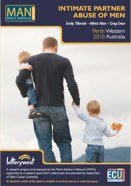
&lt;p&gt;&lt;strong&gt;Greg Andresen:&lt;/strong&gt;&amp;nbsp;You can really see from those interviews some of the issues that are faced by men when they are in this situation. There was a great qualitative study done by researchers in W.A. last year called&amp;nbsp;&lt;em&gt;Intimate Partner Abuse of Men&lt;/em&gt;, and it found that abuse of men really takes the same forms as it does against women. It involves a pattern of controlling behaviour and often involves multiple different forms of abuse, but it can really include the spectrum of abusive behaviours that we are all familiar with in the literature: physical violence, sexual abuse, psychological abuse, etc. The researchers also identified what they termed&amp;nbsp;&lt;em&gt;Legal-Administrative abuse&lt;/em&gt;, which is the use of legitimate services in a way that abuses the rights of the victim. For example, taking out a false restraining order to prevent the victim having access to his children.&lt;/p&gt;
&lt;p&gt;Now, on the right-hand side [of the slide] here in the blue boxes, I&amp;rsquo;ve put up some more quotes from men. These have come from the research literature or they have been left on the One in Three website. Read them if you&amp;rsquo;re comfortable with them, but once again, I really wanted those men&amp;rsquo;s voices to come through.&amp;nbsp;&lt;/p&gt;
&lt;p&gt;The impacts of family violence upon male victims. Obviously, there&amp;rsquo;s fear and loss of feelings of safety. That can be challenging for many men because they&amp;rsquo;re often raised to feel that they shouldn&amp;rsquo;t feel scared. And so to admit that fear is very challenging for many men. Feelings of guilt and shame is another big one. Once again, if men are raised to feel that they as men should be strong and tough and independent, there&amp;rsquo;s a lot of guilt or shame in admitting the fact that they are being abused.&amp;nbsp;&lt;/p&gt;
&lt;p&gt;Feelings of helplessness &amp;ndash; we saw that in the video we just watched &amp;ndash; the man feeling like he was literally trapped and had nowhere to go. Difficulties with trust, anxiety, stress, flashbacks. Unresolved anger is a big issue. Loneliness and isolation is huge for men who are victims of&amp;nbsp; social abuse and isolation. They really can lose all contact with friends and family and that&amp;rsquo;s especially debilitating for them because they feel they have nowhere to turn.&lt;/p&gt;
&lt;p&gt;Mental health impacts... there&amp;rsquo;s a good quote there at the top, this man really feels like his life is crushed and he has really lost his dignity. Low self-esteem and/or self-hatred is another big one. There&amp;rsquo;s another good quote there from Kevin feeling vile and dirty, not only because of what had happened to him, but what he feels society says about what&amp;rsquo;s happened to him.&amp;nbsp;&lt;/p&gt;
&lt;p&gt;And at the severe end of the spectrum we have depression, suicidal ideation, self-harm and attempted suicide. We have a number of stories that men have left on the One in Three Campaign website about their attempts to take their own lives.&amp;nbsp;&lt;/p&gt;
&lt;p&gt;Impaired self concept: once again it&amp;rsquo;s that challenge to the sense of manhood that male victims can go through. If men are raised to feel that they&amp;rsquo;re supposed to be able to deal with whatever is thrown at them and to take it on the chin, that can get&amp;hellip; as this guy says, &amp;ldquo;It can get pretty heavy to carry around.&amp;rdquo;&lt;/p&gt;
&lt;p&gt;Physical injuries, illness and disability, obviously, and especially when weapons are used. Use of alcohol and other substances to self-medicate. Sexual issues. Loss of work can be a big issue. Just like with women, a lot of men who are severely abused really can no longer function in the workplace and so, for example, this guy Robin here ended up on a disability pension.&lt;/p&gt;
&lt;p&gt;Loss of home is another one. Often if men leave the situation that they&amp;rsquo;re in, they will have to start again. As do women, of course. This was the situation that was faced by Tad here. Loss of relationships with friends and family &amp;ndash; once again, that&amp;rsquo;s that social isolation.&lt;/p&gt;
&lt;p&gt;Then there are the issues to fathers around their children. Many men fear that if they leave the situation they may not have access to their children &amp;ndash; they may lose contact with their children &amp;ndash; so many men stay for that reason. And many men have a protective instinct &amp;ndash; they wouldn&amp;rsquo;t want to leave because their children will be left with the abuser and so they stay in the abusive situation in order to be able to protect their kids.&amp;nbsp;&lt;/p&gt;
&lt;p&gt;And lastly, in terms of the impacts on the men themselves, some violence against women campaigns, by suggesting that men are the only perpetrators and females are the only victims of family violence, this can actually re-victimise men who watch these campaigns and increase their feelings of helplessness, isolation, low self-esteem, depression, anger and that loss of manhood. There&amp;rsquo;s a good quote there by Peter about how him and his boys feel whenever they see those ads.&amp;nbsp;&lt;/p&gt;
&lt;p&gt;Impacts on the children of male victims: the literature is quite clear that it doesn&amp;rsquo;t matter if it&amp;rsquo;s mum hitting dad or dad hitting mum or another family relationship, if children are witnessing violence in the family, that&amp;rsquo;s abusive to the children and could cause them long term harm. And of course many children will also experience direct violence and abuse themselves.&lt;/p&gt;
&lt;p&gt;The long-term impacts on children include immediate impacts on their behavioural, cognitive and emotional functioning, their social development, and long-term harm to their education and employment prospects.&lt;/p&gt;
&lt;p&gt;There was a good study done, the&amp;nbsp;&lt;em&gt;National Crime Prevention Study&lt;/em&gt;&amp;nbsp;&amp;ndash; a survey of 5,000 young people nationwide &amp;ndash; which found that in terms of predicting whether children who were exposed to violence would grow up to either be perpetrators or victims, the best predictor of perpetration was witnessing certain types of female-to-male violence. Witnessing mum hit dad was the best predictor for children growing up to use violence. The best predictor of victimisation was witnessing male to female violence. So if we&amp;rsquo;re going to break this cycle of violence, we really need to say, &amp;lsquo;no&amp;rsquo; equally to violence against women&amp;nbsp;&lt;em&gt;and&lt;/em&gt;&amp;nbsp;men so that boys and girls don&amp;rsquo;t grow up to either perpetrate or be victims themselves.&amp;nbsp;&lt;/p&gt;
&lt;p&gt;I&amp;rsquo;m briefly going to look at the barriers to male victims disclosing their abuse. Like women, men face a lot of barriers to disclosing their abuse. However, men face a set of unique barriers which make them much less likely than women to report: about a third to half as likely to report being a victim. I&amp;rsquo;ve grouped them into two basic areas:&amp;nbsp;&lt;em&gt;external barriers&lt;/em&gt;&amp;nbsp;refers to the fact that many barriers are created or amplified by the lack of public acknowledgement that males can also be victims and also the lack of appropriate services out there for men. Men may not know where to seek help, they may not know how to seek help, they may feel there is nowhere to escape to, they may feel they won&amp;rsquo;t be believed or understood. If they do seek help, they may feel that their experiences may be minimised or they may be blamed for the abuse. They may fear they may be falsely arrested if they call the police because they&amp;rsquo;re the man and in that case, the children will be left unprotected.&amp;nbsp;&lt;/p&gt;
&lt;p&gt;Under&amp;nbsp;&lt;em&gt;internal barriers&lt;/em&gt;, once again, it&amp;rsquo;s those challenges to their sense of manhood. Because men are raised to feel that they should be independent and strong and be able to protect themselves, there&amp;rsquo;s a lot of shame and embarrassment about disclosing. There&amp;rsquo;s the social stigma of being unable to protect themselves. There&amp;rsquo;s the fear of being laughed at or ridiculed. The fear of being seen as weak or wimpy. And a lot of men will actually be in disbelief or denial of what&amp;rsquo;s happening to them or make excuses for it.&amp;nbsp;&lt;/p&gt;
&lt;p&gt;What&amp;rsquo;s happening overseas? There&amp;rsquo;s been some really good work done in Western countries overseas that we&amp;rsquo;re aware of. There are now dedicated telephone support lines for male victims of family violence in the UK, Ireland, the U.S. and Canada. For example, The Men&amp;rsquo;s Advice Line in the UK. There are some great printed and electronic resources available now which are available on the web to anyone in the world, for example, The Greater London Domestic Violence Project has a great booklet called,&amp;nbsp;&lt;em&gt;For Men Affected by Domestic Violence&lt;/em&gt;, and the Alberta Children&amp;rsquo;s Services in Canada put out a booklet called,&amp;nbsp;&lt;em&gt;Men Abused by Women in Intimate Relationships&lt;/em&gt;. These are great resources that men around the world can draw from.&amp;nbsp;&lt;/p&gt;
&lt;p&gt;&lt;br /&gt;There are a number of charities and support groups in the UK, Ireland, U.S. and Canada and India, for example, the Mankind Initiative in the UK. There&amp;rsquo;s some great community awareness campaigns especially in the UK. The National Centre for Domestic Violence, which is the main organisation around the issue of domestic violence in the UK, ran&amp;nbsp;&lt;em&gt;Male Domestic Violence Awareness Week&lt;/em&gt;&amp;nbsp;in 2010 with lots of TV ads and media attention to the issue. And there&amp;rsquo;s an example there [on the slide] of a Scottish police campaign that was run at Christmas in 2009 with some male faces on it.&lt;/p&gt;
&lt;p&gt;There are shelters for men and their children now in the UK, the Netherlands, Switzerland, Denmark and New Zealand. For example, in Holland, Stichting Wende provides shelters in the four largest cities of Holland &amp;ndash; government funded shelters &amp;ndash; and all of those are currently full. And in the U.S., it&amp;rsquo;s not so much that there are shelters specifically for men and their children, but a number of women&amp;rsquo;s shelters have started taking on men and their children as well, for example, WEAVE in Sacramento County. And recently the Parliament in Taiwan changed laws so that welfare aid &amp;ndash; financial aid &amp;ndash; was available to male victims as well as female victims.&amp;nbsp;&lt;/p&gt;
&lt;p&gt;So that&amp;rsquo;s what&amp;rsquo;s happening overseas. What&amp;rsquo;s happening in Australia? There&amp;rsquo;s a fair amount of generic support available that both men and women can access: police, ambulance, legal aid, etc. However, generic support is often unaware of the unique issues faced by male victims because of the silence around this issue. So they are often unable to offer effective or appropriate help. And at the worst, some generic services may not believe men when they disclose, they may minimise their experiences or even blame them for the abuse.&amp;nbsp;&lt;/p&gt;
&lt;p&gt;And the Western Australian Research done last year surveyed about 200 service providers around Australia and they rated themselves and their agencies as only moderately effective in overcoming those barriers to men disclosing, so there&amp;rsquo;s a lot of work to be done.&amp;nbsp;&lt;/p&gt;
&lt;p&gt;What I&amp;rsquo;ve done here [on the slide] &amp;ndash; I&amp;rsquo;m not expecting you to read this tiny font &amp;ndash; but I basically went to the main domestic violence websites around Australia in all the states and territories and listed all of the services that they referred to there. So that&amp;rsquo;s a snapshot of what&amp;rsquo;s available in Australia today.&lt;/p&gt;
&lt;p&gt;The boxes in pink are women&amp;rsquo;s only services. So men, unfortunately, can&amp;rsquo;t access them. So we can remove them from the chart. The boxes in grey are the generic services I was talking about. It&amp;rsquo;s really a lucky dip as to whether men who approach those services get the appropriate support that they need. Another issue is that individual workers in generic services may be aware of these issues and may have training and appropriate skills, but their workplace cultures often don&amp;rsquo;t support them. So let&amp;rsquo;s remove those generic services.&amp;nbsp;&lt;/p&gt;
&lt;p&gt;What we have left are male-friendly services that are set up for men, but some of these don&amp;rsquo;t specialise in issues of family violence &amp;ndash; they may support men around relationship breakdown or other issues. So, let&amp;rsquo;s remove those.&amp;nbsp;&lt;/p&gt;
&lt;p&gt;This is what we&amp;rsquo;re left with [on the slide] in terms of tailored, specific resources supporting male victims of family violence in Australia. So what do we have? Mensline Australia &amp;ndash; the national telephone counselling line. Recently, the Federal Government committed three-quarters of a million dollars for them to train their counsellors to support male victims of family violence. That&amp;rsquo;s the first federal funding for male victims that we are aware of in Australian history. However, we don&amp;rsquo;t know if the funding has been allocated or who will be conducting the training or how appropriate it will be. Also, Mensline is often the only port of call for many men, especially in regional areas, because Mensline is a referral service and there&amp;rsquo;s often no services for Mensline to refer the men on to. And until the One in Three Campaign launched 18 months ago, Mensline only provided resources for male perpetrators, not for male victims. So it&amp;rsquo;s only recently that they&amp;rsquo;ve taken this issue on.&amp;nbsp;&lt;/p&gt;
&lt;p&gt;Men in Queensland are particularly lucky. They&amp;rsquo;ve got their own Mensline telephone counselling service. There&amp;rsquo;s also a court support service supporting men through the court process in Queensland. There&amp;rsquo;s a small service in the Hunter Valley that was established a year ago, maybe two years ago, to support male victims. Since the beginning of this year, police in Windsor in Northern Sydney have been referring men to the Hawkesbury District Health Service for counselling.&amp;nbsp;&lt;/p&gt;
&lt;p&gt;There are some great individual counselling services and practices like Toni&amp;rsquo;s and Elizabeth&amp;rsquo;s, but they can be harder for men to find, and sometimes harder for men to afford. And the last three dot points there [on the slide] are all websites. It&amp;rsquo;s great to have websites out there, but they&amp;rsquo;re no substitute for face-to-face services.&lt;/p&gt;
&lt;p&gt;In terms of professional development for workers in the sector, Greg&amp;rsquo;s going to talk about his program after me, so I&amp;rsquo;ll leave that to him. That&amp;rsquo;s the only training program we are aware of.&amp;nbsp;&lt;/p&gt;
&lt;p&gt;So, what is required to meet the needs of this group of victims of crime? The Western Australian Report from last year had four key recommendations. One is government-funded public awareness campaigns to raise community awareness for this issue &amp;ndash; that it can happen to men. And they were really, really clear to say, these campaigns need to be very carefully designed so as to complement campaigns that are stopping violence against women and not damage the effectiveness of those campaigns. So we want to support men&amp;nbsp;&lt;em&gt;and&lt;/em&gt;&amp;nbsp;women here. It&amp;rsquo;s not a competition.&amp;nbsp;&lt;/p&gt;
&lt;p&gt;The second point was to consider providing a range of publicly-funded services specifically for male victims. So, that would be a similar range of services that are available to women. Examples would be counselling, helplines, crisis response, community education programs, specialist services for different sections of the male population &amp;ndash; gay men, Aboriginal men, CALD men, etc, financial support, legal advice. The full spectrum of services. They&amp;rsquo;re not recommending that as&amp;nbsp;&lt;em&gt;many&lt;/em&gt;&amp;nbsp;services would be available for men as for women, but a similar&amp;nbsp;&lt;em&gt;range&lt;/em&gt;, so at least there are some services there for men to access. Also perpetrator programs for women which are relatively absent, and health service screening tools. In a number of states, when women come in contact with health services, they have a compulsory screening tool to see whether they have experienced domestic violence. Men aren&amp;rsquo;t screened at all and so men often fall through the gaps there.&amp;nbsp;&lt;/p&gt;
&lt;p&gt;The third recommendation is to consider how services for men could be integrated with women&amp;rsquo;s services and generic services. Obviously, some services would be able to be integrated and others may have to stay gender specific.&lt;/p&gt;
&lt;p&gt;The fourth recommendation was for training for workers in the sector especially around dismantling those barriers to men disclosing so men can actually come forward and tell their stories in confidence that they&amp;rsquo;re going to be trusted and supported and their experiences won&amp;rsquo;t be denied, minimised or questioned.&amp;nbsp;&lt;/p&gt;
&lt;p&gt;What else? We&amp;rsquo;d also recommend MP&amp;rsquo;s and public servants need training because they&amp;rsquo;re the ones who are writing the laws and rolling out the programs that unfortunately have excluded men in the past. Men need to be included in the&amp;nbsp;&lt;em&gt;National Plan to Reduce Violence Against Women and Their Children&lt;/em&gt;&amp;nbsp;and all the systemic reforms that are rolling out across the country. At the moment, it&amp;rsquo;s acknowledged that men can be victims, but basically that&amp;rsquo;s it. They haven&amp;rsquo;t been included in any other way.&lt;/p&gt;
&lt;p&gt;We need better ABS and other data. The upcoming&amp;nbsp;&lt;em&gt;Personal Safety Survey&lt;/em&gt;&amp;nbsp;is the gold standard of research in the country in terms of a broad community survey. There&amp;rsquo;s a new survey being planned for 2013 and it&amp;rsquo;s going to have three times the women&amp;rsquo;s sample compared to men, so the data on male victimisation is not going to be as good as for women.&lt;/p&gt;
&lt;p&gt;Finally, we need tertiary education courses so people who are going into social work, health and other human services actually get good training so that they have the skills to support men when they are working in their professional roles.&lt;/p&gt;
&lt;p&gt;My contact details are there [on the slide] and I&amp;rsquo;ll hand it back to you, Elizabeth. Thank you.&lt;/p&gt;
&lt;p&gt;&lt;strong&gt;Elizabeth Celi:&lt;/strong&gt;&amp;nbsp;Thanks very much Greg. If we can give Greg a round of applause please. It&amp;rsquo;s his second presentation. I think he&amp;rsquo;s done a fabulous job of pulling together a whole bunch of information. And obviously in terms of looking at methodological considerations and the unique experiences of men, whilst some of their abuse may be similar to the levels of abuse women may experience, there are certainly some unique experiences from the masculinity perspective, so please prepare your questions for Greg.&lt;/p&gt;&lt;div class="feedflare"&gt;
&lt;a href="http://feeds.feedburner.com/~ff/1in3podcast?a=afWduKGMxWQ:AE-bm_ega0E:yIl2AUoC8zA"&gt;&lt;img src="http://feeds.feedburner.com/~ff/1in3podcast?d=yIl2AUoC8zA" border="0"&gt;&lt;/img&gt;&lt;/a&gt; &lt;a href="http://feeds.feedburner.com/~ff/1in3podcast?a=afWduKGMxWQ:AE-bm_ega0E:63t7Ie-LG7Y"&gt;&lt;img src="http://feeds.feedburner.com/~ff/1in3podcast?d=63t7Ie-LG7Y" border="0"&gt;&lt;/img&gt;&lt;/a&gt; &lt;a href="http://feeds.feedburner.com/~ff/1in3podcast?a=afWduKGMxWQ:AE-bm_ega0E:qj6IDK7rITs"&gt;&lt;img src="http://feeds.feedburner.com/~ff/1in3podcast?d=qj6IDK7rITs" border="0"&gt;&lt;/img&gt;&lt;/a&gt; &lt;a href="http://feeds.feedburner.com/~ff/1in3podcast?a=afWduKGMxWQ:AE-bm_ega0E:V_sGLiPBpWU"&gt;&lt;img src="http://feeds.feedburner.com/~ff/1in3podcast?i=afWduKGMxWQ:AE-bm_ega0E:V_sGLiPBpWU" border="0"&gt;&lt;/img&gt;&lt;/a&gt; &lt;a href="http://feeds.feedburner.com/~ff/1in3podcast?a=afWduKGMxWQ:AE-bm_ega0E:-BTjWOF_DHI"&gt;&lt;img src="http://feeds.feedburner.com/~ff/1in3podcast?i=afWduKGMxWQ:AE-bm_ega0E:-BTjWOF_DHI" border="0"&gt;&lt;/img&gt;&lt;/a&gt; &lt;a href="http://feeds.feedburner.com/~ff/1in3podcast?a=afWduKGMxWQ:AE-bm_ega0E:gIN9vFwOqvQ"&gt;&lt;img src="http://feeds.feedburner.com/~ff/1in3podcast?i=afWduKGMxWQ:AE-bm_ega0E:gIN9vFwOqvQ" border="0"&gt;&lt;/img&gt;&lt;/a&gt; &lt;a href="http://feeds.feedburner.com/~ff/1in3podcast?a=afWduKGMxWQ:AE-bm_ega0E:7Q72WNTAKBA"&gt;&lt;img src="http://feeds.feedburner.com/~ff/1in3podcast?d=7Q72WNTAKBA" border="0"&gt;&lt;/img&gt;&lt;/a&gt; &lt;a href="http://feeds.feedburner.com/~ff/1in3podcast?a=afWduKGMxWQ:AE-bm_ega0E:F7zBnMyn0Lo"&gt;&lt;img src="http://feeds.feedburner.com/~ff/1in3podcast?i=afWduKGMxWQ:AE-bm_ega0E:F7zBnMyn0Lo" border="0"&gt;&lt;/img&gt;&lt;/a&gt;
&lt;/div&gt;&lt;img src="http://feeds.feedburner.com/~r/1in3podcast/~4/afWduKGMxWQ" height="1" width="1"/&gt;</description>
         <guid isPermaLink="false">455174:7177218:11546055</guid>
         <pubDate>Thu, 30 Jun 2011 07:34:36 +0000</pubDate>
         <enclosure length="8780254" type="audio/mpeg" url="http://www.oneinthree.com.au/storage/audio/One_in_Three_Campaign_Podcast_011.mp3" />
      <author>info@oneinthree.com.au (One in Three Campaign | oneinthree.com.au)</author><media:content url="http://www.oneinthree.com.au/storage/audio/One_in_Three_Campaign_Podcast_011.mp3" fileSize="8780254" type="audio/mpeg" /><itunes:explicit>no</itunes:explicit><itunes:subtitle> This is a broadcast of a Panel Session called Meeting the needs of male victims of domestic and family violence, presented at the Australian Institute of Criminology's Meeting the needs of victims of crime conference held in Sydney on 19 May 2011. Part 3</itunes:subtitle><itunes:author>One in Three Campaign | oneinthree.com.au</itunes:author><itunes:summary> This is a broadcast of a Panel Session called Meeting the needs of male victims of domestic and family violence, presented at the Australian Institute of Criminology's Meeting the needs of victims of crime conference held in Sydney on 19 May 2011. Part 3 of the Panel Session features Greg Andresen, researcher and media liaison with Men's Health Australia, presenting a paper called Meeting the needs of male victims of family violence and their children. Contrary to common beliefs, around one in three victims of family violence and abuse is male. While many services and community education programmes have quite rightly been established over the past four decades to support female victims of family violence, the needs of male victims remain largely unmet. Male victims of family violence and their children are one of the most underserved populations of victims of crime in Australia, with appropriate and tailored services being almost non-existent. This paper will present a brief overview of what is required to meet the needs of Australian male victims of family violence and their children. It will: Present the often unheard voices of male victims of family violence and their children Describe the specific experiences of male victims of family violence and their children (barriers to disclosing and finding support; different forms of abuse; impacts upon victims and their children) Review the scant support currently available in Australia for male victims of family violence and their children Outline the support required in order for the needs of male victims of family violence and their children to be met Discuss recent overseas and Australian support initiatives for male victims of family violence and their children that could be adopted more broadly. &amp;nbsp;Listen now (MP3)&amp;nbsp;|&amp;nbsp; Download PowerPoint | &amp;nbsp;Watch presentation Elizabeth Celi:&amp;nbsp;Greg Andresen has been working in the field of men&amp;rsquo;s health and wellbeing since 2004, both in Adelaide and in Sydney. He currently works as a researcher and a media liaison for Men&amp;rsquo;s Health Australia and as senior researcher for the One in Three Campaign which Greg will certainly give you a bit more information about. So please welcome Greg up. Greg Andresen:&amp;nbsp;Thanks very much Elizabeth. I&amp;rsquo;ll start by talking a little bit about the organisations that I work for. Men&amp;rsquo;s Health Australia is a website that&amp;rsquo;s been running since 2007. It&amp;rsquo;s Australia&amp;rsquo;s primary source of information about the psychosocial well-being of men and boys. The One in Three Campaign was launched about 18 months ago. I&amp;rsquo;m Senior Researcher with the campaign. The aim of the campaign is to raise public awareness of the existence and needs of male victims of family violence and abuse.&amp;nbsp; What am I going to cover today? Often when this area is discussed &amp;ndash; the area of domestic and family violence &amp;ndash; people get lost in facts and statistics and numbers. I really wanted to let the voices of male victims and their children come through in this presentation &amp;ndash; the human beings that are experiencing these dreadful situations. I&amp;rsquo;m going to look at the specific experiences of male victims and their children. Look at what&amp;rsquo;s happening overseas &amp;ndash; there&amp;rsquo;s some really great initiatives that are happening overseas in terms of specific support initiatives for men and their children. I&amp;rsquo;m going to look at what&amp;rsquo;s currently happening here in Australia &amp;ndash; what&amp;rsquo;s available. And then outline what we think is required in order to truly meet the needs of this group of victims of crime.&amp;nbsp; I&amp;rsquo;m not going to talk about violence against women today. I&amp;rsquo;m merely talking about male victims of family violence because they are an underserved population that unfortunately receives scant attention. What we believe is that both genders need and deserve appropriate support and especially, I think we&amp;rsquo;d all agree, the num</itunes:summary><itunes:keywords>family,violence,domestic,male,victims,men,issues,abuse,prevention,intimate,partner,children,battered</itunes:keywords><feedburner:origLink>http://www.oneinthree.com.au/podcast/2011/6/30/011-meeting-the-needs-of-male-victims-of-domestic-and-family.html</feedburner:origLink></item>
      <item>
         <title>One in Three Campaign Podcast 010: Meeting the needs of male victims of domestic and family violence - Part 2</title>
         <link>http://feedproxy.google.com/~r/1in3podcast/~3/VUj89L4BuUc/010-meeting-the-needs-of-male-victims-of-domestic-and-family.html</link>
         <description>&lt;p&gt;This is a broadcast of a Panel Session called &lt;em&gt;Meeting the needs of male victims of domestic and family violence&lt;/em&gt;, presented at the Australian Institute of Criminology's &lt;em&gt;&lt;a rel="nofollow" class="offsite-link-inline" target="_blank" href="http://www.aic.gov.au/events/aic%20upcoming%20events/2011/~/media/conferences/2011-victim/victim_program.pdf"&gt;Meeting the needs of victims of crime&lt;/a&gt;&lt;/em&gt; conference held in Sydney on 19 May 2011.&lt;/p&gt;
&lt;p&gt;Part 2 of the Panel Session features Toni McLean, counsellor with the &lt;em&gt;&lt;a rel="nofollow" class="offsite-link-inline" target="_blank" href="http://www.thinktwiceprogram.net/"&gt;Think Twice!&lt;/a&gt;&lt;/em&gt; Program, presenting a paper called &lt;em&gt;Are men really victims of intimate partner violence?&lt;/em&gt;&lt;/p&gt;
&lt;p&gt;Unlike most other victims of crime, male victims of intimate partner violence (IPV) are yet to be truly recognised by the judicial system or the larger community. There are a number of beliefs about male victims of IPV, such as that men are rarely genuine victims; if they are, they must have done something to deserve it; or they aren&amp;rsquo;t affected as much as women are by partner violence; and it is easier for them to leave their relationships. These are all myths.&lt;/p&gt;
&lt;p&gt;This paper will:&lt;/p&gt;
&lt;ul&gt;
&lt;li&gt;present evidence which shows that victimisation of husbands by wives has been documented for hundreds of years;&lt;/li&gt;
&lt;li&gt;present current statistics on the prevalence and nature of partner violence against men;&lt;/li&gt;
&lt;li&gt;explain how studies have presented contradictory and confusing pictures of partner violence perpetration;&lt;/li&gt;
&lt;li&gt;explore how male victimisation has not been adequately researched, with implications for the judicial system, the media, and government and community campaigns;&lt;/li&gt;
&lt;li&gt;offer some reasons as to why this has been the case.&amp;nbsp;&lt;/li&gt;
&lt;/ul&gt;
&lt;p&gt;The acknowledgement of male victims has ramifications for government policy, the judicial system, and the provision of health and community services, as well as benefits for the community. We need a lot more information from and about male victims of partner violence in order to be able to meet their needs. Academics, clinicians and service providers need to be open to the possibility that a man who claims he is a victim of partner violence actually is.&lt;/p&gt;
&lt;p&gt;&lt;a rel="nofollow" target="_blank" href="http://www.oneinthree.com.au/storage/audio/One_in_Three_Campaign_Podcast_010.mp3"&gt;&lt;img title="html#ixzz0n5xrz7qv" src="http://www.menshealthaustralia.net/mambots/editors/jce/jscripts/tiny_mce/plugins/filemanager/images/ext/mp3_small.gif" border="0" alt="html#ixzz0n5xrz7qv"/&gt;&amp;nbsp;Listen now (MP3)&lt;/a&gt;&amp;nbsp;|&amp;nbsp;&lt;a rel="nofollow" target="_blank" href="http://www.oneinthree.com.au/storage/ppts/Toni_McLean.ppt"&gt;&lt;img title="html#ixzz0n5xrz7qv" src="http://www.menshealthaustralia.net/mambots/editors/jce/jscripts/tiny_mce/plugins/filemanager/images/ext/ppt_small.gif" border="0" alt="html#ixzz0n5xrz7qv"/&gt; Download PowerPoint&lt;/a&gt; | &lt;a rel="nofollow" class="offsite-link-inline" target="_blank" href="http://vimeo.com/oneinthree/aic2"&gt;&lt;img title="html#ixzz0n5xrz7qv" src="http://www.menshealthaustralia.net/mambots/editors/jce/jscripts/tiny_mce/plugins/filemanager/images/ext/swf_small.gif" border="0" alt="html#ixzz0n5xrz7qv"/&gt;&amp;nbsp;Watch presentation&lt;/a&gt;&lt;/p&gt;
&lt;p&gt;&lt;a rel="nofollow" name="transcription"&gt;&lt;/a&gt;&lt;/p&gt;
&lt;p&gt;&lt;strong&gt;Elizabeth Celi:&lt;/strong&gt;&amp;nbsp;Now Toni has worked in her past and recently as a counsellor with high-conflict relationships and currently doing a PhD in the Department of Psychology at the University of Western Sydney having a look at counsellor perceptions of intimate partner violence. So without further ado Toni will give you a bit more detail on that, so I'll hand you over to her. Please welcome her.&lt;/p&gt;
&lt;p&gt;&lt;strong&gt;Toni McLean:&lt;/strong&gt;&amp;nbsp;Thank you Elizabeth. That was a lovely introduction. I feel as though there is almost nothing more for the rest of us to say. And good afternoon everyone. Thank you for coming along to our presentation.&lt;/p&gt;
&lt;p&gt;Are men really victims of partner violence? I've certainly heard that question asked before. I'm pleased to be able to address that question today. I hope I'll be able to persuade any skeptics here, that there are indeed men who are victims of partner violence, that there are enough of them to justify providing services for them and for their children. There are a number of reasons why we should do that and those reasons aren&amp;rsquo;t just limited to the male victims themselves.&lt;/p&gt;
&lt;p&gt;For those of you who don&amp;rsquo;t need to be convinced then I hope that my colleagues and I will add to your knowledge and understanding of male victims today. My presentation will be focused on heterosexual victims of partner violence in particular and my colleagues will talk to you in turn on the broader issue of male victims of family violence in general and on the particular situation for gay men. Before I go any further I want to let you know that some of the slides I'm presenting here are a little different from the ones that I submitted to the AIC to go up on their website. If for any reason I'm not able to get it up there please contact me directly for a copy of the presentation if you&amp;rsquo;d like to have it.&lt;/p&gt;
&lt;p&gt;Throughout this presentation I'll be trying to be consistent with my terminology. Over the years domestic violence has become synonymous with male-perpetrated partner violence, yet, that is not the case as we know, so I prefer to use the term &amp;lsquo;intimate partner violence&amp;rsquo; or shortening it to &amp;lsquo;partner violence&amp;rsquo; because the word &amp;lsquo;domestic&amp;rsquo; refers to all sorts of domestic relationships, not just to the intimate partner relationship and it shouldn&amp;rsquo;t be gender specific, so I will use partner violence and that will be referring to violence perpetrated by either men or women in an intimate relationship in the family.&lt;/p&gt;
&lt;p&gt;Absolutely essential to what I have to say is my own professional journey through this field and how I came to be speaking here. Much like Elizabeth, I had no idea. I had the traditional education in partner violence or what was called &amp;lsquo;domestic violence&amp;rsquo; and that obviously was the one that said men were perpetrators, women were victims, that if men were victims there was something that they had done to deserve it, and that if women were perpetrators then there was a good reason for it &amp;ndash; that they had been victimised themselves, that it was to prevent a preemptive strike that they were expecting in the future. And probably many of you here had that same kind of education. And as you can see, looking at my background here, the emphasis has been on my working with male perpetrators and female victims. That is how I started out. That is what I saw as being a helpful thing to do.&lt;/p&gt;
&lt;p&gt;So what happened? How come I &amp;lsquo;changed sides&amp;rsquo; in a sense? Well what happened was the more that I worked in that area, the more that I worked with victims, with offenders, with couples, the more I realised that that &amp;lsquo;male perpetrator, female victim&amp;rsquo; paradigm was only one snapshot in the collage that is intimate partner violence and that it has many different faces and that very often what I observed simply did not gel with this explanation. So I had no basis with which to help people.&lt;/p&gt;
&lt;p&gt;While it seemed to be true enough some of the time in many more cases the real picture was much more complex and contradictory. Sometimes it was a case of co-perpetration and co-victimisation. Sometimes even men were victims of controlling and coercive partners, female partners who were willing to use violence to maintain their position.&lt;/p&gt;
&lt;p&gt;So eventually I had to acknowledge that there was no way around it. Some men are indeed genuine victims of domestic violence or partner violence and many of these men have children too. I found this something of a challenge to deal with, either isolated in private practice and being fearful of making a mistake or being in an NGO where my colleagues were entrenched in the traditional paradigm. I had my own fear of getting it wrong, of falsely identifying a perpetrator as the victim. I was warned against approaching the &amp;lsquo;Angry Dads&amp;rsquo; movement because they would brainwash me. I really needed to stay on track and on song with what I was doing. One of those representatives I was warned against is here today and I think you&amp;rsquo;ll find that there is probably nothing terribly scary about him when you hear him speaking.&lt;/p&gt;
&lt;p&gt;The children though were the innocent, really innocent victims of this paradigm. Every single one of those children who is dismissed because their father is dismissed could go on to have much more serious consequences in the future.&lt;/p&gt;
&lt;p&gt;My objectives today are to hopefully put it beyond doubt for all of you that there are male victims of partner violence and in fact, there always have been male victims of partner violence. It is nothing new. They and their children are present in sufficient numbers to justify services for them. Children suffer just as much as when their mothers are the victims and in fact, recent research shows that the consequences could even be worse for the children of male victims of domestic violence. I also want to establish that men are not only assaulted in self defence or in retaliation for their own behaviour. Their female partners are violent for a whole range of reasons just as men are and that men do suffer a range of physical and psychological injuries that can be serious.&lt;/p&gt;
&lt;p&gt;This presentation will show evidence of the victimisation of husbands by wives for hundreds of years. This is no backlash. The existence of male victims has been demonstrated in legal and literary works for centuries. This presentation will point out the massive variability in partner violence statistics, explain why this is the case, why and how contradictory and confusing pictures of partner victimisation have arisen, will consider why male victims have been somewhat invisible for the past 40 years because they certainly weren&amp;rsquo;t invisible in the past in centuries gone by. I&amp;rsquo;ll leave it to my male colleagues on the panel to discuss the needs of the male victims themselves.&lt;/p&gt;
&lt;p&gt;When someone raises the subject of male victims one of the first things you might hear is that it&amp;rsquo;s just a backlash against the feminist movement or against women or that men are feeling sorry for themselves or that it&amp;rsquo;s just a bunch of irate ex-husbands whinging because they&amp;rsquo;re angry with their ex-wives, but this extract you see here is from a poem that is one of many that&amp;rsquo;s littered throughout English and European literary history regarding the violence of a woman towards her husband, and as you see it dates back to the 16&lt;sup&gt;th&lt;/sup&gt;&amp;nbsp;century.&lt;/p&gt;
&lt;p&gt;It&amp;rsquo;s not only in popular literature that women&amp;rsquo;s violence has been recorded. The documentation of the victimisation of husbands is found back to at least the 13&lt;sup&gt;th&lt;/sup&gt;&amp;nbsp;century in a variety of legal, parish and community records as well as in diaries, letters and in artworks. It is a myth that the emergence of male victims in the late 20&lt;sup&gt;th&lt;/sup&gt;&amp;nbsp;century is just a backlash. In fact, as Elizabeth said it seems that men are in the position now that women victims were in 40 years ago.&lt;/p&gt;
&lt;p&gt;If you can see that image clearly or clearly enough it&amp;rsquo;s a 13&lt;sup&gt;th&lt;/sup&gt;&amp;nbsp;century stone carving from an English church. It shows a man down on the ground being held down by his hair while his wife swings a cheese-skimming ladle in his direction. The modern day equivalent is not rare as some of the references I've included at the end based on hospital records will attest.&lt;/p&gt;
&lt;p&gt;Here is a frieze from Montacute House in Somerset. The particular treatment for men who allowed themselves to be abused or beaten by their wives was specifically designed to cause them a high degree of shame by making them objects of ridicule and derision. The wife was sometimes, though not always ridiculed along with her husband. Although today we would not agree with the reason for the ridicule, which was that the man was not man enough to remain in charge in his own household, nonetheless, it does demonstrate that in fact, male domination in the family home has not always been a given and some women do dominate and control their husbands and they may use violence to do that.&lt;/p&gt;
&lt;p&gt;When a man was exposed as having had a beating or his wife found to be having an affair the village people would gather outside the house of the couple making raucous music using pots and pans and the like. Then they would drag the man out and force him to ride through the village sitting backwards on a donkey or being carried on a long pole and forced to go through the village while they followed him making this awful din. Sometimes his wife would be forced to ride back-to-back with him. This practice was called &amp;lsquo;riding skimmington&amp;rsquo; or &amp;lsquo;riding the stain&amp;rsquo; or &amp;lsquo;charivari&amp;rsquo;, the term varying with the location. It was designed to shame those couples who breached the social or moral mores of the day, in particular, those related to spousal relationships such as abuse and adultery. The term &amp;lsquo;skimmington&amp;rsquo; is derived from the name for the cheese skimming ladle that we saw in the previous slide.&lt;/p&gt;
&lt;p&gt;The first half of this frieze depicts a man holding a baby with his wife hitting him on the head with her shoe. The second half shows him being paraded through the town on a long pole and this was what was called &amp;lsquo;riding the skimmington.&amp;rsquo; Throughout the history of Britain, Mainland Europe, the early days of white colonisation of the United States and in Scandinavia there is extensive evidence of this practice occurring right up until the late 19&lt;sup&gt;th&lt;/sup&gt;century. Although it occurred in the context of the husbands being ridiculed because they were not able to maintain their rightful position as the head of the household, a belief which I suspect few of us would have the courage to condone today, nonetheless, what these references show is that this behaviour was common enough in past centuries.&lt;/p&gt;
&lt;p&gt;Here are just a few examples of the many records that have been found that make reference to women&amp;rsquo;s use of violence against their partners. There are court records from the early 1600s describing a skimmington. There are records from prior to the English Civil War showing anxiety over the rising violence in women, and I was struck by the similarity with the headlines we&amp;rsquo;re seeing these days of rising violence in our young women in this country.&lt;/p&gt;
&lt;p&gt;There was legislation in the new colony of Massachusetts protecting both wives and husbands from domestic abuse. In fact, there is one quote here, &amp;ldquo;So turbulent and wild both in words and actions as he could not live with her, but in danger of his life and limb.&amp;rdquo; Evidence of restraining orders against wives being issued at the late 19&lt;sup&gt;th&lt;/sup&gt;&amp;nbsp;century in England.&lt;/p&gt;
&lt;p&gt;There are numerous literary examples as well recounting abuse by wives and riding the skimmington for husbands. Jonathan Swift, Oliver Twist, Sir Walter Scott, Ben Johnson, Samuel Pepys, Thomas Hardy all referring to these things. And a comment that Charles Dickens gave to Mr. Bumble in Oliver Twist when told it was his duty to control his wife he said, &amp;ldquo;The law is an ass. The law is a bachelor,&amp;rdquo; obviously implying that the law didn&amp;rsquo;t understand what relationships were like or at least what Mr. Bumble&amp;rsquo;s relationship was like.&lt;/p&gt;
&lt;p&gt;Here we have a painting from the late 16&lt;sup&gt;th&lt;/sup&gt;&amp;nbsp;century I think &amp;ndash; Dawes&amp;rsquo; &amp;ldquo;The Henpecked Husband&amp;rdquo; also riding the skimmington and wives beating him. The reason that this happened, he walked into his bedroom and found his wife in bed with her lover. Now there is a Dr. Malcolm George in the UK who gives an excellent analysis on the social processes of denial, derision and trivialisation, which are the community&amp;rsquo;s ways of avoiding the challenge of accepting the existence of men as victims of women&amp;rsquo;s violence. This is something which is not consistent with our entrenched stereotypes of strong men and gentle women and I've included some of his work in the bibliography at the end of this presentation. So from derision to denial I think we can see that there is ample evidence over seven centuries or more which speaks against the gradual emergence of the male partner violence victim as simply the backlash against the focus on women.&lt;/p&gt;
&lt;p&gt;So statistics, how many male victims are there? How many female victims are there? This can provide ammunition to start a world war. It has generated aggression and vitriol and all sorts of threats in the academic community for 40 years or more, so I decided today I'm not going to venture into that territory. It can become a significant distraction which takes us away from the pressing needs of the victims themselves. We can all use statistics to prove the points that we want to prove. However, I do have a recollection of a study in Norway that I think was nearly 40 years ago which claimed to show a correlation between the stork population and the human birth rate. We&amp;rsquo;ll say I think the study was &amp;ndash; the so-called &amp;lsquo;study&amp;rsquo; was done to prove a point about statistics. That study showed that as the stork population increased in the previous year, so did the birthrate. Now I suspect there is a false attribution of cause and effect there or at least I hope so.&lt;/p&gt;
&lt;p&gt;What I have done though is just to show three examples of statistics that you may find on domestic violence. The first in Santa Barbara in California taken from police records in 1983, so these are all cases where people have been found guilty of assaults in domestic violence related charges. In that study it showed 94% of the perpetrators were men and 6% were women. I've got a study done more recently from New Zealand in 2002, which is a community study, a population study of young adults, which shows 39% of the perpetrators were male and 61% were female. And then just to come down the middle, a recently released study by Professor Halford from Brisbane on Australian newlywed couples, which shows approximately equal rates of partner violence. So quoting statistics at ten paces isn&amp;rsquo;t really the way for us to proceed from here. I hope what this discrepancy will do is raise your curiosity about why there is such a discrepancy and what we can do about it.&lt;/p&gt;
&lt;p&gt;There are very good reasons why we do have such a range of discrepancies. Michael Johnson, respected researcher in the United States is one of the first to shed some light on the past discrepancy in these statistics. He identified that different studies used different sample populations. They asked very different questions of their participants and they used different language, so different studies came up with vastly different results. Up until this time researchers and others had effectively been comparing apples and oranges or rather, they had been lumping apples and oranges together in the same bowl as though they were the same fruit.&lt;/p&gt;
&lt;p&gt;The following slides will look at the impact of using different populations on the results. Beginning at the big end of town, if we look at United Nations surveys, obviously they&amp;rsquo;re drawn from a wide range of nations. They often include developing nations and they often include war-torn nations. When we do this it&amp;rsquo;s hard to separate out what is actually partner violence from civil violence and what are the causes. There is no way of determining the impact of the external environment on these figures. These figures also have little to do with countries like Australia, so they don&amp;rsquo;t have much validity here.&lt;/p&gt;
&lt;p&gt;We also have national crime agency surveys. These tend to draw their figures from police records, court records, corrective services or else records from women&amp;rsquo;s shelters. These naturally focus on the more serious end of the spectrum and they tend to distort figures for partner violence as well. Also as women were rarely arrested for partner violence until the last 10 years or so and even now it&amp;rsquo;s still quite a minority their violence simply didn&amp;rsquo;t appear in these records.&lt;/p&gt;
&lt;p&gt;We can look at national victimisation surveys, which tend to be phone surveys that are done every few years. They generally tend to be set in the context of exploring women&amp;rsquo;s violence [victimisation] and they interview a number of men as well, but the framework is already set that it is about women&amp;rsquo;s violence [victimisation]. Men aren&amp;rsquo;t primed to think of their own experience of victimisation. Studies have shown if the violence is referred to as a &amp;lsquo;crime&amp;rsquo; then women are less likely to report their own use of violence. Men are also genuinely unlikely to see it as violence unless they&amp;rsquo;ve actually been seriously injured by it and that brings us to the fourth kind of study, which does give us much more reliable figures for the picture that is in the community today, so we can look at family conflict surveys and community or population studies.&lt;/p&gt;
&lt;p&gt;These tend to be couched within a relationship conflict framework, though they investigate the same behaviours that the other surveys investigate. So they investigate criminal behaviours, but they position it in a different environment. Women are more likely to disclose their use of violence in this situation when it&amp;rsquo;s not referred to as a criminal survey and men are also more likely to disclose their own experience of violence when it is seen as a relationship issue and not a crime.&lt;/p&gt;
&lt;p&gt;So what kinds of injuries do men receive? Men receive injuries resulting from being hit by all sorts of blunt instruments, by having objects thrown at them &amp;ndash; glasses, saucepans, knives, whatever, by being struck with a vehicle, by being bitten, by the use of an actual weapon &amp;ndash; a knife is a very common one, by scalding by boiling water or hot food. So all of the injuries that these can cause are the ones that men tend to suffer. That&amp;rsquo;s not to say that women don&amp;rsquo;t suffer these too, but we are here talking about male victims.&lt;/p&gt;
&lt;p&gt;And why do women assault their partners? Well actually for much the same reasons as men do. For a need for control in some cases. It may be trying to match their partner in control or it may be to be the one in charge. Expression of negative emotions, frustrated, angry, hurt, they&amp;rsquo;re jealous. It may be in self defence, just as it may be for men. And it may be to seem tough because they don&amp;rsquo;t want to seem weak with their partner.&lt;/p&gt;
&lt;p&gt;Which women are likely to be most violent? Interestingly the women who are likely to be most violent are those who did not report self defence, so they are the primary aggressors in the relationship. They are the partner violence perpetrators, or for the women who are genuine victims and are lashing out with violent resistance.&lt;/p&gt;
&lt;p&gt;How is it that there is so little research on male victims? Well as Elizabeth has alluded to, when this phenomenon surfaced in that era of civil rights in the late 60s the initial focus was on women victims and it&amp;rsquo;s difficult to maintain a focus on women victims and men victims at the same time.&lt;/p&gt;
&lt;p&gt;And as female partner violence &amp;lsquo;victim&amp;rsquo; predominately implies &amp;lsquo;violent husband&amp;rsquo; then it&amp;rsquo;s hard to hold the concept of a man as being a violent husband and a victimised male at the same time. Women victims were also not asked about their own use of violence. If they had been then in some cases at least it would have been seen that they were actually aggressors in their relationships. Erin Pizzey from the UK found this out. She was a champion of the cause of women victims of domestic violence, but over time she realised that it wasn&amp;rsquo;t as simple as that. If men were not asked about their experience of victimisation, nobody is going to know about it and they weren&amp;rsquo;t asked. And because male victimisation was hidden it didn&amp;rsquo;t stimulate further research. It just remained more invisible.&lt;/p&gt;
&lt;p&gt;There have been effective public campaigns raised about the awareness of female victimisation and this has unwittingly served to keep male victimisation hidden as well. And astoundingly, in the US and perhaps in Canada as well and who knows in other countries, research into male victimisation has sometimes been actively discouraged by funding bodies. You can refer to Murray Strauss&amp;rsquo; references. He documents that very well as I think Dr. Donald Dutton does too.&lt;/p&gt;
&lt;p&gt;There has been an understandable fear of having to share funding with women&amp;rsquo;s services or between women&amp;rsquo;s and men&amp;rsquo;s services. However, this doesn&amp;rsquo;t help the child victims. It&amp;rsquo;s an example of faulty thinking and doesn&amp;rsquo;t provide a good solution. And the difficulty is if we acknowledge male victims we also have to acknowledge and work out how to deal with female offenders. And if we need more reasons why they&amp;rsquo;re invisible, the media focus on sensational crimes by men against women stacks the odds somewhat. It sells papers and it attracts internet readers.&lt;/p&gt;
&lt;p&gt;We have to deal with our stereotypes. The belief that because men are bigger and do use violence perhaps more readily in some situations, that they will automatically want to assault women as well. And we make the assumption that women don&amp;rsquo;t assault men because the men are bigger. Well I can guarantee you from my own work that is not the case. There is a tendency to ridicule male victims of women&amp;rsquo;s assaults. We have trouble coming to grips with that &amp;ndash; facing that challenge. It&amp;rsquo;s been politically incorrect to acknowledge male victims of female perpetrated violence and that may lead to many of us being a bit worried about discussing it in public. And certainly something I've had to deal with is the fear of getting it wrong in my work: what if I make a mistake? What if he is a really convincing perpetrator? But I realised a solution to that was not ignoring the problem, it was skilling myself up, becoming more knowledgeable and more proficient and more able to work through this.&lt;/p&gt;
&lt;p&gt;The implications of ignoring male victims of female perpetrated violence: physical and psychological impact on the men who are victimised, and my colleagues will talk more about that. There is a cost to the community. There is an impact on the children. Service providers, if they want to respond don&amp;rsquo;t know how to. The male victims themselves understandably build resentment and they can become perpetrators if they weren&amp;rsquo;t before. It makes it more difficult for women using abusive behaviour to seek help if we won&amp;rsquo;t acknowledge it. Women who use violence for whatever reason are more likely to suffer significant injury in retaliation from their male partners. If for no other reason, that&amp;rsquo;s a reason to address the problem. Services don&amp;rsquo;t know how to respond to female offenders and women are at risk of further violence in future relationships.&lt;/p&gt;
&lt;p&gt;So: beyond the paradigm. Meeting the needs of victims of crime first requires we recognise their existence and understand their experience. For male victims we have to move beyond the paradigm that has prevailed for 40 years and which has served to minimise or deny their existence, thus compromising our ability to respond to them. The fact that there are some people who are unwilling to accept that the assault of men by women does occur, stems from our deeply held stereotypes about men and women.&lt;/p&gt;
&lt;p&gt;Don&amp;rsquo;t take my word for all of this. There are male victims. There are enough of them. Men aren&amp;rsquo;t only assaulted in self defence and they do suffer from it. There is an extensive bibliography following this presentation if you&amp;rsquo;d like to see it.&lt;/p&gt;
&lt;p&gt;&lt;strong&gt;Elizabeth Celi:&lt;/strong&gt;&amp;nbsp;Thank you very much Toni. You certainly highlighted some of the research paradigms we need to consider and the up skilling that us as professionals in our respective fields may need to consider.&lt;/p&gt;
&lt;p&gt;&lt;strong&gt;General References&lt;/strong&gt;&lt;/p&gt;
&lt;p&gt;Hamel, J. (2010). Do we want to be politically correct, or do we want to reduce partner violence in our communities? Partner Abuse, 1(1), 82-91.&lt;/p&gt;
&lt;p&gt;Cook, P. W. (2009). Abused men: The hidden side of domestic violence. Westport, CT: Praeger.&lt;/p&gt;
&lt;p&gt;Straus, M.A. (2008). Bucking the tide in family violence research. Trauma, Violence and Abuse, 9(4), 191-213.&lt;/p&gt;
&lt;p&gt;McNeely, R. et al. (2001). Is domestic violence a gender issue, or a human issue? Journal of Human Behavior in the Social Environment, 4, 227&amp;ndash;251.&lt;/p&gt;
&lt;p&gt;Mihalic, S.W. et al (1997). If violence is domestic, does it really count? Journal of Family Violence,12, 293-311.&lt;/p&gt;
&lt;p&gt;McNeely, R. et al. (1987). The truth about domestic violence: a falsely framed issue. Social Work, (Nov-Dec), 485-485-490.&lt;/p&gt;
&lt;p&gt;Fiebert, M.S. (2008). References examining assaults by women on their spouses or male partners: an annotated bibliography.&lt;/p&gt;
&lt;p&gt;&lt;strong&gt;Historical references for male victimisation&lt;/strong&gt;&lt;/p&gt;
&lt;p&gt;George, M.J. (1994). Riding the donkey backwards: Men as the unacceptable victims of marital violence. The Journal of Men&amp;rsquo;s Studies, 3(2) 137-159.&lt;/p&gt;
&lt;p&gt;George, M.J. (2002). Skimmington Revisited. The Journal of Men&amp;rsquo;s Studies, 10(1), 111-136.&lt;/p&gt;
&lt;p&gt;George, M.J. (2003). Invisible touch. Aggression and Violent Behaviour, 8, 23-60.&lt;/p&gt;
&lt;p&gt;[George also provides a good analysis of the phenomenon of deriding and minimising men as victims.]&lt;/p&gt;
&lt;p&gt;Kelly, H.A. (1994). Rule of thumb and the folklore of the husband&amp;rsquo;s stick. Jnl of Legal Education, 44(3), 341-365. [A well researched debunking of the perpetuated myth that a man had the legal right to beat his wife with a stick no thicker than his thumb.]&lt;/p&gt;
&lt;p&gt;&lt;strong&gt;Recent references on prevalence of male victimisation&lt;/strong&gt;&lt;/p&gt;
&lt;p&gt;ABS Personal Safety Survey 2005.&lt;/p&gt;
&lt;p&gt;Steinmetz, S. (1977-78). The battered husband syndrome. Victimology. An international journal, 2(3-4), 499-509.&lt;/p&gt;
&lt;p&gt;Straus, M. (1988). Violence in American families: How much is there and why does it occur? In Nunnally et al, Troubled Relationships. Newbury Park, CA: Sage.&lt;/p&gt;
&lt;p&gt;Straus, M.A. (2007). Dominance and symmetry in partner violence by male and female university students in 32 nations. Children &amp;amp; Youth Services Review, 30, 252-275.&lt;/p&gt;
&lt;p&gt;Halford, W.K. et al. (2010). Relationship aggression, violence and self-regulation in Australian newlywed couples. Australian Jnl of Psychology, 62 (2), 82-92.&lt;/p&gt;
&lt;p&gt;Bala, N. An historical perspective on family and child abuse: Comment on Moloney et al, Allegations of Family Violence, 12 June 2007. Jnl Family Studies, 14(2), 271-78.&lt;/p&gt;
&lt;p&gt;&lt;strong&gt;References on how and why male victimisation is difficult to see&lt;/strong&gt;&lt;/p&gt;
&lt;p&gt;Detschelt, A. (2002-03). Recognizing domestic violence directed towards men. Jnl Legal &amp;amp; Public Policy, 249-272.&lt;/p&gt;
&lt;p&gt;Graham-Kevan, N. (2007). The re-emergence of male victims. International Journal of Men&amp;rsquo;s Health, 6(1), 3-6.&lt;/p&gt;
&lt;p&gt;Straus, M.A. (2007). Dominance and symmetry in partner violence by male and female university students in 32 nations. Children and Youth Services Review, 30, 252-275.&lt;/p&gt;
&lt;p&gt;Straus, M.A. (2007). Processes explaining the concealment and distortion of evidence on gender symmetry in partner violence. European Journal of Criminal Policy Research, 13, 227-232.&lt;/p&gt;
&lt;p&gt;Straus, M.A. (2009). Why the overwhelming evidence on partner physical violence by women has not been perceived and is often denied. Jnl Aggression, Maltreatment &amp;amp; Trauma, 18(6), 552-571. [Read the 3 Straus papers in this order as he systematically explains: 1) the evidence of concealment of male statistics 2) the methods / processes used; 3) the reasons why.]&lt;/p&gt;
&lt;p&gt;&lt;strong&gt;References on male injuries&lt;/strong&gt;&lt;/p&gt;
&lt;p&gt;Hines, D.A. (2007) Posttraumatic stress symptoms among men who sustain partner violence: An international multisite study of university students. Psychol of Men &amp;amp; Masculinity, 8(4), 225-239.&lt;/p&gt;
&lt;p&gt;Kimberg, L. (2008). Addressing intimate partner violence with male patients: A review and introduction of pilot guidelines. Journal of General Internal Medicine, 23(2), 2071-78.&lt;/p&gt;
&lt;p&gt;Dalsheimer, J. (1998). Battered men. A silent epidemic. Topics in Emergency Medicine, 20(4), 52-59.&lt;/p&gt;
&lt;p&gt;Duminy, F.J. et al. (1993). Assault inflicted by hot water. Burns, 19(5), 426-438.&lt;/p&gt;
&lt;p&gt;Krob, M.J. et al. (1986). Burned and battered adults. 18th Annual Meeting American Burns Assoc.&lt;/p&gt;
&lt;p&gt;&lt;strong&gt;References on female violence&lt;/strong&gt;&lt;/p&gt;
&lt;p&gt;Allen-Collinson, J. (2009) A Marked Man: Female-Perpetrated Intimate Partner Abuse. Internat. Jnl Men&amp;rsquo;s Health, 8(1), 22-40.&lt;/p&gt;
&lt;p&gt;Caldwell, J.E. et al (2009). Why I hit him: Women's reasons for intimate partner violence. Journal of Aggression, Mal-treatment&amp;nbsp; &amp;amp; Trauma, 18, 672-697.&lt;/p&gt;
&lt;p&gt;Hines, D.A. et al (2009). Women&amp;rsquo;s use of intimate partner violence against men: Prevalence, implications, and consequences. Journal of Aggression, Maltreatment &amp;amp; Trauma, 18(6), 572-586.&lt;/p&gt;
&lt;p&gt;Hamel, J. et al, (2007). Perceptions of motives in intimate partner violence: Expressive versus coercive violence. Violence and Victims, 22(5), 563-576.&lt;/p&gt;
&lt;p&gt;Hines, D. A., &amp;amp; Douglas, E. M. (2010). Intimate terrorism by women towards men: Does it exist? Journal of Aggression, Conflict, and Peace Research.&lt;/p&gt;&lt;div class="feedflare"&gt;
&lt;a href="http://feeds.feedburner.com/~ff/1in3podcast?a=VUj89L4BuUc:GYwYTQOZRMo:yIl2AUoC8zA"&gt;&lt;img src="http://feeds.feedburner.com/~ff/1in3podcast?d=yIl2AUoC8zA" border="0"&gt;&lt;/img&gt;&lt;/a&gt; &lt;a href="http://feeds.feedburner.com/~ff/1in3podcast?a=VUj89L4BuUc:GYwYTQOZRMo:63t7Ie-LG7Y"&gt;&lt;img src="http://feeds.feedburner.com/~ff/1in3podcast?d=63t7Ie-LG7Y" border="0"&gt;&lt;/img&gt;&lt;/a&gt; &lt;a href="http://feeds.feedburner.com/~ff/1in3podcast?a=VUj89L4BuUc:GYwYTQOZRMo:qj6IDK7rITs"&gt;&lt;img src="http://feeds.feedburner.com/~ff/1in3podcast?d=qj6IDK7rITs" border="0"&gt;&lt;/img&gt;&lt;/a&gt; &lt;a href="http://feeds.feedburner.com/~ff/1in3podcast?a=VUj89L4BuUc:GYwYTQOZRMo:V_sGLiPBpWU"&gt;&lt;img src="http://feeds.feedburner.com/~ff/1in3podcast?i=VUj89L4BuUc:GYwYTQOZRMo:V_sGLiPBpWU" border="0"&gt;&lt;/img&gt;&lt;/a&gt; &lt;a href="http://feeds.feedburner.com/~ff/1in3podcast?a=VUj89L4BuUc:GYwYTQOZRMo:-BTjWOF_DHI"&gt;&lt;img src="http://feeds.feedburner.com/~ff/1in3podcast?i=VUj89L4BuUc:GYwYTQOZRMo:-BTjWOF_DHI" border="0"&gt;&lt;/img&gt;&lt;/a&gt; &lt;a href="http://feeds.feedburner.com/~ff/1in3podcast?a=VUj89L4BuUc:GYwYTQOZRMo:gIN9vFwOqvQ"&gt;&lt;img src="http://feeds.feedburner.com/~ff/1in3podcast?i=VUj89L4BuUc:GYwYTQOZRMo:gIN9vFwOqvQ" border="0"&gt;&lt;/img&gt;&lt;/a&gt; &lt;a href="http://feeds.feedburner.com/~ff/1in3podcast?a=VUj89L4BuUc:GYwYTQOZRMo:7Q72WNTAKBA"&gt;&lt;img src="http://feeds.feedburner.com/~ff/1in3podcast?d=7Q72WNTAKBA" border="0"&gt;&lt;/img&gt;&lt;/a&gt; &lt;a href="http://feeds.feedburner.com/~ff/1in3podcast?a=VUj89L4BuUc:GYwYTQOZRMo:F7zBnMyn0Lo"&gt;&lt;img src="http://feeds.feedburner.com/~ff/1in3podcast?i=VUj89L4BuUc:GYwYTQOZRMo:F7zBnMyn0Lo" border="0"&gt;&lt;/img&gt;&lt;/a&gt;
&lt;/div&gt;&lt;img src="http://feeds.feedburner.com/~r/1in3podcast/~4/VUj89L4BuUc" height="1" width="1"/&gt;</description>
         <guid isPermaLink="false">455174:7177218:11545774</guid>
         <pubDate>Wed, 29 Jun 2011 01:20:51 +0000</pubDate>
         <enclosure length="10308735" type="audio/mpeg" url="http://www.oneinthree.com.au/storage/audio/One_in_Three_Campaign_Podcast_010.mp3" />
      <author>info@oneinthree.com.au (One in Three Campaign | oneinthree.com.au)</author><media:content url="http://www.oneinthree.com.au/storage/audio/One_in_Three_Campaign_Podcast_010.mp3" fileSize="10308735" type="audio/mpeg" /><itunes:explicit>no</itunes:explicit><itunes:subtitle> This is a broadcast of a Panel Session called Meeting the needs of male victims of domestic and family violence, presented at the Australian Institute of Criminology's Meeting the needs of victims of crime conference held in Sydney on 19 May 2011. Part 2</itunes:subtitle><itunes:author>One in Three Campaign | oneinthree.com.au</itunes:author><itunes:summary> This is a broadcast of a Panel Session called Meeting the needs of male victims of domestic and family violence, presented at the Australian Institute of Criminology's Meeting the needs of victims of crime conference held in Sydney on 19 May 2011. Part 2 of the Panel Session features Toni McLean, counsellor with the Think Twice! Program, presenting a paper called Are men really victims of intimate partner violence? Unlike most other victims of crime, male victims of intimate partner violence (IPV) are yet to be truly recognised by the judicial system or the larger community. There are a number of beliefs about male victims of IPV, such as that men are rarely genuine victims; if they are, they must have done something to deserve it; or they aren&amp;rsquo;t affected as much as women are by partner violence; and it is easier for them to leave their relationships. These are all myths. This paper will: present evidence which shows that victimisation of husbands by wives has been documented for hundreds of years; present current statistics on the prevalence and nature of partner violence against men; explain how studies have presented contradictory and confusing pictures of partner violence perpetration; explore how male victimisation has not been adequately researched, with implications for the judicial system, the media, and government and community campaigns; offer some reasons as to why this has been the case.&amp;nbsp; The acknowledgement of male victims has ramifications for government policy, the judicial system, and the provision of health and community services, as well as benefits for the community. We need a lot more information from and about male victims of partner violence in order to be able to meet their needs. Academics, clinicians and service providers need to be open to the possibility that a man who claims he is a victim of partner violence actually is. &amp;nbsp;Listen now (MP3)&amp;nbsp;|&amp;nbsp; Download PowerPoint | &amp;nbsp;Watch presentation Elizabeth Celi:&amp;nbsp;Now Toni has worked in her past and recently as a counsellor with high-conflict relationships and currently doing a PhD in the Department of Psychology at the University of Western Sydney having a look at counsellor perceptions of intimate partner violence. So without further ado Toni will give you a bit more detail on that, so I'll hand you over to her. Please welcome her. Toni McLean:&amp;nbsp;Thank you Elizabeth. That was a lovely introduction. I feel as though there is almost nothing more for the rest of us to say. And good afternoon everyone. Thank you for coming along to our presentation. Are men really victims of partner violence? I've certainly heard that question asked before. I'm pleased to be able to address that question today. I hope I'll be able to persuade any skeptics here, that there are indeed men who are victims of partner violence, that there are enough of them to justify providing services for them and for their children. There are a number of reasons why we should do that and those reasons aren&amp;rsquo;t just limited to the male victims themselves. For those of you who don&amp;rsquo;t need to be convinced then I hope that my colleagues and I will add to your knowledge and understanding of male victims today. My presentation will be focused on heterosexual victims of partner violence in particular and my colleagues will talk to you in turn on the broader issue of male victims of family violence in general and on the particular situation for gay men. Before I go any further I want to let you know that some of the slides I'm presenting here are a little different from the ones that I submitted to the AIC to go up on their website. If for any reason I'm not able to get it up there please contact me directly for a copy of the presentation if you&amp;rsquo;d like to have it. Throughout this presentation I'll be trying to be consistent with my terminology. Over the years domestic violence has become synonymous with male-perpetrated partner violence, yet, that is not </itunes:summary><itunes:keywords>family,violence,domestic,male,victims,men,issues,abuse,prevention,intimate,partner,children,battered</itunes:keywords><feedburner:origLink>http://www.oneinthree.com.au/podcast/2011/6/29/010-meeting-the-needs-of-male-victims-of-domestic-and-family.html</feedburner:origLink></item>
      <item>
         <title>One in Three Campaign Podcast 009: Meeting the needs of male victims of domestic and family violence - Part 1</title>
         <link>http://feedproxy.google.com/~r/1in3podcast/~3/BZRVwB2a4Mo/009-meeting-the-needs-of-male-victims-of-domestic-and-family.html</link>
         <description>&lt;p&gt;This is a broadcast of a Panel Session called &lt;em&gt;Meeting the needs of male victims of domestic and family violence&lt;/em&gt;, presented at the Australian Institute of Criminology's &lt;em&gt;&lt;a rel="nofollow" class="offsite-link-inline" target="_blank" href="http://www.aic.gov.au/events/aic%20upcoming%20events/2011/~/media/conferences/2011-victim/victim_program.pdf"&gt;Meeting the needs of victims of crime&lt;/a&gt;&lt;/em&gt; conference held in Sydney on 19 May 2011.&lt;/p&gt;
&lt;p&gt;Part 1 of the Panel Session features &lt;a rel="nofollow" class="offsite-link-inline" target="_blank" href="http://www.drceli.com.au/"&gt;Dr. Elizabeth Celi&lt;/a&gt;, a psychologist in private practice specialising in men&amp;rsquo;s mental health. Since releasing her first book in 2008, &amp;ldquo;Regular Joe vs. Mr Invincible &amp;ndash; The battle for the True Man&amp;rdquo;, Elizabeth has grown in her own awareness of the silent phenomena of male victims of domestic abuse. Astounded at the oppressive personal impact on men and the social blind spot on this sector of our community, she now actively advocates for this much needed area of men&amp;rsquo;s mental health.&lt;/p&gt;
&lt;p&gt;As you can imagine, Elizabeth has never been short of stimulating discussions and debates on this issue and broader issues affecting men&amp;rsquo;s identity. With regular appearances on TV, several radio interviews and keynotes in Parliament for men&amp;rsquo;s health summits, Elizabeth sheds light on misperceptions surrounding men&amp;rsquo;s psychology. She facilitated, along with the panel, some healthy and robust discussion on developing awareness, understanding and services assisting male victims and female perpetrators of intimate partner abuse and violence.&lt;/p&gt;
&lt;p&gt;In this part of the podcast, Elizabeth introduces the topic for discussion and sets the scene for the speakers to come.&lt;/p&gt;
&lt;p&gt;&lt;a rel="nofollow" target="_blank" href="http://www.oneinthree.com.au/storage/audio/One_in_Three_Campaign_Podcast_009.mp3"&gt;&lt;img title="html#ixzz0n5xrz7qv" src="http://www.menshealthaustralia.net/mambots/editors/jce/jscripts/tiny_mce/plugins/filemanager/images/ext/mp3_small.gif" border="0" alt="html#ixzz0n5xrz7qv"/&gt;&amp;nbsp;Listen now (MP3)&lt;/a&gt;&amp;nbsp;| &lt;a rel="nofollow" class="offsite-link-inline" target="_blank" href="http://vimeo.com/oneinthree/aic1"&gt;&lt;img title="html#ixzz0n5xrz7qv" src="http://www.menshealthaustralia.net/mambots/editors/jce/jscripts/tiny_mce/plugins/filemanager/images/ext/swf_small.gif" border="0" alt="html#ixzz0n5xrz7qv"/&gt;&amp;nbsp;Watch presentation&lt;/a&gt;&lt;/p&gt;
&lt;p&gt;&lt;a rel="nofollow" name="transcript"&gt;&lt;/a&gt;&lt;/p&gt;
&lt;p&gt;&lt;strong&gt;Josh Sweeney:&amp;nbsp;&lt;/strong&gt;Welcome to&amp;nbsp;&lt;em&gt;Meeting the Needs of Male Victims of Domestic and Family Violence&lt;/em&gt;. My name is Josh Sweeney and I'm from the Australian Institute of Criminology. The presenters today are Dr. Elizabeth Celi and we have on the panel Toni McLean, Greg Andresen and Greg Millan.&lt;/p&gt;
&lt;p&gt;Now Dr. Elizabeth Celi is a psychologist in private practice specialising in men&amp;rsquo;s mental health and since releasing her first book in 2008, Regular Joe Versus Mr. Invincible -- the Battle for the True Man, has grown in her own awareness of the silent phenomenon of male victims of domestic abuse. Astounded at the oppressive personal impact on men and the social blind spot on this sector of our community she now actively advocates for this much needed area of men&amp;rsquo;s mental health. As you can imagine Elizabeth has never been short of stimulating discussions and debates on this issue and broader issues effecting men&amp;rsquo;s identity and with regular appearances on TV, several radio interviews and keynotes in parliament for men&amp;rsquo;s mental health summits, Elizabeth sheds light on misperceptions surrounding men&amp;rsquo;s psychology.&lt;/p&gt;
&lt;p&gt;She is looking forward to facilitating along with the present panel today some healthy and robust discussion on developing awareness, understanding and services assisting male victims and female perpetrators of intimate partner abuse and violence.&lt;/p&gt;
&lt;p&gt;&lt;strong&gt;Dr. Elizabeth Celi:&amp;nbsp;&lt;/strong&gt;Thank you. Thanks a lot Josh. Welcome everybody and good on you for lasting the distance this second day of a two-day and after lunch, so thank you very much for joining us this afternoon for this extended panel discussion. We do hope to get into some discussion a little later on with you. I'll briefly introduce an overview of this particular area, but first I&amp;rsquo;d also like to thank the Australian Institute of Criminology and the sponsors for us being able to share this information and discussion with you today.&lt;/p&gt;
&lt;p&gt;So as Josh mentioned, I work as a psychologist in Melbourne specialising in men&amp;rsquo;s mental health with regard to general issues and in particular, since releasing my first book, this phenomenon that even I was very ignorant and unaware of up to five years ago, male victims of domestic abuse. I now do a lot more on the social and media education level. I'm very happy to be sharing this all with you today. So for a few minutes I'll just be giving you the social psychology side of this topic, that often many of us have confronted in doing some of our own work and education in this area, so that we can set some of the scene for you.&lt;/p&gt;
&lt;p&gt;Just so that you are aware we do have a camera recording on the panel itself for our own professional debrief and development purposes, but none of you are being recorded, so that you&amp;rsquo;re aware of that. So as Josh had mentioned, we&amp;rsquo;ve got Toni McLean, who will also be speaking to you. Each presenter will be giving a different angle on this particular topic and Toni McLean will be sharing some of the research evidence and the methodological considerations with regard to this area. Greg Andresen will then talk to you about the personal and the social experiences of male victims of family violence, its variable dimensions and interplay. Some of the barriers to them disclosing and if they do disclose, some of the difficulties they may face in receiving the kind of care and support that they need. And last but not least we&amp;rsquo;ve got Greg Millan, a men&amp;rsquo;s health consultant of over 20 years and he&amp;rsquo;ll be informing you of a training program for providers, other service providers, health providers and workers in helping men that have been affected by violence.&lt;/p&gt;
&lt;p&gt;So we&amp;rsquo;ll ask you to hold any questions for any of us until after all of the speakers have presented their information. We&amp;rsquo;ll have about 30 to 40 minutes after all the presentations so we can really dig into some discussion with you, so please jot down your questions along the way that arise for you and we&amp;rsquo;ll be sure to attend to them as we finish the presentations.&lt;/p&gt;
&lt;p&gt;In my growing awareness of this issue clinically and in my social advocacy endeavours, myself and other workers in this field have constantly battled with a particular overarching theme that comes up. Please excuse me if this is repeating it for many of you in here, but it&amp;rsquo;s worth repeating just so that we&amp;rsquo;re always aware of a particular perception or a paradigm of &amp;ldquo;male perpetrator, female victim 100% of the time&amp;rdquo;. Now there is obviously no denying there are male perpetrators and female victims. Of course there is a lot of important work being done in this area that needs to continue. It&amp;rsquo;s the &amp;ldquo;100% of the time&amp;rdquo; part that we keep encountering. It&amp;rsquo;s probably best expressed, having been a Rotarian for five years and meeting various Rotarians in different areas. We had a district assembly a few weeks ago and I met a man I hadn&amp;rsquo;t met before and he asked, &amp;ldquo;What do you do?&amp;rdquo;.&amp;nbsp; I responded, &amp;ldquo;I'm a psychologist and I specialise in men&amp;rsquo;s mental health and work with male victims of domestic abuse&amp;rdquo;. He straightened up with a confused look on his face. His comment was, &amp;ldquo;They exist?&amp;rdquo;. That&amp;rsquo;s a common thing that we often get and people aren&amp;rsquo;t educated about. So this is part of the social perception we&amp;rsquo;re needing to break.&lt;/p&gt;
&lt;p&gt;So as you&amp;rsquo;re all aware, domestic violence services were initially established and rightly so, to assist female victims, of course. Over the years, over the decades with constant reinforcement of assisting female victims and male perpetrators the psychological paradigm of &amp;lsquo;men can only&amp;nbsp;&lt;strong&gt;&lt;em&gt;ever&lt;/em&gt;&lt;/strong&gt;&amp;nbsp;be perpetrators&amp;rsquo; and &amp;lsquo;women can only&amp;nbsp;&lt;strong&gt;&lt;em&gt;ever&lt;/em&gt;&lt;/strong&gt;be victims&amp;rsquo; has unfortunately become engrained. Whilst we know the research shows otherwise, it&amp;rsquo;s an innocent blind spot that has been developed over the years that makes it difficult for male victims to get service, attention and help. So it&amp;rsquo;s this perceptual bias and the blind spot that we&amp;rsquo;re looking to address that has been inadvertently developed in this particular field.&lt;/p&gt;
&lt;p&gt;So putting this in a broader social context for you, where female victims were over four decades ago in terms of the silence of their plight and experience and distress, male victims are at that place&amp;nbsp;&lt;strong&gt;&lt;em&gt;now&lt;/em&gt;&lt;/strong&gt;. There is a silent phenomenon of domestic abuse or violence toward men that&amp;rsquo;s occurring, as my Rotarian friend highlighted and many others in conversations I've had. So we&amp;rsquo;re very much focused on the community and service provider awareness and education that&amp;rsquo;s required. To really ensure appropriate services are available for men and as Greg Andresen will mention, some of the blocks that men may face through service provision to just get some support.&lt;/p&gt;
&lt;p&gt;So a key perception or factor on the other side of the coin that I&amp;rsquo;d just like to pose to you as we go through our presentations is &amp;ndash; where are we at currently in our views and approach toward female perpetrators of abuse and violence? So we can have male victims and speak about them, but we also need to assist female perpetrators so that everyone in this intricate dynamic gets the assistance that they need.&lt;/p&gt;
&lt;p&gt;Please let me make some things clear for you. Given our collective experience with this topic, in speaking about male victims we&amp;rsquo;re in no way diminishing the existence of female victims, their needs, and the work that is being done in this area. It&amp;rsquo;s in no way about diminishing resources toward assisting female victims and male perpetrators. It&amp;rsquo;s very important work and that obviously needs to continue. And each speaker may reiterate this along the way, but if they don&amp;rsquo;t mention it, it hasn&amp;rsquo;t been forgotten, so we do most certainly espouse to that very strongly.&lt;/p&gt;
&lt;p&gt;Having said that, the reality of female victims can neither be a reason that we disregard male victims or their needs, and a lot of work that needs to be done for them, nor disregarding female perpetrators also being accountable to their behaviour and being able to learn some skills. So on a human level abuse is abuse and it is unacceptable.&lt;/p&gt;
&lt;p&gt;I'll finalise on this slide before I hand over to Tony, but just take a moment to review these myths and perceptions that are out there. Some of which again, you may already be aware of, but are very much worth reiterating as we hear a lot of the detail that the presenters will now be giving to you. I'll just read them out because they pretty much speak for themselves.&lt;/p&gt;
&lt;ul&gt;
&lt;li&gt;Myth 1, &amp;ldquo;That men are always aggressors or initiators in domestic violence disputes&amp;rdquo;, which is clearly false.&lt;/li&gt;
&lt;li&gt;&amp;ldquo;How could she possibly hurt him? It just doesn&amp;rsquo;t happen&amp;rdquo; Again, this is false.&lt;/li&gt;
&lt;li&gt;&amp;ldquo;Men are big and strong, therefore, he can take it&amp;rdquo; &amp;ndash; most definitely false.&lt;/li&gt;
&lt;li&gt;&amp;ldquo;Men aren&amp;rsquo;t afraid of women&amp;rsquo;s violence or psychological abuse&amp;rdquo;. In helping men through their experience, this is definitely false.&lt;/li&gt;
&lt;li&gt;&amp;ldquo;He must have done something to deserve it&amp;rdquo; This is quite a difficult one for men to deal with when they&amp;rsquo;re experiencing the battering of abuse and violence. It is most definitely false.&lt;/li&gt;
&lt;li&gt;And most important, &amp;ldquo;Men don&amp;rsquo;t feel it or aren&amp;rsquo;t affected by it&amp;rdquo;. They obviously show their symptoms or their experiences and distress differently, but just because they show it differently doesn&amp;rsquo;t mean they&amp;rsquo;re not affected by it, so this myth is definitely false.&lt;/li&gt;
&lt;/ul&gt;
&lt;p&gt;So please just keep those in mind as you hear the presenters.&lt;/p&gt;&lt;div class="feedflare"&gt;
&lt;a href="http://feeds.feedburner.com/~ff/1in3podcast?a=BZRVwB2a4Mo:xs95NQhbRWU:yIl2AUoC8zA"&gt;&lt;img src="http://feeds.feedburner.com/~ff/1in3podcast?d=yIl2AUoC8zA" border="0"&gt;&lt;/img&gt;&lt;/a&gt; &lt;a href="http://feeds.feedburner.com/~ff/1in3podcast?a=BZRVwB2a4Mo:xs95NQhbRWU:63t7Ie-LG7Y"&gt;&lt;img src="http://feeds.feedburner.com/~ff/1in3podcast?d=63t7Ie-LG7Y" border="0"&gt;&lt;/img&gt;&lt;/a&gt; &lt;a href="http://feeds.feedburner.com/~ff/1in3podcast?a=BZRVwB2a4Mo:xs95NQhbRWU:qj6IDK7rITs"&gt;&lt;img src="http://feeds.feedburner.com/~ff/1in3podcast?d=qj6IDK7rITs" border="0"&gt;&lt;/img&gt;&lt;/a&gt; &lt;a href="http://feeds.feedburner.com/~ff/1in3podcast?a=BZRVwB2a4Mo:xs95NQhbRWU:V_sGLiPBpWU"&gt;&lt;img src="http://feeds.feedburner.com/~ff/1in3podcast?i=BZRVwB2a4Mo:xs95NQhbRWU:V_sGLiPBpWU" border="0"&gt;&lt;/img&gt;&lt;/a&gt; &lt;a href="http://feeds.feedburner.com/~ff/1in3podcast?a=BZRVwB2a4Mo:xs95NQhbRWU:-BTjWOF_DHI"&gt;&lt;img src="http://feeds.feedburner.com/~ff/1in3podcast?i=BZRVwB2a4Mo:xs95NQhbRWU:-BTjWOF_DHI" border="0"&gt;&lt;/img&gt;&lt;/a&gt; &lt;a href="http://feeds.feedburner.com/~ff/1in3podcast?a=BZRVwB2a4Mo:xs95NQhbRWU:gIN9vFwOqvQ"&gt;&lt;img src="http://feeds.feedburner.com/~ff/1in3podcast?i=BZRVwB2a4Mo:xs95NQhbRWU:gIN9vFwOqvQ" border="0"&gt;&lt;/img&gt;&lt;/a&gt; &lt;a href="http://feeds.feedburner.com/~ff/1in3podcast?a=BZRVwB2a4Mo:xs95NQhbRWU:7Q72WNTAKBA"&gt;&lt;img src="http://feeds.feedburner.com/~ff/1in3podcast?d=7Q72WNTAKBA" border="0"&gt;&lt;/img&gt;&lt;/a&gt; &lt;a href="http://feeds.feedburner.com/~ff/1in3podcast?a=BZRVwB2a4Mo:xs95NQhbRWU:F7zBnMyn0Lo"&gt;&lt;img src="http://feeds.feedburner.com/~ff/1in3podcast?i=BZRVwB2a4Mo:xs95NQhbRWU:F7zBnMyn0Lo" border="0"&gt;&lt;/img&gt;&lt;/a&gt;
&lt;/div&gt;&lt;img src="http://feeds.feedburner.com/~r/1in3podcast/~4/BZRVwB2a4Mo" height="1" width="1"/&gt;</description>
         <guid isPermaLink="false">455174:7177218:11921757</guid>
         <pubDate>Tue, 28 Jun 2011 05:49:30 +0000</pubDate>
         <enclosure length="3743540" type="audio/mpeg" url="http://www.oneinthree.com.au/storage/audio/One_in_Three_Campaign_Podcast_009.mp3" />
      <author>info@oneinthree.com.au (One in Three Campaign | oneinthree.com.au)</author><media:content url="http://www.oneinthree.com.au/storage/audio/One_in_Three_Campaign_Podcast_009.mp3" fileSize="3743540" type="audio/mpeg" /><itunes:explicit>no</itunes:explicit><itunes:subtitle> This is a broadcast of a Panel Session called Meeting the needs of male victims of domestic and family violence, presented at the Australian Institute of Criminology's Meeting the needs of victims of crime conference held in Sydney on 19 May 2011. Part 1</itunes:subtitle><itunes:author>One in Three Campaign | oneinthree.com.au</itunes:author><itunes:summary> This is a broadcast of a Panel Session called Meeting the needs of male victims of domestic and family violence, presented at the Australian Institute of Criminology's Meeting the needs of victims of crime conference held in Sydney on 19 May 2011. Part 1 of the Panel Session features Dr. Elizabeth Celi, a psychologist in private practice specialising in men&amp;rsquo;s mental health. Since releasing her first book in 2008, &amp;ldquo;Regular Joe vs. Mr Invincible &amp;ndash; The battle for the True Man&amp;rdquo;, Elizabeth has grown in her own awareness of the silent phenomena of male victims of domestic abuse. Astounded at the oppressive personal impact on men and the social blind spot on this sector of our community, she now actively advocates for this much needed area of men&amp;rsquo;s mental health. As you can imagine, Elizabeth has never been short of stimulating discussions and debates on this issue and broader issues affecting men&amp;rsquo;s identity. With regular appearances on TV, several radio interviews and keynotes in Parliament for men&amp;rsquo;s health summits, Elizabeth sheds light on misperceptions surrounding men&amp;rsquo;s psychology. She facilitated, along with the panel, some healthy and robust discussion on developing awareness, understanding and services assisting male victims and female perpetrators of intimate partner abuse and violence. In this part of the podcast, Elizabeth introduces the topic for discussion and sets the scene for the speakers to come. &amp;nbsp;Listen now (MP3)&amp;nbsp;| &amp;nbsp;Watch presentation Josh Sweeney:&amp;nbsp;Welcome to&amp;nbsp;Meeting the Needs of Male Victims of Domestic and Family Violence. My name is Josh Sweeney and I'm from the Australian Institute of Criminology. The presenters today are Dr. Elizabeth Celi and we have on the panel Toni McLean, Greg Andresen and Greg Millan. Now Dr. Elizabeth Celi is a psychologist in private practice specialising in men&amp;rsquo;s mental health and since releasing her first book in 2008, Regular Joe Versus Mr. Invincible -- the Battle for the True Man, has grown in her own awareness of the silent phenomenon of male victims of domestic abuse. Astounded at the oppressive personal impact on men and the social blind spot on this sector of our community she now actively advocates for this much needed area of men&amp;rsquo;s mental health. As you can imagine Elizabeth has never been short of stimulating discussions and debates on this issue and broader issues effecting men&amp;rsquo;s identity and with regular appearances on TV, several radio interviews and keynotes in parliament for men&amp;rsquo;s mental health summits, Elizabeth sheds light on misperceptions surrounding men&amp;rsquo;s psychology. She is looking forward to facilitating along with the present panel today some healthy and robust discussion on developing awareness, understanding and services assisting male victims and female perpetrators of intimate partner abuse and violence. Dr. Elizabeth Celi:&amp;nbsp;Thank you. Thanks a lot Josh. Welcome everybody and good on you for lasting the distance this second day of a two-day and after lunch, so thank you very much for joining us this afternoon for this extended panel discussion. We do hope to get into some discussion a little later on with you. I'll briefly introduce an overview of this particular area, but first I&amp;rsquo;d also like to thank the Australian Institute of Criminology and the sponsors for us being able to share this information and discussion with you today. So as Josh mentioned, I work as a psychologist in Melbourne specialising in men&amp;rsquo;s mental health with regard to general issues and in particular, since releasing my first book, this phenomenon that even I was very ignorant and unaware of up to five years ago, male victims of domestic abuse. I now do a lot more on the social and media education level. I'm very happy to be sharing this all with you today. So for a few minutes I'll just be giving you the social psychology side of this topic, that often many of us have c</itunes:summary><itunes:keywords>family,violence,domestic,male,victims,men,issues,abuse,prevention,intimate,partner,children,battered</itunes:keywords><feedburner:origLink>http://www.oneinthree.com.au/podcast/2011/6/28/009-meeting-the-needs-of-male-victims-of-domestic-and-family.html</feedburner:origLink></item>
      <item>
         <title>One in Three Campaign Podcast 008: Intimate Partner Abuse of Men Workshop - Part 7</title>
         <link>http://feedproxy.google.com/~r/1in3podcast/~3/CuauhZuV7JE/008-intimate-partner-abuse-of-men-workshop-part-7.html</link>
         <description>&lt;p&gt;&lt;span class="full-image-float-right ssNonEditable"&gt;&lt;span&gt;&lt;img src="http://www.oneinthree.com.au/storage/images/Fotolia_23704610_XS.jpg?__SQUARESPACE_CACHEVERSION=1277887806473" alt=""/&gt;&lt;/span&gt;&lt;/span&gt;&lt;/p&gt;
&lt;p&gt;We feature highlights from the &lt;a rel="nofollow" target="_blank" href="http://www.oneinthree.com.au/storage/pdfs/MAN_Workshop_June_2010.pdf"&gt;Intimate Partner Abuse of Men Workshop&lt;/a&gt; held on Wednesday 16 June 2010 in Perth, Western Australia. The workshop was aimed at service providers plus anyone who works with victims and perpetrators of family and domestic violence, and considered the implications for service providers of the Edith Cowan University (ECU)&amp;nbsp;&lt;a rel="nofollow" target="_blank" href="http://www.oneinthree.com.au/study/"&gt;&lt;em&gt;Intimate Partner Abuse of Men&lt;/em&gt;&lt;/a&gt; research.&lt;/p&gt;
&lt;p&gt;In this, the seventh and final part of the workshop, we listen to a Question and Answer session between the audience and the presenters, Professor Rob Donovan and Richard Wolterman.&lt;/p&gt;
&lt;p&gt;&lt;img title="html#ixzz0n5xrz7qv" src="http://www.menshealthaustralia.net/mambots/editors/jce/jscripts/tiny_mce/plugins/filemanager/images/ext/mp3_small.gif" border="0" alt="html#ixzz0n5xrz7qv"/&gt;&amp;nbsp;&lt;a rel="nofollow" target="_blank" href="http://www.oneinthree.com.au/storage/audio/One_in_Three_Campaign_Podcast_008.mp3"&gt;Listen now (MP3)&lt;/a&gt;&lt;/p&gt;
&lt;p&gt;&lt;strong&gt;Q:&lt;/strong&gt; Yeah, thank you. My name&amp;rsquo;s Ian Lockyer from the Midwest CP Network in Geraldton. Just a comment and an observation, I guess, rather than a question, but it&amp;rsquo;s in relation to men seeking help. And I work in three GP practices and I work in Jurien Bay and Kadathinni and Three Springs. And it&amp;rsquo;s really interesting. I hadn&amp;rsquo;t thought of it until I&amp;rsquo;d started &amp;ndash; I&amp;rsquo;m a psychologist - I hadn&amp;rsquo;t started to think about it until I had started to work in the area of general practice, but it seems to me that I sort of see every day young boys almost being indoctrinated into a, almost a form of learned helplessness, and the design of the general practice as being not being not men-friendly.&amp;nbsp;&lt;/p&gt;
&lt;p&gt;And it&amp;rsquo;s of interest in that I rarely see a father bringing a son into a general practice to see the doctor. And I think what we have to do is one step back from encouraging men to seek help, is to encourage fathers to encourage their sons to take responsibility for their health. Now particularly encouraging fathers to take responsibility for the health of their sons because, almost on a daily basis, I see mothers bringing babies, two-year olds, three-year-olds, four-years-old, 17-year old boys in to see the doctor. When they get to the doctor there&amp;rsquo;s a receptionist at the desk, who is a female, if there&amp;rsquo;s a blood sample that needs to be taken, there&amp;rsquo;s a [female] nurse that takes it. If the kids want to sit down and read a book it&amp;rsquo;s a Woman&amp;rsquo;s Day, it&amp;rsquo;s a New Idea - women&amp;rsquo;s books. So, by the time the kids decide that they need &amp;ndash; they&amp;rsquo;ve grown up and they go to the doctor themselves, the doctor&amp;rsquo;s is really a women&amp;rsquo;s place.&lt;/p&gt;
&lt;p&gt;And I think that probably almost applies to any other organisation that looks at providing support services to the community. So I think as fathers, we&amp;rsquo;ve got a really heavy responsibility to make sure that we do take over the role of father in terms of the health of our sons and take some of the burden off of the mums, who, you know, are still carrying the can. And I think that, in terms of the implications for men seeking health is a huge issue. Probably a good research project for somebody, I&amp;rsquo;m not going to take it on just right now, but I think there&amp;rsquo;s a lot of work that still needs to be done there.&lt;/p&gt;
&lt;p&gt;&lt;strong&gt;MC:&lt;/strong&gt; Thank you, there&amp;rsquo;s a well-made point. Any other questions or comments?&amp;nbsp;&lt;/p&gt;
&lt;p&gt;&lt;strong&gt;Q:&lt;/strong&gt; Hi, my name&amp;rsquo;s Rob and I&amp;rsquo;m a men&amp;rsquo;s group facilitator specialising in domestic violence. And, yeah, I&amp;rsquo;m really grateful to be here today. I have found myself really moved by your presentation, Richard, in terms of feeling &amp;ndash; I&amp;rsquo;ve been working in this area for three years and for those three years I&amp;rsquo;ve felt like my hands were tied in terms of working with the men and men bringing experiences of victimisation or their own struggles, and working with a framework, or a format specifically like the Duluth or Stosny or invitations to responsibility, where you basically, you know, part of me is acknowledging this person is in pain and they&amp;rsquo;re struggling and they&amp;rsquo;re reaching out, and my response is limited to &amp;ldquo;this&amp;rdquo;. Whereas, you know, I think you really hit the nail on the head for me in terms of the structure is just kind of a delivery vehicle, it&amp;rsquo;s more about &amp;ndash; what I&amp;rsquo;m finding, it&amp;rsquo;s more about the therapeutic relationship and actually really deeply hearing these men and giving them a forum to really say what they need to say without kind of the machine gun challenge approach coming at them in terms of questioning their responsibility, questioning their every kind of angle of their behaviour versus more like, just actually giving them a space to speak, and opening that space up enough where they can actually contact the emotions that have been whitewashed and buried and they&amp;rsquo;ve been disassociated from probably who knows how long.&lt;/p&gt;
&lt;p&gt;So, I&amp;rsquo;ve, you know, I found out about this forum yesterday and I called and I signed up and I&amp;rsquo;m so glad I did. It&amp;rsquo;s just really validated an experience I&amp;rsquo;ve been having in working in &amp;ndash; with a primarily kind of I guess feminist orientation as I haven&amp;rsquo;t known how to actually kind of work in a professional, I guess, my kind of therapeutic responsibility to the agencies I work for, but also actually really see the men. And so I think this is actually starting a conversation that&amp;rsquo;s ringing a lot of bells for me and bridging a lot of those gaps.&amp;nbsp;&lt;/p&gt;
&lt;p&gt;So, in the research earlier, I thought you guys were brilliant, yeah, really &amp;ndash; thanks for that. I&amp;rsquo;m really, really I&amp;rsquo;m glad to be here. Thank you all.&lt;/p&gt;
&lt;p&gt;&lt;strong&gt;Richard Wolterman:&lt;/strong&gt; A short response to that Rob. What you talk about is the biggest challenge for therapeutic intervention today. It is placed in the context mainly, and I&amp;rsquo;m speaking about the mandated male perpetrators, of course (sorry about the label) in a justice, in a corrective services perspective. My first introduction to, and I was very green, in New Zealand in 1987, was by an American guy (if that&amp;rsquo;s your background), who actually explained to the trainees at the time that he was doing a group of men and a big Maori fellow was coming through the door five minutes or so late. And he was like the Maori&amp;nbsp; guys, they stand like this. And this particular facilitator said, &amp;ldquo;Who the fuck are you? Why are you here?&amp;rdquo; was then the key therapeutic phrase, &amp;ldquo;why are you here?&amp;rdquo; Well ask the other men. It&amp;rsquo;s like &amp;ldquo;can you find the butter in the fridge&amp;rdquo; kind of thing. But the answer of the Maori guy was, &amp;ldquo;Well, the judge sent me.&amp;rdquo; And he, the facilitator, actually started physically, sorry, verbally abusing him as well. &amp;ldquo;Don&amp;rsquo;t come here until you fucking know what you&amp;rsquo;re going to do here,&amp;rdquo; you know. In different words. That was so typical for me. If you over apply that, anything you overdo becomes intrusive, abusive, disrespectful, totally inconsiderate, and not inviting people to change.&lt;/p&gt;
&lt;p&gt;If we as facilitators cannot make a man-to-man connection, we&amp;rsquo;ve lost it already. If the program prescribes us to deliver an educational thing to brainwash people, forget it. They will not have any success at all except for the guys who are maybe a little bit academically inclined and can run with it. Speaking the word and hearing the word is a key thing for men. I&amp;rsquo;ve been a victim of violence; sexual abuse, for years. It took me a lifetime to just acknowledge it. When I did acknowledge, my back pain left me. Just like that. If we can get men to talk like we do, we&amp;rsquo;re in. But that&amp;rsquo;s the challenge operating in the system we have.&lt;/p&gt;
&lt;p&gt;I realise bringing new ideas to the service necessarily challenges the current status quo. Let it be so.&lt;/p&gt;
&lt;p&gt;&lt;strong&gt;Q:&lt;/strong&gt; Hi, I&amp;rsquo;m Kate Jeffries from Communicare. And I&amp;rsquo;m programme manager of both male and female perpetrator programs - both mandated and community self-referral. So, there were two things that really interested me. One was looking at delivering information to work sites, which is what was brought up before. So I was wondering how do we actually start engaging with these, especially with the big work sites where information can, you know, flow through maybe in less challenging ways, or, so, yeah &amp;ndash; I sort of thought, it&amp;rsquo;s just got me questioning, how do we start doing it rather than having it from a community perspective and getting people to come along, how do we go out to the work sites and and how do we start getting work sites open to that. Any ideas?&amp;nbsp;&lt;/p&gt;
&lt;p&gt;&lt;strong&gt;MC:&lt;/strong&gt; Do you want to comment on that Rob?&amp;nbsp;&lt;/p&gt;
&lt;p&gt;&lt;strong&gt;Rob Donovan:&lt;/strong&gt; So is the question &amp;ldquo;how do you start in a work site program?&amp;rdquo; Well, you do some research. But I&amp;rsquo;d be looking at, I&amp;rsquo;d go and see what the occupational health people are doing. And they&amp;rsquo;re doing quite a lot of work in terms of what you can download. The posters, the safety posters that are around the work site. So it&amp;rsquo;s sort of like point of sale advertising, you know. If you&amp;rsquo;re working in a panel beater shop and you&amp;rsquo;re throwing off fumes then you have posters about that right there where you&amp;rsquo;re working.&amp;nbsp;&lt;/p&gt;
&lt;p&gt;So, essentially it&amp;rsquo;s like any, I guess, communication strategy of &amp;ldquo;what do you want these people to know?&amp;rdquo; and then &amp;ldquo;what are the challenges you reach to get there?&amp;rdquo; But of course, then it comes back to some of the things I&amp;rsquo;ve mentioned. The posters work because they&amp;rsquo;re in your face, but not every man&amp;rsquo;s going to go to the computer and download stuff. But if you could sign up work sites to become mentally healthy, physically healthy, whatever, wellbeing work sites, part of the charter is that somebody in the organisation is designated, and I&amp;rsquo;m talking small business now, because essentially big business, you&amp;rsquo;ve got people that that&amp;rsquo;s their job and you roll it out. It still doesn&amp;rsquo;t mean they roll it out properly, but there are organised structures to do it.&lt;/p&gt;
&lt;p&gt;But the thousands and thousands of small businesses are the big issue. And so maybe that way is why you have a designated person, but then that rotates because people get bored so unless they are really enthusiastic. So there are techniques like that. You&amp;rsquo;ve always got to revive and refresh. To many good programs roll out. They work for a while and then they just wither. So that&amp;rsquo;s where I&amp;rsquo;d start. I&amp;rsquo;d look and see what they&amp;rsquo;re going that works really well, and then I&amp;rsquo;d start to adapt some of the methods that are effective there.&amp;nbsp;&lt;/p&gt;
&lt;p&gt;&lt;strong&gt;MC:&lt;/strong&gt; Thank you. Was there one other brief matter, and then we&amp;rsquo;ll go to lunch in a sec? Just let&amp;rsquo;s hear &amp;ndash;&amp;nbsp;&lt;/p&gt;
&lt;p&gt;&lt;strong&gt;Q:&lt;/strong&gt; There was just one other comment just on the program delivery and the program content and the facilitation skills and I think there is a real fine balance between them, but I think also that the content can prove very valuable if you are continuously reviewing it. And if that content is strength focused, that allows that balance between challenging and goal-specific and what the person wants out of life then... And you can have programs of content that can drive that through which is only going to help facilitation or facilitators enforce &amp;ndash; not enforce, gosh - but help support that mindset and how these people are going to actually get what they want out of life and how they&amp;rsquo;re going to have healthy, safe relationships and be a healthier person overall. So I think it definitely is - it is happening now and needs to continue to be reviewed and be developed.&lt;/p&gt;
&lt;p&gt;&lt;strong&gt;MC:&lt;/strong&gt; Okay. Did you want to make a brief response to that Richard?&amp;nbsp;&lt;/p&gt;
&lt;p&gt;&lt;strong&gt;Richard Wolterman:&lt;/strong&gt; First to the workplace interventions or the workplace introductions. Perhaps a key agency for you to to write down if you wish, is OzHelp. It&amp;rsquo;s their job, actually it is their mission to get into work sites with messages about male health and I suspect they would also be wanting to run with domestic violence issues.&lt;/p&gt;
&lt;p&gt;All the facilitators that I have known, both in New Zealand with Kinway at the time, with Relationships Australia, I think there was always a sense of continual quality improvement discussion. There was always debriefing: how can we do this better? How can we engage the guys in better ways? I think the biggest obstacle for us was, we do our own research, of course, and as a matter of fact, I was instrumental in getting Steven Stosny to Perth in 2000 or 2001. And the Compassion Power model is &amp;ndash; appears to me very, very powerful indeed. And it claims a 95% success rate. But talking about success rates for programs is a bit of a difficult thing. Nevertheless, we were not allowed to implement the Compassion Power model at the time, as per regulations of the funding agency. Since then, I understand Kinway has received the green light to continue with it. So there&amp;rsquo;s different agencies applying different forms of engaging, different models, but all within the same meta-structure.&amp;nbsp;&lt;/p&gt;
&lt;p&gt;&lt;strong&gt;MC:&lt;/strong&gt; Thank you for those questions, and thank you for those comments. Please once again, thank Richard and Rob.&lt;/p&gt;&lt;div class="feedflare"&gt;
&lt;a href="http://feeds.feedburner.com/~ff/1in3podcast?a=CuauhZuV7JE:_wxBLjZ_Ly0:yIl2AUoC8zA"&gt;&lt;img src="http://feeds.feedburner.com/~ff/1in3podcast?d=yIl2AUoC8zA" border="0"&gt;&lt;/img&gt;&lt;/a&gt; &lt;a href="http://feeds.feedburner.com/~ff/1in3podcast?a=CuauhZuV7JE:_wxBLjZ_Ly0:63t7Ie-LG7Y"&gt;&lt;img src="http://feeds.feedburner.com/~ff/1in3podcast?d=63t7Ie-LG7Y" border="0"&gt;&lt;/img&gt;&lt;/a&gt; &lt;a href="http://feeds.feedburner.com/~ff/1in3podcast?a=CuauhZuV7JE:_wxBLjZ_Ly0:qj6IDK7rITs"&gt;&lt;img src="http://feeds.feedburner.com/~ff/1in3podcast?d=qj6IDK7rITs" border="0"&gt;&lt;/img&gt;&lt;/a&gt; &lt;a href="http://feeds.feedburner.com/~ff/1in3podcast?a=CuauhZuV7JE:_wxBLjZ_Ly0:V_sGLiPBpWU"&gt;&lt;img src="http://feeds.feedburner.com/~ff/1in3podcast?i=CuauhZuV7JE:_wxBLjZ_Ly0:V_sGLiPBpWU" border="0"&gt;&lt;/img&gt;&lt;/a&gt; &lt;a href="http://feeds.feedburner.com/~ff/1in3podcast?a=CuauhZuV7JE:_wxBLjZ_Ly0:-BTjWOF_DHI"&gt;&lt;img src="http://feeds.feedburner.com/~ff/1in3podcast?i=CuauhZuV7JE:_wxBLjZ_Ly0:-BTjWOF_DHI" border="0"&gt;&lt;/img&gt;&lt;/a&gt; &lt;a href="http://feeds.feedburner.com/~ff/1in3podcast?a=CuauhZuV7JE:_wxBLjZ_Ly0:gIN9vFwOqvQ"&gt;&lt;img src="http://feeds.feedburner.com/~ff/1in3podcast?i=CuauhZuV7JE:_wxBLjZ_Ly0:gIN9vFwOqvQ" border="0"&gt;&lt;/img&gt;&lt;/a&gt; &lt;a href="http://feeds.feedburner.com/~ff/1in3podcast?a=CuauhZuV7JE:_wxBLjZ_Ly0:7Q72WNTAKBA"&gt;&lt;img src="http://feeds.feedburner.com/~ff/1in3podcast?d=7Q72WNTAKBA" border="0"&gt;&lt;/img&gt;&lt;/a&gt; &lt;a href="http://feeds.feedburner.com/~ff/1in3podcast?a=CuauhZuV7JE:_wxBLjZ_Ly0:F7zBnMyn0Lo"&gt;&lt;img src="http://feeds.feedburner.com/~ff/1in3podcast?i=CuauhZuV7JE:_wxBLjZ_Ly0:F7zBnMyn0Lo" border="0"&gt;&lt;/img&gt;&lt;/a&gt;
&lt;/div&gt;&lt;img src="http://feeds.feedburner.com/~r/1in3podcast/~4/CuauhZuV7JE" height="1" width="1"/&gt;</description>
         <guid isPermaLink="false">455174:7177218:8138930</guid>
         <pubDate>Wed, 16 Jun 2010 02:00:00 +0000</pubDate>
         <enclosure length="4857907" type="audio/mpeg" url="http://www.oneinthree.com.au/storage/audio/One_in_Three_Campaign_Podcast_008.mp3" />
      <author>info@oneinthree.com.au (One in Three Campaign | oneinthree.com.au)</author><media:content url="http://www.oneinthree.com.au/storage/audio/One_in_Three_Campaign_Podcast_008.mp3" fileSize="4857907" type="audio/mpeg" /><itunes:explicit>no</itunes:explicit><itunes:subtitle> We feature highlights from the Intimate Partner Abuse of Men Workshop held on Wednesday 16 June 2010 in Perth, Western Australia. The workshop was aimed at service providers plus anyone who works with victims and perpetrators of family and domestic viole</itunes:subtitle><itunes:author>One in Three Campaign | oneinthree.com.au</itunes:author><itunes:summary> We feature highlights from the Intimate Partner Abuse of Men Workshop held on Wednesday 16 June 2010 in Perth, Western Australia. The workshop was aimed at service providers plus anyone who works with victims and perpetrators of family and domestic violence, and considered the implications for service providers of the Edith Cowan University (ECU)&amp;nbsp;Intimate Partner Abuse of Men research. In this, the seventh and final part of the workshop, we listen to a Question and Answer session between the audience and the presenters, Professor Rob Donovan and Richard Wolterman. &amp;nbsp;Listen now (MP3) Q: Yeah, thank you. My name&amp;rsquo;s Ian Lockyer from the Midwest CP Network in Geraldton. Just a comment and an observation, I guess, rather than a question, but it&amp;rsquo;s in relation to men seeking help. And I work in three GP practices and I work in Jurien Bay and Kadathinni and Three Springs. And it&amp;rsquo;s really interesting. I hadn&amp;rsquo;t thought of it until I&amp;rsquo;d started &amp;ndash; I&amp;rsquo;m a psychologist - I hadn&amp;rsquo;t started to think about it until I had started to work in the area of general practice, but it seems to me that I sort of see every day young boys almost being indoctrinated into a, almost a form of learned helplessness, and the design of the general practice as being not being not men-friendly.&amp;nbsp; And it&amp;rsquo;s of interest in that I rarely see a father bringing a son into a general practice to see the doctor. And I think what we have to do is one step back from encouraging men to seek help, is to encourage fathers to encourage their sons to take responsibility for their health. Now particularly encouraging fathers to take responsibility for the health of their sons because, almost on a daily basis, I see mothers bringing babies, two-year olds, three-year-olds, four-years-old, 17-year old boys in to see the doctor. When they get to the doctor there&amp;rsquo;s a receptionist at the desk, who is a female, if there&amp;rsquo;s a blood sample that needs to be taken, there&amp;rsquo;s a [female] nurse that takes it. If the kids want to sit down and read a book it&amp;rsquo;s a Woman&amp;rsquo;s Day, it&amp;rsquo;s a New Idea - women&amp;rsquo;s books. So, by the time the kids decide that they need &amp;ndash; they&amp;rsquo;ve grown up and they go to the doctor themselves, the doctor&amp;rsquo;s is really a women&amp;rsquo;s place. And I think that probably almost applies to any other organisation that looks at providing support services to the community. So I think as fathers, we&amp;rsquo;ve got a really heavy responsibility to make sure that we do take over the role of father in terms of the health of our sons and take some of the burden off of the mums, who, you know, are still carrying the can. And I think that, in terms of the implications for men seeking health is a huge issue. Probably a good research project for somebody, I&amp;rsquo;m not going to take it on just right now, but I think there&amp;rsquo;s a lot of work that still needs to be done there. MC: Thank you, there&amp;rsquo;s a well-made point. Any other questions or comments?&amp;nbsp; Q: Hi, my name&amp;rsquo;s Rob and I&amp;rsquo;m a men&amp;rsquo;s group facilitator specialising in domestic violence. And, yeah, I&amp;rsquo;m really grateful to be here today. I have found myself really moved by your presentation, Richard, in terms of feeling &amp;ndash; I&amp;rsquo;ve been working in this area for three years and for those three years I&amp;rsquo;ve felt like my hands were tied in terms of working with the men and men bringing experiences of victimisation or their own struggles, and working with a framework, or a format specifically like the Duluth or Stosny or invitations to responsibility, where you basically, you know, part of me is acknowledging this person is in pain and they&amp;rsquo;re struggling and they&amp;rsquo;re reaching out, and my response is limited to &amp;ldquo;this&amp;rdquo;. Whereas, you know, I think you really hit the nail on the head for me in terms of the structure is just kind of a delivery vehicle, it&amp;rsquo;s more about</itunes:summary><itunes:keywords>family,violence,domestic,male,victims,men,issues,abuse,prevention,intimate,partner,children,battered</itunes:keywords><feedburner:origLink>http://www.oneinthree.com.au/podcast/2010/6/16/008-intimate-partner-abuse-of-men-workshop-part-7.html</feedburner:origLink></item>
      <item>
         <title>One in Three Campaign Podcast 007: Intimate Partner Abuse of Men Workshop - Part 6</title>
         <link>http://feedproxy.google.com/~r/1in3podcast/~3/_GVhmv-1U-E/007-intimate-partner-abuse-of-men-workshop-part-6.html</link>
         <description>&lt;p&gt;&lt;span class="full-image-float-right ssNonEditable"&gt;&lt;span&gt;&lt;img src="http://www.oneinthree.com.au/storage/images/Fotolia_2316527_XS.jpg?__SQUARESPACE_CACHEVERSION=1277887417359" alt=""/&gt;&lt;/span&gt;&lt;/span&gt;&lt;/p&gt;
&lt;p&gt;We feature highlights from the &lt;a rel="nofollow" target="_blank" href="http://www.oneinthree.com.au/storage/pdfs/MAN_Workshop_June_2010.pdf"&gt;Intimate Partner Abuse of Men Workshop&lt;/a&gt; held on Wednesday 16 June 2010 in Perth, Western Australia. The workshop was aimed at service providers plus anyone who works with victims and perpetrators of family and domestic violence, and considered the implications for service providers of the Edith Cowan University (ECU)&amp;nbsp;&lt;a rel="nofollow" target="_blank" href="http://www.oneinthree.com.au/study/"&gt;&lt;em&gt;Intimate Partner Abuse of Men&lt;/em&gt;&lt;/a&gt; research.&lt;/p&gt;
&lt;p&gt;In this, the sixth part of the workshop, &lt;a rel="nofollow" class="offsite-link-inline" target="_blank" href="http://www.lifelinewa.org.au/pages/services/Brochure%20Dads%202009.pdf"&gt;Richard Wolterman from Lifeline&lt;/a&gt; reflects on more than 20 years of working with both male victims and perpetrators.&lt;/p&gt;
&lt;p&gt;&lt;img title="html#ixzz0n5xrz7qv" src="http://www.menshealthaustralia.net/mambots/editors/jce/jscripts/tiny_mce/plugins/filemanager/images/ext/mp3_small.gif" border="0" alt="html#ixzz0n5xrz7qv"/&gt;&amp;nbsp;&lt;a rel="nofollow" target="_blank" href="http://www.oneinthree.com.au/storage/audio/One_in_Three_Campaign_Podcast_007.mp3"&gt;Listen now (MP3)&lt;/a&gt;&lt;/p&gt;
&lt;p&gt;&lt;strong&gt;Richard Wolterman:&lt;/strong&gt; Good morning everyone. I find myself in the company of great academics and unfortunately I never reached a Ph.D. because I started doing different things. That means my professional life and working in the field of domestic violence and other abuse-related areas are experiential and I will relate my experience to you as such and from the heart.&lt;/p&gt;
&lt;p&gt;I&amp;rsquo;ve been working the field for about 20 years, from 1988 onwards, more or less. Before I give an oversight I just want to speak to the lady from Fremantle: the word &amp;ldquo;hope&amp;rdquo; struck a cord with me. I think the word &amp;ldquo;hope&amp;rdquo; is a key word that does not appear in any guidelines for treatment in particularly the domestic violence area and I think it does not necessarily apply to CALD to people or multicultural cultural victims or perpetrators. I saw it as a major point for us as counsellors and group facilitators in the first place to find ways of bringing hope to the people who came for assistance. And secondly, empathy and &lt;em&gt;being with them&lt;/em&gt;. I hope I can talk about it later a bit.&amp;nbsp;&lt;/p&gt;
&lt;p&gt;It&amp;rsquo;s necessary for me to do some self revelation and I just want to let you know that domestic violence is a broad field but it&amp;rsquo;s also a narrow field. And I&amp;rsquo;m actually happy to say that I&amp;rsquo;ve worked in a lot of areas. It started in 1988 in New Zealand with private practice combined with avocado growing. I think it&amp;rsquo;s a remarkable, fruitful combination working out in the fields and doing counselling. But it encompassed family court counselling, victim support, at the time family court encompassed all the various aspects of separation, conciliation, reconciliation, custody access, children, anger management, and also domestic violence which started to become an issue at the time.&lt;/p&gt;
&lt;p&gt;I also was a probation officer and a counsellor, sorry, a contractor for corrective services with violent offenders and sexual offenders the time. The Hamilton Project in New Zealand was I think the first overseas location of the Duluth Model and I became an approved and registered program developer, and also counsellor in New Zealand for male perpetrators. There&amp;rsquo;s one area in particular, spiritual abuse support that I started up and I&amp;rsquo;m still engaged with that in different ways.&lt;/p&gt;
&lt;p&gt;Coming to Australia in 1998 when I was recruited by Anglicare to set up male domestic violence services in Albany that encompassed I suppose it was the first Australian men&amp;rsquo;s domestic violence crisis service, but also what we call the normal perpetrator group programs. And later on an early intervention family domestic violence program. Other fields were child protection and currently I&amp;rsquo;m managing a program for separated fathers with Lifeline. The last item on the list is probably more impacting on me as a professional than anything else because there is also a history of abuse that I never sought out for myself.&lt;/p&gt;
&lt;p&gt;And I was never determined to consciously work into the abuse counselling field but two years at least of sexual abuse at the Catholic seminary has marked my life. Further exposure to a war-torn country, living in the Middle East with terrorist border crossings and bus bombings did an additional damage. A further year-in-a-half in the Persian Gulf War and a detainment by the Iranian navy was another aspect of a traumatic experience, and there were a few more. But it helps me to come to terms with victims&amp;rsquo; issues.&lt;/p&gt;
&lt;p&gt;There&amp;rsquo;s a few areas I&amp;rsquo;m going talk about briefly. One is definitions. I&amp;rsquo;ll talk about the programs we do and about the theoretical background for the running programs with perpetrators. At the top you see a familiar definition of domestic violence. That&amp;rsquo;s from the DVPU, the Domestic Violence Prevention Unit from 1998, and two subsequent publications on best practice model. Domestic violence is considered to be behaviour which results in physical, sexual, and/or psychological damage, forced isolation, economic depravation: all behaviour which causes the victim to live in fear.&lt;/p&gt;
&lt;p&gt;Now when I did the programs right from the mid &amp;rsquo;80s we always produced definitions of domestic violence and every agency had its own definition. I added here the family court. What a family law definition as we have it today, and if you read with me, it actually says, &amp;ldquo;family violence means conduct, whether actual or threatened, by a person towards a person or property of the member of the person&amp;rsquo;s family, that causes them or any other member of the person&amp;rsquo;s family reasonably to fear for - or reasonably to be apprehensive about - his or her personal wellbeing or safety.&amp;rdquo; A very interesting definition.&lt;/p&gt;
&lt;p&gt;This particular definition indicates that from a male victim perspective we do not necessarily be living in fear but we can be reasonably apprehensive about our wellbeing or safety. As a matter of fact one of the clients I had in our groups, he was violent in the sense that he actually used a knife on his partner. While he was attending the program on a community based order and lived separately from his ex-partner, she started to stalk him, break-in, steal his car, and sent two bullies to beat him up.&amp;nbsp;&lt;/p&gt;
&lt;p&gt;And he was wondering whether he could get a VRO against her, and when he went to court he didn&amp;rsquo;t get one. He was sent home. I showed him this particular definition and - I must add, the guy couldn&amp;rsquo;t read or write unfortunately - so I underlined for him the phrases &amp;ldquo;reasonably apprehensive about his wellbeing.&amp;rdquo; He went back to court and he immediately got a VRO and that really helped him through the program. As a matter of fact, after 26 weeks I found out that he and his partner are back together and he actually came to thank me for the involvement in the program.&lt;/p&gt;
&lt;p&gt;Some of the issues about male victimisation or even male help-seeking behaviour were pointed out previously but from my experience and particularly where it relates to the definitions we saw earlier, the definitions apply to both genders but may be interpreted in different ways. They do not consider the differentials between female and male victimisation or female and male perpetration. They do not consider the male and female difference in help seeking behaviours, the services&amp;rsquo; appeal that was pointed out by Rob Donovan, the services&amp;rsquo; access availabilities, the victimisation experiences or the victimisation reporting experiences. Perpetration behaviours are different and perpetration reporting behaviours are different. And there is a differential in societal stigmatisation.&lt;/p&gt;
&lt;p&gt;Now I chose to write up a list of observations from my work in perpetrator programs and I hope you&amp;rsquo;ll take them home and read them and analyse them. And if there are any other group facilitators present I hope we will get some acknowledgement from others who have similar observations. What I see in the perpetrator programs and I&amp;rsquo;m speaking about court-mandated clients, paralese but also voluntarily-referred men.&lt;/p&gt;
&lt;p&gt;I think I found the involvement in working with offenders challenging but extremely satisfying. It is the same hope that we try to bring to people who are actually lost in perpetrations, that raises our adrenaline levels when there are good - when there is good progress in the program it raises the stakes. And it doesn&amp;rsquo;t just give the facilitators a good feeling but it really helps the perpetrators to come to terms with their issues. But if there is no progress it&amp;rsquo;s also really not a good feeling.&lt;/p&gt;
&lt;p&gt;Facilitators, I think are very special people. They are the human resources, the mediums who will help assist the men address their issues. I say that they&amp;rsquo;re undervalued. That may apply actually to other people working in the field. We need the right mix of specialist knowledge, empathy inside, inside stimulation, and capacity to engage people individually and in a group. Facilitators are forced actually to comply for the sake of agency dependancy on funding body requirements that takes away a measure of freedom.&amp;nbsp;&lt;/p&gt;
&lt;p&gt;However, we also know that know real internal change can take place by enforcement, or compliance and control. By doing that there&amp;rsquo;s really no therapeutic basis for client dignity which is an essential part of the therapeutic relationship. I also find that the program content is not that important, it&amp;rsquo;s just a vehicle that we use and as such there may be no such thing as a best practice model: a good practice model, maybe, which is current for today.&amp;nbsp;&lt;/p&gt;
&lt;p&gt;One of the critiques is that the programs may not be as successful as we wish they were. We can blame that on the perpetrators. We can blame it on the facilitators but perhaps the program itself should be redesigned. Now I&amp;rsquo;ve got a few remarks and observations about the Duluth Model as it was developed and applied. As you know there is a - basically an interagency model used in America, originally based on the patriarchal violence model. It presumes a power imbalance and male oppression. Unfortunately it claims exclusive rights, the sociopolitical rights to this truth. Now perhaps that should be challenged. But we do find it permeates now as an ally in justice, family law counselling, etcetera.&lt;/p&gt;
&lt;p&gt;As I can see it, it forces us to apply a certain model without giving any liberty. It&amp;rsquo;s like an ideology that tells us how the program should be run or how perpetrators should be treated. In a sense if you use a paradigm, if you use an ideology to explain what is happening and then require people to apply that model solely, you actually silence - what it says at the bottom: &amp;ldquo;it silences or plays lip service to other opportunities of engaging.&amp;rdquo; In effect it patronises male victimisation concerns. It also promotes an &amp;ldquo;us and them&amp;rdquo; situation. It does not invite to dialogue at all. It labels men as perpetrators. It labels females as victims.&lt;/p&gt;
&lt;p&gt;It says like, &amp;ldquo;because you&amp;rsquo;re a man - because you&amp;rsquo;re born a man - you are controlling and because you&amp;rsquo;re controlling you can not be a victim.&amp;rdquo; Conversely, &amp;ldquo;because you are a man, the female must be the victim, hence the female cannot be a perpetrator.&amp;rdquo; Also because of the patriarchal statement about male conditioning, males use violence to enforce authority. Females use violence in self-defence. And the same paradigm can thus not consider any other victimisation context - there may be psychopathology, mental health definitions, sorry, explanations that are not even considered. And in the last few years if you followed any research, the number of female offenders has increased dramatically, and not just in the families but also in society as a whole.&lt;/p&gt;
&lt;p&gt;I think that the Duluth Model as we have it describes extremely well actually what the abusive behaviours are, but it does it in a very unbalanced way. Now I have one little example that I&amp;rsquo;ve used in supervision. It&amp;rsquo;s called The Constructive Feedback Model. If you take a minute to familiarise yourself with it, it states that what we do consistently well, our core quality, that if we do that too much, if we overdo it we cross a boundary, and we fall. And in the process we actually disrespect or hurt other people.&lt;/p&gt;
&lt;p&gt;If my core quality is this then I&amp;rsquo;ve got something that I dislike in myself also. An allergy. That&amp;rsquo;s what I can&amp;rsquo;t stand in myself or in other people. I&amp;rsquo;ll give an example in a moment. What we need when we do things too much is a challenge. We need feedback, preferably constructive feedback, to bring us back into balance. But if we challenge too much, we restrict. We create extra boundaries.&lt;/p&gt;
&lt;p&gt;I&amp;rsquo;ll give you one example. If for example my core strength, or core quality, is determination - if I&amp;rsquo;m a determined man - if I overdo it, become too determined, I will disrespect you and become a bully. I disregard other people&amp;rsquo;s opinions. What I need by way of feedback it to learn respect. What is it if I am determined, that I can&amp;rsquo;t stand: that is being uncommitted or seeing people who are uncommitted. So you can do this for yourself, a really nice exercise actually, to find out what your strengths are and where you can go wrong in overdoing them.&amp;nbsp;&lt;/p&gt;
&lt;p&gt;If I apply this to a pure feminist perspective on domestic violence, I would say, and you can challenge me on that, the core quality of that model is to point out, to describe, in a sense to reveal what has been happening. And I think they&amp;rsquo;ve done it very well over the past 40 years. However, if you overdo the describing, you cross a boundary and you start to lay down the law, you become prescribing and controlling. If my core quality is describing, what I can&amp;rsquo;t stand is covering-up - it&amp;rsquo;s actually the opposite - the minimising and the denying. What I need as a person, as a movement, as an organisation, is some challenge, some feedback that brings back some humbleness and that allows a release of restraint.&lt;/p&gt;
&lt;p&gt;And here it is in diagram. And my last statement is &amp;ldquo;so where to from here?&amp;rdquo; and my call is for a balance. Thank you.&lt;/p&gt;&lt;div class="feedflare"&gt;
&lt;a href="http://feeds.feedburner.com/~ff/1in3podcast?a=_GVhmv-1U-E:Jk3X-VTUi98:yIl2AUoC8zA"&gt;&lt;img src="http://feeds.feedburner.com/~ff/1in3podcast?d=yIl2AUoC8zA" border="0"&gt;&lt;/img&gt;&lt;/a&gt; &lt;a href="http://feeds.feedburner.com/~ff/1in3podcast?a=_GVhmv-1U-E:Jk3X-VTUi98:63t7Ie-LG7Y"&gt;&lt;img src="http://feeds.feedburner.com/~ff/1in3podcast?d=63t7Ie-LG7Y" border="0"&gt;&lt;/img&gt;&lt;/a&gt; &lt;a href="http://feeds.feedburner.com/~ff/1in3podcast?a=_GVhmv-1U-E:Jk3X-VTUi98:qj6IDK7rITs"&gt;&lt;img src="http://feeds.feedburner.com/~ff/1in3podcast?d=qj6IDK7rITs" border="0"&gt;&lt;/img&gt;&lt;/a&gt; &lt;a href="http://feeds.feedburner.com/~ff/1in3podcast?a=_GVhmv-1U-E:Jk3X-VTUi98:V_sGLiPBpWU"&gt;&lt;img src="http://feeds.feedburner.com/~ff/1in3podcast?i=_GVhmv-1U-E:Jk3X-VTUi98:V_sGLiPBpWU" border="0"&gt;&lt;/img&gt;&lt;/a&gt; &lt;a href="http://feeds.feedburner.com/~ff/1in3podcast?a=_GVhmv-1U-E:Jk3X-VTUi98:-BTjWOF_DHI"&gt;&lt;img src="http://feeds.feedburner.com/~ff/1in3podcast?i=_GVhmv-1U-E:Jk3X-VTUi98:-BTjWOF_DHI" border="0"&gt;&lt;/img&gt;&lt;/a&gt; &lt;a href="http://feeds.feedburner.com/~ff/1in3podcast?a=_GVhmv-1U-E:Jk3X-VTUi98:gIN9vFwOqvQ"&gt;&lt;img src="http://feeds.feedburner.com/~ff/1in3podcast?i=_GVhmv-1U-E:Jk3X-VTUi98:gIN9vFwOqvQ" border="0"&gt;&lt;/img&gt;&lt;/a&gt; &lt;a href="http://feeds.feedburner.com/~ff/1in3podcast?a=_GVhmv-1U-E:Jk3X-VTUi98:7Q72WNTAKBA"&gt;&lt;img src="http://feeds.feedburner.com/~ff/1in3podcast?d=7Q72WNTAKBA" border="0"&gt;&lt;/img&gt;&lt;/a&gt; &lt;a href="http://feeds.feedburner.com/~ff/1in3podcast?a=_GVhmv-1U-E:Jk3X-VTUi98:F7zBnMyn0Lo"&gt;&lt;img src="http://feeds.feedburner.com/~ff/1in3podcast?i=_GVhmv-1U-E:Jk3X-VTUi98:F7zBnMyn0Lo" border="0"&gt;&lt;/img&gt;&lt;/a&gt;
&lt;/div&gt;&lt;img src="http://feeds.feedburner.com/~r/1in3podcast/~4/_GVhmv-1U-E" height="1" width="1"/&gt;</description>
         <guid isPermaLink="false">455174:7177218:8138889</guid>
         <pubDate>Wed, 16 Jun 2010 01:30:00 +0000</pubDate>
         <enclosure length="6075344" type="audio/mpeg" url="http://www.oneinthree.com.au/storage/audio/One_in_Three_Campaign_Podcast_007.mp3" />
      <author>info@oneinthree.com.au (One in Three Campaign | oneinthree.com.au)</author><media:content url="http://www.oneinthree.com.au/storage/audio/One_in_Three_Campaign_Podcast_007.mp3" fileSize="6075344" type="audio/mpeg" /><itunes:explicit>no</itunes:explicit><itunes:subtitle> We feature highlights from the Intimate Partner Abuse of Men Workshop held on Wednesday 16 June 2010 in Perth, Western Australia. The workshop was aimed at service providers plus anyone who works with victims and perpetrators of family and domestic viole</itunes:subtitle><itunes:author>One in Three Campaign | oneinthree.com.au</itunes:author><itunes:summary> We feature highlights from the Intimate Partner Abuse of Men Workshop held on Wednesday 16 June 2010 in Perth, Western Australia. The workshop was aimed at service providers plus anyone who works with victims and perpetrators of family and domestic violence, and considered the implications for service providers of the Edith Cowan University (ECU)&amp;nbsp;Intimate Partner Abuse of Men research. In this, the sixth part of the workshop, Richard Wolterman from Lifeline reflects on more than 20 years of working with both male victims and perpetrators. &amp;nbsp;Listen now (MP3) Richard Wolterman: Good morning everyone. I find myself in the company of great academics and unfortunately I never reached a Ph.D. because I started doing different things. That means my professional life and working in the field of domestic violence and other abuse-related areas are experiential and I will relate my experience to you as such and from the heart. I&amp;rsquo;ve been working the field for about 20 years, from 1988 onwards, more or less. Before I give an oversight I just want to speak to the lady from Fremantle: the word &amp;ldquo;hope&amp;rdquo; struck a cord with me. I think the word &amp;ldquo;hope&amp;rdquo; is a key word that does not appear in any guidelines for treatment in particularly the domestic violence area and I think it does not necessarily apply to CALD to people or multicultural cultural victims or perpetrators. I saw it as a major point for us as counsellors and group facilitators in the first place to find ways of bringing hope to the people who came for assistance. And secondly, empathy and being with them. I hope I can talk about it later a bit.&amp;nbsp; It&amp;rsquo;s necessary for me to do some self revelation and I just want to let you know that domestic violence is a broad field but it&amp;rsquo;s also a narrow field. And I&amp;rsquo;m actually happy to say that I&amp;rsquo;ve worked in a lot of areas. It started in 1988 in New Zealand with private practice combined with avocado growing. I think it&amp;rsquo;s a remarkable, fruitful combination working out in the fields and doing counselling. But it encompassed family court counselling, victim support, at the time family court encompassed all the various aspects of separation, conciliation, reconciliation, custody access, children, anger management, and also domestic violence which started to become an issue at the time. I also was a probation officer and a counsellor, sorry, a contractor for corrective services with violent offenders and sexual offenders the time. The Hamilton Project in New Zealand was I think the first overseas location of the Duluth Model and I became an approved and registered program developer, and also counsellor in New Zealand for male perpetrators. There&amp;rsquo;s one area in particular, spiritual abuse support that I started up and I&amp;rsquo;m still engaged with that in different ways. Coming to Australia in 1998 when I was recruited by Anglicare to set up male domestic violence services in Albany that encompassed I suppose it was the first Australian men&amp;rsquo;s domestic violence crisis service, but also what we call the normal perpetrator group programs. And later on an early intervention family domestic violence program. Other fields were child protection and currently I&amp;rsquo;m managing a program for separated fathers with Lifeline. The last item on the list is probably more impacting on me as a professional than anything else because there is also a history of abuse that I never sought out for myself. And I was never determined to consciously work into the abuse counselling field but two years at least of sexual abuse at the Catholic seminary has marked my life. Further exposure to a war-torn country, living in the Middle East with terrorist border crossings and bus bombings did an additional damage. A further year-in-a-half in the Persian Gulf War and a detainment by the Iranian navy was another aspect of a traumatic experience, and there were a few more. But it helps me to come to terms</itunes:summary><itunes:keywords>family,violence,domestic,male,victims,men,issues,abuse,prevention,intimate,partner,children,battered</itunes:keywords><feedburner:origLink>http://www.oneinthree.com.au/podcast/2010/6/16/007-intimate-partner-abuse-of-men-workshop-part-6.html</feedburner:origLink></item>
      <item>
         <title>One in Three Campaign Podcast 006: Intimate Partner Abuse of Men Workshop - Part 5</title>
         <link>http://feedproxy.google.com/~r/1in3podcast/~3/vQ3cuyG69dA/006-intimate-partner-abuse-of-men-workshop-part-5.html</link>
         <description>&lt;p&gt;&lt;span class="full-image-float-right ssNonEditable"&gt;&lt;span&gt;&lt;img src="http://www.oneinthree.com.au/storage/images/Fotolia_138342_XS.jpg?__SQUARESPACE_CACHEVERSION=1277887097764" alt=""/&gt;&lt;/span&gt;&lt;/span&gt;&lt;/p&gt;
&lt;p&gt;We feature highlights from the &lt;a rel="nofollow" target="_blank" href="http://www.oneinthree.com.au/storage/pdfs/MAN_Workshop_June_2010.pdf"&gt;Intimate Partner Abuse of Men Workshop&lt;/a&gt; held on Wednesday 16 June 2010 in Perth, Western Australia. The workshop was aimed at service providers plus anyone who works with victims and perpetrators of family and domestic violence, and considered the implications for service providers of the Edith Cowan University (ECU)&amp;nbsp;&lt;a rel="nofollow" target="_blank" href="http://www.oneinthree.com.au/study/"&gt;&lt;em&gt;Intimate Partner Abuse of Men&lt;/em&gt;&lt;/a&gt; research.&lt;/p&gt;
&lt;p&gt;In this, the fifth part of the workshop, &lt;a rel="nofollow" class="offsite-link-inline" target="_blank" href="http://cbrcc.curtin.edu.au/rob_donovan.htm"&gt;Professor Rob Donovan&lt;/a&gt; talks about men&amp;rsquo;s help-seeking behaviour.&lt;/p&gt;
&lt;p&gt;&lt;img title="html#ixzz0n5xrz7qv" src="http://www.menshealthaustralia.net/mambots/editors/jce/jscripts/tiny_mce/plugins/filemanager/images/ext/mp3_small.gif" border="0" alt="html#ixzz0n5xrz7qv"/&gt;&amp;nbsp;&lt;a rel="nofollow" target="_blank" href="http://www.oneinthree.com.au/storage/audio/One_in_Three_Campaign_Podcast_006.mp3"&gt;Listen now (MP3)&lt;/a&gt;&lt;/p&gt;
&lt;p&gt;&lt;strong&gt;Rob Donovan:&lt;/strong&gt; Well, I think the real expert on engaging with men is the talk after mine, but I have been involved over the years on research with men&amp;rsquo;s help-seeking behaviour. And so I&amp;rsquo;m gonna provide a broader brush, if you like, because the sort of work I do generally goes into public education and overall communication strategies. But some of the group research and the qualitative research we&amp;rsquo;ve done gives us some insights.&lt;/p&gt;
&lt;p&gt;I think we self-destruct. One of the common themes that comes out when you talk to men about their health - they do have an awareness that they smoke too much, they drink too much, they take too many risks, they don&amp;rsquo;t watch their diet, and all other sorts of occupational things. There&amp;rsquo;s that realisation there that yes, the reason that the statistics are different for morbidity and mortality for men and women is that men are more wilful at engaging in unhealthy behaviours and pastimes.&lt;/p&gt;
&lt;p&gt;Men tend to soldier on and be the hero. Yes, we sort of feel that we&amp;rsquo;re in charge, or we&amp;rsquo;re believed to be, or hoped to be in charge, and that when things go wrong and we&amp;rsquo;re feeling a bit off and that, nevertheless the expectation from society out there, and even from within our families, is that we&amp;rsquo;ll be stoic. We&amp;rsquo;ll keep going, and we will solve the problem for everybody. And so we tend to soldier on regardless of how we feel ourselves, because we want to be the hero... and besides &amp;ndash; we&amp;rsquo;re in the dark a lot. We tend not to know where services are, how to access them, what the real facts about health, what are the causes and risks and so on for different diseases? And that&amp;rsquo;s, of course, why we rely on women to a large extent, if there are women in your life.&lt;/p&gt;
&lt;p&gt;So what&amp;rsquo;s the overall problem as I see it? Well, it&amp;rsquo;s basically &amp;ldquo;men don&amp;rsquo;t seek help.&amp;rdquo; They don&amp;rsquo;t seek help for relationship problems, either with their partner or with their kids, for family relationships in general, for mental health issues, and of course the big one there is suicide stats - and over 80 percent of people who take their own lives are men &amp;ndash; and for physical health issues, as well. And they don&amp;rsquo;t seek help either ever - it just gets all too much, and away they go - or they don&amp;rsquo;t seek it soon enough, and they don&amp;rsquo;t seek it often enough.&lt;/p&gt;
&lt;p&gt;So they go to GP&amp;rsquo;s less often, and when they do go to a GP they&amp;rsquo;re less likely to talk about other problems other than the immediate one. And they tend to find GP&amp;rsquo;s not particularly easy to talk to, either.&lt;/p&gt;
&lt;p&gt;Just a little anecdote there... a few years ago I was talking - working, rather - on a &amp;lsquo;time to treat&amp;rsquo; program for the National Heart Foundation. They wanted to increase awareness that if you have chest pains that persist over 20 minutes, you should call an ambulance and get to hospital. If you get to hospital within a particular certain time, and you get a drug, then that can arrest the heart attack, if that&amp;rsquo;s what you&amp;rsquo;re having, and can lessen the likelihood of permanent damage to the heart. So the key thing is &lt;em&gt;call an ambulance and get there within 20 minutes&lt;/em&gt;.&lt;/p&gt;
&lt;p&gt;So I wrote three ads for this campaign, which we went out and tested. They were based on research we&amp;rsquo;d done with people who had had a heart attack. And then, one night, I was lying in bed, and around half-past-two I started to experience some chest discomfort. By about 3:00 it was getting severe, and but I kept thinking, &amp;ldquo;well, I&amp;rsquo;ve got a busy morning, tomorrow morning we&amp;rsquo;re launching a &amp;lsquo;young people are smoking&amp;rsquo; program, and I&amp;rsquo;m pretty busy, and I don&amp;rsquo;t really want this to be what it might be.&amp;rdquo; And so I thought if I could just go to sleep, it&amp;rsquo;ll go away. But of course it didn&amp;rsquo;t, and it intensified.&lt;/p&gt;
&lt;p&gt;By 4:00, I was in quite extreme pain, and I thought, &amp;ldquo;I have to make a decision here&lt;em&gt;.&amp;rdquo;&lt;/em&gt; And what spurred me actually was I thought, &amp;ldquo;they&amp;rsquo;ll be hanging around at the wake, and they&amp;rsquo;ll be saying, &amp;lsquo;Funny, you know. He was working on a &lt;em&gt;time to treat&lt;/em&gt; program at the time.&amp;rsquo;&amp;rdquo; So I thought after an hour and a half of dilly dallying, I thought &amp;ldquo;I&amp;rsquo;ve gotta make a decision.&amp;rdquo; The decision was I woke my wife, and I told her so that she could make the decision to get down to the hospital.&lt;/p&gt;
&lt;p&gt;So off we went. So even if you have all the knowledge under the sun, and you have all of these other sorts of bits of information and that, there are some of these factors that we&amp;rsquo;ve been talking about - in Greg and Emily&amp;rsquo;s research and other people&amp;rsquo;s research &amp;ndash; that are real anchors. But what I &lt;em&gt;have&lt;/em&gt; learned in the research was that if you tell somebody else, you absolve yourself of that responsibility for the decision because one of the big fears is when you get there, and they say, &amp;ldquo;You haven&amp;rsquo;t got a heart attack. You&amp;rsquo;ve got indigestion.&amp;rdquo; And then you&amp;rsquo;re gonna feel silly and embarrassed and so on, and particularly if you&amp;rsquo;re a male.&lt;/p&gt;
&lt;p&gt;As it turned out, after three hours in the hospital the doctor came in, and he said, &amp;ldquo;Look, I&amp;rsquo;ve got patients over here with &lt;em&gt;real&lt;/em&gt; heart attacks, so I&amp;rsquo;ve got to get over there and look after them.&amp;rdquo; And of course I realised from the research then why a lot of people don&amp;rsquo;t go because they anticipate that sort of reaction from the doctor. So all I do is hope and pray now that I never have chest pains severe enough that I&amp;rsquo;ve got to make that decision again.&lt;/p&gt;
&lt;p&gt;So I think the overall goal that we&amp;rsquo;ve got with this problem is to encourage help-seeking behaviours in general. Now many men are aware of this problem. When you do actually talk to them, they know that they have this reluctance to open up, and they do have a desire to talk. In many of the group discussions we&amp;rsquo;ve done, you have to drag men in there, but after about an hour-and-a-quarter you&amp;rsquo;ve got to beat them with a stick to get them out of there because they&amp;rsquo;ve found that actually opening up and talking to other men about some of those issues is really good. And then they want to stay there and just keep talking and generating it.&lt;/p&gt;
&lt;p&gt;We found with weight-loss programs and the gut-buster programs, once the men have met to talk about losing weight. Then they actually say at the end of that, &amp;ldquo;Well, can we continue on about other things?&amp;hellip; about health issues, or other issues in general in our lives.&amp;rdquo; So once they get in there and overcome their reluctance, they do want to talk about it.&lt;/p&gt;
&lt;p&gt;And there are a lot of responses out there now in response to the awareness that men do want to do these things, provided it&amp;rsquo;s accessible easily, and it&amp;rsquo;s non-threatening, and it offers them a real solution to some of those things. So &lt;em&gt;Foundation 49&lt;/em&gt; deals with men&amp;rsquo;s health issues across a broad variety of areas. &lt;em&gt;Dads in Distress&lt;/em&gt; and the &lt;em&gt;Tom Net&lt;/em&gt; is a seniors&amp;rsquo; one for older men&amp;rsquo;s social activities, professional development activities, development activities and so on.&lt;/p&gt;
&lt;p&gt;So there&amp;rsquo;s a lot of it out there, and even the &lt;em&gt;Prostate Cancer Foundation&lt;/em&gt; which seems to pop up everywhere now... and &lt;em&gt;Movember&lt;/em&gt; and - they certainly raise some money. And Mike Brady &amp;ndash; some of you may know of &amp;ndash; who wrote &amp;ldquo;Up There Cazaly&amp;rdquo; - if you&amp;rsquo;re a football fan, which I&amp;rsquo;m not particularly, but apparently he wrote that. He now has a song out called &amp;ldquo;Talk About It,&amp;rdquo; which you can get by a $10 donation to the Prostrate Cancer Foundation. So there&amp;rsquo;s sort of things happening out there and a few well-noted people in depression have started to life the veil on those things.&lt;/p&gt;
&lt;p&gt;So, why this reluctance on men&amp;rsquo;s part? And one of the slides that Greg and Emily put up was on the gender issues, and what do these sorts of things mean? Well, I guess when we talk about this we always put it in contrast to women. Well, women go to GP&amp;rsquo;s quite regularly. They open up, they talk about it, but men, particularly, don&amp;rsquo;t go, and they don&amp;rsquo;t talk about it. So, what&amp;rsquo;s the reason for this reluctance?&lt;/p&gt;
&lt;p&gt;I mean I used to notice it even in - when I was a commercial market researcher &amp;ndash; with focus groups with men, were always much harder than with women. You could get a group of women in, and just say, &amp;ldquo;Okay, tell me about how you do the washing or the laundry and softness and all this sort of thing...&amp;rdquo; or about any other sorts of issues, and women would chat and be quite open. Men would come in and sit there like this... all guarded, all defensive until you had worked out your strategies to get them to relax, to make it non-threatening, and to open up a little bit. Men were always more interested in, &amp;ldquo;What do you &lt;em&gt;really&lt;/em&gt; want to know?&amp;rdquo; When, you know,&amp;nbsp; what you want to know is &lt;em&gt;Why did you choose a Holden instead of a Commodore or a Falcon?&lt;/em&gt; or something like that. But there was always this guarded, you know... &lt;em&gt;What are you really about?&lt;/em&gt; Whereas women were more likely to accept the surface thing and go on and chat about it.&lt;/p&gt;
&lt;p&gt;So what&amp;rsquo;s the reason for some of this reluctance? Well, some people say that we really are different, and John Gray, he says, in fact the pre-runner to this is... he has made a career out of talking about differences in communication between men and women &amp;ndash; I would say he&amp;rsquo;s also made a small fortune about it. But he also says &amp;ldquo;I don&amp;rsquo;t think we become different over time, but rather we start out that way&amp;rdquo;, which means that it&amp;rsquo;s possibly in our genes. &amp;ldquo;I have a hammer, I can put things together, I can knock things apart, I can alter my environment at will and make an incredible din all the while. Oh, it&amp;rsquo;s great to be male.&amp;rdquo;&lt;/p&gt;
&lt;p&gt;So in other words, there is a certain... there is a difference between men and women that sort of goes a little deeper than some sort of sexual apparatus and so on. But are men and women really different, and how different are we? So these are some of the things you see around &amp;ndash; that&amp;rsquo;s man, you may have seen some of these before &amp;ndash; that&amp;rsquo;s &amp;ldquo;boom&amp;rdquo;. The men usually laugh at these. Mission: go to the GAP, buy a pair of pants. The female is the red line, time: three hours, 26 minutes, cost: $876. Male: 6 minutes, cost: $33.&lt;/p&gt;
&lt;p&gt;There&amp;rsquo;s actually some English psychologists who have said that this is actually based on the prehistoric hunting and gathering differences. So men would go out, and the sole object of the exercise was to get some sort of creature, get is as quickly as you can, kill it with a minimum of risk, and then get back, and get it cooking or whatever else. Whereas women were more the gatherers, and so they took time, and they explored, and they looked at this and all that because you didn&amp;rsquo;t want to take home something that was poisonous or non-nutritious.&amp;nbsp;&lt;/p&gt;
&lt;p&gt;So seriously, these are genetic differences... Of course, the comedy doesn&amp;rsquo;t go all one way, of course. This is the annual meeting of single, good-looking, straight, emotionally stable, financially secure, intelligent men looking for a long term commitment.&lt;/p&gt;
&lt;p&gt;So, do the differences... well the reason for looking at them of course is do the differences explain the differences in help-seeking behaviours, and then how we deal with those? Does it matter, anyway? But in another sense, why don&amp;rsquo;t we just investigate the barriers and develop strategies and interventions to remove or minimise these? So that is the pragmatic view, and it&amp;rsquo;s a pragmatic view in a lot of psychological therapies as well. It doesn&amp;rsquo;t matter how you got here: what really matters is where you want to go next, and how we&amp;rsquo;re gonna get there. But for some people it is important to have an understanding of what might be the factors that lead to this because sometimes that provides additional insights into how you might go on to the next stage.&lt;/p&gt;
&lt;p&gt;But I&amp;rsquo;ve got a little comment there... do we need more studies like this? Evolutionary sexual selection theory predicts that males will behave in more risky ways than females. So they explored in humans two everyday situations: catching a bus and crossing a busy road. So sure enough, single men left the time span much finer than did women, so that they would arrive just as the bus arrived or just a few seconds before. And also crossing the road to get to the bus stop... men would take far more chances as they dashed and danced between the cars than did women.&lt;/p&gt;
&lt;p&gt;The interesting one for them, and I guess for all of us, is that males were more likely to cross in high-risk conditions when females were watching, whereas women did not. But what they seriously suggest of risk-taking is showing off as mate advertisement. In this sense maybe aggressive or assertive behaviour, which does tie in with some other stuff. And you may have seen in yesterday&amp;rsquo;s paper it was, it said &amp;ldquo;men are not shallow, it&amp;rsquo;s in the genes.&amp;rdquo; Men only take a fraction of a second to determine whether or not a woman is attractive to them, whereas women tend to take a little longer in determining whether a man might be attractive to them. And they base that back to... Well, men equated initially, attractiveness with fertility, and so if you wanted to, in your survival, keep the family going, then you chose the most attractive female because she was the most fertile.&lt;/p&gt;
&lt;p&gt;Women&amp;rsquo;s survival, though, depends on whether a man is going to be committed, and that takes a little longer to figure out when you&amp;rsquo;re looking at somebody as to whether you might be attractive to them. So there probably are some real differences down the line that relate to psycho-biological things, and of course the current socialising.&lt;/p&gt;
&lt;p&gt;So what are some of the differences that exist out there that have been found? Well, men are more assertive &amp;ndash; that pops up frequently on most personality tests. Women are more agreeable. Men are more aggressive, particularly to strangers. Warmth - women are warmer, more tender-minded. Men are less empathic, less emotionally expressive &amp;ndash; except anger. They&amp;rsquo;re far more likely to express anger but not other sorts of emotions. Higher anxiety amongst women, but greater trust. Socially and intimacy are different, and I&amp;rsquo;ll deal with that in a moment. And things like openness to ideas amongst men versus openness to feelings amongst women.&lt;/p&gt;
&lt;p&gt;Now these are generalisations. When you actually look at the data, there&amp;rsquo;s far more differences between or amongst men and amongst women than there are between them in the sense, but the overall population differences are there, but what they do then is perpetrate social norms on these differences. So whether the differences are real or not &amp;ndash; men and women start to believe that they&amp;rsquo;re different, and then they start to act in those differences.&lt;/p&gt;
&lt;p&gt;If we look at sociality and intimacy and differences in belonging, and Baumeister has talked a lot about this: belonging as the basic fundamental need. And it goes right back to the tribal aspects and so on &amp;ndash; belonging to a group ensured you survived. Being separate from the group lowered your chance of survival pretty markedly, and also standing out in a group often lowered your chances of survival.&lt;/p&gt;
&lt;p&gt;So when we look in here, there&amp;rsquo;s a common belief out there that women seek interdependence whereas men seek independence, so we hear a lot about, well men all want to be autonomous, independent, have a separate sense of self; whereas women are more interdependent, gregarious, gathering round, and seeking this sort of self that&amp;rsquo;s associated with others. But Baumeister and so on argue, well that&amp;rsquo;s actually all wrong. Both seek connections; we all have a sense of needing to belong, a sense of identity, of who we are, where we come from.&lt;/p&gt;
&lt;p&gt;But how women meet the need to belong is through fewer and more intimate relationships, whereas men seek it through broader and less intimate relationships. And he takes that back, too, about how men originally had the power in the tribal areas of villages and so on... so men rose to power and status through their deeds. Women rose to power and status through marrying or coupling with the men who had the power and status. But nevertheless, it&amp;rsquo;s sort of different strategies are coming through, then, but for men status and power now becomes more important, and it&amp;rsquo;s a way of achieving belonging by standing out in your group, by being respected, by people wanting to come around and follow you; whereas women it&amp;rsquo;s still more via empathy and then positive emotional expression.&lt;/p&gt;
&lt;p&gt;So it sums up as female sociality then tends to be more dyadic between intimacy and between lesser numbers of people, whereas most male sociality is tribal. And we see a lot of that even in the gangs that exist. There&amp;rsquo;s not many women&amp;rsquo;s gangs around, but there&amp;rsquo; s plenty of men&amp;rsquo;s gangs around, and although sports like football are becoming more popular with women, they still don&amp;rsquo;t seem to have this sort of thing about the - like the soccer followers in Europe, and so on, and even some of our followers.&lt;/p&gt;
&lt;p&gt;So this thing about being more aggressive &amp;ndash; well, that&amp;rsquo;s quite true, but in a wider society the more aggressive you are, the more status and power you have, and therefore the more connections. So for men there&amp;rsquo;s a desire then to hide these signs of weakness, to hide signs of vulnerability, because that sends the wrong message out there in terms of autonomy and an image of being strong and dominant. And of course, the catch is, though, that men still do desire intimacy in some of them, but more in their partner relationships. And there&amp;rsquo;s quite a bit of evidence that men experience more distress in break-ups than do women, and more women currently initiate the break-up than do men. And there may be a lot of reasons for that... possibly women are a little more courageous and want to talk about these things and do something about it.&lt;/p&gt;
&lt;p&gt;But the aspect of being tribal &amp;ndash; these broader social networks and how men connect on a large number of levels &amp;ndash; suggests that social norms campaigns could be more effective for men than for women. And I think Gary sent round an email that... after the publicity about this research, the Salvation Army had referred on three men who&amp;rsquo;d been victims of violence, in a matter of a few days, whereas they normally refer on one a year. And the Relationships Australia article that came out that expressed a different view here and there, but what was included in there was that 7,000 men attended counselling. So information like that resonates with men who still are thinking about what I should or shouldn&amp;rsquo;t do. So that sort of thing suggests a social norms approach could be a good way at getting men to engage.&lt;/p&gt;
&lt;p&gt;And appeals to strength and power could be effective for men provided they&amp;rsquo;re credible. That&amp;rsquo;s a campaign that&amp;rsquo;s going on in Hull in England at the moment. Some people think it should be spelled &amp;lsquo;Hell,&amp;rsquo; but the statistics there are quite horrifying for various socioeconomic and economic indicators. But that&amp;rsquo;s &amp;ldquo;Find the strength to stop domestic violence&amp;rdquo;. It was built very much actually on the &amp;ldquo;Freedom from Fear&amp;rdquo; campaign, and other campaigns you see around, &amp;ldquo;My strength is not for hurting. So when I wasn&amp;rsquo;t sure how she felt I asked.&amp;rdquo; So those are the sorts of themes that might come from looking at some of those things which give us some insights.&lt;/p&gt;
&lt;p&gt;I&amp;rsquo;ll now talk about just a a few of the barriers that we&amp;rsquo;ve found, and these are some of the studies that I&amp;rsquo;ve had more or less a little bit of involvement in, or in some cases no involvement in, but I&amp;rsquo;ve got some data from them, over the years. And the interesting thing from when we first started with some of this in the mid and early 90&amp;rsquo;s up to 2006-2007 &amp;ndash; the same sorts of themes just keep on emerging, so there&amp;rsquo;s a universality and a generality in there. So some of these... some of the barriers to men attending relationship counselling that came out of the work mainly done by Mark Francis, Rodney Blaze and Rhonda Sapelli from my old company, Donovan Research. And you&amp;rsquo;ve seen some of these themes come up in the research already. Self-reliance, a belief that the problem should be sorted out within a relationship where you don&amp;rsquo;t have to go outside. This ego deflation - is what the researches called it then - you&amp;rsquo;re admitting failure, you&amp;rsquo;re adding weakness, you&amp;rsquo;re admitting that you can&amp;rsquo;t solve this problem when society and all other expectations are that you should.&lt;/p&gt;
&lt;p&gt;That fear of what might happen in the counselling session, of &lt;em&gt;what I might divulge&lt;/em&gt;, that fear of breaking down, of getting all of this stuff out, &lt;em&gt;I don&amp;rsquo;t know how I&amp;rsquo;m gonna hold myself together so I don&amp;rsquo;t wanna go into that&lt;/em&gt;. The embarrassment associated with admitting that you&amp;rsquo;re having relationship counselling to other people. Beliefs that counselling doesn&amp;rsquo;t work or that counsellors take sides. And that&amp;rsquo;s a particular theme that comes out in the ECU research, in this particular case, of men thinking that most of these services are actually going to be a little bit disbelieving because it doesn&amp;rsquo;t really work that way. And then there&amp;rsquo;s just the lack of knowledge.&lt;/p&gt;
&lt;p&gt;This is a study by Sven Silburn and Kate Miller on distressed and previously suicidal men&amp;rsquo;s reasons for not seeking help, and you can look at the same sorts of things are coming through there. &amp;ldquo;I thought I could sort it out myself. I didn&amp;rsquo;t want to be a burden. I didn&amp;rsquo;t know where to go. I don&amp;rsquo;t want to talk to my mates about that - it&amp;rsquo;s too personal. Men don&amp;rsquo;t seek help; it&amp;rsquo;s just not done. I didn&amp;rsquo;t know what was wrong at the time...&amp;rdquo; The denial of things that come out or not recognising them as being what they are. And stigma comes through again, no faith in the services, and financial reasons, and previous negative experiences. The thing about a lot of men is what they do come up with, barriers is that, &lt;em&gt;Well, I do have to work. I&amp;rsquo;ve got shift work; I can&amp;rsquo;t take off time. Those waiting times are too long &lt;/em&gt;and various other things. And they were the things that came up that Greg showed, in this particular study... denial, fear of not being believed, shame, lack of services, bias, and so on.&lt;/p&gt;
&lt;p&gt;So essentially, they&amp;rsquo;re the sort of barriers &amp;ndash; and then there are the list of facilitators we&amp;rsquo;ve mentioned that need to be taken into account when developing services and engaging men in them. So, one of the things that came through as a motivator, and it came through in this research, and in our research with men who are violent, is the impact on children of what they&amp;rsquo;re doing. So this is a campaign from overseas, &amp;ldquo;What does your child feel - scared, confused, etc?&amp;rdquo; And you may remember that the Hull ad also used the impact on the child. The &amp;ldquo;Freedom from Fear&amp;rdquo; campaign here was based on that very essence. I can&amp;rsquo;t play you the ad because it won&amp;rsquo;t play on this machine, but I&amp;rsquo;m sure some of you remember it. But it was all about that the impact on children, and there were themes like &lt;em&gt;the children are not watching a horror movie &amp;ndash; they&amp;rsquo;re living one. This child is not having a nightmare &amp;ndash; they&amp;rsquo;re actually living one inside.&lt;/em&gt;&lt;/p&gt;
&lt;p&gt;And there was a very powerful motivator...&lt;/p&gt;
&lt;p&gt;&lt;strong&gt;Audience member:&lt;/strong&gt; It was all &amp;ldquo;women are the victims&amp;rdquo;: there was no men at all in that campaign except as perpetrators.&lt;/p&gt;
&lt;p&gt;&lt;strong&gt;Rob Donovan:&lt;/strong&gt; There were no... that was a campaign targeting men.&lt;/p&gt;
&lt;p&gt;&lt;strong&gt;Audience member:&lt;/strong&gt;&amp;nbsp; On the sexist assumption that only they are the perpetrators and all women are victims.&lt;/p&gt;
&lt;p&gt;&lt;strong&gt;Rob Donovan:&lt;/strong&gt; Ah, no, that wasn&amp;rsquo;t an assumption. It was simply a campaign that targeted men. What you&amp;rsquo;re saying is that there should and could be campaigns targeting women.&lt;/p&gt;
&lt;p&gt;&lt;strong&gt;Audience member&lt;/strong&gt;: I&amp;rsquo;m saying it should be gender-neutral.&lt;/p&gt;
&lt;p&gt;&lt;strong&gt;Rob Donovan:&lt;/strong&gt; Well, that&amp;rsquo;s another way to do it. Our research would suggest that if you want something to really reach men, you let men know that it is for men, and that would be far more effective than a generic one. Interestingly, and we&amp;rsquo;ve got some of the original helpline counsellors here, one of the first people to ring the men&amp;rsquo;s domestic violence help line as a result of this campaign was a female perpetrator. So, should there be a campaign separately? Well, maybe. But that campaign certainly attracted, engaged men, it got them on the line. And I notice some of the research coming out in here is if the men start to get concerned about the impact of the violence on their children.&lt;/p&gt;
&lt;p&gt;So what our research suggests for engaging men... fairly commonsensical stuff. But really important that you&amp;rsquo;ve got to gain trust and confidence before they walk in and disclose, whereas women already come in if you like far more trusting and seeking help.&lt;/p&gt;
&lt;p&gt;You&amp;rsquo;ve got to show empathy, similarity, non-judgmental, show an understanding of where they&amp;rsquo;re coming from. Don&amp;rsquo;t over-claim, but you must emphasise that the help will be formal and effective. The research that went into the &amp;ldquo;Freedom from Fear&amp;rdquo; campaign, what the men kept saying was that &lt;em&gt;We don&amp;rsquo;t want wishy washy help. We&amp;rsquo;re just not gonna go walk down and see a local minister or something like that. We want help that&amp;rsquo;s gonna be formal, professional, and effective.&lt;/em&gt;&lt;/p&gt;
&lt;p&gt;Be concrete... I had one man who... doctor told him, &amp;ldquo;You&amp;rsquo;ve gotta drop your cholesterol, you&amp;rsquo;ve gotta eat less saturated fats,&amp;rdquo; and so on. He came back three months later, and the doctor said, &amp;ldquo;Your cholesterol level is the same. Have you changed your diet?&amp;rdquo; &amp;ldquo;No, I haven&amp;rsquo;t.&amp;rdquo; And he said, &amp;ldquo;Well, what have you had for breakfast?&amp;rdquo; And he said, &amp;ldquo;Well, bacon and eggs, and toast and butter and that.&amp;rdquo; And he said, &amp;ldquo;Well, have four Weet Bix and forget that.&amp;rdquo; Then the guy said to me, he says, &amp;ldquo;There it was. I suddenly knew what to do. Four Weet Bix instead of bacon and eggs.&amp;rdquo; So you can&amp;rsquo;t always assume that men know what to do. You sometimes have to spell it out.&lt;/p&gt;
&lt;p&gt;Other work, quote scientific data, avoid abstract concepts. I would use scientists rather than male celebrities &amp;ndash; unless the celebrity has the problem that you&amp;rsquo;re talking about and they&amp;rsquo;re going to talk about how they solved it. Make it easy, make it discreet. Country towns are sort of a little notorious for that. You need to be able to park around the back or come in through another door and do things.&lt;/p&gt;
&lt;p&gt;And work site stuff &amp;ndash; always more acceptable than out in the community. And talking to Centacare yesterday about suicide prevention, and it just came up in the conversations there that the work site programs are a far easier way to get men to engage in some help-seeking behaviour than in the general community.&lt;/p&gt;
&lt;p&gt;Use male testimony, especially similar background. Get the group to make a decision, particularly on the work site, again. Men can make a decision whether to have a health check in there, get these mobile vans or whatever they are. Publicising, taking action, which I said, act local, culturally appropriate. Some of these are pretty straight-forward.&lt;/p&gt;
&lt;p&gt;Intrusive media. Men are not actively seeking out information about health unless they&amp;rsquo;re really, really crook, or something&amp;rsquo;s triggered that. So you need intrusive media. Television reaches them, but radio leads to discussion, and there&amp;rsquo;s a lot of men out there that listen to radio at work. Posters are good up around a wall at work.&lt;/p&gt;
&lt;p&gt;If you&amp;rsquo;re gonna have community talks, the topics have got to be very specific. Putting up something about parenting is not going to work. Putting up something about drug abuse amongst teenagers &amp;ndash; or preferably spell out the drug - ice use among teenagers or something - far more likely to get men in.&lt;/p&gt;
&lt;p&gt;And make it clear as I said before that the service has got to look as though it&amp;rsquo;s for men. This is what Donovan Research a couple of years ago came up as a counselling positioning for men dealing with those essences of control, so the message was &amp;ldquo;this is a sort of a therapy or counselling where &lt;em&gt;you&lt;/em&gt; do it. &lt;em&gt;You&lt;/em&gt; actually work it. &lt;em&gt;You&lt;/em&gt; solve the problem, but the counsellor helps you.&amp;rdquo; It was goal-directed, like the solution-specific or solution-focused approaches which are working quite well with perpetrator programs now. We&amp;rsquo;re gonna solve some specific problems, not other ones.&lt;/p&gt;
&lt;p&gt;And again, that sign of strength, not failure. The car service analogy, you&amp;rsquo;ll see that all around the... overseas and here. This is a campaign for healthy blokes, which distilled into &amp;ldquo;is your body due for a checkup and service?&amp;rdquo; So you had a nutrition questionnaire, a physical activity questionnaire, and a basic overall checkup, because what men like is a little score. If they&amp;rsquo;re above that score, then they&amp;rsquo;ve got to go and do something. If they&amp;rsquo;re below their score... much easier because it&amp;rsquo;s concrete rather than saying, &amp;ldquo;Well, how do you feel? You&amp;rsquo;ve got some of these symptoms, some of that, something else...&amp;rdquo; No. &amp;ldquo;Give me a score, Doc! If I&amp;rsquo;m below it, I&amp;rsquo;m okay&amp;rdquo; - or above it, or whatever it might be.&lt;/p&gt;
&lt;p&gt;So, men do delay help-seeking until often it&amp;rsquo;s a crisis point. They realise this, they want to change. Our task is to identify the incentives, remove the barriers, whether they&amp;rsquo;re real or imagined. They must feel that the quest for assistance will be accepted as genuine and treated sympathetically and professionally.&lt;/p&gt;
&lt;p&gt;So given limited funds, the best strategy might be a generic help-seeking campaign targeting men that de-stigmatises men talking about their physical, mental and emotional problems. So it&amp;rsquo;s all about help-seeking &amp;ndash; not about help-seeking for this that - that can be built into some of the detail. But I think what we need, like Mike Brady&amp;rsquo;s song &amp;ldquo;Let&amp;rsquo;s talk about it&amp;rdquo;, and so on... is let&amp;rsquo;s start to open up. And not necessarily, but this is a campaign that is operating in New South Wales &amp;ndash; it&amp;rsquo;s only a day or a week or so, at the moment &amp;ndash; but it&amp;rsquo;s based on reaching out to men... getting them to ask the men around them, &amp;ldquo;are you okay?&amp;rdquo; if something doesn&amp;rsquo;t look right.&lt;/p&gt;&lt;div class="feedflare"&gt;
&lt;a href="http://feeds.feedburner.com/~ff/1in3podcast?a=vQ3cuyG69dA:SSGMeJh6vtQ:yIl2AUoC8zA"&gt;&lt;img src="http://feeds.feedburner.com/~ff/1in3podcast?d=yIl2AUoC8zA" border="0"&gt;&lt;/img&gt;&lt;/a&gt; &lt;a href="http://feeds.feedburner.com/~ff/1in3podcast?a=vQ3cuyG69dA:SSGMeJh6vtQ:63t7Ie-LG7Y"&gt;&lt;img src="http://feeds.feedburner.com/~ff/1in3podcast?d=63t7Ie-LG7Y" border="0"&gt;&lt;/img&gt;&lt;/a&gt; &lt;a href="http://feeds.feedburner.com/~ff/1in3podcast?a=vQ3cuyG69dA:SSGMeJh6vtQ:qj6IDK7rITs"&gt;&lt;img src="http://feeds.feedburner.com/~ff/1in3podcast?d=qj6IDK7rITs" border="0"&gt;&lt;/img&gt;&lt;/a&gt; &lt;a href="http://feeds.feedburner.com/~ff/1in3podcast?a=vQ3cuyG69dA:SSGMeJh6vtQ:V_sGLiPBpWU"&gt;&lt;img src="http://feeds.feedburner.com/~ff/1in3podcast?i=vQ3cuyG69dA:SSGMeJh6vtQ:V_sGLiPBpWU" border="0"&gt;&lt;/img&gt;&lt;/a&gt; &lt;a href="http://feeds.feedburner.com/~ff/1in3podcast?a=vQ3cuyG69dA:SSGMeJh6vtQ:-BTjWOF_DHI"&gt;&lt;img src="http://feeds.feedburner.com/~ff/1in3podcast?i=vQ3cuyG69dA:SSGMeJh6vtQ:-BTjWOF_DHI" border="0"&gt;&lt;/img&gt;&lt;/a&gt; &lt;a href="http://feeds.feedburner.com/~ff/1in3podcast?a=vQ3cuyG69dA:SSGMeJh6vtQ:gIN9vFwOqvQ"&gt;&lt;img src="http://feeds.feedburner.com/~ff/1in3podcast?i=vQ3cuyG69dA:SSGMeJh6vtQ:gIN9vFwOqvQ" border="0"&gt;&lt;/img&gt;&lt;/a&gt; &lt;a href="http://feeds.feedburner.com/~ff/1in3podcast?a=vQ3cuyG69dA:SSGMeJh6vtQ:7Q72WNTAKBA"&gt;&lt;img src="http://feeds.feedburner.com/~ff/1in3podcast?d=7Q72WNTAKBA" border="0"&gt;&lt;/img&gt;&lt;/a&gt; &lt;a href="http://feeds.feedburner.com/~ff/1in3podcast?a=vQ3cuyG69dA:SSGMeJh6vtQ:F7zBnMyn0Lo"&gt;&lt;img src="http://feeds.feedburner.com/~ff/1in3podcast?i=vQ3cuyG69dA:SSGMeJh6vtQ:F7zBnMyn0Lo" border="0"&gt;&lt;/img&gt;&lt;/a&gt;
&lt;/div&gt;&lt;img src="http://feeds.feedburner.com/~r/1in3podcast/~4/vQ3cuyG69dA" height="1" width="1"/&gt;</description>
         <guid isPermaLink="false">455174:7177218:8138870</guid>
         <pubDate>Wed, 16 Jun 2010 01:00:00 +0000</pubDate>
         <enclosure length="9947866" type="audio/mpeg" url="http://www.oneinthree.com.au/storage/audio/One_in_Three_Campaign_Podcast_006.mp3" />
      <author>info@oneinthree.com.au (One in Three Campaign | oneinthree.com.au)</author><media:content url="http://www.oneinthree.com.au/storage/audio/One_in_Three_Campaign_Podcast_006.mp3" fileSize="9947866" type="audio/mpeg" /><itunes:explicit>no</itunes:explicit><itunes:subtitle> We feature highlights from the Intimate Partner Abuse of Men Workshop held on Wednesday 16 June 2010 in Perth, Western Australia. The workshop was aimed at service providers plus anyone who works with victims and perpetrators of family and domestic viole</itunes:subtitle><itunes:author>One in Three Campaign | oneinthree.com.au</itunes:author><itunes:summary> We feature highlights from the Intimate Partner Abuse of Men Workshop held on Wednesday 16 June 2010 in Perth, Western Australia. The workshop was aimed at service providers plus anyone who works with victims and perpetrators of family and domestic violence, and considered the implications for service providers of the Edith Cowan University (ECU)&amp;nbsp;Intimate Partner Abuse of Men research. In this, the fifth part of the workshop, Professor Rob Donovan talks about men&amp;rsquo;s help-seeking behaviour. &amp;nbsp;Listen now (MP3) Rob Donovan: Well, I think the real expert on engaging with men is the talk after mine, but I have been involved over the years on research with men&amp;rsquo;s help-seeking behaviour. And so I&amp;rsquo;m gonna provide a broader brush, if you like, because the sort of work I do generally goes into public education and overall communication strategies. But some of the group research and the qualitative research we&amp;rsquo;ve done gives us some insights. I think we self-destruct. One of the common themes that comes out when you talk to men about their health - they do have an awareness that they smoke too much, they drink too much, they take too many risks, they don&amp;rsquo;t watch their diet, and all other sorts of occupational things. There&amp;rsquo;s that realisation there that yes, the reason that the statistics are different for morbidity and mortality for men and women is that men are more wilful at engaging in unhealthy behaviours and pastimes. Men tend to soldier on and be the hero. Yes, we sort of feel that we&amp;rsquo;re in charge, or we&amp;rsquo;re believed to be, or hoped to be in charge, and that when things go wrong and we&amp;rsquo;re feeling a bit off and that, nevertheless the expectation from society out there, and even from within our families, is that we&amp;rsquo;ll be stoic. We&amp;rsquo;ll keep going, and we will solve the problem for everybody. And so we tend to soldier on regardless of how we feel ourselves, because we want to be the hero... and besides &amp;ndash; we&amp;rsquo;re in the dark a lot. We tend not to know where services are, how to access them, what the real facts about health, what are the causes and risks and so on for different diseases? And that&amp;rsquo;s, of course, why we rely on women to a large extent, if there are women in your life. So what&amp;rsquo;s the overall problem as I see it? Well, it&amp;rsquo;s basically &amp;ldquo;men don&amp;rsquo;t seek help.&amp;rdquo; They don&amp;rsquo;t seek help for relationship problems, either with their partner or with their kids, for family relationships in general, for mental health issues, and of course the big one there is suicide stats - and over 80 percent of people who take their own lives are men &amp;ndash; and for physical health issues, as well. And they don&amp;rsquo;t seek help either ever - it just gets all too much, and away they go - or they don&amp;rsquo;t seek it soon enough, and they don&amp;rsquo;t seek it often enough. So they go to GP&amp;rsquo;s less often, and when they do go to a GP they&amp;rsquo;re less likely to talk about other problems other than the immediate one. And they tend to find GP&amp;rsquo;s not particularly easy to talk to, either. Just a little anecdote there... a few years ago I was talking - working, rather - on a &amp;lsquo;time to treat&amp;rsquo; program for the National Heart Foundation. They wanted to increase awareness that if you have chest pains that persist over 20 minutes, you should call an ambulance and get to hospital. If you get to hospital within a particular certain time, and you get a drug, then that can arrest the heart attack, if that&amp;rsquo;s what you&amp;rsquo;re having, and can lessen the likelihood of permanent damage to the heart. So the key thing is call an ambulance and get there within 20 minutes. So I wrote three ads for this campaign, which we went out and tested. They were based on research we&amp;rsquo;d done with people who had had a heart attack. And then, one night, I was lying in bed, and around half-past-two I started to experience some chest discomfort.</itunes:summary><itunes:keywords>family,violence,domestic,male,victims,men,issues,abuse,prevention,intimate,partner,children,battered</itunes:keywords><feedburner:origLink>http://www.oneinthree.com.au/podcast/2010/6/16/006-intimate-partner-abuse-of-men-workshop-part-5.html</feedburner:origLink></item>
      <item>
         <title>One in Three Campaign Podcast 005: Intimate Partner Abuse of Men Workshop - Part 4</title>
         <link>http://feedproxy.google.com/~r/1in3podcast/~3/Uljxlp2mcYI/005-intimate-partner-abuse-of-men-workshop-part-4.html</link>
         <description>&lt;p&gt;&lt;span class="full-image-float-right ssNonEditable"&gt;&lt;span&gt;&lt;img src="http://www.oneinthree.com.au/storage/images/Fotolia_18999866_XS.jpg?__SQUARESPACE_CACHEVERSION=1277886529679" alt=""/&gt;&lt;/span&gt;&lt;/span&gt;&lt;/p&gt;
&lt;p&gt;We feature highlights from the &lt;a rel="nofollow" target="_blank" href="http://www.oneinthree.com.au/storage/pdfs/MAN_Workshop_June_2010.pdf"&gt;Intimate Partner Abuse of Men Workshop&lt;/a&gt; held on Wednesday 16 June 2010 in Perth, Western Australia. The workshop was aimed at service providers plus anyone who works with victims and perpetrators of family and domestic violence, and considered the implications for service providers of the Edith Cowan University (ECU)&amp;nbsp;&lt;a rel="nofollow" target="_blank" href="http://www.oneinthree.com.au/study/"&gt;&lt;em&gt;Intimate Partner Abuse of Men&lt;/em&gt;&lt;/a&gt; research.&lt;/p&gt;
&lt;p&gt;In this, the fourth part of the workshop, we listen to a Question and Answer session between the audience and the ECU researchers, Dr Greg Dear and Emily Tilbrook.&lt;/p&gt;
&lt;p&gt;&lt;img title="html#ixzz0n5xrz7qv" src="http://www.menshealthaustralia.net/mambots/editors/jce/jscripts/tiny_mce/plugins/filemanager/images/ext/mp3_small.gif" border="0" alt="html#ixzz0n5xrz7qv"/&gt;&amp;nbsp;&lt;a rel="nofollow" target="_blank" href="http://www.oneinthree.com.au/storage/audio/One_in_Three_Campaign_Podcast_005.mp3"&gt;Listen now (MP3)&lt;/a&gt;&lt;/p&gt;
&lt;p&gt;&lt;strong&gt;MC:&lt;/strong&gt; We do have a few minutes for questions before we go to morning tea.&amp;nbsp;&lt;/p&gt;
&lt;p&gt;&lt;strong&gt;Q:&lt;/strong&gt; My name&amp;rsquo;s Maggie Woodhead and I&amp;rsquo;m from the Department of Health. It&amp;rsquo;s a -- what struck me in the barriers to disclosing was first of all, the similarities, you know, that women also say those things, but within that, there was a key for me, a key standout thing that wasn&amp;rsquo;t there which was a fear, a terror, of what the partner would do to the victim if they found out that they&amp;rsquo;d disclosed. And that&amp;rsquo;s led me to wondering what working definition you had as to what you - and I know it&amp;rsquo;s grounded research and I understand all that, so you took a lot from &amp;ndash; you took the definition from what they were telling you. But I&amp;rsquo;m wondering you know, sort of, did you have the background within yourself of knowing that, as you said, initially that domestic violence is an ongoing you know, sort of reign of terror designed to intimidate and control. And if it is that, then you have to have as the key &amp;ndash; well one of the key barriers to disclosing I would have thought - that fear of what the other will do if they find out. Can you talk a little about that?&amp;nbsp;&lt;/p&gt;
&lt;p&gt;&lt;strong&gt;Emily Tilbrook:&lt;/strong&gt; It was something that we were aware of. We&amp;rsquo;re obviously familiar with the literature in the area, so we were aware that the theory of intimidation and power and control elements are there. It was something that a few of the men mentioned and a few of the men mentioned it in regards to their experience more so than in barriers to disclosure, but some did mention it in barriers to disclosure. But the other themes were much stronger, which is why they&amp;rsquo;re in the report. There was only a couple that mentioned it in the barriers, whereas others had mentioned it in the experience area. So, &amp;ldquo;this was my experience,&amp;rdquo; but it wasn&amp;rsquo;t necessarily something that they specifically mentioned as a barrier for them. But they did mention it; a couple of them did mention it as a barrier. So, it&amp;rsquo;s something that men are also often reluctant to talk about, experiencing fear. And they don&amp;rsquo;t necessarily use the same words. That&amp;rsquo;s one of the things that I noticed when I was doing the interviews, they don&amp;rsquo;t necessarily use the words. That&amp;rsquo;s something that we actually want to research a little bit further because they don&amp;rsquo;t actually necessarily use the words &amp;ldquo;fear&amp;rdquo; and &amp;ldquo;intimidation.&amp;rdquo; They might use &amp;ldquo;worry&amp;rdquo; or &amp;ldquo;concern&amp;rdquo; or, &amp;ldquo;I was deeply concerned about that&amp;rdquo; or &amp;ldquo;I was very worried about that.&amp;rdquo; So, I think that&amp;rsquo;s something that needs further research actually is how men define &amp;ndash; talk about the experience of fear.&amp;nbsp;Have you got something to add?&amp;nbsp;&lt;/p&gt;
&lt;p&gt;&lt;strong&gt;Greg Dear:&lt;/strong&gt; Yeah, I think that as Emily has mentioned, that is something specific that we are wanting to do further research on and drill down into, because down the track there needs to be the sort of epidemiological research that talks about prevalence and range of experiences, etc. if for no other reason than for service provision and planning. I think we need to understand the way that men not only experience fear, but more importantly, how they articulate it. And I&amp;rsquo;m reminded of &amp;ndash; I&amp;rsquo;ve done quite a bit of research in the prison system and particularly with vulnerable prisoners and around self-harming behavior and suicide. And I remember in one study, we just had to drop the part of the survey that related to anxiety and fear because no man in prison knows what fear is.&amp;nbsp;&lt;/p&gt;
&lt;p&gt;Well, doing a more in-depth conversation with them around their experiences, in particularly around the bullying and &amp;ndash; I mean bullying is a euphemism for some of the power and control and terrorising that goes on amongst the men in prison from time to time. But yeah, you give them a simple sort of checklist that might work with another victim group and you think, &amp;ldquo;oh well, these guys have got nothing to worry about, they&amp;rsquo;re not worried.&amp;rdquo; It&amp;rsquo;s about how men and particular subgroups of men articulate those experiences, whether they recognise them. Whether &amp;ndash; I think Emily, in one of her conversations with me about one of the men who spoke about fear and intimidation, she said, &amp;ldquo;It was really hard for me not to sort of drop those words in the conversation even though I could sense that&amp;rsquo;s what he&amp;rsquo;s talking about. But luckily, eventually, he did. But every time he got close to talking about that topic, he&amp;rsquo;d distract himself by talking about something else.&amp;rdquo;&amp;nbsp;&lt;/p&gt;
&lt;p&gt;And I think it&amp;rsquo;s something that we need to understand much, much more because we run the risk of misleading ourselves if we try and work that issue into prevalence studies without knowing, what&amp;rsquo;s the reliable and valid way to collect that information from them? So, they&amp;rsquo;re not all just ticking the box because they think they should, but they&amp;rsquo;re not avoiding to tick the box because they don&amp;rsquo;t recognise it or know what words to use.&amp;nbsp;&lt;/p&gt;
&lt;p&gt;&lt;strong&gt;Q:&lt;/strong&gt; My name&amp;rsquo;s Vlasta Mitchell from the Fremantle Multicultural Centre. I was just wondering, well I was surprised that one of the barriers that was identified wasn&amp;rsquo;t &amp;ldquo;hope&amp;rdquo; because maybe that came up in other ways, but we actually find at the centre that with both male and female victims of domestic violence that it&amp;rsquo;s the hope that things will change, the hope that if we work out why the perpetrator is behaving in this way, and I know that that&amp;rsquo;s come up with some of the significant others, that the victim might be more interested in what the issues are for the perpetrator rather than for themselves. So maybe inadvertently that was covered there. But I was wondering if it actually came up as an issue that, it could be financial stress, or a new baby or something that is causing the perpetrator to behave this way and once that situation is resolved that the violence will stop and that people just get into a pattern that it&amp;rsquo;s never resolved because the hope is always an underlying issue. Did that come up at all with some of your interviewees?&amp;nbsp;&lt;/p&gt;
&lt;p&gt;&lt;strong&gt;Emily Tilbrook:&lt;/strong&gt; Not specifically those words. I would say that &amp;ndash; what was it that you just said then? Greg?&amp;nbsp;&lt;/p&gt;
&lt;p&gt;&lt;strong&gt;Greg Dear:&lt;/strong&gt; It probably came up more under the theme of denial and minimisation.&amp;nbsp;&lt;/p&gt;
&lt;p&gt;&lt;strong&gt;Q:&lt;/strong&gt; I was thinking that might be the case when I was reading the report. But to me, I would see denial as a non-recognition that it&amp;rsquo;s going on at all, whereas, these people that we work with, they say, &amp;ldquo;yes, we are being treated in this way.&amp;rdquo; So, it&amp;rsquo;s not a denial at all, they are actually accepting that this is actually going on, but that it won&amp;rsquo;t go on forever because things will get better in the situation which will mean things will get better in the relationship.&amp;nbsp;&lt;/p&gt;
&lt;p&gt;&lt;strong&gt;Emily Tilbrook:&lt;/strong&gt; I suppose that came up in the themes of trying to protect the perpetrator and the family unit. That was something that had come up, you know, wanting to keep their family unit together, which I guess is, they didn&amp;rsquo;t necessarily talk about it in terms of the word &amp;ldquo;hope&amp;rdquo;, but wanting to keep the family unit together which suggests that there is some hope there that the family unit can stay together and things will get better, yeah. But that&amp;rsquo;s still obviously another area to look at.&amp;nbsp;&lt;/p&gt;
&lt;p&gt;&lt;strong&gt;Q:&lt;/strong&gt; Thanks. Ross Moody, I&amp;rsquo;m just a ring-in today. I&amp;rsquo;m interested in the statistical significance of the study. I&amp;rsquo;ve read the study and really interested in the outcomes, but is there a question of statistical significance with only 28 people being involved in the study in terms of victims?&lt;/p&gt;
&lt;p&gt;&lt;strong&gt;Greg Dear:&lt;/strong&gt; The word &amp;ldquo;statistical&amp;rdquo; is irrelevant to the first study. It&amp;rsquo;s not a statistical exercise. The relevant methodological consideration is about whether or not we have saturation in our data. Now, what that essentially means is, if we keep talking to more and more people, are we going to get new themes? We will get different variations on those themes, we might get some better quotes to put in, but are we going to learn anything about the broad issues, anything new about the broad issues? I mean, our last question suggests that, you know, maybe there are more themes out there, but we had certainly reached the standard criterion for saturation in our data with much less than the 28. This sort of exploratory grounded theory research often has sample sizes more around sort of 10-15, so it&amp;rsquo;s actually a large sample for that sort of study.&amp;nbsp;&lt;/p&gt;
&lt;p&gt;Statistical significance I suppose becomes relevant in the second phase where you&amp;rsquo;re looking at quantitative data, although we didn&amp;rsquo;t &amp;ndash; we haven&amp;rsquo;t done any statistical analyses of looking at differences between groups, like between different categories of service provider &amp;ndash; were they more likely to see this type of barrier or that type of barrier. That weren&amp;rsquo;t really the questions that we were interested in. We haven&amp;rsquo;t &amp;ndash; I suppose we could go and drill down into our data in that sort of way and do some chi squareds. Certainly the sample size in the survey is large enough to enable some of those sorts of analyses.&amp;nbsp;&lt;/p&gt;
&lt;p&gt;And then 103 service providers from W.A. and just under 100 from around the rest of the country and similar proportions when that drops down to 122 who completed the whole survey. We&amp;rsquo;ve got enough of a sample size to generalise from those data. And certainly there was diversity in the qualitative data and that larger sample of service providers, by and large reinforced, with some important additions, such as you know, the study one, they didn&amp;rsquo;t build specifically into the definition of what they meant by domestic violence being intimidation, power and control whereas, probably about a third or more of our service providers made the point that that&amp;rsquo;s important to actually put into the definition. I&amp;rsquo;m not quite sure what the other two-thirds were thinking, but anyway, maybe they just didn&amp;rsquo;t think it needed to be said.&amp;nbsp;&lt;/p&gt;
&lt;p&gt;I think it&amp;rsquo;s important in the first study that really what we&amp;rsquo;re doing here is we&amp;rsquo;re trying to capture the experiences of male victims, now partly from a small group of service providers who take a keen interest in the issue and partly from significant others and I think the significant others was a particularly important, although small, part of our sample of 28.&lt;/p&gt;
&lt;p&gt;I mean, for example, the sorts of data &amp;ndash; the themes that Emily was reporting about - &amp;ldquo;what do you think leads her to be abusive towards you?&amp;rdquo; Look at the explanations they&amp;rsquo;re giving? It&amp;rsquo;s all about mental health or situations, stresses, etc. You often get that when you talk to victims of family violence about what causes it. They talk about including what I might have done to bring this on. That doesn&amp;rsquo;t necessarily mean that that&amp;rsquo;s the theory that we subscribe to: that&amp;rsquo;s the understanding or the perception that&amp;rsquo;s in the minds of the victims and significant others that we spoke to.&amp;nbsp;&lt;/p&gt;
&lt;p&gt;&lt;strong&gt;MC:&lt;/strong&gt; Thank you, please join with me in thanking Greg and Emily again.&lt;/p&gt;&lt;div class="feedflare"&gt;
&lt;a href="http://feeds.feedburner.com/~ff/1in3podcast?a=Uljxlp2mcYI:_cIjXm7r2bs:yIl2AUoC8zA"&gt;&lt;img src="http://feeds.feedburner.com/~ff/1in3podcast?d=yIl2AUoC8zA" border="0"&gt;&lt;/img&gt;&lt;/a&gt; &lt;a href="http://feeds.feedburner.com/~ff/1in3podcast?a=Uljxlp2mcYI:_cIjXm7r2bs:63t7Ie-LG7Y"&gt;&lt;img src="http://feeds.feedburner.com/~ff/1in3podcast?d=63t7Ie-LG7Y" border="0"&gt;&lt;/img&gt;&lt;/a&gt; &lt;a href="http://feeds.feedburner.com/~ff/1in3podcast?a=Uljxlp2mcYI:_cIjXm7r2bs:qj6IDK7rITs"&gt;&lt;img src="http://feeds.feedburner.com/~ff/1in3podcast?d=qj6IDK7rITs" border="0"&gt;&lt;/img&gt;&lt;/a&gt; &lt;a href="http://feeds.feedburner.com/~ff/1in3podcast?a=Uljxlp2mcYI:_cIjXm7r2bs:V_sGLiPBpWU"&gt;&lt;img src="http://feeds.feedburner.com/~ff/1in3podcast?i=Uljxlp2mcYI:_cIjXm7r2bs:V_sGLiPBpWU" border="0"&gt;&lt;/img&gt;&lt;/a&gt; &lt;a href="http://feeds.feedburner.com/~ff/1in3podcast?a=Uljxlp2mcYI:_cIjXm7r2bs:-BTjWOF_DHI"&gt;&lt;img src="http://feeds.feedburner.com/~ff/1in3podcast?i=Uljxlp2mcYI:_cIjXm7r2bs:-BTjWOF_DHI" border="0"&gt;&lt;/img&gt;&lt;/a&gt; &lt;a href="http://feeds.feedburner.com/~ff/1in3podcast?a=Uljxlp2mcYI:_cIjXm7r2bs:gIN9vFwOqvQ"&gt;&lt;img src="http://feeds.feedburner.com/~ff/1in3podcast?i=Uljxlp2mcYI:_cIjXm7r2bs:gIN9vFwOqvQ" border="0"&gt;&lt;/img&gt;&lt;/a&gt; &lt;a href="http://feeds.feedburner.com/~ff/1in3podcast?a=Uljxlp2mcYI:_cIjXm7r2bs:7Q72WNTAKBA"&gt;&lt;img src="http://feeds.feedburner.com/~ff/1in3podcast?d=7Q72WNTAKBA" border="0"&gt;&lt;/img&gt;&lt;/a&gt; &lt;a href="http://feeds.feedburner.com/~ff/1in3podcast?a=Uljxlp2mcYI:_cIjXm7r2bs:F7zBnMyn0Lo"&gt;&lt;img src="http://feeds.feedburner.com/~ff/1in3podcast?i=Uljxlp2mcYI:_cIjXm7r2bs:F7zBnMyn0Lo" border="0"&gt;&lt;/img&gt;&lt;/a&gt;
&lt;/div&gt;&lt;img src="http://feeds.feedburner.com/~r/1in3podcast/~4/Uljxlp2mcYI" height="1" width="1"/&gt;</description>
         <guid isPermaLink="false">455174:7177218:8137780</guid>
         <pubDate>Wed, 16 Jun 2010 00:30:00 +0000</pubDate>
         <enclosure length="4189172" type="audio/mpeg" url="http://www.oneinthree.com.au/storage/audio/One_in_Three_Campaign_Podcast_005.mp3" />
      <author>info@oneinthree.com.au (One in Three Campaign | oneinthree.com.au)</author><media:content url="http://www.oneinthree.com.au/storage/audio/One_in_Three_Campaign_Podcast_005.mp3" fileSize="4189172" type="audio/mpeg" /><itunes:explicit>no</itunes:explicit><itunes:subtitle> We feature highlights from the Intimate Partner Abuse of Men Workshop held on Wednesday 16 June 2010 in Perth, Western Australia. The workshop was aimed at service providers plus anyone who works with victims and perpetrators of family and domestic viole</itunes:subtitle><itunes:author>One in Three Campaign | oneinthree.com.au</itunes:author><itunes:summary> We feature highlights from the Intimate Partner Abuse of Men Workshop held on Wednesday 16 June 2010 in Perth, Western Australia. The workshop was aimed at service providers plus anyone who works with victims and perpetrators of family and domestic violence, and considered the implications for service providers of the Edith Cowan University (ECU)&amp;nbsp;Intimate Partner Abuse of Men research. In this, the fourth part of the workshop, we listen to a Question and Answer session between the audience and the ECU researchers, Dr Greg Dear and Emily Tilbrook. &amp;nbsp;Listen now (MP3) MC: We do have a few minutes for questions before we go to morning tea.&amp;nbsp; Q: My name&amp;rsquo;s Maggie Woodhead and I&amp;rsquo;m from the Department of Health. It&amp;rsquo;s a -- what struck me in the barriers to disclosing was first of all, the similarities, you know, that women also say those things, but within that, there was a key for me, a key standout thing that wasn&amp;rsquo;t there which was a fear, a terror, of what the partner would do to the victim if they found out that they&amp;rsquo;d disclosed. And that&amp;rsquo;s led me to wondering what working definition you had as to what you - and I know it&amp;rsquo;s grounded research and I understand all that, so you took a lot from &amp;ndash; you took the definition from what they were telling you. But I&amp;rsquo;m wondering you know, sort of, did you have the background within yourself of knowing that, as you said, initially that domestic violence is an ongoing you know, sort of reign of terror designed to intimidate and control. And if it is that, then you have to have as the key &amp;ndash; well one of the key barriers to disclosing I would have thought - that fear of what the other will do if they find out. Can you talk a little about that?&amp;nbsp; Emily Tilbrook: It was something that we were aware of. We&amp;rsquo;re obviously familiar with the literature in the area, so we were aware that the theory of intimidation and power and control elements are there. It was something that a few of the men mentioned and a few of the men mentioned it in regards to their experience more so than in barriers to disclosure, but some did mention it in barriers to disclosure. But the other themes were much stronger, which is why they&amp;rsquo;re in the report. There was only a couple that mentioned it in the barriers, whereas others had mentioned it in the experience area. So, &amp;ldquo;this was my experience,&amp;rdquo; but it wasn&amp;rsquo;t necessarily something that they specifically mentioned as a barrier for them. But they did mention it; a couple of them did mention it as a barrier. So, it&amp;rsquo;s something that men are also often reluctant to talk about, experiencing fear. And they don&amp;rsquo;t necessarily use the same words. That&amp;rsquo;s one of the things that I noticed when I was doing the interviews, they don&amp;rsquo;t necessarily use the words. That&amp;rsquo;s something that we actually want to research a little bit further because they don&amp;rsquo;t actually necessarily use the words &amp;ldquo;fear&amp;rdquo; and &amp;ldquo;intimidation.&amp;rdquo; They might use &amp;ldquo;worry&amp;rdquo; or &amp;ldquo;concern&amp;rdquo; or, &amp;ldquo;I was deeply concerned about that&amp;rdquo; or &amp;ldquo;I was very worried about that.&amp;rdquo; So, I think that&amp;rsquo;s something that needs further research actually is how men define &amp;ndash; talk about the experience of fear.&amp;nbsp;Have you got something to add?&amp;nbsp; Greg Dear: Yeah, I think that as Emily has mentioned, that is something specific that we are wanting to do further research on and drill down into, because down the track there needs to be the sort of epidemiological research that talks about prevalence and range of experiences, etc. if for no other reason than for service provision and planning. I think we need to understand the way that men not only experience fear, but more importantly, how they articulate it. And I&amp;rsquo;m reminded of &amp;ndash; I&amp;rsquo;ve done quite a bit of research in the prison system and particularly with vulnerable prison</itunes:summary><itunes:keywords>family,violence,domestic,male,victims,men,issues,abuse,prevention,intimate,partner,children,battered</itunes:keywords><feedburner:origLink>http://www.oneinthree.com.au/podcast/2010/6/16/005-intimate-partner-abuse-of-men-workshop-part-4.html</feedburner:origLink></item>
      <item>
         <title>One in Three Campaign Podcast 004: Intimate Partner Abuse of Men Workshop - Part 3</title>
         <link>http://feedproxy.google.com/~r/1in3podcast/~3/liZ-EbkiN1I/004-intimate-partner-abuse-of-men-workshop-part-3.html</link>
         <description>&lt;p&gt;&lt;span class="full-image-float-right ssNonEditable"&gt;&lt;span&gt;&lt;img src="http://www.oneinthree.com.au/storage/images/Fotolia_7359230_XS.jpg?__SQUARESPACE_CACHEVERSION=1277869967084" alt=""/&gt;&lt;/span&gt;&lt;/span&gt;&lt;/p&gt;
&lt;p&gt;We feature highlights from the &lt;a rel="nofollow" target="_blank" href="http://www.oneinthree.com.au/storage/pdfs/MAN_Workshop_June_2010.pdf"&gt;Intimate Partner Abuse of Men Workshop&lt;/a&gt; held on Wednesday 16 June 2010 in Perth, Western Australia. The workshop was aimed at service providers plus anyone who works with victims and perpetrators of family and domestic violence, and considered the implications for service providers of the Edith Cowan University &lt;a rel="nofollow" target="_blank" href="http://www.oneinthree.com.au/study/"&gt;&lt;em&gt;Intimate Partner Abuse of Men&lt;/em&gt;&lt;/a&gt; research.&lt;/p&gt;
&lt;p&gt;In this, the third part of the workshop, &lt;a rel="nofollow" class="offsite-link-inline" target="_blank" href="http://www.psychology.ecu.edu.au/staff/cv/dear_g.php"&gt;Dr Greg Dear&lt;/a&gt; presents the results of the survey.&lt;/p&gt;
&lt;p&gt;&lt;img title="html#ixzz0n5xrz7qv" src="http://www.menshealthaustralia.net/mambots/editors/jce/jscripts/tiny_mce/plugins/filemanager/images/ext/mp3_small.gif" border="0" alt="html#ixzz0n5xrz7qv"/&gt;&amp;nbsp;&lt;a rel="nofollow" target="_blank" href="http://www.oneinthree.com.au/storage/audio/One_in_Three_Campaign_Podcast_004.mp3"&gt;Listen now (MP3)&lt;/a&gt;&lt;/p&gt;
&lt;p&gt;&lt;strong&gt;Dr Greg Dear:&lt;/strong&gt; We surveyed - we aimed for 200 participants, services providers from across Australia, primarily in Western Australia who identified themselves as having an interest or responded to various advisements and other ways of reaching out to service providers, including mail outs; who identified themselves as having an interest in the topic and keen to put their perspective into our data. So again it&amp;rsquo;s - even though it&amp;rsquo;s a survey its purposive sampling as opposed to necessarily trying to be representative.&lt;/p&gt;
&lt;p&gt;Something very interesting to me at least, was that of those 198 service providers who responded and participated in the survey, 81 percent of them, 160, indicated having provided services to one or more male who reports being a victim of domestic violence in the last 12 months, not as in ever, but in the last 12 months. That was one of our questions because near the beginning of the survey, because obviously we want to hear from people about their experiences in providing a service to a male victim. Of those 160, 122, so about three quarters of them completed most of the survey or all of the survey rather than just the sort of demographic and opening sections.&lt;/p&gt;
&lt;p&gt;I&amp;rsquo;ll pick a few things out that I think are important to focus on, but the full details and table after table after table are in the full report.&lt;strong&gt; &lt;/strong&gt;Okay,&lt;strong&gt; &lt;/strong&gt;so by and large from counselling or what we referred to as referral services, so mostly information services that are the like gatekeepers in handing people on to identifying - working with people who approach them in order to identify the relevant service for that person. But a range of different types of service providers there. Overall looking at the 122 who answered these questions about their experiences of providing a service to one or more male victims, there was general agreement with the definitions of various categories of abuse.&lt;/p&gt;
&lt;p&gt;Now, the definitions that Emily presented, they come from our participants in the first phase of the studie. So in other words, that&amp;rsquo;s what the men, the significant others, etc, meant by physical violence, social abuse, etc. The labels we put on that as we analyse the transcripts of their interviews but in asking them the sort of broad question, &amp;ldquo;Well what do you mean when you say domestic violence or intimate partner abuse?&amp;rdquo; We tended to use the term domestic violence in interviews because that&amp;rsquo;s what particularly male victims were - that&amp;rsquo;s the terminology they were used to and used themselves. So the main addition to those definitions that came from our participants in study one that service providers emphasised was that you should include into the definitions power and control dynamics and fear and intimidation as necessary aspects of defining it as intimate partner abuse.&lt;/p&gt;
&lt;p&gt;There were a few, probably about three or four who - and really only two who significantly questioned whether male victims experience extreme fear and intimidation like female victims often do. In terms of the barriers to disclosure the service providers by and large and sometimes a majority and sometimes a minority of only about 30 or 40 percent. But that&amp;rsquo;s a sizeable minority of service providers recognising that in the man or the men that they have worked with in the last 12 months, that particular barrier was an issue that delayed or some cases prevented that man from disclosing. It was only sort of partway through engaging or providing services to this man on something else than the issue of abuse emerged. And sometimes only when that information came from other sources, not from the client himself.&lt;/p&gt;
&lt;p&gt;Similarly service providers recognised in their work with male victims the factors that Emily has described to you from study one that facilitate men&amp;rsquo;s disclosure. It&amp;rsquo;s really those two issues that I think is important at least, for you guys to be focusing on. What sense can we make of, &amp;ldquo;this is what prevents or delays men from disclosing&amp;rdquo; or &amp;ldquo;this is what results in that information only being disclosed by other people and not necessarily upfront but down the track&amp;rdquo;, in engaging in a service with a man, particularly in counselling services that came out.&lt;/p&gt;
&lt;p&gt;And overall service providers rated themselves as doing a moderately good job in overcoming the barriers and harnessing working with the facilitators to disclosure. And reasonably consistent - maybe service providers sort of, I don&amp;rsquo;t know, just don&amp;rsquo;t like giving themselves a high score in terms of their effectiveness or competence - they didn&amp;rsquo;t like giving themselves a terribly low score either. But by and large they&amp;rsquo;d be sort of, you know, on an 11 point scale from 0 to 10, ranging from 2 to 7.&lt;/p&gt;
&lt;p&gt;Just a couple of examples there but I won&amp;rsquo;t dwell on this, things like the fear of not being heard, 83 percent of participants and these are the 122 who&amp;rsquo;d actually provide services and completed the survey. So you&amp;rsquo;re seeing some fairly high percentages there of people recognising that the barriers that men were talking about and significant others were talking about in the first study, service providers are saying - this is how a portion of service providers are saying - &amp;ldquo;in the man - in the case I&amp;rsquo;m referring to here, I recognise that as being a major obstacle to him being able to disclose - that delayed me finding out about this issue.&amp;rdquo;&lt;/p&gt;
&lt;p&gt;Some of them down, like protecting children from losing contact with the mother, about a third. The take home message for this was even in the categories where the proportions were down as low as 30 or 40 percent. That&amp;rsquo;s a sizeable minority of service providers who were saying that they recognise that barrier having operated in the particular case that they were referring to. Some of the additional - there was a qualitative component and that was a hell of a job going through over 100 text boxes and thematically analysing that - but some of the suggestions that service providers made to us about things that need to be added to the field or improved, include things like the development of support groups and specific support groups around male victimisation.&amp;nbsp;&lt;/p&gt;
&lt;p&gt;A helpline dedicated to male victims of intimate partner abuse. I can actually tell you a little anecdote, I was discussing with my wife asked me yesterday what the seminar was that I was going to, when I told her - my wife&amp;rsquo;s a GP - and she said, &amp;ldquo;Oh I had one of those men the other day.&amp;rdquo; And she said, &amp;ldquo;He came in and saw me just the other day and he&amp;rsquo;d - on my suggestion, he&amp;rsquo;d contacted a telephone help service and the person who answered it ummed and aahed and said, &amp;rdquo;Oh, I&amp;rsquo;m not sure what to do here. I&amp;rsquo;ll go and...&amp;ldquo; Anyway she went and spoke to her supervisor and came back and she said, &amp;rdquo;Oh my supervisor said it&amp;rsquo;s okay for us to talk to you.&amp;ldquo; Now he reported to my wife that what happened after that was very helpful and he was glad he&amp;rsquo;d rang but he nearly hung up at that point.&lt;/p&gt;
&lt;p&gt;Accommodation support was something that a number - or that some - service providers suggested is needed for men.&amp;nbsp;&lt;/p&gt;
&lt;p&gt;One of the big ones and I think certainly something that we need to be careful about but I think we can&amp;rsquo;t afford to ignore, and you heard it coming through as a strong theme or one of the themes in the first study that Emily spoke about. And this is about public awareness campaigns. I&amp;rsquo;ll read you out some of the quotes: &amp;ldquo;eduction that abuse is occurring, what does abuse look like, what&amp;rsquo;s reasonable, what&amp;rsquo;s not, talking about abuse of men, understanding that some men are equally at risk of family abuse, and that family abuse is not only an issue for women, being empathic, providing appropriate support, building resources to help men to leave relationships that are abusive.&amp;rdquo;&lt;/p&gt;
&lt;p&gt;A lot of comments about specific services for male victims. One person&amp;rsquo;s comment was &amp;ldquo;I don&amp;rsquo;t believe they exist&amp;rdquo; but plenty of other people said that there are services out there although they&amp;rsquo;re very limited and sometimes not only limited in what they can do but also in how responsive they are. Other people argued - I mean, to my mind there&amp;rsquo;s 122 service providers here who&amp;rsquo;ve said they&amp;rsquo;ve actually provided a service to a male victim so obviously there are services out there but those very people who have done that are telling us that it&amp;rsquo;s inadequate. &amp;ldquo;My health service does not recognise intimate partnership of men. Our admission assessments provide specific screening tools to identify female victims but completely ignore males. This is despite the admission of males who are clearly a victims of intimate partner abuse, sometimes witnessed by staff on the unit.&amp;rdquo;&lt;/p&gt;
&lt;p&gt;The major limitation of our first phase of our study was that we failed to capture men from culturally and linguistically diverse backgrounds and we failed to capture any men in same-sex relationships. Among the service providers in the second part of the study we did - there were a number of participants who provide services within those areas and they had quite a lot to say about specific needs of men in different cultural and other groups - in particularly gay men. And there was one participant who had quite a lot to say about men with disabilities as well which was his or her area of work.&lt;/p&gt;
&lt;p&gt;The issue of shame and the issue of men&amp;rsquo;s sense of masculinity and what it means to be able to admit that you&amp;rsquo;ve got a problem, and in particular to what it says about you as a man to disclose being a victim of abuse from a female partner. Similar comments from service providers to the sorts of comments in interviews that Emily has described to you in terms of the lack of understanding the experience of male victims, lack of agency acknowledgement, services&amp;rsquo; denial of the problem was one comment. A comment there about gay men in particular: &amp;ldquo;It is very difficult to access our service in regard to helping a man perception of family/friend acceptance or family/friend support when often for gay, lesbian, bi, transsexual people there is no acceptance or support from their families/friends for being in the relationship in the first place, let alone if there was domestic violence involved that required assistance.&amp;rdquo;&lt;/p&gt;
&lt;p&gt;Okay, I&amp;rsquo;ll quickly go through the four recommendations. Primarily we wanted to put our data out there and allow people to make sense of it and find out what recommendations they think emerge but there were four that we did make.&lt;/p&gt;
&lt;p&gt;The first is that government-funded public awareness campaigns be conducted to raise awareness of intimate partner violence against men. Now there&amp;rsquo;s a very important caveat, we were sort of in two minds about &amp;ldquo;do we make that as a recommendation or do we sort of throw it out as a suggestion&amp;rdquo;, came strongly through our data in both phases of the study. The need for men to know that I&amp;rsquo;m not the only one, the need for the community to start debating and discussing this issue in a healthy way.&lt;/p&gt;
&lt;p&gt;Such campaigns need to be very carefully designed so as to compliment campaigns about family violence against women and children and not to damage the effectiveness of those campaigns. One of the vulnerabilities in this whole topic is that it becomes, or it runs the risk of becoming, a competition between male victims, female victims, who are there most of?, where does the money need to go?, etc. If we start talking about - in public campaigns about men as victims and women as perpetrators - what is that going to do to the important message about violence against women and children? Consideration should be given to providing publicly funded services specifically for male victims.&lt;/p&gt;
&lt;p&gt;We&amp;rsquo;re quite deliberate in putting the word consideration there. We&amp;rsquo;re not sure what direction this should take which is I think why this afternoon&amp;rsquo;s session is going to be important. We&amp;rsquo;re going leave the building as it were and let you guys sort out what really needs to be done with these findings. Consideration should be given for services - to how services for male victims of intimate partner abuse can be integrated with services for female victims. Can those services be integrated or do they need to be gender specific? Can they be integrated in some ways but important to be separate in other ways?&lt;/p&gt;
&lt;p&gt;And the last one is about training for workers in the field. I think the big message coming through from the men and the significant others in the first phase of the study is that it&amp;rsquo;s so important for people to understand his experience rather than to make unhelpful assumptions. Unhelpful assumptions like the experience that my wife told me about last night with one of her patients. And that was just exactly the same sort of experience that the men spoke about. Interestingly enough the majority of service providers in the second phase of the study also raised this issue and not just talking about &amp;ldquo;oh my colleagues need to be brought up to speed and need lots of training&amp;rdquo; but telling us that they needed training. That they felt that they needed to know a lot more and be better prepared for working with men.&lt;/p&gt;
&lt;p&gt;The final issue that I&amp;rsquo;d just sort of like to leave hanging here is a strong theme through our data was on the impact on men&amp;rsquo;s sense of what it means to be a man when one is a victim of violence from a female partner.&lt;/p&gt;
&lt;p&gt;If there&amp;rsquo;s one clear message that comes through research in family violence over the last 30 years, it&amp;rsquo;s about understanding the gendered nature of violence within relationships. That seems to be an issue but in a different way for male victims as well and I think that&amp;rsquo;s probably the big issue that we need to grapple with.&lt;/p&gt;&lt;div class="feedflare"&gt;
&lt;a href="http://feeds.feedburner.com/~ff/1in3podcast?a=liZ-EbkiN1I:Qb3rF79gwis:yIl2AUoC8zA"&gt;&lt;img src="http://feeds.feedburner.com/~ff/1in3podcast?d=yIl2AUoC8zA" border="0"&gt;&lt;/img&gt;&lt;/a&gt; &lt;a href="http://feeds.feedburner.com/~ff/1in3podcast?a=liZ-EbkiN1I:Qb3rF79gwis:63t7Ie-LG7Y"&gt;&lt;img src="http://feeds.feedburner.com/~ff/1in3podcast?d=63t7Ie-LG7Y" border="0"&gt;&lt;/img&gt;&lt;/a&gt; &lt;a href="http://feeds.feedburner.com/~ff/1in3podcast?a=liZ-EbkiN1I:Qb3rF79gwis:qj6IDK7rITs"&gt;&lt;img src="http://feeds.feedburner.com/~ff/1in3podcast?d=qj6IDK7rITs" border="0"&gt;&lt;/img&gt;&lt;/a&gt; &lt;a href="http://feeds.feedburner.com/~ff/1in3podcast?a=liZ-EbkiN1I:Qb3rF79gwis:V_sGLiPBpWU"&gt;&lt;img src="http://feeds.feedburner.com/~ff/1in3podcast?i=liZ-EbkiN1I:Qb3rF79gwis:V_sGLiPBpWU" border="0"&gt;&lt;/img&gt;&lt;/a&gt; &lt;a href="http://feeds.feedburner.com/~ff/1in3podcast?a=liZ-EbkiN1I:Qb3rF79gwis:-BTjWOF_DHI"&gt;&lt;img src="http://feeds.feedburner.com/~ff/1in3podcast?i=liZ-EbkiN1I:Qb3rF79gwis:-BTjWOF_DHI" border="0"&gt;&lt;/img&gt;&lt;/a&gt; &lt;a href="http://feeds.feedburner.com/~ff/1in3podcast?a=liZ-EbkiN1I:Qb3rF79gwis:gIN9vFwOqvQ"&gt;&lt;img src="http://feeds.feedburner.com/~ff/1in3podcast?i=liZ-EbkiN1I:Qb3rF79gwis:gIN9vFwOqvQ" border="0"&gt;&lt;/img&gt;&lt;/a&gt; &lt;a href="http://feeds.feedburner.com/~ff/1in3podcast?a=liZ-EbkiN1I:Qb3rF79gwis:7Q72WNTAKBA"&gt;&lt;img src="http://feeds.feedburner.com/~ff/1in3podcast?d=7Q72WNTAKBA" border="0"&gt;&lt;/img&gt;&lt;/a&gt; &lt;a href="http://feeds.feedburner.com/~ff/1in3podcast?a=liZ-EbkiN1I:Qb3rF79gwis:F7zBnMyn0Lo"&gt;&lt;img src="http://feeds.feedburner.com/~ff/1in3podcast?i=liZ-EbkiN1I:Qb3rF79gwis:F7zBnMyn0Lo" border="0"&gt;&lt;/img&gt;&lt;/a&gt;
&lt;/div&gt;&lt;img src="http://feeds.feedburner.com/~r/1in3podcast/~4/liZ-EbkiN1I" height="1" width="1"/&gt;</description>
         <guid isPermaLink="false">455174:7177218:8137686</guid>
         <pubDate>Wed, 16 Jun 2010 00:00:00 +0000</pubDate>
         <enclosure length="5927099" type="audio/mpeg" url="http://www.oneinthree.com.au/storage/audio/One_in_Three_Campaign_Podcast_004.mp3" />
      <author>info@oneinthree.com.au (One in Three Campaign | oneinthree.com.au)</author><media:content url="http://www.oneinthree.com.au/storage/audio/One_in_Three_Campaign_Podcast_004.mp3" fileSize="5927099" type="audio/mpeg" /><itunes:explicit>no</itunes:explicit><itunes:subtitle> We feature highlights from the Intimate Partner Abuse of Men Workshop held on Wednesday 16 June 2010 in Perth, Western Australia. The workshop was aimed at service providers plus anyone who works with victims and perpetrators of family and domestic viole</itunes:subtitle><itunes:author>One in Three Campaign | oneinthree.com.au</itunes:author><itunes:summary> We feature highlights from the Intimate Partner Abuse of Men Workshop held on Wednesday 16 June 2010 in Perth, Western Australia. The workshop was aimed at service providers plus anyone who works with victims and perpetrators of family and domestic violence, and considered the implications for service providers of the Edith Cowan University Intimate Partner Abuse of Men research. In this, the third part of the workshop, Dr Greg Dear presents the results of the survey. &amp;nbsp;Listen now (MP3) Dr Greg Dear: We surveyed - we aimed for 200 participants, services providers from across Australia, primarily in Western Australia who identified themselves as having an interest or responded to various advisements and other ways of reaching out to service providers, including mail outs; who identified themselves as having an interest in the topic and keen to put their perspective into our data. So again it&amp;rsquo;s - even though it&amp;rsquo;s a survey its purposive sampling as opposed to necessarily trying to be representative. Something very interesting to me at least, was that of those 198 service providers who responded and participated in the survey, 81 percent of them, 160, indicated having provided services to one or more male who reports being a victim of domestic violence in the last 12 months, not as in ever, but in the last 12 months. That was one of our questions because near the beginning of the survey, because obviously we want to hear from people about their experiences in providing a service to a male victim. Of those 160, 122, so about three quarters of them completed most of the survey or all of the survey rather than just the sort of demographic and opening sections. I&amp;rsquo;ll pick a few things out that I think are important to focus on, but the full details and table after table after table are in the full report. Okay, so by and large from counselling or what we referred to as referral services, so mostly information services that are the like gatekeepers in handing people on to identifying - working with people who approach them in order to identify the relevant service for that person. But a range of different types of service providers there. Overall looking at the 122 who answered these questions about their experiences of providing a service to one or more male victims, there was general agreement with the definitions of various categories of abuse. Now, the definitions that Emily presented, they come from our participants in the first phase of the studie. So in other words, that&amp;rsquo;s what the men, the significant others, etc, meant by physical violence, social abuse, etc. The labels we put on that as we analyse the transcripts of their interviews but in asking them the sort of broad question, &amp;ldquo;Well what do you mean when you say domestic violence or intimate partner abuse?&amp;rdquo; We tended to use the term domestic violence in interviews because that&amp;rsquo;s what particularly male victims were - that&amp;rsquo;s the terminology they were used to and used themselves. So the main addition to those definitions that came from our participants in study one that service providers emphasised was that you should include into the definitions power and control dynamics and fear and intimidation as necessary aspects of defining it as intimate partner abuse. There were a few, probably about three or four who - and really only two who significantly questioned whether male victims experience extreme fear and intimidation like female victims often do. In terms of the barriers to disclosure the service providers by and large and sometimes a majority and sometimes a minority of only about 30 or 40 percent. But that&amp;rsquo;s a sizeable minority of service providers recognising that in the man or the men that they have worked with in the last 12 months, that particular barrier was an issue that delayed or some cases prevented that man from disclosing. It was only sort of partway through engaging or providing services to this man on</itunes:summary><itunes:keywords>family,violence,domestic,male,victims,men,issues,abuse,prevention,intimate,partner,children,battered</itunes:keywords><feedburner:origLink>http://www.oneinthree.com.au/podcast/2010/6/16/004-intimate-partner-abuse-of-men-workshop-part-3.html</feedburner:origLink></item>
      <item>
         <title>One in Three Campaign Podcast 003: Intimate Partner Abuse of Men Workshop - Part 2</title>
         <link>http://feedproxy.google.com/~r/1in3podcast/~3/jmXKMwKNC-w/003-intimate-partner-abuse-of-men-workshop-part-2.html</link>
         <description>&lt;p&gt;&lt;span class="full-image-float-right ssNonEditable"&gt;&lt;span&gt;&lt;img src="http://www.oneinthree.com.au/storage/images/blueman2.jpg?__SQUARESPACE_CACHEVERSION=1277868630817" alt=""/&gt;&lt;/span&gt;&lt;/span&gt;&lt;/p&gt;
&lt;p&gt;We feature highlights from the &lt;a rel="nofollow" target="_blank" href="http://www.oneinthree.com.au/storage/pdfs/MAN_Workshop_June_2010.pdf"&gt;Intimate Partner Abuse of Men Workshop&lt;/a&gt; held on Wednesday 16 June 2010 in Perth, Western Australia. The workshop was aimed at service providers plus anyone who works with victims and perpetrators of family and domestic violence, and considered the implications for service providers of the Edith Cowan University &lt;a rel="nofollow" target="_blank" href="http://www.oneinthree.com.au/study/"&gt;&lt;em&gt;Intimate Partner Abuse of Men&lt;/em&gt;&lt;/a&gt; research.&lt;/p&gt;
&lt;p&gt;In this, the second part of the workshop, Emily Tilbrook presents the results of the interviews.&lt;/p&gt;
&lt;p&gt;&lt;img title="html#ixzz0n5xrz7qv" src="http://www.menshealthaustralia.net/mambots/editors/jce/jscripts/tiny_mce/plugins/filemanager/images/ext/mp3_small.gif" border="0" alt="html#ixzz0n5xrz7qv"/&gt;&amp;nbsp;&lt;a rel="nofollow" target="_blank" href="http://www.oneinthree.com.au/storage/audio/One_in_Three_Campaign_Podcast_003.mp3"&gt;Listen now (MP3)&lt;/a&gt;&lt;/p&gt;
&lt;p&gt;&lt;strong&gt;Emily Tilbrook:&lt;/strong&gt; As Greg mentioned, I&amp;rsquo;m Emily Tilbrook, and today I&amp;rsquo;m going to be talking about the stage one research findings from the research that Greg&amp;rsquo;s just introduced.&lt;/p&gt;
&lt;p&gt;So we had 15 male victims in the study, eight service providers and five significant others. Greg just said that I&amp;rsquo;ll fill you in on the significant others, so I&amp;rsquo;d better do that. There was one participant who was a son of a male victim who lived in the household obviously with his father and his mother. He&amp;rsquo;s now an adult who experienced that when he was a child.&lt;/p&gt;
&lt;p&gt;There was, as Greg had said, a sister-in-law and a sister. There was also a current partner, a non-abused and non-abusive current partner, and a non-abused and non-abusive ex-partner, as well. So we would have liked more significant others in the sample obviously, but that was a group that was difficult to get a hold of.&lt;/p&gt;
&lt;p&gt;So, within stage one, there were five core categories in the findings: these were forms of abuse, targets of abuse, perceived etiology of abuse behaviour, impacts of abuse, and disclosure of abuse. Within the core category &amp;lsquo;forms of abuse,&amp;rsquo; you can see there were seven subordinate categories. Within targets of abuse there were no subordinate categories. Within the core category &amp;lsquo;perceived etiology&amp;rsquo; of abuse, the subordinate categories were perpetrator issues and victim issues. Within &amp;lsquo;impacts of abuse,&amp;rsquo; this was on... the subordinate categories were on victims and on others. And lastly, the core category of &amp;lsquo;disclosure of abuse&amp;rsquo; &amp;ndash; the subordinate categories were barriers and facilitators to disclosure.&lt;/p&gt;
&lt;p&gt;So, participants reported that men were subject to seven forms of abuse, that are similar to those reported by other victims of intimate partner abuse. Some men also appear to be subject to multiple forms of abuse. The pattern of abuse often started with abuse such as verbal, financial, and psychological abuse, and it stemmed to other forms of abuse which became increasingly more violent, such as physical and sexual abuse.&lt;/p&gt;
&lt;p&gt;Physical abuse is the first subordinate category within the &amp;lsquo;forms of abuse&amp;rsquo; category. The behaviour in this subordinate category reported by participants included violence against the person and property of victims, abuse against the person ranged from punching, biting, scratching, spitting, to throwing objects at men, and to spiking their drinks.&lt;/p&gt;
&lt;p&gt;Damage to property was such a strong theme that it could have arguably been made a subordinate category of it&amp;rsquo;s own. However, we followed the tradition in some of the literature, which put it in the category of physical abuse. So damage to property included breaking into houses and breaking personal objects that belonged to the men.&lt;/p&gt;
&lt;p&gt;So, psychological abuse was the next subordinate category. Participants reported perpetrators putting men down and humiliating them. They also reported that men felt threatened and even stalked by the behaviour of their partners. The most common form of psychological abuse reported was that men felt that they were disempowered by their female partners who controlled them and their circumstances either directly or indirectly.&lt;/p&gt;
&lt;p&gt;The next subordinate category was verbal abuse. Participants reported that verbal abuse took the form of yelling, shouting, screaming, and swearing.&lt;/p&gt;
&lt;p&gt;The next category was sexual abuse. They reported that &amp;ndash; this is the victims &amp;ndash; reported that they felt pressured to submit to sex against their will, indicating they were time acquiescent rather than consenting participants in sexual acts.&lt;/p&gt;
&lt;p&gt;So the next category was financial abuse. Participants reported that financial abuse took the form of controlling of partners&amp;rsquo; financial affairs &amp;ndash; and often in an incompetent way.&amp;nbsp;&lt;/p&gt;
&lt;p&gt;The next form was legal or administrative abuse. This was one that hadn&amp;rsquo;t been previously mentioned in the literature that we looked at. But some people felt that perpetrators manipulated legal and administrative resources to the detriment of their male partners. They believed that this happened because employees at the relevant governmental and nongovernmental agencies hold stereotypes that men are always the perpetrators and that females are always the victims.&lt;/p&gt;
&lt;p&gt;The last category was social abuse. In this study, victims and significant others commented on strategies that women used to socially isolate their male partners.&lt;/p&gt;
&lt;p&gt;So the category &amp;lsquo;targets of abuse&amp;rsquo; emerged because participants indicated that men were frequently not the only victims of abusive females and that the abuse aimed at them was often a reflection of a broader pattern of abusive behaviour. They reported that other victims of the perpetrator included the children of the perpetrator, family, friends, and significant others of both the perpetrator and the victim, as well as acquaintances and strangers of the perpetrator. Interestingly, the latter generally led to criminal convictions and other legal sanctions whereas the two former ones didn&amp;rsquo;t.&lt;/p&gt;
&lt;p&gt;As previously mentioned, within the category of perceived etiology of abuse, there were two subordinate categories: perpetrator issues and victim issues. As you can see on the slide, the subordinate categories of perpetrator and victim issues, there were also a number of themes that emerged. With perpetrator issues, a number or participants mentioned substance use as possible cause of the abuse that men experienced. These substances included alcohol, and illicit substances, usually amphetamines, and a combination of both alcohol and illicit substances.&lt;/p&gt;
&lt;p&gt;The mental health of perpetrators was also mentioned as a possible cause. The disorders mentioned range from psychotic to personality and mood disorders, and in some cases was linked to post-natal depression. Some participants mentioned the possibility that growing up in a dysfunctional family may lead to abusive behaviour by women against men. The dysfunction aspect here is mainly related to abuse or high conflict in the childhood home.&lt;/p&gt;
&lt;p&gt;There was also a perception among participants that the abuse was often a behaviour that perpetrators had learned as children &amp;ndash; or in a former relationship where they were the victims - that they had learned that in some way abusive behaviour can be rewarding.&lt;/p&gt;
&lt;p&gt;Some participants reported that they thought that in some cases perpetrators may have a history of traumatic events. Examples of such traumatic events were coming from war-torn areas and severe abuse or neglect as a child.&lt;/p&gt;
&lt;p&gt;So, within the subordinate category of &amp;lsquo;victim issues,&amp;rsquo; there was a perception among participants that men may have a propensity to enter into relationships with females who abuse them. Some participants, including service providers, expressed the opinion that some victims were people whose personality and upbringing made them an easy target for abuse, so personality factors described by this were passivity and dependence. And the upbringing was generally seemed to be related to religious beliefs.&lt;/p&gt;
&lt;p&gt;Some victims also indicated a vulnerability as a result of physical illness, and this ranged from things like just a cold or a flu to things as severe as cancer.&lt;/p&gt;
&lt;p&gt;So there were a number of impacts that participants noted occurring as a result of the abuse, and these impacts were not limited to impacts on the victims, but also included impacts on others. So within the subordinate category of &amp;lsquo;impacts of abuse on victims,&amp;rsquo; five themes emerged and these were mental impacts, mental illness, suicide ideation, and physical well-being and loss. And there were no additional themes within the &amp;lsquo;impacts of abuse on others.&amp;rsquo;&lt;/p&gt;
&lt;p&gt;So, in relation to the mental impacts on victims, they reported feeling mentally crushed, lonely, and without dignity. Participants also indicated that male victims often experienced feelings of helplessness and ambivalence about leaving the situation.&lt;/p&gt;
&lt;p&gt;So quotes from male victims that demonstrate this: &amp;ldquo;I was frightened, and I was shaken. I wanted to protect my daughter, but I didn&amp;rsquo;t know what was going on, and I didn&amp;rsquo;t know what she (his wife) was going to do because she was just, yeah, ropeable. I was worried that if I did something, it might blow up the situation more, and I didn&amp;rsquo;t know what to do.&amp;rdquo; &amp;ldquo;I felt that I had died. I felt that I had gone on living, but the person inside was dead, had died. Life is crushed. You actually lose your dignity in a way you stop being able to be proud of yourself, and you sort of... I don&amp;rsquo;t know.&amp;rdquo;&lt;/p&gt;
&lt;p&gt;A sister of a male victim, also said, &amp;ldquo;he was very withdrawn and very, very... he just wasn&amp;rsquo;t himself, and I thought there was something wrong. There was something terribly wrong.&amp;rdquo;&lt;/p&gt;
&lt;p&gt;Some male victims reported developing psychological disorders such as anxiety and depression, but also more severe mental health problems. The quote from a service provider that demonstrated this was: &amp;ldquo;He developed a mental illness; he started to get all kinds of paranoid delusions because he thought the system was against him.&amp;rdquo;&lt;/p&gt;
&lt;p&gt;Many of the male victims who participated in the study reported experiencing suicide ideation. Some quotes demonstrating this are: &amp;ldquo;I wasn&amp;rsquo;t coping. I know it was to the point where I was very suicidal. I was very suicidal, and if it wasn&amp;rsquo;t for the sake of those two baby boys... I mean, at one stage I nearly killed myself, and the only thing that stopped me was that I could, for some reason, I could hear my daughter talking to me in my head, and I just couldn&amp;rsquo;t, I couldn&amp;rsquo;t go through with it.&amp;rdquo;&lt;/p&gt;
&lt;p&gt;Participants also indicated that male victims experienced a range of physical injuries as a result of the abuse that they experienced, including bite marks, bruising, scratches, and more permanent injuries such as partial loss of eyesight. Some quotes demonstrating this are: &amp;ldquo;So, I&amp;rsquo;ve turned up for work with scratches and bruises and all that sort of thing.&amp;rdquo; Also, a sister of a male victim said, &amp;ldquo;I&amp;rsquo;ve seen him with the skin off the side of his face. I&amp;rsquo;ve seen him with huge bruises on top of his head.&amp;rdquo; The sister-in-law of a male victim said, &amp;ldquo;...with bruises, you know, a black eye, bruises on his arms, and bruises on his face, and gouging on his face.&amp;rdquo; And in relation to more permanent injuries, one of the male victim participants said that &amp;ldquo;I couldn&amp;rsquo;t see out of the eye for three or four weeks. I went to see a specialist, and they done tests and done things to it. And it&amp;rsquo;s all damaged behind... all bruised and you know swollen behind, but now I can&amp;rsquo;t read out of that eye without glasses.&amp;rdquo;&lt;/p&gt;
&lt;p&gt;Participants also indicated experiencing loss of employment, home and relationships. Generally, relationship loss was in regard to the relationships with their children. &amp;ldquo;So I lost my job. I had to walk away to a whole new house.&amp;rdquo; &amp;ldquo;He decided the best thing to do was to not have any contact whatsoever with his daughter, and then he doesn&amp;rsquo;t have to have any contact with his partner, and it has been much better since, but he misses his daughter.&amp;rdquo;&lt;/p&gt;
&lt;p&gt;Participants also reported that the abuse had an immediate and long-term effect on a number of people such as grandparents, family and friends. It was, however, participants&amp;rsquo; concerns about the psychological impact of the abuse on the children that was most prominent in our data. So, some quotes demonstrating this are: &amp;ldquo;As a result of the violence that went on, the little 3-year-old doesn&amp;rsquo;t speak properly.&amp;rdquo; &amp;ldquo;And then I saw my son. I think that&amp;rsquo;s what really ate into me... was seeing my oldest son crying.&amp;rdquo; At this point, the participant in the interview began to cry and said, &amp;ldquo;Excuse me for a second. Yeah, he had his hand over his ears yeah and over his face.&amp;rdquo;&lt;/p&gt;
&lt;p&gt;Additionally a quote from the son of the male victim that we mentioned earlier demonstrates the impact that he felt the abuse had on him and his brother: &amp;ldquo;My brother is not fond of my mother because of what she did to my father growing up. People ask why I&amp;rsquo;m such a cynical person, and these (referring to the abuse) are factors involved in it all.&amp;rdquo;&lt;/p&gt;
&lt;p&gt;So, &amp;lsquo;disclosure of abuse&amp;rsquo;. As Greg mentioned, one of the main issues with the research, one of the things that we wanted to find out was what led to men talking about the abuse that they experience. So participants reported that male victims were reluctant to disclose abuse by their female partners to the point where they would make excuses to cover up what was happening to them.&lt;/p&gt;
&lt;p&gt;There were six themes that explain why men were hiding the abuse that they experienced, which we have termed barriers, and three themes that indicated what may facilitate disclosure.&amp;nbsp;&lt;/p&gt;
&lt;p&gt;So within the &amp;lsquo;barriers&amp;rsquo; category, there were the themes: denial, fear of not being believed, shame, lack of appropriate services, bias, protection of the perpetrator, and emotional turmoil and ambivalence.&lt;/p&gt;
&lt;p&gt;And within the &amp;lsquo;facilitators&amp;rsquo; subcategory, there were the themes: feeling supported, publicly available information, and attempts to understand abuse.&lt;/p&gt;
&lt;p&gt;Some participants indicated the denial theme was related to men being unwilling to admit that they were experiencing abuse during the abusive relationship. For others it was a lack of knowledge or understanding about intimate partner abuse, either in general or in relation to male victims. And for others it was related to certain social cultural factors, which make it difficult for them to admit they are being abused, especially by a female partner.&lt;/p&gt;
&lt;p&gt;Some examples of quotes within this theme are: &amp;ldquo;I think that he is in total denial. It is like a phantom-type thing. It&amp;rsquo;s like you see something you don&amp;rsquo;t know your brain can&amp;rsquo;t actually register it.&amp;rdquo;&lt;/p&gt;
&lt;p&gt;&amp;ldquo;It wasn&amp;rsquo;t until some time later that I actually went and saw a psychologist a few times. He said, &amp;lsquo;Do you realise that you had just been the victim of abuse?&amp;rsquo; And I looked at him, and I said, &amp;lsquo;No, what are you talking about?&amp;rsquo; And I thought &lt;em&gt;Oh, my God &amp;ndash; I have.&lt;/em&gt; And it was the first time that I ever bothered to recognise the fact.&amp;rdquo;&lt;/p&gt;
&lt;p&gt;&amp;ldquo;A lot of people it&amp;rsquo;s a pride factor and cultural issues of... you know, &lt;em&gt;That just doesn&amp;rsquo;t happen to men.&amp;rdquo;&lt;/em&gt;&lt;/p&gt;
&lt;p&gt;&lt;em&gt; &lt;/em&gt; Some participants indicated that they did not disclose the abuse for fear that they would not be believed, and others indicated that this was no empty concern as they were not believed or their disclosures were minimised. Another aspect of abuse for males is that males are often not believed. &amp;ldquo;You know, to be a man and to be scared like that, but not to actually do anything about it, say anything to anyone because of the fact that you&amp;rsquo;re not going to be believed. Yeah, I spoke to everyone: counsellors, psychologists, lawyers, police... Everybody just went &lt;em&gt;Oh, gee. If she&amp;rsquo;s that bad, get away from there.&lt;/em&gt; It&amp;rsquo;s something that shouldn&amp;rsquo;t happen. I mean, it just shouldn&amp;rsquo;t happen, but there are a lot of women out there that do it.&amp;rdquo;&lt;/p&gt;
&lt;p&gt;&amp;lsquo;Shame&amp;rsquo; refers to participant&amp;rsquo;s perception that male victims fail to disclose the abuse or leave the situation because they feel ashamed. Participants indicated that shame may be linked to men&amp;rsquo;s well-documented reluctance to seek help, and where the perpetrator was a woman, especially their wives, it was indicated that this was even more difficult for men to disclose what&amp;rsquo;s happening to them. It also appeared that men fear that they will be judged as weak or to have failed as men.&lt;/p&gt;
&lt;p&gt;Some participants believe that the fear that men reporting abuse would be seen as weak was in part because of the expectations of our mainstream Australian culture, of men in mainstream Australian culture.&lt;/p&gt;
&lt;p&gt;It was also possible that the experience of shame for many men is related to their concept of masculinity. Some quotes that demonstrate this is: &amp;ldquo;Because of the shame, he didn&amp;rsquo;t want to walk away. He didn&amp;rsquo;t want to say anything to anybody. But what was worse was to go to someone and ask for help, which frankly you have to swallow your dignity somewhat to do that anyway. I don&amp;rsquo;t care if you&amp;rsquo;re a woman or a man. It is probably worse for a man because they are probably acculturated more to, you know, not to admit to that sort of thing. Usually men are in a position where whatever happens, you are supposed to deal with it. And I&amp;rsquo;d been dealing with it for ten years, and it was getting pretty heavy to carry around. And I never really told anyone per se all the things that had been happening.&amp;rdquo;&lt;/p&gt;
&lt;p&gt;Another theme that may explain men&amp;rsquo;s failure to disclose abuse appears to be the lack of appropriate services for men. It appears that even if men tried to seek help, to seek assistance, they found that there were no services available to them. And that even service providers who participated in the research found this a problem. A quote that demonstrates this is: &amp;ldquo;There is no service provider is there for males who experience this kind of thing, I don&amp;rsquo;t think? No one who&amp;rsquo;d I imagine would take any notice of it.&amp;rdquo;&lt;/p&gt;
&lt;p&gt;So participants commented on the lack of services for men in general, but particularly for men who are victims rather than perpetrators of intimate partner abuse and noted that as a consequence some men did not receive protection when required.&lt;/p&gt;
&lt;p&gt;Participants felt that all the traditional services for victims of abuse fail men who are victims. Participants commented that services did not have the training, time, or attitude to provide appropriate services to abused men. The quote that sort of demonstrates this is: &amp;ldquo;Quite honestly, I&amp;rsquo;m a little cynical of the services offered by government and community in respect to this area. They are lacking badly.&amp;rdquo;&lt;/p&gt;
&lt;p&gt;Participants did not consider the available help lines, which because anonymity, provide a very useful resource, as useful. General practitioners who would also generally be an obvious primary resource for assistance were also not regarded very highly. Participants also indicated that the justice system was not helpful to male victims of intimate partner abuse and may even exacerbate the situation. And the police were also criticised as being hostile and unhelpful.&lt;/p&gt;
&lt;p&gt;They also reported that male victims experienced a hostile reception when they tried to report being abused. This is because men felt that they were at best not understood, and at worse &amp;ndash; not believed. A quote demonstrating this is: &amp;ldquo;A lack of understanding and support, and just an unwillingness to want to know or be involved from probably all quarters, almost all quarters...&amp;rdquo;&lt;/p&gt;
&lt;p&gt;The &amp;lsquo;bias&amp;rsquo; theme reflects men&amp;rsquo;s reluctance to disclose abuse because they felt that service providers and other resources are predisposed to the needs of women and not men, and it is difficult, if not impossible, for men to obtain services, specifically in this area. &amp;ldquo;Women are taken care of out there, but men aren&amp;rsquo;t.&amp;rdquo; That was from a service provider.&lt;/p&gt;
&lt;p&gt;&amp;ldquo;Men out there do actually go through and have a lot more hassle as a male than women do.&amp;rdquo; That&amp;rsquo;s a quote from a significant other.&lt;/p&gt;
&lt;p&gt;&amp;ldquo;I think that, to be honest, these agencies follow a pattern, but they just follow that pattern almost ritualistically simply, and I think that frankly inside that pattern, there has become an element of sexual discrimination where they make assumptions about you once you are a man... once they identify you as a man. And I think that is what has led them to make mistakes in my case. I don&amp;rsquo;t think that they did it maliciously, but I certainly don&amp;rsquo;t think anyone stopped to think about it.&amp;rdquo;&lt;/p&gt;
&lt;p&gt;&amp;ldquo;Yeah, you see domestic violence resources are set up for women. Only men hit women. Women don&amp;rsquo;t hit men, so what was I talking about? That was the general response I would get. Or they would say something like, &amp;lsquo;We really only help women here. We aren&amp;rsquo;t really a service... there aren&amp;rsquo;t really the services available.&amp;rsquo; So I didn&amp;rsquo;t really get any support from any... out of them.&amp;rdquo;&lt;/p&gt;
&lt;p&gt;Another explanation provided by participants of why men do not disclose abuse is because they want to protect the perpetrators, their family, and their children. &amp;ldquo;I&amp;rsquo;ve never laid charges on her because, you know, she&amp;rsquo;s my wife and I love her. I still feel something for her even though she has gone right off the deep end at the moment, and she is still my little boy&amp;rsquo;s mother.&amp;rdquo; &amp;ldquo;Trying to protect my wife and trying to protect my children.&amp;rdquo; &amp;ldquo;I realise somewhere in the piece it&amp;rsquo;s pretty common for victims of abuse to have a... for some reason, a desire to protect their abusers. It&amp;rsquo;s pretty common, and I guess I felt like I was in that situation.&amp;rdquo;&lt;/p&gt;
&lt;p&gt;The emotional turmoil and ambivalence victims of abuse experience may also contribute to their failure to disclose the abuse or leave the relationships. Participants mentioned their fear that they will be overwhelmed by their emotions. As is often the case with people who find themselves in problematic relationships, men indicated they were unsettled by their feelings of confusion, ambivalence, and helplessness.&amp;nbsp;&lt;/p&gt;
&lt;p&gt;Some quotes demonstrating this are: &amp;ldquo;You know, I haven&amp;rsquo;t spoken much about it because I think if I go into that territory, I&amp;rsquo;m going to break down. I&amp;rsquo;m on the verge of it now. It just... it kind of makes me feel tight and clenched up inside. I can&amp;rsquo;t really tell you why. I guess it&amp;rsquo;s because I don&amp;rsquo;t know. Maybe it&amp;rsquo;s emotional memory, but it&amp;rsquo;s just hard to sort of access that part of my experience without being &amp;ndash; I don&amp;rsquo;t know how to describe it.&amp;rdquo;&lt;/p&gt;
&lt;p&gt;&amp;ldquo;You don&amp;rsquo;t know whether you want to be in the relationship with this abusive person, naturally. And on the other hand, you&amp;rsquo;re enjoying and wanting to be with the person you appreciate. And because they are so distinctly different thoughts, it&amp;rsquo;s very disorienting. You know, it&amp;rsquo;s hard to settle on one and feel comfortable in that and make an informed choice. It&amp;rsquo;s just confusing and disorienting.&amp;rdquo;&lt;/p&gt;
&lt;p&gt;It appears that men who felt supported were more likely to disclose abuse and seek further help. Areas of support mentioned by participants included family and friends, especially fathers, professionals generally in a therapeutic context and anonymous online services.&lt;/p&gt;
&lt;p&gt;&amp;ldquo;My friends probably... I think they are the only reason I managed to pull through. My family and friends. The extended family was supportive. Well, she, a counsellor, was very receptive and very understanding. She clearly could relate to what I was saying, and that was very comforting to me. It was a huge relief to actually have someone listen and then be able to give me a bit of an explanation as to what was happening.&amp;rdquo;&lt;/p&gt;
&lt;p&gt;&amp;ldquo;I finally joined one of the dad&amp;rsquo;s online support groups, which are the only real place that I&amp;rsquo;ve actually found any consolation. I&amp;rsquo;ve read other people&amp;rsquo;s stories, and I thought &lt;em&gt;Yeah, it&amp;rsquo;s true. I really was abused&lt;/em&gt;. And there&amp;rsquo;s nothing wrong with it, and you know there&amp;rsquo;s no shame in it. And you know you can see that other guys have been through exactly the same thing, and you know that you&amp;rsquo;re not alone.&amp;rdquo;&lt;/p&gt;
&lt;p&gt;Another important facilitator appeared to be publicly available information about intimate partner abuse. Participants believed that by providing people with information about intimate partner abuse in general and specifically that males are also sometimes victims, males would be more comfortable seeking assistance because they would be perceived that they would be expected to be believed.&lt;/p&gt;
&lt;p&gt;&amp;ldquo;So in about 2003, I had seen an article in a newspaper. It was domestic violence prevention month, and I read the article. And as I read the article, I found myself and my experience very akin to what the women experience in domestic violence. So I went in, and I asked to speak to someone. I read the book probably in a couple of days and was utterly amazed at the parallels between my situation and what was going on in the book. Very informative. I felt that... I felt very into what was happening, and at that point I guess I realised that I was probably in more &amp;ndash; I don&amp;rsquo;t know if the right word is &amp;lsquo;danger&amp;rsquo; &amp;ndash; but it was a much worse situation than I thought I was...&amp;rdquo;&lt;/p&gt;
&lt;p&gt;&amp;ldquo;I think on a single message that goes out and says &lt;em&gt;Yes, you know, all human beings can experience domestic violence, and men do, too.&lt;/em&gt; I think it is getting that message out there that this can happen and does happen to men, while at the same time acknowledging that it is still primarily, you know, men to women. But it is getting the message out there that this can and does happen.&amp;rdquo;&lt;/p&gt;
&lt;p&gt;The third facilitator appeared to be victims&amp;rsquo; own attempts to understand the abuse and get help from the perpetrator. Some examples of this are: &amp;ldquo;That changed to being trying to understand things a bit more like &lt;em&gt;Why would that happen, you know?&lt;/em&gt; Almost like a forensic sort of amateur approach, like &lt;em&gt;What were the circumstances?&amp;rdquo;&lt;/em&gt; &amp;ldquo;His focus was really on what was happening for her. He certainly wanted to check out what was going on for her probably more than what was going on for him.&amp;rdquo;&lt;/p&gt;
&lt;p&gt;So, in summary, our data revealed that men face a range of forms of abuse. Most of these are those typically referred to in the family abuse literature. The data also suggests that women who abuse their intimate partners often abuse other people, as well, including their children and the friends of their partners. And that it is sometimes part of a wider pattern of antisocial behaviour.&lt;/p&gt;
&lt;p&gt;Our participants suggest several factors that they believe contributed to the abuse that they reported. As I&amp;rsquo;ve mentioned, there was the use of substances, abusers&amp;rsquo; mental health, growing up in a dysfunctional family, learning that abusive behaviour is in some way rewarding, having a history of traumatic events, and having a need for control. In respect to victim factors, participants indicated that the personalities, upbringing, and physical condition of some victims may make them more vulnerable to abuse than others.&lt;/p&gt;
&lt;p&gt;Some participants also suggested that males who are victims of such abuse have an inclination to become involved in abusive relationships. The impact of this type of abuse is as pervasive as other types of abuse, and the children probably suffer emotionally, and the male victims suffer a range of consequences such as mental illness, which can lead to suicide ideation and a loss of work.&lt;/p&gt;
&lt;p&gt;Despite these impacts men are reluctant to disclose what is happening to them or to seek help for the reasons that I&amp;rsquo;ve just discussed. Participants believed that men would find it easier to talk about and disclose the abuse if there was public acknowledgment that men could be victims of abuse too, and if there was appropriate services for men, and if they were given support when they did disclose.&lt;/p&gt;
&lt;p&gt;And that&amp;rsquo;s pretty much it. I&amp;rsquo;ll hand you back over to Greg to talk about stage two.&lt;/p&gt;&lt;div class="feedflare"&gt;
&lt;a href="http://feeds.feedburner.com/~ff/1in3podcast?a=jmXKMwKNC-w:JDZnbJzjHDw:yIl2AUoC8zA"&gt;&lt;img src="http://feeds.feedburner.com/~ff/1in3podcast?d=yIl2AUoC8zA" border="0"&gt;&lt;/img&gt;&lt;/a&gt; &lt;a href="http://feeds.feedburner.com/~ff/1in3podcast?a=jmXKMwKNC-w:JDZnbJzjHDw:63t7Ie-LG7Y"&gt;&lt;img src="http://feeds.feedburner.com/~ff/1in3podcast?d=63t7Ie-LG7Y" border="0"&gt;&lt;/img&gt;&lt;/a&gt; &lt;a href="http://feeds.feedburner.com/~ff/1in3podcast?a=jmXKMwKNC-w:JDZnbJzjHDw:qj6IDK7rITs"&gt;&lt;img src="http://feeds.feedburner.com/~ff/1in3podcast?d=qj6IDK7rITs" border="0"&gt;&lt;/img&gt;&lt;/a&gt; &lt;a href="http://feeds.feedburner.com/~ff/1in3podcast?a=jmXKMwKNC-w:JDZnbJzjHDw:V_sGLiPBpWU"&gt;&lt;img src="http://feeds.feedburner.com/~ff/1in3podcast?i=jmXKMwKNC-w:JDZnbJzjHDw:V_sGLiPBpWU" border="0"&gt;&lt;/img&gt;&lt;/a&gt; &lt;a href="http://feeds.feedburner.com/~ff/1in3podcast?a=jmXKMwKNC-w:JDZnbJzjHDw:-BTjWOF_DHI"&gt;&lt;img src="http://feeds.feedburner.com/~ff/1in3podcast?i=jmXKMwKNC-w:JDZnbJzjHDw:-BTjWOF_DHI" border="0"&gt;&lt;/img&gt;&lt;/a&gt; &lt;a href="http://feeds.feedburner.com/~ff/1in3podcast?a=jmXKMwKNC-w:JDZnbJzjHDw:gIN9vFwOqvQ"&gt;&lt;img src="http://feeds.feedburner.com/~ff/1in3podcast?i=jmXKMwKNC-w:JDZnbJzjHDw:gIN9vFwOqvQ" border="0"&gt;&lt;/img&gt;&lt;/a&gt; &lt;a href="http://feeds.feedburner.com/~ff/1in3podcast?a=jmXKMwKNC-w:JDZnbJzjHDw:7Q72WNTAKBA"&gt;&lt;img src="http://feeds.feedburner.com/~ff/1in3podcast?d=7Q72WNTAKBA" border="0"&gt;&lt;/img&gt;&lt;/a&gt; &lt;a href="http://feeds.feedburner.com/~ff/1in3podcast?a=jmXKMwKNC-w:JDZnbJzjHDw:F7zBnMyn0Lo"&gt;&lt;img src="http://feeds.feedburner.com/~ff/1in3podcast?i=jmXKMwKNC-w:JDZnbJzjHDw:F7zBnMyn0Lo" border="0"&gt;&lt;/img&gt;&lt;/a&gt;
&lt;/div&gt;&lt;img src="http://feeds.feedburner.com/~r/1in3podcast/~4/jmXKMwKNC-w" height="1" width="1"/&gt;</description>
         <guid isPermaLink="false">455174:7177218:8137636</guid>
         <pubDate>Tue, 15 Jun 2010 23:30:00 +0000</pubDate>
         <enclosure length="8108715" type="audio/mpeg" url="http://www.oneinthree.com.au/storage/audio/One_in_Three_Campaign_Podcast_003.mp3" />
      <author>info@oneinthree.com.au (One in Three Campaign | oneinthree.com.au)</author><media:content url="http://www.oneinthree.com.au/storage/audio/One_in_Three_Campaign_Podcast_003.mp3" fileSize="8108715" type="audio/mpeg" /><itunes:explicit>no</itunes:explicit><itunes:subtitle> We feature highlights from the Intimate Partner Abuse of Men Workshop held on Wednesday 16 June 2010 in Perth, Western Australia. The workshop was aimed at service providers plus anyone who works with victims and perpetrators of family and domestic viole</itunes:subtitle><itunes:author>One in Three Campaign | oneinthree.com.au</itunes:author><itunes:summary> We feature highlights from the Intimate Partner Abuse of Men Workshop held on Wednesday 16 June 2010 in Perth, Western Australia. The workshop was aimed at service providers plus anyone who works with victims and perpetrators of family and domestic violence, and considered the implications for service providers of the Edith Cowan University Intimate Partner Abuse of Men research. In this, the second part of the workshop, Emily Tilbrook presents the results of the interviews. &amp;nbsp;Listen now (MP3) Emily Tilbrook: As Greg mentioned, I&amp;rsquo;m Emily Tilbrook, and today I&amp;rsquo;m going to be talking about the stage one research findings from the research that Greg&amp;rsquo;s just introduced. So we had 15 male victims in the study, eight service providers and five significant others. Greg just said that I&amp;rsquo;ll fill you in on the significant others, so I&amp;rsquo;d better do that. There was one participant who was a son of a male victim who lived in the household obviously with his father and his mother. He&amp;rsquo;s now an adult who experienced that when he was a child. There was, as Greg had said, a sister-in-law and a sister. There was also a current partner, a non-abused and non-abusive current partner, and a non-abused and non-abusive ex-partner, as well. So we would have liked more significant others in the sample obviously, but that was a group that was difficult to get a hold of. So, within stage one, there were five core categories in the findings: these were forms of abuse, targets of abuse, perceived etiology of abuse behaviour, impacts of abuse, and disclosure of abuse. Within the core category &amp;lsquo;forms of abuse,&amp;rsquo; you can see there were seven subordinate categories. Within targets of abuse there were no subordinate categories. Within the core category &amp;lsquo;perceived etiology&amp;rsquo; of abuse, the subordinate categories were perpetrator issues and victim issues. Within &amp;lsquo;impacts of abuse,&amp;rsquo; this was on... the subordinate categories were on victims and on others. And lastly, the core category of &amp;lsquo;disclosure of abuse&amp;rsquo; &amp;ndash; the subordinate categories were barriers and facilitators to disclosure. So, participants reported that men were subject to seven forms of abuse, that are similar to those reported by other victims of intimate partner abuse. Some men also appear to be subject to multiple forms of abuse. The pattern of abuse often started with abuse such as verbal, financial, and psychological abuse, and it stemmed to other forms of abuse which became increasingly more violent, such as physical and sexual abuse. Physical abuse is the first subordinate category within the &amp;lsquo;forms of abuse&amp;rsquo; category. The behaviour in this subordinate category reported by participants included violence against the person and property of victims, abuse against the person ranged from punching, biting, scratching, spitting, to throwing objects at men, and to spiking their drinks. Damage to property was such a strong theme that it could have arguably been made a subordinate category of it&amp;rsquo;s own. However, we followed the tradition in some of the literature, which put it in the category of physical abuse. So damage to property included breaking into houses and breaking personal objects that belonged to the men. So, psychological abuse was the next subordinate category. Participants reported perpetrators putting men down and humiliating them. They also reported that men felt threatened and even stalked by the behaviour of their partners. The most common form of psychological abuse reported was that men felt that they were disempowered by their female partners who controlled them and their circumstances either directly or indirectly. The next subordinate category was verbal abuse. Participants reported that verbal abuse took the form of yelling, shouting, screaming, and swearing. The next category was sexual abuse. They reported that &amp;ndash; this is the victims &amp;ndash; reported that they felt pressur</itunes:summary><itunes:keywords>family,violence,domestic,male,victims,men,issues,abuse,prevention,intimate,partner,children,battered</itunes:keywords><feedburner:origLink>http://www.oneinthree.com.au/podcast/2010/6/16/003-intimate-partner-abuse-of-men-workshop-part-2.html</feedburner:origLink></item>
      <item>
         <title>One in Three Campaign Podcast 002: Intimate Partner Abuse of Men Workshop - Part 1</title>
         <link>http://feedproxy.google.com/~r/1in3podcast/~3/YbhipxsU4lE/002-intimate-partner-abuse-of-men-workshop-part-1.html</link>
         <description>&lt;p&gt;&lt;span class="full-image-float-right ssNonEditable"&gt;&lt;span&gt;&lt;img src="http://www.oneinthree.com.au/storage/images/blueman.jpg?__SQUARESPACE_CACHEVERSION=1277868519523" alt=""/&gt;&lt;/span&gt;&lt;/span&gt;&lt;/p&gt;
&lt;p&gt;We feature highlights from the &lt;a rel="nofollow" target="_blank" href="http://www.oneinthree.com.au/storage/pdfs/MAN_Workshop_June_2010.pdf"&gt;Intimate Partner Abuse of Men Workshop&lt;/a&gt; held on Wednesday 16 June 2010 in Perth, Western Australia. The workshop was aimed at service providers plus anyone who works with victims and perpetrators of family and domestic violence, and considered the implications for service providers of the Edith Cowan University &lt;a rel="nofollow" target="_blank" href="http://www.oneinthree.com.au/study/"&gt;&lt;em&gt;Intimate Partner Abuse of Men&lt;/em&gt;&lt;/a&gt; research.&lt;/p&gt;
&lt;p&gt;In this, the first part of the workshop, &lt;a rel="nofollow" class="offsite-link-inline" target="_blank" href="http://www.psychology.ecu.edu.au/staff/cv/dear_g.php"&gt;Dr Greg Dear&lt;/a&gt; explains the methodology of the study.&lt;/p&gt;
&lt;p&gt;&lt;img title="html#ixzz0n5xrz7qv" src="http://www.menshealthaustralia.net/mambots/editors/jce/jscripts/tiny_mce/plugins/filemanager/images/ext/mp3_small.gif" border="0" alt="html#ixzz0n5xrz7qv"/&gt;&amp;nbsp;&lt;a rel="nofollow" target="_blank" href="http://www.oneinthree.com.au/storage/audio/One_in_Three_Campaign_Podcast_002.mp3"&gt;Listen now (MP3)&lt;/a&gt;&lt;/p&gt;
&lt;p&gt;&lt;strong&gt;Dr Greg Dear:&lt;/strong&gt; Okay. My main brief for this opening presentation is to explain the &amp;ndash; give you an overview of the methodology and the rationale for the study, the background to it. But I&amp;rsquo;m actually going to step away from that topic for a little bit and go a little bit further into the background than I was asked to.&lt;/p&gt;
&lt;p&gt;Those of us who have worked or who do work in the family violence field will be very familiar with the sort of, the two pain pillars, if you like, of understanding the dynamics in abusive families and families where there are ongoing patterns of violence. First is fear and intimidation, and the second is a term that has arisen over the years, power and control.&lt;/p&gt;
&lt;p&gt;Intimidation is often more about terror than simple fear. Control, power and control, is not just about being in charge, but is about subjugation and humiliation. It&amp;rsquo;s about the abusive use of power rather than the &amp;ndash; and the coercive use of power as opposed to the power that exists in all relationships, sometimes in healthy ways involving negotiation and assertiveness and sometimes in unhealthy ways.&lt;/p&gt;
&lt;p&gt;There&amp;rsquo;s a couple of things that I thought I knew and was confident in knowing and have known for many years and most people who have interacted with the family violence field, family law field, violence field generally over the years seem to know these things as well. I&amp;rsquo;m just going to throw them up as questions though.&lt;/p&gt;
&lt;p&gt;Okay, is it really violence, if there has been an ongoing pattern of emotional, social, and financial abuse, both controlling and intimidating, but no physical assaults &amp;ndash; no physical abuse. For many years I had a competent answer to that question and I think I still do. I&amp;rsquo;m not going to ask for a show of hands but just leave that as a question rather than as a statement.&lt;/p&gt;
&lt;p&gt;Is it domestic violence if on one occasion he pushed her and threw a coffee mug, not at her, in the heat of an argument, but there is no ongoing pattern of power and control and no fear on her part?&lt;/p&gt;
&lt;p&gt;Is it against the law for a partner in a relationship to verbally abuse, belittle the other, including humiliation in public, causing intense shame and depression in the abused person? Perhaps I should restate that question, as &amp;ldquo;should it be against the law?&amp;rdquo; It&amp;rsquo;s against the law to do it in the workplace, I&amp;rsquo;m not allowed to do it to students, we&amp;rsquo;re not allowed to do it in a whole range of public areas, junior football coaches, netball coaches aren&amp;rsquo;t allowed to do it to their players, parents aren&amp;rsquo;t allowed to do it from the sideline. Is it against any rule or regulation, formal regulation of society, to do it in a relationship? As I said, maybe the question is better put as, &amp;ldquo;should it be against the law?&amp;rdquo;&amp;nbsp;&lt;/p&gt;
&lt;p&gt;A couple of anecdotes that I&amp;rsquo;ll try and get through quickly. Actually I will do a show of hands on this one. Who has knocked down the back half of their house in order to build an extension? Anyone here had a massive renovations in their house while trying to live in it? Okay, I thought there might be more people than that. Perhaps the rest of you have repressed that traumatic memory. But for most people, it is a terrible experience.&lt;/p&gt;
&lt;p&gt;I&amp;rsquo;m going to give you a little anecdote: my daughter, when she was three-years-old, she&amp;rsquo;s now 16, but this is still clear in my mind. We were having a dispute with our builder when we were building an extension out the back of our house and luckily we had an architect overseeing the project. And he said the only way to pull this guy into line when you get to this point is you make a formal complaint with the Builder&amp;rsquo;s Registration Board and they&amp;rsquo;ll come out and they&amp;rsquo;ll make him do what needs to be done.&lt;/p&gt;
&lt;p&gt;So, we had this meeting at half past six in the morning. The builder was there, his foreman was there, one of the other subbies was there. The architect was there. He had an architectural student on placement with him, part of his training, and he thought this would be good to come out to see what happens at these dispute meetings. So, that&amp;rsquo;s five men, I was there. The guy from the Builder&amp;rsquo;s Registration Board came along and he had a companion as well and an assistant. So, that&amp;rsquo;s eight blokes standing around outside the backdoor of the shell of our extension, half past six in the morning chatting about, I don&amp;rsquo;t know, probably the football game on the weekend or something like that. Chatting about anything other than what we were there for. And my daughter, three-year-old, a little blonde thing, wanders out the back door, she grabs hold of my leg, she&amp;rsquo;s looking at all of these blokes, and then she walks past me to the circle of men there and she&amp;rsquo;s sort of standing up looking at them and they&amp;rsquo;re all sort of looking down at her and, &amp;ldquo;ahhhh.&amp;rdquo; And all of that. And she turns to me in a big loud voice and she says, &amp;ldquo;Daddy, which one&amp;rsquo;s the builder man that we think is fuckered?&amp;rdquo;&lt;/p&gt;
&lt;p&gt;Now, we weren&amp;rsquo;t aware of just how heated some of our discussions were getting when we thought she was asleep, but obviously not. And the man from the Builder&amp;rsquo;s Registration Board says, &amp;ldquo;Well, that&amp;rsquo;s broken the ice.&amp;rdquo;&amp;nbsp;&lt;/p&gt;
&lt;p&gt;So sometime later, friends of ours who had also gone through a similar experience; I won&amp;rsquo;t say it publicly, but if any of you are planning an extension I can give you the name of a builder not to use. But, we were chatting about some of our experiences with another couple who were going through it. And this couple mentioned something in one of their arguments that surprised both Mary and I. In the heat of an argument, she had lashed out at him because he was being obstinate about something, they couldn&amp;rsquo;t come to an agreement, and she took a swing at him. And she&amp;rsquo;d actually clipped him over the jaw. Now, it didn&amp;rsquo;t hurt, he wasn&amp;rsquo;t worried about it; he wasn&amp;rsquo;t scared of her. She was shocked by what she had done, and it brought the argument to a new level where they actually sat down and they thought, &amp;ldquo;Okay, this is how much each of us are hurting and upset and stuck in our position.&amp;rdquo; And they managed to resolve it. But they sort of mentioned that, sort of half-laughing about it sitting around after dinner having a few drinks.&lt;/p&gt;
&lt;p&gt;Is that domestic violence? There was no fear, he wasn&amp;rsquo;t worried about it; he didn&amp;rsquo;t see himself as a victim of domestic violence. He had never hit her. If he&amp;rsquo;d taken a swing at her and clipped her over the chin, would have we looked differently at it? Perhaps, if she had been terrified by the incident and it had left her from that point on wondering when it was going to happen again?&amp;nbsp;&lt;/p&gt;
&lt;p&gt;Okay, the next anecdote is a family court case that I worked on some years back. This seven-year-old boy was temporarily in the care of his maternal grandmother. Both mom and dad were heavy drug users, significant problems, lots of violence in the relationship, and this boy told me when I was interviewing him about his concerns that mum would kill dad or dad would kill mum. He told me about incidents when dad used to get angry and throw things and he told me about incidents where mum used to go at dad with a knife and they day that she hit him over the side of the head with a fry pan and he had to go to the hospital. Now, this little boy was terrified that his mum would kill his dad.&lt;/p&gt;
&lt;p&gt;The third one is one is what I call &amp;ldquo;The kitchen incident,&amp;rdquo; of another man who I interviewed sometime back in a different context, whose ex-wife, who had a number of mental health problems, had the children that Sunday and she had returned them. She started an argument with him at the front door and he went inside the house, she followed him in. She wasn&amp;rsquo;t actually meant to come into the house; that was the agreement they had. And she started to knock everything off of the kitchen bench, off the kitchen table. She started to throw things around. He phoned the police, and the police arrived about 10 minutes later and he went out to see them. By that stage she was sitting on the front verge. When the police arrived she told them that she was scared of him and that she needed them to take her to a place of safety. She&amp;rsquo;d dropped the kids off with a taxi and the taxi had gone by that stage. So, the police took her and the children and it took him a month to find out where they had gone.&lt;/p&gt;
&lt;p&gt;Now, I hear many stories like that and once I drill down and investigate I come to the conclusion that the police did the right thing and that there&amp;rsquo;s two sides to every story. Interviews with neighbours and other witnesses on how things turned out in the end, other people who knew the family, verified that man&amp;rsquo;s account of the incident rather than her account.&lt;/p&gt;
&lt;p&gt;The fourth dot point, I won&amp;rsquo;t dwell on, but there&amp;rsquo;s many, many cases where quite violent and in some cases seriously violent men speak mostly about &amp;ldquo;she&amp;rsquo;s violent too&amp;rdquo; without being able to substantiate that claim. In the criminal court, I&amp;rsquo;ll never forget the man who I was interviewing and doing evaluation on for a pre-sentence report, it nearly killed his de-facto, stabbed her many, many times, but he was absolutely aghast that she wasn&amp;rsquo;t charged as well because &amp;ldquo;That bitch had hit me first in front of my fuckin&amp;rsquo; friends. What does she expect to happen next? You start a fight you fuckin&amp;rsquo; finish it. I tried to finish it. But anyway.&amp;rdquo; Is that mutual domestic violence?&lt;/p&gt;
&lt;p&gt;A Parole Board evaluation of a woman, who in the end was charged for assault and also for firearm offences, but she&amp;rsquo;s coming up close to her parole date and I was doing a risk assessment and other broad psychological evaluations of her for parole purposes. She told me that, yes, she did try to shoot him. But basically she knew from the look in his eye that he really meant business this time. She could tell, just from his demeanour and the tone of voice when it was going to be a bit of smack around to put her in her place and a proper beating. Some of which involved things like, tying her by a chain behind a car, dragging her three or four meters through the bush before getting out, untying the chain from the car, not from her, and letting her know that he would drag her for a lot longer next time she did something like that, and deserved it.&lt;/p&gt;
&lt;p&gt;The final anecdote is a man that I did an evaluation on for immigration purposes. He had met his wife when she was studying in his country; she had gone there to study. They met, they developed a relationship; he had a young son at that stage when they met, about 18 months old. The mother of that boy had died. They developed their relationship and anyway she returned to Australia and they wrote to each other, he had come over to visit, she went back to his country. In the end, they decided that they would get married. He came out here as a sponsored - on a sponsored visa. In the end, he left that relationship because of the level of domestic violence that she was directing towards him which included things like smashing some of his possessions that were prized cultural artifacts of intense cultural importance and also religious importance to him; some of them very rare that had been handed down. He was an artist and he was a cultural artist as well as a contemporary artist from his part of Africa.&lt;/p&gt;
&lt;p&gt;So, she has to smash his possessions, she became quite fanatical in her religion and decided that television was not part of what was to happen. His English was limited; she had complete control of the finances, of who he could mix with, who he couldn&amp;rsquo;t mix with. In the end she put him out of the house at one o&amp;rsquo;clock in the morning and he had to find somewhere to go.&lt;/p&gt;
&lt;p&gt;In the end, he left that relationship for fear of what would happen to his son, that the abuse was starting to be directed at his son and she withdrew the sponsorship of his Visa. So he was about to be deported. His son was doing very well at school, loved Australia. He wanted to stay.&lt;/p&gt;
&lt;p&gt;In the original discussions as one of the groups tendering for this research, a lot of the discussion was around, well how prevalent was this? Is men&amp;rsquo;s experience different to, similar to, how does it differ from women&amp;rsquo;s experience? What are the prevalence rates? What&amp;rsquo;s this &amp;ldquo;one in three&amp;rdquo; business that we hear? What are some of the other claims and counterclaims? We thought there were not enough Australian data in order to design that study. It was way, way &amp;ndash; going to cost way, way more than the sort of budget that The Men&amp;rsquo;s Advisory Network was likely to get from Lotteries West. So, our pitch as one of the people tendering for it was that we need to step right back and we need to do something much more exploratory with a focus on, what makes it difficult for men, or is it difficult for men, to expose the abuse. Because unless we understand that, we&amp;rsquo;re not going to know how to collect the sort of epidemiological data that other people were interested in because we can never be sure that our survey methods in the way that we&amp;rsquo;re asking questions in large-scale studies are going to uncover what it is that we&amp;rsquo;re trying to uncover if we&amp;rsquo;re going to get true prevalence estimates. Do we even know what men mean when they report being the victim of domestic violence? Do they mean the same thing that we mean?&lt;/p&gt;
&lt;p&gt;Okay. In the end, we got the tender and we put together the study that you&amp;rsquo;ll hear about. The most important bit really, is the bit that Emily is going to be talking to you about, which is the first phase of the study. We decided on the grounded theory approach, which is basically where you set aside all theoretical and philosophical assumptions and you get rich data that are unled much as you would in an investigative interviewing. And through analysing themes that emerge from those data, you put together the shape or the model, you build a theory from the ground up. Now, of course, we&amp;rsquo;re aware that you don&amp;rsquo;t need to build a theory from the ground up for domestic violence - intimate partner abuse - but we thought rather than impose theories that have largely been derived from studying women&amp;rsquo;s experience as victims and men as perpetrators. Rather than assume it&amp;rsquo;s the same, or assume it&amp;rsquo;s different, let&amp;rsquo;s put all assumptions to one side and see where our data lead us.&lt;/p&gt;
&lt;p&gt;That leads to what we call purposive sampling, which is, we need to hear from men who are prepared to talk about it. Now, there&amp;rsquo;s a bit of a catch-22 in that. If you are interested in what makes it difficult for men to disclose the abuse, and you talk to men who are prepared to, or who have already disclosed it and are prepared to put their hand up. But based on some other experiences and other research we&amp;rsquo;ve done in sensitive areas, some of the research I&amp;rsquo;ve done in women who are both mothers of young children and daily amphetamine users, they don&amp;rsquo;t like disclosing that to all and sundry. We thought that we would be able to find people who would be willing to speak to researchers and who, even though they might have already put their hand up and been identified as male victims, they would have gone through a period of time where that disclosure was delayed. So, they could tell us about what delayed them.&lt;/p&gt;
&lt;p&gt;We also, what&amp;rsquo;s important in sampling in this sort of study is not to have a sample that&amp;rsquo;s representative of all male victims, or all men, but rather to have what we call, purposive sampling where you get diversity so that you get the different stories that can emerge. And you keep interviewing until you&amp;rsquo;re not getting any new themes in your data. With some research I&amp;rsquo;ve done on women&amp;rsquo;s experience of domestic violence and on the role that they see in their partners alcohol use in incidents that they&amp;rsquo;ve suffered, we often reach saturation in sometimes as few as six or eight or 10 interviewees. So we thought we&amp;rsquo;d probably go for or end up with a similar sample size.&lt;/p&gt;
&lt;p&gt;We also thought it was important to triangulate the data by not only speaking to men who report being victims, but to speak to significant others. And in that sample, we have a couple of siblings, sisters, we have a young man talking about his parents&amp;rsquo; relationship, we have a new partner &amp;ndash; I&amp;rsquo;m not sure who the others are. Anyway, Emily will fill you in on that. And we also spoke to a small number of service providers who were keen to tell us about their experiences in these areas. So, that&amp;rsquo;s what we mean by purposive sampling.&lt;/p&gt;
&lt;p&gt;We ended up with a total sample of 28. We wanted to reach saturation in our data with the male victims as well as with the total sample. We actually reached saturation after the 10 interviews, but we had another five men who had we&amp;rsquo;d already said we would interview, who had contacted us and we&amp;rsquo;d got back to. And another waiting list as well if we needed more. So, we finished off those additional five interviews even though, technically we didn&amp;rsquo;t need them.&lt;/p&gt;
&lt;p&gt;And then the second part was the survey. I&amp;rsquo;ll tell you more details about that later. And that was the survey of nearly 200 service providers, just over half of them from Western Australia, the rest of them from other parts of Australia. And that was really to build on and check the findings that were emerging from the first part of the study.&lt;/p&gt;
&lt;p&gt;So, I want you to reflect on those issues. This is not a piece of research where we&amp;rsquo;re trying to say, how prevalent is this? What is it like for men versus what is it like for women? Where are the similarities? Where are the differences? This is about starting a dialogue as to &amp;ldquo;how do we understand?&amp;rdquo; We know that male victims exist. We don&amp;rsquo;t know if there&amp;rsquo;s many. We don&amp;rsquo;t know a lot about them. This is about starting at the beginning to understand, from the victim&amp;rsquo;s perspective and most victimology research starts out with exploratory studies followed by larger victim surveys. So we are really at the beginning here.&lt;/p&gt;
&lt;p&gt;I&amp;rsquo;ll hand you over to Emily who will tell you about the first part of the study.&lt;/p&gt;&lt;div class="feedflare"&gt;
&lt;a href="http://feeds.feedburner.com/~ff/1in3podcast?a=YbhipxsU4lE:b7irNbxbje8:yIl2AUoC8zA"&gt;&lt;img src="http://feeds.feedburner.com/~ff/1in3podcast?d=yIl2AUoC8zA" border="0"&gt;&lt;/img&gt;&lt;/a&gt; &lt;a href="http://feeds.feedburner.com/~ff/1in3podcast?a=YbhipxsU4lE:b7irNbxbje8:63t7Ie-LG7Y"&gt;&lt;img src="http://feeds.feedburner.com/~ff/1in3podcast?d=63t7Ie-LG7Y" border="0"&gt;&lt;/img&gt;&lt;/a&gt; &lt;a href="http://feeds.feedburner.com/~ff/1in3podcast?a=YbhipxsU4lE:b7irNbxbje8:qj6IDK7rITs"&gt;&lt;img src="http://feeds.feedburner.com/~ff/1in3podcast?d=qj6IDK7rITs" border="0"&gt;&lt;/img&gt;&lt;/a&gt; &lt;a href="http://feeds.feedburner.com/~ff/1in3podcast?a=YbhipxsU4lE:b7irNbxbje8:V_sGLiPBpWU"&gt;&lt;img src="http://feeds.feedburner.com/~ff/1in3podcast?i=YbhipxsU4lE:b7irNbxbje8:V_sGLiPBpWU" border="0"&gt;&lt;/img&gt;&lt;/a&gt; &lt;a href="http://feeds.feedburner.com/~ff/1in3podcast?a=YbhipxsU4lE:b7irNbxbje8:-BTjWOF_DHI"&gt;&lt;img src="http://feeds.feedburner.com/~ff/1in3podcast?i=YbhipxsU4lE:b7irNbxbje8:-BTjWOF_DHI" border="0"&gt;&lt;/img&gt;&lt;/a&gt; &lt;a href="http://feeds.feedburner.com/~ff/1in3podcast?a=YbhipxsU4lE:b7irNbxbje8:gIN9vFwOqvQ"&gt;&lt;img src="http://feeds.feedburner.com/~ff/1in3podcast?i=YbhipxsU4lE:b7irNbxbje8:gIN9vFwOqvQ" border="0"&gt;&lt;/img&gt;&lt;/a&gt; &lt;a href="http://feeds.feedburner.com/~ff/1in3podcast?a=YbhipxsU4lE:b7irNbxbje8:7Q72WNTAKBA"&gt;&lt;img src="http://feeds.feedburner.com/~ff/1in3podcast?d=7Q72WNTAKBA" border="0"&gt;&lt;/img&gt;&lt;/a&gt; &lt;a href="http://feeds.feedburner.com/~ff/1in3podcast?a=YbhipxsU4lE:b7irNbxbje8:F7zBnMyn0Lo"&gt;&lt;img src="http://feeds.feedburner.com/~ff/1in3podcast?i=YbhipxsU4lE:b7irNbxbje8:F7zBnMyn0Lo" border="0"&gt;&lt;/img&gt;&lt;/a&gt;
&lt;/div&gt;&lt;img src="http://feeds.feedburner.com/~r/1in3podcast/~4/YbhipxsU4lE" height="1" width="1"/&gt;</description>
         <guid isPermaLink="false">455174:7177218:8137356</guid>
         <pubDate>Tue, 15 Jun 2010 23:00:00 +0000</pubDate>
         <enclosure length="7114625" type="audio/mpeg" url="http://www.oneinthree.com.au/storage/audio/One_in_Three_Campaign_Podcast_002.mp3" />
      <author>info@oneinthree.com.au (One in Three Campaign | oneinthree.com.au)</author><media:content url="http://www.oneinthree.com.au/storage/audio/One_in_Three_Campaign_Podcast_002.mp3" fileSize="7114625" type="audio/mpeg" /><itunes:explicit>no</itunes:explicit><itunes:subtitle> We feature highlights from the Intimate Partner Abuse of Men Workshop held on Wednesday 16 June 2010 in Perth, Western Australia. The workshop was aimed at service providers plus anyone who works with victims and perpetrators of family and domestic viole</itunes:subtitle><itunes:author>One in Three Campaign | oneinthree.com.au</itunes:author><itunes:summary> We feature highlights from the Intimate Partner Abuse of Men Workshop held on Wednesday 16 June 2010 in Perth, Western Australia. The workshop was aimed at service providers plus anyone who works with victims and perpetrators of family and domestic violence, and considered the implications for service providers of the Edith Cowan University Intimate Partner Abuse of Men research. In this, the first part of the workshop, Dr Greg Dear explains the methodology of the study. &amp;nbsp;Listen now (MP3) Dr Greg Dear: Okay. My main brief for this opening presentation is to explain the &amp;ndash; give you an overview of the methodology and the rationale for the study, the background to it. But I&amp;rsquo;m actually going to step away from that topic for a little bit and go a little bit further into the background than I was asked to. Those of us who have worked or who do work in the family violence field will be very familiar with the sort of, the two pain pillars, if you like, of understanding the dynamics in abusive families and families where there are ongoing patterns of violence. First is fear and intimidation, and the second is a term that has arisen over the years, power and control. Intimidation is often more about terror than simple fear. Control, power and control, is not just about being in charge, but is about subjugation and humiliation. It&amp;rsquo;s about the abusive use of power rather than the &amp;ndash; and the coercive use of power as opposed to the power that exists in all relationships, sometimes in healthy ways involving negotiation and assertiveness and sometimes in unhealthy ways. There&amp;rsquo;s a couple of things that I thought I knew and was confident in knowing and have known for many years and most people who have interacted with the family violence field, family law field, violence field generally over the years seem to know these things as well. I&amp;rsquo;m just going to throw them up as questions though. Okay, is it really violence, if there has been an ongoing pattern of emotional, social, and financial abuse, both controlling and intimidating, but no physical assaults &amp;ndash; no physical abuse. For many years I had a competent answer to that question and I think I still do. I&amp;rsquo;m not going to ask for a show of hands but just leave that as a question rather than as a statement. Is it domestic violence if on one occasion he pushed her and threw a coffee mug, not at her, in the heat of an argument, but there is no ongoing pattern of power and control and no fear on her part? Is it against the law for a partner in a relationship to verbally abuse, belittle the other, including humiliation in public, causing intense shame and depression in the abused person? Perhaps I should restate that question, as &amp;ldquo;should it be against the law?&amp;rdquo; It&amp;rsquo;s against the law to do it in the workplace, I&amp;rsquo;m not allowed to do it to students, we&amp;rsquo;re not allowed to do it in a whole range of public areas, junior football coaches, netball coaches aren&amp;rsquo;t allowed to do it to their players, parents aren&amp;rsquo;t allowed to do it from the sideline. Is it against any rule or regulation, formal regulation of society, to do it in a relationship? As I said, maybe the question is better put as, &amp;ldquo;should it be against the law?&amp;rdquo;&amp;nbsp; A couple of anecdotes that I&amp;rsquo;ll try and get through quickly. Actually I will do a show of hands on this one. Who has knocked down the back half of their house in order to build an extension? Anyone here had a massive renovations in their house while trying to live in it? Okay, I thought there might be more people than that. Perhaps the rest of you have repressed that traumatic memory. But for most people, it is a terrible experience. I&amp;rsquo;m going to give you a little anecdote: my daughter, when she was three-years-old, she&amp;rsquo;s now 16, but this is still clear in my mind. We were having a dispute with our builder when we were building an extension out the back of our house an</itunes:summary><itunes:keywords>family,violence,domestic,male,victims,men,issues,abuse,prevention,intimate,partner,children,battered</itunes:keywords><feedburner:origLink>http://www.oneinthree.com.au/podcast/2010/6/16/002-intimate-partner-abuse-of-men-workshop-part-1.html</feedburner:origLink></item>
      <item>
         <title>One in Three Campaign Podcast 001: Interview with Dr. Greg Dear</title>
         <link>http://feedproxy.google.com/~r/1in3podcast/~3/iIJ6TZUmGgA/001-interview-with-dr-greg-dear.html</link>
         <description>&lt;p&gt;&lt;span class="full-image-float-right ssNonEditable"&gt;&lt;span&gt;&lt;img src="http://www.oneinthree.com.au/storage/images/man.jpg?__SQUARESPACE_CACHEVERSION=1277555458972" alt=""/&gt;&lt;/span&gt;&lt;/span&gt;&lt;/p&gt;
&lt;p&gt;&lt;a rel="nofollow" class="offsite-link-inline" target="_blank" href="http://www.psychology.ecu.edu.au/staff/cv/dear_g.php"&gt;Dr. Greg Dear&lt;/a&gt;&lt;span&gt; is Senior Lecturer in Psychology in the School of Psychology and Social Science at Edith Cowan University (ECU) in Western Australia. Greg is the co-author, along with Professor Alfred Allan and Emily Tilbrook, of &lt;em&gt;&lt;a rel="nofollow" target="_blank" href="http://www.oneinthree.com.au/study/"&gt;Intimate Partner Abuse of Men&lt;/a&gt;&lt;/em&gt;, a &lt;/span&gt;research project&lt;span&gt; commissioned by the Men&amp;rsquo;s Advisory Network and released on 26th May 2010.&lt;/span&gt;&lt;/p&gt;
&lt;p&gt;&lt;span&gt;In this in-depth interview with Greg Dear, Greg Andresen discusses the findings and implications of the ECU research.&lt;/span&gt;&lt;/p&gt;
&lt;p&gt;&lt;img title="html#ixzz0n5xrz7qv" src="http://www.menshealthaustralia.net/mambots/editors/jce/jscripts/tiny_mce/plugins/filemanager/images/ext/mp3_small.gif" border="0" alt="html#ixzz0n5xrz7qv"/&gt;&amp;nbsp;&lt;a rel="nofollow" target="_blank" href="http://www.oneinthree.com.au/storage/audio/One_in_Three_Campaign_Podcast_001.mp3"&gt;Listen now (MP3)&lt;/a&gt;&lt;/p&gt;
&lt;p&gt;&lt;strong&gt;Greg Andresen: I&amp;rsquo;m speaking with Dr. Greg Dear, and Greg is the Senior Lecturer   in Psychology in the School of Psychology and Social Science at Edith Cowan   University in Western Australia. Greg is the co-author, along with Professor   Alfred Allan and Emily Tilbrook of Intimate Partner Abuse of Men, which is   a research project commissioned by the Men&amp;rsquo;s Advisory Network and released   on the 26th of May, 2010. Greg, thank you for talking with us today.&lt;/strong&gt;&lt;/p&gt;
&lt;p&gt;Greg Dear: Sure, no Problem.&lt;/p&gt;
&lt;p&gt;&lt;strong&gt;GA: First of all, can you tell our listeners about the aims and objectives   of the research? &lt;/strong&gt;&lt;/p&gt;
&lt;p&gt;GD: Well, I suppose in broad terms, the aim was to collect men who report   being victims of intimate partner violence, to collect rich data about the   nature of their experiences. In other words, what sort of violence they experience   from an intimate partner, or have experienced, how it has impacted on them,   and more specifically, what sorts of factors have influenced their decision   to disclose that abuse, or not to disclose that abuse to other people.&lt;/p&gt;
&lt;p&gt;We were particularly interested in understanding the difficulties that men   have in disclosing abuse to service providers in a range of categories.&lt;/p&gt;
&lt;p&gt;&lt;strong&gt;GA: Okay, so it was very much a qualitative project.&lt;/strong&gt;&lt;/p&gt;
&lt;p&gt;GD: That was certainly the first part of it, and I think the important part   of it. The second stage was a survey of service providers where we sought to   quantify, I suppose in some way, their views on the data that we had collected   in the first stage of the study. In particular, the degree to which they recognised   in men who they&amp;rsquo;ve worked with, the types of barriers to disclosure that we   identified in the first phase of the research.&lt;/p&gt;
&lt;p&gt;&lt;strong&gt;GA: Well, let&amp;rsquo;s talk a bit about stage one of your research, the qualitative   interviews with the male victims, but also with significant other people in   their lives and some individual service providers, I believe, who had helped   male victims. What different forms of abuse did you unearth in stage one when   you talked to these people? &lt;/strong&gt;&lt;/p&gt;
&lt;p&gt;GD: One of the questions that we asked in the interviews was a broad open-ended   question about, &amp;ldquo;when they say they&amp;rsquo;ve been victims of abuse, what did they   mean by that?&amp;rdquo; How do they define abuse? What are the sorts of experiences   they&amp;rsquo;ve had? And then we&amp;rsquo;ve thematically analysed the conversation that followed   from that opening question.&lt;/p&gt;
&lt;p&gt;I make that point because we were quite deliberate in not wanting to give   a sort of checklist of the definitions that exist in the literature or the   way that intimate partner violence is categorised into emotional abuse, or   social abuse, or physical abuse, etc. We really wanted to just get a free flowing   conversation of what do the men, and family, friends, significant others of   men who reported abuse, what do they mean by that? What is it that they have   experienced? What are the behaviours that have been done to them? And what&amp;rsquo;s   their understanding of, more broadly, what abuse might entail, so it would   be beyond just what they&amp;rsquo;ve experienced.&lt;/p&gt;
&lt;p&gt;And when we analysed those data, they fell very nicely into the same sorts   of categories and definitions as exist in the literature already, so all of   the social abuse, financial abuse, pretty much the same way that these are   defined in the literature. And an additional category that emerged, and when   I say additional, there is some limited research on this and discussion in   the literature, but it&amp;rsquo;s not universally recognised in the taxonomies that   people use in the literature. And that was the category of what we call legal   or administrative abuse. We sort of struggled in how to label that. And that   was the use of legal and administrative processes to control, intimidate, and   abuse the man.&lt;/p&gt;
&lt;p&gt;&lt;strong&gt;GA: And what sort of &amp;ndash; can you give some examples of these sort things? &lt;/strong&gt;&lt;/p&gt;
&lt;p&gt;GD: Actually, probably a good thing to do to answer that question is to go   to some of the &amp;ndash; let&amp;rsquo;s see if I can find some of the quotes that will illustrate   that.&lt;/p&gt;
&lt;p&gt;&lt;strong&gt;GA: Actually, I think I&amp;rsquo;ve got one here. This is reading from the report &amp;ndash;   &amp;ldquo;You know, I haven&amp;rsquo;t said hello to the lady, yet alone been anywhere near her   for more than eight years. Why am I being served with a VRO? You have to like,   sacrifice so much effort to prove yourself innocent. It is ridiculous and a   lot of men just aren&amp;rsquo;t &amp;ndash; they can&amp;rsquo;t cope with it.&amp;rdquo;&lt;/strong&gt;&lt;/p&gt;
&lt;p&gt;GD: Yes, I mean, that&amp;rsquo;s a classic one. Another one is, well there&amp;rsquo;s quite   a lot of references by some of the men to the use of various proceedings in   Family Court. And there&amp;rsquo;s some interesting ones as well about &amp;ndash; with immigrant   men, and a couple of the service providers mentioned this, where the wives   will threaten to withdraw the sponsorship. So, if you&amp;rsquo;re a sort of non-Australian   resident who has come here with a partner, either married or defacto who isn&amp;rsquo;t   an Australian citizen, then you come here as a sponsored immigrant. And the   sort of threats to remove the sponsorship so that he will be deported.&lt;/p&gt;
&lt;p&gt;So there&amp;rsquo;s a range of &amp;ndash; I mean, another example that comes to mind that isn&amp;rsquo;t   quoted in the report was the anecdote by one of the male victims we interviewed   who told about an occasion when he actually called the police because she was   basically throwing things around the kitchen. And she wasn&amp;rsquo;t directly physically   assaulting him, but he sensed that what was coming next was that she would   start throwing objects at him. And the children were there witnessing this,   so he phoned the police, who duly arrived, and took her and the children to   protect the children from him because when the police arrived, she gave a different   version of events to him. And the police, their automatic assumption was that   the children were at risk from him, rather than at risk from her. So, she and   the children were &amp;ndash; well he doesn&amp;rsquo;t know where they were taken, but we can   assume a refuge.&lt;/p&gt;
&lt;p&gt;So, these are example, if you like, at least this is what the men tell us.   These are examples of how a female partner uses legal and administrative systems   that are in place to protect people who are at risk of violence and deliberately   misuses them in order to gain power in the relationship, effectively.&lt;/p&gt;
&lt;p&gt;&lt;strong&gt;GA: I&amp;rsquo;m just going back to an earlier point that you made about letting the   men tell their own stories in their own words, rather than putting a checklist   there or even asking them, you know, &amp;ldquo;have you been a victim of domestic violence   or have you been a victim of intimate partner abuse?&amp;rdquo; &lt;/strong&gt;&lt;/p&gt;
&lt;p&gt;GD: That opening question was asked of them because really, we were quite   deliberate in seeking people, you know, advertising for people to contact us   and participate in research to tell us about their experiences of being abused   by a female partner, or by an intimate partner.&lt;/p&gt;
&lt;p&gt;&lt;strong&gt;GA: Okay, so the specific question was asked, but then in terms of the sorts   of experiences they had, they were then free to elaborate.&lt;/strong&gt;&lt;/p&gt;
&lt;p&gt;GD: Yes. So any man who contacted us and said, you know, &amp;ldquo;I&amp;rsquo;ve heard the radio   interview that you did or I saw the flyer on wherever, or I saw the ad in the   community newspaper.&amp;rdquo; And I&amp;rsquo;ve been a victim of abuse from a partner, well   then we would take that on face value and the opening part of the interview   was really asking him to explain what he means by that. What is the abuse that   has been done to him?&lt;/p&gt;
&lt;p&gt;&lt;strong&gt;GA: I guess the question I&amp;rsquo;m getting at is, whether &amp;ndash; do you think you might   have actually missed some men in recruiting research subjects by specifying   domestic abuse in the sense that, do you think that some men may not identify   their relationship experiences as domestic violence or abuse the way that possibly   women may have been more educated to identify those experiences? So for example,   if their partner is, you know, not giving them access to the funds in the house,   or whatever, that women may be more likely to think of that as domestic violence   or abuse and men may not and therefore may not have called up to take part   in your study? Do you think that&amp;rsquo;s an issue? &lt;/strong&gt;&lt;/p&gt;
&lt;p&gt;GD: I think that&amp;rsquo;s a huge issue. I was about to say I have no doubt, but I   don&amp;rsquo;t know if I can substantiate that assertion. So let me put it this way.   I&amp;rsquo;m confident that many men who would have been good participants in our research   would not recognise that they are the victims of abuse. And so would not have   responded. It was, in fact the theme that came through our data from significant   others who we interviewed. And I mean, that was something that we expected,   and it was part of our rationale for including significant others in the study   - a deliberate part of the design - because we thought it might be the case   that very few men would put their hands up if they do recognise themselves,   that other men would fail to recognise what they are experiencing as intimate   partner abuse or domestic violence, but that other members of the family who   are aware of it might recognise it as that.&lt;/p&gt;
&lt;p&gt;It&amp;rsquo;s interesting that the &amp;ndash; all but one of the significant others who contacted   us were women who might be, like the current partner of a man who was abused   by a previous partner, the man&amp;rsquo;s sister who is aware of what is going on, or   has been going on in the relationship, and in one case, the one male significant   other was talking about the relationship between his parents and his mother&amp;rsquo;s   psychological and physical abuse of his father. And a strong theme coming through   the significant others was that the men don&amp;rsquo;t recognise that what&amp;rsquo;s happening   to them is domestic violence. They recognise it as abusive and wrong and, you   know, they would like it to stop, but the label of domestic violence is something   they either refuse to put on their experience, or just fail to conceptualise   it in that way.&lt;/p&gt;
&lt;p&gt;And then the service providers echoed that same theme to some extent as well.   And indeed, one of the barriers to the disclosing is men&amp;rsquo;s failure to recognise   it as domestic violence, or their reluctance or refusal to see it in those   terms for a whole variety of reasons.&lt;/p&gt;
&lt;p&gt;&lt;strong&gt;GA: Do you think that one of the causes for this may be, I guess, an unintended   consequence of community education campaigns that we&amp;rsquo;ve had over many years   which have done a great deal in terms of raising the awareness of the issue   of domestic violence for women; do you think one of the unintended consequences   of that might be that some men might think that domestic violence is something   that happens to women, and therefore, you know, what I&amp;rsquo;m experiencing can&amp;rsquo;t   be domestic violence? &lt;/strong&gt;&lt;/p&gt;
&lt;p&gt;GD: It&amp;rsquo;s entirely possible that that&amp;rsquo;s part of it.&lt;/p&gt;
&lt;p&gt;&lt;strong&gt;GA: Would you hazard to guess as to what other things may be behind that?   Is it something about men&amp;rsquo;s sense of masculinity, or &amp;ndash; &lt;/strong&gt;&lt;/p&gt;
&lt;p&gt;GD: That was a strong theme coming through our data. And in particular, I   think, that &amp;ndash; and I&amp;rsquo;m going beyond our data here and sort of hypothesising,   but I think is behind the sort of reluctance to label it as domestic violence   and sometimes the, what significant others described as, you know, he just   outright denies it even though, you know, in one sense he knows it&amp;rsquo;s happening   and talks about it, but you know, denies that it&amp;rsquo;s domestic violence.&lt;/p&gt;
&lt;p&gt;I think part of it is around issues of masculinity, and that was a strong   theme in our data, that related to the shame that men experienced. The difficulty   they have in admitting it to themselves first of all, and secondly, disclosing   it to service providers. That&amp;rsquo;s, you know, men are tough and men can cope in   a bit of push and shove and all the rest of it, you know.&lt;/p&gt;
&lt;p&gt;&lt;strong&gt;GA: They&amp;rsquo;re supposed to be able to take care of themselves and all of that.&lt;/strong&gt;&lt;/p&gt;
&lt;p&gt;GD: Yes, we take care of ourselves and we&amp;rsquo;re tough and all the rest of it.   But, beyond those sort of, I suppose, stereotypical masculine constructs, it   was a sense that people out there aren&amp;rsquo;t going to understand or believe what   I&amp;rsquo;m going through because it doesn&amp;rsquo;t fit &amp;ndash; it doesn&amp;rsquo;t fit the mould. It doesn&amp;rsquo;t   fit the definition of what is meant by domestic violence. So I think that&amp;rsquo;s   where the issue that you raised might come into it.&lt;/p&gt;
&lt;p&gt;&lt;strong&gt;GA: And did some men actually have experience of this? For example, going   in to the police station and not being taken seriously? Or &amp;ndash; &lt;/strong&gt;&lt;/p&gt;
&lt;p&gt;GD: Yes. Absolutely. There&amp;rsquo;s a couple of examples of that that we quote from   in the report. In fact, one man who reports that he went to apply for a domestic   &amp;ndash; actually no, it was a significant other who reported this in the interview.   She accompanied, I can&amp;rsquo;t remember who it was, her brother or something. Anyway,   she accompanied the man into court when he was applying for a Violence Restraining   Order against his ex-wife, I think it was. And, well according to what the   significant other told us, the Magistrate said, well you know, this guy is   apparently quite tall and not slight, and the Magistrate just said to him,   &amp;ldquo;You&amp;rsquo;re a big strong lad, you should be able to take care of yourself,&amp;rdquo; and   declined the Order. Now, I find that quite astounding because what I&amp;rsquo;ve seen   in court a lot of times is Magistrates on occasion sort of voicing that they&amp;rsquo;re   not 100% convinced that this is necessary, but a person has a right to demand   that someone else leave them alone, so they&amp;rsquo;ll issue it. I&amp;rsquo;ve heard that a   number of times.&lt;/p&gt;
&lt;p&gt;&lt;strong&gt;GA: Well, it&amp;rsquo;s all the more shocking to me, almost the inference of his tone   was that, you know, the guy could sort of defend himself, which would almost   imply hitting her back, which is, in a sense almost justifying further &amp;ndash; &lt;/strong&gt;&lt;/p&gt;
&lt;p&gt;GD: Well, I mean, one could only guess what the Magistrate might have meant   by that and whether or not that is an accurate quote of what the Magistrate   said, it&amp;rsquo;s clearly the message that this woman took away from accompanying,   I think it was her brother into court. And then her remark was that he walked   out of court just feeling even more stupid than he did when he walked in and   thinking, well, &amp;ldquo;if I can&amp;rsquo;t get support here, who else is going to believe   me?&amp;rdquo; And there are a number of occasions where men reported similar things   from the police.&lt;/p&gt;
&lt;p&gt;It was interesting that in our, in the second part of the study, quite a number   of the service providers recognised this as being an issue that is not just   within the men&amp;rsquo;s perception, that they think they won&amp;rsquo;t be believed or won&amp;rsquo;t   be supported or won&amp;rsquo;t be taken seriously, but the service providers themselves   were telling us that that&amp;rsquo;s actually what sometimes happens. And that they   have seen that happen. And there are even a couple of service providers who   made comments in our survey and, you know, it was largely quantitative, but   there were some sections where they could write comments and we took those   comments and analysed, a qualitative analysis of that text. And there were   a small number of service providers who basically expressed views like, &amp;ldquo;look,   if the man is reporting being a victim of abuse then her behaviour towards   him is probably retaliation for something he started himself.&amp;rdquo;&lt;/p&gt;
&lt;p&gt;So, I mean, if people are, service providers are participating in a survey   about men&amp;rsquo;s experience as victims of intimate partner abuse and that&amp;rsquo;s the   comment that they&amp;rsquo;re making then I think that itself further illustrates what   other parts of our data are saying, that the men worry or are concerned that   they won&amp;rsquo;t be believed or supported or indeed that they might even be blamed,   that they don&amp;rsquo;t expect members of the community to understand that this happens   to men. A lot of them are ashamed that it has happened to them, feeling less   of a man, like a failure, that &amp;ldquo;this is something I should have been able to   prevent or sort out.&amp;rdquo; And then, as we&amp;rsquo;ve already discussed, some of them report   the experience of not just worrying that that sort of response might occur,   but they&amp;rsquo;ve experienced it. And the service providers are telling us that they&amp;rsquo;ve   seen it occur and then a couple of the service providers are actually demonstrating   that in the way they&amp;rsquo;ve responded to the survey.&lt;/p&gt;
&lt;p&gt;So I think all of that adds up to a fairly consistent picture that I think   there are problems in the way that the health/welfare/justice field responds   to men who disclose being victims and I think it&amp;rsquo;s a very different response   than those same people would give to a female victim.&lt;/p&gt;
&lt;p&gt;&lt;strong&gt;GA: Or certainly in 2010, it may be a similar response to &amp;ndash; and I&amp;rsquo;m hypothesising   here, but it may be a similar response that women may have got in 1950, but   thankfully, at least we have service providers now that you would hope would   be more sensitive to women that approach them in 2010.&lt;/strong&gt;&lt;/p&gt;
&lt;p&gt;GD: Well yeah. I mean, I&amp;rsquo;ve worked in terms of my clinical work in the alcohol   field and working with families. I&amp;rsquo;ve worked with many women in the 1980&amp;rsquo;s   and 1990&amp;rsquo;s who are still getting that sort of response from police. It was   the minority rather than, you know, the standard response, and there were quite   a few deliberate campaigns and training and other things that the police did   across the 1990&amp;rsquo;s that really improved things. So, you know, we probably don&amp;rsquo;t   have to go all the way back to the 1950&amp;rsquo;s to find that women were experiencing   the same thing that men are now reporting.&lt;/p&gt;
&lt;p&gt;&lt;strong&gt;GA: But I guess the positives to take out of that may be that if you put the   proper training and procedures in place within police and services, etc., that   improvements can be made in terms of their education and their sensitivity   to the issue. Would you think that that&amp;rsquo;s the case? &lt;/strong&gt;&lt;/p&gt;
&lt;p&gt;GD: Yeah, yeah. Well, I think that&amp;rsquo;s very much the case. And I don&amp;rsquo;t want   to single out police here either because, I mean, there were some police officers   who participated in the survey and certainly police representatives on our   steering committee and other contacts I&amp;rsquo;ve had with police who specialise in   this area, I think there&amp;rsquo;s actually other sections of the service field in   health and welfare areas that probably have a worse track record in this area   than the police do. It just happened that the &amp;ndash; that some examples that came   to mind involve police and courts.&lt;/p&gt;
&lt;p&gt;&lt;strong&gt;GA: Sure. Look, and I&amp;rsquo;m sure there are many police officers out there who   are genuinely sympathetic and do a very good job. So, yeah I don&amp;rsquo;t think we   should infer by one example that should tar, you know, all the police in that   way. But certainly some police officers obviously do need some more training   in this area and &amp;ndash; &lt;/strong&gt;&lt;/p&gt;
&lt;p&gt;GD: Yeah, one of our key recommendations was really that, across the field,   there needs to be a lot more training in relation to responding to men who   report experiences of intimate partner abuse, or family violence more broadly.   And I think that some of the gender issues I think are extremely important   in this. The same way that these sort of gender issues are central to understanding   women&amp;rsquo;s experience of domestic violence. I think one of the important things   to emerge from our data is that that&amp;rsquo;s also the case for men. And it makes   sense because all aspects of human experience are filtered through gendered   identity of one aspect of the self-concept. Who I am, how I see myself is influenced   by my concept of what it means to be a man.&lt;/p&gt;
&lt;p&gt;&lt;strong&gt;GA: And your biology as a man as well in some sense.&lt;/strong&gt;&lt;/p&gt;
&lt;p&gt;GD: Yes. So, the understanding what it means, and obviously this is going   to vary from individual to individual, but in general, what it means for a   man to put up his hands, a man in our culture to put his hand up and say &amp;ldquo;this   has happened to me and I&amp;rsquo;m not coping with it and I want some help&amp;rdquo; needs to   be properly understood by the people who respond to that and men aren&amp;rsquo;t necessarily   going to present themselves in the same way as women might. One of the &amp;ndash; and   we don&amp;rsquo;t really talk about this in the report but we sort of reflected on it   afterwards, but one of the things coming through quite strongly in the interviews   is, it was really after, only after some conversation of the topic that men   got to a point where they started to speak about their emotions and about the   affects of the abuse on them. And the interviewer really had to sort of probe   for that. Like a general question asking about, you know, what are some of   the effects of this? Men would initially respond in purely behavioural terms,   talking about the event. And it was only by sort of more and more probing that   they would eventually get to talking about sense of shame and things like that.&lt;/p&gt;
&lt;p&gt;When you interview women about their experience of violence, family violence   or other forms of violence, they will move very quickly from telling you what   happened to telling you how they feel about it and in richer detail about how   it&amp;rsquo;s impacted on them, on their functioning, on how they see themselves. Women,   and this is an over-generalisation, but women move into those topics of conversation   more easily than men do. And we know that from a whole range of research topics   and research on that issue itself including how men perform in counselling   and a whole range of other settings so it&amp;rsquo;s not just when researchers talked   to them.&lt;/p&gt;
&lt;p&gt;&lt;strong&gt;GA: And what are the implications of that for future research? &lt;/strong&gt;&lt;/p&gt;
&lt;p&gt;GD: Well, I think the implications of that are that it&amp;rsquo;s like, if men are   operating with a sense that I should be tough and I should be able to cope,   and I don&amp;rsquo;t want to present myself as unable to cope, then they will start   at that surface level of, &amp;ldquo;oh yeah, you know, she did this and that&amp;rsquo;s what   happened and you know.&amp;rdquo; How did that affect you? &amp;ldquo;Ah, well, you know, my hand   hurt for a couple of days but it got better,&amp;rdquo; or you know, whatever the case   may be. And I think men might need a lot more help to actually identify and   articulate some of the deeper psychological impacts of that experience. And   it is one of the controversies in the field, as you well know, that like, are   men who are abused by women, are they intimidated by that abuse? Are they fearful   of the abusive partner in the same way that many women are? And I think men   and women articulate anxiety and fear and things like that differently.&lt;/p&gt;
&lt;p&gt;Now, certainly some of the men in the first phase of our study were able   to articulate being intimidated, a sense of being trapped, of being controlled,   overpowered, and the impacts of that in terms of, as a man, &amp;ldquo;I should be better   than this, I shouldn&amp;rsquo;t let myself get into this situation. What&amp;rsquo;s wrong with   me?&amp;rdquo; So blaming themself for the experience one is having. Now, I&amp;rsquo;m not suggesting   that women don&amp;rsquo;t experience those things; in fact there&amp;rsquo;s a wealth of the research   said that a lot of women do. But there is some question in the field about,   is the impact of a female partner&amp;rsquo;s violence to a male truly one of intimidation   and achieving power and control over the partner; whereas, there&amp;rsquo;s no doubt   that a lot of women are intimidated and controlled by violence or the threat   of violence or their perception that there&amp;rsquo;s a threat of violence. Well our   data suggest that at least some men were able to articulate that experience.&lt;/p&gt;
&lt;p&gt;&lt;strong&gt;GA: In terms of future research, especially large-scale epidemiological research,   looking at the prevalence of the quantitative aspect of this problem. Would   you recommend against having a tick box for both men and women that said, you   know, did you experience fear as a result of your &amp;ndash; or if such a tick box was   there, would you expect that at least some men would fail to tick that even   though they may be experiencing some of the same things that women were because   of that language that men and women may use differently in terms of articulating   the experiences that they go through as being fearful, or anxious, or controlled   or all that sort of &amp;ndash; &lt;/strong&gt;&lt;/p&gt;
&lt;p&gt;GD: Yeah. And we&amp;rsquo;ve been talking about this because when we first &amp;ndash; there   was a call for tenders about doing this research. And when we first &amp;ndash; Alfred   and I got together and spoke about, if we were to tender for this project,   what approach would we take. The original tender was almost asking for research   to identify prevalence of violence against men and we quickly formed the view   that we were concerned that, if &amp;ndash; and there was already some discussion of   this in the literature, that if men failed to recognise what they&amp;rsquo;re experiencing   as abuse, or if they articulate that or use different words, or have a different   sense of what abuse means, particularly if they fail to recognise forms of   abuse other than physical assault, then we might be thinking we are measuring   the same thing as when we ask those questions of women, but we might be failing   to pick up a lot of the prevalence. We might be failing to identify cases because   we don&amp;rsquo;t know enough about how men conceptualise this. What are the barriers   to disclosure? We were interested in that question because it&amp;rsquo;s an important   one for service providers, but we were also interested because if there are   specific barriers to men disclosing, then those barriers might prevent them   from disclosing on a sort of written questionnaire type survey.&lt;/p&gt;
&lt;p&gt;And so that was why we actually settled for this sort of design, to see if   we could understand those issues more thoroughly, not only to guide service   providers on, okay, you know, men aren&amp;rsquo;t going to approach you and put their   hand up in the same way that women will. But also to understand that as researchers   for &amp;ndash; how do we need to design prevalence studies that are going to be reliable   and valid? I&amp;rsquo;ve pretty much come to the conclusion that, if there&amp;rsquo;s going to   be effective prevalence surveys of both men&amp;rsquo;s and women&amp;rsquo;s experience, they   will be interview-based. Now, I know the ABS one was interview-based, but I&amp;rsquo;m   not sure whether it went into sufficient detail to understand similarities   and differences in men&amp;rsquo;s and women&amp;rsquo;s experience and prevalence rates.&lt;/p&gt;
&lt;p&gt;And I think it&amp;rsquo;s one of those conundrums where, in order to be able to compare   two groups, you want to make sure that you&amp;rsquo;re asking the same questions, that   you&amp;rsquo;re collecting the same data. So, if you find one percentage in one group   and a different percentage in the other, you know it&amp;rsquo;s a real difference because   you&amp;rsquo;ve measured the same thing. But the conundrum is, sometimes in order to   measure something accurately in one group, like in males rather than females,   and this is a common conundrum in cross-cultural and multi-nation research   where they&amp;rsquo;re comparing experience in one country to another, that the way   to measure something accurately in one culture might require a different approach   to collecting the data than in the next country.&lt;/p&gt;
&lt;p&gt;And it seems to me at least, that the way to extract the information that   you need from men, needs to be somewhat different from the way you extract   the information from women. And part of that might be with the point you raised   right at the beginning, that women have had a lot of exposure over the years,   and rightly so, that enables them or assists them, that a lot of women still   have problems disclosing abuse by a partner and for a whole range of reasons.   But they have had a lot of experiences and particularly younger women in the   way that these issues are dealt with in school education and public campaigns   and in support services, in the training of... it&amp;rsquo;s like the word is out in   the whole community that victims need to be believed and supported and there&amp;rsquo;s   no shame in speaking about this having happened to you. Women still feel ashamed,   but not to the same degree as they did decades ago to prevent them from disclosing   or to significantly delay their disclosing. Whereas, I think, men do feel that   sort of shame and they don&amp;rsquo;t really &amp;ndash; certainly one of the things kind of through   our data, they don&amp;rsquo;t have the sense that this is an acceptable topic simply   to talk about and admit to.&lt;/p&gt;
&lt;p&gt;Plus there&amp;rsquo;s a whole range of, you know, from a wealth of studies that if   you want to get information about people&amp;rsquo;s emotions and to articulate their   feelings, men do that differently than women. I&amp;rsquo;m reminded actually, in a completely   different field, there was some research in the early 80&amp;rsquo;s on &amp;ndash; with problem   drinkers and understanding risk of relapse. And there were some very good studies   that seemed to indicate that for men, relapses were precipitated more by situational   things. In other words, you know I mean an example of a situational trigger   of relapse might be that everyone at work is going out for drinks on a Friday   and you&amp;rsquo;re in that situation where everyone&amp;rsquo;s drinking and you&amp;rsquo;re the odd one   out. And you know, before too long, you end up joining in, etc. So, that&amp;rsquo;s   the sort of high risk situation for problem drinkers trying to give up drinking.&lt;/p&gt;
&lt;p&gt;Women&amp;rsquo;s relapses were, more often then men, triggered by mood states and   experiences. So, for women, it might be, when I&amp;rsquo;m depressed and bored and get   those thoughts of self-loathing and you know, that I&amp;rsquo;ve wrecked my life already,   so &amp;ndash;&lt;/p&gt;
&lt;p&gt;&lt;strong&gt;GA: So I might as well have a drink.&lt;/strong&gt;&lt;/p&gt;
&lt;p&gt;GD: Yeah. I might as well &amp;ndash; you know, I&amp;rsquo;m feeling like crap so I might as   well have a drink. So there was a lot of emphasis on well, we need to do quite   different things in relapse prevention with men than in women. We need to teach   men how to deal with high risk situations and women how to deal with their   feelings. And sort of focus &amp;ndash; Well, then there was some other research that   looked more deeply into those issues and found that men relapsed in those high   risk situations when they were feeling bad. But unless you really persist,   you don&amp;rsquo;t get that information. Plus, with women, it wasn&amp;rsquo;t any time I&amp;rsquo;m feeling   bad, but when I&amp;rsquo;m feeling bad or I&amp;rsquo;m in the wrong sort of situation. And the   end result of probing more deeply into men&amp;rsquo;s and women&amp;rsquo;s experiences was that   both men and women tend to relapse both in terms of situational and internal   mood states and other internal, you know, attitudinal and, you know, the wrong   sort of thinking. And it&amp;rsquo;s the combination of situational and psychological   factors that runs a higher risk of relapsing.&lt;/p&gt;
&lt;p&gt;&lt;strong&gt;GA: But a superficial examination means they actually come out &amp;ndash; they describe   their experiences in different ways.&lt;/strong&gt;&lt;/p&gt;
&lt;p&gt;GD: Because men will focus on where they were and what was happening when   they did it and women will focus more on how they were feeling when they did   it rather than the situation they were in.&lt;/p&gt;
&lt;p&gt;&lt;strong&gt;GA: Greg, in terms of you research; what are some of your suggestions in terms   of things that could be done to help male victims become more willing to report   their abuse? &lt;/strong&gt;&lt;/p&gt;
&lt;p&gt;GD: This is a bit of a big picture issue, if you like, but really what the   conclusion that we came to and why we made the &amp;ndash; we could have made a hundred   specific recommendations and some of them would have been probably going beyond   our data, but in the end we settled for four broad recommendations.&lt;/p&gt;
&lt;p&gt;&lt;strong&gt;GA: Do you just want to outline those recommendations, to start with? &lt;/strong&gt;&lt;/p&gt;
&lt;p&gt;GD: Yes. Because the first one really gets to the heart of your question and   if I read from the report here, the first recommendation was that government   funded public awareness campaigns be conducted to raise awareness of intimate   partner violence against men. Such campaigns need to be very carefully designed   to complement campaigns about family violence against women and children and   not to damage the effectiveness of those campaigns.&lt;/p&gt;
&lt;p&gt;Because really, the key issue for the men was not only their own sense of   shame and difficulty in admitting it to themselves that this is what is happening   to them, but their perception, and quite likely an accurate perception, that   other people wouldn&amp;rsquo;t understand what they&amp;rsquo;re going through or might not believe   it or might not be supportive in their responses.&lt;/p&gt;
&lt;p&gt;&lt;strong&gt;GA: Or may blame the men themselves.&lt;/strong&gt;&lt;/p&gt;
&lt;p&gt;GD: Or even worse might even blame them. And I think one of the men actually   made a comment along the lines of that one of the first people he disclosed   it to said, &amp;ldquo;well what were you doing to make her do that to you?&amp;rdquo; Now, all   of us who work in the field know how wrong it is to say that to a female victim.   But why did someone in the health service say that to a male victim?&lt;/p&gt;
&lt;p&gt;And another one of our recommendations is about training for people working   in health and welfare and justice fields. But it really needs to start with   a community awareness campaign that puts this conversation about this does   happen to men, to some men. How do we understand it, what do we do about it,   and to really put it out there as a topic of discussion in the general community   the same way that violence against women and children is, because that frees   up men to be able to talk about it themselves. It&amp;rsquo;s not going to suddenly,   magically, you know, make men stand up in any public venue and say, &amp;ldquo;Hey, by   the way, did you know what happening to me?&amp;rdquo; Of course it&amp;rsquo;s a sensitive issue,   but it was a major factor in preventing or delaying men disclosing their experience,   the sense of this is something that&amp;rsquo;s not talked about, it&amp;rsquo;s not recognised,   that no one would understand it, and the sense of shame and the sense of having   failed as a man to have this happen to you.&lt;/p&gt;
&lt;p&gt;&lt;strong&gt;GA: A colleague of mine works with young men in a mental health service. And   these are men, high school and just post high school. She did an informal survey   and found that all of her young male clients were experiencing some form of   family violence or abuse. But this is often from parents, from siblings, maybe   step-parents, and other family members. So this is, I guess, broader family   violence, not intimate partner violence. Though it may have been in some cases   from their dating partner. Do you think that more specific research is actually   needed into the impacts of other forms of family violence besides domestic   violence upon men, especially young men? &lt;/strong&gt;&lt;/p&gt;
&lt;p&gt;GD: Oh, look, particularly upon young men. I mean, a consistent finding across   victim surveys and research into violence shows that adolescent and young adult   men or adolescent and young adults both male and female, are the major demographic,   if you like, for being victims of violence as well as being a major demographic   for being perpetrators of violence. We were disappointed that we had no men   under 30 participate in our study. But our study was really limited to those   men who recognised this experience in themselves and made contact with us and   there&amp;rsquo;s a whole range of reasons why men over 30 might be more likely to do   that than men under 30.&lt;/p&gt;
&lt;p&gt;&lt;strong&gt;GA: It was also limited just to intimate partner violence as well, I guess.&lt;/strong&gt;&lt;/p&gt;
&lt;p&gt;GD: Yes, yes. Exactly.&lt;/p&gt;
&lt;p&gt;&lt;strong&gt;GA: There might be a lot of young men, the violence they experience may be   you know, at the pub or the sporting field, or lots of other different contexts.&lt;/strong&gt;&lt;/p&gt;
&lt;p&gt;GD: Absolutely. But even if you look at the ABS &amp;ndash;&lt;/p&gt;
&lt;p&gt;&lt;strong&gt;GA: The Personal Safety Survey.&lt;/strong&gt;&lt;/p&gt;
&lt;p&gt;GD: &amp;ndash; survey, there were higher prevalence rates in both men and women at   the younger age groups.&lt;/p&gt;
&lt;p&gt;&lt;strong&gt;GA: Certainly the recently released Scottish survey found the same. The big   question I guess, one of your recommendations is that community education programs   can be designed so as to raise the profile of male victims and intimate partner   abuse amongst the general community, but at the same time, and this is really   important, not diminishing the profile of female and children victims. How   do you think that would best be done? Because I think a lot of people may have   genuine concerns that if we start putting the spotlight onto men, that we might   forget about women and children. So, how do we do that in a unified way that   also teases out the gender differences that are here and not just lumping all   victims together as one? &lt;/strong&gt;&lt;/p&gt;
&lt;p&gt;GD: Yeah. Look I don&amp;rsquo;t have an easy answer to that one. I really think that   needs a lot of thought, a lot of debate. I think what we&amp;rsquo;re doing, what websites   like yours are doing, what some of the, you know, media interviews that we&amp;rsquo;ve   been doing over the last few weeks. A lot of interest in this study amongst   the media in WA and indeed some of the national media as well, I think is important   about getting the message out there. I don&amp;rsquo;t have a clear answer to that one   and really we were quite careful in some of our recommendation talking about   this is an issue that governments and policymakers need to seriously consider.   And we worded it more in that way rather than, you know, this should happen.   Because I don&amp;rsquo;t think we actually really know enough about how to do that.&lt;/p&gt;
&lt;p&gt;&lt;strong&gt;GA: So in a sense, your research is almost starting the conversation, which   can then sort of roll on, lead to more research, have a discussion amongst   the community and maybe eventually we will end up with more targeted or detailed   solutions, right? Was that in a sense why you left things as more general recommendations? &lt;/strong&gt;&lt;/p&gt;
&lt;p&gt;GD: Yeah, absolutely. I mean, it would be going too far beyond our data to   say, okay, the way this needs to be done, you know, a public campaign needs   to say this rather than that, or services need to be designed in exactly this   way.&lt;/p&gt;
&lt;p&gt;I think our data was deliberately exploratory because we didn&amp;rsquo;t want to be   limited by making assumptions as to what the issues are. We really wanted to   just map out, I suppose, what the issues are in terms of men&amp;rsquo;s experience.   And there&amp;rsquo;s a lot of follow-on research and debate that needs to happen as   to what does this all mean and what do we do about it. Our recommendation about   public awareness campaigns was very much guided by the fact that, and this   is my own words rather than &amp;ndash; well, no I think a couple of the men did actually   use, if not this word, then something similar to it. But men are isolated in   that experience. They don&amp;rsquo;t have a way of understanding and explaining and   accepting that, okay, this happens to men, so they think there is something   wrong with themselves. And they&amp;rsquo;re very isolated in that experience because   they don&amp;rsquo;t expect other people to understand it. So it&amp;rsquo;s something that they   can&amp;rsquo;t talk about because they don&amp;rsquo;t know how to articulate it. And they don&amp;rsquo;t   expect other people to respond appropriately to it. So they&amp;rsquo;re sort of, well,   isolated, is the word that I&amp;rsquo;m using. To put the issue into the public domain   lessens that isolation. And it&amp;rsquo;s my view at least, even thought I&amp;rsquo;m going beyond   our data somewhat, that until we do that I think the sorts of barriers to disclosure   that our study identified will be very difficult to break, even if we train   service providers.&lt;/p&gt;
&lt;p&gt;&lt;strong&gt;GA: It&amp;rsquo;s certainly been one of the &amp;ndash; it&amp;rsquo;s probably the strongest theme in   the emails and letters of support that we&amp;rsquo;ve been receiving since we started   the One and Three Campaign is that men say, &amp;ldquo;Finally. I know I&amp;rsquo;m not alone.   Finally there&amp;rsquo;s an organisation that speaks for me and talks about my experience   and I can see that other men are going through this.&amp;rdquo; And that overwhelming   relief - and that has actually triggered them to write in and tell of their   experience. So, it&amp;rsquo;s very, I think, cathartic and really releases that sense   of isolation for these men. I couldn&amp;rsquo;t agree with you more in terms of the   experience we&amp;rsquo;ve had in the One in Three Campaign.&lt;/strong&gt;&lt;/p&gt;
&lt;p&gt;Look, Dr. Greg Dear, it&amp;rsquo;s been an absolute pleasure chatting with you today.   All the best with your work in the future. Are there any plans for follow up   studies from yourself or your colleagues, or is &amp;ndash;&lt;/p&gt;
&lt;p&gt;GD: Well, one of the other co-authors, Emily Tilbrook, who was our research   assistant on this project, she did all the interviews, she&amp;rsquo;s doing her Ph.D.   in this area, so there will be sort-of some sort of follow on with her research   that she&amp;rsquo;ll be conducting in that area.&lt;/p&gt;
&lt;p&gt;&lt;strong&gt;GA: Great.&lt;/strong&gt;&lt;/p&gt;
&lt;p&gt;GD: And I both Alfred and I and other researchers, this part of our group   here in Psychology at ECU are certainly looking towards what are the specific   projects that we can do next? I mean, ultimately we would like to do the sort   of large scale prevalence study and as much as it will be horrendously expensive   &amp;ndash;&lt;/p&gt;
&lt;p&gt;&lt;strong&gt;GA: And take a long time in analysing etcetera &amp;ndash; &lt;/strong&gt;&lt;/p&gt;
&lt;p&gt;GD: Yeah. I think face-to-face interviews that are constructed so as to engage   men in the conversation and then also engage women in the conversation. Now   the way to engage them in the conversation might have to be slightly different   as long as the sort of data that anchors into that conversation is comparable   and the way that you code it or quantify it so that we can have more reliable   and more detailed data on the prevalence of men&amp;rsquo;s experience and women&amp;rsquo;s experience.   Both as perpetrators and as victims. I think it&amp;rsquo;s interesting that I&amp;rsquo;ve seen   &amp;ndash; I think I first saw this about 20 years ago, but that was an isolated observation,   but I&amp;rsquo;ve seen it quite a bit in the last few years in the mainstream and the   feminist literature on domestic violence a real sense of, we need to get serious   about understanding female perpetrators. And so I think my sense is, that there&amp;rsquo;s   a whole lot of factors coming together in society and in the research community   and in the service community that they&amp;rsquo;re probably all coming together at the   same time to really move this issue along rather than have the sort of arguments   that people have had in the past. That somehow identifying men as victims will   damage the capacity for people to recognise women as victims.&lt;/p&gt;
&lt;p&gt;&lt;strong&gt;GA: Moving beyond the politics which have probably halted the progress of   dealing with this issue, you know, over the decades.&lt;/strong&gt;&lt;/p&gt;
&lt;p&gt;GD: I suspect so, and some of that might be reactions to real threats &amp;ndash;&lt;/p&gt;
&lt;p&gt;&lt;strong&gt;GA: Of course.&lt;/strong&gt;&lt;/p&gt;
&lt;p&gt;GD: &amp;ndash; but my sense is that there is a real maturity in the field that will   help us move beyond this and look at family violence in all its forms more   comprehensively, in a way that will include female to male violence as well   as all other combinations.&lt;/p&gt;
&lt;p&gt;&lt;strong&gt;GA: Well, that&amp;rsquo;s a great positive note on which to end our chat today. Dr   Greg Dear it&amp;rsquo;s been an absolute pleasure chatting with you and all the best   for the future.&lt;/strong&gt;&lt;/p&gt;
&lt;p&gt;GD: Thank you. I&amp;rsquo;ve enjoyed it as well.&lt;/p&gt;&lt;div class="feedflare"&gt;
&lt;a href="http://feeds.feedburner.com/~ff/1in3podcast?a=iIJ6TZUmGgA:fpsNGlHnleU:yIl2AUoC8zA"&gt;&lt;img src="http://feeds.feedburner.com/~ff/1in3podcast?d=yIl2AUoC8zA" border="0"&gt;&lt;/img&gt;&lt;/a&gt; &lt;a href="http://feeds.feedburner.com/~ff/1in3podcast?a=iIJ6TZUmGgA:fpsNGlHnleU:63t7Ie-LG7Y"&gt;&lt;img src="http://feeds.feedburner.com/~ff/1in3podcast?d=63t7Ie-LG7Y" border="0"&gt;&lt;/img&gt;&lt;/a&gt; &lt;a href="http://feeds.feedburner.com/~ff/1in3podcast?a=iIJ6TZUmGgA:fpsNGlHnleU:qj6IDK7rITs"&gt;&lt;img src="http://feeds.feedburner.com/~ff/1in3podcast?d=qj6IDK7rITs" border="0"&gt;&lt;/img&gt;&lt;/a&gt; &lt;a href="http://feeds.feedburner.com/~ff/1in3podcast?a=iIJ6TZUmGgA:fpsNGlHnleU:V_sGLiPBpWU"&gt;&lt;img src="http://feeds.feedburner.com/~ff/1in3podcast?i=iIJ6TZUmGgA:fpsNGlHnleU:V_sGLiPBpWU" border="0"&gt;&lt;/img&gt;&lt;/a&gt; &lt;a href="http://feeds.feedburner.com/~ff/1in3podcast?a=iIJ6TZUmGgA:fpsNGlHnleU:-BTjWOF_DHI"&gt;&lt;img src="http://feeds.feedburner.com/~ff/1in3podcast?i=iIJ6TZUmGgA:fpsNGlHnleU:-BTjWOF_DHI" border="0"&gt;&lt;/img&gt;&lt;/a&gt; &lt;a href="http://feeds.feedburner.com/~ff/1in3podcast?a=iIJ6TZUmGgA:fpsNGlHnleU:gIN9vFwOqvQ"&gt;&lt;img src="http://feeds.feedburner.com/~ff/1in3podcast?i=iIJ6TZUmGgA:fpsNGlHnleU:gIN9vFwOqvQ" border="0"&gt;&lt;/img&gt;&lt;/a&gt; &lt;a href="http://feeds.feedburner.com/~ff/1in3podcast?a=iIJ6TZUmGgA:fpsNGlHnleU:7Q72WNTAKBA"&gt;&lt;img src="http://feeds.feedburner.com/~ff/1in3podcast?d=7Q72WNTAKBA" border="0"&gt;&lt;/img&gt;&lt;/a&gt; &lt;a href="http://feeds.feedburner.com/~ff/1in3podcast?a=iIJ6TZUmGgA:fpsNGlHnleU:F7zBnMyn0Lo"&gt;&lt;img src="http://feeds.feedburner.com/~ff/1in3podcast?i=iIJ6TZUmGgA:fpsNGlHnleU:F7zBnMyn0Lo" border="0"&gt;&lt;/img&gt;&lt;/a&gt;
&lt;/div&gt;&lt;img src="http://feeds.feedburner.com/~r/1in3podcast/~4/iIJ6TZUmGgA" height="1" width="1"/&gt;</description>
         <guid isPermaLink="false">455174:7177218:8086557</guid>
         <pubDate>Tue, 01 Jun 2010 06:00:00 +0000</pubDate>
         <enclosure length="14231494" type="audio/mpeg" url="http://www.oneinthree.com.au/storage/audio/One_in_Three_Campaign_Podcast_001.mp3" />
      <author>info@oneinthree.com.au (One in Three Campaign | oneinthree.com.au)</author><media:content url="http://www.oneinthree.com.au/storage/audio/One_in_Three_Campaign_Podcast_001.mp3" fileSize="14231494" type="audio/mpeg" /><itunes:explicit>no</itunes:explicit><itunes:subtitle> Dr. Greg Dear is Senior Lecturer in Psychology in the School of Psychology and Social Science at Edith Cowan University (ECU) in Western Australia. Greg is the co-author, along with Professor Alfred Allan and Emily Tilbrook, of Intimate Partner Abuse of </itunes:subtitle><itunes:author>One in Three Campaign | oneinthree.com.au</itunes:author><itunes:summary> Dr. Greg Dear is Senior Lecturer in Psychology in the School of Psychology and Social Science at Edith Cowan University (ECU) in Western Australia. Greg is the co-author, along with Professor Alfred Allan and Emily Tilbrook, of Intimate Partner Abuse of Men, a research project commissioned by the Men&amp;rsquo;s Advisory Network and released on 26th May 2010. In this in-depth interview with Greg Dear, Greg Andresen discusses the findings and implications of the ECU research. &amp;nbsp;Listen now (MP3) Greg Andresen: I&amp;rsquo;m speaking with Dr. Greg Dear, and Greg is the Senior Lecturer in Psychology in the School of Psychology and Social Science at Edith Cowan University in Western Australia. Greg is the co-author, along with Professor Alfred Allan and Emily Tilbrook of Intimate Partner Abuse of Men, which is a research project commissioned by the Men&amp;rsquo;s Advisory Network and released on the 26th of May, 2010. Greg, thank you for talking with us today. Greg Dear: Sure, no Problem. GA: First of all, can you tell our listeners about the aims and objectives of the research? GD: Well, I suppose in broad terms, the aim was to collect men who report being victims of intimate partner violence, to collect rich data about the nature of their experiences. In other words, what sort of violence they experience from an intimate partner, or have experienced, how it has impacted on them, and more specifically, what sorts of factors have influenced their decision to disclose that abuse, or not to disclose that abuse to other people. We were particularly interested in understanding the difficulties that men have in disclosing abuse to service providers in a range of categories. GA: Okay, so it was very much a qualitative project. GD: That was certainly the first part of it, and I think the important part of it. The second stage was a survey of service providers where we sought to quantify, I suppose in some way, their views on the data that we had collected in the first stage of the study. In particular, the degree to which they recognised in men who they&amp;rsquo;ve worked with, the types of barriers to disclosure that we identified in the first phase of the research. GA: Well, let&amp;rsquo;s talk a bit about stage one of your research, the qualitative interviews with the male victims, but also with significant other people in their lives and some individual service providers, I believe, who had helped male victims. What different forms of abuse did you unearth in stage one when you talked to these people? GD: One of the questions that we asked in the interviews was a broad open-ended question about, &amp;ldquo;when they say they&amp;rsquo;ve been victims of abuse, what did they mean by that?&amp;rdquo; How do they define abuse? What are the sorts of experiences they&amp;rsquo;ve had? And then we&amp;rsquo;ve thematically analysed the conversation that followed from that opening question. I make that point because we were quite deliberate in not wanting to give a sort of checklist of the definitions that exist in the literature or the way that intimate partner violence is categorised into emotional abuse, or social abuse, or physical abuse, etc. We really wanted to just get a free flowing conversation of what do the men, and family, friends, significant others of men who reported abuse, what do they mean by that? What is it that they have experienced? What are the behaviours that have been done to them? And what&amp;rsquo;s their understanding of, more broadly, what abuse might entail, so it would be beyond just what they&amp;rsquo;ve experienced. And when we analysed those data, they fell very nicely into the same sorts of categories and definitions as exist in the literature already, so all of the social abuse, financial abuse, pretty much the same way that these are defined in the literature. And an additional category that emerged, and when I say additional, there is some limited research on this and discussion in the literature, but it&amp;rsquo;s not universally recognised in </itunes:summary><itunes:keywords>family,violence,domestic,male,victims,men,issues,abuse,prevention,intimate,partner,children,battered</itunes:keywords><feedburner:origLink>http://www.oneinthree.com.au/podcast/2010/6/1/001-interview-with-dr-greg-dear.html</feedburner:origLink></item>
   <language>en-us</language><copyright>Copyright © 2009-2010, One in Three Campaign. All rights reserved.</copyright><media:credit role="author">One in Three Campaign | oneinthree.com.au</media:credit><media:rating>nonadult</media:rating><media:description type="plain">The One in Three Campaign Podcast features interviews with leading researchers and practitioners in the family violence field.</media:description></channel>
</rss><!-- fe4.yql.bf1.yahoo.com compressed/chunked Mon May 20 07:08:49 UTC 2013 -->