<?xml version="1.0" encoding="UTF-8"?><feed
	xmlns="http://www.w3.org/2005/Atom"
	xmlns:thr="http://purl.org/syndication/thread/1.0"
	xml:lang="en-US"
	>
	<title type="text">Amidst a tangled web</title>
	<subtitle type="text">Commentary on news, Linux, programming, music, web design, trivia, humor, usability and whatever else strikes my fancy at the time.</subtitle>

	<updated>2026-06-03T16:17:33Z</updated>

	<link rel="alternate" type="text/html" href="https://dan.hersam.com/" />
	<id>https://dan.hersam.com/feed/atom/</id>
	<link rel="self" type="application/atom+xml" href="https://dan.hersam.com/feed/atom/" />

	
	<entry>
		<author>
			<name>Dan</name>
					</author>

		<title type="html"><![CDATA[To Update Or Not To Update]]></title>
		<link rel="alternate" type="text/html" href="https://dan.hersam.com/2026/06/03/to-update-or-not-to-update/" />

		<id>https://dan.hersam.com/?p=4709</id>
		<updated>2026-06-03T16:17:33Z</updated>
		<published>2026-06-03T16:15:39Z</published>
		<category scheme="https://dan.hersam.com/" term="Security" />
		<summary type="html"><![CDATA[<p>The typical recommendation in the world of software has been to update to the latest version as soon as possible. New versions often have security fixes and resolved vulnerabilities. Of course, updating right away didn&#8217;t always work out well. Sometimes a new release introduced more issues than it resolved, or there were major changes that [&#8230;]</p>
<p>The post <a href="https://dan.hersam.com/2026/06/03/to-update-or-not-to-update/">To Update Or Not To Update</a> appeared first on <a href="https://dan.hersam.com">Amidst a tangled web</a>.</p>
]]></summary>

					<content type="html" xml:base="https://dan.hersam.com/2026/06/03/to-update-or-not-to-update/"><![CDATA[<p>The typical recommendation in the world of software has been to update to the latest version as soon as possible. New versions often have security fixes and resolved vulnerabilities. Of course, updating right away didn&#8217;t always work out well. Sometimes a new release introduced more issues than it resolved, or there were major changes that ruined the user experience. But for the most part it was still the best approach from a security perspective.</p>
<p>In the WordPress ecosystem, you can have plugins auto-update and I&#8217;ve had that enabled for all plugins in the WordPress installations I manage. I&#8217;m reconsidering that decision based on a few <a href="https://techcrunch.com/2026/04/14/someone-planted-backdoors-in-dozens-of-wordpress-plugins-used-in-thousands-of-websites/">recent</a> <a href="https://www.infoq.com/news/2026/05/wordpress-plugins-supply-chain/">events</a>.</p>
<p>Attackers have bought popular WordPress plugins, giving them access to potentially hundreds of thousands of installations, then released malicious updates.</p>
<p>The issue isn&#8217;t isolated to WordPress. The same thing has happened numerous times to web browser extensions, which auto-update whether you like it or not. Attackers have bought the extension from the original owner, or paid existing maintainers to <a href="https://chromewebstore.google.com/detail/json-formatter/bcjindcccaagfpapjjmafapmmgkkhgoa/reviews?hl=en">introduce malware</a>. It&#8217;s hard to blame the maintainers when they&#8217;re devoting their time for free and often deal with complaints from entitled users.</p>
<p>Regardless of the reasons behind the attacks, you&#8217;re left with a conundrum: Do you update to the latest version and risk supply chain attacks or do you hold off and hope you&#8217;re not exploited by a known vulnerability?</p>
<p>An approach used by package managers such as Bun and pnpm for Javascript&#8217;s NPM packages is a <a href="https://pnpm.io/supply-chain-security#delay-dependency-updates">cooldown</a> or <a href="https://bun.com/docs/pm/cli/install#minimum-release-age">delay</a>. This provides time for third party malware scanners to discover issues before you install the update. Attackers have thwarted these somewhat by releasing delayed attacks, where the initial release shows no signs of trouble, then a backdoor is triggered several months later.</p>
<p>Although it&#8217;s not available for WordPress plugins, you could simulate the same behavior by keeping track of each plugin release and manually updating a week or so after. It&#8217;s clearly not ideal.</p>
<p>We rely on so many dependencies maintained by a large number of developers, but what&#8217;s a better alternative? It&#8217;s our reality and we&#8217;ve known about it for years.</p>
<p><a href="https://xkcd.com/2347/"><img decoding="async" src="/images/xkcd-dependency.png" alt="The dangers of modern dependencies" /></a></p>
<p>I wish I had a better solution, but I&#8217;m not aware of a good, clean fix. I&#8217;ve reduced the number of WordPress plugins and browser extensions I use to reduce the attack surface. And of those I still use, I selected ones with tens of thousands of installs in the hopes that someone will detect an issue and warn the rest of us before too much damage is done.</p>
<p>The post <a href="https://dan.hersam.com/2026/06/03/to-update-or-not-to-update/">To Update Or Not To Update</a> appeared first on <a href="https://dan.hersam.com">Amidst a tangled web</a>.</p>
]]></content>
		
					<link rel="replies" type="text/html" href="https://dan.hersam.com/2026/06/03/to-update-or-not-to-update/#comments" thr:count="0" />
			<link rel="replies" type="application/atom+xml" href="https://dan.hersam.com/2026/06/03/to-update-or-not-to-update/feed/atom/" thr:count="0" />
			<thr:total>0</thr:total>
			</entry>
		<entry>
		<author>
			<name>Dan</name>
					</author>

		<title type="html"><![CDATA[Backups Make Everything Better]]></title>
		<link rel="alternate" type="text/html" href="https://dan.hersam.com/2026/02/10/backups-make-everything-better/" />

		<id>https://dan.hersam.com/?p=4664</id>
		<updated>2026-04-16T02:14:18Z</updated>
		<published>2026-02-10T17:31:09Z</published>
		<category scheme="https://dan.hersam.com/" term="My Thoughts" />
		<summary type="html"><![CDATA[<p>I have been seeing posts more and more frequently from frustrated users blaming a provider for losing their data. There are numerous scenarios. Sometimes an account is disabled due to being hacked and sending out spam. Other times the user was actively misusing the service. Sometimes the service provider was breached and all of the [&#8230;]</p>
<p>The post <a href="https://dan.hersam.com/2026/02/10/backups-make-everything-better/">Backups Make Everything Better</a> appeared first on <a href="https://dan.hersam.com">Amidst a tangled web</a>.</p>
]]></summary>

					<content type="html" xml:base="https://dan.hersam.com/2026/02/10/backups-make-everything-better/"><![CDATA[<p>I have been seeing posts more and more frequently from frustrated users blaming a provider for losing their data. There are numerous scenarios. Sometimes an account is disabled due to being hacked and sending out spam. Other times the user was actively misusing the service. Sometimes the service provider was breached and all of the servers were encrypted with ransomware. Power outages, government seizures and in rare cases, datacenters going up in smoke, can all lead to data loss. But only naive fools believe a service provider will avoid all possible catastrophes.</p>
<p>Whatever the cause, the end result is the same &#8211; your data is no longer accessible. It&#8217;s easy (and lazy) to blame someone else. Why didn&#8217;t they have redundant power? Why didn&#8217;t they have better security? Why didn&#8217;t they allow temporary access to the data after my server was spamming? Why didn&#8217;t they spend thousands of dollars to fight the government subpoena to protect my $7/year service?</p>
<p><strong>You are responsible for your data.</strong></p>
<p>It&#8217;s usually in the terms of service, but even if it&#8217;s not, that&#8217;s the reality. No one cares about your data except you. If it&#8217;s important, back it up.</p>
<p>The beautiful thing is when you have automated, periodic backups, would-be disasters become mild annoyances. If your server data is no longer available, you can set up a new server, restore from backups and you&#8217;re on your way again with no data loss.</p>
<p>If you don&#8217;t back up your data, then you are behaving as if it&#8217;s not worth preserving. So please stop whining when it&#8217;s gone.</p>
<p>The post <a href="https://dan.hersam.com/2026/02/10/backups-make-everything-better/">Backups Make Everything Better</a> appeared first on <a href="https://dan.hersam.com">Amidst a tangled web</a>.</p>
]]></content>
		
			</entry>
		<entry>
		<author>
			<name>Dan</name>
					</author>

		<title type="html"><![CDATA[Local Docker Port Exposed]]></title>
		<link rel="alternate" type="text/html" href="https://dan.hersam.com/2020/11/06/local-docker-port-exposed/" />

		<id>https://dan.hersam.com/?p=4390</id>
		<updated>2022-04-19T14:51:55Z</updated>
		<published>2020-11-06T15:24:47Z</published>
		<category scheme="https://dan.hersam.com/" term="Security" />
		<summary type="html"><![CDATA[<p>If you&#8217;re using docker with ufw (Ubuntu Firewall), your local ports may be exposed to the outside world. I recently read about this issue and when I checked, sure enough, the local ports of all of my docker containers were readily accessible. It felt like being caught with my fly down. Why in the world [&#8230;]</p>
<p>The post <a href="https://dan.hersam.com/2020/11/06/local-docker-port-exposed/">Local Docker Port Exposed</a> appeared first on <a href="https://dan.hersam.com">Amidst a tangled web</a>.</p>
]]></summary>

					<content type="html" xml:base="https://dan.hersam.com/2020/11/06/local-docker-port-exposed/"><![CDATA[<p>If you&#8217;re using docker with ufw (Ubuntu Firewall), your local ports may be exposed to the outside world. I recently read about this issue and when I checked, sure enough, the local ports of all of my docker containers were readily accessible.</p>
<p>It felt like being caught with my fly down. Why in the world docker does this by default is beyond me. And it&#8217;s not as if they&#8217;re not aware of it. This <a href="https://github.com/docker/for-linux/issues/777">GitHub issue</a> clearly lays out the problem. It&#8217;s disappointing the issue has existed for so long and the Docker team isn&#8217;t willing to fix it. It&#8217;s a major violation of the <a href="https://en.wikipedia.org/wiki/Secure_by_default">secure by default</a> principle.</p>
<p>If you too are learning about this, here&#8217;s the fix.</p>
<p>1. Create /etc/docker/daemon.json if it doesn&#8217;t already exist<br />
2. Add the following content to the file</p>
<pre><code class="hl json">{
  "iptables": false
}</code></pre>
<p>3. Restart docker <code>sudo service docker restart</code></p>
<p>Who knows if there are other docker vulnerabilities I&#8217;m not aware of, but at least in this case, my servers have zipped up.</p>
<p><strong>Update:</strong> I discovered that disabling iptables has the side effect of blocking outgoing network requests from your containers due to ufw&#8217;s default behavior. If this creates a problem, you can leave iptables enabled, but bind your ports to localhost. For example, instead of using 3001:3001 for your ports, use localhost:3001:3001. Alternatively, you can make ufw allow outbound requests.</p>
<p>The post <a href="https://dan.hersam.com/2020/11/06/local-docker-port-exposed/">Local Docker Port Exposed</a> appeared first on <a href="https://dan.hersam.com">Amidst a tangled web</a>.</p>
]]></content>
		
			</entry>
		<entry>
		<author>
			<name>Dan</name>
					</author>

		<title type="html"><![CDATA[How to Speed Up Ansible Playbooks]]></title>
		<link rel="alternate" type="text/html" href="https://dan.hersam.com/2020/10/24/how-to-speed-up-ansible-playbooks/" />

		<id>https://dan.hersam.com/?p=4381</id>
		<updated>2020-10-24T16:26:41Z</updated>
		<published>2020-10-24T16:26:41Z</published>
		<category scheme="https://dan.hersam.com/" term="Useful" /><category scheme="https://dan.hersam.com/" term="Web hosting" />
		<summary type="html"><![CDATA[<p>If you&#8217;re using Ansible to maintain server configurations, you&#8217;re probably quite aware that speed is not something often used to describe Ansible. But I recently came across a plugin that had an amazing 82% performance improvement. And it took a single command and two lines in the ansible.cfg. The plugin is Mitogen, more specifically Mitogen [&#8230;]</p>
<p>The post <a href="https://dan.hersam.com/2020/10/24/how-to-speed-up-ansible-playbooks/">How to Speed Up Ansible Playbooks</a> appeared first on <a href="https://dan.hersam.com">Amidst a tangled web</a>.</p>
]]></summary>

					<content type="html" xml:base="https://dan.hersam.com/2020/10/24/how-to-speed-up-ansible-playbooks/"><![CDATA[<p>If you&#8217;re using Ansible to maintain server configurations, you&#8217;re probably quite aware that speed is not something often used to describe Ansible. But I recently came across a plugin that had an amazing 82% performance improvement. And it took a single command and two lines in the ansible.cfg.</p>
<p>The plugin is <a href="https://mitogen.networkgenomics.com/index.html">Mitogen</a>, more specifically <a href="https://mitogen.networkgenomics.com/ansible_detailed.html">Mitogen for Ansible</a>.</p>
<p>On my Ubuntu Ansible controller server I installed it with <code>pip3 install mitogen</code>, then added these two lines to ansible.cfg:</p>
<pre><code class="hljs">strategy_plugins = /usr/local/lib/python3.8/dist-packages/ansible_mitogen/plugins/strategy
strategy = mitogen_linear
</code></pre>
<p>Now a simple playbook that used to take 45 seconds takes 7 seconds. And a larger playbook that used to take ~3 1/2 minutes finished in just over 32 seconds. It&#8217;s rare to get such a massive performance improvement without any downsides (at least none I&#8217;m aware of).</p>
<p>So if you&#8217;re a fellow Ansible user, I highly recommend adding Mitogen.</p>
<p>The post <a href="https://dan.hersam.com/2020/10/24/how-to-speed-up-ansible-playbooks/">How to Speed Up Ansible Playbooks</a> appeared first on <a href="https://dan.hersam.com">Amidst a tangled web</a>.</p>
]]></content>
		
			</entry>
		<entry>
		<author>
			<name>Dan</name>
					</author>

		<title type="html"><![CDATA[Chrome 85 Causing Login Failures]]></title>
		<link rel="alternate" type="text/html" href="https://dan.hersam.com/2020/09/01/chrome-85-causing-login-failures/" />

		<id>https://dan.hersam.com/?p=4370</id>
		<updated>2023-10-19T14:56:46Z</updated>
		<published>2020-09-01T17:37:24Z</published>
		<category scheme="https://dan.hersam.com/" term="Web browsers" />
		<summary type="html"><![CDATA[<p>Google Chrome recently updated to Version 85.0.4183.83 on my machines, but unlike most updates, there was a rather unfortunate downside to the update. I was no longer able to log in to certain web sites. The problem manifested in two ways that I saw. One, an infinite redirect loop and two, a failed login even [&#8230;]</p>
<p>The post <a href="https://dan.hersam.com/2020/09/01/chrome-85-causing-login-failures/">Chrome 85 Causing Login Failures</a> appeared first on <a href="https://dan.hersam.com">Amidst a tangled web</a>.</p>
]]></summary>

					<content type="html" xml:base="https://dan.hersam.com/2020/09/01/chrome-85-causing-login-failures/"><![CDATA[<p>Google Chrome recently updated to Version 85.0.4183.83 on my machines, but unlike most updates, there was a rather unfortunate downside to the update. I was no longer able to log in to certain web sites. The problem manifested in two ways that I saw. One, an infinite redirect loop and two, a failed login even though I&#8217;d entered valid credentials.</p>
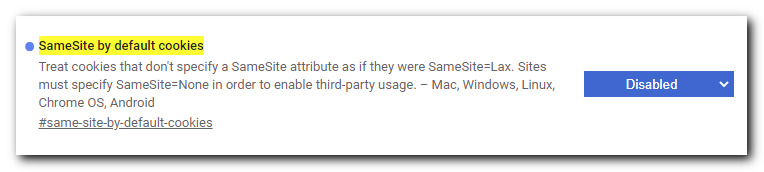
<p>The fix was not at all obvious, hence this blog post. I had to disable the &#8220;SameSite by default cookies&#8221; flag.</p>
<p><img decoding="async" src="https://cdn.hersam.com/images/2020/samesite-by-default-chrome.png" alt="Chrome flag SameSite by default cookies disabled"></p>
<p>1) Open this URL in Chrome: chrome://flags/#same-site-by-default-cookies</p>
<p>2) Select &#8220;Disabled&#8221; in the dropdown.</p>
<p>3) Restart Chrome (the entire browser, not just the tab or window)</p>
<p>I was able to log in to the aforementioned sites in Firefox, so my guess is the Chrome team is using their monopoly to push a more restrictive security feature that ends up breaking sites that haven&#8217;t gotten the memo. Hopefully this is a temporary fix and the flag can be enabled again once sites realize their users can&#8217;t log in with Chrome.</p>
<p>The post <a href="https://dan.hersam.com/2020/09/01/chrome-85-causing-login-failures/">Chrome 85 Causing Login Failures</a> appeared first on <a href="https://dan.hersam.com">Amidst a tangled web</a>.</p>
]]></content>
		
			</entry>
		<entry>
		<author>
			<name>Dan</name>
					</author>

		<title type="html"><![CDATA[Cleaning Up The Web]]></title>
		<link rel="alternate" type="text/html" href="https://dan.hersam.com/2019/09/06/cleaning-up-the-web/" />

		<id>https://dan.hersam.com/?p=4317</id>
		<updated>2023-10-19T14:57:28Z</updated>
		<published>2019-09-06T09:00:39Z</published>
		<category scheme="https://dan.hersam.com/" term="Useful" />
		<summary type="html"><![CDATA[<p>As web pages get more cluttered, even ad blockers don&#8217;t cut it. Medium.com pages are particularly hard to read with the huge notice they add on the bottom of the page, covering up the content and making it difficult to read. My solution has continued to work surprisingly well for the past few years. It&#8217;s [&#8230;]</p>
<p>The post <a href="https://dan.hersam.com/2019/09/06/cleaning-up-the-web/">Cleaning Up The Web</a> appeared first on <a href="https://dan.hersam.com">Amidst a tangled web</a>.</p>
]]></summary>

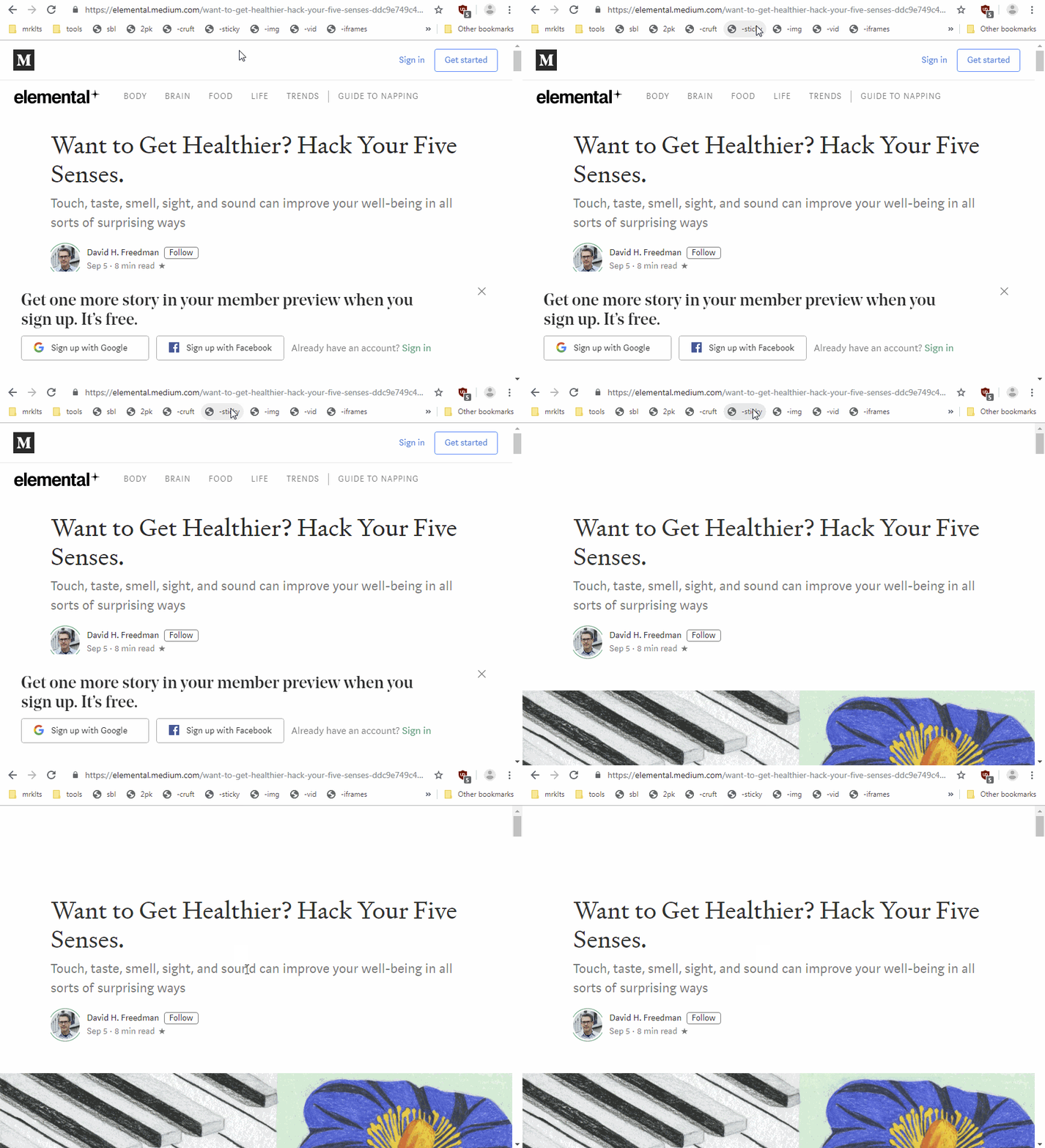
					<content type="html" xml:base="https://dan.hersam.com/2019/09/06/cleaning-up-the-web/"><![CDATA[<p>As web pages get more cluttered, even ad blockers don&#8217;t cut it. Medium.com pages are particularly hard to read with the huge notice they add on the bottom of the page, covering up the content and making it difficult to read.</p>
<p>My solution has continued to work surprisingly well for the past few years. It&#8217;s a bookmarklet that removes all sticky elements (ones that stay visible when you scroll).</p>
<p><img decoding="async" src="https://cdn.hersam.com/images/2019/minus-sticky.gif" alt="The -sticky bookmarklet in action" style="border:1px #666 solid"><br />
<em>The bookmarklet in action on a random Medium.com page</em></p>
<p>To use it, drag the link below to your browser&#8217;s bookmarks bar then click on it whenever a web page looks a little cluttered.</p>
<p><strong><a href="javascript:(function(){(function () {var i, elements = document.querySelectorAll('body *');for (i = 0; i < elements.length; i++) {if (getComputedStyle(elements[i]).position === 'fixed' || getComputedStyle(elements[i]).position === 'sticky') {elements[i].parentNode.removeChild(elements[i]);}}})()})()">-sticky</a></strong></p>
<p>The post <a href="https://dan.hersam.com/2019/09/06/cleaning-up-the-web/">Cleaning Up The Web</a> appeared first on <a href="https://dan.hersam.com">Amidst a tangled web</a>.</p>
]]></content>
		
			</entry>
		<entry>
		<author>
			<name>Dan</name>
					</author>

		<title type="html"><![CDATA[Free Printable Weekly and Daily Planners]]></title>
		<link rel="alternate" type="text/html" href="https://dan.hersam.com/2019/09/05/free-printable-weekly-and-daily-planners/" />

		<id>https://dan.hersam.com/?p=4311</id>
		<updated>2023-10-21T20:43:08Z</updated>
		<published>2019-09-05T13:00:37Z</published>
		<category scheme="https://dan.hersam.com/" term="Productivity" />
		<summary type="html"><![CDATA[<p>I searched high and low for free, printable PDF weekly and daily planners for my kids to be able to schedule their days and weeks. I expected to find dozens of options but was surprised to find very few. Of those few, some plastered their logos all over or declared the document could only be [&#8230;]</p>
<p>The post <a href="https://dan.hersam.com/2019/09/05/free-printable-weekly-and-daily-planners/">Free Printable Weekly and Daily Planners</a> appeared first on <a href="https://dan.hersam.com">Amidst a tangled web</a>.</p>
]]></summary>

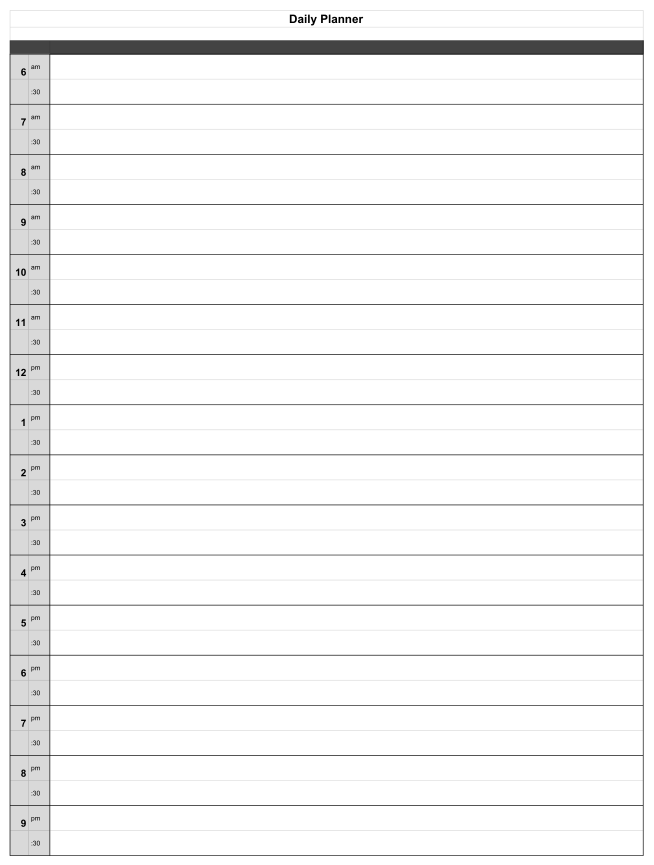
					<content type="html" xml:base="https://dan.hersam.com/2019/09/05/free-printable-weekly-and-daily-planners/"><![CDATA[<p>I searched high and low for free, printable PDF weekly and daily planners for my kids to be able to schedule their days and weeks. I expected to find dozens of options but was surprised to find very few. Of those few, some plastered their logos all over or declared the document could only be used by students of a particular university. Others wanted you to create an account or trade your email for the document. And others were close to what I wanted, but didn&#8217;t have 1/2 hour increments or some other small detail. It all seemed excessive for such a simple document. So I created two planners that can be freely downloaded and used for whatever purposes you can come up with.</p>
<p><a href="https://cdn.hersam.com/uploads/Weekly-Planner-30_minutes.pdf"><br />
  <img decoding="async" src="https://cdn.hersam.com/images/2019/weekly-planner-thumbnail.png" alt="Free Daily Planner"><br />
</a><strong><a href="https://cdn.hersam.com/uploads/Weekly-Planner-30_minutes.pdf">Download Weekly Planner</a></strong></p>
<p><a href="https://cdn.hersam.com/uploads/Daily-Planner-30_minutes.pdf"><br />
  <img decoding="async" src="https://cdn.hersam.com/images/2019/daily-planner-thumbnail.png" alt="Free Daily Planner"><br />
</a><strong><a href="https://cdn.hersam.com/uploads/Daily-Planner-30_minutes.pdf">Download Daily Planner</a></strong></p>
<p>Happy planning!</p>
<p>The post <a href="https://dan.hersam.com/2019/09/05/free-printable-weekly-and-daily-planners/">Free Printable Weekly and Daily Planners</a> appeared first on <a href="https://dan.hersam.com">Amidst a tangled web</a>.</p>
]]></content>
		
			</entry>
		<entry>
		<author>
			<name>Dan</name>
					</author>

		<title type="html"><![CDATA[Christmas Desktop 2018]]></title>
		<link rel="alternate" type="text/html" href="https://dan.hersam.com/2018/12/01/christmas-desktop-2018/" />

		<id>https://dan.hersam.com/?p=4268</id>
		<updated>2018-12-01T21:04:00Z</updated>
		<published>2018-12-01T21:04:00Z</published>
		<category scheme="https://dan.hersam.com/" term="The site" />
		<summary type="html"><![CDATA[<p>It wouldn&#8217;t feel as much like Christmas if I didn&#8217;t update my desktop wallpaper and have a little falling snow. I found the wallpaper at New Evolution Designs. Here&#8217;s the original. And the fresh falling snow is thanks to DesktopSnowOK.</p>
<p>The post <a href="https://dan.hersam.com/2018/12/01/christmas-desktop-2018/">Christmas Desktop 2018</a> appeared first on <a href="https://dan.hersam.com">Amidst a tangled web</a>.</p>
]]></summary>

					<content type="html" xml:base="https://dan.hersam.com/2018/12/01/christmas-desktop-2018/"><![CDATA[<p>It wouldn&#8217;t feel as much like Christmas if I didn&#8217;t update my desktop wallpaper and have a little falling snow.</p>
<p><img decoding="async" src="https://dan.hersam.com/images/2018/christmas-desktop-2018.jpg" alt="My 2018 Christmas Desktop" /></p>
<p>I found the wallpaper at <a href="https://newevolutiondesigns.com/25-stunning-winter-wallpapers">New Evolution Designs</a>. Here&#8217;s <a href="https://newevolutiondesigns.com/images/freebies/winter-wallpaper-17.jpg">the original</a>. And the fresh falling snow is thanks to <a href="https://www.softwareok.com/?seite=Freeware/DesktopSnowOK">DesktopSnowOK</a>.</p>
<p>The post <a href="https://dan.hersam.com/2018/12/01/christmas-desktop-2018/">Christmas Desktop 2018</a> appeared first on <a href="https://dan.hersam.com">Amidst a tangled web</a>.</p>
]]></content>
		
			</entry>
		<entry>
		<author>
			<name>Dan</name>
					</author>

		<title type="html"><![CDATA[Beware of Voice Phishing Scams]]></title>
		<link rel="alternate" type="text/html" href="https://dan.hersam.com/2018/10/04/beware-of-voice-phishing-scams/" />

		<id>https://dan.hersam.com/?p=4256</id>
		<updated>2018-10-04T20:36:11Z</updated>
		<published>2018-10-04T23:30:46Z</published>
		<category scheme="https://dan.hersam.com/" term="Finances" />
		<summary type="html"><![CDATA[<p>If a scam can fool the likes of Matt Haughey, creator of MetaFilter, it can happen to anyone. He got three calls with the caller ID of his credit union and picked up on the third. After some smooth talking they convinced him to provide his ATM card&#8217;s PIN (a huge red flag) then stole [&#8230;]</p>
<p>The post <a href="https://dan.hersam.com/2018/10/04/beware-of-voice-phishing-scams/">Beware of Voice Phishing Scams</a> appeared first on <a href="https://dan.hersam.com">Amidst a tangled web</a>.</p>
]]></summary>

					<content type="html" xml:base="https://dan.hersam.com/2018/10/04/beware-of-voice-phishing-scams/"><![CDATA[<p>If a scam can fool the likes of Matt Haughey, creator of <a href="https://www.metafilter.com/">MetaFilter</a>, it can happen to anyone. He got three calls with the caller ID of his credit union and picked up on the third. After some smooth talking they convinced him to provide his ATM card&#8217;s PIN (a huge red flag) then stole $3,400 from his account.</p>
<p><a href="https://krebsonsecurity.com/2018/10/voice-phishing-scams-are-getting-more-clever/">Brian Krebs&#8217; blog post</a> has the details. Bruce Schneier (a renowned security expert) <a href="https://www.schneier.com/blog/archives/2018/10/sophisticated_v.html">echoed Brian&#8217;s recommendation</a>.</p>
<p><em>&#8220;never give out any information about yourself in response to an unsolicited phone call.&#8221; Always call them back, and not using the number offered to you by the caller. Always.</em></p>
<p>The post <a href="https://dan.hersam.com/2018/10/04/beware-of-voice-phishing-scams/">Beware of Voice Phishing Scams</a> appeared first on <a href="https://dan.hersam.com">Amidst a tangled web</a>.</p>
]]></content>
		
			</entry>
		<entry>
		<author>
			<name>Dan</name>
					</author>

		<title type="html"><![CDATA[How Secure Are Password Managers?]]></title>
		<link rel="alternate" type="text/html" href="https://dan.hersam.com/2018/08/24/how-secure-are-password-managers/" />

		<id>http://dan.hersam.com/?p=3399</id>
		<updated>2020-02-18T00:16:31Z</updated>
		<published>2018-08-24T23:00:14Z</published>
		<category scheme="https://dan.hersam.com/" term="Security" />
		<summary type="html"><![CDATA[<p>The idea of a password manager can seem insecure initially, because it means that a single password will reveal the gleaming treasure of all your passwords. But using a password manager is the recommendation of experts. And if you use the same password everywhere, like many folks do, all of your passwords would be exposed [&#8230;]</p>
<p>The post <a href="https://dan.hersam.com/2018/08/24/how-secure-are-password-managers/">How Secure Are Password Managers?</a> appeared first on <a href="https://dan.hersam.com">Amidst a tangled web</a>.</p>
]]></summary>

					<content type="html" xml:base="https://dan.hersam.com/2018/08/24/how-secure-are-password-managers/"><![CDATA[<p>The idea of a password manager can seem insecure initially, because it means that a single password will reveal the gleaming treasure of all your passwords. But using a password manager is the recommendation of <a href="https://www.troyhunt.com/password-managers-dont-have-to-be-perfect-they-just-have-to-be-better-than-not-having-one/">experts</a>.</p>
<p>And if you use the same password everywhere, like many folks do, all of your passwords would be exposed if even the weakest link was broken. (Note: The weakest links are broken with morbid regularity)</p>
<p>I had some concerns when I first heard about using a password manager, but I have been using <a href="https://keepass.info/">KeePass</a> for years and rest easy at night. Let&#8217;s dig a little deeper so you can too.</p>
<p><strong>Alternatives</strong></p>
<ul>
<li>Same password for everything &#8211; one site&#8217;s password is exposed and the gig is up</li>
<li>Try to memorize dozens of long, hard to remember passwords &#8211; nearly impossible</li>
<li>Writing passwords down &#8211; not bad, but tedious and less accessible</li>
<li>Saving passwords in your browser &#8211; not as secure and doesn&#8217;t work for non-web passwords</li>
</ul>
<p>None of these alternatives work as well as a password manager, or scale to hundreds of passwords. It&#8217;s not to say you should never use them, just that for the balance of convenience and security, a password manager wins out.</p>
<p><strong>Attack vectors</strong></p>
<ul>
<li>A web site you use is hacked, revealing your password</li>
<li>Keylogger</li>
<li>Physical access to your machine</li>
</ul>
<p>The first attack vector is depressingly common. <a href="http://www.wired.com/threatlevel/2012/06/linkedin-passwords-stolen/">LinkedIn</a>, eHarmony, Gawker media, Sony Playstation Network and plenty more have all had their passwords exposed. When this happens I can change my password to another random password quickly and easily. The longest part of the process is finding the option in the account settings.</p>
<p>A keylogger is pretty much game over if you&#8217;re typing your passwords in. But password managers make an effort to be resistant to key logging. And if someone has physical access to your machine, a password manager has your passwords encrypted. If you use a relatively short inactivity timeout, your passwords would still be safe from prying eyes.</p>
<p>While no solution is perfect, a password manager gives you strong, random passwords for every login. I use KeePass, but there are plenty of options.</p>
<ul>
<li><a href="https://keepass.info/">KeePass</a> &#8211; Standalone application, free and open source</li>
<li><a href="https://www.lastpass.com/">LastPass</a> &#8211; Web site with browser extensions, free and paid plans</li>
<li><a href="https://bitwarden.com/">BitWarden</a> &#8211; Apps save encrypted passwords to the cloud, free and open source (can be self-hosted)</li>
<li><a href="https://1password.com/">1Password</a> &#8211; Paid plans only</li>
</ul>
<p>The post <a href="https://dan.hersam.com/2018/08/24/how-secure-are-password-managers/">How Secure Are Password Managers?</a> appeared first on <a href="https://dan.hersam.com">Amidst a tangled web</a>.</p>
]]></content>
		
			</entry>
	</feed>


<!--
Performance optimized by W3 Total Cache. Learn more: https://www.boldgrid.com/w3-total-cache/?utm_source=w3tc&utm_medium=footer_comment&utm_campaign=free_plugin

Object Caching 20/21 objects using Redis
Page Caching using Redis 
Minified using Redis

Served from: dan.hersam.com @ 2026-06-03 18:10:22 by W3 Total Cache
-->