<?xml version="1.0" encoding="UTF-8"?>
<feed xml:lang="en" xmlns="http://www.w3.org/2005/Atom" xmlns:opensearch="http://a9.com/-/spec/opensearch/1.1/" xmlns:s="http://jadedpixel.com/-/spec/shopify">
  <id>https://amsterdamtulipmuseum.com/blogs/tulip-facts.atom</id>
  <link rel="alternate" type="text/html" href="https://amsterdamtulipmuseum.com/blogs/tulip-facts"/>
  <link rel="self" type="application/atom+xml" href="https://amsterdamtulipmuseum.com/blogs/tulip-facts.atom"/>
  <title>Amsterdam Tulip Museum - Tulip Facts</title>
  <updated>2020-11-30T15:00:04+01:00</updated>
  <author>
    <name>Amsterdam Tulip Museum</name>
  </author>
  <entry>
    <id>https://amsterdamtulipmuseum.com/blogs/tulip-facts/what-is-the-most-famous-tulip-in-history</id>
    <published>2020-11-30T15:00:04+01:00</published>
    <updated>2020-11-30T15:00:04+01:00</updated>
    <link rel="alternate" type="text/html" href="https://amsterdamtulipmuseum.com/blogs/tulip-facts/what-is-the-most-famous-tulip-in-history"/>
    <title>What Is The Most Famous Tulip In History?</title>
    <author>
      <name>Chris Schipper</name>
    </author>
    <content type="html">
      <![CDATA[<p style="text-align: center;"><img src="//cdn.shopify.com/s/files/1/2324/8107/files/Semper_Augustus_Closeup_medium.jpeg?v=1509328763" alt="Semper Augustus Tulip Mania Amsterdam Tulip Museum"></p>
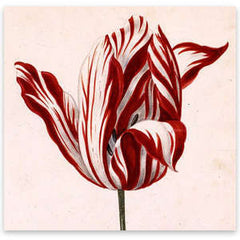
<p><strong>Today's #TulipFact: </strong>The most famous Tulip in history is, without question, the red &amp; white "Semper Augustus" - a 'Broken Tulip' that, during Tulip Mania, sold for more than a house.</p>
<p>It seems strange to declare a single flower above the rest. After all, when beauty is in the eye of the beholder, what right does anyone have to select one and declare it superior (see our previous post on the Ottoman Empire's definition of the perfect Tulip <a href="https://amsterdamtulipmuseumonline.com/blogs/tulip-facts/the-ottoman-empires-perfect-tulip" target="_blank" title="The Ottoman Empire's Perfect Tulip" rel="noopener noreferrer">here</a>)?</p>
<p>And yet, the Semper Augustus has managed to claim that title. With deep crimson flares against a milky white base, it has been a source of awe and admiration for hundreds of years - the 'King of Tulips'. </p>
<p>The story of the Semper Augustus is set in the early decades of the seventeenth century. The Dutch were entering into their golden age, when new independence combined with mercantilism and trade to generate a never-before-seen level of prosperity. With an influx of disposable income, merchants were looking for a way to display their wealth, and newly introduced Tulips made for a perfect option.</p>
<p>Buyers began seeking out rare and beautiful breeds, hoping to stand out amongst their friends and neighbors. And the rarest and most beautiful of the breeds were "Broken Tulips", where the petals displayed two different colors in starkly contrasting, flame-like patterns.</p>
<p>The condition was first discovered in 1576 by famed botanist and father of the Dutch Tulip industry - Carolus Clusius <span>(read more about the beautiful condition </span><a href="https://amsterdamtulipmuseumonline.com/blogs/tulip-facts/broken-tulips-the-beautiful-curse" target="_blank" title="Broken Tulips - The Beautiful Curse" rel="noopener noreferrer">here</a><span>). </span>However, nobody at the time understood what could be causing the 'breaks', and desperate breeders had to more or less rely on luck to find one in their own patch (read more about how growers tried to 'induce' breaks <a href="https://amsterdamtulipmuseumonline.com/blogs/tulip-facts/broken-tulips-in-the-time-of-tulip-mania" target="_blank" title="How Growers Once Tried To Create Broken Tulips" rel="noopener noreferrer">here</a>). </p>
<p>The Semper Augustus likely began in this way - a matter of chance for a lucky grower. We do not know who this first grower was, but we do know the impact his flower would go on to have.</p>
<p>Even amongst the Broken Tulips, the Semper Augustus stood out. Subtle details like the thickness of its lines and the stark contrasts of its colors gripped the eyes of any who cast their gaze upon it. Captured in still-lifes by expert painters, as well as in catalogues using new and highly detailed printing technology, the stunning plant was shared far and wide.</p>
<p>The flower's scarcity only added to its allure. In 1624, someone wrote that only 12 examples even existed, all owned by a single individual believed to be Adrian Pauw - a director of the Dutch East India company and a leading official in Amsterdam. Already fabulously wealthy, he refused to sell any of his prized flower, which in turn only increased desire for the bulbs.</p>
<p>Reliable historical data is difficult to find, but in 1633 one bulb was said to have sold for 5,500 guilders, more than three times the annual earnings of a typical merchant. At the peak of Tulip Mania in 1636-1637, it was said that 10,000 guilders were offered, enough to purchase a grand house on the finest canal in Amsterdam - one of the most expensive cities in the world. While exact figures and details cannot be validated, few would disagree that the Semper Augustus was viewed as above all others during this time.</p>
<p>Sadly, the story of the Semper Augustus goes quiet from here. It is likely that, following the burst of the Tulip Mania bubble, growers likely continued to breed and sell its bulbs. However, their work would become more and more difficult.</p>
<p>Research in the 1920s would finally reveal that the source of the Semper Augustus' beauty was also a curse - a virus known today as the TBV or 'Tulip Breaking Virus'. While it caused amazing color patterns, it also served to weaken the bulb, including any offshoots produced. With each subsequent generation, the bulbs would become more and more degraded, until one day they would be too weak to flower and the genetic line would die off (learn more about the dangers of the breaking virus <a href="https://amsterdamtulipmuseumonline.com/blogs/tulip-facts/how-dangerous-is-the-tulip-breaking-virus" target="_blank" title="How Dangerous Is The Tulip Breaking Virus?" rel="noopener noreferrer">here</a>).</p>
<p>Today, we can only speculate, but this seems to be the likely end faced by the world's most famous Tulip. Despite all of its beauty and prestige, it went out with a soft whimper, and today all we have left are paintings. </p>
<p>But while gone, it is not forgotten. Growers, seeking a solution free of the virus, have over the centuries developed breeds attempting to match the red &amp; white flares, including "World Expression", "Happy Generation", and "Sorbet".</p>
<p>Many find these to be just as stunning as the Semper Augustus itself, and gladly plant them in gardens around the world. However, others feel them to be at best a shadow of the original, unable to match its bold contrasts and stark flames. In the end, as with all beauty, each must cast his or her own eyes upon it and make the final decision themselves :).</p>]]>
    </content>
  </entry>
  <entry>
    <id>https://amsterdamtulipmuseum.com/blogs/tulip-facts/happy-488th-birthday-to-clusius-progenitor-of-tulips</id>
    <published>2018-02-19T16:03:00+01:00</published>
    <updated>2018-02-19T16:53:40+01:00</updated>
    <link rel="alternate" type="text/html" href="https://amsterdamtulipmuseum.com/blogs/tulip-facts/happy-488th-birthday-to-clusius-progenitor-of-tulips"/>
    <title>Happy 492nd Birthday to Clusius, Progenitor of Tulips</title>
    <author>
      <name>C. Schipper Sr</name>
    </author>
    <content type="html">
      <![CDATA[<p class="p1"><span class="s1"><b>Charles de l'Écluse,</b><span class="Apple-converted-space">  </span>aka <b>Carolus Clusius</b><span class="Apple-converted-space">  </span>was born on February 19, 1526 in the Town of Arras, located in center of the Artois region in Northern France (formerly part of Southern Netherlands). Educated both in law and medicine, Clusius followed his love of plants, becoming a pioneering botanist and eventually the most influential of all 16th-century scientific horticulturists capped by his directorship of the Hortus Botanicus at the University of Leiden.</span></p>
<p class="p1" style="text-align: center;"><img src="//cdn.shopify.com/s/files/1/2324/8107/files/Charles_de_l_Ecluse_or_Carolus_Clusius__1526___1609__Wellcome_V0003457_medium.jpg?v=1519052404" alt="Carolus Clusius Amsterdam Tulip Museum"></p>
<p class="p1">The eldest son of a prosperous merchant, <b>Clusius</b> attended the Universities of Louvain, Wittenberg and Montpellier, became fluent in multiple languages, and traveled throughout Europe. His extensive correspondence with academics and horticulturists helped develop a vast collection of plants from throughout the newly discovered worlds recently opened up by enterprising traders.</p>
<p class="p1" style="text-align: center;"><img src="//cdn.shopify.com/s/files/1/2324/8107/files/Hortus_Botanicus_medium.jpeg?v=1519052456" alt="Clusius Hortus Botanicus Leiden"></p>
<p class="p1">While serving as the director of Emperor Maximilian’s imperial medical garden in Vienna, Clusius developed a relationship with Ogier Ghiselin de <b>Busbecq</b> (Booz-beck), who had been ambassador to the Ottoman Empire. Busbecq arranged for exotic bulbs to be sent from the court of <b>Suleimann the Magnificent</b> at Constantinople to the gardens in Vienna. The Ottomans were among the first lovers of <b>tulips</b>, collected by travelers along the Silk Road.</p>
<p class="p1" style="text-align: center;"><img src="//cdn.shopify.com/s/files/1/2324/8107/files/Plantarum_Histor_medium.jpg?v=1519052451" alt="Clusius Hortus Plantorum Histor Historical Print"></p>
<p class="p1"><b>Clusius</b> brought tulips to the botanical garden in Leiden in 1593, where they became a sensation of early spring color in an otherwise drab time of year. Eventually, tulip bulbs found their way (or were stolen) into other private gardens in the Towns of Leiden, Haarlem and Amsterdam. A few decades later the phenomenon of <b>Tulipmania</b> led to prized broken varieties of flamed colors against a white or yellow being bid up to extraordinary heights.</p>
<p class="p1" style="text-align: center;"><img src="//cdn.shopify.com/s/files/1/2324/8107/files/1020_LadyJane_CWH_L1004638w_medium.jpg?v=1519052461" alt="Tulip Clusiana Lady Jane Colorblends Wholesale Flowerbulbs"></p>
<p class="p1"><span class="s2"><em>Tulip Clusiana Lady Jane</em> - </span><span class="s1">one of the most graceful of all tulips. White petals brushed with reddish pink on the outside. The inside is pure white. Flowers open wide and flat in the sun. An Asian immigrant like most tulips: Jane's parents were from Iran and Afghanistan. Source: Colorblends Flowerbulbs.</span></p>
<p class="p2"> </p>]]>
    </content>
  </entry>
  <entry>
    <id>https://amsterdamtulipmuseum.com/blogs/tulip-facts/tulip-of-the-week-beauty-of-spring</id>
    <published>2018-01-25T11:00:00+01:00</published>
    <updated>2018-01-25T11:00:00+01:00</updated>
    <link rel="alternate" type="text/html" href="https://amsterdamtulipmuseum.com/blogs/tulip-facts/tulip-of-the-week-beauty-of-spring"/>
    <title>Tulip of the Week: Beauty of Spring</title>
    <author>
      <name>C. Schipper Sr</name>
    </author>
    <content type="html">
      <![CDATA[<p style="text-align: center;"><img src="//cdn.shopify.com/s/files/1/2324/8107/files/Tulipa_Beauty_of_Spring_Fluwel_Flowerbulbs_medium.jpg?v=1516856999" alt="Tulipa Beauty of Spring Fluwel Flowerbulbs"></p>
<p><span style="text-decoration: underline;">Creator</span>: Firma Patrick van Steijn <br><span style="text-decoration: underline;">Registration date</span>: February 11, 2004 <br><span style="text-decoration: underline;">Cultivar Group</span>: Darwin Hybrid group </p>
<p>First registered in 2004, Tulipa "Beauty of Spring" is a member of the Darwin Hybrid group. Flowering mid-season, it features large, long-lasting flowers atop a tall stem (sometimes up to 24 inches). </p>
<p>More importantly, this Tulip truly lives up to its name. Its large flowers are a soft yellow, feathered along the edges of the petals with a dusting of red. It is truly striking when planted en masse, or when clustered here and there in a perennial bed (or even arranged in a vase). As one site has noted - "Its flower is so pretty, it is almost as if it is illuminated from within."</p>
<p><em>Image source: <a href="https://www.fluwel.com" target="_blank" title="Fluwel Flowerbulbs Company Official Website" rel="noopener noreferrer">Fluwel Flowerbulbs</a></em></p>
<meta charset="utf-8">
<p style="font-size: 10px;"><em><span>We are working in partnership with the <a href="https://www.kavb.nl/english/organisation" target="_blank" rel="noopener noreferrer">KAVB</a> to highlight the incredible variety of Tulips by sharing different flowers every week. The <a href="https://www.kavb.nl/english/organisation" target="_blank" rel="noopener noreferrer">KAVB</a> (Royal General Association for Bulb Culture), established in 1860, today acts as the international registration authority for all Tulips (along with several other flowers), and works to protect and support bulb growers around the world.</span></em></p>]]>
    </content>
  </entry>
  <entry>
    <id>https://amsterdamtulipmuseum.com/blogs/tulip-facts/tulip-of-the-week-akebono</id>
    <published>2018-01-18T07:06:00+01:00</published>
    <updated>2018-01-18T07:07:31+01:00</updated>
    <link rel="alternate" type="text/html" href="https://amsterdamtulipmuseum.com/blogs/tulip-facts/tulip-of-the-week-akebono"/>
    <title>Tulip of the Week: Akebono</title>
    <author>
      <name>Chris Schipper</name>
    </author>
    <content type="html">
      <![CDATA[<p style="text-align: center;"><img src="//cdn.shopify.com/s/files/1/2324/8107/files/Tulipa_Akebono_Colorblends_medium.jpg?v=1516253450" alt="Tulipa Akebono Colorblends Wholesale Flowerbulbs"></p>
<p><span style="text-decoration: underline;">Creator</span>: Jn. Haakman &amp; Zonen BV <br><span style="text-decoration: underline;">Registration date</span>: July 3, 2007 <br><span style="text-decoration: underline;">Cultivar Group</span>: Double-Late group </p>
<p>Tulipa Akebono is a full-figured Tulip from Japan, its name translating roughly to "Bright sky at Daybreak". While the semi-double flowers are large (featuring more petals than commonly known 'Triumph' Tulips), their pale yellow coloring, often accented with red and green blemishes, provides a surprising lightness and grace.</p>
<p>Also quite interesting is how this Tulip came into being. Unlike most, it was not bred, but formed as a "Sport" of another Tulip known as the 'Jewel of Spring'. A sport occurs when one part of a plant or flower displays unique, morphological differences from the rest - for example, Nectarines came into being as a 'sport' from a Peach. In this case, the sport was isolated and propagated into what is now its own breed - Akebono.</p>
<p><em>Image source: <a href="https://www.colorblends.com/" target="_blank" title="Colorblends Wholesale Flowerbulbs Company Official Website" rel="noopener noreferrer">Colorblends Wholesale Flowerbulbs</a></em></p>
<meta charset="utf-8">
<p style="font-size: 10px;"><em><span>We are working in partnership with the <a href="https://www.kavb.nl/english/organisation" target="_blank" rel="noopener noreferrer">KAVB</a> to highlight the incredible variety of Tulips by sharing different flowers every week. The <a href="https://www.kavb.nl/english/organisation" target="_blank" rel="noopener noreferrer">KAVB</a> (Royal General Association for Bulb Culture), established in 1860, today acts as the international registration authority for all Tulips (along with several other flowers), and works to protect and support bulb growers around the world.</span></em></p>]]>
    </content>
  </entry>
  <entry>
    <id>https://amsterdamtulipmuseum.com/blogs/tulip-facts/tulip-of-the-week-grand-perfection</id>
    <published>2018-01-11T18:17:00+01:00</published>
    <updated>2018-01-11T18:17:37+01:00</updated>
    <link rel="alternate" type="text/html" href="https://amsterdamtulipmuseum.com/blogs/tulip-facts/tulip-of-the-week-grand-perfection"/>
    <title>Tulip of the Week: Grand Perfection</title>
    <author>
      <name>Chris Schipper</name>
    </author>
    <content type="html">
      <![CDATA[<p style="text-align: center;"><img src="//cdn.shopify.com/s/files/1/2324/8107/files/grand_perfection_1200_1_medium.jpg?v=1515689978" alt="Tulipa Grand Perfection Modern Rembrandt Fluwel Flowerbulbs"></p>
<p><span style="text-decoration: underline;">Creator</span>: Blumex Export BV <br><span style="text-decoration: underline;">Registration date</span>: June 2, 1999 <br><span style="text-decoration: underline;">Cultivar Group</span>: Triumph group </p>
<meta charset="utf-8"><meta charset="utf-8"><meta charset="utf-8">
<p>A brilliant looking Tulip featuring flares of red on white, Tulipa "Grand Perfection" was first registered in 1999. Known as a "Modern Rembrandt", it was created in the image of the famous "Broken Tulips" - flowers infected by the Tulip Breaking or "Mosaic" virus that, while weakening the flower, also causes its colors to break in remarkable and beautiful ways (see our article on Broken Tulips - The Beautiful Curse <a href="https://amsterdamtulipmuseumonline.com/blogs/tulip-facts/broken-tulips-the-beautiful-curse" target="_blank" title="Broken Tulips: The Beautiful Curse | The Amsterdam Tulip Museum Blog" rel="noopener noreferrer">here</a>). </p>
<p>In particular, Grand Perfection's red and white coloration resembles the most famous Tulip in history - the Semper Augustus, which was worth more than a house at the height of Tulip Mania (see our article on this flower <a href="https://amsterdamtulipmuseumonline.com/blogs/tulip-facts/what-is-the-most-famous-tulip-in-history" target="_blank" title="The Most Famous Tulip In History Semper Augustus | The Amsterdam Tulip Museum Blog" rel="noopener noreferrer">here</a>). Further, based on its ability to grow healthily and effectively, this flower was given the Award of Golden Merit by the British Royal Horticultural Society (this is in contrast to many Tulip bred for a specific look - they can often be very difficult to grow).</p>
<p><em>Image source: <a href="https://www.fluwel.com/" target="_blank" title="Fluwel Flowerbulb Company Official Website" rel="noopener noreferrer">Fluwel Flowerbulbs</a></em></p>
<meta charset="utf-8">
<p style="font-size: 10px;"><em><span>We are working in partnership with the <a href="https://www.kavb.nl/english/organisation" target="_blank" rel="noopener noreferrer">KAVB</a> to highlight the incredible variety of Tulips by sharing different flowers every week. The <a href="https://www.kavb.nl/english/organisation" target="_blank" rel="noopener noreferrer">KAVB</a> (Royal General Association for Bulb Culture), established in 1860, today acts as the international registration authority for all Tulips (along with several other flowers), and works to protect and support bulb growers around the world.</span></em></p>]]>
    </content>
  </entry>
  <entry>
    <id>https://amsterdamtulipmuseum.com/blogs/tulip-facts/tulip-of-the-week-ice-cream</id>
    <published>2018-01-04T15:30:00+01:00</published>
    <updated>2018-01-04T15:30:00+01:00</updated>
    <link rel="alternate" type="text/html" href="https://amsterdamtulipmuseum.com/blogs/tulip-facts/tulip-of-the-week-ice-cream"/>
    <title>Tulip of the Week: Ice Cream</title>
    <author>
      <name>Chris Schipper</name>
    </author>
    <content type="html">
      <![CDATA[<p style="text-align: center;"><img src="//cdn.shopify.com/s/files/1/2324/8107/files/Tulipa_Ice_Cream_Fluwel_medium.jpg?v=1515001859" alt="Tulipa Ice Cream Fluwel Flowerbulbs"></p>
<p><span style="text-decoration: underline;">Creator</span>: Vertuco BV<br><span style="text-decoration: underline;">Registration date</span>: August 18, 1999<br><span style="text-decoration: underline;">Cultivar Group</span>: Double Late group</p>
<meta charset="utf-8"><meta charset="utf-8"><meta charset="utf-8">
<p><span>One of the more 'out there' looking Tulips, Tulipa "Ice Cream" first appeared on the scene in 1999. Created by well-known breeding and distribution company 'Vertuco BV', it features soft pink petals at its base, with fluffy white petals pouring out on top, like a Sundae or scoop of, yes, ice cream. This particular Tulip was selected as its appearance helps to truly highlight how much variety exists in the world of Tulips - they truly come in all shapes and sizes!</span></p>
<p><em>Image source: <a href="https://www.fluwel.com/" target="_blank" title="Fluwel Flowerbulb Company Official Website" rel="noopener noreferrer">Fluwel Flowerbulbs</a></em></p>
<meta charset="utf-8">
<p style="font-size: 10px;"><em><span>We are working in partnership with the <a href="https://www.kavb.nl/english/organisation" target="_blank" rel="noopener noreferrer">KAVB</a> to highlight the incredible variety of Tulips by sharing different flowers every week. The <a href="https://www.kavb.nl/english/organisation" target="_blank" rel="noopener noreferrer">KAVB</a> (Royal General Association for Bulb Culture), established in 1860, today acts as the international registration authority for all Tulips (along with several other flowers), and works to protect and support bulb growers around the world.</span></em></p>]]>
    </content>
  </entry>
  <entry>
    <id>https://amsterdamtulipmuseum.com/blogs/tulip-facts/tulip-of-the-week-peppermint-stick</id>
    <published>2017-12-28T18:40:00+01:00</published>
    <updated>2018-01-03T18:48:43+01:00</updated>
    <link rel="alternate" type="text/html" href="https://amsterdamtulipmuseum.com/blogs/tulip-facts/tulip-of-the-week-peppermint-stick"/>
    <title>Tulip of the Week: Peppermint Stick</title>
    <author>
      <name>Chris Schipper</name>
    </author>
    <content type="html">
      <![CDATA[<p style="text-align: center;"><img src="//cdn.shopify.com/s/files/1/2324/8107/files/Tulipa_Peppermint_Stick_medium.jpg?v=1515001326" alt="Tulipa Peppermint Stick Tulip Fluwel Flower Bulbs"></p>
<p><span style="text-decoration: underline;">Creator</span>: W. van Lierop &amp; Zonen (a Dutch plant nursery) <br><span style="text-decoration: underline;">Registration date</span>: November 30, 1998<br><span style="text-decoration: underline;">Cultivar Group</span>: Miscellaneous Group</p>
<meta charset="utf-8"><meta charset="utf-8"><meta charset="utf-8">
<p><span>With many around the world celebrating different holidays, it felt like a good time to pick a rather festive Tulip - the aptly named "Peppermint Stick". Created by long-time flower nursery W. van Lierop &amp; Zonen, it blends red and white colors in a tall, thin shape (coming in at a height of 20-30 cm or 8-12 inches). Interestingly, it strongly resembles a well known Tulip known as "Clusiana" which, while beautiful, is extremely difficult to grow and therefore very difficult to find. The Peppermint Stick, in contrast, has allowed gardeners around the world to experience and share this beautiful flower.</span></p>
<p><em>Image source: <a href="https://www.fluwel.com/" target="_blank" title="Fluwel Flowerbulb Company Official Website" rel="noopener noreferrer">Fluwel Flowerbulbs</a></em></p>
<meta charset="utf-8">
<p style="font-size: 10px;"><em><span>We are working in partnership with the <a href="https://www.kavb.nl/english/organisation" target="_blank" rel="noopener noreferrer">KAVB</a> to highlight the incredible variety of Tulips by sharing different flowers every week. The <a href="https://www.kavb.nl/english/organisation" target="_blank" rel="noopener noreferrer">KAVB</a> (Royal General Association for Bulb Culture), established in 1860, today acts as the international registration authority for all Tulips (along with several other flowers), and works to protect and support bulb growers around the world.</span></em></p>]]>
    </content>
  </entry>
  <entry>
    <id>https://amsterdamtulipmuseum.com/blogs/tulip-facts/tulip-of-the-week-admiral-van-der-eijck</id>
    <published>2017-12-14T18:31:00+01:00</published>
    <updated>2018-01-03T18:39:07+01:00</updated>
    <link rel="alternate" type="text/html" href="https://amsterdamtulipmuseum.com/blogs/tulip-facts/tulip-of-the-week-admiral-van-der-eijck"/>
    <title>Tulip of the Week: Admiral Van Der Eijck</title>
    <author>
      <name>Chris Schipper</name>
    </author>
    <content type="html">
      <![CDATA[<p style="text-align: center;"><img src="//cdn.shopify.com/s/files/1/2324/8107/files/Admiral_van_der_Eijck_Tulip_Broken_Tulip_medium.jpg?v=1515000747" alt="Admiral van der Eijck Tulip Broken Tulip Tulip Mania"></p>
<p><span style="text-decoration: underline;">Creator</span>: Unknown<br><span style="text-decoration: underline;">Registration date</span>: Unknown<br><span style="text-decoration: underline;">Cultivar Group</span>: Rembrandt group</p>
<meta charset="utf-8">
<p>There has been a lot of discussion recently about 'Bitcoin' creating a new economic bubble. As Tulip Lovers, we can't help be reminded of the first known bubble in recorded history, a time when the price of Tulips soared to unimaginable levels before suddenly plummeting back down - better known as <strong>Tulip Mania</strong> (see our article on what caused it <a href="https://amsterdamtulipmuseumonline.com/blogs/tulip-facts/how-did-tulips-gain-their-speculative-prominence-during-tulip-mania" target="_blank" title="Why Did Tulips Lead To An Economic Bubble In 17th Century Holland? Amsterdam Tulip Museum Blog Speculative Tulip Mania" rel="noopener noreferrer">here</a>).</p>
<p>This week's featured Tulip is picked from that time. While the 'Semper Augustus' may seem the obvious choice given its title as "most expensive bulb ever", we wanted to use this opportunity to demonstrate that the craze went much further. Admiral van der Eijck (pronounced "van-dare-ike") was another rare bulb of the age. Like others, it was a "Broken" or "Rembrandt" Tulip - its colors splitting between a flat white and a lovely, soft red. Sadly, this Tulip no longer exists today, and so we are left to enjoy it only through art and illustrations.</p>
<meta charset="utf-8">
<p style="font-size: 10px;"><em><span>We are working in partnership with the <a href="https://www.kavb.nl/english/organisation" target="_blank" rel="noopener noreferrer">KAVB</a> to highlight the incredible variety of Tulips by sharing different flowers every week. The <a href="https://www.kavb.nl/english/organisation" target="_blank" rel="noopener noreferrer">KAVB</a> (Royal General Association for Bulb Culture), established in 1860, today acts as the international registration authority for all Tulips (along with several other flowers), and works to protect and support bulb growers around the world.</span></em></p>]]>
    </content>
  </entry>
  <entry>
    <id>https://amsterdamtulipmuseum.com/blogs/tulip-facts/how-did-tulips-gain-their-speculative-prominence-during-tulip-mania</id>
    <published>2017-12-14T14:38:00+01:00</published>
    <updated>2017-12-14T15:01:30+01:00</updated>
    <link rel="alternate" type="text/html" href="https://amsterdamtulipmuseum.com/blogs/tulip-facts/how-did-tulips-gain-their-speculative-prominence-during-tulip-mania"/>
    <title>Why Did Tulips Lead To An Economic Bubble In 17th Century Holland?</title>
    <author>
      <name>Chris Schipper</name>
    </author>
    <content type="html">
      <![CDATA[<p style="text-align: center;"><img src="//cdn.shopify.com/s/files/1/2324/8107/files/Deal_with_Devil_JPG_medium.jpg?v=1509211519" alt="Painting The Tulip Trade By Unknown Dutch Artist Deal With The Devil Tulip Mania"></p>
<p><strong>This Week's #TulipFact: </strong>Tulip Mania is widely regarded as the first "Economic Bubble", when the value of Tulips rocketed up, then almost overnight came crashing down. But bubbles don't just 'happen' - many factors came together to leave Holland ripe for such a craze!</p>
<p>This fact began when someone on Quora asked how Tulips gained their speculative prominence in the Netherlands, and we love Tulip Mania questions so were excited to answer. Before continuing, it is important to note that the economic and social factors that go into the creation of a 'bubble' like Tulip Mania are wildly complex, and the below is most certainly a simplification (and not the full story). And if you're curious, you can see the original Quora post and our response <a href="https://www.quora.com/How-did-tulips-gain-their-speculative-prominence-in-17th-century-Netherlands" target="_blank" title="Quora - How did Tulips gain their Speculative prominence during Tulip Mania?" rel="noopener noreferrer">here</a>.</p>
<meta charset="utf-8">
<p class="qtext_para">So, diving in, why did a bubble occur? Why did Tulips reach a point of "speculation", where most buyers got involved not out of any interest in the flower itself, but with an expectation that the value would increase and they could then sell at a profit? Well, many different factors attributed to this, but some of the really key ingredients were:</p>
<ol>
<li>
<strong>New wealth</strong> - The Dutch were hitting their Golden Age, where trade and mercantilism caused a massive bloom in wealth. That new wealth meant a rise in disposable income, and with that a desire to spend one’s money and 'show it off' a little bit.</li>
<li>
<strong>Infatuation with rarities</strong> - Tulips were unlike anything that had existed in Holland before, and arrived a time when the Dutch were infatuated with owning and collecting 'curiosities' (quirks of nature such as the skeleton of a two-headed snake). Standing out against the grey landscape, the Dutch quickly realized that different flowers were what we would now call ‘genetically unique’. As a result, sellers played up the idea that every bulb was the ‘only one like this in the world’, which played into this current trend and helped drive a sense of rarity and value.</li>
<li>
<strong>Ease of trade (sometimes called 'liquidity')</strong> - This part gets fun - as the Dutch expanded their mercantile and financial prowess, they became experts in making trade and sales simpler and easier. Markets were everywhere, and so when the Dutch sought to begin trading bulbs, the 'infrastructure' of places to go and methods to auction and buy were already in place. Even more interesting, the height of Tulip Mania actually occurred when all of the bulbs were dormant underground (during the winter months of 1636–1637). Instead of letting the trade cease, the Dutch developed ‘Futures Contracts’ for the bulbs - easily traded pieces of paper that gave the bearer the rights to the bulb after it bloomed in the coming Spring. Changing hands many times a day, these contracts were extremely 'liquid' and made it easy to join to fray.</li>
<li>
<strong>Limited supply</strong> - Tulip bulbs take time and effort to reproduce. Bulb offshoots, where a mother bulb generates genetically identical 'bulbettes', typically require at least three years to reach flowering maturity. Tulips grown from seeds are even longer, at seven years. This left the supply of Tulips unable to keep up with rocketing demand, and was a key factor in early rising prices.</li>
</ol>
<p class="qtext_para">With these three ingredients, a picture of how the speculation occurred starts to become clear. Newly rich merchants would buy a bulb, which then spurred their friends to do the same. Prices would start to increase as supply was limited while  more and more 'demand' entered the market for their own unique bulbs. Seeing an opportunity, some would then start selling their purchases for a profit. As the bulbs or contracts were easily traded, they could change hands multiple times a day.</p>
<p class="qtext_para">Meanwhile, those watching from the sidelines would see fortunes being made as the value constantly increased. This would later result in speculators entering the market - as mentioned above, these were people who bought bulbs or contracts with no interest in the flowers themselves, only a desire to sell at a higher price. The presence of speculators is common in major economic bubbles - they bring in something of a 'fake demand', where every seller can find a buyer (often another speculator). This only increased the frenzy around the contracts. It is likely that, at its peak, many buyers were not doing so for the bulbs but simply to make a profit.</p>
<p class="qtext_para">All of this came crashing down when buyers failed to show up at auction one day. It is unknown exactly why this occurred, although it is believed that to have been at least partially driven by 1.) Fears of plague and 2.) Concerns that the bulbs would soon be blooming, and therefore no longer trade-able. Regardless, the impact of this event is well known - anybody left holding a contract wanted to sell it as quickly as possible, and the bubble burst more or less overnight.</p>
<p class="qtext_para">And so with that, Tulip Mania ended and the value of bulbs returned to reality. However, they seem to have won out in the end, as Tulips today remain loved around the world for their variety and magnificence :).</p>
<p class="qtext_para"><em>Image is of the satirical painting "The Tulip Trade" by an unknown Dutch artist. The meaning is obvious, where the painter portrayed the trade of bulbs as making a deal with the Devil (or alternatively, a trade of fools, depending on how one interprets the red &amp; yellow outfit).</em></p>]]>
    </content>
  </entry>
  <entry>
    <id>https://amsterdamtulipmuseum.com/blogs/tulip-facts/tulip-of-the-week-absalon</id>
    <published>2017-12-07T18:22:00+01:00</published>
    <updated>2018-01-03T18:31:08+01:00</updated>
    <link rel="alternate" type="text/html" href="https://amsterdamtulipmuseum.com/blogs/tulip-facts/tulip-of-the-week-absalon"/>
    <title>Tulip of the Week: Absalon</title>
    <author>
      <name>Chris Schipper</name>
    </author>
    <content type="html">
      <![CDATA[<p style="text-align: center;"><img src="//cdn.shopify.com/s/files/1/2324/8107/files/Absalon_Hortus_Bulborum_medium.jpg?v=1515000304" alt="Tulipa Absalon Rare Broken Tulip Hortus Bulborum"></p>
<p><span style="text-decoration: underline;">Creator</span>: Unknown<br><span style="text-decoration: underline;">Registration date</span>: December 31, 1780<br><span style="text-decoration: underline;">Cultivar Group</span>: Rembrandt group</p>
<meta charset="utf-8">
<p>We have written extensively about the Tulip Breaking or "Mosaic" virus - which tends to split the colors of a Tulip into brilliant, flared patterns (see our article on this beautiful curse <a href="https://amsterdamtulipmuseumonline.com/blogs/tulip-facts/broken-tulips-the-beautiful-curse" target="_blank" title="Amsterdam Tulip Museum Broken Tulips The Beautiful Curse" rel="noopener noreferrer">here</a>). When a Tulip is infected with this virus, it typically weakens the bulb and leads to the breed dying out over time. That is what makes the Absalon, first registered in 1780, so impressive. Despite being infected, it has survived to this day, and can still be found for purchase by rare bulb sellers.</p>
<meta charset="utf-8"><meta charset="utf-8">
<p><em>Image source:<span> </span><a href="http://www.hortus-bulborum.nl/" target="_blank" title="Hortus Bulborum Dutch Rare Bulb Conservatory" rel="noopener noreferrer">The Hortus Bulborum Dutch Rare Bulb Conservatory</a></em></p>
<meta charset="utf-8">
<p style="font-size: 10px;"><em><span>We are working in partnership with the <a href="https://www.kavb.nl/english/organisation" target="_blank" rel="noopener noreferrer">KAVB</a> to highlight the incredible variety of Tulips by sharing different flowers every week. The <a href="https://www.kavb.nl/english/organisation" target="_blank" rel="noopener noreferrer">KAVB</a> (Royal General Association for Bulb Culture), established in 1860, today acts as the international registration authority for all Tulips (along with several other flowers), and works to protect and support bulb growers around the world.</span></em></p>]]>
    </content>
  </entry>
  <entry>
    <id>https://amsterdamtulipmuseum.com/blogs/tulip-facts/broken-tulips-the-beautiful-curse</id>
    <published>2017-12-06T00:35:00+01:00</published>
    <updated>2017-12-06T16:40:36+01:00</updated>
    <link rel="alternate" type="text/html" href="https://amsterdamtulipmuseum.com/blogs/tulip-facts/broken-tulips-the-beautiful-curse"/>
    <title>Broken Tulips: The Beautiful Curse</title>
    <author>
      <name>Chris Schipper</name>
    </author>
    <content type="html">
      <![CDATA[<p style="text-align: center;"><img src="//cdn.shopify.com/s/files/1/2324/8107/files/Single_Broken_Tulip_medium.jpg?v=1508504905" alt="Broken Tulip Single Tulip Tulip Breaking Virus Plastic Sheet Takao Inoue www.takaoinoue.com"></p>
<p>Broken Tulips are like nothing else in the Tulip world. In fact, they are like nothing else in the flower world - their distinct streaks immediately attract the eye and don't let go.</p>
<p>At the height of Tulip Mania, it was the 'broken' flowers that had speculators running wild. Viceroy, Admiraal Van Der Eijk, the legendary Semper Augustus (pictured below) - they all featured the distinct, broken pattern.</p>
<p style="text-align: center;"><img src="//cdn.shopify.com/s/files/1/2324/8107/files/Semper_Augustus_JPG_medium.jpg?v=1506628610" alt="Semper Augustus Tulip Broken Tulip Tulip Mania Tulip Catalog Red and White Tulip"></p>
<p>But today, these once-legendary breeds no longer exist. And Broken Tulips have fallen out of favor to the point of being illegal in the Netherlands. What happened? With their striking looks, wouldn't the industry want to share these flowers with the masses? Wouldn't they want to be able to offer a piece of the Tulip Mania history?</p>
<p>Unfortunately, the source of this beauty is also a curse. While Tulip Fanatics had long noticed that broken Tulips often seemed smaller and a bit weaker - a trait that actually increased their rarity and desirability during Tulip Mania - it was not until 1928 that scientist Dorothy Cayley discovered the cause to be a Virus.</p>
<p style="text-align: center;"><img alt="Broken Tulip In the Garden Tulip Breaking Virus Red Tulip Broken Takao Inoue www.takaoinoue.com" src="//cdn.shopify.com/s/files/1/2324/8107/files/Broken_Tulip_In_The_Garden2_medium.jpg?v=1508506765" style="float: none;"></p>
<p>Spread by aphids, this Tulip Breaking or "Mosaic" virus infects the bulb and causes the flower to 'break' its lock on a single color. This results in the intricate flaring, feathering streaks on the petals. The primary color of the Tulip (its anthocyanin) is suppressed, leaving the underlying white or yellow to show through.</p>
<p>Exact symptoms can vary slightly based on the Tulip, the strain of the virus, and even elements such as time of infection. However, once a bulb is infected, all of its daughter offshoots will be as well.</p>
<p>Over time, the virus weakens the bulb and inhibits proper reproduction. With each new generation, the bulb grows weaker and weaker, until it has no strength left to flower and withers away. It is for this reason that legends of old, like the Semper Augustus, have gone extinct. It is also why many growers today view the breaks not as a benefit but as a danger that must be purged (read more about the dangers posed <a href="https://amsterdamtulipmuseumonline.com/blogs/tulip-facts/how-dangerous-is-the-tulip-breaking-virus" target="_blank" title="How Dangerous Is The Tulip Breaking Virus? - The Amsterdam Tulip Museum Blog" rel="noopener noreferrer">here</a><span>).</span> </p>
<p style="text-align: center;"><img src="//cdn.shopify.com/s/files/1/2324/8107/files/Bouquet_Of_Broken_Tulips_medium.jpg?v=1508507015" alt="Broken Tulips Bouquet of Broken Tulips Tulip Breaking Virus Takao Inoue www.takaoinoue.com"></p>
<p>Fortunately, there is still hope for lovers of these incredible flowers. A few broken breeds, such as the Absalon and Mabel, have somehow remained free of the worst effects of the virus and been able to successfully propagate in perpetuity. Perhaps even more remarkable is the Zomerschoon, a Tulip that has existed since 1620 and witnessed the rise and fall of Tulip Mania (during which it was very popular!). It is unknown exactly why these Tulips have managed to thrive while others have perished, but it likely has something to do with resistant Tulips, a weakened virus, or some combination of both (read more about that<span> </span><span></span><a href="https://amsterdamtulipmuseumonline.com/blogs/tulip-facts/is-the-tulip-breaking-virus-a-death-sentence-for-tulips" target="_blank" title="Is The Tulip Breaking Virus A Death Sentence For Tulips? | The Amsterdam Tulip Museum Blog" rel="noopener noreferrer">here</a><span>). </span> </p>
<p>While some specialty retailers may sell these old and classic broken breeds, some smaller groups and societies have taken a different approaching - opting to develop and breed new ones. For example, below is an example of a recently bred broken breed - it is so beautiful that the provider requested to remain anonymous for fear that the society to which he belongs would be subjected to a wave of demand (although this person was kind enough to allow us to share the photo!). </p>
<p style="text-align: center;"><img src="//cdn.shopify.com/s/files/1/2324/8107/files/Tulipa_Wakefield_large.jpg?v=1508420451" alt="T. Wakefield Tulipa Wakefield Wakefield Flame Broken Tulip Tulip Breaking Virus"></p>
<p style="text-align: left;">If you happen to find these flowers as beautiful as most, and decide to purchase a few for your garden, then be warned that the virus can spread with ease. While some may be excited to see the potential result, others may be displeased to see a well-planned garden come out very differently than expected. Typically, it is recommended to plant broken tulips well away from other flowers, potentially including physical blocks to help prevent the spread of sucking insects like Aphids.</p>
<p style="text-align: left;">Another option is to look into so called "Modern Rembrandts" - Tulips that, while not broken themselves, have been bred to display multiple colors in streaked, flared patterns. Examples include "Happy Generation", "Prinses Irene", "Flaming Flag", and, pictured below, "Grand Perfection". Many have fallen in love for these flowers just as they would with those pictured above, but others not the subtle differences and, in the end, consider them a pale imitation. In the end, beauty will be in the eye of the beholder, and only you can decide if these work for you, or if you require the real thing :).</p>
<p style="text-align: center;"><img src="//cdn.shopify.com/s/files/1/2324/8107/files/Tulipa_Grand_Perfection_Fluwel_medium.jpg?v=1512517032" alt="Tulipa Grand Perfect Tulip Fluwel"></p>
<p><em>Broken Tulip photographs courtesy of Takao Inoue (www.takaoinoue.com), second from final image provided by a small grower society that asked to remain anonymous, final image sourced from Fluwel Flower Bulbs.</em></p>]]>
    </content>
  </entry>
  <entry>
    <id>https://amsterdamtulipmuseum.com/blogs/tulip-facts/tulip-of-the-week-black-parrot</id>
    <published>2017-11-30T18:17:00+01:00</published>
    <updated>2018-01-03T18:21:45+01:00</updated>
    <link rel="alternate" type="text/html" href="https://amsterdamtulipmuseum.com/blogs/tulip-facts/tulip-of-the-week-black-parrot"/>
    <title>Tulip of the Week: Black Parrot</title>
    <author>
      <name>Chris Schipper</name>
    </author>
    <content type="html">
      <![CDATA[<p style="text-align: center;"><img src="//cdn.shopify.com/s/files/1/2324/8107/files/Tulipa_Black_Parrot_medium.jpg?v=1514999973" alt="Tulipa Black Parrot Black Tulip"></p>
<p><span style="text-decoration: underline;">Creator</span>: C. Keur &amp; Sons<br><span style="text-decoration: underline;">Registration date</span>: December 31, 1937<br><span style="text-decoration: underline;">Cultivar Group</span>: Parrot group</p>
<p><span>Many attempts have been made over the centuries to create a true, Black Tulip (see our earlier article on quest for that mythical flower </span><a href="https://amsterdamtulipmuseumonline.com/blogs/tulip-facts/seeking-the-black-tulip" target="_blank" title="Seeking The Black Tulip | The Amsterdam Tulip Museum Blog" rel="noopener noreferrer">here</a><span>), and in 1937 C. Keur released his best attempt: the Black Parrot. Although not as dark as some, it has remained popular through today due to its bold, violet coloring and its wild, frilled petals.</span></p>
<meta charset="utf-8">
<p><em>Image source:<span> </span><a href="https://www.rhs.org.uk/" target="_blank" title="The Royal Horticultural Society" rel="noopener noreferrer">The Royal Horticultural Society</a>)</em></p>
<meta charset="utf-8">
<p style="font-size: 10px;"><em><span>We are working in partnership with the <a href="https://www.kavb.nl/english/organisation" target="_blank" rel="noopener noreferrer">KAVB</a> to highlight the incredible variety of Tulips by sharing different flowers every week. The <a href="https://www.kavb.nl/english/organisation" target="_blank" rel="noopener noreferrer">KAVB</a> (Royal General Association for Bulb Culture), established in 1860, today acts as the international registration authority for all Tulips (along with several other flowers), and works to protect and support bulb growers around the world.</span></em></p>]]>
    </content>
  </entry>
  <entry>
    <id>https://amsterdamtulipmuseum.com/blogs/tulip-facts/how-do-we-get-new-tulip-breeds</id>
    <published>2017-11-30T16:00:00+01:00</published>
    <updated>2017-11-30T16:31:14+01:00</updated>
    <link rel="alternate" type="text/html" href="https://amsterdamtulipmuseum.com/blogs/tulip-facts/how-do-we-get-new-tulip-breeds"/>
    <title>How Do We Get New Tulip Breeds?</title>
    <author>
      <name>Chris Schipper</name>
    </author>
    <content type="html">
      <![CDATA[<meta charset="utf-8">
<p style="text-align: center;"><span><img src="//cdn.shopify.com/s/files/1/2324/8107/files/Native_to_Holland_1f7bc304-47de-4d80-88ef-569322a92ddb_medium.jpg?v=1512050376" alt="Amsterdam Tulip Museum Yellow Tulip Fields Windmill Holland How New Tulip Breeds Are Created"></span></p>
<p><span><strong>This week's #TulipFact</strong>:</span><span> One of the best features of Tulips is their incredible variety - look anywhere for bulbs, and you'll be treated to dozens of unique colors, shapes, and sizes - all beautiful in their right. What you won't see is the work behind every breed: each requiring decades of time and effort before being mature and robust enough to be shared with the world. </span></p>
<p>Every breed sold today was, at one point, created. Whether by nature or by man, it starts when genetic material from different flowers combine to create a new, unique seed. Today, breeders in Holland and around the world will pick particular flowers to attempt to mix or 'hybridize' in the hope of creating new breeds. Typically, this is done with a particular goal in mind - such as when Geert Hageman used flowers like the Queen of Night, Black Parrot, and Black Beauty in his attempt to create a true 'Black Tulip' (you can read more about the quest for this mythical flower <a href="https://amsterdamtulipmuseumonline.com/blogs/tulip-facts/seeking-the-black-tulip" target="_blank" title="Seeking The Black Tulip | The Amsterdam Tulip Museum Blog" rel="noopener noreferrer">here</a>).</p>
<p>Breeders take the freshly formed seeds, and this is where the long, patient adventure truly begins. In their first year of growth, no flower will appear from the seed. Instead, the plant produces only leaves - capturing the sun's energy and using it to grow and strengthen the bulb below. This process repeats for not one, not two, but for <span style="text-decoration: underline;">seven</span> years for the typical Tulip. Seven years during which a breeder does not yet know what the final flower even looks like. Complicating this further - color and shape are notoriously difficult to predict, often ending up different from both parents.</p>
<p>During this time, several of the seeds will be discarded or removed. Breeders need to ensure that whatever grows will be robust enough to create on a commercial scale, and if the growing seeds appear too small or frail, or if they fail to generate a significant number of bulb offshoots - an alternative form of Tulip reproduction where-in the bulb generates a genetic clone of itself (more on that below) - they are deemed 'not worth the effort'. Modern planting technology, such as greenhouses and temperature controls, have allowed growers to shave <em>some</em> time off of this multi-year process - but overall it still requires deep patience and years of working and waiting.</p>
<p>And once a new flower emerges, healthy and robust, the work continues! A decision is made on whether the flower will appeal to the Tulip lovers of the world - is it something that, among the countless varieties already sold today, will stand out and be desired? This is not a decision to be taken lightly, and the vast majority of new breeds will be turned down. Why? Because it can take approximately fifteen years of hard work to take a single flower and get it to a point of commercial viability.</p>
<p>The problem sounds relatively simple - we have one flower we like, so now we need more. Seeds are not a viable option, as the genetic mixing that goes into them means that the flowers could easily differ from the original. Plus, seeds require several years to reach viability, so instead the industry focuses on bulb offshoots. As stated above, offshoots are a form of asexual reproduction for Tulips, where the bulb creates a genetic clone of itself that can be taken and re-planted. </p>
<p>As it is genetically identical, the same flower and appearance is more or less guaranteed. But, similar to seeds, bulb offshoots require years to reach flowering maturity (although typically only three to four years). The growers set to work on the viable flower, with all effort focused on generating and planting new bulb offshoots (which will then generate offshoots of their own). It may take fifteen years, but the power of multiplication can turn the single flower into thousands - where one bulb generates 3-4 offshoots each season, which then mature and each generate 3-4 more, which then mature and do the same. </p>
<p>Eventually, with thousands of flower bulbs available, the breed will be ready for sale. Mature bulbs are sold to wholesalers and retailers, who then pass them on to consumers for use in gardens. With each year, bulbs are sorted - those that have reached maturity will be collected and sold, while the others are re-planted to sustain the breed and to be sold in future years :). </p>]]>
    </content>
  </entry>
  <entry>
    <id>https://amsterdamtulipmuseum.com/blogs/tulip-facts/tulip-of-the-week-tulipa-armena-a-turkey-tulip</id>
    <published>2017-11-22T17:48:00+01:00</published>
    <updated>2018-01-03T18:16:10+01:00</updated>
    <link rel="alternate" type="text/html" href="https://amsterdamtulipmuseum.com/blogs/tulip-facts/tulip-of-the-week-tulipa-armena-a-turkey-tulip"/>
    <title>Tulip of the Week: Tulipa Armena (a &quot;Turkey Tulip&quot;)</title>
    <author>
      <name>Chris Schipper</name>
    </author>
    <content type="html">
      <![CDATA[<p style="text-align: center;"><img src="//cdn.shopify.com/s/files/1/2324/8107/files/25_Tulipa_armena_JPG_small_medium.jpg?v=1514998762" alt="Tulipa Armena Wild Tulip Central Asia Tulips in the Wild Eric Breed"></p>
<p><span style="text-decoration: underline;">Creator</span>: None (Wild)<br><span style="text-decoration: underline;">Registration date</span>: None (Wild)<br><span style="text-decoration: underline;">Cultivar Group</span>: Miscellaneous</p>
<p>It is Thanksgiving week for our friends in the United States, and so the hope was for this week's featured Tulip to be something related. However, due to their Spring bloom period, it can be a little tough to find a clear "Thanksgiving" Tulip!</p>
<p>Fortunately, there are still plenty of ties between Tulips and Turkey (the country, that is)! And that brings us to Tulipa Armena - a true wild flower of Turkey (or "Turkey Tulip"). It has graced the hills of Eastern Turkey for centuries, likely being picked and cultivated by the Tulip lovers of the Ottoman Empire. For a brief period every Spring, it emerges en masse to color the mountains red.</p>
<p><em>Image source: <a href="http://www.tulipsinthewild.com/" target="_blank" title="Tulips in the Wild Eric Breed" rel="noopener noreferrer">Tulips in the Wild</a></em> </p>
<meta charset="utf-8">
<p style="font-size: 10px;"><em><span>We are working in partnership with the <a href="https://www.kavb.nl/english/organisation" target="_blank" rel="noopener noreferrer">KAVB</a> to highlight the incredible variety of Tulips by sharing different flowers every week. The <a href="https://www.kavb.nl/english/organisation" target="_blank" rel="noopener noreferrer">KAVB</a> (Royal General Association for Bulb Culture), established in 1860, today acts as the international registration authority for all Tulips (along with several other flowers), and works to protect and support bulb growers around the world.</span></em></p>]]>
    </content>
  </entry>
  <entry>
    <id>https://amsterdamtulipmuseum.com/blogs/tulip-facts/what-are-the-origins-of-canadas-tulip-festival</id>
    <published>2017-11-22T02:14:00+01:00</published>
    <updated>2017-11-22T02:29:18+01:00</updated>
    <link rel="alternate" type="text/html" href="https://amsterdamtulipmuseum.com/blogs/tulip-facts/what-are-the-origins-of-canadas-tulip-festival"/>
    <title>What Are The Origins Of Canada&apos;s Tulip Festival?</title>
    <author>
      <name>Chris Schipper</name>
    </author>
    <content type="html">
      <![CDATA[<p style="text-align: center;"><img src="//cdn.shopify.com/s/files/1/2324/8107/files/Canada_150_Maple_Leaf_Tulip_medium.jpg?v=1511306350" alt="Canada 150 Maple Leaf Tulip Canada National Capital Commission"></p>
<p><strong>This week's #TulipFact</strong>: The Canadian Tulip Festival traces its origins to World War II. Forced to flee the invaded Netherlands, the Dutch royal family was granted residence in Ottawa, and Princess Margriet was even born there! As a thank you, the Dutch sent tens of thousands of Tulip Bulbs to Canada in what would become an annual tradition that continues to this day, including the above-pictured "Canada 150" or "Maple Leaf" Tulip for Canada's 150th birthday in 2017:</p>
<p>World War II was perhaps the darkest time of the Twentieth Century. Millions of lives would be lost in battles spanning nearly every continent, and chaos and despair reigned supreme. In mainland Europe, nations fell one by one - caught off guard by the strength and ferocity of German 'blitzkrieg' attacks.</p>
<p>The Netherlands, whose entire eastern border faces Germany, found themselves one of the first in line for this brutal assault. On May 10, 1940, the German army invaded without a formal declaration of war. Dutch forces were heavily outmanned, but were able to hold out long enough for the royal family to flee - an event that would allow the Dutch to avoid surrender, and therefore remain a formal combatant in the war.</p>
<p>In need of support and a place to stay, Princess (and future Queen) Juliana was taken in by the Canadian government, along with her daughters Beatrix and Irene. There, they would spend the next five years, which included the birth of Juliana's third daughter - Margriet. In order to ensure Margriet's Dutch citizenship, the maternity ward of Ottawa Civic Hospital was temporarily declared "extra-territorial" by the Canadian government. As a result, Margriet's citizenship was solely influenced by that of her mother - Dutch.</p>
<p>To commemorate her birth, the Canadian Parliament even flew the Dutch flag over Peace Tower, the only time in history that a foreign flag has flown over the Canadian Parliament building.</p>
<p>In 1945, following the beach-landings of D-Day and the subsequent advancement into Europe, it would be the First Canadian Army that led the liberation of the Netherlands. There, they would find many parts of the country starving - having been cut off from food supplies by German forces. They responded by rapidly distributing food and supplies, including through airdrops by the Royal Canadian Air Force, causing many Dutch to see them not only as liberators but as saviors. </p>
<p>Following the war, the Dutch people wanted to thank Canada for its incredible help and support, and sent tens of thousands of Tulip bulbs to Ottawa. This would be supplemented by one hundred thousand more sent by the Dutch royal family. The following year, Juliana sent another ~20,000 bulbs with a request that a display be created for the hospital where her daughter was born, and promised to send 10,000 bulbs more bulbs each year in what would become an annual tradition.</p>
<p>In Canada, the donations culminated in the launch of the Canadian Tulip Festival, an annual springtime festival during which Tulips are in bloom all over Ottawa. A major annual event, this festival claims to be the largest in the world, displaying over one million Tulips in a variety of shapes, colors, and sizes. </p>
<p>In 2016, the Dutch went a step further and unveiled the "Canada 150" or "Maple Leaf" Tulip (pictured above). Selectively bred to resemble the Canadian Maple Leaf flag, it became the official Tulip of the nation's 150th anniversary. Over 200,000 would go on to be planted for the 2017 Tulip Festival.</p>
<p><em>Image source: Canada's National Capital Commission</em></p>]]>
    </content>
  </entry>
  <entry>
    <id>https://amsterdamtulipmuseum.com/blogs/tulip-facts/defining-the-perfect-tulip</id>
    <published>2017-11-16T16:00:00+01:00</published>
    <updated>2017-11-21T01:09:27+01:00</updated>
    <link rel="alternate" type="text/html" href="https://amsterdamtulipmuseum.com/blogs/tulip-facts/defining-the-perfect-tulip"/>
    <title>What Defines The &apos;Perfect&apos; Tulip?</title>
    <author>
      <name>Chris Schipper</name>
    </author>
    <summary type="html">
      <![CDATA[<meta charset="utf-8">This week's #TulipFact:<span> It is every grower's dream to one day find a 'Perfect Tulip' in their patch. But what exactly is 'perfect'? As it turns out, definitions have existed over the years, unique to each culture and time period!</span><p><a class="read-more" href="https://amsterdamtulipmuseum.com/blogs/tulip-facts/defining-the-perfect-tulip">More</a></p>]]>
    </summary>
    <content type="html">
      <![CDATA[<p style="text-align: center;"><img src="//cdn.shopify.com/s/files/1/2324/8107/files/ISTANBUL_ARCHAEOLOGICAL_MUSEUM_12_medium.jpg?v=1508511454" alt="Istanbul Tulip Dagger shaped Needle pointed Tulip Ottoman Empire Treasured Perfect Amsterdam Tulip Museum"><img src="//cdn.shopify.com/s/files/1/2324/8107/files/Leyster_tulpenboek_semper_augustusccCUTOUT_medium.jpg?v=1510716923" alt="Semper Augustus Leyster Tulip Catalog Tulip Mania"><img src="//cdn.shopify.com/s/files/1/2324/8107/files/alexandrina_tulip_medium.png?v=1510788751" alt="English Florists' Tulip Alexandrina" width="149" height="240"></p>
<meta charset="utf-8">
<p><strong>This week's #TulipFact:</strong> It is every grower's dream to one day find a 'Perfect Tulip' in their patch. But what exactly is 'perfect'? As it turns out, definitions have existed over the years, unique to each culture and time period!</p>
<p>The story begins in the Middle East with the first Tulip Fanatics - the Ottomans. In love with the flower, Sultans threw lavish garden parties, and poets mused of the Tulip's beauty and meaning. Even the Sultan's champion warrior carried a shield adorned with Tulip designs.</p>
<p>It is no surprise, then, that many turned their efforts to breeding, with one 17th century Imam selecting what he believed to be the 202 "finest breeders of the age". These breeders, reflecting the preferences of the sultans and their own beliefs, laid out precise standards for the perfect Turkish Tulip:</p>
<ul>
<li>The stem must be tall and thin.</li>
<li>The flower must be narrowly contoured (the petals could not droop out wide).</li>
<li>The petals themselves must be dagger-shaped -wide near the base and thin towards the top.</li>
<li>The texture had to be smooth to the touch while stiff enough to hold upright.</li>
<li>Rarest of all, the petals had to stretch into long, needle-like tips.</li>
</ul>
<p>Tulips with such an appearance are extremely uncommon today, but one such example is Tulipa Acuminata (pictured below):</p>
<p style="text-align: center;"><img src="//cdn.shopify.com/s/files/1/2324/8107/files/11_Tulipa_acuminata_JPG_medium.jpg?v=1510789520" alt="Tulip Acuminata Tulip Tulips in the wild eric breed"></p>
<p>And so the Ottomans had their standards and worked hard to meet them. But how did their views compare with Western Europe at the time? It probably won't shock you to learn that they were, in fact, very different.</p>
<p>The Dutch growers of the 17th century spurned the long, needle-like appearance so loved by the Ottomans. Instead, they favored a tight, rounded, cup-shaped flower - one that looked good in bunches. The differences would not end here - while the Ottomans sought a single, consistent color, the Dutch sought the opposite. Specifically, they sought the multi-color patterns of Broken Tulips.</p>
<p>Broken Tulips were (and are) Tulips infected by the Mosaic or 'Tulip Breaking' Virus. While this virus typically attacks and weakens the bulb, it also has an incredible side effect: The petals of infected Tulips see their color 'break', leaving bold, flared streaks of color on a white or yellow base. </p>
<p>For the Dutch growers of the 17th century, perhaps no Tulip was considered more 'Perfect' than the famed Semper Augustus (pictured below). Renowned for being the most expensive Tulip ever sold, it is always on the list when someone writes about the best flowers in history:</p>
<p style="text-align: center;"><img src="//cdn.shopify.com/s/files/1/2324/8107/files/Semper_Augustus_JPG_medium.jpg?v=1506628610" alt="Semper Augustus Catalog Tulip Amsterdam Tulip Museum"></p>
<p>In the centuries that followed, the definition of 'perfect' would continue to evolve. Seemingly every new group of breeders would apply their own standards, such as the English Florists who also loved Broken Tulips, but preferred a wider, more open display of the petals like a 'half a hollow ball', and a base color of clean white or yellow with a darker color overlaid on top. </p>
<p>Perhaps most interesting is what has now gone <em>out</em> of style. In the modern Tulip industry, Broken Tulips have fallen from favor, and apart from a few rare cases are actually illegal in the Netherlands (you can read more about that <a href="https://amsterdamtulipmuseumonline.com/blogs/tulip-facts/how-dangerous-is-the-tulip-breaking-virus" target="_blank" title="How Dangerous Are Broken Tulips? | Amsterdam Tulip Museum Blog" rel="noopener noreferrer">here</a>). Dutch growers today see them not for their beauty but as a nuisance or threat that could infect other plants.  </p>
<p>So amidst all of this, what is the <em>present-day</em> definition for the perfect Tulip?</p>
<p>No, there is not. Sure, things like symmetry and general health will always be considered good, but like all forms of art and beauty - whether or not a Tulip is 'perfect' rests in the eye of the beholder. One person may love pointed petals, another may prefer them smooth. One may love a solid pink, another flared purple and white.</p>
<p>There is something inherently beautiful and real in the fact that there is no set answer - your perfect Tulip simply comes down to you :). </p>
<p><em>Image Sources: OldTulips.org (English Florists' Tulip), TulipsintheWild.com (Tulipa Acuminata)</em></p>]]>
    </content>
  </entry>
  <entry>
    <id>https://amsterdamtulipmuseum.com/blogs/tulip-facts/seeking-the-black-tulip</id>
    <published>2017-11-09T15:30:00+01:00</published>
    <updated>2017-11-16T00:28:14+01:00</updated>
    <link rel="alternate" type="text/html" href="https://amsterdamtulipmuseum.com/blogs/tulip-facts/seeking-the-black-tulip"/>
    <title>Seeking The Black Tulip</title>
    <author>
      <name>Chris Schipper</name>
    </author>
    <summary type="html">
      <![CDATA[<meta charset="utf-8"><span>This week's #TulipFact: </span><span>Growers have sought for centuries to breed a true Black Tulip. While some have been close, the search remains for this "Holy Grail" of the Tulip world.</span><p><a class="read-more" href="https://amsterdamtulipmuseum.com/blogs/tulip-facts/seeking-the-black-tulip">More</a></p>]]>
    </summary>
    <content type="html">
      <![CDATA[<p style="text-align: center;"><img src="//cdn.shopify.com/s/files/1/2324/8107/files/Do_black_tulips_exist_7019b36c-4ced-430f-9ff5-a62c78fecc87_medium.jpg?v=1510158400" alt="Queen of Night Paul Scherer Tulips With Purple Amsterdam Tulip Museum"></p>
<meta charset="utf-8">
<p><span><strong>This week's #TulipFact</strong>: </span>Growers have sought for centuries to breed a true Black Tulip. While some have been close, the search remains for this "Holy Grail" of the Tulip world.</p>
<p><span>The legend of the Black Tulip began in 1850, with the publishing of Alexandre Dumas' novel "La Tulipe Noire" (or, in English, 'The Black Tulip'). It is a powerful tale about love, jealousy, and obsession. However, it also includes in the story a magnificent prize, offered to the first man or woman to produce a pure, black Tulip. </span></p>
<p><span>While the book was of course a fiction, imaginations were gripped. Tulip Lovers and Breeders began to wonder - 'could we perhaps see a Black Tulip in the real world?' After all, Tulips were (and still are) known to show incredible variety and versatility. And so, the race was on.</span></p>
<p><span>Generations of Dutch Tulip growers would try their hand at creating the darkest Tulip imaginable, and it wouldn't be long before some began to claim success. In 1891, well-known grower name E. H. Krelage declared victory in creating the fictional flower, going so far as to name his new breed 'La Tulipe Noire' after the book. But, while none can doubt the marketing genius of tying his new breed to the story, those who saw it would note its color as being not black, but dark purple. </span></p>
<p><span>Still, it represented a first step on the quest for this Tulip Holy Grail. In the decades that followed, other valiant efforts would be made - C. Keur registered the frilled and exotic looking 'Black Parrot' in 1937, followed by </span><span>JJ Grullemans</span>' extremely popular 'Queen of Night' in 1944, and in 1955 'Black Beauty' by M. van Waveren. </p>
<p>All were undoubtedly dark. But they were also undoubtedly purple. And so the search continued, with many breeders enthralled. Among them was Geert Hageman, a grower and hybridizer from Oude Niedorp in Northern Holland. He had read Dumas' novel as a child, and found himself enthralled.</p>
<p>Seeing the earlier attempts as a starting point, he spent the 1970s developing a new cross-fertilization project, one that involved collecting seeds from many of the predecessors, eventually producing over a thousand specimens, which he coded and planted.</p>
<p>And for his next step? Patience. Tulips were not put on this Earth to offer immediate satisfaction - new seeds in particular require six to seven years of growth before they will produce a new flower. Geert would have to simply wait and hope during this time. </p>
<meta charset="utf-8">
<p>It would not be until February, 1986 that he would be able to see the results of his work. And he would be astounded. Amongst the foliage he spotted a small, shining, very dark Tulip bud. He would go on to cultivate this flower, breeding new bulbs creating a healthy strain, and eventually registering it as the 'Paul Scherer' in the year 2000.</p>
<p>But is it a true Black Tulip? Both yes and no. These Tulips are darker than any that came before, and are widely considered to be the darkest breed of Tulips today. However, the breed still maintains a faint purple hue, and so is not, still, truly black.</p>
<p>Today, the search continues. According to the Dutch Royal General Bulb Growers' Association (<a href="https://www.kavb.nl/english/organisation" target="_blank" title="Dutch Royal General Bulb Growers' Association KAVB" rel="noopener noreferrer">KAVB</a>), which registers new Tulips, eleven new "Black Tulip" breeds have been registered since 2000, with the latest being the frilly edged Tulipa 'Fringed Black', registered in 2012.</p>
<p>For those of us that wish to see the legend become reality, we will have to wait a bit longer. But thanks to the continued efforts of dedicated growers, this striking and beautiful flower may, one day, be real enough to hold in our hand.</p>]]>
    </content>
  </entry>
  <entry>
    <id>https://amsterdamtulipmuseum.com/blogs/tulip-facts/are-tulips-celebrated-beyond-the-netherlands</id>
    <published>2017-11-02T15:00:00+01:00</published>
    <updated>2017-11-02T15:00:00+01:00</updated>
    <link rel="alternate" type="text/html" href="https://amsterdamtulipmuseum.com/blogs/tulip-facts/are-tulips-celebrated-beyond-the-netherlands"/>
    <title>Are Tulips Celebrated Beyond The Netherlands?</title>
    <author>
      <name>Chris Schipper</name>
    </author>
    <content type="html">
      <![CDATA[<p style="text-align: center;"><img src="//cdn.shopify.com/s/files/1/2324/8107/files/Istanbul_Tulip_Festival_Swan_medium.jpg?v=1509500670" alt="Istanbul Tulip Festival Swan Design Dautore"></p>
<p><strong>Today's #TulipFact:</strong> Tulips often make people think of the Dutch and of their magnificent Keukenhof Gardens. But they are not the only ones who love the flower, and Keukenhof is far from the only celebration. Every year, enormous Tulip Festivals are held in Turkey, Canada, India, the United States, and more.</p>
<p>Some of the most popular Tulip festivals are:</p>
<ul>
<li><span style="text-decoration: underline;">The Keukenhof Gardens</span></li>
<ul>
<li>Location: The Netherlands</li>
<li>Dates: March 23 to May 21</li>
<li>Website: <a href="https://keukenhof.nl/en/" target="_blank" title="Keukenhof Gardens Official Website English" rel="noopener noreferrer">https://keukenhof.nl/en/</a>
</li>
<li>At the center of the Tulip world sits Keukenhof - the massive Dutch garden that every year colors the countryside. Visible to inbound travelers flying by plane, entire strips of land become vivid yellows, purples, pinks, and other gorgeous colors. Seven million bulbs are planted each year, used to display the living catalogues of five hundred flower growers. Without a doubt, Keukenhof should be at the top of any Tulip Lover's travel wishlist!</li>
</ul>
<li><span style="text-decoration: underline;">Istanbul Tulip Festival</span></li>
<ul>
<li>Location: Istanbul, Turkey</li>
<li>Timing: Late March to Late April</li>
<li>Website: <a href="https://worldloveflowers.com/events/istanbul-tulip-festival-2018/" target="_blank" title="Istanbul Tulip Festival on World Love Flowers" rel="noopener noreferrer">https://worldloveflowers.com/events/istanbul-tulip-festival-2018/</a>
</li>
<li>Every year since 2006, the city government in Istanbul has planted millions of Tulips in the city's parks, avenues, roundabouts, and anywhere else where open ground is available. Estimates for 2017 put the total number planted at a stunning 30 million - which would mean four times as many Tulips as Keukenhof. The result is a glorious, city-wide festival that floods the city with color.</li>
</ul>
<li><span style="text-decoration: underline;">Canadian Tulip Festival</span></li>
<ul>
<li>Location: Ottowa, Canada</li>
<li>Timing: Mid-May</li>
<li>Website: <a href="http://www.tulipfestival.ca/" target="_blank" title="Canadian Tulip Festival Official Website" rel="noopener noreferrer">http://www.tulipfestival.ca/</a>
</li>
<li>The Tulip is the official flower of Ottawa, and the city has been thrown a festival in its honor since 1953. The Tulip also holds broader meaning in Canada as it symbolizes a strong friendship forged between the Canadians and Dutch during World War II, when the Dutch Queen fled there in order to evade Nazi invaders. After the war, she presented Ottawa with a massive gift of Tulip bulbs. Even today, the festival's mandate is to preserve and celebrate the relationship between the two nations. Each year, over two million bulbs are planted, blooming in forty locations across Ottawa.</li>
</ul>
<li><span style="text-decoration: underline;">Tulip Time Festival</span></li>
<ul>
<li>Location: Holland, Michigan, United States</li>
<li>Timing: Early to mid-May</li>
<li>Website: <a href="https://tuliptime.com/" target="_blank" title="Tulip Time Festival Holland Michigan Official Website" rel="noopener noreferrer">https://www.tuliptime.com</a>
</li>
<li>Since 1929, the city of Holland, Michigan has blossomed with hundreds of thousands of Tulips. The event's mission is to celebrate Holland's Tulips, Dutch heritage, and community, and every year the blooms wash over the city's parks.</li>
</ul>
<li><span style="text-decoration: underline;">Tesselaar Tulip Festival</span></li>
<ul>
<li>Location: Silvan, Australia</li>
<li>Timing: Mid-September to early October</li>
<li>Website: <a href="http://tulipfestival.com.au/" target="_blank" title="Tesselaar Tulip Festival Silvan Australia Official Website" rel="noopener noreferrer">http://tulipfestival.com.au/</a>
</li>
<li>In the Southern hemisphere, Spring comes in September, making this the perfect Tulip festival for the off-season. It is home to more than forty nurseries and plant growers, and provides a wonderful mix of both small and large flowers. As an added benefit, many of the flowers are also available for picking and purchasing :)</li>
</ul>
<li><span style="text-decoration: underline;">Srinagar Tulip Festival</span></li>
<ul>
<li>Location: Kashmir, India</li>
<li>Timing: Late March</li>
<li>Website: <a href="https://www.indianholiday.com/fairs-and-festivals/jammu-kashmir/tulip-festival.html" target="_blank" title="Indian Holiday Website Srinagar Tulip Festival" rel="noopener noreferrer">https://www.indianholiday.com/fairs-and-festivals/jammu-kashmir/tulip-festival.html</a>
</li>
<li>Launched in 2007 as a way to boost tourism for a small town in India, this festival rapidly grew into one of South Asia's most popular events. Sharing over sixty varieties of Tulips, visitors have declared that the flowers make the streets appear lined with carpet. </li>
</ul>
<li><span style="text-decoration: underline;">Albany Tulip Festival</span></li>
<ul>
<li>Location: Albany, New York, United States</li>
<li>Timing: Mid-May</li>
<li>Website: <a href="http://www.albanyevents.org/events/Albany-Tulip-Festival_2_event_main.htm" target="_blank" title="Albany Events Website Albany Tulip Festival" rel="noopener noreferrer">http://www.albanyevents.org/events/Albany-Tulip-Festival_2_event_main.htm</a>
</li>
<li>The Tulip Festival is Albany's signature Spring event. More than 140,000 Tulips are planted representing 150 different varieties. Better yet, it all takes place in Washington Park, the 81-acre "crown jewel" of the city.</li>
</ul>
</ul>
<p>And best of all, this list only represents a handful of the many Tulip festivals that occur every year around the world. If you have an opportunity to go, I wouldn't miss it :).</p>
<p><em>Image source: <a href="https://designdautore.blogspot.com" target="_blank" title="Design Dautore Website" rel="noopener noreferrer">Design-Dautore</a></em></p>]]>
    </content>
  </entry>
  <entry>
    <id>https://amsterdamtulipmuseum.com/blogs/tulip-facts/do-multi-headed-tulips-exist</id>
    <published>2017-11-01T15:00:01+01:00</published>
    <updated>2017-11-01T15:00:01+01:00</updated>
    <link rel="alternate" type="text/html" href="https://amsterdamtulipmuseum.com/blogs/tulip-facts/do-multi-headed-tulips-exist"/>
    <title>Do Multi-Headed Tulips Exist?</title>
    <author>
      <name>Chris Schipper</name>
    </author>
    <content type="html">
      <![CDATA[<p style="text-align: center;"><img src="//cdn.shopify.com/s/files/1/2324/8107/files/Tulipa_Antoinette_medium.png?v=1509488486" alt="Tulipa Antoinette Multi-Headed Tulip Pink And Yellow Suttons Seeds"></p>
<p><strong>Today's #TulipFact: </strong>When most of us think of Tulips, we imagine each bulb producing a single flower atop a stiff stem. But this is not always the case - some Tulip breeds can produce two or even four flowers from a single bulb - a veritable "single-bulb bouquet".</p>
<p>Part of what makes Tulips so special is their incredible variety. In color, in height, in shape, in patterns, in seemingly everything - no two Tulips are alike.</p>
<p>And one of the more interesting variations out there is in the number of flowers from a single bulb. Most Tulips are your typical one bulb, one stem, one flower. But some breeds produce four or more flower stalks from a single bulb - the aptly named "multi-headed" Tulips. </p>
<p>Bulbs of these varieties are less common than their single-headed cousins, but can definitely be worth the search for those interested. The main stem splits into several offshoot stems that will each have their own flower head, creating a beautiful, dense arrangement upon bloom (often a perfect bunch for cutting and putting in a vase).</p>
<p>Colors can vary based on the breed or even with time. Tulipa "Antoinette" - one of the more popular multi-headed Tulips - has blooms that transition slowly from yellow to pink. Other breeds include 'White Bouquet' (white), 'Florette' (yellow &amp; red), 'Aquila' (yellow with red fringe), 'Nightclub' (magenta), and more!</p>
<p>The bulbs are generally quite large (they're packing enough energy for several heads!), but when it comes to growing and planting, they are just like any other Tulip. Plant in the Fall, ensure well-drained soil, and pick a place with lots of sun :).</p>
<p>Image source: <a href="http://www.suttons.co.uk/" target="_blank" title="Suttons Seeds United Kingdom" rel="noopener noreferrer">Suttons Seeds</a></p>]]>
    </content>
  </entry>
  <entry>
    <id>https://amsterdamtulipmuseum.com/blogs/tulip-facts/why-do-tulips-need-a-cold-period</id>
    <published>2017-10-31T15:02:00+01:00</published>
    <updated>2017-10-31T15:15:34+01:00</updated>
    <link rel="alternate" type="text/html" href="https://amsterdamtulipmuseum.com/blogs/tulip-facts/why-do-tulips-need-a-cold-period"/>
    <title>Do Tulips Need A Cold Period To Bloom?</title>
    <author>
      <name>Chris Schipper</name>
    </author>
    <content type="html">
      <![CDATA[<p style="text-align: center;"><img src="//cdn.shopify.com/s/files/1/2324/8107/files/Kyzylkum-lake_Jpg_medium.jpg?v=1509453493" alt="Wild Tulip Species Tulip Kyzylkum Tulip Frozen Snow Ice"></p>
<p><strong>Today's #TulipFact:</strong> Tulips have evolved to require an extended period of cold dormancy before they will flower. In hot climates, they can actually be 'tricked' into blooming by storing them in a cold place (like a refrigerator) for 12-16 weeks.</p>
<p>Tulips originated over a thousand years ago in the mountainous, high-plain regions of Central and Southwest Asia. In such climates, the flowers would be exposed to cold winters, rapidly draining soil, strong winds, and lots and lots of sun. It is no surprise, then, that this is the kind of environment that Tulips prefer today.</p>
<p>The Tulip lifecycle is built around this kind of environment. They flower in the Spring, soaking up as much energy as possible from the sun and using it to build up energy stores of starches and carbohydrates. This is also when they reproduce, whether by seeds or by bulb offshoots (see our post on Tulip reproduction <a href="https://amsterdamtulipmuseumonline.com/blogs/tulip-facts/seeds-and-offshots-how-tulips-reproduce" target="_blank" title="Seeds And Offshoots How Tulip Reproduce" rel="noopener noreferrer">here</a>). After several weeks, the flower and leaves will wilt and die off, leaving the bulb underground.</p>
<p>The bulb is entirely dormant during the summer, and this is the only time it can be safely removed from the ground and transported. It is very important, too, that the bulb stay cool and dry during this time, as otherwise it can die.</p>
<p>When the temperatures begin to cool is when things get interesting. Soil temperatures below 55 degrees F (13 degrees C) triggers a natural biochemical process of breaking down stores of starches and carbohydrates into glucose. This helps the bulb withstand the colder temperatures, as water filled with glucose is less likely to freeze (it functions similarly to adding salt to a frozen sidewalk!). And when the temperatures begin to rise, this glucose is the primary energy source used by the bulb to bloom and flower. </p>
<p>This process typically requires 12 to 14 weeks of cold (below 55 degree F) soil, and is why Tulips don't grow well in hot climates. However, it is possible to 'trick' bulbs in these climates into blooming. In Mid-September to October, place the bulbs in the refrigerator in something that will allow for air flow like a paper bag or an egg carton. Be careful not to store near any fruit (particularly apples) as ripening fruit emits ethylene gas that can kill the tiny flower inside the bulb.</p>
<p>Keep the bulbs cool for at least 12 weeks, then plant them outside during the coldest time of the year. It is very important that the bulbs are taken directly from the refrigerator to the ground, as if they warm up they will want to start sprouting stems early, a problem as they won't yet have roots!</p>
<p>Plant the bulbs 6 to 8 inches deep in well-drained soil. Unlike in cooler climates, they won't need full sunlight to get the energy they need, so partial shade is okay. It is also recommended to add a few inches of mulch to keep the soil cool and moist.</p>
<p>This will allow the bulbs to grow roots, then sprout when the temperatures begin to warm up, providing a lovely bed of beautiful flowers. The only downside is that, even with proper care, these Tulips are still outside of their preferred environment. It is uncommon that they re-grow the following year (and to have any chance of this requires a lot of work - see our post about it <a href="https://amsterdamtulipmuseumonline.com/blogs/tulip-facts/will-tulips-return-every-year" target="_blank" title="Will Tulips Return Every Year?" rel="noopener noreferrer">here</a>). It is for this reason that Tulips are frequently viewed as 'Annuals' (bloom only once) as opposed to 'Perennials' (bloom every year).</p>
<p><em>Image courtesy of Eric Breed and <a href="http://www.tulipsinthewild.com/" target="_blank" title="Tulips In The Wild Eric Breed" rel="noopener noreferrer">Tulips in the Wild</a></em></p>]]>
    </content>
  </entry>
  <entry>
    <id>https://amsterdamtulipmuseum.com/blogs/tulip-facts/11-twitter-handles-every-tulip-fan-should-follow</id>
    <published>2017-10-30T13:46:00+01:00</published>
    <updated>2017-11-06T22:45:06+01:00</updated>
    <link rel="alternate" type="text/html" href="https://amsterdamtulipmuseum.com/blogs/tulip-facts/11-twitter-handles-every-tulip-fan-should-follow"/>
    <title>11 Twitter Handles Every Tulip Fan Should Follow</title>
    <author>
      <name>Chris Schipper</name>
    </author>
    <content type="html">
      <![CDATA[<p style="text-align: center;"><img src="//cdn.shopify.com/s/files/1/2324/8107/files/Tulip_Emoji_Fullsize_medium.png?v=1509318016" alt="Twitter Tulip Emoji Pink Tulip"></p>
<p>From beautiful photos to educational posts, we really enjoy Twitter and what it offers. The following eleven handles are our list of must-follows for any Tulip fan:</p>
<meta charset="utf-8">
<ul>
<li>
<a href="https://twitter.com/Tulip_Facts" target="_blank" title="@Tulip_Facts On Twitter Tulip Facts TulipFacts" rel="noopener noreferrer">@Tulip_Facts</a><span style="text-decoration: underline;"></span>: From growing tips to the origins of the word Tulip, this handle works in conjunction with the Amsterdam Tulip Museum (us) and offers a daily fun fact about our favorite flower, along with great photos and images!<br><a href="https://twitter.com/Tulip_Facts?ref_src=twsrc%5Etfw" class="twitter-follow-button" data-show-count="true">Follow @Tulip_Facts</a>
</li>
</ul>
<meta charset="utf-8">
<ul>
<li>
<a href="https://twitter.com/tulips_holland" target="_blank" title="@Tulips_Holland On Twitter Tulips In Holland" rel="noopener noreferrer">@Tulips_Holland</a> (Tulips in Holland)<span></span>: Sharing beautiful photos year-round of the beautiful Springtime in the Netherlands and in particular the Keukenhof gardens.<br><a href="https://twitter.com/tulips_holland?ref_src=twsrc%5Etfw" class="twitter-follow-button" data-show-count="true">Follow @Tulips_Holland</a>
</li>
</ul>
<meta charset="utf-8">
<ul>
<li>
<a href="https://twitter.com/Tulip_festival" target="_blank" title="@Tulip_Festival On Twitter Tulip Festival" rel="noopener noreferrer">@Tulip_Festival</a>: Beautiful photos celebrating Tulips, bulbs, flower fields, and festivals around the world.<br><a href="https://twitter.com/Tulip_festival?ref_src=twsrc%5Etfw" class="twitter-follow-button" data-show-count="true">Follow @Tulip_festival</a>
</li>
</ul>
<meta charset="utf-8">
<ul>
<li>
<a href="https://twitter.com/Travel_Tulips" target="_blank" title="@Travel_Tulips On Twitter Travel &amp; Tulips Travel And Tulips" rel="noopener noreferrer">@Travel_Tulips</a> (Travel &amp; Tulips): Tweets and posts about the Netherlands, Amsterdam, Tulips, and all things Dutch.<br><a href="https://twitter.com/Travel_Tulips?ref_src=twsrc%5Etfw" class="twitter-follow-button" data-show-count="true">Follow @Travel_Tulips</a>
</li>
</ul>
<meta charset="utf-8">
<ul>
<li>
<a href="https://twitter.com/1MillionTulips" target="_blank" title="@1MillionTulips On Twitter One Million Tulips Rabin" rel="noopener noreferrer">@1MillionTulips</a>: Top tier Tulip and nature images from Rabin Photography (botanical and landscape photographer).<br><a href="https://twitter.com/1milliontulips?ref_src=twsrc%5Etfw" class="twitter-follow-button" data-show-count="true">Follow @1MillionTulips</a>
</li>
</ul>
<meta charset="utf-8">
<ul>
<li>
<a href="https://twitter.com/CdnTulipfest" target="_blank" title="@CdnTulipfest On CdnTulipfest Cdn Tulip Festival Canadian Tulip Festival" rel="noopener noreferrer">@CdnTulipFest</a> (Canadian Tulip Festival): Official twitter for the Canadian Tulip Festival, sharing Tulip and Tulip-related photos year round.<br><a href="https://twitter.com/CdnTulipfest?ref_src=twsrc%5Etfw" class="twitter-follow-button" data-show-count="true">Follow @CdnTulipFest</a>
</li>
</ul>
<meta charset="utf-8">
<ul>
<li>
<a href="https://twitter.com/Tulip_Time" target="_blank" title="@Tulip_Time On Twitter Tulip Time Festival" rel="noopener noreferrer">@Tulip_Time</a> (Tulip Time Festival): Official twitter for the annual Tulip Time festival in Holland, Michigan - celebrating Tulips, community, and all things Dutch.<br><a href="https://twitter.com/Tulip_Time?ref_src=twsrc%5Etfw" class="twitter-follow-button" data-show-count="true">Follow @Tulip_Time</a>
</li>
</ul>
<meta charset="utf-8">
<ul>
<li>
<a href="https://twitter.com/we_love_tulips" target="_blank" title="@we_love_tulips On Twitter Tulip Festival Amsterdam Welovetulips" rel="noopener noreferrer">@We_Love_Tulips</a>: A bit of a wildcard in that many of their posts are actually crossovers from their Instagram, but their photographs are worth the extra click - great images of the giant Tulip fields of Holland.<br><a href="https://twitter.com/we_love_tulips?ref_src=twsrc%5Etfw" class="twitter-follow-button" data-show-count="true">Follow @We_Love_Tulips</a>
</li>
</ul>
<meta charset="utf-8">
<ul>
<li>
<a href="https://twitter.com/PaulaOlanda" target="_blank" title="@PaulaOlanda On Twitter Paula Olanda" rel="noopener noreferrer">@PaulaOlanda</a>: Great posts from a Northern Dutchwoman on Tulips, music, and art.<br><a href="https://twitter.com/PaulaOlanda?ref_src=twsrc%5Etfw" class="twitter-follow-button" data-show-count="true">Follow @PaulaOlanda</a>
</li>
</ul>
<meta charset="utf-8">
<ul>
<li>
<a href="https://twitter.com/syedart" target="_blank" title="@syedart On Twitter Dutch Flowers Tulips" rel="noopener noreferrer">@syedart</a> (Syed Mehfooz Hussain): A prolific photographer of London parks and botanical gardens, his close up Tulip shots are just stunning!<br><a href="https://twitter.com/@syedart?ref_src=twsrc%5Etfw" class="twitter-follow-button" data-show-count="true">Follow @syedart</a>
</li>
</ul>
<meta charset="utf-8">
<ul>
<li>
<a href="https://twitter.com/Dermotgardens" target="_blank" title="@DermotGardens On Twitter Dermot Gardens Dermot O'Neill Gardener" rel="noopener noreferrer">@DermotGardens</a> (Dermot O'Neill): One of Irelands most popular and acclaimed gardeners with phenomenal photographs and suggestions.<br><a href="https://twitter.com/Dermotgardens?ref_src=twsrc%5Etfw" class="twitter-follow-button" data-show-count="true">Follow @DermotGardens</a>
</li>
</ul>
<p>Of course, there are many more great people out there worth following - tweet us at @Tulip_Facts to let us know who we missed!</p>]]>
    </content>
  </entry>
  <entry>
    <id>https://amsterdamtulipmuseum.com/blogs/tulip-facts/is-the-tulip-breaking-virus-a-death-sentence-for-tulips</id>
    <published>2017-10-27T17:06:00+02:00</published>
    <updated>2017-10-27T17:06:50+02:00</updated>
    <link rel="alternate" type="text/html" href="https://amsterdamtulipmuseum.com/blogs/tulip-facts/is-the-tulip-breaking-virus-a-death-sentence-for-tulips"/>
    <title>Is The Tulip Breaking Virus A Death Sentence For Tulips?</title>
    <author>
      <name>Chris Schipper</name>
    </author>
    <content type="html">
      <![CDATA[<p style="text-align: center;"><img src="//cdn.shopify.com/s/files/1/2324/8107/files/Zomerschoon_Old_House_Gardens_medium.jpg?v=1509114910" alt="Tulipa Zomerschoon Tulip Mania Old House Gardens"></p>
<p><strong>Today's #TulipFact:</strong> For unknown reasons, some Broken Tulips have had the "best of both worlds", carrying the beautiful breaks and coloring caused by the virus, but never exhibiting the detrimental effects that have proven lethal for so many strains. The Zomerschoon is the best example of this - a Tulip first registered in 1620 and popular during Tulip Mania. It has been infected with the virus for centuries and yet continues to survive to this day.</p>
<p>We have written a lot about Broken Tulips here (see our earlier article on <a href="https://amsterdamtulipmuseumonline.com/blogs/tulip-facts/broken-tulips-the-beautiful-curse" target="_blank" title="Amsterdam Tulip Museum | Broken Tulips - The Beautiful Curse" rel="noopener noreferrer">Broken Tulips - The Beautiful Curse</a>), and this author in particular feels nigh-obsessed with the flowers. The dangers of the virus are well documented and very real - click <a href="https://amsterdamtulipmuseumonline.com/blogs/tulip-facts/how-dangerous-is-the-tulip-breaking-virus" target="_blank" title="Amsterdam Tulip Museum | How Dangerous Is The Tulip Breaking Virus?" rel="noopener noreferrer">here</a> for more on that - but it simply feels like something too beautiful to simply consign to digging up and throwing away, or banning outright in the case of the Netherlands.</p>
<p>Perhaps it is simply a mystery that needs solving, and flowers like the Zomerschoon could hold the key. While the longest-lasting of the broken breeds, several others have demonstrated a similar resistance to the negative effects of the Tulip Breaking Virus: The streaked pink &amp; yellow 'Lizard' has existed since 1903, the sharp red &amp; white 'Silver Standard' since 1760. Others like the Absalon (1780), Mabel (1856), and Insulinde (1914) have all survived for at least a century, so we know that it is indeed possible.</p>
<p>But why is that? What is it about these broken breeds that has allowed them to buck the trend and thrive? The sad truth is that, at this time, we simply do not know. However, a little logic can help us at least narrow things down. </p>
<p>For these Tulips to have survived and thrived for as long as they have, it would have to mean that one of the following is true:</p>
<ol>
<li>The virus that infects the Tulip is a unique or weaker strain than that which has claimed so many Tulips before. Perhaps a mutation or change has occurred where the virus simply does not cause the well-known damage and instead serves as a 'symbiote' that only increases the flowers beauty?</li>
<li>These particular breeds of Tulip are particularly strong or resistant to the virus. Should this be the case, it would mean that this virus, upon infecting other Tulips, would cause the familiar stunted growth and weakened bulbs, but these particular Tulip breeds are somehow resistant.</li>
<li>A mix of the first two - perhaps these Tulips are the lucky interaction of a resistant Tulip and a weakened virus.</li>
</ol>
<p>Sadly, at this time we simply do not know. Broken Tulips are today viewed by many as a threat to their garden (or their industry in the case of the Dutch), and not as something to be better understood. Still, knowledge will eventually rise, and we can only hope that one day this mystery will be deciphered.</p>
<p><em>Image source: Old House Gardens - see their website <a href="https://oldhousegardens.com/display/?bulb=TU03" target="_blank" title="Old House Gardens Tulips" rel="noopener noreferrer">here</a>.</em></p>]]>
    </content>
  </entry>
  <entry>
    <id>https://amsterdamtulipmuseum.com/blogs/tulip-facts/rachel-ruysch-master-flower-painter</id>
    <published>2017-10-26T15:03:00+02:00</published>
    <updated>2017-10-27T05:53:11+02:00</updated>
    <link rel="alternate" type="text/html" href="https://amsterdamtulipmuseum.com/blogs/tulip-facts/rachel-ruysch-master-flower-painter"/>
    <title>Who Was The Best Flower Painter?</title>
    <author>
      <name>Chris Schipper</name>
    </author>
    <content type="html">
      <![CDATA[<p style="text-align: center;"><img src="//cdn.shopify.com/s/files/1/2324/8107/files/Rachel_Ruysch_-_Still-Life_with_Flowers_-_Google_Art_Project_medium.jpg?v=1509021769" alt="Rachel Ruysch Still Life With Flowers"></p>
<meta charset="utf-8">
<p><span><strong>Today's #TulipFact:</strong> Rachel Ruysch, later succeeded by Jan Van Huysum, was considered the greatest Tulip and flower painter of the Dutch Golden Age, achieving international fame and the admiration of art historians today: </span></p>
<p>Among other things, the Dutch Golden Age is marked by the emergence of many famous artists, Rembrandt being the most famous today. But when it came to flowers, Rachel Ruysch was perhaps the most skilled of her time.</p>
<p>Born in 1664 after the frenzy of Tulip Mania had subsided, Ruysch took up painting from a young age and only stopped with her death in 1750. In that time, she gained international fame for her works, and developed her own, unique style of painting Tulips and flowers.</p>
<p>Some of her most interesting achievements include:</p>
<ul>
<li>Owning the mantle of best Tulip and flower painter of her time.</li>
<li>Being the first female to be offered membership in the Confrerie Pictura in the Hague (an exclusive club of artists and academics).</li>
<li>Painting hundreds of works over her lifetime.</li>
<li>Earning the praise of art historians as one of the greatest still-life painters of all time.</li>
<li>Commanding incredible sums for her paintings during her lifetime - her works often sold for 750-1,200 guilders, versus Rembrandt who rarely exceeded 500 guilders for a work.</li>
</ul>
<meta charset="utf-8">
<p><span></span>Upon Ruysch's death, 11 poets wrote poems about her to commemorate her life, and today her many works still command attention for their beautiful portrayals.</p>]]>
    </content>
  </entry>
  <entry>
    <id>https://amsterdamtulipmuseum.com/blogs/tulip-facts/how-dangerous-is-the-tulip-breaking-virus</id>
    <published>2017-10-25T16:39:00+02:00</published>
    <updated>2017-10-27T05:47:56+02:00</updated>
    <link rel="alternate" type="text/html" href="https://amsterdamtulipmuseum.com/blogs/tulip-facts/how-dangerous-is-the-tulip-breaking-virus"/>
    <title>How Dangerous Is The Tulip Breaking Virus?</title>
    <author>
      <name>Chris Schipper</name>
    </author>
    <content type="html">
      <![CDATA[<p style="text-align: center;"><img src="//cdn.shopify.com/s/files/1/2324/8107/files/Broken_Red_Tulip_In_The_Garden_medium.jpg?v=1508938363" alt="Broken Tulip Red Tulips In The Garden Semper Augustus"></p>
<p><strong>Today's #TulipFact:</strong> Although undeniably beautiful, Broken Tulips are illegal in the Netherlands due to fears that the 'breaking virus' that causes them will spread to other flowers.</p>
<p>It is without question that the Dutch, who produce <a href="https://amsterdamtulipmuseumonline.com/blogs/tulip-facts/dutch-tulip-production" target="_blank" title="Are the Dutch the biggest exporters of Tulips?" rel="noopener noreferrer">60 percent</a> of Tulip export today, and devote a similar portion of the country's available land to agriculture, have a lot to lose if the Tulip industry takes a hit. While most nations can afford to, frankly, not think about it - the Dutch don't have that luxury!</p>
<p>But what danger does the Tulip Breaking Virus pose? Well, there are several key components:</p>
<ol>
<li>
<em>Spreads via insects</em>: Like many other plant viruses, the breaking virus is spread by Aphids and other sucking insects. As most gardeners know, these can be very difficult to get rid of, and strong pesticides are expensive and can cause harm to the flowers. The virus can infect both Tulips as well as Lilies.</li>
<li>
<em>Is difficult to detect</em>: More dangerous than how they spread, however, is that there are no visible signs of the breaking virus until the Tulips bloom. In your garden, if you see a broken Tulip, the recommendation is to dig it out and remove it. However, sometimes it is simply too late. If the virus were to reach the fields of Keukenhof, it could potentially spread to a large number of flowers before being detected.</li>
<li>
<em>Weakens the flower and bulb</em>: We've written before about how the legendary Semper Augustus is now extinct, and this is the reason. The breaking virus typically stunts growth and development, and next to unbroken Tulips the flower will be visibly smaller and weaker. More insidious, however, is that it weakens the bulb and bulb offshoots needed to reproduce. With each successive generation, the bulbs get weaker and weaker, until they are unable to flower and the genetic breed dies off.</li>
<li>
<em>Changes the flower into something new</em>: This part is key to the Dutch trade - if you have a field of 'Queen of Night' and they suddenly end up broken, it means they will look very different, and so will any new bulbs bred from them. In an industry that thrives on unique and interesting breeds to suit all tastes, this is a frightening prospect!</li>
</ol>
<p>In a country like the Netherlands that thrives on a healthy bulb industry, this is simply too much danger to accept, and so these beautiful flowers are banned, and even outright shunned by Dutch growers, who upon seeing a broken Tulip immediately consider it garbage (and a threat!). Further, it is recommended that should you encounter a broken Tulip in your garden, it be immediately removed to prevent risk of spreading.</p>
<p>Even so, the virus is only somewhat understood even today. Several breeds, such as the Zomerschoon and Absalon, have existed since 1620 and 1780, respectively, despite being true broken Tulips afflicted with the virus. Perhaps one day we will be able to truly understand the science behind its effects, and find a way to realize the best of both worlds.</p>
<p><em>Broken Tulip image courtesy of <a href="https://www.takaoinoue.com/" target="_blank" title="Takao Inoue Artist Official Site" rel="noopener noreferrer">Takao Inoue</a>.</em></p>]]>
    </content>
  </entry>
  <entry>
    <id>https://amsterdamtulipmuseum.com/blogs/tulip-facts/how-does-a-tulip-defend-itself</id>
    <published>2017-10-24T16:00:00+02:00</published>
    <updated>2017-10-27T04:35:49+02:00</updated>
    <link rel="alternate" type="text/html" href="https://amsterdamtulipmuseum.com/blogs/tulip-facts/how-does-a-tulip-defend-itself"/>
    <title>How Does A Tulip Defend Itself?</title>
    <author>
      <name>Chris Schipper</name>
    </author>
    <content type="html">
      <![CDATA[<p style="text-align: center;"><img src="//cdn.shopify.com/s/files/1/2324/8107/files/64._T._kolpakowskyana_medium.jpg?v=1508429289" alt="Wild Tulip Orange Tulip Dagger Mountainside Tulipa T. kolpakowskyana"></p>
<p>This question was asked on Quora (see the post and our response <a href="https://www.quora.com/How-does-a-tulip-defend-itself" target="_blank" title="Quora - How does a Tulip defend itself?" rel="noopener noreferrer">here</a>). </p>
<p>Cultivated Tulips have limited defenses. They have relatively stiff stems that help resist wind, and generally (although not always) closed petals that don’t get shaken about. However, they are bred for beauty, not for "toughing it out", and so overall they are quite delicate. Insects, viruses, fungi, and similar factors are always a risk (although bulbs purchased from a reputable seller and planted in clean soil should reduce the danger here). Deer are another common issue as they will eat the blooming heads right off! All of this is to say that, if planting at home, you will want to think about your environment and take precautions where necessary.</p>
<p class="qtext_para">In the wild, things get a bit more interesting. Tulips out on in the high plains of central Asia have evolved to survive in their local climates - typically cold, mountainous regions. They deal with wind by having relatively lower stems, and tightly closed petals. And they can typically survive insects simply by way of being well spread out and having few natural predators. Bees also love them, as the heart of the flower (inside the petals) serves as a point of warmth where pollen-searching bees can spend a cold night.</p>]]>
    </content>
  </entry>
  <entry>
    <id>https://amsterdamtulipmuseum.com/blogs/tulip-facts/dont-mess-with-tulips-in-the-ottoman-empire</id>
    <published>2017-10-24T15:32:00+02:00</published>
    <updated>2017-10-27T05:49:50+02:00</updated>
    <link rel="alternate" type="text/html" href="https://amsterdamtulipmuseum.com/blogs/tulip-facts/dont-mess-with-tulips-in-the-ottoman-empire"/>
    <title>Don&apos;t Mess With Tulips In The Ottoman Empire!</title>
    <author>
      <name>Chris Schipper</name>
    </author>
    <content type="html">
      <![CDATA[<p style="text-align: center;"><img src="//cdn.shopify.com/s/files/1/2324/8107/files/Ottoman_Holding_Tulip_medium.jpg?v=1508850285" alt="Tulip Blog Ottoman Empire Turkish Holding Tulip"></p>
<meta charset="utf-8">
<p><strong>Today's #TulipFact:</strong><span><strong> </strong>The Ottoman Empire was so serious about Tulips that the Sultan's Head Gardener, enforcing laws intended to protect the flower, was also the Sultan's Chief Executioner.</span></p>
<p>Before the Dutch, the first true Tulip Fanatics were in the Ottoman Empire. French traveler and botanist, <a href="https://amsterdamtulipmuseumonline.com/blogs/tulip-facts/the-first-europeans-to-grow-tulips" target="_blank" title="Tulip Blog The First Europeans To Grow Tulips" rel="noopener noreferrer">Pierre Belon</a>, wrote with admiration about the Turkish gardeners, saying that there were "no people who delight more to ornament themselves with beautiful flowers, nor who praise them more than the Turks."</p>
<p>Like their counterparts in the Netherlands would later do, Turkish breeders worked hard and developed new and beautiful kinds of Tulips. And again like the Dutch, high prices started to be seen for particular kinds of unusual and rare Tulips. </p>
<p>Sultan Selim II, known for ordering his Grand Viziers to send him massive quantities of Tulip bulbs, took the empire's Tulips very seriously. He feared speculation and the risk of Tulips getting more and more expensive, and so ordered the Mayor of Istanbul to publish fixed prices for the rarest Tulips.</p>
<p>The written law was that violators would be expelled from the city, but the reality was rarely so merciful. During this time period, the Sultan's head gardener found himself chopping more than just flower heads, to the point where he was also the Sultan's chief executioner!</p>]]>
    </content>
  </entry>
  <entry>
    <id>https://amsterdamtulipmuseum.com/blogs/tulip-facts/seeds-and-offshots-how-tulips-reproduce</id>
    <published>2017-10-23T15:00:00+02:00</published>
    <updated>2017-10-27T04:32:50+02:00</updated>
    <link rel="alternate" type="text/html" href="https://amsterdamtulipmuseum.com/blogs/tulip-facts/seeds-and-offshots-how-tulips-reproduce"/>
    <title>Seeds and Offshots! How Tulips Reproduce</title>
    <author>
      <name>Chris Schipper</name>
    </author>
    <content type="html">
      <![CDATA[<p style="text-align: center;"><img alt="Amsterdam Tulip Museum Tulips In The Wild Eric Breed Tulipa Praestans Wild Tulips Red Mountains" src="//cdn.shopify.com/s/files/1/2324/8107/files/Tulipa_Praestans_medium.jpg?v=1508763635" style="float: none;"></p>
<meta charset="utf-8">
<p><span>Today's #TulipFact:</span><span> </span>Tulips are capable of reproduction in two ways. The first method, commonly known amongst flowers, is via pollination and seeds. When first flowering, pollen is produced that will attach itself to bees and other insects that fly inside the petals. This pollen is carried to other flowers, where it will germinate and enable the creation of new seeds that contain the genetic information of both parent flowers.</p>
<p>This can be great in the wild, as it builds genetic diversity and enables the seeds to spread far and wide. It is also great for breeding new Tulips!  However, it is not ideal should growers want to make a lot of the same thing, or be able to offer the same breeds year after year.</p>
<p>Fortunately, Tulips have a 'back-up' method of reproducing - something that works even if no other flowers are around for pollination. This method involves the primary bulb generating smaller 'offshoot' bulbs on the side. These offshoots require a lot of energy, to the point where a bulb will often not flower while growing them. However, these offshoots have a few major benefits versus seeds, particularly when it comes to cultivation and widescale production:</p>
<ol>
<li>They are genetically identical to the parent plant, allowing for exact replicas to be generated</li>
<li>They are more robust than seeds, with a much higher likelihood of successful growth, and a much shorter time to first flowering (3 years versus 7)</li>
</ol>
<p>The ability to reproduce via bulb offshoots has been one of the key components to the extreme diversity available in Tulips today, and just one more reason to love this incredible flower!</p>
<p>Photograph is of a pocket of 'Tulipa Praestans', courtesy of Eric Breed and 'Tulips in the Wild' (see the website <a href="http://www.tulipsinthewild.com/" target="_blank" data-saferedirecturl="https://www.google.com/url?hl=en&amp;q=http://www.tulipsinthewild.com/&amp;source=gmail&amp;ust=1508849807885000&amp;usg=AFQjCNGNRju2lLQA-cfNmhGesAzXEMdr7A" rel="noopener noreferrer">here</a>).</p>]]>
    </content>
  </entry>
  <entry>
    <id>https://amsterdamtulipmuseum.com/blogs/tulip-facts/remove-tulip-heads-as-soon-as-they-start-to-wilt</id>
    <published>2017-10-21T18:03:00+02:00</published>
    <updated>2017-10-27T04:33:03+02:00</updated>
    <link rel="alternate" type="text/html" href="https://amsterdamtulipmuseum.com/blogs/tulip-facts/remove-tulip-heads-as-soon-as-they-start-to-wilt"/>
    <title>Remove Tulip Heads As Soon As They Start To Wilt</title>
    <author>
      <name>Chris Schipper</name>
    </author>
    <content type="html">
      <![CDATA[<p style="text-align: center;"><iframe src="https://giphy.com/embed/3o7aCTj7WEc8E8Z4uk" width="480" height="270" frameborder="0" class="giphy-embed" allowfullscreen=""></iframe></p>
<meta charset="utf-8">
<p><span>Today's #TulipFact:</span><span> </span>In the wild, Tulips begin to produce seeds near the end of their flowering, when the petals begin to wilt. These seeds are great for wild flowers as they spread in the wind and, over time, create new and beautiful Tulips. In the garden, however, we want to avoid this!</p>
<p>The production of seeds requires a lot of energy, and that energy typically comes at the expense of the bulb. It is recommended to remove Tulip heads as soon as the flowers begin to wilt, preventing seed development as well as maximizing the area of green exposed to the sun. This allows maximum energy to go into the bulb, replenishing its stores of starch and maximizing the chances that it will flower again next year!</p>]]>
    </content>
  </entry>
  <entry>
    <id>https://amsterdamtulipmuseum.com/blogs/tulip-facts/were-tulips-used-as-currency-during-tulip-mania</id>
    <published>2017-10-19T17:58:00+02:00</published>
    <updated>2017-10-27T04:24:26+02:00</updated>
    <link rel="alternate" type="text/html" href="https://amsterdamtulipmuseum.com/blogs/tulip-facts/were-tulips-used-as-currency-during-tulip-mania"/>
    <title>Were Tulips used as currency during Tulip Mania?</title>
    <author>
      <name>Chris Schipper</name>
    </author>
    <content type="html">
      <![CDATA[<p style="text-align: center;"><img src="//cdn.shopify.com/s/files/1/2324/8107/files/Admiral_Verijck__van_der_Eijck_6cfb787d-f947-404e-84c4-363bd70ca566_medium.jpg?v=1508428760" alt="Admiral Verijck Tulip Van Der Eijck Broken Tulip Catalog Tulip Mania"></p>
<meta charset="utf-8">
<p class="qtext_para">This question was asked on Quora (see the post <a href="https://www.quora.com/How-were-tulips-used-as-a-currency-by-the-Dutch" target="_blank" title="Quora - How were Tulips used as a currency by the Dutch?" rel="noopener noreferrer">here</a>), and we couldn't resist diving in! Use of Tulips as currency is actually somewhat misleading for a few reasons. For one, there are a lot of historical inaccuracies related to Tulip Mania - often driven by the post-mania period when satirists and others sought to portray the craze in as negative a light as possible (for example, implications that merchants were frequently selling everything they owned in order to get a single Tulip bulb - this may have happened but it is not historically documented!).</p>
<p class="qtext_para">What we do know (and what is relevant to the question) is the following: The height of Tulip Mania was during the winter months of 1636–1637. The winter also happens to be when Tulip bulbs are dormant underground (preparing to sprout in the Spring), and so no physical Tulips could be traded. As a result, all trading actually occurred with ‘contracts’, where instead of buying a bulb someone was buying the<span> </span><i>right</i><span> </span>to acquire that bulb after it bloomed in the Spring. It is also documented that these contracts often changed hands multiple times in a day (for example, someone buys it for one price in the morning, then sells it at another in the afternoon, and that person then sells it again in the evening).</p>
<p class="qtext_para">It is easy to see how this might have created the mania we hear about today - everybody saw these pieces of paper, that were constantly going up in price, and that were very much ‘liquid’ as they traded several times a day. They wanted in!</p>
<p class="qtext_para">And this is also where one could see these contracts (not the bulbs themselves) being used as a form of currency. If your friend owed you money, but only had one of these contracts, you might be happy to take it as you could easily sell it later that day.</p>]]>
    </content>
  </entry>
  <entry>
    <id>https://amsterdamtulipmuseum.com/blogs/tulip-facts/are-tulips-fragrant</id>
    <published>2017-10-19T15:00:00+02:00</published>
    <updated>2017-10-27T05:48:35+02:00</updated>
    <link rel="alternate" type="text/html" href="https://amsterdamtulipmuseum.com/blogs/tulip-facts/are-tulips-fragrant"/>
    <title>Are Tulips Fragrant?</title>
    <author>
      <name>Chris Schipper</name>
    </author>
    <content type="html">
      <![CDATA[<meta charset="utf-8">
<p style="text-align: center;"><span><img src="//cdn.shopify.com/s/files/1/2324/8107/files/Are_tulips_fragrant_medium.jpg?v=1504906867" alt="Little Girl Tulips Smelling Tulips Red Tulips Dutch"></span></p>
<meta charset="utf-8">
<p><span><strong>Today's #TulipFact: </strong>Tulips are not the first flowers that you would think of as being fragrant, but there certainly are a number of tulips that are sweet-smelling: an extra reason to plant them in your garden!</span></p>
<p>In particular, the following species are known for their fragrance: </p>
<ul>
<li>Tulipa turkestanica (creamy white), Tulipa tarda (yellow with white), Tulipa urumiensis (yellow) and Tulipa whittallii (bronze orange) have a refined, spicy scent. </li>
<li>Monte Carlo (yellow) flowers at the beginning of April and has a honey scent.</li>
<li>Prinses Irene (orange) and Yokohama (yellow) also flower in early April and have a spicy scent.</li>
<li>Ad Rem (orange), Apeldoorn (red), and Golden Apeldoorn (yellow) flower later in April and have a sweet, heavy scent.</li>
<li><span>Angélique (creamy white with pink) flowers in May and has a subtle, fresh and sweet scent.</span></li>
<li><span>Orange Princess (orange), also flowering in May, has a honey scent.</span></li>
</ul>]]>
    </content>
  </entry>
</feed>