<?xml version="1.0" encoding="UTF-8"?>
<feed xml:lang="en" xmlns="http://www.w3.org/2005/Atom" xmlns:opensearch="http://a9.com/-/spec/opensearch/1.1/" xmlns:s="http://jadedpixel.com/-/spec/shopify">
  <id>https://arttribal.com/blogs/african-art-blog.atom</id>
  <link rel="alternate" type="text/html" href="https://arttribal.com/blogs/african-art-blog"/>
  <link rel="self" type="application/atom+xml" href="https://arttribal.com/blogs/african-art-blog.atom"/>
  <title>ArtTribal.com - African Art Blog</title>
  <updated>2016-06-07T12:57:00-04:00</updated>
  <author>
    <name>ArtTribal.com</name>
  </author>
  <entry>
    <id>https://arttribal.com/blogs/african-art-blog/118447429-book-just-published-about-our-collection</id>
    <published>2016-06-07T12:57:00-04:00</published>
    <updated>2016-06-07T13:25:09-04:00</updated>
    <link rel="alternate" type="text/html" href="https://arttribal.com/blogs/african-art-blog/118447429-book-just-published-about-our-collection"/>
    <title>Book just Published about our Collection</title>
    <author>
      <name>Vera Raskin</name>
    </author>
    <content type="html">
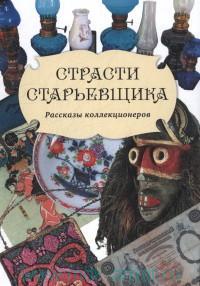
      <![CDATA[<h4>A book about private collections was just published in Russia with a chapter on our collection.</h4>
<img alt="book" src="//cdn.shopify.com/s/files/1/0231/2787/files/891513_1_large.jpeg?5991540375755276533" style="float: left;"><br>
<h4>It is in Russian and consists of six chapters on various collectors and their collections. The  book title can be translated as "Passions of an Antiques Collector"</h4>
<h4>Our chapter is "Many-faced masks form the Raskin Collection" , written by Vera Raskin.</h4>
<h4>Книга "Страсти старьевщика" в магазине "Москва" на Тверской. <a href="https://moscowbooks.ru/book.asp?id=844508" target="_blank" data-saferedirecturl="https://www.google.com/url?hl=en&amp;q=https://moscowbooks.ru/book.asp?id%3D844508&amp;source=gmail&amp;ust=1465404779164000&amp;usg=AFQjCNF0ka5xtsVpg_lHzyix6H3_iY8vdQ">https://moscowbooks.ru/book.<wbr></wbr>asp?id=844508</a> </h4>
<div>
<h4> <a href="http://www.mdk-arbat.ru/bookcard?book_id=891513" target="_blank" data-saferedirecturl="https://www.google.com/url?hl=en&amp;q=http://www.mdk-arbat.ru/bookcard?book_id%3D891513&amp;source=gmail&amp;ust=1465404779164000&amp;usg=AFQjCNEe5gA2_UZm-Ssm1gQeTmFVon_5PA">http://www.mdk-arbat.ru/<wbr></wbr>bookcard?book_id=891513</a>
</h4>
</div>]]>
    </content>
  </entry>
  <entry>
    <id>https://arttribal.com/blogs/african-art-blog/17955488-kifwebe-mask</id>
    <published>2015-03-31T14:25:00-04:00</published>
    <updated>2015-03-31T14:25:58-04:00</updated>
    <link rel="alternate" type="text/html" href="https://arttribal.com/blogs/african-art-blog/17955488-kifwebe-mask"/>
    <title>Kifwebe Mask</title>
    <author>
      <name>Vera Raskin</name>
    </author>
    <content type="html">
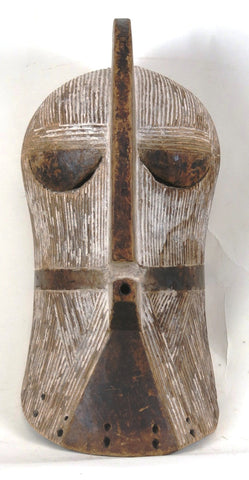
      <![CDATA[<p>In the Songye language, a mask is a kifwebe: this term has been given to masks representing spirits and characterized by striations. The kifwebe masks embodied supernatural forces. The kifwebe society used them to ward off disaster or any threat. The masks, supplemented by a woven costume and a long beard of raffia bast, dance at various ceremonies. They are worn by men who act as police at the behest of a ruler, or to intimidate the enemy. This particular mask is a masculine mask, as it was carved with a central crest. The size of the crest determines the magic power of the mask. Mask, colors, and costume all have symbolic meaning. The dancer who wears the male mask will display aggressive and uncontrolled behavior with the aim of encouraging social conformity, whereas the dancer who wears the female mask display more gentle and controlled movements and is assumed to be associated with reproduction ceremonies. The use of white on the mask symbolizes positive concepts such as purity and peace, the moon and light. The mask had also the capacity to heal by means of the supernatural force it was supposed to incorporate<strong>.</strong></p>
<p><a title="Learn more about this item" href="http://www.zyama.com/songye/index.htm" target="_blank">Learn more...</a></p>
<p><img src="//cdn.shopify.com/s/files/1/0231/2787/files/African_Mask_Kwifebe_N14S11M802_1_large.JPG?14511038943680419659" height="299" width="155"></p>]]>
    </content>
  </entry>
  <entry>
    <id>https://arttribal.com/blogs/african-art-blog/17955456-ejagham-crest-with-moving-limbs</id>
    <published>2015-03-31T14:19:00-04:00</published>
    <updated>2015-03-31T14:19:56-04:00</updated>
    <link rel="alternate" type="text/html" href="https://arttribal.com/blogs/african-art-blog/17955456-ejagham-crest-with-moving-limbs"/>
    <title>Ejagham Crest with Moving Limbs</title>
    <author>
      <name>Vera Raskin</name>
    </author>
    <content type="html">
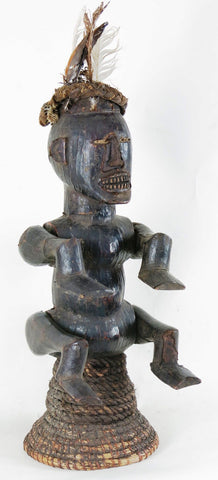
      <![CDATA[<p><strong>The only people in Africa to make antelope-skin covered crests and masks are the Ejagham. They live in the Cross River region in southeast Nigeria, and Cameroon. Although it looks like a sculpture, this crest mask is attached to the basketry cap, which is held on the wearer’s head.  </strong></p>
<p> <strong>An elaborate trading network along the river formerly involved the selling of rights to Ngbe and other associations, including the right to perform their various masquerades. The group selling the rights would perform the masquerade in the village of the buyer group, then return home, leaving their masks and costumes behind. The river trade thus helped to spread related art events and art objects among diverse people over a broad area, though changes in both form and meaning took place as local copies of masks and costumes were made. When the mask is made fresh animal skin is stretched and tacked over the soft wood from which it is carved. After the skin dried, it was stained with pigments made from leaves and bark. Feathers, quills, and other objects would have ornamented the mask in performance. It is presumed that all masks represented ancestors. </strong></p>
<p><strong> <img src="//cdn.shopify.com/s/files/1/0231/2787/files/Raskin_Private_Collection__CAMEROON15_2_large.JPG?879649397689393242" height="244" width="111"></strong></p>
<p><strong>This crest from the Raskin Private Collection collection has been through some wear and tear – and you can see where the leather was ripped. Quite amazing!</strong></p>]]>
    </content>
  </entry>
  <entry>
    <id>https://arttribal.com/blogs/african-art-blog/15704288-kongo-across-waters-at-the-princeton-museum</id>
    <published>2014-10-25T16:50:00-04:00</published>
    <updated>2014-11-05T17:24:44-05:00</updated>
    <link rel="alternate" type="text/html" href="https://arttribal.com/blogs/african-art-blog/15704288-kongo-across-waters-at-the-princeton-museum"/>
    <title>Kongo Across Waters at the Princeton Museum</title>
    <author>
      <name>Vera Raskin</name>
    </author>
    <content type="html">
      <![CDATA[<p>I visited Kongo Exhibit at the Princeton Art Musuem this week. I discovered so much! My favorite objects were a glass bottle and a walking cane – both transformed by ritual specialists into powerful Nkisi. Additionally, the curators of the show explained symbolism of poses and clothing of Kongo sculpture. The show traces elements of Kongo art from Africa to the US. These elements include ceramics, walking staffs, burial grounds and musical and dance traditions.</p>
<p> </p>
<p><strong><a href="http://artmuseum.princeton.edu/fr/art/exhibitions/1619">Kongo across the Waters</a></strong>, at Princeton University Art Museum.</p>
<p><span>October 25, 2014 – January 25, 2015</span></p>
<br href="http://artmuseum.princeton.edu/fr/art/exhibitions/1619">
<p> </p>
<p> </p>
<p> </p>]]>
    </content>
  </entry>
  <entry>
    <id>https://arttribal.com/blogs/african-art-blog/15642320-ndop-kuba-figures</id>
    <published>2014-10-14T13:53:00-04:00</published>
    <updated>2014-10-15T11:42:40-04:00</updated>
    <link rel="alternate" type="text/html" href="https://arttribal.com/blogs/african-art-blog/15642320-ndop-kuba-figures"/>
    <title>NDOP Kuba Figures</title>
    <author>
      <name>Vera Raskin</name>
    </author>
    <content type="html">
      <![CDATA[<p>Among the best known of Kuba art forms are royal portrait figures, <em>ndop</em>. Kuba kings are commemorated in conventionalized carved wooden statues. They are idealized representations of the king. Their goal is not to depict the physical features of the subject, but to portray them in the "archaic style". They are usually graced by traditional royal headdress and distinguished by details of the royal regalia and by the <em>ibol</em>, an object situated in front of the ruler. It is the <em>ibol</em>  that symbolizes specific ruler and his reign. This statue has a semi-circular object in front of it. It might be a divination board or a mankala game board on platform. There is a Ndop Booshong statue at the British Museum, depicting the founder of Kuba Matoon dynasty of the early 17th century - he has an <em>ibol</em> of a very similar mankala in front of it.</p>&#13;
<p> </p>&#13;
<p> </p>&#13;
<p>                               <img src="//cdn.shopify.com/s/files/1/0231/2787/files/African_Statue_Raskin_Collection_NDOP_Small3_small.JPG?4694" />          <img src="https://cdn.shopify.com/s/files/1/0231/2787/files/African_Statue_Raskin_Collection_NDOP_Small2_aa38ced8-d6b4-4fed-93a6-4c2e22abbdb6_small.JPG?4693" /></p>&#13;
<p> The ceremony of royal investiture included a tradition where the new king recited all the names of his predecessors. Thus names of all the Kuba kings are known.</p>&#13;
<p> Kuba traditions maintain that if the <em>ndop</em> figure becomes damaged, an exact copy is made to replace it.</p>&#13;
<p>"Heroic Africans" -  the 2011 Exhibit at the New York Metropolitan Museum of Art displayed an impressive number of seated ndop statues.</p>&#13;
<br />&#13;
<p> </p>]]>
    </content>
  </entry>
  <entry>
    <id>https://arttribal.com/blogs/african-art-blog/15567528-mancala-game-board</id>
    <published>2014-10-02T09:42:00-04:00</published>
    <updated>2014-10-02T09:43:34-04:00</updated>
    <link rel="alternate" type="text/html" href="https://arttribal.com/blogs/african-art-blog/15567528-mancala-game-board"/>
    <title>Mancala Game Board</title>
    <author>
      <name>Vera Raskin</name>
    </author>
    <content type="html">
      <![CDATA[<p>The game of “count and capture” is known by many names including Mancala, Bao, Owela, Omweso, Chuba. There are over 200 variations on rules. Game names are often based on the type of wood used for the board. Variations of boards could have 2, 3 or 4 rows of holes. When no board is at hand, players use rows of holes in the ground and small fruit, nuts or pebbles as game pieces.</p>
<p><img src="//cdn.shopify.com/s/files/1/0231/2787/files/Private-Raskin_Collection_SOngye_Game_Board_1_compact.JPG?4690" /></p>
<p>The game and its various boards attract players, anthropologists and collectors. One of the first publications on the Mancala was by Stewart Cullin in 1894. Most of you are familiar with the name and work of this important anthropologist as the founder of Brooklyn Museums’ African Art Gallery. He suggested that the game has divination at its origin. </p>
<p> </p>
<p>Museums throughout the world display African Game Boards. Some are listed below. One of the largest boards reportedly is 6 ft tall held at the Scottish Lodge in Edinburgh. Several institutions organized special exhibits dedicated to Mancala Game Boards, including the 2008 Mancala Exposition at the UN Headquarters.</p>
<p> </p>
<p>Please contact these museums in advance to ensure access to their game boards as not all Mancalas are on public display and some may be held in the archives:</p>
<ul>
<li><a href="https://www.google.com/search?client=firefox-beta&amp;hs=QM2&amp;rls=org.mozilla:en-US:official&amp;channel=sb&amp;q=Musee+royale+de+l%27Afrique+Centrale,+Tervuren,+Belgium&amp;spell=1&amp;sa=X&amp;ei=LRQsVLPJNYT0yAT3rYE4&amp;ved=0CBwQBSgA"><span>Musee royale <strong><em>de l'Afrique</em></strong> <strong><em>Centrale</em></strong>, Tervuren, Belgium</span></a></li>
<li><span>Musée du quai Branly, Paris, France (reportedly over 40 boards)</span></li>
<li>Musee d'ethnographie de Geneve, Switzerland (11 boards)</li>
<li>British Museum (reportedly has the largest collection of Mancala game Boards – 119!)</li>
<li>American Museum of Natural History in New York (19 African Mancala type game boards)</li>
<li><span>University of </span><em>Pennsylvania</em><em> Museum of Archaeology and Anthropology, Philadelphia, PA</em></li>
<li>Museo Afro-Brasiliero, Salvador, Bahia, Brazil</li>
</ul>
<p>Sources:</p>
<p>(1) H.J.R. Murray, <em>A History of Board Games Other Than Chess</em>, Oxford: Clarendon Press, 1952.</p>
(2) <span>Stewart Cullin</span>, Mancala, the National Game of Africa. <em>Annual Report of the U.S. National Museum</em> 1894<sup>.</sup><br />(3)Alexander J. De Voogt, <em>Mancala Board Games</em>, British Museum Press; 1st Ed. edition (July 1997)
<p><span><span>(4) </span></span><span><a href="http://www.gamesmuseum.uwaterloo.ca/VirtualExhibits/countcap/pages/omwe.html">http://www.gamesmuseum.uwaterloo.ca/VirtualExhibits/countcap/pages/omwe.html</a></span></p>]]>
    </content>
  </entry>
  <entry>
    <id>https://arttribal.com/blogs/african-art-blog/11825381-edan-bronze-cast</id>
    <published>2014-01-24T12:16:59-05:00</published>
    <updated>2014-01-24T12:21:47-05:00</updated>
    <link rel="alternate" type="text/html" href="https://arttribal.com/blogs/african-art-blog/11825381-edan-bronze-cast"/>
    <title>Edan Bronze Cast</title>
    <author>
      <name>Vera Raskin</name>
    </author>
    <content type="html">
      <![CDATA[<p>Eldest and wisest community members among the Yoruba in Nigeria belong to the <em>Ogboni</em>  society. Both men and women can be selected to participate. They act as a court of law. <em></em></p>
<p>As they enter the cult house, each member has to make a special salute: they prostrate on the ground, fists clenched together, left over right, hiding the thumbs (as on the male figure here). The elder kisses the ground three times, announcing<em> "the Mothers breasts are Sweet" </em></p>
<p><em>Edan</em> are the among the most fascinating of the Yoruba sculptures - they are the paired cast figures of the <em>Ogboni</em>. Usually joined by a chain at the top, <em>Edan</em> represent the original founding couple. By extension, they represent the community and witnesses to the ancient law. The seated <em>Edan</em> figures here are shown performing ritual acts as directed by their position in the society. Notice the clenched fists, the breasts held, the characteristic crescents on the foreheads, facing in the opposite directions representing duality, complementarity and doubling.</p>
<p>The third person portrayed in this casting might illustrate  the expression of "two <em>Ogbon</em>i it becomes three"</p>
<p> </p>
<p>Featured item <img src="//cdn.shopify.com/s/files/1/0231/2787/files/1182_African_Bronze_Mumuye_1_compact.JPG?4654" />Y12M2B1182</p>
<p>http://arttribal.com/collections/this-week-40-off/products/mumuye-bronze-good-luck-wedding-charm</p>
<p> </p>
X]]>
    </content>
  </entry>
  <entry>
    <id>https://arttribal.com/blogs/african-art-blog/11613265-hair-styles-of-yoruba-and-their-sculptures</id>
    <published>2014-01-15T16:04:52-05:00</published>
    <updated>2014-01-16T10:18:25-05:00</updated>
    <link rel="alternate" type="text/html" href="https://arttribal.com/blogs/african-art-blog/11613265-hair-styles-of-yoruba-and-their-sculptures"/>
    <title>Hair Styles of Yoruba and their Sculptures</title>
    <author>
      <name>Vera Raskin</name>
    </author>
    <content type="html">
      <![CDATA[<p>What can you tell by looking at the coiffure of a Yoruba mask or statue?</p>
<p>The purpose for masks and sculptures is to mediate between the present and the spiritual world. For this reason the hairstyles on masks and statues are usually those worn by the priests of  the local <em>orisa</em> cult.  Conical raised up - that would be the style.</p>
<p><img style="display: block; margin-left: auto; margin-right: auto;" src="//cdn.shopify.com/s/files/1/0231/2787/files/yaruba_bowl_small_small.jpg?4642" /><img style="float: left;" src="https://cdn.shopify.com/s/files/1/0231/2787/files/African_Figure_Yoruba_R1Y6S388_medium.jpg?4640" /></p>
<p><img style="float: right;" src="https://cdn.shopify.com/s/files/1/0231/2787/files/African_Bronze_Ife_R9Y9B575_small.jpg?4641" /></p>
<p>Babies usually have their heads shaved at the naming ceremony (at 7 or 9 days after birth). With the exception of twins, who are considered sacred and thus their heads are not shaved. Twin boys and girls wear the same coiffures regardless of their sex.</p>
Boys and young men shave off their hair and mustache until old age.
<p> </p>
<p> </p>
<p>Girls and women wear their hair long and braided. Corn rows of all varieties are common, some quite intricate. Coiffures of unmarried women are not as elaborate as hairstyles of their married counterparts.</p>
<p>By looking at a sculpture can you decipher the status of the man by their hair? Yes. Rich men and princes wore three patches of hair in the front, center and back of the head. Hunters and leaders of the guard wore a braid in the middle of the head, long, hanging to the left side. Often it was placed inside a cloth or a cap. Many Yoruba masks and sculpted heads portray such hair style. In the past, to distinguish them from other men, royal messengers would shave half of their heads.</p>
<p> </p>
<p> </p>
<p> </p>
<p> </p>]]>
    </content>
  </entry>
  <entry>
    <id>https://arttribal.com/blogs/african-art-blog/11462105-a-different-baule-statue</id>
    <published>2014-01-10T10:11:58-05:00</published>
    <updated>2014-01-10T10:23:58-05:00</updated>
    <link rel="alternate" type="text/html" href="https://arttribal.com/blogs/african-art-blog/11462105-a-different-baule-statue"/>
    <title>A Different Baule Statue</title>
    <author>
      <name>Vera Raskin</name>
    </author>
    <content type="html">
      <![CDATA[<p><span style="color: #400000;" color="#400000">The Baule sculptural tradition includes a figure which is the opposite of the polished and highly detailed ansestor statues we normally associate with Baule art. This "other" Baule figure represents one of the "humbler" deities. It has the head of a monkey and is called <i>Gbekre </i>or <i>Mbotumbo. </i>This deity is  judge of hell and helper of those in need, protector of the living against their enemies<i>.</i>  Gbekre is roughly carved in unstained wood. They combine human and animal traits in such a way that it is nearly impossible to separate them. Besides, they are used for many different cults,including trance divination cult.</span></p>
<p><span style="color: #400000;" color="#400000"><img id="fancybox-img" alt="Baule, Figure of the Monkey God Gbekre" src="http://cdn.shopify.com/s/files/1/0231/2787/products/african_figure_baule_U10B12S808_3_1024x1024.jpg?v=1379797014" width="143" height="330" /></span></p>]]>
    </content>
  </entry>
  <entry>
    <id>https://arttribal.com/blogs/african-art-blog/11216201-passport-masks</id>
    <published>2013-12-31T12:31:43-05:00</published>
    <updated>2014-01-06T13:25:24-05:00</updated>
    <link rel="alternate" type="text/html" href="https://arttribal.com/blogs/african-art-blog/11216201-passport-masks"/>
    <title>Passport masks</title>
    <author>
      <name>Vera Raskin</name>
    </author>
    <content type="html">
      <![CDATA[<a href="http://arttribal.com/products/dan-passport-mask"><img src="//cdn.shopify.com/s/files/1/0231/2787/files/African_Mask_Dan_N13D8M357_1_small.jpg?4602" style="float: left; margin-right: 1em;" title="Dan Passport Mask" /></a>
<p>Not all masks are made to be worn on the face.  Dan carried small masks - <i>masquettes</i> (<em>ma go</em>). They were sewn onto a piece of cloth and kept in a leather pouch and even worn at the back. These masquettes embody protective spirits. Sometimes they are used as a sacred object for oath taking and making sacrifices. They are usually small copies (less than 8") of full-sized masks whose spirit may be contacted by manipulating the the small mask The "passport" masks may also act as witnesses during initiation ceremonies and protect the owner when he is away from home.</p>
<p>Featured item: <a href="http://arttribal.com/products/dan-passport-mask">Dan Passport Mask</a> SKU: #13D8M357</p>]]>
    </content>
  </entry>
  <entry>
    <id>https://arttribal.com/blogs/african-art-blog/9389901-baga-bansongyi-is-this-a-mask-or-a-sculpture</id>
    <published>2013-12-26T00:00:00-05:00</published>
    <updated>2014-01-06T13:30:43-05:00</updated>
    <link rel="alternate" type="text/html" href="https://arttribal.com/blogs/african-art-blog/9389901-baga-bansongyi-is-this-a-mask-or-a-sculpture"/>
    <title>Baga Bansongyi - is this a mask or a sculpture?</title>
    <author>
      <name>Vera Raskin</name>
    </author>
    <content type="html">
      <![CDATA[<a href="http://arttribal.com/products/baga-bansongyi-head-piece-1"><img style="float: left; margin-right: 1em;" src="//cdn.shopify.com/s/files/1/0231/2787/files/African_Mask_Baga_G13B11M2501_1_fadd3ae4-4749-4304-8fb8-095f71890ad5_small.jpg?4601" /></a>
<p>Have you ever wondered what these were? Is this a mask or a sculpture? How was it used?</p>
<p>It is an emblem of Bansongyi, men's secret association. This headpiece, also called <em>bansongyi</em>, presents a python standing upright. Baga People of Guinea carve these snake headpieces which can be as high as 9 feet.</p>
<p>Bansongyi lives in the sacred forest and emerges when it is time to begin the boys' coming-of-age rites. As receptacle for the most powerful spirit, <em>bansongyi</em> is believed to be the strongest adversary of sorcery and destructive forces that could endanger the well-being of the village. <em>Bansongyi</em> also appears at the funeral celebrations of the most important members of the community. They were held on the shoulders of a dancer.This particular mask is unusual because its coloration resembles the coloration of a real snake.</p>
<p>Featured item: <a href="http://arttribal.com/products/baga-bansongyi-head-piece-1">Baga Bansongyi</a> SKU: #G13B11M2501</p>]]>
    </content>
  </entry>
  <entry>
    <id>https://arttribal.com/blogs/african-art-blog/9389763-welcome-to-arttribal-blog-a-blog-about-all-things-african-art</id>
    <published>2013-10-03T15:39:23-04:00</published>
    <updated>2013-10-07T17:06:46-04:00</updated>
    <link rel="alternate" type="text/html" href="https://arttribal.com/blogs/african-art-blog/9389763-welcome-to-arttribal-blog-a-blog-about-all-things-african-art"/>
    <title>Welcome to ArtTribal blog...a blog about all things African Art</title>
    <author>
      <name>Vera Raskin</name>
    </author>
    <content type="html">
      <![CDATA[<p>Dear Collector, Welcome to your New Website! We inhabited our original web site for 15 years. While the new site doesn't look exactly the same as our old site - this one is a much more convenient place!</p>
<p>Let yourself be delighted, inspired and moved by African tribal Art!</p>
<p>How will you, our client benefit from this new web site?</p>
<ul>
<li>Receive 10% off on a purchase of $500 or more. Please use discount code: 10PERCENTOFF during checkout.</li>
<li>Receive 15% off on a purchase of $1000 or more. Please use discount code: 15PERCENTOFF during checkout.</li>
<li>This site is easier to navigate</li>
<li>It is easier to locate items - by size, price, tribe or collection</li>
<li>You can <a href="/collections/all">buy African tribal art</a> straight from ArtTribal.com</li>
<li>You can <a href="/pages/contact-us">contact us</a> via this web site</li>
</ul>
<p>No cons!</p>
<p> If there is something you can't find - please <a href="/pages/contact-us">e-mail or call us</a>.</p>]]>
    </content>
  </entry>
</feed>
