<?xml version="1.0" encoding="UTF-8"?>
<feed xml:lang="en-US" xmlns="http://www.w3.org/2005/Atom" xmlns:opensearch="http://a9.com/-/spec/opensearch/1.1/" xmlns:s="http://jadedpixel.com/-/spec/shopify">
  <id>http://www.barebiology.com/blogs/blog.atom</id>
  <link rel="alternate" type="text/html" href="http://www.barebiology.com/blogs/blog"/>
  <link rel="self" type="application/atom+xml" href="http://www.barebiology.com/blogs/blog.atom"/>
  <title>Bare Biology - The Blog at Bare Biology</title>
  <updated>2016-01-16T16:26:00+00:00</updated>
  <author>
    <name>Bare Biology</name>
  </author>
  <entry>
    <id>http://www.barebiology.com/blogs/blog/83908801-a-day-in-the-life-of-a-mother-and-entrepreneur</id>
    <published>2016-01-16T16:26:00+00:00</published>
    <updated>2016-01-16T16:26:16+00:00</updated>
    <link rel="alternate" type="text/html" href="http://www.barebiology.com/blogs/blog/83908801-a-day-in-the-life-of-a-mother-and-entrepreneur"/>
    <title>A day in the life of a mother and entrepreneur</title>
    <author>
      <name>Melanie Lawson</name>
    </author>
    <content type="html">
      <![CDATA[<h2>How do you do it?</h2>
<p>The question I get asked most frequently is “how do you do it?” This is referring to the fact that I run Bare Biology and am a mum to three young children and a wife to a very busy, commuting, high pressure job holding husband who’s rarely at home.</p>
<p>My answer? I don’t do it! Well, that’s how I feel anyway. I think from the outside it looks like I am ‘doing’ it, because of course that’s the image I want to portray. Inside I’m a gibbering wreck. I feel like I’m constantly on the verge of some kind of apocalyptic meltdown and one day I’m going to drop a ball. No, not a ball. A planet. Something monumental. Like I’ll forget to buy Birthday presents for my children or I’ll leave the house with my slippers on and curlers in my hair (to someone as vain as me, that is a monumental disaster).</p>
<p>I told someone the other day that I’m going to write down all the things I do in a typical day and I bet that millions of other mothers would write a very similar list. I think mothers are amazing super humans, of course I don’t think I’m one because my inner critic tells me I’m useless all the time; but we ARE amazing. No offence blokes, I love you, but you couldn’t do what we do. Nuh uh, not ever.</p>
<p>So, for those that are interested in a day in my life (!?) below I’ve recounted an itemized account of a standard day I had recently.</p>
<p>The broader question or point is this, why do we do this to ourselves? I only have myself to blame. How do we reconcile our ambitions and today’s cult of the busy with leading a happy and healthy life? We all know that stress is the biggest killer and the biggest risk to our health, yet we pile it upon ourselves. I feel like I’m running just to stand still, all of the time. I love my life and I wouldn’t change it, yet it makes me feel quite unwell sometimes and I wonder if I’ll look back when I’m old and wonder what the hell I was thinking.</p>
<p>I’m never going to be less stressed or less busy unless I start doing a lot less, expecting a lot less and reduce my ambitions and goals substantially. But I’m not prepared to do that so I just have to learn to enjoy the process, and I think that’s all any of us can do. Enjoy the journey, accept that we chose the lives we live, stop every now and then to notice the good things and count our gratitudes, then suck it up and get on with it.</p>
<h3>So, here’s a day in the life of an entrepreneur/business owner/mother/wife/woman</h3>
<p>6am: get up, shower, apply full make up and blow dry hair.</p>
<p><span>6.30: have breakfast.</span></p>
<p><span></span>6.45: drag three kids (aged 5, 7 &amp; 9) out of bed and deal with several tantrums. Get uniform out, quickly make their beds, open curtains etc…deal with lots of moaning and complaining, try to cajole kids and explain that life is tough and school is non negotiable.</p>
<p>7: make kids breakfast, which sounds easy, but they all want different things and take an age to decide. They seem to think they live in the Mandarin Oriental and that I can whip up a freshly baked croissant or some French toast like I’m some kind of magician.</p>
<p><span>7.15: make snacks and fill water bottles, make sure school bags are packed, any forms or requests for money from the school are filled out, make sure sports kits are complete and the right things are in the right bags. Run round the kitchen clearing up, wiping up milk, loading dish washer etc…</span></p>
<p><span>7.30: start shouting at the kids to hurry up, brush teeth and get dressed. Shout some more, then nearly cry a bit, then literally pull at my hair, then tell them that I’m going to have a heart attack and that we can’t carry on like this.</span></p>
<p><span>7.45: pile them plus their 50,000 bags into the car, remember to put the alarm on, lock up and make sure I have shoes on.</span></p>
<p><span>8: drop eldest child at her school.</span></p>
<p><span>8.05: break up a fight in the back of the car between my other two (it was about one wanting to listen to music and the other wanting silence).</span></p>
<p><span>8:10: deal with mini meltdown from youngest child because I can’t park at the school so have to use the drop off service where a teacher grabs your kids out the car for you. Dash back to my eldest’s school for a meeting with her dyslexia teachers, for which I’m late as it’s pouring with rain so there’s nowhere to park. Arrive drenched (so much for the blow dried hair) and have a very brief but intense meeting.</span></p>
<p><span>8:45: dash home, grab a few things and drive to my accountant’s office.</span></p>
<p><span>9:30 to 11: have a meeting with accountants to try to learn how to use my accountancy software (I do all my own book keeping and it’s not something I particularly enjoy/I’m rubbish at it).</span></p>
<p><span>11 to 2: blast through as many emails as possible, have several catch ups with my lovely team member, put through some retail orders, raise some invoices, reply to customer query emails, answer a few telephone calls, think about how we can sell more product, check I can afford to pay some bills.</span></p>
<p><span>2 to 3: telephone conference call with Search Engine Optimisation consultant and my website designer/guru. Fascinating conversation with two lovely guys. Excited about what we can do with the website and to get our name out there more.</span></p>
<p><span>3: grab snacks for three kids, jump in car and drive to school. Can’t park, pouring with rain. Find parking space. Try not to steal daughter’s flapjack. Pick up kids and drive home in foul weather. All three kids trying to tell me stuff all at the same time and trying to answer them all and make sure they think I was listening/interested. All the while, my eldest insists on playing songs from Matilda the musical at full blast.</span></p>
<p><span>4:30: arrive home, drag kids in, take all the bags in. Coats and shoes off, nag to get hands washed and then homework…. Groan. Break up fight about who is going to have the piano lesson first.</span></p>
<p><span>4:40 to 5:30: incredibly glamorous, young, childless piano teacher arrives looking stunning and relaxed. I feel like a hag from hell. One child has piano lesson while I nag the other one to do homework. Search through fridge looking for something healthy and nutritious, yet quick and easy, that the kids would actually eat. Start making kids dinner, youngest tells me she has pooed her pants. Clean her up, get rid of pants, run bath, put her in bath. Oversee switchover for piano lesson and nag second child to do homework. Make sure youngest is still alive and hasn’t drowned in bath. Drag her out of bath and put on PJs.</span></p>
<p><span>5:30: pay piano teacher and do small talk for a bit so as not to seem like total hag from hell. All the while sucking in my post three kids belly and fiddling with my awful hair that was ruined by earlier downpour.</span></p>
<p><span>5:45: feed kids. They complain about the dinner. I hate this Mummy. Why do we always eat this Mummy? Bla bla bla. Cajole them to eat dinner and feel guilty about the fact I don’t make them amazing dinners every night and spend all weekend batch cooking like the Hemsley sisters. Oh yeah, they don’t have kids.</span></p>
<p><span>6:15: clear up the carnage of food on the floor, plates and pots and pans. Tell kids they can watch TV if they get into PJs. Break up another fight. God my kids fight a lot! And I’ve probably under reported the fighting.</span></p>
<p><span>6:30: reply to some more emails and do a bit more work. Feel guilty that the kids are in front of TV and iPad rather than me reading with them or talking to them.</span></p>
<p><span>7:30: Put kids to bed. Oh, the dreaded bed time. And by this time, I am SO hungry I feel like I’m digesting the lining of my stomach. I had better be at least 2 kilos lighter soon. Kids complain they don’t want to go to bed. Then one of them does a poo and needs bottom wiping. Meanwhile, the other two disappear and think it’s hilarious to hide. I start shouting again, a lot. Husband is away on business so I know the cavalry isn’t arriving. Grit my teeth and focus on fact that I can eat a bowl of watery soup and watch Daily Politics on catch up (yes, I’m that sad. It’s my Eastenders). Finally get kids into bed after much shouting and some crying, them and me.</span></p>
<p><span>7:45: kiss them good night and feel guilty about all the shouting I do and how little attention I give them. </span></p>
<p><span>8:00: try to eat dinner but have to go upstairs several times to tell kids to get back into bed.</span></p>
<p><span>8:30: do a few more emails, look at diary for next day, have minor panic attack at amount of work.</span></p>
<p><span>8:30: a bit of TV then bed at 9:30.</span></p>
<p><span>Don’t sleep well because my husband is away so I’m imagining various murderers trying to break in.</span></p>
<p><span>4:30AM: youngest gets into my bed because of a bad dream. She fidgets and snores so I don’t get back to sleep. </span></p>
<p><span>6AM: off we go again!</span></p>
<p>If you haven’t nodded off from the boredom and you’ve made it this far, well done! Any of it sound familiar?</p>
<p>So, to answer those questions about ‘how do I do it’ – I just do, but what I (and the rest of us) need to do is remain focused on all the positive and beautiful in my life. And I include my kids fighting in there, if they were ill or physically impaired, they wouldn’t be able to fight. We have to enjoy the journey, because that’s all life is. The finish line is when we die!</p>
<p><span> </span></p>
<p><span> </span></p>]]>
    </content>
  </entry>
  <entry>
    <id>http://www.barebiology.com/blogs/blog/82904321-clean-eating-what-we-really-think-of-it</id>
    <published>2016-01-08T12:17:00+00:00</published>
    <updated>2016-01-08T11:42:32+00:00</updated>
    <link rel="alternate" type="text/html" href="http://www.barebiology.com/blogs/blog/82904321-clean-eating-what-we-really-think-of-it"/>
    <title>Clean eating &amp; what we really think of it...</title>
    <author>
      <name>Melanie Lawson</name>
    </author>
    <content type="html">
      <![CDATA[<h2>The latest diet craze, clean eating, has been hitting the headlines recently and for good reason.</h2>
<p>It's fashionable, it's all over Instagram (18.5 million hashtags), it's the latest label for the fitterati and the fitfluential; so we're probably going to annoy a lot of people now and cause offence.  Here goes...</p>
<p>What a load of old rubbish.  Now, we're all for eating nutritious food, but calling it <strong>clean</strong>?  As opposed to what, dirty?  Immoral?  Ok, Ok, it's just a word that is being used to describe a way of eating but the word clean brings up powerful feelings associated with eating.  Feelings of good and bad, right and wrong or virtuous and sinful.  This is not a good thing.</p>
<p> </p>
<p style="text-align: center;"><img alt="Avocado fruit" src="//cdn.shopify.com/s/files/1/0209/7232/files/avocado_large.jpg?15753710718807312796" style="float: none;"></p>
<p>At best it's confusing because there are lots of conflicting views out there about what constitutes 'clean food', and at worst it's dangerous.  We've blogged before about <a href="http://www.barebiology.com/blogs/blog/12424641-are-you-suffering-from-orthorexia" title="Bare Biology Omega 3 blog post on orthorexia eating disorder">orthorexia</a>, an eating disorder where the person affected becomes obsessed with 'healthy food', and it's no joke.</p>
<p>There are a few things to be wary of with any of these ‘ways of eating’ or ‘lifestyles’:</p>
<ul>
<li>The majority of people advocating, selling or promoting them aren’t qualified in nutrition, medicine or anything remotely relevant.</li>
<li>They can be highly restrictive and are generally totally unsustainable.</li>
<li>They can become a form of an eating disorder known as orthorexia.  It's much easier to hide this kind of disorder, disguising another form of control through food as merely being healthy.  </li>
<li>Foods are demonized and categorized as good or bad, which is far too simplistic and leads to emotional issues with food.</li>
<li>Food and eating are life’s greatest pleasure, to be enjoyed rather than obsessed over.</li>
<li>No single diet or way of eating is suitable for everyone. We all have very different digestive systems, gut bacteria, genetics and we all need to adopt a diet that works for us as an individual. For some people, raw food is awful and exacerbates things like Irritable Bowel Syndrome for example.</li>
</ul>
<h3>Can a brownie loaded with dates really be 'good' for you?</h3>
<p>You'll also find examples of recipes that are 'clean' but not in any way vaguely healthy or helpful if you're trying to lose weight for example.  These kind of diets advocate that you shouldn't count calories, that it's the type of food you're eating not the quantity of calories.  To a degree this is true, but you'd have to be exercising like Michael Phelps on a daily basis to burn through the calories in some of the 'clean treats'.  One of the golden rules of eating 'clean' is to avoid refined sugar completely.  Not bad advice.  However, a recipe which includes vast amounts of dates and maple syrup is not going to be doing you, your teeth or your belly fat any favours whatsoever!</p>
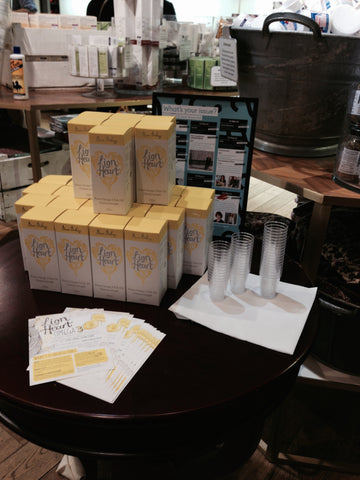
<p>We will be running a couple of workshops next week on a more balanced way to eat for good health, a happy mind and a trim body.  So if you fancy learning more come along to any of the following venues (please note, you have to book in advance at each location):</p>
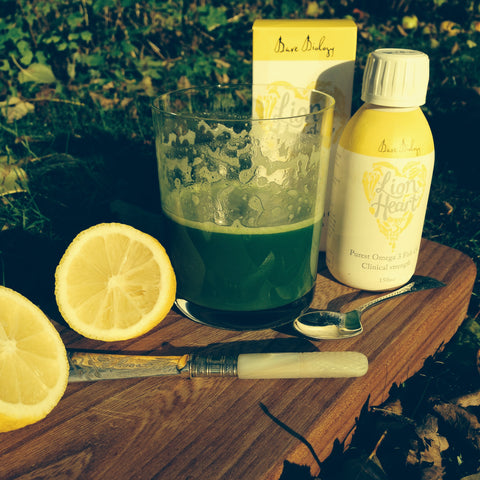
<div style="text-align: center;"><img alt="Bare Biology Lion Heart Omega 3 fish oil with parsley" src="//cdn.shopify.com/s/files/1/0209/7232/files/Bare_Biology_Lion_Heart_Omega_3_fish_oil_supplement_parsley_large.jpg?15900114058208592322" style="float: none;"></div>
<br>
<p><a href="http://www.barrecore.co.uk/manchester" target="_blank" title="barrecore Alderly Edge Bare Biology Omega 3 fish oil nutrition workshop">barrecore Alderly Edge - Tuesday 12th January at 11:30AM.</a></p>
<p><a href="https://www.facebook.com/events/217601228573718/" target="_blank" title="Bare Biology Omega 3 nutrition workshops at Space NK">Space NK Leeds - Tuesday 12th January at 6PM &amp; Space NK Brighton - Thursday 14th January at 6PM.</a></p>
<p>On a final note, we'd like to recommend one of our favourite books on this subject; ‘In defence of food’ by Michael Pollan.  Jolly sensible advice.</p>
<p> </p>]]>
    </content>
  </entry>
  <entry>
    <id>http://www.barebiology.com/blogs/blog/41081793-the-super-green-pregnancy-salad</id>
    <published>2015-08-18T15:40:00+01:00</published>
    <updated>2015-08-18T15:40:03+01:00</updated>
    <link rel="alternate" type="text/html" href="http://www.barebiology.com/blogs/blog/41081793-the-super-green-pregnancy-salad"/>
    <title>The Super Green Pregnancy Salad</title>
    <author>
      <name>Melanie Lawson</name>
    </author>
    <content type="html">
      <![CDATA[<h2><span>What should you eat when you’re pregnant?</span></h2>
<p>When I was pregnant with my first child I felt sick as a dog for the first 3 months. To this day I find oatcakes bring me out in a cold sweat from the memory of chewing through endless boxes of them as they were the only thing I could stomach. If you’re lucky enough that this horrific feeling ends around week 14, you can then start to think about food again. However, it’s a total minefield of conflicting advice, not knowing what you can and can’t eat and stressing about what you’re doing to your poor baby with every mouthful. I vividly remember a trip to Italy when I turned down the cheese board, explaining that I was pregnant. The waiter looked at me like I was insane, clearly Italians don’t worry about listeria. I threw caution to the wind and guzzled some unpasteurized, smelly cheese – heaven. I can report that my child is fine (apart from the occasional twitch). Of course we are in no way advocating ignoring medical and government advice on food safety during pregnancy!</p>
<p>To celebrate the launch of our brand new supplement for preconception, pregnancy and breastfeeding, our lovely resident nutritional therapist has put together a list of key nutrients you should be aiming to get in your diet and an easy recipe at the end to put it all into practice.</p>
<h3>The number one nutrient in pregnancy? You guessed it, Omega 3.</h3>
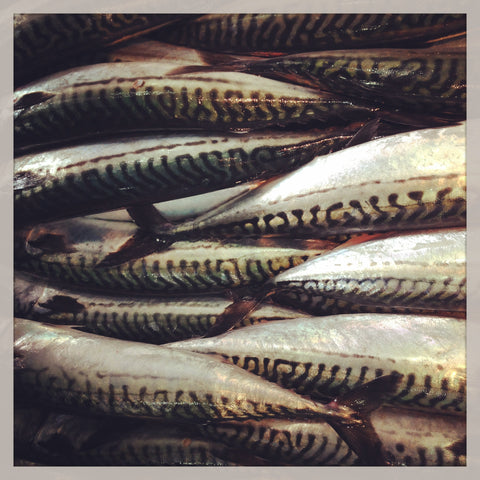
<p>Omega 3, more specifically DHA, is one of the most important nutrients to consume throughout the course of your pregnancy. Omega 3 is an essential fatty acid, with the most optimal forms found in oily marine animals such as sardine, anchovy, mackerel, salmon and herring. According to UK Government recommendations, pregnant women should aim to eat no more than two portions of fish per week to reduce the risk of heavy metal intoxication. A safe and healthy option would be to consume fresh, small, oily fish like anchovy, sardine and mackerel as opposed to larger fish such as tuna and salmon. In contrast to larger fish, they carry less environmental toxins due to their shorter lifespan.</p>
<p style="text-align: center;"><img alt="Mackerel contain Omega 3 " src="//cdn.shopify.com/s/files/1/0209/7232/files/IMG_1585_large.JPG?16652811734280971683" style="float: none;"></p>
<p>Plant based Omega 3 is of course another way to avoid the risk of environmental toxins found in some fish, but there’s a downside. Plant based Omega 3s found in foods such as chia seeds, walnuts, hemp seeds and flaxseeds offer a sub optimal form of this essential fat. They require the body to metabolise the fat into DHA, with only an 8-20% conversion rate in a healthy female. This means you would have to eat a truckload of chia seeds to absorb any meaningful amount of DHA, which we would not advise!</p>
<p>However, it’s important to note that consuming two portions of fish per week may not provide enough DHA to support your baby’s brain development. During pregnancy, DHA is also vital for protecting the health of the mother’s brain. The human brain is comprised of 60% fat, of which a large portion is DHA. Therefore, if there’s not enough DHA circulating in the mother’s blood to pass through the placenta and nourish the baby, the developing fetus leeches this nutrient from the mother’s brain (yes, they suck you dry in more ways than one). This could lead to baby blues, the famous baby brain and more worryingly postnatal depression.</p>
<p>As a result we recommend supplementing your diet with DHA throughout your pregnancy with Bump &amp; Glory. In just one small capsule a day, you obtain 560mg of DHA which is the equivalent of a whole tin of sardines. Each and every batch of our fish oils are independently certified pure and clean by IFOS so you don’t have to worry about any heavy metals or toxins.</p>
<h3>Folic acid is crucial both before and during pregnancy</h3>
<p>Folic Acid is a type of B Vitamin that is critical for baby’s development from the outset of pregnancy. The most bioavailable form of folic acid is known as folate. This essential nutrient may help to prevent neural tube defects in which the brain, spinal chord, skull and/or vertebral column of the baby fail to develop properly early in embryonic life. The UK Daily Recommended Value (DRV) published in 1991 suggests a 50% increase in the Recommended Nutritional Intake (RNI) for folic acid during pregnancy. Therefore, pregnant women are recommended to consume an additional 0.4g of folic acid, particularly in the first twelve weeks. It’s best to start taking it as soon as you start trying for a baby as sometimes it can take a while to realise you’re pregnant!</p>
<p>To increase your folic acid intake, we recommend incorporating spinach, avocados, beans and pulses into your diet. Snacking on dried figs is a great way to bump up your folic acid intake too. Consuming organic, grass-fed red meat once a week will also offer a high source of folate.</p>
<h3>Iron’s important but don’t take a supplement unless you’re advised to</h3>
<p>During pregnancy, plasma volume increases by around 1.5 litres and the red blood cell mass by 200-250ml. This means that throughout a normal pregnancy the large increase in plasma volume causes a fall in haematocrit and blood haemoglobin concentration (that bit was written by the nutritional therapist, can you tell?). Hence, the net iron cost of pregnancy (taking into account that there’s no blood loss from periods) has been estimated at between 2-4mg per day.</p>
<p>Contrary to popular belief, healthy women don’t need to take iron supplements unless advised by a health care professional. Very recent evidence suggests that unnecessary iron supplementation may cause increased maternal blood pressure. Therefore, we recommend you check your iron stores with your GP or Midwife before doing anything. Supporting your iron intake through your diet is a more balanced approach. The best sources of iron in food include organic red meat, pumpkin seeds, beans and dark green leafy vegetables such as kale, spinach and Swiss chard.</p>
<p>Don’t touch liver though! It’s a great source of iron but the advice is not to consume it whilst pregnant due to the high Vitamin A concentration, which has been linked to defects in foetal development.</p>
<h3>What about a calcium supplement?</h3>
<p>Around 30g of calcium accumulates in the fetal skeleton during pregnancy. This represents just over 100mg per day when spread throughout the course of the pregnancy. The ‘calcium cost’ of pregnancy represents only 2-3% of calcium in the maternal skeleton.</p>
<p>Therefore the UK panel on DRVs (daily recommended values) agree that in most women the extra calcium needs during pregnancy can be met through maternal stores, providing the mother has a good diet. There’s also clear evidence that the efficiency of calcium absorption in the gut increases during pregnancy, so there’s no real need to take a supplement if you have a decent diet. Foods that are rich in calcium are organic milk and live bio yogurt, almonds, chia and sesame seeds. Our favourite sources of calcium are from dark green leafy vegetables because they also contain a good balance of magnesium that encourages calcium absorption.</p>
<h3>Aim for balance with lost of vegetables if you can.</h3>
<p>The easiest way to ensure you’re consuming a healthy amount of well-rounded nutrients is to aim to eat 1-2 good handfuls of vegetables with each meal. To broaden your nutrient intake, try to rotate the colour of each portion with each meal too. For example, 1 portion of greens in a breakfast smoothie (we have some great recipes coming soon), a portion of purple vegetables at lunch and a portion of red and orange vegetables with your dinner.</p>
<p>Eat the vegetables with a small source of organic/wild (ideally) or free range protein, such as your two portions of oily fish per week, red meat, chicken and game. For healthy carbohydrate choices, you could swap the pasta or potatoes for fibre rich complex choices such as brown rice, beans and pulses.</p>
<p>The final point to add is do the best you can but don’t get too stressed out, that’s far worse for the baby than one too many tins of tuna or a whole pack of peanut M&amp;M’s (no, I never did that. Ever).</p>
<h3>Super Green Folate Salad</h3>
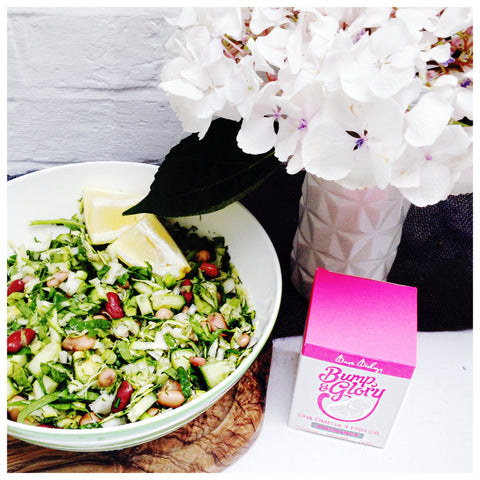
<p>Our nutritional therapist has developed this folate-rich, super green salad that tastes great with fish. Give it a go and if you have a moment, share a photo with us on Instagram. </p>
<p> </p>
<p style="text-align: center;"> <img alt="Super Green Folate Salad featuring Bare Biology Bump &amp; Glory omega 3 for pregnancy" src="//cdn.shopify.com/s/files/1/0209/7232/files/21.08.15_large.jpg?16652811734280971683" style="float: none;"></p>
<p> </p>
<p><strong>Ingredients</strong></p>
<p><em>Please make sure you carefully wash all the vegetables first. This is important generally but especially during pregnancy.</em></p>
<p>1 small courgette, grated</p>
<p>1 spring onion, diced</p>
<p>½ red onion, diced</p>
<p>2 handfuls of spinach, rolled and sliced into ribbons</p>
<p>½ cucumber, diced</p>
<p>½ cup/100 grams of black eye beans</p>
<p>½ cup/100 grams of kidney beans</p>
<p>3 sprigs of dill, chopped</p>
<p>Juice of ½ lemon</p>
<p>Mix together with a big spoon and enjoy.</p>
<p> </p>
<p><em>Please note: All views expressed are our own.  Please consult your GP or Health Care Professional before undertaking any changes in your diet and/or supplements. If you’re in any doubt, it’s always best to get some tests done to check you’re not deficient in any key nutrients such as iron.</em></p>]]>
    </content>
  </entry>
  <entry>
    <id>http://www.barebiology.com/blogs/blog/29303745-what-you-can-do-to-prevent-a-stroke-naturally</id>
    <published>2015-05-22T13:14:00+01:00</published>
    <updated>2015-05-22T12:38:30+01:00</updated>
    <link rel="alternate" type="text/html" href="http://www.barebiology.com/blogs/blog/29303745-what-you-can-do-to-prevent-a-stroke-naturally"/>
    <title>What you can do to prevent a stroke naturally</title>
    <author>
      <name>Melanie Lawson</name>
    </author>
    <content type="html">
      <![CDATA[<h2>Strokes are much more common among the over 40s now</h2>
<p>Strokes are something we associate with old age but new research which has featured prominently in the news recently has identified a rise among people of working age. That means people in their 40s and 50s. I’m in my 40s and I have lots of friends in their 50s, we seem young to me and having a stroke at this age never crossed my mind (no pun intended).</p>
<p>In England in 2014, there were 6,221 hospital admissions for men aged 40 to 54 which is a significant rise in numbers from 14 years earlier (Stroke Association). There’s an awful lot we can do to prevent strokes, you guessed it, through healthy lifestyle. There are various risk factors, with obesity, sedentary lifestyle and unhealthy diet among the main ones.</p>
<h3>What causes a stroke?</h3>
<p style="text-align: center;"><img alt="Bare Biology Omega 3 fish oil for lowering blood pressure" src="//cdn.shopify.com/s/files/1/0209/7232/files/tunnel_large.jpg?11847828518778161588" style="float: none;"></p>
<p>Strokes are caused when blood supply to part of the brain is cut off, depriving it of oxygen and essential nutrients. Without blood, your brain cells can be damaged or worse, they can die. Most strokes are caused by clots cutting off the supply of blood, but some can be caused by bleeding around the brain. The ones caused by blockage are due to our arteries becoming harder and narrower with a build up of fatty deposits called plaques, which happens in older age but also due to our lifestyle. This process is known as atherosclerosis.</p>
<p>Things that accelerate fatty deposits in the arteries include smoking (surprise, surprise), high blood pressure, obesity, high cholesterol, diabetes and excessive amounts of alcohol.</p>
<h2>What you can do about high blood pressure</h2>
<p>About 30% of people in the UK have high blood pressure but most don’t know it. It’s often referred to as the ‘silent killer’ as it’s largely symptomless. If you’re worried, it’s worth getting your pressure checked at the GP, and symptoms include persistent headaches, blurred or double vision, nosebleeds, shortness of breath, nervousness, sweating and difficulty sleeping. I experienced very high blood pressure as a result of having an overactive thyroid and for months I didn’t realise what was wrong. I felt incredibly nervous and jittery, like I’d had 50 Red Bulls. I had shaky hands, couldn’t sleep, constant headaches and could often hear my pulse in my ears at nighttime.</p>
<p>Blood pressure can of course be treated with medication such as beta-blockers and statins are often prescribed if cholesterol levels are high and there is a risk of hardening arteries. However, there are lots of things we can do proactively to keep our blood pressure down and our arteries clear.</p>
<h2>Five things you can do to naturally lower blood pressure</h2>
<p><strong>1.  Cutting right down on caffeine is an easy win.</strong></p>
<p>Most people feel far less anxious, sleep better and are less irritable or emotionally volatile once they cut it out. We get used to feeling that way and just put it down to the stresses of modern life, but we shouldn’t feel like that. I cut right back on cups of tea as I was feeling so anxious all the time and was shouting excessively at my children (that’s normal, I know) and as soon as I switched to decaf, I felt so much calmer.</p>
<p><strong>2.  Stop getting drunk and quit smoking.</strong></p>
<p>Enough said. Boring, I know, but true. Small amounts of alcohol, especially red wine, are considered healthy and can reduce our risk of hardening arteries and high blood pressure. However, it really is small amounts – a tiny glass a day. Massive binge drinking sessions can kill people with high blood pressure, brining on sudden heart attacks, so it really is something to take seriously.</p>
<p><strong>3.  Lose weight and do more exercise.</strong></p>
<p>Yeah, boring and difficult, I know. Again, true.</p>
<p style="text-align: center;"><img alt="Bare Biology Omega 3 fish oil for lowering blood pressure" src="//cdn.shopify.com/s/files/1/0209/7232/files/hatingexercise_large.jpg?11847828518778161588" style="float: none;"></p>
<p> </p>
<p><strong>4.  Cut right down on salt.</strong></p>
<p>We're pretty ahead of the curve here in the UK on this and there are lots of rules about added salt.  Just keep an eye on hidden sources where you don't expect to find salt, like cereals. </p>
<h2>Omega 3 fish oil has been proven to lower blood pressure</h2>
<p><strong>5.  Here’s a really easy one! Take Omega 3 supplements.</strong></p>
<p>You don’t even need to get off the sofa, just pop some capsules. I’m not advocating that supplements shouldn’t be ‘part of a balanced and healthy lifestyle and are in no way intended as a substitute’ but seriously, not many people know that one of the best ways to reduce blood pressure is by increasing your Omega 3 intake.</p>
<p>The EFSA (European Food Safety Authority) recently issued an approved health claim for Omega 3 which is that 3,000mg per day of EPA &amp; DHA combined can reduce blood pressure. These claims are only approved once extensive research has been carried out and there is very strong evidence. Our liquid <a href="http://www.barebiology.com/products/lion-heart-omega-3-fish-oil" target="_blank" title="Shop for high strength Omega 3 fish oil Lion Heart">Lion Heart</a> is the only product on the market that delivers this dose in one teaspoon. If you tried to get this amount from a well known high street brand, you’d have to take 28 capsules.</p>
<p>There are numerous clinical trials which support this health claim, including one which analysed 90 randomized trials and concluded that fish oil reduced systolic blood pressure by 2.1mmHg and diastolic blood pressure by 1.6mmHg and the median dose was 3,700mg of fish oil per day.*</p>
<p>Omega 3 has also been proven to reduce the risk of heart attack due to various factors and is prescribed at high doses to patients who are at risk of, or have suffered from one. A study carried out by Harvard University found that people with high levels of Omega 3 in their bodies have an 80% reduced risk of heart attack.</p>
<p>So, in conclusion, the good news is there’s an awful lot we can do to proactively prevent the risk of stroke and in most cases the causes are lifestyle related. It’s easy to take our health for granted and we don’t think that strokes or heart attacks are relevant to us until we get over a certain age, but we must take care of ourselves as we’re pretty scuppered without a heart or functioning brain!</p>
<p> </p>
<p><span style="color: #999999;">* Geleijnse JM, Giltay EJ, Grobbee DE, et al. Blood pressure response to fish oil supplementation: metaregression analysis of randomized trials. J Hypertens. 2002 Aug;20(8):1493-9.</span></p>
<p><span> </span></p>
<p><span> </span></p>]]>
    </content>
  </entry>
  <entry>
    <id>http://www.barebiology.com/blogs/blog/28283457-helping-your-children-with-exam-stress</id>
    <published>2015-05-14T11:39:00+01:00</published>
    <updated>2015-05-14T11:01:03+01:00</updated>
    <link rel="alternate" type="text/html" href="http://www.barebiology.com/blogs/blog/28283457-helping-your-children-with-exam-stress"/>
    <title>Helping your children with exam stress</title>
    <author>
      <name>Melanie Lawson</name>
    </author>
    <content type="html">
      <![CDATA[<h1>Could a decent breakfast be the answer?</h1>
<p>The news this morning of the growing number of children who are suffering from exam stress has triggered this blog post because, as usual, there was no mention of the role of good nutrition in the basic function of being able to concentrate, broader mental health and resilience to stress.</p>
<p>I personally don’t think that children are under any more academic pressure than they used to be, in fact (controversially perhaps) I think children have an easier time in many respects. When I were a lad and all that… we had corporal punishment, the chilling prospect of being summoned to your father’s study to hear your school report and a general fear of adults. In my primary convent school, we had a diminutive but terrifying French nun called Sister Marie Claire, and her favourite way to keep us in check was to line the whole school up in the playground, position the naughty child front and centre, remove his or her pants and administer several sharp smacks. The slapping of the flesh would resonate around the playground followed by the stifled yelp of the red faced, mortally embarrassed and shamed child. We would all flinch and grimace while secretly thanking God it wasn’t us up there. OK, we didn’t have social media and computer games adding to our woes but there was plenty of bullying that went on.</p>
<p style="text-align: left;"><img alt="Bare Biology Super Hero omega 3 fish oil for children" src="//cdn.shopify.com/s/files/1/0209/7232/files/School_large.jpg?7321022444654921453" style="float: none; display: block; margin-left: auto; margin-right: auto;"></p>
<p style="text-align: left;">Exam stress isn’t going away and nor should it, our schools and teachers shouldn’t make things easier as this will do them no favours in later life and we’ll end up with a whole generation of under equipped and unskilled workers. We need to teach them how to be resilient to stress.<br> <br> So, rather simplistically, I think there are two things we can do to help our children enormously. Feed them properly and teach them delayed gratification.</p>
<h2>
<strong><span>Children can’t function on a breakfast<br></span></strong><strong><span>of Walkers Crisps &amp; Coca Cola</span></strong>
</h2>
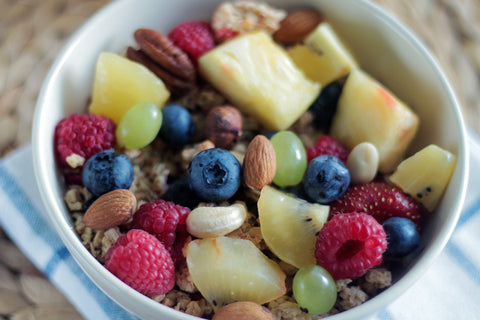
On the news this morning, a representative from Childline did mention that they advise youngsters to stay well hydrated (he didn’t specify water however, which is rather key), but what about making sure children eat properly? I see countless children, not just from poorer families but middle class families, walking to school in the morning eating a bag of crisps and washing them down with a sugary can. It’s estimated that around 32% of children don’t eat breakfast at all. <br> <br>
<div style="text-align: center;"><img alt="Bare Biology Super Hero Omega 3 fish oil for children" src="//cdn.shopify.com/s/files/1/0209/7232/files/blueberries-breakfast-fruits-4972_large.jpg?7321022444654921453" style="float: none;"></div>
<p><br> It’s not just breakfast, children generally exist on refined carbs and sugary foods eating very little protein, virtually no vegetables or fruit and crucially very few healthy fats. Children need protein and fat for their brains to function properly (see my <a href="http://www.barebiology.com/blogs/blog/15641353-why-im-100-convinced-that-what-we-eat-and-dont-eat-affects-our-mental-health-part-i" target="_blank" title="Blog post about role of Omega 3 DHA in children's brains">previous blog here</a> which explains this in more detail).</p>
<p>Further evidence of children’s terrible diets is the staggering fact that over a third are overweight or obese. They’re not eating nutritious food, just lots of cheap and easy calories, and this not only affects their brain function but also their self esteem and energy levels. It’s no wonder there’s an epidemic of depression, anxiety and stress among our youngsters today.</p>
<p>If we teach our children to eat proper food, they’ll not only be able to do better at school but they’ll be more resilient to stress and will be set up for adulthood when they have to take care of themselves. <br><span> </span></p>
<h2><strong><span>How our culture of immediate gratification isn’t doing our children any favours</span></strong></h2>
<p>Remember the days when you used to hover by the stereo on a Sunday evening, listening to the chart show, waiting for your favourite song to come so you could hit the Record button? Trying to get it just right so you didn’t get any of the DJ’s chat but you got most of the song? Or saving your money to go into town on Saturday to buy a new single? Or putting your name on a waiting list at the library for the next book you wanted to read? All these things are as unimaginable to children as having to hunt our own food or wash our clothes in the river are to grown ups.</p>
<p>My children struggle to understand that if they order something from Amazon, it takes, ooh, at least a day or two to arrive. So accustomed as they are to whipping on to Spotify to get the latest song they like within a few seconds. Or downloading a book on to their Kindle, gasping with exasperation if it takes more than a minute.</p>
<p>Revising and working at school don’t give immediate reward. Added to that the intense distracting power of social media or digital games, which give instant pleasure, it must be so difficult for children to knuckle down and get work done. If you don’t revise for exams, exams are incredibly stressful. We all remember that feeling, I still have nightmares that I have to sit my finals at University again and haven’t revised. It’s a skill we all need to master and one that many adults struggle with, that’s why hardly any of us can diet, but our children desperately need to learn it or they won’t be equipped to deal with the pressures of life.</p>
<p> </p>]]>
    </content>
  </entry>
  <entry>
    <id>http://www.barebiology.com/blogs/blog/15641353-why-im-100-convinced-that-what-we-eat-and-dont-eat-affects-our-mental-health-part-i</id>
    <published>2014-11-03T16:03:00+00:00</published>
    <updated>2014-11-03T16:04:15+00:00</updated>
    <link rel="alternate" type="text/html" href="http://www.barebiology.com/blogs/blog/15641353-why-im-100-convinced-that-what-we-eat-and-dont-eat-affects-our-mental-health-part-i"/>
    <title>Why I&apos;m 100% convinced that what we eat, and don&apos;t eat, affects our mental health - Part I</title>
    <author>
      <name>Melanie Lawson</name>
    </author>
    <content type="html">
      <![CDATA[<h2>The most important thing you can do for your brain</h2>
<p>Last week, I attended a brilliant and hugely informative conference about the role of diet in mental resilience. In other words, how what we eat directly affects our brains and therefore our mood, our ability to cope with life’s stresses and our intelligence.</p>
<p>This wasn’t hosted by a bunch of hippies (nothing against hippies – I did choose to live in Brighton after all) or ‘quacks’ or people trying to sell a diet or a health supplement, but by some of the world’s leading authorities in health, neuroscience, psychiatry, clinical research and nutrition. We’re talking Oxford professors, not conspiracy theorists with an axe to grind. They have hard data confirming a lot of things I already believed and I also learnt some new, surprising things. I’m talking about an organization called <a href="http://www.fabresearch.org/viewItem.php?id=338" target="_blank" title="Food and Behaviour Research homepage"><em>FAB</em> (Food and Behaviour research)</a> which was founded by the hugely talented and formidable <a href="https://www.spi.ox.ac.uk/people/profile/richardson.html" target="_blank" title="Dr Alex Richardson profile page">Dr Alex Richardson</a>. FAB conducts scientific research into the effects of food on the human brain and then makes that knowledge available to as many people as possible, it’s a little known charitable organization that’s doing arguably some of the most important work of our day to secure the long term wellbeing of us all.</p>
<p>I’ve had a bee in my bonnet for years now about the scandalous, negligent and frankly criminal behaviour of food manufacturers (and the governments and health authorities that allow it) but I’ve decided to go on a crusade now. Our children’s health is at stake and if we don’t do something massive, we’ll have a mental and physical health catastrophe on our hands in 30 years time.  The work that Dr Richardson and FAB are doing needs to be shouted from the rooftops, everyone needs to hear the truth and I want to help her achieve that. My first, small contribution, is a summary of the key learnings I took from the conference. This is my very basic, layman’s understanding of the evidence based research I was presented with.</p>
<h2>The food we eat has a direct effect on our mood &amp; behaviour</h2>
<p><span>Before I start – I want to say this: the people who tell you that food (especially sugar and junk food) has no effect at all on children’s behaviour are either lying or are in denial (probably because they’re addicted to sugar). I’ve heard this on national television, from the mouths of so called experts, doctors and dietitians. Don’t listen to them. Food <strong>absolutely</strong> has an impact on their behaviour, and therefore also on their health. The same goes for adults.  Consider this - we know categorically that alcohol affects our behaviour and it's something we ingest - food is no different.  You wouldn’t expect a car to be able to run on sunflower oil instead of petrol and we can’t run on foods we’re <strong>not</strong> supposed to eat, or without the foods we <strong>are</strong> supposed to eat. Trouble is, our bodies are so brilliant at coping that we don’t think there’s a problem. However, if we actually pay attention to how we feel, both physically and mentally, we will find that we have got used to not feeling our best so accept it as the norm. We don't equate our mood to what we've been eating or haven't been eating, it doesn't occur to us.  There’s also all the silent damage that’s going on inside, leading to awful disease and illness in later life. </span></p>
<h3>An epidemic of mental health &amp; neurological illnesses</h3>
<p>According to UK Government figures, the cost of mental illness in 2010 was £105 billion (the cost includes the treatment and the cost to the economy). This is more than heart disease, strokes and cancer put together (Cardiovascular disease costs £29 billion and Cancer about £15.8billion). A staggering 38% of Europeans have fully diagnosable psychological or neurological disorders with anxiety in top place at 14%, followed by insomnia at 7% and major depression at 6.9%.</p>
<p><span>A study done by the London School of Economics recently stated that the cost of autism is more than that of strokes, cancer and heart disease combined at £32billion a year.</span></p>
<p><a href="https://www.youtube.com/watch?v=TUpuhXbUX64" target="_blank" title="YouTube video of Professor Michael Crawford on the role of Omega 3 in the evolution of the brain">Professor Michael Crawford</a> (Director of the Institute of Brain Chemistry and Human Nutrition) predicted in the 1970s that if we didn’t pay attention to the role of dietary fats in the health of the brain, the next big health challenge to the UK would be brain disorders. He turned out to be correct.</p>
<p>A couple of facts:</p>
<ul>
<li><span style="line-height: 1.2;">Suicide is the number one cause of death among young men in the UK (15 to 35 year olds). Three men a day (A DAY) commit suicide.</span></li>
<li><span style="line-height: 1.2;">It is estimated that 1% of the population has autism.</span></li>
<li><span style="line-height: 1.2;">In 2012, doctors handed out 40million antidepressant prescriptions.</span></li>
</ul>
<p>These figures have been rising sharply over the last 40 years, and it’s not because of our genetics changing or the lousy British weather (I’m being flippant of course). The one thing that has changed beyond recognition during that time is the food we eat. There are lots of issues with our food supply which I won’t go into now, such as overuse of antibiotics in animals, pesticides, genetic modification and cruel, intensive animal farming. The two issues to focus on here are the fact that our sugar consumption is off the scale and our Omega 3 to Omega 6 balance is completely out of whack (more about this in Part II of this blog post).</p>
<h3>A brief word on sugar (because it's one of my favourite rants)</h3>
<p>The World Health Organisation recommends we consume less than 10%, ideally 5% to 3% of our daily calories from sugar (this equates to about three cubes of sugar a day, or about 7 fruit pastilles). The average 4 to 10 year old British child gets 14.7% of their daily calories from sugar.  I won’t go into this too much, it requires a whole separate blog and if you’re reading this you probably know a lot of it already.  However, if you haven’t already seen it, you must <a href="https://www.youtube.com/watch?v=dBnniua6-oM" target="_blank" title="Dr Robert Lustig YouTube video lecture on sugar">watch this now famous lecture by Dr Robert Lustig</a> (Consultant Paediatric Endocrinologist at the University of California and his speciality is childhood obesity). Dr Lustig isn’t trying to sell a diet, he has no vested interest in lying to us – he wants us to know the truth about what sugar does to us so we can choose whether to eat it or not. As a taster, 7 million children in the USA have Non Alcoholic Fatty Liver Disease (NAFLD) which is directly linked to the consumption of sugar and sugary drinks and can affect children as young as 3 years.  How can that possibly be OK?</p>
<p>Just this morning there was a terribly sad and worrying <a href="http://www.bbc.co.uk/news/uk-29842616" target="_blank" title="BBC news report about the rise in suicidal thoughts among children from Childline">report on the news</a> about the sharp rise in suicidal thoughts among young teenagers reported by Childline. The role of social media and bullying was mentioned as a potential factor, which of course it would be, however there was absolutely no reference to the diets these children are eating. If you consider that the average sugar intake for a teenager in the UK is about 16% of their daily caloric needs, and that’s an average so there are a lot of kids eating way more, they have terribly nutrient deficient diets and their brains are literally starved of what they need to be happy and to cope with the stress of being a teenager. This is what we need to work on, it’s madness that a fundamental driver of children’s happiness is totally overlooked by health professionals. MAKES ME ANGRY!</p>
<h1>The vital role of Omega 3 in mental health</h1>
<p>I’ve believed for a very long time that Omega 3 plays a vital role in our brain health and therefore our mental health. I've both experienced it first hand and read a lot on the subject.  At the conference, I heard and saw compelling, scientific and properly researched evidence that confirmed this belief without a shadow of a doubt.  There's so much information and so much evidence that I could write a whole book on it, but here's a summary of all the key points I scribbled furiously in my note book.</p>
<h3>Omega 3 fatty acids, EPA &amp; DHA, literally help the brain work properly</h3>
<p>Ready for a bit of brain science?</p>
<p>Electric signals in the brain travel by passing from one brain cell (neuron) to another and they leave one brain cell at the synapse and cross a gap to the next neuron. For this to happen, they need to be able to pass through the cell membranes (the walls that surround them). These membranes consist pretty much entirely of fat (our brains are 60% fat of which about 20% should be Omega 3 fatty acids). There are ion channels in these membranes that open and close to allow the flow of the electric signals. DHA makes these channels more elastic which makes it easier for the signals to flow.</p>
<p>DHA also plays a critical role in synaptogenesis (the formation of synapses between neurons). Research shows that babies with Omega 3/DHA deficient diets have 50% fewer synapses and a study into the diet of 12,000 pregnant women (published in the Lancet) found that children of those who consumed the least Omega 3 were more likely to score in the lowest quartile on IQ tests.</p>
<p>DHA has also been shown to increase brain volume. People with high levels of Omega 3 in their diets had more grey matter, particularly in the area of the brain responsible for happiness. This is a really key area, people deficient in Omega 3 have depleted dopamine (the happy hormone) and 50% fewer synapses.</p>
<p>DHA is a neuroprotectin – meaning it protects our brains from oxidative stress (for example the effects of alcohol) and it also protects our retinas.</p>
<p>We also need good blood flow for our brains to function properly and EPA helps hormonal function, allowing blood flow and controlling the immune system. Studies also show that EPA mitigates the side-effects of SSRI drugs (selective serotonin reuptake inhibitors) used in the treatment of depression, such as nausea, sexual dysfunction and anxiety. EPA has also been shown to be effective in clinical depression, both on its own and as a supplement to anti-depressants.</p>
<p>I heard evidence showing a link between low levels of DHA and suicidal tendencies among US military and there is a large piece of research being undertaken to test the role of Omega 3 in protecting soldiers from mental health problems, substance abuse and suicide prevention. Just the other day there was an article in the news about UK soldiers and alcohol abuse, both a symptom of mental health issues and a cause.  Linked to this is the fact that DHA has a profound effect on our brain’s ability to regulate emotions, make good decisions (important when it comes to self control and substance abuse) and to handle stress.  A study carried out on alcoholics found that those supplemented with DHA were able to stay off alcohol after rehab much more than those who took a placebo.  </p>
<p>DHA also influences melatonin production and therefore our sleep patterns. Insomnia is a huge problem for many, and is nearly always either an effect or a cause of mental health problems. A group of children with sleep issues were given 600mg DHA a day for 16 weeks and achieved an extra 46 minutes sleep a night.</p>
<p>It’s very clear, when you look at all the evidence, that Omega 3 fatty acids allow our brains to work properly.  This is just the tip of the iceberg to give you an idea of the body of evidence supporting the role of diet in our mental health.  Of course, there are other factors involved in good mental health but this is so critical that I think it's the first port of call for everyone.  Whether you have mental health issues or not, or whether you think you have or not - after all, sleep disturbances or failing memory are issues of brain health - then addressing your diet couldn't be more important.</p>
<p>Coming soon, part II of this blog where I’ll explain why our diets are so deficient in Omega 3 and what we can do about it.</p>
<p><span> </span></p>
<p> </p>
<p><span> </span></p>]]>
    </content>
  </entry>
  <entry>
    <id>http://www.barebiology.com/blogs/blog/14540393-how-fish-oil-and-breastfeeding-play-a-crucial-role-in-infant-brain-development</id>
    <published>2014-06-20T12:13:00+01:00</published>
    <updated>2014-06-20T12:30:18+01:00</updated>
    <link rel="alternate" type="text/html" href="http://www.barebiology.com/blogs/blog/14540393-how-fish-oil-and-breastfeeding-play-a-crucial-role-in-infant-brain-development"/>
    <title>How fish oil and breastfeeding play a crucial role in infant brain &amp; development</title>
    <author>
      <name>Melanie Lawson</name>
    </author>
    <content type="html">
      <![CDATA[<h1><span>Pregnancy &amp; Nutrition </span></h1>
<p><span style="line-height: 1.2;">I'm delighted to share this wonderful blog post from a Naturopathic Nutritional Therapist whom I admire for many reasons, Lorna Driver-Davies, BA (hons), HD, DHNP, CNHC, Mnna.  Lorna has a particular passion for women's health and I refer to her often for advice.  I hope you enjoy this very well researched and highly informative piece.</span></p>
<h2 style="text-align: center;">Over to Lorna</h2>
<p>In my clinic and other technical advisory roles, no conversation about pregnancy and nutrition is without a discussion of essential fatty acids and their importance during and after pregnancy for both the expectant mother and her baby. Good levels of essential fatty acids – especially a type of omega-3 called DHA (docosahexaenoic acid), found in oily fish – are required for development and maintenance of the brain, eyes, immune system, heart, skin, cognition, behaviour, the nervous system and more.</p>
<p>In evolutionary terms, the growth in brain size in humans and their more recent ancestors led to a greater capacity for enhanced cognition, more complex behaviour, thought and processing. Research such as that by Dr Michael Crawford at the Institute of Brain Chemistry and Human Nutrition in London suggests that access to large quantities of DHA from fish was responsible for this growth; and even that DHA is responsible for the existence of nervous systems in the first place. The human brain is around 60% fat, and DHA is found predominantly in the grey matter, which includes areas of the brain responsible for sensory perception and intelligence.</p>
<h3>How does DHA benefit baby and infant development?</h3>
<p style="text-align: center;"><img src="//cdn.shopify.com/s/files/1/0209/7232/files/Brain_food_for_kids_large.jpg?4312" alt="Infant eating" style="float: none;" /></p>
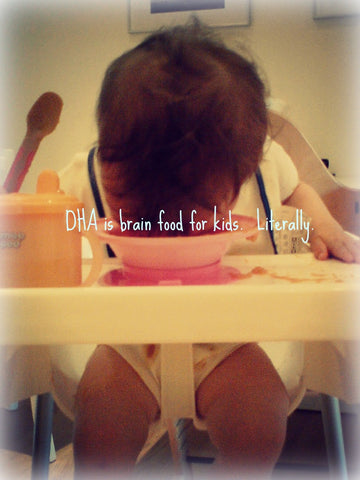
<p>As we have seen, DHA is required for neurological tissue – especially for the development and maintenance of the central nervous system and brain, including the growth of nerve cells and the myelin sheath that insulates the nerves. It is also required for vascular tissue (blood vessels) and for the development of the eye in the foetus and infants and for visual function throughout life.  <span style="line-height: 1.2;">Countless scientific studies have been done on the roles of DHA in babies, infants and children. Here are some interesting findings from just a few of them:</span></p>
<div style="padding-left: 30px;">
<ul>
<li><span style="line-height: 1.5;">Studies show us that children extra supplemented with DHA were less likely to experience colds and flu or incidences were shorter (meaning the children recovered faster).</span></li>
<li><span style="line-height: 1.5;">An American study showed that mothers who were advised to eat less oily fish (due to fears of mercury toxicity) produced children who scored lower on IQ, verbal and motor and social skill tests.</span></li>
<li><span style="line-height: 1.5;">One study found that mothers given fish oil supplementation went onto produce children who scored higher on hand and eye co-ordination tests than those whose mothers were just supplemented with olive oil.</span></li>
<li><span style="line-height: 1.5;">Children with ADHD (attention deficit hyperactivity disorder) are often shown to have much lower levels of omega 3 fatty acids.</span></li>
<li><span style="line-height: 1.5;">The British Journal of Nutrition reported that low birth weight babies supplemented with a higher dose of DHA had significantly greater growth rate of their head than those babies supplemented with a normal dose of DHA. They went onto say that in their research experience, this head size growth is associated with increase in mental development.</span></li>
<li><span style="line-height: 1.5;">A review published in </span><em style="line-height: 1.5;">Nature</em><span style="line-height: 1.5;"> scientific journal reported two studies that showed neurodevelopment scores were better in babies whose mothers ate good levels of oily fish.</span></li>
<li><span style="line-height: 1.5;">Other research has shown that “Infants in the placebo group were at increased risk of lower language development assessed as words understood”. Infants in the placebo group were from mothers who were not supplemented extra DHA oil in their diet.</span></li>
<li><span style="line-height: 1.5;">The </span><em style="line-height: 1.5;">Food Science &amp; Nutrition</em><span style="line-height: 1.5;"> journal published that “cognitive development among breast-fed full-term infants, or in full-term or preterm infants given supplemental DHA, is described as being superior to that in infants consuming formula diets that lack DHA”. </span></li>
<li><span style="line-height: 1.5;">Researchers found that infants born to mothers with higher blood levels of DHA at delivery had advanced levels of attention spans well into their second year of life. During the first six months of life, these infants were two months ahead of those babies whose mothers had lower DHA levels.</span><span style="line-height: 1.5;"> </span></li>
</ul>
</div>
<div style="padding-left: 30px;"><span style="line-height: 1.5;"></span></div>
<h3>Where can we get DHA, and how do we make sure we’re getting enough?</h3>
<p>To answer that, we first need to understand some differences between types of essential fatty acids, and also the different omega-3 fats.</p>
<p>Essential fatty acids encompass omega-3 and omega-6 fats. In the standard Western diet, we tend to get much more omega-6 than omega-3, as omega-6 is found in vegetable oils such as sunflower oil and corn oil that may be used for cooking (although this is not a healthy option!) and that are often found in processed foods and ‘junk’ foods. This means that, for most people, increasing intake of omega-3 fatty acids is beneficial to redress the balance.</p>
<p>There are also different types and sources of omega-3 fats. In fish, we find EPA (eicosapentaenoic acid) and DHA. Adults need both these forms: in some cases, EPA is said to be more beneficial, but new research is also coming to light that adults will at times need also good supplies of DHA. The foetus, young infant and growing child needs both omega-3s just like their parents, but requires a larger supply of DHA, as well as good levels of omega 6.</p>
<p>The other main source of omega-3s is seeds and nuts – particularly flaxseeds and chia seeds. But here, we find another type of omega-3 called alpha linolenic acid (ALA). It is not used in the same way as EPA and DHA, and has to be converted to these other forms by the body, through several steps. If we imagine this like a road system, consuming fish oil gives a direct route to EPA and DHA, like a nice fly-over on a motorway to get to your destination; but consuming ALA in nuts and seeds or their oils means lots of work is needed by the body, like coping with diversions, indirect routes and annoying roundabouts. This process <em>can</em> be completed effectively by the body, but in some cases – and especially in the foetus, infants and young children – only a very small amount of ALA is actually converted to EPA and DHA (some studies say less than 1%). Conversion of EPA to DHA can also be quite limited, and may not happen at all in the foetus.</p>
<p>Therefore, the foetus and young child needs DHA in its ‘ready’ form. It will get this from the mother during pregnancy and through the breast milk during lactation, but supplies will be much better if the mother consumes DHA from fish or fish oil throughout this time. Unfortunately there is also the issue of mercury contamination in fish, and the Food Standards Agency advises that pregnant women – and indeed, any women of childbearing age – should only consume up to two portions of oily fish per week, with a maximum of one portion of swordfish, shark or merlin. I absolutely agree.</p>
<p>Good quality fish oil supplements, on the other hand, are purified to remove all heavy metals and contaminants and absolutely safe to use every day. I advise mothers to supplement with either a DHA-dominant fish oil or a fish oil that has good levels of EPA as well as DHA. (Note that some fish oil supplements are deliberately higher in EPA – these are not ideal during pregnancy and breastfeeding unless an extra DHA supplement is added into the daily regime.) With vegetarian and vegan mothers I often gently suggest that, for the duration of pregnancy and breastfeeding, they take a DHA-dominant fish oil supplement. I also recommend all expecting mothers to eat foods rich in a variety of healthy fats – fish, flax and chia oil, other nuts and seeds, avocados and coconut oil. The mother will need a good supply of all the essential fatty acids for her own health, as well as taking in good levels of DHA for the baby.</p>
<p><strong>The last trimester</strong></p>
<p>The last trimester of pregnancy (week 28 onwards) is a particularly important time for the foetus’s brain – it grows by an astonishing 260% in this trimester. For this reason, it is particularly important for the mother to be taking in adequate DHA during this time. This also raises another issue: what if the baby is premature? The best thing a mother can do is to breastfeed her infant (if possible) and take in plenty of DHA herself so that the baby receives it through her milk.</p>
<p><strong>The growing child</strong></p>
<p>After the baby is born, the brain continues to grow very quickly. In the first year of life, it grows by another 175%, and in the second year of life, by another 18%. After age 2, changes and growth occur throughout childhood but the total size of the brain only increases by another 21%. This shows that keeping up DHA intake is particularly important for the infant in the first two years of life.</p>
<p>There are countless studies to show that infant development is improved from intake of optimum levels of DHA. Therefore, new babies through infancy and into childhood should have access to DHA through food and potentially supplements, as a key component of developmental ‘brain’ nutrition.</p>
<h4><strong>What if the baby is not breastfed?</strong></h4>
<p>We have already seen that the baby continues to receive DHA through the mother’s breast milk, and so breastfeeding mothers should keep up their intake. If breastfeeding is not preferred or possible, then the baby should be getting adequate essential fatty acids via milk formula and later on from diet and in some cases, supplementation.</p>
<p><strong>Mother should continue her omega-3s / DHA after pregnancy</strong></p>
<img src="//cdn.shopify.com/s/files/1/0209/7232/files/Breastfeeding_medium.jpg?4312" alt="Baby Breastfeeding" style="float: right;" />
<p>Mothers are advised to keep up a good intake of essential fatty acids including EPA and DHA <em>after</em> pregnancy, even if they do not breastfeed. Essential fatty acids are important for many aspects of health – and remember that they are called ‘essential’ because the body cannot make them, we must get them from food and supplementation. DHA continues to be important for the health of the mother’s brain and nervous system and to replace what the growing baby has taken from her during the pregnancy; and EPA is important for day to day mental wellbeing and hormone balance.</p>
<p>For those women who plan to – or may – become pregnant again, it is particularly important to top up stores of DHA between pregnancies, in order to have adequate supplies for the next baby.</p>
<p>In my experience, many women do very well religiously focusing on good essential fat intake during pregnancy, but with the flurry of a new baby, often these routines lose their way. Partners, family and friends can help her stay on track – for example by asking if she would like salmon for supper, checking she took her fish oil this morning or offering to re-order fish oil once the bottle has run out.</p>
<p> </p>
<h3>About the Author</h3>
<p>Lorna Driver-Davies, BA (Hons), HD, DHNP, CNHC, mNNA</p>
<p style="float: right; text-align: left;"><strong><img src="//cdn.shopify.com/s/files/1/0209/7232/files/Lorna_head_shot_medium.jpg?4312" alt="Lorna Driver-Davies Head Shot" style="float: right;" /></strong></p>
<p>Lorna is a nutritional therapist and herbal medicine dispenser; and the founder of ‘Feel Better Nutrition Ltd’ – <a href="http://www.feelbetternutrition.co.uk/" target="_blank" title="Feel Better Nutrition website">www.feelbetternutrition.co.uk</a> – offering personal health consultations in Brighton and London.</p>
<p>Lorna has a particular passion for women’s health (including fertility and pregnancy) and supporting adrenal gland and thyroid health in both men and women. Lorna also forms part of the nutrition technical team for The NutriCentre and consults on nutrition for the herbal medicine company <a href="http://www.herbshandshealing.co.uk/" target="_blank" title="Herbs and Healing website">www.herbshandshealing.co.uk</a>  She regularly comments on nutrition and lifestyle topics for press, media and as a guest advisor for other nutritional and supplement brands. </p>
<p>If you are interested in Lorna’s courses, she currently lectures on the short course ‘Herbs for Everyday Living’ - for more information: <a href="http://www.naturopathy-uk.com/home/main/" target="_blank" title="Lorna Driver Davies course in naturopathy">http://www.naturopathy-uk.com/home/main/</a></p>
<p> </p>
<p> </p>]]>
    </content>
  </entry>
  <entry>
    <id>http://www.barebiology.com/blogs/blog/14130901-get-those-legs-out</id>
    <published>2014-05-14T14:34:00+01:00</published>
    <updated>2014-05-14T14:34:51+01:00</updated>
    <link rel="alternate" type="text/html" href="http://www.barebiology.com/blogs/blog/14130901-get-those-legs-out"/>
    <title>Get those legs out</title>
    <author>
      <name>Melanie Lawson</name>
    </author>
    <content type="html">
      <![CDATA[<h2>"That Girl" workout moves for legs &amp; bums</h2>
<p>It's that time of year when the shops start putting the shorts out on display and your delight that summer is on its way quickly turns to dread.  I have to take my jeans off and actually show my legs.  <em>Heart sinks.</em></p>
<p>There is help at hand though, my friends over at "That Girl" have shared three of their favourite moves to tone legs and bums.  You can do them anywhere, I do them in my bedroom with the door firmly shut so my kids don't come in and laugh at me, and they're quick and effective.  These ladies know what they're doing:</p>
<p style="text-align: left;"><a href="http://thatgirllondon.com" target="_blank" title="That Girl London fitness &amp; nutrition plans|  Collaborators of Bare Biology Omega 3 fish oil">"That Girl"</a> is a series of high intensity video workouts and nutrition plans tailored by women for women created by personal trainers Christina Howells and Charli Cohen.<br /><br />Christina is a favourite with the style brigade, she trains an impressive fashion hotlist including Love magazine's Katie Grand and Grazia's Jane Bruton to name just a few. As the go-to lady for busy professional women, Christina understands the female body and the demands of a hectic lifestyle so has mastered an effective and time-efficient training style.<br /><br />Charli trained as a fashion designer and a personal trainer.  Bridging the gap between performance activewear and ready-to-wear fashion, her eponymous, British-made brand is born out of her knowledge of these two passions: fashion and women's fitness. Fusing luxury, technology and futuristic edginess, the Charli Cohen brand is synonymous with clever, body-sculpting cuts and the highest quality in cutting edge sport-tech fabrics.</p>
<h3>Here's your free taster of "That Girl" workout moves for legs &amp; bums</h3>
<h3>Chair Wrap Around</h3>
<p> <img src="//cdn.shopify.com/s/files/1/0209/7232/files/4647_00000_large.gif?4302" /><img src="//cdn.shopify.com/s/files/1/0209/7232/files/4647_00000_large.gif?4302" /></p>
<p><strong>Position</strong> Kneel on all fours facing away from the chair but close enough that your left leg goes under the chair and the right leg extends out to the side of the chair. Left forearm is on floor and right arm straight. Tuck the pelvis under as you engage the abdominals.</p>
<p><strong>Action</strong> Lift the right leg up and wrap around back of the chair so your knee is in line with your hip. Your foot is flexed. Now focus on lifting the knee up towards the top of chair back 3-4cm. Lower back down, unfurling leg to start position at side of chair. Repeat 15-20 each leg.</p>
<p><strong>Hot Tip</strong> If you’re in the gym you can do the move without a chair but remember to really wrap the leg around as if the chair is there.</p>
<h3>Stepping Curtsy Lunge</h3>
<p> <img src="//cdn.shopify.com/s/files/1/0209/7232/files/5069_00000_large.gif?4302" /><img src="//cdn.shopify.com/s/files/1/0209/7232/files/5069_00000_large.gif?4302" /></p>
<p>A great one to work the butt whilst activating the inner and outer thighs and challenging co-ordination and balance.</p>
<p><strong>Position</strong> Legs hip width apart, arms by sides.</p>
<p><strong>Action</strong> Step the right leg diagonally behind you into a curtsey position. The right knee bends to 90 degrees as you reach the arms towards the floor keeping the chest proud. Return to start position then repeat the motion, this time crossing the right leg in front of the left. The left leg bends to 90 degrees. Repeat 8-12 each leg.</p>
<p><strong>Hot Tip</strong> We want to really activate the bum in this move so it is important to avoid reaching the arms to the floor by keeping your chest lifted whilst you bend deep into the curtsy squat.</p>
<h3>Plank Kick-Ups</h3>
<p> <img src="//cdn.shopify.com/s/files/1/0209/7232/files/4729_00000_large.gif?4302" /><img src="//cdn.shopify.com/s/files/1/0209/7232/files/4729_00000_large.gif?4302" /></p>
<p><strong>Position</strong> Start in full plank position facing away from the chair with your right foot on top of the chair and left foot on the floor. Your shoulders are in line with your wrists, neck long, eyes gazing to the floor.</p>
<p><strong>Action</strong> Draw your abdominals in to initiate the move and extend the straight left leg up to tap the foot on the chair. From here raise the leg up off the chair seat 3-4 inches and return to tap the chair before lowering to the floor. Repeat 20 each side.</p>
<p><strong>Hot Tip</strong> Move with intention, focusing on using the bum muscles to float the leg up whilst keep the core strong so as not to arch the back.</p>
<h3>Disclaimer &amp; further info on "That Girl"</h3>
<p>Christina, Charli and I met because they absolutely love Lion Heart Omega 3 and recommend it to their clients and as part of their nutrition plan.  I love what they do and we support each other because we're women in business with shared interests and a genuine appreciation for what the other does.  No money has exchanged hands, no bribery, just genuine recommendations and sharing things that we love.  I hope you enjoy these moves and here's some more info on "That Girl" and you can also find extended workouts in this month's editions of Red, InStyle &amp; Get The Gloss.</p>
<p><strong>"That Girl" is perfect for the busy professional woman</strong></p>
<p>With plans ranging from £15 to £35, That Girl offers everything you need to get fit and healthy when you’re short on time:</p>
<p>Bodyweight workouts that don’t require any equipment and versatile enough to be done at home, at the office, in the park or at the gym.</p>
<p>A nutrition plan that’s realistic and comprehensive, full of real day-to-day tips and ideas, quick on-the-go choices.</p>
<p>Super stylish GIFs designed for fast loading and easy reference viewing on your smart phone or tablet.</p>
<div></div>
<p>Follow them on <a href="https://twitter.com/_bychristina" target="_blank" title="Body By Christina &amp; That Girl twitter profile">Twitter</a> &amp; <a href="http://instagram.com/thatgirllondon" target="_blank" title="That Girl Instagram account">Instagram</a>.</p>
<p> </p>
<p> </p>]]>
    </content>
  </entry>
  <entry>
    <id>http://www.barebiology.com/blogs/blog/13338669-how-to-look-younger</id>
    <published>2014-04-03T10:55:55+01:00</published>
    <updated>2014-04-03T11:36:07+01:00</updated>
    <link rel="alternate" type="text/html" href="http://www.barebiology.com/blogs/blog/13338669-how-to-look-younger"/>
    <title>How to look younger</title>
    <author>
      <name>Melanie Lawson</name>
    </author>
    <content type="html">
      <![CDATA[<h2>Could Omega 3 be the best anti ageing cream? </h2>
<p>I tell lots of people about all the amazing Omega 3 benefits – what it can do for your heart, your brain, your mental health, your children…. Most are interested to a point.  Then when I say it’s also very good for your skin, ears prick up and eyes brighten.  Who cares if it could prevent a heart attack, could it make me look younger and more beautiful?!  Could this be the best anti wrinkle cream ever?  An interesting insight into what we ladies (and a scattering of men) care about the most.  Especially once we reach a certain age.  On a serious note though, it’s not just about vanity – there are some nasty skin conditions that can be greatly relieved, and it’s one of fish oil’s lesser known benefits.</p>
<h2><span></span>It’s all about the anti-inflammatory effect</h2>
<p>Clinical trials have shown the anti-inflammatory effect of Omega 3 to have a very positive impact on conditions such as atopic dermatitis, psoriasis, acne, eczema and rosacea.  It’s believed the reason is because it inhibits arachidonic acid, which leads to a reduction in internal inflammation.  The immune function normalizes, our bodies work better and our poor, often neglected skin (our largest organ and window to our insides) directly feels the benefits and therefore looks and feels healthier.  Simply put, if our body is fire fighting all the time trying to reduce inflammation, it doesn’t have the energy or capability to function normally and our health suffers.</p>
<h3><span></span>What on earth is arachidonic acid?</h3>
<p>Well, it’s an Omega 6 fatty acid which isn’t a bad thing only we have way too much of it in our diet.  Too much of it can block the absorption of Omega 3 as they both compete for the same conversion enzymes.  If you think how little Omega 3 we consume in our diets here in the Western world, it’s amazing we have any in our blood at all.  Our bodies have a sensitive omega-6/omega-3 ratio that controls many delicate biochemical pathways, and when this is unbalanced it’s widely believed to result in accelerating many chronic degenerative diseases. (More on the Omega 6 balance in a future blog).</p>
<h2>One of the best anti ageing supplements</h2>
<p>Inflammatory compounds are heavily involved in the ageing process.  We all know that smoking, excessive alcohol and poor diet wreak havoc on our skin and can age us way beyond our years and this is all down to internal inflammation.  Compare your skin on a morning when you ate healthily the day before, drank lots of water and didn’t drink, to a morning after a night on the booze and you’ll see a stark and immediate difference.</p>
<h3><span></span>Omega 3 boosts skin cells’ natural defences</h3>
<p style="text-align: center;"><strong><span><img src="//cdn.shopify.com/s/files/1/0209/7232/files/IMG_1585_large.JPG?4161" alt="Picture of mackerel" /></span></strong></p>
<p>Omega 3 strengthens the skin’s natural defences as it’s responsible for the health of the skin’s cell membrane, which acts as a barrier to harmful compounds but also provides a two-way passage for both nutrients and waste products.  The membrane also impacts the cell’s ability to hold water and therefore a healthy barrier keeps our skin moisturized, soft and less wrinkled.</p>
<p>We love the sun and we need the vitamin D, but the harmful effects of UV radiation are both terribly ageing and can cause skin cancer.  Omega 3 has been shown to reduce the effects of UV rays.</p>
<p>So, there’s a strong case for upping your Omega 3 for the sake of your skin.  I’ve had lots of people tell me that it has helped nasty skin conditions and even eradicated Keratosis Pillaris (bumpy skin that a lot of children get on the back of their top arm) and I’m an advert for it – I am the laziest person when it comes to skincare (cleansing, toning and all that) but my skin looks pretty good.  Apparently…</p>
<h2><span></span>Top clear skin tips – what to eat for beauty from the inside</h2>
<p>There are lots of things you can do for your skin and it’s an obvious thing to say, but one of the best ways to look younger is to look healthy.  Clear skin and sparkly eyes (think Meryl Streep) take years off and before spending a small fortune on beauty products, address what’s going on inside. I’m going to exclude the obvious advice like not smoking or increasing water because you’re not silly and you’ve heard it all before (do drink loads of filtered water though, seriously, it’s the best single thing you can do).  Try incorporating these proven, skin boosting nutrients into your diet as much as possible.  It’s not an exhaustive list, but it’s an effective one and easily incorporated into daily life.  You can get them all in a ‘oner’ with my <strong>‘Ultimate Skin Boost’</strong> smoothie recipe below:</p>
<p><strong>1.  Good old Vitamin C</strong></p>
<p>It aids the body’s natural collagen production (collagen breakdown speeds up significantly after 35 – boo). It’s also a great antioxidant (remember all the internal inflammation stuff, this helps with that).</p>
<p><span>Kale is packed full of Vit C, far more than oranges.  Broccoli too and all types of peppers (dinner idea:  oily fish with kale fried with garlic and chilli peppers, make sure the kale is crispy – it’s nasty when waterlogged or chewy).</span></p>
<p><strong>2.  Vitamin A</strong></p>
<p>It has been used for the treatment of Acne for years and it helps the skin produce new cells.  Beware!  Don’t take a vitamin A supplement, too much is <strong>not</strong> good for you (especially if you’re pregnant). You can get loads from foods that contain beta-carotene (orange foods like carrots, sweet potatoes and mango), or from spinach and leafy greens (kale again).</p>
<p><strong>3.  Vitamin E</strong></p>
<p>Tons of face creams contain it, even better if you eat it!  Known for combatting free radicals and ageing, it also helps the skin retain moisture.  Almonds are loaded, try making your porridge with almond milk (delicious) or swap peanut butter for almond butter on your toast.</p>
<p><strong>4.  Vitamins B</strong></p>
<p>These assist the cells in processing fats.  Avocadoes and mushrooms are high, how about mushroom omelette and a side salad of avocado?</p>
<p><strong>5.  Zinc</strong></p>
<p>A wonderful mineral that helps the body repair damaged tissues and heal wounds.  Zinc has been used for years to treat nappy rash, dandruff and acne.  It’s also helpful for protecting the skin from UV rays.  Meat and seafood are the best sources (not so good in a smoothie), nuts &amp; seeds and good old spinach.</p>
<h2><span></span>The Ultimate Skin Boost smoothie</h2>
<p style="text-align: center;"><img src="//cdn.shopify.com/s/files/1/0209/7232/files/IMG_1664_large.jpg?4161" alt="Picture of green smoothie with Lion Heart Omega 3 fish oil for skin health" /></p>
<p><em><strong>Warning:  you need a powerful blender for this, like a Vitamix or Nutribullet.  You can do it in a regular blender, but you will get bits.  Depends how hard core you are!</strong></em></p>
<p>You feel really good after this, it’s not a ‘treat’ smoothie because it does taste very healthy and veggie but it’s nice.  I have it as a snack around 5 when the kids are about to have dinner instead of picking at their leftover sweet potato chips…</p>
<p>1 x quarter avocado (Vit B &amp; lovely fats)</p>
<p><span>Large handful of spinach (Vit A &amp; Zinc)</span></p>
<p><span>Handful of kale (A, B complex, C, E, K, Iron &amp; magnesium!!)</span></p>
<p><span>1 x carrot (beta carotene/Vit A)</span></p>
<p><span>200ml coconut water (potassium &amp; hydration)</span></p>
<p><span>Juice of half a lemon (Vit c)</span></p>
<p><span>1 teaspoon (2.5ml) of Lion Heart fish oil (Omega 3 of course and the fat helps the body to absorb the other great vits in this smoothie)</span></p>
<p><span>Optional additions:</span></p>
<p><span>1 teaspoon of Wheatgrass or Spirulina (choose a reputable brand like Organic Burst)</span></p>
<p><span></span><span style="line-height: 1.2;">Do share your tips or send in any questions, I'd love to hear from you! </span></p>]]>
    </content>
  </entry>
  <entry>
    <id>http://www.barebiology.com/blogs/blog/12822229-you-can-now-buy-lion-heart-omega-3-in-liberty-london</id>
    <published>2014-03-14T17:10:30+00:00</published>
    <updated>2014-03-22T17:27:52+00:00</updated>
    <link rel="alternate" type="text/html" href="http://www.barebiology.com/blogs/blog/12822229-you-can-now-buy-lion-heart-omega-3-in-liberty-london"/>
    <title>You can now buy Lion Heart Omega 3 in Liberty London</title>
    <author>
      <name>Melanie Lawson</name>
    </author>
    <content type="html">
      <![CDATA[<h2>The 5<sup>th</sup> most exciting day of my life</h2>
<p>If you had to list the most exciting days of your life so far, what would they be?</p>
<p><span>My top three are the days my three children were born.</span></p>
<p><span>My fourth (sorry husband, the kids have knocked you off top spot) was my wedding day.</span></p>
<p>My fifth?  Being told by Liberty that they would like to stock Lion Heart.  Unbelievable.  I even wondered at one point if I had imagined it, finally lost my marbles and lost all sense of reality. I practically skipped out of that meeting, almost burst into tears and grinned like a fool all the way home to Brighton.  People on the train must have thought I was pretty strange...</p>
<p>To have my product and brand endorsed by whom I consider to be the most discerning buyers, for one of the greatest shops on the planet, was an unbelievable feeling.  Have you been into Liberty recently?  It has always been stunning, but you walk around and you want to buy EVERYTHING.  The TV programme that was on before Christmas was utterly fascinating and made me want to get a job there.  The people come across as so kind, interesting and genuine.  Passionate about their store and with huge insight into what makes things desirable and what quality means, they really know their retail stuff.  They're also quite literally the nicest people I’ve met in business, ever.  They support and nurture new brands, they don't try to squeeze the life out of them.  Do go along, if you haven't been for a while, you'll be amazed at how wonderful it is now.</p>
<h2>Why is being stocked in Liberty SO exciting?</h2>
<p style="text-align: center;"> <img src="//cdn.shopify.com/s/files/1/0209/7232/files/IMG_1426_large.JPG?3671" alt="Liberty London facade" /></p>
<p>Like anything in life, it’s when you see that your hard work and sacrifice have been worth something and that being brave, sticking to your guns and following your dream have paid off.  All those days (and there have been many &amp; ongoing) when I questioned my sanity, launching a liquid fish oil - of all things!  When I was full of self-doubt and an almost crippling fear of failure and ridicule.  When I sat on a bus in a remote part of Norway, late at night, to meet the manufacturer - so homesick and scared.  All of those moments have been woven into the fabric of Bare Biology the brand and I look on them with fondness now. Getting on to the shelves of Liberty is the most monumental pat on the back I could have dreamed of.</p>
<h2>I’ve always been a fantasist!  I could picture my packaging on Liberty’s shelves</h2>
<p>When I was working on the packaging, I met the designer last June in Le Pain Quotidien opposite Liberty and I told him that my ultimate ambition was to create a design worthy of their shelves.  We went in and had a wander round, marvelling at all the gorgeous boxes and bottles – taking in the incredible atmosphere that you only get in that store.  We fantasised about where Lion Heart could sit and I truly believed that it would happen, one day… I have always been a fantasist though – apparently it’s because I’m Aquarius. </p>
<p>Less than a year later, Lion Heart’s in the exact spot I dreamed about – in the “Must Haves” in the Beauty Hall.  Must Haves – got a great ring to it.  I’ve bought a couple of things from that section recently, including Egyptian Magic Cream which I highly recommend.  It’s the only cream we’ve found that we can use on our daughter’s eczema prone face.  Those buyers know their stuff.</p>
<p style="text-align: center;"><img src="//cdn.shopify.com/s/files/1/0209/7232/files/IMG_1499_large.jpg?3679" alt="Picture of Lion Heart Omega 3 fish oil stocked in Liberty London" /></p>
<h2>Come and see us on Wednesday 19<sup>th</sup> March from 5 to 7PM</h2>
<p>As part of Liberty’s ‘What’s your Issue’ event, there will be a Nutrition Clinic with Dale Pinnock (The Medicinal Chef), Plenish Cleanse (yummy green juices), Udo’s Choice (vegan Omega oils), Aduna (superfoods) and little old us!</p>
<p>Come and say hi, try our fish oil and have a chat.  Then, do what I always do, and go and buy some gorgeous bits that you don’t really need but MUST HAVE!</p>
<p><span> </span></p>]]>
    </content>
  </entry>
  <entry>
    <id>http://www.barebiology.com/blogs/blog/12424641-are-you-suffering-from-orthorexia</id>
    <published>2014-02-21T16:18:50+00:00</published>
    <updated>2014-02-21T16:43:08+00:00</updated>
    <link rel="alternate" type="text/html" href="http://www.barebiology.com/blogs/blog/12424641-are-you-suffering-from-orthorexia"/>
    <title>Are you suffering from orthorexia?</title>
    <author>
      <name>Melanie Lawson</name>
    </author>
    <content type="html">
      <![CDATA[<h2>An obsession with healthy eating</h2>
<p>A term coined by Steven Bratman MD and defined by the National Eating Disorders organization as a “fixation on righteous eating”.  It starts out as an innocent desire to eat more healthily and ends in an obsession leading to a very restricted diet, ironically resulting in malnourishment and inevitable social isolation. <br />I think I’ve teetered on the edge of this a few times and as someone with OCD, it’s dangerous territory.  I’ve been drawn several times to the kind of diets that don’t restrict the amount you eat, but <strong>what</strong> you eat.  Appealing to my large appetite and love of eating while appealing to my need to control and feel virtuous,  I religiously stuck to a Paleo diet for a few months (meat, fish, veg and fruit – no grains, no dairy, no sugar, nothing white except cauliflo<span style="line-height: 1.5;">wer), cut out gluten for a year, made green juices before breakfast with all sorts of powdered ‘</span><span style="line-height: 21px;">super foods</span><span style="line-height: 1.5;">’, food combined and did the Tim Ferris slow carb diet.  During those periods I would dread dinner invitations because I wouldn’t want to eat anything on the banned substance list, if I did I would feel horribly guilty and then comfort my guilt by eating more of the </span><img src="//cdn.shopify.com/s/files/1/0209/7232/files/banned_food_list_medium.jpg?2752" style="float: right;" alt="List of foods not included in a restricted diet" /><span style="line-height: 1.5;">banned substances in a ‘f*** it’ kind of attitude.</span></p>
<p>I found this way of life to be COMPLETELY UNSUSTAINABLE.   When your husband is making hot, buttery toast with delicious ‘Chewy Brown’ from the Real Patisserie in Brighton (BEST BREAD EVER), you’d have to have superhuman willpower to say “no thanks, I’ll have another plate of srambled eggs and smoked mackerel for breakfast”.  So I finally realised that, thankfully, I don’t have what it takes to become totally obsessed. <br /><span></span></p>
<h2><span>The internet/social media fuels health anxiety</span></h2>
<p><span>I follow a lot of ‘health’ types on Twitter due to the business I’m in and like most of us I read an awful lot of health advice on the internet (something my GP no doubt loves).  I do have a genuine interest in good eating and nutrition but all those constant tweets about the ‘good’ foods we should eat instead of the ‘bad’ start playing on your mind. </span></p>
<p>A question I’ve been asking myself a lot over the last few months is exactly how healthy we should aim to be and what exactly that means, and involves.  How is it quantified and is there a definitive nirvana of healthiness?  It came to a head in September when I received two frightening phone calls on the same day.  One to say that I needed a fairly urgent angiogram because of something a scan had shown (angiogram = having a camera inserted through your groin up into your heart, while fully awake and conscious) and one from my mother to say she had been diagnosed with bowel cancer.</p>
<h3>Standard measures of ‘health’ would assess me against the following:</h3>
<p>Do you smoke?  No.<br />Do you drink?  No (well, hardly at all, can’t cope with hangovers since children).<br />Do you take drugs?  No, unless probiotics count.<br />Are you slim?  Yes.  (Glossy magazine/celebrity image fuelled inner critic answers:  No, I don’t look like Gisele Bundchen so actually I’m hideously fat).<br />Do you exercise?  Yes (do one weekly tennis lesson, running up and down a 4 storey house after 3 kids, walking at least 10,000 steps a day on school runs and a couple of sessions of fitness DVDs count?)<br />Do you have high cholesterol?  No (a subject for a separate blog).<br />Do you eat 5 a day?  Yes, easily.<br />Do you drink 2 litres of water a day?  Yes, and therefore always need to be near a loo and it drives my husband mad – especially when at National Trust parks...<br />Do you eat junk food?  No, never.  (Do M&amp;S Walnut Shortbreads count?  Don’t try them, you won’t thank me for that little vice.  What about Kettle chips, do they count?).</p>
<p><span>You get the picture….  In theory, I’m pretty healthy and that should be enough.</span> </p>
<h3><span>The new, Twitter/blogs/health magazines would ask the following:</span></h3>
<p>Do you eat gluten?  It’s complete and utter poison.<br />Do you eat sugar?  It’s complete and utter poison.<br />Do you eat potatoes?  They’re the spawn of the devil.<br />Do you eat meat?  You should, it’s the only thing we’re meant to eat.  We’re cavemen.<br />Do you eat meat?  You idiot, you’re killing yourself with putrid rotting flesh eating away at your bowels.<br />Do you drink 3 green juices a day?<br />You don’t actually eat solid food do you?<br />You don’t sprinkle goji berries, chia seeds, seaweed and wheatgrass on your fermented quinoa porridge with almond milk in the morning?!  What’s the matter with you woman?!</p>
<p>You see, it's very hard to determine at what point we can relax and feel we are doing the best we can given that we live in the real world.  Maybe that is what I'm supposed to do and it's all true, but it's not sustainable and makes me miserable so it can't be the solution.</p>
<h3><span>I don't have Orthorexia, but I do have 'buy health books-exia' </span></h3>
<p><span>I definitely don’t have Orthorexia because a) my husband would leave me and b) I like food too much to cut huge sections of it out of my life but if there’s a name for the following set of symptoms, I definitely have that:</span></p>
<p>Hear a snippet of news about the ‘latest’ health fad/diet, buy the book, skim read it, apply it for a day or two, feel no different and then feel guilty that I couldn’t stick to it.  Buy the new superfood, not know what the heck to do with it or try it and realise it’s disgusting and put it in a cupboard with all the others until they get thrown away.<img src="//cdn.shopify.com/s/files/1/0209/7232/files/IMG_1270_medium.jpg?2752" style="float: right;" alt="Lots of books on diet and health" /></p>
<h2><span>I feel guilty that I don't feel guilty about eating 'bad' food</span></h2>
<p><span>I guess I feel like I <em>ought</em> to live this incredibly virtuous lifestyle in order to have boundless energy, prevent horrible diseases, look amazing and never feel guilty about eating ‘bad’ food.  I just can’t though, because our grandmothers were right – everything in moderation.  Becoming obsessed with being healthy leads to the exact thing you were trying to avoid in the first place.  We should just thank our lucky stars that we actually have food to eat and are faced with the problem of learning moderation when so many are starving to death.</span></p>]]>
    </content>
  </entry>
  <entry>
    <id>http://www.barebiology.com/blogs/blog/12234313-can-omega-3-really-help-depression</id>
    <published>2014-02-12T11:23:46+00:00</published>
    <updated>2014-02-12T11:58:19+00:00</updated>
    <link rel="alternate" type="text/html" href="http://www.barebiology.com/blogs/blog/12234313-can-omega-3-really-help-depression"/>
    <title>Can Omega 3 really help depression?</title>
    <author>
      <name>Melanie Lawson</name>
    </author>
    <content type="html">
      <![CDATA[<h2><span style="line-height: 1.2;">One of the questions I get asked a lot is what is Omega 3 good for?  One of the first answers I give is that it’s great for your mental health. </span><span></span></h2>
<p>1 in 4 people in the UK will experience some kind of mental health problem in the course of a year and the World Health Organisation predicts that by 2020, mental illness will be second only to Heart Disease as one of the world’s biggest health issue.  Anecdotally, I’d say half the people I know suffer or have suffered from some kind of mental health issue – be it eating disorders, anxiety, depression or post natal depression.</p>
<p>With two parents who have suffered from serious mental health conditions and my own personal experiences of depression, post-natal depression and OCD (Obsessive Compulsive Disorder) I have always had a keen interest in how to manage symptoms and be happy without medication.  Several years ago now, while my three children were really very young, I sought treatment through CBT (cognitive behavioural therapy) for my OCD which was getting a little out of control – driven by anxiety and emotional exhaustion, that’s what having kids does for you! </p>
<p>The supervising psychiatrist strongly urged me to take Fluoextine. I know from my mother’s severe bouts of depression that in lots of cases medication is necessary and extremely helpful.  However, I didn’t feel that it was necessary and I also felt that if I took it I would have lost the battle somehow.  I think many people feel like this and I admire people who are brave enough to take medication, I just couldn’t contemplate it.  It was at this point that I started to look for a very high strength Omega 3 because I’d read that it could be really useful in supporting mental health.  I took one from the USA for a long time and tried to get my children to take it too, knowing how beneficial it is for their brain growth and their behaviour but also aware that these things run in families – a kind of depression prevention exercise. </p>
<h2>Make sure you get enough Omega 3 in pregnancy, during breastfeeding and ideally for a few years after while your body re-builds its stores of fatty acids.</h2>
<p>When I was pregnant I was advised to take an Omega 3 supplement, but I didn’t fully understand why at the time. Looking back I <span style="line-height: 1.5;">reali</span><span style="line-height: 1.5;">se that it’s probably THE most important thing to take after folic acid.  Babies need DHA (one of the essential fatty acids) </span><span style="line-height: 1.5;">for proper brain and eye development, so th</span>e mother’s body prioritises her DHA stores for the baby.  It’s literally sucked out of our brains and pumped into the baby’s.  <img src="//cdn.shopify.com/s/files/1/0209/7232/files/IMG_1316_medium.JPG?2471" alt="New born baby" style="float: right;" />There’s growing evidence that <a href="http://www.nutraingredients.com/Research/Omega-3-backed-for-postpartum-depression" target="_blank" title="Research into the use of Omega 3 for post-natal depression">post-natal depression is linked to low levels of Omega 3 in the mother’s brain and tissues</a>. </p>
<p>When we breastfeed, the mother's DHA continues to be prioritised for the baby (it's now a requirement for infant formula to contain added DHA).  We joke about having ‘baby brain’ and forgetting things, not being able to think straight, losing our train of thought, putting the car keys in the fridge and the milk in the washing machine… this is often attributed to sleep deprivation but I also believe, as do many researchers, that it’s a lack of Omega 3.</p>
<h2>Diet and exercise have a huge impact on our state of mind</h2>
<p>Backed up by stacks of research, there’s no doubt that what we eat and how much we exercise probably have the most impact on how we feel mentally than any other factors.  From my own personal quest for a peaceful and contented mind, these are the things I find most helpful and many others concur:</p>
<ul>
<li><span style="line-height: 1.2;">Don’t be tempted to drown your sorrows – alcohol is your mind's biggest enemy.  Limit alcohol or cut it out completely if you’re not feeling very good.</span></li>
<li><span style="line-height: 1.2;"></span>Caffeine – a big no, no!  Again, those vats of tea and coffee are tempting comforts but they make you feel worse.  Raising your cortisol levels, dehydrating you and making you feel edgy.</li>
<li><a href="http://www.drweil.com/drw/u/QAA400988/Fish-Oil-for-Depression.html" target="_blank" title="Fish oil for depression by Dr Weil">Omega 3</a> – some psychiatrists recommend 9,000mg a day in place of anti-depressants.</li>
<li>Exercise – the last thing you want to do when you’re depressed, but the absolute BEST.  Even if you just take a brisk walk with some pumping tunes on your iPod.</li>
<li>Mindfulness – quieten that critical inner voice by focusing on the now.  Pay close attention to what you’re doing in that moment and you’ll feel instantly calmer and happier.</li>
<li>Practice gratitude – we all feel rather guilty when we see awful pictures on the news of the terrible lives people have, knowing that our problems are insignificant in comparison.  Remind yourself of this regularly and notice how lucky you really are – do this before you go to sleep every night, do a mental run through of all the good things in your life.</li>
</ul>
<h2><span>So, can Omega 3 really help depression?  </span></h2>
<p><span>I really believe so, I'm sure it has helped me and there's tons of research to support it. Ultimately though, I think it's worth a try - it won't do you any harm, it can only benefit your health in general and it might just do the trick.</span></p>]]>
    </content>
  </entry>
  <entry>
    <id>http://www.barebiology.com/blogs/blog/12081749-the-curse-of-too-much-information-and-how-it-makes-parents-feel-guilty-and-inadequate</id>
    <published>2014-02-05T14:20:55+00:00</published>
    <updated>2014-02-05T14:36:55+00:00</updated>
    <link rel="alternate" type="text/html" href="http://www.barebiology.com/blogs/blog/12081749-the-curse-of-too-much-information-and-how-it-makes-parents-feel-guilty-and-inadequate"/>
    <title>The curse of too much information and how it makes parents feel guilty and inadequate</title>
    <author>
      <name>Melanie Lawson</name>
    </author>
    <content type="html">
      <![CDATA[<h3>What ON EARTH do you do with children when the weather's like this?</h3>
<img src="//cdn.shopify.com/s/files/1/0209/7232/files/IMG_0767_medium.jpg?1971" alt="Hail stones on the window" style="float: right;" />
<p>On Sunday I looked at my three children slumped on the sofa for another session of Netflix delights while the wind howled and the hail rattled our thin, virtually porous, sash windows and I felt a terrible pang of guilt.  I should be baking with them or making sculptures out  of egg boxes. In fact, that morning my eldest daughter asked if she could have some lentils to make a ‘rain stick’.  For those not familiar with the shiver of terror that such a request can induce, let me explain what it involves… take an empty tin foil/cling film roll, fill it with lentils (making sure to spill at least 80% all over the floor then watch while younger sibling kicks it all round the room), sellotape each end then shake it to make rain noise… because we need some rain noise, this drought is really getting me down.  So, my natural response was to say “Not now darling, go and watch TV or something…”.  What kind of a terrible parent am I?</p>
<h3><span>In the 1970's parents lived in ignorant bliss </span></h3>
<p>It occurred to me that when I was a child, our parents were blissfully unaware of what other parents were or weren’t doing with their children because there were no outlets for sharing such information and there wasn’t a whole business sector geared at making you   feel guilty, identifying a need you didn’t know you had and selling you either advice or a gadget.</p>
<p>There was no Pinterest crammed full of pictures of kids’ birthday parties that look better than my wedding .  There was no mumsnet/netmums/any other combination of net+mums and no blogs or tweets of great smugness. </p>
<h3><span>Gluten free, dairy free, sugar free muffin anyone?</span></h3>
<p><span>I once tried to make gluten free, dairy free, sugar free muffins for my three after being sucked in to the trap of ‘parenting is extremely tough and will test the most saintly of saints, so let’s make it even more impossible by imposing the most unachievable diet known to man on the most high maintenance food critics on the planet’.  My eldest took one bite and was nearly sick.  They took me about an hour to make and they all went in the bin.  My youngest declared at nursery during ‘sharing time’ that her mum made banana bread and it was ‘disgusting’.</span></p>
<p>I worry constantly about my children, the first words they all uttered were along the lines of ‘be careful’, but I think we all need to relax a bit and limit the amount of parenting stuff we read on the internet.  As long as we’re there for our children, they eat a mostly healthy diet within the confines of their small repertoire and we give them loads of hugs and make them laugh – does it really matter, long term, if they watch a lot of TV and eat Wotsits instead of Chia seeds now and again? Oh, and don’t ask anyone at the school gates what they did that weekend – they’re bound to have taken their kids swimming or to a museum while yours watched CBBC and fought over the iPad.</p>]]>
    </content>
  </entry>
  <entry>
    <id>http://www.barebiology.com/blogs/blog/11924629-how-to-take-fish-oil</id>
    <published>2014-01-29T12:26:00+00:00</published>
    <updated>2014-02-03T12:52:24+00:00</updated>
    <link rel="alternate" type="text/html" href="http://www.barebiology.com/blogs/blog/11924629-how-to-take-fish-oil"/>
    <title>How to take fish oil</title>
    <author>
      <name>Melanie Lawson</name>
    </author>
    <content type="html">
      <![CDATA[<p>Happy New Year!  Bit late I know....</p>
<p>Lots of people ask me how they should take their fish oil - at what time of day, with or without food, mixed with something else etc...</p>
<p>I also meet a lot of people who are scared of taking a liquid oil, used to capsules or haunted by memories of childhood cod liver oil...</p>
<p>So, here's the definitive guide to taking fish oil and why you shouldn't be afraid!</p>
<img alt="Lion Heart omega 3 fish oil liquid " src="//cdn.shopify.com/s/files/1/0209/7232/files/IMG_0930_medium.jpg?1463" style="float: right;"><br>
<h2>I think liquid fish oil is better than a capsule</h2>
<p>You get a LOT more EPA &amp; DHA in your daily dose because there's no gelatine taking up space.</p>
<p>You're getting unadulterated fish oil, straight into your digestion - no capsule to digest or break down first and no other ingredients.</p>
<p>You can give it to children - a KEY benefit, how many young children do you know who can swallow pills?</p>
<p>There's something pure and also slightly hard core about a liquid, it makes you feel extra specially smug - just wash it down with a cold pressed green juice and you'll feel very superior.</p>
<h2>How &amp; when to take your fish oil</h2>
<p>The when is up to you, I know people who take it first thing in the morning on an empty stomach.  No thanks, not for me.  </p>
<p>I've guzzled a lot of this stuff over the last year, including unflavoured, but that idea gives me the willies.</p>
<p>There's a lot of evidence to suggest that it's better absorbed if you take it with food that contains protein.  So I take it at lunch time right before I eat, literally seconds before.  If you really don't want to taste anything, don't let it touch your lips - top tip.</p>
<h2 style="text-align: left;">Are you really scared of a liquid supplement?</h2>
<p>There is something fairly onerous about the thought of swallowing OIL on its OWN.  You wouldn't swallow olive oil on its own, you'd dip some nice bread in it right?</p>
<p>Even I still get ever so slightly freaked out just before I swallow it, it's normal, but it tastes of lemon and I take a sip of water after and it's gone.  </p>
<img alt="Spoon of Lion Heart Omega 3 fish oil" src="//cdn.shopify.com/s/files/1/0209/7232/files/IMG_0911_small.jpg?1463" style="float: right;"><br>
<p>The oil's thin so it doesn't coat your mouth.  Not like that feeling when you've eaten fish and chips and you feel like you have a layer of fat all over the roof of your mouth.  Nice.</p>
<p>Honestly, my children are a nightmare when it comes to food - French kids they are not, but they swallow it happily.</p>
<p>Now, if you really can't bear it or your kids are freaking out - you could add it to a salad dressing (try this <a href="http://www.barebiology.com/blogs/blog/8918853-how-to-get-omega-3-in-your-diet-without-noticing" target="_blank" title="Omega 3 fish oil in a salad dressing recipe">Vinomaigrette</a>), stir it into your smoothie or juice or why not soak it into a nice chunk of bread and pretend you're on holiday in Tuscany?  Whatever it takes, just don't add it to hot food.  </p>
<p>There you go.  You can always call or email and I'll chat you through it.</p>
<p> </p>
<p> </p>
<p> </p>
<p> </p>
<p style="text-align: right;"> </p>
<p> </p>]]>
    </content>
  </entry>
  <entry>
    <id>http://www.barebiology.com/blogs/blog/10602529-christmas-is-cancelled</id>
    <published>2013-12-09T11:25:00+00:00</published>
    <updated>2013-12-09T12:07:39+00:00</updated>
    <link rel="alternate" type="text/html" href="http://www.barebiology.com/blogs/blog/10602529-christmas-is-cancelled"/>
    <title>Christmas is cancelled</title>
    <author>
      <name>Melanie Lawson</name>
    </author>
    <content type="html">
      <![CDATA[<p><span>For those of you with kids, does that sound familiar? </span>Issuing wild threats we can't possibly carry out, a common and foolhardy parenting mistake made by us all, beautifully illustrated by a classic scene from the brilliant Modern Family:</p>
<p><iframe src="http://www.movieweb.com/v/VIfnyjjm7EgAii/embed_video" width="400" height="225" frameborder="0" webkitallowfullscreen="webkitallowfullscreen" mozallowfullscreen="mozallowfullscreen" allowfullscreen="allowfullscreen"></iframe></p>
<p><span>We all do it at some point, we did it the other day, which got me wondering why?  </span>The answer is, of course, stress.  Even if you don’t have kids, this time of year is a killer – the combination of sun deprivation, constant attack from cold viruses, pressures to socialise more and therefore sleep less, the present buying, the organising, finishing work before the holidays… you get the picture. </p>
<p>I’ve known for a long time that stress makes me ill, but I’d never really understood why – how can something going on in my head give me physical symptoms?  Often feels like a convenient catch-all excuse when doctors don’t know what’s wrong with you.  However, after much research into the physiology of stress and what it actually does to our bodies, I know it's true.  The reality is, we can’t remove it from our lives – Christmas can’t be cancelled, opting-out and moving to a shack on the beach isn’t going to happen and the pace of life is only going to get faster.  Understanding what goes on in the body is helpful, it gives an awareness of what you’re dealing with.</p>
<p style="text-align: center;"><img alt="Christmas is off " src="//cdn.shopify.com/s/files/1/0209/7232/files/IMG_0944_medium.jpg?1018" style="float: none;"></p>
<p><span></span><strong>The famous ‘fight or flight’ response</strong></p>
<p>It’s what has kept man alive for all these years, a highly useful mechanism when in real danger or when having to deliver under pressure (surgery, pitch document, exam).  These days it’s less likely to be a tiger poised to attack and more likely to be a 3 year old throwing a tantrum just as you’re leaving the house in a hurry or an unreasonable boss.  Regardless of the ‘threat’, the body goes through actual physical changes which facilitate the process of dealing with it.</p>
<p>The amygdala (the part of our brain that processes emotional reactions and memories) receives a ‘danger’ message and sends a distress signal to the hypothalamus (the ‘command centre’ that communicates through our nervous system with all the automatic functions such as breathing, hormone release, hunger, body temperature…).  This all happens at lightening speed before the brain’s visual centre has even processed what’s going on.</p>
<p>The hypothalamus triggers hormonal changes which start pumping epinephrine (adrenaline) into our system.  Our heart beats faster, our pulse and blood pressure go up.  Blood is pumped towards big muscles which become tensed and ready to run or punch.  Our small airways open up in our lungs so we can get more oxygen to our brains and we breath faster.</p>
<p>As the initial surge of epinephrine subsides, the hypothalamus activates the second component of the stress response system — known as the HPA axis. This network consists of the hypothalamus, the pituitary gland, and the adrenal glands.</p>
<p><span>If the brain continues to perceive something as dangerous, the hypothalamus releases hormones prompting them to release the primary stress hormone cortisol – this is so that the body can stay revved up and on high alert until the threat passes.  </span><span>All of your senses are heightened – so when the postman leans on the doorbell or one of the kids screams, it feels like ten alarm bells going off in your head and makes you feel jangled and irritable. Your neo-cortex (the thinking part of your brain) shuts down and the survival mechanisms in the middle and lower more primitive parts of the brain take over – you stop thinking things through, rationally, and you become irritable, aggressive or upset.  Communication is also affected, so you might find yourself stuttering, crying uncontrollably, laughing hysterically – all symptoms of ‘your head’ but driven by actual physical changes in your body.</span></p>
<p>Short term cortisol also increases glucose in the bloodstream, enhances your brain's use of glucose and increases the availability of substances that repair tissues in case you get cut or injured during the fight.  It alters immune system responses and suppresses the digestive system, the reproductive system and growth processes. </p>
<p>Short burst of cortisol = very useful.</p>
<p><span></span><strong>Long term cortisol = VERY bad news.</strong></p>
<p>What’s supposed to happen is when the ‘threat’ passes the cortisol levels fall and this triggers the parasympathetic nervous system which activates rest and digestion.  Herein lies the problem – many of us are unable to activate this stage, low level stress keeps the HPA axis activated and this is where we get the health problems.</p>
<p>Persistent adrenaline surges can damage blood vessels and arteries, increasing blood pressure and raising the risk of heart attacks or strokes.  Persistent cortisol disrupts our hormonal balance, constantly flooding our bodies with glucose which if not used gets stored as belly fat and raises our insulin resistance, our thinking and emotions are affected so we become depressed or angry… Our immune system stops working properly so we don’t fight off viruses and longer term we can develop auto-immune diseases.  Our digestion is constantly interrupted by the mechanism of stopping blood flow, so we develop IBS, ulcers, colitis…..If we’re trying to get pregnant, our reproductive system is constantly being shut down so this becomes difficult.</p>
<p>So, what on earth do we do about it?  The following activities have all been proven to lower cortisol and increase good hormones like dopamine and oxytocin:</p>
<p>1)   Meditation and mindfulness – re-setting the brain and triggering the relaxation response.  This is a good resource at <a href="http://www.getsomeheadspace.com" target="_blank" title="Meditation for stress relief">Get Some Head Space</a>.</p>
<p>2)   Exercise – it literally burns cortisol by letting out the aggression your body has stored up for the fight or flight.</p>
<p><span>3)   </span><span>Human connections and physical touch play a big role in the parasympathetic nervous system by increasing oxytocin.  Even Facebook can help if it fosters a sense of connectivity and support.</span></p>
<p><span>4)   </span><span>Laughter – an episode of Frasier normally does it for me.</span></p>
<p><span>5)   </span><span>Music – listen to music you like, dance a bit if you can.  It has the ability to transport you immediately to another place, but be sure to choose happy music.</span></p>
<p>There are other things that raise cortisol and which paradoxically we often turn to when stressed – caffeine and alcohol are two major culprits.  You get stuck in a vicious circle of not sleeping well (due to raised cortisol), so you drink coffee (raising cortisol) and then drink wine in the evening to relax but it raises cortisol and so you don’t sleep well and it starts all over again…</p>
<p>If you can go cold turkey, just for a few days, and break the caffeine/alcohol cycle it really does make a big difference.  Not easy at this time of year, but it’s better than feeling rotten come Christmas Day.</p>
<p><span style="line-height: 1.2;"> </span></p>
<p> </p>]]>
    </content>
  </entry>
  <entry>
    <id>http://www.barebiology.com/blogs/blog/10399157-top-5-tips-for-boosting-immunity-this-christmas</id>
    <published>2013-11-25T16:25:00+00:00</published>
    <updated>2013-11-25T16:25:18+00:00</updated>
    <link rel="alternate" type="text/html" href="http://www.barebiology.com/blogs/blog/10399157-top-5-tips-for-boosting-immunity-this-christmas"/>
    <title>Top 5 tips for boosting immunity this Christmas</title>
    <author>
      <name>Melanie Lawson</name>
    </author>
    <content type="html">
      <![CDATA[<p><span><strong>Number 1:</strong>  if you have kids, lock them in the house and don’t let them out until the New Year.  They are virus breeding machines and will make you ill just in time for mince pies and the Downton Christmas special (let’s hope they kill Thomas Barrow off this year for the obligatory bleak ending, still miffed about Matthew). </span>I jest, of course, it’s not only illegal but highly impractical.</p>
<p>No, the reality is you can’t avoid viruses at this time of year but you can make sure your immune system is up for a good fight so you can get away with a sniffle as opposed to a full-blown cold/flu from hell.</p>
<p>So, for the real top 5 tips:</p>
<p><strong>1) Eat healthy food</strong>.  Sorry, I know it’s utterly dull and you’ve heard it all before.  But it’s true, not only because you’ll be getting all the vitamins and minerals you need but because your body will cope much better with nasty germs if it’s not expending all its energy processing a skin-full of booze and a load of processed food (heavily doused in Omega 6 oils which are pro-inflammatory).  In my book, this is what constitutes healthy food:</p>
<p><span style="line-height: 1.5;">Meat, fish, eggs, seafood – all in their natural state, so not a Maccy D’s hamburger or Findus fish fingers. </span></p>
<p><span style="line-height: 1.5;"></span><span style="line-height: 1.5;">All vegetables, as many as you can eat, ideally start every day with a green juice (more on this another time).</span></p>
<p><span style="line-height: 1.5;"></span><span style="line-height: 1.5;">Fresh fruit – not too much, and ideally first thing in the morning or it will disrupt your digestion.</span></p>
<p><span style="line-height: 1.5;"></span><span style="line-height: 1.5;">NO SUGAR (yeah, right) – or at least ditch the unnecessary sugar.  We all like a bit of chocolate or a slice of cake, and life’s too short not to.  Don’t put sugar in your tea, don’t drink sugary drinks (including fruit juice), don’t eat cereals with added sugar, don’t eat sweets or biscuits and don’t eat ready meals (loaded with sugar AND Omega 6).  Easy, right?</span></p>
<p><span style="line-height: 1.5;"></span><span style="line-height: 1.5;">Good fats – butter, ghee, extra virgin olive oil.  Coconut oil or coconut butter – amazing for cooking and eating on oatcakes.</span></p>
<p><span style="line-height: 1.5;"></span><span style="line-height: 1.5;">Omega 3 fatty acids from fish, algae, flax or a jolly good supplement…perhaps one that sounds like Sion Cart?</span></p>
<p><span style="line-height: 1.5;"></span><span style="line-height: 1.5;">Limited alcohol – buy a really nice bottle of wine and enjoy a glass or two at the weekend. </span></p>
<p><span style="line-height: 1.5;"></span><span style="line-height: 1.5;">Tons of water, I mean gallons of the stuff, at room temperature.</span></p>
<p><span style="line-height: 1.5;"></span><span style="line-height: 1.5;">Carb fix?  Organic oats, good quality sourdough brown bread and occasional pasta (must be al dente).</span></p>
<p style="text-align: left;"><img alt="Lion Heart Omega 3 fish oil can help boost immunity" src="//cdn.shopify.com/s/files/1/0209/7232/files/IMG_0903_large.jpg?1013" style="float: none;"></p>
<span style="line-height: 1.5;"><br></span> <span style="line-height: 1.5;"><strong>2) Take a good quality pro-biotic every morning.</strong>  66% of the body’s immune cells reside in the gut.  I’ve managed to get away with a bit of nausea by doubling my daily dose of probiotic amidst a household of norovirus infected children.  Good brands are BioKult, Optibac and Bionutri.<br></span><br>
<p><strong>3) Elderberry extract.</strong>  As a preventative measure or when you feel that first twinge.  I’ve recently been introduced to this and I took the Bionutri Elderberry Complex at the start of a sore throat and it never came to anything.  A good friend makes Elderberry and Echinacea tea from herbs she buys at Neal’s Yard and she swears by it.  My verdict: so far, it has worked for me!</p>
<p><strong>5) Keep washing your hands.</strong>  I don’t mean develop an unhealthy obsession, but viruses can live on surfaces, paper, metal (coins, yuck) and fabric for days.  You then touch your eye or eat something before you’ve washed your hands and hello virus.  I’m slightly maniacal but I never eat before I’ve washed my hands and I make my children wash theirs the minute they get home from school. </p>
<p>Let me know if you have any other great tips and hope you stay well!</p>]]>
    </content>
  </entry>
  <entry>
    <id>http://www.barebiology.com/blogs/blog/10064017-the-agony-of-what-to-blog-about-and-finding-the-confidence-to-write</id>
    <published>2013-11-11T13:39:00+00:00</published>
    <updated>2013-11-11T14:02:32+00:00</updated>
    <link rel="alternate" type="text/html" href="http://www.barebiology.com/blogs/blog/10064017-the-agony-of-what-to-blog-about-and-finding-the-confidence-to-write"/>
    <title>The agony of what to blog about and finding the confidence to write</title>
    <author>
      <name>Melanie Lawson</name>
    </author>
    <content type="html">
      <![CDATA[<p><span>It has been a while since my last blog entry, mostly due to being stacked to the eyeballs with the business (a good thing) and half-term childcare – but also because it’s a struggle to think of compelling content that anyone would actually want to read or find of value.  There’s a whole industry that has grown around blogging, with many doing it successfully as their career.  However, I’m not a writer and I lack the confidence to believe that what I have to say is vaguely interesting.  </span></p>
<p>So, I’ve been thinking about how I can blog and be of interest.  There’s a number of topics I could cover:</p>
<ol>
<li><span style="line-height: 1.2;">Health news and advice with topical and relevant links to Omega 3 (bit salesy/spammy but sometimes of value)</span></li>
<li>
<span style="line-height: 1.2;"></span><span style="line-height: 1.2;">Starting and running a business – tips, learnings, pitfalls, dealing with stress, inspiration...</span>
</li>
<li><span style="line-height: 1.2;">Juggling being an entrepreneur with 3 young children – how to be productive, how to stop losing your marbles, how to deal with the guilt (for women only, my husband assures me that men don’t know this emotion)</span></li>
<li><span style="line-height: 1.5;">The quest for perfect health and the lifestyle it requires – sharing my experiences of the various diets I’ve tried, the optimal blend and brands of supplements, how to incorporate exercise when you work and have young children…</span></li>
</ol>
<p><span style="line-height: 1.5;">Actually, could someone give me the answer to all of the above?!<br></span></p>
<p>I think over time I will cover all of these topics, endeavouring to post at least once a week, and removing one thing from my perpetual to-do list and source of guilt list. The one thing that’s for definite, is people want to hear human stories and things that come from the heart.  No matter what the topic.  So, today’s topic is my mother’s bowel cancer and a few things that have hit home since her diagnosis a few months ago:<span style="line-height: 1.5;"><br></span></p>
<div>
<ol>
<li><span style="line-height: 1.2;">We take our health and our basic bodily functions completely for granted.  Until something goes wrong.  In my mother’s case, horribly wrong.</span></li>
<li style="text-align: left;"><span style="line-height: 1.2;">Mothers can be incredibly irritating and rarely say the words we want to hear, but when I visited mine just before major surgery to remove a chunk of her poorly bowel, I dug out some old photos and when I saw a picture of her when she was young (I was 4 years old), I remembered in an instant how much I adored her and how beautiful and capable I thought she was.  I grabbed her and held her tight, cried into her neck and told her how sorry I was.  Sorry that she has this awful disease, and sorry that I forgot so easily how much she really means to me.  Try to remember how you saw your mother when you were little, it does you good.<br><img alt="Melanie Lawson and her mother when she was young" src="//cdn.shopify.com/s/files/1/0209/7232/files/IMG_0074_large.jpg?961" style="line-height: 1.2px; float: none;"><br><br></span></li>
<li>
<span style="line-height: 1.2;"></span><span style="line-height: 1.2;">How incredibly lucky we are to have the NHS – it doesn’t always work brilliantly, and in most cases this is simply due to a lack of communication, but I was blown away by the energy, the enthusiasm and the patience of every single person we came into contact with.  They’re also, largely, a bunch of comedians who help us to laugh our way through some of the terror.  If ever I saw a better example of this, if you haven’t done so already, </span><a href="http://www.youtube.com/watch?v=4gYUoUZWBwo" title="Inspirational video of lady before breast surgery" style="line-height: 1.2;">check this video out of a lady about to go in for a double mastectomy</a>.</li>
<li>Do everything in your control to avoid the risk factors of cancer, in my case I’m going to start having regular colonic irrigation.  More on this another time...!</li>
</ol>
</div>
<p>If you have a preference for next week’s topic, I’d love to hear from you on <a href="https://twitter.com/BareBiology" target="_blank" title="Bare Biology twitter feed">Twitter</a>.</p>
<p>Stay well and give your mum a hug next time you see her.</p>]]>
    </content>
  </entry>
  <entry>
    <id>http://www.barebiology.com/blogs/blog/8987449-the-power-of-action</id>
    <published>2013-09-07T12:48:33+01:00</published>
    <updated>2013-09-07T15:19:07+01:00</updated>
    <link rel="alternate" type="text/html" href="http://www.barebiology.com/blogs/blog/8987449-the-power-of-action"/>
    <title>The power of action</title>
    <author>
      <name>Melanie Lawson</name>
    </author>
    <content type="html">
      <![CDATA[<h3>A little lesson from William Hutchison Murray - The Scottish Himalayan Expedition (1951)</h3>
<p>This isn't really a blog post as such, but a sharing of a wonderful, famous quote which inspired me to start my business.  I came across it via the genius (and guru) <strong><a href="http://www.fourhourworkweek.com/blog/2012/04/04/playing-b-ball-with-obama-6-steps-to-crossing-anything-off-your-bucket-list/" target="_blank" title="Starting a business - inspiration to commit">Tim Ferriss</a></strong>.  Bare Biology has been open for business just a few weeks and already everything this quote says is true. Once you act, things start happening and moving in a way that you never expected.  Five things have happened to me in the last few days that prove it.  For example, one of my oldest friends has resigned her senior sales job at a famous publisher to move away from London for her husband's job (dedicated wife + mother).  I <em>really</em> need someone with her skills, someone I can trust, someone I like... and she would like a job that's flexible around her 3 children and that she can do from home.  Perfect.</p>
<p>So, here it is - I'm going to get it beautifully hand-written, frame it and put it on my office wall:</p>
<p>"Concerning all acts of initiative (and creation), there is one elementary truth, the ignorance of which kills countless ideas and splendid plans:  that the moment one definitely commits oneself then providence moves too.  All sorts of things occur to help one that would never otherwise have occurred.  A whole stream of events issues from the decision, raising in one's favour all manner of unforeseen incidents and meetings and material assistance, which no man could have dreamed would have come his way.  Whatever you can do, or dream you can do, begin it.  <strong>Boldness has genius, power, and magic in it</strong>.  Begin it now".</p>
<p>Most people dream of starting a business, forging a life for themselves and their family that isn't dependant on the whims of an employer.  I say just start and you'll be amazed what happens next.</p>]]>
    </content>
  </entry>
  <entry>
    <id>http://www.barebiology.com/blogs/blog/8918853-how-to-get-omega-3-in-your-diet-without-noticing</id>
    <published>2013-09-03T10:42:24+01:00</published>
    <updated>2013-09-03T10:42:24+01:00</updated>
    <link rel="alternate" type="text/html" href="http://www.barebiology.com/blogs/blog/8918853-how-to-get-omega-3-in-your-diet-without-noticing"/>
    <title>How to get Omega 3 in your diet without noticing</title>
    <author>
      <name>Melanie Lawson</name>
    </author>
    <content type="html">
      <![CDATA[<p>One of the most common questions I get asked is <em>‘Does liquid fish oil taste disgusting?’</em></p>
<p>There’s something about the words ‘fish’ and ‘oil’ together that can make you slightly nervous.  In fact, I do sometimes have to laugh when I tell people about my business and they look at me slightly strangely…</p>
<p>Well the answer is, it depends which fish oil you take.  Lion Heart has a virtually fish-less taste, lemon is the main flavour especially once it has been in the fridge a while, and it clears quickly and doesn’t linger in the back of your throat.  Without banging on about how great it is, the super purity and freshness is the reason it tastes good.</p>
<p>The reasons some fish oils taste nasty vary;</p>
<ol>
<li>Most likely reason:  the oil isn’t fresh, it has oxidised (turned rancid) and so it becomes very ‘fishy’.  Just like when you buy fresh fish, if it smells very fishy and isn’t firm -  avoid it.</li>
<li>Manufacturers add other ingredients to mask the fishiness which can both add a peculiar, artificial taste and you also have to ask why they’re adding other ingredients – fish oil shouldn’t taste bad if it’s fresh and carefully manufactured.</li>
<li>The expectation of fishiness, or the idea of taking fish oil, can be quite daunting.  Especially if you have childhood, or recent, memories of downing Cod Liver Oil (a totally different thing, more on this another time).</li>
</ol>
<p>Some people, including members of my own family, do have a hard time getting their head around taking a spoonful of oil.  They don’t have a hard time dipping freshly baked rosemary focaccia into a bowl of extra virgin, green, peppery Olive Oil… maybe I should start putting fish oil in the bowl and see if they notice….</p>
<p>So, we devised a very simple way to integrate the oil into your food without noticing it – a salad dressing.  We tried it at the weekend in a tuna salad, and it was truly yummy.</p>
<p style="text-align: center;"><strong> ‘Vinomaigrette’</strong></p>
<p>Take a clean jam jar with a well fitting lid.  Pour in:</p>
<p>5 tablespoons of a good extra virgin olive oil.<br />1 tablespoon of Lion Heart Omega 3 fish oil.<br />2 tablespoons of a nice vinegar – red wine, white wine, sherry…<br />1 heaped teaspoon of wholegrain mustard.<br />Bash one garlic clove and drop it in.<br />Good pinch of Maldon salt and freshly ground pepper.<br />Pretend you’re Jamie Oliver, pucker up and shake it like mad.<br />Quantity makes enough for a very large, well dressed salad for 2 adults or a smaller side salad for a family of 4.</p>
<p>Omega 3 content per serving of salad (between 2):<br />3,500mg Omega 3 (1,995mg EPA + 1,140mg DHA)<br />Ten times more Omega 3 than you’d get from a standard capsule and delicious.</p>
<p>My lovely brother-in-law has also added it to Bloody Mary, will try that at the weekend and let you know!</p>
<p>Let us know if you have any ideas or recipes and we’ll post them, just don’t ever add the oil to hot food as the heat destroys the delicate fatty acids.</p>
<p> </p>
<p> </p>
<p> </p>]]>
    </content>
  </entry>
  <entry>
    <id>http://www.barebiology.com/blogs/blog/7261192-the-conception-of-bare-biology</id>
    <published>2013-07-27T00:00:00+01:00</published>
    <updated>2014-02-03T13:04:28+00:00</updated>
    <link rel="alternate" type="text/html" href="http://www.barebiology.com/blogs/blog/7261192-the-conception-of-bare-biology"/>
    <title>The conception of Bare Biology</title>
    <author>
      <name>Melanie Lawson</name>
    </author>
    <content type="html">
      <![CDATA[<h2 class="p1"><strong>Making the jump from making babies to building brands.</strong></h2>
<p class="p1">Like most mothers I know, I did the classic trajectory from leaving university to having a baby. </p>
<p class="p1"><em>It goes like this;</em></p>
<p class="p1">Move to London, get a job (mine was in advertising), climb your way up for 10 years through late nights, horrible bosses and hangovers. </p>
<p class="p1">Date some unsuitable men in the hope of finding 'the one'. </p>
<p class="p1">Meet 'the one', get married, enjoy London living and nice holidays then have a baby and give up the job and everything else that went with it. </p>
<p class="p1">Realise you need to move out of London as your minimalist Thames view flat is too small and not child friendly and go somewhere in the South East – Brighton in our case.</p>
<p class="p1">Hate new home to begin with - remember London through rose tinted glasses and wish you could eat in all the lovely restaurants that you couldn't eat in anyway because you didn't trust any babysitters and couldn't afford them + cab + dinner.</p>
<p class="p1">Learn to love new home and have two more children.</p>
<p class="p1">Spend years hanging round mind numbingly dull playgroups and loitering round parks half heartedly pushing your child on the swing while eyeing up the other mums to find a new 'the one'. That elusive female friend who can help fill endless hours until your husband gets home from his London commute. </p>
<p class="p1">All the while feeling you never achieve anything, never receiving any positive feedback or appraisals on how you're doing in your new job, not getting paid, and trudging through an endless cycle of domestic chores.  Although you know you're doing the most important job in the world it's just never that fulfilling. </p>
<p class="p1">Not to mention the 'I've switched off' look you get from men with 'careers' when asked at a dinner party what you do for a living....</p>
<p class="p1">So, I knew I had to do something <em>more</em> with my life.</p>
<h2 class="p1">Becoming an entrepreneur</h2>
<p class="p1">My husband and I have always wanted our own business, both marketeers by training we love the concept of building brands. We've had many ideas over the years and just over a year ago I couldn't find a really good quality Omega 3 (other than some hard to get hold of American brands).  The decision was made to take the leap from ‘wantrepreneur’, yelling at the Apprentice candidates from the comfort of my sofa (why have none of them watched the previous series?), to becoming an entrepreneur.  I'm not sure I like the term mumpreneur... I get the idea but somehow it feels unnecessary - we don't call dads dadpreneurs or managing dadrectors. </p>
<p class="p1">I was crippled initially with fears of failure, ridicule, and financial loss.  Plus the guilt associated with not being a 100% full time mother who bakes and does crafts tirelessly and endlessly with the kids.  I persuaded myself that my three would be much happier when they’re older if I’d made something of myself, rather than being reliant on them for a sense of worth, especially when they eventually leave home. </p>
<p class="p1">So I started doing serious amounts of research while my children watched copious amounts of TV and I flew to Switzerland on a whim to a health supplement manufacturer exhibition... The rest is history and here I am, with my own Omega 3 product and a real life website.</p>
<p class="p1">More soon...</p>]]>
    </content>
  </entry>
</feed>