<?xml version="1.0" encoding="UTF-8"?>
<feed xml:lang="en" xmlns="http://www.w3.org/2005/Atom" xmlns:opensearch="http://a9.com/-/spec/opensearch/1.1/" xmlns:s="http://jadedpixel.com/-/spec/shopify">
  <id>https://www.bootstrapfarmer.com/blogs/how-to-grow-seedlings.atom</id>
  <link rel="alternate" type="text/html" href="https://www.bootstrapfarmer.com/blogs/how-to-grow-seedlings"/>
  <link rel="self" type="application/atom+xml" href="https://www.bootstrapfarmer.com/blogs/how-to-grow-seedlings.atom"/>
  <title>Bootstrap Farmer - How to Grow Seedlings</title>
  <updated>2023-03-06T13:48:05-05:00</updated>
  <author>
    <name>Bootstrap Farmer</name>
  </author>
  <entry>
    <id>https://www.bootstrapfarmer.com/blogs/how-to-grow-seedlings/soil-blocking-101</id>
    <published>2023-03-06T13:48:05-05:00</published>
    <updated>2024-04-03T16:45:02-04:00</updated>
    <link rel="alternate" type="text/html" href="https://www.bootstrapfarmer.com/blogs/how-to-grow-seedlings/soil-blocking-101"/>
    <title>Soil Blocking 101</title>
    <author>
      <name>Emily Gaines</name>
    </author>
    <summary type="html">
      <![CDATA[<meta charset="utf-8">
<p><span>Soil blocking is a method of propagating seedlings that involves filling a metal blocking tool with soil and squeezing to form a compressed cube. Seeds are planted directly into the formed block. Soil blocks come in various sizes and are advantageous for air pruning roots.</span></p><p><a class="read-more" href="https://www.bootstrapfarmer.com/blogs/how-to-grow-seedlings/soil-blocking-101">More</a></p>]]>
    </summary>
    <content type="html">
      <![CDATA[<h2>What is Soil Blocking and How Does it Work?</h2>
<p><span style="font-weight: 400;" data-mce-style="font-weight: 400;">Soil blocking is a method of propagating seedlings that involves filling a metal blocking tool with soil and squeezing to form a compressed cube. Seeds are planted directly into the formed block. Soil blocks come in various sizes and are advantageous for air pruning roots.</span></p>
<p><span style="font-weight: 400;" data-mce-style="font-weight: 400;">Air pruning occurs in soil blocking when the root systems start to grow out toward the drier soil and air surrounding the outer layer of the block. The exposure to air triggers the plant to send out secondary roots, creating more extensive branching for healthier roots with more surface area to absorb water and nutrients.</span></p>
<h3><span style="font-weight: 400;" data-mce-style="font-weight: 400;">Benefits of Soil Blocking</span></h3>
<p><span style="font-weight: 400;" data-mce-style="font-weight: 400;">Soil blocking is an eco-friendly, lower-waste method of seed starting that, when done right, can establish healthy seedlings that quickly acclimate after transplanting due to limited shock. Due to their small size and the ability to place many on a 1020 tray, soil blocks are advantageous for growers with limited space. They also significantly reduce single use plastics in seed starting. Properly cared for soil blockers can last for decades. </span></p>
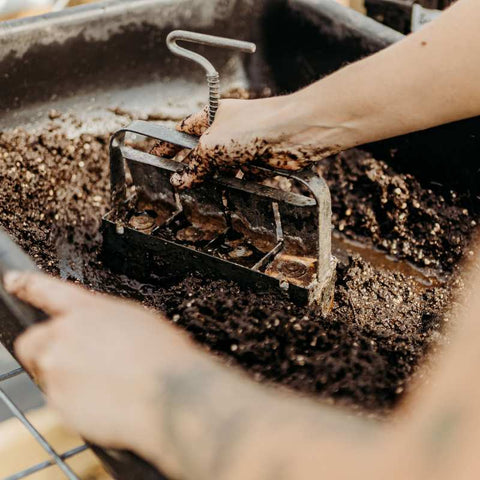
<div style="text-align: left;" data-mce-style="text-align: left;"><img src="https://cdn.shopify.com/s/files/1/1338/7937/files/SoilBlocker_480x480.jpg?v=1678044028" alt="soil blocker" style="float: none;" data-mce-style="float: none;"></div>
<h2><span style="font-weight: 400;" data-mce-style="font-weight: 400;">Supplies Needed for Soil Blocking</span></h2>
<p><span style="font-weight: 400;" data-mce-style="font-weight: 400;">Soil blocking requires a few tools, but the inputs are low after the initial purchase of the blocker and trays. We recommend buying </span><a href="https://www.bootstrapfarmer.com/collections/1020-trays-and-flats"><span style="font-weight: 400;" data-mce-style="font-weight: 400;">heavy-duty trays</span></a><span style="font-weight: 400;" data-mce-style="font-weight: 400;"> to place your soil blocks on that will last for many seasons.</span></p>
<p>Equipment you need:</p>
<ul>
<li style="font-weight: 400;" data-mce-style="font-weight: 400;">
<span style="font-weight: 400;" data-mce-style="font-weight: 400;">Soil blocker ( </span><a href="https://www.bootstrapfarmer.com/collections/soil-blockers/products/ladbrooke-soil-blockers-3-4-mini-blocker-20-blocks-bootstrap-farmer"><span style="font-weight: 400;" data-mce-style="font-weight: 400;">mini 3/4</span></a><span style="font-weight: 400;" data-mce-style="font-weight: 400;">” or </span><a href="https://www.bootstrapfarmer.com/collections/soil-blockers/products/ladbrooke-soil-blockers-2-mini-blocker-4-blocks-bootstrap-farmer"><span style="font-weight: 400;" data-mce-style="font-weight: 400;">regular 2”</span></a> <span style="font-weight: 400;" data-mce-style="font-weight: 400;">)</span>
</li>
<li style="font-weight: 400;" data-mce-style="font-weight: 400;"><span style="font-weight: 400;" data-mce-style="font-weight: 400;">Soil blocking mix or finely sifted Potting mix</span></li>
<li style="font-weight: 400;" data-mce-style="font-weight: 400;"><span style="font-weight: 400;" data-mce-style="font-weight: 400;">Large plastic dish tub or tote for mixing and holding soil (tubs with a large flat area work best for compressing the blocks)</span></li>
<li style="font-weight: 400;" data-mce-style="font-weight: 400;"><span style="font-weight: 400;" data-mce-style="font-weight: 400;">Sifting Tray for Compost</span></li>
<li style="font-weight: 400;" data-mce-style="font-weight: 400;"><span style="font-weight: 400;" data-mce-style="font-weight: 400;">Scoop or bucket for measuring ingredients</span></li>
<li style="font-weight: 400;" data-mce-style="font-weight: 400;"><span style="font-weight: 400;" data-mce-style="font-weight: 400;">Water</span></li>
<li style="font-weight: 400;" data-mce-style="font-weight: 400;"><span style="font-weight: 400;" data-mce-style="font-weight: 400;">Trays (<a title="Internal link 1020 shallow mesh tray" href="https://www.bootstrapfarmer.com/collections/1020-trays-and-flats/products/1020-mesh-microgreen-trays" target="_blank">1020 Shallow Mesh</a> &amp; <a title="internal link to 1020 microgreen trays" href="https://www.bootstrapfarmer.com/collections/1020-trays-and-flats/products/microgreen-trays" target="_blank">1020 Shallow Tray</a> no holes)</span></li>
<li style="font-weight: 400;" data-mce-style="font-weight: 400;"><span style="font-weight: 400;" data-mce-style="font-weight: 400;">Optional:  <a href="https://www.bootstrapfarmer.com/collections/new-products/products/soil-block-drop-seeder-mini-20-complete-set-mindful-farmer" title="Soil Blocker Drop Seeder from Mindful Farmer" target="_blank">Soil Block Drop Seeder </a></span></li>
</ul>
<p><span style="font-weight: 400;" data-mce-style="font-weight: 400;">For an all in one option, check out the <a title="soil blocker starter kit" href="https://www.bootstrapfarmer.com/collections/seedling-starter-kits/products/soil-blocking-starter-kit" target="_blank">Soil Blocking Starter Kit</a>.</span></p>
<div style="text-align: left;" data-mce-style="text-align: left;"><img src="https://cdn.shopify.com/s/files/1/1338/7937/files/SoilBlocking4Blockjpg_480x480.jpg?v=1702230764" alt="Soil Blocking on Mesh Trays" style="float: none;" data-mce-style="float: none;"></div>
<ul></ul>
<h2><span style="font-weight: 400;" data-mce-style="font-weight: 400;">How to Soil Block</span></h2>
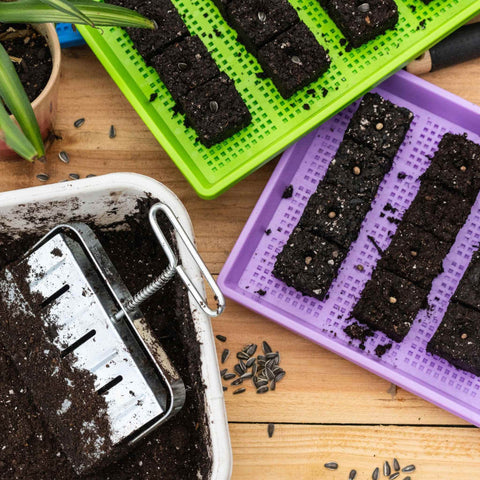
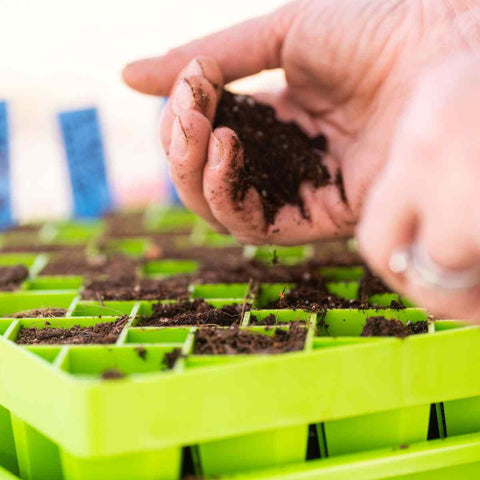
<p><span style="font-weight: 400;" data-mce-style="font-weight: 400;">Fill the tote with no more than 4-6 inches of sifted soil mixture. Be sure to pick out any chunks of bark or any other large pieces that made it past the screen as it will prevent a good block formation and disturb tiny roots. Add water to your tote of soil mix until you have a soupy mixture. Press the wet mix into your soil blocker and pack it tightly into the tool using the flat bottom surface of your tub to add pressure. Gently release the block onto your mesh tray stacked into your 1020 2.5” tray without holes. </span></p>
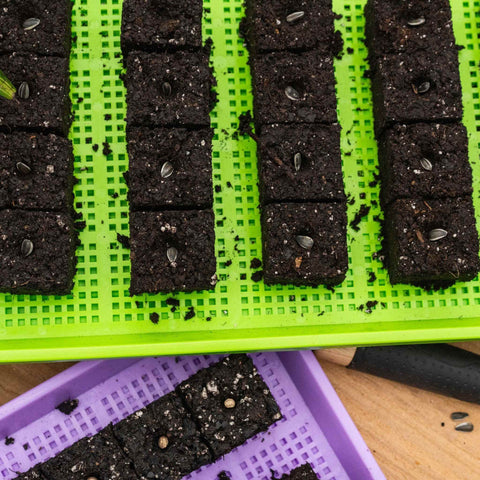
<p><span style="font-weight: 400;" data-mce-style="font-weight: 400;">After you have made your blocks, insert seeds and cover lightly with soil mix if needed. For tiny seeds, a moist toothpick will help you to pick up and deposit a single seed into each tiny block.  You can discard extra water from the bottom tray if necessary by simply removing the mesh tray and dumping out the 1020 bottom tray.</span></p>
<div style="text-align: left;" data-mce-style="text-align: left;"><img src="https://cdn.shopify.com/s/files/1/1338/7937/files/SoilBlocker_2_480x480.jpg?v=1678043969" alt="soil blocking" style="float: none;" data-mce-style="float: none;"></div>
<h2><span style="font-weight: 400;" data-mce-style="font-weight: 400;">Using a Potting Mix for Soil Blocking</span></h2>
<p><span style="font-weight: 400;" data-mce-style="font-weight: 400;">Many use pre-made soil mixes like Promix for their soil blocks, containing peat moss, perlite, and a wetting agent that helps hold the blocks together. Look for potting soil that contains these items, or amend what you have on hand to include them.</span></p>
<p><span style="font-weight: 400;" data-mce-style="font-weight: 400;">If your potting mix has large pieces of bark or pearlite, anything over ¼ inch, you will need to sift it just as you would compost. This will help to keep your soil blocks uniform. Smaller particles will also help the block retain structural integrity. </span></p>
<p><img alt="Jill from Whispering Willow Farm" src="https://cdn.shopify.com/s/files/1/1338/7937/files/WhisperingWillowJill_480x480.jpg?v=1710101682"></p>
<h3><span style="font-weight: 400;" data-mce-style="font-weight: 400;">Whispering Willow Farm’s Soil Blocking Recipe:</span></h3>
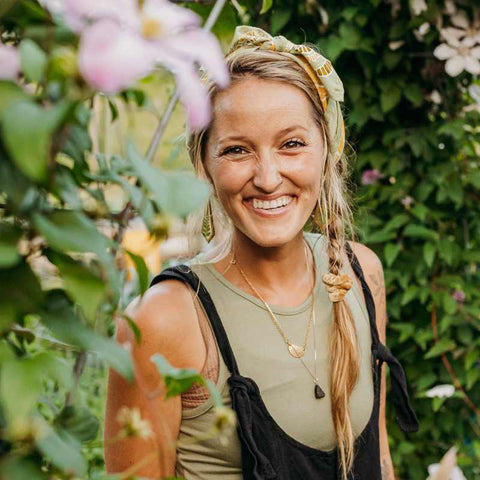
<p><span style="font-weight: 400;" data-mce-style="font-weight: 400;"><a href="https://www.bootstrapfarmer.com/collections/the-whispering-willow-farm-collection" title="whispering willow collection by bootstrap farmer" data-mce-href="https://www.bootstrapfarmer.com/collections/the-whispering-willow-farm-collection" target="_blank">Jill Ragan of Whispering Willow Farm</a> uses soil blocking to start many of the flowers and vegetables on her farm. Check out her soil blocking troubleshooting </span><a title="Whispering Willow Soil Block Video" href="https://youtu.be/i4Hpxumfxl0" target="_blank"><span style="font-weight: 400;" data-mce-style="font-weight: 400;">video</span></a><span style="font-weight: 400;" data-mce-style="font-weight: 400;"> and learn more about the mixture she uses for her blocks. We recommend starting with a simple recipe and tailoring it to your needs as you become more experienced.</span></p>
<h3><span style="font-weight: 400;" data-mce-style="font-weight: 400;">Making your own soil blocking mix</span></h3>
<p><span style="font-weight: 400;" data-mce-style="font-weight: 400;">When making your own soil blocking mix with compost, you will most likely need to mix in a fluffing agent like coco coir, peat moss, perlite or vermiculite. There are pluses and minuses to all of these options which we go into in this article on </span><a title="growing media" href="https://www.bootstrapfarmer.com/blogs/microgreens/microgreens-growing-media" target="_blank"><span style="font-weight: 400;" data-mce-style="font-weight: 400;">Growing Media</span></a><span style="font-weight: 400;" data-mce-style="font-weight: 400;">. You will also add something with a sandy texture like dolomite lime or greensand and some minerals in the form of rock dust. </span></p>
<p><span style="font-weight: 400;" data-mce-style="font-weight: 400;">Keep in mind if you will be using peat moss, which has a low pH you will need to use dolomite lime to raise the pH of your mix. If you are using a more neutral fluffy material like coco coir you can use greensand which has a more neutral effect on the mix. </span></p>
<h2><span style="font-weight: 400;" data-mce-style="font-weight: 400;">Soil Block Recipe</span></h2>
<ul>
<li><span style="font-weight: 400;" data-mce-style="font-weight: 400;">4 parts sifted coco-coir or peat moss</span></li>
<li><span style="font-weight: 400;" data-mce-style="font-weight: 400;">1 part grit like sand or vermiculite</span></li>
<li><span style="font-weight: 400;" data-mce-style="font-weight: 400;">3 parts sifted well aged compost</span></li>
</ul>
<p><span style="font-weight: 400;" data-mce-style="font-weight: 400;">For every gallon of mix that you make add ¼ cup of dolomite lime or greensand and ¼ cup of basalt rock dust. These add minerals and act as binding agents. </span></p>
<h3><span style="font-weight: 400;" data-mce-style="font-weight: 400;">Compost Best Practices</span></h3>
<p><span style="font-weight: 400;" data-mce-style="font-weight: 400;">Always use well aged compost for soil blocking and seed starting. Amending with immature compost may damage plants if it includes acids or pathogens. Another issue with immature compost is that it is still composting, meaning it continues to decay while mixed with your plants. This can result in overheating, nutrient burn or off gassing of nitrogen in your growing space. </span></p>
<p><span style="font-weight: 400;" data-mce-style="font-weight: 400;">Mature compost should not contain slimy things. It isn't ready if you can still recognize vegetables or any other original materials in your mix! If your compost, home-made or store bought, has large pieces of bark or other big chunks it will need to be sifted before using in soil blocks. </span></p>
<p><span style="font-weight: 400;" data-mce-style="font-weight: 400;"><img src="https://cdn.shopify.com/s/files/1/1338/7937/files/GreenMeshTrayWithSoilBlocks_11fb4cd2-b89f-4649-803c-cc1d0c22fbdf_480x480.jpg?v=1702590196" alt="Soil Blocks on a 1020 Shallow mesh trays in pink, purple, green, and orange"></span></p>
<h2><span style="font-weight: 400;" data-mce-style="font-weight: 400;">What are the best trays to use for soil blocking?</span></h2>
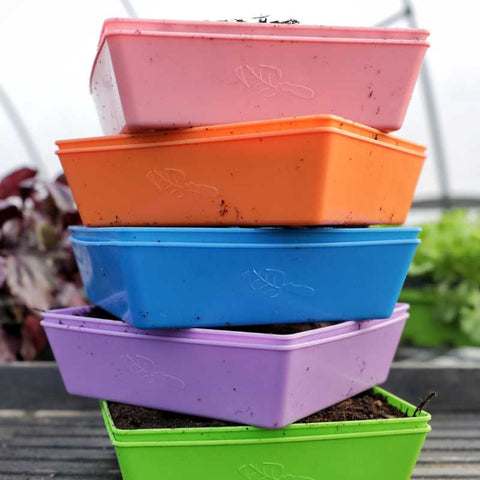
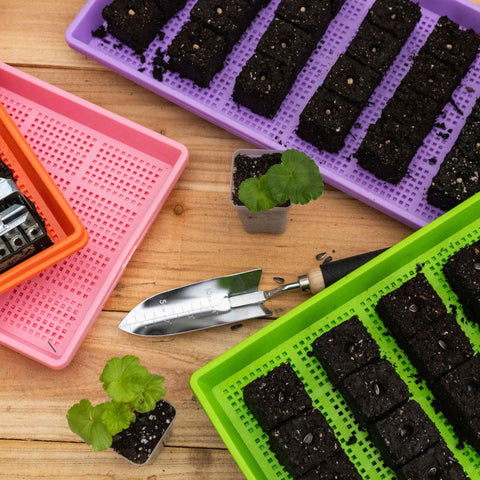
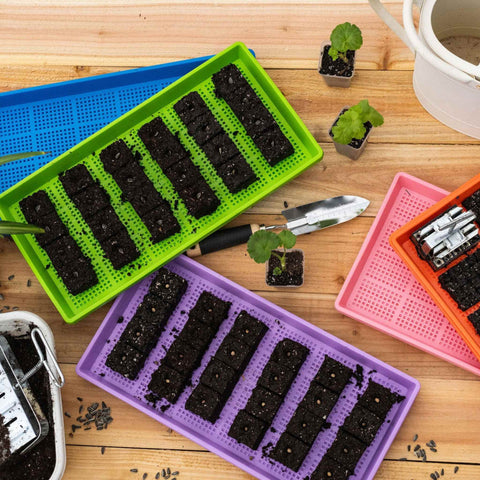
<p><span style="font-weight: 400;" data-mce-style="font-weight: 400;">The best trays for soil blocking are those that allow you water consistently without destroying the integrity of the block. We find a </span><a title="1020 shallow mesh" href="https://www.bootstrapfarmer.com/products/shallow-mesh-1020-trays"><span style="font-weight: 400;" data-mce-style="font-weight: 400;">1020 shallow mesh tray</span></a><span style="font-weight: 400;" data-mce-style="font-weight: 400;"> with a </span><a title="1020 shallow no hole colors" href="https://www.bootstrapfarmer.com/products/microgreen-trays-multi-color" target="_blank"><span style="font-weight: 400;" data-mce-style="font-weight: 400;">1020 shallow tray</span></a><span style="font-weight: 400;" data-mce-style="font-weight: 400;"> with no holes underneath for bottom watering to be the perfect combination. Using </span><span style="font-weight: 400;" data-mce-style="font-weight: 400;">colored trays</span> <span style="font-weight: 400;" data-mce-style="font-weight: 400;">makes it easier to keep your seedlings separated by type without having to move labels around. </span></p>
<h2><span style="font-weight: 400;" data-mce-style="font-weight: 400;">When to Start Seeds in a Soil Block</span></h2>
<p><span style="font-weight: 400;" data-mce-style="font-weight: 400;">Follow the same guidelines as you would when starting plants indoors in a cell tray. Keep in mind your expected frost dates and plan for having adequate space for soil blocks that may have to be potted up. The mini soil blocks can be potted up into the larger 2” soil block with the help of the ¾” cubic pins. The 2” soil blocks may need to be potted up into a larger pot like our 5” square pots if they are getting too large before the temperatures outdoors have warmed enough for planting. </span></p>
<h3><span style="font-weight: 400;" data-mce-style="font-weight: 400;">What size soil block should I use?</span></h3>
<p><span style="font-weight: 400;" data-mce-style="font-weight: 400;"><iframe title="YouTube video player" src="https://www.youtube.com/embed/UsrSrA_NGpo?si=qOxxbHuIWf6nXXRV" height="315" width="560" allowfullscreen="" referrerpolicy="strict-origin-when-cross-origin" allow="accelerometer; autoplay; clipboard-write; encrypted-media; gyroscope; picture-in-picture; web-share" frameborder="0"></iframe></span></p>
<p><span style="font-weight: 400;" data-mce-style="font-weight: 400;">The two soil blocks most useful for home gardeners and small scale farms are the mini or ¾ inch and the 2 inch. The ¾ inch block can be easily transplanted up into the 2 inch block using the </span><a title='3/4" cubic pins' href="https://www.bootstrapfarmer.com/collections/soil-blockers/products/ladbrooke-soil-blocker-insert-pins-3-4-cubic-pins-set-of-4-bootstrap-farmer" target="_blank"><span style="font-weight: 400;" data-mce-style="font-weight: 400;">¾ inch cubic pins.</span></a><span style="font-weight: 400;" data-mce-style="font-weight: 400;"> Growers also use the <a href="https://www.bootstrapfarmer.com/collections/soil-blockers/products/ladbrooke-handheld-maxi-1-soil-blocker" target="_blank" title="Hand Held maxi 1" rel="noopener noreferrer">h</a><span data-mce-fragment="1"><a href="https://www.bootstrapfarmer.com/collections/soil-blockers/products/ladbrooke-handheld-maxi-1-soil-blocker" target="_blank" title="Hand Held maxi 1" rel="noopener noreferrer">and-held Maxi 1</a> for large blocks and the <a href="https://www.bootstrapfarmer.com/collections/soil-blockers/products/ladbrooke-soil-blocker-multi-35" target="_blank" title="standing 35 soil blocker" rel="noopener noreferrer">Multi 35 stand-up soil blocker</a> for creating large plantings while standing.</span></span></p>
<br>
<p><span style="font-weight: 400;" data-mce-style="font-weight: 400;"> The ¾ inch soil blocks should be used for:</span></p>
<ul>
<li style="font-weight: 400;" data-mce-style="font-weight: 400;"><span style="font-weight: 400;" data-mce-style="font-weight: 400;">Small seeds, up to ⅛ of an inch </span></li>
<li style="font-weight: 400;" data-mce-style="font-weight: 400;"><span style="font-weight: 400;" data-mce-style="font-weight: 400;">Seeds that are slow to germinate</span></li>
<li style="font-weight: 400;" data-mce-style="font-weight: 400;"><span style="font-weight: 400;" data-mce-style="font-weight: 400;">Heat-Loving crops that should be germinated on heat mats</span></li>
<li style="font-weight: 400;" data-mce-style="font-weight: 400;"><span style="font-weight: 400;" data-mce-style="font-weight: 400;">Herb seeds</span></li>
</ul>
<br>
<p><span style="font-weight: 400;" data-mce-style="font-weight: 400;">All of these types of seeds are best grown in the ¾ inch block to save space during germination. Tiny herb seeds like basil, thyme and oregano will have tiny seedlings that do not need the prime growing space that could be better spent on things like cucumbers. Slow germinating seeds should be planted in the mini blocks for the same reason. </span></p>
<p><span style="font-weight: 400;" data-mce-style="font-weight: 400;">Heat-loving crops that do not mind being transplanted like tomatoes and peppers can be started in mini blocks to save heat mat space. They are then placed into a 2 inch block once their roots reach the edge of the mini block. </span></p>
<p><span style="font-weight: 400;" data-mce-style="font-weight: 400;"> The 2 inch soil blocks should be used for:</span></p>
<ul>
<li style="font-weight: 400;" data-mce-style="font-weight: 400;"><span style="font-weight: 400;" data-mce-style="font-weight: 400;">Large seeds, ¼ inch or larger</span></li>
<li style="font-weight: 400;" data-mce-style="font-weight: 400;"><span style="font-weight: 400;" data-mce-style="font-weight: 400;">Quick germinating crops</span></li>
<li style="font-weight: 400;" data-mce-style="font-weight: 400;"><span style="font-weight: 400;" data-mce-style="font-weight: 400;">Seedlings that do not like being transplanted, like cucumbers and squash.</span></li>
<li style="font-weight: 400;" data-mce-style="font-weight: 400;"><span style="font-weight: 400;" data-mce-style="font-weight: 400;">Up potting ¾ inch cubes </span></li>
</ul>
<div style="text-align: left;" data-mce-style="text-align: left;"><img src="https://cdn.shopify.com/s/files/1/1338/7937/files/2inwithCubic3_4SoilCube_480x480.jpg?v=1678043991" alt='soil blocking transplanting up with 3/4" cubes' style="float: none;" data-mce-style="float: none;"></div>
<h3>Using 5/8" Pins and 3/4" Cubic Pins</h3>
<p><span style="font-weight: 400;" data-mce-style="font-weight: 400;">The larger blocks do well for seeds that need to be planted deeper and those that germinate quickly. The</span><a href="https://www.bootstrapfarmer.com/products/ladbrooke-soil-blockers-2-mini-blocker-4-blocks-bootstrap-farmer"><span style="font-weight: 400;" data-mce-style="font-weight: 400;"> 2” (4 Block)</span></a><span style="font-weight: 400;" data-mce-style="font-weight: 400;"> comes with 1/2” pins for making indentations in the block. If you are planting larger seeds such as sunflowers or squash, plan to purchase a <a href="https://www.bootstrapfarmer.com/products/ladbrooke-soil-blocker-insert-pins-1-dowel-pins-set-of-4-bootstrap-farmer" title='5/8" dowel pins' target="_blank">5/8</a></span><a href="https://www.bootstrapfarmer.com/products/ladbrooke-soil-blocker-insert-pins-1-dowel-pins-set-of-4-bootstrap-farmer" title='5/8" dowel pins' target="_blank"><span style="font-weight: 400;" data-mce-style="font-weight: 400;">” pin</span></a><span style="font-weight: 400;" data-mce-style="font-weight: 400;"> to enable deeper seed indentions for larger seeds. If you plan to pot up your ¾ inch blocks you will need to add the </span><a title='3/4" cubic pin' href="https://www.bootstrapfarmer.com/collections/soil-blockers/products/ladbrooke-soil-blocker-insert-pins-3-4-cubic-pins-set-of-4-bootstrap-farmer" target="_blank"><span style="font-weight: 400;" data-mce-style="font-weight: 400;">¾ cube pins</span></a><span style="font-weight: 400;" data-mce-style="font-weight: 400;"> to make the proper sized indentations in your 2 inch blocks.</span></p>
<p><span style="font-weight: 400;" data-mce-style="font-weight: 400;">Seeds planted in larger soil blocks should be transplanted out within 6 weeks of germination. Plants that do not do well with root disturbance like cucurbits should be transplanted out before too many roots are visible at the bottom and sides of the block. </span></p>
<p><span style="font-weight: 400;" data-mce-style="font-weight: 400;"><meta charset="utf-8"> <img alt="soil block spread on table with trays and blockers" src="https://cdn.shopify.com/s/files/1/1338/7937/files/SoilBlockingOnMeshTrays_480x480.jpg?v=1704208739" data-mce-selected="1">v</span></p>
<p><span style="font-weight: 400;" data-mce-style="font-weight: 400;">Tips for planting in soil blocks:</span></p>
<ul>
<li style="font-weight: 400;" data-mce-style="font-weight: 400;"><span style="font-weight: 400;" data-mce-style="font-weight: 400;">Plant only 1 or 2 seeds per soil block to avoid having to thin. </span></li>
<li style="font-weight: 400;" data-mce-style="font-weight: 400;"><span style="font-weight: 400;" data-mce-style="font-weight: 400;">Seeds should be planted no more than twice the depth of their size. </span></li>
<li style="font-weight: 400;" data-mce-style="font-weight: 400;"><span style="font-weight: 400;" data-mce-style="font-weight: 400;">To prevent algae from growing on the top of your soil blocks, bottom watering is the best practice. It allows the surface of your blocks to dry between watering. </span></li>
</ul>
<p><span style="font-weight: 400;" data-mce-style="font-weight: 400;"><meta charset="utf-8"> <img alt="green air prune tray" src="https://cdn.shopify.com/s/files/1/1338/7937/files/GreenAirPruneTray_480x480.jpg?v=1710100935"></span></p>
<h2><span style="font-weight: 400;" data-mce-style="font-weight: 400;">Soil Block Effects Without a Soil Blocker</span></h2>
<p><span style="font-weight: 400;" data-mce-style="font-weight: 400;">You can achieve similar results to soil blocks with </span><a title="72 cell air pruning trays" href="https://www.bootstrapfarmer.com/collections/new-products/products/airprune-tray-72cell" target="_blank"><span style="font-weight: 400;" data-mce-style="font-weight: 400;">air pruning trays</span></a><span style="font-weight: 400;" data-mce-style="font-weight: 400;">, but without the need to use a soil blocking tool. These 72 cell trays have air pruning slits as well as a large opening at the bottom. They allow for airflow around the cell squares, encouraging healthy roots. For some of the longer growing seeds like lisianthus, the soil block can lose integrity before the seedlings have reached the proper size for transplanting. </span></p>
<div style="text-align: left;" data-mce-style="text-align: left;">
<meta charset="utf-8"> <img src="https://cdn.shopify.com/s/files/1/1338/7937/files/PurpleGreenSoilBlockMeshTrays_ed75e6bc-4aa5-487b-b284-a050988302a4_480x480.jpg?v=1710100692" alt="soil blocks on green and purple mesh trays" data-mce-fragment="1" data-mce-src="https://cdn.shopify.com/s/files/1/1338/7937/files/PurpleGreenSoilBlockMeshTrays_ed75e6bc-4aa5-487b-b284-a050988302a4_480x480.jpg?v=1710100692">
</div>
<h2><span style="font-weight: 400;" data-mce-style="font-weight: 400;">Watering and Caring for Soil Blocks</span></h2>
<p><span style="font-weight: 400;" data-mce-style="font-weight: 400;">After planting into your compressed blocks, we recommend watering from below using a bottom-watering tray. While some prefer a flat bottomed tray without holes, we prefer a <a title='1020 black mesh 2.5"' href="https://www.bootstrapfarmer.com/collections/1020-trays-and-flats/products/deep-soil-block-propagation-trays" target="_blank">mesh-style tray</a> and a <a title='1020 2.5" with no holes' href="https://www.bootstrapfarmer.com/products/extra-strength-seedling-propagation-tray" target="_blank">bottom tray without holes</a> to prevent oversaturation. Once your soil blocks have absorbed all the water they can hold, it is easy to remove excess water without accidentally dumping out your blocks. Lift the mesh tray away from the bottom tray, dispose of extra liquid, and replace it.</span></p>
<p><span style="font-weight: 400;" data-mce-style="font-weight: 400;"><img alt="tomatoes in a hoop house" src="https://cdn.shopify.com/s/files/1/1338/7937/files/tomatoesinHoopHousegreenhouse_480x480.jpg?v=1710100476" data-mce-src="https://cdn.shopify.com/s/files/1/1338/7937/files/tomatoesinHoopHousegreenhouse_480x480.jpg?v=1710100476"></span></p>
<h2><span style="font-weight: 400;" data-mce-style="font-weight: 400;">Top 10 vegetable varieties to start in soil blocks</span></h2>
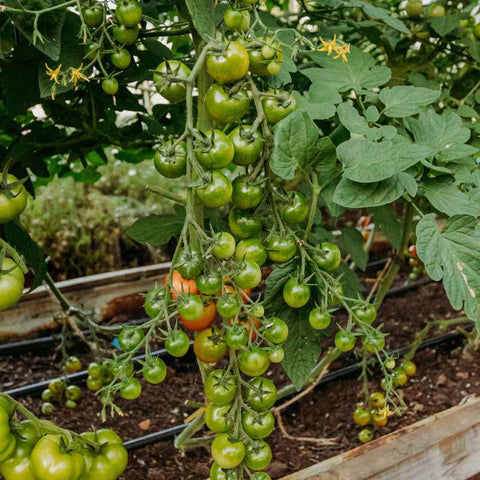
<p><span style="font-weight: 400;" data-mce-style="font-weight: 400;">Some of the most recommended foods to </span><a title="grow and preserve garden vegetables" href="https://www.bootstrapfarmer.com/blogs/how-to-guides/top-8-best-food-to-grow-and-preserve" target="_blank"><span style="font-weight: 400;" data-mce-style="font-weight: 400;">Grow and Preserve</span></a> <span style="font-weight: 400;" data-mce-style="font-weight: 400;">are best started on a </span><a title="heat mats" href="https://www.bootstrapfarmer.com/collections/heat-mats-for-seed-starting" target="_blank"><span style="font-weight: 400;" data-mce-style="font-weight: 400;">heat mat</span></a> <span style="font-weight: 400;" data-mce-style="font-weight: 400;">for optimum germination. Using mini soil blocks to start these will allow you to germinate a large number of seeds even if you only have a small warm spot to start them. Definitely start these two on heat mats:</span></p>
<ul>
<li style="font-weight: 400;" data-mce-style="font-weight: 400;"><a href="https://www.bootstrapfarmer.com/blogs/growing-tomatoes" title="tomato growing blogs" data-mce-href="https://www.bootstrapfarmer.com/blogs/growing-tomatoes" target="_blank"><span style="font-weight: 400;" data-mce-style="font-weight: 400;">Tomatoes</span></a></li>
<li style="font-weight: 400;" data-mce-style="font-weight: 400;"><span style="font-weight: 400;" data-mce-style="font-weight: 400;">Peppers</span></li>
</ul>
<p><span style="font-weight: 400;" data-mce-style="font-weight: 400;">Other seeds that are great to start in soil blocks include some that are ideal for </span><a title="Growing for Food Security with Limited Space" href="https://www.bootstrapfarmer.com/blogs/how-to-guides/growing-for-food-security-with-limited-space" target="_blank"><span style="font-weight: 400;" data-mce-style="font-weight: 400;">Growing for Food Security With Limited Space</span></a><span style="font-weight: 400;" data-mce-style="font-weight: 400;">. Below are our favorites along with which size block you should use. </span></p>
<ul>
<li style="font-weight: 400;" data-mce-style="font-weight: 400;"><span style="font-weight: 400;" data-mce-style="font-weight: 400;">Kale (mini) can be transplanted into the garden as soon as true leaves appear</span></li>
<li style="font-weight: 400;" data-mce-style="font-weight: 400;"><span style="font-weight: 400;" data-mce-style="font-weight: 400;">Turnips (mini) </span></li>
<li style="font-weight: 400;" data-mce-style="font-weight: 400;"><span style="font-weight: 400;" data-mce-style="font-weight: 400;">Chard/Beets (mini) did you know chard and beets are the same genus and species?</span></li>
<li style="font-weight: 400;" data-mce-style="font-weight: 400;"><span style="font-weight: 400;" data-mce-style="font-weight: 400;">Peas (2” block)</span></li>
<li style="font-weight: 400;" data-mce-style="font-weight: 400;"><span style="font-weight: 400;" data-mce-style="font-weight: 400;">Cucumbers (2” block) </span></li>
<li style="font-weight: 400;" data-mce-style="font-weight: 400;"><span style="font-weight: 400;" data-mce-style="font-weight: 400;">Squash (2” block)</span></li>
<li style="font-weight: 400;" data-mce-style="font-weight: 400;"><span style="font-weight: 400;" data-mce-style="font-weight: 400;">Beans (2” block)</span></li>
<li style="font-weight: 400;" data-mce-style="font-weight: 400;"><span style="font-weight: 400;" data-mce-style="font-weight: 400;">Corn (2” block) a thirsty plant that can drink its weight in water every day so big is better. </span></li>
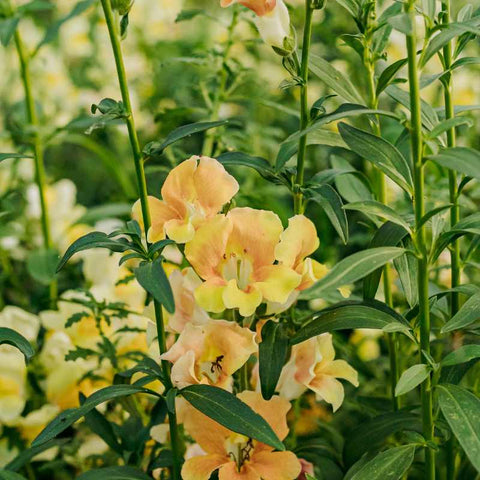
</ul>
<img alt="flowers in greenhouse" src="https://cdn.shopify.com/s/files/1/1338/7937/files/FlowersInGreenhouse_480x480.jpg?v=1710100564" data-mce-fragment="1" data-mce-src="https://cdn.shopify.com/s/files/1/1338/7937/files/FlowersInGreenhouse_480x480.jpg?v=1710100564"><br>
<h2><span style="font-weight: 400;" data-mce-style="font-weight: 400;">Top 10 flower varieties to start using a soil blocker</span></h2>
<p><span style="font-weight: 400;" data-mce-style="font-weight: 400;">Soil blockers are great for flower varieties that like to be surface sown, those with tiny seeds. They are also good for seeds that grow slowly at first and don’t need much space. </span></p>
<p><span style="font-weight: 400;" data-mce-style="font-weight: 400;">For larger seeds, thirsty varieties and those that will need to stay in their starter media for a long time, we recommend starting in an </span><a href="https://www.bootstrapfarmer.com/collections/plug-trays/products/airprune-tray-72cell"><span style="font-weight: 400;" data-mce-style="font-weight: 400;">air prune tray</span></a> <span style="font-weight: 400;" data-mce-style="font-weight: 400;">for many of the same benefits of soil blocks.</span></p>
<p><span style="font-weight: 400;" data-mce-style="font-weight: 400;"> The best flowers to start using soil blockers are:</span></p>
<ul>
<li style="font-weight: 400;" data-mce-style="font-weight: 400;"><span style="font-weight: 400;" data-mce-style="font-weight: 400;">Basil </span></li>
<li style="font-weight: 400;" data-mce-style="font-weight: 400;"><span style="font-weight: 400;" data-mce-style="font-weight: 400;">Bupleurum </span></li>
<li style="font-weight: 400;" data-mce-style="font-weight: 400;"><span style="font-weight: 400;" data-mce-style="font-weight: 400;">Dill</span></li>
<li style="font-weight: 400;" data-mce-style="font-weight: 400;"><span style="font-weight: 400;" data-mce-style="font-weight: 400;">Dianthus</span></li>
<li style="font-weight: 400;" data-mce-style="font-weight: 400;"><span style="font-weight: 400;" data-mce-style="font-weight: 400;">Nigella</span></li>
<li style="font-weight: 400;" data-mce-style="font-weight: 400;"><span style="font-weight: 400;" data-mce-style="font-weight: 400;">Poppies</span></li>
<li style="font-weight: 400;" data-mce-style="font-weight: 400;"><span style="font-weight: 400;" data-mce-style="font-weight: 400;">Salvias</span></li>
<li style="font-weight: 400;" data-mce-style="font-weight: 400;"><span style="font-weight: 400;" data-mce-style="font-weight: 400;">Snapdragons</span></li>
<li style="font-weight: 400;" data-mce-style="font-weight: 400;"><span style="font-weight: 400;" data-mce-style="font-weight: 400;">Stock</span></li>
<li style="font-weight: 400;" data-mce-style="font-weight: 400;"><span style="font-weight: 400;" data-mce-style="font-weight: 400;">Yarrow</span></li>
</ul>
<div style="text-align: left;" data-mce-style="text-align: left;"><img alt="transplanting out seedlings into greenhouse" src="https://cdn.shopify.com/s/files/1/1338/7937/files/TransplantingOutdoorsSeedlings_480x480.jpg?v=1710101615"></div>
<h2><span style="font-weight: 400;" data-mce-style="font-weight: 400;">Transplanting soil blocks outdoors</span></h2>
<meta charset="utf-8">
<p><span style="font-weight: 400;" data-mce-style="font-weight: 400;">One of the best things about soil blocks is their seamless transition to outdoors. Wait until you see a true leaf and harden off for about a week before transplanting outdoors. For more information on transplanting seedlings check out <a title="How to Transplant Seedlings" href="https://www.bootstrapfarmer.com/blogs/how-to-grow-seedlings/how-big-should-seedlings-be-before-transplanting" target="_blank">How to Transplant Seedlings</a><span> </span>for more information on the process.</span></p>
<p> </p>
<h3>Featured Products</h3>
<div id="product-component-1712176390943"></div>
<script type="text/javascript">
/*<![CDATA[*/
(function () {
  var scriptURL = 'https://sdks.shopifycdn.com/buy-button/latest/buy-button-storefront.min.js';
  if (window.ShopifyBuy) {
    if (window.ShopifyBuy.UI) {
      ShopifyBuyInit();
    } else {
      loadScript();
    }
  } else {
    loadScript();
  }
  function loadScript() {
    var script = document.createElement('script');
    script.async = true;
    script.src = scriptURL;
    (document.getElementsByTagName('head')[0] || document.getElementsByTagName('body')[0]).appendChild(script);
    script.onload = ShopifyBuyInit;
  }
  function ShopifyBuyInit() {
    var client = ShopifyBuy.buildClient({
      domain: 'bootstrapfarmer.myshopify.com',
      storefrontAccessToken: '8a97138b05e7893060539b66a344db1a',
    });
    ShopifyBuy.UI.onReady(client).then(function (ui) {
      ui.createComponent('product', {
        id: '7593147498654',
        node: document.getElementById('product-component-1712176390943'),
        moneyFormat: '%24%7B%7Bamount%7D%7D',
        options: {
  "product": {
    "styles": {
      "product": {
        "@media (min-width: 601px)": {
          "max-width": "calc(25% - 20px)",
          "margin-left": "20px",
          "margin-bottom": "50px"
        }
      },
      "button": {
        "font-size": "16px",
        "padding-top": "16px",
        "padding-bottom": "16px",
        "padding-left": "26px",
        "padding-right": "26px"
      },
      "quantityInput": {
        "font-size": "16px",
        "padding-top": "16px",
        "padding-bottom": "16px"
      }
    },
    "buttonDestination": "modal",
    "contents": {
      "options": false
    },
    "text": {
      "button": "View product"
    }
  },
  "productSet": {
    "styles": {
      "products": {
        "@media (min-width: 601px)": {
          "margin-left": "-20px"
        }
      }
    }
  },
  "modalProduct": {
    "contents": {
      "img": false,
      "imgWithCarousel": true,
      "button": false,
      "buttonWithQuantity": true
    },
    "styles": {
      "product": {
        "@media (min-width: 601px)": {
          "max-width": "100%",
          "margin-left": "0px",
          "margin-bottom": "0px"
        }
      },
      "button": {
        "font-size": "16px",
        "padding-top": "16px",
        "padding-bottom": "16px",
        "padding-left": "26px",
        "padding-right": "26px"
      },
      "quantityInput": {
        "font-size": "16px",
        "padding-top": "16px",
        "padding-bottom": "16px"
      }
    }
  },
  "option": {},
  "cart": {
    "styles": {
      "button": {
        "font-size": "16px",
        "padding-top": "16px",
        "padding-bottom": "16px"
      },
      "title": {
        "color": "#4c4c4c"
      },
      "header": {
        "color": "#4c4c4c"
      },
      "lineItems": {
        "color": "#4c4c4c"
      },
      "subtotalText": {
        "color": "#4c4c4c"
      },
      "subtotal": {
        "color": "#4c4c4c"
      },
      "notice": {
        "color": "#4c4c4c"
      },
      "currency": {
        "color": "#4c4c4c"
      },
      "close": {
        "color": "#4c4c4c",
        ":hover": {
          "color": "#4c4c4c"
        }
      },
      "empty": {
        "color": "#4c4c4c"
      },
      "noteDescription": {
        "color": "#4c4c4c"
      },
      "discountText": {
        "color": "#4c4c4c"
      },
      "discountIcon": {
        "fill": "#4c4c4c"
      },
      "discountAmount": {
        "color": "#4c4c4c"
      }
    }
  },
  "toggle": {
    "styles": {
      "count": {
        "font-size": "16px"
      }
    }
  },
  "lineItem": {
    "styles": {
      "variantTitle": {
        "color": "#4c4c4c"
      },
      "title": {
        "color": "#4c4c4c"
      },
      "price": {
        "color": "#4c4c4c"
      },
      "fullPrice": {
        "color": "#4c4c4c"
      },
      "discount": {
        "color": "#4c4c4c"
      },
      "discountIcon": {
        "fill": "#4c4c4c"
      },
      "quantity": {
        "color": "#4c4c4c"
      },
      "quantityIncrement": {
        "color": "#4c4c4c",
        "border-color": "#4c4c4c"
      },
      "quantityDecrement": {
        "color": "#4c4c4c",
        "border-color": "#4c4c4c"
      },
      "quantityInput": {
        "color": "#4c4c4c",
        "border-color": "#4c4c4c"
      }
    }
  }
},
      });
    });
  }
})();
/*]]]]><![CDATA[>*/
</script>]]>
    </content>
  </entry>
  <entry>
    <id>https://www.bootstrapfarmer.com/blogs/how-to-grow-seedlings/how-to-use-humidity-domes-when-starting-seeds</id>
    <published>2022-03-29T15:43:52-04:00</published>
    <updated>2026-02-05T10:33:56-05:00</updated>
    <link rel="alternate" type="text/html" href="https://www.bootstrapfarmer.com/blogs/how-to-grow-seedlings/how-to-use-humidity-domes-when-starting-seeds"/>
    <title>How to Use a Humidity Dome for Seed Starting</title>
    <author>
      <name>Katie Russo</name>
    </author>
    <summary type="html">
      <![CDATA[<meta charset="utf-8">Starting up seeds for this year's garden? Here is the lowdown on the humidity dome debate when starting seeds in cell trays or starting a tray of microgreens. Humidity domes are a useful tool to use during germination, often used in conjunction with heat mats.<p><a class="read-more" href="https://www.bootstrapfarmer.com/blogs/how-to-grow-seedlings/how-to-use-humidity-domes-when-starting-seeds">More</a></p>]]>
    </summary>
    <content type="html">
      <![CDATA[<p> </p>
<p>A <a title="humidity dome" href="https://www.bootstrapfarmer.com/collections/1020-trays-and-flats/products/humidity-dome">humidity dome</a> is an excellent addition to your seed-starting toolkit. Used properly, a dome can:</p>
<ul>
<li>Help <strong>maintain soil moisture and temperature</strong>
</li>
<li>Increase germination rates</li>
<li>Protect delicate and expensive seeds</li>
<li>Limit time spent watering seedlings</li>
</ul>
<h2><span data-preserver-spaces="true">WHY HUMIDITY DOMES ARE HELPFUL WHEN STARTING SEEDS</span></h2>
<p><span data-preserver-spaces="true">Many people debate whether a dome is necessary when ordering supplies and planning ahead to start seeds for this year's garden. Provide seeds with moisture, warmth, and light at the right time, and they should germinate. Humidity domes help maintain two of these three needs for your seedlings. </span></p>
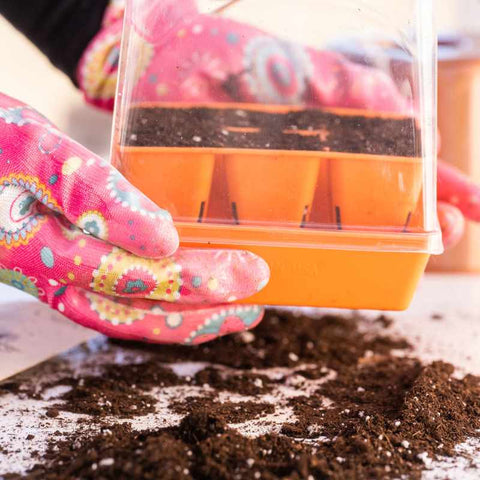
<p><span data-preserver-spaces="true"><a title="humidity domes" href="https://www.bootstrapfarmer.com/collections/humidity-domes" target="_blank">Humidity domes of all sizes</a> are <strong>useful</strong> during germination, and are often used in conjunction with <a href="https://www.bootstrapfarmer.com/collections/heat-mats-for-seed-starting" title="Internal link to shop heat mats" rel="noopener" target="_blank">heat mats</a>. They help protect the seeds, maintain moisture levels, and <strong>create an ideal environment</strong> for  a strong start. While many of your seeds will likely germinate without a humidity dome, using one will significantly increase germination rates and shorten sprouting time for most seeds. </span></p>
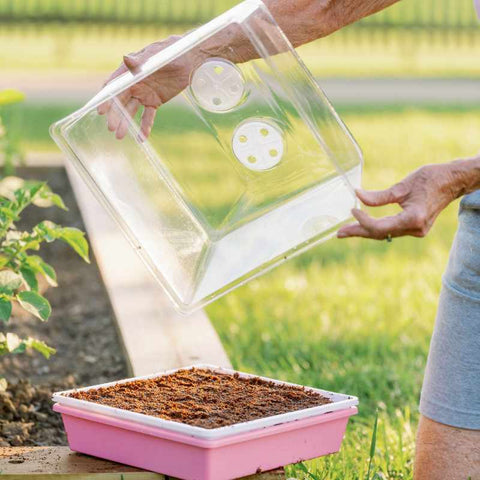
<p><span data-preserver-spaces="true">Using humidity domes reduces seed waste and time. Leave them on the tray until the first sign of germination, or until you begin to see sprouting. Once sprouting occurs, remove the dome and place your trays under light, with proper </span><a title="grow rack fan" class="editor-rtfLink" href="https://www.bootstrapfarmer.com/products/grow-rack-fans?_pos=1&amp;_sid=df7c8bbd6&amp;_ss=r"><span data-preserver-spaces="true">air circulation</span></a><span data-preserver-spaces="true">. If brought under light too late, seedlings can get leggy. It is crucial to monitor your emerging seeds during this step. Use a heat mat during this process to accelerate germination. Check out <a title="how to use a heat mat for seed starting" href="https://www.bootstrapfarmer.com/blogs/how-to-grow-seedlings/how-to-use-heat-mats-for-starting-seeds">How to Use a Heat Mat for Starting Seeds</a>.</span></p>
<div style="text-align: start;"><img src="https://cdn.shopify.com/s/files/1/1338/7937/files/5_HumidityDomeShallowTray_480x480.jpg?v=1712170200" alt='shallow orange 5x5 with orange six cell with 5" humidity dome' style="float: none;"></div>
<h2><span data-preserver-spaces="true">HOW LONG TO KEEP SEEDLINGS UNDER HUMIDITY DOMES</span></h2>
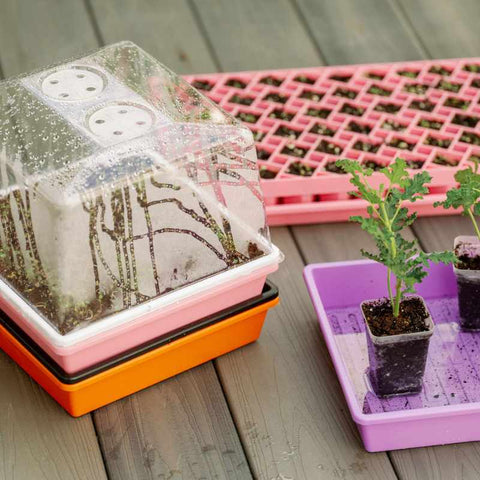
<p><span data-preserver-spaces="true">While the seeds are germinating, they require constant moisture. The humidity dome can <strong>save you a </strong><span style="box-sizing: border-box; margin: 0px; padding: 0px;"><strong>lot of time</strong> by retaining</span> moisture. Once sprouted, this same humidity can cause mold, so be sure to uncover them once sprouting begins. </span></p>
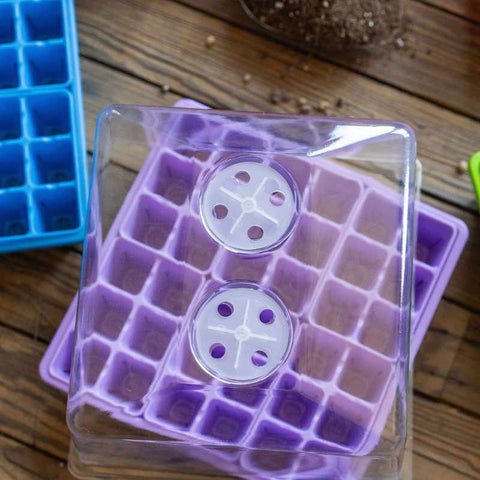
<p><span data-preserver-spaces="true">Some growers like to wean their seedlings off the humidity domes by propping them up to allow airflow before fully acclimating them to the outside air. Our humidity domes have <strong>built-in adjustable vents</strong> to allow you to introduce air circulation and decrease humidity slowly for tender varieties. Sprouted seeds need light and air circulation to thrive at this point. </span></p>
<div style="text-align: start;"><img src="https://cdn.shopify.com/s/files/1/1338/7937/files/1010SeedStartingKitPurple_480x480.jpg?v=1712170186" alt="1010 seed starting kit purple" style="float: none;"></div>
<h3><span data-preserver-spaces="true">Exceptions to the humidity dome rule</span></h3>
<p><span data-preserver-spaces="true">A few crops are the <strong>exception to this rule</strong> and can benefit from having the dome stay on, with the vents partially open, for days after germination. Peppers notably seem to enjoy a few days of extra humid heat to really get growing. </span></p>
<p><span data-preserver-spaces="true">If you are growing specialty plants for nurseries or landscapers, you may find that using a humidity dome to <a title="Internal link to How to create and work with microclimates in the garden" href="https://www.bootstrapfarmer.com/blogs/shade-cloth/microclimates-and-shade-cloths" target="_blank">create a microclimate</a> within your grow space helps you <strong>grow strong transplants</strong>. <a title="Internal link to How Low Tunnels Can Simplify Hardening Off for Healthy Transplants" href="https://www.bootstrapfarmer.com/blogs/market-gardening/how-low-tunnels-can-simplify-hardening-off" target="_blank">Harden them off</a> properly to deal with lower humidity than their ideal. Opening the vents fully and then leaving them open for a few hours a day will help with this process. Use these modified recommendations from our </span><a class="editor-rtfLink" href="https://www.bootstrapfarmer.com/blogs/how-to-grow-seedlings/the-ultimate-seed-starting-guide" target="_blank"><span data-preserver-spaces="true">Seed Starting 101 Guide</span></a><span data-preserver-spaces="true"> to wean your plants off added humidity. </span></p>
<h2><span data-preserver-spaces="true">5 EASY STEPS TO HARDEN OFF YOUR SEEDLINGS BEFORE TRANSPLANTING</span></h2>
<ol>
<li><span data-preserver-spaces="true">Place your tray of seedlings outdoors in an area protected from wind and direct sunlight for 2-3 hours per day for 3 days. Keep the dome on with vents open. Bring them back inside at night.</span></li>
<li><span data-preserver-spaces="true">For the next 3-4 days, place the seedlings outside in the mornings and bring them back in at night. Remove the dome for a few hours each day. Keep out of direct sunlight. </span></li>
<li>For plants in direct sun, remove the dome and expose them to ambient humidity and direct sunlight for a few hours each day.</li>
<li>For 1-2 days before planting, leave your trays in a protected outdoor space overnight with the dome completely removed.</li>
<li>Stop watering your seedlings 18-24 hours before you plan to plant them. Doing so makes it easier to remove them from the trays.</li>
</ol>
<div style="text-align: start;"><img src="https://cdn.shopify.com/s/files/1/1338/7937/files/PlacingDomeon1010TrayofMicrogreens_480x480.jpg?v=1712170235" alt="humidity dome on 1010 tray of microgreens" style="float: none;"></div>
<h2><span data-preserver-spaces="true">Using a humidity dome to grow microgreens</span></h2>
<p><span data-preserver-spaces="true">While we recommend stacking most microgreen varieties during germination, a few benefit significantly from a humidity dome instead. These tricky seeds include: </span></p>
<ul>
<li>
<strong>Mucilaginous (sticky, gel-like) seeds</strong>: basil, chia, and flax</li>
<li>
<strong>Large seeds that don't like to be overcrowded</strong>: corn and beans </li>
<li>
<strong>Root crops that require consistent moisture</strong>: carrots and parsnips</li>
<li>
<strong>Tiny seeds that may get lost or crushed</strong>: lettuce and spinach </li>
</ul>
<p><span data-preserver-spaces="true">For more on the basic growing process of microgreens, check out </span><a title="growing microgreens" class="editor-rtfLink" href="https://www.bootstrapfarmer.com/blogs/microgreens/how-to-grow-microgreens-101"><span data-preserver-spaces="true">Step by Step Guide to Growing Microgreens at Home</span></a><span data-preserver-spaces="true">. </span></p>
<p><span data-preserver-spaces="true">When using a humidity dome to sprout microgreens, it is even more important to remove it at the correct time. <strong>24-48 hours after initial germination is ideal</strong>. This allows the tiny roots time to penetrate the growing media without being dried out by circulating air. Check out our </span><a title="microgreens cheat sheet" class="editor-rtfLink" href="https://www.bootstrapfarmer.com/blogs/microgreens/the-ultimate-microgreen-cheat-sheet"><span data-preserver-spaces="true">Microgreens Ultimate Growing Cheatsheet</span></a><span data-preserver-spaces="true"> for more information on microgreen germination times.</span></p>
<h3><span data-preserver-spaces="true">Using a Blackout Humidity Dome for Specialty Microgreens</span></h3>
<p><span data-preserver-spaces="true">A blackout dome is a humidity dome painted black or designed to block all light from your growing trays. Crops like popcorn shoots must be grown in complete darkness. Others, like broccoli, pea shoots, and radishes, benefit from a day or two under blackout to lengthen stems, prevent yellowing, and make them easier to harvest. </span></p>
<p><span data-preserver-spaces="true">Our </span><a title="1020 blackout humidity dome" class="editor-rtfLink" href="https://www.bootstrapfarmer.com/collections/1020-trays-and-flats/products/1020-blackout-humidity-dome"><span data-preserver-spaces="true">blackout humidity domes</span></a><span data-preserver-spaces="true"> are designed for specialty microgreen growers. They cover any of our </span><a class="editor-rtfLink" href="https://www.bootstrapfarmer.com/collections/1020-trays-and-flats" target="_blank"><span data-preserver-spaces="true">1020 growing trays</span></a><span data-preserver-spaces="true"> and block light, provided the vents remain closed. Even with the vents open, they will exclude enough light to lengthen the stems on your short, hard-to-harvest crops.  </span></p>
<p><span data-preserver-spaces="true">To learn more, read </span><a class="editor-rtfLink" href="https://www.bootstrapfarmer.com/blogs/microgreens/microgreens-and-when-to-to-use-a-blackout-dome"><span data-preserver-spaces="true">When to Use a Blackout Dome</span></a><span data-preserver-spaces="true"> post.</span></p>
<div style="text-align: start;"><img src="https://cdn.shopify.com/s/files/1/1338/7937/files/HumidityDomeOverSeedlings_480x480.jpg?v=1712170837" alt="grower placing humidity dome on a 1020 tray" style="float: none;"></div>
<h2><span data-preserver-spaces="true">HOW TO PREVENT MOLD WHEN USING HUMIDITY DOMES</span></h2>
<p><span data-preserver-spaces="true">You will typically see mold issues if you leave the humidity dome on for longer than the recommended time (germination phase). When germination on a tray is incomplete or staggered, using domes with an adjustable vent helps combat this issue. If </span><span data-preserver-spaces="true"><span style="box-sizing: border-box; margin: 0px; padding: 0px;">many of the seeds in your <a href="https://www.bootstrapfarmer.com/collections/plug-trays" target="_blank" rel="noopener">cell plug tray</a> have germinated but not all, open the vents at the top of the dome to create some airflow while keeping the tray's humidity above the room's ambient level</span>. If small spots of mold appear during germination, they often disappear when the tray is exposed to proper airflow and light. </span></p>
<p><span data-preserver-spaces="true"><strong>Bootstrap tip</strong>: Clean your humidity domes between uses and only plant seedlings together with similar germination times, ideally the same number of days, to prevent molding on the first emerging sprouts. </span></p>
<p><span data-preserver-spaces="true">Cleaning trays can be done with basic dish soap, a good rinse, and a quick spritz of 3% hydrogen peroxide solution. Learn more in <a title="How to wash and care for seedling trays" href="https://www.bootstrapfarmer.com/blogs/how-to-grow-seedlings/how-to-wash-and-care-for-seedling-trays">How to Wash and Care for Seedling Trays</a>.</span></p>
<h3><span data-preserver-spaces="true">OTHER BENEFITS OF AND USES FOR HUMIDITY DOMES </span></h3>
<ul>
<li>
<span data-preserver-spaces="true"><strong>Seedling protection from mice and bugs</strong>. Although not airtight, humidity domes cover the edges, preventing pests and critters from wreaking havoc. </span><span data-preserver-spaces="true"> </span>
</li>
<li>
<strong>Transporting microgreens and plant starts</strong>. Do your customers prefer live microgreen trays? Transport and deliver them under cover.</li>
<li>
<strong>Keep young cuttings safe</strong>: Keep <a href="https://www.bootstrapfarmer.com/blogs/growing-flowers/propagating-roses-from-cuttings" target="_blank" title="Internal link to How to Propagate Roses From Cuttings: The Best Way to Grow New Roses From Stem Cuttings" rel="noopener">newly propagated cuttings</a> humid and happy for increased rooting success. Our <a href="https://www.bootstrapfarmer.com/products/propagation-kit" target="_blank" title="Internal link to Propagation kit " rel="noopener">propagation kit</a> makes it easy. </li>
</ul>
<div style="text-align: start;"><img src="https://cdn.shopify.com/s/files/1/1338/7937/files/Humiditydomeon1010SeedStartingTrayofMicrogreens_480x480.jpg?v=1712170217" alt="1010 tray of microgreens with clear humidity dome with seedlings in the background" style="float: none;"></div>
<h3><span data-preserver-spaces="true">So, do you really need a humidity dome?</span></h3>
<p><span data-preserver-spaces="true">Like any farming tool, you could do alright without one, but having one sure makes some tasks easier. For delicate crops, heat-loving crops, tricky-to-grow microgreens, and tropical plants, <strong><span style="box-sizing: border-box; margin: 0px; padding: 0px;">using a humidity dome can </span>be the difference between success and failure. </strong></span></p>
<p><span data-preserver-spaces="true">Not sure if it will help? Try running a few side-by-side tests in your growing space. Two trays: treat them the same, but cover one with a dome and leave the other exposed to ambient humidity. Once you see how the <strong>speed and reliability</strong> of germination increase, you will likely want to add more of this handy tool to your farming toolkit. </span></p>
<div id="collection-component-1730409643763"></div>]]>
    </content>
  </entry>
  <entry>
    <id>https://www.bootstrapfarmer.com/blogs/how-to-grow-seedlings/how-to-use-heat-mats-for-starting-seeds</id>
    <published>2022-03-08T16:03:13-05:00</published>
    <updated>2026-03-20T17:11:36-04:00</updated>
    <link rel="alternate" type="text/html" href="https://www.bootstrapfarmer.com/blogs/how-to-grow-seedlings/how-to-use-heat-mats-for-starting-seeds"/>
    <title>How to Use Heat Mats for Starting Seeds</title>
    <author>
      <name>Emily Gaines</name>
    </author>
    <summary type="html">
      <![CDATA[Learn how to set-up and properly use a heat-mat in this quick how-to article. Read about the best way to use a heat mat and find out if you even need one!<p><a class="read-more" href="https://www.bootstrapfarmer.com/blogs/how-to-grow-seedlings/how-to-use-heat-mats-for-starting-seeds">More</a></p>]]>
    </summary>
    <content type="html">
      <![CDATA[<h1>Why Heat Mats Matter for Seed Starting</h1>
<p><span style="font-weight: 400;">Heat mats are a vital part of an efficient production plan when used properly. The number one thing to consider is that not all crops are created equal. Starting seeds in the ideal environment means taking a look at the individual needs of each crop and sometimes each individual variety. </span></p>
<h2><b>Do You Need a Heating Mat to Start Your Seeds?</b></h2>
<p><span style="font-weight: 400;">One of the main questions we get is, "Do I even need a heat mat to start seeds?" You may not need one if you are just starting a few seedlings indoors to save a little money on your spring garden plants. However, considering the soil preference, temperature preference, and light preference can be different for every variety of seeds, the answer is probably, “Yes, if you are growing a wide variety of crops from seed.” </span></p>
<p><span style="font-weight: 400;">The germination requirements for lettuce seeds differ significantly from those for chili peppers or tomatoes. While your lettuce seeds may germinate just fine in an unheated room or shed where the temperatures range from 40<meta charset="utf-8">℉ to 65℉ (4<meta charset="utf-8">°C to 18°C) in the spring, other gardening staples will not. Tomatoes, for example, rarely germinate below 75°F (24°C). To start these properly, you will need to warm the soil using seedling heat mats.</span></p>
<h3>When a Heat Mat Is Worth Using</h3>
<ul>
<li style="font-weight: 400;"><span style="font-weight: 400;">If you are planning to start seeds with special requirements or even just in a space outside their preferred temperature, having a seedling heat mat can be the key to a successful start to every growing season. </span></li>
<li style="font-weight: 400;"><span style="font-weight: 400;">If you are going to germinate heat-loving crops like zinnias or chili peppers, using a heat mat can give you a significant jump on the growing season. These crops frequently take 7-14 days to germinate if left to their own devices. Grown on a heating mat, these seeds can germinate quite well in a few days.</span></li>
<li style="font-weight: 400;"><span style="font-weight: 400;">If you need to start a large quantity of seeds and ensure uniform germination and growth, using a heat mat for propagation is one of the best ways to get an even start.</span></li>
<li style="font-weight: 400;"><span style="font-weight: 400;">If your seeds have specific temperature requirements for proper root growth or the development of specific traits. For example, zinnias grown outside their preferred conditions may revert to single-petal blooms rather than the larger, multi-layered petal style.</span></li>
</ul>
<h2><span style="font-weight: 400;">When to Stop Using a Heat Mat</span></h2>
<p>Heat mats are most useful during germination, when seeds need warm, consistent soil temperatures to sprout evenly. Once most seeds have emerged and seedlings are up, the heat mat should be turned off, or the trays should be moved off the mat.</p>
<p>At that point, <a rel="noopener" title="Internal link to Led lighting collection" href="https://www.bootstrapfarmer.com/collections/led-lights" target="_blank">light</a> becomes more important than bottom heat. Leaving seedlings on a heat mat after germination can lead to fast, weak growth and leggy plants. Removing heat after emergence helps seedlings develop stronger stems and supports healthier growth moving forward.</p>
<p><meta charset="utf-8"><span style="font-weight: 400;"><img style="margin-bottom: 16px; float: none;" alt="seed packet with germination requirements listed" src="https://cdn.shopify.com/s/files/1/1338/7937/files/A_close-up_shot_of_a_seed_packet_showing_ideal_temperature_ranges_and_planting_instructions.jpg?v=1741024455"></span></p>
<div style="text-align: left;">
<h2>Germination Requirements You Need to Know</h2>
<p><span style="font-weight: 400;">Consider soil preference, temperature preference, and light preference for all of the crops you will be starting from seed.</span></p>
<p><span style="font-weight: 400;">In this article, we will focus exclusively on the soil temperature preferences of your crops. Using the correct germination temperature for your seed-starting process has several benefits, including increased seed germination rates, quicker germination times, and healthier plant starts overall.</span><span style="font-weight: 400;"></span></p>
</div>
<h2><b>How to Find the Right Germination Temperature</b></h2>
<p>The right germination temperature comes from matching your heat mat to the needs of the seeds you are starting. Each crop has a temperature range where it germinates best.</p>
<p>By checking seed supplier information and understanding how different crops fall along the temperature spectrum, you can set your heat mat once and get more consistent, even germination across your trays.</p>
<h3><b>Looking Up Plant Varieties’ Needs on Your Seed Supplier’s Website</b></h3>
<p><span style="font-weight: 400;">Most reputable seed suppliers will provide the information you need to get your seeds started right. If you have a favorite seed supplier, take the time to look through their website. You may have to scroll past the general description to find the ideal soil temperatures for seed germination. </span></p>
<p><span style="font-weight: 400;">Check the seed packet for the plant's growing preferences. This information will include days to germination, preferred temperature, proper seed spacing, and differences between indoor and outdoor starting recommendations. </span></p>
<p><span style="font-weight: 400;">To find the best temperature to set your mat at, list the preferred temperature range for each variety you will be starting. Once you have all of this information at your fingertips, you can identify your ideal ranges. </span></p>
<h3><b>Using the Bell Curve of Planting Temperatures</b></h3>
<p><span style="font-weight: 400;">Thinking about plotting your varieties along a bell curve can be very helpful. Some plants, like lettuces, will germinate in the lower ranges of 55℉ to 65℉ (12°C to 18°C). Most plants will happily sprout in the 65℉ to 75℉ (18°C to 24°C) range. A few plant species, including peppers, tomatoes, and some flowers, prefer temperatures between 75℉ (24°C) and 90℉ (32°C). </span></p>
<p><span style="font-weight: 400;">Some companies include ideal ranges in the information listed on the seed packet, but most have only general information, such as days to harvest and plant spacing. For more specific information, refer to the website or research your variety online with a reputable source. </span></p>
<h3><b>Examining Temperature Ranges</b></h3>
<p><span style="font-weight: 400;">Now that you know the ideal ranges for all the varieties you will be starting, you can find the Goldilocks zone for your seedling heat mat setting. The Goldilocks zone is just what it sounds like: not too hot and not too cold for everything that needs a little boost of warmth to get started.</span></p>
<p><span style="font-weight: 400;">In an indoor setup where you're already at 70°F (21°C), many plants that prefer the lower end of the bell curve will germinate well, possibly only needing the heat mat when overnight temperatures drop. However, with peppers and tomatoes, you will want to bump the heat up to around 10℉ (-12°C) to get you more toward the high end of that bell curve. </span><span style="font-weight: 400;"></span></p>
<div style="text-align: left;"><img src="https://cdn.shopify.com/s/files/1/1338/7937/files/A_shot_of_a_grow_room_or_unheated.jpg?v=1741024529" alt="1010 kit in unheated greenhouse" style="margin-bottom: 16px; float: none;"></div>
<h2><b>Grow Room Ambient Temperatures and Handling Fluctuations</b></h2>
<p><span style="font-weight: 400;">If you are starting all of your seedlings indoors, you will likely have control over the room's temperature and can control the temperature of your propagation trays with the mat.</span></p>
<h3><span style="font-weight: 400;">Indoor vs Unheated Spaces</span></h3>
<p><span style="font-weight: 400;">However, if you are starting your seeds in an unheated space like a shed or garage, overnight temperatures may drop below what the mat can compensate for. The mats can only raise the soil temperature a maximum of 20° above the temperature of the space they are in. </span></p>
<p><span style="font-weight: 400;">If you are still within ideal ranges, your seeds should sprout just fine. If you know it will fluctuate beyond that range, you may want to bring the trays into a more protected space overnight. </span></p>
<h3><span style="font-weight: 400;">Using Humidity Domes with Heat Mats</span></h3>
<p><span style="font-weight: 400;">Add</span> <a title="Internal link to humidity dome for sale" href="https://www.bootstrapfarmer.com/products/humidity-dome" target="_blank"><span style="font-weight: 400;">humidity domes</span></a><span style="font-weight: 400;"> to your seed germination setup to help retain a little extra heat. A dome will also protect your seedlings from drying out. The heating mat will cause more water to evaporate from your growing trays, potentially leading to growth problems if you forget to water.</span><span style="font-weight: 400;"></span></p>
<h2>
<img style="margin-bottom: 16px; float: none;" alt="diverse crops on heat mat" src="https://cdn.shopify.com/s/files/1/1338/7937/files/DiverseCropsOnHeatMat.jpg?v=1741024802"><b>Using a Heating Mat to Start Flower Seeds</b>
</h2>
<p><span style="font-weight: 400;">Many flower varieties are even more finicky than vegetables when it comes to optimal germination temperatures. For example, Lisianthus requires a specific temperature range of 70℉ to 75℉ (21°C to 24°C) during the 10-15 day germination phase. This must then be reduced and maintained at 60 to 70℉ (15°C to 21°C) for an additional 45-50 days for proper development.</span></p>
<p><span style="font-weight: 400;">If you start multiple varieties of flowers for a cutting garden or farm, you may find that having two distinct setups gives you the best starts. As we recommended above, with vegetables, research the ideal germination temps for each variety and group them by Goldilocks’ zone. Keep in mind that many types of flowers will need temperatures to change higher or lower after germination, depending on your desired transplant date. </span></p>
<h3><b>Heat-Loving Flowers</b></h3>
<p><span style="font-weight: 400;"><a rel="noopener" title="Internal link to maximizing zinnia production article" href="https://www.bootstrapfarmer.com/blogs/growing-flowers/maximizing-zinnia-production-strategies-for-flower-farmers" target="_blank">Zinnias</a>, <a rel="noopener" title="Internal link to How to Grow Sunflowers For Cut Flowers with Vail Family Farm" href="https://www.bootstrapfarmer.com/blogs/growing-flowers/how-to-grow-sunflowers-for-cut-flowers" target="_blank">sunflowers</a>, celosia, and many other high-performing, heat-tolerant cut flowers prefer to germinate at higher temperatures. 75℉ (24°C) is an excellent general temperature for germinating many summer flowers. Some, like zinnias, will do best when started at even higher temperatures in the 80°F to 85°F (26°C to 29°C) range. </span></p>
<h3><b>Cool Germinating Flowers</b></h3>
<p><span style="font-weight: 400;">Scabiosa, <a rel="noopener" title="Internal link to Cosmos Cultivation for Flower Farmers" href="https://www.bootstrapfarmer.com/blogs/growing-flowers/cosmos-cultivation-for-flower-farmers" target="_blank">cosmos</a>, yarrow, and many other flowers that bloom in spring and summer prefer cooler temperatures for germination. Most of these flowers prefer to be in the 65°F to 70°F (18°C to 21°C) range until they have sprouted. </span></p>
<p><span style="font-weight: 400;">Be sure to harden off all seedlings properly started indoors before transplanting out. You can review our advice for hardening off seedlings at the end of our </span><a title="Internal link to Seed Starting 101 article" href="https://www.bootstrapfarmer.com/blogs/how-to-grow-seedlings/the-ultimate-seed-starting-guide" target="_blank"><span style="font-weight: 400;">Seed Starting 101 Guide.</span></a><span style="font-weight: 400;"> </span></p>
<p><span style="font-weight: 400;"> <img style="margin-bottom: 16px; float: none;" alt="heat mat with 1010 backyard garden kit" src="https://cdn.shopify.com/s/files/1/1338/7937/files/SeedlingsPlantedin1010KitWithHeatMat.jpg?v=1741024635"></span></p>
<h2><b>What's the Right Seedling Heat Mat for Your Scale of Growing?</b></h2>
<p><span style="font-weight: 400;">Depending on your type of grower, you may have very different needs for heat mats and thermostats. While the home gardener may only need one small mat, a large-scale farm or homestead may need multiple mats and controllers for different temperature ranges. </span></p>
<h3><b>Heat Mats for Home Gardeners</b></h3>
<p><span style="font-weight: 400;">When choosing a heat mat, the number one thing to start with is identifying your scale. </span></p>
<ul>
<li style="font-weight: 400;">
<span style="font-weight: 400;">A </span><a rel="noopener" title="Internal link to heat mat" href="https://www.bootstrapfarmer.com/collections/heat-mats-for-seed-starting/products/seedling-heat-mat?variant=36533300035742" target="_blank"><span style="font-weight: 400;">10” x 20” mat</span></a><span style="font-weight: 400;"> will fit one </span><a rel="noopener noreferrer" title="Internal link to 1020 deep trays" href="https://www.bootstrapfarmer.com/collections/1020-trays-and-flats/products/extra-strength-1020-tray" target="_blank"><span style="font-weight: 400;">1020 flat</span></a><span style="font-weight: 400;"> that can hold a </span><a href="https://www.bootstrapfarmer.com/collections/plug-trays/products/50-cell-seed-trays" target="_blank"><span style="font-weight: 400;">50-cell</span></a><span style="font-weight: 400;">, </span><a href="https://www.bootstrapfarmer.com/collections/plug-trays/products/extra-strength-72-cell-seedling-starter-trays" target="_blank"><span style="font-weight: 400;">72-cell</span></a><span style="font-weight: 400;">, </span><a href="https://www.bootstrapfarmer.com/collections/plug-trays/products/extra-strength-128-cell-seedling-starter-plug-trays" target="_blank"><span style="font-weight: 400;">128-cell</span></a>,<span style="font-weight: 400;"> or </span><a href="https://www.bootstrapfarmer.com/collections/plug-trays/products/extra-strength-200-cell-seedling-starter-plug-trays" target="_blank"><span style="font-weight: 400;">200-cell</span></a>,<span style="font-weight: 400;"> either all of one variety or a mix of varieties with the same temperature needs.</span>
</li>
<li style="font-weight: 400;">
<span style="font-weight: 400;">A </span><a href="https://www.bootstrapfarmer.com/collections/heat-mats-for-seed-starting/products/seedling-heat-mat?variant=36533300068510" target="_blank"><span style="font-weight: 400;">20” x 20”</span></a><span style="font-weight: 400;"> mat will fit two 1020 flats with cell trays with the same germination requirements. </span>
</li>
<li style="font-weight: 400;">
<span style="font-weight: 400;">A </span><a href="https://www.bootstrapfarmer.com/collections/heat-mats-for-seed-starting/products/seedling-heat-mat?variant=36533300134046" target="_blank"><span style="font-weight: 400;">20” x 48”</span></a><span style="font-weight: 400;"> which can fit up to four 1020 trays with cell inserts. </span>
</li>
</ul>
<p><span style="font-weight: 400;">With all of these hobby/home gardener heat mats, if you just plug them into the wall, they will always stay on and raise the ambient temperature by about 10°. So if you're in your house and it's <meta charset="utf-8">70 ℉ (21°C), you're probably going to be on the hotter side of that spectrum when you plant lettuce. However, if you're in your house and your household thermostat is set to 70 ℉ (21°C), 10° over ambient temperature puts you in that Goldilocks zone for the varieties that prefer 80<meta charset="utf-8">℉ to 90℉ (26°F to 32°C).</span></p>
<h3><b>Heat Mats for Commercial Farms and Market Gardens</b></h3>
<p><span style="font-weight: 400;">For our bigger growers, we have commercial heat mats in both a master and an add-on. Both of these will be 20” by 48”. The master mat has a plug that connects to a thermostat, which we'll discuss in the next section. </span></p>
<p><span style="font-weight: 400;">On the opposite side, it has a pigtail to plug into the add-on mat, which can then be further pigtailed depending on how many cell trays you are germinating. </span></p>
<div style="text-align: left;"><img src="https://cdn.shopify.com/s/files/1/1338/7937/files/CloseupViewofProbeIn6cell.jpg?v=1741025478" alt="closeup a probe inserted into a 6 cell" style="margin-bottom: 16px; float: none;"></div>
<h2><span style="font-weight: 400;">How to Use the Thermostat Controller for Seedling Heat Mats </span></h2>
<p><span style="font-weight: 400;">Thermostats are the only way to control whether the heat mat turns on or off based on the climate in your growing space and to keep a steady temperature. Without one, you're just going to let your mat run that 10-15 degrees above ambient temperature. </span></p>
<p><span style="font-weight: 400;">While in use, the thermostat has a probe that goes directly into the soil, right where the seed will be. Although the mat will frequently heat up above ambient room temperature, it keeps the soil temperature steady at your preset ideal, with water flowing through the 1020 bottom watering tray, the cell tray, and the soil. </span></p>
<p><span style="font-weight: 400;">The water is a factor in temperature fluctuations as well. As you add water, it will be at a different temperature and conduct heat differently. With all of this in mind, it really helps regulate the temperature as best you can at the soil where the seed is actually located.</span></p>
<h3><span style="font-weight: 400;">Parts of the thermostat</span></h3>
<p><span style="font-weight: 400;">The bottom of the thermostat has three parts: </span></p>
<ul>
<li><span style="font-weight: 400;">The power supply plug that goes into the wall outlet</span></li>
<li><span style="font-weight: 400;">The probe wire</span></li>
<li><span style="font-weight: 400;">An outlet for the heat mat. The plug will just go into an outlet to power the temperature control unit. </span></li>
</ul>
<p><span style="font-weight: 400;">The probe wire has a suction cup, and whether you're using soilless media indoors or soil as a growing medium inside or outside, you can place the sensor directly into that seedbed. The little suction cup sticks to the 1020 tray and helps keep the sensor from falling out. <strong>Remember, the probe goes into the soil, not the water or the bottom of the tray.</strong></span></p>
<p><span style="font-weight: 400;">Adding a second attachment point will help prevent the probe from falling out of the soil. Do this by taping the wire to the table or using a cable tie and hook to keep the wire in place. If the soil probe falls out, the heat mat can turn itself all the way up and stay that way. This can potentially "cook" your seedlings. </span></p>
<div style="text-align: left;"><img style="float: none;" alt="setting thermostat on heat mat for seedlings" src="https://cdn.shopify.com/s/files/1/1338/7937/files/Setting_the_Thermostat__A_step-by-step_shot_of_setting_the_temperature_on_the_thermostat_controller.jpg?v=1741024577"></div>
<h3><b>Changing the Settings on Your Thermostat</b></h3>
<p><span style="font-weight: 400;">First, select whether you prefer Celsius or Fahrenheit. For Fahrenheit, just press and hold the up button for three seconds, and it'll switch to ℉. To switch to Celsius, press and hold the down button for 3 seconds. </span></p>
<p><span style="font-weight: 400;">Next, set the temperature by holding the set button for 3 seconds. Press the up or down arrow to increase or decrease the soil temperature. When you reach the desired temperature, press set.</span></p>
<p><span style="font-weight: 400;">The heating light turns off and on throughout the day. It goes on when the soil temperature drops below your temperature setting. When the soil has reached the ideal temperature, it turns off. </span></p>
<p><span style="font-weight: 400;">Seedling heat mats only warm the soil. So, if you go above those germination temperatures in the growing space, such as a greenhouse, it may affect seed germination or your plant's health.</span></p>
<div style="text-align: left;"><img style="margin-bottom: 16px; float: none;" alt="connecting heat mats" src="https://cdn.shopify.com/s/files/1/1338/7937/files/Electrical_Setup__A_photo_showing_the_correct_and_safe_electrical_setup_for_chaining_multiple_heat_mats_together.jpg?v=1741024596"></div>
<h3><b>Connecting Several Add-on Heat Mats</b></h3>
<p><span style="font-weight: 400;">Simply line up your heat mats so that the female and male ends meet. <meta charset="utf-8">There are 3 prongs in each male end. Carefully line these up with the 3 holes in the female end, then plug them in.  Plug the master into the wall, then plug in as many as you want to each other. </span></p>
<p><span style="font-weight: 400;">Using a rack? No problem. Just adjust the height to 21 inches or less so the cords don't stretch. </span></p>
<p><span style="font-weight: 400;"><strong>Bootstrap tip</strong>: <meta charset="utf-8">Avoid connecting more than 4 mats in a chain, as the controllers are designed to run only 4 mats each.</span></p>
<div style="text-align: left;"><img src="https://cdn.shopify.com/s/files/1/1338/7937/files/Add-on_Heat_Mats__Demonstrate_how_to_connect_add-on_heat_mats_with_the_pigtail_connectors.jpg?v=1741025421" alt="Hooking up a heat mat" style="margin-bottom: 16px; float: none;"></div>
<h3><b>Understanding Electrical Requirements for Heat Mats</b></h3>
<p><span style="font-weight: 400;">Commercial thermostats and heat mats are rated for 1500 watts, which means you can plug in up to 2 sets of 4 chained mats on a 15-amp general household circuit if there are no other draws on the circuit. Double-check your circuit to ensure it's at least 15 amps before you plug it in. </span></p>
<p><span style="font-weight: 400;">Multiple items on timers and automated controls can easily overload a circuit if your heat mat, dehumidifier, and water pump all happen to click on at the same time.</span></p>
<p><span style="font-weight: 400;">So let's say you have 20-amp circuits in your house; you don't want to overload them, so eight mats is a comfortable level. You can do 10-12 mats, but if you're going to do 10-12, get three thermostats and divide them evenly for three distinct temperature zones. </span></p>
<h2><b>Getting the ideal seedling heat mats for your growing space</b></h2>
<p><span style="font-weight: 400;">The best heat mat for your setup is the one that fits your budget and accomplishes what you need it to do.</span></p>
<ul>
<li style="font-weight: 400;">
<span style="font-weight: 400;">For those propagating delicate flowers, having optimal warmth throughout the process from a </span><a title="Internal link to commercial heat mats for sale" href="https://www.bootstrapfarmer.com/collections/hydroponic-equipment/products/commercial-heat-mat" target="_blank"><span style="font-weight: 400;">commercial-grade heat mat</span></a><span style="font-weight: 400;"> with a </span><a title="Internal link to heat mat controller" href="https://www.bootstrapfarmer.com/products/heat-mat-digital-temperature-controller" target="_blank"><span style="font-weight: 400;">thermostat</span></a><span style="font-weight: 400;"> is worth the investment. You can avoid ending up with lisianthus that never flowers or zinnias that come out looking like gerbera daisies.</span>
</li>
<li style="font-weight: 400;">
<span style="font-weight: 400;">For the <a rel="noopener" title="Internal link to backyard gardener blogs" href="https://www.bootstrapfarmer.com/blogs/backyard-gardening" target="_blank">home gardener</a> trying to get a jump on spring planting, a </span><a title="Internal link to heat mats for sale" href="https://www.bootstrapfarmer.com/collections/heat-mats-for-seed-starting/products/seedling-heat-mat" target="_blank"><span style="font-weight: 400;">simple heat mat</span></a><span style="font-weight: 400;"> that gives germinating plants in the garage a little extra warmth can be just what you need.</span>
</li>
<li style="font-weight: 400;">
<span style="font-weight: 400;">For <a rel="noopener" title="Internal link to market gardener blogs" href="https://www.bootstrapfarmer.com/blogs/market-gardening" target="_blank">market gardeners</a> and those trying to sprout large numbers of cell trays at a time, adding a </span><a href="https://www.bootstrapfarmer.com/collections/heat-mats-for-seed-starting/products/commercial-heat-mat?variant=36556584157342" target="_blank"><span style="font-weight: 400;">daisy chain of large seedling heat mats</span></a><span style="font-weight: 400;"> can help you get to market with produce weeks ahead of your competition.</span>
</li>
</ul>
<h2>Watch the Video</h2>
<p><iframe width="560" height="315" src="https://www.youtube.com/embed/N_R6VdwW8WA?si=CFc9HRx1N4HXvZe2" title="YouTube video player"></iframe></p>]]>
    </content>
  </entry>
  <entry>
    <id>https://www.bootstrapfarmer.com/blogs/how-to-grow-seedlings/how-big-should-seedlings-be-before-transplanting</id>
    <published>2022-01-12T11:25:52-05:00</published>
    <updated>2026-02-11T14:41:42-05:00</updated>
    <link rel="alternate" type="text/html" href="https://www.bootstrapfarmer.com/blogs/how-to-grow-seedlings/how-big-should-seedlings-be-before-transplanting"/>
    <title>How to Transplant and Up Pot Seedlings</title>
    <author>
      <name>Emily Gaines</name>
    </author>
    <summary type="html">
      <![CDATA[<p><span>At what stage do you up-pot or transplant seedlings? Learn from the experts at Bootstrap Farmer all of the top tips for successfully transplanting seedlings into bigger pots or outdoors.</span></p><p><a class="read-more" href="https://www.bootstrapfarmer.com/blogs/how-to-grow-seedlings/how-big-should-seedlings-be-before-transplanting">More</a></p>]]>
    </summary>
    <content type="html">
      <![CDATA[<h1><span style="font-weight: 400;">How up-potting can boost your garden's growth </span></h1>
<p class="" data-end="386" data-start="136">Up-potting, sometimes called “potting up,” is the simple act of moving your seedlings into a slightly larger container. But don’t let its simplicity fool you. This one step can significantly impact your garden's health and productivity.</p>
<p class="" data-end="747" data-start="388">Whether you’re growing vegetables, herbs, or flowers, knowing when to up-pot and how to do it properly helps your plants <strong>develop stronger roots, avoid stress, and reach their full potential. </strong>In this guide, we’ll walk you through the why, when, and how of up-potting and help you choose the right tools to support every stage of your seedling’s growth.</p>
<h2 data-start="222" data-end="464">Understanding Up-Potting: The What and Why</h2>
<p class="" data-end="375" data-start="126">Every plant starts small, but not every plant thrives in the same container from seed to transplant. As seedlings grow, their roots need more room, and their access to nutrients changes. Up-potting is how gardeners respond to that growth.</p>
<p class="" data-end="711" data-start="377">When done at the right time, up-potting helps <strong>prevent root-bound plants, encourages steady development, and avoids the pitfalls of inconsistent watering</strong>. It also allows you to keep your seedlings growing indoors longer, giving them a better head start when it’s time to move them outdoors or into the greenhouse.</p>
<p data-start="1422" data-end="1450" class="">You'll notice benefits like:</p>
<ul data-start="1451" data-end="1603">
<li data-start="1451" data-end="1498" class="">
<p data-start="1453" data-end="1498" class="">More balanced growth above and below the soil</p>
</li>
<li data-start="1499" data-end="1545" class="">
<p data-start="1501" data-end="1545" class="">Stronger, more transplant-ready root systems</p>
</li>
<li data-start="1546" data-end="1603" class="">
<p data-start="1548" data-end="1603" class="">Better moisture and nutrient availability in fresh soil</p>
</li>
</ul>
<p data-start="1605" data-end="1718" class=""><meta charset="utf-8">This simple step of up-potting can be the difference between a stunted seedling and one that’s ready to take off when transplanted outdoors.</p>
<ol></ol>
<div style="text-align: left;">
<meta charset="utf-8">
<img style="margin-bottom: 16px; float: none;" alt="Pepper seedlings in 4-cell trays ready for transplant" src="https://cdn.shopify.com/s/files/1/1338/7937/files/Pepper_seedlings_in_4-cell_trays_ready_for_transplant.jpg?v=1770836055"><br>
</div>
<h2>
<meta charset="utf-8">Signs Your Seedlings Are Ready to Move</h2>
<p class="" data-end="574" data-start="530">How do you know when it’s time to repot? Look for these signs: </p>
<ul>
<li data-end="886" data-start="576">Roots starting to poke out of the bottom of your trays or circling on the soil’s surface</li>
<li data-end="886" data-start="576">Soil is drying out faster</li>
<li data-end="886" data-start="576">Stunted or slow growth</li>
<li data-end="886" data-start="576">Plants appearing top-heavy and unstable</li>
<li data-end="886" data-start="576">Wilting even after watering. This indicates rootboundness or the need for more space. </li>
</ul>
<p class="" data-end="1140" data-start="888">Rather than relying on a checklist, <strong>observe how your plants behave</strong>. A healthy root system should hold the soil together when you gently lift the plant from the tray. If the plug falls apart or the roots form a<strong> </strong>tight spiral, it’s time to pot up.</p>
<div style="text-align: left;"><img style="margin-bottom: 16px; float: none;" alt='Tomato seedings in green 6-cell inserts with 3.3" and 6-cell stacks in background' src="https://cdn.shopify.com/s/files/1/1338/7937/files/Tomato_seedings_in_green_6-cell_inserts_with_3.3_and_6-cell_stacks_in_background.jpg?v=1770836713"></div>
<h2 data-start="245" data-end="282" class="">When to Up-Pot vs. Transplant</h2>
<p>You should know in advance which seedlings you'll up-pot and which will be transplanted directly from their first pot. Sudden weather changes and life events may affect this.</p>
<p>Buy yourself time with air-pruning trays. Seedlings in <a rel="noopener" title="Internal link to Air Pruning Basics: How It Works and Why It Matters" href="https://www.bootstrapfarmer.com/blogs/backyard-gardening/air-pruning-basics" target="_blank">air-pruning trays</a> and pots stay healthier longer, and the roots are less likely to become tangled. <meta charset="utf-8">But if you’re using standard cell trays or small nursery pots, expect to up-pot anything fast-growing, especially if it will be staying inside longer than 3–4 weeks.</p>
<h3 data-end="368" data-start="136">Up-pot these seedlings</h3>
<p class="" data-end="368" data-start="136">Vegetables like tomatoes and peppers, and heat-loving herbs like basil, need more time to grow indoors before moving outdoors when ideal conditions are met. Move these from <a rel="noopener" title="Internal link to 50-cell seed starting trays" href="https://www.bootstrapfarmer.com/products/50-cell-seed-trays" target="_blank">50-cell </a>or <a rel="noopener" title="Internal link to 72-cell seed starting trays" href="https://www.bootstrapfarmer.com/products/extra-strength-72-cell-seedling-starter-trays" target="_blank">72-cell trays</a> into <a rel="noopener" title='Internal link to 2.5" seed-starting pots' href="https://www.bootstrapfarmer.com/products/starter-pots-2in-extra-strength" target="_blank">2.5"</a> or <a rel="noopener" title='Internal link to 3.3" heavy-duty pots' href="https://www.bootstrapfarmer.com/products/3-3-heavy-duty-seed-starting-pots" target="_blank">3.3" heavy-duty pots</a>. The choice you make depends on your zone, indoor setup, and transplant date.  </p>
<h3 data-end="368" data-start="136">Transplant these </h3>
<p><meta charset="utf-8">Vegetables like squash and cucumbers mature quickly and don't require up-potting. For this reason, it's crucial that you get the sowing time just right so they aren't stuck waiting on weather or bed preparation. </p>
<p class="" data-end="924" data-start="608"><a rel="noopener" title="Internal link to Air Pruning Basics: How It Works and Why It Matters" href="https://www.bootstrapfarmer.com/blogs/backyard-gardening/air-pruning-basics" target="_blank">Plants growing in air-prune trays</a> can often wait a little longer because their root systems stay healthier and less tangled.  </p>
<h2>
<meta charset="utf-8">
<img style="float: none;" alt="Tomato seedlings in two different size green pots" src="https://cdn.shopify.com/s/files/1/1338/7937/files/Tomato_seedlings_in_two_different_size_green_pots_5408ac5c-8984-483e-9b25-bf9f7e3ec040.jpg?v=1770836713">
</h2>
<h2>
<span class="_fadeIn_4f9by_7">Up</span><span class="_fadeIn_4f9by_7">-</span><span class="_fadeIn_4f9by_7">Pot Timeline </span><span class="_fadeIn_4f9by_7">(</span><span class="_fadeIn_4f9by_7">By </span><span class="_fadeIn_4f9by_7">Plant </span><span class="_fadeIn_4f9by_7">Type</span><span class="_fadeIn_4f9by_7">)</span><br>
</h2>
<p data-start="316" data-end="551" class="">Timing your up-potting depends on how quickly a plant grows, how long it stays indoors, and how much root space it needs to thrive. Here’s a breakdown of common plant types and when you might expect to move them into larger containers:</p>
<h3>Fast-Growing Vegetable Plants</h3>
<p data-start="553" data-end="1341" class=""><strong>Vigorous growers</strong> such as tomatoes, peppers, and eggplants often outgrow their starter trays in just a few weeks. Up-pot them every 2–3 weeks. <strong>Lettuce and herbs</strong> may need a bit longer to mature. Up-pot them as needed. </p>
<p data-start="553" data-end="1341" class=""><strong>Cucurbits</strong> such as squash, zucchini, and cucumbers mature quickly and are often ready for transplanting in 2-3 weeks. <meta charset="utf-8"><strong>Bootstrap tip: </strong>If they require more time, gently up-pot them, ensuring you don't disturb their roots too much. </p>
<p data-start="553" data-end="1341" class="">Start beans, corn, beets, and spinach in smaller containers, then move them up once they’ve developed their first few sets of leaves. Add more than one seed per cell to account for low germination rates. <br><br>Members of the <strong>cabbage family,</strong> including broccoli, cauliflower, and Brussels sprouts, perform better when planted deeper in their new pots during the up-potting process, which encourages stronger stems and better structure.</p>
<h3 data-start="1343" data-end="1644">Slow-Growing Plants</h3>
<p data-start="1343" data-end="1644" class="">Succulents, bonsai, and other slower growers may not need to be moved more than once a year, or even every other year. They can tolerate tight quarters longer and usually signal their readiness by slowing growth or by potting mix breakdown, rather than by visible root pressure.</p>
<h3 data-start="1646" data-end="1894">Indoor Plants</h3>
<p data-start="1646" data-end="1894" class="">Houseplants typically need to be up-potted every 12–18 months, depending on their container size and growth rate. A good clue? You’re watering more frequently than usual or seeing roots emerge from the bottom of the pot.</p>
<h3 data-start="1896" data-end="2094">Perennials</h3>
<p data-start="1896" data-end="2094" class="">Container-grown perennials can become root-bound over time. Most benefit from fresh soil and more space every 2–3 years, which helps rejuvenate growth and supports long-term health.</p>
<h3 data-start="2096" data-end="2348">Trees and Shrubs</h3>
<p data-start="2096" data-end="2348" class="">Smaller trees and shrubs typically require larger pots each year as they continue to grow. Once they reach your desired size, they can often remain in the same container with occasional topdressing rather than being up-potted.</p>
<h3 data-start="2350" data-end="2578">Orchids</h3>
<p data-start="2350" data-end="2578" class="">While orchids prefer to be snug, they’ll need repotting every 1–2 years, mainly when the potting medium starts to break down. Even if roots are still contained, decomposed bark or moss can affect drainage and airflow.</p>
<p data-start="2580" data-end="2688" class="">As always, observe your specific plants closely. They’ll usually let you know when it’s time to make a move.</p>
<h2><span style="font-weight: 400;">When to transplant seedlings outside</span></h2>
<p><span style="font-weight: 400;">Transplanting tender seedlings outdoors is a regionally specific farm or garden task. However, growers in zones 8-11 may be able to transplant seasonally appropriate plants year-round. </span></p>
<p><span style="font-weight: 400;">In colder growing zones, wait until nighttime temperatures reliably remain above 50℉ (10°C). If growing in a <a title="greenhouse kits" href="https://www.bootstrapfarmer.com/collections/greenhouse-kits">hoop house</a> or cold frame, advance your planting by several weeks. </span></p>
<p><span style="font-weight: 400;">The best time to transplant any plant seedlings, whether purchased from a local nursery or started <span style="box-sizing: border-box; margin: 0px; padding: 0px;">from seed in <a rel="noopener" href="https://www.bootstrapfarmer.com/collections/plug-trays" target="_blank">seed-starting trays</a>, is once they have reached the appropriate growth stage and the outdoor conditions are suitable</span>. </span></p>
<div style="text-align: start;"><img style="margin-bottom: 16px; float: none;" alt="Basil in pots at various stages" src="https://cdn.shopify.com/s/files/1/1338/7937/files/Basil_in_pots_at_various_stages.jpg?v=1770837094"></div>
<h2><span style="font-weight: 400;">AT WHAT STAGE OF GROWTH DO YOU TRANSPLANT SEEDLINGS?</span></h2>
<p class="" data-end="414" data-start="250">A common rule of thumb is to wait until your seedlings have developed their <strong data-end="355" data-start="326">second set of true leaves</strong> before transplanting. But that’s just part of the picture.</p>
<p class="" data-end="679" data-start="416">What really matters is whether the seedling has built a <strong data-end="501" data-start="472">strong enough root system</strong> to hold its shape when removed from the tray. If you transplant too early, the <strong data-end="616" data-start="588">root ball may fall apart</strong>, damaging those delicate new roots and setting the plant back.</p>
<p class="" data-end="758" data-start="681">To check, gently grasp a seedling at the soil line and pull it from the tray:</p>
<ul data-end="1030" data-start="759">
<li class="" data-end="823" data-start="759">
<p class="" data-end="823" data-start="761">If the<strong> </strong>entire plug slides out intact, the roots are ready.</p>
</li>
<li class="" data-end="881" data-start="824">
<p class="" data-end="881" data-start="826">If the plug falls apart, the plant needs more time.</p>
</li>
<li class="" data-end="1030" data-start="882">
<p class="" data-end="1030" data-start="884">If the plug comes out easily but shows dense, circling roots, it may already be root-bound and should be potted up or planted immediately.</p>
</li>
</ul>
<p class="" data-end="1246" data-start="1032">Seedlings grown in trays like our <a rel="noopener" data-end="1137" data-start="1066">cell trays</a> need just the right balance: enough time to establish, but not so long that they start to outgrow the space.</p>
<h3 data-end="1246" data-start="1032">How to avoid rootbound seedlings</h3>
<p class="" data-end="449" data-start="174">When seedlings stay in small containers too long, they can become rootbound. Their roots begin to circle the inside of the cell, eventually forming a dense, tangled mass. This can limit your plant’s ability to take up water and nutrients, even after transplanting.</p>
<p class="" data-end="817" data-start="451">One of the best ways to avoid root-bound seedlings is to start them in air-prune trays. Our 4-cell, <a rel="noopener" data-end="612" data-start="547">6-cell,</a> and <a rel="noopener" data-end="707" data-start="617">72-cell air-prune trays feature side slits that expose roots to air, naturally pruning them and preventing</a> circling.</p>
<p class="" data-end="959" data-start="819">If you’re not sure when you’ll be able to transplant, these trays give you more flexibility and keep your root systems healthier for longer.</p>
<h2><span style="font-weight: 400;">How to get seedlings with optimal root growth for transplanting</span></h2>
<p><span style="font-weight: 400;">The three best ways to achieve a healthy root system when growing your own plants from seed are:</span></p>
<ul>
<li style="font-weight: 400;"><span style="font-weight: 400;">Use a <a rel="noopener" title="Internal link to How to Bottom Water Your Plants" href="https://www.bootstrapfarmer.com/blogs/how-to-grow-seedlings/bottom-watering-seedlings-and-microgreens" target="_blank">bottom watering system</a> to prevent soil compaction. </span></li>
<li style="font-weight: 400;"><span style="font-weight: 400;">Plant in properly sized trays that encourage downward root growth. </span></li>
<li style="font-weight: 400;"><span style="font-weight: 400;">Up-pot your seedlings before they become root-bound if there's a delay in transplanting. </span></li>
</ul>
<p><span style="font-weight: 400;">For more information on growing your own plants from seed, check out our </span><a title="seed starting 101" href="https://www.bootstrapfarmer.com/blogs/how-to-grow-seedlings/the-ultimate-seed-starting-guide"><span style="font-weight: 400;">Seed Starting 101 Guide</span></a> <span style="font-weight: 400;">in the </span><a title="seed starting blogs" href="https://www.bootstrapfarmer.com/blogs/how-to-grow-seedlings"><span style="font-weight: 400;">Seed Starting Resource Blog</span></a><span style="font-weight: 400;">. </span></p>
<h3>
<meta charset="utf-8">Up-Potting Tips and Procedure</h3>
<p><span style="font-weight: 400;">Here are some practical tips and best practices.</span></p>
<p><b>Choosing the right pot size:</b><span style="font-weight: 400;"> The new pot should be just one size larger than the plant's current pot. Going too large can lead to overwatering, as the excess soil retains more water than the roots can absorb. Typically, choose a new pot that is 1-2 inches larger in diameter for small plants and 2-4 inches larger for bigger ones.</span></p>
<p><b>Selecting the right soil:</b><span style="font-weight: 400;"> The type of soil you use plays a significant role in your plant's health. Opt for a high-quality potting mix that suits your specific plant's needs. For most plants, general-purpose potting soil works well. However, some plants, such as succulents and cacti, require well-drained soil, while others, such as ferns, prefer a more moisture-retaining mix.</span></p>
<p><b>Bootstrap tip:</b><span style="font-weight: 400;"> Always check the seed packet and seed provider’s website for additional crop and variety-specific information to help every aspect of your plant’s growth cycle.  </span></p>
<p><strong>Up-Potting Steps:</strong></p>
<ol>
<li><b><meta charset="utf-8">
<span style="font-weight: 400;"><strong>Water heavily 12-24 hours before</strong> transplanting to help keep the soil intact while pulling out of the cells.</span></b></li>
<li>
<b>Water the plant</b><span style="font-weight: 400;"> <strong>lightly</strong> a few hours before up-potting to reduce root stress.</span><span style="font-weight: 400;"><br></span>
</li>
<li>
<b>Remove the plant</b><span style="font-weight: 400;"> from its current pot, carefully avoiding root damage. If the plant is stuck, press the sides and bottom of the pot to free it, or use a popsicle stick or a </span><a href="https://www.bootstrapfarmer.com/products/widger-dibber-set"><span style="font-weight: 400;">Widger Dibbler Set</span></a><span style="font-weight: 400;"> to help pry the plants out.</span>
</li>
<li><span style="font-weight: 400;"><strong>Examine the root ball</strong>. If you notice any dead or rotting roots, remove them.</span></li>
<li>
<b>Prepare the new pot </b>by adding potting mix, then<span style="font-weight: 400;"> place the plant inside. The plant should sit at the same depth as in the previous pot. Fill around the plant with more soil, pressing gently to remove air pockets.</span>
</li>
</ol>
<p><b>Aftercare for transplanted plants:</b></p>
<ol>
<li style="font-weight: 400;">
<b>Water thoroughly</b><span style="font-weight: 400;"> to help the soil settle around the roots.</span><span style="font-weight: 400;"><br></span>
</li>
<li style="font-weight: 400;">
<b>Provide rest </b><span style="font-weight: 400;">in a quiet, shaded area for a few days to help it recover from the shock of being moved.</span><span style="font-weight: 400;"><br></span>
</li>
<li>
<b>Monitor the plant </b>f<span style="font-weight: 400;">or a few days for signs of stress. Some wilting or leaf drop is normal, but prolonged symptoms could indicate a problem.</span><span style="font-weight: 400;"><br></span>
</li>
<li style="font-weight: 400;"><span style="font-weight: 400;">Once the plant has settled into its new pot, <strong>resume your normal care</strong> routine.</span></li>
</ol>
<div style="text-align: start;"><img style="margin-bottom: 16px; float: none;" alt="Tomato and lettuce seedlings in 6-cell inserts" src="https://cdn.shopify.com/s/files/1/1338/7937/files/Tomato_and_lettuce_seedlings_in_6-cell_inserts.jpg?v=1770836932"></div>
<h2><span style="font-weight: 400;">Choosing the best seedlings at the nursery</span></h2>
<p><span style="font-weight: 400;">Follow these tips when shopping for seedlings at nurseries: </span></p>
<ul>
<li style="font-weight: 400;"><span style="font-weight: 400;">Contrary to popular belief, you <strong>don't want the overgrown plants with flowers and fruit</strong>. If a plant begins to flower before it's in the ground, it has received the signal that it's nearing the end and it needs to reproduce. </span></li>
<li style="font-weight: 400;"><span style="font-weight: 400;"><strong>Avoid leggy plants</strong> with tall, thin stems. These have likely not been receiving direct sunlight and may topple when planted outdoors. </span></li>
<li style="font-weight: 400;"><span style="font-weight: 400;"><strong>Choose smaller, compact seedlings</strong>. They'll perform best when you plant them. </span></li>
<li style="font-weight: 400;"><span style="font-weight: 400;">Check the foliage for discoloration and damage. <strong>Leaves should be uniformly green</strong> (unless it is a plant with variegated foliage). </span></li>
<li style="font-weight: 400;"><span style="font-weight: 400;">Check the underside of leaves for <strong>aphids and insect eggs</strong>. </span></li>
<li style="font-weight: 400;"><span style="font-weight: 400;"><strong>Look for signs of disease,</strong> including yellowing leaves, brown spots, and dried tips. </span></li>
<li style="font-weight: 400;"><span style="font-weight: 400;">The bottom drainage holes should be <strong>free of thick, protruding roots</strong>. This is a sign of possible rootboundness. Some small ones are fine. </span></li>
<li style="font-weight: 400;"><span style="font-weight: 400;">Look for moss or signs of fuzzy mold on the soil surface. These are likely signs that the seedlings are old stock or of overwatering, both of which can cause weak transplants. </span></li>
<li style="font-weight: 400;"><span style="font-weight: 400;">Squeeze the sides of the pot. <strong>It should give slightly under pressure,</strong> indicating there is still some loose potting soil, which means the roots have some space to grow.</span></li>
<li style="font-weight: 400;"><span style="font-weight: 400;">The <strong>potting mix should be damp but not sopping wet</strong>. Root-bound seedlings often become hydrophobic and fail to absorb water effectively.</span></li>
</ul>
<h2><span style="font-weight: 400;"><meta charset="utf-8">
<img style="margin-bottom: 16px; float: none;" alt="Cuttings in colorful pots laid out on landscape fabric." src="https://cdn.shopify.com/s/files/1/1338/7937/files/Cuttings_in_colorful_pots_laid_out_on_landscape_fabric..jpg?v=1770398344"></span></h2>
<h2><span style="font-weight: 400;">Transplanting Seedlings Outdoors</span></h2>
<p class="" data-end="745" data-start="252">Prepare your beds or pots by amending the soil and shaping the area. Start the <a rel="noopener" title="Internal link to How Low Tunnels Can Simplify Hardening Off for Healthy Transplants" href="https://www.bootstrapfarmer.com/blogs/market-gardening/how-low-tunnels-can-simplify-hardening-off" target="_blank">hardening off</a> process 1-2 weeks before transplant day. This gradual introduction to outdoor conditions helps reduce transplant shock. Don't skip this step. Your plants will be healthier and more productive when given a great start. </p>
<p class="" data-end="872" data-start="747">Ideally, conditions are mild on transplant day, and you can start in the morning before the sun peaks. To remove seedlings from cell trays or pots: </p>
<ul>
<li data-end="872" data-start="747">
<meta charset="utf-8">
<span><strong>If your seedlings are in small pots</strong>, lightly slap the sides of the container to loosen the root ball. Then turn the pot upside down, support the stem base between your fingers, and give the bottom of the pot a few gentle taps until the plant releases into your hand. If the roots are circling or matted, gently tease them apart. This encourages outward growth in the new soil.</span>
</li>
<li data-end="872" data-start="747">
<meta charset="utf-8">
<strong>For trays with large drainage holes</strong>, press the plug up from the bottom. If the holes are small or the roots are clinging to the sides, use a dibbler or butter knife to gently loosen the plug before lifting it out. </li>
</ul>
<p class="" data-end="872" data-start="747">Make a hole just big enough for the seedling’s root ball. Set the seedling in the hole, lightly tamp down the soil around it, and water thoroughly to help the roots settle in. <strong>Bootstrap tip</strong>: If it's windy or sunny, cover the bed with a <a href="https://www.bootstrapfarmer.com/collections/landscape-fabric-frost-protection-insect-netting/products/heavy-duty-frost-blankets" target="_blank" title="Internal link to frost blanket" rel="noopener">frost blanket</a> or <a href="https://www.bootstrapfarmer.com/collections/shade-cloth" title="Internal link to shade cloth " target="_blank" rel="noopener">shade cloth</a> for additional protection. Keep it on until the plant is established, then remove it if needed to ensure proper sunlight and airflow. </p>
<div style="text-align: start;"><img style="float: none;" alt="Colorful stacked shallow 1020s and air-prune cell trays" src="https://cdn.shopify.com/s/files/1/1338/7937/files/Colorful_stacked_shallow_1020s_and_air-prune_cell_trays.jpg?v=1770836055"></div>
<h2><span style="font-weight: 400;">Bootstrap Farmer Up-Potting Equipment Options</span></h2>
<h3>The foundation</h3>
<p><b><a href="https://www.bootstrapfarmer.com/collections/1020-trays-and-flats/products/1020-trays-multi-color" title="Internal link to 1020 trays" target="_blank">1020</a> and <a href="https://www.bootstrapfarmer.com/collections/seed-trays/products/1010-trays-extra-strength" title="Internal link for 1010 trays" target="_blank">1010 Trays</a>: </b><span style="font-weight: 400;">Propagation trays for hobby or commercial growers are USA-made and heavy-duty, making them easier to carry and move around. </span></p>
<p><b>Seed-starting options: </b><span style="font-weight: 400;">Bootstrap Farmer offers a complete lineup of options for gardeners based on industry-standards. Bootstrap Farmer innovations are designed for farmers who make a living by feeding their communities and who need to rely on the equipment they invest in. </span></p>
<p><span style="font-weight: 400;">All options are compatible with our 1020 and 1010 foundational trays. Our system will move your seeds from germination to the field year after year. </span></p>
<h3>Cell Trays</h3>
<p><span style="font-weight: 400;">A <a href="https://www.bootstrapfarmer.com/collections/plug-trays" target="_blank" title="Internal link to cell tray collection page" rel="noopener">cell tray</a> insert is a plastic container with multiple individual compartments, each acting as a mini pot. These are typically used in seed starting and are designed to fit into Bootstrap Farmer 1020 trays. Advantages of cell trays include: </span></p>
<ul>
<li><span style="font-weight: 400;"><strong>Efficient use of space</strong>. They allow gardeners to start many seeds within a small area, which is particularly beneficial for those with limited room. </span></li>
<li><span style="font-weight: 400;">Each seedling is grown in its own cell, <strong>reducing root disturbance</strong> during transplanting. This reduces the risk of damaging the delicate seedlings during this crucial stage.</span></li>
<li>
<strong>Prevents overcrowding</strong>, which can lead to disease and poor growth. It also makes it easier to monitor and manage each seedling's water, soil, and growth progress.</li>
<li>Cell trays are reusable, providing a <strong>cost-effective solution </strong>for gardeners who regularly start seeds. Therefore, if you're considering starting seeds, a cell tray insert can be an invaluable tool to help ensure your seedlings enjoy the best possible start.</li>
</ul>
<p><span style="font-weight: 400;">Bootstrap Farmer cell trays are available in 50-, 72-, 128-, and 200-cell capacities. </span><span style="font-weight: 400;">Check out this article to learn more about </span><a href="https://www.bootstrapfarmer.com/blogs/how-to-grow-seedlings/planting-seeds-in-cell-plug-trays"><span style="font-weight: 400;">Bootstrap Farmer cell trays and their use.</span></a></p>
<h3>Air-Prune Trays</h3>
<p><span style="font-weight: 400;">An air-prune tray for seed starting is a specially designed tray that promotes the development of a robust, fibrous root system in plants. The concept behind air pruning is that when a plant's root comes into contact with air at the edge of the potting medium, it naturally prunes itself and stops growing lengthwise. Instead, the plant focuses on producing new, lateral roots within the soil.</span></p>
<p><span style="font-weight: 400;">These trays often have open bottoms that expose the roots to air, promoting air-pruning. This design prevents roots from circling the inside of the pot or becoming root-bound, which is a common problem in traditional pots.</span></p>
<p><span style="font-weight: 400;">Benefits of air-pruning:</span></p>
<ul>
<li><span style="font-weight: 400;">Promote healthier root development</span></li>
<li><span style="font-weight: 400;">Lead to stronger, more vigorous plants</span></li>
<li><span style="font-weight: 400;">Help establish a robust root system early to set the stage for successful plant growth.</span></li>
</ul>
<h3><span style="font-weight: 400;">Bootstrap Farmer air-prune options</span></h3>
<ul>
<li><span style="font-weight: 400;"><a rel="noopener" title="Internal link to 72-cell air pruning trays" href="https://www.bootstrapfarmer.com/products/airprune-tray-72cell" target="_blank"><strong>Air Prune Propagation Tray - 72 Cell</strong></a> is the perfect alternative to soil blocking. Available in black, orange, green, pink, blue, and purple.</span></li>
<li><span style="font-weight: 400;"><meta charset="utf-8">
<a href="https://www.bootstrapfarmer.com/collections/plug-trays/products/4-cell-plug-tray-inserts-colors" title="Internal link to 4-cell plug trays" target="_blank"><b>4-Cell Air Prune Inserts:</b></a> Our 4-cell plug inserts are deeper, providing more space for growing crop varieties that need a little more room. Eight of these removable inserts fit in a Bootstrap Farmer 1020 tray. Made from food-safe, heavy-duty polypropylene plastic and built to last many seasons. <meta charset="utf-8">Available in black, orange, green, pink, blue, and purple.</span></li>
<li>
<a href="https://www.bootstrapfarmer.com/collections/plug-trays/products/6-cell-plug-tray-inserts-colors" title="internal link to 6-cell air prune trays" target="_blank"><b>6-Cell Air Prune Trays: </b></a><span style="font-weight: 400;">Our 6-cell tray inserts are designed for growers who want an easily removable insert when growing various crops. They are durable and built to last many years. <meta charset="utf-8">Available in black, orange, green, pink, blue, and purple.</span><span style="font-weight: 400;"></span>
</li>
</ul>
<h3><span style="font-weight: 400;">Bootstrap Farmer heavy-duty seed-starting pots</span></h3>
<p><span style="font-weight: 400;"><a rel="noopener" style="font-family: -apple-system, BlinkMacSystemFont, 'San Francisco', 'Segoe UI', Roboto, 'Helvetica Neue', sans-serif; font-size: 0.875rem;" href="https://www.bootstrapfarmer.com/collections/pots-saucers/products/color-seed-starter-pots-2-5-extra-strength" target="_blank"><strong>2.5” Pots: </strong></a><span style="font-family: -apple-system, BlinkMacSystemFont, 'San Francisco', 'Segoe UI', Roboto, 'Helvetica Neue', sans-serif; font-size: 0.875rem;">Our smallest pot <meta charset="utf-8">fits into our <a href="https://www.bootstrapfarmer.com/collections/seed-trays/products/extra-strength-32-cell-rockwool-seedling-trays">32-cell plug trays</a>, making it easier to plant your favorite vegetables, herbs, or flowers. It is a gardener's favorite. Available in <meta charset="utf-8">black, clear, orange, green, pink, blue, and purple.</span></span></p>
<p><a href="https://www.bootstrapfarmer.com/collections/pots-saucers/products/3-3-seed-starting-pots-w-inserts" title="Internal link to 3.3 pots" target="_blank"><b>3.3” Pots: </b></a><span style="font-weight: 400;">designed with the serious grower in mind. Eighteen of these pots are designed to fit in a 1020-deep</span><a href="https://www.bootstrapfarmer.com/products/extra-strength-seedling-propagation-tray"><span style="font-weight: 400;"> tray</span></a><span style="font-weight: 400;">. Also available in </span><a href="https://www.bootstrapfarmer.com/products/3-3-seed-starting-pots-w-inserts"><span style="font-weight: 400;">sets with inserts</span></a>. <meta charset="utf-8"><span style="font-weight: 400;">Available in black, orange, green, pink, blue, and purple.</span></p>
<p><a href="https://www.bootstrapfarmer.com/collections/pots-saucers/products/5-in-pots-with-insert" title="internal link to 5 inch pots" target="_blank"><b>5-inch Nursery Pots: </b></a><span style="font-weight: 400;">Designed with vegetable and flower gardeners in mind, these durable 5" pots are perfect for up-potting tender seedlings and to give northern growers more time before transplanting. Also available in </span><a href="https://www.bootstrapfarmer.com/products/5-in-pots-with-insert"><span style="font-weight: 400;">sets with inserts</span></a>. <meta charset="utf-8"><span style="font-weight: 400;">Available in black, orange, green, pink, blue, and purple.</span></p>
<h2 data-end="1984" data-start="1568">FAQs for How to Transplant and Up Pot Seedlings</h2>
<h3><span style="font-weight: 400;">Should I fertilize my seedlings before transplanting?</span></h3>
<p><span style="font-weight: 400;">Most seedlings will grow just fine without additional feeding. In fact, excessive nutrition in the growing medium can weaken seedlings. <strong>Using a balanced potting mix</strong> that includes aged compost or worm castings will provide your plants with everything they need while they are young. </span></p>
<p><span style="font-weight: 400;"><span style="font-family: -apple-system, BlinkMacSystemFont, 'San Francisco', 'Segoe UI', Roboto, 'Helvetica Neue', sans-serif; font-size: 0.875rem;">If you are using a sterile </span><strong style="font-family: -apple-system, BlinkMacSystemFont, 'San Francisco', 'Segoe UI', Roboto, 'Helvetica Neue', sans-serif; font-size: 0.875rem;"><span style="box-sizing: border-box; margin: 0px; padding: 0px;"><span style="font-size: 0.875rem;">seed-starting mix like ProMix that contains only </span><a rel="noopener" href="https://www.bootstrapfarmer.com/products/coco-coir-bricks" target="_blank"><span style="font-size: 0.875rem;">coco coir</span></a><span style="font-size: 0.875rem;">, peat moss, or perlite to germinate your seeds, they</span><strong><span style="font-size: 0.875rem;"> may require </span></strong></span>very light feeding once they have a second set of leaves</strong><span style="font-family: -apple-system, BlinkMacSystemFont, 'San Francisco', 'Segoe UI', Roboto, 'Helvetica Neue', sans-serif; font-size: 0.875rem;">.</span> This applies only if you plan to continue growing them indoors for a while beyond the second set of leaves. </span></p>
<p><span style="font-weight: 400;">We generally don't provide direct advice on fertilizing, as it varies by individual and situation, but buying a well-rounded potting soil will help ensure your seedlings are adequately nourished. </span></p>
<p><span style="font-weight: 400;">If you started tomatoes, peppers, or squash in sterile seed-starting mix, up-pot them into a larger container with a balanced potting soil. This is more effective than using garden soil, which may not have a balanced nutrient profile. </span></p>
<h3><span style="font-weight: 400;">HOW LONG CAN SEEDLINGS STAY IN CELL TRAYS?</span></h3>
<p><span style="font-weight: 400;">The duration a seedling can remain in a cell tray depends on the size of the cells. Deeper and larger cells both allow for extended growth as the plant has more room. Otherwise, seedlings can become root-bound if not given adequate space for their roots. </span></p>
<p><span style="font-weight: 400;">Typically, after sowing the seeds, the cell trays are used for 3-4 weeks before transplanting to an outdoor plot or into a larger container. If transplanting tender seedlings outdoors, consider using a <a rel="noopener" title="frost blanket" href="https://www.bootstrapfarmer.com/products/heavy-duty-frost-blankets" target="_blank">frost blanket</a> to protect them from late spring frosts. Learn more in <a rel="noopener" title="frost blanket: how to use it and when" href="https://www.bootstrapfarmer.com/blogs/building-a-greenhouse/frost-blanket-how-to-use-it-and-when" target="_blank">Frost Blanket: How to Use it and When</a>.</span></p>
<p><span style="font-weight: 400;">One thing to keep in mind with transplants is to choose your sizing according to how long the transplant must stay indoors before getting transplanted into the garden. This will factor into </span><a title="selecting the right cell tray" href="https://www.bootstrapfarmer.com/blogs/how-to-grow-seedlings/planting-seeds-in-cell-plug-trays?_pos=3&amp;_sid=10be943ad&amp;_ss=r"><span style="font-weight: 400;">Selecting the Right Cell Tray</span></a> <span style="font-weight: 400;">for the seed types you will be growing. </span><meta charset="utf-8"></p>
<h3><span style="font-weight: 400;">HOW DO YOU TRANSPLANT SMALL SEEDLINGS?</span></h3>
<p><span style="font-weight: 400;">Farmers have moved into using cell trays in order to increase the amount of transplants that can be grown in a smaller space. Many have their own tips and tricks to finessing a seedling plug out of a cell or using a <a title="plug popper" href="https://www.bootstrapfarmer.com/products/plug-poppers">plug popper</a>. Bootstrap Farmer cell trays are specially designed for growers by growers to make this chore a bit easier.  Here's a great video highlighting </span><a title="how to remove plugs from cell trays" href="https://www.youtube.com/watch?v=6focRv9VkYU&amp;t=32s"><span style="font-weight: 400;">how to remove the plugs from the cell trays</span></a><span style="font-weight: 400;">.</span><span style="font-weight: 400;"></span><span style="font-weight: 400;"></span></p>
<h3><span style="font-weight: 400;">Why plant seedlings over direct sowing seeds in the garden? </span></h3>
<p class="" data-end="546" data-start="123">Sowing seeds into cell trays and planting starts into the ground offer some major advantages to the grower. You’ll be able to get a head start on the growing season by starting weeks before your last frost date. Planting into cell trays also helps increase the number of seedlings that can be grown in a smaller amount of space. This is a huge advantage for growers who are growing for quantity.</p>
<p class="" data-end="748" data-start="548">Another advantage of growing out seedlings to transplant is a higher seed success rate. <span style="font-family: -apple-system, BlinkMacSystemFont, 'San Francisco', 'Segoe UI', Roboto, 'Helvetica Neue', sans-serif; font-size: 0.875rem;">You only transplant </span><span style="font-family: -apple-system, BlinkMacSystemFont, 'San Francisco', 'Segoe UI', Roboto, 'Helvetica Neue', sans-serif; font-size: 0.875rem;">strong seedlings</span><span style="font-family: -apple-system, BlinkMacSystemFont, 'San Francisco', 'Segoe UI', Roboto, 'Helvetica Neue', sans-serif; font-size: 0.875rem;"> and, therefore, are generally able to have </span><span style="font-family: -apple-system, BlinkMacSystemFont, 'San Francisco', 'Segoe UI', Roboto, 'Helvetica Neue', sans-serif; font-size: 0.875rem;">more growing success</span><span style="font-family: -apple-system, BlinkMacSystemFont, 'San Francisco', 'Segoe UI', Roboto, 'Helvetica Neue', sans-serif; font-size: 0.875rem;">.</span></p>
<h3>Watch the Video<br> <iframe title="YouTube video player" src="https://www.youtube.com/embed/ca8Lj2XK5-Q?si=81XpAeD9ez9mjrxv" height="315" width="560"></iframe>
</h3>]]>
    </content>
  </entry>
  <entry>
    <id>https://www.bootstrapfarmer.com/blogs/how-to-grow-seedlings/planting-seeds-in-cell-plug-trays</id>
    <published>2022-01-11T19:21:19-05:00</published>
    <updated>2026-03-20T15:40:50-04:00</updated>
    <link rel="alternate" type="text/html" href="https://www.bootstrapfarmer.com/blogs/how-to-grow-seedlings/planting-seeds-in-cell-plug-trays"/>
    <title>Selecting the Right Seed Starting Cell Trays</title>
    <author>
      <name>Emily Gaines</name>
    </author>
    <summary type="html">
      <![CDATA[<p><b></b><b></b>Want to start your plants in a cell seed starting trays? Do you know what size best fits your needs?  We will go over the different options to help you select which is best for you.</p><p><a class="read-more" href="https://www.bootstrapfarmer.com/blogs/how-to-grow-seedlings/planting-seeds-in-cell-plug-trays">More</a></p>]]>
    </summary>
    <content type="html">
      <![CDATA[<h2><span style="font-weight: 400;">WHAT PROPAGATION TRAY IS BEST FOR YOU?</span></h2>
<p><span>The <strong>best size cell plug seed trays </strong>for you to choose will be dependent on a few factors. We will go over the different options to help you select the best for you. Consider first, what is your intent in seed starting?</span></p>
<h2><span style="font-weight: 400;">What size cell tray should I use?</span></h2>
<p><meta charset="UTF-8"> <meta name="viewport" content="width=device-width, initial-scale=1.
&lt;p&gt;&lt;span style=" data-mce-style="font-weight: 400;">Quickly review some of these seed starting questions.</p>
<ul>
<li style="font-weight: 400;"><span style="font-weight: 400;">Are you growing a large number of one variety of plants for transplanting row crops?</span></li>
<li style="font-weight: 400;"><span style="font-weight: 400;">Are you planting smaller numbers of a wide variety of plants?</span></li>
<li style="font-weight: 400;"><span style="font-weight: 400;">Will you be planting your crops all at once, or will you be using the succession planting method?</span></li>
<li style="font-weight: 400;"><span style="font-weight: 400;">What type of seeds will you be planting? Peppers, tomatoes, lettuce, watermelon, etc.? </span></li>
<li style="font-weight: 400;"><span style="font-weight: 400;">How large are the seeds?</span></li>
<li style="font-weight: 400;"><span style="font-weight: 400;">How long will your seedlings need to stay in the cell trays?</span></li>
<li style="font-weight: 400;"><span style="font-weight: 400;">Will you be potting up your plant starts or planting out directly from the plug trays?</span></li>
<li style="font-weight: 400;"><span style="font-weight: 400;">How much protected growing space do you have to start seeds in?</span></li>
<li style="font-weight: 400;"><span style="font-weight: 400;">Will you use a heat mat or rely on ambient temperatures for germination?</span></li>
</ul>
<p><span style="font-weight: 400;">Check out <a href="https://youtu.be/FW3WnzKyD9s" title="External link to The Ultimate Growing Tray Guide video" rel="noopener" target="_blank"><span>The Ultimate Growing Tray Guide</span></a></span> <span style="font-weight: 400;">video for a look at how these trays are commonly used.</span></p>
<h3>Seed Starting Trays Comparison</h3>
<div class="container">
<div class="table-responsive">
<table class="table table-striped">
<thead>
<tr>
<th>Tray Type</th>
<th>Cells per Tray</th>
<th>Cell Size (inches)</th>
<th>Recommended Plants</th>
</tr>
</thead>
<tbody>
<tr>
<td>4 Cell Seed Starting Trays</td>
<td>4</td>
<td>2⅜" on top, tapers to 1¼" at the bottom</td>
<td>
<a title="Internal link to learn about sweet pea cultivation for flower-farmers" href="https://www.bootstrapfarmer.com/blogs/growing-flowers/sweet-pea-cultivation-for-flower-farmers" target="_blank">Sweet peas</a> and other crops that need more room, great for up-potting</td>
</tr>
<tr>
<td>6 Cell Seed Starting Trays</td>
<td>6</td>
<td>1½" x 1½" x 2⅛" on top, tapers to 1" at the bottom</td>
<td>Sunflowers, Early Season Peppers, Early Season Vine Crops, Early Season Cole Crops (modular in 6 packs)</td>
</tr>
<tr>
<td>32 Cell Seed Starting Trays</td>
<td>32</td>
<td>2” square by 2” deep</td>
<td>Tomatoes, Melons, Cucumbers, Pumpkins, Squash, Peppers, and other large-seeded crops</td>
</tr>
<tr>
<td>50 Cell Seed Starting Trays</td>
<td>50</td>
<td>1¾" x 1¾"</td>
<td>Lettuce, Brassicas, Cucumbers, Slow-growing Flowers, and Herbs</td>
</tr>
<tr>
<td>72 Cell Plug Seedling Trays</td>
<td>72</td>
<td>1½” square by 2¼” deep</td>
<td>Sunflowers, Early Season Peppers, Early Season Vine Crops, Early Season Cole Crops, Lettuce</td>
</tr>
<tr>
<td>72 Cell Air Prune Trays</td>
<td>72</td>
<td>1.37" from the top, 2.29" tall, .87" hole, 1" at the bottom</td>
<td>Sunflowers, Early Season Peppers, Early Season Vine Crops, Early Season Cole Crops, Lettuce</td>
</tr>
<tr>
<td>128 Cell Trays</td>
<td>128</td>
<td>1” square by 2¼” deep</td>
<td>Lettuce, Herbs, Cole Crops, Celery, Leeks, Flowers</td>
</tr>
<tr>
<td>200 Cell Trays</td>
<td>200</td>
<td>¾” square by 2¼” deep</td>
<td>Lettuce, Brassica Crops, Small-seeded Flowers</td>
</tr>
</tbody>
</table>
<p> </p>
<p>You can also use <a href="https://www.bootstrapfarmer.com/collections/seedling-starter-kits/products/cowpots-starter-kit" title="Internal link to seed starting kits with cow pots." rel="noopener" target="_blank">Cow Pots</a> to plant things that don't do well with root disturbance like cucumbers, squash and some flowers. These <a href="https://www.bootstrapfarmer.com/products/cowpots-3-6-cell" title="Internal link to cow pots for starting seeds." rel="noopener" target="_blank">6-cell cow</a> pots work nicely inside a mesh trays. </p>
</div>
</div>
<h2><span>What size cell seed trays should I use for a Home Garden?</span></h2>
<p><span style="font-weight: 400;"><meta charset="utf-8"> </span></p>
<div style="text-align: left;"><img src="https://cdn.shopify.com/s/files/1/1338/7937/files/Green4CellTray_480x480.jpg?v=1708641868" alt="Green 4 cell with purple 1020 loaded with green, orange, pink 4 cells with dirt" style="margin-bottom: 16px; float: none;"></div>
<p><span style="font-weight: 400;"><strong>4 Cell Seed Starting Trays</strong></span></p>
<p><span style="font-weight: 400;">Our brand new larger <a title="4 cell trays" href="https://www.bootstrapfarmer.com/collections/plug-trays/products/4-cell-plug-tray-inserts-colors">4-cell plug inserts</a> are deeper for growing varieties of crops that need a little more room. Eight of these removable inserts fit in a Bootstrap Farmer 1020.</span></p>
<p><meta charset="utf-8"><img alt="6 cells in 1010 white deep" src="https://cdn.shopify.com/s/files/1/1338/7937/files/6cellsin1010_480x480.jpg?v=1707935851"></p>
<p><strong>6 Cell Seed Starting Trays</strong></p>
<p><span style="font-weight: 400;"><meta charset="utf-8"> <span>Our  </span><a href="https://www.bootstrapfarmer.com/collections/plug-trays/products/seed-trays-inserts-6-cell" title="6 cell seed starting trays in classic black">6 cell trays</a><span> have large 5/8 inch drainage holes on the bottom making it easy to remove your plant starts. They also make use of air pruning technology with long vertical slits on all 4 sides to prevent root circling in your seedlings. For easy color coding and tracking or your starts we are super excited to also offer our </span><a href="https://www.bootstrapfarmer.com/products/6-cell-plug-tray-inserts-colors" title="colored 6 cell seed starting trays">6-cell trays in 5 cheerful colors</a><span>. These are great for gardeners who will be starting a small amount of lots of different varieties as you can remove each type as it is ready without disturbing all the other starts that are sharing its </span><a href="https://www.bootstrapfarmer.com/collections/1020-trays-and-flats/products/extra-strength-seedling-propagation-tray" target="_blank">heavy-duty 1020 deep tray</a><span>  bottom</span><span> watering tray. 12 fit in each 1020 tray or 6 to a 1010 tray. </span></span></p>
<p><span style="font-weight: 400;"><a href="https://www.bootstrapfarmer.com/collections/seedling-starter-kits" title="Seed Starting Bundles and Kits">Shop Bundles &amp; Kits</a> here.</span></p>
<p><b>32 Cell Seed Starting Trays</b></p>
<p><span style="font-weight: 400;">The </span><a href="https://www.bootstrapfarmer.com/collections/plug-trays/products/extra-strength-32-cell-rockwool-seedling-trays"><span style="font-weight: 400;">32 cell plug propagation tray inserts</span></a> <span style="font-weight: 400;">are the largest cell seed starting tray size that Bootstrap Farmer carries, measuring 2" x 2". The larger size makes them perfect for canopy development of crops. You can also use this size as an insert tray to hold our <a title='2.5" seed starting pots' href="https://www.bootstrapfarmer.com/products/starter-pots-2in-extra-strength" target="_blank">2.5" seed starting pots</a>.</span></p>
<p><span style="font-weight: 400;">These cell seed tray inserts can be used in two ways. Directly plant into these cell inserts with deep drainage holes with Rockwool cubes, soilless media, or soil mediums. The entire tray can be bottom watered using a </span><a href="https://www.bootstrapfarmer.com/products/microgreen-trays"><span style="font-weight: 400;">1020 shallow tray with no holes</span></a><span style="font-weight: 400;">. </span></p>
<p><span style="font-weight: 400;">Another way these insert trays are used is as a holder for these seed-starting pots. <strong>Seamlessly designed to sit in a 1020 shallow tray with no holes</strong>, the insert will hold 32 of these  </span><a href="https://www.bootstrapfarmer.com/collections/pots-saucers/products/starter-pots-2in-extra-strength"><span style="font-weight: 400;">2.5" pots</span></a><span style="font-weight: 400;">, keeping them from tipping over in a 1020 trays and making quick work of transporting them out to the garden space. The individual seed cup style is very popular for school and community projects as these can go from seed to transplant without needing up-potting in between and come in </span><a href="https://www.bootstrapfarmer.com/collections/pots-saucers/products/color-seed-starter-pots-2-5-extra-strength"><span style="font-weight: 400;">bright colors</span></a> and now in clear<span style="font-weight: 400;">!</span></p>
<p><img alt="2.5 seed starting pots in a shallow tray with 32 cell insert" src="https://cdn.shopify.com/s/files/1/1338/7937/files/Shallow1020with2.5_1b9a864d-d29b-4a19-8115-39fb017cf156_480x480.jpg?v=1707936013"><br></p>
<p><i><span style="font-weight: 400;">Recommended Plants: </span></i><span style="font-weight: 400;"> Tomatoes, Melons, Cucumbers, Pumpkins, Squash, Peppers and other large-seeded crops</span></p>
<p><b>50 Cell Seed Starter Trays</b></p>
<p><span style="font-weight: 400;">These </span><a href="https://www.bootstrapfarmer.com/collections/plug-trays/products/50-cell-seed-trays"><span style="font-weight: 400;">50 cell propagation trays</span></a> <span style="font-weight: 400;">are a happy medium of saving you space in your seed starting area while still being able to plant a large number of seedlings like lettuce that will be directly transplanted. Because the 50 cell tray has a much larger soil volume than the 72 cell plug trays or 128 cell trays, you will have a bit more wiggle room when you need to transplant for optimal root growth. Plants grown in these trays will be less likely to become root-bound if unsettled Spring weather delays your planting. This size also allows for canopy development of the seedling.</span></p>
<p><span style="font-weight: 400;">If you know that your seedlings will need to be potted up before they are ready to move outside, you will want to select one of the cell trays listed below or plan on potting up into larger pots like our new 5 inch grow pots with carrier. </span></p>
<p><span style="font-weight: 400;">Plastic trays of this size are great for planting early greens and brassica crops like broccoli and collard greens for the home garden. Just be sure that if you choose to mix varieties in one cell tray, they all have similar germination times and time to transplant. </span></p>
<p><i><span style="font-weight: 400;">Recommended Plants: </span></i><span style="font-weight: 400;">Lettuce, brassicas, cucumbers, slow-growing flowers, and herbs.</span></p>
<h2><span style="font-weight: 400;">The Best Cell Plug Tray Size for Large Scale Market Gardens</span></h2>
<p><img alt="trays of lettuce starts at a market farm" src="https://cdn.shopify.com/s/files/1/1338/7937/files/Lettucein72Cells_480x480.jpg?v=1708620396"><br></p>
<p><b>72 Cell Plug Seedling Trays &amp; 72 Cell Air Prune Trays</b></p>
<p><span style="font-weight: 400;">The </span><a href="https://www.bootstrapfarmer.com/products/extra-strength-72-cell-seedling-starter-trays"><span style="font-weight: 400;">72 Cell trays</span></a> <span style="font-weight: 400;">are the most popular choice amongst market gardeners. They are a good balance between space for growing and seedlings per tray. Each cell is 1.5" square and 2.25" deep, making them an excellent option for a large variety of plants. These plastic trays are also a good choice for vine plants. However, you will want to transplant the vine plants earlier than you would with the 32 Cell trays to prevent root bound seedlings. This cell plug tray is designed to use a heavy-duty </span><a href="https://www.bootstrapfarmer.com/collections/1020-trays-and-flats/products/extra-strength-seedling-propagation-tray"><span style="font-weight: 400;">1020 deep tray</span></a> <span style="font-weight: 400;">for easy bottom-watering.</span></p>
<p><img src="https://cdn.shopify.com/s/files/1/1338/7937/files/72CEllAirPruneLettuce_480x480.jpg?v=1708619769" alt="lettuce starts in air prune 72 orange tray"></p>
<p><span style="font-weight: 400;">For optimal air pruning and extremely happy plants, we recommend our <a href="https://www.bootstrapfarmer.com/collections/plug-trays/products/airprune-tray-72cell" title="72 cell air prune" target="_blank">72 air prune trays</a>. All the benefits of soil blocking without the mess! </span></p>
<p><i><span style="font-weight: 400;">Recommended Plants: </span></i><span style="font-weight: 400;">Sunflowers, Early Season Peppers, Early Season Vine Crops, Early Season Cole Crops (Cabbage, Cauliflower, Collards, Kale, Mustard, Kohlrabi, Broccoli, Brussels sprout, Watercress)</span><b><i> </i></b></p>
<p><b>128 CELL TRAYS</b></p>
<p><span style="font-weight: 400;">These </span><a href="https://www.bootstrapfarmer.com/products/extra-strength-128-cell-seedling-starter-plug-trays"><span style="font-weight: 400;">128 Cell Trays</span></a> <span style="font-weight: 400;">are a great choice if you wish to start row crops or many baby greens. This configuration is ideal for starting many seeds but is not meant for crops that need more than a few weeks. Each cell is 1" square and 2.25" deep. You will be able to plant 78% more seedlings with one tray than the more common 72 cell seed starter trays. These 128 seed trays are compatible with the </span><a href="https://www.bootstrapfarmer.com/collections/1020-trays-and-flats/products/extra-strength-seedling-propagation-tray"><span style="font-weight: 400;">heavy-duty 1020 deep tray</span></a> <span style="font-weight: 400;">for bottom watering. You will want to up-pot your seedlings from this size seed tray into a larger pot or grow bag if you do not plan to transplant outdoors for an extended period to prevent seedlings from becoming root-bound.</span></p>
<p><i><span style="font-weight: 400;">Recommended Plants: </span></i><span style="font-weight: 400;">Lettuce, Herbs, Cole Crops (Cabbage, Cauliflower, Collards, Kale, Mustard, Kohlrabi, Broccoli, Brussels sprout, Watercress), Celery, Leeks, Flowers.</span></p>
<p><b>200 CELL TRAYS</b></p>
<p><span style="font-weight: 400;">These </span><a href="https://www.bootstrapfarmer.com/products/extra-strength-200-cell-seedling-starter-plug-trays"><span style="font-weight: 400;">200 Cell Trays</span></a> <span style="font-weight: 400;">are excellent trays if you want to be economical about growing cole crops, lettuces, and other small-seeded crops. You will be able to grow ~2.8 times as many plants with one tray as you would with a 72 cell tray. Each cell is 0.75" square and 2.25" deep. </span></p>
<p><span style="font-weight: 400;">If you are using a 200 cell plastic trays to start seeds, you will need to transplant your seedlings at an earlier stage. Typically once they have one, at most two sets of true leaves. This plastic tray size is most frequently used by larger-scale farmers and those who intend to pot up their seedlings multiple times before moving outside. They can also be used to start plants going into hydroponic systems if you use a soilless media like </span><a href="https://www.bootstrapfarmer.com/collections/grow-media/products/coco-coir-bricks"><span style="font-weight: 400;">coco coir</span></a> <span style="font-weight: 400;">or </span><a href="https://www.bootstrapfarmer.com/collections/grow-media"><span style="font-weight: 400;">ProMix</span></a><span style="font-weight: 400;">.    </span></p>
<p><i><span style="font-weight: 400;">Recommended Plants:</span></i><span style="font-weight: 400;"> Lettuce and Brassica Crops (Cabbage, Cauliflower, Collards, Kale, Mustard, Kohlrabi, Broccoli, Brussels sprouts, Watercress), Small seeded flowers. </span></p>
<h2><span style="font-weight: 400;">Common Questions About Planting in Cell Trays</span></h2>
<h3><span style="font-weight: 400;">Can I plant root crops in plug trays?</span></h3>
<p><span style="font-weight: 400;">While some experienced farmers have successfully planted crops like beets and turnips in cell seed trays, it is not recommended unless your climate does not allow for the direct seeding of root crops. Carrots, parsnips, turnips, and beets rely heavily on their taproot. This long central root is responsible for much of the water uptake of these plants, and if the root is disturbed or damaged during the transplanting process, the plant will not thrive. </span></p>
<h3><span style="font-weight: 400;">Can onions and leeks be planted in seed starting trays?</span></h3>
<p><span style="font-weight: 400;">Yes, unlike other root crops, members of the allium family have congregate root structures. This means that they are much more tolerant of root disturbances during transplanting. It is common for growers to plant multiple small seeds per cell and tease them apart for later transplanting.   </span></p>
<h3><span style="font-weight: 400;">What are the advantages to starting seeds in cell trays vs. larger pots?</span></h3>
<p><span style="font-weight: 400;">Starting seeds in cell trays, especially in the larger ones, gives the grower the advantage of being able to start more seedlings in their growing space. This is especially handy for row crops where the grower may want to plant 100 or more of each variety. Growing this many seedling starts in larger seed pots would take up way too much space. The other advantage is that you will waste less growing media starting out your seeds and then up-potting the successfully germinated starts into <a title="seed starting pots and containers" href="https://www.bootstrapfarmer.com/collections/pots-saucers">new pots</a>. </span></p>
<h3><span style="font-weight: 400;">Can you overwater seedlings in cell seed trays?</span></h3>
<p><span style="font-weight: 400;">Yes. It is possible to overwater seedlings growing in cell trays. A common mistake growers make is to leave water in the bottom 1020 tray at all times. This will eliminate your seedling’s ability to get oxygen. Bottom-watering with a 1020 can be properly done by adding just enough water to allow the cell tray to evenly absorb it during the watering and no more. You want to discard the excess water as it will become stagnant and invite anaerobic bacteria to wreak havoc on your newly established seedlings. </span></p>
<p><span style="font-weight: 400;">Related: <a title="Easiest Way to Water Seedlings" href="https://www.bootstrapfarmer.com/blogs/how-to-grow-seedlings/easiest-way-to-water-your-seedlings">Easiest Way to Water Seedlings</a></span></p>
<h3><span style="font-weight: 400;">How long can my plants stay in the cell tray?</span></h3>
<p><span style="font-weight: 400;">Most seedlings can stay in cell trays </span><b>for at least 4 weeks</b><span style="font-weight: 400;">. The larger the cell volume, the longer a plant can grow before it becomes root-bound. Plants grown in a 200 cell tray will typically need to be potted up or transplanted outside once they have a full set of true leaves. Plants grown in a 32-cell insert pot can be kept in protected conditions for 6-8 weeks. Check out our <a title="3.3 seed starting pots" href="https://www.bootstrapfarmer.com/collections/pots-saucers/products/3-3-seed-starting-pots-w-inserts">3.3" seed starting pots</a> and <a title='5" pots for uppotting' href="https://www.bootstrapfarmer.com/collections/pots-saucers/products/5-in-pots-with-insert">5" pots</a> for up-potting starts or shop our <a title="Seed Starting Bundles and Kits" href="https://www.bootstrapfarmer.com/collections/seedling-starter-kits">seed starting bundles</a>.</span></p>
<h3><span style="font-weight: 400;">Why are my transplants not growing?</span></h3>
<p><span style="font-weight: 400;">If your seedlings have been in the plug tray for too long, they may become root-bound. If this happens, you will see a large number of roots circling the plug when you pull it out of the tray. Plants that have become root bound do not produce new roots easily and will often stay stunted.</span></p>
<p><span style="font-weight: 400;">Transplant shock can also cause your garden plants to be stunted and remain small throughout the growing season. For more on how to avoid transplant shock, check out our </span><a href="https://www.bootstrapfarmer.com/blogs/how-to-grow-seedlings/the-ultimate-seed-starting-guide"><span style="font-weight: 400;">Seed Starting 101 Guide</span></a> <span style="font-weight: 400;">for advice on how to harden off your transplants. </span></p>
<h3><span style="font-weight: 400;">Can I fix a root-bound seedling or plant?</span></h3>
<p><span style="font-weight: 400;">If your seedlings become root bound before you have time to plant them, you can improve their chances with a bit of extra work at planting time. Once you have the plug removed from the cell tray, gently tap the bottom of the roots to loosen the soil and use your fingers to tease them apart. It is ok and even desirable to tear a few of the roots when you do this. Separating and tearing the roots will encourage the transplant to produce new side roots and prevent further root circling. </span></p>
<p><i><span style="font-weight: 400;">Be sure to share your seed starting successes with us on </span></i><a href="https://www.instagram.com/bootstrapfarmer/"><i><span style="font-weight: 400;">Instagram</span></i></a> <i><span style="font-weight: 400;">and tag us with questions you have about the process. </span></i></p>
<p><br><br></p>]]>
    </content>
  </entry>
  <entry>
    <id>https://www.bootstrapfarmer.com/blogs/how-to-grow-seedlings/how-to-wash-and-care-for-seedling-trays</id>
    <published>2022-01-03T17:54:03-05:00</published>
    <updated>2025-03-21T13:37:31-04:00</updated>
    <link rel="alternate" type="text/html" href="https://www.bootstrapfarmer.com/blogs/how-to-grow-seedlings/how-to-wash-and-care-for-seedling-trays"/>
    <title>How to Wash and Care for Seedling Trays</title>
    <author>
      <name>Katie Russo</name>
    </author>
    <summary type="html">
      <![CDATA[<meta charset="utf-8">
<div>
<!--block-->Planting season is an exciting time for growers. But, before you get too anxious about planting those seeds, have you cleaned your equipment since the last growing season? Read about the BEST methods to clean and care for your propagation trays.</div><p><a class="read-more" href="https://www.bootstrapfarmer.com/blogs/how-to-grow-seedlings/how-to-wash-and-care-for-seedling-trays">More</a></p>]]>
    </summary>
    <content type="html">
      <![CDATA[<p><strong>When Should You Clean Your Seed Starting Equipment?</strong></p>
<p>Planting season is an exciting time for growers. But, before you get too anxious about planting those seeds, have you cleaned your equipment such as (<a title="cell trays" href="https://www.bootstrapfarmer.com/collections/plug-trays">cell trays</a>, <a title="1020 trays and flats" href="https://www.bootstrapfarmer.com/collections/1020-trays-and-flats">1020 trays</a> and <a title="seed starting cups" href="https://www.bootstrapfarmer.com/collections/pots-saucers">seed starting cups</a>) since the last growing season?<br><br>It may seem like a meaningless task, but maintaining good grow room hygiene is paramount to not only the success of your seedlings but also for a farm business as a whole. To give your new seedlings the best chance, start with a clean slate.</p>
<p><strong>Why should you clean trays before planting?</strong></p>
<p>Cleaning trays before planting can help reduce this risk of fungal and bacterial diseases that could kill new, vulnerable seedlings and reduce your overall germination success. Viable bacteria in the water combined with dirty seeds can be a recipe for plant disease. Even if you planted the same varieties in the trays during the seasons prior, it's still recommended to start with clean, sanitized trays. If growing at a larger volume, check out this <a title="commercial tray washer" href="https://www.bootstrapfarmer.com/collections/microgreen-products/products/commercial-microgreens-tray-washer" target="_blank">commercial tray washer</a> designed to clean 1010 and 1020 trays.</p>
<p><strong>What's the best way to clean propagation trays?</strong></p>
<p>After you are finished using your propagation trays, it is best practice to wash and disinfect them. We suggest using a mild detergent and hot water to remove any dirt or debris. After thoroughly rinsing your trays, spray them down with a diluted vinegar solution. Mix equal parts vinegar and water in a spray bottle and let the solution sit on the trays for about 10 minutes before thoroughly rinsing. This application will help get pesky hard water spots out of your trays. We recommend following this step with diluted H202 solution (see below for recipe), a 10-minute soak, and a rinse.</p>
<ul>
<li>Wash with a mild detergent. (generic, mild soap)</li>
<li>Clean deep into the cracks removing ALL residual root material (A sponge or brush helps with this.)</li>
<li>Rinse thoroughly</li>
<li>Spray trays with a diluted vinegar solution. The acid works well on hard water deposits.</li>
<li>Rinse well</li>
<li>Air Dry</li>
</ul>
<p><strong>Tip:</strong> For an extra deep clean spray with H2O2, let sit for 10 minutes, rinse and let air dry. Please do not mix the H202 and the vinegar in the same container as they are unstable as a mix. When applied separately, they are a highly effective disinfectant.</p>
<div style="text-align: left;"><img style="float: none;" alt='A Pink 1020 Tray with Holes Restings Against a Fence next to a 5" Pot Insert Holder being sprayed by a hose in a backyard.' src="https://cdn.shopify.com/s/files/1/1338/7937/files/CleaningSeedTrays_480x480.jpg?v=1696432622" width="480" height="480"></div>
<p><strong>What's the Deal with H202?</strong></p>
<p>If you frequent microgreens forums, you have probably come across growers mentioning H202. H202, also known as peroxide, found in brown bottles in just about everyone's medicine cabinet, is a great tool to have in your grow room or greenhouse. H202 is an unstable solution, so additives are added to the mixture to increase the shelf-life. The main difference between food grade peroxide and household peroxide is the presence of those chemical additives.</p>
<p><strong>Household Peroxide</strong></p>
<p>Typically you will find household H202 in a 3% concentration. It's stored in a brown container to help with shelf stability along with the additives we mentioned before (i.e., Tin, Sodium stannate &amp; Nitrates).</p>
<p><iframe width="560" height="315" src="https://www.youtube.com/embed/uFH1rECFQbc?si=-w-AA4BBryjiuYHJ" title="YouTube video player"></iframe></p>
<p><strong>Food-grade Peroxide</strong></p>
<p>Generally, it comes in a 35% concentration but can be found in lower concentrations (3%, 12%). The main difference between the food grade and the household peroxide is the absence of stabilizing additives. We recommend using this type of peroxide for food and plant applications. The concentration of 35% is far too strong to use for most cleaning, but this concentration can be diluted down to 3% and be ideal for most applications.</p>
<p><strong>H202 Diluted Solution Recipe (35% diluted to 3%)</strong></p>
<ul>
<li>1 part 35% Food Grade H202</li>
<li>11 parts H20</li>
<li>1 Amber Spray Bottle</li>
</ul>
<p><strong>Why It Matters</strong></p>
<p>Disease won't hit you every time you skip a wash between plantings, but we don't recommend risking contamination. Having proper grow room hygiene will score you better with the health department if growing for retail clients and is better overall for your bottom-line when you can avoid unnecessary loss from contaminated trays. Learn more about seed starting by reading <a title="Seed Starting guide" href="https://www.bootstrapfarmer.com/blogs/how-to-grow-seedlings/the-ultimate-seed-starting-guide">Seed Starting 101: Starting Seeds Indoors for Your Garden.</a></p>
<p><br></p>]]>
    </content>
  </entry>
  <entry>
    <id>https://www.bootstrapfarmer.com/blogs/how-to-grow-seedlings/the-ultimate-seed-starting-guide</id>
    <published>2022-01-01T16:20:08-05:00</published>
    <updated>2024-05-09T16:39:16-04:00</updated>
    <link rel="alternate" type="text/html" href="https://www.bootstrapfarmer.com/blogs/how-to-grow-seedlings/the-ultimate-seed-starting-guide"/>
    <title>Seed Starting 101</title>
    <author>
      <name>Emily Gaines</name>
    </author>
    <summary type="html">
      <![CDATA[<meta charset="utf-8"><meta charset="utf-8">
<p><span>Learn how to start flower and vegetable seeds for your garden indoors. Check out these tips and tricks for sowing seeds indoors and caring for young seedlings.</span><span></span></p><p><a class="read-more" href="https://www.bootstrapfarmer.com/blogs/how-to-grow-seedlings/the-ultimate-seed-starting-guide">More</a></p>]]>
    </summary>
    <content type="html">
      <![CDATA[<h2><span style="font-weight: 400;">Starting Seeds Indoors for Your Garden</span></h2>
<p><span style="font-weight: 400;">Although growing a garden with store-bought transplants is fine, it does not offer you the cost savings, variety of choices, or control that starting your own seeds indoors does. </span></p>
<p><span style="font-weight: 400;">Many garden supply stores only offer a few types of </span><a href="https://www.bootstrapfarmer.com/blogs/growing-tomatoes" title="Internal link to blog collection on growing tomatoes." target="_blank"><span style="font-weight: 400;">tomatoes</span></a><span style="font-weight: 400;"> or peppers yearly, even though hundreds of varieties are available. Learning to start your own transplants from seed each year means that you can grow different types chosen for their beautiful colors, unique flavors, and suitability to your precise growing zone. </span></p>
<div style="text-align: left;"><img style="float: none;" alt="Person's hand planting seeds into orange 6-cell tray. A labeled popsicle stick is inside the tray as a label." src="https://cdn.shopify.com/s/files/1/1338/7937/files/6CellOrangein1020OrangeDeep_480x480.jpg?v=1710097446"></div>
<h2><span style="font-weight: 400;">SOWING AND GERMINATING SEEDS FROM SEED PACKETS</span></h2>
<p><b>Starting your own seeds</b><span style="font-weight: 400;"> from packets also gives you control over timing. Allowing you to be ready to plant your gorgeous starts outside as soon as the weather permits and not wait until they are available at your local nursery. </span></p>
<p><span style="font-weight: 400;">Most vegetables and flowers can be started indoors in </span><a href="https://www.bootstrapfarmer.com/collections/plug-trays" title="Internal link to cell tray collection page." target="_blank"><span style="font-weight: 400;">cell trays</span></a><span style="font-weight: 400;"> or </span><a href="https://www.bootstrapfarmer.com/products/color-seed-starter-pots-2-5-extra-strength" title="Internal link to buy small pots for up potting seedlings." target="_blank"><span style="font-weight: 400;">small pots</span></a><span style="font-weight: 400;"> for later transplant into your garden. We have compiled a list of everything you need before you gather your seed packets and start seeds indoors. These gardening tips will get you and your plants off to a great start. </span></p>
<p><span style="font-weight: 400;"> </span><span style="font-weight: 400;">TOP 10 SUPPLIES NEEDED FOR STARTING SEEDS INDOORS</span></p>
<ol>
<li style="font-weight: 400;">
<span style="font-weight: 400;">Seed-starting </span><a href="https://www.bootstrapfarmer.com/collections/plug-trays" title="Internal link to buy plug trays for seedlings." target="_blank"><span style="font-weight: 400;">cell trays</span></a><span style="font-weight: 400;"> or seed-starting </span><a href="https://www.bootstrapfarmer.com/collections/pots-saucers"><span style="font-weight: 400;">pots</span></a>
</li>
<li style="font-weight: 400;">
<span style="font-weight: 400;">Sterile </span><a href="https://www.bootstrapfarmer.com/collections/grow-media" title="Internal link to buy growing media for seed starting and microgreens." target="_blank"><span style="font-weight: 400;">planting media</span></a><span style="font-weight: 400;"> (IE. seed starting soil mix)</span>
</li>
<li style="font-weight: 400;">
<span style="font-weight: 400;">Table or Shelf (this can be a basic shelf or an </span><a href="https://www.bootstrapfarmer.com/collections/hydroponic-equipment/products/flood-and-drain-rack" title="Internal link to buy automated grow rack." target="_blank"><span style="font-weight: 400;">automated grow rack</span></a><span style="font-weight: 400;">)</span>
</li>
<li style="font-weight: 400;">
<span style="font-weight: 400;">Lights (</span><a title="Internal link to buy LED grow lights." href="https://www.bootstrapfarmer.com/collections/led-lights" target="_blank"><span style="font-weight: 400;">LEDs</span></a><span style="font-weight: 400;"> or T5 shop lights)</span>
</li>
<li style="font-weight: 400;"><span style="font-weight: 400;">Seeds</span></li>
<li style="font-weight: 400;"><span style="font-weight: 400;">Watering Can or Mister</span></li>
<li style="font-weight: 400;"><span style="font-weight: 400;">Labels or tape and a pen</span></li>
<li style="font-weight: 400;">
<a title="Internal link to buy rack fans for indoor seed starting." href="https://www.bootstrapfarmer.com/collections/hydroponic-equipment/products/grow-rack-fans" target="_blank"><span style="font-weight: 400;">Rack fans</span></a><span style="font-weight: 400;"> or Oscillating Fan</span>
</li>
<li style="font-weight: 400;"><a title="Internal link to collection page for selecting heat mats to start seeds." href="https://www.bootstrapfarmer.com/collections/heat-mats-for-seed-starting" target="_blank"><span style="font-weight: 400;">Heat Mat</span></a></li>
<li style="font-weight: 400;">
<a title="Internal link to buy pots for up potting seedlings." href="https://www.bootstrapfarmer.com/collections/pots-saucers" target="_blank"><span style="font-weight: 400;">Larger pots</span></a><span style="font-weight: 400;"> for up potting</span>
</li>
</ol>
<p><span style="font-weight: 400;">Check out the </span><a title="Internal link to buy backyard gardening seed starting bundle." href="https://www.bootstrapfarmer.com/collections/new-products/products/ultimate-backyard-gardener-bundle" target="_blank"><span style="font-weight: 400;">Ultimate Backyard Gardener Bundle</span></a><span style="font-weight: 400;"> to get everything you need in one package or for smaller plantings the <a href="https://www.bootstrapfarmer.com/collections/seedling-starter-kits/products/1010-cell-seed-starting-kit" title="Internal link to buy 1010 Seed Starting Kit for Backyard Gardeners" target="_blank">1010 Seed Starting Kit</a>.</span></p>
<ol></ol>
<div style="text-align: start;"><img style="float: none;" alt="Basil plants growing in Ultimate Backyard Gardener Bundle seed starting equipment including blue 6-cell trays and purple 3.3 inch pots." src="https://cdn.shopify.com/s/files/1/1338/7937/files/GardenerSetupPottingTable_480x480.jpg?v=1710097474"></div>
<h2><b>HOW TO PLANT INTO CELL TRAYS</b></h2>
<h5><b>FOR LARGE SEEDS LIKE PEAS, BEANS AND SQUASH.</b></h5>
<p><span style="font-weight: 400;">Fill your cell trays halfway with potting soil. Take another cell tray and stack it on top of the cell tray you are planting into. This will pack down the dirt and create divots to sow seeds into. Plant 2-3 seeds per cell and fill the tray with potting soil.</span></p>
<h5><b>FOR SMALL SEEDS LIKE LETTUCE, BRASSICAS AND TOMATOES.</b></h5>
<p><span style="font-weight: 400;">Fill your cell trays with potting soil to the top. Take another cell tray and stack it on top of the cell tray you are planting into. This will pack down the dirt and create little divots to sow seeds into. Plant 2-3 seeds per cell and cover with soil around one to two times the depth of the longest side of the seed. This means that for a seed that is ¼ of an inch long, you will cover it with ¼ to ½ inches of soil. </span></p>
<h5><b>FOR ALL PLANTED SEEDS. </b></h5>
<p><span style="font-weight: 400;">Water your newly planted seeds liberally but gently. We recommend using a spray bottle or mister. Cover your tray with a humidity dome and place it on your shelf or a heat mat if using one. The humidity dome will maintain the perfect conditions for your seeds to germinate. Be sure to label your seedlings!</span></p>
<div style="text-align: start;"><img src="https://cdn.shopify.com/s/files/1/1338/7937/files/HumidityDomeOver10206cells_480x480.jpg?v=1710097594" alt="Hands with gardening gloves placing a humidity dome over green 6-cells in a 1020 deep tray." style="float: none;"></div>
<h2><span style="font-weight: 400;">GERMINATING SEEDS WITH A HUMIDITY DOME</span></h2>
<p><span style="font-weight: 400;">Once you have planted your seeds into your cell trays, it is wise to cover them with a </span><a title="Internal link to buy humidity domes for starting seeds." href="https://www.bootstrapfarmer.com/collections/humidity-domes/products/humidity-dome" target="_blank"><span style="font-weight: 400;">humidity dome</span></a><span style="font-weight: 400;"> to maintain the best conditions for your seeds during germination. Humidity domes increase germination success when used correctly. </span></p>
<p><span style="font-weight: 400;">Keep the humidity dome on the newly seeded tray until the first sign of germination. After that, remove the dome and set the tray under the lights. It is essential to remove the humidity dome at the first sign of germination, as mold can occur. Once under the lights, seedlings will need airflow and water.</span></p>
<h2><span style="font-weight: 400;">HOW DO YOU KEEP SEEDLINGS WARM?</span></h2>
<p><span style="font-weight: 400;">Seedlings should be grown in a closed environment that is at least 60℉. </span><b>The soil temperature needs to be in the range between 65℉ and 80℉, depending on the variety. </b><span style="font-weight: 400;">Frost-tolerant plants like broccoli will do fine in the low end of this range, while tomatoes and peppers will germinate and grow much better above 75℉</span></p>
<p><span style="font-weight: 400;">Both grow lights and heat mats help maintain temperatures in this optimal range. Use a heat mat with a </span><a title="Internal link to buy temperature controller for heat mat." href="https://www.bootstrapfarmer.com/collections/heat-mats-for-seed-starting/products/heat-mat-digital-temperature-controller" target="_blank"><span style="font-weight: 400;">thermostat and temperature controller</span></a><span style="font-weight: 400;"> for best results. Check out this article for information on </span><a title="Internal link to blog article on using a heat mat to start seeds." href="https://www.bootstrapfarmer.com/blogs/how-to-grow-seedlings/how-to-use-heat-mats-for-starting-seeds" target="_blank"><span style="font-weight: 400;">how to use a heat mat</span></a><span style="font-weight: 400;"> for seed starting.</span></p>
<div style="text-align: start;">
<meta charset="utf-8"> <img style="float: none;" src="https://cdn.shopify.com/s/files/1/1338/7937/files/TomatoSeedling_480x480.jpg?v=1710097827" alt="Small tomato seedlings in a purple 6 cell planting tray." data-mce-src="https://cdn.shopify.com/s/files/1/1338/7937/files/TomatoSeedling_480x480.jpg?v=1710097827">
</div>
<h2><span style="font-weight: 400;">HOW LONG DOES IT TAKE FOR SEEDS TO SPROUT INDOORS?</span></h2>
<p><span style="font-weight: 400;">Typically, vegetable seeds sprout in 3-4 days under the right conditions. Some fruits, flowers, and herbs can take 14 days or longer to germinate. Consider pre-soaking your seeds for faster germination to speed up the process. Germination rates can slow substantially if you germinate seeds in cooler soil temperatures. For best results, use supplemental heating like a heat mat, and keep the humidity levels consistent by using a humidity dome for the highest germination rates.</span></p>
<h2><span style="font-weight: 400;">WHAT DO I DO AFTER MY SEEDS GERMINATE?</span></h2>
<p><span style="font-weight: 400;">After your seeds sprout, remove your humidity dome and place directly under grow lights. </span><b>Keep the soil moist but not saturated until you are ready to harden off your seedlings. </b><a title="Internal link to blog article on how to bottom water seedling trays." href="https://www.bootstrapfarmer.com/blogs/how-to-grow-seedlings/bottom-watering-seedlings-and-microgreens" target="_blank"><span style="font-weight: 400;">Bottom watering is the best method to keep seedlings healthy</span></a><span style="font-weight: 400;">. </span></p>
<div style="text-align: start;"><img src="https://cdn.shopify.com/s/files/1/1338/7937/files/Blue6cellsWithBasil_480x480.jpg?v=1710097627" alt="Blue 6 cells plugs planted with basil under grow lights." style="float: none;"></div>
<h4><span style="font-weight: 400;">DO YOU NEED A GROW LIGHT TO START SEEDS INDOORS?</span></h4>
<p><span style="font-weight: 400;">Setting up an ideal seedling growing area does not need to be expensive. Direct lighting for your growing seedlings is recommended for 14-16 hours daily. This can be done with a simple </span><a title="Internal link to purchase LED Grow Lights for indoor growing." href="https://www.bootstrapfarmer.com/products/led-grow-lights-48in?_pos=2&amp;_sid=32091f0f1&amp;_ss=r" target="_blank"><span style="font-weight: 400;">led light</span></a><span style="font-weight: 400;"> hung around 6 inches above the </span><span style="font-weight: 400;">seed tray</span><span style="font-weight: 400;">. A baker's rack works very well for this.</span></p>
<p><span style="font-weight: 400;">The three most important things a seedling needs are proper airflow, adequate light, and a consistent temperature range between 65℉ and 80℉. You can obtain all of these conditions with the appropriate equipment regardless of where you are growing. </span></p>
<h2><span style="font-weight: 400;">WHEN TO TRANSPLANT SEEDLINGS FROM A CELL TRAY?</span></h2>
<p><span style="font-weight: 400;">Typically, your seeds will </span><b>stay in their seed tray for 4-6 weeks</b><span style="font-weight: 400;">. After this period, you will either need to transplant the new seedlings into </span><span style="font-weight: 400;">larger pots</span><span style="font-weight: 400;"> or transplant them outside. Check your seed instructions and pay attention to your frost dates before transplanting young plants outside. </span></p>
<p><span style="font-weight: 400;">A developed root system needs to be in place before successful transplanting of young plants can happen. Another thing to look for is the development of the "true" leaves. Check out </span><a title="Internal link to blog article on how big seedlings should be before transplanting." href="https://www.bootstrapfarmer.com/blogs/how-to-grow-seedlings/how-big-should-seedlings-be-before-transplanting"><span style="font-weight: 400;">When to Transplant Seedlings</span></a><span style="font-weight: 400;"> for more information on when to move your seedlings out of the cell trays.</span></p>
<div style="text-align: start;"><img src="https://cdn.shopify.com/s/files/1/1338/7937/files/UpPotsand6cells_480x480.jpg?v=1710097688" alt="6-cell seed starting trays in orange and purple holding soil in preparation for planting seeds. A stack of 3.3 inch planting pots in purple, blue, green, orange \, and pink are also sitting on the table." style="float: none;"></div>
<h3><span style="font-weight: 400;">WHAT HAPPENS IF YOU TRANSPLANT SEEDLINGS TOO EARLY?</span></h3>
<p><span style="font-weight: 400;">Transplanting seedlings too early can mean you are putting weak seedlings at risk of getting hit with a late-season frost. Always consider your growing zone, and if in doubt, hold back your seedlings a bit longer.</span></p>
<h3><b>HARDENING OFF SEEDLINGS</b></h3>
<h4><span style="font-weight: 400;">WHAT DOES HARDENING OFF YOUR SEEDLINGS MEAN?</span></h4>
<p><b>Before transplanting your seedlings</b><span style="font-weight: 400;">, exposing them to the conditions they will have to survive outdoors is essential. This is called hardening off. Hardening off your transplants will help to prevent transplant shock. Expose your baby plants to outside conditions for about a week before planting. For more information on planting young seedlings, check out </span><a title="Internal link to article on the essentials of transplanting seedling." href="https://www.bootstrapfarmer.com/blogs/how-to-grow-seedlings/transplanting-essentials" target="_blank"><span style="font-weight: 400;">Transplanting Essentials</span></a><span style="font-weight: 400;">.</span></p>
<h2><span style="font-weight: 400;">5 EASY STEPS TO HARDEN OFF YOUR SEEDLINGS BEFORE TRANSPLANTING.</span></h2>
<p><span style="font-weight: 400;">Proper hardening off takes from 7-10 days. These easy steps will help you get it right. </span></p>
<ol>
<li style="font-weight: 400;"><span style="font-weight: 400;">Place your tray of seedlings outside in an area protected from intense wind and direct sunlight for 2 to 3 hours a day for three days. Remember to bring them back inside at night.</span></li>
<li style="font-weight: 400;"><span style="font-weight: 400;">For the next 3 to 4 days, place the seedlings outside in the mornings and bring them back in at night. Heat-loving crops can be in direct sun for this step, but cooler-season crops should still have at least midday shade. </span></li>
<li style="font-weight: 400;"><span style="font-weight: 400;">For 1 to 2 days before planting, leave your trays in their protected space outside overnight.</span></li>
<li style="font-weight: 400;"><span style="font-weight: 400;">Stop watering your seedlings 18-24 hours before you plan to plant them. (This makes it easier to remove them from the trays.)</span></li>
<li style="font-weight: 400;">
<span style="font-weight: 400;">Plant out your seedlings and water well. If a late frost is predicted, you can always </span><b>cover your new plants</b><span style="font-weight: 400;"> with a </span><a href="https://www.bootstrapfarmer.com/collections/landscape-fabric-frost-protection-insect-netting/products/heavy-duty-frost-blankets"><span style="font-weight: 400;">frost blanket</span></a><span style="font-weight: 400;"> to protect them while they get established.</span>
</li>
</ol>
<p><span style="font-weight: 400;"><meta charset="utf-8"> <img src="https://cdn.shopify.com/s/files/1/1338/7937/files/BasilTray_480x480.jpg?v=1710097889" alt="seedlings basil in 1020 tray planted in blue 6 cells"></span></p>
<h2><span style="font-weight: 400;">TRANSPLANTING SEEDLINGS OUTDOORS</span></h2>
<p><span style="font-weight: 400;">After hardening off your seedlings, it is time to plant. Take care to water your seedlings after planting them. Some use </span><a title="Internal link to buy plug poppers for Bootstrap Farmer cell trays." href="https://www.bootstrapfarmer.com/products/plug-poppers" target="_blank"><span style="font-weight: 400;">plug poppers</span></a><span style="font-weight: 400;"> or </span><a title="Internal link to buy widger dibber set." href="https://www.bootstrapfarmer.com/products/widger-dibber-set" target="_blank"><span style="font-weight: 400;">widger dibbers</span></a><span style="font-weight: 400;"> to remove plugs from cell trays. You will find what works best for you. Start growing directly into your garden space, paying particular attention to air pockets in the soil. If you are using </span><a title="Internal link to buy landscape fabric." href="https://www.bootstrapfarmer.com/collections/landscape-fabric-frost-protection-insect-netting/products/heavy-duty-landscape-fabric" target="_blank"><span style="font-weight: 400;">landscape fabric</span></a><span style="font-weight: 400;">, you will want to install that beforehand. </span></p>
<p><span style="font-weight: 400;">Plant the plug into the soil until the plug shape is not visible, leaving no gaps. Water in the transplant and continue to water often as the roots establish themselves. Always plant during cooler times of the day. It is best to plant in the early morning or evening to prevent sun damage to the root systems. Another option is to wait for a cloudy day to plant, giving you and your new baby plants a little respite from direct sun.  </span></p>
<p><span style="font-weight: 400;">After transplanting, </span><span style="font-weight: 400;">covering the rows</span><span style="font-weight: 400;"> while your seedlings are at their most vulnerable stage is a good idea. Check out the </span><a title="Internal link to article that is the ULTIMATE GUIDE TO GROUND COVERS ON THE FARM" href="https://www.bootstrapfarmer.com/blogs/building-a-greenhouse/covering-for-what-quick-guide-to-covers-and-farming" target="_blank" data-mce-href="https://www.bootstrapfarmer.com/blogs/building-a-greenhouse/covering-for-what-quick-guide-to-covers-and-farming"><span style="font-weight: 400;">Ultimate Guide to Ground Covers on the Farm</span></a><span style="font-weight: 400;"> for more information on how to protect your growing space.</span></p>
<h2><b>PROTECTING SEEDLINGS</b></h2>
<p><span style="font-weight: 400;">Those newly planted seedlings must be protected from wind, insects, and birds. </span><a title="Internal link to buy insect netting" href="https://www.bootstrapfarmer.com/products/insect-netting" target="_blank" data-mce-href="https://www.bootstrapfarmer.com/products/insect-netting"><span style="font-weight: 400;">Insect netting</span></a><span style="font-weight: 400;"> is an excellent tool for this. Not only does insect netting create a barrier around the plants, but it also cuts down on diseases caused by insect infestations. </span><a href="https://www.bootstrapfarmer.com/blogs/building-a-greenhouse/frost-blanket-how-to-use-it-and-when"><span style="font-weight: 400;">Frost blanket can also be used to protect seedlings</span></a><span style="font-weight: 400;"> and plants if late frosts are predicted in your area or just to give them and extra bit of heat overnight. </span></p>
<p><a title="Internal link to article on using shade cloth on the farm" href="https://www.bootstrapfarmer.com/blogs/building-a-greenhouse/guide-to-using-shade-cloth" target="_blank" data-mce-href="https://www.bootstrapfarmer.com/blogs/building-a-greenhouse/guide-to-using-shade-cloth"><span style="font-weight: 400;">Shade cloth or netting</span></a><span style="font-weight: 400;"> is another option to consider when looking for protection for your new transplants. Shade cloth not only protects your plants from sunburn but also helps them to utilize UV rays better. The shade cloth's reflective coating helps diffuse the light into a more usable form for plants, improving their growth and health overall. Shade cloth also helps to lower ambient temperatures inside the tunnel, helping lower the stress for the plants.</span></p>
<p><span style="font-weight: 400;">Beneficial insects are also an excellent way to </span><b>protect your seedlings</b><span style="font-weight: 400;">. Using beneficial bugs helps keep pest numbers at a manageable level without risking the lives of pollinators by using chemicals. Read </span><a title="Internal link to article on the benefits of beneficial insects in the garden and inside the greenhouse." href="https://www.bootstrapfarmer.com/blogs/building-a-greenhouse/the-importance-of-beneficial-insects-for-your-greenhouse" target="_blank" data-mce-href="https://www.bootstrapfarmer.com/blogs/building-a-greenhouse/the-importance-of-beneficial-insects-for-your-greenhouse"><span style="font-weight: 400;">The Importance of Beneficial Insects</span></a><span style="font-weight: 400;"> to learn more about beneficial insects and how to use them.</span></p>
<div style="text-align: start;" data-mce-style="text-align: start;"><img style="float: none;" alt="A low tunnel made of aluminum reflective shade cloth over a raised garden bed." src="https://cdn.shopify.com/s/files/1/1338/7937/files/AluminumShadeClothHoop_480x480.jpg?v=1683580536" data-mce-style="float: none;" data-mce-src="https://cdn.shopify.com/s/files/1/1338/7937/files/AluminumShadeClothHoop_480x480.jpg?v=1683580536"></div>
<h3><b>HOW DO YOU CREATE A GARDENING PLAN?</b></h3>
<p><span style="font-weight: 400;">Before starting your seed packets, let's talk about creating an overall plan for your garden. Creating a gardening plan can save you a ton of time in the long run. Plotting the area on paper can help you plan in the most straightforward way to manage and harvest. </span></p>
<p><span style="font-weight: 400;">Make sure that you </span><b>locate spacing requirements for the plants</b><span style="font-weight: 400;"> you are growing. </span></p>
<p><span style="font-weight: 400;">Along with spacing, it is also an excellent time to consider planting your taller crops in the northern area of your plot and planting smaller plants closer to the southern region of your gardening plot. This will help to prevent shading that could be detrimental to your crops.</span></p>
<p><span style="font-weight: 400;">For tiny seeds you have saved yourself or any for which the packet does not provide plant spacing, it is a good general rule that smaller vegetables be placed 4-6 inches apart while larger crops like broccoli or Brussels sprouts need 12-18 inches to spread their leaves.  </span></p>
<h3><span style="font-weight: 400;">Planning Garden Infrastructure </span></h3>
<p><span style="font-weight: 400;">Once your garden is plotted out on paper, decide whether you want to use raised beds or garden rows instead. Raised beds take a bit of work but </span><b>improve drainage and accessibility </b><span style="font-weight: 400;">to the plants. Another option, if you are not interested in building a raised bed, is to grow in </span><a title="Internal link to buy 200 gallon grow bags for growing plants and trees." href="https://www.bootstrapfarmer.com/products/200-gallon-grow-bag" target="_blank" data-mce-href="https://www.bootstrapfarmer.com/products/200-gallon-grow-bag"><span style="font-weight: 400;">large grow bags</span></a><span style="font-weight: 400;">. This is also an excellent option for a rooftop garden or in areas with inadequate or poor soil.</span></p>
<p><span style="font-weight: 400;">When planning the row spacing, </span><b>account for a three-foot pathway</b><span style="font-weight: 400;">. This leaves enough room next to each of the rows for weeding and harvesting. Planting the rows too densely can prevent weed management, leading to smaller yields.  </span></p>
<p><span style="font-weight: 400;">When growing vining vegetables like melons, cucumbers, indeterminate tomatoes, or squash, the spacing should be increased to plan for sprawl or spacing for a trellis structure. Read </span><a title="Internal link to blog article on building trellis for vining crops like tomatoes." href="https://www.bootstrapfarmer.com/blogs/how-to-guides/how-to-build-a-hoop-house-trellis-for-indeterminate-tomatoes" target="_blank" data-mce-href="https://www.bootstrapfarmer.com/blogs/how-to-guides/how-to-build-a-hoop-house-trellis-for-indeterminate-tomatoes"><span style="font-weight: 400;">Building Trellis for Indeterminate Tomatoes</span></a><span style="font-weight: 400;"> for more information on the process and when to use </span><a href="https://www.bootstrapfarmer.com/products/tomato-roller-hooks" title="Internal link to buy roller hooks for trellising plants." target="_blank"><span style="font-weight: 400;">roller hooks for tomatoes</span></a><span style="font-weight: 400;">. You can also use </span><a href="https://www.bootstrapfarmer.com/products/melon-cradles" title="Internal link to buy melon cradles." target="_blank"><span style="font-weight: 400;">melon cradles</span></a><span style="font-weight: 400;"> to support heavier fruits if you are trellising. </span></p>
<h3><b>HOW DO YOU CHOOSE SEEDS FOR PLANTING?</b></h3>
<p><span style="font-weight: 400;">Choosing which seeds to grow can seem overwhelming for the first-time grower. It is imperative to consider a few things when picking out seed varieties. </span><b>What vegetables do well in your area, and what do you and your family want to eat?</b></p>
<p><span style="font-weight: 400;">Locate your </span><a href="https://garden.org/nga/zipzone/" title="External link to garden.org page for finding your frost dates." target="_blank"><span style="font-weight: 400;">growing zone</span></a><span style="font-weight: 400;"> and use that as your guide when browsing seed companies to pick the best fit. Next, consider what will sell in your area or what vegetables you and your family enjoy.</span></p>
<p><span style="font-weight: 400;">The last thing to consider is your skill level. If this is your first garden, focus on easier-to-grow crops to start. We recommend squash, lettuce, tomatoes, collard greens, bush beans, peppers, and melons. </span><b>Pick varieties that are labeled as disease-resistant</b><span style="font-weight: 400;"> when possible. Once you've picked your crops, get them on paper and start a garden plan.</span></p>
<div style="text-align: start;"><img style="float: none;" alt="Child's hands planting pepper seeds into 6 cell orange planting trays." src="https://cdn.shopify.com/s/files/1/1338/7937/files/SeedStartinginOrange6cells_480x480.jpg?v=1704298601"></div>
<h2><span style="font-weight: 400;">WHAT IF I HAVE LEFTOVER SEEDS FROM LAST YEAR?</span></h2>
<p><span style="font-weight: 400;">Most seed packets will have a date somewhere on the label, such as “Packed for 2024.” If your seeds are only a year old, go ahead and try planting them. </span><b>Most seeds are good for one to two years</b><span style="font-weight: 400;">. After that, the germination rate will decline sharply. If you have older seeds you wish to use, it is a good idea to do a germination test before planting.  </span></p>
<h2><span style="font-weight: 400;">HOW TO DO A GERMINATION TEST FOR SEEDS</span></h2>
<ul>
<li style="font-weight: 400;"><span style="font-weight: 400;">Place 5-10 seeds on a moist paper towel</span></li>
<li style="font-weight: 400;"><span style="font-weight: 400;">Keep the paper moist by placing it in a zip-top bag.</span></li>
<li style="font-weight: 400;"><span style="font-weight: 400;">Check the seeds daily, starting at three days and continuing for up to 14 days.</span></li>
<li style="font-weight: 400;"><span style="font-weight: 400;">Count the number of seeds that sprout and multiply by 20 for five seeds or by 10 for ten seeds. IE. 7 out of 10 seeds germinated you have a germination rate of 70%.</span></li>
<li style="font-weight: 400;"><span style="font-weight: 400;">Plant as you usually would, accounting for the germination rate. IE. if your germination rate is 70% you should plant at least five seeds if you want three plants to transplant.</span></li>
</ul>
<h3><b>WHEN SHOULD I START PLANTING SEEDS?</b></h3>
<p><span style="font-weight: 400;">After mapping out your garden, determine when the last frost date is in your area and subtract 6-8 weeks from that date. Knowing this date, you can nail down the best timeframe to plant. Planning this will ensure that the seedlings have enough time to develop before the transplant date. </span></p>
<p><span style="font-weight: 400;">Now that you have your timeframe for planting, it is good to look into different ways to start seeds indoors. Seeds can be propagated in </span><span style="font-weight: 400;"><a href="https://www.bootstrapfarmer.com/collections/plug-trays">cel</a><a href="https://www.bootstrapfarmer.com/collections/plug-trays" title="Internal link to buy cell trays" target="_blank">l</a><a href="https://www.bootstrapfarmer.com/collections/plug-trays"> trays</a></span><span style="font-weight: 400;">, </span><a href="https://www.bootstrapfarmer.com/products/deep-soil-block-propagation-trays" title="Internal link to buy soil blocking trays." target="_blank"><span style="font-weight: 400;">soil block trays</span></a><span style="font-weight: 400;">, or even just in small containers. Many find the cell trays a very advantageous way to grow more starts in a smaller area. </span></p>
<p><span style="font-weight: 400;">Finding the right size is essential if you want to plant into cell trays. Cell tray sizes vary to work with different crops and growth rates. Faster-growing crops need larger celled trays that can hold more potting soil to keep growing seedlings longer. While slower growing plants like herbs can be started in smaller cells. For help choosing the right sized cell tray for planting, check out this guide on </span><a href="https://www.bootstrapfarmer.com/blogs/how-to-grow-seedlings/planting-seeds-in-cell-plug-trays" title="Internal link to article on selecting the right sized cell tray for your seeds." target="_blank"><span style="font-weight: 400;">Selecting the Right Cell Tray.</span></a><span style="font-weight: 400;"> </span></p>
<h3>
<span style="font-weight: 400;"> </span><span style="font-weight: 400;">WHAT HELPS SEEDS GROW?</span>
</h3>
<p><span style="font-weight: 400;">In the beginning stage of the growth of your seeds, you will need to ensure that the seed stays moist and is in the correct temperature range. A heat mat with a thermostat used with a humidity dome helps ensure the sown seeds remain in the </span><b>optimal temperature and humidity range</b><span style="font-weight: 400;">. Once the seeds germinate, thin out the competing sprouts so there is only one or two in each cell plug or pot. A basic fertilizer such as worm compost tea or a seaweed/fish fertilizer at the 2-3 week point will boost your seedlings. Take care to provide your seedlings with ample light (around 14 hrs/day) that is pretty close. </span></p>
<div style="text-align: start;"><img style="float: none;" alt='Hands holding a basil seedlings pulled from a blue 6 cell to be up-potted into a pink 3.3" pot' src="https://cdn.shopify.com/s/files/1/1338/7937/files/UpPottingBasilIn3InchPot_480x480.jpg?v=1710098651"></div>
<h2><span style="font-weight: 400;">WHAT HAPPENS IF YOU PLANT SEEDS TOO EARLY?</span></h2>
<p><span style="font-weight: 400;">Seeds planted too early may require the grower to pot up or transplant into a larger pot or </span><a href="https://www.bootstrapfarmer.com/collections/grow-bags" title="Internal link to buy grow bags of various sizes." target="_blank"><span style="font-weight: 400;">grow bag</span></a><span style="font-weight: 400;"> until it is safe to bring them outdoors. For some in growing zones with a shorter season, this is a regular practice for plants such as peppers, tomatoes, and many flowers to spend a few weeks in a larger container before going outdoors. </span></p>
<h3><b>WHAT IS THE BEST SOIL MIX FOR STARTING SEEDS?</b></h3>
<p><span style="font-weight: 400;">Choose a good potting </span><a href="https://www.bootstrapfarmer.com/collections/grow-media/products/premier-pro-mix-hp-mycorrhizae-3-8-cu-ft" title="Internal link to buy bulk growing media" target="_blank"><span style="font-weight: 400;">quality potting soil</span></a><span style="font-weight: 400;"> with these key features:</span></p>
<ol>
<li style="font-weight: 400;"><span style="font-weight: 400;">Good drainage</span></li>
<li style="font-weight: 400;"><span style="font-weight: 400;">PH between 5-6.5</span></li>
<li style="font-weight: 400;"><span style="font-weight: 400;">Moisture retention</span></li>
<li style="font-weight: 400;"><span style="font-weight: 400;">Allows for airflow</span></li>
<li style="font-weight: 400;"><span style="font-weight: 400;">Light to no fertilizer</span></li>
</ol>
<p><span style="font-weight: 400;">Some key ingredients to look for in seed-starting soil are perlite, vermiculite, peat moss, </span><a href="https://www.bootstrapfarmer.com/collections/grow-media/products/coco-coir-bricks" title="Internal link to buy compressed coco coir bricks for growing media" target="_blank"><span style="font-weight: 400;">coconut coir</span></a><span style="font-weight: 400;">, compost, and a basic fertilizer or ground limestone. Learn more about <a href="https://www.bootstrapfarmer.com/blogs/microgreens/microgreens-growing-media" title="Internal link to plant growing media blog post" target="_blank">growing mediums</a> in this helpful article.</span></p>
<p><img src="https://cdn.shopify.com/s/files/1/1338/7937/files/PottingSoilInTub_480x480.jpg?v=1710099583" alt="Potting soil in white plastic tub"></p>
<h2><span style="font-weight: 400;">HOW MOIST SHOULD SOIL BE FOR SEEDLINGS?</span></h2>
<p><span style="font-weight: 400;">The seed starting mix that you use should be slightly wet but not dripping, like a wrung-out sponge. It should hold well together when pressed firmly into your cell tray or pot but not so saturated that it will not hold any air for the seeds to germinate. Overwatering will cause an anaerobic environment that will lead to die-off and rot.</span></p>
<h2><span style="font-weight: 400;">GROWING YOUR OWN TRANSPLANTS FOR GARDENING SUCCESS</span></h2>
<p><span style="font-weight: 400;">Starting your own garden from seed is intensely rewarding. Not only will you have plants ready to go into the garden when you are ready, but you won’t rely on your local garden center or nursery to grow your food. </span></p>
<p><span style="font-weight: 400;">The wide variety of interesting flavors, colors and textures of vegetables and fruits available to you when starting your own is astounding. Your hottest of hot ghost peppers or habaneros will amaze your tastebuds. Having red, purple, green, orange, and even black tomatoes will liven up any plate. You will be able to find early lettuces and late pumpkins to extend your growing season. </span></p>
<p><span style="font-weight: 400;">Starting your </span><b>own seeds from scratch</b><span style="font-weight: 400;"> also means you can save the best of your garden every year to grow again. In this way you will create your own seed stock specially adapted for your microclimate. </span></p>
<h3><span style="font-weight: 400;">*HERE ARE SOME GROWING ZONE GUIDES:</span></h3>
<p><a href="https://www.ncei.noaa.gov/news/last-spring-freeze" title="External link to NOAA site on when to expect your last frost" target="_blank"><span style="font-weight: 400;">Last Spring Freeze Map from the National Oceanic and Atmospheric Administration</span></a></p>
<p><a href="https://planthardiness.ars.usda.gov/" title="External link to USDA site on finding your plant hardiness zone." target="_blank"><span style="font-weight: 400;">USDA Plant Hardiness Zones</span></a></p>
<p><a href="https://garden.org/apps/frost-dates" title="External link to The National Gardening Association site on frost dates by zip code" target="_blank"><span style="font-weight: 400;">First and Last Frost Dates by Zip Code</span></a></p>
<div style="text-align: start;"><img style="float: none;" alt="Overhead view of Milan Turner starting his seeds in 72-cell air prune trays." src="https://cdn.shopify.com/s/files/1/1338/7937/files/1_c1f79ad7-9b41-4837-b8c3-d9b3c1ab372f_480x480.jpg?v=1710169994"></div>
<h2><span style="font-weight: 400;">FAQ ABOUT STARTING SEEDS</span></h2>
<h3><span style="font-weight: 400;">WHY START SEEDS INDOORS INSTEAD OF BUYING TRANSPLANTS?</span></h3>
<p><span style="font-weight: 400;">Starting seeds indoors from a seed packet is </span><b>much less expensive than buying plants at the nursery</b><span style="font-weight: 400;">. It is also a way to give you control over what nutrients and pesticides are used in the rearing of your plant. </span></p>
<h3><span style="font-weight: 400;">DO I NEED TO SOAK MY SEEDS BEFORE I PLANT THEM?</span></h3>
<p><span style="font-weight: 400;">Larger seeds often do benefit from soaking before planting. We recommend following these simple steps when soaking seeds of any kind. </span></p>
<ol>
<li style="font-weight: 400;"><span style="font-weight: 400;">Pre-rinse your seeds before leaving them to soak—the more debris and bacteria you  remove from the seeds before soaking the better. We recommend using filtered water for this process. </span></li>
<li style="font-weight: 400;"><span style="font-weight: 400;">After thoroughly soaking the seeds for a few hours, drain the water and do a short soak in diluted H2O2. A concentration of around 2%-3% for 5 minutes should do the trick. </span></li>
<li style="font-weight: 400;"><span style="font-weight: 400;">Rinse your sterilized seeds thoroughly.</span></li>
</ol>
<p><span style="font-weight: 400;">Plant the seeds as you normally would at a depth one to two times the size of the seed. Learn more about </span><a href="https://www.bootstrapfarmer.com/blogs/microgreens/how-to-disinfect-seeds-before-planting-and-sprouting" title="Internal link to blog instructions on how to disinfect seeds." target="_blank"><span style="font-weight: 400;">disinfecting seeds</span></a><span style="font-weight: 400;"> in this helpful article.</span></p>
<p><b>H202 Diluted Solution Recipe (35% diluted to 3%)</b></p>
<ul>
<li style="font-weight: 400;"><span style="font-weight: 400;">1 part 35% Food Grade H202</span></li>
<li style="font-weight: 400;"><span style="font-weight: 400;">11 parts H20</span></li>
</ul>
<h3><span style="font-weight: 400;">SHOULD I COVER THE SEEDS WITH PLASTIC WRAP?</span></h3>
<p><span style="font-weight: 400;">It is possible to protect your germinating seeds by covering them with plastic wrap. While this will help keep some soil heat in, it will not protect your seedlings from pests very effectively and can only be used once before discarding. Instead, we recommend investing in a reusable humidity dome.</span></p>
<h3><span style="font-weight: 400;">HOW DO I STRATIFY SEEDS?</span></h3>
<p><span style="font-weight: 400;">Stratification of seeds is any process designed to </span><b>mimic the natural conditions</b><span style="font-weight: 400;"> needed to break the seed’s dormancy.  Cold stratification, soaking of seeds and scarification are three main methods of stratifying seeds that are used for planting at home. The fourth method of heat stratification is only used for seeds that need to be exposed to high temperatures before germination to simulate a wildfire. </span></p>
<h3><span style="font-weight: 400;">HOW CAN I USE COLD STRATIFICATION WHEN STARTING SEEDS?</span></h3>
<p><span style="font-weight: 400;">Many perennials and flowers require a cold stratification process before germinating. We recommend doing this in moistened, fine-grade sand in an airtight container, stored in the fridge for 1-4 months. You will want to check them weekly, and lightly spritz the sand and seal in the moisture. </span><a href="https://www.bootstrapfarmer.com/blogs/growing-flowers/propagating-roses-from-cuttings" title="Internal link to article on how to propagate roses from cuttings." target="_blank"><span style="font-weight: 400;">Roses</span></a><span style="font-weight: 400;"> are a common flower seed that requires this type of stratification process. </span></p>
<h3><span style="font-weight: 400;">HOW TO SCARIFY SEEDS</span></h3>
<p><span style="font-weight: 400;">One of the most common </span><b>seeds that benefit from scarification</b><span style="font-weight: 400;"> is butterfly peas. The process is straightforward: use a knife to nick the seed or rub it on fine-grade sandpaper. This helps to break the seed's outer coating to allow water to penetrate more easily. The process mimics what would naturally occur when an animal sends the seeds through their digestive system. This scarification ensures that you will get better results, as some of the seeds that require this have coatings that are hard for water to penetrate without the process.</span></p>
<h3><span style="font-weight: 400;">HOW OFTEN SHOULD YOU WATER SEEDLINGS?</span></h3>
<p><span style="font-weight: 400;">Check the moisture levels on your seedlings daily. We believe the best method of watering seedlings is to bottom water them using </span><a href="https://www.bootstrapfarmer.com/products/extra-strength-seedling-propagation-tray" title="Internal link to buy extra strength seed starting trays." target="_blank"><span style="font-weight: 400;">1020 trays</span></a><span style="font-weight: 400;">. This method allows for the soil to wick the moisture from the bottom. Bottom-watering is not only time-saving, but it prevents any damage to newly emerged seedlings. If you prefer to topwater, find a fine mist spray bottle to keep from damaging leaves. Check out the </span><a href="https://www.bootstrapfarmer.com/blogs/how-to-grow-seedlings/easiest-way-to-water-your-seedlings" title="Internal link to article on watering seedlings properly." target="_blank"><span style="font-weight: 400;">Easiest Way to Water Your Seedlings</span></a><span style="font-weight: 400;"> for suggestions on watering newly germinated seeds.</span></p>
<h3><span style="font-weight: 400;">HOW LONG DOES IT TAKE TO HARDEN OFF SEEDLINGS?</span></h3>
<p><span style="font-weight: 400;">Allow at least a week to harden off seedlings. You will do this gradually to avoid shocking the seedlings. Start by setting your seedlings outdoors during the daytime only for a few days. Slowly build up to leaving them outdoors full-time. Avoid leaving young plants in direct sunlight in their containers unless you can keep an eye on them all day to avoid having them dry out in a heatwave. </span></p>
<p><span style="font-weight: 400;">Place them in an area with plenty of shade to prevent “frying” your delicate plant starts if you are gone for extended periods or during the hottest part of the day. You will also want to keep them protected from the wind. </span></p>
<h3><span style="font-weight: 400;">WHAT TIME OF DAY SHOULD I TRANSPLANT SEEDLINGS OUTDOORS?</span></h3>
<p><span style="font-weight: 400;">It is best to transplant young seedlings early in the morning. You want to avoid direct sun hitting the fragile root systems of these new seedlings, so </span><b>avoid afternoon transplants</b><span style="font-weight: 400;">. </span></p>
<h3><span style="font-weight: 400;">What is companion planting in the garden?</span></h3>
<p><span style="font-weight: 400;">Companion planting in the garden is the practice of planting certain plants together to improve their success. Finding plants that grow well together this way is called companion planting. Planting herbs next to strawberries or garlic near your fruit trees can yield benefits for both plants. </span></p>
<p><span style="font-weight: 400;">An excellent example of this is corn, beans, and squash. Planting these three vegetables together, "The Three Sisters" is a perfect example of companion planting and a traditional method used by many Native American tribes. Squash fills in the ground cover area, shades the soil and helps stabilize the corn plant. The corn acts as a pole for the beans to climb, while the beans fix nitrogen into the soil to help the squash and corn thrive. </span></p>
<h2></h2>
<h3>Featured Products</h3>
<div id="product-component-1715287073076"></div>
<script type="text/javascript">
/*<![CDATA[*/
(function () {
  var scriptURL = 'https://sdks.shopifycdn.com/buy-button/latest/buy-button-storefront.min.js';
  if (window.ShopifyBuy) {
    if (window.ShopifyBuy.UI) {
      ShopifyBuyInit();
    } else {
      loadScript();
    }
  } else {
    loadScript();
  }
  function loadScript() {
    var script = document.createElement('script');
    script.async = true;
    script.src = scriptURL;
    (document.getElementsByTagName('head')[0] || document.getElementsByTagName('body')[0]).appendChild(script);
    script.onload = ShopifyBuyInit;
  }
  function ShopifyBuyInit() {
    var client = ShopifyBuy.buildClient({
      domain: 'bootstrapfarmer.myshopify.com',
      storefrontAccessToken: '8a97138b05e7893060539b66a344db1a',
    });
    ShopifyBuy.UI.onReady(client).then(function (ui) {
      ui.createComponent('product', {
        id: '7528663842974',
        node: document.getElementById('product-component-1715287073076'),
        moneyFormat: '%24%7B%7Bamount%7D%7D',
        options: {
  "product": {
    "styles": {
      "product": {
        "@media (min-width: 601px)": {
          "max-width": "calc(25% - 20px)",
          "margin-left": "20px",
          "margin-bottom": "50px"
        }
      },
      "button": {
        "font-size": "16px",
        "padding-top": "16px",
        "padding-bottom": "16px",
        ":hover": {
          "background-color": "#92a74a"
        },
        "background-color": "#a2ba52",
        ":focus": {
          "background-color": "#92a74a"
        },
        "padding-left": "26px",
        "padding-right": "26px"
      },
      "quantityInput": {
        "font-size": "16px",
        "padding-top": "16px",
        "padding-bottom": "16px"
      }
    },
    "buttonDestination": "modal",
    "contents": {
      "options": false
    },
    "text": {
      "button": "View product"
    }
  },
  "productSet": {
    "styles": {
      "products": {
        "@media (min-width: 601px)": {
          "margin-left": "-20px"
        }
      }
    }
  },
  "modalProduct": {
    "contents": {
      "img": false,
      "imgWithCarousel": true,
      "button": false,
      "buttonWithQuantity": true
    },
    "styles": {
      "product": {
        "@media (min-width: 601px)": {
          "max-width": "100%",
          "margin-left": "0px",
          "margin-bottom": "0px"
        }
      },
      "button": {
        "font-size": "16px",
        "padding-top": "16px",
        "padding-bottom": "16px",
        ":hover": {
          "background-color": "#92a74a"
        },
        "background-color": "#a2ba52",
        ":focus": {
          "background-color": "#92a74a"
        },
        "padding-left": "26px",
        "padding-right": "26px"
      },
      "quantityInput": {
        "font-size": "16px",
        "padding-top": "16px",
        "padding-bottom": "16px"
      }
    }
  },
  "option": {},
  "cart": {
    "styles": {
      "button": {
        "font-size": "16px",
        "padding-top": "16px",
        "padding-bottom": "16px",
        ":hover": {
          "background-color": "#92a74a"
        },
        "background-color": "#a2ba52",
        ":focus": {
          "background-color": "#92a74a"
        }
      },
      "title": {
        "color": "#4c4c4c"
      },
      "header": {
        "color": "#4c4c4c"
      },
      "lineItems": {
        "color": "#4c4c4c"
      },
      "subtotalText": {
        "color": "#4c4c4c"
      },
      "subtotal": {
        "color": "#4c4c4c"
      },
      "notice": {
        "color": "#4c4c4c"
      },
      "currency": {
        "color": "#4c4c4c"
      },
      "close": {
        "color": "#4c4c4c",
        ":hover": {
          "color": "#4c4c4c"
        }
      },
      "empty": {
        "color": "#4c4c4c"
      },
      "noteDescription": {
        "color": "#4c4c4c"
      },
      "discountText": {
        "color": "#4c4c4c"
      },
      "discountIcon": {
        "fill": "#4c4c4c"
      },
      "discountAmount": {
        "color": "#4c4c4c"
      }
    }
  },
  "toggle": {
    "styles": {
      "toggle": {
        "background-color": "#a2ba52",
        ":hover": {
          "background-color": "#92a74a"
        },
        ":focus": {
          "background-color": "#92a74a"
        }
      },
      "count": {
        "font-size": "16px"
      }
    }
  },
  "lineItem": {
    "styles": {
      "variantTitle": {
        "color": "#4c4c4c"
      },
      "title": {
        "color": "#4c4c4c"
      },
      "price": {
        "color": "#4c4c4c"
      },
      "fullPrice": {
        "color": "#4c4c4c"
      },
      "discount": {
        "color": "#4c4c4c"
      },
      "discountIcon": {
        "fill": "#4c4c4c"
      },
      "quantity": {
        "color": "#4c4c4c"
      },
      "quantityIncrement": {
        "color": "#4c4c4c",
        "border-color": "#4c4c4c"
      },
      "quantityDecrement": {
        "color": "#4c4c4c",
        "border-color": "#4c4c4c"
      },
      "quantityInput": {
        "color": "#4c4c4c",
        "border-color": "#4c4c4c"
      }
    }
  }
},
      });
    });
  }
})();
/*]]]]><![CDATA[>*/
</script>]]>
    </content>
  </entry>
  <entry>
    <id>https://www.bootstrapfarmer.com/blogs/how-to-grow-seedlings/how-to-use-rockwool</id>
    <published>2021-11-23T10:53:38-05:00</published>
    <updated>2026-01-28T12:28:30-05:00</updated>
    <link rel="alternate" type="text/html" href="https://www.bootstrapfarmer.com/blogs/how-to-grow-seedlings/how-to-use-rockwool"/>
    <title>Hydroponic Growing Mediums:  How to Plant into Rockwool Cubes</title>
    <author>
      <name>Emily Gaines</name>
    </author>
    <summary type="html">
      <![CDATA[Rockwool cubes are a hydroponic growing medium often used to propagate plant cuttings, start seedlings, and clone. Learn about how this hydroponic media is used by growers.<p><a class="read-more" href="https://www.bootstrapfarmer.com/blogs/how-to-grow-seedlings/how-to-use-rockwool">More</a></p>]]>
    </summary>
    <content type="html">
      <![CDATA[<h1><span>Pros and Cons of Using Rockwool Cubes as a growing medium</span></h1>
<h3><span>Pros of growing in Rockwool cubes</span></h3>
<ul>
<li><span>Sterile medium for cloning</span></li>
<li><span>Good drainage</span></li>
<li><span>Excellent for seed germination</span></li>
<li><span>Can use any nutrient solution</span></li>
<li><span>Easy to transplant</span></li>
<li><span>Easy for roots to penetrate</span></li>
<li><span>Can be added to compost</span></li>
</ul>
<h3><span>Cons of Rockwool cubes as a hydroponic growing medium</span></h3>
<ul>
<li><span>Naturally High pH</span></li>
<li><span>Not sustainable</span></li>
<li><span>Not biodegradable</span></li>
<li><span>Potentially dangerous to human health </span></li>
<li><span>Grows surface algae </span></li>
</ul>
<div style="text-align: left;"><img src="https://cdn.shopify.com/s/files/1/1338/7937/files/1_b47d2b71-f758-4913-ab5d-e38e1f96d8df_480x480.jpg?v=1641338653" alt="rock wool with cabbage seedlings" style="float: none;"></div>
<h2>
<span>What is a Rockwool </span>cube made of?</h2>
<p><span>Rockwool cubes are made from chalk and the basalt rock that is formed by volcanoes, heated to a high degree (3000</span>℉<span>) of heat then spun and cooled. Next, a binder is added and the substrate is flattened to form a sheet. Rockwool is often sold as a hydroponic growing medium in granulate mini blocks, starter plugs, cubes, and slabs. Their dense structure promotes strong root development making it ideal for seed starting in a hydroponic system.</span> Although Rockwool is made from natural materials, the process is not natural making the substrate unsustainable, energy-intensive, and not biodegradable.</p>
<p><span>The physical properties and harmful chemicals of Rockwool cause skin, eye, and lung irritation and have been linked to long-term health concerns. (</span><a href="https://www.epa.gov/" target="_blank">Environmental Protection Agency</a> lists it as a “Group 2B” material)</p>
<h2><span>Are Rockwool cubes good for cloning?</span></h2>
<p>Rockwool is a sterile, manufactured substrate containing no pests, weed seeds, or diseases making it a common choice for cloning plants in a sterile environment. This also means that it contains no beneficial fungi or nutrients. This is ideal for those wanting to retain full control of their nutrient solution and regimen. </p>
<p>When cloning in any soilless media it is important to maintain humidity with a humidity dome throughout the rooting process. We recommend using our <a href="https://www.bootstrapfarmer.com/products/humidity-dome?_pos=1&amp;_sid=378803eb7&amp;_ss=r&amp;variant=33167557582" title="Humidity Dome">6” tall humidity domes</a> to provide growing space and ideal conditions for new seedlings and stem cuttings.</p>
<p> </p>
<h2><span>Hydroponic Gardening with Rockwool</span></h2>
<p><img src="https://cdn.shopify.com/s/files/1/1338/7937/files/4_3074eda0-f1b3-4553-b119-a25b3e1df6c1_480x480.jpg?v=1641338700" alt="rockwool"></p>
<h3>Seed Starting Using Rockwool Cubes </h3>
<p>Seeds are easy to plant in the 2 inch Rockwool cubes that fit inside the Bootstrap Farmer <a href="https://www.bootstrapfarmer.com/products/extra-strength-32-cell-rockwool-seedling-trays?_pos=1&amp;_sid=6de376670&amp;_ss=r&amp;variant=41208217829534" title="32 cell tray">32-cell insert tray</a>. These typically have an indentation in the center for the seed or seeds. For smaller seeds, dip a moistened toothpick into your seeds to pick up one or two. Insert the toothpick into the indentation and twist it against the side of the hole to release the seeds. </p>
<p>Once all of the cells have been planted, ensure that the media is evenly moist and place under a <a href="https://www.bootstrapfarmer.com/collections/1020-trays-and-flats/products/1020-blackout-humidity-dome" target="_blank">blackout dome</a> until the majority of the seeds have sprouted. </p>
<h3>Planting clones in Rockwool cubes </h3>
<p>Planting softwood clones in mineral wool work very well because of the moisture-retaining properties. When a new cutting is starting to form root buds, drying out could send the cutting back into survival mode instead of new plant development. To plant clones, use sterile equipment to take a stem cutting from the mother plant. Dip the end of each stem cutting into rooting hormone, honey, or aloe powder to protect it from bacteria. Push the cutting into the cube at least an inch deep but not through to the bottom.</p>
<p>The cubes can then be placed into a tray with holes or one of these <a href="https://www.bootstrapfarmer.com/collections/seed-trays/products/extra-strength-seedling-starter-tray-kits-deep-soil-block-trays" target="_blank">mesh tray sets</a> for the rooting period. The mesh tray will allow for easy bottom watering with the <a href="https://www.bootstrapfarmer.com/products/extra-strength-seedling-propagation-tray" target="_blank">1020 deep tray</a> while the <a href="https://www.bootstrapfarmer.com/products/humidity-dome" target="_blank">humidity dome</a> will ensure proper moisture levels until roots have formed. Place the entire 1020 on a <a href="https://www.bootstrapfarmer.com/products/commercial-heat-mat" target="_blank">heat mat</a> with a <a href="https://www.bootstrapfarmer.com/collections/fans-ventilation-temperature-control/products/heat-mat-digital-temperature-controller" target="_blank">thermostat </a>and keep between 70℉ and 80℉ until root growth is established. </p>
<p><img src="https://cdn.shopify.com/s/files/1/1338/7937/files/2_c40c30a4-106c-4bb2-8d92-a59645c010c8_480x480.jpg?v=1641338732" alt="rockwool planting"></p>
<h2><span>What can I use instead of Rockwool cubes?</span></h2>
<p><span>Sterile growing media like </span><a href="https://www.bootstrapfarmer.com/collections/grow-media/products/premier-pro-mix-hp-mycorrhizae-3-8-cu-ft" target="_blank">ProMix</a><span>, soil blocks, </span><a href="https://www.bootstrapfarmer.com/collections/grow-media/products/coco-coir-bricks" title="Internal link to coco coir bricks" rel="noopener noreferrer" target="_blank">coco coir</a><span>, </span><a href="https://www.bootstrapfarmer.com/collections/grow-media/products/hemp-grow-mats" title="hemp mats" target="_blank">hemp mats</a><span>, clay pellets, decomposed granite, perlite, vermiculite, peat moss, and potting soil are all viable alternatives to using a Rockwool slab or cube for starting seeds, planting, and cloning. You can take a look at other <a href="https://www.bootstrapfarmer.com/blogs/hydroponics/top-hydroponic-growing-mediums" title="Internal link to hydroponic growing media choices." rel="noopener" target="_blank">Top Hydroponic Growing Mediums here</a>. </span></p>
<h2><span>How often should you water seedlings in Rockwool?</span></h2>
<p><span>Rockwool is very good at holding moisture. Its superior water retention abilities make it ideal for delicate new growth. Plants growing in Rockwool can handle daily waterings. The material of the Rockwool also allows excellent air circulation, making overwatering difficult. This makes it an ideal substrate for hydroponic techniques. Rock wool cubes are often planted into </span><a href="https://www.bootstrapfarmer.com/collections/plug-trays/products/extra-strength-32-cell-rockwool-seedling-trays" target="_blank">32 cell trays</a><span> and watered in a flood and drain system like this </span><a href="https://www.bootstrapfarmer.com/collections/hydroponic-equipment/products/flood-and-drain-rack" target="_blank">automated grow rack</a><span>.</span></p>
<h2><span>What is the pH of Rockwool?</span></h2>
<p><span>Rockwool tends to be too basic for most plants that prefer acidic soil conditions. With a pH between 7 and 8, you must presoak Rockwool in a slightly acidic solution (pH 5.5 to 6.5) for at least an hour before use. This can be done by adding several drops of lemon juice or pH down to the water, using pH test strips to attain the correct acidity.</span> <span>Once in use, you need to pay attention to the pH as it can quickly shift. This is why many prefer to use </span><a href="https://www.bootstrapfarmer.com/collections/grow-media/products/coco-coir-bricks" title="Internal link to coco coir bricks" rel="noopener noreferrer" target="_blank">coco coir</a> <span>instead of Rockwool.</span></p>
<p><span><img src="https://cdn.shopify.com/s/files/1/1338/7937/files/6_dc1cdef6-6f1e-48b7-a483-e9273e9efe0a_480x480.jpg?v=1641338763" alt="rockwool with dome"></span></p>
<h2><span>Can I put Rockwool in my compost?</span></h2>
<p>While Rockwool or any type of mineral wool is not biodegradable it can be added to compost in order to add drainage and eventual mineral content to the resulting soil. If you plan to add your used Rockwool cubes to your compost bin you will want to shred them as much as possible before mixing them in. Left whole they can persist in the soil indefinitely because mineral wools do not contain any organic matter. </p>
<h2>Reusing Rockwool</h2>
<p>Some growers choose to reuse Rockwool although it is not recommended because once the cubes are full of roots they can begin to harbor mold, fungus, and detrimental bacteria. If you do choose to reuse your cubes, allow the roots inside to dry completely and then sterilize them by submerging them in boiling water for at least 10 minutes. For more information on proper equipment, cleaning check out this article on <a href="https://www.bootstrapfarmer.com/blogs/how-to-grow-seedlings/how-to-wash-and-care-for-seedling-trays" target="_blank">How to Wash and Care for Seedling Trays.</a> </p>
<p>Rockwool can be a great tool for <a href="https://www.bootstrapfarmer.com/collections/hydroponic-equipment" title="hydroponic equipment" target="_blank">hydroponics</a>, cloning, and seed starting. While it does come with some limitations, it can be the perfect substrate for certain applications. For more information on ways, growers and gardeners alike start their seeds indoors, check out <a href="https://www.bootstrapfarmer.com/blogs/how-to-grow-seedlings/the-ultimate-seed-starting-guide" target="_blank">Seed Starting: 101 Starting Seeds Indoors For Your Garden</a>.</p>]]>
    </content>
  </entry>
  <entry>
    <id>https://www.bootstrapfarmer.com/blogs/how-to-grow-seedlings/bottom-watering-seedlings-and-microgreens</id>
    <published>2021-05-12T23:03:52-04:00</published>
    <updated>2025-06-06T18:46:38-04:00</updated>
    <link rel="alternate" type="text/html" href="https://www.bootstrapfarmer.com/blogs/how-to-grow-seedlings/bottom-watering-seedlings-and-microgreens"/>
    <title>How to Bottom Water Your Plants (Without Overdoing It) Step-by-Step</title>
    <author>
      <name>Emily Gaines</name>
    </author>
    <summary type="html">
      <![CDATA[Learn about the bottom-watering method that growers are using to establish new seedlings. Avoid common mistakes with these tips.<p><a class="read-more" href="https://www.bootstrapfarmer.com/blogs/how-to-grow-seedlings/bottom-watering-seedlings-and-microgreens">More</a></p>]]>
    </summary>
    <content type="html">
      <![CDATA[<p dir="ltr"><span>Have you mistakenly overwatered houseplants, flowers, or annual vegetable seedlings in the past? The bottom watering method helps to ensure your plants receive the necessary water without overdoing it. Instead of drenching plants from above, getting their leaves wet, and letting water pool, bottom watering allows plants to drink what they need from the bottom and nothing else. </span></p>
<p dir="ltr"><span>If you have </span><span><a href="https://www.bootstrapfarmer.com/products/extra-strength-1020-tray" title="Internal link to 2.5 inch deep 1020 trays" rel="noopener" target="_blank">heavy-duty 1020 trays</a></span><span> at home, you’re set to try this method. Besides the plant health benefits, this method offers small-scale farmers and busy gardeners both time and water conservation. </span></p>
<div style="text-align: left;"><img src="https://cdn.shopify.com/s/files/1/1338/7937/files/Close-up_of_someone_pouring_water_into_the_tray_around_the_base_of_the_pots.jpg?v=1742575444" alt="Closeup of someone bottom watering 6 cells in a 1010 deep tray with no holes" style="margin-bottom: 16px; float: none;"></div>
<h1 dir="ltr"><span>What is Bottom Watering?</span></h1>
<p dir="ltr"><span>Bottom watering is a technique used by houseplant aficionados, backyard gardeners, and market gardeners to water their plants from the bottom up by placing them into a </span><a href="https://www.bootstrapfarmer.com/collections/1020-trays-and-flats/products/microgreen-trays-multi-color" title="Internal link to 1020 trays in multi-color" rel="noopener" target="_blank"><span>1020 tray without holes</span></a><span> or a bathtub and then allowing them to sit until they’ve absorbed the water they need. </span></p>
<p dir="ltr"><span>This watering technique encourages a more robust, downward-facing root system by forcing roots to work for their water. Placing the water at the root level and keeping water away from the soil surface reduces the risk of pests, soil crusting, and fungal disease. </span></p>
<p dir="ltr"><span>Bottom watering itself is a simple process, but produces great results and is even backed by Science™. </span></p>
<h3 dir="ltr"><span>Step-By-Step Bottom Watering Process</span></h3>
<ol>
<li dir="ltr"><span>Fill a tray or saucer without holes with ½ - ¾ inches of water. </span></li>
<li dir="ltr"><span>Place the cell tray or pots inside</span></li>
<li dir="ltr"><span>Let them sit for five to ten minutes (up to several hours), checking on their progress occasionally. </span></li>
<li dir="ltr"><span>If the water disappears immediately, add more water. </span></li>
<li dir="ltr"><span>Write in a notebook your observations of various crops’ water needs as they grow in your environment. </span></li>
</ol>
<p dir="ltr"><span>If your house is covered in houseplants, consider using your bathtub as the bottom tray for your pots and containers. After draining the tub, leave them there to drip dry safely without causing a mess.  </span></p>
<div style="text-align: left;"><img src="https://cdn.shopify.com/s/files/1/1338/7937/files/SeedlingsBottomWatered.jpg?v=1742575572" alt="1010 tray with 6 cells getting bottom watered" style="margin-bottom: 16px; float: none;"></div>
<h2 dir="ltr"><span>Why Bottom Watering Works</span></h2>
<p dir="ltr"><span>While top watering forces water upon the soil, bottom watering allows plants to uptake the water they need and evenly distribute it to their roots. </span></p>
<p dir="ltr"><span>This method is preferred by plants with sensitive leaves, like African violets, deep-rooted annuals like tomatoes, and houseplants with dense root balls like philodendrons and pothos. </span></p>
<p dir="ltr"><span>Spider plants also prefer bottom watering, especially if the soil is bone dry. Learn more about houseplants in </span><a href="https://www.bootstrapfarmer.com/blogs/backyard-gardening/10-must-have-indoor-house-plants" title="Internal link to article on the top 10 house plants" rel="noopener" target="_blank"><span>10 Must-have Indoor House Plants for Gardeners and Plant Lovers</span></a><span>. </span></p>
<h3 dir="ltr"><span>Capillary Action</span></h3>
<p dir="ltr"><span>Water molecules are attracted to other water molecules. The first drop takes the path of least resistance, and others follow behind. </span><span>Capillary action</span><span> depends on this attraction of the water molecules to one another or </span><span>cohesion</span><span>. </span></p>
<p dir="ltr"><span>Adhesion</span><span> is the attraction of particles of different substances. In the case of bottom watering, these substances are water, soil particles, and root systems. Water travels upwards against gravity until </span><span>saturation </span><span>when it can’t hold any more water. </span></p>
<p dir="ltr"><span>Bottom watering creates even moisture distribution because all the soil has the same access to water via capillary action. This method prevents air pockets and ensures good root-to-soil contact. </span></p>
<p dir="ltr"><span>The simple science experiment of a celery stick stuck in dyed blue and red water until the leaves show color demonstrates this in action.</span></p>
<p dir="ltr"><span>Oversaturation occurs when pots are left in water for too long. The stems and roots struggle to breathe, leading to possible disease and death. </span></p>
<p dir="ltr"><span><img src="https://cdn.shopify.com/s/files/1/1338/7937/files/Root_Growth_Benefits.jpg?v=1742575761" alt=""></span></p>
<h3 dir="ltr"><span>Benefits for Plant Health</span></h3>
<p dir="ltr"><span>Pay attention to your plants during the bottom watering process and set a timer to ensure they don’t sit in water for too long. This will help avoid water-logged plants, which leads to a lack of oxygen at the root level. </span></p>
<p dir="ltr"><span>Damp but not over-watered plants have a decreased risk of fungal diseases like root rot, mold, and powdery mildew. Additionally, it helps avoid dangerously high salt levels and poor drainage. </span></p>
<p dir="ltr"><span>Since densely-seeded microgreens are at a higher risk of mold and mildew, read about watering them differently at different growth stages in our article, </span><a href="https://www.bootstrapfarmer.com/blogs/microgreens/watering-microgreens-which-method-is-best" title="Internal link to blog article on watering microgreens" rel="noopener" target="_blank"><span>How to Water Microgreens | Which Method is Best?</span></a></p>
<p dir="ltr"><strong>Did you know that soil can become hydrophobic if it remains too dry for an extended period?</strong><span> Hydrophobic soil forms a protective wax coating on the soil particles that repels water, making it nearly impossible for water to penetrate. </span></p>
<p dir="ltr"><span>To test soil for this condition, sprinkle water on the surface and watch for runoff. If water does not absorb into the soil, it’s hydrophobic. Hydrophobic soil forms a crust on the surface and prevents water from being absorbed.</span></p>
<p dir="ltr"><span>If this occurs, you must add a wetting agent to allow the soil to absorb water. You can purchase one at your local nursery or make your own with aloe vera or agar powder.</span></p>
<p dir="ltr"><span>Incorporating compost or vermiculite into your potting mix will improve drainage and help the soil retain moisture. Doing so will prevent the soil from becoming hydrophobic in the future.</span><span> </span></p>
<h3 dir="ltr"><span>Environmental and Practical Benefits</span></h3>
<p dir="ltr"><span>If you’ve ever top watered using a hose or watering can, you know how wasteful it can be. Plants are covered, but so is the surrounding area and ground. </span></p>
<p dir="ltr"><span>Conserve water by providing a small amount to the bottom tray, then add more only if the water level decreases and the soil is still dry. Your workspace will stay cleaner, and you’ll have fewer water spills to clean up.</span></p>
<p dir="ltr"><span>This practical method saves time by allowing you to move on to a different task while your plants drink. Set a timer to remind you to go back and dump out excess water. </span><span></span></p>
<h2 dir="ltr"><span>When Bottom Watering Doesn’t Work</span></h2>
<p dir="ltr"><span>Bottom watering is ineffective with compacted soil, large pots, and sensitive plants. This method will not benefit pots without ample drainage holes. </span></p>
<p dir="ltr"><span>If you must use a pot without drainage holes, we recommend keeping your plant in a well-draining nursery pot and placing it inside the attractive pot to allow proper watering. </span></p>
<h3 dir="ltr"><span>Plant Types</span></h3>
<p dir="ltr"><span>Bottom watering isn’t the best method for every plant. These plants prefer top watering methods:</span></p>
<ul>
<li aria-level="1" dir="ltr">
<p role="presentation" dir="ltr"><span>Shallow-rooted plants like begonias and sedums. </span></p>
</li>
<li aria-level="1" dir="ltr">
<p role="presentation" dir="ltr"><span>Epiphytes like ferns and orchids.</span></p>
</li>
</ul>
<ul>
<li aria-level="1" dir="ltr">
<p role="presentation" dir="ltr"><span>The</span><span> </span><span>juicy leaves of </span><span>succulents</span><span> store moisture for long periods, serving as a personal water reservoir, so they do not need frequent watering. </span></p>
</li>
<li aria-level="1" dir="ltr">
<p role="presentation" dir="ltr"><span>Cacti</span><span> don’t allow moisture to escape easily, requiring less maintenance. </span></p>
</li>
<li aria-level="1" dir="ltr">
<p role="presentation" dir="ltr"><span>Seeds that have yet to germinate lack appropriately sized root systems to uptake moisture from below. Instead, mist them with a </span><span><a href="https://www.bootstrapfarmer.com/products/kwazar-venus-handheld-pump-sprayer" title="Internal link to pump sprayer" rel="noopener" target="_blank">gentle sprayer</a></span><span> and use </span><a href="https://www.bootstrapfarmer.com/collections/humidity-domes" title="Internal link to humidity domes for seed starting" rel="noopener" target="_blank"><span>humidity domes</span></a><span> to maintain a consistent environment. </span></p>
</li>
</ul>
<div class="bootstrap-tip">
<div class="tip-header">
<div class="tip-icon">💡</div>
<div class="tip-label">Bootstrap Tip</div>
</div>
<div class="tip-content">While strong-rooted tomatoes, cucumbers, pothos, and snake plants benefit significantly from bottom watering, you should occasionally top water them to flush salts and ensure evenly distributed moisture and fertilizer.</div>
</div>
<p dir="ltr"><span><img src="https://cdn.shopify.com/s/files/1/1338/7937/files/SoilForWellDrainingMix.jpg?v=1742576117" alt=""></span></p>
<h3 dir="ltr"><span>Soil Considerations</span></h3>
<p dir="ltr"><span>Select a well-draining seed-starting or potting mix for indoor plants, especially when bottom watering, so water can effectively travel through the pot. </span><span>Compact soil that can’t drain will have difficulty absorbing water.</span><span> </span></p>
<p dir="ltr"><span>If the soil on the surface is not wetter after 30 minutes and the water level in the bottom tray hasn’t decreased, the soil may be too compact, already too wet, or the drainage holes may not be big enough. </span></p>
<h3 dir="ltr"><span>Containers</span></h3>
<p dir="ltr"><span>Select supplies and seed trays that reflect your seed-starting and growing area’s capacity and what seeds you’re starting. For instance, tiny flower seeds perform best in </span><span>128s</span><span>, whereas you should sow tomatoes and peppers in </span><a href="https://www.bootstrapfarmer.com/collections/plug-trays/products/airprune-tray-72cell" title="Internal link to air prune cell trays" rel="noopener" target="_blank"><span>72 cell trays</span></a><span> and then up pot into </span><a href="https://www.bootstrapfarmer.com/collections/pots-saucers/products/starter-pots-2in-extra-strength" title='Internal link to 2.5" pots' rel="noopener" target="_blank"><span>2.5”</span></a><span> or </span><span><a href="https://www.bootstrapfarmer.com/collections/pots-saucers/products/3-3-heavy-duty-seed-starting-pots" title='Internal link to 3.3" pots' rel="noopener" target="_blank">3.3” pots</a>.</span><span> </span></p>
<p dir="ltr"><span>Bootstrap Farmer offers </span><a href="https://www.bootstrapfarmer.com/collections/plug-trays" title="Internal link to cell tray collection" rel="noopener" target="_blank"><span>plug trays in various sizes</span></a><span> for all your seed-starting and up-potting needs. </span></p>
<p dir="ltr"><span>Our </span><a href="https://www.bootstrapfarmer.com/collections/seedling-starter-kits/products/1010-cell-seed-starting-kit" title="Internal link to seed starting kit for small gardens" rel="noopener" target="_blank"><span>1010 seed starting kit for backyard gardeners</span></a><span> includes durable 6-cell plug trays and deep 1010 trays, providing a reliable setup for strong root development, healthy seedlings, and easy bottom watering. </span></p>
<p dir="ltr"><span>Choose a bottom tray that you can snugly fill with containers so they don’t fall over. </span></p>
<div class="bootstrap-tip">
<div class="tip-header">
<div class="tip-icon">💡</div>
<div class="tip-label">Bootstrap Tip</div>
</div>
<div class="tip-content">
<span>We love using </span><a href="https://www.bootstrapfarmer.com/collections/1020-trays-and-flats/products/deep-soil-block-propagation-trays" title="Internal link to mesh trays for watering and soil blocking" rel="noopener" target="_blank"><span>mesh bottom trays</span></a><span> for easy transport to bottom watering trays and back. </span>
</div>
</div>
<p dir="ltr"><span>Bottom watering containers without ample drainage holes will not yield good results, as the roots won’t be able to access the water they need, and the water can’t drain properly. Large drainage holes make this method more effective and make seedlings easy to remove. </span><span> </span></p>
<p dir="ltr"><span><img src="https://cdn.shopify.com/s/files/1/1338/7937/files/Plants_That_Love_Bottom_Watering.jpg?v=1742575654" alt=""></span></p>
<h2 dir="ltr"><span>Practical Tips for Successful Bottom Watering</span></h2>
<p dir="ltr"><span>These pro tips and common mistakes to avoid will help you succeed in bottom watering on your first try. </span></p>
<h3 dir="ltr"><span>Choosing the Right Conditions</span></h3>
<p dir="ltr"><span>With plants outdoors, it’s best to water in the morning so they have plenty of time to absorb then drain water and allow foliage to dry. Evening watering may encourage disease, pests, and stress. </span></p>
<p dir="ltr"><span>Watering once daily should suffice unless you’re experiencing extreme heat, drought, or your plants live in a greenhouse. </span></p>
<p dir="ltr"><span>Consider covering plants with a </span><span><a href="https://www.bootstrapfarmer.com/collections/shade-cloth" title="Internal link to shade cloth" rel="noopener" target="_blank">shade cloth</a></span><span> to avoid stress and prevent them from drying out between waterings, and read our article, </span><a href="https://www.bootstrapfarmer.com/blogs/grow-bags/how-to-keep-outdoor-plants-alive-during-a-drought" title="Internal link to blog article on keeping plants alive in a drought." rel="noopener" target="_blank"><span>How to Keep Outdoor Plants Alive During a Drought</span></a><span>, for more info. </span></p>
<p dir="ltr"><span>With indoor plants and seedlings you will likely need to water less frequently. Put your finger or a clean pencil an inch or so down into a container to test for soil dryness. If no soil is present when you pull it up, it’s time to water. </span></p>
<p dir="ltr"><span>Avoid watering plants unless they need it to promote peak health. </span></p>
<h3 dir="ltr"><span>Testing and Adjusting Soil</span></h3>
<p dir="ltr"><span>The soil in trays and pots should uptake water, then drain any unnecessary extra. If you notice your plants aren’t absorbing water, or if nothing is draining out when you move them back to the storage tray, your soil may not be draining properly. </span></p>
<p dir="ltr"><span>Add </span><span><a href="https://www.bootstrapfarmer.com/products/coco-coir-bricks" title="Internal link to coco coir" rel="noopener" target="_blank">coco coir</a></span><span>, vermiculite, or perlite to improve your potting mix’s quality, texture, and aeration. Consider the </span><a href="https://www.bootstrapfarmer.com/products/premier-pro-mix-hp-mycorrhizae-3-8-cu-ft" title="Internal link to order pallets of ProMix" rel="noopener" target="_blank"><span>premier Pro-Mix® HP mycorrhizae mix</span></a><span>, which features high porosity and excellent drainage. </span></p>
<p dir="ltr"><span>It can be used alone for seed starting or mixed with potting soil for larger plants.  </span></p>
<p dir="ltr"><span><img src="https://cdn.shopify.com/s/files/1/1338/7937/files/Side-by-side_of_a_healthy_plant_vs._a_plant_suffering_from_overwatering_yellowing_leaves_root_rot_signs.jpg?v=1742575636" alt=""></span></p>
<h3 dir="ltr"><span>Common Mistakes to Avoid</span></h3>
<table style="width: 100%; border-collapse: collapse; margin: 20px 0;">
<thead>
<tr style="background-color: #f8f8f8;">
<th style="padding: 12px; text-align: left; border: 1px solid #ddd; font-weight: bold; width: 25%;">Common Mistake</th>
<th style="padding: 12px; text-align: left; border: 1px solid #ddd; font-weight: bold; width: 35%;">Why It's Harmful</th>
<th style="padding: 12px; text-align: left; border: 1px solid #ddd; font-weight: bold; width: 40%;">How to Fix It</th>
</tr>
</thead>
<tbody>
<tr>
<td style="padding: 12px; border: 1px solid #ddd; vertical-align: top;"><strong>Leaving plants in water too long</strong></td>
<td style="padding: 12px; border: 1px solid #ddd;">Young seedlings' tiny roots become waterlogged and can't breathe, causing them to perish</td>
<td style="padding: 12px; border: 1px solid #ddd;">Allow them to drip dry and provide gentle airflow to help dry out the soil</td>
</tr>
<tr style="background-color: #f9f9f9;">
<td style="padding: 12px; border: 1px solid #ddd; vertical-align: top;"><strong>Neglecting occasional top watering</strong></td>
<td style="padding: 12px; border: 1px solid #ddd;">Salt accumulates at the top and soil forms a crust, limiting nutrient distribution and soil aeration</td>
<td style="padding: 12px; border: 1px solid #ddd;">Top water occasionally to distribute nutrients, flush salts, and aerate the top soil layer</td>
</tr>
<tr>
<td style="padding: 12px; border: 1px solid #ddd; vertical-align: top;"><strong>Not adapting to seasonal changes</strong></td>
<td style="padding: 12px; border: 1px solid #ddd;">Plants need different water levels as sunlight, temperature, and day length change throughout seasons</td>
<td style="padding: 12px; border: 1px solid #ddd;">Pay close attention to your plants and adjust watering frequency and amount to match their changing needs</td>
</tr>
</tbody>
</table>
<div class="bootstrap-tip">
<div class="tip-header">
<div class="tip-icon">💡</div>
<div class="tip-label">Bootstrap Tip</div>
</div>
<div class="tip-content">Use <a href="https://www.bootstrapfarmer.com/products/pest-control-sticky-traps-yellow-blue-12-pack-for-greenhouses-gardens" title="Internal link to sticky traps for pest control" rel="noopener" target="_blank">pest control sticky trap cards</a> to trap fungus gnats, aphids, white flies, and spider mites. Gnats are particularly attracted to wet organic material, so while you can’t remove that from the equation, you can keep the top layer of soil from becoming saturated.</div>
</div>
<p dir="ltr"><span><img src="https://cdn.shopify.com/s/files/1/1338/7937/files/a_person_lifting_a_pot_from_the_tray_to_let_excess_water_drain.jpg?v=1742575675" alt=""></span></p>
<h2 dir="ltr"><span>FAQs About Bottom Watering</span></h2>
<h3 dir="ltr"><span>How often should I bottom water my plants?</span></h3>
<p dir="ltr"><span>While you should keep a loose schedule in your mind or on a calendar, the best watering frequency is when your plants need it, and while that might sound vague, you will learn quickly what your plants need. </span></p>
<h3 dir="ltr"><span>Can bottom watering lead to root rot?</span></h3>
<p dir="ltr"><span>Root rot can occur if plants sit in water too long, or if containers aren’t well-draining. If you focus on proper watering frequency, use high-quality supplies and a porous soil mix, your plants should remain disease-free. </span></p>
<h3 dir="ltr"><span>How much water should I add to the bottom tray?</span></h3>
<p dir="ltr"><span>Start with a cup of water for shallow 1020s and two cups for deep 1020 trays. Set your cell trays or pots inside and monitor how quickly they uptake the water. You can always add more, but too much can be harmful and keep the roots from breathing.  </span></p>
<h3 dir="ltr"><span>Is bottom watering better than top watering?</span></h3>
<p dir="ltr"><span>For most plants bottom watering allows plants to absorb what they need, encourages robust root development, prevents wet foliage and soggy soil, and prevents salt build-up. </span></p>
<h3 dir="ltr"><span>Do all plants benefit from bottom watering?</span></h3>
<p dir="ltr"><span>You can bottom water all plants, but some will benefit more. Provide bottom watering for plants with delicate tops, like African violets and succulents, and those prone to root rot or damping off, like Swiss chard. </span></p>
<h3 dir="ltr"><span>How can I tell if my soil is absorbing water properly?</span></h3>
<p dir="ltr"><span>Water should begin to soak up into the pots within a few minutes. Stand by and watch the water level, which should be decreasing. If the surface looks damp, it’s time to remove the plants as the water has traveled up through the pot. </span></p>
<p dir="ltr"><span>If the water in the bottom tray doesn’t seem to be decreasing, the plants may not require watering, or your soil may be compacted. </span></p>
<h3 dir="ltr"><span>Can I mix fertilizer into the bottom watering trays?</span></h3>
<p dir="ltr"><span>Yes, mixing water-soluble fertilizer into the bottom tray is a quick and efficient way to fertilize your plants. Follow the instructions on the bottle so you don’t provide too much and burn the plants. </span></p>
<h3 dir="ltr"><span>How long should I leave my plants in the water?</span></h3>
<p dir="ltr"><span>The length of time you leave plants in bottom watering trays depends on their growth stage, type of plant, and the soil’s drainability. Remove the plants when the water level decreases from the bottom tray and the soil surface appears damp. </span></p>
<p dir="ltr"><span>Plants may take only ten minutes to absorb the water, but it's possible to leave them in water for several hours. Use intuition and observation data to determine if they’ve had enough. </span></p>
<p dir="ltr"><span>The danger of too much water is real, which is why hydroponic systems include an aeration component such as air stones or a blower. Read about it in </span><a href="https://www.bootstrapfarmer.com/blogs/hydroponics/hydroponics-101"><span>Hydroponics 101: A Beginner’s Guide to Efficient and High-Yield Plant Growth</span></a><span>.</span></p>]]>
    </content>
  </entry>
  <entry>
    <id>https://www.bootstrapfarmer.com/blogs/how-to-grow-seedlings/left-with-extra-seed-starts-try-this</id>
    <published>2021-04-30T21:39:38-04:00</published>
    <updated>2023-02-24T15:53:23-05:00</updated>
    <link rel="alternate" type="text/html" href="https://www.bootstrapfarmer.com/blogs/how-to-grow-seedlings/left-with-extra-seed-starts-try-this"/>
    <title>Left with Extra Seed Starts? Try this.</title>
    <author>
      <name>Emily Gaines</name>
    </author>
    <summary type="html">
      <![CDATA[Bootstrap Farmer's resident gardener, Emily gives us tips on how to make use of extra seedling starts. As a small-space grower that often seeds too much, she has come up with some DIY projects and ideas for the extras.<p><a class="read-more" href="https://www.bootstrapfarmer.com/blogs/how-to-grow-seedlings/left-with-extra-seed-starts-try-this">More</a></p>]]>
    </summary>
    <content type="html">
      <![CDATA[<meta charset="utf-8"><meta name="uuid" content="uuidE6jtGL95WnzN"><meta charset="utf-8">
<h3><span data-preserver-spaces="true">WHAT DO I DO WITH ALL THESE PLANTS?</span></h3>
<p><span data-preserver-spaces="true">If you are anything like us, you have extra plant starts. Maybe just a few after you have transplanted everything out. Maybe a lot because, well, I might as well plant this whole packet of flowers at once, right? Or perhaps you are starting trees and need to let them grow an extra year before they are ready to go in the ground.</span></p>
<h3><span data-preserver-spaces="true">SLAP AND TICKLE METHOD</span></h3>
<p><span data-preserver-spaces="true">For all of these strategies, I use the same process to transplant. My mother taught me the Slap and Tickle method of transplanting when I was little, and it is still the best way I have found. Once your up pot has soil in it and is ready to go, make a hole about the size of your transplant. To remove the plant, start by lightly slapping each side of the pot.</span></p>
<p><span data-preserver-spaces="true">Next, turn the plant upside down while holding the main stem between your fingers and the majority soil surface on your palm. Slap the bottom of the pot a few times until the root mass comes loose and the plant is resting in your hand. Tickle the roots apart a little if they have become root-bound. This action helps the plant to root more successfully in its new container. Place into the larger pot and lightly firm the soil. Water well and protect from the elements until established.</span></p>
<h3><span data-preserver-spaces="true">POTTING UP</span></h3>
<p><span data-preserver-spaces="true">Potting up is the practice of taking small starts from cell trays and transplanting them into slightly larger pots. There are a few different reasons to pot up your plant starts. Some plants have such a long germination period that starting them in small cells to save room makes more sense, but they will need more space before transplanting. Maybe you started a few weeks early, and now your babies are too big for their pots, but the weather isn't warm enough to set them out yet.</span></p>
<p><strong><span data-preserver-spaces="true">Tip:</span></strong><span data-preserver-spaces="true"> When potting up, it is a good idea to go with a container around twice the volume of the current container.</span></p>
<p> </p>
<h3><span data-preserver-spaces="true">MAKING GROW BAGS</span></h3>
<p><span data-preserver-spaces="true">Sometimes there just isn't enough space in the garden or row to put in all of those gorgeous starts. Grow bags are great for these if you want to get a few more plants to full size. They can also be used to create value-added items like a pesto or salsa bag. Plant an extra tomato, a pepper, some green onions, and cilantro together in a 7 gallon grow bag. There you have it ready to go, everything you need to make a little salsa with dinner sitting on the porch.</span></p>
<h3><span data-preserver-spaces="true">GREAT GIFTS</span></h3>
<p><span data-preserver-spaces="true">My favorite thing to do with extra starts is give them away. Especially this last year, with interruptions in the food supply system, people were very appreciative of a gift of something they could grow themselves. Not everyone has the space or the skill to start plants, but many have a little garden space to put them in. I love to have planted grow bags of herbs or pollinator flowers around for housewarmings and life events, so I always have a beautiful gift to take. This year I made up salad bags, salsa bags, and butterfly garden bags to have on hand for any occasion.</span></p>
<h3><span data-preserver-spaces="true">TERRIFIC TRADES</span></h3>
<p><span data-preserver-spaces="true">Often I don't start everything I'd like to grow from seed. Maybe someone in my area has the types of plants that I want. Offer up what you have on your local Facebook page or Nextdoor. Include what you are looking for. IE. I have way too many cherry tomato plants but didn't start any slicing types this year so I found someone to trade with. I traded a few extra fig tree starts for bergamot because mine didn't germinate this year.</span></p>
<p><span data-preserver-spaces="true">There are so many options to choose from when it comes to extra starts. The very last thing to do is compost them. Keep in mind all the time, effort, and money you put into that beautiful start. Don't let it go to waste. Create something even greater from your beginning.</span></p>
<p> </p>
<p><span data-preserver-spaces="true">Happy Growing.</span></p>
<p> </p>
<p><span data-preserver-spaces="true">-Emily</span></p>]]>
    </content>
  </entry>
  <entry>
    <id>https://www.bootstrapfarmer.com/blogs/how-to-grow-seedlings/5x5-trays-for-starting-flowers-and-herbs</id>
    <published>2021-04-11T19:36:17-04:00</published>
    <updated>2025-09-01T15:36:58-04:00</updated>
    <link rel="alternate" type="text/html" href="https://www.bootstrapfarmer.com/blogs/how-to-grow-seedlings/5x5-trays-for-starting-flowers-and-herbs"/>
    <title>5x5 Trays for Starting Flowers and Herbs</title>
    <author>
      <name>Emily Gaines</name>
    </author>
    <summary type="html">
      <![CDATA[<meta charset="utf-8"><span>DIY tips for seed-starting tiny seeds from resident grower Emily. Learn about space-saving solutions for growers with limited room. Click here for a seed-starting tutorial along with other gardening tips at Bootstrap Farmer!</span><p><a class="read-more" href="https://www.bootstrapfarmer.com/blogs/how-to-grow-seedlings/5x5-trays-for-starting-flowers-and-herbs">More</a></p>]]>
    </summary>
    <content type="html">
      <![CDATA[<p> </p>
<div class="hypervisual__text_line_two hypervisual__text-medium">
<p><em>This article goes into solutions for starting small seeded crops. This process can be used for pretty much any seeds less than 1mm. It works particularly well for oddly shaped seeds like marigolds. Basil, dill, parsley, yarrow, salvias, bergamot and violas all work really well in this style of growing.</em></p>
<h1>PLANTING HERBS AND FLOWERS</h1>
<div class="hypervisual__text_line_two hypervisual__text-medium">
<div>Herbs and flowers often have tiny seeds. This makes seeding and transplanting them with cell trays particularly tricky for a lot of reasons. It makes planning difficult since you don’t know how many viable transplants will make it through the planting process.</div>
<div>When planting herbs or flowers in <a title="cell trays" href="https://www.bootstrapfarmer.com/collections/plug-trays" target="_blank">cell trays</a> it can be hard to tell if you have even gotten a seed into each cell. Often their root structures are fragile and small making the process of removing them from the cell and transplanting difficult. It leads to failed transplants and spotty harvests.Using containers to start little seedbeds can solve all these problems. Using shallow pots with a broader surface area works best. The shallower soil keeps the roots condensed. The broader planting surface allows you to spread out more seeds per square inch than a traditional cell tray. In my experience the increased competition of sharing soil makes the transplants grow taller and stronger.</div>
<h2>How to Plant Tiny Seeds</h2>
<div>
<meta charset="utf-8"> <meta content="uuidUsPN5JxXUflx" name="uuid"> <meta charset="utf-8"> <span data-preserver-spaces="true">I use our tall </span><a class="editor-rtfLink" href="https://www.bootstrapfarmer.com/collections/seed-trays/products/5x5-grow-trays" target="_blank"><span data-preserver-spaces="true">5x5 tray</span></a><span data-preserver-spaces="true"> and shallow</span><a class="editor-rtfLink" href="https://www.bootstrapfarmer.com/collections/seed-trays/products/5x5-shallow-microgreen-trays" target="_blank"><span data-preserver-spaces="true"> 5 x 5 tray</span></a><span data-preserver-spaces="true"> to plant tiny seeds and then keep them under a humidity dome until they germinate. I love using these </span><a class="editor-rtfLink" href="https://www.bootstrapfarmer.com/collections/seed-trays/products/5x5-shallow-microgreen-trays" target="_blank"><span data-preserver-spaces="true">shallow 5 x 5 trays </span></a><span data-preserver-spaces="true">without drainage holes as a bottom trays. I like to shoot for around 2-3 seeds per square inch. Tiny seeds often don’t like to be covered or only want a LIGHT covering of soil.</span><span data-preserver-spaces="true"></span>
</div>
<div>It makes them really likely to get moved around and clumped with overhead watering. <a title="humidity dome" href="https://www.bootstrapfarmer.com/collections/seed-trays/products/humidity-dome-5x5" target="_blank">The humidity dome</a> allows me to bottom water and still keep the soil surface moist.</div>
<div style="text-align: start;"><img style="float: none;" alt="5x5 shallow" src="https://cdn.shopify.com/s/files/1/1338/7937/files/5_509cef5a-70ac-4073-add4-3196f7665f54_480x480.jpg?v=1672098232"></div>
<h2>Transplanting Small Seeded Flowers and Herbs</h2>
<div>Once the majority of the starts have at least one set of true leaves they can be potted up or planted out. I do this by splitting each pot into 6 chunks each with a group of little plants and their roots. The goal here isn’t for all of the plants to survive but for the strongest few to make it.</div>
<div>A few days after transplanting I will go in and <strong>pinch out all but the two strongest plants</strong>. In this way I am guaranteed to get at least one viable flower or herb from each square inch of germinating space. The plant that survives is always strong and usually more productive than a comparable small seed coming out of a cell tray.<br>We have <a href="https://www.bootstrapfarmer.com/blogs/backyard-gardening/10-steps-to-start-your-herb-garden-today-easy-tips-for-beginners" target="_blank" title="Internal link to 10 steps to start an herb garden. " rel="noopener">10 Steps to Start Your Herb Garden Today: Easy Tips for Beginners</a>, if you are ready. <br>Happy Growing.<br><br>
</div>
</div>
</div>]]>
    </content>
  </entry>
  <entry>
    <id>https://www.bootstrapfarmer.com/blogs/how-to-grow-seedlings/how-to-grow-seedlings-tips-for-seedling-and-plant-propagation</id>
    <published>2020-01-28T13:46:00-05:00</published>
    <updated>2023-02-24T15:53:46-05:00</updated>
    <link rel="alternate" type="text/html" href="https://www.bootstrapfarmer.com/blogs/how-to-grow-seedlings/how-to-grow-seedlings-tips-for-seedling-and-plant-propagation"/>
    <title>Tips for Successful Seedling and Plant Propagation</title>
    <author>
      <name>Bootstrap Farmer</name>
    </author>
    <summary type="html">
      <![CDATA[<span style="font-weight: 400;">Plant propagation</span><span style="font-weight: 400;"> is a delicate process that requires plenty of patience and the right </span><span style="font-weight: 400;">propagation supplies</span><span style="font-weight: 400;"> to back it up. Learn about the different </span><span style="font-weight: 400;">plant propagation methods</span><span style="font-weight: 400;"> and the equipment that can steer you toward success.</span><p><a class="read-more" href="https://www.bootstrapfarmer.com/blogs/how-to-grow-seedlings/how-to-grow-seedlings-tips-for-seedling-and-plant-propagation">More</a></p>]]>
    </summary>
    <content type="html">
      <![CDATA[<div id="obx-article-template">
<section id="template-body">
<div class="container">
<div class="section-1">
<p>Plant propagation is a delicate but relatively easy procedure that requires a gentle hand, careful preparation and plenty of patience. But the results of these efforts will almost certainly be worth it! There are several types of propagation that have proven to be highly successful if you understand the unique needs of each seed and plant. </p>
<h2>How to Grow Healthy Plants from Seed</h2>
<p>Every hardy plant started out as a carefully nurtured seed. The first step to growing successful plants from seed is to closely read their instructions so you know exactly what each plant needs to thrive. That may seem obvious, but the more experienced you are as a grower, the more likely you may be to skip this important step. This can lead you to forget important information about how each seed germinates. For example, the delphinium plant requires a process called stratification to germinate — that is, prolonged exposure to cold, followed by exposure to heat.</p>
<p>Unlike delphinium, most other plants will germinate successfully in a warm, humid, dark environment. With seeds, though, it's more important for the grow medium to be warmer than the outside air. Along with humidity, the soil should be kept damp to the touch. Be careful not to add too much water, as this can cause your seeds to germinate poorly or even die. Light should only be introduced once your seeds begin to sprout, unless you've planted tiny, surface-sown seeds that require light for germination.</p>
<p>It's crucial that you don't crowd your seeds too much; they'll start to compete with one another as they germinate and take a toll on each other's health. To negate this risk, you need the right propagation equipment to help. Use <a href="https://www.bootstrapfarmer.com/collections/plug-trays">seed starting trays</a>, also called plug trays, to give your seedlings the perfect amount of room to grow and thrive.</p>
<h2>How to Propagate Plants - The Basics</h2>
<p><span style="font-weight: 400;">Propagating seeds can be done easily again and again if you know the factors that lead to success.</span> </p>
<p><span style="font-weight: 400;">The biggest factors are:</span></p>
<h3><b>Air temperature</b></h3>
<p><span style="font-weight: 400;">Keeping the air around room temperature (73 - 77°F) is ideal for germination and rooting of cuttings for most plants you’ll encounter. </span></p>
<h3><b>Growing Media</b></h3>
<p><span style="font-weight: 400;">Let’s start with this - as long as there’s sufficient air, nutrients, and water, plants will grow. </span></p>
<p><span style="font-weight: 400;">There are many different varieties of growing media. Most soil blends have nutrients within it, while many non-blends are sterile (clay balls, peat, perlite, rockwool, coir).</span></p>
<p><span style="font-weight: 400;">Some you’d only want to use if you were growing hydroponically (clay balls, rock wool), and some you’d only want to use if you were transplanting into the soil (soil blends).</span></p>
<meta charset="utf-8">
<ul>
<li><em><span style="font-weight: 400;">pH Pro tip: pH is a measurement of acidity and alkalinity.  pH affects the plants' ability to absorb nutrients. Some media (most notably rockwool) needs to be soaked in a solution that has the proper pH.  For most growers using a soil/potting mix, you shouldn’t have to worry, although you may want to check to see what pH your water source is at, just in case.</span></em></li>
</ul>
<h3><b>Airflow</b></h3>
<p><span style="font-weight: 400;">Ever sit in an airplane or bus where it was packed full of people and there was no air movement? Inexperienced growers do the same thing to their plants, causing stress, and an environment for pests to hang out and lay eggs.  You want enough flow to make sure the air around the plant is always new and not ‘stagnating’. Don’t overdo it! Your plants will dry out.  </span></p>
<p><span style="font-weight: 400;">The amount of air you make from a whistle is an approximation of what good airflow feels like. </span></p>
<h3><b>Water</b></h3>
<p><span style="font-weight: 400;">Careful not to over or underwater! What growing media you choose will depend on how well it retains moisture, impacting how often you’ll need to irrigate. Drying out can starve a tiny seedling, while over watering can down them.  Just imagine, if you were a tiny root with even tinier root hairs, what would be the ideal range?</span></p>
<h3><b>Humidity</b></h3>
<p><span style="font-weight: 400;">An environment with high humidity helps protect your fragile seedling from drying out in between waterings.  Plants take up water through their root system AND leaves! </span></p>
<p><span style="font-weight: 400;">Aim for a relative humidity of 85% or more. </span></p>
<h3><b>Light</b></h3>
<p><span style="font-weight: 400;">Tiny budding seeds don’t need powerful high-tech lights. Many microgreen growers find that the relatively cheap T5 (6500k) shop lights work well in growing plants to the first true leaf stage.</span></p>
<p><span style="font-weight: 400;">In general, as the seedling grows taller, the light requirements increase, which is why you’ll see hemp growers using more powerful pink LEDs in their propagation areas. </span></p>
<h3><b>Nutrients</b></h3>
<p><span style="font-weight: 400;">Tiny plants have tiny nutritional requirements.  Microgreens don’t need any additiional nutrients other than what’s already in the seed.  If you are growing beyond the first true leaf stage, you’ll want to make sure your grow media has nutrients in it or you are adding them during irrigation.  Don’t overdo it! Just as you can overdo the lights &amp; water, you can ‘burn’ your seedlings by blasting them with too many nutrients. </span></p>
<h3><b>Transplanting</b></h3>
<p><span style="font-weight: 400;">Seedlings, which have only known your stable environment of your propagation area, have never delt with the more wild swings of an outdoor environment.  Ease your babies into it! The ‘hardening’ off process simply means that you’ll want to expose your seedlings to the outdoors for a bit before transplanting them permanently outside.</span></p>
<h2>How to Grow Plants from Stem Cuttings</h2>
<div class="row">
<h3 class="contained centered">Unrooted Cuttings</h3>
<p class="centered">Cutting plant propagation is one of the most popular and common plant propagation methods, since you can essentially take any healthy part of a young or mature plant and use it for new growth. Unrooted cuttings, also known as stem cuttings, are taken from plants without a soil plug, so they're ready to be replanted in any propagation media you choose (like vermiculite, perlite or rockwool). There are two main forms of stem cuttings:</p>
</div>
<div class="list-container">
<ul>
<li>
<strong>Tip cuttings:</strong> taken from a section of your plant's stem with a good crown of leaves.</li>
<li>
<strong>Section cuttings:</strong> taken from a portion of the stem between the tip and the joint where it meets the plant's main trunk, not including either of those parts.</li>
</ul>
</div>
<p>In order for an unrooted cutting to be successful, the lower leaves should be stripped away from the stem so it doesn't wilt or die. Next, you should plant your cuttings in a grow medium and keep them in a warm, well-lit area with added humidity (if you know those specific plants would benefit from it). Don't put these cuttings into direct sunlight, which could dry them out.</p>
<p>Over the next few days, weeks or months, your cuttings should develop a root system hardy enough to be transplanted to a new container of potting soil. Throughout this period, watch carefully for fungus and other ailments caused by too much moisture while also pruning away dead leaves. Be sure to take more cuttings than you need because some are bound to fail.</p>
</div>
</div>
<div class="section-4">
<div class="container">
<div class="row">
<h3 class="contained">Leaf Cuttings</h3>
<p>Herbaceous and woody plants are the easiest to propagate via leaf cuttings. Simply choose a full grown leaf and plant the entire stem in a rooting medium, thoroughly watering afterward. Sometimes this method can create several sprouts; once they've grown, you should separate them so they can grow in their own containers where they can't leach off of each other.</p>
<p>Leaf cuttings will usually take 4-6 weeks to mature enough to be safely transplanted into new containers. Treat them in much the same way you would an unrooted cutting to ensure success. Use our <a href="https://www.bootstrapfarmer.com/collections/seedling-starter-kits">seed starter kits</a> to trap warm, moist air and give your cuttings the ideal environment to thrive.</p>
</div>
<div class="row">
<h3 class="contained">Root Cuttings</h3>
<p>When the plant you would like to propagate is dormant, you can carefully take cuttings from its roots. Try to find a younger root that's around ¼ to ½ inch thick and 1-4 inches long. Cut it away from the plant close to the stem and store the cuttings in a moist rooting medium for three weeks — they should be ready to move to a new container of soilless potting mix by that point. Once the roots are well-established, you can move them again to any area you please, including outside. It's a great plant propagation method for growing successful outdoor shrubbery!</p>
</div>
</div>
</div>
</section>
<section id="template-bottom">
<div class="calltoaction">
<div class="container">
<div class="cta cta-template row">
<div class="two-col right-img padd clearfix" style="background: url('//cdn.shopify.com/s/files/1/1338/7937/files/cta-banner.jpg?v=1574178613'); background-size: cover;">
<div class="left">
<h2></h2>
</div>
</div>
</div>
</div>
</div>
<div class="related-articles">
<div class="container">
<div class="row flex-row">
<div class="related six"></div>
</div>
</div>
</div>
</section>
</div>]]>
    </content>
  </entry>
  <entry>
    <id>https://www.bootstrapfarmer.com/blogs/how-to-grow-seedlings/easiest-way-to-water-your-seedlings</id>
    <published>2016-08-29T16:27:00-04:00</published>
    <updated>2023-12-20T18:30:42-05:00</updated>
    <link rel="alternate" type="text/html" href="https://www.bootstrapfarmer.com/blogs/how-to-grow-seedlings/easiest-way-to-water-your-seedlings"/>
    <title>Easiest Way to Water your Seedlings</title>
    <author>
      <name>Emily Gaines</name>
    </author>
    <summary type="html">
      <![CDATA[<meta charset="utf-8"><meta charset="utf-8"><span>Watering your seedlings is an essential part of their growth. There are two basic ways to water your seedlings. Learn how to water seedlings the best way at Bootstrap Farmer!</span><p><a class="read-more" href="https://www.bootstrapfarmer.com/blogs/how-to-grow-seedlings/easiest-way-to-water-your-seedlings">More</a></p>]]>
    </summary>
    <content type="html">
      <![CDATA[<p><span style="font-weight: 400;">There are two basic ways to water your seedlings.  Each has their own benefits, however we have our own preference once seeds have germinated, the second method "Watering from Below". This is also the preferred method for watering microgreens which is reviewed more in depth in our </span><a href="https://www.bootstrapfarmer.com/blogs/microgreens/watering-microgreens-which-method-is-best" target="_blank" title="how to water microgreens" rel="noopener noreferrer"><span style="font-weight: 400;">How to Water Microgreens</span></a><span style="font-weight: 400;"> article. </span></p>
<h2><span style="font-weight: 400;">WATERING SEEDLINGS FROM ABOVE</span></h2>
<p><span style="font-weight: 400;">The first method and the traditional one is to "water from above". This method has its place, especially with surface sown or shallowly planted seeds, when watering from the bottom may not be enough to reach the seeds.  </span></p>
<p><span style="font-weight: 400;">Before your seedlings germinate, the easiest way to water smaller, shallowly planted seeds is with a mister or very gentle spray bottle. Using a watering can or hose without a mister can displace smaller seeds and can make it easy to over-water.</span></p>
<p><span style="font-weight: 400;">After seeds have sprouted, watering from above with any force is likely to knock over the fragile seedlings.  This is why it's best to use a mister.  With a mister or spray bottle, you have to be willing to check on your baby plants at 2x a day to make sure they don't dry out.   You'll also want to use a cover or </span><a href="https://www.bootstrapfarmer.com/collections/seed-trays/products/humidity-dome" target="_blank" title="humidity dome" rel="noopener noreferrer"><span style="font-weight: 400;">humidity dome</span></a><span style="font-weight: 400;"> during this early germination process to keep the moisture in.</span></p>
<h2><span style="font-weight: 400;">WATERING SEEDLINGS FROM BELOW</span></h2>
<p><span style="font-weight: 400;">Our preferred method of watering is from below.  In our experience, it offers the most effective and reliable of the two options.  Watering from below relies on capillary action, wicking of the water through the soil from the bottom working its way up to the top. There are a few different methods to successfully bottom water seedlings.</span></p>
<p><span style="font-weight: 400;">Regardless of the method you use, we recommend starting off with a medium that you pre-moisten.  This will ensure your seedling is placed properly within the cell and has ample water to get started.  You may also want to consider using a </span><a href="https://www.bootstrapfarmer.com/collections/seedling-starter-kits" target="_blank" title="seed starter kit" rel="noopener noreferrer"><span style="font-weight: 400;">seed starter kit</span></a><span style="font-weight: 400;">.  These include a </span><a href="https://www.bootstrapfarmer.com/products/extra-strength-humidity-dome-cloning-dome" target="_blank" title="humidity dome" rel="noopener noreferrer"><span style="font-weight: 400;">humidity dome</span></a><span style="font-weight: 400;"> that keeps the moisture in similar to a greenhouse.</span></p>
<p><span style="font-weight: 400;"><img src="https://cdn.shopify.com/s/files/1/1338/7937/files/2_c7710a51-d024-48a7-ac9c-0bb3bff121fd_480x480.jpg?v=1664834207" alt="seed starting pots"></span></p>
<h3><span style="font-weight: 400;">Bottom Water with 1020 Trays</span></h3>
<p><span style="font-weight: 400;">With this method, you'll place your </span><a href="https://www.bootstrapfarmer.com/collections/seed-starter-cell-trays" target="_blank" title="cell tray" rel="noopener noreferrer"><span style="font-weight: 400;">cell tray</span></a><span style="font-weight: 400;"> (or other growing pot with holes) in a </span><a href="https://www.bootstrapfarmer.com/products/extra-strength-seedling-propagation-tray" target="_blank" title="1020 with no holes" rel="noopener noreferrer"><span style="font-weight: 400;">1020 tray with no holes</span></a><span style="font-weight: 400;">.  The main advantage of this method is how easy it is to get started, but make sure you check it each day.  It's a good idea to use a cover or humidity dome for the first few days.</span></p>
<p><span style="font-weight: 400;">We recommend <strong>filling with enough water to cover the entire bottom of the tray</strong> with about a 1/2 inch, ideally in the morning when lights are in use. Return and check trays mid-afternoon until your plant's water needs are dialed in. If you completely overdid it, remove the top tray and drain out the excess.</span></p>
<h3><span style="font-weight: 400;">Bottom Water with Flood Table</span></h3>
<p><span style="font-weight: 400;">The most consistent bottom watering is achieved with a flood and drain table on a set schedule. You also get the added benefit of not damaging the seedlings’ roots by having to move the trays around during the watering process. </span></p>
<p><span style="font-weight: 400;">For early growth phases a 30 minute flood once a day is typically enough to keep seedlings moist. If you have high airflow or very low ambient humidity you may need to increase the watering frequency to twice a day. </span></p>
<h3><span style="font-weight: 400;">DANGERS OF OVERFILLING THE BOTTOM TRAY</span></h3>
<p><span style="font-weight: 400;">When using the bottom-watering method with seedlings and microgreens, growers often fill the bottom trays too full. This mistake can become an issue because stagnant water left in the tray can allow water-borne bacteria to thrive. Trapped moisture and germination temperatures make a perfect incubator for anaerobic bacteria. </span></p>
<p><span style="font-weight: 400;">This is why most hydroponic systems like our </span><a href="https://www.bootstrapfarmer.com/collections/hydroponic-equipment/products/flood-and-drain-rack" target="_blank" title="automated grow rack" rel="noopener noreferrer"><span style="font-weight: 400;">automated grow rack</span></a><span style="font-weight: 400;"> have bubblers to keep oxygen circulating through the reservoir when the pump is not running. It can also be helpful to add H2O2 to the system periodically to clean the drains and valves. </span></p>
<h3><span style="font-weight: 400;">JUDGING MOISTURE LEVELS BY WEIGHT</span></h3>
<p><span style="font-weight: 400;">Once you have this trick down, we promise it is an easier way. When new growers are trying to learn this method, I recommend that they properly saturate whatever they are growing and pay close attention to how it feels. Once you have done this a few times, you will never go back to relying on "eyeballing" the moisture level or inserting a finger to test it. This is important as it is a more reliable gauge than previously noted methods. In conjunction with bottom-watering, this method will ensure that your plants get all of the moisture they need.</span></p>
<p><img src="https://cdn.shopify.com/s/files/1/1338/7937/files/6_562b11eb-9c24-4d94-a068-70df769ac01f_480x480.jpg?v=1664834303" alt="cell trays and pots"></p>
<h3><span style="font-weight: 400;">OTHER BENEFITS OF BOTTOM-WATERING</span></h3>
<p><span style="font-weight: 400;">The beginning stages of germination require the surface of your seed starting mix to be moist, but once you see newly sprouted growth, it's time to ditch the topwater. Why? Because it can cause damage to the seedlings, and having any wet foliage can put your plant starts at risk for fungal issues. It is also imperative to water from below if using nutrient solutions as you do not want those to touch delicate growth. Nutrient solutions can easily burn foliage. </span></p>]]>
    </content>
  </entry>
</feed>