<?xml version="1.0" encoding="utf-8"?><feed
  xmlns="http://www.w3.org/2005/Atom"
  xmlns:thr="http://purl.org/syndication/thread/1.0"
  xml:lang="en"
  xml:base="http://www.britannica.com/blogs/wp-atom.php"
   >
	<title type="text">Britannica Blog</title>
	<subtitle type="text">Where ideas matter</subtitle>

	<updated>2009-09-25T11:05:56Z</updated>
	<generator uri="http://wordpress.org/" version="2.2">WordPress</generator>

	<link rel="alternate" type="text/html" href="http://www.britannica.com/blogs" />
	<id>http://www.britannica.com/blogs/feed/atom/</id>
	<link rel="self" type="application/atom+xml" href="http://www.britannica.com/blogs/feed/atom/" />

			<entry>
		<author>
			<name>Lisa Lubin</name>
			<uri>http://</uri>
		</author>
		<title type="html"><![CDATA[Pura Vida (Trying to Really Live Life, Smell the Roses, and All That)]]></title>
		<link rel="alternate" type="text/html" href="http://www.britannica.com/blogs/2009/09/pura-vida-trying-to-really-live-life-smell-the-roses-and-all-that/" />
		<id>http://www.britannica.com/blogs/2009/09/pura-vida-trying-to-really-live-life-smell-the-roses-and-all-that/</id>
		<updated>2009-09-25T10:57:40Z</updated>
		<published>2009-09-25T10:57:40Z</published>
		<category scheme='http://www.britannica.com/blogs' term='Language' /><category scheme='http://www.britannica.com/blogs' term='Travel' /><category scheme='http://www.britannica.com/blogs' term='Life' />		<summary type="html"><![CDATA[In Costa Rica there’s a saying that permeates everyday life. <em>Pura Vida</em> literally translates to ‘pure life.’ But there, it’s used in many ways to kind of mean ‘it’s all good.’

It’s an attitude. It’s a feeling. It’s all good. It’s laid back. 

In the United States we don’t really have this attitude in everything we do.

]]></summary>
		<content type="html" xml:base="http://www.britannica.com/blogs/2009/09/pura-vida-trying-to-really-live-life-smell-the-roses-and-all-that/"><![CDATA[<p><a rel="lightbox[pics7282]" href="http://www.britannica.com/blogs/wp-content/uploads/2009/09/waterfalls_8.JPG" title="homeimage30"><img height="454" width="336" src="http://www.britannica.com/blogs/wp-content/uploads/2009/09/waterfalls_8.JPG" align="right" alt="Waterfall" title="Waterfall" class="imageframe imgalignleft" style="width: 336px; height: 454px" /></a>In <a href="http://www.britannica.com/EBchecked/topic/139528/Costa-Rica">Costa Rica</a> there’s a saying that permeates everyday life. <em>Pura Vida</em> literally translates to ‘pure life.’ But there, it’s used in many ways to kind of mean ‘it’s all good.’ When someone asks:</p>
<p>“How are you?”<br />
“<em>Pura Vida</em>.”</p>
<p>“How’s the weather?”<br />
“<em>Pura Vida</em>.”</p>
<p>A pretty girl or cute muchacho is “<em>pura vida.”</em></p>
<p>It’s an attitude. It’s a feeling. It’s all good. It’s laid back. In the United States we don’t really have this attitude in everything we do.</p>
<p>It makes me think about how we say we want to live life to the fullest, but how hard it is to actually do when we are so preoccupied with working, making more money to buy more things, commuting, running on the treadmill, and falling into bed exhausted. How do we have time to really ‘live life’ or ‘<em>pura vida</em>?’</p>
<p>We say “stop and smell the roses” and “work to live, don’t live to work.” But it takes five seconds to say these words and then MAYBE we think about their meaning for another five seconds before our own daily thoughts, responsibilities, and to-do lists come crashing into our brain. We fill our lives with so much crap when we need to be focusing more energy on the most important things:</p>
<ul>
<li>Personal Relationships with friends and family</li>
<li>Love</li>
<li>Happiness</li>
<li>Laughter</li>
</ul>
<p>Believe me, I’m writing about this, but I’m no expert and no better than anyone else and certainly get caught up in the daily rigmarole and minutia. And if I figure out how to do this thing called ‘life’ better I will let you know. And you do the same for me.</p>
<p><em>Pura Vida</em>.</p>
<p align="center"><strong>*          *          *</strong></p>
<p align="center">&nbsp;</p>
<p align="center"><strong><a href="http://www.britannica.com/blogs/author/llubin">Lisa Lubin</a></strong> is an Emmy-award-winning television writer/producer/photographer/vagabond. After 15 years in broadcast television she took a sabbatical of sorts, traveling and working her way around the world for nearly three years.  You can read her work weekly here at Britannica, and at her own blog, <a href="http://llworldtour.com">www.llworldtour.com</a><a href="http://llworldtour.com">.</a></p>
<p align="center"><a target="_blank" href="http://www.llworldtour.com/"><img height="149" width="748" src="http://www.britannica.com/blogs/wp-content/uploads/2009/06/llworldtour-header_plain.JPG" alt="llworldtour-header_plain.JPG" /></a></p>
]]></content>
	</entry>
		<entry>
		<author>
			<name>Gregory McNamee</name>
			<uri>http://www.gregorymcnamee.com</uri>
		</author>
		<title type="html"><![CDATA[Biblical-type Dust on Sydney and the Return of Pee-Wee Herman (Hot Links for September 25, 2009)]]></title>
		<link rel="alternate" type="text/html" href="http://www.britannica.com/blogs/2009/09/of-religion-dust-abstinence-rings-and-kindred-matters-hot-links-for-september-25-2009/" />
		<id>http://www.britannica.com/blogs/2009/09/of-religion-dust-abstinence-rings-and-kindred-matters-hot-links-for-september-25-2009/</id>
		<updated>2009-09-25T05:40:42Z</updated>
		<published>2009-09-25T05:40:42Z</published>
		<category scheme='http://www.britannica.com/blogs' term='Architecture' /><category scheme='http://www.britannica.com/blogs' term='Arts &amp; Entertainment' /><category scheme='http://www.britannica.com/blogs' term='History &amp; Society' /><category scheme='http://www.britannica.com/blogs' term='Environment' /><category scheme='http://www.britannica.com/blogs' term='Geography' /><category scheme='http://www.britannica.com/blogs' term='Movies' /><category scheme='http://www.britannica.com/blogs' term='Religion' /><category scheme='http://www.britannica.com/blogs' term='Science' /><category scheme='http://www.britannica.com/blogs' term='History' />		<summary type="html"><![CDATA[Do religious belief and its absence hinge on relative prosperity? 

Has Sydney, Australia, been so bad that it deserves a biblical dust storm? 

Can Pee-Wee Herman deliver us from evil---or at least deliver us a hamburger? (See the video clip.) We turn to these and other pressing questions in this week's roundup of curious news from the Web.]]></summary>
		<content type="html" xml:base="http://www.britannica.com/blogs/2009/09/of-religion-dust-abstinence-rings-and-kindred-matters-hot-links-for-september-25-2009/"><![CDATA[<p><img height="318" width="217" src="http://www.britannica.com/blogs/wp-content/uploads/2009/09/100348-004-8543a6ff.jpg" align="right" alt="100348-004-8543a6ff.jpg" style="width: 217px; height: 318px" />Does <a href="http://www.britannica.com/EBchecked/topic/497082/religion">religious belief</a> fade away when worldly needs are met? Yes, suggests psychologist Gregory Paul in a recent article in the scholarly journal <em><a href="http://www.epjournal.net/Press_releases/index.html%3Fmodule=Articles;action=Article.publicShow;ID=256;.html">Evolutionary Psychology</a></em>. Reads the abstract, &#8220;Paul holds that once a nation&#8217;s population becomes prosperous and secure, for example through economic security and universal health care, much of the population loses interest in seeking the aid and protection of supernatural entities. This effect appears to be so consistent that it may prevent nations from being highly religious while enjoying good internal socioeconomic conditions.&#8221;</p>
<p>Given the social-welfare safety nets of the Western European nations, it&#8217;s small wonder that <a href="http://www.usatoday.com/news/world/2005-08-10-europe-religion-cover_x.htm">so few people</a> bother to go to church there; given the <a href="http://www.britannica.com/EBchecked/topic/268448/Thomas-Hobbes">Hobbesian</a>, big-ones-eat-the-little-ones view of humankind that seems to have infected the United States since the <a href="http://www.britannica.com/EBchecked/topic/492882/Ronald-W-Reagan">Reagan</a> years, it&#8217;s small wonder that <a href="http://teacher.sduhsd.k12.ca.us/mmontgomery/us_history/progressives/pie.htm">pie in the sky</a> fundamentalism should be so entrenched here.</p>
<p>Meanwhile, the architects who have been busily trying to improve on creation over in <a href="http://www.britannica.com/EBchecked/topic/172717/Dubayy#ref=ref94714">Dubai</a> are having a bad time of it: the worldwide <a href="http://www.britannica.com/EBchecked/topic/493467/recession">recession</a> has finally hit the oil-rich emirates, and, <a href="http://www.timesonline.co.uk/tol/travel/news/article6831481.ece">reports</a> the <em>Times</em> of London, the terraforming project called <a href="http://www.theworld.ae/">The World</a> is at an end. The writer can&#8217;t resist getting in a ringing zinger, calling it &#8220;the world&#8217;s most expensive shipping hazard.&#8221; He adds, &#8220;A development that was meant to send Dubai’s star into the firmament of First World cities has been left to the mercy of the waves and the baking winds.<a rel="attachment wp-att-7455" href="http://www.britannica.com/blogs/2009/09/of-religion-dust-abstinence-rings-and-kindred-matters-hot-links-for-september-25-2009/3945134175_a702a20ae1jpg/" title="3945134175_a702a20ae1.jpg"></a></p>
<p>Elsewhere, the winds have buried Sydney, <a href="http://www.britannica.com/EBchecked/topic/43654/Australia">Australia</a>, in a <a href="http://www.smh.com.au/environment/the-day-the-country-blew-into-town-20090923-g2pf.html">blanket of red dust</a> (seen below) blown all the way from long-dry <a href="http://www.britannica.com/EBchecked/topic/199432/Lake-Eyre">Lake Eyre</a>, in the country&#8217;s interior. This sort of biblical-wrath thing happens all the time in <a href="http://www.britannica.com/EBchecked/topic/34807/Arizona">Arizona</a>, where I live, though rather less frequently now that the recession has slowed construction and therefore all the loose dust that bulldozers and earthmovers so love to kick up. It doesn&#8217;t happen all the time in semitropical Sydney. <a href="http://www.britannica.com/EBchecked/topic/121632/climate-change">Climate-change</a> deniers, discuss.</p>
<p><a rel="lightbox[pics7446]" href="http://www.britannica.com/blogs/wp-content/uploads/2009/09/3945134175_a702a20ae1.jpg" title="3945134175_a702a20ae1.jpg"></a><a rel="lightbox[pics7446]" href="http://www.britannica.com/blogs/wp-content/uploads/2009/09/3945134175_a702a20ae1.jpg" title="3945134175_a702a20ae1.jpg"></p>
<p style="text-align: center"><img height="332" width="500" src="http://www.britannica.com/blogs/wp-content/uploads/2009/09/3945134175_a702a20ae1.jpg" alt="3945134175_a702a20ae1.jpg" class="imageframe imgalignleft" /> </p>
<p></a>As if answering the prayers of millions, Pee-Wee Herman, the childlike performance-art creation of <a href="http://www.imdb.com/name/nm0000607/">Paul Reubens</a>, is back, appearing on the September 22 edition of the new Jay Leno show to show off an abstinence ring. Good thing, too, for Pee-Wee is sui generis, and who knows what the world would do with a brood of little Pee-Wees? A clip of the Leno appearance can be found <a href="http://www.youtube.com/watch?v=E8KSPps0VNU">here</a>. Discerning viewers who long for the younger Pee-Wee will delight at this snippet of Reubens as &#8220;Howie Hamburger Dude&#8221; in the otherwise unfortunate Cheech and Chong vehicle <em><a href="http://www.imdb.com/title/tt0082163/">Nice Dreams</a></em>. (Look for <a href="http://www.imdb.com/name/nm0005078/">Stacy Keach</a> as the monster lizard, which just shows what training as a Shakespearean actor can lead to.) We have only to wait until 2011 for <em><a href="http://www.imdb.com/title/tt0837156/">Pee-Wee&#8217;s Playhouse: The Movie</a></em>, and I&#8217;m already training my <a href="http://www.britannica.com/EBchecked/topic/631679/vocal-cord">vocal cords</a> to scream at the secret word.</p>
<p align="center"><object type="application/x-shockwave-flash" data="http://www.youtube.com/v/Ocv5WdBmSok" width="425" height="355" wmode="transparent">
<param name="movie" value="http://www.youtube.com/v/Ocv5WdBmSok" /></object></p>
]]></content>
	</entry>
		<entry>
		<author>
			<name>Mark J. Perry</name>
			<uri>http://</uri>
		</author>
		<title type="html"><![CDATA[Traditional Universities Irrelevant by 2020?]]></title>
		<link rel="alternate" type="text/html" href="http://www.britannica.com/blogs/2009/09/traditional-universities-irrelevant-by-2020/" />
		<id>http://www.britannica.com/blogs/2009/09/traditional-universities-irrelevant-by-2020/</id>
		<updated>2009-09-25T05:05:09Z</updated>
		<published>2009-09-25T05:05:09Z</published>
		<category scheme='http://www.britannica.com/blogs' term='History &amp; Society' /><category scheme='http://www.britannica.com/blogs' term='Education' />		<summary type="html"><![CDATA[Says <em>Fast Company</em>:

"The architects of education 2.0 predict that traditional universities that cling to the string-quartet model will find themselves on the wrong side of history, alongside newspaper chains and record stores. 

'If universities can't find the will to innovate and adapt to changes in the world around them,' professor David Wiley of Brigham Young University has written, 'universities will be irrelevant by 2020.'"

]]></summary>
		<content type="html" xml:base="http://www.britannica.com/blogs/2009/09/traditional-universities-irrelevant-by-2020/"><![CDATA[<p><a rel="lightbox[pics7360]" href="http://www.britannica.com/blogs/wp-content/uploads/2009/09/0000100131-massac063-0021.jpg" title="homeimage20"><img height="200" width="300" src="http://www.britannica.com/blogs/wp-content/uploads/2009/09/0000100131-massac063-0021.jpg" align="right" class="imageframe imgalignleft" style="width: 300px; height: 200px" /></a><a target="_blank" href="http://www.fastcompany.com/magazine/138/who-needs-harvard.html?page=0%2C3">How Web-Savvy Edupunks Are Transforming American Higher Education</a>(Fast Company):</p>
<p><em>&#8220;The Internet disrupts any industry whose core product can be reduced to ones and zeros,&#8221; says Jose Ferreira, founder and CEO of education startup Knewton. Education, he says, &#8220;is the biggest virgin forest out there.&#8221; Ferreira is among a loose-knit band of education 2.0 architects sharpening their saws for that forest.</em></p>
<p><em>&#8220;The edupunks are on the march. From VC-funded startups to the ivied walls of Harvard, new experiments and business models are springing up from entrepreneurs, professors, and students alike. Want a class that&#8217;s structured like a role-playing game? An accredited bachelor&#8217;s degree for a few thousand dollars? A free, peer-to-peer Wiki university? These all exist today, the overture to a complete educational remix.</em></p>
<p><em>The architects of education 2.0 predict that traditional universities that cling to the string-quartet model will find themselves on the wrong side of history, alongside newspaper chains and record stores. &#8220;If universities can&#8217;t find the will to innovate and adapt to changes in the world around them,&#8221; professor David Wiley of Brigham Young University has written, &#8220;universities will be irrelevant by 2020.&#8221;</em></p>
<p>HT: <a target="_blank" href="http://paul.kedrosky.com/archives/2009/09/readings_92.html">Paul Kedrosky</a> via Mark Dodson</p>
]]></content>
	</entry>
		<entry>
		<author>
			<name>Kate Miller</name>
			<uri>http://</uri>
		</author>
		<title type="html"><![CDATA[H: Ham, Broccoli &#38; Cheese Quiche (The Frugal Kitchen - Recipes A to Z)]]></title>
		<link rel="alternate" type="text/html" href="http://www.britannica.com/blogs/2009/09/h-ham-broccoli-cheese-quiche-the-frugal-kitchen-recipes-a-to-z/" />
		<id>http://www.britannica.com/blogs/2009/09/h-ham-broccoli-cheese-quiche-the-frugal-kitchen-recipes-a-to-z/</id>
		<updated>2009-09-25T05:03:35Z</updated>
		<published>2009-09-25T05:03:35Z</published>
		<category scheme='http://www.britannica.com/blogs' term='Food &amp; Drink' />		<summary type="html"><![CDATA[One of my favorite frugal recipes is quiche. It is surprisingly easy to throw together and it's a great way to use up leftovers.

A basic quiche recipe is a great addition to your frugal kitchen arsenal. 

When you have small amounts of a few leftovers, you can combine whatever sounds good to you and mix it in with the eggs. Pour into a pie crust and you're all set. Plus, while traditionally a breakfast or brunch food, quiche makes a fast and filling dinner too.

]]></summary>
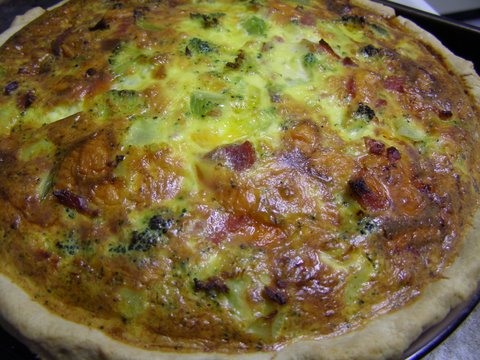
		<content type="html" xml:base="http://www.britannica.com/blogs/2009/09/h-ham-broccoli-cheese-quiche-the-frugal-kitchen-recipes-a-to-z/"><![CDATA[<p>One of my favorite frugal recipes is quiche. It is surprisingly easy to throw together and it&#8217;s a great way to use up leftovers.</p>
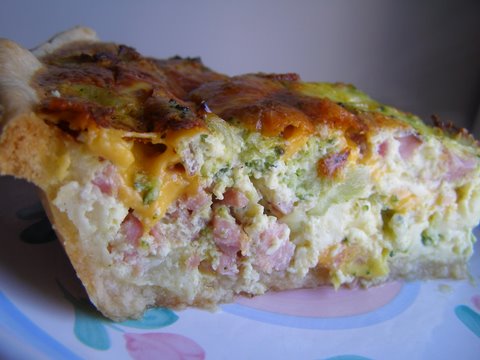
<p>A basic quiche recipe is a great addition to your frugal kitchen arsenal. When you have small amounts of a few leftovers, you can combine whatever sounds good to you and mix it in with the eggs. Pour into a pie crust and you&#8217;re all set. Plus, while traditionally a breakfast or brunch food, quiche makes a fast and filling dinner too.</p>
<p>With outstanding flavor and a serving price of just pennies, you can&#8217;t go wrong with a tried and true quiche!</p>
<p><a href="http://stolenmomentscooking.com/wp-content/uploads/2009/04/p4014483.jpg"></a><a href="http://stolenmomentscooking.com/wp-content/uploads/2009/04/p4014483.jpg"></a><a href="http://stolenmomentscooking.com/wp-content/uploads/2009/04/p4014483.jpg"></a><a rel="lightbox[pics7457]" href="http://www.britannica.com/blogs/wp-content/uploads/2009/09/quiche11.jpg" title="homeimage30"></a><a rel="lightbox[pics7457]" href="http://www.britannica.com/blogs/wp-content/uploads/2009/09/quiche11.jpg" title="homeimage30"></p>
<p style="text-align: center"><img height="360" width="480" src="http://www.britannica.com/blogs/wp-content/uploads/2009/09/quiche11.jpg" alt="homeimage30" class="imageframe imgalignleft" /></p>
<p><a href="http://stolenmomentscooking.com/wp-content/uploads/2009/04/p4014483.jpg"></a><strong>Ham, Broccoli &amp; Cheese Quiche</strong></p>
<p></a></p>
<ul>
<li>Single pie crust</li>
<li>5 eggs</li>
<li>1 1/3 c. milk</li>
<li>3 c. diced ham</li>
<li>2 c. frozen broccoli, thawed and chopped</li>
<li>2 c. sharp cheddar cheese, cubed or shredded</li>
<li>Salt and pepper, to taste</li>
<li>1 t. curry powder</li>
</ul>
<p>1. Press pie crust into pie plate. Beat together eggs and milk. Stir in all remaining ingredients and mix well. Pour into pie crust.</p>
<p><a href="http://stolenmomentscooking.com/wp-content/uploads/2009/04/p4014450.jpg"></a><a href="http://stolenmomentscooking.com/wp-content/uploads/2009/04/p4014450.jpg"></a><a href="http://stolenmomentscooking.com/wp-content/uploads/2009/04/p4014450.jpg"></a></p>
<p style="text-align: center"><a rel="lightbox[pics7457]" href="http://www.britannica.com/blogs/wp-content/uploads/2009/09/quiche1.jpg" title="quiche1.jpg"><img height="360" width="480" src="http://www.britannica.com/blogs/wp-content/uploads/2009/09/quiche1.jpg" alt="quiche1.jpg" class="imageframe imgalignleft" /></a></p>
<p>2. Place pie plate on a cookie sheet and bake at 375 degrees for 1 – 1 1/2 hours, until fully baked. Let quiche cool for about 10-15 minutes before slicing.</p>
<p><a href="http://stolenmomentscooking.com/wp-content/uploads/2009/04/p4014478.jpg"></a><a href="http://stolenmomentscooking.com/wp-content/uploads/2009/04/p4014478.jpg"></a><a href="http://stolenmomentscooking.com/wp-content/uploads/2009/04/p4014478.jpg"></a></p>
<p style="text-align: center"><img height="391" width="520" src="http://stolenmomentscooking.com/wp-content/uploads/2009/04/p4014478.jpg" alt="p4014478" /></p>
<p>I am always looking for different filling ideas for our quiches, so I&#8217;d love to hear some of your favorites.</p>
<p><strong></strong><strong><strong></p>
<p align="center"><strong><strong>*          *          *</strong></strong></p>
<p align="center"><strong><em><strong>Kate Miller’s cooking posts appear every Friday at the Britannica Blog.</strong></em></strong></p>
<p align="center"><strong><em><a href="http://www.britannica.com/blogs/author/kmiller"><strong>Click here</strong></a><strong> for the other posts in this series.</strong></em></strong></p>
<p align="center"><strong><a href="http://stolenmomentscooking.com/"><img height="164" width="711" src="http://www.britannica.com/blogs/wp-content/uploads/2009/08/cooking-header.jpg" alt="cooking-header.jpg" /></a></strong></p>
<p><strong><a href="http://stolenmomentscooking.com/"></a></strong></p>
<p></strong></strong></p>
]]></content>
	</entry>
		<entry>
		<author>
			<name>Gregory McNamee</name>
			<uri>http://www.gregorymcnamee.com</uri>
		</author>
		<title type="html"><![CDATA[Baseball: America’s Game, and the World&#8217;s]]></title>
		<link rel="alternate" type="text/html" href="http://www.britannica.com/blogs/2009/09/baseball-america%e2%80%99s-game-and-the-worlds/" />
		<id>http://www.britannica.com/blogs/2009/09/baseball-america%e2%80%99s-game-and-the-worlds/</id>
		<updated>2009-09-24T05:52:34Z</updated>
		<published>2009-09-24T05:52:34Z</published>
		<category scheme='http://www.britannica.com/blogs' term='History &amp; Society' /><category scheme='http://www.britannica.com/blogs' term='Arts &amp; Entertainment' /><category scheme='http://www.britannica.com/blogs' term='Geography' /><category scheme='http://www.britannica.com/blogs' term='Sports' /><category scheme='http://www.britannica.com/blogs' term='History' />		<summary type="html"><![CDATA[Baseball, legend has it, sprang from the brow of future Civil War hero Abner Doubleday 170 years ago, in 1839. 

The truth is more complicated, but the fact remains that for centuries baseball has been America's sport, and much of the world's as well. 

The game figures in every aspect of the country's popular culture, as the snippet from the great film <em>Field of Dreams</em> suggests, and it speaks to the better angels of our nature---ideally, at least.]]></summary>
		<content type="html" xml:base="http://www.britannica.com/blogs/2009/09/baseball-america%e2%80%99s-game-and-the-worlds/"><![CDATA[<p>Popular legend has it that the game of <a href="http://www.britannica.com/EBchecked/topic/54751/baseball">baseball</a> sprang, Athena-like, from <a href="http://www.britannica.com/EBchecked/topic/170070/Abner-Doubleday">Abner Doubleday</a>’s thoughtful brow somewhere in the vicinity of Cooperstown, New York, in the spring of 1839—a hundred years, that is, before the <a href="http://web.baseballhalloffame.org/index.jsp">National Baseball Hall of Fame</a> was established in that green and leafy town, an event whose 70th anniversary fell this summer.<img height="343" width="319" src="http://www.britannica.com/blogs/wp-content/uploads/2009/09/116227-004-e964d4f5.jpg" align="left" alt="Abner Doubleday" title="Abner Doubleday" style="width: 319px; height: 343px" /></p>
<p>Doubleday (1819–1893) was a man of many accomplishments, to be sure: a capable Union officer, he fought in several major <a href="http://www.britannica.com/EBchecked/topic/19407/American-Civil-War">Civil War</a> battles, including Second Manassas and Gettysburg; a capable capitalist, he founded the first cable-car company in <a href="http://www.britannica.com/EBchecked/topic/521129/San-Francisco">San Francisco</a>. But even Doubleday claimed credit only for helping codify and regularize the rules of a game that had been developing over the course of several centuries, born of a colonial New England game called “town ball” that in turn descended from the English field game called “rounders,” an ancestor of not only baseball but also <a href="http://www.britannica.com/EBchecked/topic/142911/cricket">cricket</a>, a game played enthusiastically in every former English colony save the United States.</p>
<p><a href="http://www.britannica.com/EBchecked/topic/557962/A-G-Spalding">Albert Spalding</a>, a pitcher, manager, and entrepreneur who founded the sporting-equipment company that still bears his name, acknowledged that English descent in his book <em>America’s National Game</em> (1911), though grudgingly, for it was he who gave Doubleday so much credit to begin with. Having allowed its similarities to cricket, however, Spalding was quick to point out that baseball distinguished our national qualities from those of our former rulers: the <a href="http://www.britannica.com/EBchecked/topic/700965/England">English</a> “play Cricket because it accords with the traditions of their country to do so; because it is easy and does not overtax their energy or their thought,” whereas, Spalding continued, “Base Ball owes its prestige as our National Game to the fact that as no other form of sport it is the exponent of American Courage, Confidence, and Combativeness; American Dash, Discipline, Determination; American Energy, Eagerness, Enthusiasm; American Pluck, Persistence, Performance; American Spirit, Sagacity, Success; American Vim, Vigor, Virility.”<img height="300" width="401" src="http://www.britannica.com/blogs/wp-content/uploads/2009/09/26152-004-2ca46bd4.jpg" align="right" alt="26152-004-2ca46bd4.jpg" /></p>
<p>Take that, Nigel! Whatever its ultimate origins, and whatever the claims that can be made for it as an expression of homegrown values as against those of other lands, baseball has been a vitally important American pastime since at least the time of the Civil War, when Union and Confederate soldiers played it among themselves, and sometimes even crossed the lines to play against each other. After <a href="http://www.britannica.com/EBchecked/topic/30727/Appomattox-Court-House">Appomattox</a>, those soldiers then spread the game to every corner of the land almost overnight, a development that led <a href="http://www.britannica.com/EBchecked/topic/610829/Mark-Twain">Mark Twain</a> to remark that baseball was “the outward and visible expression of the drive and push and rush and struggle of the raging, tearing, booming nineteenth century.” External contacts—sometimes war, sometimes peaceful economic exchange—spread the game beyond America’s shores as well, and today baseball is flourishing in such places as Japan, Nicaragua, Afghanistan, and even England.</p>
<p>The game flows like a mighty river through the nation’s, and the world’s, history, and millions on millions have bathed in its waters: <a href="http://www.britannica.com/EBchecked/topic/231840/Geronimo">Geronimo</a>, the famed Apache war leader, who played baseball avidly throughout his years of captivity in Florida and Oklahoma; <a href="http://www.britannica.com/EBchecked/topic/98822/Fidel-Castro">Fidel Castro</a>, the Cuban revolutionary, who as a young man wanted nothing more than to pitch for a major-league American team; <a href="http://www.britannica.com/EBchecked/topic/580223/William-Howard-Taft">William Howard Taft</a>, the portly president who, it seems, inadvertently invented the seventh-inning stretch and who found sublime pleasure in throwing out the game ball on opening day; <a href="http://www.amazon.com/exec/obidos/ASIN0679762892/gm0c7-20">Moe Berg</a>, the linguist who combined an indifferent record as a major-league catcher with a somewhat more illustrious career as a spy on three continents; <a href="http://www.afropop.org/explore/artist_info/ID/1152/Johnny%20Ventura/">Johnny Ventura</a>, the Dominican politician and bandleader, who abandoned a promising career in baseball to bring <a href="http://www.britannica.com/EBchecked/topic/375986/merengue">merengue</a> to a waiting world; <a href="http://www.time.com/time/asia/2006/heroes/ae_oh.html">Sadaharu Oh</a>, arguably the greatest player in Japanese baseball history, who brought <a href="http://www.britannica.com/EBchecked/topic/656421/Zen">Zen</a> understanding to the game when he observed, “As the ball makes its high, long arc beyond the playing field, the diamond and the stands suddenly belong to one man. In that brief, brief time, you are free of all demands and complications”; <a href="http://www.britannica.com/EBchecked/topic/51998/Tallulah-Bankhead">Tallulah Bankhead</a>, the imposing Alabama-born actor, who famously remarked, “There are only two geniuses in the world: Willie Mays and Willie Shakespeare.”</p>
<p>A players’ strike and ever-increasing ticket prices diminished public interest in major-league baseball in the 1990s, and Americans’ minds were on more pressing matters at the dawn of the twenty-first century. Even so, and even despite the rapid ascent of <a href="http://www.britannica.com/EBchecked/topic/55245/basketball">basketball</a> (another quintessentially American game, invented by a Canadian) as a money-drawing spectator sport, baseball in its many forms&#8212;professional, semiprofessional, collegiate, intramural, junior, peewee, and sandlot&#8212;remains the most popular of American athletic pastimes. It is comforting to think, with Crash Davis of <em>Bull Durham</em> fame, that this is at least in part because baseball speaks to our better angels: to a vision of life that honors both individual achievement and team play, and always with an insistence on fairness; to our long-held belief that although there are surely winners and losers in life, a reversal of fortunes can make one of the other in an instant; to the American promise of equal opportunity for all, a leveling ethic by which players of all ethnicities and classes can play as one. Those are all ideals, of course. It remains to be seen whether baseball and America will rise to the difficult task of making them real.</p>
<p>But enough of the solemnities. We’re coming up on a very happy time in the baseball year, a flurry of league pennant races culminating in the <a href="http://www.britannica.com/EBchecked/topic/648619/World-Series">World Series</a>. (Go, <a href="http://colorado.rockies.mlb.com/index.jsp?c_id=col">Rockies</a>!) To commemorate that time, I’ll be posting a list of favorite baseball films in a couple of weeks, meant for those right-thinking individuals who can’t get enough of America’s game. The following snippet comes from one of the best of them, <em>Field of Dreams</em>, about which more later.</p>
<p align="center"><object type="application/x-shockwave-flash" data="http://www.youtube.com/v/XKL-j0vXzqI" width="425" height="355" wmode="transparent">
<param name="movie" value="http://www.youtube.com/v/XKL-j0vXzqI" /></object></p>
]]></content>
	</entry>
		<entry>
		<author>
			<name>Kara Rogers</name>
			<uri>http://</uri>
		</author>
		<title type="html"><![CDATA[Science Up Front: Microneedles, an Update From Mark Prausnitz]]></title>
		<link rel="alternate" type="text/html" href="http://www.britannica.com/blogs/2009/09/science-up-front-microneedles-an-update-from-mark-prausnitz/" />
		<id>http://www.britannica.com/blogs/2009/09/science-up-front-microneedles-an-update-from-mark-prausnitz/</id>
		<updated>2009-09-24T05:04:53Z</updated>
		<published>2009-09-24T05:04:53Z</published>
		<category scheme='http://www.britannica.com/blogs' term='Science &amp; Technology' /><category scheme='http://www.britannica.com/blogs' term='Medicine' /><category scheme='http://www.britannica.com/blogs' term='Technology' /><category scheme='http://www.britannica.com/blogs' term='Science' /><category scheme='http://www.britannica.com/blogs' term='Health' />		<summary type="html"><![CDATA[With the rapid growth of the microelectronics industry in the late 20th century, there emerged a whole new measure of thinking, one geared toward extreme miniaturization.  

Borne from this era were many ideas for devices of Lilliputian scale, including the curious concept of the <b>microneedle</b>, a tiny, painless replacement for the large and intimidating hypodermic needle.

Pictured here is a microneedle next to a typical hypodermic needle used today.]]></summary>
		<content type="html" xml:base="http://www.britannica.com/blogs/2009/09/science-up-front-microneedles-an-update-from-mark-prausnitz/"><![CDATA[<p>With the rapid growth of the microelectronics industry in the late 20th century, there emerged a whole new measure of thinking, one geared toward extreme miniaturization.  Borne from this era were many ideas for devices of Lilliputian scale, including the curious concept of the microneedle, a tiny, painless replacement for the large and intimidating hypodermic needle.<a rel="lightbox[pics7448]" href="http://www.britannica.com/blogs/wp-content/uploads/2009/09/prausnitz-cropped.jpg" title="Mark Prausnitz."><img height="280" width="280" src="http://www.britannica.com/blogs/wp-content/uploads/2009/09/prausnitz-cropped.jpg" align="right" alt="Mark Prausnitz." /></a></p>
<p>A number of initially promising miniaturized technologies that emerged in the 1980s and &#8217;90s have since flopped.  But microneedle devices have been doggedly pursued by companies such as 3M as well as by researchers like <a href="http://www.che.gatech.edu/drugdelivery/">Mark Prausnitz</a>, professor of chemical and biomolecular engineering at the Georgia Institute of Technology.  This past spring and summer, Prausnitz, in collaboration with Emory University researchers Richard Compans and Eric Felner, published several papers reporting significant advances in microneedle technology.  The devices are now at the point where their mass production and widespread use is verging on reality.</p>
<p>Prausnitz has been working on microneedle technology since the mid-1990s, when the idea for these miniature entities first emerged.  His initial studies explored the use of microneedles for transdermal <a href="http://www.britannica.com/EBchecked/topic/171942/drug">drug</a> delivery, which seemed like the most practical application.  By the early 2000s, however, it was clear that microneedles could be used for the administration of a broad range of drugs.  And today, Prausnitz and his Emory collaborators are investigating the use of these tiny devices for the delivery of influenza <a href="http://www.britannica.com/EBchecked/topic/621274/vaccine">vaccine</a>, as well as for the delivery of <a href="http://www.britannica.com/EBchecked/topic/289486/insulin">insulin</a> in children with <a href="http://www.britannica.com/EBchecked/topic/160921/diabetes-mellitus">diabetes</a>. A central part of both studies is self-administration.  As Prausnitz pointed out, “most people can take a pill every day, but few can give themselves a daily injection, especially without training.”</p>
<p><a target="_blank" rel="lightbox[pics7448]" href="http://gtresearchnews.gatech.edu/newsrelease/needlespnas.htm"></a><a target="_blank" rel="lightbox[pics7448]" href="http://gtresearchnews.gatech.edu/newsrelease/needlespnas.htm"><img height="360" width="234" src="http://www.britannica.com/blogs/wp-content/uploads/2009/09/microneedle.gif" align="left" alt="Microneedle, Mark Prausnitz; (Georgia Tech Image: Shawn Davis)" title="Microneedle, Mark Prausnitz; (Georgia Tech Image: Shawn Davis)" class="imageframe imgalignleft" style="width: 234px; height: 360px" /></a>Microneedle devices are tiny arrays of needles, typically about the size of a dime, that can be fashioned from <a href="http://www.britannica.com/EBchecked/topic/544301/silicon">silicon</a>, glass, or biodegradable polymers using techniques such as microlithography and etching, which are widely employed in the manufacture of electronics products.  Prausnitz explained that, depending on the intended application, microneedle devices can be manufactured to have anywhere from tens to hundreds of needles, and the needles themselves can be rendered hollow or solid.</p>
<p>Devices with hollow needles can be attached to a syringe, enabling a solution of drug to be injected through the microneedles.  In contrast, solid needles are coated with drug, so that once the device is pressed into the skin, the drug simply dissolves off, being deposited in the <a href="http://www.britannica.com/EBchecked/topic/158605/dermis">dermis</a>.  However, since the holes that are made in the skin by solid needles are so small, allowing only a tiny amount of drug to enter the body, the number of needles is the primary factor determining the how much drug actually can be administered by a single device.  Collectively, hundreds of coated needles on one device can deliver up to one milligram of drug, which far exceeds the amount necessary for most vaccines to be effective.</p>
<p>But perhaps the two most important factors, the elements that determine successful drug delivery while ensuring a pain-free experience, are the sharpness and the length of the needles.  “In order for a needle to penetrate skin, we need to make it as sharp as possible,” Prausnitz said.  “This requires that the tip be ten times thinner than a human hair.”  But the needles also are very short—just several hundred micrometers in length—which means that little, if any, pain is felt when the device is pressed into the skin.</p>
<p><a rel="lightbox[pics7448]" href="http://www.britannica.com/blogs/wp-content/uploads/2009/09/microneedle2.gif" title="microneedle2.gif"></a>One goal of Prausnitz’s work is to make microneedle devices affordable. “Something that is important to me is not just to solve parts of a problem, but to try to solve the whole problem,” he explained.  Thus, making microneedles inexpensive so that developing countries can purchase them is an important part of the equation.  The use of vaccines and other drugs requiring injection is often limited in these countries for multiple reasons, but two compounding factors at play are the high cost of pharmaceuticals and the expense of hiring trained personnel to administer the agents.</p>
<p><a target="_blank" rel="lightbox[pics7448]" href="http://gtresearchnews.gatech.edu/newsrelease/needlespnas.htm"></a><a target="_blank" rel="lightbox[pics7448]" href="http://gtresearchnews.gatech.edu/newsrelease/needlespnas.htm"></a><a target="_blank" rel="lightbox[pics7448]" href="http://gtresearchnews.gatech.edu/newsrelease/needlespnas.htm"></a></p>
<p style="text-align: center"><img height="406" width="599" src="http://www.britannica.com/blogs/wp-content/uploads/2009/09/microneedle3.jpg" alt="microneedle3.jpg" class="imageframe imgalignleft" style="width: 599px; height: 406px" /></p>
<table width="100%" cellPadding="2" cellSpacing="0" border="0">
<tr>
<td colSpan="2" height="43">
<p align="center"><font size="2"><em>Microscope image shows an array of hollow microneedles next to a hypodermic needle typical of those now used to inject drugs and vaccines. (Georgia Tech Image: Shawn Davis)</em></font></p>
</td>
</tr>
<tr>
<td width="47%" height="18"></td>
</tr>
</table>
<p>Prausnitz explained that a major component underlying the steady progress of microneedle research has been the collaboration of scientists in a diverse range of fields. “In order to carry the research forward and impact medicine, we need to cross many interfaces,” he said.  “In our work, we have combined microelectronics fabrication with pharmaceutical formulation to solve problems in medicine.”  This type of interdisciplinary approach, which has become increasingly important in biomedical research, promises to bring microneedles into widespread use sooner rather than later.</p>
]]></content>
	</entry>
		<entry>
		<author>
			<name>Christopher O'Toole</name>
			<uri>http://</uri>
		</author>
		<title type="html"><![CDATA[Top 7 Chocolate Destinations in the World]]></title>
		<link rel="alternate" type="text/html" href="http://www.britannica.com/blogs/2009/09/top-7-chocolate-destinations-in-the-world/" />
		<id>http://www.britannica.com/blogs/2009/09/top-7-chocolate-destinations-in-the-world/</id>
		<updated>2009-09-23T05:40:01Z</updated>
		<published>2009-09-23T05:40:01Z</published>
		<category scheme='http://www.britannica.com/blogs' term='Travel &amp; Geography' /><category scheme='http://www.britannica.com/blogs' term='Food &amp; Drink' /><category scheme='http://www.britannica.com/blogs' term='Travel' /><category scheme='http://www.britannica.com/blogs' term='Culture' />		<summary type="html"><![CDATA[For those who can’t get enough of the world’s favourite aphrodisiac in everyday life, there are innumerable ways to indulge your passion, especially through travel.

Here’s our roundup of the top 7 chocolate-inspired holidays around the world.

From Mexico and Belgium to Sicily and St. Lucia ...]]></summary>
		<content type="html" xml:base="http://www.britannica.com/blogs/2009/09/top-7-chocolate-destinations-in-the-world/"><![CDATA[<p>For those who can’t get enough of the world’s favourite <a target="_blank" href="http://www.britannica.com/EBchecked/topic/29568/aphrodisiac">aphrodisiac</a> in everyday life, there are innumerable ways to indulge your passion, especially through travel.</p>
<p>Here’s travelbite.co.uk’s roundup of the best <a target="_blank" href="http://www.britannica.com/EBchecked/topic/113885/chocolate">chocolate</a>-inspired holidays around the world.</p>
<p style="text-align: center"><a rel="lightbox[pics7429]" href="http://www.britannica.com/blogs/wp-content/uploads/2009/09/chocolate.jpg" title="chocolate.jpg"><img height="371" width="550" src="http://www.britannica.com/blogs/wp-content/uploads/2009/09/chocolate.jpg" alt="Chocolate (Getty Images)" title="Chocolate (Getty Images)" class="imageframe imgalignleft" style="width: 550px; height: 371px" /></a><a rel="lightbox[pics7429]" href="http://www.britannica.com/blogs/wp-content/uploads/2009/09/chocolate.jpg" title="homeimage30"></a></p>
<p><strong>1. Where it all began, Mexico</strong></p>
<p>In <a target="_blank" href="http://www.britannica.com/EBchecked/topic/423553/Oaxaca">Oaxaca</a>, in south-eastern Mexico, the centuries-old tradition of chocolate-making is still going strong today, with Oaxacans each apparently consuming 5.5 pounds of the stuff on average per year.</p>
<p>The &#8216;drink of the gods&#8217; is how they term chocolate here in Mexico, and it is used not just in food but as a popular beverage.</p>
<p>There are a number of chocolate factories in Oaxaca, mostly around Calle Mina, where you can watch workers mix the chocolate and taste the condensed form of an ancient treat.</p>
<p>Check out the Abastos Market for artisan chocolate stalls and follow the locals to Chocolate Mayordomo at one of its two locations in town - don’t forget to try the chocolate corn.</p>
<p><strong>2.  The home of fine chocolate, Belgium</strong></p>
<p><a target="_blank" href="http://www.britannica.com/EBchecked/topic/59268/Belgium">Belgium</a> is the undisputed top chocolate-producing country in the world, and any chocoholic &#8216;worth their salt&#8217; will know Neuhaus, Leonidas, Corne Port Royal, and Godiva – all Belgium chocolate-making institutions.</p>
<p>The Belgian praline - a chocolate layer covering a soft centre – is at the heart of Belgian chocolate’s reputation. The story goes that the Duke of Plessis-Pralin, an ambassador to <a target="_blank" href="http://www.britannica.com/EBchecked/topic/348935/Louis-XIII">Louis XIII</a>, is responsible for naming pralines. He ordered the creation of a sweet treat to distract the rebels of Bordelais. The chocolate shell is filled with cream or nut pastes.</p>
<p>There are four chocolate museums for afficionados to visit in Belgium – in <a target="_blank" href="http://www.mucc.be/EN/index_en.htm">Brussels</a>, <a target="_blank" href="http://www.halloren.de/marke/schokoladenmuseum.html">Halle</a>, <a target="_blank" href="http://www.ardennes-etape.com/en/ficheactivite.php?ID=1134&amp;chk=6fdbc670884dd3e843a8e4688ee7904764caca2d">Eupen</a>, and <a target="_blank" href="http://www.choco-story.be/">Bruges</a>.</p>
<p>To sit down and enjoy the country&#8217;s famous treat, visit the <a target="_blank" href="http://www.wittamer.com/en/cafe/index.php">Wittamer Café</a> (below), a 100-year-old, family-owned chocolate-making business in the Sablon district of Brussels.</p>
<p><a rel="lightbox[pics7429]" href="http://www.britannica.com/blogs/wp-content/uploads/2009/09/chocolate-cafe.jpg" title="chocolate-cafe.jpg"></a><a rel="lightbox[pics7429]" href="http://www.britannica.com/blogs/wp-content/uploads/2009/09/chocolate-cafe.jpg" title="chocolate-cafe.jpg"></a><a rel="lightbox[pics7429]" href="http://www.britannica.com/blogs/wp-content/uploads/2009/09/chocolate-cafe.jpg" title="chocolate-cafe.jpg"></a><a rel="lightbox[pics7429]" href="http://www.britannica.com/blogs/wp-content/uploads/2009/09/chocolate-cafe.jpg" title="chocolate-cafe.jpg"></a></p>
<p style="text-align: center"><img height="480" width="640" src="http://www.britannica.com/blogs/wp-content/uploads/2009/09/chocolate-cafe.jpg" alt="Wittamer Café, Belgium" title="Wittamer Café, Belgium" class="imageframe imgalignleft" style="width: 640px; height: 480px" /></p>
<p>Once a luxury product only enjoyed by the wealthy, Belgian chocolates are a decadence we can all now share.</p>
<p><strong>3.  Chocolate trail, Boston</strong></p>
<p>For those heading to <a target="_blank" href="http://www.britannica.com/EBchecked/topic/74844/Boston">Boston</a> in September, the Chocolate Bar at the Langham Hotel is celebrating the city’s famously diverse neighbourhoods with the 21st annual Boston chocolate trail – set to include a wonderland of chocolate creations.</p>
<p>New pastry chef Jed Hackney will be making gourmet bite-size desserts from Chinatown, the North End, Faneuil Hall, Back Bay, Beacon Hill, the South End, and Fenway Park.</p>
<p>Desserts from Boston’s chocolate trail include Bittersweet Chocolate Chestnut Mousse, an assortment of Italian Cookies and Zuccotto from the Italian North End.</p>
<p>Or try chocolate croissant bread pudding, Boston cream pie and chocolate paple pecan tartlets from Faneuil Hall; dessert sushi in mango, strawberry, chocolate and green tea flavours as well as five spice chocolate soup and mango and white chocolate pudding from Chinatown; and Homemade crackerjacks with dark caramel, peanuts and sea salt, chocolate covered peanuts and ice cream sandwiches from Fenway Park.</p>
<p><strong>4.  Cocoa Festival, St Lucia</strong></p>
<p>The beautiful Caribbean island of <a target="_blank" href="http://www.britannica.com/EBchecked/topic/517673/Saint-Lucia">St Lucia</a> is host to a wonderful chocolate festival this December 4th-6th. So put the mince pies to one side and indulge in some pre-Christmas, cocoa-fuelled extravagance at the <a target="_blank" href="http://www.jademountain.com/events.html">Jade Mountain Estate Cocoa Festival</a>.</p>
<p>The history of Cocoa in St Lucia dates back to the early 1700’s – the cocoa trees (over 1,000 of them) were established on the Anse Mamin and Emerald estates. For years they have been consistently harvested and supplied to the local market.</p>
<p>Activities throughout the festival of course feature a prominent chocolate theme, while guests are frequently treated with various, unexpected, chocolate, culinary delights such as chocolate-inspired canapés and iced chocolate chai.</p>
<p>The main activity of the festival is an actual exploration of Nick Troubetzkoy’s Emerald Estate Cocoa Plantation which includes discovering an insight into the production of cocoa beans – try your hand at a bit of pod-picking or fermenting if you wish.</p>
<p><strong>5.  Chocolate-themed hotel, Bournemouth (resort town on the English Channel)</strong></p>
<p>Immortalise yourself in chocolate at a chocolate-portrait painting session run by top chocolatier Gerry Wilton, who owns and runs the world’s first chocolate-themed hotel.</p>
<p>At Gerry’s unique Grade II listed <a target="_blank" href="http://www.thechocolateboutiquehotel.co.uk/">Chocolate Boutique Hotel</a> (below) in <a target="_blank" href="http://www.britannica.com/EBchecked/topic/75902/Bournemouth">Bournemouth</a>, you can learn how to paint a portrait of yourself in dark, milk and white chocolate; stay in chocolate-themed rooms; and indulge in the culinary art of making delicious Belgian truffles by hand at one of Gerry’s <a target="_blank" href="http://www.chocolatedelight.co.uk/">Chocolate Delight workshops</a>.</p>
<p align="center"><a rel="lightbox[pics7429]" href="http://www.britannica.com/blogs/wp-content/uploads/2009/09/chocolate-hotel.jpg" title="chocolate-hotel.jpg"><img height="530" width="355" src="http://www.britannica.com/blogs/wp-content/uploads/2009/09/chocolate-hotel.jpg" alt="chocolate-hotel.jpg" class="imageframe imgalignleft" /></a></p>
<p align="center"><a rel="lightbox[pics7429]" href="http://www.britannica.com/blogs/wp-content/uploads/2009/09/chocolate-hotel3.jpg" title="chocolate-hotel3.jpg"><img height="355" width="530" src="http://www.britannica.com/blogs/wp-content/uploads/2009/09/chocolate-hotel3.jpg" alt="chocolate-hotel3.jpg" class="imageframe imgalignleft" /></a></p>
<p>There are also chocolate fountains, a chance to learn all about the history of chocolate, and a Chocolate Bar, where you can treat yourself to a glorious handmade chocolate cocktail.</p>
<p>You can even learn how to match chocolate with wine and spirits in a unique chocolate-tasting session inspired by the famous Belgian chocolatier Laurent Gerbaud, whose range of chocolates is designed to be eaten and tasted with wines such as Pinot Grigio and Sauvignon Blanc, as well as mulled wines, dessert wines and malt whisky.</p>
<p><strong><a rel="lightbox[pics7429]" href="http://www.britannica.com/blogs/wp-content/uploads/2009/09/chocolate11.gif" title="homeimage20"><img height="130" width="200" src="http://www.britannica.com/blogs/wp-content/uploads/2009/09/chocolate11.gif" align="right" class="imageframe imgalignleft" style="width: 200px; height: 130px" /></a>6.  Italian Chocolate Festival, Perugia</strong></p>
<p>Chocoholics should head to the Italian region of <a target="_blank" href="http://www.britannica.com/EBchecked/topic/613845/Umbria">Umbria</a> between October 16th and 25th for the popular <a target="_blank" href="http://www.eurochocolate.com/it/home.html">Eurochocolate Festival</a> of <a target="_blank" href="http://www.vintagetravel.co.uk/">Perugia</a> and enjoy the exhibitions, cooking classes, tastings and celebrations of all things chocolatey.</p>
<p>The medieval city of <a target="_blank" href="http://www.britannica.com/EBchecked/topic/453272/Perugia">Perugia</a> also boasts magnificent architecture, the splendid Piazza Quattro Novembre and its Great Fountain, and the chic shopping street, Corso Vannucci.</p>
<p><strong>7.  Cocoa delicacies, Sicily</strong></p>
<p>For something a little different, head for <a target="_blank" href="http://www.britannica.com/EBchecked/topic/420629/Noto">Noto</a>, the golden city of the late Sicilian baroque. Here you will find the famous local chocolate made solely of cocoa, sugar and spices.</p>
<p>Also try the Gremolade with wild strawberries or almond from Ciaceri ice cream shop, or buy it from the Antica Dolceria Bonajuto.</p>
<p>Noto was defined by the art historian Cesare Brandi as the &#8220;garden of stone&#8221; for the beauty and uniqueness of its churches and palaces.</p>
<p style="text-align: center"><a target="_blank" href="http://www.travelbite.co.uk/"><img height="28" width="268" src="http://www.britannica.com/blogs/wp-content/uploads/2009/04/travelbite.gif" alt="travelbite.gif" /></a><a href="http://www.travelbite.co.uk/"></a></p>
]]></content>
	</entry>
		<entry>
		<author>
			<name>Robert McHenry</name>
			<uri>http://</uri>
		</author>
		<title type="html"><![CDATA[Germania 1, Rome 0; 2,000 Years Ago]]></title>
		<link rel="alternate" type="text/html" href="http://www.britannica.com/blogs/2009/09/germania-1-rome-0-2000-years-ago/" />
		<id>http://www.britannica.com/blogs/2009/09/germania-1-rome-0-2000-years-ago/</id>
		<updated>2009-09-23T05:30:51Z</updated>
		<published>2009-09-23T05:30:51Z</published>
		<category scheme='http://www.britannica.com/blogs' term='History &amp; Society' /><category scheme='http://www.britannica.com/blogs' term='History' />		<summary type="html"><![CDATA[In America we tend to think of anything that happened before our own lifetimes as positively ancient. In terms of human history, we are still very much the new kids on the block.

Thus it is that there cannot be very many towns in the United States that can come up with a plausible excuse to celebrate the 2000th anniversary of something. 

I happen to live in one that can.]]></summary>
		<content type="html" xml:base="http://www.britannica.com/blogs/2009/09/germania-1-rome-0-2000-years-ago/"><![CDATA[<p>On Monday I wrote about some anniversaries of events of 50 or 100 and even 300 years ago. In America we tend to think of anything that happened before our own lifetimes as positively ancient. In terms of human history, we are still very much the new kids on the block.</p>
<p>Thus it is that there cannot be very many towns in the United States that can come up with a plausible excuse to celebrate the 2000<sup>th</sup> anniversary of something. I happen to live in one that can. This week we mark the 2000<sup>th</sup> anniversary of the <a href="http://www.britannica.com/EBchecked/topic/589190/Battle-of-the-Teutoburg-Forest">Battle of Teutoburger Wald </a>(the Teutoburg Forest) in A.D. 9. In that battle, a tactical coalition of German tribesmen led by <a href="http://www.britannica.com/EBchecked/topic/35390/Arminius">Hermann</a>, a chief of the Cherusci, wiped out three Roman legions under the command of <a href="http://www.britannica.com/EBchecked/topic/623607/Publius-Quinctilius-Varus">Publius Quinctilius Varus</a>. Varus was a particularly well connected Roman patrician, a favorite of Augustus and a brother-in-law of Tiberius. At the end of the three days’ battle, his command utterly destroyed, he fell on his sword in the best Roman tradition.</p>
<p>(That barbaric practice has long since been abandoned. Nowadays, if a public figure finds it necessary – that is to say, inescapable – to acknowledge responsibility for some disaster, he says something like “Mistakes were made,” or “I was misquoted.” That’s what 2,000 years of cultural progress gets you.)<a rel="lightbox[pics-1253553891]" href="http://www.britannica.com/blogs/wp-content/uploads/2009/09/hermann.jpg" title="Hermann statue"><img height="320" width="244" src="http://www.britannica.com/blogs/wp-content/uploads/2009/09/hermann.jpg" align="right" alt="Hermann statue" title="Hermann statue" style="width: 244px; height: 320px" /></a></p>
<p>The defeat in the forest evidently ended any Roman threat to take control of the Germanic lands between the Rhine and the Elbe. For this reason the Roman historian Tacitus was able to refer to Arminius, as Hermann was known in Latin, as the “liberator of Germania,” which is what is inscribed on a plaque before the brand new statue of Hermann at the edge of my town.</p>
<p>Both notions – that of “Germania” and that of a national liberator – acquired their modern political and, perhaps more to the point, emotional significance only in the 19<sup>th</sup> century, the era of Romanticism and Romantic nationalism. Even after Rome was turned back, a “Germany” would not exist for another 1,862 years, when a couple dozen independent principalities, duchies, free cities, and whatnot would amalgamate into the German Empire under Wilhelm I. Like Boudicca in Britain and others, Hermann was long a neglected and all but forgotten figure until revived 18 centuries later as a heroic figure suitable for focusing nationalist pride and fervor.</p>
<p>The celebration here in Missouri will be attended by representatives of our sister city of Bad Arolsen in Germany (not far from the ancient battle site) and by delegates from New Ulm, Minnesota, where a statue (below left) of Hermann has stood since 1897. That Hermann is like a figure out of Wagner: huge, heroic, and sporting a winged helmet. Ours (above) is more modest, as befits an age given to postmodernist antiheroism.</p>
<p><a target="_blank" rel="lightbox[pics7420]" href="http://www.roadsideamerica.com/story/11260"><img height="280" width="187" src="http://www.britannica.com/blogs/wp-content/uploads/2009/09/hemann2.jpg" align="left" alt="Hermann the German" title="Hermann the German" class="imageframe imgalignleft" style="width: 187px; height: 280px" /></a>Or is it just a matter of frugality? Recent months have produced outbursts of most undemocratic hero-worship of (if I may opine) quite unworthy objects. Could it be that societies somehow demand heroes, and if no true ones appear – or if society’s mores have so eroded that they are not recognized when they do – then others will be invented out of such shabby material as is available?</p>
<p>Discuss.</p>
]]></content>
	</entry>
		<entry>
		<author>
			<name>Jennifer Laceda</name>
			<uri>http://</uri>
		</author>
		<title type="html"><![CDATA[A Taste of Heaven: A Guide to Food and Drink by Monks and Nuns]]></title>
		<link rel="alternate" type="text/html" href="http://www.britannica.com/blogs/2009/09/a-taste-of-heaven-a-guide-to-food-and-drink-by-monks-and-nuns/" />
		<id>http://www.britannica.com/blogs/2009/09/a-taste-of-heaven-a-guide-to-food-and-drink-by-monks-and-nuns/</id>
		<updated>2009-09-22T13:02:45Z</updated>
		<published>2009-09-22T13:02:45Z</published>
		<category scheme='http://www.britannica.com/blogs' term='History &amp; Society' /><category scheme='http://www.britannica.com/blogs' term='Arts &amp; Entertainment' /><category scheme='http://www.britannica.com/blogs' term='Food &amp; Drink' /><category scheme='http://www.britannica.com/blogs' term='Religion' />		<summary type="html"><![CDATA[Part travel guide, part cookbook, <em>A Taste of Heaven</em> is a delightful survey of the fine food and drink products made my monks and nuns in the United States, Belgium, France, and Germany.

There are suggested itineraries for a beer tour of Belgian priories, a cheese tour of French abbeys, and a taste of monastic life in Upstate New York.

If combining travel, food, and tradition is high on your to-do list, then this book should be an easy addition to your shelf <em>and</em> your kitchen counter!


]]></summary>
		<content type="html" xml:base="http://www.britannica.com/blogs/2009/09/a-taste-of-heaven-a-guide-to-food-and-drink-by-monks-and-nuns/"><![CDATA[<p>Part travel guide, part cookbook, <em><a target="_blank" href="http://www.amazon.com/Taste-Heaven-Guide-Drink-Monks/dp/1585427187">A Taste of Heaven</a></em> is a delightful survey of the fine food and drink products made my monks and nuns in the United States, Belgium, France, and Germany.</p>
<p><a target="_blank" rel="lightbox[pics7422]" href="http://www.amazon.com/Taste-Heaven-Guide-Drink-Monks/dp/1585427187"></a><a target="_blank" rel="lightbox[pics7422]" href="http://www.amazon.com/Taste-Heaven-Guide-Drink-Monks/dp/1585427187"></a><a target="_blank" rel="lightbox[pics7422]" href="http://www.amazon.com/Taste-Heaven-Guide-Drink-Monks/dp/1585427187"></p>
<p style="text-align: center"><img height="333" width="500" src="http://www.britannica.com/blogs/wp-content/uploads/2009/09/taste-of-heaven.jpg" alt="homeimage30" class="imageframe imgalignleft" /></p>
<p>Divine chapters like Celestial Spirits, Holy Cheese, Sweet Temptations, and Edifying Edibles are sure to bring out anyone&#8217;s inner culinarian spirit. And with over 35 recipes that author Madeline Scherb beautifully drew from an exclusive arsenal, the reader is in for a special treat.</p>
<p></a>Some of the sweet and savoury recipes included are&#8230;</p>
<p align="center"> <a rel="lightbox[pics7422]" href="http://www.britannica.com/blogs/wp-content/uploads/2009/09/taste-of-heaven1.jpg" title="taste-of-heaven1.jpg"><img height="333" width="500" src="http://www.britannica.com/blogs/wp-content/uploads/2009/09/taste-of-heaven1.jpg" alt="taste-of-heaven1.jpg" class="imageframe imgalignleft" /></a></p>
<p align="center"><a rel="lightbox[pics7422]" href="http://www.britannica.com/blogs/wp-content/uploads/2009/09/taste-of-heaven2.jpg" title="taste-of-heaven2.jpg"><img height="333" width="500" src="http://www.britannica.com/blogs/wp-content/uploads/2009/09/taste-of-heaven2.jpg" alt="taste-of-heaven2.jpg" class="imageframe imgalignleft" /></a></p>
<p align="center"><a rel="lightbox[pics7422]" href="http://www.britannica.com/blogs/wp-content/uploads/2009/09/taste-of-heaven3.jpg" title="taste-of-heaven3.jpg"><img height="333" width="500" src="http://www.britannica.com/blogs/wp-content/uploads/2009/09/taste-of-heaven3.jpg" alt="taste-of-heaven3.jpg" class="imageframe imgalignleft" /></a></p>
<p align="center"><a rel="lightbox[pics7422]" href="http://www.britannica.com/blogs/wp-content/uploads/2009/09/taste-of-heaven4.jpg" title="taste-of-heaven4.jpg"><img height="333" width="500" src="http://www.britannica.com/blogs/wp-content/uploads/2009/09/taste-of-heaven4.jpg" alt="taste-of-heaven4.jpg" class="imageframe imgalignleft" /></a></p>
<p>And for you, travel lovers, featured monasteries include:</p>
<blockquote><p>-Mosteiro de Singeverga in Portugal<br />
-Orval Abbey near Florenville, Belgium<br />
-Westmalle Abbey near Antwerp, Belgium<br />
-Abbey of Saint Hildegard near Rüdesheim, Germany<br />
-Abbey of Tamié near Albetville in Savoy, France<br />
-Cîteaux Abbey near Dijon in Burgundy, France<br />
-Out Lady of Bonneval Abbey near Espalion in Aveyron, France<br />
-Abbey of Gethsemani near Bardstown, Kentucky<br />
-New Skete Monastery near Cambridge, New York<br />
-Our Lady of Guadalupe Abbey near Lafayette, Oregon</p>
<p><a rel="lightbox[pics7422]" href="http://www.britannica.com/blogs/wp-content/uploads/2009/09/taste-of-heaven5.jpg" title="taste-of-heaven5.jpg"></a><a rel="lightbox[pics7422]" href="http://www.britannica.com/blogs/wp-content/uploads/2009/09/taste-of-heaven5.jpg" title="taste-of-heaven5.jpg"></p>
<p style="text-align: center"><img height="333" width="500" src="http://www.britannica.com/blogs/wp-content/uploads/2009/09/taste-of-heaven5.jpg" alt="taste-of-heaven5.jpg" class="imageframe imgalignleft" /></p>
<p></a></p></blockquote>
<p>There are also suggested itineraries for a beer tour of Belgian priories, a cheese tour of French abbeys, and a taste of monastic life in Upstate New York.</p>
<p>If combining travel, food, and tradition is high on your to-do list, then this book should be an easy addition to your shelf <em>and</em> your kitchen counter!</p>
]]></content>
	</entry>
		<entry>
		<author>
			<name>Mark J. Perry</name>
			<uri>http://</uri>
		</author>
		<title type="html"><![CDATA[U.S. College Classes at Midnight &#8230; How&#8217;s It Working Out?]]></title>
		<link rel="alternate" type="text/html" href="http://www.britannica.com/blogs/2009/09/us-college-classes-at-midnight-hows-it-working-out/" />
		<id>http://www.britannica.com/blogs/2009/09/us-college-classes-at-midnight-hows-it-working-out/</id>
		<updated>2009-09-22T11:00:25Z</updated>
		<published>2009-09-22T11:00:25Z</published>
		<category scheme='http://www.britannica.com/blogs' term='History &amp; Society' /><category scheme='http://www.britannica.com/blogs' term='Education' />		<summary type="html"><![CDATA[With a record number of students enrolling in U.S. community colleges, classes are filling up during traditional work hours, leaving some schools to turn to an unusual option:  the offering of midnight classes.

With the new school year underway, how's this idea panning out?

It's a <em>nightmare</em>, says one teacher. ]]></summary>
		<content type="html" xml:base="http://www.britannica.com/blogs/2009/09/us-college-classes-at-midnight-hows-it-working-out/"><![CDATA[<p><a rel="lightbox[pics7359]" href="http://www.britannica.com/blogs/wp-content/uploads/2009/09/0000100131-massac063-002.jpg" title="homeimage24"><img height="200" width="300" src="http://www.britannica.com/blogs/wp-content/uploads/2009/09/0000100131-massac063-002.jpg" align="right" class="imageframe imgalignleft" style="width: 300px; height: 200px" /></a>As the <em>CHRONICLE OF HIGHER EDUCATION</em> reported in July, </p>
<blockquote><p><em>At a time of night when many people are hitting the sack, a number of Bunker Hill Community College students will be hitting the classroom this fall. To accommodate working adults and open more class times for its growing student population, the <a target="_blank" href="http://www.bhcc.mass.edu/inside/441?id=148">Massachusetts college will offer two courses</a> that run from 11:45 p.m. to 2:30 a.m.: “Principles of Psychology,” on Tuesdays, and “College Writing I,” on Thursdays. Both are three-credit courses.</em></p>
<p><em>College officials chose the midnight time slot for people who get off work late and have to be up early with their children. (Which makes you wonder if sleep deprivation will be among the topics covered in the psych course.) Like many community colleges during the recession, Bunker Hill has seen record enrollments as people return to college to advance their education. The burgeoning enrollment has filled all available classrooms during the college’s normal seven-day schedule.</em></p></blockquote>
<p>Well, the midnight classes have just started at Bunker Hill Community College. One English professor&#8217;s class is full, but he&#8217;s not too happy and says this is part of a <a target="_blank" href="http://www.insidehighered.com/views/sloane/sloane29">national nightmare</a>: </p>
<blockquote><p><em>Two thirds of my class this morning enrolled at midnight because all the day, evening and weekend sections were full. The rest have night jobs, most of them at hospitals, and one is a taxi dispatcher. Almost all plan to go on to a four-year college&#8230;. </em></p>
<p><em>Is this a good news story, or what?</em></p></blockquote>
<blockquote>
<p jQuery1253618578454="13"><em>No. This is a national nightmare. Not a cry but a scream for help from these students. Sure, it’s great that community colleges are finding ways to respond to the huge enrollment increases they are seeing. But, to paraphrase Groucho Marx, do we want to be citizens in a country that forces its poorest students to go to college at midnight?</em></p>
<p><em>But actually providing community colleges with enough money to meet the demands of their very hard working students? Actually give these institutions enough money so that there are professors and classroom space before midnight? No one is really talking about that – and students are being denied sections in massive numbers, nationwide this year.</em></p></blockquote>
]]></content>
	</entry>
	</feed>