<?xml version="1.0" encoding="UTF-8"?>
<?xml-stylesheet type="text/xsl" media="screen" href="/~d/styles/rss2full.xsl"?><?xml-stylesheet type="text/css" media="screen" href="http://feeds.feedburner.com/~d/styles/itemcontent.css"?><rss xmlns:content="http://purl.org/rss/1.0/modules/content/" xmlns:wfw="http://wellformedweb.org/CommentAPI/" xmlns:dc="http://purl.org/dc/elements/1.1/" xmlns:atom="http://www.w3.org/2005/Atom" xmlns:sy="http://purl.org/rss/1.0/modules/syndication/" version="2.0">

<channel>
	<title>Amity Shlaes: The Forgotten Man</title>
	
	<link>http://blogs.cfr.org/shlaes</link>
	<description>Just another Blogs.cfr.org weblog</description>
	<pubDate>Mon, 11 May 2009 19:55:26 +0000</pubDate>
	<generator>http://wordpress.org/?v=2.7.1</generator>
	<language>en</language>
	<sy:updatePeriod>hourly</sy:updatePeriod>
	<sy:updateFrequency>1</sy:updateFrequency>
			<atom10:link xmlns:atom10="http://www.w3.org/2005/Atom" rel="self" href="http://feeds.feedburner.com/CFR_AmityShlaesBlog" type="application/rss+xml" /><item>
		<title>The Man Who Talked Back….</title>
		<link>http://blogs.cfr.org/shlaes/2009/05/11/the-man-who-talked-back/</link>
		<comments>http://blogs.cfr.org/shlaes/2009/05/11/the-man-who-talked-back/#comments</comments>
		<pubDate>Mon, 11 May 2009 19:55:26 +0000</pubDate>
		<dc:creator>Amity Shlaes</dc:creator>
		
		<category><![CDATA[Uncategorized]]></category>

		<guid isPermaLink="false">http://blogs.cfr.org/shlaes/?p=130</guid>
		<description><![CDATA[In a Forbes column had a chance to describe to describe how Wall Street finally found its voice in Wendell Willkie in the later 1930s. Powerline notes that somebody is speaking out now: Cliff Asness.  As Asness notes, complaining might have an asymmetrical set of outcomes. Not much good comes if you complain; but lots [...]]]></description>
			<content:encoded><![CDATA[<p>In a <a href="http://www.forbes.com/forbes/2009/0525/017-opinions-obama-jpmorgan-current-events.html">Forbes column</a> had a chance to describe to describe how Wall Street finally found its voice in Wendell Willkie in the later 1930s. <a href="http://www.powerlineblog.com/archives/2009/05/023536.php">Powerline</a> notes that somebody is speaking out now: Cliff Asness.  As Asness notes, complaining might have an asymmetrical set of outcomes. Not much good comes if you complain; but lots bad can happen.</p>
<p class="MsoNormal" style="text-align: justify">Writes Asness: &#8220;The President&#8217;s attempted diktat takes money from bondholders and gives it to a labor union that delivers money and votes for him.<span>  </span>Why is he not calling on his party to &#8220;sacrifice&#8221; some campaign contributions, and votes, for the greater good? <span> </span>Shaking down lenders for the benefit of political donors is recycled corruption and abuse of power.<span> &#8221; </span></p>
<p><a href="http://www.stumblingontruth.com/">Read Asness</a>: &#8220;Furthermore, for some reason I was not born with the common sense to keep it to myself, though my title should more accurately be called &#8220;Not Afraid Enough&#8221; as I am indeed fearful writing this&#8230;<span>  </span>It’s really a bad idea to speak out.&#8221;  The point is not to fearmonger. It is that the President&#8217;s displeasure matters disproportionately.<span>  </span></p>
]]></content:encoded>
			<wfw:commentRss>http://blogs.cfr.org/shlaes/2009/05/11/the-man-who-talked-back/feed/</wfw:commentRss>
		</item>
		<item>
		<title>Ohanian lays it out….</title>
		<link>http://blogs.cfr.org/shlaes/2009/04/14/ohanian-lays-it-out/</link>
		<comments>http://blogs.cfr.org/shlaes/2009/04/14/ohanian-lays-it-out/#comments</comments>
		<pubDate>Tue, 14 Apr 2009 13:28:16 +0000</pubDate>
		<dc:creator>Amity Shlaes</dc:creator>
		
		<category><![CDATA[Uncategorized]]></category>

		<guid isPermaLink="false">http://blogs.cfr.org/shlaes/?p=126</guid>
		<description><![CDATA[Employment data turn out to be the most controversial part of the New Deal discussion. Lee Ohanian testified before the Senate Banking Committee recently, laying out as clearly anyone why labor policy made the Great Depression worse in the 1930s.
]]></description>
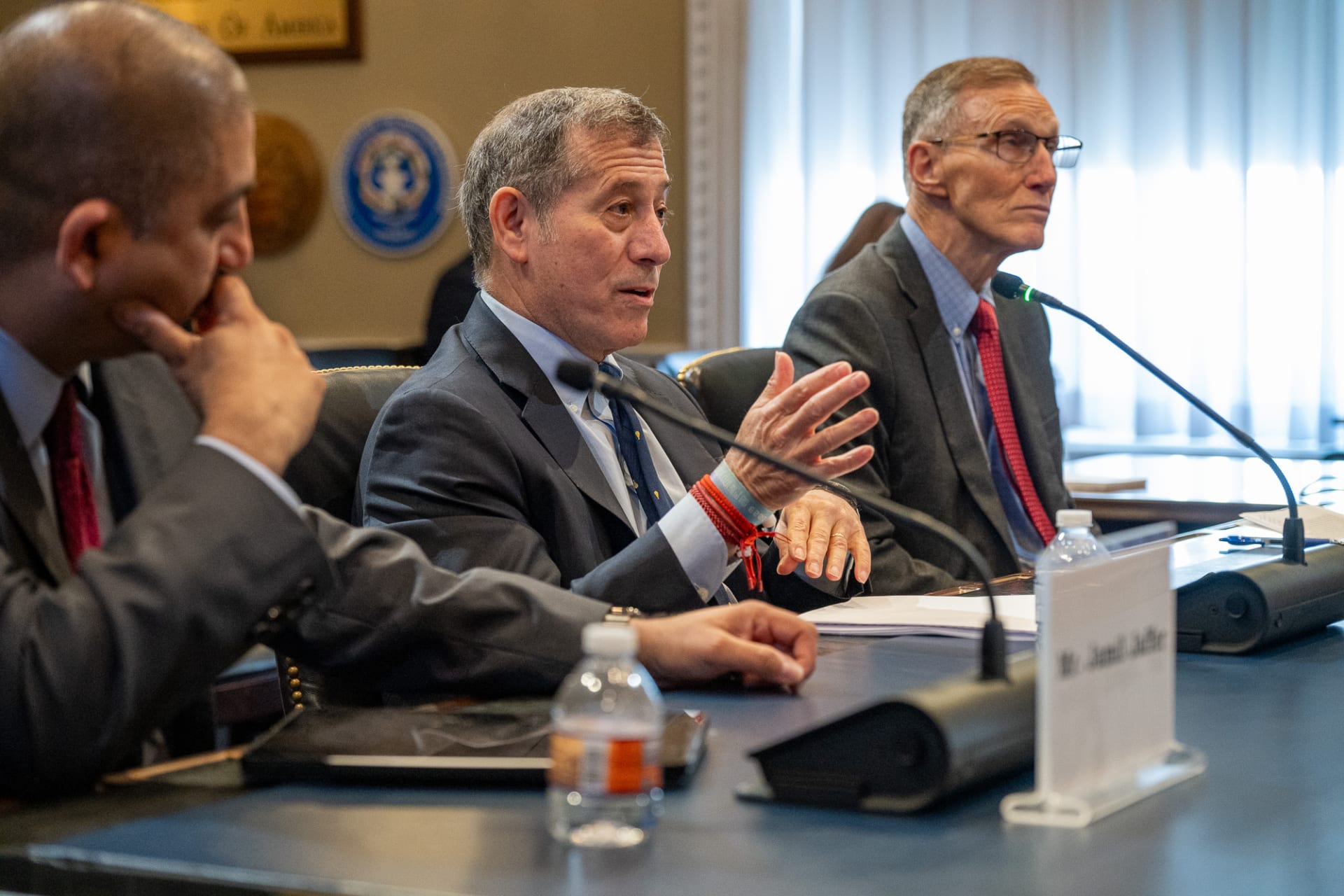
			<content:encoded><![CDATA[<p>Employment data turn out to be the most controversial part of the New Deal discussion. Lee Ohanian <a href="http://banking.senate.gov/public/index.cfm?FuseAction=Hearings.Testimony&amp;Hearing_ID=f5afa171-b136-4f39-9b81-27937a9bbd3b&amp;Witness_ID=10f84c5d-a4d6-482b-9ea2-9565579d6924">testified</a> before the Senate Banking Committee recently, laying out as clearly anyone why labor policy made the Great Depression worse in the 1930s.</p>
]]></content:encoded>
			<wfw:commentRss>http://blogs.cfr.org/shlaes/2009/04/14/ohanian-lays-it-out/feed/</wfw:commentRss>
		</item>
		<item>
		<title>Columbus Dispatch’s Torry</title>
		<link>http://blogs.cfr.org/shlaes/2009/04/05/columbus-dispatchs-torry/</link>
		<comments>http://blogs.cfr.org/shlaes/2009/04/05/columbus-dispatchs-torry/#comments</comments>
		<pubDate>Sun, 05 Apr 2009 13:59:28 +0000</pubDate>
		<dc:creator>Amity Shlaes</dc:creator>
		
		<category><![CDATA[Uncategorized]]></category>

		<guid isPermaLink="false">http://blogs.cfr.org/shlaes/?p=123</guid>
		<description><![CDATA[Jack Torry of the Columbus Dispatch covered the Senate Banking Committee hearings on the 1930s and then did an interview on TFM. I&#8217;m glad I got to talk to him, not just for the interview but coz I like his angle: not a New Deal, but a better deal. Torry took a lot of trouble to [...]]]></description>
			<content:encoded><![CDATA[<p>Jack Torry of the Columbus Dispatch covered the Senate Banking Committee hearings on the 1930s and then did an<a href="http://www.dispatchpolitics.com/live/content/insight/stories/2009/04/05/Banks05.ART_ART_04-05-09_G1_B0DEV67.html?adsec=politics&amp;sid=101"> interview </a>on TFM. I&#8217;m glad I got to talk to him, not just for the interview but coz I like his angle: not a New Deal, but a better deal. Torry took a lot of trouble to figure out the data. All of us involved in the story appreciate that.</p>
<p>Also, one of the most interesting guests at our <a href="http://www.cfr.org/project/1405/cfr_second_look_symposium.html">Second Look </a>conference was Bob Higgs of the Independent Institute, father of the &#8220;Regime Uncertainty&#8221; concept.  Higgs is on C-Span Book TV in a <a href="http://www.booktv.org/program.aspx?ProgramId=10300&amp;SectionName=In">three-hour marathon session </a>this weekend. To give Higgs this time was probably an idea of Peter Slen, one of the great innovators of C-Span. Higgs&#8217;s work is hyper-relevant to enterprise.  It may be a marathon, but run with Higgs. His work explains a lot.</p>
]]></content:encoded>
			<wfw:commentRss>http://blogs.cfr.org/shlaes/2009/04/05/columbus-dispatchs-torry/feed/</wfw:commentRss>
		</item>
		<item>
		<title>G-20: Those Who Cannot Remember Past Conferences….</title>
		<link>http://blogs.cfr.org/shlaes/2009/03/25/g-20-those-who-cannot-remember-past-conferences/</link>
		<comments>http://blogs.cfr.org/shlaes/2009/03/25/g-20-those-who-cannot-remember-past-conferences/#comments</comments>
		<pubDate>Wed, 25 Mar 2009 11:03:08 +0000</pubDate>
		<dc:creator>Amity Shlaes</dc:creator>
		
		<category><![CDATA[Uncategorized]]></category>

		<guid isPermaLink="false">http://blogs.cfr.org/shlaes/?p=117</guid>
		<description><![CDATA[Forbes column on the original meeting in London, 1933&#8230;.
The upcoming G-20 meeting is not the first conference held in London several months into a new U.S. administration in the midst of an international economic crisis. International powers also met there in the summer of 1933, not long after Franklin Roosevelt&#8217;s inauguration. To review that London [...]]]></description>
			<content:encoded><![CDATA[<p><a href="http://www.forbes.com/2009/03/23/depression-roosevelt-obama-cordell-hull-opinions-contributors-gold-standard.html">Forbes column</a> on the original meeting in London, 1933&#8230;.</p>
<p><em>The upcoming G-20 meeting is not the first conference held in London several months into a new U.S. administration in the midst of an international economic crisis. International powers also met there in the summer of 1933, not long after Franklin Roosevelt&#8217;s inauguration. To review that London meeting reminds us just how badly an international conference can flop.</em></p>
<p><em>But to the story: The planning for that London&#8230;</em>.</p>
]]></content:encoded>
			<wfw:commentRss>http://blogs.cfr.org/shlaes/2009/03/25/g-20-those-who-cannot-remember-past-conferences/feed/</wfw:commentRss>
		</item>
		<item>
		<title>Obama’s Transcendent Moment</title>
		<link>http://blogs.cfr.org/shlaes/2009/03/20/obamas-transcendent-moment/</link>
		<comments>http://blogs.cfr.org/shlaes/2009/03/20/obamas-transcendent-moment/#comments</comments>
		<pubDate>Sat, 21 Mar 2009 03:21:41 +0000</pubDate>
		<dc:creator>Amity Shlaes</dc:creator>
		
		<category><![CDATA[Uncategorized]]></category>

		<guid isPermaLink="false">http://blogs.cfr.org/shlaes/?p=115</guid>
		<description><![CDATA[Something&#8217;s right in the world and in this administration if the U.S. can have a President who makes a tape like President Obama&#8217;s Nowruz commentary. An unforgettably gracious bit of outreach that will have more effect than we can imagine.
]]></description>
			<content:encoded><![CDATA[<p>Something&#8217;s right in the world and in this administration if the U.S. can have a President who makes a tape like President Obama&#8217;s <a href="http://www.whitehouse.gov/Nowruz/">Nowruz commentary</a>. An unforgettably gracious bit of outreach that will have more effect than we can imagine.</p>
]]></content:encoded>
			<wfw:commentRss>http://blogs.cfr.org/shlaes/2009/03/20/obamas-transcendent-moment/feed/</wfw:commentRss>
		</item>
		<item>
		<title>Dan Yergin Puts the World on his Shoulders</title>
		<link>http://blogs.cfr.org/shlaes/2009/03/18/dan-yergin-puts-the-world-on-his-shoulders/</link>
		<comments>http://blogs.cfr.org/shlaes/2009/03/18/dan-yergin-puts-the-world-on-his-shoulders/#comments</comments>
		<pubDate>Wed, 18 Mar 2009 16:32:30 +0000</pubDate>
		<dc:creator>Amity Shlaes</dc:creator>
		
		<category><![CDATA[Uncategorized]]></category>

		<guid isPermaLink="false">http://blogs.cfr.org/shlaes/?p=113</guid>
		<description><![CDATA[ Dan Yergin is doing what he did for the oil topic &#8212; heavy lifting on the substance &#8212; and taking up the task of sorting out what happened in the Great Depression. His take on Chairman Bernanke, NEC Director Summers, and Chairman of the President&#8217;s Council of Economic Advisers Christina Romer here.  It&#8217;s a rough [...]]]></description>
			<content:encoded><![CDATA[<p> Dan Yergin is doing what he did for the oil topic &#8212; heavy lifting on the substance &#8212; and taking up the task of sorting out what happened in the Great Depression. His take on Chairman Bernanke, NEC Director Summers, and Chairman of the President&#8217;s Council of Economic Advisers Christina Romer <a href="http://www.cnbc.com/id/29720337/">here. </a> It&#8217;s a rough load but if anyone can lift it, Dan can.</p>
]]></content:encoded>
			<wfw:commentRss>http://blogs.cfr.org/shlaes/2009/03/18/dan-yergin-puts-the-world-on-his-shoulders/feed/</wfw:commentRss>
		</item>
		<item>
		<title>Income Distribution, Malanga, Florida, Cities</title>
		<link>http://blogs.cfr.org/shlaes/2009/03/11/income-distribution-malanga-florida-cities/</link>
		<comments>http://blogs.cfr.org/shlaes/2009/03/11/income-distribution-malanga-florida-cities/#comments</comments>
		<pubDate>Thu, 12 Mar 2009 02:32:58 +0000</pubDate>
		<dc:creator>Amity Shlaes</dc:creator>
		
		<category><![CDATA[Uncategorized]]></category>

		<guid isPermaLink="false">http://blogs.cfr.org/shlaes/?p=111</guid>
		<description><![CDATA[New Yorkers know their taxes are going up and are thinking about whether they can handle it. The professional crowd, especially, is concerned. Why not move out?
An old column on Real Clear Markets by Steve Malanga of Manhattan Institute is worth going back to because it lets you know how very much the top earners [...]]]></description>
			<content:encoded><![CDATA[<p>New Yorkers know their taxes are going up and are thinking about whether they can handle it. The professional crowd, especially, is concerned. Why not move out?</p>
<p>An <a href="http://www.realclearmarkets.com/articles/2008/04/the_rich_and_their_taxes.html">old column </a>on Real Clear Markets by Steve Malanga of Manhattan Institute is worth going back to because it lets you know how very much the top earners in NYC pay relative to other taxpayers. In one recent year the top income bracket crowd, less than one percent of the taxpayers, paid one third of the state income tax.</p>
<p>Reason to care: the tax burden in NY is one factor that is speeding Washington&#8217;s victory and New York&#8217;s defeat in the epic competition of the capitals.  The excellent Richard Florida had an <a href="http://www.theatlantic.com/doc/200903/meltdown-geography">optimistic piece </a>in The Atlantic recently, where he said that &#8220;New York is much, much more than a financial center.&#8221; In terms of tax revenues, however, being a financial center matters.</p>
]]></content:encoded>
			<wfw:commentRss>http://blogs.cfr.org/shlaes/2009/03/11/income-distribution-malanga-florida-cities/feed/</wfw:commentRss>
		</item>
		<item>
		<title>Charitable Theft</title>
		<link>http://blogs.cfr.org/shlaes/2009/03/09/charitable-theft/</link>
		<comments>http://blogs.cfr.org/shlaes/2009/03/09/charitable-theft/#comments</comments>
		<pubDate>Mon, 09 Mar 2009 17:35:02 +0000</pubDate>
		<dc:creator>Amity Shlaes</dc:creator>
		
		<category><![CDATA[Uncategorized]]></category>

		<guid isPermaLink="false">http://blogs.cfr.org/shlaes/?p=107</guid>
		<description><![CDATA[There&#8217;s a real power grab going on when it comes to Administration policy on charity.
Administration&#8217;s plan to curtail charitable deduction even as federal government gives &#8220;more&#8221; to charity.
The offset is a greater federal role. That&#8217;s the distressing part.
&#8220;Gregory Helvering&#8221; has the best comment I&#8217;ve found. California&#8217;s great tax mind speaks the truth!
]]></description>
			<content:encoded><![CDATA[<p>There&#8217;s a real power grab going on when it comes to Administration policy on charity.</p>
<p>Administration&#8217;s plan to curtail charitable deduction even as federal government gives &#8220;more&#8221; to charity.</p>
<p>The offset is a greater federal role. That&#8217;s the distressing part.</p>
<p>&#8220;<a href="http://www.americanthinker.com/2009/03/the_obama_double_tax_whammy_1.html">Gregory Helvering</a>&#8221; has the best comment I&#8217;ve found. California&#8217;s great tax mind speaks the truth!</p>
]]></content:encoded>
			<wfw:commentRss>http://blogs.cfr.org/shlaes/2009/03/09/charitable-theft/feed/</wfw:commentRss>
		</item>
		<item>
		<title>Benn Unedited</title>
		<link>http://blogs.cfr.org/shlaes/2009/02/18/benn-unedited/</link>
		<comments>http://blogs.cfr.org/shlaes/2009/02/18/benn-unedited/#comments</comments>
		<pubDate>Wed, 18 Feb 2009 22:39:49 +0000</pubDate>
		<dc:creator>Amity Shlaes</dc:creator>
		
		<category><![CDATA[Uncategorized]]></category>

		<guid isPermaLink="false">http://blogs.cfr.org/shlaes/?p=99</guid>
		<description><![CDATA[Clive Crook of the FT and the Atlantic has sounded a welcome note of civility to the blogosphere. (If it&#8217;s all cacaphony, it won&#8217;t be useful.)
My colleague Benn Steil replied to Clive, and attacks on his own solid new book with Manuel Hinds, on FT.com. The unedited version of Benn&#8217;s reply is pasted below:
Blogs Gone [...]]]></description>
			<content:encoded><![CDATA[<p><a href="http://blogs.ft.com/crookblog/">Clive Crook of the FT and the Atlantic</a> has sounded a welcome note of civility to the blogosphere. (If it&#8217;s all cacaphony, it won&#8217;t be useful.)</p>
<p>My colleague Benn Steil <a href="http://www.ft.com/cms/s/0/a861325c-f394-11dd-9c4b-0000779fd2ac.html?nclick_check=1">replied</a> to Clive, and attacks on<a href="http://yalepress.yale.edu/yupbooks/book.asp?isbn=9780300149241"> his own solid new book</a> with Manuel Hinds, on FT.com. The unedited version of Benn&#8217;s reply is pasted below:</p>
<p>Blogs Gone Wild<br />
by Benn Steil</p>
<p>“Many of the most successful economics blogs promote communication within political groupings, not across them. On the web you best build an audience by organising a claque and stroking its prejudices. Extend elaborate courtesy to people you agree with and boorish contempt to those who do not get it. Celebrate exasperation and incivility as marks of intellectual authenticity – an attitude easier to tolerate in teenagers under hormonal stress than in professors at world-class universities” (Clive Crook, FT: 8 February).</p>
<p>Two days before Clive’s column appeared, I experienced firsthand the econoblog treatment he describes. On 6 February, I published an op-ed in the FT (“Keynes and the triumph of hope over economics”) criticizing the tendency of economists to invoke Keynes, rather than logic and evidence, in support of any and all forms of new deficit spending, which are now massed together under the cozy umbrella of “stimulus” – a term that closes discussion by simply assuming the merits it claims. This provoked a call for my dismissal from blogger <a href="http://delong.typepad.com/sdj/2009/02/council-on-foreign-relations-wingnut-watch-benn-steil.html">Brad DeLong (a California state employee with lifetime employment</a>). Fellow blogger Paul Krugman, who is apparently too busy to read what he criticizes, then parroted DeLong’s description of me as a “wingnut”, and reprinted DeLong’s curious misstatement of what I’d written, together with a link to DeLong’s blog entry (rather than to my article, of course).</p>
<p>According to DeLong and Krugman, my article says that Jacques Rueff (1896-1978), whom DeLong dismisses as a &#8220;French crank,&#8221; demolished the foundations of Keynesian economics. Despite my admiration for Rueff, a renowned economist, statesman, and judge at the European Court of Justice, I never gave him such credit. What I wrote was that Rueff had demolished the Keynesian foundations of Krugman&#8217;s claim that a trillion dollars of new deficit spending would &#8220;employ . . . money that would otherwise be sitting idle.&#8221; For those interested in what Rueff actually wrote, it can be found here: &#8220;The Fallacies of Lord Keynes General Theory,&#8221; The Quarterly Journal of Economics, Vol. 61, No. 3, May 1947, pp. 343-367.</p>
<p>Krugman&#8217;s claim, I argued, is manifestly false. Institutions are not hoarding dollar bills, awaiting the issuance of stimulus bonds. Any funds they choose to make available to the government, beyond their current holdings of Treasurys, will have to be withdrawn from the banking system or the market for corporate securities. DeLong retorted that the evidence that Krugman is right is apparent in the fall in monetary velocity. But this is a non-sequitur, since if Krugman had actually been using the word &#8220;idle&#8221; to mean circulating at low velocity, he would then have been assuming the very thing he needs to establish - that by outbidding the banks and corporate securities markets for funds, and then spending such funds, the government necessarily increases velocity and stimulates private consumption or investment more than it reduces it by withdrawing the funds from the market. This could, of course, be true. The burden, however, is on Krugman and DeLong to make an argument that it is true. They cannot just assert it. This is, after all, what the entire debate is about.</p>
<p>Harvard’s Robert Barro, writing in the 22 January Wall Street Journal, provides logic and offers evidence supporting the case that it is not true. Krugman, naturally, waves off Barro’s views as “boneheaded”.</p>
<p>I cannot help but think what Keynes and Hayek, friends who engaged in profound and respectful private and public debate about economic policy for decades, would make of the ugly and childish econoblog culture which Krugman and DeLong have helped create.</p>
<p>Benn Steil is director of international economics at the Council on Foreign Relations, and co-author of Money, Markets, and Sovereignty (Yale University Press).</p>
]]></content:encoded>
			<wfw:commentRss>http://blogs.cfr.org/shlaes/2009/02/18/benn-unedited/feed/</wfw:commentRss>
		</item>
		<item>
		<title>1921 and Econlib and Fairness Doctrine</title>
		<link>http://blogs.cfr.org/shlaes/2009/01/30/1921-and-econlib-and-fairness-doctrine/</link>
		<comments>http://blogs.cfr.org/shlaes/2009/01/30/1921-and-econlib-and-fairness-doctrine/#comments</comments>
		<pubDate>Fri, 30 Jan 2009 08:09:46 +0000</pubDate>
		<dc:creator>Amity Shlaes</dc:creator>
		
		<category><![CDATA[Uncategorized]]></category>

		<guid isPermaLink="false">http://blogs.cfr.org/shlaes/?p=94</guid>
		<description><![CDATA[Over at econlib David Henderson has some great material on Harding and stimuli. Recall that in that era they let wages and prices fall. Ionides writes that more detail on this recession is in George Reisman, Capitalism. Got to check it out.
Someone asked me today what changed in the intellectual world that made it possible [...]]]></description>
			<content:encoded><![CDATA[<p>Over at econlib David Henderson has some great material on <a href="http://econlog.econlib.org/archives/2009/01/hardings_stimul.html">Harding and stimuli</a>. Recall that in that era they let wages and prices fall. Ionides writes that more detail on this recession is in George Reisman, Capitalism. Got to check it out.</p>
<p>Someone asked me today what changed in the intellectual world that made it possible for skepticism about the New Deal to be expressed in the general public. I thought the question was a bit forced. One could always express skepticism! Even in the 1970s.</p>
<p>Still, some shift that has taken place. And that has to do with&#8230;.</p>
<p> a) The ending of the Fairness Doctrine</p>
<p>b) The resurgence of the Austrians and the rise of the public choicers</p>
<p>c) Their ability to use new media creatively &#8212; Russ Roberts, who puts econ in LOVE stories, how improbable. Reason TV, libertarians who do tv! <a href="http://www.econlib.org/library/About.html">Econlib </a>is a superb source, I use it all the time. A lib that outdoes the old libs.  What a good job Liberty Fund, Russ, Arnold Kling, and a few others have done with econlib. Ditto for John Tamny at RCM, <a href="http://www.realclearmarkets.com/">Realclearmarkets.com</a>.</p>
<p> d) The strong economic growth of recent decades.</p>
<p>e)?? Add yours.</p>
]]></content:encoded>
			<wfw:commentRss>http://blogs.cfr.org/shlaes/2009/01/30/1921-and-econlib-and-fairness-doctrine/feed/</wfw:commentRss>
		</item>
	</channel>
</rss>