<?xml version="1.0" encoding="UTF-8"?>
<feed xml:lang="en" xmlns="http://www.w3.org/2005/Atom" xmlns:opensearch="http://a9.com/-/spec/opensearch/1.1/" xmlns:s="http://jadedpixel.com/-/spec/shopify">
  <id>https://capecoffeebeans.co.za/blogs/how-to-make-great-coffee.atom</id>
  <link rel="alternate" type="text/html" href="https://capecoffeebeans.co.za/blogs/how-to-make-great-coffee"/>
  <link rel="self" type="application/atom+xml" href="https://capecoffeebeans.co.za/blogs/how-to-make-great-coffee.atom"/>
  <title>Cape Coffee Beans - How to make great coffee</title>
  <updated>2023-11-08T15:41:10+02:00</updated>
  <author>
    <name>Cape Coffee Beans</name>
  </author>
  <entry>
    <id>https://capecoffeebeans.co.za/blogs/how-to-make-great-coffee/espresso-channelling-extraction-distribution</id>
    <published>2023-11-08T15:41:10+02:00</published>
    <updated>2024-11-09T10:54:16+02:00</updated>
    <link rel="alternate" type="text/html" href="https://capecoffeebeans.co.za/blogs/how-to-make-great-coffee/espresso-channelling-extraction-distribution"/>
    <title>All about espresso: channelling and how to avoid it</title>
    <author>
      <name>Maxwell Milella</name>
    </author>
    <content type="html">
      <![CDATA[<style><!--
h2 {margin-top: 40px;}
h3 {margin-top: 25px;}
img {margin: 20px auto;}
--></style>
<p>Making good espresso takes time and effort. From <a href="https://capecoffeebeans.co.za/collections/coffee-scales" title="Check out our scales here." target="_blank">weighing</a> and <a href="https://capecoffeebeans.co.za/collections/espresso-grinders" title="Browse our collection of grinders here." target="_blank">grinding</a> your beans to pulling your shot, it’s a pretty hands-on and focused process. This makes it all the more bitter (or sour, depending on your extraction) when you put in all that work only to end up with a mediocre-to-terrible-tasting shot to show for it. If this is something you experience regularly, it’s highly likely to be caused by a nasty little phenomenon called channelling.</p>
<p>The concept may intimidate you if this is the first time you’ve come across it, but don’t panic. It’s actually relatively easy to grasp, though actually preventing channelling itself may prove to be a bit harder. Read on and we’ll try to help you understand exactly why it happens, and what you can do about it.</p>
<h2>Some background: extraction and channelling</h2>
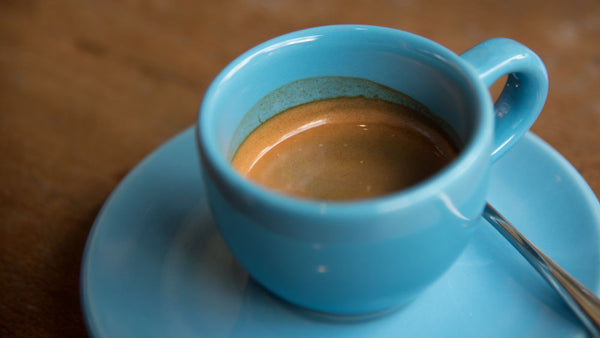
<img alt="Cermaic Mug blue espresso" src="https://cdn.shopify.com/s/files/1/0280/5548/files/arisa-chattasa-unsplash-espresso-blue-ceramic-mug-SCALED_600x600.jpg?v=1699177561" style="float: none; display: block; margin-left: auto; margin-right: auto;" data-mce-style="float: none; display: block; margin-left: auto; margin-right: auto;" data-mce-src="https://cdn.shopify.com/s/files/1/0280/5548/files/arisa-chattasa-unsplash-espresso-blue-ceramic-mug-SCALED_600x600.jpg?v=1699177561">
<p style="text-align: center;" data-mce-style="text-align: center;"><em>Photo by Arisa Chattasa on Unsplash</em></p>
<p style="text-align: center;" data-mce-style="text-align: center;"> </p>
<p>If you’re reading this, <a href="https://capecoffeebeans.co.za/blogs/how-to-make-great-coffee/beginners-guide-espresso" title="If not, here's a primer on espresso for you." target="_blank">you likely already know a fair amount of coffee theory</a>, but let’s recap some important foundations.</p>
<p>The way your espresso (and coffee generally) tastes hinges primarily on what’s referred to as extraction: how much soluble coffee is extracted by the water you pass through your puck of ground coffee during the brewing process. Almost every variable you manipulate before and during the brewing process, like grind size and water temperature, goes some way towards controlling the degree of extraction in order to bring out the flavours you want in your espresso.</p>
<p>It’s all about balance. Too much extraction results in harsh, bitter-tasting espresso, whereas too little leads to something more sour and acerbic. Channelling isn’t an extraction problem unique to espresso, but it does come to the fore here more than in other brew methods because of one particular brewing variable: pressure.</p>
<p>In the espresso brewing process, water is forced through your coffee puck under very high pressure, around 9-bar, which facilitates the extraction of a higher concentration of the coffee's soluble compounds in a shorter time than other methods, and also contributes to the complex and concentrated flavours of espresso. Pressure is also behind the production of crema, that layer of delicious golden-brown foam found at the top of a shot of espresso.</p>
<p>Because it’s passed through the puck under such high pressure, water is prone to favour paths of least resistance in the puck itself, being areas in the puck that are less densely packed with ground coffee than others, and that are therefore easier for water to move through. This results in channelling, where water passes more quickly through certain areas (those that are less densely packed) than others, and therefore moves through the puck unevenly overall. This leads to a mix of both under and over-extracted coffee in the puck. When this happens, your espresso’s flavour will be unclear and muddled at best, and a horrible combination of bitterness and sourness at worst.</p>
<p>There’s also a specific kind of channelling called side-channelling, which is what it sounds like, where the coffee bed somehow becomes unseated and water channells through gaps between it and the sides of the <a href="https://capecoffeebeans.co.za/collections/portafilters-filter-baskets" title="Browse our selection of portafilters here." target="_blank">portafilter</a>. The border between the stainless-steel edges of the filter basket and your ground coffee is particularly prone to problems. Even minor disturbances of the coffee in this area may cause side channelling, so take care not to bump your portafilter against the group head or workstation after <a href="https://capecoffeebeans.co.za/search?type=product&amp;q=tamper" title="You can see our range of tampers here." target="_blank">tamping</a>, and make sure your grounds are evenly distributed prior to that. More on distribution a little later.</p>
<p>Because it's so uniquely unpleasant, you can pretty reliably tell when you’ve experienced channelling just by the taste of your shot, but this isn’t the only way to find that out. If you see that shot is pretty watery at the beginning of your pull, or if you pale streaks in what should otherwise be a dark, gooey flow, these are pretty sure visual indicators of channelling. <a title="You can find our range of naked portafilters here." href="https://kpmmqr4nrtvucpob-2805548.shopifypreview.com/search?type=product&amp;q=naked+portafilter" target="_blank">A naked (or bottomless) portafilter</a> is invaluable here, as it lets you see the extraction process clearly from the bottom of the basket. Using one, you’ll be able to see uneven and discoloured flow, and spurting, even more easily.</p>
<p>These are actually relatively easy problems to solve with a few equipment and technique improvements. However, fixing these still might not actually resolve your channelling issues or improve the taste of your shot all that much. That’s because these visual signs are indicative of large channels in the puck which actually don’t affect extraction quite as much as smaller, visually imperceptible microchannels. We’ll get onto how to minimise these a little further on, but for now, let’s talk about:</p>
<h2>What actually causes channelling</h2>
<p style="text-align: start;" data-mce-style="text-align: start;"><img alt="espresso shot bottomless portafilter" src="https://cdn.shopify.com/s/files/1/0280/5548/files/ryan-spaulding-unsplash-espresso-shot-bottomess-filter-SCALED_600x600.jpg?v=1699177724" style="float: none; display: block; margin-left: auto; margin-right: auto;" data-mce-style="float: none; display: block; margin-left: auto; margin-right: auto;"></p>
<p style="text-align: center;" data-mce-style="text-align: center;"><em>A shot of espresso as seen from below a bottomless portafilter. Photo by Ryan Spaulding<span data-mce-fragment="1"> on </span>Unsplash</em></p>
<p style="text-align: center;" data-mce-style="text-align: center;"> </p>
<p>There are a number of things that may cause channelling, which is part of what makes it a harder problem to solve than we’d like, but the first thing you should take a look at is your grinder and grinder settings. If you have a good grinder, grinding too fine is usually the problem rather than the inverse. When you’re grinding for espresso, you’re already grinding really fine, and it’s not difficult to overshoot the mark somewhat. When you grind too fine it results in excessive resistance in the portafilter basket and therefore excessive pressure when you pull your shot, which increases the likelihood of water seeking out and following a “path of least resistance” and causing channelling. Grinding finer also increases the potential for clumps, which are what they sound like: bits of your grounds that are stuck together. When clumps are tamped, they form disproportionately densely packed areas of your espresso puck, and this can lead to channelling.</p>
<p>If your grinder needs some maintenance or simply isn’t particularly good, you may find that your grounds aren’t too fine, they’re instead inconsistent, which is arguably even worse. If your grinder grinds inconsistently, you end up with coffee grounds of various sizes in the portafilter basket. In this case, your water isn’t going to flow evenly through the puck, instead flowing faster through areas of larger grounds, again causing channelling. If this is a problem you find yourself running into pretty often, it might be a sign that it’s time to upgrade your gear. Consider springing for something like one of <a title="You can check these out right here." href="https://kpmmqr4nrtvucpob-2805548.shopifypreview.com/collections/eureka-espresso-grinders" target="_blank">Eureka’s Mignon grinders</a>, which are specifically kitted with anti-clumping technology to limit your chances of channelling from the moment you start grinding.</p>
<p>Your basket itself may also be a problem. More specifically, you might be dosing wrong for your basket’s size. Your dose may look fine at first, but coffee grounds expand when they come into contact with water. If you’ve packed your basket too tightly (i.e. with too much coffee), your puck won’t have enough room to expand once you start pulling your shot, and it could end up pushing against the shower screen, causing channelling.</p>
<p>However, above all else, there’s one particular factor that most directly influences your shot’s likelihood of channelling: distribution.</p>
<h2>Distribution</h2>
<img alt="espresso ground coffee puck prep pre tamp" src="https://cdn.shopify.com/s/files/1/0280/5548/files/noora-alhammadi-unsplash-espresso-pre-tamb-puck-prep-SCALED_600x600.jpg?v=1699177850" style="display: block; margin-left: auto; margin-right: auto;" data-mce-style="display: block; margin-left: auto; margin-right: auto;">
<p style="text-align: center;" data-mce-style="text-align: center;"><em>Undistributed ground coffee in a portafilter. Photo by Noora AlHammadi<span data-mce-fragment="1"> on </span>Unsplash</em></p>
<p style="text-align: center;" data-mce-style="text-align: center;"> </p>
<p>Distribution refers to how your ground coffee is spread (i.e. distributed) within the portafilter basket prior to tamping. You want your grounds distributed evenly throughout the basket to allow for consistent water flow and even extraction. Clumps and general areas of uneven distribution are pretty much guaranteed to create paths of least resistance, and therefore cause channelling. You want to prevent and eliminate them as best you can before you lock your portafilter in and pull your shot, which is exactly what distribution and puck prep is all about.</p>
<h3>The kit-free approach</h3>
<p>There are a handful of tools you could pick up to this end, and we’ll talk about those in a second, but it’s worth noting that there are several things you can do that will likely improve your distribution without you needing to reach for your wallet just yet.</p>
<p>For example, a firm but gentle tap of your palm on the side of the portafilter helps spread everything a little more evenly inside of it. The same goes for lightly tapping the bottom of the portafilter a few times against your palm or your workstation’s countertop. Importantly, and this goes for all the distribution tools and techniques we’re about to cover, all of this happens <em>prior to tamping</em>. Don’t be tempted to give the portafilter one last tap after you’ve tamped, or you’ll just end up undoing all of your prep work.</p>
<p>There are also some pretty well-known distribution techniques that just take a little hands-on work, like<strong> the NSEW (North-South-East-West) method</strong>: you simply place your index finger flat across the top of the basket on one side, then use the base of your finger to push your mound of grounds around the basket, first away from your body, then towards it, then to the right and left (hence the name).</p>
<p>There’s also <strong>the Stockfleth method</strong>, where you place your thumb on the rim of the basket and your index finger straight across it, then rotate your hand and the portafilter below it in opposite directions. Repeat until your grounds are spread evenly to the sides.</p>
<img src="https://cdn.shopify.com/s/files/1/0280/5548/files/Stockfleth_Chris_Baca_480x480.gif?v=1699097492" alt="Chris Baca stockfleth demonstration" style="display: block; margin-left: auto; margin-right: auto;" data-mce-style="display: block; margin-left: auto; margin-right: auto;">
<p style="text-align: center;" data-mce-style="text-align: center;"><em>GIF from<span> </span><a title="Chris Baca's video" href="https://www.youtube.com/watch?v=kTSd8xu81y0" target="_blank">Chris Baca's video</a><span> </span>on the stockfleth method</em></p>
<p style="text-align: center;" data-mce-style="text-align: center;"> </p>
<p>If you don’t trust yourself not to accidentally shove a finger right into the basket, you could also always use something straight and flat like a playing card. Just drag it across the rim of the basket like you would your finger in the NSEW method.</p>
<p>All of the above makes a pretty significant difference in terms of distribution, but they’ll only get you so far, especially because they’re mostly effective on the top layer of your grounds, but leave the lower areas relatively untouched. If you want to dive a little deeper, you’re going to need some more specialised kit.</p>
<h3>Pre-infusion</h3>
<p>While still seeming a little technical, this doesn’t involve any special equipment other than your espresso machine itself (provided it is pre-infusion-capable). Pre-infusion takes place after you’ve attached your portafilter to your machine’s group head and you’ve begun to brew, but before your shot properly begins. The term refers to the process of evenly wetting or saturating your ground coffee under very low pressure, too low to actually extract any espresso. Some machines have a programmable pre-infusion phase, some can do it manually, and there are even hacks to pre-infuse on machines that aren't specifically designed for it.</p>
<p>By saturating the puck in this way, when water pressure is increased as you brew it does so without finding any paths of least resistance, as the entire coffee bed is already evenly saturated once extraction begins. </p>
<h3>Dosing cup</h3>
<h3><strong><img alt="" src="https://cdn.shopify.com/s/files/1/0280/5548/files/Brewtooldosingcupheroshotoverrim_final_480x480.jpg?v=1693996759" style="display: block; margin-left: auto; margin-right: auto;" data-mce-src="https://cdn.shopify.com/s/files/1/0280/5548/files/Brewtooldosingcupheroshotoverrim_final_480x480.jpg?v=1693996759" data-mce-style="display: block; margin-left: auto; margin-right: auto;"></strong></h3>
<p style="text-align: center;" data-mce-style="text-align: center;"><em><a href="https://capecoffeebeans.co.za/products/brew-tool-grinder-dosing-cup?variant=40225661780102" title="Available here." data-mce-href="https://capecoffeebeans.co.za/products/brew-tool-grinder-dosing-cup?variant=40225661780102" target="_blank">Brew Tool's portafilter dosing cup</a></em></p>
<p style="text-align: center;" data-mce-style="text-align: center;"> </p>
<p>This isn’t a distribution-specific tool, but there are a number of benefits to grinding into a dosing cup. One is that it can help your distribution somewhat. Giving your grounds a decent shake in the cup before moving them to your portafilter can help break up some of the clumps that occur pretty inevitably when you grind fine enough for espresso.</p>
<h3>Wedge distribution tool</h3>
<p><strong><img alt="Nucleus Distribution Tool" src="https://cdn.shopify.com/s/files/1/0280/5548/files/Nucleus_Coffee_Distributor_wedge_facing_camera_FINAL_480x480.jpg?v=1699178113" style="display: block; margin-left: auto; margin-right: auto;" data-mce-style="display: block; margin-left: auto; margin-right: auto;"></strong></p>
<p style="text-align: center;" data-mce-style="text-align: center;"><a href="https://capecoffeebeans.co.za/products/ncd-nucleus-coffee-distributor" title="Available here." target="_blank"><em>Nucleus' Wedge Distribution Tool</em></a></p>
<p style="text-align: center;" data-mce-style="text-align: center;"> </p>
<p>Unlike a dosing cup, wedge distribution tools are, as the name suggests, specifically aimed at improving distribution. Though they may come in a number of shapes (the Nucleus Coffee Distributor is a particularly attractive example), a wedge distributor is generally a round, palm-sized tool with a series of sloped metal fins, or wedges, on one end. The idea is that you place the finned end into the portafilter basket prior to tamping and then twist it. The wedges move (distribute) the coffee evenly around the basket, but without actually applying enough pressure to prematurely tamp it, resulting in better distribution.</p>
<p>It’s important to note that, while wedge tools are more effective than a kit-free approach, they mostly influence the top layer of the coffee bed. If you want to ensure that your puck is as evenly distributed as possible, you’ll need something that can get to the clumps found below its surface, such as:</p>
<h3>The Weiss Distribution Technique</h3>
<p><strong><img alt="Normcore coffee espresso WDT" src="https://cdn.shopify.com/s/files/1/0280/5548/files/Normcore-WDT-Top_92b7ee36-659e-4_480x480.jpg?v=1699178501" style="display: block; margin-left: auto; margin-right: auto;" data-mce-style="display: block; margin-left: auto; margin-right: auto;"></strong></p>
<p style="text-align: center;" data-mce-style="text-align: center;"><a href="https://capecoffeebeans.co.za/products/normcore-wdt-distribution-tool" title="Available here." target="_blank"><em>Normcore's WDT</em></a></p>
<p style="text-align: center;" data-mce-style="text-align: center;"> </p>
<p>Named after the man who invented it back in 2005, John Weiss, the Weiss Distribution Technique (WDT) involves using a fine needle or needle-based tool to stir ground coffee in the portafilter prior to tamping. The fine needles break up clumps and even out distribution throughout the basket, not just the top layer of grounds, and this results in reduced channelling and more even extraction overall. For a relatively simple tool, its impact is significant: the Weiss Distribution Technique can reliably improve the quality and consistency of your espresso. </p>
<p>With that said, the WDT does take a little more time and effort than using a wedge tool, which is much quicker by comparison. If you have the time and patience to comb through your ground coffee with a wire tool every time, that's great, but if you're pumping out shots at a rapid pace, like in a commercial setting, a wedge tool might suit you better. </p>
<h3>Shower screens and puck screens</h3>
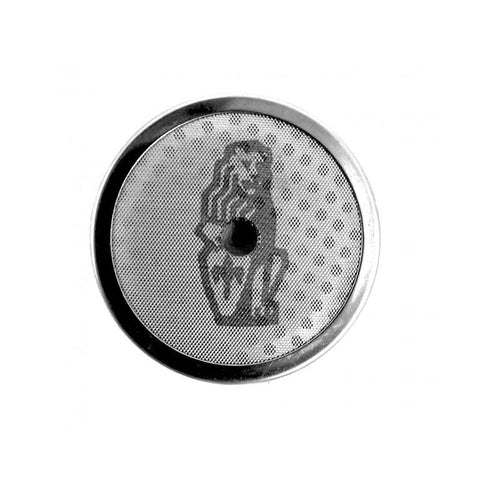
<p>Something a little different to the above that we’ve not really touched on just yet is the idea of water dispersion. Water dispersion is generally managed by your espresso machine’s shower screen, which is, simply put, the perforated metal circle at the group head where the water comes out during the brewing process and the last barrier between your espresso puck and the rest of your machine. Shower screens are designed to disperse water evenly over the coffee puck to ensure consistent saturation and, in turn, extraction.</p>
<div style="text-align: center;" data-mce-style="text-align: center;"><img alt="La Marzocco espresso shower screen" src="https://cdn.shopify.com/s/files/1/0280/5548/files/La-Marzocco-Shower-Screen_1024x1_aa665f79-edce-4508-a8d7-9b66bf7d3cf5_480x480.jpg?v=1699178698" style="float: none;" data-mce-style="float: none;"></div>
<p style="text-align: center;" data-mce-style="text-align: center;"><a href="https://capecoffeebeans.co.za/products/la-marzocco-reinforced-shower-screen" title="Available here." target="_blank"><em>A shower screen by La Marzocco</em></a></p>
<p style="text-align: center;" data-mce-style="text-align: center;"> </p>
<p>Shower screens, while variable, aren’t necessarily something you switch out regularly. If you start noticing taste issues in your espresso without having changed up your recipe or the rest of your equipment, that might be a sign that your shower screen is clogged up with coffee residue and needs to be cleaned. In the case that you find your shower screen damaged, you’ll need to replace it. That said, if you wanted, you could also upgrade the shower screen(s) your machine came with for something a little more specialised to further improve your extraction, <a title="Check them out right here." href="https://kpmmqr4nrtvucpob-2805548.shopifypreview.com/products/ims-precision-espresso-shower-screen" target="_blank">like these Precision Shower Screens made by IMS</a>.</p>
<p>Where shower screens come standard with any espresso machine, a puck screen, while fairly similar in both appearance and function, is an optional add-on. It’s a thin, perforated metal disk that you place atop your coffee puck in the portafilter prior to attaching it to the group head.</p>
<img alt="Generic espresso puck screen" src="https://cdn.shopify.com/s/files/1/0280/5548/files/Puck-Screen-Angle_grande_39eaa41c-b71a-4272-ae80-f615b392ac8d_480x480.jpg?v=1699178798" style="display: block; margin-left: auto; margin-right: auto;" data-mce-style="display: block; margin-left: auto; margin-right: auto;">
<p style="text-align: center;" data-mce-style="text-align: center;"><a href="https://capecoffeebeans.co.za/products/espresso-puck-screen" title="Available here." target="_blank"><em>A generic puck screen</em></a></p>
<p style="text-align: center;" data-mce-style="text-align: center;"> </p>
<p>Puck screens function primarily to improve water dispersion, ensuring that your puck is evenly saturated with water as you brew, thereby lowering your risk of channelling and improving extraction. Moreover, because it separates the puck from the grouphead, it also helps keep the shower screen clean, and by extension gives you a little less to think about regarding regular long-term maintenance (though we would still recommend regularly cleaning your shower screen).</p>
<p>Being a relative newcomer to the espresso space, puck screens aren’t often touted as essential pieces of kit, but their advantages are becoming more and more obvious as they rise in popularity and use. Combined with any or all of the approaches and tools above, there’s no doubt that a puck screen will limit your chances of channelling and will improve the quality of your espresso.</p>
<h2>To sum up: extracting the salient points</h2>
<p>So there you have it. Channelling is a nasty little phenomenon that occurs during the espresso brewing process when water passes unevenly through the coffee puck. Specifically, because of it being pushed through the puck at such high pressures, water is inclined to search for and pass through “paths of least resistance” in areas of the puck where coffee grounds are packed less densely. These areas end up over-extracted, whereas the rest of the puck is left under-extracted, which generally leads to your espresso tasting murky, muddled, and often downright unpleasant. You can often notice channelling visually as you’re brewing, especially if you use a bottomless portafilter, but the surest indicator is in the taste of your shot.</p>
<p>Channelling can be caused by a number of factors, such as grinding too fine or too inconsistently, overfilling your portafilter basket, or neglecting to maintain your shower screen. Improper distribution of grounds, however, stands out as the primary cause for channelling. Improving your distribution prior to tamping is therefore vital to the brewing process, and can be accomplished using a number of puck-prep techniques and specialised equipment.</p>
<p>If channelling is something you’ve been struggling with, you now hopefully understand what it is and how to prevent it. As is usually the case with espresso, making noticeable changes takes a fair amount of trial and error, so don’t be discouraged if the first shot you pull after using a WDT for the first time still doesn’t come out perfect. Keep at it, and soon enough you’ll not only be pulling rich, gooey, flavourful shots, but you’ll also be doing it consistently.</p>
<p> </p>
<div style="text-align: left;">
<h3>About the author</h3>
<p><img src="https://cdn.shopify.com/s/files/1/0280/5548/files/profile_pic_kitchen_edited_100x100.jpg?v=1707377500" alt="Max author pic" style="margin-top: 3px; margin-right: 10px; margin-bottom: 5px; float: left;" data-mce-fragment="1" data-mce-src="https://cdn.shopify.com/s/files/1/0280/5548/files/profile_pic_kitchen_edited_100x100.jpg?v=1707377500">Max is currently interning and writing at Cape Coffee Beans. He stumbled into the world of specialty coffee when he discovered James Hoffman’s YouTube channel in the small hours of the morning while putting off a university essay. Ever since he’s been trying to perfect his v60 technique, and now he’s here to write about it and all things coffee too.<br data-mce-fragment="1"><br></p>
</div>]]>
    </content>
  </entry>
  <entry>
    <id>https://capecoffeebeans.co.za/blogs/how-to-make-great-coffee/how-to-brew-great-coffee-on-the-road</id>
    <published>2023-05-18T14:49:23+02:00</published>
    <updated>2023-11-08T15:11:15+02:00</updated>
    <link rel="alternate" type="text/html" href="https://capecoffeebeans.co.za/blogs/how-to-make-great-coffee/how-to-brew-great-coffee-on-the-road"/>
    <title>How to Brew Great Coffee on the Road</title>
    <author>
      <name>Maxwell Milella</name>
    </author>
    <content type="html">
      <![CDATA[<style><!--
h2 {margin-top: 40px;}
h3 {margin-top: 25px;}
--></style>
<p>If you travel often, be it for work or pleasure, chances are that at some point on the road, you’ve stared down at a cup of bitter, silty hotel coffee (which probably tastes suspiciously like instant) and thought to yourself, “There’s got to be a better way.”</p>
<p>The good news is, there is, and it’s not just hunting down the nearest chain shop for something coffee-flavoured without any metallic aftertaste. These days the coffee enthusiast has a range of options at her/his disposal for brewing fresh, delicious coffee on the road, whether that's hotel-hopping, bundu-bashing or backpacking from cheap hostel to cheap hostel. </p>
<p>Here’s what you’ll need to brew the best cup of coffee you can while travelling.</p>
<h2 style="text-align: center;"><b>The Scale</b></h2>
<img src="https://cdn.shopify.com/s/files/1/0280/5548/files/DSC_5236_480x480.jpg?v=1607425031" alt="coffee, coffee scale, making coffee" style="display: block; margin: 30px auto;">
<p>If you’re only just getting into the world of specialty coffee, you may not have heard this yet, but it's important: you need a scale. Why? So you can weigh your ingredients (i.e. coffee and water). Again, why? Simply put, one of the most important contributors to the overall taste and quality of your brew is your ratio of coffee to water. Fine-tuning this is crucial to finding your perfect cup, but to do this you need to know your numbers so you can repeat and adjust your ratios as you like, consistently. </p>
<p>The only real tool for this is a scale. Eye-balling it and relying on spoons or the various scoops that come with some bags of pre-ground coffee and other paraphernalia will only get you so far, and leave a lot of room for ambiguity. Any small kitchen scale is generally sufficient, and most will fit fairly easily in your luggage.</p>
<p>That said, there is a range of great scales specifically designed for brewing coffee. This usually means they can weigh in 0.1g increments (most kitchen scales only measure in 1g increments which still leaves some room for error), and that they have a built-in timer. In addition to the coffee-water ratio, brew time is the other important numeric variable affecting your brew, but you could always do this with a phone or watch.</p>
<p>You can check out our range of scales <a href="https://capecoffeebeans.co.za/collections/coffee-scales" title="See our scales" target="_blank">right here</a>, but for portability and ease-of-use we’d highly recommend the <a href="https://capecoffeebeans.co.za/collections/coffee-scales/products/constant-digital-pocket-scale?variant=39681794474118" title="Buy a Constant Scale" target="_blank">Constant Digital Pocket Scale</a> or <a href="https://capecoffeebeans.co.za/products/wacaco-exagram-coffee-scale?variant=39864870797446" title="See Wacaco's Exagram" target="_blank">Wacaco’s Exgram scale</a>.</p>
<h2 style="text-align: center;"><b>The Water</b></h2>
<img src="https://cdn.shopify.com/s/files/1/0280/5548/files/The_Kettle-min-2000x3000_480x480.jpg?v=1683733120" alt="coffee, making coffee, kettle" style="display: block; margin: 30px auto;">
<p>You need water to brew coffee, and, <a href="https://capecoffeebeans.co.za/blogs/cape-coffee-blog/chill-out-primer-on-cold-brew" title="Learn about cold brew" target="_blank">save for specific brewing circumstances</a>, you generally need that water to be hot. To that end, you’ll need a kettle. </p>
<p>If you’re hotel-hopping at nice enough places, you may find an electric kettle of some description right in your room. This works well for a number of brewing methods, but if you’re brewing by campfire, need a more precise pour, or would rather not risk that your hotel doesn’t provide you with one, you’ll want your own kettle.</p>
<p>For this, we recommend <a href="https://capecoffeebeans.co.za/collections/kettles/products/hario-v60-buono-drip-kettle" title="Learn more about Hario's pour-over kettle" target="_blank">Hario’s V60 Buono Drip Kettle</a>. For travel, we specifically recommend the 1L model. It’s fairly compact as far as kettles go, and with its precise goose-neck spout, it’s perfectly suited to just about any brewing instrument. It’s also sturdy enough that you can use it right over an open fire if you’re camping. We’d usually recommend the larger 1.2L model if your suitcase can afford its additional bulk, but either will work perfectly once you’re ready and brewing.</p>
<h2 style="text-align: center;"><b>The Grind</b></h2>
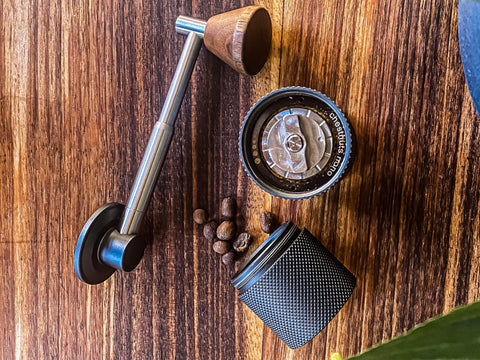
<img src="https://cdn.shopify.com/s/files/1/0280/5548/files/IMG_2242_1e488447-88d7-49bc-b6ab-c9b9aa892d77_480x480.jpg?v=1607424950" alt="coffee, making coffee, grinder, coffee grinder" style="display: block; margin: 30px auto;">
<p>It’s a simple truth that anyone with even a passing interest in improving their brew needs to acknowledge sooner or later: freshly ground coffee is simply better than pre-ground coffee (like you might find at a hotel). It tastes better, it smells better, and not by a small margin either. If you want a truly delicious cup of coffee, you want to grind your beans just before you brew. To do that, you need a grinder (burr, not blade), and if you’re travelling, you want something that will easily fit into your suitcase, hiking pack, or duffel bag: in a word (or two), a hand grinder. </p>
<p>You’d have a hard time finding a <a href="https://capecoffeebeans.co.za/collections/manual-coffee-grinders" title="See our manual coffee grinders" target="_blank">hand grinder</a> that you can’t just toss into your suitcase, and an almost impossible time finding one that uses blades instead of burrs (<a href="https://capecoffeebeans.co.za/blogs/equipment-insights/how-to-choose-the-right-coffee-grinder-for-you" title="Learn more about equipment" target="_blank">Here’s</a> why that’s important, plus more on grinders generally). For those not looking to break the bank, we recommend the <a href="https://capecoffeebeans.co.za/collections/coffee-grinders/products/hario-mini-mill-manual-coffee-grinder" title="Find the Hario Mini Slim grinder here" target="_blank">Hario Mini-Slim Plus</a>. Pint-sized and durable, its only significant downside is its capacity: it can only grind around 24g of coffee at a time, which is really only enough for one person. This sort of limit is pretty common for hand grinders; it’s the price you pay for portability. Naturally, you can get around this by just emptying your grinder out and grinding more if you’re brewing for more people.</p>
<p>If you can afford to spend a little more for a noticeably better quality grinder, we often recommend the <a href="https://capecoffeebeans.co.za/collections/coffee-grinders/products/timemore-chestnut-c2-manual-coffee-grinder" title="Check out Timemore's popular hand grinder" target="_blank">Timemore Chestnut C</a>. Made of aluminium alloy and featuring a dual bearing system for grind stability and consistency, and an adjustable grind setting suitable for just about any brew method, the Chestnut C is as premium as it looks, and well worth the asking price.</p>
<p>If your budget is a bit more generous, you could also consider Comandante, the brand that arguably blazed the trail for the premium hand grinder category. <a href="https://capecoffeebeans.co.za/collections/coffee-grinders/products/comandante-x25-trailmaster-coffee-grinder?variant=40077230768262" title="Check out Comandante's travel coffee grinder" target="_blank">The X25 Trailmaster</a> is made of a technopolymer which makes it perfectly durable even for the roughest hikes, and it effortlessly grinds to any consistency, consistently, thanks to its patented Nitro Blade burr set. </p>
<p>With that said, grinders come in a lot of shapes and sizes, and while they all aim to accomplish the same main goal, they can often come with qualities you may or may not really want. <a href="https://capecoffeebeans.co.za/collections/coffee-grinders" title="See all our coffee grinders here" target="_blank">Have a look around</a> and you’ll undoubtedly find one that fits your needs. </p>
<h2 style="text-align: center;"><b>The Brewer</b></h2>
<img src="https://cdn.shopify.com/s/files/1/0280/5548/files/IMG_3254_480x480.jpg?v=1607426063" alt="coffee, making coffee, coffee maker, AeroPress" style="display: block; margin: 30px auto;">
<p>Here’s the fun bit. The coffee-loving nomad has a number of portable brewing tools available to them these days. </p>
<p>Right out of the gate, an obvious pick for a travel brewer is the <a href="https://capecoffeebeans.co.za/collections/aerobie-aeropress" title="See the AeroPress collection" target="_blank">AeroPress</a> (and, by extension, the slightly smaller AeroPress Go). It’s easy to use, compact, and versatile, allowing for long, smooth cups or short, intense, espresso-style drinks. It also comes with a range of third-party accessories (which are also generally very portable), if you’d like to take your brew to new heights. True, it’s not exactly built to brew more than one or two cups at a time, but <a href="https://capecoffeebeans.co.za/blogs/how-to-make-great-coffee/17849668-an-aeropress-recipe-for-two" title="Learn how to brew for 2 with an AeroPress" target="_blank">there are ways around this problem</a>. </p>
<p>Additionally, if you’d like to avoid the hassle of travelling with hundreds of the AeroPress’s micro-filters, we recommend you pick up a reusable metal filter like <a href="https://capecoffeebeans.co.za/collections/aerobie-aeropress/products/able-stainless-steel-aeropress-filter" title="See Able's reusable metal AeroPress filter" target="_blank">this.</a> One of the most convenient aspects of the AeroPress is that it doesn’t demand the precise pour that most pour-over brew methods do, so you don’t need a gooseneck kettle to get the best results. You could probably even get by boiling your water in a pot or saucepan so long as you’re careful when it comes time to pour.</p>
<p>If you would prefer to enjoy a traditional pour-over coffee while you’re travelling, we’d recommend <a href="https://capecoffeebeans.co.za/collections/coffee-makers/products/hario-v60-pour-over-coffee-dripper?variant=787245405" title="Buy a Hario V60 Coffee Dripper" target="_blank">the Hario V60</a>. Arguably a symbol of the specialty coffee world, the V60 is an essential piece of kit whether you’re on the road or not, and it’s really not going to take up much space in your bag. The plastic model is specifically suited to travel due to its durability. Just don’t forget to stock up on paper filters before you head out. </p>
<p>If the classic pour-over still seems a bit overcomplicated (and we won’t judge you if you feel that way) check out the aptly-named <a href="https://capecoffeebeans.co.za/products/simplify-brewer?variant=39692028903558" title="Learn how to simplify your coffee brewing" target="_blank">Simplify Brewer</a>, which, thanks to several clever design choices, brews delicious pour-over coffee without requiring any fancy pouring techniques. Or, take a look at the <a href="https://capecoffeebeans.co.za/products/abid-clever-coffee-dripper?_pos=1&amp;_sid=6aa5f57fb&amp;_ss=r&amp;variant=969138780" title="See the Clever Dripper here" target="_blank">Clever Dripper</a>, which capitalises on the best qualities of both pour-over and immersion brewing methods to make up for their individual limitations. These are made of durable BPA-free plastic and nylon, respectively, so you don’t have to worry about them breaking in your suitcase.</p>
<p>If you’re more familiar with the <a href="https://capecoffeebeans.co.za/collections/french-press-coffee-plungers" title="See our collection of coffee plungers" target="_blank">French press</a> brewing style, there are many small, portable plungers to choose from. We’d specifically recommend something that isn’t made of glass though, <a href="https://capecoffeebeans.co.za/collections/french-press-coffee-plungers/products/brew-tool-french-press-coffee-plunger" title="Buy a steel French press" target="_blank">like this</a>, to avoid possible breakages during baggage handling. You could also consider packing <a href="https://capecoffeebeans.co.za/collections/stovetop-coffee-espresso-makers-moka-pots/products/bialetti-moka-express-stovetop-espresso-maker" title="Shop for moka pots" target="_blank">a small moka pot</a>. Moka pots are generally quite sturdy so there’s no chance that they’ll break in your luggage, and they also don’t require their own kettle because your water is boiled in the pot itself. As long as you have a heat source, say a stove top or even a campfire, you’re good to go.</p>
<p>If you’d prefer to enjoy something closer to an espresso while out and about, we highly recommend <a href="https://capecoffeebeans.co.za/products/wacaco-nanopresso" title="See Wacaco's Nanopresso" target="_blank">Wacaco’s Nanopresso</a>. Wacaco makes <a href="https://capecoffeebeans.co.za/collections/wacaco" title="Explore all of Wacaco's coffee equipment" target="_blank">a lot of great portable coffee equipment</a>, but mobile espresso makers like the Nanopresso are what they’re best known for. This light and impressively compact gadget promises to deliver the best quality espresso you could hope to achieve other than with an actual espresso machine, and, unlike the AeroPress or one of the pour-over brewers mentioned above, the Nanopresso requires no filters that you could easily forget if you’re rushing for a flight.</p>
<h2 style="text-align: center;"><b>Something to drink out of</b></h2>
<img src="https://cdn.shopify.com/s/files/1/0280/5548/files/Wacaco_Mug_a371583e-5c96-4e2d-a26a-906667e607b7_480x480.png?v=1683982249" alt="coffee, coffee mug, coffee cup, travel mug" style="display: block; margin: 30px auto;">
<p style="text-align: center;"><em>Image by Wacaco</em></p>
<p>Naturally, brewing coffee usually requires something to actually brew into and drink out of. If you’re staying in an Airbnb, hotel, or something similar, chances are you’ll be able to find at least a generic mug or two somewhere. If your travels often take you to cupless, mugless places, we have <a href="https://capecoffeebeans.co.za/collections/cups-mugs-glasses" title="Shop for mugs" target="_blank">several kinds of travel mugs</a> on offer that you can throw into your bag without a second thought.</p>
<h2 style="text-align: center;"><b>The Beans</b></h2>
<img src="https://cdn.shopify.com/s/files/1/0280/5548/files/IMG_1743_e7d15921-7b04-4e18-a377-04ed6b31f156_480x480.jpg?v=1607426762" alt="coffee, making coffee, coffee beans, beans" style="display: block; margin: 30px auto;">
<p>Finally, and this goes without saying, the most important thing you’ll need to brew a delicious cup of coffee on the road is: delicious coffee. Specifically, delicious coffee beans. </p>
<p>Now, if your travels allow it, we’d recommend hunting down a local roastery or two wherever you are and trying out what they have on offer. Otherwise, you can always check out the <a href="https://capecoffeebeans.co.za/collections/all-coffees" title="Explore our range of coffee beans" target="_blank">beans we have in stock</a>, all of which would be glad to accompany you wherever you may roam.</p>
<p>And there you have it! Say goodbye to gritty hotel instant and hello to delicious coffee every morning no matter where you go. Safe travels, and happy brewing.</p>
<br><br>
<div style="padding: 15px; border: 1px solid #e8e8e8; margin-bottom: 5px; float: left;">
<h3>About the author</h3>
<p><img alt="Maxwell Milella" src="https://cdn.shopify.com/s/files/1/0280/5548/files/CCB_Author_Pic_100x100.jpg?v=1683984393" style="float: left; height: 120px; margin-right: 10px; margin-top: 3px; margin-bottom: 5px !important; border-radius: 5px;">Max is currently studying towards his Honours in Applied Linguistics at the University of Pretoria. He stumbled into the world of specialty coffee when he discovered James Hoffman’s YouTube channel in the small hours of the morning while putting off an essay. Ever since then, he’s been trying to perfect his v60 brew, and now he’s here to write about it too.</p>
</div>]]>
    </content>
  </entry>
  <entry>
    <id>https://capecoffeebeans.co.za/blogs/how-to-make-great-coffee/how-to-brew-a-kalita-wave-pour-over-with-neil-gouws</id>
    <published>2021-06-23T12:03:53+02:00</published>
    <updated>2021-06-23T12:03:53+02:00</updated>
    <link rel="alternate" type="text/html" href="https://capecoffeebeans.co.za/blogs/how-to-make-great-coffee/how-to-brew-a-kalita-wave-pour-over-with-neil-gouws"/>
    <title>How To Brew A Kalita Wave Pour-Over With Neil Gouws</title>
    <author>
      <name>Phaedon Cape Coffee Beans</name>
    </author>
    <content type="html">
      <![CDATA[<p>Earlier this year, we hosted Neil Gouws, one of South Africa’s most accomplished baristas, at Cape Coffee Beans HQ for a series of <a href="https://capecoffeebeans.co.za/collections/kalita" target="_blank" title="Check out the Kalita range" rel="noopener noreferrer">Kalita Wave</a> brewing demonstrations. We were lucky enough to collaborate with our friends at <a href="https://capecoffeebeans.co.za/collections/rosetta-roastery" target="_blank" title="See Rosetta's current selection" rel="noopener noreferrer">Rosetta Roastery</a> and have a couple of their newest releases to brew, including a very special limited release anaerobic lot from Frinsa Estate in Indonesia.</p>
<img src="https://cdn.shopify.com/s/files/1/0280/5548/files/Kalita-Wave-Rosetta-Frinsa-Anerobic_480x480.jpg?v=1624430410" alt="Kalita Wave Dripper &amp; Rosetta Frinsa Anaerobic" style="display: block; margin: 40px auto;">
<p>The customers who popped by all thoroughly enjoyed both the demonstrations and the delicious pour-over brews, so we asked Neil to share his recommendations on how to brew with the <a href="https://capecoffeebeans.co.za/collections/kalita/products/kalita-wave-pour-over-coffee-dripper" target="_blank" title="Check out the Wave" rel="noopener noreferrer">Kalita Wave</a>. Below you’ll find his very detailed response to that very question. It’s all the guidance you need to get great results with your Kalita Wave pour-over dripper!</p>
<h2>Neil's Kalita Wave brew guide</h2>
<img src="https://cdn.shopify.com/s/files/1/0280/5548/files/Kalita-Wave-Pouring-Neil_480x480.jpg?v=1624430410" alt="Neil Pouring Kalita Wave" style="display: block; margin: 40px auto;">
<p>The Kalita Wave is the ideal brewer for those looking for an easy to use and incredibly consistent pour-over coffee maker. The Kalita’s flat bottom and unique filter design allow for a more even extraction and reduced channelling. The flow rate is slower than most pour-over drippers which allows for longer contact time between coffee and water, resulting in a brew that is brimming in body, sweetness and clarity.</p>
<h3>What you will need</h3>
<ul>
<li><a href="https://capecoffeebeans.co.za/collections/kalita/products/kalita-wave-pour-over-coffee-dripper" target="_blank" title="See the dripper" rel="noopener noreferrer">Kalita Wave brewer</a></li>
<li>
<a href="https://capecoffeebeans.co.za/collections/kalita/products/kalita-wave-paper-filters" target="_blank" title="Get Kalita filters here" rel="noopener noreferrer">Kalita Wave filter papers</a> (the size that matches your brewer)</li>
<li><a href="https://capecoffeebeans.co.za/collections/kettles" target="_blank" title="Shop pour-over kettles" rel="noopener noreferrer">Pour-over kettle</a></li>
<li>
<a href="https://capecoffeebeans.co.za/collections/coffee-scales" target="_blank" title="See our range of scales" rel="noopener noreferrer">Coffee scale</a> and timer</li>
<li>Jug large enough to hold 400ml (A 500ml <a href="https://capecoffeebeans.co.za/collections/kalita/products/kalita-wave-pour-over-server?variant=34929110122630" target="_blank" title="Here is Kalita's pour-over jug" rel="noopener noreferrer">Kalita Pour-Over Server</a> will work perfectly)</li>
<li><a href="https://capecoffeebeans.co.za/collections/coffee-grinders" target="_blank" title="Choose a coffee grinder" rel="noopener noreferrer">Coffee grinder</a></li>
<li>Optional: a <a href="https://capecoffeebeans.co.za/products/digital-pocket-thermometer" target="_blank" title="Buy a thermometer" rel="noopener noreferrer">thermometer</a> (or temperature adjustable kettle)</li>
</ul>
<h3>Kalita Wave recipe basic parameters</h3>
<ul>
<li>Brew ratio 1:16 (1 part coffee to 16 parts water)</li>
<li>25 grams of medium-coarse ground coffee (similar to a V60 grind)</li>
<li>400g of 94ºC water</li>
<li>Total brew time of 2 minutes 30 seconds</li>
</ul>
<img src="https://cdn.shopify.com/s/files/1/0280/5548/files/Kalita-Wave-Hario-v60-Electric-Grinder_480x480.jpg?v=1624430410" alt="Kalita Wave Dripper With Hario V60 Electric Grinder" style="display: block; margin: 40px auto;">
<h3>Kalita Wave brew recipe</h3>
<ol style="font-size: 120%;">
<li>Insert your filter paper into the Kalita brewer, rinse the paper filter thoroughly using your heated kettle and discard the rinse water.</li>
<li>Add the ground coffee into the dripper and give the dripper a little shake to level the grounds out.</li>
<li>Pour 60g of water, ensuring all the coffee gets wet, and allow the coffee to bloom for 30s.</li>
<li>At the 30s mark pour 100g of water in concentric circles moving your way from the centre of the dripper to the outside in 6 circles.</li>
<li>At 45s pour 60g of water in 3 concentric circles.</li>
<li>Repeat step 5 at 1m and 1m15s</li>
<li>At 1m45s take the total brew weight up to 400g with a final pour.</li>
<li>The dripper should be completely drained by around 2m30s; if not adjust your grind setting (coarser to make it faster; finer to make it slower).</li>
</ol>
<img src="https://cdn.shopify.com/s/files/1/0280/5548/files/Kalita-Wave-Pouring-Frinsa-Aanerobic_480x480.jpg?v=1624430410" alt="Kalita Wave Dripper Pouring" style="display: block; margin: 40px auto;">
<h4>Pouring summary:</h4>
<table max-width="400px" style="border-collapse: separate; border-spacing: 30px 10px; font-size: 120%;">
<tbody>
<tr>
<td style="vertical-align: middle;"> <span style="text-decoration: underline;"><strong>Time</strong></span>
</td>
<td style="vertical-align: middle;"><strong><span style="text-decoration: underline;">Pour size</span></strong></td>
<td style="vertical-align: middle;"><span style="text-decoration: underline;"><strong>Cumulative volume</strong></span></td>
</tr>
<tr>
<td>Start</td>
<td>60 g/ml</td>
<td>60 g/ml</td>
</tr>
<tr>
<td>30s</td>
<td>100 <span>g/ml</span>
</td>
<td>160 g/ml</td>
</tr>
<tr>
<td>45s</td>
<td>60 <span>g/ml</span>
</td>
<td>220 g/ml</td>
</tr>
<tr>
<td>1m</td>
<td>60<span> </span><span>g/ml</span>
</td>
<td>280 g/ml</td>
</tr>
<tr>
<td>1m15s</td>
<td>60<span> </span><span>g/ml</span>
</td>
<td>340 g/ml</td>
</tr>
<tr>
<td>1m45s</td>
<td>60<span> </span><span>g/ml</span>
</td>
<td>400 g/ml</td>
</tr>
</tbody>
</table>
<p> </p>
<h3>About the author</h3>
<p><img alt="Neil Gouws" src="https://cdn.shopify.com/s/files/1/0280/5548/files/Neil.jpg?v=1624429756" style="float: left; height: 120px; margin-right: 10px; margin-top: 3px; margin-bottom: 5px !important; border-radius: 5px;">Neil Gouws is one of South Africa's top competitive baristas. Like many of the country's most talented, Neil got his start at Origin Coffee Roasting where he started as a barista and eventually became lead barista and head trainer. He has an impressive competitive record both at the Western Cape regional barista competition and the South African Barista Championship competitions where he has placed 2nd, 3rd &amp; 4th over a period of three years.</p>
<p>Neil now works with a number of coffee equipment brands in the commercial and domestic space, comprising both espresso equipment and manual brewing equipment like <a href="https://capecoffeebeans.co.za/collections/kalita" target="_blank" title="See our Kalita collection" rel="noopener noreferrer">Kalita</a>. We count ourselves lucky to work closely with him, and also to have him help us out with customer training. You can <a href="https://www.instagram.com/neilgouws/" target="_blank" title="Follow Neil on Instagram" rel="noopener noreferrer">follow Neil and his coffee exploits on Instagram</a>.</p>]]>
    </content>
  </entry>
  <entry>
    <id>https://capecoffeebeans.co.za/blogs/how-to-make-great-coffee/how-to-get-great-coffee-in-the-office-the-employer</id>
    <published>2020-06-18T10:54:00+02:00</published>
    <updated>2020-06-18T10:57:50+02:00</updated>
    <link rel="alternate" type="text/html" href="https://capecoffeebeans.co.za/blogs/how-to-make-great-coffee/how-to-get-great-coffee-in-the-office-the-employer"/>
    <title>How To Make Great Coffee At The Office - The Employer</title>
    <author>
      <name>Matthew Von Zweigbergk</name>
    </author>
    <content type="html">
      <![CDATA[<p>So your employees have been nagging to no end about the lack of good quality coffee in the office. After realising that you missed last orders at the local cafe while you were pulling a late-night stint and making yourself a cup of the chicory-based coffee substitute in the canteen, you suddenly realised the error in your ways!</p>
<p>Not to worry, we are here to help you get your office coffee up to standard! While <a rel="noopener noreferrer" title="If you're looking for bean to cup machines you can check them out here" target="_blank" href="https://capecoffeebeans.co.za/collections/automatic-bean-to-cup-coffee-machines-accessories">bean to cup machines</a> are a great easy fix to the problem, this blog post is going to look at a couple of alternative setups that will make significantly better coffee and make your office the envy of the town!</p>
<h2>Brew Bar</h2>
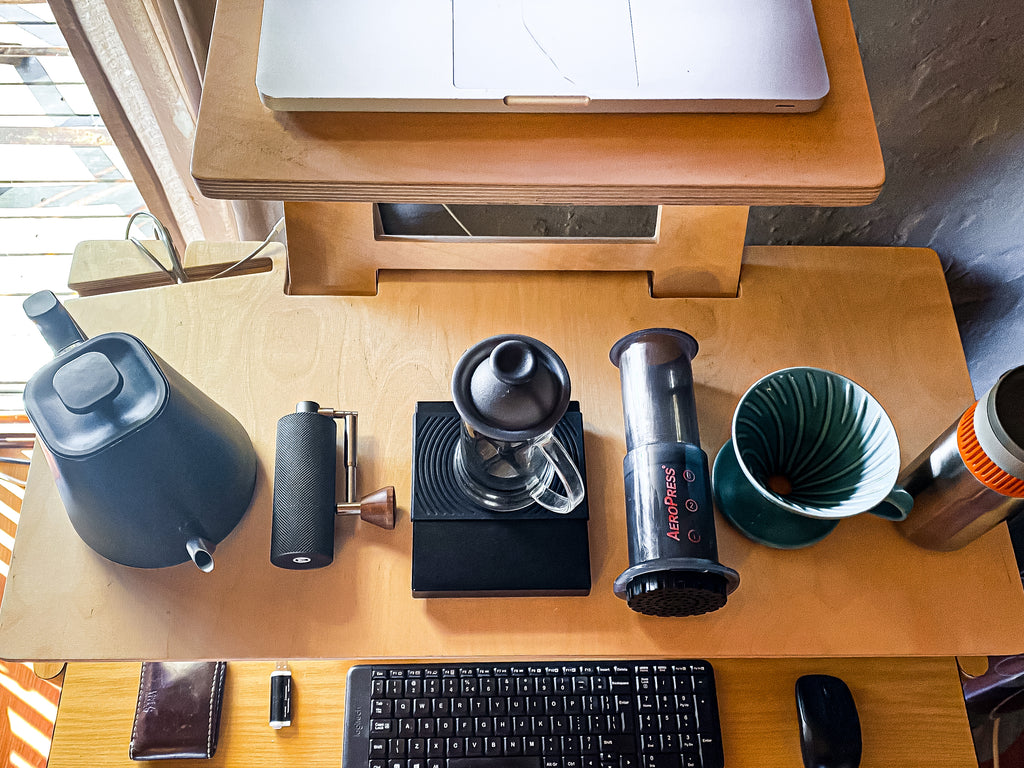
<p><img style="display: block; width: 100%; margin: 30px auto; float: none;" alt="Office coffee brew bar" src="//cdn.shopify.com/s/files/1/0280/5548/files/IMG_2237_1024x1024.JPG?v=1591361319"></p>
<p>If you are looking for variety in your office coffee, or maybe you're looking for the best bang for your buck, then a brew bar is definitely the set up for you! A <a href="https://capecoffeebeans.co.za/collections/kettles" target="_blank" title="See our kettles" rel="noopener noreferrer">kettle</a>, a <a href="https://capecoffeebeans.co.za/collections/coffee-grinders" target="_blank" title="Buy a grinder" rel="noopener noreferrer">grinder</a>, some <a href="https://capecoffeebeans.co.za/collections/coffee-scales" target="_blank" title="Check out our scales" rel="noopener noreferrer">scales</a> and a couple of <a href="https://capecoffeebeans.co.za/collections/coffee-makers" target="_blank" title="See our coffee makers" rel="noopener noreferrer">coffee makers</a>, and you will have almost all the bases covered!</p>
<p>Once you've got the basics covered, choose your brewer (or your selection of brewers if you want to keep the variety up) and get ready to enjoy amazing coffee at the office.</p>
<h3><a rel="noopener noreferrer" title="Get your AeroPress here" target="_blank" href="https://capecoffeebeans.co.za/products/aeropress-coffee-maker">AeroPress</a></h3>
<p>Iconic, virtually indestructible, easy to clean and easy to use, no other brewer on the planet has achieved the same cult following that the <a rel="noopener noreferrer" title="Learn more about the AeroPress here" target="_blank" href="https://capecoffeebeans.co.za/products/aeropress-coffee-maker">AeroPress</a> has. With countless accolades and tournaments dedicated to this brewer all around the globe, no brew bar would be complete without an AeroPress.</p>
<p>Able to brew from 1 to 4 cups at a time (this is based on 125ml cups, and made from concentrate), you can use the AeroPress to brew for yourself or for a few colleagues.</p>
<p><a title="Learn more about the iconic AeroPress coffee maker" href="https://capecoffeebeans.co.za/products/aeropress-coffee-maker"><em>Check out the AeroPress here.</em></a></p>
<h3><a rel="noopener noreferrer" title="See all our pour-over equipment here" target="_blank" href="https://capecoffeebeans.co.za/collections/pour-over">Pour-over</a></h3>
<p>Whether it is a <a rel="noopener noreferrer" title="Learn more about the chemex" target="_blank" href="https://capecoffeebeans.co.za/products/chemex-pour-over-coffee-maker">Chemex</a>, a <a rel="noopener noreferrer" title="Learn more about the Hario V60" target="_blank" href="https://capecoffeebeans.co.za/products/hario-v60-pour-over-coffee-dripper">Hario V60</a> or one of the more obscure pour-over brewers that keep popping up on the market, the pour-over is the darling brewer of third-wave coffee culture. Known for its simplicity and ability to highlight delicate and nuanced flavours in a coffee, a <a rel="noopener noreferrer" title="Check out our full collection of pour over coffee makers and accesories" target="_blank" href="https://capecoffeebeans.co.za/collections/pour-over">pour-over brewer</a> will no-doubt keep the specialty coffee connoisseurs in the office satisfied! This is a great option for brewing a single cup, or coffee for 2 to 3 people.</p>
<p><a rel="noopener noreferrer" title="See the full range of pour-over coffee makers and accesories here" target="_blank" href="https://capecoffeebeans.co.za/collections/pour-over"><em>Check out our range of pour-over coffee makers and accessories here.</em></a></p>
<h3><a rel="noopener noreferrer" title="Check out our full range of french presses, cafetieres and coffee plungers here" target="_blank" href="https://capecoffeebeans.co.za/collections/french-press-coffee-plungers">French Press</a></h3>
<p>Not everyone wants to go down the rabbit hole of the science of coffee brewing and embark on the endless pursuit of the perfect cup of coffee, and that is okay. That is why you need a classic brewer, such as the <a rel="noopener noreferrer" title="Learn more about our french press range" target="_blank" href="https://capecoffeebeans.co.za/collections/french-press-coffee-plungers">French press</a>, that everyone loves and knows how to use. Quite simply, if you put good coffee beans in, you get a good cup of coffee out (with a little attention to detail of course)!</p>
<p>With a range of sizes offering everything from a single serving up to 3-4 servings at at a time, the the French press gives you lots of options.</p>
<p><a rel="noopener noreferrer" title="Learn more about the french press coffee maker here" target="_blank" href="https://capecoffeebeans.co.za/collections/french-press-coffee-plungers"><em>Check out the full French press range here.</em></a></p>
<h3><a rel="noopener noreferrer" title="View all our coffee brewers here" target="_blank" href="https://capecoffeebeans.co.za/collections/coffee-makers">The Wild Card</a></h3>
<p>With so many unique and interesting brewers on the market these days, you can't possibly have a brew bar that showcases them all, but there is definitely room for one wild card. Why not check out something unique like a <a rel="noopener noreferrer" title="Check out our range of siphon and vacuum coffee makers and accesories here" target="_blank" href="https://capecoffeebeans.co.za/collections/siphon-vacuum-coffee-makers">siphon</a>, a <a rel="noopener noreferrer" title="Learn more about the Abid Clever Dripper coffee maker here" target="_blank" href="https://capecoffeebeans.co.za/products/abid-clever-coffee-dripper">Clever Dripper</a> or a <a rel="noopener noreferrer" title="Check out the Delter Press and learn more about why this coffee maker brews such unique coffee" target="_blank" href="https://capecoffeebeans.co.za/products/delter-coffee-press">Delter Press.</a></p>
<p><em><a rel="noopener noreferrer" title="Check out all our coffee makers here." target="_blank" href="https://capecoffeebeans.co.za/collections/coffee-makers">Check out all our coffee makers here.</a></em></p>
<h3>What You Will Need</h3>
<p>No matter which brewer(s) you end up selecting, you will need some extra accessories to complete your brew bar setup.</p>
<ul>
<li>
<a rel="noopener noreferrer" title="View all our coffee makers here" target="_blank" href="https://capecoffeebeans.co.za/collections/coffee-makers">A selection of coffee makers</a> (as described above)</li>
<li><a rel="noopener noreferrer" title="See our full range of grinders here" target="_blank" href="https://capecoffeebeans.co.za/collections/coffee-grinders">A grinder</a></li>
<li><a rel="noopener noreferrer" title="See all our coffee scales here" target="_blank" href="https://capecoffeebeans.co.za/collections/coffee-scales">A scale</a></li>
<li><a rel="noopener noreferrer" title="Check out our range of kettles" target="_blank" href="https://capecoffeebeans.co.za/collections/kettles">A kettle</a></li>
<li><a rel="noopener noreferrer" title="Buy coffee filters here" target="_blank" href="https://capecoffeebeans.co.za/collections/accessories/Filters">Filters</a></li>
</ul>
<h2>Espresso Bar</h2>
<p><img style="display: block; width: 100%; margin: 30px auto; float: none;" alt="Office espresso machine" src="//cdn.shopify.com/s/files/1/0280/5548/files/IMG_2246_1024x1024.JPG?v=1591365029"></p>
<p>If you want no half measures in your office and you really want the best money can buy, then an espresso machine is the solution to your lack-of-caffeine problem. While it does require a bit of a learning curve (lucky for you, we have a <a rel="noopener noreferrer" title="A beginners guide to pulling your first shot of espresso" target="_blank" href="https://capecoffeebeans.co.za/blogs/how-to-make-great-coffee/beginners-guide-espresso">blog post on this</a>), an espresso machine will deliver much better coffee than any bean to cup machine will, if you know how to use it. From creamy cappuccinos and silky flat whites to espresso and americanos, an espresso machine will give you everything that your local cafe does.</p>
<h3></h3>
<p>From the tiny footprint of the <a rel="noopener noreferrer" title="Check out the Rancillio Silvia Espresso Machine" target="_blank" href="https://capecoffeebeans.co.za/products/rancilio-silvia-espresso-machine">Rancilio Silvia</a> to the ultra-premium <a rel="noopener noreferrer" title="Learn more about the single group Slayer espresso machine" target="_blank" href="https://capecoffeebeans.co.za/products/slayer-espresso-single-group-espresso-machine">Slayer</a>, and the likes of <a rel="noopener noreferrer" title="Check out the La Marzocco Linea Mini - a perfect espresso machine for the office" target="_blank" href="https://capecoffeebeans.co.za/products/la-marzocco-linea-mini">La Marzocco</a> and <a rel="noopener noreferrer" title="Rocket Espresso Milan has a full range of espresso machines perfect for the office" target="_blank" href="https://capecoffeebeans.co.za/collections/rocket-espresso-milano">Rocket</a> filling the gaps in between, there really is an espresso machine for every office and every budget.</p>
<p><a rel="noopener noreferrer" title="Our full range of espresso equipment for the office can be found here" target="_blank" href="https://capecoffeebeans.co.za/collections/domestic-espresso-equipment"><em>Check out our full range of espresso machines and grinders for the office here.</em></a></p>
<p>Espresso can be a complex topic and involves a bit of a learning curve. We would be happy to arrange some training with you and your staff if you do go down this route. Feel free to <a rel="noopener noreferrer" title="Get in touch with us here" target="_blank" href="https://capecoffeebeans.co.za/pages/contact-us">get in touch</a>; we are happy to help.</p>
<h3>What You Will Need</h3>
<p>As with all brew methods, you will need a few bits and pieces to complete your espresso set up</p>
<ul>
<li><a rel="noopener noreferrer" title="Check out all of our espresso machines" target="_blank" href="https://capecoffeebeans.co.za/collections/espresso-machines">Espresso machine</a></li>
<li><a rel="noopener noreferrer" title="Check out all our espresso grinders here" target="_blank" href="https://capecoffeebeans.co.za/collections/espresso-grinders">Espresso grinder</a></li>
<li><a rel="noopener noreferrer" title="Check out coffee tamping and distribution tools here" target="_blank" href="https://capecoffeebeans.co.za/search?type=product&amp;q=tamp">Tamper</a></li>
<li><a rel="noopener noreferrer" title="View all our scales here" target="_blank" href="https://capecoffeebeans.co.za/collections/coffee-scales">Scale</a></li>
<li><a href="https://capecoffeebeans.co.za/collections/cleaning-supplies" target="_blank" title="Shop all cleaning supplies here" rel="noopener noreferrer">Cleaning materials</a></li>
<li><a href="https://capecoffeebeans.co.za/products/brew-tool-black-plastic-knockbox" target="_blank" title="Check out the Brew Tool knock box here" rel="noopener noreferrer">Knock box</a></li>
<li><a href="https://capecoffeebeans.co.za/products/gater-tamper-mat-with-slot" target="_blank" title="Check out this Brew Tool tamping mat" rel="noopener noreferrer">Tamping mat</a></li>
<li><a href="https://capecoffeebeans.co.za/products/brew-tool-milk-frothing-jug" target="_blank" title="Learn more about Brew Tools milk frothing jug" rel="noopener noreferrer">Milk frothing pitchers</a></li>
</ul>
<h2>Batch Brew</h2>
<p><img style="display: block; width: 100%; margin: 30px auto; float: none;" alt="Batch brew for the office" src="//cdn.shopify.com/s/files/1/0280/5548/files/Pouring-batch-brew-into-the-glass_1024x1024.jpg?v=1591366151"></p>
<p>If you are the type of person that is driven by economies of scale, and you want a coffee solution that will deliver amazing coffee, to lots of people with minimal effort, then batch brew is definitely for you! Easy to use and designed to brew up to larger volumes of coffee at once, the <a rel="noopener noreferrer" title="See the range of Technivorm MoccaMaster coffee makers here" target="_blank" href="https://capecoffeebeans.co.za/collections/technivorm">Technivorm Moccamaster </a>is what keeps the staff at CCB caffeinated all day (and we go through a lot of coffee).</p>
<p>With batch brew, you really can experience the best of both worlds: you get delicious tasting coffee, but you still have options and variety on the table. You can have a selection of beans and brew a different coffee each day of the week.</p>
<p><a rel="noopener noreferrer" title="Learn more about all our batch brewers here" target="_blank" href="https://capecoffeebeans.co.za/collections/batch-brew"><em>See our full collection of Batch brewers here.</em></a></p>
<h3>What You Will Need</h3>
<p>Once again, a few accessories to help you measure your variables will make your batch brew top-notch.</p>
<ul>
<li><a rel="noopener noreferrer" title="Check out batch brews equipment here" target="_blank" href="https://capecoffeebeans.co.za/collections/batch-brew">Batch Brewer</a></li>
<li><a rel="noopener noreferrer" title="Learn more about our range of coffee grinders" target="_blank" href="https://capecoffeebeans.co.za/collections/coffee-grinders">Grinder</a></li>
<li><a rel="noopener noreferrer" title="Check out our full range of scales here" target="_blank" href="https://capecoffeebeans.co.za/collections/coffee-scales">Scale</a></li>
<li><a rel="noopener noreferrer" title="Buy your filters here" target="_blank" href="https://capecoffeebeans.co.za/collections/accessories/Filters">Filters</a></li>
</ul>
<h2></h2>
<meta charset="utf-8">
<h2>The Beans</h2>
<p>The last thing and probably the most important thing to remember is the <a href="https://capecoffeebeans.co.za/collections/all-coffees" target="_blank" title="See our coffee beans" rel="noopener noreferrer">coffee beans</a> themselves. The one area where we see so many businesses with the best intention to provide great coffee to their employees go astray is with the coffee beans. Whatever method you choose to brew with, your coffee will only ever be as good as your coffee beans. If you decide you're only going to do one thing to contribute to your employees caffeination endeavours, make that one thing buying great coffee.</p>
<p>We work with <a href="https://capecoffeebeans.co.za/pages/coffee-roasters-brands" target="_blank" title="See our coffee roasters" rel="noopener noreferrer">some of Cape Town's best coffee roasting businesses</a>. If you're looking for great coffee beans, no matter your taste preference, look no further.</p>
<h2>Pass The Puck</h2>
<p>As a last resort, if you are looking for some other way to get your employees to stop nagging about the coffee situation, why not send them the <a href="https://capecoffeebeans.co.za/blogs/how-to-make-great-coffee/great-coffee-in-office-employee" target="_blank" title="See the blog post for employees" rel="noopener noreferrer">blog post we put together that will help them bring their own coffee into the office</a>?</p>
<p> </p>]]>
    </content>
  </entry>
  <entry>
    <id>https://capecoffeebeans.co.za/blogs/how-to-make-great-coffee/great-coffee-in-office-employee</id>
    <published>2020-06-18T10:26:00+02:00</published>
    <updated>2020-06-18T10:58:24+02:00</updated>
    <link rel="alternate" type="text/html" href="https://capecoffeebeans.co.za/blogs/how-to-make-great-coffee/great-coffee-in-office-employee"/>
    <title>How To Make Great Coffee At The Office - The Employee</title>
    <author>
      <name>Matthew Von Zweigbergk</name>
    </author>
    <content type="html">
      <![CDATA[<img style="display: block; width: 100%; margin: 30px auto; margin-bottom: 30px; float: none;" alt="Portable coffee makers for the office" src="//cdn.shopify.com/s/files/1/0280/5548/files/IMG_2261_1024x1024.jpg?v=1591608102">
<p>So, you have begged and pleaded with the powers that be in your workplace. You have mentioned how coffee can increase productivity and reported its health benefits. You even created a spreadsheet and a presentation to try to drive the points home. It seems that no matter what you do, you are stuck in your office with nothing more than instant coffee and a kettle.</p>
<p>We feel your pain, and we agree. Something has to change. We've taken it upon ourselves to put together a list of coffee brewers that are compact, robust, easy to use, easy to clean and easy to travel with. These 5 brewers are the perfect answer to your office coffee issues.</p>
<p> </p>
<h2><a rel="noopener noreferrer" title="Check out the AeroPress Go" target="_blank" href="https://capecoffeebeans.co.za/products/aeropress-go-coffee-maker">AeroPress Go</a></h2>
<p style="float: left;"><a rel="noopener noreferrer" title="Get your AeroPress Go here!" target="_blank" href="https://capecoffeebeans.co.za/products/aeropress-go-coffee-maker"><img style="float: left; margin-right: 20px;" src="//cdn.shopify.com/s/files/1/0280/5548/files/IMG_2266_medium.jpg?v=1591608245" alt="AeroPress Go portable coffee maker for the office"></a></p>
<p>Any list of portable coffee brewers would be wholly incomplete without an <a rel="noopener noreferrer" title="Learn more about the Aerobie AeroPress" target="_blank" href="https://capecoffeebeans.co.za/products/aeropress-go-coffee-maker">AeroPress</a> in the mix, and the AeroPress Go is the ultimate pack up and go travel brewer. It also happens to be one of the most versatile coffee brewers on the market and consistently delivers spectacular coffee.</p>
<p>If you fancy something a little closer to espresso-style coffee, why not pair your AeroPress with a <a rel="noopener noreferrer" title="Learn more about using the Prismo to get espressos out of your AeroPress" target="_blank" href="https://capecoffeebeans.co.za/products/fellow-prismo">Fellow Prismo</a>?</p>
<p style="clear: both;"> </p>
<h2><a rel="noopener noreferrer" title="Check out the NanoPresso here" target="_blank" href="https://capecoffeebeans.co.za/products/wacaco-nanopresso">Nanopresso</a></h2>
<p><a rel="noopener noreferrer" title="Buy the Wacaco NanoPresso here" target="_blank" href="https://capecoffeebeans.co.za/products/wacaco-nanopresso"><img style="float: left; margin-right: 20px;" alt="Nanopresso portable espresso coffee maker for the office" src="//cdn.shopify.com/s/files/1/0280/5548/files/IMG_2269_medium.jpg?v=1591609637"></a>It truly is quite incredible what <a rel="noopener noreferrer" title="Learn more about Wacaco, the company that makes the NanoPresso" target="_blank" href="https://capecoffeebeans.co.za/collections/wacaco">Wacaco</a> has done with the <a rel="noopener noreferrer" title="Buy your Wacaco Nanopresso here" target="_blank" href="https://capecoffeebeans.co.za/products/wacaco-nanopresso">Nanopresso</a>! When a pocket-sized brewer arrived on the market that claimed to be able to brew espresso-style coffee, everyone at CCB was dubious. Much to our surprise (and delight), this little brewer proved us wrong and is as close as you can get to espresso without an espresso machine!</p>
<p>If you're a coffee fanatic and a single espresso just won't cut it, look at adding on the <a rel="noopener noreferrer" title="Get your Barista kit for the Nanopresso here" target="_blank" href="https://capecoffeebeans.co.za/products/nanopresso-barista-kit">Barista Kit</a> to allow for double shots!</p>
<p style="clear: both;"> </p>
<h2><a rel="noopener noreferrer" title="Learn more about the Delter Press coffee maker" target="_blank" href="https://capecoffeebeans.co.za/products/delter-coffee-press">Delter Press</a></h2>
<p><a rel="noopener noreferrer" title="Buy your Delter Press coffee maker here" target="_blank" href="https://capecoffeebeans.co.za/products/delter-coffee-press"><img style="float: left; margin-right: 20px;" alt="Delter press portable coffee maker for the office" src="//cdn.shopify.com/s/files/1/0280/5548/files/IMG_2265_medium.jpg?v=1591610000"></a>Despite looking similar to an AeroPress, the <a rel="noopener noreferrer" title="Buy your Delter Press here" target="_blank" href="https://capecoffeebeans.co.za/products/delter-coffee-press">Delter Press</a> employs a fundamentally different style of brewing. If light and delicate pour-over-style coffee is your jam, then the Delter Press is definitely the office brewer for you! Conveniently designed so that you don't need all the accessories that a pour-over brewer requires, the Delter Press makes delicious coffee in a compact and convenient package, perfect for the office.</p>
<p>If you're looking for some coffee for your Delter Press, check out our <a rel="noopener noreferrer" title="Our collection of coffees for pour-over would be perfect for the Delter Press" target="_blank" href="https://capecoffeebeans.co.za/collections/pour-over-coffees">coffees for pour-over collection</a>.</p>
<p style="clear: both;"> </p>
<h2><a href="https://capecoffeebeans.co.za/collections/wacaco/products/wacaco-pipamoka-portable-coffee-maker" title="Check out the Pipamoka here">Pipamoka</a></h2>
<p><a href="https://capecoffeebeans.co.za/collections/wacaco/products/wacaco-pipamoka-portable-coffee-maker" title="Learn more about the Pipamoka here"><img style="float: left; margin-right: 20px;" alt="Pipamoka portable coffee maker for the office" src="//cdn.shopify.com/s/files/1/0280/5548/files/IMG_2267_medium.jpg?v=1591610237"></a>The second coffee maker in this list made by <a href="https://capecoffeebeans.co.za/collections/wacaco/products/wacaco-pipamoka-portable-coffee-maker" target="_blank" title="Learn more about the Pipamoka here" rel="noopener noreferrer">Wacaco</a>, the <a href="https://capecoffeebeans.co.za/collections/wacaco/products/wacaco-pipamoka-portable-coffee-maker" target="_blank" title="Learn more about the Pipamoka here" rel="noopener noreferrer">Pipamoka</a> is an incredibly versatile, all in one, vacuum coffee brewer. The design of this brewer allows you to prep all your coffee at home, chuck this brewer in your bag and when you get to the office, just add hot water and brew. Once you are done you can put it back together, put it back in the bag, and only worry about cleaning it when you get home.</p>
<p>Versatile enough to make short, intense espresso-style coffees and longer filter coffees, the Pipamoka really does do it all! </p>
<p style="clear: both;"> </p>
<h2><a rel="noopener noreferrer" title="Check out the Clever dripper here" target="_blank" href="https://capecoffeebeans.co.za/products/abid-clever-coffee-dripper">Clever Dripper</a></h2>
<p><a rel="noopener noreferrer" title="Buy your Clever dripper here" target="_blank" href="https://capecoffeebeans.co.za/products/abid-clever-coffee-dripper"><img style="float: left; margin-right: 20px;" alt="Abid's Clever dripper for brewing coffee in the office" src="//cdn.shopify.com/s/files/1/0280/5548/files/IMG_2268_medium.jpg?v=1591618538"></a>It never ceases to amaze us how little effort is needed to brew with the <a rel="noopener noreferrer" title="Learn more about the Clever dripper here" target="_blank" href="https://capecoffeebeans.co.za/products/abid-clever-coffee-dripper">Clever dripper</a>. No pieces, no plunging, no pressing - just add coffee and water, wait 3-4 min and enjoy! If you want a no-fuss, no-mess coffee brewer that delivers incredibly delicious coffee, look no further than the Clever dripper.</p>
<p>Don't forget to stock up on <a rel="noopener noreferrer" title="Buy paper filters here" target="_blank" href="https://capecoffeebeans.co.za/collections/accessories/Filters">paper filters</a>.</p>
<p style="clear: both;"> </p>
<h2><a rel="noopener noreferrer" title="See all our manual coffee grinders here" target="_blank" href="https://capecoffeebeans.co.za/collections/coffee-grinders/manual-grinder">Grinders</a></h2>
<p><a rel="noopener noreferrer" title="See all our manual coffee grinders here" target="_blank" href="https://capecoffeebeans.co.za/collections/coffee-grinders/manual-grinder"><img style="float: left; margin-right: 20px;" alt="Manual coffee grinder" src="//cdn.shopify.com/s/files/1/0280/5548/files/IMG_2242_medium.jpg?v=1591707201"></a>A coffee grinder is an essential piece of kit for any avid coffee lover. There truly is no substitute for freshly ground coffee. If you want to take your office brews to the next level, a good grinder will make all the difference.</p>
<p>Hand grinders are the perfect answer to getting freshly ground coffee at the office! <a title="See our full range of hand grinders here" target="_blank" href="https://capecoffeebeans.co.za/collections/coffee-grinders/manual-grinder" rel="noopener noreferrer">Check out our range of manual coffee grinders here.</a></p>
<p style="clear: both;"> </p>
<h2><a rel="noopener noreferrer" title="Learn more about coffee making accesories here" target="_blank" href="https://capecoffeebeans.co.za/collections/accessories">Accessories</a></h2>
<p rel="noopener noreferrer" title="Learn more about coffee making accesories here" target="_blank" href="https://capecoffeebeans.co.za/collections/accessories"><img style="float: left; margin-right: 20px;" alt="Coffee making accessories" src="//cdn.shopify.com/s/files/1/0280/5548/files/IMG_2247_medium.jpg?v=1591707249"></p>
<meta charset="utf-8">
<p rel="noopener noreferrer" title="Learn more about coffee making accesories here" target="_blank" href="https://capecoffeebeans.co.za/collections/accessories">A <a href="https://capecoffeebeans.co.za/collections/coffee-scales" target="_blank" title="See our scale collection" rel="noopener noreferrer">scale</a> is another must-have piece of equipment for the amateur barista wanting to make great coffee. Measuring your brews allows you to make sure your cup of coffee is consistent each and every time.</p>
<p rel="noopener noreferrer" title="Learn more about coffee making accesories here" target="_blank" href="https://capecoffeebeans.co.za/collections/accessories">From scales to kettles, timers and filters, there are a number accessories that can really help take your coffee brewing to the next level, and a lot of them are small enough to carry around in your bag or keep in the office. <a href="https://capecoffeebeans.co.za/collections/accessories" target="_blank" title="Check out all our brewing accessories here" rel="noopener noreferrer">Check out these extras that can help make sure your coffee is amazing, every time.</a></p>
<p style="clear: both;"> </p>
<p>If all else fails, why not try to persuade your boss to help out by sending him or her our <a rel="noopener noreferrer" title="Read our blog post on how to give your employees great coffee" target="_blank" href="https://capecoffeebeans.co.za/blogs/how-to-make-great-coffee/how-to-get-great-coffee-in-the-office-the-employer">blog post for employers.</a></p>
<p> </p>]]>
    </content>
  </entry>
  <entry>
    <id>https://capecoffeebeans.co.za/blogs/how-to-make-great-coffee/nanopresso-espresso-ideas</id>
    <published>2020-03-17T09:51:00+02:00</published>
    <updated>2020-03-17T09:55:11+02:00</updated>
    <link rel="alternate" type="text/html" href="https://capecoffeebeans.co.za/blogs/how-to-make-great-coffee/nanopresso-espresso-ideas"/>
    <title>Wacaco Nanopresso - Make More Than Espresso</title>
    <author>
      <name>Matthew Von Zweigbergk</name>
    </author>
    <content type="html">
      <![CDATA[<a rel="noopener noreferrer" title="Check out all our Wacaco products" target="_blank" href="https://capecoffeebeans.co.za/collections/wacaco">﻿</a><a rel="noopener noreferrer" title="Check out all our Wacaco products" target="_blank" href="https://capecoffeebeans.co.za/collections/wacaco"><img style="display: block; float: none; margin: 0px auto 0px auto 10px auto 0px auto;" src="//cdn.shopify.com/s/files/1/0280/5548/files/Wacaco-Nanopresso-Brew-Guide_12397a60-940d-4f88-bea8-fad5868351a5_1024x1024.jpg?v=1584349938" alt="Wacaco Nanopresso Brew Guide"></a>
<p>For a long time, espresso and all the joys that it brings, has been just out of reach for the average home-brewer. That is until <a rel="noopener noreferrer" title="Check out all our Wacaco products" target="_blank" href="https://capecoffeebeans.co.za/collections/wacaco">Wacaco</a> came along with the <a rel="noopener noreferrer" title="Learn more about the Nanopresso" target="_blank" href="https://capecoffeebeans.co.za/collections/wacaco/products/wacaco-nanopresso">Nanopresso</a> and changed all that. </p>
<p>We've put together a simple guide on how to use the Wacaco Nanapresso, but there are hundreds of brew guides for the Nanopresso out there, so we thought it would be a nice idea to explore some of the espresso-based drinks that become an option when you have a Nanopresso.</p>
<h3><strong>What you need</strong></h3>
<ul>
<li><a title="Learn more about the Wacaco Nanopresso" href="https://capecoffeebeans.co.za/collections/wacaco/products/wacaco-nanopresso">Wacaco Nanopresso</a></li>
<li><a rel="noopener noreferrer" title="See our full range of coffee grinders" target="_blank" href="https://capecoffeebeans.co.za/collections/coffee-grinders">Grinder</a></li>
<li>8g <a rel="noopener noreferrer" title="Why not check out our espresso collection" target="_blank" href="https://capecoffeebeans.co.za/collections/espresso-coffees">good quality fresh coffee</a> (16g for the Barista Kit)</li>
<li><a rel="noopener noreferrer" title="Check out our collection of kettles" target="_blank" href="https://capecoffeebeans.co.za/collections/kettles">Boiling water</a></li>
</ul>
<h3><strong>Optional Extras</strong></h3>
<ul>
<li><a rel="noopener noreferrer" title="Learn more about the Barista Kit for the Wacaco Nanopresso" target="_blank" href="https://capecoffeebeans.co.za/collections/wacaco/products/nanopresso-barista-kit">Wacaco Barista Kit</a></li>
<li><a title="Check out our collection of scales" href="https://capecoffeebeans.co.za/collections/coffee-scales">Scale</a></li>
</ul>
<h3>Brew Guide</h3>
<p><span style="text-decoration: underline;"><strong>Step 1: Preheat</strong></span></p>
<p style="float: left;"><img style="float: left; margin-right: 15px; margin-bottom: 15px;" src="//cdn.shopify.com/s/files/1/0280/5548/files/Wacaco-Nanopresso_medium.jpg?v=1584081539" alt="Wacaco Nanopresso">When brewing with the Nanopresso, it is extremely important that you preheat the brewer. If you don't preheat your Nanopresso, the brewer will absorb most of the heat from the water, and by the time the water gets to the coffee, it will be too cold for a decent extraction. To preheat the Nanopresso, just fill the chamber with water, put it all together and pump it through the brewer once.</p>
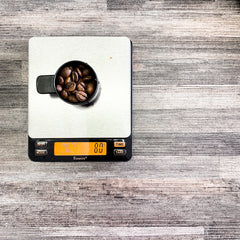
<p><span style="text-decoration: underline;"><strong>Step 2: Grind</strong></span></p>
<p style="float: left;"><img style="float: left; margin-right: 15px; margin-bottom: 15px;" src="//cdn.shopify.com/s/files/1/0280/5548/files/Nanopresso-dosing_medium.jpg?v=1584081480" alt="Weigh your coffee">Grind 8g of fresh, good quality coffee (Grind 16g if you are using the Barista Kit). You want to grind this relatively fine, somewhere between how you would grind for Aeropress and how you would grind for espresso. If your grinder doesn't go fine enough for espresso, grinding it on the finest setting should be just about right, if it does go fine enough for espresso, you want to move it a few clicks coarser.</p>
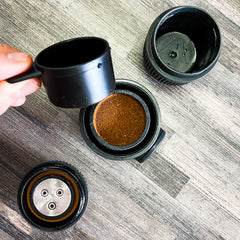
<p><span style="text-decoration: underline;"><strong>Step 3: Dose and tamp</strong></span></p>
<p style="float: left;"><img style="float: left; margin-right: 15px; margin-bottom: 15px;" src="//cdn.shopify.com/s/files/1/0280/5548/files/Nanopresso-tamp_medium.jpg?v=1584081526" alt="Nanopresso tamping scoop">Insert your coffee into the basket and compress the ground coffee by tamping it. If you have purchased the Barista Kit, you will have a handy little tamper for this. If you just have the regular Nanopresso, the scoop is designed to fit neatly into the basket and works perfectly as a tamper.</p>
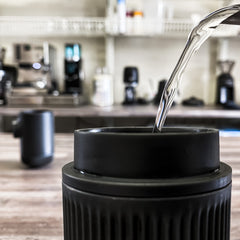
<p><span style="text-decoration: underline;"><strong>Step 4: Add water</strong></span></p>
<p style="float: left;"><img style="float: left; margin-right: 15px; margin-bottom: 15px;" src="//cdn.shopify.com/s/files/1/0280/5548/files/Nanopresso-pour_medium.jpg?v=1584081508" alt="Pouring water into Wacaco Nanopresso">Fill the water tank with boiling water. Since heat will be lost as you pump the water through the Nanopresso, you don't want to use water off the boil. Instead, you want to use water that is at a rolling boil. By the time the water reaches the coffee, it should be at an optimum temperature for brewing espresso.</p>
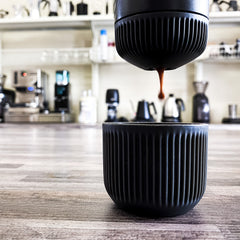
<p><span style="text-decoration: underline;"><strong>Step 5: Pump</strong></span></p>
<p style="float: left;">﻿<img style="float: left; margin-right: 15px; margin-bottom: 15px;" src="//cdn.shopify.com/s/files/1/0280/5548/files/Nanopresso-extraction_medium.JPG?v=1584081496" alt="Extracting coffee with the Wacaco Nanopresso">Assemble the Nanopresso and start pressing the pump slowly (about 1 pump per second) until the liquid starts to pour from the spout. When pulling your espresso shot, you don't want to pull all the water through the coffee. For the regular Nanopresso, you want to make about 15g of espresso and with the Barista Kit, about 30g of espresso.</p>

<p><span style="text-decoration: underline;"><strong>Step 6: Enjoy</strong></span></p>
<p>And there you have it.  A quick, easy and well-extracted espresso shot.</p>
<p><em>Check out Wacacos video brew guide below.</em></p>
<p>Now, let's talk about all the things you can do now that you have espresso at home!</p>
<h3>Interesting Espresso Ideas</h3>
<p>While espresso on its own is a delicious drink to savour, the experience can be quite a short one. If you want to sit and savour a longer drink, here are some of our favourite espresso drink ideas.</p>
<h4>The Usual Suspects</h4>
<p>Before we get into some of the more out-there ideas, let's point out the usual suspects and get them out of the way. The Nanopresso is a fantastic option for making all the espresso-based drinks you might be used to. Americanos, cappuccinos, lattes and flat whites can all be made from the comfort of your own home with a Nanopresso. If you want to make milk-based drinks, why not check out our <a rel="noopener noreferrer" title="Check out the Bialetti milk frother." target="_blank" href="https://capecoffeebeans.co.za/products/bialetti-milk-frother-glass">Bialetti milk frother</a>.</p>
<h4><strong>Espresso Tonic</strong></h4>
<p style="float: left;"><img style="float: left; margin-right: 15px; margin-bottom: 15px;" src="//cdn.shopify.com/s/files/1/0280/5548/files/Espresso-Tonic_medium.jpg?v=1584341287" alt="Espresso Tonic Iced Coffee Cocktail">The espresso tonic truly is a drink that is greater than the sum of its parts. It's one of my all-time favourite drinks for a hot summer's day, plus, it's incredibly simple to make! </p>

<p>Ingredients:</p>
<ul>
<li>Double shot of espresso</li>
<li>Tonic water</li>
<li>Lemon zest</li>
<li>Ice</li>
</ul>
<p>How to:</p>
<ol>
<li>Add ice and tonic water to a glass</li>
<li>Pour double espresso over the iced tonic water</li>
<li>Squeeze the oils from the lemon zest into the glass and rub the rind on the rim of the glass</li>
<li>Garnish with a twist of lemon zest</li>
<li>Enjoy!</li>
</ol>
<h4><strong>Espresso Old Fashioned</strong></h4>
<p style="float: left;"><img style="float: left; margin-right: 15px; margin-bottom: 15px;" src="//cdn.shopify.com/s/files/1/0280/5548/files/Espresso-Old-Fashioned_medium.jpg?v=1584341450" alt="Espresso Old Fashioned Iced Coffee Cocktail">Coffee cocktails have been real crowd pleasers for as long as coffee and cocktails have existed! This caffeinated twist on a classic cocktail is no exception!</p>

<p>Ingredients:</p>
<ul>
<li>Double shot of espresso</li>
<li>Double shot (50ml) of Irish Whiskey</li>
<li>2 x teaspoons dark demerara sugar</li>
<li>Dash of Angostura bitters</li>
<li>Ice</li>
<li>Orange peel</li>
</ul>
<p>How to:</p>
<ol>
<li>In a cocktail shaker, add your hot espresso, sugar and 5 shakes of Angostura bitters. Stir vigorously to dissolve the sugar. Adding the sugar to the hot espresso, before you add ice, will help it dissolve easier.</li>
<li>Add ice and whisky</li>
<li>Stir until the shaker has frosted and the volume of the liquid has doubled from melted ice</li>
<li>Strain over ice</li>
<li>Squeeze the oils from the zest of an orange into a lighter flame over the surface of the drink (optional)</li>
<li>Garnish with a twist of orange peel.</li>
<li>Enjoy!</li>
</ol>
<h4><strong>Affogato</strong></h4>
<p style="float: left;"><img style="margin-right: 15px; margin-bottom: 15px; float: left;" src="//cdn.shopify.com/s/files/1/0280/5548/files/Nanopresso-Affogato_medium.jpg?v=1584362334" alt="Nanopresso Affogato">Coffee and ice cream - what could possibly go wrong with this grown-up twist on a childhood favourite. While we will concede that it technically isn't a drink, It truly is too delicious to ignore.</p>
<p>Ingredients:</p>
<ul>
<li>A scoop of your favourite ice cream</li>
<li>A double espresso of your favourite coffee</li>
</ul>
<p>How to:</p>
<ol>
<li>Put the ice cream in a bowl</li>
<li>Pour the espresso over the ice cream</li>
<li>Garnish with toasted nuts of your choosing</li>
<li>Enjoy!</li>
</ol>
<h3>Any other ideas?</h3>
<p>And there you have it! There's actually quite a lot that you can do with a Nanopresso. Have you found any other drink ideas that you enjoy? Feel free to share them in the comments section below!</p>]]>
    </content>
  </entry>
  <entry>
    <id>https://capecoffeebeans.co.za/blogs/how-to-make-great-coffee/beginners-guide-espresso</id>
    <published>2020-03-04T09:31:00+02:00</published>
    <updated>2023-11-22T13:21:13+02:00</updated>
    <link rel="alternate" type="text/html" href="https://capecoffeebeans.co.za/blogs/how-to-make-great-coffee/beginners-guide-espresso"/>
    <title>A Beginner’s Guide To Pulling Your First Espresso Shot</title>
    <author>
      <name>Matthew Von Zweigbergk</name>
    </author>
    <content type="html">
      <![CDATA[<img alt="A beginner's guide to espresso - cover photo" src="//cdn.shopify.com/s/files/1/0280/5548/files/A-beginner-guide-to-espresso-banner-no-text.jpg?v=1583306737" style="margin: 30px auto 40px auto;">
<p><strong><em>Espresso: a delightfully rich and intense coffee nectar that is a result of forcing hot water through finely ground coffee with about 9 bars of pressure.</em></strong></p>
<p>So, you have bought your first Espresso machine, and you need some help getting those shots perfect. When done right, espresso can be rich, sweet and full of complexity. When done wrong it can bitter, dry and acrid.  Well, you have come to the right place. This blog post is here to take you through the basics of espresso and how to get the best tasting shot from your new setup!</p>
<h3>What you need</h3>
<p>Let’s start with the basics. What do you need to make espresso at home? The essentials for making espresso are:</p>
<ul>
<li><a title="Check out our range of espresso machines" href="https://capecoffeebeans.co.za/collections/espresso-machines" target="_blank">An espresso machine</a></li>
<li><a title="Check out our range of espresso grinders" href="https://capecoffeebeans.co.za/collections/espresso-grinders" target="_blank">A grinder that can grind fine enough for espresso</a></li>
<li><a title="Check out our full range of espresso accessories" href="https://capecoffeebeans.co.za/search?type=product&amp;q=tamper" target="_blank">A tamper</a></li>
<li>
<a title="Check out our shot timer here" href="https://capecoffeebeans.co.za/products/digital-coffee-timer" target="_blank">A timer</a> (your phone will do)</li>
<li><a title="Our favourite coffees for espresso" href="https://capecoffeebeans.co.za/collections/espresso-coffees" target="_blank">Good quality, freshly ground coffee.</a></li>
</ul>
<p>If you want to get serious about espresso, here are some extras that will help you get the most out of your espresso:</p>
<ul>
<li><a title="Click here to see all our brew scales" href="https://capecoffeebeans.co.za/collections/coffee-scales" target="_blank">A scale</a></li>
<li><a title="Take a look at the Motta distribution tool" href="https://capecoffeebeans.co.za/products/motta-coffee-leveling-distribution-tool" target="_blank">A distribution tool</a></li>
<li><a title="You can search for them on our online store" href="https://capecoffeebeans.co.za/search?type=product&amp;q=Naked+portafilter" target="_blank">A naked or bottomless portafilter</a></li>
<li><a title="Brew Tool espresso measure shot glass" href="https://capecoffeebeans.co.za/products/brew-tool-pyrex-espresso-shot-glass-60ml" target="_blank">A measured shot glass</a></li>
</ul>
<h3>Before we begin</h3>
<p>As a quick foreword, it's important to mention that the most important thing about brewing espresso, like with brewing all coffee, is consistency. Small changes can make a huge differences in the resulting cup. When it comes to consistency, you can really go down the rabbit hole in terms of the level of detail you can go into, so we'll provide a few options throughout this post, from advice on how to eyeball your measurements, to weighing it out to the nearest 0.1g.</p>
<p>Furthermore, while this blog post should give you a solid grounding in how to make espresso and provide you with a great starting point, you should consider these as guidelines more than hard and fast rules. Coffee is wildly complex and I have no doubt that there will be times when coffee tastes its best outside of these parameters!</p>
<p>At CCB, we don't generally like to pour single espressos. You need to grind very fine to get a reasonable tasting shot and this can often lead to channeling and other issues. In addition, the changes between a single and double espresso are generally so large that maintaining any sort of consistency can be a bit of a nightmare. We'd recommend either pouring or drinking doubles or splitting a double shot for two singles.</p>
<p>So now that that is out of the way... Let’s make some coffee!</p>
<h3>The brew guide</h3>
<h4>Step 1: choose your coffee</h4>
<img style="margin-right: 10px; float: left;" src="//cdn.shopify.com/s/files/1/0280/5548/files/Coffee-beans_medium.jpg?v=1582883204" alt="Coffee beans">
<p>The most important factor in brewing any sort of coffee, is that you use <a title="Check out our new arrivals" href="https://capecoffeebeans.co.za/collections/espresso-coffees" target="_blank">good quality coffee</a>. No amount of skilled brewing can make a bad coffee taste good. It is also quite important that you choose the <em>right</em> coffee for your espresso. This might take a little bit of time as you learn how different coffees behave in different ways when brewed as an espresso, but here are a few guidelines to help you when starting out</p>
<p>If you have a <a title="Check out our roasters" href="https://capecoffeebeans.co.za/pages/coffee-roasters-brands" target="_blank">favourite roaster</a> and they have an <a title="Filter by roaster or just search espresso blend" href="https://capecoffeebeans.co.za/search?type=product&amp;q=espresso+blend" target="_blank">espresso blend</a>, this is a great place to start. These are generally quite easy to work with and naturally well balanced in espresso. Playing around with these coffees before moving onto <a title="Learn more about our single origins" href="https://capecoffeebeans.co.za/collections/single-origin-coffee-beans" target="_blank">single origins</a> would be the easiest way to find your feet.</p>
<p>When choosing a coffee, it is good to be aware that brewing for espresso will often highlight a lot of a coffee's acidity. If you are brewing an already acidic coffee, it can be far more challenging to get a well balanced cup, and you can find yourself fighting a losing battle against sour tasting shots. That's not to say that you can't get a delightful tasting Kenyan on espresso with vibrant fruity acidity that dances around your palate - it is just significantly more difficult to achieve. If you are just starting out, you will have an easier time working with a coffee that has medium to heavy body and a mild acidity. Often naturally processed coffee (particularly those grown at low altitudes) are a great option and if it has tasting notes of chocolates and/or nuts, this is a good sign. </p>
<p>These are the types of coffee that will behave quite well on espresso and most likely yield a delicious tasting shot, with little to no fuss. Once you have the basics mastered and you are ready to start experimenting, then it's a great time to start looking at the juicier and more acidic coffees.</p>
<h4>Step 2: dose &amp; grind</h4>
<div style="float: left;"><img src="//cdn.shopify.com/s/files/1/0280/5548/files/Dosing-and-grinding_medium.jpg?v=1582881109" alt="Grinding and dosing" style="float: left; margin: 4px 10px 0px 0px;"></div>
<p>I think it goes without saying that it is essential to use freshly ground coffee - <em>this is even more important when it comes to espresso!</em> A <a title="Learn more about our range of domestic and commercial espresso grinders" href="https://capecoffeebeans.co.za/collections/espresso-grinders" target="_blank">good quality grinder</a> is one of the best investments you can make in your home espresso set-up. There is an argument to be made that the grinder is the most important element of any brew set up, but that is a conversation for another day!</p>
<p>For a double espresso, 18g of ground coffee is a good start. If you have a smaller portafilter or a smaller basket, you might need to use less, but we'll talk about how to adjust for that later in the post. We recommend weighing out your ground coffee, but if you are not weighing your coffee, we do still recommend that you take steps towards consistency. A couple of easy options include using measured scoops of coffee, or filling the espresso basket and scraping the top off, ensuring you always have the basket filled to same level. Your coffee needs to be ground into a fine powder, for a visual reference, you want it to be about the consistency of castor sugar.</p>
<p>Finding your grind settings is going to take time and practice, and it’s going to change more often than you would like. It’s important to remember that your grind settings will be affected by things like the density and freshness of your coffee beans as well as environmental factors such as temperature and humidity.</p>
<h4>Step 3: tamp</h4>
<img style="margin-right: 10px; float: left;" src="//cdn.shopify.com/s/files/1/0280/5548/files/Coffee-tamper_medium.jpg?v=1582883361" alt="Coffee tamper">
<p>It might seem small and trivial, but making sure you tamp correctly can make the world of difference in the quality of your espresso. The goal of tamping is to compress all the grounds evenly within the portafilter. The result should be a flat and smooth bed of coffee.</p>
<p>Most people don’t realise this, but you begin to approach maximum density very quickly when tamping (if that sentence is a bit confusing, check out the Barista Hustle article, <a title="Barista hustle - How hard should you tamp" href="https://www.baristahustle.com/blog/how-hard-should-you-tamp/" target="“_blank”">How hard should you tamp</a>). Simply put, this means that you don’t need to tamp too hard and the extra effort becomes redundant very quickly.</p>
<p>The most important factor in tamping is maintaining a flat surface. If you tamp unevenly your entire extraction is going to be uneven, under-extracting one side and over-extracting the other, getting the worst of both worlds.</p>
<p>A good quality <a title="Search our online store for tampers" href="https://capecoffeebeans.co.za/search?type=product&amp;q=tamper" target="_blank">tamper</a> and a distribution tool (such as the <a title="Learn more about the Motta coffee levelling distribution tool" href="https://capecoffeebeans.co.za/products/motta-coffee-leveling-distribution-tool" target="_blank">Motta</a> or <a title="Check out the OCD coffee distribution tool by Sasa Sestic" href="https://capecoffeebeans.co.za/products/ocd-v3-ona-coffee-distributor" target="_blank">OCD</a>) will make marked improvements on the quality of your extraction. If you want to go the extra mile with your espresso set up, the <a title="Check out the PuqPress" href="https://capecoffeebeans.co.za/products/puqpress-q2-precision-coffee-tamper" target="_blank">Puqpress</a> will automate your tamping, ensuring it is perfect every time. Otherwise, just make sure to tamp firm and tamp flat and you’re already there.</p>
<h4>Step 4: pull the shot</h4>
<img style="margin-right: 10px; float: left;" src="//cdn.shopify.com/s/files/1/0280/5548/files/Espresso-pouring-2-spout-portafilter_medium.jpg?v=1582883522" alt="Espresso pouring two spout portafilter">
<p>The last step is to pull the shot. Insert the portafilter, make sure it is locked in place, place your cup below the spouts, start your <a title="Check out our espresso timer" href="https://capecoffeebeans.co.za/products/digital-coffee-timer" target="_blank">timer</a> and press the button (or pull the lever) to start pouring your shot</p>
<p>This is where all the measurements and variables come in to play. A 2:1 ratio of ground coffee to brewed espresso is a good starting point. This means that if you are using 18g of ground coffee, you want to get 36g of black golden nectar out. We recommend using a <a title="Check out our full range of brew scales" href="https://capecoffeebeans.co.za/collections/coffee-scales" target="_blank">brew scale</a> and weighing your espresso, however, if that is a step too far, you can use a <a title="Check out the Hario espresso measure shot glass" href="https://capecoffeebeans.co.za/products/hario-espresso-shot-glass" target="_blank">measured espresso glass</a> to get the same amount out each time. Otherwise, try and weigh the first few shots you brew and use those to get a rough idea of how much espresso 36g is - and (provided you use the same cup) you should be able to eyeball a similar amount each time.</p>
<p>If you are using a smaller basket and can't use 18g of espresso, you can still use the 2:1 coffee to espresso ratio (e.g. 15g ground coffee to 30g liquid espresso or 16g ground coffee to 32g liquid espresso etc).</p>
<p>The second variable is time. If you are working with a medium roast coffee, you want to shoot for between 25 and 30 seconds for a well extracted espresso shot - a darker roast might taste best running a little faster and a lighter roast a little slower. If you find your shots running fast, the first thing you want to try is grinding a little finer. If that doesn't work, you can also try dosing a little more coffee.</p>
<p><em>Keep reading below for some troubleshooting tips that should help decide when to grind finer, when to dose more and how to make your shots taste better.</em></p>
<h4>Step 5: enjoy</h4>
<p>And there you have it. You should have a rich, sweet and delectable espresso. This is hands down and without a doubt the most important step in this journey. All that's left is to chill out in your favourite spot, sip it slowly (or knock it back) and enjoy the fruits of your labor.</p>
<p>As you progress along your journey into coffee, your ability to taste and identify more intricate and complex flavours will develop. If you want to explore taste and flavour, James Hoffman's coffee vlog is a great place to learn. Why not start off by checking out this <a title="James Hoffman: Stop swirling your espresso" href="https://www.youtube.com/watch?v=iI09bbH22vQ" target="_blank">vlog about swirling your espresso</a> and why you shouldn't do it.</p>
<h3>Espresso troubleshooting</h3>
<p>Despite being a seemingly simple exercise, brewing espresso can be detailed and complex. Sometimes, things don't quite go according to plan. We've compiled a short list of common espresso problems and how to fix them.</p>
<p><strong>Sour taste</strong>: one of the most common issues brewing espresso, particularly with lighter roasted coffee, is ending up with a sour tasting shot. This is caused by under extraction. In order to fix this, you want to increase the time that your shot runs for (if needs be, don't be afraid of pushing it outside of of the guidelines outlined above). In order to extend the time your shot pours for you need to grind <em>finer</em>.</p>
<p><strong>Weak or thin espresso: </strong>this is generally due to using too little coffee or too much water in your espresso resulting in a weak cup. If you stick to the 1 part coffee (18g) to 2 part espresso (36g), you shouldn't have this problem. With that in mind, this is a great variable to play with - sometimes pulling a slightly longer shot really opens up the complexity in your espresso, a little like adding a drop of water to your whiskey.</p>
<p><strong>Bitter or astringent espresso:</strong> Bitterness is usually caused by over extraction and astringency usually comes from channeling (channeling is where the water makes a pathway through the coffee puck and only pours through this pathway, causing uneven extraction). Both of these problem can be fixed by grinding a little <em>coarser</em> and letting your shots run a little faster.</p>
<p><strong>Tried everything and coffee still runs too fast: </strong><strong></strong>If you've tried everything and the espresso is still running too fast, your coffee might be old and stale. Freshly roasted and freshly ground coffee is essential for good espresso.</p>
<p><strong>Espresso tastes flat: </strong>Flat tasting coffee is a result of the beans being stale. To avoid this, <em>make sure that you are grinding your coffee immediately before brewing</em> and buying freshly roasted beans.</p>
<p><strong>Barista Hustle Espresso Compass: </strong>If you want to explore this further, there are some great resources out there; a great place to start is <a title="Barista Hustle's blog provides a wealth of knowledge for the coffee curious" href="https://www.baristahustle.com/blog" target="_blank">Barista Hustle's</a> espresso compass. It provides a great visual reference for how making various changes has  an impact on the resulting cup. Check it out <a title="Barsita Hustle espresso compass" href="https://www.baristahustle.com/blog/the-espresso-compass/" target="_blank">here</a>.</p>
<h3><strong>Final thoughts</strong></h3>
<p>This is the beginning of an exciting journey of experimentation and flavour where you will get to explore all that espresso has to offer! You will have some delightful coffees, and you will most likely have some coffees that are as uncooperative as a 3 year old on caffeine.</p>
<p>Let us know about your explorations - what coffees you're loving and what coffees are a struggle; we'd love to hear about your espresso recipes. Are you pulling standard shots or are you trying something different? Do you have any questions? Leave us a comment below!</p>]]>
    </content>
  </entry>
  <entry>
    <id>https://capecoffeebeans.co.za/blogs/how-to-make-great-coffee/trinity-one-brewer-closer-look</id>
    <published>2018-11-22T11:59:00+02:00</published>
    <updated>2021-06-23T08:23:43+02:00</updated>
    <link rel="alternate" type="text/html" href="https://capecoffeebeans.co.za/blogs/how-to-make-great-coffee/trinity-one-brewer-closer-look"/>
    <title>The Trinity ONE Brewer - A Closer Look</title>
    <author>
      <name>Michaela Adendorff</name>
    </author>
    <content type="html">
      <![CDATA[<p>If you have a <a href="https://capecoffeebeans.co.za/products/trinity-one-brewer" title="See the Trinity ONE here">Trinity ONE Brewer</a> or even if you’re just considering buying one, this blog post includes some information to help you along the way. Here at CCBHQ we’ve spent a few months testing out the Trinity and identifying our preferred brewing variables. I’ve personally, come to love the press method because of the consistency that the weight provides to the action of pressing, but it has also been fun to experiment with the other methods the brewer offers. Below you’ll find our recommendations on how to get the best out of your Trinity brewer, in each of those methods.</p>
<p style="text-align: center;"><img alt="Trinity Brewer In Use" src="//cdn.shopify.com/s/files/1/0280/5548/files/DSC_5046_grande.jpg?v=1542879244" style="float: none; margin-top: 20px; margin-bottom: 20px;"></p>
<p>Of course everything in this blog post is open to discussion and I’d encourage you to join the conversation with your findings, questions or feedback in the comments section below. We’d love to hear what works best for you and to test out new ideas!</p>
<h2>About the Trinity ONE Brewer</h2>
<p>The <a href="https://capecoffeebeans.co.za/products/trinity-one-brewer" title="See the Trinity ONE here">Trinity ONE Brewer</a> was created by Australian inventor Mark Folker, who wanted to combine his love of coffee and his engineering background to produce the world's first multi-purpose, manual brewing appliance.</p>
<p>The Trinity ONE might be best known for the clever way it makes <a href="https://capecoffeebeans.co.za/products/aeropress-coffee-maker" title="See the Aeropress coffee maker">Aeropress</a>-style brews with its own built in weight (no pressing required), but it’s also designed to brew pour-overs, and immersion-style brews, making it a very cool 3-in-1 coffee maker.</p>
<h2>Why I personally love the Trinity ONE</h2>
<p>I love the convenience of having three brew methods in one coffee maker. You might say it’s actually four brew methods because you can also make cold brew. The makers of the Trinity themselves market it as three brew methods in one brewer: press, immersion and drip. In my mind I think of it as <a href="https://capecoffeebeans.co.za/products/aeropress-coffee-maker" title="See the Aeropress">Aeropress</a>, <a href="https://capecoffeebeans.co.za/collections/french-press-coffee-plungers" title="Expolore our French press collection">French press</a> and <a href="https://capecoffeebeans.co.za/collections/pour-over" title="Explore our pour-over collection">pour-over</a>.</p>
<p>I also love how consistent it is. If I use consistent brewing parameters, I get quite consistent results, and as you probably know, consistency is very important in coffee brewing!</p>
<p>Lastly, I love the Trinity’s looks. It is a beautiful piece of equipment to have in your kitchen at home or even on the counter in your café. </p>
<h2>Challenges you might face in using the Trinity ONE Brewer</h2>
<p>The Trinity Brewer definitely excels when you are very precise with your parameters, but on the other hand if you’re not precise with your parameters you may find it less forgiving than other manual coffee brewers. For example, I found that if I didn’t start the press at exactly 45s and was a little late, then the brew would run much longer than I intended, making a big difference to the extraction and flavour.</p>
<p>I also found that the grind size needed to be perfectly ‘dialled in’. If the grind size was too fine then the extraction would be completely off. This was particularly true with the press method, where too fine of a grind would slow down the press cylinder significantly.</p>
<p>Having said all that, with the correct variables, the results from the Trinity ONE Brewer are truly delicious. Below you’ll find the recipes I used to get the tastiest results.</p>
<h2 style="text-align: center;">Trinity ONE Press Method</h2>
<p style="text-align: center;"><img alt="Trinity ONE Press Method" src="//cdn.shopify.com/s/files/1/0280/5548/files/DSC_5028_grande.jpg?v=1542879324" style="float: none; margin-top: 20px; margin-bottom: 30px;"></p>
<h3>You will need:</h3>
<ul>
<li>
<span>Your </span><a href="https://capecoffeebeans.co.za/products/trinity-one-brewer" title="See the Trinity ONE here">Trinity ONE Brewer</a>
</li>
<li>A <a href="https://capecoffeebeans.co.za/collections/kettles" title="Get a kettle">kettle</a> (ideally with temperature control or a thermometer)</li>
<li>A <a href="https://capecoffeebeans.co.za/collections/coffee-scales/products/salter-aquatronic-10kg-electronic-scale" title="This scale will do">scale</a> (one that can hold a lot of weight, remember the trinity is ~3.5kgs on its own)</li>
<li>A <a href="https://capecoffeebeans.co.za/collections/coffee-grinders" title="Get a grinder">coffee grinder</a>
</li>
<li>An Aeropress paper/stainless steel <a href="https://capecoffeebeans.co.za/products/aeropress-paper-filters" title="Get filters">filter</a>
</li>
<li>Something to stir your coffee (ideally something with a flat surface)</li>
<li>A decanter to brew into</li>
<li>Some delicious <a href="https://capecoffeebeans.co.za/collections/all-coffees" title="Shop coffee beans">fresh coffee beans</a> (obviously)</li>
</ul>
<h3>Brewing Guide:</h3>
<h4>Step 1: Heat your water</h4>
<p>You would ideally like your water to be at 93ºC when you start brewing. You are going to need 250ml of water so you should heat about 500ml of water for brewing and rinsing purposes.</p>
<h4>Step 2: Weigh out 17.5g of coffee beans</h4>
<p>You will need 17.5g of coffee for the 250ml of water. On the Severin we have in the shop I used a grind size of 5. On a Baratza Encore grinder, I’d recommend a grind setting of 12. Basically you will need to grind on the same setting that you would for an Aeropress which is medium fine coarseness.</p>
<p>Don’t grind your coffee just yet, as you want it to be as fresh as possible so wait for your kettle to finish boiling first.</p>
<h4>Step 3: Prepare the Trinity</h4>
<p>Add an Aeropress paper or stainless steel filter into the portafilter on the Trinity. Insert your portafilter into your Trinity ONE brewing chamber, lock it into place and open the valve. Once your kettle has come to temperature, preheat your Trinity and wet your filter by pouring some water over the top. When all the water has poured through you can now close the valve on the portafilter. </p>
<h4>Step 4: Grind your coffee and tare the scale</h4>
<p>Now you can grind your beans and check that your water is at 93ºC. Add your 17.5g of coffee into the brewing chamber. Put your Trinity on the scale, put your decanter in place and 0 your scale and timer. Have your cap, stirrer and Trinity press cylinder ready to go.</p>
<h4>Step 5: Add 250ml of water in two stages and stir</h4>
<p>Add 100ml of water and start your timer. Start by pouring the water into the middle first and then go out in circles. Do not just pour the water down the sides of the brew chamber as then you’ll find you get inconsistent extraction as the coffee grounds on the side will be in contact with more water than the grinds in the middle.</p>
<p>Once you reach 100ml stop pouring and gently stir the coffee into the water so everything is evenly wet. At 20 seconds pour the rest of your water, up to 250ml and then gently stir once more. Be careful not to touch the filter when you are stirring as you might lift the filter up.</p>
<h4>Step 6: Press (2m30s)</h4>
<p>After your second stir place the filter cap on the Trinity without the weight attached. At 45 seconds open the valve and then put the weighted press cylinder into the cap. The weight should then begin to press the coffee and water down. You want this process to finish within about 2m45s of total brew time.</p>
<h4>Step 7: Clean up</h4>
<p>Once all your coffee has dripped through you can then close the valve and remove your decanter. Leave the weight in the chamber as it will push the wet grounds down into the portafilter to make it easier to remove them. If the grinds are still stuck to the cap then remove the cap with the portafilter. Knock your old wet grounds and filter out of the portafilter and wipe down the cap.</p>
<p>You can now insert your portafilter back into the Trinity and leave the valve open. Use another decanter and pour hot water through the brew chamber and portafilter to clean out any remaining coffee. You can leave your valve open for the rest of the water to drip through until your Trinity is dry.</p>
<h2 style="text-align: center;">Trinity ONE Drip Method</h2>
<p style="text-align: center;"><img alt="Trinity ONE Drip Method" src="//cdn.shopify.com/s/files/1/0280/5548/files/DSC_5060_grande.jpg?v=1542879405" style="float: none; margin-top: 20px; margin-bottom: 30px;"></p>
<h3>You will need:</h3>
<ul>
<li>
<span>Your </span><a href="https://capecoffeebeans.co.za/products/trinity-one-brewer" title="See the Trinity ONE here">Trinity ONE Brewer</a>
</li>
<li>A<span> </span><a href="https://capecoffeebeans.co.za/collections/kettles" title="Get a kettle">kettle</a><span> </span>(ideally with temperature control or a thermometer)</li>
<li>A<span> </span>scale<span> </span>(one that can hold a lot of weight, remember the trinity is ~3.5kgs on its own)</li>
<li>A<span> </span><a href="https://capecoffeebeans.co.za/collections/coffee-grinders" title="Get a grinder">coffee grinder</a>
</li>
<li>A <a href="https://capecoffeebeans.co.za/products/hario-filter-in-cold-brew-coffee-bottle" title="Get the filters">Hario size 03 filter,</a> or a <a href="https://capecoffeebeans.co.za/products/chemex-bonded-paper-filters?variant=3543510724" title="Get Chemex filters">Chemex folded square/circle filter</a>
</li>
<li>Something to stir your coffee (ideally something with a flat surface)</li>
<li>A decanter to brew into</li>
<li>Some delicious<span> </span><a href="https://capecoffeebeans.co.za/collections/all-coffees" title="Shop coffee beans">fresh coffee beans</a><span> </span>(obviously)</li>
</ul>
<h3>Brewing Guide</h3>
<h4>Step 1: Heat your water</h4>
<p>You would ideally like your water to be at 93ºC when you start brewing. You are going to need 400ml of water so you should heat about 600ml of water for brewing and cleaning purposes.</p>
<h4>Step 2: Weigh out 28g of coffee beans</h4>
<p>You will need 28g of coffee for the 400ml of water. On the Severin we have at CCBHQ I used a grind size of 10, and on the Baratza Encore, I used a grind size 16. You will need to grind on the same setting that you would for a pour-over which is on the coarser side of filter.</p>
<p>Don’t grind your coffee just yet, as you want it to be as fresh as possible so wait for your kettle to finish boiling first.</p>
<h4>Step 3: Prepare the Trinity</h4>
<p>Add a Hario size 03 filter, or a Chemex folded square/circle filter to the top of the Trinity brew chamber. Insert your portafilter, lock it into place and make sure that it is turned to open and then place a decanter under the portafilter.</p>
<p>Once your kettle has come to temperature, start your grinder and preheat your Trinity while wetting your filter by pouring some water through.</p>
<h4>Step 4: Grind your coffee and tare your scale</h4>
<p>When all the water has poured through you can now put your Trinity onto the scale, tare the scale and add your 28g of ground coffee into your paper filter at the top. You can tare your scale one more time to be ready to brew.</p>
<h4>Step 5: Add your 400ml of water in five pours of 80ml</h4>
<p>Tap the Trinity a bit with the palm of your hand to try get your grounds level. In a spiral motion, starting in the centre, pour your water over your grounds until you get to 80g of water then stop (make sure you get all the way to the outside so all the coffee is in contact with water) and start your timer.</p>
<p>Wait 45 seconds (this is known as your bloom). At 45s start another pour (you’ll pour in exactly the same way every time, starting in the middle, spiraling to the outside and then coming back in) of 80g of water. You will now pour 80g of water every 15 seconds until you get to 400g. Once you’ve poured all your water, wait for all the coffee to drip through and then you can close the valve on your portafilter.</p>
<p>The total brewing time will vary depending on the coffee and the type of filter you use</p>
<h4>Step 6: Clean up</h4>
<p>Remove and discard the paper filter and spent coffee grounds. Put an empty decanter under the brewer and open the valve on the portafilter. Run some hot water through the brew chamber and portafilter to give it a good rinse.</p>
<h2 style="text-align: center;">Trinity ONE Immersion Method</h2>
<p style="text-align: center;"><img alt="Trinity ONE Immersion Method" src="//cdn.shopify.com/s/files/1/0280/5548/files/DSC_5025_grande.jpg?v=1542879448" style="float: none; margin-top: 20px; margin-bottom: 30px;"></p>
<h3>You will need:</h3>
<ul>
<li>
<span>Your </span><a href="https://capecoffeebeans.co.za/products/trinity-one-brewer" title="See the Trinity ONE here">Trinity ONE Brewer</a>
</li>
<li>A<span> </span><a href="https://capecoffeebeans.co.za/collections/kettles" title="Get a kettle">kettle</a><span> </span>(ideally with temperature control or a thermometer)</li>
<li>A<span> </span><a href="https://capecoffeebeans.co.za/collections/coffee-scales/products/salter-aquatronic-10kg-electronic-scale" title="This scale will do">scale</a><span> </span>(one that can hold a lot of weight, remember the trinity is ~3.5kgs on its own)</li>
<li>A<span> </span><a href="https://capecoffeebeans.co.za/collections/coffee-grinders" title="Get a grinder">coffee grinder</a>
</li>
<li>An Aeropress paper/stainless steel<span> </span><a href="https://capecoffeebeans.co.za/products/aeropress-paper-filters" title="Get filters">filter</a>
</li>
<li>Something to stir your coffee (ideally something with a flat surface)</li>
<li>A decanter to brew into</li>
<li>Some delicious<span> </span><a href="https://capecoffeebeans.co.za/collections/all-coffees" title="Shop coffee beans">fresh coffee beans</a><span> </span>(obviously)</li>
</ul>
<h3>Brewing Guide</h3>
<h4>Step 1: Heat your water.</h4>
<p>You would ideally like your water to be at 93ºC when you start brewing. You are going to need 250ml of water so you should boil about 500ml for brewing and rinsing purposes.</p>
<h4>Step 2: Weigh out 17.5g of coffee beans</h4>
<p>You will need 17.5g of coffee for the 250ml of water. On a Severin grinder I used a grind size 11 and on the Encore I used a grind size 19/20. Basically you will need to grind on the same setting that you would for French press, so it needs to be quite coarse.</p>
<p>Don’t grind your coffee just yet, as you want it to be as fresh as possible so wait for your kettle to finish boiling first.</p>
<h4>Step 3: Prepare your Trinity.</h4>
<p>Add an Aeropress paper or stainless steel filter into the portafilter on the Trinity. Insert your portafilter into your Trinity brewing chamber, lock it into place and open the valve. Once your kettle has come to temperature, preheat your Trinity and wet your filter.</p>
<p>When all the water has poured through you can now close the valve on the portafilter.</p>
<h4>Step 4: Grind your coffee and tare your scale</h4>
<p>Now you can grind your beans and check that your water is at 93ºC. Put your Trinity on the scale, add your ground coffee and tare your scale and timer. Have your cap, stirrer and Trinity weight ready to go.</p>
<h4>Step 5: Add your 250ml of water</h4>
<p>Add your 17.5g of coffee into the chamber and then add all 250ml of water and start your timer. Gently stir the grinds into the water in a back and forth motion 5 times. At 1 minute gently stir once again in a back and forth motion 3 times. Do be careful to not touch the filter when you are stirring as I did find that sometimes if I stirred too vigorously then it lifted the filter up.</p>
<h4>Step 6: Open the portafilter</h4>
<p>After your second stir wait until 2 minutes. Now open the valve on your portafilter and stir in a circular motion 5 times to start the process of the coffee dripping through the portafilter.</p>
<p>The total brew time should be around 3:30-4 minutes.</p>
<h4>Step 7: Cleaning</h4>
<p>Remove the portafilter from the brew chamber and throw the puck and paper filter into the bin. Insert the portafilter back into the chamber and put an empty decanter under the portafilter and open the valve. Run some hot water through the brew chamber and portafilter to give it a good clean.</p>
<p> </p>
<p><em><strong>Once you’ve had a chance to try one or all of these brew method suggestions, we’d love to hear what you think in the comments below!</strong></em></p>
<div style="padding: 15px; border: 1px solid #e8e8e8; margin-bottom: 10px; float: left;">
<h3>About the author</h3>
<p><img alt="Michaela Gouws" src="https://cdn.shopify.com/s/files/1/0280/5548/files/Michaela-Profile-Photo-500x500.jpg?15428365944240539644" style="float: left; height: 120px; margin-right: 10px; margin-top: 3px; margin-bottom: 5px !important; border-radius: 5px;">Michaela joined the Cape Coffee Beans team as a Customerista in 2018 and has quickly become a central part of the team. When she's not busy making our customers happy, she's working closely with our suppliers to source equipment, all while making sure everything runs smoothly at CCBHQ.</p>
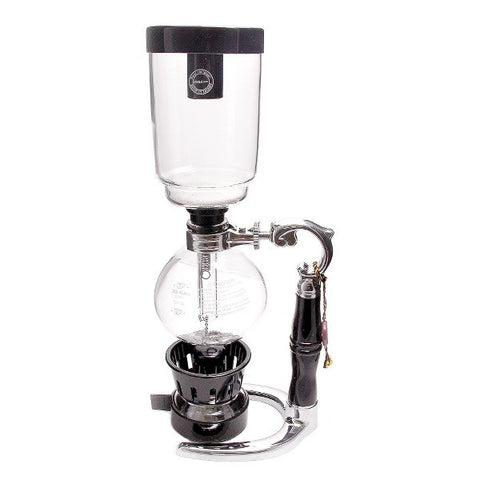
<p>She loves her coffee (even if sometimes she puts milk in it) and is a great person to talk to about any brew method, including the Trinity ONE! You can reach her on any one of our support channels if you have any questions.</p>
</div>]]>
    </content>
  </entry>
  <entry>
    <id>https://capecoffeebeans.co.za/blogs/how-to-make-great-coffee/dear-si-how-to-coffee</id>
    <published>2017-03-27T10:09:00+02:00</published>
    <updated>2017-03-27T10:25:42+02:00</updated>
    <link rel="alternate" type="text/html" href="https://capecoffeebeans.co.za/blogs/how-to-make-great-coffee/dear-si-how-to-coffee"/>
    <title>Dear Si, Here&apos;s How To Coffee</title>
    <author>
      <name>Phaedon Gourtsoyannis</name>
    </author>
    <content type="html">
      <![CDATA[<p>Dear Si,</p>
<p>It was great to see you in Cape Town recently. Hopefully the return to dreary London wasn’t too painful!</p>
<p>You asked me to write you an email with some tips on “how to coffee” and as I finally started writing it, I realised that there may be others out there who would benefit from just such an email, so I decided to make this an open letter. Hope you don’t mind!</p>
<p>What follows is the very basics of enjoying coffee - the table stakes if you will.</p>
<h3>Don’t burn your beans</h3>
<p>While this may be a pretty common tip, it’s also a pretty crucial one. Your coffee shouldn’t be making contact with water that is too hot, and, as you’re at sea level in London, that means that <b>freshly boiled water is too hot</b> (our friends in Jozi don’t have these concerns).</p>
<p>93ºC is the most commonly referenced brewing temperature that I’ve found, and it’s always my starting point, but in broader terms, you’re shooting for somewhere <b>between 90ºC &amp; 95ºC</b>. Without the benefit of a thermometer, <b>I’d suggest giving it 2 mins after the kettle boils before you pour</b> (but not much longer than that).</p>
<h3>That’s right, I said beans!</h3>
<p>You mentioned when we chatted that you don’t yet own a coffee grinder. In my (not so) humble opinion, buying pre-ground coffee is a terrible coffee sin. <b>Pre-ground goes stale in days</b> - that’s right, <i>days!</i> Some of the aroma is lost within just minutes of grinding.</p>
<p>Whole beans can stay fresh for up to 4 weeks from roast, possibly even 6 in some cases. Grab yourself a manual grinder if you fancy a little bit of extra exercise or invest in an electric grinder for convenience, but <b>get a grinder</b>. It’s the most important part of your coffee brewing setup, and<b> friends don’t let friends do pre-ground.</b></p>
<h3>Burrs not blades</h3>
<p>When it comes to choosing a grinder, I’ve been known to get as geeky as you do about analogue sound, but I’m going to resist, and give you just one purchasing criterion: <b>burrs, not blades</b>. Blades may be cheaper, but they chop up your beans into indiscriminate sizes, whereas burrs give you a more even (and adjustable) grind. <b>Make it a burr grinder.</b></p>
<h3>Control your other variables as much as you can</h3>
<p>Now, this is where we coffee geeks sometimes elicit peals of laughter from the peanut gallery who are firmly committed to the romance of doing things on a hope and a prayer. Coffee extraction is chemistry, so variables matter, and I’ve never met a person who can eyeball a gram or time 4 mins by gut feel. Suspend your disbelief and embrace the fact that <b>a little bit of variable control is the difference between consistently good coffee and wildly varied results.</b></p>
<h4>Time</h4>
<p>The easiest variable to control is probably time. Everyone’s got an iPhone (maybe a blackberry in your case). Most people have a kitchen timer. Leaving your coffee to extract till it feels right is often going to result in coffee that is sour or bitter. Hitting the sweet spot is what it’s all about. <b>I know your weapon of choice is the classic french press or cafetiere. Shoot for 4 mins from pour to plunge.</b></p>
<h4>Brew ratio</h4>
<p>If you’ll permit me to nerd out for a moment, it has been shown that coffee tastes best in very particularly dissolved concentrations in the cup and outside of that range, it just doesn’t taste very good. If you want to hit that sweet spot, you’ve got to measure the amount of coffee and the amount of water you’re using.</p>
<p><b>Coffee’s density varies wildly, so the only reliable way to do this is with a scale</b>. Water’s density is obviously 1, which means that you can also use that same scale to measure the amount of water you use.</p>
<p>I like 70g of coffee per litre of water, but many prefer it closer to 60g per litre. You’re not going to want to go too far south or north of that, so <b>use your kitchen scale or invest in a proper coffee scale</b>. In practice that means something like <b>15-17.5g of coffee for 250g of water</b>. You can find your personal sweet spot within that range but then try to be consistent with it!</p>
<h3>Know what you’re drinking</h3>
<p>Coffee is both a commodity and a luxury product. For reasons that I won’t go into here, <b>if you’re drinking the commodity stuff, you’re doing both your taste buds and the world a disservice</b>. Given that you, I, and anyone who cares about coffee should appreciate it as the precious luxury beverage that it is, it behooves us to know a thing or two about where it came from.</p>
<p><b>Here are some questions that you should be able to answer about your coffee</b>; either by asking the question to the seller, or reading on the packaging.</p>
<ul>
<li>Where was it grown?</li>
<li>Who (or what group of people) grew it?</li>
<li>What variety (or varieties) of coffee is it?</li>
<li>How was it processed?</li>
<li>Who roasted it?</li>
<li>When was it roasted? (more on that later)</li>
</ul>
<p>If the person you’re buying from can’t answer these questions (or at least most of them), then you probably shouldn’t be buying their coffee. Some of the answers to these questions may sound as Greek as my surname initially, but you’ll start to recognise patterns pretty quickly, and you’ll get even more benefit from understanding the connection between these factors and the character in your cup.</p>
<h4>A note on blends</h4>
<p style="font-style: italic;">I think a lot of the pleasure of coffee is in exploring single origins, but there’s nothing wrong with a tasty and balanced blend. Who doesn’t love a bit of a mix? Ideally, the supplier of the coffee should be able to answer the above questions for each component of their blends however!</p>
<h3>Decaf can be delicious</h3>
<p>I know you’re one of those people who is blessed with enough innate caffeine, and you prefer your cup of joe decaffeinated. Despite what some might say, there’s absolutely nothing wrong with that. Everything I’ve mentioned so far applies, regardless of caffeine content. However, choosing a good decaf requires even more scrutiny of its origins, particularly with regards to the method of decaffeination. You see, commodity decafs are stripped of their jittery goodness with the use of chemical solvents. Residue of those solvents will remain in the coffee and will probably be worse for you than the caffeine.</p>
<p>Thankfully, there are organisations out there that have created decaffeination processes that don’t involve the use of industrial chemicals. Look out for the following decaffeination methods in particular:</p>
<ul>
<li>Swiss Water</li>
<li>Mountain Water</li>
<li>CO2</li>
</ul>
<h3>Make it fresh</h3>
<p>It warrants repeating. Coffee is a perishable product, so you’re going to get best results when it’s fresh. If you’ve been drinking pre-ground, old coffee, you may not even realise how good your coffee could taste.</p>
<p>Good coffees will always have a roast date on the pack. Often this means that you have to buy it from a roaster or specialist retailer (like CCB!) to get the good stuff. However, in the UK, some of the grocery stores with their next-level supply chains have forged partnerships with good roasters, so you may find some decently fresh coffee in certain stores. Just make sure you check what you’re buying.</p>
<p>Try to <b>drink your coffee within 4-6 weeks of roast</b>, and ideally on the lower end of that range. Many believe coffee tastes its absolute best somewhere in that 7-14 day window, but I’ve tasted great stuff at older ranges than that.</p>
<h3>A final word</h3>
<p>That might seem like a lot to think about, but that’s partly because I’m long-winded. In truth, these are reasonably straightforward tips, and they should make your coffee infinitely better. Think vinyl vs. 128kbps mp3 - I’m serious.</p>
<p>And don’t forget… the coffee’s pretty darn good here in Cape Town. Come have a cup more often!</p>
<p>Cheers,</p>
<p>Phaedon</p>
<p>Y4L</p>]]>
    </content>
  </entry>
  <entry>
    <id>https://capecoffeebeans.co.za/blogs/how-to-make-great-coffee/34994692-michael-macdonald-siphon-coffee-brew-guide</id>
    <published>2015-07-08T17:55:00+02:00</published>
    <updated>2017-06-27T12:10:36+02:00</updated>
    <link rel="alternate" type="text/html" href="https://capecoffeebeans.co.za/blogs/how-to-make-great-coffee/34994692-michael-macdonald-siphon-coffee-brew-guide"/>
    <title>Michael MacDonald Siphon Coffee Brew Guide</title>
    <author>
      <name>Phaedon Gourtsoyannis</name>
    </author>
    <content type="html">
      <![CDATA[<p>We were very excited to be able to make Coffee Siphons available to our customers and coffee lovers all across South Africa. However a siphon is a pretty advanced and potentially intimidating manual coffee brewing device, so we knew that a great brew guide was going to be essential.</p>
<p>Serendipitously, our friend Mike MacDonald of <a href="https://capecoffeebeans.co.za/collections/origin-coffee-roasting" title="Learn more about Origin Coffee Roasting">Origin Coffee Roasting</a> had just released an exceptional <a href="https://medium.com/@mmdsl28/siphon-coffee-brew-guide-ace1111b1c70" title="Read the original brew guide on Medium">step by step guide on siphon brewing</a> which he kindly allowed us to republish. Mike is a very talented roaster and manual brewer and if you're lucky enough to be able to stop by Origin HQ, you can have the pleasure of enjoying both the process and results of one of his siphon brews. For everyone who wants to try it at home, here is Mike's advice on siphon brewing.</p>
<h3>What you'll need</h3>
<img alt="Yama Tabletop Coffee Siphon" src="//cdn.shopify.com/s/files/1/0280/5548/products/Yama-3Cup-Tabletop-Siphon-600x600_large.jpg?v=1436286730" style="float: right;">
<p>Siphon brewers are pretty "complete" tools, so you only need the basic coffee accessories that many coffee lovers will already have. There are some optional items that might make things easier, so we've divided this list into two sections.</p>
<h4>The essentials</h4>
<ul>
<li>A <a href="https://capecoffeebeans.co.za/products/yama-tabletop-siphon-vacuum-coffee-maker" title="Learn more about our siphons">siphon</a> with standard accessories (stirring paddle, filter, etc.)</li>
<li>A kettle to heat your water</li>
<li>A <a href="https://capecoffeebeans.co.za/collections/coffee-grinders" title="See our range of coffee grinders">coffee grinder</a>
</li>
<li>Fresh <a href="https://capecoffeebeans.co.za/collections/all-coffees" title="Shop for coffee beans">coffee beans</a>
</li>
<li>A <a href="https://capecoffeebeans.co.za/products/constant-digital-pocket-scale" title="Buy a coffee scale">scale</a> to weigh your coffee</li>
<li>A <a href="https://capecoffeebeans.co.za/products/digital-coffee-timer" title="Coffee timers can be found here">timer</a> (any will do)</li>
</ul>
<h4>Nice to haves</h4>
<ul>
<li>A <a href="https://capecoffeebeans.co.za/products/hario-v60-buono-drip-kettle" title="Buy a Hario Drip Kettle">pouring kettle</a>
</li>
<li>A <a href="https://capecoffeebeans.co.za/products/digital-pocket-thermometer" title="Learn more about our digital thermometers">thermometer</a>
</li>
<li>A <a href="https://capecoffeebeans.co.za/products/yama-rekrow-butane-burner" title="Shop for a butane burner">butane burner</a>
</li>
</ul>
<h3>Dosage &amp; direction</h3>
<p>Use ~70g/L with a grind size slightly finer than filter (we like 3-4 on the <a href="https://capecoffeebeans.co.za/products/severin-conical-burr-electric-coffee-grinder?variant=846589573" title="Learn more about the Severin Coffee Grinder">Severin Coffee Grinder</a>). This would mean:</p>
<ul>
<li>~28g for a <a href="https://capecoffeebeans.co.za/products/yama-tabletop-siphon-vacuum-coffee-maker?variant=3456028356" title="3 Cup Yama Siphon">3 Cup Yama Tabletop Siphon</a>
</li>
<li>~42g for a <a href="https://capecoffeebeans.co.za/products/yama-tabletop-siphon-vacuum-coffee-maker?variant=3456028420" title="5 Cup Yama Siphon">5 Cup Yama Tabletop Siphon</a>
</li>
</ul>
<p><em>Note: grind your coffee at the last possible moment to make sure it's as fresh as possible!</em></p>
<h3>Step 1: Fill Bottom Chamber of Siphon</h3>
<p>Either use a scale to measure the amount of water or use the markings on the siphon. 1 cup is ~125ml (i.e. ~125g). A pouring kettle may help you aim the water slightly better and pre-heated water is a great way to shorten the total brew time!</p>
<p style="text-align: center;"><img alt="Mike pouring water into bottom chamber of siphon using Hario kettle" src="//cdn.shopify.com/s/files/1/0280/5548/files/Siphon-01-Kettle-Water-Pour_large.jpg?9343459708178911784" style="float: none;"></p>
<h3><span style="line-height: 1.4;">Step 2: Place Bottom Chamber Over Heat Source &amp; Insert Top Chamber With Secured Filter At An Angle</span></h3>
<p>Here you're trying to get the water to boil before you fully insert the top chamber. While the water begins to heat up, secure the cloth filter in the top chamber using the spring &amp; hook assembly. Then place the top chamber into the bottom one resting at an angle.</p>
<p style="text-align: center;"><img alt="Mike inserting top chamber of siphon" src="//cdn.shopify.com/s/files/1/0280/5548/files/Siphon-02-Water-Heating_large.jpg?6426269810863155448" style="float: none;"></p>
<h3>Step 3: Let The Water Come To A Full Boil</h3>
<p>You should see the water bubbling vigorously before you go to the next step.</p>
<p style="text-align: center;"><img alt="Mike waiting for water to boil" src="//cdn.shopify.com/s/files/1/0280/5548/files/Siphon-03-Water-Boiling_large.jpg?10192573692974697011" style="display: block; float: none; margin-left: auto; margin-right: auto;"></p>
<h3>Step 4: Fully Insert Top Chamber And Allow Water To Rise Into It</h3>
<p>Once all the water is in the top chamber, you can turn the heat down slightly. This is where you might want to use a thermometer to confirm your water is at an optimal 90-93°C.</p>
<p style="text-align: center;"><img alt="Digital thermometer in siphon" src="//cdn.shopify.com/s/files/1/0280/5548/files/Siphon-04-Water-Temperature-Thermometer_large.jpg?11303703126999422385" style="float: none;"></p>
<h3>Step 5: Add All Your Coffee Into The Top Chamber</h3>
<p>If you have an electric grinder, you can quickly grind at this point. Otherwise, having your ground coffee waiting for this step may be a good idea.</p>
<p style="text-align: center;"><img alt="Adding ground coffee to siphon" src="//cdn.shopify.com/s/files/1/0280/5548/files/Siphon-05-Add-Coffee_large.jpg?6614265154108063983" style="float: none;"></p>
<h3>Step 6: Quickly Start A Timer &amp; Stir To Saturate All Coffee</h3>
<p>It's important to make sure that all your coffee is wet and extracting evenly. You'll need to keep stirring every 10s or so as a crust forms at the top. Try to use the plastic stirrer that comes with the siphon or another plastic/wooden utensil. Metal is not a good idea as you could crack the glass.</p>
<p style="text-align: center;"><img alt="Stirring coffee to saturate grounds" src="//cdn.shopify.com/s/files/1/0280/5548/files/Siphon-06-Stir-Coffee_large.jpg?3791987122880682188" style="float: none;"></p>
<h3>Step 7: At ~45s, Turn Off Your Heat Source &amp; Stir To Create A Vortex</h3>
<p>Mike recommends stirring about 6 times here. Your aim is to create a little whirlpool that will encourage the coffee to draw down quickly.</p>
<h3>Step 8: Vacuum Draw Down</h3>
<p>You shouldn't need to do anything except watch here. The removal of heat will create a vacuum in the bottom chamber which will draw the coffee through the cloth filter. This process should take ~1min for ~1m45s total extraction time. This can vary depending on ambient temperature.</p>
<p style="text-align: center;"><img alt="Siphon vacuum drawing down" src="//cdn.shopify.com/s/files/1/0280/5548/files/Siphon-07-Coffee-Extracting_59f98518-b011-40f4-8fea-9c33bb825997_medium.jpg?11255493600127412584" style="float: none;"><img alt="Vacuum draw down complete" src="//cdn.shopify.com/s/files/1/0280/5548/files/Siphon-08-Coffee-Draw-Down_medium.jpg?11255493600127412584" style="float: none;"></p>
<h3>Step 9: Remove The Top Chamber</h3>
<p>The top chamber should cool down relatively quickly so it can be removed. Do this by rocking it back and forth until it comes loose. You can use the stand provided (also a lid) to rest it while it cools. Don't wait too long to clean it and the filter afterwards!</p>
<p style="text-align: center;"><img alt="Mike removing top chamber of siphon" src="//cdn.shopify.com/s/files/1/0280/5548/files/Siphon-09-Remove-Top-Chamber_large.jpg?16356705122755015311" style="float: none;"></p>
<h3>Step 10: Pour &amp; Enjoy (Let It Cool)</h3>
<p>Siphon coffee comes out very hot so be careful not to burn yourself. Either wait a few minutes or further cool it by decanting it a few times.</p>
<p style="text-align: center;"><img alt="Mike decanting siphon" src="//cdn.shopify.com/s/files/1/0280/5548/files/Siphon-10-Decant_medium.jpg?11695813849163241462" style="float: none;"><img alt="Mike cooling coffee" src="//cdn.shopify.com/s/files/1/0280/5548/files/Siphon-11-Cool_medium.jpg?11695813849163241462" style="float: none;"><img alt="Mike serving coffee" src="//cdn.shopify.com/s/files/1/0280/5548/files/Siphon-12-Serve_medium.jpg?11695813849163241462" style="float: none;"><img alt="Siphon-brewed coffee" src="//cdn.shopify.com/s/files/1/0280/5548/files/Siphon-13-Enjoy_medium.jpg?11695813849163241462" style="float: none;"></p>
<p> </p>
<h3 style="text-align: center;">Happy Vacuum Brewing!</h3>
<p> </p>
<p><em>This brew guide was first published on Medium <a href="https://medium.com/@mmdsl28/siphon-coffee-brew-guide-ace1111b1c70" target="_blank" title="Read the original brew guide on Medium" rel="noopener noreferrer">here</a> and photographs are from <a href="https://www.facebook.com/media/set/?set=a.10152855114337405.1073741833.355404452404&amp;type=3" target="_blank" title="See the full set of photos on facebook" rel="noopener noreferrer">Origin Coffee Roasting's facebook page here</a></em></p>
<div style="padding: 15px; border: 1px solid #e8e8e8; margin-bottom: 10px; float: left;">
<h3>About Michael MacDonald</h3>
<img src="//cdn.shopify.com/s/files/1/0280/5548/files/XI-XjN7f.jpeg?7856" alt="Michael MacDonald" style="float: left; margin-right: 10px; margin-top: 3px; margin-bottom: 5px !important; border-radius: 5px; height: 100px;">
<p>Mike has worked in the coffee industry for 7 years and is a roaster and coffee sommelier for <a href="https://capecoffeebeans.co.za/collections/origin-coffee-roasting" title="Learn more about Origin">Origin Coffee Roasting</a> in Cape Town. He's an aspiring recreational mycologist as well as a lover of alluring whiskies, craft beer and interesting wines.</p>
<p>You can follow Mike on Twitter: <a href="https://twitter.com/mmdsl28" target="_blank" title="Follow Mike on Twitter" rel="noopener noreferrer">@Mmdsl28</a></p>
</div>]]>
    </content>
  </entry>
  <entry>
    <id>https://capecoffeebeans.co.za/blogs/how-to-make-great-coffee/34792836-how-to-get-the-best-out-of-your-french-press-coffee-plunger</id>
    <published>2015-07-01T21:06:00+02:00</published>
    <updated>2017-06-27T12:10:27+02:00</updated>
    <link rel="alternate" type="text/html" href="https://capecoffeebeans.co.za/blogs/how-to-make-great-coffee/34792836-how-to-get-the-best-out-of-your-french-press-coffee-plunger"/>
    <title>How To Get The Best Out Of Your French Press / Coffee Plunger</title>
    <author>
      <name>Phaedon Gourtsoyannis</name>
    </author>
    <content type="html">
      <![CDATA[<p>Whether you call it a <a href="https://capecoffeebeans.co.za/collections/french-press-coffee-plungers" title="See our collection here">french press or a coffee plunger</a> (or anything else for that matter), there's a pretty good chance you've got one in your home. These classic coffee makers are everywhere, but tragically, they're often held in poor regard. In reality, the biggest problem with the french press is that most people just don't use it correctly.</p>
<div style="text-align: left;"><img alt="French Press Coffee Plunger With Spoon, Scale &amp; Timer" src="//cdn.shopify.com/s/files/1/0280/5548/files/French-Press-Cover-In-White-v2-600w.jpg?4424703424959560215" style="display: block; margin-left: auto; margin-right: auto; float: none;"></div>
<p>We really believe that even the most humble coffee plunger can produce a great cup of coffee with a little care and attention. This classic brew method actually produces wonderful, full-bodied cups of coffee and captures the full array of flavours and aromas that your beans have locked inside them. In this article, we'd like to give you our take on how to get the best out of your press.</p>
<h3>The Dos &amp; Don'ts of French Press Brewing</h3>
<p>Later in this article, we've included a step by step guide on coffee plunger brewing, including some helpful photos, but we thought we'd start with some basics. Getting better coffee out of your french press can be as simple as following some do's &amp; don'ts.</p>
<table style="max-width: 500px; margin: 20px auto; vertical-align: top;">
<colgroup> <col style="width: 50%;"> <col style="width: 50%;"> </colgroup>
<tbody>
<tr>
<td>
<h4 style="text-align: center;"><span style="text-decoration: underline;">Do</span></h4>
</td>
<td>
<h4 style="text-align: center;"><span style="text-decoration: underline;">Don't</span></h4>
</td>
</tr>
<tr>
<td>
<ul>
<li>Use freshly ground coffee from whole beans</li>
</ul>
</td>
<td>
<ul>
<li>Use stale, pre-ground awfulness</li>
</ul>
</td>
</tr>
<tr>
<td>
<ul>
<li>Use a measured brewing ratio (we recommend 60g/L)</li>
</ul>
</td>
<td>
<ul>
<li>'Eyeball' your coffee and water quantities</li>
</ul>
</td>
</tr>
<tr>
<td>
<ul>
<li>Use water at around 93°C</li>
</ul>
</td>
<td>
<ul>
<li>Pour boiling water on your coffee</li>
</ul>
</td>
</tr>
<tr>
<td>
<ul>
<li>Time your extraction (we recommend 4 mins)</li>
</ul>
</td>
<td>
<ul>
<li>Use your gut to tell you when the coffee's ready</li>
</ul>
</td>
</tr>
<tr>
<td>
<ul>
<li>Pour or decant your coffee soon after plunging</li>
</ul>
</td>
<td>
<ul>
<li>Leave half your coffee in the plunger in contact with the coffee grounds to slowly over-extract and become bitter &amp; vile</li>
</ul>
</td>
</tr>
</tbody>
</table>
<h3><span style="line-height: 1.4;">What You'll Need</span></h3>
<ul>
<li>A <a href="https://capecoffeebeans.co.za/collections/french-press-coffee-plungers" title="See our collection of coffee plungers here">french press / coffee plunger</a> (even that old one at the back of your cupboard will do)</li>
<li>A <a href="https://capecoffeebeans.co.za/collections/coffee-grinders" title="Check out our coffee grinders here">coffee grinder</a>
</li>
<li>A <a href="https://capecoffeebeans.co.za/products/hario-v60-buono-drip-kettle" title="Check out he Hario Buono Drip Kettle which we're using">kettle</a> to heat your water</li>
<li>Something to stir with (ideally not metal if you don't want to scratch your glass)</li>
<li>A <a href="https://capecoffeebeans.co.za/products/hario-v60-drip-coffee-scale-with-timer" title="Learn more about the Hario Drip Scale">Hario Drip Scale</a> <em>OR</em> the following items:</li>
<ul>
<li>A kitchen scale to weigh your water</li>
<li>A more precise <a href="https://capecoffeebeans.co.za/products/constant-digital-pocket-scale" title="Shop for a pocket coffee scale">coffee scale</a> to measure your coffee (if possible)</li>
<li>A <a href="https://capecoffeebeans.co.za/products/digital-coffee-timer?variant=992682696" title="You can buy a timer here">timer</a> (most phones have one if your kitchen doesn't)</li>
</ul>
<li>Optional: a <a href="https://capecoffeebeans.co.za/products/digital-pocket-thermometer" title="We have digital thermometers for sale">thermometer</a> to measure water temperature</li>
</ul>
<h3>Step 1: Decide how many you're brewing for &amp; put the kettle on</h3>
<p>One of the great things about french presses is that they come in all different sizes and it's one of the few brew methods that isn't much affected by the amount of coffee you're brewing. Use a ratio of 60g/L; for instance:</p>
<ul>
<li>1 mug: 15g coffee &amp; 250ml water</li>
<li>2 mugs: 30g coffee &amp; 500ml water</li>
<li>3 mugs: 45g coffee &amp; 750ml water</li>
<li>4 mugs 60g coffee &amp; 1000ml water</li>
<li>etc.</li>
</ul>
<p>So pick how many you're brewing for and put the kettle on, <em><strong>BUT we'd recommend boiling 2x as much water as you'll need for brewing</strong></em> (see step 3 below).</p>
<p style="text-align: left;"><img alt="Coffee Plunger With Electric Kettle" src="//cdn.shopify.com/s/files/1/0280/5548/files/French-Press-Electric-Kettle-600w.jpg?1239428145587588437" style="display: block; margin-left: auto; margin-right: auto; float: none;"></p>
<h3>Step 2: Weigh &amp; grind your coffee</h3>
<p>The kettle will take a while to boil, so this is a good time to weigh out your coffee beans using the 60g/L ratio. Set your grinder to a coarse setting. For most home grinders, the coarsest is a great place to start. On the <a href="https://capecoffeebeans.co.za/products/severin-conical-burr-electric-coffee-grinder" title="Learn more about the Severin Coffee Grinder">Severin Coffee Grinder</a>, we use setting 10. Ideally, wait till the last convenient minute to grind so your coffee is as fresh as possible!</p>
<p style="text-align: left;"><img alt="Severin Setting Dial At 10" src="//cdn.shopify.com/s/files/1/0280/5548/files/Severin-Setting-10-600w_488a6419-d4d5-4b95-83f7-1be9b2164591.jpg?9267621656012966676" style="display: block; margin-left: auto; margin-right: auto; float: none;"></p>
<h3>Step 3: Pre-heat your brewing vessel</h3>
<p>When your kettle has boiled, pour some of the freshly boiled water into the brewing vessel to pre-heat it. A lot of heat will be lost as you brew, so by pre-heating, you keep the brewing temperature a bit more constant.</p>
<p style="text-align: left;"><img alt="Kettle Pouring Water Into French Press" src="//cdn.shopify.com/s/files/1/0280/5548/files/French-Press-Electric-Kettle-Pour-600w.jpg?6840831123087502517" style="display: block; margin-left: auto; margin-right: auto; float: none;"></p>
<h3>Step 4: Let your brewing water settle to ~93°C</h3>
<p>During this time, you also need to let your brewing water come to ~93°C. A thermometer is handy here, but depending on your kettle, you need to wait around 1-2 mins after boiling to get in the right temperature range. Erring towards slightly cooler rather than hotter is probably a good idea if you don't have a thermometer. <strong>Water that is too hot will scald your coffee and make it bitter!</strong></p>
<p style="text-align: left;"><em style="line-height: 1.4;"><img alt="Thermometer at 93°C" src="//cdn.shopify.com/s/files/1/0280/5548/files/Thermometer-93C-2_49f8140d-7aab-4a6c-920a-a9d154f54267.jpg?4424703424959560215" style="display: block; margin-left: auto; margin-right: auto; float: none;"></em></p>
<p><em style="line-height: 1.4;">Tip: If you have a <a href="https://capecoffeebeans.co.za/products/hario-v60-buono-drip-kettle" title="Learn more about this kettle">Hario Drip Kettle</a>, pouring freshly boiled water into it will bring the water to the right temperature more quickly!</em></p>
<h3>Step 5: Discard your vessel-heating water and add the coffee grounds to the bottom of the plunger</h3>
<p style="text-align: left;"><img alt="Ground Coffee In Coffee Plunger" src="//cdn.shopify.com/s/files/1/0280/5548/files/French-Press-Grounds-Bottom-600w.jpg?12297399054802705181" style="display: block; margin-left: auto; margin-right: auto; float: none;"></p>
<h3>Step 6: Set a timer for 4 mins and put your plunger on top of a 'zero-ed' scale</h3>
<p>Timing your extraction is very important. Too short and your coffee will be sour and acidic. Too long and your coffee will be bitter. Don't leave it to chance - use a timer!</p>
<p>In a similar vein, you need to make sure you're using the right amount of water, and the easiest way to do that is to use a kitchen or <a href="https://capecoffeebeans.co.za/products/hario-v60-drip-coffee-scale-with-timer" title="Find a Hario scale here">Hario Scale</a>. <em>1ml of water weighs 1g.</em></p>
<p style="text-align: left;"><em><img alt="Coffee Plunger On Scale With Kettle &amp; Timer" src="//cdn.shopify.com/s/files/1/0280/5548/files/French-Press-Timer-Kettle-Scale-600w.jpg?16065460922455715954" style="display: block; margin-left: auto; margin-right: auto; float: none;"></em></p>
<h3>Step 7: Bloom your coffee with a bit of water (2-3x coffee weight)</h3>
<p>It's good practice to start by encouraging the gases to escape from your coffee (called blooming) before adding the rest of the water. Try to start your 4 minute timer just as you pour the first bit of water onto the coffee. Aim for 2-3x the mass of the coffee you're brewing (you don't need to be super precise here) and give it a good stir. You should see the gases escaping and creating foam.</p>
<p style="text-align: left;"><img alt="French Press On Scale Being Stirred - Bloom" src="//cdn.shopify.com/s/files/1/0280/5548/files/French-Press-Bloom-Stir.jpg?17569965987391718828" style="display: block; margin-left: auto; margin-right: auto; float: none;"></p>
<h3>Step 8: Add the rest of the water to your desired weight/volume</h3>
<p>Do this slowly &amp; methodically, trying to get even contact with all of the coffee. Give it a stir once the water is all in.</p>
<p style="text-align: left;"><img alt="Coffee Plunger On Scale" src="//cdn.shopify.com/s/files/1/0280/5548/files/French-Press-Full-Scale-500g-600w_71d35d38-2c89-48cf-879b-8e2437530dda.jpg?16958850808707314305" style="display: block; margin-left: auto; margin-right: auto; float: none;"></p>
<h3>Step 9: Stir again every minute or so</h3>
<p>To encourage a full extraction, give the coffee a gentle stir every minute or so. Don't do it too vigorously to avoid <em>over</em>-extraction but just a little movement to avoid the grounds settling. We don't find that you need to put the lid on while the coffee is extracting, but opinions differ on this topic!</p>
<h3>Step 10: Plunge at 4 minutes &amp; serve or decant immediately</h3>
<p>Once your timer sounds, plunge the coffee all the way to the bottom (don't be shy) and quickly serve or decant. The wire mesh in your french press does not completely separate the coffee from the water so if you leave it in there, it will become over-extracted &amp; bitter.</p>
<p style="text-align: left;"><img alt="French Press Coffee Being Poured Into Glass" src="//cdn.shopify.com/s/files/1/0280/5548/files/French-Press-Pour-600w_large.jpg?17903678904971319364" style="display: block; float: none; margin-left: auto; margin-right: auto;"></p>
<p><em>Note: Plungers leave a bit of sediment at the bottom of the cup, but as long as you don't try to drink it, it shouldn't bother you at all and should just settle to the bottom! </em></p>
<h3 style="text-align: center;">Happy Brewing!</h3>
<p> </p>]]>
    </content>
  </entry>
  <entry>
    <id>https://capecoffeebeans.co.za/blogs/how-to-make-great-coffee/17849668-an-aeropress-recipe-for-two</id>
    <published>2015-03-25T12:11:00+02:00</published>
    <updated>2017-02-19T11:57:09+02:00</updated>
    <link rel="alternate" type="text/html" href="https://capecoffeebeans.co.za/blogs/how-to-make-great-coffee/17849668-an-aeropress-recipe-for-two"/>
    <title>An Aeropress Recipe For Two</title>
    <author>
      <name>Phaedon Gourtsoyannis</name>
    </author>
    <content type="html">
      <![CDATA[<p>Everyone agrees, the <a href="https://capecoffeebeans.co.za/products/aeropress-coffee-maker" title="Learn more about the Aeropress">Aeropress Coffee Maker</a> is a fantastic brewing device. It's portable, virtually un-breakable, easy to use and, most importantly, it makes <em>great</em> coffee. Even better, the internet is littered with lots of different recipes to try, from pros and amateurs alike.</p>
<p>As a home barista brewing for yourself, you're spoiled for choice on how to use your Aeropress, but interestingly, there are very few recipes out there that explain how to brew two cups at the same time. Recognising that many lovers of coffee come in pairs, we thought we'd try to help remedy that situation.</p>
<p style="text-align: center;"><img src="//cdn.shopify.com/s/files/1/0280/5548/files/Aeropress-For-Two-Banner-Final_a3bbdc62-ac62-44e8-94ca-71abfffa6a00.jpg?2926105160718034819"></p>
<p>It is worth mentioning that this is less of a problem when you're brewing short espresso-style shots. The instructions that come with your Aeropress and the markers on the side will help you with that. One easy solution is just to brew two of those and then dilute. However, a lot of the excitement around the Aeropress is about longer filter-style brews, most often using the <a href="https://capecoffeebeans.co.za/blogs/how-to-make-great-coffee/14983657-michael-macdonald-applies-scientific-precision-to-aeropress-brewing" title="You can find an example of the inverted method here">inverted method</a>.</p>
<p>This blog post is about how to make two delicious filter-style coffees with your <a href="https://capecoffeebeans.co.za/products/aeropress-coffee-maker" title="Shop for an Aeropress">Aeropress</a> at the same time. Purists will tell you that you'll get better results brewing two cups separately and there may well be a small benefit in doing that. But if you want to be able to wake up in the morning and quickly brew some coffee for yourself and a loved one, this recipe should prove a lot more convenient without much compromise on the flavour!</p>
<h3>The Approach</h3>
<p>If you want to get straight to the recipe, feel free to skip ahead, but for those who are interested, here's a word on this recipe's approach. The main constraint the Aeropress has is its capacity (~250ml). To make enough coffee for two cups, you need more than that.</p>
<p>To achieve this, while producing something very similar to "typical" Aeropress coffee, we're going to brew concentrate and then dilute it. We're going to aim for the same ratio of coffee to water in terms of yield but we're going to make the steep time a bit longer, to offset the potentially slower rate of extraction caused by the higher concentration of coffee in the water.</p>
<h3>What You'll Need</h3>
<p>We've divided up the list of what you'll need into two sections, the essentials and those accessories which can help you fine tune your brew. You can definitely brew delicious coffee with just the basic equipment. In fact, that initial list is ideal for travelling if you want to brew coffee for two on the road.</p>
<p style="text-align: center;"><img alt="Equipment for brewing with the Aeropress for two" src="//cdn.shopify.com/s/files/1/0280/5548/files/Aeropress-For-Two-Equipment-Set-light_1275da35-cbf7-4007-8d7e-19d2ed7e0381_large.jpg?13653095056107058149" style="float: none;"></p>
<h4>The essentials</h4>
<ul>
<li>An <a href="https://capecoffeebeans.co.za/products/aeropress-coffee-maker" title="Visit the Aeropress product page">Aeropress</a> (obviously)</li>
<li>All your Aeropress's accessories (scoop, funnel, paddle, filter cap, filters)</li>
<li>A <a href="https://capecoffeebeans.co.za/collections/coffee-grinders" title="Check out our coffee grinders here">coffee grinder</a>
</li>
<li>A <a href="https://capecoffeebeans.co.za/products/hario-v60-buono-drip-kettle" title="Check out he Hario Buono Drip Kettle which we're using">kettle</a> to heat your water</li>
<li>A jug to brew into that can hold ~500ml of liquid</li>
<li>Some way to measure the volume of what you brew - a kitchen scale works well but you can also just brew into a measuring cup</li>
<li>Something to time with - your phone will do!</li>
</ul>
<h4>Nice to haves</h4>
<ul>
<li>A <a href="https://capecoffeebeans.co.za/products/constant-digital-pocket-scale" title="Shop for a pocket coffee scale">coffee scale</a>
</li>
<li>A <a href="https://capecoffeebeans.co.za/products/digital-coffee-timer?variant=992682696" title="You can buy a timer here">timer</a> (alternatively the <a href="https://capecoffeebeans.co.za/products/hario-v60-drip-coffee-scale-with-timer" title="Learn more about the Hario Drip Scale">Hario Drip Scale</a> can weigh &amp; time for you all in one)</li>
<li>A <a href="https://capecoffeebeans.co.za/products/digital-pocket-thermometer" title="We have digital thermometers for sale">thermometer</a>
</li>
</ul>
<h3>How to Brew Two Cups of Coffee With an Aeropress</h3>
<p>Here are the step by step instructions with photographs. You may want to read through everything once before starting so you can just skim through for reminders the first time you try the recipe. Reading the whole thing and brewing at the same time may be challenging!</p>
<h4>Step 1: Put your Kettle on to boil with a bit more than 500ml water (aiming for ~93C)</h4>
<p style="text-align: left;">If you've got a digital thermometer, then you can decide to stop your kettle when it hits ~93C or you can let it boil and then wait 1-2 minutes for it to cool down to around that temperature. Our favourite trick is to pour freshly boiled water into a <a href="https://capecoffeebeans.co.za/products/hario-v60-buono-drip-kettle" title="Learn more about the Hario Buono Drip Kettle">Hario Buono Kettle</a> which brings it to about the right temperature instantly.</p>
<p style="text-align: center;"><img alt="Digital coffee thermometer at 93C" src="//cdn.shopify.com/s/files/1/0280/5548/files/Thermometer-93C-2_49f8140d-7aab-4a6c-920a-a9d154f54267_large.jpg?16223047309304654723" style="float: none;"></p>
<h4>Step 2: Weigh 36g of coffee &amp; grind to a medium setting</h4>
<p>We're using 2x the amount of coffee you'd use for a regular inverted brew. If you don't have a scale, it should be about two heaping Aeropress scoops. Any burr grinder, manual or electric will do the trick here. We use setting 5 on the <a href="https://capecoffeebeans.co.za/products/severin-conical-burr-electric-coffee-grinder" title="Learn more about the Severin Coffee Grinder">Severin Coffee Grinder</a>.</p>
<div style="text-align: center;">
<img src="//cdn.shopify.com/s/files/1/0280/5548/files/Coffee-Scale-36g-light_580c7718-877b-49e1-af1c-9062f41e0fdc.jpg?8566787731877666968"><img src="//cdn.shopify.com/s/files/1/0280/5548/files/Severin-Setting5_large.jpg?4016949966029679082">
</div>
<h4>Step 3: Set up your inverted Aeropress and put the coffee into the chamber</h4>
<div style="text-align: center;">
<img alt="Aeropress Inverted With Funnel" src="//cdn.shopify.com/s/files/1/0280/5548/files/Aeropress-Inverted-Funnel.jpg?2581819030017991010" style="float: none;"><img alt="Aeropress Being Filled" src="//cdn.shopify.com/s/files/1/0280/5548/files/Aeropress-Inverted-Funnel-Being-Filled_ae12ca5a-d142-410b-981f-2257279fc770.jpg?2581819030017991010" style="float: none;"><img alt="Aeropress With Coffee In It" src="//cdn.shopify.com/s/files/1/0280/5548/files/Aeropress-Inverted_76c8f7ac-5cf4-478d-8ca8-1c2c806294ba.jpg?8308515327085351465" style="float: none;">
</div>
<h4>Step 4: Set a timer for 2 minutes, press start, bloom with a small amount of water and stir</h4>
<p>The aim here is just to saturate all the coffee grounds. You'll form what almost looks like a thick paste. This is to encourage any trapped CO2 to get out of the way and let the extraction happen properly afterwards.</p>
<div style="text-align: center;">
<img alt="Aeropress Bloom" src="//cdn.shopify.com/s/files/1/0280/5548/files/Aeropress-Bloom.jpg?8387928357663287228" style="float: none;"><img alt="Aeropress Stir Paddle For Bloom " src="//cdn.shopify.com/s/files/1/0280/5548/files/Aeropress-Stir-Paddle_ddac1db2-ae7a-4c90-83db-ff17b2c7728f.jpg?14520990666455580746" style="float: none;">
</div>
<h4>Step 5: Fill the Aeropress chamber almost to the top, leaving room for more stirring</h4>
<p>You should have ~1m30s left on the clock at this point. You want to top up the Aeropress as much you can while allowing for spill-free stirring. Stir for 10-15s, really getting the coffee and water moving for maximum extraction. This is particularly important since you're brewing concentrate.</p>
<p style="text-align: center;"><img alt="Aeropress Inverted Stirring With Paddle" src="//cdn.shopify.com/s/files/1/0280/5548/files/Aeropress-Paddle-Full-Stir_large.jpg?13543053129083021314" style="float: none;"></p>
<h4>Step 6: Fill the Aeropress to the very top &amp; leave to steep</h4>
<p>Now you just let the extraction magic happen for the remainder of the 2 mins you started with (there should be ~1 min left). This is a bit longer than your typical Aeropress steep time because we're making sure to get a full extraction despite the higher ratio of coffee to water. This is a good time to wet your paper filter.</p>
<p style="text-align: center;"><img alt="Aeropress Inverted Chamber Full" src="//cdn.shopify.com/s/files/1/0280/5548/files/Aeropress-Full-Inverted_large.jpg?5924162472017498851" style="float: none;"></p>
<h4>Step 7: Place the filter cap on the Aeropress, flip onto your brewing jug and plunge (should take 30-45s)</h4>
<p>You'll need to put the filter cap on just a little before the time runs out to make sure you're ready. Don't rush the plunging process. It may be a little harder because of the amount of coffee in the chamber. Take your time and keep pushing through the hiss at the end until every drop of concentrate is out.</p>
<p style="text-align: center;"><img alt="Aeropress with jug &amp; hand" src="//cdn.shopify.com/s/files/1/0280/5548/files/Aeropress-Jug_27029539-3fdb-46aa-a357-dd2d74cb94b1_large.jpg?1618736189279284526" style="float: none; margin-left: 20px;"></p>
<h4>Step 8: Dilute to ~430ml</h4>
<p>Why 430ml? We're aiming to get double the yield of a 250ml/18g Aeropress extraction. If you had a giant Aeropress &amp; brewed 500ml/36g, you'd expect each gram of coffee to absorb ~2ml of water so the yield would be about ~430ml (428ml if this were exact).</p>
<p>A measuring cup is an easy way to go here but you can also do this using a scale. The trick is to tare the scale with the empty jug before you press into it, then put it back on the scale with the concentrate. You'll be somewhere around 200g and then you can just fill up to ~430g.</p>
<p style="text-align: left;"><img alt="Jug with Scale" src="//cdn.shopify.com/s/files/1/0280/5548/files/Scale-Jug-428g_large.jpg?2710251595402020649" style="display: block; float: none; margin-left: auto; margin-right: auto;"></p>
<p><em>Note: Don't plunge on top of your scale - that's a surefire way to break it</em></p>
<h3>Happy Brewing!</h3>
<p>As with all coffee recipes, you should absolutely tweak this recipe to suit your taste, but hopefully you have a good foundation here - this should help you score some points with a loved one and get your own coffee fix, quickly &amp; easily!</p>
<p style="text-align: center;"><img alt="Two Glasses Of Coffee" src="//cdn.shopify.com/s/files/1/0280/5548/files/Two-Coffee-Glasses_74c67f16-3df5-40e2-8fb1-50ea23c358bf.jpg?7204501189995211204" style="float: none;"></p>]]>
    </content>
  </entry>
  <entry>
    <id>https://capecoffeebeans.co.za/blogs/how-to-make-great-coffee/16561892-how-to-make-better-coffee-in-2015</id>
    <published>2015-01-06T16:00:00+02:00</published>
    <updated>2017-02-19T11:55:24+02:00</updated>
    <link rel="alternate" type="text/html" href="https://capecoffeebeans.co.za/blogs/how-to-make-great-coffee/16561892-how-to-make-better-coffee-in-2015"/>
    <title>How To Make Better Coffee In 2015</title>
    <author>
      <name>Phaedon Gourtsoyannis</name>
    </author>
    <content type="html">
      <![CDATA[<p>As the festive season draws to a close, we're now well &amp; truly into the start of a new year. This is a time when many people think about what they want to improve in their lives - <em>shouldn't your coffee be one of them?</em></p>
<p>If you're passionate, or even just curious, about coffee (which you probably are as you're reading this post), then improving the coffee you brew for yourself should be top of mind. There's lots of very specific advice out there on how to brew, but in this post, we thought we'd take a step back and touch on some basic principles you should think about.</p>
<p style="text-align: center;"><img alt="2015 in coffee beans" src="//cdn.shopify.com/s/files/1/0280/5548/files/IMG_2805_-_Version_3_grande.jpg?8611" style="float: none;"></p>
<p style="text-align: center;"> </p>
<h2>But first...</h2>
<p>It really should go without saying... but just in case... the suggestions that follow assume that you're already doing the basics. For the avoidance of doubt, those basics are:</p>
<ol>
<li>Buying coffee prepared by a local, artisanal roaster</li>
<li>Using fresh, whole beans and grinding them yourself, just before you brew</li>
<li>Grinding those beans with a <a href="https://capecoffeebeans.co.za/collections/coffee-grinders" title="Shop for a burr grinder">burr grinder</a> rather than a blade grinder (or any other contraption)</li>
</ol>
<p>If you're not yet doing any one of those 3 things, stop reading and address that first. Stale and unevenly ground coffee will make it really difficult to enjoy a great cup regardless of what else you do. Assuming that you've got those basics covered, here are our suggestions on how to take it to the next level.</p>
<p><em>Note: it does not matter what brew method you use, these principles apply across the board</em></p>
<h2>1) Measure</h2>
<p>Management clichés aside, if you're not measuring the variables that go into your coffee brewing, <em>you're flying blind</em>. You can't eyeball a difference of 2g of coffee, let alone a 3 degree temperature difference, and those kind of variations can drastically change your cup of coffee.</p>
<p>Measuring your brewing variables will help you achieve consistency and will also help you understand how changes you're making are affecting your cup (see the next point). The things you should be measuring include (in order of importance):</p>
<ul>
<li>Grams of coffee (ideally in 0.1g increments)</li>
<li>Grams or millilitres of water (they're equivalent)</li>
<li>Extraction time</li>
<li>Water temperature</li>
</ul>
<p>All of those variables are fundamental in coffee brewing and can be measured using some pretty basic equipment, most of which you probably already have in your kitchen.</p>
<h2>2) Experiment</h2>
<p>Once you start measuring your brewing variables and start getting delicious &amp; consistent cups of coffee, don't rest on your laurels. Someone once said that the definition of insanity is <em>doing the same thing over and over again and expecting different results</em>. The same applies to coffee - your brew's not going to get better by repeating the same process.</p>
<p>When you actually know what your brewing variables are (because you're measuring them), you can start to adjust them to see what the impact is. The fact is that there is no such thing as a Platonic cup of coffee - there's always room for improvement. If you don't test different variables out, you won't get to experience that improvement.</p>
<p>Another important reason to experiment is to try to get the best out of different beans. Anyone reading this is unlikely to be the type of person that drinks the same coffee all the time. Different coffee beans will react differently to brewing variables so when you're trying something new, make sure to take the time to tweak, particularly when the result isn't as good as you expected. It may not be the coffee, it may be your brewing variables.</p>
<h2>3) Isolate your variables</h2>
<p>Imagine you make one of the best cups of coffee you've ever made, using a particular bean that you're very fond of. Someone asks you what you did differently and you answer that you added 3g more coffee, brewed 4 degrees colder and for 20s longer. Guess what? You have no idea why that coffee's better than it was before.</p>
<p>When you experiment, you need to tweak as few variables at a time as possible. Like a lab scientist, if you're not keeping everything else more or less constant, you can't attribute improvements to any particular change. Perhaps even more importantly, you're not going to learn much from your experiments to make you a better coffee brewer overall.</p>
<p>Be patient - you're going to make and drink a lot of coffees in your life. Take the time to apply a bit of the scientific method to your endeavours and in the long run, you will be a better amateur barista for it.</p>
<h2>Any other thoughts?</h2>
<p>Those are our thoughts on the principles you should be using to improve your coffee brewing this year. Did we miss anything? Disagree on any of our points? Feel free to leave your contributions in the comment section - we'd love to hear what you have to say!</p>]]>
    </content>
  </entry>
  <entry>
    <id>https://capecoffeebeans.co.za/blogs/how-to-make-great-coffee/14983657-michael-macdonald-applies-scientific-precision-to-aeropress-brewing</id>
    <published>2014-08-04T11:31:00+02:00</published>
    <updated>2017-02-19T11:55:04+02:00</updated>
    <link rel="alternate" type="text/html" href="https://capecoffeebeans.co.za/blogs/how-to-make-great-coffee/14983657-michael-macdonald-applies-scientific-precision-to-aeropress-brewing"/>
    <title>Michael MacDonald applies scientific precision to Aeropress brewing</title>
    <author>
      <name>Phaedon Gourtsoyannis</name>
    </author>
    <content type="html">
      <![CDATA[<p>Mike MacDonald is just one of those coffee guys that you want to chat to. He takes knowing his stuff to a whole new level - he's the guy you call in when someone has a <em>really</em> technical coffee question. He roasts incredible coffees for <a href="https://capecoffeebeans.co.za/collections/origin-coffee-roasting" title="Explore Origin's coffee beans" target="_blank">Origin Coffee Roasting</a> and he also delves deep into the science of coffee brewing. Mike recently started sharing his knowledge and the results of his research and experimentation in blog posts on Medium - the first of which was <a href="https://medium.com/@mmdsl28/understanding-flavour-in-the-aeropress-86677fba6c10" title="Read Mike's blog post on Medium" target="_blank">Understanding flavour in the Aeropress</a>.</p>
<p>For the scientifically-minded, Mike's article is a fantastic read and for us, it begged an obvious question - how <i>exactly</i> does he recommend brewing with the <a href="https://capecoffeebeans.co.za/collections/aerobie-aeropress/products/aeropress-coffee-maker" title="Learn more about the Aeropress" target="_blank">Aeropress</a>? Well we asked, he showed us, we tasted the results and it became very clear - this was something we needed to share. Below you'll find Mike's detailed, step by step Aeropress brewing guide that he uses to train Baristas. You can use the diagram with the Aeropress components for reference.</p>
<p style="text-align: center;"><a href="https://capecoffeebeans.co.za/collections/aerobie-aeropress/products/aeropress-coffee-maker" title="Learn more about the Aeropress" target="_blank"><img alt="Aeropress System Components" src="//cdn.shopify.com/s/files/1/0280/5548/files/aeropress_system_new-400w.jpg?7858" style="float: none; margin-top: 15px; margin-bottom: 15px;"></a></p>
<h3>Aeropress Brewing Variables</h3>
<ul>
<li>Use <strong>17.5 grams to 200ml water</strong> (this should almost fill your inverted Aeropress to the top)</li>
<li>
<span></span>Grind to a setting<strong> between espresso and filter</strong> - err towards the finer side</li>
<li>The water temperature for brewing should be<strong> 85-90ºC (88ºC exactly is better)</strong>
</li>
<li><span>Total extraction time: <strong>1m45s - 1m50s</strong></span></li>
</ul>
<h3><span>Aeropress Brewing Process</span></h3>
<img alt="Inverted Aeropress" src="//cdn.shopify.com/s/files/1/0280/5548/files/aeropress-invert-setup-150w.jpg?7857" style="float: right; padding-left: 20px;">
<ol>
<li>Use the <strong>inverted method</strong>: place the plunger with rubber seal about 2cm into the chamber so that it has a solid connection and then turn the Aeropress upside down so that the chamber is facing up (see photo)</li>
<li><span>Take the filter cap, place a filter paper in it and run some water through</span></li>
<li><span>Pre-heat your cup or serving jug with hot water and then discard the water</span></li>
<li><span>Grind your coffee and add it into the top chamber of the Aeropress - use the Aeropress funnel if helpful</span></li>
<li><span>Pour the brewing water onto the coffee till about mid-way up the top chamber and start a timer</span></li>
<li><span><strong>Stir  the coffee, making sure the coffee grounds are all wet, </strong>scraping around the sides and especially bottom (just until the grounds are saturated)</span></li>
<li><span>Now pour the rest of the water in - to about 1cm below the top rim</span></li>
<li>
<strong><span>Allow it to brew for 20 seconds ...then gently stir again</span></strong> in a back-forward, left-right motion - 10 movements, 5 in each direction</li>
<li><strong><span>Allow the coffee to brew till 45 seconds on the timer</span></strong></li>
<li><span>Lock the cap holding the filter into the chamber at the top</span></li>
<li><span>Carefully turn the Aeropress in one swift motion and place it directly on the preheated cup or jug</span></li>
<li><span>Plunge straight down with a <strong>mild force</strong>, until you hear air, then stop (this should take ~1 min so that the total extraction time is 1m45s - 1m50s)</span></li>
</ol>
<div style="padding: 15px; border: 1px solid #e8e8e8; margin-bottom: 10px; float: left;">
<h3>About Michael MacDonald</h3>
<img src="//cdn.shopify.com/s/files/1/0280/5548/files/XI-XjN7f.jpeg?7856" alt="Michael MacDonald" style="float: left; margin-right: 10px; margin-top: 3px; margin-bottom: 5px !important; border-radius: 5px; height: 100px;">
<p>Mike has worked in the coffee industry for 7 years and is a roaster and coffee sommelier for <a href="https://capecoffeebeans.co.za/collections/origin-coffee-roasting" title="Learn more about Origin">Origin Coffee Roasting</a> in Cape Town. He's an aspiring recreational Mycologist as well as a lover of alluring whiskies, craft beer and interesting wines.</p>
<p>You can follow Mike on Twitter: <a href="https://twitter.com/mmdsl28" target="_blank" title="Follow Mike on Twitter">@Mmdsl28</a></p>
</div>]]>
    </content>
  </entry>
  <entry>
    <id>https://capecoffeebeans.co.za/blogs/how-to-make-great-coffee/14976621-roast-republic-on-how-to-make-a-hario-v60-pour-over</id>
    <published>2014-07-29T17:19:00+02:00</published>
    <updated>2017-02-19T11:54:38+02:00</updated>
    <link rel="alternate" type="text/html" href="https://capecoffeebeans.co.za/blogs/how-to-make-great-coffee/14976621-roast-republic-on-how-to-make-a-hario-v60-pour-over"/>
    <title>Roast Republic on how to make a Hario V60 pour-over</title>
    <author>
      <name>Phaedon Gourtsoyannis</name>
    </author>
    <content type="html">
      <![CDATA[<p>One of the most recent additions to Cape Coffee Beans is the <a title="Have a look at Hario's range" href="https://capecoffeebeans.co.za/collections/hario">Hario</a> range of pour-over equipment. These beautiful Japanese products are perfectly designed to brew a clean, clear &amp; delicious filter-style coffee. However, making a good pour-over takes a little bit of technique and we've been on the look out for a great brewing guide. Fortunately for all of us, our friends at Roast Republic have just recently published a fantastic video with their very own Matt Carter showing us how to master the Hario V60. They kindly agreed to let us share it with our customers and blog readers.</p>
<p>Have a look at this great instructional video and please do like it and share it! We've put a summary of Matt's advice below, as well as links to the equipment he is using.</p>
<p style="text-align: center; padding: 10px 0;"><iframe src="//www.youtube-nocookie.com/embed/_nN4b44SZ7g" width="560" height="315" frameborder="0" allowfullscreen="allowfullscreen"></iframe></p>
<h3>Summary of variables</h3>
<ul>
<li>20g of coffee</li>
<li>Filter grind (like table salt)</li>
<li>360ml (or grams) of water (~60g/L ratio)</li>
<li>93C water temperature</li>
<li>~2m30s extraction time (60s bloom)</li>
</ul>
<h3>Summary of process</h3>
<ol>
<li>Rinse your paper filter with hot water &amp; discard the water afterwards</li>
<li>Add your coffee to the rinsed filter</li>
<li>Pour ~60g of water over the grounds to wet them and let the coffee bloom for ~60s</li>
<li>Pour the remaining 300g of water in concentric circles, avoiding the sides of the filter</li>
<li>Allow water to drain through completely (2m30s) &amp; serve!</li>
</ol>
<h3>What Matt uses in the video</h3>
<ul>
<li>Hario's own <a title="Shop for Skerton Coffee Grinder" href="https://capecoffeebeans.co.za/collections/hario/products/hario-skerton-ceramic-burr-manual-coffee-grinder">Skerton Coffee Grinder</a>
</li>
<li>
<a title="Shop for a Hario Coffee Dripper" href="https://capecoffeebeans.co.za/collections/hario/products/hario-v60-pour-over-coffee-dripper">Hario V60 Coffee Dripper</a> (Matt uses the white ceramic version)</li>
<li>
<a title="Learn more about the Hario Range Server" href="https://capecoffeebeans.co.za/collections/hario/products/hario-v60-pour-over-coffee-dripper">Hario V60 Range Server</a> (this is the glass jug he brews into)</li>
<li><a title="Shop for a Drip Kettle" href="https://capecoffeebeans.co.za/collections/hario/products/hario-v60-buono-drip-kettle">Hario V60 Buono Drip Kettle</a></li>
<li>
<a title="Check out Hario's Drip Scale" href="https://capecoffeebeans.co.za/collections/hario/products/hario-v60-drip-coffee-scale-with-timer">A scale</a> (Matt uses a different one but we've linked to Hario's own model)</li>
</ul>]]>
    </content>
  </entry>
  <entry>
    <id>https://capecoffeebeans.co.za/blogs/how-to-make-great-coffee/14261005-stephen-tredrea-teaches-us-how-to-make-moka-gold</id>
    <published>2014-05-27T08:16:00+02:00</published>
    <updated>2017-02-19T11:17:23+02:00</updated>
    <link rel="alternate" type="text/html" href="https://capecoffeebeans.co.za/blogs/how-to-make-great-coffee/14261005-stephen-tredrea-teaches-us-how-to-make-moka-gold"/>
    <title>Stephen Tredrea Teaches Us How To Make Moka Gold</title>
    <author>
      <name>Chloe Roberts</name>
    </author>
    <content type="html">
      <![CDATA[<img src="//cdn.shopify.com/s/files/1/0280/5548/files/Stephen-Terdrea-WC-Barista-Champs-2014_compact.jpg?6940" style="margin-left: 10px; float: right;" alt="Stephen Tredrea at the WC Manual Brewer's Competition">
<p>The recent 2014 SCASA Western Cape Regional Barista Competitions included the rather unique Manual Brewer's Competition among the otherwise espresso-focused events. This competition is different to the others in that, rather than being given a standard set of tools, competitors are encouraged to bring any piece of hand-brewing equipment they like and submit the coffee they produce to a blind taste test by a panel of experienced judges.</p>
<p>The 2014 competition featured pour-overs, Aeropresses &amp; even a siphon but ultimately it was Stephen Tredrea who took the victory convincingly using a classic piece of equipment. We were so impressed, that we asked him to write a post for us about his tool of choice. Here are his thoughts...</p>
<h3>Moka Gold</h3>
<p>Having become an enamoured devotee to an awesome cup of coffee, I developed a slight obsession to perfecting my home brew. My equipment of choice, standard appliance in any European home: the <a href="https://capecoffeebeans.co.za/collections/stovetop-coffee-espresso-makers-moka-pots" target="_blank" title="Browse our Stovetop Coffee Makers &amp; Moka Pots">Moka Pot</a>. While it may not be to everybody's taste, don't be too quick to mock the Moka. This legendary, inexpensive and durable creation is what helped me win the 2014 SCASA Manual Brewers Competition in the Western Cape.</p>
<img src="//cdn.shopify.com/s/files/1/0280/5548/files/Bialetti-Moka-Express-Open_compact.jpg?6941" alt="Bialetti Moka Express with open top" style="float: left; margin-right: 10px; margin-top: 3px !important; height: 75px;">
<p>The <a href="https://capecoffeebeans.co.za/collections/stovetop-coffee-espresso-makers-moka-pots" target="_blank" title="See the Moka Pots available at Cape Coffee Beans">Moka Pot</a> appeals because it delivers an impressive espresso on very basic equipment and, with the help of a simple camping stove, can do so almost anywhere. So what does it take to deliver coffee bliss while watching the sun rise in a desert?</p>
<p><a href="https://capecoffeebeans.co.za/collections/all-coffees/" title="Shop for coffee beans">Buy good quality, recently roasted coffee</a> - preferably beans as a fresh grind is far superior and the heavenly aroma will build your excitement while the coffee brews. I use a <a href="https://capecoffeebeans.co.za/collections/coffee-making-equipment/products/gater-ceramic-burr-manual-coffee-grinder" title="Read more about the Gater Ceramic Burr Grinder" target="_blank">Gater Ceramic Burr Manual Grinder</a> set as fine as it will possibly go.<em> Make sure to leave some space at the top of the filter basket</em> as the ground beans need room to expand.</p>
<p><strong>Use a low heat</strong> so the coffee comes out slowly, allowing a good amount of time for the water to extract all the delicious flavours from the roast. <em>Leave the lid open and carefully watch it flow</em>. If it begins with a foamy cascade of tiny golden bubbles followed by an almost syrupy-thick, dark liquid you've hit Moka paydirt! As a rule-of-thumb, once the colour of the liquid flowing out becomes pale, <em>remove the pot from the stove and plunge it into cool water</em> to stop the flow, achieving a harmonious balance of flavours to delight your palate.</p>
<p>Now, top up with hot water for a filter-style coffee, if espresso is not your thing, or put your French Press to good use by frothing up some heated milk for a delicious cappuccino. Sit back and savour!</p>
<div style="padding: 15px; border: 1px solid #e8e8e8; margin-bottom: 10px; float: left;">
<h3>About Stephen Tredrea</h3>
<img src="//cdn.shopify.com/s/files/1/0280/5548/files/stephen_2010_Oct_small.jpg?6938" alt="Stephen Tredrea" style="float: left; margin-right: 10px; margin-top: 3px; margin-bottom: 5px !important; border-radius: 5px; height: 80px;"> <img src="//cdn.shopify.com/s/files/1/0280/5548/files/More-Coffee-Logo-narrow.png?6943" style="float: right; height: 80px; margin: 4px 10px 4px 10px !important;" alt="More Coffee logo">
<p>Stephen Tredrea of More Coffee is the 2014 winner of the SCASA Manual Brewer's Competition in the Western Cape. He takes great delight in teaching others to appreciate coffee and the art of brewing it to perfection. For more information visit <a href="www.morecoffee.co.za" target="_blank" title="Visit More Coffee's website">www.morecoffee.co.za</a> or contact Stephen on <a href="mailto:info@morecoffee.co.za" title="Email Stephen Tredrea" target="_blank">info@morecoffee.co.za</a>.</p>
</div>]]>
    </content>
  </entry>
</feed>