The Blinker Genie is how you keep both. It is a small solid-state controller that switches a single two-wire (single-intensity) lamp between running-light and turn-signal duties, reproducing what your three-wire OEM setup did. On a motorcycle you use the Blinker Genie; on a car or truck with a switchable running-light circuit you use the Blinker Genie 2. The rest of this guide covers how it works, when you need it, and which version fits.
What problem does the Blinker Genie actually solve?
A single-intensity lamp has one brightness level. It cannot get brighter to signal a turn the way a dual-filament bulb does, so on its own it can only be one thing at a time: a running light or a blinker. The Blinker Genie gets around that by powering the lamp through the running-light circuit instead of the turn-signal circuit. The lamp stays on as a steady running light, and when you signal, the indicator turns off for the duration of the blinker pulse. That off-pulse is how the blinking is achieved. What you see is a steady light that pulses off in rhythm, rather than a dark lamp that flashes on, and to anyone watching from the side it reads as a normal blinking signal.
The Blinker Genie for Motorcycles lineup
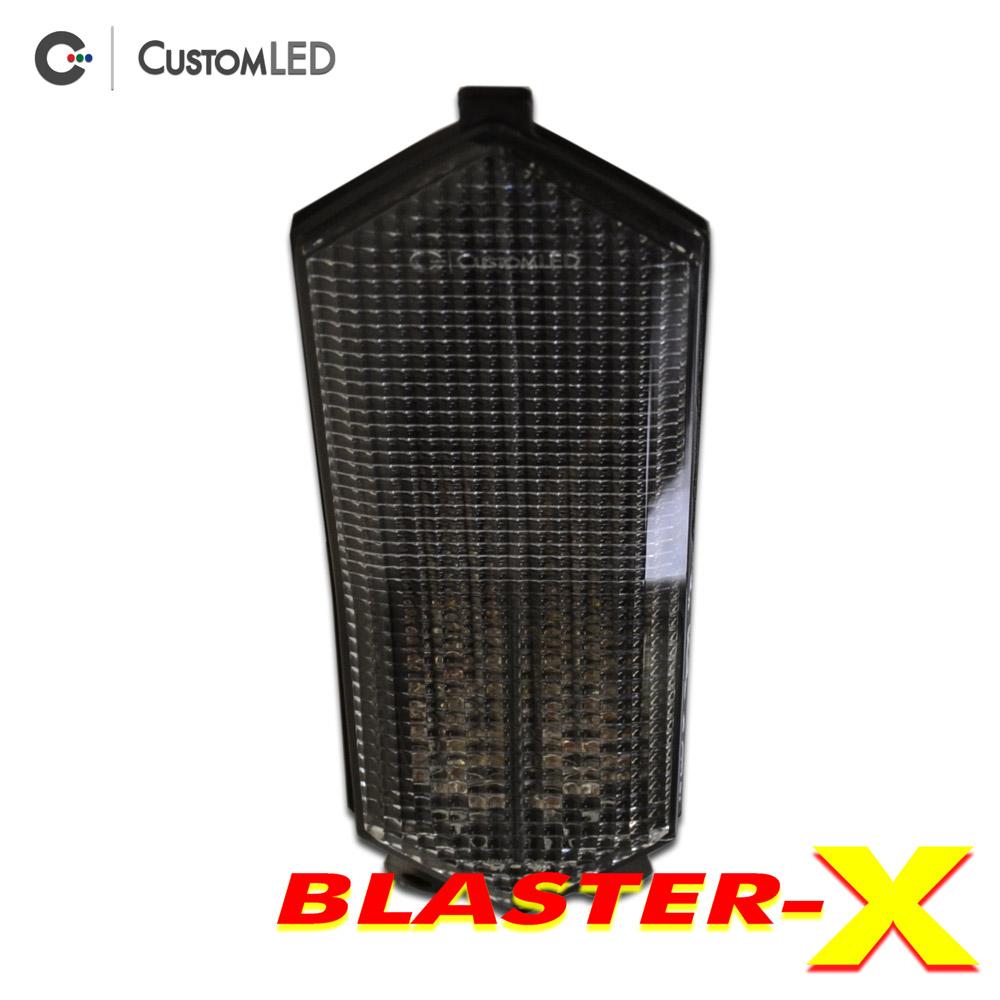
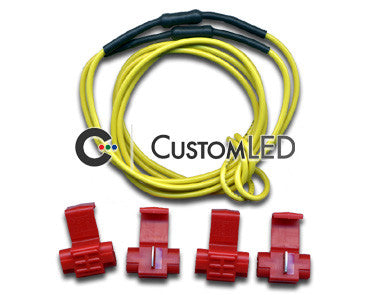
The core part is the motorcycle Blinker Genie, sold as a pair. Most installs need a pair because you use one unit per side, or roughly one per 25 Watts of indicator load. It runs a single-intensity two-wire lamp as a combined running light and blinker using an Advanced Power MOSFET switch with very low internal resistance, and it is compatible with all of our flasher relay patterns. It is made in the USA.

Blinker Genie for Motorcycles (pair) is the universal splice-in unit. It runs a single-intensity lamp as both a running light and a blinker, handles a recommended indicator load up to 2A (25W) with a maximum switching capacity of 12A (180W - thermally de-rated to 25W), and works only on a negative common ground system. It includes a built-in 2-watt load equalizer that helps prevent no-blink or four-way-blink behavior on some bikes.

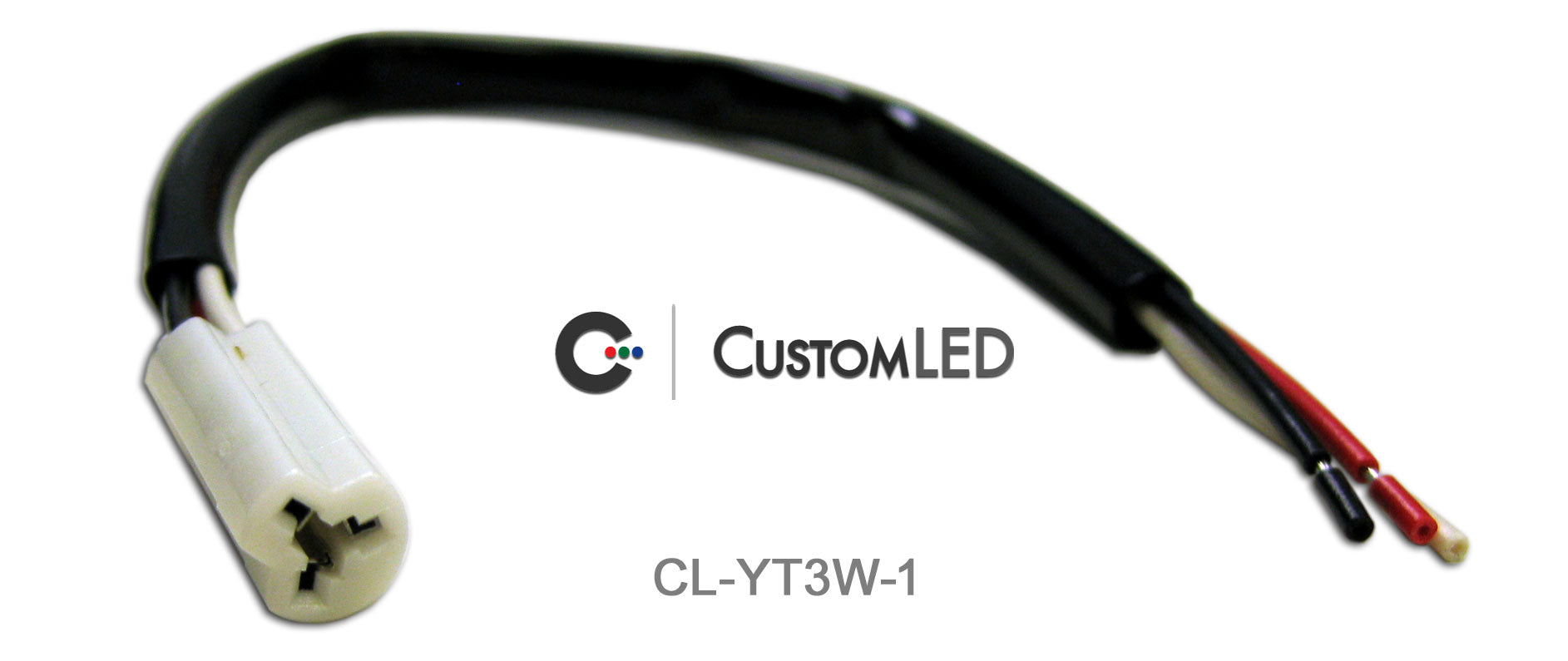
Blinker Genie Pre-Wired for Yamaha Motorcycles (pair) is the standard Blinker Genie for Motorcycles with Yamaha 3-wire OEM connectors already attached. The electronics and specs are identical to the universal unit. It is a good middle ground, easier to install than the universal splice-in and less make-specific than the dedicated kits below. Before ordering, confirm your front connector matches and that your OEM signals ran as run-and-turn from the factory, since some late-model bikes are excluded.

Blinker Genie Pre-Wired for 2015+ Yamaha YZF-R1 and R1M is a plug-and-play harness that uses the OEM connectors with no cutting or splicing and is fully reversible. It makes the OEM pilot lights on this motorcycle function as run and turn. Because it is built for the R1 and R1M electronics, it is the version that installs with no fast-blink rates or error messages. It works with or without the OEM mirror lamps, and you can add Yamaha 3-wire Y-splitters to keep the mirror lamps.

Blinker Genie Pre-Wired for 2017+ Yamaha YZF-R6 covers the 2017 to 2020 YZF-R6. It is the same plug-and-play, OEM-connector, fully reversible run-and-turn kit as the R1 version, with no fast-blink rates or error messages on the R6 electronics. It also works with or without the OEM mirror lamps, and the Yamaha 3-wire Y-splitters keep them in the circuit.

Blinker Genie Pre-Wired for 2011-2013 Ducati Diavel is the most advanced of the pre-wired kits. Instead of a simple MOSFET intercept, it uses an intelligent microprocessor that drives the OEM front blinker lamps at about 50 percent brightness through PWM as a constant running light, then takes them to full bright and off when you signal. The PWM dimming protects the OEM lamps, which were not designed to dissipate the heat of a constant duty cycle. It is fully compatible with the Ducati Diavel electronics and CAN-bus system, with no fast-blink rates or error messages. It covers 2011 to 2013 only; 2014 to 2018 compatibility is unknown, so contact us if that is your bike.
Blinker Genie for Automobiles lineup

Blinker Genie 2 for Automobiles (pair) is the automotive counterpart, built for switchable running light circuits. With the running lights off, it passes the turn-signal input straight through so the lamps blink on and stay off when you are not signaling. With the running lights on, it powers the lamps as running lights and blinks them off when there is voltage on the turn-signal input. Same core specs as the bike unit: a recommended load up to 2A (25W), internal resistance under 0.18 ohms, an Advanced Power MOSFET switch, and negative common ground only.
Blinker Genie or Blinker Genie 2?
This is the single most common point of confusion, and the answer comes down to one wiring difference between bikes and cars. On a motorcycle, the running-light circuit is live whenever the bike is running, so the original Blinker Genie assumes and requires that the running light is always on when you expect to use the blinkers. Cars and trucks are different. They usually have a switchable running-light or parking-light circuit that you can turn on and off, and the original Blinker Genie was not designed for a switchable circuit. That is exactly why the Blinker Genie 2 exists.
A good real-world example of where the Blinker Genie 2 belongs is an owner who wanted the park and signal lamps on an '85 Pontiac Grand Prix to work as a combined running light and turn signal. The first attempt used four relays, capacitors, resistors, and diodes before the owner discovered there was a single part for the job. Because that is a car with a switchable running-light circuit, the right answer is the Blinker Genie 2, not the motorcycle unit. For any motorcycle, use the original Blinker Genie.
Why does my signal blink fast after I install it?
Here is the part most people miss when they plan a Blinker Genie install. Because the Genie moves the lamp onto the running-light circuit, the turn-signal circuit no longer sees the bulb it expects. The bike reads that as a burned-out bulb and speeds the flash up. That is hyperflash, and on the universal Blinker Genie it is expected behavior, not a defect. The dedicated R1, R6 and Diavel pre-wired kits are tuned to their bike's electronics and avoid this, but the universal unit and the Yamaha 3-wire pre-wired version will usually trigger it.
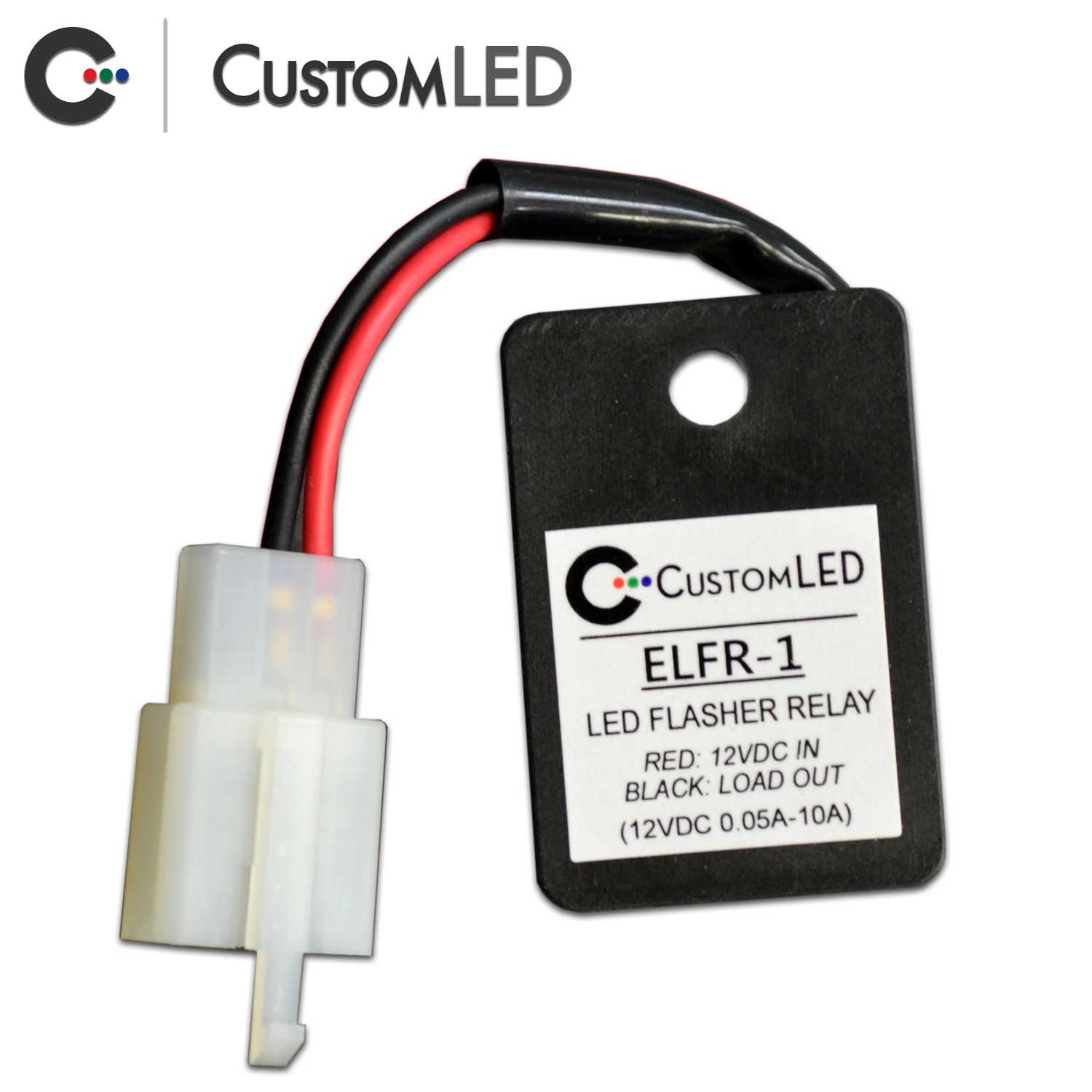
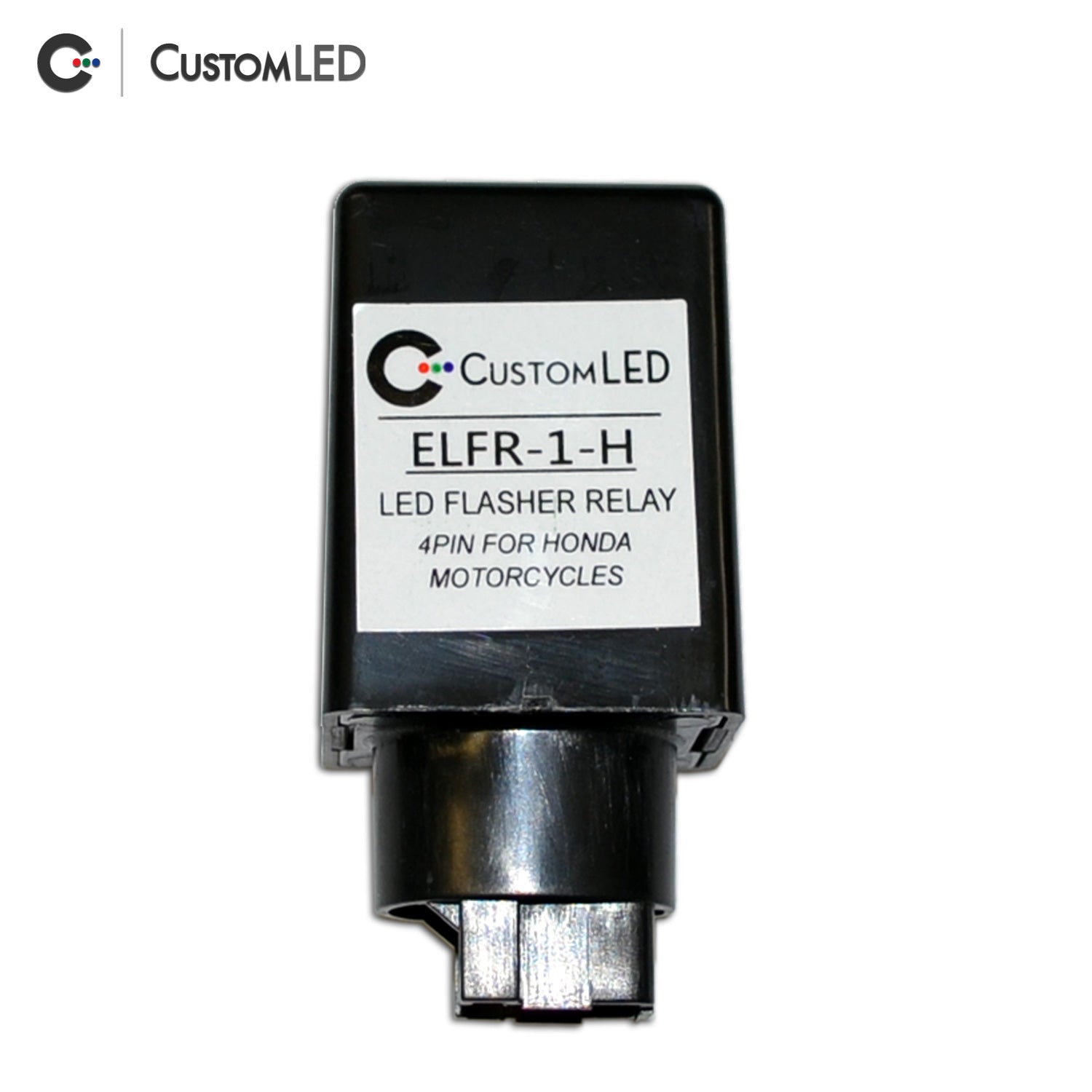
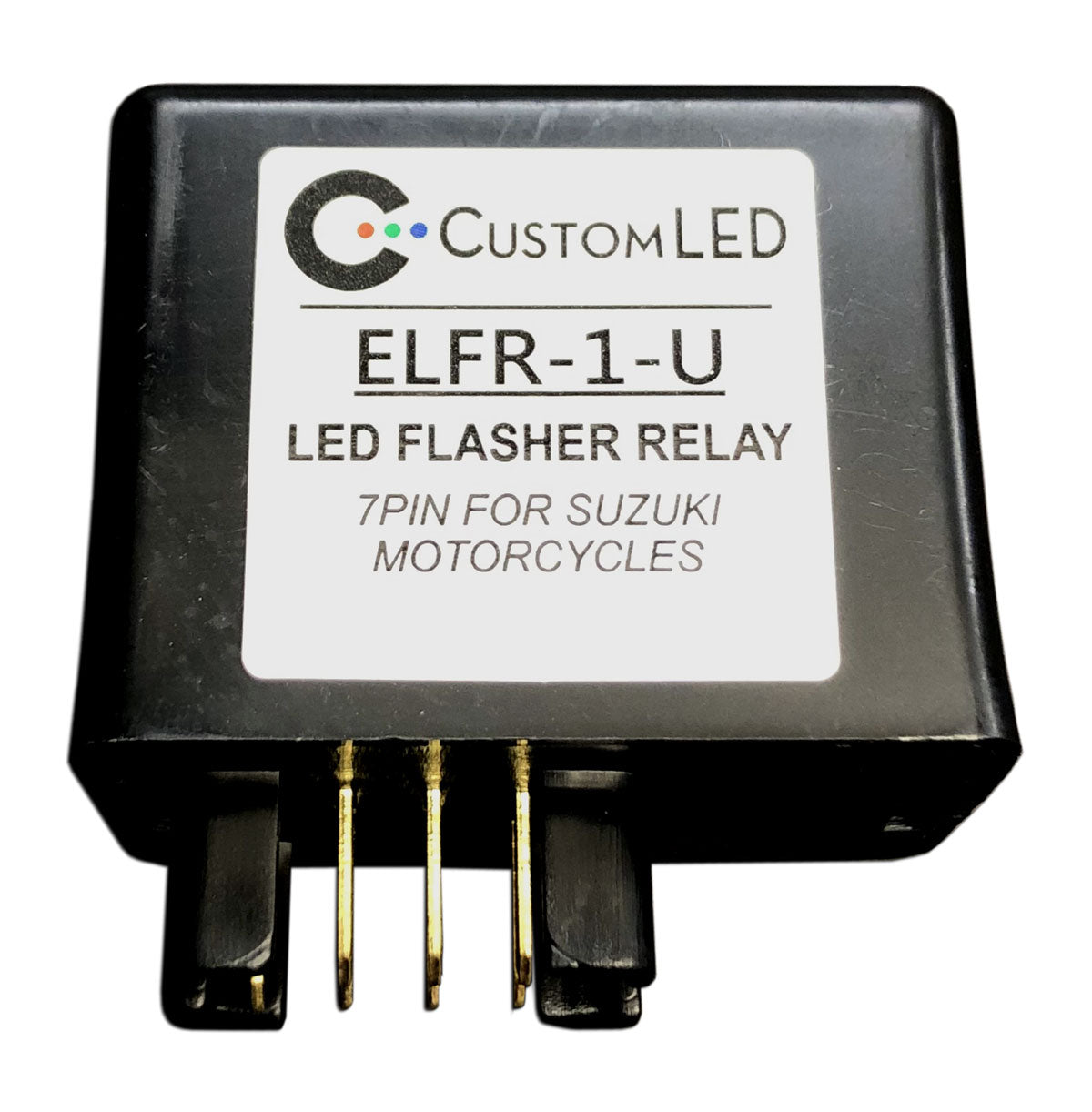
The cure is the same one we recommend for any LED hyperflash. Add an Electronic LED Flasher Relay, which is the preferred fix, or a Load Equalizer as the alternative. The flasher relay maintains the normal DOT blink rate of 60 to 120 flashes per minute, which is the speed you are after. We will not go through why LEDs cause fast blink here, because our FAQ already covers it well. Read our blinker FAQ for the fast-blink and no-blink mechanics and the relay-versus-equalizer decision, and our full flasher relay guide for the deep dive. Keep the counts straight while you plan: you use a pair of Blinker Genies (one per corner), but only one flasher relay per motorcycle.
One more symptom looks like a Blinker Genie problem but is not. The built-in 2-watt load equalizer only helps on some bikes, so do not count on it to clear hyperflash by itself. If the signals will not blink at all, that is a too-little-load no-blink situation, again covered in the FAQ, and the same relay or equalizer fix applies.
Do they get hot, and can I zip-tie them to a wiring bundle?
The Blinker Genie is a small solid-state unit built around a low-resistance MOSFET switch, with internal resistance around 0.18 ohms, and it is water resistant. A low-resistance solid-state switch like this runs cool by design, and we do not publish an operating-temperature figure for it. If you need a hard number for a specific mounting situation, contact us and we will get you the real answer. As for mounting, the unit is small (roughly 0.7 by 1.25 by 0.25 inches for the motorcycle version) and water resistant, so tucking it into a wiring bundle is a normal way to mount it. Use the included 7-inch wires and butt connectors to reach your splice points.
How to install it
For the universal Blinker Genie, the wiring follows directly from how the part works. You move each single-intensity lamp onto the running-light circuit through the Genie, then handle the resulting hyperflash with a flasher relay (preferred) or a load equalizer as described above. Use one Genie per corner, and remember the 2A recommended load per unit.
Two brand-specific wiring notes will save you a lot of troubleshooting. On bikes with no front running light, such as some newer Kawasaki sportbikes, the red wire needs to be tied to an ignition-switched source so the Genie has power when the bike is on. On Hondas, the left and right running-light wires (blue/white and orange/white) must be jumpered together to both red inputs, because Honda cuts the running-light circuit on the turning side, which would otherwise leave one Genie without power mid-signal.
If you would rather skip the splicing entirely and you ride an R1, R1M, R6 or a 2011 to 2013 Diavel, the pre-wired kits plug into the OEM connectors, are fully reversible, and are tuned so you do not have to chase a flasher relay afterward. The Yamaha 3-wire pre-wired version is the in-between option for other Yamahas whose front connector matches and whose signals ran as run-and-turn from the factory.
Still not sure which version fits your setup, or whether your bike will hyperflash? Tell us your make, model, year and what your front signals do now, and we will point you to the right part. Contact Custom LED and we will help you sort it out.
]]>