<?xml version="1.0" encoding="UTF-8"?>
<?xml-stylesheet type="text/xsl" media="screen" href="/~d/styles/rss2enclosuresfull.xsl"?><?xml-stylesheet type="text/css" media="screen" href="http://feeds.feedburner.com/~d/styles/itemcontent.css"?><rss xmlns:content="http://purl.org/rss/1.0/modules/content/" xmlns:wfw="http://wellformedweb.org/CommentAPI/" xmlns:dc="http://purl.org/dc/elements/1.1/" xmlns:atom="http://www.w3.org/2005/Atom" xmlns:sy="http://purl.org/rss/1.0/modules/syndication/" xmlns:slash="http://purl.org/rss/1.0/modules/slash/" xmlns:itunes="http://www.itunes.com/dtds/podcast-1.0.dtd" xmlns:media="http://search.yahoo.com/mrss/" xmlns:feedburner="http://rssnamespace.org/feedburner/ext/1.0" version="2.0">

<channel>
	<title>Customer Reference Insights</title>
	
	<link>http://www.customerreferenceinsights.com</link>
	<description>Rev up your customer reference program.</description>
	<lastBuildDate>Mon, 07 May 2012 14:42:18 +0000</lastBuildDate>
	<generator>http://wordpress.org/?v=2.9.2</generator>
	<language>en</language>
	<sy:updatePeriod>hourly</sy:updatePeriod>
	<sy:updateFrequency>1</sy:updateFrequency>
	<!-- podcast_generator="Blubrry PowerPress/1.0.7" mode="simple" entry="normal" -->
	<itunes:summary>This podcast series brings voice to the Customer Reference Program Maturity Model Darren Smith and David Sroka developed as a result of work with Point of Reference customers.  The CRP Maturity Model describes the 11 key elements of a customer reference program and how program managers can rev their programs to maximum potential as they achieve each of the four stages of evolution for each element.</itunes:summary>
	<itunes:author>David Sroka and Darren Smith</itunes:author>
	<itunes:explicit>no</itunes:explicit>
	<itunes:image href="http://www.point-of-reference.com/knowledgecenter/podcasts/POR_Podcast_v3.jpg" />
	<itunes:owner>
		<itunes:name>David Sroka and Darren Smith</itunes:name>
		<itunes:email>wordpress@point-of-reference.com</itunes:email>
	</itunes:owner>
	<managingEditor>wordpress@point-of-reference.com (David Sroka and Darren Smith)</managingEditor>
	<copyright>Copyright © 2009 Point of Reference</copyright>
	<itunes:subtitle>This podcast series brings voice to the Customer Reference Program Maturity Model Darren Smith and David Sroka developed as a result of work with Point of Reference customers. The CRP Maturity Model describes the 11 key elements of a customer reference pr</itunes:subtitle>
	<itunes:keywords>customer reference management, customer reference program, customer reference tools, customer reference program maturity model</itunes:keywords>
	<image>
		<title />
		<url>http://www.customerreferenceinsights.com/wp-content/plugins/powerpress/rss_default.jpg</url>
		<link>http://www.customerreferenceinsights.com</link>
	</image>
	<itunes:category text="Business">
		<itunes:category text="Management &amp; Marketing" />
	</itunes:category>
		<atom10:link xmlns:atom10="http://www.w3.org/2005/Atom" rel="self" type="application/rss+xml" href="http://feeds.feedburner.com/CustomerReference" /><feedburner:info uri="customerreference" /><atom10:link xmlns:atom10="http://www.w3.org/2005/Atom" rel="hub" href="http://pubsubhubbub.appspot.com/" /><media:copyright>Copyright © 2009 Point of Reference</media:copyright><media:thumbnail url="http://www.point-of-reference.com/knowledgecenter/podcasts/POR_Podcast_v3.jpg" /><media:keywords>customer reference management, customer reference program, customer reference tools, customer reference program maturity model</media:keywords><media:category scheme="http://www.itunes.com/dtds/podcast-1.0.dtd">Business/Management &amp; Marketing</media:category><feedburner:emailServiceId>CustomerReference</feedburner:emailServiceId><feedburner:feedburnerHostname>http://feedburner.google.com</feedburner:feedburnerHostname><item>
		<title>Customer Reference Program Models, Pros and Cons</title>
		<link>http://feedproxy.google.com/~r/CustomerReference/~3/atB5rB0cfbE/</link>
		<comments>http://www.customerreferenceinsights.com/2012/05/07/customer-reference-program-models-pros-and-cons/#comments</comments>
		<pubDate>Mon, 07 May 2012 14:42:18 +0000</pubDate>
		<dc:creator>David Sroka</dc:creator>
				<category><![CDATA[Best Practices]]></category>
		<category><![CDATA[Customer Reference Programs]]></category>
		<category><![CDATA[customer reference management]]></category>
		<category><![CDATA[customer reference program]]></category>
		<category><![CDATA[customer reference software]]></category>
		<category><![CDATA[customer reference systems]]></category>
		<category><![CDATA[customer references]]></category>

		<guid isPermaLink="false">http://www.customerreferenceinsights.com/?p=1667</guid>
		<description><![CDATA[There are a number of ways that a customer reference program can be designed with respect to handling customer reference requests. This post describes 3 models and the pros and cons of each.]]></description>
			<content:encoded><![CDATA[<p>In the last post we outlined a number of important considerations any organization should consider in the process of designing its customer reference program. The considerations were:<span id="more-1667"></span></p>
<ul>
<li>Data Management</li>
<li>Sales time requirement/productivity</li>
<li>CRP time requirement</li>
<li>Relationship Ownership &amp; Quality Control</li>
<li>Closing the Loop</li>
<li>Overuse/Burnout</li>
</ul>
<p><strong>Data management</strong> is really a topic unto itself. Every company struggles with capturing accurate, complete customer information not just the day the contract is signed, but throughout the customer lifecycle. This is the bane of CRM systems, and have the same potential challenges for purpose-built customer reference management systems. Ideally sales, support and finance are all entering the necessary information. The customer reference program (CRP) is ultimately the owner and QA arbiters of reference information. When it comes down to it there are really only two choices in terms of keeping the database current:</p>
<ol>
<li>Make it the job of the CRP to allocate time to manually gathering customer information each time they speak to salespeople and customers. This approach is proven, but more difficult to scale.</li>
<li>Use automation to collect and update some or all customer data. This approach has great promise, but is in the infant stage.</li>
</ol>
<p>There are three basic models we&#8217;ll compare relative to the other considerations listed above. Here we&#8217;re focused on <span style="text-decoration: underline">fulfilling reference requests</span> since many companies have now centralized access to customer content and provided self-service in more or less elegant ways.</p>
<ol>
<li><strong>Concierge</strong><br />
This is the conventional approach used by a majority of programs. One or more CRP team members act as a reference &#8220;help desk&#8221; and find appropriate matches, then arrange live reference calls, site visits, etc. The sales team needs only contact the team and relay their request, the CRP team does the rest.</li>
<li><strong>Self-Service &#8211; Live</strong><br />
In this model the sales team may search for matching reference accounts and contact the owners of the desired accounts within a system or via phone, email, etc. The CRP is charged with making sure there is an adequate supply of reference choices, the rest of the process happens without their intervention. This is a CFO&#8217;s nirvana:  technology vs. headcount. Questions to consider are: How likely is it that the automated system can be circumvented? How much administrivia do you want your highly compensated sales team doing?</li>
<li><strong>Self-Service &#8211; Recordings</strong><br />
In this model a library of customer reference interviews are captured for anytime use by sales. They may be detailed interview conducted with a single customer reference, or a forum, which is a conference call featuring a single customer and many prospects. These interviews cover all the details that any reference phone call would cover, good and bad. Done properly they are extremely credible and authentic.</li>
</ol>
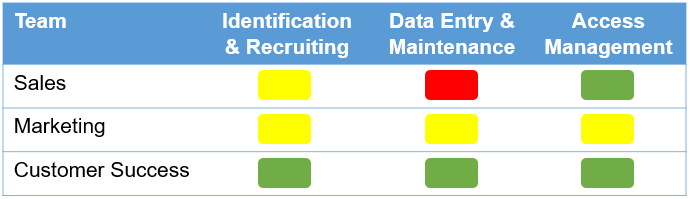
<p>Here&#8217;s a table showing how they stack up against each other in these five areas.</p>
<div class="wp-caption alignleft" style="width: 210px"><a href="http://www.point-of-reference.com/pub/PoR/crp_model_comparison_grid.png" target="_blank"><img class=" " src="http://www.point-of-reference.com/pub/PoR/crp_model_comparison_grid_sm.png" alt="Click to see full size image" width="200" height="164" /></a><p class="wp-caption-text">Click to see full size image</p></div>
<p>We welcome your comments!</p>
<img src="http://feeds.feedburner.com/~r/CustomerReference/~4/atB5rB0cfbE" height="1" width="1"/>]]></content:encoded>
			<wfw:commentRss>http://www.customerreferenceinsights.com/2012/05/07/customer-reference-program-models-pros-and-cons/feed/</wfw:commentRss>
		<slash:comments>0</slash:comments>
		<feedburner:origLink>http://www.customerreferenceinsights.com/2012/05/07/customer-reference-program-models-pros-and-cons/</feedburner:origLink></item>
		<item>
		<title>What Customer Reference Program Model is Right for You?</title>
		<link>http://feedproxy.google.com/~r/CustomerReference/~3/m4yxwV-3n-E/</link>
		<comments>http://www.customerreferenceinsights.com/2012/05/04/what-customer-reference-program-model-is-right-for-you/#comments</comments>
		<pubDate>Fri, 04 May 2012 16:34:13 +0000</pubDate>
		<dc:creator>David Sroka</dc:creator>
				<category><![CDATA[Customer Reference Programs]]></category>
		<category><![CDATA[customer advocates]]></category>
		<category><![CDATA[customer reference management]]></category>
		<category><![CDATA[customer reference management models]]></category>
		<category><![CDATA[customer reference programs]]></category>
		<category><![CDATA[customer references]]></category>

		<guid isPermaLink="false">http://www.customerreferenceinsights.com/?p=1589</guid>
		<description><![CDATA[Customer reference programs shouldn't simply "become," but rather, should be thought through and carefully designed to meet the needs of stakeholders and be sustainable in the company's culture. This post provides food for thought.]]></description>
			<content:encoded><![CDATA[<p style="text-align: left"><img class="alignleft" src="https://referencestor.com/admin/features/4f872df748eaa.png" alt="Deciding on the right CRP model" width="179" height="142" />After nine years in this field we&#8217;ve seen quite a few different approaches to customer reference program (CRP) models. Often they exist as they do, or evolve because of budget factors, because &#8220;it&#8217;s always been done this way,&#8221; or the program leader brought the model with them from another organization.</p>
<p><span id="more-1589"></span></p>
<p>We recommend taking a more considered approach in arriving at a best fit for your organization because each model has a different set of pros and cons. It&#8217;s important to not ignore the cons, which happens so often in the euphoria of the pros of a given model. Clearly any approach chosen should include a social media component. Some percentage (currently relatively small, but growing) of B2B buyers&#8217; reference needs will be met through social media searches. But the complexity and specificity of reference needs for the majority of large, sophisticated technology purchases, for example, are unlikely to be met on YouTube, Twitter or Facebook. Focusing on the majority of needs then here are some considerations when determining the best model for your CRP:</p>
<p><strong>Data management</strong><br />
The foundation of any database, including customer reference databases, is the quality and completeness of the data. No matter who is searching for reference content or reference contacts they can only find what they need if the information is properly classified and tagged. Who will own that responsibility in your CRP plan? Expect that information to change over time so it isn&#8217;t a one-time commitment.</p>
<p>Gil Yehuda, <a title="Gil Yehuda / Yahoo!" href="http://www.gilyehuda.com/" target="_blank">Director of Open Source at Yahoo!</a> Inc., commented specifically about the ‘rate of information expiration’ in a <a title="TechCrunch" href="http://techcrunch.com/2010/08/04/schmidt-data/" target="_blank">TechCrunch</a> post where Eric Schmidt, CEO of Google, is quoted as saying “Every 2 Days We Create As Much Information As We Did Up To 2003”. That’s a lot of information! Gil’s point: how much of it is still current or relevant after 6 or 12 months? Someone has to be the curator to ensure the database continues to be a valuable resource for potential users.</p>
<p><strong>Sales time requirement/productivity</strong><br />
Organizations without a formal reference management approach in place look a lot like the wild West. Salespeople find references through email blasts to the entire team, or through private Twitter-like platforms like Salesforce.com&#8217;s Chatter. If and when candidates are identified the salespeople involved manage the coordination of a live interaction like a reference call. The salespeople who own the desired account must play gatekeeper, which takes time. Formalized programs seek to reduce the time and effort expended by sales because reference management is not a great use of a high-priced sales resource.</p>
<p><strong>CRP time requirement<br />
</strong>The reference team is almost always under resourced. Any model chosen must take into account what is realistically possible for the available team (and their bandwidth) to handle. The cost of this team versus the sales team should always be considered however. The respective cost (full comp) of these resources, sales to CRP, is typically a 10:1 ratio.</p>
<p><strong>Relationship Ownership &amp; Quality Control</strong><br />
Part of model decision is the question of relationship ownership. Salespeople tend to be the primary &#8220;account owners&#8221; and the desire to remain that way often means the CRP team often resigns itself to working through the sales team when they need to communicate with customers. While we believe strongly in keeping salespeople aware of interactions with their customers, we also believe the ultimate goal for a CRP is to form direct relationships. That takes time to develop the required trust and a track record of adding value to the relationship and not &#8220;messing anything up,&#8221; a major concern for salespeople.</p>
<p>Someone needs to qualify potential customer references and stay aware of their status on an ongoing basis. In some environments the sales team stays in touch with customers after the sale on a regular basis. In others there&#8217;s little or no interaction between sales and/or renewals. So who is in the best position to determine a customer&#8217;s suitability and confirm their current state-of-mind before each reference event? If no one internally, then <a title="Outsourcing recruiting and qualification" href="http://www.point-of-reference.com/solutions/staffing/" target="_blank">outsource it</a>&#8212;it&#8217;s too important to not address.</p>
<p><strong>Closing the Loop</strong><br />
Not only is important that only the right customers become part of the customer reference database, their performance must also be monitored. In our benchmark surveys we ask salespeople how often a reference negatively impacts an opportunity. The results are between 10% and 20% of the time. While there are many reasons for this, one we hear consistently is that the reference wasn&#8217;t really the advocate they were believed to be. Who will be responsible for capturing this feedback and ensuring the mistake isn&#8217;t repeated in the future?</p>
<p><strong>Overuse/Burnout</strong><br />
One of the primary goals of a formal reference program is to avoid using a reference so often that they ask to be removed from the call list. How can this be avoided? By recording each use so that if they&#8217;ve just been used or a limit within a given time period has been reached, they are not contacted. Who will be responsible for recording uses?</p>
<p>In the next post we&#8217;ll discuss the relative merits of a few different models.</p>
<img src="http://feeds.feedburner.com/~r/CustomerReference/~4/m4yxwV-3n-E" height="1" width="1"/>]]></content:encoded>
			<wfw:commentRss>http://www.customerreferenceinsights.com/2012/05/04/what-customer-reference-program-model-is-right-for-you/feed/</wfw:commentRss>
		<slash:comments>0</slash:comments>
		<feedburner:origLink>http://www.customerreferenceinsights.com/2012/05/04/what-customer-reference-program-model-is-right-for-you/</feedburner:origLink></item>
		<item>
		<title>Overcoming the Top 4 Reasons Customer Reference Programs Fail – Inadequate Technology</title>
		<link>http://feedproxy.google.com/~r/CustomerReference/~3/mIqM9GP5Gtg/</link>
		<comments>http://www.customerreferenceinsights.com/2012/03/20/overcoming-the-top-4-reasons-customer-reference-programs-fail-%e2%80%93-inadequate-technology/#comments</comments>
		<pubDate>Tue, 20 Mar 2012 17:53:31 +0000</pubDate>
		<dc:creator>David Sroka</dc:creator>
				<category><![CDATA[Best Practices]]></category>
		<category><![CDATA[Customer Reference Programs]]></category>
		<category><![CDATA[Program Metrics]]></category>
		<category><![CDATA[Program User Adoption]]></category>
		<category><![CDATA[System]]></category>
		<category><![CDATA[System User Adoption]]></category>
		<category><![CDATA[Tools]]></category>
		<category><![CDATA[customer reference management]]></category>
		<category><![CDATA[customer reference software]]></category>
		<category><![CDATA[customer reference systems]]></category>
		<category><![CDATA[customer reference technology]]></category>
		<category><![CDATA[customer references]]></category>

		<guid isPermaLink="false">http://www.customerreferenceinsights.com/?p=1555</guid>
		<description><![CDATA[This post addresses the fourth most common reasons customer reference programs fail:  technology, or more specifically, a lack of technology. But a tool can only be as successful as the data stored within. These are our thoughts on why both are very important considerations.]]></description>
			<content:encoded><![CDATA[<p>This is a continuation of a <a title="Top 4 reasons customer reference programs fail" href="http://www.customerreferenceinsights.com/2011/12/05/top-4-reasons-that-customer-reference-programs-fail/" target="_blank">series on the 4 most common reasons that customer reference programs fail</a>, and how to deal with them.</p>
<p><span id="more-1555"></span></p>
<p>The fourth top reason programs fail is the lack of a robust &amp; reliable database. However, we also agree with <a title="Sirius Decisions" href="http://www.siriusdecision.com" target="_blank">Sirius Decisions</a> on this topic:</p>
<p><span style="color: #0000ff">&#8220;It’s a tempting thought for b-to-b executives that want to build a best-in-class customer reference program; simply choose a piece of technology and you’re all set.</span></p>
<p><span style="color: #0000ff">&#8220;Unfortunately, technology alone doesn’t guarantee success; stronger processes, better workflow design, increased resources and skills, top-notch content and a<br />
clean, robust database are all mission critical.&#8221;</span></p>
<p>Technology isn&#8217;t by any means a cure all, but without it the program&#8217;s potential is severely limited in the following ways:</p>
<ol>
<li>The program won&#8217;t scale</li>
<li>Customer reference knowledge will remain decentralized</li>
<li>The impact of the program will be difficult to quantify</li>
<li>Productivity will suffer for sales and marketing alike</li>
</ol>
<p>Programs are usually run from spreadsheets in the early stages. Those spreadsheets are often on the network, but with very limited access. They may eventually be placed on a shared drive, but until you have a web app also available on mobile devices, they&#8217;re seriously limited in reach and impact. Additionally, self-service for sales users is essential (or prepare to simply add bodies to grow the program). They need to be able to search for content and references in order to move their deals forward.</p>
<p>Until there is a central repository for reference information, individual salespeople, PR, field marketing, etc., will be the keepers and gatekeepers. That means the full potential of each customer reference is impossible to reach as no one in a central role in the organization has insight into all of the customer reference <em>assets</em>. When properly leveraged a customer reference is worth multiples of the annual contract value.</p>
<p>Tracking statistics related to reference activities is very manual and most likely highly incomplete when spreadsheets are the only tools. Ideally the use of any reference assets, and the activities related to their use, are captured and compiled for quick access by executives as well as the program team. While a program may not immediately be asked to justify it&#8217;s existence, that will be a requirement when budgets are scrutinized and/or leadership changes occur.</p>
<p>When salespeople rely primarily on email blasts to their colleagues searching for customer references and related proof points there&#8217;s a price paid in terms of productivity. Everyone&#8217;s inboxes are clogged. The responses, when they occur, take more time to sift through from the requester and her colleagues. The alternative is no one responds in which case the opportunity may stall. This inefficiency has a cost even if it&#8217;s largely hidden. Some in leadership just consider it a cost of doing business, which is unfortunate because it can be addressed.</p>
<p>There&#8217;s so much to be written about what defines a solid database, or customer reference management system. We could fill several blog posts..at least! Features and functionality aside, let me focus on something that is frequently forgotten or ignored. <strong>Data quality</strong>. The technology is only as good as the data managed within. The data must be complete, accurate and current. When the data quality is high users can find what they&#8217;re looking for quickly and move toward closing deals. We have a <a title="User adoption white papers" href="http://www.point-of-reference.com/customer-reference-guide-user-adoption/" target="_blank">user adoption white paper</a> related to system adoption that delves into this topic in more detail. Don&#8217;t give data short shrift, it will cost you down the road.</p>
<p>With the right level of support from leadership, a capable reference program leader and technology that makes reliable reference data available to all those who depend on references for their jobs, you will overcome the top reasons programs fail.</p>
<p>As with all of our posts, your feedback is most welcome!</p>
<img src="http://feeds.feedburner.com/~r/CustomerReference/~4/mIqM9GP5Gtg" height="1" width="1"/>]]></content:encoded>
			<wfw:commentRss>http://www.customerreferenceinsights.com/2012/03/20/overcoming-the-top-4-reasons-customer-reference-programs-fail-%e2%80%93-inadequate-technology/feed/</wfw:commentRss>
		<slash:comments>0</slash:comments>
		<feedburner:origLink>http://www.customerreferenceinsights.com/2012/03/20/overcoming-the-top-4-reasons-customer-reference-programs-fail-%e2%80%93-inadequate-technology/</feedburner:origLink></item>
		<item>
		<title>Overcoming the Top 4 Reasons Customer Reference Programs Fail – Program Leadership</title>
		<link>http://feedproxy.google.com/~r/CustomerReference/~3/QrBgX07HxN8/</link>
		<comments>http://www.customerreferenceinsights.com/2012/02/22/overcoming-the-top-4-reasons-customer-reference-programs-fail-%e2%80%93-program-leadership/#comments</comments>
		<pubDate>Wed, 22 Feb 2012 17:29:45 +0000</pubDate>
		<dc:creator>David Sroka</dc:creator>
				<category><![CDATA[Best Practices]]></category>
		<category><![CDATA[Customer Reference Programs]]></category>
		<category><![CDATA[customer reference management]]></category>
		<category><![CDATA[customer reference programs]]></category>
		<category><![CDATA[customer references]]></category>

		<guid isPermaLink="false">http://www.customerreferenceinsights.com/?p=1534</guid>
		<description><![CDATA[The individual chosen to lead a customer reference program often determines the program's potential. Do they align with company goals? Do they have social IQ and EQ? Do they understand data? Here you'll find a list of the most important traits of an effective reference manager.]]></description>
			<content:encoded><![CDATA[<p>This is a continuation of a series on the 4 most common reasons that customer reference programs fail, and how to deal with them</p>
<p><span id="more-1534"></span></p>
<p>Here’s our Rx for overcoming the third of these obstacles:  deficient <strong>Program Leadership</strong></p>
<p>Increasingly we see more companies hiring veterans of reference programs to lead their program versus a more ad hoc approach where someone with little or no prior experience is simply given reference activities as one of many other responsibilities. This is a great trend. It indicates that marketing leaders recognize this is a specialized set of skills and experience that not just anyone has. It is both a profession and a discipline.</p>
<p>The big leap forward, which we see less frequently, occurs when companies view customer referenceability as strategic and therefore taken into account in all customer-facing aspects (PR, product marketing, etc.) of the business. This means the program is factored into annual planning and integrated into the company&#8217;s top objectives.</p>
<p>For this to happen the leader of the program must be sufficiently senior, know how to speak executives&#8217; language, and be confident enough and savvy enough to earn a &#8220;seat at the table,&#8221; as we often say. In most cases this is someone with a director title or higher given most companies&#8217; hierarchies.</p>
<p>We see four roles within a formal program:  the reference recruiter, the request fulfiller, the content/database manager and the strategic leader. It is this fourth role that is the focus of this post.</p>
<p><strong>The individual chosen to lead the reference program will either inspire confidence from leadership and build trust within the sales force, or the program will be relegated to a reactive, tactical, transactional, low-impact function.</strong></p>
<p>Here are the success factors needed for this role. No individual will have all of them in full strength, but the majority are needed for a good chance at success:</p>
<ul>
<li>The skill to translate company, sales and marketing objectives into customer reference program objectives.</li>
<li>The ability to identify, aggregate, analyze, and regularly communicate program performance to stakeholders in the program.</li>
<li>Fearlessness when it comes to interactions with executives, and evangelizing the program.</li>
<li>The ability to build business cases and persistence to fight for adequate resources to be successful.</li>
<li>Empathy, appreciation and understanding of how the sales force operates and the skill to translate its needs into program solutions.</li>
<li>A high social IQ. This is a relationship game and the players are executives, sales and customers. All must be well-served, especially a handful of executive sponsors.</li>
<li>The data aptitude and sophistication to determine what&#8217;s needed to support users, where it comes from (reliably), how it&#8217;s updated, and how it&#8217;s analyzed. All if for naught with bad data.</li>
<li>Open mindedness. The best ideas can come from unlikely places. It&#8217;s important to interact with peers in the community, learn from those with something to offer and challenge &#8220;it&#8217;s always been done that way&#8221; thinking.</li>
<li>Adaptability. The needs of the program&#8217;s customers will change routinely. It&#8217;s essential that demand is regularly analyzed relative to the program&#8217;s assets (customers, content), and changes are made accordingly.</li>
</ul>
<p>Many programs have a single resource that plays all the roles listed above. That&#8217;s okay, but to manage effectively there must be enough bandwidth to address both strategic and tactical issues. Too many tactical distractions, usually fire drills, will prevent the program from ever achieving its potential. Even the best, most-qualified program leaders can get caught in this trap. The way to avoid the trap is by having the goods covered in the first 4 bullets above. Get a handle on these and the odds of success improve dramatically.</p>
<p>Has your program leader got the right stuff?</p>
<img src="http://feeds.feedburner.com/~r/CustomerReference/~4/QrBgX07HxN8" height="1" width="1"/>]]></content:encoded>
			<wfw:commentRss>http://www.customerreferenceinsights.com/2012/02/22/overcoming-the-top-4-reasons-customer-reference-programs-fail-%e2%80%93-program-leadership/feed/</wfw:commentRss>
		<slash:comments>0</slash:comments>
		<feedburner:origLink>http://www.customerreferenceinsights.com/2012/02/22/overcoming-the-top-4-reasons-customer-reference-programs-fail-%e2%80%93-program-leadership/</feedburner:origLink></item>
		<item>
		<title>Overcoming the Top 4 Reasons Customer Reference Programs Fail – Sales Leadership Support</title>
		<link>http://feedproxy.google.com/~r/CustomerReference/~3/C-Zju17qbdM/</link>
		<comments>http://www.customerreferenceinsights.com/2012/02/22/overcoming-the-top-4-reasons-customer-reference-programs-fail-%e2%80%93-sales-leadership-support/#comments</comments>
		<pubDate>Wed, 22 Feb 2012 16:34:10 +0000</pubDate>
		<dc:creator>David Sroka</dc:creator>
				<category><![CDATA[Best Practices]]></category>
		<category><![CDATA[Customer Reference Programs]]></category>
		<category><![CDATA[customer reference management]]></category>
		<category><![CDATA[customer reference programs]]></category>
		<category><![CDATA[customer references]]></category>

		<guid isPermaLink="false">http://www.customerreferenceinsights.com/?p=1504</guid>
		<description><![CDATA[Securing sales leadership support for the reference program is a keystone in a program's success. It is this group that can change sales rep behavior more than any other. This post talks about the reasons for lack of support and how to deal with them.]]></description>
			<content:encoded><![CDATA[<p>This is a continuation of a <a title="Top 4 reasons customer reference programs fail" href="http://www.customerreferenceinsights.com/2011/12/05/top-4-reasons-that-customer-reference-programs-fail/" target="_blank">series on the 4 most common reasons that customer reference programs fail</a>, and how to deal with them</p>
<p><span id="more-1504"></span></p>
<p>Here’s our Rx for overcoming the second of these obstacles:  <strong>Lack of Sales Leadership Support</strong></p>
<p>Earlier I wrote about <a title="How to gain executive support for your Reference Program" href="http://www.customerreferenceinsights.com/2012/01/10/overcoming-the-top-4-reasons-customer-reference-programs-fail-executive-support/" target="_blank">gaining and maintaining executive leadership</a>. It is certainly number 1 or 2&#8212;depending on your environment&#8212;in the critical success factors for program success. It might surprise you when I say that it’s entirely possible to have <em>passive</em> support from the executive team and little or no support from Sales leadership. The operative word is <em>passive</em>, which translates to executives having little appetite for mandating and enforcing the use of a reference program. Lip service isn’t going to change behaviors unless you have a very committed leader in the top Sales post.</p>
<p><strong>We’ve seen these Sales leader champions, but they aren’t the majority. Why is that?</strong></p>
<p>There are many factors involved in a decision to buy your solution. There’s brand, there are features, there’s pricing, there is peer influence and about 50 other possible things, some that are intangible like sales rep to prospect chemistry. At the end of the day Sales leadership is focused on hitting the numbers, making quota. This involves basic blocking and tackling (sales methodologies), initiatives to grow the channel or penetrate/grow verticals or territories, and being responsive to changing market conditions.</p>
<p>A lot of Sales leaders, and I’m referring to managers, directors and VPs, have been out of the role of Sales rep for just long enough to forget the hassle of handling reference requests. When it comes up the finger points to marketing and what marketing is doing about references, then in the blink of an eye, it’s off to other Sales activities. No one stops to consider how much time reference wrangling is taking away from higher value Sales activities. The impact of not having a timely reference, or worse, the affect that a poor reference (i.e., not pre-qualified) has on the final decision on a sale. It’s lost, until there’s a critical customer reference event that brings it to the front burner again.</p>
<p><strong>What can be done to change this unproductive cycle?</strong></p>
<p><strong>#1</strong> BUILD A CREDIBLE CASE</p>
<p>First, layout the business case and show how the lack of a well-support program is slowing deals and perhaps losing them. Additionally, survey the Sales team to get some aggregate data on how they’re finding references, how long it’s taking them, and how often a poorly qualified reference has hurt a deal. What about overuse? How often has a reference said “no” to speaking with a prospect because they’ve been asked too many times recently? How much time is the average rep losing doing the reference logistics the old-fashioned way:  email blasts or pleas via internal channels like Chatter?</p>
<p><strong>#2</strong> ALIGN WITH CORE OBJECTIVES</p>
<p>Second, assuming this case is well laid out and gets some attention, show how the program can be a factor in not only influencing deals, but in helping to meet primary Sales goals and objectives. For example:</p>
<ul>
<li>New product launch<br />
- generate references during the beta testing</li>
<li>Entry into new segment<br />
- get a reference toehold through current customers in the segment</li>
<li>Growing a targeted sales segment<br />
- focus on growing the database around this segment</li>
<li>Launching or expanding a partner channel<br />
- research and learn what&#8217;s needed and set goals in support</li>
</ul>
<p>That’s our Rx for getting sales leadership attention and support. What&#8217;s your take?</p>
<img src="http://feeds.feedburner.com/~r/CustomerReference/~4/C-Zju17qbdM" height="1" width="1"/>]]></content:encoded>
			<wfw:commentRss>http://www.customerreferenceinsights.com/2012/02/22/overcoming-the-top-4-reasons-customer-reference-programs-fail-%e2%80%93-sales-leadership-support/feed/</wfw:commentRss>
		<slash:comments>1</slash:comments>
		<feedburner:origLink>http://www.customerreferenceinsights.com/2012/02/22/overcoming-the-top-4-reasons-customer-reference-programs-fail-%e2%80%93-sales-leadership-support/</feedburner:origLink></item>
		<item>
		<title>Workshop at the Summit on Customer Engagement Feb 28-29</title>
		<link>http://feedproxy.google.com/~r/CustomerReference/~3/wBkc-dQjvms/</link>
		<comments>http://www.customerreferenceinsights.com/2012/02/16/workshop-at-the-summit-on-customer-engagement-feb-28-29/#comments</comments>
		<pubDate>Thu, 16 Feb 2012 22:00:16 +0000</pubDate>
		<dc:creator>David Sroka</dc:creator>
				<category><![CDATA[Best Practices]]></category>
		<category><![CDATA[Customer Engagement]]></category>
		<category><![CDATA[Customer Reference Programs]]></category>
		<category><![CDATA[customer reference management]]></category>
		<category><![CDATA[customer reference programs]]></category>
		<category><![CDATA[customer references]]></category>
		<category><![CDATA[customer testimonials]]></category>
		<category><![CDATA[summit on customer engagement]]></category>

		<guid isPermaLink="false">http://www.customerreferenceinsights.com/?p=1510</guid>
		<description><![CDATA[Point of Reference, a founding sponsor of the Summit on Customer Engagement, will be conducting a workshop for program leaders designed to identify and execute strategies that take the program to the next level.]]></description>
			<content:encoded><![CDATA[<p>We will be making our annual trip to the <a title="Summit on Customer Engagement" href="http://customerreferenceforum.com/event2012/" target="_blank">Summit on Customer Engagement</a> in San Mateo, CA later this month. This year we&#8217;ve been asked to deliver a <a title="Point of Reference workshop" href="http://customerreferenceforum.com/event2012/program.php" target="_blank">workshop to help Reference Program leaders take their programs to the next level</a>.</p>
<p><span id="more-1510"></span></p>
<p>The basis for so much of what we do here at Point of Reference is our <a title="Customer Reference Program Maturity Model" href="http://www.point-of-reference.com/mm/whitepaper.php" target="_blank">Customer Reference Program Maturity Model assessment tool</a>. The tool lists 11 different aspects of a formal customer reference program and describes 4 levels of evolution for each.</p>
<p>The use of the tool begins with a self-assessment. This is always one of the most interesting parts of the process. Sometimes there&#8217;s disagreement even within the reference program team. But going through the exercise creates a common starting point.</p>
<p>We&#8217;ll have a very collaborative and interactive portion of the workshop focused on identifying participants&#8217; obstacles and strategies for achieving new levels of evolution. There&#8217;s a wealth of experience at the Summit and we&#8217;re looking forward to combining ours with this year&#8217;s group of attendees (now at 160 based on the last update).</p>
<p>There&#8217;s always plenty to work on in order to reach <em>customer reference nirvana</em>, so a good deal of time will be spent discussing prioritization strategies relative to marketing and corporate goals. At the workshop conclusion each participant will have a new method for creating their roadmap for the next 3, 6 and 12 months.</p>
<p>A well-defined and thoughtful roadmap demonstrates to executive sponsors that the program has a realistic, clear and measurable plan. That&#8217;s essential for continued support!</p>
<p>To hear more about our workshop, check out our <a title="CRKSN interview with David &amp; Darren" href="http://www.blogtalkradio.com/crksn/2012/02/16/interview-with-darren-david-of-por-2012sce" target="_blank">interview with Eric Larson&#8217;s CRKSN on blogtalkradio</a>. We hope to see you at the event and in our workshop!</p>
<img src="http://feeds.feedburner.com/~r/CustomerReference/~4/wBkc-dQjvms" height="1" width="1"/>]]></content:encoded>
			<wfw:commentRss>http://www.customerreferenceinsights.com/2012/02/16/workshop-at-the-summit-on-customer-engagement-feb-28-29/feed/</wfw:commentRss>
		<slash:comments>1</slash:comments>
		<feedburner:origLink>http://www.customerreferenceinsights.com/2012/02/16/workshop-at-the-summit-on-customer-engagement-feb-28-29/</feedburner:origLink></item>
		<item>
		<title>Most CEOs Think Marketers Lack Credibility</title>
		<link>http://feedproxy.google.com/~r/CustomerReference/~3/adGj8AQv2iI/</link>
		<comments>http://www.customerreferenceinsights.com/2012/01/18/most-ceos-think-marketers-lack-credibility/#comments</comments>
		<pubDate>Wed, 18 Jan 2012 18:50:59 +0000</pubDate>
		<dc:creator>David Sroka</dc:creator>
				<category><![CDATA[Best Practices]]></category>
		<category><![CDATA[Customer Reference Programs]]></category>
		<category><![CDATA[Program Metrics]]></category>
		<category><![CDATA[business outcomes]]></category>
		<category><![CDATA[CMO]]></category>
		<category><![CDATA[customer reference management]]></category>
		<category><![CDATA[marketing credibility]]></category>
		<category><![CDATA[measuring a customer reference program]]></category>

		<guid isPermaLink="false">http://www.customerreferenceinsights.com/?p=1481</guid>
		<description><![CDATA[When CMOs aren't in alignment with the CEO marketing takes a credibility hit. Laura Ramos summarizes the issues and provides advice for CMOs who don't think like CEOs. There are big lessons here for customer reference program leaders.]]></description>
			<content:encoded><![CDATA[<p>I had a recent conversation with Sean Geehan (<a title="Geehan Group" href="http://www.geehangroup.com" target="_blank">Geehan Group</a>, customer advisory board experts) on the topic of how CMOs think about customer reference programs. He spoke of a disconnect between CEOs and CMOs he&#8217;s seen in the advisory board work he does, which helps explain the high turnover of CMOs. Sean pointed me to a <a title="Most CEOs Think Marketers Lack Credibility" href="http://bit.ly/o2enYG" target="_blank">2011 blog post from Laura Ramos</a> of Xerox (many will remember Laura from her days with Forrester). It was terrific, be sure to read it!</p>
<p><span id="more-1481"></span></p>
<p>In a post here on our blog related to <a title="How to gain executive support for your Reference Program" href="http://bit.ly/xVDhH3" target="_blank">how to gain executive support for a Customer Reference Program</a>, part of our prescription was to align program goals with your marketing executive&#8217;s goals. That task may not be so straightforward if the <strong><span style="color: #000000">CEO and CMO aren&#8217;t in alignment</span></strong>!</p>
<p>There isn&#8217;t much to add to Laura&#8217;s insightful digest of <a title="The Fournaise Marketing Group home page." href="http://www.fournaisegroup.com/index.asp" target="_blank">Fournaise Marketing Group&#8217;s</a> study that put an exclamation mark on the potential CEO/CMO disconnect. But here are some take-aways for savvy leaders of customer reference programs:</p>
<ul>
<li>Get very familiar with your CEO&#8217;s goals and hot buttons and design your program&#8217;s goals to align with her if your CMO&#8217;s goals are different. When you communicate your goals to your CMO be sure to relate your efforts to the CEO&#8217;s goals. This demonstrates an awareness many of your marketing colleagues may not have, which ultimately makes the CMO look better in the eyes of the CEO.</li>
<li>Be sure to measure and report on impact on sales and other tangible business outcomes. We&#8217;ve said this many times in many ways, but this study and the advice from CMOs really drove it home&#8230;again.</li>
</ul>
<p>This approach will establish your program&#8217;s value to the organization from day one, and ensure the kind of support needed to really make the program soar. Enjoy!</p>
<img src="http://feeds.feedburner.com/~r/CustomerReference/~4/adGj8AQv2iI" height="1" width="1"/>]]></content:encoded>
			<wfw:commentRss>http://www.customerreferenceinsights.com/2012/01/18/most-ceos-think-marketers-lack-credibility/feed/</wfw:commentRss>
		<slash:comments>0</slash:comments>
		<feedburner:origLink>http://www.customerreferenceinsights.com/2012/01/18/most-ceos-think-marketers-lack-credibility/</feedburner:origLink></item>
		<item>
		<title>Persuading Sales to Nominate Customer References</title>
		<link>http://feedproxy.google.com/~r/CustomerReference/~3/LzGKbhTfqMk/</link>
		<comments>http://www.customerreferenceinsights.com/2012/01/11/persuading-sales-to-nominate-customer-references/#comments</comments>
		<pubDate>Wed, 11 Jan 2012 16:30:07 +0000</pubDate>
		<dc:creator>David Sroka</dc:creator>
				<category><![CDATA[Best Practices]]></category>
		<category><![CDATA[Customer Reference Programs]]></category>
		<category><![CDATA[Program User Adoption]]></category>
		<category><![CDATA[customer reference advocates]]></category>
		<category><![CDATA[customer reference management]]></category>
		<category><![CDATA[customer reference nominations]]></category>
		<category><![CDATA[customer reference program]]></category>
		<category><![CDATA[customer reference programs]]></category>
		<category><![CDATA[customer references]]></category>

		<guid isPermaLink="false">http://www.customerreferenceinsights.com/?p=1444</guid>
		<description><![CDATA[Sales is one of the best, though not only, source of customer reference candidates for a customer reference program. Yet it can be a challenge to get reps to bring them to the reference program's attention. This post provides a summary of ideas from a LinkedIn group discussion on CRKSN.]]></description>
			<content:encoded><![CDATA[<p>There was a great discussion on the LinkedIn group, Customer Knowledge Sharing Network, recently. The question posed was:  “How do you encourage sales reps to share information about possible reference customers?”</p>
<p><span id="more-1444"></span></p>
<p>We believe that at the heart of this issue is trust. Sales reps often worry that the reference program will potentially &#8220;mess up&#8221; the relationship, overuse them, or make it hard for them personally to access their own customers. All of these concerns/objections need to be addressed head on when communicating the value of participation and purpose of the request. Have a good plan to share, then execute on it as advertised. Those willing to step up and share with peers that their worst fears never materialized (and hopefully want to sing the program&#8217;s praises) will then be your best references.</p>
<p>Here’s a summary of some from the thread that we endorse because we’ve seen them have an impact:</p>
<ul>
<li><strong>Face Time With Sales</strong><br />
There’s something about face-to-face meetings that can lead to trust and cooperation more quickly and easily. So attend sales meetings and other events whenever possible to put a face on the program.</li>
</ul>
<ul>
<li><strong>Director-Level Buy-In</strong><br />
Getting executive buy-in is important to be sure, but sometimes it’s the level below, closer to the action in the field, that can have a bigger impact. If directors understand the program’s value proposition it’ll be a more consistent part of sales conversations.</li>
</ul>
<ul>
<li><strong>Rep Recognition</strong><br />
Competition and recognition are part of the sales reps’ DNA, so work those angles. Make their efforts to nominate customer references and their successful use of references highly public. If you can add a game element (a.k.a. gamification) to a nomination effort make the leader board public and prominent.</li>
</ul>
<ul>
<li><strong>Leverage Internal Communications</strong><br />
Treat the reference program like any other marketing program and establish a cadence of touch points to reinforce the program benefits and share reference success stories and metrics with the sales force. Don’t expect the reference program to simply catch fire on its own.</li>
</ul>
<ul>
<li><strong>Alternate Lead Sources</strong><br />
Remember that Sales isn’t the only source of leads for the reference program. Your consulting/professional services team, for example, is often closer to the customers after an implementation. They’re also more motivated by incentives.</li>
</ul>
<p>For those of you with the opportunity&#8212;the right conditions&#8212;to not only influence revenue, but to be a change agent for the organization, here are a few, more ambitious goals:</p>
<ul>
<li><strong>Referenceability as an incentive<br />
</strong>This is the carrot vs. the stick and could apply to not only sales, but also the team responsible for implementing and servicing the account. Philosophically, many executives believe this is part of the job and doesn’t merit an incentive. And whether it will work in your environment is very much dependent on the leadership and culture.</li>
</ul>
<ul>
<li><strong>Referenceability as a component of compensation<br />
</strong>It’s no small task to change a culture of “sell and run” to one where sales views a customer’s referenceability as a long-term responsibility. This one takes CEO support and sponsorship. Making it a part of the comp plan removes any possibility for mistaking the requested cultural change as lip service.</li>
</ul>
<p>Hopefully these suggestions lead to a closer relationship with sales and a never ending supply of leads for your program <img src='http://www.customerreferenceinsights.com/wp-includes/images/smilies/icon_smile.gif' alt=':-)' class='wp-smiley' /> </p>
<img src="http://feeds.feedburner.com/~r/CustomerReference/~4/LzGKbhTfqMk" height="1" width="1"/>]]></content:encoded>
			<wfw:commentRss>http://www.customerreferenceinsights.com/2012/01/11/persuading-sales-to-nominate-customer-references/feed/</wfw:commentRss>
		<slash:comments>1</slash:comments>
		<feedburner:origLink>http://www.customerreferenceinsights.com/2012/01/11/persuading-sales-to-nominate-customer-references/</feedburner:origLink></item>
		<item>
		<title>Overcoming the Top 4 Reasons Customer Reference Programs Fail – Executive Support</title>
		<link>http://feedproxy.google.com/~r/CustomerReference/~3/_opYI7DHIfw/</link>
		<comments>http://www.customerreferenceinsights.com/2012/01/10/overcoming-the-top-4-reasons-customer-reference-programs-fail-executive-support/#comments</comments>
		<pubDate>Tue, 10 Jan 2012 19:12:50 +0000</pubDate>
		<dc:creator>David Sroka</dc:creator>
				<category><![CDATA[Best Practices]]></category>
		<category><![CDATA[Customer Reference Programs]]></category>
		<category><![CDATA[customer advocacy]]></category>
		<category><![CDATA[customer advocates]]></category>
		<category><![CDATA[customer reference managment]]></category>
		<category><![CDATA[customer reference programs]]></category>
		<category><![CDATA[customer references]]></category>

		<guid isPermaLink="false">http://www.customerreferenceinsights.com/?p=1454</guid>
		<description><![CDATA[Gaining executive support for a customer reference program is an essential ingredient to a successful program. Here's our prescription for gaining and maintaining support.]]></description>
			<content:encoded><![CDATA[<p>In the last post I listed what we believe to be the 4 most common reasons that customer reference programs fail. Arguably, there are many other nuanced reasons that programs don’t get sufficient support to launch, or once launched, to grow to a level that produces measurable benefits for the organization.</p>
<p><span id="more-1454"></span></p>
<p>But distilled down to the root causes, the elements most often lacking are:</p>
<ul>
<li>Executive Support</li>
<li>Sales Leadership Support</li>
<li>Program Leadership</li>
<li>A Robust/Reliable Reference Database</li>
</ul>
<p>Here’s our Rx for overcoming the first of these obstacles:  <span style="text-decoration: underline">Lack of Executive Support</span></p>
<p>It can’t be over emphasized how critical executive sponsorship is to a reference program. Simply put, executive-backed initiatives come with funding and are less likely to be slowed by interdepartmental politics, lack of urgency or apathy.</p>
<p><strong>Gaining Support<br />
</strong>If your executives are highly skeptical of a reference program than the first thing to do is find supporting evidence to gain their buy-in. The sources most likely to get attention for your case are:  <strong>1)</strong> executive peers, and <strong>2) </strong>analysts.</p>
<p style="padding-left: 30px"><strong>Peer Influence</strong><br />
Through the customer reference professional community you will find examples of programs with full VP and CxO support. Network your VPs and CxOs with peers who have already made an investment and are seeing results. Peer-to-peer networking is nothing new to someone with an appreciation for customer reference programs, but sometimes the obvious is overlooked.</p>
<p style="padding-left: 30px"><strong>Analysts</strong><br />
Many executives rely on analysts for guidance and direction. The customer reference space is relatively niche, and therefore hasn’t received a lot of coverage. However, there are some statistics from <a title="How to manage a customer reference program" href="http://www.gartner.com/it/content/1399000/1399036/august_3_customer_reference_rfouts.pdf" target="_blank">Gartner</a> and <a title="Post re: Sirius Decisions B2B buyer survey" href="http://blog.customerreferenceforum.com/crf/2010/05/peers-are-becoming-more-critical-to-attracting-buyers-research-from-sirius-decisions.html" target="_blank">Sirius Decisions</a> that can help build a foundation for a business case.</p>
<p style="padding-left: 30px">As a vendor we’re often asked for supporting studies, results and ROI calculators. We have some great resources, but it seems executives still favor peer and analyst perspectives as they are perceived to be un- (or at least less) biased.</p>
<p><strong>Maintaining Support</strong><br />
Once you have initial executive support the emphasis should be on <strong>a) </strong>correlating program goals to marketing and sales executive annual goals, and<strong> b)</strong> establishing a reporting cadence that keeps the program’s impact front and center.</p>
<p style="padding-left: 30px"><strong>Support CxO Objectives</strong><br />
When budgets are squeezed those programs and personnel deemed nonessential are first to go. We often see that reference programs’ contributions to organizational goals aren’t clearly articulated and fall onto the nonessential list. For example, if the brand is being repositioned, the program should find ways to leverage customers to communicate the new messaging. If Sales has targeted growth in a specific product or market segment make sure your reference efforts address those needs head on.</p>
<p style="text-align: left;padding-left: 30px"><strong>Report Like Clockwork</strong><br />
Ensure there is a regular cadence of metrics quantifying the program&#8217;s impact. Knowing the executive team&#8217;s primary objectives will help you zero in on what&#8217;s important to report. Don&#8217;t neglect to use testimonials for the program from Sales. If the sales force is talking about the program&#8217;s impact on their deals, amplify this feedback. Be sure to deliver metrics in a format that is easily absorbed, which typically means keeping it concise and graphical.</p>
<p>That’s our prescription for gaining and maintaining executive support. Do you have additional thoughts?</p>
<img src="http://feeds.feedburner.com/~r/CustomerReference/~4/_opYI7DHIfw" height="1" width="1"/>]]></content:encoded>
			<wfw:commentRss>http://www.customerreferenceinsights.com/2012/01/10/overcoming-the-top-4-reasons-customer-reference-programs-fail-executive-support/feed/</wfw:commentRss>
		<slash:comments>2</slash:comments>
		<media:content url="http://feedproxy.google.com/~r/CustomerReference/~5/6900wnwbctE/august_3_customer_reference_rfouts.pdf" fileSize="1894277" type="application/pdf" /><itunes:explicit>no</itunes:explicit><itunes:subtitle>Rev Up Your Customer Reference Program</itunes:subtitle><itunes:summary>This podcast series brings voice to the Customer Reference Program Maturity Model Darren Smith and David Sroka developed as a result of work with Point of Reference customers. The CRP Maturity Model describes the 11 key elements of a customer reference program and how program managers can rev their programs to maximum potential as they achieve each of the four stages of evolution for each element.</itunes:summary><itunes:keywords>Best Practices, Customer Reference Programs, customer advocacy, customer advocates, customer reference managment, customer reference programs, customer references</itunes:keywords><feedburner:origLink>http://www.customerreferenceinsights.com/2012/01/10/overcoming-the-top-4-reasons-customer-reference-programs-fail-executive-support/</feedburner:origLink><enclosure url="http://feedproxy.google.com/~r/CustomerReference/~5/6900wnwbctE/august_3_customer_reference_rfouts.pdf" length="1894277" type="application/pdf" /><feedburner:origEnclosureLink>http://www.gartner.com/it/content/1399000/1399036/august_3_customer_reference_rfouts.pdf</feedburner:origEnclosureLink></item>
		<item>
		<title>Top 4 Reasons That Customer Reference Programs Fail</title>
		<link>http://feedproxy.google.com/~r/CustomerReference/~3/itnD8uGnPeE/</link>
		<comments>http://www.customerreferenceinsights.com/2011/12/05/top-4-reasons-that-customer-reference-programs-fail/#comments</comments>
		<pubDate>Mon, 05 Dec 2011 15:51:19 +0000</pubDate>
		<dc:creator>David Sroka</dc:creator>
				<category><![CDATA[Customer Reference Programs]]></category>
		<category><![CDATA[customer reference management]]></category>
		<category><![CDATA[customer reference programs]]></category>
		<category><![CDATA[customer references]]></category>

		<guid isPermaLink="false">http://www.customerreferenceinsights.com/?p=1359</guid>
		<description><![CDATA[The dark side of our business is that not every customer reference program that gets launched has a story book ending. Here are 4 of the most common factors that determine success or failure.]]></description>
			<content:encoded><![CDATA[<p>The dark side of our business is that not every customer reference program that gets launched has a story book ending. We were recently asked the question posed in the title of this post by a company that was considering making a commitment to a reference program for the 3rd time in 8 years. The two previous iterations began with a minimalist effort, then simply withered away.</p>
<p><span id="more-1359"></span></p>
<p>The answer to this question will vary based on a number of factors, but we distilled our answer to the following primary areas.</p>
<ul>
<li><strong>Executive Support</strong><br />
This is critical for so many reasons, but here are perhaps the top 3:  1) exec vision permeates the entire organization, as should the program, 2) unwavering budget support, 3) obstacles to program success are more easily overcome</li>
<li><strong>Sales Leadership Support</strong><br />
If there is executive support, then it <em>should</em> translate to sales leadership support, but not always. When sales leaders get behind a program then behavioral change happens. The desired changes include leveraging a central team and database for references vs. the &#8220;black market,&#8221; cultivation of references as a part of the sales job, and partnering with the reference team to lead customers to program membership.</li>
<li><strong>Program Leadership</strong><br />
The individual chosen to lead the reference program will either inspire confidence from leadership and build trust within the sales force, or the program will be relegated to a reactive, tactical, transactional, low-impact function. The program manager needs not only sufficient bandwidth, but key personality traits. S/he must be:  nearly evangelical, persistent, relationship-centric, and know how to make things happen&#8212;how to execute on a vision.</li>
<li><strong>A Robust/Reliable Reference Database</strong><br />
You can have all of the above, but if there isn&#8217;t an adequate supply of customer references or customer reference content for sales cycle needs, then the program will be useless to the sales force. Further, it must be easy to find these &#8220;assets&#8221; or they may just as well not exist. A database with a lot of unreliable information won&#8217;t do the trick. Quality <span style="text-decoration: underline">and</span> quantity of data cannot be stressed enough.</li>
</ul>
<p>In the next post we&#8217;ll cover the antidote for each of these potential pitfalls. What&#8217;s your experience been? Any primary causes you&#8217;d add to the list?</p>
<img src="http://feeds.feedburner.com/~r/CustomerReference/~4/itnD8uGnPeE" height="1" width="1"/>]]></content:encoded>
			<wfw:commentRss>http://www.customerreferenceinsights.com/2011/12/05/top-4-reasons-that-customer-reference-programs-fail/feed/</wfw:commentRss>
		<slash:comments>2</slash:comments>
		<feedburner:origLink>http://www.customerreferenceinsights.com/2011/12/05/top-4-reasons-that-customer-reference-programs-fail/</feedburner:origLink></item>
	<media:credit role="author">David Sroka and Darren Smith</media:credit><media:rating>nonadult</media:rating><media:description type="plain">This podcast series brings voice to the Customer Reference Program Maturity Model Darren Smith and David Sroka developed as a result of work with Point of Reference customers. The CRP Maturity Model describes the 11 key elements of a customer reference pr</media:description></channel>
</rss>