
<!--[if IE]><![endif]-->
<!DOCTYPE html PUBLIC "-//W3C//DTD XHTML 1.0 Transitional//EN" "http://www.w3.org/TR/xhtml1/DTD/xhtml1-transitional.dtd">
<!--[if lt IE 7 ]><html class="no-js ie ie6" xmlns="http://www.w3.org/1999/xhtml" lang="en-NZ"><![endif]-->
<!--[if IE 7 ]><html class="no-js ie ie7" xmlns="http://www.w3.org/1999/xhtml" lang="en-NZ"><![endif]-->
<!--[if IE 8 ]><html class="no-js ie ie8" xmlns="http://www.w3.org/1999/xhtml" lang="en-NZ"><![endif]-->
<!--[if IE 9 ]><html class="no-js ie9" xmlns="http://www.w3.org/1999/xhtml" lang="en-NZ"><![endif]-->
<!--[if gt IE 9]><!-->
<html xmlns="http://www.w3.org/1999/xhtml" lang="en-NZ">
<!--<![endif]-->
  <head>
    <meta http-equiv="X-UA-Compatible" content="IE=edge,chrome=1" />
    <meta name="viewport" content="width=device-width, initial-scale=1">
    <meta http-equiv="Content-Type" content="text/html; charset=utf-8" />
<link rel="alternate" type="application/rss+xml" title="RSS - thesis" href="https://www.stress-free.co.nz/taxonomy/term/5/feed" />
<link rel="canonical" href="/thesis" />
<link rel="shortlink" href="/taxonomy/term/5" />
<link rel="shortcut icon" href="https://www.stress-free.co.nz/sites/all/themes/stressfree/favicon.ico" type="image/vnd.microsoft.icon" />
    <title>thesis | stressfree</title>
    <link type="text/css" rel="stylesheet" href="/sites/all/themes/stressfree/css/styles.css" />
  </head>
  <body class="html not-front not-logged-in no-sidebars page-taxonomy page-taxonomy-term page-taxonomy-term- page-taxonomy-term-5 page-taxonomy-term- page-taxonomy-term-0 page-taxonomy-term-feed">
        <div class="body-wrapper">

<div class="body-container">

<div class="page">

  <div class="header">

        <div class="site">
      <div class="site-wrapper">
        <div class="site-name">
                    <a href="/" title="Home" rel="home" class="logo">
            <img src="https://www.stress-free.co.nz/sites/all/themes/stressfree/logo.png" alt="Home"/>
          </a>
                    <h2>
            <a href="/" title="Home" rel="home">
              stressfree            </a>
          </h2>
        </div>
      
        <div class="site-slogan">
          David Harrison's musings on collaboration and I.T.        </div>
      </div>
    </div>
            
        <div class="navigation">
      <div class="navigation-wrapper">
                <div class="main-menu">
          <ul class="links"><li class="menu-1004 first"><a href="http://www.stress-free.co.nz" title="The stressfree homepage">Home</a></li>
<li class="menu-450"><a href="/webmin-theme" title="The StressFree Webmin theme">Webmin Theme</a></li>
<li class="menu-449"><a href="/tutorials" title="Software and CAD tutorials">Tutorials</a></li>
<li class="menu-451 active-trail last"><a href="/thesis" title="Writing about BIM, collaboration, and the process of undertaking a PhD thesis" class="active-trail active">Thesis</a></li>
</ul>        </div>
        
                <div class="secondary-menu">
          <ul class="links"><li class="menu-994 first"><a href="http://www.stress-free.co.nz" title="The stressfree homepage">Home</a></li>
<li class="menu-41"><a href="http://nz.linkedin.com/in/dhharrison" title="Connect with me on LinkedIn">LinkedIn</a></li>
<li class="menu-60 last"><a href="https://twitter.com/dharrisonnz" title="Follow me on Twitter">Twitter</a></li>
</ul>        </div>
        
                <div class="header-region">
            <div class="region region-header">
    <div id="block-block-2" class="block block-block">

    
  <div class="content">
    <form id="cse-search-box" action="http://www.google.co.nz/cse" target="_blank"><div><input type="hidden" name="cx" value="partner-pub-7381383450378092:wlzy25-2ywl" /><input type="hidden" name="ie" value="ISO-8859-1" /><label for="q">Search string</label> <input id="q" class="text" type="text" name="q" size="30" /><input class="submit" type="submit" name="sa" value="Search" /></div></form>  </div>
</div>
  </div>
        </div>
              </div>
    </div>
      </div>

  <div class="main">
    <div class="main-wrapper">

                  <div class="content-header">
            
                           <div class="tabs"></div>
            
		   
                                                   <h1 class="title">thesis</h1>
                                    
                        
          </div> <!-- /#content-header -->
        
        <div class="main-content">
            <div class="region region-content">
    <div id="block-system-main" class="block block-system">

    
  <div class="content">
    <div class="term-listing-heading"><div id="taxonomy-term-5" class="taxonomy-term vocabulary-vocabulary-1">

  
  <div class="content">
    <div class="taxonomy-term-description"><p>Various pieces of writing from undertaking my PhD thesis entitled "<strong>Building Digital Bridges</strong> - Improving digital collaboration through the principles of Hyperlinked Practice". I undertook this research at Victoria University of Wellington between 2004 and 2010. My primary supervisor for this thesis was <a href="http://nz.linkedin.com/in/michaeldonn">Michael Donn</a>.</p><h4><a href="/sites/default/files/thesis.pdf">Download and read the final thesis here</a>.</h4></div>  </div>

</div>
</div><div id="node-555" class="node node-story node-promoted node-teaser">

    <div class="submitted">
            7th Jan 2010          </div>
  
        <h2 class="title"><a href="/autodesk_bluestreak_and_the_birth_of_a_collaboration_kernel">Bluestreak and the birth of a collaboration kernel</a></h2>
    

  <div class="content">
    
  <div class="field-body">
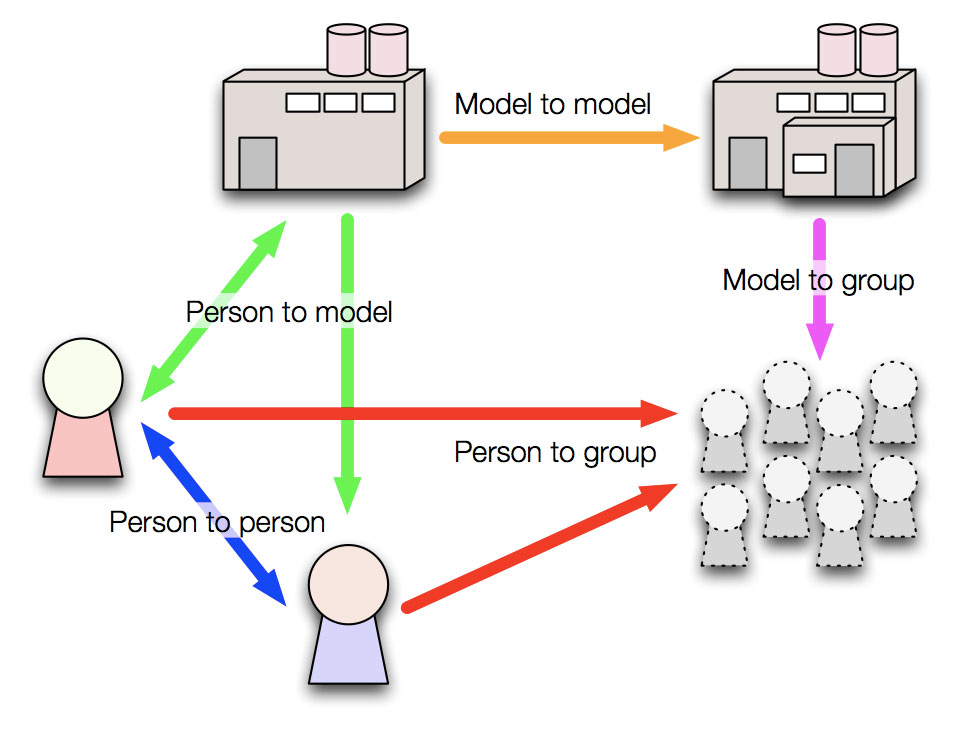
    <div class="image"><img src="http://www.stress-free.co.nz/sites/default/files/u63/bstreak_logo.png" alt="" width="169" height="127" /></div><p>Successful Architecture, Engineering and Construction (AEC) collaboration depends on   the timely dissemination of relevant information throughout the project team. This task   is made difficult by the number of collaboration interactions that occur and the   diverse range of digital tools used to support them. To improve this process it is   proposed that a collaboration kernel could weave together these disparate interactions   and tools. This will create a more productive and efficient collaboration environment   by allowing design discussion, issues and decisions to be efficiently and reliably   exchanged between team members and the digital tools they currently use. This article   describes how Project Bluestreak, a messaging service from Autodesk Labs, can be   transformed into an effective collaboration kernel. To guide this transformation, the   principles of the Project Information Cloud have been used to evaluate the existing   service and identify areas for future development. These fundamental digital   collaboration principles are derived from lessons learnt in the formation of the World   Wide Web. When these principles are embodied within a digital collaboration tool, they   have demonstrated an ability to improve the timely delivery of relevant information to   members of the project team.</p> <h2><span style="font-weight: normal;">Seamless collaboration within a fragmented   digital environment</span></h2> <p>A successful AEC digital collaboration environment brings multiple parties together   so that they can productively work towards a satisfactory and achievable design   outcome. During this process participants must engage in a variety of interactions   between team members and the digital models used to describe the design. These   interactions, and the technologies commonly used to enable them, are summarised in the   following diagram and table.</p> <p><strong>Note:</strong> The term 'model' refers   to a CAD or BIM digital model that represents the proposed design. Digital models play   an important role in the collaboration process as they communicate ideas, impose   restrictions and can be manipulated to reflect a participant's   opinion.</p> <div class="centeredimage"><a href="http://www.stress-free.co.nz/sites/default/files/u63/bstreak_interaction_lg.jpg"><img src="http://www.stress-free.co.nz/sites/default/files/u63/bstreak_interaction_sm.jpg" alt="" width="400" height="306" /><br />A diagram illustrating the relationship between the different digital collaboration interactions. (Click to enlarge)</a></div>  </div>

<ul class="field-taxonomy-vocabulary-1">

      <li>
      <a href="/thesis">thesis</a>    </li>
      <li>
      <a href="/tech/web_2_0">web 2.0</a>    </li>
      <li>
      <a href="/tech/autodesk">autodesk</a>    </li>
      <li>
      <a href="/tech/collaboration">collaboration</a>    </li>
      <li>
      <a href="/tech/architecture">architecture</a>    </li>
      <li>
      <a href="/tech/microblogging">micro-blogging</a>    </li>
  
</ul>
  </div>

  <ul class="links inline"><li class="node-readmore first"><a href="/autodesk_bluestreak_and_the_birth_of_a_collaboration_kernel" rel="tag" title="Read more on this subject" class="read-more">Read more</a></li>
<li class="disqus_comments_num last"><a href="/autodesk_bluestreak_and_the_birth_of_a_collaboration_kernel#disqus_thread" data-disqus-identifier="node/555">Comments</a></li>
</ul>
  
</div>
<div id="node-547" class="node node-story node-promoted node-teaser">

    <div class="submitted">
            22nd Jul 2009          </div>
  
        <h2 class="title"><a href="/suggestions_for_improving_your_research_process">Suggestions For Improving Your Research Process</a></h2>
    

  <div class="content">
    
  <div class="field-body">
    <p>Below is a presentation I gave today to a group of Honors students at Victoria University's School of Architecture and Design. The presentation covers what I have learnt during my time doing my PhD and the mistakes I made, especially around the research process.</p>
<div style="text-align: center;">
<object style="margin:0px" width="425" height="355">
<param name="movie" value="http://static.slidesharecdn.com/swf/ssplayer2.swf?doc=suggestionsforimprovingyourresearchprocess-090721172538-phpapp02&amp;stripped_title=suggestions-for-improving-your-research-process" /><param name="allowFullScreen" value="true" /><param name="allowScriptAccess" value="always" /><embed type="application/x-shockwave-flash" width="425" height="355" src="http://static.slidesharecdn.com/swf/ssplayer2.swf?doc=suggestionsforimprovingyourresearchprocess-090721172538-phpapp02&amp;stripped_title=suggestions-for-improving-your-research-process" allowscriptaccess="always" allowfullscreen="true"></embed></object>
</div>
<p>The primary message of the presentation is that research is by no means easy and when things get difficult you need to focus on MUPPET:</p>
<p><strong><span style="text-decoration: underline;">M</span>otivate</strong> - Eureka moments only take you so far.</p>
<p><strong><span style="text-decoration: underline;">U</span>ndertake</strong> - Write something every (other) day.</p>
<p><strong><span style="text-decoration: underline;">P</span>lan</strong> - Conciously identify your rainbow (objective), horse (process) and cart (interest).</p>
<p><strong><span style="text-decoration: underline;">P</span>onder</strong> - Understand how your actions relate to the research.</p>
<p><strong><span style="text-decoration: underline;">E</span>xchange</strong> - Talk to everyone (relevant) about your research.</p>
<p><strong><span style="text-decoration: underline;">T</span>est</strong> - Continually evaluate what you have done and where you are going.</p>
<p> </p>
  </div>

<ul class="field-taxonomy-vocabulary-1">

      <li>
      <a href="/thesis">thesis</a>    </li>
      <li>
      <a href="/tech/research">research</a>    </li>
  
</ul>
  </div>

  <ul class="links inline"><li class="node-readmore first"><a href="/suggestions_for_improving_your_research_process" rel="tag" title="Read more on this subject" class="read-more">Read more</a></li>
<li class="disqus_comments_num last"><a href="/suggestions_for_improving_your_research_process#disqus_thread" data-disqus-identifier="node/547">Comments</a></li>
</ul>
  
</div>
<div id="node-545" class="node node-story node-promoted node-teaser">

    <div class="submitted">
            15th May 2009          </div>
  
        <h2 class="title"><a href="/be2camp_presentation_on_architectural_microblogging">Be2camp presentation on architectural micro-blogging</a></h2>
    

  <div class="content">
    
  <div class="field-body">
    <p>Below is the slide presentation I will (hopefully) present at tonight's <a href="http://www.be2camp.com/page/be2camp-north">Be2camp North</a> un-conference. Basically the presentation graphically summarises my recent blog post on the<a href="/using_microblogging_to_record_architectural_design_conversation_alongside_the_bim"> use of micro-blogging within architectural collaboration</a>.</p>
<div id="__ss_1439162" style="text-align: center;">
<object style="margin:0px" width="425" height="355">
<param name="movie" value="http://static.slidesharecdn.com/swf/ssplayer2.swf?doc=usingmicro-bloggingtorecordarchitecturaldesignconversationalongsidethebim-090515050810-phpapp02&amp;stripped_title=using-microblogging-to-record-architectural-design-conversation-alongside-the-bim" /><param name="allowFullScreen" value="true" /><param name="allowScriptAccess" value="always" /><embed type="application/x-shockwave-flash" width="425" height="355" src="http://static.slidesharecdn.com/swf/ssplayer2.swf?doc=usingmicro-bloggingtorecordarchitecturaldesignconversationalongsidethebim-090515050810-phpapp02&amp;stripped_title=using-microblogging-to-record-architectural-design-conversation-alongside-the-bim" allowfullscreen="true" allowscriptaccess="always"></embed></object>
</div>
<p>The conference is in Liverpool and I am in New Zealand, so if the technology gods are not in a good mood things may go pear shaped very quickly...</p>
<p> </p>
  </div>

<ul class="field-taxonomy-vocabulary-1">

      <li>
      <a href="/thesis">thesis</a>    </li>
      <li>
      <a href="/tech/architecture">architecture</a>    </li>
      <li>
      <a href="/tech/collaborative_design">collaborative design</a>    </li>
      <li>
      <a href="/tech/microblogging">micro-blogging</a>    </li>
  
</ul>
  </div>

  <ul class="links inline"><li class="node-readmore first"><a href="/be2camp_presentation_on_architectural_microblogging" rel="tag" title="Read more on this subject" class="read-more">Read more</a></li>
<li class="disqus_comments_num last"><a href="/be2camp_presentation_on_architectural_microblogging#disqus_thread" data-disqus-identifier="node/545">Comments</a></li>
</ul>
  
</div>
<div id="node-544" class="node node-story node-promoted node-teaser">

    <div class="submitted">
            11th May 2009          </div>
  
        <h2 class="title"><a href="/using_microblogging_to_record_architectural_design_conversation_alongside_the_bim">Using micro-blogging to record architectural design conversation alongside the BIM</a></h2>
    

  <div class="content">
    
  <div class="field-body">
    <div class="image"><img src="/sites/default/files/u63/people_in_a_network.jpg" alt="" width="220" height="156" /></div> <p>The majority of professionals within the architecture, engineering and construction (AEC) industry use the telephone and email to collaborate on immediate design problems. Unfortunately there is a disconnection between this communication and the underlying Building Information Model (BIM) where the agreed upon architectural solution is recorded. As a consequence it is difficult for a person interacting solely with the BIM to take part or learn from this external conversation because they are often oblivious to it taking place. Micro-blogging is an emerging, Internet-based communication medium that may provide the common thread to tie these disparate sources of project information together. It will achieve this through enabling the issues and outcomes discussed during architectural conversations to be quickly recorded by any member of the project team. Those working on the BIM will be able to actively monitor and search across these conversations to keep up to date with the project’s state and help solve new design problems.</p> <p>Unlike blogging and instant messaging, micro-blogging can communicate simple messages between groups of people using mobile phones or any Internet connected device. These conversations are published online so they can be referenced in further design discussion, or indexed for searching alongside other sources of project information. For adoption to occur the technology must be integrated within the BIM toolset so that being part of this conversation is a natural extension of the digital workspace. Current micro-blogging services such as <a href="http://twitter.com">Twitter</a>, lack this integration and have not (yet) been tailored to meet the specific demands of architectural collaboration. A focused implementation would likely improve architectural collaboration because micro-blogging embodies many of the principles of the <a href="/harvard_critical_digital_conference_2008_paper">Project Information Cloud</a>. Its qualities of simplicity, ubiquity, decentralisation, modularity, awareness, context sensitivity and evolving semantics make it a promising collaboration medium, and one that could move the AEC industry towards the goal of <a href="/hyperlinked_practice">hyperlinked practice</a>.</p>   </div>

<ul class="field-taxonomy-vocabulary-1">

      <li>
      <a href="/thesis">thesis</a>    </li>
      <li>
      <a href="/tech/collaboration">collaboration</a>    </li>
      <li>
      <a href="/tech/architecture">architecture</a>    </li>
      <li>
      <a href="/tech/collaborative_design">collaborative design</a>    </li>
      <li>
      <a href="/tech/microblogging">micro-blogging</a>    </li>
  
</ul>
  </div>

  <ul class="links inline"><li class="node-readmore first"><a href="/using_microblogging_to_record_architectural_design_conversation_alongside_the_bim" rel="tag" title="Read more on this subject" class="read-more">Read more</a></li>
<li class="disqus_comments_num last"><a href="/using_microblogging_to_record_architectural_design_conversation_alongside_the_bim#disqus_thread" data-disqus-identifier="node/544">Comments</a></li>
</ul>
  
</div>
<div id="node-543" class="node node-story node-promoted node-teaser">

    <div class="submitted">
            22nd Apr 2009          </div>
  
        <h2 class="title"><a href="/google_o3d_may_finally_bring_3d_to_the_web">Google O3D may finally bring 3D to the Web</a></h2>
    

  <div class="content">
    
  <div class="field-body">
    <div class="image"><img src="/sites/default/files/u63/google_labs.jpg" alt="" width="164" height="71" /></div>
<p>Today Google released a very early preview of <a href="http://code.google.com/apis/o3d/">O3D</a>, a cross-platform, open source plug-in that enables OpenGL accelerated graphics within Web browsers. Delivering 3D graphics within browsers is not a new thing, (remember <a href="http://en.wikipedia.org/wiki/VRML">VRML</a>?) but what makes this initiative promising is that it works on all platforms and is backed by Google. Performance-wise O3D seems very snappy when compared to alternatives such as Flash 3D. As a result some of the <a href="http://code.google.com/apis/o3d/docs/samplesdirectory.html">initial demonstrations</a> are very impressive, and it hints at a future where Google Earth and SketchUp leave their desktop roots behind to become pure web applications.</p>
<div style="text-align: center; margin: 5px 0px 5px 0px;">
<object width="560" height="340">
<param name="movie" value="http://www.youtube.com/v/z02_yj6-VCY&amp;hl=en&amp;fs=1" /><param name="allowFullScreen" value="true" /><param name="allowscriptaccess" value="always" /><embed type="application/x-shockwave-flash" width="560" height="340" src="http://www.youtube.com/v/z02_yj6-VCY&amp;hl=en&amp;fs=1" allowscriptaccess="always" allowfullscreen="true"></embed></object>
</div>
  </div>

<ul class="field-taxonomy-vocabulary-1">

      <li>
      <a href="/thesis">thesis</a>    </li>
      <li>
      <a href="/tech/google">google</a>    </li>
      <li>
      <a href="/tech/autodesk">autodesk</a>    </li>
      <li>
      <a href="/tech/dragonfly">dragonfly</a>    </li>
  
</ul>
  </div>

  <ul class="links inline"><li class="node-readmore first"><a href="/google_o3d_may_finally_bring_3d_to_the_web" rel="tag" title="Read more on this subject" class="read-more">Read more</a></li>
<li class="disqus_comments_num last"><a href="/google_o3d_may_finally_bring_3d_to_the_web#disqus_thread" data-disqus-identifier="node/543">Comments</a></li>
</ul>
  
</div>
<div id="node-541" class="node node-story node-promoted node-teaser">

    <div class="submitted">
            13th Mar 2009          </div>
  
        <h2 class="title"><a href="/autodesk_dragonfly_emerges_from_its_larvae">Autodesk Dragonfly emerges from its larvae</a></h2>
    

  <div class="content">
    
  <div class="field-body">
    <p><a href="http://labs.autodesk.com/technologies/dragonfly/">Project Dragonfly</a> is an Autodesk Labs technology preview of a web-based, simple to use architectural planning tool. It represents a step towards a future where CAD and BIM model editors are not considered bloated, complex, or desktop-bound. Whilst the current functionality of the tool is limited, it is technically impressive, and the underlying concept hints that Autodesk’s broader web strategy (as discussed in ‘<a href="/autodesk_beyond_desktop_cad_and_bim">Autodesk Beyond Desktop CAD &amp; BIM</a>’) is proceeding at a slow, but steady pace.</p>
<div class="centeredimage"><a href="/sites/default/files/u63/dragonfly-lg.jpg"> <img src="/sites/default/files/u63/dragonfly-sm.jpg" alt="" width="400" height="276" /><br />An example of the 3D visualisation capabilities of Dragonfly (click to enlarge) </a></div>
  </div>

<ul class="field-taxonomy-vocabulary-1">

      <li>
      <a href="/thesis">thesis</a>    </li>
      <li>
      <a href="/tech/autodesk">autodesk</a>    </li>
      <li>
      <a href="/tech/cad">cad</a>    </li>
      <li>
      <a href="/tech/bim">bim</a>    </li>
      <li>
      <a href="/tech/seek">seek</a>    </li>
      <li>
      <a href="/tech/dragonfly">dragonfly</a>    </li>
  
</ul>
  </div>

  <ul class="links inline"><li class="node-readmore first"><a href="/autodesk_dragonfly_emerges_from_its_larvae" rel="tag" title="Read more on this subject" class="read-more">Read more</a></li>
<li class="disqus_comments_num last"><a href="/autodesk_dragonfly_emerges_from_its_larvae#disqus_thread" data-disqus-identifier="node/541">Comments</a></li>
</ul>
  
</div>
<div id="node-539" class="node node-story node-promoted node-teaser">

    <div class="submitted">
            26th Feb 2009          </div>
  
        <h2 class="title"><a href="/bimserver_and_the_potential_of_serverside_bim">BIMserver and the potential of server-side BIM</a></h2>
    

  <div class="content">
    
  <div class="field-body">
    <div class="image"><img src="/sites/default/files/u63/bimserver_logo.png" alt="" width="180" height="46" /></div>
<p>We are now at a stage where a computer's speed and network connection are no longer significant process bottlenecks in digital architectural design. As a consequence the need for efficient digital collaboration tools within the architecture, engineering and construction (AEC) industry is a growing requirement. The <a href="http://www.bimserver.org/">BIMserver project</a> from <a href="http://www.tno.nl">TNO</a> and the <a href="http://w3.tue.nl/en/">University of Eindhoven</a> is exploring how collaborative design can be improved through the combination of <a href="http://en.wikipedia.org/wiki/Building_Information_Modeling">Building Information Model</a> (BIM) and open source server technologies. Unlike conventional, workstation-based CAD software, BIMserver stores BIM data within a dedicated server where it can be accessed by all members of the design team simultaneously. Whilst conceptually <a href="http://cic.vtt.fi/projects/vbe-net/data/2005_Integration_of_Multiple_Product_with_IFC_Model_Servers_@_CIBW78_Dresden.pdf">not a new idea</a>, the project is the first to move beyond the research lab and be promoted as software (almost) ready for production deployment within AEC organisations.</p>
<h2>What is a BIM server?</h2>
<p>BIM in its most general sense is a collection of 2D, 3D and textual data that when assembled within a computer’s memory creates an accurate and detailed representation of an architectural project. Like its predecessor CAD, BIM data is typically stored in a digital file (or files) where it is accessed directly by complex, workstation-based applications such as <a href="http://usa.autodesk.com/adsk/servlet/index?id=3781831&amp;siteID=123112">Revit</a> and <a href="http://www.bentley.com/en-US/Products/microstation+product+line/">Microstation</a>. In contrast a BIM server stores all design data internally and exposes its information to client applications through a series of well controlled and documented interfaces. This has a number of practical and technical advantages, the most significant being all client applications read from, and write to, the same digital model. In comparison when using a file-based BIM it is up to each participant to ensure they are working on the latest revision of the project’s files. Additionally by centralising the flow of data a BIM server enables near real-time collaboration as changes to the model are reflected on all clients each time their view of the data is refreshed from the server.</p>
<div class="centeredimage"><a href="/sites/default/files/u63/bimserver-diagram_lg.jpg"><img src="/sites/default/files/u63/bimserver-diagram_sm.jpg" alt="" width="400" height="425" /><br /> A functional overview of a BIM server ecosystem (click to enlarge)</a></div>
<p>Another important characteristic of a BIM server is that the building model exists as a live entity, distinct from the client applications that interact with it. This means client applications are simpler to write because they do not need to know how to comprehend an entire digital model, they simply need to ask the BIM server for the subset of information that concerns them. For example using a traditional file-based BIM an application that counts the number of doors in a design needs to parse the file, construct an in-memory model, and then count the door instances. In comparison a BIM server handles the parsing of the digital model, all the client application needs to do is construct a query that asks how many doors the design has. Another benefit of a live BIM is that the server can automatically respond to outside events such as scheduled processes or changes to data hosted by external services. For example the BIM server could monitor the pricing and availability of materials used in the design and automatically update the model to reflect these variations. The end result is that instead of being viewed as a static, “dumb” file, the migration of the Building Information Model into a server would create a far more dynamic and accessible project resource.</p>
  </div>

<ul class="field-taxonomy-vocabulary-1">

      <li>
      <a href="/thesis">thesis</a>    </li>
      <li>
      <a href="/tech/server">server</a>    </li>
      <li>
      <a href="/tech/bim">bim</a>    </li>
      <li>
      <a href="/tech/ifc">ifc</a>    </li>
      <li>
      <a href="/tech/bimserver">bimserver</a>    </li>
  
</ul>
  </div>

  <ul class="links inline"><li class="node-readmore first"><a href="/bimserver_and_the_potential_of_serverside_bim" rel="tag" title="Read more on this subject" class="read-more">Read more</a></li>
<li class="disqus_comments_num last"><a href="/bimserver_and_the_potential_of_serverside_bim#disqus_thread" data-disqus-identifier="node/539">Comments</a></li>
</ul>
  
</div>
<div id="node-530" class="node node-story node-teaser">

    <div class="submitted">
            20th Oct 2008          </div>
  
        <h2 class="title"><a href="/making_digital_collaboration_more_betterer">Making digital collaboration &quot;more betterer&quot;</a></h2>
    

  <div class="content">
    
  <div class="field-body">
    <p>Recently I gave a presentation at Victoria University on the work I am doing with my PhD. For posterity I have uploaded this presentation to <a href="http://www.slideshare.net/">Slideshare</a>.</p>
<div id="__ss_670860" style="text-align: center;">
<object style="margin:0px" width="425" height="355">
<param name="movie" value="http://static.slideshare.net/swf/ssplayer2.swf?doc=making-digital-collaboration-more-betterer-1224479430051216-9&amp;stripped_title=making-digital-collaboration-more-betterer-presentation" /><param name="allowFullScreen" value="true" /><param name="allowScriptAccess" value="always" /><embed type="application/x-shockwave-flash" width="425" height="355" src="http://static.slideshare.net/swf/ssplayer2.swf?doc=making-digital-collaboration-more-betterer-1224479430051216-9&amp;stripped_title=making-digital-collaboration-more-betterer-presentation" allowfullscreen="true" allowscriptaccess="always"></embed></object>
<div style="text-align: center; font-size: 11px; font-family: tahoma,arial; height: 26px; padding-top: 2px;">View <a style="text-decoration:underline;" title="View Making digital collaboration &quot;more betterer&quot;" href="http://www.slideshare.net/paintbuoy/making-digital-collaboration-more-betterer-presentation?type=powerpoint">presentation</a>. (tags: <a style="text-decoration:underline;" href="http://slideshare.net/tag/construction">construction</a> <a style="text-decoration:underline;" href="http://slideshare.net/tag/design">design</a>)</div>
</div>
<p>The talk covered the problem of digital architectural collaboration and how it is an immature field compared to other aspects of architecture. Due to the pressing nature of architectural collaboration the solutions to this problem will not be revolutionary, e.g. <a href="http://secondlife.com/">Second Life-like</a>, but rather evolutionary, and at times even haphazard.</p>
<p>After introducing the problem-space I went on to discuss the emergence of the <a href="/behind_the_building_information_model_buzz">Building Information Model</a> (BIM) as a central figure in digital architectural collaboration. However whilst BIM is an excellent productivity tool it does not address many of the industry's collaboration issues - in fact in many respects it compounds them.</p>
<p>WIth BIM identified as a significant yet problematic collaboration technology I outlined the need for an overriding set of digital collaboration principles that can be applied to future collaboration technology decisions. Rather than starting from zero I propose that we build on top of the underlying theories of distributed systems such as the Internet. With this need and methodology identified, I go on to introduce the seven principles of the <a href="/harvard_critical_digital_conference_2008_paper">Project Information Cloud</a>:</p>
<ol><li>Simplicity</li>
<li>Ubiquity</li>
<li>Decentralisation</li>
<li>Modular design</li>
<li>Information awareness</li>
<li>Context sensitivity</li>
<li>Evolutionary semantics</li>
</ol><p>Through application of these principles it is hoped we can establish Project Information Clouds within architectural projects. These unbounded information clouds will link significant amounts of projects data into intelligent,<a href="http://www.smallpieces.com/"> loosely joined</a>, knowledge-bases.</p>
<p> </p>
  </div>

<ul class="field-taxonomy-vocabulary-1">

      <li>
      <a href="/thesis">thesis</a>    </li>
      <li>
      <a href="/tech/collaboration">collaboration</a>    </li>
      <li>
      <a href="/tech/architecture">architecture</a>    </li>
      <li>
      <a href="/tech/collaborative_design">collaborative design</a>    </li>
  
</ul>
  </div>

  <ul class="links inline"><li class="node-readmore first"><a href="/making_digital_collaboration_more_betterer" rel="tag" title="Read more on this subject" class="read-more">Read more</a></li>
<li class="disqus_comments_num last"><a href="/making_digital_collaboration_more_betterer#disqus_thread" data-disqus-identifier="node/530">Comments</a></li>
</ul>
  
</div>
<div id="node-519" class="node node-story node-promoted node-teaser">

    <div class="submitted">
            25th Aug 2008          </div>
  
        <h2 class="title"><a href="/projjex_online_project_collaboration_for_the_rest_of_us">Projjex: Online project collaboration for the rest of us?</a></h2>
    

  <div class="content">
    
  <div class="field-body">
    <div class="image"><img src="/sites/default/files/u63/projjex.jpg" alt="" width="160" height="55" /></div>
<p>I have recently been checking out <a href="http://www.projjex.com/">Projjex</a>, a relative newcomer to the online project/collaboration/document management market. The "cool kid on the block" when it comes to this field is <a id="bfhn" title="37Signals' Basecamp" href="http://www.basecamphq.com/">37signals' Basecamp</a>, but it seems like the two companies are after very different audiences. Basecamp is synonymous with "Web 2.0" and has a look and feel that suits this crowd. In contrast Projjex seems to be going after the older (more mature?) audience with an offering that emphasises practicality over design.</p>
<p id="noe70">My sweeping generalisation is that if you read <a id="xdgk" title="TechCruch" href="http://www.techcrunch.com/">TechCruch</a> religiously then Basecamp is for you, whereas if you have never heard of TechCrunch (or prefer 'real news') then Projjex is probably more to your liking.</p>
<h2 id="sauk">The genre clash dilemma</h2>
<p id="noe71">Before I go over Projjex I need to get a couple of things off my chest. The problem I have with these project/collaboration/document management tools is that they are trying to do too much with too little. It is like a summer blockbuster that cannot decide whether it is an action, comedy, drama or romance film and just ends up being nothing. Pulling something like this off is almost impossible and at some point the software developer has to put a stake in the ground and focus their efforts on one primary thing. For example when you take a look at the 'traditional' desktop each one of these functions is handled by a dedicated product:</p>
<ul id="y33s"><li id="y33s0"><strong id="y33s1">Project management:</strong> <a id="nmha" title="Microsoft Project" href="http://office.microsoft.com/en-us/project/">Microsoft Project</a></li>
<li id="y33s2"><strong id="y33s3">Collaboration:</strong> Outlook, Notes, Groupwise, Apple Mail...</li>
<li id="y33s4"><strong id="y33s5">Document Management:</strong> <a id="jhs2" title="Sharepoint" href="http://www.microsoft.com/Sharepoint/">Sharepoint</a>, <a id="xb:m" title="Alfresco" href="http://www.alfresco.com/">Alfresco</a></li>
</ul><p id="noe72">Every one of the above products has a very deep feature-set and whilst it is possible to monitor projects in Sharepoint or manage documents within Outlook, these capabilities are purely secondary and often accidental.</p>
  </div>

<ul class="field-taxonomy-vocabulary-1">

      <li>
      <a href="/thesis">thesis</a>    </li>
      <li>
      <a href="/tech/collaboration">collaboration</a>    </li>
      <li>
      <a href="/tech/project_management">project management</a>    </li>
  
</ul>
  </div>

  <ul class="links inline"><li class="node-readmore first"><a href="/projjex_online_project_collaboration_for_the_rest_of_us" rel="tag" title="Read more on this subject" class="read-more">Read more</a></li>
<li class="disqus_comments_num last"><a href="/projjex_online_project_collaboration_for_the_rest_of_us#disqus_thread" data-disqus-identifier="node/519">Comments</a></li>
</ul>
  
</div>
<div id="node-517" class="node node-story node-promoted node-teaser">

    <div class="submitted">
            22nd Aug 2008          </div>
  
        <h2 class="title"><a href="/autodesk_beyond_desktop_cad_and_bim">Autodesk Beyond Desktop CAD &amp; BIM</a></h2>
    

  <div class="content">
    
  <div class="field-body">
    <h1 id="ysyv0"><em id="ilgz">or:</em> How they Stopped Worrying and Learned to Love the Internet</h1>
<div class="centeredimage"><img src="/sites/default/files/u63/autodesk_cloud_bomb.jpg" alt="" width="400" height="256" /></div>
<p id="ey-0">It is my opinion that Autodesk is in the early stages of implementing a bold Internet-centric strategy that if successful will position it as the <a id="yfih" title="Software + Services" href="http://msdn.microsoft.com/en-us/architecture/aa699384.aspx">Software + Services</a> giant within the Architecture, Engineering and Construction (AEC) industry. Excluding the <a id="axbx" title="spinoff and re-purchase of Buzzsaw" href="http://news.cnet.com/Autodesk-to-buy-back-spinoff/2100-1017_3-269689.html">spin-off and re-purchase of Buzzsaw</a> during the Dot-com bubble one could say Autodesk's attitude towards the Web, like the rest of the AEC industry, has been tepid at the best. In a similar manner to Microsoft, the historical and financial foundations of Autodesk lie in the traditional, desktop software market. Here its catalogue of heavy-weight tools compete for domination of the competitive CAD, BIM, animation and rendering markets. Unlike <a id="i38a" title="Microsoft vs Google" href="http://blogs.zdnet.com/microsoft/?p=1396">Microsoft vs Google</a>, Autodesk and its competitors (such as <a id="olhl" title="Bentley Systems" href="http://www.bentley.com/">Bentley Systems</a>) have yet to face serious competition from an Internet savvy, AEC software heavy-weight. Rather than waiting for such a competitor to emerge Mike Haley, Jeff Wright and the rest of Autodesk's Content division are building it 'in-house'.</p>
  </div>

<ul class="field-taxonomy-vocabulary-1">

      <li>
      <a href="/thesis">thesis</a>    </li>
      <li>
      <a href="/tech/autodesk">autodesk</a>    </li>
      <li>
      <a href="/tech/software_as_a_service">software as a service</a>    </li>
      <li>
      <a href="/tech/cad">cad</a>    </li>
      <li>
      <a href="/tech/amazon">amazon</a>    </li>
      <li>
      <a href="/tech/bim">bim</a>    </li>
  
</ul>
  </div>

  <ul class="links inline"><li class="node-readmore first"><a href="/autodesk_beyond_desktop_cad_and_bim" rel="tag" title="Read more on this subject" class="read-more">Read more</a></li>
<li class="disqus_comments_num last"><a href="/autodesk_beyond_desktop_cad_and_bim#disqus_thread" data-disqus-identifier="node/517">Comments</a></li>
</ul>
  
</div>
<h2 class="element-invisible">Pages</h2><div class="item-list"><ul class="pager"><li class="pager-next first last"><a href="/taxonomy/term/5/0/feed?page=1">older »</a></li>
</ul></div>  </div>
</div>
  </div>
        </div>

		<div class="clear"><!-- --></div>
		
    </div>
  </div>

  
</div>

</div>

</div>        <script type="text/javascript" src="//ajax.googleapis.com/ajax/libs/jquery/1.12.4/jquery.min.js"></script>
<script type="text/javascript">
<!--//--><![CDATA[//><!--
window.jQuery || document.write("<script src='/sites/all/modules/jquery_update/replace/jquery/1.12/jquery.min.js'>\x3C/script>")
//--><!]]>
</script>
<script type="text/javascript" src="https://www.stress-free.co.nz/sites/default/files/js/js_GOikDsJOX04Aww72M-XK1hkq4qiL_1XgGsRdkL0XlDo.js"></script>
<script type="text/javascript" src="https://www.stress-free.co.nz/sites/default/files/js/js_waP91NpgGpectm_6Y2XDEauLJ8WCSCBKmmA87unpp2E.js"></script>
<script type="text/javascript" src="https://www.googletagmanager.com/gtag/js?id=UA-386534-1"></script>
<script type="text/javascript">
<!--//--><![CDATA[//><!--
window.dataLayer = window.dataLayer || [];function gtag(){dataLayer.push(arguments)};gtag("js", new Date());gtag("set", "developer_id.dMDhkMT", true);gtag("config", "UA-386534-1", {"groups":"default"});
//--><!]]>
</script>
<script type="text/javascript" src="https://www.stress-free.co.nz/sites/default/files/js/js_tzEGTRyjbSNo4GS4Eh6_ZJb5BgaDvQF9UshkdxwThp0.js"></script>
<script type="text/javascript">
<!--//--><![CDATA[//><!--
jQuery.extend(Drupal.settings, {"basePath":"\/","pathPrefix":"","setHasJsCookie":0,"ajaxPageState":{"theme":"stressfree","theme_token":"_OMdz9Io0OmDGwB2_ddAhTlbywNjTzCCvmGe4_R4Kb0","js":{"\/\/ajax.googleapis.com\/ajax\/libs\/jquery\/1.12.4\/jquery.min.js":1,"0":1,"misc\/jquery-extend-3.4.0.js":1,"misc\/jquery-html-prefilter-3.5.0-backport.js":1,"misc\/jquery.once.js":1,"misc\/drupal.js":1,"sites\/all\/modules\/jquery_update\/js\/jquery_browser.js":1,"sites\/all\/modules\/google_analytics\/googleanalytics.js":1,"https:\/\/www.googletagmanager.com\/gtag\/js?id=UA-386534-1":1,"1":1,"sites\/all\/modules\/disqus\/disqus.js":1},"css":{"modules\/taxonomy\/taxonomy.css":1,"sites\/all\/themes\/stressfree\/css\/styles.css":1}},"googleanalytics":{"account":["UA-386534-1"],"trackOutbound":1,"trackMailto":1,"trackDownload":1,"trackDownloadExtensions":"7z|aac|arc|arj|asf|asx|avi|bin|csv|doc(x|m)?|dot(x|m)?|exe|flv|gif|gz|gzip|hqx|jar|jpe?g|js|mp(2|3|4|e?g)|mov(ie)?|msi|msp|pdf|phps|png|ppt(x|m)?|pot(x|m)?|pps(x|m)?|ppam|sld(x|m)?|thmx|qtm?|ra(m|r)?|sea|sit|tar|tgz|torrent|txt|wav|wma|wmv|wpd|xls(x|m|b)?|xlt(x|m)|xlam|xml|z|zip"},"disqusComments":"stressfreenz"});
//--><!]]>
</script>
  </body>
</html>