<?xml version="1.0" encoding="UTF-8"?><feed
	xmlns="http://www.w3.org/2005/Atom"
	xmlns:thr="http://purl.org/syndication/thread/1.0"
	xml:lang="en-US"
	xml:base="https://digitalhealth.blog.gov.uk/wp-atom.php"
	>
	<title type="text">Digital health and social care</title>
	<subtitle type="text">Blogs about digital in the health and care system by the Digital team at the Department of Health and Social Care..</subtitle>

	<updated>2020-03-20T13:46:49Z</updated>

	<link rel="alternate" type="text/html" href="https://digitalhealth.blog.gov.uk" />
	<id>https://digitalhealth.blog.gov.uk/feed/</id>
	<link rel="self" type="application/atom+xml" href="https://digitalhealth.blog.gov.uk/feed/" />

	
	<entry>
		<author>
			<name>Kassandra Karpathakis</name>
					</author>
		<title type="html"><![CDATA[Share your thoughts on Public Health England’s new online guidance on evaluating digital health products ]]></title>
		<link rel="alternate" type="text/html" href="https://digitalhealth.blog.gov.uk/2020/03/20/share-your-thoughts-on-public-health-englands-new-online-guidance-on-evaluating-digital-health-products/" />
		<id>https://digitalhealth.blog.gov.uk/?p=11643</id>
		<updated>2020-03-20T13:46:49Z</updated>
		<published>2020-03-20T14:00:04Z</published>
		<category scheme="https://digitalhealth.blog.gov.uk" term="Beta" /><category scheme="https://digitalhealth.blog.gov.uk" term="Services and products" />		<summary type="html"><![CDATA[Public Health England has launched new online guidance on evaluating digital health products. Kassandra Karpathakis and Hasan Ali at PHE explain how the service can help teams. ]]></summary>
				<content type="html" xml:base="https://digitalhealth.blog.gov.uk/2020/03/20/share-your-thoughts-on-public-health-englands-new-online-guidance-on-evaluating-digital-health-products/"><![CDATA[<p><span style="font-weight: 400">Have you ever wondered if that newfangled digital health product you started using is actually making you healthier? You are not alone!  </span></p>
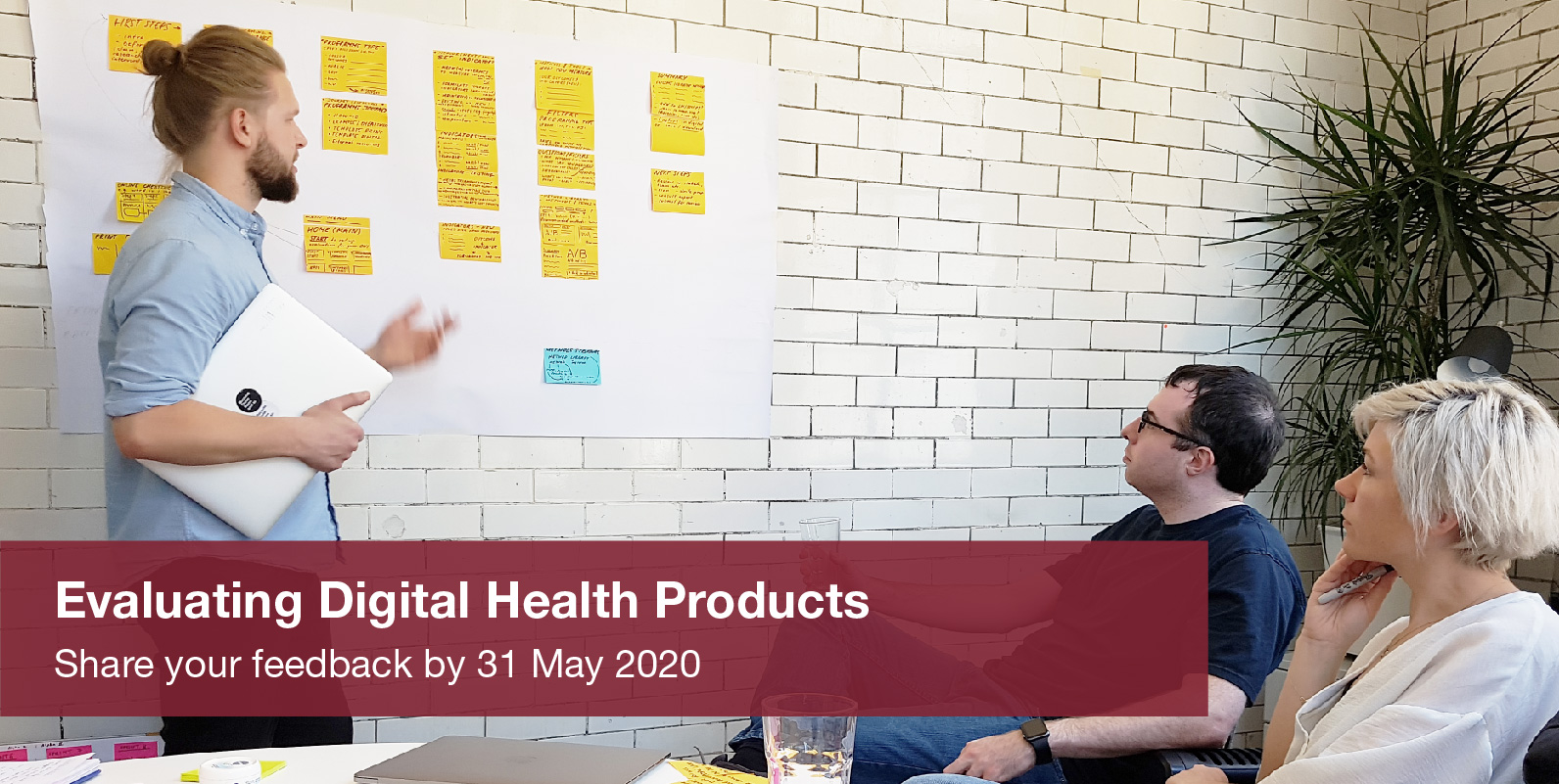
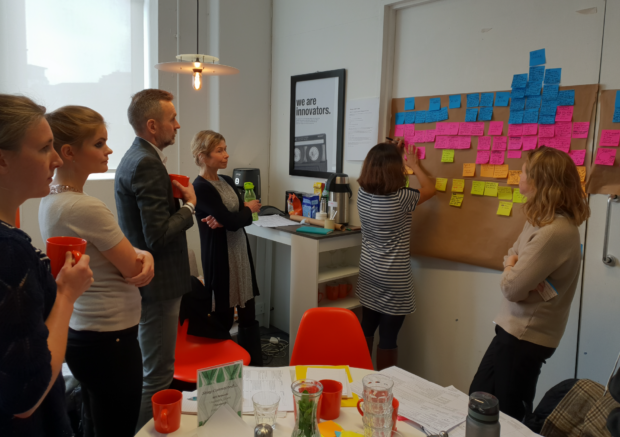
<p><img class="alignnone size-full wp-image-11644" src="https://digitalhealth.blog.gov.uk/wp-content/uploads/sites/106/2020/03/Evaluation_Blog_Image_Feedback.jpg" alt="Three people looking at a wall of card. There is banner across the photo that says 'Evaluating Digital Health Products. Share your feedback by 31st May 2020'." width="1592" height="801" srcset="https://digitalhealth.blog.gov.uk/wp-content/uploads/sites/106/2020/03/Evaluation_Blog_Image_Feedback.jpg 1592w, https://digitalhealth.blog.gov.uk/wp-content/uploads/sites/106/2020/03/Evaluation_Blog_Image_Feedback-310x156.jpg 310w, https://digitalhealth.blog.gov.uk/wp-content/uploads/sites/106/2020/03/Evaluation_Blog_Image_Feedback-620x312.jpg 620w, https://digitalhealth.blog.gov.uk/wp-content/uploads/sites/106/2020/03/Evaluation_Blog_Image_Feedback-150x75.jpg 150w, https://digitalhealth.blog.gov.uk/wp-content/uploads/sites/106/2020/03/Evaluation_Blog_Image_Feedback-768x386.jpg 768w, https://digitalhealth.blog.gov.uk/wp-content/uploads/sites/106/2020/03/Evaluation_Blog_Image_Feedback-1536x773.jpg 1536w, https://digitalhealth.blog.gov.uk/wp-content/uploads/sites/106/2020/03/Evaluation_Blog_Image_Feedback-435x219.jpg 435w" sizes="(max-width: 1592px) 100vw, 1592px" /></p>
<p><span style="font-weight: 400">Lots of apps, wearables, and other digital health products are being developed, but measuring the success and effectiveness of these products can be complicated. </span></p>
<p><span style="font-weight: 400">Public Health England has just launched a new service to help teams developing or running a digital health product to evaluate if it is effective and actually improves users’ health outcomes.</span></p>
<p><span style="font-weight: 400">The service includes online </span><a href="https://www.gov.uk/government/collections/evaluating-digital-health-products"><span style="font-weight: 400">practical guidance</span></a><span style="font-weight: 400"> available to everyone. We are now seeking feedback by </span><b>31 May 2020</b><span style="font-weight: 400"> on the first version of the </span><a href="https://www.gov.uk/government/collections/evaluating-digital-health-products"><span style="font-weight: 400">guidance</span></a><span style="font-weight: 400"> including: </span></p>
<ul>
<li style="font-weight: 400"><span style="font-weight: 400">How useful is it? What would make it more useful to you? </span></li>
<li style="font-weight: 400"><span style="font-weight: 400">What did you like about it? Dislike about it? </span></li>
<li style="font-weight: 400"><span style="font-weight: 400">What would you like to know more about? </span></li>
</ul>
<p><span style="font-weight: 400">Share your thoughts by completing our </span><a href="https://surveys.phe.org.uk/TakeSurvey.aspx?SurveyID=llKL652KL#"><span style="font-weight: 400">feedback form</span></a><span style="font-weight: 400"> or get in touch at </span><a href="mailto:evaluation@phe.gov.uk"><span style="font-weight: 400">evaluation@phe.gov.uk</span></a><span style="font-weight: 400">. </span></p>
<p><span style="font-weight: 400">How will our service help teams evaluate if digital products are actually making people healthier? </span></p>
<p><span style="font-weight: 400">Our service is composed of three main parts to support teams through all steps in evaluating a digital health product:</span></p>
<ol>
<li><b>Practical guidance<span style="font-weight: 400"> on evaluating digital health products that takes you through the whole journey of conducting an evaluation. The guidance was written by academic evaluation experts from </span><a href="https://www.ucl.ac.uk/"><span style="font-weight: 400">University College London</span></a><span style="font-weight: 400">, </span><a href="https://www.ucl.ac.uk/health-informatics/people/henry-potts"><span style="font-weight: 400">Dr. Henry Potts</span></a><span style="font-weight: 400"> and </span><a href="https://www.ucl.ac.uk/epidemiology-health-care/research/pcph/research/e-health-unit/people/paulina-bondaronek"><span style="font-weight: 400">Dr. Paulina Bondaronek</span></a><span style="font-weight: 400">, with significant </span><a href="https://www.gov.uk/guidance/get-started-evaluating-digital-health-products#acknowledgements"><span style="font-weight: 400">contributions</span></a><span style="font-weight: 400"> from Public Health England’s in-house Digital team and Advisory Group.</span> <span style="font-weight: 400"> </span></b></li>
<li><strong>Facilitated workshops</strong> <span style="font-weight: 400">offered by Public Health England’s Evidence and Evaluation team that provide a structured, personalised environment where digital teams can map how their product works, what they want to achieve and how this can be measured in an evaluation. </span><span style="font-weight: 400">At the moment, our workshops are only offered at Public Health England and to a select few digital teams across the country. We are working on providing the workshops more broadly, so, in the meantime, you can run one with your own team by following our guidance <a href="https://www.gov.uk/guidance/define-how-your-product-works-evaluating-digital-health-products">here</a>. Let us know how it goes!</span></li>
<li><span style="font-weight: 400">We are establishing<strong> a </strong></span><strong>community of best practice</strong><span style="font-weight: 400"> on the topic of digital health evaluation, in partnership with industry leaders. Watch this space or reach out to us on </span><a href="mailto:evaluation@phe.gov.uk"><span style="font-weight: 400">evaluation@phe.gov.uk</span></a><span style="font-weight: 400"> if you’d like to get involved.   </span></li>
</ol>
<p><span style="font-weight: 400">Why are we confident our service will actually make evaluating digital health products easier?</span></p>
<p><span style="font-weight: 400">We went out and </span><a href="https://digitalhealth.blog.gov.uk/2018/07/27/guest-post-leading-the-way-in-evaluating-digital-public-health/"><span style="font-weight: 400">spoke to real teams</span></a><span style="font-weight: 400"> designing, developing and commissioning digital health products across the health system and industry. This helped us to understand their experiences and how Public Health England could make their lives easier. </span></p>
<p><span style="font-weight: 400">Barriers to evaluating digital health products include accessing a representative group of users, capturing more insightful data than just “vanity metrics” (clicks, downloads, likes) and keeping pace with the rapid change a product undergoes over the course of its lifecycle. </span></p>
<p><span style="font-weight: 400">We co-designed different solutions for evaluating products with digital health teams, checking in with our Advisory Group to make sure we were on track and adhering to best practice such as the </span><a href="https://www.nice.org.uk/"><span style="font-weight: 400">National Institute of Health and Care Excellence</span></a><span style="font-weight: 400">’s </span><a href="https://www.nice.org.uk/about/what-we-do/our-programmes/evidence-standards-framework-for-digital-health-technologies"><span style="font-weight: 400">Evidence Standards Framework for Digital Health Technology</span></a><span style="font-weight: 400">. </span></p>
<p><span style="font-weight: 400">We even </span><a href="https://digitalhealth.blog.gov.uk/2019/04/17/how-were-creating-a-toolkit-for-evaluating-digital-health-products/"><span style="font-weight: 400">role played</span></a><span style="font-weight: 400"> what an ideal evaluation service experience would be for a digital team with Public Health England’s very own </span><a href="https://apps.apple.com/gb/app/one-you-couch-to-5k/id1082307672"><span style="font-weight: 400">Couch-to-5K</span></a><span style="font-weight: 400">! </span></p>
<p><a href="https://www.gov.uk/government/collections/evaluating-digital-health-products"><span style="font-weight: 400">Evaluating Digital Health Products</span></a><span style="font-weight: 400"> is the collective effort not just of us here at Public Health England but of all the digital health teams across the health system, local government and industry. These teams kindly gave us their time, thoughts, and energy to collaboratively unpick how best to evaluate digital health products.</span></p>
<p><span style="font-weight: 400">Share your thoughts on </span><a href="https://www.gov.uk/government/collections/evaluating-digital-health-products"><span style="font-weight: 400">our practical online guidance</span></a><span style="font-weight: 400"> by completing our </span><a href="https://surveys.phe.org.uk/TakeSurvey.aspx?SurveyID=llKL652KL#"><span style="font-weight: 400">feedback form</span></a><span style="font-weight: 400"> by </span><b>31 May 2020 </b><span style="font-weight: 400">or get in touch at </span><a href="mailto:evaluation@phe.gov.uk"><span style="font-weight: 400">evaluation@phe.gov.uk</span></a><span style="font-weight: 400">. </span></p>
<p><span style="font-weight: 400">We are looking forward to hearing from you! </span></p>
<p>&nbsp;</p>
]]></content>
						<link rel="replies" type="text/html" href="https://digitalhealth.blog.gov.uk/2020/03/20/share-your-thoughts-on-public-health-englands-new-online-guidance-on-evaluating-digital-health-products/#comments" thr:count="0"/>
		<link rel="replies" type="application/atom+xml" href="https://digitalhealth.blog.gov.uk/2020/03/20/share-your-thoughts-on-public-health-englands-new-online-guidance-on-evaluating-digital-health-products/feed/" thr:count="0"/>
		<thr:total>0</thr:total>
			</entry>
		<entry>
		<author>
			<name>Hannah Abdule</name>
					</author>
		<title type="html"><![CDATA[PHE Talk to Frank Live Assessment]]></title>
		<link rel="alternate" type="text/html" href="https://digitalhealth.blog.gov.uk/2020/03/18/phe-talk-to-frank-live-assessment/" />
		<id>https://digitalhealth.blog.gov.uk/?p=11639</id>
		<updated>2020-03-18T17:43:37Z</updated>
		<published>2020-03-18T17:43:37Z</published>
		<category scheme="https://digitalhealth.blog.gov.uk" term="Assurance" /><category scheme="https://digitalhealth.blog.gov.uk" term="Live" /><category scheme="https://digitalhealth.blog.gov.uk" term="Service assessments" />		<summary type="html"><![CDATA[The report from the live service assessment for the PHE Talk to Frank service. ]]></summary>
				<content type="html" xml:base="https://digitalhealth.blog.gov.uk/2020/03/18/phe-talk-to-frank-live-assessment/"><![CDATA[<p><img class="size-full wp-image-11621 alignnone" src="https://digitalhealth.blog.gov.uk/wp-content/uploads/sites/106/2020/01/image-620x413-1.png" alt="Text saying &quot;Service Assessment&quot; with DHSC approved brand colours" width="620" height="413" srcset="https://digitalhealth.blog.gov.uk/wp-content/uploads/sites/106/2020/01/image-620x413-1.png 620w, https://digitalhealth.blog.gov.uk/wp-content/uploads/sites/106/2020/01/image-620x413-1-310x207.png 310w, https://digitalhealth.blog.gov.uk/wp-content/uploads/sites/106/2020/01/image-620x413-1-150x100.png 150w, https://digitalhealth.blog.gov.uk/wp-content/uploads/sites/106/2020/01/image-620x413-1-435x290.png 435w" sizes="(max-width: 620px) 100vw, 620px" /></p>
<p><strong>From:</strong> <a href="https://www.nhsx.nhs.uk/">NHSX</a></p>
<p><strong>Assessment date:</strong> 28th January 2020</p>
<p><strong>Stage:</strong> Live</p>
<p><strong>Result:</strong> Met</p>
<p><strong>Service provider: </strong><a href="https://www.gov.uk/government/organisations/public-health-england">PHE</a></p>
<h2><strong>Service description</strong></h2>
<p><span style="font-weight: 400">Talk to Frank is a service that aims to reduce the harm caused by drugs by providing free, confidential information and advice.</span></p>
<h2><b>1. Understand user needs</b></h2>
<p><b>Decision</b></p>
<p><span style="font-weight: 400">The team has met point 1 of the standard.</span></p>
<p><b>What the team has done well</b></p>
<ul>
<li style="font-weight: 400"><span style="font-weight: 400">The team has a good understanding of the different types of users, the scenarios in which they arrive at the service and the channels they use. For example, parents worried about their child usually calling on the phone.</span></li>
<li style="font-weight: 400"><span style="font-weight: 400">They have classified different user types based on their information needs and what they come to the website to find. For example, considerers, safety seekers, concerned others, school project groups and stakeholders.</span></li>
<li style="font-weight: 400"><span style="font-weight: 400">The team is using analytics data to understand patterns in when the website is being used most, journeys through the site and usage data for different types of users (including the online chat function).</span></li>
<li style="font-weight: 400"><span style="font-weight: 400">In the usability testing, researchers started participants on Google to find out where else they are going for information and potential gaps in these sources e.g. finding trusted, reliable information.</span></li>
<li style="font-weight: 400"><span style="font-weight: 400">Participants were recruited from groups who were both aware and unaware of the brand Frank.</span></li>
</ul>
<p><b>What the team needs to explore</b></p>
<ul>
<li style="font-weight: 400"><span style="font-weight: 400">Keeping up to date with other channels users go to find information and surfacing content in these touchpoints instead of relying on users clicking on ‘frank’ website.</span></li>
<li style="font-weight: 400"><span style="font-weight: 400">Making sure that the service works for everyone, not just people who are ‘tech savvy’. For example, more young people who maybe don’t have access to the internet by including these groups in the research.</span></li>
<li style="font-weight: 400"><span style="font-weight: 400">Considering the need to remove/adapt certain features that are not being used by the intended audience. For example, the online chat function being available during daytime hours when the busiest times are later in the evening or keeping features being predominantly used by school students, when the aim of the site is to protect young people from harm. </span></li>
<li style="font-weight: 400"><span style="font-weight: 400">Explore how participants find the site who aren’t previously aware of the name ‘Frank’ including Google snippets and surfaced content.</span></li>
<li style="font-weight: 400"><span style="font-weight: 400">It would be useful to map information needs to pieces of content on the site to show how these are being met.</span></li>
</ul>
<h2><b>2. Do ongoing user research</b></h2>
<p><b>Decision</b></p>
<p><span style="font-weight: 400">The team has met point 2 of the standard.</span></p>
<p><b>What the team has done well</b></p>
<ul>
<li style="font-weight: 400"><span style="font-weight: 400">The team has used a variety of research methods to capture insights from different user types. For example, usability testing, pop-up research in youth centres, analytics data, a feedback link on the website and reviewing data from the customer calls.</span></li>
<li style="font-weight: 400"><span style="font-weight: 400">There were regular rounds of research and iterations throughout the project with different user groups.</span></li>
</ul>
<p><b>What the team needs to explore</b></p>
<ul>
<li style="font-weight: 400"><span style="font-weight: 400">Where possible, continuing to conduct research in-context of where and when the website is being used (e.g. not limited to a lab).</span></li>
<li style="font-weight: 400"><span style="font-weight: 400">Making sure there is a dedicated team to review the data on how the website is being used and can make changes to respond to these ongoing needs.</span></li>
<li style="font-weight: 400"><span style="font-weight: 400">Having a plan for continuous usability testing and optimisation for the site beyond this specific project to keep it up to date and relevant for users. (To prevent needing another large refresh project in a few year’s time, for example).</span></li>
<li style="font-weight: 400"><span style="font-weight: 400">An approach to regular research and testing that doesn’t rely on external suppliers.</span></li>
</ul>
<h2><b>3. Have a multidisciplinary team</b></h2>
<p><b>Decision</b></p>
<p><span style="font-weight: 400">The team has met point 3 of the Standard.</span></p>
<p><b>What the team has done well</b></p>
<ul>
<li style="font-weight: 400"><span style="font-weight: 400">The team had a multidisciplinary team of complementary roles.</span></li>
<li style="font-weight: 400"><span style="font-weight: 400">Service owner and team came across as passionate and committed to making Talk to Frank better.</span></li>
<li style="font-weight: 400"><span style="font-weight: 400">Team shared that colocation and stand-ups worked well.</span></li>
</ul>
<p><b>What the team needs to explore</b></p>
<ul>
<li style="font-weight: 400"><span style="font-weight: 400">PHE senior management should have more trust and allow for more autonomy in the team who clearly know their service inside out and what is best for users.</span></li>
<li style="font-weight: 400"><span style="font-weight: 400">PHE has invested in an agency to help build Talk to Frank. The agency is now on a “maintenance contract”. While this allows for iteration it does not meet the ideal of having a full team dedicated to improving the service with quick feedback loops day to day. We would recommend that PHE invests in Talk to Frank so they can maintain a more sustainable service.</span></li>
</ul>
<h2><b>4. Use agile methods</b></h2>
<p><b>Decision</b></p>
<p><span style="font-weight: 400">The team has met point 4 of the Standard.</span></p>
<p><b>What the team has done well</b></p>
<ul>
<li style="font-weight: 400"><span style="font-weight: 400"> Used all the agile, iterative and user-centred methods one would expect.</span></li>
</ul>
<p><b>What the team needs to explore</b></p>
<ul>
<li style="font-weight: 400"><span style="font-weight: 400">Be more open and tell the world about what they have learned in reshaping Talk to Frank. The team </span><a href="https://www.thinkwithgoogle.com/intl/en-gb/success-stories/uk-success-stories/mobile-optimisations-help-frank-get-the-word-out-faster-/"><span style="font-weight: 400">have some blog posts</span></a><span style="font-weight: 400"> but we encourage them to share more. Colleagues around the public sector could learn/reuse what they have done/created.</span></li>
</ul>
<h2><b>5. Iterate and improve frequently</b></h2>
<p><b>Decision</b></p>
<p><span style="font-weight: 400">The team has met point 5 of the Standard.</span></p>
<p><b>What the team has done well</b></p>
<ul>
<li style="font-weight: 400"><span style="font-weight: 400">The team showed evidence that they have iterated and improved the service.</span></li>
<li style="font-weight: 400"><span style="font-weight: 400">The team was mature enough to look into areas of potential improvements and de-prioritise them if they deemed them not as valuable as first thought.</span></li>
<li style="font-weight: 400"><span style="font-weight: 400">PHE has a team to keep the content and advice up to date (including panels to understand what slang words are being used by users).</span></li>
</ul>
<p><b>What the team needs to explore</b></p>
<ul>
<li style="font-weight: 400"><span style="font-weight: 400">We would support making some of the data that Frank holds on treatment centres and drugs A-Z to be made more open moving forward.</span></li>
<li style="font-weight: 400"><span style="font-weight: 400">If parts of the service are not valuable or are not working the team should iterate or get rid of them. For example, the web chat feature is only available between 2pm-6pm despite us knowing that peak times of using the service are late at night. We also heard the name of Talk to Frank is not as recognisable to younger audiences but no work planned to explore this area. There are constraints on the team which limit work but there appears plenty to iterate and improve that is not being invested in sufficiently.</span></li>
</ul>
<h2><b>6. Evaluate tools and systems</b></h2>
<p><b>Decision</b></p>
<p><span style="font-weight: 400">The team has met point 6 of the Standard.</span></p>
<p><b>What the team has done well</b></p>
<ul>
<li style="font-weight: 400"><span style="font-weight: 400">Adopted modern Continuous Integration practices and a proportionate tech stack, taking advantage of Public Health England’s shared platform</span></li>
</ul>
<p><b>What the team needs to explore</b></p>
<ul>
<li style="font-weight: 400"><span style="font-weight: 400">If undertaking substantial work on the service in the future, consider migrating to a serverless architecture, to reduce the number of components that must be maintained and iterated</span></li>
</ul>
<h2><b>7. Understand security and privacy issues</b></h2>
<p><b>Decision</b></p>
<p><span style="font-weight: 400">The team has met point 7 of the Standard.</span></p>
<p><b>What the team has done well</b></p>
<ul>
<li style="font-weight: 400"><span style="font-weight: 400">Understood the main threats to security and privacy arising from the service.</span></li>
<li style="font-weight: 400"><span style="font-weight: 400">Designed the service with separation of read and write functions making it easier to protect.</span></li>
<li style="font-weight: 400"><span style="font-weight: 400">Used tooling keep on top of security updates.</span></li>
</ul>
<p><b>What the team needs to explore</b></p>
<ul>
<li style="font-weight: 400"><span style="font-weight: 400">Ensuring that the service is fully maintained, even when there’s little or no feature work in progress.</span></li>
</ul>
<h2><b>8. Make all new source code open</b></h2>
<p><b>Decision</b></p>
<p><span style="font-weight: 400">The team has met point 8 of the Standard.</span></p>
<p><b>What the team has done well</b></p>
<ul>
<li style="font-weight: 400"><span style="font-weight: 400">Published the</span> <a href="https://github.com/PublicHealthEngland/talktofrank-beta"><span style="font-weight: 400">code for the service</span></a><span style="font-weight: 400"> under an appropriate open source licence.</span></li>
<li style="font-weight: 400"><span style="font-weight: 400">Adopted a workflow where changes are made in the open, maximising the value of the open code.</span></li>
</ul>
<p><b>What the team needs to explore</b></p>
<ul>
<li style="font-weight: 400"><span style="font-weight: 400">Ideally the public and archivists would have access to all current and historic versions of content as this has all been produced using public money. Currently, historic content is locked away in the content management system. The National Archives may be able to help with this.</span></li>
</ul>
<h2><b>9. Use open standards and common platforms</b></h2>
<p><b>Decision</b></p>
<p><span style="font-weight: 400">The team has met point 9 of the Standard.</span></p>
<p><b>What the team has done well</b></p>
<ul>
<li style="font-weight: 400"><span style="font-weight: 400">The service runs on a shared Public Health England infrastructure platform on a public cloud provider.</span></li>
</ul>
<p><b>What the team needs to explore</b></p>
<ul>
<li style="font-weight: 400"><span style="font-weight: 400">There may be potential to converge the tech and operations for this service with other Public Health England services, i.e. moving from operating on a shared infrastructure platform to a shared content/publishing platform, reducing duplication of effort in maintaining these services.</span></li>
</ul>
<h2><b>10. Test the end-to-end service</b></h2>
<p><b>Decision</b></p>
<p><span style="font-weight: 400">The team has met point 10 of the Standard.</span></p>
<p><b>What the team has done well</b></p>
<ul>
<li style="font-weight: 400"><span style="font-weight: 400">Tested the service with the major browsers on a regular basis.</span></li>
</ul>
<p><b>What the team needs to explore</b></p>
<ul>
<li style="font-weight: 400"><span style="font-weight: 400">Reducing the risk of browser/device specific issues slipping through by introducing automated regular testing e.g. as part of the CI/CD pipeline or on a repeating schedule.</span></li>
</ul>
<h2><b>11. Make a plan for being offline</b></h2>
<p><b>Decision</b></p>
<p><span style="font-weight: 400">The team has met point 11 of the Standard.</span></p>
<p><b>What the team has done well</b></p>
<ul>
<li style="font-weight: 400"><span style="font-weight: 400">Assessed the impact of the site being offline for a period of time.</span></li>
</ul>
<p><b>What the team needs to explore</b></p>
<ul>
<li style="font-weight: 400"><span style="font-weight: 400">Investigate and dry run signposting to other channels in the event that the site goes down or has to be taken down.</span></li>
</ul>
<h2><b>12. Make sure users succeed first time</b></h2>
<p><b>Decision</b></p>
<p><span style="font-weight: 400">The team has met point 12 of the standard.</span></p>
<p><b>What the team has done well</b></p>
<ul>
<li style="font-weight: 400"><span style="font-weight: 400">It’s clear that the team has made iterations to prototypes after testing with users, to make sure they can find what they need to easily. </span></li>
<li style="font-weight: 400"><span style="font-weight: 400">There is a function on the website collecting feedback from users on what they came to the site to find, and how easy it was to find this. </span></li>
</ul>
<p><b>What the team needs to explore</b></p>
<ul>
<li style="font-weight: 400"><span style="font-weight: 400">If possible, the team could capture analytics on how many people using the website went to click the contact number or live chat.</span></li>
<li style="font-weight: 400"><span style="font-weight: 400">Analysing where people go to next after they have left the site. </span>These could help to understand if the user found what they were looking for first time.</li>
</ul>
<h2><b>13. Make the user experience consistent with GOV.UK design patterns</b></h2>
<p><b>Decision</b></p>
<p><span style="font-weight: 400">The team has met point 13 of the Standard.</span></p>
<p><b>What the team has done well</b></p>
<ul>
<li style="font-weight: 400"><span style="font-weight: 400">It was identified in the research that users did not trust government-style websites so the site has purposely been designed not to look like a government website.</span></li>
<li style="font-weight: 400"><span style="font-weight: 400">Where possible, the team has followed the standard by providing clear information that is easy to read and accessible. </span></li>
<li style="font-weight: 400"><span style="font-weight: 400">They have used simple interaction design patterns which makes it easy to browse on different devices.</span></li>
<li style="font-weight: 400"><span style="font-weight: 400">The language has been adapted to meet the needs of users, using words that they typically would use, for example, specific terms for drugs.</span></li>
</ul>
<p><b>What the team needs to explore</b></p>
<ul>
<li style="font-weight: 400"><span style="font-weight: 400">Approach for keeping up to date with relevant terminology that users use, as this is constantly changing. </span></li>
</ul>
<h2><b>14. Encourage everyone to use the digital service</b></h2>
<p><b>Decision</b></p>
<p><span style="font-weight: 400">The team has met point 14 of the standard.</span></p>
<p><b>What the team has done well</b></p>
<ul>
<li style="font-weight: 400"><span style="font-weight: 400">The team recruited participants who were aware (and unaware) of the brand Frank, to make sure the research wasn’t limited to those who were familiar with the brand.</span></li>
</ul>
<p><b>What the team needs to explore</b></p>
<ul>
<li style="font-weight: 400"><span style="font-weight: 400">The team mentioned most young people being tech savvy. It’d be good to include more participants who aren’t using the internet to see how they are finding information and making sure there is a way to give them honest, reliable information and protect them from harm.</span></li>
<li style="font-weight: 400"><span style="font-weight: 400">The website is considered to be a separate part of the service and could be integrated better with the rest of the service.</span></li>
</ul>
<h2><b>15. Collect performance data</b></h2>
<p><b>Decision</b></p>
<p><span style="font-weight: 400">The team has met point 15 of the standard.</span></p>
<p><b>What the team has done well</b></p>
<ul>
<li style="font-weight: 400"><span style="font-weight: 400">The team is collecting data from analytics and a feedback link on the website.</span></li>
<li style="font-weight: 400"><span style="font-weight: 400">The website has the highest traffic of drug information websites in the UK which is evidence that it is being used frequently.</span></li>
</ul>
<p><b>What the team needs to explore</b></p>
<ul>
<li style="font-weight: 400"><span style="font-weight: 400">Monitor areas of the website to see if they are being used. E.g. news section</span></li>
<li style="font-weight: 400"><span style="font-weight: 400">Make sure there’s a team who can act on this performance data should it highlight any problems. </span></li>
<li style="font-weight: 400"><span style="font-weight: 400">In this subject area, it’s difficult to measure the outcome of whether the website has performed as intended to and measuring the direct impact on protecting people from harm. The team could carry out research beyond the website about how people find information on drugs, whether they can find what they’re looking for and the impact that then has on them taking the drug.</span></li>
</ul>
<h2><b>16. Identify performance indicators</b></h2>
<p><b>Decision</b></p>
<p><span style="font-weight: 400">The team has met point 16 of the Standard.</span></p>
<p><b>What the team has done well</b></p>
<ul>
<li style="font-weight: 400"><span style="font-weight: 400">The team seems very competent in measuring performance and use it to make decisions.</span></li>
</ul>
<p><b>What the team needs to explore</b></p>
<ul>
<li style="font-weight: 400"><span style="font-weight: 400">The team do not strictly </span><a href="https://www.gov.uk/service-manual/measuring-success"><span style="font-weight: 400">measure every KPI that is expected</span></a><span style="font-weight: 400">. They are a transactional service and we would encourage them to follow advice from colleagues on how best to record and share KPI’s.</span></li>
<li style="font-weight: 400"><span style="font-weight: 400">We have put them in touch with </span><a href="https://www.gov.uk/government/collections/evaluating-digital-health-products"><span style="font-weight: 400">another PHE team that are working on how best to record digital health intervention outcomes</span></a><span style="font-weight: 400">. This would help them amass evidence on how valuable the talk to frank service is.</span></li>
</ul>
<h2><b>17. Report performance data on the Performance Platform</b></h2>
<p><b>Decision</b></p>
<p><span style="font-weight: 400">The team has met point 17 of the Standard.</span></p>
<p><b>What the team has done well</b></p>
<ul>
<li style="font-weight: 400"><span style="font-weight: 400">The team is investigating this.</span></li>
<li style="font-weight: 400"><span style="font-weight: 400">It does share it’s performance with internal stakeholders on a routine basis.</span></li>
</ul>
<h2><b>18. Test with the minister</b></h2>
<p><b>Decision</b></p>
<p><span style="font-weight: 400">The team has met point 18 of the Standard.</span></p>
<p><b>What the team has done well</b></p>
<ul>
<li style="font-weight: 400"><span style="font-weight: 400">The team included senior management before going live.</span></li>
</ul>
<h2><b>Recommendations</b></h2>
<ul>
<li style="font-weight: 400"><span style="font-weight: 400">Invest time in evaluating the outcomes that Talk to Frank wants to affect.</span></li>
<li style="font-weight: 400"><span style="font-weight: 400">“Go where the users are” - we were interested about discussions around social media and other sites. If there is justifiable evidence then we recommend that the team experiment with interventions on other platforms (e.g. team knows 14 year olds go on youtube to watch videos about drugs then we should not rule out providing safe quality advice on other platforms).</span></li>
<li style="font-weight: 400"><span style="font-weight: 400">We would support making some of the data that Frank holds on treatment centres and drugs A-Z to be made more open. There</span><a href="https://www.registers.service.gov.uk/about"> <span style="font-weight: 400">are similar registers already online</span></a><span style="font-weight: 400">.</span></li>
<li style="font-weight: 400"><span style="font-weight: 400">Try get more funding for the service - PHE should understand that Frank provides an important public service and without appropriate funding will deteriorate in its relevance and value.</span></li>
<li style="font-weight: 400"><span style="font-weight: 400">Ideally PHE would grow an internal multidisciplinary team that can continually improve the service. </span></li>
<li style="font-weight: 400"><span style="font-weight: 400">More varied and regular feedback loops - don’t be too reliant on google analytics and try use PHE user researchers to get other input on how the site is performing and what needs extra investment.</span></li>
<li style="font-weight: 400"><span style="font-weight: 400">There was some repeated mentions that users are “tech savvy” - we trust the team knows more than us about their users but be conscious of other users that might not fit this profile and how the design of the service affects them.</span></li>
<li style="font-weight: 400"><span style="font-weight: 400">If parts of the site aren’t meeting needs then iterate them or phase them out.</span></li>
<li style="font-weight: 400"><span style="font-weight: 400">We heard about some of the bureaucratic steps needed for content to make it on the site. We also heard that policymakers are the main content creators for the site. We encourage those writing for the web get the relevant training and support to do so.</span></li>
<li style="font-weight: 400"><span style="font-weight: 400">Look into more signposting to Frank from other sites - this might improve traffic but also makes the site more resilient if the site goes down (e.g. your telephone number and site is signposted to on relevant pages from </span><a href="http://nhs.uk"><span style="font-weight: 400">NHS.UK</span></a><span style="font-weight: 400">).</span></li>
</ul>
]]></content>
						<link rel="replies" type="text/html" href="https://digitalhealth.blog.gov.uk/2020/03/18/phe-talk-to-frank-live-assessment/#comments" thr:count="0"/>
		<link rel="replies" type="application/atom+xml" href="https://digitalhealth.blog.gov.uk/2020/03/18/phe-talk-to-frank-live-assessment/feed/" thr:count="0"/>
		<thr:total>0</thr:total>
			</entry>
		<entry>
		<author>
			<name>Hannah Abdule</name>
					</author>
		<title type="html"><![CDATA[PHE Evaluation Service Beta Assessment]]></title>
		<link rel="alternate" type="text/html" href="https://digitalhealth.blog.gov.uk/2020/02/07/phe-evaluation-service-beta-assessment/" />
		<id>https://digitalhealth.blog.gov.uk/?p=11630</id>
		<updated>2020-02-07T15:43:56Z</updated>
		<published>2020-02-07T15:43:56Z</published>
		<category scheme="https://digitalhealth.blog.gov.uk" term="Assurance" /><category scheme="https://digitalhealth.blog.gov.uk" term="Beta" /><category scheme="https://digitalhealth.blog.gov.uk" term="Service assessments" />		<summary type="html"><![CDATA[The report from the beta service assessment for the PHE Evaluation Service. ]]></summary>
				<content type="html" xml:base="https://digitalhealth.blog.gov.uk/2020/02/07/phe-evaluation-service-beta-assessment/"><![CDATA[<p><img class="size-full wp-image-11621 alignnone" src="https://digitalhealth.blog.gov.uk/wp-content/uploads/sites/106/2020/01/image-620x413-1.png" alt="Text saying &quot;Service Assessment&quot; with DHSC approved brand colours" width="620" height="413" srcset="https://digitalhealth.blog.gov.uk/wp-content/uploads/sites/106/2020/01/image-620x413-1.png 620w, https://digitalhealth.blog.gov.uk/wp-content/uploads/sites/106/2020/01/image-620x413-1-310x207.png 310w, https://digitalhealth.blog.gov.uk/wp-content/uploads/sites/106/2020/01/image-620x413-1-150x100.png 150w, https://digitalhealth.blog.gov.uk/wp-content/uploads/sites/106/2020/01/image-620x413-1-435x290.png 435w" sizes="(max-width: 620px) 100vw, 620px" /></p>
<p><strong>From:</strong> <a href="https://www.nhsx.nhs.uk/">NHSX</a></p>
<p><strong>Assessment date:</strong> 9th January 2020</p>
<p><strong>Stage:</strong> Beta</p>
<p><strong>Result:</strong> Met</p>
<p><strong>Service provider: </strong><a href="https://www.gov.uk/government/organisations/public-health-england">PHE</a></p>
<h2><strong>Service description</strong></h2>
<p><span style="font-weight: 400">The service aims to enable Public Health England and the wider health system to demonstrate the impact, cost-effectiveness and benefit of digital health products to public health. It is comprised of an online guide as well as workshops and a community.</span></p>
<h2><strong>Service users </strong></h2>
<ol>
<li style="font-weight: 400"><span style="font-weight: 400">Delivery teams that are making digital health products in PHE.</span></li>
<li style="font-weight: 400"><span style="font-weight: 400">Delivery teams that are making digital health products in the wider public sector.</span></li>
<li style="font-weight: 400"><span style="font-weight: 400">Delivery teams that are making digital health products in the private and tertiary sector.</span></li>
</ol>
<h2><b>1. Understand user needs </b></h2>
<p><b>Decision</b></p>
<p><span style="font-weight: 400">The team has met point 1 of the Standard.</span></p>
<p><b>What the team has done well</b></p>
<ul>
<li style="font-weight: 400"><span style="font-weight: 400">Conducting user research with people using different parts of the service at different stages in the product development cycle. Evaluating health outcomes happens over years so they found a pragmatic solution to test the end to end service.</span></li>
<li style="font-weight: 400"><span style="font-weight: 400">Refocusing, redeveloping their personas where evidence indicted.</span></li>
<li style="font-weight: 400"><span style="font-weight: 400">Re-framing the users from specific roles to types of users based on user research.</span></li>
<li style="font-weight: 400"><span style="font-weight: 400">Iterative testing of online guidance and content.</span></li>
</ul>
<p><b>What the team needs to explore</b></p>
<ul>
<li style="font-weight: 400"><span style="font-weight: 400">The team presented evidence from user research that explored and tested hypotheses. These linked to the problem of how we might help PHE colleagues and external partners who evaluate health outcomes of digital interventions. This covers their 3 user groups identified above. They knew the product could be useful for other user groups but they were constrained by time and capacity to focus on the main three. The assessors agree with this judgement but further research to explore these different needs must be conducted if the service is intended for a wider user group.</span></li>
<li style="font-weight: 400"><span style="font-weight: 400">The team needs to be mindful of their focus. They should ensure user research either covers this wider use or limit their focus to within the capacity of the current service. Significant further user research would need to be conducted to ensure that all contexts were understood. It is strongly recommended the team ensures there is clarity of the breadth of scope and the target audience.</span></li>
</ul>
<ul>
<li style="font-weight: 400"><span style="font-weight: 400">Face to face assistance is available, as a proportion of the service is non digital. However further work is needed on routes into the service and the guides separate to the information provided online and via the email inbox.</span></li>
</ul>
<h2><b>2. Do ongoing user research</b></h2>
<p><b>Decision</b></p>
<p><span style="font-weight: 400">The team has met point 2 of the Standard.</span></p>
<p><b>What the team has done well</b></p>
<ul>
<li style="font-weight: 400"><span style="font-weight: 400">There was good evidence of how the team has tested and iterated their service based on findings.</span></li>
<li style="font-weight: 400"><span style="font-weight: 400">Essentially using their own service to plan how they will evaluate their own service – running a workshop to develop their own logic model to use as a basis for their research plan</span></li>
</ul>
<p><b>What the team needs to explore</b></p>
<ul>
<li style="font-weight: 400"><span style="font-weight: 400">Research with people with access needs. Digital accessibility centre (DAC) audit was conducted including usability testing but the service also needs to conduct user research with people with access needs who are not expert digital users. It is strongly recommended that the team uses their access to a wider set of users in public beta to access this group of users.</span></li>
<li style="font-weight: 400"><span style="font-weight: 400">There is currently a vacancy for a user researcher within the team. This will need to be filled to ensure that user research continues to support public beta and will be essential should the service scope be wider (as discussed under point 1).</span></li>
</ul>
<h2><b>3. Have a multidisciplinary team</b></h2>
<p><b>Decision</b></p>
<p><span style="font-weight: 400">The team has  met point 3 of the Standard.</span></p>
<p><b>What the team has done well</b></p>
<ul>
<li style="font-weight: 400"><span style="font-weight: 400">The team has a co-located multidisciplinary team.</span></li>
<li style="font-weight: 400"><span style="font-weight: 400">The team has all the roles expected for this stage of the service.</span></li>
<li style="font-weight: 400"><span style="font-weight: 400">The team is made up of permanent PHE members.</span></li>
<li style="font-weight: 400"><span style="font-weight: 400">The core team includes subject matter expertise from the wider organisation along with external advisors and demonstrates strong multidisciplinary working with a combination of Academic evaluation and public health experts working with Designers, User Researchers and Digital Technology professionals.</span></li>
<li style="font-weight: 400"><span style="font-weight: 400">The wider team has senior level buy in and support with sponsorship at director level within the organisation. </span></li>
</ul>
<p><b>What the team needs to explore</b></p>
<ul>
<li style="font-weight: 400"><span style="font-weight: 400">The team should explore how user research and feedback will be captured and evaluated in live during their public beta.</span></li>
</ul>
<h2><b>4. Use agile methods</b></h2>
<p><b>Decision</b></p>
<p><span style="font-weight: 400">The team has met point 4 of the Standard.</span></p>
<p><b>What the team has done well</b></p>
<ul>
<li style="font-weight: 400"><span style="font-weight: 400">The team demonstrated the use of the scrum framework.</span></li>
<li style="font-weight: 400"><span style="font-weight: 400">The team is co-located with a dedicated project space.</span></li>
<li style="font-weight: 400"><span style="font-weight: 400">The team uses collaboration tools to support ways of working.</span></li>
<li style="font-weight: 400"><span style="font-weight: 400">The team demonstrated holding retrospectives, identifying improvements and implementing these.</span></li>
<li style="font-weight: 400"><span style="font-weight: 400">The team works in the open and held 26 open show and tells sessions, published multiple blogs and attended multiple conferences where work has been shared and feedback collected. </span></li>
</ul>
<p><b>What the team needs to explore</b></p>
<ul>
<li style="font-weight: 400"><span style="font-weight: 400">During public beta the team should consider how the agile and iterative ways of working demonstrated can be maintained when the service moves to live.</span></li>
</ul>
<h2><b>5. Iterate and improve frequently</b></h2>
<p><b>Decision</b></p>
<p><span style="font-weight: 400">The team has met point 5 of the Standard.</span></p>
<p><b>What the team has done well</b></p>
<ul>
<li style="font-weight: 400"><span style="font-weight: 400">The team demonstrated iterating the service in Alpha and Private Beta phases. An example is when the team pivoted from initial design patterns to revisions following user feedback to move away from step-by-step guides.</span></li>
</ul>
<h2><b>6. Evaluate tools and systems</b></h2>
<p><b>Decision</b></p>
<p><span style="font-weight: 400">The team has met point 6 of the Standard.</span></p>
<p><b>What the team has done well</b></p>
<ul>
<li style="font-weight: 400"><span style="font-weight: 400">The team explored a number of platforms including GOV.UK, internal PHE hosting, and bespoke hosting and publishing tools. The team tested with users and selected the appropriate tool and system based on user feedback and constraints of platforms. </span></li>
</ul>
<h2><b>7. Understand security and privacy issues</b></h2>
<p><b>Decision</b></p>
<p><span style="font-weight: 400">The team has met point 7 of the Standard.</span></p>
<p><b>What the team has done well</b></p>
<ul>
<li style="font-weight: 400"><span style="font-weight: 400">The team considered the security aspects of the service and the privacy implications. As the service will be hosted on GOV.UK then the security elements are met.</span></li>
</ul>
<p><b>What the team needs to explore</b></p>
<ul>
<li style="font-weight: 400"><span style="font-weight: 400">Should the team progress with community arrangements then they should consider the privacy aspects of these communities including how personal data may be stored and individuals contacted.</span></li>
</ul>
<h2><b>8. Make all new source code open</b></h2>
<p><b>Decision</b></p>
<p><span style="font-weight: 400">The team has met point 8 of the Standard.</span></p>
<h4><b>What the team has done well</b></h4>
<ul>
<li style="font-weight: 400"><span style="font-weight: 400">All code is open and available</span></li>
</ul>
<h2><b>9. Use open standards and common platforms</b></h2>
<p><b>Decision</b></p>
<p><span style="font-weight: 400">The team has met point 9 of the Standard.</span></p>
<p><b>What the team has done well</b></p>
<ul>
<li style="font-weight: 400"><span style="font-weight: 400">The team uses GOV.UK and as such are using an open and common platform.</span></li>
</ul>
<p><b>What the team needs to explore</b></p>
<ul>
<li style="font-weight: 400"><span style="font-weight: 400">The team should work with and feedback to GDS and the GOV.UK team any constraints of the platform and the limitations which have been made to this service as a result. </span></li>
</ul>
<h2><b>10. Test the end-to-end service</b></h2>
<p><b>Decision</b></p>
<p><span style="font-weight: 400">The team has met point 10 of the Standard.</span></p>
<p><b>What the team has done well</b></p>
<ul>
<li style="font-weight: 400"><span style="font-weight: 400">The team tested all elements of the service individually during private beta and tested end to end with four pilot teams. </span></li>
</ul>
<h2><b>11. Make a plan for being offline</b></h2>
<p><b>Decision</b></p>
<p><span style="font-weight: 400">The team has met point 11 of the Standard.</span></p>
<p><b>What the team has done well</b></p>
<ul>
<li style="font-weight: 400"><span style="font-weight: 400">As this service is non transactional the impact of being offline is negligible. A plan to make the information available on request is in place. </span></li>
</ul>
<h2><b>12. Make sure users succeed first time</b></h2>
<p><b>Decision</b></p>
<p><span style="font-weight: 400">The team has met point 12 of the Standard.</span></p>
<p><b>What the team has done well</b></p>
<ul>
<li style="font-weight: 400"><span style="font-weight: 400">Showed how they tested the service at different points in the end to end journey. They gave evidence why it is difficult to test the end to end service in the short time for service development because timescales for health outcomes are measured in years.</span></li>
</ul>
<p><b>What the team needs to explore</b></p>
<ul>
<li style="font-weight: 400"><span style="font-weight: 400">More work should be conducted to understand the assisted digital journey. The assessors did not see evidence that the team could explain alternative paths in the service and demonstrate that they worked for users.</span></li>
<li style="font-weight: 400"><span style="font-weight: 400">Need to test with users with access needs, separate to those testing the service via the Digital Accessibility Centre who are likely to be expert users.</span></li>
</ul>
<h2><b>13. Make the user experience consistent with GOV.UK design patterns</b></h2>
<h4><b>Decision</b></h4>
<p><span style="font-weight: 400">The team has met point 13 of the Standard.</span></p>
<h4><b>What the team has done well</b></h4>
<ul>
<li style="font-weight: 400"><span style="font-weight: 400">The service sits on GOV.UK. It is built using GOV.UK prototype and sits in Whitehall publisher so is consistent with GDS design patterns.</span></li>
</ul>
<h4><b>What the team needs to explore</b></h4>
<ul>
<li style="font-weight: 400"><span style="font-weight: 400">The team should work with and feedback to GDS and the GOV.UK team any constraints of the platform and the limitations which have been made to this service as a result. </span></li>
</ul>
<h2><b>14. Encourage everyone to use the digital service</b></h2>
<h4><b>Decision</b></h4>
<p><span style="font-weight: 400">The team has met point 14 of the Standard.</span></p>
<h4><b>What the team has done well</b></h4>
<ul>
<li style="font-weight: 400"><span style="font-weight: 400">Team has a communications plan in place.</span></li>
<li style="font-weight: 400"><span style="font-weight: 400">This is both a digital and non-digital service and each part complements the other.</span></li>
</ul>
<h2><b>15. Collect performance data</b></h2>
<p><b>Decision</b></p>
<p><span style="font-weight: 400">The team has met point 15 of the Standard.</span></p>
<p><b>What the team did well</b></p>
<ul>
<li><span style="font-weight: 400">The team have a clear set of measures which will be used to evaluate the performance of the service and how data will be collected.</span></li>
<li><span style="font-weight: 400">Measure are a good mixture of qualitative and quantitative, which will enable a rich set of data to lean from.</span></li>
<li><span style="font-weight: 400">The team identified that the ultimate aim of the service is to increase the consideration given to evaluating services during the design of a service, to measure if this means services are more effective will be a long term ambition</span></li>
</ul>
<h2><b>16. Identify performance indicators</b></h2>
<p><b>Decision</b></p>
<p><span style="font-weight: 400">The team has met point 16 of the Standard.</span></p>
<p><b>What the team has done well</b></p>
<ul>
<li style="font-weight: 400"><span style="font-weight: 400">Team are clear what their performance indicators are and how to measure them.</span></li>
<li style="font-weight: 400"><span style="font-weight: 400">Team will be evaluating their service using their own evaluation method.</span></li>
</ul>
<h2><b>17. Report performance data on the Performance Platform</b></h2>
<p><b>Decision</b></p>
<p><span style="font-weight: 400">The team has met point 17 of the Standard.</span></p>
<p><b>What the team has done well</b></p>
<ul>
<li style="font-weight: 400"><span style="font-weight: 400">Not applicable as this is a non-transactional service</span></li>
</ul>
<h2><b>18. Test with the minister</b></h2>
<p><b>Decision</b></p>
<p><span style="font-weight: 400">The team has met point 18 of the Standard.</span></p>
<p><b>What the team has done well</b></p>
<ul>
<li style="font-weight: 400"><span style="font-weight: 400">Team has tested up to Director level.</span></li>
</ul>
<p><b>What the team needs to explore</b></p>
<ul>
<li style="font-weight: 400"><span style="font-weight: 400">Make sure you test with all senior stakeholders in beta.</span></li>
</ul>
<h2><b>Recommendations</b></h2>
<ul>
<li><span style="font-weight: 400">During public beta the team needs to understand the assisted digital journey. The assessors did not see evidence that the team could explain alternative paths in the service and demonstrate they worked for users.</span></li>
<li><span style="font-weight: 400">During public beta and before progressing to live the team should do specific user testing with users with access needs, separate to those testing the service via the digital accessibility centre who are likely to be expert users. The assessment team understood this was difficult during private beta due to small user numbers so this should be given more focus in public beta.</span></li>
<li><span style="font-weight: 400">The team should work with GDS and NHS Digital to explore how this service could join up with the GDS Service Standards and the NHS Apps Library Standards. The assessment team felt this would be beneficial as end users could be reassured if health apps followed an assured evaluation process.</span></li>
<li><span style="font-weight: 400">GDS and specifically the GOV.UK team should take on board feedback with regards to the challenges of publishing on GOV.UK.</span></li>
</ul>
]]></content>
						<link rel="replies" type="text/html" href="https://digitalhealth.blog.gov.uk/2020/02/07/phe-evaluation-service-beta-assessment/#comments" thr:count="0"/>
		<link rel="replies" type="application/atom+xml" href="https://digitalhealth.blog.gov.uk/2020/02/07/phe-evaluation-service-beta-assessment/feed/" thr:count="0"/>
		<thr:total>0</thr:total>
			</entry>
		<entry>
		<author>
			<name>Hannah Abdule</name>
					</author>
		<title type="html"><![CDATA[NHS Continuing Health Care Model Website]]></title>
		<link rel="alternate" type="text/html" href="https://digitalhealth.blog.gov.uk/2020/01/07/nhs-continuing-health-care-model-website/" />
		<id>https://digitalhealth.blog.gov.uk/?p=11617</id>
		<updated>2020-01-09T14:12:58Z</updated>
		<published>2020-01-07T15:03:52Z</published>
		<category scheme="https://digitalhealth.blog.gov.uk" term="Assurance" /><category scheme="https://digitalhealth.blog.gov.uk" term="Beta" /><category scheme="https://digitalhealth.blog.gov.uk" term="Service assessments" />		<summary type="html"><![CDATA[The report from the beta service assessment for the Continuing Healthcare model website. ]]></summary>
				<content type="html" xml:base="https://digitalhealth.blog.gov.uk/2020/01/07/nhs-continuing-health-care-model-website/"><![CDATA[<p><img class="alignnone wp-image-11621 size-full" src="https://digitalhealth.blog.gov.uk/wp-content/uploads/sites/106/2020/01/image-620x413-1.png" alt="Text saying &quot;Service Assessment&quot; with DHSC approved brand colours" width="620" height="413" srcset="https://digitalhealth.blog.gov.uk/wp-content/uploads/sites/106/2020/01/image-620x413-1.png 620w, https://digitalhealth.blog.gov.uk/wp-content/uploads/sites/106/2020/01/image-620x413-1-310x207.png 310w, https://digitalhealth.blog.gov.uk/wp-content/uploads/sites/106/2020/01/image-620x413-1-150x100.png 150w, https://digitalhealth.blog.gov.uk/wp-content/uploads/sites/106/2020/01/image-620x413-1-435x290.png 435w" sizes="(max-width: 620px) 100vw, 620px" /></p>
<p><strong>From:</strong> <a href="https://www.nhsx.nhs.uk/">NHSX</a></p>
<p><strong>Assessment date:</strong> 3rd December 2019</p>
<p><strong>Stage:</strong> Beta</p>
<p><strong>Result:</strong> Not Met</p>
<p><strong>Service provider:</strong> <a href="https://www.england.nhs.uk/about/">NHS England</a></p>
<h2><strong>Service description</strong></h2>
<p><span style="font-weight: 400">NHS Continuing Health Care (CHC) is an ongoing package of health and social care that is arranged and funded solely by the NHS where an individual is found to have a ‘primary health need’. Such care is provided to an individual aged 18 or over, to meet needs that have arisen as a result of disability, accident or illness.</span></p>
<h2><strong>Service users </strong></h2>
<p><span style="font-weight: 400">Any health or social care worker who works with any part of the CHC pathway – i.e. Clinical Commissioning Groups (CCG), CHC Teams, Commissioners, Finance Teams, Social Workers, hospital discharge teams, NHSE Regional Team, Directors of Nursing etc.</span></p>
<h2><b>1. Understand user needs</b></h2>
<p><b>Decision</b></p>
<p><span style="font-weight: 400">The team has not met point 1 of the Standard.</span></p>
<p><b>What the team has done well</b></p>
<ul>
<li style="font-weight: 400"><span style="font-weight: 400">The team have done an impressive amount of engagement with stakeholders and potential users via large scale workshops and webex calls, Basecamp comments and informal chats.</span></li>
</ul>
<p><b>What the team needs to explore</b></p>
<ul>
<li style="font-weight: 400"><span style="font-weight: 400">The panel didn’t see enough evidence for the design decisions taken or evidence of where designs had been iterated based on observation of users attempting to complete tasks on their own. </span></li>
<li style="font-weight: 400"><span style="font-weight: 400">We’d also like to see outcomes of testing with users with accessibility needs (especially when it comes to non-standard navigation patterns and the interactive maps) and any changes based on them.</span></li>
</ul>
<h2><b>2. Do ongoing user research</b></h2>
<p><b>Decision</b></p>
<p><span style="font-weight: 400">The team has not met point 2 of the Standard.</span></p>
<p><b>What the team has done well</b></p>
<ul>
<li style="font-weight: 400"><span style="font-weight: 400">There are plans to engage with user groups when producing content.</span></li>
</ul>
<p><b>What the team needs to explore</b></p>
<ul>
<li style="font-weight: 400"><span style="font-weight: 400">There was currently no plan for ongoing website design user research after going into public beta. </span></li>
</ul>
<h2><b>3. Have a multidisciplinary team</b></h2>
<p><b>Decision</b></p>
<p><span style="font-weight: 400">The team has not met point 3 of the Standard.</span></p>
<p><b>What the team has done well</b></p>
<ul>
<li style="font-weight: 400"><span style="font-weight: 400">The team is clearly passionate about delivering a service that will improve their users’ day to day lives.</span></li>
<li style="font-weight: 400"><span style="font-weight: 400">The team works closely with specialists within and outside of the department to ensure the content and documents they publish is clear and understandable. They are continuously working to add content, currently around finance. They have also fed back findings on CHC guidance shortcomings to DHSC who are the owners of the document, so it can be improved. </span></li>
</ul>
<p><b>What the team needs to explore</b></p>
<ul>
<li style="font-weight: 400"><span style="font-weight: 400">Lack of user researcher and/or designer familiar with NHS good practice on the team - this is likely to have negative impact on users’ ability to successfully complete their journeys. Other parts of this report make recommendations in those areas.</span></li>
<li style="font-weight: 400"><span style="font-weight: 400">It would be good to hear in more detail how exactly the site and the documents will be iterated once ownership of the site moves to the BAU team.</span></li>
</ul>
<h2><b>4. Use agile methods</b></h2>
<p><b>Decision</b></p>
<p><span style="font-weight: 400">The team has not met point 4 of the Standard.</span></p>
<p><b>What the team has done well</b></p>
<ul>
<li style="font-weight: 400"><span style="font-weight: 400">The team works with the supplier on a sprint basis, prioritisation and decision making take place regularly, making change of direction possible. </span></li>
</ul>
<p><b>What the team needs to explore</b></p>
<ul>
<li style="font-weight: 400"><span style="font-weight: 400">How they can iterate the design of the website based on an observed user need and describe the process in which it is taken from research to development, and how they improved this process through team-wide retrospectives and planning.</span></li>
</ul>
<h2><b>5. Iterate and improve frequently</b></h2>
<p><b>Decision</b></p>
<p><span style="font-weight: 400">The team has not met point 5 of the Standard.</span></p>
<p><b>What the team has done well</b></p>
<ul>
<li style="font-weight: 400"><span style="font-weight: 400">The team worked with large groups of stakeholders to create the current version of the website and carried out some improvements. </span></li>
<li style="font-weight: 400"><span style="font-weight: 400">The team works closely together with user groups and subject matter experts to iterate and improve the content of the website.  </span></li>
</ul>
<p><b>What the team needs to explore</b></p>
<ul>
<li style="font-weight: 400"><span style="font-weight: 400">How to make improvements to the website based on individual user research, data, and observed needs. </span></li>
</ul>
<h2><b>6. Evaluate tools and systems</b></h2>
<p><b>Decision</b></p>
<p><span style="font-weight: 400">The team met point 6 of the Standard.</span></p>
<p><b>What the team has done well</b></p>
<ul>
<li style="font-weight: 400"><span style="font-weight: 400">No proprietary technologies are used in the service, it is built using tools typical for this kind of website HTML, PHP and Javascript for analytics. </span></li>
</ul>
<p><b>What the team needs to explore</b></p>
<ul>
<li style="font-weight: 400"><span style="font-weight: 400">The website is not responsive and so elements such as the interactive map on the front page are lost when viewing on a mobile device. </span></li>
</ul>
<h2><b>7. Understand security and privacy issues</b></h2>
<p><b>Decision</b></p>
<p><span style="font-weight: 400">The team met point 7 of the Standard.</span></p>
<p><b>What the team has done well</b></p>
<ul>
<li style="font-weight: 400"><span style="font-weight: 400">The team has put in place appropriate security for managing user credentials for this service.  </span></li>
</ul>
<p><b>What the team needs to explore</b></p>
<ul>
<li style="font-weight: 400"><span style="font-weight: 400">Whether a login is necessary for the service. </span></li>
</ul>
<h2><b>8. Make all new source code open</b></h2>
<p><b>Decision</b></p>
<p><span style="font-weight: 400">The team has not met point 8 of the Standard.</span></p>
<p><b>What the team has done well</b></p>
<ul>
<li style="font-weight: 400"><span style="font-weight: 400">The team has made plans to open source the code once live.</span></li>
</ul>
<p><b>What the team needs to explore</b></p>
<ul>
<li style="font-weight: 400"><span style="font-weight: 400">The team can take steps to open source the code prior to going live.</span></li>
</ul>
<h2><b>9. Use open standards and common platforms</b></h2>
<p><b>Decision</b></p>
<p><span style="font-weight: 400">The team has not met point 9 of the Standard.</span></p>
<p><b>What the team has done well</b></p>
<ul>
<li style="font-weight: 400"><span style="font-weight: 400">The service makes good use of non proprietary technology. </span></li>
</ul>
<p><b>What the team needs to explore</b></p>
<ul>
<li style="font-weight: 400"><span style="font-weight: 400">The documents on the website are currently a mix of docx and pdf, static content where possible should be provided as HTML or PDF-A, documents which will be edited by the user should be provided in odf format. Where there is a user need for alternative formats, provide them in addition to those. </span></li>
</ul>
<h2><b>10. Test the end-to-end service</b></h2>
<p><b>Decision</b></p>
<p><span style="font-weight: 400">The team has not met point 10 of the Standard.</span></p>
<p><b>What the team has done well</b></p>
<ul>
<li style="font-weight: 400"><span style="font-weight: 400">Development, Test and Live environments are available to the developer team.</span></li>
</ul>
<p><b>What the team needs to explore</b></p>
<ul>
<li style="font-weight: 400"><span style="font-weight: 400">Testing the service end to end in person with users from a range of different demographics. </span></li>
</ul>
<h2><b>11. Make a plan for being offline</b></h2>
<p><b>Decision</b></p>
<p><span style="font-weight: 400">The team met point 11 of the Standard.</span></p>
<p><b>What the team has done well</b></p>
<ul>
<li style="font-weight: 400"><span style="font-weight: 400">The service has an appropriate disaster recovery plan in place.</span></li>
</ul>
<h2><b>12. Make sure users succeed first time</b></h2>
<p><b>Decision</b></p>
<p><span style="font-weight: 400">The team has not met point 12 of the Standard.</span></p>
<p><b>What the team has done well</b></p>
<ul>
<li style="font-weight: 400"><span style="font-weight: 400">Survey results indicated users generally managed to accomplish what they set out to do. </span></li>
</ul>
<p><b>What the team needs to explore</b></p>
<ul>
<li style="font-weight: 400"><span style="font-weight: 400">Observe users not familiar with the site try to accomplish what the team think are the common user journeys. </span></li>
</ul>
<h2><b>13. Make the user experience consistent with NHS design patterns</b></h2>
<p><b>Decision</b></p>
<p><span style="font-weight: 400">The team has not met point 13 of the Standard.</span></p>
<p><b>What the team has done well</b></p>
<ul>
<li style="font-weight: 400"><span style="font-weight: 400">The team worked with users to create a first version of the design. </span></li>
</ul>
<p><b>What the team needs to explore</b></p>
<ul>
<li style="font-weight: 400"><span style="font-weight: 400">How a version of design that uses existing design patterns and elements would look like and how users would interact with it in a realistic setting. </span></li>
<li style="font-weight: 400"><span style="font-weight: 400">Contribute any new or modified patterns to the NHS / Government design libraries so other teams can benefit from their research. </span></li>
</ul>
<h2><b>14. Encourage everyone to use the digital service</b></h2>
<p><b>Decision</b></p>
<p><span style="font-weight: 400">The team has met point 14 of the Standard.</span></p>
<p><b>What the team has done well</b></p>
<ul>
<li style="font-weight: 400"><span style="font-weight: 400">The team conducts extensive continuous engagement with their users via workshops and Webex, as well as a network of regional leads who spread awareness of the resource and can assist users with any issues. </span></li>
</ul>
<h2><b>15. Collect performance data</b></h2>
<p><b>Decision</b></p>
<p><span style="font-weight: 400">The team has not met point 15 of the Standard.</span></p>
<p><b>What the team did well</b></p>
<ul>
<li style="font-weight: 400"><span style="font-weight: 400">The team conducts a frequent survey among users of the site and has a process to respond to any issues and make changes to the site based on comments.</span></li>
</ul>
<p><b>What the team needs to explore:</b></p>
<ul>
<li style="font-weight: 400"><span style="font-weight: 400">Provide more quantitative information about the surveys and the number of respondents and how the respondents correspond to different user groups, and if any group is underrepresented how this will be addressed in further research and surveys</span></li>
<li style="font-weight: 400"><span style="font-weight: 400">Implementing metrics on the site and using them for insight and making decisions on ongoing user research and iteration.</span></li>
</ul>
<h2><b>16. Identify performance indicators</b></h2>
<p><b>Decision</b></p>
<p><span style="font-weight: 400">The team has not met point 16 of the Standard.</span></p>
<p><b>What the team has done well</b></p>
<ul>
<li style="font-weight: 400"><span style="font-weight: 400">The objectives for the overall programme are well thought through and the metrics for the website correspond them. </span></li>
</ul>
<p><b>What the team needs to explore</b></p>
<ul>
<li style="font-weight: 400"><span style="font-weight: 400">It is permissible to gain a greater level of insight making use of Google analytics as long as appropriate cookie notifications and option to consent to do so are provided. This could be helpful in understanding how your users are using features such as the interactive map in order to make improvements.  </span></li>
<li style="font-weight: 400"><span style="font-weight: 400">The service team have established their KPIs - the panel suggests reviewing these to ensure that the information gathered provided actionable insights beyond acting on individual comments.</span></li>
</ul>
<h2><b>17. Report performance data on the Performance Platform</b></h2>
<h2><b>Decision</b></h2>
<p><span style="font-weight: 400">Point 17 of the Standard does not apply to this service. </span></p>
<h2><b>18. Test with the minister</b></h2>
<p><b>Decision</b></p>
<p><span style="font-weight: 400">The team met point 18 of the Standard.</span></p>
<p><b>What the team has done well</b></p>
<ul>
<li style="font-weight: 400"><span style="font-weight: 400">The team is embedded in a wider programme and provided evidence of frequent engagement with senior stakeholders within the organisation. </span></li>
</ul>
<p><b>What the team needs to explore</b></p>
<ul>
<li style="font-weight: 400"><span style="font-weight: 400">The team should provide evidence of testing with the minister, or an appropriately senior member of their organisation at the Live assessment. </span></li>
</ul>
<h2><b>Recommendations</b></h2>
<p><b>To pass the reassessment, the service team must:</b></p>
<ul>
<li style="font-weight: 400"><span style="font-weight: 400">Work with a user researcher and designer who is familiar with the GDS standard and NHS or GDS design system.</span></li>
<li style="font-weight: 400"><span style="font-weight: 400">Carry out at least 3 rounds of </span><a href="https://www.gov.uk/service-manual/user-research/using-moderated-usability-testing"><span style="font-weight: 400">usability testing</span></a><span style="font-weight: 400"> with users who aren't already familiar with the site (12-18 users in total).</span></li>
<li style="font-weight: 400"><span style="font-weight: 400">Make sure at least some of these users have </span><a href="https://accessibility.blog.gov.uk/2016/05/16/what-we-mean-when-we-talk-about-accessibility-2/"><span style="font-weight: 400">access needs</span></a><span style="font-weight: 400">. </span></li>
<li style="font-weight: 400"><span style="font-weight: 400">Make sure the usability testing includes non-leading tasks that can be completed by using the navigations and the scrolling journey map.</span></li>
<li style="font-weight: 400"><span style="font-weight: 400">To keep things as objective as possible, the UR should lead the sessions, and the team should observe and </span><a href="https://www.gov.uk/service-manual/user-research/taking-notes-and-recording-user-research-sessions"><span style="font-weight: 400">make notes</span></a><span style="font-weight: 400"> only. </span></li>
<li style="font-weight: 400"><span style="font-weight: 400">After each round of research, </span><a href="https://userresearch.blog.gov.uk/2014/06/05/how-we-do-research-analysis-in-agile/"><span style="font-weight: 400">analyse findings</span></a><span style="font-weight: 400"> and iterate design and content as needed (the content writer(s) should be involved with this).</span></li>
<li style="font-weight: 400"><span style="font-weight: 400">Provide a copy of a penetration test results. </span></li>
<li style="font-weight: 400"><span style="font-weight: 400">Undergo an accessibility audit - </span><a href="https://www.gov.uk/service-manual/helping-people-to-use-your-service/understanding-wcag"><span style="font-weight: 400">https://www.gov.uk/service-manual/helping-people-to-use-your-service/understanding-wcag</span></a><span style="font-weight: 400">.</span></li>
<li style="font-weight: 400"><span style="font-weight: 400">Make the code available to the public </span></li>
<li style="font-weight: 400"><span style="font-weight: 400">The CHC team must be able to update the website content themselves without relying on a third party supplier. </span></li>
</ul>
<p><b>The service team should also:</b></p>
<ul>
<li style="font-weight: 400"><span style="font-weight: 400">We recommend making contact with the NHS and/or GDS design and user research communities to support with using their design patterns. You can </span><a href="https://nhs-service-manual.slack.com/join/shared_invite/enQtNTIyOTEyNjU3NDkyLTk4NDQ3YzkwYzk1Njk5YjAxYTI5YTVkZmUxMGQ0ZjA3NjMyM2ZkNjBlMWMxODVjZjYzNzg1ZmU4MWY1NmE2YzE"><span style="font-weight: 400">sign up to the NHS service manual Slack channel</span></a><span style="font-weight: 400"> and ask the community for advice. </span></li>
<li style="font-weight: 400"><span style="font-weight: 400">Add a feedback survey to the site that asks whether visitors found what they were looking for, like the one if the footer here </span><a href="https://www.gov.uk/universal-credit"><span style="font-weight: 400">https://www.gov.uk/universal-credit</span></a><span style="font-weight: 400"> (you should be able to find the code for this from the gov design community). Or you can link to a short survey. </span></li>
<li style="font-weight: 400"><span style="font-weight: 400">Have a process in place for analysing the feedback survey responses and making iterations based on themes, including further testing with users.</span></li>
<li style="font-weight: 400"><span style="font-weight: 400">Add analytics to the site and monitor the use of multiple navigations. If one navigation isn’t being used we’d recommended moving it to make the site simpler to use and give the user fewer options.</span></li>
<li style="font-weight: 400"><span style="font-weight: 400">Test different ways of presenting the maps (i.e. vertical rather than horizontal) with users and present feedback and findings at the next assessments.</span></li>
</ul>
]]></content>
						<link rel="replies" type="text/html" href="https://digitalhealth.blog.gov.uk/2020/01/07/nhs-continuing-health-care-model-website/#comments" thr:count="0"/>
		<link rel="replies" type="application/atom+xml" href="https://digitalhealth.blog.gov.uk/2020/01/07/nhs-continuing-health-care-model-website/feed/" thr:count="0"/>
		<thr:total>0</thr:total>
			</entry>
		<entry>
		<author>
			<name>Toni Fletcher</name>
					</author>
		<title type="html"><![CDATA[How we recruited and tested with Healthy Start users]]></title>
		<link rel="alternate" type="text/html" href="https://digitalhealth.blog.gov.uk/2019/07/30/how-we-recruited-and-tested-with-healthy-start-users/" />
		<id>https://digitalhealth.blog.gov.uk/?p=11594</id>
		<updated>2019-07-30T14:40:05Z</updated>
		<published>2019-07-30T14:40:05Z</published>
		<category scheme="https://digitalhealth.blog.gov.uk" term="Beta" /><category scheme="https://digitalhealth.blog.gov.uk" term="HealthyStart" /><category scheme="https://digitalhealth.blog.gov.uk" term="Helptobuyhealthyfoods" /><category scheme="https://digitalhealth.blog.gov.uk" term="User research" />		<summary type="html"><![CDATA[The Healthy Start team talk about how they recruited users and carried out testing during beta.]]></summary>
				<content type="html" xml:base="https://digitalhealth.blog.gov.uk/2019/07/30/how-we-recruited-and-tested-with-healthy-start-users/"><![CDATA[<p><img class="alignnone wp-image-11595 size-large" src="https://digitalhealth.blog.gov.uk/wp-content/uploads/sites/106/2019/07/Family-620x348.jpg" alt="A drawing of a family: a woman, child, man and dog. The man is holding a bag of shopping." width="620" height="348" srcset="https://digitalhealth.blog.gov.uk/wp-content/uploads/sites/106/2019/07/Family-620x348.jpg 620w, https://digitalhealth.blog.gov.uk/wp-content/uploads/sites/106/2019/07/Family-150x84.jpg 150w, https://digitalhealth.blog.gov.uk/wp-content/uploads/sites/106/2019/07/Family-310x174.jpg 310w, https://digitalhealth.blog.gov.uk/wp-content/uploads/sites/106/2019/07/Family-768x432.jpg 768w, https://digitalhealth.blog.gov.uk/wp-content/uploads/sites/106/2019/07/Family-435x244.jpg 435w, https://digitalhealth.blog.gov.uk/wp-content/uploads/sites/106/2019/07/Family.jpg 792w" sizes="(max-width: 620px) 100vw, 620px" /></p>
<p><span style="font-weight: 400">I’m the associate product owner working on the project to </span><a href="https://digitalhealth.blog.gov.uk/2018/11/01/five-tips-for-other-teams-when-preparing-for-a-beta/"><span style="font-weight: 400">improve the Healthy Start scheme</span></a><span style="font-weight: 400">. As part of </span><a href="https://www.gov.uk/service-manual/agile-delivery/how-the-beta-phase-works"><span style="font-weight: 400">the beta phase</span></a><span style="font-weight: 400">, it is important that we engage with users to understand their needs.</span></p>
<p><span style="font-weight: 400">Ongoing research has helped our project team to learn about users’ shopping habits and their awareness and use of digital. We have tested prototypes of the online application form with real users to inform future iterations. </span></p>
<h2>We confirmed our target users</h2>
<p><span style="font-weight: 400">Previous research allowed us to identify who our target groups were:</span></p>
<ul>
<li style="font-weight: 400"><span style="font-weight: 400">users who would find it difficult to use a digital service – for example due to language barriers, limited access to the internet or learning difficulties</span></li>
<li style="font-weight: 400"><span style="font-weight: 400">pregnant women eligible for </span><a href="https://www.healthystart.nhs.uk/"><span style="font-weight: 400">Healthy Start</span></a><span style="font-weight: 400"> but not currently in receipt of vouchers </span></li>
<li style="font-weight: 400"><span style="font-weight: 400">parents already in receipt of vouchers</span></li>
<li style="font-weight: 400"><span style="font-weight: 400">the above users with English as a second language </span></li>
</ul>
<h2>We made a plan for our research</h2>
<p>To focus on the most time critical activities, we set up a 10 minute daily user research chat with our team and assigned action owners straight away. This allowed us to look at priority tasks for the day, but also highlight priorities for later on.</p>
<p><span style="font-weight: 400">Our team decided to conduct user research every 2 weeks, face to face with users if possible, and to try some remote sessions in between. We used Confluence, an online tool that helps teams to share knowledge efficiently</span><span style="font-weight: 400">, </span><span style="font-weight: 400">to visualise our plan and asked everyone’s actions to be kept up to date daily.</span></p>
<h2>Recruiting the right people</h2>
<p><span style="font-weight: 400">We reached out to local authorities and children’s centres in target regions to help us find suitable participants. We’ve received great support from a network of local authorities who have helped us to carry out research in a spread of geographical locations.</span></p>
<div id="attachment_11598" style="width: 630px" class="wp-caption alignnone"><img aria-describedby="caption-attachment-11598" class="wp-image-11598 size-large" src="https://digitalhealth.blog.gov.uk/wp-content/uploads/sites/106/2019/07/Family-Centre-e1564496026174-620x378.jpg" alt="A building with &quot;Centre Place Family Centre&quot; on a sign outside" width="620" height="378" srcset="https://digitalhealth.blog.gov.uk/wp-content/uploads/sites/106/2019/07/Family-Centre-e1564496026174-620x378.jpg 620w, https://digitalhealth.blog.gov.uk/wp-content/uploads/sites/106/2019/07/Family-Centre-e1564496026174-150x92.jpg 150w, https://digitalhealth.blog.gov.uk/wp-content/uploads/sites/106/2019/07/Family-Centre-e1564496026174-310x189.jpg 310w, https://digitalhealth.blog.gov.uk/wp-content/uploads/sites/106/2019/07/Family-Centre-e1564496026174-768x468.jpg 768w, https://digitalhealth.blog.gov.uk/wp-content/uploads/sites/106/2019/07/Family-Centre-e1564496026174-435x265.jpg 435w, https://digitalhealth.blog.gov.uk/wp-content/uploads/sites/106/2019/07/Family-Centre-e1564496026174.jpg 1600w" sizes="(max-width: 620px) 100vw, 620px" /><p id="caption-attachment-11598" class="wp-caption-text">One of the family centres where we carried out research</p></div>
<h2>Supporting the recruitment with resources</h2>
<p><span style="font-weight: 400">We supplied each venue with a screener sheet to fill in and send back to us. This meant we could find suitable participants to represent our target personas. We made sure that personal data was safely stored on a secure NHS server and was not shared outside the project team.</span></p>
<p><span style="font-weight: 400">We also created a simple, bespoke flyer for centres to display in suitable locations or to post on social media.</span></p>
<p><span style="font-weight: 400">These resources helped us to explain the purpose of the research, who we were looking for and how they could get involved. </span></p>
<h2>How did we conduct our research?</h2>
<h3>Surveys</h3>
<p><span style="font-weight: 400">Surveys are a great way of getting a high number of responses easily. Our team has conducted surveys to get views on:</span></p>
<ul>
<li style="font-weight: 400"><span style="font-weight: 400">a service name</span></li>
<li style="font-weight: 400"><span style="font-weight: 400">current Healthy Start recipient views</span></li>
<li style="font-weight: 400"><span style="font-weight: 400">retailer experiences</span></li>
<li style="font-weight: 400"><span style="font-weight: 400">processes and challenges from a healthcare professional’s point of view</span></li>
</ul>
<p><span style="font-weight: 400">Our increasing network of contacts, and willingness from users to help, has meant the response rates have been great. After completing the survey, we have also received offers to be involved in helping with further research. </span></p>
<h3>Face to face chats</h3>
<p><span style="font-weight: 400">Results from surveys have been combined with qualitative insights from visits to children’s centres around the country. We are really grateful for the co-operation and it’s been encouraging to see that so many people are willing to help with research. </span></p>
<p><span style="font-weight: 400">The familiarity of visiting families in their local community has helped participants to feel relaxed and openly share thoughts on the current scheme and improvements. </span></p>
<h3>Remote prototype testing</h3>
<p><span style="font-weight: 400">Our remote testing has been widely spread across the UK.  We used a video link through the Silverback app. Again, children’s centre staff have helped us find those users willing to have video chats with the team. </span></p>
<h2>What challenges did we face?</h2>
<p><span style="font-weight: 400">As with many on site testing sessions, we did have a few ‘no shows’. Due to the nature of this research, we recognise that some of our user groups may be living in vulnerable situations or have chaotic lifestyles that meant they were unable to join us.</span></p>
<p><span style="font-weight: 400">For our users with English as a second language, we made arrangements for an interpreter to join us to interview women from the Syrian community. We gained some real insight into family life, the cultural differences and the challenges the women faced, sometimes daily, when doing their shopping.</span></p>
<p><span style="font-weight: 400">One of our users explained that due to anxiety they preferred not to use the telephone or video process for the chat. We adapted the session so that the user could opt out of the video/telephone call but still run through the prototype application form and provide feedback over instant chat. We also added in a few questions about their experience of digital and audio services. </span></p>
<p><span style="font-weight: 400">Our team carried out face to face sessions in children’s centres across the country - Plymouth, Leicester, Southend, Kennington and Leeds - we coupled this with remote testing and telephone interviews around the UK.</span></p>
<div id="attachment_11599" style="width: 630px" class="wp-caption alignnone"><img aria-describedby="caption-attachment-11599" class="wp-image-11599 size-large" src="https://digitalhealth.blog.gov.uk/wp-content/uploads/sites/106/2019/07/Map-620x413.jpg" alt="A map of the UK with pins showing where research was carried out" width="620" height="413" srcset="https://digitalhealth.blog.gov.uk/wp-content/uploads/sites/106/2019/07/Map.jpg 620w, https://digitalhealth.blog.gov.uk/wp-content/uploads/sites/106/2019/07/Map-150x100.jpg 150w, https://digitalhealth.blog.gov.uk/wp-content/uploads/sites/106/2019/07/Map-310x207.jpg 310w, https://digitalhealth.blog.gov.uk/wp-content/uploads/sites/106/2019/07/Map-435x290.jpg 435w" sizes="(max-width: 620px) 100vw, 620px" /><p id="caption-attachment-11599" class="wp-caption-text">This map shows all project research locations and demonstrates how our recruitment strategy helped the wider team to maximise cover across the UK</p></div>
<h2>So, what's next?</h2>
<p><span style="font-weight: 400">We are already widening our search to involve users from different parts of the UK including Northern Ireland and Wales. </span></p>
<p><span style="font-weight: 400">We are engaging with stakeholders </span><span style="font-weight: 400">including retailers from large supermarkets, convenience stores and market traders</span><span style="font-weight: 400">. This will give different types of service users a voice to share the impact of the scheme on them, give their ideas and highlight any potential challenges. </span></p>
<p><span style="font-weight: 400">To combine with the healthcare professionals survey, the team are arranging one to one interviews with health visitors and midwives to hear views of how the current scheme is promoted. This will also help us to understand how changes to the scheme may have an impact on their working day and the people in their care.</span></p>
<blockquote class="noquotes"><p><span style="font-weight: 400">We are always keen to hear from those passionate about Healthy Start, healthy eating, obesity, vitamins or other linked subjects. To get in touch you can email us at: </span><a href="mailto:nhsbsa.healthyfoodbeta@nhs.net"><span style="font-weight: 400">nhsbsa.healthyfoodbeta@nhs.net</span></a></p></blockquote>
]]></content>
					</entry>
		<entry>
		<author>
			<name>Sam Martin</name>
					</author>
		<title type="html"><![CDATA[PHE UK National Screening Committee Alpha Re-assessment]]></title>
		<link rel="alternate" type="text/html" href="https://digitalhealth.blog.gov.uk/2019/06/14/phe-uk-national-screening-committee-alpha-re-assessment/" />
		<id>https://digitalhealth.blog.gov.uk/?p=11572</id>
		<updated>2019-06-14T10:50:08Z</updated>
		<published>2019-06-14T10:50:08Z</published>
		<category scheme="https://digitalhealth.blog.gov.uk" term="Alpha" /><category scheme="https://digitalhealth.blog.gov.uk" term="Assurance" /><category scheme="https://digitalhealth.blog.gov.uk" term="Service assessments" />		<summary type="html"><![CDATA[The report from the alpha re-assessment for the PHE UK National Screening Committee's comment collection service.]]></summary>
				<content type="html" xml:base="https://digitalhealth.blog.gov.uk/2019/06/14/phe-uk-national-screening-committee-alpha-re-assessment/"><![CDATA[<p><img class="alignnone size-large wp-image-11487" src="https://digitalhealth.blog.gov.uk/wp-content/uploads/sites/106/2019/04/image-620x413.png" alt="Text saying &quot;Service Assessment&quot; with DHSC approved brand colours" width="620" height="413" srcset="https://digitalhealth.blog.gov.uk/wp-content/uploads/sites/106/2019/04/image.png 620w, https://digitalhealth.blog.gov.uk/wp-content/uploads/sites/106/2019/04/image-150x100.png 150w, https://digitalhealth.blog.gov.uk/wp-content/uploads/sites/106/2019/04/image-310x207.png 310w, https://digitalhealth.blog.gov.uk/wp-content/uploads/sites/106/2019/04/image-435x290.png 435w" sizes="(max-width: 620px) 100vw, 620px" /></p>
<p><span style="font-weight: 400"><strong>From</strong>:</span> <a href="http://nhsx.nhs.uk/"><span style="font-weight: 400">NHSX </span></a></p>
<p><span style="font-weight: 400"><strong>Assessment date:</strong> 6 June 2019</span></p>
<p><span style="font-weight: 400"><strong>Stage:</strong> Alpha</span></p>
<p><span style="font-weight: 400"><strong>Result:</strong> Met </span></p>
<p><strong>Service provider: </strong><a href="https://www.gov.uk/government/organisations/public-health-england"><span style="font-weight: 400">Public Health England</span></a></p>
<h2>Service Description</h2>
<p>The UK National Screening Committee advises ministers and the NHS in the 4 UK countries about all aspects of health screening and supports implementation of screening programmes.</p>
<p>The Committee has a list of 109 policy recommendations which are reviewed on a triennial basis. Their recommendations are based on evidence reviews which are commissioned and managed by the evidence team, and on the opinions of external stakeholders whose input is polled during public consultations. The service captures all this work by way of displaying the full list of policy recommendations and active consultations to the public.</p>
<h2><b>Service users</b></h2>
<p><span style="font-weight: 400">The users of this service are:</span></p>
<ul>
<li style="font-weight: 400"><span style="font-weight: 400">Evidence review managers: commission and preside over evidence reviews</span></li>
<li style="font-weight: 400"><span style="font-weight: 400">Policy stakeholders: access screening information, make statements on behalf of the perspective of their organisation</span></li>
<li style="font-weight: 400"><span style="font-weight: 400">Interested members of the public: access screening information online</span></li>
</ul>
<h2><b>1. Understand user needs</b></h2>
<h3><b>Decision</b></h3>
<p><span style="font-weight: 400">The team met </span><a href="https://www.gov.uk/service-manual/service-standard/point-1-understand-user-needs"><span style="font-weight: 400">point 1 of the Standard</span></a><span style="font-weight: 400">.</span></p>
<h3><b>What the team has done well</b></h3>
<ul>
<li style="font-weight: 400"><span style="font-weight: 400">Usability testing in almost every sprint in alpha</span></li>
<li style="font-weight: 400"><span style="font-weight: 400">In the alpha period after the first assessment the team used an agency to recruit users with accessibility and access needs</span></li>
<li style="font-weight: 400"><span style="font-weight: 400">Tested admin interface with users at their place of work</span></li>
<li style="font-weight: 400"><span style="font-weight: 400">Tested outside of England, in Wales and Scotland</span></li>
<li style="font-weight: 400"><span style="font-weight: 400">Included staff users in almost every sprint</span></li>
<li style="font-weight: 400"><span style="font-weight: 400">Tested with members of the public who weren’t familiar with the service</span></li>
</ul>
<h3><b>What the team needs to explore</b></h3>
<ul>
<li style="font-weight: 400"><span style="font-weight: 400">It would be useful to understand the end to end journey for the user, what other services do they interact with to complete their wider goal? Is there anything the team learnt in their research that could be shared with these other services? Are there blockers to completing the user’s wider goal that the team could influence? </span></li>
<li style="font-weight: 400"><span style="font-weight: 400">Explore how easy to understand and accessible the content written by policy team is likely to be. Perhaps test the content with users and have policy content writers observe? Also, are the plain English summaries produced by third parties accessible and easy to understand? If this hasn’t been tested it would be interesting to explore rather than assume.</span></li>
</ul>
<h2><b>2. Do ongoing user research</b></h2>
<h3><b>Decision</b></h3>
<p><span style="font-weight: 400">The team met </span><a href="https://www.gov.uk/service-manual/service-standard/point-2-solve-a-whole-problem"><span style="font-weight: 400">point 2 of the Standard</span></a><span style="font-weight: 400">.</span></p>
<h3><b>What the team has done well</b></h3>
<ul>
<li style="font-weight: 400"><span style="font-weight: 400">The team have a thorough plan for ongoing user research and a dedicated user researcher in the team</span></li>
</ul>
<h3><b>What the team needs to explore</b></h3>
<ul>
<li style="font-weight: 400"><span style="font-weight: 400">The team mentioned they plan to do unmoderated testing (by giving the prototype to users for feedback later). This is a great way to reach more people. However to get more useful results it would help to give users structure on what they are looking for so that you don’t end up with opinions or vague reviews. You also have to weigh this evidence against data you have collected through observation. For example, you may find that evidence collected in an unmoderated test is ambiguous or confusing. If this is the case you could hold shorter follow up interviews with users.</span></li>
<li style="font-weight: 400"><span style="font-weight: 400">It appeared that the user researcher had carried out and analysed some sessions on their own. Sometimes this is unavoidable, but we would recommend at least one other person attend to take notes, that there is at least a remote viewing option and that as many as possible team members be involved with analysis</span></li>
</ul>
<h2><b>3. Have a multidisciplinary team</b></h2>
<h3><b>Decision</b></h3>
<p><span style="font-weight: 400">The team met </span><a href="https://www.gov.uk/service-manual/service-standard/have-a-multidisciplinary-team"><span style="font-weight: 400">point 3 of the Standard</span></a><span style="font-weight: 400">.</span></p>
<h3><b>What the team has done well</b></h3>
<ul>
<li style="font-weight: 400"><span style="font-weight: 400">The panel were pleased that content designers had been engaged several times throughout the extended alpha</span></li>
<li style="font-weight: 400"><span style="font-weight: 400">The team explained that the content designers came from outside the team which helped ensure there was not a conflict of interest in the research and design process</span></li>
<li style="font-weight: 400"><span style="font-weight: 400">The team are creating guidelines for the helpdesk for assisted digital users and have an alternate route of engagement in the shape of a postal form</span></li>
</ul>
<h3><b>What the team needs to explore</b></h3>
<ul>
<li style="font-weight: 400"><span style="font-weight: 400">Based on recommendations from the last assessment where the content designer was doing some of the user research, the current user researcher chose to be less involved with content design reviews. We would recommend that the user research and content design roles are held by different people within the team and that they work closely together to set research goals, analyse research and agree on actions. The panel was pleased to hear that the team plan on bringing in a separate content designer as part of private Beta</span></li>
</ul>
<h2><b>7. Understand security and privacy issues</b></h2>
<h3><b>Decision</b></h3>
<p><span style="font-weight: 400">The team met </span><a href="https://www.gov.uk/service-manual/service-standard/understand-security-and-privacy-issues"><span style="font-weight: 400">point 7 of the Standard</span></a><span style="font-weight: 400">.</span></p>
<h3><b>What the team has done well</b></h3>
<ul>
<li style="font-weight: 400"><span style="font-weight: 400">The panel were pleased to hear that the team had plans to redirect the existing URL to reduce phishing potential</span></li>
<li style="font-weight: 400"><span style="font-weight: 400">The team mentioned that they are working on a GDPR statement on how user data will be used</span></li>
<li style="font-weight: 400"><span style="font-weight: 400">The team plan on using existing PHE login infrastructure</span></li>
</ul>
<h3><b>What the team needs to explore</b></h3>
<ul>
<li style="font-weight: 400"><span style="font-weight: 400">The team needs to test the service with penetration testers and make sure all the content is sanitised</span></li>
</ul>
<h2><b>12. Make sure users succeed first time</b></h2>
<h3><b>Decision</b></h3>
<p><span style="font-weight: 400">The team met </span><a href="https://www.gov.uk/service-manual/service-standard/create-a-service-thats-simple"><span style="font-weight: 400">point 12 of the Standard</span></a><span style="font-weight: 400">.</span></p>
<h3><b>What the team has done well</b></h3>
<ul>
<li style="font-weight: 400"><span style="font-weight: 400">The panel were impressed that the team have timed task completion for admin users and have reduced this from about 60 minutes to about 5 minutes</span></li>
</ul>
<h3><b>What the team needs to explore</b></h3>
<ul>
<li style="font-weight: 400"><span style="font-weight: 400">The team needs to test the service on mobile and tablet. Even though the current site isn’t accessed regularly on mobile, a lot of their users are repeat visitors and may have learned to avoid using their mobile. New users, the public in particular, will expect to be able to access content and complete tasks on their preferred device</span></li>
<li style="font-weight: 400"><span style="font-weight: 400">Make changes based on the usability testing, for example the screen magnifying issue with the checkboxes. If this is a design system pattern the team could suggest a change to the design system by contacting the team</span></li>
</ul>
<h2><b>13. Make the user experience consistent with GOV.UK </b></h2>
<h3><b>Decision</b></h3>
<p><span style="font-weight: 400">The team </span><a href="https://www.gov.uk/service-manual/service-assessments/pre-july-2019-digital-service-standard#make-the-user-experience-consistent-with-govuk-1"><span style="font-weight: 400">met point 13 of the Standard</span></a><span style="font-weight: 400">.</span></p>
<h3><b>What the team has done well</b></h3>
<ul>
<li style="font-weight: 400"><span style="font-weight: 400">The team plan to run workshops with policy team who write the content so that they write in the GOV.UK style</span></li>
<li style="font-weight: 400"><span style="font-weight: 400">They have engaged with other government teams who are delivering services for internal users. Keep doing this! </span></li>
</ul>
<h3><b>What the team needs to explore</b></h3>
<ul>
<li style="font-weight: 400"><span style="font-weight: 400">Make a plan for ongoing engagement with policy team content writers to make sure they are still writing in the GOV.UK style</span></li>
<li style="font-weight: 400"><span style="font-weight: 400">If there are health terms not covered by the GOV.UK style guide use the </span><a href="https://beta.nhs.uk/service-manual/content"><span style="font-weight: 400">NHS content style guide</span></a><span style="font-weight: 400"> to supplement it</span></li>
<li style="font-weight: 400"><span style="font-weight: 400">PHE staff should be able to get access to cross-gov Slack and the Google groups. Contractors without a government or NHS email address could ask questions through PHE staff in their team. Or PHE should consider giving PHE email addresses to contract staff so that they can engage with the cross-gov community</span></li>
<li style="font-weight: 400"><span style="font-weight: 400">It would improve the service to have a dedicated content designer in the team for beta, this doesn’t need to be full time if that isn’t necessary. This role could also lead on introducing content design methods to policy teams</span></li>
</ul>
<h2><b>14. Encourage everyone to use the digital service</b></h2>
<h3><b>Decision</b></h3>
<p><span style="font-weight: 400">The team </span><a href="https://www.gov.uk/service-manual/service-assessments/pre-july-2019-digital-service-standard#encourage-everyone-to-use-the-digital-service-1"><span style="font-weight: 400">met point 14 of the Standard</span></a><span style="font-weight: 400">.</span></p>
<h3><b>What the team has done well</b></h3>
<ul>
<li style="font-weight: 400"><span style="font-weight: 400">Users have the option of using email, letter or telephone to complete their task </span></li>
<li style="font-weight: 400"><span style="font-weight: 400">Helpline is on every page and helpdesk can guide user the right content </span></li>
<li style="font-weight: 400"><span style="font-weight: 400">The team had done analysis on number of email sign ups that came from outside of England and matched this to the number of registered charities outside of England </span></li>
<li style="font-weight: 400"><span style="font-weight: 400">Product manager regularly reviews helpdesk reports</span></li>
</ul>
<h3><b>What the team needs to explore</b></h3>
<ul>
<li style="font-weight: 400"><span style="font-weight: 400">It appeared that the team have engaged with the helpdesk, but not carried out any training with them. We’d recommend training them in the new website and have regular engagement going forward</span></li>
</ul>
<h2><b>16. Identify performance indicators</b></h2>
<h3><b>Decision</b></h3>
<p><span style="font-weight: 400">The team </span><a href="https://www.gov.uk/service-manual/service-assessments/pre-july-2019-digital-service-standard#identify-performance-indicators-1"><span style="font-weight: 400">met point 16 of the Standard.</span></a></p>
<h3><b>What the team has done well</b></h3>
<ul>
<li style="font-weight: 400"><span style="font-weight: 400">The team have gathered some benchmark KPIs for comparison</span></li>
</ul>
<h3><b>What the team needs to explore</b></h3>
<ul>
<li style="font-weight: 400"><span style="font-weight: 400">Add event tags to key behaviours and actions on the site so that you can interrogate this data in Google Analytics </span></li>
<li style="font-weight: 400"><span style="font-weight: 400">Look at gathering data on task completion or click rate on old site and compare it to the same data on the new site. This would be useful when comparing changes in behaviour of mobile users or users from different traffic sources</span></li>
<li style="font-weight: 400"><span style="font-weight: 400">It might be useful to gather qualitative data from internal users on the old site and compare it to the new site once it is in beta. This could be in the form of observing people use the site, or by asking for their feedback on specific tasks</span></li>
</ul>
<h2>17. Report performance data on the performance platform</h2>
<h3><b>Decision</b></h3>
<p><span style="font-weight: 400">The team </span><a href="https://www.gov.uk/service-manual/service-assessments/pre-july-2019-digital-service-standard#report-performance-data-on-the-performance-platform-1"><span style="font-weight: 400">met point 17 of the Standard.</span></a></p>
<h3><b>What the team has done well</b></h3>
<ul>
<li style="font-weight: 400"><span style="font-weight: 400">The service is registered with the performance platform team and product manager has been speaking with them</span></li>
</ul>
<h3><b>What the team needs to explore</b></h3>
<ul>
<li style="font-weight: 400"><span style="font-weight: 400">Following a review of other PHE services on the platform we recommend that the team look to add the service to the site</span></li>
</ul>
]]></content>
					</entry>
		<entry>
		<author>
			<name>Sophie Rankin</name>
					</author>
		<title type="html"><![CDATA[What we learned about Healthy Start vitamins]]></title>
		<link rel="alternate" type="text/html" href="https://digitalhealth.blog.gov.uk/2019/05/29/what-we-learned-about-healthy-start-vitamins/" />
		<id>https://digitalhealth.blog.gov.uk/?p=11558</id>
		<updated>2019-05-30T08:33:20Z</updated>
		<published>2019-05-29T16:19:29Z</published>
		<category scheme="https://digitalhealth.blog.gov.uk" term="Discovery" /><category scheme="https://digitalhealth.blog.gov.uk" term="HealthyStart" /><category scheme="https://digitalhealth.blog.gov.uk" term="User research" />		<summary type="html"><![CDATA[The vitamins discovery project - what we did, what we found, and what’s next as the Healthy Start scheme changes.]]></summary>
				<content type="html" xml:base="https://digitalhealth.blog.gov.uk/2019/05/29/what-we-learned-about-healthy-start-vitamins/"><![CDATA[<p><img class="alignnone wp-image-11562 size-large" src="https://digitalhealth.blog.gov.uk/wp-content/uploads/sites/106/2019/05/health-pro-chair-e1559144869525-620x427.png" alt="A drawing of two women sat on chairs, one has a baby on her lap" width="620" height="427" srcset="https://digitalhealth.blog.gov.uk/wp-content/uploads/sites/106/2019/05/health-pro-chair-e1559144869525.png 620w, https://digitalhealth.blog.gov.uk/wp-content/uploads/sites/106/2019/05/health-pro-chair-e1559144869525-150x103.png 150w, https://digitalhealth.blog.gov.uk/wp-content/uploads/sites/106/2019/05/health-pro-chair-e1559144869525-310x214.png 310w, https://digitalhealth.blog.gov.uk/wp-content/uploads/sites/106/2019/05/health-pro-chair-e1559144869525-435x300.png 435w" sizes="(max-width: 620px) 100vw, 620px" /><br />
<span style="font-weight: 400">Healthy Start food vouchers are being redeveloped - but what will happen to vitamins?</span></p>
<h2>What are Healthy Start vitamins?</h2>
<p><span style="font-weight: 400">The </span><a href="https://www.healthystart.nhs.uk/"><span style="font-weight: 400">Healthy Start scheme</span></a><span style="font-weight: 400"> provides vouchers towards fruit, veg and milk and free vitamins for families on income based support.</span></p>
<p><span style="font-weight: 400">The vitamins are manufactured by the Department of Health and Social Care in the form of tablets for women to take during pregnancy and drops for young children. This supports healthy bone growth and development. </span></p>
<p><span style="font-weight: 400">Once families have applied for the Healthy Start scheme, they receive paper vouchers for both food and vitamins. However, uptake of the vitamins is low and distribution is very complex.</span></p>
<h2>How does it work?</h2>
<p><span style="font-weight: 400">Each local authority is responsible for making Healthy Start vitamins available in designated locations. Some choose to hand them out through children’s centres, others through health professionals or pharmacies. </span></p>
<p><span style="font-weight: 400">Although beneficiaries must present their vouchers, in some areas they are available to all pregnant women. The ordering, distribution, collection and reimbursement varies by region and involves lots of different users.</span></p>
<div id="attachment_11561" style="width: 630px" class="wp-caption alignnone"><img aria-describedby="caption-attachment-11561" class="wp-image-11561 size-large" src="https://digitalhealth.blog.gov.uk/wp-content/uploads/sites/106/2019/05/Canban-board-620x465.jpg" alt="A board with post-it notes" width="620" height="465" srcset="https://digitalhealth.blog.gov.uk/wp-content/uploads/sites/106/2019/05/Canban-board-620x465.jpg 620w, https://digitalhealth.blog.gov.uk/wp-content/uploads/sites/106/2019/05/Canban-board-150x113.jpg 150w, https://digitalhealth.blog.gov.uk/wp-content/uploads/sites/106/2019/05/Canban-board-310x233.jpg 310w, https://digitalhealth.blog.gov.uk/wp-content/uploads/sites/106/2019/05/Canban-board-768x576.jpg 768w, https://digitalhealth.blog.gov.uk/wp-content/uploads/sites/106/2019/05/Canban-board-435x326.jpg 435w, https://digitalhealth.blog.gov.uk/wp-content/uploads/sites/106/2019/05/Canban-board.jpg 1600w" sizes="(max-width: 620px) 100vw, 620px" /><p id="caption-attachment-11561" class="wp-caption-text">Our simplified service map of the users involved and their tasks</p></div>
<h2>Why did we research vitamins?</h2>
<p><a href="https://digitalhealth.blog.gov.uk/2018/11/01/five-tips-for-other-teams-when-preparing-for-a-beta/"><span style="font-weight: 400">The Healthy Start scheme is being improved</span></a><span style="font-weight: 400">. The team are making it easier for people to apply and are developing a more convenient way to purchase healthy food items. This has left a gap for what should happen with the vitamins part of the scheme. </span></p>
<p><span style="font-weight: 400">We started with a crucial question: ‘with a prepaid card solution currently being trialled to replace paper vouchers, how will beneficiaries access their free vitamins?’</span></p>
<p><span style="font-weight: 400">We led a vitamins </span><a href="https://www.gov.uk/service-manual/agile-delivery/how-the-discovery-phase-works"><span style="font-weight: 400">discovery</span></a><span style="font-weight: 400"> to understand:</span></p>
<ul>
<li style="font-weight: 400"><span style="font-weight: 400">who are the users and what are their needs?</span></li>
<li style="font-weight: 400"><span style="font-weight: 400">how does it work, where are the pain points and opportunities?</span></li>
<li style="font-weight: 400"><span style="font-weight: 400">how can we take vitamins forward in line with the wider Healthy Start scheme?</span></li>
</ul>
<h2>Who did the research?</h2>
<p><span style="font-weight: 400">There were 3 of us, a </span><a href="https://www.gov.uk/government/publications/product-manager-role-description"><span style="font-weight: 400">product manager</span></a><span style="font-weight: 400">, </span><a href="https://www.gov.uk/government/publications/delivery-manager-role-description/delivery-manager-role-description"><span style="font-weight: 400">delivery manager</span></a><span style="font-weight: 400"> and </span><a href="https://www.gov.uk/government/publications/user-researcher-role-description"><span style="font-weight: 400">user researcher</span></a><span style="font-weight: 400">. We worked closely with a policy expert to understand Healthy Start vitamins in just over 6 weeks.</span></p>
<h2>Who are the users?</h2>
<p><span style="font-weight: 400">Users are the people who use or are affected by the scheme. This includes:</span></p>
<ul>
<li style="font-weight: 400"><span style="font-weight: 400">beneficiaries (pregnant women or families with a child under 4 and receiving income-based support)</span></li>
<li style="font-weight: 400"><span style="font-weight: 400">local authorities</span></li>
<li style="font-weight: 400"><span style="font-weight: 400">healthcare professionals </span></li>
<li style="font-weight: 400"><span style="font-weight: 400">distribution outlets (children’s centres, pharmacies, health centres)</span></li>
</ul>
<p><span style="font-weight: 400">To learn about our users, we immersed ourselves in their environments by visiting places where they typically go. Contextual research was combined with in-depth interviews and surveys. In the discovery, our team engaged with 101 local authorities, 237 distribution outlets, 98 healthcare professionals and 931 beneficiaries in rural and urban areas. </span></p>
<p><span style="font-weight: 400">This was a challenge with such a small team, so thank you to everyone who took part.</span></p>
<div id="attachment_11560" style="width: 630px" class="wp-caption alignnone"><img aria-describedby="caption-attachment-11560" class="wp-image-11560 size-large" src="https://digitalhealth.blog.gov.uk/wp-content/uploads/sites/106/2019/05/Childrens-centre-620x465.jpg" alt="A children's centre with toys and a mat" width="620" height="465" srcset="https://digitalhealth.blog.gov.uk/wp-content/uploads/sites/106/2019/05/Childrens-centre-620x465.jpg 620w, https://digitalhealth.blog.gov.uk/wp-content/uploads/sites/106/2019/05/Childrens-centre-150x113.jpg 150w, https://digitalhealth.blog.gov.uk/wp-content/uploads/sites/106/2019/05/Childrens-centre-310x233.jpg 310w, https://digitalhealth.blog.gov.uk/wp-content/uploads/sites/106/2019/05/Childrens-centre-768x576.jpg 768w, https://digitalhealth.blog.gov.uk/wp-content/uploads/sites/106/2019/05/Childrens-centre-435x326.jpg 435w, https://digitalhealth.blog.gov.uk/wp-content/uploads/sites/106/2019/05/Childrens-centre.jpg 1600w" sizes="(max-width: 620px) 100vw, 620px" /><p id="caption-attachment-11560" class="wp-caption-text">One of the children’s centres we visited in Kidderminster</p></div>
<h2>What we discovered...</h2>
<h3>Beneficiaries struggle to access Healthy Start vitamins</h3>
<p><span style="font-weight: 400">Many participants were unable to collect their free vitamins. This is because the distribution outlets are too far away, it isn’t clear where to go or the vitamins are out of stock. The website lookup is out of date and people are unsure where to signpost beneficiaries. </span></p>
<h3>The voucher causes confusion</h3>
<p><span style="font-weight: 400">There is a VOID stamp printed on the voucher when it is no longer valid. This leads to confusion and mistrust. The messaging around pricing was perceived to be misleading, especially to those with dyslexia and low literacy skills.</span></p>
<h3>There's a lack of guidance for local authorities</h3>
<p><span style="font-weight: 400">Often one person is responsible for setting up the vitamins in their local area. Participants we spoke to had inconsistent information about licensing, few resources and were unsure where to go for help.</span></p>
<h3>Health visitors are faced with other priorities</h3>
<p><span style="font-weight: 400">Health visitors are an important touch point during maternity. Those we spoke to felt vitamins were important, but have a high caseload and other priorities for vulnerable families such as housing or domestic abuse. This affects their ability to recommend vitamins effectively.</span></p>
<h3>The process is admin heavy for distribution outlets and a short shelf life makes it difficult to predict stock and demand</h3>
<p><span style="font-weight: 400">Some beneficiaries don’t feel they need vitamins or aren’t aware they can get them. However, before we look at attitudes and awareness, it’s important that those already on board are able to easily access their free vitamins. </span></p>
<h2>Recommendations</h2>
<p><span style="font-weight: 400">We proposed things to do and things to test, based on their level of impact and effort. Some of these include:</span></p>
<h3>Things to do</h3>
<ul>
<li style="font-weight: 400"><span style="font-weight: 400">refresh the website content to meet the needs of each user group</span></li>
<li style="font-weight: 400"><span style="font-weight: 400">develop guidance for local authorities and clarify licensing </span></li>
<li style="font-weight: 400"><span style="font-weight: 400">update the messaging sent out to beneficiaries, explaining what vitamins are available, why they are important and how to collect them</span></li>
</ul>
<h3>Things to test</h3>
<ul>
<li style="font-weight: 400"><span style="font-weight: 400">online distribution to remove location barriers</span></li>
<li style="font-weight: 400"><span style="font-weight: 400">using the new prepaid card for eligibility to claim free vitamins</span></li>
<li style="font-weight: 400"><span style="font-weight: 400">making vitamins available in supermarkets as a regular touch point</span></li>
</ul>
<p><span style="font-weight: 400">Recently, a useful session took place with the Healthy Start policy team to collaboratively vote on what happens next. This focused on user needs while taking into account constraints of the Department.</span></p>
<p><span style="font-weight: 400">We are now confident that we understand how Healthy Start vitamins works, what the users need and the current problems. This will help to inform the wider Healthy Start changes.</span></p>
<blockquote class="noquotes"><p><span style="font-weight: 400">You can </span><a href="https://digitalhealth.blog.gov.uk/category/healthystart/"><span style="font-weight: 400">follow our progress on improving Healthy Start</span></a><span style="font-weight: 400">. </span></p>
<p><span style="font-weight: 400">If you have any questions about the vitamins work, please contact our user researcher </span><a href="mailto:sophie.rankin@dhsc.gov.uk"><span style="font-weight: 400">sophie.rankin@dhsc.gov.uk</span></a></p></blockquote>
<p>&nbsp;</p>
]]></content>
					</entry>
		<entry>
		<author>
			<name>Helena Wehling</name>
					</author>
		<title type="html"><![CDATA[Our Family Health – a healthy weight companion for families]]></title>
		<link rel="alternate" type="text/html" href="https://digitalhealth.blog.gov.uk/2019/05/02/our-family-health-a-healthy-weight-companion-for-families/" />
		<id>https://digitalhealth.blog.gov.uk/?p=11502</id>
		<updated>2019-05-07T09:23:48Z</updated>
		<published>2019-05-02T13:45:09Z</published>
		<category scheme="https://digitalhealth.blog.gov.uk" term="Alpha" /><category scheme="https://digitalhealth.blog.gov.uk" term="Services and products" /><category scheme="https://digitalhealth.blog.gov.uk" term="User research" />		<summary type="html"><![CDATA[Public Health England share their experiences of co-designing the service Our Family Health, which supports healthy lifestyle behaviour change for families.]]></summary>
				<content type="html" xml:base="https://digitalhealth.blog.gov.uk/2019/05/02/our-family-health-a-healthy-weight-companion-for-families/"><![CDATA[<div id="attachment_11539" style="width: 630px" class="wp-caption alignnone"><img aria-describedby="caption-attachment-11539" class="wp-image-11539 size-large" src="https://digitalhealth.blog.gov.uk/wp-content/uploads/sites/106/2019/04/zac-durant-1158495-unsplash-620x413.jpg" alt="A mother and daughter sat on a large tree root" width="620" height="413" srcset="https://digitalhealth.blog.gov.uk/wp-content/uploads/sites/106/2019/04/zac-durant-1158495-unsplash-620x413.jpg 620w, https://digitalhealth.blog.gov.uk/wp-content/uploads/sites/106/2019/04/zac-durant-1158495-unsplash-150x100.jpg 150w, https://digitalhealth.blog.gov.uk/wp-content/uploads/sites/106/2019/04/zac-durant-1158495-unsplash-310x207.jpg 310w, https://digitalhealth.blog.gov.uk/wp-content/uploads/sites/106/2019/04/zac-durant-1158495-unsplash-768x512.jpg 768w, https://digitalhealth.blog.gov.uk/wp-content/uploads/sites/106/2019/04/zac-durant-1158495-unsplash-435x290.jpg 435w, https://digitalhealth.blog.gov.uk/wp-content/uploads/sites/106/2019/04/zac-durant-1158495-unsplash.jpg 1600w" sizes="(max-width: 620px) 100vw, 620px" /><p id="caption-attachment-11539" class="wp-caption-text">Photo credit Zac Durant @zacdurant</p></div>
<p><a href="https://www.gov.uk/government/organisations/public-health-england"><span style="font-weight: 400">Public Health England </span></a><span style="font-weight: 400">(PHE) is co-designing Our Family Health to support personalised behaviour change for families with children aged 4 to 7 years. The service aims to help whole families adopt lifestyle behaviour changes to help their children either maintain or grow into a healthy weight.</span></p>
<h2>The opportunity</h2>
<p><span style="font-weight: 400">Families who engage with local face-to-face family weight management services benefit from that support. The trouble is that not all families with children identified as being above a healthy weight have access to such services. Even when services are available, families do not always use them or sustain change once support has ended.</span></p>
<p><span style="font-weight: 400">PHE has a responsibility to support local services. So, it is important to understand how healthy lifestyle behaviour change support can be more accessible to families and to better meet their needs. With technology featuring in our everyday lives, it makes sense to explore how it can support families as they embark on healthy lifestyle changes. </span></p>
<p><span style="font-weight: 400">We found that there are many digital products in the health and wellbeing market, but there is a gap and an opportunity for trusted, family friendly digital support that adequately meets families’ needs. We also found that families need solutions that bring together high-quality content and functionality in a simple way, to meet their complex needs and diverse lifestyles. </span></p>
<p><span style="font-weight: 400">This is particularly true of families who have the motivation to get on their healthy weight journey, but don’t have the tools or support to do so. These families end up trying to make changes on their own, often with little success which can be disheartening.</span></p>
<h2>How we worked</h2>
<div id="attachment_11521" style="width: 630px" class="wp-caption alignnone"><img aria-describedby="caption-attachment-11521" class="wp-image-11521 size-large" src="https://digitalhealth.blog.gov.uk/wp-content/uploads/sites/106/2019/04/team-alpha1-620x437.png" alt="People standing in a meeting room with post-it notes on a board" width="620" height="437" srcset="https://digitalhealth.blog.gov.uk/wp-content/uploads/sites/106/2019/04/team-alpha1-620x437.png 620w, https://digitalhealth.blog.gov.uk/wp-content/uploads/sites/106/2019/04/team-alpha1-150x106.png 150w, https://digitalhealth.blog.gov.uk/wp-content/uploads/sites/106/2019/04/team-alpha1-310x218.png 310w, https://digitalhealth.blog.gov.uk/wp-content/uploads/sites/106/2019/04/team-alpha1-768x541.png 768w, https://digitalhealth.blog.gov.uk/wp-content/uploads/sites/106/2019/04/team-alpha1-435x306.png 435w, https://digitalhealth.blog.gov.uk/wp-content/uploads/sites/106/2019/04/team-alpha1.png 1925w" sizes="(max-width: 620px) 100vw, 620px" /><p id="caption-attachment-11521" class="wp-caption-text">The team at PHE collate user research</p></div>
<p><span style="font-weight: 400">Using an agile way of working, the team has combined know-how around healthy eating and healthy weight, behavioural science, and human-centred design. We spent time with parents and children nearly every week in the last year to better understand their lifestyles, motivations and challenges, to shape and prototype a service with them that really works for them. </span></p>
<p><span style="font-weight: 400">We found that for many families, it’s about health, not weight. They often know what healthy means, but they need help with making lifestyle changes. They’re also connected through digital 24/7 and really value using technology to help with children’s learning and development.</span></p>
<p><span style="font-weight: 400">PHE and</span><a href="https://wearefuturegov.com/"> <span style="font-weight: 400">FutureGov</span></a><span style="font-weight: 400"> completed the discovery and the alpha phases between January 2018 and February 2019. Read more about</span> <a href="https://digitalhealth.blog.gov.uk/2018/05/17/guest-blog-supporting-healthier-weight-journeys-for-families/"><span style="font-weight: 400">how we worked in discovery</span></a><span style="font-weight: 400">  and </span><a href="https://digitalhealth.blog.gov.uk/2019/03/11/digital-weight-management-alpha-service-assessment/"><span style="font-weight: 400">our alpha service assessment</span></a><span style="font-weight: 400">.</span></p>
<h2>The service</h2>
<p><span style="font-weight: 400">Our Family Health, our early stage prototype, is a healthier lifestyle service that supports whole families in the areas of healthy eating, being active, parenting and happiness.</span></p>
<p><span style="font-weight: 400">During alpha we iteratively prototyped a range of solutions with 20 families from C2, D and E income groups  – a test and learn approach. We have learned from families that this service needs to provide the following value propositions to best meet their needs:</span></p>
<h3>A range of healthy tools</h3>
<p><span style="font-weight: 400">The service provides practical, easily accessible family health information, activities and games ‘kite marked’ by the NHS/PHE as trusted sources, and available at hand 24/7.</span></p>
<p><span style="font-weight: 400">“I feel like this is the kind of thing that would keep supporting you  - rather than getting dusty on the shelf like all the other things I’ve tried...this service wouldn’t abandon me!” – Parent</span></p>
<h3>One simple step at a time</h3>
<p><span style="font-weight: 400">Families can set and monitor personal health goals. The goals are developed by experts, and broken down into achievable, practical steps the whole family can do together.</span></p>
<p><span style="font-weight: 400">“It would be good to get those nudges via text to remind me to do something (…), rather than me feeling it’s all too hard and just giving up on it”- Parent</span></p>
<h3>Seeing progress</h3>
<p><span style="font-weight: 400">Families can see their progress and achievements, and track behaviours over time.</span></p>
<p><span style="font-weight: 400">“Would be good to see how we’re doing on the dashboard - if we’ve still got a bit to do before we reach our goal for today, it would be the motivation to say to the kids - ‘come on, let’s go for a 10 minute walk (…). It would get us out the door’ ”  - Parent</span></p>
<h3>Others like us</h3>
<p><span style="font-weight: 400">Parents can join a moderated online community of parents on a similar journey for encouragement and inspiration. They can ask questions and receive instant expert-based answers through a virtual assistant.</span></p>
<p><span style="font-weight: 400">“If you just wanted a black and white answer at 4am when you were on your own and maybe worrying about something, it would be useful (instant Q&amp;A)” - Parent</span></p>
<h3>Learning through play and reward</h3>
<p><span style="font-weight: 400">The service is as much for children as it is for adults. Children can access a child-safe section with fun videos and games, where their goals are linked to a second-life avatar to transfer online into real-life behaviours.</span></p>
<p><span style="font-weight: 400">“You can change him into a different cat, you can feed him. Alien – I liked feeding,(…), washing the alien.” - Child</span></p>
<h2>What's next?</h2>
<p><span style="font-weight: 400">The alpha phase built on findings from discovery and prioritised and tested concepts with families. The beta phase will focus on building the minimum viable product and testing that over an extended period of time with families across the country.</span></p>
<p><span style="font-weight: 400">This future phase of the work represents an exciting opportunity – not least of all learning from families about their experiences using the service – what worked for them, what didn’t, and how we can make it better. We are now busy thinking about the skills we need at PHE to continue to improve and manage the service. </span></p>
<p><span style="font-weight: 400">We’re also looking at how we evaluate how well the service is working for families, and how it can work alone, as well as alongside existing face-to-face services. </span></p>
<blockquote class="noquotes"><p><span style="font-weight: 400">Email </span><a href="mailto:jamie.blackshaw@phe.gov.uk"><span style="font-weight: 400">jamie.blackshaw@phe.gov.uk</span></a><span style="font-weight: 400"> to learn more about this work or contribute to our understanding of the opportunity space. Look out for more blogs about this service from the team in the future.</span></p></blockquote>
]]></content>
					</entry>
		<entry>
		<author>
			<name>Sam Martin</name>
					</author>
		<title type="html"><![CDATA[Creating a health and care digital pipeline of spend]]></title>
		<link rel="alternate" type="text/html" href="https://digitalhealth.blog.gov.uk/2019/04/30/creating-a-health-and-care-digital-pipeline-of-spend/" />
		<id>https://digitalhealth.blog.gov.uk/?p=11516</id>
		<updated>2019-04-30T16:09:54Z</updated>
		<published>2019-04-30T15:56:15Z</published>
		<category scheme="https://digitalhealth.blog.gov.uk" term="Assurance" /><category scheme="https://digitalhealth.blog.gov.uk" term="Service assessments" />		<summary type="html"><![CDATA[We monitor and approve spend for digital services used by the public and the NHS. Here's how we're improving that process with pipeline.]]></summary>
				<content type="html" xml:base="https://digitalhealth.blog.gov.uk/2019/04/30/creating-a-health-and-care-digital-pipeline-of-spend/"><![CDATA[<div id="attachment_11517" style="width: 630px" class="wp-caption alignnone"><img aria-describedby="caption-attachment-11517" class="wp-image-11517 size-large" src="https://digitalhealth.blog.gov.uk/wp-content/uploads/sites/106/2019/04/rodion-kutsaev-14200-unsplash-620x413.jpg" alt="A man walking along a pipeline" width="620" height="413" srcset="https://digitalhealth.blog.gov.uk/wp-content/uploads/sites/106/2019/04/rodion-kutsaev-14200-unsplash-620x413.jpg 620w, https://digitalhealth.blog.gov.uk/wp-content/uploads/sites/106/2019/04/rodion-kutsaev-14200-unsplash-150x100.jpg 150w, https://digitalhealth.blog.gov.uk/wp-content/uploads/sites/106/2019/04/rodion-kutsaev-14200-unsplash-310x207.jpg 310w, https://digitalhealth.blog.gov.uk/wp-content/uploads/sites/106/2019/04/rodion-kutsaev-14200-unsplash-768x512.jpg 768w, https://digitalhealth.blog.gov.uk/wp-content/uploads/sites/106/2019/04/rodion-kutsaev-14200-unsplash-435x290.jpg 435w, https://digitalhealth.blog.gov.uk/wp-content/uploads/sites/106/2019/04/rodion-kutsaev-14200-unsplash.jpg 1600w" sizes="(max-width: 620px) 100vw, 620px" /><p id="caption-attachment-11517" class="wp-caption-text">Photo credit: Rodion Kutsaev @frostroomhead</p></div>
<p><span style="font-weight: 400">This blog is about the work we are doing to improve the way we monitor and approve spend for services that the public and the NHS use, such as the </span><a href="https://www.nhs.uk/"><span style="font-weight: 400">NHS.uk website</span></a><span style="font-weight: 400">.</span></p>
<h2>Getting approval for spending money</h2>
<p><span style="font-weight: 400">Part of the digital team's work here at the department is to look across the department and its various arms-length bodies (ALBs) to keep track of where money is being spent on digital activities and manage approval of that spend. We do this to make sure:</span></p>
<ul>
<li style="font-weight: 400"><span style="font-weight: 400">services are based on user needs</span></li>
<li style="font-weight: 400"><span style="font-weight: 400">we aren’t trying to fix the same problem twice</span></li>
<li style="font-weight: 400"><span style="font-weight: 400">teams have the right resources in place to deliver services</span></li>
</ul>
<p><span style="font-weight: 400">When someone wants to develop a digital service, such as a website or a </span><a href="https://digitalhealth.blog.gov.uk/2019/02/14/introducing-a-map-of-healthy-start-uptake/"><span style="font-weight: 400">new way of delivering a benefit</span></a><span style="font-weight: 400">, they send in a form to our team describing what they plan to do. We then review and approve their plan based on a set of standards and best practice (including the </span><a href="https://www.gov.uk/service-manual/service-standard"><span style="font-weight: 400">service standard</span></a><span style="font-weight: 400"> and </span><a href="https://www.gov.uk/government/publications/technology-code-of-practice/technology-code-of-practice"><span style="font-weight: 400">technology code of practice</span></a><span style="font-weight: 400">). </span></p>
<p><span style="font-weight: 400">There are a few downsides to this process:</span></p>
<ul>
<li style="font-weight: 400"><span style="font-weight: 400">it’s an extra form to fill in</span></li>
<li style="font-weight: 400"><span style="font-weight: 400">it can delay getting a project approved</span></li>
<li style="font-weight: 400"><span style="font-weight: 400">sometimes the team don’t know they need approval</span></li>
</ul>
<h2>Making the process simpler</h2>
<p><span style="font-weight: 400">To do things better, we’ve been introducing a new way to make sure that the department’s money is being spent in the right place and in the right way: <a href="https://digitalhealth.blog.gov.uk/2018/06/04/developing-a-portfolio-level-assurance-approach-across-health-and-social-care/">pipeline</a>. With pipeline, instead of checking spend externally, we embed the checks in existing steps that teams would have to take anyway.</span></p>
<p><span style="font-weight: 400">Some teams are already trialling pipeline and </span><a href="https://digitalhealth.blog.gov.uk/2018/11/23/self-assessing-a-pipeline-of-projects/"><span style="font-weight: 400">blogging about their experiences</span></a><span style="font-weight: 400">. We’re gradually adding more services as we go. </span></p>
<p><span style="font-weight: 400">Pipeline is made up of 3 governance mechanisms:</span></p>
<ol>
<li style="font-weight: 400"><span style="font-weight: 400">self assessments where teams review their work against a list of </span><a href="https://www.gov.uk/guidance/gds-spend-controls-pipeline-assessment-criteria"><span style="font-weight: 400">7 criteria</span></a><span style="font-weight: 400"> and give themselves a rating</span></li>
<li style="font-weight: 400"><span style="font-weight: 400">assurance boards where the department, Government Digital Service (GDS) and members from the organisation's governance come together to review and confirm self-assessment ratings</span></li>
<li style="font-weight: 400"><span style="font-weight: 400">Joint Assurance Reviews (JARs) where senior stakeholders from the department and GDS review the pipeline and submit any projects marked as ‘control’ for approval by the minister.</span></li>
</ol>
<h2>What we've done so far</h2>
<p>We have:</p>
<ul>
<li style="font-weight: 400"><span style="font-weight: 400">made a pipeline in Google Docs and a summary view for ALBs</span></li>
<li style="font-weight: 400"><span style="font-weight: 400">added projects from 3 ALBs to date</span></li>
<li style="font-weight: 400"><span style="font-weight: 400">created a core departmental pipeline for services still going through legacy spend controls processes.</span></li>
</ul>
<p><span style="font-weight: 400">For the first time, we have the potential for a complete view of planned and current digital and technology projects across the department and our ALB community. The opportunities this provides for the department and its ALBs are very exciting. </span></p>
<h2>Getting on to pipeline</h2>
<p><span style="font-weight: 400">If you’re part of an organisation that’s transitioning onto pipeline and want to prepare, here are some things that will make it easier:</span></p>
<ul>
<li style="font-weight: 400"><span style="font-weight: 400">identify a regular review process that could be used as a platform for a self assessment. This could be a check-in or show and tell that was then built on to include pipeline questions</span></li>
<li style="font-weight: 400"><span style="font-weight: 400">think about which existing governance processes could be amended to include assurance reviews</span></li>
<li style="font-weight: 400"><span style="font-weight: 400">create and maintain a tracker that records a list of ongoing and future projects or services within the organisation.</span></li>
</ul>
<h2>Future ideas</h2>
<p><span style="font-weight: 400">While the main focus at the moment is on getting the pipeline to work for the department and its ALBs, we are also considering how to get even more value from the process. For example, as mentioned earlier in this blog, we are working on providing a view of pipeline activities across ALBs to help inform the community's work.</span></p>
<p><span style="font-weight: 400">In addition to that we are also looking at creating a service register of activities that could be published openly to help increase transparency in the way we operate. </span></p>
<blockquote class="noquotes"><p><span style="font-weight: 400">If you’d like to learn more about pipeline or if you have any questions please get in touch with Sam Martin at </span><a href="mailto:samuel.martin@nhsx.nhs.uk"><span style="font-weight: 400">samuel.martin@nhsx.nhs.uk</span></a>.</p></blockquote>
]]></content>
					</entry>
		<entry>
		<author>
			<name>Charlotte Fountaine</name>
					</author>
		<title type="html"><![CDATA[How we’re creating a toolkit for evaluating digital health products]]></title>
		<link rel="alternate" type="text/html" href="https://digitalhealth.blog.gov.uk/2019/04/17/how-were-creating-a-toolkit-for-evaluating-digital-health-products/" />
		<id>https://digitalhealth.blog.gov.uk/?p=11458</id>
		<updated>2019-04-17T09:44:19Z</updated>
		<published>2019-04-17T09:42:57Z</published>
		<category scheme="https://digitalhealth.blog.gov.uk" term="Alpha" /><category scheme="https://digitalhealth.blog.gov.uk" term="Assurance" /><category scheme="https://digitalhealth.blog.gov.uk" term="Services and products" /><category scheme="https://digitalhealth.blog.gov.uk" term="User research" />		<summary type="html"><![CDATA[Public Health England share their experiences of the alpha phase of their project to demonstrate the impact, cost-effectiveness and benefit of digital health products to public health.]]></summary>
				<content type="html" xml:base="https://digitalhealth.blog.gov.uk/2019/04/17/how-were-creating-a-toolkit-for-evaluating-digital-health-products/"><![CDATA[<div id="attachment_11467" style="width: 630px" class="wp-caption alignnone"><img aria-describedby="caption-attachment-11467" class="wp-image-11467 size-large" src="https://digitalhealth.blog.gov.uk/wp-content/uploads/sites/106/2019/04/image4-620x413.jpg" alt="A laptop on a desk" width="620" height="413" srcset="https://digitalhealth.blog.gov.uk/wp-content/uploads/sites/106/2019/04/image4-620x413.jpg 620w, https://digitalhealth.blog.gov.uk/wp-content/uploads/sites/106/2019/04/image4-150x100.jpg 150w, https://digitalhealth.blog.gov.uk/wp-content/uploads/sites/106/2019/04/image4-310x207.jpg 310w, https://digitalhealth.blog.gov.uk/wp-content/uploads/sites/106/2019/04/image4-768x512.jpg 768w, https://digitalhealth.blog.gov.uk/wp-content/uploads/sites/106/2019/04/image4-435x290.jpg 435w, https://digitalhealth.blog.gov.uk/wp-content/uploads/sites/106/2019/04/image4.jpg 1999w" sizes="(max-width: 620px) 100vw, 620px" /><p id="caption-attachment-11467" class="wp-caption-text">Working on the evaluation toolkit</p></div>
<p><span style="font-weight: 400">Imagine you’re a product manager who works in public health. You lead a team in developing a digital health product for quitting smoking. The product has thousands of active users across the UK.</span></p>
<p><span style="font-weight: 400">Your organisation wants to know what effect the product has had on people’s health, but there’s no budget available to evaluate it. The team did not build indicators in, so you’re unsure if it’s successful in achieving its intended health outcomes – primarily, quitting smoking.</span></p>
<h2>Evaluation Toolkit</h2>
<p><span style="font-weight: 400">At </span><a href="https://www.gov.uk/government/organisations/public-health-england"><span style="font-weight: 400">Public Health England</span></a><span style="font-weight: 400"> (PHE), we’re working on a project to enable PHE and the wider health system to better demonstrate the impact, cost-effectiveness and benefit of digital health products to public health.</span></p>
<p><span style="font-weight: 400">We’re developing an evaluation toolkit, which supports product managers and the rest of their delivery team in building an evaluation strategy into their project from the start. The toolkit helps teams understand if their digital health product has achieved its intended health outcomes.</span></p>
<h2>Proof of Concept</h2>
<p><span style="font-weight: 400">During the </span><a href="https://www.gov.uk/service-manual/agile-delivery/how-the-alpha-phase-works"><span style="font-weight: 400">alpha phase</span></a><span style="font-weight: 400"> of this project, we tested the value proposition behind the evaluation toolkit by supporting the PHE Couch to 5K team in building their own evaluation strategy for their</span><a href="https://www.nhs.uk/live-well/exercise/get-running-with-couch-to-5k/"> <span style="font-weight: 400">Couch to 5K app</span></a><span style="font-weight: 400">. We used </span><a href="https://digitalhealth.blog.gov.uk/2018/11/29/strengthening-our-culture-of-evaluation/"><span style="font-weight: 400">our discovery research</span></a><span style="font-weight: 400"> to define how the evaluation service should work, and which steps are crucial to the evaluation process. </span></p>
<p><span style="font-weight: 400">Based on our findings, we defined the stages of carrying out an evaluation as:</span></p>
<ul>
<li><span style="font-weight: 400">define health outcomes</span></li>
<li><span style="font-weight: 400">identify success indicators</span></li>
<li><span style="font-weight: 400">choose evaluation methods</span></li>
<li><span style="font-weight: 400">analyse data</span></li>
</ul>
<p><span style="font-weight: 400">We tested this process with the Couch to 5K team over a series of workshops, with positive results. The team found that:</span></p>
<ul>
<li><span style="font-weight: 400">the tools and templates were useful</span></li>
<li><span style="font-weight: 400">the evaluation process fitted in with their workflow</span></li>
<li><span style="font-weight: 400">carrying out the evaluation activities as a team worked well</span></li>
<li>having evaluation experts present was beneficial</li>
</ul>
<h2>Logic Model</h2>
<div id="attachment_11466" style="width: 630px" class="wp-caption alignnone"><img aria-describedby="caption-attachment-11466" class="wp-image-11466 size-large" src="https://digitalhealth.blog.gov.uk/wp-content/uploads/sites/106/2019/04/image3-620x465.jpg" alt="Four people add post-it notes to a board" width="620" height="465" srcset="https://digitalhealth.blog.gov.uk/wp-content/uploads/sites/106/2019/04/image3-620x465.jpg 620w, https://digitalhealth.blog.gov.uk/wp-content/uploads/sites/106/2019/04/image3-150x113.jpg 150w, https://digitalhealth.blog.gov.uk/wp-content/uploads/sites/106/2019/04/image3-310x233.jpg 310w, https://digitalhealth.blog.gov.uk/wp-content/uploads/sites/106/2019/04/image3-768x576.jpg 768w, https://digitalhealth.blog.gov.uk/wp-content/uploads/sites/106/2019/04/image3-435x326.jpg 435w, https://digitalhealth.blog.gov.uk/wp-content/uploads/sites/106/2019/04/image3.jpg 1999w" sizes="(max-width: 620px) 100vw, 620px" /><p id="caption-attachment-11466" class="wp-caption-text">Creating a logic model</p></div>
<p><span style="font-weight: 400">A crucial part of defining your digital health product’s outcomes is</span><a href="https://evaluation-digital-health.herokuapp.com/logicmodel"> <span style="font-weight: 400">creating a logic model</span></a><span style="font-weight: 400">. We tested the logic model template in the evaluation toolkit with:</span></p>
<ul>
<li style="font-weight: 400"><span style="font-weight: 400">the Couch to 5K team at PHE, who used it to kick-start their evaluation journey</span></li>
<li style="font-weight: 400"><span style="font-weight: 400">the Health Checks team at PHE, who are working on prevention cardiovascular disease for 40 to 74 year olds, used it to understand their outcomes as a team</span></li>
<li style="font-weight: 400"><span style="font-weight: 400">the Vitamins project at </span><a href="https://www.gov.uk/government/organisations/department-of-health-and-social-care"><span style="font-weight: 400">Department of Health and Social Care (DHSC)</span></a><span style="font-weight: 400">, who are carrying out a project on distributing vitamins to low income families, the logic model helped them to understand their intended health outcomes</span></li>
<li style="font-weight: 400"><span style="font-weight: 400">Digital Health Intelligence team at PHE who used it to align their team around their outcomes</span></li>
<li style="font-weight: 400"><a href="https://digital.nhs.uk/"><span style="font-weight: 400">NHS Digital</span></a><span style="font-weight: 400"> who used a logic model to create project specific indicators that measure the benefit of the </span><a href="https://digital.nhs.uk/"><span style="font-weight: 400">NHS.UK</span></a><span style="font-weight: 400"> platform in improving health literacy</span></li>
</ul>
<p><span style="font-weight: 400">These tests allow us to create a template that helps teams decide on the intended health outcomes of their digital health product, and how they’ll achieve them. As well as helping people define their outcomes, it also allowed teams and their wider stakeholders to align on their goals for their project. A Business Analyst in the Department of Health and Social Care shared that:<br />
</span></p>
<blockquote><p>A logic model is a low risk high reward thing to do. It’s planning one session. It’s very little prep you print a bunch of words and get a bunch of people in a room. If you really don’t need it you’ll be done in 30 mins!</p></blockquote>
<h2>Usability Testing</h2>
<p><span style="font-weight: 400">We</span> <span style="font-weight: 400">carried out three rounds of usability testing with people from digital delivery teams at PHE, DHSC, charities and health start-ups. Based on our findings, we decided to focus on product managers as our primary users because they:</span></p>
<ul>
<li><span style="font-weight: 400">oversee the development of digital health products</span></li>
<li><span style="font-weight: 400">need to understand if the products are successful</span></li>
<li><span style="font-weight: 400">are responsible for facilitating evaluation within the delivery team</span></li>
</ul>
<p><span style="font-weight: 400">We learned that people were most trusting of evaluation advice which came from colleagues. As a result of this we set up online evaluation communities on <a href="https://slack.com/">Slack</a> and <a href="https://khub.net/">KHub</a>, to give people a space to share evaluation advice. </span></p>
<p><span style="font-weight: 400">We also worked closely with partners at NICE, NHS Service Manual and apps library to ensure that the evaluation toolkit fits with their work and can be linked to from their platforms. This way, the evaluation advice will spread through the health system through colleagues. </span></p>
<p><span style="font-weight: 400">In our first iterations of the prototype, we included a bank of common indicators. People could browse indicators in their subject area, to get a measure of how well they were meeting their intended health outcomes. </span></p>
<p><span style="font-weight: 400">During our research we learned that people felt confident choosing indicators without the bank, and that indicators people chose were often very specific to their product. In the next rounds of testing we redesigned the indicators section so that it included some guidance and no bank of common indicators. </span></p>
<h2>Accessibility testing</h2>
<p><span style="font-weight: 400">At this early stage in the design process, it was important to know whether the service would work for people with access needs. Static versions of the landing page and logic model wireframes from the evaluation toolkit were tested with users who had:</span></p>
<ul>
<li><span style="font-weight: 400">Asperger syndrome</span></li>
<li><span style="font-weight: 400">partial eyesight</span></li>
<li><span style="font-weight: 400">hearing impairments</span></li>
<li><span style="font-weight: 400">learning disabilities</span></li>
</ul>
<p><span style="font-weight: 400">We learned a lot from these sessions, and made changes to the prototype:</span></p>
<ul>
<li><span style="font-weight: 400">short, succinct content with clear, descriptive headings</span></li>
<li><span style="font-weight: 400">simpler language</span></li>
<li><span style="font-weight: 400">written descriptions to support diagrams</span></li>
<li><span style="font-weight: 400">the ability to print out templates</span></li>
</ul>
<h2>Academic support</h2>
<p><span style="font-weight: 400">We also carried out a number of testing sessions with academics from Edinburgh University, King’s College London and Imperial College London to get feedback on the evaluation process and understand if our explanation of evaluation is correct. The feedback we received was that we needed to define ‘evaluation’ and ‘evaluation methods’ more clearly, so we spent time tweaking these definitions until we reached an agreement. We also validated the process for evaluation, and added the ‘analyse your data’ page to the homepage, after hearing this was a key part of the evaluation process we had been missing.</span></p>
<h2>Content sense checking</h2>
<p><span style="font-weight: 400">Throughout</span> <span style="font-weight: 400">alpha, we worked on making the language around evaluation understandable to non-evaluation experts. We carried out sense checking sessions, where evaluation and non-evaluation experts gave feedback on the evaluation toolkit. Our findings from these exercises helped us to:</span></p>
<ul>
<li><span style="font-weight: 400">agree on definitions of our most important terms, before we started writing and building things for users</span></li>
<li><span style="font-weight: 400">produce better prototypes earlier, and immediately respond to content-focused insights from early testing</span></li>
</ul>
<h2>Culture of evaluation</h2>
<div id="attachment_11465" style="width: 630px" class="wp-caption alignnone"><img aria-describedby="caption-attachment-11465" class="wp-image-11465 size-large" src="https://digitalhealth.blog.gov.uk/wp-content/uploads/sites/106/2019/04/image2-620x413.jpg" alt="7 people standing up having a discussion in a meeting room" width="620" height="413" /><p id="caption-attachment-11465" class="wp-caption-text">PHE hosted an evaluation event</p></div>
<p><span style="font-weight: 400">Alongside the evaluation toolkit, we’re developing an evaluation culture at PHE. A culture that allows time for evaluation and fosters the skills needed to carry out evaluation is crucial in ensuring that evaluation is adopted.</span></p>
<p><span style="font-weight: 400">Throughout the alpha phase, we researched and prototyped ways to build the evaluation culture at PHE. We created online channels for an evaluation community, which will continue to grow throughout the project. The Slack community immediately gained interest from people in the public health sector, with very little promotion.</span></p>
<p><span style="font-weight: 400">We hosted an evaluation event that brought evaluators and those interested in evaluation together to share best practice. During the event, we encouraged people to share what they wanted out of an evaluation community. As the project continues, we’ll continue exploring what evaluation training could look like, building on the work done during the proof of concept.</span></p>
<p><span style="font-weight: 400">We have held face-to-face testing sessions with delivery teams and have received positive feedback about these sessions. During usability sessions, people expressed a need to grow their evaluation skills. </span></p>
<p><span style="font-weight: 400">For this reason, we’re further exploring the idea of evaluation training, where people can take part in a day long course on evaluation. The evaluation toolkit would support the training, which teams could continue to use after the training.</span></p>
<p><span style="font-weight: 400">Evaluation may also form a part of DHSC’s spend controls, pipeline guidance and assurance process. We’re working to build it in to our approvals and spend control process, so that funding is distributed on the basis of health outcomes. This should incentivise teams to carry out evaluation.</span></p>
<h2>Next steps</h2>
<p><span style="font-weight: 400">We’ll now move into </span><a href="https://www.gov.uk/service-manual/agile-delivery/how-the-beta-phase-works"><span style="font-weight: 400">private beta phase</span></a><span style="font-weight: 400">. We’ll continue working with a multidisciplinary team, bringing in academic experts in evaluation and developers to build the toolkit. Our team will continue to create an evaluation service that works for delivery teams, so they can understand the impact that their digital health product is having on users’ health outcomes.</span></p>
<blockquote class="noquotes"><p><span style="font-weight: 400">Find out more about <a href="https://publichealthmatters.blog.gov.uk/2018/11/28/improving-the-evaluation-of-digital-public-health/">evaluating digital public health.</a></span></p></blockquote>
]]></content>
						<link rel="replies" type="text/html" href="https://digitalhealth.blog.gov.uk/2019/04/17/how-were-creating-a-toolkit-for-evaluating-digital-health-products/#comments" thr:count="2"/>
		<link rel="replies" type="application/atom+xml" href="https://digitalhealth.blog.gov.uk/2019/04/17/how-were-creating-a-toolkit-for-evaluating-digital-health-products/feed/" thr:count="2"/>
		<thr:total>2</thr:total>
			</entry>
	</feed>