<?xml version="1.0" encoding="UTF-8"?><feed
	xmlns="http://www.w3.org/2005/Atom"
	xmlns:thr="http://purl.org/syndication/thread/1.0"
	xml:lang="en-US"
	>
	<title type="text">Stanford Copyright and Fair Use Center</title>
	<subtitle type="text">Stanford University Libraries</subtitle>

	<updated>2023-05-23T21:19:26Z</updated>

	<link rel="alternate" type="text/html" href="https://fairuse.stanford.edu/" />
	<id>https://fairuse.stanford.edu/feed/atom/</id>
	<link rel="self" type="application/atom+xml" href="http://fairuse.stanford.edu/feed/atom/" />

	
	<entry>
		<author>
			<name>Cicely Wilson</name>
					</author>

		<title type="html"><![CDATA[Code of Best Practices in Fair Use for Open Educational Resources (OER)]]></title>
		<link rel="alternate" type="text/html" href="https://fairuse.stanford.edu/2021/06/10/code-of-best-practices-in-fair-use-for-open-educational-resources-oer/" />

		<id>https://fairuse.stanford.edu/?p=462335</id>
		<updated>2021-11-30T21:04:05Z</updated>
		<published>2021-06-10T22:47:57Z</published>
		<category scheme="https://fairuse.stanford.edu/" term="Education" /><category scheme="https://fairuse.stanford.edu/" term="Featured Posts" />
		<summary type="html"><![CDATA[<p>American University’s Washington College of Law, along with other academic contributors, has launched the Code of Best Practices in Fair Use for Open Educational Resources (the Code). This forty-plus page report, the goal of which is to assist professors, teachers, librarians, and other educators in evaluating when and how they can incorporate third party copyright [&#8230;]</p>
<p>The post <a href="https://fairuse.stanford.edu/2021/06/10/code-of-best-practices-in-fair-use-for-open-educational-resources-oer/">Code of Best Practices in Fair Use for Open Educational Resources (OER)</a> appeared first on <a href="https://fairuse.stanford.edu">Stanford Copyright and Fair Use Center</a>.</p>
]]></summary>

					<content type="html" xml:base="https://fairuse.stanford.edu/2021/06/10/code-of-best-practices-in-fair-use-for-open-educational-resources-oer/"><![CDATA[<p>American University’s Washington College of Law, along with other academic contributors, has launched the <i>Code of Best Practices in Fair Use for Open Educational Resources</i> (the Code). This forty-plus page report, the goal of which is to assist professors, teachers, librarians, and other educators in evaluating when and how they can incorporate third party copyright materials into Open Educational Resources (OER), is the culmination of workshops, interviews, and webinars conducted over a two year period from 2019 &#8211; 2020.</p>
<p>Within education, uncertainty and misunderstanding of copyright and fair use can lead to less than optimal choices of educational &#8220;inserts&#8221;, which includes a full range of resources and material from third-party sources that educators may wish to incorporate into OER. The Code is meant to provide guidance within this environment, not with strict lists of specific guidelines for fair use as it relates to OED inserts, <i>e.g.</i>, specific percentages or word counts, but rather as an &#8220;analytical framework&#8221; for its users. When educators use this framework, they may be less constrained from strictly using materials from commercial publishers, in turn creating more impactful resources, in a variety of formats, for their students.</p>
<p>Announcement: <a href="https://www.wcl.american.edu/impact/initiatives-programs/pijip/impact/best-practices-in-fair-use/best-practices-in-fair-use-for-open-educational-resources/"><em>Launch of the Code of Best Practices in Fair Use for Open Educational Resources</em></a></p>
<p><a href="https://www.wcl.american.edu/impact/initiatives-programs/pijip/documents/code-of-best-practices-in-fair-use-for-open-educational-resources/">Read the Code</a></p>
<p>&nbsp;</p>
<p>The post <a href="https://fairuse.stanford.edu/2021/06/10/code-of-best-practices-in-fair-use-for-open-educational-resources-oer/">Code of Best Practices in Fair Use for Open Educational Resources (OER)</a> appeared first on <a href="https://fairuse.stanford.edu">Stanford Copyright and Fair Use Center</a>.</p>
]]></content>
		
			</entry>
		<entry>
		<author>
			<name>Cicely Wilson</name>
					</author>

		<title type="html"><![CDATA[New Legislation: The CASE Act]]></title>
		<link rel="alternate" type="text/html" href="https://fairuse.stanford.edu/2021/06/07/new-legislation-the-case-act/" />

		<id>https://fairuse.stanford.edu/?p=462306</id>
		<updated>2021-11-30T21:04:05Z</updated>
		<published>2021-06-07T21:56:59Z</published>
		<category scheme="https://fairuse.stanford.edu/" term="Featured Posts" /><category scheme="https://fairuse.stanford.edu/" term="Legislation" />
		<summary type="html"><![CDATA[<p>The Copyright Alternative in Small-Claims Enforcement Act (CASE Act) was passed by Congress on December 21, 2020 and signed into law on December 27, 2020 as a part of a much bigger omnibus spending bill. What Is It? The CASE Act creates a “Copyright Claims Board” (the Board) within the U.S. Copyright Office which can [&#8230;]</p>
<p>The post <a href="https://fairuse.stanford.edu/2021/06/07/new-legislation-the-case-act/">New Legislation: The CASE Act</a> appeared first on <a href="https://fairuse.stanford.edu">Stanford Copyright and Fair Use Center</a>.</p>
]]></summary>

					<content type="html" xml:base="https://fairuse.stanford.edu/2021/06/07/new-legislation-the-case-act/"><![CDATA[<p>The Copyright Alternative in Small-Claims Enforcement Act (CASE Act) was passed by Congress on December 21, 2020 and signed into law on December 27, 2020 as a part of a much bigger omnibus spending bill.</p>
<p><b><i>What Is It?</i></b></p>
<p>The CASE Act creates a “Copyright Claims Board” (the Board) within the U.S. Copyright Office which can hand out awards for copyright infringement for those seeking damages of $30,000 or less.  Of consternation to its critics, decisions by the Board are binding unless a party proactively opts-out of the claims process. Opt-ing out isn’t a one time thing, either. A person must do this every time a claim is filed against them. While the opt out system has not yet been put in place (the Copyright Office has until the end of 2021 to create it), once in place, if you receive a notice of infringement and do nothing, the assumption will be made that you have “opted-in” to the process. The Board’s decision will be binding and you will have limited recourse to appeal or overturn it. On the other hand, claims of infringement handled in court have multiple levels of appeal. Critics of the CASE Act fear that the law does not protect individuals from copyright trolls and “sophisticated actors”, such as large companies, especially if a person does not understand the opt-out process. Large copyright owners may also target those using materials under fair use.</p>
<p>You can find out more about the history of the CASE Act <a href="https://en.wikipedia.org/wiki/CASE_Act">here.</a></p>
<p><em><strong>Additional Resources</strong></em></p>
<p><a href="https://www.theartnewspaper.com/news/us-copyright-law-comes-under-scrutiny">US copyright law comes under scrutiny as new legislation makes its way before Congress</a></p>
<p><a href="https://www.eff.org/deeplinks/2020/12/case-act-hidden-coronavirus-relief-bill-just-beginning-next-copyright-battle">The CASE Act Is Just the Beginning of the Next Copyright Battle</a></p>
<p><a href="https://www.regulations.gov/document/COLC-2021-0001-0001/comment">Submitted public comments regarding regulations implementing to establish the new Copyright Claims Board (CCB) as a part of the Copyright Alternative in Small-Claims Enforcement Act</a></p>
<p>&nbsp;</p>
<p>The post <a href="https://fairuse.stanford.edu/2021/06/07/new-legislation-the-case-act/">New Legislation: The CASE Act</a> appeared first on <a href="https://fairuse.stanford.edu">Stanford Copyright and Fair Use Center</a>.</p>
]]></content>
		
			</entry>
		<entry>
		<author>
			<name>Mary Minow</name>
							<uri>http://www.librarylaw.com</uri>
						</author>

		<title type="html"><![CDATA[Celebrating the unfreezing of the public domain]]></title>
		<link rel="alternate" type="text/html" href="https://fairuse.stanford.edu/2019/01/30/celebrating-the-unfreezing-of-the-public-domain/" />

		<id>https://fairuse.stanford.edu/?p=370154</id>
		<updated>2021-11-30T21:04:05Z</updated>
		<published>2019-01-31T00:48:29Z</published>
		<category scheme="https://fairuse.stanford.edu/" term="Legislation" /><category scheme="https://fairuse.stanford.edu/" term="Uncategorized" />
		<summary type="html"><![CDATA[<p>For the first time in twenty years, published works in the U.S. expired into the public domain. This anomaly was the direct result of the Copyright Term Extension Act that extended the length of copyright for works still in their renewal term at the time of the Act to 95 years.  This effectively froze the [&#8230;]</p>
<p>The post <a href="https://fairuse.stanford.edu/2019/01/30/celebrating-the-unfreezing-of-the-public-domain/">Celebrating the unfreezing of the public domain</a> appeared first on <a href="https://fairuse.stanford.edu">Stanford Copyright and Fair Use Center</a>.</p>
]]></summary>

					<content type="html" xml:base="https://fairuse.stanford.edu/2019/01/30/celebrating-the-unfreezing-of-the-public-domain/"><![CDATA[<p>For the first time in twenty years, published works in the U.S. expired into the public domain. This anomaly was the direct result of the Copyright Term Extension Act that extended the length of copyright for works still in their renewal term at the time of the Act to 95 years.  This effectively froze the replenishing of the public domain for twenty years. I remember giving copyright workshops with pictures of frozen ice, thinking the year 2019 was some futuristic date. The future is finally here.</p>
<p>But an important note to remember amidst the rejoicing:  the length of copyright has not shrunk back. We&#8217;ve just finally waited it out long enough for those 1923 works to join their brethren in the public domain. The works published in 1922 joined the public domain back twenty years ago. Hm.</p>
<p>Back at the party, the Internet Archive celebrated the <a href="https://www.youtube.com/watch?v=IoATBk-3yn8&amp;feature=youtu.be">Public Domain Day</a> in style last Friday, with flappers from the 1920s, treats made from recipes in the 1920s and an impressive list of speakers (below). Cory Doctorow gave a rousing closing<a href="https://archive.org/details/ClosingKeynoteForGrandReopeningOfThePublicDomainCoryDoctorowAtInternetArchive_201901"> keynote</a>, in which he spoke about grifters, who use paperwork to somehow shift your stuff to the grifter&#8217;s stuff, giving many examples in the world of intellectual property.</p>
<p>We <a href="https://twitter.com/FairlyUsed">tweeted</a> the Larry Lessig portion of the event and he was joined many other speakers captured in the <a href="https://www.youtube.com/watch?v=IoATBk-3yn8&amp;feature=youtu.be">livestream</a>:</p>
<ul>
<li>Lawrence Lessig – Harvard Law Professor</li>
<li>Cory Doctorow – Author &amp; Co-editor, Boing-Boing</li>
<li>Pam Samuelson – Berkeley Law Professor</li>
<li>Paul Soulellis – Artist &amp; Rhode Island School of Design Professor</li>
<li>Jamie Boyle – Duke Law Professor &amp; Founder, Center for the Study of the Public Domain</li>
<li>Brewster Kahle – Founder &amp; Digital Librarian, Internet Archive</li>
<li>Corynne McSherry – Legal Director, Electronic Frontier Foundation</li>
<li>Ryan Merkley – CEO, Creative Commons</li>
<li>Jennifer Urban – Berkeley Law Professor</li>
<li>Joseph C. Gratz – Partner, Durie Tangri</li>
<li>Jane Park – Director of Product and Research, Creative Commons</li>
<li>Cheyenne Hohman – Director, Free Music Archive</li>
<li>Ben Vershbow – Director, Community Programs, Wikimedia</li>
<li>Jennifer Jenkins – Director, Center for the Study of the Public Domain</li>
<li>Rick Prelinger – Founder, Prelinger Archives</li>
<li>Amy Mason – LightHouse for the Blind and Visually Impaired</li>
<li>Paul Keller – Communia Association</li>
<li>Michael Wolfe – Duke Lecturing Fellow, Center for the Study of the Public Domain</li>
<li>Daniel Schacht – Co-chair of the Intellectual Property Practice Group, Donahue Fitzgerald LLP</li>
</ul>
<p>&nbsp;</p>
<p>The post <a href="https://fairuse.stanford.edu/2019/01/30/celebrating-the-unfreezing-of-the-public-domain/">Celebrating the unfreezing of the public domain</a> appeared first on <a href="https://fairuse.stanford.edu">Stanford Copyright and Fair Use Center</a>.</p>
]]></content>
		
			</entry>
		<entry>
		<author>
			<name>Mary Minow</name>
							<uri>http://www.librarylaw.com</uri>
						</author>

		<title type="html"><![CDATA[Stanford Copyright &#038; Fair Use &#8211; Key Overview Updates]]></title>
		<link rel="alternate" type="text/html" href="https://fairuse.stanford.edu/2017/04/11/stanford-copyright-fair-use-key-overview-updates/" />

		<id>https://fairuse.stanford.edu/?p=307693</id>
		<updated>2023-05-23T21:19:26Z</updated>
		<published>2017-04-11T19:13:01Z</published>
		<category scheme="https://fairuse.stanford.edu/" term="Cases" /><category scheme="https://fairuse.stanford.edu/" term="Commentary" /><category scheme="https://fairuse.stanford.edu/" term="Featured Posts" />
		<summary type="html"><![CDATA[<p>Q: Thank you for updating the copyright overview on this site. What are the most important changes that you want us to know? A: Because the update reflects changes from 2014 through 2016 it includes a few decisions that readers may be familiar with such as the Google book scanning decision (Author’s Guild v. Hathitrust, [&#8230;]</p>
<p>The post <a href="https://fairuse.stanford.edu/2017/04/11/stanford-copyright-fair-use-key-overview-updates/">Stanford Copyright &#038; Fair Use &#8211; Key Overview Updates</a> appeared first on <a href="https://fairuse.stanford.edu">Stanford Copyright and Fair Use Center</a>.</p>
]]></summary>

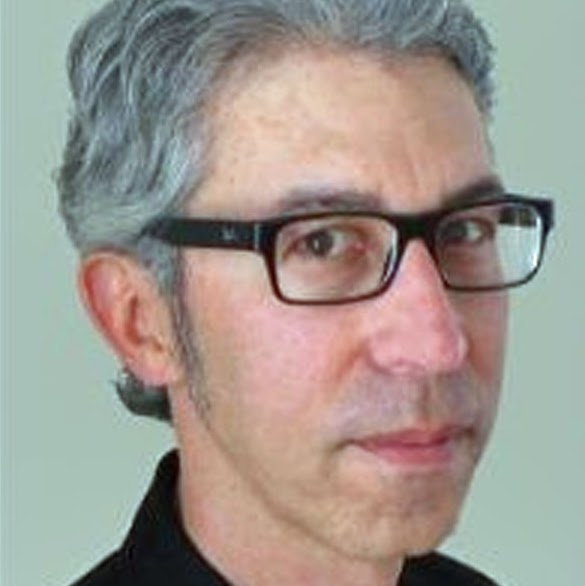
					<content type="html" xml:base="https://fairuse.stanford.edu/2017/04/11/stanford-copyright-fair-use-key-overview-updates/"><![CDATA[<div id="attachment_307694" style="width: 310px" class="wp-caption alignright"><a href="https://fairuse.stanford.edu/wp-content/uploads/2017/03/richstim.jpg"><img fetchpriority="high" decoding="async" aria-describedby="caption-attachment-307694" class="size-medium wp-image-307694" src="https://fairuse.stanford.edu/wp-content/uploads/2017/03/richstim-300x300.jpg" alt="Rich Stim" width="300" height="300" srcset="https://fairuse.stanford.edu/wp-content/uploads/2017/03/richstim-300x300.jpg 300w, https://fairuse.stanford.edu/wp-content/uploads/2017/03/richstim-150x150.jpg 150w, https://fairuse.stanford.edu/wp-content/uploads/2017/03/richstim-120x120.jpg 120w, https://fairuse.stanford.edu/wp-content/uploads/2017/03/richstim-32x32.jpg 32w, https://fairuse.stanford.edu/wp-content/uploads/2017/03/richstim-50x50.jpg 50w, https://fairuse.stanford.edu/wp-content/uploads/2017/03/richstim-64x64.jpg 64w, https://fairuse.stanford.edu/wp-content/uploads/2017/03/richstim-96x96.jpg 96w, https://fairuse.stanford.edu/wp-content/uploads/2017/03/richstim-128x128.jpg 128w, https://fairuse.stanford.edu/wp-content/uploads/2017/03/richstim.jpg 585w" sizes="(max-width: 300px) 100vw, 300px" /></a><p id="caption-attachment-307694" class="wp-caption-text">Attorney at law, Nolo Legal Editor, Blogger — Dear Rich: Nolo’s Patent, Copyright and Trademark Blog, Author, Nolo</p></div>
<p>Q: Thank you for updating the <a href="https://fairuse.stanford.edu/overview/">copyright overview</a> on this site. What are the most important changes that you want us to know?</p>
<p>A: Because the update reflects changes from 2014 through 2016 it includes a few decisions that readers may be familiar with such as the Google book scanning decision (<a href="http://law.justia.com/cases/federal/appellate-courts/ca2/12-4547/12-4547-2014-06-10.html">Author’s Guild v. Hathitrust</a>, discussed below), the sequel rights to Catcher in the Rye, (<a href="http://cyberlaw.stanford.edu/our-work/cases/salinger-v-colting-et-al">Salinger v. Colting</a>), the use of news – including business news and video clips – for transformative purposes (<a href="https://dockets.justia.com/docket/new-york/nysdce/1:2013cv05315/415525/">Swatch Grp. Mgmt. Servs. Ltd. and Fox News v. TVEYES, Inc</a>.), the use of pop culture references (the &#8220;Who&#8217;s on First&#8221; comedy routine) within a play (<a href="https://dockets.justia.com/docket/new-york/nysdce/1:2013cv05315/415525/">Fox News v. TVEYES, Inc)</a>, and the ability to parody a popular movie (Point Break). (<a href="https://fairuse.stanford.edu/case/keeling-v-hars/">Keeling v. Hars</a>). I think the cumulative importance of these and other cases that are discussed, is the evolving liberalization of fair use standards.</p>
<p>Q: Do we have any more clarity on Fair Use with respect to academic or library uses?</p>
<p>A: In order to provide more clarity, I think academics and librarians would like to see courts or legislators adopt quantitative guidelines – for example, establishing what percentage of a book or article constituted fair use. That seems unlikely based on the Eleventh Circuit rejection of the &#8220;10% rule&#8221; in <a href="https://dockets.justia.com/docket/georgia/gandce/1:2008cv01425/150651">Cambridge University Press v. Patton</a>. The District court had allowed copying of 10% of a work as recommended by the Code of Best Practices, a set of fair use guidelines established by a group of publishers and academics. But the Eleventh Circuit rejected that standard and instead emphasized the importance of a flexible case-by-case fair use analysis. The good news for the academics was that on remand the majority of copying at issue was permitted under fair use.</p>
<p>The other good news for academics was the ruling in <a href="http://law.justia.com/cases/federal/appellate-courts/ca2/12-4547/12-4547-2014-06-10.html">Author’s Guild v. Hathitrust</a>. Most of your readers are probably aware of this case, in which the Second Circuit ruled that digital scans of a book constituted a fair use when used for two purposes: a full-text search engine, and electronic access for disabled patrons who could not read the print versions. The Second Circuit remanded as to whether &#8220;preservation&#8221; constituted a third fair use purpose, but the parties settled in 2015 before the issue could be litigated.</p>
<p>&nbsp;</p>
<p>&nbsp;</p>
<p>Attorney at law, Nolo Legal Editor, Blogger — Dear Rich: Nolo’s Patent, Copyright and Trademark Blog, Author, Nolo</p>
<p>The post <a href="https://fairuse.stanford.edu/2017/04/11/stanford-copyright-fair-use-key-overview-updates/">Stanford Copyright &#038; Fair Use &#8211; Key Overview Updates</a> appeared first on <a href="https://fairuse.stanford.edu">Stanford Copyright and Fair Use Center</a>.</p>
]]></content>
		
			</entry>
		<entry>
		<author>
			<name>Mary Minow</name>
							<uri>http://www.librarylaw.com</uri>
						</author>

		<title type="html"><![CDATA[Future of Libraries &#8211; Need First Sale for ebooks]]></title>
		<link rel="alternate" type="text/html" href="https://fairuse.stanford.edu/2017/02/19/future-libraries-need-first-sale-ebooks/" />

		<id>https://fairuse.stanford.edu/?p=297874</id>
		<updated>2021-11-30T21:04:06Z</updated>
		<published>2017-02-19T21:02:23Z</published>
		<category scheme="https://fairuse.stanford.edu/" term="Cases" />
		<summary type="html"><![CDATA[<p>How will libraries hold onto ebooks and other digital files like mp3s so that readers and scholars in the future can still read them?  The current state of affairs relies on license agreements with publishers who in turn license to vendors, who in turn, license to libraries.  Hardly sustainable when files can and do disappear [&#8230;]</p>
<p>The post <a href="https://fairuse.stanford.edu/2017/02/19/future-libraries-need-first-sale-ebooks/">Future of Libraries &#8211; Need First Sale for ebooks</a> appeared first on <a href="https://fairuse.stanford.edu">Stanford Copyright and Fair Use Center</a>.</p>
]]></summary>

					<content type="html" xml:base="https://fairuse.stanford.edu/2017/02/19/future-libraries-need-first-sale-ebooks/"><![CDATA[<p>How will libraries hold onto ebooks and other digital files like mp3s so that readers and scholars in the future can still read them?  The current state of affairs relies on license agreements with publishers who in turn license to vendors, who in turn, license to libraries.  Hardly sustainable when files can and do disappear when either the publisher or the vendor no longer offer them.</p>
<p>Libraries rely on the right of first sale to lend print books, and need an analogous right in the world of ebooks and digital music. To that end, the American Library Association, the Association of College and Research Libraries, the Association of Research Libraries and the Internet Archive filed a <a href="https://encrypted.google.com/url?sa=t&amp;rct=j&amp;q=&amp;esrc=s&amp;source=web&amp;cd=1&amp;cad=rja&amp;uact=8&amp;ved=0ahUKEwjipZbfgp3SAhVn2oMKHYuTALUQFggZMAA&amp;url=http%3A%2F%2Fwww.librarycopyrightalliance.org%2Fstorage%2Fdocuments%2FReDigiFairUse_2017feb14-rs.pdf&amp;usg=AFQjCNHWbqzVJ881BDrZQ_P42kG55CPqxA&amp;bvm=bv.147448319,d.cGw">brief</a> on Feb. 14, 2017 in support of <a href="https://dockets.justia.com/docket/new-york/nysdce/1:2012cv00095/390216">Redigi</a>, a company that sells used mp3 files to music customers.  The brief argues that an evaluation of Fair Use should consider the rationale of the First Sale doctrine, and other specific exceptions. It argues that enabling the transfer of the right of possession should be favored under Fair Use.</p>
<p>It is essential to libraries, and the term existential would not be too great a term to use, to be able to own digital files, and care for them via preservation and library lends (e.g. to one person at a time) just as they do with print.  Can readers count on books being available a year or two or five after publication? The existence of libraries has made this possible from their inception until now.</p>
<p>The flexibility of digital content allows for an endless array of licensing opportunities (e.g. multiple simultaneous users) which is mutually beneficial to both publishers and users.  It is not practical to rely only on first sale for library delivery of econtent. The two modes for libraries to acquiring ebooks, licensing and first sale are <em>not mutually exclusive but mutually dependent.</em></p>
<p>&nbsp;</p>
<p>The post <a href="https://fairuse.stanford.edu/2017/02/19/future-libraries-need-first-sale-ebooks/">Future of Libraries &#8211; Need First Sale for ebooks</a> appeared first on <a href="https://fairuse.stanford.edu">Stanford Copyright and Fair Use Center</a>.</p>
]]></content>
		
			</entry>
		<entry>
		<author>
			<name>Mary Minow</name>
							<uri>http://www.librarylaw.com</uri>
						</author>

		<title type="html"><![CDATA[protect your site from copyright lawsuits]]></title>
		<link rel="alternate" type="text/html" href="https://fairuse.stanford.edu/2016/11/16/protect-site-copyright-lawsuits/" />

		<id>https://fairuse.stanford.edu/?p=242745</id>
		<updated>2021-11-30T21:04:06Z</updated>
		<published>2016-11-16T15:54:03Z</published>
		<category scheme="https://fairuse.stanford.edu/" term="Uncategorized" />
		<summary type="html"><![CDATA[<p>Everyone who thought they were protected from copyright lawsuits based on user postings, read this and take action on December 1st 2016 and no later than December  2017. lawofthelevel.com/2016/11/articles/intellectual-property/dont-lose-dmca-safe-harbor-protection/</p>
<p>The post <a href="https://fairuse.stanford.edu/2016/11/16/protect-site-copyright-lawsuits/">protect your site from copyright lawsuits</a> appeared first on <a href="https://fairuse.stanford.edu">Stanford Copyright and Fair Use Center</a>.</p>
]]></summary>

					<content type="html" xml:base="https://fairuse.stanford.edu/2016/11/16/protect-site-copyright-lawsuits/"><![CDATA[<p>Everyone who thought they were protected from copyright lawsuits based on user postings, read this and take action on December 1st 2016 and no later than December  2017.</p>
<p><a href="//www.lawofthelevel.com/2016/11/articles/intellectual-property/dont-lose-dmca-safe-harbor-protection/">lawofthelevel.com/2016/11/articles/intellectual-property/dont-lose-dmca-safe-harbor-protection/</a></p>
<p>The post <a href="https://fairuse.stanford.edu/2016/11/16/protect-site-copyright-lawsuits/">protect your site from copyright lawsuits</a> appeared first on <a href="https://fairuse.stanford.edu">Stanford Copyright and Fair Use Center</a>.</p>
]]></content>
		
			</entry>
		<entry>
		<author>
			<name>Mary Minow</name>
							<uri>http://www.librarylaw.com</uri>
						</author>

		<title type="html"><![CDATA[Happy Birthday &#8211; ruling plus full court docket filings]]></title>
		<link rel="alternate" type="text/html" href="https://fairuse.stanford.edu/2015/09/25/happy-birthday-full-docket/" />

		<id>https://fairuse.stanford.edu/?p=3903</id>
		<updated>2021-11-30T21:04:06Z</updated>
		<published>2015-09-25T20:35:12Z</published>
		<category scheme="https://fairuse.stanford.edu/" term="Uncategorized" />
		<summary type="html"><![CDATA[<p>Justia has made the full docket of legal filings in the Happy Birthday case available for free online at https://dockets.justia.com/docket/california/cacdce/2:2013cv04460/564772</p>
<p>The post <a href="https://fairuse.stanford.edu/2015/09/25/happy-birthday-full-docket/">Happy Birthday &#8211; ruling plus full court docket filings</a> appeared first on <a href="https://fairuse.stanford.edu">Stanford Copyright and Fair Use Center</a>.</p>
]]></summary>

					<content type="html" xml:base="https://fairuse.stanford.edu/2015/09/25/happy-birthday-full-docket/"><![CDATA[<p>Justia has made the full docket of legal filings in the Happy Birthday case available for free online at <a href="https://dockets.justia.com/docket/california/cacdce/2:2013cv04460/564772" target="_blank" rel="noopener">https://dockets.justia.com/docket/california/cacdce/2:2013cv04460/564772</a></p>
<p>The post <a href="https://fairuse.stanford.edu/2015/09/25/happy-birthday-full-docket/">Happy Birthday &#8211; ruling plus full court docket filings</a> appeared first on <a href="https://fairuse.stanford.edu">Stanford Copyright and Fair Use Center</a>.</p>
]]></content>
		
			</entry>
		<entry>
		<author>
			<name>Mary Minow</name>
							<uri>http://www.librarylaw.com</uri>
						</author>

		<title type="html"><![CDATA[How much of a photo do you need to alter to avoid copyright infringement? Hint: Cheshire Cat]]></title>
		<link rel="alternate" type="text/html" href="https://fairuse.stanford.edu/2014/12/22/much-photo-need-alter-avoid-copyright-infringement-hint-cheshire-cat/" />

		<id>https://fairuse.stanford.edu/?p=1622</id>
		<updated>2021-11-30T21:04:06Z</updated>
		<published>2014-12-23T00:56:49Z</published>
		<category scheme="https://fairuse.stanford.edu/" term="Cases" /><category scheme="https://fairuse.stanford.edu/" term="Featured Posts" />
		<summary type="html"><![CDATA[<p>Bloggers and artists often ask, &#8220;how much of a photo do you need to alter to avoid copyright infringement?&#8221;   Five changes? Fifteen?  The Seventh Circuit addressed the issue in the Kienitz v Sconnie Nation case recently. According to the court, Sconnie Nation made t-shirts displaying an image of  Madison Wisconsin mayor Paul Soglin, using [&#8230;]</p>
<p>The post <a href="https://fairuse.stanford.edu/2014/12/22/much-photo-need-alter-avoid-copyright-infringement-hint-cheshire-cat/">How much of a photo do you need to alter to avoid copyright infringement? Hint: Cheshire Cat</a> appeared first on <a href="https://fairuse.stanford.edu">Stanford Copyright and Fair Use Center</a>.</p>
]]></summary>

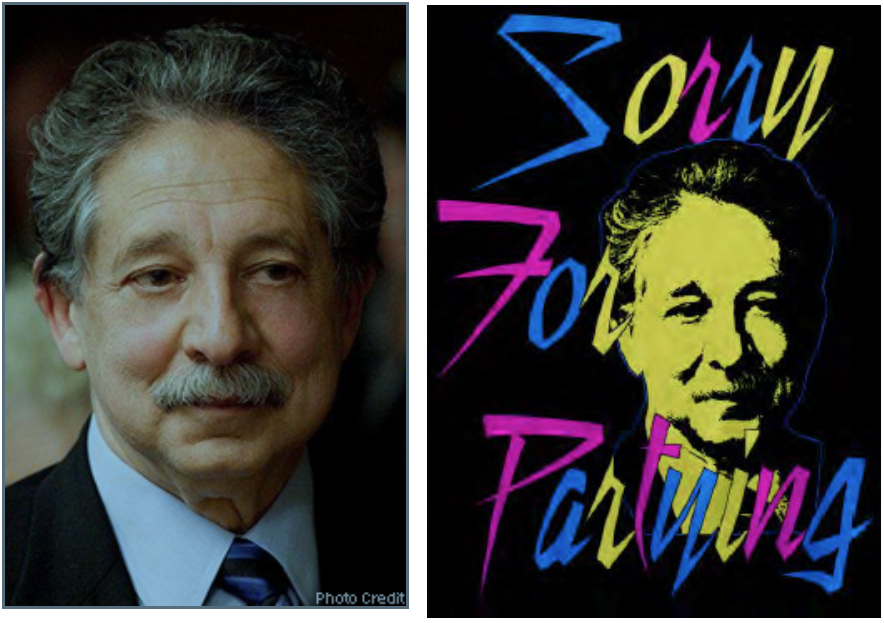
					<content type="html" xml:base="https://fairuse.stanford.edu/2014/12/22/much-photo-need-alter-avoid-copyright-infringement-hint-cheshire-cat/"><![CDATA[<p>Bloggers and artists often ask, &#8220;how much of a photo do you need to alter to avoid copyright infringement?&#8221;   Five changes? Fifteen?  The Seventh Circuit addressed the issue in the <a href="http://cases.justia.com/federal/appellate-courts/ca7/13-3004/13-3004-2014-09-15.pdf?ts=1411046866">Kienitz v Sconnie Nation</a> case recently. According to the court, Sconnie Nation made t-shirts displaying an image of  Madison Wisconsin mayor Paul Soglin, using a photo posted on the City&#8217;s website that was authored by photographer Michael Kienitz.</p>
<p>The court looked to the Cariou v Prince decision, but complained that its approach to appropriation art looked only at whether a work is &#8220;transformative&#8221; and doesn&#8217;t fully address a copyright owner&#8217;s derivative rights under 17 U.S.C. Sect. 106(2).  This court analyzes the market effect, looking to see if the contested use is a complement to the protected work (allowed) rather than a substitute for it (prohibited).</p>
<p>The photographer in this case did not claim that the t-shirt was a disruption to his own plans to license the photo for t-shirts or tank tops. He did not argue that demand for the original work was reduced.</p>
<p>And as for Fair Use factor three, the amount and substantiality of the portion used &#8230; the court wrote &#8220;Defendants removed so much of the original that, as with the Cheshire Cat, only the smile remains.&#8221;  The original background is gone, its colors and shading are gone, the expression in the eyes can no longer be read, and the effect of the lighting is &#8220;almost extinguished.&#8221;  &#8220;What is left, besides a hint of Soglin&#8217;s smile, is the outline of his face, which can&#8217;t be copyrighted.&#8221;</p>
<p>&nbsp;</p>
<div id="attachment_1623" style="width: 310px" class="wp-caption alignleft"><a href="https://fairuse.stanford.edu/wp-content/uploads/2014/12/Screen-Shot-2014-12-22-at-4.41.29-PM.png"><img decoding="async" aria-describedby="caption-attachment-1623" class="wp-image-1623 size-medium" src="https://fairuse.stanford.edu/wp-content/uploads/2014/12/Screen-Shot-2014-12-22-at-4.41.29-PM-300x211.png" alt="cheshire cat" width="300" height="211" srcset="https://fairuse.stanford.edu/wp-content/uploads/2014/12/Screen-Shot-2014-12-22-at-4.41.29-PM-300x211.png 300w, https://fairuse.stanford.edu/wp-content/uploads/2014/12/Screen-Shot-2014-12-22-at-4.41.29-PM-170x120.png 170w, https://fairuse.stanford.edu/wp-content/uploads/2014/12/Screen-Shot-2014-12-22-at-4.41.29-PM.png 884w" sizes="(max-width: 300px) 100vw, 300px" /></a><p id="caption-attachment-1623" class="wp-caption-text">Kienitz v Sconnie Nation</p></div>
<div style="clear: both;"></div>
<p>The post <a href="https://fairuse.stanford.edu/2014/12/22/much-photo-need-alter-avoid-copyright-infringement-hint-cheshire-cat/">How much of a photo do you need to alter to avoid copyright infringement? Hint: Cheshire Cat</a> appeared first on <a href="https://fairuse.stanford.edu">Stanford Copyright and Fair Use Center</a>.</p>
]]></content>
		
			</entry>
		<entry>
		<author>
			<name>Mary Minow</name>
							<uri>http://www.librarylaw.com</uri>
						</author>

		<title type="html"><![CDATA[IP Without IP? A Study of the Online Adult Entertainment Industry]]></title>
		<link rel="alternate" type="text/html" href="https://fairuse.stanford.edu/2014/11/10/ip-without-ip-study-online-adult-entertainment-industry/" />

		<id>https://fairuse.stanford.edu/?p=1610</id>
		<updated>2021-11-30T21:04:06Z</updated>
		<published>2014-11-10T23:50:57Z</published>
		<category scheme="https://fairuse.stanford.edu/" term="Uncategorized" />
		<summary type="html"><![CDATA[<p>Stanford Technology Law Review https://journals.law.stanford.edu/stanford-technology-law-review/online/ip-without-ip-study-online-adult-entertainment-industry &#160; Kate Darling Existing copyright policy is based largely on the utilitarian theory of incentivizing creative works. This Article looks at content production incentives in the online adult entertainment industry. A recent trend of industry-specific studies tries to better understand the relationship between intellectual property (IP) and creation incentives in practice. [&#8230;]</p>
<p>The post <a href="https://fairuse.stanford.edu/2014/11/10/ip-without-ip-study-online-adult-entertainment-industry/">IP Without IP? A Study of the Online Adult Entertainment Industry</a> appeared first on <a href="https://fairuse.stanford.edu">Stanford Copyright and Fair Use Center</a>.</p>
]]></summary>

					<content type="html" xml:base="https://fairuse.stanford.edu/2014/11/10/ip-without-ip-study-online-adult-entertainment-industry/"><![CDATA[<p><a title="Home" href="https://journals.law.stanford.edu/stanford-technology-law-review" rel="home">Stanford Technology Law Review</a></p>
<p><a title="https://journals.law.stanford.edu/stanford-technology-law-review/online/ip-without-ip-study-online-adult-entertainment-industry" href="https://journals.law.stanford.edu/stanford-technology-law-review/online/ip-without-ip-study-online-adult-entertainment-industry">https://journals.law.stanford.edu/stanford-technology-law-review/online/ip-without-ip-study-online-adult-entertainment-industry</a></p>
<p>&nbsp;</p>
<div class="field field-name-field-authors field-type-field-collection field-label-hidden">
<div class="field-items">
<div class="field-item even">
<div class="entity entity-field-collection-item field-collection-item-field-authors clearfix">
<div class="content">
<div class="field field-name-field-author-name field-type-text field-label-hidden">
<div class="field-items">
<div class="field-item even">Kate Darling</div>
</div>
</div>
</div>
</div>
</div>
</div>
</div>
<div class="field field-name-body field-type-text-with-summary field-label-hidden">
<div class="field-items">
<div class="field-item even">
<p>Existing copyright policy is based largely on the utilitarian theory of incentivizing creative works. This Article looks at content production incentives in the online adult entertainment industry. A recent trend of industry-specific studies tries to better understand the relationship between intellectual property (IP) and creation incentives in practice. This Article makes a contribution to the literature by analyzing a major entertainment content industry where copyright protection has been considerably weakened in recent years. Because copyright infringement is widespread and prohibitively difficult to prevent, producers have been effectively unable to rely on the economic benefits that copyright is intended to provide.</p>
<p>Qualitative interviews with industry specialists and content producers support the hypothesis that copyright enforcement is not cost effective. As a result, many producers have developed alternative strategies to recoup their investment costs. Similar to the findings of other scholarly work on low-IP industries, this research finds a shift toward the production of experience goods. It also finds that some incentives to produce traditional content remain. The sustainability of providing convenience and experience goods while continuing content production relies partially on general, but also on industry-specific factors, such as consumer privacy preferences, consumption habits, low production costs, and high demand. While not all of these attributes translate to other industries, determining such factors and their limits brings us toward a better understanding of innovation mechanisms.</p>
</div>
</div>
</div>
<div class="field field-name-field-download field-type-file field-label-hidden"></div>
<p>The post <a href="https://fairuse.stanford.edu/2014/11/10/ip-without-ip-study-online-adult-entertainment-industry/">IP Without IP? A Study of the Online Adult Entertainment Industry</a> appeared first on <a href="https://fairuse.stanford.edu">Stanford Copyright and Fair Use Center</a>.</p>
]]></content>
		
			</entry>
		<entry>
		<author>
			<name>Mary Minow</name>
							<uri>http://www.librarylaw.com</uri>
						</author>

		<title type="html"><![CDATA[Guidance on websites and copyright registration from the U.S. Copyright Office]]></title>
		<link rel="alternate" type="text/html" href="https://fairuse.stanford.edu/2014/08/29/guidance-websites-copyright-registration-u-s-copyright-office/" />

		<id>https://fairuse.stanford.edu/?p=1591</id>
		<updated>2021-11-30T21:04:07Z</updated>
		<published>2014-08-29T23:30:57Z</published>
		<category scheme="https://fairuse.stanford.edu/" term="Featured Posts" />
		<summary type="html"><![CDATA[<p>As part of its new draft Compendium of U.S. Copyright Office Practices, Third Edition, we have guidance on registration for websites.  The draft of the full compendium is over 1200 pages and covers publication, recordation, notice, deposits, along with other topics.  Members of the public may make comments anytime before (or after) the Third Edition [&#8230;]</p>
<p>The post <a href="https://fairuse.stanford.edu/2014/08/29/guidance-websites-copyright-registration-u-s-copyright-office/">Guidance on websites and copyright registration from the U.S. Copyright Office</a> appeared first on <a href="https://fairuse.stanford.edu">Stanford Copyright and Fair Use Center</a>.</p>
]]></summary>

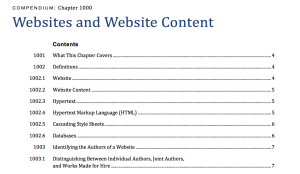
					<content type="html" xml:base="https://fairuse.stanford.edu/2014/08/29/guidance-websites-copyright-registration-u-s-copyright-office/"><![CDATA[<p>As part of its new draft Compendium of U.S. Copyright Office Practices, Third Edition, we have guidance on registration for websites.  The draft of the full compendium is over 1200 pages and covers publication, recordation, notice, deposits, along with other topics.  Members of the public may make comments anytime before (or after) the Third Edition goes into effect on December 15, 2014. For more see  <a href="http://copyright.gov/comp3/">http://copyright.gov/comp3/</a></p>
<p>&nbsp;</p>
<p><a href="http://copyright.gov/comp3/chap1000/ch1000-websites.pdf"><img decoding="async" class="alignright size-medium wp-image-1592" src="https://fairuse.stanford.edu/wp-content/uploads/2014/08/Screen-Shot-2014-08-29-at-4.24.32-PM-300x174.png" alt="website and copyright" width="300" height="174" srcset="https://fairuse.stanford.edu/wp-content/uploads/2014/08/Screen-Shot-2014-08-29-at-4.24.32-PM-300x174.png 300w, https://fairuse.stanford.edu/wp-content/uploads/2014/08/Screen-Shot-2014-08-29-at-4.24.32-PM-1024x595.png 1024w, https://fairuse.stanford.edu/wp-content/uploads/2014/08/Screen-Shot-2014-08-29-at-4.24.32-PM-1000x581.png 1000w, https://fairuse.stanford.edu/wp-content/uploads/2014/08/Screen-Shot-2014-08-29-at-4.24.32-PM-206x120.png 206w, https://fairuse.stanford.edu/wp-content/uploads/2014/08/Screen-Shot-2014-08-29-at-4.24.32-PM.png 1182w" sizes="(max-width: 300px) 100vw, 300px" /></a></p>
<p>&nbsp;</p>
<p>&nbsp;</p>
<p>The post <a href="https://fairuse.stanford.edu/2014/08/29/guidance-websites-copyright-registration-u-s-copyright-office/">Guidance on websites and copyright registration from the U.S. Copyright Office</a> appeared first on <a href="https://fairuse.stanford.edu">Stanford Copyright and Fair Use Center</a>.</p>
]]></content>
		
			</entry>
	</feed>