<?xml version="1.0" encoding="UTF-8"?>
<?xml-stylesheet href="http://feeds.feedburner.com/~d/styles/rss2full.xsl" type="text/xsl" media="screen"?><?xml-stylesheet href="http://feeds.feedburner.com/~d/styles/itemcontent.css" type="text/css" media="screen"?><rss xmlns:dc="http://purl.org/dc/elements/1.1/" xmlns:sy="http://purl.org/rss/1.0/modules/syndication/" xmlns:admin="http://webns.net/mvcb/" xmlns:rdf="http://www.w3.org/1999/02/22-rdf-syntax-ns#" xmlns:content="http://purl.org/rss/1.0/modules/content/" xmlns:feedburner="http://rssnamespace.org/feedburner/ext/1.0" version="2.0">

    <channel>
    
    <title>FrankNJohnson.com</title>
    <link>http://www.franknjohnson.com/index.php/site/index/</link>
    <description />
    <dc:language>en</dc:language>
    <dc:creator>frank@franknjohnson.com</dc:creator>
    <dc:rights>Copyright 2008</dc:rights>
    <dc:date>2008-03-22T23:16:00-08:00</dc:date>
    <admin:generatorAgent rdf:resource="http://expressionengine.com/" />
    

    <atom10:link xmlns:atom10="http://www.w3.org/2005/Atom" rel="self" href="http://feeds.feedburner.com/FrankNJohnson" type="application/rss+xml" /><feedburner:emailServiceId>1627716</feedburner:emailServiceId><feedburner:feedburnerHostname>http://www.feedburner.com</feedburner:feedburnerHostname><item>
      <title>An Internet Strategist Will Evaluate Your Analytics System</title>
      <link>http://feeds.feedburner.com/~r/FrankNJohnson/~3/258005194/</link>
      <guid isPermaLink="false">http://www.franknjohnson.com/index.php/site/an_internet_strategist_will_evaluate_your_analytics_system/#When:23:16:00Z</guid>
      <description>&lt;p&gt;This is the eighth and final article in an &lt;a href="http://www.franknjohnson.com/index.php/site/comments/what_does_an_internet_strategist_do/" title="eight-part series"&gt;eight-part series&lt;/a&gt; which describes the role of an internet strategist in improving the website operations of a company or organization.
&lt;/p&gt;
&lt;p&gt;
Actionable analytics are the lifeblood of any online operation. Without precise analytics, you will have no way of knowing whether or not you are accomplishing your goals for your internet operations. You will also not be able to perform tests to improve your operations so that your goals are accomplished sooner and more efficiently. And without actionable analytics, you will have knowledge, but your knowledge won&amp;#8217;t result in any improvements to your online operations.
&lt;/p&gt;
&lt;p&gt;
In many ways, I could have placed this article second in the current series, immediately after the first article about reviewing your goals for your internet operations, because analytics is the foundation of everything you do online.
&lt;/p&gt;
&lt;ol class="doublespacelist"&gt;
&lt;li&gt;In order to examine the sources of traffic to your website, your internet strategist will need web analytics.&lt;/li&gt;
&lt;li&gt;Improvements to your landing pages will require web analytics so that your internet strategist can perform tests on various aspects of those landing pages.&lt;/li&gt;
&lt;li&gt;While your internet strategists&amp;#8217; experience will allow her to make recommendations regarding the overall design of your website, it is your web analytics which will allow her to ensure that the changes she recommends result in greater traffic and more conversions rather than less.&lt;/li&gt;
&lt;li&gt;Similarly, your internet strategist will rely upon his expertise to recommend changes to the content and copywriting of your website. But it is your web analytics which will demonstrate that the changes he recommends will help you accomplish your goals.&lt;/li&gt;
&lt;li&gt;The search and navigation features, which are crucial to the success of your website, can also be quite problematic. Without a foundation of strong web analytics, your internet strategist will not be able to test the various recommendations she makes for changing these functionalities on your website.&lt;/li&gt;
&lt;li&gt;And finally, web analytics are important for discovering and solving problems which may exist with our calls to action and the vehicles through which your visitors respond to those calls to action (your shopping cart, your newsletter signup form, etc.).&lt;/li&gt;
&lt;/ol&gt;&lt;h2 class="subheader"&gt;The Problem With Hits&lt;/h2&gt;
&lt;p&gt;
&amp;#8220;I got 140,000 hits to my website last month! How many hits did you get?&amp;#8221; A lot of website owners still talk about &amp;#8220;hits&amp;#8221; to their websites, even though &amp;#8220;hits&amp;#8221; are easily the worst measure of a website&amp;#8217;s traffic.
&lt;/p&gt;
&lt;p&gt;
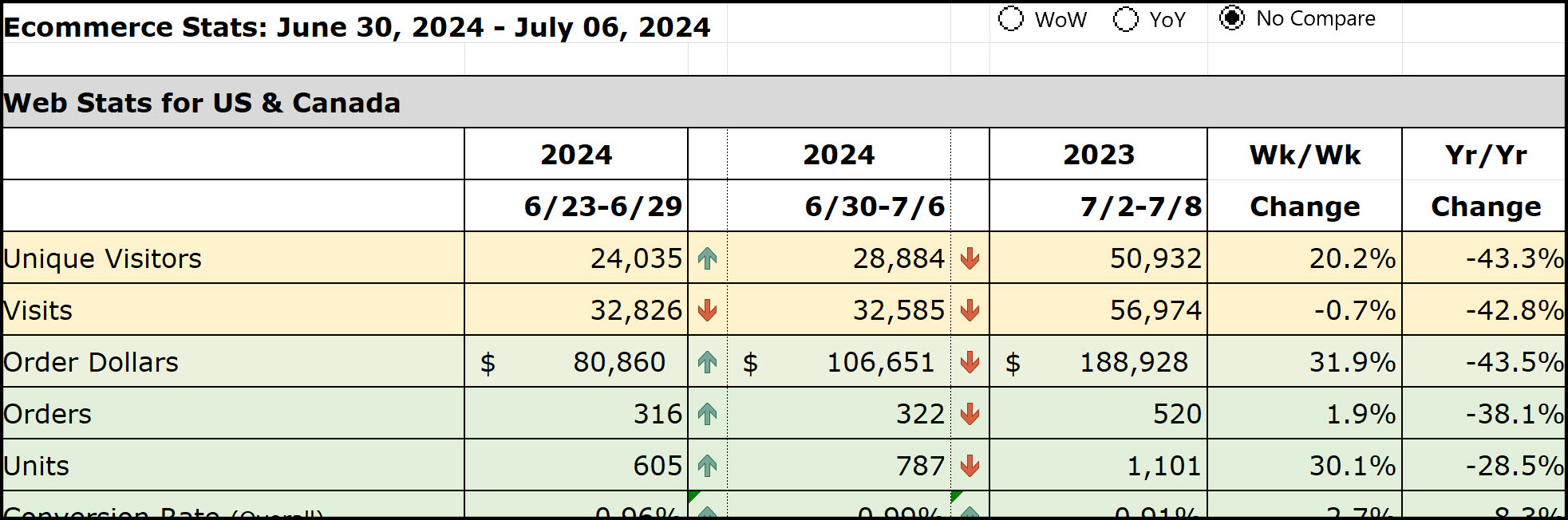
The four most basic types of web traffic statistics are hits, page views, user sessions, and unique visitors. I&amp;#8217;ve listed them in increasing order of importance. Here&amp;#8217;s the best way to explain the difference:
&lt;/p&gt;
&lt;p&gt;
Suppose a website has 10 pages and each page has 5 graphics on it. If I visit 5 of those pages in the morning and the other five pages in the evening, here are the web stats I will see (this is a bit rough because different web stats packages look at things a bit differently, especially with regard to what constitutes a user session and what constitutes a unique visitor):
&lt;/p&gt;
&lt;ul class="doublespacelist"&gt;
&lt;li&gt;60 hits (1 for each page and 1 for each graphic - 10 pages, 50 graphics)&lt;/li&gt;
&lt;li&gt;10 page views (1 for each page)&lt;/li&gt;
&lt;li&gt;2 user sessions (1 for each visit)&lt;/li&gt;
&lt;li&gt;1 unique visitor&lt;/li&gt;
&lt;/ul&gt;
&lt;p&gt;
The most important of basic web traffic statistics is unique visitors (but not all stats packages give you that figure in which case we can rely on user sessions and assume that most people will only visit a site once in a day). The least important stat is hits because it includes every file that is accessed &amp;mdash; pages, graphics, videos, pdf files, etc. &amp;#8220;Hits&amp;#8221; is the most deceptive of all web stats.
&lt;/p&gt;
&lt;p&gt;
Other traffic statistics which may prove helpful include:
&lt;/p&gt;
&lt;ul class="doublespacelist"&gt;
&lt;li&gt;&lt;strong&gt;Repeat visits&lt;/strong&gt; &amp;mdash; visits by people who have visited at least one previous time during the time period.&lt;/li&gt;
&lt;li&gt;&lt;strong&gt;New visits&lt;/strong&gt; &amp;mdash; visits by people who have not previously visited the site during the time period.&lt;/li&gt;
&lt;li&gt;&lt;strong&gt;Page views per visit&lt;/strong&gt; &amp;mdash; the average number of pages each user accesses during a visit.&lt;/li&gt;
&lt;li&gt;&lt;strong&gt;Bounce rate&lt;/strong&gt; &amp;mdash; the percent of visits during which the visitor only visits one page.&lt;/li&gt;
&lt;/ul&gt;
&lt;h2 class="subheader"&gt;Response Statistics&lt;/h2&gt;
&lt;p&gt;
In addition to web traffic statistics, it is important to measure statistics related to actions your visitors take in response to your calls to action. These statistics include the following:
&lt;/p&gt;
&lt;ul class="doublespacelist"&gt;
&lt;li&gt;&lt;strong&gt;Conversions&lt;/strong&gt; &amp;mdash; the number of responses (usually orders, newsletter signups, sales leads, etc.) visitors to your site take.&lt;/li&gt;
&lt;li&gt;&lt;strong&gt;Conversion rate&lt;/strong&gt; &amp;mdash; the percentage of visitors who take action.&lt;/li&gt;
&lt;li&gt;&lt;strong&gt;Revenue&lt;/strong&gt; &amp;mdash; for ecommerce sites, one of the most important response statistics is obviously how much money visitors spend.&lt;/li&gt;
&lt;li&gt;&lt;strong&gt;Average order size&lt;/strong&gt; &amp;mdash; for ecommerce sites, the average amount of money each online order represents.&lt;/li&gt;
&lt;li&gt;&lt;strong&gt;Units per order&lt;/strong&gt; &amp;mdash; for ecommerce sites, the average number of items in each order.&lt;/li&gt;
&lt;/ul&gt;
&lt;h2 class="subheader"&gt;An Important Concept To Remember&lt;/h2&gt;
&lt;p&gt;
The real value in web statistics is not in trying to get absolutely accurate data (every statistics package interprets the log files somewhat differently and some visits &amp;#8220;to the site&amp;#8221; are actually pulling the page from a user&amp;#8217;s computer rather than actually hitting the site so you can&amp;#8217;t really be certain the data is completely precise) but instead is using the data to compare various periods of time and note the trends. While the data for this week may not be exactly correct (again, it&amp;#8217;s a bit of a misnomer to think you can get exactly correct), it is valid to compare this week&amp;#8217;s &amp;#8220;not exactly correct&amp;#8221; data with last week&amp;#8217;s &amp;#8220;not exactly correct&amp;#8221; data and assume that the &amp;#8220;inaccuracies&amp;#8221; even out over time.
&lt;/p&gt;
&lt;h2 class="subheader"&gt;Are Your Analytics Actionable?&lt;/h2&gt;
&lt;p&gt;
Web analytics become actionable when you compare them. &amp;#8220;Compare them to what?&amp;#8221; you ask. To three basic pieces of information:
&lt;/p&gt;
&lt;ol class="doublespacelist"&gt;
&lt;li&gt;your specific, measurable objectives&lt;/li&gt;
&lt;li&gt;external benchmarks; and,&lt;/li&gt;
&lt;li&gt;internal performance during a different, but similar, time period.&lt;/li&gt;
&lt;/ol&gt;
&lt;p&gt;
As you compare actual performance to your objectives, the performance other companies in your industry have seen from their website, and the performance of your own website during a different, yet similar, time period, you will discover opportunities for improvement (in the number of unique visitors your website receives, in your conversion rate, in average order size, etc.). These opportunities for improvement will encourage you to test different advertising, different landing page content, different paths to purchase, etc. And your web analytics will tell you which tests are successful and which are not, ultimately leading to long-term improvement in accomplishing your objectives.
&lt;/p&gt;
&lt;p&gt;
This has been the eighth and final article in an &lt;a href="http://www.franknjohnson.com/index.php/site/comments/what_does_an_internet_strategist_do/" title="eight-part series"&gt;eight-part series&lt;/a&gt; which describes the role of an internet strategist in improving the website operations of a company or organization. Please feel free to comment on any of the articles in this series and don&amp;#8217;t hesitate to disagree with me, add further information and resources, ask questions, etc. We&amp;#8217;re all on a learning journey when it comes to the web, and we can all help each other if we remember that no one individual has all the answers.
&lt;/p&gt;&lt;div class="feedflare"&gt;
&lt;a href="http://feeds.feedburner.com/~f/FrankNJohnson?a=pY9KAVF"&gt;&lt;img src="http://feeds.feedburner.com/~f/FrankNJohnson?i=pY9KAVF" border="0"&gt;&lt;/img&gt;&lt;/a&gt; &lt;a href="http://feeds.feedburner.com/~f/FrankNJohnson?a=ECuUMVf"&gt;&lt;img src="http://feeds.feedburner.com/~f/FrankNJohnson?i=ECuUMVf" border="0"&gt;&lt;/img&gt;&lt;/a&gt; &lt;a href="http://feeds.feedburner.com/~f/FrankNJohnson?a=gBwl6RF"&gt;&lt;img src="http://feeds.feedburner.com/~f/FrankNJohnson?i=gBwl6RF" border="0"&gt;&lt;/img&gt;&lt;/a&gt; &lt;a href="http://feeds.feedburner.com/~f/FrankNJohnson?a=O0c6T1f"&gt;&lt;img src="http://feeds.feedburner.com/~f/FrankNJohnson?i=O0c6T1f" border="0"&gt;&lt;/img&gt;&lt;/a&gt; &lt;a href="http://feeds.feedburner.com/~f/FrankNJohnson?a=HJdFa2f"&gt;&lt;img src="http://feeds.feedburner.com/~f/FrankNJohnson?i=HJdFa2f" border="0"&gt;&lt;/img&gt;&lt;/a&gt;
&lt;/div&gt;</description>
      <dc:subject>General Internet Strategy</dc:subject>
      <dc:date>2008-03-22T23:16:00-08:00</dc:date>
    <feedburner:origLink>http://www.franknjohnson.com/index.php/site/an_internet_strategist_will_evaluate_your_analytics_system/#When:23:16:00Z</feedburner:origLink></item>

    <item>
      <title>An Internet Strategist Will Analyze Your Call To Action, Your Web Forms, and Your Shopping Cart</title>
      <link>http://feeds.feedburner.com/~r/FrankNJohnson/~3/256806269/</link>
      <guid isPermaLink="false">http://www.franknjohnson.com/index.php/site/an_internet_strategist_will_analyze_your_call_to_action/#When:15:35:00Z</guid>
      <description>&lt;p&gt;This is the seventh article in an &lt;a href="http://www.franknjohnson.com/index.php/site/comments/what_does_an_internet_strategist_do/" title="eight-part series"&gt;eight-part series&lt;/a&gt; which describes the role of an internet strategist in improving the website operations of a company or organization.
&lt;/p&gt;
&lt;p&gt;
All of the elements of your website which we have discussed so far are designed to shepherd your visitor to the point where they will read and respond favorably to your call to action. Your website can be perfect in every other facet, but if it fails to ultimately persuade your visitors to take the desired action, then you have ultimately failed.
&lt;/p&gt;
&lt;p&gt;
When your internet strategist began evaluating your efforts in the digital realm, she interviewed your organization&amp;#8217;s key personnel to discover your objectives for your website and your other online operations. Strongly connected to your objectives are the various calls to action which appear on your website. In many ways, they are the culmination of your objectives. Your calls to action are asking your visitors to take actions which, in aggregate, will lead to the fulfillment of your objectives.
&lt;/p&gt;
&lt;p&gt;
Your internet strategist, therefore, will analyze your call to action (purchase, lead generation, etc.) and the vehicles through which a website visitor can respond to your call to action (shopping cart, contact form, etc.).
&lt;/p&gt;&lt;p&gt;First, your internet strategist will look at your actual call to action to ensure that it:
&lt;/p&gt;
&lt;ol class="doublespacelist"&gt;
&lt;li&gt;&lt;strong&gt;matches your objectives for your website.&lt;/strong&gt; If one of your objectives is to increase the size of your newsletter subscription list, for example, then your website should include an element (a call to action) which persuades your site&amp;#8217;s visitors to sign up for that newsletter. Seems simple, doesn&amp;#8217;t it? Many organizations, however, do not have clear objectives for their websites and so they find it difficult to formulate corresponding calls to action.&lt;/li&gt;
&lt;li&gt;&lt;strong&gt;is clear and explicit.&lt;/strong&gt; When your call to action reaches the forefront of your visitor&amp;#8217;s mind and heart, it&amp;#8217;s no time to beat around the bush. Instead, it is time to clearly ask your visitor to take the desired action. If yours is an ecommerce website, don&amp;#8217;t be shy &amp;mdash; ask your visitor explicitly to place an order. If your objective is for your visitors to contact you regarding your services, be up front and ask them to call you or send you an email.&lt;/li&gt;
&lt;li&gt;&lt;strong&gt;uses the appropriate vehicle to help your customer respond.&lt;/strong&gt; Ecommerce sites will use a shopping cart to enable their visitors to purchase products. Consultants will use a contact form on their websites to allow their visitors to contact them regarding their services. Websites which are content-heavy (newspaper or magazine sites, for example) will probably have a sign-up form to help their visitors subscribe to an email newsletter.&lt;/li&gt;
&lt;/ol&gt;
&lt;p&gt;
Once your internet strategist has evaluated your call to action and given you recommendations for improvement, he will turn to the vehicles through which your visitors can complete the desired action: your web form(s) and/or your shopping cart.
&lt;/p&gt;
&lt;h2 class="subheader"&gt;Web Forms&lt;/h2&gt;
&lt;p&gt;
Web forms are the vehicles through which you allow your visitors to contact you to inquire about your services, sign up for a regular newsletter, request a catalog, etc. It may seem like there&amp;#8217;s nothing which can be done to improve a web form (after all, it&amp;#8217;s just a form, isn&amp;#8217;t it?), but there are actually several things you can do to make your web forms more usable. And the more usable your forms, the more likely your visitor will complete them and the more effective your call to action will be. Here are some tips for improving your web forms, in no particular order:
&lt;/p&gt;
&lt;ol class="doublespacelist"&gt;
&lt;li&gt;&lt;strong&gt;Put the cursor in the first field when the form loads.&lt;/strong&gt; By using some Javascript, you can place the user&amp;#8217;s cursor in the form field you want the user to begin with. This makes it easier for your visitor who won&amp;#8217;t have to click on the field. A small point, but why not help your user out a little bit?&lt;/li&gt;
&lt;li&gt;&lt;strong&gt;Make the form the focus of your page.&lt;/strong&gt; In other words, minimize distractions. Devote your form&amp;#8217;s page to collecting the information you need and don&amp;#8217;t distract them with advertisements, links to other pages (apart from your main navigation), additional content, etc.&lt;/li&gt;
&lt;li&gt;&lt;strong&gt;Use labels, fieldsets, and legends for accessibility.&lt;/strong&gt; These elements enable the visually-impaired to more easily understand your forms.&lt;/li&gt;
&lt;li&gt;&lt;strong&gt;Put instructions inside of text fields and automatically select all text when the user places their cursor inside the field.&lt;/strong&gt; Javascript will enable you to accomplish this effect, and it gives you the ability to give your user explicit instructions describing what type of information they should enter in a particular text field.&lt;/li&gt;
&lt;li&gt;&lt;strong&gt;Give the user immediate clues when the field is obviously correctly or incorrectly completed, and be specific about the nature of the error.&lt;/strong&gt; For example, if a user enters an email address without the &amp;#8220;@&amp;#8221; character, your form should immediately notify the user that they have entered an invalid email address.&lt;/li&gt;
&lt;li&gt;&lt;strong&gt;Automatically reformat phone numbers, dates, or credit card numbers to match the format you need.&lt;/strong&gt; For example, if your database requires phone numbers to just have numbers and no parentheses or dashes, don&amp;#8217;t force your user to enter their phone number that way. Instead, use programming to remove the extraneous characters.&lt;/li&gt;
&lt;li&gt;&lt;strong&gt;Use checkboxes when more than one choice can be made and radio buttons when choices are mutually exclusive.&lt;/strong&gt; If there are too many radio buttons (more than five perhaps), consider using a drop-down select box.&lt;/li&gt;
&lt;li&gt;&lt;strong&gt;Only ask for information which is absolutely necessary to serve your objective.&lt;/strong&gt; No one likes long forms &amp;mdash; the more information you ask for, the more likely your visitor will begin to wonder if completing the form is worth the time and frustration.&lt;/li&gt;
&lt;li&gt;&lt;strong&gt;Clearly point out which fields are mandatory.&lt;/strong&gt; This can be accomplished through placing an asterisk next to the title of the field, bolding the title, etc. Just make sure that it&amp;#8217;s obvious and that you clearly state somewhere near the form how mandatory fields are identified.&lt;/li&gt;
&lt;li&gt;&lt;strong&gt;If an error is made and you have to return people to the form, preserve the user&amp;#8217;s choices and the data they&amp;#8217;ve already entered (except for password information).&lt;/strong&gt; When completing a web form, nothing is more frustrating than having to enter the information more than once.&lt;/li&gt;
&lt;/ol&gt;
&lt;h2 class="subheader"&gt;Shopping Carts&lt;/h2&gt;
&lt;p&gt;
Shopping carts are the vehicles through which you allow your visitors to purchase your products (or perhaps services). Like web forms, shopping carts can be made more usable through several subtle improvements. Taking these steps will make it more likely that your visitors will complete a purchase on your site. Here are some tips for improving your shopping cart, in no particular order:
&lt;/p&gt;
&lt;ol class="doublespacelist"&gt;
&lt;li&gt;&lt;strong&gt;Show shipping and tax rates early in the process (as soon as you know the shopper&amp;#8217;s address).&lt;/strong&gt; Or allow your shoppers to enter their zip code to see an estimate of shipping and tax. In surveys of shoppers&amp;#8217; behavior, the reason most often given for abandonment of shopping carts is unexpected shipping and tax. Showing your customers this information early in the process will prevent the &amp;#8220;sticker shock&amp;#8221; which can lead to abandoned carts.&lt;/li&gt;
&lt;li&gt;&lt;strong&gt;Provide answers to common questions within the shopping cart.&lt;/strong&gt; Some of the questions your customers may be asking as they go through your shopping cart include questions about shipping, returns, customer service, privacy, security, your guarantee, etc. If you can answer these questions within the shopping cart process, you reduce the likelihood of your user abandoning the cart to go find the answers.&lt;/li&gt;
&lt;li&gt;&lt;strong&gt;Use a persistent cart throughout your site.&lt;/strong&gt; This means that you should show the contents of a user&amp;#8217;s shopping cart on every page of your site. Typically, persistent carts appear somewhere near the upper-right-hand corner of the page. At the very least, you should display the number of items in the user&amp;#8217;s cart along with the current order total; however, the best persistent carts actually enable the user to view the specific contents of the cart, often by clicking on or hovering over the smaller cart which only shows the number of items and the order total.&lt;/li&gt;
&lt;li&gt;&lt;strong&gt;Use upsells to merchandize additional products.&lt;/strong&gt; As your user prepares to checkout, you can display additional products which might interest them. Typically, these are low-priced items which are impulse buys (sort of like the candy and magazine racks in the checkout lanes of a grocery store), but they can also be higher-priced items which are closely related to the products the user has already placed in their cart. If your website has wishlist functionality, you can also display items from the user&amp;#8217;s wishlist, which can be quite powerful (since you know they already want these items, they are more likely to place them in their cart if you display them during the checkout process).&lt;/li&gt;
&lt;li&gt;&lt;strong&gt;Allow your shoppers to edit product details (quantity, size, color/pattern, etc.) directly within the shopping cart.&lt;/strong&gt; If your user does decide they want to change something during the checkout process, they won&amp;#8217;t have to leave the shopping cart to do so.&lt;/li&gt;
&lt;li&gt;&lt;strong&gt;Reduce the navigation options within your shopping cart.&lt;/strong&gt; Once the user has entered the checkout process, you want to subtly encourage them to complete the process (rather than give them obvious options to navigate elsewhere on your site. Obviously, the user can still go wherever they want &amp;mdash; all you are trying to do by minimizing navigation during the checkout process is to reduce the likelihood that your user will accidentally click on something which removes them from the checkout process.&lt;/li&gt;
&lt;li&gt;&lt;strong&gt;Use a progress indicator to help the shopper know where they are in the process.&lt;/strong&gt; This can be a progress bar, or a text indicator ("Step 3 of 5"), etc. This orients your shopper and reduces uncertainty.&lt;/li&gt;
&lt;li&gt;&lt;strong&gt;Include indications of product availability (both outside the cart on product detail pages and within the shopping cart).&lt;/strong&gt; Doing so will reduce surprises &amp;mdash; one of the worst things that can happen is for your shopper to complete a purchase, thinking they will receive the item soon, only to find out later that it is backordered. Such a scenario decreases trust and confidence and makes it more likely that the customer will not shop with you again.&lt;/li&gt;
&lt;li&gt;&lt;strong&gt;Consider providing live chat functionality within the cart.&lt;/strong&gt; For those who can afford it, a live chat feature can be very useful and will enable your customer service staff to help customers who find themselves confused or paralyzed within the checkout process.&lt;/li&gt;
&lt;li&gt;&lt;strong&gt;Accept promotion or coupon codes within the checkout process.&lt;/strong&gt; These allow you to make special offers such as order discounts, free or reduced shipping, gift with purchase, etc. One thing to keep in mind, though, is to not make the promotion code field prominent within the shopping cart. If you make it too prominent, users without a coupon code will be tempted to leave your cart to see if they can find a coupon code on another website which aggregates coupon codes from hundreds of websites. The best approach is to minimize the promotion code section of the shopping cart but then give your users explicit instructions to help them find it when you advertise your offers (in an email blast, for example).&lt;/li&gt;
&lt;li&gt;&lt;strong&gt;Include a toll-free phone number within your shopping cart.&lt;/strong&gt; Customers who are confused about something can then call your customer service department to either complete their order over the phone or receive help in how to complete it online.&lt;/li&gt;
&lt;li&gt;&lt;strong&gt;Display third-party seals which demonstrate the trustworthiness of your checkout process.&lt;/strong&gt; &lt;a href="http://www.verisign.com"&gt;Verisign&lt;/a&gt;, &lt;a href="http://www.scanalert.com"&gt;Scan Alert (HackerSafe)&lt;/a&gt;, and &lt;a href="http://welcome.bbb.org/"&gt;The Better Business Bureau&lt;/a&gt; are good examples of third-party &amp;#8220;watchdog&amp;#8221; companies which provide accreditation seals to companies which meet their standards. These seals will give your customers confidence that their private information is safe and that they will have a good shopping experience with your company. It is also a good idea to display any guarantees your company provides (satisfaction guarantees, same-day shipping guarantees, etc.).&lt;/li&gt;
&lt;li&gt;&lt;strong&gt;Make effective use of your &amp;#8220;cart is empty&amp;#8221; page.&lt;/strong&gt; If your customer clicks on the View Cart link on their site when they haven&amp;#8217;t put any products in their cart, they will be shown an &amp;#8220;Empty Cart&amp;#8221; page. You should take this opportunity to provide links to the main product categories on your site, remind the customer of your toll-free phone number, provide a link to your live chat feature, answer questions, etc. Doing these things will encourage your customer to continue shopping.&lt;/li&gt;
&lt;/ol&gt;
&lt;p&gt;
In the final installment in this eight-part series, we will discover that &lt;a href="http://www.franknjohnson.com/index.php/site/comments/an_internet_strategist_will_evaluate_your_analytics_system/" title="an internet strategist will evaluate your analytics system"&gt;an internet strategist will evaluate your analytics system&lt;/a&gt;.
&lt;/p&gt;&lt;div class="feedflare"&gt;
&lt;a href="http://feeds.feedburner.com/~f/FrankNJohnson?a=nPzeQqF"&gt;&lt;img src="http://feeds.feedburner.com/~f/FrankNJohnson?i=nPzeQqF" border="0"&gt;&lt;/img&gt;&lt;/a&gt; &lt;a href="http://feeds.feedburner.com/~f/FrankNJohnson?a=i9crxof"&gt;&lt;img src="http://feeds.feedburner.com/~f/FrankNJohnson?i=i9crxof" border="0"&gt;&lt;/img&gt;&lt;/a&gt; &lt;a href="http://feeds.feedburner.com/~f/FrankNJohnson?a=KHMukBF"&gt;&lt;img src="http://feeds.feedburner.com/~f/FrankNJohnson?i=KHMukBF" border="0"&gt;&lt;/img&gt;&lt;/a&gt; &lt;a href="http://feeds.feedburner.com/~f/FrankNJohnson?a=91Bv8Qf"&gt;&lt;img src="http://feeds.feedburner.com/~f/FrankNJohnson?i=91Bv8Qf" border="0"&gt;&lt;/img&gt;&lt;/a&gt; &lt;a href="http://feeds.feedburner.com/~f/FrankNJohnson?a=NI4yaZf"&gt;&lt;img src="http://feeds.feedburner.com/~f/FrankNJohnson?i=NI4yaZf" border="0"&gt;&lt;/img&gt;&lt;/a&gt;
&lt;/div&gt;</description>
      <dc:subject>General Internet Strategy</dc:subject>
      <dc:date>2008-03-13T15:35:00-08:00</dc:date>
    <feedburner:origLink>http://www.franknjohnson.com/index.php/site/an_internet_strategist_will_analyze_your_call_to_action/#When:15:35:00Z</feedburner:origLink></item>

    <item>
      <title>An Internet Strategist Will Scrutinize The Search And Navigation Features Of Your Website</title>
      <link>http://feeds.feedburner.com/~r/FrankNJohnson/~3/252245336/</link>
      <guid isPermaLink="false">http://www.franknjohnson.com/index.php/site/an_internet_strategist_will_scrutinize_the_search_and_navigation_features_o/#When:02:38:00Z</guid>
      <description>&lt;p&gt;This is the sixth article in an &lt;a href="http://www.franknjohnson.com/index.php/site/comments/what_does_an_internet_strategist_do/" title="eight-part series"&gt;eight-part series&lt;/a&gt; which describes the role of an internet strategist in improving the website operations of a company or organization.
&lt;/p&gt;
&lt;p&gt;
Once a user reaches your website, unless what they want is on the first page they visit, the will need to find the page which includes what they are looking for. They can accomplish that either through using the internal search feature of your site or by using your site navigation.
&lt;/p&gt;
&lt;p&gt;
If your user can&amp;#8217;t quickly find what they are looking for, they will abandon your website (and most likely will never return). It is therefore very important that both your internal search functionality and your site navigation work as well as possible so that your user can easily find what they are looking for.
&lt;/p&gt;
&lt;h2 class="subheader"&gt;Reasons Why Your Internal Search Functionality May Not Work Well&lt;/h2&gt;&lt;p&gt;
There are several subtle reasons why your internal search functionality may not be serving your visitors well. Your internet strategist will test your search functionality and determine whether any of the following common problems are sources of frustration for your users:
&lt;/p&gt;
&lt;ol class="doublespacelist"&gt;
&lt;li&gt;&lt;strong&gt;Your search area is not prominent.&lt;/strong&gt; If your search area is too small or if it appears below the fold, you are forcing your visitors to hunt for the search field. For those visitors who typically rely on search features to find the information they want, if they can&amp;#8217;t find your search field within the first several seconds after arriving at your website, you risk them leaving your site in frustration. As I have said previously, the internal search area of a website traditionally appears near the upper right hand corner of all pages.&lt;/li&gt;
&lt;li&gt;&lt;strong&gt;It&amp;#8217;s not clear to your visitor how to active the search feature on your site.&lt;/strong&gt; If you don&amp;#8217;t have a &amp;#8220;Go,&amp;#8221; &amp;#8220;Search,&amp;#8221; or &amp;#8220;Find&amp;#8221; button next to your search field (the button traditionally appears to the right of the search field), your visitor may know know what to do once they have entered a word or phrase in the search field. Usually, pressing the Enter or Return key on the keyboard will activate the search, but your visitors may not know this.&lt;/li&gt;
&lt;li&gt;&lt;strong&gt;Your search functionality simply doesn&amp;#8217;t work.&lt;/strong&gt; If a visitor enters a word or phrase into your search field and clicks on the &amp;#8220;Go,&amp;#8221; &amp;#8220;Search,&amp;#8221; or &amp;#8220;Find&amp;#8221; button, but nothing happens, there is something wrong with your coding. Your internet strategist will then work with your website development team to ensure that the problem is fixed as soon as possible.&lt;/li&gt;
&lt;li&gt;&lt;strong&gt;Your search features returns too many results.&lt;/strong&gt;This can especially be a problem for ecommerce websites which sell a lot of accessories for certain types of products. For example, if a company sells Toshiba computers, but also sells a number of accessories which are compatible with Toshiba systems (such as monitors, keyboards, mice, etc.) and then mentions that compatibility on each accessory&amp;#8217;s product detail page, a problem with search results can occur. If your site&amp;#8217;s search functionality indexes every word on every page, then a user who enters &amp;#8220;Toshiba computer&amp;#8221; in your search field will end up with a set of results which includes Toshiba computers but also monitors, keyboards, mice, etc. (which the user probably is not interested in). If your search functionality returns too many results, especially if many of the results are irrelevant, your user may become paralyzed because of too many choices.&lt;/li&gt;
&lt;li&gt;&lt;strong&gt;The titles of pages included in your search results do not clearly reflect the contents of those pages.&lt;/strong&gt; Typically, each listing on your search results page will include a title (often the actual page title from the page&amp;#8217;s code). If those titles do not clearly reflect the content of their corresponding pages, your users will not know which result to choose. And if your users don&amp;#8217;t know which result to choose, they may give up and leave your site. Or they may begin clicking on results, but become confused and frustrated when they realize the title in the search results and the actual page contents do not match.&lt;/li&gt;
&lt;li&gt;&lt;strong&gt;The page which appears when there are no results does not make any suggestions to the user for other alternatives.&lt;/strong&gt; Your &amp;#8220;no results&amp;#8221; page should include links to the main pages on your site, to your bestsellers (if yours is an ecommerce site), to a frequently asked questions page, etc.&lt;/li&gt;
&lt;/ol&gt;
&lt;h2 class="subheader"&gt;Reasons Why Your Site Navigation May Not Work Well&lt;/h2&gt;&lt;p&gt;
Your basic site navigation may also not be serving your visitors well. Your internet strategist will examine your website&amp;#8217;s navigation to ensure that your site visitors can find what they are looking for.
&lt;/p&gt;
&lt;p&gt;
He will use these criteria to evaluate your navigation:
&lt;/p&gt;
&lt;ol class="doublespacelist"&gt;
&lt;li&gt;&lt;strong&gt;Are your navigation options clear and intuitive?&lt;/strong&gt; Will the average visitor to your site have a good idea of what they will encounter when they click on each of your main navigation options? To the extent your navigation options are unclear, your visitor will become frustrated and/or paralyzed. This will often prevent them from following the path through your site to your desired goal for them (making a purchase, signing up for a newsletter, contacting you regarding your services, etc.).&lt;/li&gt;
&lt;li&gt;&lt;strong&gt;Is your navigation prominent?&lt;/strong&gt; Does it appear &amp;#8220;above the fold&amp;#8221; at the monitor resolutions your visitors use? If your visitor has to hunt for your main navigation, they may leave your site before they find it. And studies show that most people who leave a site quickly after their first visit never return.&lt;/li&gt;
&lt;li&gt;&lt;strong&gt;Does your navigation scheme include too many choices?&lt;/strong&gt; I know I&amp;#8217;ve mentioned it a few times already, but it bears repeating. If you offer your users too many choices, you run the risk of your user becoming paralyzed and not making any choice.&lt;/li&gt;
&lt;li&gt;&lt;strong&gt;Is the text contained within your navigation scheme readable?&lt;/strong&gt; If your users can&amp;#8217;t read the text, they won&amp;#8217;t know which option to choose. One fatal mistake which some websites make is navigation which is entirely graphical (no text at all). How website owners think the average visitor will be able to decipher the meaning of the various images in such a navigation scheme honestly escapes me.&lt;/li&gt;
&lt;li&gt;&lt;strong&gt;Can your navigation options be indexed by search engines?&lt;/strong&gt; The most common mistake in this regard is to embed the various navigation choices within a Flash file. The problem with this is that search engine spiders (programs which search engines send out to retrieve the pages on millions of websites for subsequent indexing) depend on the links of your navigation to proceed through your website and index each of its pages. But if a search engine&amp;#8217;s spider does not index the contents of a Flash file, it won&amp;#8217;t discover the links in your Flash navigation file and may not index any pages beyond your home page (if you must use a Flash file for your main navigation, one way to mitigate this problem is to include a set of basic text links in your site&amp;#8217;s footer &amp;mdash; at least that way, search engine spiders will have links to follow).&lt;/li&gt;
&lt;li&gt;&lt;strong&gt;Does your navigation scheme provide users with clues as to where they are on your site?&lt;/strong&gt; One of the challenges of navigating a website from a user&amp;#8217;s perspective is that, unlike a physical brick-and-mortar store, a user typically has little to no idea of where the page which they are on fits in the scheme of the overall content of the site. In a grocery store, if you&amp;#8217;re in the cereal aisle, you know that you can find coffee and tea on the next aisle over. There is little sense of such proximity or context when visiting a website. Including &amp;#8220;you are here&amp;#8221; clues in your navigation serves to mitigate this issue, at least to some extent. To accomplish this, your navigation scheme should highlight (through using a different color, bold text, a pointer, etc.) the user&amp;#8217;s current location within your website&amp;#8217;s overall content.&lt;/li&gt;
&lt;li&gt;&lt;strong&gt;Does your website include breadcrumbs as a secondary navigation scheme?&lt;/strong&gt; Breadcrumbs are a row of small text links which show the path from the home page to the user&amp;#8217;s current location. They typically appear just above the main content of a page. They should begin with &amp;#8220;You are here:&amp;#8221;, then have a link to your site&amp;#8217;s home page, continue with links to the main pages of the levels along the path to the current page, and end with the title of the current page (unlinked). Breadcrumbs provide an alternative to your main navigation and, like &amp;#8220;you are here&amp;#8221; clues, provide a sense of proximity and context for your users.&lt;/li&gt;
&lt;/ol&gt;
&lt;p&gt;
The usability of your search and navigation features is vital to the success of your website. Your internet strategist will ensure that these features of your website are not preventing your users from finding what they are looking for on your website.
&lt;/p&gt;
&lt;p&gt;
In the next installment in this eight-part series, we will discover that &lt;a href="http://www.franknjohnson.com/index.php/site/comments/an_internet_strategist_will_analyze_your_call_to_action/" title="an internet strategist will analyze your call to action, your web forms, and your shopping cart"&gt;an internet strategist will analyze your call to action, your web forms, and your shopping cart&lt;/a&gt;.
&lt;/p&gt;&lt;div class="feedflare"&gt;
&lt;a href="http://feeds.feedburner.com/~f/FrankNJohnson?a=fdJlb6F"&gt;&lt;img src="http://feeds.feedburner.com/~f/FrankNJohnson?i=fdJlb6F" border="0"&gt;&lt;/img&gt;&lt;/a&gt; &lt;a href="http://feeds.feedburner.com/~f/FrankNJohnson?a=JljDDdf"&gt;&lt;img src="http://feeds.feedburner.com/~f/FrankNJohnson?i=JljDDdf" border="0"&gt;&lt;/img&gt;&lt;/a&gt; &lt;a href="http://feeds.feedburner.com/~f/FrankNJohnson?a=AvQMYwF"&gt;&lt;img src="http://feeds.feedburner.com/~f/FrankNJohnson?i=AvQMYwF" border="0"&gt;&lt;/img&gt;&lt;/a&gt; &lt;a href="http://feeds.feedburner.com/~f/FrankNJohnson?a=b05TD8f"&gt;&lt;img src="http://feeds.feedburner.com/~f/FrankNJohnson?i=b05TD8f" border="0"&gt;&lt;/img&gt;&lt;/a&gt; &lt;a href="http://feeds.feedburner.com/~f/FrankNJohnson?a=59yrfEf"&gt;&lt;img src="http://feeds.feedburner.com/~f/FrankNJohnson?i=59yrfEf" border="0"&gt;&lt;/img&gt;&lt;/a&gt;
&lt;/div&gt;</description>
      <dc:subject>General Internet Strategy</dc:subject>
      <dc:date>2008-03-10T02:38:00-08:00</dc:date>
    <feedburner:origLink>http://www.franknjohnson.com/index.php/site/an_internet_strategist_will_scrutinize_the_search_and_navigation_features_o/#When:02:38:00Z</feedburner:origLink></item>

    <item>
      <title>An Internet Strategist Will Appraise the Content and Copywriting of Your Website</title>
      <link>http://feeds.feedburner.com/~r/FrankNJohnson/~3/256534023/</link>
      <guid isPermaLink="false">http://www.franknjohnson.com/index.php/site/an_internet_strategist_will_appraise_the_content_and_copywriting_of_your_we/#When:19:50:01Z</guid>
      <description>&lt;p&gt;This is the fifth article in an &lt;a href="http://www.franknjohnson.com/index.php/site/comments/what_does_an_internet_strategist_do/" title="eight-part series"&gt;eight-part series&lt;/a&gt; which describes the role of an internet strategist in improving the website operations of a company or organization.
&lt;/p&gt;
&lt;p&gt;
Copywriting is one of the most important aspects of a website but is often treated as an afterthought ("We&amp;#8217;ll just use something from one of our brochures &amp;mdash; that will be fine.").
&lt;/p&gt;
&lt;p&gt;
But if we remember that the purpose of our website is to convey information, we&amp;#8217;ll realize that good copywriting (through which information is conveyed) is invaluable. 
&lt;/p&gt;
&lt;p&gt;
And so, your internet strategist will read the content of your website and assess the quality of your writing.
&lt;/p&gt;&lt;p&gt;We have already touched on principles of good online copywriting during our earlier discussion of landing pages, and some of those principles can be applied to online copywriting in general. But we can add a few more principles in this wider discussion covering all pages of your site:
&lt;/p&gt;
&lt;ol class="doublespacelist"&gt;
&lt;li&gt;&lt;strong&gt;Be honest.&lt;/strong&gt; Aim for an authentic voice. Today&amp;#8217;s internet user is not interested in artificial, hyped claims. Instead, they want to read simple, straightforward, and truthful statements about your products and services. The basic idea is to write like a real person talks.&lt;/li&gt;
&lt;li&gt;&lt;strong&gt;Focus on the reader.&lt;/strong&gt; Tell your visitors how products and services will benefit them. Instead of focusing on how wonderful your company or organization is, focus on your customers and their needs.&lt;/li&gt;
&lt;li&gt;&lt;strong&gt;Be concise and direct.&lt;/strong&gt;Attention spans of online readers are generally short, so you will need to get to the point and get there quickly. In other words, state your conclusion first and then support it &amp;mdash; the inverted pyramid model. And it&amp;#8217;s important to use only as much text as is necessary to accomplish your purpose.&lt;/li&gt;
&lt;li&gt;&lt;strong&gt;Tell stories.&lt;/strong&gt; Nothing beats a good story for helping your visitor imagine herself using your product or service. Tell the stories of people who have used your product. Tell the stories of people whose lives have been changed by your organization&amp;#8217;s services. Storytelling is acknowledged among copywriting experts as one of the most effective methods for informing and persuading your audience.&lt;/li&gt;
&lt;li&gt;&lt;strong&gt;Write for search engines.&lt;/strong&gt; If you&amp;#8217;ve been around search engine optimization for any amount of time, you might think this means that you need to include lots of keywords and phrases within your content. While strategic use of the primary keywords and phrases is still important (notice that I said &amp;#8220;strategic use,&amp;#8221; not &amp;#8220;a lot of use"), it&amp;#8217;s more important to write content so compelling that people will want to link to it (on their blogs and websites, in their del.icio.us account, on Digg, at StumbleUpon, etc.). Those links from other websites play a much larger part in how your content ranks in search engine listings than the part played by your use of keywords and phrases within your content.&lt;/li&gt;
&lt;/ol&gt;
&lt;p&gt;
Your internet strategist will use these criteria, along with the relevant criteria from our earlier discussion of landing pages, to determine how well your copywriting helps to accomplish your objectives.
&lt;/p&gt;
&lt;p&gt;
In the next installment in this eight-part series, we will discover that &lt;a href="http://www.franknjohnson.com/index.php/site/comments/an_internet_strategist_will_scrutinize_the_search_and_navigation_features_o/" title="an internet strategist will scrutinize the search and navigation features of your website"&gt;an internet strategist will scrutinize the search and navigation features of your website&lt;/a&gt;.
&lt;/p&gt;&lt;div class="feedflare"&gt;
&lt;a href="http://feeds.feedburner.com/~f/FrankNJohnson?a=b4FzwyF"&gt;&lt;img src="http://feeds.feedburner.com/~f/FrankNJohnson?i=b4FzwyF" border="0"&gt;&lt;/img&gt;&lt;/a&gt; &lt;a href="http://feeds.feedburner.com/~f/FrankNJohnson?a=Q446h8f"&gt;&lt;img src="http://feeds.feedburner.com/~f/FrankNJohnson?i=Q446h8f" border="0"&gt;&lt;/img&gt;&lt;/a&gt; &lt;a href="http://feeds.feedburner.com/~f/FrankNJohnson?a=5IRoztF"&gt;&lt;img src="http://feeds.feedburner.com/~f/FrankNJohnson?i=5IRoztF" border="0"&gt;&lt;/img&gt;&lt;/a&gt; &lt;a href="http://feeds.feedburner.com/~f/FrankNJohnson?a=Jkv01pf"&gt;&lt;img src="http://feeds.feedburner.com/~f/FrankNJohnson?i=Jkv01pf" border="0"&gt;&lt;/img&gt;&lt;/a&gt; &lt;a href="http://feeds.feedburner.com/~f/FrankNJohnson?a=6UbqtGf"&gt;&lt;img src="http://feeds.feedburner.com/~f/FrankNJohnson?i=6UbqtGf" border="0"&gt;&lt;/img&gt;&lt;/a&gt;
&lt;/div&gt;</description>
      <dc:subject>General Internet Strategy</dc:subject>
      <dc:date>2008-03-01T19:50:01-08:00</dc:date>
    <feedburner:origLink>http://www.franknjohnson.com/index.php/site/an_internet_strategist_will_appraise_the_content_and_copywriting_of_your_we/#When:19:50:01Z</feedburner:origLink></item>

    <item>
      <title>An Internet Strategist Will Assess the Overall Design of Your Website</title>
      <link>http://feeds.feedburner.com/~r/FrankNJohnson/~3/255297525/</link>
      <guid isPermaLink="false">http://www.franknjohnson.com/index.php/site/an_internet_strategist_will_assess_the_overall_design_of_your_website/#When:04:44:00Z</guid>
      <description>&lt;p&gt;This is the fourth article in an &lt;a href="http://www.franknjohnson.com/index.php/site/comments/what_does_an_internet_strategist_do/" title="eight-part series"&gt;eight-part series&lt;/a&gt; which describes the role of an internet strategist in improving the website operations of a company or organization.
&lt;/p&gt;
&lt;p&gt;
Studies show that the typical website visitor will spend only a matter of seconds (the exact number of seconds is a matter of some debate; suffice it to say that it&amp;#8217;s a short amount of time!) before deciding whether to spend more time exploring your website or abandon it for another site.
&lt;/p&gt;
&lt;p&gt;
Much of the basis for that decision comes down to the visitor&amp;#8217;s initial impression of your site. This points to the vital importance of your design. The design of your site is about all your visitor can react to in those initial seconds. If they believe your site is unprofessional in its appearance, they will quickly abandon it. If your layout confuses them (by placing common elements such as navigation, logos, etc. in nontraditional places on the page, for example), they will leave.
&lt;/p&gt;
&lt;p&gt;
A well-designed site builds trust between you and your site&amp;#8217;s visitors.
&lt;/p&gt;
&lt;p&gt;
And so, to ensure that such confidence is established, your internet strategist will assess the design of your website on the basis of several criteria:
&lt;/p&gt;
&lt;ol&gt;
&lt;li&gt;layout&lt;/li&gt;
&lt;li&gt;web-standards compliance&lt;/li&gt;
&lt;li&gt;color&lt;/li&gt;
&lt;li&gt;imagery and product photography&lt;/li&gt;
&lt;li&gt;typography&lt;/li&gt;
&lt;/ol&gt;&lt;p&gt;&lt;strong&gt;Layout&lt;/strong&gt;
&lt;br /&gt;
The first thing an internet strategist will look for when examining your website&amp;#8217;s layout is a consistent theme across all the pages of your website. Such consistency helps visitors to your website know they are still on your site when they navigate from page to page. Again, this builds trust between you and your site&amp;#8217;s visitors. They will know yours is a professional organization which has the resources to invest in a professional website.
&lt;/p&gt;
&lt;p&gt;
The second thing an internet strategist will look for when examining your website&amp;#8217;s layout is the existence and positioning of a few basic elements which should be part of every website&amp;#8217;s design:
&lt;/p&gt;
&lt;ol class="doublespacelist"&gt;
&lt;li&gt;&lt;strong&gt;Your identity.&lt;/strong&gt; Each page on your website should include the name of your company or organization, often combined with or made a part of a logo. Similar to a consistent theme, the existence of your logo and/or company name on each page of your website ensures that your visitor knows they are still on your site as they navigate through its pages. The logo and company name traditionally appear in the upper left-hand corner of your pages, and web surfers are accustomed to looking for these elements in that location.&lt;/li&gt;
&lt;li&gt;&lt;strong&gt;A search field.&lt;/strong&gt; All but the very smallest of websites should include an area devoted to internal site search. Many website visitors prefer searching to browsing, and it&amp;#8217;s therefore important to place the search field and its associated components in the same, prominent location on each page of your website. Traditionally, the search field is placed as close to the upper right-hand corner of the page as possible within the overall design.&lt;/li&gt;
&lt;li&gt;&lt;strong&gt;Navigation.&lt;/strong&gt; The most important things about a website&amp;#8217;s navigation is that it appear in a consistent place on every page, that it is readable, and that it is easily used by visitors who wish to browse your your site. Traditionally, main navigation appears in a left-hand column or near the top, just under your logo and organization name. The exception to this is traditional blog design which often places navigation in a right-hand column.&lt;/li&gt;
&lt;li&gt;&lt;strong&gt;Content.&lt;/strong&gt; Ultimately, the most important thing about your website is its content. Visitors to your site come looking for information. The information you are trying to convey to your visitor should therefore be the focal point of your design and layout. The various aspects of the appearance of your website (general color scheme, layout, graphics and photography, etc.) should be used to draw your visitor&amp;#8217;s attention to your content. As Jason Beaird says in his book &lt;a href="http://www.amazon.com/gp/redirect.html?ie=UTF8&amp;amp;location=http%3A%2F%2Fwww.amazon.com%2FPrinciples-Beautiful-Web-Design%2Fdp%2F0975841963%3Fie%3DUTF8%26s%3Dbooks%26qid%3D1204002215%26sr%3D8-1&amp;amp;tag=strategicdigi-20&amp;amp;linkCode=ur2&amp;amp;camp=1789&amp;amp;creative=9325"&gt;The Principles of Beautiful Web Design&lt;/a&gt;&lt;img src="http://www.assoc-amazon.com/e/ir?t=strategicdigi-20&amp;amp;l=ur2&amp;amp;o=1" width="1" height="1" alt="" style="border:none !important; margin:0px !important;" /&gt;, &amp;#8220;.... design should please users but draw them to content.&amp;#8221;&lt;/li&gt;
&lt;li&gt;&lt;strong&gt;Footer.&lt;/strong&gt; The footer of your site typically includes copyright information, credits, contact information and sometimes text links to the major sections of your site or to other areas of your site which might not warrant inclusion in your main navigation (privacy policy, terms and conditions of use, etc.). Website visitors are accustomed to finding this information at the bottom of the page.&lt;/li&gt;
&lt;/ol&gt;
&lt;p&gt;
Your internet strategist will examine your website to make sure these basic elements appear 1) in their traditional location; and, 2) in the same location across all the pages of your site.
&lt;/p&gt;
&lt;p&gt;
The third thing an internet strategist will look for when examining your website&amp;#8217;s layout is the effective use of white space. When a person visits a website which doesn&amp;#8217;t employ whitespace effectively, he/she can easily become paralyzed and not take action because everything on the page may seem to have equal weight. And if your visitor does not take action when they visit your website, you have almost certainly failed to accomplish your objective. White space serves to draw the user&amp;#8217;s attention to the important parts of your page by giving more prominence to areas which do have copy or imagery. This helps your user to take action and proceed along a path which corresponds to one of your website&amp;#8217;s objectives.
&lt;/p&gt;
&lt;p&gt;
&lt;strong&gt;Web-Standards Compliance&lt;/strong&gt;
&lt;br /&gt;
Many companies and organizations do not even know there are such things as web standards, let alone implement them on their websites. But compliance with current web standards, as defined by the &lt;a href="http://www.w3.org" title="World Wide Web Consortium"&gt;World Wide Web Consortium&lt;/a&gt; (the W3C), is a very important aspect of developing and maintaining an effective website.
&lt;/p&gt;
&lt;p&gt;
Why is compliance with web standards important? Here are just a few reasons:
&lt;/p&gt;
&lt;ol class="doublespacelist"&gt;
&lt;li&gt;Web pages which comply with web standards load more quickly because the code which controls the presentational aspects of a page (font specifications, layout, line spacing, margins, padding, etc.) is placed in a file which is downloaded once and then stored (cached) on the user&amp;#8217;s computer. As the user visits other pages, the presentational aspects are then controlled by the file stored on the user&amp;#8217;s computer. And so the file which includes the content of the page can be smaller (because it doesn&amp;#8217;t include the presentational aspects) and thus load more quickly.&lt;/li&gt;
&lt;li&gt;Costs for bandwidth (the rate at which data flows through a digital network) can be significantly reduced because file sizes will be smaller.&lt;/li&gt;
&lt;li&gt;Changes to the presentational aspects of a website can be made quickly and easily because only one file needs to be changed.&lt;/li&gt;
&lt;li&gt;A website which complies with web standards is more easily made compatible with pda&amp;#8217;s and mobile phones (through the use of an additional stylesheet targeted at mobile browsers), an increasingly more important way of accessing the internet.&lt;/li&gt;
&lt;li&gt;Newer browsers are becoming less and less tolerant of code which does not conform to web standards, so if your website does not employ what is known as &amp;#8220;valid&amp;#8221; XHTML and CSS code, with time your site will be less and less likely to render correctly in current browsers.&lt;/li&gt;
&lt;li&gt;Creating websites which comply with web standards saves a company soft costs because multiple versions or approaches for different browsers no longer have to be created.&lt;/li&gt;
&lt;li&gt;Web pages which are standards-compliant are more easily and more accurately indexed by search engines and are given more visibility in web searches.&lt;/li&gt;
&lt;/ol&gt;
&lt;p&gt;
Compliance with web standards involves the following steps:
&lt;/p&gt;
&lt;ol class="doublespacelist"&gt;
&lt;li&gt;including the appropriate DOCTYPE in the head of each page on your website. Your DOCTYPE tells current browsers which version of XHTML or HTML your pages use and how to display your pages. If your DOCTYPE does not match the version of XHTML or HTML you actually use, the results (in how your site displays) can be interesting, to say the least.&lt;/li&gt;
&lt;li&gt;including the right character set in the head of each page on your website. Employing an appropriate character set ensures that the text on your website will be readable.&lt;/li&gt;
&lt;li&gt;separating presentation from contact by defining presentational aspects within your cascading stylesheet (CSS) file and including content in your html, php, asp, or jsp files.&lt;/li&gt;
&lt;li&gt;using valid XHTML (the W3C offers a free markup validation service at &lt;a href="http://validator.w3.org" title="http://validator.w3.org"&gt;http://validator.w3.org&lt;/a&gt;).&lt;/li&gt;
&lt;li&gt;employing valid CSS (the W3C offers a free CSS validation service at &lt;a href="http://jigsaw.w3.org/css-validator/" title="http://jigsaw.w3.org/css-validator/"&gt;http://jigsaw.w3.org/css-validator/&lt;/a&gt;).&lt;/li&gt;
&lt;/ol&gt;
&lt;p&gt;
&lt;strong&gt;Color&lt;/strong&gt;
&lt;br /&gt;
The color scheme of your website can play an important role in how visitors respond to your website.
&lt;/p&gt;
&lt;p&gt;
The effective use of color will help your visitors discern where on the page your navigation appears, which blocks of content go together, which elements on a page are most important, etc.
&lt;/p&gt;
&lt;p&gt;
Your internet strategist will assess the use of color on your website to make sure that your color scheme matches your site&amp;#8217;s objectives. The colors you choose for your website should:
&lt;/p&gt;
&lt;ol class="doublespacelist"&gt;
&lt;li&gt;be complementary according to accepted color theory; and,&lt;/li&gt;
&lt;li&gt;convey the message you desire within the cultural milieu, gender, age, and social class of your target audience.&lt;/li&gt;
&lt;/ol&gt;
&lt;p&gt;
&lt;strong&gt;Imagery and Product Photography&lt;/strong&gt;
&lt;br /&gt;
The graphics you use on your website can either help visitors to your website to complete the action you would like them to take or they can place a barrier between your visitors and the desired action. Product photography can be used to persuade your visitors to purchase your products or it can persuade your visitor that your products are not worth buying.
&lt;/p&gt;
&lt;p&gt;
Your internet strategist will evaluate the product photography and other imagery you use on your website. She will examine your graphics to make sure they follow these guidelines:
&lt;/p&gt;
&lt;ol class="doublespacelist"&gt;
&lt;li&gt;The correct file format should be used. Photographs should be saved in .jpg format. Graphics with a limited number of colors, such as logos, should be saved in .png format unless you know that your visitors are using outdated browsers, in which case limited-color graphics should be saved in .gif format.&lt;/li&gt;
&lt;li&gt;Web graphics should be optimized for fast load time. This will improve your visitors&amp;#8217; experience and reduce your bandwidth costs. If you can keep the overall page weight (the combined file size of the file which contains your XHTML code, the file sizes of the images displayed on the page, and the file sizes of any multimedia files such as Flash files, video files, etc. which appear on your page) to 50-100K, you&amp;#8217;ve done a good job.&lt;/li&gt;
&lt;li&gt;Product photographs, since they are directly related to selling product, should be of higher quality than most graphics on your website.&lt;/li&gt;
&lt;li&gt;On an ecommerce site, you will want product photographs (either the main image or alternate views) which demonstrate scale and show the product in use.&lt;/li&gt;
&lt;li&gt;If your budget will allow, consider employing rich-media imagery such as that offered by companies such as &lt;a href="http://www.scene7.com" title="Scene7"&gt;Scene7&lt;/a&gt; and &lt;a href="http://www.richfx.com" title="RichFX"&gt;RichFX&lt;/a&gt; to enable zoom, dynamic image sizes, rotation, swatching, and dynamic addition of icons.&lt;/li&gt;
&lt;/ol&gt;
&lt;p&gt;
&lt;strong&gt;Typography&lt;/strong&gt;
&lt;br /&gt;
The overarching purpose of your website is to communicate information. The overwhelming majority of that information is contained in the text on your website. This is why typography is one of the most important aspects of your website.
&lt;/p&gt;
&lt;p&gt;
Your internet strategist will evaluate the typography used on your website according to a variety of criteria:
&lt;/p&gt;
&lt;ol class="doublespacelist"&gt;
&lt;li&gt;Does your website use a sans-serif font common across operating systems for its main narrative copy and does your stylesheet specify a series of alternate fonts to be used when preferred typefaces are unavailable? Sans-serif fonts are generally more readable on screen (unlike in print). In addition, it&amp;#8217;s important to choose a font which is most likely to be on a user&amp;#8217;s computer. Common choices for sans-serif fonts which are common across multiple operating systems include Verdana, Arial, and Helvetica.&lt;/li&gt;
&lt;li&gt;Is the text on your website resizable by the user in all browsers? This allows the visually impaired to adjust the size of the text on your website to be more readable.&lt;/li&gt;
&lt;li&gt;Does the color/background color combination on your website make the text on your website easily readable?&lt;/li&gt;
&lt;li&gt;Does your stylesheet specify a line-height which increases the readability of your main narrative copy?&lt;/li&gt;
&lt;li&gt;Is the line length of your main narrative copy optimal for reading comprehension?&lt;/li&gt;
&lt;li&gt;Do you use visual cues such as headings, sub-headings, bold text, numbered lists, bulleted lists, etc. to help those who scan web pages rather than read them in their entirety (this actually describes the majority of web surgers today)?&lt;/li&gt;
&lt;/ol&gt;
&lt;p&gt;
In the next installment in this eight-part series, we will discover that &lt;a href="http://www.franknjohnson.com/index.php/site/comments/an_internet_strategist_will_appraise_the_content_and_copywriting_of_your_we/" title="an internet strategist will appraise the content and copywriting of your website"&gt;an internet strategist will appraise the content and copywriting of your website&lt;/a&gt;.
&lt;/p&gt;&lt;div class="feedflare"&gt;
&lt;a href="http://feeds.feedburner.com/~f/FrankNJohnson?a=Fx6ZQYF"&gt;&lt;img src="http://feeds.feedburner.com/~f/FrankNJohnson?i=Fx6ZQYF" border="0"&gt;&lt;/img&gt;&lt;/a&gt; &lt;a href="http://feeds.feedburner.com/~f/FrankNJohnson?a=0IX7QKf"&gt;&lt;img src="http://feeds.feedburner.com/~f/FrankNJohnson?i=0IX7QKf" border="0"&gt;&lt;/img&gt;&lt;/a&gt; &lt;a href="http://feeds.feedburner.com/~f/FrankNJohnson?a=oskUgHF"&gt;&lt;img src="http://feeds.feedburner.com/~f/FrankNJohnson?i=oskUgHF" border="0"&gt;&lt;/img&gt;&lt;/a&gt; &lt;a href="http://feeds.feedburner.com/~f/FrankNJohnson?a=G7HSdpf"&gt;&lt;img src="http://feeds.feedburner.com/~f/FrankNJohnson?i=G7HSdpf" border="0"&gt;&lt;/img&gt;&lt;/a&gt; &lt;a href="http://feeds.feedburner.com/~f/FrankNJohnson?a=wCyH3Hf"&gt;&lt;img src="http://feeds.feedburner.com/~f/FrankNJohnson?i=wCyH3Hf" border="0"&gt;&lt;/img&gt;&lt;/a&gt;
&lt;/div&gt;</description>
      <dc:subject>General Internet Strategy</dc:subject>
      <dc:date>2008-02-26T04:44:00-08:00</dc:date>
    <feedburner:origLink>http://www.franknjohnson.com/index.php/site/an_internet_strategist_will_assess_the_overall_design_of_your_website/#When:04:44:00Z</feedburner:origLink></item>

    <item>
      <title>An Internet Strategist Will Carefully Study Your Landing Pages</title>
      <link>http://feeds.feedburner.com/~r/FrankNJohnson/~3/238566204/</link>
      <guid isPermaLink="false">http://www.franknjohnson.com/index.php/site/an_internet_strategist_will_carefully_study_your_landing_pages/#When:06:17:00Z</guid>
      <description>&lt;p&gt;This is the third article in an &lt;a href="http://www.franknjohnson.com/index.php/site/comments/what_does_an_internet_strategist_do/" title="eight-part series"&gt;eight-part series&lt;/a&gt; which describes the role of an internet strategist in improving the website operations of a company or organization.
&lt;/p&gt;
&lt;p&gt;
A landing page is a specific page on your website designed to be the place where a website visitor &amp;#8220;lands&amp;#8221; after clicking on a link on an external website (a banner ad or pay-per-click advertisement, for example) or typing in a web page address they have learned of elsewhere. The goal of a landing page is to persuade a visitor to perform a certain action (make a purchase, fill out a form, request further information, etc.).
&lt;/p&gt;
&lt;p&gt;
It is vitally important to develop landing pages which provide continuity between the messaging which leads the visitor to the website (the messaging contained in your promotional vehicle) and the call to action the visitor encounters when arriving at the website. For example, if one of your objectives is to sell romantic comedies from your online DVD store, you might send a promotional email blast to your mailing list which advertises a sale price on the newest date movie on DVD. But if clicking on the image of the romantic comedy DVD in the email blast brings people to the home page of your website (which features a variety of movie genres &amp;mdash; comedies, dramas, documentaries, science fiction, etc. &amp;mdash; and which doesn&amp;#8217;t mention the sale), the person who clicked on the offer in your email blast will be confused. There won&amp;#8217;t be continuity between the message contained in the promotional email blast and the message reflected on the landing page (in this case, the home page). Instead, the offer in the promotional email blast of a discounted price on the newest date movie on DVD should lead the person who clicks on the offer to a landing page which: 1) presents only the DVD which is on sale; and, 2) which has only one goal &amp;mdash; to persuade the visitor to purchase the DVD.
&lt;/p&gt;
&lt;p&gt;
In addition to evaluating the continuity between your promotional vehicle (email blast, pay-per-click advertisement, etc.) and its corresponding landing page, your internet strategist will evaluate three important aspects of your landing page:
&lt;/p&gt;
&lt;ol&gt;
&lt;li&gt;its initial appearance;&lt;/li&gt;
&lt;li&gt;its copy; and,&lt;/li&gt;
&lt;li&gt;its usability.&lt;/li&gt;
&lt;/ol&gt;&lt;p&gt;&lt;strong&gt;Landing Page Appearance&lt;/strong&gt;
&lt;br /&gt;
The typical visitor to a website, in his/her initial visit, will only wait a few seconds before deciding whether to stay or move on. Therefore, the initial appearance of your landing page is very important. These elements will encourage visitors to your landing page to stay long enough to consider your copy and hopefully take action, so these are some of the elements of your landing page which an internet strategist will evaluate:
&lt;/p&gt;
&lt;ol class="doublespacelist"&gt;
&lt;li&gt;a professional design and layout;&lt;/li&gt;
&lt;li&gt;a way of identifying your company or organization (typically through inclusion of a logo in the upper left-hand corner of the page) &amp;mdash; this helps create continuity between your promotional vehicle and the landing page; and,&lt;/li&gt;
&lt;li&gt;a large &amp;#8220;hero shot&amp;#8221; photo of the product you are selling, an illustration depicting the service you are offering, or an image which otherwise conveys the benefit your visitor will gain by performing the action which is the goal of your landing page (like all other elements on your landing page, the image should provide continuity between your promotional vehicle and your landing page, ideally by being an image which also appeared within your promotional vehicle).&lt;/li&gt;
&lt;/ol&gt;
&lt;p&gt;
Ideally, all of these elements will appear &amp;#8220;above the fold&amp;#8221; (vertically within the initial screen so that the user is not required to scroll down to view these important initial elements).
&lt;/p&gt;
&lt;p&gt;
&lt;strong&gt;Landing Page Copy&lt;/strong&gt;
&lt;br /&gt;
Your internet strategist will evaluate the effectiveness of the words on your landing page. He will use a variety of criteria:
&lt;/p&gt;
&lt;ol class="doublespacelist"&gt;
&lt;li&gt;Correct spelling and grammar are obvious, but should not be overlooked.&lt;/li&gt;
&lt;li&gt;Every word of copy on your landing page should be focused on persuading your website visitor to respond to the offer which reflects the one goal of your landing page. No matter how important or interesting you think other parts of your site are, the copy on your landing page should ultimately only pertain to one goal &amp;mdash; the action you want your visitor to take.&lt;/li&gt;
&lt;li&gt;The copy on your landing page should be simple and straightforward (as opposed to flowery). It should primarily employ the second person ("you" and &amp;#8220;your&amp;#8221; rather than &amp;#8220;we&amp;#8221; and &amp;#8220;our"). It should focus on the benefits your visitor will receive by completing the action you want him to execute. And your copy should specifically ask the visitor to take your desired action.&lt;/li&gt;
&lt;li&gt;The headline on your landing page should repeat the headline in your promotional vehicle, word-for-word if at all possible (at the very least, the specific messaging should be the same). This provides continuity between your promotional vehicle and your landing page and lets your visitor know they are in the right place.&lt;/li&gt;
&lt;li&gt;Your first paragraph should provide a summary of your offer and the benefits your visitor will receive if they make a purchase or otherwise respond to your call to action, and if at all possible, this summary paragraph should appear in its entirety &amp;#8220;above the fold&amp;#8221; at the most common screen resolutions employed by your visitors. Studies have shown that most readers are able to effectively comprehend the first 300 words of a body of text. So including a summary of your offer and its benefits in the first 300 wordes of your copy ensures that the largest number of visitors will comprehend your offer. This is not to say that your copy should never be longer than 300 words because both short and long copy have been shown to be effective in persuading visitors to take action. But if you do employ long copy, simplyr emember to include the essence of your offer within the first 300 words of that long copy.&lt;/li&gt;
&lt;li&gt;If long copy is used, the copywriter should employ various aids to help visitors, the majority of whom will be scanning rather than reading word-for-word:
&lt;br /&gt;
&lt;ul class="doublespacelist"&gt;
&lt;li&gt;major points should be highlighted through the use of subheaders, bold text, pull quotes, etc.&lt;/li&gt;
&lt;li&gt;the most important aspects of each paragraph should be included near the beginning of the paragraph&lt;/li&gt;
&lt;li&gt;paragraphs should be kept short&lt;/li&gt;
&lt;/ul&gt;&lt;/li&gt;
&lt;/ol&gt;
&lt;p&gt;
&lt;strong&gt;Landing Page Usability&lt;/strong&gt;
&lt;br /&gt;
Your internet strategist will evaluate the usability of your landing pages. In performing this evaluation, she will use the following criteria:
&lt;/p&gt;
&lt;ol class="doublespacelist"&gt;
&lt;li&gt;Standard navigation on your landing page should be minimized so that your visitor is not distracted from the action you desire her to take. In most cases, if your visitor leaves your landing page, they will not return to it and you will have potentially lost a conversion (the completion of your desired action by your visitor). So your landing page should minimize the navigational opportunities for your visitor to leave the page.&lt;/li&gt;
&lt;li&gt;The steps necessary to complete your desired action should also be minimized. Each additional step in the process represents another opportunity for your visitor to abandon the process and navigate away from your landing page and/or your website. So tighten up the process as much as possible.&lt;/li&gt;
&lt;li&gt;Any forms included on your landing page (shopping cart, newsletter signup form, etc.) should work and be intuitive for the visitor.&lt;/li&gt;
&lt;li&gt;Forms should ask for all information necessary to complete the desired action and no more. For example, if your desired action is the purchase of a product and you can collect all of the necessary information on the landing page itself (which would probably require either one flat-rate shipping fee or the use of Ajax technology to present variable shipping costs on the same page where you collect address information), you will have minimized the chance that your visitor will abandon the landing page without completing his purchase.&lt;/li&gt;
&lt;/ol&gt;
&lt;p&gt;
Obviously, much more goes into the development and effective use of a landing page than what I have covered in this article. But my purpose has been to simply describe some of the most basic criteria an internet strategist will use to evaluate your landing pages.
&lt;/p&gt;
&lt;p&gt;
In the next installment in this eight-part series, we will discover that &lt;a href="http://www.franknjohnson.com/index.php/site/comments/an_internet_strategist_will_assess_the_overall_design_of_your_website/" title="an internet strategist will assess the overall design of your website and propose revisions where appropriate"&gt;an internet strategist will assess the overall design of your website and propose revisions where appropriate&lt;/a&gt;.
&lt;/p&gt;&lt;div class="feedflare"&gt;
&lt;a href="http://feeds.feedburner.com/~f/FrankNJohnson?a=m7CbjbF"&gt;&lt;img src="http://feeds.feedburner.com/~f/FrankNJohnson?i=m7CbjbF" border="0"&gt;&lt;/img&gt;&lt;/a&gt; &lt;a href="http://feeds.feedburner.com/~f/FrankNJohnson?a=5EKaonf"&gt;&lt;img src="http://feeds.feedburner.com/~f/FrankNJohnson?i=5EKaonf" border="0"&gt;&lt;/img&gt;&lt;/a&gt; &lt;a href="http://feeds.feedburner.com/~f/FrankNJohnson?a=MyOmUGF"&gt;&lt;img src="http://feeds.feedburner.com/~f/FrankNJohnson?i=MyOmUGF" border="0"&gt;&lt;/img&gt;&lt;/a&gt; &lt;a href="http://feeds.feedburner.com/~f/FrankNJohnson?a=VxCRPIf"&gt;&lt;img src="http://feeds.feedburner.com/~f/FrankNJohnson?i=VxCRPIf" border="0"&gt;&lt;/img&gt;&lt;/a&gt; &lt;a href="http://feeds.feedburner.com/~f/FrankNJohnson?a=0Z5tWXf"&gt;&lt;img src="http://feeds.feedburner.com/~f/FrankNJohnson?i=0Z5tWXf" border="0"&gt;&lt;/img&gt;&lt;/a&gt;
&lt;/div&gt;</description>
      <dc:subject>General Internet Strategy</dc:subject>
      <dc:date>2008-02-20T06:17:00-08:00</dc:date>
    <feedburner:origLink>http://www.franknjohnson.com/index.php/site/an_internet_strategist_will_carefully_study_your_landing_pages/#When:06:17:00Z</feedburner:origLink></item>

    <item>
      <title>An Internet Strategist Will Examine The Sources Of Traffic To Your Website</title>
      <link>http://feeds.feedburner.com/~r/FrankNJohnson/~3/241892218/</link>
      <guid isPermaLink="false">http://www.franknjohnson.com/index.php/site/an_internet_strategist_will_examine_the_sources_of_traffic_to_your_website/#When:15:45:00Z</guid>
      <description>&lt;p&gt;This is the second article in an &lt;a href="http://www.franknjohnson.com/index.php/site/comments/what_does_an_internet_strategist_do/" title="eight-part series"&gt;eight-part series&lt;/a&gt; which describes the role of an internet strategist in improving the website operations of a company or organization.
&lt;/p&gt;
&lt;p&gt;
Website traffic comes from many different sources. After documenting your goals and objectives for your online operations, your internet strategist will turn to examining where traffic to your website comes from. There is much discussion in web circles about the path to purchase or the path to conversion (in website terms, a &amp;#8220;conversion&amp;#8221; is basically whatever you want the website visitor to do &amp;mdash; it may be a product purchase, it may be filling out a form, etc., etc.). What many do not realize is that the path to conversion actually begins outside your website. An internet strategist examines where your website traffic comes from and determines which sources lead to the highest volume and most qualified traffic.
&lt;/p&gt;
&lt;p&gt;
Here is a list of possible sources of website traffic (in no particular order):
&lt;/p&gt;&lt;ul&gt;
&lt;li&gt;email marketing&lt;/li&gt;
&lt;li&gt;banner ads&lt;/li&gt;
&lt;li&gt;pay-per-click ads in search results&lt;/li&gt;
&lt;li&gt;pay-per-click ads in content networks&lt;/li&gt;
&lt;li&gt;natural search listings&lt;/li&gt;
&lt;li&gt;text ads and links&lt;/li&gt;
&lt;li&gt;word of mouth&lt;/li&gt;
&lt;li&gt;comparison shopping engines&lt;/li&gt;
&lt;li&gt;product reviews&lt;/li&gt;
&lt;li&gt;mentions of your website in blogs&lt;/li&gt;
&lt;li&gt;blog advertising&lt;/li&gt;
&lt;li&gt;video (YouTube, etc.)&lt;/li&gt;
&lt;li&gt;print advertising&lt;/li&gt;
&lt;li&gt;radio&lt;/li&gt;
&lt;li&gt;television&lt;/li&gt;
&lt;li&gt;affiliate marketing&lt;/li&gt;
&lt;li&gt;press releases&lt;/li&gt;
&lt;li&gt;corporate collateral (letterhead, business cards, etc.)&lt;/li&gt;
&lt;li&gt;company brochures&lt;/li&gt;
&lt;li&gt;microsites&lt;/li&gt;
&lt;li&gt;podcasts and videocasts&lt;/li&gt;
&lt;li&gt;syndicated content&lt;/li&gt;
&lt;li&gt;widget advertising&lt;/li&gt;
&lt;li&gt;wikis&lt;/li&gt;
&lt;li&gt;social networking sites&lt;/li&gt;
&lt;li&gt;virtual worlds&lt;/li&gt;
&lt;/ul&gt;
&lt;p&gt;
(the last seven items on the above list come from &lt;a href="http://www.web-strategist.com/blog/2008/01/01/a-complete-list-of-the-many-forms-of-web-marketing-for-2008/" title="Web Strategy by Jeremiah"&gt;Web Strategy by Jeremiah&lt;/a&gt;, the blog of Jeremiah Owyang, Senior Analyst for Social Computing at Forrester Research &amp;mdash; thanks to Jeremiah for the ideas!).
&lt;/p&gt;
&lt;p&gt;
In examining the sources of your website traffic, an internet strategist will begin to ask several questions:
&lt;/p&gt;
&lt;ul&gt;
&lt;li&gt;Where do people come from to get to your website?&lt;/li&gt;
&lt;li&gt;What potential areas of website traffic are you not &amp;#8220;playing&amp;#8221; in?&lt;/li&gt;
&lt;li&gt;What partners can you work with to &amp;#8220;play&amp;#8221; in those areas&lt;/li&gt;
&lt;li&gt;Which potential sources of traffic will bring you the highest volume of qualified traffic for your niche area?&lt;/li&gt;
&lt;/ul&gt;
&lt;p&gt;
In the next installment in this eight-part series, we will discover that &lt;a href="http://www.franknjohnson.com/index.php/site/comments/an_internet_strategist_will_carefully_study_your_landing_pages/" title="an internet strategist will carefully study your landing pages and make recommendations for improvement"&gt;an internet strategist will carefully study your landing pages and make recommendations for improvement&lt;/a&gt;.
&lt;/p&gt;&lt;div class="feedflare"&gt;
&lt;a href="http://feeds.feedburner.com/~f/FrankNJohnson?a=DbBiFNF"&gt;&lt;img src="http://feeds.feedburner.com/~f/FrankNJohnson?i=DbBiFNF" border="0"&gt;&lt;/img&gt;&lt;/a&gt; &lt;a href="http://feeds.feedburner.com/~f/FrankNJohnson?a=UyyRitf"&gt;&lt;img src="http://feeds.feedburner.com/~f/FrankNJohnson?i=UyyRitf" border="0"&gt;&lt;/img&gt;&lt;/a&gt; &lt;a href="http://feeds.feedburner.com/~f/FrankNJohnson?a=H0Y9GqF"&gt;&lt;img src="http://feeds.feedburner.com/~f/FrankNJohnson?i=H0Y9GqF" border="0"&gt;&lt;/img&gt;&lt;/a&gt; &lt;a href="http://feeds.feedburner.com/~f/FrankNJohnson?a=hdmM18f"&gt;&lt;img src="http://feeds.feedburner.com/~f/FrankNJohnson?i=hdmM18f" border="0"&gt;&lt;/img&gt;&lt;/a&gt; &lt;a href="http://feeds.feedburner.com/~f/FrankNJohnson?a=02zTSQf"&gt;&lt;img src="http://feeds.feedburner.com/~f/FrankNJohnson?i=02zTSQf" border="0"&gt;&lt;/img&gt;&lt;/a&gt;
&lt;/div&gt;</description>
      <dc:subject>General Internet Strategy</dc:subject>
      <dc:date>2008-02-12T15:45:00-08:00</dc:date>
    <feedburner:origLink>http://www.franknjohnson.com/index.php/site/an_internet_strategist_will_examine_the_sources_of_traffic_to_your_website/#When:15:45:00Z</feedburner:origLink></item>

    <item>
      <title>An Internet Strategist Will Review Your Goals For Your Internet Operations</title>
      <link>http://feeds.feedburner.com/~r/FrankNJohnson/~3/256534025/</link>
      <guid isPermaLink="false">http://www.franknjohnson.com/index.php/site/an_internet_strategist_will_review_your_goals_for_your_internet_operations/#When:03:14:00Z</guid>
      <description>&lt;p&gt;This is the first article in an &lt;a href="http://www.franknjohnson.com/index.php/site/comments/what_does_an_internet_strategist_do/" title="eight-part series"&gt;eight-part series&lt;/a&gt; which describes the role of an internet strategist in improving the website operations of a company or organization.
&lt;/p&gt;
&lt;p&gt;
Too many organizations only have one goal for their online efforts &amp;mdash; to have a website up and running. After all, it&amp;#8217;s the thing to do, right? Everyone else is doing it (including our competitors), and we can&amp;#8217;t be left behind, can we? When a company approaches their website with this attitude, no thought is given to what the website might actually accomplish. As long as the website is up and includes basic information about the company, management is satisfied.
&lt;/p&gt;&lt;p&gt;An internet strategist will document your existing goals but may also challenge you with further possibilities for the use of your website. For example, you may think of your website only as a vehicle for promoting your services. But an internet strategist may point out that you could also be selling one or more products from your website (ebooks and special reports, video training sessions on DVD, etc.).
&lt;/p&gt;
&lt;p&gt;
A clear understanding of your goals and objectives for your internet and other digital operations (whether they are your original goals or goals which have been revised after discussion with your internet strategist) becomes the foundation of every other aspect of an internet strategist&amp;#8217;s recommendations for improving the effectiveness of your online efforts.
&lt;/p&gt;
&lt;p&gt;
With a clear understanding of your goals, your internet strategist will begin to understand if there are potential sources of website traffic which you are not tapping. He will be prepared to study your landing pages and make recommendations for improvement (so that your landing pages will better accomplish your goals and objectives, of course). She will be able to assess the graphical appearance of your website and determine whether or not it contributes to achieving your objectives. With your goals and objectives in mind, your internet strategist will be equipped to effectively appraise the quality of your content. She will advise you and make recommendations regarding whether or not your website&amp;#8217;s navigation allows your customer to easily follow a path ending in the realization of your objectives. He will determine if your call to action is in line with your goals and objectives. And finally, your internet strategist will be able to decide if your website analytics package and other monitoring systems will be able to tell you when your goals and objectives have been accomplished.
&lt;/p&gt;
&lt;p&gt;
In the next installment in this eight-part series, we will discover that &lt;a href="http://www.franknjohnson.com/index.php/site/comments/an_internet_strategist_will_examine_the_sources_of_traffic_to_your_website/" title="an internet strategist will examine the sources of traffic to your website and formulate plans to increase that traffic"&gt;an internet strategist will examine the sources of traffic to your website and formulate plans to increase that traffic&lt;/a&gt;.
&lt;/p&gt;&lt;div class="feedflare"&gt;
&lt;a href="http://feeds.feedburner.com/~f/FrankNJohnson?a=D3yeOwF"&gt;&lt;img src="http://feeds.feedburner.com/~f/FrankNJohnson?i=D3yeOwF" border="0"&gt;&lt;/img&gt;&lt;/a&gt; &lt;a href="http://feeds.feedburner.com/~f/FrankNJohnson?a=Y5AzKBf"&gt;&lt;img src="http://feeds.feedburner.com/~f/FrankNJohnson?i=Y5AzKBf" border="0"&gt;&lt;/img&gt;&lt;/a&gt; &lt;a href="http://feeds.feedburner.com/~f/FrankNJohnson?a=8TK6ZtF"&gt;&lt;img src="http://feeds.feedburner.com/~f/FrankNJohnson?i=8TK6ZtF" border="0"&gt;&lt;/img&gt;&lt;/a&gt; &lt;a href="http://feeds.feedburner.com/~f/FrankNJohnson?a=AefRD2f"&gt;&lt;img src="http://feeds.feedburner.com/~f/FrankNJohnson?i=AefRD2f" border="0"&gt;&lt;/img&gt;&lt;/a&gt; &lt;a href="http://feeds.feedburner.com/~f/FrankNJohnson?a=X6J5Qlf"&gt;&lt;img src="http://feeds.feedburner.com/~f/FrankNJohnson?i=X6J5Qlf" border="0"&gt;&lt;/img&gt;&lt;/a&gt;
&lt;/div&gt;</description>
      <dc:subject>General Internet Strategy</dc:subject>
      <dc:date>2008-02-12T03:14:00-08:00</dc:date>
    <feedburner:origLink>http://www.franknjohnson.com/index.php/site/an_internet_strategist_will_review_your_goals_for_your_internet_operations/#When:03:14:00Z</feedburner:origLink></item>

    <item>
      <title>What Does An Internet Strategist Do</title>
      <link>http://feeds.feedburner.com/~r/FrankNJohnson/~3/232923781/</link>
      <guid isPermaLink="false">http://www.franknjohnson.com/index.php/site/what_does_an_internet_strategist_do/#When:21:28:01Z</guid>
      <description>&lt;p&gt;An internet strategist evaluates the effectiveness of a company&amp;#8217;s or organization&amp;#8217;s efforts in the realm of the internet and digital media. To accomplish this, the internet strategist reviews every facet of a customer&amp;#8217;s or website visitor&amp;#8217;s interaction with a company or organization in the digital realm and makes recommendations for improved effectiveness.
&lt;/p&gt;
&lt;p&gt;
The following series of articles details examples of how an internet strategist might fulfill the aforementioned role with regard to each &amp;#8220;touch point&amp;#8221; along a customer&amp;#8217;s path:
&lt;/p&gt;
&lt;ol class="doublespacelist"&gt;
&lt;li&gt;&lt;a href="/index.php/site/comments/an_internet_strategist_will_review_your_goals_for_your_internet_operations/"&gt;An internet strategist will review your goals for your internet operation and suggest possible additional objectives.&lt;/a&gt;&lt;/li&gt;
&lt;li&gt;&lt;a href="/index.php/site/comments/an_internet_strategist_will_examine_the_sources_of_traffic_to_your_website/"&gt;An internet strategist will examine the sources of traffic to your website and formulate plans to increase that traffic.&lt;/a&gt;&lt;/li&gt;
&lt;li&gt;&lt;a href="/index.php/site/comments/an_internet_strategist_will_carefully_study_your_landing_pages/"&gt;An internet strategist will carefully study your landing pages and make recommendations for improvement.&lt;/a&gt;&lt;/li&gt;
&lt;li&gt;&lt;a href="/index.php/site/comments/an_internet_strategist_will_assess_the_overall_design_of_your_website/"&gt;An internet strategist will assess the overall design of your website and propose revisions where appropriate.&lt;/a&gt;&lt;/li&gt;
&lt;li&gt;&lt;a href="/index.php/site/comments/an_internet_strategist_will_appraise_the_content_and_copywriting_of_your_we/"&gt;An internet strategist will appraise the content and copywriting of your website.&lt;/a&gt;&lt;/li&gt;
&lt;li&gt;&lt;a href="/index.php/site/comments/an_internet_strategist_will_scrutinize_the_search_and_navigation_features_o/"&gt;An internet strategist will scrutinize the search and navigation features of your website.&lt;/a&gt;&lt;/li&gt;
&lt;li&gt;&lt;a href="/index.php/site/comments/an_internet_strategist_will_analyze_your_call_to_action/"&gt;An internet strategist will analyze your call to action (purchase, lead generation, etc.) and the vehicles through which a website visitor can respond to your call to action (shopping cart, contact form, etc.).&lt;/a&gt;&lt;/li&gt;
&lt;li&gt;&lt;a href="/index.php/site/comments/an_internet_strategist_will_evaluate_your_analytics_system/"&gt;An internet strategist will evaluate your system for monitoring website visitors&amp;#8217; interaction with your website and other digital media as well as your system for tracking responses to specific calls to action.&lt;/a&gt;&lt;/li&gt;
&lt;/ol&gt;&lt;div class="feedflare"&gt;
&lt;a href="http://feeds.feedburner.com/~f/FrankNJohnson?a=ZIQ38EF"&gt;&lt;img src="http://feeds.feedburner.com/~f/FrankNJohnson?i=ZIQ38EF" border="0"&gt;&lt;/img&gt;&lt;/a&gt; &lt;a href="http://feeds.feedburner.com/~f/FrankNJohnson?a=VHSy2Ff"&gt;&lt;img src="http://feeds.feedburner.com/~f/FrankNJohnson?i=VHSy2Ff" border="0"&gt;&lt;/img&gt;&lt;/a&gt; &lt;a href="http://feeds.feedburner.com/~f/FrankNJohnson?a=DIM6qpF"&gt;&lt;img src="http://feeds.feedburner.com/~f/FrankNJohnson?i=DIM6qpF" border="0"&gt;&lt;/img&gt;&lt;/a&gt; &lt;a href="http://feeds.feedburner.com/~f/FrankNJohnson?a=m50AhUf"&gt;&lt;img src="http://feeds.feedburner.com/~f/FrankNJohnson?i=m50AhUf" border="0"&gt;&lt;/img&gt;&lt;/a&gt; &lt;a href="http://feeds.feedburner.com/~f/FrankNJohnson?a=pSQuRRf"&gt;&lt;img src="http://feeds.feedburner.com/~f/FrankNJohnson?i=pSQuRRf" border="0"&gt;&lt;/img&gt;&lt;/a&gt;
&lt;/div&gt;</description>
      <dc:subject>General Internet Strategy</dc:subject>
      <dc:date>2008-02-10T21:28:01-08:00</dc:date>
    <feedburner:origLink>http://www.franknjohnson.com/index.php/site/what_does_an_internet_strategist_do/#When:21:28:01Z</feedburner:origLink></item>

    <item>
      <title>A New Blog About Internet Strategy</title>
      <link>http://feeds.feedburner.com/~r/FrankNJohnson/~3/239773998/</link>
      <guid isPermaLink="false">http://www.franknjohnson.com/index.php/site/a_new_blog_about_internet_strategy/#When:21:49:02Z</guid>
      <description>&lt;p&gt;Welcome to FrankNJohnson.com!
&lt;/p&gt;
&lt;p&gt;
I have been an internet strategist for eight years, first for &lt;a href="http://www.emu.com" title="E-mu Systems, Inc."&gt;E-mu Systems, Inc.&lt;/a&gt; and then for the Multi-Channel Commerce division of Imaginova Corporation (&lt;a href="http://www.telescope.com" title="telescope.com"&gt;telescope.com&lt;/a&gt;, &lt;a href="http://www.livesciencestore.com" title="livesciencestore.com"&gt;livesciencestore.com&lt;/a&gt;, and &lt;a href="http://www.starrynightstore.com" title="starrynightstore.com"&gt;starrynightstore.com&lt;/a&gt;). I also provide internet strategy consulting services for businesses and organizations.
&lt;/p&gt;
&lt;p&gt;
I&amp;#8217;m starting this blog as a way of memorializing various thoughts regarding internet marketing. While I have my own thoughts, I hope even more that the comments sections of articles will become a vehicle through which we all (including me!) can learn from each other. So please feel free to add your thoughts to mine, to disagree with me, to answer my questions, to mention additional resources, etc.
&lt;/p&gt;&lt;div class="feedflare"&gt;
&lt;a href="http://feeds.feedburner.com/~f/FrankNJohnson?a=oZBe9jF"&gt;&lt;img src="http://feeds.feedburner.com/~f/FrankNJohnson?i=oZBe9jF" border="0"&gt;&lt;/img&gt;&lt;/a&gt; &lt;a href="http://feeds.feedburner.com/~f/FrankNJohnson?a=xfjltaf"&gt;&lt;img src="http://feeds.feedburner.com/~f/FrankNJohnson?i=xfjltaf" border="0"&gt;&lt;/img&gt;&lt;/a&gt; &lt;a href="http://feeds.feedburner.com/~f/FrankNJohnson?a=AbwpFAF"&gt;&lt;img src="http://feeds.feedburner.com/~f/FrankNJohnson?i=AbwpFAF" border="0"&gt;&lt;/img&gt;&lt;/a&gt; &lt;a href="http://feeds.feedburner.com/~f/FrankNJohnson?a=neOi1vf"&gt;&lt;img src="http://feeds.feedburner.com/~f/FrankNJohnson?i=neOi1vf" border="0"&gt;&lt;/img&gt;&lt;/a&gt; &lt;a href="http://feeds.feedburner.com/~f/FrankNJohnson?a=r9hGKHf"&gt;&lt;img src="http://feeds.feedburner.com/~f/FrankNJohnson?i=r9hGKHf" border="0"&gt;&lt;/img&gt;&lt;/a&gt;
&lt;/div&gt;</description>
      <dc:subject>Personal</dc:subject>
      <dc:date>2008-02-03T21:49:02-08:00</dc:date>
    <feedburner:origLink>http://www.franknjohnson.com/index.php/site/a_new_blog_about_internet_strategy/#When:21:49:02Z</feedburner:origLink></item>

    
    </channel>
</rss>