<?xml version="1.0" encoding="UTF-8"?>
<?xml-stylesheet type="text/xsl" media="screen" href="/~d/styles/rss2enclosuresfull.xsl"?><?xml-stylesheet type="text/css" media="screen" href="http://feeds.feedburner.com/~d/styles/itemcontent.css"?><rss xmlns:media="http://search.yahoo.com/mrss/" xmlns:itunes="http://www.itunes.com/dtds/podcast-1.0.dtd" xmlns:feedburner="http://rssnamespace.org/feedburner/ext/1.0" version="2.0"><channel><title>HONEST MEDICINE: My Dream for the Future</title><link>http://www.honestmedicine.com/</link><atom10:link xmlns:atom10="http://www.w3.org/2005/Atom" rel="self" type="application/rss+xml" href="http://feeds.feedburner.com/HonestMedicine" /><language>en</language><lastBuildDate>Thu, 16 Aug 2012 09:30:25 PDT</lastBuildDate><generator>TypePad http://www.typepad.com/</generator><feedburner:info uri="honestmedicine" /><atom10:link xmlns:atom10="http://www.w3.org/2005/Atom" rel="hub" href="http://pubsubhubbub.appspot.com/" /><description></description><media:copyright>copyright 2006, all rights reserved</media:copyright><media:thumbnail url="http://honestmedicine.typepad.com/photos/logo/jasonjpglogohmlogo.jpg" /><media:keywords>alternative,medicine,holistic,medicine,holistic,medical,advocacy,advocate,honest,controversy,controversial,skeptical,skeptic,medicine,medical,integrative,cancer,chemotherapy,complementary,watchdog,healthcare</media:keywords><media:category scheme="http://www.itunes.com/dtds/podcast-1.0.dtd">Health/Alternative Health</media:category><media:category scheme="http://www.itunes.com/dtds/podcast-1.0.dtd">Health/Alternative Health</media:category><media:category scheme="http://www.itunes.com/dtds/podcast-1.0.dtd">Science &amp; Medicine/Medicine</media:category><itunes:owner><itunes:email>JuliaS1573@aol.com</itunes:email><itunes:name>Julia Schopick</itunes:name></itunes:owner><itunes:author>Julia Schopick</itunes:author><itunes:explicit>no</itunes:explicit><itunes:image href="http://honestmedicine.typepad.com/photos/logo/jasonjpglogohmlogo.jpg" /><itunes:keywords>alternative,medicine,holistic,medicine,holistic,medical,advocacy,advocate,honest,controversy,controversial,skeptical,skeptic,medicine,medical,integrative,cancer,chemotherapy,complementary,watchdog,healthcare</itunes:keywords><itunes:subtitle>This podcast contains interviews with cutting edge -- sometimes controversial -- medical and healthcare experts, advocates and critics of the medical system. Topics will include alternative medicine, holistic medicine, non-toxic cancer treatments and nume</itunes:subtitle><itunes:summary>This podcast contains interviews with cutting edge -- sometimes controversial -- medical and healthcare experts, advocates and critics of the medical system. Topics will include alternative medicine, holistic medicine, non-toxic cancer treatments and numerous other healthcare concerns.</itunes:summary><itunes:category text="Health"><itunes:category text="Alternative Health" /></itunes:category><itunes:category text="Health"><itunes:category text="Alternative Health" /></itunes:category><itunes:category text="Science &amp; Medicine"><itunes:category text="Medicine" /></itunes:category><item><title>LIST of Conditions Low Dose Naltrexone (LDN) Has Been Found to Help</title><link>http://feedproxy.google.com/~r/HonestMedicine/~3/9O5G_WbUgXs/list-of-conditions-low-dose-naltrexone-ldn-has-been-found-to-help.html</link><category>Archived Articles</category><category>Integrative Medicine</category><category>Low Dose Naltrexone</category><dc:creator xmlns:dc="http://purl.org/dc/elements/1.1/">JuliaS1573@aol.com (Julia Schopick)</dc:creator><pubDate>Thu, 16 Aug 2012 13:04:12 PDT</pubDate><guid isPermaLink="false">tag:typepad.com,2003:post-6a00d83451f33769e2017617446418970c</guid><content:encoded xmlns:content="http://purl.org/rss/1.0/modules/content/"><![CDATA[<div xmlns="http://www.w3.org/1999/xhtml"><p>Many thanks to LINDA ELSEGOOD of the LDN Research Trust for this <strong><a href="http://honestmedicine.typepad.com/LDN%20CONDITIONS-ConditionswhereLDNcouldbeofbenefit.pdf" target="_blank" title="list of conditions">list of conditions</a></strong> LDN has been known to benefit. To learn more about Linda's UK organization, please <a href="http://ldnresearchtrust.org/" target="_blank" title="go HERE">go HERE</a>.</p>
<p> </p></div><img src="http://feeds.feedburner.com/~r/HonestMedicine/~4/9O5G_WbUgXs" height="1" width="1"/>]]></content:encoded><description>Many thanks to LINDA ELSEGOOD of the LDN Research Trust for this list of conditions LDN has been known to benefit. To learn more about Linda's UK organization, please go HERE.</description><feedburner:origLink>http://www.honestmedicine.com/2012/08/list-of-conditions-low-dose-naltrexone-ldn-has-been-found-to-help.html</feedburner:origLink></item><item><title>Never-Before-Seen Video of Dr. Bernard Bihari (LDN Pioneer and Champion) Released on the First Anniversary of His Death (May 16, 2011)</title><link>http://feedproxy.google.com/~r/HonestMedicine/~3/KxoxpDZlHLw/bihari-video.html</link><dc:creator xmlns:dc="http://purl.org/dc/elements/1.1/">JuliaS1573@aol.com (Julia Schopick)</dc:creator><pubDate>Thu, 16 Aug 2012 09:31:34 PDT</pubDate><guid isPermaLink="false">tag:typepad.com,2003:post-6a00d83451f33769e2014e8875ffb1970d</guid><content:encoded xmlns:content="http://purl.org/rss/1.0/modules/content/"><![CDATA[<div xmlns="http://www.w3.org/1999/xhtml"><p><a href="http://honestmedicine.typepad.com/.a/6a00d83451f33769e201543255614a970c-pi" style="float: left;"><img alt="Bihari-Framed" class="asset  asset-image at-xid-6a00d83451f33769e201543255614a970c" height="153" src="http://honestmedicine.typepad.com/.a/6a00d83451f33769e201543255614a970c-120wi" style="margin: 0px 5px 5px 0px;" title="Bihari-Framed" width="99"></img></a></p>
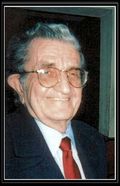
<p><a href="http://honestmedicine.typepad.com/.a/6a00d83451f33769e201543255614a970c-pi" style="float: left;"></a> <span style="font-size: 11pt;">Exactly one year ago to the day, thousands of patients with autoimmune diseases lost their most beloved champion: Bernard Bihari, MD.</span></p>
<p><br><span style="font-size: 11pt;">As most of us know, Dr. Bihari was the genius who discovered that a very low dose of naltrexone, a drug that had been approved at a higher dose by the FDA for another purpose entirely, could help people with some of the most difficult-to-treat diseases.</span></p>
<p><br><span style="font-size: 11pt;">Thanks to Dr. Bihari, tens of thousands (some say hundreds of thousands) of people with multiple sclerosis, rheumatoid arthritis, lupus, HIV/AIDS and even cancer are now living better lives. Many are now symptom-free.</span></p>
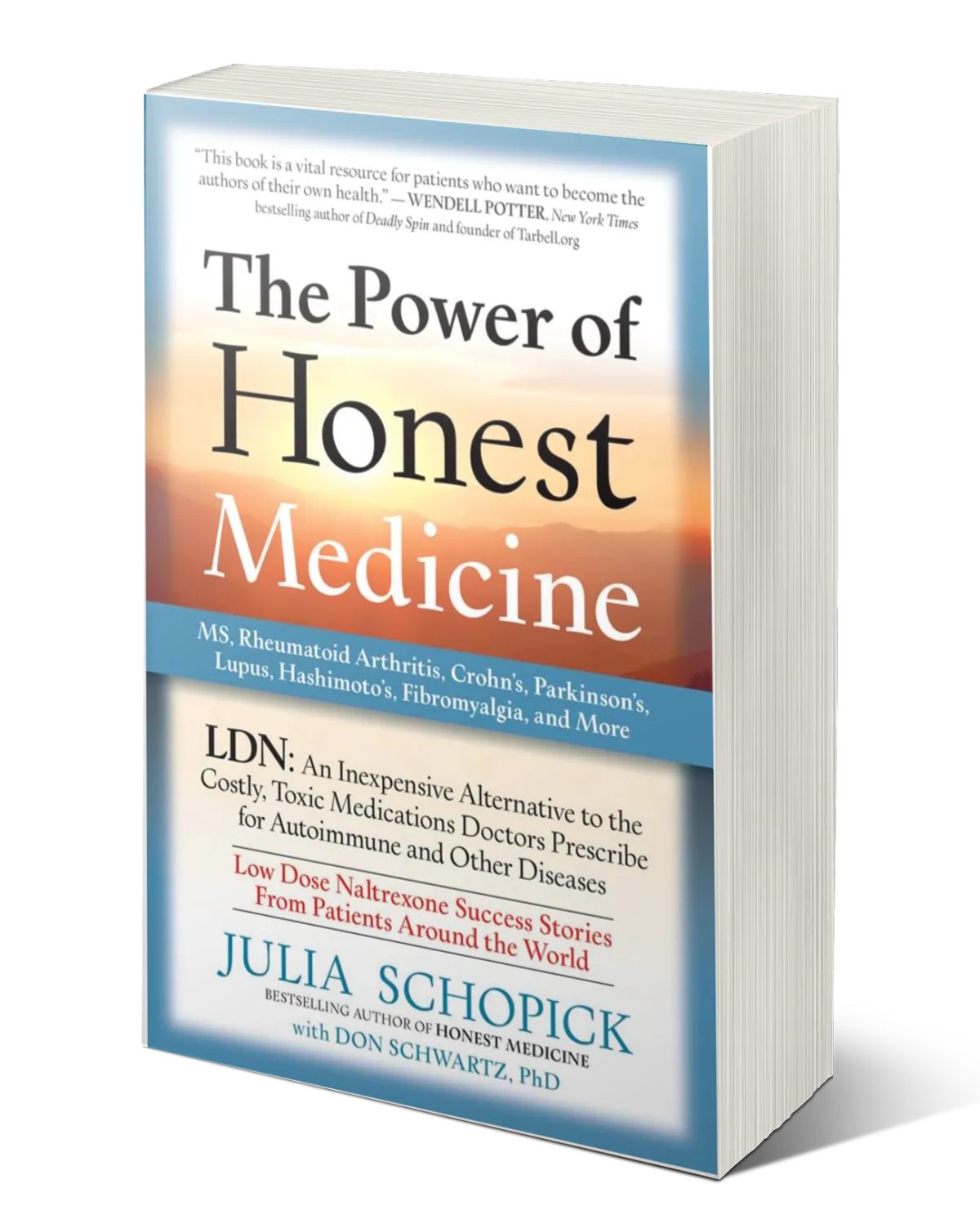
<p><br><span style="font-size: 11pt;">Dr. Bihari is one of my personal heroes, and one of the heroes of my book, <em><strong>HONEST MEDICINE</strong></em>.</span></p>
<p><br><span style="font-size: 11pt;">As a tribute to him on this first anniversary of his death, Dr. Bihari’s widow (and my dear friend) Jackie Young, has entrusted me with <a href="http://www.youtube.com/watch?v=x54Jccr8GT8&amp;context=C3dd1ca6ADOEgsToPDskIgyXIPN3EQT6u3J04kScwX" target="_blank" title="a video from 2002"><strong>a video from 2002</strong></a>, never before seen on the Internet.</span></p>
<p><span style="font-size: 11pt;">Jackie has asked me to share this treasure with you today.</span></p>
<p><span style="font-size: 11pt;">This video is more than one hour of Dr. Bihari talking about his life and his work with LDN.</span><br><span style="font-size: 11pt;">Rather than dividing the video into 10-minute segments for YouTube, I have opted to include it in its entirety here. In addition, I have <a href="http://www.honestmedicine.com/2011/05/transcript-bihari-video.html" target="_blank"><strong>transcribed the entire video</strong></a> so that you can read Dr. Bihari’s words. And, so that you can easily find the parts of the video you want to watch first, I have included a timeline.  Just drag the cursor to the sections you want to watch first; then come back and watch other sections at your leisure. It’s a wonderful video, with lots of great information. </span></p>
<p><span style="font-size: 11pt;">I hope you will take advantage of this opportunity to see Dr. Bihari, up close and personal, as he was in 2002.</span></p>
<p><span style="font-size: 11pt;">And I also hope you’ll take the time to leave messages for Jackie, his beloved partner for so many years, in the comments section below.</span></p>
<p><strong><a href="http://www.youtube.com/watch?v=x54Jccr8GT8&amp;context=C3dd1ca6ADOEgsToPDskIgyXIPN3EQT6u3J04kScwX" target="_blank" title="Click here to see the VIDEO">CLICK HERE</a> to see the VIDEO.</strong></p>
<p><strong><a href="http://www.honestmedicine.com/2011/05/transcript-bihari-video.html" target="_blank">CLICK HERE</a> to read the TRANSCRIPT.</strong></p>
<p><strong><a href="http://honestmedicine.typepad.com/LDN%20CONDITIONS-ConditionswhereLDNcouldbeofbenefit.pdf" target="_blank" title="CLICK HERE">CLICK HERE</a> to see a LIST of conditions LDN has worked on.<br></strong></p></div><img src="http://feeds.feedburner.com/~r/HonestMedicine/~4/KxoxpDZlHLw" height="1" width="1"/>]]></content:encoded><description>Exactly one year ago to the day, thousands of patients with autoimmune diseases lost their most beloved champion: Bernard Bihari, MD. As most of us know, Dr. Bihari was the genius who discovered that a very low dose of naltrexone,...</description><feedburner:origLink>http://www.honestmedicine.com/2011/05/bihari-video.html</feedburner:origLink></item><item><title>Transcript of Dr. Bihari Video</title><link>http://feedproxy.google.com/~r/HonestMedicine/~3/UC_bmIC_gTY/transcript-bihari-video.html</link><category>"Anecdotal" Treatments</category><category>HONEST MEDICINE</category><category>Integrative Medicine</category><category>Low Dose Naltrexone</category><category>Obituaries</category><dc:creator xmlns:dc="http://purl.org/dc/elements/1.1/">JuliaS1573@aol.com (Julia Schopick)</dc:creator><pubDate>Sun, 15 May 2011 21:44:17 PDT</pubDate><guid isPermaLink="false">tag:typepad.com,2003:post-6a00d83451f33769e2015432554da9970c</guid><content:encoded xmlns:content="http://purl.org/rss/1.0/modules/content/"><![CDATA[<div xmlns="http://www.w3.org/1999/xhtml"><p><span style="font-size: 13pt;"><strong>00:00 to 02.26</strong></span>—Dr. Bihari gives his background and credentials.</p>
<p><br><strong>Dr. Bihari:</strong> My medical training started at Harvard Medical School. I graduated in 1957. Then I trained in Internal Medicine at one of the Harvard teaching hospitals in Boston, Beth Israel, and then in Neurology at Massachusetts General in Boston. Then I went to the National Institutes of Health for two years doing brain physiology—brain research. I did another residency training in Psychiatry in New York, at Columbia Presbyterian Medical Center and then, over the following five or six years, I got very involved in working in Drug Addiction. By 1974, I was the City Addiction Commissioner.  I ran all the programs that the city funded for addicts. Then in 1978, the governor and the mayor met, when the governor took over management of the city’s addiction programs, because the city was in a budget crisis. Mayor Koch saved about $8 million and I moved to the city health department as a Deputy Commissioner. I was the only deputy medical commissioner. I basically ran the city health department for about three years. Then I moved to King’s County Hospital, where I ran a cluster of addiction programs for drug addicts and alcoholics. By the early ‘80s, as the AIDS epidemic began, I got very concerned about it. I was seeing large numbers of the heroin addicts I was treating die. I had a couple of friends who died of HIV in the late ‘80s.  I got very concerned about what I saw as a major epidemic—a worldwide epidemic—coming over time. That’s sort of a background, taking me up to the point where I started doing this research.     <br><strong>QUESTION:</strong> Can you talk about working with methadone?</p>
<p><br><strong>Dr. Bihari:</strong> Yes, my first job with city government was running all of the city health department’s methadone programs. There were forty-one—shortly after the methadone system had been put in place. It was while I was doing that that the mayor, Abe Beame, moved the addiction services agency into the health department, and I took over the management of all the addiction programs: the drug-free and the methadone programs. And I ran both for about four years. I was one of the early proponents of methadone and, because of my job in city government, for a couple of years I was a major spokesperson for methadone—which in subsequent years, I had mixed feelings about. Then I became more broadly involved in drug addiction and alcoholism as a public health problem. Then, later, I shifted my energy to AIDS.</p>
<p><strong>Q: </strong>How did your connection with Naltrexone begin?</p>
<p><br><strong>Dr. Bihari:</strong> In 1984, the National Institute on Drug Abuse finished the development of Naltrexone as an adjunct to treating heroin addicts. Its purpose was to block the heroin high with the hope that it would become a very useful treatment for heroin addicts.  It works in heroin addicts by blocking the receptors in cells, mostly in the brain in that situation. Heroin uses primarily the pain receptors. They're all called opioid receptors. Those that are involved in pain relief, and relief of fear. It’s a designer drug, really. It was designed in the laboratory to block those receptors and prevent heroin from having access to them. So addicts would take 50 mg a day in the morning and couldn't get high for hours. It would take a very large amount of heroin to overcome the high. The blockade caused by naltrexone. And when the drug came out, I was interested in trying it. I gave it to about two dozen heroin addicts who had recently stopped using heroin. None of them would stay on it. At the doses involved it caused anxiety, depression, irritability. They couldn't sleep, and even minor stresses that they could handle the day before, they couldn't handle on days that they took naltrexone in the morning.  So it was out on the market, and has remained so since, but has been relatively little used.</p>
<p><br>One of the things I did know from its development, which I had followed closely because I was treating addicts, is that naltrexone, when taken in these high doses, would get the body to triple its production of endorphins. Endorphins are the hormones that heroin works by mimicking. They have a number of functions in the body. They relieve pain; they relieve fear. They're the hormones we use when we’re teenagers to cope with social situations and other anxiety-producing situations. It’s really endorphins that relieve the anxiety. They also play a major role during acute stress. For example, an animal who’s attacked in the jungle—his body responds by pouring out large amounts of endorphins, and in parallel, of corisol, which is a cortisone-related hormone. And the endorphins in that situation not only relieve the pain so that when the animal gets injured he’s not distracted. They relieve the fright. They also shift blood from the whole gastrointestinal tract where a lot of the blood flow is to the muscles and brain, which need it during a fight. And, most importantly, in this situation, they boost the immune system so that the immune cells double very quickly and the immune functions all improve with the large amount of endorphins poured out, so that if the animal gets injured, it’s much less likely to get infected, so there will be better wound healing.  Because of its role in regulating immune function, I got interested in it in the mid-‘80s. In 1985, as I saw the AIDS epidemic expanding, I decided to shift my research energies from addiction to AIDS, and in particular, to look for something that might boost immune function. I knew that the immune system was regulated almost entirely by endorphins, and that also the endorphin production was markedly increased by naltrexone. My colleagues and I worked to find some way of using that ability of naltrexone to raise endorphins, but without the downside of naltrexone blocking the endorphins, the purpose being to find a way to raise endorphins to boost immune function. Along the way, we tested endorphin levels in ten people with AIDS and found they were extremely low—less than 30% of normal. So the hormones that people with AIDS need the most, to have the immune system fight the virus—those hormones are lacking. So, what we did was to do what's called a “dose ranging trial” to find the best dose of the drug to use to raise endorphins without blocking them at the same time.</p>
<p>What we did was we measured the endorphin rises with different doses of Naltrexone.  We got the same rise with 50 mg, 10 mg, 5 mg, and 3 mg. What we were looking for was the smallest dose that could produce a full naltrexone-induced endorphin rise, if taken late at night. The reason the hour is important is that 90% of the endorphins are made in the middle of the night, between 2 and 4 in the morning. If a small dose of naltrexone is taken in the late evening, generally at bedtime, generally endorphin production is boosted as much as threefold, 300%. The naltrexone itself is gone in about 3 hours, but the endorphins remain elevated all the next day. So the naltrexone doesn't significantly block the endorphins but does cause them to rise. If someone with low endorphin levels starts taking low dose naltrexone every night, their endorphin levels will triple and stay tripled as long as they're taking the drug.</p>


<p>The first thing we did was a placebo controlled trial in people with AIDS, in which half of the patients got the drug and the other half got a placebo. They didn’t know who was getting what. We started a foundation and raised a little less than a million dollars to do the trial. The trial took about nine months. At the end of the trial it was clear that the people on the drug—once we broke the code—were doing much better than the people on the placebo. They had many fewer deaths, many fewer opportunistic infections that are the cause of death with people with AIDS. Their immune system cells, particularly the T-helper cells, which are the ones most damaged by HIV, dropped significantly less in people on the drug than in people on the placebo. And it looked very promising. In the course of the trial, I got a call from a friend who was experiencing a recurrence of her non-Hodgkins lymphoma, which had been treated five years earlier with chemotherapy, which had produced a remission. Then, five years later, while I was doing this trial, she had a recurrence. Her husband had just died of prostate cancer. He had had a lot of chemotherapy, and had been quite ill with it, and she had very negative feelings at that point about chemotherapy. When her oncologist suggested that she get another round of chemotherapy, he also told her that her tumor was much less likely to respond than it did the first time because lymphoma in particular tends to mutate against chemotherapy. <span style="font-size: 13pt;"><strong>(13:41)</strong></span> So the second round of chemotherapy is not as effective as the first. The third is not as effective as the second. She called me and said, literally, “Do you think that your AIDS drug would help my cancer?” I had just read a paper in which mice had been injected with human lymphoma cells. It was a breed of mouse that does not reject human cells because of its own immune system, and in this study the mice were all given lymphoma cells—human lymphoma—and died. Then a second group of mice were given lymphoma cells and were first given a single dose of an endorphin—a beta endorphin. Half of the mice, when given lymphoma cells did not get lymphoma. The other half did, but it grew much more slowly than in the first group. The researcher who did the study speculated that the endorphin that he gave was working on the cancer by directly affecting opioid receptors on the cancer cells, which are the receptors for endorphins, as they are for heroin     and morphine-like pain killers.</p>
<p><strong>Q: </strong>Just a single dose?</p>
<p><br><strong>Dr. Bihari: </strong>Yes, just a single dose, given in the abdomen.</p>
<p><br><strong>Q</strong>: It acts on the system very quickly then?</p>
<p><br><strong>Dr. Bihari: </strong>Yes. But that single was enough so that when the tumor cells were injected into the mice shortly after that, they didn’t take in half the cases. And in those who did, the cancer had been modified enough so that they grew much more slowly—with a single exposure. <span style="font-size: 13pt;"><strong>(15:45)</strong></span> Since then, there's been a lot of research studying the relationship between endorphins and cancer in laboratory animals and in the test tube. There are a large number of studies, and the studies that involve giving beta-endorphin (the endorphin from the pituitary gland), met-enkephalin (an endorphin made in the adrenal gland), and low dose naltrexone. The low dose naltrexone works by inducing the body to make more of both endorphins, so they work similarly to the direct injection of endorphins. All three are effective in markedly reducing the number of cancers that take in mice. Or, once the cancer has been injected and has started growing, in producing remission. That’s been true of almost every cancer that has been studied in mice—with pancreatic cancer, colon cancer, cancer of the head and neck, lymphoma, hodgkins disease and in a wide range of malignancies that have been injected into mice. The person doing the bulk of that research—the investigator doing it—is a PhD who believes that all cancers have opioid receptors. He’s gotten responses with all the cancers that he’s treated with endorphins or low dose naltrexone in laboratory animals. The question arose as to whether the effect on cancer was a direct effect of the endorphins on the tumor, or worked through the intermediary effect on the immune system because it’s well known in scientific circles that endorphins boost immune function. In order to separate that out, he did two studies in which he grew cancer cells in the test tube, where there is no immune system. One was colon cancer, and the other was pancreatic cancer. And in both settings the cancer was grown in a nutrient solution, and the cancers were growing rapidly, adding small amounts of met-enkephalin, the adrenal endorphin, to a petri dish, in both cases, led to cell killing in cancer cell death. Both cancers were destroyed by the endorphins. So, in that case, there was no immune system intermediary. That supported his belief that endorphins work by activating the opioid receptors and producing what's called apoptosis, which is the term for programmed cell death, induced in this case by endorphins, primarily cell death that occurs while the cells are dividing. (19:14) Of course, cancer cells divide much more rapidly than any other cells in the body. Curiously, chemotherapy also works through apoptosis, through a different mechanism—not through the opioid receptors, but mostly on the cell nucleus through other intermediaries. One major difference is that, since chemotherapy works primarily on the DNA of the cell as it’s dividing directly, it also works, besides on cancer cells, it works on other cells of the body. Chemotherapy side effects are all related to effects on the more rapidly growing cells. That’s why there's hair loss, and that’s why the white blood count drops. Both involve tissues that are growing more rapidly. Nails stop growing during chemotherapy. Met-enkephalin or beta-endorphin, by raising endorphins, work in these animal settings, directly on the cancer cell. And since the endorphins are hormones naturally present in the body, they don’t have the same side effects. In fact, they basically have none. One of the factors involved is that all the studies that have been done that I’m aware of, of endorphin levels in people with cancer, show that endorphin levels are quite low—generally less than 30% of normal, just as they are in people with AIDS. So, the hormone that the body most needs to fight the cancer is lacking. And giving endorphins, or low dose naltrexone to raise endorphins, serve as a means of restoring normal endorphin levels in people with cancer. And that appears to have the possibility of producing remissions in some cancers—even restoration to relatively normal levels. One of the implications is that one of the causes of cancer may be a drop in endorphin levels. The endorphin levels may first drop, and by dropping, deprive the body of its most important defense against cancer, which is direct cell-killing by endorphins, indirectly depriving the body of another defense against cancer, which is through immune system cells, called killer cells—natural killer cells, what are called CD8, cytotoxic killer cells. Both are low when endorphins are low. Both are enhanced by the presence of normal levels of endorphins as are all immune functions. So a drop in endorphins would reduce the immune system’s surveillance against cancer and its ability to kill cancer cells as they arise, and the lack of endorphins would also deprive the body of the direct cell-killing effect on cancer cells of endorphins. There have been some studies that don’t completely tie up the answers to these, but raise possibilities and might explain it. A number of studies have shown that cancers frequently arise after periods of grief. For example, the point in life at which the risk of cancer is the greatest is the year after the death of a spouse. The rate of cancer development twelve months after the death of a spouse is the highest of any point in one’s lifetime. Also, cancers are more frequent as people get older, and that’s probably both because of a decline in immune function as you get older and a decline in endorphin levels as you get older. There have also been some studies, not as easy to prove, but that suggest that cancer often arises from one to four years after a period of sustained chronic stress, which eventually lowers endorphins. To the extent that stress plays a role in cancer development, it likely does it through the intermediary of reducing endorphin levels and thereby depriving the body of its defenses against cancer.</p>
<p><br><strong>Q:</strong> We always hear about endorphins as they relate to exercise.</p>
<p><br><span style="font-size: 13pt;"><strong>25:00</strong></span></p>
<p><br><strong>Dr. Bihari:</strong> That’s a very good way to boost endorphins, and boost immune function. There is no question that people who do aerobic exercise—the kind of exercise associated with cardiovascular fitness—have raised endorphins. That’s been demonstrated. One interesting study was carried out in San Francisco in people with AIDS, all of whom were going to gyms. They were divided into two groups—all men:  men who went to the gym regularly just for bodybuilding purposes and did relatively little aerobic exercise; and men who went to the gym on a regular basis to do aerobic exercise with much less attention to bodybuilding and weight training. Both groups had AIDS. Both groups started out with the same level of disease progression. Over a five- year period, the death rate in the group who were going to the gym for bodybuilding was double that in the group who were doing aerobic exercise. The number of opportunistic infections—the serious infections that kill people with AIDS—was much higher. And it wasn’t because of a harmful effect of bodybuilding. It was rather that the aerobic exercise by raising endorphins strengthens immune function and thereby helps to sustain the immune system’s ability to fight HIV. That’s the one study I know of that closely ties exercise with better health, or reduced disease in a disease that is associated with low endorphins.</p>
<p><br><span style="font-size: 13pt;"><strong>27:00</strong></span></p>
<p><br><strong>Q:</strong> Can higher doses of Naltrexone promote tumor growth?</p>
<p><br><strong>Dr. Bihari:</strong> I only know that anecdotally. For example, I had one patient with AIDS, who developed a lymphoma, was on Naltrexone and other anti-viral drugs against the virus, and without any other specific treatment for the lymphoma, was stable for three years. The pharmacy that was making his LDN suddenly started sending him 50 mg tablets instead of 3 mg capsules. Within 8 weeks, his lymphoma started growing and he died within six months. This happened simultaneously with the employment of a new pharmacist who didn’t understand that naltrexone should be used in two different doses, and mistakenly gave him the wrong dose. The patient didn’t realize it. I hadn’t seen him in some time, since he had moved away from New York. When he got sick again, he came to see me and discovered this at around the same time. He’d been on 50 mg tablets for about four months. His cancer had started growing again after two months on the high dose. And he was having other side effects from the high dose naltrexone, too. He had depression and insomnia. He assumed these were all due to other things going on in his life, and to the fact that he had AIDS. But, in fact, as soon as he dropped the dose back to 3 mg, those side effects disappeared, but his cancer was now growing very rapidly. He was given some chemotherapy, but it didn’t work and he died six or seven months after this change in dosage. Beyond that one experience, I don’t have definitive evidence that high doses would accelerate cancer growth, except, if what I've been saying is true—that endorphins play a major role in the body’s defenses against cancer—then blocking them would do the same as depriving one of endorphins, if you block them completely. So it makes sense theoretically that high doses would accelerate the development of cancer. Nobody’s tried that, obviously. He tried it accidentally.   </p>
<p><br><span style="font-size: 13pt;"><strong>30:00</strong></span></p>
<p><br><strong>Q:</strong> Would he have been a prime candidate for the met-enkephalin?</p>
<p><br><strong>Dr. Bihari:</strong> Met-enkephalin might have been useful for him. It wasn’t really available. Theoretically, it’s not available now. It’s at the moment not a ____ (less it’s??) drug anywhere in the world. There have been several studies under FDA approval in the past of met-enkephalin in people. There were a series of studies of met-enkephalin used to treat cancer, each for short periods of time in individual patients. But in each case, there was only enough met-enkephalin to treat people for three or four months, enough to identify that there was some improvement. Then, in 1990, the company that was funding these studies approached me to do a formal trial of met-enkephalin as a treatment for AIDS and HIV infection. And I did. We did a placebo controlled study of met-enkephalin, giving it intravenously three times a week to people with HIV, all of them in the middle range of T-cells. They didn’t have an AIDS diagnosis, but were just short of it. In the course of the study, people’s immune function improved significantly, and there were no side effects. The only time we had a side effect was on one occasion when the research nurse working with me gave the intravenous infusion too quickly and the patient started sweating and had a slightly rapid heartbeat. We just lay him down, and he was fine in about ten minutes. That’s the only time it ever produced side effects. Right now, there’s only one very small study going on with FDA approval of pancreatic cancer by a research group in Hershey, Pennsylvania. So far, they’ve started three people on met-enkephalin, giving it once a week in very high doses. I don’t have any idea as to what they're seeing. But it is the same institution where all the animal studies that I described were done. Clearly, Dr. Ian Zagon, the PhD who did the animal studies, arranged for this trial. As a PhD, he can't run a clinical trial, but two oncologists at his institution (at Penn State, their medical school in Hershey, PA) are doing this trial. There are no other trials going on now. Unfortunately, the company that funded the trial that I did, in people with AIDS, was not willing to continue funding an expanded drug development, although the FDA was quite interested. They actually used the results from the trial I did as a basis for identifying that the drug as safe and nontoxic. But it was around the same time that several large drug companies were developing anti-viral drugs for HIV, which have since come out and have been quite successful in affecting the course of HIV and AIDS, and I assume that the small drug company involved was not prepared to compete with them at that time. So, at the moment, there is no research at all going on for people with AIDS with met-enkephalin. And the only research going on with people with cancer is this study in Hershey, PA.</p>
<p><br><span style="font-size: 13pt;"><strong>34:00</strong></span></p>
<p><br><strong>Q:</strong> How many people are involved in that study?</p>
<p>    <br><strong>Dr. Bihari:</strong> So far, three.  I don’t know how many they plan to do. It’s being funded by the National Cancer Institute. I believe the amount of money is not on the order of funding that usually is supplied by drug companies that are investing in a drug based on patents and who expect to make a lot of money from it, or hope to make a lot of money from it. This small study funded by the National Cancer Institute, which has funded all the research that Dr. Zagon has done up to now. So they are interested enough to fund this small trial.</p>
<p><br><strong>Q:</strong> The study you did was to determine the correct low dose. How many people were involved in that?  And why was it so expensive?</p>
<p><br><strong>Dr. Bihari:</strong> There were fifty patients involved, fifty-one by the time we stopped it. A third of the patients got a low dose, a third got a higher dose, and a third got a placebo of met-enkephalin. It was expensive because clinical trials are very expensive. In this case, they involved visits to the research center three times a week with several staff members—myself, another physician, and research nurses. Then the cost of infusions, the cost of the drug. It involved the data collection and the expense of filling out all the forms and of analyzing the results. Clinical research is extremely expensive. That trial cost about $600,000, with just fifty patients.  So a study large enough to demonstrate whether or not met-enkephalin would work for AIDS or cancer would cost in the range of 10 to 20 million dollars. Now that it’s been demonstrated as being safe and not toxic, it would still cost at least 10 to 20 million dollars to do a large enough number of patients. The expenses of that kind of research are enormous.</p>
<p><br><span style="font-size: 13pt;"><strong>35:37</strong></span></p>
<p><br><strong>Q: </strong>You don’t really need to do a study since naltrexone is legal, do you?</p>
<p><br><strong>Dr. Bihari:</strong> Naltrexone is a licensed drug, so physicians are allowed by the FDA to prescribe any licensed drug for what they call an off-label use. So the drug is approved for one purpose, and used for another. Actually, there are a large number of drugs that are used in that fashion. A lot of the drugs cardiologists use, for example, were discovered to work for high blood pressure, and once they were licensed, they were also discovered to work for heart failure and for angina pectoris (chest pain) from coronary artery disease. So, the drugs that cardiologists use. . . A cardiologist friend of mine said that about 60% of the prescriptions he writes for heart patients are for off-label uses. In those cases, it’s usually for the same dose. In the case of naltrexone, the dose we’re using is 3mg a day, so it’s for a much lower dose. So the off-label use is legal and medically acceptable.  That doesn't mean that the drug has been demonstrated to have efficacy, or effectiveness for any of the diseases. It would require large trials done under FDA auspices that were large enough to prove statistically that the drug works with the goals of the trial being, in AIDS, it would depend upon the particular trial, but the goal would probably be to markedly reduce the levels of breakthroughs against antiviral drugs—breakthroughs in the virus growth. And in various kinds of cancers the goals of the trials would be survival, regression of cancer, and so on. And you’d need a large number of patients for each trial for each use. It would probably cost 10 to 15 million dollars per study. So if you study low dose naltrexone for several kinds of cancer, each study would cost several million dollars. The AIDS study would cost at least 10 to 15 million dollars at a minimum.</p>
<p><br><span style="font-size: 13pt;"><strong>40:00</strong></span></p>
<p><br><strong>Q: </strong>Once the study is done, what would you expect to do?</p>
<p><br><strong>Dr. Bihari:</strong> Once the study is done, if the trial is large enough to show efficacy or effectiveness and the FDA decides to license it based on such a trial, and that they would play a role in proving the design of, then it would become an officially licensed drug at 3mg for that particular purpose.</p>
<p><br>The two researchers who I worked with to develop low dose naltrexone were Vincent  Ragone and Finvola Drury. Unfortunately they both have died since. I am working with other people now. But they were key to the drug’s development.</p>
<p><br><strong>Q: </strong>What did each of them do?</p>
<p><br><strong>Dr. Bihari:</strong> We worked together in designing the trials. They were always present at the research center where the studies were done and helped collect the data. Basically, it was the research design that was most important, and the conceptualization.</p>
<p><br><strong>Q:</strong> I am sort of surprised that Vincent died. I thought it kind of kept him going.</p>
<p><br><strong>Dr. Bihari:</strong> The one complication of AIDS that naltrexone doesn't seem to prevent is AIDS dementia. Some of the new antivirals are very helpful for it. They're now actually using one of the new Alzheimer’s drugs, which are quite successful in treating AIDS dementia, now called HIV Encephalopathy. The naltrexone, which he took as he got sicker, didn’t help with his dementia. But he never had problems with opportunistic infections. His T-helper cells, which are the key immune system cells in the disease never dropped, but the HIV encephalopathy was not prevented and he eventually died of that.</p>
<p><br><strong>Q:</strong> Are they doing tests to determine someone’s endorphin level?</p>
<p><br><strong>Dr. Bihari: </strong>There is no good commercially available test for endorphins. We did, however, hire a laboratory scientist to run endorphin levels for us. There was a kit that the scientists purchased to do each endorphin level. They are quite expensive. We did endorphin levels—ten tests. We did levels the day before starting naltrexone, and the next afternoon, in ten people with AIDS. And we did the same test in ten people who didn’t have AIDS, to demonstrate whether or not endorphin levels rose, which they did, two-and-a-half to threefold. The total cost was about $50,000 for just less than 50 blood tests.</p>
<p><br><span style="font-size: 13pt;"><strong>43:12</strong></span></p>
<p><br><strong>Q: </strong>Do the blood tests have to be done in the middle of the night?</p>
<p><br><strong>Dr. Bihari:</strong> Actually, the best time to draw the blood would be in the afternoon at the same time every day, and draw the blood before starting naltrexone, and then draw the blood two or three days later at the same time in the afternoon. It’s not necessary. Ideally, if I had  the funds, I would do it in a sizable number of people. I might try to do it in people who aren't doing as well as I’d like to see, to see if they're responding as well as someone else. There might be some small dosage adjustment that I would make. It is clear the dosage range is no less than 1.75 or 2mg, and no higher than 4.5 or 5mg.  So the range at which it works is between 1.75 and 5mg.  3 mg is a good dose that covers almost everybody.</p>
<p><br><strong>Q: </strong>So what happens over time?</p>
<p><br><strong>Dr. Bihari:</strong> The effectiveness is reduced because you have a longer period of blockade of the endorphins. And the longer you block the endorphins, the less time you have for the endorphins to do their job. So the ideal is to find a dose for each person that maximally increases the endorphins and minimally blocks them. And it is clear that that’s the dosage range, and it might be useful eventually to do endorphin levels to find where within that range somebody falls. Or alternatively, the way medicine is practiced, we usually give standardized doses of drugs. To give a standardized dose and then, for people who are not responding or not responding as well as we would expect, to measure endorphin levels at different doses to find if there is another dose somewhat higher or somewhat lower that would work better. But the range would be about the same. It’s a very small window for dosage.</p>
<p><br><strong>Q:</strong> I am confused about the blocking mechanism. I thought that naltrexone stimulated the endorphins.</p>
<p><br><strong>Dr. Bihari: </strong>Well, it stimulates by blocking. It blocks the receptors for opiates for endorphins in the hypothalamus, the structure in the base of the brain. And when it blocks those, the hypothalamus begins producing larger amounts in the middle of the night of a complex pro-hormone called proopiomelanocortin. That’s a hormone that breaks up eventually into three hormones, and goes down a small stalk into the pituitary gland in the night, and in the pituitary gland, it’s broken down by enzymes into beta- endorphin, a hormone called ACTH and a melanin-stimulating hormone. So that we know for sure. So it induces the adrenal gland to make more enkephalin through a prohormone called proenkephalin. It causes the increase by blocking. What the blocking does is it gives the body a false message that the body doesn't have enough endorphins, and so the body responds with exquisite sensitivity by making more. The body’s able to overcome an incredible number of. . . This is a foreign substance, and yet, this foreign substance induces the body to make more of a natural substance that’s in the body. So it works by blocking. By blocking, it causes an increase in endorphin production. That’s why the dose is so critical, because . . . We could just give everybody 50 mg and get an increase but 50mg would block the endorphins and they wouldn't do any good. So the ideal dose would be the dose that produces a maximal increase, but a minimal blockade of endorphins in the periphery.</p>
<p><br><span style="font-size: 13pt;"><strong>48:08</strong></span></p>
<p><br><strong>Q:</strong> When the endorphins are stimulated    in the middle of the night, does that level stay through the day?</p>
<p><br><strong>Dr. Bihari:</strong> Beta-endorphin we know does. Beta-endorphin has a very long life in the body. The term that’s used with hormones and drugs is “half life,” which means how long it takes for half of a substance—a hormone or a drug—for the body to get rid of it; to leave. And the half life of beta-endorphin is about twenty hours. That means if you raise beta-endorphin levels between 2 and 4 in the morning, you still have much higher levels all the next day into the next evening. Met-enkephalin is harder to measure because when it’s produced, unlike beta-endorphin, it immediately goes into cells. It stimulates the opioid receptors, goes inside the cells. And the levels that we measure are not as reliable the next day. Presumably the cells of the body contain larger amounts of met-enkephalin, but you wouldn't be able to tell easily by doing blood levels. I hope that we can.</p>
<p><br>Potentially there could be a value in using both together. The naltrexone would get the body to make more endorphins, both beta-endorphin and met-enkephalin. Of the two endorphins, those are the two commonest endorphins. There are others. There's one called dynorphin, whose functions are less clear, present mostly in the testicles. But the two most important ones for enhancing immune function and for killing cancer cells are endorphins that have what are called delta opioid receptor effects. There are several different kinds of opioid receptors. The mu receptors are the pain receptors—Mu named after morphine. Those are in the brain. The delta receptors are the receptors present primarily in small amounts in the brain, but present in many tissues in the body—in most tissues. The delta receptors play very little role, if any, in pain relief, but they do play a major role in not only controlling cancer, but in many of the effects that I described before that endorphins have—for example, the receptors in the immune system cells are primarily delta receptors. Most of the peripheral, systemic effects of endorphins are mediated through the delta receptors. The receptors for dynorphin are called canta (??) and Kappa receptors, the ones in the testicles. It’s not clear what they do. There’s actually one endorphin receptor, the Kappa receptor, that also seems to be the receptor for the drug, PCP, and is present in the brain. PCP is an hallucinogenic drug, and what the relationship is between that receptor, brain function and endorphins is very unclear. But there is one opioid receptor that is particularly responsive to PCP. And there is some evidence that endorphins may play some role in controlling psychosis. I've actually seen examples of it—probably involving the PCP receptors, especially when I was treating a lot of methadone patients. When people were slowly taken off methadone, about 3-4% became psychotic as the methadone dose was reduced. For those people there tends to be a critical dose of methadone that prevents the psychosis. When you drop below that dose, it appears. And so below a certain dose, generally in the 5-20mg range, people would begin hearing voices, seeing things, having very disturbed thinking and developing in some cases all of the symptoms of schizophrenia. Those are the people who had to stay on the methadone. Now, if methadone in those patients relieved their psychosis, it may well be that methadone has some effects on the receptors—the PCP opioid related receptors. In its absence those receptors are too active and produce psychotic symptoms. And in its presence they are suppressed. But nobody’s done a lot of followup research. There's been some interest in investigating that relationship, but not enough, I think, to demonstrate what role endorphins and opioid receptors play in diseases like schizophrenia. They clearly play some role in some patients, people with schizophrenia.</p>
<p><br><span style="font-size: 13pt;"><strong>54:10</strong></span></p>
<p><br><strong>Q:</strong> What kind of numbers are there of people who are using naltrexone?</p>
<p><br><strong>Dr. Bihari: </strong>As far as I can tell—mostly by calling pharmacies around the country—there are somewhere between 30,000 and 40,000 people on low dose naltrexone.  From conversations with the pharmacists and with the physicians who are using it a lot, about two-thirds of them are taking it to treat HIV and AIDS, and in particular, more recently, with the purpose of trying to prevent or treat a complication of one of the family of antiviral drugs for HIV called protease inhibitors. It’s a complication in which fat metabolism is disturbed and fat redistributes itself so that people’s bodies become very distorted in shape and the blood cholesterol and triglycerides go sky high. There’s a disturbance in all aspects of fat metabolism, and naltrexone appears anecdotally in my practice to prevent that kind of complication, because not a single patient who I've treated with these new drugs, nearly 200, who are also on naltrexone has gotten that complication, while around the world about a third of people on those drugs get the complication within a year. So that does strongly suggest that it prevents it. Also, four of my patients with AIDS, or HIV, who are taking naltrexone with antiviral drugs stopped the naltrexone after starting the new antivirals. And after they saw the dramatic effects of the new antivirals, all four developed this complication, which is called lipodystrophy, generally seven to ten months after stopping the naltrexone. All four resumed taking it, generally after calling me, and two of the four had a complete reversal of this lipodystrophy. A third one has had about a 70% reversal in the first seven months.  And the fourth one has had no more than about a 20% reversal after a year. So three out of four have had a good response in terms of clearing up of this complication.</p>
<p><br><span style="font-size: 13pt;"><strong>56:46</strong></span></p>
<p><br>Of 30,000 people, two-thirds are taking it for HIV; others are taking it to treat various kinds of cancer and autoimmune diseases—primarily those three kinds of disease.</p>
<p><br><strong>Q:</strong> How about the autoimmune diseases?</p>
<p><br><strong>Dr. Bihari</strong>: I can only guess, but I've seen people with autoimmune diseases who respond to it. What is clear is that the immune system’s harmony and orchestration is disturbed in autoimmune diseases. What tends to happen in a large percentage of autoimmune diseases is that the T-helper cells, which are the ones that are most vulnerable in HIV, are impaired in their function. Their numbers don’t drop substantially, but their function is impaired. They are really the master cells of the immune system. They're the ones that orchestrate the actions of the others. When they aren't functioning well, one of the functions of other immune system cells that’s very important is lost. That is, the ability the immune system has to distinguish between those    chemical structures in the body that are “ME,” that belong to the self and those that are foreign to the self. It’s that ability to distinguish between self and non-self that allows the immune system to recognize bacteria as foreign, and attack them, or parasites or funguses, or cancer cells, which mutate enough so they become foreigners, as foreign almost as bacteria or funguses, and become the object of attack by immune system cells. What happens apparently in many autoimmune diseases is that some of the immune system cells, in particular cells called macrophages and cytotoxic killer cells, lose the ability to make that distinction, usually with regard to one, or sometimes more than one, system of the body and they start attacking the body’s tissues. In multiple sclerosis, for example, the killer cells or macrophages start attacking the myelin sheath, which insulates nerve fibers. And it’s the attack of the immune system on the nerve fibers that causes the neurological impairments in multiple sclerosis. And there does appear to be significant benefit to using low dose naltrexone in treating multiple sclerosis in terms of preventing further attacks of progression. And I assume, based on this kind of research, that it’s working by enhancing the functioning of the T-cells, thereby restoring the proper orchestration of immune function, thereby stopping the attack cells from attacking the insulation of nerve fibers. But it seems to work quite well in a range of autoimmune diseases: Lupus, rheumatoid arthritis. That’s just anecdotal. None of these things have been demonstrated in large clinical trials. But it appears anecdotally in my practice that there are good responses to the drug in diseases like asthma, which is partly autoimmune; eczema, which is entirely autoimmune; psoriasis, which is an autoimmune disease. And several less common autoimmune diseases show good response, too. Although I haven't had the opportunity to do endorphin levels on people with those diseases, I assume they're low, because it appears that restoration of normal endorphin levels causes reversal of the disease process.</p>
<p><br><span style="font-size: 13pt;"><strong>01:01:21</strong></span></p>
<p><br><strong>Q:</strong>  It must be frustrating to have this drug and not be able to get it out there.</p>
<p><br><strong>Dr. Bihari: </strong>No question. What I’m frustrated about is not having the funds to do the proper clinical trials. What I’m doing about that is to negotiate with drug companies that show some interest. If I find a drug company that is prepared to do the work involved and put out the funding involved—the drug company would do clinical trials under FDA guidelines for each disease that the drug appears to be useful for. And once the drug was shown to be effective, if it is effective for each disease, the FDA would license it, and then it would become a licensed drug at 3mg for that particular purpose. But doctors would also be able to start using it—using the 3mg capsules for other diseases, too, that they would very likely realize are related to the disease that it’s approved for. It’s very frustrating to me, because from my own experience, it seems to me pretty clear that the drug has a lot of value. But it really doesn't in a formal way, and in a way that will lead other physicians on a large scale to pick up and use it until it’s been officially approved by going through this process. That is frustrating. It takes a long time to find the right company to partner with to develop it.</p>
<p><br><strong>Q:</strong> Could there possibly be a benefactor like Bill Gates?</p>
<p><br><strong>Dr. Bihari:</strong> Well, he would have the money. I calculated that doing the first three trials would cost about 50 million dollars, but he would then need a company that has the capacity to not only test it, but to work with the FDA, to follow their guidelines, to bring it through the approval process. Then to manufacture, distribute it, advertise it. Only drug companies and biotech companies have that capacity. So, funding could come from outside—venture capitalists, or even people like the Gates, who have set up large foundations. But eventually the money would have to go to a company that has the capacity to take all those steps and do it well.</p>
<p><br><strong>Q:</strong> It seems like, if you got the word out about these 30,000 people that are involved with this, that that would have some effect.</p>
<p><br><strong>Dr. Bihari:</strong> Well it is. The word is spreading through the Internet about it, and a lot of people are trying it, and in most cases, they're getting their own physicians to prescribe it. I certainly haven't prescribed it to 30,000 people. I have, perhaps, 800 or 900 at most right now whom I’m following on it. So a lot of people are on it through their own physicians. And one of the things    that makes it easy for physicians to prescribe it once they read about it and think about it is that the toxicity is really zero. There is absolutely no toxic effect at all. No side effects on a short-term, or a long-term basis, so there is no downside to it. And it is quite inexpensive. Most pharmacies charge $24-$25 for a month’s supply, so it’s not toxic to the pocketbook either.</p>
<p><br>If a drug company got involved and got it approved at 3mg, that would become the official form. That would be the dosage and product that insurance companies would pay for. They wouldn't pay for a pharmacist to grind it up and make 3 mg capsules. They would only pay for the officially approved drug manufactured by such-and-such a company. So if it does go through trials, the companies I've talked to all agree that it would not be a major impediment. What probably would happen is that the vast majority of people taking it would take the 3mg capsules made by the company that owns it through the licensing, and only those people who don’t have insurance would have to pay larger amounts for the drug, because the price would certainly go up from the current compounding pharmacy price. For the people who have no insurance, it would be cheaper to have a pharmacist make it up. It won't matter to them, because they're not going to get it paid for one way or the other. That probably would amount to 10% of the people taking it. so if 90% of the people taking it are taking it in the form in which it’s been approved, made by the company it’s been approved for, then the company will make lots of money. That should not be an impediment.</p>
<p><br><span style="font-size: 13pt;"><strong>01:07:36</strong></span></p>
<p><br><strong>Q:</strong> It seems to me that you’re in a position where you could avoid the whole FDA involvement.</p>
<p>    <br><strong>Dr. Bihari:</strong> People could avoid it—and do, since it’s legal for doctors to give it now. But it’s not going to be universally used for any disease until it’s licensed. Most physicians are not willing to prescribe it. So, until it’s shown in really good scientifically designed studies to work, only then will it become widely known, widely understood. Only at that point, not only would physicians prescribe it as a routine for those diseases it works for, but the followup research would be done to identify how it works, what it does, and what other diseases it might work for. At the moment, it’s sort of a haphazard system in which it’s not really been proven that it works for anything except at high doses although it appears to have some benefit at low doses. It really has to be proven in a scientific way. And I understand that, because I’m a scientist. I’ve done sizable numbers of clinical trials and, although I've used other drugs off-label for patients, I’d rather give people drugs that have gone through scientific study. But I wouldn't hesitate to give a drug like this in a smaller dose that’s already licensed. It’s just a matter that the licensing by the FDA would not only make it immediately available to everybody. It would lead to insurance reimbursement. It would lead to physicians understanding what it’s useful for. It would lead to more studies—probably studies to extend its uses for other things I’m not even aware of, if it does turn out to work in these trials.</p>
<p><br><strong>Q:</strong> So right now you're searching for a drug company?</p>
<p><br><strong>Dr. Bihari:</strong> Right now, I’m looking for a drug company to negotiate with, with the purpose of having the company make a contractual commitment to do clinical trials for HIV and AIDS, for at least two or three kinds of cancer, for autoimmune diseases, and to make a commitment to carry each use, if the drug is licensed—if the trials show effectiveness—to develop it for each use. Then to manufacture it and market it and distribute it—a contract with me so I can license patents to them so that they would be in a position to make a sizable enough profit to make their investment worthwhile.</p>
<p><br><span style="font-size: 13pt;"><strong>01:10:54</strong></span></p>
<p><br><strong>Q: </strong>What kind of success do you need in a trial?</p>
<p><br><strong>Dr. Bihari:</strong> The general standard is that the drug needs to be at least 5% better than a placebo. That’s all. A lot of drugs have been approved just for that small difference. And usually the clinical trials are designed with the assumption that it would be 5% better with large enough cases to demonstrate a 5% difference. The drug may well have more than that degree of effectiveness. But the standards really are 5%, particularly in a drug that has little or no toxicity.</p>
<p><br>But, with the results I’m getting with HIV and AIDS with combining low dose naltrexone with antiviral drugs—also for people with cancer and autoimmune diseases—it looks anecdotally, from the point of view of a private practitioner, it looks like it’s a lot more effective than 5% over placebo—probably in the range of 60-70% effective. I’d say that low dose naltrexone has an overall effectiveness of 50-70%. That’s my impression    . Unfortunately, being the developer of this, I don’t know how biased I am in my observations, nor does anybody else. So this kind of anecdotal information can't serve as the basis for licensing. It really requires that the trials be done by somebody else in each field for each disease, with people who specialize in that disease. I've had experience doing research, clinical trials for that disease. But these trial have to be done by people who have no financial interest, which obviously I do. That would provide much more credibility for the results, which my results lack, because of the nature of the way I’m involved with it.</p>
<p><br><strong>Q:</strong> You're also using it for Hepatitis C?</p>
<p><br><strong>Dr. Bihari:</strong> Yes, I am. With Hepatitis C, it’s hard for me to identify how much it does, because I’m using it with purified extract of St. John’s Wart, the plant, in which an ingredient called hypericon has been extracted from the St. John’s Wart and added back in about twenty-two fold. So, since hypericon in the test tube is extremely effective against hepatitis C and hepatitis B, I had a company make this concentrated form up to use in treating people with those two kinds of hepatitis. And the combination of that with LDN looks very promising. It looks to me like the hypericon, the concentrated St. John’s Wart, looks to be the more important of the two ingredients. I think the naltrexone is helpful with any chronic infection, but the more dramatic element here is the hypericon. In the test tube, it really suppresses these two viruses. In people it seems to suppress hepatitis B and Hepatitis C growth and markedly improve liver function.   </p>
<p><br><strong>Q:</strong> So naltrexone is an all-purpose immune booster.<br><br><strong>Dr. Bihari: </strong>Right. Naltrexone should be useful in treating any chronic infection—tuberculosis, for example; lyme disease; certainly diseases like genital herpes, which I do have a patent for. It seems to be effective for people infected with genital herpes in preventing recurring attacks. So by boosting immune function, it appears to have benefit in a wide range of infections by increasing the immune system’s ability to control them. With hepatitis C, it’s hard to separate out what it does, because the hypericon acts as an antiviral.</p>
<p><br><strong>Q: </strong>The more I learn about LDN, the more it seems like it should be like a vitamin.</p>
<p><br><strong>Dr. Bihari: </strong>(Laughs) It also could be viewed as a kind of snake oil! That’s the concern I have, that when you start talking about a drug that has such a wide range of potential values, sometimes people think you're a snake oil salesman. I’m really not. Each one of the things that I use it for involve diseases I've been treating for a long time. I've collected data as carefully as I can in my practice and it looks very promising for many things.</p>
<p><br><strong>Q:</strong> Do you and your family take it?</p>
<p><br><strong>Dr. Bihari:</strong> Yes, I’ve been taking it for several years, because my grandfather died of colon cancer. My wife takes it because of a very strong family history of breast cancer. We have a number of friends who take it because of family histories of cancer because it seems intuitively obvious to them, as it does to me, that a drug that would effectively treat cancer should also help prevent it. Proving that would be a massive effort. You'd have to follow 50,000 people for 5 to 10 years, who are in high-risk groups. One of the likely off-label uses once it’s approved will be by people who realize intuitively that it works to prevent cancer, and they’ll start taking it. </p>
<p>   <br><strong>Q:</strong> And there is no reason you can think of to NOT take it?</p>
<p><br><strong>Dr. Bihari: </strong>There’s no downside to it. Of all the people I've given it to. .. . First of all, with other physicians, if they run into what they consider side effects, they always call me because my name is so associated with it. The only side effect I've seen is a very small percentage of people find that on 3mg their sleep is poor. All they need to do is lower the dose. It simply means that that dose is too high for them because they're more sensitive to it. Generally lowering it to 2mg is enough, to 2mg or 1.5mg is enough to eliminate the sleep disturbance. That is literally the only side effect that I've seen.    I've had two women on it for fourteen years, one with multiple sclerosis, and one who had a metastatic melanoma and has been in remission, and both have stayed on it, simply to make sure their disease doesn't recur. They’ve had no side effects at all. I've been on it for ten years; my wife, for close to that. I've had a number of AIDS patients on it for as much as twelve to fourteen years, with no side effects at all. There is no downside to it.         </p>
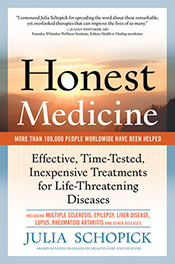
<p><strong><a href="http://honestmedicine.typepad.com/LDN%20CONDITIONS-ConditionswhereLDNcouldbeofbenefit.pdf" target="_blank" title="CLICK HERE"><span style="color: #0000bf;">CLICK HERE</span></a> to see a LIST of conditions LDN has been known to help.  </strong>     <br><br><br></p></div><img src="http://feeds.feedburner.com/~r/HonestMedicine/~4/UC_bmIC_gTY" height="1" width="1"/>]]></content:encoded><description>00:00 to 02.26—Dr. Bihari gives his background and credentials. Dr. Bihari: My medical training started at Harvard Medical School. I graduated in 1957. Then I trained in Internal Medicine at one of the Harvard teaching hospitals in Boston, Beth Israel,...</description><feedburner:origLink>http://www.honestmedicine.com/2011/05/transcript-bihari-video.html</feedburner:origLink></item><item><title>HONEST MEDICINE Is Now Available for the KINDLE!</title><link>http://feedproxy.google.com/~r/HonestMedicine/~3/UYaLr7t3Gp8/honest-medicine-is-now-available-for-the-kindle.html</link><category>"Anecdotal" Treatments</category><category>Books</category><category>HONEST MEDICINE</category><category>Integrative Medicine</category><dc:creator xmlns:dc="http://purl.org/dc/elements/1.1/">JuliaS1573@aol.com (Julia Schopick)</dc:creator><pubDate>Mon, 25 Apr 2011 17:55:01 PDT</pubDate><guid isPermaLink="false">tag:typepad.com,2003:post-6a00d83451f33769e2014e8812fda6970d</guid><content:encoded xmlns:content="http://purl.org/rss/1.0/modules/content/"><![CDATA[<div xmlns="http://www.w3.org/1999/xhtml"><p><span style="font-size: 10pt;"><a href="http://honestmedicine.typepad.com/.a/6a00d83451f33769e2014e8812facf970d-pi" style="float: left;"><img alt="KINDLE COVER-HM_Doc60-page-001" class="asset  asset-image at-xid-6a00d83451f33769e2014e8812facf970d" src="http://honestmedicine.typepad.com/.a/6a00d83451f33769e2014e8812facf970d-120wi" style="margin: 0px 5px 5px 0px;" title="KINDLE COVER-HM_Doc60-page-001"></img></a><span style="font-size: 12pt;"> By popular demand, my book, <span style="color: #0000bf;"><strong><em>HONEST MEDICINE: Effective, Time-Tested, Inexpensive Treatments for Life-Threatening Diseases</em></strong></span>, is now available for the KINDLE. It took a long time—and about 100 hours of work by my dear friend Mark—but it is finally ready. And it looks great!! (Why it took so long to prepare is another story—for another posting. But please trust me, it did!)</span></span></p>
<p><span style="font-size: 12pt;">So, please tell all your ebook-savvy friends, sons, daughters, nieces, nephews and other relatives: You can <a href="http://www.amazon.com/Honest-Medicine-Time-Tested-Life-Threatening-ebook/dp/B004XMOFS4" target="_self">download <em>HONEST MEDICINE </em>for Kindle</a> for $8.99.</span></p>
<p><span style="font-size: 12pt;">MOBI files (the kind of file the KINDLE uses) can be viewed on Kindles (both handheld and computer-based), as well as on smartphones and ipads.</span></p>
<p><span style="font-size: 12pt;">Thanks so much for telling everyone you know who owns a KINDLE or other device about <span style="color: #0000bf;"><strong><em>HONEST MEDICINE's </em></strong></span>arrival as an ebook. I can’t wait to hear how you enjoy reading it!</span></p>
<p><span style="font-size: 12pt;">Go <a href="http://www.amazon.com/Honest-Medicine-Time-Tested-Life-Threatening-ebook/dp/B004XMOFS4" target="_self">here</a> to download <strong><span style="color: #0000bf;"><em>HONEST MEDICINE </em></span></strong>for Kindle.</span></p></div><img src="http://feeds.feedburner.com/~r/HonestMedicine/~4/UYaLr7t3Gp8" height="1" width="1"/>]]></content:encoded><description>By popular demand, my book, HONEST MEDICINE: Effective, Time-Tested, Inexpensive Treatments for Life-Threatening Diseases, is now available for the KINDLE. It took a long time—and about 100 hours of work by my dear friend Mark—but it is finally ready. And...</description><feedburner:origLink>http://www.honestmedicine.com/2011/04/honest-medicine-is-now-available-for-the-kindle.html</feedburner:origLink></item><item><title>Julia Schopick Interviewed by Dr. Ronald Hoffman about HONEST MEDICINE: The HOFFMAN EFFECT </title><link>http://feedproxy.google.com/~r/HonestMedicine/~3/tSqrVrjzB2k/hoffman.html</link><category>"Anecdotal" Treatments</category><category>Books</category><category>HONEST MEDICINE</category><category>Integrative Medicine</category><dc:creator xmlns:dc="http://purl.org/dc/elements/1.1/">JuliaS1573@aol.com (Julia Schopick)</dc:creator><pubDate>Thu, 17 Feb 2011 14:29:50 PST</pubDate><guid isPermaLink="false">tag:typepad.com,2003:post-6a00d83451f33769e2014e5f243006970c</guid><content:encoded xmlns:content="http://purl.org/rss/1.0/modules/content/"><![CDATA[<div xmlns="http://www.w3.org/1999/xhtml"><p><a style="float: left;" href="http://honestmedicine.typepad.com/.a/6a00d83451f33769e2014e5f241c8e970c-pi"><img class="asset  asset-image at-xid-6a00d83451f33769e2014e5f241c8e970c" style="margin: 0px 5px 5px 0px;" title="Hoffman photo" src="http://honestmedicine.typepad.com/.a/6a00d83451f33769e2014e5f241c8e970c-120wi" alt="Hoffman photo"></img></a> <span style="font-size: 12pt;">On February 8th, I was interviewed by the wonderful integrative physician and author, Ronald Hoffman, MD, on his New York radio show, “Health Talk.”</span></p>
<p><span style="font-size: 12pt;">Frankly, I knew that Dr. Hoffman would do a great interview:</span></p>
<p><span style="font-size: 12pt;">I had read his books and loved them. And as a matter of fact, I myself had interviewed Dr. Hoffman for HonestMedicine.com, after his book, <a href="http://www.amazon.com/How-Talk-Your-Doctor-Conventional/dp/1591201128/ref=sr_1_1?s=books&amp;ie=UTF8&amp;qid=1297395857&amp;sr=1-1" target="_self"><em>How to Talk with Your Doctor</em></a> came out. I was introduced to him by his co-author, <a href="http://www.sidneystevens.com/" target="_self">Sidney Stevens</a>, a friend of mine, who thought that Dr. Hoffman would provide me with a great interview. He did. </span>(<span style="font-size: 12pt;">Click <a href="http://www.honestmedicine.com/2007/08/dr-ronald-hoffm.html" target="_self">here</a> to listen to that interview.</span>)<br><br><span style="font-size: 12pt;">After that interview, Dr. Hoffman and I became friends, and I asked him to write a testimonial for my book, <a href="http://www.honestmedicine.com/media.html#test" target="_self">which he graciously did</a>.</span></p>
<p><span style="font-size: 12pt;">When <em>HONEST MEDICINE</em> was published, I knew that I wanted to be interviewed by Dr. Hoffman for his WOR-AM radio show in New York. I knew he’d do a great job, and that his large listenership would provide me with a unique opportunity to spread the word about the amazing treatments I feature in my book.</span></p>
<p><span style="font-size: 12pt;">The interview aired on February 8th, 2011. I urge you to <a href="http://www.wor710.com/topic/play_window.php?audioType=Episode&amp;audioId=5160041" target="_self">listen to it</a>.<br></span></p>
<p><span style="font-size: 14pt;"><strong><span style="color: #0000bf;">But nothing prepared me for what I now refer to as “The Hoffman Effect”</span>:</strong></span></p>
<p><span style="font-size: 12pt;">Before the show was even over in New York, I began getting emails from Dr. Hoffman's listeners, telling me how much they were enjoying the interview, and asking for information about the treatments featured in mybook. I was happy to oblige.</span></p>
<p><span style="font-size: 12pt; color: #111111;">Then the next day, it happened: </span><span style="font-size: 12pt; color: #0000bf;"><strong><em></em></strong></span></p>
<p><span style="font-size: 12pt; color: #0000bf;"><strong><em>HONEST MEDICINE</em> was an AMAZON.COM BEST SELLER!</strong></span></p>
<p><span style="font-size: 12pt;">I call it “The Hoffman Effect.”</span></p>
<p><span style="font-size: 12pt;">Here is an Amazon.com <a href="http://honestmedicine.typepad.com/AMAZON.COM-BEST%20SELLER-2-Feb%2010%202011.pdf" target="_self">screen shot</a> two days after Dr. Hoffman’s interview. As you can see, HONEST MEDICINE was in the top 4137 books, and <a href="http://honestmedicine.typepad.com/Picture1-IMMUNE%20SYSTEM.jpg" target="_self">#1 in Immune System</a> books, and <a href="http://honestmedicine.typepad.com/Picture2-HOLISTIC.jpg" target="_self">#2 in the Holistic category</a>!!</span><br><br><span style="font-size: 12pt;">I can’t thank Dr. Hoffman enough for giving me this opportunity to get the word out about <em>HONEST MEDICINE</em>, so that thousands of people will be able to learn about it. As most of you who are reading this know, this book is a mission and a passion for me. </span></p>
<p><span style="background-color: #fdeee0;"><span style="font-size: 14pt;">NOTE: <span style="font-size: 12pt;">If you know of a radio host who is really good--like Dr. Hoffman--and who (like Dr. Hoffman) is knowledgeable about health topics, please <a title="Contact Julia Schopick" href="mailto:Julia@HonestMedicine.com" target="_blank">write to me</a>. </span></span><span style="font-size: 12pt;">I'd love to be a guest on many more shows like Dr. Hoffman's!!</span></span></p></div><img src="http://feeds.feedburner.com/~r/HonestMedicine/~4/tSqrVrjzB2k" height="1" width="1"/>]]></content:encoded><description>On February 8th, I was interviewed by the wonderful integrative physician and author, Ronald Hoffman, MD, on his New York radio show, “Health Talk.” Frankly, I knew that Dr. Hoffman would do a great interview: I had read his books...</description><feedburner:origLink>http://www.honestmedicine.com/2011/02/hoffman.html</feedburner:origLink></item><item><title>Integrative Physicians Praise Julia Schopick's Just-Published Book, "HONEST MEDICINE"!</title><link>http://feedproxy.google.com/~r/HonestMedicine/~3/BMUfBL4I-zc/integrative-physicians-praise-the-just-published-honest-medicine.html</link><category>Alpha Lipoic Acid</category><category>Books</category><category>Integrative Medicine</category><category>Ketogenic Diet</category><category>Low Dose Naltrexone</category><dc:creator xmlns:dc="http://purl.org/dc/elements/1.1/">JuliaS1573@aol.com (Julia Schopick)</dc:creator><pubDate>Wed, 26 Jan 2011 12:52:09 PST</pubDate><guid isPermaLink="false">tag:typepad.com,2003:post-6a00d83451f33769e20147e13d044c970b</guid><content:encoded xmlns:content="http://purl.org/rss/1.0/modules/content/"><![CDATA[<div xmlns="http://www.w3.org/1999/xhtml"><p><span style="font-size: 14pt;"><strong>Drs. Julian Whitaker, Ronald Hoffman, Jeffrey Dach—and others—praise <a href="http://www.amazon.com/gp/product/0982969007/" target="_blank">HONEST MEDICINE</a>. </strong></span></p>
<p><span style="font-size: 12pt;">Those of you who have read my just-published book, <strong><em><a href="http://www.amazon.com/gp/product/0982969007/" target="_blank">HONEST MEDICINE: Effective, Time-Tested, Inexpensive Treatments for Life-Threatening Diseases</a></em></strong>, know that several well-known integrative doctors have written testimonials for it. I have included them in the book.</span></p>
<p><span style="font-size: 12pt;">I am very grateful to these doctors for their support, and would like to thank them here by sharing their kind words with you.</span></p>
<p><span style="font-size: 12pt;">In another post, I will share the testimonials of several others. But for now. . .</span></p>
<p style="text-align: left;"><span style="font-size: 12pt;"><a href="http://honestmedicine.typepad.com/.a/6a00d83451f33769e20147e13ce311970b-pi" style="float: left;"><img alt="Dr_JulianWhitaker2" class="asset  asset-image at-xid-6a00d83451f33769e20147e13ce311970b" height="96" src="http://honestmedicine.typepad.com/.a/6a00d83451f33769e20147e13ce311970b-120wi" style="margin: 0px 5px 5px 0px;" title="Dr_JulianWhitaker2" width="98"></img></a> <strong><span style="color: #0000bf;">Julian Whitaker, MD</span>,</strong> Founder of the Whitaker Wellness Institute, Editor of Health &amp; Healing newsletter, and author of many best-selling books, including <em>Dr. Whitaker’s Guide to Natural Healing</em>, <em>Reversing Diabetes</em> and <em>Reversing Heart Disease</em>:</span></p>
<blockquote>
<p style="text-align: left;"><span style="background-color: #deebf6; font-size: 12pt;">“I commend Julia Schopick for spreading the word about these remarkable, yet overlooked therapies that can improve the lives of so many.”</span></p>
<p style="text-align: left;"><span style="background-color: #deebf6; font-size: 12pt;"> </span></p>
</blockquote>
<p style="text-align: left;"><span style="background-color: #deebf6; font-size: 12pt;"> </span><span style="font-size: 12pt;"><span style="color: #0000bf;"><strong><a href="http://honestmedicine.typepad.com/.a/6a00d83451f33769e20148c74659b6970c-pi" style="float: left;"><img alt="HOFFMAN-meetdr4_12_5" class="asset  asset-image at-xid-6a00d83451f33769e20148c74659b6970c" height="90" src="http://honestmedicine.typepad.com/.a/6a00d83451f33769e20148c74659b6970c-120wi" style="margin: 0px 5px 5px 0px;" title="HOFFMAN-meetdr4_12_5" width="89"></img></a> Ronald Hoffman, MD</strong></span>, Founder and Medical Director of the Hoffman Center in New York, Host of “Health Talk,” nationally syndicated radio talk show, and best-selling author of several books, including <em>Intelligent Medicine </em>and <em>Alternative Cures that Really Work</em>:</span></p>
<blockquote>
<p><span style="background-color: #deebf6; font-size: 12pt;">“Any patient who is interested in learning about nontoxic, inexpensive alternatives to costly, side-effect-laden pharmaceuticals should read Julia’s book. I predict that Honest Medicine will become an instant classic.”</span></p>
<p><span style="background-color: #deebf6; font-size: 12pt;"> </span></p>
</blockquote>
<p><span style="font-size: 12pt;"><span style="color: #0000bf;"><strong> <a href="http://honestmedicine.typepad.com/.a/6a00d83451f33769e20147e13d0a49970b-pi" style="float: left;"><img alt="Drjeffreydach" class="asset  asset-image at-xid-6a00d83451f33769e20147e13d0a49970b" height="107" src="http://honestmedicine.typepad.com/.a/6a00d83451f33769e20147e13d0a49970b-120wi" style="margin: 0px 5px 5px 0px;" title="Drjeffreydach" width="76"></img></a> <a href="http://honestmedicine.typepad.com/.a/6a00d83451f33769e20147e13ceeda970b-pi" style="float: left;"></a>Jeffrey Dach, MD</strong></span>, author of Natural Medicine 101 and founder of the Bio-Identical Hormone Blog:</span></p>
<blockquote>
<p><span style="background-color: #deebf6; font-size: 12pt;">“Join with Julia Schopick and thousands of other health activists demanding these effective treatments ignored by mainstream medicine. A revolution is at hand, and Julia’s new book, Honest Medicine, is leading the charge with banner held high.”</span></p>
<p> </p>
</blockquote>
<p><span style="font-size: 12pt;"><span style="color: #0000bf;"><a href="http://honestmedicine.typepad.com/.a/6a00d83451f33769e20147e13cf6d0970b-pi" style="float: left;"><img alt="David_Brownstein" class="asset  asset-image at-xid-6a00d83451f33769e20147e13cf6d0970b" height="129" src="http://honestmedicine.typepad.com/.a/6a00d83451f33769e20147e13cf6d0970b-120wi" style="margin: 0px 5px 5px 0px;" title="David_Brownstein" width="90"></img></a> <strong>David Brownstein, MD</strong></span><strong>, </strong>Medical Director of the Center for Holistic Medicine in West Bloomfield, MI, and author of nine books on integrative medical topics:</span></p>
<blockquote>
<p><span style="background-color: #deebf6; font-size: 12pt;">“I recommend Honest Medicine to all who are open-minded and looking for safe, effective therapies that have a sound biochemical basis behind them. This book should be required reading for all physicians and patients searching for safe and effective therapies." </span></p>
</blockquote>
<p><span style="font-size: 12pt;"><span style="color: #0000bf;"><strong><a href="http://honestmedicine.typepad.com/.a/6a00d83451f33769e20148c74682a2970c-pi" style="display: inline;"></a> <br><a href="http://honestmedicine.typepad.com/.a/6a00d83451f33769e20148c7468436970c-pi" style="float: left;"><img alt="Jacob_Teitelbaum_sml" class="asset  asset-image at-xid-6a00d83451f33769e20148c7468436970c" height="156" src="http://honestmedicine.typepad.com/.a/6a00d83451f33769e20148c7468436970c-120wi" style="margin: 0px 5px 5px 0px;" title="Jacob_Teitelbaum_sml" width="95"></img></a> Jacob Teitelbaum, MD</strong></span>, author of the best-selling book, <em>From Fatigued to Fantastic</em>!</span></p>
<blockquote>
<p><span style="background-color: #deebf6; font-size: 12pt;">"When doctors tell you they can’t help you, thank them for their honesty. And then read Julia Schopick’s book!"</span></p>
<p><span style="background-color: #deebf6; font-size: 12pt;"> </span></p>
<p><span style="background-color: #deebf6; font-size: 14pt;">Thanks to these integrative doctors for their testimonials. I hope that more doctors will become like them--and start prescribing treatments like those featured in <a href="http://www.amazon.com/gp/product/0982969007/" target="_blank">HONEST MEDICINE.</a></span></p>
<p><span style="background-color: #deebf6; font-size: 12pt;"> </span></p>
</blockquote></div><img src="http://feeds.feedburner.com/~r/HonestMedicine/~4/BMUfBL4I-zc" height="1" width="1"/>]]></content:encoded><description>Drs. Julian Whitaker, Ronald Hoffman, Jeffrey Dach—and others—praise HONEST MEDICINE. Those of you who have read my just-published book, HONEST MEDICINE: Effective, Time-Tested, Inexpensive Treatments for Life-Threatening Diseases, know that several well-known integrative doctors have written testimonials for it. I...</description><feedburner:origLink>http://www.honestmedicine.com/2011/01/integrative-physicians-praise-the-just-published-honest-medicine.html</feedburner:origLink></item><item><title>HONEST MEDICINE Now on Amazon.com</title><link>http://feedproxy.google.com/~r/HonestMedicine/~3/5smNnuczGvI/hmonamazon.html</link><category>"Anecdotal" Treatments</category><category>Advocates</category><category>Archived Articles</category><category>Books</category><category>Healthcare Reform</category><category>Integrative Medicine</category><category>Low Dose Naltrexone</category><category>cancer</category><category>Crohn's disease</category><category>epilepsy</category><category>Honest Medicine</category><category>liver disease</category><category>lupus</category><category>multiple sclerosis</category><category>rheumatoid arthritis</category><dc:creator xmlns:dc="http://purl.org/dc/elements/1.1/">JuliaS1573@aol.com (Julia Schopick)</dc:creator><pubDate>Thu, 23 Dec 2010 14:38:56 PST</pubDate><guid isPermaLink="false">tag:typepad.com,2003:post-6a00d83451f33769e20148c7009ca5970c</guid><content:encoded xmlns:content="http://purl.org/rss/1.0/modules/content/"><![CDATA[<div xmlns="http://www.w3.org/1999/xhtml"><p><span style="font-size: 12pt;"><a href="http://www.amazon.com/gp/product/images/0982969007/ref=dp_image_0?ie=UTF8&amp;n=283155&amp;s=books" onclick="return amz_js_PopWin(this.href,'AmazonHelp','width=700,height=600,resizable=1,scrollbars=1,toolbar=0,status=1');" target="AmazonHelp"></a>
<p><a href="http://www.amazon.com/gp/product/0982969007/" style="float: left;" target="_blank" title="Honest Medicine by Julia Schopick"><img alt="HONEST MEDICINE by Julia Schopick" class="asset  asset-image at-xid-6a00d83451f33769e20148c700aace970c" src="http://honestmedicine.typepad.com/.a/6a00d83451f33769e20148c700aace970c-120wi" style="margin: 0px 5px 5px 0px;" title="HONEST MEDICINE by Julia Schopick"></img></a> For over a year, I have been busy writing my book, <span style="color: #0000bf;"><em>HONEST MEDICINE: Effective, Time-Tested, Inexpensive Treatments for Life-Threatening Diseases</em></span>. It has been wonderful, terrible, exhausting—and ultimately, life-changing time.</p>
</span></p>
<p><span style="font-size: 12pt;"><strong><span style="color: #0000bf;">And now it is published--and </span><a href="http://www.amazon.com/gp/product/0982969007/" target="_blank">on Amazon.com</a>! </strong></span></p>
<p><span style="font-size: 12pt;">The idea for HONEST MEDICINE started germinating in 2002, when my husband Tim was in the hospital with a non-healing post-surgical head wound caused when his suture line wouldn't heal. His doctors performed 8 surgeries to try to get his skin to heal. Nothing worked.</span><br><span style="font-size: 12pt;"> </span></p>
<p><span style="font-size: 12pt;">Then, through a friend and colleague, Dr. Carlos Reynes, I found Silverlon, a different kind of wound-healing system. Just hours after placing Silverlon on Tim’s head, his skin started to heal.</span></p>
<p><span style="font-size: 12pt;">I was elated. (You may read about our experience <a href="http://honestmedicine.typepad.com/National-Brain-Tumor-Foundation-Article.pdf" target="_blank">here</a>.)</span><br><span style="font-size: 12pt;"> </span></p>
<p><span style="font-size: 12pt;">But then, the strangest thing happened: Tim's doctors thought his healing was “anecdotal.” Some even thought it was THEIR treatments that worked, rather than Silverlon!</span></p>
<p><span style="font-size: 12pt;">Read about our experiences <a href="http://www.honestmedicine.com/2008/05/four-lifesaving.html" target="_blank">here</a>: </span></p>
<p><span style="font-size: 12pt;">That was the beginning of HONEST MEDICINE.</span></p>
<p><span style="font-size: 12pt;">I figured that mine couldn't be the only instance of a treatment that was way more successful than the treatments doctors routinely used—only to be shunned by them.</span></p>
<p><span style="font-size: 12pt;">I was right.</span></p>
<p><span style="font-size: 12pt;">I found three other treatments—all of which are:</span></p>
<p style="padding-left: 30px;"><span style="color: #0000bf;"><strong><span style="font-size: 12pt;">--Effective</span></strong></span><br><span style="color: #0000bf;"><strong><span style="font-size: 12pt;">--Non-toxic</span></strong></span><br><span style="color: #0000bf;"><strong><span style="font-size: 12pt;">--Inexpensive</span></strong></span><br><span style="color: #0000bf;"><strong><span style="font-size: 12pt;">--Lifesaving</span></strong></span></p>
<p><span style="color: #111111;"><strong><span style="font-size: 12pt;">And although all of them SHOULD be considered standard of care, they aren’t—yet. (I hope HONEST MEDICINE will help to change this.)</span></strong></span></p>
<p><span style="font-size: 12pt;">These treatments are:</span></p>
<p><span style="font-size: 12pt;">--<span style="color: #0000bf;"><strong>The Ketogenic Diet </strong></span>for pediatric epilepsy</span><br><span style="font-size: 12pt;">--<strong><span style="color: #0000bf;">Low Dose Naltrexone</span></strong> for MS, Lupus, Rheumatoid Arthritis, Crohn’s Disease and other autoimmune diseases</span><br><span style="font-size: 12pt;">--<strong><span style="color: #0000bf;">Intravenous Alpha Lipoic Acid </span></strong>for end-stage liver disease and (when combined with LDN) for some very serious cancers, including pancreatic.</span></p>
<p><span style="font-size: 12pt;">To learn more about HONEST MEDICINE, please <a href="http://www.facebook.com/#!/pages/Julia-Schopick-Presents-Honest-Medicine/145402085476798" target="_blank">become a FAN </a>of the book's Facebook Page.</span></p>
<p><span style="font-size: 12pt;">And please visit AMAZON.com <a href="http://www.amazon.com/gp/product/0982969007/" target="_blank">to buy HONEST MEDICINE</a>. </span></p></div><img src="http://feeds.feedburner.com/~r/HonestMedicine/~4/5smNnuczGvI" height="1" width="1"/>]]></content:encoded><description>For over a year, I have been busy writing my book, HONEST MEDICINE: Effective, Time-Tested, Inexpensive Treatments for Life-Threatening Diseases. It has been wonderful, terrible, exhausting—and ultimately, life-changing time. And now it is published--and on Amazon.com! The idea for HONEST...</description><feedburner:origLink>http://www.honestmedicine.com/2010/12/hmonamazon.html</feedburner:origLink></item><item><title>Important Message for all LDN (Low Dose Naltrexone) Users</title><link>http://feedproxy.google.com/~r/HonestMedicine/~3/N8b9xw0Xpuc/important-message-for-all-ldn-low-dose-naltrexone-users.html</link><category>Low Dose Naltrexone</category><category>LDN</category><category>LDN Aware</category><category>LDN Research Trust</category><category>low dose naltrexone</category><category>Lupus</category><category>multiple sclerosis</category><category>Rheumatoid Arthritis</category><dc:creator xmlns:dc="http://purl.org/dc/elements/1.1/">JuliaS1573@aol.com (Julia Schopick)</dc:creator><pubDate>Sun, 19 Sep 2010 10:16:48 PDT</pubDate><guid isPermaLink="false">tag:typepad.com,2003:post-6a00d83451f33769e20133f45f10e8970b</guid><content:encoded xmlns:content="http://purl.org/rss/1.0/modules/content/"><![CDATA[<div xmlns="http://www.w3.org/1999/xhtml"><p><span style="FONT-SIZE: 14px"><a href="http://honestmedicine.typepad.com/.a/6a00d83451f33769e20133f45f0b49970b-pi" style="FLOAT: left"><img alt="Ldn pic" class="asset asset-image at-xid-6a00d83451f33769e20133f45f0b49970b " height="79" src="http://honestmedicine.typepad.com/.a/6a00d83451f33769e20133f45f0b49970b-120wi" style="MARGIN: 0px 5px 5px 0px" title="Ldn pic" width="83"></img></a> </span></p>
<p><span style="FONT-SIZE: 14px"><span style="FONT-SIZE: 15px"><strong><span style="COLOR: #0000bf">To: Everyone who has benefited from taking LDN or who knows someone who has Benefited from it<br></span></strong></span></span></p>
<p><span style="FONT-SIZE: 14px"><span style="FONT-SIZE: 15px"><strong><span style="COLOR: #0000bf">There are now TWO WAYS to take the LDN POLL: Online and by Email.</span></strong></span></span></p>
<p><span style="FONT-SIZE: 14px"><span style="FONT-SIZE: 14px">The LDN Research Trust and LDN Aware need your help TO GET THE WORD OUT ABOUT LDN during International LDN Awareness Week in October!!</span></span></p>
<p><span style="FONT-SIZE: 14px"><span style="FONT-SIZE: 14px">We’ve only got 10 days—till the end of September—to get over 2000 people to TAKE PART IN THE POLL at this link:<br></span></span><span style="FONT-SIZE: 14px"></span></p>
<p><span style="FONT-SIZE: 14px"><a href="http://forum.ldnresearchtrust.org/index.php?%2Ftopic%2F1759-ldn-media-poll-pleas"><span style="FONT-SIZE: 14px"><span style="FONT-SIZE: 14px"><span style="FONT-SIZE: 15px">http://forum.ldnresearchtrust.org/index.php?%2Ftopic%2F1759-ldn-media-poll-pleas</span></span></span></a><br></span></p>
<p><span style="FONT-SIZE: 14px">Several people have had difficulty with signing on at the above link to take the poll. IF YOU ARE ONE OF THOSE PEOPLE, you can <strong><span style="COLOR: #0000bf; FONT-SIZE: 14px"><a href="http://www.honestmedicine.com/2010/09/sos-low-dose-naltrexone-ldn-poll.html">take the poll OFFLINE</a></span></strong> and send the results to <a href="mailto:contact@ldnresearchtrust.org">contact@ldnresearchtrust.org</a>. </span></p>
<p><span style="FONT-SIZE: 14px">Please <a href="http://www.honestmedicine.com/2010/09/sos-low-dose-naltrexone-ldn-poll.html">HERE</a> to see the POLL QUESTIONS:</span></p>
<p><span style="FONT-SIZE: 14px"></span></p>

<p><span style="FONT-SIZE: 14px">The results of this poll will be used by the LDN Research Trust’s Public Relations company for their publicity for International LDN Awareness Week in October. It will help us to get the word out about LDN for their publicity during that week.<br></span><span style="FONT-SIZE: 14px"></span></p>
<p><span style="FONT-SIZE: 14px">Please help now by answering the following questions and sending your answers to <a href="mailto:contact@ldnresearchtrust.org">contact@ldnresearchtrust.org</a>.<br></span></p></div><img src="http://feeds.feedburner.com/~r/HonestMedicine/~4/N8b9xw0Xpuc" height="1" width="1"/>]]></content:encoded><description>To: Everyone who has benefited from taking LDN or who knows someone who has Benefited from it There are now TWO WAYS to take the LDN POLL: Online and by Email. The LDN Research Trust and LDN Aware need your...</description><feedburner:origLink>http://www.honestmedicine.com/2010/09/important-message-for-all-ldn-low-dose-naltrexone-users.html</feedburner:origLink></item><item><title>SOS -- Low Dose Naltrexone (LDN) Poll</title><link>http://feedproxy.google.com/~r/HonestMedicine/~3/WG7VqYkkaVU/sos-low-dose-naltrexone-ldn-poll.html</link><category>Low Dose Naltrexone</category><category>LDN</category><category>LDN Aware</category><category>LDN Research Trust</category><category>low dose naltrexone</category><category>poll</category><dc:creator xmlns:dc="http://purl.org/dc/elements/1.1/">JuliaS1573@aol.com (Julia Schopick)</dc:creator><pubDate>Sun, 19 Sep 2010 09:22:57 PDT</pubDate><guid isPermaLink="false">tag:typepad.com,2003:post-6a00d83451f33769e20134877e4868970c</guid><content:encoded xmlns:content="http://purl.org/rss/1.0/modules/content/"><![CDATA[<div xmlns="http://www.w3.org/1999/xhtml"><p><strong><span style="FONT-SIZE: 14px"><span style="FONT-SIZE: 14px"><span style="COLOR: #0000bf">LDN USERS</span></span></span></strong></p>
<p><strong><span style="FONT-SIZE: 14px"><span style="FONT-SIZE: 14px"><span style="COLOR: #0000bf">LDN Research Trust/LDN Aware POLL -- Please answer these questions. Send answers to </span></span><a href="mailto:contact@ldnresearchtrust.org"><span style="FONT-SIZE: 14px"><span style="COLOR: #0000bf">contact@ldnresearchtrust.org</span></span></a>.</span></strong></p>
<p><strong><span style="FONT-SIZE: 14px">(THERE ARE 10 QUESTIONS. By answering them, you are helping to make International LDN Awareness Week a SUCCESS. Thank you!)</span></strong></p>
<p><strong><span style="FONT-SIZE: 14px">A:  Where did you hear about LDN?<br></span></strong><span style="FONT-SIZE: 14px">1    From a fellow sufferer<br>2    In the media <br>3    Research on the internet <br>4    My doctor <br>5    Other</span></p>
<p><strong><span style="FONT-SIZE: 14px">B: How much time passed between you hearing about LDN and starting to use it? </span></strong></p>
<p><span style="FONT-SIZE: 14px">1    I started immediately <br>2    Less than a month <br>3    1– 6 months <br>4    6 – 12 months <br>5    More than a year</span></p>
<p><span style="FONT-SIZE: 14px"><strong>C: After you heard about LDN what prompted you to use it?</strong></span></p>
<p><span style="FONT-SIZE: 14px">1    I waited until I had researched it for myself <br>2    I found out more about other sufferers <br>3    I felt there was no other alternative <br>4    My family persuaded/friends me to use it <br>5    My doctor recommended it</span> </p>

<p><span style="FONT-SIZE: 14px"><strong>D: How soon did you feel the benefits of LDN?</strong></span></p>
<p><span style="FONT-SIZE: 14px">1    Within days<br>2    Around a week<br>3    Around a month<br>4    About a year<br>5    I did not</span></p>
<p><span style="FONT-SIZE: 14px"><strong>E: Would you recommend LDN to other sufferers?</strong></span></p>
<p><span style="FONT-SIZE: 14px"><span style="FONT-SIZE: 14px">1    Absolutely <br>2    Yes, but only after they consulted a doctor <br>3    Yes – but only as a suggestion. They have to make their own minds up<br>4    No – they can find out about it themselves <br>5    Never</span></span> </p>
<p><span style="FONT-SIZE: 14px"><strong>F: How much has taking LDN improved the quality of your life </strong></span></p>
<p><span style="FONT-SIZE: 14px">(on a scale of 1 – 20 where 1 = not at all and 20 = my life has been transformed completely, I have never been happier)<br></span></p>
<p><span style="FONT-SIZE: 14px">Enter Your Number Here ________</span></p>
<p><span style="FONT-SIZE: 14px"><strong>G: Are you worried about the unknown - for example, Long term side effects of taking LDN</strong></span></p>
<p><span style="FONT-SIZE: 14px">1    No<br>2    Couldn’t care less – I am living for now<br>3    I would rather embrace the unknown – the risk is worth it<br>4    I am concerned <br>5    I am very worried</span></p>
<p><span style="FONT-SIZE: 14px"><strong>H: UK Users - Do you have a private or NHS prescription?</strong></span></p>
<p><span style="FONT-SIZE: 14px">1    Yes<br>2    No<br>3    I live outside of the UK</span></p>
<p><span style="FONT-SIZE: 14px"><strong>I. Do you think the UK government is doing enough to ensure LDN is available to those who need it?</strong></span></p>
<p><span style="FONT-SIZE: 14px">1    It is criminal in its neglect of its duty to make LDN widely available <br>2    It will never do enough – it’s all about money <br>3    It is not its role to do this – It’s all about money<br>4    It should leave this alone and not interfere <br><span style="FONT-SIZE: 14px">5    I don’t know</span></span>  </p>
<p><span style="FONT-SIZE: 14px"><strong>Give a brief summary of how your life changed after taking LDN</strong></span> </p>
<p style="COLOR: #0000bf; FONT-SIZE: 14px"><strong>Thank you for taking this poll. Please send your answers to </strong><a href="mailto:contact@ldnresearchtrust.org"><strong>contact@ldnresearchtrust.org</strong></a></p>
<p style="COLOR: #0000bf; FONT-SIZE: 14px"><br> </p>
<p style="FONT-SIZE: 14px"> </p></div><img src="http://feeds.feedburner.com/~r/HonestMedicine/~4/WG7VqYkkaVU" height="1" width="1"/>]]></content:encoded><description>LDN USERS LDN Research Trust/LDN Aware POLL -- Please answer these questions. Send answers to contact@ldnresearchtrust.org. (THERE ARE 10 QUESTIONS. By answering them, you are helping to make International LDN Awareness Week a SUCCESS. Thank you!) A: Where did you...</description><feedburner:origLink>http://www.honestmedicine.com/2010/09/sos-low-dose-naltrexone-ldn-poll.html</feedburner:origLink></item><item><title>SiCKO "Hitman" Lee Einer on the new Health Care Act--Guest Column</title><link>http://feedproxy.google.com/~r/HonestMedicine/~3/ufyE0GyPa50/sicko-hitman-lee-einer-on-the-new-health-care-act.html</link><category>heallth insurance</category><category>health</category><category>insurance</category><category>Obama</category><category>Patient Protection and Afordable Care Act</category><dc:creator xmlns:dc="http://purl.org/dc/elements/1.1/">JuliaS1573@aol.com (Julia Schopick)</dc:creator><pubDate>Tue, 10 Aug 2010 12:43:46 PDT</pubDate><guid isPermaLink="false">tag:typepad.com,2003:post-6a00d83451f33769e20133f2f969df970b</guid><content:encoded xmlns:content="http://purl.org/rss/1.0/modules/content/"><![CDATA[<div xmlns="http://www.w3.org/1999/xhtml"><span style="FONT-SIZE: 14px">
<p><a href="http://honestmedicine.typepad.com/.a/6a00d83451f33769e20133f2f9531e970b-pi" style="FLOAT: left"></a><a href="http://honestmedicine.typepad.com/.a/6a00d83451f33769e20134861cd799970c-pi" style="FLOAT: left"><img alt="LeeEiner" class="asset asset-image at-xid-6a00d83451f33769e20134861cd799970c " src="http://honestmedicine.typepad.com/.a/6a00d83451f33769e20134861cd799970c-120wi" style="MARGIN: 0px 5px 5px 0px"></img></a> <span style="FONT-SIZE: 15px"><span style="FONT-SIZE: 16px"><span style="FONT-SIZE: 17px"><strong><span style="COLOR: #0000bf">Exposing the Myths of “Health Reform”</span></strong></span></span></span></p>
<p>(Editor's Note: For other SiCKO-related postings, please <a href="http://www.honestmedicine.com/2008/01/honestmedicines.html">go here</a>. Thanks!)</p>
<p>    *****************</p>
<p>The Democratic Party has recently launched a PR push to assure voters of the wonders of the newly enacted “Patient Protection and Affordable Care Act.” It seems to me that the Democratic Party is at least a little concerned that this controversial legislation might be an albatross around their necks come midterm elections. They should be.</p>
<p>I recently attended a public presentation on the Act, a presentation delivered by an aide to Sen. Jeff Bingaman, a Democrat, who sat on the HELP committee which produced this bill in the senate. Bingaman's aide made some glowing claims for the legislation, and while some were true, others were not just inaccurate but outrageously, incredibly false. </p>
<p>Bold-faced lies about matters of public welfare tend to get under my skin, and in this case, they motivated me to take keyboard in hand and address some of the myths and misunderstandings surrounding the Affordable Care Act. </p></span>

<p><span style="FONT-SIZE: 15px">Before I launch into a case by case examination of the claims, I’d like to share with you the role the health insurance industry played in creating this bill.</span></p>
<p><span style="FONT-SIZE: 15px">As many of you know, President Obama's point man in the Senate for health reform was Sen. Max Baucus. A June, 2009 story by Mike Dennison of the Montana Standard revealed that Baucus has received more money from the insurance and medical industries than any other member of Congress, and that money from these sectors accounts for a quarter of his total campaign contributions; Baucus accepted more than three million dollars from Big Insurance and Big Pharma between 2003 and 2008. Picking Sen. Baucus to lead a health insurance reform effort presented a conflict of interest, to say the least. </span></p>
<p><span style="FONT-SIZE: 15px">But Sen. Baucus did not write the bill, at least not directly. So, who did?  On March 25, 2010, Mr. Baucus thanked the principle author, saying: </span></p>
<p><span style="FONT-SIZE: 15px">“I wish to single out one person, and that one person is sitting next to me. Her name is Liz Fowler. Liz Fowler is my chief health counsel. Liz Fowler has put my health care team together. Liz Fowler worked for me many years ago, left for the private sector, and then came back when she realized she could be there at the creation of health care reform.”</span></p>
<p><span style="FONT-SIZE: 15px"><strong><span style="COLOR: #0000bf">Yep. Liz Fowler, VP at Wellpoint, a health insurer, left Wellpoint and hired on with Baucus specifically to author the health reform bill!</span></strong> Fowler's last stint with Baucus was to assist with the creation of “Medicare Part D,” another instance where an alleged health “reform” was in fact a major giveaway of taxpayer dollars—in that case to Big Pharma. </span></p>
<p><span style="FONT-SIZE: 15px">Fowler's former employer, Wellpoint, is exactly the kind of insurer that health reform purports to regulate. In April, only a month after Baucus' thank you to Fowler, Reuters reported on Wellpoint's practice of <span style="COLOR: #0000bf"><strong>post-claims underwriting, or rescission</strong></span>. This is the foul practice upon which I blew the whistle in Michael Moore's documentary, SICKO, and according to Reuters, Wellpoint was cited by Congress as one of the worst offenders! </span></p>
<p><span style="FONT-SIZE: 15px">Rescission, for those not familiar, is the practice of cancelling an insurance policy retroactive to the date of its inception, rendering it as if it had never existed. Some health insurers in the individual and small claims markets have a practice of targeting patients with expensive claims or potentially expensive conditions, looking to find an inconsistency with the information on their application for insurance, so they can void out the policy  and thereby save money. </span></p>
<p><span style="FONT-SIZE: 15px">According to Reuters, Wellpoint has nearly 34 million policyholders, more than any other health insurer in the country. And, in this instance, Wellpoint was targeting breast cancer patients for policy termination. As the article said: </span></p>
<p><span style="FONT-SIZE: 15px">The women paid their premiums on time. Before they fell ill, neither had any problems with their insurance. Initially, they believed their policies had been canceled by mistake.<br>They had no idea that WellPoint was using a computer algorithm that automatically targeted them and every other policyholder recently diagnosed with breast cancer. The software triggered an immediate fraud investigation, as the company searched for some pretext to drop their policies, according to government regulators and investigators.<br>Once the women were singled out, they say, the insurer then canceled their policies based on either erroneous or flimsy information. </span></p>
<p><span style="FONT-SIZE: 15px">If you haven't figured it out, let me spell out the implications of this. These were women who were being treated for breast cancer, and Wellpoint, instead of paying their claims in good faith, singled them out and rescinded their policies, leaving them, unless they were independently wealthy, with no way to pay for the medical treatment that their doctors prescribed to treat their cancer. </span></p>
<p><span style="FONT-SIZE: 15px"><span style="COLOR: #0000bf"><strong>And it was a Wellpoint VP that wrote the “health reform” bill. Please assimilate that</strong>.</span> And note the irony of this last bit from the Reuters article:</span></p>
<blockquote dir="ltr">
<p><span style="BACKGROUND-COLOR: #ffdfbf; FONT-SIZE: 14px"><span style="FONT-SIZE: 15px"><span style="BACKGROUND-COLOR: #ffffff">In his push for the health care bill, President Barack Obama said the legislation would end such industry practices.</span></span></span></p>
<p><span style="BACKGROUND-COLOR: #ffdfbf; FONT-SIZE: 14px"><span style="FONT-SIZE: 15px"><span style="BACKGROUND-COLOR: #ffffff">But many critics worry the new law will not lead to an end of these practices. Some state and federal regulators—as well as investigators, congressional staffers and academic experts—say the health care legislation lacks teeth, at least in terms of enforcement or regulatory powers to either stop or even substantially reduce rescission.</span></span></span></p></blockquote>
<p><span style="FONT-SIZE: 15px">The critics are right. Take it from me—a former insurance company insider—the Affordable Care Act's provisions aren't going to stop the practice, or even slow it down much. We'll talk about that later, since the claim that the Act will “end rescission” is a bragging point for the Democrats. </span></p>
<p><span style="FONT-SIZE: 15px">You may be asking yourself, “Why would the health insurance industry look to reform itself in the first place? <span style="COLOR: #0000bf"><strong>Wouldn't they be trying to block reform?”</strong></span> That's an excellent question. The answer, I believe, is that the insurance industry knew that change was coming, and they wanted to insure that the change would be implemented on their own terms. </span></p>
<p><span style="FONT-SIZE: 15px">There has been a grassroots movement for single payor health reform, spreading like wildfire in this country.  At least ten states have  single payor legislation under consideration. And the documentary SICKO made the horrors of American health insurance the topic of dinner table conversation across the nation. In September, 2008, California governor Arnold Schwarzenegger vetoed a single payor bill passed by the California legislature. It was the second time in three years he had done so. Had “The Terminator” not vetoed the bill, twice, California would have become the first state in the nation to have universal, not for profit, single payor health coverage for its residents. And I am confident that the rest of the states would have followed suit over the next few years. </span></p>
<p><span style="FONT-SIZE: 15px">Something had to be done to stop the stampede towards single payor. </span></p>
<p><span style="FONT-SIZE: 15px">The slickest way to do it was to legislate against state-based single payor plans on the federal level, in such a way as to make it look like real insurance reform. And that's exactly what Congress, in collusion with Big Insurance, did. They enacted a “health reform” which cements in place the role of for-profit health insurance through federal statute, and which, as federal law supercedes state law, effectively blocks state-based single payor legislation. The bill as originally written would have blocked single payor forever and always. It was amended due to public pressure, but still blocks state-based reform until at least 2017, at which point the nationally mandated for-profit insurance infrastructure called the “health exchange” will already have been put in place. </span></p>
<p><span style="FONT-SIZE: 15px">So there's your answer. Had universal single payor coverage been enacted in even one state, it would have been the camel's nose under the tent, and the rest of the camel would soon have followed in the form of other states implementing similar legislation. So Big Insurance worked with Congress to enact a reform bill that would contain some incremental reforms for consumers while blocking single payor legislation,  preserving the role of for-profit insurance and, through the individual mandate, expanding the slice of the pie for Big Insurance by requiring Americans to buy private insurance and subsidizing the purchase with their own tax dollars. </span></p>
<p><span style="FONT-SIZE: 15px">So now let’s take a look at some of the myths circulating about this bill, and debunk them. </span></p>
<p><span style="FONT-SIZE: 15px"><span style="COLOR: #0000bf"><strong><span style="FONT-SIZE: 15px"><span style="FONT-SIZE: 16px"><span style="COLOR: #6000bf; FONT-SIZE: 15px"><span style="FONT-SIZE: 16px"><span style="FONT-SIZE: 17px">“It will insure all Americans.”</span></span></span></span></span></strong></span> Not even close. The Affordable Care act expands the role of Medicaid somewhat. The biggest expansion happens with the private sector. By subsidizing low income Americans to buy private insurance, and imposing monetary penalties on otherwise uninsured Americans who refuse to buy private insurance, the Affordable Care Act effects a major expansion of the role of private insurance. By doing so, the Congressional Budget Office (CBO) predicts that by 2019 the Act will reduce the number of uninsured Americans from 50 million to 25 million. That's still a far cry from universal coverage. And much of the reduction will be accomplished by compelling Americans by means of monetary penalties to purchase private coverage.</span></p>
<p><span style="FONT-SIZE: 15px"><span style="COLOR: #0000bf"><strong><span style="FONT-SIZE: 15px"><span style="FONT-SIZE: 16px"><span style="FONT-SIZE: 16px"><span style="FONT-SIZE: 17px"><span style="COLOR: #6000bf; FONT-SIZE: 17px">“It will end the objectionable practice of rescission.”</span></span></span></span></span></strong></span> Nope. Not in the short term, anyway.  It does restrict the practice somewhat. Here is the pertinent portion of the Act:</span></p>
<blockquote dir="ltr">
<p><span style="FONT-SIZE: 15px">SEC. 2712. PROHIBITION ON RESCISSIONS.<br>  A group health plan and a health insurance issuer offering group or individual health insurance coverage shall not rescind such plan or coverage with respect to an enrollee once the enrollee is covered under such plan or coverage involved, except that this section shall not apply to a covered individual who has performed an act or practice that constitutes fraud or makes an intentional misrepresentation of material fact as prohibited by the terms of the plan or coverage. </span></p></blockquote>
<p><span style="FONT-SIZE: 15px"><span style="COLOR: #0000bf"><strong><span style="FONT-SIZE: 15px"><span style="FONT-SIZE: 16px">Let’s talk a bit about what rescission is, how it works and what it does.</span></span></strong></span> </span></p>
<p><span style="FONT-SIZE: 15px">Let’s say you are seeking insurance under an individual, non-group plan, the type of private insurance you can get without being part of an employer group. You will be asked to complete an application that asks you some complex questions about your medical history, questions like “Have you during the past five years been diagnosed or treated for any injury, illness, disease or condition affecting the genito-urinary tract? If so, please explain?” You may also be asked to get a physical exam and provide the results to your prospective insurer. </span></p>
<p><span style="FONT-SIZE: 15px">OK, fine, so they review the information, issue the policy, and are gladly accepting your premium payments. </span></p>
<p><span style="FONT-SIZE: 15px">But as soon as you get sick and your insurance company receives a bill that either exceeds a set dollar limit or which reports a potentially expensive or chronic diagnosis,  this signals your insurer that their payouts may exceed the amount they are taking in on your policy, making you a money pit as far as they are concerned. So they begin looking for ways to cancel your policy. </span></p>
<p><span style="FONT-SIZE: 15px">The way they do this is by retrieving a copy of your application, and investigating your medical history over the past several years. The investigation can take as long as a year or even longer, and they are not paying your claims while they are investigating. You may well be unable to both pay your providers and keep paying your premiums, so the very process of the investigation can have the effect of pushing you off the policy. What your insurer is looking for is a discrepancy or inconsistency between your medical history and what you reported on your application for insurance. If they find it, they will use that inconsistency to either issue a rider excluding coverage for anything relating to the condition they discovered, issue a rate increase retroactive to your policy's effective date, or rescind your policy, meaning it is void from the effective date. Behind closed doors, we referred to this as “the three “R”s when I was doing these investigations for a third party administrator.  </span></p>
<p><span style="FONT-SIZE: 15px">What the rescission does is make it as if you never had insurance. If they paid out less than you paid in premiums, they will refund you the difference; if they paid out more than you paid in premiums, they will recover the excess from your health providers leaving you responsible for those bills. </span></p>
<p><span style="FONT-SIZE: 15px">Does the “intentional misrepresentation” language give you protection if you filled out the application in good faith? Not necessarily. Let’s take the example of the question above addressing the genito-urinary tract. One woman who appeared in SICKO was kicked off her policy and left with thousands of dollars in unpaid bills because she did not disclose a yeast infection she had several years prior to her coverage. Most women, at some time in their life, get a yeast infection, and it is a stretch to call it an illness or injury. Many would not think to report this on an insurance questionnaire. But your insurance company can easily say “she knew she had it, she sought treatment for it, she did not report it, it was obviously intentional,” and rescind the policy. You can try to argue otherwise, BUT the truth is if the insurance company is determined to rescind your policy, in most cases they can make some sort of circumstantial case that your omission or misstatement was intentional and you will probably need to get a lawyer in order to fight it. If you are like most people in that circumstance, you are ill and without medical coverage and cannot afford to pay a lawyer and pay your medical bills at the same time. So they win. </span></p>
<p><span style="FONT-SIZE: 15px">So the Affordable Care Act does NOT end the practice of rescission; it only restricts it somewhat, and it is disingenuous to claim otherwise. </span></p>
<p><span style="FONT-SIZE: 15px">An additional note on the Act's “ending” rescission- the Act's language, which requires that resscissions be done only in instances of fraud or intentional misrepresentation of material fact, is ALREADY law in at least seven states, including my home state of New Mexico. In most of those states, this law has been on the books for years. So if you live in one of these states, <span style="COLOR: #0000bf"><strong>the Act not only doesn't end the practice of resciscission, it makes absolutely no change to the status quo</strong></span>.</span></p>
<p><span style="FONT-SIZE: 15px">The Act does, beginning in 2014, implement “guaranteed issue,” which means they can't refuse to cover you on the basis of your past medical history. That should effectively do away with rescission on policies issued on or after the effective date of the guaranteed issue provision. If your policy was issued before 2014 then your insurer may still be able to rescind your policy. </span></p>
<p><span style="FONT-SIZE: 15px"><span style="COLOR: #0000bf"><strong><span style="FONT-SIZE: 15px"><span style="FONT-SIZE: 16px"><span style="FONT-SIZE: 16px"><span style="FONT-SIZE: 17px"><span style="COLOR: #6000bf; FONT-SIZE: 17px">“It will end abuses and injustices by insurance companies.”</span></span></span></span></span></strong></span> Definitely not. And it's cruel to even suggest such a thing. An estimated 18,000 Americans die each year from “death by denial,” their insurers' refusal to cover lifesaving care. That's three times the number of deaths suffered in the September 11th World Trade Center attack, every year. The Act does little to change that, and, given that it greatly expands the slice of the coverage pie given to for-profit insurers, we may well see that number rise. Perhaps most significantly, as health industry whistleblower Wendell Potter recently pointed out, the Act does nothing to rein in the ERISA “protections” that deprive many Americans of their right to sue. </span></p>
<p><span style="FONT-SIZE: 15px">ERISA, the Employee Retirement Income Security Act of 1974, bars those roughly 130 million Americans covered under employer health benefit plans from suing their insurance company or their employer for refusal to cover a treatment or procedure. They can bring suit in federal court, but if they do, there will be no punitive damages, and no pain and suffering. The only thing that they can win from their lawsuit is the monetary value of the denied service. This means that there is no meaningful downside for such plans if they decide to deny your desperately needed care even for the flimsiest of reasons – ultimately, the most you can do, if you are one of the few who fight it in court, is compel them to pay what they should have paid in the first place. </span></p>
<p><span style="FONT-SIZE: 15px">So let’say that your husband and the father of your children needs a kidney transplant, your  employer's ERISA plan refuses to cover it, and the love of your life dies as a direct result.  Assuming that you sue, and win (and this would be you and your lawyer against the insurer's legal team, a David and Goliath battle from the onset), the Judge would award you nothing to compensate for the loss of your spouse, for your child's loss of a father, for the lifelong loss of income and child support. Not because he doesn't want to, the judge's hands are tied by ERISA and he can only order the plan to pay what they should have paid in the first place. </span></p>
<p><span style="FONT-SIZE: 15px">The Act doesn't change that. Not now, not in 2014, not in 2017, not ever. <br> <br>The Act does limit a few egregious practices—but it doesn't keep your insurance company from refusing to cover your care because it is medically unnecessary, experimental, investigational, not a plan benefit, out of network, or any of the other 30 to 50 listed exclusions listed in the average health insurance coverage certificate. And it doesn't do much of anything to improve your options if your insurance does deny your claim, either. All that the Act does in this respect is require all insurance plans to HAVE an appeals process which would satisfy the ERISA requirements for such. That means no change for those insured through their employer, and little to no improvement over most state laws. </span></p>
<p><span style="FONT-SIZE: 15px">All of the claims for the Act effectively ending ANY abuses, including bad-faith rescissions, are merely feel-good gestures in the absence of a regulatory body empowered to intervene in individual cases. Read the act carefully, and good luck finding any mention of a regulatory body empowered to do this.   I have to tell you, there are plenty of well-intentioned laws already on the books which for-profit insurance companies flout with impunity. Regulation in the absence of oversight and enforcement is simply ink on paper. </span></p>
<p><span style="FONT-SIZE: 15px">So expect those thousands of deaths by denial to continue, year after year, until more meaningful reform is implemented, or until we kick for-profit insurance to the curb in favor of a publicly administered system. </span></p>
<p><span style="FONT-SIZE: 15px"><span style="COLOR: #0000bf"><strong><span style="FONT-SIZE: 15px"><span style="FONT-SIZE: 16px"><span style="FONT-SIZE: 16px"><span style="FONT-SIZE: 17px"><span style="COLOR: #6000bf; FONT-SIZE: 17px">“It limits insurance company profiteering.”</span></span></span></span></span></strong></span> To be exact, what the Act does do is limit the insurer’s loss ratio. The “loss ratio” is the split between the amount the insurance company pays out in benefits and the amount which goes to overhead and profit. The Act requires at least 80 cents of the premium dollar for individual and small group plans to go to medical expenses, and at least 85 cents on the premium dollar for other plans to go to medical expenses. Insurers with less than the mandated medical loss ratios would be required to issue a rebate to customers.  </span></p>
<p><span style="FONT-SIZE: 15px">By way of contrast, public plans such Medicare and state Medicaid plans typically have a MLR better than 95/5. </span></p>
<p><span style="FONT-SIZE: 15px">In order to increase profits under a capped medical loss ratio, an insurer would need to either manipulate their business and accounting practices, decrease actual overhead, or increase both premiums and payouts so that profit-taking can also increase. You can bet that insurance executives were already strategizing how to game this one before the ink was dry on the legislation. </span></p>
<p><span style="FONT-SIZE: 15px">You can bet on any variety of administrative expenses being reclassified as medical care on the insurance company’s balance sheets. For example, expect to see some portion of their advertising budgets being reclassified as “medical education.” </span></p>
<p><span style="FONT-SIZE: 15px">Obviously, the devil is in the details with this provision of the Act. What are the details?  We don't know yet. The National Association of Insurance Commissioners was tasked with fleshing out this provision, determining what constitutes a medical versus a non-medical expenditure, and was given a December 31 (2010) deadline under the Act. The American Hospital Association, in a June 2 letter to the NAIC, called for close scrutiny in this area, stating that</span></p>
<blockquote dir="ltr">
<p><span style="FONT-SIZE: 15px">Regulations implementing the new MLR provision should ensure that the allocation of<br>costs incorporates the following three principles:<br>* only payments to licensed professionals and entities that deliver health care services should be classified as health care services;<br>* costs and expenses that are classified as activities that improve health care quality need to meet specific criteria; and<br>* loss adjustment activities should be counted as administrative costs because they do not provide health care services or improve quality.</span></p></blockquote>
<p><span style="FONT-SIZE: 15px">These are good recommendations. But it is hard to conceive of the final regulations being written so tightly and in such detail as to effectively eliminate the countless loopholes which insurance companies might otherwise exploit. Whether the final regulations will be meaningful, and how the Feds will enforce the regulations without an army of accountants and auditors remains to be seen. </span></p>
<p><span style="FONT-SIZE: 15px"><span style="COLOR: #0000bf"><strong><span style="FONT-SIZE: 15px"><span style="FONT-SIZE: 16px"><span style="FONT-SIZE: 16px"><span style="FONT-SIZE: 17px"><span style="COLOR: #6000bf; FONT-SIZE: 17px">“It will lead to single payor.”</span></span></span></span></span></strong></span> As I explained earlier, it will effectively THWART grassroots efforts to enact single payor legislation, until at least 2017, and perhaps forever. The Act is written in such a way that its provisions must be waived in order for single payor reform to be enacted. The Act has a provision allowing that to happen, but not until 2017. But that's not all. Back to that pesky ERISA. </span></p>
<p><span style="FONT-SIZE: 15px">Employee Health Benefit Plans (EHBPs) are exempted by ERISA from state laws governing insurance, and currently about half of all people insured through their workplace are insured through such EHBPs.  That's roughly 130 million Americans, nationwide. Because the waiver language in the Affordable Care Act does not waive this ERISA exemption, states can NEVER enact true single payor legislation. A true single payor plan would have to insure all individuals, and in doing so would necessarily replace the current network of employer-based health coverage. But it can't replace these EHBPs because they are shielded by ERISA from any state law which would do so.</span></p>
<p><span style="FONT-SIZE: 15px">That's it in a nutshell. There are some good things about the bill, which I haven't touched on in this column. I think the media and the Democratic Party have told that story. There are also some more bad things about it which I haven't even touched on here. But for those of us worried about the big-picture issues, the “Patient Protection and Affordable Care Act” falls tragically short of living up to its name. Under the Act, we can continue to expect death by denial to take thousands of American lives every year.  We can expect to still have 24 million uninsured Americans, even a decade from now. We can expect that medical expenses will continue to be the leading cause of foreclosures and bankruptcies for working families, and we can expect our health insurance system, in short, to be the most expensive, the most profitable, the most dysfunctional and the least humane medical reimbursement system in the developed world. </span></p>
<p><span style="FONT-SIZE: 15px"></span> </p>
<p><span style="FONT-SIZE: 15px"></span> </p></div><img src="http://feeds.feedburner.com/~r/HonestMedicine/~4/ufyE0GyPa50" height="1" width="1"/>]]></content:encoded><description>Exposing the Myths of “Health Reform” (Editor's Note: For other SiCKO-related postings, please go here. Thanks!) ***************** The Democratic Party has recently launched a PR push to assure voters of the wonders of the newly enacted “Patient Protection and Affordable...</description><feedburner:origLink>http://www.honestmedicine.com/2010/08/sicko-hitman-lee-einer-on-the-new-health-care-act.html</feedburner:origLink></item><copyright>copyright 2006, all rights reserved</copyright><media:credit role="author">Julia Schopick</media:credit><media:rating>nonadult</media:rating></channel></rss>