The Institutional Diversity BlogWhere equity, diversity and inclusion matter.2026-04-12T03:19:19Zhttps://institutionaldiversityblog.com/feed/atom/WordPressDr. Denise O'Neil Greenhttp://deniseoneilgreen.com/<![CDATA[Building Trust and Inclusion Through Customized DEI Services]]>https://institutionaldiversityblog.com/?p=61142025-04-15T21:03:49Z2025-04-15T14:00:39ZI’m pleased to announce and celebrate that my boutique Equity, Diversity and Inclusion Consulting Business has been recognized as one of the top DEI consulting businesses in Canada for 2025.
I started this business only three years ago as a full-time endeavor in February 2022. And while, DEI efforts have been vilified and relegated to the realm of political incorrectness since I started my consulting firm, doing what is right in light of past and present injustices, inequities and inequalities, irrespective of political party affiliation, should always be in the fabric of an organization’s values, policies, and governance.
These days building and sustaining trust is difficult; and my team and I build trust with each client, providing a small and mighty “plus+ one” to the organization’s team in moving the DEI needle strategically forward. And we will keep doing it as long as firms, hospitals, universities, government agencies, and financial institutions maintain the will to do well while doing good!
Thank you for your support of the Institutional Diversity Blog over the past 12+ years. With the mounting changes in the world, we hope you have a safe and good year in 2025!
]]>0Kindra Cottonhttp://www.kindracotton.com<![CDATA[“P.A.I.D. in Bias”: The Perilous Algorithm of Inequality and Discrimination in AI: Exploring the Dark Side of AI and How Artificial Intelligence Could Undermine Equity, Diversity, and Inclusion Efforts]]>https://institutionaldiversityblog.com/?p=61052025-02-13T12:32:25Z2025-02-12T15:00:09Z
In the race to integrate Artificial Intelligence (AI) across industries, we’re unwittingly constructing a digital landscape fraught with hidden pitfalls that threaten the very fabric of equity, diversity, and inclusion (EDI) in our society. As AI systems become increasingly ubiquitous in decision-making processes, from healthcare diagnostics to hiring practices, they carry with them the potential to Perpetuate existing biases, amplify Algorithmic discrimination, widen Inequality gaps, and furtherentrench Discrimination in ways both subtle and profound.
As Artificial Intelligence (AI) is deployed across a number of industries and becomes increasingly prevalent offering numerous benefits, it also presents significant challenges, particularly in the realm of equity, diversity, and inclusion (EDI). While these AI powered tools and algorithms demonstrate AI’s potential to enhance efficiency and decision-making, they also raise serious concerns regarding EDI in the United States, Canada, and globally. Let’s explore how AI has us P.A.I.D. in Bias and The Perilous Algorithm of Inequality and Discrimination that Undermines EDI:
P – Perpetuation and Amplification of Existing Biases: Artificial Intelligence (AI) systems are trained on historical data, which often reflects societal biases and inequalities. When this biased data is applied to decision-making processes, these systems can perpetuate and even amplify existing biases. For example, in employee recruitment, AI tools trained on historical hiring data may inadvertently discriminate against underrepresented groups if past hiring practices were biased. Part of the reason for this deficit in AI systems exists because the AI industry itself faces significant diversity challenges. In the U.S. and Canada, there is a notable underrepresentation of women, People Of Color, racialized groups, and other marginalized groups in AI research and development roles, and this lack of diversity can lead to AI systems that fail to consider diverse perspectives and experiences, thereby potentially exacerbating inequalities.
A – Algorithmic Discrimination: AI systems can inadvertently discriminate against certain groups due to flaws in their algorithms or training data. This can lead to unfair outcomes in critical areas such as credit scoring, criminal justice, housing, healthcare, and resource allocation. For instance, an AI system used in healthcare might provide less accurate diagnoses for certain racial groups if it was primarily trained on data from one demographic of the patient population.
I – Inequality (Increasing the Digital Divide + Negative Economic Impact): The integration of AI technologies can widen the digital divide, as access to these technologies is not equally distributed. Marginalized communities, including low-income groups and rural populations, may have limited access to AI-powered services, further exacerbating existing inequalities in education, healthcare, and economic opportunities. And while Artificial Intelligence can create new job opportunities, it also has the potential to automate many existing roles thus putting people out of a job. This job displacement may disproportionately affect certain demographic groups, particularly those in low-skilled or routine jobs. Without adequate retraining and support systems, this would lead to increased economic inequality and social stratification.
D – Discrimination: Artificial Intelligence can further entrench discrimination as their systems often rely on vast amounts of personal data. The collection and use of this data raise significant privacy concerns, particularly for marginalized communities who may be more vulnerable to surveillance and data exploitation. This can lead to a chilling effect on free expression and participation in digital spaces for these groups. Additionally, many AI systems operate as “black boxes”, making it difficult to understand how their algorithms arrived at their decisions. This lack of transparency can make it challenging to identify and address biases or discriminatory practices, particularly when these systems are used in high-stakes decision-making processes like job applicant screenings, loan approvals, or criminal sentencing. Lastly, AI systems developed primarily in Western contexts will not adequately account for cultural nuances and global diversity, potentially leading to a homogenization of cultural expressions and practices. This is particularly concerning for indigenous communities and cultural groups that have been historically marginalized and excluded and whose perspectives and cultural experiences are already underrepresented in Artificial Intelligence development.
These are just a few examples of the costs society might be paying as the price for AI adoption and highlights the potential negative impacts on equality and fairness. While AI offers significant potential benefits across various industries, its integration must be approached with careful consideration of its impact on equity, diversity, and inclusion. As we navigate this complex terrain, it becomes clear that the promise of AI comes with a price – one that could disproportionately affect marginalized communities and undermine the fragile progress in EDI that has been gained across the United States, Canada, and beyond. As AI continues to evolve, it’s crucial to carefully consider both its potential benefits and risks in various applications. To mitigate these risks, it is important to prioritize diverse, global representation and cultural experiences in AI development, implement rigorous testing for a range of biases, ensure transparency and accountability in AI systems, and both develop and enforce policies that promote equitable access to AI technologies. Only through these concerted efforts can we harness the power of Artificial Intelligence while safeguarding the principles of fairness and inclusion in our increasingly AI-driven world.
]]>0Kindra Cottonhttp://www.kindracotton.com<![CDATA[AI & EDI: What’s on the Horizon? How Artificial Intelligence Can Enhance Equity, Diversity, and Inclusion (EDI) Initiatives in the U.S. and Canada]]>https://institutionaldiversityblog.com/?p=60962026-04-12T03:19:19Z2025-01-08T15:00:41Z
AI and its technologies can be powerful tools for advancing equity, diversity, and inclusion (EDI) initiatives in the United States and Canada. Before we move into that discussion, let’s start with some basic definitions: In a nutshell, “Artificial Intelligence” (AI) refers to the simulation of human intelligence in machines and systems that are programmed to think and learn like humans. AI technologies are designed to simulate human cognitive processes, allowing them to learn from experience and adapt to new information. Essentially, AI systems learn from data, then apply this knowledge to make predictions, solve problems, or perform tasks, all without being explicitly programmed for each specific scenario (i.e. “intelligent”). [See Part 1: 7 Questions You Have About Artificial Intelligence (But Are Afraid To Ask)]
For the purposes of our discussion, we’re defining Equity, Diversity, and Inclusion using similar definitions from Our Glossary, where “Equity” refers to fairness and justice in the way people are treated with an intentional commitment to addressing systemic barriers; “Diversity” encompasses the range of individual and group/social differences; and “Inclusion” includes creating environments where all individuals feel welcomed, respected, supported, and valued while being able to fully participate in an organization or activity.
By leveraging Artificial Intelligence (AI) capabilities, organizations in the United States and Canada can create more inclusive environments, promote diversity at all levels, and work towards greater equity. Here are six (6) key ways AI can be leveraged to promote EDI:
Artificial Intelligence can be used to assist in creating more inclusive organizational communication through auditing corporate communications through an EDI lens to check for concerns and fine-tune messaging in a way that helps organizations keep pace with evolving inclusive language and cultural contexts. Another way that AI can improve communications is by providing real-time translation services to bridge language barriers in multinational organizations.
3. Enhancing Data Analysis and Reporting
AI-powered analytics can provide deeper insights into organizations by analyzing EDI data such as tracking diversity metrics in real-time to identify disparities in representation, pay equity, and advancement opportunities. Also, predictive analytics can be used in demography (the study of human populations) to forecast future diversity trends, thus enabling proactive measures to address them.
4. Reducing Bias in Recruitment and Hiring
Another way Artificial Intelligence (AI) can be used to promote EDI is in helping create more equitable hiring processes by reducing bias in recruitment efforts through anonymizing candidate data to remove identifiers like names, gender, or demographic details, thus allowing hiring managers to focus solely on qualifications. AI tools can also be used to evaluate job descriptions to identify and eliminate biased language, ensuring they appeal to a diverse candidate pool. Additionally, artificial intelligence can be utilized to enhance the candidate selection process by providing data-driven insights to personalize interview questions for better alignment with job requirements.
5. Personalizing Employee Experience
Chief Diversity Officers (CDOs) can use AI to tailor employee experiences to their individual needs by offering personalized learning and development opportunities for employees from diverse backgrounds, and creating highly personalized engagement strategies that go beyond broad demographic segmentation (i.e. employee resource groups). In addition to these efforts, AI tools can be used to monitor employee sentiment and performance to guide management to better ways of serving underrepresented, marginalized, and diverse staff groups.
6. Addressing Unconscious Bias
AI can help identify and mitigate unconscious biases by providing targeted training programs to address identified biases and offering AI-powered simulations for management training on interacting with a diverse workforce. Because there are many different types of unconscious biases (i.e. performance bias, confirmation bias, etc.), artificial intelligence tools can also analyze performance reviews and feedback to detect potential biases in evaluations that can later be addressed via unconscious bias training and other developmental opportunities that make employees aware of their biases and provide them with strategies to mitigate them.
]]>0Kindra Cottonhttp://www.kindracotton.com<![CDATA[EDI Tech Corner: 7 Questions You Have About Artificial Intelligence (But Are Afraid To Ask)]]>https://institutionaldiversityblog.com/?p=60832025-08-06T04:33:07Z2024-12-18T15:00:09Z
By Kindra Cotton of SSS for Success / Simplified Cybersecurity Solutions* (Republished with permission; some links and image may be added by the Institutional Diversity Blog)
7 Questions You Have About Artificial Intelligence (But Are Afraid To Ask)
“AI” or Artificial Intelligence are the buzz words encapsulating every industry in ways most people don’t understand, though many are afraid to admit that. Even the ones promoting its use and integration into every aspect of our daily lives don’t quite “get it”. We’re still in the “wait-and-see era” of Artificial Intelligence and Machine Learning taking over and turning things into a real iRobot situation (like the 2004 movie with Will Smith), so in the interim, let’s explore the 7 Questions You Have About Artificial Intelligence (But Were Afraid To Ask):
1. What is Artificial Intelligence (AI)?
In a nutshell, “Artificial Intelligence” (AI) refers to the simulation of human intelligence in machines and systems that are programmed to think and learn like humans. Artificial Intelligencesystems can perform a range of tasks that typically require human intelligence, such as reasoning, problem-solving, decision-making, visual perception, speech recognition, recognizing patterns, and language translation. AI technologies are designed to simulate human cognitive processes, allowing them to learn from experience and adapt to new information.
2. How Does Artificial Intelligence (AI) Work?
The simplified answer:Artificial Intelligence works by using large amounts of data and sophisticated algorithms to mimic human-like thinking and decision-making. AI learns things in a similar way that we do, but much faster and on a larger scale. It takes vast amounts of information (from the web and other sources like our smart devices), then processes it to identify patterns and make connections. For example, an AI system might analyze millions of photos of bananas to learn what makes a banana look like a banana. Once the system is trained, it can then recognize bananas in new images it hasn’t seen before. This ability to learn from data and apply that knowledge to new situations is what makes AI powerful, hence “intelligent”. It can then use this learned knowledge to make predictions, solve problems, or perform tasks, all without being explicitly programmed for each specific scenario.
3. What Are The Risks Associated With Using Artificial Intelligence?
Artificial intelligence, while offering many benefits, also comes with several risks that we need to be aware of. One major concern is privacy: AI systems often require large amounts of personal data to function effectively, and the use, misuse, and breaching of this data is an issue that can’t be ignored. There’s also the risk of bias in AI decision-making, where algorithms may inadvertently discriminate against certain groups due to flaws in their training data or design. Job displacement is another worry, as AI automation could lead to significant changes in the job market as people lose jobs that are more efficiently done by AI-powered robots and devices. Additionally, there are concerns about the lack of transparency in AI systems, making it difficult to understand how decisions are made. Safety issues arise when AI is used in critical systems like healthcare or autonomous vehicles, where errors could have serious consequences, including the loss of human life. There’s also the potential for AI to be used maliciously, such as in creating deepfakes (i.e. “fake news” or AI-generated media such as images, videos, or audio that convincingly mimic real people, posing risks for misinformation and privacy violations), or autonomous weapons(i.e. Military systems capable of selecting and engaging targets without human intervention, raising ethical concerns about the use of lethal force and the need for regulation). Lastly, as AI becomes more advanced, there are long-term concerns about maintaining human control over increasingly sophisticated systems (again, like in iRobot). These risks highlight the need for careful development, regulation, and ethical considerations in Artificial Intelligence (AI) deployment.
4. How Is Artificial Intelligence (AI) Helpful And What Are Some Benefits To Using It?
Artificial Intelligence (AI) offers a wide range of benefits across various sectors, significantly enhancing human capabilities and improving efficiency. By reducing human error and automating repetitive tasks, AI increases accuracy and productivity while allowing people to focus on more creative and strategic work. Its ability to analyze vast amounts of data quickly leads to improved decision-making and valuable insights in fields like business intelligence and medical research. AI’s 24/7 availability enables round-the-clock service, enhancing customer experiences through personalized support and improving safety through constant monitoring in hazardous environments. From streamlining business processes to advancing healthcare diagnostics and treatment planning, AI is proving to be an invaluable tool that not only complements human efforts but also extends our capabilities in ways previously unimaginable, ultimately driving innovation and progress across industries.
5. When Should I Use Artificial Intelligence (AI) and How Do I Get Started?
As Artificial Intelligence becomes more prevalent, employees with AI skills will be in high demand. Thus: Now is the time to start! Learning about Artificial Intelligence and how it works in your industry can make you more valuable to your organization and open up new career opportunities. AI is already integrated in so many industries and tools (even if you don’t realize it), so by learning more about how it works, you can position yourself (and your organization) to take advantage of this transformative technology. To get started with Artificial Intelligence, first familiarize yourself with AI concepts so that you can have a basic understanding of AI terminology and concepts. You can start by reading AI guides or perusing online courses that introduce AI basics. I started with my tried-and-true book series for learning anything under the sun: Artificial Intelligence For Dummies (2nd Edition), however, I can understand if you want to start with a Beginner’s Guide Online. Taking some online courses or following some online study guide begins your journey, then your next step is playing around with some user-friendly starter AI tools (I’ll do a future post to delve more into the options, but a fair warning here: Don’t sign up for any new programs without doing some due diligence on what information they’re getting from you (and your devices) and how they intend to use them). There are many AI tools available for various tasks. I’m refraining from naming specific ones at this time, because I don’t want this introductory post to be taken as an endorsement of one over the others. The goal behind your first foray into the world of AI tools is to learn and experiment in a low-stakes environment to get a better understanding of its capabilities and limitations. That’s why I’m saving this AI tool conversation for a more in-depth post. In the meantime, try your best to keep up with the latest trends in information technology and follow AI news and developments. Also, keep an eye out for these discussions in your daily work life, especially if your organization publishes stories or guidance on its use or implementation. There’s likely going to be a push from all walks of life to get you to start using AI in some capacity, opting to give you “free access” to various tools and capabilities. Just be aware: When something is given to you for free: YOU ARE THE PRODUCT!
6. How Can AI Help Me Keep My Job And/Or Stay Competitive In My Job, Industry, or Field?
This is the question that I got most often when I surveyed a group of novices about their curiosity of Artificial Intelligence!A lot of people are nervous about this topic and looking for ways to get a competitive advantage in their job/industry. Thus, embracing AI tools and using them to enhance your skills, productivity, and value to your organization, can give you that competitive edge. To help you leverage AI to stay professionally competitive, Look to: 1) Enhance your AI skills and knowledge by learning how it’s being integrated into your field; 2) Improve your productivity and efficiency by using AI tools to analyze large datasets of information to make data-driven decisions or automate repetitive tasks so you can focus on higher-value work; and 3) Stay informed about industry trends to keep up with the latest developments in your field, as well as how AI-powered tools and devices can help improve your personal and social life. As you work to find the ways that Artificial Intelligence will fit into your professional landscape, remember that AI is meant to augment human capabilities, not replace them, so focus on developing skills that complement AI technologies. Here’s a few ways this is working for these select professionals:
Communications Specialist:AI writing assistants aid in drafting press releases and social media content, and sentiment analysis tools help gauge public opinion on campaigns.
Human Resources (HR) Specialist:AI-powered tools are being used to enhance efficiency and decision-making in employment recruitment processes like analyzing resumes and screening candidates. Additionally, chatbots can be used to handle routine employee inquiries about benefits, policies, and procedures.
Chief Diversity Officer (CDO):Artificial Intelligence tools can be used to automate bias detection in company communications and policies, and gauge sentiment analysis about inclusion initiatives among employees.
[The Other CDO] Chief Data Officer (CDO):AI technology and tools can increase effectiveness by improving data quality, enabling advanced analytics, and fostering cross-functional collaboration within an organization.
7. Was This Article Written By Artificial Intelligence?
You tell me. Now that you’re at the end of it: Did I write this? Or was artificial intelligence the author?Comment below(or message me on LinkedIn after connecting) and I’ll tell you the answer.
]]>0Dr. Denise O'Neil Greenhttp://deniseoneilgreen.com/<![CDATA[Comms In Question: How Internal Communications Can Drive External Results]]>https://institutionaldiversityblog.com/?p=60662024-05-07T18:42:03Z2024-05-07T14:00:02ZA few years ago I did a post titled: “The Chief Diversity Officer and Communications”. In that video post, I discussed the importance of Communications and working with Communications Professionals and Specialists as a Chief Diversity Officer (CDO).
Communication (Comms) is one of those functions that is vital to advancing equity, diversity and inclusion (EDI).
Today’s post also focuses on communications. I was invited to participate on a panel convened by Curious Public (CP), an organization that helps good people tell great stories. CP gathered senior leaders in company culture, strategy, human resources, EDI, and communications to discuss what your folks need, and what organizations really need in their internal communications strategy in 2024.
In this short video clip posted below and on LinkedIn, I provide key insights from my time working with Toronto Metropolitan University (TMU) to form a successful communications strategy. My question to you:
Does your internal comms plan include an #EDI strategy?
Let me know in the comments, or by connecting with me on Twitter and LinkedIn:
]]>0Dr. Denise O'Neil Greenhttp://deniseoneilgreen.com/<![CDATA[Reflections of a Chief Diversity Officer: Leveraging EDI to Drive Culture Change in Organizations]]>https://institutionaldiversityblog.com/?p=60522024-04-02T21:32:59Z2024-04-02T14:00:35ZDr. Denise O’Neil Green, President and Principal Consultant, Denise O’Neil Green Consulting
This article was extracted from a fireside chat I did last year as part of the CICan 50-30 Challenge “Every Woman Counts” webinar series: A virtual space for important conversations to advance workplace EDI across Canada. The fireside chat was moderated by Alicia Sullivan, EDI Mobilization Advisor, Inclusive Communities at Sheridan College. The “Every Woman Counts” effort is spearheaded by Sheridan College, inviting diverse women across multiple sectors Canada-wide to share their knowledge about issues impacting women and other equity-deserving groups in the workplace.
In the fireside chat and in this article, I reflected on my professional experience as an EDI leader and offered practical tips for moving the dial on EDI in Canadian workplaces.
Drawing upon my experience as a Chief Diversity Officer in Canada and the United States, I shared aspects of my personal and professional journey as the senior and executive officer responsible for EDI and culture change for 14 years in North America. In this article I highlight excerpts and respond in a more fulsome way to some of the questions and topics, speaking to what I believe is vital to any EDI effort and how I navigated challenges and pitfalls.
1. What inspired you to get started in EDI work?
My first job in EDI was supporting racialized students at a university. I was working at Central Michigan University as the Graduation, Retention and Improvement Program (GRIP) Coordinator. GRIP was an academic success program for racialized students to help them transition from high school to university and successfully graduate within four years. When I was in that role I supported students, and I would talk with faculty and advise them on how they could support racialized students. Running GRIP sparked my desire to continue this line of EDI work. Supporting students of many different backgrounds and recognizing that I loved creating new programs and structures and building new things within organizations compelled me to venture along an EDI career path.
2. What equipped you and gave you the strength to break barriers and stay the course for over 3 decades?
I’m from Chicago and I grew up in an all-Black neighbourhood. The majority of my teachers and mentors were Black/African American men and women in front of the classroom. A particular mentor of mine was Larry Hawkins, a former Harlem Globe Trotter. Mr. Hawkins was fierce and unapologetic about supporting Black youth, who needed support coming from single-parent and low-income families, and so forth, who were very smart but needed additional mentoring and support. I bought into Mr. Hawkins’ philosophy of not being a taker, but rather being a giver. That’s the philosophy I’ve taken on doing EDI work. It’s about giving to the community and supporting communities. And I’ve been doing that ever since starting the GRIP program for those students.
3. What did being the inaugural Assistant Vice President, Equity, Diversity and Inclusion and subsequently the founding Vice President for the Equity and Community Inclusion Division mean for you and TMU when you formally initiated EDI work?
Upon being appointed to the role at Toronto Metropolitan University, I was very excited because I thought coming to Toronto, one of the most diverse places in the world, would enable me to sharpen my EDI skills. However, what I found and observed right away was that while the organization was very happy to have the position, they were not ready for the AVP position and subsequent VP position as well. My observation was that Canada, across a number of different sectors was 20 years behind, if not more, in doing EDI work. I believe Canada is behind due to demographic shifts happening much later in Canada than in the US.
Many people will espouse EDI, but when it comes to doing or truly supporting EDI work, that’s a very different thing. They weren’t ready for the position. I was even told by a colleague that someone in a critical leadership role believed the position wasn’t needed. So, I didn’t have a great welcome or onboarding experience. On the other hand, there were so many possibilities. Because the organization did not know what they wanted, I had the opportunity to build and create, with the support of many great colleagues and a great team.
4. Probing into the nuts and bolts of strategy, operations, and relationship management, how did you balance all of your roles with effectiveness?
Put simply, I love the work. I’m guilty. I love the work, as challenging as it is. And I love working with different types of people from many different kinds of backgrounds, and I believe that part of what helped me is that I have a very clear understanding of how organizations function and work as an organism. While one part of an organization may give you all the support you need; another part of the same organization is working to undermine you. So in understanding, there are many different components that are operating. You work in organizations whereby you have leaders who don’t understand your EDI role. So I always saw myself as an educator.
You mentioned disruptor, visionary leader, etc. and at the basis of it, it’s about being an advocate and educator. In doing so, you meet people where they are, so you can help bring them along in a very intentional way to a point where they can be your ally and understand your role. That is very critical. But, in addition to being an EDI expert, you’re also an expert in other things, you’re an expert in politics. You’re an ambassador. You’re a communicator. You’re a leader. You take on all these different personas and different roles in order to operate and bring about the change you’re looking for because ultimately you’re a changemaker. When you’re an EDI professional, you’re stepping into the role of being a changemaker when you’re trying to bring about ways of improving the space.
5. What’s your assessment of EDI today?
My assessment is that after George Floyd’s murder happened there was an acknowledgment that EDI work was a real thing, was important, and needed to happen across many different sectors, in organizations within this country. In particular, anti-black racism got more attention. So many organizations did hire individuals to work in the capacity of EDI professionals. However, now that is 3 years out. And so various organizations, I’ve heard, have started actually letting go and laying off their EDI professionals at this time in Canada. It’s a mixed bag. Organizations do not understand that it’s not just a one-and-done. It’s not just simply hiring one individual or a few and then your accountability is over. Actually, it’s just the beginning.
There’s still energy out there whereby organizations still want to see change. But they don’t quite know how to do it. And then there are other organizations where they started down this path, and they’re weary. They didn’t put forward the resources needed, the talent needed, or the commitment needed to change things. And now they’ve moved on to something else. They’ve moved on to another priority. But with this work, you have to be persistent and persevere. Leadership has to persevere and understand that this is an intentional ongoing journey but I liken it to blazing a path.
6. Share a few things that you did to further build and sustain outcomes during your tenure at TMU.
Building relationships with key individuals across your organization at all different levels as much as you can is vital. As one person or one office, you can’t do everything. You can’t be everywhere. It’s important to find those individuals and build relationships with those allies who can provide information about what’s happening in the organization, with individuals being your eyes and ears. When I started out I went on a listening tour. That was one thing I did. The listening tour was with the individuals who were on the various EDI or Anti-racism committees that were already in place. I also conducted listening tours with different equity groups. We brought women together and wanted to hear what their concerns and challenges were. We brought together racialized groups; we brought together members of the queer community; we heard from our Indigenous colleagues. We heard from persons with disabilities, and even beyond that. So about listening, connecting, and hearing those concerns with an ear of empathy, recognizing where within the organization’s structure, things need to change in order to address the particular concerns that were raised.
There was also another thing I did at the very beginning. I started this program called Soup and Substance. It’s like your typical hour-long lunch & learn, except elevated. We would provide soup and refreshments. People didn’t have to bring their brown back. They could just come and get some refreshments, and I would be the moderator, and we would touch on different topics that actually came from that listening tour. The panel would have representation from staff/practitioners, faculty/researchers, students/student leaders and administrative/academic leadership. Panelists spoke about the problems and solutions along with the how. It was a way of solving the problem together. And it was a way of building community and having people see each other. Soup and Substance sessions were well attended and very successful.
So what I did later on to sustain things was to put in a structure of individuals who could continue to lead those efforts, whether I was there or not, including a campuswide accessibility steering committee and integrating findings of the accessibility audit into facilities’ renovation schedule. That’s one example.
7. Based on your experience in senior and executive roles in higher education on both sides of the border, what single most vital ingredient is required for enabling lasting EDI change in organizations? What big mistake you may have made as an EDI leader and how did you navigate that?
The important ingredient for these roles is that oftentimes they are not properly resourced, and resources span a gamut. There’s staffing, space, funding and communications support. It comes in many different formulas, whatever that support is. Resources are often lacking but are the key ingredient.
One of the mistakes I would say I made is that I was so busy doing the work I didn’t properly communicate enough about what it was we were doing because we were so busy doing the work. You know how we can be having our heads down and do the work because we gotta get this done. From my perspective, you have a short window to make things happen, and once that window closes the work becomes much harder. Whether it’s a window of influence or a window where the organization is ready to move on, the need to move quickly, as much as you can, is very vital. But you can’t do that and not communicate to the community what it is you’re doing because you need their support throughout your journey. Reporting out to the community in a structured versus ad hoc way so they know what’s happening and can make the path clear for you where they can, is important. I would advise any person in these roles to put together a one-page, short report that shares: 1) What we did, 2) Where we had an impact and 3) Where we plan to go.
8. What pearls of wisdom would you like to leave for decision-makers (people with power and influence) about how to lead/transform EDI culture? And what would you say to EDI practitioners as they keep at this challenging and important work?
So for those who are in positions of power and influence, I would say, provide your EDI professionals with what they need. Ask them what kind of support they need and actually give it to them. Don’t simply give them lip service and provide space for there to be disruption in the organization. If you’re asking for someone to do EDI work, that means you’re asking for them to disrupt the status quo.
For EDI professionals, I must say that one of the things I decided for myself after leaving the role I had at TMU and starting my own consulting business in EDI, I embraced a new mantra. My mantra now is to do good work but also be well. Do good, and be well! So in the work that you’re doing, support people, support yourself, but also be well because these roles very often require periods of 24-7 or building the plane as you’re flying it in whatever capacity. So step back. Give yourself the space to take on what you need, whether it’s from being physically well, mentally well, emotionally well, or spiritually well. So that would be my parting words. And if you need to leave the space because you’ve given it what you’ve given it, and it’s time to move on, that’s okay, too.
Feel free to watch the entire fireside chat below and let me know what you think about it in the comments, or by connecting with me on Twitter and LinkedIn:
]]>0Dr. Denise O'Neil Greenhttp://deniseoneilgreen.com/<![CDATA[The Evolution of Diversity, Equity, and Inclusion (DEI) Roles: Highlighting My Bright Future Podcast Episode (37)]]>https://institutionaldiversityblog.com/?p=60402024-03-19T17:04:13Z2024-03-19T14:00:35ZDr. Denise O’Neil Green, President and Principal Consultant, Denise O’Neil Green Consulting
Last month I was interviewed for a Bright Future podcast episode (Episode 37), moderated by Michael Bassett, Director, Research Impact, at the Conference Board of Canada (CBoC).
Drawing upon my experience as a Chief Diversity Officer in Canada and the United States, I shared my perspective on a number of topics related to Diversity, Equity, and Inclusion (DEI) roles and their evolution.
We explored the evolution of my role as a diversity leader throughout my career and note the challenges that persist today. I provided advice on the skills and traits to look for when recruiting diversity officers, and offer guidance to candidates considering taking on diversity, equity, and inclusion roles.
Given my 30+ years of experience, I considered this an important and intriguing topic given how DEI roles have changed and have yet to be standardized in different sectors.
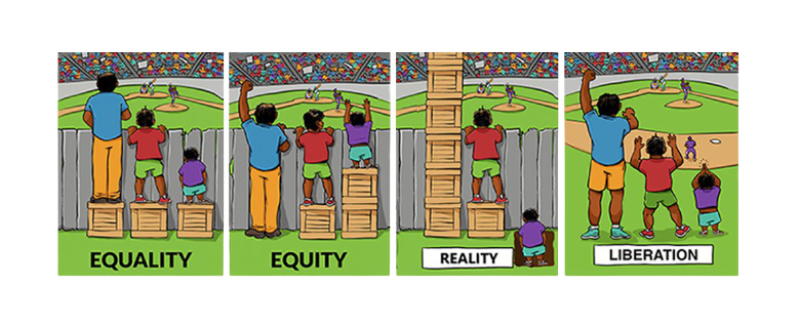
]]>0Simone Donaldsonhttps://agapelensct.com/<![CDATA[Build It and They Will Come? Exploring the Importance of Equity over Equality for Black Employees]]>https://institutionaldiversityblog.com/?p=60252023-12-05T17:49:54Z2023-11-15T15:00:26ZThe popular saying: “If you build it, they will come” was first introduced in the 1989 baseball movie Field of Dreams. In searching the origin of this quote, all while thinking about equity work; it was a brilliant accident that I was also drawn to the baseball picture shown here (adapted from The Interaction Institute for Social Change by artist Angus Maguire). I have observed that many leaders and organizations mistakenly use an equality lens to create or “build” unique services and resources for their Black employees in an attempt to address anti-Black racism.
Have you ever wondered why Black employees don’t access the resources provided to address their experiences with anti-Black racism? As illustrated in the picture, it is not enough to invite someone to a baseball game where there may be barriers to fully access the game. Similarly, if we are attempting to meet the needs of our Black employees, it’s not enough to create services without considering the barriers that may grant full access or access at all. Leaders have to consider the distinct needs and therefore unique processes and interventions required to ensure services will in fact be accessible and meet their employees’ needs. If leaders fail to do so, then they risk wasting time, money, and creating more distrust. Inevitably, organizations will only be “building” missed opportunities for racialized employees to access the resources needed to support their overall wellness.
Equality = Same Treatment
Equality is about people being treated exactly the same, without any focus on possible past and/or present challenges and barriers. Unfortunately, equality ignores the harsh reality of systemic racism in the daily lives of Black employees. In turn, this approach not only ignores and invalidates the experiences of Black employees, but it also creates barriers by perpetuating racism through silencing these experiences. Our history has left a legacy that ensures systemically, we all are not treated equally in the present, and so our approach to addressing racial oppression won’t work through an equality lens either.
Equity = Fair Treatment
Equity, on the other hand, seeks to eliminate barriers to historically underserved and marginalized groups, to ensure they and all groups can gain fair treatment, access, opportunity, and advancement. In approaching the creation of services and resources in the workplace through an equity lens, it sends a clear message to Black employees that they are seen, heard, and valued in the workplace. Black employees will be more inclined to engage in services that they can trust will meet their needs. If leaders and organizations are truly committed to their Black employee’s well-being, then they must commit to going above and beyond to reduce barriers, while truly understanding the needs of these employees.
I applaud the leaders and organizations who have understood the importance of creating spaces and services for Black employees to navigate anti-Black racism. Now, when you notice your employees are not showing up or showing up in small numbers, it’s time to move forward in addressing these concerns through an equity lens. As you do that, I want you to consider the 3 barriers of Racial Trauma(the daily experience of race-based traumatic stress that systemically occurs in blatant and subtle ways), Psychological Safety(when one believes they are working in an environment where they can take interpersonal risks), and Systemic Workplace Barriers. I hope you’ll join me in future posts when I dive deeper into these 3 key barriers and what to consider when dismantling them. In the meantime, I ask:
What are some other barriers you believe may be preventing Black employees from accessing programs or services created to help address the toll of anti-Black racism in their lives?
]]>0Dr. Denise O'Neil Greenhttp://deniseoneilgreen.com/<![CDATA[In Case You Missed It (ICYMI): Denise O’Neil Green Consulting is Now Open for Business!]]>https://institutionaldiversityblog.com/?p=60062023-10-01T05:20:25Z2023-10-03T14:00:52ZDr. Denise O’Neil Green
As you may already know, I concluded my tenure at Ryerson University (renamed Toronto Metropolitan University – TMU) last year to explore other opportunities, place a greater focus on my health, and spend more time with my family. I’m very proud of what I accomplished at TMU; however, my next act has enabled me to share my “secret sauce” with other leaders and organizations seeking to actualize their anti-racism goals and objectives.
In March 2022, I launched Denise O’Neil Green Consulting as I was inspired to start my own boutique Equity, Diversity, and Inclusion (EDI) consulting firm and leverage my 30 years of transformative, real-world, international experience by working with EDI leaders to help them perfect their voices and ensure everyone has a respected seat at the table.
I want to empower EDI leaders and organizations to go beyond the performative and be truly authentic in their development and implementation of EDI strategies, and to aid in that effort, I offer the following services in:
Customized Education and Training sessions to increase participants’ awareness, understanding and skills to be inclusive leaders, managers, partners, and employees;
Coaching and Mentoring based on the fundamental principle that both parties need to engage and co-construct this professional relationship guided by the client’s needs and specifications;
Keynotes and Lectures that are inspirational, grounded and engaging by story-telling, sharing my personal experiences, and closing with calls to action; and
Strategic Planning, Reviews and Accountability that are customized and informed by both qualitative and quantitative data to support your EDI strategy and accountability performance measures.
After working in the trenches of EDI for three decades, I now help other leaders find their own personal motivation for bringing equity, diversity, and inclusion (EDI) to their organizations. If you’re interested in doing business with me, I’d love to connect: Let me know what you’ve been up to!
]]>0Dr. Denise O'Neil Greenhttp://deniseoneilgreen.com/<![CDATA[Race Conscious Affirmative Action: Time Is Up]]>https://institutionaldiversityblog.com/?p=59862023-06-30T22:17:12Z2023-06-30T21:00:57ZI have researched race-conscious policies in higher education for many years as it was central to my dissertation research 20 years ago. Learning of the Supreme Court of the United States (SCOTUS)’s decision to strike down the use of race as a factor in admissions is no surprise. From the Clinton Administration to President Biden, this has been a long game. In 2003, Justice Sandra Day O’Connor placed a sunset clause in the Grutter v. Bollinger decision, stating: “a 25-year horizon, indicating that by 2028, affirmative action will or should no longer be needed” (Green et al., 2014). The proverbial writing was on the wall. What will elite public and private universities do now as they espouse diversity, democracy, and the fact that race matters?
SCOTUS has made clear that affirmative action as a race-conscious policy, albeit weak in its effectiveness to benefit American descendants of slaves, is no longer constitutional and its time is up. The Equal Protection Clause provides Black people and other people of color little-to-no protection in the 21st century. In terms of race relations, I believe America is regressing. The country’s government systems have become comfortable knowing that systems of racial discrimination exist but choose not to rectify it. Furthermore, the decision indicates that military academies are permitted to use race in admissions. If racial diversity is a compelling interest for the country’s military, it should also be the case among the halls of its elite public and private universities and colleges. However, the removal of Diversity, Equity, and Inclusion (DEI) offices in universities has signaled that its time is up.
Upon remembering my Princeton University experience, I believe that all of us are struggling to reconcile the twoness of our racial selves and American selves that W.E.B. DuBois described in his 1903 book: The Souls of Black Folk. The problem of the color line still remains. It may be called “racial diversity” by another name, “anti-Black racism”, or “racial preferences”, but we, as a country, are still trapped in this racial conflict.
When I consider my twoness, I have many examples to share, but the one I recall is my Princeton University experience in the mid-1980s. I was the only African American woman admitted to my master’s cohort of 85 students. I was a Princeton student, but I was also an African American student. And, this fact made a significant difference in my Princeton experience. It influenced how I viewed myself and how others viewed and interacted with me.
At the core of this decision “white discrimination or reverse discrimination” violates the moral code. As such, it requires SCOTUS to balance the scales by removing race as a factor, protecting the racist legacy of the country under the guise of colorblindness.
Given my 30 years of experience doing anti-racism, DEI, and transformation work, in post-secondary education and other sectors, I know that a colorblind approach to racial inequity has always been problematic and ineffective. My goal is to support organizations to move beyond words and performative gestures and deal with anti-Black racism and other forms of racism directly. And the starting point of blazing a path toward racial equity is to understand that race-conscious policies and approaches are a cornerstone of getting to the goal.
What do you think about this SCOTUS decision on Affirmative Action?
Let’s share and connect. I’d love to hear your thoughts.
 I’m pleased to announce and celebrate that my boutique Equity, Diversity and Inclusion Consulting Business has been recognized as one of the top DEI consulting businesses in Canada for 2025.
 D – Discrimination: Artificial Intelligence can further entrench discrimination as their systems often rely on vast amounts of personal data. The collection and use of this data raise significant privacy concerns, particularly for marginalized communities who may be more vulnerable to surveillance and data exploitation. This can lead to a chilling effect on free expression and participation in digital spaces for these groups. Additionally, many AI systems operate as “black boxes”, making it difficult to understand how their algorithms arrived at their decisions. This lack of transparency can make it challenging to identify and address biases or discriminatory practices, particularly when these systems are used in high-stakes decision-making processes like job applicant screenings, loan approvals, or criminal sentencing. Lastly, AI systems developed primarily in Western contexts will not adequately account for cultural nuances and global diversity, potentially leading to a homogenization of cultural expressions and practices. This is particularly concerning for indigenous communities and cultural groups that have been historically marginalized and excluded and whose perspectives and cultural experiences are already underrepresented in Artificial Intelligence development.
 AI and its technologies can be powerful tools for advancing equity, diversity, and inclusion (EDI) initiatives in the United States and Canada. Before we move into that discussion, let’s start with some basic definitions: In a nutshell, “Artificial Intelligence” (AI) refers to the simulation of human intelligence in machines and systems that are programmed to think and learn like humans. AI technologies are designed to simulate human cognitive processes, allowing them to learn from experience and adapt to new information. Essentially, AI systems learn from data, then apply this knowledge to make predictions, solve problems, or perform tasks, all without being explicitly programmed for each specific scenario (i.e. “intelligent”). [See Part 1:
 Artificial Intelligence (AI) offers a wide range of benefits across various sectors, significantly enhancing human capabilities and improving efficiency. By reducing human error and automating repetitive tasks, AI increases accuracy and productivity while allowing people to focus on more creative and strategic work. Its ability to analyze vast amounts of data quickly leads to improved decision-making and valuable insights in fields like business intelligence and medical research. AI’s 24/7 availability enables round-the-clock service, enhancing customer experiences through personalized support and improving safety through constant monitoring in hazardous environments. From streamlining business processes to advancing healthcare diagnostics and treatment planning, AI is proving to be an invaluable tool that not only complements human efforts but also extends our capabilities in ways previously unimaginable, ultimately driving innovation and progress across industries.
 This is the question that I got most often when I surveyed a group of novices about their curiosity of Artificial Intelligence! A lot of people are nervous about this topic and looking for ways to get a competitive advantage in their job/industry. Thus, embracing AI tools and using them to enhance your skills, productivity, and value to your organization, can give you that competitive edge. To help you leverage AI to stay professionally competitive, Look to: 1) Enhance your AI skills and knowledge by learning how it’s being integrated into your field; 2) Improve your productivity and efficiency by using AI tools to analyze large datasets of information to make data-driven decisions or automate repetitive tasks so you can focus on higher-value work; and 3) Stay informed about industry trends to keep up with the latest developments in your field, as well as how AI-powered tools and devices can help improve your personal and social life. As you work to find the ways that Artificial Intelligence will fit into your professional landscape, remember that AI is meant to augment human capabilities, not replace them, so focus on developing skills that complement AI technologies. Here’s a few ways this is working for these select professionals:
 A few years ago I did a post titled: “The Chief Diversity Officer and Communications”. In that video post, I discussed the importance of Communications and working with Communications Professionals and Specialists as a Chief Diversity Officer (CDO).

 The popular saying: “If you build it, they will come” was first introduced in the 1989 baseball movie Field of Dreams. In searching the origin of this quote, all while thinking about equity work; it was a brilliant accident that I was also drawn to the baseball picture shown here (adapted from The Interaction Institute for Social Change by artist Angus Maguire). I have observed that many leaders and organizations mistakenly use an equality lens to create or “build” unique services and resources for their Black employees in an attempt to address anti-Black racism.
 I have researched race-conscious policies in higher education for many years as it was central to my dissertation research 20 years ago. Learning of the Supreme Court of the United States (SCOTUS)’s decision to strike down the use of race as a factor in admissions is no surprise. From the Clinton Administration to President Biden, this has been a long game. In 2003, Justice Sandra Day O’Connor placed a sunset clause in the Grutter v. Bollinger decision, stating: “a 25-year horizon, indicating that by 2028, affirmative action will or should no longer be needed” (Green et al., 2014). The proverbial writing was on the wall. What will elite public and private universities do now as they espouse diversity, democracy, and the fact that race matters?
 SCOTUS has made clear that affirmative action as a race-conscious policy, albeit weak in its effectiveness to benefit American descendants of slaves, is no longer constitutional and its time is up. The
  At the core of this decision “white discrimination or reverse discrimination” violates the moral code. As such, it requires SCOTUS to balance the scales by removing race as a factor, protecting the racist legacy of the country under the guise of colorblindness.