<?xml version="1.0" encoding="UTF-8"?>
<?xml-stylesheet type="text/xsl" media="screen" href="/~d/styles/atom10full.xsl"?><?xml-stylesheet type="text/css" media="screen" href="http://feeds.feedburner.com/~d/styles/itemcontent.css"?><feed xmlns="http://www.w3.org/2005/Atom" xmlns:openSearch="http://a9.com/-/spec/opensearch/1.1/" xmlns:blogger="http://schemas.google.com/blogger/2008" xmlns:georss="http://www.georss.org/georss" xmlns:gd="http://schemas.google.com/g/2005" xmlns:thr="http://purl.org/syndication/thread/1.0" xmlns:feedburner="http://rssnamespace.org/feedburner/ext/1.0" gd:etag="W/&quot;CEIGRX0_fSp7ImA9WhFSFk4.&quot;"><id>tag:blogger.com,1999:blog-2053005531717693842</id><updated>2013-06-19T11:02:04.345+02:00</updated><category term="Rakefet Cave" /><category term="rock art" /><category term="Sthree Pura cave" /><category term="TopoDroid" /><category term="Font-de-Gaume" /><category term="Altamire" /><category term="news" /><category term="Mallorca" /><category term="China" /><category term="Nou Moulin" /><category term="Nahal Oren Cave" /><category term="seismology" /><category term="scorpion" /><category term="Mine" /><category term="Vincent Rouquette Cathala" /><category term="Waulpane cave" /><category term="basejumping" /><category term="Budapest" /><category term="Source de l'Ecluse" /><category term="System Akopan-Dal Cin" /><category term="Bruce A. Raisch" /><category term="upgrade" /><category term="Koonalda Cave" /><category term="Nerja Caves" /><category term="stephen's Gap" /><category term="Cheddar Gorge" /><category term="Syria" /><category term="Sefunim Cave" /><category term="Sanctum" /><category term="NGC" /><category term="Yangzi cave" /><category term="avalanche" /><category term="Natalie Gibb" /><category term="Swartkrans Cave" /><category term="EFS" /><category term="youth" /><category term="Ashford Price" /><category term="Bramabiau" /><category term="NCKRI" /><category term="Sistema Dos Ojos" /><category term="Roubidoux Spring" /><category term="Movile cave" /><category term="Abercrave's National Showcaves Centre" /><category term="JP Baudu" /><category term="protection" /><category term="cave monitoring" /><category term="Karst topography" /><category term="kids" /><category term="underwater" /><category term="Leewin-Naturaliste Ridge" /><category term="weather" /><category term="Eurospeleo-magazine" /><category term="Cueva de los Letreros" /><category term="El Soplao cave" /><category term="Algar das Morenas" /><category term="Puerto Princesa Underground River" /><category term="Vanaraparai" /><category term="cave bear" /><category term="world record" /><category term="Mitchelstown Caves" /><category term="Cathedral Caverns" /><category term="Blowing Hole" /><category term="legal" /><category term="Tassili-n-Ajjer" /><category term="accident" /><category term="Victor Ferrer" /><category term="Bacardi" /><category term="Dunbar Cave" /><category term="Yagodina Cave" /><category term="UK" /><category term="Abisso di Malaga Fosetta" /><category term="Turkey" /><category term="NSS" /><category term="Speleo Projects" /><category term="Snezhnaya" /><category term="High Pasture Cave" /><category term="climbing" /><category term="interview" /><category term="Glenwood Caverns" /><category term="crystals" /><category term="William Pengelly Cave Studies Trust" /><category term="Batu Caves" /><category term="Cave-In-Rock" /><category term="innovation" /><category term="Víðgelmir" /><category term="Carlsbad Caverns" /><category term="Planinsko polje" /><category term="Belize" /><category term="Mexico" /><category term="Eric Establie" /><category term="sea cave" /><category term="Doubs" /><category term="Peru" /><category term="Savage Cave" /><category term="Brunei" /><category term="technology" /><category term="Hungary" /><category term="Boesmansgat" /><category term="podcast" /><category term="SUI" /><category term="Dirty Jobs" /><category term="Amarnath" /><category term="CCR" /><category term="snottites" /><category term="hominids" /><category term="Wind Cave" /><category term="Gabon" /><category term="Austria" /><category term="Whiterocks Cave" /><category term="New Zealand" /><category term="WNS" /><category term="Global Positioning System" /><category term="documentary" /><category term="Botswana" /><category term="Cathole Cave" /><category term="DepthX" /><category term="Scotland" /><category term="ebook" /><category term="Rowlandius ubajara" /><category term="Sweden" /><category term="Verna" /><category term="Discovery Channel" /><category term="Phuikon Ningthou Cave" /><category term="Lot" /><category term="survey" /><category term="speleotherapy" /><category term="urban speleology" /><category term="Moc Long Cave" /><category term="secours" /><category term="-1000" /><category term="Kenny Broad" /><category term="microbes" /><category term="James Cameron" /><category term="Elephanta caves" /><category term="India" /><category term="Mammoth Cave" /><category term="Sequoia National Forest" /><category term="Green Bay Cave" /><category term="Beech Springs Cave" /><category term="Sequiota Cave" /><category term="National Geographic Society" /><category term="Wellington Caves" /><category term="Dang Cave" /><category term="Cenote Dos Pisos" /><category term="paleontology" /><category term="Bugarach" /><category term="Na Mo Cave" /><category term="Sibudu Cave" /><category term="Denisov Cave" /><category term="Gouffre Berger" /><category term="plants" /><category term="music" /><category term="Pet Cemetery cenote" /><category term="Actun Xcoch" /><category term="Compass" /><category term="Ellisons Cave" /><category term="prehistoric caves" /><category term="Tea-Tree cave" /><category term="Formoso Cave System" /><category term="UNESCO" /><category term="Misliya Cave" /><category term="GSAR" /><category term="Son Doong Cave" /><category term="cave diving" /><category term="Maurizio Montalbini" /><category term="New Caledonia" /><category term="Mammut" /><category term="Lascaux" /><category term="Lewis and Clark Caverns" /><category term="Borneo" /><category term="Brazil" /><category term="virus" /><category term="Père Noël" /><category term="Blue Cave" /><category term="Sistema Huautla" /><category term="Carlos Coste" /><category term="skiing" /><category term="health" /><category term="Corra-Lynn cave" /><category term="Thailand" /><category term="Laos" /><category term="Jewel Cave" /><category term="GIS" /><category term="BBC" /><category term="Cova del Paralló" /><category term="in memoriam" /><category term="Rope" /><category term="pictures" /><category term="calendar" /><category term="Postojna cave" /><category term="Sheck Exley" /><category term="CRO" /><category term="bats" /><category term="Romania" /><category term="Capricorn Caves" /><category term="tales and legends" /><category term="wind turbines" /><category term="courses" /><category term="magazine" /><category term="caving book" /><category term="Sima GESM" /><category term="Jeita" /><category term="Amazon" /><category term="Blue John Cavern" /><category term="Helmet" /><category term="millipeds" /><category term="France" /><category term="Symposium" /><category term="Costa Rica" /><category term="art" /><category term="Mamet Cave" /><category term="speleothems" /><category term="Ohio Caverns" /><category term="traverse" /><category term="histoplasmosis" /><category term="Wildlife" /><category term="convention" /><category term="lava tubes" /><category term="Australia" /><category term="El Castillo cave" /><category term="pda" /><category term="Cumberland Caverns" /><category term="Montenegro" /><category term="El-Wad Cave" /><category term="journal" /><category term="canyoning" /><category term="Leiðarendi" /><category term="Doug Billings" /><category term="Diau" /><category term="Africa" /><category term="Painted Cave" /><category term="Algeria" /><category term="extremophiles" /><category term="review" /><category term="Ukraine" /><category term="Cave of the Mounds" /><category term="Trou du Diable" /><category term="Leopard Cave" /><category term="Ilyuhinskaya" /><category term="Garham cave" /><category term="simulation" /><category term="speleo" /><category term="Sabak-Ha" /><category term="Krubera" /><category term="Qesem cave" /><category term="camera" /><category term="Subterranean Biology" /><category term="Red Deer Cave" /><category term="Peter Carsten" /><category term="John Buxton" /><category term="JSPDT" /><category term="Cenote Sahcam" /><category term="Malaysia" /><category term="river" /><category term="Vortex Spring" /><category term="Nuno Gomes" /><category term="Bulgaria" /><category term="Gruta do Fumo" /><category term="Jeffrey Bozanic" /><category term="cave protection" /><category term="Nassau" /><category term="Timpanogos Cave" /><category term="3N cave" /><category term="fake" /><category term="Terry Irvine" /><category term="Cueva Guacamaya" /><category term="Sarma cave" /><category term="speleology" /><category term="software" /><category term="newsletter" /><category term="3D photography" /><category term="Richard Stanton. UK" /><category term="cave cricket" /><category term="Fuentona de Muriel" /><category term="Dan-yr-Ogof" /><category term="Russia" /><category term="Sistema de las Nieves" /><category term="Fingal's Cave" /><category term="cave mapping" /><category term="Wes Skiles" /><category term="Crystal Cave" /><category term="job vacancy" /><category term="Mammuthöhle" /><category term="Pakistan" /><category term="radio location" /><category term="Korea" /><category term="Craig Challen" /><category term="Typhleotris" /><category term="Milyeringa" /><category term="moon" /><category term="Picos de Europa" /><category term="Smallin Cave" /><category term="Guatemala" /><category term="Mozambique" /><category term="WWI" /><category term="snake" /><category term="Mrigendranath Cave" /><category term="Greece" /><category term="real estate" /><category term="Niah cave" /><category term="Chris Nicola" /><category term="Singing Rock" /><category term="Jeff Lindsay" /><category term="museum" /><category term="climate" /><category term="Fa Hien Cave" /><category term="SLAM" /><category term="cave paintings" /><category term="Hirlatz Höhle" /><category term="Cenote Azul" /><category term="Lake Shasta Caverns" /><category term="Melissotripa Elassonas" /><category term="prehistoric art" /><category term="underground" /><category term="Ceita Core" /><category term="headlamp" /><category term="Ellis Basin" /><category term="Badalona" /><category term="gypsum cave" /><category term="Hang Son Doong" /><category term="Deer Cave" /><category term="Slovenia" /><category term="vulcanospeleology" /><category term="Sima de los Huesos" /><category term="Doi Cave" /><category term="Sima de la Luz" /><category term="Mongolia" /><category term="stalactites" /><category term="Vrtnarija" /><category term="culture" /><category term="Himalaya" /><category term="Artur Kozlowski" /><category term="sidemount" /><category term="Devil's Den" /><category term="Denisovan" /><category term="Croatia" /><category term="Pierre" /><category term="IKS" /><category term="website" /><category term="Langstroth Pot cave" /><category term="award" /><category term="NSW Cave Rescue Service" /><category term="cave drawing" /><category term="Black Diamond" /><category term="Petzl" /><category term="ice cave" /><category term="Han-sur-Lesse" /><category term="minerals" /><category term="Radohine Mountains" /><category term="archeology" /><category term="show cave" /><category term="Srbsko Chlum-Komin Cave" /><category term="Oman" /><category term="Oregon Caves" /><category term="Chillagoe Caving Club" /><category term="Skhul Cave" /><category term="history" /><category term="poetry" /><category term="Alex Reato" /><category term="beetle" /><category term="Nettlebed Cave" /><category term="Ben McDaniel" /><category term="grigri 2" /><category term="Peter Sprouse" /><category term="amphipod" /><category term="Tourist cave" /><category term="Pech Merle" /><category term="Réunion" /><category term="speleogenesis" /><category term="Cenote Libre Union" /><category term="Norman Thompson" /><category term="Mole Creek Caves" /><category term="Jerusalem" /><category term="workshops" /><category term="Antarctica" /><category term="Mystery Creek cave" /><category term="recall" /><category term="rebreather" /><category term="prehistory" /><category term="Haosabee Daughter’s Cave" /><category term="robot" /><category term="cave formations" /><category term="Philip Bence" /><category term="Gorhams Cave" /><category term="Cenote Ucil" /><category term="Lost River Cave" /><category term="Explos Film Festival" /><category term="Israel" /><category term="ISS" /><category term="Quintana Roo" /><category term="Jamal Cave" /><category term="safety" /><category term="crocodile" /><category term="Somalia" /><category term="Horse Cave" /><category term="Anialarra" /><category term="erosion" /><category term="earthquakes" /><category term="Gua Lawah Cave" /><category term="Cueva del Tesoro" /><category term="SC Avalon" /><category term="engraving" /><category term="surveying" /><category term="ski" /><category term="Lanzarote" /><category term="Migovec" /><category term="Voronya" /><category term="Hranicka Propast" /><category term="spider" /><category term="video" /><category term="Twins Cave" /><category term="Abysmo An Humas" /><category term="Trimble cave" /><category term="Jason Mallinson" /><category term="Miller's Cave" /><category term="fossil" /><category term="Papua New Guinea" /><category term="Rouffignac" /><category term="Cave Beach" /><category term="Jiushan Cave" /><category term="training" /><category term="mountaineering" /><category term="climbing harnesses" /><category term="Cenote Tohoku" /><category term="NSS-CDS" /><category term="Lipska cave" /><category term="Aven d'Orgnac" /><category term="Bill Stone" /><category term="Gravettian" /><category term="techniques" /><category term="Bhagava cave" /><category term="price" /><category term="caves" /><category term="Résurgence du Bateau" /><category term="pothole" /><category term="Tianyuan Cave" /><category term="information" /><category term="Stacy Carolin" /><category term="Northern Mariana Islands" /><category term="VR" /><category term="Georgia" /><category term="Namibia" /><category term="Pictograph Caves" /><category term="Nohoch Nah Chich" /><category term="Devon Bat Group" /><category term="Whiterock Cave" /><category term="Tepui" /><category term="Pozo Azul" /><category term="cave man" /><category term="Sistema del Mundo Escondido" /><category term="Barryvox" /><category term="Con Moong cave" /><category term="Karst-O-Rama" /><category term="DeSoto Caverns" /><category term="record" /><category term="River Cave" /><category term="Gard" /><category term="biospeleology" /><category term="Venezuela" /><category term="FFS" /><category term="Ginnie Springs" /><category term="Guinness World Records" /><category term="Honduras" /><category term="Dachstein" /><category term="Spain" /><category term="terms" /><category term="aided climbing" /><category term="Puerto Rico" /><category term="Tabun Cave" /><category term="Location and Tracking" /><category term="Dade's Caves" /><category term="Geissenkloesterle Cave" /><category term="exploration" /><category term="Pearse resurgence" /><category term="Kroatia" /><category term="Vietnam" /><category term="education" /><category term="Persistence Cave" /><category term="Weeki Wachee" /><category term="Binkley" /><category term="Kebara Cave" /><category term="underwater speleology" /><category term="Gennadiiy Samokhin" /><category term="hydrogeology" /><category term="Norway" /><category term="event" /><category term="Dragons Lair" /><category term="The Frozen Deep" /><category term="Mogao Caves" /><category term="Phuikon Haosapu Cave" /><category term="Tunesia" /><category term="Poland" /><category term="Serbia" /><category term="Cuba" /><category term="Tux Kupaxa" /><category term="Kanheri Caves" /><category term="Christmas Island" /><category term="Australopithecus" /><category term="Heiser Mystery Well" /><category term="Malta" /><category term="biology" /><category term="beacon" /><category term="Tabon Cave" /><category term="Lukina Jama" /><category term="Howe Caverns" /><category term="Cenote Nai Tucha" /><category term="Meghalaya" /><category term="Border Cave" /><category term="Ghar Hassan cave" /><category term="auriga" /><category term="Chauvet" /><category term="anchor" /><category term="manual" /><category term="Agnes Milowka" /><category term="BCRA" /><category term="radio" /><category term="cams" /><category term="Cave of the Winds" /><category term="Jordan" /><category term="Albania" /><category term="photography" /><category term="DMM Climbing" /><category term="Bhimbetka" /><category term="Hawaii" /><category term="Ukrain" /><category term="Yarimburgaz Cave" /><category term="Mars" /><category term="Waitomo Caves" /><category term="expedition" /><category term="Wakulla springs" /><category term="Vanapechialai" /><category term="Nepal" /><category term="mythologie" /><category term="Switzerland" /><category term="scholarships" /><category term="electronics" /><category term="literature" /><category term="Crystal Beach Cave" /><category term="Myras Ojo" /><category term="sensor" /><category term="Dan Yr Ogof" /><category term="Cro Magnon" /><category term="Floyd Collins" /><category term="Mayacon" /><category term="Sac Aktun" /><category term="Blue Grotto" /><category term="rescue" /><category term="Bulgary" /><category term="WSV" /><category term="Cenote Azul-Union" /><category term="Europe" /><category term="The Netherlands" /><category term="Ireland" /><category term="karst" /><category term="show" /><category term="Turkmenistan" /><category term="Leslie Van Gelder" /><category term="Jenolan Caves" /><category term="Proteus anguinus" /><category term="Wonderwerk Cave" /><category term="Bridal Cave" /><category term="speleo secours" /><category term="Armenia" /><category term="Egypt" /><category term="fish" /><category term="Abîme de Nettine" /><category term="Congo" /><category term="exposition" /><category term="Portugal" /><category term="grotto" /><category term="funding" /><category term="ICCC" /><category term="Ancient Human Cave" /><category term="Anders Knudsen" /><category term="Maquoketa Caves" /><category term="Afghanistan" /><category term="cave-in" /><category term="Maya" /><category term="Source de Marchepied" /><category term="homage" /><category term="gear" /><category term="Czech Republic" /><category term="Anhée" /><category term="bacteria" /><category term="Bahamas" /><category term="Onanda Cave" /><category term="Indonesia" /><category term="Shale gas" /><category term="Maestrazgo caves" /><category term="Nahal Me’arot Cave" /><category term="Hidden River Cave" /><category term="Sri Lanka" /><category term="Cantabria" /><category term="initiation" /><category term="Canada" /><category term="Corydon Cave" /><category term="Stormy Pot" /><category term="Gibraltar" /><category term="Naica" /><category term="Blood Cave" /><category term="Meta Menardi" /><category term="cave" /><category term="Cova del Rinoceront" /><category term="Bat Cave" /><category term="contest" /><category term="Altamira" /><category term="Cenote Och 1" /><category term="Agreement on the Conservation of Populations of European Bats (UNEP/EUROBATS)" /><category term="Mystic Cave" /><category term="Italy" /><category term="Victoria Cave" /><category term="San Actun" /><category term="Cueva el Águila" /><category term="Lamina'ko Ziloa" /><category term="federation" /><category term="pseudokarst" /><category term="Itlay" /><category term="game" /><category term="Ethiopia" /><category term="UIS" /><category term="Paisley Caves" /><category term="movie" /><category term="Grotte des Cavottes" /><category term="Euphrates Cave" /><category term="diving" /><category term="Iceland" /><category term="Church Hole Cave" /><category term="Morocco" /><category term="Japan" /><category term="therion" /><category term="Tank cave" /><category term="Cenote Tuchen" /><category term="GPS" /><category term="Bagshawe Cavern" /><category term="sinkhole" /><category term="fun" /><category term="Abkhazia" /><category term="architecture" /><category term="Romenia" /><category term="large caves" /><category term="Majis Al Jinn" /><category term="Philippines" /><category term="CaveSim" /><category term="coral" /><category term="geology" /><category term="Grotte de la Cascade" /><category term="Grand Malades" /><category term="Cherokee Caverns" /><category term="DistoX" /><category term="Blossom cave" /><category term="Dr Yann-Pierre Montelle" /><category term="environment" /><category term="wingsuit" /><category term="conference" /><category term="burial" /><category term="evolution" /><category term="USA" /><category term="Niue" /><category term="stalagmites" /><category term="Devils Cave System" /><category term="Joint Mitnor cave" /><category term="Martel" /><category term="Single Rope Technique" /><category term="Mimoso Cave" /><category term="Lebanon" /><category term="FSE" /><category term="Jasper Blue Springs" /><category term="salt caves" /><category term="Horseshoe Cave" /><category term="Eurospeleo Projects" /><category term="Kaua'i" /><category term="bat" /><category term="virtual tour" /><category term="New Mexico" /><category term="Avalon" /><category term="Lechuguilla" /><category term="Louisville Mega Cavern" /><category term="Wye Cave" /><category term="science" /><category term="grants" /><category term="South Africa" /><category term="Niaux" /><category term="proceedings" /><category term="primary cave" /><category term="conservation" /><category term="Herb Conn" /><category term="Phuikon Haosabee Cave" /><category term="law" /><category term="Belgium" /><category term="Gopro" /><category term="crustacean" /><category term="tourism" /><category term="Vercors" /><category term="communication" /><category term="Dominican" /><category term="book" /><category term="Bermuda" /><category term="Lai Cave" /><category term="television" /><category term="Germany" /><category term="caving" /><category term="Howard Limbert" /><category term="Sarawak" /><category term="Cenote Jailhouse" /><category term="Cenote Calimba" /><category term="Iran" /><category term="via ferrata" /><category term="JSS" /><category term="Avalanche transceiver" /><category term="Wang Besar Cave" /><category term="food" /><category term="Cenote Chi May" /><category term="Argyle Cave" /><category term="dictionary" /><category term="Claude Viala" /><category term="Search and rescue" /><category term="religion" /><category term="Arthropod" /><category term="St-Marcel d'Ardèche" /><category term="Eisriesenwelt" /><category term="publication" /><category term="restauration" /><category term="Azokh Cave" /><category term="US" /><category term="CCRO" /><category term="snow" /><category term="Neanderthals" /><category term="warning" /><category term="NASA" /><title>Karst Worlds</title><subtitle type="html">Daily caving news, technical caving articles and trip reports from all over the world.</subtitle><link rel="http://schemas.google.com/g/2005#feed" type="application/atom+xml" href="http://www.karstworlds.com/feeds/posts/default" /><link rel="alternate" type="text/html" href="http://www.karstworlds.com/" /><link rel="next" type="application/atom+xml" href="http://www.blogger.com/feeds/2053005531717693842/posts/default?start-index=26&amp;max-results=25&amp;redirect=false&amp;v=2" /><author><name>Tom Dedroog</name><uri>https://plus.google.com/102033968313870630544</uri><email>noreply@blogger.com</email><gd:image rel="http://schemas.google.com/g/2005#thumbnail" width="16" height="16" src="http://img2.blogblog.com/img/b16-rounded.gif" /></author><generator version="7.00" uri="http://www.blogger.com">Blogger</generator><openSearch:totalResults>1394</openSearch:totalResults><openSearch:startIndex>1</openSearch:startIndex><openSearch:itemsPerPage>25</openSearch:itemsPerPage><atom10:link xmlns:atom10="http://www.w3.org/2005/Atom" rel="self" type="application/atom+xml" href="http://feeds.feedburner.com/KarstWorlds" /><feedburner:info uri="karstworlds" /><atom10:link xmlns:atom10="http://www.w3.org/2005/Atom" rel="hub" href="http://pubsubhubbub.appspot.com/" /><entry gd:etag="W/&quot;A0UERH09eSp7ImA9WhFSE0Q.&quot;"><id>tag:blogger.com,1999:blog-2053005531717693842.post-4473352753678577368</id><published>2013-06-16T18:13:00.002+02:00</published><updated>2013-06-16T18:13:25.361+02:00</updated><app:edited xmlns:app="http://www.w3.org/2007/app">2013-06-16T18:13:25.361+02:00</app:edited><category scheme="http://www.blogger.com/atom/ns#" term="India" /><category scheme="http://www.blogger.com/atom/ns#" term="Meghalaya" /><category scheme="http://www.blogger.com/atom/ns#" term="caving book" /><title>Book Release:  Cave Pearls of Meghalaya, Volume 1</title><content type="html">&lt;div class="separator" style="clear: both; text-align: center;"&gt;
&lt;a href="http://1.bp.blogspot.com/-oAuJPmJotdE/Ub3j9y2hgXI/AAAAAAAAFZk/fNm18fDcoqc/s1600/b217c5d20cb21518d6590c976d336e3f.media.300x424.jpg" imageanchor="1" style="clear: left; float: left; margin-bottom: 1em; margin-right: 1em;"&gt;&lt;img border="0" height="320" src="http://1.bp.blogspot.com/-oAuJPmJotdE/Ub3j9y2hgXI/AAAAAAAAFZk/fNm18fDcoqc/s320/b217c5d20cb21518d6590c976d336e3f.media.300x424.jpg" width="225" /&gt;&lt;/a&gt;&lt;/div&gt;
&lt;div&gt;
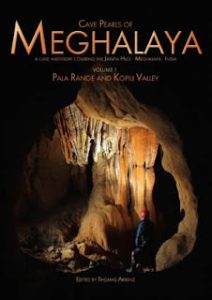
The Book Cave Pearls of Meghalaya, Volume 1, Pala Range and Kopili Valley is now available - at least for British and Irish cavers, who can get it via Fraser or the GSG or via book@indiancaving.org.uk&lt;/div&gt;
&lt;br /&gt;Cavers on the Continent will have to wait for another two weeks - the books are still on a ship bound for Hamburg.&lt;br /&gt;&lt;br /&gt;Short description:&lt;br /&gt;&lt;br /&gt;It is an A4 sized hardback of 265 pages in full colour and covers the exploration of caves in the Pala Range and Kopili Valley. There are chapters on Meghalaya, on the 2010, 2011 and 2012 expeditions in that area, and also on the geology, subterranean ecology, spiders and bats. The second half of the book is devoted to cave descriptions each with survey and photographs plus a list of minor caves and other sites of speleological interest. An unexpected (to me) bonus is hidden inside the back cover - a CD with surveys of the six longest systems, a satellite view of the area with cave surveys superimposed, and an article describing the identification of two new species of bat.&lt;br /&gt;&lt;br /&gt;You can buy one for £26 in Edinburgh - or. if you live further afield cost is £32.30 to include postage and packing within the UK. We will be using 'caver mail' as much as possible to reduce postal costs and keep cash back to fund the printing costs, and help towards production of volume two. Volume One is well worth the price and buyers are encouraged to contribute more as Gift Aid to help fund the next volume.&lt;img src="http://feeds.feedburner.com/~r/KarstWorlds/~4/WhrkoEUTGnM" height="1" width="1"/&gt;</content><link rel="edit" type="application/atom+xml" href="http://www.blogger.com/feeds/2053005531717693842/posts/default/4473352753678577368?v=2" /><link rel="self" type="application/atom+xml" href="http://www.blogger.com/feeds/2053005531717693842/posts/default/4473352753678577368?v=2" /><link rel="alternate" type="text/html" href="http://feedproxy.google.com/~r/KarstWorlds/~3/WhrkoEUTGnM/book-release-cave-pearls-of-meghalaya.html" title="Book Release:  Cave Pearls of Meghalaya, Volume 1" /><author><name>Tom Dedroog</name><uri>https://plus.google.com/102033968313870630544</uri><email>noreply@blogger.com</email><gd:image rel="http://schemas.google.com/g/2005#thumbnail" width="16" height="16" src="http://img2.blogblog.com/img/b16-rounded.gif" /></author><media:thumbnail xmlns:media="http://search.yahoo.com/mrss/" url="http://1.bp.blogspot.com/-oAuJPmJotdE/Ub3j9y2hgXI/AAAAAAAAFZk/fNm18fDcoqc/s72-c/b217c5d20cb21518d6590c976d336e3f.media.300x424.jpg" height="72" width="72" /><feedburner:origLink>http://www.karstworlds.com/2013/06/book-release-cave-pearls-of-meghalaya.html</feedburner:origLink></entry><entry gd:etag="W/&quot;A0MBRXcycSp7ImA9WhFSE0Q.&quot;"><id>tag:blogger.com,1999:blog-2053005531717693842.post-8411251238270324107</id><published>2013-06-13T18:16:00.000+02:00</published><updated>2013-06-16T18:17:34.999+02:00</updated><app:edited xmlns:app="http://www.w3.org/2007/app">2013-06-16T18:17:34.999+02:00</app:edited><category scheme="http://www.blogger.com/atom/ns#" term="art" /><category scheme="http://www.blogger.com/atom/ns#" term="archeology" /><category scheme="http://www.blogger.com/atom/ns#" term="Mexico" /><title>Mexican archaeologists find Olmec and pre Olmec ceramics inside cave in the State of Guerrero</title><content type="html">&lt;div class="separator" style="clear: both; text-align: center;"&gt;
&lt;a href="http://3.bp.blogspot.com/-_mTG068w5Kw/Ub3kutq31NI/AAAAAAAAFZw/BwBkD8MLoxc/s1600/inah-2.jpg" imageanchor="1" style="clear: left; float: left; margin-bottom: 1em; margin-right: 1em;"&gt;&lt;img border="0" height="214" src="http://3.bp.blogspot.com/-_mTG068w5Kw/Ub3kutq31NI/AAAAAAAAFZw/BwBkD8MLoxc/s320/inah-2.jpg" width="320" /&gt;&lt;/a&gt;&lt;/div&gt;
Inside a cave in the municipality of Cocula, north of Chilpancingo, Guerrero, specialists of the National Institute of Anthropology and History (INAH) found a Mezcala type figurine and fragments of braziers that date back to the year 700 AD; in this same context, they found Olmec and pre Olmec ceramic which dates back to 1000 and 1200 BC, as well as osseous remains, which means this emptiness had different uses and was a place of funerary cult.&lt;br /&gt;

&lt;div&gt;
&lt;br /&gt;&lt;/div&gt;
&lt;div&gt;
Archaeologist Miguel Perez Negrete, from the INAH center in Guerrero, detailed that the Mezcala figurine is complete, and its finding is relevant because of the few discoveries that have been made of these kinds of pieces, only twelve have been found in the region during this decade. These sculptures are schematic and small, made with stone.&amp;nbsp;&lt;/div&gt;
&lt;div&gt;
&lt;br /&gt;&lt;/div&gt;
&lt;div&gt;
The Mezcala culture is one of the civilizations that has been developing along the Balsas River, even toward the limits of the state of Guerrero, which has been identified primarily because of its architectonic style and anthropomorphic figurines.&amp;nbsp;&lt;/div&gt;
&lt;div&gt;
&lt;br /&gt;&lt;/div&gt;
&lt;div&gt;
“The one found in recent days, is a human representation in limestone, 8 centimeters [3.14 inches] tall, and like others that have been found, the gender of the figurine cannot be distinguished. Something noticeable is that it doesn’t have slanted eyes, but round, like dots. Along the figurine they also found White Grainy ceramic which is very sandy. This type of material was used in the Epiclassic period (700 AD)”, explained the archaeologist.&amp;nbsp;&lt;/div&gt;
&lt;div&gt;
&lt;br /&gt;&lt;/div&gt;
&lt;div&gt;
These figurines are hard to find; during the 80’s they found seven pieces located in Xalitla, and during the years 2005 and 2007 they discovered another four in Mezcala and Atzcala. This means to say, they had eleven figurines archaeologically registered in this part of Guerrero, and with this last one in Oxtotenco, there are now 12.&amp;nbsp;&lt;/div&gt;
&lt;div&gt;
&lt;br /&gt;&lt;/div&gt;
&lt;div&gt;
The specialist indicated that the discovery was made during the maintenance repairs of a road in a plateau called Oxtotenco, outside the community of Atzcala, where INAH effectuated the archaeological rescue of these vestiges.&amp;nbsp;&lt;/div&gt;
&lt;div&gt;
&lt;br /&gt;&lt;/div&gt;
&lt;div&gt;
“The most surprising thing was that as we excavated, we found Olmec ceramic, whose antiquity is estimated to date back to the year 1000 and 1200 before our era, meaning this ceramic is more than 3,000 years old. This indicates the cave had two occupations, a prehistoric one and one corresponding to the Mezcala tradition, about 1300 years ago.”&amp;nbsp;&lt;/div&gt;
&lt;div&gt;
&lt;br /&gt;&lt;/div&gt;
&lt;div&gt;
“This finding also reveals that during the Epiclassic the cave was associated with the occupation of traditional Mezcala groups in Oxtotenco”, added the archaeologist Miguel Perez Negrete. &lt;br /&gt;
&lt;br /&gt;
Source: &lt;a href="http://www.artdaily.org/index.asp?int_sec=2&amp;amp;int_new=63082"&gt;Art Daily&lt;/a&gt;&lt;/div&gt;
&lt;img src="http://feeds.feedburner.com/~r/KarstWorlds/~4/VX1EqEF7yeE" height="1" width="1"/&gt;</content><link rel="edit" type="application/atom+xml" href="http://www.blogger.com/feeds/2053005531717693842/posts/default/8411251238270324107?v=2" /><link rel="self" type="application/atom+xml" href="http://www.blogger.com/feeds/2053005531717693842/posts/default/8411251238270324107?v=2" /><link rel="alternate" type="text/html" href="http://feedproxy.google.com/~r/KarstWorlds/~3/VX1EqEF7yeE/mexican-archaeologists-find-olmec-and.html" title="Mexican archaeologists find Olmec and pre Olmec ceramics inside cave in the State of Guerrero" /><author><name>Tom Dedroog</name><uri>https://plus.google.com/102033968313870630544</uri><email>noreply@blogger.com</email><gd:image rel="http://schemas.google.com/g/2005#thumbnail" width="16" height="16" src="http://img2.blogblog.com/img/b16-rounded.gif" /></author><media:thumbnail xmlns:media="http://search.yahoo.com/mrss/" url="http://3.bp.blogspot.com/-_mTG068w5Kw/Ub3kutq31NI/AAAAAAAAFZw/BwBkD8MLoxc/s72-c/inah-2.jpg" height="72" width="72" /><georss:featurename>Chilpancingo, Guerrero, Mexico</georss:featurename><georss:point>17.55 -99.5</georss:point><georss:box>17.55 -99.5 17.55 -99.5</georss:box><feedburner:origLink>http://www.karstworlds.com/2013/06/mexican-archaeologists-find-olmec-and.html</feedburner:origLink></entry><entry gd:etag="W/&quot;AkMGR3k6fip7ImA9WhFSE0Q.&quot;"><id>tag:blogger.com,1999:blog-2053005531717693842.post-4757548906739213921</id><published>2013-06-11T17:57:00.000+02:00</published><updated>2013-06-16T18:00:26.716+02:00</updated><app:edited xmlns:app="http://www.w3.org/2007/app">2013-06-16T18:00:26.716+02:00</app:edited><category scheme="http://www.blogger.com/atom/ns#" term="show cave" /><category scheme="http://www.blogger.com/atom/ns#" term="USA" /><category scheme="http://www.blogger.com/atom/ns#" term="fossil" /><category scheme="http://www.blogger.com/atom/ns#" term="Binkley" /><title>Cave with Ice Age fossils opening in Indiana</title><content type="html">&lt;div class="separator" style="clear: both; text-align: center;"&gt;
&lt;a href="http://1.bp.blogspot.com/-rpQInfMJQhM/Ub3hC_wlhvI/AAAAAAAAFY4/IOiPNeqilO0/s1600/images.jpg" imageanchor="1" style="clear: left; float: left; margin-bottom: 1em; margin-right: 1em;"&gt;&lt;img border="0" height="99" src="http://1.bp.blogspot.com/-rpQInfMJQhM/Ub3hC_wlhvI/AAAAAAAAFY4/IOiPNeqilO0/s200/images.jpg" width="200" /&gt;&lt;/a&gt;&lt;/div&gt;
A cave littered with the bones of Ice Age creatures will open for the first time to the public on Saturday.&lt;br /&gt;&lt;br /&gt;As with many so-called "show caves," &lt;a href="http://indianacaverns.com/history/"&gt;Indiana Caverns&lt;/a&gt; has the requisite geological formations and a river for subterranean boat rides. But the pre-historic bones — believed to be among the largest cache discovered in one cave — are the "frosting on the cake," says marketing manager Carol Groves.&lt;br /&gt;&lt;br /&gt;Located in southern Indiana about 25 miles west of Louisville, the new attraction is part of the 36-mile-long cave Binkley cave system (the nation's 11th longest). Portions have been explored for more than half a century, but the section opening Saturday was only discovered three years ago by a group of caving enthusiasts.&lt;br /&gt;&lt;a name='more'&gt;&lt;/a&gt;&lt;br /&gt;Early exploration required crawling four miles in and four miles out. (A more convenient entrance is now in place for paying visitors.) And when members of the Indiana Speleological Society first encountered the bones, they assumed they were the remains of cows, pigs and other livestock that had been disposed of in a sinkhole.&lt;br /&gt;&lt;br /&gt;Scientific examination later revealed them to be the bones of a dozen or so peccaries (related to pigs), a couple of bear skulls and an Ice Age bison, among other animals that entered through an entrance that closed 10,000 or so years ago, Groves says.&lt;br /&gt;&lt;br /&gt;This is the third cave attraction developed by Groves' brother, Gary Roberson. It occupies the uppermost level of a complex cave system and includes steel walkways through a 180-foot room that descends to the underground river.&lt;br /&gt;&lt;br /&gt;The 1 hour, 20 minute tours are $18 adults; $9 ages 4-12.&lt;div&gt;
&lt;br /&gt;&lt;/div&gt;
&lt;div&gt;
Source: &lt;a href="http://www.usatoday.com/story/dispatches/2013/06/11/new-fossil-cave-indiana-caverns/2410163/"&gt;USA Today&lt;/a&gt;&lt;/div&gt;
&lt;img src="http://feeds.feedburner.com/~r/KarstWorlds/~4/XBldP6NFVCA" height="1" width="1"/&gt;</content><link rel="edit" type="application/atom+xml" href="http://www.blogger.com/feeds/2053005531717693842/posts/default/4757548906739213921?v=2" /><link rel="self" type="application/atom+xml" href="http://www.blogger.com/feeds/2053005531717693842/posts/default/4757548906739213921?v=2" /><link rel="alternate" type="text/html" href="http://feedproxy.google.com/~r/KarstWorlds/~3/XBldP6NFVCA/cave-with-ice-age-fossils-opening-in.html" title="Cave with Ice Age fossils opening in Indiana" /><author><name>Tom Dedroog</name><uri>https://plus.google.com/102033968313870630544</uri><email>noreply@blogger.com</email><gd:image rel="http://schemas.google.com/g/2005#thumbnail" width="16" height="16" src="http://img2.blogblog.com/img/b16-rounded.gif" /></author><media:thumbnail xmlns:media="http://search.yahoo.com/mrss/" url="http://1.bp.blogspot.com/-rpQInfMJQhM/Ub3hC_wlhvI/AAAAAAAAFY4/IOiPNeqilO0/s72-c/images.jpg" height="72" width="72" /><georss:featurename>Louisville, Kentucky, Verenigde Staten</georss:featurename><georss:point>38.2526647 -85.75845570000001</georss:point><georss:box>37.851138199999994 -86.40664920000002 38.6541912 -85.11026220000001</georss:box><feedburner:origLink>http://www.karstworlds.com/2013/06/cave-with-ice-age-fossils-opening-in.html</feedburner:origLink></entry><entry gd:etag="W/&quot;AkIDRHkzfSp7ImA9WhFSE0Q.&quot;"><id>tag:blogger.com,1999:blog-2053005531717693842.post-3051507531359352278</id><published>2013-06-10T18:02:00.000+02:00</published><updated>2013-06-16T18:02:55.785+02:00</updated><app:edited xmlns:app="http://www.w3.org/2007/app">2013-06-16T18:02:55.785+02:00</app:edited><category scheme="http://www.blogger.com/atom/ns#" term="show cave" /><category scheme="http://www.blogger.com/atom/ns#" term="Hidden River Cave" /><category scheme="http://www.blogger.com/atom/ns#" term="USA" /><category scheme="http://www.blogger.com/atom/ns#" term="fun" /><title>Hidden River Cave adding zipline, rappelling</title><content type="html">&lt;div class="separator" style="clear: both; text-align: center;"&gt;
&lt;a href="http://1.bp.blogspot.com/-tDOYBM-m6KY/Ub3hp_GCfdI/AAAAAAAAFZA/Lj_Tx2O-j7Q/s1600/images+(1).jpg" imageanchor="1" style="clear: left; float: left; margin-bottom: 1em; margin-right: 1em;"&gt;&lt;img border="0" height="133" src="http://1.bp.blogspot.com/-tDOYBM-m6KY/Ub3hp_GCfdI/AAAAAAAAFZA/Lj_Tx2O-j7Q/s320/images+(1).jpg" width="320" /&gt;&lt;/a&gt;&lt;/div&gt;
Visitors to Hidden River Cave in south-central Kentucky will soon have opportunities for new zipline and rappelling adventures.&lt;br /&gt;&lt;br /&gt;The new offerings will begin this coming Saturday.&lt;br /&gt;&lt;br /&gt;Adventure seekers will be able to zip over the top of the cave entrance or rappel down the rock face entrance to Hidden River Cave.&lt;br /&gt;&lt;br /&gt;Cave tours will still be offered, and all packages include admission to the American Cave Museum.&lt;br /&gt;&lt;br /&gt;Also new is a gem mining sluice that allows visitors to pan for their own gemstone.&lt;br /&gt;&lt;br /&gt;Hidden River Cave and the American Cave Museum are operated by the American Cave Conservation Association, a not-for-profit organization dedicated to the conservation of caves nationwide.&lt;br /&gt;&lt;br /&gt;The two Kentucky attractions are located 2.2 miles off Interstate 65 at Exit 58 at Horse Cave.&lt;br /&gt;&lt;br /&gt;Source: &lt;a href="http://www.wlky.com/news/local-news/kentucky-news/hidden-river-cave-adding-zipline-rappelling/-/9718420/20498272/-/qst1vx/-/index.html"&gt;WLKY&lt;/a&gt;&lt;img src="http://feeds.feedburner.com/~r/KarstWorlds/~4/fMaAZ4QI7v8" height="1" width="1"/&gt;</content><link rel="edit" type="application/atom+xml" href="http://www.blogger.com/feeds/2053005531717693842/posts/default/3051507531359352278?v=2" /><link rel="self" type="application/atom+xml" href="http://www.blogger.com/feeds/2053005531717693842/posts/default/3051507531359352278?v=2" /><link rel="alternate" type="text/html" href="http://feedproxy.google.com/~r/KarstWorlds/~3/fMaAZ4QI7v8/hidden-river-cave-adding-zipline.html" title="Hidden River Cave adding zipline, rappelling" /><author><name>Tom Dedroog</name><uri>https://plus.google.com/102033968313870630544</uri><email>noreply@blogger.com</email><gd:image rel="http://schemas.google.com/g/2005#thumbnail" width="16" height="16" src="http://img2.blogblog.com/img/b16-rounded.gif" /></author><media:thumbnail xmlns:media="http://search.yahoo.com/mrss/" url="http://1.bp.blogspot.com/-tDOYBM-m6KY/Ub3hp_GCfdI/AAAAAAAAFZA/Lj_Tx2O-j7Q/s72-c/images+(1).jpg" height="72" width="72" /><georss:featurename>Horse Cave, Kentucky, Verenigde Staten</georss:featurename><georss:point>37.179496 -85.90691750000002</georss:point><georss:box>37.179496 -85.90691750000002 37.179496 -85.90691750000002</georss:box><feedburner:origLink>http://www.karstworlds.com/2013/06/hidden-river-cave-adding-zipline.html</feedburner:origLink></entry><entry gd:etag="W/&quot;Ak4NQn89eCp7ImA9WhFSE0Q.&quot;"><id>tag:blogger.com,1999:blog-2053005531717693842.post-5164151614411025766</id><published>2013-06-07T14:28:00.003+02:00</published><updated>2013-06-16T18:09:53.160+02:00</updated><app:edited xmlns:app="http://www.w3.org/2007/app">2013-06-16T18:09:53.160+02:00</app:edited><category scheme="http://www.blogger.com/atom/ns#" term="USA" /><category scheme="http://www.blogger.com/atom/ns#" term="law" /><category scheme="http://www.blogger.com/atom/ns#" term="Sequoia National Forest" /><category scheme="http://www.blogger.com/atom/ns#" term="cave protection" /><title>Popular cave in Sequoia National Forest vandalized</title><content type="html">&lt;table cellpadding="0" cellspacing="0" class="tr-caption-container" style="float: left; margin-right: 1em; text-align: left;"&gt;&lt;tbody&gt;
&lt;tr&gt;&lt;td style="text-align: center;"&gt;&lt;a href="http://3.bp.blogspot.com/-t55MQQ2Hx0s/Ub3jC93CSLI/AAAAAAAAFZU/sKKvqy8S7kw/s1600/130606-stalactites-damaged.jpg" imageanchor="1" style="clear: left; margin-bottom: 1em; margin-left: auto; margin-right: auto;"&gt;&lt;img border="0" height="300" src="http://3.bp.blogspot.com/-t55MQQ2Hx0s/Ub3jC93CSLI/AAAAAAAAFZU/sKKvqy8S7kw/s400/130606-stalactites-damaged.jpg" width="400" /&gt;&lt;/a&gt;&lt;/td&gt;&lt;/tr&gt;
&lt;tr&gt;&lt;td class="tr-caption" style="text-align: center;"&gt;A photo released Wednesday, June 5, 2013, of Packsaddle Cave&lt;br /&gt;
shows stalactites, some of which were recently damaged in a case&lt;br /&gt;
of vandalism.&lt;/td&gt;&lt;/tr&gt;
&lt;/tbody&gt;&lt;/table&gt;
A popular cave in the &lt;a href="http://www.fs.usda.gov/sequoia/"&gt;Sequoia National Forest&lt;/a&gt; has been vandalized.&lt;br /&gt;
&lt;br /&gt;
U.S. Forest Service officials said Wednesday that stalactites were broken off in the cave. The stalactites take at least hundreds of years to form and are irreplaceable, according to officials.&lt;br /&gt;
&lt;br /&gt;
The vandalism occurred inside Packsaddle Cave on the Kern River Ranger District of the Sequoia National Forest. The cave is a popular hiking destination for people visiting the Upper Kern River. &lt;br /&gt;
&lt;br /&gt;
If caught, vandals can be fined up to $5,000.  &lt;br /&gt;
&lt;br /&gt;
District Ranger Al Watson is asking anyone with information on the vandal or vandals to call (760) 376-3781 or 379-5646.&lt;br /&gt;
&lt;br /&gt;&lt;img src="http://feeds.feedburner.com/~r/KarstWorlds/~4/WFyf5udYcTs" height="1" width="1"/&gt;</content><link rel="edit" type="application/atom+xml" href="http://www.blogger.com/feeds/2053005531717693842/posts/default/5164151614411025766?v=2" /><link rel="self" type="application/atom+xml" href="http://www.blogger.com/feeds/2053005531717693842/posts/default/5164151614411025766?v=2" /><link rel="alternate" type="text/html" href="http://feedproxy.google.com/~r/KarstWorlds/~3/WFyf5udYcTs/popular-cave-in-sequoia-national-forest.html" title="Popular cave in Sequoia National Forest vandalized" /><author><name>Tom Dedroog</name><uri>https://plus.google.com/102033968313870630544</uri><email>noreply@blogger.com</email><gd:image rel="http://schemas.google.com/g/2005#thumbnail" width="16" height="16" src="http://img2.blogblog.com/img/b16-rounded.gif" /></author><media:thumbnail xmlns:media="http://search.yahoo.com/mrss/" url="http://3.bp.blogspot.com/-t55MQQ2Hx0s/Ub3jC93CSLI/AAAAAAAAFZU/sKKvqy8S7kw/s72-c/130606-stalactites-damaged.jpg" height="72" width="72" /><georss:featurename>Bakersfield, Californië, Verenigde Staten</georss:featurename><georss:point>35.3732921 -119.01871249999999</georss:point><georss:box>35.3732921 -119.01871249999999 35.3732921 -119.01871249999999</georss:box><feedburner:origLink>http://www.karstworlds.com/2013/06/popular-cave-in-sequoia-national-forest.html</feedburner:origLink></entry><entry gd:etag="W/&quot;AkAMSXc7eCp7ImA9WhFSE0Q.&quot;"><id>tag:blogger.com,1999:blog-2053005531717693842.post-9036809826009629597</id><published>2013-06-06T18:03:00.000+02:00</published><updated>2013-06-16T18:06:28.900+02:00</updated><app:edited xmlns:app="http://www.w3.org/2007/app">2013-06-16T18:06:28.900+02:00</app:edited><category scheme="http://www.blogger.com/atom/ns#" term="climate" /><category scheme="http://www.blogger.com/atom/ns#" term="Stacy Carolin" /><category scheme="http://www.blogger.com/atom/ns#" term="stalagmites" /><category scheme="http://www.blogger.com/atom/ns#" term="Borneo" /><category scheme="http://www.blogger.com/atom/ns#" term="science" /><title>Slicing Open Stalagmites to Reveal Climate Secrets</title><content type="html">&lt;table cellpadding="0" cellspacing="0" class="tr-caption-container" style="float: left; margin-right: 1em; text-align: left;"&gt;&lt;tbody&gt;
&lt;tr&gt;&lt;td style="text-align: center;"&gt;&lt;a href="http://4.bp.blogspot.com/-j-M3wlzRjZM/Ub3iHzriR7I/AAAAAAAAFZI/wzeaYj-6lZg/s1600/stalagmites-mjwide.jpg" imageanchor="1" style="clear: left; margin-bottom: 1em; margin-left: auto; margin-right: auto;"&gt;&lt;img border="0" height="240" src="http://4.bp.blogspot.com/-j-M3wlzRjZM/Ub3iHzriR7I/AAAAAAAAFZI/wzeaYj-6lZg/s320/stalagmites-mjwide.jpg" width="320" /&gt;&lt;/a&gt;&lt;/td&gt;&lt;/tr&gt;
&lt;tr&gt;&lt;td class="tr-caption" style="text-align: center;"&gt;Stacy Carolin collects samples in a Borneo cave last fall.&lt;br /&gt;
Photo by Syria Lejau&lt;/td&gt;&lt;/tr&gt;
&lt;/tbody&gt;&lt;/table&gt;
If you've ever visited a cave, you know the rules: Stay on the path, and keep your greasy paws off the formations. So Stacy Carolin was a bit taken aback the first time she headed into a cave not as a tourist, but as a scientist, and took a step off the beaten path. "I was a city girl back then," she recalls. "It was very muddy and slippery…and also completely pitch black." Not exactly the setting you'd expect for cutting-edge climate change research.&lt;br /&gt;
&lt;br /&gt;
A few years later, Carolin, a Ph.D. student at Georgia Tech, is breaking ground in the field of paleoclimatology, the study of ancient climates, using an unconventional but increasingly prevalent tool: speleothems, a catch-all term for cave formations that includes stalagmites (remember the mnemonic: those that "mite" reach the ceiling from the floor) and stalactites (those that hold "tite" to the ceiling).&lt;br /&gt;
&lt;br /&gt;
&lt;a name='more'&gt;&lt;/a&gt;&lt;br /&gt;&lt;br /&gt;
In a study released today in the journal Science, Carolin and her colleagues outline 100,000-year-old rainfall conditions in Borneo, mapped from chemical clues in cave formations there. Like most historic climate reconstructions, the goal is to compile real-life data against which to test predictive models; if scientists know how much rainfall there was in the tropics in the past, they can see how well their models are able to replicate those conditions, and tweak accordingly. But the most commonly-used "proxies" for ancient climates, including tree rings and ice cores, are notoriously inadequate in the tropics, leaving holes in scientists' geographic picture of the past and making it difficult to measure historic changes in tropical weather systems, like monsoons, which can themselves have major impacts on global climate.&lt;br /&gt;
&lt;br /&gt;
Deep inside caves in Mexico, Southeast Asia, China, and other limestone-rich locales worldwide, scientists have found rich troves of data in speleothems. Researchers look for formations that have already fallen over or broken off, so as not to damage the cave, haul these back to the lab, slice them open ("like a hot dog," Carolin says), and study the ancient atoms within to discover how old they are and how much rainfall there was at different points in their past (&lt;a href="http://www.nps.gov/ozar/forteachers/speleothems.htm"&gt;speleothems form&lt;/a&gt; when rainwater drips through the limestone, picking up acid and minerals that pile up in the cave).&lt;br /&gt;
&lt;br /&gt;
Stalagmites are "the next generation of climate records," says Larry Edwards, an earth scientist at the University of Minnesota. He should know: Edwards pioneered the isotope dating technique that catalyzed a boom in speleothem studies over the last decade. Until recently, dating speleothems was, to put it mildly, a huge pain in the ass. Scientists needed to track down thorium and uranium isotopes that existed in absurdly small quantities, around 1 part per trillion, and their tools could only locate 1 out of 10 million ofthose…like finding a needle in a haystack in a cave on a different planet. In the late 1980s, Edwards began experimenting with different ways to use a mass spectrometer to improve the search, and today he's able to find 1 isotope out of every 25, so that now, he says, "of all the climate records, [speleothems] are among the best dated."&lt;br /&gt;
&lt;br /&gt;
Other benefits to stalagmites abound: They reach deep into history, up to 500,000 years in some cases, longer than most ice cores and far longer than tree rings. They're widespread, appearing anywhere on earth where there's a cave. And although tree rings offer a highly granular time scale, often showing changes on a year-to-year basis, stalagmites show a more detailed timeline than most other proxies, which is helpful for pinning what you observe in them to other known climate conditions at a given time.&lt;br /&gt;
&lt;br /&gt;
Where in the past paleoclimatologists had been mostly limited to ice at high altitudes and the poles, trees in temperate zones, and lakes with ancient sediment, once reading speleothems became easier "all of a sudden the rest of the world was opened for climate records," Edwards says. &lt;br /&gt;
&lt;br /&gt;
On the flip side, collecting samples by definition means dismantling subterranean structures that have developed over hundreds of thousands of years and that in some cases are home to cave-dwelling critters or sites of cultural or economic significance to locals.&lt;br /&gt;
&lt;br /&gt;
"You can't pretend we're not damaging the cave," says Stephen Burns, a paleoclimatologist at the University of Massachusetts. Burns says field researchers try to collect only stalagmites that have already toppled (although to get more recent records it's sometimes necessary to cut them down), and aim for areas that are away from where tourists visit.&lt;br /&gt;
&lt;br /&gt;
Burns says that for the billions of people on earth who depend on monsoons for rainfall, stalagmites are the key to predicting what the future of climate change might hold. Now, he says, "the models don't get the monsoons quite right. So understanding what changes monsoons is critical to understanding how they might change as the climate warms."&lt;br /&gt;
&lt;br /&gt;
Source: &lt;a href="http://www.motherjones.com/blue-marble/2013/06/stalagmites-are-new-tree-rings"&gt;Mother Jones&lt;/a&gt;&lt;img src="http://feeds.feedburner.com/~r/KarstWorlds/~4/JFAW3HN5sbE" height="1" width="1"/&gt;</content><link rel="edit" type="application/atom+xml" href="http://www.blogger.com/feeds/2053005531717693842/posts/default/9036809826009629597?v=2" /><link rel="self" type="application/atom+xml" href="http://www.blogger.com/feeds/2053005531717693842/posts/default/9036809826009629597?v=2" /><link rel="alternate" type="text/html" href="http://feedproxy.google.com/~r/KarstWorlds/~3/JFAW3HN5sbE/slicing-open-stalagmites-to-reveal.html" title="Slicing Open Stalagmites to Reveal Climate Secrets" /><author><name>Tom Dedroog</name><uri>https://plus.google.com/102033968313870630544</uri><email>noreply@blogger.com</email><gd:image rel="http://schemas.google.com/g/2005#thumbnail" width="16" height="16" src="http://img2.blogblog.com/img/b16-rounded.gif" /></author><media:thumbnail xmlns:media="http://search.yahoo.com/mrss/" url="http://4.bp.blogspot.com/-j-M3wlzRjZM/Ub3iHzriR7I/AAAAAAAAFZI/wzeaYj-6lZg/s72-c/stalagmites-mjwide.jpg" height="72" width="72" /><georss:featurename>Borneo</georss:featurename><georss:point>1.0682368 114.23353610000004</georss:point><georss:box>1.0682368 114.23353610000004 1.0682368 114.23353610000004</georss:box><feedburner:origLink>http://www.karstworlds.com/2013/06/slicing-open-stalagmites-to-reveal.html</feedburner:origLink></entry><entry gd:etag="W/&quot;A0EDQHc7eSp7ImA9WhFSE0Q.&quot;"><id>tag:blogger.com,1999:blog-2053005531717693842.post-8154331951815696134</id><published>2013-06-01T14:24:00.000+02:00</published><updated>2013-06-16T18:21:11.901+02:00</updated><app:edited xmlns:app="http://www.w3.org/2007/app">2013-06-16T18:21:11.901+02:00</app:edited><category scheme="http://www.blogger.com/atom/ns#" term="amphipod" /><category scheme="http://www.blogger.com/atom/ns#" term="Melissotripa Elassonas" /><category scheme="http://www.blogger.com/atom/ns#" term="Greece" /><category scheme="http://www.blogger.com/atom/ns#" term="cave diving" /><category scheme="http://www.blogger.com/atom/ns#" term="biospeleology" /><title>Amphipod Species Found In Larissa Cave</title><content type="html">&lt;div class="separator" style="clear: both; text-align: center;"&gt;
&lt;a href="http://4.bp.blogspot.com/-42aOMNW1GSQ/Ub3lZq0LwXI/AAAAAAAAFZ8/-Mzd-V5W9hA/s1600/tromaktiko4510.jpg" imageanchor="1" style="clear: left; float: left; margin-bottom: 1em; margin-right: 1em;"&gt;&lt;img border="0" src="http://4.bp.blogspot.com/-42aOMNW1GSQ/Ub3lZq0LwXI/AAAAAAAAFZ8/-Mzd-V5W9hA/s1600/tromaktiko4510.jpg" /&gt;&lt;/a&gt;&lt;/div&gt;
A new species of amphipod, unknown until today to scientists, has been found in the cave Melissotripa Elassonas in Larissa, in the region of Thessaly, after research that lasted two years.&lt;br /&gt;&lt;br /&gt;The new organism was discovered by German and Romanian speleologists, led by the cavediver Markos Vaxenopoulos, a scientific associate of the Natural History Museum of Volos.&lt;br /&gt;&lt;br /&gt;The new species belongs to the genus Nighargus and lives exclusively in a small lake in the cave of Melissotripa. It plays a important role in speleogenesis and its identification was carried out on the basis of its morphological features and the DNA analysis.&lt;br /&gt;&lt;br /&gt;According to ethnis.gr, except from this tiny species of amphipod, the researchers also observed in the cave Melissotripa that was first explored in 2007, an array of impressive stalactites and stalagmites, as well as bats.&lt;br /&gt;&lt;br /&gt;The cave is easily accessible in its biggest part. However, there are bottlenecks and difficult passages. The temperature in the entrance of the cave reach about 55 degrees Fahrenheit, and about 62 in the interior, where the humidity is 100 percent. There were three lakes in the cave, but now only one of them is left.&lt;img src="http://feeds.feedburner.com/~r/KarstWorlds/~4/wm8tw9fqA5Y" height="1" width="1"/&gt;</content><link rel="edit" type="application/atom+xml" href="http://www.blogger.com/feeds/2053005531717693842/posts/default/8154331951815696134?v=2" /><link rel="self" type="application/atom+xml" href="http://www.blogger.com/feeds/2053005531717693842/posts/default/8154331951815696134?v=2" /><link rel="alternate" type="text/html" href="http://feedproxy.google.com/~r/KarstWorlds/~3/wm8tw9fqA5Y/amphipod-species-found-in-larissa-cave.html" title="Amphipod Species Found In Larissa Cave" /><author><name>Tom Dedroog</name><uri>https://plus.google.com/102033968313870630544</uri><email>noreply@blogger.com</email><gd:image rel="http://schemas.google.com/g/2005#thumbnail" width="16" height="16" src="http://img2.blogblog.com/img/b16-rounded.gif" /></author><media:thumbnail xmlns:media="http://search.yahoo.com/mrss/" url="http://4.bp.blogspot.com/-42aOMNW1GSQ/Ub3lZq0LwXI/AAAAAAAAFZ8/-Mzd-V5W9hA/s72-c/tromaktiko4510.jpg" height="72" width="72" /><georss:featurename>Larissa, Griekenland</georss:featurename><georss:point>39.63902239999999 22.419125399999984</georss:point><georss:box>39.54065939999999 22.257076899999984 39.73738539999999 22.581173899999985</georss:box><feedburner:origLink>http://www.karstworlds.com/2013/06/amphipod-species-found-in-larissa-cave.html</feedburner:origLink></entry><entry gd:etag="W/&quot;C08MQnc9cCp7ImA9WhBaGEQ.&quot;"><id>tag:blogger.com,1999:blog-2053005531717693842.post-3417425344277829902</id><published>2013-05-29T07:29:00.000+02:00</published><updated>2013-05-30T07:31:23.968+02:00</updated><app:edited xmlns:app="http://www.w3.org/2007/app">2013-05-30T07:31:23.968+02:00</app:edited><category scheme="http://www.blogger.com/atom/ns#" term="USA" /><category scheme="http://www.blogger.com/atom/ns#" term="Search and rescue" /><category scheme="http://www.blogger.com/atom/ns#" term="Ellisons Cave" /><title>Man Rescued From Ellisons Cave</title><content type="html">&lt;div class="separator" style="clear: both; text-align: center;"&gt;
&lt;a href="http://1.bp.blogspot.com/-2rfhjvgVA5Y/UabjtdPYcGI/AAAAAAAAFYI/1eYmqQl1C2k/s1600/mc-georgia-cave-rescue-of-allentown-area-man-2-001.jpg" imageanchor="1" style="clear: left; float: left; margin-bottom: 1em; margin-right: 1em;"&gt;&lt;img border="0" height="178" src="http://1.bp.blogspot.com/-2rfhjvgVA5Y/UabjtdPYcGI/AAAAAAAAFYI/1eYmqQl1C2k/s320/mc-georgia-cave-rescue-of-allentown-area-man-2-001.jpg" width="320" /&gt;&lt;/a&gt;&lt;/div&gt;
A team of about 80 rescuers took nearly 21 hours to retrieve a North Whitehall Township man from one of the deepest pit caves in the country after he slipped and fell over weekend in Ellisons Cave in Georgia.&lt;br /&gt;&lt;br /&gt;Dwight Kempf, 54, had rappelled the 586-foot-deep Fantastic Pit within the Pigeon Mountain Area and fell about 30 feet while walking on a horizontal passageway Sunday afternoon.&lt;br /&gt;&lt;br /&gt;Ellisons Cave is in Walker County, about half way between Atlanta and Chattanooga, Tenn., and is the deepest in the East at 1,067 feet. The cave, which includes the Fantastic Pit at 586 feet followed by the Incredible Pit at 440 feet, is 12 miles long and traverses a mountain.&lt;br /&gt;&lt;br /&gt;Kempf reportedly fell somewhere between those pits, first falling about 30 feet and landing on rocks and then bouncing and falling another 30-40 feet, according to a rescuer interviewed on ABC News.&lt;br /&gt;&lt;a name='more'&gt;&lt;/a&gt;&lt;br /&gt;When he finally landed, Kempf was about 800 feet below the surface, barely conscious and suffering from significant blood loss, a shattered femur, a skull fracture and possible broken ribs. He remained in a Chattanooga, Tenn., hospital Wednesday in critical but stable condition.&lt;br /&gt;&lt;br /&gt;Chattanooga Hamilton County Rescue Service coordinated the rescue, which ended about 1:30 p.m Monday or nearly 24 hours after the fall.&lt;br /&gt;&lt;br /&gt;The Chattanooga Times Free Press says that Kempf's wife, Jill Hilson Kempf, described her husband and his fellow cavers as very experienced and well prepared and that his falling was "a fluke."&lt;br /&gt;&lt;br /&gt;Kempf's wife expressed her gratitude on the rescue service's Facebook page with the following post:&lt;br /&gt;&lt;br /&gt;"Words cannot convey our gratitude!" she wrote. "From the caving companions on his team who were able to swallow their own fear and panic to a.) get safely and quickly out to secure help… (Troy); b.) provide initial first aid to control the bleeding and prevent further injury (Jon and Eddie) to the folks who organized and carried out an incredible feat of rescue in what has to be record time...you are all heroes — and that is not an exaggeration."&lt;br /&gt;&lt;br /&gt;On the rescue service's Facebook page, Assistant Chief Buddy Lane said crews from Georgia, Alabama and Tennessee and cavers from Georgia "worked as one big machine to pull off one of the most complex rescues" in recent history.&lt;br /&gt;&lt;br /&gt;He compared it to the 1991 Lechuguilla Cave rescue in Carlsbad Caverns National Park in New Mexico. Rescuers and cavers worked together for four days to reach an experienced spelunker whose leg had been crushed by an 80-pound boulder 1,000 feet below the surface. The rescue of Emily Davis Mobley was an historic event retold in national magazines and television shows and captured on video, segments of which still can be seen on &lt;a href="http://www.youtube.com/watch%3Fv=J7I7bXcSWK8"&gt;YouTube.&lt;/a&gt;&lt;br /&gt;&lt;br /&gt;The state of Georgia owns Ellisons Cave, but does not interfere with activities there other than require registration because it is within a natural wildlife management area of about 14,000 acres. Despite the minimal oversight and hands-off approach, major rescues have been rare over the last four to five decades. However, one rescuer in an interview with ABC World News said there has been a spike from one to two rescues a year at Ellisons Cave to about six this year.&lt;br /&gt;&lt;br /&gt;Source: &lt;a href="http://www.mcall.com/news/breaking/mc-georgia-cave-rescue-of-allentown-area-man-20130529,0,994284.story"&gt;The Morning Call&lt;/a&gt;&lt;img src="http://feeds.feedburner.com/~r/KarstWorlds/~4/icxz_50YKgM" height="1" width="1"/&gt;</content><link rel="edit" type="application/atom+xml" href="http://www.blogger.com/feeds/2053005531717693842/posts/default/3417425344277829902?v=2" /><link rel="self" type="application/atom+xml" href="http://www.blogger.com/feeds/2053005531717693842/posts/default/3417425344277829902?v=2" /><link rel="alternate" type="text/html" href="http://feedproxy.google.com/~r/KarstWorlds/~3/icxz_50YKgM/man-rescued-from-ellisons-cave.html" title="Man Rescued From Ellisons Cave" /><author><name>Tom Dedroog</name><uri>https://plus.google.com/102033968313870630544</uri><email>noreply@blogger.com</email><gd:image rel="http://schemas.google.com/g/2005#thumbnail" width="16" height="16" src="http://img2.blogblog.com/img/b16-rounded.gif" /></author><media:thumbnail xmlns:media="http://search.yahoo.com/mrss/" url="http://1.bp.blogspot.com/-2rfhjvgVA5Y/UabjtdPYcGI/AAAAAAAAFYI/1eYmqQl1C2k/s72-c/mc-georgia-cave-rescue-of-allentown-area-man-2-001.jpg" height="72" width="72" /><georss:featurename>Georgia, Verenigde Staten</georss:featurename><georss:point>32.1574351 -82.90712300000001</georss:point><georss:box>25.287142600000003 -93.27821700000001 39.0277276 -72.53602900000001</georss:box><feedburner:origLink>http://www.karstworlds.com/2013/05/man-rescued-from-ellisons-cave.html</feedburner:origLink></entry><entry gd:etag="W/&quot;DkcMQX4zfCp7ImA9WhBaF0o.&quot;"><id>tag:blogger.com,1999:blog-2053005531717693842.post-6479569908611465226</id><published>2013-05-28T22:42:00.001+02:00</published><updated>2013-05-28T22:48:00.084+02:00</updated><app:edited xmlns:app="http://www.w3.org/2007/app">2013-05-28T22:48:00.084+02:00</app:edited><category scheme="http://www.blogger.com/atom/ns#" term="USA" /><category scheme="http://www.blogger.com/atom/ns#" term="fish" /><category scheme="http://www.blogger.com/atom/ns#" term="protection" /><category scheme="http://www.blogger.com/atom/ns#" term="biospeleology" /><title>Federal Protections For Missouri Cave Fish and Habitat Open to Public Comment</title><content type="html">&lt;div class="separator" style="clear: both; text-align: center;"&gt;
&lt;a href="http://2.bp.blogspot.com/-ooelZtR43d4/UaUWT_yVMQI/AAAAAAAAFXo/GRBEU-sLFwM/s1600/image.jpg" imageanchor="1" style="clear: left; float: left; margin-bottom: 1em; margin-right: 1em;"&gt;&lt;img border="0" height="195" src="http://2.bp.blogspot.com/-ooelZtR43d4/UaUWT_yVMQI/AAAAAAAAFXo/GRBEU-sLFwM/s320/image.jpg" width="320" /&gt;&lt;/a&gt;&lt;/div&gt;
The United States Fish and Wildlife Service is considering an 18-year conservation project aimed at saving the grotto sculpin, a small fish found mostly in cave streams and only within Perry County, Missouri.&lt;br /&gt;
&lt;br /&gt;
Sculpins, as a group, have flattened, scaleless bodies, small eyes, wide mouths, enlarged pectoral fins and large heads that tapers abruptly into a comparatively slender body, which measures approximately 2.5 to 4 inches.&lt;br /&gt;
&lt;br /&gt;
The overall color of the fish, which lays about 200 eggs during the late winter-early spring spawning season, is light tan to bleached tan, with an unpigmented underside.&lt;br /&gt;
&lt;br /&gt;
The wildlife agency says it will cost between $140,000 and $4 million to preserve the species, which was discovered by a college student back in 1991 and is currently not on the federal list of endangered species.&lt;br /&gt;
&lt;br /&gt;
&lt;a name='more'&gt;&lt;/a&gt;&lt;br /&gt;&lt;br /&gt;
From now until June 6, the FWS is holding an open comment period, during which members of the public to weigh-in one the sculpin-saving effort.&lt;br /&gt;
&lt;br /&gt;
The primary cause of concern for the bottom-dwelling critters is the potential for contamination of the fish's habitat through the seepage of groundwater into the state's extensive system of sinkholes and underground caves, karsts, according to the FWS.&lt;br /&gt;
&lt;br /&gt;
The wide range in potential costs for the effort is based on whether or not the cave ecosystem is officially designated a critical habitat, with the lower costs associated with listing the fish as threatened or endangered.&lt;br /&gt;
&lt;br /&gt;
FWS biologists documented two mass die-offs in the cave systems in the last decade because of pollution from a single source entering groundwater, according to the Associated Press.&lt;br /&gt;
&lt;br /&gt;
The City of Perryville currently manages about 400 sinkholes to prevent contamination and sediment from hurting underground ecosystems.&lt;br /&gt;
&lt;br /&gt;
In 2013, genetic testing showed that the grotto sculpin was different enough from the banded sculpin, which is generally found in outdoor freshwater streams and other water bodies, to deserve its own scientific name.&lt;br /&gt;
&lt;br /&gt;
If placed on the Federal Endangered Species list, the fish would be called "specus."&lt;br /&gt;
&lt;br /&gt;
Source: &lt;a href="http://www.latinospost.com/articles/20102/20130527/federal-protections-missouri-cave-fish-habitat-open-public-comment.htm"&gt;Latinos Post&lt;/a&gt;&lt;img src="http://feeds.feedburner.com/~r/KarstWorlds/~4/9IrPUsZnwIc" height="1" width="1"/&gt;</content><link rel="edit" type="application/atom+xml" href="http://www.blogger.com/feeds/2053005531717693842/posts/default/6479569908611465226?v=2" /><link rel="self" type="application/atom+xml" href="http://www.blogger.com/feeds/2053005531717693842/posts/default/6479569908611465226?v=2" /><link rel="alternate" type="text/html" href="http://feedproxy.google.com/~r/KarstWorlds/~3/9IrPUsZnwIc/federal-protections-for-missouri-cave.html" title="Federal Protections For Missouri Cave Fish and Habitat Open to Public Comment" /><author><name>Tom Dedroog</name><uri>https://plus.google.com/102033968313870630544</uri><email>noreply@blogger.com</email><gd:image rel="http://schemas.google.com/g/2005#thumbnail" width="16" height="16" src="http://img2.blogblog.com/img/b16-rounded.gif" /></author><media:thumbnail xmlns:media="http://search.yahoo.com/mrss/" url="http://2.bp.blogspot.com/-ooelZtR43d4/UaUWT_yVMQI/AAAAAAAAFXo/GRBEU-sLFwM/s72-c/image.jpg" height="72" width="72" /><georss:featurename>Perry, Missouri 63462, Verenigde Staten</georss:featurename><georss:point>39.43115179999999 -91.67515960000003</georss:point><georss:box>39.406490799999986 -91.71567160000004 39.45581279999999 -91.63464760000002</georss:box><feedburner:origLink>http://www.karstworlds.com/2013/05/federal-protections-for-missouri-cave.html</feedburner:origLink></entry><entry gd:etag="W/&quot;DkcBSHs7eCp7ImA9WhBaF0o.&quot;"><id>tag:blogger.com,1999:blog-2053005531717693842.post-7681256583423298280</id><published>2013-05-28T04:00:00.000+02:00</published><updated>2013-05-28T22:47:39.500+02:00</updated><app:edited xmlns:app="http://www.w3.org/2007/app">2013-05-28T22:47:39.500+02:00</app:edited><category scheme="http://www.blogger.com/atom/ns#" term="USA" /><category scheme="http://www.blogger.com/atom/ns#" term="Mammoth Cave" /><category scheme="http://www.blogger.com/atom/ns#" term="science" /><title>Smokies, Mammoth Cave part of MTSU science study</title><content type="html">&lt;div class="separator" style="clear: both; text-align: center;"&gt;
&lt;a href="http://1.bp.blogspot.com/-UeRcVStn8CM/UaUXqowShhI/AAAAAAAAFX4/K1vmItdRFH8/s1600/Smokey-the-Bear-exhibit.jpg" imageanchor="1" style="clear: left; float: left; margin-bottom: 1em; margin-right: 1em;"&gt;&lt;img border="0" height="248" src="http://1.bp.blogspot.com/-UeRcVStn8CM/UaUXqowShhI/AAAAAAAAFX4/K1vmItdRFH8/s320/Smokey-the-Bear-exhibit.jpg" width="320" /&gt;&lt;/a&gt;&lt;/div&gt;
Ten college students from across the country are taking part in a Middle Tennessee State University environmental research project.&lt;br /&gt;&lt;br /&gt;The event runs from through July 26 and is funded by the National Science Foundation.&lt;br /&gt;&lt;br /&gt;The school says the students will search for ancient inactive seismic faults, investigate water and air quality and explore the ecology of rare cedar glade habitats. The intensified research project involves the disciplines of Earth science, chemistry and biology.&lt;br /&gt;&lt;br /&gt;Field trips will take them to Mammoth Cave and the Great Smoky Mountains National Park.&lt;br /&gt;&lt;br /&gt;The NSF grant of $368,000 also will enable MTSU to host similar studies in 2014 and 2015.&lt;br /&gt;&lt;br /&gt;Source: &lt;a href="http://www.kentucky.com/2013/05/28/2656111/smokies-mammoth-cave-part-of-mtsu.html"&gt;Kentucky.com&lt;/a&gt;&lt;img src="http://feeds.feedburner.com/~r/KarstWorlds/~4/amvNLaf4O5o" height="1" width="1"/&gt;</content><link rel="edit" type="application/atom+xml" href="http://www.blogger.com/feeds/2053005531717693842/posts/default/7681256583423298280?v=2" /><link rel="self" type="application/atom+xml" href="http://www.blogger.com/feeds/2053005531717693842/posts/default/7681256583423298280?v=2" /><link rel="alternate" type="text/html" href="http://feedproxy.google.com/~r/KarstWorlds/~3/amvNLaf4O5o/smokies-mammoth-cave-part-of-mtsu.html" title="Smokies, Mammoth Cave part of MTSU science study" /><author><name>Tom Dedroog</name><uri>https://plus.google.com/102033968313870630544</uri><email>noreply@blogger.com</email><gd:image rel="http://schemas.google.com/g/2005#thumbnail" width="16" height="16" src="http://img2.blogblog.com/img/b16-rounded.gif" /></author><media:thumbnail xmlns:media="http://search.yahoo.com/mrss/" url="http://1.bp.blogspot.com/-UeRcVStn8CM/UaUXqowShhI/AAAAAAAAFX4/K1vmItdRFH8/s72-c/Smokey-the-Bear-exhibit.jpg" height="72" width="72" /><georss:featurename>Murfreesboro, Tennessee, Verenigde Staten</georss:featurename><georss:point>35.8456213 -86.39026999999999</georss:point><georss:box>35.638610799999995 -86.71436649999998 36.0526318 -86.06617349999999</georss:box><feedburner:origLink>http://www.karstworlds.com/2013/05/smokies-mammoth-cave-part-of-mtsu.html</feedburner:origLink></entry><entry gd:etag="W/&quot;DUQER346fCp7ImA9WhBaEkU.&quot;"><id>tag:blogger.com,1999:blog-2053005531717693842.post-5895801453646481988</id><published>2013-05-23T07:35:00.000+02:00</published><updated>2013-05-23T07:35:06.014+02:00</updated><app:edited xmlns:app="http://www.w3.org/2007/app">2013-05-23T07:35:06.014+02:00</app:edited><category scheme="http://www.blogger.com/atom/ns#" term="cave paintings" /><category scheme="http://www.blogger.com/atom/ns#" term="archeology" /><category scheme="http://www.blogger.com/atom/ns#" term="paleontology" /><category scheme="http://www.blogger.com/atom/ns#" term="Mexico" /><title>Cave paintings uncovered in Burgos, Mexico</title><content type="html">&lt;div class="separator" style="clear: both; text-align: center;"&gt;
&lt;a href="http://1.bp.blogspot.com/-3oGoAtpaSAE/UZ2py7q4W0I/AAAAAAAAFXI/bTOI36hjH0M/s1600/_67765014_cave3.jpg" imageanchor="1" style="clear: left; float: left; margin-bottom: 1em; margin-right: 1em;"&gt;&lt;img border="0" height="180" src="http://1.bp.blogspot.com/-3oGoAtpaSAE/UZ2py7q4W0I/AAAAAAAAFXI/bTOI36hjH0M/s320/_67765014_cave3.jpg" width="320" /&gt;&lt;/a&gt;&lt;/div&gt;
Archaeologists in Mexico have found 4,926 well-preserved cave paintings in the north-eastern region of Burgos.&lt;div&gt;
&lt;br /&gt;&lt;/div&gt;
&lt;div&gt;
&lt;a href="http://1.bp.blogspot.com/-x9iHqS0DGrU/UZ2p2MPkI7I/AAAAAAAAFXU/qej-WwXPXBs/s1600/_67765119_cave1.jpg" imageanchor="1" style="clear: right; float: right; margin-bottom: 1em; margin-left: 1em; text-align: center;"&gt;&lt;br /&gt;&lt;/a&gt;The images in red, yellow, black and white depict humans, animals and insects, as well as skyscapes and abstract scenes.&lt;br /&gt;&lt;br /&gt;The paintings were found in 11 different sites - but the walls of one cave were covered with 1,550 scenes.&lt;br /&gt;&lt;br /&gt;The area in which they were found was previously thought not to have been inhabited by ancient cultures.&lt;br /&gt;&lt;br /&gt;The paintings suggest that at least three groups of hunter-gatherers dwelled in the San Carlos mountain range.&lt;br /&gt;&lt;br /&gt;Experts have not yet been able to date the paintings, but hope to chemically analyse their paint to find out their approximate age.'No objects'&lt;br /&gt;&lt;br /&gt;"We have not found any ancient objects linked to the context, and because the paintings are on ravine walls and in the rainy season the sediments are washed away, all we have is gravel," said archaeologist Gustavo Ramirez, from the Mexican National Institute of Anthropology and History (Inah).&lt;br /&gt;&lt;br /&gt;In one of the caves, the experts found depictions of the atlatl, a pre-Hispanic hunting weapon that had not yet been seen in other paintings in the Tamaulipas state.&lt;br /&gt;&lt;br /&gt;The paintings are being considered an important find because they document the presence of pre-Hispanic peoples in a region where "before it was said that nothing was there", Mr Ramirez said.&lt;a name='more'&gt;&lt;/a&gt;&lt;br /&gt;&lt;/div&gt;
&lt;div&gt;
&lt;a href="http://1.bp.blogspot.com/-x9iHqS0DGrU/UZ2p2MPkI7I/AAAAAAAAFXU/qej-WwXPXBs/s1600/_67765119_cave1.jpg" imageanchor="1" style="clear: left; float: left; margin-bottom: 1em; margin-right: 1em; text-align: center;"&gt;&lt;img border="0" src="http://1.bp.blogspot.com/-x9iHqS0DGrU/UZ2p2MPkI7I/AAAAAAAAFXU/qej-WwXPXBs/s1600/_67765119_cave1.jpg" /&gt;&lt;/a&gt;Another archaeologist involved in the Inah study, Martha Garcia Sanchez, said that very little is known about the cultures who dwelled in Tamaulipas.&lt;br /&gt;&lt;br /&gt;"These groups escaped the Spanish rule for 200 years because they fled to the Sierra de San Carlos where they had water, plants and animals to feed themselves," she said.&lt;br /&gt;&lt;br /&gt;The findings were presented during the second meeting of Historic Archaeology, in Mexico's National History Museum.&lt;/div&gt;
&lt;div class="separator" style="clear: both; text-align: center;"&gt;
&lt;br /&gt;&lt;/div&gt;
&amp;nbsp;Source: &lt;a href="http://www.bbc.co.uk/news/world-latin-america-22632301"&gt;BBC&lt;/a&gt;&lt;br /&gt;
&lt;div class="separator" style="clear: both; text-align: center;"&gt;
&lt;/div&gt;
&lt;div&gt;
&lt;br /&gt;&lt;/div&gt;
&lt;img src="http://feeds.feedburner.com/~r/KarstWorlds/~4/pTn6rIvD0Gw" height="1" width="1"/&gt;</content><link rel="edit" type="application/atom+xml" href="http://www.blogger.com/feeds/2053005531717693842/posts/default/5895801453646481988?v=2" /><link rel="self" type="application/atom+xml" href="http://www.blogger.com/feeds/2053005531717693842/posts/default/5895801453646481988?v=2" /><link rel="alternate" type="text/html" href="http://feedproxy.google.com/~r/KarstWorlds/~3/pTn6rIvD0Gw/cave-paintings-uncovered-in-burgos.html" title="Cave paintings uncovered in Burgos, Mexico" /><author><name>Tom Dedroog</name><uri>https://plus.google.com/102033968313870630544</uri><email>noreply@blogger.com</email><gd:image rel="http://schemas.google.com/g/2005#thumbnail" width="16" height="16" src="http://img2.blogblog.com/img/b16-rounded.gif" /></author><media:thumbnail xmlns:media="http://search.yahoo.com/mrss/" url="http://1.bp.blogspot.com/-3oGoAtpaSAE/UZ2py7q4W0I/AAAAAAAAFXI/bTOI36hjH0M/s72-c/_67765014_cave3.jpg" height="72" width="72" /><georss:featurename>Burgos Municipality, Tamaulipas, Mexico</georss:featurename><georss:point>24.9470967 -98.80042270000001</georss:point><georss:box>24.9470967 -98.80042270000001 24.9470967 -98.80042270000001</georss:box><feedburner:origLink>http://www.karstworlds.com/2013/05/cave-paintings-uncovered-in-burgos.html</feedburner:origLink></entry><entry gd:etag="W/&quot;DE4BRHwzeip7ImA9WhBaEkU.&quot;"><id>tag:blogger.com,1999:blog-2053005531717693842.post-8524937507295752090</id><published>2013-05-23T07:29:00.000+02:00</published><updated>2013-05-23T07:29:15.282+02:00</updated><app:edited xmlns:app="http://www.w3.org/2007/app">2013-05-23T07:29:15.282+02:00</app:edited><category scheme="http://www.blogger.com/atom/ns#" term="biology" /><category scheme="http://www.blogger.com/atom/ns#" term="scorpion" /><category scheme="http://www.blogger.com/atom/ns#" term="Rowlandius ubajara" /><category scheme="http://www.blogger.com/atom/ns#" term="science" /><category scheme="http://www.blogger.com/atom/ns#" term="biospeleology" /><title>New cave-dwelling whip scorpion species found</title><content type="html">&lt;table cellpadding="0" cellspacing="0" class="tr-caption-container" style="float: left; margin-right: 1em; text-align: left;"&gt;&lt;tbody&gt;
&lt;tr&gt;&lt;td style="text-align: center;"&gt;&lt;a href="http://4.bp.blogspot.com/-8B8eXyHDnr8/UZ2osWZNd5I/AAAAAAAAFW8/oj2JhH1TZTM/s1600/imagesizer.jpg" imageanchor="1" style="clear: left; margin-bottom: 1em; margin-left: auto; margin-right: auto;"&gt;&lt;img border="0" height="238" src="http://4.bp.blogspot.com/-8B8eXyHDnr8/UZ2osWZNd5I/AAAAAAAAFW8/oj2JhH1TZTM/s320/imagesizer.jpg" width="320" /&gt;&lt;/a&gt;&lt;/td&gt;&lt;/tr&gt;
&lt;tr&gt;&lt;td class="tr-caption" style="text-align: center;"&gt;Rowlandius ubajara (above) is one of two new cave-dwelling &lt;br /&gt;
whip scorpion species discovered in northeastern Brazil.&lt;/td&gt;&lt;/tr&gt;
&lt;/tbody&gt;&lt;/table&gt;
Two new species of short-tailed whip scorpions have been found living deep inside the cool, humid caves of northeastern Brazil, a study reports.&lt;br /&gt;
&lt;br /&gt;
Whip scorpions are not true scorpions, but rather part of a group of arachnids that don't have stings and are not poisonous. They possess a whip-like tail, but look more like ants.&lt;br /&gt;
&lt;br /&gt;
Previously, scientists thought whip scorpions came predominantly from the Caribbean. The new species, Rowlandius ubajara and Rowlandius potiguara, are some of the first from South America.&lt;br /&gt;
&lt;br /&gt;
&lt;br /&gt;
&lt;a name='more'&gt;&lt;/a&gt;&lt;br /&gt;&lt;br /&gt;
The newly discovered creatures are the same size and same reddish-brown color as other whip scorpions. "You can only tell the species apart by looking at their genitals," said lead study author Adalberto Santos, an arachnologist from the Federal University of Minas Gerais in Brazil.&lt;br /&gt;
&lt;br /&gt;
Twenty-five living specimens of R. potiguar were found in 20 caves of the Apodi Limestone Group in the state of Rio Grande do Norte. Males of this species vary widely in the length of their second pair of legs, known as "pedipalps," which are used for mating and fighting. This variation might reflect different strategies used by males of different sizes, Santos said. Bigger males with larger pedipalps might fight rival males for females, whereas smaller males may avoid fighting altogether and simply try to mate with females when bigger males aren't around.&lt;br /&gt;
&lt;br /&gt;
"It's better to be a bigger and stronger male, but not everyone can be a bigger male," Santos said.&lt;br /&gt;
&lt;br /&gt;
Specimens of R. ubajara were only found in the Ubajara Cave in the state of Ceará. This species did not show the dramatic variation in pedipalp length that R. potiguar males did.&lt;br /&gt;
&lt;br /&gt;
Researchers found both new species of whip scorpion in caves where bats resided. These arachnids probably eat springtails and other small insects that come to feed on bat guano.&lt;br /&gt;
&lt;br /&gt;
Although the first specimens were found in caves, the new whip scorpions may not be exclusively&amp;nbsp;adapted for life in the dark. Both species lack eyes, but this usually happens in short-tailed whip scorpions because they don't need visual information to survive. "The animals look exactly the same as animals that live outside caves," Santos said.&lt;br /&gt;
&lt;br /&gt;
Still, most of these new insects have been found in caves, which are threatened by Brazilian mining activities. "Mining companies are allowed to explore and destroy caves," Santos said, adding, "We have to explore our caves and cave habitats" and find species before they are destroyed.&lt;br /&gt;
&lt;br /&gt;
The findings were reported Wednesday in the journal &lt;a href="http://dx.plos.org/10.1371/journal.pone.0063616"&gt;PLOS ONE&lt;/a&gt;.&lt;img src="http://feeds.feedburner.com/~r/KarstWorlds/~4/BLAOJyXMw1w" height="1" width="1"/&gt;</content><link rel="edit" type="application/atom+xml" href="http://www.blogger.com/feeds/2053005531717693842/posts/default/8524937507295752090?v=2" /><link rel="self" type="application/atom+xml" href="http://www.blogger.com/feeds/2053005531717693842/posts/default/8524937507295752090?v=2" /><link rel="alternate" type="text/html" href="http://feedproxy.google.com/~r/KarstWorlds/~3/BLAOJyXMw1w/new-cave-dwelling-whip-scorpion-species.html" title="New cave-dwelling whip scorpion species found" /><author><name>Tom Dedroog</name><uri>https://plus.google.com/102033968313870630544</uri><email>noreply@blogger.com</email><gd:image rel="http://schemas.google.com/g/2005#thumbnail" width="16" height="16" src="http://img2.blogblog.com/img/b16-rounded.gif" /></author><media:thumbnail xmlns:media="http://search.yahoo.com/mrss/" url="http://4.bp.blogspot.com/-8B8eXyHDnr8/UZ2osWZNd5I/AAAAAAAAFW8/oj2JhH1TZTM/s72-c/imagesizer.jpg" height="72" width="72" /><georss:featurename>Minas Gerais, Brazilië</georss:featurename><georss:point>-17.930178 -43.7908453</georss:point><georss:box>-25.657195 -54.1619393 -10.203161000000001 -33.4197513</georss:box><feedburner:origLink>http://www.karstworlds.com/2013/05/new-cave-dwelling-whip-scorpion-species.html</feedburner:origLink></entry><entry gd:etag="W/&quot;CEcFRngyeyp7ImA9WhBVFU8.&quot;"><id>tag:blogger.com,1999:blog-2053005531717693842.post-1851560794951391345</id><published>2013-04-21T07:26:00.002+02:00</published><updated>2013-04-21T07:26:57.693+02:00</updated><app:edited xmlns:app="http://www.w3.org/2007/app">2013-04-21T07:26:57.693+02:00</app:edited><category scheme="http://www.blogger.com/atom/ns#" term="video" /><category scheme="http://www.blogger.com/atom/ns#" term="France" /><category scheme="http://www.blogger.com/atom/ns#" term="Explos Film Festival" /><category scheme="http://www.blogger.com/atom/ns#" term="fun" /><title>Explos Film Festival 2013</title><content type="html">&lt;h2&gt;
&lt;center&gt;
&lt;b&gt;8 To 12th May&lt;/b&gt;&lt;/center&gt;
&lt;center&gt;
&lt;b&gt;Ax les Thermes, Ariège Pyrénées&lt;/b&gt;&lt;/center&gt;
&lt;/h2&gt;
&lt;center&gt;
&lt;br /&gt;&lt;iframe allowfullscreen="" frameborder="0" height="315" src="http://www.youtube.com/embed/fy3gRqQ3CwI?rel=0" width="560"&gt;&lt;/iframe&gt;&lt;/center&gt;
&lt;img src="http://feeds.feedburner.com/~r/KarstWorlds/~4/Z5Aw7ep7oMc" height="1" width="1"/&gt;</content><link rel="edit" type="application/atom+xml" href="http://www.blogger.com/feeds/2053005531717693842/posts/default/1851560794951391345?v=2" /><link rel="self" type="application/atom+xml" href="http://www.blogger.com/feeds/2053005531717693842/posts/default/1851560794951391345?v=2" /><link rel="alternate" type="text/html" href="http://feedproxy.google.com/~r/KarstWorlds/~3/Z5Aw7ep7oMc/explos-film-festival-2013.html" title="Explos Film Festival 2013" /><author><name>Tom Dedroog</name><uri>https://plus.google.com/102033968313870630544</uri><email>noreply@blogger.com</email><gd:image rel="http://schemas.google.com/g/2005#thumbnail" width="16" height="16" src="http://img2.blogblog.com/img/b16-rounded.gif" /></author><media:thumbnail xmlns:media="http://search.yahoo.com/mrss/" url="http://img.youtube.com/vi/fy3gRqQ3CwI/default.jpg" height="72" width="72" /><georss:featurename>09110 Ax-les-Thermes, Frankrijk</georss:featurename><georss:point>42.720254 1.8375449999999773</georss:point><georss:box>42.720254 1.8375449999999773 42.720254 1.8375449999999773</georss:box><feedburner:origLink>http://www.karstworlds.com/2013/04/explos-film-festival-2013.html</feedburner:origLink></entry><entry gd:etag="W/&quot;CkAGSXgzfyp7ImA9WhBVFU8.&quot;"><id>tag:blogger.com,1999:blog-2053005531717693842.post-390945351610398261</id><published>2013-04-21T07:05:00.000+02:00</published><updated>2013-04-21T07:05:28.687+02:00</updated><app:edited xmlns:app="http://www.w3.org/2007/app">2013-04-21T07:05:28.687+02:00</app:edited><category scheme="http://www.blogger.com/atom/ns#" term="Lamina'ko Ziloa" /><category scheme="http://www.blogger.com/atom/ns#" term="conference" /><category scheme="http://www.blogger.com/atom/ns#" term="Fuentona de Muriel" /><category scheme="http://www.blogger.com/atom/ns#" term="Sistema Huautla" /><category scheme="http://www.blogger.com/atom/ns#" term="Pozo Azul" /><category scheme="http://www.blogger.com/atom/ns#" term="Spain" /><category scheme="http://www.blogger.com/atom/ns#" term="cave diving" /><category scheme="http://www.blogger.com/atom/ns#" term="diving" /><title>First Barcelona Technical &amp; Cave Diving Conference: BCN TEK 2013</title><content type="html">&lt;div class="separator" style="clear: both; text-align: center;"&gt;
&lt;a href="http://2.bp.blogspot.com/-vnwIt6l5Krw/UXNzHqG5AwI/AAAAAAAAFTQ/pSgsI5lM9Ic/s1600/BCNTEK2013.jpg" imageanchor="1" style="clear: left; float: left; margin-bottom: 1em; margin-right: 1em;"&gt;&lt;img border="0" height="320" src="http://2.bp.blogspot.com/-vnwIt6l5Krw/UXNzHqG5AwI/AAAAAAAAFTQ/pSgsI5lM9Ic/s320/BCNTEK2013.jpg" width="227" /&gt;&lt;/a&gt;&lt;/div&gt;
On 18th &amp;amp; 19th May, the First Barcelona Technical &amp;amp; Cave Diving Conference&amp;nbsp;will take place&amp;nbsp;&amp;nbsp; focusing on cave diving explorations.&amp;nbsp;&lt;div&gt;
&lt;br /&gt;&lt;/div&gt;
&lt;div&gt;
Topics presented include :&lt;/div&gt;
&lt;div&gt;
&lt;ul&gt;
&lt;li&gt;recent explorations at the terminal sumps of Sistema Huautla -1545m (Mexico)&lt;/li&gt;
&lt;li&gt;Pozo Azul (over 9km diving distance)&lt;/li&gt;
&lt;li&gt;Lamina'ko Ziloa (Saint Georges system resurgence in the Pyrenees)&lt;/li&gt;
&lt;li&gt;Fuentona de Muriel, Escuain, Cotiella, also explorations in Portugal and Bosnia, ...&lt;/li&gt;
&lt;/ul&gt;
&lt;/div&gt;
&lt;div&gt;
&lt;br /&gt;&lt;/div&gt;
&lt;div&gt;
Click on the image on the left for the full details about the talks.&lt;/div&gt;
&lt;div&gt;
&lt;br /&gt;&lt;/div&gt;
&lt;div&gt;
More information can be found on the &lt;a href="https://www.facebook.com/groups/140064599506511/"&gt;BCN TEK 2013 facebook group&lt;/a&gt;, subscription form can be downloaded &lt;a href="http://pscausette.plongeesout.com/download/file.php?id=881&amp;amp;sid=9469e13d1e73622ef26685e2d7401b9e"&gt;here&lt;/a&gt;.&lt;/div&gt;
&lt;div&gt;
&lt;br /&gt;&lt;/div&gt;
&lt;img src="http://feeds.feedburner.com/~r/KarstWorlds/~4/xAjrQq7G6ws" height="1" width="1"/&gt;</content><link rel="edit" type="application/atom+xml" href="http://www.blogger.com/feeds/2053005531717693842/posts/default/390945351610398261?v=2" /><link rel="self" type="application/atom+xml" href="http://www.blogger.com/feeds/2053005531717693842/posts/default/390945351610398261?v=2" /><link rel="alternate" type="text/html" href="http://feedproxy.google.com/~r/KarstWorlds/~3/xAjrQq7G6ws/first-barcelona-technical-cave-diving.html" title="First Barcelona Technical &amp; Cave Diving Conference: BCN TEK 2013" /><author><name>Tom Dedroog</name><uri>https://plus.google.com/102033968313870630544</uri><email>noreply@blogger.com</email><gd:image rel="http://schemas.google.com/g/2005#thumbnail" width="16" height="16" src="http://img2.blogblog.com/img/b16-rounded.gif" /></author><media:thumbnail xmlns:media="http://search.yahoo.com/mrss/" url="http://2.bp.blogspot.com/-vnwIt6l5Krw/UXNzHqG5AwI/AAAAAAAAFTQ/pSgsI5lM9Ic/s72-c/BCNTEK2013.jpg" height="72" width="72" /><georss:featurename>Barcelona, Spanje</georss:featurename><georss:point>41.3850639 2.1734034999999494</georss:point><georss:box>41.1934464 1.8493069999999494 41.5766814 2.4974999999999494</georss:box><feedburner:origLink>http://www.karstworlds.com/2013/04/first-barcelona-technical-cave-diving.html</feedburner:origLink></entry><entry gd:etag="W/&quot;A0cAQH88eCp7ImA9WhBVE0k.&quot;"><id>tag:blogger.com,1999:blog-2053005531717693842.post-6492187843321529605</id><published>2013-04-19T07:24:00.000+02:00</published><updated>2013-04-19T07:24:01.170+02:00</updated><app:edited xmlns:app="http://www.w3.org/2007/app">2013-04-19T07:24:01.170+02:00</app:edited><category scheme="http://www.blogger.com/atom/ns#" term="video" /><category scheme="http://www.blogger.com/atom/ns#" term="fun" /><category scheme="http://www.blogger.com/atom/ns#" term="cave" /><category scheme="http://www.blogger.com/atom/ns#" term="Spain" /><category scheme="http://www.blogger.com/atom/ns#" term="basejumping" /><title>Amazing Wingsuit Jump Through Narrow Cave at 155 mph</title><content type="html">&lt;center&gt;
&lt;iframe allowfullscreen="" frameborder="0" height="315" src="http://www.youtube.com/embed/8L8UCfxmtSw?rel=0" width="560"&gt;&lt;/iframe&gt;&lt;/center&gt;
&lt;br /&gt;
"Wingsuit / BASE-jump athlete Alexander Polli does a tactical flight through a narrow cave on a rugged mountainside. The flight starts with a jump from a hovering helicopter, Alexander reaches speeds of 250 km/h (155 mph) while following a precise trajectory leading to the cave opening, he then fully commits and flies directly through the narrow opening of the "Batman Cave!"&lt;br /&gt;
&lt;br /&gt;
Shot in full HD, this extraordinary flight exceeds the level of commitment most fliers would ever consider—there can be no attempting, the only option is success!&lt;br /&gt;
&lt;br /&gt;
The narrow cave, no wider than Alexander is tall, is located in Roca Foradada Mountains in Montserrat, Spain—a location that has inspired this professional Italian Norwegian athlete's flying dream his whole life. Alexander hopes his success will inspire others not only to 'climb over their mountains,' but to also fly right through them!"&lt;br /&gt;
&lt;br /&gt;
Video from:&amp;nbsp;&lt;a href="http://www.epictv.com/"&gt;www.epictv.com&lt;/a&gt;&lt;img src="http://feeds.feedburner.com/~r/KarstWorlds/~4/bOVJVWJJk4I" height="1" width="1"/&gt;</content><link rel="edit" type="application/atom+xml" href="http://www.blogger.com/feeds/2053005531717693842/posts/default/6492187843321529605?v=2" /><link rel="self" type="application/atom+xml" href="http://www.blogger.com/feeds/2053005531717693842/posts/default/6492187843321529605?v=2" /><link rel="alternate" type="text/html" href="http://feedproxy.google.com/~r/KarstWorlds/~3/bOVJVWJJk4I/amazing-wingsuit-jump-through-narrow.html" title="Amazing Wingsuit Jump Through Narrow Cave at 155 mph" /><author><name>Tom Dedroog</name><uri>https://plus.google.com/102033968313870630544</uri><email>noreply@blogger.com</email><gd:image rel="http://schemas.google.com/g/2005#thumbnail" width="16" height="16" src="http://img2.blogblog.com/img/b16-rounded.gif" /></author><media:thumbnail xmlns:media="http://search.yahoo.com/mrss/" url="http://img.youtube.com/vi/8L8UCfxmtSw/default.jpg" height="72" width="72" /><georss:featurename>Montserrat, Muntanya Montserrat, 08293, Barcelona, Spanje</georss:featurename><georss:point>41.5916667 1.8377778000000262</georss:point><georss:box>38.9917102 -3.3477691999999735 44.191623199999995 7.023324800000026</georss:box><feedburner:origLink>http://www.karstworlds.com/2013/04/amazing-wingsuit-jump-through-narrow.html</feedburner:origLink></entry><entry gd:etag="W/&quot;CE4ERn48eSp7ImA9WhBVEks.&quot;"><id>tag:blogger.com,1999:blog-2053005531717693842.post-4627074974058569236</id><published>2013-04-18T07:28:00.001+02:00</published><updated>2013-04-18T07:28:27.071+02:00</updated><app:edited xmlns:app="http://www.w3.org/2007/app">2013-04-18T07:28:27.071+02:00</app:edited><category scheme="http://www.blogger.com/atom/ns#" term="video" /><category scheme="http://www.blogger.com/atom/ns#" term="canyoning" /><category scheme="http://www.blogger.com/atom/ns#" term="anchor" /><category scheme="http://www.blogger.com/atom/ns#" term="techniques" /><category scheme="http://www.blogger.com/atom/ns#" term="caving" /><title>Technique Video: Occam Releasable Anchor</title><content type="html">&lt;center&gt;
&lt;iframe allowfullscreen="" frameborder="0" height="360" src="http://www.youtube.com/embed/pfonpmEnd_k?rel=0" width="480"&gt;&lt;/iframe&gt;&lt;/center&gt;
&lt;br /&gt;
&lt;br /&gt;
This anchor was developed for use in Canyoneering when you are forced to tie two ropes together to complete a rappel. Specifically, for first descents with unknown rappel lengths.&lt;img src="http://feeds.feedburner.com/~r/KarstWorlds/~4/HwOh5rnGHXE" height="1" width="1"/&gt;</content><link rel="edit" type="application/atom+xml" href="http://www.blogger.com/feeds/2053005531717693842/posts/default/4627074974058569236?v=2" /><link rel="self" type="application/atom+xml" href="http://www.blogger.com/feeds/2053005531717693842/posts/default/4627074974058569236?v=2" /><link rel="alternate" type="text/html" href="http://feedproxy.google.com/~r/KarstWorlds/~3/HwOh5rnGHXE/technique-video-occam-releasable-anchor.html" title="Technique Video: Occam Releasable Anchor" /><author><name>Tom Dedroog</name><uri>https://plus.google.com/102033968313870630544</uri><email>noreply@blogger.com</email><gd:image rel="http://schemas.google.com/g/2005#thumbnail" width="16" height="16" src="http://img2.blogblog.com/img/b16-rounded.gif" /></author><media:thumbnail xmlns:media="http://search.yahoo.com/mrss/" url="http://img.youtube.com/vi/pfonpmEnd_k/default.jpg" height="72" width="72" /><feedburner:origLink>http://www.karstworlds.com/2013/04/technique-video-occam-releasable-anchor.html</feedburner:origLink></entry><entry gd:etag="W/&quot;C0cCQH4-eyp7ImA9WhBVFU8.&quot;"><id>tag:blogger.com,1999:blog-2053005531717693842.post-3427825289415198049</id><published>2013-04-16T07:09:00.000+02:00</published><updated>2013-04-21T07:11:01.053+02:00</updated><app:edited xmlns:app="http://www.w3.org/2007/app">2013-04-21T07:11:01.053+02:00</app:edited><category scheme="http://www.blogger.com/atom/ns#" term="Jason Mallinson" /><category scheme="http://www.blogger.com/atom/ns#" term="rebreather" /><category scheme="http://www.blogger.com/atom/ns#" term="Sistema Huautla" /><category scheme="http://www.blogger.com/atom/ns#" term="record" /><category scheme="http://www.blogger.com/atom/ns#" term="Mexico" /><category scheme="http://www.blogger.com/atom/ns#" term="cave diving" /><category scheme="http://www.blogger.com/atom/ns#" term="-1000" /><title>Cave Depth Record Achieved Using KISS Rebreather</title><content type="html">&lt;div class="separator" style="clear: both; text-align: center;"&gt;
&lt;a href="http://4.bp.blogspot.com/-Ni7YDxFZbX4/UXNz_dkUwUI/AAAAAAAAFTY/q8sJHxN2vSg/s1600/DSC00933tweaked-620x300.jpg" imageanchor="1" style="clear: left; float: left; margin-bottom: 1em; margin-right: 1em;"&gt;&lt;img border="0" height="278" src="http://4.bp.blogspot.com/-Ni7YDxFZbX4/UXNz_dkUwUI/AAAAAAAAFTY/q8sJHxN2vSg/s640/DSC00933tweaked-620x300.jpg" width="580" /&gt;&lt;/a&gt;&lt;/div&gt;
&lt;div&gt;
&lt;br /&gt;&lt;/div&gt;
Expedition diver Jason Mallinson describes a record-setting dive into the Western Hemisphere’s deepest cave, using the Classic KISS rebreather.&lt;br /&gt;
&lt;br /&gt;
&lt;br /&gt;
Mexico’s Sistema Huautla is perhaps one of the most complex of the world’s deep caves. With 17 entrances and numerous independent and physically demanding deep routes, dropping nearly a mile into the earth, this dark labyrinth requires extensive rope work and multiple days of effort to reach the lower depths of the system. The last extension to the cave took place in 1994, when Dr William Stone used his self-designed CIS Lunar rebreather to pass what was then considered the terminal sump. Staging their dive from a portable platform suspended over a pool of water, the transiting a flooded tunnel and went on to discovered some 3.3km (2 miles) of new passage, but were ultimately stopped by Sump 9.(...)&lt;br /&gt;
&lt;div&gt;
&lt;br /&gt;
Read more: &lt;a href="http://www.underwaterjournal.com/cave-depth-record-achieved-using-kiss-rebreather/"&gt;UnderWaterJournal.com&lt;/a&gt;&lt;/div&gt;
&lt;img src="http://feeds.feedburner.com/~r/KarstWorlds/~4/0CYAWR9QtDs" height="1" width="1"/&gt;</content><link rel="edit" type="application/atom+xml" href="http://www.blogger.com/feeds/2053005531717693842/posts/default/3427825289415198049?v=2" /><link rel="self" type="application/atom+xml" href="http://www.blogger.com/feeds/2053005531717693842/posts/default/3427825289415198049?v=2" /><link rel="alternate" type="text/html" href="http://feedproxy.google.com/~r/KarstWorlds/~3/0CYAWR9QtDs/cave-depth-record-achieved-using-kiss.html" title="Cave Depth Record Achieved Using KISS Rebreather" /><author><name>Tom Dedroog</name><uri>https://plus.google.com/102033968313870630544</uri><email>noreply@blogger.com</email><gd:image rel="http://schemas.google.com/g/2005#thumbnail" width="16" height="16" src="http://img2.blogblog.com/img/b16-rounded.gif" /></author><media:thumbnail xmlns:media="http://search.yahoo.com/mrss/" url="http://4.bp.blogspot.com/-Ni7YDxFZbX4/UXNz_dkUwUI/AAAAAAAAFTY/q8sJHxN2vSg/s72-c/DSC00933tweaked-620x300.jpg" height="72" width="72" /><georss:featurename>Mexico</georss:featurename><georss:point>23.634501 -102.55278399999997</georss:point><georss:box>23.634501 -102.55278399999997 23.634501 -102.55278399999997</georss:box><feedburner:origLink>http://www.karstworlds.com/2013/04/cave-depth-record-achieved-using-kiss.html</feedburner:origLink></entry><entry gd:etag="W/&quot;CEUNQHw5fCp7ImA9WhBVEks.&quot;"><id>tag:blogger.com,1999:blog-2053005531717693842.post-2235405710337821910</id><published>2013-04-16T01:00:00.000+02:00</published><updated>2013-04-18T07:18:11.224+02:00</updated><app:edited xmlns:app="http://www.w3.org/2007/app">2013-04-18T07:18:11.224+02:00</app:edited><category scheme="http://www.blogger.com/atom/ns#" term="lava tubes" /><category scheme="http://www.blogger.com/atom/ns#" term="Gua Lawah Cave" /><category scheme="http://www.blogger.com/atom/ns#" term="Vietnam" /><category scheme="http://www.blogger.com/atom/ns#" term="Doi Cave" /><category scheme="http://www.blogger.com/atom/ns#" term="Indonesia" /><category scheme="http://www.blogger.com/atom/ns#" term="book" /><category scheme="http://www.blogger.com/atom/ns#" term="Bat Cave" /><title>Discovery of longest lava cave in Southeast Asia</title><content type="html">&lt;div class="separator" style="clear: both; text-align: center;"&gt;
&lt;a href="http://3.bp.blogspot.com/-q7F-KxLZxdA/UW-B8RlSidI/AAAAAAAAFTA/6e33LssLqE0/s1600/hang-doi.jpg" imageanchor="1" style="clear: left; float: left; margin-bottom: 1em; margin-right: 1em;"&gt;&lt;img border="0" height="238" src="http://3.bp.blogspot.com/-q7F-KxLZxdA/UW-B8RlSidI/AAAAAAAAFTA/6e33LssLqE0/s320/hang-doi.jpg" width="320" /&gt;&lt;/a&gt;&lt;/div&gt;
A system of lava caves including one considered as the longest lava cave of Southeast Asia has been discovered in the southern province of Dong Nai, according to researcher Truong Ba Vuong of the Viet Nam's Institute of Tropical Biology.&lt;br /&gt;
&lt;br /&gt;
Researchers from the institute and Germany have surveyed and discovered the system of 11 caves for two months and found the caves formed after an eruption.&lt;br /&gt;
&lt;br /&gt;
The longest cave found is Doi (Bat) Cave which is separated by a geological collapse and rupture that created two additional caves called Bat Cave 1 and Bat Cave 2. The largest section of the cave is about 426m long, 4m high and 10m wide. The explorers consider it as the longest lava cave in Southeast Asia as Gua Lawah Cave in Indonesia, the current longest one, is 400m long.&lt;br /&gt;
&lt;br /&gt;
In some lava caves, researchers discovered many species of animals such as bats, spiders, centipedes, scorpions, cave crickets, flies, ferrets and frogs.&lt;br /&gt;
&lt;br /&gt;
German scientists intend to publish these findings in English, including maps and descriptions of the cave complex, in &lt;a href="http://www.speleo-berlin.de/inc/abstracts.php?volume=40-41&amp;amp;lan=EN"&gt;publications of the Berlin Speleoclub&lt;/a&gt;.&lt;br /&gt;
&lt;br /&gt;
The local authorities have called the people to be aware of protecting the complex and stop catching bats in the cave to preserve ecological environment of the site.&lt;br /&gt;
&lt;br /&gt;
Source: VNS&lt;img src="http://feeds.feedburner.com/~r/KarstWorlds/~4/HDu3UpRtbcQ" height="1" width="1"/&gt;</content><link rel="edit" type="application/atom+xml" href="http://www.blogger.com/feeds/2053005531717693842/posts/default/2235405710337821910?v=2" /><link rel="self" type="application/atom+xml" href="http://www.blogger.com/feeds/2053005531717693842/posts/default/2235405710337821910?v=2" /><link rel="alternate" type="text/html" href="http://feedproxy.google.com/~r/KarstWorlds/~3/HDu3UpRtbcQ/discovery-of-longest-lava-cave-in.html" title="Discovery of longest lava cave in Southeast Asia" /><author><name>Tom Dedroog</name><uri>https://plus.google.com/102033968313870630544</uri><email>noreply@blogger.com</email><gd:image rel="http://schemas.google.com/g/2005#thumbnail" width="16" height="16" src="http://img2.blogblog.com/img/b16-rounded.gif" /></author><media:thumbnail xmlns:media="http://search.yahoo.com/mrss/" url="http://3.bp.blogspot.com/-q7F-KxLZxdA/UW-B8RlSidI/AAAAAAAAFTA/6e33LssLqE0/s72-c/hang-doi.jpg" height="72" width="72" /><georss:featurename>58/5 Dốc mơ, Thống Nhất, Đồng Nai, Vietnam</georss:featurename><georss:point>11.0608909 107.1665408</georss:point><georss:box>-14.4611436 65.85794680000001 36.5829254 148.4751348</georss:box><feedburner:origLink>http://www.karstworlds.com/2013/04/discovery-of-longest-lava-cave-in.html</feedburner:origLink></entry><entry gd:etag="W/&quot;C0MCRH48fyp7ImA9WhBVFU8.&quot;"><id>tag:blogger.com,1999:blog-2053005531717693842.post-1354723395871438861</id><published>2013-04-15T07:14:00.000+02:00</published><updated>2013-04-21T07:17:45.077+02:00</updated><app:edited xmlns:app="http://www.w3.org/2007/app">2013-04-21T07:17:45.077+02:00</app:edited><category scheme="http://www.blogger.com/atom/ns#" term="conference" /><category scheme="http://www.blogger.com/atom/ns#" term="Slovenia" /><category scheme="http://www.blogger.com/atom/ns#" term="IKS" /><category scheme="http://www.blogger.com/atom/ns#" term="science" /><category scheme="http://www.blogger.com/atom/ns#" term="karst" /><title>21 st International Karstological School: Classical Karst: Hypogene Speleogenesis (Between theory and reality...)</title><content type="html">&lt;div class="separator" style="clear: both; text-align: center;"&gt;
&lt;a href="http://3.bp.blogspot.com/-VaBGHv4Noy4/UXN2cNVCF2I/AAAAAAAAFTg/Rm6rpkX_RU4/s1600/IZRK-en.jpg" imageanchor="1" style="clear: left; float: left; margin-bottom: 1em; margin-right: 1em;"&gt;&lt;img border="0" src="http://3.bp.blogspot.com/-VaBGHv4Noy4/UXN2cNVCF2I/AAAAAAAAFTg/Rm6rpkX_RU4/s1600/IZRK-en.jpg" /&gt;&lt;/a&gt;&lt;/div&gt;
Since 1993, International Karstological Schools have been organised, covering many aspects of karst research. The basic idea of the School has been to present the state of the art in selected topics and promote discussion between participants via set of lectures, poster sessions and related field trips to the area of Slovene Classical karst.&lt;br /&gt;
&lt;div&gt;
&lt;br /&gt;
In the last decade, hypogene speleologenetic processes have attracted attention of speleological community. Many previously epigenic caves have been reinterpreted as hypogene. Some basic publications on the topic have triggered doubts and debates because similar cave patterns and wall rock features considered as hypogene can be formed also under other conditions. Therefore, the aim of the 21'st IKS is to present basic hydrogeological and chemical principles and processes of hypogene speleogenesis as well as geological conditions leading to it. Special attention will be paid to the geometry of cave passages and wall rock features which are often interpreted as hypogene, but could have as well formed otherwise, such as in meteoric flood-water conditions or by dissolution in contact with sediment.&lt;/div&gt;
&lt;div&gt;
&lt;br /&gt;&lt;/div&gt;
&lt;div&gt;
Info:&amp;nbsp;&lt;a href="http://iks.zrc-sazu.si/en/"&gt;http://iks.zrc-sazu.si/en/&lt;/a&gt;&lt;br /&gt;
&lt;a name='more'&gt;&lt;/a&gt;&lt;br /&gt;
The participants will get answers to the following questions:&lt;br /&gt;
&lt;ul&gt;
&lt;li&gt;what is the hypogene speleogenesis,&lt;/li&gt;
&lt;li&gt;which are typical and necessary geological conditions for the hypogene speleogenesis,&lt;/li&gt;
&lt;li&gt;which physicochemical processes are important for the hypogene speleogenesis&lt;/li&gt;
&lt;li&gt;which forms are characteristic only for the hypogene speleogenesis&lt;/li&gt;
&lt;li&gt;how to distinguish hypogenetic and epigenetic caves&lt;/li&gt;
&lt;/ul&gt;
&lt;br /&gt;
The work will include&lt;br /&gt;
&lt;ul&gt;
&lt;li&gt;Invited keynote lectures covering wide range of topic&lt;/li&gt;
&lt;li&gt;selected lectures by other participants&lt;/li&gt;
&lt;li&gt;poster presentations&lt;/li&gt;
&lt;li&gt;fieldwork&lt;/li&gt;
&lt;/ul&gt;
&lt;br /&gt;
The topics will cover&lt;br /&gt;
&lt;ul&gt;
&lt;li&gt;hypogene speleogenesis (hydrogeology, chemistry, geology and forms)&lt;/li&gt;
&lt;li&gt;similarities and distinction between hypogenic and epigenic caves&lt;/li&gt;
&lt;li&gt;hypogene speleogensis in gypsum&lt;/li&gt;
&lt;li&gt;speogenesis in artesian basins&lt;/li&gt;
&lt;li&gt;thermal and hydrothermal caves&lt;/li&gt;
&lt;li&gt;minerals related to hypogene speleogenesis&lt;/li&gt;
&lt;/ul&gt;
&lt;br /&gt;&lt;/div&gt;
&lt;img src="http://feeds.feedburner.com/~r/KarstWorlds/~4/5MiiGWvHsiw" height="1" width="1"/&gt;</content><link rel="edit" type="application/atom+xml" href="http://www.blogger.com/feeds/2053005531717693842/posts/default/1354723395871438861?v=2" /><link rel="self" type="application/atom+xml" href="http://www.blogger.com/feeds/2053005531717693842/posts/default/1354723395871438861?v=2" /><link rel="alternate" type="text/html" href="http://feedproxy.google.com/~r/KarstWorlds/~3/5MiiGWvHsiw/21-st-international-karstological.html" title="21 st International Karstological School: Classical Karst: Hypogene Speleogenesis (Between theory and reality...)" /><author><name>Tom Dedroog</name><uri>https://plus.google.com/102033968313870630544</uri><email>noreply@blogger.com</email><gd:image rel="http://schemas.google.com/g/2005#thumbnail" width="16" height="16" src="http://img2.blogblog.com/img/b16-rounded.gif" /></author><media:thumbnail xmlns:media="http://search.yahoo.com/mrss/" url="http://3.bp.blogspot.com/-VaBGHv4Noy4/UXN2cNVCF2I/AAAAAAAAFTg/Rm6rpkX_RU4/s72-c/IZRK-en.jpg" height="72" width="72" /><georss:featurename>Slovenië</georss:featurename><georss:point>46.151241 14.995462999999972</georss:point><georss:box>46.151241 14.995462999999972 46.151241 14.995462999999972</georss:box><feedburner:origLink>http://www.karstworlds.com/2013/04/21-st-international-karstological.html</feedburner:origLink></entry><entry gd:etag="W/&quot;C08FRX0zfip7ImA9WhBVFU8.&quot;"><id>tag:blogger.com,1999:blog-2053005531717693842.post-4095177462757299045</id><published>2013-04-12T07:19:00.000+02:00</published><updated>2013-04-21T07:23:34.386+02:00</updated><app:edited xmlns:app="http://www.w3.org/2007/app">2013-04-21T07:23:34.386+02:00</app:edited><category scheme="http://www.blogger.com/atom/ns#" term="Search and rescue" /><category scheme="http://www.blogger.com/atom/ns#" term="Grotte de la Cascade" /><category scheme="http://www.blogger.com/atom/ns#" term="Switzerland" /><title>Swiss caver rescued after days in water-filled cavern</title><content type="html">&lt;div class="separator" style="clear: both; text-align: center;"&gt;
&lt;a href="http://3.bp.blogspot.com/-zAC2jEzHVmA/UXN3nX-fOaI/AAAAAAAAFTo/n9tAY5Q-CWQ/s1600/1226798_pic_970x641.jpg" imageanchor="1" style="clear: left; float: left; margin-bottom: 1em; margin-right: 1em;"&gt;&lt;img border="0" height="213" src="http://3.bp.blogspot.com/-zAC2jEzHVmA/UXN3nX-fOaI/AAAAAAAAFTo/n9tAY5Q-CWQ/s320/1226798_pic_970x641.jpg" width="320" /&gt;&lt;/a&gt;&lt;/div&gt;
A Swiss caver trapped in a water-filled cavern since Wednesday was freed late Friday by a rescue team using divers.&lt;br /&gt;&lt;br /&gt;The man, identified as a local resident named Roland Geiser, was pulled from the Cascade cave near Motiers in western Switzerland in good health.&lt;br /&gt;&lt;br /&gt;He had become trapped while caving solo on Wednesday when suddenly rising waters -- common this time of year with melting snow -- flooded his exit tunnel. He took refuge in a niche above the water.&lt;br /&gt;&lt;br /&gt;Authorities deployed 15 cavers to rescue him, including three divers. They kept him supplied with food and warm clothes while preparing to bring him to the surface.&lt;div&gt;
&lt;br /&gt;&lt;/div&gt;
&lt;div&gt;
Source: &lt;a href="http://www.speleosecours.ch/cgi-bin/news_fr.cgi"&gt;Speleo Secours Suisse&lt;/a&gt;&lt;/div&gt;
&lt;img src="http://feeds.feedburner.com/~r/KarstWorlds/~4/qYbFnbsc6bE" height="1" width="1"/&gt;</content><link rel="edit" type="application/atom+xml" href="http://www.blogger.com/feeds/2053005531717693842/posts/default/4095177462757299045?v=2" /><link rel="self" type="application/atom+xml" href="http://www.blogger.com/feeds/2053005531717693842/posts/default/4095177462757299045?v=2" /><link rel="alternate" type="text/html" href="http://feedproxy.google.com/~r/KarstWorlds/~3/qYbFnbsc6bE/swiss-caver-rescued-after-days-in-water.html" title="Swiss caver rescued after days in water-filled cavern" /><author><name>Tom Dedroog</name><uri>https://plus.google.com/102033968313870630544</uri><email>noreply@blogger.com</email><gd:image rel="http://schemas.google.com/g/2005#thumbnail" width="16" height="16" src="http://img2.blogblog.com/img/b16-rounded.gif" /></author><media:thumbnail xmlns:media="http://search.yahoo.com/mrss/" url="http://3.bp.blogspot.com/-zAC2jEzHVmA/UXN3nX-fOaI/AAAAAAAAFTo/n9tAY5Q-CWQ/s72-c/1226798_pic_970x641.jpg" height="72" width="72" /><georss:featurename>2112 Môtiers, Zwitserland</georss:featurename><georss:point>46.91115 6.611670000000004</georss:point><georss:box>46.91115 6.611670000000004 46.91115 6.611670000000004</georss:box><feedburner:origLink>http://www.karstworlds.com/2013/04/swiss-caver-rescued-after-days-in-water.html</feedburner:origLink></entry><entry gd:etag="W/&quot;C0UAQ3c5fCp7ImA9WhNVF0o.&quot;"><id>tag:blogger.com,1999:blog-2053005531717693842.post-3611054032983355714</id><published>2012-12-28T20:30:00.000+01:00</published><updated>2012-12-29T09:54:02.924+01:00</updated><app:edited xmlns:app="http://www.w3.org/2007/app">2012-12-29T09:54:02.924+01:00</app:edited><category scheme="http://www.blogger.com/atom/ns#" term="China" /><category scheme="http://www.blogger.com/atom/ns#" term="plants" /><category scheme="http://www.blogger.com/atom/ns#" term="science" /><category scheme="http://www.blogger.com/atom/ns#" term="Yangzi cave" /><category scheme="http://www.blogger.com/atom/ns#" term="biospeleology" /><title>Cave Dwelling Nettle Discovered in China</title><content type="html">&lt;table cellpadding="0" cellspacing="0" class="tr-caption-container" style="float: left; margin-right: 1em; text-align: left;"&gt;&lt;tbody&gt;
&lt;tr&gt;&lt;td style="text-align: center;"&gt;&lt;a href="http://1.bp.blogspot.com/-FdklBZlTndg/UN6uuqlYE4I/AAAAAAAAFRw/ZppmKihMKhc/s1600/nettle-china.jpg" imageanchor="1" style="clear: left; margin-bottom: 1em; margin-left: auto; margin-right: auto;"&gt;&lt;img border="0" height="212" src="http://1.bp.blogspot.com/-FdklBZlTndg/UN6uuqlYE4I/AAAAAAAAFRw/ZppmKihMKhc/s320/nettle-china.jpg" width="320" /&gt;&lt;/a&gt;&lt;/td&gt;&lt;/tr&gt;
&lt;tr&gt;&lt;td class="tr-caption" style="text-align: center;"&gt;Flowers of a new species from the nettle family known&lt;br /&gt;
only&amp;nbsp;from caves, Pilea cavernicola, where it grows in very&lt;br /&gt;
low&amp;nbsp;light conditions.&lt;/td&gt;&lt;/tr&gt;
&lt;/tbody&gt;&lt;/table&gt;
&lt;div&gt;
South West China, Myanmar and Northern Vietnam contain one of the oldest exposed outcrops of limestone in the world. Within this area are thousands of caves and gorges. It is only recently that botanists have sought to explore the caves for plants. This exploration is yielding many new species new to science, that are known only from these habitats.&lt;/div&gt;
&lt;br /&gt;
&lt;div&gt;
The current study was published in the open access journal PhytoKeys.&lt;br /&gt;
&lt;br /&gt;
Kew botanist and nettle expert Alex Monro says, "When my Chinese colleague Wei Yi-Gang from the Guangxi Institute of Botany first mentioned cave-dwelling plants to me, I thought that he was mis-translating a Chinese word into English. When we stepped into our first cave, Yangzi cave, I was spell-bound. It had an eerie moonscape look to it and all I could see were clumps of plants in the nettle family growing in very dark condition."&lt;br /&gt;
&lt;br /&gt;
The plants do not grow in complete darkness but do grow in extremely low light levels, deep within the entrance caverns of the caves (sometimes, in as little as 0.04% full sunlight). The British and Chinese authors have been collecting plants from the Nettle family in this limestone landscape for several years and have just published a paper describing three new species, one from a cave and another two from deep gorges.&lt;br /&gt;
&lt;br /&gt;
The cave-dwelling nettle species in question, was found growing in two caves in the Guangxi province of China. Of the species discovered in gorges, one is known from an unusual and striking rock mineral formation called petaloid travertine. Petaloid travertine is a form of limestone deposited by mineral springs that over time forms large petals of rock, in this case clinging to the vertical walls of a gorge.&lt;br /&gt;
&lt;br /&gt;
These plants are members of a genus of Nettles known as Pilea, that is believed to have over 700 species Worldwide, up to one third of which may remain undescribed.&lt;br /&gt;
&lt;br /&gt;Journal Reference:&lt;br /&gt;Alex Monro, Y.G. Wei, C.J. Chen. &lt;a href="http://www.pensoft.net/journals/phytokeys/article/3968/abstract/three-new-species-of-pilea-urticaceae-from"&gt;Three new species of Pilea (Urticaceae) from limestone karst in China.&lt;/a&gt;&amp;nbsp;PhytoKeys, 2012; 19 (0): 51 DOI:10.3897/phytokeys.19.3968&lt;br /&gt;&lt;/div&gt;
&lt;img src="http://feeds.feedburner.com/~r/KarstWorlds/~4/aH96ivPXUYU" height="1" width="1"/&gt;</content><link rel="edit" type="application/atom+xml" href="http://www.blogger.com/feeds/2053005531717693842/posts/default/3611054032983355714?v=2" /><link rel="self" type="application/atom+xml" href="http://www.blogger.com/feeds/2053005531717693842/posts/default/3611054032983355714?v=2" /><link rel="alternate" type="text/html" href="http://feedproxy.google.com/~r/KarstWorlds/~3/aH96ivPXUYU/cave-dwelling-nettle-discovered-in-china.html" title="Cave Dwelling Nettle Discovered in China" /><author><name>Tom Dedroog</name><uri>https://plus.google.com/102033968313870630544</uri><email>noreply@blogger.com</email><gd:image rel="http://schemas.google.com/g/2005#thumbnail" width="16" height="16" src="http://img2.blogblog.com/img/b16-rounded.gif" /></author><media:thumbnail xmlns:media="http://search.yahoo.com/mrss/" url="http://1.bp.blogspot.com/-FdklBZlTndg/UN6uuqlYE4I/AAAAAAAAFRw/ZppmKihMKhc/s72-c/nettle-china.jpg" height="72" width="72" /><georss:featurename>Guangxi, Volksrepubliek China</georss:featurename><georss:point>22.815478 108.32754599999998</georss:point><georss:box>15.385786 98.04434299999998 30.245169999999998 118.61074899999998</georss:box><feedburner:origLink>http://www.karstworlds.com/2012/12/cave-dwelling-nettle-discovered-in-china.html</feedburner:origLink></entry><entry gd:etag="W/&quot;CEQFSH45cCp7ImA9WhNVFkU.&quot;"><id>tag:blogger.com,1999:blog-2053005531717693842.post-2147649822627568672</id><published>2012-12-28T09:11:00.003+01:00</published><updated>2012-12-28T09:11:59.028+01:00</updated><app:edited xmlns:app="http://www.w3.org/2007/app">2012-12-28T09:11:59.028+01:00</app:edited><category scheme="http://www.blogger.com/atom/ns#" term="snake" /><category scheme="http://www.blogger.com/atom/ns#" term="Tea-Tree cave" /><category scheme="http://www.blogger.com/atom/ns#" term="fossil" /><category scheme="http://www.blogger.com/atom/ns#" term="Chillagoe Caving Club" /><category scheme="http://www.blogger.com/atom/ns#" term="Australia" /><title>Secret caves in Cape York reveal fossilised snake skeletons and link to Dreamtime</title><content type="html">&lt;div class="separator" style="clear: both; text-align: center;"&gt;
&lt;br /&gt;&lt;/div&gt;
&lt;table cellpadding="0" cellspacing="0" class="tr-caption-container" style="float: left; margin-right: 1em; text-align: left;"&gt;&lt;tbody&gt;
&lt;tr&gt;&lt;td style="text-align: center;"&gt;&lt;a href="http://3.bp.blogspot.com/-OOssE-iAmkU/UN1Tp67P7II/AAAAAAAAFPw/QyEDos6L1Jw/s1600/snake0.jpg" imageanchor="1" style="clear: left; margin-bottom: 1em; margin-left: auto; margin-right: auto;"&gt;&lt;img border="0" height="178" src="http://3.bp.blogspot.com/-OOssE-iAmkU/UN1Tp67P7II/AAAAAAAAFPw/QyEDos6L1Jw/s320/snake0.jpg" width="320" /&gt;&lt;/a&gt;&lt;/td&gt;&lt;/tr&gt;
&lt;tr&gt;&lt;td class="tr-caption" style="text-align: center;"&gt;Model of a giant snake known as a madstsoiid&lt;/td&gt;&lt;/tr&gt;
&lt;/tbody&gt;&lt;/table&gt;
Giant fossilised snake skeletons found on Cape York have unearthed new links to the Dreamtime myth of the Rainbow Serpent.&lt;br /&gt;
&lt;br /&gt;
Fragments of the giant prehistoric snakes, known by the scientific term madtsoiids, that once stalked the Earth have been found by cavers and scientists in the secret "fossil gold mines" of the state's deep north.&lt;br /&gt;
&lt;br /&gt;
Dated back to the Pleistocene epoch, between 2 million and 11,700 years ago, the fossils are believed to be akin to a constricting python, a predator that grew up to 7m long and as thick as a telegraph pole.&lt;br /&gt;
&lt;br /&gt;
Experts question if the giant snakes intersected with the arrival of the earliest humans and if the extinct creature is the latest clue into the mystery of the popular Dreaming story of Australian Aborigines.&lt;br /&gt;
&lt;br /&gt;
The Rainbow Serpent is a story of creation, where a creature of immense proportions moulded the barren earth into mountains, rivers and gorges as it moved across the featureless land.&lt;br /&gt;
&lt;a name='more'&gt;&lt;/a&gt;&lt;br /&gt;
Dr Gilbert Price, a paleontologist at the University of Queensland, is working with a team of 10 fellow scientists dedicated to solving the prehistoric puzzle of north Queensland.&lt;br /&gt;
&lt;br /&gt;
"There is so much cool stuff out there that can inform us about past life and climate change," Dr Price said.&lt;br /&gt;
&lt;div&gt;
&lt;table cellpadding="0" cellspacing="0" class="tr-caption-container" style="float: right; margin-left: 1em; text-align: right;"&gt;&lt;tbody&gt;
&lt;tr&gt;&lt;td style="text-align: center;"&gt;&lt;a href="http://4.bp.blogspot.com/-hiNfBkwvgMU/UN1TuNfNqtI/AAAAAAAAFP4/PdNBKYgdiQw/s1600/snake2.jpg" imageanchor="1" style="clear: right; margin-bottom: 1em; margin-left: auto; margin-right: auto; text-align: center;"&gt;&lt;img border="0" height="320" src="http://4.bp.blogspot.com/-hiNfBkwvgMU/UN1TuNfNqtI/AAAAAAAAFP4/PdNBKYgdiQw/s320/snake2.jpg" width="238" /&gt;&lt;/a&gt;&lt;/td&gt;&lt;/tr&gt;
&lt;tr&gt;&lt;td class="tr-caption" style="text-align: center;"&gt;Dr Gilbert Price with fossils recovered from&lt;br /&gt;
a remote cave site in far north Queensland,&lt;br /&gt;
west of Townsville. &lt;/td&gt;&lt;/tr&gt;
&lt;/tbody&gt;&lt;/table&gt;
&lt;/div&gt;
&lt;div&gt;
&lt;br /&gt;
"It is only a matter of time before we identify entirely new creatures."&lt;br /&gt;
&lt;br /&gt;
Dr Price has obtained specimens of the quinkana, an extinct land-based crocodile; a giant carnivorous kangaroo, propleopus Chillagoensis; the 3000kg rhinoceros wombat, diprotodon; giant flightless birds; and carnivorous marsupials such as a Tasmanian tiger once the size of a female African lion.&lt;br /&gt;
&lt;br /&gt;
Some are preserved in stunning detail, including a fossilised crocodile skull in Tea-Tree cave, the best of its type in Australia, and skeletons of giant Pleistocene snakes that may be the precursor to the Rainbow Serpent myth.&lt;br /&gt;
&lt;br /&gt;
"It is a bit of a tenuous link between the fossil record, Rainbow Serpent and earliest humans," Dr Price said.&lt;br /&gt;
&lt;br /&gt;
He said previous finds of a giant snake, wonambi, were extinct at least 20,000 years before the first humans turned up in Australia, with no evidence of an overlap "either in time or space with the big guy".&lt;br /&gt;
&lt;br /&gt;
Dr John Scanlon, who found two prehistoric snakes, including Yurlunggur at Riversleigh in the Gulf Country and described them in Nature in 2006, said it was tantalising to think of more snake fossil records turning up.&lt;br /&gt;
&lt;br /&gt;
"Serpent myths are universal, but whatever way you look at it, the world was a far more interesting place with giant snakes in it."&lt;br /&gt;
&lt;br /&gt;
More than 600 cave systems have been "tagged" in the Chillagoe area, west of Cairns.&lt;br /&gt;
&lt;br /&gt;
The longest surveyed cave is 14km long and the deepest is 100m underground, but there are thousands more north and south.&lt;br /&gt;
&lt;br /&gt;
It is a series of sink holes and chasms extending more than 600km on what is reputedly a 350 million-year-old fault line from Laura on Cape York to south of Greenvale, west of Townsville.&lt;br /&gt;
&lt;br /&gt;
&lt;br /&gt;
Sometimes the caves open up into daylight sections, where a hole has broken open on the ceiling and collapsed, and shards of light spark rainbows off stalagmites and stalactites as if in a coloured Cathedral.It is a Lost World: An awesome subterranean wonderland. Jagged chunks of limestone jut out of the ancient sea-bed plains and extend deep underground in a three-dimensional maze of passages, tunnels and shafts.&lt;br /&gt;
&lt;br /&gt;
Under these daylight holes, are often "bone sinks", where creatures have fallen in and died and are found in layers in the sediment, dating back at least 100,000 years.&lt;br /&gt;
&lt;br /&gt;
These are the secret fossil "gold mines" of outback north Queensland.&lt;br /&gt;
&lt;br /&gt;
To a tight-knit clan of scientists, cavers and indigenous elders it is obvious why exact locations of some sites must be kept secret.&lt;br /&gt;
&lt;br /&gt;
Winfried Weiss, of the Chillagoe Caving Club, said: "Fossils are big business. Imagine how much a fossilised crocodile skull would be worth?"&lt;br /&gt;
&lt;br /&gt;
"It is kept a secret because a lot of these fossil sites are extremely delicate.&lt;br /&gt;
&lt;br /&gt;
"If the location gets publicised, they might be disturbed by amateurs or treasure hunters looking for commercial gain. There are also sacred aboriginal sites to be respected.&lt;br /&gt;
&lt;br /&gt;
"We've known about the sites of the giant wombats, giant kangaroos and crocodile skull for about 60 years but have kept it a secret.&lt;br /&gt;
&lt;br /&gt;
"We don't want to disturb the scientific potential this place has to tell us about the past."&lt;br /&gt;
&lt;br /&gt;
In the jungles of South America, about 58 million years ago, a giant snake, weighing more than a tonne and 14-m long stalked the Earth,.&lt;br /&gt;
&lt;br /&gt;
Named Titanoboa, the colossal reptile found in Columbia in 2002 could swallow a crocodile whole without showing a bulge.&lt;br /&gt;
&lt;br /&gt;
After the extinction of the dinosaurs, it was the largest apex predator on the surface of the planet for about 10 million years.&lt;br /&gt;
&lt;div&gt;
&lt;br /&gt;&lt;/div&gt;
&lt;div class="separator" style="clear: both; text-align: center;"&gt;
&lt;a href="http://3.bp.blogspot.com/-gvaU5J6BhBU/UN1T3RgDlPI/AAAAAAAAFQA/vjihiWPcQTg/s1600/snake3.jpg" imageanchor="1" style="margin-left: 1em; margin-right: 1em;"&gt;&lt;img border="0" height="221" src="http://3.bp.blogspot.com/-gvaU5J6BhBU/UN1T3RgDlPI/AAAAAAAAFQA/vjihiWPcQTg/s400/snake3.jpg" width="400" /&gt;&lt;/a&gt;&lt;/div&gt;
&lt;div&gt;
&lt;br /&gt;&lt;/div&gt;
&lt;div&gt;
Source: &lt;a href="http://www.couriermail.com.au/news/queensland/secret-caves-in-cape-york-reveal-fossilised-snake-skeletons-and-link-to-dreamtime/story-e6freoof-1226544313199"&gt;Courier Mail&lt;/a&gt;&lt;/div&gt;
&lt;/div&gt;
&lt;img src="http://feeds.feedburner.com/~r/KarstWorlds/~4/MTwRm63-4eo" height="1" width="1"/&gt;</content><link rel="edit" type="application/atom+xml" href="http://www.blogger.com/feeds/2053005531717693842/posts/default/2147649822627568672?v=2" /><link rel="self" type="application/atom+xml" href="http://www.blogger.com/feeds/2053005531717693842/posts/default/2147649822627568672?v=2" /><link rel="alternate" type="text/html" href="http://feedproxy.google.com/~r/KarstWorlds/~3/MTwRm63-4eo/secret-caves-in-cape-york-reveal.html" title="Secret caves in Cape York reveal fossilised snake skeletons and link to Dreamtime" /><author><name>Tom Dedroog</name><uri>https://plus.google.com/102033968313870630544</uri><email>noreply@blogger.com</email><gd:image rel="http://schemas.google.com/g/2005#thumbnail" width="16" height="16" src="http://img2.blogblog.com/img/b16-rounded.gif" /></author><media:thumbnail xmlns:media="http://search.yahoo.com/mrss/" url="http://3.bp.blogspot.com/-OOssE-iAmkU/UN1Tp67P7II/AAAAAAAAFPw/QyEDos6L1Jw/s72-c/snake0.jpg" height="72" width="72" /><georss:featurename>Townsville Queensland, Australië</georss:featurename><georss:point>-19.258102 146.81833400000005</georss:point><georss:box>-19.7374715 146.17563400000006 -18.7787325 147.46103400000004</georss:box><feedburner:origLink>http://www.karstworlds.com/2012/12/secret-caves-in-cape-york-reveal.html</feedburner:origLink></entry><entry gd:etag="W/&quot;AkUEQHc9cSp7ImA9WhNVFUs.&quot;"><id>tag:blogger.com,1999:blog-2053005531717693842.post-7979160489332802282</id><published>2012-12-27T01:30:00.000+01:00</published><updated>2012-12-27T01:30:01.969+01:00</updated><app:edited xmlns:app="http://www.w3.org/2007/app">2012-12-27T01:30:01.969+01:00</app:edited><category scheme="http://www.blogger.com/atom/ns#" term="video" /><category scheme="http://www.blogger.com/atom/ns#" term="Bramabiau" /><category scheme="http://www.blogger.com/atom/ns#" term="Martel" /><category scheme="http://www.blogger.com/atom/ns#" term="Gard" /><category scheme="http://www.blogger.com/atom/ns#" term="Victor Ferrer" /><title>Video: Underground river system of Bramabiau, Farnce</title><content type="html">&lt;center&gt;
&lt;iframe allowfullscreen="allowfullscreen" frameborder="0" height="315" src="http://www.youtube.com/embed/NelI1x0I61U?rel=0" width="560"&gt;&lt;/iframe&gt;&lt;/center&gt;
&lt;center&gt;
&lt;br /&gt;&lt;/center&gt;
&lt;center&gt;
The&lt;a href="http://www.abime-de-bramabiau.com/"&gt; underground river system of Bramabiau&lt;/a&gt; in the Gard region in France, by Victor Ferrer.&amp;nbsp;&lt;/center&gt;
&lt;center&gt;
Spanish audio, subtitles in French.&lt;/center&gt;
&lt;img src="http://feeds.feedburner.com/~r/KarstWorlds/~4/frezjXf673I" height="1" width="1"/&gt;</content><link rel="edit" type="application/atom+xml" href="http://www.blogger.com/feeds/2053005531717693842/posts/default/7979160489332802282?v=2" /><link rel="self" type="application/atom+xml" href="http://www.blogger.com/feeds/2053005531717693842/posts/default/7979160489332802282?v=2" /><link rel="alternate" type="text/html" href="http://feedproxy.google.com/~r/KarstWorlds/~3/frezjXf673I/video-underground-river-system-of.html" title="Video: Underground river system of Bramabiau, Farnce" /><author><name>Tom Dedroog</name><uri>https://plus.google.com/102033968313870630544</uri><email>noreply@blogger.com</email><gd:image rel="http://schemas.google.com/g/2005#thumbnail" width="16" height="16" src="http://img2.blogblog.com/img/b16-rounded.gif" /></author><media:thumbnail xmlns:media="http://search.yahoo.com/mrss/" url="http://img.youtube.com/vi/NelI1x0I61U/default.jpg" height="72" width="72" /><georss:featurename>Camprieu, 30750 Saint-Sauveur-Camprieu, Frankrijk</georss:featurename><georss:point>44.115736 3.4771069999999327</georss:point><georss:box>44.115736 3.4771069999999327 44.115736 3.4771069999999327</georss:box><feedburner:origLink>http://www.karstworlds.com/2012/12/video-underground-river-system-of.html</feedburner:origLink></entry><entry gd:etag="W/&quot;CEIGR3s8cCp7ImA9WhNVFkU.&quot;"><id>tag:blogger.com,1999:blog-2053005531717693842.post-6433338185495399453</id><published>2012-12-27T00:30:00.000+01:00</published><updated>2012-12-28T09:15:26.578+01:00</updated><app:edited xmlns:app="http://www.w3.org/2007/app">2012-12-28T09:15:26.578+01:00</app:edited><category scheme="http://www.blogger.com/atom/ns#" term="USA" /><category scheme="http://www.blogger.com/atom/ns#" term="Search and rescue" /><category scheme="http://www.blogger.com/atom/ns#" term="training" /><category scheme="http://www.blogger.com/atom/ns#" term="GSAR" /><title>Oakman hosts search and rescue training</title><content type="html">&lt;div class="separator" style="clear: both; text-align: center;"&gt;
&lt;a href="http://4.bp.blogspot.com/-Znk07AkCH1s/UN1UxJcoQZI/AAAAAAAAFQM/7QNcQUC_MfQ/s1600/gsar.jpg" imageanchor="1" style="clear: left; float: left; margin-bottom: 1em; margin-right: 1em;"&gt;&lt;img border="0" height="212" src="http://4.bp.blogspot.com/-Znk07AkCH1s/UN1UxJcoQZI/AAAAAAAAFQM/7QNcQUC_MfQ/s320/gsar.jpg" width="320" /&gt;&lt;/a&gt;&lt;/div&gt;
The local area Georgia Search and Rescue (GSAR) Taskforce 6 recently held emergency training in Oakman to learn new techniques, and to get refreshment on previous training.&lt;br /&gt;
&lt;br /&gt;
Taskforce 6 is a GSAR group that is comprised of seven different counties in the Northwest Georgia region.&lt;br /&gt;
&lt;br /&gt;
“This is the first year we did search and rescue training, and some of these guys have never really been tested on the ability to search and rescue in our area,” Director of Gordon County Emergency Management Agency Richard Cooper said.&lt;br /&gt;
&lt;br /&gt;
The training started at 6 a.m. and lasted until 2 p.m. Some of the training the taskforce went over consisted of tornado situations, locating a GPS spot, finding victims and bringing them from the woods and also extracting someone from a cave using a haul system, according to Cooper.&lt;br /&gt;
&lt;br /&gt;
Cooper said the taskforce has been set up for about five years now and is funded by grants. He also added that the taskforce is comprised of firefighters, and on top of the training received to become a firefighter there also has to be 500 hours of additional training to become part of Taskforce 6.&lt;br /&gt;
&lt;br /&gt;
“This was a big success, and it gave our guys some a wonderful opportunity to explore and get experience with our terrain,” Cooper said. “It was wonderful to see them shine doing the job that they had to do.”&lt;br /&gt;
&lt;br /&gt;
Source: &lt;a href="http://www.calhountimes.com/view/full_story/21242127/article-Oakman-hosts-search-and-rescue-training"&gt;Calhoun Times&lt;/a&gt;&lt;img src="http://feeds.feedburner.com/~r/KarstWorlds/~4/Nl5FlnW8shk" height="1" width="1"/&gt;</content><link rel="edit" type="application/atom+xml" href="http://www.blogger.com/feeds/2053005531717693842/posts/default/6433338185495399453?v=2" /><link rel="self" type="application/atom+xml" href="http://www.blogger.com/feeds/2053005531717693842/posts/default/6433338185495399453?v=2" /><link rel="alternate" type="text/html" href="http://feedproxy.google.com/~r/KarstWorlds/~3/Nl5FlnW8shk/oakman-hosts-search-and-rescue-training.html" title="Oakman hosts search and rescue training" /><author><name>Tom Dedroog</name><uri>https://plus.google.com/102033968313870630544</uri><email>noreply@blogger.com</email><gd:image rel="http://schemas.google.com/g/2005#thumbnail" width="16" height="16" src="http://img2.blogblog.com/img/b16-rounded.gif" /></author><media:thumbnail xmlns:media="http://search.yahoo.com/mrss/" url="http://4.bp.blogspot.com/-Znk07AkCH1s/UN1UxJcoQZI/AAAAAAAAFQM/7QNcQUC_MfQ/s72-c/gsar.jpg" height="72" width="72" /><georss:featurename>Oakham, Massachusetts, Verenigde Staten</georss:featurename><georss:point>42.35271050000001 -72.04497830000003</georss:point><georss:box>42.25883950000001 -72.20565330000002 42.44658150000001 -71.88430330000003</georss:box><feedburner:origLink>http://www.karstworlds.com/2012/12/oakman-hosts-search-and-rescue-training.html</feedburner:origLink></entry><entry gd:etag="W/&quot;DUACQXk6cCp7ImA9WhNVFUg.&quot;"><id>tag:blogger.com,1999:blog-2053005531717693842.post-8088457140339617371</id><published>2012-12-26T22:36:00.000+01:00</published><updated>2012-12-26T22:36:00.718+01:00</updated><app:edited xmlns:app="http://www.w3.org/2007/app">2012-12-26T22:36:00.718+01:00</app:edited><category scheme="http://www.blogger.com/atom/ns#" term="event" /><category scheme="http://www.blogger.com/atom/ns#" term="USA" /><category scheme="http://www.blogger.com/atom/ns#" term="geology" /><category scheme="http://www.blogger.com/atom/ns#" term="photography" /><category scheme="http://www.blogger.com/atom/ns#" term="karst" /><title>2013 WKU/Mammoth Karst Field Studies Program</title><content type="html">&lt;div class="separator" style="clear: both; text-align: center;"&gt;
&lt;a href="http://1.bp.blogspot.com/-cQ7qtYnw6MQ/UNd5tz0Wk2I/AAAAAAAAE_o/kbkdJ3wCr5c/s1600/full_logo_small2.png" imageanchor="1" style="clear: left; float: left; margin-bottom: 1em; margin-right: 1em;"&gt;&lt;img border="0" src="http://1.bp.blogspot.com/-cQ7qtYnw6MQ/UNd5tz0Wk2I/AAAAAAAAE_o/kbkdJ3wCr5c/s1600/full_logo_small2.png" /&gt;&lt;/a&gt;&lt;/div&gt;
Here's the course list announcement for 2013:&lt;br /&gt;&lt;br /&gt;The Hoffman Environmental Research Institute through its Center for Cave and Karst Studies and in cooperation with the Mammoth Cave International Center for Science and Learning and Western Kentucky University, are pleased to announce the launch of the Summer 2013 Karst Field Studies Program. Courses this summer will include:&lt;br /&gt;&lt;ul&gt;
&lt;li&gt;Karst Geology, June 2-8, Dr. Art Palmer&lt;/li&gt;
&lt;li&gt;Karst Geophysics, June 9-15, Dr. Lewis Land&lt;/li&gt;
&lt;li&gt;Cave Photography, June 10-14, Dr. Dave Bunnell&lt;/li&gt;
&lt;li&gt;Karst Hydrology June 17-21, Drs. William White and Nicholas Crawford&lt;/li&gt;
&lt;li&gt;Cave Biology and Ecosystems, June 17-21, Dr. Dave Ashley&lt;/li&gt;
&lt;/ul&gt;
Courses may be taken for graduate, undergraduate, or continuing education credit. Courses may also be taken as non-credit workshops. &lt;br /&gt;&lt;br /&gt;For more information about the program, courses, how to register, and instructors, please visit&amp;nbsp;&lt;a href="http://www.karstfieldstudies.com/"&gt;www.karstfieldstudies.com&lt;/a&gt;. While visiting the website be sure to also check out the 'Scholarships' tab for information about the Nick Crawford Karst Education Scholarship, a competitive award designed to offer financial assistance for attending a course.&lt;br /&gt;&lt;br /&gt;If you have any questions please contact the Karst Field Studies Director, Dr. Leslie North, at&amp;nbsp;&lt;a href="mailto:leslie.north@wku.edu"&gt;leslie.north@wku.edu&lt;/a&gt;.&lt;img src="http://feeds.feedburner.com/~r/KarstWorlds/~4/sgi5iP38R5o" height="1" width="1"/&gt;</content><link rel="edit" type="application/atom+xml" href="http://www.blogger.com/feeds/2053005531717693842/posts/default/8088457140339617371?v=2" /><link rel="self" type="application/atom+xml" href="http://www.blogger.com/feeds/2053005531717693842/posts/default/8088457140339617371?v=2" /><link rel="alternate" type="text/html" href="http://feedproxy.google.com/~r/KarstWorlds/~3/sgi5iP38R5o/2013-wkumammoth-karst-field-studies.html" title="2013 WKU/Mammoth Karst Field Studies Program" /><author><name>Tom Dedroog</name><uri>https://plus.google.com/102033968313870630544</uri><email>noreply@blogger.com</email><gd:image rel="http://schemas.google.com/g/2005#thumbnail" width="16" height="16" src="http://img2.blogblog.com/img/b16-rounded.gif" /></author><media:thumbnail xmlns:media="http://search.yahoo.com/mrss/" url="http://1.bp.blogspot.com/-cQ7qtYnw6MQ/UNd5tz0Wk2I/AAAAAAAAE_o/kbkdJ3wCr5c/s72-c/full_logo_small2.png" height="72" width="72" /><georss:featurename>Kentucky, Verenigde Staten</georss:featurename><georss:point>37.8393332 -84.27001789999997</georss:point><georss:box>31.4257822 -94.55322089999997 44.2528842 -73.98681489999997</georss:box><feedburner:origLink>http://www.karstworlds.com/2012/12/2013-wkumammoth-karst-field-studies.html</feedburner:origLink></entry></feed>