<?xml version="1.0" encoding="UTF-8"?>
<?xml-stylesheet type="text/xsl" media="screen" href="/~d/styles/rss2full.xsl"?><?xml-stylesheet type="text/css" media="screen" href="http://feeds.feedburner.com/~d/styles/itemcontent.css"?><rss xmlns:content="http://purl.org/rss/1.0/modules/content/" xmlns:wfw="http://wellformedweb.org/CommentAPI/" xmlns:dc="http://purl.org/dc/elements/1.1/" xmlns:atom="http://www.w3.org/2005/Atom" xmlns:sy="http://purl.org/rss/1.0/modules/syndication/" xmlns:slash="http://purl.org/rss/1.0/modules/slash/" xmlns:feedburner="http://rssnamespace.org/feedburner/ext/1.0" version="2.0">

<channel>
	<title>Konica Minolta Measuring Instruments » Blog</title>
	
	<link>http://sensing.konicaminolta.us</link>
	<description>The Essentials of Imaging</description>
	<lastBuildDate>Mon, 20 May 2013 17:34:48 +0000</lastBuildDate>
	<language>en</language>
	<sy:updatePeriod>hourly</sy:updatePeriod>
	<sy:updateFrequency>1</sy:updateFrequency>
	<generator>http://wordpress.org/?v=3.2.1</generator>
<xhtml:meta xmlns:xhtml="http://www.w3.org/1999/xhtml" name="robots" content="noindex" />
		<atom10:link xmlns:atom10="http://www.w3.org/2005/Atom" rel="self" type="application/rss+xml" href="http://feeds.feedburner.com/Konica-Minolta-Sensing-US-Blog" /><feedburner:info uri="konica-minolta-sensing-us-blog" /><atom10:link xmlns:atom10="http://www.w3.org/2005/Atom" rel="hub" href="http://pubsubhubbub.appspot.com/" /><feedburner:browserFriendly></feedburner:browserFriendly><item>
		<title>How TVs Are Tested</title>
		<link>http://sensing.konicaminolta.us/2013/05/how-tvs-are-tested/</link>
		<comments>http://sensing.konicaminolta.us/2013/05/how-tvs-are-tested/#comments</comments>
		<pubDate>Mon, 06 May 2013 18:47:17 +0000</pubDate>
		<dc:creator>Jay Catral</dc:creator>
				<category><![CDATA[Blog]]></category>
		<category><![CDATA[Display & Light Measurement]]></category>

		<guid isPermaLink="false">http://sensing.konicaminolta.us/2013/05/how-tvs-are-tested/</guid>
		<description><![CDATA[Testing television display quality is a technically challenging process. Because so much of what we think of as quality is really a matter of perception, and because everybody sees things slightly differently, the television industry, and the television review industry, &#8230; <a href="http://sensing.konicaminolta.us/2013/05/how-tvs-are-tested/">Continue reading <span class="meta-nav">&#8594;</span></a>]]></description>
			<content:encoded><![CDATA[<p dir="ltr">Testing television display quality is a technically challenging process. Because so much of what we think of as quality is really a matter of perception, and because everybody sees things slightly differently, the television industry, and the television review industry, has had not only to develop a series of quantifiable traits to measure, and a strict set of procedures for testing those traits; they have had to develop specialized equipment and to train technicians to become experts in using that equipment.
</p>
<p dir="ltr">The most important device for testing TV display quality is a chroma meter, a special device which can detect and measure light from almost any source such as plasma screen displays, LCD displays, and projection televisions. In addition the Chroma Meter is used to measure reflected color and color difference in a wide range of industrial fields, which is particularly suitable for measuring optical devices like LCDs, PDPs, organic ELs, FEDs and LEDs.  Also, because lighting in modern televisions is very complex, some models produce more or less light in different places such as in the center, the corners, and around the edges of the screen. To spot check these areas, and to compare specific viewing angles, it is helpful to employ a handheld device. These small devices are highly accurate and help technicians test and calibrate displays very quickly out in the field.
</p>
<p dir="ltr">Besides chroma meters, several other specialized tools and even special software exists to test display quality.</p>
<p dir="ltr">Signal Generators. Signal generators are hardware devices which are use to create a variety of test patterns which are then transmitted to each of the televisions or displays being tested. These patterns are representations of colors and color combinations and are helpful not only in measuring brightness and contrast, but viewing angles and overall picture quality.
</p>
<p dir="ltr">Signal Amplifiers. Signal amplifiers are multi-channel devices which take one input and then transmit it to multiple televisions or screens at one time. Because there is actually a lot of variation between models of DVD and Blu-ray player, and even between individual units of the same model or brand, using a single input on multiple screens allows a more scientifically accurate way to measure and test the displays. A signal amplifier allows the signal to be transmitted without any degradation in strength or quality, which means that technicians can be sure that each screen is displaying the same input signal.
</p>
<p dir="ltr">Home game consoles. It may sound funny, but modern game consoles are designed to produce accurate color reproduction and, furthermore, they are often used as input for home entertainment systems. Because of this, it is not uncommon for game systems to be used as test input when analyzing consumer television screens.
</p>
<p dir="ltr">Calibration software. Because the settings and adjustments available for each television are not standard across all manufacturers and television models, specialized computer software has been developed which aids technicians in adjusting test displays. The software is able to accurately match the display output of each television until it has been adjusted to match industry standard levels of output, meaning that every television is calibrated to the same standard which ensures a fair testing environment.
</p>
<p dir="ltr">Benchmark Blu-ray discs. Special blu-ray discs have been created which test the display&#8217;s ability to process video images. Because there are many ways that films, television shows, and other video can be created and compressed, it is important to have a standardized series of signals which can be transmitted to television screens. This means that the video hasn&#8217;t been enhanced to look better, and it hasn&#8217;t degraded through compression or encryption. Making sure that baseline signals are tested on all screens means that the images being tested are themselves free of impurities which could affect test results.
</p>
<p dir="ltr">Finally, the tools are only a small portion of the testing process. Testing generally takes place in one of two, or in both, environments:</p>
<ul>
<li>Dark room tests are used most often because they ensure that screen quality has not been affected by reflected light and other light pollution. Also, most people watch television in a darkened room, and so this test is the most accurate. However, bright room tests are also helpful, because they are able to see how well a screen will work when exposed to direct sunlight. The bright room test is more helpful for computer screens, cell phone screens, and tablet screens, but it is still a common test for home televisions.</li>
<p></p>
<li>The time and training it takes to accurately test and compare a video screen is much higher than many people expect, and the specialized tools that exist are highly sensitive and, in many cases, very expensive. From specialized software to engineering-grade hardware, few devices are tested as thoroughly, or as closely, as television screens.</li>
</ul>
]]></content:encoded>
			<wfw:commentRss>http://sensing.konicaminolta.us/2013/05/how-tvs-are-tested/feed/</wfw:commentRss>
		<slash:comments>0</slash:comments>
		</item>
		<item>
		<title>Are Digital Billboards too Bright?</title>
		<link>http://sensing.konicaminolta.us/2013/05/are-digital-billboards-too-bright/</link>
		<comments>http://sensing.konicaminolta.us/2013/05/are-digital-billboards-too-bright/#comments</comments>
		<pubDate>Thu, 02 May 2013 15:58:34 +0000</pubDate>
		<dc:creator>Jay Catral</dc:creator>
				<category><![CDATA[Blog]]></category>
		<category><![CDATA[Display & Light Measurement]]></category>

		<guid isPermaLink="false">http://sensing.konicaminolta.us/?p=6938</guid>
		<description><![CDATA[With outdoor advertising there is often the need to make advertisements brighter in order to grab the reader&#8217;s attention while they are on the go. However, there is a line between attention-getting and distracting that must not be crossed due &#8230; <a href="http://sensing.konicaminolta.us/2013/05/are-digital-billboards-too-bright/">Continue reading <span class="meta-nav">&#8594;</span></a>]]></description>
			<content:encoded><![CDATA[<p dir="ltr">With outdoor advertising there is often the need to make advertisements brighter in order to grab the reader&#8217;s attention while they are on the go. However, there is a line between attention-getting and distracting that must not be crossed due to the fact that it is potentially dangerous or even fatal to distract a motorist. In these cases it may be helpful to employ a light meter and an illuminance meter to ensure that digital billboards aren&#8217;t too bright but at the same time are still effective at getting the advertiser’s message across to the public.</p>
<p dir="ltr">Outdoor advertisements exist in a very competitive and noisy landscape. From other billboards and advertisements to motorists, street signs, and mobile devices, billboards have had to adapt to an increasingly competitive environment. To get the attention of passersby, many marketers have begun to convert their billboards into late, digital, screens which are not only capable of displaying bright, attention-grabbing graphics but, also, they can rotate the advertisements so that one billboard can be used for multiple clients. However, there is a very real danger in using these digital signs which must not be overlooked by advertisers: the threat of harm caused by getting &#8211; and keeping &#8211; a driver&#8217;s attention for too long.</p>
<p dir="ltr">Outdoor, digital, billboards must be illuminated to achieve two primary goals: first, they must grab the audience&#8217;s attention from a distance so as to block out competing ads and, second, they must be bright enough so as to be both pleasing to see and easy to read. These goals compete, however, with the goal of safety because, as one study conducted by Swedish researchers has concluded, anything that keeps a driver&#8217;s attention for more than 2 seconds will dramatically increase the chances of an accident. Furthermore, there is the risk of dazzling drivers and impairing their night vision when these signs are illuminated at night. Thus, to better serve their target audience and, more importantly, to ensure that these digital billboards are not causing dangerous driving conditions, advertisers are employing light meters to ensure that their signs are easily read, visible and not distracting to motorists. There are several ways that advertisers can include light sensing technology in their outdoor advertisements and two very important use cases come from day and night conditions:</p>
<ul>
<li dir="ltr">
<p dir="ltr">Use a light meter to calibrate a digital billboard for optimal brightness during the day. It may seem obvious, but most digital displays perform poorly in direct sunlight so it&#8217;s important that light meters be employed during the testing phase so that billboards produce enough light so as to be visible when they are exposed to direct sunlight. However, as light levels go down in the late afternoon into the evening these settings would produce images that are too bright which create an unsafe condition for drivers. This situation also wastes electricity, cause unnecessary wear on the display due to increased heat and also make the sign unreadable.</p>
</li>
</ul>
<ul>
<li dir="ltr">
<p dir="ltr">Use light meters to properly calibrate the display for nighttime conditions. There are many factors that influence how much impact a digital display will have and among those are its brightness and illuminance. By being visible from a distance, even before a driver or commuter can read the sign, a bright, and vibrant billboard will catch the attention of the audience from further away. However, this brightness comes at the cost of distracting drivers once they are closer to the sign and a light meter can be used to ensure that the brightness of the billboard doesn&#8217;t compete with the lights from other driver&#8217;s cars and, equally important, with road signs and other safety or road hazard communication systems.</p>
</li>
</ul>
<p><strong id="docs-internal-guid-1eb1e692-65eb-4555-67ac-8ca415e623a2"><br />
</strong>Regardless of the conditions and uses, a digital billboard must not only work as a cost effective means of promotion and communication but it also must operate within legally mandated safety guidelines. These guidelines exist to make sure digital billboards are operated safely and do not pose a threat to the safety of commuters. Light meters help digital billboard manufacturers and operators calibrate and adjust the brightness of their products so that their messages are clear and bright but do not pose a safety risk to the public.</p>
]]></content:encoded>
			<wfw:commentRss>http://sensing.konicaminolta.us/2013/05/are-digital-billboards-too-bright/feed/</wfw:commentRss>
		<slash:comments>0</slash:comments>
		</item>
		<item>
		<title>Measuring the Brightness and Quality of Light with the T-10A Series Illuminance Meters</title>
		<link>http://sensing.konicaminolta.us/2013/03/measuring-the-brightness-and-quality-of-light-with-the-t-10a-series-illuminance-meters/</link>
		<comments>http://sensing.konicaminolta.us/2013/03/measuring-the-brightness-and-quality-of-light-with-the-t-10a-series-illuminance-meters/#comments</comments>
		<pubDate>Mon, 04 Mar 2013 16:20:36 +0000</pubDate>
		<dc:creator>Jay Catral</dc:creator>
				<category><![CDATA[Blog]]></category>
		<category><![CDATA[Display & Light Measurement]]></category>

		<guid isPermaLink="false">http://sensing.konicaminolta.us/2013/01/measuring-the-brightness-and-quality-of-light-with-the-t-10a-series-illuminance-meters/</guid>
		<description><![CDATA[Back in March, we introduced our T-10A series illuminance meters that we created to allow the measurement of the brightness of light falling on a surface.  They’re two of many Konica Minolta light meters that are proving highly useful in &#8230; <a href="http://sensing.konicaminolta.us/2013/03/measuring-the-brightness-and-quality-of-light-with-the-t-10a-series-illuminance-meters/">Continue reading <span class="meta-nav">&#8594;</span></a>]]></description>
			<content:encoded><![CDATA[<p>Back in March, we introduced our T-10A series <a href="http://sensing.konicaminolta.us/products/t-10a-illuminance-meter/#overview">illuminance meters</a> that we created to allow the measurement of the brightness of light falling on a surface.  They’re two of many Konica Minolta light meters that are proving highly useful in numerous industries that perform light measurement.</p>
<p>The T-10A’s receptor head can be detached so users can perform measurements from multiple points.  The T-10MA, with its mini receptor, is ideal for use in tight spaces that are too small for standard receptor heads to fit.  Users can take light level measurements by attaching the device to jigs or other pieces of equipment.</p>
<p>As with all of our <a href="http://sensing.konicaminolta.us/applications/light-measurement/">light meters</a>, both instruments in the T-10A series return measurement data of the highest accuracy.  They are used to inspect sources of light, for measuring the illuminance of street and security lights, by the manufacturers of lighting products for research and development, architects to validate design specs, and in other tasks where the characterizes of light distribution or total flux is necessary.</p>
<p>These <a href="http://sensing.konicaminolta.us/applications/light-measurement/">illuminance meters</a> meet several conformance standards that ensure the highest accuracy when measuring illuminance.  The standards include requirements set down by the German Institute for Standardization – Class AA of JIS 1609-1:2006—“Illuminance meters part 1—General measuring instruments,” and DIN 5032 Part 7 1985 Class-B.  The T-10A series light meters also conform to the European Union’s “Restriction on Hazardous Substances” directive.</p>
<p>LED lighting uses pluse width modulation (PWM) technique to save energy and for maximum efficiency. The T-10A/T-10MA were designed with this lighting technology in mind. Conventional meters will return lower values, but the T-10A/T-10M’s circuits adjust to the rapidly changing light source and display the correct measurement.</p>
<p>The detachable receptor head allows users to take remote measurements when it is connected to the main body of the unit with a LAN cable.  LAN cables can also be used to connect multiple detachable heads to a main body.  In this instance, multipoint measurements can be made of as many as 30 points.</p>
<p>Either product provides you with a light meter that’s extremely easy to use featuring a sliding body panel for multiple operation functionality.  They come with a cover for the keypad to prevent striking the keys accidentally.  Other features include:</p>
<p>Calibrates automatically to zero when the unit is turned on.  Hit the power button, and you’re ready to measure.<br />
Can measure multiple types of light sources including PWM-controlled.</p>
<p>Illuminance comparison values, average values and illumination are displayed on a backlit LCD screen.<br />
The T-10A and T-10MA are run on AA batteries and are portable and compact.<br />
With manual and automatic settings, these devices can measure across a wide range.  They even measure flickering light.</p>
<p>These two powerful and advanced light meters give technicians the measuring accuracy they demand, the versatility that allows them to perform multiple types of illuminance measurements, and ease of use, which is built into all of our portable measuring instruments.  If you’d like to know how the T-10A and T-10MA can bring these and more benefits to your operation, please call (800) 473-2656, or you can contact us through our website at <a href="http://sensing.konicaminolta.us/contact-us/">http://sensing.konicaminolta.us/contact-us/</a></p>
]]></content:encoded>
			<wfw:commentRss>http://sensing.konicaminolta.us/2013/03/measuring-the-brightness-and-quality-of-light-with-the-t-10a-series-illuminance-meters/feed/</wfw:commentRss>
		<slash:comments>0</slash:comments>
		</item>
		<item>
		<title>How the Granular Material Attachment Protects CR-400 and CM-700D Color Measurement Instruments</title>
		<link>http://sensing.konicaminolta.us/2013/03/how-the-granular-material-attachment-protects-cr-400-and-cm-700d-color-measurement-instruments/</link>
		<comments>http://sensing.konicaminolta.us/2013/03/how-the-granular-material-attachment-protects-cr-400-and-cm-700d-color-measurement-instruments/#comments</comments>
		<pubDate>Mon, 04 Mar 2013 14:06:17 +0000</pubDate>
		<dc:creator>Randy Klimek</dc:creator>
				<category><![CDATA[Blog]]></category>
		<category><![CDATA[Color Measurement]]></category>

		<guid isPermaLink="false">http://sensing.konicaminolta.us/2013/03/how-the-granular-material-attachment-protects-cr-400-and-cm-700d-color-measurement-instruments/</guid>
		<description><![CDATA[Konica Minolta’s spectrophotometers and colorimeters are used around the world for accurate color measurement in a wide range of products and solutions.  Numerous industries count on our advanced technology to ensure that color stays consistent in the items they produce. &#8230; <a href="http://sensing.konicaminolta.us/2013/03/how-the-granular-material-attachment-protects-cr-400-and-cm-700d-color-measurement-instruments/">Continue reading <span class="meta-nav">&#8594;</span></a>]]></description>
			<content:encoded><![CDATA[<p>Konica Minolta’s spectrophotometers and colorimeters are used around the world for accurate color measurement in a wide range of products and solutions.  Numerous industries count on our advanced technology to ensure that color stays consistent in the items they produce.</p>
<p>Looking here at two of our color measurement instruments – the <a href="http://sensing.konicaminolta.us/products/cm-700d-spectrophotometer/">CM-700D</a> spectrophotometer and the <a href="http://sensing.konicaminolta.us/products/cr-400-410-chroma-meter-difference-with-colorimeter/">CR-400</a> colorimeter – we’ll talk about an attachment that’s available for these models that will protect them from damage when they’re used to measure small particle samples.</p>
<p>We’ve designed many protective devices for our measuring instruments, because they’re ultra sensitive to outside substances.  These substances can cause them to perform poorly and return inaccurate results.  Today we’ll learn about the granular material attachment and see how it benefits certain color measurement projects.</p>
<p>The granular material attachment works with all the instruments in our CR-400 colorimeter series and also with the CM-700D spectrophotometer.  This attachment is an excellent tool to provide consistent sample presentation to the instrument.   It will work on paste samples such as mayonnaise, salad dressings and dips; granular samples like coffee; and powdered milk, spices and other fine powders.</p>
<p>The attachment is easy to use in color measurement tasks, and it protects the instrument from damage.  Often users will want to take direct measurements of a sample.  Measuring this way can cause pieces of the sample to get into the measuring head, resulting in both damage and inaccurate measurement results.</p>
<p>We’ve designed the granular material attachment to not only protect the instrument during use, but also to provide users with sample presentation and preparation that is perfectly consistent from one read to the next.</p>
<p>The attachment has four parts: a collar, a low-reflectance glass, a cap and a ring.  The glass should be cleaned regularly with a mild detergent, because any smudges could introduce a variable into the reading, causing the instrument to return inaccurate results.</p>
<p>The ring is place on top of the glass inside the collar, then the substance to be measured can be tapped into the opening in the right so that it makes direct contact with the glass.  The consistency of the sample will determine which measuring instrument should be used to measure it.</p>
<p>After the space within the ring is full, you should gently tap the attachment on a solid surface to release any air bubbles and provide a consistent sample for the instrument.  Then attach the cap, turn the attachment over, put the measuring end of the device against the attachment, and push the measure button.</p>
<p>If over time the glass or the ring are damaged, replacement parts are available.  You can watch a <a href="http://www.youtube.com/watch?v=ScliH4BNCLA&amp;feature=channel&amp;list=UL">color measurement  </a>  video here that demonstrates how this attachment is used.</p>
<p>Konica Minolta spectrophotometers and colorimeters provide the most accurate color measurement available.  In the example above, we saw how they work in conjunction with the granular material attachment to measure various food and drink items such as mayonnaise, coffee and spices.  But that’s just the start of how these instruments are used in the food industry.</p>
<p>Both the CM-700D and the CM-400 are excellent choices for measuring the color of a very wide variety of foods and beverages.  This is important, because manufacturers want their food products to adhere to strict color standards.  For example, one brand of a chocolate snack cake should always have the same dark-brown shade, otherwise consumers may think the product is tainted or spoiled.</p>
<p>Spectrophotometers and colorimeters help food manufacturers in their branding efforts by perfectly controlling quality in color and appearance.  Each model of these instruments has its own unique ideal uses, depending on the substance to be measured.</p>
<p>Konica Minolta would be happy to tell you more about our advanced color measurement instruments and how they can be excellent tools in all your color measurement projects.  Just give us a call at (888) 473-2656, or you can contact us through our website:<br />
<a href="http://sensing.konicaminolta.us/contact-us/">http://sensing.konicaminolta.us/contact-us/</a></strong></p>
]]></content:encoded>
			<wfw:commentRss>http://sensing.konicaminolta.us/2013/03/how-the-granular-material-attachment-protects-cr-400-and-cm-700d-color-measurement-instruments/feed/</wfw:commentRss>
		<slash:comments>0</slash:comments>
		</item>
		<item>
		<title>How Plastics Manufacturers Use Benchtop Spectrophotometers in Quality Control</title>
		<link>http://sensing.konicaminolta.us/2013/02/how-plastics-manufacturers-use-benchtop-spectrophotometers-in-quality-control/</link>
		<comments>http://sensing.konicaminolta.us/2013/02/how-plastics-manufacturers-use-benchtop-spectrophotometers-in-quality-control/#comments</comments>
		<pubDate>Mon, 25 Feb 2013 22:26:33 +0000</pubDate>
		<dc:creator>Randy Klimek</dc:creator>
				<category><![CDATA[Blog]]></category>
		<category><![CDATA[Color Measurement]]></category>

		<guid isPermaLink="false">http://sensing.konicaminolta.us/?p=6557</guid>
		<description><![CDATA[When manufacturing plastic products, plants worldwide use Konica Minolta benchtop spectrophotometers to measure the products’ transmitted and reflected color, yellowness and haze. The instruments provide technicians with numerical values that relate to what is seen and are truly top of &#8230; <a href="http://sensing.konicaminolta.us/2013/02/how-plastics-manufacturers-use-benchtop-spectrophotometers-in-quality-control/">Continue reading <span class="meta-nav">&#8594;</span></a>]]></description>
			<content:encoded><![CDATA[<p>When manufacturing plastic products, plants worldwide use<br />
<a href="http://sensing.konicaminolta.us/technologies/spectrophotometers-bench-top/">Konica Minolta benchtop spectrophotometers</a> to measure the products’ transmitted and reflected color, yellowness and haze. The instruments provide technicians with numerical values that relate to what is seen and are truly top of the line quality control devices.</p>
<p>The color of a range of plastic products can be measured with benchtop spectrophotometers including:</p>
<div style="display: block; margin-left: 180px;">
<ul>
<li>Lenses</li>
<li>Bottles</li>
<li>Machine parts</li>
<li>Siding</li>
<li>Cellophane</li>
<li>Film</li>
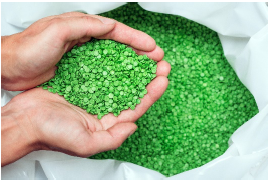
<li>Pellets</li>
<li>Solvents and resins</li>
<li>Packaging</li>
</ul>
</div>
<p>Benchtop spectrophotometers are the tool of choice on blown, extruded and molded plastic products as well. The instrument allows manufacturers to measure a product’s color at points across the full range of development and manufacturing, ensuring a consistent color of all like finished items.</p>
<p>For example, with manufactured plastic bottles, a benchtop spectrophotometer can store the code for the correct color so that if changes in production at a future time alter the color, the original color can be quickly re-instituted.</p>
<p>Our <a href="http://sensing.konicaminolta.us/products/cm-5-spectrophotometer/">CM-5 Benchtop Spectrophotometer</a> is a unit that’s easy to use and features a keyboard and color LCD screen. It can measure a wide variety of plastic surfaces and comes with an optional Petri dish accessory that enables measurement of granules, pellets, powders, pastes, chunky samples, and opaque liquids. Solids can simply be placed on top for precise color measurement.</p>
<p>The LCD screen on the CM-5 can show color-difference graphs and pass/fail information. Plastics industry users can program the readout to read in English, French, Italian, German, Spanish and Japanese.</p>
<p>Additionally, the device is completely compatible with SpectraMagic NX software, so users can see displays of multiple views of data results that they can then edit. Two or more secondary targets can be connected with the primary target’s data, which enables a large variety of quality control applications.</p>
<p>It’s interesting to note, when looking at the need to obtain accurate color measurement data, that the International Color Consortium has set forth exacting guidelines on what colors should actually look like. When a plastics manufacturer is going for one of these “standard” colors, a benchtop spectrophotometer allows him or her to program the correct color and then measure all other like products down the line against it.</p>
<p>Thanks to highly advanced technology, the plastics industry can perform amazingly accurate color measurement that just a few years ago wouldn’t have been possible. Konica Minolta benchtop spectrophotometer products are used in many industries aside from plastics manufacturing, including the food industry, where they assure consistent color in cooked, processed and fresh foods as well as in a variety of beverages.</p>
<p>If you’d like to know about Konica Minolta benchtop spectrophotometers or any of our other products,<br />
feel free to call us at (888) 473-2656, or you can contact us through our website. <a href="http://sensing.konicaminolta.us/contact-us/">http://sensing.konicaminolta.us/contact-us/</a>.</p>
]]></content:encoded>
			<wfw:commentRss>http://sensing.konicaminolta.us/2013/02/how-plastics-manufacturers-use-benchtop-spectrophotometers-in-quality-control/feed/</wfw:commentRss>
		<slash:comments>0</slash:comments>
		</item>
		<item>
		<title>The Importance of Calibration for Color Measurement Instruments</title>
		<link>http://sensing.konicaminolta.us/2013/02/the-importance-of-calibration-for-color-measurement-instruments/</link>
		<comments>http://sensing.konicaminolta.us/2013/02/the-importance-of-calibration-for-color-measurement-instruments/#comments</comments>
		<pubDate>Tue, 19 Feb 2013 21:09:30 +0000</pubDate>
		<dc:creator>Randy Klimek</dc:creator>
				<category><![CDATA[Blog]]></category>
		<category><![CDATA[Color Measurement]]></category>

		<guid isPermaLink="false">http://sensing.konicaminolta.us/2013/02/the-importance-of-calibration-for-color-measurement-instruments/</guid>
		<description><![CDATA[Like with any piece of equipment or machinery, color measurement instruments need maintenance to assure that they continue to work correctly and with a predictably high degree of accuracy. Calibration allows us to set a baseline for the instrument and &#8230; <a href="http://sensing.konicaminolta.us/2013/02/the-importance-of-calibration-for-color-measurement-instruments/">Continue reading <span class="meta-nav">&#8594;</span></a>]]></description>
			<content:encoded><![CDATA[<p>Like with any piece of equipment or machinery, <a href="http://sensing.konicaminolta.us/applications/color-measurement/">color measurement instruments</a> need maintenance to assure that they continue to work correctly and with a predictably high degree of accuracy.</p>
<p>Calibration allows us to set a baseline for the instrument and make sure that the baseline is maintained over time. At Konica Minolta, we perform daily calibration of instruments and also annual calibration. This is the only way to maintain consistent and reliable readings.</p>
<p>Our procedure for daily calibration begins by taking two measurements. The black measurement, which is referred to as zero calibration, is performed by using a special attachment for the instrument that absorbs all light. The attachment is referred to as a zero calibration box.</p>
<p>The next measurement is with a ceramic byte standard with traceable values. The measurement of the white ceramic standard must always be performed with the standard that was assigned to the instrument. Each white standard has a serial number that is easy to pair with the correct instrument. The zero calibration and the white calibration readings are used to set the instrument to a known state of calibration.</p>
<p>Daily and annual calibration is the process necessary to maintain colorimeters, spectrophotometers and other color measurement instruments. Both calibration measurements in the above process must be current in order to assure the instrument’s highest performance. Daily calibration is performed by the customer at their own location and should be done every 8 hours or every shift.</p>
<p>Konica Minolta Sensing annual calibration services are performed by certified technicians at our state-of-the-art laboratory in Ramsey, N.J. We also send field engineers to perform instrument calibration on-site for our customers.</p>
<p>There are certain conditions that can affect a color measurement instrument’s performance and accuracy and create the need for calibration. Dirt and dust can prevent an instrument from performing optimally. Stains and scratches on the white calibration tile can also cause the instrument to return inaccurate readings.</p>
<p>Annual calibration includes:</p>
<ul>
<li>Routine maintenance of the instrument</li>
<li>Aligning and cleaning the optics</li>
<li>Recertification of the calibration standard</li>
<li>Multiple adjustments to bring the instrument to factory specifications</li>
</ul>
<p>To test the accuracy of the instrument, we use it on 14 color standards certified by Konica Minolta and traceable to national standards. Once we know at what level the instrument is performing, calibration can bring it back so that it performs within factory standards.</p>
<p>We recommend annual calibration for every color measurement instrument. Our technicians who perform this service are highly skilled in calibrating instruments as well as in numerous other repair and maintenance tasks on advanced technological devices.</p>
<p>To watch a video of the calibration process using our <a href="http://sensing.konicaminolta.us/products/cm-3600a/">CM 3600A spectrophotometer</a>, <a href="http://www.youtube.com/watch?v=CzFVm0X9kyU&amp;feature=BFa&amp;list=UUzHKTjGEANHl5huRk336JXw">click here.</a></p>
<p>If you’d like to know more about our calibration services for color measurement instruments or if you have questions about a specific product or service, call (888)473-2656, or <a href="http://sensing.konicaminolta.us/contact-us/">contact us through our website.<br />
</a></p>
]]></content:encoded>
			<wfw:commentRss>http://sensing.konicaminolta.us/2013/02/the-importance-of-calibration-for-color-measurement-instruments/feed/</wfw:commentRss>
		<slash:comments>0</slash:comments>
		</item>
		<item>
		<title>How to Measure Luminance with Light Meters</title>
		<link>http://sensing.konicaminolta.us/2013/02/how-to-measure-luminance-with-light-meters/</link>
		<comments>http://sensing.konicaminolta.us/2013/02/how-to-measure-luminance-with-light-meters/#comments</comments>
		<pubDate>Fri, 15 Feb 2013 16:18:49 +0000</pubDate>
		<dc:creator>Jay Catral</dc:creator>
				<category><![CDATA[Blog]]></category>
		<category><![CDATA[Display & Light Measurement]]></category>

		<guid isPermaLink="false">http://sensing.konicaminolta.us/2013/01/how-to-measure-luminance-with-light-meters/</guid>
		<description><![CDATA[There seems to be a never-ending list of ways light meters are used in a wide range of industries.  These powerful luminance meters give technicians an accurate appraisal of the characteristics of any number of light sources and are used &#8230; <a href="http://sensing.konicaminolta.us/2013/02/how-to-measure-luminance-with-light-meters/">Continue reading <span class="meta-nav">&#8594;</span></a>]]></description>
			<content:encoded><![CDATA[<p>There seems to be a never-ending list of ways light meters are used in a wide range of industries.  These powerful luminance meters give technicians an accurate appraisal of the characteristics of any number of light sources and are used for quality control and other important purposes.</p>
<p>Konica Minolta’s <a href="http://sensing.konicaminolta.us/products/ls-100-luminance-meter/">LS-100 luminance meter</a> was engineered with many features that make it one of the best light meters available anywhere.  It is in the higher range of DIN quality class B and is a light and compact unit that’s easy to handle and use.  It runs on a 9-volt battery.</p>
<p>This portable meter uses a single lens reflex optical system.  With it, users can achieve targeting at an amazingly precise level, with the assurance that, even at short ranges, the exact measuring area will show up clearly in the viewfinder.  Users can get accurate light measurement data from small areas measuring just 0.4mm in diameter and, of course, from much larger areas.</p>
<p>The LS-100 light meter’s LCD screen displays the value of measured luminance.  This value is also shown on the viewfinder.  The advantage here is that a technician does not have to move the meter away from his or her face to control the object being measured.  When measuring very strong sources of light, safety is ensured through the instrument’s neutral density eyepiece filter, which is included.  Stability is certain with a uniquely designed pistol grip.</p>
<p>For measuring very dark surfaces, this is the luminance meter of choice with its range starting at 0.001cd/m2.  Calibration is made simple with special functions for that purpose as well as for level correction tasks.  When correcting luminance levels, users choose a standard luminance, and the unit automatically corrects discrepancies for whatever sources of light users specify.</p>
<p>Other measurement values the LS-100 can read include luminance ratio, peak luminance and instantaneous luminance.  Even greater versatility is provided by the fact that the device can be connected to a computer, to which it can relay measurement data results while being provided with control signals.</p>
<p>Konica Minolta is committed to staying on the cutting edge of the technological advancements we build into all our <a href="http://sensing.konicaminolta.us/applications/light-measurement/">luminance meters. </a> Those who use our instruments in critical measuring applications demand accuracy as well as simple, uncomplicated functions that keep projects moving swiftly.  The LS-100 provides technicians, engineers, lab workers and many others with these advantages.</p>
<p>Here is a brief overview of the benefits and features in this portable measuring instrument:</p>
<ul>
<li>A light, battery-powered unit with high dynamic range and accuracy</li>
<li>Exact measurement area shows up in the viewfinder</li>
<li>Capable of measuring extremely small areas</li>
<li>Measurement data appears on both the viewfinder and the LCD screen, allowing users more ease in focusing on their targets</li>
<li>Able to safely measure very strong sources of light</li>
<li>Specially designed grip for easier and more stable holding</li>
<li>Surfaces as dark as 0.001cd/m2 can be measured</li>
<li>Simple calibration function</li>
<li>Set for luminance ratio, peak luminance and instantaneous luminance</li>
<li>Connects to a personal computer for enhanced functionality</li>
</ul>
<p>If the accurate measurement of the qualities of light sources is critical to your work, we invite you to contact us to learn more about how Konica Minolta can supply the precise technology you need for your specific light measuring projects.  Just call (888) 473-2656, or you can contact us through our website.<br />
<a href="http://sensing.konicaminolta.us/contact-us/">http://sensing.konicaminolta.us/contact-us/</a></p>
]]></content:encoded>
			<wfw:commentRss>http://sensing.konicaminolta.us/2013/02/how-to-measure-luminance-with-light-meters/feed/</wfw:commentRss>
		<slash:comments>0</slash:comments>
		</item>
		<item>
		<title>Konica Minolta acquires Instrument Systems, focuses on enlarging its illuminance meter and other measurement-technology markets</title>
		<link>http://sensing.konicaminolta.us/2013/01/konica-minolta-acquires-instrument-systems-focuses-on-enlarging-its-illuminance-meter-and-other-measurement-technology-markets/</link>
		<comments>http://sensing.konicaminolta.us/2013/01/konica-minolta-acquires-instrument-systems-focuses-on-enlarging-its-illuminance-meter-and-other-measurement-technology-markets/#comments</comments>
		<pubDate>Fri, 25 Jan 2013 16:14:08 +0000</pubDate>
		<dc:creator>Jay Catral</dc:creator>
				<category><![CDATA[Blog]]></category>
		<category><![CDATA[Display & Light Measurement]]></category>

		<guid isPermaLink="false">http://sensing.konicaminolta.us/?p=6266</guid>
		<description><![CDATA[In order to stay competitive in our markets and continue to provide the most advanced light meter technology available, the Konica Minolta Group must make wise and timely investments.  Konica Minolta Optics (KMOP), part of our business group, did just &#8230; <a href="http://sensing.konicaminolta.us/2013/01/konica-minolta-acquires-instrument-systems-focuses-on-enlarging-its-illuminance-meter-and-other-measurement-technology-markets/">Continue reading <span class="meta-nav">&#8594;</span></a>]]></description>
			<content:encoded><![CDATA[<p>In order to stay competitive in our markets and continue to provide the most advanced light meter technology available, the Konica Minolta Group must make wise and timely investments.  Konica Minolta Optics (KMOP), part of our business group, did just that when it acquired Instrument Systems GmbH (IS), a German manufacturer of light measurement equipment.</p>
<p>The announcement came December 3, 2012 from the Japanese offices of Konica Minolta, a leading manufacturer of light meters and other optical test instruments for industrial uses.</p>
<p>It was in April that the Konica Minolta Group undertook to reorganize its various optical businesses in order to focus more directly on potential future growth markets.  Until then the businesses operated as component and parts suppliers for personal computers, digital electronics and other consumer-oriented industrial sectors with limited potential.</p>
<p>The goal of the reorganization was higher profit with more market stability.  The acquisition of IS was a smart move as Konica Minolta for years was already recognized as a leading producer of light meters and a company that delivered light source color measurement products like the industry standard CL-200A and CS-100A.</p>
<p>IS also is well known as a supplier of light and display measurement technologies including colorimeters, integrated spheres, goniometers, imaging photometers and spectrometers.  The company is a leader both in the development of new technologies and in sales.</p>
<p>Specializing in measurement and test solutions, its products cover the gamut from lab and quality control applications to production testing for LED lighting that is among the fastest ever developed.  Within the display measurement field, IS’s market share has risen in market segments featuring top-of-the-line and high-performance instruments.</p>
<p>KMOP will now realize a more expansive line of light meters and other display measurement products.  Already the company leads its market in light meter technology, and the acquisition of IS will only enhance its activity in light source measurement that includes both LED and OLED (organic light-emitting diode).</p>
<p>Now operating in the capacity of a KMOP consolidated subsidiary, IS continues its sales, production and technology and product development in Berlin and Munich, Germany.</p>
<p>It is through investments such as the IS acquisition that the Konica Minolta Group is able to continue to provide its industrial and healthcare customers with cutting-edge illuminance meters and maintain its position as the worldwide leader in light meter technology.</p>
<p>If you’d like to know more about how Konica Minolta can provide the technology your facility or department needs for faster, more accurate light, color and shape measurement, call us at (888) 473-2656.</p>
]]></content:encoded>
			<wfw:commentRss>http://sensing.konicaminolta.us/2013/01/konica-minolta-acquires-instrument-systems-focuses-on-enlarging-its-illuminance-meter-and-other-measurement-technology-markets/feed/</wfw:commentRss>
		<slash:comments>0</slash:comments>
		</item>
		<item>
		<title>A robot doing the backstroke? That’s the power of 3D scanner technology</title>
		<link>http://sensing.konicaminolta.us/2013/01/a-robot-doing-the-backstroke-that%e2%80%99s-the-power-of-3d-scanner-technology/</link>
		<comments>http://sensing.konicaminolta.us/2013/01/a-robot-doing-the-backstroke-that%e2%80%99s-the-power-of-3d-scanner-technology/#comments</comments>
		<pubDate>Wed, 23 Jan 2013 21:07:53 +0000</pubDate>
		<dc:creator>Mark Lyon</dc:creator>
				<category><![CDATA[3D Scanning]]></category>
		<category><![CDATA[Blog]]></category>

		<guid isPermaLink="false">http://sensing.konicaminolta.us/2013/01/a-robot-doing-the-backstroke-that%e2%80%99s-the-power-of-3d-scanner-technology/</guid>
		<description><![CDATA[Znews.India.com reported on July 31 that a Tokyo University of Technology team has built what it’s calling a “Womanhood” robot that has a perfect swimming backstroke and is making attempts at freestyle swimming.  The robot was created using 3D scanner &#8230; <a href="http://sensing.konicaminolta.us/2013/01/a-robot-doing-the-backstroke-that%e2%80%99s-the-power-of-3d-scanner-technology/">Continue reading <span class="meta-nav">&#8594;</span></a>]]></description>
			<content:encoded><![CDATA[<p>Znews.India.com reported on July 31 that a Tokyo University of Technology team has built what it’s calling a “Womanhood” robot that has a perfect swimming backstroke and is making attempts at freestyle swimming.  The robot was created using 3D scanner technology.<br />
<a href="http://zeenews.india.com/business/news/technology/japanese-scientists-create-first-swimming-robot_57029.html">http://zeenews.india.com/business/news/technology/japanese-scientists-create-first-swimming-robot_57029.html</a></p>
<p>We know this is entirely possible today.  Our 3D scanners have proven that there are virtually no areas inaccessible to designers needing to visualize the intricacies of a prototype at any stage of development and production.</p>
<p>3D scanners (also known as laser scanners) are showing up more and more in numerous industries.  The uses for this technology to improve production on a very wide range of design and manufacturing projects are seemingly endless.  The Japanese swimming robot is an excellent example of what this instrument can help people accomplish.</p>
<p>The lead paragraph in the News story says: “Don&#8217;t be amazed if organisers have to spot check for Japanese robots clinching the swimming medals at the next Olympics.”  We’re not sure it’s going to go that far – at least not at the 2016 Olympics – but we wouldn’t be surprised to see it someday.  With the continual improvements in 3D scanner technology, it’s a very real possibility.</p>
<p>The team at the Tokyo University of Technology used a 3D scanner to make a perfect map of the body of a human swimmer.  The point of the project, of course, wasn’t to create an entrant in athletic swimming competitions, but rather to be build a swimming research tool as well as a life-saving one.</p>
<p>One of the team’s goals is to make Swumanoid robots that can one day function as lifeguards.  If the team is successful using 3D technology and numerous other high-level technologies, this altruistic mission will surely gain worldwide respect – and awe.</p>
<p>Konica Minolta’s line of 3D scanners – including the RANGE 5 3D, the RANGE 7 3D, the threeRivers Virtuoso, the VIVID 910 and the VIVID 9i – all employ some of the most advanced scanning technology available anywhere in the industry.  When we hear of stories like the Swumanoid robot, it makes us excited about all the other possibilities these instruments will perform in the coming years.</p>
<p>A reason 3D scanning technology was necessary to create the Japanese robot is that no other method of tracking a swimmer’s movement and then duplicating it would have proven effective.  The article notes the difficulty that would be encountered in attaching motion-sensing pads to swimmers and keeping them in place while the athletes swam.  Ideally, a swimmer could simply be observed and his or her motions tracked, but swimmers can’t perform the same actions perfectly over and over.</p>
<p>3D scanners were used in the robot’s creation to map a swimmer’s physique so technicians could build 20 computer-controlled, waterproof motors that would generate the exact swimming motions that the scanners tracked.</p>
<p>It will be interesting to keep an eye on new technological advances that are made possible by instruments like 3D scanners.  It will also be interesting to see where robot technology takes us with the advent of new ideas and new commitments to making life on earth better.</p>
<p>Konica Minolta is committed to providing advanced 3D scanners for business, industry, science and medicine.<br />
If you’d like to learn more about our products or have general questions or comments, please contact us through our website or call us toll-free at (888) 473-2656.<br />
<a href="http://sensing.konicaminolta.us/applications/3d-scanners/">http://sensing.konicaminolta.us/applications/3d-scanners/</a><br />
<a href="http://sensing.konicaminolta.us/contact-us/">http://sensing.konicaminolta.us/contact-us/</a></p>
]]></content:encoded>
			<wfw:commentRss>http://sensing.konicaminolta.us/2013/01/a-robot-doing-the-backstroke-that%e2%80%99s-the-power-of-3d-scanner-technology/feed/</wfw:commentRss>
		<slash:comments>0</slash:comments>
		</item>
		<item>
		<title>A 360 Degree View of a 3D Scanning Project</title>
		<link>http://sensing.konicaminolta.us/2013/01/a-360-degree-view-of-a-3d-scanning-project/</link>
		<comments>http://sensing.konicaminolta.us/2013/01/a-360-degree-view-of-a-3d-scanning-project/#comments</comments>
		<pubDate>Wed, 23 Jan 2013 21:06:34 +0000</pubDate>
		<dc:creator>Mark Lyon</dc:creator>
				<category><![CDATA[3D Scanning]]></category>
		<category><![CDATA[Blog]]></category>

		<guid isPermaLink="false">http://sensing.konicaminolta.us/2013/01/a-360-degree-view-of-a-3d-scanning-project/</guid>
		<description><![CDATA[3D scanning is a process that allows technicians in numerous industries to perform accurate replication of objects in 3D design, dimensional inspection and reverse engineering projects.  Konica Minolta’s scanning labs use 3D scanners that employ advanced, state-of-the-art technology for clients &#8230; <a href="http://sensing.konicaminolta.us/2013/01/a-360-degree-view-of-a-3d-scanning-project/">Continue reading <span class="meta-nav">&#8594;</span></a>]]></description>
			<content:encoded><![CDATA[<p>3D scanning is a process that allows technicians in numerous industries to perform accurate replication of objects in 3D design, dimensional inspection and reverse engineering projects.  Konica Minolta’s scanning labs use <a href="http://sensing.konicaminolta.us/applications/3d-scanners/">3D scanners</a> that employ advanced, state-of-the-art technology for clients in the automotive, entertainment, aerospace, machine manufacturing and many other industries.</p>
<p>Earlier this year, we produced a series of videos that gives you a 360-degree view of 3D scanning processes from start to finish.  You can watch the first <a href="http://www.youtube.com/user/konicaminoltasense?feature=results_main">3D scanning</a> video here.</p>
<p>The first video covered designing and prototyping a custom mobile phone dock that would fit perfectly into a car.  The goal was to use a <a href="http://sensing.konicaminolta.us/applications/3d-scanners/">3D scanner</a> to make a dock that wasn’t as obtrusive and ugly as the ones available in stores.</p>
<p>To start the project, we watch a Konica Minolta <a href="http://sensing.konicaminolta.us/products/range-7-3d-laser-scanner/">RANGE 7 3D scanner</a> in use as it scans the phone.  Our technician wanted to design a dock that was more integrated with the car’s dash, and getting a digital picture of the phone was the first step.</p>
<p>Once the phone was scanned, a CAD model was created from the scan data.  A fascinating overview of this multi-step process is shown and explained in the video.  It demonstrates how any and all parts of the phone can be accurately replicated to aid in the design of the phone dock.</p>
<p>The next step was “printing” the CAD of the phone, i.e., producing a prototype of it.  This was done on our Projet HD 3000 production system.  It took about two hours, and the finished product was an exact replica of the phone.</p>
<p>Let’s recap what was covered in this video:</p>
<p>1. The phone was scanned with a RANGE 7 3D scanner</p>
<p>2. The data was put into Rapid Form software to generate a fully parametric CAD model</p>
<p>3. The model was printed, producing a perfect replica of the phone</p>
<p>The next <a href="http://www.youtube.com/watch?v=hLeCxEJrFlI&amp;list=UUzHKTjGEANHl5huRk336JXw&amp;index=7&amp;feature=plcp">3D scanning</a> video, covers the scanning and reverse engineering of the dash of the car while introducing a new design challenge.</p>
<p>Engineering a dash dock for a mobile phone is just one of the ways our 3D scanners are used in a multitude of industries where accurate prototypes and digital representation are crucial to design projects.  Here’s a brief overview of the RANGE 7 3D scanner.</p>
<p>This 3D scanning instrument features a dark surface mode function that makes it easy to scan objects that have as little as 2.5 percent reflectance.  There’s no longer a need to spray an object or take it to a darkroom for scanning.  The result is the highest low-reflectance performance in the industry.</p>
<p>The RANGE 7 uses a new CMOS sensor (1.31 megapixel) that quickly spots new optics designs and detailed shapes.  The accuracy of this instrument is ±40 μm as measured by a ball bar accuracy test, which uses VDI/VDE 2634 guidelines.</p>
<p>The RANGE 7 is fast, taking just two seconds for each scan.  The instrument includes a function that allows users to preview what they’ve just shot.  This enables them to predict the results of their measurement and spot any scan inefficiencies because of the conditions of the scanned surface and also to see dead angles and the depth of the scan area.  This critical function significantly reduces the chance for errors in the final scan data.</p>
<p>No matter what the project, Konica Minolta’s 3D scanning instruments provide the accuracy, ease of use and flexibility to get the job done right.  We’re committed to continuing to create the most advanced technology available so that our measuring instruments will meet the needs of companies, manufacturers and laboratories around the world.</p>
<p>If you’d like to learn more about Konica Minolta 3D scanners and how they can benefit your reverse engineering, prototyping and 3D design projects, or if you’re interested in our 3D scanning lab services, just call us at (888) 473-2656, or you can <a href="http://sensing.konicaminolta.us/contact-us/">contact us through our website</a>.</p>
]]></content:encoded>
			<wfw:commentRss>http://sensing.konicaminolta.us/2013/01/a-360-degree-view-of-a-3d-scanning-project/feed/</wfw:commentRss>
		<slash:comments>0</slash:comments>
		</item>
		<item>
		<title>What Happens During a 3D Scanning Workshop?</title>
		<link>http://sensing.konicaminolta.us/2013/01/what-happens-during-a-3d-scanning-workshop/</link>
		<comments>http://sensing.konicaminolta.us/2013/01/what-happens-during-a-3d-scanning-workshop/#comments</comments>
		<pubDate>Wed, 23 Jan 2013 21:03:06 +0000</pubDate>
		<dc:creator>Mark Lyon</dc:creator>
				<category><![CDATA[3D Scanning]]></category>
		<category><![CDATA[Blog]]></category>

		<guid isPermaLink="false">http://sensing.konicaminolta.us/2013/01/what-happens-during-a-3d-scanning-workshop/</guid>
		<description><![CDATA[For those who don’t know, Konica Minolta conducts complimentary four-hour workshops every month for people interested in knowing more about how 3d scanning works and the benefits of our 3D laser scanning service. http://www.youtube.com/watch?v=qHPwBgwFXDs&#38;feature=autoplay&#38;list=UUzHKTjGEANHl5huRk336JXw&#38;playnext=1 Workshops are held at unique, special &#8230; <a href="http://sensing.konicaminolta.us/2013/01/what-happens-during-a-3d-scanning-workshop/">Continue reading <span class="meta-nav">&#8594;</span></a>]]></description>
			<content:encoded><![CDATA[<p>For those who don’t know, Konica Minolta conducts complimentary four-hour workshops every month for people interested in knowing more about how 3d scanning works and the benefits of our 3D laser scanning service.</p>
<p><a href="http://www.youtube.com/watch?v=qHPwBgwFXDs&amp;feature=autoplay&amp;list=UUzHKTjGEANHl5huRk336JXw&amp;playnext=1">http://www.youtube.com/watch?v=qHPwBgwFXDs&amp;feature=autoplay&amp;list=UUzHKTjGEANHl5huRk336JXw&amp;playnext=1</a></p>
<p>Workshops are held at unique, special venues.  This adds appeal to the event and brings the workshops closer to folks in different areas.  At a recent workshop at the Connecticut Science Center in Hartford, Conn., engineers and quality inspectors from leading manufacturing companies gathered to gain insight on the latest laser scanning technology in Konica Minolta products.</p>
<p>3D laser scanning service uses these advanced scanners to create a three-dimensional, digital representation of a product or a design structure.  There are a wide range of uses for laser scanning, most of them centered around prototyping for design projects.  3D scanners are able to see an object from every angle and accurately depict the object on a computer screen, giving engineers far more information about the object than the naked eye could provide.</p>
<p>At our 3D scanning workshops we delve into timely information about laser scanning with comprehensive presentations that are designed to appeal to individuals in a wide range of industries who are engaged in numerous applications that a 3D laser scanning service would benefit.</p>
<p>In Hartford, attendees took part in small group sessions, which we always conduct in a relaxed environment that encourages participation.  What people really like about these sessions is that everyone’s input is appreciated.  People get to learn and also share their knowledge with the group as we look at every angle of 3D laser scanning services and ways it can be used across different applications.</p>
<p>The overview of these workshops includes:</p>
<p>A general discussion of how 3D scanners work</p>
<p>Common 3D scanner applications</p>
<p>The various types of objects that can be scanned</p>
<p>File formats for 3D laser scanning</p>
<p>How this technology is used in the product design process</p>
<p>Benefits of laser scanning in quality control</p>
<p>Workshop participants learn that laser scanning, while it involves highly advanced technologies, is not difficult for the user of the scanner.  Creating a digital replica of an object with an amazingly high level of accuracy takes just seconds.</p>
<p>In addition to the group sessions at our workshops, we have breakout sessions that cover the basic operation of 3D scanners, how these instruments work in reverse engineering and how to inspect the part using data acquired by the scanner.</p>
<p>At every workshop, participants can bring a part of their own, which we will scan at no cost to them.  This lets them see first-hand how 3D scanning works on one given product and lets them envision how it could benefit their company or laboratory in a wide range of scanning tasks.</p>
<p>Konica Minolta’s scanning labs feature some of the most advanced technology in the world.  Our goal is to continue to develop ahead-of-the-edge technology that not only simplifies the work of technicians and engineers everywhere but that is simple to use and highly accurate.</p>
<p>If you’d like to know more about upcoming 3D scanning workshops, or if you have questions or comments about our 3D laser scanning service, please call (888) 473-2656, or contact us through our website.</p>
<p><a href="http://sensing.konicaminolta.us/search-by-services/3d-scanning-services/">http://sensing.konicaminolta.us/search-by-services/3d-scanning-services/</a></p>
<p><a href="http://sensing.konicaminolta.us/contact-us/">http://sensing.konicaminolta.us/contact-us/</a></p>
]]></content:encoded>
			<wfw:commentRss>http://sensing.konicaminolta.us/2013/01/what-happens-during-a-3d-scanning-workshop/feed/</wfw:commentRss>
		<slash:comments>0</slash:comments>
		</item>
		<item>
		<title>Spotlight on the 3D scanner and its versatility in a wide range of 3D scanning applications</title>
		<link>http://sensing.konicaminolta.us/2013/01/spotlight-on-the-3d-scanner-and-its-versatility-in-a-wide-range-of-3d-scanning-applications/</link>
		<comments>http://sensing.konicaminolta.us/2013/01/spotlight-on-the-3d-scanner-and-its-versatility-in-a-wide-range-of-3d-scanning-applications/#comments</comments>
		<pubDate>Wed, 23 Jan 2013 20:57:29 +0000</pubDate>
		<dc:creator>Mark Lyon</dc:creator>
				<category><![CDATA[3D Scanning]]></category>
		<category><![CDATA[Blog]]></category>

		<guid isPermaLink="false">http://sensing.konicaminolta.us/2013/01/spotlight-on-the-3d-scanner-and-its-versatility-in-a-wide-range-of-3d-scanning-applications/</guid>
		<description><![CDATA[Engineers involved in design, replicating and reverse engineering projects need an accurate method of creating prototypes and understanding and seeing every nuance of their target object. Konica Minolta’s handy and versatile 3D scanners provide them with the right technology to &#8230; <a href="http://sensing.konicaminolta.us/2013/01/spotlight-on-the-3d-scanner-and-its-versatility-in-a-wide-range-of-3d-scanning-applications/">Continue reading <span class="meta-nav">&#8594;</span></a>]]></description>
			<content:encoded><![CDATA[<p>Engineers involved in design, replicating and reverse engineering projects need an accurate method of creating prototypes and understanding and seeing every nuance of their target object. Konica Minolta’s handy and versatile <a href="http://sensing.konicaminolta.us/products/vivid-9i-3d-laser-scanner/">3D scanners</a> provide them with the right technology to succeed in their projects.</p>
<p>The VIVID 9i, for example, is a powerful 3D scanner with high precision that is ideal for dimensional measurements of molded plastics, sheet metal and dies and perfect for casting, forging and other industrial processes.</p>
<p>We’ve created a new hardware design for the VIVID 9i as well as a measurement algorithm that gives users a measurement accuracy that is four times greater than earlier models. Because of this increased accuracy, measurement of oddly shaped objects with irregular surfaces, such as auto parts, can be taken with predictable, reliable results.</p>
<p>This instrument performs 3D scanning in reverse engineering projects, where there is a need to retrieve data on shape and dimension of prototypes and mock-ups. It also can quickly check for the shape of parts and molds and is highly useful in quality inspection.</p>
<p>Speed in measuring tasks is always important, and the VIVID 9i returns measurement data in 2.5 seconds with an accuracy of ±50µm. A wide range of industries use this laser scanner because they know the Konica Minolta name is synonymous with quality and high performance.</p>
<p>The versatility of the VIVID 9i is unmatched in the 3D scanning industry. We’ve taken our broad experience in optical engineering and created three different lenses for use with this instrument that allow technicians to measure objects of any size. The lenses – TELE, MIDDLE and WIDE – are easily interchangeable and made for high performance.</p>
<p>If there’s a question about the correct measuring distance, the VIVID 9i solves it: users need only to aim the lens at the object to be measured, take the measurement, and the scanner controls the detailed settings. It also automatically sets for the correct level of laser power, based on the target’s surface conditions.</p>
<p>The VIVID 9i is the 3D scanner of choice for those whose measurements must comply with ISO 9000 standards. Manufacturers who use this unit in quality control functions can get a report of the scanner’s accuracy and see how it measures against the national standard. We are happy to provide these reports upon request.</p>
<p>To create reports for single or multiple units, we test the accuracy of the measurement function of the three interchangeable 3D scanner lenses and trace it to national standards with our Reference 3D Chart. The report serves as documentation that the instrument(s) comply with ISO requirements.</p>
<p>Finally, we’ve developed a new Field Calibration System that cancels the loss of accuracy when changing lenses or because of some element present in the environment where measuring is taking place. Factory settings on this 3D scanning instrument are maintained and optimal performance is assured through a quick calibration process prior to use.</p>
<p>Konica Minolta offers a number of advanced 3D scanners that are ideal tools in a wide range of 3D scanning applications including design, reverse engineering, replicating and more. If you’d like to know more about these laser scanners or any of our other measuring instruments, call us at (888) 473-2656, or you can contact us through our website,<br />
<a href="http://sensing.konicaminolta.us/contact-us/">http://sensing.konicaminolta.us/contact-us/</a></p>
]]></content:encoded>
			<wfw:commentRss>http://sensing.konicaminolta.us/2013/01/spotlight-on-the-3d-scanner-and-its-versatility-in-a-wide-range-of-3d-scanning-applications/feed/</wfw:commentRss>
		<slash:comments>0</slash:comments>
		</item>
		<item>
		<title>Spotlight on the SpectraRad Xpress Spectrophotometer: Color Measurement, Light Measurement and More</title>
		<link>http://sensing.konicaminolta.us/2013/01/spotlight-on-the-spectrarad-xpress-spectrophotometer-color-measurement-light-measurement-and-more/</link>
		<comments>http://sensing.konicaminolta.us/2013/01/spotlight-on-the-spectrarad-xpress-spectrophotometer-color-measurement-light-measurement-and-more/#comments</comments>
		<pubDate>Wed, 23 Jan 2013 20:46:38 +0000</pubDate>
		<dc:creator>Mark Lyon</dc:creator>
				<category><![CDATA[3D Scanning]]></category>
		<category><![CDATA[Blog]]></category>

		<guid isPermaLink="false">http://sensing.konicaminolta.us/?p=6229</guid>
		<description><![CDATA[In the field, across numerous industries and in a variety of laboratory settings, when technicians require highly accurate light and color measurements, more and more are choosing the popular SpectraRad Xpress Spectrophotometer, an easy to use instrument that is remarkably sophisticated. Designed &#8230; <a href="http://sensing.konicaminolta.us/2013/01/spotlight-on-the-spectrarad-xpress-spectrophotometer-color-measurement-light-measurement-and-more/">Continue reading <span class="meta-nav">&#8594;</span></a>]]></description>
			<content:encoded><![CDATA[<p>In the field, across numerous industries and in a variety of laboratory settings, when technicians require highly accurate light and color measurements, more and more are choosing the popular <a href="http://sensing.konicaminolta.us/products/spectrarad-xpress/">SpectraRad Xpress Spectrophotometer</a>, an easy to use instrument that is remarkably sophisticated.</p>
<p>Designed as a miniature spectral irradiance meter, the SpectraRad performs light measurement with a USB 2.0 interface. The instrument features a cosine corrector that is attached to an advanced spectrometer. A NIST traceable tungsten source of light is used for the unit’s irradiance calibration, making it one of the most powerful and accurate spectrophotometers on the market today.</p>
<p>Measuring numerous lighting systems and individual devices is easy with BESpec software that is included in the SpectraRad spectrophotometer.</p>
<p>The standard version of this software includes these features/applications:</p>
<ul>
<li>Capturing of externally triggered pulsed light</li>
<li>Chromacity</li>
<li>Illuminance (lux)</li>
<li>Color temperature</li>
<li>Data smoothing</li>
<li>Time line recording</li>
</ul>
<p>and other functions in the handling of data.</p>
<p>This instrument is a highly accurate measuring tool for LED and lamp characterization, photochemistry, photobiology, the testing of photostability and color analysis. As with all of our light and color measurement instruments, the SpectraRad was engineered with the most advanced technology in the industry.</p>
<p>Numerous advantages are to be found in the SpectraRad Xpress. It provides many improvements over traditional instruments that employ filter based technology. While the traditional instruments have been widely used because of their relatively low cost, their measuring speed and the fact that they are portable and easy to transport, there has always been a drawback.</p>
<p>Older light and color measurement instruments have historically lacked the resolution necessary to return perfectly accurate descriptions of a light source’s spectral characteristics. Instruments that are filter based yield colorimetric values from just three data points across the light spectrum. Filters that match the response of a human eye are how this is accomplished.</p>
<p>The filters can be made only with a certain accuracy level. They’re known to return measurement errors due to insufficient resolution required to accurately measure light sources with narrow bandwidth as well as because of the filter response’s<br />
deviation from ideal human eye response.</p>
<p>When inaccurate measurements are taken, projects and systems fail. Konica Minolta has solved this problem with the SpectraRad, which is available at a cost comparable to other similar instruments. In addition, it was engineered to perform at a higher speed as it takes in hundreds of data points across the measuring target.</p>
<p>Measuring LEDs and sources of narrow bandwidth light are easy and precise with the 2048 pixel linear CCD array. With its multiple sensors, the SpectraRad is able to show spectral graphs and report spectral data. The instrument is truly the tool of choice for measuring a variety of light sources.</p>
<p>Konica Minolta’s complete line of spectrophotometers gives technicians in multiple industries the technology they need for accurate color measurement applications and light measuring tasks. We’ve built the SpectraRad Xpress and all of our other measuring instruments to be fast, easy to use and in compliance with the most exacting industry standards. We’re committed to continuing to provide the highest performing technology available.</p>
<p>If you’d like to know more about Konica Minolta’s spectrophotometers and how they can simplify your color measurement or light measurement projects, give us a call at (888) 473-2656, or you can contact us through our website,<br />
<a href="http://sensing.konicaminolta.us/contact-us/">http://sensing.konicaminolta.us/contact-us/</a></p>
]]></content:encoded>
			<wfw:commentRss>http://sensing.konicaminolta.us/2013/01/spotlight-on-the-spectrarad-xpress-spectrophotometer-color-measurement-light-measurement-and-more/feed/</wfw:commentRss>
		<slash:comments>0</slash:comments>
		</item>
		<item>
		<title>Sensing Partners with Business Solutions at the Biggest Graphic Arts Show in the US</title>
		<link>http://sensing.konicaminolta.us/2012/10/sensing-partners-with-business-solutions-at-the-biggest-graphic-arts-show-in-the-us/</link>
		<comments>http://sensing.konicaminolta.us/2012/10/sensing-partners-with-business-solutions-at-the-biggest-graphic-arts-show-in-the-us/#comments</comments>
		<pubDate>Wed, 10 Oct 2012 20:29:56 +0000</pubDate>
		<dc:creator>Russell Doucette</dc:creator>
				<category><![CDATA[Blog]]></category>
		<category><![CDATA[Color Measurement]]></category>

		<guid isPermaLink="false">http://sensing.konicaminolta.us/?p=5671</guid>
		<description><![CDATA[Konica Minolta Sensing Americas, Inc., is excited to be partnering with our sister company, Konica Minolta Business Solutions U.S.A., Inc., at this years GRAPH EXPO 2012 from October 7-10 at McCormick Place South in Chicago, booth #421. If the response &#8230; <a href="http://sensing.konicaminolta.us/2012/10/sensing-partners-with-business-solutions-at-the-biggest-graphic-arts-show-in-the-us/">Continue reading <span class="meta-nav">&#8594;</span></a>]]></description>
			<content:encoded><![CDATA[<p><a href="http://sensing.konicaminolta.us/">Konica Minolta Sensing Americas, Inc.</a>, is excited to be partnering with our sister company, Konica Minolta Business Solutions U.S.A., Inc., at this years GRAPH EXPO 2012 from October 7-10 at McCormick Place South in Chicago, booth #421. If the response we&#8217;re getting from current and prospective clients is any indication, you are too. And where better to debut new innovative services and solutions for the production print marketplace and demonstrate ground breaking solutions focused on order automation and multi-channel marketing than the largest annual graphic communications exhibition in the Americas?</p>
<p>Among other innovations, we&#8217;ll be introducing the newest version of the Konica Minolta Color Care Suite 2.2, an efficient software application package that defines, achieves and maintains quality standards that are product-specific when coupled with our award-winning series of <a href="http://kmbs.konicaminolta.us/content/products/subcategories/pp_digital_press.html">bizhub PRESS Color Digital Presses</a>. Graphic arts professions will be able to define and ensure the correct color output every time when the Color Care Suite is used in combination with the Konica Minolta Sensing <a href="http://www.konicaminolta.com/sensingusa/products/Color-Measurement/spectrodensitometers/FD-7-FD-5/index.html">FD-5BT Spectrodensitometer</a>.</p>
<p>The first M1-type instrument utilizing Konica Minolta&#8217;s original Virtual Fluorescence Standard (VFS), the <a href="http://www.konicaminolta.com/sensingusa/products/Color-Measurement/spectrodensitometers/FD-7-FD-5/index.html">FD-5BT Spectrodensitometer</a> provides measurements that correspond to D50, and there are no worries regarding the upcoming digital production printing standards: By combining the Color Care software with FD-5BT Spectrodensitometer, customers can easily conform to new standards.</p>
<p>This unique and unmatched solution in the industry is the result of the joint effort between two divisions of Konica Minolta over the last two years, according to Russell Doucette, Business Unit Manager for Konica Minolta Sensing and G7 Certified Expert. “Utilizing advanced color measurement hardware by Konica Minolta Sensing and cutting edge digital print technology by Konica Minolta Business, we are able to offer unprecedented color output for the graphic arts market,” Doucette said. What&#8217;s more, by including the M1 standard and G7 conformance, the Color Care 2.2 and FD Spectrodensitometer bundle is not only a solution for today, but also for tomorrow.</p>
<p>Russell Doucette will be speaking at the EXPO as part of IdeAlliance&#8217;s Printing Standards Form as well as hosting a Learning Lab session. <a href="http://www.idealliance.org/events/2012-printing-standards-forum-g7-summit-labs#group-program-info">Check out the full schedule here.</a></p>
]]></content:encoded>
			<wfw:commentRss>http://sensing.konicaminolta.us/2012/10/sensing-partners-with-business-solutions-at-the-biggest-graphic-arts-show-in-the-us/feed/</wfw:commentRss>
		<slash:comments>0</slash:comments>
		</item>
		<item>
		<title>How Light Meters are Used and a Look at Several Models</title>
		<link>http://sensing.konicaminolta.us/2012/10/how-light-meters-are-used-and-a-look-at-several-models/</link>
		<comments>http://sensing.konicaminolta.us/2012/10/how-light-meters-are-used-and-a-look-at-several-models/#comments</comments>
		<pubDate>Fri, 05 Oct 2012 15:43:27 +0000</pubDate>
		<dc:creator>Jay Catral</dc:creator>
				<category><![CDATA[Blog]]></category>
		<category><![CDATA[Display & Light Measurement]]></category>

		<guid isPermaLink="false">http://sensing.konicaminolta.us/2012/10/how-light-meters-are-used-and-a-look-at-several-models/</guid>
		<description><![CDATA[If you are interested in measuring color for any reason then you should be looking into Konica Minolta's high-end spectrophotometers. Of course, there are quite a few spectrophotometers to choose from, and if you don't know exactly what you're looking for you may feel pretty overwhelmed. To make the process easier, we try to provide some information for the customer who is unclear about what he or she wants.]]></description>
			<content:encoded><![CDATA[<p>Konica Minolta light meters come in several styles and provide users with the ability to accurately measure light across many applications.  An example of these applications include in laboratories, where engineers developing LEDs need to measure these device’s light properties.</p>
<p>Other applications where light meters are used include a variety of testing processes in government facilities and programs; the measurement of the efficiency of light sources and in efforts to manage and improve quality control operations.  Light meters are also used museums and art preservation.</p>
<p>As experts in light-measuring technology and the design of light meters, we provide advanced tools that feature unique ergonomic designs.  When technicians need to take these tools off-site, they can choose a portable model that runs on a 9-volt battery.  But whatever model is used, we’ve built in to it technology that’s easy to read and understand.</p>
<p>The four light meters we’ll talk about here were all designed in compliance with the highest accuracy and quality standards in the industry for the measuring of illuminance and luminance.  Because each application will have different requirements, we’ve built the most important and widely used features into the models below.</p>
<p><strong>CL-200A Chroma Meter</strong><br />
This light meter model is used to measure three aspects of light sources:</p>
<ul>
<li>Illuminance</li>
<li>Color temperature</li>
<li>Chromaticity</li>
</ul>
<p>Light sources that can be measured with the CL-200A Chroma Meter include incandescent bulbs, fluorescent lamps and  white LEDs.</p>
<p><strong>CL-500A Illuminance Spectrophotometer</strong><br />
This was the first light meter we designed specifically to accurately measure and evaluate advanced lamps such as LED illumination and EL illumination. It can also take spectural and CRI measurements.</p>
<p>The unit is light and compact and provides highly accurate measuring results.  It features a stand-alone configuration and an advanced sensor.  Like with the CL-200A Chroma Meter, it is an ideal tool to measure illuminance and chromaticity and can be used both in a laboratory setting or in the field to measure the color temperature of virtually any light source.</p>
<p><strong>LS-100 Luminance Meter</strong><br />
When the job involves measuring a wide range of luminance conditions with a 1 degree measuring area, the LS-100 Luminance Meter is the light meter of choice.  It’s compact, lightweight, handheld and portable, making it convenient for a variety of applications.</p>
<p><strong>LS-110 Luminance Meter</strong><br />
The next light meter we’ll look at here is the LS-110 Luminance Meter.  Like the LS-100 Luminance Meter above, this instrument is also compact, lightweight, handheld and portable.  The difference is, it is designed to measure luminance conditions with a Φ4.8mm measuring area. IT measures a ⅓ degree spot and an area of less than 5mm in diameter.</p>
<p><strong>T-10A/T10MA Illuminance Meters</strong><br />
Both of these light meters were engineered to observe the amoun of light falling on a surface and measure brightness.  The models are both handheld and easy to use and read. They have been redesigned to accurately ready pluse width modulated or PWM light sources.</p>
<p>Konica Minolta is committed to providing advanced measuring technology for business, industry, science and medicine.  If you’d like to learn more about our products or just have general questions or comments, please give us a call.</p>
]]></content:encoded>
			<wfw:commentRss>http://sensing.konicaminolta.us/2012/10/how-light-meters-are-used-and-a-look-at-several-models/feed/</wfw:commentRss>
		<slash:comments>0</slash:comments>
		</item>
		<item>
		<title>Evaluating HDTV displays with the CS-2000 Spectroradiometer light measurement instrument</title>
		<link>http://sensing.konicaminolta.us/2012/10/evaluating-hdtv-displays-with-the-cs-2000-spectroradiometer-light-measurement-instrument/</link>
		<comments>http://sensing.konicaminolta.us/2012/10/evaluating-hdtv-displays-with-the-cs-2000-spectroradiometer-light-measurement-instrument/#comments</comments>
		<pubDate>Fri, 05 Oct 2012 15:36:34 +0000</pubDate>
		<dc:creator>Jay Catral</dc:creator>
				<category><![CDATA[Blog]]></category>
		<category><![CDATA[Display & Light Measurement]]></category>

		<guid isPermaLink="false">http://sensing.konicaminolta.us/2012/10/evaluating-hdtv-displays-with-the-cs-2000-spectroradiometer-light-measurement-instrument/</guid>
		<description><![CDATA[If you are interested in measuring color for any reason then you should be looking into Konica Minolta's high-end spectrophotometers. Of course, there are quite a few spectrophotometers to choose from, and if you don't know exactly what you're looking for you may feel pretty overwhelmed. To make the process easier, we try to provide some information for the customer who is unclear about what he or she wants.]]></description>
			<content:encoded><![CDATA[<p>Unlike in years past, the choices consumers have in what kind of television to buy are enormous.  They can choose among many screen sizes, aspect ratios, various features and technologies and prices.  Picture quality is what it all comes down to, however, and light measurement is the key.  We perform this task with a spectroradiometer.</p>
<p>Konica Minolta’s Spectroradiometer CS-2000 was awarded the 13th Advanced Display of the Year 2008 Grand Prize in the Display Testing Equipment Category.  The awards ceremony was held at FINETECH JAPAN, the largest exhibition in the world for FPD R &amp; D and manufacturing technology.</p>
<p>The CS-2000 is a high-performance light measurement device that allows technicians to measure many types of displays that are HDTV-compatible.  It’s through the use of this advanced science that the quality of screen pictures on these televisions is measured and controlled.</p>
<p>When using the CS-2000 to test displays, we perform light measurement on a wide variety of technologies and products.  Here are some of them:</p>
<p>First, we have a reference display, which as of September 2008, is the Pioneer Elite Kuro PRO-111FD.  On this display we look at color and black level performance.  Then we use a Sencore VP-403C, which is a signal generator that displays a variety of test patterns at different resolutions and formats including all HDTV resolutions and 1080p.</p>
<p>Products we used to test displays include:</p>
<ul>
<li>Sony PlayStation 3 Blu-ray player (reference)</li>
<li>Oppo DV-980H DVD player</li>
<li>DirecTV HR20 high-def DVR</li>
<li>Velocity Micro CineMagix Grand Theater Home-theater PC</li>
<li>Monoprice cables</li>
</ul>
<p>Our engineers use spectroradiometers with a number of DVD and Blu-ray sources in testing the displays of products such as reference-quality films.  Our main test materials, however, are</p>
<ul>
<li>HD Basics (Blu-ray)</li>
<li>HQV Benchmark (DVD)</li>
<li>HQV Benchmark (Blu-ray)
<li>FPD Benchmark Software for Professional (Blu-ray)</li>
<li>DisplayMate Multimedia Edition (PC)</li>
</ul>
<p><strong>Calibration</strong></p>
<p>Prior to using the CS-2000 to formally evaluate HDTVs, we calibrate the picture settings so we can create peak performance in our dark room.  We do this because the manufacturer’s picture settings are usually designed for very bright displays, giving the sets a bigger impact on the showroom floor.</p>
<p>Here are some steps in the calibration process:</p>
<p>Adjust maximum light output to 40ftl (footlambert), as measured on the CS-2000 from a Window 100% w/New Pluge pattern (Chapter 24) from the 1080p section of the Advanced Video Test Patterns menu of Digital Video Essentials: HD Basics (Bluray).</p>
<p>Adjust black level to maximum darkness while still showing full shadow detail, as observed by the reviewer via the PLUGE w/Gray Scale (CH1) and Reverse Gray Ramps &amp; Steps (CH3, 4) patterns from DVE: HD Basics.</p>
<p>Adjust color temperature to the setting that comes closest to X=0.3127 Y=0.329 (which corresponds somewhat with 6500K) on the CIE chromaticity diagram, as measured on the CS-2000 from window patterns in 5% increments from 100% to 15% on DVE: HD Basics (CH24-41).</p>
<p>Adjust color controls to maximum saturation and accurate hue, without introducing color imbalance, as observed by the reviewer with the help of color filters and the SMPTE 75% Color Bars w/Gray Scale and 75% Bars w/Gray Reference from DVE:<br />
HD Basics.</p>
<p>That’s just a few of the steps that initiate the testing process.  Light measurement technology has allowed us to use the Spectroradiometer CS-2000 to bring about picture quality on HDTVs that just a few years ago was unheard of.</p>
<p>You can learn more about Konica Minolta’s Spectroradiometer CS-2000 on our corporate website.  You can also view a PDF file that speaks in more detail about our light measurement and testing processes.<br />
<a href="http://sensing.konicaminolta.us/products/cs-2000-spectroradiometer/">http://sensing.konicaminolta.us/products/cs-2000-spectroradiometer/</a></p>
]]></content:encoded>
			<wfw:commentRss>http://sensing.konicaminolta.us/2012/10/evaluating-hdtv-displays-with-the-cs-2000-spectroradiometer-light-measurement-instrument/feed/</wfw:commentRss>
		<slash:comments>0</slash:comments>
		</item>
		<item>
		<title>Why spectrophotometers are useful in quantitative color analysis in biochemistry</title>
		<link>http://sensing.konicaminolta.us/2012/10/why-spectrophotometers-are-useful-in-quantitative-color-analysis-in-biochemistry/</link>
		<comments>http://sensing.konicaminolta.us/2012/10/why-spectrophotometers-are-useful-in-quantitative-color-analysis-in-biochemistry/#comments</comments>
		<pubDate>Fri, 05 Oct 2012 15:17:18 +0000</pubDate>
		<dc:creator>Jay Catral</dc:creator>
				<category><![CDATA[Blog]]></category>
		<category><![CDATA[Color Measurement]]></category>

		<guid isPermaLink="false">http://sensing.konicaminolta.us/2012/10/why-spectrophotometers-are-useful-in-quantitative-color-analysis-in-biochemistry/</guid>
		<description><![CDATA[If you are interested in measuring color for any reason then you should be looking into Konica Minolta's high-end spectrophotometers. Of course, there are quite a few spectrophotometers to choose from, and if you don't know exactly what you're looking for you may feel pretty overwhelmed. To make the process easier, we try to provide some information for the customer who is unclear about what he or she wants.]]></description>
			<content:encoded><![CDATA[<p>Since the beginning, Konica Minolta has made state-of-the art measuring instruments that are used across a wide range of industries from manufacturing and food to engineering and medical. Looking specifically at our spectrophotometers, we’ll talk a little about how useful they are in the biochemistry field when performing<br />
quantitative analysis of color.</p>
<p>Our instruments cannot do the above three paragraphs, for detection of elements or substances you need a much higher resolution and wider wavelength range instrument.</p>
<p>Some examples of what you can do with quantitative color measurement in biochem:</p>
<p>1. Colorimetric assays use reagents that undergo a measurable color change in the presence of the analyte. They are widely used in biochemistry to test for the presence of enzymes. <a href="http://en.wikipedia.org/wiki/Colorimetric_analysis" title="http://en.wikipedia.org/wiki/Colorimetric_analysis">http://en.wikipedia.org/wiki/Colorimetric_analysis</a></p>
<p>2. Measurement and characterization of proteins by color reactions <a href="http://www.sciencedirect.com/science/article/pii/0003269765900606" title="http://www.sciencedirect.com/science/article/pii/0003269765900606">http://www.sciencedirect.com/science/article/pii/0003269765900606</a></p>
<p>3. A lot of biological samples status is determined by the color, in the food industry the color of a biological sample (fish, meat, fruit) indicates the freshness which is related the state of the item, as it changes its color changes.</p>
<p>4. Biochemistry color &#8211; any method of quantitative chemical analysis in which the concentration or amount of a compound is determined by comparing the colour produced by the reaction of a reagent with both standard and test amounts of the compound, often using a colorimeter. (RK – you can replace colorimeter with spectrophotometer, a spectrophotometer is just a more accurate colorimeter.) Read more: <a href="http://www.answers.com/topic/colorimetry#ixzz285mj75AI" title="http://www.answers.com/topic/colorimetry#ixzz285mj75AI">http://www.answers.com/topic/colorimetry#ixzz285mj75AI</a></p>
<p>Take, for example, our CM-700D spectrophotometer, which accurately measures an object’s color through numerous functions that are simple to use. Biochemists appreciate its ergonomic design, which makes it fit comfortably in their hands. The on-screen display shows the operator lots of important information including spectral graphs, pseudocolor and color difference graphs. <a href="http://sensing.konicaminolta.us/products/cm-700d-spectrophotometer/" title="http://sensing.konicaminolta.us/products/cm-700d-spectrophotometer/">http://sensing.konicaminolta.us/products/cm-700d-spectrophotometer/</a></p>
<p>In use, the CM-700D will reproduce measured colors as color patches on the screen, an important function when the operator needs to check the color difference level or search for colors. The instrument features three buttons that can be used for frequent tasks, for example, calling up target colors or menus.</p>
<p>The CM-700D and Konica Minolta’s other advanced spectrophotometers are market leaders because of their intuitive design and high level of quality and durability. Although the most cutting-edge technology goes into all of our products, we design them to be very simple to use, even for individuals who are not as “tech savvy” as others.</p>
<p>Spectrophotometers used in quantitative analysis are available in both portable and bench top models. We currently offer six bench top models and seven portable hand held models. Each model has certain features that make it ideal for specific projects, and all carry the Konica Minolta stamp of quality and the highest accuracy rate of any spectrophotometers in the industry.</p>
<p><a href="http://sensing.konicaminolta.us/technologies/spectrophotometers-bench-top/" title="http://sensing.konicaminolta.us/technologies/spectrophotometers-bench-top/">http://sensing.konicaminolta.us/technologies/spectrophotometers-bench-top/</a></p>
<p><a href="http://sensing.konicaminolta.us/technologies/spectrophotometers-portable/" title="http://sensing.konicaminolta.us/technologies/spectrophotometers-portable/">http://sensing.konicaminolta.us/technologies/spectrophotometers-portable/</a></p>
<p>Our CM-700D is an example of a portable instrument that is compatible with Bluetooth, which allows the information it records to be sent wirelessly to a printer or a computer. It has a huge memory that can store 4,000 sets of measurement data and 1,000 sets of target data.</p>
<p>In summary, biochemists find many uses for spectrophotometers when performing quantitative analysis of color. The instruments made by Konica Minolta lead the industry because of their versatility, comfortable design, advanced technology and the greatest accuracy among any other similar devices. You can learn more about our spectrophotometers by calling (888) 473-2656, or you can contact us through our website.<br />
<a href="http://sensing.konicaminolta.us/contact-us/" title="http://sensing.konicaminolta.us/contact-us/">http://sensing.konicaminolta.us/contact-us/</a></p>
]]></content:encoded>
			<wfw:commentRss>http://sensing.konicaminolta.us/2012/10/why-spectrophotometers-are-useful-in-quantitative-color-analysis-in-biochemistry/feed/</wfw:commentRss>
		<slash:comments>0</slash:comments>
		</item>
		<item>
		<title>Why more than 70% of all the world’s light meters are made by Konica Minolta</title>
		<link>http://sensing.konicaminolta.us/2012/10/why-more-than-70-of-all-the-worlds-light-meters-are-made-by-konica-minolta/</link>
		<comments>http://sensing.konicaminolta.us/2012/10/why-more-than-70-of-all-the-worlds-light-meters-are-made-by-konica-minolta/#comments</comments>
		<pubDate>Fri, 05 Oct 2012 15:10:13 +0000</pubDate>
		<dc:creator>Jay Catral</dc:creator>
				<category><![CDATA[Blog]]></category>
		<category><![CDATA[Display & Light Measurement]]></category>

		<guid isPermaLink="false">http://sensing.konicaminolta.us/2012/10/why-more-than-70-of-all-the-worlds-light-meters-are-made-by-konica-minolta/</guid>
		<description><![CDATA[If you are interested in measuring color for any reason then you should be looking into Konica Minolta's high-end spectrophotometers. Of course, there are quite a few spectrophotometers to choose from, and if you don't know exactly what you're looking for you may feel pretty overwhelmed. To make the process easier, we try to provide some information for the customer who is unclear about what he or she wants.]]></description>
			<content:encoded><![CDATA[<p>Konica Minolta stays ahead of the competition in the color measuring and light measuring products industries because of an absolute commitment to engineering the highest quality, most accurate measuring instruments on the market.  We help engineers and technicians in a broad range of disciplines do their jobs better and faster.<br />
<a href="http://sensing.konicaminolta.us/applications/light-measurement/" title="http://sensing.konicaminolta.us/applications/light-measurement/">http://sensing.konicaminolta.us/applications/light-measurement/</a></p>
<p>Of the industrial light meters in use around the world, more than 70 percent have the Konica Minolta name on them.  They are used to measure, match, reproduce, replicate, communicate, capture texture, color and shape of 3D images and monitor oxygen saturation in humans.</p>
<p>When television and computer screens need to have white balance adjusted, nearly every major TV and computer manufacturer uses our color analyzers.  These instruments are known world wide as the most dependable and precise for measuring and setting screen pictures.</p>
<p>The food industry uses Konica Minolta colorimeters to monitor and control the color of a variety of different types of food from tomato juice and coffee to cereal and peanut butter.  The instruments allow manufacturers to produce like products with exact colors every time.<br />
<a href="http://sensing.konicaminolta.us/applications/color-measurement/" title="http://sensing.konicaminolta.us/applications/color-measurement/">http://sensing.konicaminolta.us/applications/color-measurement/</a></p>
<p>We developed the Pulsox-300 Series Pulse Oximeter to give workers in the medical field a way to measure the oxygen saturation in blood without having to take a blood sample</p>
<p>Our light meters give technicians a broad range of perfectly accurate light measurement results and are available in many styles and sizes.  They’re the tool of choice for many functions.  For example, engineers in laboratories use them to measure LED and CRT illumination.  The devices also measure substances that are chemically reactive.</p>
<p>Konica Minolta light meters are used in government testing, photography, cinematography and in a wide range of quality control practices. </p>
<p>Within the industry, not many people know much about light measurement.  It’s still a relatively knew technology.  As the clear industry leader in light measurement technology, Konica Minolta continues to advance the field toward more and better instruments that provide high levels of precision and ease of use.</p>
<p>We’ve designed our products to fit a variety of measurement tasks.  Many of our instruments are portable, hand held models that run on a 9-volt or AA battery.  But regardless of the size, every light measurement instrument we build is built through adherence to the strictest standards for accuracy and quality.  These and other a relatively knew technology.  As the clear industry leader in light measurement technology, Konica Minolta continues to advance the field toward more and better instruments that provide high levels of precision and ease of use.</p>
<p>We’ve designed our products to fit a variety of measurement tasks.  Many of our instruments are portable, hand held models that run on a 9-volt or AA battery.  But regardless of the size, every light measurement instrument we build is built through adherence to the strictest standards for accuracy and quality.  These and other reasons explain why more than 70 percent of the light meters being used around the world came from us.</p>
<p>Our commitment from the beginning has been to create cutting edge measurement and scanning devices that will help technicians across a wide range of industries and disciplines do their jobs better and faster.  Industries and places where you’ll find Konica Minolta products in use include:</p>
<ul>
<li>Universities</li>
<li>Research and development laboratories</li>
<li>Food manufacturing</li>
<li>Plastics</li>
<li>Paint and coatings</li>
<li>Transportation</li>
<li>Textiles</li>
<li>Medical</li>
<li>Pharmaceutical</li>
<li>Agricultural</li>
<li>Architecture</li>
<li>Archaeology</li>
<li>Animation</li>
<li>and many others.</li>
</ul>
<p>If you’d like to know more about Konica Minolta’s light measurement instruments or if you have questions about any of our products, please call (888) 473-2656, or you can contact us through our website.<br />
<a href="http://sensing.konicaminolta.us/contact-us/" title="http://sensing.konicaminolta.us/contact-us/">http://sensing.konicaminolta.us/contact-us/</a></p>
]]></content:encoded>
			<wfw:commentRss>http://sensing.konicaminolta.us/2012/10/why-more-than-70-of-all-the-worlds-light-meters-are-made-by-konica-minolta/feed/</wfw:commentRss>
		<slash:comments>0</slash:comments>
		</item>
		<item>
		<title>The benefits of using 3D scanners in reverse engineering</title>
		<link>http://sensing.konicaminolta.us/2012/10/the-benefits-of-using-3d-scanners-in-reverse-engineering/</link>
		<comments>http://sensing.konicaminolta.us/2012/10/the-benefits-of-using-3d-scanners-in-reverse-engineering/#comments</comments>
		<pubDate>Fri, 05 Oct 2012 15:00:57 +0000</pubDate>
		<dc:creator>Chad Staller</dc:creator>
				<category><![CDATA[3D Scanning]]></category>
		<category><![CDATA[Blog]]></category>

		<guid isPermaLink="false">http://sensing.konicaminolta.us/2012/10/the-benefits-of-using-3d-scanners-in-reverse-engineering/</guid>
		<description><![CDATA[If you are interested in measuring color for any reason then you should be looking into Konica Minolta's high-end spectrophotometers. Of course, there are quite a few spectrophotometers to choose from, and if you don't know exactly what you're looking for you may feel pretty overwhelmed. To make the process easier, we try to provide some information for the customer who is unclear about what he or she wants.]]></description>
			<content:encoded><![CDATA[<p>Reverse engineering projects are undertaken in a wide range of industries.  For accuracy and speed, technicians turn to 3D scanners, which make their jobs much easier than any other measuring tool could.</p>
<p><a href="http://sensing.konicaminolta.us/applications/3d-scanners/">http://sensing.konicaminolta.us/applications/3d-scanners/</a></p>
<p>Konica Minolta’s advanced scanning instruments have editing software that enables users to take the item they need to scan and rotate it a full 360 degrees in connection with a motorized platform.  The 3D scanner makes scans at 60 degree intervals as the object is being rotated.  An exact replicated picture can then be created digitally.</p>
<p>We’ve built our scanners specifically to be versatile and easy to use with objects of almost any shape and size.  This makes these instruments ideal for use in reverse engineering and many different kinds of prototyping projects.</p>
<p>In manufacturing, 3D scanners are widely used.  Designers and technicians must first obtain accurate geometrical knowledge of a product before they can perfectly create it.  3D scanners give them this knowledge quickly and accurately.  The devices let users view the scanned object from every angle and in perfect proportion, always with uniform results.</p>
<p>With some of the most advanced scanning technology in the industry, Konica Minolta 3D scanners such as the Range 5, the <a href="http://sensing.konicaminolta.us/products/range-7-3d-laser-scanner/">Range 7</a>, the VIVID 910, the VIVID 9i, and <a href="http://sensing.konicaminolta.us/products/virtuoso-laser-scanner/">Virtuoso</a> are able to scan objects as small as a thimble and as large as a 10-storey building, picking up the minutest detail in surface variance.  Technicians can then study the scan result on a computer monitor.</p>
<p><a href="http://sensing.konicaminolta.us/products/range-5-3d-laser-scanner/">http://sensing.konicaminolta.us/products/range-5-3d-laser-scanner/</a></p>
<p><a href="http://sensing.konicaminolta.us/products/vivid-910-3d-laser-scanner/">http://sensing.konicaminolta.us/products/vivid-910-3d-laser-scanner/</a></p>
<p><a href="http://sensing.konicaminolta.us/products/vivid-9i-3d-laser-scanner/">http://sensing.konicaminolta.us/products/vivid-9i-3d-laser-scanner/</a></p>
<p>3D scanners are used for reverse engineering and replicating in many different industries such as the art industry, the fashion industry, the entertainment industry, the medical industry, the dental industry and in a number of manufacturing industries.  We’ve built them to be cost-effective instruments that perform with the highest degree of precision.</p>
<p>Depending on the nature of the job, technicians can choose between small, hand-held portable models and larger bench top models.  Field of view and depth of field, and resolution and accuracy requirements are among the things that operators will consider when choosing the right 3D scanner for their project.</p>
<p>As to accuracy, top line scanners give users an accuracy of ±40 μm and a 1.31 million-pixel sensor.  Far and away the world leader in the creation of advanced 3D scanners are used for reverse engineering and replicating in many different industries such as the art industry, the fashion industry, the entertainment industry, the medical industry, the dental industry and in a number of manufacturing industries.  We’ve built them to be cost-effective instruments that perform with the highest degree of precision.</strong></p>
<p>Depending on the nature of the job, technicians can choose between small, hand-held portable models and larger bench top models.  Field of view and depth of field, and resolution and accuracy requirements are among the things that operators will consider when choosing the right 3D scanner for their project.</p>
<p>As to accuracy, top line scanners give users an accuracy of ±40 μm and a 1.31 million-pixel sensor.  Far and away the world leader in the creation of advanced<br />
<a href="http://sensing.konicaminolta.us/contact-us/">http://sensing.konicaminolta.us/contact-us/</a></p>
]]></content:encoded>
			<wfw:commentRss>http://sensing.konicaminolta.us/2012/10/the-benefits-of-using-3d-scanners-in-reverse-engineering/feed/</wfw:commentRss>
		<slash:comments>0</slash:comments>
		</item>
		<item>
		<title>Satisfy Your Color Measurement Needs – Choose the Right Spectrophotometer for You</title>
		<link>http://sensing.konicaminolta.us/2012/08/satisfy-your-color-measurement-needs-choose-the-right-spectrophotometer-for-you/</link>
		<comments>http://sensing.konicaminolta.us/2012/08/satisfy-your-color-measurement-needs-choose-the-right-spectrophotometer-for-you/#comments</comments>
		<pubDate>Fri, 03 Aug 2012 18:10:01 +0000</pubDate>
		<dc:creator>Randy Klimek</dc:creator>
				<category><![CDATA[Blog]]></category>
		<category><![CDATA[Color Measurement]]></category>

		<guid isPermaLink="false">http://sensing.konicaminolta.us/?p=4522</guid>
		<description><![CDATA[If you are interested in measuring color for any reason then you should be looking into Konica Minolta's high-end spectrophotometers. Of course, there are quite a few spectrophotometers to choose from, and if you don't know exactly what you're looking for you may feel pretty overwhelmed. To make the process easier, we try to provide some information for the customer who is unclear about what he or she wants.]]></description>
			<content:encoded><![CDATA[<p style="text-align: left;" align="center">If you are interested in measuring color for any reason then you should be looking into Konica Minolta&#8217;s high-end spectrophotometers. Of course, there are quite a few spectrophotometers to choose from, and if you don&#8217;t know exactly what you&#8217;re looking for you may feel pretty overwhelmed. To make the process easier, we try to provide some information for the customer who is unclear about what he or she wants.</p>
<p style="text-align: left;"><strong>&#8220;Why would I need to measure color?&#8221;</strong></p>
<p>There are actually many reasons why someone would want to use a spectrophotometer for color measurement. For example, spectrophotometers are used for selecting precise shades of paint for home remodeling endeavors. But color measurement also comes in handy in any field which puts to use a range of colors for its products. The cosmetic and automotive industries use a vast array of colors for products like lipsticks, nail polishes, and automobiles. To create and inspect these carefully designed colors, industries implement reliable color measurement devices, like Konica Minolta&#8217;s <a href="http://sensing.konicaminolta.us/applications/color-measurement/">spectrophotometers</a>.</p>
<p><strong>&#8220;How does color measurement work?&#8221;</strong></p>
<p>The language of color measurement can get pretty technical, but the concept of the spectrophotometer is easy for anyone to grasp. Simply put, a spectrophotometer is equipped with sensors which measure light. The light is measured at a variety of wavelength intervals, ensuring that the spectrophotometer&#8217;s reading is a highly accurate color measurement. And the great thing about Konica Minolta&#8217;s latest spectrophotometers is that they are user-friendly, so a customer does not have to know the finer details of color measurement to make use of the product. With the <a href="http://sensing.konicaminolta.us/products/cm-5-spectrophotometer/">CM-5 product</a>, for example, one can measure color easily by simply following the instructions which appear on the product&#8217;s screen.</p>
<p><strong>&#8220;Which spectrophotometer should I buy?&#8221;</strong></p>
<p>With so many spectrophotometers to choose from, it can be hard to know which is right for you. It helps to consider your purpose for the spectrophotometer. Will you need to carry it with you? There are portable and hand-held spectrophotometers as well as benchtop models for keeping in one place. Do you have to measure the color of a particularly large subject or an uneven surface? There are spectrophotometers which are specifically designed to meet those criteria of color measurement. Are you working in the science or pharmaceutical field? Are you in cosmetics? When reading through the product descriptions, keep your desired intent for your spectrophotometer in mind. The choice will become much easier than you would expect!</p>
<p>Check out the <a href="http://sensing.konicaminolta.us/applications/color-measurement/">Color Measurement product page</a> on the Konica Minolta website to explore the many types of state-of-the-art spectrophotometers which can serve your color measurement needs.</p>
]]></content:encoded>
			<wfw:commentRss>http://sensing.konicaminolta.us/2012/08/satisfy-your-color-measurement-needs-choose-the-right-spectrophotometer-for-you/feed/</wfw:commentRss>
		<slash:comments>0</slash:comments>
		</item>
		<item>
		<title>Spectroscopy In Plain English</title>
		<link>http://sensing.konicaminolta.us/2012/08/spectroscopy-in-plain-english/</link>
		<comments>http://sensing.konicaminolta.us/2012/08/spectroscopy-in-plain-english/#comments</comments>
		<pubDate>Fri, 03 Aug 2012 17:44:34 +0000</pubDate>
		<dc:creator>Ryan Griffin</dc:creator>
				<category><![CDATA[Blog]]></category>
		<category><![CDATA[Spectroscopy]]></category>

		<guid isPermaLink="false">http://sensing.konicaminolta.us/?p=4417</guid>
		<description><![CDATA[Spectroscopy is the use of light or particle emission to study matter. These emissions can provide definitive information about many of the properties of a given subject under investigation. The device most often used for these analyses is called a &#8230; <a href="http://sensing.konicaminolta.us/2012/08/spectroscopy-in-plain-english/">Continue reading <span class="meta-nav">&#8594;</span></a>]]></description>
			<content:encoded><![CDATA[<p>Spectroscopy is the use of light or particle emission to study matter. These emissions can provide definitive information about many of the properties of a given subject under investigation. The device most often used for these analyses is called a spectrometer, which records both the spectrum of light emitted and absorbed by the study target. In the analytical and physical chemistry industries, light is used to determine the specific chemical composition of a target because every element has its own unique spectra, or range of colors that serves as a signature or fingerprint for that element.</p>
<p>Spectroscopy can also be defined another way: as the study of interaction between matter and the energy it radiates. Simply put, it’s the examination of color, which is just light divided into its separate wavelengths. The origin of spectroscopy can be traced to the study of visible light and its dispersal through prisms. The most common representation of spectroscopic data is by plotting it out on a spectrum. Spectroscopic measuring devices are typically called spectrometers and spectrophotometers, as well as spectrographs or spectral analyzers, although occasionally they are referred to as spectroscopes.</p>
<p>Spectroscopy can be seen nearly anywhere you see color. Neon lighting, for example, is actually an application of spectroscopy on an atomic level. Neon is one of many noble gases that have unique emission colors. In neon lights, these gaseous emissions are excited by electricity, which heats up the gas atoms and gives the light that characteristic glow. Various coloring media (such as inks and dyes or paints) include specific chemical compounds that have been selected for their ability to generate a desired color or hue. Even the color of the sky can be explained from a spectroscopic point. <a href="http://hyperphysics.phy-astr.gsu.edu/hbase/atmos/blusky.html">Rayleigh scattering</a> is a spectroscopic phenomenon that explains why the sky is blue.</p>
<p>Spectroscopic studies have even been an integral part of the development of quantum mechanics! Albert Einstein&#8217;s explanation of what has come to be known as the <a href="http://www.einsteinyear.org/facts/photoelectric_effect/">photoelectric effect</a>, as well as atomic structure and spectra as explained by Neils Bohr have contributed in spades to the advancement of physics. The fact that atoms and molecules each have their own unique spectra, or range of colors (not to be confused with spectrum, which is the uniform range of all colors), has led to spectroscopy becoming an invaluable tool in physics and analytical chemistry. These unique color signatures are interpreted by a spectrophotometer, or similar tool, and used to gain information about those atoms and molecules, as well as to detect trace amounts of certain compounds (testing for purity, for example), or simply identify and quantify them. Most research telescopes also are equipped with spectrographs. Any spectra that read from an astronomical object can be used to determine its chemical composition or physical (temperature and / or velocity, for example).</p>
]]></content:encoded>
			<wfw:commentRss>http://sensing.konicaminolta.us/2012/08/spectroscopy-in-plain-english/feed/</wfw:commentRss>
		<slash:comments>14</slash:comments>
		</item>
		<item>
		<title>What is a 3D Scanner?</title>
		<link>http://sensing.konicaminolta.us/2012/08/what-is-a-3d-scanner/</link>
		<comments>http://sensing.konicaminolta.us/2012/08/what-is-a-3d-scanner/#comments</comments>
		<pubDate>Fri, 03 Aug 2012 17:05:08 +0000</pubDate>
		<dc:creator>Mark Lyon</dc:creator>
				<category><![CDATA[3D Scanning]]></category>
		<category><![CDATA[Blog]]></category>

		<guid isPermaLink="false">http://sensing.konicaminolta.us/?p=4514</guid>
		<description><![CDATA[If this article caught your eye then you may be wondering what exactly a 3D scanner is and what it does. You’ve read the technical product descriptions, and you may have even done a little research online, but you still &#8230; <a href="http://sensing.konicaminolta.us/2012/08/what-is-a-3d-scanner/">Continue reading <span class="meta-nav">&#8594;</span></a>]]></description>
			<content:encoded><![CDATA[<p>If this article caught your eye then you may be wondering what exactly a 3D scanner is and what it does. You’ve read the technical product descriptions, and you may have even done a little research online, but you still have some questions. So let’s start by addressing the basics:</p>
<p><strong>What is a 3D scanner?</strong></p>
<p>3D scanners are devices which read the shape and color of objects for three-dimensional digital representation.</p>
<p>Unlike a 2D paper scanner a 3D scanner collects millions of X,Y,and,Z points; Allowing for a very accurate and detailed three dimensional object to be digitally captured. As far as quality is concerned, a Konica Minolta 3D scanner is among the best you can find.</p>
<p><strong>What are 3D scanners used for?</strong></p>
<p>A good 3D scanner can be useful to a variety of tasks and fields-of-work. For instance, these scanners are often used in industrial fields for measuring the shapes of cast parts, press-formed parts, and plastic parts. They are also used in the construction field for the rendering of industrial site models, bridges, and monuments. 3D scanners are frequently employed in the video game and film industries for the creation of 3D models. The uses for a good 3D laser scanner are many and varied, and more uses emerge all the time as the field sees more and more technological advancements.</p>
<p><strong>What is the Difference Between Contact and Non-Contact 3D Scanners?</strong></p>
<p>The type of 3D scanners sold by Konica Minolta are known as non-contact scanners, which means they rely on the reflections of light and/or radiation to determine the shape, size, and color of an object(s). A contact scanner, on the other hand, must stabilize an object and use sensors to physically touch the object’s surface, detecting its characteristics based on touch.</p>
<p>One of Konica Minolta’s best 3D scanners is the Range 7, which is guaranteed to offer you the very highest in accuracy for a non-contact scanner. The Range 7 boasts a new dark surface mode which can take measurements of surfaces with a considerably low percent of reflectance, which means it can accurately read the surfaces of particularly dark objects.</p>
<p>We hope this brief rundown helps you to understand the basic functions of a 3D laser scanner. Our goal is for you to not have to ask “what is a 3D scanner?” again. If you would like to view the variety of 3D laser scanners manufactured by Konica Minolta, just visit the3D scanners section of the Konica Minolta website, which features at least five of our finest scanners, including the threeRivers Virtuoso 3D Laser Scanner, and the VIVID 910 3D Laser Scanner.</p>
]]></content:encoded>
			<wfw:commentRss>http://sensing.konicaminolta.us/2012/08/what-is-a-3d-scanner/feed/</wfw:commentRss>
		<slash:comments>2</slash:comments>
		</item>
		<item>
		<title>Pharmaceutical uses of bench top spectrophotometers for R&amp;D and batch control.</title>
		<link>http://sensing.konicaminolta.us/2012/08/pharmaceutical-uses-of-bench-top-spectrophotometers-for-rd-and-batch-control/</link>
		<comments>http://sensing.konicaminolta.us/2012/08/pharmaceutical-uses-of-bench-top-spectrophotometers-for-rd-and-batch-control/#comments</comments>
		<pubDate>Fri, 03 Aug 2012 15:46:54 +0000</pubDate>
		<dc:creator>Randy Klimek</dc:creator>
				<category><![CDATA[Blog]]></category>
		<category><![CDATA[Color Measurement]]></category>

		<guid isPermaLink="false">http://sensing.konicaminolta.us/?p=4718</guid>
		<description><![CDATA[Pharmaceutical companies must monitor and control production of the small molecules they manufacture and they often rely on spectrophotometers for many of these procedures. It’s no surprise that the ingredients used in making pharmaceuticals are highly regulated, requiring a series &#8230; <a href="http://sensing.konicaminolta.us/2012/08/pharmaceutical-uses-of-bench-top-spectrophotometers-for-rd-and-batch-control/">Continue reading <span class="meta-nav">&#8594;</span></a>]]></description>
			<content:encoded><![CDATA[<p>Pharmaceutical companies must monitor and control production of the small molecules they manufacture and they often rely on spectrophotometers for many of these procedures.</p>
<p>It’s no surprise that the ingredients used in making pharmaceuticals are highly regulated, requiring a series of tests and quality control steps to ensure that patients are receiving safe and correct dosages of sometimes dangerous compounds. Manufacturers take these controls seriously, but the toll they can take on a pharmaceutical plant’s output can be high. Thankfully, technology &#8212; in particular, bench top spectrophotometers&#8211; are helping pharmaceutical makers find a way to improve testing and save valuable time and money.</p>
<p>Pharmaceutical companies use bench top spectrophotometers for color measurement in a variety of applications. One use is to ensure that the color is consistent in the dosage. Pills, for example, need to have unique colors and shapes so they are not mistaken for other medicines. Bench top spectrophotometers are used in the measurement of solids, liquids, powders, pastes and creams. The CM-5 spectrophotometer is in widespread use in pharmaceutical companies due to its versatility in sample measuring.</p>
<p>Many pharmaceutical labs also use bench top spectrophotometers to evaluate the effect of different dosages of ingredients in a medication. Assays are created on a sectioned plate, and each section is administered with a different amount of the active product ingredient (API). A dye that activates when cells in the assay incorporate the ingredient is also administered to each section of the plate. Using the bench top spectrophotometer, scientists can easily measure numerically the effect the ingredient has on a cell by measuring the color of the dye in each section.</p>
<p>Since pharmaceutical labs have so many uses for bench top spectrophotometers, these instruments must be versatile, accurate and easy to use in a variety of ways. The Konica Minolta CM-5 spectrophotometer uses 3 easy steps to measure color in laboratory samples. Basically the user turns it on, employs a wizard to adjust the settings, positions the sample to be measured and presses a button to start. All the color data, spectral graphs and colorimetric plots, are displayed on its LCD screen, so that the user does not have to use a separate computer to see the data. It has two ways of positioning the object to be measured. There is a top port for measuring pills, granules, and pastes, and a large transmittance chamber with no sides, to measure liquids, films or plates up to 60mm thick. Results can be evaluated in terms of industry specific color scales such as Gardner, Iodine, Hazen (APHA), European Pharmacopoeia, and US Pharmacopeia. The instrument also has the ability to interface with PC software which can be FDA 21 CFR Part 11 compliant.</p>
]]></content:encoded>
			<wfw:commentRss>http://sensing.konicaminolta.us/2012/08/pharmaceutical-uses-of-bench-top-spectrophotometers-for-rd-and-batch-control/feed/</wfw:commentRss>
		<slash:comments>0</slash:comments>
		</item>
		<item>
		<title>Essential Equipment Care: Annual Spectrophotometer Calibration</title>
		<link>http://sensing.konicaminolta.us/2012/08/essential-equipment-care-annual-spectrophotometer-calibration/</link>
		<comments>http://sensing.konicaminolta.us/2012/08/essential-equipment-care-annual-spectrophotometer-calibration/#comments</comments>
		<pubDate>Fri, 03 Aug 2012 14:25:13 +0000</pubDate>
		<dc:creator>Perry Fisher</dc:creator>
				<category><![CDATA[Blog]]></category>
		<category><![CDATA[Color Measurement]]></category>

		<guid isPermaLink="false">http://sensing.konicaminolta.us/?p=4855</guid>
		<description><![CDATA[You count on your spectrophotometer for unwavering color identification accuracy. Reliable color measurement readings depend on perfect spectrophotometer calibration. Because there is no room for error, a three-part calibration process is essential to ensuring proper values. Each part of the &#8230; <a href="http://sensing.konicaminolta.us/2012/08/essential-equipment-care-annual-spectrophotometer-calibration/">Continue reading <span class="meta-nav">&#8594;</span></a>]]></description>
			<content:encoded><![CDATA[<p>You count on your spectrophotometer for unwavering color identification accuracy. Reliable color measurement readings depend on perfect spectrophotometer calibration. Because there is no room for error, a three-part calibration process is essential to ensuring proper values.</p>
<p>Each part of the spectrophotometer calibration process is directly tied to the others; none may be neglected if accuracy is to be maintained. True color measurement requires initial factory calibration, daily maintenance calibration, and annual factory calibration. The final step is the most often ignored, but it is a best practice for spectrophotometer care and continuing color measurement accuracy.</p>
<p>Initial factory calibration is already completed when the spectrophotometer is delivered to you. Now that it&#8217;s in your hands, maintenance calibration is up to you. For continuing guaranteed color measurement accuracy, maintenance calibration should be performed on a daily basis. This prevents spectrophotometer values from varying from the perfect initial definitions. Consult the manufacturer&#8217;s manual for instructions on proper equipment care and daily maintenance calibration procedures for your particular instrument.</p>
<p>With true initial factory calibration and consistent daily maintenance calibration, your spectrophotometer continues to provide reliable color measurement readings from day to day. Users sometimes conclude that their daily calibrations are all that&#8217;s needed. In the short term, this is true. Your high-quality spectrophotometer takes dependable readings repeatedly with performance of daily calibration.</p>
<p>On a long-term basis, however, the continuing absolute accuracy of your spectrophotometer readings requires an additional step: annual factory calibration. Despite your undeviating efforts with daily maintenance calibration, spectrophotometer definitions invariably drift from their baseline settings with repeated use over time. Such value change occurs naturally and is unavoidable—it is not in and of itself an indication of inferior quality—and every spectrophotometer experiences it.</p>
<p>Such minute variances are undetectable as they occur, and at first they have no practical implications. These variances do gradually alter your spectrophotometer&#8217;s baseline definitions, though. Each variance that is individually insignificant to the accuracy of color measurement readings also has a compounding effect on the instrument&#8217;s overall calibration.</p>
<p>As a result, color readings can become distorted over the years. This is not, however, an inevitability. It simply makes annual factory calibration a necessity to continuing accuracy. The manufacturer is able to recalibrate the spectrophotometer to its perfect initial definitions. Any tiny variances are thus eliminated. Your subsequent daily maintenance calibrations continue to return your equipment to proper, rather than ever-so-slightly distorted, values.</p>
<p>Along with consistent, long-term reliability, annual factory spectrophotometer calibration allows you to keep up-to-date certifications. With it, you renew certification of meeting important national and international calibration standards. For example, annual factory calibration by</p>
<p>Konica Minolta ensures and certifies compliance with standards set by the National Institute of Standards and Technology (NIST), the Japan Calibration Service System (JCSS), and the National Physical Laboratory (NPL).</p>
<p>The reliability of your spectrophotometer&#8217;s color measurement readings are crucial to your work. That&#8217;s why you&#8217;ve chosen Konica Minolta for the highest quality, most reliable instruments available. It also motivates your consistent efforts to maintain initial factory definitions with daily calibration. Make sure your daily calibrations remain accurate over time, and that your spectrophotometer delivers absolute accuracy for its long life, with annual factory calibration.</p>
]]></content:encoded>
			<wfw:commentRss>http://sensing.konicaminolta.us/2012/08/essential-equipment-care-annual-spectrophotometer-calibration/feed/</wfw:commentRss>
		<slash:comments>1</slash:comments>
		</item>
		<item>
		<title>Measuring Haze with a Spectrophotometer</title>
		<link>http://sensing.konicaminolta.us/2012/08/measuring-haze-with-a-spectrophotometer/</link>
		<comments>http://sensing.konicaminolta.us/2012/08/measuring-haze-with-a-spectrophotometer/#comments</comments>
		<pubDate>Fri, 03 Aug 2012 14:21:22 +0000</pubDate>
		<dc:creator>Randy Klimek</dc:creator>
				<category><![CDATA[Blog]]></category>
		<category><![CDATA[Color Measurement]]></category>

		<guid isPermaLink="false">http://sensing.konicaminolta.us/?p=4852</guid>
		<description><![CDATA[Hazy samples generally appear lighter in color than they actually are. This results from forward scattering of light from the sample&#8217;s surface or from within. This phenomenon of distortion has been particularly vexing to the packaging industry, where transparent packaging &#8230; <a href="http://sensing.konicaminolta.us/2012/08/measuring-haze-with-a-spectrophotometer/">Continue reading <span class="meta-nav">&#8594;</span></a>]]></description>
			<content:encoded><![CDATA[<p>Hazy samples generally appear lighter in color than they actually are. This results from forward scattering of light from the sample&#8217;s surface or from within. This phenomenon of distortion has been particularly vexing to the packaging industry, where transparent packaging so often covers the product being marketed.</p>
<p>A thin transparent film is normally used to cover products such as fresh fruit or ground beef. If the film is less than clear, it will affect the appearance of the product under the film. The product may not look good enough to take home. The Konica Minolta CM-5 and SpectraMagic NX can be used to analyze and report %Haze of a plastic film. The CM-5 conforms to ASTM test method D1003. The %Haze, using the CM-5 Spectrophotometer and SpectraMagic NX will report a correlated Haze value. Measuring %Haze is an important tool in helping manufacturers to produce a more consistent and uniform quality for thin plastics or clear plastic film.</p>
<p>Konica Minolta&#8217;s CM-5 Spectrophotometer and SpectraMagic NX allows for measurement of %Haze with the use of a custom template. This is an important step in the quality control process in the packaging industry. This cutting-edge technology eliminates the need for special haze meters and streamlines quality control procedures. The accuracy of color measurements, overall quality, and efficiency are all improved<br />
with use of this new spectrophotometer.</p>
<p>When you need to analyze your clear plastic film or film samples, there&#8217;s no better choice than Konica Minolta&#8217;s CM-5 Spectrophotometer and SpectraMagic NX. It is a revolutionary way to quantify %Haze for more reliable color measurements. To read more about product uses and features, to see a comprehensive list of equipment features, to view the included and suggested additional accessories, or to otherwise learn more about the CM-5 Spectrophotometer, please visit http://sensing.konicaminolta.us/products/cm-5-spectrophotometer/.</p>
]]></content:encoded>
			<wfw:commentRss>http://sensing.konicaminolta.us/2012/08/measuring-haze-with-a-spectrophotometer/feed/</wfw:commentRss>
		<slash:comments>0</slash:comments>
		</item>
		<item>
		<title>Spectrodensitometers for Packaging Color Accuracy and Consistency</title>
		<link>http://sensing.konicaminolta.us/2012/08/spectrodensitometers-for-packaging-color-accuracy-and-consistency/</link>
		<comments>http://sensing.konicaminolta.us/2012/08/spectrodensitometers-for-packaging-color-accuracy-and-consistency/#comments</comments>
		<pubDate>Fri, 03 Aug 2012 14:13:54 +0000</pubDate>
		<dc:creator>Russell Doucette</dc:creator>
				<category><![CDATA[Blog]]></category>
		<category><![CDATA[Color Measurement]]></category>

		<guid isPermaLink="false">http://sensing.konicaminolta.us/?p=4847</guid>
		<description><![CDATA[Color is one of the most fundamental aspects of human interaction with the world. When we look at something, its color helps form our initial impression; it is part of basic identity. Color has the power to affect our mood &#8230; <a href="http://sensing.konicaminolta.us/2012/08/spectrodensitometers-for-packaging-color-accuracy-and-consistency/">Continue reading <span class="meta-nav">&#8594;</span></a>]]></description>
			<content:encoded><![CDATA[<p>Color is one of the most fundamental aspects of human interaction with the world. When we look at something, its color helps form our initial impression; it is part of basic identity. Color has the power to affect our mood and to subconsciously alter the way any given object makes us feel. For generations, companies across all industries have researched how colors speak to consumers and implemented their findings with meticulously honed designs.</p>
<p>The most recognizable brands in the world are all associated with specific colors. Sometimes, it&#8217;s the colors of a staple product; at other times, it&#8217;s the exact hue of a logo. Once established, trademark colors are inextricably entwined with a company&#8217;s identity. This familiarity bolsters the strength of a brand immeasurably.</p>
<p>Of course, such strong correlation between color and brand is only achieved with unwavering, ubiquitous consistency. This is where spectrodensitometers come into play. The science of accurately measuring and duplicating colors enables the sort of consistent color usage that ultimately fosters immediate brand identity.</p>
<p>Spectrometers, spectrophotometers, spectrodensitometers, color data software, and other spectroscopic tools give packagers practical ways to communicate via color. As colors become part of brand or corporate identity, consumers begin to associate these colors with the predominant qualities of that brand. Products, services, and companies are marketed as having defining characteristics, such as being the most reliable, the sturdiest, the cheapest, the fastest, the most exclusive, or the healthiest. Over time and with successful marketing, the colors themselves that are associated with these products, services, or companies naturally conjure these qualities in the consumer&#8217;s mind.</p>
<p>The use of a spectrodensitometer in packaging go further, though. Colors are often carefully designed to stimulate a particular emotional or biological response, such as calmness or hunger, for example. The study of color has long shown its abilities to elicit these sort of reactions. Packaging color accuracy and consistency is necessary for successful implementation of such psycho-physiological marketing techniques.</p>
<p>Konica Minolta Sensing Americas manufactures one of the newest spectrodensitometers on the market. Our cutting-edge color measurement technologies facilitate the design and flawless mass-production of packaging with accurate, consistent coloration. The array of spectrophotometers, spectrodensitometers, food-specific colorimeters, color data software, and other color and light measurement tools we produce offer perfect solutions for all color quality control needs.</p>
<p>Our color measurement products are guaranteed to provide the most reliable color evaluation with the most user-friendly implementation available on the market. Color quality control for packaging and other needs has never been easier or more dependable. Help foster your brand identity and growth with Konica Minolta color measurement technology. Learn more about these technologies and our comprehensive product catalog by visiting http://sensing.konicaminolta.us/search-by-technology.</p>
]]></content:encoded>
			<wfw:commentRss>http://sensing.konicaminolta.us/2012/08/spectrodensitometers-for-packaging-color-accuracy-and-consistency/feed/</wfw:commentRss>
		<slash:comments>0</slash:comments>
		</item>
		<item>
		<title>The FD Spectrodensitometer for Color Measurement in Packaging and Printing</title>
		<link>http://sensing.konicaminolta.us/2012/08/the-fd-spectrodensitometer-for-color-measurement-in-packaging-and-printing/</link>
		<comments>http://sensing.konicaminolta.us/2012/08/the-fd-spectrodensitometer-for-color-measurement-in-packaging-and-printing/#comments</comments>
		<pubDate>Fri, 03 Aug 2012 14:10:23 +0000</pubDate>
		<dc:creator>Russell Doucette</dc:creator>
				<category><![CDATA[Blog]]></category>
		<category><![CDATA[Color Measurement]]></category>

		<guid isPermaLink="false">http://sensing.konicaminolta.us/?p=4839</guid>
		<description><![CDATA[Accurate color measurements are essential to quality control in the packaging and printing industries. Cutting-edge color measurement technologies are key to consistent production of exact coloration. These industries rely on spectrodensitometers to measure the color, density, and spectral data of &#8230; <a href="http://sensing.konicaminolta.us/2012/08/the-fd-spectrodensitometer-for-color-measurement-in-packaging-and-printing/">Continue reading <span class="meta-nav">&#8594;</span></a>]]></description>
			<content:encoded><![CDATA[<p>Accurate color measurements are essential to quality control in the packaging and printing industries. Cutting-edge color measurement technologies are key to consistent production of exact coloration. These industries rely on spectrodensitometers to measure the color, density, and spectral data of ink.</p>
<p>The substrate onto which inks are applied influences human color perception, though. In particular, fluorescent whitening agents readily distort perception of certain ink colors on various types of whitened and brightened printing paper products. Accounting and adjusting for the ways in which fluorescent whitening agents affect color perception is a longstanding complication for printing and packaging companies. Konica Minolta&#8217;s FD Spectrodensitometer is an exciting new way to achieve reliable ink color measurements that take into account the fluorescence of the substrate.</p>
<p><strong>Real-World Color Measurement with the FD Spectrodensitometer</strong></p>
<p>Finally, packagers and printers have a tool for taking color measurements that more closely match visual color perception. Research, design, and manufacturing can now be completed with data that doesn&#8217;t merely reflect mechanical quantification, but that also captures the human experience with colors. The FD Spectrodensitometer sees inks printed on fluorescent substrates the way people do.</p>
<p>The effects of substrate fluorescence on color are particularly profound under natural light or<br />
Illuminant D50. This artificial light source is certified by the Commission Internationale de L&#8217;Éclairage (CIE), or the International Commission on Illumination, as an accurate simulation of daylight. The FD Spectrodensitometer uses Konica Minolta&#8217;s unique Virtual Fluorescence Standard technology to provide reliable color measurement specifically under Illuminant D50. This ensures that packaging and printing companies achieve accurate color evaluation under the real-world conditions that matteroutside the factory.</p>
<p><strong>A Groundbreaking Spectrodensitometer for Color Readings</strong></p>
<p>The FD Spectrodensitometer was carefully designed with packaging and printing needs in mind. Its features make this equipment consistently accurate, user-friendly, and unique in the color measurement industry. This tool is the world&#8217;s first Measurement Condition M1-type spectrodensitometer. In addition to performing color measurements corresponding to ISO 13655 Measurement Condition M1 (with CIE Illuminant D50), it also performs readings corresponding to ISO 13655 Measurement Conditions M0 (with CIE Illuminant A) and M2 (with UV-cut filter illumination).</p>
<p>Konica Minolta&#8217;s FD Spectrodesitometer is also the world&#8217;s lightest weight spectrodensitometer for unmatched mobility and ease of operation. It features the first automated wavelength compensation function among spectrodensitometers, too. Until now, this function was only performed during manufacturer servicing; now, it is undergone automatically during every white calibration.</p>
<p><strong>Color Measurement Solutions for Packaging and Printing</strong></p>
<p>Clearly displayed step-by-step instructions appear on the FD Spectrodensitometer&#8217;s high-quality<br />
LCD screen to assist with use. Combined with intuitive controls for measurements of color, density, illumination, dot gain, and dot area ratio, this device provides easy-to-use solutions for the packaging and printing industries. For more information on the FD Spectrodensitometer, including a product overview and accounting of its features and specifications, please visit http://sensing.konicaminolta.us/products/fd-7/.</p>
<p>Konica Minolta is also proud to offer SpectraMagic NX Lite color data software. This superior, user-friendly color quality control software gives the printing and packaging industries powerful tools for computer-based color measurements, pass/fail assessments, comparisons, print formatting, and much more. See additional information about SpectraMagic NX Lite color data software, including the product&#8217;s features and specifications, at http://www.konicaminolta.com/instruments/products/software/spectramagic/index.html</p>
]]></content:encoded>
			<wfw:commentRss>http://sensing.konicaminolta.us/2012/08/the-fd-spectrodensitometer-for-color-measurement-in-packaging-and-printing/feed/</wfw:commentRss>
		<slash:comments>1</slash:comments>
		</item>
		<item>
		<title>How Food Companies Measure Color to Produce Superior Products</title>
		<link>http://sensing.konicaminolta.us/2012/08/how-food-companies-measure-color-to-produce-superior-products/</link>
		<comments>http://sensing.konicaminolta.us/2012/08/how-food-companies-measure-color-to-produce-superior-products/#comments</comments>
		<pubDate>Fri, 03 Aug 2012 13:33:10 +0000</pubDate>
		<dc:creator>Randy Klimek</dc:creator>
				<category><![CDATA[Blog]]></category>
		<category><![CDATA[Color Measurement]]></category>
		<category><![CDATA[Colorimeter]]></category>
		<category><![CDATA[food companies]]></category>
		<category><![CDATA[measure color]]></category>

		<guid isPermaLink="false">http://sensing.konicaminolta.us/?p=4619</guid>
		<description><![CDATA[The adage goes that we eat first with our eyes. It’s no surprise, then, that the food industry spends countless hours creating the ideal shades that we will see when we open a package. Everyone from the chefs to the &#8230; <a href="http://sensing.konicaminolta.us/2012/08/how-food-companies-measure-color-to-produce-superior-products/">Continue reading <span class="meta-nav">&#8594;</span></a>]]></description>
			<content:encoded><![CDATA[<p>The adage goes that we eat first with our eyes. It’s no surprise, then, that the food industry spends countless hours creating the ideal shades that we will see when we open a package.</p>
<p>Everyone from the chefs to the marketing department want the food to look appealing and uniform, but color specialists understand how much more goes into ensuring a bottle of soda has the brand’s signature hue. Food industry color control is a detailed process that includes tracking from the test kitchen to the final production line and can determine how a product is received in the marketplace.</p>
<p>A prime example of how important food industry color control is measuring the color of peanut butter. Peanut butter is one of the many products regulated by the United States Department of Agriculture (USDA), and the color of the final product is an important component of the final grading each batch receives. The USDA guidelines include the lighting, conditions, product application, and other minor details to be maintained during the batch’s inspection, and provides sample cards similar to paint chips to use as a comparison. Measuring the color of peanut butter involves creating the perfect set-up, and then hoping that the assembled reviewers all agree on the slightest variations in tans and browns &#8212; all of which can be time-consuming and, in turn, expensive. And if the batch is off, the entire vat is lost. Colorimeters have made the tedious task of food industry color control much simpler by allowing manufacturers to quickly scan products at multiple steps in the process and instantly know if the color matches the shade they were aiming for. <a title="New products" href="http://sensing.konicaminolta.us/products/cr410-peanut-butter/" target="_blank">New products</a> can even allow the USDA specifications to be loaded into the instrument, making measuring the color of peanut butter a treat.</p>
<p>Bakeries also utilize colorimeters for food industry color control to keep everything from cookies to burger buns the right shade of golden brown. In order to keep line workers in quality control from relying simply on their eyes and a photo of an ideal color, easy-to-use <a title="hand-held units" href="http://sensing.konicaminolta.us/products/bc-10-baking-contrast-meter/" target="_blank">hand-held units</a> allow companies to set their preferred color right into the device and quickly know if the goodies on the line match up.</p>
<p>Colorimeters, are ideal for helping manufacturers ensure their products have the right visual appeal and doneness perception. They can even help in sorting products to determine if produce is ripe or has begun to spoil. And like with the peanut butter, they can help measure the USDA grading and other standards on products like coffee, french fries, and <a title="tomatoes" href="http://sensing.konicaminolta.us/products/cr-410t-tomato/" target="_blank">tomatoes</a>.</p>
<p>Such devices have the power to save hours of time monitoring <a href="http://sensing.konicaminolta.us/wp-content/uploads/2011/05/FoodIndustryApps.pdf" target="_blank">food industry color control</a> in one simple step, allowing consumers around the world to enjoy their groceries at first sight.</p>
]]></content:encoded>
			<wfw:commentRss>http://sensing.konicaminolta.us/2012/08/how-food-companies-measure-color-to-produce-superior-products/feed/</wfw:commentRss>
		<slash:comments>3</slash:comments>
		</item>
	</channel>
</rss>