<?xml version="1.0" encoding="UTF-8"?>
<feed xml:lang="en" xmlns="http://www.w3.org/2005/Atom" xmlns:opensearch="http://a9.com/-/spec/opensearch/1.1/" xmlns:s="http://jadedpixel.com/-/spec/shopify">
  <id>https://www.learning-loft.com/blogs/learning-loft-blog.atom</id>
  <link rel="alternate" type="text/html" href="https://www.learning-loft.com/blogs/learning-loft-blog"/>
  <link rel="self" type="application/atom+xml" href="https://www.learning-loft.com/blogs/learning-loft-blog.atom"/>
  <title>Learning Loft - Learning Loft Blog</title>
  <updated>2020-03-30T12:07:00-05:00</updated>
  <author>
    <name>Learning Loft</name>
  </author>
  <entry>
    <id>https://www.learning-loft.com/blogs/learning-loft-blog/how-to-choose-reading-phone-for-kids</id>
    <published>2020-03-30T12:07:00-05:00</published>
    <updated>2020-03-30T12:36:59-05:00</updated>
    <link rel="alternate" type="text/html" href="https://www.learning-loft.com/blogs/learning-loft-blog/how-to-choose-reading-phone-for-kids"/>
    <title>How to Choose a Reading Phone for Kids</title>
    <author>
      <name>Adam Vrotsos</name>
    </author>
    <content type="html">
      <![CDATA[<h1>How to Choose a Reading Phone for Kids</h1>
<h2>Discover which reading phone features are most important.</h2>
<div style="float: right;"><img alt="These considerations can help you choose the right reading phone for your child or classroom. " src="//cdn.shopify.com/s/files/1/0347/3929/files/how-to-choose-reading-phone-for-kids_jpg_large.png?v=1585587816" style="float: right;" width="445" height="453"></div>
Children who struggle with reading or are reluctant to open a book may benefit from a reading phone, also called a whisper phone. These handy little reading helpers for kids provide instant auditory feedback that can help children with reading, pronunciation, and comprehension. While you can make DIY tools, we recommend purchasing one from a reputable seller who specializes in kid-friendly reading and speech therapy tools. If you are shopping around for tools to aid your classroom or child with reading, here are a few things to look for during your search:<br>
<ul>
<li>Ensure it’s easy to use and clean</li>
<li>Review safety certifications</li>
<li>Read shopper reviews</li>
<li>Look for kid-approved designs</li>
<li>Search for quality customer support</li>
</ul>
<p>Learn more about each of these tips to choosing a reading phone for your child or classroom below.</p>
<p><br><strong>Ensure it’s easy to use and clean</strong><br>Before choosing a <a href="https://www.learning-loft.com/blogs/learning-loft-blog/what-is-a-whisper-phone">whisper phone</a>, confirm that the receiver is the appropriate size for the child and is easy for them to use. Consider the weight of the model as well – the <a href="https://www.learning-loft.com/products/toobaloo">Toobaloo</a> weighs just over one oz., making it an ideal reading helper for both young and older kids. Lastly, consider whether your model can be easily cleaned and sanitized. A reading phone that can be placed in the dishwasher, like the Toobaloo, will save you time from having to manually clean them and money from having to purchase new phones more frequently.</p>
<p> <br><strong>Review safety certifications</strong><br>Safety is likely a top concern on your mind – as it should be! One of the biggest <a href="https://www.learning-loft.com/blogs/learning-loft-blog/difference-between-homemade-whisper-phones-and-toobaloo">advantages of choosing the Toobaloo over a homemade model</a> is the extra peace of mind that comes with a <a href="https://www.cpsc.gov/Regulations-Laws--Standards/Statutes/The-Consumer-Product-Safety-Improvement-Act">CPSIA certification</a>. Our whisper phone is 100% safe to use and doesn’t contain any sharp edges or toxic ingredients.</p>
<p><br><strong>Read shopper reviews</strong><br>Most reputable sellers will showcase shopper reviews and testimonials on their website and/or product page. Reading through these reviews can help you get a better sense of whether their reading phone is right for you and your situation. If most of the reviews aren’t favorable, steer clear! Their product probably won’t live up to the quality standards you’re looking for.</p>
<p>There’s a reason the Toobaloo Whisper Phone is #1 in the market – <a href="https://www.learning-loft.com/collections/toobaloo/products/toobaloo">read through our stellar reviews.</a><br><strong> </strong><br><strong>Look for kid-approved designs</strong><br>A reading phone does little good if you can’t get your students or child interested in using it! Choosing reading phones with fun designs and eye-popping colors can help get even your most reluctant readers to give it a try. The Toobaloo is available in <a href="https://www.learning-loft.com/collections/toobaloo/products/toobaloo">9 original colors</a>, including <a href="https://www.learning-loft.com/products/neon-toobaloo-6-pack">neon</a>, to aid with encouraging children to sit down and read.<br><strong> </strong><br><strong>Search for quality customer support</strong><br>Our last suggestion for choosing a whisper phone is to look for quality customer support. The Toobaloo comes with access to lifetime product support from our experienced learning tool specialists. Whenever an issue arises, you can rest assured that you’ll receive quick responses and valuable answers to all your product questions. Just <a href="https://www.learning-loft.com/pages/customer-service-contact-us">give us a call or send us an email</a>.<br>In this post, we shared five helpful tips for choosing a reading phone for your classroom or child. For more reading and speech tools and tips for teachers and parents, <a href="https://www.learning-loft.com/blogs/learning-loft-blog">continue reading our blog</a>.<br> <br><strong>Related Content</strong><br><a href="https://www.learning-loft.com/blogs/learning-loft-blog/what-is-a-whisper-phone">What is a Whisper Phone?</a><br><a href="https://www.learning-loft.com/blogs/learning-loft-blog/benefits-of-fluency-phones-reading-helper-for-kids">4 Benefits of Using Fluency Phones</a><br><a href="https://www.learning-loft.com/blogs/learning-loft-blog/whisper-phone-reading-activities">6 Whisper Phone Reading Activities</a><br><a href="https://www.learning-loft.com/blogs/learning-loft-blog/difference-between-homemade-whisper-phones-and-toobaloo">Toobaloo vs. Homemade Whisper Phones</a></p>
<p><a href="https://www.learning-loft.com/pages/toobaloo"><img src="//cdn.shopify.com/s/files/1/0347/3929/files/learning-loft-toobaloo-blog-banner-ad_2048x2048.jpg?v=1566412161" alt=""></a></p>]]>
    </content>
  </entry>
  <entry>
    <id>https://www.learning-loft.com/blogs/learning-loft-blog/benefits-of-reading-aloud</id>
    <published>2020-03-17T11:25:00-05:00</published>
    <updated>2020-03-17T11:25:41-05:00</updated>
    <link rel="alternate" type="text/html" href="https://www.learning-loft.com/blogs/learning-loft-blog/benefits-of-reading-aloud"/>
    <title>5 Benefits of Reading Aloud</title>
    <author>
      <name>Adam Vrotsos</name>
    </author>
    <content type="html">
      <![CDATA[<h1>5 Benefits of Reading Aloud</h1>
<h2>Find out how our reading helpers for kids can assist with reading aloud.</h2>
<p><br><img alt="Discover benefits of reading aloud, as well as some reading helpers for kids that can make this technique even more fun. " src="//cdn.shopify.com/s/files/1/0347/3929/files/benefits-of-reading-aloud_large.jpg?v=1584462080" style="float: right;" width="413" height="276">Strong literacy skills matter both inside and outside of the classroom and can help set children up for success throughout their lifetimes. One common technique to improve literacy and comprehension is reading aloud. This simple method can guide children to become more attentive and <a href="https://www.learning-loft.com/blogs/learning-loft-blog/how-to-build-a-confident-reader">confident readers</a>, along with other benefits, including:  </p>

<ul>
<li>Sharpened focus</li>
<li>Improved vocabulary</li>
<li>Increased comprehension</li>
<li>Strengthened listening skills</li>
<li>Intrigued young minds</li>
</ul>
<p>Keep reading to find out more about these benefits of reading aloud.</p>
<p><strong>Sharpened focus</strong></p>
<p>Little ones who struggle to stay still and focus may find it easier to do so when they are reading aloud. Because reading aloud requires concentration to comprehend and pronounce the words on the page, it’s <a href="https://www.voices.com/blog/7_ways_reading_aloud_improves_your_life/">easier to ignore distractions</a>, whether it be in the classroom or at home.</p>
<p><strong>Improved vocabulary</strong></p>
<p>Often, when we are reading in our head, we tend to skip words we aren’t familiar with or end up pronouncing and misinterpreting them. Reading aloud forces children to <a href="https://www.voices.com/blog/7_ways_reading_aloud_improves_your_life/">tackle new words</a> by sounding them out and analyzing them in the context of their reading material. Students are also able to use each other’s collective knowledge to identify these words and correct mispronunciations or incorrect meanings. This effect can improve and expand early readers’ vocabulary and even help them with <a href="https://www.learning-loft.com/blogs/learning-loft-blog/how-to-help-child-advance-reading-levels">advancing reading levels</a>.  </p>
<p><strong>Increased comprehension</strong></p>
<p>Reading comprehension is a difficult skill to teach, but it is one of the most important for young students to learn. While every child has their own preferred method of learning, reading aloud may provide them a better chance of <a href="https://teach.its.uiowa.edu/sites/teach.its.uiowa.edu/files/docs/docs/What_are_the_Benefits_of_Reading_Aloud_ed.pdf">internalizing the words and understanding them</a>. For many children, reading aloud may feel more “active” than reading alone in their heads, which may make it easier for them to ingest the information they or their partner reader has read.</p>
<p><strong>Strengthened listening skills</strong></p>
<p>Another benefit of reading aloud is the <a href="https://degree.astate.edu/articles/k-12-education/benefits-of-reading-out-loud.aspx">improvement of listening skills</a>. This form of reading requires both the reader and the listener to be more aware and attentive, which can help them identify proper sentence structure, grammar, word choice, and more.</p>
<p><strong>Intrigued young minds</strong></p>
<p>The children in your life who don’t enjoy reading as much as you’d like may also benefit from reading aloud. Sometimes, <a href="https://www.learning-loft.com/blogs/learning-loft-blog/how-to-implement-effective-partner-reading">implementing partner reading</a> or making reading aloud a class-wide activity can help encourage reluctant readers to <a href="https://www.learning-loft.com/blogs/learning-loft-blog/how-to-encourage-student-participation-in-classroom-reading-activites">participate more actively</a>. Reading aloud also lets you add emotion and tone that can “liven” up the story. You may even wish to ask students to act out the story and take turns reading different sections.</p>
<p><a href="https://www.learning-loft.com/blogs/learning-loft-blog/how-to-make-reading-fun">Find more tips on how to make reading enjoyable for all on our blog.</a></p>
<p><strong>Make Reading Aloud Fun with Our Reading Helpers for Kids</strong></p>
<p>Reading aloud in the classroom or at home just got more fun! Our kid-approved reading tools can extend the benefits listed above and make the experience more enjoyable.</p>
<ul>
<li><strong><a href="https://www.learning-loft.com/collections/toobaloo">Toobaloo Whisper Phone</a></strong></li>
</ul>
<p>The Toobaloo whisper phone is a <a href="https://www.learning-loft.com/blogs/learning-loft-blog/what-is-a-whisper-phone">small, lightweight auditory feedback device</a> that’s designed to enhance reading fluency and comprehension. This fluency phone provides instant feedback to the user, allowing the child to make any necessary adjustments as they speak. Whisper phones are wonderful tools for reluctant or struggling readers, as well as children who <a href="https://www.learning-loft.com/blogs/learning-loft-blog/how-to-overcome-stuttering-strategies-tactics">stutter</a> or have a learning disability like <a href="https://www.learning-loft.com/blogs/learning-loft-blog/5-revealing-signs-of-dyslexia">dyslexia</a>.</p>
<p>Interested in the Toobaloo for your classroom or child? Find out everything you need to know in our <a href="https://www.learning-loft.com/blogs/learning-loft-blog/what-is-a-whisper-phone">whisper phone guide</a>.</p>
<ul>
<li><strong><a href="https://www.learning-loft.com/collections/eye-lighter">Eye Lighter Colored Overlays</a></strong></li>
</ul>
<p>The Eye Lighter is a colored overlay tool for reading that allows the user to highlight multiple lines of text or underline a single sentence. This benefit can aid with eye-tracking as the child reads aloud or follows along as the teacher or another student reads aloud.</p>
<p>These five benefits of reading aloud show how this simple reading technique can lead to success in and out of the classroom. <a href="https://www.learning-loft.com/collections/all">Shop our reading helpers for kids</a> today or find more resources for literacy success on <a href="https://www.learning-loft.com/blogs/learning-loft-blog">our blog</a>.</p>
<p style="text-align: center;"><a href="https://www.learning-loft.com/collections/toobaloo"><img alt="" src="//cdn.shopify.com/s/files/1/0347/3929/files/learning-loft-toobaloo-blog-banner-ad_2048x2048.jpg?v=1566412161" style="float: none;"></a></p>]]>
    </content>
  </entry>
  <entry>
    <id>https://www.learning-loft.com/blogs/learning-loft-blog/home-literacy-environment-checklist</id>
    <published>2020-02-10T16:25:00-06:00</published>
    <updated>2020-02-10T16:26:57-06:00</updated>
    <link rel="alternate" type="text/html" href="https://www.learning-loft.com/blogs/learning-loft-blog/home-literacy-environment-checklist"/>
    <title>Home Literacy Environment Checklist</title>
    <author>
      <name>Adam Vrotsos</name>
    </author>
    <content type="html">
      <![CDATA[<h1>Home Literacy Environment Checklist</h1>
<h2>See how your home reading environment stacks up with this checklist containing all the essentials for success.</h2>
<p style="float: right;"><img alt="Establishing a cozy reading area is an essential part of creating a successful home literacy environment. " src="//cdn.shopify.com/s/files/1/0347/3929/files/home-literacy-environment-checklist_large.jpg?v=1581352276" style="float: right;" width="457" height="257">Learning starts at home, which means that some of your child’s <a href="https://www.readingrockets.org/article/home-literacy-environment-checklist">first experiences</a> with reading and writing will happen here. One way to encourage these early learning experiences is by setting up a literacy-friendly environment in your home that encourages your child to explore and thrive. So, what should you have in your home literacy environment? We created the following checklist with tips and ideas in these four categories:<br><br>• Establishing a reading area<br>• Literacy materials for your home<br>• Literacy activities for you and your child<br>• Literacy behavior to model <br><br>Continue reading to learn different ideas and tips for each category of establishing a successful home literacy environment.</p>

<h3>Establishing a reading area</h3>
Creating a comfortable area for your children to read is an essential part of establishing a home literacy environment. Try these tips to set up reading area that will encourage your children to continually explore books. <br>
<ul>
<li>Designate a cozy spot</li>
</ul>
Establishing a “cozy” area of the house for reading can help you and your child comfortably enjoy reading time. This designated area can also help cut down on distractions and keep your child focused.<br>
<ul>
<li>Set up comfortable seating</li>
</ul>
Setting up a comfy spot to sit is an important part of establishing a reading area. If you hope to have your child spend lots of time there, a comfy chair, cushion, or sofa can make all the difference.<br>
<ul>
<li>Establish proper lighting</li>
</ul>
<p>Ensure there is enough natural light, in addition to overhead and task lighting. Good lighting is a vital part of creating a home literacy reading environment that will keep your little reader engaged.</p>
<h3>Literacy materials for your home</h3>
Once you have your reading area set up, it’s time to focus on substance. You’ll want to have a variety of literacy materials available to your child, so they have plenty to explore. <br>
<ul>
<li>Books</li>
</ul>
Whether you get them from the library, a bookstore, or a friend or family member, stock your space with books in different genres and styles, so your child can continually explore their changing interests. Add new books frequently so there’s always something fresh and exciting. <br>
<ul>
<li>Front-facing bookshelves</li>
</ul>
Front-facing bookshelves have a lip where you stack the books onto the shelf so that the cover faces forward, not just the spine. You can purchase this type of shelf or try one of the many <a href="https://www.pinterest.com/pin/418905202825699786/?lp=true">do-it-yourself options</a>. Ensuring that young readers can see the covers of each book can help catch their attention and encourage them to explore. <br>
<ul>
<li>Reading tools for kids</li>
</ul>
To help young readers with fluency, comprehension, and speech, stock your reading environment with kid-friendly reading tools. The <a href="https://www.learning-loft.com/collections/toobaloo">Toobaloo</a> is a tube-shaped whisper phone that encourages instant auditory feedback, while the <a href="https://www.learning-loft.com/collections/eye-lighter">Eye Lighter</a> is a ruler-shaped instrument that helps with eye-tracking.<br>
<ul>
<li>Writing materials</li>
</ul>
Scrap paper with pens, pencils, crayons, markers – and any other favorite writing materials – can help encourage your child to draw pictures of stories, draft a journal entry, or otherwise write or draw about the stories and subjects they’re reading. <br>
<ul>
<li>Labels</li>
</ul>
<p>Labeling items is another helpful addition to your home literacy environment that can be a fun way to encourage your children to read as they carry out their daily activities. Consider placing labels on toy, food, or clothing bins – it may have your child practicing their reading without even noticing!</p>
<h3>Literacy activities for you and your child</h3>
Now that you have the designated area and materials needed for a thriving literacy home environment, let’s discuss the different activities you can try together.<br>
<ul>
<li>Practice the alphabet</li>
</ul>
Learning the alphabet is a fundamental part of your child’s literacy journey. Why not make it fun and engaging? Singing or saying the alphabet together can turn a learning experience into a fun family activity. <br>
<ul>
<li>Play word games</li>
</ul>
Mix in a variety of word-focused board and card games to help engage your child. Games like <a href="https://bananagrams.com/">Bananagrams</a>, <a href="https://scrabble.hasbro.com/en-us">Scrabble</a>, and <a href="https://shop.hasbro.com/en-us/product/catch-phrase-game:2C79D3B5-5056-9047-F535-614A0B4DE1C0">Catchphrase</a> can help teach vocabulary, spelling, and other literacy skills. Your child might not even realize they’re learning because they’re having so much fun!<br>
<ul>
<li>Visit the library</li>
</ul>
<p>Making regular trips to the library can help establish your child’s love for reading and writing. It’s a great place to pick up new books for your reading environment and participate in other literacy-promoting activities that you can incorporate at home.</p>
<h3>Literacy behaviors to model</h3>
Children tend to <a href="https://blog.edmentum.com/parent-tips-create-literacy-rich-home">model their behavior</a> after the adults around them, especially their parents. Here are a few literacy-promoting routines to incorporate into your home literacy environment:<br>
<ul>
<li>Read where your child can see you</li>
</ul>
When your child sees you reading, the chances are good that they’ll want to read too. Consider designating time every day or week for individual family reading time.<br>
<ul>
<li>Use a wide vocabulary</li>
</ul>
<p>Using a robust vocabulary at home can help your child pick up new words. Try using interesting words in everyday conversation, like a <a href="https://www.readbrightly.com/easy-ways-build-your-childs-vocabulary-at-home/">tart apple or a mischievous cat.</a> <br><br>This checklist containing tips and ideas for establishing your home literacy environment can help your child develop critical and practical reading skills for years to come. Check out <a href="https://www.learning-loft.com/blogs/learning-loft-blog">our blog</a> to learn more about setting your child up for literary success.</p>
<p style="text-align: center;"><a href="https://www.learning-loft.com/collections/toobaloo"><img alt="" src="//cdn.shopify.com/s/files/1/0347/3929/files/learning-loft-toobaloo-blog-banner-ad_2048x2048.jpg?v=1566412161" style="float: none;"></a></p>]]>
    </content>
  </entry>
  <entry>
    <id>https://www.learning-loft.com/blogs/learning-loft-blog/how-to-implement-effective-partner-reading</id>
    <published>2020-01-07T09:34:00-06:00</published>
    <updated>2020-01-07T09:34:55-06:00</updated>
    <link rel="alternate" type="text/html" href="https://www.learning-loft.com/blogs/learning-loft-blog/how-to-implement-effective-partner-reading"/>
    <title>How to Implement Effective Partner Reading</title>
    <author>
      <name>Adam Vrotsos</name>
    </author>
    <content type="html">
      <![CDATA[<h1>How to Implement Effective Partner Reading</h1>
<h2>Use these tips and strategies for reading in pairs in the classroom or at home.</h2>
<img alt="Effective partner reading starts with pairing students together and having them get to know each other. " src="//cdn.shopify.com/s/files/1/0347/3929/files/how-to-implement-effective-partner-reading_large.jpg?v=1578410314" style="float: right;">
<p><a href="https://www.readingrockets.org/strategies/partner_reading">Partner reading</a> is a fun and effective strategy to help young readers with fluency, comprehension, and other literacy skills. In addition to reading skills development, there are other benefits of implementing partner reading, such as helping students work together and encouraging cooperative learning. If you’d like to try this strategy in the classroom or at home, here’s how to implement effective partner reading: </p>
<ul>
<li>Pair students</li>
<li>Suggest “get to know you” questions</li>
<li>Determine the instructions</li>
<li>Set an error-correction procedure</li>
<li>Toss in variables</li>
<li>Have partners ask each other questions</li>
<li>Teach students to praise each other</li>
<li>Monitor and offer support to student pairs</li>
</ul>
<p>Learn more below about how to implement these effective partner reading strategies.</p>
<h3>
<strong><br> </strong>Pair students </h3>
<p>There are a couple of different <a href="https://www.readingrockets.org/strategies/paired_reading">ways you can pair students</a> – either by the same reading ability or pair high-level readers with low-level readers. To use the latter pairing strategy, start by listing your students from highest to lowest reading ability. Then, divide your list in half. Pair the top student in the top half with the top student in the bottom half, and so on until all students have partners. It is important to look out for those students with special needs so you can adjust those pairings as needed.</p>
<p>If you’re using partner reading at home – like a parent with a child or sibling with a sibling – you can skip this step. </p>
<p><strong>Suggest “get to know you” questions <br> </strong></p>
<p>A key to successful partner reading implementation in the classroom is ensuring students are comfortable with their partners. To help break the ice, have them ask each other questions, like:</p>
<ul>
<li>What is your name? (If they don’t know already.)</li>
<li>What is your favorite activity?</li>
<li>Do you have any siblings?</li>
<li>What books have you read before?</li>
</ul>
<p>You can also skip this step for partner reading in your home.</p>
<h3>Determine the instructions<strong><br> </strong>
</h3>
<p>The next step is to provide your pairs with <a href="https://www.readingrockets.org/strategies/paired_reading">directions on how to partner read</a>. To determine the best implementation method for your classroom or home pairing, consider these questions:</p>
<ul>
<li>Will partners read out loud?</li>
<li>Will they read simultaneously or take turns?</li>
<li>Will they take turns by paragraph, page, chapter, etc.?</li>
<li>Will the <a href="https://www.readingrockets.org/strategies/partner_reading">“coach” and “player”</a> technique work</li>
</ul>
<h3>Set an error-correction procedure<strong><br> </strong>
</h3>
<p>Learning from peers has always been an effective partner reading strategy. Establish error-correction procedures that can help students notify their partners of errors and encourage self-correction. A couple of inexpensive reading tools for kids that can help correct reading errors at home and school are:</p>
<ol>
<li>
<a href="https://www.learning-loft.com/products/toobaloo">Toobaloo Whisper Phone</a> – use this tool to promote self-correction when partners are reading aloud</li>
<li>
<a href="https://www.learning-loft.com/collections/eye-lighter">Eye Lighter</a> – this eye-tracking tool is ideal for helping partners keep their place when reading silently or aloud</li>
</ol>
<h3>Toss in variables</h3>
<p>Once students are comfortable with the basics of partner reading, challenge them to switch it up! Varying speed is a simple variable to toss in the mix. Ask partners to read faster or slower when they are reading out loud together to help improve fluency. Another way to change it up is by having students switch between a “coach” and a “player” role to allow each partner the opportunity to provide and receive peer feedback.</p>
<h3>Have partners ask each other questions<strong><br> </strong>
</h3>
<p>After reading, encourage each partner to ask questions to help improve comprehension. They can center on details from the story or even solicit opinions. For instance:</p>
<ul>
<li>What was your favorite part?</li>
<li>Was anything surprising?</li>
<li>How did the passage or book make you feel?</li>
<li>Is there anything you didn’t understand?</li>
</ul>
<p>Whether at home or school, asking questions can help facilitate reading-centered discussions that can keep partners engaged in the activity.</p>
<h3>Teach students to praise each other<strong> <br> </strong>
</h3>
<p>Positive reinforcement is especially helpful for young readers. This type of praise can help children build confidence in their skills and give them the courage to continue learning and challenging themselves. At the end of each partner reading activity, have all reading pairs compliment one (or more) thing their partner did well. You can even share the feedback with the entire class or the rest of your family if you’re practicing at home.</p>
<h3>Monitor and offer support to student pairs<strong><br> </strong>
</h3>
<p>As the activity is in progress, teachers may choose to walk around to each pair and listen in. Seeing students in action presents <a href="https://www.readingrockets.org/strategies/paired_reading">an excellent opportunity to motivate, correct, and assess </a><span>progress</span>. You also have the option to switch partners or encourage them to add challenges as you deem necessary.</p>
<p>These tips for how to implement effective partner reading strategies at school or home can help students improve their reading skills and have fun too! For more reading and speech tools and tips for teachers, <a href="https://www.learning-loft.com/blogs/learning-loft-blog">continue reading our blog</a>.</p>
<p style="text-align: center;"><a href="https://www.learning-loft.com/collections/toobaloo"><img alt="" src="//cdn.shopify.com/s/files/1/0347/3929/files/learning-loft-toobaloo-blog-banner-ad_2048x2048.jpg?v=1566412161" style="float: none;"></a></p>]]>
    </content>
  </entry>
  <entry>
    <id>https://www.learning-loft.com/blogs/learning-loft-blog/winter-break-reading-activities</id>
    <published>2019-12-17T10:15:00-06:00</published>
    <updated>2019-12-17T10:15:50-06:00</updated>
    <link rel="alternate" type="text/html" href="https://www.learning-loft.com/blogs/learning-loft-blog/winter-break-reading-activities"/>
    <title>6 Winter Break Reading Activities</title>
    <author>
      <name>Adam Vrotsos</name>
    </author>
    <summary type="html">
      <![CDATA[While school may recess for the holidays, the learning doesn’t have to stop! The long winter break can be an opportunity to introduce some new – and festive – activities to help improve their reading skills. Keep reading to learn more about these winter break reading activities.<p><a class="read-more" href="https://www.learning-loft.com/blogs/learning-loft-blog/winter-break-reading-activities">More</a></p>]]>
    </summary>
    <content type="html">
      <![CDATA[<h1>6 Winter Break Reading Activities</h1>
<h2>Keep calm and learn on with these festive, fun winter break reading activities.</h2>
<p>While school may recess for the holidays, the learning doesn’t have to stop! The long winter break can be an opportunity to introduce some new – and festive – activities to help improve their reading skills. In this post, we’ll share our suggestions that can be fun for the whole family, in addition to reading activities that your child can complete on their own, including:</p>
<p style="text-align: center;"><img alt="These six winter break reading activities can help your child continue to improve their reading skills." src="//cdn.shopify.com/s/files/1/0347/3929/files/guided-reading-activities-for-winter-break_large.jpg?v=1545064477" style="float: none;"></p>
<ol>
<li>Play board games with spelling or reading components</li>
<li>Write letters</li>
<li>Cook or bake holiday recipes</li>
<li>Have snowy day reading time</li>
<li>Introduce journaling</li>
<li>Complete the winter break reading challenge</li>
</ol>
<p>Keep reading to learn more about these winter break reading activities below.</p>
<h3>Play board games with spelling or reading components</h3>
<p>Playing board games as a family can help you enjoy some fun together over the holidays while working on reading skills in the process. Some examples of games that have a reading, spelling, or storytelling components are <a href="https://www.scholastic.com/parents/books-and-reading/raise-a-reader-blog/7-best-literacy-boosting-board-games.html">Tall Tales, Scrabble, Boggle, Sequence Letters</a>, and Scattergories. These games are sure to help your child discover that learning can be fun and are perfect ways to make memories during winter break!</p>
<h3>Write letters</h3>
<p>Another winter break reading activity that can help your child with literacy is writing letters. You can have them hand-write thank you notes to relatives and friends for any gifts they may have received during the holidays, write a letter to Santa, or write a blurb for your family’s holiday card “year in review.” If they’re feeling especially creative, consider suggesting they draw a design on the letter or card to make this learning activity even more fun!</p>
<h3>Cook or bake holiday recipes</h3>
<img alt="Holiday cooking or baking can be a great reading activity if you have your child read the recipe out loud." src="//cdn.shopify.com/s/files/1/0347/3929/files/reading-activities-to-help-kids-read_large.jpg?v=1511800668" style="float: right;">
<p>Including your child in holiday cooking and baking is another way to help improve your child’s reading skills over the winter break. Depending on your child’s age, interest, and skill level, ask them to read recipes out loud as you complete each step, or invite them to read and cook under your supervision at the same time. Teach them any words they don’t recognize – all while they learn new recipes and develop new skills they can use for years to come.</p>
<h3>Have snowy day reading time</h3>
<p>A cold, snowy day can be the perfect time to curl up with your child and a book. Consider incorporating a reading helper for kids to make this winter break reading activity even more effective. For instance, the <a href="https://www.learning-loft.com/collections/toobaloo">Toobaloo</a> whisper phone provides instant auditory feedback that can help children develop critical reading skills such as fluency, reading comprehension, and pronunciation. By speaking softly into the tool, your child can hear themselves and instantly self-correct.</p>
<p style="float: right;">The <a href="https://www.learning-loft.com/collections/eye-lighter">Eye Lighter</a> is a ruler-shaped eye-tracking tool that highlights multiple lines of text or underlines a single sentence to help prevent them from losing their place. This reading helper for kids also promotes reading comprehension and fluency, and can also be used to improve focus and speed-reading skills.  </p>
<br>
<h3>Introduce journaling</h3>
<p>Consider introducing your child to a new literacy-centric hobby like journaling. With the end of the calendar year upon us, the close of the fall semester, and the exciting holiday season to enjoy, this time of year brings plenty of opportunities for reflection and appreciation. Here are ten topic ideas to get the pen or pencil flowing:</p>
<ol>
<li>What is your favorite thing about the holiday season?</li>
<li>What traditions does your family have for the holiday, and which is your favorite? Will you continue them when you’re older?</li>
<li>What did you learn so far this year at school? What’s your favorite recess activity in the winter snow?</li>
<li>What’s your favorite holiday book or movie? What about your favorite book you read this year? And what made it so good?</li>
<li>Have you ever left cookies for Santa? Did he eat them? What’s your favorite holiday treat?</li>
<li>Write a story about Ruldoph’s cousin, the reindeer who loves to sing.</li>
<li>If you could give a gift to the world, what would it be?</li>
<li>What would you do if you visited the North Pole?</li>
<li>What would it be like to live in a gingerbread house?</li>
<li>If you were one of Santa’s helper elves, what kind of toys would you build?</li>
</ol>
<ol></ol>
<h3>Complete the winter break reading challenge</h3>
<img alt="Whisper phones are reading helpers for kids that can aid your child when reading over this winter break. " src="//cdn.shopify.com/s/files/1/0347/3929/files/technology-based-and-other-tools-for-learning-disabilities-2_1_large.jpg?v=1575997862" style="float: right;" width="449" height="449">
<p>Invite your child to complete the Scholastic <a href="https://www.scholastic.com/parents/kids-activities-and-printables/printables/reading-worksheets/winter-break-reading-challenge.html">winter break reading challenge</a>. This challenge asks children to complete the following over winter break:</p>
<ul>
<li>Read one book and watch the movie adaption</li>
<li>Read five picture books to a younger relative, friend, or stuffed animal</li>
<li>Find out three cool facts about your favorite author</li>
<li>Read a book from a new author or a new genre or series</li>
<li>Talk about reading three different times with three different people</li>
</ul>
<p>These five tasks can challenge your child to improve their reading skills in a manner that’s both attainable and fun!</p>
<p>These winter break reading activities are sure to inspire a love of reading while enjoying days off from school. To help the children in your life who struggle with reading or speech, shop our affordable <a href="https://www.learning-loft.com/collections/all">learning and reading tools for kids</a> online, or call our customer service team at 877.819.2541. For more reading activities, tools, tips, and tricks, <a href="https://www.learning-loft.com/blogs/learning-loft-blog">check out our blog</a><span>.</span></p>
<p><strong>Related Content</strong></p>
<p><a href="https://www.learning-loft.com/blogs/learning-loft-blog/what-is-a-whisper-phone">What is a Whisper Phone?</a></p>
<p><a href="https://www.learning-loft.com/blogs/learning-loft-blog/reading-activities-to-help-kids-read-at-home">6 Fun Activities To Help Kids Read At Home</a></p>
<p><a href="https://www.learning-loft.com/blogs/learning-loft-blog/guided-reading-activities-for-winter-break">5 Guided Reading Activities For Winter Break</a></p>
<p><a href="https://www.learning-loft.com/blogs/learning-loft-blog/educational-holiday-gifts-kids-love-speech-reading-tools">5 Educational Holiday Gifts Kids Will Love</a></p>
<p style="text-align: center;"><a href="https://www.learning-loft.com/collections/eye-lighter"><img alt="" src="//cdn.shopify.com/s/files/1/0347/3929/files/learning-loft-eyelighter-blog-banner-ad_2048x2048.jpg?v=1566412170" style="float: none;"></a></p>]]>
    </content>
  </entry>
  <entry>
    <id>https://www.learning-loft.com/blogs/learning-loft-blog/how-to-encourage-student-participation-in-classroom-reading-activites</id>
    <published>2019-11-21T10:22:00-06:00</published>
    <updated>2019-11-21T10:22:50-06:00</updated>
    <link rel="alternate" type="text/html" href="https://www.learning-loft.com/blogs/learning-loft-blog/how-to-encourage-student-participation-in-classroom-reading-activites"/>
    <title>How to Encourage Student Participation in Classroom Reading Activities</title>
    <author>
      <name>Adam Vrotsos</name>
    </author>
    <summary type="html">
      <![CDATA[In this post, we’ll cover a few tips that can help engage students in classroom reading activities, and encourage them to raise their hand more often.<p><a class="read-more" href="https://www.learning-loft.com/blogs/learning-loft-blog/how-to-encourage-student-participation-in-classroom-reading-activites">More</a></p>]]>
    </summary>
    <content type="html">
      <![CDATA[<h1>How to Encourage Student Participation in Classroom Reading Activities</h1>
<h2>Spur more raised hands from your students with these tried and true techniques.</h2>
<p><img alt="When students collaborate before a discussion, their participation in classroom reading activities typically improves." src="//cdn.shopify.com/s/files/1/0347/3929/files/encourage-student-participation-in-classroom-reading-activities_large.jpg?v=1574352782" style="float: right;">Are you a teacher who needs help improving participation in classroom reading activities? Perhaps you have a certain few who resist raising their hand or opt to skip their turn. In this post, we’ll cover a few tips that can help engage those students in classroom reading activities, and encourage them to raise their hand more often:</p>

<ul>
<li>Use students’ names</li>
<li>Allow time for think-pair-share</li>
<li>Get active</li>
<li>Apply the “secret answer” technique</li>
<li>Use reading tools for kids</li>
</ul>
<p>Continue below to learn more about how to encourage student participation in classroom reading activities.</p>
<h3>Use students’ names<strong><br> </strong>
</h3>
<p>It might surprise you how much <a href="https://www.getadministrate.com/blog/how-to-encourage-student-participation/">using students’ names</a> during classroom reading activities impacts their participation. This small but personal gesture can help your class feel more connected to you, especially those who may resist participating. If you have a large class or multiple classes, it may be challenging to remember everyone’s name. A simple technique is to put place cards in front of each student. You could also print a roster with your students’ photos next to their names and study them at home.</p>
<h3>Allow time for think-pair-share</h3>
<p>Allowing for thinking and collaboration time is another way to help increase student confidence in their answers, which can lead to more participation. <a href="https://www.readinghorizons.com/blog/14-classroom-activities-that-increase-student-engagement">Think-pair-share</a> is a strategy that allows students to process what they have just learned, then discuss with a partner. After asking a question during classroom reading activities, have students first consider the answer by themselves, then discuss their response with a neighbor or partner. Finally, ask students to share their answers with the class. By giving students more time to think and the opportunity to collaborate with others, you may find more raised hands. </p>
<h3>Get active</h3>
<p>Instead of sitting at their desks and raising hands, perhaps encourage participation in classroom reading activities in other ways that allow your students to be more active. For instance, <a href="https://www.readinghorizons.com/blog/14-classroom-activities-that-increase-student-engagement">standing up or sitting down</a> in response to a list of comprehension questions can be a fun yet educational way to engage students. You could have students stand up if they think a statement is true and sit down if they think it’s false. Some teachers find this tactic particularly useful right after lunch when students may have lower energy levels. Alternatively, you could ask students to demonstrate their comprehension by giving a thumbs up or thumbs down in response to yes/no questions.</p>
<h3>Apply the “secret answer” technique</h3>
<p>A major factor in low participation in classroom reading activities has to do with confidence. Some students may feel afraid to answer for fear of getting it wrong. <a href="https://www.readinghorizons.com/blog/14-classroom-activities-that-increase-student-engagement">The “secret answer” technique</a> allows the whole class to privately share their answers, without fear of judgment by their peers.</p>
<p>To try this technique, assign a number to each possible answer to a question. Have your class arrange in lines, not facing each other. Then, ask students to hold up the number of fingers in front of their heart that reflects their response to your question. You’ll have a class full of participants who are engaging in your lesson!</p>
<h3>Use reading tools for kids</h3>
<p>Reading tools like the <a href="https://www.learning-loft.com/products/toobaloo">Toobaloo Whisper Phone</a> and the <a href="https://www.learning-loft.com/collections/eye-lighter">Eye Lighter Colored Overlays Tool</a> can help enhance reading and speech skills, which can boost both confidence and participation in class.</p>
<p>The Toobaloo is a tube-shaped reading helper that is designed to help with reading, speech, comprehension, and pronunciation. It provides immediate auditory feedback when students speak softly, allowing them to make any necessary adjustments and seed key concepts.</p>
<p>The Eye Lighter is a bright ruler-shaped instrument that can highlight multiple lines of text or underline a single sentence. This reading aid for kids helps students with eye tracking, reading comprehension, and reading fluency.</p>
These tips for encouraging participation in classroom reading activities can help engage your students, especially those who resist raising their hands. For more reading and speech tools and tips for teachers, <a href="https://www.learning-loft.com/blogs/learning-loft-blog">continue reading our blog</a>!]]>
    </content>
  </entry>
  <entry>
    <id>https://www.learning-loft.com/blogs/learning-loft-blog/apps-and-other-tools-for-learning-disabilities</id>
    <published>2019-10-22T09:09:00-05:00</published>
    <updated>2019-10-22T09:30:45-05:00</updated>
    <link rel="alternate" type="text/html" href="https://www.learning-loft.com/blogs/learning-loft-blog/apps-and-other-tools-for-learning-disabilities"/>
    <title>6 Apps and Other Tools for Learning Disabilities</title>
    <author>
      <name>Adam Vrotsos</name>
    </author>
    <summary type="html">
      <![CDATA[<span>In this post, we’re highlighting a few apps designed to help kids with reading and speech. We’ve also included other useful tools for those times you don’t have a phone or tablet handy.</span><p><a class="read-more" href="https://www.learning-loft.com/blogs/learning-loft-blog/apps-and-other-tools-for-learning-disabilities">More</a></p>]]>
    </summary>
    <content type="html">
      <![CDATA[<h1>6 Apps and Other Tools for Learning Disabilities</h1>
<h2>Discover technology-based and other types of learning tools for speech and dyslexia.</h2>
<p style="float: right;"> </p>
<p><img alt="One of the tools for learning disabilities is the Articulation Station app for pronunciation and articulation.   " src="//cdn.shopify.com/s/files/1/0347/3929/files/technology-based-and-other-tools-for-learning-disabilities-1_large.jpg?v=1571415093" style="float: right;">Technology is a significant part of day-to-day life. It can be especially useful when it comes to helping children with learning disabilities, speech problems, and dyslexia. In this post, we’re highlighting a few apps designed to help kids with reading and speech. We’ve also included other useful tools for those times you don’t have a phone or tablet handy.</p>
<p>Check out these apps and other tools for learning disabilities concentrated on speech and dyslexia:</p>
<ol>
<li>
<strong> </strong>Articulation Station app</li>
<li>
<strong> </strong>Bob Books #1 – Reading Magic app</li>
<li>
<strong> </strong>Clicker Docs app</li>
<li>
<strong> </strong>Easy Spelling Aid app</li>
<li>
<strong> </strong>Toobaloo</li>
<li>
<strong> </strong>Eye Lighter</li>
</ol>
<p>Keep reading to learn more about these reading and speech tools for kids with learning disabilities.<strong><br></strong></p>
<p><strong>Articulation Station app</strong></p>
<p>Articulation Station is an app that provides exercises, games, and stories to help kids improve pronunciation and articulation. It focuses on individual letter sounds and how they form words and phrases. With over 1,000 target words, they will always have new sounds to experiment with and learn.</p>
<p>Articulation Station also allows tracking of up to six different users’ progress, making it a helpful learning tool for parents, teachers, and speech professionals. It is designed to help children with learning disabilities in kindergarten through second grade improve their speech.</p>
<p>You can try the free version of the app, or you can purchase the pro version for $59.99 to gain access to all letter sounds and target words. Articulation Station is available on the <a href="https://apps.apple.com/us/app/id467415882">Apple App Store® store</a> and can be used on the iPad®, iPhone® and iPod Touch®.</p>
<h3><strong>Bob Books #1 – Reading Magic app</strong></h3>
<p>Bob Books #1 – Reading Magic is described as an <a href="https://www.commonsensemedia.org/app-reviews/bob-books-1-reading-magic">educational experience</a> geared toward helping kids with early phonics. Like Articulation Station, Reading Magic focuses on teaching individual letter sounds and using these sounds to form short words.</p>
<p>This tool for learning disabilities takes classic phonics books and makes them come alive. Kids match letters to words or spell out words using the correct letters selected from a larger group. Completing these tasks adds color to the different objects within the picture. Once a child completes the sentence, the entire image becomes colorful and fully animated. It’s a fun way to keep them engaged with the app and eager for more!</p>
<p>Reading Magic is an excellent introduction to pronunciation for students with learning disabilities and can be a useful learning tool for speech and dyslexia. This app is designed for children in pre-kindergarten through fourth grade and beyond, and is appropriate for anyone who needs a gentle introduction to phonics. You can purchase the app for just $1.99 in both <a href="https://apps.apple.com/us/app/id405995002?ign-mpt=uo%3D4">Apple Apps®</a> and <a href="https://play.google.com/store/apps/details?id=com.learningtouch.bobbooksrm1">Google Play</a><span>®</span> stores, and it’s compatible with Android® and Apple® devices. <br> <br> <strong>Clicker Docs app</strong></p>
<p>Clicker Docs is a word processing app designed to assist students with learning disabilities improve their written expression. Kids can type and save their work right in the app or import work they’ve done elsewhere, like on their desktop computer.</p>
<p>Clicker Docs provides a myriad of features to help students with speech and dyslexia. It <a href="https://www.readingrockets.org/literacyapps/dyslexia-and-learning-disabilities">plays back sentences</a> aloud after a student finishes typing so they can catch mistakes they might have missed, and fix them on the spot. It also provides <a href="https://www.readingrockets.org/literacyapps/dyslexia-and-learning-disabilities">word banks</a> that suggest words as kids write – and even predicts words based on phonetics and spelling. These features can help students with dyslexia expand their vocabulary.</p>
<p>This app is geared towards children in third grade and above as they begin regularly having to complete writing assignments at school. It’s made specifically for iPads and can be purchased from <a href="https://apps.apple.com/us/app/id575608215">Apple</a><span> Apps®</span> for $54.99. Despite the cost, this learning tool can be a game-changer for students with dyslexia when used in conjunction with other support.</p>
<h3><strong>Easy Spelling Aid app (with translator and dyslexia support)</strong></h3>
<p>Easy Spelling Aid was named one of the <a href="https://www.howtohomeschool.net/homeschool-guides/25-top-educational-apps-of-2018">top 25 educational apps of 2018</a> by homeschooling experts. Despite the app’s simplicity, it deserves recognition for its usefulness for kids with learning disabilities.</p>
<p>This learning tool for speech and dyslexia allows users to say a word they want to spell into the microphone. Then, the app displays the word on the screen in both capital and lowercase letters. It also offers special fonts to help users with dyslexia. Easy Spelling Aid app also accurately recognizes multiple languages, so anyone can experience the benefits.</p>
<p>Easy Spelling aid is available on Android, Apple, and Kindle® products for just $2.99.</p>
<p>The next two tools for learning disabilities can be used in conjunction with or instead of the apps mentioned above.</p>
<h3><strong>Toobaloo</strong></h3>
<img alt="The Toobaloo Whisper Phone is one of the learning tools for speech and dyslexia. " src="//cdn.shopify.com/s/files/1/0347/3929/files/how-to-select-a-whisper-phone_grande_6dd8d806-23c5-4562-9b44-cd1d79fce324_large.jpg?v=1565883889" style="float: right;">
<p>The <a href="https://www.learning-loft.com/collections/toobaloo/products/toobaloo">Toobaloo</a> is a whisper phone designed to help kids improve speech, reading, and comprehension. It allows children to speak softly into one end while listening to the clarity and rhythm of their words through the other. The instant auditory feedback from this learning tool encourages children with learning disabilities to make immediate adjustments to their pronunciation and fluency.</p>
<p>The Toobaloo Whisper Phone is an excellent and inexpensive learning tool for kids working to improve stuttering, dyslexia, and <a href="https://www.learning-loft.com/blogs/learning-loft-blog/what-is-a-whisper-phone?_pos=2&amp;_sid=6bc876062&amp;_ss=r">other</a><span> learning disabilities</span>. Check out these fun <a href="https://www.learning-loft.com/blogs/learning-loft-blog/whisper-phone-reading-activities">whisper phone reading activities</a> that you can try with the Toobaloo.</p>
<h3><strong>Eye Lighter </strong></h3>
<p><a href="https://www.learning-loft.com/collections/eye-lighter/products/eye-lighter-assorted-6-pk">Eye Lighter</a> is another learning tool aimed at helping students with learning disabilities. This colored overlay tool for reading can be used to highlight multiple lines of a paragraph or underline a single sentence to aid with eye-tracking.</p>
<p>Eye Lighter comes in six different colors for students to choose from as well as an <a href="https://www.learning-loft.com/collections/eye-lighter/products/eye-lighter-assorted-6-pk">assorted pack</a> with multiple colors.</p>
<p>These are just some of the many apps and tools for learning disabilities that can make a difference in your child’s or student’s life. You’ll find them useful in a classroom, at home, or even in a speech therapy setting to help kids with their reading and speech.</p>
<p>To shop the Toobaloo Whisper Phone and other <a href="https://www.learning-loft.com/collections/all">learning tools for kids</a>, visit our online store today or call 877.819.2541.</p>
<p style="text-align: center;"><a href="https://www.learning-loft.com/collections/toobaloo"><img alt="" src="//cdn.shopify.com/s/files/1/0347/3929/files/learning-loft-toobaloo-blog-banner-ad_1024x1024.jpg?v=1566412161" style="float: none;"></a></p>]]>
    </content>
  </entry>
  <entry>
    <id>https://www.learning-loft.com/blogs/learning-loft-blog/teaching-strategies-for-students-with-learning-disabilities</id>
    <published>2019-09-19T09:10:00-05:00</published>
    <updated>2019-12-10T11:43:44-06:00</updated>
    <link rel="alternate" type="text/html" href="https://www.learning-loft.com/blogs/learning-loft-blog/teaching-strategies-for-students-with-learning-disabilities"/>
    <title>How to Adapt Teaching Strategies for Students with Learning Disabilities</title>
    <author>
      <name>Adam Vrotsos</name>
    </author>
    <summary type="html">
      <![CDATA[<span>Students struggling to read and learn deserve extra care and attention to help them thrive in and out of school. Altering traditional lesson plans and instructions to fit the needs of all your students is one way to help create an inclusive environment. This post details four ways to adapt your teaching strategies to help facilitate learning for everyone</span><p><a class="read-more" href="https://www.learning-loft.com/blogs/learning-loft-blog/teaching-strategies-for-students-with-learning-disabilities">More</a></p>]]>
    </summary>
    <content type="html">
      <![CDATA[<h1>How to Adapt Teaching Strategies for Students with Learning Disabilities</h1>
<h2><strong>Create an inclusive classroom with these helpful tips and tools for learning disabilities.</strong></h2>
<img alt="One of the teaching strategies for students with learning disabilities is to use educational tools like the Toobaloo. " src="//cdn.shopify.com/s/files/1/0347/3929/files/teaching-strategies-for-students-with-learning-disabilities-1_large.jpg?v=1568818977" style="float: right;">
<p>Learning disabilities like dyslexia, APD (auditory processing disorder), autism, and stuttering are <a href="https://www.learning-loft.com/blogs/learning-loft-blog/dyslexia-speech-related-learning-disorders-statistics">common in the classroom</a>. Students struggling to read and learn deserve extra care and attention to help them thrive in and out of school. Altering traditional lesson plans and instructions to fit the needs of all your students is one way to help create an inclusive environment. This post details four ways to adapt your teaching strategies to help facilitate learning for everyone:</p>
<ol>
<li>
<strong> </strong>Incorporate visuals</li>
<li>
<strong> </strong>Use educational tools</li>
<li>
<strong> </strong>Break down lesson plans</li>
<li>
<strong> </strong>Lend motivational support</li>
</ol>
<p>Keep reading to learn more about these ways you can help students with learning disabilities.</p>
<h3><strong>Incorporate visuals</strong></h3>
<p><a href="https://www.readingrockets.org/article/how-adapt-your-teaching-strategies-student-needs">Using visuals can help support some students with learning disabilities</a> by keeping them focused and engaged through graphics. Using a whiteboard or overhead projector to display images and videos are easy and effective ways to incorporate visuals. You can also use flashcards with pictures or have students with learning disabilities color-code their notes using a highlighter. All these uses of visual stimulation can help generate curiosity and excitement, especially for those who have difficulty listening or focusing on written words.</p>
<h3><strong>Use educational tools</strong></h3>
<p>Providing access to educational tools in the classroom can make a significant difference for students with learning disabilities. Reading helpers like the <a href="https://www.learning-loft.com/products/toobaloo">Toobaloo</a> can turn a challenge with reading, comprehension, or speaking into a fun activity. Learn about all the ways the Toobaloo can help students with learning disabilities <a href="https://www.learning-loft.com/blogs/learning-loft-blog/benefits-of-fluency-phones-reading-helper-for-kids">here</a>.</p>
<p>Another reading tool that can benefit a variety of students who struggle with reading is the <a href="https://www.learning-loft.com/collections/eye-lighter">Eye Lighter</a>. Designed to help students with dyslexia, the Eye Lighter highlights multiple lines of text or one sentence to aid the reader with eye-tracking. No more losing their place on the page! While using these fun tools can help keep the whole class engaged, they are particularly helpful for students with learning disabilities.</p>
<h3><strong>Break down lesson plans</strong></h3>
<p>Breaking your lesson down into smaller, more palatable bites can help students with learning disabilities. This simplification effort can be as straightforward as covering multi-layered concepts in a series of blocks, with periodic check-ins and progress markers along the way. Supplying older students with outlines for the lesson can also come in handy when seeking help from a tutor, aide, or teacher’s assistant. You can also provide examples of completed course work at the start of each lesson so that students with learning disabilities understand the expectations. The same goes for a <a href="https://wac.colostate.edu/resources/teaching/guides/ld/">reading assignment</a>: provide students with guided questions or prompts about the upcoming text so they can prepare for the reading. Breaking down lessons helps give guidance and support to students with learning disabilities so that learning is more fun.</p>
<h3><strong>Lend motivational support</strong></h3>
<img alt="Students with learning disabilities can benefit from the Toobaloo whisper phone." src="//cdn.shopify.com/s/files/1/0347/3929/files/speech-therapy-tools-to-help-kids-read_large.jpg?v=1567018101" style="float: right;">
<p>All students expect – and need – praise as they tackle new learning challenges. However, <a href="https://council-for-learning-disabilities.org/wp-content/uploads/2014/07/Weiser_Motivation.pdf">encouragement can be especially important for students struggling with learning disabilities</a>. To combat poor engagement, frequently lend motivational support – both verbally and nonverbally. Research shows that positive utterances can help increase a student’s expectation for success and encourage them to place more value on a particular task. Deliver encouragement thoughtfully and focus on the work or the process, not the student. Honing on the task performance can help students understand which learning strategies produce the desired results so that they can repeat the process in the future. Doling out figurative pats on the back can also motivate students with learning disabilities to keep striving to learn and meet their goals.</p>
<p>These tips are just some of the ways to adapt your teaching strategies for students with learning disabilities. They can be useful for any student in the classroom, but they work especially well for students struggling with dyslexia and other learning disabilities.</p>
<p>To shop the Toobaloo and other <a href="https://www.learning-loft.com/collections/all">learning tools for kids</a>, visit our online store today or call 877.819.2541. For more insights explicitly designed for teachers like you, check out the rest of our <a href="https://www.learning-loft.com/blogs/learning-loft-blog">blog</a>.<strong><br> </strong></p>
<h3><strong>Related Content</strong></h3>
<p><a href="https://www.learning-loft.com/blogs/learning-loft-blog/dyslexia-speech-related-learning-disorders-statistics">Dyslexia and Speech-Related Learning Disorders Statistics</a></p>
<p><a href="https://www.learning-loft.com/blogs/learning-loft-blog/educational-speech-reading-tools-teacher-tell-all">Teacher Tell-All About Our Educational Speech &amp; Reading Tools</a></p>
<p><a href="https://www.learning-loft.com/blogs/learning-loft-blog/reading-aids-for-kids-back-to-school-guide">Reading Aids for Kids Back-to-School Guide</a></p>
<p style="text-align: center;"><a href="https://www.learning-loft.com/collections/eye-lighter"><img alt="" src="//cdn.shopify.com/s/files/1/0347/3929/files/learning-loft-eyelighter-blog-banner-ad_1024x1024.jpg?v=1566412170" style="float: none;"></a></p>
<style></style>]]>
    </content>
  </entry>
  <entry>
    <id>https://www.learning-loft.com/blogs/learning-loft-blog/what-is-a-whisper-phone</id>
    <published>2019-09-04T11:07:00-05:00</published>
    <updated>2019-12-10T11:39:57-06:00</updated>
    <link rel="alternate" type="text/html" href="https://www.learning-loft.com/blogs/learning-loft-blog/what-is-a-whisper-phone"/>
    <title>What is a Whisper Phone?</title>
    <author>
      <name>Adam Vrotsos</name>
    </author>
    <content type="html">
      <![CDATA[<h1>What is a Whisper Phone?</h1>
<h2>Discover what you need to know about the Toobaloo auditory feedback device.</h2>
<img src="//cdn.shopify.com/s/files/1/0347/3929/files/Toobaloo_2_large_11f11aee-7bfb-4f41-89e6-d8b27bf3eda8_large.jpg?v=1575999589" alt="" style="float: right;"><br><br>
<p>If you have a struggling reader in your classroom or a child with a speech problem, you may have discovered whisper phones in your research. This inexpensive tool for both home and school can help students with reading comprehension and fluency. In this post, explore more about the <a href="https://www.learning-loft.com/products/toobaloo">Toobaloo whisper phone</a>, including:</p>
<ul>
<li>What they are</li>
<li>Features that make them special</li>
<li>Who they can help</li>
<li>Where to use whisper phones</li>
<li>How they work</li>
<li>Where to get a whisper phone</li>
<li>Tips for using them</li>
</ul>
<p>Keep reading to discover everything you need to know about our auditory feedback devices below.</p>
<p style="float: right;"> </p>
<h3>
<strong>What is a </strong><strong>Toobaloo whisper phone?</strong>
</h3>
<p>A Toobaloo whisper phone is a small, lightweight auditory feedback device designed to enhance reading comprehension and fluency. Sometimes referred to as a fluency phone, this device allows a child to speak softly into it while listening to the clarity and rhythm of their words. The instant feedback encourages the child to make any necessary adjustments to their fluency or pronunciation as they speak.</p>
<h3><strong>Features of the Toobaloo whisper phone</strong></h3>
<p>Learning Loft, the maker of the <a href="https://www.learning-loft.com/collections/toobaloo">Toobaloo</a>, was founded in 2002 by a schoolteacher. With her unique experience and knowledge, she designed an auditory feedback device for kids that is appealing, intuitive, and effective. Toobaloo reading phones are available in these nine colors, including neon tones:</p>
<ul>
<li>Red</li>
<li>Blue</li>
<li>Purple</li>
<li>Green</li>
<li>Orange</li>
<li>Pink</li>
<li>Neon yellow</li>
<li>Neon green</li>
<li>Neon orange</li>
</ul>
<p>The Toobaloo is a lightweight tool weighing just 1.02 ounces. It allows for easy handling for all ages and is made of break-resistant plastic to ensure it’s tough enough to last. All our products are non-toxic and CPSIA-certified for safety.</p>
<h3><strong>Who can benefit from a Toobaloo whisper phone? </strong></h3>
<p>While any child can benefit from instant auditory feedback, those who need extra help with reading, pronunciation, and even comprehension may experience the best results. A <a href="https://www.learning-loft.com/products/toobaloo">Toobaloo whisper phone</a> is uniquely designed for those struggling with:</p>
<h3><strong>Stuttering</strong></h3>
<p>Stuttering can be a frustrating speech disorder that is characterized by the repetition of sounds, syllables or words; the prolonging of sounds; and interruptions in speech known as blocks. Roughly <a href="https://www.nidcd.nih.gov/health/stuttering">3 million Americans</a> stutter, and about 5 to 10 percent of children will stutter for at least some period in their lifetime. While stuttering can continue into adulthood, it is most commonly found in young children. Our fluency phone is one <a href="https://www.learning-loft.com/blogs/learning-loft-blog/how-to-overcome-stuttering-strategies-tactics">strategy that may improve stuttering in children</a> because it can help them work on the patterns of sound and pronunciation. If a child can hear himself say a word correctly over and over, they may have more success when repeating that word in a conversation.</p>
<h3><strong>Dyslexia</strong></h3>
<p><a href="https://www.learning-loft.com/blogs/learning-loft-blog/dyslexia-speech-related-learning-disorders-statistics">Dyslexia is a learning disorder</a> marked by a difficulty in matching letters with their sounds in the correct order. This incredibly prevalent learning disorder affects up to 1 in 5 students in a classroom. An estimated 15-20% of the population shows some symptoms of dyslexia. Reading aids for dyslexia like the Toobaloo have been shown to help with phonemic awareness and the comprehension of reading material. </p>
<p><a href="https://www.learning-loft.com/blogs/learning-loft-blog/5-revealing-signs-of-dyslexia">Discover how to know when your child may have dyslexia and more on how whisper phones can help here</a>.</p>
<h3><strong>Auditory Processing Disorder (APD)</strong></h3>
<p>Auditory Processing Disorder (APD), also known as Central Auditory Processing Disorder (CAPD), is a <a href="https://kidshealth.org/en/parents/central-auditory.html">hearing problem that affects about 5% of young children</a>. Children who experience this disorder have difficulty processing sounds they hear because of interference with the way that the brain recognizes and interprets sounds. Appropriate speech-language therapy techniques and tools can help these children develop better language and reading skills over time. An auditory feedback device like the Toobaloo can help assist with speech therapy by <a href="https://kidshealth.org/en/parents/central-auditory.html">helping the child concentrate on their own voice</a> and the reading material available. By making the speaker’s voice louder and more direct, the child may be poised to understand their own words and sounds better.</p>
<h3> <strong>Autism</strong>
</h3>
<p><a href="https://www.autismspeaks.org/what-autism">Autism refers to a broad range of conditions</a> often characterized by challenges with social skills, speech, nonverbal communication, and repetitive behaviors. An estimated 1 in 59 children in the United States is affected by autism. The Toobaloo may help autistic children by allowing them to focus on their reading and gain auditory feedback through reading aloud. Because children with autism often struggle with over- or under-stimulation, we recommend <a href="https://autism.lovetoknow.com/teaching-autistic-children-reading">reading in a quiet, sensory-neutral space</a> and taking frequent breaks as needed.  </p>
<h3><strong></strong></h3>
<h3><strong>Where are whisper phones used? </strong></h3>
<p>Toobaloo whisper phones can be used in a wide variety of settings to help children improve their reading comprehension and speech fluency, including:</p>
<ul>
<li><strong> Home</strong></li>
</ul>
<p><a href="https://www.learning-loft.com/pages/help-my-child-read-speak-better">Parents can use whisper phones</a> when helping their struggling child with homework or as a motivational tool to help them read aloud at home. The Toobaloo can make family reading time fun and encourage struggling students to read more often. Boost self-esteem and confidence by pairing the Toobaloo and our other kid-approved reading tool, the <a href="https://www.learning-loft.com/collections/eye-lighter">Eye Lighter</a>, for a powerful learning experience. </p>
<ul>
<li><strong>School</strong></li>
</ul>
<p>Our convenient and affordable <a href="https://www.learning-loft.com/collections/toobaloo/products/toobaloo-special">Toobaloo 6-packs</a> make it easy to buy in bulk for every student of your classroom. These safe and kid-approved auditory feedback devices are especially <a href="https://www.learning-loft.com/pages/teachers-helping-kids-read-speak-better">helpful when students practice reading aloud </a><span>in class</span>. This lightweight, fun tool for every skill level can increase comprehension, address speech needs such as dyslexia and stuttering, and reinforce reading lessons. Additionally, the noise level of your classroom will benefit from these devices! By necessity, children who use fluency phones will learn to speak in a whisper or very quiet voice. This lowering of speech volume teaches students to develop ‘quiet voices’ for indoor settings and makes it easier to hold a classroom-wide independent reading time. <br> <a href="https://www.learning-loft.com/blogs/learning-loft-blog/reading-aids-for-kids-back-to-school-guide">Check out additional reading aids for your classroom here.</a></p>
<ul>
<li>
<strong>Clinic</strong> </li>
</ul>
<p><a href="https://www.learning-loft.com/pages/therapists-find-new-reading-speech-therapy-tools-for-kids">Speech therapists use this effective tool</a> with children as young as four years old to work on different sounds and accentuations. See your patients’ reading and speech abilities progress through clear auditory feedback and increased confidence. Reinforce your therapy sessions through this speech therapy tool for kids known to be effective with the special needs of autism, dyslexia, stuttering, and APD.</p>
<p><a href="https://www.learning-loft.com/blogs/learning-loft-blog/how-to-stop-stuttering-with-stuttering-modification-therapy">Find out how to incorporate the Toobaloo into your stuttering modification therapies here</a></p>
<h3><strong>How do they help?</strong></h3>
<p>Improvement in reading rates, phrasing, and expressionAdditional benefits of using a Toobaloo fluency phone to help children with reading or speech difficulties include:</p>
<ul>
<li>Improvement in reading rates, phrasing, and expression</li>
<li>Reduction of stuttering behaviors</li>
<li>Boosted confidence as the child learns to master new skills</li>
<li>Increase in fluency and comprehension</li>
<li>Increase in a genuine excitement about reading</li>
</ul>
<h3><strong>Where to buy fluency phones</strong></h3>
<p><a href="https://www.learning-loft.com/collections/toobaloo">The Toobaloo can be </a><a href="https://www.learning-loft.com/collections/toobaloo">purchased directly from the Learning Loft website</a> in singles, 3-packs, and 6-packs. At just $5.95 per phone, you can help the children in your life improve their reading and speech skills and build confidence in their abilities.</p>
<p><a href="https://www.learning-loft.com/">Sign up for our email list</a> (located near the footer on every page of our site) for exclusive discounts and deals for our reading and speech therapy tools for kids!</p>
<h3><strong>Tips for using the Toobaloo</strong></h3>
<p>Just getting started with fluency phones? Here are a few tips for introducing this new tool to your children:</p>
<ul>
<li>
<strong>Relate the Toobaloo to a telephone</strong><br> Have the child repeat words you recite into the Toobaloo so they can understand how the device works and get familiar with its functions.</li>
<li>
<strong>Make it into a game</strong><br> Help reluctant readers get motivated to read more often by using the Toobaloo to make reading fun. Incorporate fun activities into your lesson plans, such as acting out the story they’re reading. </li>
</ul>
<p>Help the child in your life who is struggling with reading, speech, or comprehension. Shop our kid-approved and affordable <a href="https://www.learning-loft.com/collections/toobaloo">Toobaloo whisper phones</a> online or call our customer care team at 877.819.2541.</p>
<p>For more reading or speech improvement tools and helpful tips, <a href="https://www.learning-loft.com/blogs/learning-loft-blog">please check out our exclusive blog collection here.</a></p>
<p><strong>Related Content</strong></p>
<p><a href="https://www.learning-loft.com/blogs/learning-loft-blog/how-to-select-a-whisper-phone">How to Select a Whisper Phone</a></p>
<p><a href="https://www.learning-loft.com/blogs/learning-loft-blog/benefits-of-fluency-phones-reading-helper-for-kids">Benefits of Fluency Phones as a Reading Helper for Kids</a></p>
<p><a href="https://www.learning-loft.com/blogs/learning-loft-blog/whisper-phone-reading-activities">6 Whisper Phone Reading Activities</a></p>
<p><a href="https://www.learning-loft.com/blogs/learning-loft-blog/difference-between-homemade-whisper-phones-and-toobaloo">Toobaloo vs. Homemade Whisper Phones</a></p>
<a href="https://www.learning-loft.com/products/toobaloo"><img src="//cdn.shopify.com/s/files/1/0347/3929/files/learning-loft-toobaloo-blog-banner-ad_1024x1024.jpg?v=1566412161" alt=""></a><style></style><style></style><style></style><style></style><style></style>]]>
    </content>
  </entry>
  <entry>
    <id>https://www.learning-loft.com/blogs/learning-loft-blog/whisper-phone-reading-activities</id>
    <published>2019-09-04T10:21:00-05:00</published>
    <updated>2019-12-10T11:37:29-06:00</updated>
    <link rel="alternate" type="text/html" href="https://www.learning-loft.com/blogs/learning-loft-blog/whisper-phone-reading-activities"/>
    <title>6 Whisper Phone Reading Activities</title>
    <author>
      <name>Adam Vrotsos</name>
    </author>
    <summary type="html">
      <![CDATA[<span>From speech therapy and reading in the classroom or at home, the Toobaloo can help. To achieve the most improvement in your child or students’ reading rates, phrasing, and fluency, try these six whisper phone reading activities!</span><p><a class="read-more" href="https://www.learning-loft.com/blogs/learning-loft-blog/whisper-phone-reading-activities">More</a></p>]]>
    </summary>
    <content type="html">
      <![CDATA[<h1>6 Whisper Phone Reading Activities</h1>
<h2 style="float: right;">Discover how parents and teachers can use this reading tool to help kids read.</h2>
<p> </p>
<img src="//cdn.shopify.com/s/files/1/0347/3929/files/technology-based-and-other-tools-for-learning-disabilities-2_1_large.jpg?v=1575997862" alt="" style="float: right;"><br>
<p>Whisper phones are an invaluable and inexpensive tool to help children develop confidence and proficiency while reading and speaking. One such tool is the <a href="https://www.learning-loft.com/collections/toobaloo">Toobaloo</a>, a small, lightweight auditory feedback device. It allows a child to speak softly into it while listening to the clarity and rhythm of their words. This instant feedback encourages the child to make immediate and ongoing adjustments to their fluency and pronunciation during reading time.</p>
<p>One of the many benefits of a whisper phone is that it’s fun and portable – use it anywhere! From speech therapy and reading in the classroom or at home, the Toobaloo can help. To achieve the most improvement in your child or students’ reading rates, phrasing, and fluency, try these six whisper phone reading activities:</p>
<ol>
<li>
<strong> </strong>Guided reading</li>
<li>
<strong> </strong>Independent reading</li>
<li>
<strong> </strong>Small group reading</li>
<li>
<strong> </strong>Music class/singing partner songs</li>
<li>
<strong> </strong>Phonemic awareness (PA) activities</li>
<li>
<strong> </strong>Vocabulary practice</li>
</ol>
<p>Keep reading to learn more about these whisper phone reading activities.</p>
<h3>Guided reading</h3>
<p><a href="http://www.righttrackreading.com/phonicsphones.html">Guided reading</a> requires active participation by a literate mentor, such as a parent, teacher, or therapist. Whether it’s a bedtime story or a classroom activity, this whisper phone reading activity can take on many forms. The auditory feedback provided with a whisper phone during these reading activities can encourage instant self-correction. Children are more likely to pick up on their inconsistencies or habits upon hearing them and can correct accordingly. Teachers may find whisper phones helpful for guided reading because they can take extra time with students who need it while the remainder of the class continues the activity. Whisper phones during guided reading can also help students build higher-level skills like fluency and reading comprehension.</p>
<h3>Independent reading</h3>
<p style="text-align: center;"><img alt="Taking turns in small groups or with a partner is a great way to use a whisper phone. " src="//cdn.shopify.com/s/files/1/0347/3929/files/Whisper-phone-reading-activities-2_large.png?v=1567095604" style="float: none; display: block; margin-left: auto; margin-right: auto;"></p>
<p>Another whisper phone reading activity is independent reading. With auditory feedback devices like the Toobaloo, “whisper” is the name of the game. These tools can help an entire classroom of independent readers by allowing them to quietly read aloud to themselves, without amping up the classroom volume. While independent reading with whisper phones isn’t a substitute for guided or partner reading, it does allow children to go at their own pace while improving their skills. Encourage your child or students’ love of reading by setting aside time for them to pick out a book and read independently with their whisper phone. Encouraging your children or students to be good independent readers is a life skill that can nurture their love of learning for years to come.</p>
<h3>Small group reading</h3>
<p>Partner or small group reading activities with whisper phones can be beneficial because they allow children to learn from one another. They may also keep group members more engaged in the story. In addition to helping with reading and speech skills, a whisper phone can be useful for this reading time activity because it encourages turn-taking. By making it clear to students that they are to pass the whisper phone back and forth, taking turns will become second nature.</p>
<p>Additionally, receiving the auditory feedback that the whisper phone provides may help easily distracted students block out distractions and remain focused on their task. Maximize success by letting partners or groups pick out an age-appropriate book that all group members find interesting. As an additional fun activity, try handing groups a list of complicated but phonemically correct words, such as ‘thesaurus’ or ‘Mississippi.’ Allow the group members to each take a turn at pronouncing one of the words, helping each other out as they go along.</p>
<h3><strong>Music class/singing partner songs</strong></h3>
<p style="float: right;">Bringing whisper phone to music class might seem like an out of the box idea, but it may prove to be an enjoyable<img alt="Whisper phones are a great way to achieve phonemic awareness. " src="//cdn.shopify.com/s/files/1/0347/3929/files/whisper-phone-reading-activities-3_large.jpg?v=1567095759" style="float: right;"> way to get children excited about reading! Whisper phones in the music room can help students with their pitch, as well as critical reading skills like fluency and pronunciation. To use a whisper phone as a reading activity in music class, consider encouraging students to sing partner songs. A similar activity as small group reading, each partner takes a turn softly singing their part into the Toobaloo. As they hear the lyrics, students can immediately correct themselves as they also observe and learn from their partners.</p>
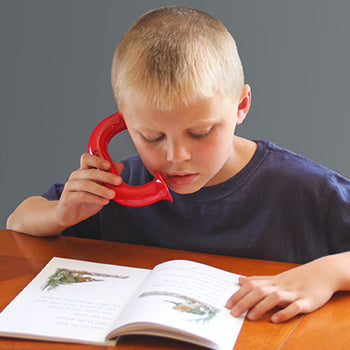
<h3><strong>Phonemic awareness (PA) activities</strong></h3>
<p>To nurture a proficient reader, establishing phonemic awareness is fundamental. Phonemic awareness refers to a child’s ability to <a href="http://www.righttrackreading.com/morepaactivities.html">recognize and understand individual sounds in a language</a>.  Developing these skills with a whisper phone reading activity should be done systematically, slowly increasing in complexity. For example, start with consonant sounds at the beginning of words. Focus on letters that are distinct and can be elongated for practice, such as ‘M’ (“mmmmm”) or ‘S’ (“ssssssss”). Have the child enunciate these sounds into Toobaloo whisper phone so they can hear themselves pronouncing the sounds correctly. Increase the difficulty over time by joining letters together (‘Ch,’ ‘Sh,’ ‘Oo,’ etc.). You can even practice common endings like ‘-ing.’ Focusing on achieving a higher level of phonemic understanding will amplify your child’s success and enjoyment during reading time, and ultimately make them a better reader.</p>
<h3><strong>Vocabulary practice</strong></h3>
<p>For students living with speech impediments like <a href="https://www.learning-loft.com/blogs/learning-loft-blog/how-to-stop-stuttering-while-talking">stuttering</a>, another reading activity using whisper phones is vocabulary practice. Knowing your child or student’s current skill level, you can ask them to identify different objects or vocabulary words and say their name aloud. With their ear to the whisper phone, they will be able to hear their pronunciation for themselves and self-correct as needed. This individualized activity can help motivate students to make subtle adjustments the next time you ask them to repeat the sound. When used in conjunction with other speech therapy activities, whisper phones may help children overcome their speech impediment.</p>
<p>To help the children in your life who struggle with reading or speech, shop our affordable <a href="https://www.learning-loft.com/collections/all">learning and reading tools for kids</a> online, or call our customer service team at 877.819.2541. For more reading tools, tips, and tricks, <a href="https://www.learning-loft.com/blogs/learning-loft-blog">continue to our blog</a><span>.</span></p>
<p style="text-align: center;"><a href="https://www.learning-loft.com/products/toobaloo"><img alt="" src="//cdn.shopify.com/s/files/1/0347/3929/files/learning-loft-toobaloo-blog-banner-ad_1024x1024.jpg?v=1566412161" style="float: none;"></a></p>
<style></style>]]>
    </content>
  </entry>
  <entry>
    <id>https://www.learning-loft.com/blogs/learning-loft-blog/difference-between-homemade-whisper-phones-and-toobaloo</id>
    <published>2019-08-28T14:14:00-05:00</published>
    <updated>2019-12-10T11:38:29-06:00</updated>
    <link rel="alternate" type="text/html" href="https://www.learning-loft.com/blogs/learning-loft-blog/difference-between-homemade-whisper-phones-and-toobaloo"/>
    <title>Homemade Whisper Phones vs the Toobaloo</title>
    <author>
      <name>Adam Vrotsos</name>
    </author>
    <summary type="html">
      <![CDATA[<p><span>If you know a child struggling with reading or speech, you’ve probably done your fair share of research on whisper phones. You may have also run into several product options and a variety of do-it-yourself (DIY) tutorials.  We're here to help you decide which whisper phone is best for you!</span></p><p><a class="read-more" href="https://www.learning-loft.com/blogs/learning-loft-blog/difference-between-homemade-whisper-phones-and-toobaloo">More</a></p>]]>
    </summary>
    <content type="html">
      <![CDATA[<h1><strong>Homemade Whisper Phones vs the Toobaloo</strong></h1>
<h2><strong>Compare the differences to discover which of these whisper phones is right for your child or student.</strong></h2>
<img alt="" src="//cdn.shopify.com/s/files/1/0347/3929/files/speech-therapy-tools-to-help-kids-read_large.jpg?v=1567018101" style="float: right;">
<p>If you know a child struggling with reading or speech, you’ve probably done your fair share of research on whisper phones. You may have also run into several product options and a variety of do-it-yourself (DIY) tutorials. To help you decide which whisper phone is best for you, we’ll answer the following questions:</p>
<ul>
<li>Why choose a whisper phone?</li>
<li>What are homemade whisper phones?</li>
<li>What is a Toobaloo whisper phone?</li>
<li>What is the difference between these two types of whisper phones?</li>
</ul>
<p>Keep reading to learn the answers to these questions about whisper phones below.</p>
<h3><strong>Why choose a whisper phone?</strong></h3>
<p>Before we dive into the differences between homemade whisper phones and the Toobaloo, let’s review the benefits of a whisper phone as a learning tool.</p>
<p><a href="https://www.learning-loft.com/blogs/learning-loft-blog/what-is-a-whisper-phone">Whisper phones are small, auditory feedback devices</a> that are shaped like a toy phone. Children speak softly into one end and can listen to the clarity and rhythm through the other end. This instant feedback allows them to make immediate adjustments. Whisper phones can help any child who needs extra help with reading, pronunciation, and even comprehension. These educational tools are especially helpful for children struggling with:</p>
<ul>
<li>Stuttering                                                       </li>
<li>Dyslexia</li>
<li>Auditory Processing Disorder (APD)</li>
<li>Autism</li>
<li>Other special needs</li>
</ul>
<p>Whisper phones are a useful educational tool that can help kids gain confidence in their reading or speaking ability, whether practicing individual or group learning activities. They are versatile too. You can use them at home, school, or in a speech therapists’ office – anywhere your child is practicing reading and speech.</p>
<p>Next, we’ll cover the basics of homemade whisper phones, the Toobaloo, and discuss the differences between them.  </p>
<p><strong>What are homemade whisper phones?</strong></p>
<p>Whisper phones are a popular DIY project for parents and teachers because of the usefulness and perceived simplicity of the product. Many homemade versions are designed using PVC pipe, elbow pieces, and duct tape. Once assembled, the product is meant to mimic the toy-phone shape associated with auditory feedback devices like the Toobaloo.</p>
<p>To make homemade whisper phones, you must cut PVC pipe and connect it to two elbow pieces to achieve the proper shape and utility of a whisper phone. Then, different colored duct tape is used to decorate the PVC pipe to make each phone appealing to the child using it. Some homemade whisper phones are also accented with spray paint or stickers. These DIY versions are usually assembled in large quantities for classrooms or clinics on a budget.</p>
<p style="text-align: left;"><strong>What is the Toobaloo whisper phone?</strong></p>
<img alt="Homemade whisper phones do not come with safety certifications like the Toobaloo." src="//cdn.shopify.com/s/files/1/0347/3929/files/Toobaloo_2_large.jpg?v=1470156580" style="float: right;">
<p style="text-align: left;">The <a href="https://www.learning-loft.com/products/toobaloo">Toobaloo</a> whisper phone is made of one piece of smooth, lightweight, and break-resistant plastic that is shaped into a toy-like phone. Made in the USA, these whisper phones are a manageable size for children to use and come in a variety of kid-friendly colors. The Toobaloo is a prime example of a professionally made whisper phone. Next, let’s discuss the critical differences between a Toobaloo and a homemade whisper phone.</p>
<h3><strong>What's the difference?</strong></h3>
<p>It’s important to note that both homemade whisper phones and the Toobaloo can be extremely useful in helping children with an abundance of different speech and hearing difficulties. However, there are some factors to consider if you plan on a DIY version instead of choosing the Toobaloo. As you’ll see, the Toobaloo stands a cut above its homemade counterparts.</p>
<ul>
<li><strong>Product support</strong></li>
</ul>
<p style="padding-left: 30px;">First, the Toobaloo comes with access to product support from learning tool specialists. When you can <a href="https://www.learning-loft.com/pages/customer-service-contact-us">call or email us,</a> expect a quick response from a real person who is highly qualified to answer any of your product questions.</p>
<ul>
<li><strong>Certified Safe</strong></li>
</ul>
<ul></ul>
<ul></ul>
<p style="padding-left: 30px;">The simple design of our learning tool lends itself to DIY look-a-likes, but the Toobaloo is certified safe for your child to use. It doesn’t have any of the potential safety hazards that can come with PVC and other DIY materials. The Toobaloo also complies with the <a href="https://www.cpsc.gov/Regulations-Laws--Standards/Statutes/The-Consumer-Product-Safety-Improvement-Act">US Consumer Product Safety Improvement (CPSI) Act 2008</a> ruling on lead phthalates content.</p>
<ul>
<li><strong>Easy to clean</strong></li>
</ul>
<ul></ul>
<ul></ul>
<p style="padding-left: 30px;">Toobaloo whisper phones can be cleaned easily using dish soap and water, or even on the top rack of the dishwasher. Unfortunately, it can be tough to properly wash homemade whisper phones without compromising the adhesive on the duct tape or stickers.</p>
<img alt="" src="//cdn.shopify.com/s/files/1/0347/3929/files/Screenshot_17_large.png?v=1567018961" style="float: right;">
<ul>
<li>
<strong>No assembly required</strong> </li>
</ul>
<div style="padding-left: 30px;">Homemade whisper phones require a bit of craftiness and assembly to make them work. The Toobaloo, on the other hand, comes in one already-assembled piece. Once it arrives, you can begin using it right away.</div>
<div style="padding-left: 30px;"></div>
<ul>
<li><strong>Cost-effective</strong></li>
</ul>
<ul></ul>
<div style="padding-left: 30px;">Coming in at just $5.95 apiece – even less when you buy in bulk – Toobaloo whisper phones are ideal for the budget-conscious parent, teacher, and therapist. They may be just as cost-effective, if not more, than a homemade version (after considering the price of materials and your time to assemble).</div>
<ul>
<li><strong>Made in the USA</strong></li>
</ul>
<ul></ul>
<ul></ul>
<p style="padding-left: 30px;">We manufacture Toobaloo whisper phones and our other educational learning tools here in the USA. We work closely with our partner facilities to ensure that our products meet high quality-control standards.</p>
<p>Lastly, Toobaloo whisper phones are kid, parent, <em>and</em> teacher approved! They come in nine different colors that kids love (including neon), and parents and teachers can’t get enough of their usefulness.</p>
<p>There’s no doubt about it: whisper phones can be invaluable tools for a child struggling with reading or speech. They help kids feel more confident as they develop critical learning skills. Whether you decide to use a homemade whisper phone or a Toobaloo, consider the product comparison outlined in this post to help choose the best option for your child.</p>
<p>For more articles on the Toobaloo and educational learning tools for kids, <a href="https://www.learning-loft.com/blogs/learning-loft-blog">visit our blog</a> today.</p>
<h3><strong>Related Content</strong></h3>
<p><a href="https://www.learning-loft.com/blogs/learning-loft-blog/what-is-a-whisper-phone">What is a Whisper Phone?</a><br> <a href="https://www.learning-loft.com/blogs/learning-loft-blog/how-to-select-a-whisper-phone">How to Select a Whisper Phone</a><span><br> </span><a href="https://www.learning-loft.com/blogs/learning-loft-blog/benefits-of-fluency-phones-reading-helper-for-kids">4 Benefits of Using Fluency Phones</a></p>
<p style="text-align: center;"><a href="https://www.learning-loft.com/products/toobaloo"><img alt="" src="//cdn.shopify.com/s/files/1/0347/3929/files/learning-loft-toobaloo-blog-banner-ad_1024x1024.jpg?v=1566412161" style="float: none;"></a></p>
<style></style>]]>
    </content>
  </entry>
  <entry>
    <id>https://www.learning-loft.com/blogs/learning-loft-blog/family-reading-time-activities-tools-for-kids</id>
    <published>2019-08-20T09:37:00-05:00</published>
    <updated>2019-08-21T13:33:19-05:00</updated>
    <link rel="alternate" type="text/html" href="https://www.learning-loft.com/blogs/learning-loft-blog/family-reading-time-activities-tools-for-kids"/>
    <title>6 Family Reading Time Activities</title>
    <author>
      <name>Adam Vrotsos</name>
    </author>
    <summary type="html">
      <![CDATA[<p>Looking for fun ways to get your child reading? Get your family reading time in with these fun reading activities and tools for kids.</p>
<p> </p><p><a class="read-more" href="https://www.learning-loft.com/blogs/learning-loft-blog/family-reading-time-activities-tools-for-kids">More</a></p>]]>
    </summary>
    <content type="html">
      <![CDATA[<h1 style="text-align: left;">
<strong>6 Family Reading Time Activities</strong><strong><br> </strong>
</h1>
<h2 style="text-align: left;"><strong>Get the whole family reading together with these fun activities.<br> </strong></h2>
<p style="text-align: left;"><img alt="Discover these 6 family reading time activities to get the whole family reading together." src="//cdn.shopify.com/s/files/1/0347/3929/files/family-reading-time-tools-for-kids-2_large.jpg?v=1566227367" style="float: none;"></p>
<p>Reading with your child can help improve their comprehension, focus, and overall attitude towards reading and learning. In honor of Family Fun Month, we are highlighting six ways to make reading part of your everyday routine, while also strengthening family bonds. Here are family reading time activities to incorporate into your routine:</p>
<ol>
<li>Cook together</li>
<li>Act out a scene</li>
<li>Hit the road</li>
<li>Take turns reading aloud</li>
<li>Play games</li>
<li>Create a scavenger hunt</li>
</ol>
<p>Keep reading to learn more about these family reading time activities.</p>
<h3 style="text-align: left;"><strong>Cook together</strong></h3>
<p>Aside from reading practice, cooking as a family can be beneficial in many other ways. From helping to encourage healthy eating habits and honing fine motor skills to passing down family traditions and making memories, time spent in the kitchen can be a world of wonder for little ones. Along the way, your child will be exposed to both math through measurements and reading through recipe directions. To get the most from the experience, consider allowing your child to read the instructions to you and help execute them. You may also want to use the <a href="https://www.learning-loft.com/products/check-a-roo">Check-A-Roo</a><span>, a reading tool for kids,</span> to “check off” when each ingredient has been added to the dish.</p>
<p>While the delicious creation will undoubtedly take longer to prepare and clean up with an eager helper, slowing down when you cook can be a fun way for growing minds to learn. After all, food tastes better when it’s made with love!</p>
<p>Get more helpful tips for cooking with your kids from <a href="https://www.todaysparent.com/family/8-tips-for-cooking-with-kids/">this article</a> from Today’s Parent. </p>
<h3><strong>Act out a scene</strong></h3>
<p style="float: right;">Head over to <a href="https://find-your-public-library.dp.la/">your local library</a> and help your child pick out a book with a scene to act out, perhaps related to <a href="https://find-your-public-library.dp.la/"><img alt="Reading tools for kids like the Toobaloo Whisper Phone and Check-A-Roo may help improve family reading time." src="//cdn.shopify.com/s/files/1/0347/3929/files/family-reading-time-tools-for-kids_large.jpg?v=1566227113" style="float: right;"></a>their favorite movie or TV show. Flip through the pages while you write down all the characters’ names and learn more about their personalities, challenges, and desires. Encourage your child to assign each of these character roles to the family (even narrator can be a role!). If you have the time, find fun costumes for each character. Then, as a family, read the book slowly and act it out together. Use the <a href="https://www.learning-loft.com/collections/eye-lighter">Eye-Lighter</a> as a tool to help your child read without losing their place. Storytime has never been this much fun!   </p>
<p><strong>Hit the road</strong></p>
<p>When it comes to family reading time activities, feel free to take them on the road! If you struggle to find the time to read together at home between work, school, and extracurriculars, consider turning your commute into an educational opportunity. For instance, you could play <a href="https://www.thespruce.com/license-plate-game-car-game-rules-411165">the license plate game</a> where the person who finds the most plates from different states or countries in a set time earns the most points. Another variation of this game is to invent funny sentences with words that begin with the letters you see on a plate. For example, <a href="https://www.readbrightly.com/delightfully-distracted-18-great-learning-games-car-trips/">GBD 465 could turn into “Gorillas buy donuts</a>.”</p>
<p>You could also look for road signs with words and work together to come up with as many rhyming words as possible. If you’re on a long road trip, take turns pronouncing all the cities you pass. As you select the games to play on the road, be sure to adjust the rules based on your child’s reading and comfort level.</p>
<h3><strong>Take turns reading aloud</strong></h3>
<p>Help your child <a href="https://www.learning-loft.com/blogs/learning-loft-blog/how-to-build-a-confident-reader">become a more confident reader</a> by leading by example. Reading aloud together gives you the opportunity to gently correct pronunciation and model fluency. Be sure to take your turn too. Not only will it give your child a break, but it can also help them with their phonetic understanding.</p>
<p>Using the <a href="https://www.learning-loft.com/pages/toobaloo">Toobaloo Whisper Phone</a> can help your reader to hear themselves so they can self-correct as they work to improve articulation, fluency, and pronunciation. It’s also fun! <a href="https://www.youtube.com/watch?v=aGGhvq9aKJY#action=share">Watch the Toobaloo video</a> to learn how it works.</p>
<h3><strong>Play games</strong></h3>
<p>Some educational board games have a strong reading component, which makes them ideal family reading time activities. On your next family game night, choose something to play that encourages reading skills. <a href="https://www.scholastic.com/parents/books-and-reading/raise-a-reader-blog/7-best-literacy-boosting-board-games.html">Sequence Letters, Hedbanz, Boggle, and Apples to Apples Junior</a> are a few examples that are fun and literacy-boosting at the same time. You may also want to ask your child’s teacher or speech therapist about other board games that can help nurture their reading skills.</p>
<p>Alternatively, if your child loves video games, help them select one with content appropriate to their age and reading level. Examples like <a href="https://oedb.org/ilibrarian/50-educational-video-games-that-homeschoolers-love/">My Word Coach, Reader Rabbit, and Bookworm</a> made the list of educational video games popular among homeschoolers. If you’re unsure what is appropriate or what to expect from a video game, you can usually find examples of the gameplay online before you buy. Checking reviews from other parents is another helpful way to discern whether a game will meet your child’s needs.</p>
<h3><strong>Creating a scavenger hunt</strong></h3>
<p>If you’re looking for a family reading time activity that is both educational and fun, create a scavenger hunt! Start by splitting the family in half with at least one strong reader/writer on each side, then have each side create a series of written clues for the other team. Hide the items referenced around the house, and then hand the opposing team the first clue. Take the time to let each child read the card and consider the answer. Scavenger hunting is a great game for reading comprehension and delivers a good dose of healthy competition for the entire family!</p>
<p>These family reading time activities can help students discover the joys of reading. Through cooking, road trips, games, and more, your family can work together to strengthen your child’s reading skills while having fun at the same time.</p>
<p>To help the children in your life who struggle with reading or speech, shop our affordable <a href="https://www.learning-loft.com/collections/all">learning and reading tools for kids</a> online, or call our customer service team at 877.819.2541. For more reading tools, tips, and tricks, <a href="https://www.learning-loft.com/blogs/learning-loft-blog">continue to our blog</a><span>.</span></p>
<h3><strong>Related Content</strong></h3>
<p><a href="https://www.learning-loft.com/blogs/learning-loft-blog/how-to-help-child-advance-reading-levels">How to Help Your Child Advance Reading Levels</a></p>
<p><a href="https://www.learning-loft.com/blogs/learning-loft-blog/benefits-of-fluency-phones-reading-helper-for-kids">4 Benefits of Using Fluency Phones, a Reading Helper for Kids</a></p>
<p><a href="https://www.learning-loft.com/blogs/learning-loft-blog/how-to-make-reading-fun">How to Make Reading Fun</a></p>
<p><a href="https://www.learning-loft.com/blogs/learning-loft-blog/how-to-build-a-confident-reader">How to Build a Confident Reader</a></p>
<p style="text-align: center;"><a href="https://www.learning-loft.com/collections/toobaloo"><img alt="" src="//cdn.shopify.com/s/files/1/0347/3929/files/learning-loft-toobaloo-blog-banner-ad_1024x1024.jpg?v=1566412161" style="float: none;"></a></p>]]>
    </content>
  </entry>
  <entry>
    <id>https://www.learning-loft.com/blogs/learning-loft-blog/dyslexia-speech-related-learning-disorders-statistics</id>
    <published>2019-07-11T11:59:00-05:00</published>
    <updated>2019-08-21T13:35:03-05:00</updated>
    <link rel="alternate" type="text/html" href="https://www.learning-loft.com/blogs/learning-loft-blog/dyslexia-speech-related-learning-disorders-statistics"/>
    <title>Dyslexia and Speech-Related Learning Disorders Statistics</title>
    <author>
      <name>Adam Vrotsos</name>
    </author>
    <content type="html">
      <![CDATA[<h1>Dyslexia and Speech-Related Learning Disorders Statistics</h1>
<h2 style="text-align: left;">Discover how many people experience dyslexia and stuttering and which tools can help.</h2>
<img alt="Dyslexia and speech-related disorders like stuttering are common." src="//cdn.shopify.com/s/files/1/0347/3929/files/dyslexia-speech-related-learning-disorders-statistics_large.jpg?v=1562862583" style="float: right;" width="513" height="356">
<p>Today is <a href="https://www.un.org/en/events/populationday/">World Population Day</a>! To honor the occasion, we looked at statistics on dyslexia, stuttering, and other speech-related learning disorders. These widespread learning disorders affect people of all backgrounds and experience. Even famous people like Tom Cruise, Tiger Woods, and George VI experienced dyslexia or stuttering during their lifetime. Check out even more interesting facts on dyslexia, stuttering, and speech-related learning disorders below.</p>
<h3>Dyslexia</h3>
<p>Many children and adults live, learn – and thrive – with dyslexia. Marked by difficulty matching letters with their sounds in the right order, <a href="https://www.learning-loft.com/blogs/learning-loft-blog/5-revealing-signs-of-dyslexia">dyslexia is a learning disorder</a> that does not influence intelligence or brain function. We found the following data to illustrate its prevalence:</p>
<ul>
<li>Dyslexia affects up to <a href="https://dyslexiaresource.org/information-about-dyslexia/dyslexia-facts/">1 in 5 students</a> in a classroom</li>
<li>
<a href="https://www.dyslexia-reading-well.com/dyslexia-statistics.html">80% of students</a> with learning disabilities struggle with dyslexia</li>
<li>Children with a parent with dyslexia have a <a href="https://www.dosomething.org/us/facts/11-facts-about-dyslexia">50% chance</a> of also experiencing it</li>
<li>An estimated <a href="https://dyslexiaida.org/dyslexia-basics-2/">15-20% of the population</a> shows some symptoms of dyslexia</li>
</ul>
<p>Dyslexia reading tools such as the <a href="https://www.learning-loft.com/pages/toobaloo">Toobaloo</a> and <a href="https://www.learning-loft.com/collections/eye-lighter">Eye-Lighter</a> can help every student in the classroom excel to the best of their ability, even those without a learning disability. Developed by a teacher, these inexpensive and kid-approved items are ideal for both home and classroom use.</p>
<h3>Stuttering</h3>
<p>Stuttering is a common speech-related learning disorder. It’s <a href="https://www.nidcd.nih.gov/health/stuttering">characterized by</a> repeating or prolonging sounds and interruptions in speech fluency. According to the National Institute on Deafness and Other Communication Disorders (<a href="https://www.nidcd.nih.gov/">NIDCD</a>):</p>
<ul>
<li>More than 3 million Americans stutter</li>
<li>Boys are 2-3 times more likely than girls to stutter</li>
<li>As many as 1 in 4 children will develop a condition called persistent developmental stuttering and continue to stutter for the rest of their lives</li>
</ul>
<p>Just as it can aid with dyslexia, the <a href="https://www.learning-loft.com/pages/toobaloo">Toobaloo Whisper Phone</a> may also help students who stutter, as it allows them to hear their voice while they read. Designed for students four years and older, the Toobaloo is an auditory feedback device that helps improve fluency and skills like articulation and pronunciation.</p>
<p>Learn <a href="https://www.learning-loft.com/blogs/learning-loft-blog/how-to-stop-stuttering-while-talking">how to stop stuttering while talking</a> with even more tips and techniques here.</p>
<p>Dyslexia and stuttering, a common speech-related learning disorder, affects many people. With speech therapy and support from helpful reading and speech tools, you or your child can feel more confident when reading and speaking. Shop and learn more at <a href="https://www.learning-loft.com/">Learning Loft</a><span>.com</span>.</p>
<h3>Related Content</h3>
<p><a href="https://www.learning-loft.com/blogs/learning-loft-blog/5-revealing-signs-of-dyslexia">5 Revealing Signs of Dyslexia</a><span><br> </span><a href="https://www.learning-loft.com/blogs/learning-loft-blog/dyslexia-tools-help-for-adults">6 Dyslexia Tools For Adults At School, Work, and Home</a><br> <a href="https://www.learning-loft.com/blogs/learning-loft-blog/how-to-get-rid-of-stuttering-in-children">How to Get Rid of Stuttering in Children</a></p>
<p><a href="https://www.learning-loft.com/collections/toobaloo"><img src="//cdn.shopify.com/s/files/1/0347/3929/files/learning-loft-toobaloo-blog-banner-ad_1024x1024.jpg?v=1566412161" alt=""></a></p>]]>
    </content>
  </entry>
  <entry>
    <id>https://www.learning-loft.com/blogs/learning-loft-blog/how-to-help-child-advance-reading-levels</id>
    <published>2019-06-04T14:03:00-05:00</published>
    <updated>2019-08-21T13:39:18-05:00</updated>
    <link rel="alternate" type="text/html" href="https://www.learning-loft.com/blogs/learning-loft-blog/how-to-help-child-advance-reading-levels"/>
    <title>How to Help Your Child Advance Reading Levels</title>
    <author>
      <name>Adam Vrotsos</name>
    </author>
    <content type="html">
      <![CDATA[<h1>How to Help Your Child Advance Reading Levels</h1>
<h2>Use these tips to improve their reading skills and set them up for success.</h2>
<p style="text-align: left;"><a href="https://schoolleadersnow.weareteachers.com/staggering-statistics-about-struggling-readers-and-reading-growth/"><img src="//cdn.shopify.com/s/files/1/0347/3929/files/how-to-help-child-advance-reading-levels_large.jpg?v=1559674751" alt="Discover tips to help your child advance reading levels here." style="float: right;">Research indicates</a> that students with proficient or advanced reading skills are more likely to succeed in academics, graduate high school, and attend college than their peers. If your child struggles to read at his or her <a href="https://www.scholastic.com/parents/books-and-reading/reading-resources/book-selection-tips/learn-about-leveled-reading.html">grade level</a>, it may be time to deploy additional learning strategies. Get your child on the right track with these tips to help them advance reading levels:</p>
<ul>
<li>Communicate with the school</li>
<li>Focus on decoding skills</li>
<li>Add a few minutes to daily reading time</li>
<li>Read aloud together</li>
<li>Sprinkle in fun</li>
<li>Find the right story</li>
</ul>
<p>Learn more about these tips to help your child advance reading levels below.</p>
<h3>Communicate with the school</h3>
<p>If reading is a struggle for your child, <a href="https://www.livestrong.com/article/186108-how-to-improve-reading-in-children-reading-below-grade-level/">meet with their teacher or guidance counselor</a> to express your concerns. As a team, you can explore options for extra help in the classroom, discuss supplementary reading strategies, and receive suggestions for what you can do at home to help your child advance reading levels.</p>
<h3>Focus on decoding skills</h3>
<p>Work with your child on decoding skills for reading unfamiliar words. Flashcards may be a helpful tool to use together until your child recognizes the blends or letters in isolation. You can also <a href="http://www.informedliteracy.com/sight-words-vs-decodable-words/">practice common “sight” words</a> that don’t follow the standard decoding patterns and phonetics rules, such as <em>enough, sign</em>, and <em>right</em>.</p>
<h3>Add a few minutes to daily reading time</h3>
<p>With just a little extra reading practice, your child can develop more skills and confidence. According to <a href="https://www.renaissance.com/wkar-report/?utm_source=school-leaders-now&amp;utm_medium=featured-article&amp;utm_campaign=guide-to-reading-growth">an annual study of K-12 student reading habits</a>, adding just a few minutes of reading time each day made the difference. Struggling students read only six more minutes each day than their peers, helping them end the year at or above the benchmark. On average, aim for <a href="https://schoolleadersnow.weareteachers.com/staggering-statistics-about-struggling-readers-and-reading-growth/">30 minutes</a> or more of reading per day to help your child advance to the next level.</p>
<h3>Read aloud together</h3>
<p>Children struggling with reading may benefit from <a href="https://education.cu-portland.edu/blog/classroom-resources/five-strategies-to-help-improve-students-reading-levels/">hearing words read out loud</a>. Try incorporating a daily read-aloud session at home so your child can focus on pronunciation, fluency, and comprehension of a story. Depending on your child’s reading level, you may also want to take turns reading each page or chapter.</p>
<h3>Sprinkle in fun</h3>
<p>If you struggle getting your child to read or if they give up half-way through, consider incorporating some of these <a href="https://www.learning-loft.com/blogs/learning-loft-blog/how-to-make-reading-fun">ways to make reading fun</a> into your routine. Acting out a character, reading in a tent, and using a helpful reading tool for kids like the <a href="https://www.learning-loft.com/pages/toobaloo">Toobaloo</a> can engage your child and help them enhance their competencies.</p>
<h3>Find the right story</h3>
<p>The next time you and your child chooses books, ask a librarian, reading specialist, or teacher for help. Books most likely to help them advance reading levels will be ones that your child is interested in and can read with about <a href="http://www.readingrockets.org/helping/questions/struggling#node10882">95% accuracy the first time</a>. By focusing on books that fit your child’s current skills, they can practice frustration-free fluency and comprehension as they discover the joy of reading.</p>
<p>These reading strategies may help your child improve their comprehension skills and advance reading levels. For more tools and tips for both parents and teachers, <a href="https://www.learning-loft.com/blogs/learning-loft-blog">continue reading our blog</a>.</p>
<p><strong>Related Content</strong></p>
<p><a href="https://www.learning-loft.com/blogs/learning-loft-blog/how-to-make-reading-fun">How to Make Reading Fun</a></p>
<p><a href="https://www.learning-loft.com/blogs/learning-loft-blog/how-to-build-a-confident-reader">How to Build a Confident Reader</a></p>
<p><a href="https://www.learning-loft.com/blogs/learning-loft-blog/benefits-of-fluency-phones-reading-helper-for-kids">4 Benefits of Using Fluency Phones, a Reading Helper for Kids</a></p>
<p><a href="https://www.learning-loft.com/collections/toobaloo"><img src="//cdn.shopify.com/s/files/1/0347/3929/files/learning-loft-toobaloo-blog-banner-ad_1024x1024.jpg?v=1566412161" alt=""></a></p>]]>
    </content>
  </entry>
  <entry>
    <id>https://www.learning-loft.com/blogs/learning-loft-blog/dyslexia-tools-help-for-adults</id>
    <published>2019-05-14T10:08:00-05:00</published>
    <updated>2019-11-26T12:34:32-06:00</updated>
    <link rel="alternate" type="text/html" href="https://www.learning-loft.com/blogs/learning-loft-blog/dyslexia-tools-help-for-adults"/>
    <title>6 Dyslexia Tools for Adults at School, Work, and Home</title>
    <author>
      <name>Adam Vrotsos</name>
    </author>
    <summary type="html">
      <![CDATA[If you or a loved one experience dyslexia, discover these dyslexia tools and technologies for adults to use at school, work, and home.<p><a class="read-more" href="https://www.learning-loft.com/blogs/learning-loft-blog/dyslexia-tools-help-for-adults">More</a></p>]]>
    </summary>
    <content type="html">
      <![CDATA[<h1>6 Dyslexia Tools for Adults at School, Work, and Home</h1>
<h2>Learn about tools and technologies that offer dyslexia help for adults.</h2>
<p><img src="//cdn.shopify.com/s/files/1/0347/3929/files/dyslexia-tools-help-for-adults_large.jpg?v=1557845872" alt="" style="float: right;">Between <a href="http://www.ldonline.org/article/10784/">5 to 15 percent of Americans</a> have dyslexia, a reading disability that can make it difficult to read, write, and spell. While dyslexia is most often diagnosed in early childhood, these learning struggles often continue into adolescence and adulthood. If you or a loved one experiences dyslexia, discover these dyslexia tools and technologies for adults to use at school, work, and home:</p>
<p style="float: right;"> </p>
<ul>
<li>Speech-to-text technology</li>
<li>Electronic flashcards</li>
<li>Lined and graph paper</li>
<li>Eyelighter</li>
<li>Toobaloo</li>
<li>Writing helpers</li>
</ul>
<p>Keep reading to learn more about tools that offer dyslexia help for adults.</p>
<h3>Speech-to-text technology</h3>
<p>Reading comprehension is one of the most challenging skills for people with dyslexia. <a href="http://dyslexiahelp.umich.edu/professionals/dyslexia-school/tips-tools-and-apps-for-helping-dyslexic-students">Speech-to-text technology</a> can be a useful option to help with reading words on a page and determining their meaning. There are speech-to-text apps like <a href="https://www.clarosoftware.com/portfolio/clarospeak/">ClaroSpeak</a>, <a href="http://www.naturalreaders.com/index.html">NaturalReader</a>, and <a href="https://getpocket.com/">Pocket</a> for smartphones, laptops, or any other digital device for use in the office, classroom, or when performing daily tasks at home.</p>
<h3>Electronic flashcards</h3>
<p>For continuing education students, one tool that can offer dyslexia help for adults is <a href="http://dyslexiahelp.umich.edu/professionals/dyslexia-school/tips-tools-and-apps-for-helping-dyslexic-students">electronic flashcards</a>. These learning helpers can be an incredibly useful way to retain information for a class, and electronic versions provide the added benefit of read-out-loud technology.</p>
<h3>Lined and graph paper</h3>
<p>A method that may help make <a href="http://dyslexiahelp.umich.edu/professionals/dyslexia-school/tips-tools-and-apps-for-helping-dyslexic-students">writing and math</a> easier for adults with dyslexia is to use lined and graph paper. Lined paper helps you follow text while also aiding in reading comprehension and writing fluency. Graph paper can make solving math problems and calculations easier because they make it simple to line up numbers correctly.</p>
<h3>Eyelighter</h3>
<p>Another simple tool for casual reading or more advanced classwork is the <a href="https://www.learning-loft.com/collections/eye-lighter">Eyelighter</a>. This dyslexia tool for children and adults is used to highlight multiple lines of text or underline a single sentence to aid eye tracking and improve reading comprehension.</p>
<p>Shop our colorful and affordable <a href="https://www.learning-loft.com/collections/eye-lighter">Eyelighter</a> collection online.</p>
<h3>Toobaloo</h3>
<p>The <a href="https://www.learning-loft.com/pages/toobaloo">Toobaloo</a> is a whisper phone designed to improve reading fluency and pronunciation skills. Used often by students with autism, speech disorders, dyslexia, and auditory processing disorders, the Toobaloo can assist readers of all ages by providing immediate auditory feedback when reading aloud.</p>
<p>Shop our affordable <a href="https://www.learning-loft.com/collections/toobaloo">Toobaloo whisper phones</a> collection online.</p>
<h3>Writing helpers</h3>
<p>Writing helpers like Speller, a phonetic-spelling app that searches a database for the correctly spelled match, is another dyslexia tool for adults. <a href="http://easywordcount.com/">Easy Word Count</a> tracks how many words are written in real-time, which can be useful for assignments or office work that requires writing in a specific word count. Lastly, <a href="https://go.skimresources.com/?id=68756X1559476&amp;xs=1&amp;isjs=1&amp;url=https%3A%2F%2Fitunes.apple.com%2Fus%2Fapp%2Fmental-note-for-ipad-the-digital-notepad%2Fid364091207%3Fmt%3D8&amp;xguid=3683c516ad8043ee853f6e5869b12afe&amp;xuuid=c05cd1be754e91af84151f2f007e3142&amp;xsessid=&amp;xcreo=0&amp;xed=0&amp;sref=https%3A%2F%2Fwww.thoughtco.com%2Fapps-for-dyslexia-4156792&amp;pref=https%3A%2F%2Fapp.asana.com%2F0%2F690418160156489%2F1108241097166079&amp;xtz=360&amp;jv=13.13.5-stackpath&amp;bv=2.5.1">Mental Note</a> is a digital note-taking app that offers a multi-sensory experience.</p>
<p>These dyslexia tools for adults can be useful at home, in the office, or in the classroom. For more tools and tips, <a href="https://www.learning-loft.com/blogs/learning-loft-blog">continue reading our blog</a>.</p>
<p><strong>Related Content</strong></p>
<p><a href="https://www.learning-loft.com/blogs/learning-loft-blog/dyslexia-reading-tips-tools">Dyslexia Reading Aids, Tips and Tools</a></p>
<p><a href="https://www.learning-loft.com/blogs/learning-loft-blog/5-revealing-signs-of-dyslexia">5 Revealing Signs of Dyslexia</a></p>
<p><a href="https://www.learning-loft.com/collections/eye-lighter"><img src="//cdn.shopify.com/s/files/1/0347/3929/files/learning-loft-eyelighter-blog-banner-ad_1024x1024.jpg?v=1566412170" alt=""></a></p>
<style></style>]]>
    </content>
  </entry>
  <entry>
    <id>https://www.learning-loft.com/blogs/learning-loft-blog/classroom-tips-for-the-end-of-the-school-year</id>
    <published>2019-04-17T11:13:00-05:00</published>
    <updated>2019-12-12T09:56:32-06:00</updated>
    <link rel="alternate" type="text/html" href="https://www.learning-loft.com/blogs/learning-loft-blog/classroom-tips-for-the-end-of-the-school-year"/>
    <title>6 Classroom Tips for the End of the School Year</title>
    <author>
      <name>Adam Vrotsos</name>
    </author>
    <summary type="html">
      <![CDATA[The end of the school year is an exciting, busy, and sometimes hectic time for students and teachers alike. These classroom tips for the end of the school year will help you to end on a high note.<p><a class="read-more" href="https://www.learning-loft.com/blogs/learning-loft-blog/classroom-tips-for-the-end-of-the-school-year">More</a></p>]]>
    </summary>
    <content type="html">
      <![CDATA[<h1>6 Classroom Tips for the End of the School Year </h1>
<h2>Learn how teachers and students can finish the academic year strong.</h2>
<div style="float: right;"><img alt="These six tips for the end of the school year can ensure teachers and students finish the academic year strong." src="//cdn.shopify.com/s/files/1/0347/3929/files/classroom-tips-for-the-end-of-the-school-year_jpg_large.jpg?v=1555086951" style="float: right; margin: 10px;"></div>
<p><span style="font-weight: 400;">The end of the school year is an exciting, busy, and sometimes hectic time for students and teachers alike. As you begin to wrap up final lesson plans and prepare to say goodbye to your class for the summer, consider taking a moment to create a final-days strategy. These classroom tips for the end of the school year will help you to end on a high note: </span></p>
<ol>
<li><span style="font-weight: 400;">Develop end-of-year goals</span></li>
<li><span style="font-weight: 400;">Complete student reflections</span></li>
<li><span style="font-weight: 400;">Communicate with parents</span></li>
<li><span style="font-weight: 400;">Plan fun educational activities</span></li>
<li><span style="font-weight: 400;">Don't finish too early</span></li>
<li><span style="font-weight: 400;">Enjoy the moment</span></li>
</ol>
<p><span style="font-weight: 400;">Keep reading to learn more about each of these tips for the end of the school year. </span><b></b></p>
<li style="display: inline !important;">
<h3 style="padding-left: 30px;">1. Develop end-of-year goals </h3>
</li>
<p style="padding-left: 30px;"><span style="font-weight: 400;">Near the end of the year, it can be easy to fall into a routine and remain on autopilot. However, consider making the last few weeks of school count by </span><a href="https://www.scholastic.com/parents/school-success/learning-toolkit-blog/4-ways-to-help-your-student-finish-school-year-strong.html"><span style="font-weight: 400;">having each of your students set one or two end-of-year goals</span></a><span style="font-weight: 400;">. These goals should be challenging, but reachable within the amount of time left in the year. Some examples include moving up a level in reading, having positive behavior days, or completing a class-wide creativity project. These student-set goals can help ensure both you and your class remains present and excited amidst the end-of-the-year hustle and bustle. </span><b></b></p>
<li style="display: inline !important;">
<h3 style="padding-left: 30px;">2. Complete student reflections</h3>
</li>
<p style="padding-left: 30px;"><span style="font-weight: 400;">Look back at the past nine or so months of school with </span><a href="https://www.educationworld.com/a_curr/end-of-year-classroom-activities.shtml"><span style="font-weight: 400;">student reflections</span></a><span style="font-weight: 400;">. Consider asking your class open and fun questions like “what activity did you enjoy the most this year?” or “what was your favorite unit?” These reflections can help your students remember lessons they may have forgotten from earlier in the year and provide an opportunity to review concepts that may have gone hazy.  </span></p>
<h3 style="padding-left: 30px;">3. Communicate with parents</h3>
<p style="padding-left: 30px;"><span style="font-weight: 400;">Take the time to have one </span><a href="https://teach4theheart.com/how-to-finish-the-school-year-strong/"><span style="font-weight: 400;">last discussion with the parents</span></a><span style="font-weight: 400;"> of kids who struggled in your class. This one-on-one time can give you the chance to provide advice and resources for ways they can help their children prepare for the next school year over the summer months. Consider passing along these </span><a href="https://www.learning-loft.com/blogs/learning-loft-blog/reading-activities-to-help-kids-read-at-home"><span style="font-weight: 400;">fun activities to help kids read at home</span></a><span style="font-weight: 400;"> or suggesting tools like the </span><a href="https://www.learning-loft.com/pages/toobaloo"><span style="font-weight: 400;">Toobaloo whisper phone</span></a><span style="font-weight: 400;"> that can help make practicing reading easier over summer break </span></p>
<h3 style="padding-left: 30px;">
<span style="font-weight: 400;">4. </span>Plan fun educational activities</h3>
<p style="padding-left: 30px;"><a href="https://www.thebutterflyteacher.com/end-of-school-year/"><span style="font-weight: 400;">Keep your students moving and thinking</span></a><span style="font-weight: 400;"> with educational games and activities that are fun and engaging. Consider developing a class scavenger hunt, making arts and crafts, or taking a nature walk. These activities are more hands-on than most traditional lesson plans, but also can teach students critical thinking and creativity skills that they will need later in life.   </span></p>
<p style="padding-left: 30px;"><span style="font-weight: 400;">Check out our article on </span><a href="https://www.learning-loft.com/blogs/learning-loft-blog/how-to-make-reading-fun"><span style="font-weight: 400;">how to make reading fun</span></a><span style="font-weight: 400;"> for exciting ways to motivate kids to get carried away in a book. </span><b></b></p>
<h3></h3>
<li style="display: inline !important;">
<h3 style="padding-left: 30px;">5. Don’t finish too early</h3>
</li>
<div>
<p style="padding-left: 30px;"><span style="font-weight: 400;">One mistake that some teachers can make at the end of the year is </span><a href="https://teach4theheart.com/how-to-finish-the-school-year-strong/"><span style="font-weight: 400;">wrapping up their lesson plans too soon</span></a><span style="font-weight: 400;">. If students know they won’t be learning new material during the last week or more of school, it may be harder to keep them focused and engaged. Instead, consider aligning your curriculum as closely as possible to the last day of school, with time left for final day reflections and activities as needed. </span><b></b></p>
<h3 style="padding-left: 30px;">6. Enjoy the moment</h3>
<p style="padding-left: 30px;"><span style="font-weight: 400;">While the final weeks of school can be incredibly busy and often stressful for teachers, remember to take a step back and </span><a href="https://teach4theheart.com/how-to-finish-the-school-year-strong/"><span style="font-weight: 400;">enjoy the moment with your students</span></a><span style="font-weight: 400;">. Instead of counting down the moments until summer, think about ways to show appreciation for the hard work you and your students put in this year and the many special memories you created together. Depending on your school district, your students may be moving on to a different building or school next year, so leave them with lasting memories of appreciation as the final bell rings.  </span></p>
<p><span style="font-weight: 400;">These classroom tips for the end of the school year will ensure both you and your students finish the academic year strong. For more tools, tips, and tricks, </span><a href="https://www.learning-loft.com/blogs/learning-loft-blog"><span style="font-weight: 400;">continue reading our blog</span></a><span style="font-weight: 400;">.</span></p>
<p><span style="font-weight: 400;">To shop our kid-friendly speech therapy, dyslexia, and reading tools, visit our online store or call 877.819.2541 to speak with our customer service team today. </span></p>
<p><b>Related Content</b></p>
<p><a href="https://www.learning-loft.com/blogs/learning-loft-blog/summer-reading-goals-help-kids-read-better"><span style="font-weight: 400;">5 Summer Reading Goals to Help Kids Read Better</span></a></p>
<p><a href="https://www.learning-loft.com/blogs/learning-loft-blog/reading-activities-to-help-kids-read-at-home"><span style="font-weight: 400;">6 Fun Activities to Help Kids Read at Home</span></a></p>
<p><a href="https://www.learning-loft.com/blogs/learning-loft-blog/how-to-build-a-confident-reader"><span style="font-weight: 400;">How to Build a Confident Reader</span></a></p>
<p> <a href="https://www.learning-loft.com/collections/toobaloo"><img src="//cdn.shopify.com/s/files/1/0347/3929/files/learning-loft-toobaloo-blog-banner-ad_1024x1024.jpg?v=1566412161" alt=""></a></p>
</div>
<style></style>]]>
    </content>
  </entry>
  <entry>
    <id>https://www.learning-loft.com/blogs/learning-loft-blog/reading-test-tips-strategies-for-kids</id>
    <published>2019-03-13T10:11:00-05:00</published>
    <updated>2019-08-21T13:44:52-05:00</updated>
    <link rel="alternate" type="text/html" href="https://www.learning-loft.com/blogs/learning-loft-blog/reading-test-tips-strategies-for-kids"/>
    <title>5 Reading Test Tips for Kids</title>
    <author>
      <name>Adam Vrotsos</name>
    </author>
    <summary type="html">
      <![CDATA[Reading comprehension skills can help students across subjects, grades, and many other areas of their lives. Here are five simple reading test tips for kids to incorporate in your classroom.<p><a class="read-more" href="https://www.learning-loft.com/blogs/learning-loft-blog/reading-test-tips-strategies-for-kids">More</a></p>]]>
    </summary>
    <content type="html">
      <![CDATA[<h1 style="text-align: left;">5 Reading Test Tips for Kids</h1>
<h2>Help your students make the grade with these comprehension-boosting reading strategies.</h2>
<div style="float: right;"><img alt="Discover these five reading test tips for kids to help your students with reading comprehension. " src="//cdn.shopify.com/s/files/1/0347/3929/files/reading-test-tips-strategies-for-kids_large.jpg?v=1552488998" style="float: right; margin: 10px;"></div>
<p>Reading comprehension skills can help students across subjects, grades, and many other areas of their lives. So how can you set them up for success? Help them demonstrate an understanding of critical skills on test day with sound strategies that can help boost their performance. Here are five simple reading test tips for kids to incorporate in your classroom:</p>
<p>1. Review the questions first<br>2. Read directions carefully<br>3. Work with the answers<br>4. Skip and come back to tricky questions<br>5. Look for context clues</p>
<p>Keep reading to learn more about each of these comprehension-boosting reading strategies.</p>
<h3>1. Review the questions first </h3>
<p>One reading test strategy is to <span><a href="https://study.com/academy/popular/how-to-pass-a-reading-comprehension-test.html" target="_blank" rel="noopener noreferrer">review the exam questions</a></span> <em>before</em> reading the passage. This front-end approach will allow students to focus on the information they need to look for as they read and make it easier for them to pick up on that information, without having to re-read several times.</p>
<h3>2. Read directions carefully</h3>
<p>One of the most common reasons students make mistakes on tests is because they <span><a href="https://www.scholastic.com/teachers/articles/teaching-content/test-taking-strategies-three-subject-areas/" target="_blank" rel="noopener noreferrer">read the directions wrong</a></span> – or don’t read them at all. Set your students up for success by focusing on the instructions long before the test. Help them to look for different types of questions, such as “choose the best answer” or find a synonym or antonym to the word, so they can easily identify the goal of each question.</p>
<h3>3. Work with the answers</h3>
<p>Another reading strategy for kids is to <span><a href="https://study.com/academy/popular/how-to-pass-a-reading-comprehension-test.html" target="_blank" rel="noopener noreferrer">work with the answers</a> provided</span> <span>on multiple choice questions</span>. Instruct your students to start by crossing out any answers that they know are clearly wrong. This approach will allow students to narrow down their options and make it easier to identify the correct one. Answers that are very similar, but appear lightly reworded, are common tricks on tests, as well as ones that use strong words such as “always” or “never.” Go over common incorrect answers with your students before test time so they don’t get duped.</p>
<h3>4. Skip and come back to tricky questions </h3>
<p>Because most reading tests are timed, it is often best for students to <span><a href="https://www.scholastic.com/teachers/articles/teaching-content/test-taking-strategies-three-subject-areas/" target="_blank" rel="noopener noreferrer">skip thorny questions and come back to them at the end</a></span>. Encourage students to focus first on the questions that are easier and quicker for them to answer. When trying to answer difficult questions, instruct them to narrow down the choices, as explained in our previous tip, and make an educated guess based on their knowledge of the subject matter and common sense.   </p>
<h3>5. Look for context clues  </h3>
<p>If they get stumped on a question, consider what the other adjectives, verbs, or nouns in the sentence tell them. Practice using <span><a href="https://www.sadlier.com/school/ela-blog/3-test-taking-strategies-for-elementary-students" target="_blank" rel="noopener noreferrer">context clues</a></span> with your students to puzzle out the possible correct test answer. The sentence immediately before and after the passage can provide clues that can help point them in the right direction.</p>
<p>These reading test tips can help students succeed inside and outside the classroom. To help the children in your life who struggle with reading or speech, shop our affordable <span><a href="https://www.learning-loft.com/pages/toobaloo" target="_blank" rel="noopener noreferrer">Toobaloo whisper phones</a></span> collection online or call our customer service team at 877.819.2541. For more tools, tips, and tricks, <span><a href="https://www.learning-loft.com/blogs/learning-loft-blog" target="_blank" rel="noopener noreferrer">continue reading our blog</a></span>.</p>
<p><strong>Related Content</strong></p>
<p><span><a href="https://www.learning-loft.com/blogs/learning-loft-blog/educational-speech-reading-tools-teacher-tell-all" target="_blank" rel="noopener noreferrer">Teacher Tell-All About Our Educational Speech &amp; Reading Tools</a></span></p>
<p><span><a href="https://www.learning-loft.com/blogs/learning-loft-blog/what-is-a-whisper-phone" target="_blank" rel="noopener noreferrer">What is a Whisper Phone? Discover Fluency Phones, a Reading Helper for Kids</a></span></p>
<p><span><a href="https://www.learning-loft.com/blogs/learning-loft-blog/benefits-of-fluency-phones-reading-helper-for-kids" target="_blank" rel="noopener noreferrer">4 Benefits of Using Fluency Phones</a></span></p>
<p><a href="https://www.learning-loft.com/collections/eye-lighter"><span><img src="//cdn.shopify.com/s/files/1/0347/3929/files/learning-loft-eyelighter-blog-banner-ad_1024x1024.jpg?v=1566412170" alt=""></span></a></p>]]>
    </content>
  </entry>
  <entry>
    <id>https://www.learning-loft.com/blogs/learning-loft-blog/benefits-of-fluency-phones-reading-helper-for-kids</id>
    <published>2019-01-08T13:57:00-06:00</published>
    <updated>2019-12-10T11:35:24-06:00</updated>
    <link rel="alternate" type="text/html" href="https://www.learning-loft.com/blogs/learning-loft-blog/benefits-of-fluency-phones-reading-helper-for-kids"/>
    <title>4 Benefits of Using Fluency Phones</title>
    <author>
      <name>Adam Vrotsos</name>
    </author>
    <summary type="html">
      <![CDATA[<span>Fluency phones, also called whisper phones, can be a useful reading helper for kids both in and outside of the classroom. Keep reading to learn more about each of these benefits of using fluency phones as a reading helper for kids. </span><p><a class="read-more" href="https://www.learning-loft.com/blogs/learning-loft-blog/benefits-of-fluency-phones-reading-helper-for-kids">More</a></p>]]>
    </summary>
    <content type="html">
      <![CDATA[<h1 style="text-align: left;">4 Benefits of Using Fluency Phones</h1>
<h2>Discover reasons to use this reading helper for kids.</h2>
<img src="//cdn.shopify.com/s/files/1/0347/3929/files/Toobaloo_2_large_41e50b03-5680-4e69-9e0a-1f16cddb4b28_large.jpg?v=1575999312" alt="" style="float: right;">Fluency phones, also called whisper phones, can be a useful reading helper for kids both in and outside of the classroom. This <a href="https://www.learning-loft.com/blogs/learning-loft-blog/what-is-a-whisper-phone">simple-to-use and inexpensive tool</a> provides several key benefits for early or struggling readers, including:

<ol>
<li>
<strong> </strong>Improves phonemic awareness</li>
<li>
<strong> </strong>Increases comprehension of reading material</li>
<li>
<strong> </strong>Lowers overall noise level and teaches quiet voice</li>
<li>
<strong> </strong>Builds confident readers of all skill levels</li>
</ol>
<p>Keep reading to learn more about each of these benefits of using fluency phones as a reading helper for kids. </p>
<h3>1. Improves phonemic awareness </h3>
<p>When children speak into a fluency phone like the <a href="https://www.learning-loft.com/collections/toobaloo">Toobaloo</a>, their voice is directly funneled into their ear, which helps them focus on hearing the sounds they are making. This improved <a href="https://www.begintoread.com/articles/phonemic-awareness.html">phonemic awareness</a> sets students up for success in the future with speech, reading, spelling, and comprehension as they continue to develop a more extensive vocabulary and improve their reading and speaking skills. </p>
<h3>2. Increases comprehension of reading material</h3>
<p>Fluency phones are a beneficial reading helper for kids because they encourage children to make their way through a story slowly. By staying present and focused on the reading activity, it can help them gain a better understanding of the material. This increased understanding can enhance their comprehension and future reading experiences.</p>
<h3>3. Lowers overall noise level and teaches quiet voice </h3>
<p>By necessity, children who use fluency phones will <a href="http://www.righttrackreading.com/phonicsphones.html">learn to speak in a whisper</a> or <gs id="d8efc0e7-09bf-40df-a56a-782479b57623" ginger_software_uiphraseguid="0681d834-63fc-45e1-9995-86a630a1a4a5" class="GINGER_SOFTWARE_mark">very quiet voice</gs>. If a child tries to use a normal volume, the sound in their ear will be uncomfortably loud. A lowering of speech volume teaches students to develop ‘quiet voices’ for indoor settings. It can also help reduce the overall noise level inside a classroom and at home as children read aloud to themselves. </p>
<h3><strong>4. Builds confident readers of all skill levels</strong></h3>
<p>Fluency phones can help young struggling readers gain confidence in their reading ability as they master new skills. Children who tend to feel embarrassed or even ashamed of reading aloud may find more joy and excitement in it when using a fluency phone to aid their speech, flow, and comprehension.</p>
<p>Find more <a href="https://www.learning-loft.com/blogs/learning-loft-blog/how-to-build-a-confident-reader">ways to build a confident reader</a> here.</p>
<p>These four benefits of fluency phones show that these reading helpers for kids can be useful for both early and struggling readers alike. Discover <a href="https://www.learning-loft.com/blogs/learning-loft-blog/how-to-select-a-whisper-phone">how to select a whisper phone for your child or classroom</a> here.</p>
<p>To help the children in your life who struggle with reading or speech, shop our affordable <a href="https://www.learning-loft.com/collections/toobaloo">Toobaloo whisper <gs id="53294d15-fbc0-46f3-99fc-103d9f93aa47" ginger_software_uiphraseguid="001e3296-cbc8-44e6-991f-5a7018f860cb" class="GINGER_SOFTWARE_mark">phones</gs></a> <gs id="d1769822-1dcf-430b-95f0-9537e1884dde" ginger_software_uiphraseguid="001e3296-cbc8-44e6-991f-5a7018f860cb" class="GINGER_SOFTWARE_mark">collection online</gs> or call our customer service team at 877.819.2541. For more tools, tips, and tricks, <a href="https://www.learning-loft.com/blogs/learning-loft-blog">continue reading our blog</a>.</p>
<h4>Related Content</h4>
<p><a href="https://www.learning-loft.com/blogs/learning-loft-blog/how-to-select-a-whisper-phone">How to Select a Whisper Phone</a></p>
<p><a href="https://www.learning-loft.com/blogs/learning-loft-blog/what-is-a-whisper-phone">What is a Whisper <gs id="a8d43929-b18f-4040-824f-7af64ae1ccff" ginger_software_uiphraseguid="d9e01fae-cc1e-4dad-a11d-d07818a84305" class="GINGER_SOFTWARE_mark">Phone</gs></a></p>
<p><a href="https://www.learning-loft.com/collections/toobaloo"><img src="//cdn.shopify.com/s/files/1/0347/3929/files/learning-loft-toobaloo-blog-banner-ad_1024x1024.jpg?v=1566412161" alt=""></a></p>
<style></style>]]>
    </content>
  </entry>
  <entry>
    <id>https://www.learning-loft.com/blogs/learning-loft-blog/guided-reading-activities-for-winter-break</id>
    <published>2018-12-18T09:25:00-06:00</published>
    <updated>2019-08-21T13:48:20-05:00</updated>
    <link rel="alternate" type="text/html" href="https://www.learning-loft.com/blogs/learning-loft-blog/guided-reading-activities-for-winter-break"/>
    <title>5 Guided Reading Activities for Winter Break</title>
    <author>
      <name>Adam Vrotsos</name>
    </author>
    <summary type="html">
      <![CDATA[<p>As most children look forward to a short winter break from school, some may find themselves at a loss for what to do with their free time. Consider incorporating these five guided reading activities to prompt imagination and learning – in a fun way – and eliminate boredom throughout winter break.</p><p><a class="read-more" href="https://www.learning-loft.com/blogs/learning-loft-blog/guided-reading-activities-for-winter-break">More</a></p>]]>
    </summary>
    <content type="html">
      <![CDATA[<h1 style="text-align: left;">5 Guided Reading Activities for Winter Break</h1>
<h2>Discover these fun reading exercises to keep your child learning over the holidays</h2>
<p><img alt="One of the guided reading activities on this list is to read, watch, and discuss." src="//cdn.shopify.com/s/files/1/0347/3929/files/guided-reading-activities-for-winter-break_large.jpg?v=1545064477" style="float: right; margin: 10px;"></p>
<p>As most children look forward to a short winter break from school, some may find themselves at a loss for what to do with their free time. Consider incorporating these five guided reading activities to prompt imagination and learning – in a fun way – and eliminate boredom throughout winter break:</p>
<ol>
<li>
<strong> </strong>Hold story time conversations</li>
<li>
<strong> </strong>Create story drawings</li>
<li>
<strong> </strong>Incorporate active participation</li>
<li>
<strong> </strong>Use tools to enhance the reading experience</li>
</ol>
<p>Continue reading below to learn more about each of these guided reading activities for children to use during winter break.</p>
<h3 style="padding-left: 30px;">1. Read, watch, and discuss</h3>
<div style="padding-left: 30px;">This idea centers on <span><a href="https://www.scholastic.com/parents/books-and-reading/raise-a-reader-blog/read-watch-and-discuss.html">using movie adaptions of books to enhance reading</a></span> and promote deeper thinking. First, read a book with your little one – or have your older child read it independently – and then watch the film together. After the movie ends, discuss with your child the differences between the film and written versions of the story, what they liked and didn’t like about both, and why they think the film director made the changes they did. Focus on questions that will allow your child to think more critically about what they read and watched.<br><br>
</div>
<h3 style="padding-left: 30px;">2. Hold story time conversations</h3>
<div style="padding-left: 30px;">When your child finishes a new book, have them <span><a href="http://www.readingrockets.org/article/25-activities-reading-and-writing-fun">answer questions</a></span> about what they liked, what they would’ve changed, and which characters they would like to meet in real life. This exercise is another tool to prompt deeper learning and comprehension while empowering your child to connect more deeply with their reading material.<br><br>
</div>
<h3 style="padding-left: 30px;">3. Create story drawings</h3>
<div style="padding-left: 30px;">Another guided reading activity for winter break is to <span><a href="http://www.readingrockets.org/article/25-activities-reading-and-writing-fun">create story drawings</a></span>. Ask your child to sketch out a picture representing the key plot points for a story they’ve read. Their imagination and creativity will surely spark as they use crayons, colored pencils, and other drawing tools to visually reimagine the book.<br><br>
</div>
<h3 style="padding-left: 30px;">4. Incorporate active participation</h3>
<div style="padding-left: 30px;">During family reading time, encourage your child to actively participate. One way to do this is to have the child jump or clap their hands when a certain word or phrase is used in the story. You could also ask them to act out certain scenes to get their body – and mind – moving. This active exercise will teach your child to pay close attention to what they read and hear, using silly actions to keep them entertained while they’re at it.<br><br>
</div>
<h3 style="padding-left: 30px;">5. Use tools to enhance the reading experience </h3>
<div style="padding-left: 30px;">Using reading tools like the <span><a href="https://www.learning-loft.com/collections/toobaloo">Toobaloo</a></span>, <span><a href="https://www.learning-loft.com/collections/eye-lighter">Eye Lighter</a></span>, and <span><a href="https://www.learning-loft.com/products/check-a-roo">Check-A-Roo</a></span> help make reading fun for kids of all ages while also enhancing pronunciation and comprehension skills. These affordable, safe, and kid-approved tools are useful both in the classroom and at home, where you can encourage your child to find ways to become more active and interested in reading.<br><br>
</div>
<p>Guided reading activities over winter break can prompt creativity and learning in new ways. Discover <span><a href="https://www.learning-loft.com/blogs/learning-loft-blog/how-to-make-reading-fun">how to make reading fun for kids</a></span> and more <span><a href="https://www.learning-loft.com/blogs/learning-loft-blog/reading-activities-to-help-kids-read-at-home">reading activities to help kids read at home</a></span> on our blog.</p>
<p>To shop our kid-friendly speech and reading tools, <span><a href="https://www.learning-loft.com/collections/all">visit our online store</a></span> or call 877.819.2541 to speak with our customer service team today.</p>
<p><a href="https://www.learning-loft.com/collections/eye-lighter"><img src="//cdn.shopify.com/s/files/1/0347/3929/files/learning-loft-eyelighter-blog-banner-ad_1024x1024.jpg?v=1566412170" alt=""></a></p>]]>
    </content>
  </entry>
  <entry>
    <id>https://www.learning-loft.com/blogs/learning-loft-blog/tips-for-helping-kids-with-reading-homework</id>
    <published>2018-11-01T08:58:00-05:00</published>
    <updated>2019-08-21T13:53:11-05:00</updated>
    <link rel="alternate" type="text/html" href="https://www.learning-loft.com/blogs/learning-loft-blog/tips-for-helping-kids-with-reading-homework"/>
    <title>4 Tips for Helping Kids with Reading Homework</title>
    <author>
      <name>Adam Vrotsos</name>
    </author>
    <summary type="html">
      <![CDATA[Your kids may come home from school with reading homework assignments that range from logging nightly reading time to completing comprehension exercises. These tips can make it easier to help kids with reading homework throughout the school year.<p><a class="read-more" href="https://www.learning-loft.com/blogs/learning-loft-blog/tips-for-helping-kids-with-reading-homework">More</a></p>]]>
    </summary>
    <content type="html">
      <![CDATA[<h1 style="text-align: left;"><strong>4 Tips for Helping Kids with Reading Homework</strong></h1>
<h2><strong>Learn supportive ways parents can offer homework help to their kids.</strong></h2>
<img alt="One way to offer reading homework help for kids is to read when they read." src="//cdn.shopify.com/s/files/1/0347/3929/files/tips-for-helping-kids-with-reading-homework_large.jpg?v=1540829056" style="float: right; margin: 10px;"><br>
<p>Your kids may come home from school with reading homework assignments that range from logging nightly reading time to completing comprehension exercises. If your child struggles with reading, comprehension or fluency, however, these tasks can feel daunting. So how can you offer homework help? <span><a href="http://www.readingrockets.org/blogs/shanahan-literacy/11-ways-parents-can-help-their-children-read">Experts suggest</a></span> that creating a literacy-friendly atmosphere at home by regularly reading with your kids, having them tell you a “story,” or playing language games can make all the difference in their success. These additional tips can make it easier to help kids with reading homework throughout the school year:</p>
<ol>
<li>
<strong> </strong>Read when they read</li>
<li>
<strong> </strong>Reduce or eliminate distractions</li>
<li>
<strong> </strong>Use word solving strategies</li>
<li>
<strong> </strong>Read aloud</li>
</ol>
<p>Learn more below about helping your kids with homework and reading.</p>
<h3>1. Read when they read</h3>
<p>When it’s time for your kids to log reading time or complete other reading homework, sit down with your own book – or even a journal – to model reading behavior. <span><a href="https://kidshealth.org/en/parents/homework.html">Kids are more likely</a></span> to follow your example than your advice, so happily immersing yourself in words can help them feel more motivated to tackle nightly assignments.</p>
<h3>2. Reduce or eliminate distractions </h3>
<p><span><a href="https://www.usatoday.com/story/tech/columnist/2017/08/29/how-cut-down-homework-drama-distraction-free-space/609664001/">Setting up a quiet reading and homework space</a></span> for your child is another way you can offer reading homework help. Stock it with essentials that promote comprehension, pronunciation, and fluency, like the <span><a href="https://www.learning-loft.com/collections/toobaloo">Toobaloo whisper phone</a></span> and the <span><a href="https://www.learning-loft.com/collections/eye-lighter">Eye Lighter</a></span> that highlights single or multiple lines of text to aid eye tracking. Turning off phones, TV, and reducing other distractions can also help you cultivate a home environment that's conducive to concentration. </p>
<h3><strong>3. Use word solving strategies</strong></h3>
<p>If your child runs into challenges with a sound-it-out reading method, offer homework help that makes use of other word solving strategies. Learning words by sight, noticing letter blends such as “<em>ing</em>” or “<em>er</em>,” and using the context of the story are a few ways that can help developing readers hone their skills. <span><a href="https://www.cultofpedagogy.com/reading-homework-tips-for-parents/">Read more</a></span> about these and other word solving strategies here.</p>
<h3>4. Read aloud</h3>
<p>Just because your children can read doesn't mean they want you to stop reading aloud to them. <span><a href="https://www.redapplereading.com/blog/2017/11/helping-your-child-with-reading-homework/">Reading to your kids</a></span> creates an opportunity for you to make memories as you spend time together and talk about what's happening in the story. It also shows them how interesting and engaging reading can be while exposing them to fluency and vocabulary beyond their current reading level. </p>
<p>These are just a few ways you can help your kids with reading homework. For more ideas to support your child’s reading and speech skills this school year, stop by <span><a href="https://www.learning-loft.com/blogs/learning-loft-blog">our blog</a></span> to explore additional resources for parents, teachers, and speech therapists.</p>
<p><span><a href="https://www.learning-loft.com/collections/all">Shop our teacher-designed, inexpensive, and safe educational reading and speech tools</a></span> on our website today or call (877) 819-2541 to talk to our customer service team.</p>
<p><a href="https://www.learning-loft.com/collections/toobaloo"><img src="//cdn.shopify.com/s/files/1/0347/3929/files/learning-loft-toobaloo-blog-banner-ad_1024x1024.jpg?v=1566412161" alt=""></a></p>]]>
    </content>
  </entry>
  <entry>
    <id>https://www.learning-loft.com/blogs/learning-loft-blog/how-to-stop-stuttering-while-talking</id>
    <published>2018-10-16T08:58:00-05:00</published>
    <updated>2019-08-21T13:54:42-05:00</updated>
    <link rel="alternate" type="text/html" href="https://www.learning-loft.com/blogs/learning-loft-blog/how-to-stop-stuttering-while-talking"/>
    <title>How to Stop Stuttering While Talking</title>
    <author>
      <name>Adam Vrotsos</name>
    </author>
    <summary type="html">
      <![CDATA[<span>More than 3 million people in the U.S. stutter, including about</span> 5% of children<span> between the ages of 2 and 5. Though the severity of stutters varies, all cases can undermine confidence while speaking and reading aloud. Thankfully, there are practical ways to help both children and adults who stutter. </span><p><a class="read-more" href="https://www.learning-loft.com/blogs/learning-loft-blog/how-to-stop-stuttering-while-talking">More</a></p>]]>
    </summary>
    <content type="html">
      <![CDATA[<h1 style="text-align: left;"><strong>How to Stop Stuttering While Talking</strong></h1>
<h2><strong>Tips and techniques for adults and children struggling with fluent speech.  </strong></h2>
<img alt="One way to stop stuttering while talking is to slow down." src="//cdn.shopify.com/s/files/1/0347/3929/files/bigstock-Child-speaking-and-alphabet-le-18001274_large.jpg?v=1539013826" style="float: right; margin: 10px;"><br>
<p>More than 3 million people in the U.S. stutter, including about  <a href="https://www.dosomething.org/facts/11-facts-about-stuttering" target="_blank" rel="noopener noreferrer">5% of children</a> between the ages of 2 and 5. Though the severity of stutters varies, all cases can undermine confidence while speaking and reading aloud. Thankfully, there are practical ways to help both children and adults who stutter. Here are tips to learn how to stop stuttering while talking: </p>
<ol>
<li>
<strong> </strong>Slow down</li>
<li>
<strong> </strong>Use a speech monitor</li>
<li>
<strong> </strong>Practice in a safe place</li>
<li>
<strong> </strong>Talk to an expert</li>
</ol>
<p>Keep reading to learn more about these tools that can help you or your child stop stuttering. </p>
<h3><strong>1. Slow down</strong></h3>
<p>Release the pressure to speak quickly and encourage children (and adults) with a stutter to <span><a href="https://www.healthline.com/health/how-to-stop-stuttering#practice" target="_blank" rel="noopener noreferrer">slow down</a></span>, relax, and take their time. Pausing for a few deep breaths and speaking slowly and intentionally can help those who struggle to get past a stuttering hurdle. </p>
<h3><strong>2. Use a speech monitor</strong></h3>
<p>Speech monitors range in type from audio feedback products, like the brightly colored and inexpensive <span><a href="https://www.learning-loft.com/collections/toobaloo" target="_blank" rel="noopener noreferrer">Toobaloo</a></span> whisper phone that children love, to electronic headsets that can cost up to thousands of dollars. With all types of speech monitors, the concept is the same: <span>users </span><span><a href="https://www.healthline.com/health/how-to-stop-stuttering#device" target="_blank" rel="noopener noreferrer">receive instant audio feedback</a></span> as they speak, which can boost confidence and help increase fluency.</p>
<p>Use this checklist to learn <span><a href="https://www.learning-loft.com/blogs/learning-loft-blog/how-to-select-a-whisper-phone" target="_blank" rel="noopener noreferrer">how to select a whisper phone</a></span> for you or your child.</p>
<h3>3. Practice in a safe place</h3>
<p>Public reactions to stuttering can make people who stutter feel ashamed and paranoid about their speech. Whether at home or in a speech-language pathologist’s (SLP) office, having a <span><a href="https://www.mnsu.edu/comdis/kuster/Parents/Parentsguide.html" target="_blank" rel="noopener noreferrer">safe place to practice</a></span> is one of the most important – and often overlooked – aspects of helping stutterers become more confident and effective communicators. </p>
<h3>4. Talk to an expert</h3>
An SLP can suggest a variety of strategies to help stuttering, using both direct and indirect methods. For some children who stutter, helping them gain confidence, simplify their speech, and make eye contact can play a critical role in a child's fluency and confidence. <br> 
<p>Can an SLP help your little one? Here are <span><a href="https://www.learning-loft.com/blogs/learning-loft-blog/signs-your-child-needs-speech-therapy" target="_blank" rel="noopener noreferrer">5 signs your child needs speech therapy</a></span>.</p>
<p>For more information on how to stop stuttering, check out our blog today. We have a <span><a href="https://www.learning-loft.com/blogs/learning-loft-blog" target="_blank" rel="noopener noreferrer">wealth of resources</a></span> and tools that promote confidence and fluency. Begin shopping our <span><a href="https://www.learning-loft.com/collections/all" target="_blank" rel="noopener noreferrer">speech and reading educational tools online</a></span> or call us for assistance today at (877) 819-2541.</p>
<h4>Related Content</h4>
<p><a href="https://www.learning-loft.com/blogs/learning-loft-blog/how-to-stop-stuttering-with-stuttering-modification-therapy">How to Stop Stuttering with Stuttering Modification Therapy</a></p>
<p><a href="https://www.learning-loft.com/blogs/learning-loft-blog/how-to-stop-stuttering-in-the-new-year">How to Stop Stuttering in the New Year</a></p>
<p><a href="https://www.learning-loft.com/blogs/learning-loft-blog/how-to-overcome-stuttering-strategies-tactics">How to Overcome Stuttering: Strategies and Tactics</a></p>
<p><a href="https://www.learning-loft.com/blogs/learning-loft-blog/how-to-help-your-child-overcome-stuttering">How to Help Your Child Overcome Stuttering</a></p>
<p><a href="https://www.learning-loft.com/blogs/learning-loft-blog/how-to-get-rid-of-stuttering-in-children">How to Get Rid of Stuttering in Children</a></p>
<p><a href="https://www.learning-loft.com/collections/toobaloo"><img src="//cdn.shopify.com/s/files/1/0347/3929/files/learning-loft-toobaloo-blog-banner-ad_1024x1024.jpg?v=1566412161" alt=""></a></p>]]>
    </content>
  </entry>
  <entry>
    <id>https://www.learning-loft.com/blogs/learning-loft-blog/how-to-deal-with-back-to-school-anxiety</id>
    <published>2018-08-28T09:32:00-05:00</published>
    <updated>2019-08-21T13:55:45-05:00</updated>
    <link rel="alternate" type="text/html" href="https://www.learning-loft.com/blogs/learning-loft-blog/how-to-deal-with-back-to-school-anxiety"/>
    <title>How to Deal with Your Child’s Back-to-School Anxiety</title>
    <author>
      <name>Adam Vrotsos</name>
    </author>
    <summary type="html">
      <![CDATA[<p>It's back-to-school season again, and with it comes excitement, busy schedules – and for some kids, a lot of anxiety. Helping kids through this seasonal transition can help make for a successful year ahead. Check out this list of strategies to effectively deal with back-to-school anxiety when it happens.</p><p><a class="read-more" href="https://www.learning-loft.com/blogs/learning-loft-blog/how-to-deal-with-back-to-school-anxiety">More</a></p>]]>
    </summary>
    <content type="html">
      <![CDATA[<h1 style="text-align: left;">How to Deal with Your Child's Back-to-School Anxiety</h1>
<h2>Use these tips to help your student adjust to the new school year.</h2>
<img alt="One way to deal with your child’s back-to-school anxiety is to set a routine." src="//cdn.shopify.com/s/files/1/0347/3929/files/how-to-deal-with-back-to-school-anxiety_jpg_large.jpg?v=1535466341" style="margin-right: 5px; float: right;">It's back-to-school season again, and with it comes excitement, busy schedules – and for some kids, a lot of anxiety. Even children who usually love school sometimes get nervous at the beginning of a new school year. This agitation can show itself in a variety of ways, including nightmares, irritability, tantrums, trouble sleeping, loss of appetite, and other disturbances. Helping kids through this seasonal transition can help make for a successful year ahead. That’s why we've put together this list of strategies to effectively deal with back-to-school anxiety when it happens:

<ol>
<li>
<strong> </strong>Set a routine</li>
<li>
<strong> </strong>Visit the school</li>
<li>
<strong> </strong>Stock up on learning tools</li>
<li>
<strong> </strong>Encourage plenty of rest</li>
<li>
<strong> </strong>Address your child’s specific worries</li>
</ol>
<p>Continue reading to learn more about each of these tips for easing your child’s concerns about the new school year.</p>
<h3>1. Set a routine</h3>
<p>A couple of weeks before school starts, begin moving your household's routine toward <span><a href="https://www.hopkinsmedicine.org/health/articles-and-answers/wellbeing/5-tips-to-ease-back-to-school-anxiety" target="_blank" rel="noopener noreferrer">earlier bedtimes and wake-up times</a></span> and more regular meals like they'll have during the school year. Getting kids in the habit of selecting the next day's clothes can also help. Adjusting to the school year schedule in advance gives them a chance to get used to the new rhythm ahead of time, rather than jumping them in cold turkey the day before school starts. </p>
<h3>2. Visit the school</h3>
<p>Before the school year begins, <span><a href="https://www.hopkinsmedicine.org/health/articles-and-answers/wellbeing/5-tips-to-ease-back-to-school-anxiety" target="_blank" rel="noopener noreferrer">visit your child’s school</a></span> and go through the motions with your kids – from drop off to pick up, including a quick rehearsal of any after-school activities they'll have. Knowing what to expect makes everything feel a little less overwhelming and can give your kids an opportunity to voice specific fears or apprehensions they have about the process.</p>
<h3>3. Stock up on learning tools</h3>
<ol start="3"></ol>
<p>Equipping your kids with school supplies and learning tools they need for success will also help relieve their stress and get them excited about learning. If your child struggles with reading, speech, or comprehension, add fun and kid-friendly tools, like the <span><a href="https://www.learning-loft.com/collections/toobaloo">Toobaloo</a></span> and <span><a href="https://www.learning-loft.com/collections/eye-lighter">Eye Lighter</a></span> to your supply list.</p>
<h3>4. Encourage plenty of rest</h3>
<p>One of the biggest triggers for anxiety (in kids or adults) is exhaustion. Make sure your kids are getting <a href="https://www.usatoday.com/story/news/nation-now/2017/08/10/12-ways-help-kids-cope-school-anxiety/554908001/" target="_blank" rel="noopener noreferrer">plenty of sleep</a>. Even if they don't like an earlier bedtime, they might need it to give their bodies and minds time to recover from the activities of each day. Plenty of rest can go a long way toward giving your kids a greater sense of well-being, order, and peace. </p>
<h3><strong>5. Address your child’s specific worries</strong></h3>
<p>Like adults, kids' worries are often deeply rooted and complex, and are usually not assuaged by offhand remarks like "Don't worry about it," "You'll do great," or "You'll love it, you'll see." Instead, <span><a href="https://www.pbs.org/parents/thrive/how-to-cope-with-back-to-school-anxiety" target="_blank" rel="noopener noreferrer">take time to talk</a> </span>to your kids about their back-to-school anxiety and work through it with your child – one worry at a time.  </p>
<p>For more back-to-school strategies, tips, and advice, check out <span><a href="https://www.learning-loft.com/blogs/learning-loft-blog">our blog</a></span>. To learn more about our educational reading and speech tools for kids, <span><a href="https://www.learning-loft.com/collections/all">shop our collection online</a></span> today or call customer service at (877) 819-2541.</p>
<p>For first-timers, check out <span>this article</span> on<span><a href="https://www.learning-loft.com/blogs/learning-loft-blog/how-to-prepare-your-child-for-kindergarten"> how to prepare your child for kindergarten</a></span>.</p>
<p><a href="https://www.learning-loft.com/collections/eye-lighter"><img src="//cdn.shopify.com/s/files/1/0347/3929/files/learning-loft-eyelighter-blog-banner-ad_1024x1024.jpg?v=1566412170" alt=""></a></p>]]>
    </content>
  </entry>
  <entry>
    <id>https://www.learning-loft.com/blogs/learning-loft-blog/essential-back-to-school-tips-for-parents</id>
    <published>2018-08-20T08:30:00-05:00</published>
    <updated>2019-08-21T13:58:38-05:00</updated>
    <link rel="alternate" type="text/html" href="https://www.learning-loft.com/blogs/learning-loft-blog/essential-back-to-school-tips-for-parents"/>
    <title>Essential Back-to-School Tips for Parents</title>
    <author>
      <name>Adam Vrotsos</name>
    </author>
    <summary type="html">
      <![CDATA[<span>This back-to-school parent guide will help you prepare your kids for the transition from summer to the school year – and keep you on track with more activity-filled days to come.</span><p><a class="read-more" href="https://www.learning-loft.com/blogs/learning-loft-blog/essential-back-to-school-tips-for-parents">More</a></p>]]>
    </summary>
    <content type="html">
      <![CDATA[<h1 style="text-align: left;">Essential Back-to-School Tips for Parents</h1>
<h2>A parent guide to keeping learning in focus in the new school year.</h2>
<img alt="One of our back-to-school tips for parents is to prioritize sleep." src="//cdn.shopify.com/s/files/1/0347/3929/files/essential-back-to-school-tips-for-parents_jpg_large.jpg?v=1529606684" style="float: right;">
<p style="float: right;"> </p>
<p>While it may seem like school just let out for the summer, the new school year is quickly approaching. This back-to-school parent guide will help you prepare your kids for the transition from summer to school year – and keep you on track with more activity-filled days to come. Use these tips to help keep your kids’ learning in focus:</p>
<ul>
<li>Prioritize sleep</li>
<li>Play hard</li>
<li>Keep reading</li>
<li>Establish teacher communication</li>
</ul>
<p>Continue reading to discover more about these back-to-school tips for parents.</p>
<p style="padding-left: 30px;"><strong>1. Prioritize sleep</strong></p>
<p>Getting enough sleep is vital for everyone – and some experts believe it’s even more crucial for kids. While schedules naturally change and may become lax during the summer, more structure during the school year will set them up for more brain power to tackle their busy day ahead. As you ease into the school routine, you may wonder how much sleep your kids need. Professionals recommend 9-12 hours, <span><a href="https://sleepfoundation.org/excessivesleepiness/content/how-much-sleep-do-babies-and-kids-need" target="_blank" rel="noopener noreferrer">depending on your child’s age</a></span>.</p>
<p style="padding-left: 30px;"><strong>2. Play hard</strong></p>
<p>Studies have shown that <span><a href="https://pro.psychcentral.com/child-therapist/2014/08/why-kids-need-to-play/" target="_blank" rel="noopener noreferrer">play is vital for kids' cognitive, social, and emotional development</a></span><span>.</span> In addition, unstructured playtime can teach kids to resolve conflicts, work in groups, and make decisions – all highly effective skills for a successful school year. If your child’s free playtime is limited at school or they have several scheduled after-school activities, allow them plenty of opportunities to engage with the world around them on the weekends – and join in! Play outside, build forts, go hiking, or create a new craft or art project.</p>
<p style="padding-left: 30px;"><strong>3. Stock up on supplies</strong></p>
<p>Most schools distribute a supply list for families well in advance of the school year. Our next back-to-school tip for parents is to begin stocking up on these essentials early to ease back into the school mindset and ensure your child is adequately prepared. Consider adding <span><a href="https://www.learning-loft.com/collections/all" target="_blank" rel="noopener noreferrer">inexpensive reading, speech, and comprehension tools</a></span> to your child’s list – or purchase and donate them to your child’s classroom – to make reading even more fun for young learners.</p>
<p>Discover <span><a href="https://www.learning-loft.com/blogs/learning-loft-blog/educational-speech-reading-tools-teacher-tell-all" target="_blank" rel="noopener noreferrer">what real teachers had to say about our educational speech and reading tools</a></span> here.</p>
<p style="padding-left: 30px;"><strong>4. Establish teacher communication</strong></p>
<p>This time of year is excellent for reaching out and connecting <span><a href="http://www.pbs.org/parents/education/going-to-school/back-to-school/back-to-school-tips-for-parents/" target="_blank" rel="noopener noreferrer">with your child's teacher about the coming school year</a></span>. When you talk, take a few minutes to get to know their goals for the upcoming year, express any concerns or questions about your child, and find out how to best communicate with them. Whether it’s phone, email, social media, or in-person conferences, establish the best way to keep the lines of communication open all school year long.</p>
<p>These back-to-school tips for parents can help prepare you and your child for the year ahead. For more about our reading and speech learning tools, shop our <span><a href="https://www.learning-loft.com/collections/toobaloo" target="_blank" rel="noopener noreferrer">Toobaloo</a></span> and <span><a href="https://www.learning-loft.com/collections/eye-lighter" target="_blank" rel="noopener noreferrer">Eyelighter</a></span> collections online or call 877.819.2541 for customer support today.  </p>
<p><a href="https://www.learning-loft.com/collections/eye-lighter"><img src="//cdn.shopify.com/s/files/1/0347/3929/files/learning-loft-eyelighter-blog-banner-ad_1024x1024.jpg?v=1566412170" alt=""></a></p>]]>
    </content>
  </entry>
  <entry>
    <id>https://www.learning-loft.com/blogs/learning-loft-blog/signs-your-child-needs-speech-therapy</id>
    <published>2018-07-17T12:00:00-05:00</published>
    <updated>2019-08-21T14:00:36-05:00</updated>
    <link rel="alternate" type="text/html" href="https://www.learning-loft.com/blogs/learning-loft-blog/signs-your-child-needs-speech-therapy"/>
    <title>5 Signs Your Child Needs Speech Therapy</title>
    <author>
      <name>Adam Vrotsos</name>
    </author>
    <summary type="html">
      <![CDATA[<p>Looking for signs your child needs speech therapy? Discover common problems in school-age children, including stuttering, dyslexia, and difficulty with reading comprehension here.</p><p><a class="read-more" href="https://www.learning-loft.com/blogs/learning-loft-blog/signs-your-child-needs-speech-therapy">More</a></p>]]>
    </summary>
    <content type="html">
      <![CDATA[<h1 style="text-align: left;">5 Signs Your Child Needs Speech Therapy</h1>
<h2>Common problems in school-age children and when a therapist can help.</h2>
<img alt="Stuttering is one of the signs your child needs speech therapy." src="//cdn.shopify.com/s/files/1/0347/3929/files/signs-your-child-needs-speech-therapy_jpg_large.jpg?v=1529605910" style="float: right;">
<p>While every child develops at a different rate, some may need a little extra help with speech, reading, writing, and spelling. If you’ve noticed your child struggling in these areas, a speech therapist may be able to help. Here are a few signs your child needs speech therapy:</p>
<ol>
<li>Stammering and stuttering</li>
<li>Delayed phonological awareness or dyslexia</li>
<li>Reading comprehension problems</li>
<li>Uses inaccurate vocabulary</li>
<li>Reading fluency difficulty</li>
</ol>
<p>Let’s dive deeper into each of these five signs your child may need speech therapy.</p>
<p style="padding-left: 30px;"><strong> 1.</strong> <strong>Stammering and stuttering</strong></p>
<p><u><a href="https://www.healthline.com/health/stuttering#treatment" target="_blank" rel="noopener noreferrer">Stammering and stuttering</a></u> occur when the flow of speech is disrupted by involuntary repetitions, words, phrases, and/or silent pauses. If your child displays these signs, speech therapy can help reduce interruptions in their speech and improve their confidence. A speech therapist can also help control your child’s speech patterns by monitoring their rate of speech and breath support.</p>
<p>Learn more ways <span><a href="https://www.learning-loft.com/blogs/learning-loft-blog/how-to-help-your-child-overcome-stuttering" target="_blank" rel="noopener noreferrer">to help your child overcome stuttering</a></span> here.</p>
<p style="padding-left: 30px;"><strong> 2. </strong><strong>Delayed phonological awareness or dyslexia</strong></p>
<p>A set of skills that children usually develop in pre-school in preparation for reading are referred to as <u><a href="https://www.speechandlanguagekids.com/ultimate-guide-phonological-awareness-pre-reading-skills/" target="_blank" rel="noopener noreferrer">phonological awareness</a></u>. These skills help children understand the sounds that make up works and how they can be changed to create different words. They also include rhyming, segmenting, and blending words. If your child has trouble with phonological awareness, they may also have dyslexia. Characterized by reversing letters and words, poor spelling, and challenges with decoding, <span><a href="https://dyslexiaida.org/definition-of-dyslexia/" target="_blank" rel="noopener noreferrer">dyslexia can often stem from the phonological component of language</a></span>. If your child is showing these signs, speech therapists are trained to address phonological awareness problems and dyslexia.<br> <br> Discover <span><a href="https://www.learning-loft.com/blogs/learning-loft-blog/dyslexia-reading-tips-tools" target="_blank" rel="noopener noreferrer">4 practical dyslexia reading tips and tools</a></span> here.</p>
<p style="padding-left: 30px;"><strong>3. Reading comprehension problems</strong></p>
<p>The ability to process text, understand its meaning, and integrate it with existing knowledge is defined as reading comprehension. Your child may need speech therapy to enhance their<span> reading comprehension skills if they are co</span>nfused by the meaning of words, cannot connect ideas in a passage, omit or gloss over details, or find it difficult to concentrate when reading. A speech therapist can help your child improve comprehension so they can enjoy reading more.</p>
<p>Use these <span><a href="https://www.learning-loft.com/blogs/learning-loft-blog/how-to-make-reading-fun" target="_blank" rel="noopener noreferrer">tips for making reading fun for your child</a></span> here.</p>
<p style="padding-left: 30px;"><strong>4. Uses inaccurate vocabulary</strong></p>
<p>Sometimes, <u><a href="https://www.babycenter.com/0_speech-and-language-problems-ages-5-to-8_66776.bc" target="_blank" rel="noopener noreferrer">children believe one word has multiple meanings</a></u>. For example, if your child uses the word “in” or “on” interchangeably or instead of the word “under,” they may have trouble with vocabulary. A speech therapist can help them understand the correct usage of their most commonly confused words and improve their confidence in their reading abilities.</p>
<p>Learn <span><a href="https://www.learning-loft.com/blogs/learning-loft-blog/how-to-build-a-confident-reader" target="_blank" rel="noopener noreferrer">how to build a confident reader</a></span> with these tips for building your child’s skills.</p>
<p style="padding-left: 30px;"><strong>5. Reading fluency difficulty</strong></p>
<p>The ability to read quickly, accurately, and with expression is known as <u><a href="https://study.com/academy/lesson/signs-of-reading-fluency-problems.html" target="_blank" rel="noopener noreferrer">reading fluency</a></u>. If you or your child’s teacher has noticed your child takes more time to complete reading assignments than other children or they read word-by-word rather than grouping them into meaningful phrases, speech therapy could be an invaluable resource to improve fluency.</p>
<p>Find out <span><a href="https://www.learning-loft.com/collections/toobaloo" target="_blank" rel="noopener noreferrer">how the Toobaloo whisper phone works to enhance fluency</a></span> at home or school here.</p>
<p>At your child’s first speech therapy session, expect an assessment of your child’s difficulties and a curriculum plan for working with them in a one-on-one or small group environment. They may implement language activities such as playing, talking, and using pictures, books, or objects to stimulate language development. Or they may model correct sounds and syllables, and use articulation therapy and a variety of <span><a href="https://www.learning-loft.com/blogs/learning-loft-blog/speech-therapy-tools-for-kids-questions" target="_blank" rel="noopener noreferrer">speech therapy tools for kids</a></span>.</p>
<p>These examples are just a few of the signs your child needs speech therapy. If you think your child could benefit from the help of a licensed therapist, talk to your child’s teacher to obtain a recommendation. For more information about our educational reading and speech therapy tools for kids and toddlers, <span><a href="https://www.learning-loft.com/collections/all" target="_blank" rel="noopener noreferrer">shop our collection online</a></span> today or call customer service at (877) 819-2541.</p>
<h4>Related Content</h4>
<p><a href="https://www.learning-loft.com/blogs/learning-loft-blog/the-basics-of-speech-therapy">The Basics of Speech Therapy</a></p>
<p><a href="https://www.learning-loft.com/blogs/learning-loft-blog/speech-therapy-tools-to-help-kids-read">Speech Therapy Tools to Help Kids Read</a></p>
<p><a href="https://www.learning-loft.com/blogs/learning-loft-blog/speech-therapy-tools-for-kids-questions">Questions to Ask Your SLP About Speech Therapy Tools for Kids</a></p>
<p><a href="https://www.learning-loft.com/blogs/learning-loft-blog/educational-speech-reading-tools-teacher-tell-all">Teacher Tell-All About Our Educational Speech Therapy and Reading Tools</a></p>
<p style="text-align: left;"><a href="https://www.learning-loft.com/collections/toobaloo"><img alt="" src="//cdn.shopify.com/s/files/1/0347/3929/files/learning-loft-toobaloo-blog-banner-ad_1024x1024.jpg?v=1566412161" style="float: none;"></a></p>]]>
    </content>
  </entry>
  <entry>
    <id>https://www.learning-loft.com/blogs/learning-loft-blog/how-to-prepare-your-child-for-kindergarten</id>
    <published>2018-06-21T08:30:00-05:00</published>
    <updated>2019-08-21T14:01:55-05:00</updated>
    <link rel="alternate" type="text/html" href="https://www.learning-loft.com/blogs/learning-loft-blog/how-to-prepare-your-child-for-kindergarten"/>
    <title>How to Prepare Your Child for Kindergarten</title>
    <author>
      <name>Adam Vrotsos</name>
    </author>
    <content type="html">
      <![CDATA[<h1 style="text-align: left;">How to Prepare Your Child for Kindergarten</h1>
<h2>Tips for both of you to confidently navigating this new milestone.</h2>
<p><img src="//cdn.shopify.com/s/files/1/0347/3929/files/how-to-prepare-your-child-for-kindergarten_jpg_large.jpg?v=1529424377" alt="Learn how to prepare your child for kindergarten with these helpful tips." style="float: right;"></p>
<p>Preparing your child for kindergarten can be both exciting and terrifying for most parents, but rest assured – your <span><a href="https://munews.missouri.edu/expert-comment/2008/0724-fec-herman.php" target="_blank" rel="noopener noreferrer">anxious feelings are normal</a></span>. After all, this transition is a significant milestone in your child's life! To help ease them – and you – into a new routine, use these tips to help you both navigate this pivotal new stage with confidence:</p>
<ol>
<li>Discuss what their school day will be like</li>
<li>Visit the school with your child</li>
<li>Make friends in advance</li>
<li>Ask your child about their concerns</li>
<li>Read to your child regularly</li>
</ol>
<p>Read on to learn more about how to prepare your child for kindergarten below.</p>
<p> </p>
<h3>1. Discuss what their school day will be like</h3>
<p>New experiences aren’t quite as intimidating to face if you know what to expect beforehand. Be sure to talk to your soon-to-be kindergartner about what their new schedule will be like once school starts. From a new wake-up time in the morning and how they will get to school (i.e., walk, bus, car) to activities they might expect and what time they will come home, be sure to review a typical day together. Talk about it enthusiastically in terms of what they “get to do” instead of what will happen or what they “have to do.” Kids thrive on routine, so go over everything more than once. As the idea of their new kindergarten routine becomes more familiar, it will seem <span><a href="https://www.parents.com/kids/education/kindergarten/10-ways-to-prepare-your-child-for-school/" target="_blank" rel="noopener noreferrer">less overwhelming and scary</a></span>.</p>
<p> </p>
<h3>2. Visit the school with your child </h3>
<p>Before kindergarten starts, <span><a href="https://www.naeyc.org/our-work/families/transitioning-to-kindergarten" target="_blank" rel="noopener noreferrer">take a trip to school</a></span> to meet your child’s teacher(s), the school principal, and look around their new classroom. Checking out their new environment in advance will also help build familiarity – and excitement! – about what the new year has in store. This school visit can also help ease some of your concerns as you tour the school and chat with the staff about how you can best work together to ensure a happy and productive experience for your child. </p>
<p> </p>
<h3>3. Make friends in advance</h3>
<p>If it’s possible, arrange to have your child meet one or more of their future classmates before school starts. With a familiar face to look forward to on those first anxious days of kindergarten, your child and their new pal(s) can brave these unchartered waters together – and plant the seeds of a budding new friendship.</p>
<p> </p>
<h3>4. Ask your child about their concerns</h3>
<p>When preparing your child for kindergarten, it helps to reassure them that it’s OK to be a little nervous. Invite them to share anything they're afraid of so you can address each of these uneasy thoughts with love and care. Work together to find solutions that will help alleviate fear and induce eagerness to begin this brand-new chapter in their life.</p>
<p> </p>
<h3>5. Read to your child regularly </h3>
<p>One of the best ways you can <span><a href="http://www.scholastic.com/parents/resources/article/what-to-expect-grade/preparing-kindergarten" target="_blank" rel="noopener noreferrer">prepare your kids for kindergarten academically</a></span> is to read with them, take them to the library, and tell or create stories. Promoting literacy every day will help them build the skills they'll need to thrive in kindergarten and beyond. Fun, kid-friendly tools like the <span><a href="https://www.learning-loft.com/collections/toobaloo" target="_blank" rel="noopener noreferrer">Toobaloo</a></span> and <span><a href="https://www.learning-loft.com/collections/eye-lighter" target="_blank" rel="noopener noreferrer">Eye Lighter</a></span> can help them practice pronunciation, promote fluency, and enhance comprehension – and make excellent additions to their pencil pouches!</p>
<p>Discover <span><a href="https://www.learning-loft.com/blogs/learning-loft-blog/how-to-make-reading-fun" target="_blank" rel="noopener noreferrer">9 ways to make reading fun</a></span> here.</p>
<p> </p>
<p>These tips for preparing your child for kindergarten can help you both feel more comfortable as they enter this new stage of life. For more ways to promote reading, speech, and comprehension, <span><a href="https://www.learning-loft.com/blogs/learning-loft-blog" target="_blank" rel="noopener noreferrer">visit our blog</a></span> or shop our collection of <span><a href="https://www.learning-loft.com/collections/all" target="_blank" rel="noopener noreferrer">teacher-designed learning tools</a></span> online today.</p>
<p><a href="https://www.learning-loft.com/collections/eye-lighter"><img src="//cdn.shopify.com/s/files/1/0347/3929/files/learning-loft-eyelighter-blog-banner-ad_1024x1024.jpg?v=1566412170" alt=""></a></p>]]>
    </content>
  </entry>
  <entry>
    <id>https://www.learning-loft.com/blogs/learning-loft-blog/educational-speech-reading-tools-teacher-tell-all</id>
    <published>2018-05-23T10:11:00-05:00</published>
    <updated>2019-08-21T14:03:33-05:00</updated>
    <link rel="alternate" type="text/html" href="https://www.learning-loft.com/blogs/learning-loft-blog/educational-speech-reading-tools-teacher-tell-all"/>
    <title>Teacher Tell-All About Our Educational Speech &amp; Reading Tools</title>
    <author>
      <name>Adam Vrotsos</name>
    </author>
    <summary type="html">
      <![CDATA[<span>Looking for educational speech and reading tools? Discover what four real-life educators told us about their experience with the Toobaloo and Eyelighter here.</span><p><a class="read-more" href="https://www.learning-loft.com/blogs/learning-loft-blog/educational-speech-reading-tools-teacher-tell-all">More</a></p>]]>
    </summary>
    <content type="html">
      <![CDATA[<h1 style="text-align: left;">Teacher Tell-All About Our Educational Speech &amp; Reading Tools</h1>
<h2>Find out what real educators think about the Toobaloo and Eyelighter.</h2>
<img alt="The Toobaloo and Eyelighter are educational speech and reading tools that can be used in the classroom, at home, or in speech therapy sessions." src="//cdn.shopify.com/s/files/1/0347/3929/files/educational-speech-reading-tools-teacher-tell-all_large.jpg?v=1527088296" style="float: right; margin-left: 10px;"><br>
<p>We recently sent <a href="https://www.learning-loft.com/collections/all">educational speech and reading tools</a> to four educators to get real-life feedback. These teachers and speech therapists spilled the beans on what happened when they put the Toobaloo and Eyelighter to the test in their classrooms. Continue reading to discover what they found works best, how students responded, and their favorite strategies for helping students with reading, comprehension, and fluency. </p>
<p> </p>
<h3>Mollie S., Senior Speech Therapist | Appleton, WI</h3>
<p><em>“I thought [the Toobaloo] </em><em>was a great tool to utilize for all students learning to read. I saw great benefits from this product and have begun utilizing them in all my cases with readers.”</em></p>
<p><strong>Challenge:</strong> Mollie is a senior speech therapist who works with children on the Autism spectrum. In the past, she has used rulers to underline text as children were reading, shorter books to help with recall, and other internal reading strategies to help her young students recall information. Mollie was searching for fun and effective educational speech and reading tool that would significantly improve reading comprehension.</p>
<p><strong>Solution:</strong> Although she wasn't sure whether it could meet the needs of her students at first, Mollie was excited to <a href="https://www.learning-loft.com/collections/toobaloo">give the Toobaloo a try</a>. She hoped that her students would find it fun to use and be more willing to read their books.</p>
<p><strong>Result: </strong>Not only did the students find the Toobaloo fun, but it also increased Mollie’s students’ reading comprehension by 50%! She particularly loved that it was small enough to keep in a pencil pouch that students can carry with them, making it convenient to transport from home to school and speech therapy sessions.</p>
<p> </p>
<h3><strong>Timothy P., 4<sup>th</sup> Grade Teacher | Palos Heights, IL</strong></h3>
<p><em>“</em><em>Even if they are not diagnosed with a learning disability, [every student] can use these tools to help them with comprehension and decoding.”</em></p>
<p><strong>Challenge:</strong> Timothy is a fourth-grade teacher with students at a variety of reading levels, including some with ADHD and others who struggle with decoding, or making sense of the words and phrases they're reading.</p>
<p><strong>Solution:</strong> Timothy tried our educational speech and reading tools for three weeks before giving us feedback. He used the <a href="https://www.learning-loft.com/collections/eye-lighter">Eyelighters</a> during guided reading time and the Toobaloos during independent reading time when students were free to sit anywhere in the classroom and whisper-read a book to themselves.</p>
<p><strong>The Result:</strong> Timothy was happy to discover that his students engaged with both tools and felt they promoted active reading. He especially liked that Eyelighters provided contrast on white-black worksheets to help students follow the text and stay on track. He noted that the Toobaloo helped students decode unfamiliar words more efficiently, and it particularly appealed to the auditory learners in his class.  </p>
<p> </p>
<h3>Samantha G., Special Education Teacher | Milwaukee, WI</h3>
<p><em>“</em><em>The Toobaloo was very helpful and eye opening for [my students] because they actually could hear whether they were using expression or reading too fast or too slow</em><em>.”</em></p>
<p><strong>Challenge:</strong> Samantha is a special education teacher and works mainly with second-grade and younger students. Her students are developing basic reading skills and struggle with fluency and tracking.</p>
<p><strong>Solution:</strong> Samantha tried the Toobaloo and Eyelighter, and her students were eager to use both of them in a classroom setting.</p>
<p><strong>Result:</strong> Samantha liked that both educational speech and reading tools were kid-friendly and very simple to use. She found that the Toobaloo was particularly beneficial for her students at a second-grade reading level or higher. She noted that it dramatically increased student engagement by giving them immediate auditory feedback as they read out loud. </p>
<p> </p>
<h3>Nikki K., 4<sup>th</sup> Grade Teacher | Hartford, WI</h3>
<p><em>“[The variety of colors] supports reading and makes it more appealing to students if they get to use a cool tool.” </em></p>
<p><strong>Challenge:</strong> Nikki is a fourth-grade teacher. She already uses PVC whisper phones in her classroom, but her students have complained that they aren’t the right size, aren’t comfortable on their ears, and they don’t find them visually appealing.</p>
<p><strong>Solution:</strong> Nikki allowed her students to use both Toobaloos and Eyelighters for about four weeks, particularly on weekly reading tests.</p>
<p><strong>Result: </strong>Nikki found that her students were far more excited about using the Toobaloo than the traditional PVC pipe whisper phones in her classroom, thanks to its <a href="https://www.learning-loft.com/collections/toobaloo">fun design and bright colors</a>. While they have never tried eye-tracking tools before, her students also enjoyed using the Eyelighters to prevent losing their place or skipping lines when reading. Nikki felt this benefit helped the students concentrate better on their assignments, and also appreciated the sturdiness that held up to small, curious hands.</p>
<p> </p>
<p>Now that you know what real teachers think of our educational speech and reading tools, give them a try for yourself. <a href="https://www.learning-loft.com/collections/all">Shop our collection online</a> or call customer service at 877-918-2541 today.</p>
<h4>Related Content</h4>
<p><a href="https://www.learning-loft.com/blogs/learning-loft-blog/the-basics-of-speech-therapy">The Basics of Speech Therapy</a></p>
<p><a href="https://www.learning-loft.com/blogs/learning-loft-blog/speech-therapy-tools-to-help-kids-read">Speech Therapy Tools to Help Kids Read</a></p>
<p><a href="https://www.learning-loft.com/blogs/learning-loft-blog/speech-therapy-tools-for-kids-questions">Questions to Ask Your SLP About Speech Therapy Tools for Kids</a></p>
<p><a href="https://www.learning-loft.com/blogs/learning-loft-blog/signs-your-child-needs-speech-therapy">Signs Your Child Needs Speech Therapy</a></p>
<p><a href="https://www.learning-loft.com/collections/toobaloo"><img src="//cdn.shopify.com/s/files/1/0347/3929/files/learning-loft-toobaloo-blog-banner-ad_1024x1024.jpg?v=1566412161" alt=""></a></p>]]>
    </content>
  </entry>
  <entry>
    <id>https://www.learning-loft.com/blogs/learning-loft-blog/how-to-make-reading-fun</id>
    <published>2018-04-23T09:22:00-05:00</published>
    <updated>2019-12-12T09:35:22-06:00</updated>
    <link rel="alternate" type="text/html" href="https://www.learning-loft.com/blogs/learning-loft-blog/how-to-make-reading-fun"/>
    <title>How to Make Reading Fun</title>
    <author>
      <name>Adam Vrotsos</name>
    </author>
    <content type="html">
      <![CDATA[<h1 style="text-align: left;">How to Make Reading Fun</h1>
<h2>9 Exciting ways to motivate your child to pick up a book and read.</h2>
<p style="float: right;">Do you remember the first time a book carried you away to a faraway land – when you lost track of time as you turned each page faster than the one before? The love of reading is an enduring gift that can <a href="http://www.scholastic.com/parents/resources/article/parent-child/5-physical-benefits-reading">boost our imaginations, sharpen our senses, and expand our hearts</a>. In celebration of Reading is Fun Week, invite your little ones to explore the magic of books. This list of exciting ideas will show you how to make reading fun for your child.</p>
<h3 style="padding-left: 30px;">1. Write and illustrate a bedtime story</h3>
<div style="padding-left: 30px;">Encourage your child to write and illustrate their own bedtime story. They can draw illustrations on a few pages, write text below each illustration, and read the story to you once you’ve secured the pages together.<br><br>
</div>
<h3 style="padding-left: 30px;">2. Sing a funny story</h3>
<div style="padding-left: 30px;">If your child loves to sing, suggest a funny rhyming story and ask them to sing it instead of reading it as a fun reading activity. Dancing along can make it even more memorable!<br><br>
</div>
<h3 style="padding-left: 30px;">3. Act out a book character</h3>
<div style="padding-left: 30px;">While reading a book, <a href="http://www.readingrockets.org/article/25-activities-reading-and-writing-fun">ask your child to imagine what it would be like to be one of the characters</a>. What facial expressions would they have? What would they wear? They can even dress up in costume as their favorite hero or villain. Pretending to be a book character is one of the best ways to teach reading and comprehension.<br><br>
</div>
<h3 style="padding-left: 30px;">4. Join a book club</h3>
<div style="padding-left: 30px;">You can find <a href="http://www.readbrightly.com/how-to-make-reading-fun-25-ideas-kids-will-love/">book clubs for children</a> at your local library, book store, or community center. As part of a group, your child can make new friends, participate in discussions, and even earn prizes for reading.<br><br>
</div>
<h3 style="padding-left: 30px;">5. Plan book-related field trips</h3>
<div style="padding-left: 30px;">Taking your child on a book-related field trip can amp up their excitement about reading. Visiting the zoo, ice cream shop, shopping mall, or any other setting mentioned in their book is an exciting way to develop a love for reading.<br><br>
</div>
<h3 style="padding-left: 30px;">6. Make treats mentioned in books</h3>
<div style="padding-left: 30px;">
<a href="http://www.readbrightly.com/how-to-make-reading-fun-25-ideas-kids-will-love/">Making a sweet treat that was mentioned in a book</a> is a yummy reading reward. If a book discusses freshly baked chocolate chip cookies, for example, plan to bake up a batch together after they’ve finished reading the book.<br><br>
</div>
<h3 style="padding-left: 30px;">7. Create a book treasure hunt</h3>
<div style="padding-left: 30px;">Another way to make reading fun is to <a href="https://www.todaysparent.com/family/activities/kids-reading-books/">send your child on a treasure hunt – and make the treasure a new book</a> or props related to a book they’re reading. Leave clues that lead them around the house to discover it in a place they wouldn’t expect.<br><br>
</div>
<h3 style="padding-left: 30px;">8. Read in a tent</h3>
<div style="padding-left: 30px;">Create a makeshift tent by draping a large blanket over pillows or the couch. Then, <a href="http://www.imom.com/6-ways-to-make-reading-fun/#.WobM0fMt3-A">snuggle up in the tent with your child and enjoy a good book together</a>. You will create fun  memories together that will last a lifetime!<br><br>
</div>
<h3 style="padding-left: 30px;">9. Use the Toobaloo</h3>
<div style="padding-left: 30px;">The <a href="https://www.learning-loft.com/collections/toobaloo">Toobaloo is a type of whisper phone</a> that allows children to speak softly into it as they read. Not only are they available in kid-friendly colors, but the Toobaloo will enable children to improve reading fluency, pronunciation, and comprehension – all while having fun!<br><br>
</div>
<p>There are many ways to make reading fun for kids. Give these ideas a try and see which one helps your child enjoy the experience the most. To shop our educational speech and reading tools that can make reading even more fun, <a href="https://www.learning-loft.com/collections/all">check out our collection</a> today. Have questions? <a href="https://www.learning-loft.com/pages/customer-service-contact-us">Contact our customer service department online</a> or by phone at 877.819.2541.</p>
<p>Wondering how to build reading confidence in your child? <a href="https://www.learning-loft.com/blogs/learning-loft-blog/how-to-build-a-confident-reader">Learn more about the techniques and tips to help build a confident reader here.</a></p>
<p><a href="https://www.learning-loft.com/collections/toobaloo"><img src="//cdn.shopify.com/s/files/1/0347/3929/files/learning-loft-toobaloo-blog-banner-ad_1024x1024.jpg?v=1566412161" alt=""></a></p>
<style></style>]]>
    </content>
  </entry>
  <entry>
    <id>https://www.learning-loft.com/blogs/learning-loft-blog/how-to-build-a-confident-reader</id>
    <published>2018-03-20T08:54:00-05:00</published>
    <updated>2019-08-22T11:48:14-05:00</updated>
    <link rel="alternate" type="text/html" href="https://www.learning-loft.com/blogs/learning-loft-blog/how-to-build-a-confident-reader"/>
    <title>How to Build a Confident Reader</title>
    <author>
      <name>Adam Vrotsos</name>
    </author>
    <content type="html">
      <![CDATA[<h1 style="text-align: left;">How to Build a Confident Reader</h1>
<h2>Techniques and tips for building your child’s reading skills.</h2>
<img alt="Build reading confidence in your child with kid-friendly reading tools." src="//cdn.shopify.com/s/files/1/0347/3929/files/how-to-build-a-confident-reader_large.jpg?v=1521554057" style="float: right; margin-left: 10px; margin-bottom: 10px;">
<p>A confident reader is a life-long reader. If you would like to build reading confidence in your child and are unsure where to start, the techniques below can help remove the guesswork. Learn how to build a confident reader with these tips:</p>
<h3 style="padding-left: 30px;">1. Use kid-friendly reading tools</h3>
<div style="padding-left: 30px;">There are a variety of exciting kid-friendly reading tools that can help build reading confidence in children, including the <a href="https://www.learning-loft.com/collections/toobaloo">Toobaloo</a>, a whisper phone and reading helper for kids, and <a href="https://www.learning-loft.com/collections/eye-lighter">Eyelighter</a>. The teacher-designed Toobaloo provides auditory feedback to increase fluency and comprehension, while the Eyelighter highlights multiple lines of text or underlines a single sentence to aid eye tracking. Both are available in a variety of colors and are especially fun for kids to use.</div>
<div style="padding-left: 30px;"><span style="font-size: 15px;"> </span></div>
<h3 style="padding-left: 30px;">2. Make reading part of your routine</h3>
<p style="padding-left: 30px;">Choose a time for you and your child to <a href="https://www.pbs.org/video/adventures-learning-bedtime-story-tips-reading-kids/">read each day</a>. Whether reading time is at breakfast, dinner, or before bed, incorporating reading into your child’s routine will help them develop a regular reading habit and give them something to look forward to each day.<br><br></p>
<h3 style="padding-left: 30px;">3. Read more than books</h3>
<p style="padding-left: 30px;">Books are just one way to develop a love of reading. To build a confident reader, <a href="http://www.scholastic.com/parents/resources/article/parent-child/boost-your-childs-reading-confidence">introduce your child to other literary forms</a>, like magazines, newspapers, comic books, trading cards, word games on the back of cereal boxes, recipes, and more. The possibilities are endless!<br><br></p>
<h3 style="padding-left: 30px;">4. Create a reading nook</h3>
<p style="padding-left: 30px;">Find a spot in your living room, den, or child’s bedroom to create a reading space, and make sure it has cozy seating and ample lighting. A designated reading nook can give your child a comfortable hideaway where they can confidently indulge in a good book.</p>
<p style="padding-left: 30px;"><a href="https://www.thespruce.com/best-reading-nook-ideas-2504800">Get inspired by these creative (and cute!) reading spaces for kids.<br><br></a></p>
<h3 style="padding-left: 30px;">5. Visit the library</h3>
<p style="padding-left: 30px;">The library is a wonderful free resource that can help you build your child’s reading confidence. Not only will your child have access to an almost endless supply of new books and authors, but they can also participate in story hours and literacy programs.</p>
<p style="padding-left: 30px;"><a href="http://find-your-public-library.dp.la/">Find a local public library near you.<br><br></a></p>
<h3 style="padding-left: 30px;">6. Play reading games</h3>
<p style="padding-left: 30px;">Reading games can be amusing and help your child become more comfortable and confident with reading. From board games to online games – and <a href="https://www.learning-loft.com/blogs/learning-loft-blog/reading-activities-to-help-kids-read-at-home">fun activities you can do at home</a> – encourage your child to have a ball while learning to read.<br><br></p>
<h3 style="padding-left: 30px;">7. Read to pets and babies</h3>
<p style="padding-left: 30px;">It may seem silly but encouraging your child to <a href="http://www.scholastic.com/parents/resources/article/parent-child/boost-your-childs-reading-confidence">read to a pet or an infant sibling</a> can help boost their confidence in reading. These innocent creatures don’t judge, correct, or interrupt – a perfect audience for your budding little reader to hone his skills.<br><br></p>
<h3 style="padding-left: 30px;">8. Give praise</h3>
<p style="padding-left: 30px;">No matter the progress, always remember how far your child has come in their reading journey. Whether their milestones are small or large, offer abundant praise and encouragement as they learn to become more secure in their reading abilities.</p>
<p style="padding-left: 30px;"><a href="https://www.highlights.com/parents/articles/praise-your-kids-not-way-you-think">Discover how experts recommend praising your kids</a> here.<br><br></p>
<p>Building a confident reader can be fun and easy when you follow these techniques and tips. To shop reading helper tools for kids that are designed to help build your child’s reading confidence, <a href="https://www.learning-loft.com/collections/all">visit our online store</a> or call 877.819.2541 to talk with our customer service team today.</p>
<p>Learn more about <a href="https://www.learning-loft.com/blogs/learning-loft-blog/summer-reading-goals-help-kids-read-better">these summer reading goals to help your kids read more here</a>.</p>
<p><a href="https://www.learning-loft.com/collections/eye-lighter"><img src="//cdn.shopify.com/s/files/1/0347/3929/files/learning-loft-eyelighter-blog-banner-ad_1024x1024.jpg?v=1566412170" alt=""></a></p>
<ol></ol>]]>
    </content>
  </entry>
  <entry>
    <id>https://www.learning-loft.com/blogs/learning-loft-blog/speech-therapy-tools-for-kids-questions</id>
    <published>2018-02-21T08:53:00-06:00</published>
    <updated>2019-08-21T14:07:47-05:00</updated>
    <link rel="alternate" type="text/html" href="https://www.learning-loft.com/blogs/learning-loft-blog/speech-therapy-tools-for-kids-questions"/>
    <title>4 Questions to Ask Your SLP About Speech Therapy Tools for Kids</title>
    <author>
      <name>Adam Vrotsos</name>
    </author>
    <content type="html">
      <![CDATA[<h1 style="text-align: left;">4 Questions to Ask Your SLP About Speech Therapy Tools for Kids</h1>
<h2>Get answers about specific tools and techniques before you buy.<strong><br> </strong>
</h2>
<p>We’d do anything to help our kids succeed. That includes choosing the right speech therapy tools for kids that are designed to help them overcome dyslexia or stuttering. So what speech therapy tools are best for your child? Here are four questions to ask your speech-language pathologist (SLP) before you buy:</p>
<h3 style="padding-left: 30px;">1. What tools will most benefit my child?</h3>
<p style="padding-left: 30px;">Every child is unique – and so are their speech therapy needs. No matter how promising a new tool or device looks, it’s best to ask your SLP whether it will work for your child. Auditory feedback and eye tracking devices, like the <a href="https://www.learning-loft.com/products/toobaloo">Toobaloo</a> and <a href="https://www.learning-loft.com/collections/eye-lighter">Eye Lighter</a>, are often high on their list. These products are used in homes, schools, and speech therapy offices to help children with dyslexia, stuttering, reading comprehension, and special needs. They are inexpensive yet effective in improving speech and reading for kids.</p>
<h3 style="padding-left: 30px;">2. Are there specific techniques I should be concentrating on?</h3>
<p style="padding-left: 30px;">No matter what your child’s struggles are with reading and speech, your SLP can offer specific tools to strengthen skills at home. Whether it’s fluency, comprehension, or auditory processing, request exercises with their recommended tool(s) that are tailored for your child. Determine whether there is a method that you should apply to make the most out of practicing with your child.</p>
<h3 style="padding-left: 30px;">3. How much time should I spend working with my child?</h3>
<p style="padding-left: 30px;">Children progress at different rates, and no matter how much time you spend working with them, they will move forward when they are ready. While it is important for parents to take the time to work one-on-one with a struggling learner, it is just as critical to know when enough is enough. Toddlers and small children have short attention spans and may respond better to shorter intervals of help, while older elementary age children will be able to withstand more rigorous therapy. Your child’s SLP will offer timing guidelines based on his or her goals and needs.</p>
<h3 style="padding-left: 30px;">4. How do I know if it's working?</h3>
<p style="padding-left: 30px;">You can measure the success of speech therapy tools for kids in many ways. From short-term goals to long-term milestones, ensure that your SLP has offered a measurement strategy for each tool to determine its effectiveness. Meet with your child’s speech therapist, teachers, and pediatrician regularly to discuss and evaluate his progress.</p>
<p>Finding the right speech therapy products for kids isn’t always easy. With so many options available, you may be wondering where to begin. Start with any tool that your speech therapist is already using with your child. By complementing their in-classroom and therapy work, you will help your child strengthen his or her efforts.</p>
<p>Our collection of speech and therapy tools for kids and toddlers features several products that many SLPs are already using to help stop stuttering or increase reading fluency. <a href="https://www.learning-loft.com/collections/all">Shop these tools now</a> or reach out to our <a href="https://www.learning-loft.com/pages/customer-service-contact-us">customer service department</a> at 877.819.2541 today.</p>
<h4>Related Content</h4>
<p><a href="https://www.learning-loft.com/blogs/learning-loft-blog/the-basics-of-speech-therapy">The Basics of Speech Therapy</a></p>
<p><a href="https://www.learning-loft.com/blogs/learning-loft-blog/speech-therapy-tools-to-help-kids-read">Speech Therapy Tools to Help Kids Read</a></p>
<p><a href="https://www.learning-loft.com/blogs/learning-loft-blog/signs-your-child-needs-speech-therapy">Signs Your Child Needs Speech Therapy</a></p>
<p><a href="https://www.learning-loft.com/blogs/learning-loft-blog/educational-speech-reading-tools-teacher-tell-all">Teacher Tell-All About Our Educational Speech Therapy and Reading Tools</a></p>
<p><a href="https://www.learning-loft.com/collections/toobaloo"><img src="//cdn.shopify.com/s/files/1/0347/3929/files/learning-loft-toobaloo-blog-banner-ad_1024x1024.jpg?v=1566412161" alt=""></a></p>]]>
    </content>
  </entry>
  <entry>
    <id>https://www.learning-loft.com/blogs/learning-loft-blog/how-to-stop-stuttering-in-the-new-year</id>
    <published>2018-01-08T10:58:00-06:00</published>
    <updated>2019-12-10T11:34:10-06:00</updated>
    <link rel="alternate" type="text/html" href="https://www.learning-loft.com/blogs/learning-loft-blog/how-to-stop-stuttering-in-the-new-year"/>
    <title>How to Stop Your Child’s Stuttering in the New Year</title>
    <author>
      <name>Adam Vrotsos</name>
    </author>
    <content type="html">
      <![CDATA[<h1 style="text-align: left;">How to Stop Your Child's Stuttering in the New Year</h1>
<h2>Simple stuttering help techniques for parents to try right now.</h2>
<p>A new year brings the promise of a new beginning. If your child stutters, that promise may be a commitment to do anything you can to ease their burden and find ways to learn how to stop stuttering once and for all.</p>
<p>If your child has stuttered for a while, the odds are good that you have a speech-language pathologist (SLP) on-hand for help. But that <span>doesn</span>’t mean you can’t offer additional support. Parent-focused speech therapy can make a big difference in your child’s progress. Learning a few simple stuttering help strategies can give your child the added assistance he may need to beat that stuttering problem.</p>
<h3>Stuttering Help Techniques for Parents</h3>
<p>When it comes to learning how to stop stuttering, parents can help their child apply these simple techniques before, during, or after the stutter:</p>
<p><strong>Relaxation</strong></p>
<p>Getting a stuttering child to relax before speaking is not an easy task. Ask your SLP for exercises to practice to help your child relax the tongue, mouth, and neck during stutter. This technique will help him better control his speech.</p>
<p><strong>Deliberate Repetition</strong></p>
<p>Modifying the tension during a stuttering event can often be done by deliberately repeating the sound. This strategy may seem counterintuitive, but if the child carefully repeats the sound, she is controlling the situation (and the stutter). This method can ease tension, which can make the sound smoother.</p>
<p><strong>Prolonged Syllables</strong></p>
<p>Akin to controlled repetition, prolonging individual syllables can also help to shorten the stutter. This practice gives the brain and mouth time to get in sync, making speech easier.</p>
<p><strong>Timing &amp; Pauses</strong></p>
<p>Another helpful stuttering strategy is timing pauses to stop the stutter from occurring. This skill takes practice, but in time, your child can learn how to naturally give his mouth time to catch up with his brain and make stuttering less noticeable.</p>
<p><strong>Direct Auditory Feedback</strong></p>
<p>One of the most useful tools available to help parents teach their children how to stop stuttering is the use of direct auditory feedback instruments like <a href="https://www.learning-loft.com/products/toobaloo">the CPSIA-certified Toobaloo</a><span><u>.</u></span> This fun and easy-to-use tool allows children to hear what they sound like so they can make instant adjustments to their speech. It's also available in many attractive, bright colors!</p>
<p>To find out more about ways to help your child learn how to stop stuttering in the new year, peruse our <a href="https://www.learning-loft.com/blogs/learning-loft-blog">ever-growing collection of blog articles</a> geared for parents, teachers, and speech therapists. To shop our kid-friendly speech and reading tools, <a href="https://www.learning-loft.com/collections/all">visit our online store</a> or call 877.819.2541 to talk with our customer service team today.</p>
<p><a href="https://www.learning-loft.com/blogs/learning-loft-blog/how-to-stop-stuttering-with-stuttering-modification-therapy">Learn more about how to stop stuttering using stuttering modification therapy here</a>.</p>
<h4>Related Content</h4>
<p><a href="https://www.learning-loft.com/blogs/learning-loft-blog/how-to-overcome-stuttering-strategies-tactics">How to Overcome Stuttering: Strategies and Tactics</a></p>
<p><a href="https://www.learning-loft.com/blogs/learning-loft-blog/how-to-get-rid-of-stuttering-in-children">How to Get Rid of Stuttering in Children</a></p>
<p><a href="https://www.learning-loft.com/blogs/learning-loft-blog/how-to-help-your-child-overcome-stuttering">How To Help Your Child Overcome Stuttering</a></p>
<p><a href="https://www.learning-loft.com/blogs/learning-loft-blog/how-to-stop-stuttering-while-talking">How to Stop Stuttering While Talking</a></p>
<p><a href="https://www.learning-loft.com/collections/toobaloo"><img src="//cdn.shopify.com/s/files/1/0347/3929/files/learning-loft-toobaloo-blog-banner-ad_1024x1024.jpg?v=1566412161" alt=""></a></p>
<style></style>]]>
    </content>
  </entry>
</feed>