<?xml version="1.0" encoding="ISO-8859-1"?>
<?xml-stylesheet type="text/xsl" media="screen" href="/~d/styles/rss2full.xsl"?><?xml-stylesheet type="text/css" media="screen" href="http://feeds.feedburner.com/~d/styles/itemcontent.css"?><rss version="2.0">
<channel>
	<title>Monterey Bay Aquarium White Shark 2006</title> 
	<link>http://www.montereybayaquarium.org/</link> 
	<description /> 
	<copyright>Copyright 2006</copyright> 
	<language>en-us</language> 
	<lastBuildDate>Fri, 1 Sept 2006 12:00:00 EDT</lastBuildDate> 
	<image>
		<url>http://www.mbayaq.org/efc/exhibit_updates/content/images/p_update_ws.jpg</url> 
		<title>Exhibit Updates</title> 
		<link>http://www.montereybayaquarium.org/efc/exhibit_updates/exhibit_updates_popup.asp#Outer_Bay_Life</link> 
	</image>

 	<atom10:link xmlns:atom10="http://www.w3.org/2005/Atom" rel="self" href="http://feeds.feedburner.com/MontereyBayAquariumWhiteShark2006" type="application/rss+xml" /><item>
			<title>White Shark Phones Home</title>	<link>http://www.mbayaq.org/efc/exhibit_updates/exhibit_updates_popup.asp#Outer_Bay_Life</link>
			<description> 
The electronic tag on our white shark popped free and reported in on Sunday, April 15, off the southern tip of Baja California-90 days and more than 1,100 miles south of the shark's release point in Monterey Bay. The first signals from the tag arrived by satellite after the tag floated to the surface on schedule, in waters southwest of San José del Cabo in Baja California, Mexico.<![CDATA[<br><br>]]>
Details of where the shark traveled, including the water temperatures and depths he favored, will emerge over the next few weeks as researchers at Hopkins Marine Station of Stanford University—our lead partner in the white shark tagging project—analyze data being transmitted by the tag.<![CDATA[<br><br>]]>
This marks the second time we've exhibited a young white shark, released it to the wild, and documented its travels following release. (In 2005, a female white shark traveled south from Monterey Bay to waters north of Santa Barbara during her first 30 days back in the wild.)<![CDATA[<br><br>]]>
This time the tag was programmed to separate from the shark 90 days after release—a decision based on the 2005 success and a desire to learn more about where young white sharks travel.<![CDATA[<br><br>]]>
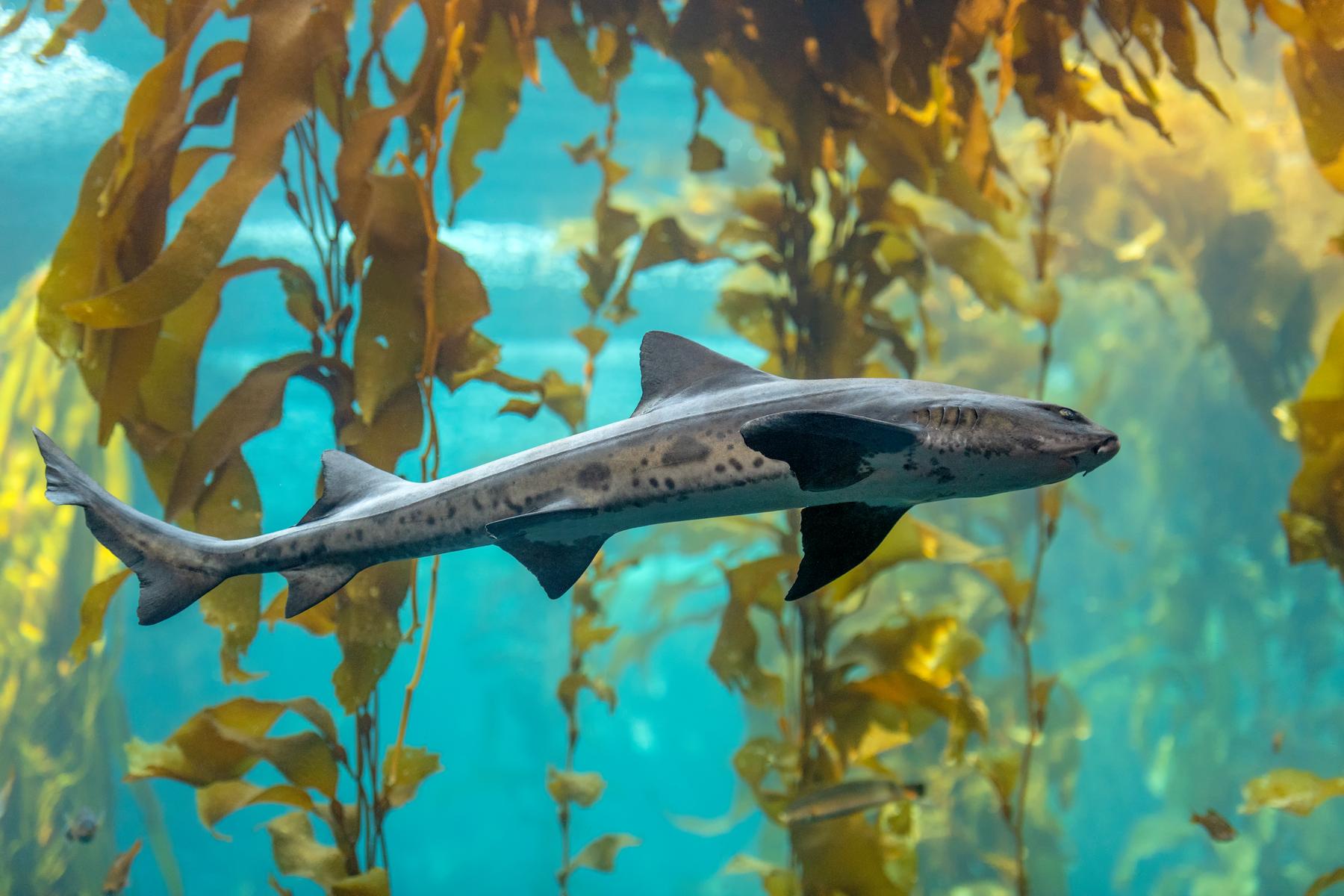
Our second shark arrived at the aquarium on August 31, 2007, and spent 137 days here in our million-gallon Outer Bay exhibit before his release. While he was with us, he grew significantly and was seen by nearly 600,000 people, inspiring thousands of visitors to care about protecting sharks in the wild.</description>
			<author>Monterey Bay Aquarium</author>
			<pubDate>Tues Jan 16 2006 12:00:00 EDT</pubDate>
			<guid isPermaLink="false">White Shark-Jan 16</guid>
		</item>
 
	<item>
			<title>White Shark Released Back to the Wild</title>	<link>http://www.mbayaq.org/efc/exhibit_updates/exhibit_updates_popup.asp#Outer_Bay_Life</link>
			<description> 
The young male white shark that has been part of our Outer Bay exhibit since September is back in the wild.<![CDATA[<br><br>]]>Our husbandry team tagged and released him shortly after sunrise today (Tuesday, January 16). It marks the second time in two years that we've exhibited a white shark and then returned it safely back to the wild.<![CDATA[<br><br>]]>He was released from a boat in Monterey Bay after our staff fitted him with an electronic data tag that will track his movements for the next 90 days. If all goes as planned, on April 16, we'll get information documenting where the shark traveled, how deep he dove and the water temperatures he favored. The data will be relayed to scientists via satellite when the tag pops free.<![CDATA[<br><br>]]>We released him because he'd grown considerably, from an initial length of 5-foot-8 and 103 pounds when he arrived on August 31, 2006 to his current size of 6-feet-5 inches and a weight of 171 pounds. He was healthy and feeding at the time of release, but was large enough that to delay much longer could have posed more risks for both the shark and our staff during the move. We expect he'll do well after release, just as our first white shark did.<![CDATA[<br><br>]]>The white shark had shown no interest in the other animals in the Outer Bay exhibit, feeding only on salmon, black cod and albacore offered by our staff. In recent weeks, he had developed some abrasions on his snout, another consideration that factored into the timing of the release.<![CDATA[<br><br>]]>He was with us for 137 days and was seen by nearly 600,000 people, about eight percent more visitors than usual for this time period. Prompted by the additional visitation, our trustees contributed an additional $200,000 for field research of juvenile and adult white sharks. Since 2002, we've committed more than $1 million to white shark field research.<![CDATA[<br><br>]]>Like the female shark released two years ago, this white shark was "a powerful emissary for ocean conservation," said aquarium Executive Director Julie Packard. In surveys, we found that visitors came away with a deeper understanding of the need to protect white sharks and their ocean homes.<![CDATA[<br><br>]]>Our white shark field project will resume in the summer, and we hope to have another white shark on exhibit at that time. <![CDATA[<br><br>]]>Want to know how our white shark was caught?<![CDATA[<br><br>]]>Want to know how our white shark was caught? Hear all about it at www.montereybayaquarium.org/news/audio_stories.asp.</description>
			<author>Monterey Bay Aquarium</author>
			<pubDate>Tues Jan 16 2006 12:00:00 EDT</pubDate>
			<guid isPermaLink="false">White Shark-Jan 16</guid>
		</item>

	<item>
			<title>It's a Wonderful Net </title>
			<link>http://www.mbayaq.org/efc/exhibit_updates/exhibit_updates_popup.asp#Outer_Bay_Life</link>
			<description>Quote of the Week: "He makes me want to see a really big one in the ocean!" -aquarium visitor Jamie Stewart<![CDATA[<br><br>]]>Our white shark is always catching heat—so  are our tunas—and that’s a good thing. These fish wouldn't be the powerhouse athletes they are if they didn't have some way of conserving their metabolic heat, and using it to warm their muscles. How do their bodies do it? With a special arrangement of blood vessels called a "rete," (rhymes with "feet") short for rete mirabile, or "wonderful net" in Latin.<![CDATA[<br><br>]]>A little bit of biology and a smidge of physics help explain how a rete works. Because fish have gills (instead of lungs) that are exposed to ocean-temperature water, blood loses heat when it gathers oxygen from the cold water. In the rete, chilly blood from the gills flows through a network of veins and arteries, where vessels carrying warm blood from the body run alongside those carrying cool blood from the gills.<![CDATA[<br><br>]]>Other marine animals use this arrangement as well.<![CDATA[<br><br>]]>It's a little like keeping your cocoa from cooling off by putting the mug next to the fireplace instead of by an open window. Running the cool and warm blood vessels close to each other in a rete helps the white shark recycle the warmth its body produces; a nifty trick for an animal that feeds upon marine mammals like seals and whales in cold water.<![CDATA[<br><br>]]>So “net-working” warms the swimming muscles—if not the heart—of our Outer Bay stars, and we think that's pretty wonderful!<![CDATA[<br><br>]]>Want to know how our white shark was caught?<![CDATA[<br><br>]]>Want to know how our white shark was caught? Hear all about it at www.montereybayaquarium.org/news/audio_stories.asp.</description>
			<author>Monterey Bay Aquarium</author>
			<pubDate>Tues Dec 12 2006 12:00:00 EDT</pubDate>
			<guid isPermaLink="false">White Shark-Dec 12</guid>
		</item>
<item>
			<title>Living Off the Fat of the Sea</title>
			<link>http://www.mbayaq.org/efc/exhibit_updates/exhibit_updates_popup.asp#Outer_Bay_Life</link>
			<description>
Quote of the Day Yesterday (Thanksgiving): "I don't think I'll eat again for a month." --humans across the land, including some aquarium visitors<![CDATA[<br><br>]]>After an out-sized Thanksgiving dinner yesterday, many humans decided they couldn't take another bite in the foreseeable future.<![CDATA[<br><br>]]>They've probably changed their minds by today. (Some of them probably changed their minds by last night.)<![CDATA[<br><br>]]>To our white shark, of course, Thanksgiving was just another day in the Outer Bay exhibit.<![CDATA[<br><br>]]>But the equivalent of Thanksgiving does sometimes happen in the wild. It's no fluke, shall we say, for white sharks to gather around a whale that is no more. In fact, they sometimes do a whole lot of "blubbering" in the presence of the departed.<![CDATA[<br><br>]]>Here "blubbering" refers, not to an outpouring of grief, but rather to the consumption of the thick layer of fat under a whale's skin.<![CDATA[<br><br>]]>White sharks have been observed tearing off 10- to 20-pound chunks of whale blubber in one bite. Elsewhere, a 15-foot white shark was once caught with 65 pounds of whale blubber in its innards.<![CDATA[<br><br>]]>Some have estimated that a white shark could survive six weeks on that much whale blubber (supposing it could survive other threats to its existence).<![CDATA[<br><br>]]>Our young white shark still feeds on fish (primarily salmon and black cod these days). But older sharks have a taste for marine mammals that come wrapped in lots of blubber--seals, sea lions, dead whales when they can find them.<![CDATA[<br><br>]]>Some believe that white sharks only attack people by mistake, and they don't bother to eat them when they find out how lean they are.<![CDATA[<br><br>]]>And yes, that would be true even right after Thanksgiving--keeping in mind that here "lean" means in comparison to whales.<![CDATA[<br><br><br><br>]]<![CDATA[<br><br>]]>Want to know how our white shark was caught? Hear all about it at www.montereybayaquarium.org/news/audio_stories.asp.</description>
			<author>Monterey Bay Aquarium</author>
			<pubDate>Fri Nov 24 2006 12:00:00 EDT</pubDate>
			<guid isPermaLink="false">White Shark-Nov 24</guid>
		</item>
<item>
			<title>Connecting the Dots</title>
			<link>http://www.mbayaq.org/efc/exhibit_updates/exhibit_updates_popup.asp#Outer_Bay_Life</link>
			<description>Question of the Week: "How big is the white shark now anyway?" --aquarium visitor Elaine Andrews<![CDATA[<br><br>]]>Every day that he hangs out in our Outer Bay exhibit, we learn a little bit more about our white shark.<![CDATA[<br><br>]]>But it's no surprise to learn that there's a little bit more of our white shark hanging out here every day.<![CDATA[<br><br>]]>In other words, he's growing.<![CDATA[<br><br>]]>According to associate curator Manny Ezcurra, recent measurements show that the shark has added about 6 inches since he arrived Aug. 31--which makes him more than 6 feet long. (He was 5 feet 8 inches when he came.)<![CDATA[<br><br>]]>Of course, our aquarists can't just take out their measuring tape and ask the white shark to please hold still. Instead, they take out a special underwater video camera--and let the shark keep swimming!<![CDATA[<br><br>]]>The camera sends out two parallel laser beams--a set distance apart--that project two dots onto the shark. Then, when they pull still shots off the video, the dots give them a scale.<![CDATA[<br><br>]]>E.g., suppose the distance between the beams was a foot, and the distance between the dots in the picture was 1 inch. Then they'd know that the shark was 12 times as long in real life as he was in the picture.<![CDATA[<br><br>]]>Theoretically. But there are complications. They can only measure the length of the shark's body without his tail because when his body is straight, his tail is bent. Also, they have to measure over the curve of his body, and that's longer than the pure length.<![CDATA[<br><br>]]>Seems nothing's really easy as our researchers try to connect the dots to get a fuller picture of our white shark.<![CDATA[<br><br><br><br>]]<![CDATA[<br><br>]]>Want to know how our white shark was caught? Hear all about it at www.montereybayaquarium.org/news/audio_stories.asp.</description>
			<author>Monterey Bay Aquarium</author>
			<pubDate>Fri Nov 17 2006 12:00:00 EDT</pubDate>
			<guid isPermaLink="false">White Shark-Nov 17</guid>
		</item>
<item>
			<title>There's No Mistaking His Identity</title>
			<link>http://www.mbayaq.org/efc/exhibit_updates/exhibit_updates_popup.asp#Outer_Bay_Life</link>
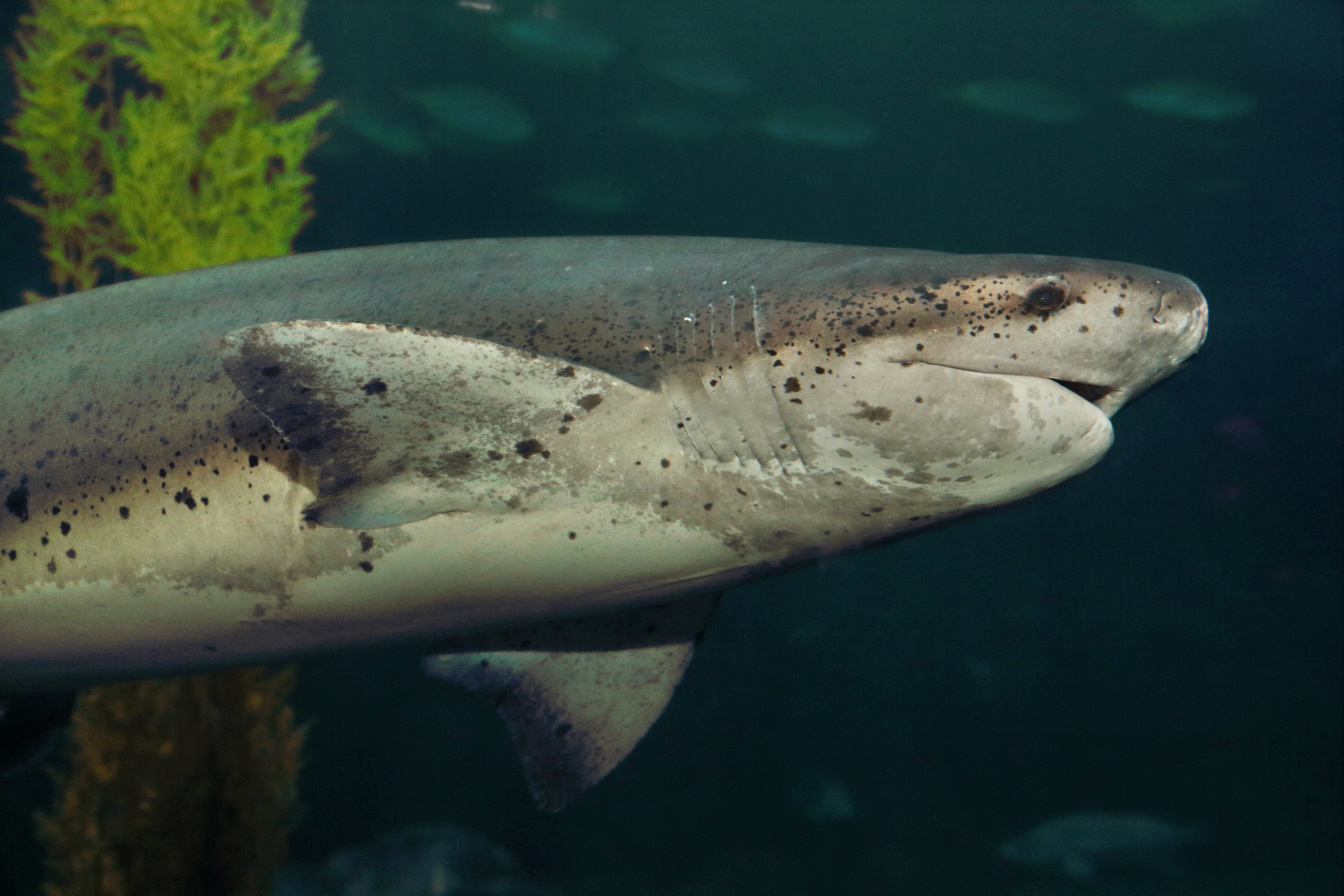
			<description>Quote of the Day: "I noticed how the Galapagos sharks are actually whiter than the great white." --Humberto Kam, newly arrived aquarium web site manager<![CDATA[<br><br>]]>It's possible to mistake one of our Galapagos sharks for our white shark.<![CDATA[<br><br>]]>The two species are both countershaded--gray on top with white undersides--and, as our web site manager, Humberto Kam, noticed, Galapagos sharks are actually a bit "whiter." (See the update for Sept. 6, "Someone to Really Look Up To," to find out why countershading counts for a lot in the ocean.)<![CDATA[<br><br>]]>Both species also have a fairly fearsome reputation, backed up with triangular teeth that are serrated like a steak knife. And as they glide by the window of the Outer Bay exhibit, both seem to be wearing a permanent smile--which could be considered sinister.<![CDATA[<br><br>]]>An average adult Galapagos shark is about 10 feet long, although 12 feet is not unheard of. An average adult white shark is quite a lot bigger, about 12 to 16 feet, and some can be more than 20 feet.<![CDATA[<br><br>]]>When our young white shark first arrived a couple of months ago, he was about the same size as our Galapagos sharks. Not any more. Must be all those salmon steaks he's been eating.<![CDATA[<br><br>]]>And, more than size, our white shark just has a certain presence. Salmon isn't all he's full of. You could also say he's a bit full of himself.<![CDATA[<br><br>]]>The fact is, it's possible to mistake one of our Galapagos sharks for our white shark--until you see our white shark.<![CDATA[<br><br><br><br>]]<![CDATA[<br><br>]]>Want to know how our white shark was caught? Hear all about it at www.montereybayaquarium.org/news/audio_stories.asp.</description>
			<author>Monterey Bay Aquarium</author>
			<pubDate>Wed Nov 8 2006 12:00:00 EDT</pubDate>
			<guid isPermaLink="false">White Shark-Nov 8</guid>
		</item>
		<item>
			<title>His Two-Month Anniversary Is a Pretty Big Deal</title>
			<link>http://www.mbayaq.org/efc/exhibit_updates/exhibit_updates_popup.asp#Outer_Bay_Life</link>
			<description>Quote of the Day: "It's so much bigger than it was two months ago." --unidentified aquarium visitor<![CDATA[<br><br>]]>Our white shark celebrated his two-month anniversary in the Outer Bay exhibit today by eating about two pounds of salmon fillet.<![CDATA[<br><br>]]>Other than that, he didn't seem to take note of the special occasion. And, in fact, he wasn't really splurging on his meal.<![CDATA[<br><br>]]>The shark has been quite the eager eater since his first week here (when he didn't eat a bite). And over the past couple of weeks he's been averaging about 2.5 pounds of dinner a day.<![CDATA[<br><br>]]>In a related development--even non-expert observers can see that he's bigger than he was when he arrived.<![CDATA[<br><br>]]>Our very expert aquarists recently took laser measurements to learn just how much bigger, and as soon as the results are in, we'll let you know.<![CDATA[<br><br>]]>When he got here, the shark measured 5 feet 8 inches long and weighed in at 104 pounds.<![CDATA[<br><br>]]>Now we estimate he's about 6 feet long and 130 pounds. That's assuming he's growing at the same rate as the white shark who spent more than six months here in 2004-05.<![CDATA[<br><br>]]>Not a lot is known about how much young sharks eat in the wild or how fast they grow. And, of course, that may differ from how our shark eats and grows here.<![CDATA[<br><br>]]>Still, because we're able to watch this shark so closely, we've been learning a lot, and--like the shark himself--our knowledge about a species that's so often misunderstood is already bigger than it was two months ago.<![CDATA[<br><br><br><br>]]<![CDATA[<br><br>]]>Want to know how our white shark was caught? Hear all about it at www.montereybayaquarium.org/news/audio_stories.asp.</description>
			<author>Monterey Bay Aquarium</author>
			<pubDate>Wed Nov 1 2006 12:00:00 EDT</pubDate>
			<guid isPermaLink="false">White Shark-Nov 1</guid>
		</item>
	<item>
		<title>Superstar Turned Fan</title>
		<link>http://www.mbayaq.org/efc/exhibit_updates/exhibit_updates_popup.asp#Outer_Bay_Life</link>
		<description>Quote of the Day: "Oh, look, there he is!" --unidentified youngster visiting the aquarium<![CDATA[<br><br>]]>As he stood outside the Outer Bay exhibit this morning, David Tausheck, an accountant at the aquarium, was fascinated by someone else in the crowd. The well-dressed gentleman pointed at the tunas and the hammerhead shark, David said.<![CDATA[<br><br>]]>And then our white shark swam by.<![CDATA[<br><br>]]>"It was like on cue....He got that look, that first-time 'Wow!' look we all get, no matter if we're kids or adults."<![CDATA[<br><br>]]>Or the governor of California.<![CDATA[<br><br>]]>They're both superstars--Gov. Arnold Schwarzenegger and our white shark. Today lots of people at the aquarium were excited about spotting the governor. And the governor was excited about spotting the white shark.<![CDATA[<br><br>]]>His exceptionally well-informed "tour guide"--Julie Packard, our executive director--says they talked about how far sharks travel and how fast, yet effortlessly, they swim.<![CDATA[<br><br>]]>Meanwhile, the white shark just swam around effortlessly and ignored everybody.<![CDATA[<br><br>]]>The governor came to the aquarium this morning to participate in a press conference with other backers of Proposition 84, the Clean Water, Parks and Coastal Protection Act on the Nov. 7 ballot.<![CDATA[<br><br>]]>The aquarium has endorsed the proposition, and Julie was one of the other presenters at the press conference.<![CDATA[<br><br>]]>Gov. Schwarzenegger was a little late arriving for the conference, and he was in a bit of a rush afterwards. He had another important engagement to get to.<![CDATA[<br><br>]]>Still, it's been said that being governor is all about setting priorities. And Gov. Schwarzenegger really didn't want to leave, he told Julie, without seeing the white shark.<![CDATA[<br><br><br><br>]]<![CDATA[<br><br>]]>Want to know how our white shark was caught? Hear all about it at www.montereybayaquarium.org/news/audio_stories.asp.</description>
		<author>Monterey Bay Aquarium</author>
		<pubDate>Wed Oct 25 2006 12:00:00 EDT</pubDate>
		<guid isPermaLink="false">White Shark-Oct 25</guid>
	</item>
	<item>
		<title>Are You a White Shark Whiz?</title>
		<link>http://www.mbayaq.org/efc/exhibit_updates/exhibit_updates_popup.asp#Outer_Bay_Life</link>
		<description>Question of the Day: How well did you do on yesterday's quiz?<![CDATA[<br><br>]]>Promise of the Day: You don't have to tell anybody.<![CDATA[<br><br>]]>1. How many gills does our white shark have? How many gill slits?<![CDATA[<br>]]>He has five pairs of gills, and five pairs of gill slits--i.e., five of each on each side of his head.<![CDATA[<br><br>]]>2. How many fins does he have?<![CDATA[<br>]]>He has eight: two pectoral fins (one on each side about where his arms would be if he had them); two pelvic fins (on his underside about where his legs would be); two dorsal fins (on his back); one anal fin (you can guess where); and one caudal fin (also known as his tail).<![CDATA[<br><br>]]>3. How many bones does he have in his tail?<![CDATA[<br>]]>He has zero bones in his tail--zero bones in his whole body, in fact. (See the update for Sept. 22, "No Bones About It.")<![CDATA[<br><br>]]>4. How many teeth does he use to chew with?<![CDATA[<br>]]>He has lots of teeth--up to 3,000 at any one time--but he doesn't use any of them to chew with. (See the update for Sept. 12, "Biting Off More Than He Can Chew.")<![CDATA[<br><br>]]>5. How many nostrils does he use to breathe through?<![CDATA[<br>]]>He has two nostrils, just like us. But unlike us, he doesn't use either of them to breathe through. (See the updates for Sept. 19, "Mr. Sensitivity," and Oct. 1, "Our White Shark's Swimming Is Never Done.")<![CDATA[<br><br>]]>6. How many times a minute does he blink?<![CDATA[<br>]]>He never blinks. He can't. (See the update for Oct. 9, "An Open and Shut Case.")<![CDATA[<br><br>]]>7. How many times a day does he swim past the window of the Outer Bay exhibit?<![CDATA[<br>]]>As many times as he wants to.<![CDATA[<br><br>]]>8. How many days has he been on exhibit here?<![CDATA[<br>]]>His first day on exhibit here was Sept. 1. So as of today, Oct. 20, he's been on exhibit 50 days.<![CDATA[<br><br>]]>9. How many days is the longest that a male white shark has ever been on exhibit anywhere?<![CDATA[<br>]]>50 days. (See above.) Every day our white shark is here he sets a new record for the longest time a male white shark has ever been on exhibit anywhere. Of course, he'll only stay here as long as he eats well, swims strongly and gives every indication that he's comfortable and healthy--the way he's doing now.<![CDATA[<br><br>]]>10. How many gallons of water are there in the Outer Bay exhibit? (This one's a freebie. You've seen the answer here a million times.)<![CDATA[<br>]]>A million gallons.<![CDATA[<br><br><br><br>]]<![CDATA[<br><br>]]>Want to know how our white shark was caught? Hear all about it at www.montereybayaquarium.org/news/audio_stories.asp.</description>
		<author>Monterey Bay Aquarium</author>
		<pubDate>Fri Oct 20 2006 12:00:00 EDT</pubDate>
		<guid isPermaLink="false">White Shark-Oct 20</guid>
	</item>
	<item>
		<title>Our White Shark by the Numbers</title>
		<link>http://www.mbayaq.org/efc/exhibit_updates/exhibit_updates_popup.asp#Outer_Bay_Life</link>
		<description>Question of the Day: How well can you do on this quiz?<![CDATA[<br><br>]]>Promise of the Day: You can find the answers here tomorrow.<![CDATA[<br><br>]]>1. How many gills does our white shark have? How many gill slits?<![CDATA[<br><br>]]>2. How many fins does he have?<![CDATA[<br><br>]]>3. How many bones does he have in his tail?<![CDATA[<br><br>]]>4. How many teeth does he use to chew with?<![CDATA[<br><br>]]>5. How many nostrils does he use to breathe through?<![CDATA[<br><br>]]>6. How many times a minute does he blink?<![CDATA[<br><br>]]>7. How many times a day does he swim past the window of the Outer Bay exhibit?<![CDATA[<br><br>]]>8. How many days has he been on exhibit here?<![CDATA[<br><br>]]>9. How many days is the longest that a male white shark has ever been on exhibit anywhere?<![CDATA[<br><br><br><br>]]>10. How many gallons of water are there in the Outer Bay exhibit? (This one's a freebie. You've seen the answer here a million times.)<![CDATA[<br><br><br><br>]]>Want to know how our white shark was caught? Hear all about it at www.montereybayaquarium.org/news/audio_stories.asp.</description>
		<author>Monterey Bay Aquarium</author>
		<pubDate>Thurs Oct 19 2006 12:00:00 EDT</pubDate>
		<guid isPermaLink="false">White Shark-Oct 19</guid>
	</item>
	<item>
		<title>A Taste of Money?</title>
		<link>http://www.mbayaq.org/efc/exhibit_updates/exhibit_updates_popup.asp#Outer_Bay_Life</link>
		<description>Quote of the Day: "It's a good thing they're not tasty." --aquarium visitor Michael Hendrickson<![CDATA[<br><br>]]>Aquarium visitors Michael Hendrickson and Gary Kanemoto were amazed by the giant tunas--"sushi on the fin"--gliding by them in the Outer Bay exhibit.<![CDATA[<br><br>]]>And, they suggested, it's lucky for our white shark that he doesn't make such good eating.<![CDATA[<br><br>]]>Hendrickson and Kanemoto were just joking around. But the situation for most species of sharks is all too serious. They're threatened around the world, in part because people like to eat certain parts of them.<![CDATA[<br><br>]]>When white sharks are caught deliberately, it's usually by trophy hunters who prize their teeth and jaws. But other sharks--including hammerhead, mako, and blue sharks--are often sought out simply for their fins, destined to go into shark-fin soup.<![CDATA[<br><br>]]>This traditional delicacy can sell for as much as $100 a bowl, and shark fins can sell for nearly $200 a pound. Perhaps these figures explain--if anything can--why some fishermen will cut the fins off still-living sharks and throw them back into the ocean to die unpleasant deaths.<![CDATA[<br><br>]]>Although "shark finning" is outlawed in many countries, including the United States, it still goes on in many others.<![CDATA[<br><br>]]>What's so wonderful about shark-fin soup? Well, it tastes good, apparently.<![CDATA[<br><br>]]>But it doesn't taste like shark fins.<![CDATA[<br><br>]]>Shark fins taste like...well...pretty much nothing. The flavor of shark-fin soup comes from the broth. Shark fins themselves add texture, but that can actually be a bit rubbery.<![CDATA[<br><br>]]>The main appeal of shark fins may just be that they come from sharks.<![CDATA[<br><br><br><br><br><br>]]>Want to know how our white shark was caught? Hear all about it at www.montereybayaquarium.org/news/audio_stories.asp.</description>
		<author>Monterey Bay Aquarium</author>
		<pubDate>Tues Oct 17 2006 12:00:00 EDT</pubDate>
		<guid isPermaLink="false">White Shark-Oct 17</guid>
	</item>
	<item>
		<title>Shark and Awe?</title>
		<link>http://www.mbayaq.org/efc/exhibit_updates/exhibit_updates_popup.asp#Outer_Bay_Life</link>
		<description>"Why?" of the Day: Why are sharks called "sharks"?<![CDATA[<br><br>]]>Our white shark is top dog in the Outer Bay exhibit, which seems rather fitting since sailors used to refer to sharks as "sea dogs."<![CDATA[<br><br>]]>Then, in the second half of the 16th century, sharks started being called "sharks." Although no one knows for absolute sure why, many people believe the name came from the Mayan word for shark--spelled "xoc" and pronounced "shock."<![CDATA[<br><br>]]>But how did the word make its transatlantic transit? The theory goes that some English sailors made an expedition to the Caribbean and brought the word "shark" back with them--along with an actual shark that they put on display in London.<![CDATA[<br><br>]]>The term "shark" is also widely used in various phrases, such as "card shark," "pool shark," "loan shark," where it refers to a shady sort of operator. Are the two "sharks" related?<![CDATA[<br><br>]]>Some say no. Others say yes. (Consider that a shady operator gets involved in some pretty fishy dealings.)<![CDATA[<br><br>]]>Another shark-related term doesn't seem to be used much at all, and yet it's chillingly apropos: Just as a group of lions is called a "pride," and a group of geese is called a "gaggle," so a group of sharks is called a "shiver."<![CDATA[<br><br><br><br>]]>Want to know how our white shark was caught? Hear all about it at www.montereybayaquarium.org/news/audio_stories.asp.</description>
		<author>Monterey Bay Aquarium</author>
		<pubDate>Mon Oct 16 2006 12:00:00 EDT</pubDate>
		<guid isPermaLink="false">White Shark-Oct 16</guid>
	</item>
	<item>
		<title>Can White Sharks Swim a Blue Streak?</title>
		<link>http://www.mbayaq.org/efc/exhibit_updates/exhibit_updates_popup.asp#Outer_Bay_Life</link>
		<description>Mystery of the Day: How fast can white sharks go when they're going as fast as they can?<![CDATA[<br><br>]]>We haven't clocked our white shark in the Outer Bay exhibit as he puts himself through his paces--from leisurely to lickety-split.<![CDATA[<br><br>]]>We do know he tends to swim faster when he's excited about something--say, SCUBA divers washing windows or dinner dangling from a pole--than when he's just hanging out.<![CDATA[<br><br>]]>Researchers tracking adult white sharks in the wild have found average speeds over long distances ranging from about 48 to 70 miles per day, or about two to three mph.<![CDATA[<br><br>]]>Lab studies of other sorts of fishes have come up with this general rule of fin: burst-of-speed speeds are about 10-times-the-fish's-body-length per second. That would mean that right now our white shark could swim about 40 mph if his life (or maybe just his next meal) depended on it.<![CDATA[<br><br>]]>It would also mean that when our white shark grows up and gets to be, say, 16 feet long, he could swim more than 100 mph.<![CDATA[<br><br>]]>Most scientists think white sharks are fast, but not THAT fast.<![CDATA[<br><br>]]>After all, while there's no universal consensus on the speediest fish in the sea--swordfish, sailfish, bluefin tuna all have their supporters--the highest estimates of their top speeds come in under 70 mph.<![CDATA[<br><br>]]>White sharks, it's believed, probably max out somewhere between 25 and 35 mph.<![CDATA[<br><br>]]>Not impressed? Well, sure, you can zip through the water a lot faster than that--in a boat! But under your own power, six mph is beyond you--even if you're the fastest swimmer in the world (and chances are, you're not).<![CDATA[<br><br><br><br>]]>Want to know how our white shark was caught? Hear all about it at www.montereybayaquarium.org/news/audio_stories.asp.</description>
		<author>Monterey Bay Aquarium</author>
		<pubDate>Sat Oct 14 2006 12:00:00 EDT</pubDate>
		<guid isPermaLink="false">White Shark-Oct 14</guid>
	</item>
	<item>
		<title>How to Succeed at Swimming Without Really Trying</title>
		<link>http://www.mbayaq.org/efc/exhibit_updates/exhibit_updates_popup.asp#Outer_Bay_Life</link>
		<description>Quote of the Day: "I've seen them on National Geographic and Discovery Channel, all the normal stuff. He looks exactly like they look on TV. The way he moves, exactly the same." --aquarium visitor Karla Young<![CDATA[<br><br>]]>Our white shark definitely has some cool moves. He can turn on a dime. He can "attack" a salmon steak with spectacular speed (and gusto). In general, though, as he makes his rounds of the Outer Bay exhibit, he's fairly easy-going. He doesn't seem to exert himself much.<![CDATA[<br><br>]]>In fact--in the ultimate energy conservation measure--sometimes he just glides and doesn't exert himself at all. (To our aquarists, this is a welcome sign that he's comfortable and relaxed.)<![CDATA[<br><br>]]>All in all, moving through the water seems to come to the white shark as naturally as breathing. (But then, for him, moving through the water is sort of equivalent to breathing. See the update for 10-1, "Our White Shark's Swimming Is Never Done.")<![CDATA[<br><br>]]>Like the tunas who share the exhibit with him, the white shark's body resembles a streamlined torpedo. Also like the tunas--but unlike most other fishes--he swims by flexing just the rear part of his body rather than undulating his whole body.<![CDATA[<br><br>]]>This is a very efficient technique that lets these two very different kinds of fish both swim very fast.<![CDATA[<br><br>]]>How fast can the white shark swim? More about that tomorrow.<![CDATA[<br><br><br><br>]]>Want to know how our white shark was caught? Hear all about it at www.montereybayaquarium.org/news/audio_stories.asp.</description>
		<author>Monterey Bay Aquarium</author>
		<pubDate>Fri Oct 13 2006 12:00:00 EDT</pubDate>
		<guid isPermaLink="false">White Shark-Oct 13</guid>
	</item>
	<item>
		<title>A Convention of Conspicuous Consumers?</title>
		<link>http://www.mbayaq.org/efc/exhibit_updates/exhibit_updates_popup.asp#Outer_Bay_Life</link>
		<description>Quote of the Day: "Look at those sparkly fish with the gold tails." -aquarium visitor Nancy Kelly<![CDATA[<br><br>]]>Our white shark was recently joined in the Outer Bay exhibit by some fellow southern California natives, seven common dorado--which are pretty UNcommon fish in several ways.<![CDATA[<br><br>]]>For one thing, dorado (Coryphaena hippurus) have an uncommon number of aliases, including dolphinfish and maverikos.<![CDATA[<br><br>]]>They're also uncommonly striking fish with spectacular coloring--shimmering blues and greens and golds--and nifty dorsal fins--almost as long as their bodies.<![CDATA[<br><br>]]>And they're uncommonly fast-growing fish, too--perhaps the fastest in the world. Adding nearly three inches in a week is not unheard of. Ours are only about two feet long right now, give or take a bit, but that will change--and soon!<![CDATA[<br><br>]]>It's no surprise, then, that dorado's consumption can be conspicuous. On exhibit, they've been known to eat more than 20 percent of their weight in a day.<![CDATA[<br><br>]]>But they don't just eat a lot--they also get eaten a lot. You may well have had some yourself, although in restaurants they go by yet another alias, mahi mahi.<![CDATA[<br><br>]]>Seems our seven dorado are kind of lucky to have wound up in our aquarium, instead of on someone's dinner table.<![CDATA[<br><br>]]>Still, they're sharing the exhibit with our white shark, and a few close relatives of his, any one of whom might make a meal of the dorado in the wild.<![CDATA[<br><br>]]>So far, it's been swim and let swim though. After all, our sharks are already conspicuously well fed themselves.<![CDATA[<br><br><br><br>]]>Want to know how our white shark was caught? Hear all about it at www.montereybayaquarium.org/news/audio_stories.asp.</description>
		<author>Monterey Bay Aquarium</author>
		<pubDate>Thurs Oct 12 2006 12:00:00 EDT</pubDate>
		<guid isPermaLink="false">White Shark-Oct 12</guid>
	</item>
	<item>
		<title>It's a Nice Exhibit to Visit, But He Wouldn't Want to Live There Forever</title>
		<link>http://www.mbayaq.org/efc/exhibit_updates/exhibit_updates_popup.asp#Outer_Bay_Life</link>
		<description>Quote of the Day: "I'd like to see him let go." -aquarium visitor Claire Manship<![CDATA[<br><br>]]>And, of course, we will let our white shark go at some point. Much as we like having him here, we don't plan to make him a permanent resident in the Outer Bay exhibit.<![CDATA[<br><br>]]>Right now, though, he seems to be a pretty happy camper. He's swimming comfortably, eating well--looking good.<![CDATA[<br><br>]]>And our expert aquarists give him a good looking-over every day. In fact, we're pretty sure that no fish in the world is being watched more closely than he is--or cared for more carefully.<![CDATA[<br><br>]]>But why exhibit him at all?<![CDATA[<br><br>]]>"Having a white shark here is a really good way for people to learn about sharks," says Allison Gong, a lecturer in marine biology at UC-Santa Cruz. "You can't expect people to care about things they don't know about."<![CDATA[<br><br>]]>That's exactly what we think.<![CDATA[<br><br>]]>Historically, people have not cared very much about white sharks. And now, along with many of their relatives, white sharks are under serious threat around the world. Mostly from people. People are the only ones who can really hurt white sharks. They're also the only ones who can save them.<![CDATA[<br><br>]]>Soon, though, it could be too late. We believe the mission is urgent.<![CDATA[<br><br>]]>In 2004-05, a young female white shark spent 198 days with us. During that time, nearly a million visitors saw her, and, in the words of Julie Packard, our executive director, she became "the most powerful emissary for ocean conservation in our history."<![CDATA[<br><br>]]>Our new white shark has picked up where she left off. Every day he's here, he makes new friends--for himself, and for his species.<![CDATA[<br><br>]]>And every day he's here, our aquarists check to make sure he's still doing well.<![CDATA[<br><br>]]>In the spring of 2005, our female white shark made a successful return to the wild. And a successful return to the wild is our ultimate goal for this shark, too.<![CDATA[<br><br>]]>We just don't know yet when that will happen.<![CDATA[<br><br>]]<![CDATA[<br><br>]]>Want to know how our white shark was caught? Hear all about it at www.montereybayaquarium.org/news/audio_stories.asp.</description>
		<author>Monterey Bay Aquarium</author>
		<pubDate>Wed Oct 11 2006 12:00:00 EDT</pubDate>
		<guid isPermaLink="false">White Shark-Oct 11</guid>
	</item>
	<item>
		<title>An Open and Shut Case</title>
		<link>http://www.mbayaq.org/efc/exhibit_updates/exhibit_updates_popup.asp#Outer_Bay_Life</link>
		<description>Question of the Day: "Do sharks sleep with their eyes open?" --aquarium visitor Melanie Miller<![CDATA[<br><br>]]>No one knows for sure if our white shark ever even falls asleep in the Outer Bay exhibit. (See the update for 10-1.) But we do know he never gets any shut-eye!<![CDATA[<br><br>]]>That's because he doesn't have any eyelids. Fish don't in general. After all, they don't need to worry about dust and dirt getting into their eyes the way we do.<![CDATA[<br><br>]]>On the other hand, many sharks have a "nictitating membrane, which is often called a "third eyelid." It's usually translucent, and instead of moving up and down over the eye, it moves horizontally across it.<![CDATA[<br><br>]]>Our long-ago ancestors had a nictitating membrane, too, and we still have a reminder of those days: the pink stuff in the inner corners of our eyes that many of us wonder about--as in, What is that good for? (Answer: Nothing.)<![CDATA[<br><br>]]>Sharks may not need to protect their eyes from dust and dirt, but they do need to protect their eyes from bigger problems--namely, prey that fights back while being attacked. That's where sharks' nictitating membranes can come to their defense.<![CDATA[<br><br>]]>But white sharks don't have nictitating membranes. So what do they do? They just roll their eyes.<![CDATA[<br><br>]]>Really.<![CDATA[<br><br>]]>As their desperate about-to-be dinners flail about, white sharks roll their eyes back in their sockets, so only the tough, fibrous, not-so-easily-injured whites of their eyes are in the line of fire.<![CDATA[<br><br>]]<![CDATA[<br><br>]]>Want to know how our white shark was caught? Hear all about it at www.montereybayaquarium.org/news/audio_stories.asp.</description>
		<author>Monterey Bay Aquarium</author>
		<pubDate>Mon Oct 9 2006 12:00:00 EDT</pubDate>
		<guid isPermaLink="false">White Shark-Oct 9</guid>
	</item>
	<item>
		<title>Staying Focused</title>
		<link>http://www.mbayaq.org/efc/exhibit_updates/exhibit_updates_popup.asp#Outer_Bay_Life</link>
		<description>Quote of the Day: "We did see some interesting behavior.with the white shark bumping and 'tail-slapping' the turtles." --aquarium associate curator Manny Ezcurra<![CDATA[<br><br>]]>We're back down to one turtle now in the Outer Bay exhibit since the white shark seems to prefer it that way. (And since he makes his views known so dramatically, the turtles probably prefer it that way, too.)<![CDATA[<br><br>]]>No one knows exactly what it is about a second turtle that the shark sees as a problem. But then, as discussed in yesterday's update, no one knows exactly what the shark sees, period.<![CDATA[<br><br>]]>Understanding vision in people--let alone sharks--can be a mind-bending experience. But for now, we'll just focus on focusing, which is the light-bending part of the process.<![CDATA[<br><br>]]>In people, much of the light-bending is done by the cornea, but then the lens steps in to do some fine-tuning. It works by changing shape--becoming rounder if you're looking at something close (and need to bend the light more) and flattening out when you're looking at something far away (and need to bend it less).<![CDATA[<br><br>]]>Sharks have corneas and lenses, too. But their corneas are of no use to them in the light-bending department. Sure, they bend light, but so does seawater--and in very much the same way. So when light passes through a shark's cornea, it just keeps going the same direction that the seawater has already bent it.<![CDATA[<br><br>]]>Does that leave sharks up a creek? Not without a paddle--namely, their lenses. The good news about shark lenses is that they're round, so they can bend light a lot. The bad news about shark lenses is that they're always round: They can't flatten out when sharks are looking at something far away.<![CDATA[<br><br>]]>So now are sharks in hot water? No, they're still cool. Maybe their lenses can't change their shape, but they can change their position, and that gets the same job done. If a shark is looking at something close by, its lenses move close to its corneas. And vice versa for faraway objects.<![CDATA[<br><br>]]>Research has shown that sharks are rather farsighted, but not that farsighted. They can focus on objects as near as 9 inches.<![CDATA[<br><br>]]>In other words, the only completely safe place to get a good look at a white shark is probably from behind our window.<![CDATA[<br><br><br><br>]]>Want to know how our white shark was caught? Hear all about it at www.montereybayaquarium.org/news/audio_stories.asp.</description>
		<author>Monterey Bay Aquarium</author>
		<pubDate>Sun Oct 8 2006 12:00:00 EDT</pubDate>
		<guid isPermaLink="false">White Shark-Oct 8</guid>
	</item>
	<item>
		<title>What Does He See in You?</title>
		<link>http://www.mbayaq.org/efc/exhibit_updates/exhibit_updates_popup.asp#Outer_Bay_Life</link>
		<description>Quote of the Day: "He's so clean and sleek. He seems more elegant than some of the other fish....You don't see too many white sharks in Montana." --aquarium visitor Dale Swanson (of Montana)<![CDATA[<br><br>]]>You don't see too many white sharks anywhere--not if you want to stay dry anyway. Right now, in the whole world, there's just one white shark available for such convenient viewing, and he's in our Outer Bay exhibit.<![CDATA[<br><br>]]>You see him through a 13-inch acrylic window that doesn't seem that thick--that is, you don't get the feeling that there's much distance at all between you and him.<![CDATA[<br><br>]]>But it's not clear how distant you seem to the shark, of course--or, really, how well he sees you at all. It is pretty dark where you're standing, but that's not a problem for him. (See yesterday's update.) And when he first moved in, aquarists noticed that he swam faster, with more tail beats, when there were big crowds around than when there weren't.<![CDATA[<br><br>]]>Does that mean he's basically a ham at heart? Probably just the opposite. In any case, these days, like his exhibit-mates (as well as certain human celebrities) he seems to ignore his fans as he passes by, so much so that one youngster was recently moved to complain, "He didn't even notice me!"<![CDATA[<br><br>]]>How does the world look to our white shark? Look for some answers here tomorrow.<![CDATA[<br><br><br><br>]]>Want to know how our white shark was caught? Hear all about it at www.montereybayaquarium.org/news/audio_stories.asp.</description>
		<author>Monterey Bay Aquarium</author>
		<pubDate>Sat Oct 7 2006 12:00:00 EDT</pubDate>
		<guid isPermaLink="false">White Shark-Oct 7</guid>
	</item>
	<item>
		<title>Don't Be a Dim Bulb--Turn Off Your Flash</title>
		<link>http://www.mbayaq.org/efc/exhibit_updates/exhibit_updates_popup.asp#Outer_Bay_Life</link>
		<description>Quote of the Day: "The white shark is sensitive to flashes and swims to the back of the exhibit when they go off." --aquarium naturalist Ashley Clark, reminding visitors to disable the flashes on their cameras<![CDATA[<br><br>]]>Visitors to the Outer Bay exhibit often want to take pictures of the white shark (who doesn't exactly pose, but does always look like he's smiling).<![CDATA[<br><br>]]>Taking pictures is perfectly fine, too, but only if visitors disable their camera flashes first. That's for the shark's sake: The flashes bother him.<![CDATA[<br><br>]]>But it's for the visitors' sake, too. When flashes go off, the shark goes off, too--off to the back of the exhibit where no one can see him, let alone photograph him.<![CDATA[<br><br>]]>Why does the shark skedaddle like that?<![CDATA[<br><br>]]>Well, you know how sensitive your own eyes can be to light? A shark's eyes are probably 10 times more so because of something called the tapetum lucidum--or carpet of light--a layer of silvery plates behind the shark's retina.<![CDATA[<br><br>]]>These plates act like a mirror, reflecting light back through the shark's retina. Basically, that means he can use it twice, and that's a good thing when there's not much light.<![CDATA[<br><br>]]>In fact, like other animals with their own versions of a tapetum lucidum--e.g., cats--the white shark can probably see, if not in the dark, at least in the dim.<![CDATA[<br><br>]]>And he can probably see when it's fairly bright, too, since--unlike most fishes(!)--he can contract (and dilate) his pupils to regulate how much light comes in.<![CDATA[<br><br>]]>But just like us, he can't quite do it "in a flash."<![CDATA[<br><br><br><br>]]>Want to know how our white shark was caught? Hear all about it at www.montereybayaquarium.org/news/audio_stories.asp.</description>
		<author>Monterey Bay Aquarium</author>
		<pubDate>Fri Oct 6 2006 12:00:00 EDT</pubDate>
		<guid isPermaLink="false">White Shark-Oct 6</guid>
	</item>
	<item>
		<title>More Mola Than We Know What to Do With?</title>
		<link>http://www.mbayaq.org/efc/exhibit_updates/exhibit_updates_popup.asp#Outer_Bay_Life</link>
		<description>Quote of the Day: "There's the white shark. He's so pretty. But--ooh!--what's that down there?" -aquarium visitor Anna Jacobs<![CDATA[<br><br>]]>Our white shark is a superstar in the Outer Bay exhibit. But he doesn't completely hog the spotlight. In fact, one fish--the sunfish--actually steals the show now and again.<![CDATA[<br><br>]]>And without even trying.<![CDATA[<br><br>]]>The ocean sunfish (Mola mola) usually stays down close to the floor of the exhibit, where it often lies on its side and rarely moves very fast.<![CDATA[<br><br>]]>But it's hard to take your eyes off it once you see it. After all, it looks like it's missing the back half of itself--like the cab of a truck rolling down the highway without its trailer behind it.<![CDATA[<br><br>]]>And while the sunfish isn't as big as a truck, it is very big. When it was caught in Monterey Bay a year ago, it weighed about 20 pounds. When it went on exhibit two months later, it weighed about 40 pounds. Now it weighs about 450 pounds, and senior aquarist Todd Love calls that just a "guess-timate." It could weigh 500 pounds, or even more.<![CDATA[<br><br>]]>But people don't just like our sunfish for its looks. Not the people who know it best, anyway. They're intrigued by its individuality. "This one is unusual," Love says. "For instance, it's the only one we've ever had that joined in on the Outer Bay feedings."<![CDATA[<br><br>]]>From the day it first came on exhibit, the sunfish would eagerly--if not wisely--go after its share of the squid that aquarists were doling out to its fellow residents--often snagging a dozen or more.<![CDATA[<br><br>]]>But that stopped, abruptly, in June. And probably for a good reason.<![CDATA[<br><br>]]>"Nobody saw anything," Love says. "But I guess it got nailed." Not by the white shark. (He wasn't even here yet.) By a speedo torpedo otherwise known as a tuna.<![CDATA[<br><br>]]>Once seems to have been enough. The sunfish has a small brain--but not that small.<![CDATA[<br><br>]]>Love isn't sure how long the sunfish will stay with us, but we'll make sure to release it before it gets so big that we can't. The plan involves lifting it out by a crane and taking it for a ride up to Moss Landing in the "Finnebago." Then comes the critical part. It needs to fit into a carrier for a cruise out to sea--and the carrier is only 2 feet deep.<![CDATA[<br><br>]]>The sunfish isn't 2 feet wide--not yet--though it has developed a bit of a midriff bulge. (Imagine the sunfish's midriff where it would be if it had a back end.) So right now it's on a diet. And that may give it some wiggle room for a while longer.<![CDATA[<br><br><br><br>]]>Want to know how our white shark was caught? Hear all about it at www.montereybayaquarium.org/news/audio_stories.asp.</description>
		<author>Monterey Bay Aquarium</author>
		<pubDate>Thurs Oct 5 2006 12:00:00 EDT</pubDate>
		<guid isPermaLink="false">White Shark-Oct 5</guid>
	</item>
	<item>
		<title>People and the White Shark--Poles Apart?</title>
		<link>http://www.mbayaq.org/efc/exhibit_updates/exhibit_updates_popup.asp#Outer_Bay_Life</link>
		<description>Quote of the Day: "Do people actually get in the tank to feed the shark?" -aquarium visitor Andrew Lynn<![CDATA[<br><br>]]>A few SCUBA divers have ventured into the Outer Bay exhibit since the white shark moved in, but only to do the absolute necessities (cleaning and maintenance). Mostly, our staff has been giving him his space.<![CDATA[<br><br>]]>But they've also been giving him his food, of course. In fact, they offer him food every day, and then, as associate curator Manny Ezcurra says, "He decides if he is hungry enough to eat."<![CDATA[<br><br>]]>Here's how they manage to keep their distance from the shark and keep his appetite satisfied, too.<![CDATA[<br><br>]]>First, at feeding time, they lower the catwalk that extends over the surface of the exhibit, and the feeder goes out with a pole and some food. The shark's vision is keen, Ezcurra says, so he may well notice when the catwalk comes down--and he may perk up the way Fido does when you open your refrigerator door.<![CDATA[<br><br>]]>In any case, the feeder then pours--into the million-gallon exhibit--a smidgen of water that carries the scent of the dinner the shark is about to be served (e.g., salmon juice, mackerel blood). The shark's sense of smell is so good, he's sure to get the message then. (See the update from Sept. 19, "Mr. Sensitivity.")<![CDATA[<br><br>]]>Finally, the feeder holds the pole out over the water, with the entrée-of-the-day tied on with some cotton string. If the shark deigns to dine, he shoots right up and grabs it all in one fell swoop (although he may spit out part of it later, manners not being his strong suit).<![CDATA[<br><br>]]>Because the food is tied on with the string, the shark never runs into the pole, so he doesn't get hurt. And since the string simply breaks when he takes the food, the feeder doesn't get jerked around either! After that, the feeder watches the shark to see if he seems interested in another serving, in which case--surprise, surprise--he gets one!<![CDATA[<br><br>]]>The white shark didn't eat for a week after he arrived on Aug. 31, but once he started eating, he ate a ton. Well, up to five pounds at a time, anyway. Since then he's tapered off some, a pattern that we've seen in other sharks, too. At this point, his average daily consumption since Sept. 7 is 1.8 pounds per day.<![CDATA[<br><br>]]>Ezcurra says the white shark we had on exhibit two years ago fed a little more consistently, while this one is "a bit more finicky."<![CDATA[<br><br><br><br>]]>Want to know how our white shark was caught? Hear all about it at www.montereybayaquarium.org/news/audio_stories.asp.</description>
		<author>Monterey Bay Aquarium</author>
		<pubDate>Wed Oct 4 2006 12:00:00 EDT</pubDate>
		<guid isPermaLink="false">White Shark-Oct 4</guid>
	</item>
	<item>
		<title>The Birds and the Bees and Our White Shark</title>
		<link>http://www.mbayaq.org/efc/exhibit_updates/exhibit_updates_popup.asp#Outer_Bay_Life</link>
		<description>Quote of the Day: "Oh! Did you see? That's how you can tell it's a boy!" -aquarium visitor Teresa Oliveira<![CDATA[<br><br>]]>It's not always easy to tell male fishes from female fishes. Even our aquarium experts don't know the gender of our ocean sunfish. With white sharks, though, there's no mystery.<![CDATA[<br><br>]]>You can tell the white shark in our Outer Bay exhibit is a male by the "claspers" on his underside between his pelvic fins.<![CDATA[<br><br>]]>Right now these are about the size of mini-breadsticks--and about as soft as bread dough. But when the shark is full-grown they'll be a foot long or more, and they'll be much harder.<![CDATA[<br><br>]]>The term "claspers" may sound vaguely romantic, but it's not as if a male shark uses them to embrace a female. He uses them to transfer his sperm.<![CDATA[<br><br>]]>Little is known about the actual interaction between male and female white sharks when they mate. But many believe that, from the female's perspective, at least, "love hurts." Apparently, the male holds onto her with his teeth--leaving obvious "mating scars." In fact, it seems that females have to develop a thick skin--literally--in order to cope with these interludes.<![CDATA[<br><br><br><br>]]>Want to know how our white shark was caught? Hear all about it at www.montereybayaquarium.org/news/audio_stories.asp.</description>
		<author>Monterey Bay Aquarium</author>
		<pubDate>Tues Oct 3 2006 12:00:00 EDT</pubDate>
		<guid isPermaLink="false">White Shark-Oct 3</guid>
	</item>
	<item>
		<title>Do You Know Anybody Who Drinks Like a Shark?</title>
		<link>http://www.mbayaq.org/efc/exhibit_updates/exhibit_updates_popup.asp#Outer_Bay_Life</link>
		<description>Question of the Day: "Does the white shark get thirsty?" -aquarium visitor Cole Crandall, 8 years old<![CDATA[<br><br>]]>Although white sharks are often called "blood-thirsty," that's a bad rap. But how about being thirsty for good old H2O?<![CDATA[<br><br>]]>Our white shark always has his mouth open as he swims around the Outer Bay exhibit. But he's not drinking the water. He's"breathing" it. (See yesterday's update for details.)<![CDATA[<br><br>]]>On the other hand, most fishes in the ocean do drink the water they're swimming in. To understand why sharks are different, we need to know four basic facts:<![CDATA[<br><br>]]>1. There's a process in nature called diffusion, in which salty water acts like a sponge and absorbs fresh water.<![CDATA[<br><br>]]>2. The ocean has both water and salt in it, just as all living creatures--including sharks and other fishes--have both water and salt in their bodies. So you could call both the ocean and all living creatures "salty" to varying degrees. <![CDATA[<br><br>]]>3. Sharks store lots of salty waste materials in their bodies that other fishes do not. This makes them "saltier" than other fishes. In fact, it even makes them saltier than the ocean, whereas the ocean is saltier than other fishes.<![CDATA[<br><br>]]>4. Fishes' skin is not waterproof the way ours is.
<![CDATA[<br><br>]]>OK then.<![CDATA[<br><br>]]>Since most fishes aren't as salty as the ocean, water leaks out of their bodies (by diffusion) through their (non-waterproof) skin. This leaves them constantly thirsty, so they drink ocean water all the time.<![CDATA[<br><br>]]>But since sharks are actually a little saltier than the ocean, water leaks into their bodies (again by diffusion) through their (non-waterproof) skin. This gives them all the water they need, so they're never thirsty.<![CDATA[<br><br>]]>There's a reason the expression is "Drink like a fish," not "Drink like a shark."<![CDATA[<br><br><br><br>]]>Want to know how our white shark was caught? Hear all about it at www.montereybayaquarium.org/news/audio_stories.asp.</description>
		<author>Monterey Bay Aquarium</author>
		<pubDate>Mon Oct 2 2006 12:00:00 EDT</pubDate>
		<guid isPermaLink="false">White Shark-Oct 2</guid>
	</item>
	<item>
		<title>Our White Shark's Swimming Is Never Done</title>
		<link>http://www.mbayaq.org/efc/exhibit_updates/exhibit_updates_popup.asp#Outer_Bay_Life</link>
		<description>Two Questions of the Day: "Does he always swim with his mouth open?" "What are those lines behind his head?" -aquarium visitor Cecelia Traugh<![CDATA[<br><br>]]>Our white shark has been swimming around in our Outer Bay exhibit for a whole month now.<![CDATA[<br><br>]]>Non-stop.<![CDATA[<br><br>]]>"Some fish will actually bed down in sand, go into reefs and hunker down," says associate curator Manny Ezcurra. "But the white shark will always be swimming."<![CDATA[<br><br>]]>And he'll always be swimming with his mouth open.<![CDATA[<br><br>]]>And that's not just to show off his teeth. He has to do it to breathe. As the white shark swims, he takes water into his mouth and pushes it over his gills--where oxygen is absorbed into tiny blood vessels and then carried throughout his body. After the water passes over his gills, it goes out again through the (easily visible) gill slits behind his head. This process is called "ram ventilation."<![CDATA[<br><br>]]>If the white shark stopped swimming, water would stop flowing over his gills, oxygen would stop being absorbed, and that would be that for the shark.<![CDATA[<br><br>]]>But doesn't the white shark get tired? Can he swim in his sleep? Or doesn't he ever sack out at all?<![CDATA[<br><br>]]>"He may slow down," Ezcurra says, "go into periods where he's not quite as active." But as for actually catching any zzzz's? "We don't really know what's going on in this area....It's one of the things researchers are looking at."<![CDATA[<br><br><br><br>]]>Want to know how our white shark was caught? Hear all about it at www.montereybayaquarium.org/news/audio_stories.asp.</description>
		<author>Monterey Bay Aquarium</author>
		<pubDate>Sun Oct 1 2006 12:00:00 EDT</pubDate>
		<guid isPermaLink="false">White Shark-Oct 1</guid>
	</item>
	<item>
		<title>Travel Rubs Sharks the Right Way</title>
		<link>http://www.mbayaq.org/efc/exhibit_updates/exhibit_updates_popup.asp#Outer_Bay_Life</link>
		<description>Quote of the Day: "That was worth coming all this way for, right there." -aquarium visitor Louis Maurer (from Washington State)<![CDATA[<br><br>]]>Some visitors to the aquarium have come from many miles away. So did the white shark that many of those visitors have come to see. He was caught in Southern California.<![CDATA[<br><br>]]>The white shark didn't swim all the way up here, of course. He rode in our "Finnebago." But when the time comes that we release him from our Outer Bay exhibit, he may very well swim back down where he came from and spend a year or so "fishing" there.<![CDATA[<br><br>]]>Later, he'll probably head up to San Francisco--for more sophisticated dining experiences--and at some point he may even take a round-trip cruise to Hawaii. Plus--for reasons no one can yet fathom--as a mature shark, he may make annual trips to deep waters halfway between Hawaii and Baja California.<![CDATA[<br><br>]]>Through tagging projects, including one we help sponsor, researchers are discovering that white sharks are quite the globe-trotters. What makes them such good travelers?<![CDATA[<br><br>]]>You only have to look skin-deep for one of the answers. As if they didn't have enough teeth in their mouths, sharks also have a layer of teeth-like scales--called denticles--that give shark skin its distinctive feel.<![CDATA[<br><br>]]>If you rubbed a white shark in the head-to-tail direction--and lived to tell about it!--you might compare the texture to glass. If you rubbed it the other way, you'd more likely compare it to sandpaper. People have actually used it as that.<![CDATA[<br><br>]]>But to sharks, denticles are useful because they reduce drag and make swimming easier. (They also make it quieter--the better to sneak up on unsuspecting "dinners.").<![CDATA[<br><br><br><br>]]>Want to know how our white shark was caught? Hear all about it at www.montereybayaquarium.org/news/audio_stories.asp.</description>
		<author>Monterey Bay Aquarium</author>
		<pubDate>Fri Sept 29 2006 12:00:00 EDT</pubDate>
		<guid isPermaLink="false">White Shark-Sept 29</guid>
	</item>
	<item>
		<title>He's the Real Thing</title>
		<link>http://www.mbayaq.org/efc/exhibit_updates/exhibit_updates_popup.asp#Outer_Bay_Life</link>
		<description>First Quote of the Day: "It's not like excessively large, but it's still as big as some of my friends." -aquarium visitor Laura Howe<![CDATA[<br><br>]]>At 5 feet 8 inches and 104 pounds, our white shark does have the vital statistics--if not the proportions--of some people, say, supermodels.<![CDATA[<br><br>]]>Or at least he did when he first came. But he's been here four weeks, and he's been eating very well for the last three. So he's probably grown a little longer and a little heftier. As aquarium curator Jon Hoech says, "That food's going somewhere."<![CDATA[<br><br>]]>But no one has any exact figures on the shark's figure right now. At some point our staff will take laser measurements, but for the time being they don't want to do any more diving in the Outer Bay exhibit than they have to. (Divers can get on the shark's nerves--and vice versa.)<![CDATA[<br><br>]]>Second Quote of the Day: "I surf, and I like to live in denial. Sharks aren't real. What are you talking about?" -aquarium visitor Daniel Howe<![CDATA[<br><br>]]>It's possible that many surfers live in denial that white sharks could be a threat to them. But seeing our white shark on exhibit helped one of them, Daniel Howe, face up to that reality.<![CDATA[<br><br>]]>More of us, no doubt, live in denial that we can be a threat to white sharks. And in fact, we are a much bigger threat to them than they are to us--through overfishing, bycatch, trophy hunting.<![CDATA[<br><br>]]>We hope that by having our white shark on exhibit we can inspire people to face up to that reality--and try to change it.<![CDATA[<br><br><br><br>]]>Want to know how our white shark was caught? Hear all about it at www.montereybayaquarium.org/news/audio_stories.asp.</description>
		<author>Monterey Bay Aquarium</author>
		<pubDate>Thurs Sept 28 2006 12:00:00 EDT</pubDate>
		<guid isPermaLink="false">White Shark-Sept 28</guid>
	</item>
	<item>
		<title>She's Ba-a-a-a-ck! (For Now)</title>
		<link>http://www.mbayaq.org/efc/exhibit_updates/exhibit_updates_popup.asp#Outer_Bay_Life</link>
		<description>Quote of the Day: "The turtle is back!" -aquarium visitor Colleen Martinez<![CDATA[<br><br>]]>When our white shark first arrived, we had two sea turtles in the Outer Bay exhibit. But one of them kept rushing in (well, sort of) where sea turtles should fear to tread water--namely, in between the white shark and his food.<![CDATA[<br><br>]]>Most likely the turtle wasn't in danger of becoming shark food herself. But our staff worried that the shark might very well hurtle into the turtle, and no one wanted that (not even the shark probably). So they decided to remove the wayward turtle from the exhibit for safe-keeping.<![CDATA[<br><br>]]>But now the turtle is back because her new quarters have been taken over by some new fishes. Visitors seemed very pleased to see her today, and our staff is very pleased with how she and the shark have been giving each other space.<![CDATA[<br><br>]]>But they don't plan to press their luck. As soon as they find room for the itinerant turtle somewhere else--probably in about three weeks--they'll move her out again.<![CDATA[<br><br>]]>Second Quote of the Day: "Uncle Tony has sea turtles, but they're not that big." -very young unidentified aquarium visitor<![CDATA[<br><br>]]>Sea turtles are wild animals and do not make good (or even legal) pets. We're guessing this little girl's uncle has some other kind of turtle.</description>
		<author>Monterey Bay Aquarium</author>
		<pubDate>Tues Sept 26 2006 12:00:00 EDT</pubDate>
		<guid isPermaLink="false">White Shark-Sept 26</guid>
	</item>
	<item>
	<title>A Big Fish Story</title>
		<link>http://www.mbayaq.org/efc/exhibit_updates/exhibit_updates_popup.asp#Outer_Bay_Life</link>
		<description>Quote of the Day: "You only see the giant ones in movies and TV. You never think of them being small. I don't know how long it takes them to grow." -aquarium visitor Richard Pecoraro<![CDATA[<br><br>]]>At about a year old and less than six feet long, the male white shark in our Outer Bay exhibit has a lot of growing to do before he'll be considered a grown-up. It's believed that male white sharks don't become reproductively mature until they're about 10 years old and about 13 feet long. Females take still longer and need to be even bigger.<![CDATA[<br><br>]]>Even after they're mature, sharks of both genders can keep getting bigger. On average, they max out at less than 16 feet--with females generally larger--but 20 feet is not unheard of. There have been reports of even more gigantic white sharks, but many consider those to be gross exaggerations.<![CDATA[<br><br>]]>All the years that white sharks spend growing up are years they don't spend having pups. Besides, mature females probably don't have pups every year, and their litters are not large. These facts contribute to the precariousness of the white shark population.<![CDATA[<br><br>]]>But not nearly enough is known about mating and reproduction in white sharks. Through our tagging projects, we are trying to learn much more.</description>
		<author>Monterey Bay Aquarium</author>
		<pubDate>Mon Sept 25 2006 12:00:00 EDT</pubDate>
		<guid isPermaLink="false">White Shark-Sept 25</guid>
	</item>
	<item>
		<title>No Bones About It--Sharks Are Light on Their Fins</title>
	<link>http://www.mbayaq.org/efc/exhibit_updates/exhibit_updates_popup.asp#Outer_Bay_Life</link>
		<description>Question of the Day: "Do sharks have any advantages because their skeletons are made out of cartilage?" -aquarium visitor Jane Cross<![CDATA[<br><br>]]>Our white shark, like other sharks, doesn't have a bone in his body. His entire skeleton is made out of cartilage--the kind of material we have in our ears and the ends of our noses.<![CDATA[<br><br>]]>Cartilage is softer, lighter and more flexible than bone, qualities that are definitely of use to sharks. For instance, its lightness helps keep sharks from sinking. Obviously, bony fish don't sink either, but they have gas-filled "swim bladders" to help them stay afloat--a feature sharks lack.<![CDATA[<br><br>]]>The flexibility of cartilage gives sharks an actual advantage over bony fish because it means they don't need as much space to turn around. Just watch our white shark for a while, and you're likely to see him pull a few quick ueys in front of the Outer Bay exhibit window.<![CDATA[<br><br>]]>But cartilage isn't all gain and no pain for sharks. Consider that shark cartilage has been in demand recently as a treatment for cancer (where it's been largely discredited), as well as for arthritis and other joint problems (where it remains popular).<![CDATA[<br><br>]]>There's good news for white sharks--they're not a source of the cartilage used in supplements--but bad news for spiny dogfish and hammerhead sharks--they are.</description>
		<author>Monterey Bay Aquarium</author>
		<pubDate>Fri Sept 22 2006 12:00:00 EDT</pubDate>
		<guid isPermaLink="false">White Shark-Sept 22</guid>
	</item>
	<item>
		<title>Scariest Among Equals?</title>
	<link>http://www.mbayaq.org/efc/exhibit_updates/exhibit_updates_popup.asp#Outer_Bay_Life</link>
		<description>First Quote of the Day: "It's nice to see one as something other than a fearsome predator, just a fish hanging out with other fish." -aquarium visitor Carla Sette<![CDATA[<br><br>]]>If all fish are created equal, white sharks are probably more equal than others. They have that mouth, those teeth!<![CDATA[<br><br>]]>So while visitors come to see all of the wonderful animals at the aquarium, right now many of them are coming especially for the rare opportunity to see a white shark--safely behind a thick window in our Outer Bay exhibit.<![CDATA[<br><br>]]>Almost always these visitors are familiar with--and drawn by--the white shark's scary reputation. And even though ours is still young and relatively small, they can see the awesome potential of a magnificent animal.<![CDATA[<br><br>]]>But swimming at the top of the oceanic food chain can have its downside. People find it hard sometimes to think that white sharks--big, powerful, scary white sharks--need protection from anybody.<![CDATA[<br><br>]]>And yet they do. They're under threat--from humans--around the world. Our white shark is here precisely because we want everyone to know that.<![CDATA[<br><br>]]>So we think it's cool when visitors can look past the teeth, past the reputation, to see what aquarium visitor Carla Sette saw today: not an icon of invulnerability, but "just a fish hanging out with other fish."<![CDATA[<br><br>]]>Second Quote of the Day: "It's interesting how the white shark has just a regular tail, like the tunas, but not like the other sharks." -aquarium visitor Stephanie Barkey<![CDATA[<br><br>]]>We also think it's cool when visitors make perceptive observations, the way aquarium visitor Stephanie Barkey did today.<![CDATA[<br><br>]]>The white shark IS one of just a few sharks created with equal--lobed tails--what Barkey called "regular," and scientists call "homocercal."</description>
		<author>Monterey Bay Aquarium</author>
		<pubDate>Thurs Sept 21 2006 12:00:00 EDT</pubDate>
		<guid isPermaLink="false">White Shark-Sept 21</guid>
	</item>
	<item>
		<title>Guess What Our White Shark Gets a Real Charge Out Of</title>
	<link>http://www.mbayaq.org/efc/exhibit_updates/exhibit_updates_popup.asp#Outer_Bay_Life</link>
		<description>Quote of the Day: "His nose is almost as pointy as his teeth." -aquarium visitor Brant Alexander
<![CDATA[<br><br>]]>White sharks aren't nearly as famous for their noses as they are for their teeth. But maybe they should be.<![CDATA[<br><br>]]>The nostrils near the tip of white sharks' snouts are filled with millions of odor-detecting cells that give them a stupendous sense of smell. (See yesterday's update.)<![CDATA[<br><br>]]>Of course, we humans are very familiar with noses--namely, our own--that can detect odors (albeit with somewhat less proficiency). But white sharks can do something else with their noses that may sound almost shocking: They can detect electrical discharges. Even really, really little ones.<![CDATA[<br><br>]]>On white sharks' snouts there are many tiny canals--called "ampullae of Lorenzini"--filled with a jelly-like substance that's sensitive to electrical discharges down to 5 billionths of a volt. (It takes 120 volts to run most light bulbs.)<![CDATA[<br><br>]]>Why is this electrical sensitivity of any use to white sharks? Because every animal in the ocean generates a tiny electrical field that sharks can therefore pinpoint with those pointy snouts of theirs.<![CDATA[<br><br>]]>Our own white shark continues to nose about the Outer Bay exhibit very comfortably, and today he pinpointed more than a pound of salmon that he ate up in a flash.</description>
		<author>Monterey Bay Aquarium</author>
		<pubDate>Wed Sept 20 2006 12:00:00 EDT</pubDate>
		<guid isPermaLink="false">White Shark-Sept 20</guid>
	</item>
	<item>
		<title>Mr. Sensitivity</title>
	<link>http://www.mbayaq.org/efc/exhibit_updates/exhibit_updates_popup.asp#Outer_Bay_Life</link>
		<description>Quote of the Day: "Boy, he sure looks distinguished with that pointy nose." -aquarium web designer Bridget Ryan<![CDATA[<br><br>]]>A white shark's pointy nose, or snout, isn't just there for looks, of course. And it's not there for breathing purposes either since a shark has gills for that. No, a shark's impressive snout is the base of two impressive operations that it uses to find its food.<![CDATA[<br><br>]]>For one thing, two nostrils at the snout's tip both contain millions of odor-detecting--or olfactory--cells that give the shark a superb sense of smell. These cells are so sensitive that it can smell blood in the water, even if there's just a tiny bit--one drop in 25 gallons will do.<![CDATA[<br><br>]]>Clearly, sharks have a much better sense of smell than people do. And they have another useful sense that people don't have at all: They can detect electrical impulses being sent out by living animals (that might be destined not to live much longer). But more about that tomorrow.<![CDATA[<br><br>]]>Our own shark has been doing very well at sniffing out the food we've been giving him in the Outer Bay exhibit. During his first week of feeding, he ate, on average, more than 3 percent of his body weight each day. Two years ago the first shark we had on exhibit showed a similar eating pattern. Since she grew very fast, it seems likely that this one might, too.</description>
		<author>Monterey Bay Aquarium</author>
		<pubDate>Tues Sept 19 2006 12:00:00 EDT</pubDate>
		<guid isPermaLink="false">White Shark-Sept 19</guid>
	</item>
	<item>
		<title>Legend Vs. Reality</title>
		<link>http://www.mbayaq.org/efc/exhibit_updates/exhibit_updates_popup.asp#Outer_Bay_Life</link>
		<description>Quote of the Day: "I think it's good to bring people so close to the shark, so they're able to interact with it....It makes it more real, so it's not just a fable." -aquarium visitor Edy Stein<![CDATA[<br><br>]]>For the past couple of weeks, thousands of people have come to visit our Outer Bay exhibit especially to see its newest resident--drawn by the white shark's legendary aura of power and speed and beauty...of greatness.<![CDATA[<br><br>]]>But as aquarium visitor Edy Stein stood by the exhibit today, she was thinking of how that centuries old, almost mystical white shark legend is threatened by current white shark reality. Too many are being killed, accidentally and intentionally. Their population is under severe threat.<![CDATA[<br><br>]]>And not just white sharks, but most shark species. And not just most shark species, but many other precious, irreplaceable species of marine life.<![CDATA[<br><br>]]>So Stein wasn't just thinking about how cool it was to see our white shark. She was thinking about how much good he could do. "I hope this helps make people more aware of how we need to take care of the ocean," she said.<![CDATA[<br><br>]]>And that's what we're hoping, too. The mission of the aquarium is to inspire conservation of the oceans.</description>
		<author>Monterey Bay Aquarium</author>
		<pubDate>Mon Sept 18 2006 12:00:00 EDT</pubDate>
		<guid isPermaLink="false">White Shark-Sept 18</guid>
	</item>
	<item>
		<title>A Safe Place to See and Be Seen</title>
		<link>http://www.mbayaq.org/efc/exhibit_updates/exhibit_updates_popup.asp#Outer_Bay_Life</link>
		<description>Quote of the Day: "I saw a whole bunch of activity in the water, splashing at the surface, and I just sort of assumed and basically got out of the water." -aquarium visitor Nate Lewis<![CDATA[<br><br>]]>Nate Lewis was surfing the last time he saw a white shark--and he's not completely sure he saw one then. But he saw a lot of commotion that brought to mind a white shark going for "take out," and he decided he didn't want to stick around to get a closer look--not as much, anyway, as he wanted to stay in one piece.<![CDATA[<br><br>]]>"So it's nice to see one in a safe environment," said Lewis' wife, Anna, as they and their 13-month-old son, Aiden, watched our calm, cool white shark casually making his rounds today.<![CDATA[<br><br>]]>This is the 17th day that aquarium visitors have been able to see a white shark in the safe environment of our Outer Bay exhibit. That means he's now been on exhibit longer than any other white shark ever--except, of course, for the one we had on exhibit for 198 days, from September 2004 to March 2005, before releasing her successfully into the wild.<![CDATA[<br><br>]]>No one knows yet how long this shark will stay. We're glad we can give visitors a chance to see him risk-free. We hope they'll learn more about sharks and be inspired to help protect them in oceans all over the world, where they are under great threat.<![CDATA[<br><br>]]>But we'll only keep him here as long as the exhibit remains a safe and healthy environment for him, too--and for his fellow residents as well.</description>
		<author>Monterey Bay Aquarium</author>
		<pubDate>Sun Sept 17 2006 12:00:00 EDT</pubDate>
		<guid isPermaLink="false">White Shark-Sept 17</guid>
	</item>
	<item>
		<title>Still a Long Way to Grow</title>
		<link>http://www.mbayaq.org/efc/exhibit_updates/exhibit_updates_popup.asp#Outer_Bay_Life</link>
		<description>Quote of the Day: "He's a little small, but we know he's going to get bigger....Look at that mouth." -aquarium visitor Linda Safir<![CDATA[<br><br>]]>Our young white shark was 5 feet 8 inches long and 104 pounds when he arrived Aug. 31, and he's probably getting bigger already. After all, he's been putting that mouth of his to very good use at feeding time.<![CDATA[<br><br>]]>The white shark we had on exhibit two years ago grew about two inches and 15 pounds a month during her six-month-plus stay. At that rate, our new shark would have grown about an inch and put on seven or eight pounds by now.<![CDATA[<br><br>]]>Second Quote of the Day: "That's a tuna. That's not the shark....Don't forget about the rest of the fish." -unidentified aquarium visitor to her young child<![CDATA[<br><br>]]>Our amazing white shark shares the Outer Bay exhibit--quite peaceably, so far--with some other amazing animals. Our tuna are too big to overlook. And our hammerhead shark is...well...too weird-looking.<![CDATA[<br><br>]]>"I think he's really interesting," said aquarium visitor Linda Safir. "My daughter did her shark report on him. And what's that one down at the bottom?"<![CDATA[<br><br>]]>She was talking about our sunfish, which is very big and pretty weird-looking both. "That's like from another world," Safir said, "like from outer space."</description>
		<author>Monterey Bay Aquarium</author>
		<pubDate>Sat Sept 16 2006 12:00:00 EDT</pubDate>
		<guid isPermaLink="false">White Shark-Sept 16</guid>
	</item>
	<item>
		<title>Food for Naught?--Not</title>
		<link>http://www.mbayaq.org/efc/exhibit_updates/exhibit_updates_popup.asp#Outer_Bay_Life</link>
		<description>Quote of the Day: "We counted the feet on the turtle when we came in. When we got to four, we figured it was okay." -aquarium visitor Chris Moss<![CDATA[<br><br>]]>Our white shark has been a model citizen in the Outer Bay exhibit ever since he arrived. But the sea turtle population in the exhibit did go down from two to one after he came. The turtle we moved out was in fine shape, though, and retained all its body parts. It just kept getting in the white shark's way--and that's not a very good place for anybody to be.<![CDATA[<br><br>]]>Three divers who did some necessary cleaning and maintenance in the exhibit yesterday may have felt a little in the way themselves. "It swam its usual patterns," said senior dive safety officer Gil Falcone, "...through our bubbles on numerous occasions and within feet of our team."<![CDATA[<br><br>]]>Falcone says this shark is faster and more agile and has a "very different energy" than the shark we had on exhibit two years ago.<![CDATA[<br><br>]]>But today the shark kicked back a little and didn't even seem very hungry. Although he took four pieces of salmon, he spit them all out. Still, they didn't go to waste. Our tuna can be very opportunistic.</description>
		<author>Monterey Bay Aquarium</author>
		<pubDate>Fri Sept 15 2006 12:00:00 EDT</pubDate>
		<guid isPermaLink="false">White Shark-Sept 15</guid>
	</item>
	<item>
		<title>Two Firsts for the Shark (Who Keeps Coming Back for Seconds)</title>
		<link>http://www.mbayaq.org/efc/exhibit_updates/exhibit_updates_popup.asp#Outer_Bay_Life</link>
		<description>Quote of the Day: "His velocity jumped about a notch when the divers went in....He did not enjoy it at all." -aquarium senior aquarist Kevin Lewand<![CDATA[<br><br>]]>They were big and loud, and they were releasing a noxious gas into the water. It's no wonder the white shark seemed unpleasantly surprised when some unexpected visitors dropped in on him today.<![CDATA[<br><br>]]>For the first time since the shark moved into the Outer Bay exhibit, he had to cope with huge-looking SCUBA divers and their noisy, carbon-dioxide-bubbling tanks when they went in to clean the window and do some routine, but necessary,maintenance.<![CDATA[<br><br>]]>Most likely, the only other divers the shark had ever seen were in the ocean pen in Southern California, where he spent two weeks before coming to Monterey. And senior aquarist Kevin Lewand said he got as far away from those as possible--which was a lot farther than he could get away in the exhibit since the pen is four times bigger.<![CDATA[<br><br>]]>"Every species that goes into the Outer Bay has to acclimate," Lewand said, "to the other fish, the window, and maintenance, too." So far, the white shark has been acclimating very well to everything. And after the divers had been there for 15 minutes or so today, he was back to his usual calm-seeming self.<![CDATA[<br><br>]]>Second Quote of the Day: "He's been having 'salmon candy.' If you keep giving them candy, they keep taking candy." -Kevin Lewand<![CDATA[<br><br>]]>Our white shark likes salmon--no bones about it. That's obvious from all those boneless salmon fillets he's gobbled up the past several days.<![CDATA[<br><br>]]>But he had another first today when he ate "whole salmon"--not an entire salmon, but pieces of salmon with the backbone still in it. That's how he'd eat it in the wild, of course, and it provides minerals he doesn't get in the "candy" fillets. (Not to worry: Our husbandry staff has been adding supplements to make sure he gets everything he needs.)<![CDATA[<br><br>]]>The white shark ate two pieces of the whole salmon for a total of about two pounds today, and Lewand said he may be reaching "satiation." When that happens, he expects the shark's food intake to have "peaks and valleys," then eventually level off. At least, that's how it went with the other young shark we had on exhibit two years ago.<![CDATA[<br><br>]]>Although today was the first time the shark ate whole salmon, he ate whole bonito once before. Our aquarists are trying to introduce some variety into the shark's diet, which they hope will also include mackerel and albacore soon.</description>
		<author>Monterey Bay Aquarium</author>
		<pubDate>Thurs Sept 14 2006 12:00:00 EDT</pubDate>
		<guid isPermaLink="false">White Shark-Sept 14</guid>
	</item>
	<item>
		<title>A Close Encounter of the Great Kind</title>
		<link>http://www.mbayaq.org/efc/exhibit_updates/exhibit_updates_popup.asp#Outer_Bay_Life</link>
		<description>Quote of the Day: "There he is! There he is! Look! Oh, my gosh, there he is!" -aquarium visitor A.J. DeCamara, 10 years old<![CDATA[<br><br>]]>As the white shark cruised around the Outer Bay exhibit this morning, he went right by one of his very biggest fans. He was so close, in fact, that 10-year-old A.J. DeCamara could have reached out and touched him--except, of course, there was a 13-inch acrylic window in the way. (Thank goodness.)<![CDATA[<br><br>]]>Humans in general, and A.J. in particular, seem more excited about their proximity to the white shark than the shark seems to be about his proximity to them. "He didn't even pay attention," A.J. complained after the shark had passed.<![CDATA[<br><br>]]>But then, the white shark probably hadn't been anticipating this close encounter as much as A.J. had. "When I heard there was a great white shark here," he said, "I was dying to come. I was just waiting and waiting....The great white is my favorite ocean creature."<![CDATA[<br><br>]]>A.J. seems to favor calling this ocean creature a "great white," as do many, many others--but not the aquarium. "We use 'white shark,'" says curator Christina Slager, "because that's currently the taxonomically correct common name." These days, she adds, the overall trend is to let certain effusive descriptions--such as "great," "giant," "killer"--go without saying.</description>
		<author>Monterey Bay Aquarium</author>
		<pubDate>Wed Sept 13 2006 12:00:00 EDT</pubDate>
		<guid isPermaLink="false">White Shark-Sept 13</guid>
	</item>
	<item>
		<title>Biting Off More Than He Can Chew?</title>
		<link>http://www.mbayaq.org/efc/exhibit_updates/exhibit_updates_popup.asp#Outer_Bay_Life</link>
		<description>Conversation of the Day: "Other fish won't swim near him."<![CDATA[<br>]]>"Why not?"<![CDATA[<br>]]>"Maybe they're smart." -aquarium visitor Tom Manniello talking with his children, Emmy and Matt<![CDATA[<br><br>]]>Other fish in the Outer Bay exhibit don't seem to want to mess with the white shark. But to be fair, he's been minding his manners pretty well ever since he arrived almost two weeks ago, and he hasn't shown any inclination to eat any of his fellow residents.<![CDATA[<br><br>]]>In fact, the white shark's eating habits might be considered fairly refined. Sure, he eats awfully fast, but he never chews with his mouth open.<![CDATA[<br><br>]]>That's because white sharks never chew their food at all. They swallow it whole. So why do they have those famous teeth? To take great big bites!<![CDATA[<br><br>]]>Our white shark has more than 3,000 super sharp teeth arranged in a series of rows. He uses the front two rows to grab and rip off mouthfuls of food. The others are back-ups. Whenever he loses one of his front teeth, a new one rotates into its place. "It's sort of like a conveyor belt," said aquarium curator Christina Slager.<![CDATA[<br><br>]]>And white sharks lose teeth all the time. The aquarium staff even found one in the "Finnebago" that brought our shark from Southern California.</description>
		<author>Monterey Bay Aquarium</author>
		<pubDate>Tues Sept 12 2006 12:00:00 EDT</pubDate>
		<guid isPermaLink="false">White Shark-Sept 12</guid>
	</item>
	<item>
		<title>Our White Shark-A Seafood Watch Advocate</title>
		<link>http://www.mbayaq.org/efc/exhibit_updates/exhibit_updates_popup.asp#Outer_Bay_Life</link>
		<description>Quote of the Day: "The tuna whip back and forth..It seems like a fearful response, like, 'The white shark is eating now.'" -aquarium naturalist Ashley Clark.<![CDATA[<br><br>]]>The white shark has definitely found his appetite, and that's very good news for everyone here at the aquarium-even his exhibit-mates. They get to eat his scraps, after all. "His first bite is really aggressive," said aquarium naturalist Ashley Clark. ".He'll rip off a big chunk and then just chomp on it, gnaw on it. Pieces fall off."<![CDATA[<br><br>]]>On the other hand, discretion is the better part of hunger for other fish. They seem to notice how excited the shark gets when he eats and may delay their pursuit of leftovers until he calms down again.<![CDATA[<br><br>]]>So far, we've been serving our white shark lots of salmon, all of it wild-caught, none of it farmed. As our Seafood Watch guides indicate, we ask human consumers to practice the same good eating habits since methods used in farming salmon can cause serious environmental problems.<![CDATA[<br><br>]]>With only a few exceptions, we also ask consumers not to consume shark since around the world most species, including white sharks, are under severe threat from overfishing, accidental landings and killings for their fins alone. Between 20 and 100 million sharks are killed each year.</description>
		<author>Monterey Bay Aquarium</author>
		<pubDate>Mon, 11 Sept 2006 12:00:00 EDT</pubDate>
		<guid isPermaLink="false">White Shark-Sept 11</guid>
	</item>
	<item>
		<title>What the White Shark Wants, the White Shark Gets</title>
		<link>http://www.mbayaq.org/efc/exhibit_updates/exhibit_updates_popup.asp#Outer_Bay_Life</link>
		<description>Quote of the Day: "I never want to go into the water again....I picture him creeping up behind me and then turning around and seeing him. It's what nightmares are made of." -aquarium visitor Carol Heffernan<![CDATA[<br><br>]]>White shark attacks on people ARE the stuff of nightmares--and movies. But, in fact, they're quite rare and probably occur by accident--because a shark mistakes a person for, say, a seal--or because a shark is simply curious about an unfamiliar creature in its environment. Many experts believe humans aren't fat and blubbery enough to whet white sharks' appetites.<![CDATA[<br><br>]]>Salmon is a different story, though--as has, happily, become very obvious with our shark lately. Yesterday he ate not quite a pound and a half of salmon fillet. And when he dropped a piece, and a turtle set his sights on it, the shark swam over and bumped the reckless reptile with his snout (but with no ill effects).<![CDATA[<br><br>]]> Today the white shark chowed down on more than five pounds of salmon fillet, taking it from a pole, where he's already learning to look for his dinner. He put on quite a show, and visitors and a news crew filming the feed absolutely ate it up.</description>
		<author>Monterey Bay Aquarium</author>
		<pubDate>Sun, 10 Sept 2006 12:00:00 EDT</pubDate>
		<guid isPermaLink="false">White Shark-Sept 10</guid>
	</item>
	<item>
		<title>The White Shark Does Lunch</title>
		<link>http://www.mbayaq.org/efc/exhibit_updates/exhibit_updates_popup.asp#Outer_Bay_Life</link>
		<description>First Quote of the Day: "I guess if they feed him a lot, that'll take his mind off everybody else in there." -aquarium visitor Leo Rosko<![CDATA[<br><br>]]>The white shark grabbed lunch yesterday afternoon. Literally. In typical shark fashion, he swam under his prey, rose up, attacked, and after a brief struggle made off with it.<![CDATA[<br><br>]]>But no worries for anyone else in the Outer Bay exhibit. The shark didn't do anybody in--just wriggled a nice two-plus-pound salmon steak off the line where aquarium staff had left it dangling in the water, especially for him.<![CDATA[<br><br>]]>Although the white shark didn't eat for a week after he arrived, this was his second meal in as many days. Together with his continued strong swimming and apparent high comfort level, his new-found appetite is seen as an excellent sign of his overall well-being.<![CDATA[<br><br>]]>And visitor Leo Rosko is right. By feeding the white shark well, aquarium staff take away his need to hunt. Someday, he may start hunting anyway, but he's shown no such tendencies yet.<![CDATA[<br><br>]]>Second Quote of the Day: "It's the kind of animal where unless you're in a diving suit in a cage, you usually don't get to see one up close and personal." -aquarium visitor Liz Van Acker<![CDATA[<br><br>]]>Not many people get to see white sharks feeding in the wild. But quite a few aquarium visitors saw--and cheered--when ours ate yesterday.<![CDATA[<br><br>]]>And, of course, visitors regularly get to watch the manic scene when other fish in the exhibit are being fed. So far, at least, the white shark has just been watching, too. Perhaps the menu--largely squid--doesn't appeal, or not enough, anyway, to tempt him into the "tuna tornado."<![CDATA[<br><br>]]>The tuna, on the other hand, were definitely tempted by the white shark's entrée Friday. And some stopped by to snack on a few tidbits left sticking to the line--but only after the shark had shown no interest in them himself.</description>
		<author>Monterey Bay Aquarium</author>
		<pubDate>Sat, 9 Sept 2006 12:00:00 EDT</pubDate>
		<guid isPermaLink="false">White Shark-Sept 9</guid>
	</item>
	<item>
		<title>Joy at First Bite</title>
		<link>http://www.mbayaq.org/efc/exhibit_updates/exhibit_updates_popup.asp#Outer_Bay_Life</link>
		<description>Quote of the Day: "Maybe he's sensitive and just needs a little ambiance." -aquarium curator Jon Hoech<![CDATA[<br><br>]]>The tables were set. The candles were lit. <![CDATA[<br><br>]]>No, not for the white shark. True, the aquarium's husbandry staff has been trying just about everything to encourage the shark to eat a good meal. But these niceties were for a special human event at the aquarium last night.<![CDATA[<br><br>]]>By coincidence, though, the white shark chose that moment to dine himself-on a fine California skate.<![CDATA[<br><br>]]>And that was huge.<![CDATA[<br><br>]]>Well, the skate itself wasn't huge-just about a pound and a half-but the fact that the white shark ate it was a very big deal. It was the first time he'd eaten since he arrived in the Outer Bay exhibit a week ago.<![CDATA[<br><br>]]>But he's the second white shark in the Outer Bay exhibit to take food we've offered. Our first shark, in September 2004, didn't even keep us waiting. She fed within 24 hours.<![CDATA[<br><br>]]>Last night, a Galapagos shark actually took the first nibble of the skate. Then the white shark took one big bite, swam "a few victory laps" around the exhibit, and came back for the rest.<![CDATA[<br><br>]]>The aquarium's husbandry staff savored the news.<![CDATA[<br><br>]]>"Life is good," said curator Jon Hoech.</description>
		<author>Monterey Bay Aquarium</author>
		<pubDate>Fri, 8 Sept 2006 12:00:00 EDT</pubDate>
		<guid isPermaLink="false">White Shark-Sept 8</guid>
	</item>
	<item>
		<title>A Must-See Thriller</title>
		<link>http://www.mbayaq.org/efc/exhibit_updates/exhibit_updates_popup.asp#Outer_Bay_Life</link>
		<description>Quote of the Day: "For us as a TV crew, this is an experience we could never have otherwise-getting to see what goes on in the ocean when a white shark turns up in your patch." -Barbra Evans, TV director for the BBC<![CDATA[<br><br>]]>A TV crew from the BBC has been hanging out at the aquarium off and on this summer, as they film a series of half-hour nature programs about the California coast. It was just their good luck that a natural-born superstar arrived on the scene in the middle of it all.<![CDATA[<br><br>]]>"It's fabulous to be able to be so close to such a fascinating animal," said the director, Barbra Evans. "We're so excited."<![CDATA[<br><br>]]>She was referring, of course, to the new white shark who's been thrilling visitors to the Outer Bay exhibit for a week now-including, it seems, even those whose jobs routinely take them to some pretty extraordinary places and events.<![CDATA[<br><br>]]>Aquarists here remain captivated and intrigued by the white shark, too, as they watch him 24 hours a day. But at this point, what would really thrill them would be to watch him eat something.<![CDATA[<br><br>]]>While the shark continues to stay calm and swim strongly, he also continues to resist a whole gamut of tempting shark-goodies.</description>
		<author>Monterey Bay Aquarium</author>
		<pubDate>Thur, 7 Sept 2006 12:00:00 EDT</pubDate>
		<guid isPermaLink="false">White Shark-Sept 7</guid>
	</item>
	<item>
		<title>Someone to Really Look Up To</title>
		<link>http://www.mbayaq.org/efc/exhibit_updates/exhibit_updates_popup.asp#Outer_Bay_Life</link>
		<description>First Quote of the Day: "It never gets old looking up to see him." -aquarium visitor Amanda Mayberry <![CDATA[<br><br>]]>The white shark often swims high enough in the exhibit so that visitors do need to look up at him. And that gives them a good perspective on why he's called a white shark. When seen from the top and sides, he looks gray. But from below you can get a good view of his name-giving white belly.<![CDATA[<br><br>]]>This dark-light color scheme is called countershading and is common among open-water fishes because it provides good camouflage. If someone looks down at them, they blend into the dark water below. If someone looks up at them, they blend into the sunlight from above. This helps prey hide from predators-and predators sneak up on prey.<![CDATA[<br><br>]]>Second Quote of the Day: "I'm just amazed at how much smaller he is than the tuna." -aquarium visitor Lacey Jackson<![CDATA[<br><br>]]>White sharks are usually the ones sneaking up on others, of course, since they don't have any significant predators except people. And our white shark certainly tops the food chain here at the aquarium. Still, youngster that he is, he's far from the "big fish on exhibit."<![CDATA[<br><br>]]>And during the six days he's been here, he hasn't been in a growth spurt either since, so far, he hasn't been biting at any of the food he's been offered. "He's calm," said our staff veterinarian, Dr. Mike Murray. "He's doing very well. But I want him to eat." And he's "cautiously optimistic" that the shark will do so soon. "But then, I'm a Cubs fan," he said. "I'm always optimistic."</description>
		<author>Monterey Bay Aquarium</author>
		<pubDate>Wed, 6 Sept 2006 12:00:00 EDT</pubDate>
		<guid isPermaLink="false">White Shark-Sept 6</guid>
	</item>
	<item>
		<title>Remind You of Anyone?</title>
		<link>http://www.mbayaq.org/efc/exhibit_updates/exhibit_updates_popup.asp#Outer_Bay_Life</link>
		<description>Quote of the Day: "He's just like in Jaws." -aquarium visitor Marie Li<![CDATA[<br><br>]]>Our first white shark was still quite small when Marie Li of Palo Alto came to see her two years ago. "She didn't look shark-ish yet," Li said. But our new shark is much bigger and already resembles a certain famous movie star in Li's opinion, especially when his open mouth gives the impression of a toothy grin.<![CDATA[<br><br>]]>Views of the shark, from teeth to tail, were clearer today because the bubble curtain has been taken down. Our aquarists are confident that the shark now knows where the water ends and the window begins.<![CDATA[<br><br>]]>And overall, they remain confident that he's adjusting well to his new home and will probably begin eating soon. With that goal in mind, they removed one turtle from the exhibit who had been swimming interference during feeding attempts.</description>
		<author>Monterey Bay Aquarium</author>
		<pubDate>Tues, 5 Sept 2006 12:00:00 EDT</pubDate>
		<guid isPermaLink="false">White Shark-Sept 5</guid>
	</item>
	<item>
		<title>Say Ahhhh</title>
		<link>http://www.mbayaq.org/efc/exhibit_updates/exhibit_updates_popup.asp#Outer_Bay_Life</link>
		<description>Quote of the Day: "He was swimming along with his mouth wide open..You could get a good look at his teeth that way." -aquarium naturalist Carrie Fuller <![CDATA[<br><br>]]>He hasn't actually sunk his teeth into anything yet, but the white shark has shown interest in the fresh salmon, mackerel and bonito he's being offered, and overall he continues to do well.<![CDATA[<br><br>]]>In fact, his tail beats were slower today-perhaps because his fans were better about not using their camera flashes-and he was exploring the entire exhibit, not just hugging the sides. These are both good signs that he's feeling comfortable and relaxed.<![CDATA[<br><br>]]>The bubble curtain was still on at the end of the day, and though it can interfere with the view a little, not everyone was sad about it. "Turtles love to ride the curtain," said aquarium naturalist Carrie Fuller. "They'll swim down to the bottom and ride it up to the top."</description>
		<author>Monterey Bay Aquarium</author>
		<pubDate>Mon, 4 Sept 2006 12:00:00 EDT</pubDate>
		<guid isPermaLink="false">White Shark-Sept 4</guid>
	</item>
	<item>
		<title>No Flashes Allowed-Get the Picture?</title>
		<link>http://www.mbayaq.org/efc/exhibit_updates/exhibit_updates_popup.asp#Outer_Bay_Life</link>
		<description>First Quote of the Day: "The shark's very cool. You can't get this at, like, Sea World." -aquarium visitor Scott Boyd<![CDATA[<br><br>]]>People are loving the white shark, and that's one big reason for having him here-to encourage people to care about sharks, so they'll help protect them in the wild. Meanwhile, there's something very easy that people can do to protect this particular white shark right here: Turn off the flashes on their cameras. Flashes bother the shark. Our aquarists can tell if the shark is stressed by how fast he beats his tail. And he beats it dramatically faster when people's flashes go off.<![CDATA[<br><br>]]>Second Quote of the Day: "I guess the hope is he won't eat the exhibit." -aquarium visitor Paul Carr-Rollitt<![CDATA[<br><br>]]>Since he arrived three days ago, the white shark hasn't eaten any of his fellow residents in the Outer Bay exhibit. That's good. He hasn't eaten any of the epicurean delights aquarists have offered him either. That's not ideal, but not surprising and not worrisome-yet. Unlike our first white shark two years ago, who fasted for two days before she was introduced to the exhibit, the new shark had a big meal the day before we brought him north to Monterey.</description>
		<author>Monterey Bay Aquarium</author>
		<pubDate>Sun, 3 Sept 2006 12:00:00 EDT</pubDate>
		<guid isPermaLink="false">White Shark-Sept 3</guid>
	</item>
	<item>
		<title>Caution and Precaution</title>
		<link>http://www.mbayaq.org/efc/exhibit_updates/exhibit_updates_popup.asp#Outer_Bay_Life</link>
		<description>First Quote of the Day: "I'm amazed at how docile he seems." -aquarium visitor Jay Georgianna<![CDATA[<br><br>]]>Docile may not always be as docile sometimes looks. Georgianna, who came from San Francisco today especially to see the white shark, hadn't been observing him every minute for the last 48 hours or so. But aquarium staff have been, and they've seen the shark, not just bumping into pelagic rays, the way you might bump into an old friend. No, he's been bumping INTO them. So aquarists have started moving the rays out of the Outer Bay exhibit for now. "We are moving them off to be cautious," said associate curator Manny Ezcurra. "There was no 'attack' on the rays."<![CDATA[<br><br>]]>Second Quote of the Day: "I'm very excited to finally see one for real. I was so bummed out when I missed the first one." -aquarium visitor Brad Biorge<![CDATA[<br><br>]]>Biorge, also here from San Francisco, saw the shark through a "bubble curtain"-a whole bunch of bubbles percolating along by the window. The point of the bubbles is not to give the exhibit a dreamlike appearance (though they do) or to annoy visitors (which they may also do just a tad). The point is to teach the shark where the window is, so he won't bump into IT. As of now, aquarists plan to leave the curtain bubbling through Monday.<![CDATA[<br><br>]]></description>
		<author>Monterey Bay Aquarium</author>
		<pubDate>Sat, 2 Sept 2006 12:00:00 EDT</pubDate>
		<guid isPermaLink="false">White Shark-Sept 2</guid>
	</item>
	<item>
		<title>All Eyes Are on Him</title>
		<link>http://www.mbayaq.org/efc/exhibit_updates/exhibit_updates_popup.asp#Outer_Bay_Life</link>
		<description>Quote of the Day: "That's one comfortable shark." -aquarium curator Christina Slager<![CDATA[<br><br>]]>They check his posture. They count the beats of his tail. They watch for any run-ins with a wall, a window, a not-quite-wary-enough turtle. Aquarists are keeping the new white shark under observation around the clock, and so far "He's doing splendidly," said curator Christina Slager. He's even been doing some gliding, a way of conserving energy that shows he's feeling relaxed.<![CDATA[<br><br>]]>He doesn't seem to be feeling very hungry yet, though. After two attempts to tempt him with some salmon today, aquarists decided to wait till tomorrow before trying again. By then he may swim up more of an appetite. But they're not surprised that he's not an eager eater yet. Many animals go off their feed a bit while they're adjusting to new circumstances. And besides, the shark chowed down big time just before his big move.</description>
		<author>Monterey Bay Aquarium</author>
		<pubDate>Fri, 1 Sept 2006 18:00:00 EDT</pubDate>
		<guid isPermaLink="false">White Shark-Sept 1,6pm</guid>
	</item>
	<item>
		<title>The White Shark Makes His Entrance</title>
		<link>http://www.mbayaq.org/efc/exhibit_updates/exhibit_updates_popup.asp#Outer_Bay_Life</link>
		<description>The view through the Outer Bay Window was typically peaceful and serene Thursday evening. And then it wasn't. Barracuda boogied. The mola moseyed with a little more moxie. Calm, cool tuna changed their tune, switching in an instant from cruise control to overdrive. A white shark had arrived on the scene.<![CDATA[<br><br>]]>After smooth sailing in the aquarium's "Finnebago" on his trip up from Southern California, the shark made a smooth transition to his new home in the million-gallon Outer Bay exhibit. Seeming totally at ease, he swam confidently among his new cohorts--who seemed, not panicked, but totally eager to stay out of his way.</description>
		<author>Monterey Bay Aquarium</author>
		<pubDate>Fri, 1 Sept 2006 12:00:00 EDT</pubDate>
		<guid isPermaLink="false">White Shark-Sept 1</guid>
	</item>
</channel>
</rss>