
An award winning and leading provider of online foreign exchange(FX) trading, stocks, CFD trading, Crypto and related services worldwide.
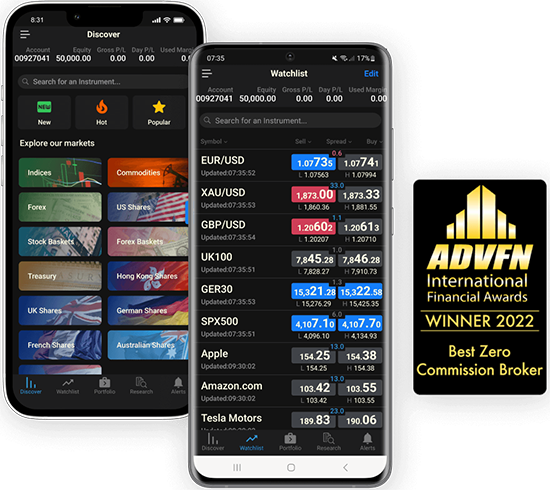
"At FXCM, we've been serving our clients for over 20 years. In that time, the world of Forex trading has changed a lot."
Watch our video to learn more about FXCM's history.
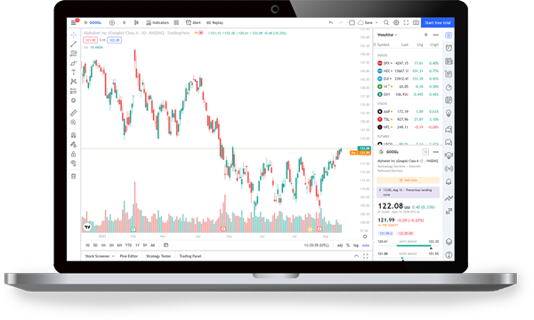
Explore brand new features: Volume profile indicators, multiple charts layout, advanced price scaling and many more!
Obtain an exclusive badge next to your name along with custom resolutions for symbols.
Access TradingView Live Trading Integration with FXCM to trade directly from your TradingView charts.
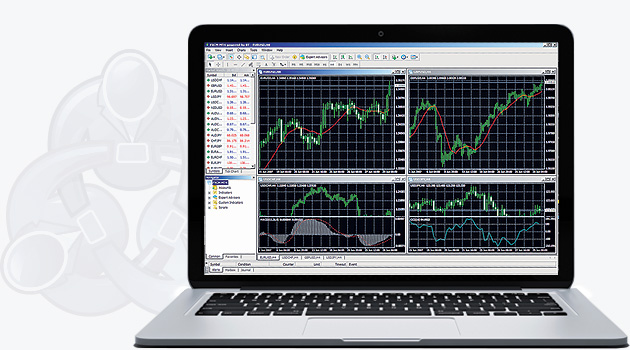
Experience no 3rd party bridges.
Utilise all Trading Strategies including Scalping.
Gain free EAs (Expert Advisors) and free Virtual Private Server (VPS) access1 with your MT4 account.
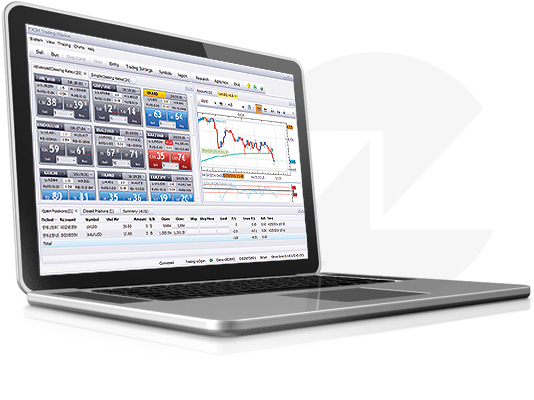
Unleash robust chart tools on an award-winning platform — great for technical traders.
Explore powerful, preloaded tools like Real Volume, Market Depth, and Trader Sentiment.
Customise your experience: Download indicators, create watch lists and custom layouts to adapt the platform for your strategy.
Volume, trader sentiment and other ready-to-go trading tools turn FXCM data into powerful market insights.
Connect directly to FXCM's price server. FIX, JAVA, Forex Connect: What are your API Trading needs?
Access powerful tools: Trading Signals, volume data, trader sentiment and more.
FXCM Celebrates it's 20th anniversary and says thank you for continuing to trade with us.

Around the world, FXCM offices provide forex, Cryptocurrency Trading and CFD trading services.
We're here for you. Our customer service has won many regional and international awards for being there when you need us, 24/5.
So, whether you're new to online trading or you're an experienced investor, FXCM has customisable account types and services for all levels of retail traders. Join FXCM traders around the world.
Open an account with FXCM today





At the beginning of the month (between 1st and 15th), a fee equal to 30 units of the base currency (3,000 JPY, 240 HKD) will be debited from any of your FXCM Account(s) to cover the VPS cost for each subscription. Only Active Trader clients subject to tier pricing on spread costs receive a free VPS.
Intermediary Markup: In some instances, accounts for clients of certain intermediaries are subject to a markup.
Enhanced CFD Execution: There are no stop and limit restrictions on major indices.
Leverage: Leverage is a double-edged sword and can dramatically amplify your profits. It can also just as dramatically amplify your losses. Trading foreign exchange/CFDs with any level of leverage may not be suitable for all investors.
Best Zero Commission Broker: Award granted to the FXCM Group by ADVFN in March 2022. When executing customers' trades, FXCM can be compensated in several ways, which include, but are not limited to: spreads, charging commissions at the open and close of a trade, and adding a mark-up to rollover, etc. Commission-based pricing is applicable to Active Trader account types.
Third Party Links: Links to third-party sites are provided for your convenience and for informational purposes only. FXCM bears no liability for the accuracy, content, or any other matter related to the external site or for that of subsequent links, and accepts no liability whatsoever for any loss or damage arising from the use of this or any other content. Such sites are not within our control and may not follow the same privacy, security, or accessibility standards as ours. Please read the linked websites' terms and conditions.
Exchange: ${getInstrumentData.exchange}
${getInstrumentData.bid} ${getInstrumentData.divCcy} ${getInstrumentData.priceChange} (${getInstrumentData.percentChange}%) ${getInstrumentData.priceChange} (${getInstrumentData.percentChange}%)
