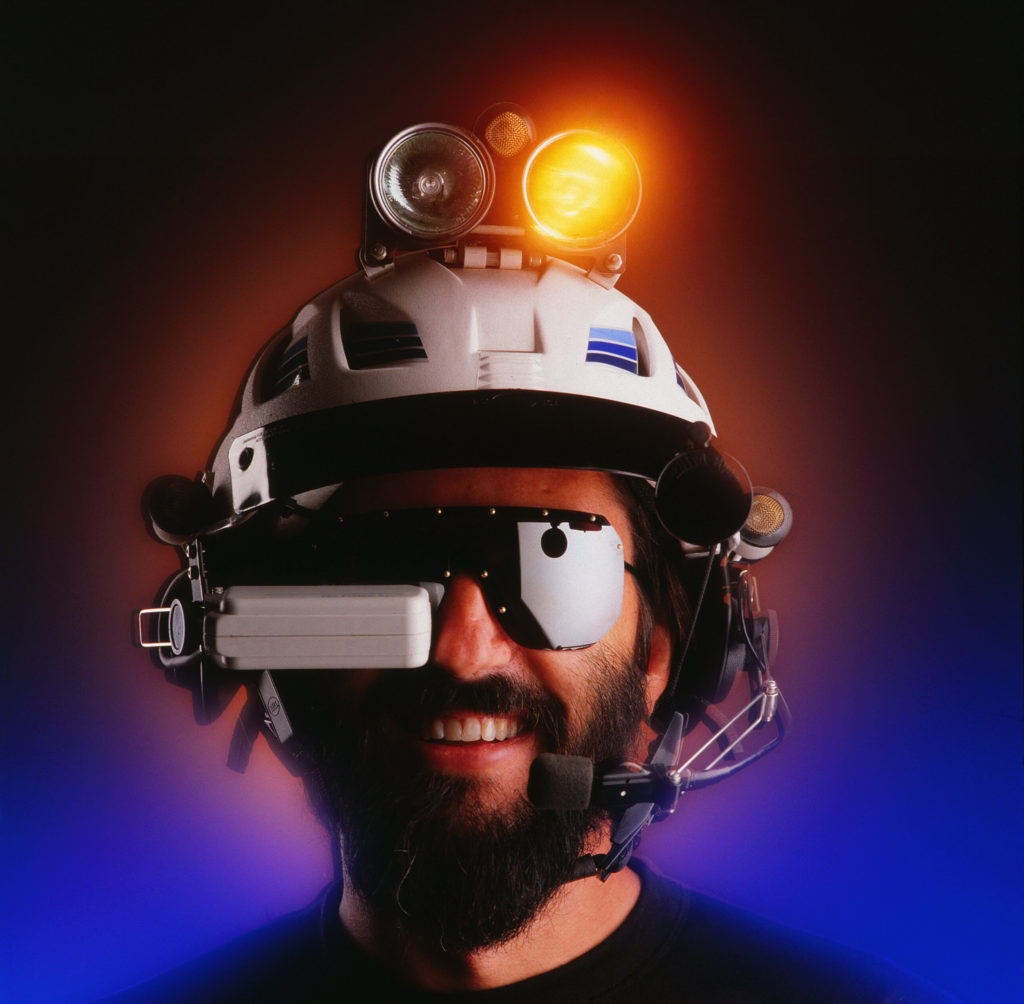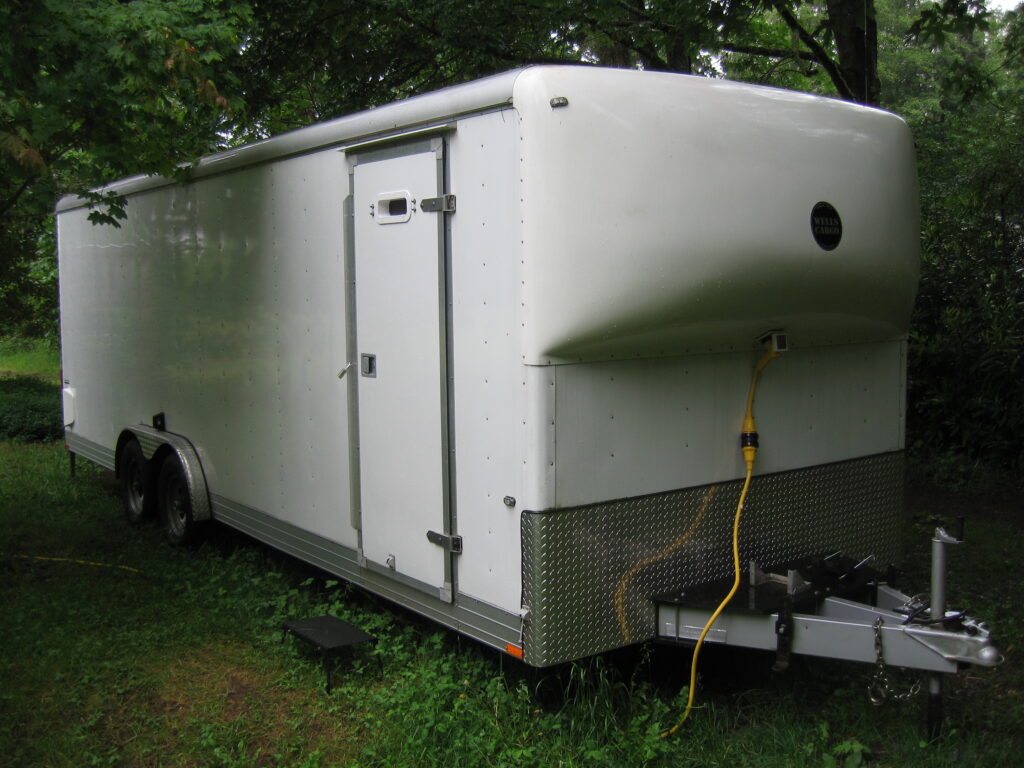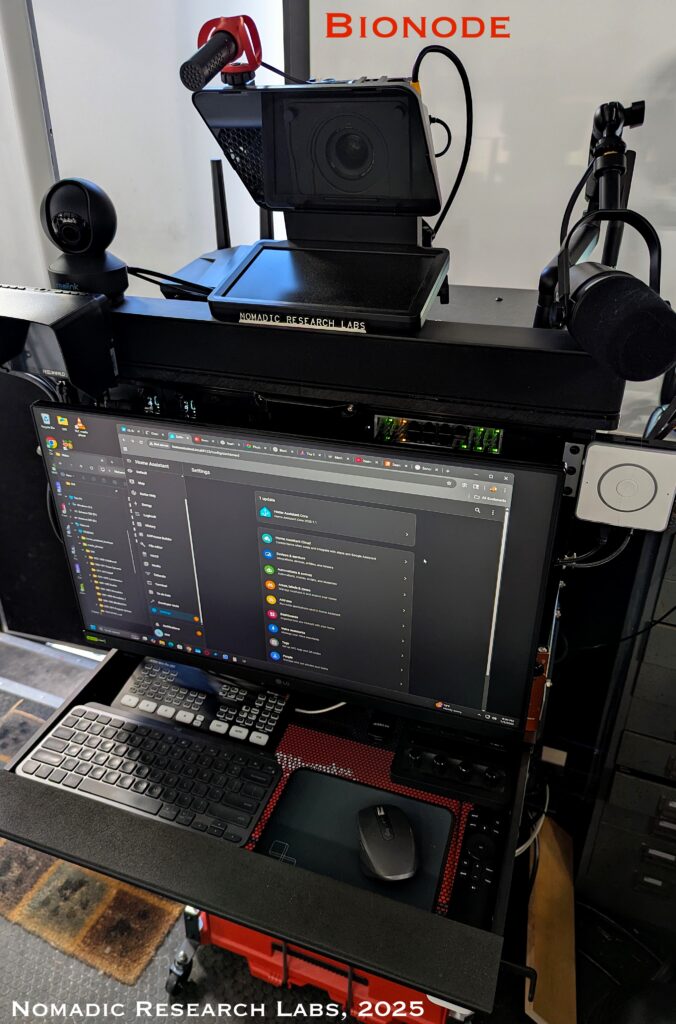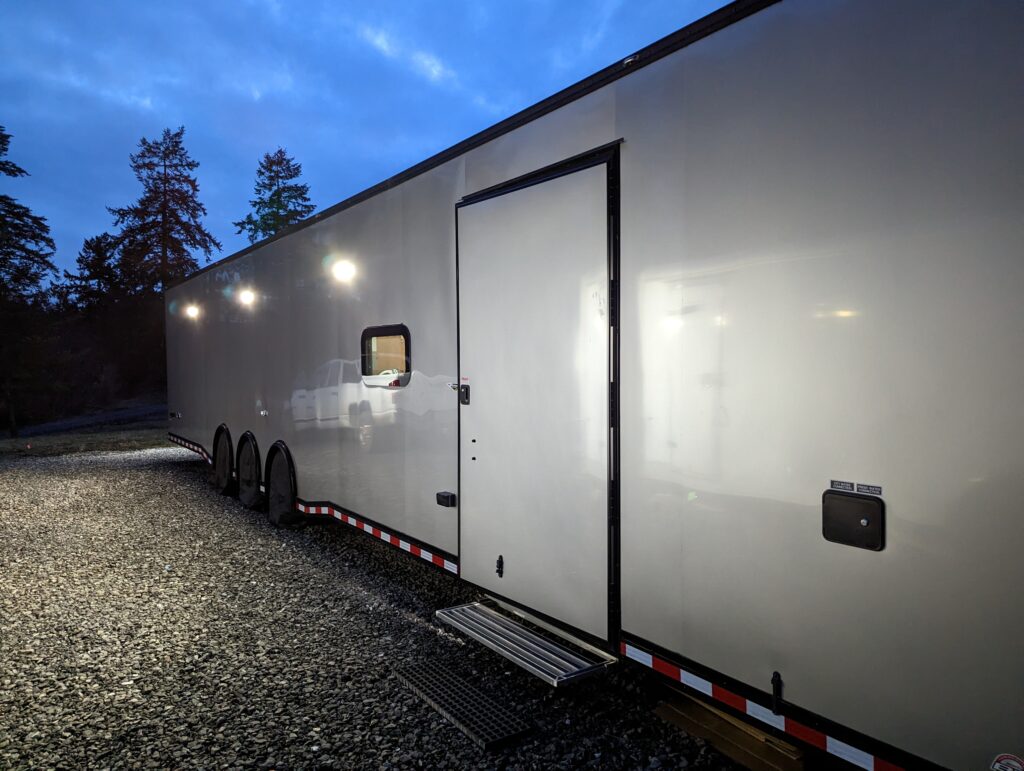
<?xml version="1.0" encoding="UTF-8"?>
<?xml-stylesheet type="text/xsl" media="screen" href="/~d/styles/atom10full.xsl"?><?xml-stylesheet type="text/css" media="screen" href="http://feeds.feedburner.com/~d/styles/itemcontent.css"?><feed xmlns="http://www.w3.org/2005/Atom" xmlns:openSearch="http://a9.com/-/spec/opensearchrss/1.0/" xmlns:georss="http://www.georss.org/georss" xmlns:feedburner="http://rssnamespace.org/feedburner/ext/1.0"><id>tag:blogger.com,1999:blog-25248918</id><updated>2009-07-13T08:45:31.746-07:00</updated><title type="text">Nomadness</title><subtitle type="html">Tales of the new direction at Nomadic Research Labs... the move to a ship named &lt;i&gt;Nomadness&lt;/i&gt;</subtitle><link rel="alternate" type="text/html" href="http://nomadness.com/blog/" /><link rel="next" type="application/atom+xml" href="http://www.blogger.com/feeds/25248918/posts/default?start-index=26&amp;max-results=25" /><link rel="http://schemas.google.com/g/2005#feed" type="application/atom+xml" href="http://nomadness.com/blog/atom.xml" /><author><name>Steve Roberts</name><uri>http://www.blogger.com/profile/16507685175834941450</uri><email>noreply@blogger.com</email></author><generator version="7.00" uri="http://www.blogger.com">Blogger</generator><openSearch:totalResults>69</openSearch:totalResults><openSearch:startIndex>1</openSearch:startIndex><openSearch:itemsPerPage>25</openSearch:itemsPerPage><link rel="self" href="http://feeds.feedburner.com/Nomadness" type="application/atom+xml" /><entry><id>tag:blogger.com,1999:blog-25248918.post-2366131417709921485</id><published>2009-07-11T23:30:00.000-07:00</published><updated>2009-07-12T10:22:50.055-07:00</updated><title type="text">The Zen of Geeky Boat Projects</title><content type="html">I'm anchored north of Hope Island at the moment, the boat feeling much lighter off the dock, the rhythm of life distinctly more relaxed than the task-oriented staccato that has characterized the past eight months.  There is much of the latter yet ahead, alas, but this break is a good reminder of why I'm putting myself through this.&lt;br /&gt;&lt;br /&gt;As expeditions go, this is a minor one.  There was talk of popping over to the San Juans, but my diesel is suddenly putting out black smoke above 1800 RPM or so and I have yet to diagnose the problem.  (That typically means partially burned fuel from either restricted airflow, high engine load like a fouled prop, exhaust back pressure, or a bad injector.)  I'll deal with it, but for now I am more focused on remembering life aboard... the best part of which is the &lt;span style="font-style: italic;"&gt;pace&lt;/span&gt;.&lt;br /&gt;&lt;br /&gt;At the lab, I juggle management tools, nudging a dozen parallel projects ranging from eBay and homeowner stuff to enclosure fabrication and boat network design.  It is never simple, never feels calm, and only rarely gives any indication that it might end someday.&lt;br /&gt;&lt;br /&gt;But now I'm swinging at anchor, a pasta in the oven, Sky off to give the dog a shore excursion, genset purring to slurp a few amp-hours back into the aging AGM bank, body pleasantly tired from unfamiliar exertions, a hint of sun-sting here and there, and really nothing I urgently need to do at the moment but write this blog posting.  What a difference. One project can be the focus of a whole day, with time for a nap, a hike, a frolicsome dinkabout, and an eventful ride (complete with retrieval of a powerboat-pooped dinghy) over to Cornet Bay for ice cream with friends aboard &lt;span style="font-style: italic;"&gt;Nereid&lt;/span&gt;... our buddy-boat companions on this little jaunt.&lt;br /&gt;&lt;br /&gt;Projects aboard have more immediacy than the ones that involve Linux servers, distributed Arduini, and radio gear.  Yesterday an intermittent in the engine-starting circuit blossomed into a full-blown failure, so I dug into the wiring harness, found a mashed-together butt splice that had not been properly crimped, fixed it, and vroom.  It's no big deal, but there's a perverse, almost pleasant purity in having a single task in focus... and a real satisfaction in getting it done.&lt;br /&gt;&lt;br /&gt;Especially when the engine starts again.&lt;br /&gt;&lt;br /&gt;&lt;a onblur="try {parent.deselectBloggerImageGracefully();} catch(e) {}" href="http://nomadness.com/blog/uploaded_images/skyhope-772694.jpg"&gt;&lt;img style="margin: 0px auto 10px; display: block; text-align: center; cursor: pointer; width: 300px; height: 400px;" src="http://nomadness.com/blog/uploaded_images/skyhope-772689.jpg" alt="" border="0" /&gt;&lt;/a&gt;&lt;br /&gt;&lt;span style="font-weight: bold;"&gt;Random Thoughts on Boat Projects&lt;/span&gt;&lt;br /&gt;&lt;br /&gt;This calls to mind a discussion that percolated on &lt;a target="_blank" href="http://www.cruisersforum.com/"&gt;Cruisersforum&lt;/a&gt; recently... someone launched a thread on refit lessons and I was inspired to contribute.  Given the focus of this blog, an edited version is worth including here:&lt;br /&gt;&lt;br /&gt;1.  Never hire a guy who hates his work... I'm still fixing messes left by the plumber-from-hell, and there were lots of clues while he was on the job that should have been grounds for termination.  The latest discovery:  instead of using the correct bolts for the SeaLand inspection plate, he just shot in some sheet-metal screws.  This distorted the polyethylene Ronco tank material, with one screw even penetrating the sidewall of the oversize cutout... creating a gap that leaks under pressure and insufficient material for a proper re-installation.   This hotshot charges $80/hour.  Hiring him was a mistake even though some of the tasks were intimidating and I felt I needed his skills... but ever since, I have been chasing the leaks and cleaning up after him.&lt;br /&gt;&lt;br /&gt;2.  In that spirit, I've learned that DIY should always be first choice, with the hiring of professionals limited to cases of esoteric knowledge, true gurus, or jobs requiring expensive capital equipment.  As I proceed with the geeking-out of the ship, my “business model,” although very casual, is publishing the designs and in some cases assembling kits. I think a lot of boaters are coming to the same conclusion, and the economy has a lot to do with it.  (Speaking of kits, &lt;a href="http://www.navagear.com/"&gt;Navagear&lt;/a&gt; did a very nice post about my marine &lt;a href="http://www.navagear.com/2009/06/gps-datalogger-kit-from-steve-roberts"&gt;GPS datalogger&lt;/a&gt; based on the Sparkfun Geochron.)&lt;br /&gt;&lt;br /&gt;3.  To-Do lists are fractal. The closer you zoom into one item, the more it expands into a cluster of component items. I try to anticipate this with what I call "CDTs," or Clearly Defined Tasks. Writing these out ahead of time may seem like over-detailing, but pays off when it helps avoid gross underestimation of time and costs.&lt;br /&gt;&lt;br /&gt;4.  Project management tools can make or break a job. I like &lt;a href="http://www.omnigroup.com/applications/omnifocus/"&gt;OmniFocus&lt;/a&gt; since you can list by projects and then review by contexts (like, "what else do I need to do now that I'm aboard with wiring tools spread out?").  And &lt;a href="http://www.literatureandlatte.com/scrivener.html"&gt;Scrivener&lt;/a&gt; is very useful for keeping the sprawling collection of design documents in one cohesive environment... before that, I had stray files everywhere.&lt;br /&gt;&lt;br /&gt;5.  If a project requires &lt;span style="font-family:courier new;"&gt;n&lt;/span&gt; components, there will be &lt;span style="font-family:courier new;"&gt;n-1&lt;/span&gt; units in stock (quoting an ancient collection of Murphy's laws, circa 1969).  It is really worthwhile to buy in bulk... and besides, you end up with repair inventory and trade goods. For hardware, &lt;a href="http://www.mcmaster.com/#" target="_blank"&gt;McMaster-Carr&lt;/a&gt; is spectacular.&lt;br /&gt;&lt;br /&gt;6.  Tool duplication between home and boat is unavoidable. You'll end up needing 'em anyway. Expensive tools are usually good investments, though they sink just as fast as cheap ones (don't be too macho to use a lanyard when leaning over the rail). The new Li-Ion &lt;a href="http://www.amazon.com/exec/obidos/ASIN/B000V2JAI0/nomadicrese0c-20"&gt;Makita LXT&lt;/a&gt; power tools are awesome... I &lt;span style="font-style: italic;"&gt;love&lt;/span&gt; them, along with the &lt;a href="http://www.amazon.com/exec/obidos/ASIN/B0000224AX/nomadicrese0c-20"&gt;best drill bits&lt;/a&gt; I've ever owned. This felt like a crazy splurge at the time, but has already been a winning investment.&lt;br /&gt;&lt;br /&gt;7.  Document, document, document! Buy a cable-labeling machine (I like the &lt;a href="http://www.anrdoezrs.net/click-1550241-10535454?sid=Favorite+Tools&amp;amp;url=http%3A%2F%2Fcableorganizer.com%2Frewards%2Fbrady-id-pal-free-printer.htm&amp;amp;cjsku=BC-IDPAL-KIT-PROMO"&gt;IDpal&lt;/a&gt; from Brady) and ID every cable as it is identified. Take the time to do good drawings (I use &lt;a href="http://www.omnigroup.com/applications/omnigraffle/pro/"&gt;OmniGraffle Pro&lt;/a&gt; for overall diagrams, and &lt;a href="http://www.cadsoftusa.com/"&gt;Eagle&lt;/a&gt; for detailed schematics). Start a binder for the known-correct information that you will want to be able to find again... sprinkled throughout project notebooks and random scraps, it gets lost. Dedicate portable file boxes to manuals and individual projects. Use your digital camera to chase otherwise invisible mysteries, and save the images. Take photos before closing off an area so you will know later where not to drill.&lt;br /&gt;&lt;br /&gt;8.  Save labeled core samples from hole-saw adventures.&lt;br /&gt;&lt;br /&gt;There are a lot more lessons that fall out of all this, and I'll share them as they occur.  But for now, there's a bit of catch-up to do; somehow I let 5 weeks get away since my last posting here.&lt;br /&gt;&lt;br /&gt;&lt;span style="font-weight: bold;"&gt;Stove Cage&lt;/span&gt;&lt;br /&gt;&lt;br /&gt;&lt;span style="font-style: italic;"&gt;&lt;/span&gt;The Navigator Little Cod wood stove that was &lt;a href="http://nomadness.com/blog/2008/10/little-cod-wood-stove.html"&gt;installed last year&lt;/a&gt; was excellent company over the winter, but one job remained unfinished.  The exposed stovepipe, especially with the related sacrifice of a wooden pole in the cabin, was an accident waiting to happen:  hot or not, a lurch into sharp sheet metal during a hands-free transit at the instant of wave impact could have devastating consequences.  So I built a cage:&lt;br /&gt;&lt;br /&gt;&lt;a onblur="try {parent.deselectBloggerImageGracefully();} catch(e) {}" href="http://nomadness.com/blog/uploaded_images/stovecage-718247.jpg"&gt;&lt;img style="margin: 0px auto 10px; display: block; text-align: center; cursor: pointer; width: 300px; height: 400px;" src="http://nomadness.com/blog/uploaded_images/stovecage-718240.jpg" alt="" border="0" /&gt;&lt;/a&gt;&lt;br /&gt;I'll probably soften up the top rail and the upper halves of the verticals with St. Mary's hitching some night at anchor, but even as it is we already find it pleasant to use as both a leaning station and a grabrail when passing through.  The parts are standard 7/8" rail and associated fittings, and the 60° angle of the struts both opens more rail to gripping and minimizes flexion of the top half.&lt;br /&gt;&lt;br /&gt;&lt;span style="font-weight: bold;"&gt;Curtains&lt;/span&gt;&lt;br /&gt;&lt;br /&gt;Another major lifestyle enhancement in the raised-salon pilothouse is a set of curtains... especially on the sloping front windows that make a highly effective greenhouse on sunny days. After months of frequent staring at the problem and a number of brainstorming sessions, we decided to take a novel approach and use high-power neodymium magnets sewn into the edges of the curtain panels... with matching ones attached to the window frame with double-stick foam tape.  Our fabrics guru was not at all happy about trying to keep feisty magnets under control while sewing on her industrial steel machine, but eventually she got them all in there.&lt;br /&gt;&lt;br /&gt;The panels are a lush patterned dark blue fabric inside, and a special light-colored UV-resistant material outside.  And while there is a little gaposis and sag, they are a huge improvement in quality of life aboard.  Peeking out is easy: just pop open a corner, have a look, and slap it shut.  It is much tidier than rods and associated hardware.&lt;br /&gt;&lt;br /&gt;&lt;a onblur="try {parent.deselectBloggerImageGracefully();} catch(e) {}" href="http://nomadness.com/blog/uploaded_images/front-curtain-772595.jpg"&gt;&lt;img style="margin: 0px auto 10px; display: block; text-align: center; cursor: pointer; width: 400px; height: 300px;" src="http://nomadness.com/blog/uploaded_images/front-curtain-772589.jpg" alt="" border="0" /&gt;&lt;/a&gt;&lt;br /&gt;(The black contraption at the top wrapped in foam and gorilla tape needs to come out - it's one of the old windshield-wiper motors.  I'd like some, actually, but one of the three melted its wiring in the harness and I no longer trust them... and besides, they are head-bangers.  One of these days.)&lt;br /&gt;&lt;br /&gt;&lt;span style="font-weight: bold;"&gt;Bow Navlight Assembly&lt;/span&gt;&lt;br /&gt;&lt;br /&gt;In my last post, I moaned about the mounting scheme used by the Aqua Signal Series 32 LED navigation lights, and I remain unimpressed... it should not have taken so much work to get them installed.  One of the units, fresh from the clamshell packaging, had the key expando-plastic toy part fractured and useless, so any cop-out attempt to mount according to the nearly nonexistent documentation was out the window anyway.&lt;br /&gt;&lt;br /&gt;Instead, I cobbled up a little machined aluminum assembly that bolts to the original mounting plate that carried a milky incandescent power-hog from yesteryear:&lt;br /&gt;&lt;br /&gt;&lt;a onblur="try {parent.deselectBloggerImageGracefully();} catch(e) {}" href="http://nomadness.com/blog/uploaded_images/bicolor-729066.jpg"&gt;&lt;img style="margin: 0px auto 10px; display: block; text-align: center; cursor: pointer; width: 400px; height: 224px;" src="http://nomadness.com/blog/uploaded_images/bicolor-729062.jpg" alt="" border="0" /&gt;&lt;/a&gt;&lt;br /&gt;(That little black thing in the foreground is the broken critical mounting part, which is supposed to expand when a tapered knurled brass plug is pulled into it by the one and only mounting screw.  I like my approach better... a longer #8 button-head, turned down slightly to fit in the metric-sized hole in the plastic, threaded into a block of aluminum.  This might have to take green water over the bow someday.)&lt;br /&gt;&lt;br /&gt;&lt;span style="font-weight: bold;"&gt;Nomadness at Anchor, Part 2&lt;br /&gt;&lt;/span&gt;&lt;br /&gt;This posting has been idle for a while, though I have occasionally poked at it with a stick or added notes about stuff to add.  I should just do &lt;span style="font-style: italic;"&gt;short&lt;/span&gt; postings and not make each one such a multi-threaded repository of techno-philosophical musings.  Old habits die hard; I still think of these as &lt;span style="font-style: italic;"&gt;articles&lt;/span&gt; and use my vintage &lt;a href="http://microship.com/latestnews/live.html"&gt;live page&lt;/a&gt; for short news bits of interest to friends.&lt;br /&gt;&lt;br /&gt;(That page has a new feature, by the way: it now has a retro HTML table with the most immediate temporal layer scraped from the epic to-do list, presenting only the things that need to be done &lt;span style="font-style: italic;"&gt;next&lt;/span&gt; across a landscape of 30-40 project categories.  It's a lot easier to grasp than the totality of All Known List Items, which get vapourous anyway when you try to look beyond the current wavefront of progress.  Besides, all I really need to know when rolling up my sleeves is what needs to be done &lt;span style="font-style: italic;"&gt;right now&lt;/span&gt;.  I have made it public mostly to share with the NRL team, but also invite participation if something there catches your eye...)&lt;br /&gt;&lt;br /&gt;Anyway, I'm at anchor again.  A week or so has passed, and the big week-long regatta has taken over the marina where Nomadness has been moored.  Us riffraff have been asked to vacate the docks to make room for all the go-fast toys, so for a while we will be gunkholing about, taking friends for long-promised sails, and returning randomly to the lab to keep the nickel generators sputtering along.&lt;br /&gt;&lt;br /&gt;It has been a very eventful few days.  Way back at the beginning of this post, I mentioned the black smoke above 1800 RPM.  This was quite worrying, and I concocted a theory that the diver who replaced the nose zinc on my Max Prop had somehow fungled the pitch and increased engine loading.  Only... it still went from forward to reverse so was not jammed, and an email exchange with helpful PYI tech support pretty well convinced me that such a phenomenon was not possible. I have the &lt;a target="_blank" href="http://www.pyiinc.com/index.php?section=max-prop&amp;amp;action=three-blade-classic&amp;amp;sn=3"&gt;Classic 3-Blade&lt;/a&gt; model, shown here during the pre-purchase haulout before cleaning and zincage:&lt;br /&gt;&lt;br /&gt;&lt;a onblur="try {parent.deselectBloggerImageGracefully();} catch(e) {}" href="http://nomadness.com/blog/uploaded_images/nomadness-prop1-753043.jpg"&gt;&lt;img style="margin: 0px auto 10px; display: block; text-align: center; cursor: pointer; width: 400px; height: 360px;" src="http://nomadness.com/blog/uploaded_images/nomadness-prop1-753038.jpg" alt="" border="0" /&gt;&lt;/a&gt;&lt;br /&gt;I was not happily contemplating either an engine service call or haulout with prop-removal... so, grasping at straws, I asked the diver to take a look even though it has only been a couple of months since the last cleaning. And guess what... this has been the worst year in memory for marine growth around here!  It was fouled from bow to stern, the running gear covered with barnacles and other biology.  They went back down the next day and polished her up, and yesterday I cranked the engine to 3200 RPM and purred along smoothly with nary a wisp of smoke.  All betterz...&lt;br /&gt;&lt;br /&gt;Feeling smug about a cheap solution to a scary problem immediately induced another one... I carelessly let the furling line get away when deploying the headsail, so at the end of the day, rounding up in a fresh breeze to anchor off a friend's beach, the sail got stuck HARD when still about 30% out.  No amount of fiddling had any effect, so I cast off the furling line, wrestled the drum around until I had a couple of sheet wraps, and tied it off to the pulpit with small stuff.  All day today, with gorgeous perfect breezes and sails dancing in bright sunshine, we swung at anchor waiting for enough calm to drop the basket and untangle the mess.&lt;br /&gt;&lt;br /&gt;I suppose there are worse things than a day at anchor since we had no place in particular to go.  "Cruising," quoth some ancient wag, "is the art of fixing your boat in exotic ports."&lt;br /&gt;&lt;br /&gt;&lt;span style="font-weight: bold;"&gt;A Critical Comment&lt;/span&gt;&lt;br /&gt;&lt;br /&gt;This is a good time to answer a comment from "Anonymous" that came in response to my blog post of a few weeks ago.  Every now and then, someone will write a stinging criticism of my peculiar blend of passions, usually from the perspective of the traditional values associated with the most visible substrate.  Someone in 1989 told me that I was "bastardizing the simple, beautiful act of bicycling" with the &lt;span style="font-style: italic;"&gt;BEHEMOTH&lt;/span&gt; project, and a few years later, a guy in Arizona lambasted my transition to the Microship... insisting that I remove him from my mailing list since I was "abandoning my bicycle roots."  One needs a bit of a thick skin when making a life public, and I was initially going to just ignore Mr. Anonymous.  But he actually makes a valid point that I should address, even though he did not do so very kindly:&lt;br /&gt;&lt;blockquote style="font-style: italic;"&gt;So mr nomad how's outfitting the space shuttle going? Excuse me for being skeptical, only you seem stuck in the yuppie yesteryear of "too much is never enough." Complex systems galore, oh...and you're going to swing it by going global and what... tweeting from fiji?&lt;br /&gt;&lt;br /&gt;Salt water, the motion of the ocean, an unrealistically long supply chain combined a global depression will have the final word on your work I feel.&lt;br /&gt;&lt;br /&gt;Really, go cruising and report how the multitude of systems are holding up... that is if you aren't too busy maintaining broken systems. I'll give your techno path some credence if you can go a year or two of cruising without giving up in exhaustion.&lt;/blockquote&gt;There are a few things this fellow is overlooking, though his perspective on complexity is not uncommon in the cruising community and is not entirely irrational.&lt;br /&gt;&lt;br /&gt;First, and I think most of my readers know this, my primary source of geek pleasure is the blending of passions.  From my ancient 1983 "computerized recumbent bicycle" to this crazy starship-to-be, what has kept me going for a quarter-century has been the integration of geek delights into adventure substrates and then (usually) spending quality time playing with the quirky combination.  So my initial response to his comment is that I am not just getting distracted by technology in what is fundamentally a cruising project; the whole &lt;span style="font-style: italic;"&gt;point&lt;/span&gt; here &lt;span&gt;is&lt;/span&gt; the combination of the two.&lt;br /&gt;&lt;br /&gt;Of course, he is absolutely correct in pointing out the potential fragility.  "Water corrodes; salt water corrodes absolutely."  Systems crash, parts can be hard to get, and complexity is anathema to reliability.  A purist would have already snorted at my furling drum problem; a hanked-on jib would never "jam." And if I do find myself dealing with constant electronics failures, then I have not done my job well, since a rather large percentage of the design is related to robustness, sealing, serviceability, isolation, backups, and easy replacement if it's all toasted by lightning.&lt;br /&gt;&lt;br /&gt;But beyond all that, one of the fundamental design standards here is that none of this gizmology can be mission critical... at least in the sense of disabling basic ship operation if it fails (like requiring power to move a swing keel on a high-performance race boat).  I still pull strings for sheets and halyards, there are TWO independent hydraulic backups to the autopilot as well as a wind vane and emergency tiller, I have an Astra IIIB sextant on board that will still work when the GPS toys crap out, I don't use microprocessors to control navigation lights, and safety-critical things like the marine VHF are not dependent on crossbar networks to get audio in and out.&lt;br /&gt;&lt;br /&gt;So why, one might cynically ask, am I farting around for years with lab-logistics and development tools when I could just go cruising (other than the fact that I find the geek stuff fundamentally entertaining)?&lt;br /&gt;&lt;br /&gt;In a purely practical sense, the systems that I am building address a very specific need that is not well met by existing tools.  When I am off the boat, I want to be able to &lt;span style="font-style: italic;"&gt;see&lt;/span&gt; it and scan sensors.  When I am in bed and it gets bouncy, I want to reach up to a display and take a quick reassuring look at GPS guard zone, depth, and wind data.  When batteries are sagging, I want to know why.  When I forget how the 20 or so valves related to engine fluids are configured (3 tanks, 2 Racors, transfer pump, oil changing system, coolant loop pickoff for water heating), I want to see a live drawing with active lines a different color than inactive ones and relevant flow sensor values displayed in context.  When I'm tired and try to fire up the macerator pumpout without first opening the tank vent and seacock (duh), I want something to yell at me very loudly.  And so on.&lt;br /&gt;&lt;br /&gt;None of this suggests that I should get lazy and hand all responsibility over to systems; instead it is an attempt to bring the insane complexity of a modern cruising yacht's systems into a user interface that looks and feels like a simple website... accessible from anywhere on or off the boat.  If that fails, oh well.  The &lt;span style="font-style: italic;"&gt;boat&lt;/span&gt; still works.&lt;br /&gt;&lt;br /&gt;A secondary benefit of all this, besides my finding it intrinsically fun and justifiable on that basis, is that a lot of &lt;span style="font-style: italic;"&gt;other&lt;/span&gt; people are interested as well... so there is an associated business model that yields publications and kits.&lt;br /&gt;&lt;br /&gt;Finally, a bit of broader perspective... sailing itself is not low-tech, even though it has been done for centuries.  We've come a long way from square-riggers and tallow-tipped sounding leads; by the time you throw in N2K navigation networks, watermakers, high-brightness LEDs, windvane self-steering, carbon composites, FLIR, forward-looking sonar, broadband radar, and MPPT solar charge management, a cruising boat is a masterpiece of multi-disciplinary engineering.  But I think I understand Mr. Anonymous' objection to complexity: it is anything that is not already a turn-key product.&lt;br /&gt;&lt;br /&gt;&lt;span style="font-weight: bold;"&gt;Footnote: Life Under a Lightning Rod&lt;/span&gt;&lt;br /&gt;&lt;br /&gt;I was just about to send this via the trusty EVDO link when I started seeing flashes outside, and emerged to observe huge cloud-to-cloud lightning displays covering many miles (with occasional ground strikes).  When you're in a steel box with a 60-foot aluminum stick in the air, the tallest thing around with a hook down just off a lee shore as reversing wind gusts whistle the rigging, this is somewhat disconcerting.&lt;br /&gt;&lt;br /&gt;The dilemma:  stay aboard, let more chain out, and watch the sky show... even though swinging then becomes dicey if the wind shifts to the west... or hop in the dink and paddle to the home of an out-of-town friend.  We opted for the latter, and have been watching my anchor light drift back and forth like a motile Venus against a backdrop of lightning-streaked clouds and distant shoreline.&lt;br /&gt;&lt;br /&gt;A nice, primal footnote to all those existential questions about the essence of technomadics...&lt;br /&gt;&lt;br /&gt;Fair winds,&lt;br /&gt;Steve&lt;div class="blogger-post-footer"&gt;&lt;img width='1' height='1' src='https://blogger.googleusercontent.com/tracker/25248918-2366131417709921485?l=nomadness.com%2Fblog%2Findex.html'/&gt;&lt;/div&gt;&lt;img src="http://feeds.feedburner.com/~r/Nomadness/~4/TOtI93VvrpY" height="1" width="1"/&gt;</content><link rel="replies" type="application/atom+xml" href="http://www.blogger.com/feeds/25248918/2366131417709921485/comments/default" title="Post Comments" /><link rel="replies" type="text/html" href="https://www.blogger.com/comment.g?blogID=25248918&amp;postID=2366131417709921485" title="2 Comments" /><link rel="edit" type="application/atom+xml" href="http://www.blogger.com/feeds/25248918/posts/default/2366131417709921485" /><link rel="self" type="application/atom+xml" href="http://www.blogger.com/feeds/25248918/posts/default/2366131417709921485" /><link rel="alternate" type="text/html" href="http://feedproxy.google.com/~r/Nomadness/~3/TOtI93VvrpY/zen-of-geeky-boat-projects.html" title="The Zen of Geeky Boat Projects" /><author><name>Steve Roberts</name><uri>http://www.blogger.com/profile/16507685175834941450</uri><email>noreply@blogger.com</email><gd:extendedProperty xmlns:gd="http://schemas.google.com/g/2005" name="OpenSocialUserId" value="06009038990891617446" /></author><thr:total xmlns:thr="http://purl.org/syndication/thread/1.0">2</thr:total><feedburner:origLink>http://nomadness.com/blog/2009/07/zen-of-geeky-boat-projects.html</feedburner:origLink></entry><entry><id>tag:blogger.com,1999:blog-25248918.post-2177802297980817211</id><published>2009-05-31T19:40:00.000-07:00</published><updated>2009-06-04T22:46:39.742-07:00</updated><title type="text">Straining Toward Nomadness</title><content type="html">I miss the mental simplicity and steady progress of only working on &lt;span style="font-style: italic;"&gt;one thing&lt;/span&gt;.  I reminisce about Epic Projects of yesteryear, and they all seem to share the single characteristic of being grand obsessions so all-consuming that the rest of my life was relegated to meatspace maintenance and the bare-minimum business of hustling for cash to stay marginally afloat.  Clear.  Focused.  Irresponsible, but who cares... the project grows.&lt;br /&gt;&lt;br /&gt;Things are different now, and it's exhausting.  What I &lt;span style="font-style: italic;"&gt;want&lt;/span&gt; is to be immersed in the ship with a departure plan clear in my mind, living in a haze of solder smoke backlit by software-driven blinkies, mechanical systems humming away in the background, the to-do list steadily shortening, test-jaunts as simple as casting off docklines and taking her for a spin.  In some ways, that's even more compelling a vision than sailing off into the sunset; nothing like getting my geek on with that old envelope-pushing passion.&lt;br /&gt;&lt;br /&gt;But the current reality is strangely orthogonal, as I attempt to multitask a dozen projects at once: aboard the boat, in the lab, on the computer.  It's all fun; every little invention is a delight... but there are so many of them that I lose track of design documents on my own hard drive and get a wave of guilt when passing shelves laden with new toys.  I've even declared a moratorium on acquisitions until I can put more of the previous ones to use and clear some &lt;span style="font-style: italic;"&gt;mental&lt;/span&gt; shelf space.&lt;br /&gt;&lt;br /&gt;Part of this is the huge lunge needed to claw my way out of the mire of complexity that is this land-based lifestyle, and it's not just the relatively trivial problem of dumping a household to go cruising. Hell, that's the easy part, even with the new vegetable garden, a loving mate, and her dog:&lt;br /&gt;&lt;br /&gt;&lt;a onblur="try {parent.deselectBloggerImageGracefully();} catch(e) {}" href="http://nomadness.com/blog/uploaded_images/sky-zubyak-726607.jpg"&gt;&lt;img style="margin: 0px auto 10px; display: block; text-align: center; cursor: pointer; width: 400px; height: 243px;" src="http://nomadness.com/blog/uploaded_images/sky-zubyak-726600.jpg" alt="" border="0" /&gt;&lt;/a&gt;&lt;br /&gt;The &lt;span style="font-style: italic;"&gt;hard&lt;/span&gt; part is the Microship lab, which is not micro at all:  3000 square feet packed with geekstuff from previous techomadic endeavors.  When I walk around with a clear head, I realize just how little I actually use... so the &lt;span style="font-style: italic;"&gt;Polaris&lt;/span&gt; mobile lab project continues to occupy center stage despite the seductive allure of &lt;span style="font-style: italic;"&gt;Nomadness&lt;/span&gt; rusting slowly in the sunshine.  The carpentry is almost done (today I wrapped up fabrication of 12 hinged panels that make the 45° jump between wall and newly insulated roof, providing a cable channel for all the benches).  Once I distill the tonnage into a sleek 320 square-foot portable system, on-site boat projects should be less hobbled by the constant need to make 3-hour runs back to home base.&lt;br /&gt;&lt;br /&gt;Since I also have to make a living while all this is going on, that project is starting to accumulate enough information for another book... a detailed how-to on turning a stock Wells-Cargo trailer into a mobile shop, with sections on carpentry, power, security, benches, inventory, and so on.&lt;br /&gt;&lt;br /&gt;Of course, everything feels like a potential publishing project now; the &lt;a href="http://www.amazon.com/exec/obidos/ASIN/1929470053/nomadicrese0c-20"&gt;&lt;span style="font-style: italic;"&gt;Reaching Escape Velocity&lt;/span&gt;&lt;/a&gt; book is finished and available... a surprisingly smooth process.  That's an Amazon link there in the previous sentence; it can also be ordered from the individual &lt;a href="https://www.createspace.com/3382414"&gt;book page&lt;/a&gt; at CreateSpace (I make more money from the latter, but it's much less convenient for the buyer since there is no ability to queue up a multi-book order to get free shipping).  I also deleted the PDF version that was for sale, and offer the book in &lt;a href="http://nomadicresearchlabs.com/store/index.php?main_page=document_product_info&amp;amp;cPath=4&amp;amp;products_id=15"&gt;my online store&lt;/a&gt;  (signed if you like).&lt;br /&gt;&lt;br /&gt;This information should help many projects get off the ground... the arts of working with sponsors, media, and volunteers are discussed in detail, along with the, um, obsessive focus on a massively complex undertaking that is the, um, yeah, the &lt;span style="font-style: italic;"&gt;most important single thing&lt;/span&gt; you can be doing.  I think I need to re-read this and apply it to &lt;span style="font-style: italic;"&gt;Nomadness&lt;/span&gt; development!&lt;br /&gt;&lt;br /&gt;There's an outline &lt;a href="http://nomadicresearchlabs.com/store/index.php?main_page=document_product_info&amp;amp;cPath=4&amp;amp;products_id=15"&gt;over yonder&lt;/a&gt; if you'd like to learn more (I'd paste it here, but HTML lists get all spacey in Blogger).&lt;br /&gt;&lt;br /&gt;Speaking of books, now that I have been through the &lt;a target="_blank" href="http://www.createspace.com/"&gt;CreateSpace&lt;/a&gt; publishing process, I'm coaching an old friend as she brings her book to life.  This is going to be interesting; I set up a simple web page for her and will post the occasional teaser until &lt;a target="_blank" href="http://savedforthedemon.com/"&gt;&lt;span style="font-style: italic;"&gt;Saved for the Demon&lt;/span&gt;&lt;/a&gt; is available.  It's a wild and engaging tale, believe me.&lt;br /&gt;&lt;br /&gt;&lt;span style="font-weight: bold;"&gt;Boat Updates&lt;/span&gt;&lt;br /&gt;&lt;br /&gt;Now that the weather is frankly gorgeous, I should be aboard every day working on ship projects... but instead I am in the forest, hustling to get the mobile lab ready for deployment.  There has been some progress, however.&lt;br /&gt;&lt;br /&gt;The most urgent class of tasks at the moment involves issues that impact my ability to cast off the lines and go for a sail.  One of those was trivial-but-maddening:  tool drawers that flew open at the slightest hint of roll, slamming to the extreme of travel and back with every wavelet.  Clearly unacceptable.  Once, long ago, they had clever plastic spring-latch assemblies embedded in a finger-hole nacelle, but both that and the corresponding strikes are no longer viable.&lt;br /&gt;&lt;br /&gt;The redneck solution (pillow and duct-tape) got me through last season, but that's just embarrassing.  Given all the constraints (not be an ankle-biter, not require major surgery, not be too expensive, not be ugly), the answer took longer than expected to emerge... but it was my favorite sort of fix:  use something already in stock!&lt;br /&gt;&lt;br /&gt;All it took was a pair of &lt;a target="_blank" href="http://www.southco.com/class/c7-soft-draw-latches-7420.html?ctid=68"&gt;Southco soft draw latches&lt;/a&gt;:&lt;br /&gt;&lt;br /&gt;&lt;a onblur="try {parent.deselectBloggerImageGracefully();} catch(e) {}" href="http://nomadness.com/blog/uploaded_images/drawlatches-777280.jpg"&gt;&lt;img style="margin: 0px auto 10px; display: block; text-align: center; cursor: pointer; width: 400px; height: 226px;" src="http://nomadness.com/blog/uploaded_images/drawlatches-777274.jpg" alt="" border="0" /&gt;&lt;/a&gt;&lt;br /&gt;These things are great (and available from &lt;a target="_blank" href="http://mcmaster.com/"&gt;McMaster-Carr&lt;/a&gt;) - they are soft and pliable, easy to use, and even look pretty good.  Technically, they are not pulling in the right direction for use on drawer faces, but I'm confident that the problem is solved.&lt;br /&gt;&lt;br /&gt;Speaking of problems, I'm dealing with a couple of lighting issues.  The first is the wimpy solar LED RailLight that not only rusts in a single season, but has poor-quality mounting hardware, batteries that don't make it through the night, and non-marinized components. One of mine came with a cracked globe and missing screw... I would call this a good idea cheesily implemented, and thus a waste of money. I thought I was going to relocate my pair to the garden after deciding they aren't boat-worthy, but they didn't survive being wet and neither works... so off they go to the dumpster after I harvest the little solar cells:&lt;br /&gt;&lt;br /&gt;&lt;a onblur="try {parent.deselectBloggerImageGracefully();} catch(e) {}" href="http://nomadness.com/blog/uploaded_images/raillights-718065.jpg"&gt;&lt;img style="margin: 0px auto 10px; display: block; text-align: center; cursor: pointer; width: 400px; height: 190px;" src="http://nomadness.com/blog/uploaded_images/raillights-718062.jpg" alt="" border="0" /&gt;&lt;/a&gt;&lt;br /&gt;The second lighting-related annoyance is actually from a manufacturer that I have respected for years - AquaSignal.  I used their lights on the Microship with Luxeon LED retrofits and 350 mA constant current sources, and naturally looked to their new Series 32 when preparing to replace the old incandescents.&lt;br /&gt;&lt;br /&gt;Well, It's the most astonishingly fragile assembly I've ever seen in this product space, and the instructions are useless.&lt;br /&gt;&lt;br /&gt;Apparently, they expect this to stay rooted to the harsh stern environment with only a little expanding plastic bushing on one side, and nothing on the other but the friction of the wire-exit tube. Behind the gasket, it is potted; there is no mounting base (the substrate is actually very well-made and substantial, but I suspect drilling an extra mounting hole is not what they had in mind).  I'm suspicious of the wire exit, which appears to have a capillary path to the interior... though when I peek inside, I suspect there is enough potting.&lt;br /&gt;&lt;br /&gt;Short of bonding this in place with 3M 4200, which may be the best move, I was so convinced that I was missing some intended mounting scheme that I even posted to Cruisers Forum in the hopes that I'd be derisively pointed to an obvious RTFM-ish solution.  No such luck.  Other people have been gluing them on as well.  Not quite sure what the company was thinking, but despite excellent light output, I cannot recommend these:&lt;br /&gt;&lt;br /&gt;&lt;a onblur="try {parent.deselectBloggerImageGracefully();} catch(e) {}" href="http://nomadness.com/blog/uploaded_images/aquasignal-32-back-730184.jpg"&gt;&lt;img style="margin: 0px auto 10px; display: block; text-align: center; cursor: pointer; width: 400px; height: 313px;" src="http://nomadness.com/blog/uploaded_images/aquasignal-32-back-730177.jpg" alt="" border="0" /&gt;&lt;/a&gt;&lt;br /&gt;Next up: fabrication of the stainless cage around the woodstove (all parts on hand), mounting the bracket for stowing the dink's petite little outboard, fixturing the water heater behind the shower enclosure, extracting the last of the old watermaker for the fellow who bought its pump on eBay, mounting the shore-water entry where the old water heater stack exited, and starting the power system retrofit.&lt;br /&gt;&lt;br /&gt;&lt;span style="font-weight: bold;"&gt;A Paleo-Techomadic Take on Location Independence&lt;/span&gt;&lt;br /&gt;&lt;br /&gt;In my &lt;a target="_blank" href="http://nomadness.com/blog/2009/05/digital-nomad-redux.html"&gt;previous post&lt;/a&gt;, I mused about the sudden interest in something that has been central to my life since 1983... a number of &lt;a target="_blank" href="http://www.technomadia.com/2009/05/digital-location-independent-lifestyle-designing-nunomads"&gt;variations&lt;/a&gt; on what is basically full-time travel augmented by geek tools that are now universal (and a way of thinking that makes it sustainable).  Some people are even monetizing this, selling books, courses, coaching, and other materials... and indeed, when I look at how much of a conceptual leap it must be from the perspective of a life of employment, I suspect there is a market.  I know that my 1993 &lt;a style="font-style: italic;" target="_blank" href="http://microship.com/resources/first-steps.html"&gt;First Steps&lt;/a&gt; document helped get a lot of people moving, and it even presupposed a set of technomadic urges.  It really is simple in principle, but there are countless technical details that are not at all obvious, and it is good to see the aggregation of tips and techniques.&lt;br /&gt;&lt;br /&gt;&lt;div style="text-align: center;"&gt;&lt;a onblur="try {parent.deselectBloggerImageGracefully();} catch(e) {}" href="http://nomadness.com/blog/uploaded_images/stopasking-703415.jpg"&gt;&lt;img style="margin: 0px auto 10px; display: block; text-align: center; cursor: pointer; width: 400px; height: 368px;" src="http://nomadness.com/blog/uploaded_images/stopasking-703410.jpg" alt="" border="0" /&gt;&lt;/a&gt;&lt;span style="font-style: italic;"&gt;&lt;span style="font-size:85%;"&gt;&lt;span style="font-size:78%;"&gt;(attribution needed; this was in my old humor file)&lt;/span&gt;&lt;br /&gt;&lt;/span&gt;&lt;/span&gt;&lt;/div&gt;&lt;br /&gt;I've been asked a few times if I'm annoyed that young pups are claiming to have just invented something that I've been doing for 25 years... but actually, the answer is no.  The only irritating part is an occasional lack of historical perspective, but that's easily adjusted with blog comments and community participation.  Otherwise, I think it's pretty cool that this toolset (both technical and intellectual) is finally accessible enough to become a trend, and the hype will probably calm down.  I can think of four good reasons why someone might be motivated to contemplate full-time technomadics:&lt;br /&gt;&lt;ol&gt;&lt;li&gt;No choice in the matter, due to loss of home... might as well be proactive about it and design a rootless lifestyle to incorporate solid communication and productivity tools!&lt;/li&gt;&lt;li&gt;Discovering that one is spending so much time on the road servicing clients (or doing other gigs) that it makes sense to become decoupled from a home base.  This is subject to context-switching overhead, and is best suited to either long on-site consulting gigs or short, high-paying ones that allow lots of travel time in between (the latter was the case when I was on an open-ended speaking tour for a few years).&lt;/li&gt;&lt;li&gt;Wanting to find a way to afford a life of full-time travel and exploration, without having to save up and then chip away relentlessly at what sailors call "the cruising kitty."  Freelancing or practicing locally marketable skills while traveling is a highly effective business model... and predates me by a few centuries.  I just added portable computers and network connectivity to the mix, unexpectedly becoming high profile in the process (selected thumbnails &lt;a href="http://microship.com/albums/media/index.html"&gt;here&lt;/a&gt; and &lt;a href="http://microship.com/albums/media/index2.html"&gt;here&lt;/a&gt;, exhaustive list &lt;a href="http://microship.com/press/media/index.html"&gt;here&lt;/a&gt;).&lt;/li&gt;&lt;li&gt;Being obsessed with the geekery of the mobile platform.  I'm also in this category (obviously), though it can get in the way of travel itself.  Why am I conjuring a network of 15 Arduino nodes, a resource-management system, the on-board server, an integrated communication console, and a mobile lab to support it all... when I could forget the gizmos and go sailing during this gorgeous weather window?  It's a sickness, I tellya.&lt;br /&gt;&lt;/li&gt;&lt;/ol&gt;I'm looking forward to seeing how this all evolves, now that one can realistically accessorize their preferred travel style with the tools necessary to be truly location-independent.  I will close with a bit of self-indulgence... a complete scan of my article in the August 1984 issue of &lt;span style="font-style: italic;"&gt;Popular Computing&lt;/span&gt;, 25 years ago.  Each thumbnail below opens into a readable page; this was a fun one, and really captured the feel of this new way of life.&lt;br /&gt;&lt;br /&gt;&lt;a onblur="try {parent.deselectBloggerImageGracefully();} catch(e) {}" href="http://nomadness.com/blog/uploaded_images/popcomp-1-736739.jpg"&gt;&lt;img style="margin: 0px auto 10px; display: block; text-align: center; cursor: pointer; width: 146px; height: 200px;" src="http://nomadness.com/blog/uploaded_images/popcomp-1-736733.jpg" alt="" border="0" /&gt;&lt;/a&gt;&lt;br /&gt;&lt;a onblur="try {parent.deselectBloggerImageGracefully();} catch(e) {}" href="http://nomadness.com/blog/uploaded_images/popcomp-2-765033.jpg"&gt;&lt;img style="margin: 0px auto 10px; display: block; text-align: center; cursor: pointer; width: 146px; height: 200px;" src="http://nomadness.com/blog/uploaded_images/popcomp-2-765028.jpg" alt="" border="0" /&gt;&lt;/a&gt;&lt;br /&gt;&lt;a onblur="try {parent.deselectBloggerImageGracefully();} catch(e) {}" href="http://nomadness.com/blog/uploaded_images/popcomp-3-782188.jpg"&gt;&lt;img style="margin: 0px auto 10px; display: block; text-align: center; cursor: pointer; width: 146px; height: 200px;" src="http://nomadness.com/blog/uploaded_images/popcomp-3-782182.jpg" alt="" border="0" /&gt;&lt;/a&gt;&lt;br /&gt;&lt;a onblur="try {parent.deselectBloggerImageGracefully();} catch(e) {}" href="http://nomadness.com/blog/uploaded_images/popcomp-4-798208.jpg"&gt;&lt;img style="margin: 0px auto 10px; display: block; text-align: center; cursor: pointer; width: 146px; height: 200px;" src="http://nomadness.com/blog/uploaded_images/popcomp-4-798156.jpg" alt="" border="0" /&gt;&lt;/a&gt;&lt;br /&gt;&lt;a onblur="try {parent.deselectBloggerImageGracefully();} catch(e) {}" href="http://nomadness.com/blog/uploaded_images/popcomp-5-712281.jpg"&gt;&lt;img style="margin: 0px auto 10px; display: block; text-align: center; cursor: pointer; width: 146px; height: 200px;" src="http://nomadness.com/blog/uploaded_images/popcomp-5-712274.jpg" alt="" border="0" /&gt;&lt;/a&gt;&lt;br /&gt;&lt;a onblur="try {parent.deselectBloggerImageGracefully();} catch(e) {}" href="http://nomadness.com/blog/uploaded_images/popcomp-6-734477.jpg"&gt;&lt;img style="margin: 0px auto 10px; display: block; text-align: center; cursor: pointer; width: 146px; height: 200px;" src="http://nomadness.com/blog/uploaded_images/popcomp-6-734458.jpg" alt="" border="0" /&gt;&lt;/a&gt;&lt;br /&gt;&lt;a onblur="try {parent.deselectBloggerImageGracefully();} catch(e) {}" href="http://nomadness.com/blog/uploaded_images/popcomp-7-760348.jpg"&gt;&lt;img style="margin: 0px auto 10px; display: block; text-align: center; cursor: pointer; width: 146px; height: 200px;" src="http://nomadness.com/blog/uploaded_images/popcomp-7-760342.jpg" alt="" border="0" /&gt;&lt;/a&gt;&lt;div class="blogger-post-footer"&gt;&lt;img width='1' height='1' src='https://blogger.googleusercontent.com/tracker/25248918-2177802297980817211?l=nomadness.com%2Fblog%2Findex.html'/&gt;&lt;/div&gt;&lt;img src="http://feeds.feedburner.com/~r/Nomadness/~4/s0FD3gqdl3s" height="1" width="1"/&gt;</content><link rel="replies" type="application/atom+xml" href="http://www.blogger.com/feeds/25248918/2177802297980817211/comments/default" title="Post Comments" /><link rel="replies" type="text/html" href="https://www.blogger.com/comment.g?blogID=25248918&amp;postID=2177802297980817211" title="2 Comments" /><link rel="edit" type="application/atom+xml" href="http://www.blogger.com/feeds/25248918/posts/default/2177802297980817211" /><link rel="self" type="application/atom+xml" href="http://www.blogger.com/feeds/25248918/posts/default/2177802297980817211" /><link rel="alternate" type="text/html" href="http://feedproxy.google.com/~r/Nomadness/~3/s0FD3gqdl3s/straining-toward-nomadness.html" title="Straining Toward Nomadness" /><author><name>Steve Roberts</name><uri>http://www.blogger.com/profile/16507685175834941450</uri><email>noreply@blogger.com</email><gd:extendedProperty xmlns:gd="http://schemas.google.com/g/2005" name="OpenSocialUserId" value="06009038990891617446" /></author><thr:total xmlns:thr="http://purl.org/syndication/thread/1.0">2</thr:total><feedburner:origLink>http://nomadness.com/blog/2009/05/straining-toward-nomadness.html</feedburner:origLink></entry><entry><id>tag:blogger.com,1999:blog-25248918.post-1746739601794140953</id><published>2009-05-16T08:32:00.000-07:00</published><updated>2009-05-29T08:48:38.862-07:00</updated><title type="text">Digital Nomad Redux</title><content type="html">Why does it take the stirrings of springtime to accelerate the &lt;span style="font-style: italic;"&gt;indoor&lt;/span&gt; jobs, all those geeky things that should be &lt;span style="font-style: italic;"&gt;done&lt;/span&gt; by the time it's warm enough to embed them in a boat?  I sit at my desk, unencumbered by the customary layers of insulation, doing everything that I could have finished over the winter: populating the &lt;a href="http://nomadicresearchlabs.com/store"&gt;store&lt;/a&gt;, databasing sensor channels, &lt;a href="http://stores.ebay.com/Microship-General-Store?refid=store"&gt;eBaying&lt;/a&gt;, writing a book, assembling McMaster-Carr and Digikey orders for overdue projects, designing a marine datalogger product, distilling decades of accumulated gizmology into a sleek kit that can fit in a mobile lab... and of course finding time to &lt;a href="https://twitter.com/nomadness"&gt;tweet&lt;/a&gt; about it all.  Meanwhile, &lt;span style="font-style: italic;"&gt;real&lt;/span&gt; birds are a-twitter in the forest and the boat tugs at mooring lines stiffened by the windblown salt of winter storms.&lt;br /&gt;&lt;br /&gt;We did take her for a spin, though.  'Twas Mother's Day weekend, and we planned to sail down to Camano for a relaxed day of anchoring with &lt;span style="font-style: italic;"&gt;Adventuress&lt;/span&gt; and welcoming friends aboard for a potluck. Up early, stowing things for the anticipated gallop in perfect winds, energized by that nervous excitement that precedes the unfurling of long-dormant wings. But then, quoth Sky at the stern:  "Um, I don't think we're going anywhere today."&lt;br /&gt;&lt;br /&gt;An epic accumulation of biology clung to the rudder, and after considerable effort, we detached a clump with the approximate dimensions of a cushy recliner.  Crusty barnacles yielded with a crunch as we passed the back of a brush head over the reachable parts of the hull; clouds of smaller stuff tinged with bottom-paint dust floated off with every stroke.  All this would only have slowed us down somewhat, but I was more concerned with fouling of the unreachable Max-Prop and the raw-water intake.  Block the latter; lose the engine.&lt;br /&gt;&lt;br /&gt;We thus spent a perfect sunny day at the dock, then the fellows from Waterworx arrived to free-dive the hull.  An hour later, she had a clean bill of health with the exception of a fully-dissolved nose zinc on the prop (to be replaced this week).&lt;br /&gt;&lt;br /&gt;By then it was too late to go frolic, but the next morning we fired up the mighty Yanmar and tiptoed out of the channel in a minus tide for a windless crossing of Saratoga Passage.  Not a particularly memorable day on the water, but it sure hit the spot... and we returned to a new slip amongst the live-aboards, leaving the old one open for transients.  New friends already.&lt;br /&gt;&lt;br /&gt;But I'm looking forward to more days like this:&lt;br /&gt;&lt;br /&gt;&lt;center&gt;&lt;br /&gt;&lt;embed src="http://nomadness.com/strays/Nomadness-sailing.mov" controller="true" autoplay="false" type="video/quicktime" align="center" width="320" height="255"&gt;&lt;/embed&gt;&lt;br /&gt;&lt;br /&gt;&lt;i&gt;&lt;blockquote&gt;Video by Sky, October 10, 2008, sailing off Camano Island. Music is Aldo Ciccolini playing Satie's impertinent little "Etre Jaloux De Son Camarade Qui A Une Grosse Tête" from the Peccadilles Importunes. (The CD is &lt;a href="http://www.amazon.com/exec/obidos/ASIN/B000002SBP/nomadicrese0c-20"&gt;available here&lt;/a&gt;, and includes the delicious Gnossiennes that I have been playing.)&lt;br /&gt;&lt;/blockquote&gt;&lt;/i&gt;&lt;/center&gt;&lt;span style="font-weight: bold;"&gt;&lt;br /&gt;Rambling Updates on Many Fronts&lt;/span&gt;&lt;br /&gt;&lt;br /&gt;Remember the &lt;span style="font-style: italic;"&gt;Reaching Escape Velocity&lt;/span&gt; PDF that I mentioned recently, for sale in my online store, detailing the process of launching a gonzo engineering project with the help of sponsors, media, and volunteers?  I decided that it would really be better as a hardcopy book instead of something that can be forwarded willy-nilly and uploaded to various PDF servers (as has happened with other projects).  This seemed a good opportunity to get familiar with the &lt;a target="_blank" href="https://www.createspace.com/"&gt;CreateSpace&lt;/a&gt; publishing process... and so far, I'm impressed.  The book is now in the final proofing cycle, and if I like what I see I will click the button to immediately take it live on Amazon.  Here's the cover:&lt;br /&gt;&lt;br /&gt;&lt;a onblur="try {parent.deselectBloggerImageGracefully();} catch(e) {}" href="http://nomadness.com/blog/uploaded_images/rev-cover-752838.jpg"&gt;&lt;img style="margin: 0px auto 10px; display: block; text-align: center; cursor: pointer; width: 400px; height: 303px;" src="http://nomadness.com/blog/uploaded_images/rev-cover-752833.jpg" alt="" border="0" /&gt;&lt;/a&gt;&lt;br /&gt;&lt;span style="font-style: italic;"&gt;Update on May 20:  It is now orderable from &lt;/span&gt;&lt;a style="font-style: italic;" href="https://www.createspace.com/3382414"&gt;this page&lt;/a&gt;&lt;span style="font-style: italic;"&gt; at CreateSpace, or from my own &lt;/span&gt;&lt;a style="font-style: italic;" href="http://www2.blogger.com/nrlstore"&gt;online store&lt;/a&gt;&lt;span style="font-style: italic;"&gt;.&lt;/span&gt;&lt;br /&gt;&lt;br /&gt;I know the cover has a slightly disturbing religious feel to it, all lavender and rainbows, but dang, it works so well. I did try to come up with something a bit more on the "escape velocity" theme, but I lack the Photoshoppery skills to do it well:&lt;br /&gt;&lt;br /&gt;&lt;div style="text-align: center;"&gt;&lt;a onblur="try {parent.deselectBloggerImageGracefully();} catch(e) {}" href="http://nomadness.com/blog/uploaded_images/buslaunch-782403.jpg"&gt;&lt;img style="margin: 0px auto 10px; display: block; text-align: center; cursor: pointer; width: 287px; height: 400px;" src="http://nomadness.com/blog/uploaded_images/buslaunch-782397.jpg" alt="" border="0" /&gt;&lt;/a&gt;&lt;/div&gt;&lt;br /&gt;That's my old school bus, in which Maggie and I covered 16,000 miles around the US back in 1988-89, hauling the &lt;span style="font-style: italic;"&gt;Winnebiko II&lt;/span&gt; to speaking gigs and promoting the &lt;span style="font-style: italic;"&gt;Computing Across America&lt;/span&gt; book (which I think I'll re-issue via CreateSpace, with lots of updates and photos from the era).  I don't know the photographer of that gorgeous shuttle launch photo from 2005 but will of course take it down (or add a credit) if there's any objection.&lt;br /&gt;&lt;br /&gt;Speaking of my little storefront, I'm now a dealer for Sparkfun Electronics, makers of all sorts of  geek goodies.  I've started offering Arduinos, sensors, and various related items that are in some way relevant to "Boat Hacking," but am most excited about some of the value-added projects that are enabled by their offerings.  I'm just wrapping up the prototype of a sealed GPS datalogger that can be left bolted in an exposed location, remote-controlled from below, serving up its accumulated track files via Bluetooth.&lt;br /&gt;&lt;br /&gt;Another is a little USB environmental sensor suite that is just plain cool... I'm repackaging that for harsh environments as well, but also sell the &lt;a href="http://nomadicresearchlabs.com/store/index.php?main_page=product_info&amp;amp;cPath=8&amp;amp;products_id=44"&gt;bare board&lt;/a&gt;.  I fired it up at my desk the other day, and could look at a "verbose" report updated every second:&lt;br /&gt;&lt;pre&gt;Humidity=58.36 %&lt;br /&gt;SHT Temperature=065.77 F&lt;br /&gt;SCP Temperature=019.0 C&lt;br /&gt;SCP Temperature=066.28 F&lt;br /&gt;Pressure=101073 Pa&lt;br /&gt;Light=963&lt;br /&gt;Batt=0&lt;br /&gt;Count=000140&lt;br /&gt;&lt;/pre&gt;Or a terse version, suited to comma-delimited database applications:&lt;br /&gt;&lt;pre&gt;#54.89,065.82,019.0,066.28,101151,989,0,000276$&lt;br /&gt;&lt;br /&gt;&lt;br /&gt;&lt;a onblur="try {parent.deselectBloggerImageGracefully();} catch(e) {}" href="http://nomadness.com/blog/uploaded_images/sparkfun-usb-wx-772240.jpg"&gt;&lt;img style="margin: 0px auto 10px; display: block; text-align: center; cursor: pointer; width: 400px; height: 273px;" src="http://nomadness.com/blog/uploaded_images/sparkfun-usb-wx-772236.jpg" alt="" border="0" /&gt;&lt;/a&gt;&lt;br /&gt;&lt;/pre&gt;For a fraction of the cost of the marinized models, this delivers a lot of surprisingly high-res data... though of course it would very quickly die if subjected to even one droplet of seawater.  I'm more likely to use it for interior conditions, and deploy a Maretron WSO100 at the masthead for the N2K stuff.&lt;br /&gt;&lt;br /&gt;I finally started a database to keep track of all this... a quick survey reveals that I should not be surprised if the number of "data points" aboard &lt;span style="font-style: italic;"&gt;Nomadness&lt;/span&gt; reaches 1000.  This is the implementation in FileMakerPro:&lt;br /&gt;&lt;br /&gt;&lt;a onblur="try {parent.deselectBloggerImageGracefully();} catch(e) {}" href="http://nomadness.com/blog/uploaded_images/datapointlibrary-749649.jpg"&gt;&lt;img style="margin: 0px auto 10px; display: block; text-align: center; cursor: pointer; width: 400px; height: 359px;" src="http://nomadness.com/blog/uploaded_images/datapointlibrary-749646.jpg" alt="" border="0" /&gt;&lt;/a&gt;&lt;br /&gt;I used the tagging concept to label each point with searchable labels, and pull-down fields select the associated node and the class of object (sensor, computed value, output, manually switched power, and so on).  This should be a useful design tool for what is becoming a rather complex data structure.&lt;br /&gt;&lt;br /&gt;&lt;span style="font-weight: bold;"&gt;Retro Nomadness&lt;/span&gt;&lt;br /&gt;&lt;br /&gt;These spin-off projects made me chuckle the other day when I was Googling for something or other and stumbled across this bit of humor from 11 years ago:  &lt;a target="_blank" href="http://microship.com/microship/statusreports/ioandeuropa/980824.html#expansion"&gt;NRL Expanding Operations&lt;/a&gt;.  It was particularly funny at the time, going out to my 5000-strong &lt;span style="font-style: italic;"&gt;Nomadness&lt;/span&gt; mailing list, as a few humor-impaired folks didn't realize I was kidding and actually troubled to flame me for the blatant sellout when I should be altruistically carrying the technomadic torch!&lt;br /&gt;&lt;br /&gt;I've been getting a kick out of the sudden (re)discovery of the "Digital Nomad" or "Location Independent" lifestyle.  It's all over Twitter and the blogosphere these days, and I just joined a friendly &lt;a target="_blank" href="http://locationindependentclub.ning.com/"&gt;online group&lt;/a&gt; devoted to it.  I tweeted a chuckle about all this to Howard Rheingold, and he added that Twitter is the first occurrence of social media, too.  (He is a long-time veteran of online community and the Well, and we even crossed paths during a BBC &lt;span style="font-style: italic;"&gt;Horizon&lt;/span&gt; TV filming  via virtual space in 1992... using satcom, handlebar keyboard, and console Macintosh on my bicycle in Massachusetts while he was in Marin County... and I was just now astounded to find the show &lt;a target="_blank" href="http://waxy.org/2008/04/bbc_twos_horizon_on_the_electronic_frontier_in_1993/"&gt;available online&lt;/a&gt;, with commentary.  Drag the slider to 31:30 for my bit.)&lt;br /&gt;&lt;br /&gt;Lest I sound like another creaky old fart who liked it better in the Olden Days, I hasten to add that back then, technomadics was a rather esoteric pursuit.  It took deep hacking, big muscles to move ridiculously large machines, too much money for too little actual capability, calm patience to deal with marginal services and terrible comm links, and highly understanding clients who didn't immediately think "homeless bum" upon hearing a bearded geek raving about technomadics.  People were still debating the radical concept of working at home; working &lt;span style="font-style: italic;"&gt;anywhere&lt;/span&gt;, especially while in motion, was almost too much of a stretch.  It did make for good media coverage for those of us who managed to do what today would be unremarkable, but it didn't scale well... "not ready for prime time," as they used to say.&lt;br /&gt;&lt;br /&gt;Things have changed a lot.  A more granular and less-hierarchical business climate rewards those with the physical and intellectual alacrity to respond quickly to needs.  Digital Nomads or Location Independent Professionals can snag a gig in minutes, reposition to be near a client if need be, scamper around doing research, or just park in a gorgeous spot to hunker over a laptop and code/write/design.  Some good friends are doing exactly this as we speak... check out Chris and Cherie of &lt;a target="_blank" href="http://www.technomadia.com/"&gt;Technomadia&lt;/a&gt;.&lt;br /&gt;&lt;br /&gt;Years ago, I quipped, "once you move to Dataspace, you can put your body anywhere you like."  Despite the neologism that was quickly eclipsed by the catchier "cyberspace," that's more true now than ever.&lt;br /&gt;&lt;br /&gt;It's always fun to reminisce about yesteryear's geekery, and in that vein I just found a photo from my house in Kentucky, back in 1977.  A couple of months ago, I ran &lt;a href="http://nomadness.com/blog/uploaded_images/cyberlab-sm-773923.jpg"&gt;this picture&lt;/a&gt; from 2-3 years earlier; this is how my livingroom evolved:&lt;br /&gt;&lt;br /&gt;&lt;a onblur="try {parent.deselectBloggerImageGracefully();} catch(e) {}" href="http://nomadness.com/blog/uploaded_images/skr-jtown-house-1-761533.jpg"&gt;&lt;img style="margin: 0px auto 10px; display: block; text-align: center; cursor: pointer; width: 400px; height: 269px;" src="http://nomadness.com/blog/uploaded_images/skr-jtown-house-1-761528.jpg" alt="" border="0" /&gt;&lt;/a&gt;&lt;br /&gt;That music keyboard should not, alas, suggest that I actually knew how to play... I just &lt;span style="font-style: italic;"&gt;wanted&lt;/span&gt; to.  In true geek style, my solution to that problem was not to take lessons, but to invent a polyphonic keyboard interface that scanned all the debounced J-wire contacts with a big multiplexer, compared current state to previous state in a TTL RAM, and delivered change notifications via a parallel port to a program running on the Cromemco machine that in turn ran a homebrew synthesizer.  I never did learn to play piano until very recently, but that system made for a nice article in &lt;span style="font-style: italic;"&gt;Byte&lt;/span&gt; in 1979 ("Polyphony Made Easy").&lt;br /&gt;&lt;br /&gt;Ah well, enough retrospective... I need to finish the insulation of the Polaris mobile lab so I can move in and get to work full-time on the boat!  I'll close with this image of Java and me, heading back to the house last night after a full day working together in the dog-free zone, keeping alert for the admittedly cute but oh-so-exasperating little &lt;span style="font-style: italic;"&gt;Zubenelgenubi&lt;/span&gt;:&lt;br /&gt;&lt;br /&gt;&lt;a onblur="try {parent.deselectBloggerImageGracefully();} catch(e) {}" href="http://nomadness.com/blog/uploaded_images/dogwatch-724466.jpg"&gt;&lt;img style="margin: 0px auto 10px; display: block; text-align: center; cursor: pointer; width: 400px; height: 313px;" src="http://nomadness.com/blog/uploaded_images/dogwatch-724463.jpg" alt="" border="0" /&gt;&lt;/a&gt;&lt;br /&gt;Cheers from the nomadhouse,&lt;br /&gt;Steve&lt;div class="blogger-post-footer"&gt;&lt;img width='1' height='1' src='https://blogger.googleusercontent.com/tracker/25248918-1746739601794140953?l=nomadness.com%2Fblog%2Findex.html'/&gt;&lt;/div&gt;&lt;img src="http://feeds.feedburner.com/~r/Nomadness/~4/gCXV29NaQbY" height="1" width="1"/&gt;</content><link rel="replies" type="application/atom+xml" href="http://www.blogger.com/feeds/25248918/1746739601794140953/comments/default" title="Post Comments" /><link rel="replies" type="text/html" href="https://www.blogger.com/comment.g?blogID=25248918&amp;postID=1746739601794140953" title="6 Comments" /><link rel="edit" type="application/atom+xml" href="http://www.blogger.com/feeds/25248918/posts/default/1746739601794140953" /><link rel="self" type="application/atom+xml" href="http://www.blogger.com/feeds/25248918/posts/default/1746739601794140953" /><link rel="alternate" type="text/html" href="http://feedproxy.google.com/~r/Nomadness/~3/gCXV29NaQbY/digital-nomad-redux.html" title="Digital Nomad Redux" /><author><name>Steve Roberts</name><uri>http://www.blogger.com/profile/16507685175834941450</uri><email>noreply@blogger.com</email><gd:extendedProperty xmlns:gd="http://schemas.google.com/g/2005" name="OpenSocialUserId" value="06009038990891617446" /></author><thr:total xmlns:thr="http://purl.org/syndication/thread/1.0">6</thr:total><feedburner:origLink>http://nomadness.com/blog/2009/05/digital-nomad-redux.html</feedburner:origLink></entry><entry><id>tag:blogger.com,1999:blog-25248918.post-3830502565075148056</id><published>2009-05-03T23:30:00.000-07:00</published><updated>2009-05-04T08:24:59.852-07:00</updated><title type="text">Cabling into Spring</title><content type="html">About a half-dozen times in the past 24 hours, the &lt;span style="font-style: italic;"&gt;Polaris&lt;/span&gt; mobile-lab project has been reinforced.  This is going to be wonderful tool, I think... not only to bring R&amp;amp;D facilities within range of the system I'm trying to focus on, but also to add another nickel generator to the arsenal.  A fairly comprehensive electronics, networking, communications, and light fabrication shop in the marina parking lot might occasionally attract a client... a potentially welcome distraction as we find ourselves ever more carefully watching cash flow.&lt;br /&gt;&lt;br /&gt;The only news to report on the trailer front since last posting (other than ideas, which, as always, tend to outpace reality) is that the wall insulation is complete and the roof insulation is underway.  The latter is nicely modular:  strips of 1.5" rigid foam cut to fit between the ribs, slightly wider luan plywood sheets that meet edge-to-edge with their neighbors, and 3" wooden retainers that hold it the whole mess up with self-drilling screws. Quite a clean look, and easy to install... there will be more details with photos in the eventual article, I'm sure.&lt;br /&gt;&lt;br /&gt;&lt;span style="font-weight: bold;"&gt;Boat Power Issues&lt;/span&gt;&lt;br /&gt;&lt;br /&gt;But let's talk about &lt;span style="font-style: italic;"&gt;Nomadness&lt;/span&gt;.  I arrived the other day for a work session, and found the Inverter/Charger-from-Hell showing the dreaded "Low Bus Error" message.  A couple of days earlier, it seems, there had been a brief shore power glitch.  My ProSine 2.0 responds to this by latching into some pathological mode that, instead of resuming battery charging, actively &lt;span style="font-style: italic;"&gt;kills&lt;/span&gt; the batteries by running itself from them (while other system loads do likewise, to the tune of 6-8 amps total).  This has happened a half-dozen times since I bought the boat, but the most recent was the worst... battery bus was at about 9.2 volts and it charged at 50 amps well into the night.&lt;br /&gt;&lt;br /&gt;Nice job, Xantrex.  This failure mode isn't just a minor inconvenience; it drastically shortens the life of an expensive battery bank.&lt;br /&gt;&lt;br /&gt;So the process of extracting that thing has moved way up on the priority list, and I won't miss it for another reason as well:  it is the worst source of RFI aboard the boat.  It breaks squelch well into VHF and beyond, though fortunately my steel hull minimizes the problem when the antennas are outside.  I dread bringing SSB online, though, so the Prosine will move (along with the victimized batteries) into either the mobile lab or humble UPS service at home... where a human can clear the latched error condition whenever necessary by simply turning it off and back on.&lt;br /&gt;&lt;br /&gt;In its place, of course, will be the superb Outback FX2012 and related systems including the MX60 solar charge controller.  While installing this, I'll also take care of one of the more serious mistakes made by whomever installed the Prosine:  a complete lack of ventilation.  In normal service, it's not a problem; the unit is in the cavernous space behind the DC power panel and heat migrates out through a huge surface area.  But when trying to bring a battery bank back from discharge, it overheats... so I have to prop the access panels open.&lt;br /&gt;&lt;br /&gt;&lt;a onblur="try {parent.deselectBloggerImageGracefully();} catch(e) {}" href="http://nomadness.com/blog/uploaded_images/dc-panel-inside-764685.jpg"&gt;&lt;img style="margin: 0px auto 10px; display: block; text-align: center; cursor: pointer; width: 400px; height: 300px;" src="http://nomadness.com/blog/uploaded_images/dc-panel-inside-764680.jpg" alt="" border="0" /&gt;&lt;/a&gt;&lt;br /&gt;The new system will have its own convective loop with a louvered panel down below, fan-assisted when the local node detects temperature rise.&lt;br /&gt;&lt;br /&gt;All this has been on my list for a while now, but it has been hard to come to terms with the sheer magnitude of reverse-engineering all the undocumented power wiring.  I guess it's time.&lt;br /&gt;&lt;br /&gt;&lt;span style="font-weight: bold;"&gt;Speaking of Wires&lt;/span&gt;&lt;br /&gt;&lt;br /&gt;This brings me to another issue with the boat.  Not only was there inadequate documentation of the current state of the systems, but a beautifully done refit in 2002 rendered huge regions inaccessible.  I was reminded of this over the weekend, when it took about 5-6 hours to install two cables from the new port and starboard Wema diesel tank sensors to their corresponding Maretron NMEA2000 interfaces.  Of course, to some extent that just goes with the territory; everything on a boat is harder than it should be, and I'm not as fast as I used to be.&lt;br /&gt;&lt;br /&gt;But there are actually two cavernous areas that are fully closed off, along with a number of instances of limited access to things that were presumably once easy to reach.  The latter problem kept me from repurposing my old tank sensor cables... both were under flooring and would have required taking a saw to gorgeous teak/holly furniture.  So I've been guilty of committing a sin that I preach against:  spawning orphaned cable runs by disconnecting things and leaving them in place.  This is bad for lots of reasons, not the least of which is more confusion down the line... it distributes stray potentials, threatens single-point grounding protocol, and makes the nightmare of a lightning strike potentially even worse.&lt;br /&gt;&lt;br /&gt;Ah well.  The only solutions are to build a boat (been there, done that; got the T-shirt), start from a bare hull (tried that and lost momentum), or rip out everything and start over (no way in hell!).  The take-away lesson here, if you happen to be contemplating a nautical project, is to keep serviceability in mind at every step in the process.  Seriously.  Trust me, you'll be glad thousands of times.&lt;br /&gt;&lt;br /&gt;All the muttering notwithstanding, I &lt;span style="font-style: italic;"&gt;did&lt;/span&gt; finally manage to get those tank sensors wired... then conjured a trio of gauges on the Maretron DSM250 display.  These are arranged logically:  the top two are port and starboard 75-gallon tanks; the bottom is the aft 90-gallon tank...&lt;br /&gt;&lt;br /&gt;&lt;a onblur="try {parent.deselectBloggerImageGracefully();} catch(e) {}" href="http://nomadness.com/blog/uploaded_images/fuel-3tanks-795295.jpg"&gt;&lt;img style="margin: 0px auto 10px; display: block; text-align: center; cursor: pointer; width: 400px; height: 339px;" src="http://nomadness.com/blog/uploaded_images/fuel-3tanks-795291.jpg" alt="" border="0" /&gt;&lt;/a&gt;&lt;br /&gt;At last, on to other things!  That one had been awaiting completion for weeks, along with something much less fun:  dealing with an intermittent stench.&lt;br /&gt;&lt;br /&gt;You may recall my blog-moaning before winter set in, complaining about the random nose-wrinkling effect of a leak somewhere in the new holding tank system installed by First Mate Marine.  This would lie in wait for weeks, working just fine, then suddenly... during a weather shift, hard sail, or winsome companions coming aboard for a day in the sun... the whole boat would reek like the inside of a porta-potty in need of service.  I finally traced it to a sloppily done Spinweld, and although the plumber had offered to take care of any issues (before getting paid), he had only commiseration and apology when the you-know-what hit the fan.&lt;br /&gt;&lt;br /&gt;I had a chat with Ronco, the tank maker, and they settled the question about how to go about sealing it.  My suspicion was correct; no adhesive will reliably stick.  It had to be done with heat.&lt;br /&gt;&lt;br /&gt;This turned out not to be at all difficult, once I got motivated enough to deal with it.  I took my heat gun and a butter knife, rendered the Spinweld flange saggy and wet, confirmed that the tank was softening, then mushed it all together.  5-minute job, not worth all the agonizing.&lt;br /&gt;&lt;br /&gt;&lt;a onblur="try {parent.deselectBloggerImageGracefully();} catch(e) {}" href="http://nomadness.com/blog/uploaded_images/spinweld-seal-731883.jpg"&gt;&lt;img style="margin: 0px auto 10px; display: block; text-align: center; cursor: pointer; width: 400px; height: 292px;" src="http://nomadness.com/blog/uploaded_images/spinweld-seal-731880.jpg" alt="" border="0" /&gt;&lt;/a&gt;&lt;br /&gt;If it turns out I was wrong about the source (despite visible gaposis with dark stains) and the odeur manifests again, the diagnostic will be to close the vent stopcock, gently pressurize with the Lavac's Henderson pump, and slather all fittings and hoses with soapy water until I see smelly bubbles.&lt;br /&gt;&lt;br /&gt;&lt;span style="font-weight: bold;"&gt;In More Fun News&lt;/span&gt;&lt;br /&gt;&lt;br /&gt;I really shouldn't complain, though.  Despite a yet-unacceptable cost-to-pleasure ratio, this boat offers delightful moments... sometimes without even leaving the dock.  Just the other night, in fact, I was contemplating some bit of gizmology when I noticed an unusual yellow mast drift by astern.  I prairie-dogged and saw the sweetest little Bristol Channel Cutter making a recon loop of the guest dock, and was delighted to see them aim themselves at an adjacent slip.&lt;br /&gt;&lt;br /&gt;Thus began a thoroughly invigorating evening of conversation with Tycho and Kathy of &lt;span style="font-style: italic;"&gt;Penguin&lt;/span&gt;, emigrés of Silicon Valley, experienced cruisers, and live-aboards. There were small-world moments galore, and I found myself savoring their relaxed demeanor and nautical wisdom while the geek banter progressed on many simultaneous levels.  It's easy to forget, in the middle of to-do lists so complex that they need powerful software tools, that the essence of all this really is something quite simple (and already here, when I let myself appreciate it).&lt;br /&gt;&lt;br /&gt;It was kinda sad watching them head out the next morning, as I contemplated a day of contortionism:&lt;br /&gt;&lt;br /&gt;&lt;a onblur="try {parent.deselectBloggerImageGracefully();} catch(e) {}" href="http://nomadness.com/blog/uploaded_images/penguin-stern-sm-793045.jpg"&gt;&lt;img style="margin: 0px auto 10px; display: block; text-align: center; cursor: pointer; width: 400px; height: 300px;" src="http://nomadness.com/blog/uploaded_images/penguin-stern-sm-793037.jpg" alt="" border="0" /&gt;&lt;/a&gt;&lt;br /&gt;&lt;span style="font-style: italic;"&gt;Nomadness&lt;/span&gt; should be stretching her wings pretty soon; now that networked microprocessors can collaborate to emulate analog fuel gauges, it's time to fill the tanks, putter out of the harbor, and shake out the winter-stiffened sails.&lt;br /&gt;&lt;br /&gt;I think this year will have a somewhat different character from the last.  Key projects are happening, but instead of letting the boat sit idle during the finest weather in one of the world's great cruising destinations, we'll alternate between boat geekery and adventure.  The testing program &lt;span style="font-style: italic;"&gt;should&lt;/span&gt; be fun, and the new systems will be a hoot to bring online.&lt;br /&gt;&lt;br /&gt;Stay tuned!  (That's easy to do these days, as my Twitter feed is automatically replicated over there in the left-hand sidebar of this page and I usually mutter something 2-3 times a day.  There are always newsy bits at the legacy &lt;a href="http://microship.com/latestnews/live.html"&gt;live page&lt;/a&gt;, complete with some decidedly retro-looking HTML, and this blogging contraption even has RSS.)&lt;br /&gt;&lt;br /&gt;Cheers from the lab,&lt;br /&gt;Steve&lt;div class="blogger-post-footer"&gt;&lt;img width='1' height='1' src='https://blogger.googleusercontent.com/tracker/25248918-3830502565075148056?l=nomadness.com%2Fblog%2Findex.html'/&gt;&lt;/div&gt;&lt;img src="http://feeds.feedburner.com/~r/Nomadness/~4/fwpsh6fsKd4" height="1" width="1"/&gt;</content><link rel="replies" type="application/atom+xml" href="http://www.blogger.com/feeds/25248918/3830502565075148056/comments/default" title="Post Comments" /><link rel="replies" type="text/html" href="https://www.blogger.com/comment.g?blogID=25248918&amp;postID=3830502565075148056" title="2 Comments" /><link rel="edit" type="application/atom+xml" href="http://www.blogger.com/feeds/25248918/posts/default/3830502565075148056" /><link rel="self" type="application/atom+xml" href="http://www.blogger.com/feeds/25248918/posts/default/3830502565075148056" /><link rel="alternate" type="text/html" href="http://feedproxy.google.com/~r/Nomadness/~3/fwpsh6fsKd4/spring.html" title="Cabling into Spring" /><author><name>Steve Roberts</name><uri>http://www.blogger.com/profile/16507685175834941450</uri><email>noreply@blogger.com</email><gd:extendedProperty xmlns:gd="http://schemas.google.com/g/2005" name="OpenSocialUserId" value="06009038990891617446" /></author><thr:total xmlns:thr="http://purl.org/syndication/thread/1.0">2</thr:total><feedburner:origLink>http://nomadness.com/blog/2009/05/spring.html</feedburner:origLink></entry><entry><id>tag:blogger.com,1999:blog-25248918.post-6869930056679484984</id><published>2009-04-23T20:25:00.000-07:00</published><updated>2009-04-24T21:20:16.523-07:00</updated><title type="text">Polaris Mobile Lab</title><content type="html">Here's a bit of technomadic geekery that has thrice attempted to burble to the foreground, each time falling back into obscurity as I chased more delicious obsessions like boat acquisition, network design, and even the occasional adventure. (Remember adventure?  This song's about adventure...)&lt;br /&gt;&lt;br /&gt;I've moaned a lot lately about the logistically absurd situation here, despite having what appears on the surface to be an optimum playground in the form of a shop three times the square footage of my house:&lt;br /&gt;&lt;br /&gt;&lt;a onblur="try {parent.deselectBloggerImageGracefully();} catch(e) {}" href="http://nomadness.com/blog/uploaded_images/building-785983.jpg"&gt;&lt;img style="margin: 0px auto 10px; display: block; text-align: center; cursor: pointer; width: 400px; height: 300px;" src="http://nomadness.com/blog/uploaded_images/building-785977.jpg" alt="" border="0" /&gt;&lt;/a&gt;&lt;br /&gt;I have lots of room to play and no shortage of tools, but it's a 3-hour round-trip drive to the boat, and with a daunting list of mostly-hard projects, that translates into a level of inefficiency that is intolerable.  It goes something like this:&lt;br /&gt;&lt;blockquote&gt;Arrive at boat, check lines, do a once-over. Tweak the to-do list. Get email. Pick the first project, drag out the tools, and start making a mess. Encounter a show-stopper like a wrong part or missing cable and pen a notebook entry for the next trip. Websurf. Eat. Pick another project, and proceed until I need something else from home. Visit with a neighboring skipper, have a drink, crawl into berth. Get a caffeinated start, try again, make a &lt;span style="font-style: italic;"&gt;better&lt;/span&gt; list or some drawings, then head back to the lab with great intentions. Spend 2 weeks doing everything other than urgent not-so-fun projects, blog about it, feel the urge to check on the boat, update list. Repeat.&lt;br /&gt;&lt;/blockquote&gt;I feel like a wimp compared to Mark Hassall (read &lt;a target="_blank" href="http://www.mayaparadise.com/stories/that/thatindex.htm"&gt;this boatbuilding tale&lt;/a&gt; sometime if you want to be astounded by sheer tenacity), but as the months pass, technology evolves just fast enough to keep me sniffing after ever more entertaining ways to layer gizmology onto my hearty steel ship. The catch is that I would like to start full-time voyaging while still spry enough to clamber to the foredeck in a blow. So last week, while driving around Port Townsend looking at alluring facilities close to a reserved 50-foot slip in a much-loved spot, I started getting the sense that I was off on another tangent... I don't need real estate; I need &lt;span style="font-style: italic;"&gt;wheel&lt;/span&gt; estate.&lt;br /&gt;&lt;br /&gt;Unless optimum digs magically materialize in parallel with some moneyed soul who wants what I have so I can have what I want, I'm back-burnering the shop quest and committing myself to whatever focused effort is necessary to get through this phase.  And since I can't bring the 18-ton boat to the lab, I guess I'll have to bring the lab to the boat.&lt;br /&gt;&lt;br /&gt;This is not a new idea here, and you can be excused for rolling your eyes if you've seen similar logic in my long trail of maunderings.  In fact, I started the &lt;a target="_blank" href="http://microship.com/resources/mobile-lab.html"&gt;NRL Mobile Lab Facility&lt;/a&gt; page back in 2005, when I bought a 24-foot &lt;a target="_blank" href="http://wellscargo.com"&gt;Wells-Cargo&lt;/a&gt; trailer (my third since 1991) to haul stuff cross-country after shutting down the old family home in Kentucky.  It sat beside my house for 3.5 years, getting pawed through occasionally for eBay fodder, but not actually emptied until this week:&lt;br /&gt;&lt;br /&gt;&lt;a onblur="try {parent.deselectBloggerImageGracefully();} catch(e) {}" href="http://nomadness.com/blog/uploaded_images/empty-lookingforward-786516.jpg"&gt;&lt;img style="margin: 0px auto 10px; display: block; text-align: center; cursor: pointer; width: 383px; height: 400px;" src="http://nomadness.com/blog/uploaded_images/empty-lookingforward-786510.jpg" alt="" border="0" /&gt;&lt;/a&gt;&lt;br /&gt;Once cleared, I started pulling off the walls and adding insulation... splitting R-13 rolls to half their native 3.5" thickness, removing the plywood to expose metal skin, and sliding batts behind the E-track all the way to the floor.  The difference is acoustically dramatic, and will doubtless contribute to thermal comfort down the road:&lt;br /&gt;&lt;br /&gt;&lt;a onblur="try {parent.deselectBloggerImageGracefully();} catch(e) {}" href="http://nomadness.com/blog/uploaded_images/insul-fullwall-768751.jpg"&gt;&lt;img style="margin: 0px auto 10px; display: block; text-align: center; cursor: pointer; width: 400px; height: 323px;" src="http://nomadness.com/blog/uploaded_images/insul-fullwall-768745.jpg" alt="" border="0" /&gt;&lt;/a&gt;&lt;br /&gt;The contraption really is an erector set, as far as simplicity is concerned; having it apart makes me cringe at what it cost, especially when I observed significant rust on some of the ribs from daylight-gaposis in the outer panels down near the wheel wells.  Nothing a little sealant and a few pop rivets can't fix, but I'm keeping a close eye on things... and am no longer intimidated about chopping holes where needed.&lt;br /&gt;&lt;br /&gt;Some of those will be up at the bow, where I opted for a fiberglass Nose Cone after having witnessed a compelling desktop aerodynamic demo long ago at their plant in Ogden, Utah.  When I added one to my first trailer, fuel economy of the dually diesel tow vehicle took a 2 mpg jump and I became noticeably more stable in the blast of passing semis. Current plans don't involve cross-country jaunts, but I need a place to install all the systems without having to build enclosures.  The Nose Cone region should be perfect, protecting a big hunk of wall with plenty of clearance behind... and RF-transparent for the antennas.&lt;br /&gt;&lt;br /&gt;&lt;a onblur="try {parent.deselectBloggerImageGracefully();} catch(e) {}" href="http://nomadness.com/blog/uploaded_images/exterior-empty-714073.jpg"&gt;&lt;img style="margin: 0px auto 10px; display: block; text-align: center; cursor: pointer; width: 400px; height: 301px;" src="http://nomadness.com/blog/uploaded_images/exterior-empty-714068.jpg" alt="" border="0" /&gt;&lt;/a&gt;&lt;br /&gt;Hacking there should be easy, and I'll just cut away the original skin to simplify mounting on the plywood wall. For some strange reason, they removed all the screws under there (from skin to frame) before installing the nose cone, so this process will eliminate the mysterious floppy rattling sheet-metal noise that drove me crazy on the trip across the US... or even when just walking around in the trailer.  Can't imagine why they would do this unless there was screw shortage that week... not a single screw remained inside the Nose Cone region, though they had clearly been there to begin with:&lt;br /&gt;&lt;br /&gt;&lt;a onblur="try {parent.deselectBloggerImageGracefully();} catch(e) {}" href="http://nomadness.com/blog/uploaded_images/bow-noscrews-706358.jpg"&gt;&lt;img style="margin: 0px auto 10px; display: block; text-align: center; cursor: pointer; width: 400px; height: 347px;" src="http://nomadness.com/blog/uploaded_images/bow-noscrews-706354.jpg" alt="" border="0" /&gt;&lt;/a&gt;&lt;br /&gt;Anyway, a hinged plywood panel on the front wall will carry the display for the Prosine 2kw inverter/charger harvested from the boat upon installation of the Outback system, a Trace C-40 charge controller for the 120-watt PV array on the roof, AC and DC breaker panels, general lighting/ventilation controls, LCD for the Arduino status monitor, an IP network camera, router with WAN access, security sensors, and so on.&lt;br /&gt;&lt;br /&gt;AC comes from a shore-power cable, the inverter, or Honda 2KW genset; it is used for the power tools, fluorescent lighting, soldering station, oscilloscope, and a space heater.  DC is from the boat's old deep-cycle battery bank (charged by Prosine, solar array, or genset), and powers all the low-level lighting, radio gear, video, security, network, and other gizmology.  Fortunately, it appears that I can do most of this with stuff laying around the lab or harvested during &lt;span style="font-style: italic;"&gt;Nomadness&lt;/span&gt; upgrades.&lt;br /&gt;&lt;br /&gt;The same level of "repurposing" extends to the furniture, some of which traveled over 100K miles in the previous incarnation of the mobile lab (nearly 20 years ago!).  My sophisticated CAD model (Cutout-Aided Design) shows the first-pass layout, at a scale of one division per foot:&lt;br /&gt;&lt;br /&gt;&lt;a onblur="try {parent.deselectBloggerImageGracefully();} catch(e) {}" href="http://nomadness.com/blog/uploaded_images/postits-705849.jpg"&gt;&lt;img style="margin: 0px auto 10px; display: block; text-align: center; cursor: pointer; width: 400px; height: 146px;" src="http://nomadness.com/blog/uploaded_images/postits-705846.jpg" alt="" border="0" /&gt;&lt;/a&gt;&lt;br /&gt;Basically, what I'm doing here is extracting the nucleus of my big sloppy 3000-square-foot shop and compressing it into about 10% of that space.  It won't be painless, but as I walk around the former, I realize how little of the stuff is really in current use... and how much it has come to feel like an anchor.  With the exception of big messy jobs like enclosure fabrication and redneck bow-thruster welding, all upcoming boat projects can be completed in this mobile lab.  Parked close to the boat, &lt;span style="font-style: italic;"&gt;Polaris&lt;/span&gt; should eliminate the insane 109-mile context-switch that currently takes place between every fitting and fabbing cycle.&lt;br /&gt;&lt;br /&gt;It should also be useful long-term, not only for ongoing &lt;span style="font-style: italic;"&gt;Nomadness&lt;/span&gt; development, but also for consulting spin-offs that may occur once the Shipnet is blinking.&lt;br /&gt;&lt;br /&gt;By the way, I found a couple of old photos that really needed to be scanned and included here.  This is the unimaginatively named &lt;span style="font-style: italic;"&gt;Mothership&lt;/span&gt;, circa 1992, during a 3-year post-pedaling speaking tour around the US with &lt;span style="font-style: italic;"&gt;BEHEMOTH&lt;/span&gt; (the final version of my geeked-out recumbent bicycle).  I built a mobile lab and office into a 20-foot Wells-Cargo trailer (4 feet shorter than my current one).  So this is pretty familiar territory, and I'm going to reuse that homebrew inventory-storage workbench visible here:&lt;br /&gt;&lt;br /&gt;&lt;div style="text-align: center;"&gt;&lt;a onblur="try {parent.deselectBloggerImageGracefully();} catch(e) {}" href="http://nomadness.com/blog/uploaded_images/oldmothership-parts-736129.jpg"&gt;&lt;img style="margin: 0px auto 10px; display: block; text-align: center; cursor: pointer; width: 400px; height: 266px;" src="http://nomadness.com/blog/uploaded_images/oldmothership-parts-736124.jpg" alt="" border="0" /&gt;&lt;/a&gt;&lt;/div&gt;&lt;br /&gt;The bike was well tied-down with slotted floor fixtures for the tires and ratchet straps engaging recessed rings.  Those ropes from the ceiling are part of a little hack that let me sit on the bike (where the stereo sound was best) and use the laptop on a fold-down work surface. Underway, retaining rods kept all the inventory bins under control; plastic panels locked over the little parts cabinets to do likewise. The back door opened to the side, so I built a bike ramp that was stored in strut channels bolted underneath (always a nuisance).  The office area was at the front end:&lt;br /&gt;&lt;br /&gt;&lt;a onblur="try {parent.deselectBloggerImageGracefully();} catch(e) {}" href="http://nomadness.com/blog/uploaded_images/oldmothership-desk-773756.jpg"&gt;&lt;img style="margin: 0px auto 10px; display: block; text-align: center; cursor: pointer; width: 256px; height: 400px;" src="http://nomadness.com/blog/uploaded_images/oldmothership-desk-773752.jpg" alt="" border="0" /&gt;&lt;/a&gt;&lt;br /&gt;This system, like the original &lt;span style="font-style: italic;"&gt;Winnebiko&lt;/span&gt;, was a sleek and elegant solution to the problem of maintaining technical productivity while on the road full-time.  The next one, like &lt;span style="font-style: italic;"&gt;BEHEMOTH&lt;/span&gt;, pushed the practicality envelope a bit... 44 feet of fifth wheel that dwarfed my old pickup truck:&lt;br /&gt;&lt;br /&gt;&lt;div style="text-align: center;"&gt;&lt;a onblur="try {parent.deselectBloggerImageGracefully();} catch(e) {}" href="http://nomadness.com/blog/uploaded_images/mothership-mn-770830.jpg"&gt;&lt;img style="margin: 0px auto 10px; display: block; text-align: center; cursor: pointer; width: 400px; height: 300px;" src="http://nomadness.com/blog/uploaded_images/mothership-mn-770827.jpg" alt="" border="0" /&gt;&lt;/a&gt;&lt;span style="font-style: italic;font-size:85%;" &gt;(photo by Joe Tyner, as I arrived at a speaking gig in Minnesota)&lt;/span&gt;&lt;br /&gt;&lt;/div&gt;&lt;br /&gt;Now we're back down to a reasonable scale, and I'm pretty sure I can avoid the temptation to get overly geeky with what is essentially a temporary support facility for the ship.  Dear readers, do smack me upside the head in the comments if I get too carried away with this... I just need to get 'er done and tackle the &lt;a target="_blank" href="http://nomadness.com/strays/OmniFocusExport.html"&gt;to-do list&lt;/a&gt;!&lt;br /&gt;&lt;br /&gt;&lt;span style="font-weight: bold;"&gt;For Celestial Geeks&lt;/span&gt;&lt;br /&gt;&lt;br /&gt;In case you're wondering why I'm calling the mobile lab &lt;span style="font-style: italic;"&gt;Polaris&lt;/span&gt;, it is not an acronym (nor even a &lt;acronym title="a reverse acronym, a phrase constructed after the fact to make an existing word or words into an acronym"&gt;backronym&lt;/acronym&gt;, though that is inevitable). You may recall that a small dog named &lt;a target="_blank" href="http://dramanauts.blogspot.com/2009/03/new-crew-meet-zuby.html"&gt;Zubenelgenubi&lt;/a&gt; has recently been inflicted upon our once-placid environs, and while he is a cute li'l bugger, he has reduced the signal-to-noise ratio around here dramatically.  Since he was named after the navigational star with a sidereal hour angle (SHA) of 138 and a declination of South 16°, and since I first started fantasizing about taking the lab to the boat one morning while Zuby was alternating between chewing on my shoe and bouncing off the walls, I thought I'd find an antipodal name for the new rig.&lt;br /&gt;&lt;br /&gt;&lt;span style="font-style: italic;"&gt;Acamar&lt;/span&gt; was the closest, favoring the azimuthal coordinate (SHA 316 and Dec N 40°) and it is even at the other end of the group of 58 navigational stars alphabetically, but it is just too obscure sounding to make a good rig name. &lt;span style="font-style: italic;"&gt; Menkar&lt;/span&gt; (315 &amp;amp; N 4°) was next, but that sounds like, well, some male automotive fantasy. &lt;span style="font-style: italic;"&gt; Polaris&lt;/span&gt; has a nice SHA about 180° away from the Zoob, though its Declination is naturally right about at the zenith (only 42′ away from the celestial pole) as one would expect and thus its SHA is really in the noise.  Eventually the 25,800-year precession of the equinoxes will cause this to stray, of course, but by then it will no longer matter.&lt;br /&gt;&lt;br /&gt;Anyway, &lt;span style="font-style: italic;"&gt;Polaris&lt;/span&gt; makes a suitable name for the lab, and the backronymic possibilities are legion. Sometime when I've been swilling trimethylxanthine, I'll conjure one.&lt;br /&gt;&lt;br /&gt;&lt;span style="font-weight: bold;"&gt;Publishing News&lt;/span&gt;&lt;br /&gt;&lt;br /&gt;The &lt;span style="font-style: italic;"&gt;Boat Hacking&lt;/span&gt; book is moving slowly, since the system that it is its primary focus is doing likewise... but I'm now in the process of producing a print edition of &lt;span style="font-style: italic;"&gt;Reaching Escape Velocity&lt;/span&gt; (bombastically subtitled "Launching gonzo engineering projects  with sponsors, media, volunteers,  and other potent forces").  I'm using &lt;a target="_blank" href="https://www.createspace.com/"&gt;CreateSpace&lt;/a&gt; for this, but with my own ISBN block and Library of Congress control number. This is a bit of a learning curve, like everything, but at 77 pages it is a low-stress way to learn the process; I have quite a backlog of bookable material, and have been looking for a painless way to launch titles without having to tie up dwindling funds in inventory.&lt;br /&gt;&lt;br /&gt;Heck, there will probably even be one about building and outfitting a mobile lab...&lt;br /&gt;&lt;br /&gt;Cheers from the Nomadhouse,&lt;br /&gt;Steve&lt;div class="blogger-post-footer"&gt;&lt;img width='1' height='1' src='https://blogger.googleusercontent.com/tracker/25248918-6869930056679484984?l=nomadness.com%2Fblog%2Findex.html'/&gt;&lt;/div&gt;&lt;img src="http://feeds.feedburner.com/~r/Nomadness/~4/61ZVBoNdcqM" height="1" width="1"/&gt;</content><link rel="replies" type="application/atom+xml" href="http://www.blogger.com/feeds/25248918/6869930056679484984/comments/default" title="Post Comments" /><link rel="replies" type="text/html" href="https://www.blogger.com/comment.g?blogID=25248918&amp;postID=6869930056679484984" title="3 Comments" /><link rel="edit" type="application/atom+xml" href="http://www.blogger.com/feeds/25248918/posts/default/6869930056679484984" /><link rel="self" type="application/atom+xml" href="http://www.blogger.com/feeds/25248918/posts/default/6869930056679484984" /><link rel="alternate" type="text/html" href="http://feedproxy.google.com/~r/Nomadness/~3/61ZVBoNdcqM/polaris-mobile-lab.html" title="Polaris Mobile Lab" /><author><name>Steve Roberts</name><uri>http://www.blogger.com/profile/16507685175834941450</uri><email>noreply@blogger.com</email><gd:extendedProperty xmlns:gd="http://schemas.google.com/g/2005" name="OpenSocialUserId" value="06009038990891617446" /></author><thr:total xmlns:thr="http://purl.org/syndication/thread/1.0">3</thr:total><feedburner:origLink>http://nomadness.com/blog/2009/04/polaris-mobile-lab.html</feedburner:origLink></entry><entry><id>tag:blogger.com,1999:blog-25248918.post-8309905536459833517</id><published>2009-03-23T00:45:00.000-07:00</published><updated>2009-03-23T00:56:50.026-07:00</updated><title type="text">Shipnet Architecture</title><content type="html">I spoke at the &lt;a target="_blank" href="http://www.microhams.com/digitalconf2009/slides.html"&gt;Microhams&lt;/a&gt; conference in Redmond this past weekend... my first "gig" in quite a while.  It went well, I met lots of interesting and creative digital radio geeks, and even managed to catch up a bit with some tech that I'm going to be using Real Soon Now.&lt;br /&gt;&lt;br /&gt;Making a slide presentation for the event prompted me to stabilize the &lt;span style="font-style: italic;"&gt;Nomadness&lt;/span&gt; network architecture enough to be able to discuss it comfortably.  A half-dozen notebook sketches of varying quality morphed into a real architecture drawing,  highlighting aspects of the design that were not really clear... but that I assumed would snap into focus someday.  That day arrived in the form of a deadline.&lt;br /&gt;&lt;br /&gt;Armed with my favorite drawing tool (the exquisite &lt;a target="_blank" href="http://www.omnigroup.com/applications/omnigraffle"&gt;OmniGraffle&lt;/a&gt; Pro), I turned the past year of noodling into a high-level document that clearly expresses the &lt;span style="font-style: italic;"&gt;Nomadness&lt;/span&gt; Shipnet.  This will eventually find its way to the website as an image map, with each device supported by a block diagram at that level and further links to monographs of schematics and software.  But for now, it's a blogworthy introduction to this crazy nautical system I'm building:&lt;br /&gt;&lt;br /&gt;&lt;a target="_blank" onblur="try {parent.deselectBloggerImageGracefully();} catch(e) {}" href="http://nomadness.com/blog/uploaded_images/Shipnet-772494.jpg"&gt;&lt;img style="margin: 0px auto 10px; display: block; text-align: center; cursor: pointer; width: 400px; height: 314px;" src="http://nomadness.com/blog/uploaded_images/Shipnet-772458.jpg" alt="" border="0" /&gt;&lt;/a&gt;&lt;br /&gt;Clicking the picture opens a large version in a new tab or window, which should make it easier to follow along as I describe the major features.&lt;br /&gt;&lt;br /&gt;&lt;span style="font-weight: bold;"&gt;Internet and LAN&lt;/span&gt;&lt;br /&gt;&lt;br /&gt;The upper left is the WAN/LAN zone... with the primary connection to the outside world (at least in populated areas) being an EVDO router augmented by the usual armamentarium of WiFi tools.  At the moment I'm using a Top Global 6800 for this, but that will change to a &lt;a target="_blank" href="http://www.evdoinfo.com/"&gt;Cradlepoint&lt;/a&gt; sometime soon.  A &lt;a target="_blank" href="http://www.dyndns.com/"&gt;Dynamic DNS&lt;/a&gt; account allows remote access to on-board servers.&lt;br /&gt;&lt;br /&gt;The router, as in a typical home network, supports a wireless LAN for the laptops and other connected gadgets... the EyeFi SD card in my digital camera is happy here, and a friend who came aboard with an iPhone wondered aloud at seeing a hotspot in the middle of Puget Sound.  This also supports the IP cameras, currently a couple of Axis 210 units with motion sensing and FTP, alarm-triggered events, and single in/out bits for sensing and remote lighting control.  These will be augmented by a 4-port video server that can handle waterproof analog cameras for the brutal marine environment.&lt;br /&gt;&lt;br /&gt;To the right of those is the Nav Station, a Mac Mini powered by a &lt;a target="_blank" href="http://carnetix.com/CNXP1900.htm"&gt;Carnetix P1900&lt;/a&gt;.  I'm not yet sure what the display will be, but my current assumption is that this will be indoors in the pilothouse, with an "appliance chartplotter" at the outside helm.  The Mac, of course, also takes care of the usual suite of productivity apps, assuming the operating position at the helm is comfy enough.&lt;br /&gt;&lt;br /&gt;The system that will see most of the upcoming development effort is the box labeled "Linux Server," an always-on network Hub with solid-state disk.  This runs the ship's database-backed web server, security/watch software, communication tools, and most of the other stuff that needs to be available on demand.  The hardware selection is still not certain, but there are a few candidates; the key, given that pesky "always-on" specification, is minimal power dissipation.  It doesn't have to be the fastest thing out there, just rock-solid reliable except during a lightning strike (then cheaply replaceable once toasted  &amp;lt;sigh&amp;gt;).&lt;br /&gt;&lt;br /&gt;&lt;span style="font-weight: bold;"&gt;NMEA 2000&lt;/span&gt;&lt;br /&gt;&lt;br /&gt;The colorful lower-left section of the drawing is already installed and working well:  the N2K network of navigation instruments and related nautical goodies.  I use a Maretron backbone (and am about to add their excellent product line to my &lt;a target="_blank" href="http://nomadicresearchlabs.com/store"&gt;store&lt;/a&gt;), the Autopilot is Simrad, and the masthead is a trusty old B&amp;amp;G Network system interfaced to N2K via a 2-hop kluge that is still not quite stable.&lt;br /&gt;&lt;br /&gt;All this is electrically CANbus, and talks nicely to chartplotters and the &lt;a target="_blank" href="http://www.maretron.com/products/dsm250.php"&gt;DSM250&lt;/a&gt; display at the inside helm.  A key requirement is a stream of all available N2K data into my database, and the current plan is to use the &lt;a target="_blank" href="http://www.maretron.com/products/usb100.php"&gt;USB100&lt;/a&gt; gateway.  This is a Windows-only product, so an early to-do list item (unless a volunteer pops up!) is to see what it takes to slurp this into Linux... hopefully it will run under WINE.&lt;br /&gt;&lt;br /&gt;&lt;span style="font-weight: bold;"&gt;Back Doors and Other Strays&lt;/span&gt;&lt;br /&gt;&lt;br /&gt;The little cluster at the upper right doesn't need much attention right now; it is basically a collection of serial devices that need to interoperate with the server.  Most critically, I need to be able to run a Winlink client via the &lt;a href="http://www.scs-ptc.com/"&gt;overpriced&lt;/a&gt; (but essential) PACTOR box that, in conjunction with the Icom 802 SSB rig, will be the key link for global messaging.  I was happy to hear at the conference this weekend that a Linux client exists, and now have some connection with folks who know the system well.&lt;br /&gt;&lt;br /&gt;Ideally, proper client/server design should allow use via any of the laptops or the embedded Mac.  But I'm straying into the domain of hand-waving here, as I haven't explored this part at all.&lt;br /&gt;&lt;br /&gt;The zone of miscellany also includes the sexy &lt;a target="_blank" href="http://www.kenwoodusa.com/Communications/Amateur_Radio/Mobiles/TM-D710A"&gt;Kenwood D710A&lt;/a&gt;, the serial feed from the retro stand-alone NAVTEX box, the data stream from the Outback power system, and some other gear.  I prefer to use the Mac for all the audio stuff, however; an important subsystem involves Audacity, USB and FireWire interfaces, Garage Band, MIDI, and other musical goodness.&lt;br /&gt;&lt;br /&gt;&lt;span style="font-weight: bold;"&gt;The Sea of Nodes&lt;/span&gt;&lt;br /&gt;&lt;br /&gt;The big array of 15 boxes below the USB hierarchy is where most of the fun stuff resides... all Arduino-based, as far as I know at the moment.&lt;br /&gt;&lt;br /&gt;Every node takes care of some logical grouping of I/O points, generally in some localized region of the boat.  This minimizes cabling and keeps things clear, and some nodes are defined more by their location than any particular function (like &lt;span style="font-style: italic;"&gt;Midship&lt;/span&gt;). Some are trivial, just picking up a few bits or analog sensors and turning them into variables that are periodically polled; others are responsible for actual control tasks.&lt;br /&gt;&lt;br /&gt;A couple of them have some infrastructure responsibility.  The &lt;span style="font-style: italic;"&gt;Crossbar&lt;/span&gt; node is a huge array of DPDT latching reed relays driven by a long chain of SPI shift registers, and (unlike my earlier Microship crossbars) is completely signal-agnostic.  Little groupings can be conjured to make anything from the serial switch in the drawing below to a sparse matrix or full-blown multiplexer, and they can handle audio, video, analog, or whatever.  This physically resides in the Hub, and is making me wonder if the sexy audio mixer was such a good idea... gobbling panel real estate with non-marinized controls.&lt;br /&gt;&lt;br /&gt;The other infrastructure node is the one that lets me get access to this whole system without having to go through the network front end:&lt;br /&gt;&lt;br /&gt;&lt;a target="_blank" onblur="try {parent.deselectBloggerImageGracefully();} catch(e) {}" href="http://nomadness.com/blog/uploaded_images/node-v-789690.jpg"&gt;&lt;img style="margin: 0px auto 10px; display: block; text-align: center; cursor: pointer; width: 400px; height: 298px;" src="http://nomadness.com/blog/uploaded_images/node-v-789683.jpg" alt="" border="0" /&gt;&lt;/a&gt;&lt;br /&gt;This uses the venerable "Yaesu twins," the 290 and 790, which have the distinctive characteristic of sipping only about 50 mA on receive standby yet cranking out 25 watts on transmit.  Every other robust VHF/UHF rig I have seen sucks about an amp when just sitting there, and, like the Hub, these need to be on all the time.  They don't have fancy computer interfaces, but I don't need them here.&lt;br /&gt;&lt;br /&gt;What I &lt;span style="font-style: italic;"&gt;do&lt;/span&gt; need is a way to communicate with the boat from shore, using only waterproof low-power hardware (not a laptop).  I always carry a Yaesu VX-6R submersible handheld rig in my pack, and like all modern amateur &lt;abbr title="Handy-Talkies"&gt;HTs&lt;/abbr&gt; it includes a &lt;abbr title="Dual Tone Multi Frequency, or TouchTone (TM)"&gt;DTMF&lt;/abbr&gt; pad for accessing telephone autopatches on most repeaters.  Here, I'll just key the microphone and state my call to keep things legal, then transmit a short tone sequence that is decoded by a chip hanging on the Arduino.  Depending on the command, it will then construct a serial string that is passed to a speech synthesizer... yanking the push-to-talk line on the rig until it gets the all-done signal back.  "Main battery level is 72 percent."&lt;br /&gt;&lt;br /&gt;The node is frequently updated with every variable on the ship (well over a hundred data points), and typical queries generate a summary of some subsystem, request a report on alarm conditions, or implement simple controls.  One class of commands is piped to the hub, allowing a higher level of response (do I have email?), another is fun demo stuff, and yet another takes care of "back door" maintenance functions like rebooting the Hub or rerouting network connections.  The hooks are even here to implement a complete remote-base operation on HF ham radio or other comm systems.&lt;br /&gt;&lt;br /&gt;Similar functionality can be had via a vanilla packet radio link on 2 meters, or through the "Ethernet shield" on the Arduino that allows a connection via the Internet (with authentication, of course).&lt;br /&gt;&lt;br /&gt;This is going to be a fun one.  On the &lt;span style="font-style: italic;"&gt;Winnebiko II&lt;/span&gt; and &lt;span style="font-style: italic;"&gt;BEHEMOTH&lt;/span&gt; bicycles, speech interaction was one of the most entertaining parts (a Votrax on the former, and Audapter on the latter).&lt;br /&gt;&lt;br /&gt;&lt;span style="font-weight: bold;"&gt;A Note on Complexity&lt;/span&gt;&lt;br /&gt;&lt;br /&gt;Finally, I want to address a frequent and reasonable question (which came up during the Q&amp;amp;A session following my talk the other day).  Even leaving out the maintenance issues with all this gizmology, is there a danger that the complicated gadgets will distract from the fundamental operation of the boat, negatively impacting seamanship?&lt;br /&gt;&lt;br /&gt;Well, not if I do my job right.  The idea in all this is not to tinker endlessly with gadgetry, but to strike a balance between the kind of stuff I find most amusing and the practical needs of maintaining an 18-ton voyaging machine.  None of this should ever be in the critical path to basic sailing and primary safety; it is instead a layer of "local situational awareness" that is intended to tag reality with additional information... and otherwise stay out of my way.&lt;br /&gt;&lt;br /&gt;A good example is the &lt;span style="font-style: italic;"&gt;Waterworks&lt;/span&gt; node. This has a centrally located flow sensor along with a way to see the position of every valve on the boat, so right away I get intelligent tank level monitoring, usage summaries, and other resource management.  But with all that in place, it becomes trivial to solve a huge maintenance headache:&lt;br /&gt;&lt;br /&gt;A sealed box with an LCD and very simple user interface is next to all the plumbing stuff.  Anytime I perform an action like changing a filter, replacing the UV sterilizer bulb, or cleaning a strainer, I tell the node about it by stepping through a set of choices.  This then becomes a "soft event" that is time-stamped and  logged in the database.  Now it's easy to keep track of the total number of gallons (or weeks) that have passed since each maintenance task, providing a dynamic &lt;abbr title="Preventive Maintenance"&gt;PM&lt;/abbr&gt; schedule that doesn't require me to remember to check things that are properly out of sight, out of mind.&lt;br /&gt;&lt;br /&gt;So it's getting fun.  Despite all the absurd distractions (&lt;span style="font-style: italic;"&gt;real&lt;/span&gt; estate?), this and the fundamental ship systems are now the prime focus... Spring is coming!&lt;br /&gt;&lt;br /&gt;Now to go &lt;a target="_blank" href="https://twitter.com/nomadness"&gt;Tweet&lt;/a&gt; this and get to bed.&lt;br /&gt;&lt;br /&gt;Cheers,&lt;br /&gt;Steve&lt;div class="blogger-post-footer"&gt;&lt;img width='1' height='1' src='https://blogger.googleusercontent.com/tracker/25248918-8309905536459833517?l=nomadness.com%2Fblog%2Findex.html'/&gt;&lt;/div&gt;&lt;img src="http://feeds.feedburner.com/~r/Nomadness/~4/gMASIQfJn-Q" height="1" width="1"/&gt;</content><link rel="replies" type="application/atom+xml" href="http://www.blogger.com/feeds/25248918/8309905536459833517/comments/default" title="Post Comments" /><link rel="replies" type="text/html" href="https://www.blogger.com/comment.g?blogID=25248918&amp;postID=8309905536459833517" title="5 Comments" /><link rel="edit" type="application/atom+xml" href="http://www.blogger.com/feeds/25248918/posts/default/8309905536459833517" /><link rel="self" type="application/atom+xml" href="http://www.blogger.com/feeds/25248918/posts/default/8309905536459833517" /><link rel="alternate" type="text/html" href="http://feedproxy.google.com/~r/Nomadness/~3/gMASIQfJn-Q/shipnet-architecture.html" title="Shipnet Architecture" /><author><name>Steve Roberts</name><uri>http://www.blogger.com/profile/16507685175834941450</uri><email>noreply@blogger.com</email><gd:extendedProperty xmlns:gd="http://schemas.google.com/g/2005" name="OpenSocialUserId" value="06009038990891617446" /></author><thr:total xmlns:thr="http://purl.org/syndication/thread/1.0">5</thr:total><feedburner:origLink>http://nomadness.com/blog/2009/03/shipnet-architecture.html</feedburner:origLink></entry><entry><id>tag:blogger.com,1999:blog-25248918.post-4294151059476139902</id><published>2009-03-18T21:46:00.001-07:00</published><updated>2009-03-19T10:38:30.074-07:00</updated><title type="text">Son of a Sailor</title><content type="html">This update is a bit of a divergence from my usual breed of randomness, which typically has something to do with &lt;span style="font-style: italic;"&gt;S/V Nomadness&lt;/span&gt;, development facilities, technomadic gizmology, or random noodlings triggered by any of the foregoing.&lt;br /&gt;&lt;br /&gt;I'd like to dedicate this posting to my father, Ed Roberts, who passed away in 2005.  The trip to Kentucky to shut down the old family homestead was a huge 6-month project, and left me with a Wells-Cargo trailer full of artifacts along with unexpected glimpses into my dad's life, making me wonder why we didn't have far more conversations about his complex and passionate past.&lt;br /&gt;&lt;br /&gt;I've always known that he had a sailboat before I was born, for example, but I didn't realize that it was a central fixture in his life for over a decade... beginning with the initial construction of Star #2011 (named &lt;span style="font-style: italic;"&gt;Dabih&lt;/span&gt;, after the beta star in &lt;span style="font-style: italic;"&gt;Capricornus&lt;/span&gt; - a rare visual double with all sorts of strange chemistry).  The boat was built by Herman Lund in 1940:&lt;br /&gt;&lt;br /&gt;&lt;a onblur="try {parent.deselectBloggerImageGracefully();} catch(e) {}" href="http://nomadness.com/blog/uploaded_images/lund-star-755098.jpg"&gt;&lt;img style="margin: 0px auto 10px; display: block; text-align: center; cursor: pointer; width: 400px; height: 339px;" src="http://nomadness.com/blog/uploaded_images/lund-star-755094.jpg" alt="" border="0" /&gt;&lt;/a&gt;&lt;br /&gt;This was 12 years before I came along to irrevocably shift family economic priorities, and my dad became heavily involved in the Star yacht racing scene while ramping up his engineering career at General Electric (including distinguished service to the Navy during WW2, inventing rocket launchers and nose cones using the newfangled Bakelite material). He often wore his old &lt;a target="_blank" href="http://www.starclass.org/"&gt;ISCYRA&lt;/a&gt; pin:&lt;br /&gt;&lt;br /&gt;&lt;a onblur="try {parent.deselectBloggerImageGracefully();} catch(e) {}" href="http://nomadness.com/blog/uploaded_images/pin-iscyra-765582.jpg"&gt;&lt;img style="margin: 0px auto 10px; display: block; text-align: center; cursor: pointer; width: 359px; height: 336px;" src="http://nomadness.com/blog/uploaded_images/pin-iscyra-765578.jpg" alt="" border="0" /&gt;&lt;/a&gt;&lt;br /&gt;Here are some glimpses of Ed, &lt;span style="font-style: italic;"&gt;Dabih&lt;/span&gt;, and the other Stars in the Lake Erie fleet...&lt;br /&gt;&lt;br /&gt;&lt;a onblur="try {parent.deselectBloggerImageGracefully();} catch(e) {}" href="http://nomadness.com/blog/uploaded_images/trailer-2-717257.jpg"&gt;&lt;img style="margin: 0px auto 10px; display: block; text-align: center; cursor: pointer; width: 400px; height: 282px;" src="http://nomadness.com/blog/uploaded_images/trailer-2-717249.jpg" alt="" border="0" /&gt;&lt;/a&gt;&lt;br /&gt;&lt;a onblur="try {parent.deselectBloggerImageGracefully();} catch(e) {}" href="http://nomadness.com/blog/uploaded_images/trailer-3-717288.jpg"&gt;&lt;img style="margin: 0px auto 10px; display: block; text-align: center; cursor: pointer; width: 282px; height: 400px;" src="http://nomadness.com/blog/uploaded_images/trailer-3-717283.jpg" alt="" border="0" /&gt;&lt;/a&gt;&lt;br /&gt;&lt;a onblur="try {parent.deselectBloggerImageGracefully();} catch(e) {}" href="http://nomadness.com/blog/uploaded_images/2011-2-777739.jpg"&gt;&lt;img style="margin: 0px auto 10px; display: block; text-align: center; cursor: pointer; width: 303px; height: 400px;" src="http://nomadness.com/blog/uploaded_images/2011-2-777735.jpg" alt="" border="0" /&gt;&lt;/a&gt;&lt;br /&gt;&lt;a onblur="try {parent.deselectBloggerImageGracefully();} catch(e) {}" href="http://nomadness.com/blog/uploaded_images/2011-1-777643.jpg"&gt;&lt;img style="margin: 0px auto 10px; display: block; text-align: center; cursor: pointer; width: 312px; height: 400px;" src="http://nomadness.com/blog/uploaded_images/2011-1-777638.jpg" alt="" border="0" /&gt;&lt;/a&gt;&lt;br /&gt;&lt;a onblur="try {parent.deselectBloggerImageGracefully();} catch(e) {}" href="http://nomadness.com/blog/uploaded_images/starfleet-3-791074.jpg"&gt;&lt;img style="margin: 0px auto 10px; display: block; text-align: center; cursor: pointer; width: 251px; height: 400px;" src="http://nomadness.com/blog/uploaded_images/starfleet-3-791069.jpg" alt="" border="0" /&gt;&lt;/a&gt;&lt;br /&gt;&lt;a onblur="try {parent.deselectBloggerImageGracefully();} catch(e) {}" href="http://nomadness.com/blog/uploaded_images/starfleet-2-743226.jpg"&gt;&lt;img style="margin: 0px auto 10px; display: block; text-align: center; cursor: pointer; width: 264px; height: 400px;" src="http://nomadness.com/blog/uploaded_images/starfleet-2-743221.jpg" alt="" border="0" /&gt;&lt;/a&gt;&lt;br /&gt;&lt;a onblur="try {parent.deselectBloggerImageGracefully();} catch(e) {}" href="http://nomadness.com/blog/uploaded_images/starfleet-1-743197.jpg"&gt;&lt;img style="margin: 0px auto 10px; display: block; text-align: center; cursor: pointer; width: 268px; height: 400px;" src="http://nomadness.com/blog/uploaded_images/starfleet-1-743191.jpg" alt="" border="0" /&gt;&lt;/a&gt;&lt;br /&gt;A few years passed. I popped into the world in 1952, was put up for adoption, then arrived in the young Roberts family in early 1953.  I think the picture of us below is kind of poignant, since he sold the boat shortly thereafter and moved to Louisville to design refrigerators at the new Appliance Park:&lt;br /&gt;&lt;br /&gt;&lt;a onblur="try {parent.deselectBloggerImageGracefully();} catch(e) {}" href="http://nomadness.com/blog/uploaded_images/ehr-skr-eyc-791110.jpg"&gt;&lt;img style="margin: 0px auto 10px; display: block; text-align: center; cursor: pointer; width: 400px; height: 317px;" src="http://nomadness.com/blog/uploaded_images/ehr-skr-eyc-791101.jpg" alt="" border="0" /&gt;&lt;/a&gt;&lt;br /&gt;Through my childhood, my dad often raced Thistles and Penguins on the Ohio River, and a love of boats and engineering permeated my early conditioning.  Yet I never saw these photos until just recently.&lt;br /&gt;&lt;br /&gt;From the perspective of a child, parents are just part of the environment... always there, somehow absolute.  It never occurred to me to probe for stories, as I would now with any random friend. This central relationship was almost taken for granted.&lt;br /&gt;&lt;br /&gt;Only after my parents were gone, when ancient correspondence emerged from Deep Archives and bizarre historical artifacts peeked out from under decades of accumulated clutter, did I suddenly get a sense of the complexity of these lives that shaped my own.&lt;br /&gt;&lt;br /&gt;&lt;a onblur="try {parent.deselectBloggerImageGracefully();} catch(e) {}" href="http://nomadness.com/blog/uploaded_images/beach-skr-ehr-741829.jpg"&gt;&lt;img style="margin: 0px auto 10px; display: block; text-align: center; cursor: pointer; width: 383px; height: 400px;" src="http://nomadness.com/blog/uploaded_images/beach-skr-ehr-741826.jpg" alt="" border="0" /&gt;&lt;/a&gt;&lt;br /&gt;Just a reminder, my friends.  Get to know your parents while you still can.&lt;br /&gt;&lt;br /&gt;Fair winds, Dad... and thank you.&lt;br /&gt;Steve&lt;div class="blogger-post-footer"&gt;&lt;img width='1' height='1' src='https://blogger.googleusercontent.com/tracker/25248918-4294151059476139902?l=nomadness.com%2Fblog%2Findex.html'/&gt;&lt;/div&gt;&lt;img src="http://feeds.feedburner.com/~r/Nomadness/~4/AfvmEIWdWTw" height="1" width="1"/&gt;</content><link rel="replies" type="application/atom+xml" href="http://www.blogger.com/feeds/25248918/4294151059476139902/comments/default" title="Post Comments" /><link rel="replies" type="text/html" href="https://www.blogger.com/comment.g?blogID=25248918&amp;postID=4294151059476139902" title="5 Comments" /><link rel="edit" type="application/atom+xml" href="http://www.blogger.com/feeds/25248918/posts/default/4294151059476139902" /><link rel="self" type="application/atom+xml" href="http://www.blogger.com/feeds/25248918/posts/default/4294151059476139902" /><link rel="alternate" type="text/html" href="http://feedproxy.google.com/~r/Nomadness/~3/AfvmEIWdWTw/son-of-sailor.html" title="Son of a Sailor" /><author><name>Steve Roberts</name><uri>http://www.blogger.com/profile/16507685175834941450</uri><email>noreply@blogger.com</email><gd:extendedProperty xmlns:gd="http://schemas.google.com/g/2005" name="OpenSocialUserId" value="06009038990891617446" /></author><thr:total xmlns:thr="http://purl.org/syndication/thread/1.0">5</thr:total><feedburner:origLink>http://nomadness.com/blog/2009/03/son-of-sailor.html</feedburner:origLink></entry><entry><id>tag:blogger.com,1999:blog-25248918.post-5868308879649283046</id><published>2009-03-12T01:02:00.000-07:00</published><updated>2009-03-16T17:07:29.337-07:00</updated><title type="text">Front Panel Retrospective: Intel 8008</title><content type="html">It's freezing in the harbor, and I'm on one of my too-infrequent work trips... mapping my normal project-management context-switching into a form so jarringly physical that I have to take laptop breaks.  This is not healthy; the ratio of those orthogonal activities should be inverted.&lt;br /&gt;&lt;br /&gt;Still, I'm enjoying the night aboard, and the stove is cranking at a cozy Fahrenheit 451° (according to mechanical instrumentation which is urging me to "Burn One"):&lt;br /&gt;&lt;br /&gt;&lt;a onblur="try {parent.deselectBloggerImageGracefully();} catch(e) {}" href="http://nomadness.com/blog/uploaded_images/burnone-737689.jpg"&gt;&lt;img style="margin: 0px auto 10px; display: block; text-align: center; cursor: pointer; width: 400px; height: 268px;" src="http://nomadness.com/blog/uploaded_images/burnone-737682.jpg" alt="" border="0" /&gt;&lt;/a&gt;&lt;br /&gt;The book-length to-do list would be a nice candidate for incineration.  Sometimes it seems an end unto itself.&lt;br /&gt;&lt;br /&gt;I arrived with a touch of anxiety.  Monday night, as I was trundling off to bed, I took a quick peek at the boat's webcam, remembering that I had forgotten to re-enable the motion-sensor that responds to activity in the pilothouse by emailing me, texting my cell phone, and FTP'ing frame grabs to an off-ship server.  It was dark, since I haven't yet installed the remote lighting control... but my blood ran cold when I saw that the camera angle had shifted significantly downward since I snagged a screen capture Saturday for an article I'm writing.&lt;br /&gt;&lt;br /&gt;Here's what it usually looks like:&lt;br /&gt;&lt;br /&gt;&lt;a onblur="try {parent.deselectBloggerImageGracefully();} catch(e) {}" href="http://nomadness.com/blog/uploaded_images/camcapture-732706.jpg"&gt;&lt;img style="margin: 0px auto 10px; display: block; text-align: center; cursor: pointer; width: 400px; height: 305px;" src="http://nomadness.com/blog/uploaded_images/camcapture-732701.jpg" alt="" border="0" /&gt;&lt;/a&gt;&lt;br /&gt;But on this night, the black grainy scene had two distinct window shapes at the very top edge, and a correlating glint revealing the angle of that railing in front of the wood stove.  Yikes.&lt;br /&gt;&lt;br /&gt;My mind raced. It's a long way over and back... and what could I accomplish at 2 AM?  There was no current activity in the salon, just the steady refresh showing subtle movement in the harbor water outside... but it clearly &lt;span style="font-style: italic;"&gt;had&lt;/span&gt; moved.  Did someone come in and fiddle with stuff, nudging the camera on its mount?  There had been recent north winds, and I tried to imagine the boat whacking the dock hard enough to overcome camera-mount friction.  Nah.&lt;br /&gt;&lt;br /&gt;I fired off a letter to the port and went to bed, but sleep was fitful... though somewhere around 4 AM, I concocted a theory that the temporary EVDO antenna suction-cupped to the window had fallen down, hitting the camera in the process.&lt;br /&gt;&lt;br /&gt;In the welcome light of morning, things looked fine on camera. Other than the angle, there was no evidence of tampering, equipment removal, rifling, partying, nesting, or any other nefarious activity.  Then I saw it!  A cheesy little plastic stand, part of the antenna, lying on the nav station desk!  My theory had been correct... and when I arrived today, there was the proof:&lt;br /&gt;&lt;br /&gt;&lt;a onblur="try {parent.deselectBloggerImageGracefully();} catch(e) {}" href="http://nomadness.com/blog/uploaded_images/cameratilt-701643.jpg"&gt;&lt;img style="margin: 0px auto 10px; display: block; text-align: center; cursor: pointer; width: 300px; height: 400px;" src="http://nomadness.com/blog/uploaded_images/cameratilt-701639.jpg" alt="" border="0" /&gt;&lt;/a&gt;&lt;br /&gt;Guess I really oughta finish that sloppy installation.  Sometimes incomplete information is much worse than &lt;span style="font-style: italic;"&gt;no&lt;/span&gt; information.&lt;br /&gt;&lt;br /&gt;That big cable-filled gaposis, by the way, is where an ancient Furuno video sounder used to live.  That whole panel region is being replaced by the new console, and one of the key jobs on this trip is to cut and fit a template (I have always done better with a hands-on model than with a set of drawings... I've measured that space a dozen times, but it won't feel real until I can &lt;span style="font-style: italic;"&gt;touch&lt;/span&gt; it).&lt;br /&gt;&lt;br /&gt;I spoke in the last posting about the investment in boat parts that rescued at least some money from the doomed stock portfolio; compared to the latter, that pile of shiny gizmology feels like my own little dotcom boomlet, still worth something close to what I paid for it. Even more fun, it's about to get mounted on a big hinged panel, provided with numerous blinkies, and interfaced to every corner of the boat.&lt;br /&gt;&lt;br /&gt;I have a long history of this.&lt;br /&gt;&lt;br /&gt;&lt;br /&gt;&lt;span style="font-weight: bold;"&gt;A Front Panel from 35 Years Ago&lt;/span&gt;&lt;br /&gt;&lt;br /&gt;Apologies in advance, for this is maudlin nerdly retrospective Writ Large.  I was chasing something on flickr a while ago, and came across a familiar sight:  my first homebrew computer on display at the &lt;a target="_blank" href="http://www.computerhistory.org/"&gt;Computer History Museum&lt;/a&gt;.  Of course I knew it was there, but back when I made the donation digital cameras were primitive, and I never got a good photo.  &lt;a target="_blank" href="http://laughingsquid.com/"&gt;Laughing Squid&lt;/a&gt; did, however, and I'm delighted to present it here (clickable for more detail):&lt;br /&gt;&lt;br /&gt;&lt;a onblur="try {parent.deselectBloggerImageGracefully();} catch(e) {}" href="http://nomadness.com/blog/uploaded_images/8008-behemoth-lg-laughingsquid-785746.jpg"&gt;&lt;img style="margin: 0px auto 10px; display: block; text-align: center; cursor: pointer; width: 400px; height: 267px;" src="http://nomadness.com/blog/uploaded_images/8008-behemoth-lg-laughingsquid-785736.jpg" alt="" border="0" /&gt;&lt;/a&gt;&lt;br /&gt;This is only part of the old machine, which also included a Scanbe "Rapid Rack" card cage filled with 60-socket Augat wirewrap panels, a keyboard enclosure with integrated card reader, and more... a 6-foot rack cabinet that dominated my apartment living room when I was 22.&lt;br /&gt;&lt;br /&gt;This was in 1973-4, predating those newfangled S-100 Altairs and IMSAIs that kicked off the personal computer phenomenon, and it flickered to life after a few months of obsessive design and fabrication with only the cryptic Intel 8008 databook for reference.  In some primal male response to those first blinkies, I started my beard that day.&lt;br /&gt;&lt;br /&gt;Microprocessors were bizarre back then, and at first I considered it a brief break from the ALU-based mini I was designing (and never finished).  I still shudder at the 4-phase 600 kHz clock and some of the odd things that took place during transition boundaries... like the magical fleeting appearance of the content of a register if you tried to move it to itself ("load B with B" and the like).  This sort of thing enabled a number of outboard enhancements that let me overcome the 8008's intrinsic shortcomings... in particular, a hardware hack that added a &lt;span style="font-style: italic;"&gt;data&lt;/span&gt; stack in outboard TTL RAM in addition to the limited 7-level return stack in main memory, allowing me to save context on a subroutine call.&lt;br /&gt;&lt;br /&gt;The machine had 4K of 8-bit static RAM made of 2102s... I originally dedicated a wirewrap board to a mere 2K, but wanted MORE... MORE!   So one night, I folded out all the chip-select leads of another 16 expensive 1024-bit DIPs, then soldered them on top of the first batch and wired the floating selects back to the address decoder.  Wowzers!   A whopping 4K.  I was ready to compute the world.&lt;br /&gt;&lt;br /&gt;There were 8 interrupt channels, 64 bits each of input and output, a graphics subsystem using a pair of 8-bit multiplying DACs outputting X-Y to my Tek 7504 oscilloscope from a DMA display list, and a painfully slow math co-processor made from a Taylor-Series calculator chip with kluged BCD and 7-segment interface (mostly because I was intimidated by writing floating-point routines). I remember the night it drew a lovely &lt;i&gt;(sin X)/X&lt;/i&gt; curve... took HOURS and I had consumed half a bottle of Jack Daniels by the time it was done, but it was a thing of beauty, I tellya what.&lt;br /&gt;&lt;br /&gt;Over its useful life, this machine also implemented Walsh-function waveform synthesis and a top-octave synthesizer for music projects, a hardware polyphonic music keyboard interface that I published in &lt;i&gt;Byte&lt;/i&gt;, a one-shot Hollerith card reader that allowed me to boot-load with a multi-punched image instead of wearing my fingers out with deposit-next, Friden paper tape reader and punch to handle my Cybertronics mailing list, newfangled 1200-baud cassette interface hacked out of a Bell 202 modem, and right outta the gate, a hardware driver for the marvelous Model 28 Baudot teletype that I still recall with wistful fondness. (This latter circuit was my first published magazine article... in the July 25, 1974 issue of &lt;i&gt;Electronics&lt;/i&gt; magazine.)&lt;br /&gt;&lt;br /&gt;I still have the original file of 35-year-old hand-drawn schematics made with logic templates and lots of obsessive passion... I really should scan them.&lt;br /&gt;&lt;br /&gt;&lt;a onblur="try {parent.deselectBloggerImageGracefully();} catch(e) {}" href="http://nomadness.com/blog/uploaded_images/cyberlab-sm-773923.jpg"&gt;&lt;img style="margin: 0px auto 10px; display: block; text-align: center; cursor: pointer; width: 377px; height: 400px;" src="http://nomadness.com/blog/uploaded_images/cyberlab-sm-773920.jpg" alt="" border="0" /&gt;&lt;/a&gt;&lt;br /&gt;I sure do miss front panels. This one got a lot of use, and my early "screen saver" was a 555 (associated with the black knob) that allowed variable-speed single-stepping and a corresponding hypnotic blinking of the address and data bus LEDs.&lt;br /&gt;&lt;br /&gt;I remember one debugging night when address bit 14 appeared to be always on.  I popped off the wire at the driver chip (a 7404) and it was &lt;span style="font-style: italic;"&gt;still&lt;/span&gt; on, so obviously there was a short to ground between there and the LED pin (the other side went to a pullup to +5).  So I casually removed the wire.&lt;br /&gt;&lt;br /&gt;The light was still on... with only one wire connected.  I poured myself a drink and stared at it for a long time.&lt;br /&gt;&lt;br /&gt;It turned out that on my hobbyist budget, I had acquired a batch of surplus LEDs that failed some parametric test along the way... and this one had been dipped crooked in the plastic.  The cathode metal was thus flush with the outside of the body, and made contact with my aluminum front panel (forever being known as the infamous "field-effect LED").&lt;br /&gt;&lt;br /&gt;Ahhh, memories.  &amp;lt;creak&amp;gt; &amp;lt;sigh&amp;gt;&lt;br /&gt;&lt;br /&gt;In a masturbatory paroxysm of gratuitous acronymism, my friends and I dubbed the machine &lt;span style="font-style: italic;"&gt;BEHEMOTH&lt;/span&gt;... for "Badly Engineered Heap of Electrical, Mechanical, Optical, and Thermal Hardware."  Fifteen years later, a much larger &lt;span style="font-style: italic;"&gt;BEHEMOTH&lt;/span&gt; would roll out of the lab, this one the "Big Electronic Human-Energized Machine... Only Too Heavy."  (It now resides in the Computer History Museum as well; here are three recent photos from the &lt;span style="font-style: italic;"&gt;phrenologist&lt;/span&gt; photo pool: &lt;a target="_blank" href="http://www.flickr.com/photos/phrenologist/3255502991/in/set-72157613318379520/"&gt;overall&lt;/a&gt;, &lt;a target="_blank" href="http://www.flickr.com/photos/phrenologist/3255504189/in/set-72157613318379520/"&gt;console&lt;/a&gt;, &lt;a target="_blank" href="http://www.flickr.com/photos/phrenologist/3256335932/in/set-72157613318379520/"&gt;seat&lt;/a&gt;.)&lt;br /&gt;&lt;br /&gt;I think should coin a matching acronym for this new nautical contraption, just to keep things confusing in the spirit of Monty Python's Aussie philosophers.&lt;br /&gt;&lt;br /&gt;Well, enough reminiscing; I have some new projects to work on.  Hopefully I'll be looking back at &lt;span style="font-style: italic;"&gt;these&lt;/span&gt; in another 35 years, wondering aloud, before nodding off in my geeked-out wheelchair, how I managed to sail with only a terabyte of disk on that old boat...&lt;div class="blogger-post-footer"&gt;&lt;img width='1' height='1' src='https://blogger.googleusercontent.com/tracker/25248918-5868308879649283046?l=nomadness.com%2Fblog%2Findex.html'/&gt;&lt;/div&gt;&lt;img src="http://feeds.feedburner.com/~r/Nomadness/~4/dpfUhMxxXxk" height="1" width="1"/&gt;</content><link rel="replies" type="application/atom+xml" href="http://www.blogger.com/feeds/25248918/5868308879649283046/comments/default" title="Post Comments" /><link rel="replies" type="text/html" href="https://www.blogger.com/comment.g?blogID=25248918&amp;postID=5868308879649283046" title="0 Comments" /><link rel="edit" type="application/atom+xml" href="http://www.blogger.com/feeds/25248918/posts/default/5868308879649283046" /><link rel="self" type="application/atom+xml" href="http://www.blogger.com/feeds/25248918/posts/default/5868308879649283046" /><link rel="alternate" type="text/html" href="http://feedproxy.google.com/~r/Nomadness/~3/dpfUhMxxXxk/maudlin-front-panel-retrospective.html" title="Front Panel Retrospective: Intel 8008" /><author><name>Steve Roberts</name><uri>http://www.blogger.com/profile/16507685175834941450</uri><email>noreply@blogger.com</email><gd:extendedProperty xmlns:gd="http://schemas.google.com/g/2005" name="OpenSocialUserId" value="06009038990891617446" /></author><thr:total xmlns:thr="http://purl.org/syndication/thread/1.0">0</thr:total><feedburner:origLink>http://nomadness.com/blog/2009/03/maudlin-front-panel-retrospective.html</feedburner:origLink></entry><entry><id>tag:blogger.com,1999:blog-25248918.post-2089225292297553072</id><published>2009-03-03T11:22:00.000-08:00</published><updated>2009-04-04T10:44:35.504-07:00</updated><title type="text">Mini Macs, Escape Velocity, and the Crash</title><content type="html">Hoo-boy, this is a crazy time.  Whether on the cusp of &lt;abbr title="The end of the world as we know it"&gt;TEOTWAWKI&lt;/abbr&gt;, the transition to an initial cap in the word &lt;span style="font-style: italic;"&gt;depression&lt;/span&gt;, or just a bloody dust-up in the sleight-of-handoff of dictatorial powers, there is a sense of contextual discontinuity that makes it hard to maintain steady project focus.  Of course, I'm perfectly capable of gallivanting off in multiple divergent paths even without a broken economy to blame, but there is an added air of urgency now.&lt;br /&gt;&lt;br /&gt;I never thought I'd say this after observing the staggering amount of money that I rescued from stocks and put into nautical toys in 2007-8, but I now consider my boat (and even the electronics) as a great investment. At least that stuff loses value linearly, and can be used in the meantime. I'm almost glad my father is not around to see what happened to his treasured GE stock, which has plunged from a stable, boring $36 at the time of his death in 2005 to around $6 at this writing.  He would not have understood my selling it, especially to buy electronic toys that are famously bad long-term investments... but if he could see today's stock price he would be bewildered.&lt;br /&gt;&lt;br /&gt;Of course, I had no idea it would plunge; I was just smugly making the move to contrarian investments after reading &lt;a href="http://www.amazon.com/exec/obidos/ASIN/0470043601/nomadicrese0c-20"&gt;&lt;span style="font-style: italic;"&gt;Crash Proof&lt;/span&gt;&lt;/a&gt;.  But even non-dollar-denominated international dividend-paying commodities have been halved in this paradoxical flight to treasuries, so I'm screwed anyway. What's left of my "portfolio" is too painful to contemplate; like many people, I have a pile of unopened statements on my desk that I can't even bring myself to file.&lt;br /&gt;&lt;br /&gt;The lesson here is that we should be investing in &lt;span style="font-style: italic;"&gt;ourselves&lt;/span&gt;, our own tools and consumables, and of course anything that gets us out of debt.  Nothing makes sense anymore except simple reality: solar panels, tanks of fuel, parts, voyaging stores, facilities, food production, water resources, and tools. Forget complex financial instruments and other things you can't control.&lt;br /&gt;&lt;br /&gt;Return on investment (ROI) does not have to be purely economic in these waning days of the empire when "dollar-value"  is a vaporous term. I wince when I look at the money spent on a nautical toy that is sucking insurance/tax/moorage while immobilized at a distant dock... but when I take a longer view, I see that "payback" takes a broader form: increased self-sufficiency and flexibility in making choices. In practical terms, this might mean seeing the boat as alternative housing, being able to use it as a relocation vector during a move, or (in the paranoid worst-case) as a bug-out vehicle. Cost-benefit value is not necessarily numeric.&lt;br /&gt;&lt;br /&gt;With all that in mind, I am continuing the exploration of alternative home-base facilities.  The observation so far is that waterfront property (with on-site moorage, not just a pretty view) is almost unavailable and prohibitively expensive in any case, both in terms of acquisition cost and ongoing taxes that are about double compared to equivalent inland real estate.  That trades off directly with the cost of moorage, so it's not necessarily a deal-breaker, but the &lt;abbr title="There ain't no such thing as a free lunch."&gt;TANSTAAFL&lt;/abbr&gt; principle holds here just as it does everywhere.&lt;br /&gt;&lt;br /&gt;On the other side of the equation, we're also trying to get this place on the market... or at least see if the whole exchange is feasible.  I just posted about the lab-for-sale &lt;a target="_blank" href="http://microship.com/blog"&gt;over yonder&lt;/a&gt; at the long-dormant Microship blog, so I won't go into detail here.  But please do read Sky's &lt;a href="http://dramanauts.blogspot.com/2009/02/touch.html"&gt;excellent posting&lt;/a&gt; on the same topic... she has a wonderful way of expressing the essence of something that I see from a more geeky and pragmatic perspective, and the combination makes for a deeper view than either alone.&lt;br /&gt;&lt;br /&gt;&lt;span style="font-weight: bold;"&gt;A Nascent Emporium of Geek Goodies&lt;/span&gt;&lt;br /&gt;&lt;br /&gt;All this talk about financial stuff is a reminder that nickel-generation has been on the back burner for too long.  The Nomadic Research Labs &lt;a href="http://nomadicresearchlabs.com/store"&gt;online store&lt;/a&gt; is now alive and slowly getting populated with products, and it appears that an early focus will be on sensors and other "boat interface" goodies... dovetailing nicely with my Arduino development projects and the corresponding &lt;span style="font-style: italic;"&gt;Boat Hacking&lt;/span&gt; book.  So far, I've just been adding items that are already in stock here, holding off on actually purchasing products for resale, but now that I've clawed my way up to the knee of the store learning curve, I think it's time.&lt;br /&gt;&lt;br /&gt;I am excited about one recent addition, though. I have contemplated publishing a monograph on this subject for years: the collection of "trade secrets" that have made my adventures possible... the art of working with sponsors, media, and volunteers to get an insanely ambitious project off the ground and keep it moving on its own momentum.  I actually started writing this when I was doing the &lt;span style="font-style: italic;"&gt;Inside Microship&lt;/span&gt; book for O'Reilly, but it fell by the wayside when I got caught up in editorial musical chairs (my particular curse, it seems; that also happened 25 years ago with the &lt;span style="font-style: italic;"&gt;Computing Across America&lt;/span&gt; book, and I'm still suffering for it).&lt;br /&gt;&lt;br /&gt;Anyway, this 28-page PDF has a very specific audience:  those who are attempting to "reach escape velocity" with a massive feat of engineering.  It is not about hardware or software technical methods; it is about the &lt;i&gt;meta-hack&lt;/i&gt; of developing enough support and buzz to get your project to take on a life of its own.  Large corporations can do this with brute-force methods (unlimited money and people), but individuals face daunting hurdles when competing for mindshare and resources.  Without the ability to leverage larger forces as a sort of "martial art," it is exceedingly difficult for a lone geek to escape the gravity well.&lt;br /&gt;&lt;br /&gt;There is an outline over at the &lt;a href="http://nomadicresearchlabs.com/store/index.php?main_page=document_product_info&amp;amp;cPath=1&amp;amp;products_id=15"&gt;&lt;span style="font-style: italic;"&gt;&lt;span&gt;Reaching Escape Velocity&lt;/span&gt;&lt;/span&gt;&lt;/a&gt; product info page.&lt;br /&gt;&lt;br /&gt;&lt;a onblur="try {parent.deselectBloggerImageGracefully();} catch(e) {}" href="http://nomadicresearchlabs.com/store/index.php?main_page=document_product_info&amp;amp;cPath=1&amp;amp;products_id=15"&gt;&lt;img style="margin: 0px auto 10px; display: block; text-align: center; cursor: pointer; width: 309px; height: 400px;" src="http://nomadness.com/blog/uploaded_images/gonzo-1-cover-727773.jpg" alt="" border="0" /&gt;&lt;/a&gt;&lt;br /&gt;&lt;br /&gt;&lt;span style="font-weight: bold;"&gt;Shipnet Progress&lt;/span&gt;&lt;br /&gt;&lt;br /&gt;The Arduino node development is still moving forward, though it is competing for wetware-cycles with the redneck bow thruster, strut-channel solar array mounting, waterworks, facilities quest, e-commerce baby steps, and eBaying at the moon. I've started playing with the network side of things, which is where it gets fun (seeing sensors in a live web page), and the parts have arrived for the two key infrastructure nodes that handle audio/video crossbar switching and remote access via speech/DTMF.&lt;br /&gt;&lt;br /&gt;I'm still not entirely sure what the hub will be; I'm very intrigued by the low-power Linux boxes from &lt;a target="_blank" href="http://www.aleutia.com/"&gt;Aleutia&lt;/a&gt;, though my comfort zone is the Macintosh, especially now that the long-awaited "refresh" of the Mac Mini product line has finally arrived:&lt;br /&gt;&lt;center&gt;&lt;br /&gt;&lt;script type="text/javascript" language="javascript" src="http://www.jdoqocy.com/placeholder-3636620?target=_blank&amp;amp;mouseover=N"&gt;&lt;/script&gt;&lt;br /&gt;&lt;/center&gt;&lt;br /&gt;I'll wait to see how the community responds since I'm comfortably developing in an iMac and there is no rush (other than macroeconomic factors, as noted above), but I'm heartened to see a 13-watt quoted steady-state power versus about 20 for the previous version... though not much else changed.  The ship needs a decent dual-head nav system anyway (I pulled back from the &lt;a target="_blank" href="http://www.navnet.com/"&gt;NavNet3D&lt;/a&gt; precipice for a few reasons last year, and have grown fond of &lt;a target="_blank" href="http://www.gpsnavx.com/MacENC"&gt;MacENC&lt;/a&gt;), so even with twice the heat of a small Linux box, this might make sense.  Besides, it would put the Shipnet browser at the helm, integrate all my music and productivity apps, and be a much more gentle learning curve.  Still, the Aleutia is a little gem, and very tempting.  Maybe both; the Mac for user interface and the Aleutia as the always-on server that owns the 15 nodes...&lt;br /&gt;&lt;br /&gt;I've started to find that I need a daily rhythm in all this; without observable forward progress, I feel vaporous, lost in context-switching overhead and wall-staring.  Even design work doesn't satisfy... I need hands-on activity, whether it involves sticking parts together or making something dance.&lt;br /&gt;&lt;br /&gt;Time to go do just that!&lt;br /&gt;&lt;br /&gt;&lt;span style="font-size:85%;"&gt;&lt;span style="font-style: italic;"&gt;(Blog-geek news:  I finally got RSS working... something changed at blogger, then I had to uncover the path problem that made the microship blog work, but not this one.  So!  It took a few years, but we finally have a feed:  &lt;a href="http://nomadness.com/blog/atom.xml"&gt;http://nomadness.com/blog/atom.xml&lt;/a&gt; and &lt;a href="http://nomadness.com/blog/rss.xml"&gt;http://nomadness.com/blog/rss.xml&lt;/a&gt; both seem to work; please let me know if you have any difficulty.)&lt;br /&gt;&lt;br /&gt;(Amphibian pedal/solar/sail micro-trimaran-geek news: &lt;a href="http://microship.com/microship/index.html"&gt;the Microship seeks a technomadling!&lt;/a&gt;)&lt;/span&gt;&lt;span&gt;&lt;br /&gt;&lt;br /&gt;&lt;/span&gt;&lt;/span&gt;&lt;div class="blogger-post-footer"&gt;&lt;img width='1' height='1' src='https://blogger.googleusercontent.com/tracker/25248918-2089225292297553072?l=nomadness.com%2Fblog%2Findex.html'/&gt;&lt;/div&gt;&lt;img src="http://feeds.feedburner.com/~r/Nomadness/~4/oQVJ8J18QVM" height="1" width="1"/&gt;</content><link rel="replies" type="application/atom+xml" href="http://www.blogger.com/feeds/25248918/2089225292297553072/comments/default" title="Post Comments" /><link rel="replies" type="text/html" href="https://www.blogger.com/comment.g?blogID=25248918&amp;postID=2089225292297553072" title="7 Comments" /><link rel="edit" type="application/atom+xml" href="http://www.blogger.com/feeds/25248918/posts/default/2089225292297553072" /><link rel="self" type="application/atom+xml" href="http://www.blogger.com/feeds/25248918/posts/default/2089225292297553072" /><link rel="alternate" type="text/html" href="http://feedproxy.google.com/~r/Nomadness/~3/oQVJ8J18QVM/mini-macs-escape-velocity-and-crash.html" title="Mini Macs, Escape Velocity, and the Crash" /><author><name>Steve Roberts</name><uri>http://www.blogger.com/profile/16507685175834941450</uri><email>noreply@blogger.com</email><gd:extendedProperty xmlns:gd="http://schemas.google.com/g/2005" name="OpenSocialUserId" value="06009038990891617446" /></author><thr:total xmlns:thr="http://purl.org/syndication/thread/1.0">7</thr:total><feedburner:origLink>http://nomadness.com/blog/2009/03/mini-macs-escape-velocity-and-crash.html</feedburner:origLink></entry><entry><id>tag:blogger.com,1999:blog-25248918.post-4591318558157301716</id><published>2009-02-17T19:30:00.000-08:00</published><updated>2009-02-17T21:51:09.180-08:00</updated><title type="text">Facilities, Virtual and Otherwise</title><content type="html">I've often moaned in these electronic pages about the inefficiency of my current facilities; despite seeming, on the surface, to be a sort of geek paradise (3000 square-foot lab in the woods), the reality borders on absurdity.  With the boat a 3-hour round-trip drive away, the rhythm of the project is the precise antithesis of the Deep Immersion that is required... I work in burst mode, make lists of what to bring next time, and constantly need whatever isn't where I happen to be.&lt;br /&gt;&lt;br /&gt;Last week was a good example.  With a few things rising in the queue to a level of urgency, we drove over to the boat, gave her a once-over, and dove into a couple of tasks... Number One confirming the templates for magnetically attached reversible curtains, the Captain deploying a hole saw on the picnic table to install &lt;a target="_blank" href="http://www.wemausa.com/"&gt;Wema&lt;/a&gt; sensors in the access plates on the wing tanks:&lt;br /&gt;&lt;br /&gt;&lt;a onblur="try {parent.deselectBloggerImageGracefully();} catch(e) {}" href="http://nomadness.com/blog/uploaded_images/starboardwema-715937.jpg"&gt;&lt;img style="margin: 0px auto 10px; display: block; text-align: center; cursor: pointer; width: 400px; height: 346px;" src="http://nomadness.com/blog/uploaded_images/starboardwema-715724.jpg" alt="" border="0" /&gt;&lt;/a&gt;&lt;br /&gt;So far, so good.  But the sensors needed to be cabled with fresh stuff since the old connections were inaccessible, so that went on the "next visit" list.  I fiddled around a bit with some of the other upcoming projects, made some notes, did a bit of online research, and vowed to get more done next time.  Back on the road, another week gone by.&lt;br /&gt;&lt;br /&gt;This is not very efficient, especially as I get into the deeply interactive projects that will require continuous movement between lab and boat. Actually, the on-board facilities are not bad... I rarely lack for a tool, and the stainless fastener inventory now reflects general consumption well enough that I can usually find what I need.  But &lt;span style="font-style: italic;"&gt;big&lt;/span&gt; projects are looming: waterworks installation, the new console, Outback power management system and new battery bank, binnacle nav station, solar array, redneck bow thruster, new water heater (the old one just moved to Reno via eBay), a dozen or more distributed nodes with associated sensors, and a few other things.&lt;br /&gt;&lt;br /&gt;At the current rate, this will take until well after the end of the Mayan calendar, which is not quick enough.&lt;br /&gt;&lt;br /&gt;So another little side project has been added to an already insane workload... finding a new home base.&lt;br /&gt;&lt;br /&gt;Yah, I know.&lt;br /&gt;&lt;br /&gt;Actually, if done within the budget of the existing one (since a mortgage banker would chuckle heartily while hustling me out the door), this could actually lower operating costs  by eliminating monthly moorage fees while significantly increasing operating efficiency.  All I need to do is trade 11 acres in the woods for about 2 on the water (with suitable lab space), then make a quick lateral move.  &amp;lt;cough&amp;gt;  Sounds sane in principle, but it is fraught with peril in this broken economy and I find the prospect at once enchanting and terrifying.  We've been looking, though, and it is a long shot but not impossible.&lt;br /&gt;&lt;br /&gt;Of course, what that means is that I'd really enjoy hearing from someone who is currently on a quest for &lt;span style="font-style: italic;"&gt;this&lt;/span&gt; flavor of "home" so we can make the transition to &lt;span style="font-style: italic;"&gt;that&lt;/span&gt; one.  Need an unusual bit of forested real estate with a shop that's three times the size of the house?  &lt;a target="_blank" href="http://homepage.mac.com/microship/PhotoAlbum4.html"&gt;Here are some photos.&lt;/a&gt;&lt;br /&gt;&lt;br /&gt;&lt;span style="font-weight: bold;"&gt;The &lt;span style="font-style: italic;"&gt;Nomadic Research Labs&lt;/span&gt;&lt;/span&gt;&lt;span style="font-weight: bold;"&gt; Emporium&lt;/span&gt;&lt;br /&gt;&lt;br /&gt;Moving into the domain of &lt;span style="font-style: italic;"&gt;unreal&lt;/span&gt; estate, my &lt;a target="_blank" href="http://nomadicresearchlabs.com/store"&gt;online store&lt;/a&gt; is now a reality!  Learning curves have been steep (and are certainly not over); the past week has seen Zen Cart installation and configuration, beating my head against the wall over download-server issues only to eventually uncover a directory permissions error (always the culprit, it seems, and thanks to the &lt;a target="_blank" href="http://www.zen-cart.com/forum"&gt;Zen Cart forum&lt;/a&gt; for spotting the bug), getting the SSL certificate, making the link to PayPal IPN, adding a little scattering of products, making a test sale to Sky so I could watch it all work, corresponding with vendors, planning the PDF monograph series, setting up the USPS API to automate shipping calculations, and otherwise doing everything other than actually making sales.  Of course, it's only been about 3 days, and the shelves are kind of bare, so I'm not panicking just yet.&lt;br /&gt;&lt;br /&gt;The design is primitive, just the default template with minor changes:&lt;br /&gt;&lt;br /&gt;&lt;a onblur="try {parent.deselectBloggerImageGracefully();} catch(e) {}" href="http://nomadness.com/blog/uploaded_images/nrlstorescreenshot-703653.jpg"&gt;&lt;img style="margin: 0px auto 10px; display: block; text-align: center; cursor: pointer; width: 236px; height: 400px;" src="http://nomadness.com/blog/uploaded_images/nrlstorescreenshot-703639.jpg" alt="" border="0" /&gt;&lt;/a&gt;&lt;br /&gt;Once it has been running for a while and I'm less intimidated by the thousands of knobs on the back of the set, I'll work on making it more beautiful... but for now, the important thing is getting a good range of products online.  It's shaping up to be an interesting mix:  documentation and kits for my own designs, off-the-shelf geeky boat gadgets, NMEA2000 cabling and sensors, APRS trackers, GPS dataloggers, Arduino stuff, prototyping goodies, general electronic kits/parts/tools, LED cabin lighting, networked video security systems, fabric products, books, favorite nautical toys, embedded Linux boxes, and surplus from the Microship lab.&lt;br /&gt;&lt;br /&gt;Though this sometimes feels like a bit of a distraction from the central task at hand, it's actually a business model that has worked for me in the past:  focus on my geek projects while being a silicon-pusher on the side and documenting the gonzo engineering via magazine articles and books.  The tools have changed a lot since the '70s, of course, but the basic trinity is identical and very familiar.  It's also scalable in the sense that I can continue writing from the boat, and after departure the store can be operated by one or more employees (assuming some cash flow...).&lt;br /&gt;&lt;br /&gt;Starting a business in this economic climate does seem a bit mad, but startup is incremental and the whole thing boils down to a DIY-focus... which reduces costs for people.  My initial list of 15-20 technical monographs is about 50% how-to material (with the other half focused on gizmologically intensive projects of more limited appeal).  If I can save a few folks from the annoyance of paying big bucks for work they can do themselves, then we all win (except, perhaps, for the people doing said work, but it's hard to feel too guilty about that after my recent experiences with plumbing and hydraulics).  There's still plenty of room for hired specialists and true artisans, but a surprising number of boatfolk seem to assume that anything even remotely technical requires paying hourly wages to an installer.&lt;br /&gt;&lt;br /&gt;This gets fun in the context of the new store, since my intent is for it to grow well past the geeky little niches in which I happen to be comfortable.  There is a wide range of expertise out there, and one featured product category is a library of downloadable documents... some by me, and others produced in partnership with experts in various fields.  It might introduce occasional editing and production-values issues, but the plan is to invite anyone with clear knowledge of a boat-related technical task to write it up and let me add it to the collection.&lt;br /&gt;&lt;br /&gt;If this triggers a little "aha!" moment, please &lt;a href="mailto:wordy@microship.com"&gt;get in touch&lt;/a&gt; and we'll talk.  I'm guessing it will be a 50-50 split of the proceeds, and once there is a critical mass of material "in stock" to justify linkage, I will put some marketing effort into building traffic.  Have you solved a mechanical or electronic problem, done a complex installation, learned the details of a product, invented a new tool, reverse-engineered an older system, eliminated RFI, or otherwise accumulated some boat-related technical wisdom that others might pay the equivalent of a couple of beers to read about?  Can you express it clearly, with sketches and photos as needed? If so, drop me a line, and let's turn it into a &lt;span style="font-style: italic;"&gt;nickel-generator&lt;/span&gt;.&lt;span style="font-size:85%;"&gt;&lt;br /&gt;&lt;/span&gt;&lt;blockquote&gt;&lt;span style="font-size:85%;"&gt;(Hats off to &lt;a target="_blank" href="http://www.tinaja.com/"&gt;Don Lancaster&lt;/a&gt; for that eternally useful turn of phrase, first used in his classic &lt;a target="_blank" href="http://www.amazon.com/exec/obidos/ASIN/1882193652/nomadicrese0c-20"&gt;&lt;i&gt;Incredible Secret Money Machine&lt;/i&gt;&lt;/a&gt;.)&lt;/span&gt;&lt;br /&gt;&lt;/blockquote&gt;&lt;br /&gt;&lt;span style="font-weight: bold;"&gt;Brief Project Updates&lt;/span&gt;&lt;br /&gt;&lt;br /&gt;While all that has been going on, I have not been ignoring the ship.  In addition to the long-awaited completion of diesel-sensor installation, I've gotten Node S happily blinking in the lab (viewable via a network serial server), made progress with my fabrics consultants on some very cool curtains, edged closer to console fabrication with specs on the hardware, watched a few more things head off to new homes (the last 30 days of which are always logged &lt;a target="_blank" href="http://microship.com/latestnews/live.html"&gt;here&lt;/a&gt;), gotten Satie's &lt;span style="font-style: italic;"&gt;Gnossienne No. 1&lt;/span&gt; under my fingers and started No. 3 whilst eying the tasty No. 4, and designed the 'HC595 driver architecture for a huge mat of latching relays.&lt;br /&gt;&lt;br /&gt;The fun never ends at Nomadic Research Labs...&lt;br /&gt;&lt;br /&gt;Cheers,&lt;br /&gt;Steve&lt;div class="blogger-post-footer"&gt;&lt;img width='1' height='1' src='https://blogger.googleusercontent.com/tracker/25248918-4591318558157301716?l=nomadness.com%2Fblog%2Findex.html'/&gt;&lt;/div&gt;&lt;img src="http://feeds.feedburner.com/~r/Nomadness/~4/6cq-h-Qkhcw" height="1" width="1"/&gt;</content><link rel="replies" type="application/atom+xml" href="http://www.blogger.com/feeds/25248918/4591318558157301716/comments/default" title="Post Comments" /><link rel="replies" type="text/html" href="https://www.blogger.com/comment.g?blogID=25248918&amp;postID=4591318558157301716" title="7 Comments" /><link rel="edit" type="application/atom+xml" href="http://www.blogger.com/feeds/25248918/posts/default/4591318558157301716" /><link rel="self" type="application/atom+xml" href="http://www.blogger.com/feeds/25248918/posts/default/4591318558157301716" /><link rel="alternate" type="text/html" href="http://feedproxy.google.com/~r/Nomadness/~3/6cq-h-Qkhcw/facilities-virtual-and-otherwise.html" title="Facilities, Virtual and Otherwise" /><author><name>Steve Roberts</name><uri>http://www.blogger.com/profile/16507685175834941450</uri><email>noreply@blogger.com</email><gd:extendedProperty xmlns:gd="http://schemas.google.com/g/2005" name="OpenSocialUserId" value="06009038990891617446" /></author><thr:total xmlns:thr="http://purl.org/syndication/thread/1.0">7</thr:total><feedburner:origLink>http://nomadness.com/blog/2009/02/facilities-virtual-and-otherwise.html</feedburner:origLink></entry><entry><id>tag:blogger.com,1999:blog-25248918.post-6419306951571117974</id><published>2009-02-05T10:18:00.001-08:00</published><updated>2009-02-05T23:08:30.464-08:00</updated><title type="text">The First Node Flickers to Life</title><content type="html">It's a humble little thing, this microprocessor that will spend its days tucked away under the forward berth, tirelessly keeping an eye on such mundane matters as the amount of sewage in the holding tank and the status of associated valves... and it probably doesn't deserve all this bloggage.  But the &lt;span style="font-style: italic;"&gt;Sewage&lt;/span&gt; node has some meta-value that makes it a bit more significant.&lt;br /&gt;&lt;br /&gt;I deliberately chose this important-but-simple application to use as a development context, not only to bring my somewhat rusty skills back online, but also to establish the tools and standards that will apply across the ship network of about 15 nodes.  It wouldn't do to get bogged down in tricky algorithms whilst trying to nail basic protocols.&lt;br /&gt;&lt;br /&gt;In the previous update, I introduced the "busy boxes" and showed the front panel of this one; cobbled together from junk lying around the lab, it provides a somewhat realistic test environment that includes three valves, a bilge float switch, interface with a commercial tank level sensor, a couple of 12-volt events reflecting macerator pump activity, the diaphragm head pump, and a loud warning alarm.  The Arduino boards make interface very easy; looking at a reed switch, for example, involves nothing more than a ground on one side and a series resistor just to play it safe if I accidentally define the pin as an output, with an internal pullup taking the input high unless the switch is closed by a nearby magnet.&lt;br /&gt;&lt;br /&gt;Interface with 12-volt stuff is another matter; I decided early on that there has to be absolute separation between all this logic-level stuff (tied with USB to the hub system) and anything connected to the ship's battery (pump circuits and the like).  This naturally calls for optoisolators, which use a wee bit of light to transfer information between two electrically isolated domains.&lt;br /&gt;&lt;br /&gt;Here's the back of the Node S busy box, now wired and ready for software development:&lt;br /&gt;&lt;br /&gt;&lt;a onblur="try {parent.deselectBloggerImageGracefully();} catch(e) {}" href="http://nomadness.com/blog/uploaded_images/node-s-busybox-738239.jpg"&gt;&lt;img style="margin: 0px auto 10px; display: block; text-align: center; cursor: pointer; width: 400px; height: 316px;" src="http://nomadness.com/blog/uploaded_images/node-s-busybox-738235.jpg" alt="" border="0" /&gt;&lt;/a&gt;&lt;br /&gt;The Arduino with its little prototyping "shield" is in the middle, and the protoboard carries three optoisolators and a FET that drives the big backup beeper on the left.  This may look like overkill, but a sailboat underway can be a very noisy environment and any alarm that might prevent a poop explosion needs to be heard &lt;span style="font-style: italic;"&gt;now&lt;/span&gt;.  (This is a general network resource as well; it is primarily invoked by local logic in the node, but can also be triggered by software upstream in situations where the context would be clear.)  The thin red/white pair going to that old terminal strip carries 12 volts; the tan cable is USB from the Mac.&lt;br /&gt;&lt;br /&gt;Naturally, the ugly hardware you see here is not what goes on the boat... it's just a test bed.  The protoboard goes away and gets replaced by soldered-in parts, with the node tucked into a sealed box; the rest is there to simulate the actual environment, increasing the odds that code I write now will have a good chance of "just working" when installed.&lt;br /&gt;&lt;br /&gt;Once all this was wired and tested (read each switch and write the value to an LED), it was time to put it on the shelf in the "ship simulator" area and start the software.  It's a pretty simple loop:&lt;br /&gt;&lt;br /&gt;&lt;ul&gt;&lt;li&gt;Update all the variables by reading associated I/O pins&lt;/li&gt;&lt;li&gt;Do macerator pump logic to warn against operation without valves open, such as:&lt;br /&gt;&lt;span style="font-family:courier new;"&gt;&lt;span style="font-size:85%;"&gt;if (pumpBreaker &amp;amp;&amp;amp; !(dumpValve &amp;amp;&amp;amp; ventValve)) {&lt;br /&gt;digitalWrite(cautionLED, HIGH);&lt;br /&gt;}&lt;br /&gt;else {&lt;br /&gt;digitalWrite(cautionLED, LOW);&lt;br /&gt;}&lt;/span&gt;&lt;br /&gt;&lt;/span&gt;&lt;/li&gt;&lt;li&gt;Test tank level every 10 minutes or so; count head-pump cycles&lt;/li&gt;&lt;li&gt;OK LED blink timing&lt;br /&gt;&lt;/li&gt;&lt;li&gt;Check for a message from the hub, and respond if so with a dump of key-value pairs, alarms, metadata about local variables, or node ID&lt;/li&gt;&lt;/ul&gt;Local information such as pin names is kept hidden, and sensor values are passed upstream with the understanding that they will be paired with the node ID and inserted into a global database.  The node itself does the "engineering unit conversions," trivial in this case, that create a separation between hardware-specific data and values that have meaning in the big picture (the difference between whether a reed switch is closed and the status of the corresponding valve; at the server end, I don't care about the sensor, I just want to know the state of the thing it's observing).&lt;br /&gt;&lt;br /&gt;I'm finding the Arduino development tools quite easy, and the dialect of C is comfortable and well-integrated into the target environment.  I/O is expressed with pin numbers instead of masking port bits, and the edit-compile-debug cycle is very fast.  It works beautifully on the Mac, which is what stopped me a few times in the past from diving into popular embedded micro flavors.&lt;br /&gt;&lt;br /&gt;Let the fun begin!&lt;br /&gt;&lt;br /&gt;&lt;span style="font-weight: bold;"&gt;Chicken of the VNC&lt;/span&gt;&lt;br /&gt;&lt;br /&gt;Last night,  I was just getting into the software out in the lab... a 3,000 square-foot building located 750 feet from my house, deep in the cold dark forest.  Sky somewhat plaintively emailed that dinner was fragrantly underway and that the music was sweet.  Knowing how insidiously software can gobble the hours, I thought it would be a good time to try remoting the whole process.&lt;br /&gt;&lt;br /&gt;The Arduino bootloader is handy in the sense that it automatically resets the board after the latest hex file is uploaded, so no physical presence is required.  Although I wouldn't be able to manipulate any switches or valves, I could at least watch the Node S Busy Box over the LAN... so I set up the iSight camera with the excellent &lt;a target="_blank" href="http://www.evological.com/evocam.html"&gt;EvoCam&lt;/a&gt; server.&lt;br /&gt;&lt;br /&gt;The compiler has to be local, of course, as it uses USB to talk to the node, and while there is probably a tres-geeky way to do that over the network, all I really needed was screen sharing.  I turned that on in the system prefs, then installed &lt;a target="_blank" href="http://sourceforge.net/projects/cotvnc"&gt;Chicken of the VNC&lt;/a&gt; on the laptop.  This lets me interact with the iMac screen from the MacBook, and is surprisingly brisk.&lt;br /&gt;&lt;br /&gt;Of course, 750 feet of forest is not so good for 2.4 GHz wireless connectivity, but we solved that problem a few years ago with a back-to-back pair of SpeedStream 5851 SDSL routers that are set up to bridge the two LANs. The wiring itself is just a pair in one of the three 10-conductor direct-bury phone cables that we trenched when building the lab, and phone-grade wiring was used to connect from those to convenient mounting locations in the buildings. We see a steady 1.5 megabit/sec link over vanilla copper (which still amazes me, having grown up in an era where "3 kilocycle bandwidth" was taken as gospel where phone stuff was involved).  The net effect, so to speak, is a bridge between the two LANs that maketh them to feel as one.&lt;br /&gt;&lt;br /&gt;So, with all that in place, I left a little work light aimed at the node and padded back home through the woods, kicked off my shoes, settled into a chair by the woodstove, and flipped open the laptop to see this:&lt;br /&gt;&lt;br /&gt;&lt;a onblur="try {parent.deselectBloggerImageGracefully();} catch(e) {}" href="http://nomadness.com/blog/uploaded_images/vnc-evo-screen-797766.jpg"&gt;&lt;img style="margin: 0px auto 10px; display: block; text-align: center; cursor: pointer; width: 400px; height: 250px;" src="http://nomadness.com/blog/uploaded_images/vnc-evo-screen-797763.jpg" alt="" border="0" /&gt;&lt;/a&gt;&lt;br /&gt;Ain't technology wonderful?&lt;br /&gt;&lt;br /&gt;That window on the left is the Arduino development environment running in the lab; the one on the right is a local Firefox browser listening to the webcam server.  I could interact fully with the code, click to install a new version, and watch the LEDs blink.  This kept me happily hacking until well after bedtime.&lt;br /&gt;&lt;br /&gt;The next step, once the little loop outlined above is complete, will be to start playing at the server end.  Basically, the always-on hub will chat with the nodes on a round-robin basis, collecting updates on sensor values and noteworthy events, in the process building a current table that reflects the status of everything on the ship.  This has a few clients, including security software, database, web server, and the subsystem that allows "back door" queries via DTMF/speech and other channels.&lt;br /&gt;&lt;br /&gt;"There is nothing - absolutely nothing - half so much worth doing as simply &lt;em&gt;messing about in boats&lt;/em&gt;."&lt;br /&gt;&lt;br /&gt;-Steve&lt;div class="blogger-post-footer"&gt;&lt;img width='1' height='1' src='https://blogger.googleusercontent.com/tracker/25248918-6419306951571117974?l=nomadness.com%2Fblog%2Findex.html'/&gt;&lt;/div&gt;&lt;img src="http://feeds.feedburner.com/~r/Nomadness/~4/9_rKG-l3TEo" height="1" width="1"/&gt;</content><link rel="replies" type="application/atom+xml" href="http://www.blogger.com/feeds/25248918/6419306951571117974/comments/default" title="Post Comments" /><link rel="replies" type="text/html" href="https://www.blogger.com/comment.g?blogID=25248918&amp;postID=6419306951571117974" title="4 Comments" /><link rel="edit" type="application/atom+xml" href="http://www.blogger.com/feeds/25248918/posts/default/6419306951571117974" /><link rel="self" type="application/atom+xml" href="http://www.blogger.com/feeds/25248918/posts/default/6419306951571117974" /><link rel="alternate" type="text/html" href="http://feedproxy.google.com/~r/Nomadness/~3/9_rKG-l3TEo/first-node-flickers-to-life.html" title="The First Node Flickers to Life" /><author><name>Steve Roberts</name><uri>http://www.blogger.com/profile/16507685175834941450</uri><email>noreply@blogger.com</email><gd:extendedProperty xmlns:gd="http://schemas.google.com/g/2005" name="OpenSocialUserId" value="06009038990891617446" /></author><thr:total xmlns:thr="http://purl.org/syndication/thread/1.0">4</thr:total><feedburner:origLink>http://nomadness.com/blog/2009/02/first-node-flickers-to-life.html</feedburner:origLink></entry><entry><id>tag:blogger.com,1999:blog-25248918.post-470309447747373022</id><published>2009-01-30T09:45:00.000-08:00</published><updated>2009-01-30T11:53:18.461-08:00</updated><title type="text">Busy Boxes</title><content type="html">'Tis a busy time, this January in the Nomadhouse:  a wonderful visit from my daughter, Zen Cart learning curve, Satie's &lt;span style="font-style: italic;"&gt;Gnossiennes&lt;/span&gt;, stoking the home fires, magnetized boat curtains, lab entropy reduction, and plunging into ship network design... and that's just the fun stuff, interrupted too often by the psychic energy sinks of daily life and a sore back.  But the show goes on, with a diffuse sense of progress reflecting the classic "gain-bandwidth tradeoff" so tidily that I have a tangible sense of enhanced Q when I manage to focus on one thing for more than a few hours.&lt;br /&gt;&lt;br /&gt;The area under a broad low curve is the same as that under a tall narrow one, reflecting a total expenditure of human energy on either lots of things at once (with minimal progress on each), or one thing at a time (with corresponding lurches forward whilst ignoring the rest).  The former would seem to be worse, given context-switching overhead, but the latter carries its own hazards... like losing momentum on any project not currently in the spotlight.  Being finite sucks.&lt;br /&gt;&lt;br /&gt;Well, enough moaning about the twisted geek metaphors of sloth-avoidance. Things are going well... with shipnet development on center stage.&lt;br /&gt;&lt;br /&gt;&lt;span style="font-weight: bold;"&gt;The Node S &lt;span style="font-style: italic;"&gt;Busy Box&lt;/span&gt;&lt;/span&gt;&lt;br /&gt;&lt;br /&gt;I mentioned last time that the first node under development is &lt;span style="font-style: italic;"&gt;Sewage&lt;/span&gt;, and it is now well along.  My initial test setup in the form of stiff dipswitches in the proto-board was not at all pleasant, so I tossed that and built a proper simulator, reflecting actual hardware.  This is the first of many such "busy boxes" cobbled together from old junk around the lab, and they will allow software development in a realistic hardware environment that can then be ported directly to the ship.&lt;br /&gt;&lt;br /&gt;&lt;a onblur="try {parent.deselectBloggerImageGracefully();} catch(e) {}" href="http://nomadness.com/blog/uploaded_images/busybox-s-799104.jpg"&gt;&lt;img style="margin: 0px auto 10px; display: block; text-align: center; cursor: pointer; width: 400px; height: 261px;" src="http://nomadness.com/blog/uploaded_images/busybox-s-799100.jpg" alt="" border="0" /&gt;&lt;/a&gt;&lt;br /&gt;It's not the prettiest thing, but has all the I/O needed (plus a vehicle back-up alarm mounted behind the 6x10-inch panel).  The three "valves" correspond to the holding-tank thru-hull stopcock, tank vent, and overboard sink drain... and the toggle switches simulate the pump circuit breaker, macerator switch, and a sensor on the diaphragm pump for the Lavac head.  The 3-position dipswitch will let me test the tank-sensor interface code, and the gadget on the right is a float switch that will detect water in the bilge.  And there are three LEDs:  the "OK" blinkie, a warning to avert firing up the macerator if the thru-hull is blocked, and another to remotely show a tank-full condition in the head compartment.&lt;br /&gt;&lt;br /&gt;All these just have #22 solid wire leads, and thus play nice with the Arduino node and its prototyping shield mounted on the baseplate behind the panel.  I considered using toggle switches for the valves as well, but preferred to have a visual indication that reflects the reality of the boat (and also get familiar with any contact-bounce or other artifacts in the magnetic reed switches used to detect their position).  I milled a little flat on the tail of each handle, then used Gorilla Glue to attach a neodymium magnet:&lt;br /&gt;&lt;br /&gt;&lt;a onblur="try {parent.deselectBloggerImageGracefully();} catch(e) {}" href="http://nomadness.com/blog/uploaded_images/valve-magnets-738972.jpg"&gt;&lt;img style="margin: 0px auto 10px; display: block; text-align: center; cursor: pointer; width: 400px; height: 252px;" src="http://nomadness.com/blog/uploaded_images/valve-magnets-738969.jpg" alt="" border="0" /&gt;&lt;/a&gt;&lt;br /&gt;This freehand-kluge stuff will be discarded when the system moves to the boat, but it will make development and testing much more realistic.&lt;br /&gt;&lt;br /&gt;&lt;span style="font-weight: bold;"&gt;Nodes V and X&lt;/span&gt;&lt;br /&gt;&lt;br /&gt;Once the &lt;span style="font-style: italic;"&gt;Sewage&lt;/span&gt; node is done and I have a source of test data, the next two are in the domain of infrastructure (and will be fun ones).  The &lt;span style="font-style: italic;"&gt;Voice&lt;/span&gt; node is a carryover from my &lt;span style="font-style: italic;"&gt;BEHEMOTH&lt;/span&gt; and &lt;span style="font-style: italic;"&gt;Microship&lt;/span&gt; projects, both of which had similar functionality:  it has a DTMF decoder to allow commands from a hand-held UHF ham radio, and a speech synthesizer to enable voice responses.  The speech strings can be internally generated from the node's updated copy of all ship data points, or dictated from higher-up when the Hub has something to say.  All the parts for this are on-hand, and I'm looking forward to building it...&lt;br /&gt;&lt;br /&gt;The other one is the &lt;span style="font-style: italic;"&gt;Crossbar&lt;/span&gt; node (X), which deviates from my previous 8816-based architecture in favor of a sparse matrix of DPDT latching relays driven by long-chain HC595 SPI shift registers.  Working in tandem with the console mixer, this will let any audio or video source talk to any "sink," introducing such features as enabling the Node V speech synthesizer to be routed not only to the ham radio, but to cell phone, local speakers, Skype session, marine VHF, recorder, and so on.&lt;br /&gt;&lt;br /&gt;Latching relays may seem a bit retro when we could do it all with codecs and routing software, but they are media-agnostic, have no appreciable insertion loss, draw no power except during state transitions, and are &lt;span style="font-style: italic;"&gt;simple&lt;/span&gt;.  Video might be a little messy when switching, but the dozen or so cameras around the ship are not genlocked anyway, so I might just cobble a little transition-fader to eliminate the sync glitch.&lt;br /&gt;&lt;br /&gt;Incidentally, there appear to be 15 nodes in the plan at the moment, most of which are simple I/O concentrators for a collection of local sensors.  If you have Arduino experience and would like to take one on, please let me know... I miss the good old days of development teams and volunteers.  Being in the remote forest of Camano is not at all like the heart of Silicon Valley; my best memories of the &lt;span style="font-style: italic;"&gt;BEHEMOTH&lt;/span&gt; project involve energetic evenings with fellow geeks in the bikelab... often capped with Tony &amp;amp; Alba's pizza.&lt;br /&gt;&lt;br /&gt;&lt;span style="font-weight: bold;"&gt;&lt;span style="font-style: italic;"&gt;Nomadic Research Labs&lt;/span&gt; Online Store&lt;/span&gt;&lt;br /&gt;&lt;br /&gt;Thanks, folks, for your suggestions on my question about where to hang the shingle.  I've decided to keep the &lt;span style="font-style: italic;"&gt;Boat Hacking&lt;/span&gt; name for the book about that subject, but the store is more general.  The domain will be my long-dormant &lt;a href="http://nomadicresearchlabs.com/"&gt;nomadicresearchlabs.com&lt;/a&gt;, which at this writing still redirects to &lt;a href="http://nomadicresearchlabs.com/"&gt;microship.com&lt;/a&gt;, but is about to get a Zen Cart installation.  It's a business name I've been using for a couple of decades now, and better reflects the full range of goodies I intend to offer.&lt;br /&gt;&lt;br /&gt;I think this is going to be fun, and not only because I really need to make a living while having all this &lt;span style="font-style: italic;"&gt;other&lt;/span&gt; fun.  The initial focus will be on the intersection between mainstream marine electronics and the world of high geekery, along with a few other things that happen to fit.  This includes tools and parts for setting up a mobile lab, kits for my own designs, favorite gizmos and gadgets, related publications, and even a bit of NRL surplus (a Microship, anyone?).&lt;br /&gt;&lt;br /&gt;The learning curves are steep... online payment APIs, SSL certificates, template overrides, vendor relationships, accounting, and an unfamiliar level of formality regarding inventory.  I think the store will flicker to life sometime in February, and hopefully will develop in parallel with the other projects so it won't be too disruptive (speaking of gain-bandwidth issues...)&lt;br /&gt;&lt;br /&gt;&lt;span style="font-weight: bold;"&gt;Soft Goods&lt;/span&gt;&lt;br /&gt;&lt;br /&gt;Sky and Karen are working on the new boat curtains, and early indications are that they will provide a lush alternative to the stark fishbowl look of those large windows (especially at night in a marina).  They are made of two layers:  a light UV-resistant material outside and a dark blue textured fabric inside... reversable for use when bright interior lighting is a high priority.  Attachment is with powerful magnets, still in the experimental stage.&lt;br /&gt;&lt;br /&gt;I bought some new Samson Pro-Set docklines last year, and Sky &lt;a href="http://nomadness.com/blog/2008/07/fixing-and-fixturing-frenzy.html"&gt;sewed&lt;/a&gt; the Seadog leather chafing gear, located where they seemed to make most sense.  Over time, we discovered that different mooring situations call for rearrangement of the lines... sometimes with unprotected regions leading through chocks.  A few weeks ago, I checked the boat after a big windstorm and found something disturbing:&lt;br /&gt;&lt;br /&gt;&lt;a onblur="try {parent.deselectBloggerImageGracefully();} catch(e) {}" href="http://nomadness.com/blog/uploaded_images/chafe-720661.jpg"&gt;&lt;img style="margin: 0px auto 10px; display: block; text-align: center; cursor: pointer; width: 379px; height: 400px;" src="http://nomadness.com/blog/uploaded_images/chafe-720655.jpg" alt="" border="0" /&gt;&lt;/a&gt;&lt;br /&gt;It was a cheap lesson - I only lost a $36 dockline.  But chafing gear is &lt;span style="font-style: italic;"&gt;not&lt;/span&gt; optional!&lt;br /&gt;&lt;br /&gt;Time to update a few variables and drop through a case structure when a command arrives via USB... I've really missed this stuff over the last few years.&lt;div class="blogger-post-footer"&gt;&lt;img width='1' height='1' src='https://blogger.googleusercontent.com/tracker/25248918-470309447747373022?l=nomadness.com%2Fblog%2Findex.html'/&gt;&lt;/div&gt;&lt;img src="http://feeds.feedburner.com/~r/Nomadness/~4/arkM99QukTQ" height="1" width="1"/&gt;</content><link rel="replies" type="application/atom+xml" href="http://www.blogger.com/feeds/25248918/470309447747373022/comments/default" title="Post Comments" /><link rel="replies" type="text/html" href="https://www.blogger.com/comment.g?blogID=25248918&amp;postID=470309447747373022" title="0 Comments" /><link rel="edit" type="application/atom+xml" href="http://www.blogger.com/feeds/25248918/posts/default/470309447747373022" /><link rel="self" type="application/atom+xml" href="http://www.blogger.com/feeds/25248918/posts/default/470309447747373022" /><link rel="alternate" type="text/html" href="http://feedproxy.google.com/~r/Nomadness/~3/arkM99QukTQ/busy-boxes.html" title="Busy Boxes" /><author><name>Steve Roberts</name><uri>http://www.blogger.com/profile/16507685175834941450</uri><email>noreply@blogger.com</email><gd:extendedProperty xmlns:gd="http://schemas.google.com/g/2005" name="OpenSocialUserId" value="06009038990891617446" /></author><thr:total xmlns:thr="http://purl.org/syndication/thread/1.0">0</thr:total><feedburner:origLink>http://nomadness.com/blog/2009/01/busy-boxes.html</feedburner:origLink></entry><entry><id>tag:blogger.com,1999:blog-25248918.post-6531532551677032379</id><published>2009-01-10T23:12:00.000-08:00</published><updated>2009-01-14T12:56:40.733-08:00</updated><title type="text">A Learning Curve Junkie in the Zone of Hackery</title><content type="html">Wow, I haven't been in this mode for years, and I feel rusty!  Downloading libraries, reading documentation, defining data structures, parsing strings, and even sketching a retro flowchart or two... this is definitely Good Times, but man, am I ever out of shape. But still, hot on the heels of installing &lt;a target="_blank" href="http://www.zen-cart.com/"&gt;Zen Cart&lt;/a&gt; for local development under &lt;a target="_blank" href="http://www.mamp.info/en/index.php"&gt;MAMP&lt;/a&gt; and firing up a server on the Technologic &lt;a target="_blank" href="http://www.embeddedarm.com/products/arm-sbc.php#ts-7200-series"&gt;TS-7200&lt;/a&gt; ARM Linux board, my current plunge into Arduino development is like coming full circle and landing again in micro-land.  That's where I most enjoy frolicking... where I can feel the bits between my toes, there is no vertigo in the address space, and raw I/O is just a statement away.&lt;br /&gt;&lt;br /&gt;&lt;a onblur="try {parent.deselectBloggerImageGracefully();} catch(e) {}" href="http://nomadness.com/blog/uploaded_images/arduno-starting-799533.jpg"&gt;&lt;img style="margin: 0px auto 10px; display: block; text-align: center; cursor: pointer; width: 400px; height: 300px;" src="http://nomadness.com/blog/uploaded_images/arduno-starting-799527.jpg" alt="" border="0" /&gt;&lt;/a&gt;&lt;br /&gt;The workspace is artificially clean now, but that won't last long.  This is the warm spot in the lab where I'll be doing all the embedded electronics and software, and before long there will be a big folding console in the midst of it, with dangling umbilici creating a trip hazard and exposed electronics rendering the space off-limits to Java-the-cat, who is drawn to warm novel nap sites.&lt;br /&gt;&lt;br /&gt;The first node in the shipnet is SEWAGE, a good choice since it is both useful and easy.  It has ten electronically-trivial sensor inputs, including magnetic sensors on the stopcocks for thru-hulls and tank vent, a flooding sensor, electrical observation of the macerator pump circuit, Lavac head pump-stroke counter, cabin and head compartment doors, and a hack into the commercial tank level sensor (which it reads by pretending to push the button and observing the LEDs).  One of its important jobs is blinking a warning if the pump circuit breaker is on and the blackwater stopcock and vent are not open... and if a careless human persists and actually fires up the powerful macerator, a buzzer will scream loudly and the node will call the Hub for reinforcements.  The problem is that this can create a catastrophic mess, ranging from a damaged valve to explosive decompression of raw sewage.&lt;br /&gt;&lt;br /&gt;The node's routine activity is to collect simple data from those points and return it whenever requested by the hub, whereupon the values join the vast sensor map of the boat.  From there it is databased with time stamps, used to answer queries from any of the comm channels, and presented graphically on the ship web server.  This is one of about a dozen &lt;a target="_blank" href="http://arduino.cc/"&gt;Arduino&lt;/a&gt;-based nodes, and they are joined by other data sources including the NMEA 2000 network and the Outback power system.&lt;br /&gt;&lt;br /&gt;Here is the "hello, world" of simple I/O - a flooding sensor dangling temporarily off the &lt;a target="_blank" href="http://adafruit.com/"&gt;Adafruit&lt;/a&gt; prototyping shield atop the board, with an LED reflecting the state of the magnetic reed switch. Trivial program, but that means everything in the chain is working... and is the first hurdle in getting familiar with new tools:&lt;br /&gt;&lt;br /&gt;&lt;a onblur="try {parent.deselectBloggerImageGracefully();} catch(e) {}" href="http://nomadness.com/blog/uploaded_images/floatbit-775309.jpg"&gt;&lt;img style="margin: 0px auto 10px; display: block; text-align: center; cursor: pointer; width: 400px; height: 233px;" src="http://nomadness.com/blog/uploaded_images/floatbit-775305.jpg" alt="" border="0" /&gt;&lt;/a&gt;&lt;br /&gt;The next step is to cobble together a simulator for all the I/O the node will encounter, and write the program.  This includes some string processing to deal with a small repertoire of 8 commands, but of course I first have to get clear on some fundamentals to streamline things at the other end (like slurping it tidily into the database).  The first question, which occupied me for much of this exciting Saturday night in the lab, was whether to use key-value pairs or comma-delimited sentences reminiscent of NMEA 0183.  I seriously considered fixed-format point IDs like the PGNs in NMEA 2000 (and may still), but in a small system like this I am fond of having everything human-readable.  I want to be able to type a command from a terminal and see understandable text... not have to use a reference manual to translate numeric addresses into names of valves, or count commas to find the number I want.&lt;br /&gt;&lt;br /&gt;As this shapes up, the trade-offs will settle out, but none of this is an immediate impediment to bringing the first node online.&lt;br /&gt;&lt;br /&gt;&lt;span style="font-weight: bold;"&gt;The Hub&lt;/span&gt;&lt;br /&gt;&lt;br /&gt;I have still not made a final choice on the always-on computer that will talk to all these little guys while also acting as ship's server, archivist, and general apps engine.  As I mentioned in a previous posting, my first aesthetic choice would be a Mac Mini, though they do draw about 20 watts (and I was most disappointed to not see a rumored new model announced at MacWorld).  I've also been growing very intrigued with a low-power Ubuntu Linux machine (which I won't name just yet, but very likely soon), and that got me thinking about a role for the Technologic TS-7200 acquired for the original &lt;a target="_blank" href="http://shacktopus.com/"&gt;&lt;span style="font-style: italic;"&gt;Shacktopus&lt;/span&gt;&lt;/a&gt; system:&lt;br /&gt;&lt;br /&gt;&lt;a onblur="try {parent.deselectBloggerImageGracefully();} catch(e) {}" href="http://nomadness.com/blog/uploaded_images/ts-7200-794529.jpg"&gt;&lt;img style="margin: 0px auto 10px; display: block; text-align: center; cursor: pointer; width: 400px; height: 300px;" src="http://nomadness.com/blog/uploaded_images/ts-7200-794524.jpg" alt="" border="0" /&gt;&lt;/a&gt;&lt;br /&gt;This is a sweet board, currently sitting beside me on the bench running Apache.  It is hilarious to FTP to it from the Mac and realize it feels and acts just like a distant server, yet only draws 400 mA of 5 volts.  It would never stand up to a slashdotting, of course, but in this context it is surprisingly robust.  The ship does need a "back door" node, reachable from the Net and empowered to answer queries and perform maintenance on the main system... I had considered the Make Controller for that, but it has no file system, network services, or USB host port.  So this may yet find itself integrated into the nautical reincarnation of &lt;span style="font-style: italic;"&gt;Shacktopus&lt;/span&gt;.&lt;br /&gt;&lt;br /&gt;&lt;span style="font-weight: bold;"&gt;The Boat Hacking Emporium&lt;/span&gt;&lt;br /&gt;&lt;br /&gt;A room full of merchandise may sound like an anchor for one who is trying to get nomadic, but I'm making good progress on the new online store... and have even lined up some excellent dealerships.  My intent, of course, is to render the physical side of this business clearly defined enough that it can be handled by a manager, helping to amortize the expense of keeping home base operational while we're gallivanting about. Besides, like most folks, I've been hammered by the economy... I need to deploy more nickel generators while I can!&lt;br /&gt;&lt;br /&gt;The puzzle now is where in my tangled namespace this should live.  Not including domains I maintain for non-technical friends and a few strays unrelated to boat geekery, I have these:&lt;br /&gt;&lt;br /&gt;BOATHACKING.COM - for the new book and maybe the store&lt;br /&gt;DATAWAKE.COM - the streaming data-collection project&lt;br /&gt;GONZOENGINEERING.COM - too nice to pass up&lt;br /&gt;MICROSHIP.COM - my front door&lt;br /&gt;MICROSHIP.NET - defensive position&lt;br /&gt;MICROSHIP.ORG - defensive position&lt;br /&gt;NOMADICRESEARCHLABS.COM - company name, but too long&lt;br /&gt;NOMADNESS.COM - you are here!&lt;br /&gt;RIGNEXUS.COM - part of Shacktopus&lt;br /&gt;SHACK2GO.COM - a fleeting product name idea, also related to Shacky&lt;br /&gt;SHACKTOGO.COM - variant on above&lt;br /&gt;SHACKTOPUS.COM - bringing this back to life as part of the ship&lt;br /&gt;SHOALDRAFT.COM - silly idea over a beer one night&lt;br /&gt;TECHNOMADIC.COM - small store for spin-off products&lt;br /&gt;&lt;br /&gt;I've already let a couple go (at $15 each per year, it adds up) - Pedarka and Kayaktopus were never going to be as useful as I thought during that first neologistic buzz, though Shacktogo is cute for a portable ham-radio station.  But what I really need to figure out is where to best place a store... and I'm assuming that is &lt;span style="font-style: italic;"&gt;not&lt;/span&gt; in a subdirectory of another site, even though my two main ones have very nice page rank.&lt;br /&gt;&lt;br /&gt;If someone has been through this exercise and would like to share a few thoughts, I'd appreciate it.  My current thought is to use boathacking.com for that, and give it a subdirectory for material related to the new book.&lt;br /&gt;&lt;br /&gt;Back to it!  I feel the urge to twiddle some bits... but first, speaking of learning curves, this is wonderful:&lt;br /&gt;&lt;br /&gt;&lt;a onblur="try {parent.deselectBloggerImageGracefully();} catch(e) {}" href="http://www.sheetmusicplus.com/a/item.html?id=188385&amp;amp;item=3147182"&gt;&lt;img style="margin: 0px auto 10px; display: block; text-align: center; cursor: pointer; width: 120px; height: 160px;" src="http://gfxc.smpgfx.com/120x160/HL-50262480.GIF" alt="" border="0" /&gt;&lt;/a&gt;&lt;div class="blogger-post-footer"&gt;&lt;img width='1' height='1' src='https://blogger.googleusercontent.com/tracker/25248918-6531532551677032379?l=nomadness.com%2Fblog%2Findex.html'/&gt;&lt;/div&gt;&lt;img src="http://feeds.feedburner.com/~r/Nomadness/~4/Y_56F98Sthw" height="1" width="1"/&gt;</content><link rel="replies" type="application/atom+xml" href="http://www.blogger.com/feeds/25248918/6531532551677032379/comments/default" title="Post Comments" /><link rel="replies" type="text/html" href="https://www.blogger.com/comment.g?blogID=25248918&amp;postID=6531532551677032379" title="8 Comments" /><link rel="edit" type="application/atom+xml" href="http://www.blogger.com/feeds/25248918/posts/default/6531532551677032379" /><link rel="self" type="application/atom+xml" href="http://www.blogger.com/feeds/25248918/posts/default/6531532551677032379" /><link rel="alternate" type="text/html" href="http://feedproxy.google.com/~r/Nomadness/~3/Y_56F98Sthw/learning-curve-junkie-in-zone-of.html" title="A Learning Curve Junkie in the Zone of Hackery" /><author><name>Steve Roberts</name><uri>http://www.blogger.com/profile/16507685175834941450</uri><email>noreply@blogger.com</email><gd:extendedProperty xmlns:gd="http://schemas.google.com/g/2005" name="OpenSocialUserId" value="06009038990891617446" /></author><thr:total xmlns:thr="http://purl.org/syndication/thread/1.0">8</thr:total><feedburner:origLink>http://nomadness.com/blog/2009/01/learning-curve-junkie-in-zone-of.html</feedburner:origLink></entry><entry><id>tag:blogger.com,1999:blog-25248918.post-6102594843788386233</id><published>2009-01-05T21:45:00.000-08:00</published><updated>2009-01-06T16:45:45.635-08:00</updated><title type="text">Intertwined Fronts, Stereo, and the Microship</title><content type="html">Cold, dark winter days are demotivating and I didn't get it together to go see how the boat handles a foot of snow loading, but I am happy to report progress on three simultaneous fronts:  the ship's Shacktopus network, the &lt;span style="font-style: italic;"&gt;Boat Hacking&lt;/span&gt; book, and an online store to conjure a nickel generator from the first two.&lt;br /&gt;&lt;br /&gt;I have been writing in the exquisitely agile &lt;a target="_blank" href="http://www.literatureandlatte.com/"&gt;&lt;span style="font-style: italic;"&gt;Scrivener&lt;/span&gt;&lt;/a&gt; environment that allows me to see the whole book project in parallel, at any level of granularity... yet encourages drilling in at any point to write (with a full-screen mode to hide the cluttered desktop, or a split-screen mode to deal with reference material).  What is fun about this is the way the book has become a live development document that drives the ship system design.  I theorized that this &lt;span style="font-style: italic;"&gt;might&lt;/span&gt; work, but during the first few weeks of doing it in Apple's &lt;span style="font-style: italic;"&gt;Pages&lt;/span&gt;, I found the process cumbersome, sequential, and very layout-oriented.  &lt;span style="font-style: italic;"&gt;Scrivener&lt;/span&gt; has fixed that, providing a context for big-picture brainstorming with smooth transition into finished text at any point.  If you are contemplating a book, you owe it to yourself to check this out; it was written by an author because it was sorely needed, and the price is completely sane ($40). If I didn't already use a Mac, I'd probably get one just to run this and &lt;a target="_blank" href="http://www.omnigroup.com/"&gt;OmniFocus&lt;/a&gt;, which have quickly become indispensable tools around here.&lt;br /&gt;&lt;br /&gt;&lt;a onblur="try {parent.deselectBloggerImageGracefully();} catch(e) {}" href="http://nomadness.com/blog/uploaded_images/scrivenersnap-740055.png"&gt;&lt;img style="margin: 0px auto 10px; display: block; text-align: center; cursor: pointer; width: 400px; height: 274px;" src="http://nomadness.com/blog/uploaded_images/scrivenersnap-740045.png" alt="" border="0" /&gt;&lt;/a&gt;&lt;br /&gt;Anyway, the book is now 10,671 words along and taking shape nicely, with all the chapters on virtual index cards pinned to a corkboard.  After a few dozen pages of context-setting, there is a chapter called the "Node Catalogue" with one section for every Arduino or other widget hanging off the USB hierarchy.  This was intended as a clear way to explain the system to readers, but I have been amazed to discover that it is an even clearer way to explain it to &lt;span style="font-style: italic;"&gt;myself&lt;/span&gt;.  The design has thus been stabilizing dramatically (complete with cruft-reduction and modular task definition, which is the only way to keep it real).  I've already begun the first simple node (Sewage), as well as the initial process in the hub that scans all nodes to deliver queued messages and build a table of data points.  This in turn has subscribers in the form of the Datawake archivist, security/watch software, and web server.&lt;br /&gt;&lt;br /&gt;If things continue in this vein, I might actually have a book ready shortly after the system is buttoned up.  That would be a first.&lt;br /&gt;&lt;br /&gt;While all this has been going on, I have been working on the online store... and have started lining up dealerships, selected the shopping cart software, and planned the overall organization.  It should go online in embryonic form sometime in the next couple of months, and I'm looking forward to it; at the age of 21, I cut my business teeth back in Louisville with a mail-order electronic parts business called Cybertronic Systems, and have missed it ever since.  The plan, of course, is for this to provide another cash-flow generator to help justify a competent full-time home-base manager.&lt;br /&gt;&lt;br /&gt;&lt;span style="font-weight: bold;"&gt;Console Integration&lt;/span&gt;&lt;br /&gt;&lt;br /&gt;I haven't started fabrication of the ship's nerve center yet, but it is fairly well defined.  A corkboard (the real kind this time) is on my lab wall with an actual-size console delineated with yarn and pins.  Manila folder cut-outs show all the equipment front panels, and I can move them around with push pins. It's crude, by CAD standards, but having a full-scale mockup has always been most useful to me at this stage, since I can &lt;span style="font-style: italic;"&gt;feel&lt;/span&gt; it.&lt;br /&gt;&lt;br /&gt;The console is 40" wide and 15" tall, and it opens fully for access:  the enclosure rolls forward on embedded rubber wheels, the front panel hinges down, and the top panel flops forward onto the same plane.  This exposes all the microprocessors, interface hardware, and other goodies, opening it up onto a single 40x45-inch surface that is workbench height at the boat's original nav station.&lt;br /&gt;&lt;br /&gt;As with &lt;span style="font-style: italic;"&gt;BEHEMOTH&lt;/span&gt; and &lt;span style="font-style: italic;"&gt;Microship&lt;/span&gt; before, I suspect the biggest single engineering problem will be radi0-frequency interference (RFI)... computers and radios really don't like each other very much, and this system has dozens of each.  This is a very good reason to start bringing subsystems online the moment they are installed, rather than waiting until all the packaging is done to invoke the smoke test and listen to the chorus of birdies from DC to daylight.&lt;br /&gt;&lt;br /&gt;&lt;span style="font-weight: bold;"&gt;The Ship Stereo&lt;/span&gt;&lt;br /&gt;&lt;br /&gt;It seemed at first a bit of an extravagance, but I bought the only marine stereo I could find that met all the desired specifications... you can click this little photo for a new window with product information about the Fusion MS-IP500:&lt;br /&gt;&lt;div style="text-align: center;"&gt;&lt;a href="http://www.jdoqocy.com/click-1550241-10540053?url=http%3A%2F%2Fwestmarine.rdr.channelintelligence.com%2Fgo.asp%3FfVhzOGNRAAQIASNiE1BaRRNtEz92Z1EABEwHZmBXVhdDXSJXNzAjFx0fR0AofBgGGAdMP01NUUFtJzxAHUdVWj4iH0wcEFJxVzcrIUhBH0NcLSQDBh9cUSxQJzEwWVcfAABvYl5MRkIObw8UDxVsd2IbAAMHChwbK14IGQctViAnPElXDVNfNg1TAAcaRDBLKiB8ExRTQFk8PQsGVk9CMlZHVE0na20%3D%26nAID%3D11138&amp;amp;cjsku=9470824" target="_blank" onmouseover="window.status='http://www.westmarine.com';return true;" onmouseout="window.status=' ';return true;"&gt;&lt;img src="http://nomadness.com/strays/9470824.jpg" alt="MS-IP500 TrueMarine iPod Stereo" border="0" /&gt;&lt;/a&gt;&lt;br /&gt;&lt;/div&gt;&lt;img style="display: none;" src="http://www.awltovhc.com/image-1550241-10540053" border="0" height="1" width="1" /&gt;This thing is amazing.  The iPod docks inside a waterproof compartment, with its complete user interface brought out to the front panel and integrated with the stereo's own controls.  It accepts a black-box Sirius satellite tuner, has line level inputs (and outputs for all zones), uses a class-D amplifier that wastes much less power, and even has a CANbus interface for the zone remotes.  With my iPod classic tucked inside, this thing has more hard drive space than my laptop (and sounds spectacular)!&lt;br /&gt;&lt;br /&gt;&lt;a onblur="try {parent.deselectBloggerImageGracefully();} catch(e) {}" href="http://nomadness.com/blog/uploaded_images/fusion-new-736993.jpg"&gt;&lt;img style="margin: 0px auto 10px; display: block; text-align: center; cursor: pointer; width: 400px; height: 245px;" src="http://nomadness.com/blog/uploaded_images/fusion-new-736990.jpg" alt="" border="0" /&gt;&lt;/a&gt;&lt;br /&gt;Somebody finally got marine stereo right, and I look forward to getting rid of the existing CD widget with gratuitously blinky front panel, non-intuitive interface, and the Radio Shack speaker selector switch box whose guts are dangling into the power distribution bay (which is itself about to get a major makeover with Outback gear next month).&lt;br /&gt;&lt;br /&gt;Of course, my choice of the Fusion was no accident, nor was my choosing this moment to fiddle with it.  This is the audio amp for all sources on the boat, not just music... and it will mount next to the &lt;a target="_blank" href="http://www.zzounds.com/a--993847/item--EDIM16DX"&gt;Edirol M-16DX&lt;/a&gt; mixer as well as the sparse-matrix audio crossbar that is a distant relative to the rather grand 32x32 &lt;a target="_blank" href="http://microship.com/microship/techinfo/microshipnet/auxbar.html"&gt;&lt;span style="font-style: italic;"&gt;Auxbar&lt;/span&gt;&lt;/a&gt; we built for the Microship.  I still haven't completely ruled that out, since it works so well, but I need a manual mixer for interactive tasks like podcasting and music, and a few channels of software-controlled configuration management are needed when we're in minimal-power configuration.  So a board of latching relays next to a serious studio mixer is a nice, er, mix.&lt;br /&gt;&lt;br /&gt;&lt;span style="font-weight: bold;"&gt;Previous Project Update&lt;/span&gt;&lt;br /&gt;&lt;br /&gt;Speaking of my earlier technomadic contraptions, I have two updates for you.&lt;br /&gt;&lt;br /&gt;First, &lt;a target="_blank" href="http://microship.com/resources/winnebiko-behemoth.html"&gt;&lt;span style="font-style: italic;"&gt;BEHEMOTH&lt;/span&gt;&lt;/a&gt; is on display in the &lt;a target="_blank" href="http://www.computerhistory.org/"&gt;Computer History Museum&lt;/a&gt; as part of their &lt;span style="font-style: italic;"&gt;Innovation in the Valley&lt;/span&gt; exhibit, and is still entertaining crowds as always. The bike has been enjoying all the attention (even getting loaned to the Williamson Gallery for an &lt;a target="_blank" href="http://www.artcenter.edu/williamson/recent/byikes/byikesimages/2b.html"&gt;exhibit&lt;/a&gt; on bicycle art a while back!), but the Microship is still lying at the center of a mountain of lab clutter.  Her hull hasn't felt the lappings of salt water since &lt;a target="_blank" href="http://microship.com/latestnews/posting.html"&gt;2001&lt;/a&gt;, and this has been bothering me more and more.&lt;br /&gt;&lt;br /&gt;It has been difficult to accept that after a decade of my life devoted to this project (along with all available resources), the planned 14,000-mile &lt;span style="font-style: italic;"&gt;Clueless and Lark&lt;/span&gt; expedition will probably never happen.  I have some rather serious back problems, not to mention other creakiness, and, ironically, an 18-ton steel ship is much more realistic for my future wanderings than an athletic little machine. But with all the focus on &lt;span style="font-style: italic;"&gt;Nomadness&lt;/span&gt;, I wince every time I step around &lt;span style="font-style: italic;"&gt;Wordplay&lt;/span&gt;... still poised for adventure in the Microship lab, awaiting her technomadic destiny.&lt;br /&gt;&lt;br /&gt;It has thus become evident that she should probably find a new pilot, someone who is mediagenic, geeky, and insanely adventurous.  I would expect to spend at least a full-time week or two with the skipper here in my lab, sharing all aspects of the design as well as the infrastructure it represents for an overlay of systems, and I'll also stay available for brainstorming and consultation as the new project develops.  The boat sails like a dream (some heavy-hitter marine architecture consultants were on the design team), and is the resultant of over a dozen man-years of focused engineering work.  This is a powerful substrate for a high-profile expedition, and that really needs to happen.&lt;br /&gt;&lt;br /&gt;&lt;a onblur="try {parent.deselectBloggerImageGracefully();} catch(e) {}" href="http://nomadness.com/blog/uploaded_images/docked-788568.jpg"&gt;&lt;img style="margin: 0px auto 10px; display: block; text-align: center; cursor: pointer; width: 400px; height: 262px;" src="http://nomadness.com/blog/uploaded_images/docked-788466.jpg" alt="" border="0" /&gt;&lt;/a&gt;&lt;br /&gt;She won't be cheap compared to other boats of this scale, and she's certainly not for everyone.  But for the right person, she could represent a huge shortcut in time and money compared to the R&amp;amp;D project that would be required to replicate this range of capabilities:  pedal, electric, and sail propulsion; amphibian mode including folding akas and retractable landing gear; 480-watt solar integration; hydraulic controls; and much more.&lt;br /&gt;&lt;br /&gt;I can help the new skipper brainstorm the "business model" of a Microship expedition to see if it might benefit from sponsorship, publishing deals, or other spin-offs.  Of course, she can just be a high-tech nautical toy for one with deep pockets and a yen for engineering.  But personally, I would prefer to see the boat achieve her originally intended purpose of an extended public journey through coastal and inland waterways, and for the right person there is a good probability of corporate and media support (given the continuity of my work over the past 25 years).&lt;br /&gt;&lt;br /&gt;I am not mentioning any price tag because it depends on how much is included and the extent my own ongoing involvement, and there are some alternatives to outright purchase that involve more of a shared project.  (If you're just looking for a low-cost one-person trimaran, this isn't it... you might want to consider the Hobie Adventure Island or the WindRider, both of which are excellent.)&lt;br /&gt;&lt;br /&gt;There's a &lt;a href="http://microship.com/photos"&gt;photo album over here&lt;/a&gt; if you want to look her over.  Serious inquiries only, please.&lt;br /&gt;&lt;br /&gt;&lt;span style="font-weight: bold;"&gt;Yearnings&lt;/span&gt;&lt;br /&gt;&lt;br /&gt;I knew this winter was going to be hard; sometimes working on the boat from a distance is maddeningly abstract. The waterworks panel is still on the bench, awaiting one more trip to the ship to return with real numbers, and little scraps of paper remind me of stuff to take or pick up.  The new electronics lab will be a great "ship simulator," but in a way it adds yet another level of indirection:  mechanical assembly down in the shop, electronics and software design upstairs, the boat impossibly far away.&lt;br /&gt;&lt;br /&gt;Was this really just a few months ago?&lt;br /&gt;&lt;br /&gt;&lt;a onblur="try {parent.deselectBloggerImageGracefully();} catch(e) {}" href="http://nomadness.com/blog/uploaded_images/2cuties-sketch-737547.jpg"&gt;&lt;img style="margin: 0px auto 10px; display: block; text-align: center; cursor: pointer; width: 355px; height: 400px;" src="http://nomadness.com/blog/uploaded_images/2cuties-sketch-737544.jpg" alt="" border="0" /&gt;&lt;/a&gt;&lt;br /&gt;I'm ready to get back on the water.&lt;br /&gt;&lt;br /&gt;Fair winter winds,&lt;br /&gt;Steve&lt;div class="blogger-post-footer"&gt;&lt;img width='1' height='1' src='https://blogger.googleusercontent.com/tracker/25248918-6102594843788386233?l=nomadness.com%2Fblog%2Findex.html'/&gt;&lt;/div&gt;&lt;img src="http://feeds.feedburner.com/~r/Nomadness/~4/ptKUZvWhgBI" height="1" width="1"/&gt;</content><link rel="replies" type="application/atom+xml" href="http://www.blogger.com/feeds/25248918/6102594843788386233/comments/default" title="Post Comments" /><link rel="replies" type="text/html" href="https://www.blogger.com/comment.g?blogID=25248918&amp;postID=6102594843788386233" title="4 Comments" /><link rel="edit" type="application/atom+xml" href="http://www.blogger.com/feeds/25248918/posts/default/6102594843788386233" /><link rel="self" type="application/atom+xml" href="http://www.blogger.com/feeds/25248918/posts/default/6102594843788386233" /><link rel="alternate" type="text/html" href="http://feedproxy.google.com/~r/Nomadness/~3/ptKUZvWhgBI/intertwined-fronts-and-ship-stereo.html" title="Intertwined Fronts, Stereo, and the Microship" /><author><name>Steve Roberts</name><uri>http://www.blogger.com/profile/16507685175834941450</uri><email>noreply@blogger.com</email><gd:extendedProperty xmlns:gd="http://schemas.google.com/g/2005" name="OpenSocialUserId" value="06009038990891617446" /></author><thr:total xmlns:thr="http://purl.org/syndication/thread/1.0">4</thr:total><feedburner:origLink>http://nomadness.com/blog/2009/01/intertwined-fronts-and-ship-stereo.html</feedburner:origLink></entry><entry><id>tag:blogger.com,1999:blog-25248918.post-6585147037713195624</id><published>2008-12-26T20:53:00.000-08:00</published><updated>2009-01-11T12:23:46.774-08:00</updated><title type="text">Wintry Notes from the Nomadhouse</title><content type="html">I've never been much of a fan of Christmas, except perhaps when I was a kidlet in the nuclear family of mom/dad/me back in Kentucky, long ago and very far away from other relatives.  Back then, the tree glittered and new toys appeared, just as they should (nothing has really changed).&lt;br /&gt;&lt;br /&gt;&lt;a onblur="try {parent.deselectBloggerImageGracefully();} catch(e) {}" href="http://nomadness.com/blog/uploaded_images/xmas1958-779280.jpg"&gt;&lt;img style="margin: 0px auto 10px; display: block; text-align: center; cursor: pointer; width: 400px; height: 279px;" src="http://nomadness.com/blog/uploaded_images/xmas1958-779275.jpg" alt="" border="0" /&gt;&lt;/a&gt;&lt;br /&gt;Tinkertoys, trains, erector sets, the usual boring clothes and such... I was easy to please back then, and wasn't particularly aware of the lack of a big family network.  I only met distant grandparents once or twice... they all died off before I was a teenager, and the news of their passing was somewhat indistinct and hard for me to visualize.  Slowly learning of the family though the artifacts that have landed in my life, I deeply regret this; some of them were amazing people who had a lasting impact on their communities.&lt;br /&gt;&lt;br /&gt;Now my parents are gone as well, and but for a recent delightful correspondence with my newly email-savvy 90-ish aunt, I have almost no ties to family history.  Perhaps it's the reminders of mortality that crop up now and then (or maybe just the Seasonal Affective Disorder that's endemic in the Northwest), but this has recently started bothering me.  It is weirdly disturbing being "the end of the line," though it does make &lt;a href="http://microship.com/latestnews/live.html"&gt;letting go of things&lt;/a&gt; via eBay much easier.  It's actually a relief when something leaves... one less thing to clutter the mental database, one less thing to have to deal with someday.  Or bequest.&lt;br /&gt;&lt;br /&gt;The timeline of life is one of cusps and subjective distortion.  I played with this graphically the other day, using an online &lt;a target="_blank" href="http://www.morphthing.com/"&gt;morphing tool&lt;/a&gt; to blend two images of my face... one a few weeks ago aboard &lt;span style="font-style: italic;"&gt;Nomadness&lt;/span&gt;, the other in 1971 when I was in the Air Force (itself a surreal notion):&lt;br /&gt;&lt;br /&gt;&lt;a onblur="try {parent.deselectBloggerImageGracefully();} catch(e) {}" href="http://nomadness.com/blog/uploaded_images/morphinput-784216.jpg"&gt;&lt;img style="margin: 0px auto 10px; display: block; text-align: center; cursor: pointer; width: 240px; height: 400px;" src="http://nomadness.com/blog/uploaded_images/morphinput-784212.jpg" alt="" border="0" /&gt;&lt;/a&gt;&lt;br /&gt;&lt;a onblur="try {parent.deselectBloggerImageGracefully();} catch(e) {}" href="http://nomadness.com/blog/uploaded_images/skipperjpg-and-airforce-797340.jpg"&gt;&lt;img style="margin: 0px auto 10px; display: block; text-align: center; cursor: pointer; width: 300px; height: 400px;" src="http://nomadness.com/blog/uploaded_images/skipperjpg-and-airforce-797336.jpg" alt="" border="0" /&gt;&lt;/a&gt;&lt;br /&gt;The image is weirdly oldyoung, which is exactly how I feel at the moment — tinkering with blinky gizmology for a Grand Boat Trek whilst muttering over the compounding manifestations of incipient oldfartdom. Memory of the space between those two images... my entire adult life... is anything but linear, and the morph is a good metaphor for the crazy tangle of overlaid passions and realities that have carried me somewhat randomly to this point.&lt;br /&gt;&lt;br /&gt;There are linear &lt;a target="_blank" href="http://microship.com/bike/winnebiko2/gecaa-17.html#nomadling"&gt;clues&lt;/a&gt;, I suppose, but really, much of what makes up a life is the perception of phases delineated by epochs of love, place, travel, and work.  And the relationship between those things and the calendar is rarely a 1:1 correspondence.&lt;br /&gt;&lt;br /&gt;In my admittedly strange case, I look back at four years in a suburban house in Columbus (1979 to 1983).  It seemed interminable at the time; I was a homeowner  — a family man and employee for a while, then freelance writing full-time.  Three books fell out of that era, including a Prentice-Hall &lt;a target="_blank" href="http://www.amazon.com/exec/obidos/ASIN/0131893173/nomadicrese0c-20"&gt;textbook&lt;/a&gt;; so did a few dozen magazine articles and even a year of consulting writing for a corporate client in the industrial-control game.  And yet, I remember it as a brief blip in my life, a strange interlude between a somewhat languid proto-geek youth and the quirky "career" of technomadics that followed.&lt;br /&gt;&lt;br /&gt;In other words, while it was happening it seemed to drag, but in retrospect it appears fleeting.&lt;br /&gt;&lt;br /&gt;The next four years encompassed something entirely different:  16,000 of the 17,000 miles I pedaled around the US on my computerized recumbent bicycle... the &lt;span style="font-style: italic;"&gt;Winnebiko&lt;/span&gt; and &lt;span style="font-style: italic;"&gt;Winnebiko II&lt;/span&gt; versions (complete with their construction, and a book about the adventure).  This is kind of insane, when I think about it... those four years flew by in the youthful exuberance of romantic adventure, responsibility the furthest thing from my mind.  But in retrospect, they appear &lt;span style="font-style: italic;"&gt;huge&lt;/span&gt;, a disproportionately large percentage of my life.&lt;br /&gt;&lt;br /&gt;The difference here lies in the anchor points.  If I look at my lifeline as a long winding highway, Columbus was the 4-year space between two intersections; the technomadic adventure, though also 4 years, involved thousands of them.  Trying to sense them as an 8-year continuous thread actually makes me chortle, so absurd it seems.&lt;br /&gt;&lt;br /&gt;And it got crazier from there, by far... but you get the idea.  The secret of life extension is the richness of change, yet if you have &lt;span style="font-style: italic;"&gt;only&lt;/span&gt; change, you miss the sweet continuity of family.  And that is something I regret.&lt;br /&gt;&lt;br /&gt;&lt;span style="font-weight: bold;"&gt;&lt;/span&gt;&lt;span style="font-weight: bold;"&gt;Snowbound in the Lab&lt;/span&gt;&lt;br /&gt;&lt;br /&gt;This maudlin poignancy probably has something to do with having been snowed in for a week, and with today's difficult experience of helping Sky through the last day of Lily, her much-loved 15-year-old Corgi.  Please read her &lt;a target="_blank" href="http://dramanauts.blogspot.com/2008/12/miss-diamond-lil.html"&gt;beautiful tribute&lt;/a&gt; to the little friend who has been a huge part of her life... that last tearful nod to the vet was the hardest thing Sky has ever done.&lt;br /&gt;&lt;br /&gt;And of course we've been talking much of life, critters, and change... while the woodstove creaks,  the wind howls outside, the lab roof groans under a foot of wet snow, and the boat's webcam shows a bouncing wintry harbor scene. But we eat and love well, here in our isolated little world, and visitors wander by now and again to brighten the moment.  &lt;span style="font-size:78%;"&gt;(photo by Sky Myers)&lt;/span&gt;&lt;br /&gt;&lt;br /&gt;&lt;a onblur="try {parent.deselectBloggerImageGracefully();} catch(e) {}" href="http://nomadness.com/blog/uploaded_images/deersnowsky-705790.jpg"&gt;&lt;img style="margin: 0px auto 10px; display: block; text-align: center; cursor: pointer; width: 400px; height: 356px;" src="http://nomadness.com/blog/uploaded_images/deersnowsky-705758.jpg" alt="" border="0" /&gt;&lt;/a&gt;&lt;br /&gt;Despite everything, boat progress has been steady.  All the waterworks components are in house and about to be mounted on their plywood substrate, the network design is continuing to stabilize, and  — perhaps most significantly  — I have cleared the clog of dormant clutter that was my electronics lab and set it up to be the "ship simulator" for this project.  Packaging and fabrication will happen downstairs in the lab, which is now reasonably habitable thanks to recent insulation and other improvements; microprocessor tinkering and software design will occur upstairs (where it's warm enough for delicate surface-mount soldering and hours of keytapping).&lt;br /&gt;&lt;br /&gt;Here's the &lt;span style="font-style: italic;"&gt;Nomadness&lt;/span&gt; R&amp;amp;D facility:&lt;br /&gt;&lt;br /&gt;&lt;a onblur="try {parent.deselectBloggerImageGracefully();} catch(e) {}" href="http://nomadness.com/blog/uploaded_images/labsnow2008-789683.jpg"&gt;&lt;img style="margin: 0px auto 10px; display: block; text-align: center; cursor: pointer; width: 400px; height: 300px;" src="http://nomadness.com/blog/uploaded_images/labsnow2008-789673.jpg" alt="" border="0" /&gt;&lt;/a&gt;&lt;br /&gt;The building is 10 years old now, originally constructed with the idea of quickly banging out a couple of Microships.  I am still trying to figure out what to do with &lt;span style="font-style: italic;"&gt;Wordplay&lt;/span&gt;... last night, needing a stable low-impedance 12-volt power supply for the lab, I contemplated crawling into the hull to cannibalize the deep-cycle battery (&lt;a target="_blank" href="http://microship.com/photos/displayimage.php?album=2&amp;amp;pos=32"&gt;pic&lt;/a&gt;) and its charger.  That's how it starts, and the realization was not without a few pangs.&lt;br /&gt;&lt;br /&gt;The plan with this "simulator" setup is to provide a generous workspace around the console system, which includes the Shacktopus hub along with all the communication and audio gear.  The dozen or so Arduino nodes, wirelessly linked by &lt;a target="_blank" href="http://arduino.cc/en/Main/ArduinoXbeeShield"&gt;Xbee&lt;/a&gt;, will be cobbled together on the bench using &lt;a target="_blank" href="http://www.cadsoft.de/info.htm"&gt;Eagle&lt;/a&gt; and doubtless a few kluge boards, programmed using the Mac, linked to the hub, then deployed here and there with as many sensors as possible to create a realistic environment.  The comm systems will involve coding as well, so I get the feeling I'll be spending quite a bit of time developing (and writing about) this system.&lt;br /&gt;&lt;br /&gt;&lt;span style="font-weight: bold;"&gt;Nautical Gothic&lt;/span&gt;&lt;br /&gt;&lt;br /&gt;Of course, what this is really all about, though somewhat hard to imagine at the moment for all the reasons above, is getting back Out There.  I'll close with this photo of us by my dear friend and piano teacher, Bonnie MacPhail:&lt;br /&gt;&lt;br /&gt;&lt;a onblur="try {parent.deselectBloggerImageGracefully();} catch(e) {}" href="http://nomadness.com/blog/uploaded_images/nauticalgothic-755378.jpg"&gt;&lt;img style="margin: 0px auto 10px; display: block; text-align: center; cursor: pointer; width: 400px; height: 378px;" src="http://nomadness.com/blog/uploaded_images/nauticalgothic-755371.jpg" alt="" border="0" /&gt;&lt;/a&gt;&lt;br /&gt;Happy New Year, my friends....&lt;br /&gt;&lt;br /&gt;Steve&lt;div class="blogger-post-footer"&gt;&lt;img width='1' height='1' src='https://blogger.googleusercontent.com/tracker/25248918-6585147037713195624?l=nomadness.com%2Fblog%2Findex.html'/&gt;&lt;/div&gt;&lt;img src="http://feeds.feedburner.com/~r/Nomadness/~4/fZSqgg7MnCs" height="1" width="1"/&gt;</content><link rel="replies" type="application/atom+xml" href="http://www.blogger.com/feeds/25248918/6585147037713195624/comments/default" title="Post Comments" /><link rel="replies" type="text/html" href="https://www.blogger.com/comment.g?blogID=25248918&amp;postID=6585147037713195624" title="8 Comments" /><link rel="edit" type="application/atom+xml" href="http://www.blogger.com/feeds/25248918/posts/default/6585147037713195624" /><link rel="self" type="application/atom+xml" href="http://www.blogger.com/feeds/25248918/posts/default/6585147037713195624" /><link rel="alternate" type="text/html" href="http://feedproxy.google.com/~r/Nomadness/~3/fZSqgg7MnCs/wintry-notes-from-nomadhouse.html" title="Wintry Notes from the Nomadhouse" /><author><name>Steve Roberts</name><uri>http://www.blogger.com/profile/16507685175834941450</uri><email>noreply@blogger.com</email><gd:extendedProperty xmlns:gd="http://schemas.google.com/g/2005" name="OpenSocialUserId" value="06009038990891617446" /></author><thr:total xmlns:thr="http://purl.org/syndication/thread/1.0">8</thr:total><feedburner:origLink>http://nomadness.com/blog/2008/12/wintry-notes-from-nomadhouse.html</feedburner:origLink></entry><entry><id>tag:blogger.com,1999:blog-25248918.post-7746410402942526913</id><published>2008-12-16T19:30:00.000-08:00</published><updated>2008-12-16T22:29:11.435-08:00</updated><title type="text">The Route through the Canal</title><content type="html">This freezing week has been a time for system design work, the start of a new book, waterworks fabrication, and preparing my office for use as a ship simulator during the software-development phase.  We did make one brief run to the boat last week, then got stuck in a nasty snowstorm enroute back... which turned the normal 1.5-hour drive into 3.5 hours.  I discovered that &lt;a href="http://microship.com/resources/mobile-lab.html"&gt;NEWT&lt;/a&gt;, my Dodge RAM 2500, is very nearly the worst vehicle on the road when it comes to performance on icy roads.&lt;br /&gt;&lt;br /&gt;As I crept painfully up hills at an angle of about 30° (averaging the crown angle and the grade), wheels spinning at the precise speed necessary to melt just enough to gain traction but not so much to spin beyond that, other cars and trucks of all descriptions easily cruised past.  This happened on two long hills, and I was not impressed.  I've driven in snow all my life, and this was just weird... probably the result of too little weight in the rear.  The truck is supremely comfortable, but ya'd think, for that kinda money, it would stick to the road better.&lt;br /&gt;&lt;br /&gt;Oh well, at least we didn't end up in the ditch, or worse.  On to the fun stuff!&lt;br /&gt;&lt;br /&gt;&lt;span style="font-weight: bold;"&gt;Waterworks Update&lt;/span&gt;&lt;br /&gt;&lt;br /&gt;I've laid out the watermaker and UV filter system on an actual-size template of the panel that will be mounted to the bulkhead in the aft head compartment.  For a while there was some doubt about making everything fit, given the constraints:  horizontal RO membrane, placement of the prefilter below everything else so service doesn't splash salt water on powered components, hose routing out to the rest of the boat, general serviceability. The trickiest bit was the configuration of the valve system.&lt;br /&gt;&lt;br /&gt;Here is part of it, still in rough tinkertoy form:&lt;br /&gt;&lt;br /&gt;&lt;a onblur="try {parent.deselectBloggerImageGracefully();} catch(e) {}" href="http://nomadness.com/blog/uploaded_images/waterworks-layout-709031.jpg"&gt;&lt;img style="margin: 0px auto 10px; display: block; text-align: center; cursor: pointer; width: 300px; height: 400px;" src="http://nomadness.com/blog/uploaded_images/waterworks-layout-709002.jpg" alt="" border="0" /&gt;&lt;/a&gt;&lt;br /&gt;I'll describe this in much more detail when it's actually done, but basically the water out of the UV filter assembly enters at the upper left, and the valve to the right of that enables output to a local faucet as well as the pressure line to the rest of the boat.  Heading down on the left side are two stopcocks to select filling port or starboard tanks; to their right are two more that do the same for reverse-osmosis product water.  And the little 3-way in the middle is to select whether the latter is piped to a local beaker for testing, or into the system (with total dissolved solids &lt;a target="_blank" href="http://www.amazon.com/exec/obidos/ASIN/B000VVYRVQ/nomadicrese0c-20"&gt;metering&lt;/a&gt;).&lt;br /&gt;&lt;br /&gt;This has been fun to lay out, and when it is done will allow pretty much any combination of features imaginable given the general mix of resources:  pressure-regulated dock water, domestic pressure system, &lt;a href="http://www.kqzyfj.com/click-1550241-10540053?url=http%3A%2F%2Fwestmarine.rdr.channelintelligence.com%2Fgo.asp%3FfVhzOGNRAAQIASNiE1BaRhRpWHFwLx8GTAEPbWpaH1sPXTZLNzRpAh1HR0BxJQoQHx5ALFZKWgogKz4CRVVSWS8iQBQIAA4tUCw2Nl4dQ1VLKT4KF0QDUzFbNicnSB0BAQBvY0BOWlwQbg8UDgtwdWYYBQ9zfBtvDAlNAFM9RywgNhBRWVlpYzEDCg4dVTdbbHp1TkJeU1g7N1JfCB9IPVRNWwt9%26nAID%3D11138&amp;amp;cjsku=356131" target="_blank"&gt;PowerSurvivor 40E Watermaker&lt;/a&gt; for converting salt to fresh, &lt;a target="_blank" href="http://www.waterfixercompany.com/"&gt;Water Fixer&lt;/a&gt; UV filter to render the dirty clean, two 45-gallon tanks, gravity feed rainwater collection, and quality/flow analysis.  I can fill the tanks traditionally from the deck fills, use pressure water that is prefiltered, and even "polish" water as I do the fuel... pumping from one tank to the other through the filter system.  A flow meter and pressure gauge will provide quick visual indication of activity, though at the moment the instrumentation is eyeball only (not interfaced to the ship network).&lt;br /&gt;&lt;br /&gt;&lt;span style="font-weight: bold;"&gt;Shipnet Update&lt;/span&gt;&lt;br /&gt;&lt;br /&gt;Speaking of which, the boat's "nervous system" is getting closer to reality.  I've been playing with an Arduino board via a laptop USB port, and three more are arriving this week along with some prototyping shields (daughter boards that expand I/O and provide a little prototyping space).  The  architecture drawing is actually looking rather stable, with 13 nodes scattered from bow to stern.&lt;br /&gt;&lt;br /&gt;Part of the design that held me up for a few days involved the pesky &lt;span style="font-style: italic;"&gt;always on&lt;/span&gt; requirement for all this, a constraint that made me turn back (with great reluctance) from the idea of using a Mac Mini here.  It would definitely be my embedded platform of choice, but it slurps 15-20 watts when idling... tiny compared to a desktop, but still nearly 50 amp-hours per day from the perspective of my 12-volt power system.  "But hey," I thought, "why not keep the Mac and let it sleep much of the time, using a little embedded board to poll nodes, watch for alarms, and accept connections from the back-door comm channels?"&lt;br /&gt;&lt;br /&gt;This launched me into an entertaining flurry of design drawings that ultimately resulted in a separate hub system, quite capable in its own right, multitasking vigorously and maintaining a little database of points. Ooohhhhh...&lt;br /&gt;&lt;br /&gt;Oh, wait.  That is the whole point of the central server.  Having a little one just doing &lt;span style="font-style: italic;"&gt;part&lt;/span&gt; of the job for power-management reasons introduces all sorts of modal ugliness when the Big Iron comes and goes, not to mention design complexity, synchronization whenever the map changes, and other cruft-fodder.&lt;br /&gt;&lt;br /&gt;So we're now back to a streamlined system, with only one low-power "helper" adjacent to the Hub.  Like all the nodes, it is an Arduino... and one of its jobs is to allow me to reach in through the back door and give the main machine a THWACK if necessary.&lt;br /&gt;&lt;br /&gt;&lt;a target="_blank" onblur="try {parent.deselectBloggerImageGracefully();} catch(e) {}" href="http://www.arduino.cc/"&gt;&lt;img style="margin: 1px auto 10px; display: block; text-align: center; cursor: pointer; width: 400px; height: 288px;" src="http://nomadness.com/blog/uploaded_images/duemilanove-725281.jpg" alt="" border="0" /&gt;&lt;/a&gt;Actually, the back door is one of the most fun parts of the boat.  The theory here is that the main pipe to the world might not be 100% reliable:  that's a lot to ask of an EVDO router with cellular connection and fail-over to opportunistic WiFi, an Ethernet hub, and a Linux box with a lot of custom code. I will hopefully be spending a lot of time in the boonies, and besides, I may not always have a laptop and net connection handy... so there are three other ways to interact with the ship from afar.&lt;br /&gt;&lt;br /&gt;&lt;ul&gt;&lt;li&gt;First, another ethernet pipe, using a WIZnet or XPort module piggybacked on the little Arduino board.  If the server isn't responding but I am getting in to the ship, I can connect to a terminal session on this widget, check for alarms, then stretch a languid electronic finger out to push the reset button on the Big Iron.&lt;/li&gt;&lt;li&gt;More in the vanilla zone, a terminal session will be avaiable via packet radio, probably using the venerable Yaesu 290 and the Kantronics KPC-3+ terminal node controller.  The beauty of this is that when not explicitly configured for packet use, it doubles as an efficient 25-watt APRS tracker, which I originally used on &lt;a href="http://microship.com/resources/harsh-environment-aprs.html"&gt;&lt;span style="font-style: italic;"&gt;Bubba&lt;/span&gt;&lt;/a&gt; the kayak.  Already in-house and done... that's an interesting twist.&lt;br /&gt;&lt;/li&gt;&lt;li&gt;The most common back-door connection will probably be DTMF (touch-tone) commands from the submersible Yaesu VX-6R that is always in my belt pack.  This doesn't allow a very verbose command set, but it's good enough... an MT8870 decoder chip is owned by the Arduino, and a little monitor program will parse my short numeric sequences and respond by sending serial strings to a &lt;a target="_blank" href="http://www.rcsys.com/"&gt;V-Stamp&lt;/a&gt; text-to-speech board whilst yanking the push-to-talk line of the Yaesu 790 (twin to the above, and sharing a dual-band whip via a duplexer).  Naturally, the boat can also &lt;span style="font-style: italic;"&gt;initiate&lt;/span&gt; contact, calling me if something requires the skipper's attention.  On the UHF ham bands, such "auxiliary operation" is legal with proper ID and non-commercial intent.&lt;/li&gt;&lt;/ul&gt;I'm also looking at a minimal &lt;a target="_blank" href="http://www.liquidware.com/shop/show/TS/TouchShield"&gt;LCD/touch&lt;/a&gt; user interface at the console, but that may prove to be superfluous if the hacked-netbook idea proves successful.&lt;br /&gt;&lt;br /&gt;It's still a bit early to go into much more detail; I have a bad habit of publishing lots of specifics of things before they are built, thus propagating eternally googlable data that is dead wrong.  So I'll resist the temptation to prattle on about the pretty pictures spread out before me on the desk, other than to list the current crop of nodes by title only:&lt;br /&gt;&lt;br /&gt;&lt;ul&gt;&lt;li&gt;Water&lt;/li&gt;&lt;li&gt;Companionway&lt;/li&gt;&lt;li&gt;Galley&lt;/li&gt;&lt;li&gt;Helm&lt;/li&gt;&lt;li&gt;Arch&lt;/li&gt;&lt;li&gt;Dinghy&lt;/li&gt;&lt;li&gt;Midship&lt;/li&gt;&lt;li&gt;Engine&lt;/li&gt;&lt;li&gt;Sewage&lt;/li&gt;&lt;li&gt;Bow&lt;/li&gt;&lt;li&gt;Communications&lt;/li&gt;&lt;li&gt;Power&lt;/li&gt;&lt;li&gt;Monitor&lt;/li&gt;&lt;/ul&gt;&lt;br /&gt;Each of these has a small cluster of local sensors, and together they serve as a distributed data concentrator to minimize the snarl of cabling and poor noise-immunity that would otherwise result from a centralized system.  Some also have output capability where useful, in a few cases even running local control tasks.&lt;br /&gt;&lt;br /&gt;One of the primary jobs of the Hub is to continually inhale all this and maintain a current table of values which are then available to the web server, monitor tasks, archiving/graphing software, and so on.  It should be no big deal to do something like browse to the boat (whether aboard or not), check the main status page, notice that the fridge is a little warm, plot the last week of temperatures, add markers for all the opening events, correlate that graph with power and ambient temperature for the same period, confirm that the water pump for the heat exchanger has been cycling, and decide whether something really needs to be fixed or if I just bumped the thermostat that time I clumsily returned a bag of carrots to the drop-in.  All that should only take about as long as it did to type and edit this paragraph.&lt;br /&gt;&lt;br /&gt;Indeed, the key to all this is improving the ease, comfort, and quality of life aboard. If it's not &lt;span style="font-style: italic;"&gt;fun&lt;/span&gt;... if it imposes complexity that gets in the way of enjoying the voyaging life... then I'm doing something wrong.  There is a long-recognized truism about the virtue of simplicity on boats, and at first blush this might seem a wild excursion in the opposite direction.&lt;br /&gt;&lt;br /&gt;But if, as intended, the details fade into the background and my "situation awareness" grows to encompass parts of the ship that are normally only noticed in crisis-management mode, then we will ll have created something sweet.  Which brings me to...&lt;br /&gt;&lt;br /&gt;&lt;span style="font-weight: bold; font-style: italic;"&gt;Boat Hacking&lt;/span&gt;&lt;br /&gt;&lt;br /&gt;I've written 5 books over the years (6 if you count one that is still only available as a PDF, though &lt;a target="_blank" href="http://www.lulu.com/"&gt;Lulu&lt;/a&gt; calls), and every time I do it I swear I'll never do it again.  I've dealt with the absolute nadir of publisher ethics and am still owed money for ancient royalties on &lt;span style="font-style: italic;"&gt;Computing Across America&lt;/span&gt;, I've been orphaned (twice!) by editorial musical chairs at Big Famous Houses, I've hired and fired an agent who covered his own ass when I had legal trouble with a New York publisher, and I've self-published with visions of grandeur... only to see just another nickel-generator.  It's not easy, and each one takes many &lt;span style="font-style: italic;"&gt;months&lt;/span&gt; of work.&lt;br /&gt;&lt;br /&gt;I've also had a few that were stillborn.  One that makes me wince even after 17 years was the &lt;span style="font-style: italic;"&gt;BEHEMOTH&lt;/span&gt; book, lovingly outlined in a fine-print 2-page spread stapled into the &lt;span style="font-style: italic;"&gt;Journal of High-Tech Nomadness&lt;/span&gt; back in the early '90s. Geeks and fans were pre-ordering copies, and "Real Soon Now," honest, I was going to stop traveling and dig back through 3.5 years of sketchy notebooks and heavily edited schematics to explain every part of the celebrated bicycle in a playful-yet-thorough fashion.  Really.&lt;br /&gt;&lt;br /&gt;I don't think I ever even wrote one page.  I ended up sending folks collections of printed monographs and other material to compensate for their deposits (and refunding a few).&lt;br /&gt;&lt;br /&gt;The problem, of course, is that documentation is hard enough without trying to go back later and make it sufficiently exuberant to hold its own as a book.  It should have been done while the bike was under construction... I certainly had the time, and it would have sold well.&lt;br /&gt;&lt;br /&gt;I still had not learned the lesson during the &lt;span style="font-style: italic;"&gt;Microship&lt;/span&gt; era, though I did publish about 140 &lt;a href="http://microship.com/microship/statusreports/statusreports.html"&gt;status reports&lt;/a&gt;, plenty of stand-alone articles, and a couple of design documents.  The direction kept changing, geeky bits conjured in the early years were obsolete by the time we were slinging epoxy, and motivation faltered as relationship-demise doldrums struck in 2002.  Again, no book, although I did begin one that segued into the &lt;a href="http://microship.com/resources/gonzo-engineering.html"&gt;Gonzo Engineering&lt;/a&gt; theme before becoming sidelined by the aforementioned musical chairs.&lt;br /&gt;&lt;br /&gt;It's a jungle out there.&lt;br /&gt;&lt;br /&gt;But I think I have it figured out now.  As I'm building all these systems, I need good documentation anyway... and it's not too big a leap to make it read well (I used to do that form of "consulting writing" for corporate clients anyway, translating mind-numbing engineering text into something interesting for clients to read).  If I write about the components while they are fresh in my mind, including complete hardware and software designs... then there is plenty of material.&lt;br /&gt;&lt;br /&gt;Upon reflection, I realized that this is my niche.  The boat-book marketplace is already well-served by experts in engines, electrical systems, navigation, and every other nautical topic imaginable.  But I have yet to see one on &lt;span style="font-style: italic;"&gt;Boat Hacking&lt;/span&gt;, which is the title of my new book.&lt;br /&gt;&lt;br /&gt;Oh, and please don't order a copy just yet!  I've learned &lt;span style="font-style: italic;"&gt;that&lt;/span&gt; lesson.  It is in progress, though, about 25 pages along, and sample chapters will appear occasionally on the &lt;a href="http://nomadness.com/"&gt;&lt;span style="font-style: italic;"&gt;Nomadness&lt;/span&gt;&lt;/a&gt; web site. In fact, there is an easy one over there right now.&lt;br /&gt;&lt;br /&gt;&lt;span style="font-weight: bold;"&gt;The Root Canal&lt;/span&gt;&lt;br /&gt;&lt;br /&gt;If you were wondering what any of this has to do with the obscure title of this post... well, I had gutta-percha installed in a tooth today, retrofitted under a crown that didn't magically make the persistent pain go away.  Here's the result, snapped on the sly during the clean-up phase:&lt;br /&gt;&lt;br /&gt;&lt;a onblur="try {parent.deselectBloggerImageGracefully();} catch(e) {}" href="http://nomadness.com/blog/uploaded_images/rootcanal-774073.jpg"&gt;&lt;img style="margin: 0px auto 10px; display: block; text-align: center; cursor: pointer; width: 400px; height: 319px;" src="http://nomadness.com/blog/uploaded_images/rootcanal-774065.jpg" alt="" border="0" /&gt;&lt;/a&gt;&lt;br /&gt;It was not much fun at all and I sometimes really hate being biological, although the iPod and nitrous certainly helped. (I have never been able to transcend dental medication.)&lt;br /&gt;&lt;br /&gt;&lt;div style="text-align: center;"&gt;&lt;span style="font-size:130%;"&gt;&lt;span style="font-family:lucida grande;"&gt;JUST SAY N&lt;/span&gt;&lt;sub style="font-family: lucida grande;"&gt;2&lt;/sub&gt;O!&lt;/span&gt;&lt;br /&gt;&lt;/div&gt;&lt;br /&gt;Cheers from the murky zone of throbs and painkillers...&lt;br /&gt;Steve&lt;div class="blogger-post-footer"&gt;&lt;img width='1' height='1' src='https://blogger.googleusercontent.com/tracker/25248918-7746410402942526913?l=nomadness.com%2Fblog%2Findex.html'/&gt;&lt;/div&gt;&lt;img src="http://feeds.feedburner.com/~r/Nomadness/~4/2xddE4_Nh-s" height="1" width="1"/&gt;</content><link rel="replies" type="application/atom+xml" href="http://www.blogger.com/feeds/25248918/7746410402942526913/comments/default" title="Post Comments" /><link rel="replies" type="text/html" href="https://www.blogger.com/comment.g?blogID=25248918&amp;postID=7746410402942526913" title="6 Comments" /><link rel="edit" type="application/atom+xml" href="http://www.blogger.com/feeds/25248918/posts/default/7746410402942526913" /><link rel="self" type="application/atom+xml" href="http://www.blogger.com/feeds/25248918/posts/default/7746410402942526913" /><link rel="alternate" type="text/html" href="http://feedproxy.google.com/~r/Nomadness/~3/2xddE4_Nh-s/route-through-canal.html" title="The Route through the Canal" /><author><name>Steve Roberts</name><uri>http://www.blogger.com/profile/16507685175834941450</uri><email>noreply@blogger.com</email><gd:extendedProperty xmlns:gd="http://schemas.google.com/g/2005" name="OpenSocialUserId" value="06009038990891617446" /></author><thr:total xmlns:thr="http://purl.org/syndication/thread/1.0">6</thr:total><feedburner:origLink>http://nomadness.com/blog/2008/12/route-through-canal.html</feedburner:origLink></entry><entry><id>tag:blogger.com,1999:blog-25248918.post-8621620744115874416</id><published>2008-11-28T00:35:00.000-08:00</published><updated>2008-11-30T10:58:29.924-08:00</updated><title type="text">Shacktopus Architecture</title><content type="html">Real physical tasks are queuing up, but it's a rainy holiday weekend and I find myself more engaged in gonzo engineering than rust patrol and plumbing.  It began while sketching a simple controller, and suddenly the whole Shacktopus network design became illuminated in my brain... an area that had grown murky, overwhelmed by too many choices over lo, these many years.&lt;br /&gt;&lt;br /&gt;But first, some context from one of the nodes...&lt;br /&gt;&lt;br /&gt;&lt;span style="font-weight: bold;"&gt;Brighteye&lt;/span&gt;&lt;br /&gt;&lt;br /&gt;I have started working on the assembly that bolts onto the very nose of the bow pulpit, adding 6 inches to the overall length of the boat.  This module includes a remote-control 3200-lumen HID spotlight, waterproof color camera, IR emitter, a pair of LED navigation lights, a small microcontroller, 3-axis accelerometer, and a sometimes-relevant PIR motion sensor.&lt;br /&gt;&lt;br /&gt;Seasoned readers of my perennial technomadic maunderings may recall the &lt;a target="_blank" href="http://microship.com/resources/video-turret.html"&gt;video turret&lt;/a&gt;, a project we built at UCSD 14 years ago (!) to allow a single camcorder-grade camera to be aimed in any direction with remote zoom and other controls.  It turned into quite an ambitious robotic project, as you can see from the photo below: an embedded FORTH board on the Microship multidrop network took care of motion control, complete with a pen-based graphic user interface on a wireless ruggedized Newton that routed commands through the hub.  Ahhh, fond memories.&lt;br /&gt;&lt;br /&gt;&lt;br /&gt;&lt;a onblur="try {parent.deselectBloggerImageGracefully();} catch(e) {}" href="http://nomadness.com/blog/uploaded_images/turret-complete-704942.jpg"&gt;&lt;img style="margin: 0px auto 10px; display: block; text-align: center; cursor: pointer; width: 308px; height: 400px;" src="http://nomadness.com/blog/uploaded_images/turret-complete-704892.jpg" alt="" border="0" /&gt;&lt;/a&gt;&lt;br /&gt;The irony of that machine was that by the time &lt;span style="font-style: italic;"&gt;Wordplay&lt;/span&gt; was complete enough to consider actually bolting on the turret, cameras had gotten so cheap that it would have been more sensible to scatter a bunch of them around the boat and use the video crossbar to select the source.  That's not &lt;span style="font-style: italic;"&gt;quite&lt;/span&gt; true, since the steerable camera was higher quality than the cheap bullet-cams of the day, but still...&lt;br /&gt;&lt;br /&gt;Well, now I have a big ship and the same twisted geek fantasies, so I've been staring again at the turret.  I'd really like to use it, but it just doesn't fit the application (although I am tempted to repurpose it by ripping out the video stuff and installing a &lt;a target="_blank" href="http://www.radiolabs.com/products/antennas/2.4gig/rl1000.php"&gt;directional WiFi antenna&lt;/a&gt;, using heading from the rate gyro and signal strength data from the router to keep a distant hotspot centered between half-power points).&lt;br /&gt;&lt;br /&gt;But I still need cameras around the boat for video production, live webcam, night-watch, and security.  At the moment, with &lt;span style="font-style: italic;"&gt;Nomadness&lt;/span&gt; parked far away in a marina with significant western exposure, I'd really like to be able to check in during windstorms and keep an eye on my docklines (one brand-new Samson Pro-Set 5/8" nylon bow line chafed through one of its 3 strands in the last storm).  Besides, there have been recent thefts over there... I have an Axis 210 webcam in the pilothouse, but I want one on the arch staring down at the cockpit as well as a steerable one on the bow that can let me scan the whole area or peer up and down the dock... emailing me if motion-detection software detects change within a defined region while I'm not watching.&lt;br /&gt;&lt;br /&gt;Given a steerable sealed camera on the bow, some other capabilities become available... like being able to flip open a laptop and look around from the cozy berth, capture footage of crazy conditions without trying to fiddle with a camcorder while holding on for dear life, and automatically post shots from any angle while traveling.  So I am mounting a waterproof &lt;a target="_blank" href="http://www.helmetcamera.com/"&gt;Helmet Camera&lt;/a&gt; on a high-intensity discharge &lt;a target="_blank" href="http://www.magnalight.com/c-180-hid-golights.aspx"&gt;Golight&lt;/a&gt; with wireless remote, then adding an &lt;a target="_blank" href="http://www.arduino.cc/"&gt;Arduino&lt;/a&gt; board linked to the ship's server for position feedback, power control, and sensors.&lt;br /&gt;&lt;br /&gt;The video will be piped through an IP camera server, and a little web app will allow control of the light and camera from a browser.  If the camera turns out to be sufficiently IR sensitive, I'll add an emitter for night use; there are port bits left over and plenty of power available, so this thing can grow as needed.&lt;br /&gt;&lt;br /&gt;This reflects the fundamental paradigm that has driven most of my projects over the years:  leveraging existing good engineering by blending slightly-hacked products into something larger.  Life is too short for reinventing wheels, and by factoring an idea into components that map onto off-the-shelf solutions, I can minimize the amount of work necessary to break new ground.  The two video turrets are a perfect example:  the old one was probably close to a man-year of work; this one will probably be done in a couple of weeks of bench time.&lt;br /&gt;&lt;br /&gt;&lt;span style="font-weight: bold;"&gt;Shacktopus and Datawake Evolution&lt;/span&gt;&lt;span style="font-weight: bold;"&gt;&lt;/span&gt;&lt;br /&gt;&lt;br /&gt;Names are important, for they create mental "handles" for things.  It has thus been frustrating for me to have a rather loose definition of &lt;span style="font-style: italic;"&gt;Shacktopus&lt;/span&gt;, since it began as a sort of communications laptop, paused for 3 years, then evolved into a more generalized toolset for interacting with a complex mishmash of systems without having to remember the details of every one.  I've also been bandying about the &lt;span style="font-style: italic;"&gt;Datawake&lt;/span&gt; concept, originally hatched as the data collection system that leaves a virtual "wake" of information as the ship moves through time and space (it even had a &lt;a target="_blank" href="http://microship.com/resources/wander.html"&gt;spinoff&lt;/a&gt; a few years ago).&lt;br /&gt;&lt;br /&gt;Both of those capabilities are essential to the &lt;span style="font-style: italic;"&gt;Nomadness&lt;/span&gt; system, and, I would argue, are widely useful.  Over the past decade, I have come up with variants on this architecture every time I have had a surge of creativity, a glimpse of new technology, or input from someone with good ideas.  The resultant was a bit of a jumble, with a half-dozen microcontroller flavors, something that is always on that serves as a hub, and some kind of server that magically provides a web interface while stuffing things into a database and running small apps for security/watch functions.&lt;br /&gt;&lt;br /&gt;Well, now that I'm actually building this, it's time to clear up the ambiguities and get clear on specs, components, protocols, nodes, data types, network tools, and all the rest... beginning with the mapping of linguistic handles onto conceptual subsystems so we can talk about it meaningfully:&lt;br /&gt;&lt;br /&gt;&lt;span style="font-weight: bold; font-style: italic;"&gt;Shacktopus &lt;/span&gt;is a quirky word that I coined in 2005 (rejecting &lt;span style="font-style: italic;"&gt;Winnepacko&lt;/span&gt; and &lt;span style="font-style: italic;"&gt;Geekpack&lt;/span&gt;) to reflect the image of an intelligent multi-armed critter controlling a ham shack... initially conceived as a &lt;a target="_blank" href="http://shacktopus.com/"&gt;backpack-scaled QRP station&lt;/a&gt; with network access and lots of other tools. There is of course a bit of the maritime imagery here as well, and I am now seeing this as the combination of systems that allows both local and remote interaction with communications, sensing, security, power control, A/V, and other gear.  Basically, it is a cushioning layer between the user and a hugely complex mess of stuff.  It should never be necessary to drag out manuals in order to operate one's own machines, there's no excuse for a tangle of cables, and a large suite of tools shouldn't come to define one's living space.  Think &lt;span style="font-style: italic;"&gt;Star Trek&lt;/span&gt; (in the later years):  the ship has sensors everywhere, and its own distributed intelligence.  User interface is smooth and consistent, and unless you are named "Data," you interact with the ship mostly through conversation and occasional finger-tapping on a clean control panel.&lt;br /&gt;&lt;br /&gt;&lt;span style="font-weight: bold; font-style: italic;"&gt;Datawake&lt;/span&gt; lives in the same overall system environment, but has relatively little to do with humans in its day-to-day operations.  It's role is to lay down a detailed history, collecting telemetry from all subsystems, tagging it with time and location, and stuffing it into a database. This becomes useful and interesting in a variety of situations, including environmental observations, failure analysis, security, and power management.  Still, it's rather passive compared to &lt;span style="font-style: italic;"&gt;Shacktopus&lt;/span&gt; — it is the archivist.&lt;br /&gt;&lt;br /&gt;Now. What does the hardware look like?&lt;br /&gt;&lt;br /&gt;I should preface this with a quick comment on granularity.  Occasionally over the years I have built sprawling complex machines, the hardware equivalent of spaghetti code.  They were impossible to document, hard to debug, and unless used consistently tended to become confusing over time... in some cases, with front-panel reassignments and extensive back-door kluges.  But that was the way things were done back in the day; power supplies and packaging were expensive, so you just crammed everything into one box with a lot of front-panel controls to sort it all out:&lt;br /&gt;&lt;br /&gt;&lt;br /&gt;&lt;div style="text-align: center;"&gt;&lt;a onblur="try {parent.deselectBloggerImageGracefully();} catch(e) {}" href="http://nomadness.com/blog/uploaded_images/wb2console-bw-744542.jpg"&gt;&lt;img style="margin: 0px auto 10px; display: block; text-align: center; cursor: pointer; width: 273px; height: 400px;" src="http://nomadness.com/blog/uploaded_images/wb2console-bw-744537.jpg" alt="" border="0" /&gt;&lt;/a&gt;&lt;span style="font-size:85%;"&gt;&lt;span style="font-style: italic;"&gt;Winnebiko II console, circa 1988&lt;/span&gt;&lt;/span&gt;&lt;br /&gt;&lt;br /&gt;&lt;/div&gt;Then, in the &lt;span style="font-style: italic;"&gt;BEHEMOTH&lt;/span&gt; bicycle era, I started using FORTH boards from &lt;a target="_blank" href="http://newmicros.com/"&gt;New Micros&lt;/a&gt;.  My hardware was still complicated, but I was learning to think differently about code:  clear little modules called &lt;span style="font-style: italic;"&gt;words&lt;/span&gt;, added to the existing ones in a &lt;span style="font-style: italic;"&gt;dictionary&lt;/span&gt;, with higher-level functions being expressed in terms of lower-level ones in this "extensible" language... usually only a few lines of code each.  Over time, I started looking at hardware in the same light, appreciating simple gadgets that do one thing perfectly, with well-defined inputs and outputs and no back doors, side-effects, or shared functions.&lt;br /&gt;&lt;br /&gt;Of course, we now have object-oriented programming, which carries this much further (though with more of a "big system" flavor).  It's part of our culture, and rightly so. What is less known is that a similar phenomenon has been growing in the world of chips; you can still load up on surface-mount devices and make custom boards, of course, but a number of vendors now offer a very wide range of little gizmos that make complex devices easy to use and hide many of the details.  These range from prototype-friendly breakout boards for single chips to low-cost subsystems like USB data-collection modules that would take months to develop.&lt;br /&gt;&lt;br /&gt;The difference may be moot at the big-picture level, but what this means is that one can assemble just about anything these days without having to build custom printed circuit boards (unless, of course, volume production requires doing so for cost-minimization).&lt;br /&gt;&lt;br /&gt;Aboard &lt;span style="font-style: italic;"&gt;Nomadness&lt;/span&gt;, this is a lifesaver, and means there should be a fairly short path to initial results.&lt;br /&gt;&lt;br /&gt;&lt;span style="font-weight: bold;"&gt;System Architecture in a Nutshell&lt;/span&gt;&lt;br /&gt;&lt;br /&gt;So, with all that preface behind us, how does this work?  Easy...&lt;br /&gt;&lt;br /&gt;One machine will be on all the time, most likely a small Linux box.  I'm still considering the &lt;a target="_blank" href="http://www.mini-itx.com/"&gt;Mini-ITX&lt;/a&gt; and its variants, but it may be that starting with a finished product made for battery operation is the shortest path to a power-efficient system that works out-of-the-box.  I'm looking at the class of subnotebooks called &lt;span style="font-style: italic;"&gt;netbooks&lt;/span&gt;, many of which ship with Linux and run on the low-power Atom processor from Intel with SSD file storage.  Perfect.&lt;br /&gt;&lt;br /&gt;Broken in two with the LCD panel-mounted, this yields a net-savvy server with robust tools. A power drain of 2-3 watts I can live with; although I'd love to use a Mac Mini in this role, it's much more power hungry at 20-30 watts (still light compared to desktops, of course, but see the excellent research &lt;a target="_blank" href="http://www.amug.org/amug-web/html/amug/reviews/articles/intel/macmini/"&gt;conducted by AMUG&lt;/a&gt; on the subject).&lt;br /&gt;&lt;br /&gt;The real lifesaver here that should make development easy is cheap USB stuff.  All the interfaces I need (except for an IP video server directly on ethernet) exist in USB flavors, and one big pile of hubs will provide all the connectivity I need for the I/O hardware:&lt;br /&gt;&lt;ol&gt;&lt;li&gt;Latching relays for configuration management, audio routing as needed for comms (in addition to the console mixer), video routing (about a dozen sources and 6 sinks), and some local power control.  (Relays don't switch in sync with the video retrace interval like my old Mitel 88V32-based Vixbar, of course, but for this application, I'll live with the glitch.)  My earlier crossbars allowed complete generality; this approach is sparse-matrix but the straight-through connection is signal-agnostic and reconfigurable.&lt;br /&gt;&lt;/li&gt;&lt;li&gt;Digital output bits connected to solid-state relays for power control... standard industrial DIN-rail packaging from Phoenix Contact.&lt;/li&gt;&lt;li&gt;Digital input bits (local to the console) for power distribution mapping and other close-in status detection.&lt;/li&gt;&lt;li&gt;A bank of retro serial interfaces for RS-232 gadgets like a text-to-speech board, ham radio control ports, a TNC for datacomm, and a bunch of &lt;a target="_blank" href="http://www.arduino.cc/"&gt;Arduino&lt;/a&gt; microcontrollers scattered around the boat.  These include a DTMF decoder for remote control via UHF handheld, the light/camera/sensor module on the bow, hatch security sensors, water and air system monitors, bilge water and pump-cycle monitor, cockpit security, remote front-panel interfaces, and so on... possibly even one of the old Auxbar units.&lt;br /&gt;&lt;/li&gt;&lt;li&gt;An XBee radio for the two Arduinos connected by wireless links: dinghy security and an OLED-touchscreen handheld unit (though the latter might be more easily accomplished with an off-the-shelf PDA).&lt;br /&gt;&lt;/li&gt;&lt;li&gt;National Instrument modules for analog/digital/pulse data collection.&lt;/li&gt;&lt;li&gt;Maretron USB100 gateway, slurping in all the PGNs in the ship's NMEA 2000 network (rate gyro compass, GPS, derived navigation data, rudder angle, fuel level sensors, engine and fuel flow data, wind speed and direction, depth, outside temperature, power system data).&lt;/li&gt;&lt;/ol&gt;With one fell swoop and no extra computers, we've just created an environment that accommodates every data type on the boat.  Video sources can be switched to a server and viewed in a browser, radios can be reconfigured complete with audio and PTT steering, all data can be collected and stashed in a database-backed website, remote microcontrollers can be queried or mirrored to a terminal window, and (assuming I can figure out the undocumented N2K stream that currently only ships with a Windows client) we can create a multifunction display for the ship nav systems and engine.&lt;br /&gt;&lt;br /&gt;And, my favorite part: it's all off-the-shelf parts, most of which are cheap. That translates into incremental development that frequently injects positive feedback to restart the attention-span timer... while still moving me in the same direction for a long time (the key to getting Big Projects done).&lt;br /&gt;&lt;br /&gt;While writing this, it occurred to me that I should start posting detailed tech info to the Joomla-based &lt;a target="_blank" href="http://nomadness.com/"&gt;&lt;span style="font-style: italic;"&gt;Nomadness&lt;/span&gt;&lt;/a&gt; site.  The split between this blog and that yet-sparce pile of content is along the vague boundary of narrative/noodling and how-to documentation.  This isn't the latter quite yet, but pieces are now on order and we should see blinkies very soon.&lt;br /&gt;&lt;br /&gt;Cheers...&lt;br /&gt;Steve&lt;div class="blogger-post-footer"&gt;&lt;img width='1' height='1' src='https://blogger.googleusercontent.com/tracker/25248918-8621620744115874416?l=nomadness.com%2Fblog%2Findex.html'/&gt;&lt;/div&gt;&lt;img src="http://feeds.feedburner.com/~r/Nomadness/~4/waj9eeuKMCc" height="1" width="1"/&gt;</content><link rel="replies" type="application/atom+xml" href="http://www.blogger.com/feeds/25248918/8621620744115874416/comments/default" title="Post Comments" /><link rel="replies" type="text/html" href="https://www.blogger.com/comment.g?blogID=25248918&amp;postID=8621620744115874416" title="4 Comments" /><link rel="edit" type="application/atom+xml" href="http://www.blogger.com/feeds/25248918/posts/default/8621620744115874416" /><link rel="self" type="application/atom+xml" href="http://www.blogger.com/feeds/25248918/posts/default/8621620744115874416" /><link rel="alternate" type="text/html" href="http://feedproxy.google.com/~r/Nomadness/~3/waj9eeuKMCc/shacktopus-architecture.html" title="Shacktopus Architecture" /><author><name>Steve Roberts</name><uri>http://www.blogger.com/profile/16507685175834941450</uri><email>noreply@blogger.com</email><gd:extendedProperty xmlns:gd="http://schemas.google.com/g/2005" name="OpenSocialUserId" value="06009038990891617446" /></author><thr:total xmlns:thr="http://purl.org/syndication/thread/1.0">4</thr:total><feedburner:origLink>http://nomadness.com/blog/2008/11/shacktopus-architecture.html</feedburner:origLink></entry><entry><id>tag:blogger.com,1999:blog-25248918.post-2650129826720496326</id><published>2008-11-25T23:03:00.000-08:00</published><updated>2008-11-26T09:20:45.601-08:00</updated><title type="text">Consoling Thoughts</title><content type="html">The modular approach to ship system fabrication is starting to manifest itself as little pools of parts in the lab... good thing we resurfaced the crusty old particle-board workbenches a few months ago!  The current lab-based projects are:&lt;br /&gt;&lt;ol&gt;&lt;li&gt;Console (communications gear, audio, geekstuff)&lt;/li&gt;&lt;li&gt;Waterworks (fresh-water processing)&lt;/li&gt;&lt;li&gt;Bow Module (steerable spotlight/video/sensors &amp;amp; LED navlights)&lt;/li&gt;&lt;li&gt;Field Radio System (QRP, PSK31, antenna, solar panel, batteries)&lt;/li&gt;&lt;/ol&gt;This makes sense from a development standpoint, given that the boat is an hour and a half away.  Weeks slip by as I shuttle back and forth, piddling at measurements and brainstorming, fixing things, and getting immersed in whatever I didn't go there to work on.  Like, how did I end up in this huge water project?  Oh yeah, I remember... I opened the space above the starboard fuel tank to install the Wema level sensor, thought I'd check to see if the watermaker would fit there, didn't like it, considered alternatives, and ended up thinking it would be great on the aft head wall along with a filtration system.  So now I'm deep into fittings, rotameters, pressure regulation, TDS monitoring, and a coherent user interface involving over a dozen valves.&lt;br /&gt;&lt;br /&gt;And no, I haven't installed the Wema sensor in the starboard tank yet.&lt;br /&gt;&lt;br /&gt;This business of being finite is no less annoying than it was during my more youthful &lt;a target="_blank" href="http://microship.com/resources/technomadic-tools.html"&gt;technomadic projects&lt;/a&gt;, but of course it is harder now that the toys are growing bigger as the protoplasm grows creakier.  I'm &lt;span style="font-style: italic;"&gt;not&lt;/span&gt; looking forward to some of the projects that are more essential and less alluring... like dangling over the stern with an angle grinder to take dinghy-wounds down to bare metal before infinitely patient rust succeeds to the point where I have to throw another log on to compensate for additional breezes through the cabin.&lt;br /&gt;&lt;br /&gt;Much easier to research gadgets online, refine system drawings, and spin 'round in my chair now and then to play &lt;span style="font-style: italic;"&gt;Worrisome Blues&lt;/span&gt; on the piano...&lt;br /&gt;&lt;br /&gt;&lt;div style="text-align: center;"&gt;&lt;a target="_blank" href="http://www.sheetmusicplus.com/a/item.html?id=188385&amp;amp;item=3508136"&gt;&lt;img src="http://gfxc.smpgfx.com/060x080/3508136.gif" alt="Jazz, Rags &amp;amp; Blues - Book 3 - sheet music at www.sheetmusicplus.com" border="0" height="80" hspace="10" width="60" /&gt;&lt;/a&gt;&lt;br /&gt;&lt;/div&gt;&lt;br /&gt;&amp;lt;ahem&amp;gt;  Actually, that is not so far out of context as it may seem... there's real pleasure in this new musical pursuit, now 2 years along.  I've played flute all my life, but never with any formality (and certainly never with sheet music, except as an abstract graphic crutch for something I could already play by ear... "oh, it goes up&lt;span style="font-style: italic;"&gt; here&lt;/span&gt;").  I think one of the pleasures in this nascent ivory tickling is the engagement of wetware bits that are not otherwise being used much; it's a real stretch for these slothful old neurons to get my fingers moving in synch with the chicken-scratchings on the page, but the result is startlingly visceral and I refine it obsessively.&lt;br /&gt;&lt;br /&gt;Kind of like sailing. Music is non-intellectual yet immediate, and it wraps around such an elegant conceptual infrastructure that every new discovery is an "aha" moment that reveals the next puzzle in the midst of the rush from clearing up the previous one.&lt;br /&gt;&lt;br /&gt;&lt;span style="font-style: italic;"&gt;&lt;/span&gt;&lt;blockquote&gt;&lt;span style="font-style: italic;"&gt;Mathematics is music for the mind.  Music is mathematics for the soul.&lt;br /&gt;&lt;/span&gt;- Anonymous&lt;span style="font-style: italic;"&gt;&lt;br /&gt;&lt;/span&gt;&lt;/blockquote&gt;Since my "life's work" seems to be characterized by blending all my passions into some kind of nomadic quest, it is only natural that this is going to have to be shoehorned in.  The communications console is the logical place, as it already incorporates both computer-controlled crossbar switching (like my old &lt;a target="_blank" href="http://microship.com/microship/techinfo/microshipnet/auxbar.html"&gt;Auxbar&lt;/a&gt; design) and a sexy &lt;a target="_blank" href="http://www.zzounds.com/a--993847/item--EDIM16DX"&gt;audio mixer&lt;/a&gt;.  I don't really know where the piano will go; I'll probably end up buying a cheapie and hacking it to fold in half for stowage. That's very much back-burner at the moment, but inevitable.&lt;br /&gt;&lt;br /&gt;&lt;span style="font-weight: bold;"&gt;Audio, Video, Power, Data, Sensors...&lt;/span&gt;&lt;br /&gt;&lt;br /&gt;The photo below is &lt;span style="font-style: italic;"&gt;Grand Central Station&lt;/span&gt; from the Microship project, consisting of audio, video, and serial crossbar networks running in networked FORTH 68HC11 boards from New Micros:&lt;br /&gt;&lt;br /&gt;&lt;a onblur="try {parent.deselectBloggerImageGracefully();} catch(e) {}" href="http://nomadness.com/blog/uploaded_images/grand-central-757758.jpg"&gt;&lt;img style="margin: 0px auto 10px; display: block; text-align: center; cursor: pointer; width: 353px; height: 400px;" src="http://nomadness.com/blog/uploaded_images/grand-central-757754.jpg" alt="" border="0" /&gt;&lt;/a&gt;&lt;br /&gt;I've been tempted to re-use this (among other things, it &lt;span style="font-style: italic;"&gt;works&lt;/span&gt;, which is a huge plus), but in the interest of scalability I'm using USB-controlled latching relay boards for much of the signal routing.  They have near-zero insertion loss, and can be controlled by a small always-on micro, with the boundaries separating audio, video, PTT, and even antique RS-232 endlessly flexible (unlike the strict "data types" imposed by the crossbar design above).  It's interesting, though, to see that this problem remains central even 15 years later; part of the whole Shacktopus vision is a unifying layer that erases boundaries between gadgets, and I have yet to find a more effective approach than simply folding everything into a consistent switching matrix with a suitable UI on top.&lt;br /&gt;&lt;br /&gt;This brings me back to the console, which has been a sort of mental catch-all zone for yet-to-be installed geekery.  Now that I'm laying out panels with actual-size radio templates and the like, I'm finding myself doing a use-case analysis to figure out what is really needed (and where).  This is the payoff from the shakedown cruise:  such noodlings are no longer abstract.&lt;br /&gt;&lt;br /&gt;There are really only a few major "clusters" when it comes to interacting with the techie bits...&lt;br /&gt;&lt;ol&gt;&lt;li&gt;&lt;span style="font-weight: bold;"&gt;Navigation:&lt;/span&gt;   Emphasis here is a decent chartplotter, and (if underway instead of voyage planning) close integration with autopilot, manual steering controls, radar, and general instruments... with ready access to power management and marine VHF radio.&lt;/li&gt;&lt;li&gt;&lt;span style="font-weight: bold;"&gt;Playing radio:  &lt;/span&gt;Focus on communications, whether ham radio, marine SSB nets, email, shortwave listening, or just tinkering.&lt;/li&gt;&lt;li&gt;&lt;span style="font-weight: bold;"&gt;Audio/Video: &lt;/span&gt; Less a mode than a diverse toolset, this includes stereo gear, the piano, mixer, camera suite, signal routing hardware to steer sources to local monitors or into the server for net access, recording tools, and so on.&lt;/li&gt;&lt;li&gt;&lt;span style="font-weight: bold;"&gt;Power: &lt;/span&gt; Another "infrastructure" item, including AC and DC controls, battery management, solar panels, generator, shore power, and all the little chargers for hand-held gear.&lt;/li&gt;&lt;li&gt;&lt;span style="font-weight: bold;"&gt;Hacking:&lt;/span&gt;  The lab, with basic instruments, prototyping, debugging tools, and (importantly) reasonably central access to all signals, sensors, and power-control lines on the ship..&lt;br /&gt;&lt;/li&gt;&lt;li&gt;&lt;span style="font-weight: bold;"&gt;Shacktopus:&lt;/span&gt;  Finally, the layer that binds all the rest together... the tools that render everything coherent from any local operating position, including (with relaxed expectations and robust authentication) a remote browser anywhere on the Internet and voice I/O via radio.  This includes both "big iron" that is browser-capable, and lightweight always-on micros that maintain a consistent presence at both the back end (data collection) and front end (user interface).&lt;br /&gt;&lt;/li&gt;&lt;/ol&gt;The fun puzzle is mapping these very overlapping and intertwined conceptual spaces into actual hardware involving scarce console real estate and bundles of cable.  Until recently, I have been assuming that the existing "inside helm" would remain more or less inviolate territory, and the "geeky bits" would all be compressed into what was originally the nav station.  Devices that bridge these spaces, like the main Mac LCD, would be on a swing-arm mount to allow use wherever I happen to be sitting.&lt;br /&gt;&lt;br /&gt;I've run this photo before, but it's worth including here for visual context:&lt;br /&gt;&lt;br /&gt;&lt;br /&gt;&lt;a onblur="try {parent.deselectBloggerImageGracefully();} catch(e) {}" href="http://nomadness.com/blog/uploaded_images/ywpilothouse-714793.jpg"&gt;&lt;img style="margin: 0px auto 10px; display: block; text-align: center; cursor: pointer; width: 400px; height: 265px;" src="http://nomadness.com/blog/uploaded_images/ywpilothouse-714789.jpg" alt="" border="0" /&gt;&lt;/a&gt;&lt;br /&gt;(That image is a year out of date, lacking the wood stove and the new instrument cluster at the helm... but it is the only wide-angle shot of the pilothouse I have.  It was taken by the broker, Cindy Mettler, whose job it was to make the boat look spacious for the &lt;a target="_blank" href="http://www.yachtworld.com/"&gt;Yachtworld&lt;/a&gt; listing.)&lt;br /&gt;&lt;br /&gt;Now that I've spent 2.5 months aboard, I have a more practical view of how this needs to work.  The comm console (past the galley on the left) should incorporate radios, audio stuff, and tinkering tools; that's the most open work desk, and is the obvious spot for front-panel-intensive equipment that is not directly involved in boat operations.&lt;br /&gt;&lt;br /&gt;The inside helm, at the right surrounding the big chair, actually has a lot of open space.  Everything below the DC breaker panel is obsolete and going away, and the upper right quadrant of the helm itself (above the Yanmar diesel control panel that is peeking around the chair) is a Robertson autopilot that has already been replaced.  Looks like the perfect spot for a high-brightness LCD owned by a Mac Mini, running &lt;a target="_blank" href="http://www.gpsnavx.com/MacENC/"&gt;MacENC&lt;/a&gt; as well as a browser for access to the ship server.  The outside helm, where I actually spend most of my time while piloting, will have an appliance chartplotter for maximum turnkey reliability, but the Mac solution is a much more flexible use of console real-estate below.&lt;br /&gt;&lt;br /&gt;If I need system goodies anywhere else, then I can use a laptop.  There's a hotspot in the boat anyway, so it doesn't really matter where I'm sitting.&lt;br /&gt;&lt;br /&gt;This approach is very liberating, and is a clean break between ship fundamentals and the overlay of gizmology.  It also allows better spillover into underutilized console space above the table to starboard, and cabling over there is much easier (especially where power is involved).  This is going to be fun.&lt;br /&gt;&lt;br /&gt;&lt;span style="font-weight: bold;"&gt;The Kicker&lt;/span&gt;&lt;br /&gt;&lt;br /&gt;One quick bit of news before I wrap this up... I finally broke down and converted a month's worth of eBayage into auxiliary propulsion for &lt;span style="font-style: italic;"&gt;Nomadling&lt;/span&gt; (the dinghy), in the form of a Yamaha 2.5 horsepower 4-cycle outboard.  I know.  It's hard to be an electric-vehicle purist when I already drive an 18-ton sailboat with two big diesels on board, but I need to reliably make a 10-mile commute each way between lab and moorage to avoid the 54-mile alternative via truck.  A quart of gas should do it while being more fun in the process (assuming I'm not trying to haul the table saw), and it's really a sleek little contraption... but I'll reserve judgement until I actually try it in open water sometime in the next few days.&lt;br /&gt;&lt;br /&gt;The smaller the boat, the bigger the adventure!&lt;br /&gt;&lt;br /&gt;Yarrh,&lt;br /&gt;Steve&lt;div class="blogger-post-footer"&gt;&lt;img width='1' height='1' src='https://blogger.googleusercontent.com/tracker/25248918-2650129826720496326?l=nomadness.com%2Fblog%2Findex.html'/&gt;&lt;/div&gt;&lt;img src="http://feeds.feedburner.com/~r/Nomadness/~4/r1hYCYudgmc" height="1" width="1"/&gt;</content><link rel="replies" type="application/atom+xml" href="http://www.blogger.com/feeds/25248918/2650129826720496326/comments/default" title="Post Comments" /><link rel="replies" type="text/html" href="https://www.blogger.com/comment.g?blogID=25248918&amp;postID=2650129826720496326" title="0 Comments" /><link rel="edit" type="application/atom+xml" href="http://www.blogger.com/feeds/25248918/posts/default/2650129826720496326" /><link rel="self" type="application/atom+xml" href="http://www.blogger.com/feeds/25248918/posts/default/2650129826720496326" /><link rel="alternate" type="text/html" href="http://feedproxy.google.com/~r/Nomadness/~3/r1hYCYudgmc/consoling-thoughts.html" title="Consoling Thoughts" /><author><name>Steve Roberts</name><uri>http://www.blogger.com/profile/16507685175834941450</uri><email>noreply@blogger.com</email><gd:extendedProperty xmlns:gd="http://schemas.google.com/g/2005" name="OpenSocialUserId" value="06009038990891617446" /></author><thr:total xmlns:thr="http://purl.org/syndication/thread/1.0">0</thr:total><feedburner:origLink>http://nomadness.com/blog/2008/11/consoling-thoughts.html</feedburner:origLink></entry><entry><id>tag:blogger.com,1999:blog-25248918.post-6462354520809897564</id><published>2008-11-08T20:25:00.000-08:00</published><updated>2008-11-09T11:43:23.335-08:00</updated><title type="text">Waterworks, Shacktopus, and Simplicity</title><content type="html">&lt;span style="font-style: italic;"&gt;Work trip #3&lt;/span&gt; was a short one, aborted by bad weather and flagging motivation.  I showed up after dark with big companionway-hacking plans for the next day, hauled my table saw to the dock and covered it with plastic to keep condensation at bay, stayed up late faffing around online, then woke pre-dawn to a full gale with the Bosch threatening to take a flying leap into the drink.  I lashed 'er down and tried to get back to sleep, but no luck.  It rained all day, and the enormity of the whole project weighed on me until I shrugged and made the hour and half commute back home.&lt;br /&gt;&lt;br /&gt;Sometimes that's just the way it goes.&lt;br /&gt;&lt;br /&gt;&lt;a onblur="try {parent.deselectBloggerImageGracefully();} catch(e) {}" href="http://nomadness.com/blog/uploaded_images/tablesaw-788650.jpg"&gt;&lt;img style="margin: 0px auto 10px; display: block; text-align: center; cursor: pointer; width: 380px; height: 400px;" src="http://nomadness.com/blog/uploaded_images/tablesaw-788645.jpg" alt="" border="0" /&gt;&lt;/a&gt;&lt;br /&gt;Indeed, the hardest part of this is keeping a vision of the recent teaser voyage in the foreground of my consciousness whilst grappling with a lab full of poignant dusty reminders of projects unfinished, short cold days of a northwest winter, and winter moorage so far away that going to the boat is an &lt;span style="font-style: italic;"&gt;event&lt;/span&gt;.&lt;br /&gt;&lt;br /&gt;What this means in practice is that I have to take a modular approach, working on subsystems in the lab and then hauling them aboard to deal with integration.  That's necessary anyway, given the minimal &lt;a target="_blank" href="http://nomadness.com/favorite-tools"&gt;shop facilities&lt;/a&gt; on the boat, but it adds another layer of synchronization if I am to avoid surprises.  There are three major modules in progress:  communication console, outside helm nav station, and the &lt;span style="font-style: italic;"&gt;waterworks&lt;/span&gt;.&lt;br /&gt;&lt;br /&gt;&lt;span style="font-weight: bold;"&gt;Feeding the Tanks&lt;/span&gt;&lt;br /&gt;&lt;br /&gt;As usual, it started simply.  Last week, I took the Katadyn 40E watermaker to the boat in order to confirm the mounting location... assuming that it would just go in the big hole where the old one came out.  It did fit easily, but I wasn't happy about the thought of servicing salt-water prefilters in the same equipment bay that includes the 115-volt AC breaker panel, so looked instead at the space under the galley sink. That could work, though it would be an awkward three-dimensional puzzle to install and will be very uncomfortable if I ever need to remove the electric pump and operate it manually due to a failed power system (one of my main reasons for choosing that model).&lt;br /&gt;&lt;br /&gt;Right on the other side of the wall, however, is the aft head compartment, where the decommissioned Bosch propane-fired demand water heater is still hanging (it is being replaced by an &lt;a target="_blank" href="http://www.isotherm.com/en/product?fixframe=1&amp;amp;produkt=uk_1287"&gt;Isotemp&lt;/a&gt; mounted behind the shower compartment).  The available space is on the order of 24 by 34 inches, with a good 3-4 inches of depth before it would start to become annoying while interacting with the Lavac.  Hmmm.&lt;br /&gt;&lt;br /&gt;Suddenly the water-processing system snapped into focus.  The reverse-osmosis watermaker and its prefilter will go there... along with a &lt;a target="_blank" href="http://www.waterfixercompany.com/model1000.html"&gt;Water Fixer&lt;/a&gt; ultraviolet purification system.  The old Bosch exhaust opening will carry a dock-water fitting and entry point for jugs or rainwater, and a system of valves will allow cleaning the water enroute to the tanks, or from the tanks on the way to the spigots around the boat.  It will even support "water polishing" as I do with the diesel fuel (pumping from one tank to another through a Racor filter), and four channels of total dissolved solids monitoring will give me a quick look at watermaker output, ship pressure water, incoming dock water, and the super-clean stuff after the point-of-use filter at the drinking tap.&lt;br /&gt;&lt;br /&gt;In the time-honored tradition of &lt;span style="font-style: italic;"&gt;creeping featuritis&lt;/span&gt;, this continued to grow until it reached absurdity, then was pruned by the usual techniques of factoring, sanity-checking, and tossing out superfluities.  It now includes a (locked) valve to permit slurping in raw water when I'm in river systems, a high-silt booster pump and prefilter for dirty brine, a way to route filtered dock pressure water directly to taps instead of into the tanks, and various other features. Naturally, the biggest design challenge is making sure that the user interface (14 valves) is clear enough to make sense some spring day five years from now when something is amiss and I have not just spent hours staring at plumbing diagrams.&lt;br /&gt;&lt;br /&gt;This has to be self-documenting, so a hinged cover panel will carry a big clear graphic that makes it obvious what's going on.  More webness to come on this topic as it develops.&lt;br /&gt;&lt;br /&gt;&lt;a onblur="try {parent.deselectBloggerImageGracefully();} catch(e) {}" href="http://nomadness.com/blog/uploaded_images/docknight-732279.jpg"&gt;&lt;img style="margin: 0px auto 10px; display: block; text-align: center; cursor: pointer; width: 400px; height: 392px;" src="http://nomadness.com/blog/uploaded_images/docknight-732275.jpg" alt="" border="0" /&gt;&lt;/a&gt;&lt;br /&gt;&lt;br /&gt;&lt;span style="font-weight: bold;"&gt;Shacktopus&lt;/span&gt;&lt;br /&gt;&lt;br /&gt;I've dusted off the old equipment box from &lt;a target="_blank" href="http://microship.com/resources/harsh-environment-aprs.html"&gt;Bubba-the-kayak&lt;/a&gt;, and am installing the Yaesu FT-817ND ham rig and the NUE-PSK modem.  This already has 24 amp-hours of battery, sealed connectors, a dedicated 30-watt solar panel with charger, and related goodies... so in the salty &lt;span style="font-style: italic;"&gt;Nomadness&lt;/span&gt; context this will likely become part of the new &lt;a target="_blank" href="http://shacktopus.com/"&gt;Shacktopus&lt;/a&gt; system (or at least a dedicated field radio station independent of the rigs built into the ship).&lt;br /&gt;&lt;br /&gt;Shacktopus began as a sort of "communications laptop" that was under intensive development here in 2005 until my dad passed away and necessitated a 6-month expedition to shut down the old homestead in Kentucky.  A small Linux board and a lightweight micro presented a webbish interface to a rather large suite of tools, including radio front end and a variety of sensors... and it could be accessed via a handheld radio using DTMF commands and synthesized voice response as well as a PDA or laptop. Reminiscent of the &lt;span style="font-style: italic;"&gt;BEHEMOTH&lt;/span&gt; and &lt;span style="font-style: italic;"&gt;Microship&lt;/span&gt; projects, audio and serial routing allowed all devices to appear as a single, simple user interface (&lt;a href="http://shacktopus.com/shacktopus.GIF"&gt;here's the drawing&lt;/a&gt;, although the system was never completed).&lt;br /&gt;&lt;br /&gt;I no longer need a backpack rig like that, but the design problem on &lt;span style="font-style: italic;"&gt;Nomadness&lt;/span&gt; is very similar:  lots of diverse capability that has to be accessible from a variety of places with a minimum of hardware.  Since a lot of engineering went in to Shacktopus, I've been thinking quite a bit lately about how to dovetail it into the new ship while keeping the boundaries clear enough to allow product spin-off down the road.  The key, as usual, is modular design.&lt;br /&gt;&lt;br /&gt;&lt;a onblur="try {parent.deselectBloggerImageGracefully();} catch(e) {}" href="http://nomadness.com/blog/uploaded_images/shackyblack-732013.jpg"&gt;&lt;img style="margin: 0px auto 10px; display: block; text-align: center; cursor: pointer; width: 400px; height: 300px;" src="http://nomadness.com/blog/uploaded_images/shackyblack-732006.jpg" alt="" border="0" /&gt;&lt;/a&gt;&lt;br /&gt;The basic problem is familiar to almost any radio geek:  lots of rigs and gadgets, all with their own ideas about power, speakers, microphones, operating procedures, and front panels.  The result is usually a sprawling "ham shack" with dangling mikes, a snarl of cables, custom switch boxes and patch panels to multiplex scarce resources, an overall feeling of clutter, and a high likelihood of pilot error.&lt;br /&gt;&lt;br /&gt;In a mobile environment, this is simply unacceptable... yet even here in 2008 there is no standard "bus" along the lines of NMEA 2000 that can tie radio modules into a single integrated environment.  Most modern rigs do have computer-control capability... and there is even a comprehensive set of API tools called &lt;a href="http://hamlib.sourceforge.net/"&gt;hamlib&lt;/a&gt; that creates a layer of abstraction between vendor-specific stuff and the broad concepts of radio operation.  In Shacktopus, this is carried much further, incorporating Wi-Fi, local environmental and security sensors, mode-specific tools like PSK-31, location-aware applications, graceful adaptation to available network resources, power management, and so on... exactly what I want on the boat.&lt;br /&gt;&lt;br /&gt;So the upshot of all this is that it has finally become clear how the Shacktopus concept maps onto the Nomadness project.  Everything on the ship needs to be accessible at multiple levels:  local dead-simple interface that works when the geeky stuff is broken or unfinished, web-accessible toolset that can be reached within the LAN or (more slowly) from afar, voice interface that can allow at least some functionality from any hand-held radio, and a clean local operating console that hides as much complexity as possible while encouraging application-specific activity.  The waterworks mentioned above is a good example of the latter:  associated with my drawing of the system is a chart that relates each operating mode to a set of valve positions (open, closed, or don't-care).  I don't want to have to figure that out every time, for therein lies madness; the user interface needs to be modal and remotable, yet open enough to allow hacks and work-arounds when something goes awry.&lt;br /&gt;&lt;br /&gt;&lt;span style="font-weight: bold;"&gt;Simplicity&lt;/span&gt;&lt;br /&gt;&lt;br /&gt;Somewhere under all this is a sailboat, of course, and I haven't forgotten that.  Old salts roll their eyes at this apparently gratuitous geekery and remind me that &lt;span style="font-style: italic;"&gt;simple is always better on a boat&lt;/span&gt;.&lt;br /&gt;&lt;br /&gt;Believe it or not, I agree completely.&lt;br /&gt;&lt;br /&gt;The basic premise of this whole project is &lt;span style="font-style: italic;"&gt;not&lt;/span&gt; the addition of complexity... that would be a failure.  Instead, it is a layering of tools to maintain the simplicity of a sailing vessel while adding a range of useful capabilities that would normally be considered impossible in such a context.  If that can be done without cluttering the experience with constant tinkering, then we will have succeeded.&lt;br /&gt;&lt;br /&gt;&lt;a onblur="try {parent.deselectBloggerImageGracefully();} catch(e) {}" href="http://nomadness.com/blog/uploaded_images/foggyharbor-721952.jpg"&gt;&lt;img style="margin: 0px auto 10px; display: block; text-align: center; cursor: pointer; width: 400px; height: 288px;" src="http://nomadness.com/blog/uploaded_images/foggyharbor-721945.jpg" alt="" border="0" /&gt;&lt;/a&gt;&lt;div class="blogger-post-footer"&gt;&lt;img width='1' height='1' src='https://blogger.googleusercontent.com/tracker/25248918-6462354520809897564?l=nomadness.com%2Fblog%2Findex.html'/&gt;&lt;/div&gt;&lt;img src="http://feeds.feedburner.com/~r/Nomadness/~4/aNmMNq84Vi4" height="1" width="1"/&gt;</content><link rel="replies" type="application/atom+xml" href="http://www.blogger.com/feeds/25248918/6462354520809897564/comments/default" title="Post Comments" /><link rel="replies" type="text/html" href="https://www.blogger.com/comment.g?blogID=25248918&amp;postID=6462354520809897564" title="3 Comments" /><link rel="edit" type="application/atom+xml" href="http://www.blogger.com/feeds/25248918/posts/default/6462354520809897564" /><link rel="self" type="application/atom+xml" href="http://www.blogger.com/feeds/25248918/posts/default/6462354520809897564" /><link rel="alternate" type="text/html" href="http://feedproxy.google.com/~r/Nomadness/~3/aNmMNq84Vi4/waterworks-shacktopus-and-simplicity.html" title="Waterworks, Shacktopus, and Simplicity" /><author><name>Steve Roberts</name><uri>http://www.blogger.com/profile/16507685175834941450</uri><email>noreply@blogger.com</email><gd:extendedProperty xmlns:gd="http://schemas.google.com/g/2005" name="OpenSocialUserId" value="06009038990891617446" /></author><thr:total xmlns:thr="http://purl.org/syndication/thread/1.0">3</thr:total><feedburner:origLink>http://nomadness.com/blog/2008/11/waterworks-shacktopus-and-simplicity.html</feedburner:origLink></entry><entry><id>tag:blogger.com,1999:blog-25248918.post-8822853111699059995</id><published>2008-10-29T20:29:00.000-07:00</published><updated>2008-11-03T11:41:58.704-08:00</updated><title type="text">Work Trip #2 - Tankage</title><content type="html">In what is probably going to become something of a routine, I'm now on my second "winter work session" aboard &lt;span style="font-style: italic;"&gt;Nomadness&lt;/span&gt;, blogging as I go.  Since the last installment, I've done a fair bit on the home front, and also posted an &lt;a target="_blank" href="http://nomadness.com/nomadness-walkthrough"&gt;introductory walkthrough&lt;/a&gt; of the boat... the first of what should be  a large collection of articles by the time this is all over.&lt;br /&gt;&lt;br /&gt;But this trip is largely about tankage... I came equipped with three beautiful &lt;a target="_blank" href="http://www.wemausa.com/tank_sensors/details_SSS_SSL_tank_sensors.htm"&gt;Wema&lt;/a&gt; level sensors, another Maretron &lt;a target="_blank" href="http://www.amazon.com/exec/obidos/ASIN/B0011MJR14/nomadicrese0c-20"&gt;TLA-100&lt;/a&gt; for the diesel tanks, the Katadyn 40E watermaker, and a SensaTank II for the new holding tank. It was the latter that I tackled first, as it would be a quickie.&lt;br /&gt;&lt;br /&gt;&lt;span style="font-weight: bold;"&gt;Holding Tank Blues&lt;/span&gt;&lt;br /&gt;&lt;br /&gt;Like anything on a boat, of course, this little project took about 5 times longer than it should have:  find a nearby source of power, splice and run a cable, mount the panel on an unused bezel originally intended for a hot air duct in the forward cabin, locate and mount the three "Mirus" sensor cells on the tank wall after cleaning with Isopropyl Alcohol, wire it all, add labels, and test.  So far, so good:&lt;br /&gt;&lt;br /&gt;&lt;a onblur="try {parent.deselectBloggerImageGracefully();} catch(e) {}" href="http://nomadness.com/blog/uploaded_images/sensatank-740145.jpg"&gt;&lt;img style="margin: 0px auto 10px; display: block; text-align: center; cursor: pointer; width: 314px; height: 400px;" src="http://nomadness.com/blog/uploaded_images/sensatank-740140.jpg" alt="" border="0" /&gt;&lt;/a&gt;&lt;br /&gt;Time will tell how well it works, and if the cells stay attached; polyethylene is not the most chemically active substance. That brings me to the reason for the "blues" in the title above.&lt;br /&gt;&lt;br /&gt;Back in August, you may recall, we parked in Port Ludlow for a few days to have some major plumbing surgery done by First Mate Marine. Bob took care of a number of tasks that I would have found difficult or impossible... including the extraction of old sewage hoses (ewww), installation of a new pumpout in the steel deck, and preparation of the Ronco 35-gallon tank for installation on a platform that I built under the forward berth.  There were some glitches, but it was a big job with a hefty hourly rate and I was happy to have someone else handling it.&lt;br /&gt;&lt;br /&gt;A few days later, the smell began.  Bob had used the best quality hose and proper double-clamped fittings, there were no shortcuts, and the tank is 3/8" thick rotomolded polyethylene and thus impermeable.  It wasn't making sense, but the cabin would stink after sailing (or sometimes just while anchored in bad weather).  More times than I can remember, I sniffed around in there, probing for a clue... even theorizing about air-pressure variations and using my Kestrel weather station to log the barometer a period during which the smell increased.  No correlation.&lt;br /&gt;&lt;br /&gt;I thought I had the problem solved when I spotted a dip tube fitting that had not been tightened... I managed to get two full turns out of it, as shown in this before-and-after photo:&lt;br /&gt;&lt;br /&gt;&lt;a onblur="try {parent.deselectBloggerImageGracefully();} catch(e) {}" href="http://nomadness.com/blog/uploaded_images/pumpdip-before-after-716414.jpg"&gt;&lt;img style="margin: 0px auto 10px; display: block; text-align: center; cursor: pointer; width: 330px; height: 400px;" src="http://nomadness.com/blog/uploaded_images/pumpdip-before-after-716410.jpg" alt="" border="0" /&gt;&lt;/a&gt;&lt;br /&gt;Smugly, I buttoned 'er up, launched a good-natured jibe at Bob, and moved on to other projects.  Only... the problem didn't go away, and it wasn't just residual stale air.&lt;br /&gt;&lt;br /&gt;So, while doing the tank-sensor project, I continued the quest.  And now I really do think I found it, though the fix may not be as easy.  The major fittings were installed with a process called &lt;span style="font-style: italic;"&gt;spin welding&lt;/span&gt;, in which a special hand-held router fixture spins them in place so fast and with such force that they melt together into a solid unit.  That's the theory, anyway, but for some reason the dockside process didn't go quite as planned.  Take a look:&lt;br /&gt;&lt;br /&gt;&lt;a onblur="try {parent.deselectBloggerImageGracefully();} catch(e) {}" href="http://nomadness.com/blog/uploaded_images/spinweld-bad-sm-744960.jpg"&gt;&lt;img style="margin: 0px auto 10px; display: block; text-align: center; cursor: pointer; width: 400px; height: 176px;" src="http://nomadness.com/blog/uploaded_images/spinweld-bad-sm-744957.jpg" alt="" border="0" /&gt;&lt;/a&gt;&lt;br /&gt;I sent this to Bob and he suggested slapping some silicone on it, but I am not so sure... that doesn't actually stick to polyethylene (no goop that I know of really does), though since it only has to fill a void with quite a bit of surrounding material, it might form an acceptable plug anyway.  I'm hesitant to try, though, since one thing I learned from my fiberglass years is that once silicone has been on a surface, nothing else will stick.  Ever.&lt;br /&gt;&lt;br /&gt;I welcome suggestions.&lt;br /&gt;&lt;br /&gt;The big take-away from this is not the temporary problem that will certainly be fixable, or even my current annoyance with the contractor.  It is the need to be more careful about blithely abandoning my Do-It-Yourself principles when a job looks hard or unfamiliar.  $80/hour is more than I have paid for attorneys, and I am now spending my own time troubleshooting and fixing things... reminiscent of the steering pump installation by Anacortes Marine Electronics that included overfilling the fluid reservoir so dramatically that for weeks it streamed down cabin walls and ruined brand new bedding.  I paid for that because I didn't know how to deal with the hydraulic fittings, just as I paid for this because it was messy and intimidating (and also because there were a few things, like, ironically, the spin welds, that I don't have the tools to do).&lt;br /&gt;&lt;br /&gt;I am more annoyed at myself than anything, partly because I am noticing as I get older that a lot of jobs take longer and are more difficult than they were a few decades ago.  Maybe this is normal for aging geeks, but I prefer to think I'm just out of shape... and experiences like this reinforce my lifelong belief that the old saying is true: &lt;span style="font-style: italic;"&gt; if ya want it done right, do it yourself! &lt;/span&gt;&lt;br /&gt;&lt;br /&gt;Besides, I am not part of the mythical deep-pockets "yachtie" demographic, yet the marine marketplace is populated by businesses that expect people to roll over and pay huge labor rates without batting an eye.  It is way too easy to underestimate how long something will take, and here there be dragons.&lt;br /&gt;&lt;br /&gt;An old lesson learned afresh.&lt;br /&gt;&lt;br /&gt;&lt;span style="font-weight: bold;"&gt;Fuel Sensors, Take One&lt;/span&gt;&lt;br /&gt;&lt;br /&gt;Moving on to diesel, I started with the tank under the aft berth... that's the easiest one, since it has an existing 5-hole pattern in an accessible spot (the other two will require surgery on the aluminum inspection plates).  Of course, nothing on a boat is ever trivial... I found out why the previous sensor had been so liberally bedded in gaskety goop.  Whoever did the original bolt circle didn't finish it.&lt;br /&gt;&lt;br /&gt;Tapping a hole in an existing fuel tank is nerve-wracking, not just because of chip control but because I kept playing a mental slide show of all the times I've broken taps in stainless.  But I proceeded gingerly about an eighth of a turn at a time, and got away with it:&lt;br /&gt;&lt;br /&gt;&lt;a onblur="try {parent.deselectBloggerImageGracefully();} catch(e) {}" href="http://nomadness.com/blog/uploaded_images/aft-wema-hole-706950.jpg"&gt;&lt;img style="margin: 0px auto 10px; display: block; text-align: center; cursor: pointer; width: 400px; height: 272px;" src="http://nomadness.com/blog/uploaded_images/aft-wema-hole-706945.jpg" alt="" border="0" /&gt;&lt;/a&gt;&lt;br /&gt;Once the new sensor was snugged down onto its cork gasket, I connected it to the Maretron TLA100... the "tank level adaptor" that converts the 240-30Ω output proportional to fuel level into a PGN (Parameter Group Number) message on the NMEA 2000 backbone, thence to be displayed by whatever system has the capability.&lt;br /&gt;&lt;br /&gt;The core device in that department is the Maretron DSM250 mounted at the lower helm.  This is a beautiful gadget that can graphically present all sorts of on-board data, and indeed the somewhat random number that had been reported by the original swing-arm float sensor stabilized immediately at 90% (a believable value, as I had filled up just before the pre-election price drop).&lt;br /&gt;&lt;br /&gt;At first, however, there was a disturbing phenomenon, reminiscent of some glitches associated with the B&amp;amp;G Network insistence sending 18-degree variation data and causing the compass display to glitch every few seconds.  The fuel gauge started doing exactly the same thing!&lt;br /&gt;&lt;br /&gt;&lt;br /&gt;&lt;div style="text-align: center;"&gt;&lt;object width="320" height="266" class="BLOG_video_class" id="BLOG_video-4c55a74d3d054127" classid="clsid:D27CDB6E-AE6D-11cf-96B8-444553540000" codebase="http://download.macromedia.com/pub/shockwave/cabs/flash/swflash.cab#version=6,0,40,0"&gt;&lt;param name="movie" value="http://www.blogger.com/img/videoplayer.swf?videoUrl=http%3A%2F%2Fvp.video.google.com%2Fvideodownload%3Fversion%3D0%26secureurl%3DqAAAAPCZD0ddCGBZjZs6HcCGJYdVXOXmEUxUBm1RkmW6ljS3OhpIgD-LEq3MrIT9eQ0qQ2AFrA09U00ukjThWXHViMwk87y_6-Dc6_-e2ZHi-_6HYNRP6uNQ5hyaPGZnl_caMvkyhTOpeXycU6ic4_QQAvTALu26orCVnBu4FXIEFjlq7kpq-4ddG_bdgMMqSepGpviSYX2_0U2MNcjAoBj4ojgFPlPTYD2c-kx69v3JCuY4%26sigh%3D3_74-oNwQEoPVaHrX-Mnr-BdcsA%26begin%3D0%26len%3D86400000%26docid%3D0&amp;amp;nogvlm=1&amp;amp;thumbnailUrl=http%3A%2F%2Fvideo.google.com%2FThumbnailServer2%3Fapp%3Dblogger%26contentid%3D4c55a74d3d054127%26offsetms%3D5000%26itag%3Dw320%26sigh%3DiB5DHfZrkfZmaRhzghWD7wheQyE&amp;amp;messagesUrl=video.google.com%2FFlashUiStrings.xlb%3Fframe%3Dflashstrings%26hl%3Den"&gt;&lt;param name="bgcolor" value="#FFFFFF"&gt;&lt;embed width="320" height="266" src="http://www.blogger.com/img/videoplayer.swf?videoUrl=http%3A%2F%2Fvp.video.google.com%2Fvideodownload%3Fversion%3D0%26secureurl%3DqAAAAPCZD0ddCGBZjZs6HcCGJYdVXOXmEUxUBm1RkmW6ljS3OhpIgD-LEq3MrIT9eQ0qQ2AFrA09U00ukjThWXHViMwk87y_6-Dc6_-e2ZHi-_6HYNRP6uNQ5hyaPGZnl_caMvkyhTOpeXycU6ic4_QQAvTALu26orCVnBu4FXIEFjlq7kpq-4ddG_bdgMMqSepGpviSYX2_0U2MNcjAoBj4ojgFPlPTYD2c-kx69v3JCuY4%26sigh%3D3_74-oNwQEoPVaHrX-Mnr-BdcsA%26begin%3D0%26len%3D86400000%26docid%3D0&amp;amp;nogvlm=1&amp;amp;thumbnailUrl=http%3A%2F%2Fvideo.google.com%2FThumbnailServer2%3Fapp%3Dblogger%26contentid%3D4c55a74d3d054127%26offsetms%3D5000%26itag%3Dw320%26sigh%3DiB5DHfZrkfZmaRhzghWD7wheQyE&amp;amp;messagesUrl=video.google.com%2FFlashUiStrings.xlb%3Fframe%3Dflashstrings%26hl%3Den" type="application/x-shockwave-flash"&gt;&lt;/embed&gt;&lt;/object&gt;&lt;br /&gt;&lt;/div&gt;&lt;br /&gt;I wrote to Maretron and quickly got an answer... and it is included here in the hopes that it might save others from similar confusion.  When I added the third TLA100 tank-level adaptor, I didn't configure it with a unique tank number.  Oops.  The phantom "fuel tank 0" interacted with the real one, causing the phenomenon captured above.  They are now properly configured as 0 (90-gallon aft), 1 (75-gallon port), and 2 (75-gallon starboard).&lt;br /&gt;&lt;br /&gt;The fun is always in the interfacing, isn't it? It's a long way, both philosophically and technically, from a big tank of sloshing diesel fuel to a tidy little graphic that can pop up wherever needed.&lt;br /&gt;&lt;br /&gt;Next daylight work session, I'll take on the port and starboard tanks, and I'm now considering the mounting environment for the watermaker and related equipment.  I need good filter serviceability, access to valves, and a gravity-feed day tank... all while moving potentially corrosive water-processing equipment safely away from the AC electrical panel where the old one was located.  &lt;span style="font-style: italic;"&gt;Water corrodes; salt water corrodes absolutely.&lt;/span&gt;  Candidate locations are the space under the galley sink and the wall of the aft head compartment (space freed by elimination of the old demand water heater).&lt;br /&gt;&lt;br /&gt;More soon...&lt;br /&gt;-Steve&lt;div class="blogger-post-footer"&gt;&lt;img width='1' height='1' src='https://blogger.googleusercontent.com/tracker/25248918-8822853111699059995?l=nomadness.com%2Fblog%2Findex.html'/&gt;&lt;/div&gt;&lt;img src="http://feeds.feedburner.com/~r/Nomadness/~4/YhplVERVjwg" height="1" width="1"/&gt;</content><link rel="enclosure" type="video/mp4" href="http://www.blogger.com/video-play.mp4?contentId=4c55a74d3d054127&amp;type=video%2Fmp4" length="0" /><link rel="replies" type="application/atom+xml" href="http://www.blogger.com/feeds/25248918/8822853111699059995/comments/default" title="Post Comments" /><link rel="replies" type="text/html" href="https://www.blogger.com/comment.g?blogID=25248918&amp;postID=8822853111699059995" title="6 Comments" /><link rel="edit" type="application/atom+xml" href="http://www.blogger.com/feeds/25248918/posts/default/8822853111699059995" /><link rel="self" type="application/atom+xml" href="http://www.blogger.com/feeds/25248918/posts/default/8822853111699059995" /><link rel="alternate" type="text/html" href="http://feedproxy.google.com/~r/Nomadness/~3/YhplVERVjwg/work-trip-2-tankage.html" title="Work Trip #2 - Tankage" /><author><name>Steve Roberts</name><uri>http://www.blogger.com/profile/16507685175834941450</uri><email>noreply@blogger.com</email><gd:extendedProperty xmlns:gd="http://schemas.google.com/g/2005" name="OpenSocialUserId" value="06009038990891617446" /></author><thr:total xmlns:thr="http://purl.org/syndication/thread/1.0">6</thr:total><feedburner:origLink>http://nomadness.com/blog/2008/10/work-trip-2-tankage.html</feedburner:origLink></entry><entry><id>tag:blogger.com,1999:blog-25248918.post-3418354966036401249</id><published>2008-10-16T20:17:00.000-07:00</published><updated>2008-10-20T10:46:37.409-07:00</updated><title type="text">Notes From Work Trip #1</title><content type="html">I can already see how the winter is going to take shape, and it's going to take a major exercise of will to get through it.  "Next steps" &lt;a target="_blank" href="http://nomadness.com/strays/OmniFocusExport.html"&gt;bubble to the top&lt;/a&gt; of OmniFocus and get flagged, I make a first-pass approximation of stuff needed and load up the truck, then drive far away and camp alone on the boat for a few days... chipping away at the more accessible items until they fall away, resist me enough to be postponed, or reveal themselves to be more difficult than expected and are thus factored into still &lt;span style="font-style: italic;"&gt;more&lt;/span&gt; tasks.  Thus does a to-do list become self-perpetuating.&lt;br /&gt;&lt;br /&gt;&lt;span style="font-weight: bold;"&gt;Webcam&lt;/span&gt;&lt;br /&gt;&lt;br /&gt;One in the latter category is what initially prompted me to mutter "I hate computers" and make the too-easy transition from &lt;span style="font-style: italic;"&gt;doing&lt;/span&gt; to &lt;span style="font-style: italic;"&gt;blogging&lt;/span&gt;.  The &lt;a target="_blank" href="http://rover.ebay.com/rover/1/711-53200-19255-0/1?type=3&amp;amp;campid=5335822089&amp;amp;toolid=10001&amp;amp;customid=Axis+210&amp;amp;ext=%22axis+210%22&amp;amp;satitle=%22axis+210%22"&gt;Axis 210 Network Camera&lt;/a&gt; is a cool little stand-alone webcam with built-in server, and I have used it in the normal home router environment. Now it's becoming part of the ship's extensive security system, easing my mind a bit when I'm across the Big Water.&lt;br /&gt;&lt;br /&gt;It took a fair bit of clumsy poking at admin screens, though, and even when it started to work I couldn't see it from here except within the LAN. &lt;a href="http://evdoinfo.blogspot.com/2008/10/who-needs-sprint-evdo-with-static-ip.html"&gt;Changing to static IP&lt;/a&gt; may have done it, or perhaps I just stumbled on the correct incantations.  When you network enough computers together, apparently, their collective behavior becomes organic and unpredictable (though we must resist the temptation to anthropomorphize them; they really hate that.)&lt;br /&gt;&lt;br /&gt;Interesting phenomenon, by the way.  Firefox (version 3.0.3), once it starts displaying the streaming video from the camera, will not "let go" of whatever it's doing... even when the browser window is closed.  It continues to gobble over 90% of a CPU, raises the machine temperature to about 170°, and causes iStat to report nearly a megabyte/second of download bandwidth.  This continues until the camera is unplugged or Firefox is quit and then restarted... highly pathological behavior and probably bugzilla-worthy.  (Ancient Mozilla 1.7.8 that I keep around just for Composer behaves properly and stops streaming video when I close the window that contains it.)  Makes ya wonder what else is going on in the background...&lt;br /&gt;&lt;br /&gt;&lt;span style="font-weight: bold;"&gt;Joomlafication&lt;/span&gt;&lt;br /&gt;&lt;br /&gt;Other recent attempts to rearrange bits on disks have been a little smoother.  The &lt;span style="font-style: italic;"&gt;Nomadness&lt;/span&gt; &lt;a href="http://nomadness.com/"&gt;site&lt;/a&gt; (where this blog lives as a subdirectory), was getting a bit long-in-the-tooth, especially the old &lt;a href="http://nomadness.com/articles"&gt;articles&lt;/a&gt; collection.  As I mentioned in my previous post, a key part of the "business model" is keeping useful information flowing out of my head-banging on the boat, and doing it in my old creaky hand-edited HTML is a bit anachronistic.  The site now has a proper content-management system; now all I need is content... as well as the continuation of a learning curve that is not as graceful as I would like, given the short bursts of attention on my end and the convoluted nature of the subject itself.&lt;br /&gt;&lt;br /&gt;&lt;span style="font-weight: bold;"&gt;Plumbing&lt;/span&gt;&lt;br /&gt;&lt;br /&gt;The new holding tank is working, though occasionally it belches foul gas.  I found one dip tube fitting that the expensive plumber had forgotten to tighten (by 2 full turns!), but the source of the random eructation continues to elude me.  The forward system is completely independent of the aft one with its still-nonfunctional LectraSan... though a neighbor here at the marina just gave me some tips on being much more aggressive with the muriatic acid.  I'll try it.&lt;br /&gt;&lt;br /&gt;In a much less stinky part of the plumbing system, I just replaced the Groco raw-water filter baskets.  One was full of eelgrass when I checked it recently; the other was not blocking much of anything:&lt;br /&gt;&lt;br /&gt;&lt;a onblur="try {parent.deselectBloggerImageGracefully();} catch(e) {}" href="http://nomadness.com/blog/uploaded_images/grocobasket-715549.jpg"&gt;&lt;img style="margin: 0px auto 10px; display: block; text-align: center; cursor: pointer;" src="http://nomadness.com/blog/uploaded_images/grocobasket-715542.jpg" alt="" border="0" /&gt;&lt;/a&gt;&lt;span style="font-weight: bold;"&gt;&lt;/span&gt;&lt;br /&gt;&lt;span style="font-weight: bold;"&gt;Pilothouse Thoughts&lt;/span&gt;&lt;br /&gt;&lt;br /&gt;The weather is blustery here, and when I saw an Islander Freeport 41 named &lt;span style="font-style: italic;"&gt;Tranquility&lt;/span&gt; heading in well after dark last night (just back from Alaska), I naturally donned my foulies and ran out to catch their lines... for I have lots of docking karma to repay after my occasionally, ahem, less-than-perfect maneuvers over the past few months. The new neighbors are interesting folks, and in 18 years of full-timing they have refined their boat in countless ways for comfort and efficiency.&lt;br /&gt;&lt;br /&gt;One of the more alluring ideas inspired by today's tour of their ship is the enhancement of my current cockpit with at least a hard dodger and perhaps a whole second-level pilothouse (a hard dodger with walls).  Technically, I already &lt;span style="font-style: italic;"&gt;have&lt;/span&gt; a pilothouse... the main salon of this boat includes a steering station and nice all-around &lt;strike&gt;greenhouse&lt;/strike&gt; windows for solar heating and visibility.  It's sexy and sleek, but the reality is that visibility isn't very good from below and I thus spend 99% of my on-water time at the outside helm (standing, for the most part, but that's another problem).&lt;br /&gt;&lt;br /&gt;There are times, during which pictures on the front covers of sailing magazines are taken, when the notion of being enclosed while steering seems absurd.  But a well-designed system with very broad openings on all sides would allow navigation and piloting activity to be focused where it is most useful, protect the helmsman from foul weather and excessive sun, improve security, add living space, and generally make life aboard more pleasant.  I'm staring at it quite a bit while here, imagining a homebrew glass-over-ply assembly with decent windows and wide-open winch clearance, carrying the lines of the boat so she doesn't look boxy.  We'll see.&lt;br /&gt;&lt;br /&gt;&lt;span style="font-weight: bold;"&gt;Rust&lt;/span&gt;&lt;br /&gt;&lt;br /&gt;Of course, there are more immediate and pressing issues.  "Rust never sleeps," as Neil Young once observed, and I have lots of it:  gudgeon-dings at the transom, bad installation at the windlass, trapped moisture at the toerail tabs, galvanic action at various fittings, and even a few random spots in an otherwise flawless expanse of Awlgrip.  Today I was fortunate to have a visit from the local boatyard owner, and he gave me lots of advice on incrementally dealing with it.  Next work-visit, I'm bringing the armamentarium of grinding/sanding/scraping tools, and he's setting me up with a starter kit of primer and other goo.  This is a big sturdy steel boat; there's no reason to try for the "Bristol finish" (which I can't afford anyway)... the real key is staying on top of it enough to keep the metal protected.&lt;br /&gt;&lt;br /&gt;&lt;span style="font-weight: bold;"&gt;Fuelish Thoughts&lt;/span&gt;&lt;br /&gt;&lt;br /&gt;I just finished one of the major jobs that was scheduled for this first session:  opening all three diesel tanks, specifying the new &lt;a target="_blank" href="http://www.wemausa.com/tank_sensors/details_SSS_SSL_tank_sensors.htm"&gt;Wema level sensors&lt;/a&gt;, and getting them on order.  It has been maddening during the recent adventure to have very little idea how much fuel was on board, especially since two of the tanks came with an unknown amount of diesel of unknown vintage.  This translated into ongoing stress about bio-gunk clogging filters, sucking air at a bad moment and digging out the Calder book to tackle the engine-bleeding learning curve while drifting into a marina full of expensive boats, and lacking basic situational awareness about my own vessel.&lt;br /&gt;&lt;br /&gt;A cheesy gauge, miswired, did come with the boat... and much fiddling with the Fluke meter failed to turn up any apparent correlation between assumed levels and the observed resistances of senders (even after taking the 90-gallon aft tank from empty to full, 10.0 careful gallons at a time).  So I've been in the dark, like all this stuff:&lt;br /&gt;&lt;br /&gt;&lt;a onblur="try {parent.deselectBloggerImageGracefully();} catch(e) {}" href="http://nomadness.com/blog/uploaded_images/fuel-port-pickups-796880.jpg"&gt;&lt;img style="margin: 0px auto 10px; display: block; text-align: center; cursor: pointer;" src="http://nomadness.com/blog/uploaded_images/fuel-port-pickups-796869.jpg" alt="" border="0" /&gt;&lt;/a&gt;&lt;br /&gt;I was hoping whilst poking around that the Webasto mystery would be solved in the process, and I even used the transfer pump to schlep a gallon or so from the aft tank to starboard... but no luck on that one, even though it did appear that the pickup tube is at or near the surface and might have inhaled a bubble. But at least the other task is complete... I've just ordered a trio of sensors (14, 18, and 20 inches).  Data from these will find their way onto the NMEA 2000 network via Maretron TLA100 Tank Level Adapters, and thence to displays wherever needed.&lt;br /&gt;&lt;br /&gt;&lt;span style="font-weight: bold;"&gt;Power System&lt;/span&gt;&lt;br /&gt;&lt;br /&gt;One of the high-priority projects is elimination of the ProSine 2.0 inverter/charger and installation of the Outback FX2012, MX60 solar charge controller, and related monitoring equipment.  Since the original power installation is in a closed equipment bay, cooling has been inadequate and the unit shuts down when trying to charge at anything over 50 amps (about half of what it should be doing).&lt;br /&gt;&lt;br /&gt;Still, there's really no place else to put all this, and my fleeting thoughts of replacing the microwave with the inverter/charger just to have convective cooling were dashed when I actually looked at it closely.  So the plan now is to use the same enclosure space, but add a large louvered vent at the bottom and a smaller one at the top (although the path up there gets convoluted) to allow convective airflow with fan-assist when the temperature gets too high.  With proper thermal design, I can also circulate air through the cool bilge.  Here's the environment:&lt;br /&gt;&lt;br /&gt;&lt;a onblur="try {parent.deselectBloggerImageGracefully();} catch(e) {}" href="http://nomadness.com/blog/uploaded_images/dc-nav-panels-794068.jpg"&gt;&lt;img style="margin: 0px auto 10px; display: block; text-align: center; cursor: pointer;" src="http://nomadness.com/blog/uploaded_images/dc-nav-panels-794053.jpg" alt="" border="0" /&gt;&lt;/a&gt;&lt;br /&gt;The panel on the left is the inside steering station, and the one on the right is the DC power distribution panel.  The gray box with yellow top is the Xantrex box; that spot will carry the solar charge controller.  The new inverter/charger will live out of sight below the hinged panel, with the vent panel installed in that vertical wood surface.&lt;br /&gt;&lt;br /&gt;&lt;span style="font-weight: bold;"&gt;Tonnage&lt;/span&gt;&lt;br /&gt;&lt;br /&gt;Sky and I are establishing a rhythm in another key domain... if we're ever going to really cast off the lines for good and sail into the sunset, we have a lot of stuff to get rid of.  Given that the economy is tanking and most of the advice I've gotten in that domain has led to painful losses, we're looking at the sprawling pile of artifacts in our Camano facilities as a state of energy that can be transformed into boat parts.&lt;br /&gt;&lt;br /&gt;She is researching antiquarian books and various other things, taking photos and writing 'em up, then I do the eBay listings.  The &lt;a target="_blank" href="http://stores.ebay.com/Microship-General-Store?refid=store"&gt;Microship General Store&lt;/a&gt; is finally starting to pick up again after a long hiatus.  Want some stuff?  Purely for the amusement, I maintain a list of the artifacts that have found new homes in the past 30 days, including price and destination, &lt;a target="_blank" href="http://microship.com/latestnews/live.html"&gt;over here&lt;/a&gt;.  It's actually quite satisfying for reasons that go well beyond the recovery of a few dollars.&lt;br /&gt;&lt;br /&gt;&lt;span style="font-weight: bold;"&gt;Perspective&lt;/span&gt;&lt;br /&gt;&lt;br /&gt;I am trying to remember not to take any of this &lt;span style="font-style: italic;"&gt;too&lt;/span&gt; seriously.  The list is just that... a list... and as long as we get the essentials done enough to complete the escape pod and make of life what we can, then the rest — or whatever is truly important — will follow. Nothing is permanent, especially at this age; I've already spent way too many years building elaborate machines to chase quixotic dreams, and now, freshly turned 56, am finding adventure and freedom much more alluring than gizmology for its own sake.  (Of course, where the latter potentiates the former, it's a different matter entirely.)&lt;br /&gt;&lt;br /&gt;I find this kind of poignant:&lt;br /&gt;&lt;br /&gt;&lt;a onblur="try {parent.deselectBloggerImageGracefully();} catch(e) {}" href="http://nomadness.com/blog/uploaded_images/impermanence-720796.jpg"&gt;&lt;img style="margin: 0px auto 10px; display: block; text-align: center; cursor: pointer;" src="http://nomadness.com/blog/uploaded_images/impermanence-720780.jpg" alt="" border="0" /&gt;&lt;/a&gt;&lt;br /&gt;That was once someone's little boatlet, zipping around the harbor, probably with an outboard on the back, perhaps hauling laughing kids, lovers, crab pots, fishing poles, toys.  Maybe it even hung for a while on the stern of a cruising boat and traveled around... but now it's slowly returning to the earth, just something to trip over on the shores of Utsalady Bay.&lt;br /&gt;&lt;br /&gt;Someday, likewise, &lt;span style="font-style: italic;"&gt;Nomadness&lt;/span&gt; will fall into other hands, sail other seas... then eventually she will become a fixer-upper, a project boat, an antique.  At long last Mother Nature will win, and, deep in the arms of entropy, her elements, even the once-blinking geeky ones, will leech into the sea or the muck of an undredged and forgotten channel.  It is my job to not only delay that moment as best I can, but also to ensure that her time as a boat... and mine as a human... are spent with maximum glee, here and now.&lt;br /&gt;&lt;br /&gt;So.  Those 621 miles we just covered were just a teaser, and, dear friends in the Vapours of the Net, please don't let me forget what's important.  If you see this dragging on too long as has been known to happen at Nomadic Research Labs, you are hereby empowered to give me a proper kick in the pants.&lt;br /&gt;&lt;br /&gt;Cheers from a sloppy, cold, windy night aboard... with wavelets slapping annoyingly under the transom, nearby halyards slapping, and seagulls squawking in the night...&lt;br /&gt;&lt;br /&gt;Steve&lt;div class="blogger-post-footer"&gt;&lt;img width='1' height='1' src='https://blogger.googleusercontent.com/tracker/25248918-3418354966036401249?l=nomadness.com%2Fblog%2Findex.html'/&gt;&lt;/div&gt;&lt;img src="http://feeds.feedburner.com/~r/Nomadness/~4/3UdD3BLcEPY" height="1" width="1"/&gt;</content><link rel="replies" type="application/atom+xml" href="http://www.blogger.com/feeds/25248918/3418354966036401249/comments/default" title="Post Comments" /><link rel="replies" type="text/html" href="https://www.blogger.com/comment.g?blogID=25248918&amp;postID=3418354966036401249" title="4 Comments" /><link rel="edit" type="application/atom+xml" href="http://www.blogger.com/feeds/25248918/posts/default/3418354966036401249" /><link rel="self" type="application/atom+xml" href="http://www.blogger.com/feeds/25248918/posts/default/3418354966036401249" /><link rel="alternate" type="text/html" href="http://feedproxy.google.com/~r/Nomadness/~3/3UdD3BLcEPY/notes-from-work-trip-1.html" title="Notes From Work Trip #1" /><author><name>Steve Roberts</name><uri>http://www.blogger.com/profile/16507685175834941450</uri><email>noreply@blogger.com</email><gd:extendedProperty xmlns:gd="http://schemas.google.com/g/2005" name="OpenSocialUserId" value="06009038990891617446" /></author><thr:total xmlns:thr="http://purl.org/syndication/thread/1.0">4</thr:total><feedburner:origLink>http://nomadness.com/blog/2008/10/notes-from-work-trip-1.html</feedburner:origLink></entry><entry><id>tag:blogger.com,1999:blog-25248918.post-1252774553765947046</id><published>2008-10-11T13:56:00.000-07:00</published><updated>2008-10-12T10:00:34.788-07:00</updated><title type="text">621 Miles of Recognition</title><content type="html">&lt;span style="font-style: italic;"&gt;Nomadness&lt;/span&gt; has completed her shakedown cruise — covering 621 miles in 2.5 months.  This is a languid pace, in geographical terms, but the experience gained was considerable... enough to induce a near-total inversion of the project priority list, satisfy a host of initial learning curves, smoke out the weaknesses of the ship, and advance to the next level of confidence. (The latter is no small matter, as the notion of seaworthiness applies at least as much to the brains of the crew as the bones of the vessel.)&lt;br /&gt;&lt;br /&gt;The journey itself was mostly spectacular, underscoring the nature of the Pacific Northwest as a sailing destination.  We've experienced everything from balmy days to 40-knot gales (docked for those, mercifully), felt the quiver as &lt;span style="font-style: italic;"&gt;Nomadness&lt;/span&gt; put her shoulder down in 25-knot winds, puzzled over engine anomalies while drifting toward leeward cliffs, tangled anchor chains with a whimsical neighbor, cozied around the new woodstove on a cold night, probed the innards of the ship to reverse-engineer ancient mysterious subsystems, found new friends on exotic shores, dinked and paddled into various skinny places, circumnavigated islands, reawakened the technomadic flotilla plan, and solidified a clear concept for an integrated ship information system.  Those mileage statistics... still ludicrous in boat-amortization terms... mean nothing in the context of the raw experience itself.&lt;br /&gt;&lt;br /&gt;Still, we've done 621 miles.  A good start.  Here's the GPS track of the journey overlaid on Google Earth and stitched into a single big image (you can click the picture to see it larger, but there is also a &lt;a href="http://nomadness.com/blog/uploaded_images/2008-cruise-all.jpg"&gt;clear, vertically scrollable version&lt;/a&gt;):&lt;br /&gt;&lt;br /&gt;&lt;div style="text-align: center;"&gt;&lt;a onblur="try {parent.deselectBloggerImageGracefully();} catch(e) {}" href="http://nomadness.com/blog/uploaded_images/2008-cruise-all-714507.jpg"&gt;&lt;img style="margin: 0px auto 10px; display: block; text-align: center; cursor: pointer;" src="http://nomadness.com/blog/uploaded_images/2008-cruise-all-714284.jpg" alt="" border="0" /&gt;&lt;/a&gt;&lt;span style="font-style: italic;"&gt;Maiden voyage of Nomadness.  Yellow line is US-Canada border.&lt;br /&gt;&lt;/span&gt;&lt;/div&gt;&lt;br /&gt;I'm no more a fan of straight lines than I was during the convoluted bicycle tour of the US; the tangled track is part of the fun, the live low-resolution version via APRS even more so.  I'd get email while underway:  "hey, looks like you're making pretty good time!"  Seeing more and more tracking systems for sale in the marine marketplace, complete with $20/month fees, I think I'll throw together a quick how-to and use it to kick start the new article series for the &lt;a href="http://nomadness.com/"&gt;Nomadness&lt;/a&gt; site.&lt;br /&gt;&lt;br /&gt;&lt;span style="font-weight: bold;"&gt;Publishing&lt;/span&gt;&lt;br /&gt;&lt;br /&gt;Ach, so many projects.  It could easily spin out of control, but the pace of sailing has reminded me of my old adage that you can accomplish amazing things by simply moving in the same direction for a long time.  Another trick is a twist on the rule-of-thumb that applies to anything taken on a bicycle or boat: every piece of work should be useful in multiple ways, in this case translating into a publication "product" that corresponds to any new design, hack, fix, or notable discovery. What this means in immediate practical terms is that the next few months should see a succession of boat-related jobs interspersed with online articles, PDFs, or print monographs detailing pieces of the system.&lt;br /&gt;&lt;br /&gt;In this broken economy, the timing is good for this kind of micro-publishing... folks want to avoid the insanely expensive marine service industries, and for good reason.  I've been burned already with overpricing, and even the guys who pull down big hourly fees don't necessarily deliver quality any better than one can achieve with some good old-fashioned DIY effort and a handy assistant. After having to fix two expensive jobs by professionals, I am feeling the need to do my part to distribute much-needed how-to material to offset an industry that has become increasingly intimidating.  Manufacturers aren't making this any easier with their documentation, good tech support is hard to find, and there are marine dealers who are profiting hugely from the forbidding complexity of essential technologies.&lt;br /&gt;&lt;br /&gt;So that's the Nomadic Research Labs business plan... becoming a writer again while fine-tuning the technomadic survival/escape/adventure pod.  There's plenty of room in there for some proper &lt;a href="http://microship.com/resources/gonzo-engineering.html"&gt;gonzo engineering&lt;/a&gt;, methinks.&lt;br /&gt;&lt;br /&gt;&lt;a onblur="try {parent.deselectBloggerImageGracefully();} catch(e) {}" href="http://nomadness.com/blog/uploaded_images/tiderip-716580.jpg"&gt;&lt;img style="margin: 0px auto 10px; display: block; text-align: center; cursor: pointer;" src="http://nomadness.com/blog/uploaded_images/tiderip-716572.jpg" alt="" border="0" /&gt;&lt;/a&gt;&lt;br /&gt;&lt;span style="font-weight: bold;"&gt;Imminent Geekery&lt;/span&gt;&lt;br /&gt;&lt;br /&gt;So, what's coming up?  Earlier I mentioned the inversion of the priority list; this translates into making sure self-sufficiency tools are in place before getting too carried away with seductive techno-wankage.  Now that the ship has a wood stove (which works great, by the way - five fires so far), the immediate next steps involve the Katadyn 40E watermaker, Outback power management system, some kind of bow thruster, Isotemp water heater, enhanced comfort, the essentials of the communications console, outside helm chart plotter, and the on-board web server.&lt;br /&gt;&lt;br /&gt;The latter might sound like it's straying into that non-essential category, but more and more of the problems come down to a centralized information resource.  A dedicated Mac Mini will run MAMP, Joomla, Wordpress, and Ruby on Rails... becoming the core system for almost all ship operations (and it's small/cheap enough that in addition to continuous LAN backup I can carry a whole spare sealed away in case of disaster).  I've already got Joomla and Wordpress running under MAMP on the laptop, and it's a sweet environment.&lt;br /&gt;&lt;br /&gt;What justifies all this on a sailboat?  Well...&lt;br /&gt;&lt;br /&gt;First, the boat came with a very handy manual assembled by the previous owner, running through basic procedures for all on-board operations (it was chartered three times, for a week or two each).  This has been helpful in my learning curve but is drifting out of sync with reality, so I'm re-doing that class of content in the form of a local Joomla website... one short procedural how-to for every action that has to be performed on the boat (emptying holding tank, starting wood stove, dropping anchor, starting engine, and so on).&lt;br /&gt;&lt;br /&gt;A second menu tree in the same site carries technical information about all components and systems on the ship, including PDF documentation, drawings, and any other relevant material.  This is augmented by the "NOIDS" devices-and-links relational database (in FileMaker), also published to the internal web.&lt;br /&gt;&lt;br /&gt;The third section of the "static content" server is for ship's logs, maintenance records, fueling history, spares, inventory, and so on... though Wordpress might be quicker for updating logs and personal observations.&lt;br /&gt;&lt;br /&gt;So far, this is all pretty traditional webbish stuff, and is almost trivially easy to set up.  The next layer gets a bit more challenging: bringing together all the data sources into some kind of coherent view of the boat, accessible on the local console, any laptop in the LAN, or remotely via dynamic DNS.&lt;br /&gt;&lt;br /&gt;Here, we have to pull together quite a mess of information.  The NMEA 2000 network includes a Maretron USB interface; I haven't clawed my way into this enough yet to be 100% certain it can live outside the Windoze environment, but I'm betting it can... and it will feed all the PGNs corresponding to the network of devices around the boat (GPS, compass, masthead wind data, depth, power, rudder angle, fuel tank levels, and so on).  At the same time, National Instrument 6008 USB interfaces slurp in analog and digital data points (hatch and other security sensors, bilge pump cycling, temperatures from all over, states of circuit breakers, dedicated system sensors, and other random stuff).  What to do with all this?&lt;br /&gt;&lt;br /&gt;Well, basically it all gets dumped into a database (SQL), along with time-stamps.  This is where Ruby on Rails comes in, providing the framework for a "database-backed website" and allowing such niceties as overall power status screens, live display of the plumbing, detailed security sensor map, and historical plots of measurements to aid in diagnosing problems.  Other clients of the same pile of data include the voice-response system that allows DTMF queries via handheld ham radio, selected telemetry transmissions as a function of available bandwidth, monitoring scripts for alarm conditions, and a simple command line interface that will work over very thin pipes (packet).  There is also an always-on micro that sees a subset of everything I mentioned, capable of initiating an emergency response during times of extended power-saving when the Mac is powered off.&lt;br /&gt;&lt;br /&gt;That takes care of the whole input side, but there's also a lot of active intervention necessary — the kind of stuff that usually translates into front panels full of switches.  This will be done with USB &lt;a target="_blank" href="http://relaycontrollers.com/"&gt;latching relay boards&lt;/a&gt; which manage PTT-steering and control of the radios, power switching, video routing, and other tasks that involve direct control from the browser front-end or simple scripts.  Video, for example, has to route 8-10 analog sources around the boat to three monitors, a recorder, and an IP video server that lets any of the channels be remotely viewable as a webcam.  (I wish I had this right now, in fact... one of the cameras is a sealed miniature &lt;a target="_blank" href="http://www.helmetcamera.com/"&gt;unit&lt;/a&gt; mounted atop a remotely steerable spotlight on the bow... it would be nice to peer up and down the dock from here in my office and occasionally turn around to gaze across the expansive foredeck, check for seagulls, and initiate a squawk from the hailer horn if so... or at least say hello with the speech synthesizer to startle passers-by.  I know.  It's a sickness.)&lt;br /&gt;&lt;br /&gt;Finally, this Mac at the heart of the boat will run all the normal day-to-day applications, as well as &lt;a target="_blank" href="http://www.macenc.com/"&gt;MacENC&lt;/a&gt; navigation software, which has proved itself well during the recent adventures.  With a Planar or Argonaut marine sunlight-readable display at the helm, I may end up completely removing "appliance chartplotter" from my shopping list.&lt;br /&gt;&lt;br /&gt;So.  It keeps creeping up in priority, this gizmology: a big part of the "mission profile" of this project is to integrate layers of complexity into something that feels as simple as possible, yet makes it easy to implement new ideas without having to build or buy more gadgets.  Doing that means starting with a solid and extensible architecture, making sure everything is interfaceable, adding sensors to stand-alone units, bringing all signals into a central area (analogous to all lines returning to the helm), avoiding vendor or standards lock-in, and thinking it through before getting too far into construction.&lt;br /&gt;&lt;br /&gt;There sure are a lot of ways to do this.  I'm daydreaming about geekery even when at the helm:&lt;br /&gt;&lt;br /&gt;&lt;a onblur="try {parent.deselectBloggerImageGracefully();} catch(e) {}" href="http://nomadness.com/blog/uploaded_images/steveyellow-741104.jpg"&gt;&lt;img style="margin: 0px auto 10px; display: block; text-align: center; cursor: pointer;" src="http://nomadness.com/blog/uploaded_images/steveyellow-741100.jpg" alt="" border="0" /&gt;&lt;/a&gt;&lt;br /&gt;&lt;span style="font-weight: bold;"&gt;Bow Thruster Redux&lt;/span&gt;&lt;br /&gt;&lt;br /&gt;Finally (and briefly), the bow thruster issue is still not resolved.  I got a $quote$ from Cap Sante Marine, the local experts who do this a lot, but communication fell apart when we were in Anacortes last week, and then the economy collapsed... they could have had me there, but now I am backing off to re-think cheaper alternatives.  I do have one approach in mind, a hack that is a jump up from the original Redneck Bow Thruster idea but still a fraction of the cost of a tunnel thruster.&lt;br /&gt;&lt;br /&gt;I have learned much more about handling the boat since the last time I wrote on this topic, including the technique of punching it hard in reverse and then dropping into neutral and using unbiased sternway to improve rudder response.  I've even had a few sweet docking maneuvers, including one in Anacortes (naturally with no witnesses; isn't that always the way it works?).  But the problems continue... especially when there is wind or current in tight quarters.  I've grown very fond of anchoring, where this is never a problem.&lt;br /&gt;&lt;br /&gt;&lt;span style="font-style: italic;"&gt;Nomadness&lt;/span&gt; actually has a tight steering radius (100 feet), but it is damn near impossible to bring the bow into the wind without having some good steerageway. Tight maneuvering in marinas is thus dangerous, and I've gotten used to making sure before going in that there is a way back out. We used it yesterday, twice in fact, making multiple passes at a slip with about 15 knots of wind from starboard:&lt;br /&gt;&lt;br /&gt;&lt;a onblur="try {parent.deselectBloggerImageGracefully();} catch(e) {}" href="http://nomadness.com/blog/uploaded_images/bowtie-725705.jpg"&gt;&lt;img style="margin: 0px auto 10px; display: block; text-align: center; cursor: pointer;" src="http://nomadness.com/blog/uploaded_images/bowtie-725700.jpg" alt="" border="0" /&gt;&lt;/a&gt;&lt;br /&gt;While I like to think of this as tying a ribbon on the journey, it was a bit tense until we had a line around a leeward cleat and the boat resting on her fenders.  Eliminating these little dances at the end of an otherwise exquisite sail is one of the highest priorities over the next few months.&lt;br /&gt;&lt;br /&gt;Here we go...&lt;br /&gt;&lt;br /&gt;Cheers,&lt;br /&gt;Steve&lt;div class="blogger-post-footer"&gt;&lt;img width='1' height='1' src='https://blogger.googleusercontent.com/tracker/25248918-1252774553765947046?l=nomadness.com%2Fblog%2Findex.html'/&gt;&lt;/div&gt;&lt;img src="http://feeds.feedburner.com/~r/Nomadness/~4/c3aZJsbjAh4" height="1" width="1"/&gt;</content><link rel="replies" type="application/atom+xml" href="http://www.blogger.com/feeds/25248918/1252774553765947046/comments/default" title="Post Comments" /><link rel="replies" type="text/html" href="https://www.blogger.com/comment.g?blogID=25248918&amp;postID=1252774553765947046" title="1 Comments" /><link rel="edit" type="application/atom+xml" href="http://www.blogger.com/feeds/25248918/posts/default/1252774553765947046" /><link rel="self" type="application/atom+xml" href="http://www.blogger.com/feeds/25248918/posts/default/1252774553765947046" /><link rel="alternate" type="text/html" href="http://feedproxy.google.com/~r/Nomadness/~3/c3aZJsbjAh4/621-miles-of-recognition.html" title="621 Miles of Recognition" /><author><name>Steve Roberts</name><uri>http://www.blogger.com/profile/16507685175834941450</uri><email>noreply@blogger.com</email><gd:extendedProperty xmlns:gd="http://schemas.google.com/g/2005" name="OpenSocialUserId" value="06009038990891617446" /></author><thr:total xmlns:thr="http://purl.org/syndication/thread/1.0">1</thr:total><feedburner:origLink>http://nomadness.com/blog/2008/10/621-miles-of-recognition.html</feedburner:origLink></entry><entry><id>tag:blogger.com,1999:blog-25248918.post-1510219002193493543</id><published>2008-10-03T20:12:00.000-07:00</published><updated>2008-10-04T07:54:38.488-07:00</updated><title type="text">The Little Cod Wood Stove</title><content type="html">The season is turning, that's obvious.  We're pinned down in Deer Harbor with a frontal system coming through... 30-40 knots tomorrow, a brief respite on Sunday, another blast on Monday.  We parked here to rendezvous with Andrew of &lt;a target="_blank" href="http://marinestove.com/"&gt;Navigator Stove Works&lt;/a&gt; and get the black-enameled Little Cod  wood stove installed.&lt;br /&gt;&lt;br /&gt;The timing couldn't be better. My Webasto AT-5000 diesel heater chose this cold weekend to stop working, failing to start and presenting the 1-blink error message that means, according to the manual, "No start."  Well, yes.  I noticed that.  But why?&lt;br /&gt;&lt;br /&gt;There will be time to fix it (most likely a bubble or blockage in the fuel pickup line, which dips only into the starboard tank that contains vintage diesel along with a fair bit of biological gunk), but this is the week for conversion to wood.  And quite the marathon it was!  In the chautauqua below, all photos, as usual, are clickable for larger versions.&lt;br /&gt;&lt;br /&gt;First, meet Andrew, shown here contemplating the surgery necessary to mount the custom stainless shelf to the side of my galley counter.  This turned out to be somewhat less trivial than expected, as I had been rather cavalier with initial measurements... meaning that without a bit of additional fixturing the triangular leg would extend over the initial curve of the radiused corner.  Fortunately, since we had to sacrifice the pole that went from rail to the cabin top, we had some perfectly finished mahogany to harvest for the application:&lt;br /&gt;&lt;br /&gt;&lt;a onblur="try {parent.deselectBloggerImageGracefully();} catch(e) {}" href="http://nomadness.com/blog/uploaded_images/stove-planning-789567.jpg"&gt;&lt;img style="margin: 0px auto 10px; display: block; text-align: center; cursor: pointer;" src="http://nomadness.com/blog/uploaded_images/stove-planning-789564.jpg" alt="" border="0" /&gt;&lt;/a&gt;&lt;br /&gt;Once the overall scheme was signed off by all, it was time to start with the surgery.  Any sailor knows the trauma of adding a new hole to the boat, even above waterline... and this one was a doozy:  a very large opening in .2" steel topped with Treadmaster, backed with a very dense .75" marine ply, and blocked for the extricated pole amidst an expanse of foam insulation filling a grid of steel ribs.  After much head-scratching and calling out reference marks 'twixt deck and pilothouse, we punched a pilot hole, then broke out the jigsaw.  Here, Andrew's assistant Jeff from &lt;span style="font-style: italic;"&gt;Indian Summer II&lt;/span&gt; is carefully slurping up any remaining steel bits to prevent future rust spots...&lt;br /&gt;&lt;br /&gt;&lt;a onblur="try {parent.deselectBloggerImageGracefully();} catch(e) {}" href="http://nomadness.com/blog/uploaded_images/stove-hole-747483.jpg"&gt;&lt;img style="margin: 0px auto 10px; display: block; text-align: center; cursor: pointer;" src="http://nomadness.com/blog/uploaded_images/stove-hole-747479.jpg" alt="" border="0" /&gt;&lt;/a&gt;&lt;br /&gt;The guys headed back to the shop to conjure a few parts, including a trim ring that compensates for the 5° camber of the deck and supports the beautiful cast bronze &lt;a target="_blank" href="http://marinestove.com/Accessories.htm"&gt;&lt;span style="font-style: italic;"&gt;deck iron&lt;/span&gt;&lt;/a&gt;.  This was all bedded in place using screws for clamping pressure, prompting the first of many comments that it looks like it was meant to be that way:&lt;br /&gt;&lt;br /&gt;&lt;a onblur="try {parent.deselectBloggerImageGracefully();} catch(e) {}" href="http://nomadness.com/blog/uploaded_images/stove-deckiron-756053.jpg"&gt;&lt;img style="margin: 0px auto 10px; display: block; text-align: center; cursor: pointer;" src="http://nomadness.com/blog/uploaded_images/stove-deckiron-756049.jpg" alt="" border="0" /&gt;&lt;/a&gt;&lt;br /&gt;This made for a nicely finished exterior appearance, but from below we could still see the wood "underlayment" - meaning that it would be exposed to radiant heat as well.  The hole had been lined with copper sheeting as a first step:&lt;br /&gt;&lt;br /&gt;&lt;a onblur="try {parent.deselectBloggerImageGracefully();} catch(e) {}" href="http://nomadness.com/blog/uploaded_images/stove-jeff-copperhole-706352.jpg"&gt;&lt;img style="margin: 0px auto 10px; display: block; text-align: center; cursor: pointer;" src="http://nomadness.com/blog/uploaded_images/stove-jeff-copperhole-706349.jpg" alt="" border="0" /&gt;&lt;/a&gt;&lt;br /&gt;In a flash of inspiration, Andrew conjured a pair of aluminum components that would further reflect heat while allowing cooling airflow.  It also prompted one of many amusing photographic moments, given all the awkward angles necessary when working on a boat...&lt;br /&gt;&lt;br /&gt;&lt;a onblur="try {parent.deselectBloggerImageGracefully();} catch(e) {}" href="http://nomadness.com/blog/uploaded_images/stove-drillthroat-757980.jpg"&gt;&lt;img style="margin: 0px auto 10px; display: block; text-align: center; cursor: pointer;" src="http://nomadness.com/blog/uploaded_images/stove-drillthroat-757976.jpg" alt="" border="0" /&gt;&lt;/a&gt;&lt;br /&gt;With the hole prepped, it was time to get the stove mounted.  They used the cannibalized wood from the original pole to frame out the plywood wall at the end of the galley counter, allowing a clever hack in which a routed channel created clearance for a row of 1/4-20 T-nuts.  The whole assembly is thus removable without dragging out the refrigerator that's on the other side of that wall... a process that is complicated further by having to remove the foot pumps under the galley sink to provide enough fridge-movement clearance to get an arm into the cavity.  Boats are for contortionists, something I am most emphatically &lt;span style="font-style: italic;"&gt;not&lt;/span&gt;.&lt;br /&gt;&lt;br /&gt;When the shelf was installed, Andrew immediately insisted that I park on it to convince myself that it is sufficiently robust...&lt;br /&gt;&lt;br /&gt;&lt;a onblur="try {parent.deselectBloggerImageGracefully();} catch(e) {}" href="http://nomadness.com/blog/uploaded_images/stove-bodyweight-707946.jpg"&gt;&lt;img style="margin: 0px auto 10px; display: block; text-align: center; cursor: pointer;" src="http://nomadness.com/blog/uploaded_images/stove-bodyweight-707942.jpg" alt="" border="0" /&gt;&lt;/a&gt;&lt;br /&gt;With that test passed, he added a stainless heatshield to protect the wood... and then the stove was centered and bolted to the shelf, its tripod legs insuring that no amount of heat-induced casting warpage would cause rocking.  A few leveling washers induced general positioning consensus, then it was down to the final steps.&lt;br /&gt;&lt;br /&gt;Pipefitting is something of an art, it turns out, and I was surprised at how fiddly this part was... but patience and collective insistence on perfection eventually yielded a smooth and well-considered run.  Here we are eyeballin' and tweakin'...&lt;br /&gt;&lt;br /&gt;&lt;a onblur="try {parent.deselectBloggerImageGracefully();} catch(e) {}" href="http://nomadness.com/blog/uploaded_images/stove-pipefitting-758436.jpg"&gt;&lt;img style="margin: 0px auto 10px; display: block; text-align: center; cursor: pointer;" src="http://nomadness.com/blog/uploaded_images/stove-pipefitting-758432.jpg" alt="" border="0" /&gt;&lt;/a&gt;&lt;br /&gt;Now you can see the final configuration of the deck-iron interface, with the heat shield spaced away from the headliner giving a strong sense of the etymology of &lt;span style="font-style: italic;"&gt;stove-pipe hat&lt;/span&gt;:&lt;br /&gt;&lt;br /&gt;&lt;a onblur="try {parent.deselectBloggerImageGracefully();} catch(e) {}" href="http://nomadness.com/blog/uploaded_images/stove-hat-706440.jpg"&gt;&lt;img style="margin: 0px auto 10px; display: block; text-align: center; cursor: pointer;" src="http://nomadness.com/blog/uploaded_images/stove-hat-706438.jpg" alt="" border="0" /&gt;&lt;/a&gt;&lt;br /&gt;Topside, we have a couple of operational choices.  The smoke head can be plugged directly into the deck iron for a low-profile look like this:&lt;br /&gt;&lt;br /&gt;&lt;a onblur="try {parent.deselectBloggerImageGracefully();} catch(e) {}" href="http://nomadness.com/blog/uploaded_images/stove-shortpipe-791904.jpg"&gt;&lt;img style="margin: 0px auto 10px; display: block; text-align: center; cursor: pointer;" src="http://nomadness.com/blog/uploaded_images/stove-shortpipe-791901.jpg" alt="" border="0" /&gt;&lt;/a&gt;&lt;br /&gt;Or, as is the case at the moment in the oppressive wind and rain of an incoming cold front, we can insert a 2-foot pipe section to improve draft and disperse the startup smoke above the level of the dodger:&lt;br /&gt;&lt;br /&gt;&lt;a onblur="try {parent.deselectBloggerImageGracefully();} catch(e) {}" href="http://nomadness.com/blog/uploaded_images/stove-longpipe-741265.jpg"&gt;&lt;img style="margin: 0px auto 10px; display: block; text-align: center; cursor: pointer;" src="http://nomadness.com/blog/uploaded_images/stove-longpipe-741262.jpg" alt="" border="0" /&gt;&lt;/a&gt;&lt;br /&gt;And it's done!  With the pipe all fitted and already showing a patina from the test-firing, here are three views of the finished Little Cod installation on &lt;span style="font-style: italic;"&gt;Nomadness&lt;/span&gt;.  From the passage to the aft cabin:&lt;br /&gt;&lt;br /&gt;&lt;a onblur="try {parent.deselectBloggerImageGracefully();} catch(e) {}" href="http://nomadness.com/blog/uploaded_images/stove-left-735789.jpg"&gt;&lt;img style="margin: 0px auto 10px; display: block; text-align: center; cursor: pointer;" src="http://nomadness.com/blog/uploaded_images/stove-left-735785.jpg" alt="" border="0" /&gt;&lt;/a&gt;&lt;br /&gt;Lying on the sole looking up (with the draft damper visible in the angled section):&lt;br /&gt;&lt;br /&gt;&lt;a onblur="try {parent.deselectBloggerImageGracefully();} catch(e) {}" href="http://nomadness.com/blog/uploaded_images/stove-up-798581.jpg"&gt;&lt;img style="margin: 0px auto 10px; display: block; text-align: center; cursor: pointer;" src="http://nomadness.com/blog/uploaded_images/stove-up-798577.jpg" alt="" border="0" /&gt;&lt;/a&gt;&lt;br /&gt;And from the center of the pilothouse, showing the loading door on the end:&lt;br /&gt;&lt;br /&gt;&lt;a onblur="try {parent.deselectBloggerImageGracefully();} catch(e) {}" href="http://nomadness.com/blog/uploaded_images/stove-right-796902.jpg"&gt;&lt;img style="margin: 0px auto 10px; display: block; text-align: center; cursor: pointer;" src="http://nomadness.com/blog/uploaded_images/stove-right-796896.jpg" alt="" border="0" /&gt;&lt;/a&gt;&lt;br /&gt;And, you see those little holes on the front corners of the top shelf surface?  One of the major issues here is safety — not just keeping skin off the dangerously hot stove pipe, but keeping fast-moving knees off the sharp shelf corners, one hand attached to a handhold at all times whilst bounding along in a seaway, and careening bodies off the stove itself.  Removing the original pole, which was necessary to allow pipe to pass through the deck in the only available location, complicated the problem; it's a large enough cabin that one could get thrown off-balance easily without something solid to hold on to at every stage of a traverse from one point to another.&lt;br /&gt;&lt;br /&gt;I'll add a few more strategically-placed teak handholds, but the central fixture will be a sort of "caging" of the stove by two 1.25" stainless poles from those shelf corners to the overhead.  We'll grind the flanges to a soft curve, TIG weld 'em to fill the gaposis, and it should give the overall integrated impression of a smooth and solid structure while being strong enough to handle dynamic body weight.&lt;br /&gt;&lt;br /&gt;The other huge issue, actually the biggest trade-off of this whole project, was the impact on engine and generator access. Massive sole panels have always lifted to the 90° position and locked in place with springs, but now they only make it to 60° and have to be held up manually... obviously inadequate, although the most-frequently serviced bits are still easy to reach (Racors, tank-selection valves, oil filters and dipsticks, the sticky shutoff rail on the injector pump that needs an occasional tickle, coolant caps, and so on).  The raw-water impeller on the main engine, already a major pain to change, is now more so, and I shudder to think of having to change out the starter with this reduced clearance.&lt;br /&gt;&lt;br /&gt;We'll immediately fashion a couple of latches to support the access panels from the stove shelf, but if &lt;span style="font-style: italic;"&gt;serious&lt;/span&gt; surgery is necessary, it will be necessary to unscrew the hinges and lift the units completely out (removing the stove as well if major gymnastics are going to be involved).  Fortunately, it's all serviceable by design.&lt;br /&gt;&lt;br /&gt;Other than that detail, I am thoroughly delighted with this new life-support component in the technomadic escape pod. An efficient heat source is now readily harvestable, and even a small fire renders the cabin cozy without the Webasto roar or the shore-power requirements of an electric heater.  And to anyone who Googled their way to this page whilst contemplating a stove for their boat... I can warmly recommend Andrew and his products. He exudes an old-fashioned sense of quality craftsmanship rarely seen these days, and this little stove of time-tested design is clearly going to outlast the captain of the ship.&lt;br /&gt;&lt;br /&gt;&lt;a onblur="try {parent.deselectBloggerImageGracefully();} catch(e) {}" href="http://nomadness.com/blog/uploaded_images/stove-fire-759078.jpg"&gt;&lt;img style="margin: 0px auto 10px; display: block; text-align: center; cursor: pointer;" src="http://nomadness.com/blog/uploaded_images/stove-fire-759075.jpg" alt="" border="0" /&gt;&lt;/a&gt;&lt;div class="blogger-post-footer"&gt;&lt;img width='1' height='1' src='https://blogger.googleusercontent.com/tracker/25248918-1510219002193493543?l=nomadness.com%2Fblog%2Findex.html'/&gt;&lt;/div&gt;&lt;img src="http://feeds.feedburner.com/~r/Nomadness/~4/0wHboBHXIn4" height="1" width="1"/&gt;</content><link rel="replies" type="application/atom+xml" href="http://www.blogger.com/feeds/25248918/1510219002193493543/comments/default" title="Post Comments" /><link rel="replies" type="text/html" href="https://www.blogger.com/comment.g?blogID=25248918&amp;postID=1510219002193493543" title="8 Comments" /><link rel="edit" type="application/atom+xml" href="http://www.blogger.com/feeds/25248918/posts/default/1510219002193493543" /><link rel="self" type="application/atom+xml" href="http://www.blogger.com/feeds/25248918/posts/default/1510219002193493543" /><link rel="alternate" type="text/html" href="http://feedproxy.google.com/~r/Nomadness/~3/0wHboBHXIn4/little-cod-wood-stove.html" title="The Little Cod Wood Stove" /><author><name>Steve Roberts</name><uri>http://www.blogger.com/profile/16507685175834941450</uri><email>noreply@blogger.com</email><gd:extendedProperty xmlns:gd="http://schemas.google.com/g/2005" name="OpenSocialUserId" value="06009038990891617446" /></author><thr:total xmlns:thr="http://purl.org/syndication/thread/1.0">8</thr:total><feedburner:origLink>http://nomadness.com/blog/2008/10/little-cod-wood-stove.html</feedburner:origLink></entry><entry><id>tag:blogger.com,1999:blog-25248918.post-8895916991306619263</id><published>2008-09-28T22:14:00.000-07:00</published><updated>2008-10-01T12:45:15.636-07:00</updated><title type="text">A Boy and his Boat</title><content type="html">We are now in Deer Harbor on Orcas Island, back in the US after 2 convoluted weeks in the Gulf Islands of Canada.  This photo is from Montague Harbour on Galiano Island... we were hiking among the glacier-worn rocks, shell middens, and ancient madrona trees of Gray Peninsula, and Sky snapped this candid moment with &lt;span style="font-style: italic;"&gt;Nomadness&lt;/span&gt; in the background:&lt;br /&gt;&lt;br /&gt;&lt;div style="text-align: center;"&gt;&lt;a onblur="try {parent.deselectBloggerImageGracefully();} catch(e) {}" href="http://nomadness.com/blog/uploaded_images/boyandboat-tweaked-738760.jpg"&gt;&lt;img style="margin: 0px auto 10px; display: block; text-align: center; cursor: pointer;" src="http://nomadness.com/blog/uploaded_images/boyandboat-tweaked-738752.jpg" alt="" border="0" /&gt;&lt;/a&gt;&lt;span style="font-style: italic;font-size:78%;" &gt;(photo by Sky Myers, clickable for large version)&lt;/span&gt;&lt;br /&gt;&lt;/div&gt;&lt;br /&gt;That idyllic scene already seems impossibly far away; tomorrow will see the cutting of a large hole in my steel deck for the &lt;a target="_blank" href="http://marinestove.com/codinfo.htm"&gt;Little Cod&lt;/a&gt; wood stove, along with the corresponding substantial change in the ship's interior.  Among other things, we'll need to modify the engine access panels and add grab rails to minimize the potential for stumbling into a hot stovepipe. This is a critical life-support component... being able to scrounge heat without being dependent on diesel fuel is as essential as the solar panels and watermaker. A wood stove is cozy, too.&lt;br /&gt;&lt;br /&gt;Canada was relaxed and almost dreamlike, though perhaps that feeling is partly a by-product of my own current perception of initiating a mode-shift into facilities-dependent complexity in a time of massive economic and political absurdity.  Frankly, I'd prefer to just keep meandering around in my favorite traveling style of  avoiding straight lines, as revealed in this GPS track of the past couple weeks:&lt;br /&gt;&lt;br /&gt;&lt;a onblur="try {parent.deselectBloggerImageGracefully();} catch(e) {}" href="http://nomadness.com/blog/uploaded_images/gulfislands-742883.jpg"&gt;&lt;img style="margin: 0px auto 10px; display: block; text-align: center; cursor: pointer;" src="http://nomadness.com/blog/uploaded_images/gulfislands-742877.jpg" alt="" border="0" /&gt;&lt;/a&gt;&lt;br /&gt;As to the upcoming geek overload, all is not lost!  My old friend Tim Nolan, who built the Microship's peak power tracker as well as a number of other interesting devices, is planning to come visit to take on a project or two.  I welcome other techies to participate, and will try to keep a &lt;a target="_blank" href="http://nomadness.com/strays/OmniFocusExport.html"&gt;current version&lt;/a&gt; of the OmniFocus outline view here on the site as a sort of menu of gonzo engineering and gizmological goodness.  We love company, as well as the stimulating synergy of building toys with kindred spirits.&lt;br /&gt;&lt;br /&gt;It's quiet at anchor tonight, but tomorrow the steel chips will fly!&lt;br /&gt;&lt;br /&gt;&lt;span style="font-style: italic;"&gt;(PS:  My partner, Sky, just did an &lt;/span&gt;&lt;a style="font-style: italic;" target="_blank" href="http://dramanauts.blogspot.com/2008/10/sufficiency.html"&gt;excellent blog posting&lt;/a&gt;&lt;span style="font-style: italic;"&gt; about self-sufficiency, with another take on the projects that are getting underway.)&lt;/span&gt;&lt;div class="blogger-post-footer"&gt;&lt;img width='1' height='1' src='https://blogger.googleusercontent.com/tracker/25248918-8895916991306619263?l=nomadness.com%2Fblog%2Findex.html'/&gt;&lt;/div&gt;&lt;img src="http://feeds.feedburner.com/~r/Nomadness/~4/RlifMtsKMxg" height="1" width="1"/&gt;</content><link rel="replies" type="application/atom+xml" href="http://www.blogger.com/feeds/25248918/8895916991306619263/comments/default" title="Post Comments" /><link rel="replies" type="text/html" href="https://www.blogger.com/comment.g?blogID=25248918&amp;postID=8895916991306619263" title="3 Comments" /><link rel="edit" type="application/atom+xml" href="http://www.blogger.com/feeds/25248918/posts/default/8895916991306619263" /><link rel="self" type="application/atom+xml" href="http://www.blogger.com/feeds/25248918/posts/default/8895916991306619263" /><link rel="alternate" type="text/html" href="http://feedproxy.google.com/~r/Nomadness/~3/RlifMtsKMxg/boy-and-his-boat.html" title="A Boy and his Boat" /><author><name>Steve Roberts</name><uri>http://www.blogger.com/profile/16507685175834941450</uri><email>noreply@blogger.com</email><gd:extendedProperty xmlns:gd="http://schemas.google.com/g/2005" name="OpenSocialUserId" value="06009038990891617446" /></author><thr:total xmlns:thr="http://purl.org/syndication/thread/1.0">3</thr:total><feedburner:origLink>http://nomadness.com/blog/2008/09/boy-and-his-boat.html</feedburner:origLink></entry><entry><id>tag:blogger.com,1999:blog-25248918.post-7418995456620708961</id><published>2008-09-24T16:50:00.000-07:00</published><updated>2008-09-28T20:05:19.263-07:00</updated><title type="text">Rafting and Focusing</title><content type="html">A great mode shift is about to occur... re-entry into the US and a sudden whirlwind of projects to begin the final phase of making the full-time transition to water.  I'm rafted in the rain to a mighty ketch in Saanich Inlet, headphones pumping An Tua, genset thrumming coulombs, Sky ashore with friends, Java padding 'twixt boats, tea steaming... and the thought of the upcoming commute between lab and marina with a truckload of tools is, frankly, ridiculous.&lt;br /&gt;&lt;br /&gt;&lt;a onblur="try {parent.deselectBloggerImageGracefully();} catch(e) {}" href="http://nomadness.com/blog/uploaded_images/upthemast-sm-703567.jpg"&gt;&lt;img style="margin: 0px auto 10px; display: block; text-align: center; cursor: pointer;" src="http://nomadness.com/blog/uploaded_images/upthemast-sm-703561.jpg" alt="" border="0" /&gt;&lt;/a&gt;&lt;br /&gt;But it is going to have to happen.  2 months and about 600 miles have taught many a lesson and re-ordered my once-fanciful to-do list.  If &lt;span style="font-style: italic;"&gt;Nomadness&lt;/span&gt; is to move beyond the seasonal cruising level, which she must, then she has to go under the knife from stem to stern.&lt;br /&gt;&lt;br /&gt;Much of it has already been discussed in these posts, the various systems that must be brought up to snuff and the layer of integration that ties them all together.  That's the fun stuff, at least in principle, and I'm actually looking forward to it... the Inner Geek rubbing hands together in metaphysical glee at presiding over a system architecture reminiscent of TNG-era &lt;span style="font-style: italic;"&gt;Star Trek&lt;/span&gt;, enhancing my primitive humanoid sensorium whilst linking ships into a fleet across multiple communication modalities and providing the tools of a long-range voyage of discovery.  What's not to love about that?&lt;br /&gt;&lt;br /&gt;It's the missing team of white-jacketed engineers and technicians swarming over the vessel to make it all happen on a tight schedule, that's what!  I reminisce fondly on the &lt;a href="http://microship.com/resources/technomadic-tools.html"&gt;&lt;span style="font-style: italic;"&gt;BEHEMOTH&lt;/span&gt;&lt;/a&gt; era, the bikelab at Sun Microsystems a sort of skunkworks that attracted all sort of brilliant folk who took breaks from their real work to inject wizardry into something that became larger than any of us.  ("Thanks for reminding me of why I became an engineer," quoth one fellow, beating me to the gratitude punch.) Part of the reason this worked so well, I believe, is that bicycles are accessible, and the sheer lunacy of &lt;span style="font-style: italic;"&gt;BEHEMOTH&lt;/span&gt; technology atop a pedal-powered frame tickled the fancy of every grown-up kid who once pedaled the neighborhood with visions of rocketing onward, unfettered, forever.&lt;br /&gt;&lt;br /&gt;The Microship, years later, held much of that allure (after all, it was a canoe at its core, and had pedals), though moving from Silicon Valley to the remote woods of Camano Island didn't help in the volunteer department.  When that dragged on for too long with too little fun, it became a rather lonely enterprise, and the once-thriving network of technomads and exuberant fellow geeks moved on, grew up, settled down, kicked back, and put their attention elsewhere... constructively commenting on my postings, perhaps, but rarely pulling all-nighters to get me out of town.&lt;br /&gt;&lt;br /&gt;Fast forward a decade.  I'm still layering seductive gizmology atop mobile platforms, but it's now on a very different scale.  Here we were a few days ago, in Genoa Bay (&lt;span style="font-style: italic;"&gt;Nomadness&lt;/span&gt; is the petite one):&lt;br /&gt;&lt;br /&gt;&lt;a onblur="try {parent.deselectBloggerImageGracefully();} catch(e) {}" href="http://nomadness.com/blog/uploaded_images/roserafting-742976.jpg"&gt;&lt;img style="margin: 0px auto 10px; display: block; text-align: center; cursor: pointer;" src="http://nomadness.com/blog/uploaded_images/roserafting-742970.jpg" alt="" border="0" /&gt;&lt;/a&gt;&lt;br /&gt;That's 56 tons of collective boat, one a delicious old ferrocement ketch with an interior built for comfort, the other a steel pilothouse cutter that's almost austere inside. The ketch  is a gem, conventional wisdom about ferro aside, and her skipper has continually refined her with a sort of laid-back passion and an inspired thrifty funkiness that makes me embarrassed at how much I've spent on some of the blinky bits that &lt;span style="font-style: italic;"&gt;still&lt;/span&gt; don't work properly.&lt;br /&gt;&lt;br /&gt;I juxtapose these in the context of the &lt;span style="font-style: italic;"&gt;BEHEMOTH&lt;/span&gt; bicycle to make the point that pulling together a project on this scale is a completely different game.  It will never fit in a sponsor's trade-show booth, it won't roll onto a stage for an hour of engineering yarns and puns about unixcycles, and few folks grew up with one in the back yard that they could hop on whenever struck by a restless urge.  People who do love working on these things already have boat projects of their own (or charge lots of money for their time), and the logistics of a skunkworks-style project are complicated by the remoteness of marinas or the bandwidth-limiting nature of the dinghy.&lt;br /&gt;&lt;br /&gt;And so, it's likely to be a rather solitary venture, this upcoming winter of geekery. Sky is always eager to help and can wriggle into tight places like a contortionist, but I'm going to have to hold it all together.&lt;br /&gt;&lt;br /&gt;That brings me to my favorite new tool, &lt;a target="_blank" href="http://www.omnigroup.com/applications/omnifocus"&gt;OmniFocus&lt;/a&gt;.  I've always broken projects into Clearly Defined Tasks and made a science of project management, but in recent years the culture of &lt;a target="_blank" href="http://www.amazon.com/exec/obidos/ASIN/0142000280/nomadicrese0c-20"&gt;Getting Things Done&lt;/a&gt; has elevated that to an art form and moved well beyond my own methods.  I won't attempt to summarize GTD here, but will admit to having tried three pieces of Mac software over the years that purport to implement the principles... but none of them felt like home.  As such, I've continued with my quirky blend of notebooks and outline files, fully recognizing that the occasional fleeting sense of having things under control was very much an illusion.&lt;br /&gt;&lt;br /&gt;But OmniFocus is amazing. Although I've only been using it for a week, I am already seeing it as a lens that sharpens my awareness of what has to be done next.  The myriad tasks spread over nearly a hundred projects each have modal contexts and priorities, and instead of browsing pages of to-do lists I just say, "OK, so I'm here with these tools, and in this particular mood, and I have about this much time.  What would move me forward most efficiently?"  As one who quickly crumbles into 100% context-switching overhead when trying to juggle more than two or three simultaneous jobs, this is brilliant... and the Mac integration is so smooth that it's actually &lt;span style="font-style: italic;"&gt;sexy&lt;/span&gt;.  I can even snag a task from the middle of an email and lob it over to OF without having to context-switch to "project management" by opening the app!&lt;br /&gt;&lt;br /&gt;&lt;a target="_blank" href="http://nomadness.com/strays/OmniFocusExport.html"&gt;Here is an exported file&lt;/a&gt; showing the first clear tasks within each project group.&lt;br /&gt;&lt;br /&gt;&lt;a onblur="try {parent.deselectBloggerImageGracefully();} catch(e) {}" href="http://nomadness.com/blog/uploaded_images/woodrockganges-744789.jpg"&gt;&lt;img style="margin: 0px auto 10px; display: block; text-align: center; cursor: pointer;" src="http://nomadness.com/blog/uploaded_images/woodrockganges-744782.jpg" alt="" border="0" /&gt;&lt;/a&gt;&lt;br /&gt;So, I was just on the verge of talking about some of those projects, but I'm going to resist that temptation... there will be plenty of time for that as I actually &lt;span style="font-style: italic;"&gt;do&lt;/span&gt; them.  This is still the moment for floating over a constellation of jellyfish, watching counter-rotating dinoflagellate bioluminescent swirls from dinghy oars, hoisting the sails for a long reach, fragrant curry and music jams with new friends, lazy rainy mornings with droplets spattering hatches, catching a lift from a tidal current, pulling off a tricky maneuver on the first try, landing on uninhabited islands, smiling back at my pal, and dreaming of the way it's all gonna be when OmniFocus tells me that there's simply nothing left to do except cast off the docklines...&lt;div class="blogger-post-footer"&gt;&lt;img width='1' height='1' src='https://blogger.googleusercontent.com/tracker/25248918-7418995456620708961?l=nomadness.com%2Fblog%2Findex.html'/&gt;&lt;/div&gt;&lt;img src="http://feeds.feedburner.com/~r/Nomadness/~4/egHGuhschHI" height="1" width="1"/&gt;</content><link rel="replies" type="application/atom+xml" href="http://www.blogger.com/feeds/25248918/7418995456620708961/comments/default" title="Post Comments" /><link rel="replies" type="text/html" href="https://www.blogger.com/comment.g?blogID=25248918&amp;postID=7418995456620708961" title="0 Comments" /><link rel="edit" type="application/atom+xml" href="http://www.blogger.com/feeds/25248918/posts/default/7418995456620708961" /><link rel="self" type="application/atom+xml" href="http://www.blogger.com/feeds/25248918/posts/default/7418995456620708961" /><link rel="alternate" type="text/html" href="http://feedproxy.google.com/~r/Nomadness/~3/egHGuhschHI/rafting-and-focusing.html" title="Rafting and Focusing" /><author><name>Steve Roberts</name><uri>http://www.blogger.com/profile/16507685175834941450</uri><email>noreply@blogger.com</email><gd:extendedProperty xmlns:gd="http://schemas.google.com/g/2005" name="OpenSocialUserId" value="06009038990891617446" /></author><thr:total xmlns:thr="http://purl.org/syndication/thread/1.0">0</thr:total><feedburner:origLink>http://nomadness.com/blog/2008/09/rafting-and-focusing.html</feedburner:origLink></entry></feed>