<?xml version="1.0" encoding="UTF-8"?>
<feed xml:lang="en" xmlns="http://www.w3.org/2005/Atom" xmlns:opensearch="http://a9.com/-/spec/opensearch/1.1/" xmlns:s="http://jadedpixel.com/-/spec/shopify">
  <id>https://otrworld.com/blogs/old-time-radio.atom</id>
  <link rel="alternate" type="text/html" href="https://otrworld.com/blogs/old-time-radio"/>
  <link rel="self" type="application/atom+xml" href="https://otrworld.com/blogs/old-time-radio.atom"/>
  <title>OTR World - Old Time Radio</title>
  <updated>2021-06-06T20:53:43-05:00</updated>
  <author>
    <name>OTR World</name>
  </author>
  <entry>
    <id>https://otrworld.com/blogs/old-time-radio/sears-radio-theater-old-time-radio-show</id>
    <published>2021-06-06T20:53:43-05:00</published>
    <updated>2021-06-06T20:56:51-05:00</updated>
    <link rel="alternate" type="text/html" href="https://otrworld.com/blogs/old-time-radio/sears-radio-theater-old-time-radio-show"/>
    <title>Sears Radio Theater Old Time Radio Show</title>
    <author>
      <name>Keith Bowman</name>
    </author>
    <content type="html">
      <![CDATA[<meta charset="utf-8">
<div style="text-align: left;"><img src="https://cdn.shopify.com/s/files/1/0754/6377/files/SearsRadioTheater_240x240.png?v=1623030765" alt="Sears Radio Theater" style="margin-right: 3px; float: left;" width="240x240" height="240x240"></div>
<p><i>Sears Radio Theater</i><span> was a radio drama anthology series which ran weeknightly on CBS Radio in 1979, sponsored by the Sears chain. Often paired with </span><i>The CBS Radio Mystery Theater</i><span> during its first season, the program offered a different genre of drama for each day's broadcast.</span><br><br><span>In 1980, the program moved to the Mutual Broadcasting System and became the Mutual Radio Theater. The Mutual series broadcast repeats from the CBS run until September 1980, when a short season of new dramas was presented. Sears continued as a sponsor during the Mutual run.</span><br><br><span>Monday was "Western Night" and was hosted by Lorne Greene. Tuesday was "Comedy Night", hosted by Andy Griffith. Wednesday was "Mystery Night" with Vincent Price as host. Thursday was "Love And Hate Night" with Cicely Tyson doing honors as host. Finally, Friday brought "Adventure Night", first hosted by Richard Widmark and later by Howard Duff and then by Leonard Nimoy.</span><br><br><span>Actors heard on the series included Parley Baer, Mary Jane Croft, Howard Culver, John Dehner, Virginia Gregg, Janet Waldo, Vic Perrin, Hans Conried, Marvin Miller, Elliot Lewis, Jeff Corey, Lesley Woods, Robert Rockwell, Lurene Tuttle, Eve Arden, Keith Andes, Harriet Nelson, Alan Young, Tom Bosley, Marion Ross, Lloyd Bochner, Rick Jason, Frank Campanella, Toni Tennille, Arthur Hill, Dan O'Herlihy, Jesse White and Frank Nelson.</span><br><br><span>It was produced and directed by Fletcher Markle and Elliott Lewis. The theme was composed and conducted by Nelson Riddle.</span><br><br><span>Though less long-lived than NPR's </span><i>Earplay</i><span> or the </span><i>Mystery Theater</i><span>, it was an ambitious attempt to reinvigorate a neglected field. Like </span><i>Earplay</i><span>, it was broadcast in stereo.</span></p>
<p><a href="https://otrworld.com/products/sears-radio-theater-otrs-otr-old-time-radio-shows-mp3-on-dvd-r-129-episodes" target="_blank" title="Sears Radio Theater" rel="noopener noreferrer"><span>The MP3 DVD-R disc with 129 episodes is available here.</span></a></p>]]>
    </content>
  </entry>
  <entry>
    <id>https://otrworld.com/blogs/old-time-radio/the-screen-guild-theater-old-time-radio-show</id>
    <published>2021-05-10T09:14:23-05:00</published>
    <updated>2021-05-10T09:46:15-05:00</updated>
    <link rel="alternate" type="text/html" href="https://otrworld.com/blogs/old-time-radio/the-screen-guild-theater-old-time-radio-show"/>
    <title>The Screen Guild Theater Old Time Radio Show</title>
    <author>
      <name>Keith Bowman</name>
    </author>
    <content type="html">
      <![CDATA[<meta charset="utf-8">
<div style="text-align: left;"><img src="https://cdn.shopify.com/s/files/1/0754/6377/files/ScreenGuildTheater_160x160.jpg?v=1620655992" alt="Screen Guild Theater" style="margin-right: 3px; margin-bottom: 3px; float: left;" width="160x160" height="160x160"></div>
<p><span size="3" face="Times New Roman" style="font-family: 'Times New Roman'; font-size: medium;">The Screen Guild Theater is a radio anthology series broadcast from 1939 until 1952 during the Golden Age of Radio. Leading Hollywood stars performed adaptations of popular motion pictures. Originating on CBS Radio, it aired under several different titles including The Gulf Screen Guild Show, The Gulf Screen Guild Theater, The Lady Esther Screen Guild Theater and The Camel Screen Guild Players. Fees that would ordinarily have been paid to the stars and studios were instead donated to the Motion Picture Relief Fund, and were used for the construction and maintenance of the Motion Picture Country House.<br><br>The Screen Guild Theater had a long run beginning January 8, 1939, lasting for 14 seasons and 527 episodes. Actors on the series included Ethel Barrymore, Lionel Barrymore, Ingrid Bergman, Humphrey Bogart, Eddie Cantor, Gary Cooper, Bing Crosby, Bette Davis, Jimmy Durante, Nelson Eddy, Douglas Fairbanks Jr., Clark Gable, Judy Garland, Gene Kelly, Sam Levene, Johnny Mercer, Agnes Moorehead, Dennis Morgan, Gregory Peck, Fred Astaire, Frank Sinatra, Shirley Temple, and Dinah Shore.<br><br>The series began with a variety format, with mixed success. The program increasingly came to rely on adaptations of major motion pictures—presenting a considerable challenge to writers who had to compress the narrative into 22 minutes.<br><br>Fees these actors would typically charge were donated to the Motion Picture Relief Fund, in order to support the creation and maintenance of the Motion Picture Country Home for retired actors. A 1940 magazine article noted that The Screen Guild Theater was "the only sponsored program on the air which gives all its profits to charity." Nearly $800,000 had been contributed by the summer of 1942.<br><br>The first three seasons of the CBS series were sponsored by Gulf Oil. With uncertainties in the oil market due to World War II, Gulf dropped the show, and in 1942 the Lady Esther cosmetics corporation assumed sponsorship. The Lady Esther Screen Guild Theater was consistently one of the top ten radio programs. Reverses in the cosmetics industry led Lady Esther to withdraw in 1947, and Camel Cigarettes purchased a three-year contract. Changing time slots and networks brought about a decline in ratings. In the fall of 1950 the series returned to CBS, where it ran until its final broadcast June 30, 1952. The Screen Guild Theater earned a total of $5,235,607 for the Motion Picture Relief Fund.</span></p>
<p><span style="font-size: medium;"><a href="https://otrworld.com/products/screen-guild-theater-playhouse-otr-old-time-radio-shows-mp3-on-dvd-r-18-episodes" target="_blank" title="Screen Guild Theater" rel="noopener noreferrer"><span size="3" face="Times New Roman" style="font-family: 'Times New Roman';">Purchase the 183 episode DVD-R here.</span></a></span></p>]]>
    </content>
  </entry>
  <entry>
    <id>https://otrworld.com/blogs/old-time-radio/pat-novak-for-hire</id>
    <published>2021-04-11T15:21:58-05:00</published>
    <updated>2021-04-11T15:21:58-05:00</updated>
    <link rel="alternate" type="text/html" href="https://otrworld.com/blogs/old-time-radio/pat-novak-for-hire"/>
    <title>Pat Novak For Hire</title>
    <author>
      <name>Keith Bowman</name>
    </author>
    <content type="html">
      <![CDATA[<meta charset="utf-8">
<div style="text-align: left;"><img src="https://cdn.shopify.com/s/files/1/0754/6377/files/PatNovak_240x240.jpg?v=1618172255" alt="Pat Novak" style="margin-right: 3px; margin-bottom: 3px; float: left;" width="240x240" height="240x240"></div>
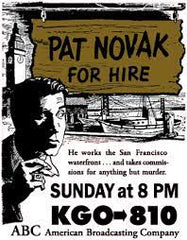
<p><span>Classic old time radio showing starring Jack Webb (1946, 1949) and Ben Morris (1947-48) as Pat Novak, a street wise guy who rents boats and anything else a good man pays a bad one to do.</span><br><br><span>Novak is always getting into scrapes when taking on jobs for hire or occassionally as a favor to a friend. When he does, he goes to see "The Only Honest Guy I Know" an ex-Doctor and a boozer named Jocko Madigan (played by Tudor Owens). Novak's nemesis is Lieutenant Hellman of Homicide (played by Raymond Burr and others) who's constantly trying to get Novak sent to the gas chamber.</span><br><br><span>The show is formulaic, but it's a work of art, with fantastic poetry. From Novak's fantastic similies and brilliant descriptions of the Femme Fatales to Jocko Madigan's philisophical drunekn speeches, and the verbal (and sometimes phyiscal) fisticuffs between Novak and Hellman, Pat Novak for Hire is memorable from start to finish.</span></p>
<p><a href="https://otrworld.com/products/pat-novak-for-hire-old-time-radio-shows-otr-mp3-on-cd-25-episodes" target="_blank" title="Pat Novak MP3 CD-R" rel="noopener noreferrer"><span>You can purchase the MP3 CD here.</span></a></p>]]>
    </content>
  </entry>
  <entry>
    <id>https://otrworld.com/blogs/old-time-radio/roy-acuff-old-time-radio-and-grand-ole-opry-star</id>
    <published>2021-02-13T19:14:32-06:00</published>
    <updated>2021-04-01T19:30:30-05:00</updated>
    <link rel="alternate" type="text/html" href="https://otrworld.com/blogs/old-time-radio/roy-acuff-old-time-radio-and-grand-ole-opry-star"/>
    <title>Roy Acuff: Old Time Radio and Grand Ole Opry Star</title>
    <author>
      <name>Keith Bowman</name>
    </author>
    <content type="html">
      <![CDATA[<meta charset="utf-8">
<div style="text-align: left;"><img src="https://cdn.shopify.com/s/files/1/0754/6377/files/RoyAcuff_240x240.jpg?v=1613265194" alt="Roy Acuff" style="margin-right: 4px; margin-bottom: 2px; float: left;" width="240x240" height="240x240"></div>
<span>Roy Claxton Acuff (September 15, 1903 ? November 23, 1992) was an American country music singer, fiddler, and promoter. Known as the "King of Country Music," Acuff is often credited with moving the genre from its early string band and "hoedown" format to the star singer-based format that helped make it internationally successful. Acuff began his music career in the 1930s, and gained regional fame as the singer and fiddler for his group, the Smoky Mountain Boys. He joined the Grand Ole Opry in 1938, and although his popularity as a musician waned in the late 1940s, he remained one of the Opry's key figures and promoters for nearly four decades. In 1942, Acuff co-founded the first major Nashville-based country music publishing company?Acuff-Rose Music?which signed acts such as Hank Williams, Roy Orbison, and The Everly Brothers. In 1962, Acuff became the first living inductee into the Country Music Hall of Fame. In 1932, Dr. Hauer's medicine show, which toured the Southern Appalachian region, hired Acuff as one of its entertainers. The purpose of the entertainers was to draw a large crowd to whom Hauer could sell medicines (of suspect quality) for various ailments. While on the medicine show circuit, Acuff met legendary Appalachian banjoist Clarence Ashley, from whom he learned "The House of the Rising Sun" and "Greenback Dollar", both of which Acuff later recorded. As the medicine show lacked microphones, Acuff learned to sing loud enough to be heard above the din, a skill that would later help him stand out on early radio broadcasts.</span>]]>
    </content>
  </entry>
  <entry>
    <id>https://otrworld.com/blogs/old-time-radio/rogues-gallery-old-time-radio-show</id>
    <published>2021-01-16T20:17:20-06:00</published>
    <updated>2021-04-01T19:30:33-05:00</updated>
    <link rel="alternate" type="text/html" href="https://otrworld.com/blogs/old-time-radio/rogues-gallery-old-time-radio-show"/>
    <title>Rogue&apos;s Gallery Old Time Radio Show</title>
    <author>
      <name>Keith Bowman</name>
    </author>
    <content type="html">
      <![CDATA[<meta charset="utf-8">
<p><span>RICHARD ROGUE's a private eye with a certain flair for solving crimes before the police do. A tough, sometime violent radio show, ROGUE'S GALLERY premiered in 1945, but with a definitely skewered sense of humor. In each show, told in the first person, Rogue somehow managed to get knocked out, coming to on "Cloud Eight", where a gremlin called Eugor, (Rogue spelled backwards) would berate and eventually boot him off the cloud, back into consciousness. Dick Powell played Rogue the first season, and was later replaced by Barry Sullivan and Paul Stewart. Dick Powell was known as a song and dance man until his rebirth as a movie tough guy in Murder My Sweet, where he played Raymond Chandler's Philip Marlowe. He then appeared in a string of crime and detective flicks, and eventually parlayed it into a successful radio show, playing Richard Diamond, which later went on to become a successful television show, with Powell as producer.</span></p>
<p> </p>]]>
    </content>
  </entry>
  <entry>
    <id>https://otrworld.com/blogs/old-time-radio/ripleys-believe-it-or-not-old-time-radio-show</id>
    <published>2020-12-12T19:17:48-06:00</published>
    <updated>2021-04-01T19:30:37-05:00</updated>
    <link rel="alternate" type="text/html" href="https://otrworld.com/blogs/old-time-radio/ripleys-believe-it-or-not-old-time-radio-show"/>
    <title>Ripley&apos;s Believe It Or Not Old Time Radio Show</title>
    <author>
      <name>Keith Bowman</name>
    </author>
    <content type="html">
      <![CDATA[<meta charset="utf-8">
<p>On April 14, 1930, Ripley brought "Believe It or Not" to radio, the first of several series heard on NBC, CBS and the<span> </span>Mutual Broadcasting System.<span> </span>As noted by the website Ripley On Radio, Ripley's broadcasts varied in length from 15 minutes to 30 minutes and aired in numerous different formats. When Ripley's 1930 debut on<span> </span><i>The Collier Hour</i><span> </span>brought a strong listener reaction, he was given a Monday night NBC series beginning April 14, 1930, followed by a 1931–32 series airing twice a week. After his strange stories were dramatized on NBC's<span> </span><i>Saturday Party</i>, Ripley was the host of<span> </span><i>The Baker's Broadcast</i><span> </span>from 1935 to 1937. He was scheduled in several different 1937–38 NBC timeslots and then took to the road with popular remote broadcasts.<span> </span><i>See America First with Bob Ripley</i><span> </span>(1938–40) on CBS expanded geographically into<span> </span><i>See All the Americas</i>, a 1942 program with Latin music. In 1944, he was heard five nights a week on Mutual in shows with an emphasis on World War II.<span> </span><i>Romance, Rhythm and Ripley</i><span> </span>aired on CBS in 1945, followed by<span> </span><i>Pages from Robert L. Ripley's Radio Scrapbook</i><span> </span>(1947–48).</p>
<p>Robert Ripley is known for several radio firsts. He was the first to broadcast nationwide on a radio network from mid-ocean, and he also participated in the first broadcast from Buenos Aires to New York City. Assisted by a corps of translators, he was the first to broadcast to every nation in the world simultaneously.</p>
<p>As the years went on, the show became less about oddities and featured guest-driven entertainment such as comedy routines. Sponsors over the course of the program included<span> </span>Pall Mall cigarettes<span> </span>and<span> </span>General Foods. The program ended its successful run in 1948 as Ripley prepared to convert the show format to television.</p>
<p><a href="https://otrworld.com/products/ripleys-believe-it-or-not-otr-old-time-radio-shows-mp3-on-cd-r-418-episodes" target="_blank" title="Ripley's" rel="noopener noreferrer">You can check out the entire 418 episode MP3 CD-R here.</a></p>]]>
    </content>
  </entry>
  <entry>
    <id>https://otrworld.com/blogs/old-time-radio/renfro-valley-gathering-old-time-radio-show</id>
    <published>2020-10-25T11:36:42-05:00</published>
    <updated>2021-04-01T19:30:40-05:00</updated>
    <link rel="alternate" type="text/html" href="https://otrworld.com/blogs/old-time-radio/renfro-valley-gathering-old-time-radio-show"/>
    <title>Renfro Valley Gathering Old Time Radio Show</title>
    <author>
      <name>Keith Bowman</name>
    </author>
    <summary type="html">
      <![CDATA[<meta charset="utf-8"><span>Renfro Valley Gatherin' (also formerly known as Renfro Valley Sunday Morning Gathering ) is a United States radio program based in Renfro Valley, Kentucky. The Gatherin' is the third oldest continually broadcast radio program in America, and (since the 2007 cancellation of the WWVA Jamboree) the second-longest such program featuring country music; only the Grand Ole Opry (1925) and Music and the Spoken Word (1929) have been continually broadcast longer.</span><p><a class="read-more" href="https://otrworld.com/blogs/old-time-radio/renfro-valley-gathering-old-time-radio-show">More</a></p>]]>
    </summary>
    <content type="html">
      <![CDATA[<meta charset="utf-8">
<p><span>Renfro Valley Gatherin' (also formerly known as Renfro Valley Sunday Morning Gathering ) is a United States radio program based in Renfro Valley, Kentucky. The Gatherin' is the third oldest continually broadcast radio program in America, and (since the 2007 cancellation of the WWVA Jamboree) the second-longest such program featuring country music; only the Grand Ole Opry (1925) and Music and the Spoken Word (1929) have been continually broadcast longer. (The CBS World News Roundup, which debuted in 1938, predates the Gatherin' but has not continually aired.) he Gatherin' program was founded by John Lair, former producer of the National Barn Dance, who founded the Renfro Valley Barn Dance and what would become the Renfro Valley Entertainment Center around it in 1939. The Gatherin' was first broadcast via the CBS Radio Network in September 1943. The Gatherin' was, and is, a thematic program. The original concept of the show was to recreate the atmosphere of the pioneer "getherin's" which were held in Renfro Valley "in the days of long ago." At the start, CBS wanted a Sunday morning companion program to the popular Saturday night Renfro Valley Barn Dance which would not be strictly a religious program, but would fit the Sunday morning format of the time. The "Gatherin'" was John Lair's answer to this. During this time, both shows were headquartered at WHAS in Louisville, Kentucky. John Lair was the first permanent emcee of the "Gatherin'," and there have so far only been three others; Grant Turner, Jim Gaskin, and Wayne Combs. Gaskin died on Saturday, May 3, 2008 at the age of 70 following a long illness. Since that time, the Gatherin' has been emceed by Wayne Combs, who is also an entertainer on the Barn Dance and other Renfro Valley shows, and a DJ at WRVK. After CBS Radio dropped the show at the end of the old-time radio era in 1957, a pre-recorded version of the Gatherin program went into syndication. Meanwhile, a stage version of the show was, until approximately 2011, presented in the Old Barn Theater on Sunday mornings at 8:30. The syndicated broadcast of the Gatherin' is still heard on scores of stations across the United States and Canada, as well as on satellite radio and Internet broadcasts. Following the departure of CBS, and former originating station WHAS of Louisville, from Renfro Valley in 1957, John Lair partnered with Tom Hargis to found WRVK in Renfro Valley, in part to serve as the Gatherin's and the Barn Dance's new flagship station, but mainly to serve the local listening audience in Rockcastle County, Kentucky. The station first went on the air as a 500 watt daytime only AM station in April, 1957, utilizing the former WHAS/CBS studio in what was then the Pioneer Museum Building in Renfro Valley.</span></p>
<p>You can check out the MP3 CD-R Collection <a href="https://otrworld.com/collections/newest-products/products/renfro-valley-gathering-otr-otrs-old-time-radio-shows-mp3-on-cd-r-4-episodes" target="_blank" title="Renfro Valley Gathering" rel="noopener noreferrer">here</a>.</p>]]>
    </content>
  </entry>
  <entry>
    <id>https://otrworld.com/blogs/old-time-radio/redbook-dramas-old-time-radio-show</id>
    <published>2020-09-21T11:34:01-05:00</published>
    <updated>2021-04-01T19:30:44-05:00</updated>
    <link rel="alternate" type="text/html" href="https://otrworld.com/blogs/old-time-radio/redbook-dramas-old-time-radio-show"/>
    <title>Redbook Dramas Old Time Radio Show</title>
    <author>
      <name>Keith Bowman</name>
    </author>
    <content type="html">
      <![CDATA[<meta charset="utf-8"><span><img src="https://cdn.shopify.com/s/files/1/0754/6377/files/RedbookDramas_240x240.jpg?v=1600705936" alt="Redbook Dramas Old Time Radio Show" width="240x240" height="240x240" style="display: block; margin-left: auto; margin-right: auto;">This series, based upon short stories originally published in Redbook Magazine, was aired in the year 1932. The United States was then in the grip of the Great Depression, and several of the episodes reflect that phenomenon. "He Knew Women" and "Kiss and Jail," for example, feature families which have been devastated by the stock market crash and its aftermath. As if to counteract the country's grim circumstances, however, many of the stories offer "love, mystery, adventure, romance" in sometimes exotic settings. Listeners are transported to such places as Yucatan, France, Dalmatia and Manchuria and encounter some remarkable characters and circumstances along the way. These include a surly Army private who gets in trouble when his pet goat butts a brigadier general into a mud puddle; an American schoolteacher who becomes involved in a political intrigue abroad and temporarily represents herself as a collector of coffins; and an intrepid little domestic servant with Holmes-like powers of observation who solves a murder case at a frozen outpost beyond the Arctic Circle. Some of the authors are noteworthy as well. For example Elaine Carrington, who wrote "The Kid," is well remembered today as creator of the famous radio soap operas </span><i>When a Girl Marries</i><span> and </span><i>Pepper Young's Family</i><span>. And Frank R. Adams, whose "A Gent Passes By" delivers a knockout sequence of startling revelations, displays the skill that enabled him to publish dozens of short stories in popular magazines of the day such as Munsey's and The Smart Set. These syndicated episodes are all fifteen minutes in length, and some could have benefited from more time to develop plot and character. But the best of them convey to us an intense flavor of their times, often with charming musical interludes and bridges, from a broadcast year that has left us with all too few programs to enjoy.</span>]]>
    </content>
  </entry>
  <entry>
    <id>https://otrworld.com/blogs/old-time-radio/recollections-at-thirty-old-time-radio-shows</id>
    <published>2020-08-22T22:54:00-05:00</published>
    <updated>2021-04-01T19:30:47-05:00</updated>
    <link rel="alternate" type="text/html" href="https://otrworld.com/blogs/old-time-radio/recollections-at-thirty-old-time-radio-shows"/>
    <title>Recollections At Thirty Old Time Radio Shows</title>
    <author>
      <name>Keith Bowman</name>
    </author>
    <content type="html">
      <![CDATA[<meta charset="utf-8">
<p><span>A radio manufacturer named the Radio Corporation of America, which we know as RCA, began to broadcast its own programs on stations it had either started or purchased. In late 1926, RCA created a division of the company known as the National Broadcasting Company, or NBC. NBC officially started broadcasting on November 15, 1926.</span><br><br><span>To celebrate the 30th Anniversary of the company, NBC created a series of shows called </span><i><b>Recollection at 30</b></i><span>. Using a vast number of archival recordings, </span><i><b>Recollection at 30</b></i><span> would assemble some of these transcriptions into a 25-minute show. Some of these shows followed a theme, such as the shows </span><i>The Crash of the Hindenburg</i><span>, </span><i>The Big Bands</i><span>, and </span><i>Abraham Lincoln</i><span>. Others concentrated on popular radio programs, such as </span><i>Truth or Consequences</i><span>, and </span><i>Lights Out</i><span>. People were honored, like Judy Garland, H. V. Kaltenborn, and Irving Berlin.</span><br><br><span>Some of the ideas for the shows were solicited from listeners. The requests often included hearing some of the earliest recordings. To honor this, an entire broadcast was dedicated to June 11th, 1927, the day of the earliest recording NBC owned. This show included the return of Charles Lindberg, and had President Calvin Coolidgeâs presentation of the Distinguished Flying Cross award to Lindberg. NBC had transmitted this event live to 50 stations simultaneously -- the largest simultaneous transmission accomplished to that point.</span><br><br><span>A one-hour audition show created May 15, 1956 was titled </span><i>A Salute to Radio</i><span>, and hosted by H. V. Kaltenborn. When the show was produced starting June 20, 1956, the announcer for most of the shows was Ed Herlihy. The show would run for a total of 45 episodes, with the final broadcast on May 1, 1957.</span></p>
<p><a href="https://otrworld.com/collections/newest-products/products/recollections-at-thirty-otr-old-time-radio-shows-mp3-cd-r-41-episodes" target="_blank" title="Recollections At Thirty MP3 CD" rel="noopener noreferrer">Check out the MP3 CD here</a> </p>]]>
    </content>
  </entry>
  <entry>
    <id>https://otrworld.com/blogs/old-time-radio/quick-as-a-flash-old-time-radio-show</id>
    <published>2020-04-26T17:44:00-05:00</published>
    <updated>2021-04-01T19:30:54-05:00</updated>
    <link rel="alternate" type="text/html" href="https://otrworld.com/blogs/old-time-radio/quick-as-a-flash-old-time-radio-show"/>
    <title>Quick As A Flash Old Time Radio Show</title>
    <author>
      <name>Keith Bowman</name>
    </author>
    <content type="html">
      <![CDATA[<meta charset="utf-8">
<p style="float: left;"><i><b><img alt="Quick As A Flash Old Time Radio Show" src="//cdn.shopify.com/s/files/1/0754/6377/files/QuickAsAFlash_medium.jpg?v=1587940951" style="float: left; margin-right: 2px;">Quick as a Flash</b></i><span> </span>was a 30-minute radio quiz program which featured drama segments with guest actors from radio detective shows. Created by director Richard Lewis and emcee<span> </span>Ken Roberts, the program debuted over the<span> </span>Mutual Network<span> </span>on Sunday, July 16, 1944. Sponsored by the Helbros Watch Company, the show was produced by Lewis and Bernard J. Prockter with scripts by Gene Wang. Music was by Ray Bloch and the Helbros Orchestra. Six contestants from the studio audience competed for cash and other prizes. Clues were presented in the form of dramatic sketches covering such subjects as current events, movies, books and historical situations. With a buzzer, a contestant could interrupt at any time to submit an answer. During the Helbros Derby, a guest detective from a radio mystery program put in an appearance.<span> </span>Frank Gallop<span> </span>and<span> </span>Win Elliott<span> </span>were announcers. The series ended on June 29, 1951. Approximately one year later, the series made an attempt to go on television.</p>]]>
    </content>
  </entry>
  <entry>
    <id>https://otrworld.com/blogs/old-time-radio/proudly-we-hail-old-time-radio-show</id>
    <published>2020-04-05T22:15:00-05:00</published>
    <updated>2021-04-01T19:30:58-05:00</updated>
    <link rel="alternate" type="text/html" href="https://otrworld.com/blogs/old-time-radio/proudly-we-hail-old-time-radio-show"/>
    <title>Proudly We Hail Old Time Radio Show</title>
    <author>
      <name>Keith Bowman</name>
    </author>
    <content type="html">
      <![CDATA[<meta charset="utf-8"><i>Proudly We Hail</i><span> was a public service show for the Army and Air Force that first aired for a period of four months in 1941 on CBS. The show returned to the airways from 1946 through 1957 and aired on as many as 1300 radio stations.</span><br><br><span>The 1941 shows were billed as a program designed "to strengthen the mainstream of the defense machine – the workers in the arsenal of democracy – during a time of unlimited national emergency". This was the time of the buildup of tensions in the Far East and just prior to the Japanese attack on Pearl Harbor. Major Bowes and Jane Froman kicked off the first 30 minute show on the CBS network on June 8, 1941 and the show ran during the summer until September 21, mostly on Friday nights, with different hosts and participants. Unfortunately, none these original shows are in circulation or known to exist.</span><br><br><span>In 1946, Hollywood producer C. P. MacGregor put together a series that was to be used as a public service in support of the Army and Air Corps recruitment departments. He had lots of contacts in the radio industry but did not have direct access to the networks. As a result he targeted independent stations and, by the week of July 10, 1946, had assembled over 350 stations into his independent network for the first broadcast of the syndicated show.</span><br><br><span>There were 136 shows in this first series. The shows were initially 15 minutes long and included recruitment ads along with a short play featuring a big name Hollywood star. Later shows in the series finished with a short interview with the star. MacGregor pulled off a major coup when he recruited Clark Gable for the first show. Other major actors agreeing to participate were Robert Mitchum, Glenn Ford, Alan Ladd, Preston Foster, Vincent Price, Barry Sullivan, Harold Peary, William Holden, Edward G. Robinson, and many others.</span><br><br><span>MacGregor was born in 1897 and would pass away in 1968. While active he was known as the "DeMille of the discs". He produced and distributed many syndicated shows such as </span><i>Cecil and Sally</i><span>, </span><i>The Shadow</i><span>, </span><i>The La Rosa Hollywood Theatre of Stars</i><span>, </span><i>Salute to Reservists</i><span>, </span><b><i><a href="https://www.archive.org/details/OTRR_Certified_Obsession" rel="nofollow">Obsession</a></i></b><span>, </span><i>Heartbeat Theatre</i><span>, </span><i>Skippy Hollywood Theatre</i><span>, </span><b><i><a href="https://www.archive.org/details/OTRR_Certified_Lux_Radio_Theatre" rel="nofollow">Lux Radio Theatre</a></i></b><span>, </span><i>Eb and Zeb</i><span> ... and many more. He also produced hundreds of recording sessions with artists such as Charlie Parker, Stan Kenton, Peggy Lee, Leadbelly and many more Jazz and contemporary artists. The Library of Congress has possession of the MacGregor Collection masters and recording ledgers from 1931-1970. A Google search of C. P. Macgregor will give additional details about his remarkable involvement in radio transcriptions.</span><br><br><span>Back to the show. Not all stations in the 'network' would broadcast the show on the same date. Newspaper references indicate that a particular program would be broadcast at different locations on dates that were months apart. For ease of reference however, we have used the date of release week as part of the file name.</span><br><br><span>The first 78 shows were of the 15 minute variety but starting with show 79 the programs would be 30 minutes long, still following the same format of a recruiting announcement, the first half of a play featuring a big name actor, a longer recruiting announcement, the second half of the play, another brief recruiting announcement, and finally by an interview. The first of the 30-minute shows featured Esther Williams and was released the week of Jan 11, 1948.</span><br><br><span>The program must have enjoyed quite a wide audience. Newspaper clippings as well as announcements during the program indicated that by early 1948 the independent network had grown to over 1000 stations. By mid 1948 the program was heard on over 1300 stations.</span>]]>
    </content>
  </entry>
  <entry>
    <id>https://otrworld.com/blogs/old-time-radio/popeye-the-sailor-old-time-radio-show</id>
    <published>2020-01-26T17:31:00-06:00</published>
    <updated>2021-04-01T19:31:02-05:00</updated>
    <link rel="alternate" type="text/html" href="https://otrworld.com/blogs/old-time-radio/popeye-the-sailor-old-time-radio-show"/>
    <title>Popeye The Sailor Old Time Radio Show</title>
    <author>
      <name>OTR World</name>
    </author>
    <summary type="html">
      <![CDATA[<span>Popeye was adapted to radio in several series broadcast over three different networks by two sponsors from 1935 to 1938.</span><p><a class="read-more" href="https://otrworld.com/blogs/old-time-radio/popeye-the-sailor-old-time-radio-show">More</a></p>]]>
    </summary>
    <content type="html">
      <![CDATA[<p><span>Popeye was adapted to radio in several series broadcast over three different networks by two sponsors from 1935 to 1938. Popeye and most of the major supporting characters were first featured in a thrice-weekly 15-minute radio program, Popeye the Sailor, which starred Detmar Poppen as Popeye along with most of the major supporting characters Olive Oyl (Olive Lamoy), Wimpy (Charles Lawrence), Bluto (Jackson Beck) and Swee'Pea (Mae Questel). In the first episode, Popeye adopted Sonny (Jimmy Donnelly), a character later known as Matey the Newsboy. This program was broadcast Tuesday, Thursday and Saturday nights at 7:15pm. September 10, 1935 through March 28, 1936 on the NBC Red Network (87 episodes), initially sponsored by Wheatena, a whole-wheat breakfast cereal, which would routinely replace the spinach references. Music was provided by Victor Irwin's Cartoonland Band. Announcer Kelvin Keech sang (to composer Lerner's "Popeye" theme) "Wheatena is his diet / He asks you to try it / With Popeye the sailor man." Wheatena paid King Features Syndicate $1,200 per week. The show was next broadcast Mondays, Wednesdays and Fridays from 7:15 to 7:30pm on WABC and ran from August 31, 1936 to February 26, 1937 (78 episodes). Floyd Buckley played Popeye, and Miriam Wolfe portrayed both Olive Oyl and the Sea Hag. Once again, reference to spinach was conspicuously absent. Instead, Popeye sang, "Wheatena's me diet / I ax ya to try it / I'm Popeye the Sailor Man".[15][16] The third series was sponsored by the maker of Popsicle three nights a week for 15 minutes at 6:15 pm on CBS from May 2, 1938 through July 29, 1938.</span></p>
<p> </p>]]>
    </content>
  </entry>
  <entry>
    <id>https://otrworld.com/blogs/old-time-radio/pete-kellys-blues-old-time-radio-show</id>
    <published>2019-11-17T09:42:00-06:00</published>
    <updated>2021-04-01T19:31:07-05:00</updated>
    <link rel="alternate" type="text/html" href="https://otrworld.com/blogs/old-time-radio/pete-kellys-blues-old-time-radio-show"/>
    <title>Pete Kelly&apos;s Blues Old Time Radio Show</title>
    <author>
      <name>OTR World</name>
    </author>
    <summary type="html">
      <![CDATA[<i><b>Pete Kelly's Blues</b></i><span> </span><span>was an</span><span> </span><span>American</span><span> </span><span>crime-musical</span><span> </span><span>radio drama</span><span> </span><span>which aired over</span><span> </span><span>NBC</span><span> </span><span>as an</span><span> </span><span>unsponsored</span><span> </span><span>summer replacement series on Wednesday nights at 8pm(et) from July 4 through September 19, 1951.</span><sup id="cite_ref-Dunning_1-0" class="reference"><span></span></sup><span> </span><span>The series starred</span><span> </span><span>Jack Webb</span><span> </span><span>as Pete Kelly and was created by writer</span><span> </span><span>Richard L. Breen</span><span>, who had previously worked with Webb on</span><span> </span><i><span class="mw-redirect">Pat Novak for Hire</span></i><span>;</span><span> </span><span class="new">James Moser</span><span> </span><span>and</span><span> </span><span>Jo Eisinger</span><span> </span><span>wrote most of the other scripts.</span><p><a class="read-more" href="https://otrworld.com/blogs/old-time-radio/pete-kellys-blues-old-time-radio-show">More</a></p>]]>
    </summary>
    <content type="html">
      <![CDATA[<p><a href="https://otrworld.com/collections/newest-products/products/pete-kellys-blues-otr-old-time-radio-shows-mp3-on-cd-7-episodes" title="Pete Kelly's Blues"><i><b>Pete Kelly's Blues</b></i></a><span> </span>was an<span> </span><span>American</span><span> </span>crime-musical<span> </span><span>radio drama</span><span> </span>which aired over<span> </span><span>NBC</span><span> </span>as an<span> </span><span>unsponsored</span><span> </span>summer replacement series on Wednesday nights at 8pm(et) from July 4 through September 19, 1951.<sup id="cite_ref-Dunning_1-0" class="reference"><span></span></sup><span> </span>The series starred<span> </span><span>Jack Webb</span><span> </span>as Pete Kelly and was created by writer<span> </span><span>Richard L. Breen</span>, who had previously worked with Webb on<span> </span><i><span class="mw-redirect">Pat Novak for Hire</span></i>;<span> </span><span class="new">James Moser</span><span> </span>and<span> </span><span>Jo Eisinger</span><span> </span>wrote most of the other scripts.</p>
<p>Set in<span> </span><span>Kansas City, Missouri</span><span> </span>in the early 1920s, the series was a crime drama with a strong<span> </span><span>musical</span><span> </span>atmosphere (Webb was a noted Dixieland<span> </span><span>jazz</span><span> </span>enthusiast). Kansas City in this era was a hotbed of jazz, as well as of organized crime and political corruption, all of which influenced the series.</p>
<p>Pete Kelly was a musician, a cornet player who headed his own jazz combo, "Pete Kelly's Big Seven." They worked at 417 Cherry Street, a<span> </span><span>speakeasy</span><span> </span>run by George Lupo, often mentioned but never heard. Kelly, narrating the series, described Lupo as a "fat, friendly little guy." The plots typically centered on Kelly's reluctant involvement with gangsters, gun molls, FBI agents, and people trying to save their own skins. The endings were often downbeat.</p>
<p>The supporting cast was minimal; apart from the<span> </span><span class="mw-redirect">off-mike</span><span> </span>character Lupo and occasional speaking parts by the band members (notably Red the bass player, played by<span> </span><span>Jack Kruschen</span>), the only other regular role of note was Maggie Jackson, the torch singer at another club (Fat Annie's, "across the river on the Kansas side"), played by blues singer Meredith Howard.</p>
<p>In one episode,<span> </span><span>Bessie Smith</span><span> </span>is mentioned as the singer at Fat Annie's instead of Maggie Jackson. Boozy ex-bootlegger Barney Ricketts would show up occasionally, an informant not unlike the character Jocko Madigan on Webb and Breen's<span> </span><i>Pat Novak for Hire</i>. The episodic roles were filled by<span> </span><span>William Conrad</span><span> </span>(as various mob bosses),<span> </span><span>Vic Perrin</span>, and<span> </span><span>Roy Glenn</span>, among others.</p>
<p><span>The music dominated the series. In addition to one song by Maggie Jackson, each episode boasted two jazz numbers by the "Big Seven." The group was actually led by </span><span>Dick Cathcart</span><span>, the cornet player who was Pete Kelly's musical </span><span>stand-in</span><span>. The other members of the group, all well known jazz musicians, included </span><span>Matty Matlock</span><span> on clarinet, </span><span class="new">Moe Schneider</span><span> on trombone, piano player </span><span class="new">Ray Sherman</span><span>, bass player </span><span>Morty Corb</span><span>, guitarist </span><span class="new">Bill Newman</span><span>, and drummer </span><span>Nick Fatool</span><span>. The show's </span><span>announcer</span><span> was another frequent Webb collaborator, </span><span>George Fenneman</span><span>, who would open each show with "This one's about Pete Kelly."</span></p>
<p>The series lasted only three months, but inspired a 1955 film version of<span> </span><i><span>Pete Kelly's Blues</span></i>, in which Jack Webb produced, directed and starred. It used many of the same musicians, including Cathcart, and<span> </span><span>Ella Fitzgerald</span><span> </span>was cast as Maggie Jackson. A lesser-known<span> </span><span>television version</span>, still produced and directed by Webb but with<span> </span><span>William Reynolds</span><span> </span>in the lead, aired in 1959, using scripts originally written for the radio version.</p>
<p>After the film, two albums were released, a soundtrack recording and<span> </span><i>Pete Kelly Lets His Hair Down</i>, an instrumental album using the musicians from the series with songs arranged by tempo - "blue songs" and "red songs" with names such as "Peacock," '"Periwinkle," "Midnight," "Rouge," "Flame'" and '"Fire Engine." This LP was released by<span> </span><span class="mw-redirect">Rhino Records</span><span> </span>as one-half of a Webb compilation disc,<span> </span><i>Just The Tracks, Ma’am</i>.</p>
<p> </p>]]>
    </content>
  </entry>
  <entry>
    <id>https://otrworld.com/blogs/old-time-radio/the-paul-winchell-show-old-time-radio-show</id>
    <published>2019-11-04T05:20:00-06:00</published>
    <updated>2021-04-01T19:31:10-05:00</updated>
    <link rel="alternate" type="text/html" href="https://otrworld.com/blogs/old-time-radio/the-paul-winchell-show-old-time-radio-show"/>
    <title>The Paul Winchell Show Old Time Radio Show</title>
    <author>
      <name>OTR World</name>
    </author>
    <summary type="html">
      <![CDATA[<i><b>The Paul Winchell Show</b></i><span>, or </span><i><b>The Paul Winchell and Jerry Mahoney Show</b></i><span>, or </span><i><b>The Spiedel Show</b></i><span>, was a variety program which aired on </span><span>NBC</span><span> prime time from </span><span>1950</span><span> to </span><span>1954</span><span>, starring ventriloquist </span><span>Paul Winchell</span><span> and his dummy, </span><span>Jerry Mahoney</span><span>.</span><p><a class="read-more" href="https://otrworld.com/blogs/old-time-radio/the-paul-winchell-show-old-time-radio-show">More</a></p>]]>
    </summary>
    <content type="html">
      <![CDATA[<i><b>The Paul Winchell Show</b></i><span>, or </span><i><b>The Paul Winchell and Jerry Mahoney Show</b></i><span>, or </span><i><b>The Spiedel Show</b></i><span>, was a variety program which aired on </span><span>NBC</span><span> prime time from </span><span>1950</span><span> to </span><span>1954</span><span>, starring ventriloquist </span><span>Paul Winchell</span><span> and his dummy, </span><span>Jerry Mahoney</span><span>.<br> <br> </span>
<p>The program had comedy and dramatic skits, quiz questions, and a section called "What's My Name?", in which contestants sought to guess the identity of a celebrity based on a few clues.<span> </span><i>What's My Name?</i><span> </span>was also the title of the series in the 1952–1953 season. There was for a time a second dummy too, Knucklehead Smiff. Other cast members were Dorothy Claire, Hilda Vaughn, and Jimmy Blaine.<sup id="cite_ref-sdays_1-0" class="reference"><span></span></sup></p>
<p>The<span> </span><span class="mw-redirect">series</span><span> </span>was known as<span> </span><i>The Speidel Show</i><span> </span>from its premiere on September 18, 1950, until December 1951, when it was renamed for its star. The annual<span> </span><i><span>Look</span></i><span> </span>television awards, named for the defunct magazine, were presented on special telecasts of<span> </span><i>The Paul Winchell Show</i><span> </span>in December 1952 and December 1953, with top names in show business making appearances.<sup id="cite_ref-2" class="reference"><span> </span></sup><span></span>In the awards program which aired on December 20, 1953, the guests were<span> </span><span>Sid Caesar</span>.<span> </span><span>Imogene Coca</span>,<span> </span><span>John Charles Daly</span>,<span> </span><span>Edward R. Murrow</span>, and Bishop<span> </span><span>Fulton J. Sheen</span>.<span> </span><span>Jack Webb</span><span> </span>was seen on a special film footage.<sup id="cite_ref-3" class="reference"><span></span></sup></p>
<p>Winchell and Mahoney got their start in early 1940s radio in the series<span> </span><i>Major Bowe's Original Amateur Hour</i>. They had a short-lived radio program in 1943. The two debuted on television in 1947 and in 1948, Winchell was a co-host of the prime time<span> </span><i>The Bigelow Show.</i><sup id="cite_ref-sdays_1-1" class="reference"><span></span></sup></p>
<p>Jerry's personality was that of a sassy wise-cracking child and later adolescent. Winchell increasingly becomes exasperated with his dummy's antics and insolence.<sup id="cite_ref-4" class="reference"><span></span></sup></p>
<p><span>Carol Burnett</span><span> </span>made her television debut in a Saturday morning episode of the series in 1955.</p>
<span>After its prime time run, </span><i>The Paul Winchell Show</i><span> aired on Saturday mornings for two years in "Jerry's Clubhouse" and then moved to </span><span>ABC</span><span> as </span><i>Circus Time.</i><span> The series then moved to Sunday afternoons until 1961. It returned again to Saturday mornings from 1965 to 1968.</span><sup id="cite_ref-sdays_1-2" class="reference"><span></span></sup>
<p>After his television series ended, Winchell focused the remainder of his life in the field of medicine. He patented a blood storage system and an artificial human heart. Winchell provided the voice of Tigger in<span> </span><i><span>Winnie the Pooh</span></i>, Dick Dastardly in<span> </span><i><span>Wacky Races</span></i>, and Gargamel in<span> </span><i><span>The Smurfs</span></i>. Paul Winchell died in June 2005 due to<span> </span><span class="mw-redirect">natural causes</span>.</p>
<p> </p>]]>
    </content>
  </entry>
  <entry>
    <id>https://otrworld.com/blogs/old-time-radio/our-gal-sunday-old-time-radio-show</id>
    <published>2019-09-22T19:21:00-05:00</published>
    <updated>2021-04-01T19:31:14-05:00</updated>
    <link rel="alternate" type="text/html" href="https://otrworld.com/blogs/old-time-radio/our-gal-sunday-old-time-radio-show"/>
    <title>Our Gal Sunday Old Time Radio Show</title>
    <author>
      <name>OTR World</name>
    </author>
    <content type="html">
      <![CDATA[<p><i><b>Our Gal Sunday</b></i><span> </span>is an American soap opera produced by<span> </span>Frank<span> </span>and<span> </span>Anne Hummert, network broadcast via<span> </span>CBS<span> </span>from March 29, 1937, to January 2, 1959,<span> </span>starring<span> </span>Dorothy Lowell<span> </span>and, after Lowell's 1944 death,<span> </span>Vivian Smolen<span> </span>in the title role.</p>
<p>The origin of this radio series was a 1904 Broadway production,<span> </span><i>Sunday</i>, which starred<span> </span>Ethel Barrymore. This play was the source of the<span> </span>catchphrase, "That's all there is, there isn't any more."</p>
<p>The Hummerts adapted the Broadway play into a long-running melodramatic radio serial about a Colorado orphan who marries a British aristocrat. It began when two grizzled miners, Jackie and Lively, found a child abandoned and left at the door of their mountain cabin. She was given the name Sunday because that was the day she entered their lives. Later, her last name was given as Smithson. As an adult, she was desired by her childhood friend, Bill Jenkins. She fell under the spell of wealthy Englishman Arthur Brinthrope, who came to check his silver mine. Arthur was shot by Jackie, who wanted to prevent him from running away with Sunday. Arthur's brother, Henry, arrived, eventually marrying Sunday. The couple moved to their Black Swan Hall estate in Virginia, where they lived with their adopted son, Lonnie, and their two natural children, Caroline and Little Davy, who was crippled by a hit-and-run driver.</p>
<p>Dorothy Lowell had the title role from 1937 to 1944. When she died in childbirth at age 28, she was replaced by Vivian Smolen, who portrayed Sunday from 1944 to 1959.<span> </span>Leading reference sources claim that Lowell continued to star in the radio program until 1946, but those books and websites are obviously incorrect since Lowell died in 1944.</p>
<p>The show opened with this question:</p>
<dl>
<dd>Once again, we present<span> </span><i>Our Gal Sunday</i>, the story of an orphan girl named Sunday from the small mining town in the West, who found true happiness with one of England's, most handsome Lords, Lord Henry Brinthrope.</dd>
</dl>
<p>"Red River Valley" was the series' theme music.<span> </span>The announcers were Ed Fleming,<span> </span>John Reed King, Art Millett,<span> </span>Bert Parks, Charles Stark, Warren Sweeney and John A. Wolfe.</p>
<p> </p>]]>
    </content>
  </entry>
  <entry>
    <id>https://otrworld.com/blogs/old-time-radio/free-episode-order-in-the-court</id>
    <published>2019-09-01T00:09:00-05:00</published>
    <updated>2021-04-01T19:31:18-05:00</updated>
    <link rel="alternate" type="text/html" href="https://otrworld.com/blogs/old-time-radio/free-episode-order-in-the-court"/>
    <title>Free Episode: Order In The Court</title>
    <author>
      <name>OTR World</name>
    </author>
    <content type="html">
      <![CDATA[<p>Enjoy this episode from the Old Time Radio Show "Order In The Court". Check out the entire MP3 CD-R <a href="https://otrworld.com/collections/newest-products/products/order-in-the-court-otr-old-time-radio-show-mp3-on-cd-10-episodes" target="_blank" rel="noopener noreferrer">here</a>.</p>
<p><iframe width="560" height="315" src="https://www.youtube.com/embed/tlw7NTFwcxU" frameborder="0" allow="accelerometer; autoplay; encrypted-media; gyroscope; picture-in-picture" allowfullscreen=""></iframe></p>]]>
    </content>
  </entry>
  <entry>
    <id>https://otrworld.com/blogs/old-time-radio/one-world-flight-old-time-radio-show</id>
    <published>2019-07-28T07:09:00-05:00</published>
    <updated>2021-04-01T19:31:23-05:00</updated>
    <link rel="alternate" type="text/html" href="https://otrworld.com/blogs/old-time-radio/one-world-flight-old-time-radio-show"/>
    <title>One World Flight Old Time Radio Show</title>
    <author>
      <name>OTR World</name>
    </author>
    <content type="html">
      <![CDATA[<i>One World Flight</i><span> consisted of 13 episodes which aired on CBS radio on Tuesday night from 14 Jan – 8 Apr 1947. The documentary series was produced by Norman Corwin who was the recipient of the first One World Award by the Wendell Willkie Memorial and the Common Council for American Unity. First prize was a round-the-world trip. According to Time Magazine article of Monday, 27 Jan 1947, Norman Corwin began his trip in Jun 1947. He took with him CBS Recorder Lee Bland and 225 pounds of magnetic wire-recording equipment. The trip lasted four months, covered 42,000 miles and they visited 16 countries which produced 100 hours of recorded interviews. He interviewed heads of state and common people, people of all types regardless status or walks of life. The transcript alone produced 3700 typed pages. Norman Corwin, four recording engineers and six typists took three months to develop this documentary series. Each program covered a portion of the trip and made an important contribution to the public perception of the rest of the world to help heal some of the wounds of World War II.</span><br><br><br>
<p align="center"><i><u><b><span size="3" style="font-size: medium;">Brief History of the One World Award</span></b></u></i></p>
<p><br><br><span>Wendell Willkie was lawyer by trade and a Democrat; however, in 1940 Wendell ran for President on the Republican ticket, but lost to President Roosevelt. In 1942, after the United States entered World War II (which was heavily debated in America), Roosevelt sent Wendell on 50 day trip around the world to reassure our Allies of our commitment to freedom and the defeat of fascism. When Wendell returned he wrote "One World", a travelogue of his journey and plea for international cooperation after the war. The book was published in 1943 and quickly become a best seller. Wendell Willkie passed away in 1944 from a heart attack and in 1945 the One World Award was established in his honor. The first winner was Norman Corwin in 1946. A few other notable winners of this award were Fiorello La Guardia (1947), Albert Einstein (1948), John Huston (1949), and Roger Nash Baldwin (1950).</span></p>
<p> </p>]]>
    </content>
  </entry>
  <entry>
    <id>https://otrworld.com/blogs/old-time-radio/free-episode-from-one-night-stand-bobby-sherwood</id>
    <published>2019-07-21T04:26:00-05:00</published>
    <updated>2021-04-01T19:31:27-05:00</updated>
    <link rel="alternate" type="text/html" href="https://otrworld.com/blogs/old-time-radio/free-episode-from-one-night-stand-bobby-sherwood"/>
    <title>Free Episode From One Night Stand - Bobby Sherwood</title>
    <author>
      <name>OTR World</name>
    </author>
    <content type="html">
      <![CDATA[<p>Enjoy this free episode from the Old Time Radio Show "One Night Stand". The entire MP3 CD is available by <a href="https://otrworld.com/collections/newest-products/products/one-night-stand-otr-old-time-radio-show-mp3-on-cd-87-episodes" target="_blank" title="One Night Stand MP3 CD-R" rel="noopener noreferrer">clicking here</a>.</p>
<p> </p>
<p><iframe width="100%" height="300" scrolling="no" frameborder="no" allow="autoplay" src="https://w.soundcloud.com/player/?url=https%3A//api.soundcloud.com/tracks/654223085&amp;color=%23ff5500&amp;auto_play=false&amp;hide_related=false&amp;show_comments=true&amp;show_user=true&amp;show_reposts=false&amp;show_teaser=true&amp;visual=true"></iframe></p>]]>
    </content>
  </entry>
  <entry>
    <id>https://otrworld.com/blogs/old-time-radio/old-gold-comedy-theater-old-time-radio-show</id>
    <published>2019-06-01T21:53:00-05:00</published>
    <updated>2021-04-01T19:31:27-05:00</updated>
    <link rel="alternate" type="text/html" href="https://otrworld.com/blogs/old-time-radio/old-gold-comedy-theater-old-time-radio-show"/>
    <title>Old Gold Comedy Theater Old Time Radio Show</title>
    <author>
      <name>OTR World</name>
    </author>
    <content type="html">
      <![CDATA[<p><span>The </span><i>Old Gold Comedy Theater</i><span> aired over NBC for one season, from October 29, 1944 to June 10, 1945. The Lennen and Mitchell ad agency wanted to produce a comedy series for Old Gold cigarettes, a brand of the Lorillard Tobacco Company.</span><br><br><span>The show was patterned after the successful format used by the </span><i>Lux Radio Theatre</i><span> and Cecil B. DeMille. Preston Sturges, an up and coming director, was originally tapped to host the show, but was already committed elsewhere, and so suggested Harold Lloyd, a silent film star, with whom he had worked in the past. As this was his first radio program, Lloyd worked for many months to get over his fear of the microphone. Critics believed he was improving as the season progressed, and would have eventually mastered the art had the series lasted more than one season.</span><br><br><span>Though the adapted scripts and the actors were top-notch, the show eventually suffered from its 30 minute format, as too much had to be cut from the original movie scripts. Lennen and Mitchell pulled the plug on the show on May 28, 1945 when they announced </span><i>Meet Me at Parky's</i><span> would air in its place.</span><br><br><span>Currently, there are 30 of the 32 episodes still in circulation -- 29 come from the estate of Harold Lloyd, in the original un-cut version, and one from the Armed Forces Radio Service.</span></p>
<p> </p>]]>
    </content>
  </entry>
  <entry>
    <id>https://otrworld.com/blogs/old-time-radio/meet-millie-old-time-radio-show</id>
    <published>2018-08-25T17:14:00-05:00</published>
    <updated>2021-04-01T19:31:31-05:00</updated>
    <link rel="alternate" type="text/html" href="https://otrworld.com/blogs/old-time-radio/meet-millie-old-time-radio-show"/>
    <title>Meet Millie Old Time Radio Show</title>
    <author>
      <name>OTR World</name>
    </author>
    <content type="html">
      <![CDATA[<p style="float: left;"><i><b><img alt="Meet Millie Old Time Radio Shows" src="//cdn.shopify.com/s/files/1/0754/6377/files/MeetMillie_medium.jpg?v=1535235289" style="float: left; margin-right: 5px;">Meet Millie</b></i><span>, a situation comedy about a wisecracking Manhattan secretary from Brooklyn, made a transition from radio to television in the early 1950s. In the </span>live television<span> version, Mom and Millie were living in </span>Jackson Heights, Queens<span>. The popularity of this series led to a four-year run on </span>CBS Television<span>.</span></p>
<p>The<span> </span>radio series<span> </span>began on CBS July 2, 1951, continuing until September 23, 1954.<span> </span>Audrey Totter<span> </span>created the role of Millie Bronson on radio, but she dropped out when her film studio refused to allow her to appear as the character on television.</p>
<p>After seeing<span> </span>Elena Verdugo<span> </span>in Columbia's<span> </span><i>Thief of Damascus</i><span> </span>(1952),<span> </span>Eddie Bracken’s secretary recommended her to Bracken when a replacement for Totter was needed. Verdugo brought the character to television in October 1952 and also took over the radio role beginning January 1, 1953.</p>
<p>Bea Benaderet<span> </span>originally appeared on Millie's mother on radio,<span> </span>but due to her commitment to play "Blanche Morton" on<span> </span><i>The George Burns and Gracie Allen Show</i>, her role was filled by<span> </span>Florence Halop<span> </span>on TV (and eventually on the radio show).</p>
<p>The show opened with the announcer's introduction: "A gay, new comedy about the life and loves of a secretary in Manhattan. It's time to<span> </span><i>Meet Millie</i>." Millie lived in a Jackson Heights apartment with her mother (Florence Halop), who is continually on the lookout for a possible husband for Millie. Millie's boyfriend, J.R. "Johnnie" Boone, Jr. (Ross Ford), is the son of her boss (Earle Ross,<span> </span>Roland Winters). Aspiring poet-composer Alfred Prinzmetal (Marvin Kaplan) drops in for friendly visits.<span> </span>Isabel Randolph<span> </span>portrayed Mrs. Boone. Other cast regulars were Virginia Vincent, Harry Cheshire and Ray Montgomery.</p>
<p><i>Meet Millie</i>, one of the first series telecast from the CBS<span> </span>Television City<span> </span>facility in Hollywood, was seen on CBS from October 25, 1952, until March 6, 1956. The live studio audience responded to<span> </span><i>Meet Millie</i><span> </span>with such enthusiasm that it was sometimes necessary for the actors to freeze in position until the laughter stopped. Kaplan and Verdugo became friends during the years the show was in production, and their close friendship continued for decades.</p>
<p><a href="https://otrworld.com/products/meet-millie-old-time-radio-shows-on-mp3-cd-otr-otrs-13-episodes" title="Meet Millie Old Time Radio Show">Check out the 13 episode MP3 CD-R here!</a></p>]]>
    </content>
  </entry>
  <entry>
    <id>https://otrworld.com/blogs/old-time-radio/mcgarry-and-his-mouse-old-time-radio-show</id>
    <published>2018-08-18T19:05:00-05:00</published>
    <updated>2021-04-01T19:31:35-05:00</updated>
    <link rel="alternate" type="text/html" href="https://otrworld.com/blogs/old-time-radio/mcgarry-and-his-mouse-old-time-radio-show"/>
    <title>McGarry and His Mouse Old Time Radio Show</title>
    <author>
      <name>OTR World</name>
    </author>
    <content type="html">
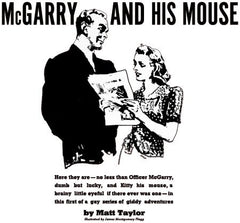
      <![CDATA[<p style="float: left;"><span><img alt="McGarry and His Mouse" src="//cdn.shopify.com/s/files/1/0754/6377/files/McGarryMouse_medium.jpg?v=1534637096" style="margin-right: 5px; float: left;">Debuting in September of 1940, Matt Taylor's 'McGarry and His Mouse' series appeared in 'This Week' magazine inserts in newspapers throughout America. The initial series was illustrated by no less than James Montgomery Flagg, famous for the iconic patriotic images of 'Uncle Sam' throughout the era. Matthew 'Matt' Taylor launched his hapless, but loveable character Detective Danny McGarry in 1940 with a series of short stories that appeared in "This Week" news magazine inserts syndicated with the Sunday newspapers of the era. Quickly rising in popularity, Taylor's amusing tales of rookie detective Danny McGarry and his clever girl friend, Kitty Archer--or "The Mouse" as McGarry lovingly referred to her, McGarry and His Mouse continued to captivate North American Sunday readers throughout the World War II years. </span></p>
<p><span>As the War began to wind down, McGarry and His Mouse caught the attention of the National Broadcasting Company (NBC). NBC thought enough of the franchise's potential to order a 1945 audition of "McGarry and The Mouse." Featuring William Gargan as Detective Dan McGarry and Ruth Warrick as 'The Mouse,' the audition--and project--languished until the Spring of 1946. Apparently Bristol-Myers thought enough of its potential to buy the series from General Amusement Corporation and renamed the commercial series back to Taylor's original "McGarry and His Mouse." Dan McGarry and his'Mouse' take to the airwaves over NBC Debuting on June 26th 1946, McGarry and His Mouse initially featured Wendell Corey as Detective Dan McGarry and Peggy Conklin as Kitty Archer. </span></p>
<p><span>A Summer replacement for its popular The Eddie Cantor Show, Bristol-Myers promoted its Ipana toothpaste and Vitalis hair tonic lines throughout the NBC Run. Supporting Wendell Corey and Peggy Conklin were Betty Garde as Kitty Archer's mother, Thelma Ritter as Kitty's best friend Bernice and Arnold Robertson as Dan's uncle Detective Inspector Matthew McGarry.</span></p>
<p><a href="https://otrworld.com/products/mcgarry-and-his-mouse-old-time-radio-shows-on-mp3-cd-otr-otrs-3-episodes" title="McGarry and His Mouse"><span>Check out the MP3 Disc Here.</span></a></p>]]>
    </content>
  </entry>
  <entry>
    <id>https://otrworld.com/blogs/old-time-radio/free-episode-from-mary-lee-taylor</id>
    <published>2018-08-11T23:53:00-05:00</published>
    <updated>2021-04-01T19:31:39-05:00</updated>
    <link rel="alternate" type="text/html" href="https://otrworld.com/blogs/old-time-radio/free-episode-from-mary-lee-taylor"/>
    <title>Free Episode From Mary Lee Taylor</title>
    <author>
      <name>OTR World</name>
    </author>
    <content type="html">
      <![CDATA[<p><span>Enjoy this free episode from the Old Time Radio Show "Mary Lee Taylor". The episode title is "Budget Problems". Complete collection is available </span><a href="https://otrworld.com/products/mary-lee-taylor-old-time-radio-shows-on-mp3-cd-otr-otrs-36-episodes" title="Mary Lee Taylor Old Time Radio Show">here</a><span>.</span></p>
<p> </p>
<p><iframe width="100%" height="300" scrolling="no" frameborder="no" allow="autoplay" src="https://w.soundcloud.com/player/?url=https%3A//api.soundcloud.com/tracks/484395531&amp;color=%23ff5500&amp;auto_play=false&amp;hide_related=false&amp;show_comments=true&amp;show_user=true&amp;show_reposts=false&amp;show_teaser=true&amp;visual=true"></iframe></p>]]>
    </content>
  </entry>
  <entry>
    <id>https://otrworld.com/blogs/old-time-radio/free-episode-from-mark-trail</id>
    <published>2018-08-04T21:13:00-05:00</published>
    <updated>2021-04-01T19:31:43-05:00</updated>
    <link rel="alternate" type="text/html" href="https://otrworld.com/blogs/old-time-radio/free-episode-from-mark-trail"/>
    <title>Free Episode From Mark Trail</title>
    <author>
      <name>OTR World</name>
    </author>
    <content type="html">
      <![CDATA[<p>Enjoy this free episode from the Old Time Radio Show "Mark Trail". The episode title is "Witch Of Lost Forrest". Complete collection is available <a href="https://otrworld.com/products/mark-trail-old-time-radio-shows-on-mp3-cd-otr-otrs-41-episodes" title="Mark Trail Old Time Radio Show">here</a>.</p>
<p> </p>
<p><iframe width="100%" height="300" scrolling="no" frameborder="no" allow="autoplay" src="https://w.soundcloud.com/player/?url=https%3A//api.soundcloud.com/tracks/481269057&amp;color=%23ff5500&amp;auto_play=false&amp;hide_related=false&amp;show_comments=true&amp;show_user=true&amp;show_reposts=false&amp;show_teaser=true&amp;visual=true"></iframe></p>]]>
    </content>
  </entry>
  <entry>
    <id>https://otrworld.com/blogs/old-time-radio/joseph-duninger-old-time-radio-star</id>
    <published>2018-07-28T20:05:00-05:00</published>
    <updated>2021-04-01T19:31:46-05:00</updated>
    <link rel="alternate" type="text/html" href="https://otrworld.com/blogs/old-time-radio/joseph-duninger-old-time-radio-star"/>
    <title>Joseph Duninger: Old Time Radio Star</title>
    <author>
      <name>OTR World</name>
    </author>
    <content type="html">
      <![CDATA[<p><!--StartFragment --></p>
<p style="text-align: center;"><b><img src="//cdn.shopify.com/s/files/1/0754/6377/files/Joseph_Dunninger_middle_aged_medium.png?v=1532826365" alt="Joseph Dunning"></b></p>
<p><b>Joseph Dunninger</b> (April 28, 1892 – March 9, 1975), known as "<a href="https://otrworld.com/products/dunninger-the-mentalist-old-time-radio-show-mp3-on-cd-r-7-episodes-otr-otrs-1" target="_blank" title="Dunninger The Mentalist" rel="noopener noreferrer">The Amazing Dunninger</a>", was one of the most famous and proficient mentalists of all time. He was one of the pioneer performers of magic on radio and television.<sup id="cite_ref-1" class="reference"><span> </span></sup>A debunker of fraudulent mediums<sup id="cite_ref-Samuel_2011_2-0" class="reference"><span></span></sup>, Dunninger claimed to replicate through trickery all spiritualist phenomena.<br><br></p>
<p>Dunninger was born in New York City. He headlined throughout the<span> </span><span>Keith-Orpheum Circuit</span>, and was much in demand for private entertainment. At the age of seventeen he was invited to perform at the home of<span> </span><span>Theodore Roosevelt</span><span> </span>in<span> </span><span>Oyster Bay</span><span> </span>and at the home of the inventor<span> </span><span>Thomas Edison</span>, both of whom were avid admirers of Dunninger. President<span> </span><span>Franklin D. Roosevelt</span><span> </span>invited Dunninger to the<span> </span><span>White House</span><span> </span>on a number of occasions to demonstrate his mentalist skills.<sup id="cite_ref-Samuel_2011_2-1" class="reference"><span></span></sup></p>
<p>Dunninger was a debunker of fraudulent<span> </span><span>mediums</span>.<sup id="cite_ref-Samuel_2011_2-2" class="reference"><span></span></sup><span> </span>He claimed to replicate through trickery all<span> </span><span>spiritualist</span><span> </span>phenomena.<span> </span>He wrote the book<span> </span><i>Inside the Medium's Cabinet</i><span> </span>(1935) which exposed the tricks of mediumship. He also exposed how the<span> </span><span>indian rope trick</span><span> </span>could be performed by camera trickery.<sup id="cite_ref-5" class="reference"><span></span></sup><span> </span>In 1935, Dunninger attended a<span> </span><span>séance</span><span> </span>of the fraudulent medium Emerson Gilbert. His testimony was used in court against the medium.<sup id="cite_ref-Samuel_2011_2-3" class="reference"><span></span></sup></p>
<p>Dunninger had a standing offer of $10,000 to anyone who could prove that he used confederates or "stooges."<sup id="cite_ref-Samuel_2011_2-4" class="reference"><span></span></sup><span> </span>Through<span> </span><span><i>Scientific American</i> magazine</span><span> </span>and his own organization the Universal Council for Psychic Research he also made an offer to any medium who could produce by<span> </span><span>psychic</span><span> </span>or<span> </span><span>supernatural</span><span> </span>means any physical phenomena that he could not duplicate or explain by natural means. No medium ever won the reward.<sup id="cite_ref-Samuel_2011_2-5" class="reference"><span></span></sup><sup id="cite_ref-6" class="reference"><span></span></sup><sup id="cite_ref-7" class="reference"><span></span></sup><span> </span>According to Dunninger "through all these long years, I have sought good honest ghosts, phantoms, spirits, astral beings, banshees, fays, wee folk, apparitions, fetches—the whole pack and passel of the unsubstantial world—and I have always been able to prove them frauds."<sup id="cite_ref-Samuel_2011_2-6" class="reference"><span></span></sup></p>
<p>He was a good friend to many notables in the magic community including<span> </span><span>Harry Houdini</span>, Francis<span> </span><span>Martinka</span><span> </span>and<span> </span><span>Tony Slydini</span>.<sup id="cite_ref-8" class="reference"><span></span></sup><span> </span>He maintained a lifelong friendship with author of<span> </span><i><span>The Shadow</span></i>,<span> </span><span>Walter B. Gibson</span>, who guest wrote or cowrote a number of books for Dunninger on magic, psychic phenomena and spiritualism.<sup id="cite_ref-9" class="reference"><span></span></sup><span> </span>In the 1937,<span> </span><span>Max Holden</span><span> </span>considered "Dunninger the foremost magician and showman of the present day".<sup id="cite_ref-10" class="reference"><span></span></sup></p>
<p>Dunninger appeared on radio starting in 1943. In 1948, Dunninger and<span> </span><span>Paul Winchell</span><span> </span>were featured on<span> </span><i>Floor Show</i><span> </span>on<span> </span><span>NBC</span><span> </span>TV. Recorded via<span> </span><span>kinescope</span><span> </span>and replayed on<span> </span><span>WNBQ-TV</span><span> </span>in Chicago, Illinois, the 8:30-9 p.m. Central Time show on Thursdays was the station's first mid-week program.<sup id="cite_ref-11" class="reference"><span></span></sup><span> </span>He was featured on television frequently in the 1950s and 60s. During the 1950s and 1960s his name was used as the basis for two recurring comedic characters, "The Amazing Dillinger" played by<span> </span><span>Johnny Carson</span><span> </span>on<span> </span><i><span>The Johnny Carson Show</span></i><span> </span>in 1955; and "Gunninger the Mentalist" on a<span> </span><span>television</span><span> </span>show hosted by the<span> </span><span>comedian</span><span> </span><span>Soupy Sales</span>. On the<span> </span><span>I Love Lucy</span><span> </span>episode "Ricky's European Booking" (Season 5, episode 10) after Fred Mertz accurately predicts Lucy's excited reaction to Ricky's new booking, he gets a big laugh when he brags to Ricky "Just call me Dunninger."</p>
<p>He died of<span> </span><span class="mw-redirect">Parkinson's Disease</span><span> </span>at his home in<span> </span><span>Cliffside Park, New Jersey</span>.</p>
<p><a href="https://otrworld.com/products/dunninger-the-mentalist-old-time-radio-show-mp3-on-cd-r-7-episodes-otr-otrs-1" target="_blank" title="Dunninger The Mentalist" rel="noopener noreferrer">Check out Dunninger The Mentalist here.</a></p>
<p> </p>]]>
    </content>
  </entry>
  <entry>
    <id>https://otrworld.com/blogs/old-time-radio/the-march-of-time-old-time-radio-show</id>
    <published>2018-07-14T20:58:00-05:00</published>
    <updated>2021-04-01T19:31:50-05:00</updated>
    <link rel="alternate" type="text/html" href="https://otrworld.com/blogs/old-time-radio/the-march-of-time-old-time-radio-show"/>
    <title>The March Of Time Old Time Radio Show</title>
    <author>
      <name>OTR World</name>
    </author>
    <content type="html">
      <![CDATA[<!--StartFragment --> <i><b>The March of Time</b></i><span> is an American </span><span>radio</span><span> </span><span>news documentary</span><span> and </span><span>dramatization</span><span> series sponsored by </span><span>Time Inc.</span><span> and broadcast from 1931 to 1945. Created by broadcasting pioneer Fred Smith and </span><i><span>Time</span></i><span> magazine executive Roy E. Larsen, the program combined actual news events with reenactments. The "voice" of </span><i>The March of Time</i><span> was </span><span>Westbrook Van Voorhis</span><span>. The radio series was the basis of the famed </span><i><span>March of Time</span></i><span> </span><span>newsreel</span><span> series shown in movie theaters from 1935 to 1951.<br><br></span>
<p><i>The March of Time</i><span> </span>had its origins in a 1928 radio series developed at<span> </span><span>WLW</span><span> </span>in Cincinnati, Ohio, by radio pioneer Fred Smith, who obtained permission to use material from<span> </span><i><span>Time</span></i><span> </span>magazine in his broadcasts. Later, Smith and Roy E. Larsen, the first circulation manager for<span> </span><i>Time</i>, developed<span> </span><i>Time</i><span> </span>magazine's own radio program, which they called<span> </span><i>Newscasting</i>. That program evolved into<span> </span><i>The March of Time</i>, the first network presentation of a dramatized "news" format. At Smith's suggestion, the program included the "10 best radio actors", an "announcer extraordinary", a "splendid orchestra" and a "clever director."<sup id="cite_ref-2" class="reference"><span></span></sup></p>
<p>"<i>The March of Time</i><span> </span>was the first radio newsreel", wrote radio historian<span> </span><span>John Dunning</span>, "dramatized news events, elaborately staged with sound effects and music, put together like a newspaper—often on deadline, with impact and accuracy its twin goals."<sup id="cite_ref-Dunning_3-0" class="reference"><span></span></sup><sup class="reference"><span></span></sup></p>
<p><i>The March of Time</i><span> </span>began airing as a weekly series March 6, 1931, on<span> </span><span>CBS Radio</span><span> </span>on over 32 stations on Friday evenings.<sup id="cite_ref-4" class="reference"><span></span></sup><span> </span>The half-hour program aired Fridays at 8:30 p.m. ET. In 1935 the program was trimmed to 15 minutes and aired five times a week,<sup id="cite_ref-5" class="reference"><span></span></sup><span> </span>but after a year returned to its 30-minute weekly format. Suspended in 1939, the series was revived in 1941 with a new format, and lasted until 1945.<sup id="cite_ref-Fielding_6-0" class="reference"><span></span></sup><sup class="reference"><span></span></sup></p>
<p><span>Time Inc.</span><span> </span>was the only sponsor of all of the shows; other sponsors included<span> </span><span>Remington Rand</span>, the<span> </span><span>Wrigley Company</span>, and<span> </span><span>Electrolux</span>.<span> </span><i>The March of Time</i><span> </span>aired on CBS through October 7, 1937, and was subsequently broadcast on the<span> </span><span>Blue Network</span><span> </span>(October 14, 1937 – June 5, 1942),<span> </span><span>NBC</span><span> </span>(July 9, 1942 – October 26, 1944), and<span> </span><span>ABC</span><span> </span>(November 2, 1944 – July 26, 1945).<sup id="cite_ref-7" class="reference"><span></span></sup></p>
<p>One of radio's most popular programs,<span> </span><i>The March of Time</i><span> </span>was described by<span> </span><i><span>Variety</span></i><span> </span>as "the apex of radio showmanship." It reached millions of Americans during its 14-year history. The series's promotional value to Time Inc. proved to be incalculable, although<span> </span><i>Time</i><span> </span>had announced that it would discontinue the program after the first year.<sup id="cite_ref-Fielding_6-1" class="reference"><span></span></sup><sup class="reference"><span></span></sup><span> </span>It was an expensive production requiring as many as 75 staff and 1,000 hours of labor to get each issue on the air.<sup id="cite_ref-Fielding_6-2" class="reference"><span></span></sup><sup class="reference"><span></span></sup></p>
<p>The full studio orchestra was conducted by Howard Barlow (CBS) and<span> </span><span>Donald Voorhees</span><span> </span>(NBC). The<span> </span><span>sound effects</span><span> </span>team was led by Ora Daigle Nichols, the only woman who made a living as a sound engineer at that time. She and her husband Arthur introduced sound effects to radio, drawing on many successful years of stage and silent film experience. They began to freelance their talents to radio in 1928, and were put under contract by CBS as the demand for sound effects increased. After her husband's death in 1931, Nichols continued to lead the profession and was called the "first lady of sound effects." The media voted Nichols one of the most influential women in radio; other women honored included<span> </span><span>Amelia Earhart</span>,<span> </span><span>Eleanor Roosevelt</span><span> </span>and<span> </span><span>Kate Smith</span>.<sup id="cite_ref-Mott_8-0" class="reference"><span></span></sup><sup class="reference"><span></span></sup></p>
<p><i>The March of Time</i><span> </span>broadcasts began with the tramp-tramp-tramp of shuffling feet, to indicate "the relentless impersonal progress of events." The principal narrator was the Voice of<span> </span><i>Time</i>; another was the Voice of Fate, narrating stories of catastrophe or the death of a notable person. The first Voice of<span> </span><i>Time</i><span> </span>was<span> </span><span>Ted Husing</span>;<span> </span><span>Westbrook Van Voorhis</span><span> </span>was the Voice of Fate. In fall 1931<span> </span><span>Harry von Zell</span><span> </span>began a brief tenure as<span> </span><i>Time</i>, but in October 1933 he moved to the role of announcer and Van Voorhis assumed the leading role. His voice—concluding most broadcasts with a booming, "Time … marches on!"—became synonymous with the program, both on radio and in the newsreel series.<sup id="cite_ref-Dunning_3-1" class="reference"><span></span></sup><sup class="reference"><span></span></sup></p>
<p>Written to match the style of<span> </span><i>Time</i><span> </span>magazine, radio scripts incorporated transcripts of statements and comments by the figures impersonated on<span> </span><i>The March of Time</i><span> </span>whenever possible. When these could not be obtained, writers were allowed to "re-create" appropriate dialogue. Actors researched and rehearsed with great care to mimic the precise voice patterns and characteristics of the people they were impersonating.<span> </span><i>March of Time</i><span> </span>creator Roy E. Larsen recalled that only one person, Franklin D. Roosevelt, ever complained about their treatment on the program. The President was annoyed because he was getting calls from political advisors regarding statements spoken on<span> </span><i>The March of Time</i><span> </span>that he had not uttered, even though they matched his policies. White House complaints continued until 1937, when<span> </span><i>The March of Time</i><span> </span>stopped imitating FDR altogether.<sup id="cite_ref-Fielding_6-3" class="reference"><span></span></sup><sup class="reference"><span></span></sup></p>
<p>"From the beginning it was known that<span> </span><i>The March of Time</i><span> </span>would face the stiffest production challenges that radio had yet known", wrote John Dunning:</p>
<blockquote>
<p>When a big story broke at the last minute, a polished ready-to-air show was reorganized: the entire menu was shifted as events demanded. Newspapers are accustomed to this … but in radio, a new breed of actor had come to the fore, players who could deliver superb performances from scripts they had never seen before going live on the air. Sight reading, they called it: reading always two lines ahead and acting the lines they had already read. Actors, sound artists, and musicians worked feverishly to accommodate the bulletins from<span> </span><i>Time'</i>s reporters in the field.<sup id="cite_ref-Dunning_3-2" class="reference"><span></span></sup><sup class="reference"><span></span></sup></p>
</blockquote>
<p>Seven or eight sketches were featured in each show, varying in length from 90 seconds to four minutes. Newspapers were sometimes scooped by the radio docudrama. On May 6, 1937, the<span> </span><span><i>Hindenburg</i> disaster</span><span> </span>took place two hours before air time, and<span> </span><i>The March of Time</i><span> </span>created a segment that focused on the history of<span> </span><span>airship</span><span> </span>travel and ended with the news of the disaster in Lakehurst, New Jersey.<sup id="cite_ref-Dunning_3-3" class="reference"><span></span></sup><sup class="reference"><span></span></sup><span> </span><span>Herbert Morrison</span>'s recorded radio eyewitness report from the landing field was not broadcast until the next day.</p>
<p><img src="//cdn.shopify.com/s/files/1/0754/6377/files/MOT-Sound-Team_medium.jpg?v=1531620095" alt="The March Of Time Old Time Radio Show" style="display: block; margin-left: auto; margin-right: auto;"></p>
<p><img src="//cdn.shopify.com/s/files/1/0754/6377/files/MOT-Ora-Nichols-1935_medium.jpg?v=1531620089" alt="The March Of Time Old Time Radio Show" style="display: block; margin-left: auto; margin-right: auto;"></p>
<p><img src="//cdn.shopify.com/s/files/1/0754/6377/files/MOT-Actors-Rehearsal_medium.jpg?v=1531620080" alt="The March Of Time Old Time Radio Show" style="display: block; margin-left: auto; margin-right: auto;"></p>
<p><img src="//cdn.shopify.com/s/files/1/0754/6377/files/MOT-Actors-Microphone_medium.jpg?v=1531620070" alt="The March Of Time Old Time Radio Show" style="display: block; margin-left: auto; margin-right: auto;"></p>]]>
    </content>
  </entry>
  <entry>
    <id>https://otrworld.com/blogs/old-time-radio/the-cinnamon-bear-old-time-radio-show</id>
    <published>2018-07-07T19:36:00-05:00</published>
    <updated>2021-04-01T19:31:53-05:00</updated>
    <link rel="alternate" type="text/html" href="https://otrworld.com/blogs/old-time-radio/the-cinnamon-bear-old-time-radio-show"/>
    <title>The Cinnamon Bear Old Time Radio Show</title>
    <author>
      <name>OTR World</name>
    </author>
    <content type="html">
      <![CDATA[<!--StartFragment -->
<p style="float: left;"><i><b><img alt="Cinnamon Bear" src="//cdn.shopify.com/s/files/1/0754/6377/files/cinnamon-bear_medium.jpg?v=1531010125" style="margin-right: 5px; float: left;">The Cinnamon Bear</b></i><span> </span>is an<span> </span><span class="mw-redirect">old-time radio</span><span> </span>program produced by Transco (Transcription Company of America), based in<span> </span><span class="mw-redirect">Hollywood, California</span>. The series was specifically designed to be listened to six days a week between Thanksgiving and Christmas.</p>
<p>It was first broadcast between Friday, November 26 and Saturday December 25, 1937. Some markets like<span> </span><span>Portland</span>,<span> </span><span>Oregon</span><span> </span>jumped the gun, debuting the program on November 25, Thanksgiving Day. In the first season, Portland broadcast the program on two stations, KALE at 6:00pm and<span> </span><span>KXL</span><span> </span>at 7:00pm.</p>
<p>When syndication problems arose at Transco, the program was not officially broadcast in 1940, although some stations might have aired previous transcriptions. No program aired in Portland that year. In 1941, Transco programming was sold to Broadcasters Program Syndicate, and<span> </span><i>The Cinnamon Bear</i><span> </span>was on the air nationally once again. In the 1950s, syndication was taken over by Lou R. Winston, also based in Hollywood.</p>
<p>An original<span> </span><span class="mw-redirect">Lipman-Wolfe &amp; Company</span><span> </span>newspaper ad from the Portland<span> </span><span class="mw-redirect">Oregon Journal</span>, November 25, 1937 read:</p>
<dl>
<dd>Introducing Paddy O'Cinnamon, Santa Claus's right-hand man! Meet him with Santa in Toyland at Lipman's... and don't miss his exciting adventures with Judy and Jimmy (two of the nicest playmates you could ever want). and some nights you'll be so anxious to hear how they got the Silver Star back from the wicked Crazyquilt Dragon that you'll listen twice! And here's a secret... the Cinnamon Bear is just as excited about meeting you as he can be.</dd>
</dl>
<p>The story focused on Judy and Jimmy Barton who go to the enchanted world of Maybeland to recover their missing Silver Star that belongs on their Christmas tree. Helping on the search is the Cinnamon Bear, a stuffed bear with shoe-button eyes and a green ribbon around his neck. They meet other memorable characters during their quest, including the Crazy Quilt Dragon (who repeatedly tries to take the star for himself), the Wintergreen Witch, Fe Fo the Giant and<span> </span><span>Santa Claus</span>.</p>
<p>Episodes began at Thanksgiving and ended at Christmas, with one episode airing each night. The show was created by a group of merchants as an advertising promotion, and was recorded in only a few weeks. It was produced by Lindsay MacHarrie, who also provided the voice of Westley the Whale and several other characters.</p>
<span>The radio show proved to be so popular that the Metropolitan Washington Old-Time Radio Club says it has been broadcast by a station somewhere in the world every year during the holidays, even today. Many malls had a Cinnamon Bear that children would tell what they wanted for gifts instead of a Santa, and he would show up in Christmas parades. </span><i>The Cinnamon Bear</i><span> has remained especially popular in </span><span>Portland</span><span> Oregon, which was often cited as a "Cinnamon Bear hotspot."<br><br>In 1951, for a </span><i>Cinnamon Bear</i><span> television series, the characters were hand puppets, and the radio program provided the soundtrack.<br><br></span>
<p>In 1987, upon the 50th anniversary of The Cinnamon Bear, a fan of the show started an annual newsletter called "<span class="external text">Bear Facts</span>" and put out by "The Cinnamon Bear Brigade," which ran for five years.</p>
<p><i>The Cinnamon Bear in the Adventure of the Silver Star</i><span> </span>(2007) by Rick Lewis and Veronica Marzilli was published during the 70th anniversary of<span> </span><i>The Cinnamon Bear</i>. Jerrel McQueen and Timothy Holmes provided the illustrations.</p>
<p><i>Timothy John</i>, a proposed radio serial by<span> </span><span>Carlton E. Morse</span>, featured a teddy bear who spoke with an Irish accent. As noted by<span> </span><span class="mw-redirect">Martin Grams, Jr.</span>, Morse's unused plot synopsis was obviously inspired by<span> </span><i>The Cinnamon Bear</i>.<sup id="cite_ref-2" class="reference"><span></span></sup></p>
<p><span>Lipman's</span><span> </span>is probably best remembered for the Cinnamon Bear, a popular Portland<span> </span><span>Christmas</span><span> </span>time tradition since 1937. The Cinnamon Bear was introduced as a Lipman's-sponsored radio story character, meant to count down the days until Christmas. Along with<span> </span><span>Santa Claus</span>, his costumed likeness appeared every Christmas at Lipman's stores, handing out cookies to children. Frederick &amp; Nelson continued the practice after absorbing the brand. The Cinnamon Bear survives today as a souvenir at the Fifth Avenue Suites. To this day, the Cinnamon Bear is aired during the holidays on<span> </span><span>K103</span>. The Cinnamon Bear radio show can also be heard on Kool 99.1 in Eugene, Oregon every Christmas</p>
<p>Portland Spirit Cruises developed the first Cinnamon Bear Cruise in 2005, based on the radio show by Glanville and Elizabeth Heisch's memorable characters and the radio show. Becoming a family tradition in Portland, Oregon, the cruise entering its 5th year in 2009, sells out to thousands of family members during the month of December. On board, children of all ages meet Queen Melissa, Cinnamon Bear, Crazy Quilt Dragon, Presto the Magician, Captain Taffy and the Candy Buccaneers and numerous other magical characters from the radio series.</p>
<p> </p>]]>
    </content>
  </entry>
  <entry>
    <id>https://otrworld.com/blogs/old-time-radio/old-time-radio-show-free-episode-man-hunt</id>
    <published>2018-06-30T20:39:00-05:00</published>
    <updated>2021-04-01T19:31:56-05:00</updated>
    <link rel="alternate" type="text/html" href="https://otrworld.com/blogs/old-time-radio/old-time-radio-show-free-episode-man-hunt"/>
    <title>Old Time Radio Show Free Episode: Man Hunt</title>
    <author>
      <name>OTR World</name>
    </author>
    <content type="html">
      <![CDATA[<p>Here is the episode "The Crimson Corpse" from the Old Time Radio Show "Man Hunt". <a href="https://otrworld.com/products/man-hunt-old-time-radio-shows-otr-mp3-on-cd-r-14-episodes" target="_blank" title="Man Hunt Old Time Radio Show" rel="noopener noreferrer">Check out the complete MP3 CD here</a>.</p>
<p> </p>
<p><iframe width="100%" height="300" scrolling="no" frameborder="no" allow="autoplay" src="https://w.soundcloud.com/player/?url=https%3A//api.soundcloud.com/tracks/465729093&amp;color=%23ff5500&amp;auto_play=false&amp;hide_related=false&amp;show_comments=true&amp;show_user=true&amp;show_reposts=false&amp;show_teaser=true&amp;visual=true"></iframe></p>]]>
    </content>
  </entry>
  <entry>
    <id>https://otrworld.com/blogs/old-time-radio/major-bowes-amateur-hour-old-time-radio-show</id>
    <published>2018-06-23T02:09:00-05:00</published>
    <updated>2021-04-01T19:32:00-05:00</updated>
    <link rel="alternate" type="text/html" href="https://otrworld.com/blogs/old-time-radio/major-bowes-amateur-hour-old-time-radio-show"/>
    <title>Major Bowes Amateur Hour Old Time Radio Show</title>
    <author>
      <name>OTR World</name>
    </author>
    <content type="html">
      <![CDATA[<!--StartFragment --> <span>The </span><i><b>Major Bowes Amateur Hour</b></i><span> was an American </span><span class="mw-redirect">radio</span><span> talent show broadcast in the 1930s and 1940s, created and hosted by </span><span>Edward Bowes</span><span> (1874–1946). Selected performers from the program participated in touring vaudeville performances, under the "Major Bowes" name. The program later transitioned to television under host </span><span class="mw-redirect">Ted Mack</span><span>.<br><br></span>
<h3>
<span class="mw-headline" id="Major_Bowes_and_the_Original_Amateur_Hour"><i>Major Bowes and the Original Amateur Hour</i></span><span class="mw-editsection"><span class="mw-editsection-bracket"></span><span></span><span class="mw-editsection-bracket"></span></span>
</h3>
<p>Bowes brought his amateur hour to the New York City radio station<span> </span><span>WHN</span><span> </span>in April 1934.<sup id="cite_ref-rp_1-0" class="reference"><span></span></sup><span></span> On March 24, 1935, on<span> </span><span>NBC</span>,<sup id="cite_ref-kct_2-0" class="reference"><span></span></sup><span> </span>Chase and Sanborn chose this show to fill<span> </span><i><span>The Chase and Sanborn Hour</span></i>. This arrangement lasted until September 17, 1936, when the show moved to the<span> </span><span class="mw-redirect">CBS Radio Network</span>. The show remained on<span> </span><span>CBS</span><span> </span>for the remainder of its run on radio.</p>
<p>Each week, Bowes would chat with the contestants and listen to their performances.</p>
<p>Bowes sent the more talented contestants on "Major Bowes" vaudeville tours, often with several units roaming the country simultaneously. Bowes presided over his radio program until his death on his 72nd birthday, June 14, 1946.</p>
<p><span>Frank Sinatra</span><span> </span>was perhaps the best-known alumnus of the Bowes program, having appeared as part of the Hoboken Four quartet.<span> </span><span>Maria Callas</span><span> </span>also appeared on the program at age 11, performing as Nina Foresti when she sang a selection from<span> </span><i>Madame Butterfly</i>.<sup id="cite_ref-sies_3-0" class="reference"><span></span></sup></p>
<h3>
<span id="Major_Bowes.27_Shower_of_Stars"></span><span class="mw-headline" id="Major_Bowes'_Shower_of_Stars"><i>Major Bowes' Shower of Stars</i></span><span class="mw-editsection"><span class="mw-editsection-bracket"></span><span></span><span class="mw-editsection-bracket"></span></span>
</h3>
<p>In 1945-1946, CBS presented "an extension series" of the original program.<sup id="cite_ref-rp_1-1" class="reference"><span></span></sup><span> </span>In addition to new talent, it featured performances by winners on the original program who had achieved some additional success.</p>
<h2><span class="mw-headline" id="Tour">Tour</span></h2>
<p><span class="mw-headline"><!--StartFragment --> Major Bowes Amateur Hour also toured the US under the name Major Bowes Jamboree in 1938. The following performers appeared on the stage of<span> </span><span class="mw-redirect">Shea's Buffalo</span>: </span></p>
<p>"It is composed of 12 prize winning acts which have never before appeared in Buffalo, with<span> </span><span class="mw-redirect">Ted Mack</span>, former conductor of Shea's Buffalo Orchestra, returning in the role of master of ceremonies. On the screen will be<span> </span><span>Mickey Rooney</span>, the delightful star of the<span> </span><span>Judge Hardy family series</span>, in his newest role, "Hold That Kiss" with<span> </span><span>Maureen O'Sullivan</span><span> </span>and<span> </span><span>Dennis O'Keefe</span>, Shea's Buffalo News will conclude the bill."</p>
<p>"In the stage show, Major Bowes has booked some of the outstanding acts heard over his weekly radio program, most of which have just won honors within the past weeks. Among these are the Three Chords who startled the studio audience and radio listeners with their uncanny imitations of musical instruments and favorite bands, on the May 12 broadcast."</p>
<p>"Bobby Blakeman, choir boy, who is called the<span> </span><span>Bobby Breen</span><span> </span>of the Major's hour, brings an unparalleled sweet voice to the program. Louise Boyd, the amateur<span> </span><span>Eleanor Powell</span>, has a reputation for never missing a tap in her difficult routine; and the Wallace Brothers, two fast stepping youngsters from Harlem, will dance their way into the audience's heart." A very young 10 year old named Tommy DeVito would appear in 1938 to sing and play guitar to "Red River Valley, and would later rise to fame as the founder and lead guitarist of the Four Seasons rock/pop band famous in the 1960's, and whose life was portrayed in the Broadway musical "Jersey Boys" and the film of the same name.</p>
<p>"Other entertainers include Ding, Dong and Dell, harmony trio; Harvey Mearns, Swiss bell ringer; Dick King, Imitator; Neva Ames, xylophone wonder; Duane Sister, acrobatic dancer, Adolph Robinson, song and danceman and Gae Allen, toe tapper on drums."</p>
<br>
<p><span class="mw-redirect">Ted Mack</span>, who joined the Bowes operation in 1935,<sup id="cite_ref-gct_5-0" class="reference"><span></span></sup><span> </span>was "first assistant in the talent selection, production and direction"<sup id="cite_ref-mcgg_6-0" class="reference"><span></span></sup><span> </span>for Bowes, became the<span> </span><span class="extiw">interim</span><span> </span>host of the radio show and a few months later moved it to the fledgling medium of television. It was intermittently broadcast on the<span> </span><span>DuMont Television Network</span><span> </span>during 1947 and began regular weekly programs January 18, 1948, still using Bowes' name in the title,<span> </span><i>Major Bowes' Original Amateur Hour</i>. The TV show subsequently moved to each of the four commercial networks, eventually ending up on its original network, CBS,<sup id="cite_ref-etvs_7-0" class="reference"><span></span></sup><span> </span>where the radio show continued to run until 1952. (Another source says that Mack's program ran on<span> </span><span>ABC</span><span> </span>radio, rather than on CBS.)<sup id="cite_ref-rp_1-3" class="reference"><span></span></sup><sup class="reference nowrap"><span></span></sup></p>
<p>Starting with the 1950-51 season, both the radio and television versions became simply<span> </span><i><span class="mw-redirect">Original Amateur Hour</span></i><span> </span>and in 1955, the TV version was renamed<span> </span><i>Ted Mack and The Original Amateur Hour</i>. Future stars who appeared on the show included<span> </span><span>Pat Boone</span><span> </span>and<span> </span><span>Gladys Knight</span>.</p>
<p>Each episode usually featured eight acts.<sup id="cite_ref-8" class="reference"><span></span></sup><span> </span>Viewers selected the winner, casting votes for their favorites by telephone or by mail. Each segment's winner was announced the next week. All contestants who won for three consecutive weeks appeared in an annual championship episode.<sup id="cite_ref-mcgg_6-1" class="reference"><span></span></sup></p>
<p>Mack's style was decidedly more charitable than that of Bowes. The Major made a strong impression on a young<span> </span><span class="mw-redirect">Alan King</span>, who had appeared on the Bowes program as a teen. He was discussing Bowes with<span> </span><span>Johnny Carson</span>once, and suddenly stomped on the floor and yelled, "Can you hear me down there, Major Bowes?" suggesting that the late radio host had been consigned to<span> </span><span>Hell</span><span> </span>as punishment for his treatment of young performers.<sup class="noprint Inline-Template Template-Fact"><i><span><span title="This claim needs references to reliable sources. (June 2016)"></span></span></i></sup></p>
<p>In his comic monologue on his album<span> </span><i><span>Sinatra at the Sands</span></i><span> </span>(1966), Frank Sinatra describes how his vocal group<span> </span><span class="mw-redirect">The Hoboken Four</span>'s appearances were so popular on<span> </span><i>Major Bowes Amateur Hour</i><span> </span>in the mid-1930s that they were brought back week after week, under a different name each time.</p>
<p><a href="https://otrworld.com/products/major-bowes-amateur-hour-old-time-radio-shows-otr-mp3-on-cd-r-3-episodes" title="Major Bowes Amateur Hour MP3 Disc">View the MP3 Collection Disc Here.</a></p>]]>
    </content>
  </entry>
  <entry>
    <id>https://otrworld.com/blogs/old-time-radio/free-episode-for-fathers-day-2018</id>
    <published>2018-06-17T18:09:00-05:00</published>
    <updated>2021-04-01T19:32:04-05:00</updated>
    <link rel="alternate" type="text/html" href="https://otrworld.com/blogs/old-time-radio/free-episode-for-fathers-day-2018"/>
    <title>Free Episode For Father&apos;s Day</title>
    <author>
      <name>Keith Bowman</name>
    </author>
    <content type="html">
      <![CDATA[<p>Enjoy this free Father's Day episode from the <a href="https://otrworld.com/products/fathers-day-collection-old-time-radio-shows-otrs-mp3-dvd-211-episodes" title="Get The Complete Collection Here!">OTR World Father's Day Collection</a> disc.</p>
<p><iframe width="560" height="315" src="https://www.youtube.com/embed/k0MwwAP5avk" frameborder="0" allow="accelerometer; autoplay; encrypted-media; gyroscope; picture-in-picture" allowfullscreen=""></iframe></p>]]>
    </content>
  </entry>
  <entry>
    <id>https://otrworld.com/blogs/old-time-radio/old-time-radio-show-lux-radio-theater</id>
    <published>2018-06-09T18:40:00-05:00</published>
    <updated>2021-04-01T19:32:08-05:00</updated>
    <link rel="alternate" type="text/html" href="https://otrworld.com/blogs/old-time-radio/old-time-radio-show-lux-radio-theater"/>
    <title>Old Time Radio Show: Lux Radio Theater</title>
    <author>
      <name>OTR World</name>
    </author>
    <content type="html">
      <![CDATA[<p><!--StartFragment --></p>
<p><i><span><img src="//cdn.shopify.com/s/files/1/0754/6377/files/Lux_Radio_Theatre_1948_large.jpg?v=1528587576" alt="Lux Radio Theater" style="display: block; margin-left: auto; margin-right: auto;"></span></i></p>
<p><i><span>Lux Radio Theatre</span></i><span> was indisputably the biggest, most important, most expensive drama anthology program on radio. It ran from October 14, 1934 until June 7, 1955, then continued on television as </span><i><span>Lux Video Theatre</span></i><span> until 1957. In all, some 926 episodes were broadcast, providing a record of the most important entertainment events in American theatre and, later, film.</span><br><br><span>The show was first broadcast on the </span><span>NBC Blue Network</span><span> on Sundays at 2:30 PM. The show featured adaptations of successful Broadway plays when it was produced out of New York, such as </span><i>Seventh Heaven</i><span>, the first production starring </span><span>Miriam Hopkins</span><span>, </span><i><span>Smilin' Through</span></i><span>, </span><i><span>Berkeley Square</span></i><span>, </span><i><span>Daddy Long Legs</span></i><span>, </span><i><span>Peg O' My Heart</span></i><span> and </span><i><span>Way Down East</span></i><span>. On July 29, 1935, the show moved to Monday night at 9:00 PM on </span><span>CBS</span><span>, where it would stay until June 29, 1954. The show moved to Hollywood on May 25, 1936 with the production of </span><i>The Legionnaire and the Lady</i><span>, based on the film </span><i><span>Morocco</span></i><span>, starring </span><span>Marlene Dietrich</span><span> and </span><span>Clark Gable</span><span>. The audience for this production was estimated as high as 40 million. The show featured many of the most important films of the period, adapted to fit the 60 minute time slot. Some of the titles for 1939 should indicate the caliber and range of shows: </span><i><span>Stage Door</span></i><span>, </span><i><span>Ceiling Zero</span></i><span>, </span><i><span>So Big</span></i><span>, </span><i><span>It Happened One Night</span></i><span>, </span><i><span>The Lives of a Bengal Lancer</span></i><span>, </span><i><span>Lady for a Day</span></i><span>, </span><i><span>The Life of Emile Zola</span></i><span>, </span><i><span>Tovarich</span></i><span>, </span><i><span>Only Angels Have Wings</span></i><span>, </span><i><span>The Prisoner of Zenda</span></i><span>, </span><i><span>The Awful Truth</span></i><span>, </span><i><span>Wuthering Heights</span></i><span>, </span><i><span>You Cant Take It With You</span></i><span>, </span><i><span>The Old Maid</span></i><span> and </span><i>Goodbye,<span> </span><span>Goodbye, Mr Chips</span></i><span>. For its last season, (1954-1955), the show moved to Tuesday nights at 9 on NBC.</span><br><br><i>Lux Radio Theatre</i><span> was always broadcast live, with a studio audience and a full orchestra accompanying the performance and providing musical transitions between scenes. As many film actors were used to numerous takes and not live performance, they sometimes suffered acute stage fright before the show. However, since most received $5,000 for their performance – in addition to free publicity for upcoming pictures – actors appeared in their original screen roles if they were available. Indeed, production would halt if necessary on a film if performers were called to appear on Lux. When the actors were not available, others stepped in. The plays were assembled and rehearsed for a week, in sharp contrast to many other shows, which required a minimal of an actor’s time. Regular players for the series included Jim and Marian Jordan, otherwise known as </span><span>Fibber McGee and Molly</span><span>. Hosts included </span><span>Cecil B. DeMille</span><span> (1936-1945), </span><span>William Keighley</span><span> (1945-1952) and </span><span>Irving_Cummings</span><span>(1952-1955). Directors included Tony Stanford, Frank Woodruff, Fred MacKaye and Earl Ebi. When broadcast on the </span><span>Arms Forces Radio Services</span><span> in the early 1950s, the show was re-titled Hollywood Radio Theatre and hosted by </span><span>Don Wilson</span><span>. Similar shows include </span><i><span>Academy Award Theater</span></i><span>, </span><i><span>The Campbell Playhouse</span>,<span> </span><span>Screen Directors Playhouse</span><span> </span>and<span> </span><span>The Screen Guild Theater</span>.</i></p>
<p><a href="https://otrworld.com/products/lux-radio-theater-otr-old-time-radio-show-3-mp3-dvd-set-713-episodes" target="_blank" title="Lux Radio Theater" rel="noopener noreferrer">Check out the 713 episode DVD Set here.</a></p>]]>
    </content>
  </entry>
</feed>