<?xml version="1.0" encoding="UTF-8"?>
<?xml-stylesheet type="text/xsl" media="screen" href="/~d/styles/atom10full.xsl"?><?xml-stylesheet type="text/css" media="screen" href="http://feeds.feedburner.com/~d/styles/itemcontent.css"?><feed xmlns="http://www.w3.org/2005/Atom" xmlns:feedburner="http://rssnamespace.org/feedburner/ext/1.0" xml:lang="en-us"><title type="text">erraticwisdom</title>
<subtitle type="text">Very erratic, hardly wisdom</subtitle>

<link rel="alternate" type="text/html" href="http://erraticwisdom.com/" />
<id>tag:erraticwisdom.com,2005:fe8fa74025c62e839b4cbe7e85cbbefa</id>
<generator uri="http://textpattern.com/" version="4.4.1">Textpattern</generator>
<updated>2012-05-18T04:59:27Z</updated>
<author>
		<name>Tom Fadial</name>
		<email>tomfadial@gmail.com</email>
		<uri>http://erraticwisdom.com/</uri>
</author>

<atom10:link xmlns:atom10="http://www.w3.org/2005/Atom" rel="self" type="application/atom+xml" href="http://feeds.feedburner.com/philosophy" /><feedburner:info uri="philosophy" /><atom10:link xmlns:atom10="http://www.w3.org/2005/Atom" rel="hub" href="http://pubsubhubbub.appspot.com/" /><link rel="license" type="text/html" href="http://creativecommons.org/licenses/by-nc-nd/2.0/" /><logo>http://erraticwisdom.com/images/feed_logo.gif</logo><feedburner:browserFriendly>Thank you for subscribing to my feed. You can use the box to the right to add me to your feed reader of choice.</feedburner:browserFriendly><entry>
		<author>
			<name>Tom Fadial</name>
		</author>
		<published>2011-11-25T03:02:17Z</published>
		<updated>2011-11-25T03:02:17Z</updated>
		<title type="html">The Cerebellum: a model for learning in the brain</title>
		<link rel="alternate" type="text/html" href="http://feedproxy.google.com/~r/philosophy/~3/EZMpglMUgZ0/the-cerebellum-a-model-for-learning-in-the-brain" />
		<id>tag:erraticwisdom.com,2011-11-24:fe8fa74025c62e839b4cbe7e85cbbefa/cdec1b53789cdea476605aa06553a9bc</id>
		<category term="Science" />
		<category term="Consciousness" />
		<content type="html">
&lt;p&gt;I know, it’s been a while. Busy is no excuse though, as it is becoming clear that writing for erraticwisdom was an important part of exercising certain parts of my brain that I have neglected lately. I have a few Conscious Conversation interviews in queue as well that I’ll be posting soon. So let’s begin.&lt;/p&gt;

	&lt;p&gt;The cerebellum is a beautiful organ, nestled just under its bigger brother. It’s a critical part of controlling movement and serves as an excellent, if simplified, example of learning and memory – with the structure itself helping us understand how it works. The cerebellum provides rapid corrective feedback along the route from upper motor neurons (&lt;span class="caps"&gt;UMN&lt;/span&gt;) in the cortex to lower motor neurons directly innervating muscle. Firing an &lt;span class="caps"&gt;UMN&lt;/span&gt; triggers muscle contraction, but directed movement involves the sustained and coordinated firing of groups of agonist and antagonist muscles that is regulated by structures like the basal ganglia, relay nuclei and our little friend. The cerebellum helps to smooth and fine-tune movement based on its inputs: somatosensory, proprioceptive, visual, auditory and vestibular (hence its defects present with &lt;a href="http://www.youtube.com/watch?v=eBvzFkcvScg"&gt;balance problems&lt;/a&gt; and with &lt;a href="http://www.youtube.com/watch?v=5eBwn22Bnio"&gt;fine motor difficulty&lt;/a&gt;).&lt;/p&gt;

&lt;div class="article_image"&gt;
	&lt;img src="http://erraticwisdom.com/assets/images/content/214.png" alt="Cerebellar Neuronal Circuitry" width="548" height="257" /&gt;
	&lt;div class="caption"&gt;
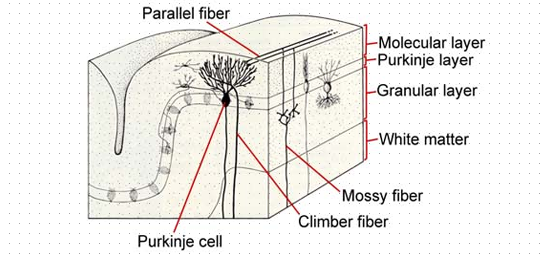
	Stacks of flat Purkinje cells meet rows of parallel fibers (80,000 each!).
	&lt;/div&gt;
&lt;/div&gt;

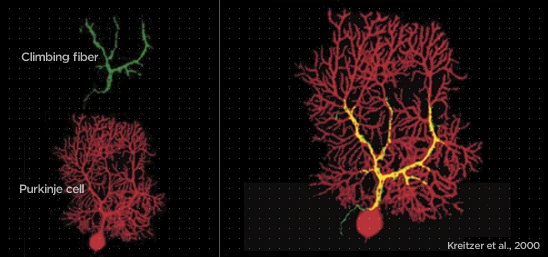
	&lt;p&gt;The cellular anatomy of the cerebellum explains a lot about how motor learning works. There are three major types of cells interacting in the cerebellum: Purkinje cells, climbing fibers (from the inferior olive), and granule cells and their parallel fibers. Purkinje cells provide the major output from the cerebellum, firing tonically to suppress movement. They have a large but flat dendritic tree and are stacked along each other in the outer layer of the cortex. They receive nearly 80,000 inputs each from parallel fibers shooting past their dendrites and a single strong input near the body of the Purkinje cell from a climbing fiber. The parallel fibers transmit contextual sensory information from the rest of the brain, while the climbing fibers ascend from the inferior olive and deliver a powerful, complex spike when an error is noticed during a novel task.&lt;/p&gt;

&lt;div class="article_image"&gt;
	&lt;img src="http://erraticwisdom.com/assets/images/content/215.png" alt="Climbing fiber" width="548" height="257" /&gt;
	&lt;div class="caption"&gt;
	Meanwhile, the climbing fiber synapses on key real estate near the body of the Purkinje cell to deliver its powerful complex spike.
	&lt;/div&gt;
&lt;/div&gt;

	&lt;p&gt;Let’s use an example to put this system into motion. Imagine we are trying to learn to respond to a new stimulus. Just like Pavlov’s dogs, we want to associate the response to an unconditioned stimulus, with a conditioned stimulus. When we deliver a puff of air to the subject’s eye, they blink. What we would like to do is associate a tone just before the puff with the blink. We now have a stimulus (the tone) that is sent to the Purkinje cells by parallel fibers, and an error (failure to blink) that is delivered by climbing fibers. This simultaneous activation sets the stage for memory and learning.&lt;/p&gt;

	&lt;p&gt;When the subject fails to blink in time, the climbing fiber slaps the Purkinje cell for its error, and the Purkinje cell responds by punishing those parallel fiber synapses that were active when the complex spike was received. Activity from the complex spike travels up the dendritic tree to meet with coincidentally active parallel fiber synapses and promotes the removal of neurotransmitter receptors at only these synapses, an enduring process known as long-term depression. Now, the next time the tone is heard, the Purkinje fiber responsible for tonically inhibiting eye blinks is no longer stimulated by the tone-activated parallel fiber and its tonic inhibition relaxes, promoting the desirable blink.&lt;/p&gt;

	&lt;p&gt;It’s an incredibly elegant system, suitable for such an elegant little brain.&lt;/p&gt;
&lt;div class="feedflare"&gt;
&lt;a href="http://feeds.feedburner.com/~ff/philosophy?a=EZMpglMUgZ0:50Gzu76Oixg:yIl2AUoC8zA"&gt;&lt;img src="http://feeds.feedburner.com/~ff/philosophy?d=yIl2AUoC8zA" border="0"&gt;&lt;/img&gt;&lt;/a&gt; &lt;a href="http://feeds.feedburner.com/~ff/philosophy?a=EZMpglMUgZ0:50Gzu76Oixg:7Q72WNTAKBA"&gt;&lt;img src="http://feeds.feedburner.com/~ff/philosophy?d=7Q72WNTAKBA" border="0"&gt;&lt;/img&gt;&lt;/a&gt;
&lt;/div&gt;&lt;img src="http://feeds.feedburner.com/~r/philosophy/~4/EZMpglMUgZ0" height="1" width="1"/&gt;</content>
<feedburner:origLink>http://erraticwisdom.com/2011/11/24/the-cerebellum-a-model-for-learning-in-the-brain</feedburner:origLink></entry>
<entry>
		<author>
			<name>Tom Fadial</name>
		</author>
		<published>2010-10-09T05:45:47Z</published>
		<updated>2010-10-09T05:45:47Z</updated>
		<title type="html">Conscious Conversation: Philosophy</title>
		<link rel="alternate" type="text/html" href="http://feedproxy.google.com/~r/philosophy/~3/SI56b41ybXQ/conscious-conversation-philosophy" />
		<id>tag:erraticwisdom.com,2010-08-11:fe8fa74025c62e839b4cbe7e85cbbefa/41c9f86ec7f90e02c2f4dbf14b27ee28</id>
		<category term="Consciousness" />
		<category term="conversation" />
		<content type="html">
&lt;p&gt;This interview is part of a series exploring what different people think about consciousness. The plan is to pose the same basic question to people of different backgrounds (philosophers, religious figures, scientists, politicians, down to my sister), and learn how this affects their view of the world and themselves.&lt;/p&gt;

&lt;ul&gt;
	&lt;li&gt;&lt;a rel="bookmark" href="http://erraticwisdom.com/2010/01/03/conscious-conversation-science"&gt;Dr. Cohan:  Science&lt;/a&gt;&lt;/li&gt;
	&lt;li&gt;&lt;a rel="bookmark" href="http://erraticwisdom.com/2010/02/02/conscious-conversation-computation"&gt;Dr. Rapaport:  Computation&lt;/a&gt;&lt;/li&gt;
	&lt;li&gt;&lt;a rel="bookmark" href="http://erraticwisdom.com/2010/10/08/conscious-conversation-philosophy"&gt;Daniel Black: Philosophy&lt;/a&gt;&lt;/li&gt;
	&lt;!-- &lt;li&gt;&lt;a rel="bookmark" href="http://erraticwisdom.com/2012/01/24/conscious-conversation-behavior-science"&gt;Dr. Zaidel: Behavioral Science&lt;/a&gt;&lt;/li&gt; --&gt;
&lt;/ul&gt;

	&lt;p&gt;Daniel Black, author of &lt;a href="http://erectlocution.com/"&gt;Erectlocution&lt;/a&gt;, was kind enough to chat with me one day and we had a great discussion &amp;#8211; have a listen.&lt;/p&gt;
&lt;div class="feedflare"&gt;
&lt;a href="http://feeds.feedburner.com/~ff/philosophy?a=SI56b41ybXQ:vdMmoqKVFMg:yIl2AUoC8zA"&gt;&lt;img src="http://feeds.feedburner.com/~ff/philosophy?d=yIl2AUoC8zA" border="0"&gt;&lt;/img&gt;&lt;/a&gt; &lt;a href="http://feeds.feedburner.com/~ff/philosophy?a=SI56b41ybXQ:vdMmoqKVFMg:7Q72WNTAKBA"&gt;&lt;img src="http://feeds.feedburner.com/~ff/philosophy?d=7Q72WNTAKBA" border="0"&gt;&lt;/img&gt;&lt;/a&gt;
&lt;/div&gt;&lt;img src="http://feeds.feedburner.com/~r/philosophy/~4/SI56b41ybXQ" height="1" width="1"/&gt;</content>
<feedburner:origLink>http://erraticwisdom.com/2010/10/08/conscious-conversation-philosophy</feedburner:origLink></entry>
<entry>
		<author>
			<name>Tom Fadial</name>
		</author>
		<published>2010-08-01T17:35:46Z</published>
		<updated>2010-08-01T17:35:46Z</updated>
		<title type="html">The Stuff in Between</title>
		<link rel="alternate" type="text/html" href="http://feedproxy.google.com/~r/philosophy/~3/3reUzp45Qrw/stuff-in-between" />
		<id>tag:erraticwisdom.com,2010-07-31:fe8fa74025c62e839b4cbe7e85cbbefa/12fc7405a97082dfeb91ebd7e75d9c8e</id>
		<category term="Personal" />
		<category term="This-Site" />
		<content type="html">
&lt;p&gt;I’m actually almost normal when not agonizing over robot production details, and quite a bit has happened since I last wrote an update. &lt;/p&gt;

	&lt;p&gt;First, I’ve finally graduated. I had a bit of a mid-undergraduate crisis and dropped my biology major in favor of a more practical degree in philosophy. With my sister’s help, however, I was able to remember that I &lt;em&gt;did&lt;/em&gt; actually want to be a doctor and ended up with degrees in biomedical sciences and philosophy. Sprinkling in a few philosophy classes really helped make my courses more manageable, and it kept my brain from getting fried by tons of rote memorization. &lt;/p&gt;

&lt;div class="article_image"&gt;
	&lt;img src="http://erraticwisdom.com/assets/images/content/211.jpg" alt="" width="548" height="229" /&gt;
	&lt;div class="caption"&gt;
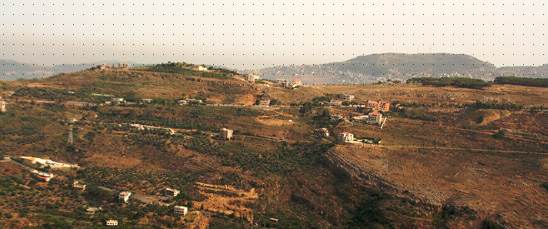
	The view from my balcony. 
	&lt;/div&gt;
&lt;/div&gt;

	&lt;p&gt;Wanting to be a doctor meant that I needed more than just good grades. Solid GPA’s and &lt;span class="caps"&gt;MCAT&lt;/span&gt; scores guarantee only a fraction of what’s expected of a good physician. So, in addition to getting to know the best spots to study at &lt;a href="http://buffalo.edu/"&gt;UB&lt;/a&gt; (Lockwood Library, 5th floor), I also had to spend alot of time volunteering, shadowing and getting involved in stuff I liked.&lt;/p&gt;

	&lt;p&gt;I stayed pretty busy until my fifth year when &amp;#8211; having finished my MCAT’s and the most difficult required courses &amp;#8211; I finally had some time to relax. I moved every year in college and wasn’t really happy until that last year when my friends and I rented out an entire house on UB’s South Campus. I even managed to squeeze my courses into three days and had Tuesday’s and Thursday’s completely free. The extra time was amazing, I started going to the gym, rock climbing, hiking, gaming, and sleeping in (I even went &lt;a href="http://vimeo.com/7565141"&gt;skydiving&lt;/a&gt;).&lt;/p&gt;

	&lt;p&gt;It was also interview season for medical school and I got to travel to Boston, Miami, Columbus, Los Angeles, Atlanta, and a couple of memorable visits to New York City. After a few panicky months on various waitlists, the acceptances started coming in and I decided I’ll be going to &lt;span class="caps"&gt;UCLA&lt;/span&gt; School of Medicine. I’ve got a long road ahead, but I’ll make it.&lt;/p&gt;

	&lt;p&gt;Right now, I’m sitting in my grandfather’s house in Baaqline, Lebanon (and I mean &lt;em&gt;his&lt;/em&gt; house, he built it &amp;#8211; alone &amp;#8211; almost 40 years ago). The view is stunning, mountain after mountain to the ocean, some sliced by winding roads and dotted with red-roofed houses, and some that are still completely untouched. I just came back from a walk to the market to pick up some necessities (mosquito repellant and beer) and I’m sitting down to catch a few rounds of yerbe maté with my family. It’s really an amazing place &amp;#8211; just yesterday &lt;a href="http://maps.google.com/maps?f=d&amp;amp;source=s_d&amp;amp;saddr=Unknown+road&amp;amp;daddr=Unknown+road+to:33.593495,35.61686&amp;amp;hl=en&amp;amp;geocode=FVrtAQIdpF8eAg%3BFbz0AQIdkAMfAg%3B&amp;amp;mra=dme&amp;amp;mrcr=0&amp;amp;mrsp=2&amp;amp;sz=15&amp;amp;via=1&amp;amp;sll=33.589849,35.630207&amp;amp;sspn=0.029779,0.055704&amp;amp;ie=UTF8&amp;amp;ll=33.641062,35.584202&amp;amp;spn=0.119046,0.222816&amp;amp;z=13"&gt;I walked&lt;/a&gt; 25 miles up to Nabi Ayoub (a temple to Gob on the peak of a mountain) with my brother-in-law, and then drove down to Beirut to relax on the beach.&lt;/p&gt;

	&lt;p&gt;&lt;strong&gt;Update:&lt;/strong&gt; Sadly my vacation has come to an end. My sister&amp;#8217;s wedding was incredible and I&amp;#8217;m back at my new home in Los Angeles, moving and getting ready for school. There’s going to be alot of changes in my life, but I’ve never been more excited (I felt like Harry Potter when I got a list of required diagnostic tools). I’ll always have time to think and write, so thanks for reading and please stay tuned.&lt;/p&gt;
&lt;div class="feedflare"&gt;
&lt;a href="http://feeds.feedburner.com/~ff/philosophy?a=3reUzp45Qrw:4x7f3uUpQ-g:yIl2AUoC8zA"&gt;&lt;img src="http://feeds.feedburner.com/~ff/philosophy?d=yIl2AUoC8zA" border="0"&gt;&lt;/img&gt;&lt;/a&gt; &lt;a href="http://feeds.feedburner.com/~ff/philosophy?a=3reUzp45Qrw:4x7f3uUpQ-g:7Q72WNTAKBA"&gt;&lt;img src="http://feeds.feedburner.com/~ff/philosophy?d=7Q72WNTAKBA" border="0"&gt;&lt;/img&gt;&lt;/a&gt;
&lt;/div&gt;&lt;img src="http://feeds.feedburner.com/~r/philosophy/~4/3reUzp45Qrw" height="1" width="1"/&gt;</content>
<feedburner:origLink>http://erraticwisdom.com/2010/08/01/stuff-in-between</feedburner:origLink></entry>
<entry>
		<author>
			<name>Tom Fadial</name>
		</author>
		<published>2010-06-04T18:42:50Z</published>
		<updated>2010-06-04T21:48:38Z</updated>
		<title type="html">The Ethics of AI: Part Three</title>
		<link rel="alternate" type="text/html" href="http://feedproxy.google.com/~r/philosophy/~3/zSaCVP0Ua1Y/the-ethics-of-ai-part-three" />
		<id>tag:erraticwisdom.com,2010-06-04:fe8fa74025c62e839b4cbe7e85cbbefa/37d07855b65f792d04e9736626c08d3d</id>
		<category term="ethics" />
		<category term="ai" />
		<content type="html">
&lt;h5&gt;Is it ethical (or possible) to constrain intelligent life?&lt;/h5&gt;

	&lt;p&gt;This part of the argument involves what we think it means to be human, and whether creating and adjusting those criteria in an AI affects what they are capable of.&lt;/p&gt;

	&lt;p&gt;A critical part of being human is having freedom, the freedom to choose one of many possible actions (some we would deem moral and others immoral). It is these choices we make that – combined with environmental factors – produce an individual. The existence of an &lt;em&gt;individual&lt;/em&gt; is of critical importance because it is this variety of conditions and decisions that create all of us, the paradigm-shifting geniuses, mass murderers, and utterly mundane.&lt;/p&gt;

&lt;div class="article_image"&gt;
	&lt;a href="http://erraticwisdom.com/assets/images/content/209.jpg" rel="lightbox"&gt;&lt;img src="http://erraticwisdom.com/assets/images/content/209t.jpg" alt="Man as Industrial Palace" /&gt;&lt;/a&gt;
	&lt;div class="caption"&gt;
	Fritz Kahn&amp;#8217;s &amp;#8220;Man As Industrial Palace&amp;#8221;. Also check out this beautifully done &lt;a href="http://www.vimeo.com/6505158"&gt;animated version&lt;/a&gt;.
	&lt;/div&gt;
&lt;/div&gt;

	&lt;p&gt;One problem that arises immediately when discussing moral AI is whether that freedom, and individuality, remains. Perhaps latent in the term “robot” itself is the notion that constraining a personally intelligent machine such that it is incapable of acting immorally would restrict its freedom. If a machine operated in such a way, it could not comprehend the gravity of making an immoral decision, and it would be difficult to differentiate that machine from other instances that (necessarily) operate in the same way.&lt;/p&gt;

	&lt;p&gt;However, this is not how I would expect to develop moral artificial intelligence. Rather than creating preprogrammed “moral drones” that are unconsciously restricted from acting immorally, I would create an AI that was aware of the full range of possible decisions, but always (or at least often) acted morally. The distinction here is that our machine would &lt;em&gt;want&lt;/em&gt; to act morally. By removing whatever evolutionary propensities for immoral behavior, we could expect our machines to “think clearly” and not only recognize the proper choice, but to seek it willingly (as the consequences, however delayed, would be determined to be desirable). The moral machines needn’t be perfect either (that may well be impossible), but even an incremental improvement would be worthwhile.&lt;/p&gt;

	&lt;p&gt;I believe this type of moral AI would preserve individuality, because it produces moral behavior not by forcing a particular decision, but by ensuring that moral behavior is always desired. It is not difficult to imagine a nearby possible universe whose inhabitants (through whatever tweaks of nature/nurture) evolved in such a way as to emphasize equality and unity. Their slightly altered nervous systems would imperfectly prefer moral behavior, with relevant changes to their emergent social structure (one perhaps untainted by discriminatory or violent tendencies). Easier still, imagine the person you wish you could be. For example, my good doppelgänger is not as easily influenced by social pressures, he does not spend his money frivolously when it would be better donated, and while this makes him a different individual, he &lt;em&gt;is&lt;/em&gt; still an individual.&lt;/p&gt;

	&lt;p&gt;Freedom is a necessary part of being human, as it allows for individual decisions towards good or evil, but what about evil itself, is it too a necessary human component? Can we know what it means to be good (and to make the necessary individuating choices) if there is no contrasting evil?&lt;/p&gt;

	&lt;p&gt;If we abolish even the conscious propensity for evil, we don’t necessarily lose the ability to differentiate good. For example, I don’t have to kill someone to learn that it’s wrong. If evil has to &lt;em&gt;exist&lt;/em&gt; in some form, then even a memory would suffice as a deterrent. Being human and &lt;em&gt;homo sapiens&lt;/em&gt; are not the same thing, evil is only a necessary component of the latter.&lt;/p&gt;

	&lt;p&gt;It is obvious that free will alone does not constitute individuality, something valuable happens over the course of a conscious being’s life that transforms a cloned instance into an individual. Preserving this process in our AI would be essential to ensuring the same unique development that leads to both genius and the mundane (having hopefully eliminated the profane). The most reliable method for conserving these features is by doing it the &lt;em&gt;homo sapiens&lt;/em&gt; way. Instances should be unique and plastic: that is, every AI should be created randomly according to a general blueprint and should be highly flexible. This allows for individual talents (and weaknesses) along with an ability to learn and develop over time.&lt;/p&gt;

	&lt;p&gt;How would we accomplish something like algorithmically improving the moral behavior of a machine? This is obviously speculative, but it is possible that amplifying the activity of mirror neurons could lead to more moral behavior. Mirror neurons, as their name suggests, reflect perceived behavior as neural activity in the perceiver – they are thought to be responsible for learning language, and perhaps, empathy (Bråten, 2007). For example, when you wince at the sight of someone in pain, it is believed that your mirror neurons are firing a similar uncomfortable pattern, possibly creating a need to help assuage their pain (and ultimately your own). A mirror response strong enough would essentially implant the Golden Rule such that any individual’s suffering would be distributed among the “species” and would produce a widespread effort to reduce it.&lt;/p&gt;

	&lt;p&gt;In this case, it seems that it is not only possible, but ethically advisable to create moral AI. We sacrifice nothing of what it means to be an individual, and can ensure the moral treatment of individuals in society.&lt;/p&gt;

	&lt;h5&gt;Conclusion&lt;/h5&gt;

	&lt;p&gt;This is where we stand: creating a race of artificially intelligent machines is not ethically permissible since using them as a means to an end (which violates Kant’s categorical imperative) does not afford them the respect they deserve as conscious beings. While it is at least theoretically possible to create AI that behaves more morally than us, the cost of the actual implementation of the project (the species-cide of humanity) is too high to justify. It seems there&amp;#8217;s no easy way out.&lt;/p&gt;

	&lt;ol class="cite"&gt;
		&lt;li&gt;Bråten, Stein. (2007). On being moved: from mirror neurons to empathy. Philadelphia: John Benjamins Publishing Company.&lt;/li&gt;
	&lt;/ol&gt;
&lt;div class="feedflare"&gt;
&lt;a href="http://feeds.feedburner.com/~ff/philosophy?a=zSaCVP0Ua1Y:h_HE2FdAdVw:yIl2AUoC8zA"&gt;&lt;img src="http://feeds.feedburner.com/~ff/philosophy?d=yIl2AUoC8zA" border="0"&gt;&lt;/img&gt;&lt;/a&gt; &lt;a href="http://feeds.feedburner.com/~ff/philosophy?a=zSaCVP0Ua1Y:h_HE2FdAdVw:7Q72WNTAKBA"&gt;&lt;img src="http://feeds.feedburner.com/~ff/philosophy?d=7Q72WNTAKBA" border="0"&gt;&lt;/img&gt;&lt;/a&gt;
&lt;/div&gt;&lt;img src="http://feeds.feedburner.com/~r/philosophy/~4/zSaCVP0Ua1Y" height="1" width="1"/&gt;</content>
<feedburner:origLink>http://erraticwisdom.com/2010/06/04/the-ethics-of-ai-part-three</feedburner:origLink></entry>
<entry>
		<author>
			<name>Tom Fadial</name>
		</author>
		<published>2010-04-19T02:59:18Z</published>
		<updated>2010-04-19T02:59:18Z</updated>
		<title type="html">The Ethics of AI: Part Two</title>
		<link rel="alternate" type="text/html" href="http://feedproxy.google.com/~r/philosophy/~3/Ow9oubRVg70/the-ethics-of-ai-part-two" />
		<id>tag:erraticwisdom.com,2010-04-17:fe8fa74025c62e839b4cbe7e85cbbefa/558aa8f12c56537f39555c7d85b7c8bb</id>
		<category term="ai" />
		<category term="ethics" />
		<content type="html">
&lt;h5&gt;Is it ethical to allow humanity to continue, or to replace our species with machines?&lt;/h5&gt;

	&lt;p&gt;&lt;em&gt;This is getting tougher.&lt;/em&gt; Why does humanity deserve to exist? The recorded history of the experiences of &lt;em&gt;Homo sapiens&lt;/em&gt; is the development of an unsure species at breakneck speed. In an environment more accustomed to the snail-like pace of biological evolution, &lt;em&gt;Homo sapiens&lt;/em&gt; with our &lt;a href="http://erraticwisdom.com/2009/05/18/just-animated-stardust"&gt;cultural evolution&lt;/a&gt; appeared on stage with all the delicacy of a three year-old child.&lt;/p&gt;

	&lt;p&gt;Humanity is worth only as much as it reaches its potential, and our efforts are hindered by a combination of our evolutionary and cultural histories (nature and nurture). The majority of our innate tendencies are animal-like, seeped in primitive, volatile emotions that are aligned more towards a raw need for survival than rational or ethical action. The evolution of our central nervous system has favored this type of visceral behavior for much longer than we’ve been human such that even when tamed, these tendencies produce violence, discrimination and divisive, selfish egos.&lt;/p&gt;

&lt;div class="article_image"&gt;
	&lt;img src="http://erraticwisdom.com/assets/images/content/207.png" alt="The Pioneer Plaque" width="548" height="257" /&gt;
	&lt;div class="caption"&gt;
	The &lt;a href="http://en.wikipedia.org/wiki/Pioneer_plaque"&gt;Pioneer plaque&lt;/a&gt;: what we thought an alien race would need to know.
	&lt;/div&gt;
&lt;/div&gt;

	&lt;p&gt;Our culture, on the other hand, is the product of a much younger cerebral overgrowth. Having at least partially suppressed the sole function of our ancestors, we’re left with no real purpose to being alive, and our species collectively heading nowhere.&lt;/p&gt;

	&lt;p&gt;And that is what has led us here. We are selfish, we don’t really value life on this planet or consciousness in people. War is justified, and the suffering of millions across the globe is swept out of our minds. At the same time, we care deeply about our lives and the people we love. We create and do amazing things and experience joy that makes everything worthwhile. Every quiet philanthropist, dedicated parent, and activist exemplifies everything good about humanity, while every child who dies suffering of starvation is an affront to my worth and consciousness itself.&lt;/p&gt;

	&lt;p&gt;Our race of machines could get around the inherited impulses and social pressures that force our corrupt behavior. Instead of a purposeless, destructive existence, they would be focused on equality, freedom and discovery. An incremental improvement in the moral behavior of our robots complemented by a change in their social structure could vastly decrease the evil in our world.&lt;/p&gt;

	&lt;p&gt;But is that enough, what I’m talking about is species-cide. The literature (&lt;a href="http://erraticwisdom.com/file_download/13/dietrich2001.pdf"&gt;and&lt;/a&gt; &lt;a href="http://erraticwisdom.com/file_download/14/dietrich2007.pdf"&gt;there’s&lt;/a&gt; &lt;a href="http://erraticwisdom.com/file_download/15/lachat1986.pdf"&gt;a&lt;/a&gt; &lt;a href="http://erraticwisdom.com/file_download/16/lem1971.pdf"&gt;surprising&lt;/a&gt; &lt;a href="http://erraticwisdom.com/file_download/17/petersen2007.pdf"&gt;amount&lt;/a&gt;) skirts around the fact that this would require the killing of every man woman and child on the planet. What should be a simple matter of utility (it never is) would destroy whatever moral worth the project might have.&lt;/p&gt;

	&lt;p&gt;Again, I believe the costs outweigh the benefits. As &lt;a href="http://erraticwisdom.com/2010/01/28/state-of-the-species"&gt;difficult as it seems&lt;/a&gt; the most ethical means of improving our world is improving ourselves. It’s painful to live so easily while others struggle just to survive, but rewriting the rules in one fell swoop is not the solution.  What do you think of the costs/benefits, are there other factors that make you lean in the other direction?&lt;/p&gt;

	&lt;p&gt;&lt;strong&gt;Note:&lt;/strong&gt; I didn’t know my responses would turn out this way (I was pulling for the &amp;#8216;bots). I&amp;#8217;ll continue even though the third question can&amp;#8217;t change the outcome because I think it&amp;#8217;ll be interesting to see how much of being human requires a propensity for both good and evil.&lt;/p&gt;

	&lt;ol class="cite"&gt;
		&lt;li&gt;Dietrich, Eric (2001), &amp;#8220;Homo sapiens 2.0: why we should build the better robots of our nature&amp;#8221;, &lt;em&gt;Journal of Experimental and Theoretical Artificial Intelligence&lt;/em&gt; 13(4) (October): 323-328.&lt;/li&gt;
		&lt;li&gt;Dietrich, Eric (2007), &amp;#8220;After the Humans Are Gone&amp;#8221;, &lt;em&gt;Journal of Experimental and Theoretical Artificial Intelligence&lt;/em&gt; 19(1): 55-67.&lt;/li&gt;
		&lt;li&gt;LaChat, Michael R. (1986), &amp;#8220;Artificial Intelligence and Ethics: An Exercise in the Moral Imagination&amp;#8221;, &lt;em&gt;AI Magazine&lt;/em&gt; 7(2): 70-79.&lt;/li&gt;
		&lt;li&gt;Lem, Stanislaw (1971), &amp;#8220;Non Serviam&amp;#8221;, in S. Lem, &lt;em&gt;A Perfect Vacuum&lt;/em&gt;, trans. by Michael Kandel (New York: Harcourt Brace Jovanovich, 1979).&lt;/li&gt;
		&lt;li&gt;Petersen, Stephen (2007), &amp;#8220;The Ethics of Robot Servitude&amp;#8221;, &lt;em&gt;Journal of Experimental and Theoretical Artificial Intelligence&lt;/em&gt; 19(1) (March): 43-54&lt;/li&gt;
	&lt;/ol&gt;
&lt;div class="feedflare"&gt;
&lt;a href="http://feeds.feedburner.com/~ff/philosophy?a=Ow9oubRVg70:RB_kHq-cL0c:yIl2AUoC8zA"&gt;&lt;img src="http://feeds.feedburner.com/~ff/philosophy?d=yIl2AUoC8zA" border="0"&gt;&lt;/img&gt;&lt;/a&gt; &lt;a href="http://feeds.feedburner.com/~ff/philosophy?a=Ow9oubRVg70:RB_kHq-cL0c:7Q72WNTAKBA"&gt;&lt;img src="http://feeds.feedburner.com/~ff/philosophy?d=7Q72WNTAKBA" border="0"&gt;&lt;/img&gt;&lt;/a&gt;
&lt;/div&gt;&lt;img src="http://feeds.feedburner.com/~r/philosophy/~4/Ow9oubRVg70" height="1" width="1"/&gt;</content>
<feedburner:origLink>http://erraticwisdom.com/2010/04/18/the-ethics-of-ai-part-two</feedburner:origLink></entry>
<entry>
		<author>
			<name>Tom Fadial</name>
		</author>
		<published>2010-04-06T02:55:06Z</published>
		<updated>2010-04-06T02:55:06Z</updated>
		<title type="html">The Ethics of AI: Part One</title>
		<link rel="alternate" type="text/html" href="http://feedproxy.google.com/~r/philosophy/~3/2wgpLFRvj2c/the-ethics-of-ai-part-one" />
		<id>tag:erraticwisdom.com,2010-04-05:fe8fa74025c62e839b4cbe7e85cbbefa/d278d9d9b948a807e30270442952f905</id>
		<category term="ai" />
		<category term="ethics" />
		<content type="html">
&lt;h5&gt;Is it ethical to create consciousness?&lt;/h5&gt;

	&lt;p&gt;In this discussion, I will make the assumption that we can be assured these beings are “personally” intelligent (i.e. just like us). As we see in nature, there is no abrupt line where we can begin to call a being conscious, but at a distant point along this gradient we find this conclusion undeniable. I am assuming the AI is farther along this line than us and their consciousness is assured (save for “mere” &lt;a href="http://plato.stanford.edu/entries/other-minds/"&gt;philosophical skepticism&lt;/a&gt;).&lt;/p&gt;

	&lt;p&gt;Is consciousness created within a synthetic machine significantly different from the same through natural means? From a theologically neutral standpoint, it seems not. Consciousness is consciousness, and the ethical implications of its creation are not tied to what it’s in. Further, the definition of “natural” means is changing rapidly. Today, a prospective parent can create a child from eggs and sperm selected for various features of their donors, fertilized &lt;em&gt;in vitro&lt;/em&gt; and gestated in a surrogate mother.&lt;/p&gt;

	&lt;p&gt;The current task, however, requires the creation of a race of conscious beings for a specific purpose (cleaning up our mess). This raises a different concern as it would involve using conscious beings as means and not ends in themselves. This is a clear violation of Kant’s categorical imperative (the &lt;a href="http://plato.stanford.edu/entries/kant-moral/#HumFor"&gt;humanity formulation&lt;/a&gt;), perhaps one of the simplest and least controversial universal moral rules.&lt;/p&gt;

	&lt;p&gt;This, I believe, is the most significant reason to abandon the project altogether. The generation of our own consciousness is “excusable” in virtue of its randomness. We, on the other hand, would be using (worse yet, creating) beings as a means to our end. Even so, it is not entirely clear if our discussion should end there. For one, it can be thought that we are creating intrinsically more moral beings whose actions could not help but produce the outcome we desire. Also, we can guess, were it not logically impossible, that we could get the consent of such beings before their creation. Would an intelligent being who is better than us not agree to the opportunity to reduce the evil in our world?&lt;/p&gt;

	&lt;p&gt;Ultimately, we can’t have access to our creations’ experiences. Without ensuring the quality of life of our creations, we run the risk of “playing god” and losing, of creating beings that would rather not have been created.&lt;/p&gt;
&lt;div class="feedflare"&gt;
&lt;a href="http://feeds.feedburner.com/~ff/philosophy?a=2wgpLFRvj2c:aIrNmg6IIKw:yIl2AUoC8zA"&gt;&lt;img src="http://feeds.feedburner.com/~ff/philosophy?d=yIl2AUoC8zA" border="0"&gt;&lt;/img&gt;&lt;/a&gt; &lt;a href="http://feeds.feedburner.com/~ff/philosophy?a=2wgpLFRvj2c:aIrNmg6IIKw:7Q72WNTAKBA"&gt;&lt;img src="http://feeds.feedburner.com/~ff/philosophy?d=7Q72WNTAKBA" border="0"&gt;&lt;/img&gt;&lt;/a&gt;
&lt;/div&gt;&lt;img src="http://feeds.feedburner.com/~r/philosophy/~4/2wgpLFRvj2c" height="1" width="1"/&gt;</content>
<feedburner:origLink>http://erraticwisdom.com/2010/04/05/the-ethics-of-ai-part-one</feedburner:origLink></entry>
<entry>
		<author>
			<name>Tom Fadial</name>
		</author>
		<published>2010-04-04T16:10:19Z</published>
		<updated>2010-06-04T23:30:40Z</updated>
		<title type="html">The Ethics of Artificial Intelligence</title>
		<link rel="alternate" type="text/html" href="http://feedproxy.google.com/~r/philosophy/~3/D8S6nmE4kKY/the-ethics-of-artificial-intelligence" />
		<id>tag:erraticwisdom.com,2010-04-02:fe8fa74025c62e839b4cbe7e85cbbefa/e19f80e4fab07c11ef48c6ccad97aa25</id>
		<category term="ai" />
		<category term="ethics" />
		<content type="html">
&lt;p&gt;I am beginning a series exploring some ethical concerns associated with the development of artificial intelligence. Neurobiological evidence points firmly to the brain as the source of human intelligence. How exactly the features of consciousness are bound in this collection of neurons is unknown, but creating artificial intelligence can no longer be ruled out as an in principle impossibility (though its actual implementation may be a long way away).&lt;/p&gt;

	&lt;p&gt;We can for once anticipate the moral implications of advancing technology and begin to consider what our moral obligations are in this field.&lt;/p&gt;

&lt;div class="article_image"&gt;
	&lt;img src="http://erraticwisdom.com/assets/images/content/203.png" alt="iTuring Universal" width="548" height="298" /&gt;
	&lt;div class="caption"&gt;
	Someone actually &lt;a href="http://aturingmachine.com/"&gt;made one&lt;/a&gt;.
	&lt;/div&gt;
&lt;/div&gt;

	&lt;p&gt;Inspired by a strange mix of relevant coursework and lots of Battlestar Galactica, I will try to answer the question of whether we (humans) should step aside and allow a more intelligent and moral artificial intelligence (of our own creation) to replace us. The series is divided into three parts:&lt;/p&gt;

	&lt;ol class="beliefs_list"&gt;
		&lt;li&gt;&lt;a rel="bookmark" href="http://erraticwisdom.com/2010/04/05/the-ethics-of-ai-part-one"&gt;Is it ethical to create consciousness?&lt;/a&gt;
	&lt;ul&gt;
		&lt;li&gt;Creating artificial intelligence means creating a personal, subjective life. Can we create a being when we don’t know what their life would feel like?&lt;/li&gt;
	&lt;/ul&gt;&lt;/li&gt;
		&lt;li&gt;&lt;a rel="bookmark" href="http://erraticwisdom.com/2010/04/18/the-ethics-of-ai-part-two"&gt;Is it ethical to allow humanity to continue, or to replace our species with machines?&lt;/a&gt;
	&lt;ul&gt;
		&lt;li&gt;Man is (perhaps irreparably) flawed. We fight and kill each other, and allow even more to die of starvation. If an alternative, more perfect intelligence can be created, do we have an obligation to replace ourselves with them?&lt;/li&gt;
	&lt;/ul&gt;&lt;/li&gt;
		&lt;li&gt;&lt;a rel="bookmark" href="http://erraticwisdom.com/2010/06/04/the-ethics-of-ai-part-three"&gt;Is it ethical (or possible) to constrain intelligent life?&lt;/a&gt;
	&lt;ul&gt;
		&lt;li&gt;To what extent is humanity’s immorality the result of free will and ego? If we create intelligence intended to end the destructive behavior of humans, do we necessarily remove these individuating human features? What effect would this have on the unique, superhuman achievements of individuals that define (positively and negatively) humanity?&lt;/li&gt;
	&lt;/ul&gt;&lt;/li&gt;
	&lt;/ol&gt;

	&lt;p&gt;I fully expect the answers to each section to conflict, but it will be interesting to see how much each question weighs in producing the final answer.&lt;/p&gt;
&lt;div class="feedflare"&gt;
&lt;a href="http://feeds.feedburner.com/~ff/philosophy?a=D8S6nmE4kKY:6waKNSFMCsE:yIl2AUoC8zA"&gt;&lt;img src="http://feeds.feedburner.com/~ff/philosophy?d=yIl2AUoC8zA" border="0"&gt;&lt;/img&gt;&lt;/a&gt; &lt;a href="http://feeds.feedburner.com/~ff/philosophy?a=D8S6nmE4kKY:6waKNSFMCsE:7Q72WNTAKBA"&gt;&lt;img src="http://feeds.feedburner.com/~ff/philosophy?d=7Q72WNTAKBA" border="0"&gt;&lt;/img&gt;&lt;/a&gt;
&lt;/div&gt;&lt;img src="http://feeds.feedburner.com/~r/philosophy/~4/D8S6nmE4kKY" height="1" width="1"/&gt;</content>
<feedburner:origLink>http://erraticwisdom.com/2010/04/04/the-ethics-of-artificial-intelligence</feedburner:origLink></entry>
<entry>
		<author>
			<name>Tom Fadial</name>
		</author>
		<published>2010-02-08T19:31:52Z</published>
		<updated>2010-04-02T16:29:51Z</updated>
		<title type="html">The Atheist's Purpose</title>
		<link rel="alternate" type="text/html" href="http://feedproxy.google.com/~r/philosophy/~3/LhQc6D4Z7UM/the-atheist-s-purpose" />
		<id>tag:erraticwisdom.com,2010-02-07:fe8fa74025c62e839b4cbe7e85cbbefa/7e9eb93a66f48ed2ecf0f9a9a7c2e190</id>
		<category term="Personal" />
		<category term="Morality" />
		<content type="html">
&lt;p&gt;As a lot of the content on this site suggests, I’m an atheist. Being an atheist can be a bit contentious, as many find the lack of an explicit purpose or codified moral laws wrong. So, I’d like to talk a bit about what exactly I believe and why. &lt;/p&gt;

	&lt;p&gt;First, a bit about belief (my meta-beliefs). Life is a coping mechanism. We’re flung randomly into these bodies and we have to find a way to deal with the existential and practical implications of being alive. We all think differently, although we share patterns of experience and thought. So, it’s only natural that what works for each of us is different (though it may rest on the same foundation).&lt;/p&gt;

	&lt;p&gt;More importantly, no one is right or wrong about the big questions because no one knows the big answers. Some think they do, but they don’t: they either claim that their particularly well-fitting mechanism is the truth (“How good do I look?”) or push such a broad, vague apparatus that almost everyone can fit in it (“We can’t all be wrong”). The coping mechanism is a private solution to finding meaning and virtue in life.&lt;/p&gt;

&lt;div class="article_image"&gt;
	&lt;img src="http://erraticwisdom.com/assets/images/content/201.png" alt="The Universe and Induction" width="548" height="257" /&gt;
	&lt;div class="caption"&gt;
	It&amp;#8217;s possible that the universe operates very differently from what we can induce.
	&lt;/div&gt;
&lt;/div&gt;

	&lt;p&gt;Now, I’d like to explain why I’m an atheist. These are my &lt;em&gt;beliefs&lt;/em&gt;, they are a part of my coping mechanism.&lt;/p&gt;

	&lt;ol class="beliefs_list"&gt;
		&lt;li&gt;The Universe operates according to stable natural laws, and it appears to be untouched since its creation.
	&lt;ol&gt;
		&lt;li&gt;I&amp;#8217;ve talked about issues with making this &lt;a href="http://erraticwisdom.com/2007/10/16/the-problem-of-induction"&gt;induction&lt;/a&gt; before. Nevertheless, if you draw a red ball randomly 999,999 times, it&amp;#8217;s a safe bet you&amp;#8217;ll draw a red one on the millionth try.&lt;/li&gt;
	&lt;/ol&gt;&lt;/li&gt;
		&lt;li&gt;I have no reason to believe that whatever created the universe is an active agent in the sense of being omnipotent, omniscient, omnivorous (wait…).
	&lt;ol&gt;
		&lt;li&gt;The creation of the Universe and its contents from an infinitesimally tiny and infinitely dense point of stuff is incredible. However, it is an unreasonable jump for me to believe that there was an all-powerful, all-knowing God behind it. Some &lt;em&gt;thing&lt;/em&gt; or &lt;em&gt;force&lt;/em&gt;, yes, but we&amp;#8217;re still far from a divine being that deserves worship and fear.&lt;/li&gt;
	&lt;/ol&gt;&lt;/li&gt;
		&lt;li&gt;Life evolved on this planet owing to fortuitous, but not miraculous events (that is, without circumventing the laws of the Universe).
	&lt;ol&gt;
		&lt;li&gt;I can believe this even without conclusive proof because I don’t think it’s reasonable to assume an agent arranged a primitive form of life then waited several billion years for its primate descendents to gain some consciousness and &lt;em&gt;then&lt;/em&gt; returned to create man and his soul. We are the chance evolutionary products of a perfect little planet.&lt;/li&gt;
	&lt;/ol&gt;&lt;/li&gt;
		&lt;li&gt;Our existence as conscious beings is owed to the activity of the brain in accordance with the laws of the universe (known or unknown).
	&lt;ol&gt;
		&lt;li&gt;The evidence for this is pretty strong. Our brains are more advanced than primates’ and so is our level of consciousness. Damaging regions of the brain affects associated aspects of consciousness. Similarly, stimulating the brain with drugs has definite effects on consciousness. That the brain operates within the natural laws is assumed based on the fact that its functional unit (the neuron) controls observable reflexes through neurotransmitter release and recognition at the lowest level, and higher-level processes simply utilize more complex neural networks involving the same physical processes (the collection of these high-level processes ultimately producing consciousness). Also, everything else in the universe does.&lt;/li&gt;
	&lt;/ol&gt;&lt;/li&gt;
	&lt;/ol&gt;

	&lt;p&gt;But, if I am just an instance of a self-propagating species that happens to be conscious, what’s the point of living? While I don’t believe I have a specific purpose, I think my life is a gift. The value of sensing this world, interacting with people, learning and thinking is immeasurable. Living is the purpose of life.&lt;/p&gt;

	&lt;p&gt;What then is the reason for living morally? Understanding life as this random occurrence lends to a sense of equality among and responsibility for all people. Being virtuous is not a matter of fearing divine retribution, but of seeing myself and my condition in everyone else. Whether it’s Kant’s categorical imperative or the golden rule, basic (perhaps even &lt;a href="http://en.wikipedia.org/wiki/Mirror_neuron"&gt;hard-wired&lt;/a&gt;) empathy becomes the predominant source of moral behavior. Every human being is exactly like me in the most important way, and acting morally requires no more justification than doing the same to myself.&lt;/p&gt;

	&lt;p&gt;I’m really hoping for some kind of Q &amp;amp; A session when this is all over. Here are a few questions I’d ask:&lt;/p&gt;

	&lt;ul&gt;
		&lt;li&gt;&lt;strong&gt;The Universe:&lt;/strong&gt; What is it, does it have a purpose, is it &lt;em&gt;in&lt;/em&gt; something else, how did it begin, how will it end?&lt;/li&gt;
		&lt;li&gt;&lt;strong&gt;Time:&lt;/strong&gt; What does it mean for time to pass?&lt;/li&gt;
		&lt;li&gt;&lt;strong&gt;Matter:&lt;/strong&gt; What does it mean for things to occupy space?&lt;/li&gt;
		&lt;li&gt;&lt;strong&gt;Life:&lt;/strong&gt; What other forms of life exist in the universe? How do they work?&lt;/li&gt;
		&lt;li&gt;&lt;strong&gt;Us:&lt;/strong&gt; What is consciousness?&lt;/li&gt;
	&lt;/ul&gt;

	&lt;p&gt;I found putting my beliefs on paper to be an &lt;a href="http://twitter.com/thame/status/8594262996"&gt;interesting challenge&lt;/a&gt;. What’s your system and why? What questions would you ask?&lt;/p&gt;
&lt;div class="feedflare"&gt;
&lt;a href="http://feeds.feedburner.com/~ff/philosophy?a=LhQc6D4Z7UM:7t29nKG1_58:yIl2AUoC8zA"&gt;&lt;img src="http://feeds.feedburner.com/~ff/philosophy?d=yIl2AUoC8zA" border="0"&gt;&lt;/img&gt;&lt;/a&gt; &lt;a href="http://feeds.feedburner.com/~ff/philosophy?a=LhQc6D4Z7UM:7t29nKG1_58:7Q72WNTAKBA"&gt;&lt;img src="http://feeds.feedburner.com/~ff/philosophy?d=7Q72WNTAKBA" border="0"&gt;&lt;/img&gt;&lt;/a&gt;
&lt;/div&gt;&lt;img src="http://feeds.feedburner.com/~r/philosophy/~4/LhQc6D4Z7UM" height="1" width="1"/&gt;</content>
<feedburner:origLink>http://erraticwisdom.com/2010/02/08/the-atheist-s-purpose</feedburner:origLink></entry>
<entry>
		<author>
			<name>Tom Fadial</name>
		</author>
		<published>2010-02-02T23:28:33Z</published>
		<updated>2010-08-21T22:47:44Z</updated>
		<title type="html">Conscious Conversation: Computation</title>
		<link rel="alternate" type="text/html" href="http://feedproxy.google.com/~r/philosophy/~3/7shgBIqb8yo/conscious-conversation-computation" />
		<id>tag:erraticwisdom.com,2010-02-02:fe8fa74025c62e839b4cbe7e85cbbefa/8edb1564b09bf29e8908abe96eaec229</id>
		<category term="Consciousness" />
		<category term="conversation" />
		<content type="html">
&lt;p&gt;This interview is part of a series exploring what different people think about consciousness. The plan is to pose the same basic question to people of different backgrounds (philosophers, religious figures, scientists, politicians, down to my sister), and learn how this affects their view of the world and themselves.&lt;/p&gt;

&lt;ul&gt;
	&lt;li&gt;&lt;a rel="bookmark" href="http://erraticwisdom.com/2010/01/03/conscious-conversation-science"&gt;Dr. Cohan:  Science&lt;/a&gt;&lt;/li&gt;
	&lt;li&gt;&lt;a rel="bookmark" href="http://erraticwisdom.com/2010/02/02/conscious-conversation-computation"&gt;Dr. Rapaport:  Computation&lt;/a&gt;&lt;/li&gt;
	&lt;li&gt;&lt;a rel="bookmark" href="http://erraticwisdom.com/2010/10/08/conscious-conversation-philosophy"&gt;Daniel Black: Philosophy&lt;/a&gt;&lt;/li&gt;
	&lt;!-- &lt;li&gt;&lt;a rel="bookmark" href="http://erraticwisdom.com/2012/01/24/conscious-conversation-behavior-science"&gt;Dr. Zaidel: Behavioral Science&lt;/a&gt;&lt;/li&gt; --&gt;
&lt;/ul&gt;

	&lt;p&gt;&lt;a href="http://www.cse.buffalo.edu/~rapaport/"&gt;Dr. Rapaport&lt;/a&gt; is an associate professor in the Department of Computer Science and Engineering at the University at Buffalo with research interests in Computer Science, Artificial Intelligence, Computational Linguistics, Cognitive Science, Logic and Mathematics. &lt;/p&gt;

&lt;div class="article_image"&gt;
	&lt;img src="http://erraticwisdom.com/assets/images/content/200.png" alt="Models of Natural Numbers" width="548" height="178" /&gt;
	&lt;div class="caption"&gt;
		This is a graphical rendition of the different models of natural numbers Dr. Rapaport diagramed during the interview.
	&lt;/div&gt;
&lt;/div&gt;

	&lt;p&gt;Dr. Rapaport gives a great breakdown of the difference between psychological and phenomenological views of consciousness and helps clarify the &lt;a href="http://en.wikipedia.org/wiki/Hard_problem_of_consciousness"&gt;core of the problem&lt;/a&gt; of consciousness. We also talked about computational theories of mind and artificial intelligence.&lt;/p&gt;

	&lt;p&gt;Up next will be my sister, Laila, and I’m working on finding more interesting people to talk to.&lt;/p&gt;
&lt;div class="feedflare"&gt;
&lt;a href="http://feeds.feedburner.com/~ff/philosophy?a=7shgBIqb8yo:k7Xynb8JrVo:yIl2AUoC8zA"&gt;&lt;img src="http://feeds.feedburner.com/~ff/philosophy?d=yIl2AUoC8zA" border="0"&gt;&lt;/img&gt;&lt;/a&gt; &lt;a href="http://feeds.feedburner.com/~ff/philosophy?a=7shgBIqb8yo:k7Xynb8JrVo:7Q72WNTAKBA"&gt;&lt;img src="http://feeds.feedburner.com/~ff/philosophy?d=7Q72WNTAKBA" border="0"&gt;&lt;/img&gt;&lt;/a&gt;
&lt;/div&gt;&lt;img src="http://feeds.feedburner.com/~r/philosophy/~4/7shgBIqb8yo" height="1" width="1"/&gt;</content>
<feedburner:origLink>http://erraticwisdom.com/2010/02/02/conscious-conversation-computation</feedburner:origLink></entry>
<entry>
		<author>
			<name>Tom Fadial</name>
		</author>
		<published>2010-01-29T05:14:46Z</published>
		<updated>2010-01-29T05:20:09Z</updated>
		<title type="html">State of the Species</title>
		<link rel="alternate" type="text/html" href="http://feedproxy.google.com/~r/philosophy/~3/rwogzxVEM90/state-of-the-species" />
		<id>tag:erraticwisdom.com,2010-01-28:fe8fa74025c62e839b4cbe7e85cbbefa/25b003e01b5010673831bcd7f8726ccc</id>
		<category term="social" />
		<category term="Questions" />
		<content type="html">
&lt;p&gt;My fellow humans, we’ve come a long way. Throughout our brief history on earth, we’ve tried to come to terms with a remarkable ability, its source, and what best to do with it.&lt;/p&gt;

	&lt;p&gt;Through relatively minor mutations, our species gained a much bigger brain featuring an affinity for language, learning and a rich sense of self. These changes made us human; finally the universe had an audience.&lt;/p&gt;

	&lt;p&gt;Man’s consciousness and freedom (even the illusion of it) gave us the ability to defy our instincts, for better and worse. We tamed nature, finding safety and comfort at the top of the food chain. As a result, our minds were free to explore matters other than survival and we found the big questions: what are we, where are we, and why are we here?&lt;/p&gt;

&lt;div class="article_image"&gt;
	&lt;img src="http://erraticwisdom.com/assets/images/content/197.png" alt="Timeline of Life" width="548" height="387" /&gt;
	&lt;div class="caption"&gt;
		We’re an invisible sliver on this scale, anatomically modern humans evolved about 200,000 years ago. This post is brought to you by &lt;a href="http://en.wikipedia.org/wiki/Battlestar_galactica"&gt;Battlestar Galactica&lt;/a&gt;.
	&lt;/div&gt;
&lt;/div&gt;

	&lt;p&gt;However, the appearance of these incredible abilities got to our heads. The species we are today is uniquely &lt;em&gt;un&lt;/em&gt;natural. We exploit our planet’s resources unlike any other living thing, wrecking nature’s delicate balance in the process. Most importantly, we have lost our innate sense of self-preservation, first as individuals and consequently as a species. The loss of our sense of self-preservation arose ironically out of our unique skill at the task. Simply put, we’re too smart for our own good.&lt;/p&gt;

	&lt;p&gt;This loss is significant because our species has a duty to survive in, learn from, and explore this existence. The immensity of our universe suggests that some form of life has developed elsewhere, but intelligent life like our own species is certainly rare. As observers, we have the ability to &lt;a href="http://en.wikipedia.org/wiki/Wave_function_collapse"&gt;collapse&lt;/a&gt; the randomness of our universe into an understandable, tangible reality. We owe it to the ridiculous events that brought us here to stick around for more than our paltry few hundred thousand years.&lt;/p&gt;

	&lt;p&gt;The solutions to our current situation are generally drastic, as they require the reacquisition of our sense of self-preservation by mounting massive individual and communal attacks on our social structures. Individual self-preservation is impossible when we are uneducated or willfully ignorant of the destructive nature of our way of life, and species self-preservation cannot be realized as long as we kill one another across imaginary lines and leave our own to starve while we eat to excess.&lt;/p&gt;

	&lt;p&gt;Why is it so difficult? Being a human today means being buffeted down a turbulent river of pressures and fears imposed by our society’s needs. For fleeting moments I can hold my ground and even feel the calm wake I leave behind, but just as quickly I find an excuse for my own weakness and am pulled under (what use is it?).&lt;/p&gt;

	&lt;p&gt;Unfortunately, I’m pessimistic about the solutions, mainly because I understand how important it is to change but still do &lt;em&gt;nothing&lt;/em&gt; about it. There’s a disconnect between my actions and their consequences that is easier bridged by more of the same. Damming the river can be accomplished in only two ways: either the majority of our species stands together to hold our collective ground, or we face some catastrophe that forcibly redirects its flow. The latter is &lt;em&gt;easier&lt;/em&gt;. If our species’ focus is forced to self-preservation, perhaps then we might have a chance to finally abandon our old ways and reeducate ourselves and our descendents into positive, sustainable cultures. &lt;em&gt;Homo sapiens&lt;/em&gt; is special, there is no question about that. Where we go wrong is in thinking that we can’t go extinct.&lt;/p&gt;

	&lt;p&gt;What do you think? Is the situation less dire than I think, are there alternative solutions?&lt;/p&gt;
&lt;div class="feedflare"&gt;
&lt;a href="http://feeds.feedburner.com/~ff/philosophy?a=rwogzxVEM90:ufD8cA4vICA:yIl2AUoC8zA"&gt;&lt;img src="http://feeds.feedburner.com/~ff/philosophy?d=yIl2AUoC8zA" border="0"&gt;&lt;/img&gt;&lt;/a&gt; &lt;a href="http://feeds.feedburner.com/~ff/philosophy?a=rwogzxVEM90:ufD8cA4vICA:7Q72WNTAKBA"&gt;&lt;img src="http://feeds.feedburner.com/~ff/philosophy?d=7Q72WNTAKBA" border="0"&gt;&lt;/img&gt;&lt;/a&gt;
&lt;/div&gt;&lt;img src="http://feeds.feedburner.com/~r/philosophy/~4/rwogzxVEM90" height="1" width="1"/&gt;</content>
<feedburner:origLink>http://erraticwisdom.com/2010/01/28/state-of-the-species</feedburner:origLink></entry></feed>