<?xml version="1.0" encoding="UTF-8"?>
<?xml-stylesheet type="text/xsl" media="screen" href="/~d/styles/atom10full.xsl"?><?xml-stylesheet type="text/css" media="screen" href="http://feeds.feedburner.com/~d/styles/itemcontent.css"?><feed xmlns="http://www.w3.org/2005/Atom" xmlns:thr="http://purl.org/syndication/thread/1.0" xml:lang="en" xml:base="http://www.therealargentina.com/wp-atom.php">
	<title type="text">Argentina Wine, Travel, Culture &amp; Food | The Real Argentina</title>
	<subtitle type="text">Visit The Real Argentina and experience a taste of true Argentina wine, travel, culture &amp; food</subtitle>

	<updated>2012-05-25T08:33:04Z</updated>

	<link rel="alternate" type="text/html" href="http://www.therealargentina.com" />
	<id>http://www.therealargentina.com/feed/atom/</id>
	

	<generator uri="http://wordpress.org/" version="3.3.2">WordPress</generator>
		<atom10:link xmlns:atom10="http://www.w3.org/2005/Atom" rel="self" type="application/atom+xml" href="http://feeds.feedburner.com/RealArgentina/All" /><feedburner:info xmlns:feedburner="http://rssnamespace.org/feedburner/ext/1.0" uri="realargentina/all" /><atom10:link xmlns:atom10="http://www.w3.org/2005/Atom" rel="hub" href="http://pubsubhubbub.appspot.com/" /><entry>
		<author>
			<name>Vicky Baker</name>
						<uri>http://www.goinglocaltravel.com/</uri>
					</author>
		<title type="html"><![CDATA[Welsh Influences in Argentina &#8211; Food and Culture in Patagonia]]></title>
		<link rel="alternate" type="text/html" href="http://www.therealargentina.com/argentinian-wine-blog/welsh-influences-argentina-food-culture-patagonia/" />
		<id>http://www.therealargentina.com/?p=3909</id>
		<updated>2012-05-21T10:54:57Z</updated>
		<published>2012-05-22T14:55:18Z</published>
		<category scheme="http://www.therealargentina.com" term="The Real Argentina Blog" /><category scheme="http://www.therealargentina.com" term="The Real Argentina: Food" /><category scheme="http://www.therealargentina.com" term="Patagonia" /><category scheme="http://www.therealargentina.com" term="Recipe" /><category scheme="http://www.therealargentina.com" term="Regional Food" /><category scheme="http://www.therealargentina.com" term="Welsh" />		<summary type="html"><![CDATA[How did the Welsh end up in Patagonia? To a certain extent, they fell victim to a dodgy marketing campaign. Feeling threatened by English dominance in the 1800s, they were looking for a place to relocate to in order to protect their language and culture. Originally, this was set to be Vancouver Island in Canada... ]]></summary>
		<content type="html" xml:base="http://www.therealargentina.com/argentinian-wine-blog/welsh-influences-argentina-food-culture-patagonia/"><![CDATA[	<p>How did the Welsh end up in Patagonia? To a certain extent, they fell victim to a dodgy marketing campaign. Feeling threatened by English dominance in the 1800s, they were looking for a place to relocate to in order to protect their language and culture. Originally, this was set to be Vancouver Island in Canada. &#8220;That place with all the pine trees and fresh-water lakes?&#8221; someone might have said. &#8220;Nah, you don&#8217;t want that. Come to Patagonia, instead. It&#8217;s just like Wales!&#8221;</p>

	<p>Of course, it was nothing of the sort. Arriving from Liverpool aboard the Mimosa in 1865, they found a region even more desolate than it is now. There was no shelter, limited water and very little food. Yet somehow, through determination (and a lack of other choices), they made it work. </p>

	<p>Fast forward almost 150 years and some tourists arrive in these southern towns expecting the streets to be full of people waving daffodils in the air and singing Tom Jones hits. For better or worse, the reality is a lot tamer, yet there is still a strong connection between the old country and the Patagonian province of Chubut.</p>

	<p>The Welsh-Argentine community is centred around Trevelin (&#8220;Milltown&#8221;), Trelew, and Gaiman, with the number of Welsh speakers estimated to run into the thousands across the province. If you time your visit with one of the area’s annual festival – such as the <a href="http://www.eisteddfod.org.ar/eiV013/index.php" target="_blank">Eisteddfod poetry and music celebration</a> in October – you can get a much clearer insight into how Welsh culture is being kept alive. Otherwise, you might have to make do with some tea.</p>

<p align=center><a href="http://www.therealargentina.com/wp-content/uploads/2012/05/welsh-tea-house-patagonia.jpg"><img src="http://www.therealargentina.com/wp-content/uploads/2012/05/welsh-tea-house-patagonia-300x199.jpg" alt="Tea in Patagonia" title="welsh-tea-house-patagonia" width="300" height="199" class="aligncenter size-medium wp-image-3913" /></a><br />
<em>Tea in Patagonia; Photo courtesy of <a href="http://www.flickr.com/photos/v1ctor/5406622434/" target="_blank">Victor</a>.</em></p>

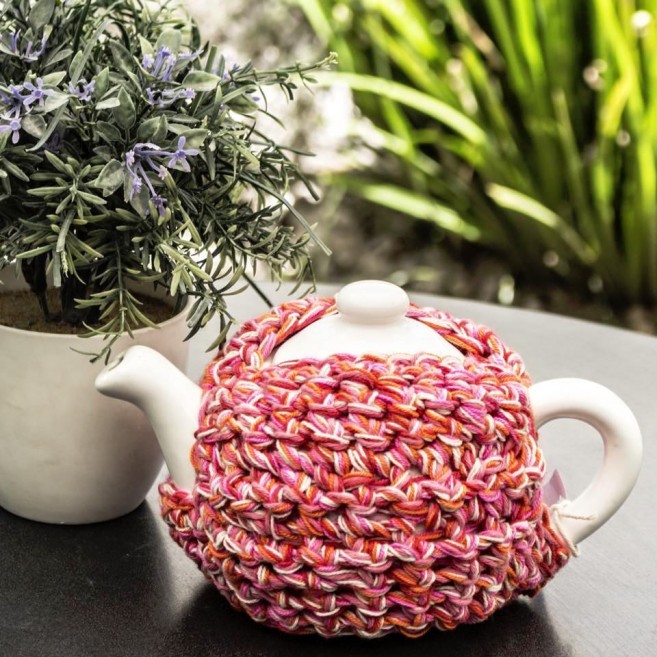
	<p>In truth, apart from visiting a few tiny museums or marveling at some stone houses, the best and only way to get a dose of this unusual heritage is to take one of the famed afternoon teas. Gaiman has the biggest concentration of teahouses. They’re tourist traps, of course, but provided you have a sweet tooth, they are an enjoyable way to spend a couple of hours. Expect knitted tea cozies, bone china saucers, and a generous spread, featuring way more cakes than any person could eat in one sitting.</p>

	<p>What’s so Welsh about it? Much is made of the local specialty, a dark, rich fruit cake called <em>torta negra</em> (black cake). The name is a Chubut invention, but the recipe itself is a twist on the “bara brith”, which in Welsh means “speckled bread” and relates to the concentration of dried fruits. Here’s <a href="http://www.recipesfromwales.com/patagonia-black-cake/" target="_blank">a recipe for the Patagonian version</a>. </p>

	<p>And here’s tea house owner Ana Chiabrando Rees explaining torta negra’s significance: <br />
<p align=center><iframe width="560" height="315" src="http://www.youtube.com/embed/umM1jMsdx-c" frameborder="0" allowfullscreen></iframe></p></p>

<div style="width:235px; font-size:80%; text-align:center; float:right"><a href="http://www.therealargentina.com/wp-content/uploads/2012/05/ty-nain.jpg"><img src="http://www.therealargentina.com/wp-content/uploads/2012/05/ty-nain-225x300.jpg" alt="Ty Nain Welsh tea house in Gaiman, Patagonia" title="ty-nain" width="225" height="300" class="alignright size-medium wp-image-3910" /></a><em>Ty Nain Welsh tea house in Gaiman; Photo courtesy of <a href="http://www.flickr.com/photos/pietsch/445581801/" target="_blank">Joachim Pietsch</a>.</em></div>

	<p>All tea houses typically offer a complete ‘menu’, including a pot of tea and a selection of several homemade cakes, with scones and sandwiches. In Gaiman, <strong>Ty Nain</strong> (meaning Grandma’s House and situated on Hipólito Yrigoyen 283) is a favourite, as it doesn’t allow tour groups.</p>

	<p>Other Welsh Patagonian recipes include <em><a href="http://www.celtnet.org.uk/recipes/cym/fetch-recipe.php?rid=teisen-hufen" target="_blank">torta de crema</a></em> (a baked cream pie) and a <a href="http://www.celtnet.org.uk/recipes/cym/fetch-recipe.php?rid=jam-grawnwin-gwyrdd" target="_blank">white grape jam</a>. You may also find <a href="http://www.therealargentina.com/argentinian-wine-blog/we-love-dulce-de-leche-recipe/">dulce de leche</a> creeping into a few of the locally produced cakes, rooting you firmly back in Argentina.</p>

	<p>Tempted? You can easily add a short side-trip to Gaiman onto a visit to the unmissable penguin colony in <a href="http://en.wikipedia.org/wiki/Punta_Tombo" target="_blank">Punta Tombo</a>.</p>

	<p>To get you in the mood, the Welsh/Argentine film <em>Patagonia</em> has fully romanticized the two nation’s transatlantic connection. It came out last year and features Welsh singer Duffy. </p>

<p align=center><iframe width="560" height="315" src="http://www.youtube.com/embed/lBb1LfMojkE" frameborder="0" allowfullscreen></iframe></p>

	<p>If that doesn’t appeal, here – for no reason other than the loose geographical connection – is a penguin falling over. Penguins and cake: you can’t really ask for more from a day out.  </p>

<p align=center><iframe width="420" height="315" src="http://www.youtube.com/embed/JdpBFZgWgTE" frameborder="0" allowfullscreen></iframe></p>]]></content>
		<link rel="replies" type="text/html" href="http://www.therealargentina.com/argentinian-wine-blog/welsh-influences-argentina-food-culture-patagonia/#comments" thr:count="1" />
		<link rel="replies" type="application/atom+xml" href="http://www.therealargentina.com/argentinian-wine-blog/welsh-influences-argentina-food-culture-patagonia/feed/atom/" thr:count="1" />
		<thr:total>1</thr:total>
	</entry>
		<entry>
		<author>
			<name>Sorrel Moseley-Williams</name>
						<uri>http://www.sorrelmw.com/</uri>
					</author>
		<title type="html"><![CDATA[arteBA 2012 Contemporary Art Fair in Buenos Aires]]></title>
		<link rel="alternate" type="text/html" href="http://www.therealargentina.com/argentinian-wine-blog/arteba-2012-contemporary-art-fair-in-buenos-aires/" />
		<id>http://www.therealargentina.com/?p=3890</id>
		<updated>2012-05-25T08:33:04Z</updated>
		<published>2012-05-15T16:19:40Z</published>
		<category scheme="http://www.therealargentina.com" term="The Real Argentina Blog" /><category scheme="http://www.therealargentina.com" term="The Real Argentina: Culture" /><category scheme="http://www.therealargentina.com" term="Argentinian Art" /><category scheme="http://www.therealargentina.com" term="Art Galleries" /><category scheme="http://www.therealargentina.com" term="arteBA" /><category scheme="http://www.therealargentina.com" term="Buenos Aires Art" /><category scheme="http://www.therealargentina.com" term="La Rural" />		<summary type="html"><![CDATA[If you’ve ever been to an art gallery and thought “this is the life” as you chugged back a glass of bubbly while gazing at a curious new installation, you'll be interested to know that the opening-to-end-all-gallery-openings is about to begin in Buenos Aires. From Friday 18 May until Tuesday 22 May, arteBA 2012 dusts down its canvases to begin the 21st edition of the art collectors’ fair that gets Buenos Aires, if not Argentina and Latin America, buzzing... ]]></summary>
		<content type="html" xml:base="http://www.therealargentina.com/argentinian-wine-blog/arteba-2012-contemporary-art-fair-in-buenos-aires/"><![CDATA[	<p>If you’ve ever been to an art gallery and thought “this is the life” as you chugged back a glass of bubbly while gazing at a curious new installation, you&#8217;ll be interested to know that the opening-to-end-all-gallery-openings is about to begin in Buenos Aires. From Friday 18 May until Tuesday 22 May, <a href="http://www.arteba.org" target="_blank">arteBA 2012</a> dusts down its canvases to begin the 21st edition of the art collectors’ fair that gets Buenos Aires, if not Argentina and Latin America, buzzing.</p>

	<p>ArteBA is a hugely important event from the galleries’ perspective because it allows them to showcase the best of contemporary Argentinian art. The event gathers local gallery greats, such as <a href="http://www.ruthbenzacar.com" target="_blank">Ruth Benzacar</a>, <a href="http://www.teresaanchorena.com.ar" target="_blank">Teresa Anchorena</a> and <a href="http://www.jardinocultogaleria.com" target="_blank">Jardín Oculto</a>, and the emerging such as <a href="http://rayolazer.tumblr.com" target="_blank">Rayo Lazer</a> and <a href="http://www.mitegaleria.com.ar" target="_blank">Mite</a>, giving one and all the chance to shine brightly with exhibitions and installations from their prized artists. Exhibitors are divided into various categories, including the ‘Barrio Joven Chandon’ for emergent artists, ‘Galleries at arteBA 2012’ for the more established venues and the ‘Petrobras Visual Arts Prize’.</p>

<p align=center><a href="http://www.therealargentina.com/wp-content/uploads/2012/05/JARDIN-02.jpg"><img src="http://www.therealargentina.com/wp-content/uploads/2012/05/JARDIN-02-209x300.jpg" alt="Marcelo Pombo&#039;s &quot;Cajita de Helado&quot; 2011" title="JARDIN-02" width="209" height="300" class="aligncenter size-medium wp-image-3895" /></a><br />
<em>Marcelo Pombo&#8217;s &#8220;Cajita de Helado&#8221; from Jardín Oculto; Photo courtesy of <a href="http://www.arteba.org/2012/?p=2039" target="_blank">arteBA</a>.</em><br />
</p>

	<p>Taking place at <a href="http://www.larural.com.ar/" target="_blank">La Rural</a>, for the <a href="http://ow.ly/aVqka" target="_blank">price of 50 pesos</a>, expect to see Brazilians whipping out platinum credit cards to the sound of popping corks while rubbing shoulders with collectors, curators and artists from the local art world. The Real Argentina gives you the arteBA lowdown&#8230;</p>

<h2>The Established Gallery Owner</h2>

	<p>In his role as the representative face of contemporary art gallery owners, Fernando Entin, who not only directs Palermo Hollywood’s <a href="http://www.elsidelrio.com.ar/" target="_blank">Elsi de Río</a> – home to Liniers,  Nico Sara and  Claudio Roncoli, but is also the president of Galaac, a body which encourages good practice in the field, calls the annual art fair “a celebration.”</p>

	<p>He says: “For me, every year that I take part in arteBA, which goes back 12 years ever since the inception of Elsi de Río, is a celebration. ArteBA is one of the most emblematic fairs in the region, and over the years, it has consolidated itself as one of the most outstanding artistic events in the Latin American environment, and aligned itself with international standards.”</p>

	<p>Check out this video promo for Argentinian artist Liniers, who features at arteBA 2012 with Elsi de Río, and singer Kevin Johansen who often collaborate together on projects:</p>

<p align=center><iframe width="560" height="315" src="http://www.youtube.com/embed/McbPRHTjD1o" frameborder="0" allowfullscreen></iframe></p>

<h2>Reaching Maturity</h2>

	<p>One studio which has crossed over from the ‘Barrio Joven’ section this past year to make it to the more grown-up ‘Galleries at arteBA 2012’ section is <a href="http://www.miaumiauestudio.com" target="_blank">Miau Miau</a>. One of the hippest galleries around, Miau Miau is known for its innovative exhibitions and installations, youthful perspective and legendary launch parties. Mariano López Seoane, who co-runs the Palermo-based gallery with Cecilia Glik, says: “ArteBA is a very important event for Miau Miau to gain more visibility, establish contacts and start new projects. What is really important is that this year we have moved on from the ‘Barrio Joven’ to share a space with more recognised and experienced galleries. This is a big challenge and we are taking it very seriously and enthusiastically, given that the fair has become increasingly international thanks to the number of curators, critics, journalists and collectors from various parts of the world.”</p>

	<p>Don’t miss Miau Miau artists Amaya Bouquet, <span class="caps">CONCHETINAS</span>, Jazmín Berakha, Grillo Demo and Alejo Musich, while Mariano’s hot tip is painter Constanza Alberione from Rosario, whom he calls “very unique – I think she is going to attract a lot of attention at this fair.”</p>

<p align=center><a href="http://www.therealargentina.com/wp-content/uploads/2012/05/MIAU-MIAU-04.jpg"><img src="http://www.therealargentina.com/wp-content/uploads/2012/05/MIAU-MIAU-04-300x219.jpg" alt="Alejandra Seeber &quot;Big disco years&quot; 2012" title="MIAU-MIAU-04" width="300" height="219" class="aligncenter size-medium wp-image-3891" /></a><br />
<em>Alejandra Seeber&#8217;s &#8220;Big disco years&#8221;; Photo courtesy of <a href="http://www.arteba.org/2012/?p=1994" target="_blank">arteBA</a>.</em><br />
</p>

<h2>The Collector</h2>

	<p>Dudu von Thielmenn, one of Argentina’s most prominent collectors, who has a special interest in photography and who sits on the international board of arteBA which aims to bring foreign buyers to Buenos Aires, says of the art fair: “I think it gathers some great galleries together &#8211; I am always excited about the yet-unknown and especially what features in the Barrio Joven. I always like to discover crazy things and love the fact it is always cheap and undiscovered.” She is looking forward to checking out the Foster Catena photo gallery among others.</p>

<p align=center><a href="http://www.therealargentina.com/wp-content/uploads/2012/05/FOSTER-CATENA-02.jpg"><img src="http://www.therealargentina.com/wp-content/uploads/2012/05/FOSTER-CATENA-02-180x300.jpg" alt="Elisa Strada, Serie Como un lugar II 2011" title="FOSTER-CATENA-02" width="180" height="300" class="aligncenter size-medium wp-image-3892" /></a><br />
<em>Elisa Strada&#8217;s &#8220;Serie Como un lugar II&#8221;; Photo courtesy of <a href="http://www.arteba.org/2012/?p=2091" target="_blank">arteBA</a>.</em></p>

<h2>The Owners</h2>

	<p>Linda Neilson, owner and curator of <a href="http://www.galeriamardulce.blogspot.com.ar" target="_blank">Galería Mar Dulce</a>, will be eagerly attending this year’s fair. She says: “I’ll be looking out for painter Carmen Pérez from <a href="http://www.vanriel.com.ar" target="_blank">Van Riel</a>, photographer Santiago Porter from <a href="http://www.zavaletalab.com" target="_blank">Zavaleta Lab</a> and the sculptor Juan Batalla.”</p>

<p align=center><a href="http://www.therealargentina.com/wp-content/uploads/2012/05/ZAVALETA-02.jpg"><img src="http://www.therealargentina.com/wp-content/uploads/2012/05/ZAVALETA-02-300x185.jpg" alt="Graciela Hasper, Sin título, 2012" title="ZAVALETA-02" width="300" height="185" class="aligncenter size-medium wp-image-3893" /></a><br />
<em>Graciela Hasper, Sin título; Photo courtesy of <a href="http://www.arteba.org/2012/?p=1759" target="_blank">arteBA</a>.</em></p>

	<p>Meanwhile, Natalia Sly, co-owner of Chacarita’s <a href="http://www.slyzmud.com" target="_blank">SlyZmud</a> which opened last December, says: “Although we won&#8217;t have a stand this year, we will be going to the fair every day and working from there. One of our artists, <a href="http://www.flickr.com/people/sebastiangarbrecht/" target="_blank">Sebastian Garbrecht</a>, will be showing his work. My recommendations are Miau Miau, and Munguau, a project directed by Gala Berger thanks to a cultural exchange between South Korea and Argentina, and I also love the photographs by a talented young artist called Facundo Pires.”</p>]]></content>
		<link rel="replies" type="text/html" href="http://www.therealargentina.com/argentinian-wine-blog/arteba-2012-contemporary-art-fair-in-buenos-aires/#comments" thr:count="0" />
		<link rel="replies" type="application/atom+xml" href="http://www.therealargentina.com/argentinian-wine-blog/arteba-2012-contemporary-art-fair-in-buenos-aires/feed/atom/" thr:count="0" />
		<thr:total>0</thr:total>
	</entry>
		<entry>
		<author>
			<name>Anna Longmore</name>
					</author>
		<title type="html"><![CDATA[Bariloche and the Beautiful Patagonian Lake District]]></title>
		<link rel="alternate" type="text/html" href="http://www.therealargentina.com/argentinian-wine-blog/bariloche-and-the-beautiful-patagonian-lake-district/" />
		<id>http://www.therealargentina.com/?p=3872</id>
		<updated>2012-05-08T17:05:09Z</updated>
		<published>2012-05-08T17:05:09Z</published>
		<category scheme="http://www.therealargentina.com" term="The Real Argentina Blog" /><category scheme="http://www.therealargentina.com" term="The Real Argentina: Travel" /><category scheme="http://www.therealargentina.com" term="Argentina Travel" /><category scheme="http://www.therealargentina.com" term="Bariloche" /><category scheme="http://www.therealargentina.com" term="Cycling" /><category scheme="http://www.therealargentina.com" term="Lake District" /><category scheme="http://www.therealargentina.com" term="Outdoor Activities" /><category scheme="http://www.therealargentina.com" term="Patagonia" /><category scheme="http://www.therealargentina.com" term="Travel Guide" /><category scheme="http://www.therealargentina.com" term="Travel Tips" />		<summary type="html"><![CDATA[Hugging the border with Chile, Argentina’s dramatic Lake District makes a suitably bellowing welcome to Patagonia. Banish all notions of the rolling hills of Cumbria – this is big landscape, and visitors must dress, eat, travel and plan accordingly. San Carlos de Bariloche – known universally as Bariloche – is the main hub of this great expanse of mountain-rutted wilderness, so all visitors to this part of the world will invariably lay their woolly hats here at some point. It’s a sprawling... ]]></summary>
		<content type="html" xml:base="http://www.therealargentina.com/argentinian-wine-blog/bariloche-and-the-beautiful-patagonian-lake-district/"><![CDATA[	<p>Hugging the border with Chile, Argentina’s dramatic Lake District makes a suitably bellowing welcome to Patagonia. Banish all notions of the rolling hills of Cumbria – this is big landscape, and visitors must dress, eat, travel and plan accordingly.</p>

	<p>San Carlos de Bariloche – known universally as Bariloche – is the main hub of this great expanse of mountain-rutted wilderness, so all visitors to this part of the world will invariably lay their woolly hats here at some point. It’s a sprawling and expensive place with plenty of traps for the tourist dollar. You could happily while away your days in the city itself and leave with nothing but a pan-pipe Beatles CD, seven kilos of smoked trout and a framed picture of you cuddling a Saint Bernard called Che. Which is exactly why you need to arrive with ideas&#8230;</p>

	<p>Here are our Top 10 recommendations for any traveler to Bariloche and Argentina&#8217;s Lake District in Patagonia.</p>

<h2>1. Dine at El Boliche Viejo</h2>

	<p>Bona fide Barilochenses shun new wave ‘<a href="http://www.therealargentina.com/argentinian-wine-blog/argentine-national-dishes-parrilla-argentina-food/">parillas</a>’ (grill restaurants) and head 30km out of town to feast on chargrilled Patagonian lamb and cow parts at El Boliche Viejo, an old-fashioned roadside pitstop that has been taking in weary travellers – including, most famously, Butch Cassidy and the Sundance Kid – for over a century. </p>

<h2>2. Hike up to top of Cerro Campanario</h2>

	<p>A sharp half-hour hike up to the summit of Campanario (1,050m), a mini peak just past the Bariloche city limits. It’s worth the puff for the knockout views across the Nahuel Huapi and Perito Moreno lakes and the mountains beyond, but you can always cheat and catch the chairlift straight to the summit cafe. Get a local bus along Bustillo Avenue until kilometre 17 and start at the chairlift base station.</p>

<p align=center><a href="http://www.therealargentina.com/wp-content/uploads/2012/05/cerro-campanario.jpg"><img src="http://www.therealargentina.com/wp-content/uploads/2012/05/cerro-campanario-300x200.jpg" alt="The View from Cerro Campanario outside Bariloche" title="cerro-campanario" width="300" height="200" class="aligncenter size-medium wp-image-3873" /></a><br />
<em>The vista from Cerro Campanario outside Bariloche; Photo courtesy of <a href="http://jameskibbey.smugmug.com/Other/Patagonia-3-Bariloche/14913302_QFVmtn#!i=1113315375&#038;k=nEWWg" target="new">James Kibbey</a>.</em></p>

<h2>3. Cycle the Circuito Chico</h2>

	<p>The 40km ride skirts the edge of lakes, ducks down into a chocolate-box ‘Swiss Colony’ and climbs up to some stunning lookouts with views across to the Andes. It requires a modicum of fitness, but the panoramas are worth every wheezing ascent and saddle sore. Take the bus towards Llao Llao and hire bikes (the earlier the better) at kilometre 18.3 on Bustillo Avenue.</p>

<p align=center><a href="http://www.therealargentina.com/wp-content/uploads/2012/05/cycle-circuito-chico.jpg"><img src="http://www.therealargentina.com/wp-content/uploads/2012/05/cycle-circuito-chico-200x300.jpg" alt="Cycling Circuito Chico" title="cycle-circuito-chico" width="200" height="300" class="aligncenter size-medium wp-image-3874" /></a><br />
<em>Cycling Circuito Chico; Photo courtesy of <a href="http://jameskibbey.smugmug.com/Other/Patagonia-3-Bariloche/14913302_QFVmtn#!i=1113322709&#038;k=pH3PE" target="new">James Kibbey</a>.</em></p>

<p align=center><a href="http://www.therealargentina.com/wp-content/uploads/2012/05/circuito-chico.jpg"><img src="http://www.therealargentina.com/wp-content/uploads/2012/05/circuito-chico-300x200.jpg" alt="A View over the Lake from Circuito Chico" title="circuito-chico" width="300" height="200" class="aligncenter size-medium wp-image-3875" /></a><br />
<em>Views over the lakes from Circuito Chico; Photo courtesy of <a href="http://jameskibbey.smugmug.com/Other/Patagonia-3-Bariloche/14913302_QFVmtn#!i=1113321995&#038;k=TByjT" target="new">James Kibbey</a>.</em></p>

<h2>4. Gawp at Llao Llao Hotel</h2>

	<p>You might not be up to paying US$450 for a room at <a href="http://www.llaollao.com/ing/" target="_blank">Argentina’s most famous luxury resort</a>, which sits on its own peninsula on the shores of Nahuel Huapi, but it’s well worth a visit, either to marvel at its views (over tea or a round of golf on the beautifully manicured course) or delve into its chequered history. It’s at kilometre 25 on Bustillo Avenue.</p>

<p align=center><a href="http://www.therealargentina.com/wp-content/uploads/2012/05/llao-llao-golf.jpg"><img src="http://www.therealargentina.com/wp-content/uploads/2012/05/llao-llao-golf-300x200.jpg" alt="Golf at Llao Llao resort" title="llao-llao-golf" width="300" height="200" class="aligncenter size-medium wp-image-3878" /></a><br />
<em>Golf at Llao Llao resort; Photo courtesy of <a href="http://jameskibbey.smugmug.com/Other/Patagonia-3-Bariloche/14913302_QFVmtn#!i=1113322876&#038;k=38uKS" target="new">James Kibbey</a>.</em></p>

<h2>5. Buy chocolate at Mamuschka</h2>

	<p>Though the best chocolatier in Bariloche is the subject of much dispute, <a href="http://www.mamuschka.com/" target="_blank">Mamuschka</a> is never far down the list. Be warned though: you can lose a whole afternoon navigating the vast range of delights in the glass counter.</p>

<h2>6. Eat dulce de leche ice cream at Jauja</h2>

	<p>No further explanation required, except to say that this – <a href="http://www.heladosjauja.com/" target="_blank">Jauja’s</a> frozen incarnation of the ubiquitous caramel filling is <a href="http://www.therealargentina.com/argentinian-wine-blog/we-love-ice-cream-argentina-style/">the best ice cream in Argentina</a>. (There’s a <a href="http://www.heladosjauja.com/" target="_blank">Jauja</a> in Buenos Aires if you can’t make the trek across to Bariloche.)</p>

<h2>7. Drive the Traful circuit</h2>

	<p>Car hire in Bariloche is surprisingly cheap so there’s no excuse not to fold your hiking-ravaged hamstrings into a clapped out Fiat. Even the abridged version of the famous Siete Lagos (Seven Lakes) circuit requires an early start and a certain tolerance of unmade gravel roads, but the views – particularly from the Mirador Lago Traful – are worth the bumpy ride.</p>

<p align=center><a href="http://www.therealargentina.com/wp-content/uploads/2012/05/clapped-out-fiat-bariloche.jpg"><img src="http://www.therealargentina.com/wp-content/uploads/2012/05/clapped-out-fiat-bariloche-300x200.jpg" alt="Our Clapped Out Fiat in Bariloche" title="clapped-out-fiat-bariloche" width="300" height="200" class="aligncenter size-medium wp-image-3880" /></a><br />
<em>Our clapped out Fiat; Photo courtesy of <a href="http://jameskibbey.smugmug.com/Other/Patagonia-3-Bariloche/14913302_QFVmtn#!i=1113323442&#038;k=XshpA" target="_blank">James Kibbey</a>.</em></p>

<p align=center><a href="http://www.therealargentina.com/wp-content/uploads/2012/05/mirador-lago-traful.jpg"><img src="http://www.therealargentina.com/wp-content/uploads/2012/05/mirador-lago-traful-300x200.jpg" alt="Mirador Lago Traful" title="mirador-lago-traful" width="300" height="200" class="aligncenter size-medium wp-image-3879" /></a><br />
<em>Mirador Lago Traful; Photo courtesy of <a href="http://jameskibbey.smugmug.com/Other/Patagonia-3-Bariloche/14913302_QFVmtn#!i=1113324270&#038;k=eFtCA" target="_blank">James Kibbey</a>.</em></p>

<h2>8. Visit El Bolsón</h2>

	<p>Bariloche’s hippier cousin El Bolsón is three hours down the road, and well worth a couple of days of your itinerary if only for – more – breathtaking scenery and the pinch-yourself idyllicism of the place. If you need further persuasion, it’s also the centre of <a href="http://www.therealargentina.com/argentinian-wine-blog/argentinas-craft-beer-craze/">artisan beer</a> in Patagonia and home of the <a href="http://www.therealargentina.com/argentinian-wine-blog/argentina-food-drink-festivals-2012/">Fiesta de la Cerveza Artesanal</a>.</p>

<p align=center><a href="http://www.therealargentina.com/wp-content/uploads/2012/05/el-bolson.jpg"><img src="http://www.therealargentina.com/wp-content/uploads/2012/05/el-bolson-200x300.jpg" alt="El Bolsón" title="el-bolson" width="200" height="300" class="aligncenter size-medium wp-image-3881" /></a><br />
<em>El Bolsón, Patagonia; Photo courtesy of <a href="http://jameskibbey.smugmug.com/Other/Patagonia-5-El-Bolson/14914308_FVzf9X#!i=1113378979&#038;k=nXF3i" target="_blank">James Kibbey</a>.</em></p>

<h2>9. Eat at Di Como</h2>

	<p>This Italian treasure opposite <a href="http://www.almasuites.com.ar/" target="_blank">Alma del Lago Hotel</a> on Bustillo Avenue (868) doesn’t appear in the guidebooks, so the world-beating homemade pastas – just the thing after a day’s hiking – are left to the locals. Service is warm and it also serves the crispiest provoleta in town (ask for it ‘bien cocido’ just to be sure). </p>

<h2>10. Ski Cerro Catedral</h2>

	<p>Bariloche is essentially a large ski resort, and it comes alive from mid June to early October. <a href="http://www.catedralaltapatagonia.com/" target="_blank">Cerro Catedral</a> is the hub, serving up 40 lifts and plenty of places to hire kit, as well as 53 pistes for all standards and exciting off-piste skiing. The panoramas of Nahuel Huapi are quite something too.</p>]]></content>
		<link rel="replies" type="text/html" href="http://www.therealargentina.com/argentinian-wine-blog/bariloche-and-the-beautiful-patagonian-lake-district/#comments" thr:count="0" />
		<link rel="replies" type="application/atom+xml" href="http://www.therealargentina.com/argentinian-wine-blog/bariloche-and-the-beautiful-patagonian-lake-district/feed/atom/" thr:count="0" />
		<thr:total>0</thr:total>
	</entry>
		<entry>
		<author>
			<name>Vicky Baker</name>
						<uri>http://www.goinglocaltravel.com/</uri>
					</author>
		<title type="html"><![CDATA[Vendimia and the Rise of Barrio Boedo]]></title>
		<link rel="alternate" type="text/html" href="http://www.therealargentina.com/argentinian-wine-blog/vendimia-and-the-rise-of-barrio-boedo/" />
		<id>http://dev-tra.therealargentina.com/?p=3839</id>
		<updated>2012-04-30T20:53:44Z</updated>
		<published>2012-04-26T15:51:27Z</published>
		<category scheme="http://www.therealargentina.com" term="The Real Argentina Blog" /><category scheme="http://www.therealargentina.com" term="The Real Argentina: Wine" /><category scheme="http://www.therealargentina.com" term="Argentina Wine" /><category scheme="http://www.therealargentina.com" term="Barrios" /><category scheme="http://www.therealargentina.com" term="Boedo" /><category scheme="http://www.therealargentina.com" term="Festivals" /><category scheme="http://www.therealargentina.com" term="Harvest" /><category scheme="http://www.therealargentina.com" term="Music" /><category scheme="http://www.therealargentina.com" term="Vendimia" />		<summary type="html"><![CDATA[When you hear about over two thousand people gathering on the streets of Buenos Aires, odds are it's a rousing protest or pro-government rally. Yet when similar numbers took to the streets in Boedo last Saturday night, it wasn’t saucepan bashing or Peronist chants keeping them going. Instead, tango music played and Malbec bottles were drained, as the third edition of Boedo’s Vendimia harvest festival got under way... ]]></summary>
		<content type="html" xml:base="http://www.therealargentina.com/argentinian-wine-blog/vendimia-and-the-rise-of-barrio-boedo/"><![CDATA[	<p>When you hear about over two thousand people gathering on the streets of Buenos Aires, odds are it&#8217;s a rousing protest or pro-government rally. Yet when similar numbers took to the streets in Boedo last Saturday night, it wasn’t saucepan bashing or Peronist chants keeping them going. Instead, <a href="http://www.therealargentina.com/tag/tango/">tango music</a> played and <a href="http://www.therealargentina.com/tag/malbec/">Malbec bottles</a> were drained, as the third edition of <strong>Boedo’s Vendimia harvest festival</strong> got under way.</p>

<p style="text-align: center;"><img class="alignnone size-medium wp-image-3840" title="orquesta-Fernández-Fierro.jpg" src="http://dev-tra.therealargentina.com/wp-content/uploads/2012/04/orquesta-Fernández-Fierro.jpg-300x199.jpg" alt="" width="300" height="199" /><br />
<em>Orquesta Fernández Fierro; photo courtesy of <a href="http://www.panyarte.com.ar">Pan y Arte</a>.</em></p>

	<p>The event, started in 2010 by Liliana Moreno, an actress and owner of local restaurant, <a href="http://www.panyarte.com.ar" target="new">Pan y Arte</a>, is an artsy celebration of Argentina’s wine harvest. What originally started as a relatively small event held inside one restaurant has now grown out to become a sophisticated, open-air street party. This year, a stretch of Avenida Boedo has been shut down and an outdoor stage has been erected to welcome performers such as dynamic tango group <a href="http://www.fernandezfierro.com/home.php" target="new">Orquesta Típica Fernández Fierro</a>. The event – which is running now through this Sunday – also sees street parades and wine tastings by leading bodegas.</p>

	<p>Here’s a little taste of it, in the words of a persuasive local TV presenter:</p>

<p style="text-align: center;"><iframe src="http://www.youtube.com/embed/jc1vVdTW3aM" frameborder="0" width="420" height="315"></iframe></p>

	<p>The inspiration is the giant <a href="http://www.therealargentina.com/argentinian-wine-blog/vendimia-harvest-festival-mendoza-wine/">Vendimia festival held every year in Mendoza</a>. “Our family is from Mendoza and we wanted to celebrate its wine culture here in Buenos Aires but with a strong artistic flavour,” says Liliana’s son Lucas Marín, who is one of the festival’s directors. He says the event has really tapped into the area’s community spirit. “Although it was my mother’s idea, the people have made it their own. An event like this – which is free and features top-level performers – is not very common here. It’s generating a real cultural movement.”</p>

<p style="text-align: center;"><img class="alignnone size-medium wp-image-3842" title="pisada-de-la-uva.jpg" src="http://dev-tra.therealargentina.com/wp-content/uploads/2012/04/pisada-de-la-uva.jpg-300x199.jpg" alt="" width="300" height="199" /><br />
<em>Pisada de la uva; photo courtesy of <a href="http://www.panyarte.com.ar">Pan y Arte</a>.</em></p>

<h2>Boedo&#8217;s &#8220;Barrio&#8221; Spirit</h2>

	<p>Boedo itself is a slow burner on the tourist scene. It’s been tipped as up-and-coming for a while now, but there’s been no break-through. And that’s the charm. “Other neighbourhoods may be more set-up for tourism, but people come here looking for authenticity,” says Lucas. “They notice the difference and the <em>barrio</em> spirit. It’s contemporary, but there is an awareness of history too. It’s a great mix.”</p>

	<p>Wandering down Avenida Boedo, you’d be forgiven for dismissing it as just another commercial throughway. Scratch away at the surface, however, and you find signs of its artistic heritage. Back in the 1920s, this was one of the city’s leading cultural hubs. A magnet for tango musicians and poets, it had its own literary movement and produced alternative magazines.</p>

	<p>A little taste of those days can still be found in wood-panelled heritage cafe, <a href="http://info.todobuenosaires.com/descripcion/descripcion_lugar.php?Id=290" target="new">Bar Margot</a>, which is every bit as appealing as the <a href="http://www.therealargentina.com/tag/san-telmo/">San Telmo bars</a> that appear in every guidebook. I would try to romanticise it some more, but someone’s already done a far better job. Have you ever heard anyone do ‘nostalgia’ better than the sultry <em>porteña</em> narrating the following clip?</p>

<p style="text-align: center;"><iframe src="http://www.youtube.com/embed/S3jmplelCF8" frameborder="0" width="420" height="315"></iframe></p>

	<p>The years since Boedo’s cultural heyday certainly haven’t been easy. The final nail in its coffin seemed to be when the local football team – San Lorenzo – had its ground sold in 1979 to make way for a Carrefour supermarket. Supporters have <a href="http://in.reuters.com/article/2011/12/16/soccer-argentina-sanlorenzo-idINDEE7BF01Z20111216" target="new">recently upped the campaigns</a> to have it restored, but opposition teams still delight in teasing them. A paraphrased Racing chant goes, “I went to your ground and found a supermarket, painted red and blue… Racing has a stadium, you have a grocery!”</p>

	<p>But football aside, Boedo could be making a comeback, especially with events like Vendimia and an influx of younger residents, attracted by low rent. “You can definitely see it is becoming more interesting to tourists,” says Andrea Palmisciano, who works at <a href="http://www.lolahouse.com.ar" target="new">Lola House</a>, one of the most appealing hotels in the area. “Some choose the trendier <a href="http://www.therealargentina.com/argentinian-wine-blog/barrio-palermo-a-guide-to-buenos-aires-hippest-neighbourhood/">Palermo</a>, but the prices, style and atmosphere are drawing others to our neighborhood. Our guests tell us they love the small restaurants and cantinas.”</p>

<p style="text-align: center;"><img class="alignnone size-medium wp-image-3843" title="vendimia-en-boedo-inauguracion-21-de-abril-2012-liliana-herrero.jpg" src="http://dev-tra.therealargentina.com/wp-content/uploads/2012/04/vendimia-en-boedo-inauguracion-21-de-abril-2012-liliana-herrero.jpg-300x199.jpg" alt="" width="300" height="199" /><br />
<em>Liliana Moreno opens the festival; photo courtesy of <a href="http://www.panyarte.com.ar">Pan y Arte</a>.</em></p>

	<p>Pan y Arte makes an interesting trip, even when Vendimia isn’t on. It hosts constant art exhibitions and has its own theatre, plus it&#8217;s one of few places in the city specialising in Mendocino cuisine. Try its regional empanadas or the <em>pastel de papa</em>, an unusual sweet-and-savory combination of meat, mashed potato, sugar, cinnamon and raisins. It’s best washed down with Mendocino wine, of course, but failing that, you can always make an exception for an <a href="http://www.therealargentina.com/argentinian-wine-blog/argentinas-craft-beer-craze/">artisanal beer</a> down the road at <a href="http://www.pubcossab.com.ar/" target="new">Cossab</a>.</p>

	<p>Vendimia 2012 runs until Sunday 29 April. The program of events can be found at <a href="http://www.panyarte.com.ar">www.panyarte.com.ar</a>.</p>]]></content>
		<link rel="replies" type="text/html" href="http://www.therealargentina.com/argentinian-wine-blog/vendimia-and-the-rise-of-barrio-boedo/#comments" thr:count="0" />
		<link rel="replies" type="application/atom+xml" href="http://www.therealargentina.com/argentinian-wine-blog/vendimia-and-the-rise-of-barrio-boedo/feed/atom/" thr:count="0" />
		<thr:total>0</thr:total>
	</entry>
		<entry>
		<author>
			<name>Guest Post</name>
					</author>
		<title type="html"><![CDATA[An Insider&#8217;s Travel Guide to Argentina]]></title>
		<link rel="alternate" type="text/html" href="http://www.therealargentina.com/argentinian-wine-blog/an-insiders-travel-guide-to-argentina/" />
		<id>http://dev-tra.therealargentina.com/?p=3828</id>
		<updated>2012-04-30T20:58:38Z</updated>
		<published>2012-04-24T14:48:54Z</published>
		<category scheme="http://www.therealargentina.com" term="The Real Argentina Blog" /><category scheme="http://www.therealargentina.com" term="The Real Argentina: Travel" />		<summary type="html"><![CDATA[Argentina is a vast country where the main attractions are on a huge scale. Beyond the infinite skies, shimmering glaciers and horizon-bending pampas, this is the cradle of the tango and a country where life is lived large, from the indulgences of succulent steak and celebrated wines to the infamous Buenos Aires nightlife. In this brief guide we’ll offer travel advice... ]]></summary>
		<content type="html" xml:base="http://www.therealargentina.com/argentinian-wine-blog/an-insiders-travel-guide-to-argentina/"><![CDATA[	<p><em>Today&#8217;s guest post is brought to you by the UK’s No.1 specialist in travel to Latin America, <a href="http://www.journeylatinamerica.co.uk/" target="new">Journey Latin America</a>.</em></p>

	<p><a href="http://www.journeylatinamerica.co.uk/destination/South-America-Antarctica/Argentina.aspx" target="new">Argentina</a> is a vast country where the main attractions are on a huge scale. Beyond the infinite skies, shimmering glaciers and horizon-bending pampas, this is the cradle of <a href="http://www.therealargentina.com/tag/tango/">the tango</a> and a country where life is lived large, from the indulgences of succulent steak and <a href="http://www.therealargentina.com/category/argentina-wine-guide/">celebrated wines</a> to the infamous Buenos Aires nightlife. In this brief guide we’ll offer travel advice to help you discover Argentina in all its glory – where and when to go, how to get around, what to eat and how to make the most of your time there.</p>

<p style="text-align: center;"><img class="alignnone size-medium wp-image-3833" title="CREDIT-EOLO" src="http://dev-tra.therealargentina.com/wp-content/uploads/2012/04/CREDIT-EOLO-300x196.jpg" alt="" width="300" height="196" /><br />
<em>Photo courtesy of <a href="http://www.journeylatinamerica.co.uk" target="new">Journey Latin America</a>.</em></p>

<h2>Argentina All Year Round</h2>

	<p>One of the great things about planning a holiday to Argentina is that with such a huge territory and varied climate, there is no wrong time of year to visit. In the southern hemisphere, seasons are the opposite of the northern hemisphere, so December to March bring the warmest weather, making October through to April the traditional time to visit <a href="http://www.therealargentina.com/tag/patagonia/">Patagonia</a>. On the other hand, the dry season in the spectacular <a href="http://www.therealargentina.com/argentinian-wine-blog/a-guide-to-travelling-in-northwest-argentina-what-to-see-and-do/">north of the country</a> – an artist’s palette of red- and orange-hued landscapes dotted with cacti – is the other way around: April to October. September is perhaps the best month for wildlife, with exotic fauna like giant anteaters, caimans, monkeys, the overgrown guinea-pig-resembling <em>capybara</em>, and incredibly abundant bird life all easily spotted in the Iberá marshes, and whales visiting the shores of the Valdés peninsula.</p>

	<p>Our advice if you plan to cover multiple regions of the country would be to aim to visit in spring or autumn for the best all-round weather conditions. If we were planning a trip ourselves, our overall favourite month to travel would be April, when fiery autumnal hues make the ends-of-the-earth Patagonian scenery even more beautiful than usual, followed by September or October.</p>

<p style="text-align: center;"><img class="alignnone size-medium wp-image-3830" title="fitzroy12" src="http://dev-tra.therealargentina.com/wp-content/uploads/2012/04/fitzroy12-300x200.jpg" alt="" width="300" height="200" /><br />
<em>Photo courtesy of <a href="http://www.journeylatinamerica.co.uk" target="new">Journey Latin America</a>.</em></p>

<h2>Practical Information</h2>

<h3>Fast facts:</h3>

<ul>
	<li>British passport holders do not require a visa to enter Argentina (but Americans, Canadians and Australians should beware of the &#8220;reciprocity&#8221; entry fee).</li>
	<li>Argentina’s currency is the Argentine peso (around 7 pesos to the British pound or 4.4 pesos to the US dollar as of April 2012).</li>
	<li>The language is Spanish – spoken with a distinctive accent, a unique pronoun ‘vos’ in place of the standard Spanish ‘tú’, and a peppering of slang known as lunfardo.</li>
	<li>You can get hold of most things in Argentina so packing is easy; just make sure to take plenty of layers if heading to Patagonia as they are the best insulation from the cold.</li>
</ul>

	<p>Argentina is eight times the size of Britain, so don’t underestimate the distances when planning your itinerary. There is a good network of flights connecting the major cities and tourist areas, but if you are on a budget and have the time you’ll be pleasantly surprised by the <a href="http://www.therealargentina.com/argentinian-wine-blog/bingo-bus-travel-in-argentina/">long-distance buses</a>. Though the journeys are undoubtedly long (between 12 and 24 hours is the norm), they are extraordinarily comfortable with many ‘bus cama’ services offering fully reclining seats – the business class of the backpacking world. Note that if you’re travelling during the Argentine summer, you’ll need to book ahead to secure your seat. If you’re flying instead, be sure to book your domestic and international flights at the same time as they are almost always cheaper when purchased together.</p>

<h2>Buenos Aires in a Weekend</h2><div style="width: 230px; font-size: 100%; text-align: center; float: right;"><img class="alignnone size-medium wp-image-3829" title="228584_970409624785_61408235_49870250_214757_n" src="http://dev-tra.therealargentina.com/wp-content/uploads/2012/04/228584_970409624785_61408235_49870250_214757_n-220x300.jpg" alt="" width="220" height="300" /><em>Photo courtesy of <a href="http://www.journeylatinamerica.co.uk" target="new">Journey Latin America</a>.</em></div>

	<p>Buenos Aires has to be one of the world’s greatest cities: elegant yet frenetic; European yet at once unmistakably Latin; an indefinable metropolis that never quite leaves your system once you’ve been seduced by its 24-hour charms. We would recommend you spend at least three or four nights here, but if you only have a weekend (and make sure it is a weekend: it’s the best time to be in the capital) follow our guide to <a href="http://www.journeylatinamerica.co.uk/papagaio/Articles/Argentina/48-Hours-in-Buenos-Aires.aspx">48 Hours in Buenos Aires</a> to make every moment count.</p>

<h2>The Great Outdoors</h2>

	<p>No trip to Argentina would be complete without some time out in the wild landscapes so beloved by the Argentines themselves. And there’s certainly a lot of wilderness to choose from in a country whose mind-bending latitudes encompass arid canyons and deserts, thundering waterfalls, subtropical forest, alpine lakes, towering snow-capped peaks, iceberg-strewn waters and vast, splintering glaciers.</p>

	<p>If you enjoy trekking, Patagonia is the most obvious (but by no means the only) option. Base yourself in El Chaltén, where you can walk straight out of town and be surrounded by the incredible mountain scenery of Fitz Roy in a matter of minutes. Venturing still further south, <a href="http://www.therealargentina.com/argentinian-wine-blog/ushuaia-tourism-what-to-do-in-the-%e2%80%98city-at-the-end-of-the-world%e2%80%99/">Tierra del Fuego</a> – ‘the uttermost part of the Earth’ – makes for an otherworldly backdrop. However, if ice is not your thing, we also love the 3-day trek out of Cachi in the north. Another way to get up close and personal with Argentine nature is with some summer skiing around Bariloche, or even ice trekking on the sprawling Perito Moreno glacier.</p>

<p style="text-align: center;"><img class="alignnone size-medium wp-image-3831" title="WITH AUTO LEVELS" src="http://dev-tra.therealargentina.com/wp-content/uploads/2012/04/CREDIT-ESTANCIA-HUECHAHUE-300x194.jpg" alt="" width="300" height="194" /><br />
<em>Photo courtesy of <a href="http://www.journeylatinamerica.co.uk" target="new">Journey Latin America</a>.</em></p>

	<p>Then again, if your idea of working up a sweat is in a sauna, there’s no shortage of more relaxing ways to enjoy the Argentine countryside. Sophisticated, indulgent wine lodges and <a href="http://www.therealargentina.com/argentinian-wine-blog/estancias-ranch-holidays-argentina-travel/">rustic-luxe estancias</a> offer the chance to sit back and savour the rural life at the heart of the Argentine psyche. There are many ranches in the flat pampas surrounding Buenos Aires, with their sun-weathered gauchos, roaring log fires and delicious <a href="http://www.therealargentina.com/argentinian-wine-blog/argentine-national-dishes-parrilla-argentina-food/">asados</a>, but there are estates all over the country putting an Argentine spin on R&amp;R. And when it comes to <a href="http://www.therealargentina.com/argentinian-wine-blog/a-travel-guide-to-iguazu-falls/">Iguazú Falls</a>, stay at the Sheraton if you can – it’s the only hotel within the Argentine national park, meaning that you can have what is arguably the world’s most impressive waterfall pretty much to yourself when the park is closed to other visitors, including at sunrise and sunset.</p>

<p style="text-align: center;"><img class="alignnone size-medium wp-image-3834" title="iguazu-embratur" src="http://dev-tra.therealargentina.com/wp-content/uploads/2012/04/iguazu-embratur-300x197.jpg" alt="" width="300" height="197" /><br />
<em>Photo courtesy of <a href="http://www.journeylatinamerica.co.uk" target="new">Journey Latin America</a>.</em></p>

<h2>A Flavour of Argentina</h2>

	<p>If you live to eat, you’ll love Argentina – particularly if your tastes could be described as carnivorous. The preposterously delicious steak is of course the star attraction, with ‘bife de lomo’ and ‘bife de chorizo’ (nothing to do with the spicy sausage) being our favourite cuts and La Cabrera and Cabaña Las Lilas our favourite Buenos Aires steakhouses, but the Patagonian lamb ‘a la cruz’ (cooked on a spit) is another mouth-watering gastronomic highlight.</p>

	<p>Lunch is the main meal of the day, often spanning hours and several courses, and dining is a late affair (don’t book your table before 10pm if you don’t want to look like a lonely tourist). Pasty-like <a href="http://www.therealargentina.com/argentinian-wine-blog/street-food-in-argentina/">empanadas</a> are the perfect way to fill the gap in between. For those with a sweet tooth, absolutely anything filled with the highly addictive concoction that is <a href="http://www.therealargentina.com/argentinian-wine-blog/we-love-alfajores-argentinian-food/">dulce de leche</a> is bound to hit the spot.</p>

	<p>Finally, missing out on the magnificent wine would be nothing short of a travesty – but since you’re here at The Real Argentina, you must already know a thing or two about that!</p>

	<p><em>For insider travel advice, top 5s, recipes, articles and more, visit Journey Latin America’s online magazine <a href="http://www.journeylatinamerica.co.uk/papagaio/" target="new">Papagaio</a>.</em></p>]]></content>
		<link rel="replies" type="text/html" href="http://www.therealargentina.com/argentinian-wine-blog/an-insiders-travel-guide-to-argentina/#comments" thr:count="1" />
		<link rel="replies" type="application/atom+xml" href="http://www.therealargentina.com/argentinian-wine-blog/an-insiders-travel-guide-to-argentina/feed/atom/" thr:count="1" />
		<thr:total>1</thr:total>
	</entry>
		<entry>
		<author>
			<name>Sorrel Moseley-Williams</name>
						<uri>http://www.sorrelmw.com/</uri>
					</author>
		<title type="html"><![CDATA[Bafici 2012 &#8211; The Biggest Indie Film Festival in Latin America]]></title>
		<link rel="alternate" type="text/html" href="http://www.therealargentina.com/argentinian-wine-blog/bafici-2012-the-biggest-indie-film-festival-in-latin-america/" />
		<id>http://dev-tra.therealargentina.com/?p=3809</id>
		<updated>2012-04-30T21:11:41Z</updated>
		<published>2012-04-16T18:59:12Z</published>
		<category scheme="http://www.therealargentina.com" term="The Real Argentina Blog" /><category scheme="http://www.therealargentina.com" term="The Real Argentina: Culture" /><category scheme="http://www.therealargentina.com" term="Argentina Film" /><category scheme="http://www.therealargentina.com" term="Argentina Movies" /><category scheme="http://www.therealargentina.com" term="Argentine Films" /><category scheme="http://www.therealargentina.com" term="Buenos Aires Art" /><category scheme="http://www.therealargentina.com" term="Culture" /><category scheme="http://www.therealargentina.com" term="Festivals" /><category scheme="http://www.therealargentina.com" term="Film Festival" />		<summary type="html"><![CDATA[Although movie-making may not be the first word beginning with the letter M to be associated with Argentina (take Malbec, Maradona and Messi for starters), cinema is big business in terms of the number of foreign and Argentinian films produced here and festivals held around the country each year. It's no fluke that the country has two Oscars to its name... ]]></summary>
		<content type="html" xml:base="http://www.therealargentina.com/argentinian-wine-blog/bafici-2012-the-biggest-indie-film-festival-in-latin-america/"><![CDATA[	<p>Although movie-making may not be the first word beginning with the letter M to be associated with Argentina (take Malbec, Maradona and Messi for starters), cinema is big business in terms of the number of foreign and <a href="http://www.therealargentina.com/argentinian-wine-blog/classic-argentine-films/">Argentinian films</a> produced here and festivals held around the country each year. It&#8217;s no fluke that the country has two Oscars to its name.</p>

	<p>While Mar del Plata is a world-class, A grade festival, and <a href="http://www.therealargentina.com/argentinian-wine-blog/pantalla-pinamar-film-festival-2011/">Pantalla Pinamar</a> is a smaller, more intimate gathering, one of the most important Buenos Aires festivals that gives movie buffs itchy feet and square eyes is Bafici.</p>

	<p>The biggest indie film festival in Latin America, <a href="http://www.bafici.gob.ar" target="new">Bafici</a>, now in its 14th year, stands for &#8220;Buenos Aires Independent and International Film Festival&#8221; and gives first-time as well as more established directors achance to shine in front of a keen and knowledgeable audience.</p>

<p style="text-align: center;"><img class="alignnone size-medium wp-image-3824" title="bafici-2011" src="http://dev-tra.therealargentina.com/wp-content/uploads/2012/04/bafici-2011-300x200.jpg" alt="" width="300" height="200" /><br />
<em>Bafici 2011; photo courtesy of <a href="http://www.flickr.com/photos/buenosairesprensa/5632321158/" target="new">Gobierno de la Ciudad de Buenos Aires</a>.</em></p>

	<p>Although most directors don’t have a tenth of the budget of <a href="http://www.youtube.com/watch?v=GcHkTSqeGoU" target="new"><em>El Secreto de Sus Ojos</em></a>, the most recent Argentinian flick by Juan José Campanella which won an Oscar in 2010 for Best Foreign Movie and cost an alleged 1.5m euros to make, Bafici is very much a feeding ground for unearthing talent. With more than 300 movies, short and feature-length, to check out over the course of 12 days, you have until 22 April to get watching.</p>

	<p><strong>Check here for the full schedule</strong> in <a href="http://www.bafici.gob.ar/home12/web/en/events/index.html" target="new">English</a> and <a href="http://www.bafici.gob.ar/home12/web/es/events/index.html" target="new">Spanish</a>. Many films are shown at the central hub of the <a href="http://www.hoyts.com.ar/cinema.php?Cinema_strID=103&amp;CinemaInfo=Shownow" target="new">Hoyts cinemas at Abasto</a> shopping mall (subway Carlos Gardel) although screenings take place at 11 other venues around the city.</p>

<p align=center><a href="http://www.therealargentina.com/wp-content/uploads/2012/04/bafici-planetario.jpg"><img class="aligncenter size-medium wp-image-3795" title="bafici-planetario" src="http://www.therealargentina.com/wp-content/uploads/2012/04/bafici-planetario-300x200.jpg" alt="Check out a movie at the Planetarium" width="300" height="200" /></a><br />
<em>Check out a movie at the Planetarium; photo courtesy of <a href="http://www.bafici.gob.ar/home12/press/material/14%20BAFICI%20-%20Presentacion%20-%20Planetario.JPG" target="new">Bafici</a>.</em></p>

<h2>The Lowdown</h2>

	<p>Sergio Wolf, the festival’s artistic director, says of Bafici: “It’s the city’s biggest film festival, and with respect to independent filmmakers, it’s the most important in the region, in my opinion. Other regional festivals have started up off the back of Bafici, and some have even changed their profile to incorporate more independent films.”</p>

	<p>With 300 films and documentaries spanning 14 days there is something on offer for everyone, and even if you usually scoff at indie works, bear in mind that programmers from <a href="http://www.sundance.org/festival/" target="new">Sundance</a>, <a href="http://www.bfi.org.uk/lff/" target="new">London Film Festival (<span class="caps">LFF</span>)</a> and <a href="http://www.filmfestivalrotterdam.com/en/" target="new">Rotterdam</a>, as well as producers, come knocking on Bafici’s door looking for their next vehicle. Previous stars of the silver screen which have seen remarkable success include <a href="http://www.youtube.com/watch?v=UjYYYBa04qM"><em>Los Labios</em> (2010)</a> which, despite being made on a US$3,000-shoestring, competed at <a href="http://www.festival-cannes.fr/" target="new">Cannes</a>; and <a href="http://www.youtube.com/watch?v=ME7onlnVwfU" target="new"><em>El Ambulante</em> (2010)</a> which took <span class="caps">LFF</span> by storm and has picked up awards in double figures.</p>

	<p>Besides <a href="http://www.bafici.gov.ar/home12/web/es/events/index/v/bysection/11.html" target="new">Baficito</a> for the kids, there are also movies showing at the Planetarium including <em>Pink Floyd &#8211; The Wall</em>, <em>U2</em> and <em>Jeepers-Creepers</em> and outdoor screenings which are free. <a href="http://www.bafici.gob.ar/home12/web/en/events/index/v/tickets/soldout.html" target="new">This sold-out section</a> on the Bafici website may be of help if you’re finding the catalogue baffling.</p>

<p style="text-align: center;"><img class="alignnone size-medium wp-image-3826" title="bafici-masterplan" src="http://dev-tra.therealargentina.com/wp-content/uploads/2012/04/bafici-masterplan-300x168.jpg" alt="" width="300" height="168" /><br />
<em>Scene from </em>Masterplan<em>; photo courtesy of Bafici.</em></p>

<h2>Argentina Films</h2>

	<p>Divided into competition categories just like any other film festival, this year’s Argentina section is rammed full with first-time directors. Although the Bafici board often selects oldies but goodies such as <a href="http://www.raulperrone.com" target="new">Raúl Perrone</a>, a film-maker who casts and shoots in his home town Ituzaingó in Buenos Aires province, this year’s competition features 14 Argentinian films, of which seven are debut works. Have a gander at fledgling ideas which were given boosts by the festival’s development programme <a href="http://www.bafici.gov.ar/home12/web/es/balab/index.html" target="new">Buenos Aires Lab</a>, such as <em>Salsipuedes</em>, written and directed by Mariano Luque, or <em>Cassandra</em> by Inés de Oliveira de Cézar; <em>Masterplan</em>, the second work by the Levy brothers; or Juanma Brignole’s debut <em>Mis Sucios 3 Tonos</em>. Check out the trailer for <em>Salsipuedes</em> here:</p>

<p align=center><iframe width="560" height="315" src="http://www.youtube.com/embed/MlZRBwhFcR0" frameborder="0" allowfullscreen></iframe></p>

	<p>And don’t forget that Bafici isn’t just about Argentine films: this year’s International competition features works from France, the Philippines, Israel, Serbia and the US.</p>

<h2>Lost Alamo</h2>

	<p>One documentary which may tantalise taste buds for various reasons is <em>Lost Alamo</em> (2012), directed by Francisco Forbes. <a href="http://www.myspace.com/losalamospace" target="new">Los Alamos</a>, a local seven-piece folk band, is the focus of this movie, which was filmed in Spanish and English with a small helping of French. Although vocalist Peter López moved to Marseilles, the documentary focuses on the group’s reunion, their European tour and the musical offshoots formed by members, such as mandolin player Jonah Schwartz’s duo <a href="http://www.myspace.com/springlizards" target="new">SpringLizard</a>. Taking four years from start to screen on a miniscule US$10,000 budget, Forbes says: “I wanted to make a series of rockumentaries about Latin American artists &#8211; I’ve filmed three so far &#8211; and on the independent Buenos Aires circuit, Los Alamos was the band that attracted me the most, for their style and their powerful live sound.” Check out the trailer here and see how Los Alamos inspired Francisco Forbes:</p>

<p align=center><iframe width="560" height="315" src="http://www.youtube.com/embed/oDvbgYhSc7I" frameborder="0" allowfullscreen></iframe></p>

	<p>If you can’t be in Buenos Aires for all the popcorn and indie movies, fear not, because London is hosting its very own <a href="http://argentinefilmfestival.com/">Argentine Film Festival</a>, from 19-22 April. Check out <a href="http://www.picturehouses.co.uk/cinema/Ritzy_Picturehouse/Whats_On/Seasons_Festivals/Argentine_Film_Festival/" target="new">the schedule for your dose of Ricardo Darín here</a>.</p>]]></content>
		<link rel="replies" type="text/html" href="http://www.therealargentina.com/argentinian-wine-blog/bafici-2012-the-biggest-indie-film-festival-in-latin-america/#comments" thr:count="0" />
		<link rel="replies" type="application/atom+xml" href="http://www.therealargentina.com/argentinian-wine-blog/bafici-2012-the-biggest-indie-film-festival-in-latin-america/feed/atom/" thr:count="0" />
		<thr:total>0</thr:total>
	</entry>
		<entry>
		<author>
			<name>Daniel Neilson</name>
					</author>
		<title type="html"><![CDATA[Argentina&#8217;s Craft Beer Craze]]></title>
		<link rel="alternate" type="text/html" href="http://www.therealargentina.com/argentinian-wine-blog/argentinas-craft-beer-craze/" />
		<id>http://www.therealargentina.com/?p=3769</id>
		<updated>2012-04-12T09:55:43Z</updated>
		<published>2012-04-12T15:30:52Z</published>
		<category scheme="http://www.therealargentina.com" term="The Real Argentina Blog" /><category scheme="http://www.therealargentina.com" term="The Real Argentina: Food" /><category scheme="http://www.therealargentina.com" term="Artisan Brewing" /><category scheme="http://www.therealargentina.com" term="Bars" /><category scheme="http://www.therealargentina.com" term="Beer" /><category scheme="http://www.therealargentina.com" term="Buenos Aires" /><category scheme="http://www.therealargentina.com" term="Cerveza Artesanal" /><category scheme="http://www.therealargentina.com" term="Drinks" /><category scheme="http://www.therealargentina.com" term="Pubs" />		<summary type="html"><![CDATA[Ten years ago, even before I was such a beer snob, when a friend and I were planning parties, we would put "NB" on the invitations: No Brahma. OK, maybe I was a beer snob then, but the Brazilian beer, a whole 20 centavos cheaper than Quilmes, wasn't just bland. It was offensively bland. Like Kenny G... ]]></summary>
		<content type="html" xml:base="http://www.therealargentina.com/argentinian-wine-blog/argentinas-craft-beer-craze/"><![CDATA[	<p>Ten years ago, even before I was such a beer snob, when a friend and I were planning parties, we would put &#8220;NB&#8221; on the invitations: No Brahma. OK, maybe I was a beer snob then, but the Brazilian beer, a whole 20 centavos cheaper than <a href="http://www.quilmes.com.ar/" target="new">Quilmes</a>, wasn&#8217;t just bland. It was offensively bland. Like Kenny G.</p>

	<p>I hate using the word &#8216;ubiquitous&#8217; as much as the word &#8216;unique&#8217; (and writers who try to get around clichés by starting sentence: &#8220;I hate using the word…&#8221;), but Quilmes &#8216;Crystal&#8217; is ubiquitous in Argentina. Its blue and white angled logo appears on every kiosk, billboard and ashtray. Heck, they even sponsor the &#8216;Fiesta de la cerveza artesanal&#8217;. In a great many places there is a choice of two beers: Quilmes and Isenbeck, the latter we didn&#8217;t even have to tell anyone not to bring to parties. No one did.</p>

<p align="center"><a href="http://www.therealargentina.com/wp-content/uploads/2012/04/quilmes.jpg"><img src="http://www.therealargentina.com/wp-content/uploads/2012/04/quilmes-300x200.jpg" alt="Cervezas de Quilmes" title="quilmes" width="300" height="200" class="aligncenter size-medium wp-image-3781" /></a><br />
<em>Cervezas de Quilmes, photo courtesy of <a href="http://www.flickr.com/photos/kaiban/5667871799/" target="new">Jack Zalium</a>.</em></p>

	<p>Now, I&#8217;m not down on Quilmes; it&#8217;s cold, fizzy, and not the alcoholic equivalent of Kenny G (think <a href="http://www.elbow.co.uk/" target="new">Elbow</a>). And it only came in 1-litre bottles. Wah-hey. The Argentines shared. Pah, not us Brits. And when you&#8217;re feeling flush, there is <a href="http://www.warsteiner.com/" target="new">Warsteiner</a>, by far the best of the commonly available bottled beers.</p>

<h3>A New Dawn for Craft Beer in Argentina</h3>

	<p>Then around the turn of the century <a href="http://www.cervezaantares.com" target="new">Antares</a> opened. It is a bar bar: wood tables, copper pots, decent food and it served &#8216;artisanal&#8217; beer made in Mar del Plata. We&#8217;ll forgive the tiny tasting glasses (only <a href="http://www.therealargentina.com/category/argentina-wine-guide/">wine</a> should come in &#8216;flights&#8217;) because they also served beer in pints and some of it was even good. Like predictable ex-pats, we packed the place, moaning about tea bags with string and why the Guardian doesn&#8217;t publish the quick crossword online over pints of Scotch Ale and Porter, although my favourite was actually the lager-like Kolsch. With the exception of the latter, we&#8217;d almost forgive the freezing temperature they served it at.</p>

<p align="center"><a href="http://www.therealargentina.com/wp-content/uploads/2012/04/antares-tasting.jpg"><img src="http://www.therealargentina.com/wp-content/uploads/2012/04/antares-tasting-300x225.jpg" alt="Degustación de Antares" title="antares-tasting" width="300" height="225" class="aligncenter size-medium wp-image-3782" /></a><br />
<em>Degustación de Antares, photo courtesy of <a href="http://www.flickr.com/photos/cvander/2747033792/" target="new">Christian Van Der Henst S</a>.</em></p>

	<p>Everyone loved it. And I&#8217;d say it kick started the current wave of artisanal beers in Buenos Aires. Pedants will point out that <a href="http://www.bullerpub.com" target="new">Buller Pub</a>, a true brew pub, in <a href="http://www.therealargentina.com/tag/recoleta/">Recoleta</a> existed long before, and some of its beer is very good. But no one goes drinking in Recoleta.</p>

<h3>The Best Brew-Pubs in Buenos Aires</h3>

	<p>As the novelty of cheap, good <a href="http://www.therealargentina.com/tag/argentina-red-wine/">red wine</a> began to wane and the thought of yet another night on Quilmes beckoned, I began to make more of an effort in finding quality beers. And to do this I needed to search the bars. Antares sells Antares, and while it&#8217;s a nice bar, I can&#8217;t haul my beer belly to <a href="http://www.therealargentina.com/argentinian-wine-blog/barrio-palermo-a-guide-to-buenos-aires-hippest-neighbourhood/">Palermo</a> every time I want a pint. Thanks then to <a href="http://otromundo.com" target="new">Otro Mundo</a> that set up in 2004 in Santa Fe and immediately started brewing complex and flavourful beers. I found them on a wayward night in Las Cañitas (no one goes drinking here either – unless you are the type that turns up your collar on a polo shirt). But if you do end up around here, it&#8217;s to <a href="http://www.vankoning.com/" target="new">Van Koning Dutch Pub</a> you go. Fazio, the owner, made beer, real beer. Their hoppy Golden Ale was superb. The Red a little sweet for British palates – but it is an enduring success: I saw it in Spain once.</p>

<p align="center"><a href="http://www.therealargentina.com/wp-content/uploads/2012/04/antares.jpg"><img src="http://www.therealargentina.com/wp-content/uploads/2012/04/antares-300x168.jpg" alt="Cerveza Artesanal Antares" title="antares" width="300" height="168" class="aligncenter size-medium wp-image-3780" /></a><br />
<em>Cerveza Artesanal Antares, photo courtesy of <a href="http://www.flickr.com/photos/polmuadi/2348695852/" target="new">polmuadi</a>.</em></p>

	<p>Fazio pointed out another little bar in Boedo called <a href="http://www.pubcossab.com.ar" target="new">Cossab</a> in an odd little nook in a galería. I walked in to the incongruous sound of <a href="http://www.yesworld.com/" target="new">Yes</a> and hunted down the landlady. &#8220;My husband and I love prog rock,&#8221; she told me. &#8220;And all things British, especially the beer, so we made our own.&#8221; Today she presides over the pub with the true elan of a London boozer. As she plied me with beer, the soundtrack barely wavering from Genesis (the early stuff) and Blind Faith (original gatefold sleeve on the wall), the stout (Cossab Negra) was a highlight as was their <span class="caps">IPA</span>. It was a revelation. It was the nearest I&#8217;d seen to a proper boozer (along with <a href="http://www.blackbookmag.com/guides/details/bangalore" target="new">Bangalore</a>, which serves Antares along with other brews, and <a href="http://www.timeout.com/buenos-aires/bars/venue/1:7950/gibraltar" target="new">Gibraltar</a>). I was a Cossab Rubia and a Cossab Scotch down, when I finally got up to the bar. Oh my. There were more than 100 beers from microbreweries all over Argentina and beyond. Quite simply, if there&#8217;s one place in Buenos Aires to find beer it&#8217;s Cossab – as the little Viking logo attests, it&#8217;s beer Valhalla.</p>

<h3>Argentina&#8217;s Artisanal Beer Boom Continues</h3>

	<p>Since then, beer has spread beyond the preserve of homesick Brits and become a significant industry, with a reputed 800 beers on sale across Argentina, made in Argentina.</p>

	<p>The artesanal beers that you&#8217;ll find most often in <a href="http://www.therealargentina.com/tag/buenos-aires/">Buenos Aires</a> are <a href="http://www.barbaroja.com.ar/" target="new">Barba Roja</a> (go for the &#8216;Strong Red Ale&#8217;), the experimental <a href="http://www.cervezaselbolson.com" target="new">El Bolsón</a> from Patagonia, and <a href="http://www.cervezazeppelin.com.ar" target="new">Zeppelin</a> which makes English-style golden and pale ales as well as a &#8216;Robust Porter&#8217;.</p>

	<p>It&#8217;s not all good of course – Argentinian beers tend towards sweetness and malt – and hops seem as elusive as a non-leaking air con unit, but somewhere along the learning curve the beer has reached excellence.</p>]]></content>
		<link rel="replies" type="text/html" href="http://www.therealargentina.com/argentinian-wine-blog/argentinas-craft-beer-craze/#comments" thr:count="6" />
		<link rel="replies" type="application/atom+xml" href="http://www.therealargentina.com/argentinian-wine-blog/argentinas-craft-beer-craze/feed/atom/" thr:count="6" />
		<thr:total>6</thr:total>
	</entry>
		<entry>
		<author>
			<name>Andrew Catchpole</name>
						<uri>http://www.andrewcatchpole.co.uk/</uri>
					</author>
		<title type="html"><![CDATA[Putting the Magic in Malbec &#8211; the Art of Microclimatic Blending]]></title>
		<link rel="alternate" type="text/html" href="http://www.therealargentina.com/argentinian-wine-blog/putting-the-magic-in-malbec-the-art-of-microclimatic-blending/" />
		<id>http://www.therealargentina.com/?p=3741</id>
		<updated>2012-03-29T16:44:03Z</updated>
		<published>2012-04-03T16:00:51Z</published>
		<category scheme="http://www.therealargentina.com" term="The Real Argentina Blog" /><category scheme="http://www.therealargentina.com" term="The Real Argentina: Wine" /><category scheme="http://www.therealargentina.com" term="Argentina Wine" /><category scheme="http://www.therealargentina.com" term="Argentina Wine Regions" /><category scheme="http://www.therealargentina.com" term="Climate" /><category scheme="http://www.therealargentina.com" term="High Altitude Viticulture" /><category scheme="http://www.therealargentina.com" term="Malbec" /><category scheme="http://www.therealargentina.com" term="Mendoza Wine" /><category scheme="http://www.therealargentina.com" term="Red Wine" /><category scheme="http://www.therealargentina.com" term="Uco Valley" /><category scheme="http://www.therealargentina.com" term="Winemaking" />		<summary type="html"><![CDATA[<em>Fresh from a recent trip to Mendoza, Andrew Catchpole looks at the innovative Argentine art of microclimatic blending.</em> An amusing and revealing tweet recently did the rounds from a satirical would-be-sommelier tweeter. Hashtagged #LessonsInService, the twittersphere was advised: “When writing wine descriptions on a menu: You can write "crisp, crispy or Malbec" on anything and it will sell.”... ]]></summary>
		<content type="html" xml:base="http://www.therealargentina.com/argentinian-wine-blog/putting-the-magic-in-malbec-the-art-of-microclimatic-blending/"><![CDATA[	<p><em>Fresh from a recent trip to Mendoza, Andrew Catchpole looks at the innovative Argentine art of microclimatic blending.</em></p>

	<p>An amusing and revealing <a href="https://twitter.com/#!/ShitMySommSays/status/184687081698770944" target="new">tweet</a> recently did the rounds from a satirical would-be-sommelier tweeter. Hashtagged #LessonsInService, the twittersphere was advised: “When writing wine descriptions on a menu: You can write &#8220;crisp, crispy or Malbec&#8221; on anything and it will sell.”</p>

	<p>Now before any wine producers out there have fits of apoplexy thinking I’m suggesting that <a href="http://www.therealargentina.com/tag/malbec/">Malbec</a> has become some sort of red counterpart to the ubiquitous Pinot Grigio, let me hastily explain. What’s interesting from this doubtless on-the-hoof tweet is the suggestion that Malbec has achieved the kind of popularity that means wine savvy people hone in on the name on a wine list. And, if you check out the list of any decent restaurant, bar or pub these days, you’ll typically find Malbec as a ‘must list’ among the medley of wines.<br />
<div style="width:210px; font-size:90%; text-align:center; float:right"><a href="http://www.therealargentina.com/wp-content/uploads/2012/04/silvia-corti-blending.jpg"><img src="http://www.therealargentina.com/wp-content/uploads/2012/04/silvia-corti-blending-200x300.jpg" alt="Argento Winemaker Silvia Corti blending Malbec" title="silvia-corti-blending" width="200" height="300" class="alignright size-medium wp-image-3745" /></a><em><strong>Argento Winemaker Silvia Corti</strong><br />
Photo by <a href="http://www.jameskibbey.com/" target="new">James Kibbey</a></em></div>All good and well, but the reality is that Argentina’s Malbecs are really a diverse bag of delights, not least because the incredible array of altitudes, climates and soils up and down this huge country deliver endless individual twists to the wines. There’s no one-size-fits-all. And, understandably, Argentina’s winemakers are keen to shout about this diversity and how it can add a wonderful complexity to their wines.</p>

<h3>The Buzz About Microclimatic Blending</h3>

	<p>The buzz in Argentina, especially among those making the better Malbecs and red blends, is something dubbed ‘microclimatic blending’. I recently caught up with <a href="http://www.argentowine.com/about-argento/">Argento’s</a> winemaker Silvia Corti at a seminar she gave in Mendoza where she explained what it all means.</p>

	<p>Essentially it all comes down to pinpointing the best, most expressive characteristics from vineyards in the various sub-regions, and then skilfully crafting a blend to balance the best of each. </p>

	<p>“We are looking for complexity in our wines and by blending Malbecs from different regions in Mendoza we reflect the regional diversity in the wines,” she explained.</p>

<h3>Distinct Sub-Regions Around Mendoza</h3>

	<p>Corti has been working since the beginning with grapes not just from Mendoza’s three main regions, namely the <a href="http://www.therealargentina.com/argentinian-wine-blog/putting-the-tude-in-altitude-argentina-winemaking/">higher-altitude</a> Uco Valley and the Central and warmer Eastern Regions, but also from the very distinct sub-regions, such as Tupungato, Agrelo and San Martín, to source fruit that has its own distinct aromatic and flavour profile.</p>

<div style="width:210px; font-size:90%; text-align:center; float:left"><a href="http://www.therealargentina.com/wp-content/uploads/2012/04/high-altitude-malbec-vineyard.jpg"><img src="http://www.therealargentina.com/wp-content/uploads/2012/04/high-altitude-malbec-vineyard-200x300.jpg" alt="High-altitude Malbec vineyard in Altamira" title="high-altitude-malbec-vineyard" width="200" height="300" class="alignleft size-medium wp-image-3749" /></a><em><strong>A high-altitude Malbec vineyard in the Altamira district of the Uco Valley</strong><br />
Photo by <a href="http://www.jameskibbey.com/" target="new">James Kibbey</a></em></div>

	<p>“We have just 250mm of rain a year here, with irrigation from pure Andean water, and 300 days of sun, so altitude really is the key, along with the differing local soils, to defining the aromas and flavours of our Malbecs,” she says. “The challenge for us to balance the ripeness of red fruit from warmer Eastern area, the complexity of old vines in the Central Region and the violet aromatics and intensity from vineyards in the coolest, highest vineyards in Uco.”</p>

	<p>Winemakers are becoming increasingly adept at this microclimatic blending as understanding of the complexity of each sub-region, and the terroir of individually sited vineyards within, grows. And you can taste it in the wines. </p>

<h3>You Can Taste It In The Wines</h3>

	<p>“We look for more weight and concentration from the older, most traditional vineyard areas in the Central Region, and more of that classic Malbec violet aroma, along with black cherry fruit and great intensity, from the higher Uco vineyards where the thermal amplitude – the difference between hot day and cold night temperature – is greatest.”</p>

	<p>Corti then encouraged us to taste her wines. A 2011 Argento Malbec, with fruit from the warmer Maipú region, plus Agrelo and Tupungato grapes, was full of broad, easy-going red fruit flavours. Shift the balance, and the 2011 Selección Malbec, leading on higher altitude Agrelo and Tupungato grapes, proved more aromatic, with greater complexity and structure. A 2009 Reserva Malbec topped the bill, with yet more uplifted violet aromas, at once fresh, more intense and concentrated, and yet refined with the heart of its blend from older vines in Luján de Cuyo. </p>

	<p>A short while in Silvia’s company certainly dispels any notion that Mendoza is one blanket region. Or that Malbec comes in a ‘one size fits all’ style. </p>

	<p>Without question we will continue to see some great single vineyard expression of Malbec and other noble varieties emerging from Argentina. But what Corti calls “a synthesis of components” from these individual terroirs is clearly making some of Argentina’s most satisfyingly complex wines, whether from Malbec or the similarly excellent Cabernet-driven blends. Proof that the sum can enhance the parts of a multifaceted wine without losing the focus on terroir. It’s a strong suit to play and one that definitely shows great results in the wines.</p>]]></content>
		<link rel="replies" type="text/html" href="http://www.therealargentina.com/argentinian-wine-blog/putting-the-magic-in-malbec-the-art-of-microclimatic-blending/#comments" thr:count="0" />
		<link rel="replies" type="application/atom+xml" href="http://www.therealargentina.com/argentinian-wine-blog/putting-the-magic-in-malbec-the-art-of-microclimatic-blending/feed/atom/" thr:count="0" />
		<thr:total>0</thr:total>
	</entry>
		<entry>
		<author>
			<name>Vicky Baker</name>
						<uri>http://www.goinglocaltravel.com/</uri>
					</author>
		<title type="html"><![CDATA[Polo in Argentina: You Don&#8217;t Have to be a Pro to Have a Go]]></title>
		<link rel="alternate" type="text/html" href="http://www.therealargentina.com/argentinian-wine-blog/polo-in-argentina-you-dont-have-to-be-a-pro-to-have-a-go/" />
		<id>http://www.therealargentina.com/?p=3729</id>
		<updated>2012-03-28T15:06:29Z</updated>
		<published>2012-03-28T15:04:15Z</published>
		<category scheme="http://www.therealargentina.com" term="The Real Argentina Blog" /><category scheme="http://www.therealargentina.com" term="The Real Argentina: Culture" /><category scheme="http://www.therealargentina.com" term="Argento Recommends: Culture" /><category scheme="http://www.therealargentina.com" term="Estancias" /><category scheme="http://www.therealargentina.com" term="Horses" /><category scheme="http://www.therealargentina.com" term="Polo" /><category scheme="http://www.therealargentina.com" term="Sport" />		<summary type="html"><![CDATA[It’s the sport of kings, a playing field for the super rich, a game where the world’s most proficient horse riders get to show off their skills. Polo is surely not for any old day-tripping horse botherer. Or is it? Around Buenos Aires, an increasing number of <a href="http://www.therealargentina.com/argentinian-wine-blog/estancias-ranch-holidays-argentina-travel/">estancias</a> are offering “polo days”, where even novices can get in the saddle and start swinging a mallet. One such place is... ]]></summary>
		<content type="html" xml:base="http://www.therealargentina.com/argentinian-wine-blog/polo-in-argentina-you-dont-have-to-be-a-pro-to-have-a-go/"><![CDATA[	<p>It’s the sport of kings, a playing field for the super rich, a game where the world’s most proficient horse riders get to show off their skills. Polo is surely not for any old day-tripping horse botherer. Or is it?</p>

	<p>Around Buenos Aires, an increasing number of <a href="http://www.therealargentina.com/argentinian-wine-blog/estancias-ranch-holidays-argentina-travel/">estancias</a> are offering “polo days”, where even novices can get in the saddle and start swinging a mallet.</p>

	<p>One such place is <a href="http://puestoviejoestancia.com.ar/" target="new">Puesto Viejo</a>, set amid the sprawling countryside in Cañuelas and about one hour from the capital. Part polo club, part ‘boutique’ tourist estancia, part family home, it opened its doors to newcomers to the sport earlier this year. Complete beginners are now invited to have a lesson, with certified teacher Gaston Carrozzo, followed by a full-on <a href="http://www.therealargentina.com/argentinian-wine-blog/argentine-steak-a-true-national-passion-recipe/">asado</a> lunch and a dip in the infinity pool, so you can get the full “polo lifestyle” experience – at least for a day.</p>

	<p>Having <a href="http://www.guardian.co.uk/travel/2010/jan/02/horse-riding-uruguay-ranch-gaucho" target="new">learnt the very basics of horse riding</a> since moving to South America, I’m game to give it a go. My friend signs up too – despite only ever having ridden a horse once, nearly ten years ago. Yet not once do we have our limited abilities questioned. There’s an unspoken “can do” attitude here, which is instantly reassuring.   </p>

	<p>After a brief introduction to the sport’s rules and traditions, we strap up with shin protectors, don our helmets and get on our horses. For me, the first revelation is that you hit the ball with the side of the mallet and not the round end, like in croquet. The idea is to start with your mallet pointing straight, then twist it to the side just before making contact. If you take elegance out of the equation and are happy enough just to hit the ball, it is not as hard as it sounds. </p>

<p align="center"><a href="http://www.therealargentina.com/wp-content/uploads/2012/03/Polo-Vicky.jpg"><img src="http://www.therealargentina.com/wp-content/uploads/2012/03/Polo-Vicky-300x226.jpg" alt="Polo in Argentina - You Don&#039;t Have to be a Pro to Have a Go" title="Polo-Vicky" width="300" height="226" class="aligncenter size-medium wp-image-3732" /></a><br />
<em>Vicky and friend Dave gear up; photo courtesy of Vicky Baker.</em></p>

	<p>Before long, we’re heading off around the field, chasing balls. Or, in my case, quite often returning to missed balls following misjudged swings. This really is a hit-and-miss experience, but over the course of the first hour, we all start to improve. Every time you hear that hollow clonk on contact, it’s highly satisfying. </p>

	<p>Of course, none of this happens at high speed. At some points my horse is practically stationary as I line myself up. This means even the most nervous beginner could do it. Gaston, a natural teacher, remains constantly reassuring and encouraging. Before we finish, he gets us all to take some shots on goal. We cheer as each one goes between the posts – despite having absolutely no challengers – and leave the field on a high note. </p>

<p align="center"><iframe width="560" height="315" src="http://www.youtube.com/embed/v1tI6vE1Kvc" frameborder="0" allowfullscreen></iframe><br />
<em>Unlike Prince Harry, Puesto Viejo guests didn’t fall off or have a tantrum.</em></p>

	<p>Like all good tourist-friendly estancias, Puesto Viejo combines a sense of luxury with down-to-earth country stylings. The 250-acre ranch is owned and run by a Brit, Jeremy Baker, with his Argentine wife. So how did he become such a committed polo fanatic? “When I moved here with my wife, I soon realised that either I had to get a hobby or I would have to spend all my time with my mother-in-law,” he jokes. Jeremy now takes to the field multiple times a week and has done a quite fabulous job of turning the original house – part of an old cattle farm – into high-quality accommodation. (If you can, stay the night.)</p>

	<p>Our luck is in because today Jeremy and friends are playing a game, so we get to watch how it should be done. This brings things into perspective. You see the sheer speed the experts reach as they hurtle from one side of the field to the other, hoofs thundering along on the turf. It’s power and grace in equal measures, and it’s an impressive sight.</p>

<p align="center"><a href="http://www.therealargentina.com/wp-content/uploads/2012/03/Polo-Puesto-Viejo.jpg"><img src="http://www.therealargentina.com/wp-content/uploads/2012/03/Polo-Puesto-Viejo-300x116.jpg" alt="Polo at Puesto Viejo" title="Polo-Puesto-Viejo" width="300" height="116" class="aligncenter size-medium wp-image-3734" /></a><br />
<em>The pros at Puesto Viejo make it look easy; photo courtesy of Puesto Viejo.</em></p>

	<p>Despite seeing how the experts do it, I still like to think I “played polo”. On returning to Buenos Aires, I told a polo-playing friend about my lesson. “Ah, yes, a bit of stick and ball can be fun sometimes.” Stick and ball? Ok, that may be the official terminology for a practice session, but let’s not call it that. It’s polo. I have played polo in Argentina. And, if you so desire, you can too. </p>

	<p>Polo days at <a href="http://www.puestoviejoestancia.com.ar" target="new">Puesto Viejo</a> &#8211; including transport, tuition, an asado lunch and access to the infinity pool – cost US$150 (approx <span class="caps">GBP</span> £94) per person. Note that the full-day package incorporates a mini match, not just stick-and-ball practice. Packages for more experienced players are available too. See also <a href="http://www.guapapolo.com.ar">Guapa Polo</a> and <a href="http://www.argentinapoloday.com.ar">Argentina Polo Day</a>. </p>

	<p>Or, if you don’t like horses, try bike polo:</p>

<p align="center"><iframe width="560" height="315" src="http://www.youtube.com/embed/PHh4f6CDYGM" frameborder="0" allowfullscreen></iframe></p>]]></content>
		<link rel="replies" type="text/html" href="http://www.therealargentina.com/argentinian-wine-blog/polo-in-argentina-you-dont-have-to-be-a-pro-to-have-a-go/#comments" thr:count="2" />
		<link rel="replies" type="application/atom+xml" href="http://www.therealargentina.com/argentinian-wine-blog/polo-in-argentina-you-dont-have-to-be-a-pro-to-have-a-go/feed/atom/" thr:count="2" />
		<thr:total>2</thr:total>
	</entry>
		<entry>
		<author>
			<name>Tom Bruce-Gardyne</name>
					</author>
		<title type="html"><![CDATA[Beyond Steak &amp; Empanadas &#8211; Argentina&#8217;s New Wave Cuisine]]></title>
		<link rel="alternate" type="text/html" href="http://www.therealargentina.com/argentinian-wine-blog/beyond-steak-empanadas-argentinas-new-wave-cuisine/" />
		<id>http://www.therealargentina.com/?p=3707</id>
		<updated>2012-03-20T17:19:36Z</updated>
		<published>2012-03-20T17:19:36Z</published>
		<category scheme="http://www.therealargentina.com" term="The Real Argentina Blog" /><category scheme="http://www.therealargentina.com" term="The Real Argentina: Food" /><category scheme="http://www.therealargentina.com" term="Argentine Steak" /><category scheme="http://www.therealargentina.com" term="Beef" /><category scheme="http://www.therealargentina.com" term="Buenos Aires" /><category scheme="http://www.therealargentina.com" term="Organic Food" /><category scheme="http://www.therealargentina.com" term="Parrilla" /><category scheme="http://www.therealargentina.com" term="Regional Food" /><category scheme="http://www.therealargentina.com" term="Restaurants" />		<summary type="html"><![CDATA[It's easy to get carried away with the stereotypical image of Argentina as the land of red meat, but there is far more to Argentine cuisine than empanadas and steak. Which is obvious when you think of the ingredients that make up this country – Hispanic, pre-colonial and endless waves of immigrants, all mixed together in a rich stew. Scratch a little deeper and you will uncover all kinds of other influences. The country's modern chefs have drawn on regional dishes beyond the Pampa and its famous grass-fed beef cattle... ]]></summary>
		<content type="html" xml:base="http://www.therealargentina.com/argentinian-wine-blog/beyond-steak-empanadas-argentinas-new-wave-cuisine/"><![CDATA[	<p>It&#8217;s easy to get carried away with the stereotypical image of Argentina as the land of red meat. The Argentines certainly <a href="http://www.therealargentina.com/argentinian-wine-blog/argentine-national-dishes-parrilla-argentina-food/">eat a lot of beef</a>, though nothing like the amount consumed a generation ago, and it is still a very important export. It has been said that the country produces the equivalent of two 240-gram steaks a year for every person in the world, with six more standing on its pastures.</p>

	<p>The image has been promoted abroad through <a href="http://www.therealargentina.com/argentinian-wine-blog/a-taste-of-argentina-steak-in-london-restaurants/">the traditional Argentine steakhouse</a> – a place of rustic charm where vegetarians fear to tread. And it may have been reinforced by the recent &#8216;Malbec &#8211; made for meat&#8217; campaign to boost sales of the country&#8217;s best-known wine. The chef Fernando Trocca, who runs Sucre in Buenos Aires and is also executive chef at the <a href="http://www.gauchorestaurants.co.uk/" target="new">Gaucho Group of Restaurants</a>, says “<a href="http://www.therealargentina.com/argentinian-wine-blog/argentinian-malbecs-vs-the-world/">Argentine Malbec</a> is a great wine, but we also have many other types of grapes offering great quality. It&#8217;s a similar analogy to how we also have other great varieties of food outside our parrillas and asados.”</p>

<p align="center"><a href="http://www.therealargentina.com/wp-content/uploads/2012/03/Ceviche.jpg"><img src="http://www.therealargentina.com/wp-content/uploads/2012/03/Ceviche-300x202.jpg" alt="Ceviche" title="Ceviche" width="300" height="202" class="aligncenter size-medium wp-image-3718" /></a><br />
<em>Ceviche at La Flor de la Canela, photo courtesy of <a href="http://www.flickr.com/photos/lwy/5913085164/" target="new"><span class="caps">LWY</span></a>.</em></p>

<h2>Argentina&#8217;s Rich Culinary Heritage</h2>

	<p>Put simply there is far more to Argentine cuisine than empanadas and steak. Which is obvious when you think of the ingredients that make up this country – Hispanic, pre-colonial and endless waves of immigrants, all mixed together in a rich stew. The Italian influence is everywhere and not just in the variety of pastas, pizzas, polentas and risottos you can find in a city like Buenos Aires. “The Argentines have the benefit of such great raw produce,” says Martin Williams of the Gaucho Group. “They don&#8217;t have to tart it up too much. So it&#8217;s always been a fairly unfussy food based on very good quality ingredients in the same way Italy is.” Even the simplest tomato salad for example can be packed with flavours you will never find in one made from those tasteless Dutch tomatoes sold in northern Europe.</p>

	<p>Scratch a little deeper and you will uncover all kinds of other influences. The country&#8217;s modern chefs have drawn on regional dishes beyond the Pampas and its famous grass-fed beef cattle. Hernán Gipponi, chef at the <a href="http://www.fierrohotel.com/hotel-services.html" target="new">Fierro Hotel</a> in BA, mentions the following home-grown produce worth getting to know. “The fish from the Mar Argentino, prawns from Puerto Madryn, spider crabs from Tierra del Fuego, baby goat from Malargue, and quinoa and carob from Tucuman.” Trocca adds other dishes such as <em>locro</em> &#8211; a hearty Andean caserole of pork, white beans and sweetcorn, as well as <em>humitas</em> – sweetcorn patties, and <em>tamales</em> &#8211; cornmeal tortillas filled with meat or vegetables.</p>

<p align="center"><a href="http://www.therealargentina.com/wp-content/uploads/2012/03/Tamale.jpg"><img src="http://www.therealargentina.com/wp-content/uploads/2012/03/Tamale-300x225.jpg" alt="Tamale" title="Tamale" width="300" height="225" class="aligncenter size-medium wp-image-3715" /></a><br />
<em>Tamale, photo courtesy of <a href="http://www.flickr.com/photos/fabulousfabs/6254188403/" target="new">fabulousfabs</a>.</em></p>

<h2>Inspiration from Around Argentina and the World</h2>

	<p>Others have been inspired by the river Paraná. At his Buenos Aires restaurant, Jangada, Ricardo Annichini, offers <em>tararira</em>, <em>boga</em>, and <em>surubí</em> – freshwater fish named by the Guaraní tribes that once fished the river&#8217;s upper reaches. So does Fernando Rivarola at <a href="http://restoelbaqueano.com/" target="new">El Baqueano</a>, where you can indulge in a seven-course tasting menu that includes llama carpaccio, chinchilla wraps and caiman kebab. And if that doesn&#8217;t convince you that not all Porteños live solely on beef, check out <a href="http://lavineriadegualteriobolivar.com/" target="new">La Vineria de Gualterio Boliva</a> next time you are in BA. Here Alejandro Diglio, who once worked at El Bulli in Spain, will give you a molecular gastronomic treat you&#8217;ll never forget.</p>

<p align="center"><a href="http://www.therealargentina.com/wp-content/uploads/2012/03/La-Vineria-de-Gualterio-Boliva.jpg"><img src="http://www.therealargentina.com/wp-content/uploads/2012/03/La-Vineria-de-Gualterio-Boliva-300x225.jpg" alt="La Vineria de Gualterio Boliva" title="La Vineria de Gualterio Boliva" width="300" height="225" class="aligncenter size-medium wp-image-3713" /></a><br />
<em>La Vineria de Gualterio Boliva, photo courtesy of <a href="http://www.flickr.com/photos/scaredykat/2561765704/" target="new">scaredy_kat</a>.</em></p>

	<p>One of the country&#8217;s best-known restaurateurs, Francis Mallmann, opened <a href="http://www.restaurantepatagoniasur.com/">Patagonia Sur</a> in BA&#8217;s La Boca as a homage to the deep south. Having spent years cooking nothing but fancy French dishes he decided he was “through with the pretentiousness of haute cuisine. From that moment on,” he explained to the American food writer, Peter Kaminsky, “I wanted to cook with Argentine ingredients and wood fires, the way I had seen gauchos and Indians cook when I was growing up in Patagonia.” As well as its wonderfully succulent lamb, the region is rich in seafood like spider crabs, scallops, tiger prawns and <em>merluza negra</em> (Patagonian toothfish).</p>

<p align="center"><a href="http://www.therealargentina.com/wp-content/uploads/2012/03/sushi.jpg"><img src="http://www.therealargentina.com/wp-content/uploads/2012/03/sushi-300x225.jpg" alt="Sushi" title="sushi" width="300" height="225" class="aligncenter size-medium wp-image-3721" /></a><br />
<em>Sushi in Buenos Aires, photo courtesy of <a href="http://www.flickr.com/photos/fabulousfabs/6253204566/" target="new">fabulousfabs</a>.</em></p>

	<p>Inspiration has also come from beyond Argentina. The cult of ceviche – the citrus marinated raw fish that is considered part of Peru&#8217;s national heritage, has spread south to be adapted and reinvented by creative cooks in Buenos Aires. In many ways the popularity of the dish in all its various forms has simply followed the wave of sushi and sashimi which first introduced the West to the idea of eating raw fish. As a starter it represents a deliciously feminine counterpoint to a main course of rare steak. It also subverts Argentina&#8217;s hoary old image of red meat and machismo.</p>

	<p><a href="http://www.therealargentina.com/argentinian-wine-blog/buenos-aires-restaurants-and-bars-the-best-places-to-eat-and-drink/">Discover some of our favourite places to eat Argentina&#8217;s new wave cuisine around Buenos Aires here</a>.  And leave a comment below to tell us what restaurants you think are pushing the boundaries of traditional Argentine food.</p>]]></content>
		<link rel="replies" type="text/html" href="http://www.therealargentina.com/argentinian-wine-blog/beyond-steak-empanadas-argentinas-new-wave-cuisine/#comments" thr:count="0" />
		<link rel="replies" type="application/atom+xml" href="http://www.therealargentina.com/argentinian-wine-blog/beyond-steak-empanadas-argentinas-new-wave-cuisine/feed/atom/" thr:count="0" />
		<thr:total>0</thr:total>
	</entry>
	</feed>