<?xml version="1.0" encoding="UTF-8"?>
<feed xml:lang="en" xmlns="http://www.w3.org/2005/Atom" xmlns:opensearch="http://a9.com/-/spec/opensearch/1.1/" xmlns:s="http://jadedpixel.com/-/spec/shopify">
  <id>https://www.saintfrankcoffee.com/blogs/blog.atom</id>
  <link rel="alternate" type="text/html" href="https://www.saintfrankcoffee.com/blogs/blog"/>
  <link rel="self" type="application/atom+xml" href="https://www.saintfrankcoffee.com/blogs/blog.atom"/>
  <title>Saint Frank Coffee - Coffee, Connection, and Meaning</title>
  <updated>2020-11-12T13:00:00-08:00</updated>
  <author>
    <name>Saint Frank Coffee</name>
  </author>
  <entry>
    <id>https://www.saintfrankcoffee.com/blogs/blog/rift-valley-redemption</id>
    <published>2020-11-12T13:00:00-08:00</published>
    <updated>2020-11-12T15:41:58-08:00</updated>
    <link rel="alternate" type="text/html" href="https://www.saintfrankcoffee.com/blogs/blog/rift-valley-redemption"/>
    <title>Rift Valley Redemption</title>
    <author>
      <name>Kevin Bohlin</name>
    </author>
    <content type="html">
      <![CDATA[<p><em><strong></strong></em><span style="font-weight: 400;">Election seasons can be intense whether you are in America or Kenya. Natural human expressions like culture and identity are often thrown into conflict as politicians and powers play on narratives to push forward our ultimate hopes and convictions. This dynamic is woven into the fabric of humanity as these forces can lead toward peace and unity or unleash division and violence.  </span><br><span style="font-weight: 400;"></span></p>
<p><span style="font-weight: 400;">But there is hope and opportunity for all of us to be freed from the oppressive narratives that drive us against each other and open a meaningfully connected world that refuses to be contained. A place in Kenya reminded me of this just before the world took an epic turn.<br></span></p>
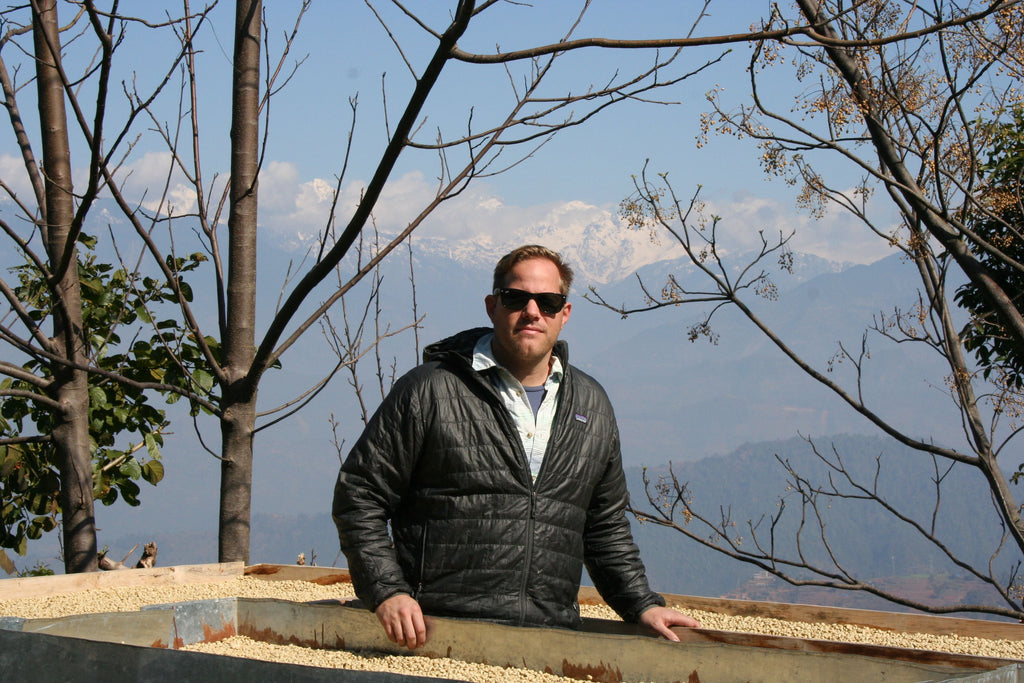
<p><span style="font-weight: 400;"><img src="https://cdn.shopify.com/s/files/1/1578/1589/files/IMG_3749.jpg?v=1605213453" alt="Kevin with Karuthi Manager James "></span></p>
<p><span style="font-weight: 400;">Before the year of 2020 fully revealed itself I had the opportunity to travel to Kenya in late January to visit our friends at the Karuthi Factory but also to explore a new frontier in Kenyan coffee alongside Ben Carlson from Burundi’s Long Miles Coffee Project. </span></p>
<p><span style="font-weight: 400;">Ben and I tend to get excited about similar things. We love new challenges and experiences we can share with others so bringing the Long Miles way to the exciting coffee origin of Kenya is a project I knew Saint Frank needed to be present in with first boots on the ground.  <br></span></p>
<p><span style="font-weight: 400;">After visiting Karuthi in Nyeri we traveled west away from the more established regions around Mount Kenya and ventured into Kericho County of the Rift Valley. A trusted friend had given us direction into this area as we sought out a new emerging region thus far undeveloped and disconnected.</span></p>
<p><span style="font-weight: 400;">Kericho is tea country. Rolling hills of neon green fields capped with Eucalyptus trees reminiscent of traveling through Burgundy of France while being a world apart in it’s unique African charm. Corporate tea culture, cold temperatures and high winds at soaring elevations above 2,200 meters have historically deterred coffee production as being unsuitable for the scale of production required to match that of the world’s largest commodity tea plantation.  <br></span></p>
<p><span style="font-weight: 400;"><img src="https://cdn.shopify.com/s/files/1/1578/1589/files/Screen_Shot_2020-11-12_at_12.09.02_PM.png?v=1605212391" alt="Kericho Tea Fields"></span></p>
<p><span style="font-weight: 400;">But our source was on to something because at such high elevations there is enough warming wind patterns from Lake Victoria that create a stunning microclimate for extraordinary specialty coffee. We met with the elders of a community and coffee cooperative whose recent efforts to capture their terroir with better practices have yielded stunning results.  But the stature of Kericho’s tea culture isn’t the only controlling narrative that has held Rift Valley coffee captive.</span></p>
<p><span style="font-weight: 400;">The wise and honorable leaders of this coffee cooperative shared with us their hope for the future of specialty coffee to bring change and opportunity to their region and their communities.  They also gave us insight into the cultural and political challenges they face preventing them from breaking through barriers of fear and stigma.  This region is the most ethnically diverse in all of Kenya reflecting the richness of the Rift Valley in its representation of the different tribes and ethnic groups of Kenya.  <br></span></p>
<p><span style="font-weight: 400;">But riches of diversity are also often confronted with the dark side of humanity in those forces of culture and identity vulnerable in their capacity toward expressions of conflict and division. <br></span></p>
<p><span style="font-weight: 400;">In the 2007 election crisis of Kenya this region was the center of tragic violence between some of these ethnic groups as opposing candidates and parties played on differences for their own ends inciting conflict and violence.  The history of similar tragedies in previous elections have led many to avoid the region and withhold engagement and investments thereby leaving the beauty of their diversity and terroir to be looked over and avoided rather than celebrated and developed in its unique expression.  <br></span></p>
<p><span style="font-weight: 400;">As we sat and broke bread with these humble and passionate leaders I was compelled by their sincerity and their resilience.  We were not among a broken and dangerous people who were not worth the efforts, investments, and risks as we would later be told by European executives.  We were among wise and determined leaders who represented the hopes and future of this extraordinary place.  <br></span></p>
<p><span style="font-weight: 400;">The next day they would lead us to experience the terroir of their hills and fields for extraordinary coffee.  We visited an old monastery once full of life, production, and energy. . . energy you could still feel had not left the land or this place.  Hiking through fields of potential and up a wooded creek we topped out at the home of a forest keeper whose family seems to have lived at the edge of the protected forest for decades, indeed they had.  They spoke of the old monks who had left long ago with affection and reverence remembering the quiet bustle and life energy of the farming that once covered the land including the various neighbors of different tribes in their work. <br></span></p>
<p><span style="font-weight: 400;"><img src="https://cdn.shopify.com/s/files/1/1578/1589/files/IMG_4013.jpg?v=1605212554" alt=""></span></p>
<p><span style="font-weight: 400;">You could feel a still flickering hope and memory that touches what could become new. <br></span></p>
<p><span style="font-weight: 400;">We later met with the European executives who had arranged a Kenyan agronomist to travel and consult for us on the potential for quality in the region.  They gave us their own personal feedback that this region was not worth the effort and that we should find an easier path as their Kenyan agronomist sat silent.  To say the meeting was a discouragement is an understatement but their logic was not about quality and potential in the coffee but an indictment of the people.  <br></span></p>
<p><span style="font-weight: 400;">But that discouraging meeting could not extinguish and diminish what we saw and what the agronomist saw in his full and enthusiastic support throughout our journey.  He later called Ben and with passionate conviction said, “do not listen to these small men” as he pledged his full support and confidence in this project.  He could see it.  We could see it.  <br></span></p>
<p><span style="font-weight: 400;">After returning to Nairobi I visited our inspiring Kenya exporting partners at KCCE (Kenya Cooperative Coffee Exporters) with a full heart and imagination.  I had come to taste the 2020 harvest of our partners at the Karuthi Factory after having visited there on the way to Kericho.  </span></p>
<p><span style="font-weight: 400;">But I had come all the way to Kenya and Phyllis wanted me to taste more than just the Karuthi harvest outturns.  <br></span></p>
<p><span style="font-weight: 400;"><img src="https://cdn.shopify.com/s/files/1/1578/1589/files/IMG_7939.jpg?v=1605212659" alt=""></span></p>
<p><span style="font-weight: 400;">Two coffees stunned me on those tables with the familiar excotic tastes of what we have come to know in the classic profiles from the slopes of Mount Kenya but these had something else that was altogether new.  There was a more elegant harmony with beguiling aromatics of dark floral and cocktail bitters I had never experienced before.</span></p>
<p><span style="font-weight: 400;">I had to know where these coffees were grown, I was so curious!</span></p>
<p><span style="font-weight: 400;">“Ahh, did you like them? Good!” Phyllis added, “These are new coffees from Kipkelion and today is our first time tasting them after our suggested improvements in Kericho County.  This is a new region for many people but we believe they have good potential.”  I was speechless.  What a moment, what affirmation, what confirmation! <br></span></p>
<p><span style="font-weight: 400;">This year along with our Karuthi we are offering two new coffees from Kericho County and the Kimologit Farmers Cooperative Society: Kapluso and Siret. Consider these a foretaste of the incredible coffee and unfolding story that is already revealing itself in the Rift Valley.  <br></span></p>
<p><span style="font-weight: 400;">This year has been full of anxiety and tension.  We have all been made aware of competing narratives and the cultural political forces at work behind them.  But as powerful as they are all of it is part of our journey and in the midst of fear and confusion there is hope.  </span></p>
<p><span style="font-weight: 400;">There is an extraordinary world among us and in us we can’t always see.  There is an everyday extraordinary world in a beautiful cup of coffee that sometimes is an affirming comfort and sometimes is a surprising window that confirms something new.  <br></span></p>]]>
    </content>
  </entry>
  <entry>
    <id>https://www.saintfrankcoffee.com/blogs/blog/contagion-of-hope-pandemic-reflections-from-coffee-villages</id>
    <published>2020-04-10T18:18:00-07:00</published>
    <updated>2020-04-10T18:20:52-07:00</updated>
    <link rel="alternate" type="text/html" href="https://www.saintfrankcoffee.com/blogs/blog/contagion-of-hope-pandemic-reflections-from-coffee-villages"/>
    <title>Contagion of Hope: COVID19 Reflections from Honduras</title>
    <author>
      <name>Kevin Bohlin</name>
    </author>
    <content type="html">
      <![CDATA[<p><span style="font-weight: 400;">How do we gather the courage to carry on when fear and loss are felt all around us?  How do we take hold of hope and faith in the future when everything is falling apart and we’ve lost all sense of control and security?  <br></span></p>
<p><span style="font-weight: 400;">These are questions facing us everyday during this pandemic in which we have all heard the phrases “unprecedented times” and “uncertain times” over and over again.  This is certainly a grave new experience our generation has not encountered. But the threat of loss and lack of control are not “unprecedented” or “uncertain” for us.  <br></span></p>
<p><span style="font-weight: 400;">These challenges have always been with us. We need to reach out to find inspiration and faith that “everything falling apart” has never meant that all hope is lost.  In the 12th century, Saint Francis reached out to the poor and the sick, people who had the least to lose in his society. By connecting and identifying with them he found a freedom he had never imagined and became one of the most inspiring and fearless persons to ever walk the earth. <br></span></p>
<p><span style="font-weight: 400;">At Saint Frank, we are always striving to connect with and identify with our producer partners in remote coffee- growing villages throughout the world, in part to keep that inspiration and freedom alive.</span></p>
<br>
<p><b>A Conversation with Benjamin Paz</b></p>
<p><span style="font-weight: 400;">This week, our fourth of the San Francisco Shelter-in-Place, I spoke with Benjamin Paz on Instagram Live to discuss the impact of the Coronavirus pandemic on our partners and the coffee supply stream in Honduras.  Benjamin is a long time friend of mine and Saint Frank, working with his family’s coffee exporting business in Honduras called Beneficio San Vicente. Benjamin works in virtually every capacity there, but his main work is supporting the individual producers for specialty coffee preparation and acting as a relational connector and mediator between producers and buyers whether they be small roasters or importers.  He also happens to be a producer himself. Saint Frank had the privilege of roasting his very first harvest, and we continues to offer that original planting every year. You can learn more about Benjamin and Honduras </span><a href="https://www.saintfrankcoffee.com/pages/honduras" title="Central America Sourcing"><b>here</b></a><span style="font-weight: 400;"></span><span style="font-weight: 400;">.</span></p>
<br>
<p><b>Coffee Growing Communities </b></p>
<p><span style="font-weight: 400;">Benjamin shared that COVID-19 has now made its way into one of the larger municipalities below in the foothills of Santa Barbara Mountain where the majority of our Honduras coffees are grown.  Some of the mountain villages like El Cedral where our </span><a href="https://www.saintfrankcoffee.com/products/honduras-las-nieves?_pos=3&amp;_sid=8eb75859d&amp;_ss=r"><b>Las Nieves </b></a><span style="font-weight: 400;">is grown have blocked their own mountain roads to literally shelter their community in place.  Coffee farmers and communities in Honduras are experiencing the same fears and navigating the same crisis as we are, in a totally different context.  <br></span></p>
<p style="text-align: left;"><span style="font-weight: 400;"><img alt="" src="//cdn.shopify.com/s/files/1/1578/1589/files/15eb0941-cd5b-491c-8b21-3ad3957542e4_1024x1024.JPG?v=1586565771" style="float: none;"></span></p>
<p><span style="font-weight: 400;">Movement in the towns is limited to alternating segments of the population by ID number. These restrictions during the peak of their harvest can be devastating for larger farms dependent on workers who cannot travel while all producers are limited in access to banks and resources.  In these more isolated places, local communities are organizing to self-regulate and deliver food to those in need. Our own communications with some of our producers like Milton Castellon and David Lopez reveal a serious but motivated spirit among these close-knit communities that inspires us and motivates us together as a cross-cultural family and community.    </span></p>
<br>
<p><b>Specialty Coffee Vulnerability</b></p>
<p><span style="font-weight: 400;">The shut-downs and government orders here in the United States and other places where specialty coffee companies typically thrive are now threatening the livelihoods and economies of producers.  As many coffee businesses have either been forced or chosen to close their doors during the pandemic, their roasting production has suffered dramatically, having a dangerous impact on the specialty coffee supply stream.  <br></span></p>
<p><span style="font-weight: 400;">Many of Benjamin’s international customers are reducing their commitments or suspending their green coffee buying as their own sales suffer and the familiar fears of uncertainty naturally lead to conservation. This leads San Vicente into the uncertainty of where to sell these coffees and specialty producers to be concerned that after an entire year of preparation for their annual harvest they may have no buyer for their coffee.  Specialty coffee production requires more investment and care to produce exceptional coffees that speak of the place where they were grown. The cost of that production is higher than the prices paid for conventional coffee in the commodity market,: the very market that is thriving in grocery stores throughout the world right now. For more on the specialty market in relation to conventional or commodity coffee </span><a href="https://www.saintfrankcoffee.com/blogs/blog/relational-coffee-sourcing-part-1-commodities-and-direct-trade" title="sourcing blog: commodities and direct trade"><b>read here</b></a><span style="font-weight: 400;">.</span></p>
<p><span style="font-weight: 400;">For some producers like Benjamin, the 2020 harvest had already presented challenges with strange ripening patterns and defects.  The farm I mentioned earlier is predicted to already lose 40% of its production to defects which will result later in limited supplies of Benjamin’s next Laguneta coffee release at Saint Frank but more notably a significant loss in revenue for Benjamin.  Coffee is agriculture before anything else and as such has always been subject to weather and environmental forces that cannot be controlled. Adding the abiding challenges of agriculture to a global virus pandemic with its own physical, social and economic fallout is </span><span style="font-weight: 400;">potentially </span><span style="font-weight: 400;">far worse than the fears we face.  There is no economic bail-out or small business stimulus for coffee farmers.  There is no unemployment benefit fund, only the land and the community of people around them.  What amazes me and Benjamin is that they have not lost their spirit or their hope.  </span></p>
<br>
<p><b>Hope is Contagious</b></p>
<p><span style="font-weight: 400;">During our conversation I took some questions from our viewers. Ben Carlson, founder of <a href="https://www.longmilescoffeeproject.com/" title="Long Miles Coffee Project">Long Miles Coffee Project</a> in Burundi, asked Benjamin to share anything inspiring or hopeful he has seen or experienced during this time.  The first thing that Benjamin shared demonstrated exactly the kind of character that drew me to him in the beginning of our friendship and what drives our partnership today.  <br></span></p>
<p><span style="font-weight: 400;">Benjamin said that every day he received messages and calls from the producers on the mountain, sharing what they are doing and how they are picking and processing their coffees as their villages are blocked in and the threat of the pandemic is very real.  They continue to push forward and refuse to give up. Their enthusiasm for excellence and progress has not been diminished, and their hope and determination to produce world- quality coffee has not been extinguished- even though they are more vulnerable than ever.  This is true inspiration from people who have far less than we do in terms of wealth and supportive political and economic infrastructure. These are the kinds of interactions and identifications that moved Francis of Assisi to inspire a movement and life of freedom the like of which the world had never seen.  <br></span></p>
<p style="text-align: left;"><span style="font-weight: 400;"><img alt="" src="//cdn.shopify.com/s/files/1/1578/1589/files/IMG_2888_1024x1024.JPG?v=1586567717" style="float: none;"></span></p>
<p><span style="font-weight: 400;">As Benjamin was speaking, Julia Mayer of <a href="https://www.dunecoffee.com/" title="Dune Coffee Roasters">Dune Coffee Roasters</a> commented, “Hope is Contagious!”  A powerful statement with much-needed wisdom for our time. Fear of loss and scarcity is as contagious as COVID-19 and can infect our entire emotional and mental system, just as the virus can infect and break down the very respiratory system that breathes life into our bodies.  Fear can break us down and isolate us into a mental and emotional prison far worse than a physical quarantine.  <br></span></p>
<p><span style="font-weight: 400;">When I noted Julia’s insightful comment to Benjamin he immediately replied that seeing the innovative efforts and relational work of teams like Dune Coffee and Saint Frank to serve their community further inspires him and San Vicente to support the producers and keep the work moving in any way possible however limited and disrupted.  <br></span></p>
<br>
<p><b>Contagions of Faith and Resilience <br></b></p>
<p><span style="font-weight: 400;">We need a contagion of hope to counter fear and isolation.  We need a contagion of innovation and resilience, however grand or minor the steps, to keep the oxygen flowing into our lungs and filling our minds and bodies with life.  Every story and moment of hope from real people and real places with which we have direct or indirect relations will build the contagion we need to combat the biological coronavirus and the social and emotional virus of fear and scarcity.  <br></span></p>
<p><span style="font-weight: 400;">As we saw the early symptoms of the pandemic in San Francisco we began adapting our service and distribution well before the first United States shelter-in-place went into effect.  Our connection to our producers, our team, and our customers kept moving and innovating in a lean and flexible mentality that I believe is inspired by the kind of life and community we want to lead, the kind I want to believe in, modeled by Saint Francis and his followers. They pursued humility and love while they curiously admired the benefits of poverty when having nothing to lose made you able to live freely for others, always having everything to gain.  <br></span></p>
<p><span style="font-weight: 400;">Like them, we can reach out to others like Benjamin and Julia and lean into the hope and faith that we </span><i><span style="font-weight: 400;">can</span></i><span style="font-weight: 400;"> pass through valleys of shadow and death.  Waiting and looking back toward times that were “normal” will not build our faith unless we are looking back to stories of change and renewal through trial.</span></p>
<p><span style="font-weight: 400;">Our producer friends like Benjamin and Beneficio San Vicente can lead us from their position of vulnerability to not lose hope and believe that we can respond to any challenge that confronts us.  Julia and Dune Coffee’s resilience can inspire us to believe that we can pivot and adapt with hope that our fate is not only doom and gloom but there is hope for whatever is revealed on the other side.  No, things will not be the same and that is okay.  <br></span></p>
<p><span style="font-weight: 400;">How we respond and the capacity we expand or ignore within us for hope and faith during a trial like this will either grow us or diminish us.  We are choosing to walk through this valley fearing no evil come what may.  <br></span></p>
<p><span style="font-weight: 400;">Every time we brew or enjoy a coffee from these inspiring producers we are connected to them and take courage to keep moving and we invite you into these stories with us.  There have been so many chapters within our own story shared with our partners that have expanded that hope capacity and even now we see it and feel it real time. I’m looking forward to sharing these stories inviting us all to spread the contagion of hope throughout the world together.  <br></span></p>]]>
    </content>
  </entry>
  <entry>
    <id>https://www.saintfrankcoffee.com/blogs/blog/nepal-rare-coffee-from-a-pioneering-origin</id>
    <published>2020-01-13T17:53:00-08:00</published>
    <updated>2020-01-13T17:56:46-08:00</updated>
    <link rel="alternate" type="text/html" href="https://www.saintfrankcoffee.com/blogs/blog/nepal-rare-coffee-from-a-pioneering-origin"/>
    <title>Nepal: Rare Coffee from a Pioneering Origin</title>
    <author>
      <name>Kevin Bohlin</name>
    </author>
    <summary type="html">
      <![CDATA[<p><em>﻿﻿<span style="font-family: lora,georgia,times new roman,serif;">7</span><strong><span style="font-family: lora,georgia,times new roman,serif;"> Minute Read</span></strong></em></p>
<p><em><strong></strong></em><span style="font-weight: 400;">Most of us have likely never heard of coffee from Nepal much less ever considered it might be delicious and worth seeking out.  Even the most adventurous and accomplished green coffee buyers and roasters react with an almost automated suspicion and skepticism when I tell them I have been seeking out specialty coffee in the remote Himalaya of South Asia.  Rarely ones to run from a challenge, in fact at Saint Frank we often run straight for them if there is a new discovery of terroir and flavor to be found and a new story of redemption and hope to be shared.</span></p><p><a class="read-more" href="https://www.saintfrankcoffee.com/blogs/blog/nepal-rare-coffee-from-a-pioneering-origin">More</a></p>]]>
    </summary>
    <content type="html">
      <![CDATA[<p><em><strong></strong></em><span style="font-weight: 400;">Most of us have likely never heard of coffee from Nepal much less ever considered it might be delicious and worth seeking out.  Even the most adventurous and accomplished green coffee buyers and roasters react with an almost automated suspicion and skepticism when I tell them I have been seeking out specialty coffee in the remote Himalaya of South Asia.  Rarely ones to run from a challenge, in fact at Saint Frank we often run straight for them if there is a new discovery of terroir and flavor to be found and a new story of redemption and hope to be shared.</span></p>
<p><span style="font-weight: 400;">We are thrilled to present the finest coffees from Nepal that tell a compelling story of both optimistic hope in action amidst a stark reality of challenges that are as daunting and seemingly insurmountable as the towering mountains above these pioneering farms.   Still, we have found the hallmark acidities and clean sweetness we love about fine specialty coffee but with wildly unique floral, herbal, and tea-like flavors wrapped in a mouth filling texture fitting such a wild, expansive and unique terroir.</span></p>
<p><span style="font-weight: 400;"> <img src="//cdn.shopify.com/s/files/1/1578/1589/files/kevin_parchment_lekali_1024x1024.jpeg?v=1578862815" alt=""></span></p>
<p><b>The Journey to Nepal</b></p>
<p><span style="font-weight: 400;">Our journey in Nepal began much like some of our other unlikely origins and relationships: a simple meeting or connection with a compelling opportunity to be a part of something extraordinary against great odds for success and a readiness and willingness to believe that there is a path forward and that there are communities prepared, if yet undiscovered, to work together toward something special in coffee and in community. </span></p>
<p><span style="font-weight: 400;">In the summer of 2017 I met an extraordinary man named Dhan Raj Ghimire while he was visiting San Francisco from Nepal.  I learned about his family’s story working directly with victims of human trafficking and extreme poverty in Kathmandu where he planned to open a coffee shop both to fund their programs but also a part of their job-training program for the young women survivors.  </span></p>
<p><span style="font-weight: 400;">Saint Frank had already been working in Northern Thailand toward developing higher quality exportable specialty coffees as a connecting and empowering method to challenge exploitive trafficking in the Golden Triangle.  This passion and opportunity took little more than a brief inquiry into the short history of Nepali coffee production and one promising sample to bring me to Kathmandu after visiting Thailand.</span></p>
<p><span style="font-weight: 400;"><img src="//cdn.shopify.com/s/files/1/1578/1589/files/Karuna_Coffee_1024x1024.jpeg?v=1578863407" alt=""></span></p>
<p><span style="font-weight: 400;">I knew I could help with the coffee shop but it was the holistic approach to business and impact that drew me into Nepal where I believe coffee can be the connecting and life-giving movement from the mountains into the city of Kathmandu and even into our own homes as we bring these special coffees to Saint Frank, our partners, and our communities. </span></p>
<p><b>First Impressions of Nepali Coffee</b></p>
<p><span style="font-weight: 400;">Nepal is a country proud to have never been successfully colonized by Europeans but struggles as a landlocked country between India and the world’s highest mountains.  On one side is a natural land barrier of massive proportions and on the other a national barrier with political challenges and exploitations of equally sizeable proportions.  This is one of the least developed and most disconnected places in the world and my experiences over several trips to this point have certainly verified that stark reality. </span></p>
<p><b> <img src="//cdn.shopify.com/s/files/1/1578/1589/files/IMG_3142_1024x1024.JPG?v=1578862984" alt=""></b></p>
<p><span style="font-weight: 400;">In the fall of 2017 Dhan Raj first took me into his home in Kathmandu and then into a foothill network of villages including one called Gati where he had organized the building of temporary housing after the catastrophic 2015 earthquake.  In the wake of that tragedy among this group of remote and vulnerable villages alone nearly 40 children were taken by traffickers down to India where their ethnicity is in high demand among the sex trade. If growing and marketing specialty coffee can empower these communities with dignity and connectedness thwarting such predators then no challenge is too great to prevent such horrifying tragedies. </span></p>
<p><span style="font-weight: 400;">While Gati did indeed have some coffee plants among ganja plants, they resembled nothing yet of coffee farming.  The community had little knowledge and support for growing coffee without the benefit of generations of international coffee market experience and so the lack of organization and even basic agronomy we discovered was not surprising.  The coffee plants were from excellent varietal descent but were in poor condition and the poor processing methods were compounding the problem. It would only be sensible to be discouraged and assume that what is now is what will always be – the same mentality that keeps the poor and the oppressed trapped and bound in their own minds and circumstances.  But we know that high quality specialty coffees are out there, nearly all of which have yet to be discovered and nurtured and we know that education and connection can be the difference toward coffee born empowerment and transformation.</span></p>
<p><b>Lekali Estate and the Hope of Nepali Coffee</b></p>
<p><span style="font-weight: 400;">Over the next year we quickly grew our network of connections to the handful of more advanced coffee producers and professionals from different generations yielding both encouraging and discouraging perspectives at times.  But it was the unlikely connection through Jennifer Lan, a native Californian selflessly dedicating herself to the potential of Nepali coffee, that introduced us to our now most important relationship for quality Nepali coffee already shining but even more in the hope of what is yet to come.</span></p>
<p><span style="font-weight: 400;"><img src="//cdn.shopify.com/s/files/1/1578/1589/files/lekali_roast_lab_1024x1024.jpeg?v=1578863059" alt=""></span></p>
<p><span style="font-weight: 400;">In the spring of 2019 we met up with Nima Tenzing Sherpa where I was thrilled to discover an impressive roasting operation and cupping lab next to a small but clean and organized milling operation.  Nima’s grandfather was a Sherpa on the expedition that first summited Mount Everest in 1953 and Nima’s father Mingma Dorji Sherpa founded a successful trekking business, as well as the coffee farm Lekali Esate from which he envisioned an inspirational job and industry stimulating operation.  It was this vision in the coffee of Lekali Estate that inspired his son and friend of Saint Frank, Nima Tenzing Sherpa, to dedicate himself to the finest specialty coffees not just for the Lekali Estate but for all of Nepal. <br></span></p>
<p><span style="font-weight: 400;">On the mountain drive into the Nuwakot region to visit Lekali Estate it didn’t take long to determine that Tenzing was a kindred spirit resonating with a shared passion for connection and meaning in coffee that empowers and elevates otherwise unrecognized and supported peoples and terroirs.  To my surprise Nima knew of Saint Frank being quite active from afar following the global specialty coffee community in which some his heroes like Tim Wendelboe in Norway and Long Miles Coffee Project in Burundi are friends and peers of ours. What a joy to welcome him into this community through genuine friendship and partnership!</span></p>
<p><span style="font-weight: 400;"><img src="//cdn.shopify.com/s/files/1/1578/1589/files/Lekali_Farm_1024x1024.jpeg?v=1578863138" alt=""></span></p>
<p><span style="font-weight: 400;">At the 10 Hectare Lekali Estate the terrain rises steeply from 1300m to 1600m on a narrow but long portion of a coffee developed slope shared with two other farms that followed Lekali’s lead.  Typica and Caturra trees on clay and sand based soils produce dense and complex coffees cultivated under the studious and watchful care of Nima and Bhatta Jee, Lekali’s farm manager. A dedicated and experienced team of women handle the meticulous washed processing for vibrant and impeccably clean coffees while naturals are dried carefully and evenly for enhanced body and fruit sweetness over the structured and elegant frame of the Lekali terroir flavors. <br></span></p>
<p><span style="font-weight: 400;"><img src="//cdn.shopify.com/s/files/1/1578/1589/files/Kevin_Tenzing_Naturals_Flags_1024x1024.jpeg?v=1578863507" alt=""></span></p>
<p><span style="font-weight: 400;">Tenzing is constantly improving and evolving in his practices pursuing greater quality and sustainability in an infant coffee region where most producers are completely disconnected from the incredible example found in Lekali.  Sadly many of these producers do not yet possess the incentive to adapt even if given the opportunity and knowledge that Tenzing preaches as a kind of prophet or evangelist for the gospel of specialty coffee in its inherent beauty as well as its transformative world changing power.  Tenzing is already working tirelessly among multiple communities in the “Coffee Practice Project” in places like Taplejung and Lamjung where he is training and introducing new coffee producers to specialty coffee production methods. We were fortunate to source and offer one of these coffees in the 2019 season from the Gurung people in Lamjung through Tenzing alongside his own coffees at Lekali and we are inspired to grow in these relationships to support the development of these communities and coffees. </span></p>
<p><b>Bridging First Impressions with the Hope for Nepali Coffee</b></p>
<p><span style="font-weight: 400;">This work is perfectly in step with the heart and vision of Dhan Raj Ghimire in the expansive and empowering work to care for the poor and to prevent and end the trafficking of these communities through his NGO “Karuna Care” and his new coffee shop “Karuna Coffee” (karuna means “compassion” in Nepali).  In fact we are working toward a project in which we will lead the planting of new coffee in the Gati group of villages we visited in the beginning to develop a new coffee growing and processing operation of the highest level in the Marming Village where Dhan Raj had just recently begin the building a new school. </span></p>
<p><span style="font-weight: 400;"> <img src="//cdn.shopify.com/s/files/1/1578/1589/files/IMG_2340_1024x1024.JPG?v=1578864096" alt=""></span></p>
<p><span style="font-weight: 400;">While Saint Frank has partnered with many emerging producers in pioneering regions throughout the world, this long term expansive and inclusive project we hope will be the next turn in the evolution of our constantly articulating vision to inspire joy, connection, and meaning in coffee through relationships not only from seed to cup but from dream to fruition. </span></p>
<p><span style="font-weight: 400;"> </span></p>
<p><span style="font-weight: 400;">Peace,</span></p>
<p><span style="font-weight: 400;">Kevin Bohlin<br></span></p>
<p><span style="font-weight: 400;">Saint Frank Founder</span></p>]]>
    </content>
  </entry>
  <entry>
    <id>https://www.saintfrankcoffee.com/blogs/blog/babettes-feast-a-culinary-and-coffee-inspiration</id>
    <published>2019-12-13T08:06:00-08:00</published>
    <updated>2020-01-13T17:59:27-08:00</updated>
    <link rel="alternate" type="text/html" href="https://www.saintfrankcoffee.com/blogs/blog/babettes-feast-a-culinary-and-coffee-inspiration"/>
    <title>Babette&apos;s Feast: A Classic Culinary and Coffee Inspiration</title>
    <author>
      <name>Kevin Bohlin</name>
    </author>
    <summary type="html">
      <![CDATA[<p><em>﻿﻿<span style="font-family: lora,georgia,times new roman,serif;">6</span><strong><span style="font-family: lora,georgia,times new roman,serif;"> Minute Read</span></strong></em></p>
<p><span style="font-weight: 400;">If you’ve ever visited our Mission Street Roastery you can’t help but notice a beautiful installation created by lettering artist and designer </span><a href="http://www.tanamachistudio.com/"><span style="font-weight: 400;">Dana Tanamachi</span></a><span style="font-weight: 400;">. This painting illustrates the Isak Dinesen story </span><a href="https://www.amazon.com/Anecdotes-Destiny-Ehrengard-Isak-Dinesen/dp/0679743332/ref=sr_1_4?crid=18W3XM4LVVL9K&amp;keywords=babettes+feast&amp;qid=1576004167&amp;s=books&amp;sprefix=babettes+%2Cmovies-tv%2C202&amp;sr=1-4"><i><span style="font-weight: 400;">Babettes Feast</span></i></a><i><span style="font-weight: 400;">,</span></i><span style="font-weight: 400;"> also an Academy Award winning </span><a href="https://www.amazon.com/Babettes-Feast-St%C3%A9phane-Audran/dp/B000053VBK"><span style="font-weight: 400;">film</span></a><span style="font-weight: 400;"> directed by Gabriel Axel.  This story is perfect for the holidays - set in a Danish winter with an elaborate feast shared among family and friends.  </span></p><p><a class="read-more" href="https://www.saintfrankcoffee.com/blogs/blog/babettes-feast-a-culinary-and-coffee-inspiration">More</a></p>]]>
    </summary>
    <content type="html">
      <![CDATA[<p><span style="font-weight: 400;">If you’ve ever visited our Mission Street Roastery you can’t help but notice a beautiful installation created by lettering artist and designer </span><a href="http://www.tanamachistudio.com/"><span style="font-weight: 400;">Dana Tanamachi</span></a><span style="font-weight: 400;">. This painting illustrates the Isak Dinesen story </span><a href="https://www.amazon.com/Anecdotes-Destiny-Ehrengard-Isak-Dinesen/dp/0679743332/ref=sr_1_4?crid=18W3XM4LVVL9K&amp;keywords=babettes+feast&amp;qid=1576004167&amp;s=books&amp;sprefix=babettes+%2Cmovies-tv%2C202&amp;sr=1-4"><i><span style="font-weight: 400;">Babettes Feast</span></i></a><i><span style="font-weight: 400;">,</span></i><span style="font-weight: 400;"> also an Academy Award winning </span><a href="https://www.amazon.com/Babettes-Feast-St%C3%A9phane-Audran/dp/B000053VBK"><span style="font-weight: 400;">film</span></a><span style="font-weight: 400;"> directed by Gabriel Axel.  This story is perfect for the holidays - set in a Danish winter with an elaborate feast shared among family and friends.  </span></p>
<p style="text-align: center;"><img src="//cdn.shopify.com/s/files/1/1578/1589/files/IMG_7569_1024x1024.JPG?v=1576198842" alt=""></p>
<p><span style="font-weight: 400;">Dana and I share a love for this story and agreed it be the perfect inspiration for the opening of our first roastery in 2017.  For the past few years I have hosted our team around the Saint Frank birthday to watch the film and share an inspired meal together featuring dishes and wines poured from the film’s namesake feast.  We begin to watch the film part way through our meal stopping to pour special wines and serve dessert while reflecting on its rich themes about the potential of hospitality, art, and service to be vehicles for transformation and redemption. </span></p>
 
<p style="text-align: center;"><b>The Story </b></p>
<p><span style="font-weight: 400;">In short, <em>Babette's Feast</em> tells the story of an aging rural religious community in Denmark that once received a desperate French refugee named Babette who becomes a beguiling and beneficial member to the community.  After twelve years she wins the lottery and asks that she be able to serve a French meal for the ascetic and rather drab community. None of which are prepared to appreciate what Babette prepares and yet cannot help but be impacted and transformed despite their best efforts of resistance.  <br></span></p>
<p><span style="font-weight: 400;">As the marvelous ingredients begin to arrive the religious sisters who took in Babette from the beginning begin to fear the direction this dinner will go.  In addition to imported crates of produce, chirping quails, and a live turtle, they spy a case of what appears to be wine and object to Babette shocked at seeing what they believe to be wine in their home.  Babette’s response is priceless.</span></p>
<p style="padding-left: 30px;"><b>“Wine, Madame! No, Madame. It is a Clos Vougeot 1846!” <br></b></p>
<p><span style="font-weight: 400;">We often say that coffee is never “just coffee.”  While our culture developed a commoditized and homogenized attitude toward coffee over the twentieth century, the true identity behind specialty coffee is not latte art and coffee shops but the identification of coffees with terroir - the taste of a specific place.  <br></span></p>
<p><span style="font-weight: 400;">While it is true that the bottles Babette held were indeed wine, the truth is that they were so much more than just wine - it was in fact it was the most storied and noble wine in the world!  Clos Vougeot is a famous walled vineyard identified and developed by Cistercian monks in 1,100 A.D. for its uniqueness and exceptional quality.  This attention to detail and particularity was the beginning of the concept of terroir in Burgundy where there are now over 1,200 recognized “climats” of terroir of which Clos Vougeot is considered the first.  Our approach to coffee at Saint Frank follows in these ancient footsteps.  </span></p>
<p><span style="font-weight: 400;"><img src="//cdn.shopify.com/s/files/1/1578/1589/files/clos_vougeot_1024x1024.jpg?v=1576199728" alt=""></span></p>
<p> <span style="font-weight: 400;">When purchasing and enjoying our coffees you can be sure that we have visited every site where that coffee was grown diving deeper into understanding why it tastes the way it does.  We commit to the producers investing in their potential as growers and the potential of the land to produce remarkable and individual coffees. We have the privilege to learn and experience these coffees year over year deepening our understanding and history as we progress.  Being so involved we could never again treat our coffees as just coffee, experiencing and knowing all of the skill and work that went into each harvest, all of the conditions that create such exceptional and unique flavors.  </span><span style="font-weight: 400;">No Madame, this is not coffee.</span></p>
<p><span style="font-weight: 400;"><img src="//cdn.shopify.com/s/files/1/1578/1589/files/IMG_5340_1024x1024.JPG?v=1576200884" alt=""></span></p>
<p style="padding-left: 30px;"><b>“She had appeared to be a beggar; she turned out to be a conqueror.”</b></p>
<p><span style="font-weight: 400;">The narrator introduces Babette this from the beginning of the story and of course guides us to reveal just what she means.  At this point our passion for the stories and communities behind our coffees should be clear but this is a guiding theme that impacts our approach to service as well.  Things are never merely as they seem, Babette turns out to be much more than a beggar and a refugee. . . I’ll try my best not to spoil the ending for those of you unfamiliar!  Everyone has a story just like the Clos Vougeot 1846 has a story and each of our coffees has a story whether the Don Guayo from Eduardo Gomez in Anitigua, Guatemala or the Las Nieves from Milton Castellon in Santa Barbara, Honduras.  Their stories add meaning and humanity to these coffees that goes far deeper than flavor alone.  <br></span></p>
<p><span style="font-weight: 400;">But each one of us at Saint Frank has a story as well, just as each one of our guests.  While we unapologetically praise our coffees are more than “just coffee” it is precisely our commitment to the humanity of the coffee supply stream and experience that prevents us from devolving into pretension and arrogance.   Coffee should create connection and enjoyment not dismiss and divide. Everyone has a story, everyone matters. <br></span></p>
<p><span style="font-weight: 400;"><img src="//cdn.shopify.com/s/files/1/1578/1589/files/IMG_4021_2_1024x1024.JPG?v=1576202714" alt=""></span></p>
<p><span style="font-weight: 400;">The first part of </span><i><span style="font-weight: 400;">Babette’s Feast</span></i><span style="font-weight: 400;"> tells the backstory of the two sisters who welcome Babette upon her arrival.  Each story was amusing and meaningful on its own but only later as the story develops do we begin to draw on the powerful connections and meaning that fills the final feast and ending.  None of us can know in a moment the connections and stories of those we encounter but we can choose to believe that we can’t predict how connections and meaning might develop. Our core assumptions and beliefs at Saint Frank are that everything matters and everything is connected.  This faith allows us the freedom to work and serve with the kind of courtesy and generosity that might otherwise appear impossible or fruitless.  <br></span></p>
<p><span style="font-weight: 400;">At the dinner table the group of friends gather to eat Babette’s magnificent feast filled with fear and suspicion, determined to religiously and dutifully block their engagement with the fearful meal and to finish the memorial meal of their beloved pastor in the silent and stoic manner in which they had been brought up.  But the sheer delight of the flavors and lavish and generous service of Babette’s feast slowly loosens their tongues and their minds. Treasured memories are shared, old conflicts and reconciled and cold hearts are melted. Old friends welcome one another into their lives as if for the first time with the seasoning and development of all their history much like the feast - which of course ended with freshly roasted coffee! <br></span></p>
<p style="padding-left: 30px;"><b>“The vain illusions of this earth dissolved before their eyes like smoke, and they had seen the universe as it really is.”</b></p>
<p><span style="font-weight: 400;">The holiday season can be a challenging time as many of us are confronted with tension, conflict, and oftentimes loneliness.  As real as those challenges are they do not define who we are and do not have to lead us unto vain illusions. The universe, as it really is, is full of meaning and connection, even full of hope.  Sometimes it takes a special meal or moment with a delicious cup of coffee to dissolve our fears and open us to the world we are in where everything matters and everything is connected.  </span></p>
<p><span style="font-weight: 400;">These moments are all around us but can be especially powerful around a holiday dinner table or over coffee the next morning.  We'll be there to share that coffee and even inspire you to take than hope and possibility wherever you go.  </span></p>
<p><span style="font-weight: 400;"><img src="//cdn.shopify.com/s/files/1/1578/1589/files/IMG_7567_1024x1024.JPG?v=1576202990" alt=""><br></span></p>]]>
    </content>
  </entry>
  <entry>
    <id>https://www.saintfrankcoffee.com/blogs/blog/coffee-sourcing-part-two-relationships-and-transformation</id>
    <published>2019-09-07T11:00:00-07:00</published>
    <updated>2019-11-19T14:18:56-08:00</updated>
    <link rel="alternate" type="text/html" href="https://www.saintfrankcoffee.com/blogs/blog/coffee-sourcing-part-two-relationships-and-transformation"/>
    <title>Coffee Sourcing Part 2: Relationships and Transformation</title>
    <author>
      <name>Kevin Bohlin</name>
    </author>
    <content type="html">
      <![CDATA[<p><span style="font-weight: 400;">When I first started Saint Frank in an effort to distinguish our approach I described our coffees as “relationally sourced”.  I have previously addressed my thoughts on the term “direct trade” and how at this stage it isn’t specific enough. You can read my discussion here in </span><a href="https://www.saintfrankcoffee.com/blogs/blog/relational-coffee-sourcing-part-1-commodities-and-direct-trade" title="Coffee Sourcing Part 1">Part 1: Commodities and Direct Trade</a>.<span style="font-weight: 400;">  </span><b> “</b><span style="font-weight: 400;">Relationally Sourced” as a description is hoped to convey the spirit or intention with which we  source coffee as well as how we want to serve it.  </span></p>
<br>
<p><b>Relationally Sourced Coffee for the Coffee Lover</b></p>
<p><span style="font-weight: 400;">While working as a barista I would naturally be excited to try new coffees and noticed some of my guests did as well but I clearly noticed the connection some people would form with some coffees, and some offerings were so short-lived that there was no time for a relationship to be formed with a coffee.  </span></p>
<p><span style="font-weight: 400;">Unlike profile-focused blends, terroir and producer-specific coffees in a seasonal program cycle created a natural rhythm for extended connections.  Some of us want several weeks with a coffee, some want several months but its limited production means that there is some lag time in between harvests. In this manner we get to enjoy the familiar return of a memorable offering with new experiences deepened by history.  Some coffees are comforting and easy to be with over a longer time while others are exciting and dynamic without overstaying their welcome. But in every case you can count on having time with a coffee and that it will be back next year. I wanted to promote producers but I also wanted that tasting experience to be a recurring one year over year with new stories and deepened meaning.  <br></span></p>
<p style="text-align: center;"><b>This meant two things: first, we would commit and invest in producers in long term relationships.  Second, we would buy all that a producer grows or enough volume from a cooperative that our guests and community could take time with the coffee and develop the relationship.  <br></b></p>
<p><span style="font-weight: 400;">These kind of commitments and relationships at origin can provide a meaningful and authentic connection in your morning cappuccino that you can trust.  In these relationships we have the most immediate connections for complete trust and transparency. Far from being a romantic story used for marketing, we can enjoy our coffees knowing they are the result of a mutually beneficial collaboration among peers dedicated to mutual well-being and holistic sustainability.  </span></p>
<br>
<p><b>Relationally Sourced Coffee for the Undiscovered Coffee Producer</b></p>
<p><span style="font-weight: 400;">There is something inherently human about rooting for the underdog that seems to fly in the face of Darwinian dominance.  Something in us that loves to see the ascension of the unexpected and overlooked. Every year in the College Basketball Final Four we look for the “Cinderella Story” for which small over matched and overpowered team will be invited to “The Dance” and thrill us all with their great story and upset of powerhouse teams.  <br></span></p>
<p><span style="font-weight: 400;">Of course that metaphor itself comes from the beloved story shared across many cultures of Cinderella, a young exploited woman whose fortune changes experiencing success and recognition after a time of obscurity and neglect.  My experiences connecting with both accomplished and storied producers alongside the Cinderellas stories of coffee led me in a determined direction from the very beginning to seek out producers, terroirs, and communities full of potential but lacking connection.  <br></span></p>
<p style="text-align: center;"><b>Our first questions are never, “</b><b><i>Where is the best coffee? Who are the best producers?</i></b><b>”  Our questions start with, “</b><b><i>Where can there be great coffee? Who can be great producers? Where can our connection and investment influence transformation?</i></b><b>”  </b><span style="font-weight: 400;"><br></span></p>
<p><span style="font-weight: 400;">We don’t select new exciting coffees each year from trending producers, we commit to people and communities where exciting coffees are developed and created.  Places that are largely undesired and avoided for risk, lack of recognition, and costliness are bewilderingly attractive to us for precisely those same reasons.  To us, transformation in challenging circumstances provides the kind of compelling and timeless attraction that offers a deeper satisfaction than the fleeting flavors of fashion.  <br></span></p>
<p><span style="font-weight: 400;"><img src="//cdn.shopify.com/s/files/1/1578/1589/files/BGWM7615_1024x1024.JPG?v=1567797810" alt=""></span></p>
<p><span style="font-weight: 400;">Sometimes this might be as dramatic as traveling the Himalayan foothills to source Nepali coffees from a dedicated Sherpa named Tenzing where coffee can turn the tide of devastating human trafficking.  But sometimes it might mean investing not far from a famous coffee producing mountain in an obscure mountain and village in Honduras where farmers are abandoning coffee and hope. Where the right producer like David Lopez and the right connections can revive a dying farm and struggling community and transform it into a thriving beacon of hope and change.</span></p>
<br>
<p><b>Relationally Sourced Coffee for the Disconnected Coffee Producer<br></b></p>
<p><span style="font-weight: 400;">In cases like these and so many others we can share, the potential was always alive in the land and in the people, they merely needed an invitation to have the chance to show who they could be and how great their coffees can be.  These are the kind of stories we want to believe in are the stories we want to be in, the stories we want to invite you into. <br></span></p>
<p><span style="font-weight: 400;">This invitation isn’t a passive opportunity but an active engagement toward a relationship.  A commitment to see it through and offer support goes a long way in growing the seed of motivation and inspiration.  That’s the other reason we commit to these coffees year after year. We want you to look forward to them and know they will be back next season but we want these producers to know we are coming back, that their investments in their coffees are not a shot and prayer but grounded faith in our demonstrated commitment. Everywhere we have worked we have seen both quality and quantity increases as the commitment and relationship deepens which ultimately means better and more faithful coffee experiences for our guests and community.  <br></span></p>
<p><span style="font-weight: 400;"><img src="//cdn.shopify.com/s/files/1/1578/1589/files/IMG_8496_1024x1024.JPG?v=1567797876" alt=""></span></p>
<br>
<p><b>Relationally Sourced Coffee for the Barista</b></p>
<p><span style="font-weight: 400;">I have been taking baristas with me to visit our producers for several years now inviting them to experience not only “origin” but more significantly the way we work at origin.  To date, ten different baristas have traveled with me to six different countries. Learning about where coffee comes from and experiencing a different culture are incredibly valuable but learning and experiencing within the context of relationships and stories of transformation reaches deeper into who we are and the world we want to become.  Jason Yeo who works at our original coffee bar in Russian Hill recently traveled to Honduras with me earlier in the summer and had this to say reflecting on his time:</span></p>
<br>
<div style="text-align: center;"><b>“My trip to Honduras was an incredible experience and I couldn’t have asked for a more meaningful trip filled with learning.  Some big takeaways were meeting the producers and being able to connect our work with them to the work we do in our cafes. I got to experience the hard work of six plus years of a relationship built between Saint Frank and these producers, which helped me see that we’re not just impacting community in our own city but we are doing that in every community we source coffee from.   Receiving the generosity and hospitality from the producers showed me that the sense of community and connection we have at Saint Frank is not just in our neighborhoods or cities but that it goes beyond all boundaries.” <br></b></div>
<p> <img src="//cdn.shopify.com/s/files/1/1578/1589/files/IMG_5590_2_1024x1024.JPG?v=1567882068" alt=""></p>
<p><span style="font-weight: 400;">Thankfully there are now many other coffee companies out there also engaging in relationship coffee and we are happy to recommend them to you.  But characteristics of Saint Frank that that I believe are distinctive come from our total commitment to relationship coffees across all our offerings and in prioritizing emerging producers and communities.  These commitments position us uniquely to be radically transparent. You can see the beginning stages of our transparency reporting </span><a href="https://www.saintfrankcoffee.com/pages/our-producers" title="Transparency Report">here</a><span style="font-weight: 400;"> and look forward to Part 3 where I will discuss the importance of transparency and its role in changing the landscape of the broken coffee trading system.  </span></p>]]>
    </content>
  </entry>
  <entry>
    <id>https://www.saintfrankcoffee.com/blogs/blog/relational-coffee-sourcing-part-1-commodities-and-direct-trade</id>
    <published>2019-07-01T18:00:00-07:00</published>
    <updated>2024-07-28T11:23:58-07:00</updated>
    <link rel="alternate" type="text/html" href="https://www.saintfrankcoffee.com/blogs/blog/relational-coffee-sourcing-part-1-commodities-and-direct-trade"/>
    <title>Coffee Sourcing Part 1: Commodities and Direct Trade</title>
    <author>
      <name>Kevin Bohlin</name>
    </author>
    <summary type="html">
      <![CDATA[<p>There are so many wonderful things about Specialty Coffee that attract and compel different people for different reasons.  In my experience working as an origin- traveling and sourcing barista and later building a business around relationship-focused coffee sourcing, the most wonderful thing about specialty coffee to me is its ability to see potential realized in real lives and communities.  </p><p><a class="read-more" href="https://www.saintfrankcoffee.com/blogs/blog/relational-coffee-sourcing-part-1-commodities-and-direct-trade">More</a></p>]]>
    </summary>
    <content type="html">
      <![CDATA[<p><span style="font-size: 18px;"><strong><span style="font-family: lora,georgia,times new roman,serif;"><em></em></span></strong></span><span style="font-weight: 400;">There are so many wonderful things about Specialty Coffee that attract and compel different people for different reasons.  In my experience working as an origin- traveling and sourcing barista and later building a business around relationship-focused coffee sourcing, the most wonderful thing about specialty coffee to me is its ability to see potential realized in real lives and communities.  </span></p>
<p> </p>
<p><b>Conventional Coffee vs. Specialty Coffee</b></p>
<p><span style="font-weight: 400;">The conventional or “commodity” coffee market to which most producers worldwide are subject to</span> <span style="font-weight: 400;">is, in my view, an oppressive system for many small producers whose specialty products by no means</span> <span style="font-weight: 400;">fit into any category as a traded commodity.  Specialty Coffee, from its original definition, is specialized as having a quality that marks it as being distinct in its flavor and quality representing the place from which it comes.  A commodity on the other hand is an interchangeable mass-produced unspecialized product in which there is no distinction between parts or regard to who produced them like gold, iron ore, sugar . . . and coffee? Coffee is far closer to wine than wheat or sugar with its ability to reflect terroir just as in the world's most celebrated vineyards of Burgundy.  I fully expect to one day map the farms of Santa Barbara Mountain in Honduras like the Burgundy maps hanging on my wall.<br></span></p>
<p><span style="font-weight: 400;"><img src="//cdn.shopify.com/s/files/1/1578/1589/files/42-36240770_grande.jpg?v=1562026645" alt=""></span></p>
<p><span style="font-weight: 400;">There are different faces to the dichotomy of commodity coffee versus specialty coffee but it is my view that the idea of coffee as a commodity is one in need of abolishing.  Most consumers see specialty coffee as the final crafted product of a higher quality and experience whether in a cafe or in its marketing. But to those of us working within the industry it is one of green (unroasted) quality and trade dynamics.  The value of coffee in a commodity system is completely disconnected from quality, place, or people, the very locus of definition for specialty coffee. <br></span></p>
<p><span style="font-weight: 400;">We do not see see specialty coffees as a boutique version of an otherwise normative commodity.  We see specialty coffee as a window into the redemption of a</span> <span style="font-weight: 400;">broken and oppressive system in which personal and corporate distance places convenience and profit in front of dignity and humanity.  <br></span></p>
<p><span style="font-weight: 400;">What if these producers were connected downstream and their coffee was traded in accordance with their quality and human dignity?  What if growers only needed a chance and an opportunity to raise their vision of what their coffee could be, who they could be?  <br></span></p>
<p><span style="font-weight: 400;">In the beginning, my goal for Saint Frank was to connect and source our own coffees through committed and sustainable relationships with small scale and motivated but disconnected growers by working with like-minded exporters I knew and trusted.   For one small coffee shop this seems naive and ambitious, but I was never alone and we were never “just a coffee shop.” With a support network made of real people in real community I could take risks in new frontiers for producing communities that had no specialty market access.  There were some who doubted whether we could make any difference in such a daunting and depressing challenge. I never did.</span></p>
<p> <img src="//cdn.shopify.com/s/files/1/1578/1589/files/IMG_2860_grande.JPG?v=1562027192" alt=""></p>
<p><b>Following Our Own Vision</b></p>
<p><span style="font-weight: 400;">Looking back I think this is significant for a couple of reasons; both of which are related to the seemingly unavoidable challenge of being in a self-referencing industry.  First, in the beginning we weren’t a roaster and I wasn’t trying to build a coffee brand at the time as much as something beautiful, human and authentic in the context of service.  I wasn’t comparing or planning Saint Frank against the influence of competing coffee brands.  Second, by beginning in a neighborhood with no focused expression of specialty coffee we were free to create our menu in a way that wasn’t impacted by outside or competing voices.  All that mattered was making a difference with our producers to create something new and wonderful and the same with the guests who would walk in our door.  <br></span></p>
<p><span style="font-weight: 400;">Some of my coffee colleagues were concerned that creating a coffee program solely built on long term committed relationships with small growers was too risky (and possibly boring) but I was confident in my vision and where it could go.  One experienced and inspiring green coffee buyer who encouraged me was Ryan Brown, a hero and kind of mentor to me.  Ryan recently authored a wonderful book called </span><a href="https://www.scottrao.com/dear-coffee-buyer"><i><span style="font-weight: 400;">Dear Coffee Buyer: A Guide to Sourcing Coffee</span></i></a><span style="font-weight: 400;">, and in his discussion of choosing and forming an offering philosophy he describes a subset of an origin-focused offering philosophy of which Saint Frank is the given example for a “Producer Focused” philosophy.  I highly recommend the book if you are interested in coffee origins and the world behind specialty coffee sourcing.  <br></span></p>
<p><span style="font-weight: 400;">Now six years into Saint Frank we continue to receive overwhelming feedback of what Saint Frank has meant to our neighborhood and the part it plays in our customers’ lives after working our own unique vision.  I can also tell you that sentiment goes even deeper when traveling each year to visit our partner producers to which we have committed and invested in, usually in remote mountain communities often without electricity.  What we do together and the bond we share through mutual respect and collaboration is truly something special and worth every risk, real or perceived.  <br></span></p>
<p><span style="font-weight: 400;">In discussing our relationships with producers and any of our adventures to this point we are clearly among the group of coffee companies and roasters that would apply the term “direct trade” and justifiably so.  But I want to take a moment to discuss what Direct Trade is and what it isn’t.  </span></p>
<br>
<p><b>The Advent of Direct Trade</b></p>
<p><span style="font-weight: 400;">I remember at the beginning of this decade when I was with Ritual Roasters,  we used to constantly find ourselves explaining to customers why our coffees were worth our prices and how direct trade was better than fair trade.  Pioneers like Intelligentsia, Stumptown, Counter Culture and later Ritual Roasters were seeking out quality coffees and producers on their own rather than depending on the listed “spot” offerings of coffee importers and traders. (A “spot” coffee means that it has been sourced, imported and made available for purchase by an importer.)  They wanted better coffees and a closer involvement in the sustainability of those coffees so they traveled themselves to find and secure the coffees they believed existed.  <br></span></p>
<p><span style="font-weight: 400;">To differentiate their small business and quality focused practices they adopted the term “Direct Trade.” This was incredibly helpful because very few could claim that kind of sourcing and the coffees spoke for themselves.  The coffees were expressive and individual, better than most importer offerings and paid with prices much higher than the Fair Trade certification that educated consumers demanded. They had the best coffees, roasters, baristas and cafes presenting and serving in a way no one had ever seen. They captured the imagination of a changing culture that was turning the tide of modern industrialism’s watered down homogeny.  </span></p>
<br>
<p><b>When “Direct Trade” is not so “direct” </b></p>
<p><span style="font-weight: 400;">This early era of Direct Trade was once such a compelling and passion-driven phenomenon where its pioneering nature commanded authenticity. But sadly, I feel that it unfortunately doesn’t mean much anymore as a term as it has become overused with no real agreement over its meaning.  </span><i><span style="font-weight: 400;"><br></span></i></p>
<p><span style="font-weight: 400;">The most basic shared meaning among roasters today that leads them to apply this concept seems to be that a roaster contracted to purchase a coffee through some channel at origin rather than from the offering list of a domestic importer.  While a roaster can access coffees earlier this way such can be done from the convenience of an email account and a small sample roaster anywhere in the world with little to no contact or commitment to producers.  <br></span></p>
<p><span style="font-weight: 400;">Many roasters give the impression that they “cut out unnecessary middlemen” in their sourcing, but the fact is that even large roasters employ importers, exporters, and brokers to manage the trade of their coffees.  The idea that the trading is literally “direct” from farm to roaster is simply not true in most cases. There are indeed harmful middlemen or “coyotes” who take advantage of small producers just as there are harmful and corrupt cooperative officials.  But the idea that any step between producer and roaster is bad or unnecessary is both inaccurate and impossible when talking about small scale farmers.  In Africa especially this cooperation is nearly essential.<br></span></p>
<p><span style="font-weight: 400;"><img src="//cdn.shopify.com/s/files/1/1578/1589/files/IMG_4677_2_grande.JPG?v=1562028265" alt=""></span></p>
<p><span style="font-weight: 400;">It takes a global village to collaborate for the creation of specialty coffees in which there is a dynamic and relational supply stream.  The challenge is to find the right people throughout the stream who share the same values and transparency that true specialty coffee requires to thrive. <br></span></p>
<p> </p>
<p><b>Beyond Direct Trade: Relationship Coffee </b></p>
<p><span style="font-weight: 400;">There is nothing inherently wrong with the term “direct trade” or even the broader present model it has come to reference.  But without governance (at least Fair Trade has that much) and accountability it is at risk of becoming a trend and marketing strategy that does little to open the window of specialty coffee toward a brighter, more flavorful, and more just future in the world of coffee.  Anyone can source coffees at origin within the commodity trading system and use direct trade language. It is not uncommon for roasters to proudly market a smaller proportion of their direct trade coffees as the face of their practice while the bulk of their products are sold to consumers through the commodity system where they can capture the most margin.  So where is the value in being “direct”? Certainly not to the producer or to the consumer.  <br></span></p>
<p><span style="font-weight: 400;">Direct Trade is not direct enough for Saint Frank to use it in our language.  It simply does not do justice to what it once meant during its advent and certainly does not accurately represent the work and commitment we make at Saint Frank to our producers and to our customers.  <br></span></p>
<p><span style="font-weight: 400;">Saint Frank is a rare coffee company that works exclusively through committed and developing relationships with small scale producers to create value and transformation at origin while aiming to bring that same transformative energy to our customers.  In Part Two I will share our story of how we have worked to connect and leverage our position to make a difference throughout the supply stream for joy, connection, and meaning.   </span></p>
<br><br>]]>
    </content>
  </entry>
  <entry>
    <id>https://www.saintfrankcoffee.com/blogs/blog/first-blog-post</id>
    <published>2019-05-24T08:30:00-07:00</published>
    <updated>2019-05-25T10:44:29-07:00</updated>
    <link rel="alternate" type="text/html" href="https://www.saintfrankcoffee.com/blogs/blog/first-blog-post"/>
    <title>Who is Frank?</title>
    <author>
      <name>Kevin Bohlin</name>
    </author>
    <summary type="html">
      <![CDATA[<p><span style="font-family: lora,georgia,times new roman,serif;"><span style="font-weight: 400;"><em><strong>7 Minute Read</strong></em></span></span></p>
<p><span style="font-weight: 400;">We are often asked, “Who is Frank? Are you Frank?” I still receive emails and am called by this name after 6 years.  While Frank is not my name, it's Kevin, and I do not carry the title of a “saint” I don’t mind the confusion.  We all miss things right in front of us all the time ... and I love telling stories.  This is the story of Saint Frank.</span></p><p><a class="read-more" href="https://www.saintfrankcoffee.com/blogs/blog/first-blog-post">More</a></p>]]>
    </summary>
    <content type="html">
      <![CDATA[<p><b>What’s in a Name?</b></p>
<p><span style="font-weight: 400;">We are often asked, “Who is Frank? Are you Frank?” I still receive emails and am called by this name after 6 years and while Frank is not my name, it's Kevin, and I do not carry the title of a “saint” I don’t mind the confusion.  We all miss things right in front of us all the time ... and I love telling stories.  This is the story of Saint Frank.</span></p>
<p style="text-align: center;"><span style="font-weight: 400;"><img alt="" src="//cdn.shopify.com/s/files/1/1578/1589/files/St.Frank_AH_1564_1_grande.jpg?v=1558398797" style="float: none;"></span></p>
<p><b>Saint Frank : San Francisco : Saint Francis</b></p>
<p><span style="font-weight: 400;">Saint Frank is very simply “San Francisco”, the Spanish form of Saint Francis.  San Francisco was founded in 1776 when Spanish Franciscan Friars or “Little Brothers” built a community in what is now the Mission District of San Francisco. The </span><i><span style="font-weight: 400;">Mission de San Francisco de Assis</span></i><span style="font-weight: 400;"> was named for the original inspiration and founder of the Franciscan movement more than 500 years earlier, Saint Francis of Assisi.   Most people today think of Francis as the cute patron saint of animals in bird bath statues and pet blessings. But the real Francis was a peculiar and inspiring person whose influence and draw has been timeless never going in or out of fashion, universally attractive and confounding all at once. </span></p>
<p><b>The Real Francis</b></p>
<p><span style="font-weight: 400;">Francis Bernadone was the son of a successful cloth merchant in Assisi, Italy at the turn of the 13th century when a feudal and medieval society was experiencing the emergence of a rising elite merchant class.  Francis enjoyed his privileged position in society indulging in the games of power and luxury going out to battle rival cities and holding court with his friends as a kind of polite playboy. </span></p>
<p><span style="font-weight: 400;">One day young Francis fell in battle and was taken captive and a series of downward events left him hospitalized, depressed and alone. He  experienced a powerful transformation in his worldview that dramatically changed his perceived relationships to everyone and everything around him.  What was once a fascination with the courtly manners of knights and nobles became a genuine courtesy of grace and kindness among the poor and forgotten alongside the rich and powerful. What was once an obsession with personal consumption and excess became an obsession with joy and simplicity, stripping away the meaningless to find the meaningful. </span></p>
<p style="text-align: center;"> <img alt="" src="//cdn.shopify.com/s/files/1/1578/1589/files/Francis_with_birds_grande.jpg?v=1558369243" style="float: none;"></p>
<p><b>The Story of Francis </b></p>
<p><span style="font-weight: 400;">Francis dramatically gave away all of his clothes and possessions to the poor wanting to pursue a life of simplicity.  From there he voluntarily left his place of privilege to live and love among the poor and outcast in a lifestyle free of possessions and attachment toward giving and selflessness.  His dramatic humility and generosity to his own hurt appeared ludicrous but his undeniable joy and freedom was captivating, all behind the experience of a universally charming courtesy to all creatures no matter how great or small.  <br></span></p>
<p><span style="font-weight: 400;">He quickly gained a following where people from all walks of life joined in a movement he never meant to start searching for freedom in his counter-intuitive ways.  They called themselves the “Friars Minor” or “Little Brothers”, a community that still exists throughout the world today.</span></p>
<p><span style="font-weight: 400;">Of course this story takes place in the 13th century when all of society was integrated with an indulgent and corrupt period of Catholicism.  But this should not deter us from seeing Francis who in his own nonviolent and gentle way and was very much a rebel and reformer.  A rebel leading an alternative way rather than throwing words of judgement and condemnation.  In a time when Christian rulers waged wars in numerous Crusades, Francis was one so bold to travel humbly into Syria to make peace through friendship with a Sultan. This ruler was so inspired that he not only spared the life of Francis but did indeed befriend him and shower him with gifts the little poor man politely refused.  Gandhi even considered Francis a great European Yogi as so many others have been captivated by Francis outside of the institutional religious world in which Francis found himself. Donna Tart, in her forward to St. Bonaventure’s work </span><i><span style="font-weight: 400;">The Life of Saint Francis</span></i><span style="font-weight: 400;"> remarks, </span></p>
<p><i><span style="font-weight: 400;">“His message is far wider than the institutional Christianity of his day or our own: a faith so radiantly inclusive that it hails the birds as sisters, and addresses a cricket with as much reverence and courtesy as a bishop; a compassionate love that extends not only to all sentient beings, but to flowers and trees and the inanimate elements of heavenly creation: water and fire, sun moon and stars.”  <br></span></i></p>
<p><b>The Story of Saint Frank</b></p>
<p><span style="font-weight: 400;">I did not grow up with any awareness of Francis but in college I experienced my own season of being hospitalized near death, depressed and alone.  In that time I also experienced a kind of transformation and was captivated by the stories of the little poor man of Assisi. A decade later I found myself in the city of Saint Francis, one of the greatest culinary destinations in the world and with that is also one of the wealthiest and costliest places in the world, always evolving in gold rushes with merchant classes not unlike the Assisi of Francis’ day.  </span></p>
<p><span style="font-weight: 400;">I began planning a coffee bar that would shine in the beauty of San Francisco collaborating with brilliant and talented friends to create something no one had ever seen before.  We received praise from coffee professionals and chefs alike drawing notions of being a “Michelin Starred Coffee Bar” with our minimalist aesthetic and unique bar and service experience.  In 2013 the world had never seen anything like what we were creating for a coffee bar.  We would be right at home with Francis and his friends living the good life in Assisi. </span></p>
<p style="text-align: center;"><span style="font-weight: 400;"><img alt="" src="//cdn.shopify.com/s/files/1/1578/1589/files/St.Frank_AH_1092_grande.jpg?v=1558398479" style="float: none;"></span></p>
<p><span style="font-weight: 400;">But I didn’t just want to be excellent, I wanted to lead from the kind of simplicity and intentionality that Francis inspired in me.  I wanted to elevate coffee as a culinary treasure while connecting our shared privilege as coffee consumers with the poor and outcast places of small coffee producers. Could it be that a seemingly poor and insignificant Honduran coffee farmer in a village without electricity could have a story filled with as much meaning and deserving as much connection as a Facebook executive?  Could the simplicity of their living and a commitment to their value and empowerment bring joy and meaning into our own hurried and anxious lives here in San Francisco? These are the Francis inspired questions I want to pursue at Saint Frank.</span></p>
<p style="text-align: center;"><span style="font-weight: 400;"><img alt="" src="//cdn.shopify.com/s/files/1/1578/1589/files/honduras_grande.JPG?v=1558395671" style="float: none;"></span></p>
<p><b>The Ways of Saint Frank</b></p>
<p><span style="font-weight: 400;">Our mission, inspired by the life of Francis, is t</span><i><span style="font-weight: 400;">o inspire joy, connection, and meaning in coffee with simplicity and courtesy</span></i><span style="font-weight: 400;">.  </span></p>
<p><span style="font-weight: 400;">We source coffee with a driven intentionally toward developing relationships in isolated and disconnected communities full of unrealized potential.   This means taking risks and making choices and commitments that confront the games of competition, production and consumption. Francis intentionally lived free from these traps in a way that challenges and inspires us to be collaborative, generous, and open sourced. Our mission in sourcing is not about us, so the gains and connections we make are not ours to guard.  We want our impact and influence to exceed our production and consumption. </span></p>
<p><span style="font-weight: 400;">We create spaces and experiences with simplicity and courtesy that can make room for peace and connection amidst struggle and anxiety.  I’ll never forget a comment from a successful restaurateur in our opening days who remarked that </span><b><i>“walking into Saint Frank is like taking an antidepressant.”</i></b><span style="font-weight: 400;">   I love this and I hope that it's always true.  We want to reconnect you with your humanity and remind you that we don’t just run races of consumption in a meaningless world, that even our choices and habits of consumption can be part of a selfless and generous way of connected living.  <br></span></p>
<p style="text-align: center;"><span style="font-weight: 400;"><img src="//cdn.shopify.com/s/files/1/1578/1589/files/bon_appetite_polk_pic_grande.jpg?v=1558806242" alt=""></span></p>
<p><span style="font-weight: 400;">This kind of work is not easy, in fact it is quite costly and requires a fierce Franciscan like intentionality but the kind of joy and freedom it can bring can be as addicting as great coffee.  Francis lived an austere “saintly” life but make no mistake, in all his suffering, the pure joy with which he lived is what drew so many to follow him. </span></p>
<p><span style="font-weight: 400;">We love coffee, it brings so much joy to our lives, the kind of joy that is worth taking roads less traveled and more challenging to follow.  Moving forward I’m looking forward to sharing more about what we are doing and the ways we are pursuing this joy in coffee among our producers and here among our neighbors and partners. We hope you’ll let us share our coffees and stories with you, nothing would make us happier. </span></p>
<p> </p>
<p><span style="font-weight: 400;">-Kevin Bohlin, </span><span style="font-weight: 400;">Saint Frank Founder &amp; Owner</span></p>
<p> </p>]]>
    </content>
  </entry>
</feed>