<?xml version="1.0" encoding="UTF-8"?>
<feed xmlns="http://www.w3.org/2005/Atom">
    <title>ServiceSPAN Blog</title>
    <link rel="alternate" type="text/html" href="https://www.servicespan.net/blog/" />
    <link rel="self" type="application/atom+xml" href="https://www.servicespan.net/blog/atom.xml" />
    <id>tag:www.servicespan.net,2011-03-25:/blog//2</id>
    <updated>2018-06-26T16:03:47Z</updated>
    
    <generator uri="http://www.sixapart.com/movabletype/">Movable Type Pro</generator>

<entry>
    <title>SafeQual Assists Hospitals Prioritize Safety and Quality Improvement Initiatives</title>
    <link rel="alternate" type="text/html" href="https://www.servicespan.net/blog/2018/06/safequal-assists-hospitals-prioritize-safety-and-quality-improvement-initiatives.html" />
    <id>tag:www.servicespan.net,2018:/blog//2.266</id>

    <published>2018-06-20T15:22:28Z</published>
    <updated>2018-06-26T16:03:47Z</updated>

    <summary> Payment for hospital readmissions is being closely scrutinized. Achieving government CMS quality measures affects hospital reimbursement. Under MACRA, failure to participate in risk sharing payment models results in physicians not receiving annual payment increases from Medicare/Medicaid. Commercial insurance payers...</summary>
    <author>
        <name>Dan Corcoran</name>
        <uri>https://www.servicespan.net/admin/mt-cp.cgi?__mode=view&amp;blog_id=2&amp;id=2</uri>
    </author>
    
    
    <content type="html" xml:lang="en-us" xml:base="https://www.servicespan.net/blog/">
        <![CDATA[<p><a href="https://www.servicespan.net/safequal/"><img alt="SafeQual" src="https://www.servicespan.net/blog/assets_c/2018/06/Nurse%20Patient-thumb-480xauto-393.jpg" width="480" height="320" class="mt-image-center" style="text-align: center; display: block; margin: 0 auto 20px;" /></a></p>
<ul>
<li>Payment for hospital readmissions is being closely scrutinized.</li>
<li>Achieving government CMS quality measures affects hospital reimbursement.</li>
<li>Under MACRA, failure to participate in risk sharing payment models results in physicians not receiving annual payment increases from Medicare/Medicaid.</li>
<li>Commercial insurance payers are offering tens of millions of dollars of incentives for hospitals to achieve dozens of new quality benchmarks.</li>
<li>Government transparency initiatives publish which hospitals achieve quality measures so consumers can make informed choices.</li>
</ul>
<p>Learn more about <a href="https://www.servicespan.net/safequal/" title="SafeQual" target="_self">SafeQual »</a></p>]]>
        
    </content>
</entry>

<entry>
    <title>Healthcare and ESPN: A Story of Two Industries</title>
    <link rel="alternate" type="text/html" href="https://www.servicespan.net/blog/2018/06/healthcare-and-espn-a-story-of-two-industries.html" />
    <id>tag:www.servicespan.net,2018:/blog//2.265</id>

    <published>2018-06-20T14:59:46Z</published>
    <updated>2018-06-20T15:12:14Z</updated>

    <summary><![CDATA[ The Hospitals &amp; Health Networks makes a great comparison between the issues that the TV industry faces and its similarities to the Healthcare Industry, using ESPN as a prime example. Here's an excerpt of the article: The foundation of...]]></summary>
    <author>
        <name>Dan Corcoran</name>
        <uri>https://www.servicespan.net/admin/mt-cp.cgi?__mode=view&amp;blog_id=2&amp;id=2</uri>
    </author>
    
    
    <content type="html" xml:lang="en-us" xml:base="https://www.servicespan.net/blog/">
        <![CDATA[<p><img alt="legacy-systems.jpg" src="https://www.servicespan.net/blog/legacy-systems.jpg" width="1050" height="700" class="mt-image-center" style="text-align: center; display: block; margin: 0 auto 20px;" /></p>
<p>The Hospitals &amp; Health Networks makes a great comparison between the issues that the TV industry faces and its similarities to the Healthcare Industry, using ESPN as a prime example. Here's an excerpt of the article:</p>
<blockquote>
<p>The foundation of ESPN's business model is the network's perceived essentiality. Traditionally, ESPN has been included in virtually all cable bundles, resulting in high revenue from both fees and advertising. That strong revenue stream has supported the high-cost programming and talent that help make ESPN a necessity for sports fans.</p>
<p>[But] between consumers who have opted for skinny bundles and those who have cut the cable altogether, ESPN's revenue stream has suffered. Since 2013, ESPN has lost 10 million subscribers -- an estimated $2.5 billion in revenue. The pace of subscriber loss is accelerating: Between March and May, ESPN lost 10,500 subscribers per day.</p>
<p>The disruption of ESPN is strikingly similar to the disruption faced by legacy health care organizations.</p>
<p>[...]</p>
<p>For both ESPN and legacy health systems, quality of care, market presence and reputation are important strengths that will continue to be differentiating factors. However, both ESPN and legacy health care organizations face very real erosion in revenue and relevance, and neither has obvious operational or strategic options to change that trajectory.</p>
</blockquote>
<p>Source: Read the full article at <a href="https://www.hhnmag.com/articles/7525-if-it-can-happen-to-espn-it-can-happen-to-health-care" title="If It Can Happen to ESPN, It Can Happen to Health Care" target="_blank">H&amp;HN</a></p>]]>
        
    </content>
</entry>

<entry>
    <title>Health Care Insights by the American Healthcare Association</title>
    <link rel="alternate" type="text/html" href="https://www.servicespan.net/blog/2018/06/health-care-insights-by-the-american-healthcare-association.html" />
    <id>tag:www.servicespan.net,2018:/blog//2.264</id>

    <published>2018-06-20T14:39:49Z</published>
    <updated>2018-06-20T14:51:43Z</updated>

    <summary>Take a look at some of the resources provided the American Healthcare Association, in their Health Care: The Big Picture section. Health care makes up approximately one-sixth of the U.S. economy and impacts everyone directly as we all have health...</summary>
    <author>
        <name>Dan Corcoran</name>
        <uri>https://www.servicespan.net/admin/mt-cp.cgi?__mode=view&amp;blog_id=2&amp;id=2</uri>
    </author>
    
    
    <content type="html" xml:lang="en-us" xml:base="https://www.servicespan.net/blog/">
        <![CDATA[<p>Take a look at some of the resources provided the American Healthcare Association, in their Health Care: The Big Picture section.</p>
<blockquote>
<p><em>Health care makes up approximately one-sixth of the U.S. economy and impacts everyone directly as we all have health care needs. The AHA provides insight into key health care trends.</em></p>
<p><em>Hospitals, physicians, nurses, payers, pharmaceutical companies, medical device manufacturers and others comprise the health care field.</em></p>
<p><em>All have a role in improving care and ensuring affordability.</em></p>
<p><em>This page provides current resources and data on health care spending, number of uninsured individuals, patient out-of-pocket costs and insurance enrollment.</em></p>
</blockquote>
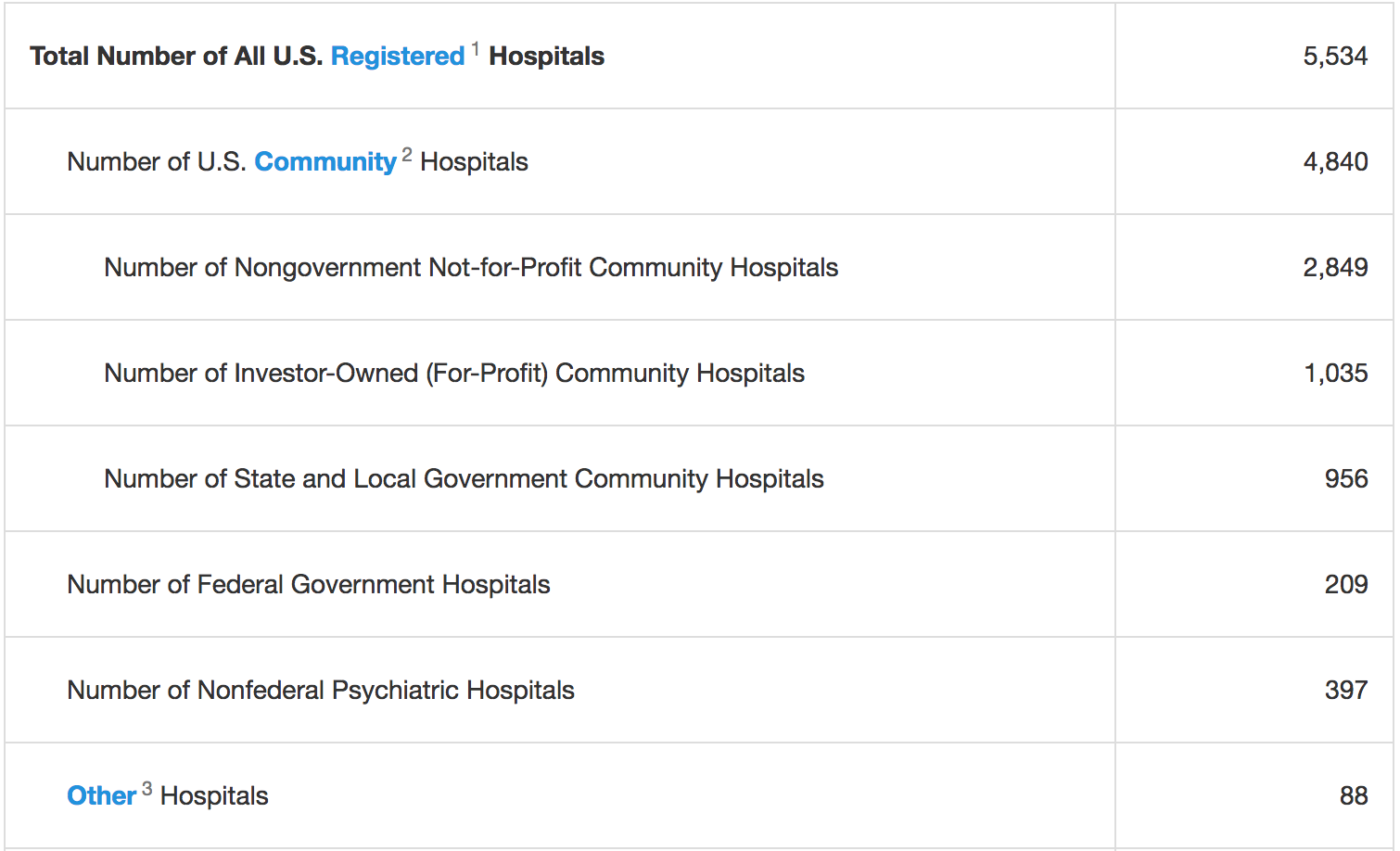
<p>You'll be able to find a number of different resources, such as facts and statistics:</p>
<p><a href="https://www.servicespan.net/blog/Screenshot%202018-06-20%2009.48.47.png"><img alt="Screenshot 2018-06-20 09.48.47.png" src="https://www.servicespan.net/blog/assets_c/2018/06/Screenshot%202018-06-20%2009.48.47-thumb-600xauto-388.png" width="600" height="365" class="mt-image-center" style="text-align: center; display: block; margin: 0 auto 20px;" /></a>Source: American Healthcare Association (<a href="https://www.aha.org/data-insights/health-care-big-picture" title="Health Care: The Big Picture" target="_blank">View full article</a>)</p>]]>
        
    </content>
</entry>

<entry>
    <title>Steps Your Hospital or Health System Can Take to Promote Value by the American Healthcare Association</title>
    <link rel="alternate" type="text/html" href="https://www.servicespan.net/blog/2018/06/the-value-initiative-framing-the-issue-of-affordable-health-care.html" />
    <id>tag:www.servicespan.net,2018:/blog//2.263</id>

    <published>2018-06-20T14:12:41Z</published>
    <updated>2018-06-20T14:39:04Z</updated>

    <summary><![CDATA[Improving affordability remains a top issue for consumers, lawmakers and the health care sector. To that end, in 2017 the AHA Board of Trustees created the Committee on Health Strategy &amp; Innovation to examine the complex issue of affordability. This...]]></summary>
    <author>
        <name>Dan Corcoran</name>
        <uri>https://www.servicespan.net/admin/mt-cp.cgi?__mode=view&amp;blog_id=2&amp;id=2</uri>
    </author>
    
    
    <content type="html" xml:lang="en-us" xml:base="https://www.servicespan.net/blog/">
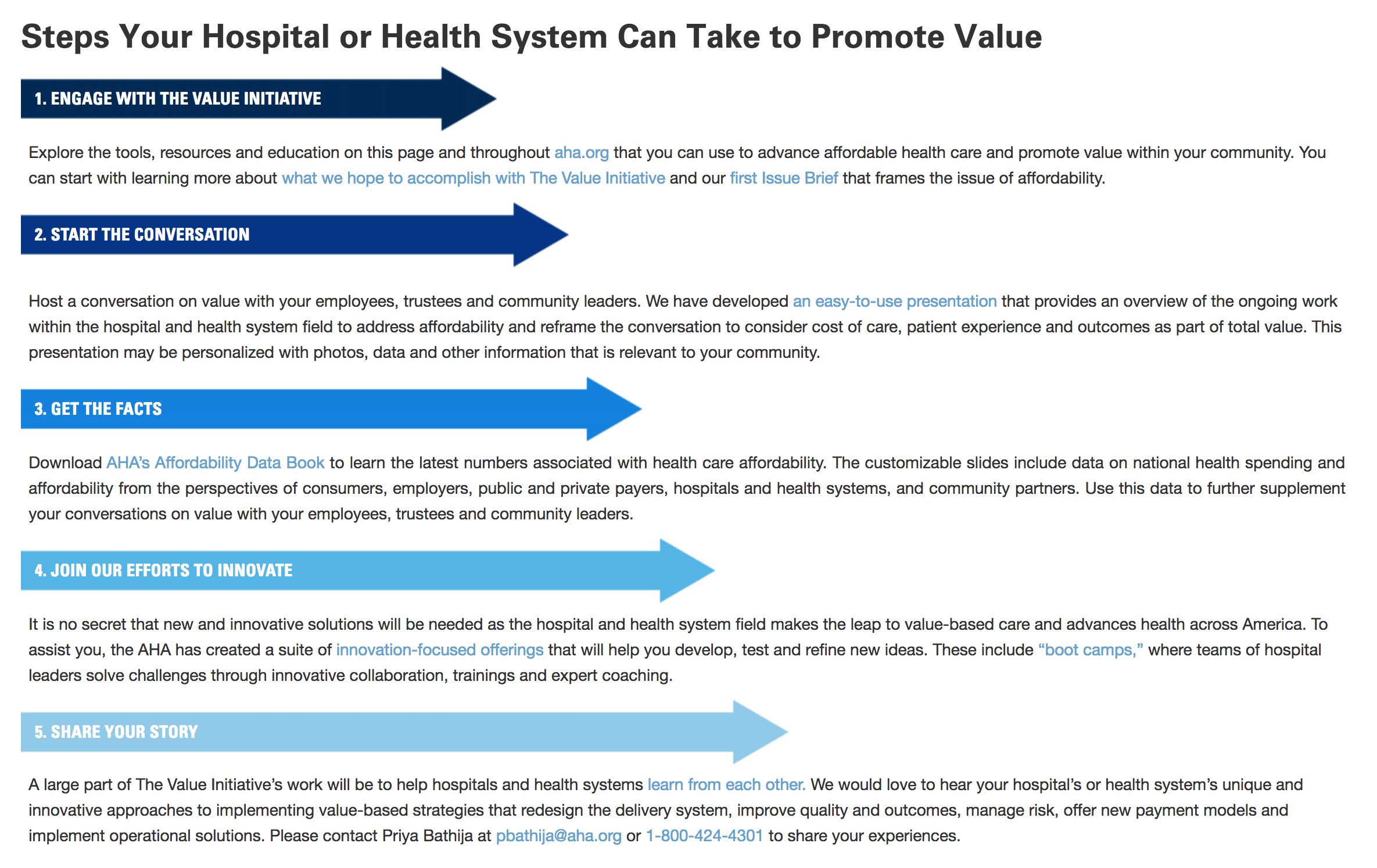
        <![CDATA[<p class="lead">Improving affordability remains a top issue for consumers, lawmakers and the health care sector.</p>
<p>
<iframe width="560" height="315" src="https://www.youtube.com/embed/4Gi7dUVL3PY?rel=0" frameborder="0" allow="autoplay; encrypted-media" allowfullscreen=""></iframe>
</p>
<blockquote>
<p>To that end, in 2017 the AHA Board of Trustees created the Committee on Health Strategy &amp; Innovation to examine the complex issue of affordability. This committee was asked to challenge standard assumptions related to health care costs and value; to ask the hard questions; and, to identify the role that hospitals and health systems can play in improving health care affordability.</p>
<p>In addition, the AHA board and this committee gathered input and insights from leaders throughout the field at AHA's regional policy board, council and member meetings. Extensive dialogue took place around some key issues related to affordability - including the factors that influence affordability, measures of affordability, and strategies to advance affordability.</p>
</blockquote>
<p><img alt="Screenshot 2018-06-20 09.32.51.png" src="https://www.servicespan.net/blog/Screenshot%202018-06-20%2009.32.51.png" width="2370" height="1494" class="mt-image-center" style="text-align: center; display: block; margin: 0 auto 20px;" /></p>
<p style="text-align: center;"><br /><em>Source: The Value Initiative, American Healthcare Association</em></p>
<p><strong>Visit the <a href="https://www.aha.org/value-initiative" target="_blank">American Healthcare Association</a> website for more information.</strong></p>]]>
        
    </content>
</entry>

<entry>
    <title>Patient Safety Systems Chapter, Sentinel Event Policy and RCA2 by the Joint Commission</title>
    <link rel="alternate" type="text/html" href="https://www.servicespan.net/blog/2018/06/patient-safety-systems-chapter-sentinel-event-policy-and-rca2-by-the-joint-commission.html" />
    <id>tag:www.servicespan.net,2018:/blog//2.262</id>

    <published>2018-06-20T13:50:50Z</published>
    <updated>2018-06-20T15:15:51Z</updated>

    <summary> The Patient Systems chapter is designed to clarify the relationship between Joint Commission accreditation and patient safety. As the chapter states, &quot;The ultimate purpose of The Joint Commission&apos;s accreditation process is to enhance quality of care and patient safety....</summary>
    <author>
        <name>Dan Corcoran</name>
        <uri>https://www.servicespan.net/admin/mt-cp.cgi?__mode=view&amp;blog_id=2&amp;id=2</uri>
    </author>
    
    
    <content type="html" xml:lang="en-us" xml:base="https://www.servicespan.net/blog/">
        <![CDATA[<p><a href="https://www.servicespan.net/blog/policy.jpg"><img alt="policy.jpg" src="https://www.servicespan.net/blog/assets_c/2018/06/policy-thumb-480xauto-391.jpg" width="480" height="320" class="mt-image-center" style="text-align: center; display: block; margin: 0 auto 20px;" /></a></p>
<blockquote>
<p>The Patient Systems chapter is designed to clarify the relationship between Joint Commission accreditation and patient safety. As the chapter states, "The ultimate purpose of The Joint Commission's accreditation process is to enhance quality of care and patient safety. Each requirement or standard, the survey process, the Sentinel Event Policy, and other Joint Commission initiatives are designed to help organizations reduce variation, reduce risk, and improve quality. Hospitals should have an integrated approach to patient safety so that high levels of safe patient care can be provided for every patient in every care setting and service."</p>
<p>"The 'Patient Safety Systems' chapter provides a framework, rooted in Joint Commission standards, upon which hospitals can build their integrated patient safety system--in which staff and leaders work together to eliminate complacency, promote collective mindfulness, treat each other with respect and compassion, and learn from patient safety events," says Ronald M. Wyatt, MD, MHA, medical director, Office of Quality and Patient Safety, The Joint Commission.</p>
<p>The Sentinel Event Policy explains how The Joint Commission partners with health care organizations that have experienced a serious patient safety event to protect the patient, improve systems, and prevent further harm.</p>
<p>The RCA2: Improving Root Cause Analyses and Actions to Prevent Harm describes methodologies and techniques that an organization or individuals can credibly and effectively use to prioritize the events, hazards, and vulnerabilities in their systems to understand what and why the event occurred, and how to prevent future events.</p>
<p>All three documents, the Patient Safety Systems Chapter, the Sentinel Policy and the RCA2 are designed to be used together.</p>
<ul>
<li><a href="http://www.jointcommission.org/patient_safety_systems_chapter_for_the_hospital_program/">Patient Safety Systems Chapter</a></li>
<li><a href="http://www.jointcommission.org/Sentinel_Event_Policy_and_Procedures/default.aspx">Sentinel Event Policy</a></li>
<li><a href="https://npsf.site-ym.com/?RCA2" target="_blank">RCA2</a></li>
</ul>
</blockquote>
<p>Source: Joint Commission (<a href="https://www.jointcommission.org/sentinel_event.aspx" title="Patient Safety Systems Chapter, Sentinel Event Policy and RCA2" target="_blank">View full article</a>)</p>]]>
        
    </content>
</entry>

<entry>
    <title>Adding Artificial Intelligence to the EHR workflow</title>
    <link rel="alternate" type="text/html" href="https://www.servicespan.net/blog/2018/04/adding-artificial-intelligence-to-the-ehr-workflow.html" />
    <id>tag:www.servicespan.net,2018:/blog//2.260</id>

    <published>2018-04-02T15:02:58Z</published>
    <updated>2018-04-02T16:17:35Z</updated>

    <summary> &quot;Healthcare is becoming an information science,&quot; Google&apos;s Schmidt said, explaining that patients have an average of 5 GB of health data, most of it in images. And the combination of cloud with deep neural networks has enabled Google and...</summary>
    <author>
        <name>Dan Corcoran</name>
        <uri>https://www.servicespan.net/admin/mt-cp.cgi?__mode=view&amp;blog_id=2&amp;id=2</uri>
    </author>
    
    
    <content type="html" xml:lang="en-us" xml:base="https://www.servicespan.net/blog/">
        <![CDATA[<p style="text-align: center;"><img alt="mathew-schwartz-397471-unsplash.jpg" src="https://www.servicespan.net/blog/assets_c/2018/04/mathew-schwartz-397471-unsplash-thumb-600xauto-385.jpg" width="600" height="400" class="mt-image-none" /></p>
<p>"Healthcare is becoming an information science," Google's Schmidt said, explaining that patients have an average of 5 GB of health data, most of it in images. And the combination of cloud with deep neural networks has enabled Google and other companies to advance AI by taking a set of labeled data and feeding it into neural machine learning to get a model.</p>
<p>"The primary progress in the next few years for machine learning will involve EHRs, quantitative observations, applying ML to genetic variant calling, and medical imaging," Schmidt said. "Can you imagine when we have sensor data plus continuous patient data? This data explosion is profound."</p>
<p>Yes -- and one would be hard-pressed to walk away from HIMSS18 without a spark of optimism that we now have a better understanding of what's on the road ahead to artificial intelligence and machine learning being put to practical and tangible use.</p>
<p>Source: Healthcare IT News (<a href="http://www.healthcareitnews.com/news/next-ehrs-vendors-adding-artificial-intelligence-workflow" title="Next up for EHRs: Vendors adding artificial intelligence into the workflow" target="_blank">View full article</a>)</p>]]>
        
    </content>
</entry>

<entry>
    <title>How Amazon, Google, Apple and others can disrupt healthcare</title>
    <link rel="alternate" type="text/html" href="https://www.servicespan.net/blog/2018/03/how-amazon-google-apple-and-others-can-disrupt-healthcare.html" />
    <id>tag:www.servicespan.net,2018:/blog//2.259</id>

    <published>2018-03-26T14:20:01Z</published>
    <updated>2018-03-26T14:30:56Z</updated>

    <summary>Here&apos;s a rundown of the big tech health care ventures announced over the past month: Amazon-JPMorgan Chase-Berkshire Hathaway: I reviewed the trio&apos;s partnership at length in January. Their venture is the most opaque: They want to bring down health care...</summary>
    <author>
        <name>Dan Corcoran</name>
        <uri>https://www.servicespan.net/admin/mt-cp.cgi?__mode=view&amp;blog_id=2&amp;id=2</uri>
    </author>
    
    
    <content type="html" xml:lang="en-us" xml:base="https://www.servicespan.net/blog/">
        <![CDATA[<p>Here's a rundown of the big tech health care ventures announced over the past month:</p>
<ul>
<li><strong>Amazon-JPMorgan Chase-Berkshire Hathaway:</strong> I reviewed the trio's partnership at length in January. Their venture is the most opaque: They want to bring down health care costs for their employees. Experts think that will likely mean using Amazon's software savvy to create a better technological platform for administering health care. But the long-term play for Amazon could be inserting itself into the health care distribution chain by selling medical devices and, perhaps eventually, becoming an online pharmacy. Amazon is a specialist in retail, handling payments and merchandise, so the thinking is the company could break into both health care administration and the distribution of equipment, drugs, and devices.</li>
<li><strong>Apple:</strong> The iPhone maker is also focusing on its own workers, with plans to open two California clinics that would deliver "a world-class health care experience." The company seems to be aiming for a holistic approach, with medical centers staffed by doctors and lab technicians but also exercise specialists and care navigators. Population health and preventive care will be the guiding principles, driving down costs by helping workers stay healthy rather than treating them once they get sick.</li>
<li><strong>Verily, part of Alphabet, which also owns Google:</strong> The corporate structure has gotten muddled, but this is effectively Google as far as we laypeople are concerned. Verily is, CNBC reported, apparently looking for opportunities to break into the managed care space. It reportedly weighed entering a partnership with a private health insurer on a Medicaid managed care plan in Rhode Island. Under Medicaid managed care, insurers have a set dollar amount that they receive from the state. If they can administer their benefits more cheaply, they keep the savings. In other words, this would be a bet Verily can administer health insurance more efficiently.</li>
<li><strong>Uber:</strong> The ride-hailing company is going all in with Uber Health. It allows health care providers to book rides for their patients to and from their appointments. As The Verge reported this week: "The company is positioning itself as a cheaper and more reliable option than most non-emergency medical transportation," which is a $3 billion-a-year industry.</li>
</ul>
<p>[...]</p>
<p>Source: Vox (<a href="https://www.vox.com/technology/2018/3/6/17071750/amazon-health-care-apple-google-uber" title="Why Apple, Amazon, and Google are making big health care moves" target="_blank">view full article</a>)</p>]]>
        
    </content>
</entry>

<entry>
    <title>Businesses turn to software robots for office work</title>
    <link rel="alternate" type="text/html" href="https://www.servicespan.net/blog/2018/03/businesses-turn-to-software-robots-for-office-work.html" />
    <id>tag:www.servicespan.net,2018:/blog//2.258</id>

    <published>2018-03-20T14:09:23Z</published>
    <updated>2018-03-20T14:19:23Z</updated>

    <summary> Software robots have become one of the hottest fads in business automation, as a new wave of AI is poised to sweep through the back-office functions of large corporations. Investors are jumping on the bandwagon -- though in its...</summary>
    <author>
        <name>Dan Corcoran</name>
        <uri>https://www.servicespan.net/admin/mt-cp.cgi?__mode=view&amp;blog_id=2&amp;id=2</uri>
    </author>
    
    
    <content type="html" xml:lang="en-us" xml:base="https://www.servicespan.net/blog/">
        <![CDATA[<p style="text-align: center;"><img alt="play-stone-network-networked-interactive-163064.jpg" src="https://www.servicespan.net/blog/assets_c/2017/11/play-stone-network-networked-interactive-163064-thumb-600xauto-147.jpg" width="600" height="400" class="mt-image-none" /></p>
<blockquote>
<p>Software robots have become one of the hottest fads in business automation, as a new wave of AI is poised to sweep through the back-office functions of large corporations.</p>
<p>Investors are jumping on the bandwagon -- though in its current form, the market may never be big enough to justify the nosebleed valuations for bot start-ups such as UiPath, which recently joined the ranks of highly valued private companies known as unicorns.</p>
<p>Software robots replicate the routine work humans often do in front of computer screens. As software applications have taken over mainline business processes, many back-office workers find themselves filling the gaps between fragmented systems, often acting as the glue in an unthinking information workflow.</p>
<p>[...]</p>
<p>The market is likely to be worth $2.9bn in 2022, according to Forrester -- more than 10 times what it was in 2016, but still little more than a rounding error in the expected $48.5bn office AI market four years from now.</p>
<p>Their supporters claim that the bots occupy a strategically significant place at the intersection of different corporate software applications, giving them a chance to expand their usefulness. "This is the checkpoint for the data flowing between all the systems," says Mr Wong of Accel. Applying machine learning to this data could give companies important new insights into their operations, he says.</p>
<p>[...]</p>
<p>Source: Financial Times (<a href="https://www.ft.com/content/4580f43a-2191-11e8-9efc-0cd3483b8b80">View full article</a>)</p>
</blockquote>]]>
        
    </content>
</entry>

<entry>
    <title>Hospital leans on machine learning to reduce sepsis-related mortality rate</title>
    <link rel="alternate" type="text/html" href="https://www.servicespan.net/blog/2018/03/hospital-leans-on-machine-learning-to-reduce-sepsis-related-mortality-rate.html" />
    <id>tag:www.servicespan.net,2018:/blog//2.257</id>

    <published>2018-03-20T13:48:40Z</published>
    <updated>2018-03-20T13:57:58Z</updated>

    <summary> Last year, Cabell Huntington Hospital faced sepsis head-on and came out on top. Implementing machine learning technology specifically designed to fight sepsis in part through clinician alerts, the organization saw the sepsis-related in-hospital mortality rate was 33.5 percent lower...</summary>
    <author>
        <name>Dan Corcoran</name>
        <uri>https://www.servicespan.net/admin/mt-cp.cgi?__mode=view&amp;blog_id=2&amp;id=2</uri>
    </author>
    
    
    <content type="html" xml:lang="en-us" xml:base="https://www.servicespan.net/blog/">
        <![CDATA[<p style="text-align: center;"><img alt="pexels-photo-415779.jpg" src="https://www.servicespan.net/blog/assets_c/2017/12/de27da8b81082d9a561df24d39250182e384b28c-thumb-600xauto-184.jpg" width="600" height="400" class="mt-image-none" /></p>
<blockquote>
<p>Last year, Cabell Huntington Hospital faced sepsis head-on and came out on top. Implementing machine learning technology specifically designed to fight sepsis in part through clinician alerts, the organization saw the sepsis-related in-hospital mortality rate was 33.5 percent lower during the post-implementation period and the average sepsis-related hospital length of stay was 17.1 percent lower during the same period. Analyses included 2,298 adult patients in the emergency department and intensive care unit.</p>
<p>Through an ongoing review of internal data, it appears that InSight clinical alerts, from machine learning vendor Dascena, and clinical documentation/coding of sepsis are showing an increased correlation, said Hoyt J. Burdick, MD, chief medical officer at Cabell Huntington Hospital.</p>
<p>"Of course, this phenomenon is not just dependent on the machine logic alerting, but is also subject to clinician education, documentation, coding and billing variables," he explained. "But since we only recently began to adjust some of the machine logic parameters, it seems more likely that the clinicians are more confident in making diagnoses and decisions based upon the improved alerts."</p>
<p>[...]</p>
<p>"The software requires a vital signs feed, but also analyzes certain laboratory results, when available," Burdick said. "When InSight determines that a patient's data profile is similar to the reference population with sepsis, the software notifies the charge nurse on duty through an automated call to a dedicated phone line per unit. Following the alert, the charge nurse can then begin the sepsis assessment and inform the physician."</p>
<p></p>
<p>Machine learning also has allowed for improved predictive power in sepsis detection by warning Cabell clinicians of sepsis trends prior to onset of organ dysfunction. This time factor is important since early antibiotic administration is key to reducing sepsis mortality.</p>
<p>Source: Healthcare IT News (<a href="http://www.healthcareitnews.com/news/hospital-leans-machine-learning-reduce-sepsis-related-mortality-rate" title="Hospital leans on machine learning to reduce sepsis-related mortality rate" target="_blank">View full article</a>)</p>
</blockquote>]]>
        
    </content>
</entry>

<entry>
    <title>Patient-centric approach takes communication, flexibility and motivated staff</title>
    <link rel="alternate" type="text/html" href="https://www.servicespan.net/blog/2018/03/patient-centric-approach-takes-communication-flexibility-and-motivated-staff.html" />
    <id>tag:www.servicespan.net,2018:/blog//2.256</id>

    <published>2018-03-20T13:48:12Z</published>
    <updated>2018-03-20T13:59:05Z</updated>

    <summary> When it comes to revenue cycle, a patient-centric culture is the future. By the way, make sure you include your employees in that philosophy and understand how technology can help get there. The dominant themes emerging from HIMSS18 when...</summary>
    <author>
        <name>Dan Corcoran</name>
        <uri>https://www.servicespan.net/admin/mt-cp.cgi?__mode=view&amp;blog_id=2&amp;id=2</uri>
    </author>
    
    
    <content type="html" xml:lang="en-us" xml:base="https://www.servicespan.net/blog/">
        <![CDATA[<blockquote>
<p>When it comes to revenue cycle, a patient-centric culture is the future. By the way, make sure you include your employees in that philosophy and understand how technology can help get there.</p>
<p>The dominant themes emerging from HIMSS18 when it comes to revenue cycle were all about putting the patient first and recognizing that it's people driving your revenue cycle operations.</p>
<p>Hospital executives must recognize what will be driving the healthcare industry from a patient and employee standpoint in the coming years and acknowledge the consumer-centric experience taking hold just about everywhere -- and, increasingly, that includes healthcare. The emerging philosophy around revenue cycle is that not only is it part of the overall care experience, but that it will bookend most episodes of care, with pre-authorizations, registration and taking of POS payments at the front-end and then post-care billing on the back end.</p>
<p>[...]</p>
<p>Revenue cycle leaders also can't forget that while new technology can help refine operations and expand capabilities, if the people who staff your department don't understand it or hate using it, you've wasted your investment. Choosing software that is intuitive and creates efficiencies will inspire more productivity in your staff. So it might not hurt to get their feedback or even give them a say in what technologies gets selected -- and do so as early in the procurement process as possible.</p>
<p>Finally, driving a successful revenue cycle department requires motivating and rewarding the staff who do the work. Since over the course of the next decade, consumerism will constitute a bigger piece of all industries, healthcare included, creating a system of performance monitoring, real-time feedback and employee rewards can inspire your rev cycle staff to work smarter and, in turn, that will benefit your system's bottom line.</p>
<p>"That's what makes a difference to that next generation healthcare consumer and employee," Sevenikar said.</p>
<p>Source: Healthcare Finance (<a href="http://www.healthcarefinancenews.com/news/himss18-revenue-cycle-recap-patient-centric-approach-takes-communication-flexibility-and" title="HIMSS18 revenue cycle recap: Patient-centric approach takes communication, flexibility and motivated staff" target="_blank">View full article</a>)</p>
</blockquote>]]>
        
    </content>
</entry>

<entry>
    <title>Healthcare Organizations: How to Address Information Security</title>
    <link rel="alternate" type="text/html" href="https://www.servicespan.net/blog/2018/03/healthcare-organizations-how-to-address-information-security.html" />
    <id>tag:www.servicespan.net,2018:/blog//2.254</id>

    <published>2018-03-13T14:07:32Z</published>
    <updated>2018-03-13T14:18:09Z</updated>

    <summary> [...] Here are four survey findings related to how healthcare organizations address information security based on a 2018 HIMSS Cybersecurity Survey. 1. The plurality of respondents (45.5 percent) indicated they undergo security risk assessments once a year. Only 9.6%...</summary>
    <author>
        <name>Dan Corcoran</name>
        <uri>https://www.servicespan.net/admin/mt-cp.cgi?__mode=view&amp;blog_id=2&amp;id=2</uri>
    </author>
    
    
    <content type="html" xml:lang="en-us" xml:base="https://www.servicespan.net/blog/">
        <![CDATA[<p style="text-align: center;"><img alt="Thumbnail image for structure-light-led-movement-158826.jpg" src="https://www.servicespan.net/blog/assets_c/2018/01/structure-light-led-movement-158826-thumb-600xauto-232.jpg" width="600" height="402" class="mt-image-none" /></p>
<blockquote>
<p>[...] Here are four survey findings related to how healthcare organizations address information security based on a 2018 HIMSS Cybersecurity Survey.</p>
<p>1. The plurality of respondents (45.5 percent) indicated they undergo security risk assessments once a year.</p>
<ul>
<li>Only 9.6% of health information security professionals selected the next most common response -- conducting daily security risk assessments.</li>
</ul>
<p>2. When asked what security framework their organization has adopted, the majority of respondents cited the National Institute of Standards and Technology.</p>
<ul>
<li>NIST: 57.9%</li>
<li>HITRUST: 26.4%</li>
<li>Critical Security Controls: 24.7%</li>
</ul>
<p>3. There's no uniform source of cyberthreat intelligence, according to the survey respondents, although the majority consider word-of-mouth information from peers a key resource.</p>
<ul>
<li>Peers: 68.6%</li>
<li>U.S. Computer Emergency Readiness Team: 60%</li>
<li>HIMSS resources: 53.8%</li>
</ul>
<p>4. More than half of respondents cited lack of appropriate cybersecurity personnel as one of the biggest barriers for remediating and mitigating cybersecurity incidents.</p>
<ul>
<li>Lack of appropriate cybersecurity personnel: 52.4%</li>
<li>Lack of financial resources: 46.6%</li>
<li>Too many application vulnerabilities: 28.6%</li>
</ul>
<p>Source: Becker's Hospital Review (<a href="https://www.beckershospitalreview.com/cybersecurity/how-are-healthcare-organizations-addressing-information-security-4-survey-findings.html" title="How are healthcare organizations addressing information security? 4 survey findings" target="_blank">View full article</a>)</p>
</blockquote>]]>
        
    </content>
</entry>

<entry>
    <title>Healthcare Satellite Connectivity Facilitate Effective Treatment</title>
    <link rel="alternate" type="text/html" href="https://www.servicespan.net/blog/2018/03/healthcare-satellite-connectivity-facilitate-effective-treatment.html" />
    <id>tag:www.servicespan.net,2018:/blog//2.253</id>

    <published>2018-03-13T13:56:02Z</published>
    <updated>2018-03-13T14:03:19Z</updated>

    <summary> A recently added market study by TMR Research, titled, &quot;Healthcare Satellite Connectivity Market - Global Industry Analysis, Market Size, Share, Trends, Analysis, Growth and Forecast 2017-2025,&quot; studies the market from every possible angle to understand the dynamics shaping it....</summary>
    <author>
        <name>Dan Corcoran</name>
        <uri>https://www.servicespan.net/admin/mt-cp.cgi?__mode=view&amp;blog_id=2&amp;id=2</uri>
    </author>
    
    
    <content type="html" xml:lang="en-us" xml:base="https://www.servicespan.net/blog/">
        <![CDATA[<p style="text-align: center;"><a href="https://www.servicespan.net/blog/doctor-medical-medicine-health-42273.jpg"><img alt="doctor-medical-medicine-health-42273.jpg" src="https://www.servicespan.net/blog/assets_c/2018/03/doctor-medical-medicine-health-42273-thumb-550xauto-372.jpg" width="550" height="367" class="mt-image-none" /></a></p>
<blockquote>
<p>A recently added market study by TMR Research, titled, "Healthcare Satellite Connectivity Market - Global Industry Analysis, Market Size, Share, Trends, Analysis, Growth and Forecast 2017-2025," studies the market from every possible angle to understand the dynamics shaping it. The report does so by factoring in the historical and current data and various tailwinds and headwinds to the market. It also throws light on the competitive landscape in the market to understand the opportunities and pitfalls the players need to be keep in mind.</p>
<p>The report finds that with patients becoming more tech savvy and concerned about their health, telemedicine, eHealth, telehealth, and other mHealth solutions will likely see larger uptake thereby contributing to the growth in the market for healthcare satellite connectivity. The healthcare industry has been lapping up new technology platforms to offer more effective and accurate diagnosis and treatment to the ever-increasing pool of patients. This coupled with the increased healthcare spends of people is having a positive influence on the global market for healthcare satellite connectivity.</p>
<p>Source: TMR Research (<a href="https://tmrresearchblog.com/healthcare-satellite-connectivity-facilitate-effective-treatment/" title="Healthcare Satellite Connectivity Facilitate Effective Treatment" target="_blank">View full article</a>)</p>
</blockquote>]]>
        
    </content>
</entry>

<entry>
    <title>7 Helpful Types of EHR Information</title>
    <link rel="alternate" type="text/html" href="https://www.servicespan.net/blog/2018/03/7-helpful-types-of-ehr-information.html" />
    <id>tag:www.servicespan.net,2018:/blog//2.252</id>

    <published>2018-03-12T20:44:57Z</published>
    <updated>2018-03-12T20:54:40Z</updated>

    <summary> [...] The survey includes responses from 2,301 adult U.S. residents. While a majority of survey respondents -- 36 percent -- say their primary reason for accessing their EHR is to stay informed, 19 percent admit they want EHR access...</summary>
    <author>
        <name>Dan Corcoran</name>
        <uri>https://www.servicespan.net/admin/mt-cp.cgi?__mode=view&amp;blog_id=2&amp;id=2</uri>
    </author>
    
    
    <content type="html" xml:lang="en-us" xml:base="https://www.servicespan.net/blog/">
        <![CDATA[<p style="text-align: center;"><a href="https://www.servicespan.net/blog/medical-appointment-doctor-healthcare-40568.jpg"><img alt="medical-appointment-doctor-healthcare-40568.jpg" src="https://www.servicespan.net/blog/assets_c/2017/11/medical-appointment-doctor-healthcare-40568-thumb-550xauto-143.jpg" width="550" height="367" class="mt-image-none" /></a></p>
<p>[...] The survey includes responses from 2,301 adult U.S. residents. While a majority of survey respondents -- 36 percent -- say their primary reason for accessing their EHR is to stay informed, 19 percent admit they want EHR access because they are curious, and 18 percent want to make sure their record is accurate.</p>
<p>When asked what they consider the most helpful EHR information, respondents reported the following:</p>
<ul>
<li>Lab work and blood test results: 67 percent</li>
<li>Physician notes from my medical visits or about my medical condition in general: 55 percent</li>
<li>Prescription medication history: 41 percent</li>
<li>X-rays or nuclear imaging results: 31 percent</li>
<li>Immunization status: 23 percent</li>
<li>Personal profile information, such as demographics: 23 percent</li>
<li>Billing information: 20 percent</li>
</ul>
<p>Source: Becker's Hospital Review (<a href="https://www.beckershospitalreview.com/ehrs/7-most-helpful-types-of-ehr-information-for-patients.html" title="7 most helpful types of EHR information for patients" target="_blank">View full article</a>)</p>]]>
        
    </content>
</entry>

<entry>
    <title>The White House is making interoperability a priority</title>
    <link rel="alternate" type="text/html" href="https://www.servicespan.net/blog/2018/03/the-white-house-is-making-interoperability-a-priority.html" />
    <id>tag:www.servicespan.net,2018:/blog//2.251</id>

    <published>2018-03-09T13:46:47Z</published>
    <updated>2018-03-09T13:54:26Z</updated>

    <summary> The federal government is ready to achieve interoperability, and its taking a &quot;whole of government&quot; approach to make that happen, Jared Kushner, senior adviser to President Donald Trump, said March 6 according to Nextgov. With help from the Office...</summary>
    <author>
        <name>Dan Corcoran</name>
        <uri>https://www.servicespan.net/admin/mt-cp.cgi?__mode=view&amp;blog_id=2&amp;id=2</uri>
    </author>
    
    
    <content type="html" xml:lang="en-us" xml:base="https://www.servicespan.net/blog/">
        <![CDATA[<p style="text-align: center;"><a href="https://www.servicespan.net/blog/pexels-photo-129112.jpg"><img alt="pexels-photo-129112.jpg" src="https://www.servicespan.net/blog/assets_c/2018/03/pexels-photo-129112-thumb-550xauto-369.jpg" width="550" height="413" class="mt-image-none" /></a></p>
<blockquote>
<p>The federal government is ready to achieve interoperability, and its taking a "whole of government" approach to make that happen, Jared Kushner, senior adviser to President Donald Trump, said March 6 according to Nextgov.</p>
<p>With help from the Office of American Innovation -- a division Mr. Kushner heads up -- the White House is making "citizen access to health records and interoperability a top priority," Mr. Kushner said at the annual Healthcare Information and Management Systems Society conference, according to Nextgov.</p>
<p>His speech came the same day CMS launched a new initiative, called MyHealthEData, aimed at increasing Medicare beneficiaries access to their own health records. As part of the effort, CMS is requiring providers update their systems to ensure data sharing, and it intends to require a patient's data to follow them after they are discharged from the hospital.</p>
<p>"The time is now to align every facet of the federal government and the private sector to ensure information is communicated and shared seamlessly. Simply put, interoperability is about our shared bottom line: saving lives," he said.</p>
<p>Mr. Kushner highlighted the interoperability problems plaguing the Departments of Defense and Veterans Affairs as an example interoperability challenges, Nextgov reports. Over the last 20 years, the VA has spent nearly $2 billion on efforts to build an interoperable system without success, but more recently, it has been evaluating the data sharing capabilities of Cerner, the EHR it intends to transition to.</p>
<p>"This was a huge win for our service members," Mr. Kushner said. "But the president is determined to make interoperability a reality for all Americans. This is an issue that impacts every hospital, care provider and patient in our country. Now that electronic health records have become digitized over the past decade, complete interoperability is the logical next step."</p>
<p>He added the administration talked with more than 100 stakeholders -- including healthcare providers, health IT companies and patient advocacy groups -- over the last six months to develop an interagency plan that would enhance patient access to and sharing of health records. However, Mr. Kushner did not elaborate on what that plan may entail, Nextgov reports.</p>
<p>"This is the essence of our administration's goals for healthcare. More decision-making in the hands of the customer. Medical data belongs to the patients," he said. "Our vision will apply a whole of government approach that we hope will unleash private sector innovation. Together, we hope to lead a whole of country approach."</p>
<p>Source: Becker's Hospital Review (<a href="https://www.beckershospitalreview.com/ehrs/jared-kushner-the-white-house-is-making-interoperability-a-priority.html" title="Jared Kushner: The White House is making interoperability a priority" target="_blank">View full article</a>)</p>
</blockquote>]]>
        
    </content>
</entry>

<entry>
    <title>Pairing of people and technology key to successful AI integration in healthcare quality</title>
    <link rel="alternate" type="text/html" href="https://www.servicespan.net/blog/2018/03/pairing-of-people-and-technology-key-to-successful-ai-integration-in-healthcare-quality.html" />
    <id>tag:www.servicespan.net,2018:/blog//2.250</id>

    <published>2018-03-09T13:37:06Z</published>
    <updated>2018-03-09T13:46:29Z</updated>

    <summary> Artificial intelligence (AI) is currently one of the hottest trends in business. And for good reason. AI has the potential to increase profitability an average of 38% and bring an economic boost of $14 trillion across 16 industries by...</summary>
    <author>
        <name>Dan Corcoran</name>
        <uri>https://www.servicespan.net/admin/mt-cp.cgi?__mode=view&amp;blog_id=2&amp;id=2</uri>
    </author>
    
    
    <content type="html" xml:lang="en-us" xml:base="https://www.servicespan.net/blog/">
        <![CDATA[<p style="text-align: center;"><a href="https://www.servicespan.net/blog/assets_c/2017/12/21e57926a1d8a6845c45f606a86350a1697440c8-thumb-600xauto-204.jpg"><img alt="Thumbnail image for jason-leung-370358.jpg" src="https://www.servicespan.net/blog/assets_c/2018/02/21e57926a1d8a6845c45f606a86350a1697440c8-thumb-600xauto-204-thumb-550xauto-344.jpg" width="550" height="367" class="mt-image-none" /></a></p>
<p>Artificial intelligence (AI) is currently one of the hottest trends in business. And for good reason. AI has the potential to increase profitability an average of 38% and bring an economic boost of $14 trillion across 16 industries by 2035, a recent analysis suggests. This includes healthcare.</p>
<p>There is no shortage of possibilities for AI-supported solutions in healthcare. They range from improving doctor-patient communications to recognizing disease in diagnostic imaging. With its immense data-reporting demands, healthcare quality nears the top of this list. In fact, implementing value-based care is a concern keeping many U.S. health system CEOs up at night.</p>
<p>[...]</p>
<p>In recent years, many hospitals struggled to submit complete electronic clinical quality measures (eCQMs) reports on time. A Joint Commission survey conducted in conjunction with two leading hospital associations found that 78% of hospitals were not ready for the 2017 eCQM reporting period. Around the same time, CMS released findings from an inpatient quality reporting validation pilot program evaluation highlighting workflow issues and processing procedures as critical barriers to successful quality reporting. This teaches us that even the most promising information technologies will only reach their full potential when paired with the proper clinical expertise and ongoing support.</p>
<p>Natural Language Processing (NLP) is a type of AI technology that enables a computer or software to understand human language and information patterns natively - versus 'structuring' data in a way that makes it possible for the software to consume. An obvious use for NLP is leveraging it for quality data reporting - since up to 80% of data in EHRs can be unstructured information, such as physicians' notes and additional comments. This unstructured data tends to hold rich clinical insights. NLP has the power to analyze entire EHR databases, and can be trained to hone in on clinical data and documentation practices that are specific to each hospital or group of clinicians.</p>
<p>When properly deployed, NLP in healthcare quality will set the stage for numerous benefits, including:</p>
<ul>
<li>Speedier and more-accurate reporting, which can help hospitals work toward achieving maximum reimbursement and minimal payment penalties.</li>
<li>Saved time and resources that can be redirected to take on additional clinical data registries and other quality improvement programs.</li>
<li>Minimal disruption to staff. In other words, clinicians do not have to drastically change how they enter information into EHRs and instead can focus on delivering and improving care.</li>
<li>Fewer staff hours needed for manual data abstraction.</li>
<li>Improved patient-reported outcomes and satisfaction due to adherence to quality measures.</li>
</ul>
<p>[...]</p>
<p>Source: Becker's Hospital Review (<a href="https://www.beckershospitalreview.com/healthcare-information-technology/pairing-of-people-and-technology-key-to-successful-ai-integration-in-healthcare-quality.html" title="Pairing of people and technology key to successful AI integration in healthcare quality" target="_blank">View full article</a>)</p>]]>
        
    </content>
</entry>

</feed>