<?xml version="1.0" encoding="UTF-8"?>
<?xml-stylesheet type="text/xsl" href="/stylesheets/feed.atom.xml" media="screen"?>
<feed xml:lang="en-US" xmlns="http://www.w3.org/2005/Atom">
  <id>tag:sociology.nd.edu,2005:/news-and-events/news</id>
  <link rel="alternate" type="text/html" href="https://sociology.nd.edu"/>
  <link rel="self" type="application/atom+xml" href="https://sociology.nd.edu/news-and-events/news.atom"/>
  <id>tag:sociology.nd.edu,2005:/latest</id>
  <title>Department of Sociology | News</title>
  <updated>2026-05-13T09:58:00-04:00</updated>
  <link rel="alternate" type="text/html" href="https://sociology.nd.edu/"/>
  <link rel="self" type="application/atom+xml" href="https://sociology.nd.edu//news-and-events/news.atom"/>
  <subtitle>Notre Dame's Department of Sociology features undergraduate and graduate programs, innovative and interdisciplinary research opportunities, and award-winning faculty who are widely recognized for their scholarly publications.</subtitle>
  <entry>
    <id>tag:sociology.nd.edu,2005:News/181692</id>
    <published>2026-05-13T09:58:00-04:00</published>
    <updated>2026-05-13T09:58:31-04:00</updated>
    <link rel="alternate" type="text/html" href="https://sociology.nd.edu/news-and-events/news/notre-dame-population-analytics-hosts-inaugural-ffcws-nd-conference/"/>
    <title>Notre Dame Population Analytics hosts inaugural FFCWS@ND Conference</title>
    <summary type="text">
      <![CDATA[How important is parent-child closeness to children's health and educational outcomes later in life? How does poverty and material hardship impact family functioning and parenting behaviors? How do genetic characteristics interact with social environments to influence child and adolescent wellbeing?…]]>
    </summary>
    <content type="html">
      <![CDATA[<p>How important is parent-child closeness to children's health and educational outcomes later in life? How does poverty and material hardship impact family functioning and parenting behaviors? How do genetic characteristics interact with social environments to influence child and adolescent wellbeing?</p>
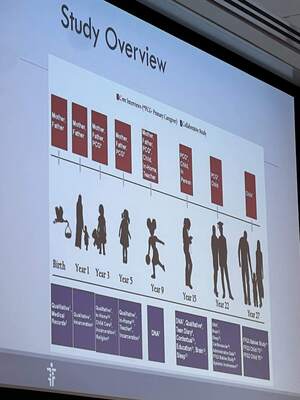
<p>These are just a few of the questions the Future of Families and Child Wellbeing Study <a href="https://ffcws.princeton.edu/">(FFCWS)</a> can help researchers answer. Founded by scholars at Princeton and Columbia Universities, the FFCWS is the longest-running and only contemporary US birth cohort study of young adults, based on a national sample, that follows children from birth through young adulthood. It is used by more than 13,000 researchers, policymakers, and practitioners to understand the effects of poverty, family structure, education, employment, income, health, housing, and resource sharing on human development.</p>
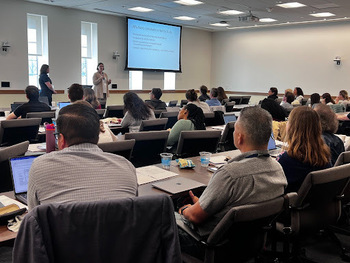
<figure class="image image-right"><img src="https://populationanalytics.nd.edu/assets/659444/350x/anna_1.jpg" alt="A woman, Anna Haskins, in a white blazer speaks, holding papers and gesturing with a raised index finger." width="350" height="253">
<figcaption>Anna Haskins, the Andrew V. Tackes Associate Professor of Sociology and co-investigator of Future of Families and Child Wellbeing Study, discusses her vision for FFCWS@ND, an initiative designed to foster interdisciplinary collaboration and leverage data to find real-world solutions for those experiencing poverty.</figcaption>
</figure>
<p>Following her appointment as co-investigator of FFCWS in 2024, <a href="https://sociology.nd.edu/people/anna-haskins/">Anna Haskins</a>, the Andrew V. Tackes Associate Professor of Sociology, set out to expand engagement with the dataset at the University of Notre Dame and throughout the Midwest. In collaboration with Notre Dame Population Analytics (ND Pop) and with support from the Poverty Initiative, Haskins launched <a href="https://populationanalytics.nd.edu/research/ffcws-at-notre-dame/">FFCWS@ND</a> as a regional hub to encourage research using the dataset and collaboration across disciplines.<strong> </strong></p>
<p>“The challenges that poverty presents are many, and it will take a wide range of research approaches to tackle them. In partnership with ND Pop, the Poverty Initiative is delighted to support FFCWS@ND so that the Notre Dame community can utilize what is arguably the best dataset for understanding the intergenerational effects of poverty in America,” said Jim Sullivan, director of the Notre Dame Poverty Initiative and professor of economics.</p>
<figure class="image image-left"><img src="https://populationanalytics.nd.edu/assets/659448/350x/ffcws_corner.jpg" alt="A woman speaks to a seated audience in a brightly lit room. A screen behind her reads 'Why Family Complexity is Hard to Study'." width="350" height="263">
<figcaption>Marcy Carlson (R), University of Wisconsin-Madison, and Christine Percheski (L), Northwestern University, present on how they have used the FFCWS dataset to understand family formation and structure.</figcaption>
</figure>
<p>The inaugural <a href="https://populationanalytics.nd.edu/research/ffcws-at-notre-dame/ffcws-nd-data-conference-spring-2026/">FFCWS Data Conference</a>, hosted on April 23-24, was the first phase of a multi-year plan to advance poverty-related research with the dataset. The event brought together 60 scholars including faculty, postdoctoral researchers, graduate students, and study leadership from universities across the Midwest, including Notre Dame, University of Wisconsin-Madison, University of Chicago, Purdue University, University of Michigan, Northwestern University, Michigan State University, and the University of Illinois.</p>
<p>“The Future of Families study is housed on the East Coast, and it is widely used among scholars there. My vision is to build usage across the country, starting with Notre Dame and regionally in the Midwest, by facilitating learning about the data and providing opportunities for interdisciplinary collaboration among regional researchers,” Haskins said. “The broader aim is to build capacity to leverage the data to ask and answer critical poverty-related questions to drive policy change, and to really generate real-world solutions and advanced knowledge.”</p>
<p>To turn that vision into reality, the conference featured a comprehensive introduction to the data, along with presentations from FFCWS principal investigators Kathy Edin (Princeton University) and Jane Waldfogel (Columbia University), who shared the history and current data collection efforts for year 27 of the study. FFCWS data analysts provided an overview of the data available and how to access it, and regional researchers who have worked extensively with the data helped attendees envision how it could be used in their own research.</p>
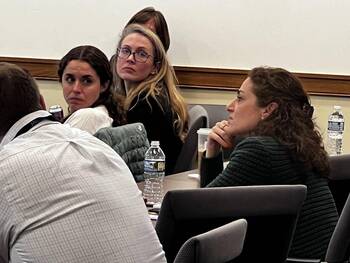
<figure class="image image-right"><img src="https://populationanalytics.nd.edu/assets/659451/350x/ffcws_kearney.jpg" alt="Three women at a meeting. Dark-haired woman looks back concerned. Blonde woman with glasses looks serious. Woman in green sweater looks thoughtful." width="350" height="263">
<figcaption>Melissa Kearney, the Gilbert F. Schaefer Professor of Economics and director of the Strengthening Families Research Initiative, engages with fellow researchers during the FFCWS data conference. As a leading voice on family economics, Kearney’s insights help translate longitudinal data into actionable policy discussions.</figcaption>
</figure>
<p>Lonnie Berger (University of Wisconsin-Madison) and Maggie Thomas (University of Chicago) highlighted how scholars have used the study to understand economic, social, and environmental influences on poverty and material hardship, how poverty impacts family functioning and wellbeing, and how it persists across generations. Marcy Carlson (University of Wisconsin-Madison) and Christine Percheski (Northwestern University) focus their research on family formation and structure; looking at parent relationships to each other and potentially to new partners which provides vast insight into children's exposure to resources, stress, and stability.</p>
<p>Notre Dame’s<a href="https://psychology.nd.edu/people/elizabeth-shewark/"> Elizabeth Shewark</a>, the William J. Shaw Center for Children and Families Collegiate Chair, explored how contextual influences like families, schools, and neighborhoods interact with genetic factors to impact youth's social, emotional, and academic competencies. Colter Mitchell (University of Michigan) presented his work identifying childhood biomarkers for medical conditions like cardiovascular disease, cancer, and dementia to increase the potential for early identification.</p>
<p>As the two-day conference concluded, Haskins was already working on other dimensions of her plan for FFCWS@ND.</p>
<figure class="image image-left"><img src="https://populationanalytics.nd.edu/assets/659452/300x/ffcws_slide.jpg" alt="Timeline of a longitudinal study from birth to age 27, detailing interviews with caregivers, children, and data collection." width="300" height="400">
<figcaption>Following 5,000 families for over two decades, the FFCWS offers an unprecedented look at how early life circumstances and policy environments shape the transition into adulthood.</figcaption>
</figure>
<p>“One of the broader goals of Notre Dame is to be a force of good in the world, particularly among the marginalized and those experiencing poverty,” Haskins said. “It’s a natural fit to bring a data set that can really answer those questions to researchers here at Notre Dame and beyond.”</p>
<p>To support this work, FFCWS@ND provides practical resources aimed at lowering barriers to data access and analysis. Future plans include hosting two more data conferences. FFCWS@ND Postdoctoral Fellows will soon be available to assist ND Pop faculty affiliates in accessing data to research critical poverty-related questions. For Notre Dame faculty and students, small research grants of up to $5,000 will be available on a rolling basis to incentivize use of FFCWS data and help cover costs associated with accessing the restricted data.</p>
<p>For more information on FFCWS@ND, visit ND Pop at <a href="http://populationanalytics.nd.edu">populationanalytics.nd.edu</a>.</p>
<p class="attribution">Originally published by <span class="rel-author">Heather Frey</span> at <span class="rel-source"><a href="https://populationanalytics.nd.edu/news-and-events/news/notre-dame-population-analytics-hosts-inaugural-ffcws-nd-conference/">populationanalytics.nd.edu</a></span> on <span class="rel-pubdate">May 12, 2026</span>.</p>]]>
    </content>
    <author>
      <name>Heather Frey</name>
    </author>
  </entry>
  <entry>
    <id>tag:sociology.nd.edu,2005:News/180622</id>
    <published>2026-04-06T13:34:00-04:00</published>
    <updated>2026-04-06T13:34:49-04:00</updated>
    <link rel="alternate" type="text/html" href="https://sociology.nd.edu/news-and-events/news/sociology-spring-colloquium-series-presents-jason-schnittker-side-effects-the-social-ecology-of-adverse-drug-reactions/"/>
    <title>Sociology Spring Colloquium Series Presents: Jason Schnittker "Side Effects: The Social Ecology of Adverse Drug Reactions"</title>
    <summary type="text">
      <![CDATA[Jason Schnittker is Professor of Sociology at the University of Pennsylvania. His work focuses on the social, cultural, and biological determinants of health,…]]>
    </summary>
    <content type="html">
      <![CDATA[<figure class="image image-left"><img src="https://sociology.nd.edu/assets/655363/schnittker_2_square.jpg" alt="Jason Schnittker" width="500" height="500"></figure>
<p>Jason Schnittker is Professor of Sociology at the University of Pennsylvania. His work focuses on the social, cultural, and biological determinants of health, with a particular focus on mental health. His recent work focuses on the social origins of pharmaceutical side effects, the rise of anxiety in the US, and the mental health of formerly incarcerated people in Rwanda (with Hollie Nzitatira).</p>]]>
    </content>
    <link rel="enclosure" type="image/jpeg" href="https://sociology.nd.edu/assets/655363/schnittker_2_square.jpg" title="Jason Schnittker"/>
    <author>
      <name>Sociology Department</name>
    </author>
  </entry>
  <entry>
    <id>tag:sociology.nd.edu,2005:News/179684</id>
    <published>2026-03-03T16:11:00-05:00</published>
    <updated>2026-03-03T16:12:06-05:00</updated>
    <link rel="alternate" type="text/html" href="https://sociology.nd.edu/news-and-events/news/passing-the-mic/"/>
    <title>Passing The Mic</title>
    <summary type="text">
      <![CDATA[Victoria Erdel Garcia ’19 was known on campus as the girl obsessed with fighting trafficking. She was drawn to the issue because victims’ stories rarely sustained attention—and too often elicited only sympathy. For Erdel Garcia, change has to go further than that. She just had to find a way to get people to listen. So, she started a podcast.]]>
    </summary>
    <content type="html">
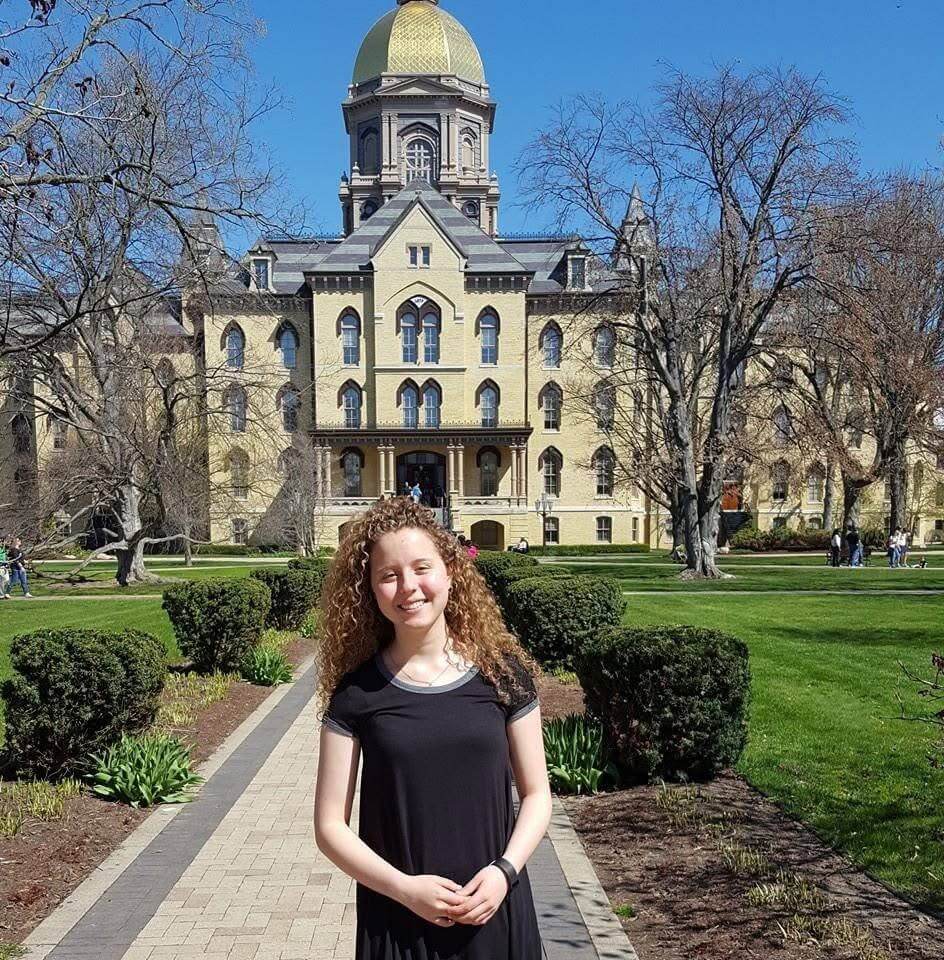
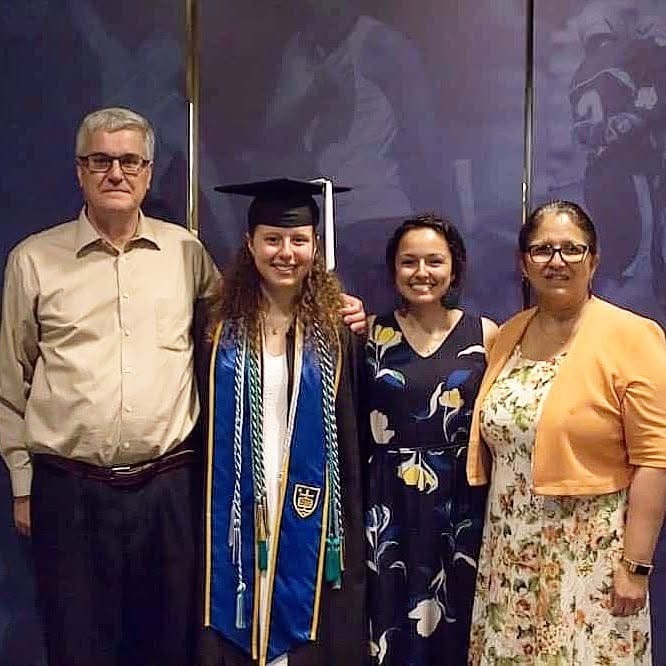
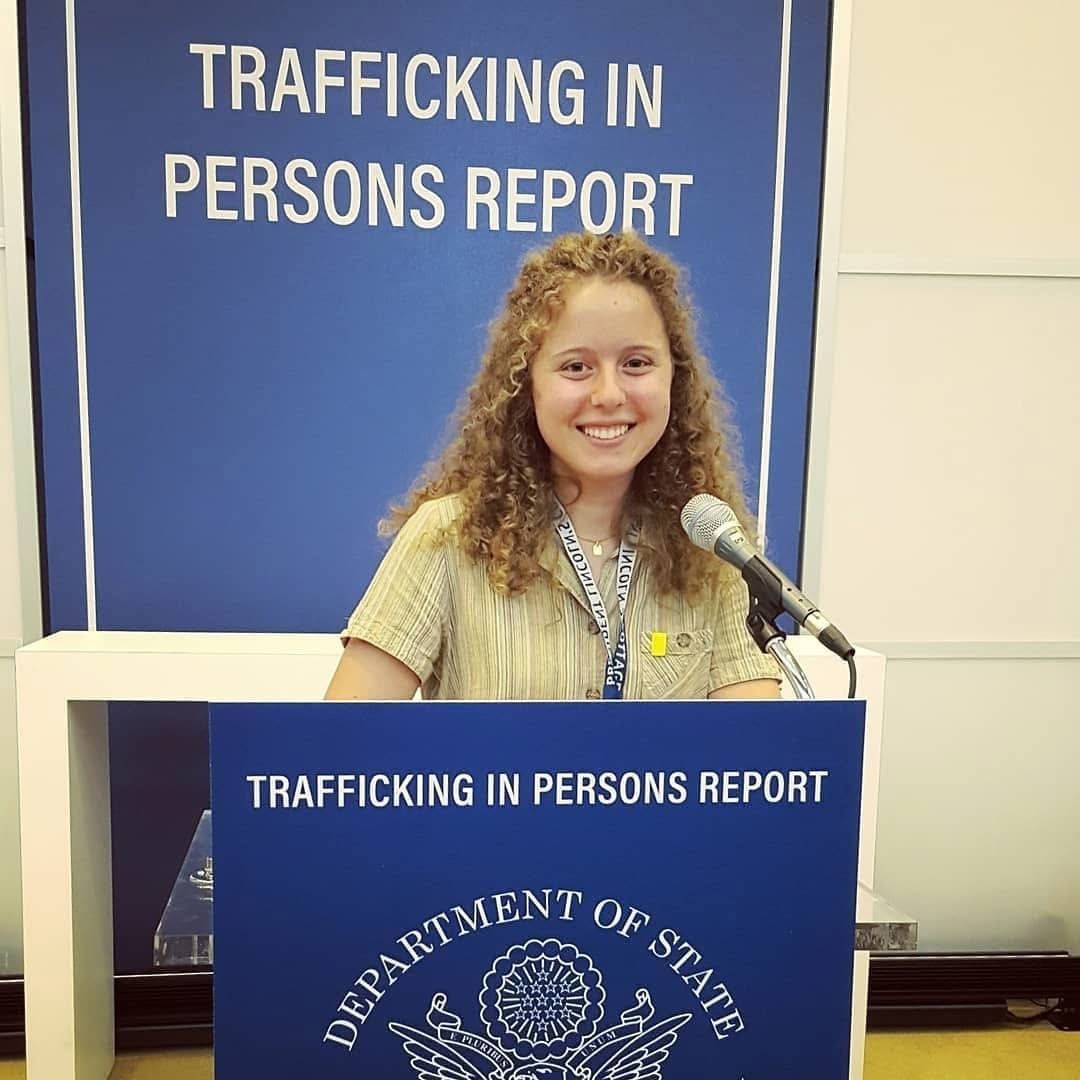
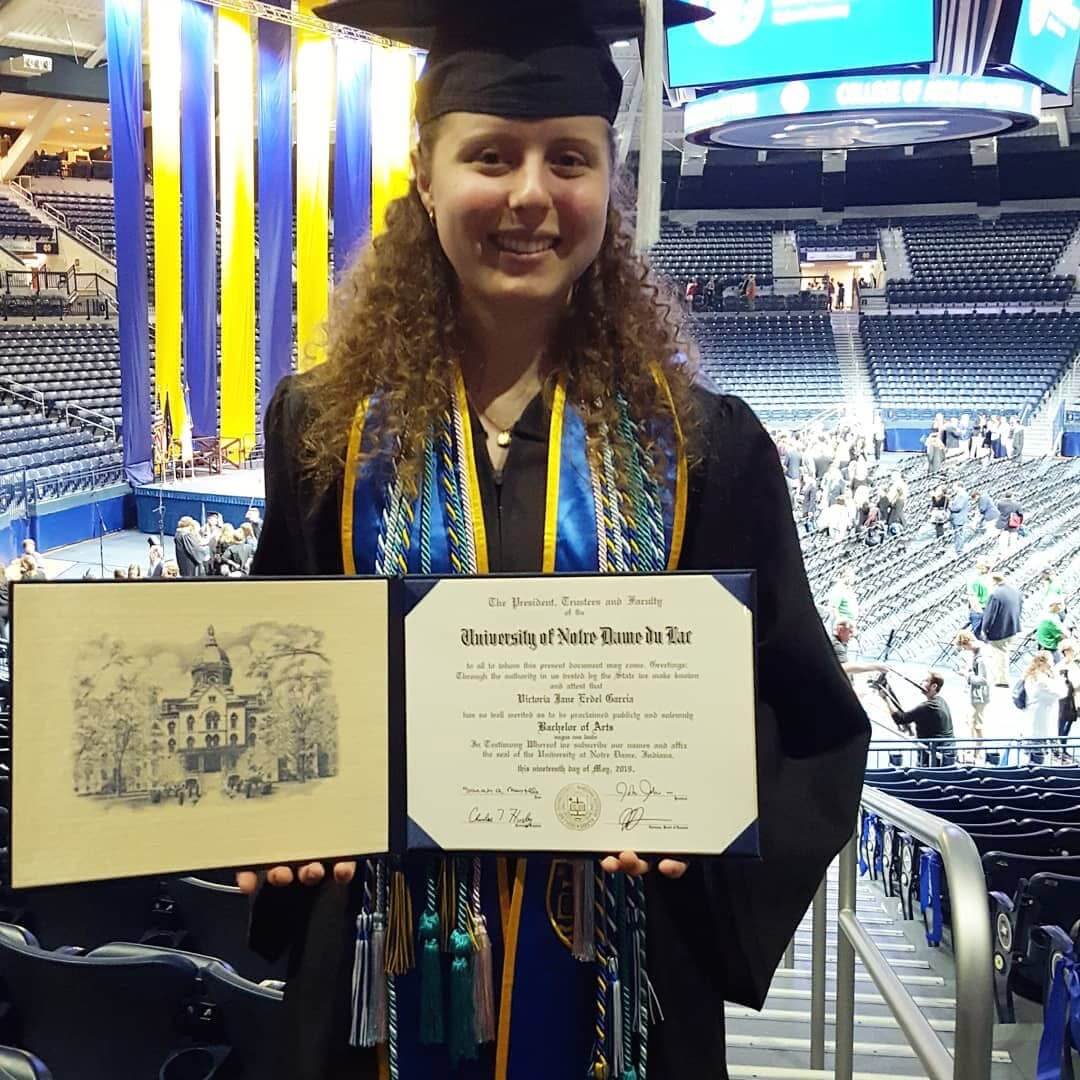
      <![CDATA[<p><strong>Victoria Erdel Garcia ’19</strong> was known on campus as the girl obsessed with fighting trafficking. She was drawn to the issue because victims’ stories rarely sustained attention—and too often elicited only sympathy. For Erdel Garcia, change has to go further than that. She just had to find a way to get people to listen. So, she started a podcast.</p>
<p>In 2017, the summer before her junior year at Notre Dame, Erdel Garcia started The Trafficking Dispatch, a four-season podcast featuring interviews with activists and survivors of trafficking. The podcast had short episodes targeted at college-aged students who could listen during their busy days and the episodes covered all forms of trafficking from sex trafficking, to labor trafficking, organ harvesting, child soldiers, and more.</p>
<hr>
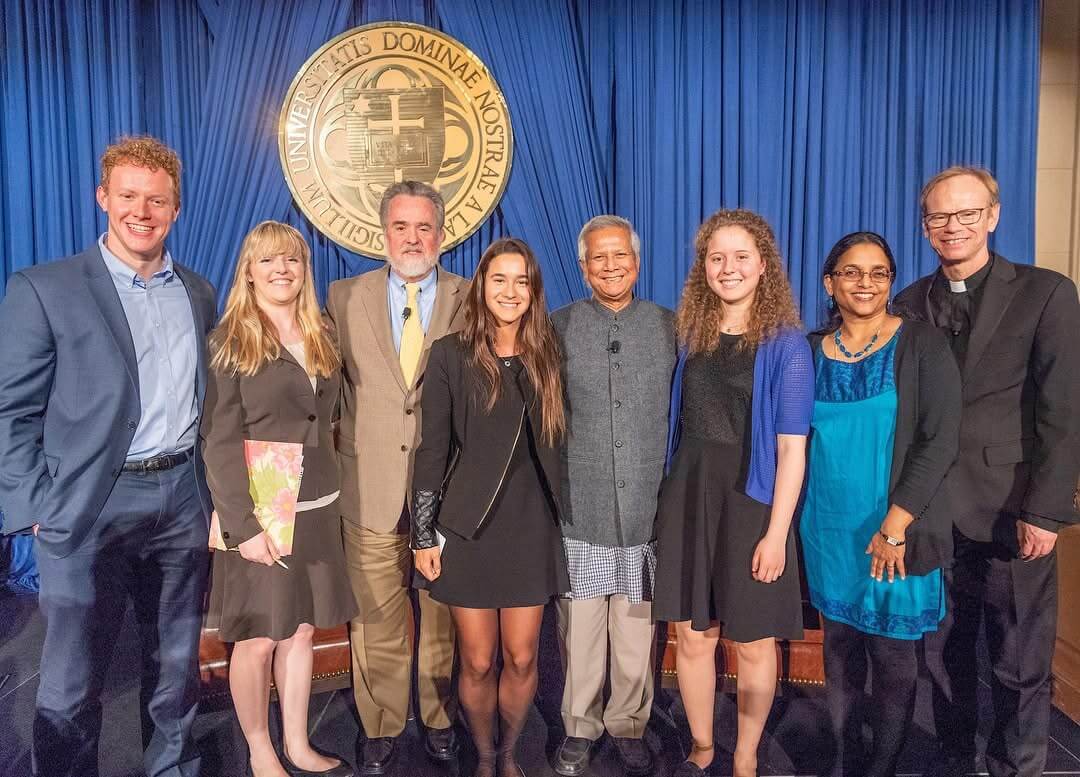
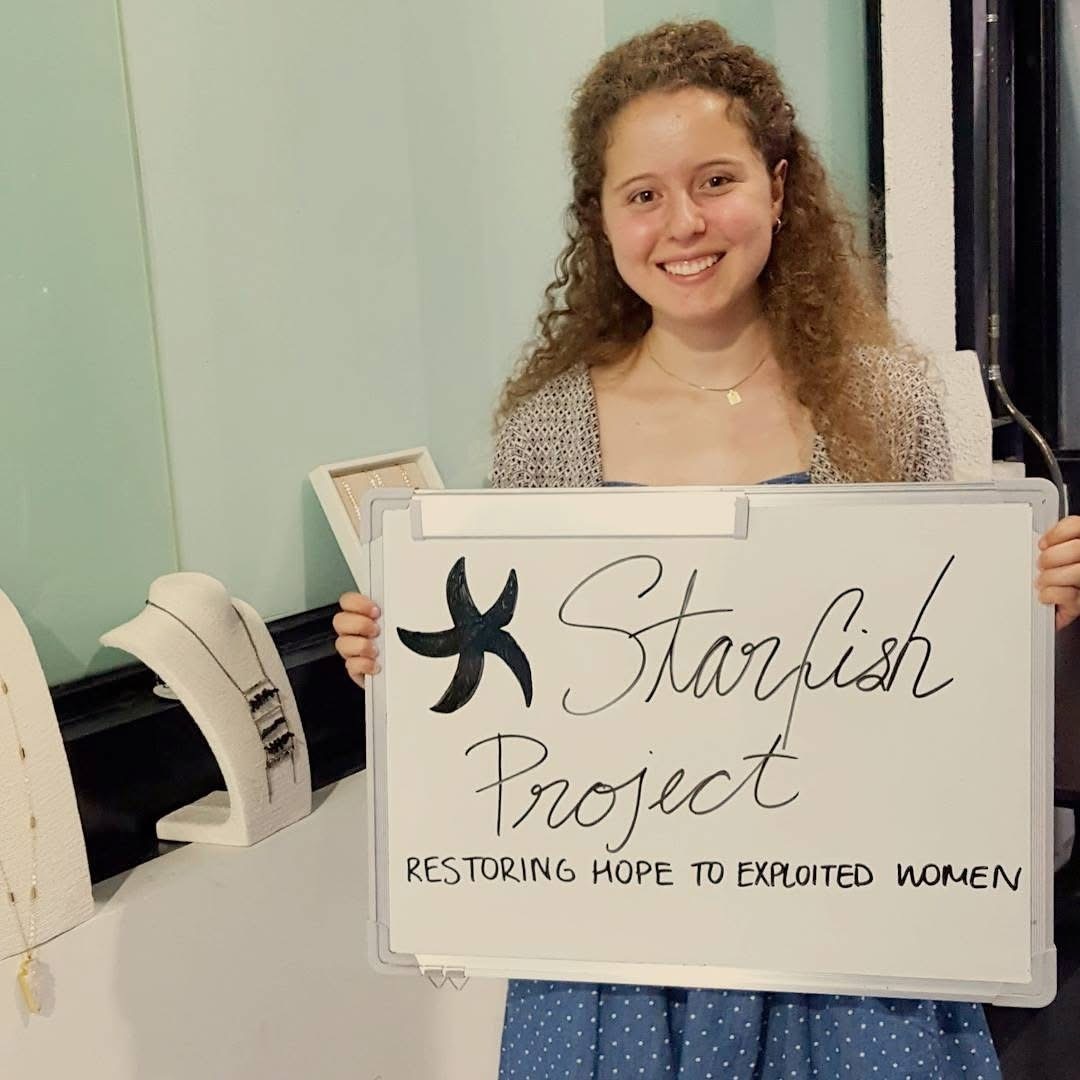
<p><script src="https://sociology.nd.edu/javascripts/lb.js?v=2023-05-17" defer></script><ul id="gallery-931" class="gallery-lb gallery-931" data-count="6"><li><a href="https://weare.nd.edu/assets/650612/fullsize/img_3897.jpeg" title="" data-title=""><img src="https://weare.nd.edu/assets/650612/600x600/img_3897.jpeg" alt="Eight diverse people smile before the gold Notre Dame seal and blue curtain." width="600" height="600" loading="lazy"></a></li><li><a href="https://weare.nd.edu/assets/650609/fullsize/img_3898.jpeg" title="" data-title=""><img src="https://weare.nd.edu/assets/650609/600x600/img_3898.jpeg" alt="Young woman with curly hair smiles in a black dress on a sunny day in front of Notre Dame&#39;s Main Building with the Golden Dome." width="600" height="600" loading="lazy"></a></li><li><a href="https://weare.nd.edu/assets/650610/fullsize/img_3895.jpeg" title="" data-title=""><img src="https://weare.nd.edu/assets/650610/600x600/img_3895.jpeg" alt="Smiling graduate in black gown, blue and gold stole, poses with a smiling man and two smiling women." width="600" height="600" loading="lazy"></a></li><li><a href="https://weare.nd.edu/assets/650611/fullsize/img_3896.jpeg" title="" data-title=""><img src="https://weare.nd.edu/assets/650611/600x600/img_3896.jpeg" alt="Smiling woman with curly hair at a podium with a microphone. Blue signs read &quot;Trafficking in Persons Report.&quot;" width="600" height="600" loading="lazy"></a></li><li><a href="https://weare.nd.edu/assets/650608/fullsize/img_3894.jpeg" title="" data-title=""><img src="https://weare.nd.edu/assets/650608/600x600/img_3894.jpeg" alt="Smiling woman in cap, gown, blue and gold stole holds Notre Dame diploma and Main Building illustration at Purcell Pavilion." width="600" height="600" loading="lazy"></a></li><li><a href="https://weare.nd.edu/assets/650607/fullsize/img_3899.jpeg" title="" data-title=""><img src="https://weare.nd.edu/assets/650607/600x600/img_3899.jpeg" alt="Smiling woman with curly brown hair holds a whiteboard: &#39;Starfish Project. RESTORING HOPE TO EXPLOITED WOMEN&#39;." width="600" height="600" loading="lazy"></a></li></ul><script>document.addEventListener("DOMContentLoaded", function(){var lightbox = new Lightbox({showCaptions: false,elements: document.querySelector(".gallery-931").querySelectorAll("a")});});</script></p>
<hr>
<p>The platform Erdel Garcia had created reached beyond campus and to survivors who wanted to share their stories, most of Erdel Garcia’s guests being people who reached out to her. During her time, she interviewed several survivors, and, in one case, a former trafficker.</p>
<p>“I wanted to show that there are real people, real stories behind all these atrocities,” Erdel Garcia said. “I feel like a lot of times people spread awareness and then they just stop. I really wanted to equip people with information that would actually compel them to act.”</p>
<p>Sharing survivors’ stories comes with great responsibility—something Erdel Garcia admitted made her nervous at first. She wasn’t sure how to approach such sensitive material. In those early moments, she held onto a quote from professor and activist Dr. Su’ad Abdul Khabeer: “You don’t have to be a voice for the voiceless, you just have to pass the mic.”</p>
<p>Erdel Garcia tries to live by that idea and has been since she was young, starting simply with paying attention.</p>
<p>Erdel Garcia was born in Bremen, Indiana, but soon after her birth her parents moved the family to Portugal. Both Ecuadorian-American, her parents worked as missionaries and taught in international schools. She credits her early exposure to different cultures with shaping her sense of cultural awareness.</p>
<p>It was before she started kindergarten when her family returned to the United States and officially settled in Mishawaka, where she spent most of her childhood. She first visited Notre Dame’s campus at six years old.</p>
<p>“I obviously was too young to understand college and Notre Dame’s reputation and academic rigor, but I just remember seeing all the Gothic architecture and how much it reminded me of Portugal,” she said. “I felt at home from the first time I visited campus, and when we were leaving, I told my parents I was going to go there someday.”</p>
<p>Later, when Erdel Garcia was thirteen, the founder of the Starfish Project—a nonprofit jewelry organization that employs and supports women escaping trafficking and exploitation in Asia—visited her church to speak about the group’s mission.</p>
<p>“In school I was always taught that slavery was a thing of the past, but this was the first time that I heard of human trafficking and how it is still an ongoing issue,” Erdel Garcia said.</p>
<p>This sudden awareness of an issue so pervasive yet largely unspoken stuck with her, quietly shaping the direction of her studies until it eventually became her focus. She wanted to understand trafficking more deeply and resolved to be part of the solution.</p>
<p>Erdel Garcia was accepted to Notre Dame through the QuestBridge Scholars Program. She initially began on the pre-health track, imagining she’d work in the medical field, before switching to sociology and adding a minor in Teaching English to Speakers of Other Languages (TESOL).</p>
<p>“I knew that I wanted to help other people. I just didn’t know how to do that,” she said. “The only job that immediately came to mind was a doctor.”</p>
<p>Her academic interests shifted when she realized her heart was in the humanities and that there are countless ways to help people across disciplines, some of which she had already encountered.</p>
<p>By her sophomore year, she had her sights set on working for Starfish Project and reached out to the organization’s CEO—who had visited her church when she was thirteen—to ask about internship opportunities.</p>
<p>At the time, she was hoping for a remote position and had no plans of leaving Indiana. But that changed when she was offered an internship in East Asia.</p>
<p>With the help of Notre Dame grants, Erdel Garcia spent the summer of 2018 in East Asia with the Starfish Project, immersing herself in a new culture while building relationships with survivors. She got to meet women where they were and listened to their stories firsthand.</p>
<p>“I really had a great time exploring a new culture, taking all their public transportation. It was amazing, but there were also heavy moments.”</p>
<p>When she returned to Notre Dame, Erdel Garcia immersed herself even more deeply in studying human trafficking, now informed not only by survivors’ stories but also by having witnessed the circumstances they endured.</p>
<p>By her senior year, her podcast had reached listeners in 100 countries. It also led to an invitation to present at the 2018 Nobel Peace Prize Forum. The podcast was later featured in the UN Sustainable Development Solutions Network’s 2018 Youth Solutions Report under the Sustainable Development Goal of Peace and Justice.</p>
<p>Even as her work took her beyond South Bend, Erdel Garcia stayed grounded in campus life. A proud Pasquerilla West resident for all eight semesters, she found a home in the dorm’s community. She also tutored in the Writing Center, drawing on her TESOL minor to support international students.</p>
<p>Additionally, she served as a research assistant in the Kellogg International Scholars Program, working under former history and Africana studies professor Mariana Candido to study the historical roots of human trafficking and slavery in Angola. She carried that work into her senior honors sociology thesis, which examined human trafficking in Asia.</p>
<p>By graduation, it seemed everything was lining up for Erdel Garcia to return to Starfish—this time not as an intern, but as a full-time English teacher. She had even spent her senior year studying trauma-informed teaching methods in preparation for the role. But a week before graduation, visa laws changed and she was suddenly no longer eligible.</p>
<p>Instead, Starfish offered her a different position in marketing and social media. In the role, she helped generate content about the organization’s products while telling survivors’ stories in a trauma-informed and sensitive way, focusing on their journeys rather than their traumatic pasts.</p>
<p>“In a kind of unplanned way, running that podcast in college really helped prepare me for that role, so I kind of had this informal training. My thesis was also about how we present topics of human trafficking on social media, so it all accidentally prepared me for that exact role.”</p>
<p>Though her job was different from what she had originally planned, Erdel Garcia eventually rose to E-commerce Senior Manager and found the work deeply fulfilling.</p>
<p>“I know advertising is all about sales, but at the end of the day, it was different at this company. At this company, every sale quite literally directly leads to hiring more women,” Erdel Garcia said. “It was really motivating to be able to see a number and then know exactly how many women would be able to change their own lives because of it.”</p>
<p>However, six months into her role at Starfish, the pandemic upended everything. Erdel Garcia had to return to Mishawaka and began working remotely as the company weathered financial strain. To make extra income—and because she genuinely loved it when she was on campus—she picked tutoring back up.</p>
<p>Around that same time, she was diagnosed with ADHD. The diagnosis helped her understand her own academic journey and inspired her to support students who struggled in similar ways.</p>
<p>“I felt like a lot of things in my life started making sense retroactively and I started reflecting back on my time, specifically working at the Writing Center at Notre Dame.”</p>
<p>Many of the students who came to her had ADHD and she’d used the techniques that had worked for her, not yet realizing she had it, too. After her diagnosis, she felt better equipped to support her students, now understanding more fully the challenges they faced.</p>
<p>“I started working with students and professionals who had ADHD or autism, just helping them communicate their own ideas clearly,” Erdel Garcia said. “It was something I started doing, honestly, out of survival at first, but then, over time, it just became this thing that I kept doing and still do to this day.”</p>
<p>After nearly five and a half years at Starfish and tutoring on the side, Erdel Garcia began craving something in-person—and a change of scenery. She left the organization and moved to Memphis, Tennessee, and in September 2024 joined Fish and Associates, a financial planning and wealth management firm, as a Client Services Associate. Her long-term goal is to become a Certified Financial Planner (CFP).</p>
<p>Fish and Associates’ mission is similar to Starfish Project in that they aim not only to support their clients financially, but to equip them for long-term stability and success. As a women-owned and operated firm, they focus on serving the underserved, particularly women and members of the LGBTQ community.</p>
<p>Though the field may seem different, Erdel Garcia sees clear overlap between her past and present work—particularly when it comes to financial empowerment.</p>
<p>“I want to help women,” she said. “My core mission is to help women achieve financial literacy, so that they can achieve financial freedom.”</p>
<p>It is important to Erdel Garcia that she carries the same morals and values with her, no matter the role.</p>
<p>Looking back on her own experiences, she encourages current Notre Dame students to lean into the resources and opportunities the University provides.</p>
<p>“If you’re wanting to make your little slice of the world a better place, Notre Dame has so many connections ... and so many opportunities to help you do that. Don’t shy away from finding those opportunities because I promise you they exist.”</p>
<p>Maybe we should all lean into the one thing that keeps returning to our line of sight—the interest we can’t seem to shake—and invest in it so fully that others begin to care, too. That’s how someone leaves a reputation like Victoria Erdel Garcia: the girl obsessed with fighting trafficking.</p>
<p class="attribution">Originally published by <span class="rel-author">Amanda Dempson '26</span> at <span class="rel-source"><a href="https://weare.nd.edu/stories/passing-the-mic/">weare.nd.edu</a></span> on <span class="rel-pubdate">March 03, 2026</span>.</p>]]>
    </content>
    <link rel="enclosure" type="image/jpeg" href="https://sociology.nd.edu/assets/651030/wearend_victoriaerdelgarcia_1440x617.jpg" title="A smiling young woman with curly blonde hair speaks at a blue podium, labeled &quot;TRAFFICKING IN PERSONS REPORT,&quot; with a microphone."/>
    <author>
      <name>Amanda Dempson '26</name>
    </author>
  </entry>
  <entry>
    <id>tag:sociology.nd.edu,2005:News/179616</id>
    <published>2026-03-02T08:55:00-05:00</published>
    <updated>2026-03-02T08:55:38-05:00</updated>
    <link rel="alternate" type="text/html" href="https://sociology.nd.edu/news-and-events/news/three-majors-and-two-career-development-programs-help-junior-natalie-magura-find-her-perfect-professional-path/"/>
    <title>Three majors and two career development programs help junior Natalie Magura find her perfect professional path</title>
    <summary type="text">
      <![CDATA[Natalie Magura studies at Notre…]]>
    </summary>
    <content type="html">
      <![CDATA[<figure class="image image-default"><img src="https://al.nd.edu/assets/650345/fullsize/20260126_as_natalie_magura_010.jpg" alt="Young woman in dark gray sweater writes in notebook by laptop and Notre Dame lanyard, smiling at camera." width="1200" height="800">
<figcaption>Natalie Magura studies at Notre Dame London. While abroad, she's taking classes on art history, political science, and other topics through a British lens. (Photo by Anthony Sajdler)</figcaption>
</figure>
<p>Natalie Magura is determined to make the most of her undergraduate years.</p>
<p>Right now, that means the junior is soaking up all she can from the city of London. She’s exploring British museums in her art history class and learning causes and effects of Brexit in her political science class, then roaming the city streets in her free time.</p>
<p>But when she was a first-year, Magura’s appetite for edification didn’t take her across an ocean — just across disciplines. She started out as just a <a href="https://sociology.nd.edu/">sociology</a> major, learning how to scientifically study social structures and relationships.</p>
<p>“Then I recognized there were more pieces to the puzzle,” she said.</p>
<p>Adding majors in <a href="https://economics.nd.edu/">economics</a> and <a href="https://politicalscience.nd.edu/">political science</a> gave Magura a more complete view of critical issues — take incarceration, for example. Through sociology, she learned about inequalities within the prison system and the effects of mass incarceration. Through economics, she learned how disparities in wealth translate into disproportionate incarceration rates. Through political science, she learned about the public policy environment behind the prison system.</p>
<p>To finish the puzzle, Magura just needed a career plan that could interlock with her wide-ranging interests. It took her a few semesters — and deep engagement with career development opportunities through the Beyond the Dome and Consulting Connect programs — to figure it out, but she started with the confidence that the skills she’d learn would make her successful in any field.</p>
<p>“Fitting all of those pieces together solidified my decision to move forward with three majors,” she said. “I’m constantly exposed to different lenses in my learning, no matter what the subject may be.”</p>
<h2 dir="ltr">Finding a career fit with three majors</h2>
<figure class="image image-right"><img src="https://al.nd.edu/assets/650347/fullsize/20260126_as_natalie_magura_028.jpg" alt="Young woman with long highlighted brown hair smiles, wearing a gray shirt with silver eyelets, holding a blue notebook." width="300" height="400">
<figcaption>Natalie Magura</figcaption>
</figure>
<p>To find her professional path, Magura began with the same strategy she used with her majors — more is more. She joined every club that sounded interesting and attended as many career discernment events as her schedule allowed. That brought her to <a href="https://al.nd.edu/careers/">Beyond the Dome</a>, which would become a main character in her Notre Dame story.</p>
<p>A career development program exclusively for undergraduates in the College of Arts &amp; Letters, Beyond the Dome empowers students to explore career paths while giving them opportunities to break into their desired industry. As a first-year, Magura took advantage of the program’s employer interaction events, one of which introduced her to the host of her upcoming summer internship: Bain &amp; Company, one of the country’s top consulting firms.</p>
<p>“In high school, I had no idea what consulting was,” Magura said. “Beyond the Dome introduced me to the industry and matched it with the skills I had as an Arts &amp; Letters student.”</p>
<p>Networking with a Bain employee at a Beyond the Dome workshop was the first step in Magura’s journey to an internship with Bain, but it wasn’t what sealed the deal. Along the way were more career workshops, resume refinement, interview coaching, and connections with upperclassmen.</p>
<p>Magura also joined <a href="https://consultingconnect.nd.edu/">Consulting Connect</a>, a <a href="https://careerdevelopment.nd.edu/">Meruelo Family Center for Career Development</a> program that prepares students for consulting jobs through resume and interview prep and networking opportunities. What Magura found the most helpful, though, was the case interview training offered by students who had already gone through the recruitment process.</p>
<p>Business consultants provide guidance and solve complex issues on a wide variety of projects. So on top of traditional job interviews, consulting firms use case interviews to assess applicants’ critical thinking abilities with sample business problems, such as “How should I go about opening a new coffee shop?”</p>
<p>To solve a case — usually within a strict time limit — an applicant needs to generate a logical plan of action, requiring knowledge of business principles and a decent portion of math. Consulting Connect helped her learn how to ace a case through mock interviews with feedback from peers and actual consultants.</p>
<p>After she got the basics down, Magura realized the unique strengths that had taken her problem-solving to the next level.</p>
<p>“With practice, anyone is going to be able to solve a case — it’s not calculus,” she said. “But Arts &amp; Letters students have an inherent creativity in the ways they think about problems. You’re not only thinking about it like a business problem; you’re almost thinking about it like a comprehensive essay.”</p>
<h2 dir="ltr">Focusing on giving back</h2>
<p>Now that Magura’s found the right path for her, she wants to help other students do the same. To that end, she’s taken on responsibilities as co-president of Consulting Connect and chief executive officer of Beyond the Dome.</p>
<p>“I’m making sure I’m always a resource and an accessible mentor,” she said. “I’m very proud to be the support that I received as an underclassman.”</p>
<blockquote class="pull" style="float: left; border-left: none; border-right: 0.2em solid var(--brand-gold); margin-left: 0px; padding: 1em 1.5em 1em 0;">
<p>“Having a community that outlasts the time I’m actually at school is super valuable to me. For that, there’s no better place than Notre Dame.”</p>
</blockquote>
<p>Magura is excited by the way both programs continue to develop and expand opportunities for students, especially Beyond the Dome’s new LaunchPoint Projects. In an immersive semester-long experience, students work with a company or nonprofit on a real business problem, and their recommendations will help inform senior leaders’ decision-making. The projects give students deep, practical experience, as well as connections to a managing director or senior partner at an influential corporation like McKinsey &amp; Company.</p>
<p>As a certified connoisseur of career programs, Magura knows it can be intimidating to start getting involved, especially for students like her first-year self, who had no prior connections to Notre Dame. But her advice is just to show up — to clubs, to information sessions, to whatever sounds exciting.</p>
<p>“Everyone at these events is someone who’s a little bit lost or confused, and using these resources is definitely a way to get that extra lift if you need it,” she said.</p>
<p>Putting herself out there as much as possible was how Magura found her path and her community on campus. But now that she’s in the latter half of her time at Notre Dame, she’s focusing less on building new things and more on enjoying what she’s already built — taking electives, time for intentional growth, and long walks during golden hour.</p>
<p>And when she graduates next year, Magura knows that what she’s found at Notre Dame isn’t going away.</p>
<p>“Having a community that outlasts the time I’m actually at school is super valuable to me,” she said. “For that, there’s no better place than Notre Dame.”</p>
<p class="attribution">Originally published by <span class="rel-author">Adah McMillan</span> at <span class="rel-source"><a href="https://al.nd.edu/news/latest-news/three-majors-and-two-career-development-programs-help-junior-natalie-magura-find-her-perfect-professional-path/">al.nd.edu</a></span> on <span class="rel-pubdate">February 26, 2026</span>.</p>]]>
    </content>
    <link rel="enclosure" type="image/jpeg" href="https://sociology.nd.edu/assets/650708/20260126_as_natalie_magura_010.jpg" title="Young woman in dark gray sweater writes in notebook by laptop and Notre Dame lanyard, smiling at camera."/>
    <author>
      <name>Adah McMillan</name>
    </author>
  </entry>
  <entry>
    <id>tag:sociology.nd.edu,2005:News/179299</id>
    <published>2026-02-17T15:03:00-05:00</published>
    <updated>2026-02-17T15:03:42-05:00</updated>
    <link rel="alternate" type="text/html" href="https://sociology.nd.edu/news-and-events/news/sociology-spring-colloquium-series-presents-katherine-maich-bringing-law-home-gender-race-and-household-labor-rights/"/>
    <title>Sociology Spring Colloquium Series Presents: Katherine Maich "Bringing Law Home: Gender, Race, and Household Labor Rights"</title>
    <summary type="text">
      <![CDATA[Katherine Maich is currently an Assistant Professor of Sociology at Texas A&amp;M University. Her teaching and research interests include law, gender, labor informality, domestic work, ethnography, and the Global South. Her research examines dynamics of inequality in the workplace and the extent to…]]>
    </summary>
    <content type="html">
      <![CDATA[<p>Katherine Maich is currently an Assistant Professor of Sociology at Texas A&amp;M University. Her teaching and research interests include law, gender, labor informality, domestic work, ethnography, and the Global South. Her research examines dynamics of inequality in the workplace and the extent to which external factors such as law, regulation and policy mitigate those dynamics, and with what consequences.</p>
<p>With funding from the Andrew Mellon Foundation, the American Association of University Women, and the Inter-American Foundation, her book, Bringing Law Home: Gender, Race, and Household Labor Rights, draws from over 24 months of ethnography in Lima, Peru and New York City, 120 in-depth interviews, and analysis of legislative transcripts. Through a Global South/North comparison, it focuses on the home as a site of paid labor and as a microcosm of social and symbolic boundaries, bringing feminist theory, race, gender and migration into conversation with law and labor legislation.</p>]]>
    </content>
    <link rel="enclosure" type="image/jpeg" href="https://sociology.nd.edu/assets/649307/maich.jpg" title="Katherine Maich"/>
    <author>
      <name>Department of Sociology</name>
    </author>
  </entry>
  <entry>
    <id>tag:sociology.nd.edu,2005:News/178642</id>
    <published>2026-01-22T15:21:00-05:00</published>
    <updated>2026-01-22T15:21:49-05:00</updated>
    <link rel="alternate" type="text/html" href="https://sociology.nd.edu/news-and-events/news/arts-letters-faculty-ernest-morrell-and-mark-berends-recognized-for-influential-educational-practice-and-policy/"/>
    <title>Arts &amp; Letters faculty Ernest Morrell and Mark Berends recognized for influential educational practice and policy</title>
    <summary type="text">
      <![CDATA[…]]>
    </summary>
    <content type="html">
      <![CDATA[<figure class="image image-right"><img src="https://al.nd.edu/assets/645552/fullsize/both.jpg" alt="Two smiling men in suits against a gray background. The man on the left is bald with dark skin, wearing a blue suit and a green and blue striped tie with gold shamrocks. The man on the right has a gray beard and short brown hair, wearing a blue suit and a striped blue and green tie." width="600" height="600">
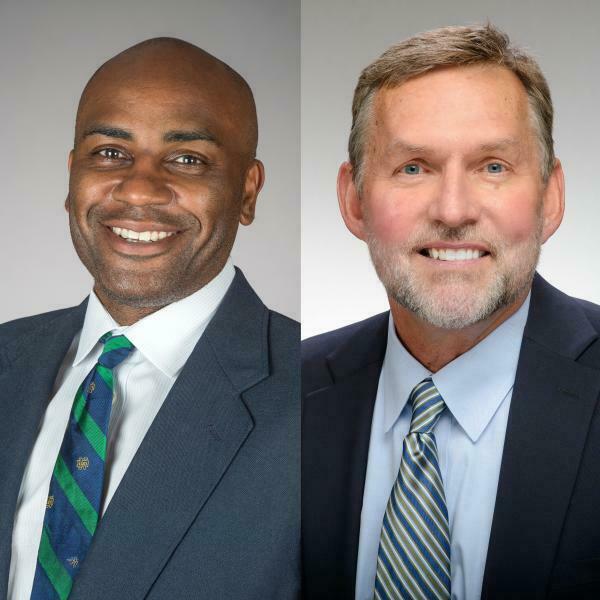
<figcaption>Ernest Morrell (left) and Mark Berends</figcaption>
</figure>
<p>Two University of Notre Dame faculty members, <a href="https://iei.nd.edu/initiatives/notre-dame-center-for-literacy-education/people/ernest-morrell">Ernest Morrell</a> and <a href="https://iei.nd.edu/initiatives/institute-for-educational-initiatives/people/mark-berends-phd">Mark Berends</a>, have been named to the <a href="https://www.edweek.org/policy-politics/opinion-who-are-the-nations-top-education-scholars/2026/01#:~:text=The%20top%20scorers%20are%20all,at%20least%20one%20ranked%20scholar.">2026 RHSU Edu-Scholar Public Influence Rankings</a>, published annually by Education Week. The list recognizes the 200 university-based scholars whose academic work and public influence have most shaped educational practice and policy nationwide. Both Morrell and Berends are faculty fellows in Notre Dame’s <a href="https://iei.nd.edu/">Institute for Educational Initiatives</a> (IEI), which strives to improve PK-12 education through research, formation of teachers and leaders, and direct service to educational systems.</p>
<h2><strong>Ernest Morrell</strong></h2>
<p>Ernest Morrell has been included on the list every year since 2015, marking his 12th appearance, for his groundbreaking contributions to literacy education. Morrell has served as the associate dean for the humanities and equity in the College of Arts &amp; Letters, the Coyle Professor in Literacy Education, and the director of the Notre Dame <a href="https://iei.nd.edu/initiatives/notre-dame-center-for-literacy-education/center-for-literacy-education">Center for Literacy Education</a> within the IEI. He is a faculty member in the departments of <a href="https://english.nd.edu/">English</a> and <a href="https://africana.nd.edu/">Africana studies</a> and a faculty fellow in the <a href="https://raceandresilience.nd.edu/">Initiative on Race and Resilience</a>. Morrell’s research focuses on how the use of out-of-school literacy practices, including popular culture and media, can engage young people in academic content and strengthen educational outcomes. His scholarship also explores how educators and communities can partner with students through collaborative research that supports learning, leadership, and social change. In 2025, Morrell received the <a href="https://al.nd.edu/news/latest-news/literacy-scholar-ernest-morrell-honored-with-james-r-squire-award-for-transforming-language-arts-education/">James R. Squire Award</a> from the National Council of Teachers of English (NCTE), recognizing his transformative impact on literacy education and English language arts.</p>
<h3><strong>Mark Berends</strong></h3>
<p>Mark Berends was named to the 2026 list for the eighth time, recognized for his influential research on school effectiveness and education policy. He is a professor in the <a href="https://sociology.nd.edu/">Department of Sociology</a> and a faculty fellow of the IEI’s <a href="https://iei.nd.edu/initiatives/creo">Center for Research on Educational Opportunity</a> (CREO) and the <a href="https://kellogg.nd.edu/">Kellogg Institute for International Studies</a>, and he currently serves as the director of the <a href="https://iei.nd.edu/initiatives/pier">ND PIER</a> program. Berends has written and published extensively on educational reform, school choice, and the effects of schools and classrooms on student achievement and attainment. His research focuses on how school organization and classroom instruction relate to student outcomes, with special attention to historically marginalized students and school reforms aimed at improving educational opportunities.</p>
<p>“We are proud to see Ernest Morrell and Mark Berends recognized for the reach and impact of their scholarship,” said <a href="https://iei.nd.edu/initiatives/institute-for-educational-initiatives/people/matthew-kloser">Matt Kloser</a>, Hackett Family Director of the Institute for Educational Initiatives. “Their work reflects the very best of Notre Dame’s mission, research in service of others, grounded in rigor, and oriented toward strengthening educational outcomes and opportunity while supporting the flourishing of young people in mind and heart.”</p>
<p>The full list of rankings can be found on <a href="https://www.edweek.org/policy-politics/opinion-who-are-the-nations-top-education-scholars/2026/01#:~:text=The%20top%20scorers%20are%20all,at%20least%20one%20ranked%20scholar.">Education Week</a>.</p>
<h2><strong>About the Institute for Educational Initiatives</strong></h2>
<p>Founded in 1996, the Institute for Educational Initiatives consists of more than two dozen initiatives that strive to improve education for all youth, particularly the disadvantaged, paying special, though not exclusive, attention to Catholic schools. Through research, the formation of teachers and leaders, and direct service to educational systems, the IEI’s scholars and practitioners pursue interdisciplinary collaborations to better understand and improve PK-12 education both in the United States and internationally.</p>
<p>For more information about IEI and its initiatives, visit <a href="https://iei.nd.edu/">iei.nd.edu</a>.</p>
<p><strong>Media Contact:</strong></p>
<p>Carrie Gates</p>
<p>Associate Director of Media Relations</p>
<p>University of Notre Dame</p>
<p><a href="mailto:c.gates@nd.edu">c.gates@nd.edu</a></p>
<p class="attribution">Originally published by <span class="rel-author">Kenneth Wincko</span> at <span class="rel-source"><a href="https://al.nd.edu/news/latest-news/arts-letters-faculty-ernest-morrell-and-mark-berends-recognized-for-influential-educational-practice-and-policy/">al.nd.edu</a></span> on <span class="rel-pubdate">January 21, 2026</span>.</p>]]>
    </content>
    <link rel="enclosure" type="image/jpeg" href="https://sociology.nd.edu/assets/645742/both.jpg" title="Two smiling men in suits against a gray background. The man on the left is bald with dark skin, wearing a blue suit and a green and blue striped tie with gold shamrocks. The man on the right has a gray beard and short brown hair, wearing a blue suit and a striped blue and green tie."/>
    <author>
      <name>Kenneth Wincko</name>
    </author>
  </entry>
  <entry>
    <id>tag:sociology.nd.edu,2005:News/178641</id>
    <published>2026-01-22T15:20:00-05:00</published>
    <updated>2026-01-22T15:20:17-05:00</updated>
    <link rel="alternate" type="text/html" href="https://sociology.nd.edu/news-and-events/news/franco-institutes-undergraduate-public-humanities-internship-is-officially-underway/"/>
    <title>Franco Institute's Undergraduate Public Humanities Internship is underway for spring 2026</title>
    <summary type="text">
      <![CDATA[The Franco Institute kicked off its inaugural semester of the Undergraduate Public Humanities Internship (UPHI) in the spring of 2026. The internship comes as part of the Franco Institute’s…]]>
    </summary>
    <content type="html">
      <![CDATA[<p>The Franco Institute kicked off its inaugural semester of the <a href="https://franco.nd.edu/for-students/funding/undergraduate-public-humanities-internships/">Undergraduate Public Humanities Internship</a> (UPHI) in the spring of 2026.</p>
<p>The internship comes as part of the Franco Institute’s expanded mission to foster the liberal arts’ engagement with the public good. As a disciplinary focus, “public humanities” bridge the gap between scholarly production and public engagement, fostering collaborative efforts to explore the world and our uniquely human place within it. The UPHI offers students the opportunity to use their humanities skills in service to their community while learning how knowledge is produced through the lives, actions, and experiences of community members.</p>
<p>This year's seven student interns from the College of Arts &amp; Letters met together for breakfast and orientation on Friday, January 16, with Franco Institute staff members Lindsay Paturalski, Jake Schepers, and Emmanuel Ojeifo. The students learned about the internship’s expectations and explored best practices and methodologies for public humanities research.</p>
<figure class="image image-left"><img src="https://franco.nd.edu/assets/645369/js_uphi_kickoffsession_1_16_26.jpg" alt="Students socialize in a bright university lounge with large windows and a grey patterned carpet. A woman in a pink top gestures, another in a white hoodie smiles. A man uses a laptop, while others eat donuts and chat in modern armchairs and couches." width="600" height="400"></figure>
<p>All students receive support from the Institute during the spring 2026 semester as they work with their respective community partners and prepare research related to this year's annual research theme of <a href="https://franco.nd.edu/research/annual-research-theme/">Attention</a>. In addition, the interns will present their work as part of a poster session at the Institute's <a href="https://franco.nd.edu/events/dorothy-day-and-thomas-merton-culture-and-the-public-good-symposium/">Day | Merton Symposium</a> in April. "It's exciting to see this terrific cohort of Arts &amp; Letters students working at the interface of humanities research and the publics to whom it matters. We're looking forward to a great first semester of public humanities work and to celebrating that work at our spring symposium," said Kate Marshall, the Institute's Director.</p>
<p>The Franco Institute is pleased to share its incoming class of the Undergraduate Public Humanities Internship:</p>
<p><strong>Elizabeth Coleman</strong> (Psychology, Pre-Health) with <a href="https://www.reinsoflife.org/">Reins of Life</a></p>
<p><strong>Eric Derr</strong> (Program of Liberal Studies) with <a href="https://studebakermuseum.org/">The Studebaker National Museum</a></p>
<p><strong>Aubrey Keegan</strong> (Sociology and Sheedy Family Program) with <a href="https://www.uytinc.org/">United Youth Theatre</a></p>
<p><strong>Jun Wei Lee</strong> (History) with <a href="https://www.lacasadeamistad.org/">La Casa de Amistad</a></p>
<p><strong>James Thompson</strong> (Sociology) with <a href="https://www.commonwealmagazine.org/">Commonweal</a></p>
<p><strong>Jasmine Williams</strong> (Psychology) with <a href="https://www.bgcnic.org/">Boys &amp; Girls Clubs of the Northern Indiana Corridor</a></p>
<p><strong>Rain Zhang</strong> (Medieval Studies) with <a href="https://www.commonwealmagazine.org/">Commonweal</a></p>
<p class="attribution">Originally published by <span class="rel-author">Jacob Schepers</span> at <span class="rel-source"><a href="https://franco.nd.edu/news/franco-institutes-undergraduate-public-humanities-internship-is-officially-underway/">franco.nd.edu</a></span> on <span class="rel-pubdate">January 22, 2026</span>.</p>]]>
    </content>
    <link rel="enclosure" type="image/jpeg" href="https://sociology.nd.edu/assets/645741/js_uphi_kickoff_1_16_26.jpg" title="Seven 2026 student interns stand arm-in-arm against a white wall with dark doors. They wear various casual tops in blue, orange, brown, light blue, white, and black, with jeans or dark pants."/>
    <author>
      <name>Jacob Schepers</name>
    </author>
  </entry>
  <entry>
    <id>tag:sociology.nd.edu,2005:News/178537</id>
    <published>2026-01-20T16:26:00-05:00</published>
    <updated>2026-01-20T16:26:20-05:00</updated>
    <link rel="alternate" type="text/html" href="https://sociology.nd.edu/news-and-events/news/notre-dame-sociologist-examines-human-interaction-to-explain-organizational-dynamics/"/>
    <title>Notre Dame sociologist examines human interaction to explain organizational dynamics</title>
    <summary type="text">
      <![CDATA[…]]>
    </summary>
    <content type="html">
      <![CDATA[<figure class="image image-right"><img src="https://al.nd.edu/assets/643049/20251120_jlh_sociology_tim_hallett_graduate_class_020_600x.jpg" alt="A man with glasses in a light checkered shirt gestures while speaking, holding papers, in front of a presentation slide about culture. Out-of-focus students are in the foreground." width="600" height="450">
<figcaption>Professor of sociology Timothy Hallett speaks to graduate students on culture and organizations. Photo by Jon L. Hendricks/University of Notre Dame</figcaption>
</figure>
<p><a href="https://sociology.nd.edu/people/timothy-hallett/">Timothy Hallett</a> understands interactions — how they create culture, translate to organizational success, and fuel conflict.</p>
<p>Hallett, a professor of <a href="https://sociology.nd.edu/">sociology</a> at the University of Notre Dame, embeds himself in day-to-day operations of public and private organizations to examine “inhabited institutionalism,” or how the institutions that shape our lives are inhabited by people doing things together. He observes and interviews people to determine how their communications affect organizational life.</p>
<p>Focusing on these interactions, he contends, is essential to understanding how organizations operate.</p>
<p>Hallett’s research has covered topics such as the relationship between leadership and teachers in schools. He has researched symbolic power — the ability to define situations so that other people comply without really thinking otherwise — and how it is both created in social interactions and used to shape organizations.</p>
<p>It’s heady and heavy stuff. And his research grabbed the spotlight after a 2009 article he co-authored on a topic — gossip at work — that is as much part of organizational life as it can be therapeutic, draining, and divisive. “<a href="https://journals.sagepub.com/doi/abs/10.1177/0891241609342117">Gossip at Work: Unsanctioned Evaluative Talk in Formal School Meetings</a>,” published in the <em>Journal of Contemporary Ethnography</em>, attracted attention from <a href="https://www.nytimes.com/2009/11/03/science/03tier.html"><em>The New York Times</em></a>, the Associated Press, <em>Men’s Health</em>, and <em>Redbook</em>.</p>
<p>“I was not expecting that little piece to go public,” Hallett said. “We publish all articles in professional journals and have high citation counts, but the public cares about different things.”</p>
<p>Gossip is something we know when we hear it, and Hallett describes it as informal talk in which people evaluate others who are not present. It can happen in team meetings, where the content of the gossip is typically addressed in three ways: challenged, counteracted with a positive statement, or shifted to another topic.</p>
<p>Hallett offers the example of “if you were to say ‘Tim Hallett was late to this meeting,’ someone could jump in and say ‘Isn’t it really cool how much he loves teaching?’”</p>
<figure class="image image-left"><img src="https://al.nd.edu/assets/643047/20251120_jlh_sociology_tim_hallett_graduate_class_014_1_400x.jpg" alt='A man in a light blue checkered shirt and glasses gestures towards a whiteboard filled with blue handwritten notes about schedules and "Happy Thanksgiving!".' width="450" height="600">
<figcaption>Timothy Hallett, professor of sociology, enjoys teaching and will teach an undergraduate course in a sophomore college seminar that takes a nontraditional approach. Photo by Jon L. Hendricks/University of Notre Dame.</figcaption>
</figure>
<p>Indeed, Hallett enjoys his teaching and research career that began at Indiana University in 2003 and brought him to Notre Dame in fall 2025.</p>
<p>“Teaching has always been the thing that keeps me up at night and wakes me up in the morning — in a positive way,” he said.</p>
<p>In his first semester on campus, Hallett taught a graduate class on culture and organizations, and in the spring, he will teach an undergraduate course in a sophomore college seminar that takes a nontraditional approach. Students will read a range of best-selling autobiographies by a range of authors to learn how they responded to societal challenges. Afterwards, students will be asked to think about their own life stories.</p>
<p>“They will learn and understand how society impacts them and how they impact society so they can interact in the world, and can understand why the world interacts with them in particular ways and how they can act on the world,” Hallett said. “I see this kind of learning as an enlightenment project, and I want to help people to understand their own lives and worlds.”</p>
<p>For his next research project, Hallett will examine students who earn graduate degrees in public affairs, focusing on how they are taught and the resulting impact on the public, private, and nonprofit sectors.</p>
<p>“Those interactions and cultures matter for government,” he said. “They matter for politics.”</p>
<p>Hallett plans to collaborate with his colleagues in sociology and from other disciplines across the university— the type of opportunity that attracted him to Notre Dame in the first place.</p>
<p>“In terms of its specialty in sociology, Notre Dame is very strong in cultural sociology, organization sociology, and interactional sociology,” he said. “There’s a very rich tradition of qualitative research at Notre Dame. And that’s what I do — field observations, field interviews. There are just so many synergies.”</p>
<p class="attribution">Originally published by <span class="rel-author">Pat Milhizer</span> at <span class="rel-source"><a href="https://al.nd.edu/news/latest-news/notre-dame-sociologist-examines-human-interaction-to-explain-organizational-dynamics/">al.nd.edu</a></span> on <span class="rel-pubdate">January 19, 2026</span>.</p>]]>
    </content>
    <link rel="enclosure" type="image/jpeg" href="https://sociology.nd.edu/assets/645441/20251120_jlh_sociology_tim_hallett_graduate_class_028_1200x.jpg" title="A man in a light blue patterned shirt and jeans speaks and gestures in a Notre Dame classroom, holding papers. He wears glasses and has an open expression. A screen displays &quot;General Qs&quot; and text about culture behind him. Students are visible in the foreground."/>
    <author>
      <name>Pat Milhizer</name>
    </author>
  </entry>
  <entry>
    <id>tag:sociology.nd.edu,2005:News/179304</id>
    <published>2026-01-12T15:20:00-05:00</published>
    <updated>2026-02-17T15:20:54-05:00</updated>
    <link rel="alternate" type="text/html" href="https://sociology.nd.edu/news-and-events/news/sociology-spring-colloquium-series-presents-ann-morning-crossing-the-color-line-from-passing-to-transracialism/"/>
    <title>Sociology Spring Colloquium Series Presents: Ann Morning "Crossing the Color Line: From Passing to Transracialism”</title>
    <summary type="text">
      <![CDATA[Ann Morning is the Divisional Dean for Social Sciences, Vice Dean for Global and Strategic Initiatives, and James Weldon Johnson Professor of Sociology in New York University’s Faculty of Arts and Science. Trained in demography, her research focuses on race, ethnicity, and the sociology of science,…]]>
    </summary>
    <content type="html">
      <![CDATA[<p>Ann Morning is the Divisional Dean for Social Sciences, Vice Dean for Global and Strategic Initiatives, and James Weldon Johnson Professor of Sociology in New York University’s Faculty of Arts and Science. Trained in demography, her research focuses on race, ethnicity, and the sociology of science, especially as they pertain to census classification worldwide and to individuals’ concepts of difference. She is the author of The Nature of Race: How Scientists Think and Teach about Human Difference (University of California Press 2011), An Ugly Word: Rethinking Race in Italy and the United States (with Marcello Maneri, Russell Sage 2022), and numerous articles. A former member of the U.S. Census Bureau National Advisory Board on Racial, Ethnic, and Other Populations, Morning holds her B.A. in Economics and Political Science magna cum laude from Yale University, a Master’s of International Affairs from Columbia University, and her Ph.D. in Sociology from Princeton University. </p>]]>
    </content>
    <link rel="enclosure" type="image/jpeg" href="https://sociology.nd.edu/assets/649319/ann_morning_9_hs_cropnew.jpg" title="ann morning 2"/>
    <author>
      <name>Department of Sociology</name>
    </author>
  </entry>
  <entry>
    <id>tag:sociology.nd.edu,2005:News/179300</id>
    <published>2026-01-05T15:07:00-05:00</published>
    <updated>2026-02-17T15:07:22-05:00</updated>
    <link rel="alternate" type="text/html" href="https://sociology.nd.edu/news-and-events/news/sociology-spring-colloquium-series-presents-iddo-tavory-power-morality-and-situational-analysis-revisiting-milgrams-obedience-experiments/"/>
    <title>Sociology Spring Colloquium Series Presents: Iddo Tavory “Power, Morality and Situational Analysis: Revisiting Milgram’s “Obedience Experiments”"</title>
    <summary type="text">
      <![CDATA[Iddo Tavory is Professor of sociology at NYU. He is broadly interested in the cultural and interactional ways people come to construct and understand their lives across situations. His methodological work on what he and Stefan Timmermans called "Abductive Analysis" provides a pragmatist account that…]]>
    </summary>
    <content type="html">
      <![CDATA[<p>Iddo Tavory is Professor of sociology at NYU. He is broadly interested in the cultural and interactional ways people come to construct and understand their lives across situations. His methodological work on what he and Stefan Timmermans called "Abductive Analysis" provides a pragmatist account that allows researchers to make the most of the surprises that emerge in the process of research. Empirically, among other projects, he has written an ethnography of a Jewish neighborhood in Los Angeles (doubling as a treatise on the co-constitution of interaction, identity and social worlds) and, with Sonia Prelat and Shelly Ronen, a book about the relationship among goods in pro bono advertising (doubling as a theoretical approach to the coordination of different forms of worth in action). Iddo is currently writing a theoretical manuscript on the notion of the situation, culture and interaction, as well as developing projects on taste, morality and climate change. Among other awards, Iddo has received the Lewis A. Coser Award for theoretical agenda setting in sociology.</p>]]>
    </content>
    <link rel="enclosure" type="image/jpeg" href="https://sociology.nd.edu/assets/649317/tavory_picture_213jpg.jpg" title="Iddo pic 3"/>
    <author>
      <name>Department of Sociology</name>
    </author>
  </entry>
  <entry>
    <id>tag:sociology.nd.edu,2005:News/176516</id>
    <published>2025-11-13T09:15:00-05:00</published>
    <updated>2025-11-13T09:15:36-05:00</updated>
    <link rel="alternate" type="text/html" href="https://sociology.nd.edu/news-and-events/news/a-powerful-new-lens-on-poverty-notre-dame-expands-access-to-landmark-family-study/"/>
    <title>A powerful new lens on poverty: Notre Dame expands access to landmark family study</title>
    <summary type="text">
      <![CDATA[How…]]>
    </summary>
    <content type="html">
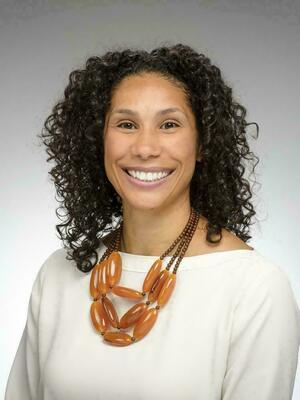
      <![CDATA[<figure class="image image-right"><img src="https://strategicframework.nd.edu/assets/638348/300x/anna_haskins.jpg" alt="Anna Haskins, presenting as a woman with dark curly hair smiles, wearing a white top and a prominent amber-orange layered beaded necklace." width="225" height="300"></figure>
<p>How do family dynamics, schools, and the justice system shape inequality across generations and communities?</p>
<p>These are the kind of questions that drive <a href="https://sociology.nd.edu/people/anna-haskins/">Anna Haskins’s</a> research. Haskins, the Andrew V. Tackes Associate Professor of Sociology, explores how the education system, the family, and the criminal legal system interact in ways that both preserve and mitigate social inequality.</p>
<p>A new data hub will supercharge research into these questions and more, giving scholars at Notre Dame the tools to study poverty, inequality, and contemporary social life from multiple angles. Joining Princeton and Columbia universities, Notre Dame is poised to host a Midwestern hub of The Future of Families and Child Wellbeing Study (<a href="https://ffcws.princeton.edu/">FFCWS</a>).</p>
<p>The FFCWS is the longest-running and only contemporary US birth cohort study of young adults, based on a national sample, that follows children from birth through young adulthood. It has become a crucial component of the country’s research infrastructure, enabling researchers, policymakers, and practitioners to understand the effects of poverty, family structure, education, employment, income, health, housing, and resource sharing on human development. For the past 25 years, the FFCWS has served as a vital public resource, with more than 8,700 researchers across disciplines using its data to generate insights that inform research agendas, public policy, and social programs.</p>
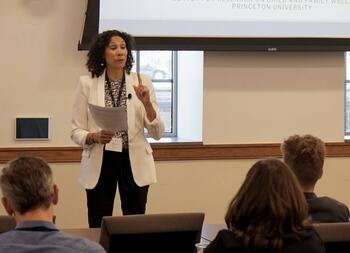
<p>“Our aim is to build capacity to leverage these unique data to ask and answer the critical poverty-related questions that drive policy change, generate real-world solutions, and advance knowledge — all of which will cement Notre Dame's leadership in poverty research,” Haskins said.</p>
<p>Since its founding by scholars at Princeton and Columbia, the FFCWS has been led exclusively by researchers at these two Ivy League institutions. This changed in 2024 when Haskins was named as a new co-Investigator. Haskins has spent nearly two decades utilizing FFCWS data to examine how the education system, family, and criminal legal system connect and interact in ways that both preserve and mitigate social inequality. This appointment presents a timely opportunity to develop a Midwestern research hub focused on the utilization of FFCWS data.</p>
<figure class="image image-left"><img src="https://strategicframework.nd.edu/assets/638349/logo_with_notre_dame_90925_1_.webp" alt='Blue-teal icon of abstract figures representing a family, next to "Future of Families &amp; Child Wellbeing Study" in gray text. Below, "PRINCETON | COLUMBIA | NOTRE DAME"' width="600" height="200"></figure>
<p>In collaboration with<a href="https://populationanalytics.nd.edu/"> Notre Dame Population Analytics</a>, Haskins will grow FFCWS research at the University through two primary mechanisms. First, by recruiting and hiring postdoctoral fellows with experience working with this data set who can support the research efforts of Notre Dame faculty across various units. Second, by offering data workshops to train faculty, postdoctoral researchers, predoctoral researchers, and students, including hands-on instruction and project ideation with senior researchers. The first of these workshops, to be held on campus in the spring of 2026, will primarily target Notre Dame attendees, but future events will expand to include peer institutions in the region.</p>
<p>Notre Dame Population Analytics harnesses the power of people, computing, and data to equip Notre Dame researchers who are exploring some of the most pressing demographic questions in order to inform policy solutions that shape lives and communities. Notre Dame Population Analytics addresses a variety of topics and questions, including but not limited to mental health access, challenges relating to the aging population and workforce needs, and the opioid crisis.</p>
<p>This work is supported by Notre Dame’s <a href="https://strategicframework.nd.edu/initiatives/poverty-initiative/">Poverty Initiative</a>, a University-wide effort to create a world intolerant of poverty by expanding knowledge about how to solve it.</p>
<p>“I’m very excited to spearhead efforts to build FFCWS data use and infrastructure at Notre Dame in partnership with Notre Dame Population Analytics and with the generous support of the Poverty Initiative,” Haskins said.</p>
<p class="attribution">Originally published by <span class="rel-author">Frederick LaBrecque</span> at <span class="rel-source"><a href="https://strategicframework.nd.edu/news/a-powerful-new-lens-on-poverty-notre-dame-expands-access-to-landmark-family-study/">strategicframework.nd.edu</a></span> on <span class="rel-pubdate">November 12, 2025</span>.</p>]]>
    </content>
    <link rel="enclosure" type="image/jpeg" href="https://sociology.nd.edu/assets/442150/8.31.21_anna_haskins_3305_1_.jpg" title="Headshot of Anna Hoskins, a woman with curly brown hair, wearing a white shirt and an amber-colored beaded necklace, smiling against a gray background."/>
    <author>
      <name>Frederick LaBrecque</name>
    </author>
  </entry>
  <entry>
    <id>tag:sociology.nd.edu,2005:News/174616</id>
    <published>2025-08-29T13:50:00-04:00</published>
    <updated>2025-08-29T13:50:53-04:00</updated>
    <link rel="alternate" type="text/html" href="https://sociology.nd.edu/news-and-events/news/race-and-ethnicity-workshop-presents-matthew-clair-the-dignity-work-of-navigators-quasi-experimental-evidence-from-a-public-defenders-office/"/>
    <title>Race and Ethnicity Workshop Presents: Matthew Clair ""The dignity work of navigators: Quasi-experimental evidence from a public defender's office"</title>
    <summary type="text">
      <![CDATA[Matthew Clair is Assistant Professor in the Department of Sociology and, by courtesy, the Law School. His scholarship broadly examines how cultural meanings and interactions reflect, reproduce, and challenge various dimensions of social inequality and state violence. His research to date has focused…]]>
    </summary>
    <content type="html">
      <![CDATA[<p>Matthew Clair is Assistant Professor in the Department of Sociology and, by courtesy, the Law School. His scholarship broadly examines how cultural meanings and interactions reflect, reproduce, and challenge various dimensions of social inequality and state violence. His research to date has focused on courts and the legal profession. The former body of work leverages the case of courts to sharpen theoretical understandings of the state, institutional inequality, and envisioning among marginalized groups, whereas the latter body of work leverages the case of the legal profession to explore how workplaces and occupational cultures are shaped by the social crises of the twenty-first century.</p>
<p>His award-winning book <a href="https://www.amazon.com/Privilege-Punishment-Class-Matter-Criminal/dp/0691194335/"><em>Privilege and Punishment: How Race and Class Matter in Criminal Court</em></a> shows how race and class inequalities in the criminal legal system are embedded in and reproduced through the attorney-client relationship. Drawing on in-depth ethnographic and interview data, his book shows how lawyers and judges often silence, coerce, and punish disadvantaged defendants who attempt to advocate for themselves in court but reward privileged defendants who trust in and defer to their lawyers' legal expertise. These dynamics reveal a paradox of legal control: striving to exercise one's legal rights often backfires for the poor and people of color. Following from the findings in his book, Matt's thinking on the criminal courts in relation to the abolition movement was recently published as a co-authored article in the <a href="https://www.californialawreview.org/print/courts-and-the-abolition-movement/"><em>California Law Review</em></a>.</p>
<p>Matt's research has been published in <em>Social Forces, Socio-Economic Review, Criminology</em>, <em>Law &amp; Society Review, DuBois Review, </em>and <em>Law &amp; Social Inquiry</em>, and<em> </em>and has been supported by the National Science Foundation, the RDCJN/Arnold Foundation, the American Society of Criminology, the Center for American Political Studies, and the Program in Criminal Justice Policy and Management. He has received awards from the American Sociological Association, the American Society of Criminology, the Law &amp; Society Association, and the Society for the Study of Social Problems. His research has contributed to policy reports on reducing racialized mass incarceration and improving the health of racial/ethnic minorities. In addition, he has written essays for various public-facing outlets, including <a href="https://www.thenation.com/article/society/sara-mayeux-free-justice-public-defenders/"><em>The Nation</em></a><em>, </em><a href="http://bostonreview.net/law-justice/matthew-clair-getting-judges-side-abolition"><em>Boston Review</em></a><em>, </em><a href="https://www.publicbooks.org/black-intellectuals-and-white-audiences/"><em>Public Books</em></a><em>,</em> and <em>The Chronicle of Higher Education. </em>In 2022, Matt received the <a href="https://news.stanford.edu/report/2022/06/08/stanford-announces-winners-2022-cuthbertson-dinkelspiel-gores-awards/">Walter J. Gores Award for Excellence in Teaching</a>, Stanford University's highest teaching award.</p>
<p>Matt is currently collecting and analyzing data for three ongoing projects. The first<em> </em>is a longitudinal interview study of prospective lawyers that seeks to understand changing dynamics in the legal profession in a moment of profound crisis in American society. The second is <a href="https://www.courtlisteningproject.org/"><em>The Court Listening Project</em></a><em>, </em>which is a multi-method study and archive of courthouses in the Bay Area and the legal envisioning of the communities in which they are embedded. The third is the implementation and evaluation of a <a href="https://www.courtlisteningproject.org/systems-navigators">"systems navigator"</a> in the Santa Clara County Office of the Public Defender.</p>
<p>Prior to joining Stanford, Matt was a postdoctoral fellow at the University of Pennsylvania Law School’s Quattrone Center. He holds an A.B. in Government from Harvard College and an A.M. and Ph.D. in Sociology from Harvard University.</p>
<p>More information about his scholarship is available on his <a href="https://www.matthewclair.org/">personal website</a>.</p>
<p> </p>]]>
    </content>
    <link rel="enclosure" type="image/webp" href="https://sociology.nd.edu/assets/627953/matthew_clair_1jpg_1_.webp" title="Matthew Clair"/>
    <author>
      <name>Department of Sociology</name>
    </author>
  </entry>
  <entry>
    <id>tag:sociology.nd.edu,2005:News/174599</id>
    <published>2025-08-28T15:15:00-04:00</published>
    <updated>2025-08-28T15:15:44-04:00</updated>
    <link rel="alternate" type="text/html" href="https://sociology.nd.edu/news-and-events/news/sociology-fall-colloquium-series-presents-asad-l-asad-engage-and-evade-how-latino-immigrant-families-manage-surveillance-in-everyday-life/"/>
    <title>Sociology Fall Colloquium Series Presents: Asad L. Asad "Engage and Evade: How Latino Immigrant Families Manage Surveillance in Everyday Life"</title>
    <summary type="text">
      <![CDATA[Asad L. Asad is Assistant Professor of Sociology and a faculty affiliate at the Center for Comparative Studies in Race and Ethnicity (CCSRE) at Stanford University. His research uses the U.S. immigration system as a lens for studying how institutional categories—namely, citizenship and legal status—relate…]]>
    </summary>
    <content type="html">
      <![CDATA[<p>Asad L. Asad is Assistant Professor of Sociology and a faculty affiliate at the Center for Comparative Studies in Race and Ethnicity (CCSRE) at Stanford University. His research uses the U.S. immigration system as a lens for studying how institutional categories—namely, citizenship and legal status—relate to social control and inequality. Current research projects examine the effects of immigration enforcement on health, the federal judiciary's role in immigration enforcement, and the capacity of immigrant-serving organizations to transform the U.S. immigration system.</p>
<p>Asad is the author of the award-winning book <a class="XqQF9c" href="https://press.princeton.edu/books/hardcover/9780691182285/engage-and-evade" target="_blank" rel="noopener">Engage and Evade: How Latino Immigrant Families Manage Surveillance in Everyday Life</a> (Princeton University Press). Other research appears in the Proceedings of the National Academy of Sciences, Law &amp; Society Review, International Migration Review, Journal of Ethnic and Migration Studies, and Social Science &amp; Medicine, among other outlets. Asad's work has received awards or recognition from the American Political Science Association, the American Sociological Association, the American Society of Criminology, the Eastern Sociological Society, the Law and Society Association, the Order of the Coif, the Pacific Sociological Association, and the Society for the Study of Social Problems. His research has been supported by the National Science Foundation and the Russell Sage Foundation.</p>]]>
    </content>
    <link rel="enclosure" type="image/jpeg" href="https://sociology.nd.edu/assets/627841/sociology_asad_22_edited.jpg" title="Asad Asad"/>
    <author>
      <name>Department of Sociology</name>
    </author>
  </entry>
  <entry>
    <id>tag:sociology.nd.edu,2005:News/172340</id>
    <published>2025-05-08T13:40:00-04:00</published>
    <updated>2025-05-08T13:40:02-04:00</updated>
    <link rel="alternate" type="text/html" href="https://sociology.nd.edu/news-and-events/news/2025-senior-thesis-presentations/"/>
    <title>2025 Senior Thesis Presentations</title>
    <summary type="text">
      <![CDATA[Several Sociology senior thesis students participated in the Arts and Letters 2025 Senior Thesis Reception on Friday, April…]]>
    </summary>
    <content type="html">
      <![CDATA[<figure class="image image-left"><img src="https://sociology.nd.edu/assets/615872/dean_s_office_thesis_front_pagejpg.jpg" alt="Dean's office thesis presentations" width="600" height="448"></figure>
<p>Several Sociology senior thesis students participated in the Arts and Letters 2025 Senior Thesis Reception on Friday, April 25th. Their presentations can be found <a href="https://sociology.nd.edu/assets/615870/soc_senior_thesis_presentation_2025_2.pdf">here</a>.</p>]]>
    </content>
    <link rel="enclosure" type="image/jpeg" href="https://sociology.nd.edu/assets/615872/dean_s_office_thesis_front_pagejpg.jpg" title="Dean's office thesis presentations"/>
    <author>
      <name>Department of Sociology</name>
    </author>
  </entry>
  <entry>
    <id>tag:sociology.nd.edu,2005:News/172208</id>
    <published>2025-05-06T09:50:00-04:00</published>
    <updated>2025-05-06T09:50:20-04:00</updated>
    <link rel="alternate" type="text/html" href="https://sociology.nd.edu/news-and-events/news/the-department-of-sociology-welcomes-dr-muna-adem-as-assistant-professor/"/>
    <title>The Department of Sociology Welcomes Dr. Muna Adem as Assistant Professor</title>
    <summary type="text">
      <![CDATA[The Department of Sociology is thrilled to announce the appointment of Professor Muna Adem as Assistant Professor. Dr. Adem joins us from the University of Maryland,…]]>
    </summary>
    <content type="html">
      <![CDATA[<figure class="image image-left"><img src="https://sociology.nd.edu/assets/615313/adem_profile2jpg.jpg" alt="Adem, Muna" width="285" height="369"></figure>
<p>The Department of Sociology is thrilled to announce the appointment of Professor Muna Adem as Assistant Professor. Dr. Adem joins us from the University of Maryland, where she was previously a faculty member in the Department of Sociology and an affiliate of the Maryland Population Research Center. She received her Ph.D. from Indiana University.</p>
<p>Professor Adem brings a wealth of expertise that will significantly enrich the department's teaching and research profile. Her scholarship lies at the intersection of migration, race and ethnicity, and social psychology. She employs rigorous quantitative methods and behavioral experiments to explore how ethno-racial diversity shapes trust, cooperation, and conflict in contemporary societies.</p>
<p>Her recent publications in top-tier journals such as <em>Social Forces</em>, <em>Social Psychology Quarterly</em>, and <em>Socius</em> examine citizenship boundaries, perceived discrimination, and racialized activism. “Professor Adem’s work reflects deep engagement with some of the most pressing social issues of our time,” said Department Chair Terry McDonnell. “Her research will undoubtedly shape the national conversation about race, immigration, and belonging.”</p>
<p>“I am so honored and grateful to join the Notre Dame community,” said Professor Adem. “The Sociology department stands for excellence in many fields such as education, culture, and social movements. As a race and immigration scholar, I look forward to complementing these strengths and contributing to a community with so many wonderful colleagues.”</p>
<p>In Professor Adem, we gain not only a distinguished scholar but also a committed educator and engaged community member. Please join us in welcoming Professor Muna Adem to our department. We know she will be a dynamic presence in our community</p>]]>
    </content>
    <link rel="enclosure" type="image/jpeg" href="https://sociology.nd.edu/assets/615317/adem_profile_1_.jpg" title="Adem news pic"/>
    <author>
      <name>Department of Sociology</name>
    </author>
  </entry>
  <entry>
    <id>tag:sociology.nd.edu,2005:News/171819</id>
    <published>2025-04-23T08:55:00-04:00</published>
    <updated>2025-04-23T08:55:08-04:00</updated>
    <link rel="alternate" type="text/html" href="https://sociology.nd.edu/news-and-events/news/university-of-notre-dame-department-of-sociology-announces-two-distinguished-faculty-appointments-2/"/>
    <title>University of Notre Dame Department of Sociology Announces Two Distinguished Faculty Appointments</title>
    <summary type="text">
      <![CDATA[The Department of Sociology at the University of Notre Dame is proud to announce the appointments of two exceptional scholars—Tim Hallett and Catherine…]]>
    </summary>
    <content type="html">
      <![CDATA[<figure class="image image-left"><img src="https://sociology.nd.edu/assets/613770/tim_and_crc.jpg" alt="Hallett and CRC" width="597" height="353"></figure>
<p>The Department of Sociology at the University of Notre Dame is proud to announce the appointments of two exceptional scholars—<strong>Tim Hallett</strong> and <strong>Catherine Riegle-Crumb</strong>—as Full Professors. Their arrival marks a significant strengthening of the department’s expertise in culture, education, inequality, interaction, and organizational sociology.</p>
<p><strong>Catherine Riegle-Crumb</strong> joins Notre Dame from the University of Texas at Austin. A nationally respected scholar of education, gender, and racial inequality, Professor Riegle-Crumb has built an influential research program focused on the structural and cultural dynamics that shape students’ educational experiences and trajectories in STEM fields. Her work has been widely published in top sociology and education journals like the <em>American Journal of Sociology, Gender &amp; Society, Educational Researcher, </em>and<em> Sociology of Education</em>.</p>
<p>She brings a remarkable track record of external funding, having served as Principal Investigator or Co-PI on numerous major projects funded by the National Science Foundation, and the Spencer Foundation, among others. Her studies—ranging from gender essentialism in education to engineering identity formation among young women of color—have shaped national conversations about inclusion and equity in STEM.</p>
<p>Professor Riegle-Crumb said she’s “so excited to join the Sociology department at the University of Notre Dame. I have long admired how Notre Dame’s faculty conduct innovative and important research across the discipline and are clearly committed to teaching and mentoring students. Additionally, there is simply no better to place to be a sociologist of education.”</p>
<p>Professor Riegle-Crumb will also serve as the <strong>incoming Director of the Center for Research on Educational Opportunity (</strong><a href="https://iei.nd.edu/initiatives/creo"><strong>CREO</strong></a><strong>)</strong> at Notre Dame, where she will lead one of the country’s premier centers dedicated to the sociological study of education. “I am thrilled to become the new director of CREO,” she said, “to help continue its long-held mission of producing research that makes a difference towards promoting equity.”</p>
<p><strong>Tim Hallett</strong> joins Notre Dame from Indiana University. He is internationally recognized as the leading scholar of <strong>inhabited institutionalism</strong>, a framework that reimagines how institutions are not just structures “out there” but are lived, shaped, and transformed through local interaction and meaning-making. His pathbreaking research has deepened our understanding of how institutions take their form through the actions of individuals working together—in harmony or in tension. His work shows how these interactions are essential for our understanding of how organizations work.</p>
<p>A prolific ethnographer and theorist, Professor Hallett’s work has appeared in top journals such as <em>American Sociological Review</em>, <em>Theory and Society</em>, and <em>Symbolic Interaction</em>. His award-winning article “The Myth Incarnate” and recent co-authored book <em>Group Life: An Invitation to Local Sociology</em> reflect his signature approach of linking micro-interaction to meso-level organizational dynamics. Hallett will contribute centrally to Notre Dame’s strengths in both cultural sociology and the sociology of education and will be an important intellectual bridge across research on meaning, institutions, and social change.</p>
<p>“I feel blessed to join Notre Dame,” said Hallett. “The Sociology department is stellar and it keeps getting better and better. The faculty, staff, and students are excellent at their work, and as importantly, they are generous and kind people. I know that Notre Dame will be a wonderful home. The department excels in my areas of interest: Culture, education, organizations, and social interaction. These come together in “inhabited institutionalism,” and I am excited to bring the “II school” to Notre Dame, where it will flourish.”</p>
<p>“It is a big year for Notre Dame Sociology. We are thrilled that Professors Hallett and Riegle-Crumb have joined our department,” said Professor Terence McDonnell, Chair of the Department of Sociology. “They are not only outstanding scholars but also deeply committed mentors and institution-builders. Their presence will enrich our department and our broader academic community for years to come.”</p>
<p>Both Hallett and Riegle-Crumb will begin in <strong>Fall 2025</strong>. Please join us in welcoming these two distinguished sociologists to the Notre Dame family.</p>]]>
    </content>
    <link rel="enclosure" type="image/jpeg" href="https://sociology.nd.edu/assets/613770/tim_and_crc.jpg" title="Hallett and CRC"/>
    <author>
      <name>Department of Sociology</name>
    </author>
  </entry>
  <entry>
    <id>tag:sociology.nd.edu,2005:News/171629</id>
    <published>2025-04-14T08:43:00-04:00</published>
    <updated>2025-04-14T08:48:52-04:00</updated>
    <link rel="alternate" type="text/html" href="https://sociology.nd.edu/news-and-events/news/sociology-graduate-student-alum-justin-farrell-is-the-2025-winner-of-the-distinguished-graduate-alumni-award/"/>
    <title>Sociology Graduate Student Alum Justin Farrell is the 2025 Winner of the Distinguished Graduate Alumni Award</title>
    <summary type="text">
      <![CDATA[The University of Notre Dame Graduate School has awarded Justin Farrell '14 Ph.D., the Distinguished Graduate Alumni Award. Justin…]]>
    </summary>
    <content type="html">
      <![CDATA[<figure class="image image-left"><img src="https://sociology.nd.edu/assets/612776/farrell_2.jpg" alt="Justin Farrell 2" width="331" height="299"></figure>
<p><img src="Justin%20Farrell2" alt="">The University of Notre Dame Graduate School has awarded Justin Farrell '14 Ph.D., the Distinguished Graduate Alumni Award. Justin is currently a professor at Yale. The full article can be found <a href="https://graduateschool.nd.edu/news/graduate-school-honors-2025-alumni-faculty-and-student-award-winners/">here</a>.</p>]]>
    </content>
    <link rel="enclosure" type="image/jpeg" href="https://sociology.nd.edu/assets/612776/farrell_2.jpg" title="Justin Farrell 2"/>
    <author>
      <name>Sociology Department</name>
    </author>
  </entry>
  <entry>
    <id>tag:sociology.nd.edu,2005:News/171574</id>
    <published>2025-04-11T08:40:00-04:00</published>
    <updated>2025-04-11T08:44:22-04:00</updated>
    <link rel="alternate" type="text/html" href="https://sociology.nd.edu/news-and-events/news/professor-christian-smith-featured-in-notre-dame-magazine-for-his-new-book-why-religion-went-obsolete-the-demise-of-traditional-faith-in-america/"/>
    <title>Professor Christian Smith Interviewed by Notre Dame Magazine for his New Book, "Why Religion Went Obsolete: The Demise of Traditional Faith in America"</title>
    <summary type="text">
      <![CDATA[Sociology professor, Christian Smith, was recently featured in the Notre Dame Magazine article "Out of Practice" regarding his new book, "Why Religion Went Obselete: The Demis of Traditional Faith in America".  The article discusses how traditional religion in the U.S. has sharply declined in recent…]]>
    </summary>
    <content type="html">
      <![CDATA[<p>Sociology professor, Christian Smith, was recently featured in the Notre Dame Magazine article "Out of Practice" regarding his new book, "Why Religion Went Obselete: The Demis of Traditional Faith in America".  The article discusses how traditional religion in the U.S. has sharply declined in recent decades, with fewer Americans identifying as religious, attending services, or believing in God. Many now consider themselves "spiritual but not religious." Scandals and declining trust in religious institutions have contributed to this trend, which is especially pronounced among younger generations—suggesting the decline will likely continue. While the decline is well-documented, the reasons behind it remain less clear. The full article can be found <a href="https://magazine.nd.edu/stories/smith/">here</a>. </p>]]>
    </content>
    <link rel="enclosure" type="image/jpeg" href="https://sociology.nd.edu/assets/396738/smith_christian_headshot_2020.jpg" title="Smith Christian Headshot 2020"/>
    <author>
      <name>Sociology Department</name>
    </author>
  </entry>
  <entry>
    <id>tag:sociology.nd.edu,2005:News/170423</id>
    <published>2025-03-03T13:01:00-05:00</published>
    <updated>2025-03-03T13:06:36-05:00</updated>
    <link rel="alternate" type="text/html" href="https://sociology.nd.edu/news-and-events/news/sociology-spring-colloquium-series-presents-christopher-browning-activity-space-exposures-and-racial-disparities-in-urban-adolescent-health-and-wellbeing/"/>
    <title>Sociology Spring Colloquium Series Presents: Christopher Browning "Activity Space Exposures and Racial Disparities in Urban Adolescent Health and Wellbeing"</title>
    <summary type="text">
      <![CDATA[Christopher R. Browning (Ph.D. University of Chicago, 1997) is a Professor of Sociology at Ohio State University whose research interests include the causes and…]]>
    </summary>
    <content type="html">
      <![CDATA[<figure class="image image-right"><img src="https://sociology.nd.edu/assets/607410/browningjpg.jpg" alt="Christopher Browning" width="400" height="533"></figure>
<p>Christopher R. Browning (Ph.D. University of Chicago, 1997) is a Professor of Sociology at Ohio State University whose research interests include the causes and consequences of community social organization; the neighborhood context of crime, risk behavior, and health; the long-term effects of maltreatment during childhood; and multilevel statistical models. His current projects apply the concepts of activity space and ecological networks to research on the mechanisms linking contextual exposures (e.g., neighborhoods and schools) to youth behavioral health and well-being. He is Principal Investigator on the <a class="ck-anchor" id="ADHC study" href="http://sociology.osu.edu/browning-adolescent-health-and-development-context" title="Link to ADHC project">Adolescent Health and Development in Context (AHDC) study</a> - a large scale, longitudinal investigation of the link between sociospatial exposures and developmental outcomes among youth in Franklin County, OH. The project is funded by NIDA, the WT Grant Foundation, and the National Science Foundation.</p>]]>
    </content>
    <link rel="enclosure" type="image/jpeg" href="https://sociology.nd.edu/assets/607410/browningjpg.jpg" title="Christopher Browning"/>
    <author>
      <name>Sociology Department</name>
    </author>
  </entry>
  <entry>
    <id>tag:sociology.nd.edu,2005:News/168332</id>
    <published>2024-11-19T10:52:00-05:00</published>
    <updated>2024-11-19T10:52:04-05:00</updated>
    <link rel="alternate" type="text/html" href="https://sociology.nd.edu/news-and-events/news/new-research-shows-how-elites-leverage-anti-party-protests-to-disrupt-politics/"/>
    <title>New research shows how elites leverage anti-party protests to disrupt politics </title>
    <summary type="text">
      <![CDATA[Protest movements that reject political parties have an unintended consequence, according to research co-authored by a Keough School faculty expert: They empower savvy politicians, who channel them to shake up the status quo. The findings provide a framework for understanding recent global political realignments and offer lessons for activists who want to make a meaningful impact.]]>
    </summary>
    <content type="html">
      <![CDATA[<p>Protest movements that reject political parties have an unintended consequence, according to research co-authored by a Keough School faculty expert: They empower savvy politicians, who channel them to shake up the status quo. </p>
<p>The findings provide a framework for understanding recent global political realignments and offer lessons for activists who want to make a meaningful impact. They are particularly relevant in an era when mass protests have become an increasingly common tool to voice dissent with powerful institutions and draw attention to overlooked issues ranging from climate and conflict to inequality and human rights. </p>
<p><a href="https://keough.nd.edu/about/faculty-staff-directory/ann-mische/">Ann Mische</a>, associate professor of sociology and peace studies at the University of Notre Dame, and <a href="https://sociology.nd.edu/students/tomas-gold/">Tomás Gold</a>, a Notre Dame Ph.D. candidate and Ph.D. Fellow at the Keough School’s <a href="http://kellogg.nd.edu">Kellogg Institute for International Studies</a>, co-authored the study, published in the <a href="https://www.journals.uchicago.edu/doi/10.1086/730144">American Journal of Sociology</a>. The authors received funding from the Keough School’s Kellogg Institute for International Studies and <a href="http://nanovic.nd.edu">Nanovic Institute for European Studies</a> as well as Notre Dame’s Graduate School.</p>
<p>“Despite protesters’ strong rejection of parties, political parties have not ignored the protestors,” Mische said. “In fact, many partisan actors have found ways to use this hostility to their advantage, disrupting ‘politics as usual’ and contributing to political reconfigurations that surprised both actors and spectators.”</p>
<p>Mische and Gold analyzed data from the <a href="https://www.v-dem.net/">Varieties of Democracy Project</a>, which provides a variety of authoritative ways to measure democracy. The international project, widely cited by scholars, is affiliated with the Keough School’s Kellogg Institute for International Studies.</p>
<figure class="image image-left"><img src="https://keough.nd.edu/assets/581125/ann_mische_1024x683.jpg" alt="Keough School expert Ann Mische is pictured." width="600" height="400">
<figcaption>Ann Mische’s research focuses on communication, deliberation and leadership in social movements and democratic politics.</figcaption>
</figure>
<p>Ann Mische’s research focuses on communication, deliberation and leadership in social movements and democratic politics.</p>
<p>Using the data, Mische and Gold analyzed 12 case studies across Europe, Asia, and North and South America between 2008 and 2016, amid the fallout of the global financial crisis and the ongoing rejection of parties that were seen as unable or unwilling to confront it. </p>
<p>They found that in response to massive anti-partisan protests, these countries generally experienced one of four outcomes: internal factional challenges within highly established parties (e.g., Labour leader Jeremy Corbyn in the United Kingdom); the emergence of new or renovated parties (Podemos, or “We Can,” an anti-austerity Spanish party); the formation of new anti-incumbent party coalitions (the Broad Front UNEN and Cambiemos coalitions in Argentina) and the rise of extreme populist leaders (such as Jair Bolsonaro in Brazil). </p>
<p>Mische and Gold said these varied outcomes could be explained by looking at the project’s data measuring parties’ institutional strength; the degree to which parties were cohesive or fragmented; and the overall numbers of viable political parties competing for power. </p>
<p>They used a comparative approach that bridged insights from sociology and political science, drawing on datasets to determine how the combination of these three variables generated different opportunities for political actors to navigate the challenges to the status quo. They complemented this analysis with a process-oriented account of how party-movement interactions contributed to these diverging pathways.</p>
<p>“We focused on how political elites can take advantage of the fact that they are rejected by protestors,” Gold said. “That paradox lies at the heart of this paper.”</p>
<blockquote>
<p>If you reject working with the state, you cannot influence the development of policies that are important for the things that you care about. </p>
</blockquote>
<p>Ultimately, Mische and Gold said, the study could serve as a cautionary tale to protestors who reject political parties rather than trying to negotiate with them. This rejection can paradoxically undermine activist goals by amplifying distrust in institutions and paving the way for populist demagogues.</p>
<p>“Sometimes you need social movements to challenge entrenched systems and respond to the needs and aspirations of the people,” Mische said, adding that further research could help explore the dynamics of insider-outsider coalitions for enacting reforms. “But if you reject working with the state, then you cannot influence the development of policies that are important for the things that you care about. You may, instead, empower autocrats who don’t share your values but are adept at weaponizing institutional distrust. Understanding this dynamic is important to working for change and to strengthening global democracy at a time when institutions are increasingly under attack.”</p>
<div>
<strong>Top photo:</strong> Occupy protesters are pictured in Oakland, California, in 2011. The movement, known for its slogan “We are the 99 percent,” criticized mainstream political parties for representing the interests of the rich. It was part of a global wave of anti-partisan protests that have disrupted politics in recent years. Photo by Brian Sims via Flickr, licensed under Creative Commons.</div>
<p class="attribution">Originally published by <span class="rel-author">Josh Stowe</span> at <span class="rel-source"><a href="https://keough.nd.edu/news-and-events/news/new-research-shows-how-elites-leverage-anti-party-protests-to-disrupt-politics/">keough.nd.edu</a></span> on <span class="rel-pubdate">May 21, 2024</span>.</p>]]>
    </content>
    <link rel="enclosure" type="image/jpeg" href="https://sociology.nd.edu/assets/595240/occupy_protest_story.jpg" title=""/>
    <author>
      <name>Josh Stowe</name>
    </author>
  </entry>
</feed>