<?xml version="1.0" encoding="UTF-8"?>
<?xml-stylesheet type="text/xsl" media="screen" href="/~d/styles/rss2full.xsl"?><?xml-stylesheet type="text/css" media="screen" href="http://feeds.feedburner.com/~d/styles/itemcontent.css"?><rss xmlns:content="http://purl.org/rss/1.0/modules/content/" xmlns:wfw="http://wellformedweb.org/CommentAPI/" xmlns:dc="http://purl.org/dc/elements/1.1/" xmlns:atom="http://www.w3.org/2005/Atom" xmlns:sy="http://purl.org/rss/1.0/modules/syndication/" xmlns:slash="http://purl.org/rss/1.0/modules/slash/" xmlns:itunes="http://www.itunes.com/dtds/podcast-1.0.dtd" xmlns:media="http://search.yahoo.com/mrss/" xmlns:feedburner="http://rssnamespace.org/feedburner/ext/1.0" version="2.0">

<channel>
	<title>Sydney Observatory - news and views on astronomy from Sydney</title>
	
	<link>http://www.sydneyobservatory.com.au/blog</link>
	<description />
	<lastBuildDate>Thu, 05 Nov 2009 05:03:29 +0000</lastBuildDate>
	<generator>http://wordpress.org/?v=2.8.5</generator>
	<language>en</language>
	<sy:updatePeriod>hourly</sy:updatePeriod>
	<sy:updateFrequency>1</sy:updateFrequency>
		<!-- podcast_generator="podPress/8.8" -->
		<copyright>© </copyright>
		<managingEditor>sebc@phm.gov.au ()</managingEditor>
		<webMaster>sebc@phm.gov.au()</webMaster>
		<category />
		<ttl>1440</ttl>
		<itunes:keywords />
		<itunes:subtitle />
		<itunes:summary />
		<itunes:author />
		<itunes:category text="Society &amp; Culture" />
		<itunes:owner>
			<itunes:name />
			<itunes:email>sebc@phm.gov.au</itunes:email>
		</itunes:owner>
		<itunes:block>No</itunes:block>
		<itunes:explicit>no</itunes:explicit>
		<itunes:image href="http://www.sydneyobservatory.com.au/images/icons/nightskypodcast_144_icon.jpg" />
		<image>
			<url>http://www.sydneyobservatory.com.au/images/icons/nightskypodcast_144_icon.jpg</url>
			<title>Sydney Observatory - news and views on astronomy from Sydney</title>
			<link>http://www.sydneyobservatory.com.au/blog</link>
			<width>144</width>
			<height>144</height>
		</image>
		<atom10:link xmlns:atom10="http://www.w3.org/2005/Atom" rel="self" href="http://feeds.feedburner.com/SydneyObservatory" type="application/rss+xml" /><feedburner:emailServiceId>SydneyObservatory</feedburner:emailServiceId><feedburner:feedburnerHostname>http://feedburner.google.com</feedburner:feedburnerHostname><atom10:link xmlns:atom10="http://www.w3.org/2005/Atom" rel="hub" href="http://pubsubhubbub.appspot.com" /><item>
		<title>Harry asks whether sunspot group 11029, seen in October 2009, will come back?</title>
		<link>http://feedproxy.google.com/~r/SydneyObservatory/~3/BaNjNnp3WJU/</link>
		<comments>http://www.sydneyobservatory.com.au/blog/?p=2705#comments</comments>
		<pubDate>Thu, 05 Nov 2009 05:03:29 +0000</pubDate>
		<dc:creator>Nick Lomb</dc:creator>
				<category><![CDATA[Observations]]></category>

		<guid isPermaLink="false">http://www.sydneyobservatory.com.au/blog/?p=2705</guid>
		<description><![CDATA[
Sunspot group 11029 at the edge of the Sun, drawn by Harry Roberts
A brief view of this active C24 spot group was had as it approached the solar limb.  Only a short view through gaps in trees was possible using the portable 4” Maksutov on its wooden tripod.
It was a surprising sight – I [...]]]></description>
			<content:encoded><![CDATA[<p><img src="http://www.sydneyobservatory.com.au/blog/wp-content/uploads//2009/11/ar-11029-b-at-limb.PNG" alt="ar 11029 b at limb" title="ar 11029 b at limb" class="alignnone size-full wp-image-2704" /></p>
<p><em>Sunspot group 11029 at the edge of the Sun, drawn by Harry Roberts</em></p>
<p>A brief view of this active C24 spot group was had as it approached the solar limb.  Only a short view through gaps in trees was possible using the portable 4” Maksutov on its wooden tripod.</p>
<p>It was a surprising sight – I can’t recall any group over the last two years with such bright faculae.  Faculae are extensive monopolar areas, although they are usually present as a large patch of N polarity and a large patch of S.</p>
<p>Indeed, the whole group was meshed in vivid faculae.  I assume equally bright H-alpha plage was present though no observation was made in that band.</p>
<p>The large preceding p spot was a complex entity.  It seemed to be a horse-shoe shaped penumbral region with very bright faculae within.  Edging the inside of the penumbra numerous small spots were seen on the east side and a single, or maybe double, thin black umbra on the west side.</p>
<p>The following f spots were few; with two or maybe three areas of penumbra 8 or more degrees east of the p spots.  There seemed to be 4 or five umbrae within the f spots. Swirls of vivid faculae trailed the group.  It was a great sight – and reminded me how much more impressive a big spot group is in white light than in lower contrast H-alpha.</p>
<p>GOES X-ray plots showed high levels of flaring up to C1.7 – though I recorded only a B3 two days earlier.  AR 11029 unleashed another C1 when right at the limb on the next day that coincided with a small but impressive CME at 09:00 UT (see spaceweather.com for the 31st Oct). </p>
<p>Cross-hair timings gave the following heliocentric coordinates:<br />
		Centre of the “horse-shoe” p spot: +13/217<br />
		Centre of the whole group:             +14/213<br />
		The solar limb adjacent:                 +10/233<br />
These show the group was sited about 20º from the limb, and stretched across about 8º of solar longitude (i.e. longitude length LL=8º)</p>
<p>AR11029 raises interesting questions:  will it return, grown larger?  Will a large spotless faculae region (FR) return in its place?  Or will there be no trace of it in roughly 14 days from now when this region of the solar surface swings into view once more?</p>
<p><strong>Harry Roberts, expert Sun and Moon observer and member of the <a href="http://www.sydneycityskywatchers.asn.au/">Sydney City </strong>Skywatchers</a></p>
<div class="feedflare">
<a href="http://feeds.feedburner.com/~ff/SydneyObservatory?a=BaNjNnp3WJU:Z4JtNe4xkLI:yIl2AUoC8zA"><img src="http://feeds.feedburner.com/~ff/SydneyObservatory?d=yIl2AUoC8zA" border="0"></img></a> <a href="http://feeds.feedburner.com/~ff/SydneyObservatory?a=BaNjNnp3WJU:Z4JtNe4xkLI:F7zBnMyn0Lo"><img src="http://feeds.feedburner.com/~ff/SydneyObservatory?i=BaNjNnp3WJU:Z4JtNe4xkLI:F7zBnMyn0Lo" border="0"></img></a> <a href="http://feeds.feedburner.com/~ff/SydneyObservatory?a=BaNjNnp3WJU:Z4JtNe4xkLI:V_sGLiPBpWU"><img src="http://feeds.feedburner.com/~ff/SydneyObservatory?i=BaNjNnp3WJU:Z4JtNe4xkLI:V_sGLiPBpWU" border="0"></img></a> <a href="http://feeds.feedburner.com/~ff/SydneyObservatory?a=BaNjNnp3WJU:Z4JtNe4xkLI:qj6IDK7rITs"><img src="http://feeds.feedburner.com/~ff/SydneyObservatory?d=qj6IDK7rITs" border="0"></img></a> <a href="http://feeds.feedburner.com/~ff/SydneyObservatory?a=BaNjNnp3WJU:Z4JtNe4xkLI:gIN9vFwOqvQ"><img src="http://feeds.feedburner.com/~ff/SydneyObservatory?i=BaNjNnp3WJU:Z4JtNe4xkLI:gIN9vFwOqvQ" border="0"></img></a>
</div><img src="http://feeds.feedburner.com/~r/SydneyObservatory/~4/BaNjNnp3WJU" height="1" width="1"/>]]></content:encoded>
			<wfw:commentRss>http://www.sydneyobservatory.com.au/blog/?feed=rss2&amp;p=2705</wfw:commentRss>
		<slash:comments>0</slash:comments>
		<feedburner:origLink>http://www.sydneyobservatory.com.au/blog/?p=2705</feedburner:origLink></item>
		<item>
		<title>Dr. Nick Lomb and Assoc Prof. Wayne Orchiston awarded Life Membership of the Sydney City Skywatchers.</title>
		<link>http://feedproxy.google.com/~r/SydneyObservatory/~3/dnIJywBNYbg/</link>
		<comments>http://www.sydneyobservatory.com.au/blog/?p=2668#comments</comments>
		<pubDate>Tue, 03 Nov 2009 03:45:34 +0000</pubDate>
		<dc:creator>Geoff Wyatt</dc:creator>
				<category><![CDATA[Information]]></category>

		<guid isPermaLink="false">http://www.sydneyobservatory.com.au/blog/?p=2668</guid>
		<description><![CDATA[
Dr Wayne Orchiston, Mike Chapman President of the Sydney City Skywatchers, Dr Nick Lomb and Henry Chamberlain Russell on the monitor to the right.
The Sydney City Skywatchers, are the oldest operating astronomical association in Sydney. Formed in December 1895 as the New South Wales Branch of the British Astronomical Association they operated under that name [...]]]></description>
			<content:encoded><![CDATA[<p><img src="http://www.sydneyobservatory.com.au/blog/wp-content/uploads//2009/11/Life-members.jpg" alt="Life members" title="Life members" class="alignnone size-full wp-image-2669" /><br />
Dr Wayne Orchiston, Mike Chapman President of the Sydney City Skywatchers, Dr Nick Lomb and Henry Chamberlain Russell on the monitor to the right.</p>
<p>The Sydney City Skywatchers, are the oldest operating astronomical association in Sydney. Formed in December 1895 as the New South Wales Branch of the British Astronomical Association they operated under that name until September 2004 , when the name was changed to Sydney City Skywatchers. The group has been meeting at Sydney Observatory for many decades and Observatory astronomers have traditionally held senior positions on its committee; the curator of astronomy, Dr Nick Lomb, has been a member for at least thirty years. Wayne Orchiston joined when he was only 13 years old in the 1950s and remembers a large number of young budding astronomers doing observations at night and attending lectures.</p>
<p>Sir Patrick Moore, well known British astronomer, is also a lifetime member and in the 1980s presented a talk at one of the meetings in Sydney Observatory to a packed audience. The group is an affiliated society of the Museum.</p>
<p>Stevenson Toner<br />
Manager, Sydney Observatory</p>
<div class="feedflare">
<a href="http://feeds.feedburner.com/~ff/SydneyObservatory?a=dnIJywBNYbg:ShUXLzr_GDE:yIl2AUoC8zA"><img src="http://feeds.feedburner.com/~ff/SydneyObservatory?d=yIl2AUoC8zA" border="0"></img></a> <a href="http://feeds.feedburner.com/~ff/SydneyObservatory?a=dnIJywBNYbg:ShUXLzr_GDE:F7zBnMyn0Lo"><img src="http://feeds.feedburner.com/~ff/SydneyObservatory?i=dnIJywBNYbg:ShUXLzr_GDE:F7zBnMyn0Lo" border="0"></img></a> <a href="http://feeds.feedburner.com/~ff/SydneyObservatory?a=dnIJywBNYbg:ShUXLzr_GDE:V_sGLiPBpWU"><img src="http://feeds.feedburner.com/~ff/SydneyObservatory?i=dnIJywBNYbg:ShUXLzr_GDE:V_sGLiPBpWU" border="0"></img></a> <a href="http://feeds.feedburner.com/~ff/SydneyObservatory?a=dnIJywBNYbg:ShUXLzr_GDE:qj6IDK7rITs"><img src="http://feeds.feedburner.com/~ff/SydneyObservatory?d=qj6IDK7rITs" border="0"></img></a> <a href="http://feeds.feedburner.com/~ff/SydneyObservatory?a=dnIJywBNYbg:ShUXLzr_GDE:gIN9vFwOqvQ"><img src="http://feeds.feedburner.com/~ff/SydneyObservatory?i=dnIJywBNYbg:ShUXLzr_GDE:gIN9vFwOqvQ" border="0"></img></a>
</div><img src="http://feeds.feedburner.com/~r/SydneyObservatory/~4/dnIJywBNYbg" height="1" width="1"/>]]></content:encoded>
			<wfw:commentRss>http://www.sydneyobservatory.com.au/blog/?feed=rss2&amp;p=2668</wfw:commentRss>
		<slash:comments>0</slash:comments>
		<feedburner:origLink>http://www.sydneyobservatory.com.au/blog/?p=2668</feedburner:origLink></item>
		<item>
		<title>November 2009 night sky podcast transcript</title>
		<link>http://feedproxy.google.com/~r/SydneyObservatory/~3/If4YMzM1NTA/</link>
		<comments>http://www.sydneyobservatory.com.au/blog/?p=2522#comments</comments>
		<pubDate>Sat, 31 Oct 2009 14:02:54 +0000</pubDate>
		<dc:creator>irma</dc:creator>
				<category><![CDATA[Sky guide transcripts]]></category>

		<guid isPermaLink="false">http://www.sydneyobservatory.com.au/blog/?p=2522</guid>
		<description><![CDATA[This is a transcript of a podcast of the November 2009 night sky guide. Download and listen to the podcast as you gaze up at the night sky.

Melissa Hulbert: Hello and welcome to the night sky guide for November. My name is Melissa Hulbert and I’m an Astronomy Educator at Sydney Observatory.
Before we start our [...]]]></description>
			<content:encoded><![CDATA[<p>This is a transcript of a podcast of the <a href="http://www.sydneyobservatory.com.au/blog/?p=2521">November 2009 night sky guide</a>. Download and listen to the podcast as you gaze up at the night sky.</p>
<blockquote>
<p>Melissa Hulbert: Hello and welcome to the night sky guide for November. My name is Melissa Hulbert and I’m an Astronomy Educator at Sydney Observatory.</p>
<p>Before we start our night sky tour, make sure you download the November sky map from our website www.sydneyobservatory.com.au/blog or, if you have one, use your star map from our book, ‘The Australian Sky Guide’. </p>
<p>Armed with your sky map and a small torch with some red cellophane covering it, find a nice dark place away from the glare of the street lights and make sure you know your cardinal directions – north, south, east and west. Remember that the Sun rises in the east, moves through the northern sky during the day and sets in the west; or a small compass will also point you in the right direction. Pick a comfortable spot either on a rug or a deck chair that you can lay back in. Wait about 5-10 minutes and allow your eyes to adapt to the darkness. </p>
<p>Turn towards the north. High in the northern sky is Pegasus, the winged horse from mythology, probably with its origins in both Mesopotamian and Etruscan starlore. In Greek mythology, Pegasus was said to have been born from the blood of Medusa (the Gorgon) after she was slain by Perseus.</p>
<p>He is also associated with poetic inspiration with a fountain that was sacred to the Nine Muses which was created when he stamped his hoof on Mount Helicon. Pegasus was principally the steed of Bellerophon and in a dream Athene appeared to Bellerophon with a golden bridle and advised him to ride Pegasus, however some legends say that Perseus rode the winged horse when rescuing Andromeda.<br />
Pegasus is easy to find, with the best-known feature of this constellation the aptly named – ‘Great Square of Pegasus’. It is rather large at over 15˚ in width and 13˚ in height, but despite its size there are relatively few bright naked-eye stars within the Square. Working out degrees in the sky is quite easy. Hold your arm out towards the sky and make a fist. From one side of your fist to the other, this is 10 degrees. Hold out your other arm with your three middle fingers held up, this is approximately 5 degrees. Put your hands side-by-side and you now have 15 degrees, the size the ‘Great Square’ covers in the sky. This does work for everyone, as your arm length is proportional to your hand size.</p>
<p>Four stars outline the Square and in the past all four were part of the constellation, however delta (δ) Pegasi is now known as alpha (α) Andromedae. This star was also known as Sirrah meaning ‘navel’ and marked the navel of the horse. Pegasus is the right way up for us , so we see the neck and head of the horse stretching towards the west and what appears to be his hind legs towards the north east. One interesting object is M15 or NGC 7078, a magnitude 6 globular cluster, easily visible in binoculars and small telescopes. Medium to large apertures will resolve some of the outer regions of this cluster and a dense core. M15 lies about 33,000 light years from us.</p>
<p>Remember I mentioned the horse’s hind legs earlier? Lets go back to those. The legs are part of the constellation Andromeda who was the daughter of Queen Cassiopeia in Greek mythology. If you are away from city lights then look carefully at this area of the sky. You might see an elongated fuzzy patch of light with your unaided eye. This is the Andromeda Galaxy and is the most distant object visible to the unaided eye, lying about 2.4 million light years from us, though recent data from the Hipparcos satellite has suggested that this distance might be closer to three million light years. While a fascinating sight with just your eyes, if you have binoculars or a small telescope then a most amazing sight awaits you – the dark dust lanes of the spiral arms, a bright core, and if you are lucky you might pick up one or both of its companion galaxies.</p>
<p>To the east and slightly south of Pegasus is Cetus, the fourth largest constellation in the sky. Cetus has been depicted as a variety of animals but is generally a sea-monster or dragon-fish but some refer to it as merely a great whale.<br />
Cetus is one of the most ancient constellations in the sky as it was Ptolemy who originally assigned 22 stars to this constellation. It contains a jewel box of coloured stars for both telescope and binocular users alike.</p>
<p>South of Cetus you will see the brilliant star Achernar, which means ‘the river’s end’ as it marks the end of the river, Eridanus. Follow Eridanus towards the east and there rising in the sky is our familiar signpost of the summer skies – Orion, the Hunter. In Greek mythology Orion was a hunter of great skill and boasted that he could kill all living animals. Gaea the Earth goddess was alarmed by his statement and fearing for all the animals on Earth she sent a scorpion to kill him. Orion was stung on the shoulder but was revived and placed in the stars along with the scorpion. This entire myth is played out in the stars each year. As Scorpius the Scorpion rises in the east, Orion sets in the west, defeated. When Scorpius sets in the west the healer Ophiuchus crushes the Scorpion into the Earth and revives Orion so he can rise in the east again. Orion appears in many cultures, even the ancient Egyptians saw Orion as Osiris, god of the underworld and regeneration.<br />
If you’re having difficultly picking out the Hunter then look for ‘the Saucepan’. This is a familiar group of stars for those of us in the southern hemisphere and is Orion’s belt and sword. Orion is on his side as he rises above the eastern horizon.</p>
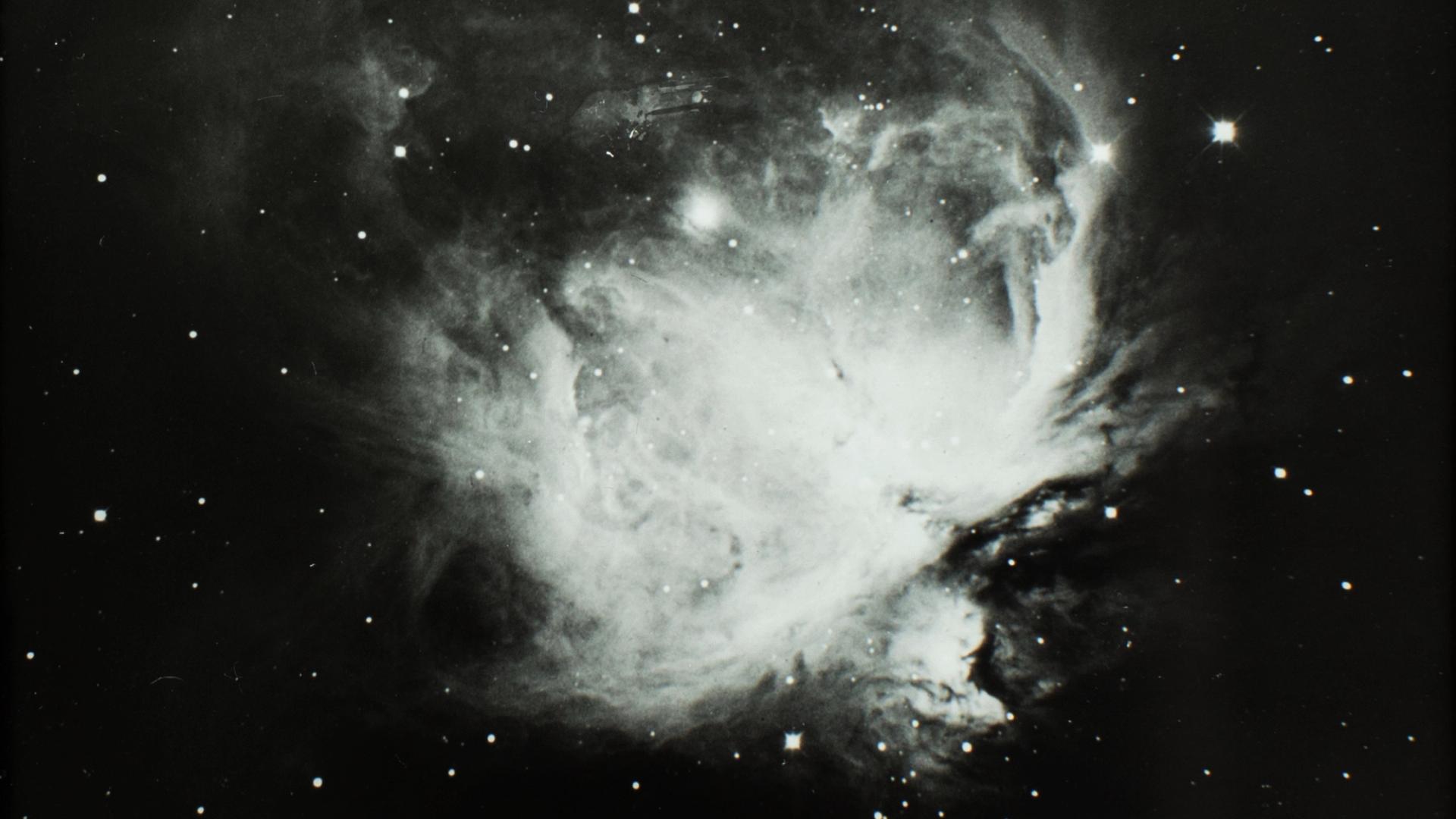
<p>The middle point of light in the handle of the Saucepan (or the sword) is the famous Orion Nebula or M42. It is one of summer’s most magnificent sights and will keep observers using binoculars or a telescope enthralled as you follow the swirls and loops of gas and dust is this active stellar nursery. Stars are forming out of the gas is this nebula which stretches about 20 light years in diameter and is located 1,500 light years from us.</p>
<p>To the south of ‘the Saucepan’ you should see the red supergiant star Betelgeuse, which is 500 times larger than our own star the Sun. Or, if we were to place Beletgeuse where our Sun is, at the centre of our Solar System, then the edge of the star would be near Jupiter’s orbit. Betelgeuse is the shoulder or armpit of Orion and is about 427 light years away. To the north of ‘the Saucepan’ and diagonally opposite Betelgeuse is a brilliant white star – Rigel, one of Orion’s knee’s. Rigel is a blue-white supergiant star that shines 60,000 times brighter than our own Sun. Rigel also has a small companion star which is best seen through a telescope though if seeing conditions are not the best, small telescopes will struggle to see the companion through the glare of Rigel.</p>
<p>Let’s return to the belt of Orion and follow its line to the west where we come to the back of a sideways ‘V’. This ‘V’ is the head of Taurus the bull which appears to be charging at Orion. Like Cetus, Taurus is one of the most ancient constellations in our skies and like Orion is also steeped in Greek mythology. It is said to represent the bull Zeus changed into to carry Princess Europa off to Crete.<br />
Back to the ‘V’ which is part of a large open star cluster visible in binoculars called the Hyades. One of Taurus’ eyes is an orange giant star called Aldebaran which means ‘the follower’.  It follows the Pleiades, a wonderful open star cluster that can be seen with your eyes to the north west of the ’V’. The Pleiades are known as the seven sisters as seven stars are readily seen with your eyes, but away from city lights, up to 13 can be seen with the unaided eye. The whole cluster contains about 100 stars and binoculars are the best way to view this marvelous object.</p>
<p>Another of Messier’s objects, M1 is also in Taurus. M1 is best seen in telescopes and is known as the Crab Nebula, but is in fact the remnant of a star that exploded as a supernova on July 4 1054AD. How can we be so precise with the date?</p>
<p>Chinese astronomers kept very accurate records of the night sky and recorded the position of a “new star” on their star maps on this date. Although the Crab Nebula is 7,000 light years away, the supernova was brighter than the planet Venus for weeks before it faded from view after almost two years. Even today, the nebula is still expanding at a rate of more than five million kilometers per hour. It emits radiation in all wavelengths from gamma rays to x-rays, UV, optical and infrared radiation and radio waves. It is exceptionally bright for an SNR. The reason for this is its central pulsar which energizes it. </p>
<p>Careful studies of the Crab Nebula have revealed a pulsar near the centre, which emits at a rate of 30 pulses per second. Additional observations have shown that the pulse rate is slowing down. During the next 1,000 years the pulse rate will fall to half its present value. </p>
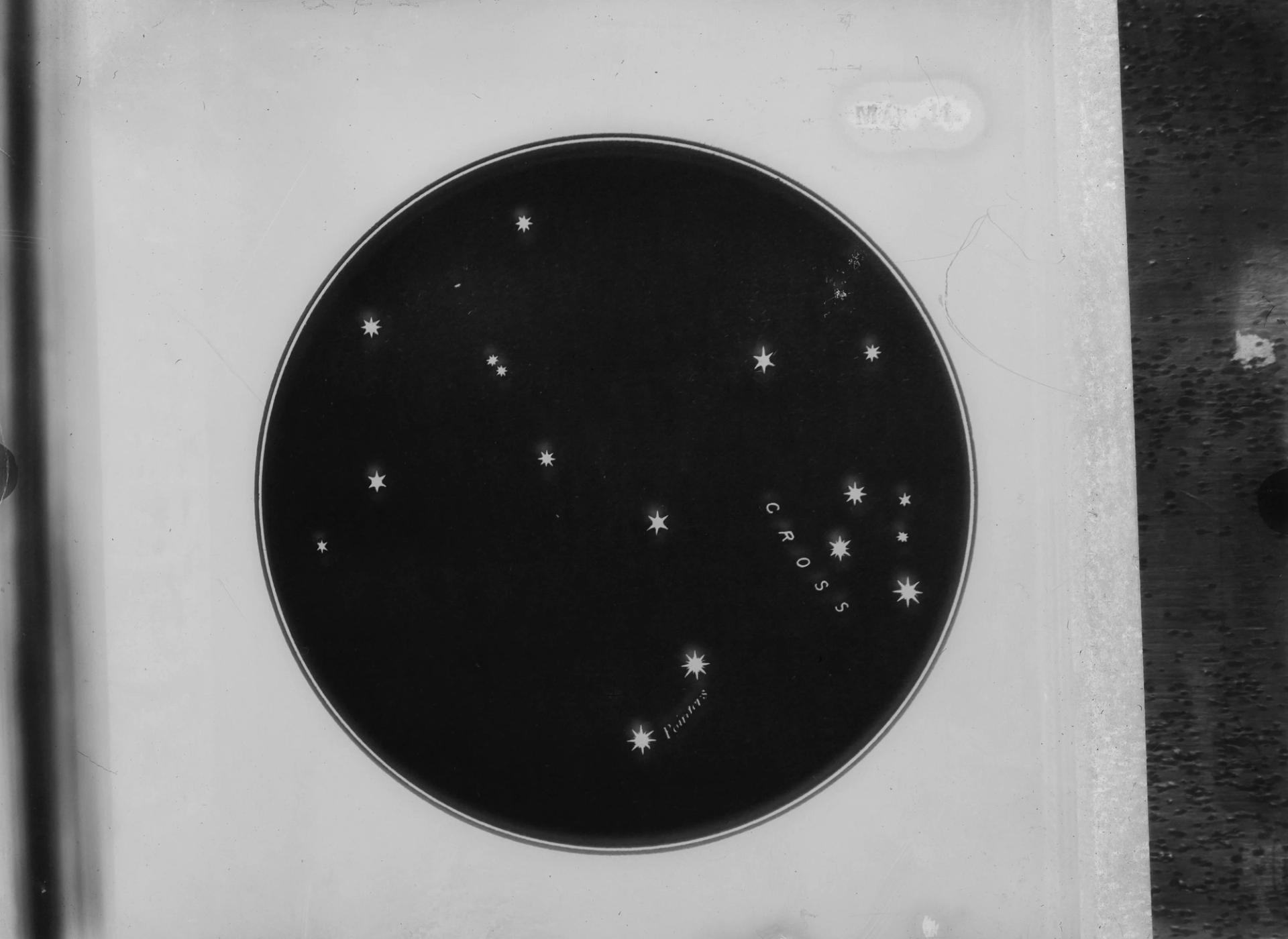
<p>Time to turn and look towards the south. Can you see our familiar signpost of the Southern Cross and Pointers? Look low, close to the south horizon and there they are. In summer these constellations are low in our evening skies but by early morning, they are rising again to the positions we are familiar with.</p>
<p>However, in their place are two cloud-like objects, a large one and a small one (you will need to be away from the city lights to see them). These are the Magellanic Clouds, named after the explorer Ferdinand Magellan. They are the two satellite galaxies of our own Milky Way. The larger of the two is in the constellation Dorado, the goldfish. In 1987, the Large Magellanic Cloud (LMC) was the site of the first supernova, visible to the unaided eye since 1604. This supernova was named SN 1987A. The 1604 supernova was observed by the astronomer Johannes Kepler. </p>
<p>The Small Magellanic Cloud (SMC) is in the constellation Tucana the Toucan. Sitting just beside the SMC is 47 Tuc or NGC 104 a fine globular cluster, second only to Omega Centauri. It is a fuzzy object which at 4th magnitude can be easily seen with the unaided eye, away from city lights. In ancient times it was thought to be a star and given a stellar designation. 47 Tuc has the same apparent size as the Moon and a tightly packed core. Telescopes with apertures of 100mm or greater are required to even begin to resolve this globular. It is 16,000 light years away, making it one of the closest globulars to Earth.</p>
<p>So what else can we look forward to seeing in the sky in November 2009?<br />
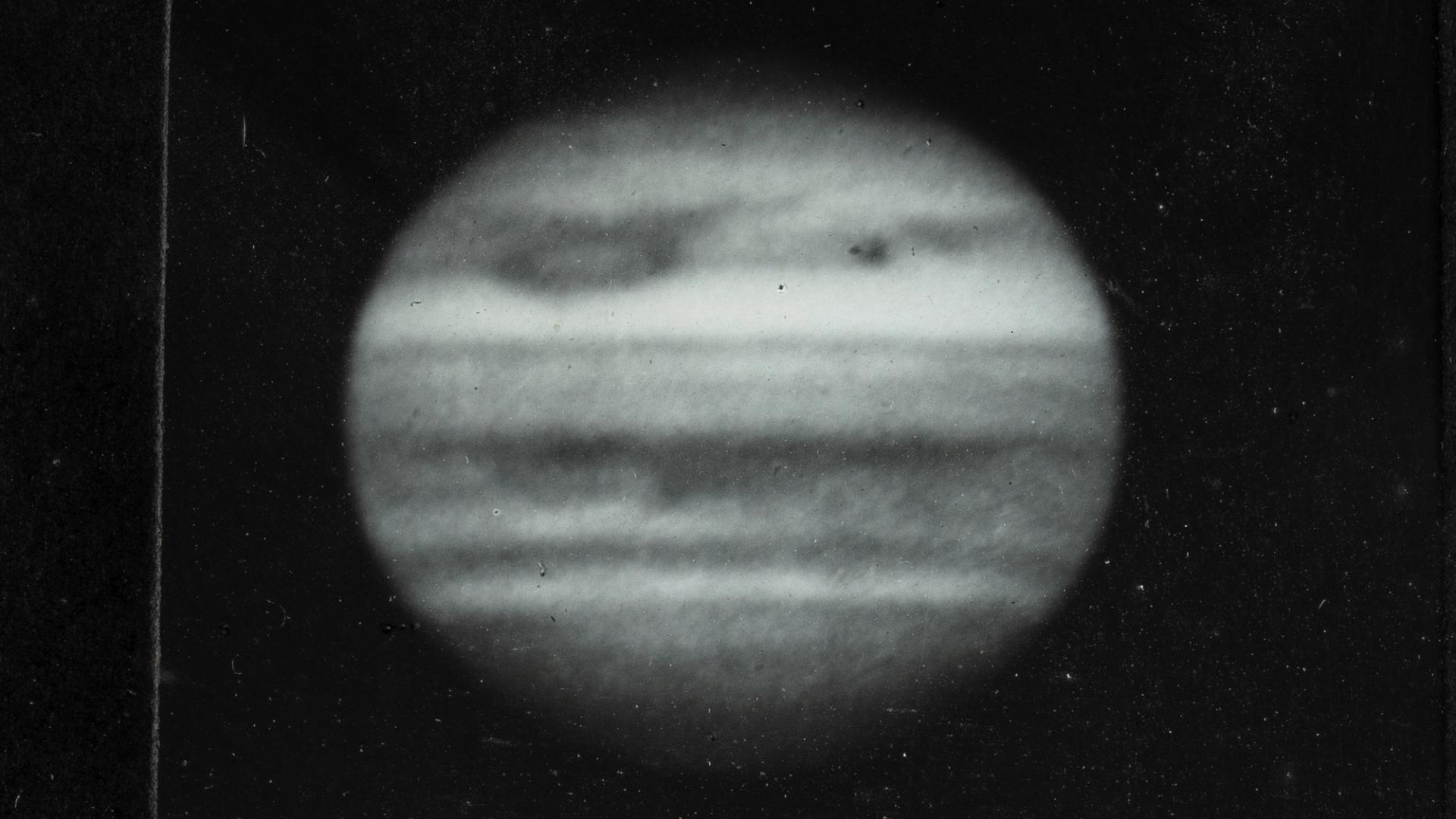
This month after sunset look high in the north-western sky for a very brilliant star-like object. This is the planet Jupiter, the largest planet in our Solar System. On the 23rd the 6-day old crescent Moon will be just to the south of Jupiter and on the 24th the 7-day old crescent Moon will be just to the north of the planet.</p>
<p>In the middle of the month, Mars starts to rise around midnight in the constellation of Cancer. However, on the 1st and 2nd Mars can be seen crossing the large open star cluster M44, commonly referred to as the Beehive Cluster. The cluster is easily visible to the unaided eye in dark skies, in fact as a whole, the cluster is brighter than all the stars that make up the entire constellation of Cancer!<br />
This month Venus is lost in the glare of the rising Sun and cannot be observed. It will reappear in the evening twilight next February.<br />
November also has something in store for all of you early-birds! In the eastern pre-dawn sky Saturn returns to the morning sky. On the 13th, the 25-day old waning crescent Moon will be above and to the south of Saturn. </p>
<p>Saturn’s rings are slowly opening after the ring plane crossing in early September. Those with a telescope will view the north side of the rings for the first time since 1996. This northern view will continue until March 2025, when the Earth next passes through the ring plane.</p>
<p>With the weather warming up, Saturn is well worth getting out of bed for!<br />
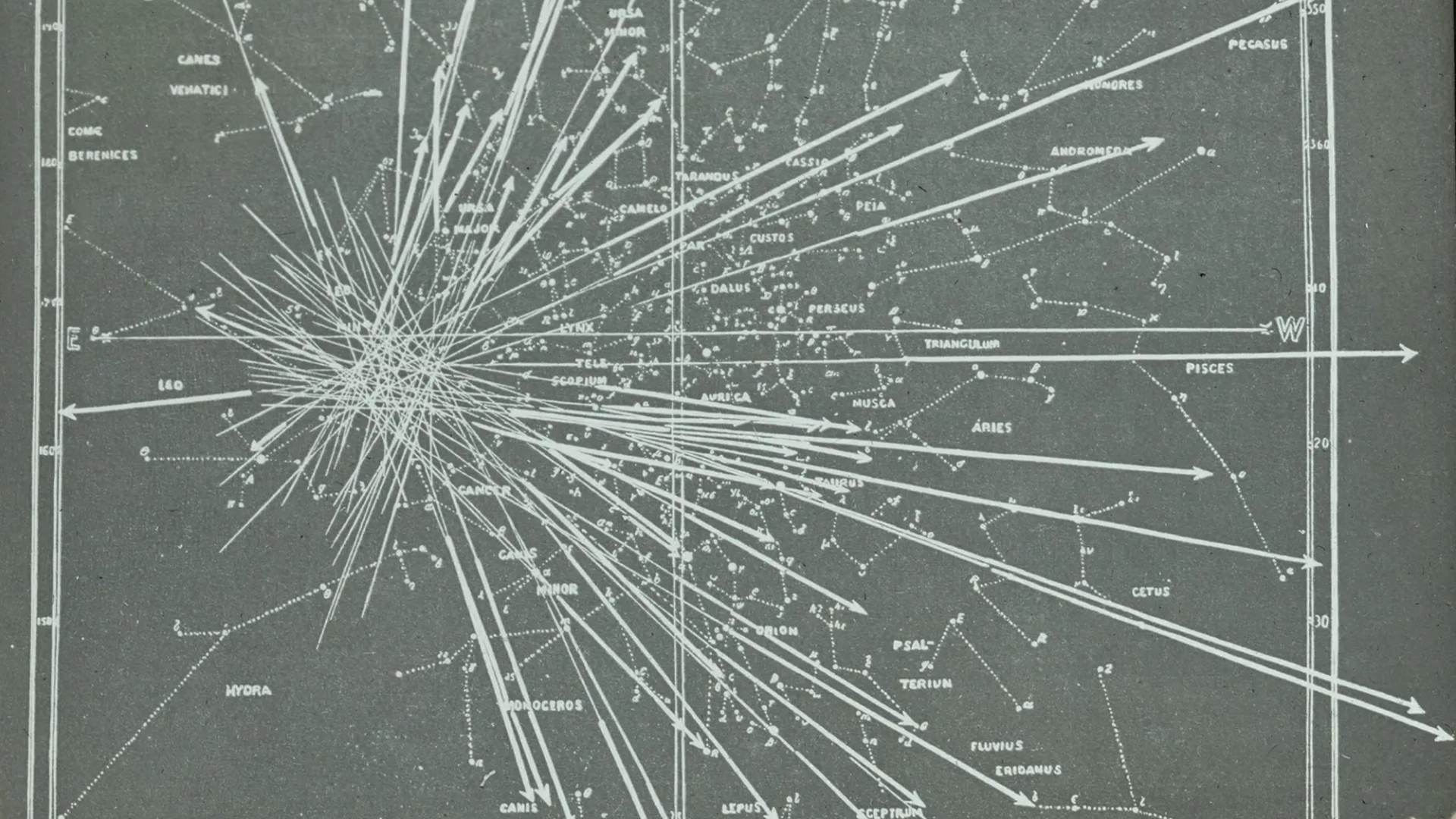
I do have one wildcard for all you daredevils this month which is the Leonids meteor shower. This shower is linked to the periodic comet 55P/Tempel-Tuttle and is usually at its best about every 33 years when the comet returns. When comets pass close to the Sun they leave a trail of small particles and dust behind. When the Earth passes through this trail we see lots of meteors appearing to come from the one area of the sky. This is called the radiant and each shower is named after the constellation or bright star near which the radiant appears. In this case it’s the constellation of Leo and the radiant is within the sickle or head of the lion. The best time to observe any meteor shower is after midnight, usually a few hours before dawn. The Leonids are active from the 10th to the 21st of November, with the peak on the morning of the 18th. Between 1998 and 2002, the Leonids put on spectacular displays however activity can vary from year to year. 2009 is looking good for the Leonids, with early predictions indicating the potential for peak rates of 100+ meteors per hour. With predictions like these, combined with a New Moon the day before, it is well worth the effort of an early morning, particularly away from city lights, the sight would be incredible!</p>
<p>Unfortunately it’s now time for me to bid you goodbye, clear skies and see you next month under the stars!</p>
</blockquote>
<div class="feedflare">
<a href="http://feeds.feedburner.com/~ff/SydneyObservatory?a=If4YMzM1NTA:c78n8r1uCBQ:yIl2AUoC8zA"><img src="http://feeds.feedburner.com/~ff/SydneyObservatory?d=yIl2AUoC8zA" border="0"></img></a> <a href="http://feeds.feedburner.com/~ff/SydneyObservatory?a=If4YMzM1NTA:c78n8r1uCBQ:F7zBnMyn0Lo"><img src="http://feeds.feedburner.com/~ff/SydneyObservatory?i=If4YMzM1NTA:c78n8r1uCBQ:F7zBnMyn0Lo" border="0"></img></a> <a href="http://feeds.feedburner.com/~ff/SydneyObservatory?a=If4YMzM1NTA:c78n8r1uCBQ:V_sGLiPBpWU"><img src="http://feeds.feedburner.com/~ff/SydneyObservatory?i=If4YMzM1NTA:c78n8r1uCBQ:V_sGLiPBpWU" border="0"></img></a> <a href="http://feeds.feedburner.com/~ff/SydneyObservatory?a=If4YMzM1NTA:c78n8r1uCBQ:qj6IDK7rITs"><img src="http://feeds.feedburner.com/~ff/SydneyObservatory?d=qj6IDK7rITs" border="0"></img></a> <a href="http://feeds.feedburner.com/~ff/SydneyObservatory?a=If4YMzM1NTA:c78n8r1uCBQ:gIN9vFwOqvQ"><img src="http://feeds.feedburner.com/~ff/SydneyObservatory?i=If4YMzM1NTA:c78n8r1uCBQ:gIN9vFwOqvQ" border="0"></img></a>
</div><img src="http://feeds.feedburner.com/~r/SydneyObservatory/~4/If4YMzM1NTA" height="1" width="1"/>]]></content:encoded>
			<wfw:commentRss>http://www.sydneyobservatory.com.au/blog/?feed=rss2&amp;p=2522</wfw:commentRss>
		<slash:comments>1</slash:comments>
		<feedburner:origLink>http://www.sydneyobservatory.com.au/blog/?p=2522</feedburner:origLink></item>
		<item>
		<title>November 2009 night sky guide and podcast</title>
		<link>http://feedproxy.google.com/~r/SydneyObservatory/~3/2cq6YgQ59oM/</link>
		<comments>http://www.sydneyobservatory.com.au/blog/?p=2521#comments</comments>
		<pubDate>Sat, 31 Oct 2009 14:01:09 +0000</pubDate>
		<dc:creator>irma</dc:creator>
				<category><![CDATA[Monthly sky guides]]></category>

		<guid isPermaLink="false">http://www.sydneyobservatory.com.au/blog/?p=2521</guid>
		<description><![CDATA[To help you learn about the southern night sky, Sydney Observatory provides an audio guide/podcast, transcript of that audio, and a sky map or chart each month. 
This month&#8217;s audio sky guide is presented by Melissa Hulbert, Astronomy Educator at Sydney Observatory. You can listen online, or download the audio onto your ipod or mp3 [...]]]></description>
			<content:encoded><![CDATA[<p>To help you learn about the southern night sky, Sydney Observatory provides an audio guide/podcast, transcript of that audio, and a sky map or chart each month. </p>
<p>This month&#8217;s audio sky guide is presented by Melissa Hulbert, Astronomy Educator at Sydney Observatory. You can listen online, or download the audio onto your ipod or mp3 player. Links to the audio and the star map are below.</p>
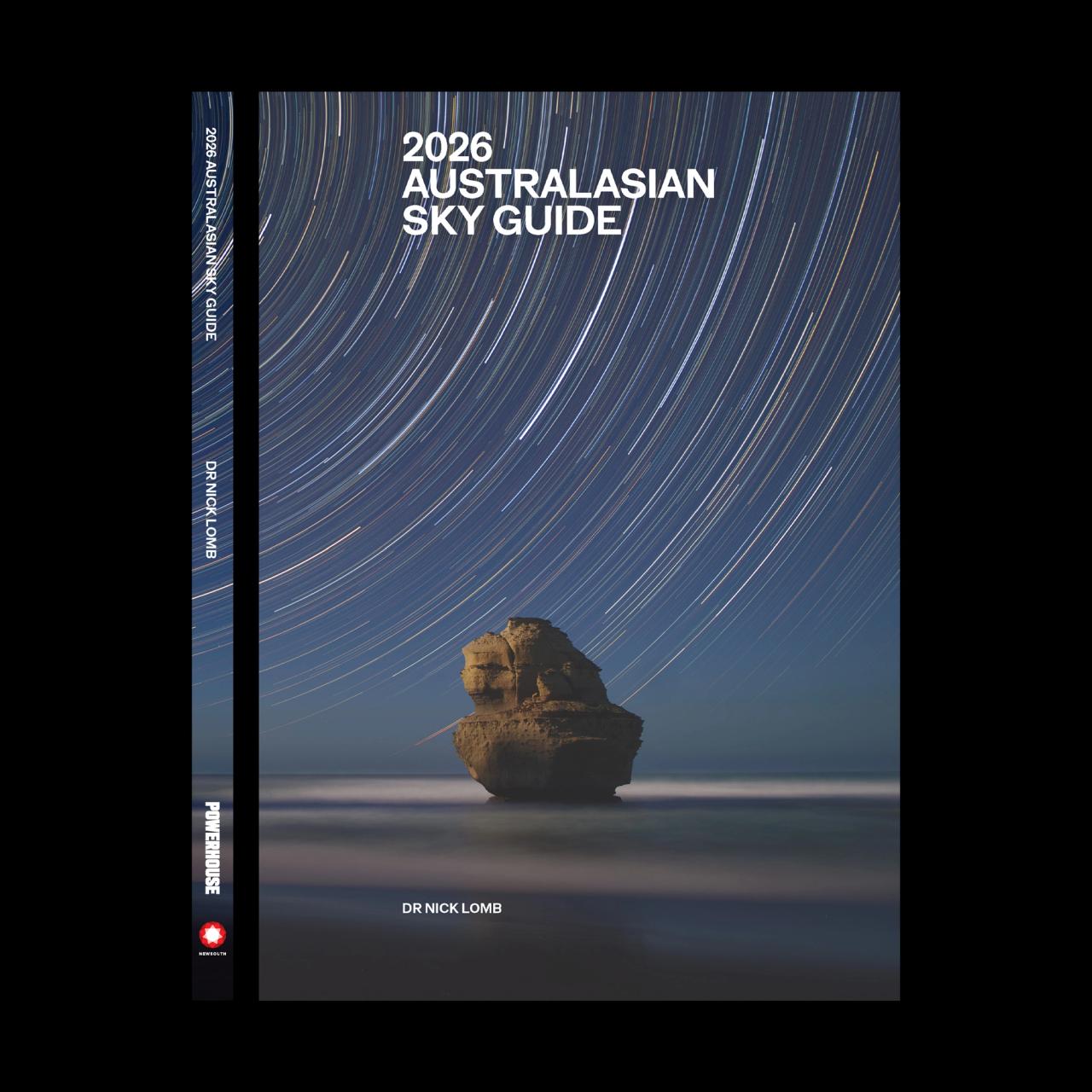
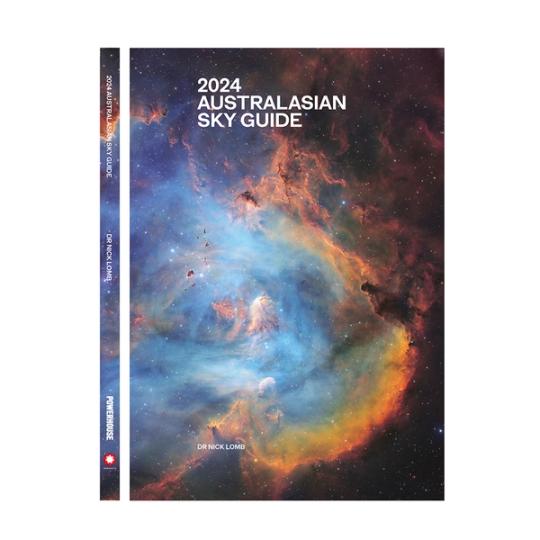
<p>There is more information and detail in our annual book, written by Dr Nick Lomb, &#8216;The Australian sky guide&#8217;. If you are interested in the &#8216;2010 Australian sky guide&#8217; with information and star maps for months from December 2009 until December 2010 inclusive, plus information about the Sun, twilight, the Moon and tides, and a host of other fascinating astronomical information, you can purchase it online or at Sydney Observatory and Powerhouse Museum shops from December &#8211; or possibly this month. You can check if it&#8217;s available yet through <a href="http://www.powerhousemuseum.com/publications/publications_cat.php?cat_id=9"> Powerhouse Publishing</a>.</p>
<p>The free monthly night sky map PDF (below) shows the stars, constellations and planets visible in the night sky from anywhere in Australia. To view PDF star charts you will need to download and install Adobe Acrobat Reader if it’s not on your computer already. </p>
<p><a href="http://www.sydneyobservatory.com.au/pdf/starcharts/starmapNov2009.pdf"><img src="http://www.sydneyobservatory.com.au/images/icons/file_acrobat.gif" />November 2009 night sky map</a></p>
<p>Read the <a href="http://www.sydneyobservatory.com.au/blog/?p=2522">transcript</a>.</p>
<div class="feedflare">
<a href="http://feeds.feedburner.com/~ff/SydneyObservatory?a=2cq6YgQ59oM:-gUOMvlr5OU:yIl2AUoC8zA"><img src="http://feeds.feedburner.com/~ff/SydneyObservatory?d=yIl2AUoC8zA" border="0"></img></a> <a href="http://feeds.feedburner.com/~ff/SydneyObservatory?a=2cq6YgQ59oM:-gUOMvlr5OU:F7zBnMyn0Lo"><img src="http://feeds.feedburner.com/~ff/SydneyObservatory?i=2cq6YgQ59oM:-gUOMvlr5OU:F7zBnMyn0Lo" border="0"></img></a> <a href="http://feeds.feedburner.com/~ff/SydneyObservatory?a=2cq6YgQ59oM:-gUOMvlr5OU:V_sGLiPBpWU"><img src="http://feeds.feedburner.com/~ff/SydneyObservatory?i=2cq6YgQ59oM:-gUOMvlr5OU:V_sGLiPBpWU" border="0"></img></a> <a href="http://feeds.feedburner.com/~ff/SydneyObservatory?a=2cq6YgQ59oM:-gUOMvlr5OU:qj6IDK7rITs"><img src="http://feeds.feedburner.com/~ff/SydneyObservatory?d=qj6IDK7rITs" border="0"></img></a> <a href="http://feeds.feedburner.com/~ff/SydneyObservatory?a=2cq6YgQ59oM:-gUOMvlr5OU:gIN9vFwOqvQ"><img src="http://feeds.feedburner.com/~ff/SydneyObservatory?i=2cq6YgQ59oM:-gUOMvlr5OU:gIN9vFwOqvQ" border="0"></img></a>
</div><img src="http://feeds.feedburner.com/~r/SydneyObservatory/~4/2cq6YgQ59oM" height="1" width="1"/>]]></content:encoded>
			<wfw:commentRss>http://www.sydneyobservatory.com.au/blog/?feed=rss2&amp;p=2521</wfw:commentRss>
		<slash:comments>0</slash:comments>
			<enclosure url="http://www.sydneyobservatory.com.au/audio/night_sky_nov09.mp3" length="1" type="audio/mpeg" />
<itunes:duration>00:01:01</itunes:duration>
		<itunes:subtitle>To help you learn about the southern night sky, Sydney Observatory provides an audio guide/podcast, transcript of that audio, and a sky map or chart ...</itunes:subtitle>
		<itunes:summary>To help you learn about the southern night sky, Sydney Observatory provides an audio guide/podcast, transcript of that audio, and a sky map or chart each month. 

This month's audio sky guide is presented by Melissa Hulbert, Astronomy Educator at Sydney Observatory. You can listen online, or download the audio onto your ipod or mp3 player. Links to the audio and the star map are below.

There is more information and detail in our annual book, written by Dr Nick Lomb, 'The Australian sky guide'. If you are interested in the '2010 Australian sky guide' with information and star maps for months from December 2009 until December 2010 inclusive, plus information about the Sun, twilight, the Moon and tides, and a host of other fascinating astronomical information, you can purchase it online or at Sydney Observatory and Powerhouse Museum shops from December - or possibly this month. You can check if it's available yet through  Powerhouse Publishing.

The free monthly night sky map PDF (below) shows the stars, constellations and planets visible in the night sky from anywhere in Australia. To view PDF star charts you will need to download and install Adobe Acrobat Reader if itrsquo;s not on your computer already. 

November 2009 night sky map

Read the transcript.</itunes:summary>
		<itunes:keywords>Monthly,sky,guides</itunes:keywords>
		<itunes:author>sebc@phm.gov.au</itunes:author>
		<itunes:explicit>no</itunes:explicit>
		<itunes:block>No</itunes:block>
	<feedburner:origLink>http://www.sydneyobservatory.com.au/blog/?p=2521</feedburner:origLink></item>
		<item>
		<title>Allan reflects on the 2009 Prime Minister’s Science Prize and the benefits of astronomy and space research</title>
		<link>http://feedproxy.google.com/~r/SydneyObservatory/~3/XuIz89bMdAk/</link>
		<comments>http://www.sydneyobservatory.com.au/blog/?p=2662#comments</comments>
		<pubDate>Fri, 30 Oct 2009 00:23:24 +0000</pubDate>
		<dc:creator>Nick Lomb</dc:creator>
				<category><![CDATA[Information]]></category>

		<guid isPermaLink="false">http://www.sydneyobservatory.com.au/blog/?p=2662</guid>
		<description><![CDATA[
The opening of the Australia Telescope on 2 September 1988. Image Nick Lomb
One of the questions I am often asked as an Astronomy Educator here at Sydney Observatory is “What use is Astronomy?” with people thinking that just looking at the sky cannot really be of any importance to people here on Earth. This years [...]]]></description>
			<content:encoded><![CDATA[<p><img src="http://www.sydneyobservatory.com.au/blog/wp-content/uploads//2009/10/Opening-of-AT.jpg" alt="Opening of AT" title="Opening of AT" class="alignnone size-full wp-image-2661" /></p>
<p><em>The opening of the Australia Telescope on 2 September 1988. Image Nick Lomb</em></p>
<p>One of the questions I am often asked as an Astronomy Educator here at Sydney Observatory is “What use is Astronomy?” with people thinking that just looking at the sky cannot really be of any importance to people here on Earth. This years <a href="http://www.scienceinpublic.com/blog/prime-ministers-prize/2009-science">Prime Minister&#8217;s Prize for Science given to Dr John O’Sullivan</a> is a wonderful example of how basic science can turn into massive benefits (and dollars) for Australia and indeed the world.</p>
<p>Initially, Dr O’Sullivan was working with the CSIRO and at Parkes Radio Telescope looking for the radio signals from exploding black holes. Later while working on the development of the <a href="http://www.narrabri.atnf.csiro.au/">Australia Telescope </a>he looked at the &#8220;multipath&#8221; problem &#8211; the interference caused by reflected radio waves that slows network speeds. He and his team found a way to accelerate them by splitting radio channels apart, making wireless about five times faster.</p>
<p>This discovery evolved into what we now know as Wi-Fi technology, that allows millions of different computers, phones, games consoles and other information devices to share information in new and easy ways.</p>
<p>This is not the first time basic research has turned into innovations and inventions. CSIRO radio astronomers also developed the <a href="http://en.wikipedia.org/wiki/Microwave_landing_system">Interscan</a> aircraft landing system that was widely used at airports around the globe until the advent of GPS systems. There are, of course, <a href="http://www.sti.nasa.gov/tto/Spinoff2008/tech_benefits.html">numerous spinoffs from the space program</a>, though there are a few myths as well such as Teflon.</p>
<p>Many basic inventions started life as scientific curiosities from non-Newtonian ‘slime’ now used in variable speed gearboxes to super conductivity for magnets and power transmission. Even the technology behind the solar panels on many houses to day was simply an exercise in a physics lab for many years. </p>
<p>Even the humble and esoteric science of astronomy has led to techniques used for looking at different stars to make an appearance in everyday life. The Maksutov telescope developed in the 1940s for astronomy now has a second life in lightweight lens taking photos of sporting achievements a long way off. Even the special optics that allow telescopes to adapt to changing weather conditions in the sky without losing view of a distant galaxy are starting to make their way to your digital camera to capture that perfect shot. </p>
<p>So next time you discuss the achievements of astronomy from your laptop, or twitter from your mobile phone stop to consider what might have happened without some research into black holes in a sheep paddock in Parkes.</p>
<p><strong>Allan Kreuiter, Astronomy Educator at Sydney Observatory</strong></p>
<div class="feedflare">
<a href="http://feeds.feedburner.com/~ff/SydneyObservatory?a=XuIz89bMdAk:BcVlcRFHgWU:yIl2AUoC8zA"><img src="http://feeds.feedburner.com/~ff/SydneyObservatory?d=yIl2AUoC8zA" border="0"></img></a> <a href="http://feeds.feedburner.com/~ff/SydneyObservatory?a=XuIz89bMdAk:BcVlcRFHgWU:F7zBnMyn0Lo"><img src="http://feeds.feedburner.com/~ff/SydneyObservatory?i=XuIz89bMdAk:BcVlcRFHgWU:F7zBnMyn0Lo" border="0"></img></a> <a href="http://feeds.feedburner.com/~ff/SydneyObservatory?a=XuIz89bMdAk:BcVlcRFHgWU:V_sGLiPBpWU"><img src="http://feeds.feedburner.com/~ff/SydneyObservatory?i=XuIz89bMdAk:BcVlcRFHgWU:V_sGLiPBpWU" border="0"></img></a> <a href="http://feeds.feedburner.com/~ff/SydneyObservatory?a=XuIz89bMdAk:BcVlcRFHgWU:qj6IDK7rITs"><img src="http://feeds.feedburner.com/~ff/SydneyObservatory?d=qj6IDK7rITs" border="0"></img></a> <a href="http://feeds.feedburner.com/~ff/SydneyObservatory?a=XuIz89bMdAk:BcVlcRFHgWU:gIN9vFwOqvQ"><img src="http://feeds.feedburner.com/~ff/SydneyObservatory?i=XuIz89bMdAk:BcVlcRFHgWU:gIN9vFwOqvQ" border="0"></img></a>
</div><img src="http://feeds.feedburner.com/~r/SydneyObservatory/~4/XuIz89bMdAk" height="1" width="1"/>]]></content:encoded>
			<wfw:commentRss>http://www.sydneyobservatory.com.au/blog/?feed=rss2&amp;p=2662</wfw:commentRss>
		<slash:comments>0</slash:comments>
		<feedburner:origLink>http://www.sydneyobservatory.com.au/blog/?p=2662</feedburner:origLink></item>
		<item>
		<title>Harry sees a rare spot on the Sun and it is a large one – AR 11029</title>
		<link>http://feedproxy.google.com/~r/SydneyObservatory/~3/t_QTmDXsFN4/</link>
		<comments>http://www.sydneyobservatory.com.au/blog/?p=2651#comments</comments>
		<pubDate>Thu, 29 Oct 2009 01:32:23 +0000</pubDate>
		<dc:creator>Nick Lomb</dc:creator>
				<category><![CDATA[Amateur groups]]></category>
		<category><![CDATA[Observations]]></category>

		<guid isPermaLink="false">http://www.sydneyobservatory.com.au/blog/?p=2651</guid>
		<description><![CDATA[
Sunspot AR 11029 on the surface of the Sun on the morning of Thursday 29 October 2009 (AEDT), image courtesy SOHO/MDI
The Astronomical Society of NSW (ASNSW) field day at Epping (Oct 24) was successful partly because there was something to see on the Sun.  Members of the public could watch an emerging string of [...]]]></description>
			<content:encoded><![CDATA[<p><img src="http://www.sydneyobservatory.com.au/blog/wp-content/uploads//2009/10/SOHO-MDI-29-Oct-091.jpg" alt="SOHO MDI 29 Oct 09" title="SOHO MDI 29 Oct 09" class="alignnone size-full wp-image-2657" /></p>
<p><em>Sunspot AR 11029 on the surface of the Sun on the morning of Thursday 29 October 2009 (AEDT), image courtesy SOHO/MDI</em></p>
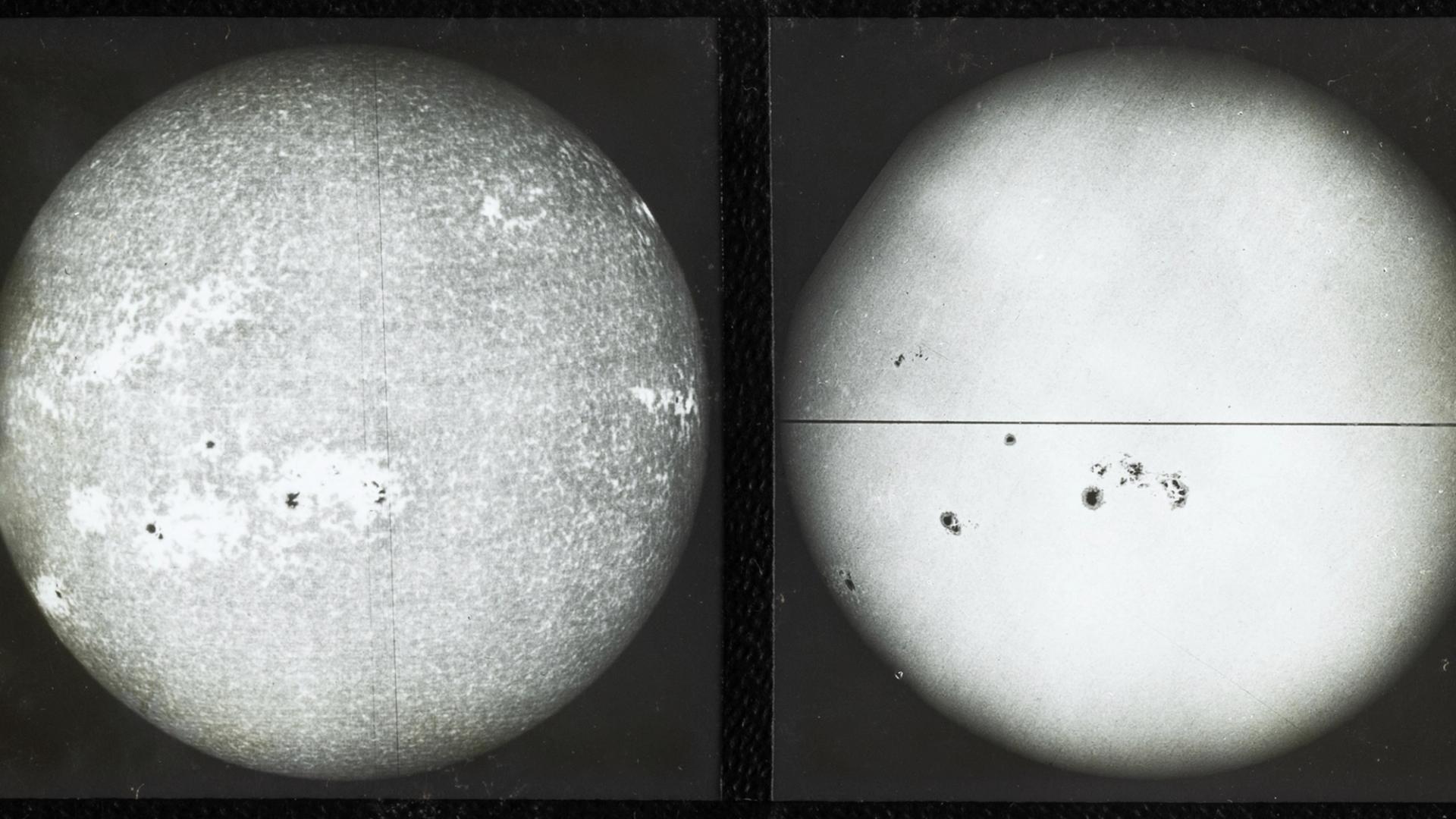
<p>The Astronomical Society of NSW (ASNSW) field day at Epping (Oct 24) was successful partly because there was something to see on the Sun.  Members of the public could watch an emerging string of spots (AR11029) and when told they stretched across 50,000 km were suitably impressed.  As well the clouds had more gaps as the day wore on.  Half a dozen ASNSW members showed the Sun with a variety of methods, from image projection to narrow-band filters.</p>
<p><img src="http://www.sydneyobservatory.com.au/blog/wp-content/uploads//2009/10/Fig1.PNG" alt="Fig1" title="Fig1" class="alignnone size-full wp-image-2652" /></p>
<p><em>Sunspot AR 1109 (fig 1), drawing Harry Roberts</em></p>
<p>AR 11029 showed a tight cluster of small dark spots at the following (f) or east end, with a hint of two isolated spots well to the west (p) of the cluster. Timings showed the group covered about six degrees of longitude (Fig 1).  In H-alpha some plage and a dark filament was recorded.</p>
<p><img src="http://www.sydneyobservatory.com.au/blog/wp-content/uploads//2009/10/Fig2.PNG" alt="Fig2" title="Fig2" class="alignnone size-full wp-image-2653" /> </p>
<p><em>Sunspot AR 1109 (fig 2), drawing Harry Roberts</em></p>
<p>Clouds and heavy rain prevented further views until Oct 28 – when big changes in the group were obvious (compare Figs 1 and 2).  During our cloudy days the professional websites showed rapid development in AR11029 and a big rise in GOES flaring, with several C class flares and dozens of lesser events. Fig 3 shows a B3 flare and associated ejection of dark material with detectable Doppler shift – a presumed filament ejection.</p>
<p>The writer keeps watch on the daily Mt Wilson umbral field magnetographs recording field strengths inside the sunspots themselves (hand-drawn).  As you know current research suggests the sunspot fields have fallen to historic lows – and further decline is predicted.  Figs 1 and 2 show the group in WL and H-alpha combined with the magnetograph closest in time on the right side of the Fig. (Note these are reversed project images).</p>
<p>AR11029 emerged (23rd Oct) with slightly stronger fields (2100G) in the (f) spot cluster and only 2000G in the isolated (p) spots.  But things quickly changed.  Even during the field day the isolated (p) spots became more distinct as they grew rapidly, although none seemed to have penumbra at the time.  The magnetographs show that over the next few days stronger field emerged in the (p) spots while the (f) spots faded and disappeared – the tendency was for the group to shorten and concentrate magnetic flux at the western (p) end.<br />
Fields there reached the strongest level yet recorded for a C24 spot of 2400G on the 27th.  It’s easy to overstate the field strength argument. Several penumbral spot groups belonging to C24 have appeared since the cycle commenced in January 2008.  The strongest fields recorded prior to the current group were 2300G in AR11024 (Jul 09) and 2300G in AR11008 (Nov 08).  AR11019 had 2200G in May 09.  So while 2400G is the strongest C24 field yet seen it represents only a small increase (100G) on the previous records – perhaps close to the equipment’s detection limits. Remember spots disappear around 1800G, and note the many at this level shown in Figs 1 and 2.</p>
<p><img src="http://www.sydneyobservatory.com.au/blog/wp-content/uploads//2009/10/Fig3.PNG" alt="Fig3" title="Fig3" class="alignnone size-full wp-image-2654" /></p>
<p><em>Sunspot AR 1109 (fig 3), drawing Harry Roberts</em></p>
<p>Through much of the 20th century sunspot fields were typically 3000G, yet the McMath-Pierce team find average fields currently at only 2200G.  Do the 2400G detections suggest a turn-around in solar core fields?  Clearly it’s too early to know.  The present shortage of large prominences, disc filaments and penumbral sunspots confirms the weak core fields – and a turn-around may be a long way off.  Still it was good to see an almost “normal” looking sunspot (Fig 2 and 3) with penumbra, visible filaments and some modest flaring.</p>
<p><strong>Harry Roberts, Sun and Moon observer and member of the <a href="http://www.sydneycityskywatchers.asn.au/">Sydney City Skywatchers</a></strong></p>
<div class="feedflare">
<a href="http://feeds.feedburner.com/~ff/SydneyObservatory?a=t_QTmDXsFN4:kF-YD2M4h4Y:yIl2AUoC8zA"><img src="http://feeds.feedburner.com/~ff/SydneyObservatory?d=yIl2AUoC8zA" border="0"></img></a> <a href="http://feeds.feedburner.com/~ff/SydneyObservatory?a=t_QTmDXsFN4:kF-YD2M4h4Y:F7zBnMyn0Lo"><img src="http://feeds.feedburner.com/~ff/SydneyObservatory?i=t_QTmDXsFN4:kF-YD2M4h4Y:F7zBnMyn0Lo" border="0"></img></a> <a href="http://feeds.feedburner.com/~ff/SydneyObservatory?a=t_QTmDXsFN4:kF-YD2M4h4Y:V_sGLiPBpWU"><img src="http://feeds.feedburner.com/~ff/SydneyObservatory?i=t_QTmDXsFN4:kF-YD2M4h4Y:V_sGLiPBpWU" border="0"></img></a> <a href="http://feeds.feedburner.com/~ff/SydneyObservatory?a=t_QTmDXsFN4:kF-YD2M4h4Y:qj6IDK7rITs"><img src="http://feeds.feedburner.com/~ff/SydneyObservatory?d=qj6IDK7rITs" border="0"></img></a> <a href="http://feeds.feedburner.com/~ff/SydneyObservatory?a=t_QTmDXsFN4:kF-YD2M4h4Y:gIN9vFwOqvQ"><img src="http://feeds.feedburner.com/~ff/SydneyObservatory?i=t_QTmDXsFN4:kF-YD2M4h4Y:gIN9vFwOqvQ" border="0"></img></a>
</div><img src="http://feeds.feedburner.com/~r/SydneyObservatory/~4/t_QTmDXsFN4" height="1" width="1"/>]]></content:encoded>
			<wfw:commentRss>http://www.sydneyobservatory.com.au/blog/?feed=rss2&amp;p=2651</wfw:commentRss>
		<slash:comments>0</slash:comments>
		<feedburner:origLink>http://www.sydneyobservatory.com.au/blog/?p=2651</feedburner:origLink></item>
		<item>
		<title>Nick is thrilled by The Re-Trial of Galileo at UNSW</title>
		<link>http://feedproxy.google.com/~r/SydneyObservatory/~3/Q6YqCQX_t6U/</link>
		<comments>http://www.sydneyobservatory.com.au/blog/?p=2640#comments</comments>
		<pubDate>Tue, 27 Oct 2009 01:00:06 +0000</pubDate>
		<dc:creator>Nick Lomb</dc:creator>
				<category><![CDATA[Activities]]></category>
		<category><![CDATA[International Year of Astronomy 2009]]></category>

		<guid isPermaLink="false">http://www.sydneyobservatory.com.au/blog/?p=2640</guid>
		<description><![CDATA[
The cross-examination of Galileo at The Re-Trial of Galileo, with (from left to right) Anna Katzmann SC as the Prosecution Counsel, Dr Peter Slezak as her junior, Professor Fred Watson as Galileo, Julie McCrossin as Judge, Dr Paul Brown as her assistant, Julian Burnside AO QC as Defense Counsel, Dr Maurice Finoccchiaro as his junior [...]]]></description>
			<content:encoded><![CDATA[<p><img src="http://www.sydneyobservatory.com.au/blog/wp-content/uploads//2009/10/The-Re-Trial-of-Galileo_the-cross-examination-of-Galileo_Nick-Lomb.jpg" alt="The Re-Trial of Galileo_the cross-examination of Galileo_Nick Lomb" title="The Re-Trial of Galileo_the cross-examination of Galileo_Nick Lomb" class="alignnone size-full wp-image-2641" /></p>
<p><em>The cross-examination of Galileo at The Re-Trial of Galileo, with (from left to right) Anna Katzmann SC as the Prosecution Counsel, Dr Peter Slezak as her junior, Professor Fred Watson as Galileo, Julie McCrossin as Judge, Dr Paul Brown as her assistant, Julian Burnside AO QC as Defense Counsel, Dr Maurice Finoccchiaro as his junior and Robyn Williams, who seems puzzled by a point made by Julian Burnside, as jury foreman. Picture Nick Lomb</em></p>
<p>Last night (26 October 2009) I attended The Re-Trial of Galileo at the University of NSW. The brain-child of Dr Peter Slezak from the History and Philosophy of Science at the University of NSW, the event was one of the highlights of the International Year of Astronomy celebrations in Sydney. A brilliant mixture of entertainment and information, the large audience clearly enjoyed the evening.</p>
<p>If you missed out on the evening don&#8217;t be too disappointed as the event was recorded by ABC TV&#8217;s Compass program and will be shown next year. That will be an unmissable program!</p>
<p>In the Re-Trial celebrity guests took on roles as the key players in the Galileo Affair and were cross-examined by two of the country&#8217;s top barristers, Anna Katzmann SC who is President of the NSW Bar Association was the Prosecution Counsel and Julian Burnside AO QC was the Defense Counsel. The main role of Galileo was taken by the inimitable Fred Watson of the Anglo-Australian Telescope at Coonabarabran. Witnesses included a cameo role as Cosimo II Grand Duke of Tuscany by the Honourable Bob Carr, the former NSW Premier of NSW, who exchanged a few acerbic words about lawyers and compensation claims with Mr Burnside.</p>
<p>I will not mention what happened, the issues discussed, the numerous witty remarks and the surprising jury verdict delivered by ABC science broadcaster Robyn Williams as the foreman. It is sufficient to say that both barristers were surprisingly well briefed. Ms Katzmann, in particular, seemed to have read every page of Galileo&#8217;s Dialogue of Two World Systems, the publication of which led to his original prosecution. Of course, her &#8220;junior&#8221; Dr Peter Slezak may have had something to do with her apparent familiarity with the book.</p>
<p>I will not reveal details since it will be shown on Compass. Instead I just mention a key point that  was raised, but not elaborated on in The Re-Trial.</p>
<p>Galileo had many good arguments for the Copernican System, that is the Earth and the other planets circling the Sun, but his key argument was provided by the tides. He said that the tides show the movement of the Earth as they were like the sloshing of water in a glass that is moved. This is utter nonsense and Galileo should have known better. After all he single-handedly started the science of moving bodies and discovered the law of inertia: a moving body will continue in motion with a constant velocity unless acted upon by a force. So the oceans should remain still on a moving Earth unless there is a force acting on them.</p>
<p>That force is gravity as explained by Isaac Newton, who was born in 1642, the year Galileo died. And the definite proof of the motion of the Earth did not come until 1725 when the third Astronomer Royal James Bradley discovered the <a href="http://pwg.gsfc.nasa.gov/stargaze/Saberr.htm">aberration of light</a>.</p>
<div class="feedflare">
<a href="http://feeds.feedburner.com/~ff/SydneyObservatory?a=Q6YqCQX_t6U:ZS6NbrobMPo:yIl2AUoC8zA"><img src="http://feeds.feedburner.com/~ff/SydneyObservatory?d=yIl2AUoC8zA" border="0"></img></a> <a href="http://feeds.feedburner.com/~ff/SydneyObservatory?a=Q6YqCQX_t6U:ZS6NbrobMPo:F7zBnMyn0Lo"><img src="http://feeds.feedburner.com/~ff/SydneyObservatory?i=Q6YqCQX_t6U:ZS6NbrobMPo:F7zBnMyn0Lo" border="0"></img></a> <a href="http://feeds.feedburner.com/~ff/SydneyObservatory?a=Q6YqCQX_t6U:ZS6NbrobMPo:V_sGLiPBpWU"><img src="http://feeds.feedburner.com/~ff/SydneyObservatory?i=Q6YqCQX_t6U:ZS6NbrobMPo:V_sGLiPBpWU" border="0"></img></a> <a href="http://feeds.feedburner.com/~ff/SydneyObservatory?a=Q6YqCQX_t6U:ZS6NbrobMPo:qj6IDK7rITs"><img src="http://feeds.feedburner.com/~ff/SydneyObservatory?d=qj6IDK7rITs" border="0"></img></a> <a href="http://feeds.feedburner.com/~ff/SydneyObservatory?a=Q6YqCQX_t6U:ZS6NbrobMPo:gIN9vFwOqvQ"><img src="http://feeds.feedburner.com/~ff/SydneyObservatory?i=Q6YqCQX_t6U:ZS6NbrobMPo:gIN9vFwOqvQ" border="0"></img></a>
</div><img src="http://feeds.feedburner.com/~r/SydneyObservatory/~4/Q6YqCQX_t6U" height="1" width="1"/>]]></content:encoded>
			<wfw:commentRss>http://www.sydneyobservatory.com.au/blog/?feed=rss2&amp;p=2640</wfw:commentRss>
		<slash:comments>1</slash:comments>
		<feedburner:origLink>http://www.sydneyobservatory.com.au/blog/?p=2640</feedburner:origLink></item>
		<item>
		<title>Sydney Harbour Bridge Breakfast</title>
		<link>http://feedproxy.google.com/~r/SydneyObservatory/~3/hYxIXer0YoQ/</link>
		<comments>http://www.sydneyobservatory.com.au/blog/?p=2633#comments</comments>
		<pubDate>Sun, 25 Oct 2009 22:35:08 +0000</pubDate>
		<dc:creator>Geoff Wyatt</dc:creator>
				<category><![CDATA[Information]]></category>

		<guid isPermaLink="false">http://www.sydneyobservatory.com.au/blog/?p=2633</guid>
		<description><![CDATA[
Toner reports that the rain stayed away and approximately three hundred &#8216;Breakfast on the Bridge&#8217; attendees took the opportunity to enjoy Sydney Observatory gardens, exhibition and views with a coffee, including those pictured here.

Maxine, Terry, Emily,Liam and Anne-Maree enjoy morning tea.

Good friends Lynda, Linda and Sandra  relax with coffee

Astronomy guide Allan showed views of [...]]]></description>
			<content:encoded><![CDATA[<p><img src="http://www.sydneyobservatory.com.au/blog/wp-content/uploads//2009/10/Breakfast-on-Bridge-overview.jpg" alt="Breakfast on Bridge overview" title="Breakfast on Bridge overview" class="alignnone size-full wp-image-2636" /></p>
<p>Toner reports that the rain stayed away and approximately three hundred &#8216;Breakfast on the Bridge&#8217; attendees took the opportunity to enjoy Sydney Observatory gardens, exhibition and views with a coffee, including those pictured here.</p>
<p><img src="http://www.sydneyobservatory.com.au/blog/wp-content/uploads//2009/10/Breakfast-on-Bridge-Maxine-and-friends.jpg" alt="Breakfast on Bridge Maxine and friends" title="Breakfast on Bridge Maxine and friends" class="alignnone size-full wp-image-2634" /><br />
Maxine, Terry, Emily,Liam and Anne-Maree enjoy morning tea.</p>
<p><img src="http://www.sydneyobservatory.com.au/blog/wp-content/uploads//2009/10/Breakfast-on-Bridge-Lynda-and-friends.jpg" alt="Breakfast on Bridge Lynda and friends" title="Breakfast on Bridge Lynda and friends" class="alignnone size-full wp-image-2635" /><br />
Good friends Lynda, Linda and Sandra  relax with coffee</p>
<p><img src="http://www.sydneyobservatory.com.au/blog/wp-content/uploads//2009/10/Allan-with-telescope1.jpg" alt="Allan with telescope1" title="Allan with telescope1" class="alignnone size-full wp-image-2637" /><br />
Astronomy guide Allan showed views of Sydney through a telescope as people walked off the bridge.</p>
<div class="feedflare">
<a href="http://feeds.feedburner.com/~ff/SydneyObservatory?a=hYxIXer0YoQ:tdqJOGiIJLA:yIl2AUoC8zA"><img src="http://feeds.feedburner.com/~ff/SydneyObservatory?d=yIl2AUoC8zA" border="0"></img></a> <a href="http://feeds.feedburner.com/~ff/SydneyObservatory?a=hYxIXer0YoQ:tdqJOGiIJLA:F7zBnMyn0Lo"><img src="http://feeds.feedburner.com/~ff/SydneyObservatory?i=hYxIXer0YoQ:tdqJOGiIJLA:F7zBnMyn0Lo" border="0"></img></a> <a href="http://feeds.feedburner.com/~ff/SydneyObservatory?a=hYxIXer0YoQ:tdqJOGiIJLA:V_sGLiPBpWU"><img src="http://feeds.feedburner.com/~ff/SydneyObservatory?i=hYxIXer0YoQ:tdqJOGiIJLA:V_sGLiPBpWU" border="0"></img></a> <a href="http://feeds.feedburner.com/~ff/SydneyObservatory?a=hYxIXer0YoQ:tdqJOGiIJLA:qj6IDK7rITs"><img src="http://feeds.feedburner.com/~ff/SydneyObservatory?d=qj6IDK7rITs" border="0"></img></a> <a href="http://feeds.feedburner.com/~ff/SydneyObservatory?a=hYxIXer0YoQ:tdqJOGiIJLA:gIN9vFwOqvQ"><img src="http://feeds.feedburner.com/~ff/SydneyObservatory?i=hYxIXer0YoQ:tdqJOGiIJLA:gIN9vFwOqvQ" border="0"></img></a>
</div><img src="http://feeds.feedburner.com/~r/SydneyObservatory/~4/hYxIXer0YoQ" height="1" width="1"/>]]></content:encoded>
			<wfw:commentRss>http://www.sydneyobservatory.com.au/blog/?feed=rss2&amp;p=2633</wfw:commentRss>
		<slash:comments>0</slash:comments>
		<feedburner:origLink>http://www.sydneyobservatory.com.au/blog/?p=2633</feedburner:origLink></item>
		<item>
		<title>Harry finds a swan-like nebula – M17 the Omega Nebula</title>
		<link>http://feedproxy.google.com/~r/SydneyObservatory/~3/_xq1awANuBU/</link>
		<comments>http://www.sydneyobservatory.com.au/blog/?p=2629#comments</comments>
		<pubDate>Wed, 21 Oct 2009 00:23:57 +0000</pubDate>
		<dc:creator>Nick Lomb</dc:creator>
				<category><![CDATA[Amateur groups]]></category>
		<category><![CDATA[Observations]]></category>

		<guid isPermaLink="false">http://www.sydneyobservatory.com.au/blog/?p=2629</guid>
		<description><![CDATA[
Omega Nebula drawn by Harry Roberts
Sketches of deep sky objects won’t win photographic competitions &#8211; but it is interesting to learn what that amazing detector, the human eye, can see through a telescope.
Discussing this recently I learnt that extended objects do not grow brighter as you approached them, and remain faint and colourless to human [...]]]></description>
			<content:encoded><![CDATA[<p><img src="http://www.sydneyobservatory.com.au/blog/wp-content/uploads//2009/10/omega-neb.PNG" alt="omega neb" title="omega neb" class="alignnone size-full wp-image-2628" /></p>
<p><em>Omega Nebula drawn by Harry Roberts</em></p>
<p>Sketches of deep sky objects won’t win photographic competitions &#8211; but it is interesting to learn what that amazing detector, the human eye, can see through a telescope.</p>
<p>Discussing this recently I learnt that extended objects do not grow brighter as you approached them, and remain faint and colourless to human eyes.  And the reason that digital sky images show rainbow hues is because cameras accumulate photons over time and so detect the true colour of the emitted light, red H-alpha, blue H-beta and green OIII etc. Having evolved on a planet with both dazzling sunlight and deep darkness our eyes lack the ability to see colour in faint extended sources.</p>
<p>When I came across M17 in the ten inch I realised I had forgotten how bright it was – a stunning swan shaped object that looks pretty much like its digital portraits – but with no sign of colour.  Time is needed for a good sketch (as it is for photography) so the C8 (with diagonal and LPR filter) was used for this impression.  Though the subject was fainter in the 8” the fixed image allowed more to be recorded (See sketch above).</p>
<p>The “swan’s” bright horizontal bar has much subtle detail with dark bands crossing it, and a milky light with brighter streamers formed the ghostly folded wings above the its “back”. The dark nebula below the swan’s neck stood out strongly as the darkest part of the whole field, with fainter nebula creating the “neck”.  The head and bill of the celestial swan could be seen too, but unresolved stars may cause this.  The “water” on which the swan floats was not dark either; faint wispy nebulae were visible there with averted vision.</p>
<p>Looking closely several faint stars were seen in the nebula –exaggerated in my sketch – as none of them were brighter than ~9 magnitude.</p>
<p>Messier saw it as “A train of light without stars, 5’ or 6’ in extent, in the shape of a spindle, a little like that in Andromeda’s belt (M31) but the light is very faint”. William Huggins was the first to study the light of M7 in a spectroscope (1866) and announced that the cloud was truly a mass of glowing gas, not a cluster of unresolved stars as Herschel senior thought  &#8211; and it was the latter who coined the more common name Omega Nebula.</p>
<p>M17 is about 6,000 light years away and 12 light years from end to end. It is a very bright nebula, a good target for small ‘scopes, and visible as a bright patch in 8X40 binoculars; maybe it’s a naked eye object at a really dark site – a truly stunning winter [and spring] object!</p>
<p><strong>Harry Roberts, sky sketcher and member of the <a href="http://www.sydneycityskywatchers.asn.au/">Sydney City Skywatchers</a></strong></p>
<div class="feedflare">
<a href="http://feeds.feedburner.com/~ff/SydneyObservatory?a=_xq1awANuBU:P66acuZsHWQ:yIl2AUoC8zA"><img src="http://feeds.feedburner.com/~ff/SydneyObservatory?d=yIl2AUoC8zA" border="0"></img></a> <a href="http://feeds.feedburner.com/~ff/SydneyObservatory?a=_xq1awANuBU:P66acuZsHWQ:F7zBnMyn0Lo"><img src="http://feeds.feedburner.com/~ff/SydneyObservatory?i=_xq1awANuBU:P66acuZsHWQ:F7zBnMyn0Lo" border="0"></img></a> <a href="http://feeds.feedburner.com/~ff/SydneyObservatory?a=_xq1awANuBU:P66acuZsHWQ:V_sGLiPBpWU"><img src="http://feeds.feedburner.com/~ff/SydneyObservatory?i=_xq1awANuBU:P66acuZsHWQ:V_sGLiPBpWU" border="0"></img></a> <a href="http://feeds.feedburner.com/~ff/SydneyObservatory?a=_xq1awANuBU:P66acuZsHWQ:qj6IDK7rITs"><img src="http://feeds.feedburner.com/~ff/SydneyObservatory?d=qj6IDK7rITs" border="0"></img></a> <a href="http://feeds.feedburner.com/~ff/SydneyObservatory?a=_xq1awANuBU:P66acuZsHWQ:gIN9vFwOqvQ"><img src="http://feeds.feedburner.com/~ff/SydneyObservatory?i=_xq1awANuBU:P66acuZsHWQ:gIN9vFwOqvQ" border="0"></img></a>
</div><img src="http://feeds.feedburner.com/~r/SydneyObservatory/~4/_xq1awANuBU" height="1" width="1"/>]]></content:encoded>
			<wfw:commentRss>http://www.sydneyobservatory.com.au/blog/?feed=rss2&amp;p=2629</wfw:commentRss>
		<slash:comments>1</slash:comments>
		<feedburner:origLink>http://www.sydneyobservatory.com.au/blog/?p=2629</feedburner:origLink></item>
		<item>
		<title>Galilean night visitors to Sydney Observatory will be able to take sky photos – so easy even Toner can do it!</title>
		<link>http://feedproxy.google.com/~r/SydneyObservatory/~3/j1Yo1CdV5_U/</link>
		<comments>http://www.sydneyobservatory.com.au/blog/?p=2621#comments</comments>
		<pubDate>Fri, 16 Oct 2009 14:01:20 +0000</pubDate>
		<dc:creator>Nick Lomb</dc:creator>
				<category><![CDATA[Activities]]></category>

		<guid isPermaLink="false">http://www.sydneyobservatory.com.au/blog/?p=2621</guid>
		<description><![CDATA[
Picture of Moon with digital camera (Samsung L730) held to telescope eyepiece. Image Toner Stevenson
On the evening of Friday 23 October 2009 Sydney Observatory will join in the world wide network of Galilean Nights. Details of the night are given below, but additionally an important aspect of the night is that visitors will be encouraged [...]]]></description>
			<content:encoded><![CDATA[<p><img src="http://www.sydneyobservatory.com.au/blog/wp-content/uploads//2009/10/Moon1_Toner-Stevenson.jpg" alt="Moon1_Toner Stevenson" title="Moon1_Toner Stevenson" class="alignnone size-full wp-image-2622" /></p>
<p><em>Picture of Moon with digital camera (Samsung L730) held to telescope eyepiece. Image Toner Stevenson</em></p>
<p>On the evening of Friday 23 October 2009 Sydney Observatory will join in the world wide network of <a href="http://www.galileannights.org">Galilean Nights</a>. Details of the night are given below, but additionally an important aspect of the night is that visitors will be encouraged to bring digital cameras and take their own pictures of the Moon. This is easy and fun to do as examplified by the picture above by Sydney Observatory&#8217;s manager and astronomical novice, Toner Stevenson.</p>
<p>Any picture obtained by visitors could be entered into the associated world wide photo competition. The images need to be lodged on the appropriate <a href="http://www.flickr.com/groups/galileannights">Flikr</a> group.</p>
<p><strong>Galilean Night at Sydney Observatory</strong><br />
Friday 23 October<br />
7:00pm to 9:45pm<br />
Discover the seas on the Moon and the moons of Jupiter! Be Galileo for the night! On Friday 23 October Sydney Observatory will expand its normal evening tour to take part in the Galilean Nights being held around the world. These special nights are one of the key events of the International Year of Astronomy.</p>
<p>The evening at Sydney Observatory will start with a short talk about the Italian scientist Galileo and the epoch-making observations of the Moon and Jupiter he made through his telescope four centuries ago. The talk will be followed by sessions in the 3-D Space Theatre and, weather permitting, telescope viewings of the Moon and Jupiter, which are both in favourable positions in the sky, as well as other objects.</p>
<p>Cost: $15 adult, $10 child, $45 family. Members $13 adult, $8 child, $34 family<br />
Bookings essential. Call 9921 3485 to book or <a href="http://www.sydneyobservatory.com.au/bookings/Galilean_Night.asp">online</a>.</p>
<div class="feedflare">
<a href="http://feeds.feedburner.com/~ff/SydneyObservatory?a=j1Yo1CdV5_U:mL1Mz20JFK8:yIl2AUoC8zA"><img src="http://feeds.feedburner.com/~ff/SydneyObservatory?d=yIl2AUoC8zA" border="0"></img></a> <a href="http://feeds.feedburner.com/~ff/SydneyObservatory?a=j1Yo1CdV5_U:mL1Mz20JFK8:F7zBnMyn0Lo"><img src="http://feeds.feedburner.com/~ff/SydneyObservatory?i=j1Yo1CdV5_U:mL1Mz20JFK8:F7zBnMyn0Lo" border="0"></img></a> <a href="http://feeds.feedburner.com/~ff/SydneyObservatory?a=j1Yo1CdV5_U:mL1Mz20JFK8:V_sGLiPBpWU"><img src="http://feeds.feedburner.com/~ff/SydneyObservatory?i=j1Yo1CdV5_U:mL1Mz20JFK8:V_sGLiPBpWU" border="0"></img></a> <a href="http://feeds.feedburner.com/~ff/SydneyObservatory?a=j1Yo1CdV5_U:mL1Mz20JFK8:qj6IDK7rITs"><img src="http://feeds.feedburner.com/~ff/SydneyObservatory?d=qj6IDK7rITs" border="0"></img></a> <a href="http://feeds.feedburner.com/~ff/SydneyObservatory?a=j1Yo1CdV5_U:mL1Mz20JFK8:gIN9vFwOqvQ"><img src="http://feeds.feedburner.com/~ff/SydneyObservatory?i=j1Yo1CdV5_U:mL1Mz20JFK8:gIN9vFwOqvQ" border="0"></img></a>
</div><img src="http://feeds.feedburner.com/~r/SydneyObservatory/~4/j1Yo1CdV5_U" height="1" width="1"/>]]></content:encoded>
			<wfw:commentRss>http://www.sydneyobservatory.com.au/blog/?feed=rss2&amp;p=2621</wfw:commentRss>
		<slash:comments>1</slash:comments>
		<feedburner:origLink>http://www.sydneyobservatory.com.au/blog/?p=2621</feedburner:origLink></item>
	</channel>
</rss>