https://thegingerteacher.com/blogs/the-ginger-teacher.atomThe Ginger Teacher - The Ginger Teacher2023-02-03T11:03:25+00:00The Ginger Teacherhttps://thegingerteacher.com/blogs/the-ginger-teacher/teaching-kids-about-science2023-02-03T11:03:25+00:002023-02-03T11:03:25+00:00Teaching kids about ScienceCharlee thegingerteacher@gmail.com
Why should we be teaching complex topics in science?
Science is an important subject for children of primary age to learn about for several reasons. Not only does it lay the foundation for further scientific education in later years, but it also helps to develop critical thinking skills and encourages a curious and inquisitive nature.
Why is it important?
At this age, children are naturally curious and eager to learn about the world around them. Science offers an excellent opportunity for them to explore and understand the world in a meaningful way. By learning about science, children develop a better understanding of the world and how things work. This understanding will help them make informed decisions throughout their lives.
How do we teach the difficult topics?
One area of science that can be especially difficult for children to understand is relativity. This complex subject can be challenging for even the most experienced teachers. However, as someone who specializes in teaching difficult subjects, I have found that by breaking it down into manageable parts and using interactive and engaging techniques, children can gain a solid understanding of relativity.
That's why I have created a lesson on relativity that I would like to offer for free to readers of this blog. My lesson is designed specifically for children of primary age and uses engaging techniques to make the subject accessible and enjoyable. To get your free lesson on relativity, simply click here.
Learning about science doesn’t need to be a stressful or confusing subject. By developing an understanding of complex subjects, children can build a solid foundation for future scientific education, develop critical thinking skills, and encourage a curious and inquisitive nature. If you would like to make relativity more accessible and enjoyable for the children in your life, grab your free lesson and the workbook.
]]>
https://thegingerteacher.com/blogs/the-ginger-teacher/ideas-for-teaching-about-sounds-and-vibrations2023-01-27T17:59:25+00:002023-01-27T17:59:25+00:00Ideas for teaching about sounds and vibrationsCharlee thegingerteacher@gmail.com
How to Teach Children about Waves, Sound and Vibration
Teaching children about waves, sound and vibration can be a fun and engaging way to introduce them to the world of science. Waves, sound and vibration are all around us and are integral to our daily lives, making them a perfect topic to explore in the classroom. Here are some tips and strategies for teaching children about these concepts.
One way to start teaching children about waves, sound and vibration is by introducing them to the different types of waves. There are three main types of waves: transverse waves, longitudinal waves, and surface waves. Transverse waves move perpendicular to the direction of the wave's motion, such as the waves in the ocean. Longitudinal waves move parallel to the direction of the wave's motion, such as sound waves. Surface waves are a combination of transverse and longitudinal waves, such as the waves on a pond. By exploring these different types of waves, children can begin to understand the different ways in which energy can move.
What are fun ways to teach about waves and sounds?
Reaching kids on science topics can be tricky. We want our lessons to be fun and engaging and there is a temptation to think this means creating games or using video and flashy resources. The best way to teach kids that science is fun is to see the wonder in science! Use experiments, show them cool things that can be done and let them discover for themselves that science is fun.
What experiments can I do to teach sound?
Another way to introduce children to the concepts of waves, sound, and vibration is through hands-on activities and experiments. For example, children can make a simple string telephone to understand how sound travels through vibrations. They can also explore how sound waves travel through different materials by conducting experiments with different materials such as glass, wood, and metal. These activities will help children understand that sound is a type of energy that travels through vibrations, and that different materials can affect how sound travels.
Another important concept to teach children is that sound is a form of energy that travels through vibrations in the air, known as sound waves. Children can learn about this concept through activities such as creating a simple sound spectrograph. They can also learn about the properties of sound waves, such as frequency and amplitude, through experiments with different types of sound sources such as tuning forks and different instruments.
To further explore the concept of vibration, children can conduct experiments with different types of vibrations such as those caused by a tuning fork and those caused by a vibrating drum. They can also explore how vibrations travel through different materials, such as solids and liquids, by conducting experiments with different types of materials.
Teaching children about waves, sound and vibration can also be done through literature and art. Children can learn about the properties of waves through stories and songs that feature waves and sound. They can also create art projects, such as drawings and sculptures, that depict the different types of waves.
Cup telephone
The paper cup telephone is a simple science experiment that demonstrates the basic principles of sound waves. The experiment uses two paper cups, a piece of string, and a pencil. The experimenter makes a small hole at the bottom of each cup and threads the string through the holes. The string is then stretched taut between the two cups, creating a telephone line.
When one person speaks into their cup, the sound waves created by their voice cause the diaphragm (the bottom of the cup) to vibrate. These vibrations travel along the string and into the second cup, where they cause the diaphragm of the second cup to vibrate as well. The person holding the second cup can then hear the sound from the first cup.
This experiment teaches children about sound waves in a tangible way. They can see how the vibrations caused by sound travel through the string and into the second cup, and they can hear how the sound is transmitted from one cup to the other. This experiment helps children understand that sound is a form of energy that travels through vibrations and can be transmitted through different materials. It also shows that sound waves can be transmitted through a medium (the string) even if the medium is not visible.
Speakers creating movement
The science experiment of speakers and corn flour is a simple yet effective way to demonstrate the properties of sound waves. The experiment involves placing a speaker on top of a tray or plate filled with corn flour. The speaker is then connected to an audio source, such as a phone or a computer, and music is played through it.
As the music plays, the speaker produces sound waves which cause the corn flour to vibrate. The vibrations in the corn flour create visible patterns in the flour, which change as the music changes. The patterns created by the vibrations of the sound waves in the corn flour are visible representation of the sound waves.
This experiment teaches children about the properties of sound waves, such as amplitude and frequency, in a visual and tangible way. They can see how the amplitude of the sound wave affects the size of the patterns in the corn flour and how the frequency of the sound wave affects the pattern. This experiment also helps children understand that sound is a form of energy that travels through vibrations and that it can also be visualized through its effects on matter.
Spoons and waves experiment
The science experiment of spoons and waves is a simple yet effective way to demonstrate the properties of sound waves. The experiment involves filling a container with water and then striking the surface of the water with a spoon. As the spoon strikes the water, it creates ripples or waves on the surface of the water.
This experiment helps children understand that sound is a form of energy that travels through vibrations. Similar to the experiment with the corn flour and speakers, the spoons and waves experiment allows children to observe the visible effect of vibrations caused by sound waves on the surface of the water. They can see how the amplitude of the sound wave affects the size of the waves and how the frequency of the sound wave affects the pattern of the waves.
The experiment also shows how sound waves travel through different mediums, in this case, water, and how sound can travel in a straight line and can be reflected, refracted, and diffracted. It also shows how sound waves can be absorbed by certain materials.
Overall, this experiment helps children understand the properties of sound waves in a visual and tangible way, which can make the concept of sound waves more accessible and engaging.
What games can we play to teach about sound?
There are lots of games that can be fun for teaching waves, sounds and vibrations. You can have a child blindfolded and have to follow the sound of a voice or instrument. This is best done outside! You can have them have to listen and identify who is talk or the type of sound they can hear. Sound walks are also a fun way to get the children really thinking about the sounds they hear and how they hear them.
Making their own musical instruments is also a really fun way to bring crafts into your lesson. Explain to the children why the instruments work and how they use air or movement to create sounds.
Should waves, vibrations and sound be different lessons?
Personally, I don’t think so. I like to use sound as a way to introduce and explain waves. There will probably be more lessons and details on waves but to get them comfortable with the idea of waves I start with sound. As for vibrations, you cannot teach sound without vibrations and this means they work great together.
What resources are there to teach about sound, vibrations and waves?
I love this topic so I have several different lessons in my store, as well as workbooks and games.
Lastly, it is important to keep in mind that children learn best when they are actively engaged and when the material is presented in a way that is relevant to their lives. By using hands-on activities, experiments, literature, art, and real-world examples, you can help children understand the concepts of waves, sound, and vibration in a fun and meaningful way.
]]>
https://thegingerteacher.com/blogs/the-ginger-teacher/i-am-writing-books2023-01-03T18:08:30+00:002023-01-03T18:08:30+00:00I am writing books!Charlee thegingerteacher@gmail.com
Fun Workbooks For Teaching Science and History
Happy New Year!
I have been writing lessons and creating resources for a very long time, longer than I want to think about really (am I seriously that old!). A little while ago I started to wonder about how I could reach more people, help more students, and use the things I have learnt to make life easier for teachers and parents.
I started to turn some of my science, history, and social lessons into workbooks. I created a series of books called ‘Colour and Learn’ these books explain in detail topics and subjects which may be hard to explain to children. The books are aimed at primary age children aged between 8 to 11 years old, although hey can be helpful for older children as well.
I wanted to be able to explain things that are normally considered too complex. I started with a physics series and explained topics such as relativity, waves, energy and light and optics. I have since moved onto biology and chemistry as well!
In history I have started to look at famous inventors and motivational figures. I am particularly interested in influential woman in history, so I have books based on Marie Curie, Rosa parks and Emmeline Pankhurst.
There has been a great response so far and I am very pleased with how they are helping children!
I plan to add more books to the collection branching out into other areas. If you are interested in these books, please visit my store here and have a look at my current titles.
]]>
https://thegingerteacher.com/blogs/the-ginger-teacher/teaching-ancient-history2022-11-04T12:38:09+00:002022-11-04T12:38:09+00:00Teaching Ancient HistoryCharlee thegingerteacher@gmail.com
How to Teach Ancient History Lessons
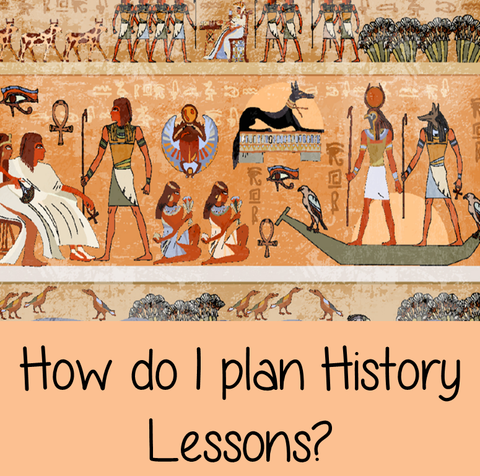
As primary teachers, it can sometimes feel that our history topics become formulaic with a PowerPoint and then writing recap activity. While this type of lesson does have its place, there are so many other fun and engaging ways to teach Ancient History.
Use dramatic play to help children understand events
Crafts and creative hands-on activities are great for understanding structures and inventions
Replicating artwork can help the class understand the culture of the time
Extended discussions about the rise and fall of empires
Map walking and creation to understand how ancient civilizations fit into the world.
How can I get kids excited about Ancient History?
Children love learning new things, they switch off when the delivery doesn’t interest them. Making lessons that the children feel part of is the main first step towards getting them excited about history lessons.
Apart from that kids love disgusting and messy topics. You can teach them about the Ancient Greek’s toilet habits or how the Roman Gladiators survived. These types of lesson topics usually work to get them interested.
Another way to really engage the class is with inventions and discoveries. Children are naturally inquisitive and teaching about the science and inventions throughout Ancient History before getting them to design their own is a great way to create an involved lesson.
How do I plan an Ancient History unit?
When beginning a history unit (or most topics for that matter) I think it is a great idea to start with a knowledge harvest. If you would like to see what this looks like in my classroom you can grab a free copy of my Ancient Greeks Knowledge Harvest Lesson here. I also have a Roman’s Knowledge Harvest Lesson also free to grab here.
These lessons set the tone of the unit to be exploratory and involved. The class will be learning about the areas they are interested in and the gaps in their knowledge will be explored.
Once you have these ideas and understanding of the children’s current knowledge, you can plan out the lessons you will deliver. I usually give lessons on inventions, religions, buildings, daily life, famous figures and music and the arts.
Deciding early on the topics you will cover helps with your planning. At the end of the unit I like to finish with a round up lesson. Where the children create something that shows off their work and the learning they have developed. Posters and crafts are a great way to do this. You can also check out my round up lessons here.
What resources are available for teaching Ancient History?
I am always adding to my bank of resources so please let me know if you need something that is not available yet.
How do teachers explain the significance of Ancient Civilizations?
While it is great to give children the information and knowledge of Ancient History it can be difficult to really get across the importance of these Ancient Civilizations.
Relating the information to their everyday lives is a great way to connect the way people’s lives have evolved and changed. Using inventions and adaptions to make life easier also shows how the convenience of modern life has been changed by ancient civilisations.
When children understand their place in history and the timeline of human development, they can appreciate how society is always changing.
How can I get the most out of my history lessons?
Your lessons will be valuable if the children are engaged and learning. Think carefully about the exercises you will be giving them and use their input to make sure they feel the lesson is valuable. When students (or anyone) feel involved in the creation of something they feel more connected to the outcome. Discuss upcoming classes, and let them know they have a say!
]]>
https://thegingerteacher.com/blogs/the-ginger-teacher/how-do-i-plan-mr-stink-lessons2022-11-01T10:11:11+00:002022-11-01T10:11:11+00:00How Do I Plan Mr Stink Lessons?Charlee thegingerteacher@gmail.comHow Do I Plan Mr Stink Lessons?
Don’t make it over complicated, read a chapter each lesson and plan a topic based on the chapter. There are many English language features in Mr Stink so pick one for each chapter. Engage the children by giving them related activities which expand the learning.
What topics can I cover with Mr Stink?
The wonderful thing about David Walliams’ books, is that there are so many English language aspects covered. Each chapter presents itself with new learning objectives. Read each chapter and think about how you can relate the learning points to the book.
For example, when Mr Stink takes a bath, you could use this to teach about instructions, how instructions are written and laid out, as well as possible language to use.
When Mr Stink is taken to meet the Prime Minister, you could use this as an example of letter writing or report writing. The best way to approach this is with
How good a learning resource is Mr Stink?
I personally love David Walliams’ books. I think Mr Stink in particular is a great class book. Not only does it cover some great themes such as homelessness and conflict in the home, but it also has very clever writing that lets the children in on subtle jokes and understanding meaning from context.
The versatility of the book along with the important messages makes it a great book for teaching.
Can I make a whole unit using Mr Stink?
Absolutely! In fact, I have! I have a lesson for each chapter and the children look at the techniques used in the book, discuss the story, structure and technical aspects and they write their own versions of literary examples for each chapter.
]]>
https://thegingerteacher.com/blogs/the-ginger-teacher/how-to-write-english-lesson-plans2022-10-04T15:52:41+01:002022-10-04T15:52:41+01:00How to Write English Lesson PlansCharlee thegingerteacher@gmail.comHow to Write English Lesson Plans
Start with what you want the students to learn. What do you want them to walk away with? What are the learning objectives?
Think about the activity you will be having the children do to help them learn this objective. Will they be using a book? Will they practice by producing something? Complete something?
When you know what the objective and the activity will be think about how you will get the information across. How will you get them to understand the learning? Will you explain in detail using a PowerPoint? Examples? Both?
Think about the starter, you need to get them warmed up and in the right frame of mind to learn. A warm-up activity which will increase confidence and set the tone for the learning
Consider how you will end the lesson. The plenary is a chance to consolidate the knowledge and give the kids a chance to show how well they understood.
Write out each part of the lesson in an easy-to-follow and understandable way.
What is a learning objective and how do I write one?
The majority of lessons will have a learning objective. This is what the aim of the lesson is. A lot of the time people confuse the learning objective with the learning activity. These are different things. The learning activity is the actual thing the kids will do, for example, a learning activity might be to write about Captain hook’s appearance. This is what the children will be doing but it is not what they are learning from that lesson. You are not teaching them how to write about Captain hook, you might however be teaching them how to write descriptive passages, use adjectives or even how to write a long text. These are the objectives, these are the skills you hope your children will leave the lesson with.
Sometimes the lesson activity and the learning objective are the same or similar but it is important to keep in mind that the skill you are teaching the children is not just related to the singular activity they are doing. An example of this would be if you were teaching the children how to bake a cake and you baked a cake as the activity. You can see how they would be the same but the baking of the cake and the skill of baking the cake are different things in terms of your planning.
So why is this important?
When planning you need to make sure that all decisions relate back to your learning objective. If parts of your lesson do not benefit your learning objective then you have no need to include them.
When writing your objectives try to think about the skills you would like your class to learn and not just the things you would like them to do during the lesson.
How do I choose an activity for the lesson?
This is where you get to have fun! The activities that you choose for the students to do need to give them a chance to develop the skills they are learning (which come from the learning objective). If you have a topic it can be a good idea to choose activities which relate to that topic. Sometimes I just like to choose something fun. For example, when teaching a learning objective to write instructions, I chose a lesson on dragons. The children will imagine how to train their dragon and then write detailed instructions to explain how to do it. This type of activity is fun and engaging.
When you are choosing your lesson activities you need to think about how the class will interact with the learning and how the activity fits in with the learning objective. It is very easy to think that you would like your class to create a scale model of a Victorian house for example, but you need to be aware of how (or even if) it supports the learning.
What are good lesson starters?
Lesson starters should not be skipped! The children move from one subject to another so quickly that it can be difficult for them to shift their thinking. A lesson starter moves them into the right position to learn.
Good starters are not too easy but will challenge them to start thinking about the subject they are about to learn. Use discussion topics, quick-fire questions or simple paired work to get the class warmed up to the topic and ready for the main lesson.
It is a nice idea to plan your starter with the end of the lesson in mind. Give the children a task (not too complex) and have them give suggested answers. This works well in pairs to encourage them to try without worrying about being correct. At the end of the lesson, you can circle back to the starter and see how their answers have changed or improved.
A nice example of this is having a short text for the children to improve. Work on the text as a class and make improvements. After the lesson when they have learnt about editing or text improvements, have them again edit the text and see how much they have learnt.
What are good lesson plenaries?
As mentioned above plenaries are to consolidate and demonstrate the learning that has taken place in the lesson. Good plenaries give the children a chance to show to you and themselves that the learning was understood and can now be applied.
Some examples of plenaries include the 'circling back' to the starter as mentioned above. You can also use exit tickets, which are quick questions related to the learning in the lesson. Short fun games are nice plenaries if you have time and often work well at the end of the day.
How do I write an English lesson plan?
The answer to this question will depend a great deal on your school, your level of experience and the complexity of the lesson. A full lesson plan for a single lesson can be two or more pages long, or you can plan the same lesson on a post-it. If your school requires full lesson plans (which they shouldn’t they should trust your judgement – but that is another issue) you can write them up in detail, in other situations it can be enough to know the learning objective and how you plan to teach it.
Write out your objectives, plan the questions you will use to help the children understand and practice the objectives. Next, describe the activity they will be completing along with reference to how it supports the learning. Plan out your starters and plenaries after the main lesson planning to ensure they fit with the overall learning.
What is an example of an English lesson plan?
I write two different types of lesson plans. For one-off lessons or observations etc. I use a long-form lesson plan which details how the lesson will progress and the ways the children will be assessed. For an example of this, download my free lesson on character descriptions here. This lesson plan is long and detailed and not something that you would be expected to write for every lesson.
The other type of lesson plan is the unit-long plan. These plans cover many weeks of lessons and are written all together to demonstrate how they progress and flow after each lesson into the next. For an example of how I plan my unit lessons download my free Opinion Unit Lesson Plans here. As you can see in these lessons, there is still a lot of detail but each individual lesson has less detail. This is also because the lessons have similar assessment goals and other parts which would just be repeated for each lesson if written individually.
I have many resources in my store to help you plan out and prep your English lessons. If you would like your planning to be pre-prepared just check out my English resources here.
]]>
https://thegingerteacher.com/blogs/the-ginger-teacher/how-to-teach-guided-reading2022-09-20T17:32:22+01:002022-09-20T21:17:52+01:00How to Teach Guided ReadingCharlee thegingerteacher@gmail.comHow to Teach Guided Reading
Look at the requirements of your school - What do they expect when you are teaching guided reading lessons? This may not be what you want to do, or even how your class will work best, but it helps to know what is expected of you even if you plan to challenge it!
Group your children by reading level – There can be some variation but generally having really strong readers with those that struggle will be disheartening for everyone.
Work out your main objectives for each day of the week – I will go over this in more detail below, but it is very helpful to reuse the same objectives each week but rotate them between groups or slot your topic or book into them. We will look at some examples in a moment.
Plan activities which can be easily adapted for each new book or topic – it is important that you do not waste time every week planning new activities for short, guided reading lessons. Make things you can reuse.
Prep reusable resources – just like you want to be able to reuse your plans each week make sure you can reuse your resources as well.
Set each class to their activities and then work with a different group each day – this is where careful preparation comes in, your activities need to be engaging and set at the right level so the kids don’t disturb your group work to ask questions. Don’t worry this can take some practice!
What is a guided reading lesson?
This question may seem pretty basic, but it is an important question. Guided reading is when teachers guide the students through their progress in reading. It is different from explicitly teaching a skill because you are just guiding them and improving their skill at reading.
Generally, schools have their own set-up for guided reading and how they would like it organised, however, you can still use what works best for you. In the majority of cases, guided reading involves small groups sitting together, each group working on a different reading task and one group reading with the teacher.
As the teacher, you will set the tasks and listen to the children read. The tasks are to develop their reading level, comprehension and knowledge about books. Listening to the children read provides valuable assessment but it also goes beyond that. Having the children read aloud to you from level appropriate texts, gives them confidence and develops their fluency.
How do I plan guided reading?
Everyone plans differently but finding out what works best for you can be tricky. I will describe how I plan here and if it works for you then great but don’t think this is the only way to plan out your guided reading lesson structure.
There are I plan four different activities, one for each day of the week and a day for me to read with the group. Then throughout the week, I circle the activities between the groups. So for activities A, B, C and D, the plan would look like this:
Activity A will be comprehension work, either from the class book or a given text. The children will be expected to be able to complete the task on their own and without too much difficulty. Activity B will be producing some kind of response to the book or text, this is usually written work but can be illustrations as well. Activity C is related to word recognition and dictionary skills, these activities are usually worksheets or task cards s children become used to the format and are able to complete tasks with minimal input and support. The final activity is a fun activity, something related to the text or book in a fun way that lets the students show how they feel about the book.
What kinds of activities are good for independent guided reading?
So with all this in mind, it is helpful to look at real examples of activities for each group. These are just a few ideas and can be adapted and changed to suit your class.
Activities for group A
These activities have a comprehension basis. I use standard comprehension prompts that the children can use with either the class book, their group book or a given text. It is a good idea to mix up the types of comprehension questions given. I use direct questions such as ‘How did they get the door open?’ these are best to start the task and for lower ability. I also include inference comprehension questions, these are not explicitly stated in the text but require the students to understand what is happening in the story. For example, When a character refuses to let another child play with them the question could be ‘Does A like child B?’ these types of questions are usually followed up with the question ‘how do we know?’. The final type of comprehension question I use are review questions, these are more personal and do not have a right or wrong answer as such, they ask the children to think about the story and use their own ideas. Examples of review questions can be ‘what do you think will happen next?’ or ‘how might the character be feeling now?’ this makes them think about the story and produce their own answers.
Text that work well are newspaper articles or short stories, using a separate text to the class or group book gives them a chance to think about other stories in comparison to the book they are currently reading.
If you wish to use the class book, be mindful of the chapter each group has read to not give questions which may not, yet make sense.
Activities for group B
These activities require the children to produce something in response to the book or text. In these activities it is better to have longer texts that the children are more familiar with, this means that class or group books work well.
A few examples of activities which can be used for group B are:
Writing newspaper reports
Drawing a scene from the book
Planning the next chapter
Planning the next adventure for the characters
Giving the point of view of a side character
Map out the story – if they travel in the book map out the world of the story
These are just a few examples to give you an idea. These activities are in response to the story they are reading or have finished.
Activities for group C
Word recognition, dictionary work and spelling are all important skills that can be reinforced with guided reading lessons. Question sheets or task cards which ask the children about specific words are good for this type of activity. Questions such as ‘which word in the story means to be over excited?’ or the opposite ask them to explain a word from the story, ‘what does the word ‘triumphant mean on page 56?’. Having the children define and recognise unusual words increases their vocabulary. You can also have them look up words in dictionaries and write the definitions, as well as other words which mean the same thing.
Activities for group D
In these activities, I like to try and give the students something new and fun to do. Some of the activities are low key and just require a printed sheet of instructions others will take some guidance before the lesson. Some ideas for Group D activities are:
Make a Facebook / Youtube page for the characters – what will they post about?
What does the character’s house look like – design and draw either their real house or their dream house
Making an object that the character uses or would need
Packing a bag for the characters (if they need equipment for something)
Create a news report or video explaining the events of the story
Design new clothes/uniform for the characters
These activities are similar to group B, but the difference is that these are not in direct response to the events of the book they are the children’s impressions and the things they have taken away from the story.
How do I get the kids to work in a group without me?
This is a big challenge for many teachers and classes, the short answer is with practice! The slightly longer answer is that it takes lots of time and expectations. There are some strategies that you can use to encourage the children to work independently so you can focus on your group.
Visual signals - Using a do not disturb sign or a light is a good idea, it shows the kids when they can and cannot interrupt
Clear explanations – before starting the lesson ensure that every student is clear on what they should be doing. This means they are less likely to come looking for clarification
Prompts – written and visual prompts of what they can and cannot do during the guided reading lesson
Student helpers – Giving one student the job of helper can be very beneficial, they can answer quick problems and get students back on track
Engaging tasks and extension work – keeping students busy will reduce the amount of time they are out of their seats wanting you.
Good behaviour rewards – reward the behaviour you are pleased with will encourage more of it. If the whole class has a successful, guided reading session they can have a song playing during the next lesson etc.
Message boxes – have a message box on the table and allow students to put their notes to you in the box, you will read them after the lesson so if there is anything they need you to know you will find out before they forget.
What does a good, guided reading lesson look like?
So in an ideal world, the students will be well practised in the routine. They will move to their guided reading table and take out their equipment. The timetable will be visible to all students (or stuck to tables or books) so every child knows the task they will be working on today. The teachers will work with the group reading today. The independent groups will work on their tasks and support each other. The teacher led group will take turns reading and answering questions about the book.
If you are looking for more text specific activities I have many work packs based on books, which include before, during and after read activities. I currently have Mr Stink, Matilda, Awful Auntieand more, plus I am constantly adding to the collection. If there is a book you would like please let me know!
]]>
https://thegingerteacher.com/blogs/the-ginger-teacher/what-are-good-ways-to-teach-math-in-nature2022-09-13T20:17:36+01:002022-09-13T20:17:36+01:00What are good ways to teach math in nature?Charlee thegingerteacher@gmail.com
What are good ways to teach math in nature?
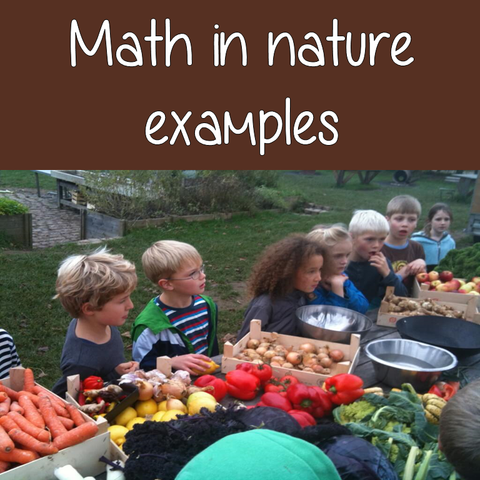
Firstly, and probably most obvious, get outside. Take the class outside and collect leaves, pine cones, flowers and pictures of animals. Depending on the age of the children, count the parts, examine the math in nature patterns, draw and look at the different shapes, and work out what sequences can be seen. There are many ways to include number work as well as patterns and sequences with nature.
What is the role of mathematics in nature?
While it can be tempting to teach subjects completely separately from each other, in real life that is just not practical. In the real world, math, science and the arts all overlap. This means our lessons can as well. Children often ask how is math present in nature and it is an interesting question because the natural world is so closely related to mathematics it is impossible to separate them.
Taking children outside into nature and allowing them to explore opens so many opportunities for mathematical learning. Not only can we teach using mathematical language to describe the things they find outside, but they can also solve real problems and learn about patterns, and sequences and why mathematics not only relates to our natural world but comes from it!
Using sundials to learn about time, the petals of a flower to learn about Fibonacci sequences, bee hives for shapes and insects for symmetry. The opportunities for teaching math in nature are endless.
Teach young children about math in the natural world
Young learners love the outside, they learn so much from just exploring and collecting shapes and objects to examine. While this may seem that it is not related to mathematics it is a huge part of shape recognition. Using natural materials to create number problems and looking at the way nature connects are all parts of learning that require mathematical problem-solving.
How to teach math through nature with older children
It can be tempting to think these types of math in nature lessons can only work with younger ages, but this is not the case. Some very complex topics can be taught using nature. One of my favourites is teaching the Fibonacci sequence using the swirls and natural occurrences of the sequence in nature. I also teach about fractals and how they occur, using natural shapes in this way can be very educational and a great way to engage students in the math lesson.
Math in nature activities and resources
There are so many different activities you can use to bring mathematics into nature. Collecting natural objects is a great place to start for all ages. A fun math in nature activity is to categorise the objects by size, shape, corners, sequences, and types of patterns. Analyses the way they connect to each other, and try to replicate the patterns, shapes or sequences, this is also a great way to relate art to your lesson.
If you are looking for some complete ready-made lessons and math in nature lesson plans, take a look at my complete lesson on teaching the shapes in nature here.
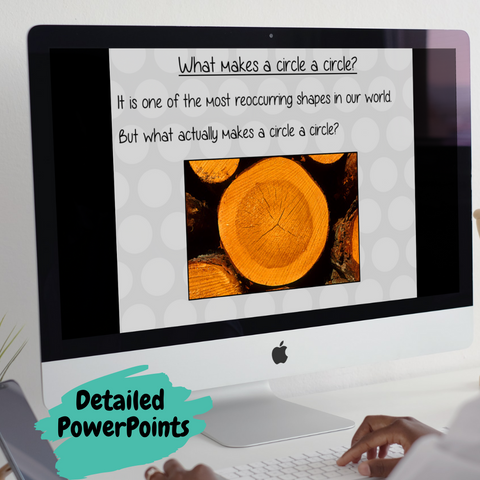
I also have lessons on circles in nature and for fun and easy to understand topics I have lessons such as the Fibonacci sequence and fractals in nature.
All of my lessons include a math in nature video which demonstrates the learning and explains in detail the ideas from the lesson.
What are some math in nature examples?
Some examples of math in nature are the Fibonacci sequence in flowers, the spiral shape of shells, and the hexagonal shape of snowflakes. Other examples include the way tree branches grow in a spiral pattern, the way rivers meander, and the way galaxies are organized.
The hexagonal shape of snowflakes is also the result of mathematical patterns. Snowflakes form when water vapour in the atmosphere condenses around a dust particle. As the water vapour condenses, it forms a six-sided crystal. The six sides of the crystal grow at different rates, depending on the temperature and humidity. As the crystal grows, it forms a hexagonal shape.
These are just a few examples of the many ways that math is present in nature. So the next time you're out for a walk, take a closer look at the world around you and see if you can spot any more math in nature!
]]>
https://thegingerteacher.com/blogs/the-ginger-teacher/how-to-teach-instruction-writing2022-09-06T13:57:16+01:002022-09-06T14:03:49+01:00How to Teach Instruction WritingCharlee thegingerteacher@gmail.com
How to Teach Instruction Writing
Choose relevant and engaging examples. Let the class see the types of writing they will be doing
Explain each part of the example and give them ideas for different types of each example
Do lots of talking first. Have students give each other instructions and discuss how difficult it can be.
Write together as a class. Group writing is very helpful as it models the expectations and gives children ideas
Practice the thing they will be writing about. If they are writing instructions for how to make a sandwich, make a sandwich together in class talking about each step.
Scaffold their writing with handouts and prompts.
What topics are good for instruction writing?
Almost anything can be turned into an instructional writing topic. Children can write about the things they do every day in school, you can have them tell each other about hobbies they might have or relate it to the class book. Children love to be the expert and discuss the things they know with each other. Pairing them up to talk about their interests can be a great first step in the process.
When using a class book it is a good idea to talk about the things the characters are doing in the book. Did they just sky dive out of a plane? How do you think someone could do that? Even if they don’t know how you can talk as a class and make up rules you think they might need to follow.
Fantasy and magic books are perfect for instruction writing as they allow the kids to include anything they feel is important. Making a secret potion? The ingredients and special steps can be anything the class can think up. Or keeping a pet unicorn? Well, that will require all kinds of special instructions.
How do I teach the structure of instruction writing?
The best way to teach the structure of any writing is to read examples together. Show the class good examples of instructions and work together to list all the important parts. They have equipment lists and step-by-step details. Good instructions will also come with an introduction, maybe a warning note and possibly further information for the reader. Making a template is also a good idea, this helps them to remember how it fits together. Finally, make sure to practice as a class using the template before sending them off to do it alone.
Read instructions together
Make notes on the structure
Create a class instructions template
Practice together using the template
Send the kids off to write their own
What are some good examples of instruction writing?
Some great examples of instruction writing can be found on everyday items such as cooking recipes or instructions for household items. Many books have instructions in them without explicitly saying so. David Walliams is very good at this, his books incorporate lots of different types of writing.
Writing your own example before the lesson is also a good option as you can be sure to include all the parts that you want your class to remember.
What resources can I use to teach instructional writing?
If you are looking for a complete lesson, my lesson on how to write instructions for a pet dragon takes the class through the steps and goals of the lesson with a starter video to prompt discussion. If you are looking for more than a one off lesson, my whole unit of instruction writing covers two weeks, 10 lessons, of English work. Starting with exploring different types of instruction writing and building to create their own instructional texts with a purpose.
I also have many lessons on instructions taken from different reading books, such as instructions on how to pull off a robbery for Gangsta Granny and how to have a bath in a pond from Mr Stink.
Teaching instruction writing tips
Don’t feel you have to stick to everyday actions – the more unusual the more scope for writing.
Give lots of examples – the learning happens with the reading first
Have fun with the lesson – practice the instructions first or act out the more fantasy-related examples.
Practice together as a class – getting used to the idea of writing in this way takes lots of repetition.
Give the children prompts and scaffolded texts to work from – holding everything in memory is hard!
]]>
https://thegingerteacher.com/blogs/the-ginger-teacher/how-can-i-teach-grammar-lessons-in-english2022-08-30T14:18:34+01:002022-08-30T14:18:34+01:00How Can I Teach Grammar Lessons in English?Charlee thegingerteacher@gmail.com
How can I teach grammar lessons in English?
Teach grammar lessons explicitly as their own lesson and as part of your other English lessons – Grammar needs to be part of all lessons but also taught on its own. Teaching grammar through writing is great, but you will need to explain it separately.
Use examples from the kids’ own words – 'Jane’s book is under the table' might be a good sentence for showing the apostrophe but it doesn’t relate to the kids. Let them choose the sentences.
Look at what works well in other areas – If your kids respond really well to the lessons you take outside, consider teaching outside. If they love the investigations, create lessons that involve some problem-solving.
Teach before you review – I know this sounds obvious but sometimes as teachers, we want to get some evidence down quickly. Teach the technique or skill first! Then review with tasks or worksheets.
Set up a schedule for your week – I will talk about this in more detail below, but planning out a set schedule for each topic, will make planning it so much easier!
What grammar do I teach each day?
Here is an example of a weekly grammar lesson in English that can be adapted into any topic you need to teach. When you are writing your grammar lesson plan think about how the different activities for each day can be used.
Monday
You need to set yourself a schedule to make your grammar lesson plans easier and to keep on top of things. I start with the teaching. On a Monday we really dive into the topic of the week. Before we start anything give them a small very quick assessment. I call this a cold assessment and it is just to get a base level and also can be useful to show the kids how much their knowledge has grown at the end of the week.
Introduce the new skill that they will be learning. Make sure to stick to just that one skill, you might want to expand on other points but it is important that they focus on just this one. Don’t make it too heavy though, teach them the rules they need to know, related to that grammar skill.
Show them the rules, the exceptions, examples and give them tasks or questions to answer. Get the class to provide examples to each other to get a feel for the new grammar they have learnt. I tend not to have too much writing in the Monday lesson, the kids need to just be soaking it in, but you can use post-its or whiteboards and have them write answers that way or simply you record them on the board for them.
Don’t expect them to get it straight away, even if it is a pretty straightforward concept it takes time and practice but Mondays let them meet this new skill and get to know how it works.
Tuesday
Now we make sure the teaching of grammar has gone in. If you use interactive notebooks they are great for Tuesdays, they let the students create their own reference book to go and check whenever they need it. If you don’t you can still use a fun activity that practices the learning from yesterday. I wouldn’t have them just answer questions or fill in worksheets today. They need to be remembering the skill they learnt on Monday. Have them teach someone else the skill in an interesting way, they can make a detailed poster that will explain it to others. Have them create a lesson that they can show to the year below or make a craft that involves reaffirming the new skill. Tuesdays are about cementing that knowledge and ensuring the understanding.
Wednesdays
Now we get to the actual practising of the skill. Use prompts such as pictures or remember an event that the class took part in, something like that and get them to write short texts. Remind them of the skill we are focussing on this week. Let them know that they need to try and use the other skills they already know but the main marking point will be this week’s skill.
Then you can mark as a class reading out work and talking about where they have used the skill, swap with partners and peer review or just go around and mark as they write, giving them verbal feedback. It can help on a Wednesday to have a success criteria, but remember the focus needs to be on this week’s grammar point, while it might drive you crazy they forge their capital letters if this week is about commas then leave that marking and feedback for later. You can mention that there are other areas but don’t deep mark here.
Thursday
Thursdays are game days! I like to make the lessons fun and engaging so Thursdays are the day to use the skills we have learnt and practised in a game. Some great simple grammar games can be found online or you can use one of my mystery games here which kids love!
A game that involves some movement is a good idea as it will get them out of their seats and keep the lesson upbeat and fun. Make sure that the game has a focus on this week’s skill and ensure you talk about it after playing to see how the students are getting on with their new knowledge.
Friday
Fridays' lessons are a little more lowkey than the rest of the week. On a Friday we test the new skill, with short questions in the form of worksheets or task cards, just to make sure the kids get it. A nice thing to do is to use a similar test to the beginning of the week, not only can you show the class how their knowledge has grown but they can also develop their own ideas about how to respond to questions.
In what order do I teach grammar?
You might be wondering how to teach grammar in an order that makes sense to your students. Many grammar topics can be taught in any order, although some need to come before others. It will depend on the age and ability of your class but a good idea to work with the building of sentences, such as the types of sentences, verbs, adjectives etc, before moving onto the flow with skills such as semi-colons etc.
How do I make grammar lessons fun?
Games and craft activities can really break up the constant worksheets and task cards that tend to creep into grammar lessons. Using detective games and escape rooms are one way to keep the lessons fun. You can have the kids use crafts and interactive notebooks to remind them of important grammar points and it also makes the learning more interesting than simply copying out the information.
]]>
https://thegingerteacher.com/blogs/the-ginger-teacher/five-tips-for-bringing-creative-writing-out-of-the-classroom2022-08-23T15:42:00+01:002022-08-23T16:06:24+01:00Five Tips for Bringing Creative Writing Out of the ClassroomCharlee thegingerteacher@gmail.com
Five tips for bringing creative writing out of the classroom
I like any excuse to take my kids outside, learning in the outdoors just feels better. Mathematics and science are great outdoors the natural environment is great for exploring. When it comes to literacy and English skills it can feel like we have to move all the fun back indoors. This doesn’t have to be the case, you can plan and teach a great English skills lesson using outdoor settings.
Here are my five top tips for creative writing outside the classroom.
1- Use new experiences
New experiences do not have to be complicated or expensive. Take the children to parts of the school grounds they rarely see and let them build forts, or expore an area of town they have never been to. Plan out the trip together as a class and decide on the experiences.
A new experience s exciting and different and just a new setting can lead to great ideas.
2- Record on the go
While you are outside remember to record as much as you can and have the kids do so as well. Take pictures of them in the activity and record audio of the things they say about the place and the activity. These adjectives are going to be natural and excited so they will be great for writing later.
Have the kids take pictures too. Get them working in partners or groups and have them assigned roles. These roles can be switched over during the activity so everyone gets a chance. Have a photographer a reporter and an interviewer. They can ask each other interview style questions and collect in the moment feelings.
3- Encourage talking
Back in the class room the students should be buzzing ad excited about the outdoor activities. Do some whole class work to encourage talking and remembering together. Then in smaller groups or pairs discuss the way they felt during the outdoor work. Record in notes anything important. Look over the recordings pictures to prompt responses.
4- Get ideas down fast
Have kids record their ideas fast, they can turn them into more structured work later. Not only does this mean they are less likely to forget important ideas, it also helps them learn editing and revising skills.
5 - Write for a purpose
My final tip is to give your class a purpose. Right from the beginning let them know their final, finished work will be used for something. It can be as simple as a display or let them create a class magazine, or submit to the school one if there is one. Give them a reason to make their work as amazing as possible.
However you choose to do your creative writing outdoor lesson, I hope you have fun. I am always looking for ways to bring my teaching outside and you can see my lessons on natural, outdoor mathematics here.
]]>
https://thegingerteacher.com/blogs/the-ginger-teacher/do-you-want-to-solve-a-mystery2022-08-19T22:23:40+01:002022-08-19T22:23:40+01:00Do you want to solve a mystery?Charlee thegingerteacher@gmail.com
Do You Want to Solve a Mystery?
Have you ever taken part in one of those murder mystery games? Where you collect clues and work to solve the crime? I went to one recently and had such a great time. It made me think about the escape room games I play with my students. I decided to create some fun mystery games that can be used to revise learning and still be fun!
Here are some pictures of my mystery learning games.
So do you want to try a game? See if you can solve the mystery? If you want to have a play with your class or for yourself check out the free game here!
Let me know if you enjoyed the game and if you think your students would like to play a full version!
Use the code below to get 20% off a mystery game like the ones below!
In my store, I have larger games that practice math and grammar skills.
The full games have the students hunting for the criminal, the motive, and the location of the stolen items. The complete games include more questions and 10 pieces of evidence and clues.
Grab a full game for 20% off with the code:
MYSTERY20
]]>
https://thegingerteacher.com/blogs/the-ginger-teacher/how-can-i-turn-grammar-lessons-into-a-game2022-05-29T12:21:48+01:002022-05-29T12:49:59+01:00How can I turn grammar lessons into a game?Charlee thegingerteacher@gmail.com
How can I turn grammar lessons into a game?
Grab your worksheet or questions that you want to use
Set the questions up around the room at various places
Decide on a scenario that will interest your class
Write out some clues that will let the children figure out the mystery game
Let the children find and then solve each question
As a reward for each question give them a clue that will help them to solve the question!
I will walk you through each of these steps in more detail so you can use grammar games for classroom lessons!
Grab your worksheet or questions that you want to use
Setting up grammar games in the classroom is fun and the children love it but sometimes the educational content takes a step back! I personally love fun English grammar games to practice tricky concepts.
This type of game works best if you use questions that have single answers – math questions, direct answers etc. Essay style or opened responses are harder to deal with. When selecting questions consider which would work best for grammar games for the classroom.
Set the questions up around the room at various places
I like to turn the questions into pieces of evidence like this one:
Although you can just as easily put the question out and have them find it and solve the problem.
Decide on a scenario that will interest your class
All kinds of things can be a ‘crime’ to your class, I use stolen items, missing people and secret identities!
Write out some clues that will let the children figure out the mystery game
This is the most difficult part. You will need to decide whole the criminal is and then give your class clues so they can work it out. Choose around 4 or 5 different suspects and make sure they all are different in some ways but similar in others. Then give clues such as ‘the criminal didn’t have red hair!’ this eliminates the red haired suspects.
Begin the game play!
Let the children find and then solve each question
They can then bring it to you for checking or you can have an official checker in the room to help you with this
As a reward for each question give them a clue that will help them to solve the question!
When their answers have been checked, they receive a clue as a reward! When they have figured out who done it they can announce their findings.
If this seems a bit complicated and time consuming
You can grab a copy of my Mystery game here. This game includes everything you could need to practice grammar in a fun mystery way. I am currently adding more games to my store, based on different topics and standards so please feel free to email me at thegingerteacher@gmail.com if you have anything you would like me to cover.
What kind of scenarios should I use?
This does depend on your class and their ages, I like pretty innocent set ups such as who ate the last cake? Or where are the PE shorts hidden. Although if you are comfortable with it, you can use murder! Who killed square man? (if you get this joke we should be friends)
How many clues should I leave the kids?
For an hour’s lesson I usually leave about 8 to 10 clues. This gives them lots of time to answer the questions, look through all the clues and solve the puzzle.
What do I do once they solve the mystery?
If they are working in teams I usually have them announce their results and defend them (particularly if there are any disagreements about who did it).
Then the teacher can do a big reveal of the culprit!
Why would you use my pre-made game instead of your own?
I spend a lot of time making my resources as fun and interesting as possible. You can of course make your mystery games but I like to save teachers time and let them just enjoy teaching a fun and engaging lesson.
What makes my pre-made games different?
For a start they are very low prep!
Teachers need to print out the resources, give a detective book to each student (provided in both colour and black and white versions), place the evidence around the room and then you are set.
To start the lesson your kids will need to look for the evidence markers, they will look closely at the different pieces of evidence to answer questions from their detective books. The evidence pieces are not just there to have the children answer questions, they also contain little extra clues which might help our young detectives.
When they find a piece of evidence they can answer the questions show the completed answer to either the teacher or a designated student that will see if the answers are correct.
Once the answer has been checked the kids earn a clue! They can stick these clues into their detective books to keep them safe! (or copy them in if you want to cut down on the printing)
When the children have collected all the clues they can crack the case! My games have more than one piece to figure out, they need to find out who did it, why and how! So there are extra parts to discover.
When the children announce that they have solved the case, the teacher can reveal if they were correct! Then I have included detective badges and certificates to reward the kids for all their hard work.
]]>
https://thegingerteacher.com/blogs/the-ginger-teacher/where-do-i-start-with-teaching-the-book-billionaire-boy2022-04-12T21:10:00+01:002022-04-26T17:21:26+01:00Teaching with the book Billionaire boy?Charlee thegingerteacher@gmail.comWhere do I start with teaching the book Billionaire Boy?
Start with the big themes that interest your class. Talk about the issues they might feel from the book. Children can worry about being lonely and others not liking them this is always a good place to start and let the kids in your class know that it is a safe space to talk about anything bothering them. Right from Billionaire boy chapter one, you can start discussing the effects of these issues.
]]>
Where do I start with teaching the book Billionaire Boy?
Start with the big themes that interest your class. Talk about the issues they might feel from the book. Children can worry about being lonely and others not liking them this is always a good place to start and let the kids in your class know that it is a safe space to talk about anything bothering them. Right from Billionaire boy chapter one, you can start discussing the effects of these issues.
The Billionaire Boy plot is quite a unique story and allows the children to understand the characters before any action happens. This means you can use the first few chapters of the book to settle the class into the reading and teach some nice calm starter lessons.
If you are thinking about how to develop the reading into a lesson, I would start by reading a Billionaire boy extract to the class and talking about what happened, discuss any main points and moving on to developing into the lesson.
What topics can I cover with the Billionaire Boy?
There are so many topics, many teachers dismiss this book as light, but there are so many topics to explore. The idea of making friends and being lonely is important and can be explored for PSHE lessons. You can use the amount of money he has and develop it into maths lessons. Expanding into word problems and puzzle solving.
But where Billionaire Boy really shines is with literacy learning. The chapters can be used to teach so many different concepts and topics, Letter writing, story development, play scripts, Billionaire Boy character descriptions, newspaper work, figurative language even dictionary work. Every chapter of Billionaire Boy can be used to teach literacy topics.
What comprehension questions can I use with Billionaire Boy?
You can ask different types of reading comprehension questions. You can ask at a word / sentence level – can you find the word on page 11 that means over-excited?
You can ask direct questions from the text – what is the character’s name? These questions the answers are right there in the text.
Slightly harder questions are inferred questions – what does Joe need friends for? – these answers aren’t so obvious and the kids need to understand the story to answer.
And there are review questions – What do you think will happen next? – these questions are more open ended and ask for the kids’ own ideas.
Anyone that has been here for a while will know how much a fan I am of David Walliams. I think Billionaire boy is a wonderful book to use with your class. It is warm and funny and engaging while still challenging developing readers.
As with many of David Walliams’ books, it develops well and pulls the readers in. I also like to read it with my class as the chapters are not too long which makes ending at the right point easier!
What themes are in Billionaire Boy?
There are many themes in the book but I think the most important is friendship, the children in the book become true friends despite being different and that’s an important message for kids. There is also the point that money doesn’t buy happiness and things are not always as they seem.
There are other themes as well such as the importance of sharing and appreciating gifts, these are touched on several times throughout the book but I mainly use the friendship theme when reading with the class.
]]>
https://thegingerteacher.com/blogs/the-ginger-teacher/how-to-plan-an-opinion-writing-unit2022-02-22T14:15:12+00:002022-02-22T14:22:23+00:00How to plan an opinion writing unitCharlee thegingerteacher@gmail.com
How to Plan Opinion Writing Lessons
]]>
https://thegingerteacher.com/blogs/the-ginger-teacher/what-is-the-best-way-to-teach-the-boy-in-the-dress2022-01-03T12:19:26+00:002022-01-03T12:29:56+00:00What is the best way to teach ‘The Boy in the Dress’?Charlee thegingerteacher@gmail.com
What is the best way to teach ‘The Boy in the Dress’?
The best way to approach teaching the book The Boy in the Dress by David Walliams, is to enjoy it. I have found that the best way to start each lesson is to read a chapter of the book together as a class. Discuss the important parts and talk about the literacy techniques in the book, (Are there letters? Newspaper reports? Poetry?) Use the events of chapters to guide the lessons. Use The Boy in the Dress characters to influence your planning.
What are the best topics to cover with The Boy in the Dress?
There are so many topics that you can cover using the chapters as a base. I have found that It is easy to relate each chapter to a particular area of literacy learning.
Is The Boy in the Dress a good book for primary or elementary age children?
It is an excellent book for this age group. Not only is it perfect for teaching literacy techniques, it has some great messages that young children can understand and possibly even relate to.
How can I teach difficult or unrelated concepts to The Boy in the Dress?
I have used The Boy in the Dress to teach things such as editing (in chapter 16) by using the children’s own work and texts from the book to make improvements. You will find that once you start looking for ways to relate your lessons to the different chapters, you will get lots of new ideas.
What are the important messages that The Boy in the Dress covers?
The main message in The Boy in the Dress is that it is ok to be yourself. As teachers we can really encourage and reinforce that message to our students. We can do this by discussing the events in the book, talking about what happens and allow safe spaces for difficult conversations.
What resources are available to help teach The Boy in the Dress?
We all struggle at some point, and we all need to rely on each other to get by!
This is why, I am so pleased you are here, at my blog. This is where I talk about all the things I use, do and worry about with teaching. I share with you my ideas for teaching different subjects, For developing a classroom culture and maintaining it and also I talk a lot about teacher life.
This post is more of a hello, really even though my blog has been going for a while. So click on the pictures below to see my posts about teaching and classroom life!
Teaching Subjects
A lot of people think that our jobs begin and end with the subjects we teach, we all know there is so much more to it than that, but it is still an important part.
Math(s)
personally I love teaching math, or maths, or mathematics, or numeracy, whatever you and your school call it, it is one of the best subjects. There are so many fun ways to approach it and fun things to explore.
English
When I first started teaching I really struggled with my English lessons, it just felt really hard to help the students level up their writing.
For ideas on individual lessons you might want to read:
Over here in the UK we call everything else 'foundation subjects' this includes things like art, RE, history and geography.
Some people include Science as a foundation subject as well, although many disagree!
Science
While I personally think of science as a core subject, I know that it often gets classified into the foundation subjects category. How ever you categorise it, science is important, kids need to understand the world and it is our job to teach them!
One of the main things to remember about science is that it should be grounded in practical work. There is a place for theory and explanation, but kids need to get their hands dirty!
Geography
I learnt recently that in most of America, you guys don't teach Geography as it's own subject, it comes under social studies. This was big news to me as I always considered it such an important subject. The world is big! We need to help our kids understand it.
No matter if you call it Geography or Social Studies, I can help you figure out the things you might need to include.
RE
The importance of Religious Education varies between schools. I have worked in church schools where RE has a very central focus. I have also worked in places that squeeze it into the timetable in 15 minutes every other week when they don't have anything else going on.
However your school teaches it, you might need some guidance or quick lesson ideas. Don't worry I got you covered!
History
I personally, love teaching history. It has so much life and story telling involved and the ideas that the kids bring to history are so much fun. I like to make drama a huge part of my history lessons as well as art and even science!
Classroom Culture
Our classrooms are a little world all of their own, we have our class rules and customs and it can be challenging for outsiders to join in. When you first meet your class you might need to establish these ground rules, customs and set the culture for the year. Here are some post which can help you:
Special Holidays
One of my favourite holidays is Easter (who doesn't love chocolate?) but before we teach children about Easter we need to explain Lent.This post will help you explain the symbols, history and support your class in understanding this religious holiday.
Behaviour management and support
When I was a new teacher I felt like I would never figure out behaviour management and handling the classroom. After a few years it became so much easier, not just because I had more experience (although that did help!), but also because I listened to other, more experienced, teachers. I used their systems, I worked hard to develop resources that would help me in my class and most of all I listened to my students and the things they needed.
The best piece of advice I can give to teachers looking for help with classroom management, is to learn the other teachers and from your students themselves.
Teacher life
Teaching the subjects and building a classroom community are not the only aspects of teacher life. Being a teacher is not the type of job we leave at the work. It becomes part of who we are. There are many different aspects of teacher life from wellbeing - our own and our students, to looking at new ways to reach our kids.
Gamification
As teachers we are constantly bombarded with the latest 'new innovation', the majority of which turn out to be useless fads, that we wasted a whole afternoon getting PD on! Gamification isn't like that at all and it is here to stay! Check out these blog posts to see what I have to say about it.
Wellbeing
When teachers and other education professionals talk about well being, they usually miss the point completely. Either they come at it from the point of view of 'what's best for the children' or see it as a tick box exercise.
I'm not saying the children are not affected if their teacher's well being is neglected, but I personally don't believe that should be the driving force in improving teachers' emotional and physical health. We should want teachers to be happy and healthy because they are human beings first and educators second.
What is the best way to teach grammar at Christmas?
Short answer – Quick and fun! This time of year, your students are over excited and need quick and fun Christmas grammar lessons. Short and sweet is the way forward. That doesn’t mean that you can only do a little bit of grammar learning. You can have short recaps throughout the day at moments that need filling. Use Christmas themed grammar worksheets in place of a whole lesson.
How can I make my Grammar lessons Christmas related?
The most obvious way is to put some Christmas themed pictures on the work. It might seem like a small thing but it does make it more fun. Changing up problems so they have a Christmas theme and include fun holiday elements can also make them more festive. Christmas grammar sheets always go down well, or just a few Christmas grammar exercises.
I also like to use Christmas themed rewards, for example if they finish their work on time, they get to listen to Christmas songs as a treat.
Should I assign grammar homework over the Christmas break?
This is an individual decision. Some teachers decide not to (myself included) because it is a chance for the kids – (and us!) to relax and take a bit of a break. However, some teachers don’t want too much of a slide over the holiday and feel that homework is important.
If you do give homework, remember that it may not get done! Just a few Christmas grammar worksheets should be enough.
What are good Christmas resources for teaching spelling punctuation and grammar?
]]>
https://thegingerteacher.com/blogs/the-ginger-teacher/what-are-good-matilda-lesson-activities-for-teaching-english2021-12-05T21:48:38+00:002021-12-13T10:03:00+00:00Good Matilda lesson activities for teaching EnglishCharlee thegingerteacher@gmail.comWhat are good Matilda lesson activities for teaching English?
Good ways to get the class engaged and interested with the class book is to really focus the lesson activities on the story. You can bring aspects of the book to life with drama, and having the children put themselves into the character’s shoes!
There are so many Matilda lesson ideas – Which is why I wrote this blog post!
Which English topics can I teach with the book Matilda?
There are so many topics that you can use Matilda to cover! I use it cover: Comprehension, Point of view, instruction writing, play scripts, show not tell, diary writing, character descriptions, adjectives and adverbs, punctuation, reports, word choices, editing, dictionary work, figurative language, similes, verb tenses, letter writing, story structures and book reports. These are just the main topics of the lessons, I also throw in lots of other important learning points as we work through the book.
The trick it to try and relate the events in the book to the topic you are trying to teach, for example if you are planning to teach instructions use some of the action in the book as a base – How to scare your headteacher!
Personally I don’t, although I know that some teachers do like to do this. I think if you are going to show them the movie make sure it is after having read the book. It can take away the enthusiasm for the reading if they have already seen the movie.
How do I plan out a unit of English work on the book Matilda?
Whenever you are planning a unit, start with the learning goals and use the content to fit to them – not the other way around!
Figure out what you need to teach and then from there see how you can use the chapters to work this topics.
What would be a good, guided reading Matilda lesson plan?
It depends on how you set up and run your guided reading sessions, I tend to have lots of individual groups working on different activities at the same time. If you plan to do this then it is a good idea to work out 4 or 5 different activities and have the class circle through them.
What resources are available for teaching the book Matilda?
So many!
I have already mentioned my own, but there are also some great YouTube videos on the book and English lessons.
]]>
https://thegingerteacher.com/blogs/the-ginger-teacher/how-to-teach-recount-writing2021-09-19T15:40:26+01:002022-05-06T21:50:51+01:00How to Teach Recount WritingCharlee thegingerteacher@gmail.comHow to Teach Recount Writing
To teach recount writing:
Give the class lots of recounts to read and absorb
As a class brain storm recount writing ideas
Allow the children to practice changing small parts of a good example to get used to writing in this style
Talk through the possible ideas for their own recounts with partners
Have rough drafts (as many as needed)
Let the children discuss each stage of the writing process
What is recount writing?
When we talk about recount writing structure we mean the retelling - or recounting – of something that the writer experienced. When we think about recount writing however, we may want the ‘writer’ to be a different person than the author of the work. What this means is that the children can put themselves in someone else’s shoes and write a recount of something they have not themselves experienced.
This type of recount writing is very important as it improves imagination and encourages the children to think about others and practice empathy, as well as improving writing technique.
Why is important to include a recount writing unit in your classroom?
We will start with the obvious reason for many of us, it is part of the prescribed curriculum! Although this isn’t necessarily the most important reason to teach recount writing, it is still important because it is our jobs.
But recount writing isn’t only about being meeting some criteria. We teach it because it helps our children grow and develop skills as writers. It expands their imagination and it is also a great way to teach grammar points without it being boring or over the top. In recounts we have to look at writing elements such as; point of view, verb tense and of course correct use of pronouns. All of this means that our classes might be learning about the basics of writing a recount but they are gaining so much more.
What should I cover in my recount unit?
This question is a tricky one because it can depend largely on your school and what is expected of you from the unit. For me I tend to cover:
Recognition of recount writing
Elements in recounts
The difference between recount writing and other types
Use of verb tenses, pronouns and point of view
Chronology and story timelines
Empathy and resilience
Some good recount writing examples
Where can I find good recount writing examples for my class? This question gets asked a lot and it is really important. Children need to see what they are aiming for and more importantly they need to be able to recognise good writing when they see it. The only way to develop this skill is to show them as many examples as you can of good writing.
So where can you find these examples? Well, the best place to look is in your class library. Many excellent children’s books are written in a recount style. If you are looking for shorter more complete recounts a good place to start is with children’s newspapers and short stories.
The best way I have found to give children examples of good writing, is to write a recount with the class. Guide them through the writing stages with good practice and take suggestions from the class. Feeling as if ‘they’ write the recount will also give them confidence.
Why should I use your recount writing unit?
If you want to save time and have your whole recount unit and resources planned out and created for you, you can grab my, Complete Unit on Recount Writing. This best selling unit not only saves you time, it walks your class through the recount writing process without any extra preparation from you. This unit includes everything you need including:
✍ Full and detailed recount writing lesson plans
✍ PowerPoint slides for lessons
✍ Recount writing worksheets pdf
✍ Recount writing activities for every lesson with clear progression
✍ examples, prompts and templates for the activities
Find more lesson ideas and tips from this post about English lessons. Teaching isn't easy and we all need help some times, read my blog post here about where to get it!
]]>
https://thegingerteacher.com/blogs/the-ginger-teacher/how-to-plan-a-medium-term-plan2021-06-09T16:02:29+01:002022-05-17T15:55:36+01:00How to Plan a Medium Term PlanCharlee thegingerteacher@gmail.com
How to plan out a Medium Term Plan
I recently did a live training on how to effectively create a MTP and I wanted to share with you guys!
Here is the video, the transcript of the video is underneath. Please let me know if you have any questions!
Today, we're going to be looking at effective lesson planning. I'm going to really talk you through how to plan your units which will lead to how to plan your individual lessons, I'm going to focus mainly on English, although these techniques can be used for any subject.
I've been teaching for over 10 years now and I am always surprised that new teachers aren't taught this, they aren't taught how to properly plan, which is a really, really important skill. And it's something that we need to be giving our teachers. So if you're unsure about how to do your units, how to create your lesson plans? Here is the answer
Not only have I been teaching for 10 years, but I also create and sell teaching resources and lesson plans. I have a lot of experience in planning and also getting people to the point where they need to be with their planning skills.
So let’s get started!
I'm going to use English as my planning base. Now you can use this technique in any other subjects, it's fine. This work for most subjects, the idea is that you need to think more about the progression.
Long Term Plans
So students need to progress when they do their lessons, when you're planning your lessons, your students need to get somewhere. So the end goal, the place they need to get is the knowledge they need to understand.
knowledge and understanding is the main goal. We put this at the bottom because this is where we will end up
Medium term goals
How are we going to get there? Well, I always plan my Medium Term plans as big units, and then I break it down smaller into individual lessons. The first thing I do is draw three big circles.
The first circle at the top is the intro, this is the wow part. This is the bit where we grab them sometimes called the hook.
Again, this is a medium term plan an MTP. It's not one lesson, this is a huge array of lessons that I'm going to break down into smaller lessons each week. Because I'm doing English, there's going to be five lessons a week.
And over a quarter of the whole term. So there'll be a lot more lessons than for example, science or history, where you probably only have one or two lessons a week. So you wouldn't need as much content. Right. So the first part is the intro the hook where you're getting them into it, you're introducing the subject or starting them to you want them to see how it's going. That's the beginning. In the middle here is the practice
basic lessons that are going to live in the middle part of the unit. These are where you practice the skills. And sometimes where we learn the skills that we need.
And here is where we develop.
This is where we develop and apply.
So you can see that we start off with a we've got under the assumption they've got no idea nothing, they don't know how to do this at all.
Then we come into the second phase I call this this is phase one.
This is phase two.
And this is phase three.
In the first phase, they we take the assumption that you know nothing about what we are teaching them, even if they know if they've got some prior knowledge, it's still great to come at it from the idea of they don't know anything about what we are teaching.
So we start with an introduction, we get a hook we get them into it. The second phase of lessons is where we really we practice the skills we learn this new skills and work towards where we're getting them. And the third phase is where we develop and apply the skills that we've taught them. And this is where they produce more work. Now I'm very aware that lots of schools will not let you have lessons purely
purely with just activities and have to produce right
In every single lesson, I know that it's not ideal for students, there's been lots of studies, lots of research that show that children need time to talk things over to verbal life. But schools often have rules in place that we have to follow, which don't apply necessarily to the research. So if that's the case, we can still work around. Okay, so let's start at the top here, we're going to start the shift, sorry about this,
sitting on the floor. So we're going to start with our intro with our hook. Now, what I tend to do when I'm planning unit is I think about what the actual unit is going to be for us.
And, and I think about the types of things that I would want to teach during that. And then I just throw them all down on the board a bit like a brainstorming session. So if for example I was going to teach, it might be a book, it could be a subject itself. But if I were to teach,
scripts, play scripts,
the first thing I would do is I would get my free circles ready.
I've been told I need to teach play scripts, or I'm aware, some people don't get told these things. From suddenly aware that I need to teach play scripts,
I would start by getting a bit of pen.
And I would think about all the activities or things that they need to learn to be able to produce effective play scripts. So the first thing that comes to mind is they're going to need to write their own. But that's why here at the bottom, we have five frequence developing the line. So I'll just write it in here.
My equipment were better.
But then spending.
Okay,
write their own script. Because that's just the first thing that comes to mind when I'm planning. But you probably wouldn't start with that. So we're putting it in my last bubble. This is in phase three, that we're gonna think what else will I have them do to help them learn how to write play scripts, maybe I will get them to read lots of play scripts, well, that's going to be right up here, isn't it when I'm introducing the idea to them,
replay scripts.
I want them to read the scripts. So that's going to go my first day, think a little bit more about what I would like them to do. And I probably like them to analyse and pull apart some particular scripts. So that's also going to be up here in phase one, because that's not really practising learning the skills that's more
that's more introduction, and hook. So again, this is going to go in here, we're going to
annotate
some places. So you can see around just writing down all the things that I think helped me, this is just an idea to get lots of ideas down. Right, now that it's come along, I'd like them to actually play out a few of the play scripts to get a feel for it. Now, I think this is more of a skill, because they're starting to see how the play scripts themselves are different to regular books and regular reading. This is my my face to
act out.
I also want them to start to pull apart different parts of the playscript. I want them to look at different acts different scenes, I want them to see about how characters are given direction. So to do that, we're going to chop the place group up in play script, whatever when I decide to give them a chop that up into different scenes, and then use each scene and analyse each thing and use each thing apart. So to do that, we're going to put that in phase two, because that's the skill of practising the different bits of it. So we're going to chop
a script. And along with the chopping of this script, I also want them to start
changing the script.
Now, this is a really, really good thing that a lot of teachers Miss. If you have a script or story, a piece of writing a piece of text, anything like that. And your end goal is to get them to write their own version of it or versions of it.
It's really good idea to give them one that they can change bits of for very young children. For example, it might be things like the free pigs. And instead of pigs, it's free lambs. Something as simple as that. They just make a tiny little change. And they start to own the story, they start to make it their own. And by making these little changes, but keeping the main structure they haven't got to make their own structure, they're able to use what they've already been given to start creating their own and when it comes to making their own they've already got these ideas that baseline for older children.
If you give them a quite a detailed long play script, it's quite overwhelming. They don't know where to start with their own. Maybe they change the character from a boy to a girl.
or something like that. So just changing parts, small parts. And these are skills that we are practising and learning. So this is in phase two.
You could carry on and unknown all the ideas for tic, even if you like, little lesson ideas, anything, this main part here is your collecting or volunteers. For your lesson, you're collecting all these ideas that you think you will want to put into your insurance visual lesson. So you might have things like hot seating, if not hot seating is it's where the children take on the role of a character that's in the book, excuse me, it's in the book, or in the
in the book, or sorry, I got distracted by comments. I really shouldn't look. And it's in the book, or it's in the script or whatever like that. And they take on that character's role, and they stop being them and the rest of the,
the rest of the class ask them questions as if my answer was if they were in character. So it's quite a nice thing to do to get them used to it. Particularly, you're focusing on a book as opposed to a particular skill, like
play scripts, for example, you might be focusing on.
I know, I've done Gangsta Granny a lot by Daisy aquariums, I really like that. And if we do that, tend to be the granny, which is really quite fun.
Anyway, so an individual idea for lessons category, things like flip charts,
where, by taking different elements, excuse me, in terms of play scripts they made
in terms of play scripts, they may
look at directions, they may look at speech patterns, and may look at layout, the different parts and then put them into a flip chart.
With the pages cut out, so these pages move, with bits moves, and they can just slip over and choose different parts. If you want more information about that, I can give you a free example. Just let me know. Okay, so
give me some more space. So now that we've got lots of ideas, you'll have more than this, and you'll spend more than three minutes doing it. And so you'll have a lot more ideas. This is this is now the basis of your overall
of your overall unit plan. This is what your midterm unit is going to look like. You're going to start with reading supplies, annotating supplies, hot seating, more things that you will have come up with phase two, you're going to start acting out the place, you're going to cut the script up into different parts and change bits of it.
Because create flip charts, maybe have some drawing here,
depending on age as well, if they're not too great variety, and if they all do, you might want them to think about the different phrases and particular use of that. We have word banks, I put these up here word banks with a look through the script and pull out the bits they love the most and keep them in a word bank, they're gonna use them themselves later.
If they write their own script, now in phase three, we're going to have some more insight for you because it's complete, we're going to have them act out the script, this is different because and this actually now, because this is acting out their own script, again, think about how it works, we're going to come at it from a director's point of view.
And they're going to direct their class to act out their scripts, like in partners or in groups.
So these things here, each of these are a lesson now if I think now about how I'm going to structure each lesson, and turn this into a solid plan. Well, I will try. I will do this over this side so I can rub these out.
So what we're going to do now is take each lesson and work out how we're going to fit them into our unit. So
I'm going to have here this is going to be one less than the hotseat and this is going to be another lesson. It's gonna be another lesson. This could be another lesson.
Okay, I've got four in my face one, I probably have more again, because you're going to put more ideas down, I'm going to keep going. But which of these Am I going to start with? Well, I want to start with something really good with a hook with a great this is this excited this what we're going to do. So I would probably start with hot seating mainly because kids love that I love the idea of getting into character playing out for their classmates, having fun with it. So I would probably have my opening
open day of my Monday my start of my lesson with a
video
of the script we're going to look at and then hot seating
of that particular video. Then I will come to the next day Tuesday. We're going to read some of these scripts
We're going to have some acting out. And lots of discussion.
Wednesday, we're going to go through the script that we already read. And we're going to annotate.
I'm going to annotate the important parts. Now, when we're doing this, it's really good idea to let them choose their own parts they think are important. And then go back through it as a class and tell them the parts that you know are important. It's really interesting sometimes to see what they think is important, and what actually is important.
Okay, so
then Thursday.
So we've got into the annotation part here, with all the way through we're going to be collecting word by word from our work. Now anytime that they have a great word, they can run it in their word bankbook, or on the sheet that's on the wall, or just a place that they work to collected.
By Thursday, we've read a few of these now we've read, we've looked through them we've done the hotseat, we've done the reading, we've done the discussion, we've done some annotation. Now we're going to compare.
This helps to reinforce the idea that there's different different place groups all have a similar thread, they have similar things they have direction they have.
They have characters that act a certain way, they have tone of voice. So you're going to compare the different things, things that are different things that are same in the many different high scripts that you've read. Now, again, this is a very shortened version, this is only over one week. But you could probably stretch this to two or three weeks if you wanted to, or needed to. Because you do more than what not to script. It's entirely up to you how to do this and how long your unit needs to be.
So we're going to compare our scripts. Now, Saturday, I like to do on Friday, a big piece of work, something that rounds off the week that brings together all the things they've been doing. And because we're only up here in phase one, I don't want them to write their own precise script already, we're too far early, we don't want them to start doing that they'll get discouraged and won't feel as if they're making progress. This is not the way to do it. So my big piece of work for Friday, although it may sound counterintuitive, I'm going to get him to rewrite
the script, one of the ones that we've seen over and over one of the ones that we acted out one of the ones they got seated on, they're going to rewrite it. Now I'm not gonna change anything they can if they wish, and they probably will a lot of them like to take ownership of their work and things they're doing. But just tell them you want them to write out in their own words, they don't need to copy, but they to write out their script, the way it's the way it's done everything from memory. This also helps because it consolidates the idea of the script in them, they are
they are reading this script, internalising them, and then they write them again exactly as they are expect changes.
There's my first week of work again, this is phase one
doesn't need to be just one week can be as many weeks as you need as much work as you're going to put in. I've got a shortened version here.
Okay, so that's my plan. Now, depending on your score, of course, you may have a template you have to use, you may have to go into much more detail about what these lessons will look like. But this is basically what you're going to be doing. For each lesson Monday, we're going to be video we're going to be hot seating, we're going to be introducing, if you need lesson objectives and things like that, the idea of close grip,
Tuesday we're going to be discussing, we're going to be reading we're going to be acting, if you need to do some writing in this part, you can have them and you can have them critique or feedback on each other's right each other's acting.
And that can be the writing and then lots of schools require a piece of writing for each work for each lesson. So if you are,
if we're doing that, that's, that's quite a good way to get something down on paper.
And our annotation is understanding the concept of script writing. And again, that's quite good because you can stick that into their books they can annotate next to it.
As a comparison, is making comparisons. That's quite the learning objective between play script. And our rewriting and script is writing a script. So you can see how those learning objectives in all of
that makes sense.
Right, so we don't fight one.
Let's look at phase two.
So phase two, is where we're getting more into the skills and the
phase two. So we're getting more into the skills and the learning and practising of these skills. But we're still not ready to write our own script.
yet. So the things that we've got in phase two are acting out again, we're going to still keep adding to our word bank, which is really important. And we're going to cut the script up into different parts, which is also important. We're going to change parts of the script. Now this is a big one, this will take many lessons, because you're going to change each part in an individual lesson not don't clump things together, you're going to do drawings for it, we're going to make flip charts. So one lesson we may have might start off our phase two,
brand new weeks, phase two. And we might start off our lesson with going back over the script, we already looked through rotel, maybe even reading the versions that they wrote on the Friday.
So we're going to
read again,
it may feel like overkill, it's not the kids don't pay attention.
Even the kids that do pay attention, even adults taking this stuff on board. And really understanding it is very difficult. I mean, how many of you have read a book, and then later on, just can't remember any of it, or one or two parts, you're covering the whole thing. This is really important that they understand and they know what they're doing. So we're reading it again, particularly the ones that rewrote again, you can read your students versions, if they wrote versions of it.
Again, now we are going to cut
the script
in two parts.
Okay, now, this is really important part here, because they need to segment the different acts. If it's a book, this is really easy to do, because it's quite naturally.
For script play script, or a myth or legend or something like that, or, or if you're in a history lesson, these things might slightly more difficult. But you can still chop them into their individual parts and look at each part individually. Find a natural break,
kind of its parts counterparts. And then lots of discussion
on why those parts are important. Why have we chosen to Kate there, what happened in this part, what happened in that part separate than them, then the rest of the week is going to be this changes by are going to take an individual part each day, this may go on for more than one week, it's got lots of parts. And they're going to change if one part one factor of the story. Now this can build on itself if you want to, particularly if you're working with a book, in the first chapter, they might change the boy to a girl. But that also means in the second chapter, the boy still has to be a girl. And in the second chapter, there may change it that he doesn't live in London, he lives in America. So again, he needs to go backwards, they don't need to
rewrite the first chapter again, they just need to change parts. And as they go along, it builds on itself. And hopefully by the end, it's completely different story, strength, same structure.
I hope that made sense. So you're just changing individual parts as you go. And it helps them create a new story from the story they've already learned. They've already taken on and saying story, a lot of this work for you lots and lots of things.
Okay, so we're gonna be changing parts. As we're doing this, they'll be adding adding in drawings to show the differences, the different changes, this is really good because it consolidates the idea in the mind. We use a flip chart, as I decide, as I said, these lessons will all come through in our individual each day.
Okay, that's phase two. Now we're into our final phase phase three, we're about four weeks in here. Yours might be longer. I had the one week on this one, I had week two and three on the middle part here and this is week four.
So week four,
we're going to write our own scripts, and then act them out and then be directors. Now, give them time with this. Give them lots of time. And again, you can break into part. You might say okay, on Monday, we're going to be writing a brand new scripts today. Go and it's not, it's a little bit overwhelming. So we're going to start on Monday, we're going to write phenomenally the final act. The last part, we're gonna start at the end. work backwards. You might not like to do that. I find that kids quite like this. They know where they're going. And endings are hard. So getting them done first is great, but don't know where they're going with that. So great. You might spend and you might have what I do it this way around. You might first do it the other way around. But so I like the final I write the final right how it all ends out how it all wraps up. Then on Tuesday, they're going to write a story map I'm sure you've seen this before, where the tension builds and the person does this he does this he does this. And the story maps work for everything
they can be for reading a book once their work.
Little girls went on a walk in the forest, she met a wolf, the wolf went to grandma's house.
They couldn't be for scripts, because the same thing they can be for history because Henry the Eighth had his, all of its wives, and then it killed some of them and divorced some of them. And, again, it's a story arc, it can be for science, we think this is going to happen, this happened instead, then this happened. And this is what we found out and work for everything. And they're also really good way to plan out how their story is going to go. So because we've already planned out the font, they know where they're ending up, they know where they're going to be. So they now can work towards that finale, with their story map. And each day of the week, they can plan out a different part and write out a different part of their story map. On the Friday, if you can do it over one week, maybe every two weeks, they can put it all together into one story, complete their final
script, then the next week, the last week, they will be acting it out
critiquing each other's even feedback.
And then they will also be directed, I will send other people, other kids other groups to direct their script that they created.
All of this
is anywhere between two to eight weeks worth of work that I managed to plan out in less than half an hour.
Now, again, it depends on your school and how much they expect from you, you might have to find your template. But once you've done this, generally, the type of lessons that you've created and things that you're going to teach them adult.
This is not taught to student teachers, and I don't know why.
I talk very, very fast. If you need to watch replay please do if you've got any questions about this, please ask me. And I'm sorry for the people who send listeners backwards. I'll try and flip it around. But I will I will put a thing in the notes or take a picture.
Although it's very messy because my handwriting is awful.
Thank you for watching my live video. And I hope it was really really helpful.
Hi
Transcribed by https://otter.ai
]]>
https://thegingerteacher.com/blogs/the-ginger-teacher/what-to-stock-in-your-classroom-shop2021-05-19T16:00:00+01:002021-05-19T16:00:00+01:00What to stock in your classroom shopCharlee thegingerteacher@gmail.com
What to stock in your classroom shop
I am a big believer in spending little to no money on classroom rewards. There are already so many things we can provide our children with that, we don’t need to buy constant items to give as rewards.
Motivation
There is an interesting concept on motivation created by Gabe Zichermann called the SAPS triangle
It explains the things that motivate people in order of least to most motivating.
At the bottom of the triangle is Stuff – tangible items that we hold in our hands. This has been found to be the least motivating.
Next on the triangle we have power – Power relates to control. Giving people, including children the power over their own lives and the lives of others is very motivating. This is more powerful than stuff as a motivational tool.
Higher on the triangle is Access – Access to experiences that are enjoyable and not openly available to everyone else. VIP treatment if you like.
And right at the top of the pyramid we have status. Status is very motivating for people, recognition and appreciation of efforts and achievements is incredibly motivating.
So you can see the rewards we give to our kids don’t have to cost anything. Right at the bottom of the pyramid is our items that are paid for. The others can be things you create in your classroom.
So let’s take a look at some of these things now.
Simple classroom rewards
Let’s start simply, when first starting out with classroom economy you don’t want to confuse yourself by going in too complicated.
When deciding on what to offer your class as purchasable items think in 3 broad terms.
Firstly – Look at the things you are giving your class for free that you could charge for: Do they listen to music while independently studying? Let this be a reward for purchase. Toilet passes are another good one. I keep these quite low in price and going to the bathroom before and after class is free of course, but in the middle of lessons requires a purchased toilet pass. When children have to weigh up whether to spend their tokens or points on going to the bathroom a lot them surprisingly develop the ability to wait until transition time. This is taking away the request for a bathroom break and actually putting the decision onto them, they can of course decide to go to the bathroom during lessons but it will cost them. This decision making ability gives them autonomy and power the third tier of the pyramid.
Secondly you want to let them purchase things that makes the your life as a teacher easier. The things that students want to do that are frustrating and annoying can now cost them money. Students that forget items from their bags or lockers can buy locker passes. This type of reward again puts the control in the hands of the students.
Lastly when deciding on items to include in your shop remember to think of things which will allow the students to fix mistakes. Homework passes, score / grade bump ups, get out of jail cards that can be used on a variety of mistakes made.
Other items you could make available include:
Letting the student be called by a different name for the day or week. I wouldn’t suggest longer than this as it takes the novelty out of it. But if they want it for longer they can always purchase an addition name change pass with more points.
If you have assigned jobs for the children in your classroom you can let them choose to change or pick their assigned job.
Going first pass – this can be applied to all kinds of areas of school life, first in line, first out to break, first assignment to be marked, I’m sure the kids can think of others.
Skip this one pass – let them skip a particular lesson or assignment – I usually make this a read instead type of reward you don’t want them wandering aimlessly.
Lunch with teacher – buying lunch with you can be a great item to add into your shop and it is always a fun experience
Print it pass – Let the kids print off a set number of pages, you can even combine this with a laminator pass, I don’t know why kids love printing and laminating but I do too!
The mystery box – this is a great one to add in to the shop as you get to decide what it turns out to be depending on when and who purchases it. The freedom it gives you as a teacher is great
These are just a few ideas and when starting your classroom economy it is great to sit down with the kids and discuss the objects they think should be in the shop.
More advanced shopping experience
Avatars
As you become more comfortable with the classroom economy you can branch out into more advanced ideas.
Avatars are a great way to get your kids excited about the ideas of class economy as well as gives you more options for items. An avatar is the character that looks after their money or points. You can easily create bitmojis of your kids and use these as their characters. This shows up on screen to show them how much they have earnt, can be printed onto the headings of anything you give out that is personalised and are great to use as identifiers on desks and equipment.
In terms of items to buy, you can have the kids’ avatars change their clothes, the kids can buy them accessories like hats, or sunglasses or even cars! Spending their earnt points in this way is fun and also gives them a lasting item after it has been purchased.
Teams
Something else that works very nicely with classes is the ideas of teams or groups. Allow the children to collectively make purchases as a team. You can award the points to the team kitty or pot as well as allowing the students to put their own individually earned points into the team bank.
Purchasing items as a team allows for teamwork, negotiation skills and opens up a whole area of purchases that can be added to your stock. Think about the kind of community sports teams encourage, this is no different.
During shopping hour the students can sit in their groups, discuss the items they will purchase and work out aspects of their team identity. Some popular team items include: Changing the team name – you can set the names as something very generic such as team 1 team 2 and if they choose to purchase a new name they can. New names will of course need to be approved, I strongly suggest checking urban dictionary before you approve a name and aren’t caught out… the phrase shocka for example has meanings I knew nothing about… I don’t recommend googling. You can allow teams to design and create group flags or emblems to be hung in the classroom, the creation of these would be an item in itself but coupled with materials (buttons, rope etc.) they will need to purchase to level up their designs.
In the reverse you can have a highly priced item that allows groups to change another group’s name! This needs to be handled carefully and with the right group of students but it can be a lot of fun.
A popular shop item I have used is short presentations, allow the groups to present something to the rest of the class for a set number of minutes. Letting them take the floor and then purchasing extra minutes are all great items.
On a bigger scale from the groups, you can choose to let the class pool their points and buy rewards, some ideas for this type of item might include:
Playing music out loud while working
A pizza party
Or a very expensive one might be to change a lesson (from history to free choosing)
If you decide to have whole class items you will need to set ground rules for purchase. Everyone has to put in the same amount and agree to the item. If they don’t it will not be fair.
Pricing
Before we leave it there I would like to talk quickly about pricing your shop items. If in doubt go higher than you think. It is too easy to get carried away and give out loads of points when the class is being amazing and have them go wild in the shop. Expensive things require the kids to save up (or work together) and if you are feeling generous you can always throw a flash sale or even let them earn a special 10% off bonus point for something extra special. It is easier to put prices down than raise them!
Creating a classroom economy is a great way to build a classroom community, it improves behaviour and it teaches kids a whole range of skills. Give it a go and let me know how you get on.
A classroom transition is when students switch from one task to another, it can be changing subject, groups, classrooms or going out or in from break. The transition can be difficult for many students as they need to switch from the structured learning they have become used to and prepare for the next part of the day.
These transitions take place throughout the school day and school year and are often the point where problems start. There are many different types of transitions in a primary school room, but few are as important as the transition from the end of a lesson into the beginning of the next one. Classroom management can be stressful for the teacher, so these lesson need to start and end with a calm successful transition. It is important to take time to think about how you can get your classroom transitions in order.
Mini Lessons
Teaching students how to move from one lesson to the next is taught just like everything else you teach in the classroom. Setting up a transition routine that works in your classroom is a unique process ad it takes time to get it exactly right.
Calm and pleasant transitions in the classroom are vital, it is important to remember that children need transitions just as much as you do, and that they need a little break to adjust to the next lesson or session. If you allow yourself to schedule regular transitional breaks during the day, your students will stay on task during class. Think of teaching transitions as mini lessons on their own. Start at the beginning and go through what is expected step by step.
Teach the basics
When teaching transitions you will need to start with the very basics, some things that seem like common sense to you, may not be "common sense" to your class. Your children do not have the years of living that brings this knowledge. Teach them basic principles such as not jumping out of your seat when there are already people around you in the passageway. I often think about an aeroplane that has landed and how the passengers get up to leave, some jump up and stand awkwardly with their heads bent for ages waiting to get a space, while others are calm and seated until it is their turn to leave. Using this as an example and practicing with your class can be very beneficial.
Call backs
Call backs, particularly fun ones, are a great way to get the attention of students quickly and easily. They give the children something to focus on when during the confusing time of transitions and help keep the movement flowing. Some ideas for call backs include: counting down from 10 with each number needing a fun response: i.e – 10 we are ready, 9 on our way, 8 keeping calm etc. etc.
Using music
You can sing a sign during the transition or play a piece of music. This is a great way to help students monitor the time so they don't forget what they have to do after the song and give them an extra dose of learning. Turning on a visual timer with the music, can help with this even more.
]]>
https://thegingerteacher.com/blogs/the-ginger-teacher/using-a-classroom-economy2021-05-08T22:21:50+01:002021-11-16T19:22:04+00:00Using a Classroom EconomyCharlee thegingerteacher@gmail.com
Using a Classroom Economy
What is a classroom economy?
Very simply, a classroom economy is a way that students can earn a currency, collect or save that currency and then use it to ‘purchase’ rewards. It is often reduced to the idea of a store or shop but thinking of it as a while economy is much more valuable. When students earn their currency and make considered decisions on how to spend it, they are leaning valuable lessons. Not only practically, in mathematics and reasoning, but also in team building, collaboration and also it supports behaviour management and positive reinforcement.
How do I get started?
Before you start a classroom economy you need to make some decisions. You will need to decide on the currency you will use, how you will track this currency, what they will be able to purchase with the currency and also the practical aspects. These decisions need to be made before you start, it is a good idea to involve the students in the decision-making process as they can have great ideas you may not have even thought about.
Currency
The chosen currency of your classroom will depend on how you like to operate in your class. You can give out merits, class bucks, tokens, raffle tickets or anything you feel would make a good currency. I strongly suggest keeping a digital record of how much each student earns as well as giving some kind of physical representation of the currency. For example, I used raffle tickets to great success. The children are given raffle tickets, but I also recorded how many raffle tickets each child had received. You can of course do all digital or all physical, but I found that with just a physical currency there were issues such as lost tickets or mixed-up tickets. With a completely digital currency you lose the feeling of achievement that children get from ‘earning’ a physical object.
On the subject of earning the currency, you can give out coins or tokens for what ever you deem appropriate. Children can earn them for meeting goals, putting in effort or going above and beyond with work. Following directions first time, supporting their classmates and generally being a good student. The nice thing about this currency is that you can give students falling behind the chance to catch up and earn more without making it unfair to the rest of the class.
Tracking
I use a simple spreadsheet to track the currency. I coupled the excel sheet with a mini white board where I would make tally marks if I wasn’t able to get to the computer straight away. As long as there was a way to record what each student (or group of students) had earnt.
Purchases
The items your students can purchase do not have to cost you any money. They do not have to be physical things at all. For example, you can give them rewards such as choosing the music for the entrance or exit. They may earn 5 minutes extra break time. A get out of jail free card, to let them off homework that week or even a very expensive item such as being called a different name for the day. These items could all be for sale in your ‘class store’.
Practical aspects
There are some practical aspects to consider. You need to think about when you will allow shopping to take place. I used to have shopping hour on a Friday afternoon, students were able to check on their balance, look through the ‘product catalogue’ and make selections and plans.
Teams
If managing each individual student seems like a lot, you can start with teams. Allow them to pick teams and earn currency as a group. I would let them choose their own teams as it made for less issues when it came to purchase decisions.
You can start a classroom economy very easily and grow it over time. It is a great behaviour system and wonderful learning tool.
If you would like more information on how to set up your classroom economy and for information on gamification in general grab my free guide
I also provide a complete classroom economy pack in my store; you can get it from my store.
I’m a primary school teacher in Kent and I create teaching resources to help and support teachers as well as saving valuable time. My resources are available in my store and I also run The Teacher Escape Rooms Membership, where teachers can access and learn about using escape rooms in the classroom to further teaching and learning.
]]>
https://thegingerteacher.com/blogs/the-ginger-teacher/teaching-science-through-escape-rooms2021-04-12T11:44:49+01:002021-11-26T14:12:51+00:00Teaching Science Through Escape RoomsCharlee thegingerteacher@gmail.com
Teaching Science Through Escape Rooms
Teaching science isn't easy. Not only do we worry about how to engage our students, we also need a way to deliver the information in a digestible way. This is why escape rooms are perfect for science lessons.
What are escape rooms and why do they work for science?
Think about it. Someone comes to you with a problem. You have two options. You can either solve it yourself, or you can give it to someone else. Most people prefer to solve problems on their own, so that's what you'll end up doing. This is what an escape room is. An escape room is a simple room. You're in the room. The only real information you need is the problem. You need to solve the problem to get out of the room. If you have ever played an escape room, you will know that the puzzle is always changing, so you have to think about it differently every time.
Escape rooms in the classroom
Escape rooms are a great way to involve your students and engage with your lesson. First of all, escape rooms are a great way to teach your students about a specific topic or idea. Of course, you can also use these rooms to test your students' knowledge and help them to think critically about a topic. If you are a science teacher, you know how hard it is to get your students excited about a topic. You need to find a way to show them the potential of their own ideas and encourage them to become the next Einstein. Some science escape rooms include mini-projects for your students to take part in. When your students are solving a case together, they'll begin to understand the topics and ideas that they have been studying.
The benefits of escape rooms
Escape rooms are a fun way to engage your students and show them the importance of thinking creatively. They introduce students to various cognitive functions that they are less likely to encounter in their daily lives. Students get a chance to see where their knowledge comes from – their exploratory skills are tested through mental puzzles that they must solve. They make learning interactive and fun.
Exploring the wonders of biology and other scientific fields through these kinds of activities makes science something kids can do on their own. If you haven't yet checked out escape rooms, I recommend you give it a try. You won't be disappointed! Do you teach science in a different way? What are your experiences with or lessons from escape rooms?
If you would like to try a free escape room designed for teachers jump over to Teacher Escape Rooms now.
]]>
https://thegingerteacher.com/blogs/the-ginger-teacher/what-to-do-if-you-don-t-have-the-skills-for-this2021-02-02T09:26:18+00:002021-02-02T09:26:20+00:00What to do if you don’t have the skills for thisCharlee thegingerteacher@gmail.com
You probably already guessed by now that I spend a great deal of my time planning, creating and using escape rooms to teach. I have been doing it for a long time and every time I switch to a new platform or tool, for making my rooms, I feel the learning curve all over again!
For me that is part of the fun, I love learning new skills and I enjoy the process of creating better and better games. But I get that most people do not have the time to learn all these new tools, so they can feel like these skills and opportunities are passing them by.
This is why, I am so excited about my new Teacher Escape Room Membership. Imagine having all the escape room games for your students and never having to make them yourself! My members will have access to all my games as well as unlimited requests for new games!
I am so excited to open up the membership on February the 14th, in just under 3 weeks, and I hope you are too!
On the subject of the platforms, I use to make my games; during my Instagram live last Sunday, I walked you through the choices I made for my escape rooms and it is the subject I get asked about the most often. So here is a quick rundown of the journey I took when developing my games.
I started:
▶️ Google sites / forms – it wasn’t enough like a ‘game’ for my liking.
▶️ Basic PowerPoint – It didn’t allow for text entries.
▶️ Advanced PowerPoint – the need to enable macros caused problems when sending games to people
▶️ Boom cards – no inventory and lack of control over the game
▶️ Jawa – no multiplayer, AR or ‘own question’ style games
▶️ Game engines (001, Unity, Unreal) – this is where I currently make my games and I love it. I am sure I will move on again (probably to coding my own games myself) but for now I am very happy with it.
Anyway, I hope this was useful to you and if you have any questions please let me know.
]]>
https://thegingerteacher.com/blogs/the-ginger-teacher/who-has-time-for-this2021-01-26T14:18:06+00:002021-02-05T22:01:00+00:00Who has time for this?Charlee thegingerteacher@gmail.com
I am really excited today, because I have big news! I get a lot of questions asking me how I make my escape rooms and I have tried a few times to explain it but talking about it doesn’t really do it justice, so on Sunday (24th January 2021) I will be going live on my Instagram (@thegingerteacher) and walking you through every step of the way how I make my engaging escape rooms! I strongly believe that everyone should be using these with their learners and I want to make it as easy as possible for people to make their own rooms and start using them! If you can’t make it on Sunday, or if you are reading this after that date, you can always watch the replay below.
Teachers have always been pushed for time and now it has reached crazy levels. I know that we are all feeling it and now does not feel like the time to start introducing something new, but hear me out!
You need to be giving your kids engaging remote learning opportunities, you know that, I am well aware that this isn’t news to you. But what if you just don’t have time to do it? That’s were ready made escape rooms can help!
They are all ready, just give your students the link and away you go!
So now for my really big news! My Teacher Escape Rooms Membership is opening in just 3 weeks! I only open the doors to my membership once a year because members get so much personal attention and benefits that I can only let in a small group of teachers.
In my membership you get:
❤️ Access to all my escape rooms
❤️ Access to additional escape rooms added by teachers that teach different age ranges and subjects from me.
❤️ Unlimited request options – You can request a game on any subject or age range and I will get it to you in 1 to 2 days. This is one of the big reasons I keep my membership small, I want every member to get their games as fast as possible.
❤️ Training and workshops inside the member area.
❤️ Access to my member only ‘add your own question’ games. These games are designed to be challenging and complex but have your questions added into the game.
It is going to be so great and I can’t wait to welcome my new members. I open the membership on February 14th and it is only open for 5 days.
]]>
https://thegingerteacher.com/blogs/the-ginger-teacher/reaching-students-through-the-screen2021-01-19T17:32:23+00:002021-02-05T22:03:23+00:00Reaching Students Through the ScreenCharlee thegingerteacher@gmail.com
Reaching students through the screen
Do you ever want to just reach through the screen and give your students a hug, or a shake? I have looked out at the sea of black boxes with white names written across and wondered if they are even still there never mind taking anything in!
Even if your students aren’t like mine and they are actively taking part in the class, you might still be worried how much you are getting across. Maybe it is because I am old, but I often have trouble judging how much the students actually understand in a lesson, there is something very real about the way children respond in a class. They lean forward, their body language tells me they get it and I can just ‘feel’ the responses.
I have spent a lot of time working on ways to replicate this with online teaching. While, for me at least, zoom lessons will never be quite the same for my teaching, I have a few tips for helping to gage your student’s participation:
Peer to peer
Leaving time in your lesson for peer to peer chatter (without it being forced), can be very beneficial. While it is true that there are many, many ways for kids to connect digitally, there is something special about the conversations they students get to have in class when the teacher steps out for a moment. Giving this back in a digital form, can be so rewarding for them and reminds them of their classroom community.
Use the chat
Just the thought of this can induce anxiety. I get it, students in the chat are a bit wild and unpredictable, but learning to read their engagement through the chat messages can be very helpful and allowing their community to stay connected in this way benefits everyone. Although I do appreciate that monitoring the chat is difficult.
Raise hands
This is often overlooked as a way to engage. Particularly in older kids, I’ve seen teachers forgetting to use this handy feature. Something as simple as a quick – ‘raise hands if you follow this’ can draw the kids back in. Let them see that they are still part of this class and need to be involved.
An important point to not with this is that they need to take action if they understand, not if they don’t. This means that anyone not raising their hand either needs help or isn’t participating, this gives you a much clearer way of thinking.
Clapping and rhymes
Teachers of younger kids, will probably be well aware of the power of clapping, songs and rhymes but it isn’t just for the littles. The students might feel silly at first but it is incredibly powerful to use rhyme and song in class and seeing how much they participate can give you a lot of information. With how we are currently teaching it also allows for this type of engagement without the ‘in person’ embarrassment that a lot of kids might feel in the classroom.
Digital stickers
I have only very recently started to use digital stickers and I can really see the advantages. While I am in no way an expert in this, I can see how they can encourage and support your students. Again this is not something often associated with the older students but everyone loves a sticker digital or otherwise.
If you have an interest in digital stickers, please let me know I am considered a blog post on these in the near future.
These are just some of the things that have helped me with virtual teaching. However you are teaching this term, I hope you are staying safe and remember to look after yourself as well!
I covered the points on this in my recent Instagram live as well as answered recent questions on escape rooms watch here!
]]>
https://thegingerteacher.com/blogs/the-ginger-teacher/escape-rooms-for-engagement2021-01-12T17:40:14+00:002021-01-12T17:40:14+00:00Escape Rooms for EngagementCharlee thegingerteacher@gmail.com
It has been a strange week all over hasn’t it? My heart goes out to my friends in America and all the scary things they are dealing with at the moment.
Over here in England it has been pretty strange itself. Firstly, the schools re-opened and they sent the kids back… then they changed their minds and shut them all again the very next day!
Kids are back to online learning, teachers (and parents) are stressed out and no one really knows how best to handle it!
If you are anything like me you will feel that some subjects naturally lend themselves to distance learning (I’m looking at your coding!) and some just don’t (yes history, I’m talking about you!)
In recent years I have really started to focus my energy on digital resources and even more so this past year. Teachers need ways to reach their students like never before, and even more so in subjects which can be difficult to teach at a distance.
With this in mind, I wanted to talk to you a bit about designing puzzles to engage the students in your lessons. Some of the best ways to encourage engagement involve fun and something different. You are probably aware that I love escape rooms, but these puzzle ideas do not necessarily have to be just for escape rooms you can run with these ideas however you see fit! So here are my top tips for puzzle making and turning a dry lesson into a fun one! I recently did a Facebook / Instagram live on this very subject so if you would rather watch the video, you can here:
Link the puzzles together (flow chart)
I usually do this with a flow chart. I find the best way to keep students interested is to have one puzzle or objective lead onto another. Each time they solve one they are directed to another.
Give them context and a meaning.
The puzzles have to make sense in their own world. If you want students to solve a puzzle it has to have its own logical outcome.
Balance the subject learning with other skills.
While the learning outcome of your subject is going to be front of you mind, using puzzles in learning, develops all kinds of other skills. Team building, problem solving and reasoning skills to name just a few!
I hope this was useful to you. It was a very brief overview and I would love to go into more detail with you. I am going to be going live on my Instagram account next week to talk about puzzle creation and all things gamification, so if you want to join me don’t forget to follow me.
If you haven’t already, try and escape from my game, it is designed just for teachers!
www.teacherescaperooms.com
]]>
https://thegingerteacher.com/blogs/the-ginger-teacher/are-we-losing-in-the-technology-battle2021-01-05T21:03:23+00:002021-02-05T22:04:31+00:00Are we losing in the technology battle?Charlee thegingerteacher@gmail.com
Are we losing in the tech battle?
Happy New Year! I hope you had an interesting, if low key, New Year’s Eve. This year has been so different in lots of ways but I hope that you still had a good time.
Today I’m talking about entertainment. Unfortunately, not yours or mine, but our kids’ being entertained. As a parent and a teacher, I sometimes feel that no matter how much planning and effort I put into something, a lesson or a fun activity, my kids would still much rather be playing on their phones or tablets.
I have spent years pushing against this. I tried forcing them to do my (much, more fun) activities, I tried making my lessons more fun and engaging, I tried bribery! While all these things worked for a while, they didn’t solve the underlying problem. The kids wanted to play with their tech!
Then the pandemic hit, online everything inserted itself into our lives so forcibly, that now lots of us do not leave the house at all. Teaching moved to 100% online and teaching styles have been forced to adjust. All of this has made me see that I was fighting the wrong battle. I shouldn’t have been fighting technology for the kids’ attention, I should have been working with it!
So how do we so this? Well, here’s my favourite ways to use game playing to our advantage.
Make playing the game a reward
This is the simplest and often our go-to as teachers, they do the work they get rewarded with a game.
Make the learning a game
You are probably well aware that I love escape rooms for teaching, however, they aren’t the only way. Grab your kids favourite board games and switch out the questions. They can still play the game, but now they are practicing and assessing their knowledge at the same time.
Put the kids in control of the playing
This takes the pressure off you completely. Tell them they can play their games if they are educational. Then set them to it! See what they come up with.
Jump on all the band wagons
I know it can be exhausting keeping up with the new fads (and I truly believe escape rooms aren’t a fad by the way). But kids love being involved in the NEW thing. Have them chase ancient Queens in AR, make posters come to life in the classroom and play on interactive task cards. These things are all part of tech and still pretty new, this makes the learning exciting.
These are just a few ideas, and I hope you use them to support your teaching. If you have more to add or any comments please let me know!