<?xml version="1.0" encoding="UTF-8"?>
<feed xml:lang="en" xmlns="http://www.w3.org/2005/Atom" xmlns:opensearch="http://a9.com/-/spec/opensearch/1.1/" xmlns:s="http://jadedpixel.com/-/spec/shopify">
  <id>https://tyepro.com/blogs/news.atom</id>
  <link rel="alternate" type="text/html" href="https://tyepro.com/blogs/news"/>
  <link rel="self" type="application/atom+xml" href="https://tyepro.com/blogs/news.atom"/>
  <title>TYEPRO - News</title>
  <updated>2018-06-04T17:01:00-04:00</updated>
  <author>
    <name>TYEPRO</name>
  </author>
  <entry>
    <id>https://tyepro.com/blogs/news/keep-dad-fishing-with-tyepros-fathers-day-giveaway-free-crappie-bait-trailers</id>
    <published>2018-06-04T17:01:00-04:00</published>
    <updated>2023-01-09T12:46:09-05:00</updated>
    <link rel="alternate" type="text/html" href="https://tyepro.com/blogs/news/keep-dad-fishing-with-tyepros-fathers-day-giveaway-free-crappie-bait-trailers"/>
    <title>Keep Dad Fishing with TYEPRO&apos;s Father&apos;s Day Giveaway; Free Crappie Bait &amp; Trailers!</title>
    <author>
      <name>Brian Augsburger</name>
    </author>
    <content type="html">
      <![CDATA[<p><span style="font-weight: 400;">Having trouble coming up with ideas for Dad with Father’s Day coming up? TYEPRO is making an offer that will make June 18th happy for both you AND him!</span></p>
<p><span style="font-weight: 400;">Buy any combination of 2 TYEPRO tying tools (the Original TYEPRO, TYEPRO Fly &amp; Ice, TYEPRO hat or T-shirt) and you’ll receive both a free 50-count of Crappie Ammo, and a pack of Crappie Trailers. Both products come from The Crappie Psychic, and feature its acclaimed “psychic sauce.” This package is a must for crappie anglers. While supplies last, so don’t wait too long!</span></p>
<p><b>This promotion begins on June 5, and will run through the end of Father’s Day (June 18). Please note that we cannot guarantee any orders made after June 11 will arrive in time for Father’s Day.</b></p>
<p><span style="font-weight: 400;">You can buy one for Dad and one for yourself, or you can buy one of both TYEPRO and TYEPRO Fly &amp; Ice. We guess it depends on whether you’d like to be his favorite child!</span></p>
<p><span style="color: #0000ff;"><a href="https://www.tyepro.com/collections/all" style="color: #0000ff;"><strong>Shop now to take advantage of this promotion!</strong></a></span></p>]]>
    </content>
  </entry>
  <entry>
    <id>https://tyepro.com/blogs/news/its-been-a-long-winter-can-you-use-last-seasons-fishing-line</id>
    <published>2017-04-17T11:20:00-04:00</published>
    <updated>2023-01-09T10:27:00-05:00</updated>
    <link rel="alternate" type="text/html" href="https://tyepro.com/blogs/news/its-been-a-long-winter-can-you-use-last-seasons-fishing-line"/>
    <title>Can You Use Last Season&apos;s Fishing Line After A Long Winter?</title>
    <author>
      <name>Tom Vandewalle</name>
    </author>
    <content type="html">
      <![CDATA[<p><span style="font-weight: 400;">You’ve been looking at this date on your calendar for weeks, if not months: the point at which cold temperatures will finally give way to Spring weather, and you’ll be able to head out to the pond for your first bout of fishing. And then, on that blessed morning, it strikes you: You should have set a date to go to the outdoor outfitters for some new supplies. </span></p>
<p><span style="font-weight: 400;">But is that necessary? Your rod seems to be in good shape, you’ve still got a nice collection of lures and hooks… but what about your line? Is it safe to use after months in storage, or are you at risk of losing your first big catch of the year? </span></p>
<p><span style="font-weight: 400;">This question, like many, depends on many factors. </span></p>
<p><span style="font-weight: 400;">The first is what kind of line you put into storage at the end of last season. If you’re a fan of braid, you should be good to go. Braided line, when treated properly, can be used in the water for years.</span></p>
<p style="text-align: left;"><img alt="" src="//cdn.shopify.com/s/files/1/0175/6994/files/fishing-line-shelf-life_grande.jpg?v=1492442066" style="float: none;"></p>
<p><span style="font-weight: 400;">Monofilament and fluorocarbon do, however, come with what you might call a “shelf life.” Like meat and produce, even if you put it in the refrigerator, these lines will eventually go bad, even if they haven’t been taken out of the packaging. </span></p>
<p><span style="font-weight: 400;">Granted, “eventually” takes a lot longer than with groceries. There is no official answer for the life of these products, but we’ve compared estimates from various fishing publications and have gathered that monofilament has an average shelf life of two to three years, while fluorocarbon lines can last up to seven or eight years without losing its edge. </span></p>
<p><span style="font-weight: 400;">These are under ideal conditions, however. </span></p>
<p><span style="font-weight: 400;">Once you take the line out of its packaging and put it to use, other factors must be taken into consideration. For example, if you have already used the line during the previous year, you should take time to examine it for nicks and imperfections before using it on another run. Even if things looked great at the end of the Fall fishing season, check again. Just like a small crack in a windshield, tiny nicks that were imperceivable before can expand dramatically over time. </span></p>
<p><span style="font-weight: 400;">Another issue, impacting monofilament in particular, is line memory. After spending several months in one position, lines can begin to stick in one shape. You’ll notice a telltale curl in your line if this is the case.</span></p>
<p><span style="font-weight: 400;"><img src="//cdn.shopify.com/s/files/1/0175/6994/files/fishing-802014_1920_grande.jpg?v=1492442306" alt=""></span></p>
<p><span style="font-weight: 400;">But what if you bought a new spool last year and never opened it? Consider how it was stored before jumping to conclusions. Sunlight and high temperatures can dramatically weaken these lines, and the most popular places to store fishing gear are often the most problematic. Garages can endure Summer temperatures much higher than air-conditioned homes, while basement storage rooms also tend to host furnaces, making them warmer during the Winter. Keep this in mind when stashing your gear! </span></p>
<p><span style="font-weight: 400;">Is there a solution for keeping line safe from high temperatures? </span></p>
<p><span style="font-weight: 400;">One simple idea is to store line away from the rest of your fishing gear in a more temperate part of the home. We may have been onto something when we alluded to refrigerating produce; you can do the same with your fishing line! It sounds like a joke, but refrigeration </span><a href="http://www.fieldandstream.com/articles/fishing/2015/11/cold-storage-chill-your-fishing-line-for-a-longer-shelf-life"><span style="font-weight: 400;">protects lines from both heat and humidity</span></a><span style="font-weight: 400;">.  </span></p>
<p><span style="font-weight: 400;">It’s easy to diagnose overexposure to sunlight, at least on monofilament lines. Even on “clear” variations of this line, you’ll be able to spot faded patches where UV rays have sunbleached the line. </span></p>
<p><span style="font-weight: 400;">Take the time to review your equipment before going fishing for the first time this year, so you won’t spend the rest of the season regretting the one that got away!</span></p>]]>
    </content>
  </entry>
  <entry>
    <id>https://tyepro.com/blogs/news/improved-clinch-vs-palomar-and-does-it-matter</id>
    <published>2017-03-30T11:02:00-04:00</published>
    <updated>2023-01-09T10:26:37-05:00</updated>
    <link rel="alternate" type="text/html" href="https://tyepro.com/blogs/news/improved-clinch-vs-palomar-and-does-it-matter"/>
    <title>Improved Clinch VS. Palomar...And Does It Matter?</title>
    <author>
      <name>Tom Vandewalle</name>
    </author>
    <content type="html">
      <![CDATA[<p><span style="font-weight: 400;">We, as a culture, love competitions. It’s not enough that both a Lamborghini and a similarly priced Ferrari both offer 600 horsepower. We need to know the top speed for both. Therefore the testers at </span><i><span style="font-weight: 400;">Motor Trend </span></i><span style="font-weight: 400;">bring them out to a track and confirm that the Ferrari can go 208, where the Lamborghini maxes out at 205. Auto fanatics nod approvingly and concur that Ferrari is </span><i><span style="font-weight: 400;">obviously</span></i><span style="font-weight: 400;"> the better product.</span></p>
<p><span style="font-weight: 400;">I don’t know about you, but I’m not likely to notice a .98 percent difference in performance, especially when it’s occurring at those stomach-churning speeds. </span></p>
<p><span style="font-weight: 400;">Which brings us to one of the most popular arguments among casual fishing fans. What’s the better knot: A palomar or an improved clinch? </span></p>
<p><span style="font-weight: 400;">It’s surprising how much we want to pit the two knots against each other. Google’s search page will offer suggestions when you begin typing a search term, to help you find the most popular searches. Type “palomar” and the first result is “palomar vs improved clinch.” The second most popular search is “palomar knot.” Society is more interested in learning which is better than how to tie them. </span></p>
<p><span style="font-weight: 400;">To find the answer, we’ll turn to experts in the field to get precise, data-supported information on what knot truly is better for your day on the lake. We’ll look to John Berwin, one of the most respected fishing writers in modern history. Prior to his passing in 2013, he did plenty of knot examinations and ruminations for </span><i><span style="font-weight: 400;">Field &amp; Stream</span></i><span style="font-weight: 400;">. </span></p>
<p><span style="font-weight: 400;">His </span><a href="http://www.fieldandstream.com/photos/gallery/fishing/bass/where-fish/2009/02/strongest-fishing-knots"><span style="font-weight: 400;">early tests showed</span></a><span style="font-weight: 400;"> that a Palomar knot maintains 91 percent strength, meaning it would keep 9.1 lbs. of a 10-lb. test line’s reported strength. During that same test, he suggested that an improved clinch knot maintained 86 percent of line test. The Palomar is better. End of story, right? </span></p>
<p><span style="font-weight: 400;">Not exactly.</span></p>
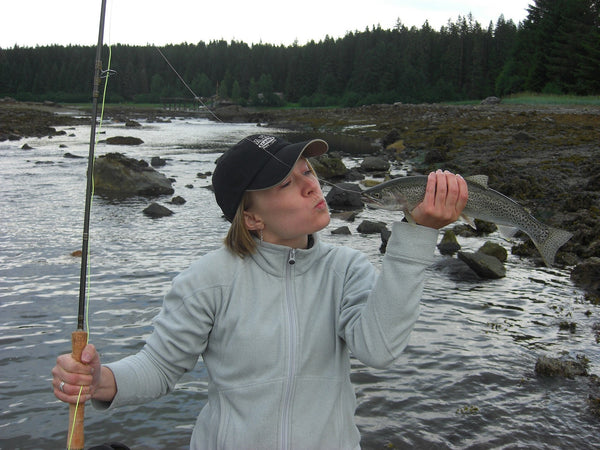
<p style="text-align: left;"><img alt="You'll need a strong knot before you're kissing a fish." src="//cdn.shopify.com/s/files/1/0175/6994/files/fishing-902529_1920_grande.jpg?v=1490885621" style="float: none;" width="651" height="488"></p>
<p><span style="font-weight: 400;">Merwin clarified his thoughts on found data in another article, which is notably titled </span><a href="http://www.fieldandstream.com/blogs/honest-angler/2011/03/knot-strength-isnt-all-about-line-strength"><span style="font-weight: 400;">“Knot Strength Isn’t All About Line Strength.”</span></a></p>
<p><span style="font-weight: 400;">“If you're comfortable with an improved clinch, say, or a Palomar knot, by all means keep using it,” he wrote. “The best fishing knots are those you're most comfortable in tying and that still seem adequately strong. Hey, if it works for you, stick with it.”</span></p>
<p><img src="//cdn.shopify.com/s/files/1/0175/6994/files/supercars-fishing_large.jpg?v=1490885463" alt="" width="649" height="173"></p>
<p><span style="font-weight: 400;">And maybe you should stick to improved clinch knots if that’s what you know. An extra five percent of performance ability goes out the window if you tie an amateur palomar knot, or vice-versa. The results achieved by expert testing revolve around tying a top notch knot to begin with. </span></p>
<p><span style="font-weight: 400;">But even then, the results of experts may hinge on their own preferences. We can safely assume that Berwin was a qualified judge. Yet a similar study from </span><a href="http://www.flyfisherman.com/gear-accessories/fly-tying-materials-gear-and-accessories/2012-tippet-shootout/"><i><span style="font-weight: 400;">Fly Fisherman</span></i></a> <span style="font-weight: 400;">magazine</span> <span style="font-weight: 400;">found the improved clinch to be the third best of 15 knots tested, beating out the palomar. </span></p>
<p><span style="font-weight: 400;">The difference in results could be attributed to problems with the initial knot, or it could be attributed to differences in testing methods. Either way, it suggests that the difference between these knots is minute enough that it won’t matter in the long run, assuming that you tie them right. </span></p>
<p><span style="font-weight: 400;">The ultimate message here is that you should tie what you’re comfortable tying, and do it right. That may not be a satisfying conclusion for those who demand hard numbers, but it’s the kind of wisdom that won’t do you wrong when you’re out fishing.</span> </p>]]>
    </content>
  </entry>
  <entry>
    <id>https://tyepro.com/blogs/news/clinch-knot-vs-improved-clinch-what-makes-it-improved</id>
    <published>2017-03-14T11:18:00-04:00</published>
    <updated>2023-01-09T12:48:27-05:00</updated>
    <link rel="alternate" type="text/html" href="https://tyepro.com/blogs/news/clinch-knot-vs-improved-clinch-what-makes-it-improved"/>
    <title>Clinch Knot Vs. Improved Clinch: What Makes It &quot;Improved&quot;?</title>
    <author>
      <name>Tom Vandewalle</name>
    </author>
    <content type="html">
      <![CDATA[<p><span style="font-weight: 400;">If you read the TYEPRO blog frequently,</span><a href="https://www.tyepro.com/blogs/news/90461697-tying-tips-how-to-tie-an-improved-clinch-knot"><span style="font-weight: 400;"> you know that we’re big fans of the improved clinch knot</span></a><span style="font-weight: 400;">. In fact, if you read any fishing publication, you’ll find that there are </span><i><span style="font-weight: 400;">a lot </span></i><span style="font-weight: 400;">of people who are fans of the improved clinch knot. The existence of this knot inherently invites a few questions. </span></p>
<p><span style="font-weight: 400;">Is there a “regular” clinch knot? Assuming there is, what’s the difference between it and the improved version? </span></p>
<p><span style="font-weight: 400;">There </span><i><span style="font-weight: 400;">is</span></i><span style="font-weight: 400;"> a “regular” clinch knot and as you might guess, it’s easier to tie than the improved clinch knot. The best way to define the difference between the two is to start by reminding you how to tie an improved clinch. </span></p>
<p><span style="font-weight: 400;">After threading the eye of the hook and pulling out a tag line of around six inches, you’ll take the tag and wrap it around the standing line between four and seven times (the lighter the line, the more wraps you’ll need to make a knot that won’t unravel). Now take the tag and bring it through the loop that’s formed between the eyelet and the twists, and bring it back up through the bigger loop that you’ve formed. Wet your line and pull it tight, making sure that the wraps don’t overlap. Trim the tag end and you’re ready to cast! </span></p>
<p><i><span style="font-weight: 400;">If you’re more of a visual learner, take a look at the video below! </span></i></p>
<iframe width="560" height="315" src="https://www.youtube.com/embed/3N2ap28ONd4?ecver=1" frameborder="0" allowfullscreen=""></iframe>
<p> </p>
<p><span style="font-weight: 400;">Tying a regular clinch knot is as simple as doing all of the above, minus one step: After you take the tag end through the loop near the eyelet, you’ll immediately pull it tight, without bringing it back through the bigger loop you created. </span></p>
<p><span style="font-weight: 400;">Is it easier than an improved clinch? Yes. Is it that much easier than an improved clinch? No. And it’s certainly not worth it when you take the final performance results into consideration. There’s not much research published online regarding the difference in strength between the two, but one fishing blogger ran tests and reported his improved clinch </span><a href="http://www.awesomefishingknots.com/2015/01/improved-clinch-knot-vs-clinch-knot.html"><span style="font-weight: 400;">tested nearly 50 percent stronger than his clinch</span></a><span style="font-weight: 400;">. </span></p>
<p><span style="font-weight: 400;">A 50 percent swing in performance could easily be the difference between landing that big bass, or your knot coming undone in its mouth. </span></p>
<p><span style="font-weight: 400;">Let’s say, theoretically, that bringing your tag end back through that big loop is just too much of a hassle. What can you do to make sure your “regular” clinch knot doesn’t pigtail, or devolve into regular ol’ fishing line? </span></p>
<p><span style="font-weight: 400;">The most common cause of clinch knots coming undone is the same as the most common cause for improved clinch knots coming undone: Not enough twists. It’s important to understand how different line types will impact how many twists will work best for you. As we mentioned earlier, lighter lines will need more than the minimum four twists. Braided line should get 3 to 4 </span><i><span style="font-weight: 400;">extra</span></i><span style="font-weight: 400;"> turns because it has a tendency to slide undone more easily than others. </span></p>
<p><span style="font-weight: 400;">You should consider leaving that situation in the realm of “theoretical,” however. All you need to do to create a stronger, more reliable knot is bring the tag end through the large loop and pull tight. </span></p>
<p><span style="font-weight: 400;">They don’t call it “improved” for nothing. </span></p>]]>
    </content>
  </entry>
  <entry>
    <id>https://tyepro.com/blogs/news/cold-hands-clever-tips-to-keep-feelings-in-your-fingers-when-fishing</id>
    <published>2017-02-17T12:45:00-05:00</published>
    <updated>2023-03-15T10:00:02-04:00</updated>
    <link rel="alternate" type="text/html" href="https://tyepro.com/blogs/news/cold-hands-clever-tips-to-keep-feelings-in-your-fingers-when-fishing"/>
    <title>Cold Hands? Clever Tips to Keep Feelings in Your Fingers when Fishing!</title>
    <author>
      <name>Tom Vandewalle</name>
    </author>
    <content type="html">
      <![CDATA[<p><a href="http://www.nbcnews.com/news/weather/new-york-boston-foot-snow-schools-closed-flights-canceled-n718631"><span style="font-weight: 400;">Snowstorms in the Northeast </span></a><span style="font-weight: 400;">reminded those of us in warmer climates that Winter hasn’t ended yet. But of course, that fact doesn’t have much impact on some intrepid anglers. We’re willing to bet that there were at least a few New York fishing enthusiasts who looked outside as feet of snow fell from the heavens and thought “I think I’ll be able to get out today.” </span></p>
<p><span style="font-weight: 400;">Our first bit of advice for those who will be hitting the frozen pond or icy creek to fish this month: Be safe. Don’t challenge Mother Nature when she decides that living things should take shelter. </span></p>
<p><span style="font-weight: 400;">But if it’s a “regular” cold, be sure to stay warm—both for your comfort and health. </span></p>
<p><span style="font-weight: 400;">Your hands will be exposed, and are more susceptible to the hazards of cold temperatures than other parts of your body. Here are a few ways that you can make sure that your fingers stay toasty when even your coffee starts freezing. </span></p>
<p><b>Bring Gloves (Plural) </b></p>
<p><span style="font-weight: 400;">We’re not going to talk down to you; “wear gloves” is about as common-sense as advice can get. But are you wearing enough gloves? </span></p>
<p><span style="font-weight: 400;">You’re obviously hoping to handle some fish when fishing, and that’s going to mean your gloves get wet. If that water soaks through to your hands, you might as well not be wearing them at all. The obvious solution is to buy the highest quality waterproof gloves on the market (</span><a href="http://www.ice-fishing-gear.com/best-ice-fishing-gloves/"><span style="font-weight: 400;">you can see some popular models here</span></a><span style="font-weight: 400;">). </span></p>
<p><span style="font-weight: 400;">If you would rather spend your fishing budget on better tackle or travel, there are other options. One is to pack multiple pairs of gloves. If you get one pair wet while handling a catch, simply switch. Another clever solution is to wear a pair of latex surgical gloves underneath your winter gloves. Granted, you may still need to switch out the wet top layer if they’re lowering the temperature of your hands.</span></p>
<p style="text-align: left;"><img alt="One more tip for staying warm: Don't fall in!" src="//cdn.shopify.com/s/files/1/0175/6994/files/winter-fishing-954075_1920_grande.jpg?v=1487353433" style="float: none;"></p>
<p><b>Get A Knot-Tying Tool </b></p>
<p><span style="font-weight: 400;">Unfortunately, even the most flexible of winter gloves will still limit the function of your fingers. This means, at some point, most anglers will need to take their gloves off to tie knots to tackle. A knot-tying tool can be a huge help if it limits the difficulty of precise tasks, such as threading the eye of a hook. </span></p>
<p><span style="font-weight: 400;">The </span><a href="https://www.tyepro.com/products/micro-typro"><span style="font-weight: 400;">TYEPRO Fly &amp; Ice</span></a><span style="font-weight: 400;"> is an ideal solution. All TYEPRO products are designed to help anglers with shaky hands (or weak vision) and every fishing enthusiast has shaky hands when the mercury drops below freezing. </span></p>
<p><span style="font-weight: 400;">The Fly &amp; Ice is especially nice because it better allows for smaller jigs and hooks, which appeal more to sluggish fish lazing around in cold water. </span></p>
<p><b>Get Creative With Hand Warming Packs</b></p>
<p><span style="font-weight: 400;">Hand warming packs, fuelled by the chemical reaction of oxidation when they meet air, have made them a must-have for every outdoor activity from attending football games to cross-country skiing. Fishing is no exception. </span></p>
<p><span style="font-weight: 400;">One trick recommended on many fishing message boards is to tape a few hand warming packs around the handle of your rod. This is more comfortable than stuffing them in your gloves, and the packs will also keep you warm for hours if you buy the right brand. </span></p>
<p><span style="font-weight: 400;">Remember, you’ll want your hands to be in great shape when it’s time to toss a baseball in the Spring! Don’t damage them by exposing them to cold during the Winter!</span></p>]]>
    </content>
  </entry>
  <entry>
    <id>https://tyepro.com/blogs/news/casting-our-nets-wide-1</id>
    <published>2017-01-30T12:31:00-05:00</published>
    <updated>2023-01-09T12:47:15-05:00</updated>
    <link rel="alternate" type="text/html" href="https://tyepro.com/blogs/news/casting-our-nets-wide-1"/>
    <title>Casting Our Nets Wide: The Best January Reads on The Web</title>
    <author>
      <name>Tom Vandewalle</name>
    </author>
    <content type="html">
      <![CDATA[<p><span style="font-weight: 400;">Hopefully you’re a follower of the TYEPRO Facebook Page, as there are few better ways to get updates on new content than checking out our social media hub. We also like to pepper that page with a smattering of interesting news stories from around the angling world that we think will tickle your fancy. </span></p>
<p><span style="font-weight: 400;">If you’ve fallen behind on those morsels, don’t worry: We’ve chosen three of our favorite posts from the past month and included them in this blog entry so you can catch up quickly. This month we’ve got posts that are cute (the friendship between a diver and a fish), not cute (forest fires and their impact on fish populations) as well a helpful guide to fly fishing for beginners to the hobby. </span></p>
<p><span style="font-weight: 400;">Enjoy! </span></p>
<p><b>The Bond between Fish and Man </b></p>
<p><span style="font-weight: 400;">We all enjoy getting home at the end of the work day and being greeted by our happy dog or cat. It turns out you can have the same experience with a fish. Hiroyuki Arakawa made the acquaintance of a very special Asian Sheepshead Wrasse during a scuba diving outing more than 25 years ago. Now, whenever he heads to the same dive spot, he’s greeted by the same fish. </span></p>
<p><span style="font-weight: 400;">There’s more to the story, of course. After all, why does a pet get excited when their owner comes home? There’s promise of a meal ahead! Arakawa made his friend the old-fashioned way: by bringing treats. <a href="http://www.moldychum.com/10062-2/">Watch the video</a> and note the incredible way in which he summons his friend. </span></p>
<p><b>The Bond between Fish and Fire </b></p>
<p><span style="font-weight: 400;">The relationship between forest fires and the ecosystem is a tough one for many people to understand. After all, Smokey The Bear always taught us to prevent forest fires, right? As you’ll learn in many nature publications, a manageable number of forest fires are ideal, because they lead to less uncontrollable forest fires in the future. </span></p>
<p><span style="font-weight: 400;">But did you know that forest fires can also be helpful to fish? That’s what they’re reporting in New Mexico, </span><a href="http://outdoornews.com/2016/12/19/new-mexico-gila-trout-return-thanks-part-devastating-fire/"><span style="font-weight: 400;">as the Gila Trout has recently been reintroduced into the environment</span></a><span style="font-weight: 400;">. It had previously been forced out by unwanted, competing species. But when ash and slurry forced out those other species, it left the water wide open for trout. </span></p>
<p><b>The Official Unofficial Rulebook </b></p>
<p><span style="font-weight: 400;">Golfers know that the official rulebook for the game is almost as complex as the tax code. There’s the easy stuff, like “don’t walk in the other player’s putting line,” but then it gets in-depth, to the point where even the professional players on tour aren’t sure what’s going on without consulting a rules official. </span></p>
<p><span style="font-weight: 400;">Fly fishing, fortunately, is not nearly as stringent in its pursuit of decorum. However, there are still some unwritten rules that are worth knowing...lest you become “that guy.” If you’re new to the sport,<a href="https://rootsrated.com/stories/unwritten-rules-fly-fishing-etiquette"> check out this great list of rules</a> for fly-fishing so you don’t stick out like neon-lime fishing line.</span></p>]]>
    </content>
  </entry>
  <entry>
    <id>https://tyepro.com/blogs/news/ice-line-vs-standard-line-whats-the-difference-and-should-you-buy</id>
    <published>2017-01-25T13:09:00-05:00</published>
    <updated>2023-03-15T10:01:13-04:00</updated>
    <link rel="alternate" type="text/html" href="https://tyepro.com/blogs/news/ice-line-vs-standard-line-whats-the-difference-and-should-you-buy"/>
    <title>Ice Line vs. Standard Line: What&apos;s The Difference, and Should You Buy?</title>
    <author>
      <name>Tom Vandewalle</name>
    </author>
    <content type="html">
      <![CDATA[<p><span style="font-weight: 400;">We’re not sure how things are looking in your corner of the world, but it’s been an awfully warm January here at the TYEPRO headquarters in Columbus, OH. Unfortunately, if you’re an ice fishing enthusiast, you may have to resort to open water angling for the time being. On the positive side, this gives undecided hobbyists more time to decide whether this is the year they give ice fishing a try. If you still aim to give it a shot, you’ll need to buy the necessary equipment: </span><a href="https://www.tyepro.com/blogs/news/tye-with-a-pro"><span style="font-weight: 400;">ice picks, a spud bar...maybe even a radar device or shanty to help you out</span></a><span style="font-weight: 400;">. </span></p>
<p><span style="font-weight: 400;">But what about fishing line? Will the same spool of line that you use during the rest of the year bring you success on the frozen lake? There’s some disagreement over this. Some hobbyists will insist that an angler with the proper lure is only wasting cash on a new spool. Many professionals insist on using ice fishing line, however. </span></p>
<p><span style="font-weight: 400;">So what’s the difference? </span></p>
<p><span style="font-weight: 400;">Line memory is a major issue that ice fishing lines are designed to prevent. Ask any runner: It’s much easier to stretch and get loose when the temperature is warmer. There’s a </span><a href="http://www.weather.gov/cle/avg_lake_erie_water_temps"><span style="font-weight: 400;">difference in temperature of about 34°F</span></a><span style="font-weight: 400;"> from August to January on Lake Erie...and that will increase line stiffness greatly. </span></p>
<p><span style="font-weight: 400;">There are many all-season lines that combat line memory, but manufacturers also treat ice fishing line with anti-freezing compounds. This prevents ice-based line memory and, of course, your line from freezing to your rod.</span></p>
<p><span style="font-weight: 400;"><img src="//cdn.shopify.com/s/files/1/0175/6994/files/fishing-752584_1920_large.jpg?v=1485367663" alt="" width="554" height="369"></span></p>
<p><span style="font-weight: 400;">There are two other qualities that come built into ice fishing line, but these can also be found within standard open water lines. </span></p>
<p><span style="font-weight: 400;">The first relates to the process of dropping and reeling in a line while ice fishing. The difference between that and warm weather angling is the hole in the ice, obviously. And holes in the ice, especially when drilled by hand, often have sharp or rough edges. This can damage your line as it brushes against the walls of the hole. Therefore braided line might be a better option than monofilament, thanks to its relative strength. </span></p>
<p><span style="font-weight: 400;">The problem is that braided line also tends to be more opaque than monofilament. Those familiar with fly fishing or bass fishing might not consider that the line moves much less during ice fishing, relatively, to those more active forms. The less a line moves, the more likely a fish is going to be able to detect it. Anglers will want to take all steps necessary to make their line undetectable, which means opting for cooler colors, such as blue or dark green, </span></p>
<p><span style="font-weight: 400;">Fluorocarbon ends up being one of the favorites for ice fishing because it is stronger than monofilament and more abrasion-resistant. Fluorocarbon lines also sink faster than mono which makes for a more natural fall for light-weight ice jigs. Therefore many brands, such as Berkley and Sufix, offer ice variants that are made of fluorocarbon. Many also offer braided ice fishing line, however, for fans of that material. </span></p>
<p><span style="font-weight: 400;">The good news: Buying 75 yds of Berkley’s Trilene ice fishing line costs the same as its standard lines at most retailers. Investing in a new spool of line won’t set you too far back...especially if the line you currently use doesn’t live up to the standards explained above. </span></p>
<p><span style="font-weight: 400;">If only we could afford a plane ticket to somewhere with ice, then we’d be set!</span></p>
<p><span style="font-weight: 400;">If you’re concerned with tying that line in cold temperatures, don’t forget that </span><a href="https://www.tyepro.com/products/micro-typro"><span style="font-weight: 400;">TYEPRO offers the Fly &amp; Ice tool</span></a><span style="font-weight: 400;">. This helps tie many ice jigs from 1/32 to 1/8 ounces and hooks from size 10 to1, . As our customer Chris K. noted, “Love how easy it was to use in the sub freezing temperatures and I didn't need my reading glasses!"</span></p>]]>
    </content>
  </entry>
  <entry>
    <id>https://tyepro.com/blogs/news/tye-with-a-pro</id>
    <published>2017-01-19T15:53:00-05:00</published>
    <updated>2023-01-09T12:52:30-05:00</updated>
    <link rel="alternate" type="text/html" href="https://tyepro.com/blogs/news/tye-with-a-pro"/>
    <title>TYE With A PRO: IceFishOhio.com Founder David Hoheisel</title>
    <author>
      <name>Tom Vandewalle</name>
    </author>
    <content type="html">
      <![CDATA[<h1><span style="color: #999999;"><em>There was a period when social media, and fishing, made an unprecedented leap forward: when IceFishOhio.com was founded during 2008.</em></span></h1>
<p>Sure, Facebook was kind of a big deal too—somewhere between late 2008 and the Spring of 2009, it jumped from 100 million users to more than 250 million. Now it boasts more than 1.8 billion users but still—at the time, there was a need for a hub where anglers could discuss their hobby, their craft. </p>
<p><span style="font-weight: 400;">There was a period when Facebook, and social media, made an unprecedented jump forward. Somewhere between late 2008 and the Spring of 2009, it jumped from 100 million users to more than 250 million. Now it boasts more than 1.8 billion users but still—it’s never grown at a faster rate than during late 2008. It was a huge quarter for social media as a whole; Perhaps most importantly, <a href="http://www.icefishohio.com/index.php?www" target="_blank">IceFishOhio.com</a> launched during that same period. </span></p>
<p><span style="font-weight: 400;">Founder Dave Hoheisel turned to social media for the same reason that many people do: to find friends with similar interests. He had recently gotten involved with ice fishing—after 15 years of tournament bass fishing—and he was looking for both buddies and tips. The result was Ice Fish Ohio, an online forum for discussions on everything from equipment modifications to shanty construction. </span></p>
<p><span style="font-weight: 400;">“(The internet) has helped new people a ton. It makes it easier for the new guys to get into fishing and learn faster,” Hoheisel says of the internet’s role in modern fishing. That said, he warns about biting too quickly to what you see online. “On the other hand, it makes them a little lazier. Guys don’t want to get out there and find their own fish.” </span></p>
<p><span style="font-weight: 400;">That made it a little awkward when our next question, to the expert, was where to find the best ice fishing in Ohio. He laughed, but gave us a healthy list of water bodies to consider. Readers in our neck of the woods (Columbus) will be happy to find nearby Buckeye Lake on the list (although Hoheisel warns that warm weather has made for lackluster fishing this year). Those in Northern Ohio can tackle Mosquito Creek Lake, near Youngstown, or head to one of the many fine ice fishing spots along Lake Erie.</span></p>
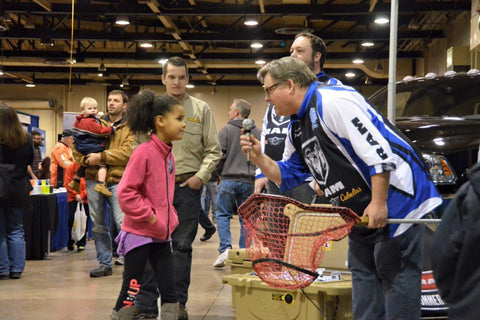
<p style="text-align: left;"><img alt="Dave encourages a young fan." src="//cdn.shopify.com/s/files/1/0175/6994/files/Dave_H_Expo_2_large.jpg?v=1484859090" style="float: none;" width="576" height="384"></p>
<p><span style="font-weight: 400;">Hoheisel’s comments on not "taking the easy way out" are more relevant to ice fishing than open water; amateurs must do more than simply scout a lake online before they begin. We talk about safety precautions in the open-water hobby—care in handling hooks, for example—but it’s no joke for ice fishing. It can be a life-or-death issue. </span></p>
<p><span style="font-weight: 400;">Hoheisel was enthusiastic when discussing the tools that will help an aspiring ice angler to break ice and find fish easier—items such as an auger drill bit, or a Bexilar sonar device—but he put special emphasis on the devices that keep fishing enthusiasts alive, such as ice picks and a spud bar. The latter operates much like a walking stick, allowing ice fishers to probe the ice in front of them as they walk, checking for weak spots. When you think that you’ve found a prize locale, use the spud to test the depth of the ice. </span></p>
<p><span style="font-weight: 400;">“The important thing is safety. That’s the other reason we started Ice Fish Ohio,” Hoheisel says. “You always want to have a spud bar. You always want to have ice cleats. Wear ice picks around your neck so that if you do fall in, you can pick your way out of the ice and slide back on.” </span></p>
<p><span style="font-weight: 400;">One fundamental rule for ensuring safety is to never go ice fishing alone. Some people might  have trouble finding someone else willing to sit with you, fishing through sub-freezing temperatures...did we mention that Ice Fish Ohio is a great way to link up with fellow enthusiasts in your area? More than 25,000 users regularly check in at the site, to comment on threads or discussions, or to report ice conditions in their area. </span></p>
<p><span style="font-weight: 400;">Unlike Facebook, you won’t have to worry about any “fake news”—Ice Fish Ohio employs only true professionals as part of its <a href="http://www.icefishohio.com/index.php?board=56.0" target="_blank">Pro Staff</a>. This group moderates the Pro’s Pointers segment on the site, making sure that you have a reliable source for tips. </span></p>
"It can be an issue for online help sites of any kind...a big mouth can out-yell the real experts," Hoheisel said. "It's important to us that we identify people who can always be counted on, officially."<br><br>
<p><span style="font-weight: 400;">Hoheisel is himself an expert, and not just when it comes to ice fishing. He <a href="http://davidhoheiselfishing.com/guide-services/" target="_blank">operates a guide service</a> during both the warm and cold portions of the year, is one of the founders behind the<a href="http://www.greatlakeslargemouthseries.com/" target="_blank"> Great Lakes Largemouth tournament series</a>, and also organizes the <a href="http://www.columbusfishingexpo.com/" target="_blank">Columbus Fishing Expo</a>, dating back to its 2015 debut. It’s one of the largest strictly-fishing exhibitions in the Midwest.  </span></p>
<span style="font-weight: 400;">He’s always got time for Ice Fish Ohio, however, even if it hasn’t made him a billionaire like Facebook did for Mark Zuckerberg. That said, Ice Fish Ohio does have a <a href="https://www.facebook.com/icefishohio/" target="_blank">Facebook page</a>, while Facebook is still behind the curve in getting itself an Ice Fish Ohio account. </span>]]>
    </content>
  </entry>
  <entry>
    <id>https://tyepro.com/blogs/news/tyepro-transparent-tyepro-vs-hook-eze</id>
    <published>2016-12-15T14:26:00-05:00</published>
    <updated>2023-03-15T10:08:59-04:00</updated>
    <link rel="alternate" type="text/html" href="https://tyepro.com/blogs/news/tyepro-transparent-tyepro-vs-hook-eze"/>
    <title>TYEPRO Transparent: TYEPRO vs. Hook Eze</title>
    <author>
      <name>Tom Vandewalle</name>
    </author>
    <content type="html">
      <![CDATA[<p><span style="font-weight: 400;">Welcome to the fourth installation of TYEPRO Transparent, where we take an analytical approach in comparing our own TYEPRO tools to some of the most popular knot-tying assistants on the market. We hope you will find this thoughtful approach helpful for making a tool choice. Today we’ll be comparing our tool with the Hook Eze, a knot-tying device that puts special emphasis on keeping your hands protected while tying.  </span></p>
<p><span style="font-weight: 400;">We’ll be comparing these devices along five categories: Ease of Threading, Assistance with Knot Tying, Additional Functionality, Safety and Price. </span><a href="https://www.tyepro.com/blogs/news/tyepro-transparent-whats-the-best-fishing-knot-tying-tool-for-you"><span style="font-weight: 400;">You can review the basis for our comparisons here</span></a><span style="font-weight: 400;">. </span></p>
<p> </p>
<p><img src="//cdn.shopify.com/s/files/1/0175/6994/files/TYEPRO1_d279715d-6a29-473d-a031-87841e8c0812_grande.png?v=1481829550" alt=""></p>
<p><span style="font-weight: 400;">We’ve been wary of giving any competition an outright “zero” rating during this series, at the risk of appearing biased. I don’t think the sellers of Hook Eze would have any qualms about this rating, however: There is just no difference between threading the eyelet of a hook while it’s in a Hook Eze than there would be if you were threading it in your hand. The tool is designed for the shank and eyelet to stick out, away from the device, and that’s just the way it is. Ease of threading is TYEPRO’s bread and butter, of course. Our tool grips the eyelet, freeing up your hands to feed the line through the funnel. This funnel makes the process easy, even for those with shaky hands and weak vision. </span></p>
<p> </p>
<p><img src="//cdn.shopify.com/s/files/1/0175/6994/files/TYEPRO2_9122fb70-bd86-4a1f-a536-6658cff3ba2d_grande.png?v=1481829615" alt=""></p>
<p><span style="font-weight: 400;">As we mentioned above, the design of the Hook Eze results in the shank and eyelet of the hook sticking out away from the tool. That’s a weakness for helping you thread the eyelet, but it’s a benefit for tying knots. The ability to pass the lead back through the eyelet is helpful for creating palomar and similar knots. The Hook Eze also features a finger ring, which allows users to make twists as necessary, putting it at least on equal ground with TYEPRO in this regard. Although it’s strong for making Palomar knots, it actually struggles against the TYEPRO when making clinch or improved clinch knots. This is because the Hook Eze doesn’t hold the line wide enough for passing the lead between the eyelets and the twists. Which tool is a better knot-tier for you depends significantly on what knot you prefer.</span></p>
<p><span style="font-weight: 400;">One additional negative for Hook Eze is that it will not hold as wide a selection of tackle types as TYEPRO. In particular, treble hooks and many styles of jigs, especially those with plastic trailers. Flies with long feathers or significant hackle are also a problem with Hook Eze as you cannot close this tool around them without causing damage. If you can't close the tool around them, knot-tying assistance quickly drops to "zero." </span></p>
<p> </p>
<p><img src="//cdn.shopify.com/s/files/1/0175/6994/files/TYEPRO3_6e0fb82c-87ba-43b4-8e57-cfaa3f4ab56c_grande.png?v=1481829681" alt=""></p>
<p><span style="font-weight: 400;">The Hook Eze is the first tool we’ve looked at that shares TYEPRO’s ability to trim the tag end of the line once you’re done tying a knot. We certainly enjoy this feature when using our own tool, so we can only give our competition kudos for including it. One other “functionality” benefit comes from the Hook Eze’s headlining feature, a case that stores the hook for safety purposes. You may recall from </span><a href="https://www.tyepro.com/blogs/news/were-hooked-the-lure-tamer"><span style="font-weight: 400;">our profile of the Lure Tamer</span></a><span style="font-weight: 400;">, that hooking your tackle to the rod during transport can only result in damage to your equipment. The Hook Eze allows you to snap the tool to your rod, while shielding your rod from the damaging hook. TYEPRO’s lanyard provides a surprisingly helpful hand in keeping your tool close-at-hand, compared to the standard clip featured on most comparable tools. </span></p>
<p> </p>
<p><img src="//cdn.shopify.com/s/files/1/0175/6994/files/TYEPRO4_07aac756-9c12-421d-8048-7f5029455e03_grande.png?v=1481829735" alt=""></p>
<p><span style="font-weight: 400;">Safety is the Hook Eze’s claim to fame, and it certainly dominates this category when compared to all of the knot-tying tools we’ve featured. Its key component is a plastic case that encompasses the hook while you tie your knot, which keeps your hand safe during the process. We’ve said this repeatedly throughout this series: If you’re careful with the TYEPRO or any of the other tools in this series, your hands will be fine. That said, nothing guarantees safety from nicks and cuts like the Hook Eze. Of course, the safety of the Hook Eze depends on whether you'll be able to fit your hook or jig in the case. </span></p>
<p> </p>
<p><img src="//cdn.shopify.com/s/files/1/0175/6994/files/TYEPRO5_00d9bf91-707e-4de5-b35b-10baa251f14a_grande.png?v=1481829798" alt=""></p>
<p><b></b><span style="font-weight: 400;">The Hook Eze is also the first tool that the TYEPRO can match in the price category, although we should offer a clarification: When you purchase this tool, you’re actually getting two Hook Ezes, as they come in packs of two. So, in reality, this is a great price if you need two tools. Unfortunately, if you’re only in need of one tool, there’s no way to avoid buying the second. If you want to see an explanation behind the cost of a TYEPRO, we encourage you</span><a href="https://www.tyepro.com/blogs/news/putting-a-price-on-greatness"><span style="font-weight: 400;"> to check out this article</span></a><span style="font-weight: 400;">. Special thanks to reader Dave. R, who commented that “you have a great product at a very reasonable price.” </span></p>
<p>We’ll be rating cost as 3 for tools less than $6.00, 2 for tools between $6 and $11.99, and 1 for tools over $12.00.</p>]]>
    </content>
  </entry>
  <entry>
    <id>https://tyepro.com/blogs/news/tyepro-transparent-tyepro-vs-magnetic-tippet-threader</id>
    <published>2016-12-06T16:49:00-05:00</published>
    <updated>2023-03-15T10:09:47-04:00</updated>
    <link rel="alternate" type="text/html" href="https://tyepro.com/blogs/news/tyepro-transparent-tyepro-vs-magnetic-tippet-threader"/>
    <title>TYEPRO Transparent: TYEPRO vs. Magnetic Tippet Threader</title>
    <author>
      <name>Brian Augsburger</name>
    </author>
    <content type="html">
      <![CDATA[<p><span style="font-weight: 400;">Welcome to the third installation of TYEPRO Transparent, where we take an analytical approach in comparing our own TYEPRO tools to some of the most popular knot-tying assistants on the market. We hope you will find this thoughtful approach helpful for making a tool choice. Today we’ll be comparing our tool with the Magnetic Tippet Threader, a device that, as advertised, uses some good old fashioned magnetism to assist with threading an eyelet.</span></p>
<p><span style="font-weight: 400;">We’ll be comparing these devices along five categories: Ease of Threading, Assistance with Knot Tying, Additional Functionality, Safety and Price. </span><a href="https://www.tyepro.com/blogs/news/tyepro-transparent-whats-the-best-fishing-knot-tying-tool-for-you"><span style="font-weight: 400;">You can review the basis for our comparisons here</span></a><span style="font-weight: 400;">.</span></p>
<p> </p>
<p><span style="font-weight: 400;"><img src="//cdn.shopify.com/s/files/1/0175/6994/files/TYEPRO1_28807d9b-1d93-491d-8006-a2581d932136_grande.png?v=1481060818" alt=""></span></p>
<p> The idea behind the Magnetic Tippet Threader is that the metal eyelets of flies and jigs will stick to the tool, theoretically making threading easier. The problem is that the tool doesn’t completely surround the eyelet, meaning that it could easily fall out of place if you don’t approach it with utmost dexterity. If you have shaky hands or bad eyes, the benefit of the Tippet Threader quickly fades away, unlike with the TYEPRO. In this tool’s defense, it may allow for flies with even smaller eyelets than the TYEPRO Fly &amp; Ice does. Of course, its strength with flies conversely makes it a bad option for heavier jigs.</p>
<p> </p>
<p><img src="//cdn.shopify.com/s/files/1/0175/6994/files/TYEPRO2_a42d8797-23d0-40a0-a646-cf3686e2afbc_grande.png?v=1481060871" alt=""></p>
<p> The TYEPRO’s design might not allow for the most diverse a selection of knots, but its ergonomic design does allow for a clinch knot and an improved clinch knot. Once again, it’s the firm grip on the eyelet that makes all the difference. The Tippet Threader doesn’t have this feature. It is strictly intended to assist with threading eyelets. If you get the line through the eyelet, you’ll need to put the Tippet Threader away before you can complete the knot.</p>
<p> </p>
<p><img src="//cdn.shopify.com/s/files/1/0175/6994/files/TYEPRO3_3d74004d-9826-4209-9c53-de101a4c535c_grande.png?v=1481060900" alt=""></p>
<p> Some might suggest that our ratings are biased, however I feel we’re being rather generous when we give a tool such as the Tippet Threader even a “one” for Additional Functionality. That score is in reference to its clip, which keeps it attached to your belt, to be grabbed when needed. This feature is almost a “must have” for fishing tools these days. We tried to up our game by offering a full lanyard with the TYEPRO, rather than the standard clip. And, of course, we also built line clippers into the handle so that you can trim your line.</p>
<p> </p>
<p><img src="//cdn.shopify.com/s/files/1/0175/6994/files/TYEPRO4_55c5b837-b18a-4d89-9457-3934a64d9730_grande.png?v=1481060924" alt=""></p>
<p> As with our prior posts, neither of these tools is “unsafe” for the responsible angler. There’s always a chance of injuring yourself when tying by hand or tool that features an open hook. Be careful when working with either the TYEPRO or the Magnetic Tippet Threader, and you won’t have anything to worry about.</p>
<p> </p>
<p><img src="//cdn.shopify.com/s/files/1/0175/6994/files/TYEPRO5_b96c23c9-bdb1-4a74-9325-4d7450863a1d_grande.png?v=1481060955" alt=""></p>
<p><b></b><span style="font-weight: 400;">Once again, our competitor has trumped us in the cost comparison. The Magnetic Tippet Threader can often be found for less than our $14.99. And again, we can live with that, as some of that price increase can be justified in the improved functionality discussed earlier in this post. If you want to see an explanation behind the cost of a TYEPRO, we encourage you</span><a href="https://www.tyepro.com/blogs/news/putting-a-price-on-greatness"><span style="font-weight: 400;"> to check out this article</span></a><span style="font-weight: 400;">. Special thanks to reader Dave. R, who commented that “you have a great product at a very reasonable price.”</span></p>
<p>We’ll be rating cost as 3 for tools less than $6.00, 2 for tools between $6 and $11.99, and 1 for tools over $12.00.</p>]]>
    </content>
  </entry>
  <entry>
    <id>https://tyepro.com/blogs/news/tyepro-transparent-tyepro-vs</id>
    <published>2016-11-23T11:10:00-05:00</published>
    <updated>2023-03-15T10:06:41-04:00</updated>
    <link rel="alternate" type="text/html" href="https://tyepro.com/blogs/news/tyepro-transparent-tyepro-vs"/>
    <title>TYEPRO Transparent: TYEPRO Vs. Quik Tye</title>
    <author>
      <name>Tom Vandewalle</name>
    </author>
    <content type="html">
      <![CDATA[<p><span style="font-weight: 400;">Welcome to the second installation of TYEPRO Transparent, where we take an analytical approach in comparing our own TYEPRO tools to some of the most popular knot-tying assistants on the market. We hope you will find this thoughtful approach helpful to making a tool choice. Today we’ll be comparing our tool with the Quik Tye Knot Tying Tool, a plastic tool that offers two funnels, which rotate into place to help with threading. </span></p>
<p><span style="font-weight: 400;">We’ll be comparing these devices along five categories: Ease of Threading, Assistance with Knot Tying, Additional Functionality, Safety and Price. </span><a href="https://www.tyepro.com/blogs/news/tyepro-transparent-whats-the-best-fishing-knot-tying-tool-for-you"><span style="font-weight: 400;">You can review the basis for our comparisons here</span></a><span style="font-weight: 400;">.</span></p>
<p> </p>
<p><img src="//cdn.shopify.com/s/files/1/0175/6994/files/TYEPRO1_grande.png?v=1479917074" alt=""></p>
<p> The biggest knock on the Cinch Tie tool was its total lack of assistance in the area of threading the eyelet. The TYEPRO was born from the idea of helping angling enthusiasts with failing eyesight and shaky hands, so we designed our tool to make threading the eyelet as simple as possible. The Quik Tye is much better on this front than the Cinch Tie. Unfortunately, its ability to choose between “large” and “small” eyelet sizes also works against it: Selecting the correct end of the tool to use, positioning the eyelet to line up properly and closing the tool can be tricky.</p>
<p> </p>
<p><img src="//cdn.shopify.com/s/files/1/0175/6994/files/TYEPRO2_grande.png?v=1479917114" alt=""></p>
<p> Much like with the ease of threading, the knot-tying assistance of the Quik Tye comes up short of that offered by TYEPRO. Although it may seem, based on first glance, that the two tools offer similar tying capabilities after threading the eyelet, the TYEPRO’s design and ergonomics allow it to make necessary twists for an improved clinch knot and others. It’s possible that a Quik Tye could manage the same task, however it would be much more difficult due to its square shape, especially for someone with shaky hands.</p>
<p> </p>
<p><img src="//cdn.shopify.com/s/files/1/0175/6994/files/TYEPRO3_grande.png?v=1479917264" alt=""></p>
<p> We’ve introduced the additional functions that the TYEPRO offers before: a clipper for trimming your line and a lanyard to keep it nearby for when you need to tie a new knot. Quik Tye has a clip for attaching the tool to a belt loop or pocket, and it also has a loop for a lanyard. Unfortunately, you’ll need to provide your own lanyard in order to completely take advantage of this functionality.</p>
<p> </p>
<p><img src="//cdn.shopify.com/s/files/1/0175/6994/files/TYEPRO4_grande.png?v=1479917302" alt=""></p>
<p> As with our prior comparison, neither of these tools is “unsafe” for the responsible angler. As with tying by hand, there’s always a chance of minor harm when working with an open hook. Be careful when working with both the TYEPRO and the Quik Tye, and you won’t have anything to worry about.</p>
<p> </p>
<p><img src="//cdn.shopify.com/s/files/1/0175/6994/files/TYEPRO5_grande.png?v=1479917352" alt=""></p>
<p><span style="font-weight: 400;">As will be the case in many of these comparisons, the Quik Tye is going to be the cheaper option between it and the TYEPRO. We’re not ashamed to admit it, as some of that price increase can be justified in the improved functionality discussed earlier. If you want to see an explanation behind the cost of a TYEPRO, we encourage you</span><a href="https://www.tyepro.com/blogs/news/putting-a-price-on-greatness"><span style="font-weight: 400;"> to check out this article</span></a><span style="font-weight: 400;">.</span></p>
<p>We’ll be rating cost as 3 for tools less than $6.00, 2 for tools between $6 and $11.99, and 1 for tools over $12.00.</p>]]>
    </content>
  </entry>
  <entry>
    <id>https://tyepro.com/blogs/news/tyepro-transparent-tyepro-vs-cinch-tie</id>
    <published>2016-11-18T16:01:00-05:00</published>
    <updated>2023-01-09T12:51:09-05:00</updated>
    <link rel="alternate" type="text/html" href="https://tyepro.com/blogs/news/tyepro-transparent-tyepro-vs-cinch-tie"/>
    <title>TYEPRO Transparent: TYEPRO Vs. Cinch Tie</title>
    <author>
      <name>Tom Vandewalle</name>
    </author>
    <content type="html">
      <![CDATA[<p><span style="font-weight: 400;">Welcome to the first installation of TYEPRO Transparent, where we take an analytical approach in comparing our own TYEPRO tools to some of the most popular knot-tying assistants on the market. We hope you will find this thoughtful approach helpful to making a tool choice. Today we’ll be comparing our tool with the Cinch Tie Knot Tying Tool, a popular brass knot-tying tool. </span></p>
<p><span style="font-weight: 400;">We’ll be comparing these devices along five categories: Eyelet Threadability, Assistance with Knot Tying, Additional Functionality, Safety and Price. </span><a href="http://www.tyepro.com/blogs/news/tyepro-transparent-whats-the-best-fishing-knot-tying-tool-for-you"><span style="font-weight: 400;">You can review the basis for our comparisons here</span></a><span style="font-weight: 400;">.</span></p>
<p> </p>
<p><img src="//cdn.shopify.com/s/files/1/0175/6994/files/TYEPRO1_1e0b4394-c54e-4b65-8b0a-302bb5ec6994_grande.jpg?v=1479735479" alt=""></p>
<p> It may be a little unfair to compare these two products on this front first, but this is the one category where we’re most proud of the TYEPRO’s performance. Simply put, if you struggle with shaky hands, diminished vision, or fish in tough weather/light conditions, it can be very difficult to thread your line through eyelets. TYEPRO is engineered specifically to make this a breeze. The Cinch Tie requires your hook or lure be placed on the line prior to tying the knot, lending no assistance in this very important part of the process.</p>
<p> </p>
<p><img src="//cdn.shopify.com/s/files/1/0175/6994/files/TYEPRO2_grande.jpg?v=1479502727" alt=""></p>
<p> We’ll throw the Cinch Tie a nod here and showcase its best asset, which is offering assistance with a wide variety of knots. Its site claims that the Cinch Tie allows more than 15 different knots for users, and we don’t doubt it. TYEPRO can’t quite reach those levels but we make popular knots such as the improved clinch a breeze. Both will take practice to get used to and you need to judge which tool is most intuitive and useful for your knot tying needs.</p>
<p> </p>
<p><img src="//cdn.shopify.com/s/files/1/0175/6994/files/TYEPRO3_grande.jpg?v=1479502753" alt=""></p>
<p> One of the major “tiebreakers” when determining which knot-tying tool to buy is what additional features come as part of the package. Unfortunately for the Cinch Tie, it doesn’t feature any other functions aside from the tying of knots. TYEPRO comes with an extra bit of help hidden in the handle, as the stainless steel clippers allow you to conveniently trim the tag end of your line once you’ve completed your knot. It also comes with a lanyard for quick access to what is often a frequently needed tool.</p>
<p> </p>
<p><span style="font-weight: 400;"><img src="//cdn.shopify.com/s/files/1/0175/6994/files/TYEPRO4_grande.jpg?v=1479502776" alt=""></span></p>
<p><span style="font-weight: 400;">Now don’t get the wrong idea: Two-out-of-three doesn’t mean that there’s anything particularly unsafe about either of these products. The truth is, any hobby that involves barbed hooks is a tad risky. Some tools have been designed to shield your hand from the hook, and they’ll be rewarded accordingly. Both the TYEPRO and the Cinch Tie, when used appropriately, are no more dangerous than simply tying with your hands. With a bit of practice, you’ll be doing alright. </span></p>
<p> </p>
<p><span style="font-weight: 400;"><img src="//cdn.shopify.com/s/files/1/0175/6994/files/TYEPRO5_grande.jpg?v=1479502839" alt=""></span></p>
<p><span style="font-weight: 400;">This is the one category where TYEPRO is going to take some convincing, and we’re more than happy to provide it. We get many questions about what many see to be an overly high price for our tool, so we created an entire post explaining where these costs come in. Just know that we don’t get cheap on you! The Cinch Tie might require less engineering prowess than the TYEPRO, but its creators build it out of sturdy brass, justifying its $10.99 price. </span></p>
<p>We’ll be rating COST as "3" for tools less than $6.00, "2" for tools between $6 and $11.99, and "1" for tools over $12.00.</p>]]>
    </content>
  </entry>
  <entry>
    <id>https://tyepro.com/blogs/news/putting-a-price-on-greatness</id>
    <published>2016-11-10T14:51:00-05:00</published>
    <updated>2023-01-09T12:57:49-05:00</updated>
    <link rel="alternate" type="text/html" href="https://tyepro.com/blogs/news/putting-a-price-on-greatness"/>
    <title>Putting A Price on Greatness: The Costs Behind A TYEPRO</title>
    <author>
      <name>Tom Vandewalle</name>
    </author>
    <content type="html">
      <![CDATA[<p><span style="font-weight: 400;">I can usually sleep at night, looking at the reviews for TYEPRO products. My customers have provided over 900 five-star reviews for our products, and that seems like a satisfactory total to me, a small businessman from Ohio who runs his fishing “empire” from his home office. </span></p>
<p>And, when I do get a complaint, more often than not it has something to do with the price of my product. People look at the $21.99 price tag on the TYEPRO and decide that, unless it’s made of gold (or at least stainless steel), it’s overpriced.</p>
<p>As much as I aim to please, these complaints still grant me sleep at night, as I know that my prices are rational. I admit, however—after my Boilermakers have lost another football game—I sometimes feel the urge to boil over. To prevent that, I offer you this post: an explanation of what you’re paying for when you buy a TYEPRO. For the sake of transparency, you at least deserve to see that I’m not paying daily dimes to child labor.</p>
<p>Where to start?</p>
<p>First, there are the pitfalls that come with running your own—emphasis-on-small—business. There’s a reason why the IKEAs of the world can offer some products at ridiculously low prices. They’re a huge, international company, and they make a lot of product to be shipped worldwide. Simply put, the more you make of anything, the lower the cost to make it. Shipping is another part of this equation. The cost-per-tool is much lower for sending 100 TYEPROs than to ship one at a time.  </p>
<p>My individual customers, ordering online: I love you and I appreciate your business. But it costs about $3 in postage to send one tool. The USPS allows me to package 50 tools in a single, $6.10 flat-rate box. You can see where the savings show up in bulk shipments.</p>
<p style="text-align: left;"><img alt="Oh, Post Office, my old friend. " src="//cdn.shopify.com/s/files/1/0175/6994/files/usps-796059_1280_large.jpg?v=1478807165" style="float: none;" width="600" height="413"></p>
<p><span style="font-weight: 400;">There are other costs—from maintaining a website to marketing campaigns, to credit card fees and taxes—but I don’t want to focus on these. There’s one cost that all customers should take note of. </span></p>
<p>Look at the TYEPRO, or at a friend’s TYEPRO. See if you can find the name of the nation where it was assembled.</p>
<p>If you guessed “The United States of America,” you came across the correct answer. We’re proud that TYEPRO tool components are manufactured and assembled in the United States, mostly in Ohio. There’s a lot that’s been said about sending jobs overseas during the recent election, and I’m not trying to win any public position. Again, it just helps me sleep well knowing that I can help keep my countrymen employed, especially in a part of the nation that can use the jobs.</p>
<p>Using quality, ethical labor and using quality materials comes with a cost. The TYEPRO may not be made out of stainless steel as some critics might propose, but that was intentional to provide key tool performance features offered by the plastics chosen. I didn’t freelance the engineering to a by-the-hour freelancer. I used my engineering degree and the best design firm I could find in Ohio to refine this concept into a simple and efficient tool.</p>
<p>“So what?” my more cynical readers might say. “That’s a nice story but I just want a cheap tool.”</p>
<p>Do you care more about price or value? There’s a difference. If you answered “price,” then you are certainly justified in questioning the TYEPRO, or just opting for other products. That’s your choice. If you prefer value, I believe the TYEPRO is for you, regardless about whether you measure that value in the enjoyment that a few extra bass brings you on a nice morning, or the actual monetary value one places on extra food brought home for dinner.</p>
<p>Cheap tools come with cheap experiences. Those passionate for music buy better stereos to enjoy it by. Gearheads buy sports cars for their driving experiences. The best golfers play Titleist because they know they’ll get better action.</p>
<p><span style="font-weight: 400;">But this is only $21.99. I would never pay $700 for a set of speakers. Now </span><i><span style="font-weight: 400;">that </span></i><span style="font-weight: 400;">is something that would keep me up at night.</span></p>]]>
    </content>
  </entry>
  <entry>
    <id>https://tyepro.com/blogs/news/tyepro-transparent-whats-the-best-fishing-knot-tying-tool-for-you</id>
    <published>2016-10-26T14:06:00-04:00</published>
    <updated>2023-01-18T22:08:21-05:00</updated>
    <link rel="alternate" type="text/html" href="https://tyepro.com/blogs/news/tyepro-transparent-whats-the-best-fishing-knot-tying-tool-for-you"/>
    <title>TYEPRO Transparent: What&apos;s The Best Fishing Knot-Tying Tool for YOU?</title>
    <author>
      <name>Tom Vandewalle</name>
    </author>
    <content type="html">
      <![CDATA[<h2><span style="color: #999999;"><em><span style="font-weight: 400;">If you’re reading this, there’s a decent chance that you’re looking to purchase a tool that will help you tie knots during your future fishing expeditions. And, as with any piece of fishing equipment, there are plenty of options. </span></em></span></h2>
<p style="float: left;">We’re hoping to help you—not anglers in general, but you in particular—find what you need.</p>
<p style="float: left;">“Well of course you are,” you say, noting accurately that you’re reading this on TYEPRO.com. “You’re just going to push me toward buying your product.”</p>
<p style="float: left;">Yes...and no.</p>
<p style="float: left;">On one hand, we do believe that the TYEPRO is the best overall product that you can buy for assisting with knot-tying while fishing. This is because we studied the products of many of our competitors, and used our own experience, to craft the TYEPRO.</p>
<p style="float: left;"><img src="//cdn.shopify.com/s/files/1/0175/6994/files/tyepro-tying-tool_96765748-65ba-4884-a09f-256d31eee5ba.jpg?v=1477419981" alt=""></p>
<p style="float: left;"><span style="font-weight: 400;">That said, we acknowledge that fishing tools are a little like basketball players: Some may be 7’3”, defensive machines. Some may be smaller and superb ball-handlers. To create the perfect hybrid, compromise is required.<br><br></span>That’s why we’re going to be launching a series over the next few months comparing the TYEPRO with several of the other renowned knot-tying tools on the market. And we’ll be sure to point out areas where our “opponents” outrank us. If that’s where your needs lie, so be it. We can’t blame you for buying the optimal product for your situation.</p>
<p style="float: left;"> </p>
<p> </p>
<p>Here's the list of qualifications we'll be looking at: </p>
<p> </p>
<p><b>EYELET THREADING: </b>How much does the tool help you to get the fishing line through the eyelet? Can it work consistently with a wide range of lures and hooks, a more narrow range, or none at all?</p>
<p><b>KNOT ASSISTANCE: </b>How much help does it offer in terms of tying knots? Does it offer aid with a variety of knots, a limited number of knots or is the user on their own once the eyelet is threaded?</p>
<p><b>SAFETY: </b>How safe will your hands be when tying the knot around a barbed hook? How much control does the tool offer you when handling hooks?</p>
<p><b>FUNCTIONALITY: </b>You bought the tool for tying knots...but does it include built-in features that make it handy on other fronts as well? This may be the most objective of our comparison categories!</p>
<p><b>COST: </b>Simply put, how much will each tool put you back? No tying tool is going to rival the price of your rod, obviously, but how many more fish will you catch at the end of the day?</p>
<p><strong><em>We’ll begin our comparisons early in November, just in time for you to gear up before the holidays. Stay tuned!</em></strong></p>]]>
    </content>
  </entry>
  <entry>
    <id>https://tyepro.com/blogs/news/tye-with-a-pro-chagrin-falls-outfitters-dan-pribanic-on-steelhead-alley</id>
    <published>2016-10-14T13:31:00-04:00</published>
    <updated>2023-03-15T10:04:45-04:00</updated>
    <link rel="alternate" type="text/html" href="https://tyepro.com/blogs/news/tye-with-a-pro-chagrin-falls-outfitters-dan-pribanic-on-steelhead-alley"/>
    <title>TYE With A PRO: Chagrin Falls Outfitters&apos; Dan Pribanic on Steelhead Alley</title>
    <author>
      <name>Tom Vandewalle</name>
    </author>
    <content type="html">
      <![CDATA[<h2><span style="color: #999999;"><em><span style="font-weight: 400;">Many fly fishing enthusiasts envision the rivers of the American West as the bucket list-level vacation. We may be biased as native Ohioans, but we think Northern Ohio—known affectionately as “Steelhead Alley” for its population of Rainbow Trout—is as great as any. </span></em></span></h2>
<p style="float: left;"><span class="dropcap">W</span>e spoke with Dan Pribanic, <a href="http://chagrinriveroutfitters.com/site/homepage/index.html"><span style="font-weight: 400;">the owner of Chagrin River Outfitters</span></a><span style="font-weight: 400;">, for what visitors to this region can expect during Fall, a season many consider to be the best for the hobby. </span></p>
<p><span style="font-weight: 400;">He’s also biased—toward his native Chagrin River, a tributary just east of Cleveland—but he also recommends the nearby Grand River, Conneaut Creek near the Pennsylvania border, and Elk Creek just across the state line. His team of guides travel to a dozen rivers and streams within a two-hour drive from the shop, demonstrating the widespread populations of fish in the area. What do all of these locations share? They all feed into Lake Erie, where the steelhead enter during October and November. Pribanic described them as “very silver, strong and aggressive.” </span></p>
<p><span style="font-weight: 400;">“While Spring has better numbers of fish, many people prefer Fall angling because there are more fishable days, typically,” he explained. “Other reasons folks like Fall fishing in Ohio is there are, relatively speaking, no crowds on the river, and plenty of room for two-handed rods and swinging flies, which many anglers in the area like to do.”</span></p>
<h3><span style="font-weight: 400;">Ohio, like many Midwestern states, likes to promote its color-changing foliage during the Fall. Pribanic acknowledged that it can be quite scenic...up until a point. </span></h3>
<p><span style="font-weight: 400;">He says the winds and rains typical of the period can make quite a mess in otherwise beautiful waterways. </span></p>
<p><span style="font-weight: 400;">“For about a week’s time those same leaves that were so pretty to watch glisten in the sun and shimmer in the wind will have you cursing like a sailor because that is all you are catching on the end of your line,” he notes. He suggests that the region’s high, shale cliffs are a less frustrating piece of scenery for Ohio fly fishers, wonderfully accenting both changing colors and winter snowfall. </span></p>
<h3><span style="font-weight: 400;">The name of the region certainly belies what the most popular fish is when Chagrin Falls Outfitters lead trips. </span></h3>
<p><span style="font-weight: 400;">Pribanic clarifies that there are plenty of opportunities for other species, such as the area’s impressive musky and pike population, as well as smallmouth bass. He notes several “non-glamor” options, including carp and freshwater drum. </span></p>
<p><span style="font-weight: 400;">Some customers at the shop have even branched out to less popular fly fishing targets. </span></p>
<p><span style="font-weight: 400;">“We also had a guy buy a full sinking line this week to try for perch on the fly,” Pribanic says. “He has not reported back yet on how it went.”</span></p>
<p><span style="font-weight: 400;">Some new to the hobby may be intimidated by fly tying, and the seemingly </span><a href="http://chagrinriveroutfitters.com/site/flytying/index.html"><span style="font-weight: 400;">thousands of ways to create a fly</span></a><span style="font-weight: 400;">. It’s important to know that the processes of tying a fly and attaching a fly to your line are very different. In fact, the Chagrin River Outfitters guides aim to keep things simple </span><a href="https://www.tyepro.com/blogs/news/90461697-tying-tips-how-to-tie-an-improved-clinch-knot"><span style="font-weight: 400;">by using improved clinch knots</span></a><span style="font-weight: 400;"> for attaching flies, whenever possible. </span></p>
<p><span style="font-weight: 400;">If you’re looking for some fight with quality steelhead, and you’re not looking to compete with crowds on the water, Cleveland and the rest of “Steelhead Alley” are a Fall fly fishing dream. </span></p>]]>
    </content>
  </entry>
  <entry>
    <id>https://tyepro.com/blogs/news/making-the-turn-strategies-for-twisting-your-line-and-perfecting-knots</id>
    <published>2016-10-09T10:46:00-04:00</published>
    <updated>2023-01-18T22:20:25-05:00</updated>
    <link rel="alternate" type="text/html" href="https://tyepro.com/blogs/news/making-the-turn-strategies-for-twisting-your-line-and-perfecting-knots"/>
    <title>Making The Turn: Strategies for Twisting Your Line And Perfecting Knots</title>
    <author>
      <name>Tom Vandewalle</name>
    </author>
    <content type="html">
      <![CDATA[<h2><span style="color: #999999;"><em><span style="font-weight: 400;">One of the more under-appreciated steps in tying any given fishing knot is the turn. This is when you take the tag line (the segment that passes through the eyelet) and rotate it around the standing line, often by holding the hook or knot-tying tool and twisting that. Watching knot-tying video guides—including our guide on improved clinch knots—often makes the turn seem like something that you don’t need to think about. </span></em></span></h2>
<p style="float: left;"><span class="dropcap">F</span>or experienced anglers, maybe it is. But for those new to the hobby, it’s important to understand the thought process and strategy behind a turn, or wrap. </p>
<p><span style="font-weight: 400;">First, the logic: We’ve said it before, every fishing advice book has said it before, and we’ll all say it again…”your knot is the most essential link between you and the fish.” Your ability to catch a fish is only as strong as the knot holding the hook or lure to the line. Bad knots are more likely to break when they slide. A well-executed turn will prevent this slide, and hopefully your future catch as well.</span></p>
<p><em><strong>Too Many Turns...Too Few Turns...</strong></em></p>
<p><span style="font-weight: 400;">Strong execution relies on a balance between too many turns and too few. Too many and you’ll make it impossible to tighten the knot to its maximum potential. Too few and the final product will be more prone to sliding.</span></p>
<p><span style="font-weight: 400;">So, Goldilocks, what’s the “just right” number of turns? </span></p>
<p><span style="font-weight: 400;">We’ve combed the web and found a wide variety of advice as to how many turns you should give a line during an improved clinch knot. Some say as few as four and some say as many as ten. Our own guide suggests anywhere between four and seven. No wonder beginners get confused. That’s a huge difference. </span></p>
<p><span style="font-weight: 400;">Let’s clarify a little bit: That range of recommendations is based on a number of factors, which you’ll need to consider when tying your own knot. The rest of this post will take its numbers from </span><i><span style="font-weight: 400;">The Little Red Fishing Knot Book</span></i><span style="font-weight: 400;">, a well-regarded guide for the hobby. Start by considering what kind of line you’re using. If you’re a beginner, it’s safe to assume that you’ll be employing monofilament in your first forays on the pond.</span></p>
<p><em><strong>Method to Preventing Madness</strong></em></p>
<p><span style="font-weight: 400;">Now, look at the label and find the line’s strength, which will be marked in lbs. Some strands of monofilament are stronger than others, generally because they’re thicker as well. The thickness of the line is what ultimately determines how many turns you should use. Here’s a handy chart for when you’re using monofilament:</span></p>
<p><img src="//cdn.shopify.com/s/files/1/0175/6994/files/Screen_Shot_2016-10-07_at_10.39.07_AM_grande.png?v=1475859505" alt=""></p>
<p><span style="font-weight: 400;">You’ll note that as the strength of the line increases, the number of turns decreases. This is because the thicker the line, the more difficult it will be to pull tightly at the end of the process. Sometimes, with heavier lines, you’ll need a pair of pliers to pull it tight (and don’t forget to wet your line!). </span></p>
<p><span style="font-weight: 400;">And what if you’re not using monofilament lines? Braided lines are certainly an exception, as their construction makes them inherently thinner, regardless of strength. A good rule of thumb is to take the number of turns suggested by weight for monofilament and then add another 4 or 5 wraps when using braided line. If, for example, you are using 12 lb. braided line, you’ll turn it between 9 and 11 times. </span></p>
<p><span style="font-weight: 400;">There is still some flexibility, of course. The number of turns is hardly an exact science, so you should use these recommendations as a guideline and find what works best for you. </span></p>
<span style="font-weight: 400;">Now that you know how many turns you’ll need, you can go through the process of making them. Many guides do this very quickly and that’s OK for them—they’re experts. It’s more important for beginning anglers take their time. It’s essential that you keep the line flat during the process and ensure that nothing overlaps, which will weaken the knot. It’s better to start over and get it right than risk losing a fish to a faulty knot. </span>]]>
    </content>
  </entry>
  <entry>
    <id>https://tyepro.com/blogs/news/toms-letter-theres-no-debate-that-fishing-is-great</id>
    <published>2016-10-03T08:49:00-04:00</published>
    <updated>2023-03-15T10:03:59-04:00</updated>
    <link rel="alternate" type="text/html" href="https://tyepro.com/blogs/news/toms-letter-theres-no-debate-that-fishing-is-great"/>
    <title>Tom&apos;s Letter: There&apos;s No Debate That Fishing Is Great</title>
    <author>
      <name>Tom Vandewalle</name>
    </author>
    <content type="html">
      <![CDATA[<h2><span style="color: #999999;"><em><strong>The debates have certainly kindled the argumentative fires within our culture. There are two sides to every story and the people on one half of an issue just won’t listen to the other. Fall versus Winter, fly versus spin…</strong></em></span></h2>
<p><span style="font-weight: 400;">I was speaking about the many disagreements between angling enthusiasts regarding what kind of fishing is best, what kind of equipment is ideal for that variety of fishing, and furthermore what time of year is the best for doing it. What did </span><i><span style="font-weight: 400;">you</span></i><span style="font-weight: 400;"> think I was talking about? </span></p>
<p><span style="font-weight: 400;">At the request of my “political advisors” (mainly my wife Patty), I’ll try to avoid taking a stance on any of these “important issues” within the hobby. I will note, however, if you’re just entering the hobby, then spin fishing is probably the best option for you. Although the techniques and equipment for spin fishing can be explored just as deeply, fly fishing more often involves fighting feistier species in faster water. And squatting over a hole in the ice during freezing temperatures isn’t the easiest place to learn your first knot. </span></p>
<p><span style="font-weight: 400;">If you do prefer the latter forms of fishing, we’ve got the TYEPRO Fly &amp; Ice for you. If you’re just beginning, we’ve got the Original TYEPRO. And, this month, we’ve got a lot more you might be interested in. </span></p>
<p><span style="font-weight: 400;">Check out <a href="https://www.tyepro.com/blogs/news/register-for-the-tyepro-free-fishing-giveaway-and-win-250-in-prizes">our Free Fishing Giveaway</a>, which you can enter by clicking the button at the bottom of the page. Just enter your first name and Email address and you’ll be entered to win a fishing gear prize package worth more than $250. There’s no better way to kickstart a tackle collection. </span></p>
<p><span style="font-weight: 400;">The prizes include a Field &amp; Stream tackle bag, hooks, lures, and tackle from companies such as Berkley, Eagle Claw and more. And, of course, our own TYEPRO tool and a T-shirt to match. </span></p>
<p><span style="font-weight: 400;">Of course, no one says you need to be a rookie angler to take advantage. After all, the TYEPRO was also designed for experienced fishing enthusiasts who are struggling with knot-tying as a result of declining vision or shaky hands. If you’re a member of the latter demographic, maybe you’re also in need of a tackle box overhaul. Here’s your opportunity!</span></p>
<p><span style="font-weight: 400;">There’s plenty to argue about within the world of fishing...but a metaphorical boatload of free equipment is not one of them. Everyone’s invited and everyone should be excited. Click below to enter, and then check out the rest of the TYEPRO blog to learn tips on how to use them. </span></p>
<p><span style="font-weight: 400;">Thanks, </span></p>
<p><span style="font-weight: 400;"><img src="//cdn.shopify.com/s/files/1/0175/6994/files/signature_large.png?13274448792533688500" alt=""></span></p>
<p> </p>
<p> </p>
<div data-remodal-target="modal" class="promo_button_old" style="float: center; background: #ea8127 url('//cdn.shopify.com/s/files/1/0175/6994/t/15/assets/black-arrow.png') 109px 7px no-repeat; background-size: 18px 18px;">Enter Now!</div>
<p> </p>]]>
    </content>
  </entry>
  <entry>
    <id>https://tyepro.com/blogs/news/wetting-the-line-fix-friction-and-nail-your-knots</id>
    <published>2016-09-15T09:30:00-04:00</published>
    <updated>2023-01-18T22:16:41-05:00</updated>
    <link rel="alternate" type="text/html" href="https://tyepro.com/blogs/news/wetting-the-line-fix-friction-and-nail-your-knots"/>
    <title>Wetting The Line: Fix Friction and Nail Your Knots</title>
    <author>
      <name>Tom Vandewalle</name>
    </author>
    <content type="html">
      <![CDATA[<h2><span style="color: #666666;"><em><strong>If you haven’t had this bad experience yet during your lifetime, let us help you continue to avoid it: Don’t ignore the light on the dash that informs you when your vehicle is in need of an oil change. </strong></em></span></h2>
<p style="float: left;"><span class="dropcap">M</span>otor oil is essential for the performance of your vehicle. Take it from an engineer: Friction is the enemy of efficiency in all machines. And there’s plenty of potential for friction within combustion engines. All of the moving parts involved undergo wear and tear, corrosion, and intense temperatures as they work. Motor oil helps to reduce this harmful friction and cool the engine as well.</p>
<h2><img src="//cdn.shopify.com/s/files/1/0175/6994/files/wetting-your-line-quotes.jpg?v=1473946121" alt=""></h2>
<p><span style="font-weight: 400;">This is also the science behind wetting your fishing line when tying a knot. It’s easy to visualize the friction in a car engine, but the same thing happens when you tie a knot on your line, if at a smaller level. </span></p>
<p><span style="font-weight: 400;">Perhaps you’ve tied an improved clinch knot and are ready to tighten it. You grab the standing line and pull the coil tight against the eye of the hook. If you haven’t wet the line, there will be greater friction between the standing line and the rest of the coiled line as you bring them together. This creates heat as well; your hands may not feel that smallest of temperature increases, but if you’ve ever received a dutch rub from your older sibling, then you know how friction can burn. This heat weakens the line and makes it more prone to break during a battle with a fish. </span></p>
<p><span style="font-weight: 400;">If it’s a hot day on the pond, you may feel like jumping in, and you’re not wrong. Water has always been the go-to method for cooling down, and the same applies to fishing line. If you get your fingers wet as you tighten up, you’ll also be cooling down your knot and counteracting the heat generated by friction.</span></p>
<p style="text-align: left;"><img alt="You can use saliva on the line...but we don't recommend kissing the fish. " src="//cdn.shopify.com/s/files/1/0175/6994/files/fishing-902529_1280_large.jpg?v=1473951888" style="float: none;" width="595" height="446"></p>
<p><span style="font-weight: 400;">This water works as a traditional lubricant as well, leading the line to slide more smoothly during the tightening process. We’ve done several posts on how to maintain the strength of your line by avoiding nicks and scratches, and this applies here as well. Although nowhere near as damaging as a toothy fish, pulling the line together quickly can damage its surface, much like a rug burn (we’re pulling out all of the mean sibling comparisons today). If there’s water on the line, you’ll reduce this potential for damage by reducing the friction. </span></p>
<h2><img src="//cdn.shopify.com/s/files/1/0175/6994/files/wetting-your-fishing-line.jpg?v=1473946173" alt=""></h2>
<p><span style="font-weight: 400;">We used water for our examples above but there are other options for wetting the line. An old standby for fishing enthusiasts has been to simply use saliva. This is an effective method, but you should always make sure that you‘re fishing in a clean water source before you put a finger, or the line, in your mouth. Anglers who aren’t afraid to spend a few extra bucks can also invest in specialized line lubrication, which helps in both preventing friction and preventing line memory, the process by which a line begins to naturally bend to the shape of the spool). </span></p>
<p><span style="font-weight: 400;">We should mention one option that shouldn’t use to lubricate fishing line: WD-40, or other conventional household lubricants. These will certainly do the job, however they have a negative impact on the waters where you fish. Do a favor to your fellow fishermen, especially those who employ saliva, and make sure that your lubricant of choice is eco-friendly. Dirty water means less fish. </span></p>
<p><span style="font-weight: 400;">Wetting your line is a win-win, for as little work as it requires. Your knots will sit stronger and your line will last longer. Just like a classic sports car that runs beautifully 50 years later, all it takes is some quick maintenance to prevent future issues. </span></p>]]>
    </content>
  </entry>
  <entry>
    <id>https://tyepro.com/blogs/news/were-hooked-the-lure-tamer</id>
    <published>2016-08-29T11:32:00-04:00</published>
    <updated>2023-01-18T22:24:19-05:00</updated>
    <link rel="alternate" type="text/html" href="https://tyepro.com/blogs/news/were-hooked-the-lure-tamer"/>
    <title>We&apos;re Hooked: The Lure Tamer Keeps Rod &amp; Reel Safe from Bouncing Lures</title>
    <author>
      <name>Tom Vandewalle</name>
    </author>
    <content type="html">
      <![CDATA[<h2><span style="color: #666666;"><em><strong>Every great idea for a new fishing tool, or any new innovation, comes after a realization. Some come after a painful realization. Marcus Whitehead, the inventor of the Lure Tamer lure container, had one of the latter. </strong></em></span></h2>
<p style="float: left;"><span class="dropcap">I</span>’ve been a guide and a captain and a fisherman all my life and the worst-looking injury I’ve ever had was in my garage,” he says, rather cheerful about it in the present day. “I was picking up one of my fishing rods and someone didn’t secure the lures on their rod...the lure went right into my thumb. It was dark so I thought something bit me and I yanked back. It was in there good and deep so to the emergency room I went. Most of them I can yank right out. This one went in there and it grabbed a couple tendons.”</p>
<h3><img src="//cdn.shopify.com/s/files/1/0175/6994/files/lure-tamer_quote-1.jpg?v=1472484548" alt=""></h3>
<p><span style="font-weight: 400;">The result is the Lure Tamer, a polyurethane container built to hold lures and hooks while fishing enthusiasts travel with their rod. The Tamer features a hook made from the same polymer, which allows it to be safely attached to the reel.</span></p>
<p style="text-align: left;"><img alt="" src="//cdn.shopify.com/s/files/1/0175/6994/files/lure-71527_1280_grande.jpg?v=1472494834" style="float: none;"></p>
<p><span style="font-weight: 400;">Although Whitehead’s initial purpose was clearly to protect a more human element, the Lure Tamer goes a long way in protecting rods as well. As we wrote in a recent post, many fishing enthusiasts damage their reels, guides and—consequently—fishing lines because they hang lures from the rod during transport. The choppy waves and bumpy roads bring the lures into hard contact with your equipment, scratching or cracking them. Although Whitehead’s invention hangs on to the rod in a similar manner, the materials it’s made of don’t damage the reels and guides. </span></p>
<p><span style="font-weight: 400;">Whitehead notes that the polyurethane is doubly handy for those with unsure hands, as it floats. Keep your lures inside, even while the boat is resting, and you won’t need to worry about dropping them to a watery grave. </span></p>
<p><span style="font-weight: 400;">We’ll bet that Whitehead wishes the small business world was as safe as the lures inside the Lure Tamer. “Losing everything” while launching a business isn’t just a Hollywood story...and Whitehead has dealt with the worst of it. </span></p>
<p><span style="font-weight: 400;">He got off to a rough start with his first batch of molds for the product, which had a minor design flaw that required replacement. The gaffe cost him $20,000. Then, within a few years of the product finding its feet, the housing bubble collapsed, ultimately causing he and his wife to declare bankruptcy and lose their home. Although the Lure Tamer in particular wasn’t to blame, he had spent more than $100,000 developing it up to that point. </span></p>
<p><span style="font-weight: 400;">Whitehead was shaken, but not swayed from his goals. His passion for angling may have been the ultimate reason he didn’t abandon ship. </span></p>
<h3><img src="//cdn.shopify.com/s/files/1/0175/6994/files/lure-tamer_quote-2.jpg?v=1472484620" alt=""></h3>
<p><span style="font-weight: 400;">He continues to persevere, even as the difficulty of being a small fish in a big pond stacked up against him. He set up shop at ICAST, the world’s largest trade show, and found that a major retailer quickly—and suspiciously—replicated the product after scouting it at the show. Now he sells the Lure Tamer, alongside other fishing products, strictly from his eBay and Amazon storefronts. </span></p>
<p><span style="font-weight: 400;">It hasn’t been easy, and Whitehead admits that he’ll probably never recoup the losses he posted in the creation of the Lure Tamer. But if it saves someone’s thumb from a nasty hook wound further on down the line, he—as a passionate and sympathetic angler—won’t regret a thing. </span></p>]]>
    </content>
  </entry>
  <entry>
    <id>https://tyepro.com/blogs/news/transport-your-gear-carefully-for-the-sake-of-protecting-your-line</id>
    <published>2016-08-11T12:52:00-04:00</published>
    <updated>2023-01-18T22:23:01-05:00</updated>
    <link rel="alternate" type="text/html" href="https://tyepro.com/blogs/news/transport-your-gear-carefully-for-the-sake-of-protecting-your-line"/>
    <title>Save Your Line: Be Smart when You Transport Your Gear</title>
    <author>
      <name>Tom Vandewalle</name>
    </author>
    <content type="html">
      <![CDATA[<h2><span style="color: #666666;"><em><strong>We take knot-tying seriously at TYEPRO but we realize that our tool can only go so far in making sure that your knots are strong and effective. Just like a pie, an award-winning recipe can only be as good as the apples that get packed into the crust. Even the world’s best knot-tyer can only do so much with fishing line that’s been damaged prior to use. </strong></em></span></h2>
<p style="float: left;"><span class="dropcap">T</span>his is why proper rod maintenance is important to us, and it should be for you as well. Few fishing enthusiasts are patient enough to stay put for an entire day of fishing; when one locale is “used up,” we’re likely to fire up the motor and cruise to another, or maybe just walk 200 yards down the riverbank.</p>
<p><span style="font-weight: 400;">Hooks are tough to remove from a line and retie so, being human, we find easier ways. Many anglers will hook their lures—already tied on the line—to various places on their rod in order to prevent them from getting tangled on anything such as clothing, other equipment or (worst of all) skin. This is a reasonable strategy, however it’s important to make sure that hooking your lure doesn’t cause harm by ultimately damaging your line, reel or rod.</span></p>
<p style="float: left;"><span style="font-weight: 400;"><img alt="" src="//cdn.shopify.com/s/files/1/0175/6994/files/transport-fishing-gear.jpg?1467012620061706229" style="margin-right: 10px; float: left;">The biggest risk is that you will damage your line guides by cracking or scratching them. The consequence is at least a reduction in your casting distance, but nicking your line or needing to replace the rod due to lost guides is also a possibility.<br><br></span>Another common (and bad) habit is to hook the lure to the closed bail or another part of a reel during transport. Although less likely, the trip—whether it involves riding the waves on a choppy lake or riding a bumpy road home—could result in damage to your reel, lure or line, resulting from these hard components bouncing off of each other. Even the slightest nick in the bail or spool can have an adverse impact on the fishing line that comes in contact with them. </p>
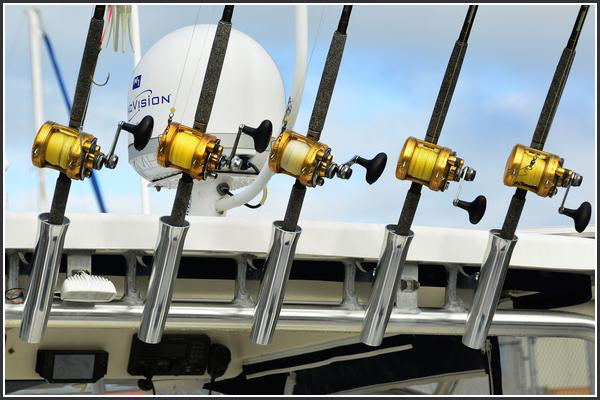
<p style="float: left;"> </p>
<p> </p>
<p><span style="font-weight: 400;">Nicks and scratches on your equipment are even more relevant when considering the next common faux pas: reeling your lures into the top guide. Rather than hook the lure to anything, some anglers will simply reel the line in as far as possible, stopping when the lure collides with the guide. This might not sound as violent as a car accident, but it might as well be for your rod. Lures can easily take chips out of your guide or knock the ceramic insert completely out of the wire housing. </span></p>
<p style="text-align: left;"><span style="font-weight: 400;"><img alt="" src="//cdn.shopify.com/s/files/1/0175/6994/files/fishing-line-tips.jpg?6624036592183949991" style="float: none; margin-right: 20px;" width="618" height="412"><br>This variety of damage has become even more prevalent in recent years, as a result of tungsten lures. This is a much harder material than conventional lead and damages guides accordingly. </span></p>
<p><span style="font-weight: 400;">The good news is that many new rods come with a built-on metal loop, designed specifically for holding your hook and lure without damaging the rest of the rod. If your rod doesn’t come with such an addition, you can also purchase attachments designed to hold a hook during transport. </span></p>
<h3><em><span style="font-weight: 400;">Remember: The only thing between you and a trophy catch is your equipment and line. Keep them in great shape and don’t take the easy way out when it comes to managing the way you transport your gear. You never know when it will cost you a big one. </span></em></h3>]]>
    </content>
  </entry>
  <entry>
    <id>https://tyepro.com/blogs/news/tyepro-original-vs-tyepro-fly-ice-understand-the-difference</id>
    <published>2016-07-25T13:04:00-04:00</published>
    <updated>2023-01-18T22:25:10-05:00</updated>
    <link rel="alternate" type="text/html" href="https://tyepro.com/blogs/news/tyepro-original-vs-tyepro-fly-ice-understand-the-difference"/>
    <title>TYEPRO Original Vs. TYEPRO Fly &amp; Ice: Understand The Difference</title>
    <author>
      <name>Tom Vandewalle</name>
    </author>
    <content type="html">
      <![CDATA[<h2><span style="color: #666666;"><em><strong>It sounds like an obvious question: “What’s the difference between the original TYEPRO tool and the TYEPRO Fly &amp; Ice?” </strong></em></span></h2>
<p style="float: left;"><span class="dropcap">T</span>rue, one is designed primarily for ice fishing and fly fishing... but understanding the reasons why one is used for X situation and not Y can be a big help if you find that your preferred hook or jig isn’t meshing with a TYEPRO tool according to plan. The most basic thing to understand is the size of the hook, fly or jig that you’re using.</p>
<p><em><b>NOTE: The method of measuring hooks and flies is hardly an official one. Although different brands use the same numbering convention for placing measurements on their products, it’s all arbitrary. You shouldn’t be surprised if one hook or fly is labelled one way, yet behaves slightly differently when placed in a TYEPRO. This is because TYEPRO functionality depends on the diameter of the eyelet and the gauge of wire used, </b><b>not</b><b> the hook size—as a relative measurement of the distance from the tip of the hook to the shank, hook size actually varies from brand to brand.</b></em></p>
<p>Below, you'll see a photo of what happens when you try to use too large of a hook with a TYEPRO Fly &amp; Ice:</p>
<meta charset="utf-8">
<p><img src="//cdn.shopify.com/s/files/1/0175/6994/files/TYEPROWev_large.jpg?17556882750547484598" alt="" width="565" height="353"></p>
<h3><b>Hooks</b></h3>
<p><span style="font-weight: 400;">The size of hooks are listed down to #32, although it should be noted that the scale travels in an order reverse of what you might expect.  A #1 will be a larger hook, while a #32 will be mind-bogglingly small. Hooks can also be larger by crossing over the “0” median and moving upward, with 1/0, 3/0, etc. (read as “one-aught.” The aught-size hooks increase in size as the first digit increases).</span></p>
<p><span style="font-weight: 400;">A #32 is so small that we have not designed a TYEPRO product with the ability to handle such small hooks; people using such tiny snares probably aren’t rookies, and probably don’t deal with poor eyesight either. The same goes for hooks bigger than 5/0: They won’t fit in the TYEPRO, but most of our clients won’t typically use such behemoths. </span></p>
<h2><img src="//cdn.shopify.com/s/files/1/0175/6994/files/tyepro-sizes.jpg?692604918688617425" alt=""></h2>
<p><span style="font-weight: 400;">So why not use the same tool, if both use the same measurement method?</span></p>
<h3><b>Flies</b></h3>
<p><span style="font-weight: 400;">A fly is, realistically, a glorified form of hook. The fly’s most recognizable feature requires a tweak to the original TYEPRO design. </span></p>
<p><span style="font-weight: 400;">The obvious difference between a hook and fly is the colorful feathers and hair, all intended to mimic the prey of the target fish. The portion of these feathers and hair that is intended to look like legs, known as “hackle,” makes an impact: It often gets in the way of the tool, providing less eyelet to grip. The TYEPRO Fly &amp; Ice version allows the user a better opportunity than the original TYEPRO to grip the eyelet on many flies with hackle, and thread, near the eyelet.</span></p>
<p><span style="font-weight: 400;">The slight change in design also alters what size flies can be used with the tool. We recommend TYEPRO Fly &amp; Ice for fly sizes from #2 to #16. </span></p>
<h3><b>Jigs</b></h3>
<p><span style="font-weight: 400;">Measuring a jig is quite different than measuring a hook, in that the former is classified by weight, and not any sort of length. </span></p>
<p><span style="font-weight: 400;">What size jig you use may impact which TYEPRO works better for you. We recommend jigs between 1/64 oz. and 1/2 oz. when using the original TYEPRO, or 1/32 to 1/8 oz. when using a Fly &amp; Ice tool. </span></p>
<p><span style="font-weight: 400;">Why? </span></p>
<h2><img src="//cdn.shopify.com/s/files/1/0175/6994/files/tying-ice-jigs.jpg?13266211202431899734" alt=""></h2>
<p><span style="font-weight: 400;">The original TYEPRO works better for jigs that have a shank, because the eyelet can fit further into the tool. This also allows the original TYEPRO tool to handle a wider range of weights. The eyelet pocket on the original tool is set deeper into the tip to hold eyelets with at least a short shank. TYEPRO Fly &amp; Ice is primarily designed to hold jigs without shanks. If you try to put a shank-less jig in the original TYEPRO, it just won’t position the eyelet properly for threading. </span></p>]]>
    </content>
  </entry>
  <entry>
    <id>https://tyepro.com/blogs/news/tye-with-a-pro-kyle-schoenherr</id>
    <published>2016-07-08T12:24:00-04:00</published>
    <updated>2023-01-18T22:10:20-05:00</updated>
    <link rel="alternate" type="text/html" href="https://tyepro.com/blogs/news/tye-with-a-pro-kyle-schoenherr"/>
    <title>TYE With A PRO: Crappie Champ Kyle Schoenherr</title>
    <author>
      <name>Tom Vandewalle</name>
    </author>
    <content type="html">
      <![CDATA[<h2><strong><span style="color: #666666;"><em>We at TYEPRO don’t consider ourselves “one-fish” anglers, but you might not realize it based on our ‘TYE With A PRO’ interview series. </em></span></strong></h2>
<p style="float: left;"><span class="dropcap">L</span>ast month we spoke with Russ Bailey, who has made a name for himself as a professional crappie fisherman and as host on the crappie-centric <i><span style="font-weight: 400;">Brushpile Fishing </span></i><span style="font-weight: 400;">program. Prior to that we spoke with Clyde “The Crappie Psychic” Folse (you may be able to guess what his specialty is). </span><span style="font-weight: 400;">We figured we’d round out the trio and speak to one more crappie expert before we look at other species. </span></p>
<p><span style="font-weight: 400;">And Kyle Schoenherr knows crappie. Enough that he was the 2015 Crappie Masters national champion, as well as the Crappie USA national champion, in addition to being named Sportsman of The Year by the Crappie Masters league in 2014.</span></p>
<p style="text-align: left;"><img alt="" src="//cdn.shopify.com/s/files/1/0175/6994/files/fishing-story.jpg?17729176255215189528" style="float: none;"></p>
<p><span style="font-weight: 400;">“Back in ‘09, I used to do some construction work, had a back injury and that basically ended doing construction. So I started guiding and seeing how busy I could stay at it. I’ve always fished those lakes since I was little,” he explains. “Started fishing the national tournament trail in 2010 and was lucky enough to do well in it helped me stay busy guiding.”</span></p>
<p><span style="font-weight: 400;">Now, we would never wish a back injury upon anyone. But if it ends up paying off by getting you started as a fishing guide, and then onto a national fishing tour? It almost makes the injury seem like a good thing.</span></p>
<p><span style="font-weight: 400;"><img src="//cdn.shopify.com/s/files/1/0175/6994/files/Kyle-Schoenherr-2.jpg?5270619750095821440" alt=""></span></p>
<p><span style="font-weight: 400;">Schoenherr may have been the Alabama State Champion in 2012 (his trophy shelf must be getting crowded) but “those lakes” he refers to are actually in Southern Illinois: Kinkaid Lake, Rend Lake and Lake of Egypt, which he refers to as some of the “best crappie fishing in the Midwest.” </span></p>
<p style="float: right;"><span style="font-weight: 400;"><img alt="" src="//cdn.shopify.com/s/files/1/0175/6994/files/TYEPRO_fishing-knot-quote.jpg?5270619750095821440" style="float: right; margin-left: 10px; margin-bottom: 10px;">He owns All Seasons Crappie Fishing Guide Service, and it’s more than just an appealing name. Many anglers buy into the idea that crappie breed during the Spring and then fatten up in the Fall to prepare for Winter...and then those fishing enthusiasts ignore the fish for the rest of the year. Schoenherr takes a different approach. </span>“The fish are post-spawn and they’ve got the spawning process over with and they’re more concerned about eating than they are about anything else. The weather’s pretty consistent and normally the fishing is pretty consistent also.”</p>
<p><span style="font-weight: 400;">Crappie has always been his target, since he was a child, hitting the lakes with his mother and father. The first knot he learned was the clinch and it’s the knot that he taught his own children during their first excursion.</span></p>
<p><span style="font-weight: 400;">When asked for tips for those struggling to tie knots, however, he suggested the palomar—noting that its lack of small openings makes it ideal for failing eye sight, as those with know-how could “tie it with your eyes closed.” </span></p>
<p><span style="font-weight: 400;">His points are valid, but of course we like to show off how easy it can be to tie an improved clinch with the TYEPRO tool (although we may be biased). Either way, both knots require you to first thread a small eyelet, so TYEPRO can definitely help with that.</span></p>
<p><span style="font-weight: 400;">Knots aside, when it comes to catching crappie, we recommend you take Schoenherr’s advice. He’s the one with the trophies. </span></p>]]>
    </content>
  </entry>
  <entry>
    <id>https://tyepro.com/blogs/news/the-fish-grip</id>
    <published>2016-06-28T13:33:00-04:00</published>
    <updated>2023-03-15T10:03:14-04:00</updated>
    <link rel="alternate" type="text/html" href="https://tyepro.com/blogs/news/the-fish-grip"/>
    <title>We&apos;re Hooked: The Fish Grip Saves You Some Pain...Literally</title>
    <author>
      <name>Tom Vandewalle</name>
    </author>
    <content type="html">
      <![CDATA[<h2><span style="color: #666666;"><em>We may not necessarily be the most fish-friendly of blogs—after all, <a href="https://www.tyepro.com/blogs/news/tye-with-the-pros-russ-bailey-of-brushpile-tv">recent guest star Russ Bailey</a> has a segment dedicated to cooking crappie, his catch of choice. That said, we’re 100 percent for anybody who has a method in mind for keeping “catch-and-release” fishing as gentle on the prize as possible.</em></span></h2>
<p style="float: left;"><span class="dropcap">O</span>ne of these individuals is Tucker Hoge and the rest of the team behind <a href="http://www.thefishgrip.net">The Fish Grip</a>, a tool designed to make the handling of a freshly-caught fish less stressful to both the angler and the angled. We decided to review The Fish Grip to see what was going on. </p>
<p>Consider the impact on both fish and fisherman after reeling in a winner. The catch is in survival mode—it can’t know that you intend to throw him back. If you want to weigh it, or get a picture before tossing it back, you often need to deal with plenty of thrashing. This can get risky for both parties when attempting to remove the hook. The specimen’s instinct to escape creates potential for injury to both itself and the fishermen from “misplaced” hooks and fins.</p>
<p>The Fish Grip solves the problem. Essentially a specialized set of pliers, the grip clamps down in a fish’s mouth—keeping the angler’s fingers safe from teeth, sharp gills and their own hook during the removal process. The fish may not realize it at the time, but many a tear has been prevented over the years thanks to The Fish Grip.</p>
<p>The idea was devised by Don Norton, a Mississippi native who loved fishing for large Red Drums (also know as Channel Bass or simply Redfish) in the Gulf of Mexico. We’re talking about fish that can get up to 3.5 feet long...and put up a lot of fight when brought into the boat. Norton—who created the original prototype and then developed it alongside Tucker Hoge and his father, Cal—noticed he wasn’t the only one taking a beating in the process.</p>
<p>“We were using all sorts of pliers and vise-grips to hold the fish by their lips...breaking jaws and tearing big holes,” Tucker explains.</p>
<h2><img src="//cdn.shopify.com/s/files/1/0175/6994/files/Tucker-Hoge-the-fish-grip.jpg?6912479548320012795" alt=""></h2>
<p>Granted, one doesn’t need to be wrestling with Gulf goliaths in order to use The Fish Grip. Beginning anglers spend <a href="https://www.tyepro.com/blogs/news/90461697-tying-tips-how-to-tie-an-improved-clinch-knot">countless hours learning how to rig a line and tie knots</a>, but perhaps not enough attention is dedicated to “how do I get this thing off my hook?” As Hoge suggested, getting the hook out of a catch’s mouth can be one of the toughest steps in the process.</p>
<p>The company aims specifically for its amateur audience with the Fish Grip Jr. line, a smaller product designed for smaller hands and, presumably, smaller fish.</p>
<p>Another positive in The Fish Grip reviews is the company’s choice of materials: It’s made largely of plastic so it floats and the necessary metal elements are stainless steel, so it doesn’t corrode. You might miss all of this due to its vibrant range of colors, however: green, pink, glow-in-the-dark...you name it. Hoge doesn’t have any new colors on the horizon but he drew our attention to the “All American,” a unit featuring its pieces in respective shades of red, white and blue.</p>
<p><img src="//cdn.shopify.com/s/files/1/0175/6994/files/the-fish-grip.jpg?7671973813010159246" alt=""></p>
<p>The Fish Grip has taken off in recent years, and can now be found at Bass Pro Shops, among other retailers. Getting it off the ground wasn’t easy, however.</p>
<p><span style="font-weight: 400;">“We had a difficult time upfront, but it’s finally catching on,” Tucker said. The newfound success has come with some downsides as well. “The bigger companies are copying our grip. So we’re in the process of branding it out, </span><i><span style="font-weight: 400;">The</span></i><span style="font-weight: 400;"> Fish Grip versus a fish grip, you know?”</span></p>
<p><span style="font-weight: 400;"><span style="font-weight: 400;">As people who live nearby to </span><i><span style="font-weight: 400;">The </span></i><span style="font-weight: 400;">Ohio State University, we know </span><i><span style="font-weight: 400;">exactly </span></i><span style="font-weight: 400;">what you mean. </span></span><span style="font-weight: 400;"></span></p>]]>
    </content>
  </entry>
  <entry>
    <id>https://tyepro.com/blogs/news/letter-from-tom</id>
    <published>2016-06-24T13:19:00-04:00</published>
    <updated>2023-03-15T10:02:14-04:00</updated>
    <link rel="alternate" type="text/html" href="https://tyepro.com/blogs/news/letter-from-tom"/>
    <title>Tom&apos;s Letter: The Fishing Scene in Ireland... And All Over</title>
    <author>
      <name>Tom Vandewalle</name>
    </author>
    <content type="html">
      <![CDATA[<h2><span style="color: #666666;"><em><strong>I live near Dublin, OH...but I was fortunate enough last month to travel out to the original Dublin...in Ireland. The occasion was my son’s wedding, and I was thrilled that the event was held in such a beautiful location.</strong></em></span></h2>
<p style="float: left;"><span class="dropcap">T</span>hat said, I’ve taken a bit of guff from two groups of friends regarding the things I wasn’t able to do, because of previous commitments and preparations for the big event. One is the fabulous links golf scene that spreads across the entirety of the United Kingdom (I didn’t get to embarrass myself in either hurricane-strength winds or mile-deep bunkers). The other thing I missed out on—something less famous than Ireland’s golf—is fishing.</p>
<br>
<p style="text-align: left;"><span style="font-weight: 400;"><img alt="" src="//cdn.shopify.com/s/files/1/0175/6994/files/tom-on-fishing-dublin.jpg?17000626667171946814" style="float: none; margin-top: 10px; margin-bottom: 10px; margin-right: 40px;">I hope I’ll be able to return in the not-too-distant future, and enjoy a fisherman’s life on the Liffey. </span></p>
<p><span style="font-weight: 400;">That’s not to say that you can’t find good fishing in the United States, of course! This month we feature an interview with Russ Bailey, an angler who has had the opportunity to cast at a variety of America’s best fishing spots by way of his time on the Crappie Masters tour and as host on the acclaimed series </span><a href="http://brushpilefishing.com"><i><span style="font-weight: 400;">BrushPile Fishing</span></i></a><span style="font-weight: 400;">. His show is always shaking up its location, and that’s for more than just his enjoyment. </span></p>
<p><span style="font-weight: 400;">“Instead of doing the same thing week after week, ‘there’s a fish, there’s a fish,’ we try to get as much information as possible on how we’re catching the fish, why they’re in the water this time of year,” he told us. <a href="https://www.tyepro.com/blogs/news/tye-with-the-pros-russ-bailey-of-brushpile-tv">Read more from our talk with Bailey here</a>. </span></p>
<p><span style="font-weight: 400;">I’m also taking another stab at promoting my (not) Oscar-nominated short film on how to tie an <a href="https://www.tyepro.com/blogs/news/123682049-dont-be-a-square-try-an-improved-clinch-knot">improved clinch knot</a>, both using a TYEPRO and without. We know that some anglers are set in their ways with square knots, and that’s fine, but we explain why science and history both suggest that a square might not be your best bet for fishing purposes. </span></p>
<p><span style="font-weight: 400;">In retrospect, I should have asked the Irish-folk I met for some advice on knot-tying. Anyone who has admired Celtic knot illustrations knows just how complex they can get. </span></p>
<p><span style="font-weight: 400;">Thanks,</span></p>
<p><img src="https://cdn.shopify.com/s/files/1/0175/6994/files/signature.png?1465472275037208239" alt=""></p>]]>
    </content>
  </entry>
  <entry>
    <id>https://tyepro.com/blogs/news/tye-with-the-pros-russ-bailey-of-brushpile-tv</id>
    <published>2016-06-20T12:00:00-04:00</published>
    <updated>2023-03-15T10:05:51-04:00</updated>
    <link rel="alternate" type="text/html" href="https://tyepro.com/blogs/news/tye-with-the-pros-russ-bailey-of-brushpile-tv"/>
    <title>TYE with The PROs: Russ Bailey of &apos;BrushPile Fishing&apos;</title>
    <author>
      <name>Tom Vandewalle</name>
    </author>
    <content type="html">
      <![CDATA[<h2><span style="color: #666666;"><em><strong>Last month we introduced to you the <a href="https://www.tyepro.com/blogs/news/99479361-tye-with-the-pros-captain-clyde-the-crappie-psychic-folse" target="_blank" rel="noopener noreferrer">Crappie Psychic</a> and now we’re happy to shine some light on Russ Bailey, an angler who has a rod named after him...titled the “Crappie Wizard.” Let’s just say we know quite a few folks who have a somewhat supernatural ability to catch crappie. </strong></em></span></h2>
<p style="float: left;"><span class="dropcap">B</span>ailey is better known for his broadcast skills than his magic tricks. He’s been the host of NKT.tv’s <i><span style="font-weight: 400;">BrushPile Fishing</span></i> since 2014 (we like the show so much, we're proud to be one of the sponsors!) and hosted <i><span style="font-weight: 400;">Midwest Crappie </span></i><span style="font-weight: 400;">for seven years before that. What makes for a good fishing host? The star of the show won’t hazard a guess why he was approached to helm </span><i><span style="font-weight: 400;">Midwest</span></i><span style="font-weight: 400;">, but reviews for his current program describe him as “fun” and “personable.” </span></p>
<p style="float: right;"><span style="font-weight: 400;"><a href="https://www.facebook.com/BrushPileFishing/"><img alt="" src="//cdn.shopify.com/s/files/1/0175/6994/files/russ-bailey-national-titles.jpg?11459279190812869890" style="margin-left: 10px; margin-bottom: 10px; float: right;"></a>That said, it takes a heck of a lot more than personality to hold down a broadcast on crappie. When it comes to searching for his signature fish, Bailey has a resumé that merits his current role. He first got a taste for crappie (both metaphorically and literally; the </span><a href="https://www.facebook.com/BrushPileFishing/"><span style="font-weight: 400;">Facebook page</span></a><span style="font-weight: 400;"> for </span><i><span style="font-weight: 400;">BrushPile </span></i><span style="font-weight: 400;">posts “Tasty Tuesday” tips for cooking your catch) when he moved to St. Marys, Ohio, and soon joined in some local tournaments. He jumped into some professional tournaments further down the line, eventually winning 14 and qualifying for 11 National Championships.</span></p>
<h3><strong>The Best Learning From The Best</strong></h3>
<p><span style="font-weight: 400;">You might call him an expert when it comes to crappie. Still, Bailey realizes he always has more to learn, especially for a species that is now stocked all across the country. He admits that he would get bored watching himself fish Ohio lakes all season long, so he emphasizes the variety of locations and guests that </span><i><span style="font-weight: 400;">BrushPile </span></i><span style="font-weight: 400;">employs. </span></p>
<p><span style="font-weight: 400;">“Instead of doing the same thing week after week, ‘there’s a fish, there’s a fish,’ we try to get as much information as possible on how we’re catching the fish, why they’re in the water this time of year,” he explains. “When we book a guest, we know that they have a special way that they fish for crappie, so we let them explain their way. Even if it doesn’t work 100 percent for the way you fish, maybe you can take a bit of that and adapt it to your style.”</span></p>
<p><span style="font-weight: 400;"><img src="//cdn.shopify.com/s/files/1/0175/6994/files/russ-bailey-2.jpg?17698525975887874599" alt=""></span></p>
<p><span style="font-weight: 400;">For example, Bailey visited Lake Marion, SC with fellow pro Whitey Outlaw. Among the strategies the host had to learn was how to deal with thick patches of hyacinth growing on the lake...something most Ohioans don’t need to negotiate.  </span></p>
<p><span style="font-weight: 400;">He’s brought the show all over the country, but he doesn’t have a “bucket list” selection for where he’d like to shoot. After all, he’s been to Grenada Lake, MS—a popular choice for the crappie capital of the world—so where else would he go? He’s got love for his home state, however, praising Lake Erie for its wonderful smallmouth bass fishing opportunities.</span></p>
<h3><strong>His Knot History </strong></h3>
<p><span style="font-weight: 400;">He might change the setting of his show quite often but one thing he rarely alternates between is his choice of knot. Bailey learned how to fish from his father when he was a boy, and the palomar was his first formal knot. He still prefers it to this day, at least when using a bobber or a cork. If not, he usually opts for a loop knot. </span></p>
<p><span style="font-weight: 400;">We say first “formal” knot because Bailey’s first experience with a fishing line was less than academic. </span></p>
<p><img src="//cdn.shopify.com/s/files/1/0175/6994/files/russ-bailey-on-knot-tying.jpg?713336064705408209" alt=""></p>
<p><span style="font-weight: 400;">He emphasized one key point for those who may be entering the angling hobby now, different from his youth: Practice. And don’t just start when you show up at the pond for the first time. He advised new fishing enthusiasts take a few minutes at home and working on the basics. He acknowledged that modern anglers had a huge advantage in the form of YouTube and the internet, where a multitude of videos exist, with the ability to pause and rewind whenever you need help. </span></p>
<p><span style="font-weight: 400;">“It’s one thing for me to sit and tell you how to do it,” he said. “But to go online and see it? You take 10 to 15 minutes of doing that, you’ll be fine.”</span></p>
<p><em><span style="font-weight: 400;">We're not kidding when we say we admire Bailey: We were excited to feature him in one of our commercials! Check it out below: </span></em></p>
<p><span style="font-weight: 400;"><iframe width="560" height="315" src="https://www.youtube.com/embed/VpoH4UMHYWU?rel=0&amp;showinfo=0" frameborder="0" allowfullscreen=""></iframe></span></p>]]>
    </content>
  </entry>
  <entry>
    <id>https://tyepro.com/blogs/news/123682049-dont-be-a-square-try-an-improved-clinch-knot</id>
    <published>2016-06-15T14:12:00-04:00</published>
    <updated>2023-03-15T09:55:08-04:00</updated>
    <link rel="alternate" type="text/html" href="https://tyepro.com/blogs/news/123682049-dont-be-a-square-try-an-improved-clinch-knot"/>
    <title>Don&apos;t Be A &apos;Square&apos;: Try An Improved Clinch Knot!</title>
    <author>
      <name>Tom Vandewalle</name>
    </author>
    <content type="html">
      <![CDATA[<h2><span style="color: #666666;"><em><strong>I posted a demonstration a few months ago <a href="https://www.tyepro.com/blogs/news/90461697-tying-tips-how-to-tie-an-improved-clinch-knot" style="color: #666666;">featuring a video on how to tie an improved clinch knot</a>, both with and without a TYEPRO tool. </strong></em></span></h2>
<p style="float: left;"><span class="drop cap" mce-data-marked="1">I</span>’m sure that quite a few people watched the video, nodded, and then continued using whatever they had been doing already. And that’s OK: The intention of these advice posts is simply to encourage and assist people who are just getting started in the fishing hobby. If a square knot or a granny knot are what you can do right now, then keep at it until you feel comfortable learning a new technique.</p>
<p><span style="color: #000000;">But if you’ve been at it for a while and you’re still using one of those knots, you may end up losing lures and losing out on bigger fish too.</span></p>
<h3>
<span style="color: #000000;">Why are Squares So Popular?</span> </h3>
<p style="float: left;"><span style="font-weight: 400;"><img alt="Image source: scoutingmagazine.org" src="//cdn.shopify.com/s/files/1/0175/6994/files/Eagle-boy-scout-badge.jpg?2525381856429216172" style="float: left; margin-right: 10px; margin-bottom: 10px;">The appeal of the square knot—or reef knot, as it’s known in sailor circles—comes from its popularity across a number of “fields,” such as tying sashes or shoelaces...and it’s one of the major knots in Boy Scout culture, featured on numerous badges. It’s still a popular method of tightening things in the medical world as well. People have been doing that for years, dating back to when Greek historian Pliny described how it reportedly caused wounds to heal quicker (not exactly true, but it didn’t hurt). The hitch was also referred to as a “Hercules knot” back in the day.</span></p>
<h3>Why Shouldn't They Be? </h3>
<p><span style="font-weight: 400;">Despite that impressive title, unfortunately, a square knot simply isn’t that strong.</span></p>
<p style="float: right;"><span style="font-weight: 400;"><img alt="" src="//cdn.shopify.com/s/files/1/0175/6994/files/ashley-book-of-knots.jpg?6067353539468949553" style="float: right;">If there was a knot-tying Hall of Fame, Clifford Ashley would surely be in it. A sailor, he accumulated all of his knowledge on the subject into his book, </span><i><span style="font-weight: 400;">The Ashley Book of Knots</span></i><span style="font-weight: 400;">. Although he acknowledged the square’s usefulness in the right situation, he added an ominous footnote : Ashley claimed it was responsible for more injuries and deaths than every other knot combined. The reason? People trusted its simplicity too much and used it in bad circumstances, resulting in disaster. </span>Now, you losing a sizable trout because of a bad knot choice is not comparable to lives lost at sea during the 19th Century. But the lesson rings true: A square knot simply isn’t optimal for fishing purposes.</p>
<p><span style="font-weight: 400;">The explanation gets </span><i><span style="font-weight: 400;">very </span></i><span style="font-weight: 400;">complex (there’s an entire branch of mathematics dedicated to knot theory). We’ll limit ourselves, for the sake of simplicity, to the basics. </span></p>
<p><img src="//cdn.shopify.com/s/files/1/0175/6994/files/tying-fishing-knots.jpg?474379146145241902" alt=""></p>
<p><span style="font-weight: 400;">The capability of a knot can be measured in efficiency, or how much of of the line’s original strength is maintained by the knot. We’ve found varying reports on the square knot, all ranging between 40 and 50 percent efficiency. An improved clinch knot is rated at 75 percent. That’s a 50 percent increase in strength over the square. </span></p>
<p><span style="font-weight: 400;">That difference could determine whether a trophy fish snaps your line or ends up next to you in a memorable photo.</span></p>
<p><iframe width="560" height="315" src="https://www.youtube.com/embed/3N2ap28ONd4" frameborder="0" allowfullscreen=""></iframe></p>
<h3>Give The Improved Clinch A Try</h3>
<p>The improved clinch is far from the best knot but it’s a great starting point for beginning anglers. Once you’ve mastered it, you can start working on more specialized knots. Berkley—famous for its “Knot Wars” competitions—claims that its trilene knot (an adaptation of the improved clinch) has tested at 100 percent. We have doubts, based on science, but it’s quite possible this knot registers above 99 percent.</p>
<p><span style="font-weight: 400;">Again, do what you’re comfortable with for now. There’s absolutely no shame in sticking with a square knot or something similar as you begin in the angling hobby. When you’re ready, however, we promise the improved clinch will be worth your consideration.</span></p>
<h5><span style="color: #666666;">Badge image source: scoutingmagazine.org</span></h5>]]>
    </content>
  </entry>
  <entry>
    <id>https://tyepro.com/blogs/news/99479361-tye-with-the-pros-captain-clyde-the-crappie-psychic-folse</id>
    <published>2016-05-31T16:13:00-04:00</published>
    <updated>2023-01-18T22:18:13-05:00</updated>
    <link rel="alternate" type="text/html" href="https://tyepro.com/blogs/news/99479361-tye-with-the-pros-captain-clyde-the-crappie-psychic-folse"/>
    <title>TYE With The PROs: Captain Clyde &quot;The Crappie Psychic&quot; Folse</title>
    <author>
      <name>Tom Vandewalle</name>
    </author>
    <content type="html">
      <![CDATA[<h2><em><strong><span style="color: #666666;">Captain Clyde Folse knows a thing or two about catching crappie. Maybe it’s practice and know-how...or maybe it’s something supernatural. After all, a guy doesn’t get a nickname like “The Crappie Psychic” for nothing. </span></strong></em></h2>
<p style="float: left;"><span class="dropcap">I</span>n truth, it’s a lot more practice and know-how than metaphysical abilities. The moniker came about when Folse took his son Caleb, then 10 years old, fishing for sac-a-lait...the Cajun nickname for crappie, translating literally to “sack of milk.” The captain was in his element. He’d tell his son where to cast—”there’s a sac-a-lait waiting there for ya”—and nearly every prediction seemed to come true. His son, impressed, dubbed him the “sac-a-lait psychic.” </p>
<p style="float: left;"><span style="font-weight: 400;"><img alt="" src="//cdn.shopify.com/s/files/1/0175/6994/files/b33889.jpg?6230620350016283512" style="margin-right: 10px; float: left;" width="232" height="150">It would take more than that to launch a successful business revolving around his hobby, however. Folse decided to take crafting the perfect trailer into his own hands. Buying up existing trailers in his favorite color for fishing, limetreuse, the captain cut up his purchases with a razor blade. That decision made all the difference: The rough edges that came with his hand-hewn efforts resulted in a diamond-shaped trailer, with four water-catching edges that conventional, round options lack. </span></p>
<p><span style="font-weight: 400;">The action provided by those edges provided action that typical crappie trailers just couldn’t get, and that action also caught fish that other anglers just couldn’t get. </span></p>
<p><span style="font-weight: 400;">“I had phenomenal success,” he says. “[Other fishermen] would ask ‘where did you catch these fish’ and ‘what were you fishing on’ and I would tell them we were fishing in the same area. I wouldn’t tell them about the trailers...I would tell them we were fishing with a black-and-white tube jig and they would say ‘man we need to get us some black-and-white tube jigs!’” </span></p>
<p><span style="font-weight: 400;">Eventually Folse came clean with his secret when he established The Crappie Psychic, LLC, selling boatloads of his signature trailers, now flavored with his special recipe “Psychic Sauce.” </span></p>
<p><span style="font-weight: 400;">The captain obviously makes his money by specializing in trailers (he produces the tackle for trout and other fish now as well), but he took some time to talk knots with TYEPRO. </span></p>
<h3><strong> My First Knot</strong></h3>
<p style="float: right;"><span style="font-weight: 400;"><img alt="" src="//cdn.shopify.com/s/files/1/0175/6994/files/crappie-psychic-square-knot.jpg?11136966239516629833" style="float: right; margin-left: 10px;">Folse is famous for his crappie expertise now, but it wasn’t always so. He first began fishing on the bayou with his father, who specialized in catfishing. The first knot that his father taught him when hunting for the delicious siluriformes was the </span><b>square knot</b><span style="font-weight: 400;">. </span>“It’s simple, but it holds up. It’s really strong,” he explained. “That came from generation to generation to generation.”</p>
<h3>What I'm Using Now</h3>
<p><span style="font-weight: 400;">Folse was almost always a fisherman, but he didn’t always take knots all that seriously. As he made the transition from catfish to crappie, he took more interest in learning all the tricks of the trade. That ultimately led him to the palomar knot, a technique that he’s been using for more than 30 years of crappie collecting. </span></p>
<p style="float: left;"><span style="font-weight: 400;"><img alt="" src="//cdn.shopify.com/s/files/1/0175/6994/files/crappic-psychic-lures.jpg?4286433714991629623" style="margin-right: 10px; float: left;" width="240" height="204">“When I’m readying my equipment to go out on a trip, all my lures are tied on with a palomar,” he explains. “To me, that is the best knot for what I’m doing.” <br><br></span>He admitted (and made us feel good about ourselves in the process) that the TYEPRO tool has encouraged him to change up his approach recently.</p>
<p><span style="font-weight: 400;">“If I happen to get hooked down on a stump and I’m pulling real hard...I don’t use real heavy line...If I pop it, I go with the clinch knot,” he says, admitting that his eyes aren’t what they once were. “I’m 53 years old. That TYEPRO tool is just awesome...I love it. It works well. I always thought I was palomar but whenever I have to switch over, I tie a clinch.”</span></p>]]>
    </content>
  </entry>
  <entry>
    <id>https://tyepro.com/blogs/news/99477441-line-effectiveness-factors-line-weight-pound-test</id>
    <published>2016-05-20T14:40:00-04:00</published>
    <updated>2023-03-15T09:57:17-04:00</updated>
    <link rel="alternate" type="text/html" href="https://tyepro.com/blogs/news/99477441-line-effectiveness-factors-line-weight-pound-test"/>
    <title>Line Effectiveness Factors: Line Weight &amp; Pound Test</title>
    <author>
      <name>Tom Vandewalle</name>
    </author>
    <content type="html">
      <![CDATA[<h2><span style="color: #666666;"><strong><em>Hopefully everybody had a chance to check out our post last month on the <a href="https://www.tyepro.com/blogs/news/6418404-line-effectiveness-factors-know-the-different-kinds-of-line" style="color: #666666;">different varieties of fishing line</a>—from monofilament to fluorocarbon, hybrids and braided—and get a little bit more familiar with this essential piece of tackle. Don’t think that you’re done, however—far from it! There are many more line effectiveness factors to know, and today we’re going to continue by exploring line weight and the pound test.</em></strong></span></h2>
<p style="float: left;"><span class="dropcap">E</span>very spool of fishing line comes marked with a weight in pounds...from as low as 2-pound test to the more ambitious 400-pound test. The number associated with any of these varieties correlates with the amount of tension at which the weakest point in a line will snap.</p>
<p><span style="font-weight: 400;">It’s important to understand that the number provided does </span><i><span style="font-weight: 400;">not </span></i><span style="font-weight: 400;">indicate at which weight of fish a line will snap. Although it’s often a good rule of thumb to use line that corresponds with the weight you’re aiming for, there’s no real limit to what you can catch with a smaller line. The record fish caught with a 6-pound test is a black marlin, which came in at more than 735 pounds! </span></p>
<p><span style="font-weight: 400;">Don’t get too excited—if you’re a beginner, it will be a while before Hemingway writes a novella on your adventures with a 6-pound test line. Reeling in big, fighting fish is a fun challenge for experienced “finesse” fishing enthusiasts, but let’s keep our aims humble for the moment. </span></p>
<h3><img src="//cdn.shopify.com/s/files/1/0175/6994/files/fishing-drag-quote.jpg?17251896990439937495" alt=""></h3>
<p><span style="font-weight: 400;">Drag is created by a pair of plates within any reel that determines at what point the force delivered by a fish causes line to release. For example, if the drag is set to 25 percent on an 8-pound test line, then it will release when a fish applies roughly 2 pounds of tension. </span></p>
<p><span style="font-weight: 400;">There is no “go-to” amount of drag to set—everything varies depending on the kind of line you use, what kind of fight you expect from a fish, what kind of action you aim to get from lures or flies, what kind of knots you plan on using, as well as other factors. The best you can do is understand that too much force will break your line, and too little drag can allow a fish to shake a hook loose from the line, and try to find a happy place in-between. Too little drag will also reduce your ability to set the hook firmly</span></p>
<p><span style="font-weight: 400;">There are some simple tests you can undertake to make sure you’ve got your drag well set. </span></p>
<p><span style="font-weight: 400;">Try tying your line to your fishing scale and applying a light, smooth pull. Begin with the “loose drag” setting and gradually increase it until you reach the tension you desire. Monitor the force applied on your scale. If you’re using 8-pound test line, then two or three pounds is a good target. If you don’t own a scale, you can experiment with household items with marked weights. Now you can justify buying a three-pound bag of gummy bears (it was all to measure my fishing drag, I swear!). </span></p>
<p><span style="font-weight: 400;">As with most material goods, use will have an impact on your line and its ability to take tension. If you’ve been fishing on the same stretch of line for a long while, its efficiency will take a hit. Part of this is simple wear and part of this is simple tear—such as nicks and abrasions that form as your line comes into contact with rocks or other debris. </span></p>
<h3><strong>One source of weakened pound limits is inevitable: knots. </strong></h3>
<p><span style="font-weight: 400;">There are a number of knots—including the trilene—which have been proven to reach </span><a href="http://www.berkley-fishing.com/Berkley-ae-top-five-must-know-knots.html"><span style="font-weight: 400;">nearly 100 percent efficiency</span></a><span style="font-weight: 400;">...however many of these will also be tricky for many anglers. There’s absolutely nothing wrong with starting with a simpler option, such as an <a href="https://www.tyepro.com/blogs/news/90461697-tying-tips-how-to-tie-an-improved-clinch-knot">improved clinch knot</a>, as long as you understand that a knot will inherently take away from the “6-pound” test on the label. </span></p>
<p style="text-align: left;"><img alt="" src="//cdn.shopify.com/s/files/1/0175/6994/files/using-tyepro.jpg?5054976881750045650" style="float: none;"></p>
<p><span style="font-weight: 400;">Now, if you’re one of those aforementioned finesse fishermen and you’re looking to tackle bigger fish with smaller tackle, you can also get a boost from using our TYEPRO tools. We’ve designed TYEPRO tools specifically to work with smaller lures and line that often result in more bites, and a greater challenge. That said, some of the smallest flies and jigs may not be able to be threaded using our tools, so make sure to visit </span><a href="http://www.tyepro.com/pages/faqs"><span style="font-weight: 400;">http://www.tyepro.com/pages/faqs</span></a><span style="font-weight: 400;"> and ensure that your favorite tackle works with our products. </span></p>]]>
    </content>
  </entry>
  <entry>
    <id>https://tyepro.com/blogs/news/99495745-toms-letter-choosing-nfl-players-vs-choosing-fishing-line</id>
    <published>2016-05-13T10:00:00-04:00</published>
    <updated>2023-03-15T09:58:57-04:00</updated>
    <link rel="alternate" type="text/html" href="https://tyepro.com/blogs/news/99495745-toms-letter-choosing-nfl-players-vs-choosing-fishing-line"/>
    <title>Tom&apos;s Letter: Choosing NFL Players vs. Choosing Fishing Line</title>
    <author>
      <name>Tom Vandewalle</name>
    </author>
    <content type="html">
      <![CDATA[<meta charset="utf-8">
<h2 dir="ltr"><em>I’m a resident of Columbus, Ohio, so it’s not too tough to get caught up in the mania surrounding Ohio State University and especially Buckeye football. </em></h2>
<p style="float: left;"><span class="dropcap">M</span>y wife and eldest son both attended the university (my younger son and I attended Purdue so, while loyal to our Boilermakers, it’s been tough to badmouth the 2015 National Champs in our household). The NFL seemed to be Buckeye supporters during April, as a record 12 players from the school were drafted within the first four rounds, including five first-rounders.</p>
<p dir="ltr"><span>It seems that the choice of university was simple for NFL franchises this year. </span></p>
<h3><span style="font-weight: 400;"><strong>Now choosing a fishing line your first time out...that can be complicated.</strong>  </span></h3>
<p style="float: right;"><span style="font-weight: 400;"><a href="https://www.tyepro.com/blogs/news/6418404-line-effectiveness-factors-know-the-different-kinds-of-line"><img alt="" src="//cdn.shopify.com/s/files/1/0175/6994/files/TYEPRO_blog-quote_choosing-line.jpg?7934577025258321348" style="margin-left: 10px; margin-bottom: 10px; float: right;"></a>Understanding how to select the correct weight and type of fishing line to maximize your fishing experience is actually more complex than most anglers consciously realize. We've talked about the characteristics of different lines in </span><a href="https://www.tyepro.com/blogs/news/6418404-line-effectiveness-factors-know-the-different-kinds-of-line"><span style="font-weight: 400;">one of last month’s posts</span></a><span style="font-weight: 400;">, and will now add the often overlooked task of properly setting the drag on your reel for the line you have selected. Setting the drag outside the correct range has consequences that may prevent you from landing exceptional fish. Setting it too light and the fish can throw your lure or get into cover that allows it to escape.  Set the drag too heavy and your line can snap when the big one is hooked. </span></p>
<p><span style="font-weight: 400;">Read on for more on this important topic.  </span></p>
<p><span style="font-weight: 400;">If you need a break from the frustrating process of finding the ideal line/drag setup (most of us are still trying to figure it out, a few decades into the hobby), you'll be able to take a break and read a bit on Captain Clyde Folse, a great fisherman with a real passion for crappie (or, as we learned while speaking with him, known as “sac-a-lait” in his home state of Louisiana). He’s known as the “Crappie Psychic” for his prowess with the fish, and his namesake line of trailers shares that title. </span></p>
<p><span style="font-weight: 400;">Our interview with him will hopefully prove to be both entertaining and informative. Give it a read and learn about his history of knot-tying and crappie fishing down on the bayous. </span></p>
<meta charset="utf-8">
<p dir="ltr"><span>Although it can be fun to keep an eye on the internet to see who was drafted from your alma mater or who your favorite NFL team picked up, it’s definitely a slog—taking more than three days along with the increasing media spectacle that is the first round. The good news about the TYEPRO Blog? You can get through our coverage in less than 10 minutes. </span></p>
<p dir="ltr"><span>We can’t guarantee anything about your team’s chances for success this Fall. We can promise you’ll learn something for when you next hit the pond, or at least get an entertaining read when you check out our content. </span></p>
<p><span style="font-weight: 400;">Thanks,</span></p>
<p><span style="font-weight: 400;"><img src="https://cdn.shopify.com/s/files/1/0175/6994/files/signature.png?1465472275037208239" alt=""></span></p>]]>
    </content>
  </entry>
  <entry>
    <id>https://tyepro.com/blogs/news/6418404-line-effectiveness-factors-know-the-different-kinds-of-line</id>
    <published>2016-04-20T23:08:00-04:00</published>
    <updated>2023-01-18T22:15:50-05:00</updated>
    <link rel="alternate" type="text/html" href="https://tyepro.com/blogs/news/6418404-line-effectiveness-factors-know-the-different-kinds-of-line"/>
    <title>Line Effectiveness Factors: Know The Different Kinds of Line</title>
    <author>
      <name>Tom Vandewalle</name>
    </author>
    <content type="html">
      <![CDATA[<h2><span style="color: #666666;"><em>We’re dedicated to bringing you the best advice available on tying knots that will help land a big one (or a little one) at your local fishing spot. </em></span></h2>
<p style="float: left;"><img alt="" src="//cdn.shopify.com/s/files/1/0175/6994/files/TYEPRO_dropcap-i.jpg?7274151493664534559" style="float: left; margin: 5px 5px 0px 0px;">t’s important to understand tying a good knot isn’t as simple as good finger-work however; our <strong>Line Effectiveness Factors </strong>series will highlight other elements that go into creating a strong knot.</p>
<p>Approach a conversation about knot-tying and you’ll hear an array of colorful names and techniques—as well as arguments regarding which is best. It’s easy for a new fishing enthusiast to miss the forest for the trees however—or, more appropriately, miss the knots for the line. Everyone knows that you need a fishing line to tie a knot.  What kind of line you decide upon can make a major impact on your tying as well as other aspects of the fishing experience.</p>
<p>We’ve assembled a basic list of the four line varieties that are popular in fishing today (excluding fly lines for now), as well as the pros and cons for each. Keep in mind that different fishing conditions and targets call for different kinds of line...you’re always better off asking a local expert for some friendly pointers if you’re looking to hook a specific specimen.</p>
<h2><strong style="line-height: 1.5;">Monofilament</strong></h2>
<p><img src="//cdn.shopify.com/s/files/1/0175/6994/files/bobby-lane.jpg?11037959886971507937" alt=""></p>
<p>Monofilament lines are a single strand of material, usually nylon. Thanks to their simple construction, lower cost and performance attributes, they’re easily the most popular form of fishing line in the world today.</p>
<p><strong>PROS: </strong>The simplicity of monofilament manufacturing makes this the cheapest kind of line on the market, as well as being offered in a wider variety of colors, diameters and tensile strengths than other kinds of line. The flexibility, or “limpness,” makes this option perhaps the easiest to tie and cast. This flexibility also contributes to its stretch, which makes it more forgiving when you set your hook too hard. All of these reasons make monofilament an ideal, more lenient option for the beginning fishing enthusiast.</p>
<p><strong>CONS: </strong>Be prepared for monofilament to perform differently when you’re out on the pond than what it did in the shop. These lines behave differently when they absorb water, sometimes hurting tensile strength and abrasion resistance. The quality of the line can also degrade in heat, such as when it’s left out in the sun too long. Its flexibility can become a weakness if left on the spool too long, as this line will take the shape of the packaging or spool it was wrapped around.</p>
<h2><strong style="line-height: 1.5;">Fluorocarbon</strong></h2>
<img src="//cdn.shopify.com/s/files/1/0175/6994/files/brent-chapman_fcb8173b-c6c3-40b2-be68-faa2d7984905.jpg?17785684169498019069" alt="">
<p> </p>
<p>Fluorocarbon lines are also single strand, but are usually made of stronger, polyvinylidene fluorides.</p>
<p><strong>PROS: </strong>The fluorocarbon material used in this variety of line helps improve upon the weaknesses of monofilament lines: It doesn’t absorb water, which helps make it more resistant to abrasion. It’s more dense than water, so it naturally sinks. Combine that element with its low visibility and the fish won’t know what hit them.</p>
<p><strong>CONS: </strong>Sinking is great...unless you don’t want your line to sink (as is the case for some types of fishing, especially topwater). The stiffness that allows fluorocarbon to be more abrasion-resistant also means that it’s a bit tougher to tie than monofilament.  Most knots are still possible on fluorocarbon lines, but may be tougher for beginners.  That abrasion resistance also comes with a higher price tag than monofilament.</p>
<h2>Hybrid </h2>
<h2 style="text-align: left;"><img alt="" src="//cdn.shopify.com/s/files/1/0175/6994/files/ken-shultz.jpg?9577533841986917287" style="float: none;"></h2>
<p>Hybrid lines are essentially an attempt to take the best elements of monofilament lines and fluorocarbons, by combining their base materials into a polymer.</p>
<p><strong>PROS: </strong>As we said, these lines combine some of the best parts of both single-strand options (and it floats, unlike fluorocarbon). Basically, take the abrasion resistance of fluorocarbon options and make it easier to cast.</p>
<p><strong>CONS: </strong>Although still an option for beginners, it’s still a tad tougher to tie than monofilament lines. Also expect to pay far more for hybrid lines than you would for lines made from its parent materials.</p>
<h2>Braided</h2>
<p><img src="//cdn.shopify.com/s/files/1/0175/6994/files/alton-jones.jpg?7154217063801306596" alt=""></p>
<p>Braided fishing lines are different than the other options we’ve looked at because they’re not single-strand; instead they consist of woven fibers, often of Dacron (polyester) or similar material.</p>
<p><strong>PROS: </strong>These lines feature almost no stretch, which consequently makes them more sensitive to bites.  The thick, woven construction of the lines also makes them very resistant to abrasion and won’t undergo any spool “memory” from being wrapped up too long. Although you can get monofilament lines that will match its strength, they’ll be considerably larger in diameter.</p>
<p><strong>CONS: </strong>The construction that works to the line’s benefit also makes it easily visible to fish. These lines shouldn’t be used by beginning fishing enthusiasts as the combination of low stretch and slippery nature make them the toughest to tie and difficult to cut cleanly without specialized tools.</p>
<p>Again, make sure you investigate what kind of environment you’ll be angling in as well as what kind of fish you’ll be targeting. These choices can make a major impact on what kind of line is ideal for you.</p>]]>
    </content>
  </entry>
</feed>