<?xml version="1.0" encoding="UTF-8"?>
<?xml-stylesheet type="text/xsl" media="screen" href="/~d/styles/rss2full.xsl"?><?xml-stylesheet type="text/css" media="screen" href="http://feeds.feedburner.com/~d/styles/itemcontent.css"?><rss xmlns:feedburner="http://rssnamespace.org/feedburner/ext/1.0" version="2.0"><channel><title>VisaPro.com - Other Visas</title><link>http://www.visapro.com/</link><description>Delivered to your desktop: Latest US Immigration News, INS Processing Times, and Visa Bulletin </description><image><title>VisaPro.com: RSS Feeds</title><width>128</width><height>33</height><link>http://www.visapro.com</link><url>http://www.visapro.com/images/VisaPro_LogoSmall.gif</url></image><title>VisaPro.com: RSS Feeds - Other Visas</title><link>http://www.visapro.com/</link><description /><atom10:link xmlns:atom10="http://www.w3.org/2005/Atom" rel="self" type="application/rss+xml" href="http://feeds.feedburner.com/US-Immigration-News-Other-Visas" /><feedburner:info uri="us-immigration-news-other-visas" /><atom10:link xmlns:atom10="http://www.w3.org/2005/Atom" rel="hub" href="http://pubsubhubbub.appspot.com/" /><feedburner:browserFriendly></feedburner:browserFriendly><item><title>TPS Extended for Salvadorans</title><description>&lt;SPAN style="FONT-FAMILY: Verdana, Arial, Helvetica, sans-serif; FONT-SIZE: 10pt"&gt;Department of Homeland Security has announced extension of Temporary Protected Status (&lt;A href="http://www.visapro.com/US-Immigration/Temporary-Protected-Status.asp" target=_blank&gt;TPS&lt;/A&gt;) for eligible nationals of El Salvador for an additional 18 months, beginning March 10, 2012, and ending Sept. 9, 2013. Current Salvadoran&amp;nbsp;TPS beneficiaries seeking to extend their TPS status must re-register during the 60-day re-registration period that runs through March 12, 2012.&lt;BR&gt;&lt;BR&gt;The 18-month extension also allows TPS re-registrants to apply for a new Employment Authorization Document (&lt;A href="http://www.visapro.com/US-Immigration/USA-Work-Permit.asp" target=_blank&gt;EAD&lt;/A&gt;). Eligible Salvadoran&amp;nbsp;TPS beneficiaries who re-register on time will receive a new EAD with an expiration date of Sept. 9, 2013. USCIS has also announced that it recognizes that all re-registrants may not receive their new EADs until after their current EADs expire, and therefore, it is extending the current TPS El Salvador &amp;nbsp;bearing a March 9, 2012, expiration date for an additional six months, through Sept. 9, 2012.&lt;BR&gt;&lt;BR&gt;To re-register, current TPS beneficiaries must submit a &lt;A href="http://www.visapro.com/US-INS-Forms/Temporary-Protection-Status-Application.asp" target=_blank&gt;Form I-821&lt;/A&gt;, Application for Temporary Protected Status and a &lt;A href="http://www.visapro.com/US-INS-Forms/Form-I-765.asp" target=_blank&gt;Form I-765&lt;/A&gt;, Application for Employment Authorization, regardless of whether they are applying for an EAD. Re-registrants do not need to pay the Form I-821 application fee, but they must submit the biometric services fee, or a fee waiver request, if they are age 14 or older. TPS re-registrants applying for an EAD must submit the Form I-765 application fee, or a fee waiver request. Failure to submit the required filing fees or a properly documented fee waiver request will result in the rejection of the TPS application. &lt;/SPAN&gt;</description><link>http://www.visapro.com/Immigration-News/?a=1675&amp;z=18</link></item><item><title>TPS Extended for Hondurans</title><description>&lt;SPAN style="FONT-FAMILY: Verdana, Arial, Helvetica, sans-serif; FONT-SIZE: 10pt"&gt;
&lt;P&gt;Department of Homeland Security has announced extension of Temporary Protected Status (&lt;A href="http://www.visapro.com/US-Immigration/Temporary-Protected-Status.asp" target=_blank&gt;TPS&lt;/A&gt;) for eligible nationals of Honduras for an additional 18 months, beginning January 6, 2012, and ending July 5, 2013. Current Honduran beneficiaries seeking to extend their TPS status must re-register during the 60-day re-registration period that runs from November 4, 2011 through&amp;nbsp;January 5, 2012. &lt;/P&gt;
&lt;P&gt;The 18-month extension also allows TPS re-registrants to apply for a new Employment Authorization Document (&lt;A href="http://www.visapro.com/US-Immigration/USA-Work-Permit.asp" target=_blank&gt;EAD&lt;/A&gt;). Eligible Honduran TPS beneficiaries who timely re-register will receive a new EAD with an expiration date of July 5, 2013. USCIS has also announced that it recognizes that all re-registrants may not receive their new EADs until after their current EADs expire, and therefore, it is extending the current TPS Honduras EAD bearing a January 6, 2012, expiration date for an additional six months, through July 5, 2012.&lt;/P&gt;
&lt;P&gt;To re-register, current TPS beneficiaries must submit a Form I-821, Application for Temporary Protected Status, and a Form I-765, Application for Employment Authorization, regardless of whether they are applying for an EAD. Re-registrants do not need to pay the Form I-821 application fee, but they must submit the biometric services fee, or a fee waiver request, if they are age 14 or older. TPS re-registrants applying for an EAD must submit the Form I-765 application fee, or a fee waiver request. Failure to submit the required filing fees or a properly documented fee waiver request will result in the rejection of the TPS application.&lt;/P&gt;&lt;/SPAN&gt;</description><link>http://www.visapro.com/Immigration-News/?a=1647&amp;z=18</link></item><item><title>Bill proposes ‘Homeowner Visa’ for foreigners who buy residential property in US for at least $500,000</title><description>&lt;SPAN style="FONT-FAMILY: Verdana, Arial, Helvetica, sans-serif; FONT-SIZE: 10pt"&gt;
&lt;P&gt;Senators Charles Schumer and Mike Lee have introduced a bill for the enactment of the Visa Improvements to Stimulate International Tourism to the United States of America Act, or VISIT-USA Act, that calls for the creation of a new ‘Homeowner Visa’ that would allow foreigners who spend at least $500,000 on residential property in the US to obtain visas that would allow them to live temporarily in the US. Under the new, proposed visa, foreign nationals could spend the entire amount on one house or spend as little as $250,000 on a residence and invest the rest in other residential real estate, which can be rented out. The purchase should be in cash and no mortgage or home equity loan is allowed. &lt;/P&gt;
&lt;P&gt;The new visa will also not allow these foreign national homeowners to work in the US, unless they have obtained a regular work visa through the normal process. They would also need to pay US taxes and spend at least 180 days a year in the US, but they would be ineligible to receive any Social Security or other government benefits. Spouse and children under the age of 18 would be able to company the homeowner. However, they wouldn't be able to stay in the US legally on the new visa once they sold their properties. The homeowner visa would be renewable every three years, but would not put them on a path to citizenship. &lt;/P&gt;
&lt;P&gt;The provisions under the bill would create visas that are separate from current programs and there would be no numerical cap for the new, proposed Homeowner Visas. The Bill, if enacted, would definitely incentivize many foreign nationals to invest in a US residential property and would in consequently, help bring more foreign investments in to the US economy. &lt;/P&gt;&lt;/SPAN&gt;</description><link>http://www.visapro.com/Immigration-News/?a=1641&amp;z=18</link></item><item><title>ICE Arrests 59 at Northern Virginia Resort after I9 Inspection</title><description>As part of ongoing efforts to secure our  nation's borders through the discharge of interior law enforcement missions,  U.S. Immigration and Customs Enforcement (ICE) agents executed an enforcement  action at the luxurious northern Virginia  resort.&lt;br /&gt;
&lt;br /&gt;
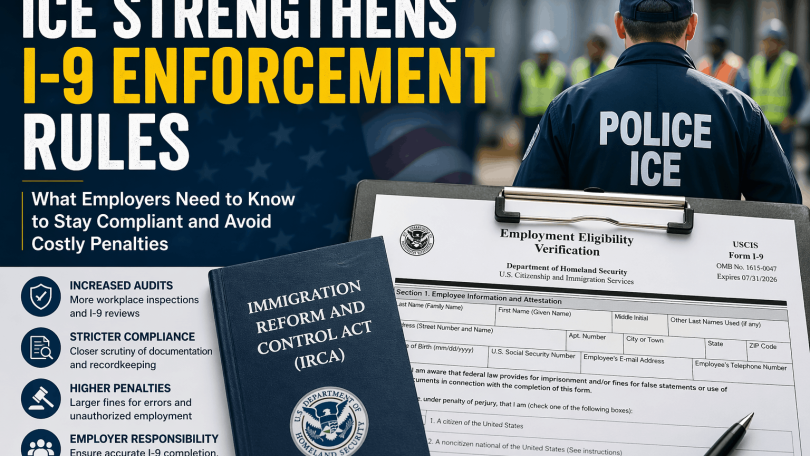
This morning, ICE agents interviewed roughly 100  employees that resulted in the arrest of 53 immigration status violators  working at the resort. Two females were released at the site for humanitarian  concerns. Another six where apprehended outside of the facility bringing the  total to 59. This investigation started in early July 2007 after a routine  inspection of all &lt;a href="http://faq.visapro.com/Form-I-9-FAQ.asp" target="_blank"&gt;I-9&lt;/a&gt; employment forms at the resort.
&lt;br /&gt;
&lt;br /&gt;
Through the expert analysis of the I-9 forms,  ICE agents identified information that led them to suspect that many of the  employees were using fraudulent documents or had stolen someone else's identity  to secure employment at the resort. The investigation is still ongoing. The 59  men and woman are nationals of El Salvador,  Guatemala, Mexico,  Honduras, Bolivia, Peru  and Argentina,  and all face removal proceedings.&lt;br /&gt;
&lt;br /&gt;
Today's enforcement action is part of ICE's  nationwide aggressive pursuit of unauthorized workers and employers who violate  the law," said Mark X. McGraw, Deputy Special Agent in Charge of the ICE  office of investigations in Washington,   DC. Companies that use cheap,  illegal alien labor as a business model should be on notice that ICE is  dramatically enhancing its enforcement efforts against illegal employment  schemes."&lt;br /&gt;
&lt;br /&gt;
All of the immigration status violators arrested  today will be interviewed by ICE personnel, Department of Health and Human  Services, Division of Immigration Health Services (DIHS) staff and offered  access to Social Services to record any medical, sole-caregiver or other  humanitarian situations.
&lt;br /&gt;
&lt;br /&gt;
&lt;p&gt;Based upon  these interviews, ICE will determine whether detainees remain in custody or are  considered for humanitarian release. In all cases, undocumented aliens will be  fingerprinted and processed for removal from the United States.&lt;/p&gt;</description><link>http://www.visapro.com/Immigration-News/?a=844&amp;z=18</link></item><item><title>IMAGE Program Launched by ICE in Puerto Rico</title><description>The U.S. Immigration and Customs Enforcement (ICE), in cooperation with several 
local businesses, this morning launched the ICE Mutual Agreement between Government 
Employers (IMAGE) for Puerto Rico and the U.S. Virgin Islands.&lt;br&gt;
&lt;br&gt;
IMAGE is a joint initiative between government and the business community to ensure 
the integrity of the U.S. legal immigration system. Under IMAGE, ICE is partnering 
with companies in Puerto Rico to strengthen their hiring practices and reduce 
the unlawful employment of illegal aliens.&lt;br&gt;
&lt;br&gt;
ICE is responsible for enforcing the nation's immigration and customs laws. A 
known vulnerability is the presence of undocumented workers who have secured jobs 
by fraudulent means, including identity theft, the use of false documents, and 
the submission of fraudulent applications for immigration benefits. To combat 
unlawful employment and reduce vulnerabilities that help illegal aliens gain such 
employment, the Department of Homeland Security (DHS) recently introduced the 
IMAGE program. The goal is to assist employers in targeted sectors to develop 
a more secure and stable workforce and to enhance fraudulent document awareness 
through education and training.&lt;br&gt;
&lt;br&gt;
As part of IMAGE, ICE will provide education and training on proper hiring procedures, 
fraudulent document detection, use of the E-Verify employment eligibility verification 
program and anti-discrimination procedures. Employers seeking to participate in 
IMAGE must agree to submit to an I-9 audit by ICE. Forms &lt;a href="http://www.visapro.com/US-INS-Forms/I-9-Form.asp" target="_blank"&gt;I-9&lt;/a&gt;, 
Employment Eligibility Verification, are used to establish a person's identity 
and work eligibility, and must be completed by each person a company hires.&lt;br&gt;
&lt;br&gt;
All IMAGE participants gain membership to DHS's E-Verify employment eligibility 
verification program. Through this program, employers can verify that newly hired 
employees are eligible to work in the United States. This Internet-based system 
is available throughout the nation and is currently free to employers. It provides 
an automated link to the Social Security Administration database and DHS immigration 
records.&lt;br&gt;
&lt;br&gt;
"Most employers want to comply with our nation's immigration laws," 
said Roberto Escobar Vargas, special agent in charge of the ICE Office of Investigations 
in Puerto Rico. "Yet every day they are confronted with illegal aliens attempting 
to secure jobs through fraudulent means, including the use of counterfeit documents 
and stolen identities. The aim of IMAGE is to help employers deal with these situations 
and confidently develop a legal workforce."&lt;br&gt;
&lt;br&gt;
Upon enrollment in and commitment to DHS's Best Employment Practices, program 
participants will be deemed "IMAGE certified," a distinction DHS believes 
will become an industry standard.</description><link>http://www.visapro.com/Immigration-News/?a=841&amp;z=18</link></item><item><title>CBP Recommends Travelers to Prepare For Busy Weekend</title><description>The U.S. Customs and Border Protection in Buffalo, N.Y. is reminding travelers 
planning trips across the border into the United States to make sure they have 
the proper documents and to anticipate heavy traffic. During March, the Easter 
holiday observance and spring break occur during the same timeframe and could 
result in heavy traffic entering the United States. CBP officials want to remind 
the traveling public that there are a number of steps that can be taken to facilitate 
their arrival into the United States.&lt;br&gt;
&lt;br&gt;
Travelers are encouraged to prepare for cross-border travel in advance. Travelers 
can obtain local border traffic conditions by either visiting the CBP Web site 
to obtain border wait time information for various border crossings. To help facilitate 
their crossing, individuals should have their documents available before reaching 
the inspection booth. CBP reminds travelers that since Jan. 31, U.S. and Canadian 
citizens--both adults and children arriving to the United States from Canada--must 
carry a document that proves their citizenship. &lt;br&gt;
&lt;br&gt;
Those who don't have a stand-alone document such as a passport or NEXUS card must 
carry a birth certificate (original or copy) plus government-issued photo ID, 
such as a driver's license. U.S. and Canadian children ages 18 and under will 
only be asked to present proof of citizenship, such as a copy of their birth certificate. 
Travelers who don't have proof of citizenship may face secondary screening and 
delays at border stations while their citizenship is verified. &lt;br&gt;
&lt;br&gt;
Frequent cross-border travelers are encouraged to participate in the NEXUS alternative 
inspection program, which allows pre-screened, low-risk travelers arriving from 
land and sea to proceed with little or no delay by United States and Canadian 
Border Officials. Application forms are available on the Canadian Border Services 
Agency Web site. For NEXUS toll free information, (U.S. and Canadian), call 1-866-NEXUS 
26 (1-866-639-8726). &lt;br&gt;
&lt;br&gt;
In the words of James T. Engleman, CBP director of field operations for Buffalo, 
"U.S. Customs and Border Protection will staff all available primary lanes 
commensurate with arriving traffic, and will maintain staffing in those lanes 
until traffic subsides," he also added, "Travelers are encouraged to 
factor in sufficient time to cross the border so that they may arrive at their 
destination on schedule." </description><link>http://www.visapro.com/Immigration-News/?a=830&amp;z=18</link></item><item><title>EOIR notifies persons eligible for Full Asylum Benefits for FY 2004</title><description>The Executive Office for Immigration Review (EOIR) announced that notices have 
been sent to those individuals in the United States with conditional grants of 
asylum based on resistance to a coercive population control program (CPC) who 
now are fully eligible for all asylum benefits. The spouses and children of these 
individuals also are eligible for all asylum benefits if they were properly included 
in the application for asylum (Form I-589) as dependents and if they reside in 
the United States. (To receive asylum benefits as dependents, children must be 
under 21 years of age or classified as children under the Child Status Protection 
Act.)&lt;br&gt;
&lt;br&gt;
The law specifically limits the number of individuals who can be granted asylum 
on grounds related to CPC to 1,000 per fiscal year (FY). Asylum is granted to 
such individuals on a conditional basis by Immigration Judges and by the Board 
of Immigration Appeals in EOIR, or by Asylum Officers in the U.S. Citizenship 
and Immigration Services (USCIS) of the Department of Homeland Security (formerly 
the Immigration and Naturalization Service). Because the number of individuals 
who annually establish eligibility for asylum based on CPC has been greater than 
1,000, these individuals are placed on a waiting list and remain in conditional 
grant status until one of the 1,000 final approval authorization numbers becomes 
available. More than 9,000 asylum applicants currently are on the waiting list.&lt;br&gt;
&lt;br&gt;
Consequently, for those who were granted conditional asylum during FY 2004, the 
waiting period for full asylum benefits is approximately 9 years.&lt;br&gt;
&lt;br&gt;
&lt;strong&gt;Status Inquiries&lt;/strong&gt;&lt;br&gt;
&lt;br&gt;
Persons who were granted conditional asylum on or before September 15, 2000, but 
who have not received a notice regarding final asylum approval, should check on 
the status of their final asylum approval, if they have not already done so, by 
sending a letter to the appropriate address. The letter should include: 
&lt;ul&gt;
  &lt;li&gt; Full name of the person who filed the asylum application and has been granted 
    conditional asylum,&lt;br&gt;
    &lt;br&gt;
  &lt;/li&gt;
  &lt;li&gt; His or her date of birth,&lt;br&gt;
    &lt;br&gt;
  &lt;/li&gt;
  &lt;li&gt; His or her alien number,&lt;br&gt;
    &lt;br&gt;
  &lt;/li&gt;
  &lt;li&gt; His or her current address (see also Required Actions, below), and&lt;br&gt;
    &lt;br&gt;
  &lt;/li&gt;
  &lt;li&gt; A copy of the order or letter granting conditional asylum.&lt;/li&gt;
&lt;/ul&gt;
&lt;em&gt;If an &lt;strong&gt;Immigration Judge&lt;/strong&gt; issued the conditional grant of asylum&lt;/em&gt;, 
status inquiries must be sent to:&lt;br&gt;
&lt;br&gt;
Office of the Chief Immigration Judge&lt;br&gt;
Attn: CPC Status Inquiry&lt;br&gt;
5107 Leesburg Pike, Suite 2500&lt;br&gt;
Falls Church, VA 22041&lt;br&gt;
&lt;br&gt;
&lt;em&gt;If the &lt;strong&gt;Board of Immigration Appeals&lt;/strong&gt; issued the conditional 
grant of asylum&lt;/em&gt;, status inquiries must be sent to: &lt;br&gt;
&lt;br&gt;
Board of Immigration Appeals&lt;br&gt;
Clerk&amp;#8217;s Office&lt;br&gt;
Attn: CPC Status Inquiry&lt;br&gt;
Post Office Box 8530&lt;br&gt;
Falls Church, VA 22041 Phone: 703-605-1007&lt;br&gt;
&lt;br&gt;
&lt;em&gt;If a &lt;strong&gt;USCIS Asylum Officer&lt;/strong&gt; issued the conditional grant of 
asylum&lt;/em&gt;, status inquiries must be sent to the USCIS Asylum Office that has 
jurisdiction over the conditional grantee&amp;#8217;s residence. The USCIS Web site 
at &lt;a href="http://uscis.gov/graphics/fieldoffices/alphaa.htm" target="_blank"&gt;http://uscis.gov/graphics/fieldoffices/alphaa.htm&lt;/a&gt; 
provides the jurisdiction and addresses of the eight USCIS Asylum Offices. &lt;br&gt;
&lt;br&gt;
Required Actions for Individuals with Conditional Asylum&lt;br&gt;
&lt;br&gt;
Persons who remain in conditional asylum status must comply with any requests 
to appear for fingerprinting and biometrics or other background clearance procedures. 
They also must provide any changes of address promptly in the following manner:&lt;br&gt;
&lt;br&gt;
&lt;em&gt;If an &lt;strong&gt;Immigration Judge&lt;/strong&gt; issued the conditional grant of asylum&lt;/em&gt;, 
individuals must submit to the&lt;br&gt;
Immigration Court that last had jurisdiction over their case a completed Form 
EOIR-33/IJ, &amp;#8220;Change of Address Form,&amp;#8221; within 5 days of any change 
of address. Addresses for the Immigration Courts can be found on the EOIR Web 
site at &lt;a href="http://www.usdoj.gov/eoir/sibpages/ICadr.htm" target="_blank"&gt;http://www.usdoj.gov/eoir/sibpages/ICadr.htm&lt;/a&gt;. 
They also must submit a completed Form AR-11, &amp;#8220;Alien&amp;#8217;s Change of Address 
Card,&amp;#8221; within 10 days of any change of address to the Department of Homeland 
Security at the address indicated in the form instructions.&lt;br&gt;
&lt;br&gt;
&lt;em&gt;If the &lt;strong&gt;Board of Immigration Appeals&lt;/strong&gt; issued the conditional 
grant of asylum&lt;/em&gt;, individuals must submit a completed Form EOIR-33/BIA, &amp;#8220;Change 
of Address Form,&amp;#8221; within 5 days of any change of address to the address 
below:&lt;br&gt;
&lt;br&gt;
Board of Immigration Appeals&lt;br&gt;
Clerk&amp;#8217;s Office&lt;br&gt;
Post Office Box 8530&lt;br&gt;
Falls Church, VA 22041 Phone: 703-605-1007&lt;br&gt;
&lt;br&gt;
They also must submit a completed Form AR-11, &amp;#8220;Alien&amp;#8217;s Change of Address 
Card,&amp;#8221; within 10 days of any change of address to the Department of Homeland 
Security at the address indicated in the form instructions.&lt;br&gt;
&lt;br&gt;
&lt;em&gt;If a &lt;strong&gt;USCIS Asylum Officer&lt;/strong&gt; issued the conditional grant of 
asylum&lt;/em&gt;, individuals must submit to the Department of Homeland Security at 
the address indicated in the form instructions a completed Form AR-11, &amp;#8220;Alien&amp;#8217;s 
Change of Address Card,&amp;#8221; within 10 days of any change of address. They also 
should send a copy of their completed Form AR-11 to the USCIS Asylum Office that 
has jurisdiction over their residence. The USCIS Web site at &lt;a href="http://uscis.gov/graphics/fieldoffices/alphaa.htm" target="_blank"&gt;http://uscis.gov/graphics/fieldoffices/alphaa.htm&lt;/a&gt; 
provides the jurisdiction and addresses of the eight USCIS Asylum Offices.&lt;br&gt;
&lt;br&gt;
For additional information about CPC and asylum &lt;a href="http://uscis.gov/graphics/services/asylum/cpc.htm" target="_blank"&gt;click 
here&lt;/a&gt;.&lt;br&gt;
&lt;br&gt;
For complete News Release issued by EOIR, &lt;a href="http://www.usdoj.gov/eoir/press/04/CPCAsylumReleaseDec04.pdf" target="_blank"&gt;click 
here&lt;/a&gt;.</description><link>http://www.visapro.com/Immigration-News/?a=159&amp;z=18</link></item><item><title>US and Canada to implement Safe Third Country Agreement on asylum</title><description>Eduardo Aguirre, Director of U.S. Citizenship and Immigration Services (USCIS), 
announced today the publication of a final rule to implement a bilateral agreement 
between the United States and Canada affecting asylum seekers at U.S.-Canada land 
border ports-of-entry, and transiting through the United States or Canada during 
removal by the other country. The regulations implementing this agreement will 
take effect in 30 days.&lt;br&gt;
&lt;br&gt;
&amp;#8220;The agreement ensures that all asylum seekers will be heard and that individuals 
will not be removed until Canada or the United States has made a protection determination. 
USCIS and Citizenship and Immigration Canada have worked diligently to anticipate 
and resolve potential challenges related to this agreement&amp;#8217;s implementation. 
We have ensured that asylum seekers have procedural safeguards, such as decision-making 
review and the opportunity for asylum seekers to have an individual present when 
interviewed about exceptions to the Agreement,&amp;#8221; said the Director.&lt;br&gt;
&lt;br&gt;
The initiative to enter into a Safe Third Country Agreement was included in the 
30-point action plan under the Smart Border Declaration signed in December 2001 
by Department of Homeland Security (DHS) Secretary Tom Ridge and Mr. John Manley, 
former Deputy Foreign Minister of Canada. The Agreement highlights U.S.-Canadian 
cooperation to develop mutually beneficial approaches to our common security goals 
while simultaneously continuing to provide access to one of our two nations&amp;#8217; 
asylum systems for those with protection concerns. The Agreement, signed in December 
2002, could not take effect until both countries published final implementing 
regulations. Canada published its final regulations on November 3, 2004.&lt;br&gt;
&lt;br&gt;
The agreement applies only to asylum seekers at a U.S.-Canada land border port-of-entry 
or being removed from Canada or the U.S. through the other country. The Agreement 
permits the United States to return to Canada certain asylum seekers who either 
are attempting to enter the United States from Canada at a U.S.-Canada land border 
port-of-entry or who are being removed from Canada in transit through the United 
States. Similarly, it permits Canada to return to the United States certain asylum 
seekers attempting to enter Canada from the United States at a U.S.-Canada land 
border port-of entry and certain aliens being removed from the United States through 
Canada. In either case, the Agreement provides (with important exceptions) that 
the asylum seeker be returned to Canada, if coming to the U.S. from Canada, or 
returned to the U.S., if going to Canada from the U.S., for consideration of any 
request for protection based on fear of persecution or torture. The Agreement 
adheres to both the United States&amp;#8217; and Canada&amp;#8217;s long-standing commitment 
to protect refugees by ensuring that asylum seekers&amp;#8217; protection claims are 
heard and decided in one of the two countries.&lt;br&gt;
&lt;br&gt;
The final rule implements the Agreement&amp;#8217;s several exceptions to its general 
proviso that asylum seekers attempting to enter the U.S. from Canada at land border 
ports-of-entry be returned to Canada for consideration of their protection concerns. 
These exceptions include, among others, an exemption for unaccompanied minors 
and exemptions for some asylum seekers with certain family members in the United 
States. The exceptions for asylum seekers with family members in the U.S. recognize 
that those family members may be able to provide important support to an asylum 
seeker while he or she is pursuing protection, and includes a range of relatives, 
far broader than those customarily recognized under U.S. family-based immigration 
laws, i.e., spouses, sons, daughters, parents, legal guardians, siblings, grandparents, 
grandchildren, aunts, uncles, nieces and nephews. In order for asylum seekers 
to qualify for these exceptions, their family members in the U.S. must have some 
form of lawful immigrant or non-immigrant status (other than a visitor&amp;#8217;s 
visa), or have an asylum claim pending and be 18 years of age or older.&lt;br&gt;
&lt;br&gt;
The Department of Justice is also publishing a companion final rule, which will 
govern the process by which immigration judges of the Executive Office for Immigration 
Review will apply the Agreement to cases arising under their jurisdiction.</description><link>http://www.visapro.com/Immigration-News/?a=154&amp;z=18</link></item><item><title>Tips for U.S. Citizens and Permanent Residents traveling internationally.</title><description>U.S. Customs and Border Protection (CBP) today launched a traveler awareness campaign 
to inform the millions of Americans and U.S. residents who will travel abroad 
this holiday season.&lt;br&gt;
&lt;br&gt;
&amp;quot;U.S. Customs and Border Protection is committed to making sure that your 
vacation and business travel is as safe and stress free as possible,&amp;#8221; stated 
Commissioner Robert C. Bonner. &amp;#8220;U.S. citizens vacationing abroad can make 
their own travel easier by taking a few extra minutes to 'Know Before You Go.&amp;quot;&lt;br&gt;
&lt;br&gt;
&amp;quot;Travelers should also be aware,&amp;quot; Commissioner Bonner continued, &amp;quot;that 
the United States and its citizens are targets for terrorists. While CBP is taking 
every necessary step to protect our country, employing a highly trained work force 
with the latest technology, we need an alert and vigilant citizenry to report 
to enforcement authorities any unusual or suspicious activity. We ask you to be 
our partners in ensuring a safe, secure and enjoyable holiday season.&amp;quot;&lt;br&gt;
&lt;br&gt;
To learn about the rules for bringing back purchases made and gifts received abroad, 
travelers should read Know Before You Go, available at &lt;a href="http://www.cbp.gov/xp/cgov/travel" target="_blank"&gt;www.cbp.gov/xp/cgov/travel&lt;/a&gt;. 
&lt;br&gt;
&lt;br&gt;
Here is a brief overview of U.S. Customs and Border Protection requirements.&lt;br&gt;
&lt;ul&gt;
  &lt;li&gt; If you are a U.S. citizen returning to the United States from outside of 
    the Western Hemisphere, e.g., Europe, Asia, Africa, or Australia, you must 
    present a valid passport. If you are a U.S. citizen traveling inside the Western 
    Hemisphere, e.g., North, Central or South America, it is highly recommended 
    that you carry any proof of citizenship that clearly establishes identity 
    and nationality, such as a passport (valid or expired), a Certificate of Citizenship 
    or Certificate of Naturalization, or a birth certificate or baptismal certificate 
    and a photo I.D.&lt;br&gt;
    &lt;br&gt;
  &lt;/li&gt;
  &lt;li&gt; If you are a non-citizen who is a lawful permanent resident of the United 
    States, you must present a permanent resident card (&amp;quot;green card,&amp;quot; 
    Form I-551), a reentry permit, or a refugee travel document endorsed to reflect 
    permanent resident status. &lt;br&gt;
    &lt;br&gt;
  &lt;/li&gt;
  &lt;li&gt; If you are in the process of applying for lawful permanent residence in 
    the United States, you must file Form I-131, Application for Travel Document, 
    and receive permission to travel outside the United States, BEFORE leaving 
    the United States (advance parole).&lt;br&gt;
    &lt;br&gt;
  &lt;/li&gt;
  &lt;li&gt; You must declare the total value of all articles acquired abroad and in 
    your possession at the time you return. This includes articles you bought; 
    gifts you received; repairs, or alterations made while you were out of the 
    United States; and any items you brought home for someone else.&lt;br&gt;
    &lt;br&gt;
  &lt;/li&gt;
  &lt;li&gt; If you have food items or souvenirs made of straw or other plant-derived 
    materials or seeds, you must declare them on the CBP declaration form. Here's 
    why: certain items brought into this country from foreign countries may harbor 
    foreign animal and plant pests and diseases that could seriously damage America's 
    crops, livestock, pets, and the environment. All meats, fruits, vegetables, 
    plants, animals, and plant and animal products, soup or soup products in your 
    possession must be declared and presented for inspection. This declaration 
    must cover all items carried in checked baggage and carry-on luggage. If the 
    items are found to have pests or be diseased, or are from an area where certain 
    diseases are occurring, they will be seized and destroyed under government 
    supervision. Travelers who fail to declare plant and animal products can be 
    fined up to $1,000 or more and have their items confiscated. You should also 
    declare if you have been on a farm or in close proximity to livestock. If 
    you have, we will want to examine your shoes for dirt or animal matter that 
    could harbor foot-and-mouth disease or other dangers to U.S. livestock. &lt;br&gt;
    &lt;br&gt;
  &lt;/li&gt;
  &lt;li&gt; Your duty-free exemption is $800 if you are a returning U.S. resident and 
    the items you acquired abroad accompany you. The duty-free exemption is $600 
    if you are returning directly from a Caribbean Basin Economic Recovery Act 
    country. The exemption is $1,200 if you are returning from American Samoa, 
    Guam, or the U.S. Virgin Islands. &lt;br&gt;
    &lt;br&gt;
  &lt;/li&gt;
  &lt;li&gt; Gifts you mailed from abroad to people in the United States can be received 
    by them free of duty if the value of the gift does not exceed $100.&lt;br&gt;
    &lt;br&gt;
  &lt;/li&gt;
  &lt;li&gt; The articles you purchased in &amp;#8220;duty-free&amp;#8221; shops, or on a plane 
    or ship, are subject to duty and other restrictions. Articles you bought in 
    American duty-free shops are subject to duty and IRS tax if reentered into 
    the United States.&lt;br&gt;
    &lt;br&gt;
  &lt;/li&gt;
  &lt;li&gt; There is no limitation on the amount of monetary instruments that may be 
    brought into or taken out of the United States. If you take out or bring in 
    more than $10,000 in currency or negotiable instruments you must file a report 
    (FinCen 105) with CBP.&lt;br&gt;
  &lt;/li&gt;
&lt;/ul&gt;
This is only a brief overview of U.S. Customs and Border Protection requirements. 
The brochure, Know Before You Go, describes the rules in detail. A copy of this 
brochure can be ordered on CBP's web site at &lt;a href="http://www.cbp.gov/xp/cgov/toolbox/publications/order/" target="_blank"&gt;http://www.cbp.gov/xp/cgov/toolbox/publications/order/&lt;/a&gt;. 
You may also call and request a copy from U.S. Customs and Border Protection in 
Washington, D.C., at 1-877-CBP-5511 or 202-354-1000.</description><link>http://www.visapro.com/Immigration-News/?a=149&amp;z=18</link></item><item><title>President authorizes 70,000 refugee admissions during FY 2005</title><description>&lt;strong&gt;Presidential Determination No. 2004-53 of September 30, 2004&lt;/strong&gt;&lt;br&gt;
&lt;br&gt;
Presidential Determination on FY 2005 Refugee Admissions Numbers and Authorizations 
of In-Country Refugee Status Pursuant to Sections 207 and 101(a)(42), respectively, 
of the Immigration and Nationality Act, and Determination Pursuant to Section 
2(b)(2) of the Migration and Refugee Assistance Act, as Amended&lt;br&gt;
&lt;br&gt;
&lt;strong&gt;Memorandum for the Secretary of State&lt;/strong&gt;&lt;br&gt;
&lt;br&gt;
In accordance with section 207 of the Immigration and Nationality Act (the &amp;quot;Act&amp;quot;) 
(8 U.S.C. 1157), as amended, and after appropriate consultations with the Congress, 
I hereby make the following determinations and authorize the following actions:&lt;br&gt;
&lt;br&gt;
The admission of up to 70,000 refugees to the United States during FY 2005 is 
justified by humanitarian concerns or is otherwise in the national interest; provided, 
however, that this number shall be understood as including persons admitted to 
the United States during FY 2005 with Federal refugee resettlement assistance 
under the Amerasian immigrant admissions program, as provided below.&lt;br&gt;
&lt;br&gt;
The 70,000 admissions numbers shall be allocated among refugees of special humanitarian 
concern to the United States in accordance with the following regional allocations; 
provided, however, that the number allocated to the East Asia region shall include 
persons admitted to the United States during FY 2005 with Federal refugee resettlement 
assistance under section 584 of the Foreign Operations, Export Financing, and 
Related Programs Appropriations Act of 1988, as contained in section 101(e) of 
Public Law 100-202 (Amerasian immigrants and their family members); provided further 
that the number allocated to the former Soviet Union shall include persons admitted 
who were nationals of the former Soviet Union, or in the case of persons having 
no nationality, who were habitual residents of the former Soviet Union, prior 
to September 2, 1991:&lt;br&gt;
&lt;br&gt;
&lt;table width="100%" border="0" cellspacing="0" cellpadding="2"&gt;
  &lt;tr&gt; 
    &lt;td width="49%"&gt;Africa&lt;/td&gt;
    &lt;td width="51%"&gt;20,000&lt;/td&gt;
  &lt;/tr&gt;
  &lt;tr&gt; 
    &lt;td&gt;East Asia&lt;/td&gt;
    &lt;td&gt;13,000&lt;/td&gt;
  &lt;/tr&gt;
  &lt;tr&gt; 
    &lt;td&gt;Europe and Central&amp;nbsp;Asia&lt;/td&gt;
    &lt;td&gt;9,500&lt;/td&gt;
  &lt;/tr&gt;
  &lt;tr&gt; 
    &lt;td&gt;Latin&amp;nbsp;America/Caribbean&lt;/td&gt;
    &lt;td&gt;5,000&lt;/td&gt;
  &lt;/tr&gt;
  &lt;tr&gt; 
    &lt;td&gt;Near East/South Asia&lt;/td&gt;
    &lt;td&gt;2,500&lt;/td&gt;
  &lt;/tr&gt;
  &lt;tr&gt;
    &lt;td&gt;Unallocated Reserve&lt;/td&gt;
    &lt;td&gt;20,000&lt;/td&gt;
  &lt;/tr&gt;
&lt;/table&gt;
&lt;br&gt;
The 20,000 unallocated refugee numbers shall be allocated to regional ceilings 
as needed. Upon providing notification to the Judiciary Committees of the Congress, 
you are hereby authorized to use unallocated numbers in regions where the need 
for additional numbers arises.&lt;br&gt;
&lt;br&gt;
Additionally, upon notification to the Judiciary Committees of the Congress, you 
are further authorized to transfer unused numbers allocated to a particular region 
to one or more other regions, if there is a need for greater numbers for the region 
or regions to which the numbers are being transferred. Consistent with section 
2(b)(2) of the Migration and Refugee Assistance Act of 1962, as amended, I hereby 
determine that assistance to or on behalf of persons applying for admission to 
the United States as part of the overseas refugee admissions program will contribute 
to the foreign policy interests of the United States and designate such persons 
for this purpose.&lt;br&gt;
&lt;br&gt;
An additional 10,000 refugee admissions numbers shall be made available during 
FY 2005 for the adjustment to permanent resident status under section 209(b) of 
the Immigration and Nationality Act (8 U.S.C. 1159(b)) of aliens who have been 
granted asylum in the United States under section 208 of the Act (8 U.S.C. 1158), 
as this is justified by humanitarian concerns or is otherwise in the national 
interest.&lt;br&gt;
&lt;br&gt;
In accordance with section 101(a)(42) of the Act (8 U.S.C. 1101(a)(42)), and after 
appropriate consultation with the Congress, I also specify that, for FY 2005, 
the following persons may, if otherwise qualified, be considered refugees for 
the purpose of admission to the United States within their countries of nationality 
or habitual residence:&lt;br&gt;
&lt;br&gt;
&lt;table width="100%" border="0" cellspacing="0" cellpadding="2"&gt;
  &lt;tr valign="top"&gt; 
    &lt;td width="4%"&gt;a.&lt;/td&gt;
    &lt;td width="96%"&gt;Persons in Vietnam&lt;/td&gt;
  &lt;/tr&gt;
  &lt;tr valign="top"&gt; 
    &lt;td&gt;b.&lt;/td&gt;
    &lt;td&gt;Persons in Cuba&lt;/td&gt;
  &lt;/tr&gt;
  &lt;tr valign="top"&gt; 
    &lt;td&gt;c.&lt;/td&gt;
    &lt;td&gt;Persons in the former Soviet Union&lt;/td&gt;
  &lt;/tr&gt;
  &lt;tr valign="top"&gt;
    &lt;td&gt;d.&lt;/td&gt;
    &lt;td&gt;In exceptional circumstances, persons identified by a U.S. Embassy in 
      and location &lt;/td&gt;
  &lt;/tr&gt;
&lt;/table&gt;
&lt;br&gt;
You are authorized and directed to report this determination to the Congress immediately 
and to publish it in the Federal Register.&lt;br&gt;
&lt;br&gt;
(Presidential Sig.)B&lt;br&gt;
&lt;br&gt;
THE WHITE HOUSE,&lt;br&gt;
&lt;br&gt;
Washington, September 30, 2004.&lt;br&gt;
&lt;br&gt;
For complete Federal Register Notice, please &lt;a href="http://a257.g.akamaitech.net/7/257/2422/06jun20041800/edocket.access.gpo.gov/2004/04-23046.htm" target="_blank"&gt;click 
here&lt;/a&gt;.</description><link>http://www.visapro.com/Immigration-News/?a=121&amp;z=18</link></item><item><title>Over 50,000 refugees admitted in FY 2004</title><description>&lt;P class=MsoNormal style="MARGIN: 0in 0in 0pt"&gt;&lt;SPAN style="FONT-SIZE: 10pt; COLOR: #000000; "&gt;Press Statement&lt;/SPAN&gt;&lt;SPAN style="FONT-SIZE: 9pt; "&gt;&lt;BR&gt;&lt;/SPAN&gt;&lt;STRONG&gt;&lt;SPAN style="FONT-SIZE: 10pt; "&gt;Adam Ereli,&amp;nbsp;Deputy Spokesman&lt;/SPAN&gt;&lt;/STRONG&gt;&lt;SPAN style="FONT-SIZE: 9pt; "&gt;&lt;BR&gt;&lt;/SPAN&gt;&lt;?xml:namespace prefix = st1 ns = "urn:schemas-microsoft-com:office:smarttags" /&gt;&lt;st1:place&gt;&lt;st1:City&gt;&lt;SPAN style="FONT-SIZE: 10pt; "&gt;Washington&lt;/SPAN&gt;&lt;/st1:City&gt;&lt;SPAN style="FONT-SIZE: 10pt; "&gt;, &lt;/SPAN&gt;&lt;st1:State&gt;&lt;SPAN style="FONT-SIZE: 10pt; FONT-FAMILY: Arial"&gt;DC&lt;BR&gt;&lt;BR&gt;&lt;/SPAN&gt;&lt;/st1:State&gt;&lt;/st1:place&gt;&lt;SPAN style="FONT-SIZE: 10pt; FONT-FAMILY: Arial"&gt;&lt;?xml:namespace prefix = o ns = "urn:schemas-microsoft-com:office:office" /&gt;&lt;o:p&gt;&lt;/o:p&gt;&lt;/SPAN&gt;&lt;/P&gt;Through the U.S. Resettlement Program, the United States admitted 52,875 refugees representing more than 40 nationalities during fiscal year 2004. This represents more than an 85% increase over the number of refugees admitted in fiscal year 2003. &lt;BR&gt;&lt;BR&gt;The success of this year’s program is a result of extraordinary efforts and coordination among federal agencies, international and non-governmental organizations, and overseas partners in successfully implementing and streamlining enhanced security requirements following September 11, 2001.&lt;BR&gt;&lt;BR&gt;The United States remains committed to a vigorous refugee admissions program and will continue to welcome refugees for whom resettlement is the most appropriate durable solution. Since 1975, we have admitted over 2.5 million refugees for resettlement in the United States. We lead the world in offering resettlement to those in need, and we encourage other countries to participate actively in this humanitarian effort.&lt;BR&gt;</description><link>http://www.visapro.com/Immigration-News/?a=98&amp;z=18</link></item></channel></rss>