<?xml version="1.0" encoding="UTF-8"?>
<?xml-stylesheet type="text/xsl" media="screen" href="/~d/styles/rss2full.xsl"?><?xml-stylesheet type="text/css" media="screen" href="http://feeds.feedburner.com/~d/styles/itemcontent.css"?><rss xmlns:content="http://purl.org/rss/1.0/modules/content/" xmlns:wfw="http://wellformedweb.org/CommentAPI/" xmlns:dc="http://purl.org/dc/elements/1.1/" xmlns:atom="http://www.w3.org/2005/Atom" xmlns:sy="http://purl.org/rss/1.0/modules/syndication/" xmlns:slash="http://purl.org/rss/1.0/modules/slash/" version="2.0">

<channel>
	<title>Analytic Expert</title>
	
	<link>http://www.analyticexpert.com</link>
	<description>Applications: Liquid/Gas Analysis &amp; Flame/Gas Detection</description>
	<lastBuildDate>Thu, 24 May 2012 21:00:41 +0000</lastBuildDate>
	<language>en</language>
	<sy:updatePeriod>hourly</sy:updatePeriod>
	<sy:updateFrequency>1</sy:updateFrequency>
	<generator>http://wordpress.org/?v=3.3.2</generator>
		<atom10:link xmlns:atom10="http://www.w3.org/2005/Atom" rel="self" type="application/rss+xml" href="http://feeds.feedburner.com/analyticexpert" /><feedburner:info xmlns:feedburner="http://rssnamespace.org/feedburner/ext/1.0" uri="analyticexpert" /><atom10:link xmlns:atom10="http://www.w3.org/2005/Atom" rel="hub" href="http://pubsubhubbub.appspot.com/" /><feedburner:emailServiceId xmlns:feedburner="http://rssnamespace.org/feedburner/ext/1.0">analyticexpert</feedburner:emailServiceId><feedburner:feedburnerHostname xmlns:feedburner="http://rssnamespace.org/feedburner/ext/1.0">http://feedburner.google.com</feedburner:feedburnerHostname><item>
		<title>Happy Memorial Day, Everyone!</title>
		<link>http://www.analyticexpert.com/2012/05/happy-memorial-day-everyone/</link>
		<comments>http://www.analyticexpert.com/2012/05/happy-memorial-day-everyone/#comments</comments>
		<pubDate>Thu, 24 May 2012 20:26:54 +0000</pubDate>
		<dc:creator>Rosemount Analytical</dc:creator>
				<category><![CDATA[Uncategorized]]></category>

		<guid isPermaLink="false">http://www.analyticexpert.com/?p=1324</guid>
		<description><![CDATA[Memorial Day wears a lot of hats. It’s the unofficial start of summer. Women can finally wear their white shoes! Kids look forward to the last few days of school, and everybody heads to the Memorial Day sales. Time for that first trip to the beach, to break out the barbecue, and maybe even see [...]]]></description>
			<content:encoded><![CDATA[<p>Memorial Day wears a lot of hats. It’s the unofficial start of summer. Women can finally wear their white shoes! Kids look forward to the last few days of school, and everybody heads to the Memorial Day sales. Time for that first trip to the beach, to break out the barbecue, and maybe even see the Indianapolis 500 race held on this day since 1911.</p>
<p>But we also know that Memorial Day has a more serious side. It’s a day to commemorate all the men and women who have died fighting for this country. But did you know that Memorial Day actually began right after the Civil War? Most people are surprised. Interestingly, the first “Memorial Day,” though it wasn’t called that, was held by freed slaves in Charleston, South Carolina who cleaned up and decorated the burial grounds of the Union soldiers who died there. More than 3,000 people joined in the celebration and brought flowers to the graves on May 1<sup>st</sup>.</p>
<p>The tradition of decorating grave sites is well established in the American South, and in some regions, may be an occasion for huge family reunions and “eating on the ground,” a potluck dinner, renewing acquaintances with the living and honoring the dead. This tradition precedes the Civil War and may be the actual historical basis for Memorial Day.</p>
<p>As a national celebration, the day was originally called Decoration Day and was changed to Memorial Day unofficially in 1882 and officially in 1967. In 1968, it became one of the four holidays moved from their original dates in order to create three-day weekends. It is now the last Monday in May. On the day, all flags are lowered to half-staff until noon, when they are raised with the resolve to not let the sacrifice of the fallen be in vain.</p>
<p style="text-align: left;">Memorial Day has significance to all Americans and maybe a little extra to those of us at Emerson because we too were started right after the Civil War. The company was established by Civil War Union veteran John Wesley Emerson to manufacture electric motors. By 1892, Emerson began to sell electric fans and quickly expanded to include sewing machines, dental drills and power tools. During WWII, Emerson, under the leadership of Stuart Symington, was the world’s largest manufacturer of airplane armament, and Symington went on to be the first United States Secretary of the Air Force and later a U.S. Senator. Our company continues to grow and diversify such that today we have employees around the world working under seven business platforms of which Emerson Process Management is one. Whether we are making electric engines, measuring liquid and gas parameters, or providing gas and flame detection, our roots run deep in the forwarding of America and its people. Since 1890 – Happy Memorial Day!</p>
<p style="text-align: left;"><a href="http://www.analyticexpert.com/wp-content/uploads/2012/05/Worn-US-Flag1.jpg"><img class=" wp-image-1328 aligncenter" title="US-Flag" src="http://www.analyticexpert.com/wp-content/uploads/2012/05/Worn-US-Flag1-300x187.jpg" alt="" width="600" height="374" /></a></p>
]]></content:encoded>
			<wfw:commentRss>http://www.analyticexpert.com/2012/05/happy-memorial-day-everyone/feed/</wfw:commentRss>
		<slash:comments>0</slash:comments>
		</item>
		<item>
		<title>Using CEMS for Emissions Abatement in Cogeneration Facilities</title>
		<link>http://www.analyticexpert.com/2012/05/using-cems-for-emissions-abatement-in-cogeneration-facilities/</link>
		<comments>http://www.analyticexpert.com/2012/05/using-cems-for-emissions-abatement-in-cogeneration-facilities/#comments</comments>
		<pubDate>Tue, 15 May 2012 23:22:06 +0000</pubDate>
		<dc:creator>Rosemount Analytical</dc:creator>
				<category><![CDATA[Uncategorized]]></category>

		<guid isPermaLink="false">http://www.analyticexpert.com/?p=1313</guid>
		<description><![CDATA[Cogeneration facilities are considered to be among the most modern, energy-efficient producing facilities because of their superior environmental performance. Their purpose is to generate and distribute steam which can be used for heating, domestic hot water heating, humidification, sterilization of water and distilling water. During the cogeneration process, steam passes through a double automatic controlled [...]]]></description>
			<content:encoded><![CDATA[<p>Cogeneration facilities are considered to be among the most modern, energy-efficient producing facilities because of their superior environmental performance. Their purpose is to generate and distribute steam which can be used for heating, domestic hot water heating, humidification, sterilization of water and distilling water. During the cogeneration process, steam passes through a double automatic controlled extraction pressure and condensing steam turbine generator, and as a result, the electricity it produces becomes a beneficial byproduct. The combination of these results in a thermal efficiency greater than that of any plant built strictly for power generation.</p>
<p><a href="http://www.analyticexpert.com/wp-content/uploads/2012/05/Large_cogen_plant.jpg"><img class="wp-image-1319 alignright" title="Large_cogen_plant" src="http://www.analyticexpert.com/wp-content/uploads/2012/05/Large_cogen_plant-1024x679.jpg" alt="" width="368" height="244" /></a>Cogeneration greatly reduces the environmental impact; in addition, these facilities rely heavily on advanced technologies and continuous emissions monitoring systems (CEMS) to ensure strict regulatory compliance with State and Federal environmental agencies such as the EPA.</p>
<p>Cogeneration facilities can utilize multiple and varied fuel sources. These fuels can include natural gas, oil, coal, wood, various forms of bio-solids, and even tires. Combined cycle cogeneration facilities are becoming popular in meeting increasing energy demands. A typical facility will include a gas turbine, heat recovery steam generator (HRSG) and a steam turbine. The size of cogeneration facilities can vary greatly from small hospitals to large petrochemical complexes.</p>
<p>Since cogeneration facilities vary so significantly in size, fuel burned, pollution abatement equipment installed, and geographic location, the continuous emissions monitoring (CEM) requirements placed upon a given facility will also vary from plant to plant. The primary federal regulations defining CEM requirements are found in 40 CFR 60 and 40 CFR 75. The latter is also known as the Clean Air Act Amendments of 1990. However, state and local agencies do have the ability to impose additional and/or stricter requirements for the monitoring and control of pollutants. The federal regulations, based upon the fuel(s) utilized and the generating capacity of the facility, may require the monitoring of sulfur dioxide (SO<sub>2</sub>), oxides of nitrogen (NOx), opacity, a diluents [carbon dioxide (CO<sub>2</sub>) or oxygen (O<sub>2</sub>) and stack flow. In addition to the above requirements, state and local agencies may also call for the monitoring of carbon monoxide (CO) and, in those plants where SCR or SNCR is utilized for NOx reduction, may require monitoring of ammonia (NH<sub>3</sub>) as well.</p>
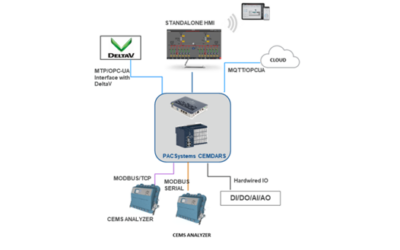
<p>Flameproof gas analyzers provide single and multicomponent gas analysis. Coupled with a remote-mounted sample conditioning system and flow distribution/system controller, these CEMS become truly modular emissions monitoring systems. This configuration allows sample extraction and conditioning anywhere along the sampling train, reducing costs for heated sample lines, equipment racks and instrument shelters. To check out a wide range of other possible configurations click <a href="http://www.analyticexpert.com/wp-content/uploads/2012/05/PGA_AN_42-PGA-AN-CEMS-Cogeneration-052012.pdf" target="_blank">HERE</a>.</p>
<p>The growing significance of cogeneration combined with the unique requirements of each plant make CEMS an ideal solution since they can be designed specifically for each cogeneration plant while providing a field-proven analysis technology that is both highly accurate and cost-effective.</p>
]]></content:encoded>
			<wfw:commentRss>http://www.analyticexpert.com/2012/05/using-cems-for-emissions-abatement-in-cogeneration-facilities/feed/</wfw:commentRss>
		<slash:comments>0</slash:comments>
		</item>
		<item>
		<title>Safeguard Against a Dangerous and Often Undetected Visitor in Gas Compressor Stations</title>
		<link>http://www.analyticexpert.com/2012/04/safeguard-against-a-dangerous-and-often-undetected-visitor-in-gas-compressor-stations-2/</link>
		<comments>http://www.analyticexpert.com/2012/04/safeguard-against-a-dangerous-and-often-undetected-visitor-in-gas-compressor-stations-2/#comments</comments>
		<pubDate>Tue, 24 Apr 2012 21:51:57 +0000</pubDate>
		<dc:creator>Rosemount Analytical</dc:creator>
				<category><![CDATA[Uncategorized]]></category>

		<guid isPermaLink="false">http://www.analyticexpert.com/?p=1286</guid>
		<description><![CDATA[Lubrication oil is commonly circulated through natural gas compressors in order to facilitate cooling and to prevent engine wear. These systems are highly pressurized and thus create a high risk potential for leakage. When leaks occur the lube oil often sprays into the atmosphere producing an oil mist or atomized cloud. And often leaks will [...]]]></description>
			<content:encoded><![CDATA[<p>Lubrication oil is commonly circulated through natural gas compressors in order to facilitate cooling and to prevent engine wear. These systems are highly pressurized and thus create a high risk potential for leakage. When leaks occur the lube oil often sprays into the atmosphere producing an oil mist or atomized cloud. And often leaks will stream continuously undetected for hours or even days without the proper detection technology in place. The mist not only creates an expensive, time-consuming clean-up project, but more importantly, can produce highly toxic smoke or burst into explosive flame upon contact with hot surfaces or engine spark ignitions.</p>
<p>It is not uncommon that gas transportation companies can report dozens of oil leaks per year and some of these leaks have ignited into flame events causing significant damage and production loss. Numerous industry studies have verified that both smoke and oil mist will almost always precede flame prior to an explosive event and have been proven to obscure or blind some optical flame detectors preventing fire warning and potentially leading to disaster.</p>
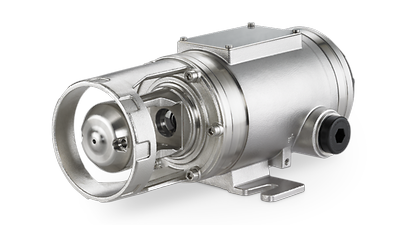
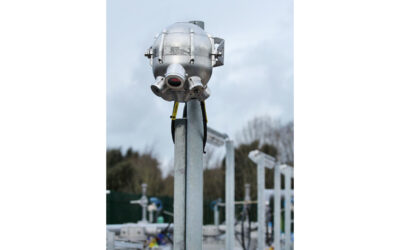
<p>The solution in this application is an explosion-proof oil mist detector. An effective detector should be equipped with a powerful infrared optical sensor that monitors ambient air for the presence of particulate matter such as dust and oil mist, and for products of combustion like smoke and carbon. The Net Safety Millennium Oil Mist Detector (Airborne Particle Monitor &#8211; APM) is the only Class1 Div1 detector of this kind available on the market today.</p>
<p>The principle of operation is based on the reflection of infrared radiation by airborne particles. Field-adjustable zero level of obscuration as well as multiple sensitivity settings allows for fine tuning within specific application conditions to optimize performance and eliminate false alarms. Sensor performance is also not effected by high volume air velocity which makes it ideal for various duct monitoring applications as well. Responses from the APM include actuation of relays, LED indicators, LED alphanumeric display and 4-20mA DC output for transmitting information to other devices.</p>
<p>Oil mist detectors are critical in the previously described natural gas compressor station system where lube oil is used to cool and lubricate compressors in pipeline or processing applications. Advanced detection systems provide compressor buildings with fast, accurate detection of lube oil leaks manifested by smoke or oil mist, providing a proven source of protection for plant and personnel. Natural gas transportation companies worldwide and several offshore platform operators have successfully implemented the Millennium Oil Mist Detector to supplement protection provided by optical flame detectors and fixed gas sensors in these specialized applications.</p>
<p><em><a href="http://www.net-safety.com/products/smoke_apm_millennium.html" target="_blank">Learn more about the Net Safety Oil Mist Detector</a>.</em></p>
]]></content:encoded>
			<wfw:commentRss>http://www.analyticexpert.com/2012/04/safeguard-against-a-dangerous-and-often-undetected-visitor-in-gas-compressor-stations-2/feed/</wfw:commentRss>
		<slash:comments>0</slash:comments>
		</item>
		<item>
		<title>Preventing Boiler Explosions with Combustion Analysis</title>
		<link>http://www.analyticexpert.com/2012/04/preventing-boiler-explosions-with-combustion-analysis/</link>
		<comments>http://www.analyticexpert.com/2012/04/preventing-boiler-explosions-with-combustion-analysis/#comments</comments>
		<pubDate>Wed, 04 Apr 2012 15:50:34 +0000</pubDate>
		<dc:creator>Doug Simmers</dc:creator>
				<category><![CDATA[Uncategorized]]></category>

		<guid isPermaLink="false">http://www.analyticexpert.com/?p=1129</guid>
		<description><![CDATA[Hello everyone. This is Doug Simmers, product manager for combustion analyzers, and today I’m talking about analytical methods for protecting electrostatic precipitators. While I’m using an example from paper mills, many boilers and industrial furnaces utilize electrostatic precipitators for removing fly ash and other particulate from flue gases. Bark is burned in a bark boiler [...]]]></description>
			<content:encoded><![CDATA[<p style="text-align: left;" align="center">Hello everyone. This is Doug Simmers, product manager for combustion analyzers, and today I’m talking about analytical methods for protecting electrostatic precipitators. While I’m using an example from paper mills, many boilers and industrial furnaces utilize electrostatic precipitators for removing fly ash and other particulate from flue gases.</p>
<p>Bark is burned in a bark boiler along with other waste wood products to produce steam that is used in the pulping process, to drive the paper machine, and for many other uses. After combustion, the flue gases from the boilers are often passed through an electrostatic precipitator that uses static electricity to gather the fly ash. An electrostatic charge is induced in the flowing particles and then the particles are collected onto the energized plates with a negative voltage through electrostatic attraction. The negative voltage on the collector plates can be several thousand volts and there is some potential for electrical arcing inside the precipitator. If a combustible gas mixture is allowed to flow through the unit, the result can be an explosion. Combustion analyzers can tell boiler operators when explosive gases begin rising in the boiler flue gases, so they can take action to modify the fuel/air ratios, bypass the flue gases around the precipitator, or power down the precipitator. Good flue gas analysis of O<sub>2</sub> and CO also helps the operator to optimize efficiency, and balance the combustion inside of large furnaces.</p>
<p>If an operator sees the O<sub>2</sub> going down and the CO going up, that indicates there is a problem developing. Most engineers prefer that the analyzers be placed just ahead of the electrostatic precipitator in order to ensure that flue gases flowing through the precipitator have a low level of combustibles (CO) and a sufficiently high level of O<sub>2</sub>. <a href="http://www.analyticexpert.com/wp-content/uploads/2012/04/5500.jpg"><img class=" wp-image-1132 alignright" title="5500" src="http://www.analyticexpert.com/wp-content/uploads/2012/04/5500-300x263.jpg" alt="" width="336" height="303" /></a>In some cases, extremely high particulate levels can negatively affect the optical measurement of the CO. If the IR source energy is blocked by the fly ash, the performance is degraded. In these cases, the CO instrument can be mounted downstream of the precipitator after the fly ash is removed. While the location prior to the precipitator provides the fastest speed of response, high levels of CO in the flue gases typically take many minutes to develop, and the downstream measurement can still provide timely indication of increasing CO.</p>
<p>The initial response to a situation of falling O<sub>2 </sub>and increasing CO is to correct the fuel/air ratio (more air, less fuel), since bypassing or unpowering the precipitator may result in opacity exceedences. A reliable set of O<sub>2 </sub>and CO analyzers is the key to assist the operator to make the proper decisions surrounding the operation of an electrostatic precipitator.</p>
<p>You can check out more details on this application in my article in Pulp and Paper International which can be accessed <a href="http://www.risiinfo.com/magazines/January/2012/PPI/Reduce-the-risk.html" target="_blank">HERE</a>.</p>
]]></content:encoded>
			<wfw:commentRss>http://www.analyticexpert.com/2012/04/preventing-boiler-explosions-with-combustion-analysis/feed/</wfw:commentRss>
		<slash:comments>2</slash:comments>
		</item>
		<item>
		<title>Challenges of Gas Purity Measurements Solved</title>
		<link>http://www.analyticexpert.com/2012/03/challenges-of-gas-purity-measurements-solved/</link>
		<comments>http://www.analyticexpert.com/2012/03/challenges-of-gas-purity-measurements-solved/#comments</comments>
		<pubDate>Thu, 22 Mar 2012 21:29:47 +0000</pubDate>
		<dc:creator>Rosemount Analytical</dc:creator>
				<category><![CDATA[Gas Analysis]]></category>

		<guid isPermaLink="false">http://www.analyticexpert.com/?p=1111</guid>
		<description><![CDATA[Hi there. Michael Kamphus here. I&#8217;m an application engineer for process gas analyzers here at Emerson and in this blog post I&#8217;d like to discuss how the measurement of gas purity plays an important role across multiple gas processing industries and applications, mainly for the purpose of detecting gas impurities across a particular process. For example, in [...]]]></description>
			<content:encoded><![CDATA[<p>Hi there. Michael Kamphus here. I&#8217;m an application engineer for process gas analyzers here at Emerson and in this blog post I&#8217;d like to discuss how the measurement of gas purity plays an important role across multiple gas processing industries and applications, mainly for the purpose of detecting gas impurities across a particular process. For example, in chemical reactions, one has to ensure the gases are free of carbon monoxide (CO) because of the risk of poisoning precious catalysts, oxygen (O<sub>2</sub>) might oxidize catalysts, and carbon dioxide (CO<sub>2</sub>) might form carbamates or carbonates which may clog process gas lines and lead to costly repairs.</p>
<p>One of the most important gas purity processes is the production of syngas, which is a mixture of CO and hydrogen (H<sub>2</sub>) and used as a starting point for H<sub>2</sub> or CO generation. Syngas is mostly produced by steam reforming of natural gas. After the initial reformer, different reaction steps are necessary to convert and clean the process gas to achieve syngas in the desired H<sub>2</sub>/CO ratio. Besides steam reforming of natural gas, other technologies generate syngas from coal gasification or wood/biomass gasification. The fertilizer industry uses syngas to produce ammonia and urea. Additionally, methanol and other hydrocarbons can be synthesized by the Fischer-Tropsch reaction, an access to liquid hydrocarbons independent from crude oil.</p>
<p>In air separation units, the inlet air has to be free of hydrocarbons (HC) and CO<sub>2</sub>. After separation of nitrogen (N<sub>2</sub>), O<sub>2</sub> and argon (Ar) has occurred, the product gas streams have to be monitored for impurities such as moisture, CO<sub>2</sub>, HC and O<sub>2</sub>, to ensure product quality. These gases and gases from other industrial processes are then used for gas bottling. Bottled gasses are needed in the food and beverage industry with the carbonization of beverages, welding and shielding to improve weld characteristics, and even in medical gases.</p>
<p>Emerson Process Management, Rosemount Analytical offers solutions for even the most challenging gas purity applications in refineries, fertilizer plants, steel plants and gas processing facilities around the world. For example:</p>
<ul>
<li>The impurity measurements of CO and CO<sub>2</sub> are done with non-dispersive infrared photometer (NDIR) measurements and detect from 0-10 ppm or 0-5 ppm, respectively.</li>
<li>NDIR is also used for purity measurements of CO<sub>2</sub> and nitrous oxide (N<sub>2</sub>O) with a max suppressed range of 98-100%. Hydrogen measurements are done with a thermal conductivity detector (TCD) making it possible to measure the H<sub>2</sub> purity up to 98-100% or impurities of H<sub>2</sub> in CO down to 0-1000 ppm.</li>
<li>NOx, meaning the sum of nitric oxide (NO) and nitrogen dioxide (NO<sub>2</sub>) measurements, are performed with a chemiluminescence detector (CLD) as a standard. These ranges can get down as low as 0-5 ppm.</li>
<li>Hydrocarbon impurities are detected with a flame ionization detector (FID) with the lowest range being 0-1 ppm.</li>
<li>Oxygen, as low down a range as 0-1%, but also suppressed ranges of 20-22% and 98-100%, can be measured with a paramagnetic sensor (pO<sub>2</sub>). For O<sub>2</sub> ranges down to 0-10 ppm, a trace oxygen sensor (galvanic fuel cell) is used.</li>
<li>For H<sub>2</sub>O an aluminum oxide (Al<sub>2</sub>O<sub>3</sub>) based trace moisture sensor is integrated into the analyzer enabling us to deliver measurements on the dew point range from -100°C to -10°C or 0-100 to 3000 ppm.</li>
</ul>
<p>The integration of different technologies can be combined into one analyzer housing; for example, a suppressed 98-100% O<sub>2</sub> purity measurement with a 0-10 ppm CO and a 0-5 ppm CO<sub>2</sub> impurity measurement, reducing cost for analytical equipment and making integration of the analyzer into the DCS much easier.</p>
<p>If you have a challenging gas purity application, have a question about process gas analyzers, or would like to share your experiences within the gas purity and process gas industry, we would like to hear from you. <a href="http://www.analyticexpert.com/2012/03/challenges-of-gas-purity-measurements-solved/#respond">Post a comment and let us know</a>!</p>
<p>To learn more about gas purity applications and process gas analyzers, visit <ins cite="mailto:Author"><a href="http://www.rosemountanalytical.com/gaspurity">www.rosemountanalytical.com/gaspurity</a>.</ins></p>
]]></content:encoded>
			<wfw:commentRss>http://www.analyticexpert.com/2012/03/challenges-of-gas-purity-measurements-solved/feed/</wfw:commentRss>
		<slash:comments>6</slash:comments>
		</item>
	</channel>
</rss>