<?xml version="1.0" encoding="UTF-8" standalone="no"?><rdf:RDF xmlns:rdf="http://www.w3.org/1999/02/22-rdf-syntax-ns#" xmlns="http://purl.org/rss/1.0/" xmlns:content="http://purl.org/rss/1.0/modules/content/" xmlns:dc="http://purl.org/dc/elements/1.1/" xmlns:prism="http://prismstandard.org/namespaces/basic/2.0/" xmlns:syn="http://purl.org/rss/1.0/modules/syndication/">
  <channel rdf:about="http://journals.aps.org/prl/">
    <title>ExcitingAds! A</title>
    <link>http://journals.aps.org/prl/</link>
    <description>A!</description>
    <syn:updatePeriod>hourly</syn:updatePeriod>
    <syn:updateFrequency>1</syn:updateFrequency>
    <syn:updateBase>2026-05-18T01:16:46+00:00</syn:updateBase>
    <dc:creator>rss@aps.org</dc:creator>
    <dc:publisher>assocpub@aps.org</dc:publisher>
    <dc:date>2026-05-18T01:16:46+00:00</dc:date>
    <dc:language>en</dc:language>
    <dc:rights>Copyright © 2026 the American Physical Society. Personal use only, all commercial or other reuse prohibited</dc:rights>
    <prism:copyright>Copyright © 2026 the American Physical Society</prism:copyright>
    <prism:rightsAgent>assocpub@aps.org</prism:rightsAgent>
    <items>
      <rdf:Seq>
        <rdf:li rdf:resource="http://link.aps.org/doi/10.1103/xqmk-l3bw"/>
        <rdf:li rdf:resource="http://link.aps.org/doi/10.1103/w2vx-t1mr"/>
        <rdf:li rdf:resource="http://link.aps.org/doi/10.1103/k1cn-ngy6"/>
        <rdf:li rdf:resource="http://link.aps.org/doi/10.1103/zfrn-ttr5"/>
        <rdf:li rdf:resource="http://link.aps.org/doi/10.1103/93q5-sgyw"/>
        <rdf:li rdf:resource="http://link.aps.org/doi/10.1103/gqlr-bgj8"/>
        <rdf:li rdf:resource="http://link.aps.org/doi/10.1103/4wgb-9bnj"/>
        <rdf:li rdf:resource="http://link.aps.org/doi/10.1103/2746-1fgh"/>
        <rdf:li rdf:resource="http://link.aps.org/doi/10.1103/gd4s-fgwt"/>
        <rdf:li rdf:resource="http://link.aps.org/doi/10.1103/tc97-98f7"/>
        <rdf:li rdf:resource="http://link.aps.org/doi/10.1103/tlww-cyrl"/>
        <rdf:li rdf:resource="http://link.aps.org/doi/10.1103/x3m9-182d"/>
        <rdf:li rdf:resource="http://link.aps.org/doi/10.1103/tgtw-qnyq"/>
        <rdf:li rdf:resource="http://link.aps.org/doi/10.1103/r98z-7bwj"/>
        <rdf:li rdf:resource="http://link.aps.org/doi/10.1103/578k-kmw6"/>
        <rdf:li rdf:resource="http://link.aps.org/doi/10.1103/31w7-69c8"/>
        <rdf:li rdf:resource="http://link.aps.org/doi/10.1103/qhj9-pc2b"/>
        <rdf:li rdf:resource="http://link.aps.org/doi/10.1103/gj3b-5ngl"/>
        <rdf:li rdf:resource="http://link.aps.org/doi/10.1103/z4xn-m554"/>
        <rdf:li rdf:resource="http://link.aps.org/doi/10.1103/2t2k-3ftx"/>
        <rdf:li rdf:resource="http://link.aps.org/doi/10.1103/9tb2-bx6r"/>
        <rdf:li rdf:resource="http://link.aps.org/doi/10.1103/1ppc-pl4k"/>
        <rdf:li rdf:resource="http://link.aps.org/doi/10.1103/gjfq-k9dv"/>
        <rdf:li rdf:resource="http://link.aps.org/doi/10.1103/6qn5-7rm8"/>
        <rdf:li rdf:resource="http://link.aps.org/doi/10.1103/2c2j-qhkd"/>
        <rdf:li rdf:resource="http://link.aps.org/doi/10.1103/t4xb-6x3z"/>
        <rdf:li rdf:resource="http://link.aps.org/doi/10.1103/v6jq-m6sk"/>
        <rdf:li rdf:resource="http://link.aps.org/doi/10.1103/vrl8-bpmz"/>
        <rdf:li rdf:resource="http://link.aps.org/doi/10.1103/8k7b-nk4p"/>
        <rdf:li rdf:resource="http://link.aps.org/doi/10.1103/by4s-xbbn"/>
        <rdf:li rdf:resource="http://link.aps.org/doi/10.1103/h3zm-rnnx"/>
        <rdf:li rdf:resource="http://link.aps.org/doi/10.1103/2s1m-y9bd"/>
        <rdf:li rdf:resource="http://link.aps.org/doi/10.1103/kd8v-fykm"/>
        <rdf:li rdf:resource="http://link.aps.org/doi/10.1103/36n5-fkb2"/>
        <rdf:li rdf:resource="http://link.aps.org/doi/10.1103/w9qc-rczf"/>
        <rdf:li rdf:resource="http://link.aps.org/doi/10.1103/dkvp-41zt"/>
        <rdf:li rdf:resource="http://link.aps.org/doi/10.1103/g494-rj5k"/>
        <rdf:li rdf:resource="http://link.aps.org/doi/10.1103/q14j-65qd"/>
        <rdf:li rdf:resource="http://link.aps.org/doi/10.1103/rk2z-ymkn"/>
        <rdf:li rdf:resource="http://link.aps.org/doi/10.1103/c8yq-fzn5"/>
        <rdf:li rdf:resource="http://link.aps.org/doi/10.1103/2pgk-c484"/>
        <rdf:li rdf:resource="http://link.aps.org/doi/10.1103/y1q9-pnlc"/>
        <rdf:li rdf:resource="http://link.aps.org/doi/10.1103/w99d-d6nt"/>
        <rdf:li rdf:resource="http://link.aps.org/doi/10.1103/lngc-vpr4"/>
        <rdf:li rdf:resource="http://link.aps.org/doi/10.1103/lgl2-6cb8"/>
        <rdf:li rdf:resource="http://link.aps.org/doi/10.1103/73th-7hwt"/>
        <rdf:li rdf:resource="http://link.aps.org/doi/10.1103/s61z-fcyp"/>
        <rdf:li rdf:resource="http://link.aps.org/doi/10.1103/k9d5-1jcc"/>
        <rdf:li rdf:resource="http://link.aps.org/doi/10.1103/rvt1-93v2"/>
        <rdf:li rdf:resource="http://link.aps.org/doi/10.1103/1gtr-5c2f"/>
        <rdf:li rdf:resource="http://link.aps.org/doi/10.1103/rfwb-sq72"/>
        <rdf:li rdf:resource="http://link.aps.org/doi/10.1103/tpfc-n3bq"/>
        <rdf:li rdf:resource="http://link.aps.org/doi/10.1103/hndj-8tj1"/>
        <rdf:li rdf:resource="http://link.aps.org/doi/10.1103/63v1-3b63"/>
        <rdf:li rdf:resource="http://link.aps.org/doi/10.1103/mtgf-f4f3"/>
        <rdf:li rdf:resource="http://link.aps.org/doi/10.1103/bchn-b47c"/>
        <rdf:li rdf:resource="http://link.aps.org/doi/10.1103/vfbg-y973"/>
        <rdf:li rdf:resource="http://link.aps.org/doi/10.1103/7vwr-szkt"/>
        <rdf:li rdf:resource="http://link.aps.org/doi/10.1103/h3fr-chgk"/>
        <rdf:li rdf:resource="http://link.aps.org/doi/10.1103/bpjc-8kz7"/>
        <rdf:li rdf:resource="http://link.aps.org/doi/10.1103/wj8m-1nlq"/>
        <rdf:li rdf:resource="http://link.aps.org/doi/10.1103/h7nq-d6dd"/>
        <rdf:li rdf:resource="http://link.aps.org/doi/10.1103/gcxt-18gk"/>
        <rdf:li rdf:resource="http://link.aps.org/doi/10.1103/7lwq-hn3q"/>
        <rdf:li rdf:resource="http://link.aps.org/doi/10.1103/kjsb-h9s7"/>
        <rdf:li rdf:resource="http://link.aps.org/doi/10.1103/hh9h-qzpk"/>
        <rdf:li rdf:resource="http://link.aps.org/doi/10.1103/9gqh-9yq6"/>
        <rdf:li rdf:resource="http://link.aps.org/doi/10.1103/nw4m-s6xy"/>
        <rdf:li rdf:resource="http://link.aps.org/doi/10.1103/1x4h-5ycp"/>
        <rdf:li rdf:resource="http://link.aps.org/doi/10.1103/g5fp-ws7z"/>
        <rdf:li rdf:resource="http://link.aps.org/doi/10.1103/w7rd-2qpv"/>
        <rdf:li rdf:resource="http://link.aps.org/doi/10.1103/prf8-3q27"/>
        <rdf:li rdf:resource="http://link.aps.org/doi/10.1103/z3k5-wqg9"/>
        <rdf:li rdf:resource="http://link.aps.org/doi/10.1103/44rc-34n1"/>
        <rdf:li rdf:resource="http://link.aps.org/doi/10.1103/skl9-xzmm"/>
        <rdf:li rdf:resource="http://link.aps.org/doi/10.1103/95pq-6r5g"/>
        <rdf:li rdf:resource="http://link.aps.org/doi/10.1103/t558-4gfd"/>
        <rdf:li rdf:resource="http://link.aps.org/doi/10.1103/55pk-rxzg"/>
        <rdf:li rdf:resource="http://link.aps.org/doi/10.1103/pd77-s994"/>
        <rdf:li rdf:resource="http://link.aps.org/doi/10.1103/thvw-pdtd"/>
        <rdf:li rdf:resource="http://link.aps.org/doi/10.1103/m14q-xbzc"/>
        <rdf:li rdf:resource="http://link.aps.org/doi/10.1103/s4yf-1hh2"/>
        <rdf:li rdf:resource="http://link.aps.org/doi/10.1103/zjpt-whpf"/>
        <rdf:li rdf:resource="http://link.aps.org/doi/10.1103/dyqm-k8p6"/>
        <rdf:li rdf:resource="http://link.aps.org/doi/10.1103/2qrz-5b94"/>
        <rdf:li rdf:resource="http://link.aps.org/doi/10.1103/3c1m-d3hh"/>
        <rdf:li rdf:resource="http://link.aps.org/doi/10.1103/z6xz-p7cm"/>
        <rdf:li rdf:resource="http://link.aps.org/doi/10.1103/sbbk-xdvs"/>
        <rdf:li rdf:resource="http://link.aps.org/doi/10.1103/r3kg-c4x9"/>
        <rdf:li rdf:resource="http://link.aps.org/doi/10.1103/txgk-5nrq"/>
        <rdf:li rdf:resource="http://link.aps.org/doi/10.1103/2qxw-y8df"/>
        <rdf:li rdf:resource="http://link.aps.org/doi/10.1103/5mxs-g3z8"/>
        <rdf:li rdf:resource="http://link.aps.org/doi/10.1103/ggbs-y21w"/>
        <rdf:li rdf:resource="http://link.aps.org/doi/10.1103/jptr-pm37"/>
        <rdf:li rdf:resource="http://link.aps.org/doi/10.1103/fkf1-1jml"/>
        <rdf:li rdf:resource="http://link.aps.org/doi/10.1103/mqzh-w2gh"/>
        <rdf:li rdf:resource="http://link.aps.org/doi/10.1103/s2x6-5k55"/>
        <rdf:li rdf:resource="http://link.aps.org/doi/10.1103/mc31-kbnf"/>
        <rdf:li rdf:resource="http://link.aps.org/doi/10.1103/4mpw-664z"/>
        <rdf:li rdf:resource="http://link.aps.org/doi/10.1103/3xwt-z6bv"/>
      </rdf:Seq>
    </items>
  <xhtml:meta content="noindex" name="robots" xmlns:xhtml="http://www.w3.org/1999/xhtml"/></channel>
  <item rdf:about="http://link.aps.org/doi/10.1103/xqmk-l3bw">
    <title>Retrieving Characteristic Times in High-Harmonic Generation Driven by a Two-Color Femtosecond Field from the Spectral Phase of the Emitted Radiation</title>
    <link>http://link.aps.org/doi/10.1103/xqmk-l3bw</link>
    <description>Author(s): Trevor Olsson, William Medlin, Jody Davis, Scott Chumley, Courtney Wicklund, Nicholas San Juan, Gregory Young, and Guillaume M. Laurent&lt;br/&gt;&lt;p&gt;We present a novel experimental approach to retrieve both the ionization and return times in high harmonic generation from the spectral phases of the radiation generated by a two-color femtosecond field. By performing a detailed characterization of the phases as both the ratio and delay between the …&lt;/p&gt;&lt;br/&gt;[Phys. Rev. Lett. 136, 193201] Published Thu May 14, 2026</description>
    <content:encoded><![CDATA[<p>Author(s): Trevor Olsson, William Medlin, Jody Davis, Scott Chumley, Courtney Wicklund, Nicholas San Juan, Gregory Young, and Guillaume M. Laurent</p><p>We present a novel experimental approach to retrieve both the ionization and return times in high harmonic generation from the spectral phases of the radiation generated by a two-color femtosecond field. By performing a detailed characterization of the phases as both the ratio and delay between the …</p><br/><p>[Phys. Rev. Lett. 136, 193201] Published Thu May 14, 2026</p>]]></content:encoded>
    <dc:title>Retrieving Characteristic Times in High-Harmonic Generation Driven by a Two-Color Femtosecond Field from the Spectral Phase of the Emitted Radiation</dc:title>
    <dc:creator>Trevor Olsson, William Medlin, Jody Davis, Scott Chumley, Courtney Wicklund, Nicholas San Juan, Gregory Young, and Guillaume M. Laurent</dc:creator>
    <dc:date>2026-05-14T10:00:00+00:00</dc:date>
    <dc:rights>Personal use only, all commercial or other reuse prohibited</dc:rights>
    <dc:source>Phys. Rev. Lett. 136, 193201 (2026)</dc:source>
    <dc:type>article</dc:type>
    <dc:identifier>doi:10.1103/xqmk-l3bw</dc:identifier>
    <prism:doi>10.1103/xqmk-l3bw</prism:doi>
    <prism:publicationName>Physical Review Letters</prism:publicationName>
    <prism:volume>136</prism:volume>
    <prism:number>19</prism:number>
    <prism:publicationDate>2026-05-14T10:00:00+00:00</prism:publicationDate>
    <prism:url>http://link.aps.org/doi/10.1103/xqmk-l3bw</prism:url>
    <prism:startingPage>193201</prism:startingPage>
    <dc:subject>Atomic, Molecular, and Optical Physics</dc:subject>
    <prism:section>Atomic, Molecular, and Optical Physics</prism:section>
  </item>
  <item rdf:about="http://link.aps.org/doi/10.1103/w2vx-t1mr">
    <title>Quench Instabilities of a Strongly Interacting Quantum Gas in an Optical Cavity</title>
    <link>http://link.aps.org/doi/10.1103/w2vx-t1mr</link>
    <description>Author(s): Filip Marijanović, Sambuddha Chattopadhyay, Luka Skolc, Timo Zwettler, Catalin-Mihai Halati, Simon B. Jäger, Thierry Giamarchi, Jean-Philippe Brantut, and Eugene Demler&lt;br/&gt;&lt;p&gt;Recent quench experiments on ultracold atoms in optical cavities provide a clean platform for studying how long-range interactions in atomic media structure their nonequilibrium dynamics. Motivated by these experiments, we provide a theoretical analysis of the quench instabilities that lead to the f…&lt;/p&gt;&lt;br/&gt;[Phys. Rev. Lett. 136, 193401] Published Thu May 14, 2026</description>
    <content:encoded><![CDATA[<p>Author(s): Filip Marijanović, Sambuddha Chattopadhyay, Luka Skolc, Timo Zwettler, Catalin-Mihai Halati, Simon B. Jäger, Thierry Giamarchi, Jean-Philippe Brantut, and Eugene Demler</p><p>Recent quench experiments on ultracold atoms in optical cavities provide a clean platform for studying how long-range interactions in atomic media structure their nonequilibrium dynamics. Motivated by these experiments, we provide a theoretical analysis of the quench instabilities that lead to the f…</p><br/><p>[Phys. Rev. Lett. 136, 193401] Published Thu May 14, 2026</p>]]></content:encoded>
    <dc:title>Quench Instabilities of a Strongly Interacting Quantum Gas in an Optical Cavity</dc:title>
    <dc:creator>Filip Marijanović, Sambuddha Chattopadhyay, Luka Skolc, Timo Zwettler, Catalin-Mihai Halati, Simon B. Jäger, Thierry Giamarchi, Jean-Philippe Brantut, and Eugene Demler</dc:creator>
    <dc:date>2026-05-14T10:00:00+00:00</dc:date>
    <dc:rights>Personal use only, all commercial or other reuse prohibited</dc:rights>
    <dc:source>Phys. Rev. Lett. 136, 193401 (2026)</dc:source>
    <dc:type>article</dc:type>
    <dc:identifier>doi:10.1103/w2vx-t1mr</dc:identifier>
    <prism:doi>10.1103/w2vx-t1mr</prism:doi>
    <prism:publicationName>Physical Review Letters</prism:publicationName>
    <prism:volume>136</prism:volume>
    <prism:number>19</prism:number>
    <prism:publicationDate>2026-05-14T10:00:00+00:00</prism:publicationDate>
    <prism:url>http://link.aps.org/doi/10.1103/w2vx-t1mr</prism:url>
    <prism:startingPage>193401</prism:startingPage>
    <dc:subject>Atomic, Molecular, and Optical Physics</dc:subject>
    <prism:section>Atomic, Molecular, and Optical Physics</prism:section>
  </item>
  <item rdf:about="http://link.aps.org/doi/10.1103/k1cn-ngy6">
    <title>Discrete Time Crystals in Actively Mode-Locked Lasers</title>
    <link>http://link.aps.org/doi/10.1103/k1cn-ngy6</link>
    <description>Author(s): Ruiling Weng, Elias R. Koch, Jesús Yelo-Sarrión, Josep Batle, Neil G. R. Broderick, Julien Javaloyes, and Svetlana V. Gurevich&lt;br/&gt;&lt;p&gt;We report the first experimental observation of discrete time crystal phases and crystallites in an actively mode-locked semiconductor laser. By tuning either the bias current or the modulation frequency, the system undergoes a spontaneous symmetry-breaking transition from the harmonically mode-lock…&lt;/p&gt;&lt;br/&gt;[Phys. Rev. Lett. 136, 193801] Published Thu May 14, 2026</description>
    <content:encoded><![CDATA[<p>Author(s): Ruiling Weng, Elias R. Koch, Jesús Yelo-Sarrión, Josep Batle, Neil G. R. Broderick, Julien Javaloyes, and Svetlana V. Gurevich</p><p>We report the first experimental observation of discrete time crystal phases and crystallites in an actively mode-locked semiconductor laser. By tuning either the bias current or the modulation frequency, the system undergoes a spontaneous symmetry-breaking transition from the harmonically mode-lock…</p><br/><p>[Phys. Rev. Lett. 136, 193801] Published Thu May 14, 2026</p>]]></content:encoded>
    <dc:title>Discrete Time Crystals in Actively Mode-Locked Lasers</dc:title>
    <dc:creator>Ruiling Weng, Elias R. Koch, Jesús Yelo-Sarrión, Josep Batle, Neil G. R. Broderick, Julien Javaloyes, and Svetlana V. Gurevich</dc:creator>
    <dc:date>2026-05-14T10:00:00+00:00</dc:date>
    <dc:rights>Personal use only, all commercial or other reuse prohibited</dc:rights>
    <dc:source>Phys. Rev. Lett. 136, 193801 (2026)</dc:source>
    <dc:type>article</dc:type>
    <dc:identifier>doi:10.1103/k1cn-ngy6</dc:identifier>
    <prism:doi>10.1103/k1cn-ngy6</prism:doi>
    <prism:publicationName>Physical Review Letters</prism:publicationName>
    <prism:volume>136</prism:volume>
    <prism:number>19</prism:number>
    <prism:publicationDate>2026-05-14T10:00:00+00:00</prism:publicationDate>
    <prism:url>http://link.aps.org/doi/10.1103/k1cn-ngy6</prism:url>
    <prism:startingPage>193801</prism:startingPage>
    <dc:subject>Atomic, Molecular, and Optical Physics</dc:subject>
    <prism:section>Atomic, Molecular, and Optical Physics</prism:section>
  </item>
  <item rdf:about="http://link.aps.org/doi/10.1103/zfrn-ttr5">
    <title>Photonic Analogy of Continuous Time Crystal Induced by Photorefractive Effect</title>
    <link>http://link.aps.org/doi/10.1103/zfrn-ttr5</link>
    <description>Author(s): Zhihao Chen, Jikun Liu, Qiang Liu, Di Zhang, Dahuai Zheng, Wei Wu, Wei Cai, Mengxin Ren, and Jingjun Xu&lt;br/&gt;&lt;p&gt;Continuous time crystals (CTCs) are nonequilibrium phases that spontaneously break continuous time-translation symmetry to sustain persistent oscillations under time-invariant driving. Here we report the first realization of CTC in a photorefractive carrier-transport system, using iron-doped lithium…&lt;/p&gt;&lt;br/&gt;[Phys. Rev. Lett. 136, 193802] Published Thu May 14, 2026</description>
    <content:encoded><![CDATA[<p>Author(s): Zhihao Chen, Jikun Liu, Qiang Liu, Di Zhang, Dahuai Zheng, Wei Wu, Wei Cai, Mengxin Ren, and Jingjun Xu</p><p>Continuous time crystals (CTCs) are nonequilibrium phases that spontaneously break continuous time-translation symmetry to sustain persistent oscillations under time-invariant driving. Here we report the first realization of CTC in a photorefractive carrier-transport system, using iron-doped lithium…</p><br/><p>[Phys. Rev. Lett. 136, 193802] Published Thu May 14, 2026</p>]]></content:encoded>
    <dc:title>Photonic Analogy of Continuous Time Crystal Induced by Photorefractive Effect</dc:title>
    <dc:creator>Zhihao Chen, Jikun Liu, Qiang Liu, Di Zhang, Dahuai Zheng, Wei Wu, Wei Cai, Mengxin Ren, and Jingjun Xu</dc:creator>
    <dc:date>2026-05-14T10:00:00+00:00</dc:date>
    <dc:rights>Personal use only, all commercial or other reuse prohibited</dc:rights>
    <dc:source>Phys. Rev. Lett. 136, 193802 (2026)</dc:source>
    <dc:type>article</dc:type>
    <dc:identifier>doi:10.1103/zfrn-ttr5</dc:identifier>
    <prism:doi>10.1103/zfrn-ttr5</prism:doi>
    <prism:publicationName>Physical Review Letters</prism:publicationName>
    <prism:volume>136</prism:volume>
    <prism:number>19</prism:number>
    <prism:publicationDate>2026-05-14T10:00:00+00:00</prism:publicationDate>
    <prism:url>http://link.aps.org/doi/10.1103/zfrn-ttr5</prism:url>
    <prism:startingPage>193802</prism:startingPage>
    <dc:subject>Atomic, Molecular, and Optical Physics</dc:subject>
    <prism:section>Atomic, Molecular, and Optical Physics</prism:section>
  </item>
  <item rdf:about="http://link.aps.org/doi/10.1103/93q5-sgyw">
    <title>Microscopic Quantum Friction</title>
    <link>http://link.aps.org/doi/10.1103/93q5-sgyw</link>
    <description>Author(s): Pedro H. Pereira, F. Impens, C. Farina, P. A. Maia Neto, and R. de Melo e Souza&lt;br/&gt;&lt;p&gt;We report on a microscopic theory of quantum friction. Our approach investigates the interplay between the dispersive response and the relative center-of-mass motion of two ground-state atoms. This coupling yields a quantum force, which can be expressed as a power series in the velocity. The signifi…&lt;/p&gt;&lt;br/&gt;[Phys. Rev. Lett. 136, 193601] Published Tue May 12, 2026</description>
    <content:encoded><![CDATA[<p>Author(s): Pedro H. Pereira, F. Impens, C. Farina, P. A. Maia Neto, and R. de Melo e Souza</p><p>We report on a microscopic theory of quantum friction. Our approach investigates the interplay between the dispersive response and the relative center-of-mass motion of two ground-state atoms. This coupling yields a quantum force, which can be expressed as a power series in the velocity. The signifi…</p><br/><p>[Phys. Rev. Lett. 136, 193601] Published Tue May 12, 2026</p>]]></content:encoded>
    <dc:title>Microscopic Quantum Friction</dc:title>
    <dc:creator>Pedro H. Pereira, F. Impens, C. Farina, P. A. Maia Neto, and R. de Melo e Souza</dc:creator>
    <dc:date>2026-05-12T10:00:00+00:00</dc:date>
    <dc:rights>Personal use only, all commercial or other reuse prohibited</dc:rights>
    <dc:source>Phys. Rev. Lett. 136, 193601 (2026)</dc:source>
    <dc:type>article</dc:type>
    <dc:identifier>doi:10.1103/93q5-sgyw</dc:identifier>
    <prism:doi>10.1103/93q5-sgyw</prism:doi>
    <prism:publicationName>Physical Review Letters</prism:publicationName>
    <prism:volume>136</prism:volume>
    <prism:number>19</prism:number>
    <prism:publicationDate>2026-05-12T10:00:00+00:00</prism:publicationDate>
    <prism:url>http://link.aps.org/doi/10.1103/93q5-sgyw</prism:url>
    <prism:startingPage>193601</prism:startingPage>
    <dc:subject>Atomic, Molecular, and Optical Physics</dc:subject>
    <prism:section>Atomic, Molecular, and Optical Physics</prism:section>
  </item>
  <item rdf:about="http://link.aps.org/doi/10.1103/gqlr-bgj8">
    <title>Vorticity-Crystalline Order Coupling in Supersolids: Excitations and Reentrant Phases</title>
    <link>http://link.aps.org/doi/10.1103/gqlr-bgj8</link>
    <description>Author(s): M. Schubert, K. Mukherjee, P. Stürmer, and S. M. Reimann&lt;br/&gt;&lt;p&gt;Rotation is a natural tool in ultracold gases to break time-reversal symmetry, yet its impact on the collective excitations of supersolids remains largely unexplored. We show theoretically that tuning the rotation frequency, rather than the interparticle interactions, can trigger the superfluid-to-s…&lt;/p&gt;&lt;br/&gt;[Phys. Rev. Lett. 136, 183401] Published Fri May 08, 2026</description>
    <content:encoded><![CDATA[<p>Author(s): M. Schubert, K. Mukherjee, P. Stürmer, and S. M. Reimann</p><p>Rotation is a natural tool in ultracold gases to break time-reversal symmetry, yet its impact on the collective excitations of supersolids remains largely unexplored. We show theoretically that tuning the rotation frequency, rather than the interparticle interactions, can trigger the superfluid-to-s…</p><br/><p>[Phys. Rev. Lett. 136, 183401] Published Fri May 08, 2026</p>]]></content:encoded>
    <dc:title>Vorticity-Crystalline Order Coupling in Supersolids: Excitations and Reentrant Phases</dc:title>
    <dc:creator>M. Schubert, K. Mukherjee, P. Stürmer, and S. M. Reimann</dc:creator>
    <dc:date>2026-05-08T10:00:00+00:00</dc:date>
    <dc:rights>Personal use only, all commercial or other reuse prohibited</dc:rights>
    <dc:source>Phys. Rev. Lett. 136, 183401 (2026)</dc:source>
    <dc:type>article</dc:type>
    <dc:identifier>doi:10.1103/gqlr-bgj8</dc:identifier>
    <prism:doi>10.1103/gqlr-bgj8</prism:doi>
    <prism:publicationName>Physical Review Letters</prism:publicationName>
    <prism:volume>136</prism:volume>
    <prism:number>18</prism:number>
    <prism:publicationDate>2026-05-08T10:00:00+00:00</prism:publicationDate>
    <prism:url>http://link.aps.org/doi/10.1103/gqlr-bgj8</prism:url>
    <prism:startingPage>183401</prism:startingPage>
    <dc:subject>Atomic, Molecular, and Optical Physics</dc:subject>
    <prism:section>Atomic, Molecular, and Optical Physics</prism:section>
  </item>
  <item rdf:about="http://link.aps.org/doi/10.1103/4wgb-9bnj">
    <title>Observation of Spin-Duality Breaking in Pancharatnam-Berry Metasurfaces</title>
    <link>http://link.aps.org/doi/10.1103/4wgb-9bnj</link>
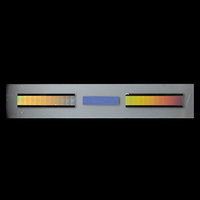
    <description>Author(s): Haoye Qin, Wenjing Lv, Junda Wang, Kaili Sun, Xinyang Mu, Zhanghua Han, Qinghua Song, and Cheng-Wei Qiu&lt;br/&gt;&lt;p&gt;An experiment shows that geometric phase of Pancharatnam-Berry metasurfaces can be preserved while their intrinsic spin duality is deliberately broken.&lt;/p&gt;&lt;img src="//cdn.journals.aps.org/journals/PRL/key_images/10.1103/4wgb-9bnj.png" width="200" height=\"100\"&gt;&lt;br/&gt;[Phys. Rev. Lett. 136, 183805] Published Fri May 08, 2026</description>
    <content:encoded><![CDATA[<p>Author(s): Haoye Qin, Wenjing Lv, Junda Wang, Kaili Sun, Xinyang Mu, Zhanghua Han, Qinghua Song, and Cheng-Wei Qiu</p><p>An experiment shows that geometric phase of Pancharatnam-Berry metasurfaces can be preserved while their intrinsic spin duality is deliberately broken.</p><img src="//cdn.journals.aps.org/journals/PRL/key_images/10.1103/4wgb-9bnj.png" width="200" height=\"100\"><br/><p>[Phys. Rev. Lett. 136, 183805] Published Fri May 08, 2026</p>]]></content:encoded>
    <dc:title>Observation of Spin-Duality Breaking in Pancharatnam-Berry Metasurfaces</dc:title>
    <dc:creator>Haoye Qin, Wenjing Lv, Junda Wang, Kaili Sun, Xinyang Mu, Zhanghua Han, Qinghua Song, and Cheng-Wei Qiu</dc:creator>
    <dc:date>2026-05-08T10:00:00+00:00</dc:date>
    <dc:rights>Personal use only, all commercial or other reuse prohibited</dc:rights>
    <dc:source>Phys. Rev. Lett. 136, 183805 (2026)</dc:source>
    <dc:type>article</dc:type>
    <dc:identifier>doi:10.1103/4wgb-9bnj</dc:identifier>
    <prism:doi>10.1103/4wgb-9bnj</prism:doi>
    <prism:publicationName>Physical Review Letters</prism:publicationName>
    <prism:volume>136</prism:volume>
    <prism:number>18</prism:number>
    <prism:publicationDate>2026-05-08T10:00:00+00:00</prism:publicationDate>
    <prism:url>http://link.aps.org/doi/10.1103/4wgb-9bnj</prism:url>
    <prism:startingPage>183805</prism:startingPage>
    <dc:subject>Atomic, Molecular, and Optical Physics</dc:subject>
    <prism:section>Atomic, Molecular, and Optical Physics</prism:section>
  </item>
  <item rdf:about="http://link.aps.org/doi/10.1103/2746-1fgh">
    <title>Airy Resonances in Photonic Crystal Superpotentials</title>
    <link>http://link.aps.org/doi/10.1103/2746-1fgh</link>
    <description>Author(s): Zeyu Zhang, Brian Gould, Maria Barsukova, and Mikael C. Rechtsman&lt;br/&gt;&lt;p&gt;Airy wave functions are associated with one of the simplest scenarios in wave mechanics: a quantum bouncing ball. In other words, they are the eigenstates of the time-independent Schrödinger equation with a linear potential. In the domain of optics, laser beams that are spatially shaped as Airy func…&lt;/p&gt;&lt;br/&gt;[Phys. Rev. Lett. 136, 183804] Published Wed May 06, 2026</description>
    <content:encoded><![CDATA[<p>Author(s): Zeyu Zhang, Brian Gould, Maria Barsukova, and Mikael C. Rechtsman</p><p>Airy wave functions are associated with one of the simplest scenarios in wave mechanics: a quantum bouncing ball. In other words, they are the eigenstates of the time-independent Schrödinger equation with a linear potential. In the domain of optics, laser beams that are spatially shaped as Airy func…</p><br/><p>[Phys. Rev. Lett. 136, 183804] Published Wed May 06, 2026</p>]]></content:encoded>
    <dc:title>Airy Resonances in Photonic Crystal Superpotentials</dc:title>
    <dc:creator>Zeyu Zhang, Brian Gould, Maria Barsukova, and Mikael C. Rechtsman</dc:creator>
    <dc:date>2026-05-06T10:00:00+00:00</dc:date>
    <dc:rights>Personal use only, all commercial or other reuse prohibited</dc:rights>
    <dc:source>Phys. Rev. Lett. 136, 183804 (2026)</dc:source>
    <dc:type>article</dc:type>
    <dc:identifier>doi:10.1103/2746-1fgh</dc:identifier>
    <prism:doi>10.1103/2746-1fgh</prism:doi>
    <prism:publicationName>Physical Review Letters</prism:publicationName>
    <prism:volume>136</prism:volume>
    <prism:number>18</prism:number>
    <prism:publicationDate>2026-05-06T10:00:00+00:00</prism:publicationDate>
    <prism:url>http://link.aps.org/doi/10.1103/2746-1fgh</prism:url>
    <prism:startingPage>183804</prism:startingPage>
    <dc:subject>Atomic, Molecular, and Optical Physics</dc:subject>
    <prism:section>Atomic, Molecular, and Optical Physics</prism:section>
  </item>
  <item rdf:about="http://link.aps.org/doi/10.1103/gd4s-fgwt">
    <title>Probing Sensitivity Near a Quantum Exceptional Point Using Waveguide Quantum Electrodynamics</title>
    <link>http://link.aps.org/doi/10.1103/gd4s-fgwt</link>
    <description>Author(s): Aziza Almanakly, Réouven Assouly, Harry Hanlim Kang, Michael Gingras, Bethany M. Niedzielski, Hannah Stickler, Mollie E. Schwartz, Kyle Serniak, Max Hays, Jeffrey A. Grover, and William D. Oliver&lt;br/&gt;&lt;p&gt;Non-Hermitian Hamiltonians with complex eigenenergies are useful tools for describing the dynamics of open quantum systems. In particular, parity and time ($\mathcal{P}\mathcal{T}$) symmetric Hamiltonians have generated interest due to the emergence of exceptional-point degeneracies, where both eige…&lt;/p&gt;&lt;br/&gt;[Phys. Rev. Lett. 136, 183601] Published Tue May 05, 2026</description>
    <content:encoded><![CDATA[<p>Author(s): Aziza Almanakly, Réouven Assouly, Harry Hanlim Kang, Michael Gingras, Bethany M. Niedzielski, Hannah Stickler, Mollie E. Schwartz, Kyle Serniak, Max Hays, Jeffrey A. Grover, and William D. Oliver</p><p>Non-Hermitian Hamiltonians with complex eigenenergies are useful tools for describing the dynamics of open quantum systems. In particular, parity and time (<math xmlns="http://www.w3.org/1998/Math/MathML" display="inline"><mrow><mi mathvariant="script">P</mi><mi mathvariant="script">T</mi></mrow></math>) symmetric Hamiltonians have generated interest due to the emergence of exceptional-point degeneracies, where both eigenenergies and eigenvec…</p><br/><p>[Phys. Rev. Lett. 136, 183601] Published Tue May 05, 2026</p>]]></content:encoded>
    <dc:title>Probing Sensitivity Near a Quantum Exceptional Point Using Waveguide Quantum Electrodynamics</dc:title>
    <dc:creator>Aziza Almanakly, Réouven Assouly, Harry Hanlim Kang, Michael Gingras, Bethany M. Niedzielski, Hannah Stickler, Mollie E. Schwartz, Kyle Serniak, Max Hays, Jeffrey A. Grover, and William D. Oliver</dc:creator>
    <dc:date>2026-05-05T10:00:00+00:00</dc:date>
    <dc:rights>Personal use only, all commercial or other reuse prohibited</dc:rights>
    <dc:source>Phys. Rev. Lett. 136, 183601 (2026)</dc:source>
    <dc:type>article</dc:type>
    <dc:identifier>doi:10.1103/gd4s-fgwt</dc:identifier>
    <prism:doi>10.1103/gd4s-fgwt</prism:doi>
    <prism:publicationName>Physical Review Letters</prism:publicationName>
    <prism:volume>136</prism:volume>
    <prism:number>18</prism:number>
    <prism:publicationDate>2026-05-05T10:00:00+00:00</prism:publicationDate>
    <prism:url>http://link.aps.org/doi/10.1103/gd4s-fgwt</prism:url>
    <prism:startingPage>183601</prism:startingPage>
    <dc:subject>Atomic, Molecular, and Optical Physics</dc:subject>
    <prism:section>Atomic, Molecular, and Optical Physics</prism:section>
  </item>
  <item rdf:about="http://link.aps.org/doi/10.1103/tc97-98f7">
    <title>Coupling of a Nuclear Transition to a Surface Acoustic Wave</title>
    <link>http://link.aps.org/doi/10.1103/tc97-98f7</link>
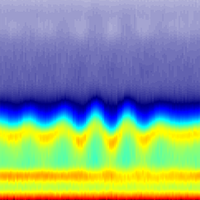
    <description>Author(s): Albert Nazeeri, Chiara Brandenstein, Chengjie Jia, Lorenzo Magrini, and Giorgio Gratta&lt;br/&gt;&lt;p&gt;Coupling a film of enriched &lt;math xmlns="http://www.w3.org/1998/Math/MathML" display="inline"&gt;&lt;msup&gt;&lt;mrow&gt;&lt;/mrow&gt;&lt;mn&gt;57&lt;/mn&gt;&lt;/msup&gt;&lt;/math&gt;Fe to a surface acoustic wave produces a comb of absorption sidebands in the Mossbauer spectrum, consistent with coherent phase modulation of the nuclear transition.&lt;/p&gt;&lt;img src="//cdn.journals.aps.org/journals/PRL/key_images/10.1103/tc97-98f7.png" width="200" height=\"100\"&gt;&lt;br/&gt;[Phys. Rev. Lett. 136, 183801] Published Tue May 05, 2026</description>
    <content:encoded><![CDATA[<p>Author(s): Albert Nazeeri, Chiara Brandenstein, Chengjie Jia, Lorenzo Magrini, and Giorgio Gratta</p><p>Coupling a film of enriched <math xmlns="http://www.w3.org/1998/Math/MathML" display="inline"><msup><mrow></mrow><mn>57</mn></msup></math>Fe to a surface acoustic wave produces a comb of absorption sidebands in the Mossbauer spectrum, consistent with coherent phase modulation of the nuclear transition.</p><img src="//cdn.journals.aps.org/journals/PRL/key_images/10.1103/tc97-98f7.png" width="200" height=\"100\"><br/><p>[Phys. Rev. Lett. 136, 183801] Published Tue May 05, 2026</p>]]></content:encoded>
    <dc:title>Coupling of a Nuclear Transition to a Surface Acoustic Wave</dc:title>
    <dc:creator>Albert Nazeeri, Chiara Brandenstein, Chengjie Jia, Lorenzo Magrini, and Giorgio Gratta</dc:creator>
    <dc:date>2026-05-05T10:00:00+00:00</dc:date>
    <dc:rights>Personal use only, all commercial or other reuse prohibited</dc:rights>
    <dc:source>Phys. Rev. Lett. 136, 183801 (2026)</dc:source>
    <dc:type>article</dc:type>
    <dc:identifier>doi:10.1103/tc97-98f7</dc:identifier>
    <prism:doi>10.1103/tc97-98f7</prism:doi>
    <prism:publicationName>Physical Review Letters</prism:publicationName>
    <prism:volume>136</prism:volume>
    <prism:number>18</prism:number>
    <prism:publicationDate>2026-05-05T10:00:00+00:00</prism:publicationDate>
    <prism:url>http://link.aps.org/doi/10.1103/tc97-98f7</prism:url>
    <prism:startingPage>183801</prism:startingPage>
    <dc:subject>Atomic, Molecular, and Optical Physics</dc:subject>
    <prism:section>Atomic, Molecular, and Optical Physics</prism:section>
  </item>
  <item rdf:about="http://link.aps.org/doi/10.1103/tlww-cyrl">
    <title>Tailoring Spin-Orbit Interaction in High Harmonic Generation via Geometric Phase</title>
    <link>http://link.aps.org/doi/10.1103/tlww-cyrl</link>
    <description>Author(s): Jianing Zhang, Xiulan Liu, Olga Smirnova, Misha Ivanov, and Liang-You Peng&lt;br/&gt;&lt;p&gt;Intense light fields with spatiotemporally structured wave fronts open new avenues for exploring nonlinear light-matter interactions in ultrafast spectroscopy and photonic technologies. Here, we report the observation of geometric phase induced spin-orbit interaction (SOI) in high harmonic generatio…&lt;/p&gt;&lt;br/&gt;[Phys. Rev. Lett. 136, 183802] Published Tue May 05, 2026</description>
    <content:encoded><![CDATA[<p>Author(s): Jianing Zhang, Xiulan Liu, Olga Smirnova, Misha Ivanov, and Liang-You Peng</p><p>Intense light fields with spatiotemporally structured wave fronts open new avenues for exploring nonlinear light-matter interactions in ultrafast spectroscopy and photonic technologies. Here, we report the observation of geometric phase induced spin-orbit interaction (SOI) in high harmonic generatio…</p><br/><p>[Phys. Rev. Lett. 136, 183802] Published Tue May 05, 2026</p>]]></content:encoded>
    <dc:title>Tailoring Spin-Orbit Interaction in High Harmonic Generation via Geometric Phase</dc:title>
    <dc:creator>Jianing Zhang, Xiulan Liu, Olga Smirnova, Misha Ivanov, and Liang-You Peng</dc:creator>
    <dc:date>2026-05-05T10:00:00+00:00</dc:date>
    <dc:rights>Personal use only, all commercial or other reuse prohibited</dc:rights>
    <dc:source>Phys. Rev. Lett. 136, 183802 (2026)</dc:source>
    <dc:type>article</dc:type>
    <dc:identifier>doi:10.1103/tlww-cyrl</dc:identifier>
    <prism:doi>10.1103/tlww-cyrl</prism:doi>
    <prism:publicationName>Physical Review Letters</prism:publicationName>
    <prism:volume>136</prism:volume>
    <prism:number>18</prism:number>
    <prism:publicationDate>2026-05-05T10:00:00+00:00</prism:publicationDate>
    <prism:url>http://link.aps.org/doi/10.1103/tlww-cyrl</prism:url>
    <prism:startingPage>183802</prism:startingPage>
    <dc:subject>Atomic, Molecular, and Optical Physics</dc:subject>
    <prism:section>Atomic, Molecular, and Optical Physics</prism:section>
  </item>
  <item rdf:about="http://link.aps.org/doi/10.1103/x3m9-182d">
    <title>Circularly Polarized Quasimonochromatic High Harmonic Generation</title>
    <link>http://link.aps.org/doi/10.1103/x3m9-182d</link>
    <description>Author(s): Xiaosong Zhu, Jie Long, Hailang Wei, Chunyang Zhai, Pengfei Lan, and Peixiang Lu&lt;br/&gt;&lt;p&gt;Quasimonochromatic (QM) coherent extreme ultraviolet (EUV) pulses have emerged as crucial tools for spectroscopic and imaging applications. Such pulses could be obtained by selectively enhancing a specific harmonic order in high-harmonic generation (HHG). However, it is still challenging to directly…&lt;/p&gt;&lt;br/&gt;[Phys. Rev. Lett. 136, 183803] Published Tue May 05, 2026</description>
    <content:encoded><![CDATA[<p>Author(s): Xiaosong Zhu, Jie Long, Hailang Wei, Chunyang Zhai, Pengfei Lan, and Peixiang Lu</p><p>Quasimonochromatic (QM) coherent extreme ultraviolet (EUV) pulses have emerged as crucial tools for spectroscopic and imaging applications. Such pulses could be obtained by selectively enhancing a specific harmonic order in high-harmonic generation (HHG). However, it is still challenging to directly…</p><br/><p>[Phys. Rev. Lett. 136, 183803] Published Tue May 05, 2026</p>]]></content:encoded>
    <dc:title>Circularly Polarized Quasimonochromatic High Harmonic Generation</dc:title>
    <dc:creator>Xiaosong Zhu, Jie Long, Hailang Wei, Chunyang Zhai, Pengfei Lan, and Peixiang Lu</dc:creator>
    <dc:date>2026-05-05T10:00:00+00:00</dc:date>
    <dc:rights>Personal use only, all commercial or other reuse prohibited</dc:rights>
    <dc:source>Phys. Rev. Lett. 136, 183803 (2026)</dc:source>
    <dc:type>article</dc:type>
    <dc:identifier>doi:10.1103/x3m9-182d</dc:identifier>
    <prism:doi>10.1103/x3m9-182d</prism:doi>
    <prism:publicationName>Physical Review Letters</prism:publicationName>
    <prism:volume>136</prism:volume>
    <prism:number>18</prism:number>
    <prism:publicationDate>2026-05-05T10:00:00+00:00</prism:publicationDate>
    <prism:url>http://link.aps.org/doi/10.1103/x3m9-182d</prism:url>
    <prism:startingPage>183803</prism:startingPage>
    <dc:subject>Atomic, Molecular, and Optical Physics</dc:subject>
    <prism:section>Atomic, Molecular, and Optical Physics</prism:section>
  </item>
  <item rdf:about="http://link.aps.org/doi/10.1103/tgtw-qnyq">
    <title>Irreversible Thermalization vs Reversible Dynamics Mediated by Anomalous Correlators: Wave Turbulence Theory and Experiments in Optical Fibers</title>
    <link>http://link.aps.org/doi/10.1103/tgtw-qnyq</link>
    <description>Author(s): T. Torres, J. Garnier, L. Zanaglia, M. Ferraro, C. Michel, V. Doya, J. Fatome, B. Kibler, S. Wabnitz, A. Picozzi, and G. Millot&lt;br/&gt;&lt;p&gt;We theoretically and experimentally investigate spontaneous self-organization in a conservative (Hamiltonian) turbulent wave system, operating far from thermodynamic equilibrium. Our system is governed by two coherently coupled nonlinear Schrödinger equations, describing the polarization evolution o…&lt;/p&gt;&lt;br/&gt;[Phys. Rev. Lett. 136, 173801] Published Wed Apr 29, 2026</description>
    <content:encoded><![CDATA[<p>Author(s): T. Torres, J. Garnier, L. Zanaglia, M. Ferraro, C. Michel, V. Doya, J. Fatome, B. Kibler, S. Wabnitz, A. Picozzi, and G. Millot</p><p>We theoretically and experimentally investigate spontaneous self-organization in a conservative (Hamiltonian) turbulent wave system, operating far from thermodynamic equilibrium. Our system is governed by two coherently coupled nonlinear Schrödinger equations, describing the polarization evolution o…</p><br/><p>[Phys. Rev. Lett. 136, 173801] Published Wed Apr 29, 2026</p>]]></content:encoded>
    <dc:title>Irreversible Thermalization vs Reversible Dynamics Mediated by Anomalous Correlators: Wave Turbulence Theory and Experiments in Optical Fibers</dc:title>
    <dc:creator>T. Torres, J. Garnier, L. Zanaglia, M. Ferraro, C. Michel, V. Doya, J. Fatome, B. Kibler, S. Wabnitz, A. Picozzi, and G. Millot</dc:creator>
    <dc:date>2026-04-29T10:00:00+00:00</dc:date>
    <dc:rights>Personal use only, all commercial or other reuse prohibited</dc:rights>
    <dc:source>Phys. Rev. Lett. 136, 173801 (2026)</dc:source>
    <dc:type>article</dc:type>
    <dc:identifier>doi:10.1103/tgtw-qnyq</dc:identifier>
    <prism:doi>10.1103/tgtw-qnyq</prism:doi>
    <prism:publicationName>Physical Review Letters</prism:publicationName>
    <prism:volume>136</prism:volume>
    <prism:number>17</prism:number>
    <prism:publicationDate>2026-04-29T10:00:00+00:00</prism:publicationDate>
    <prism:url>http://link.aps.org/doi/10.1103/tgtw-qnyq</prism:url>
    <prism:startingPage>173801</prism:startingPage>
    <dc:subject>Atomic, Molecular, and Optical Physics</dc:subject>
    <prism:section>Atomic, Molecular, and Optical Physics</prism:section>
  </item>
  <item rdf:about="http://link.aps.org/doi/10.1103/r98z-7bwj">
    <title>Spatial Phase Coherence in Femtosecond Coherent Raman Scattering</title>
    <link>http://link.aps.org/doi/10.1103/r98z-7bwj</link>
    <description>Author(s): Ali Hosseinnia, Michele Marrocco, Francesco Vergari, Meena Raveesh, Sebastian Riewer, Ashutosh Jena, Abhishek Kushwaha, Francesco Mazza, Mark Linne, Joakim Bood, and Isaac Boxx&lt;br/&gt;&lt;p&gt;Conventional femtosecond coherent laser spectroscopy predominantly focuses on the temporal phase coherence through time- or frequency-resolved methods. In this Letter, we suggest an alternative experimental framework based on spatial phase coherence. The intrinsic spectral dispersion of wave vectors…&lt;/p&gt;&lt;br/&gt;[Phys. Rev. Lett. 136, 163801] Published Wed Apr 22, 2026</description>
    <content:encoded><![CDATA[<p>Author(s): Ali Hosseinnia, Michele Marrocco, Francesco Vergari, Meena Raveesh, Sebastian Riewer, Ashutosh Jena, Abhishek Kushwaha, Francesco Mazza, Mark Linne, Joakim Bood, and Isaac Boxx</p><p>Conventional femtosecond coherent laser spectroscopy predominantly focuses on the temporal phase coherence through time- or frequency-resolved methods. In this Letter, we suggest an alternative experimental framework based on spatial phase coherence. The intrinsic spectral dispersion of wave vectors…</p><br/><p>[Phys. Rev. Lett. 136, 163801] Published Wed Apr 22, 2026</p>]]></content:encoded>
    <dc:title>Spatial Phase Coherence in Femtosecond Coherent Raman Scattering</dc:title>
    <dc:creator>Ali Hosseinnia, Michele Marrocco, Francesco Vergari, Meena Raveesh, Sebastian Riewer, Ashutosh Jena, Abhishek Kushwaha, Francesco Mazza, Mark Linne, Joakim Bood, and Isaac Boxx</dc:creator>
    <dc:date>2026-04-22T10:00:00+00:00</dc:date>
    <dc:rights>Personal use only, all commercial or other reuse prohibited</dc:rights>
    <dc:source>Phys. Rev. Lett. 136, 163801 (2026)</dc:source>
    <dc:type>article</dc:type>
    <dc:identifier>doi:10.1103/r98z-7bwj</dc:identifier>
    <prism:doi>10.1103/r98z-7bwj</prism:doi>
    <prism:publicationName>Physical Review Letters</prism:publicationName>
    <prism:volume>136</prism:volume>
    <prism:number>16</prism:number>
    <prism:publicationDate>2026-04-22T10:00:00+00:00</prism:publicationDate>
    <prism:url>http://link.aps.org/doi/10.1103/r98z-7bwj</prism:url>
    <prism:startingPage>163801</prism:startingPage>
    <dc:subject>Atomic, Molecular, and Optical Physics</dc:subject>
    <prism:section>Atomic, Molecular, and Optical Physics</prism:section>
  </item>
  <item rdf:about="http://link.aps.org/doi/10.1103/578k-kmw6">
    <title>Time-domain Measurement of Auger Electron Dynamics in Xenon and Krypton Atoms after Giant Resonance Photoionization</title>
    <link>http://link.aps.org/doi/10.1103/578k-kmw6</link>
    <description>Author(s): Mahmudul Hasan, Jingsong Gao, Hao Liang, Yiming Yuan, Zach Eisenhutt, Ming-Shian Tsai, Ming-Chang Chen, Hans Jakob Wörner, Artem Rudenko, and Meng Han&lt;br/&gt;&lt;p&gt;Attosecond soft-X-ray pump-probe spectroscopy of xenon and krypton atoms reveals two previously unobserved dynamical features in xenon that are inconsistent with lifetimes inferred from energy-domain measurements.&lt;/p&gt;&lt;img src="//cdn.journals.aps.org/journals/PRL/key_images/10.1103/578k-kmw6.png" width="200" height=\"100\"&gt;&lt;br/&gt;[Phys. Rev. Lett. 136, 163201] Published Mon Apr 20, 2026</description>
    <content:encoded><![CDATA[<p>Author(s): Mahmudul Hasan, Jingsong Gao, Hao Liang, Yiming Yuan, Zach Eisenhutt, Ming-Shian Tsai, Ming-Chang Chen, Hans Jakob Wörner, Artem Rudenko, and Meng Han</p><p>Attosecond soft-X-ray pump-probe spectroscopy of xenon and krypton atoms reveals two previously unobserved dynamical features in xenon that are inconsistent with lifetimes inferred from energy-domain measurements.</p><img src="//cdn.journals.aps.org/journals/PRL/key_images/10.1103/578k-kmw6.png" width="200" height=\"100\"><br/><p>[Phys. Rev. Lett. 136, 163201] Published Mon Apr 20, 2026</p>]]></content:encoded>
    <dc:title>Time-domain Measurement of Auger Electron Dynamics in Xenon and Krypton Atoms after Giant Resonance Photoionization</dc:title>
    <dc:creator>Mahmudul Hasan, Jingsong Gao, Hao Liang, Yiming Yuan, Zach Eisenhutt, Ming-Shian Tsai, Ming-Chang Chen, Hans Jakob Wörner, Artem Rudenko, and Meng Han</dc:creator>
    <dc:date>2026-04-20T10:00:00+00:00</dc:date>
    <dc:rights>Personal use only, all commercial or other reuse prohibited</dc:rights>
    <dc:source>Phys. Rev. Lett. 136, 163201 (2026)</dc:source>
    <dc:type>article</dc:type>
    <dc:identifier>doi:10.1103/578k-kmw6</dc:identifier>
    <prism:doi>10.1103/578k-kmw6</prism:doi>
    <prism:publicationName>Physical Review Letters</prism:publicationName>
    <prism:volume>136</prism:volume>
    <prism:number>16</prism:number>
    <prism:publicationDate>2026-04-20T10:00:00+00:00</prism:publicationDate>
    <prism:url>http://link.aps.org/doi/10.1103/578k-kmw6</prism:url>
    <prism:startingPage>163201</prism:startingPage>
    <dc:subject>Atomic, Molecular, and Optical Physics</dc:subject>
    <prism:section>Atomic, Molecular, and Optical Physics</prism:section>
  </item>
  <item rdf:about="http://link.aps.org/doi/10.1103/31w7-69c8">
    <title>Phase-Dependent Squeezing in Dual-Comb Interferometry</title>
    <link>http://link.aps.org/doi/10.1103/31w7-69c8</link>
    <description>Author(s): Daniel I. Herman, Molly Kate Kreider, Noah Lordi, Mathieu Walsh, Eugene J. Tsao, Alexander J. Lind, Matthew Heyrich, Joshua Combes, Scott A. Diddams, and Jérôme Genest&lt;br/&gt;&lt;p&gt;Manipulating the quantum noise of continuous-wave lasers through squeezing has reshaped optical interferometry. However, progress in optical frequency comb interferometry with pulsed squeezed sources has been limited, despite the role of frequency combs in ultraprecise optical metrology. Here, we in…&lt;/p&gt;&lt;br/&gt;[Phys. Rev. Lett. 136, 163601] Published Mon Apr 20, 2026</description>
    <content:encoded><![CDATA[<p>Author(s): Daniel I. Herman, Molly Kate Kreider, Noah Lordi, Mathieu Walsh, Eugene J. Tsao, Alexander J. Lind, Matthew Heyrich, Joshua Combes, Scott A. Diddams, and Jérôme Genest</p><p>Manipulating the quantum noise of continuous-wave lasers through squeezing has reshaped optical interferometry. However, progress in optical frequency comb interferometry with pulsed squeezed sources has been limited, despite the role of frequency combs in ultraprecise optical metrology. Here, we in…</p><br/><p>[Phys. Rev. Lett. 136, 163601] Published Mon Apr 20, 2026</p>]]></content:encoded>
    <dc:title>Phase-Dependent Squeezing in Dual-Comb Interferometry</dc:title>
    <dc:creator>Daniel I. Herman, Molly Kate Kreider, Noah Lordi, Mathieu Walsh, Eugene J. Tsao, Alexander J. Lind, Matthew Heyrich, Joshua Combes, Scott A. Diddams, and Jérôme Genest</dc:creator>
    <dc:date>2026-04-20T10:00:00+00:00</dc:date>
    <dc:rights>Personal use only, all commercial or other reuse prohibited</dc:rights>
    <dc:source>Phys. Rev. Lett. 136, 163601 (2026)</dc:source>
    <dc:type>article</dc:type>
    <dc:identifier>doi:10.1103/31w7-69c8</dc:identifier>
    <prism:doi>10.1103/31w7-69c8</prism:doi>
    <prism:publicationName>Physical Review Letters</prism:publicationName>
    <prism:volume>136</prism:volume>
    <prism:number>16</prism:number>
    <prism:publicationDate>2026-04-20T10:00:00+00:00</prism:publicationDate>
    <prism:url>http://link.aps.org/doi/10.1103/31w7-69c8</prism:url>
    <prism:startingPage>163601</prism:startingPage>
    <dc:subject>Atomic, Molecular, and Optical Physics</dc:subject>
    <prism:section>Atomic, Molecular, and Optical Physics</prism:section>
  </item>
  <item rdf:about="http://link.aps.org/doi/10.1103/qhj9-pc2b">
    <title>Quantum Signatures of Proper Time in Optical Ion Clocks</title>
    <link>http://link.aps.org/doi/10.1103/qhj9-pc2b</link>
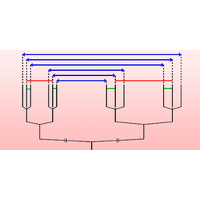
    <description>Author(s): Gabriel Sorci, Joshua Foo, Dietrich Leibfried, Christian Sanner, and Igor Pikovski&lt;br/&gt;&lt;p&gt;High-precision clocks based on quantum systems will work in a regime where a quantum description of proper time might be necessary.&lt;/p&gt;&lt;img src="//cdn.journals.aps.org/journals/PRL/key_images/10.1103/qhj9-pc2b.png" width="200" height=\"100\"&gt;&lt;br/&gt;[Phys. Rev. Lett. 136, 163602] Published Mon Apr 20, 2026</description>
    <content:encoded><![CDATA[<p>Author(s): Gabriel Sorci, Joshua Foo, Dietrich Leibfried, Christian Sanner, and Igor Pikovski</p><p>High-precision clocks based on quantum systems will work in a regime where a quantum description of proper time might be necessary.</p><img src="//cdn.journals.aps.org/journals/PRL/key_images/10.1103/qhj9-pc2b.png" width="200" height=\"100\"><br/><p>[Phys. Rev. Lett. 136, 163602] Published Mon Apr 20, 2026</p>]]></content:encoded>
    <dc:title>Quantum Signatures of Proper Time in Optical Ion Clocks</dc:title>
    <dc:creator>Gabriel Sorci, Joshua Foo, Dietrich Leibfried, Christian Sanner, and Igor Pikovski</dc:creator>
    <dc:date>2026-04-20T10:00:00+00:00</dc:date>
    <dc:rights>Personal use only, all commercial or other reuse prohibited</dc:rights>
    <dc:source>Phys. Rev. Lett. 136, 163602 (2026)</dc:source>
    <dc:type>article</dc:type>
    <dc:identifier>doi:10.1103/qhj9-pc2b</dc:identifier>
    <prism:doi>10.1103/qhj9-pc2b</prism:doi>
    <prism:publicationName>Physical Review Letters</prism:publicationName>
    <prism:volume>136</prism:volume>
    <prism:number>16</prism:number>
    <prism:publicationDate>2026-04-20T10:00:00+00:00</prism:publicationDate>
    <prism:url>http://link.aps.org/doi/10.1103/qhj9-pc2b</prism:url>
    <prism:startingPage>163602</prism:startingPage>
    <dc:subject>Atomic, Molecular, and Optical Physics</dc:subject>
    <prism:section>Atomic, Molecular, and Optical Physics</prism:section>
  </item>
  <item rdf:about="http://link.aps.org/doi/10.1103/gj3b-5ngl">
    <title>Universal Global Gates for a Fine-Structure Qubit in Strontium-88</title>
    <link>http://link.aps.org/doi/10.1103/gj3b-5ngl</link>
    <description>Author(s): Renhao Tao, Ohad Lib, Flavien Gyger, Hendrik Timme, Maximilian Ammenwerth, Immanuel Bloch, and Johannes Zeiher&lt;br/&gt;&lt;p&gt;Metastable atomic qubits are a highly promising platform for the realization of quantum computers, owing to their scalability and the possibility of converting leakage errors to erasure errors midcircuit. Here, we demonstrate and characterize a high-fidelity quantum gate set for the metastable fine-…&lt;/p&gt;&lt;br/&gt;[Phys. Rev. Lett. 136, 153602] Published Thu Apr 16, 2026</description>
    <content:encoded><![CDATA[<p>Author(s): Renhao Tao, Ohad Lib, Flavien Gyger, Hendrik Timme, Maximilian Ammenwerth, Immanuel Bloch, and Johannes Zeiher</p><p>Metastable atomic qubits are a highly promising platform for the realization of quantum computers, owing to their scalability and the possibility of converting leakage errors to erasure errors midcircuit. Here, we demonstrate and characterize a high-fidelity quantum gate set for the metastable fine-…</p><br/><p>[Phys. Rev. Lett. 136, 153602] Published Thu Apr 16, 2026</p>]]></content:encoded>
    <dc:title>Universal Global Gates for a Fine-Structure Qubit in Strontium-88</dc:title>
    <dc:creator>Renhao Tao, Ohad Lib, Flavien Gyger, Hendrik Timme, Maximilian Ammenwerth, Immanuel Bloch, and Johannes Zeiher</dc:creator>
    <dc:date>2026-04-16T10:00:00+00:00</dc:date>
    <dc:rights>Personal use only, all commercial or other reuse prohibited</dc:rights>
    <dc:source>Phys. Rev. Lett. 136, 153602 (2026)</dc:source>
    <dc:type>article</dc:type>
    <dc:identifier>doi:10.1103/gj3b-5ngl</dc:identifier>
    <prism:doi>10.1103/gj3b-5ngl</prism:doi>
    <prism:publicationName>Physical Review Letters</prism:publicationName>
    <prism:volume>136</prism:volume>
    <prism:number>15</prism:number>
    <prism:publicationDate>2026-04-16T10:00:00+00:00</prism:publicationDate>
    <prism:url>http://link.aps.org/doi/10.1103/gj3b-5ngl</prism:url>
    <prism:startingPage>153602</prism:startingPage>
    <dc:subject>Atomic, Molecular, and Optical Physics</dc:subject>
    <prism:section>Atomic, Molecular, and Optical Physics</prism:section>
  </item>
  <item rdf:about="http://link.aps.org/doi/10.1103/z4xn-m554">
    <title>Photoelectron Holography of a Heteronuclear Molecule</title>
    <link>http://link.aps.org/doi/10.1103/z4xn-m554</link>
    <description>Author(s): Marko Haertelt, WenZhuo Wu, XuanYang Lai, Andrei Yu. Naumov, XiaoJun Liu, Paul B. Corkum, and André Staudte&lt;br/&gt;&lt;p&gt;We present strong-field photoelectron holography measurements of hydrogen chloride (HCl) that resolve subcycle dynamics in two ionization channels associated with the HOMO and HOMO-1 orbitals. The holograms in the photoelectron momentum distributions show different cutoffs and interference fringes t…&lt;/p&gt;&lt;br/&gt;[Phys. Rev. Lett. 136, 153202] Published Wed Apr 15, 2026</description>
    <content:encoded><![CDATA[<p>Author(s): Marko Haertelt, WenZhuo Wu, XuanYang Lai, Andrei Yu. Naumov, XiaoJun Liu, Paul B. Corkum, and André Staudte</p><p>We present strong-field photoelectron holography measurements of hydrogen chloride (HCl) that resolve subcycle dynamics in two ionization channels associated with the HOMO and HOMO-1 orbitals. The holograms in the photoelectron momentum distributions show different cutoffs and interference fringes t…</p><br/><p>[Phys. Rev. Lett. 136, 153202] Published Wed Apr 15, 2026</p>]]></content:encoded>
    <dc:title>Photoelectron Holography of a Heteronuclear Molecule</dc:title>
    <dc:creator>Marko Haertelt, WenZhuo Wu, XuanYang Lai, Andrei Yu. Naumov, XiaoJun Liu, Paul B. Corkum, and André Staudte</dc:creator>
    <dc:date>2026-04-15T10:00:00+00:00</dc:date>
    <dc:rights>Personal use only, all commercial or other reuse prohibited</dc:rights>
    <dc:source>Phys. Rev. Lett. 136, 153202 (2026)</dc:source>
    <dc:type>article</dc:type>
    <dc:identifier>doi:10.1103/z4xn-m554</dc:identifier>
    <prism:doi>10.1103/z4xn-m554</prism:doi>
    <prism:publicationName>Physical Review Letters</prism:publicationName>
    <prism:volume>136</prism:volume>
    <prism:number>15</prism:number>
    <prism:publicationDate>2026-04-15T10:00:00+00:00</prism:publicationDate>
    <prism:url>http://link.aps.org/doi/10.1103/z4xn-m554</prism:url>
    <prism:startingPage>153202</prism:startingPage>
    <dc:subject>Atomic, Molecular, and Optical Physics</dc:subject>
    <prism:section>Atomic, Molecular, and Optical Physics</prism:section>
  </item>
  <item rdf:about="http://link.aps.org/doi/10.1103/2t2k-3ftx">
    <title>Observing Spatial Charge and Spin Correlations in a Strongly Interacting Fermi Gas</title>
    <link>http://link.aps.org/doi/10.1103/2t2k-3ftx</link>
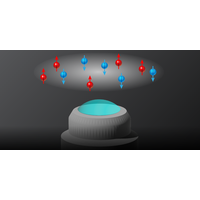
    <description>Author(s): Cyprien Daix, Maxime Dixmerias, Yuan-Yao He, Joris Verstraten, Tim de Jongh, Bruno Peaudecerf, Shiwei Zhang, and Tarik Yefsah&lt;br/&gt;&lt;p&gt;Snapshot measurements of cold-atom gases reveal hidden spin correlations that could force an update of some superconductivity theories.&lt;/p&gt;&lt;img src="//cdn.journals.aps.org/journals/PRL/key_images/10.1103/2t2k-3ftx.png" width="200" height=\"100\"&gt;&lt;br/&gt;[Phys. Rev. Lett. 136, 153402] Published Wed Apr 15, 2026</description>
    <content:encoded><![CDATA[<p>Author(s): Cyprien Daix, Maxime Dixmerias, Yuan-Yao He, Joris Verstraten, Tim de Jongh, Bruno Peaudecerf, Shiwei Zhang, and Tarik Yefsah</p><p>Snapshot measurements of cold-atom gases reveal hidden spin correlations that could force an update of some superconductivity theories.</p><img src="//cdn.journals.aps.org/journals/PRL/key_images/10.1103/2t2k-3ftx.png" width="200" height=\"100\"><br/><p>[Phys. Rev. Lett. 136, 153402] Published Wed Apr 15, 2026</p>]]></content:encoded>
    <dc:title>Observing Spatial Charge and Spin Correlations in a Strongly Interacting Fermi Gas</dc:title>
    <dc:creator>Cyprien Daix, Maxime Dixmerias, Yuan-Yao He, Joris Verstraten, Tim de Jongh, Bruno Peaudecerf, Shiwei Zhang, and Tarik Yefsah</dc:creator>
    <dc:date>2026-04-15T10:00:00+00:00</dc:date>
    <dc:rights>Personal use only, all commercial or other reuse prohibited</dc:rights>
    <dc:source>Phys. Rev. Lett. 136, 153402 (2026)</dc:source>
    <dc:type>article</dc:type>
    <dc:identifier>doi:10.1103/2t2k-3ftx</dc:identifier>
    <prism:doi>10.1103/2t2k-3ftx</prism:doi>
    <prism:publicationName>Physical Review Letters</prism:publicationName>
    <prism:volume>136</prism:volume>
    <prism:number>15</prism:number>
    <prism:publicationDate>2026-04-15T10:00:00+00:00</prism:publicationDate>
    <prism:url>http://link.aps.org/doi/10.1103/2t2k-3ftx</prism:url>
    <prism:startingPage>153402</prism:startingPage>
    <dc:subject>Atomic, Molecular, and Optical Physics</dc:subject>
    <prism:section>Atomic, Molecular, and Optical Physics</prism:section>
  </item>
  <item rdf:about="http://link.aps.org/doi/10.1103/9tb2-bx6r">
    <title>Transient Phase Sensing in a Three-Photon Rydberg Ladder Scheme</title>
    <link>http://link.aps.org/doi/10.1103/9tb2-bx6r</link>
    <description>Author(s): Stephanie M. Bohaichuk, Vijin Venu, Florian Christaller, and James P. Shaffer&lt;br/&gt;&lt;p&gt;Although Rydberg atoms have shown promise for use in novel types of radio frequency (rf) receivers, they have generally not been considered phase sensitive without the use of closed-loop interferometry or auxiliary rf fields. Here, we show that the high coherency of a narrow-linewidth three-photon l…&lt;/p&gt;&lt;br/&gt;[Phys. Rev. Lett. 136, 153201] Published Tue Apr 14, 2026</description>
    <content:encoded><![CDATA[<p>Author(s): Stephanie M. Bohaichuk, Vijin Venu, Florian Christaller, and James P. Shaffer</p><p>Although Rydberg atoms have shown promise for use in novel types of radio frequency (rf) receivers, they have generally not been considered phase sensitive without the use of closed-loop interferometry or auxiliary rf fields. Here, we show that the high coherency of a narrow-linewidth three-photon l…</p><br/><p>[Phys. Rev. Lett. 136, 153201] Published Tue Apr 14, 2026</p>]]></content:encoded>
    <dc:title>Transient Phase Sensing in a Three-Photon Rydberg Ladder Scheme</dc:title>
    <dc:creator>Stephanie M. Bohaichuk, Vijin Venu, Florian Christaller, and James P. Shaffer</dc:creator>
    <dc:date>2026-04-14T10:00:00+00:00</dc:date>
    <dc:rights>Personal use only, all commercial or other reuse prohibited</dc:rights>
    <dc:source>Phys. Rev. Lett. 136, 153201 (2026)</dc:source>
    <dc:type>article</dc:type>
    <dc:identifier>doi:10.1103/9tb2-bx6r</dc:identifier>
    <prism:doi>10.1103/9tb2-bx6r</prism:doi>
    <prism:publicationName>Physical Review Letters</prism:publicationName>
    <prism:volume>136</prism:volume>
    <prism:number>15</prism:number>
    <prism:publicationDate>2026-04-14T10:00:00+00:00</prism:publicationDate>
    <prism:url>http://link.aps.org/doi/10.1103/9tb2-bx6r</prism:url>
    <prism:startingPage>153201</prism:startingPage>
    <dc:subject>Atomic, Molecular, and Optical Physics</dc:subject>
    <prism:section>Atomic, Molecular, and Optical Physics</prism:section>
  </item>
  <item rdf:about="http://link.aps.org/doi/10.1103/1ppc-pl4k">
    <title>Equation of State for Turbulence in the Gross-Pitaevskii Model</title>
    <link>http://link.aps.org/doi/10.1103/1ppc-pl4k</link>
    <description>Author(s): Gevorg Martirosyan, Kazuya Fujimoto, and Nir Navon&lt;br/&gt;&lt;p&gt;We report the numerical observation of a far-from-equilibrium equation of state (EOS) in the Gross-Pitaevskii (GP) model. We first show that the momentum distribution of the turbulent cascade is well described by wave-turbulent kinetic theory in the appropriate limits. Calculating the energy and par…&lt;/p&gt;&lt;br/&gt;[Phys. Rev. Lett. 136, 153401] Published Tue Apr 14, 2026</description>
    <content:encoded><![CDATA[<p>Author(s): Gevorg Martirosyan, Kazuya Fujimoto, and Nir Navon</p><p>We report the numerical observation of a far-from-equilibrium equation of state (EOS) in the Gross-Pitaevskii (GP) model. We first show that the momentum distribution of the turbulent cascade is well described by wave-turbulent kinetic theory in the appropriate limits. Calculating the energy and par…</p><br/><p>[Phys. Rev. Lett. 136, 153401] Published Tue Apr 14, 2026</p>]]></content:encoded>
    <dc:title>Equation of State for Turbulence in the Gross-Pitaevskii Model</dc:title>
    <dc:creator>Gevorg Martirosyan, Kazuya Fujimoto, and Nir Navon</dc:creator>
    <dc:date>2026-04-14T10:00:00+00:00</dc:date>
    <dc:rights>Personal use only, all commercial or other reuse prohibited</dc:rights>
    <dc:source>Phys. Rev. Lett. 136, 153401 (2026)</dc:source>
    <dc:type>article</dc:type>
    <dc:identifier>doi:10.1103/1ppc-pl4k</dc:identifier>
    <prism:doi>10.1103/1ppc-pl4k</prism:doi>
    <prism:publicationName>Physical Review Letters</prism:publicationName>
    <prism:volume>136</prism:volume>
    <prism:number>15</prism:number>
    <prism:publicationDate>2026-04-14T10:00:00+00:00</prism:publicationDate>
    <prism:url>http://link.aps.org/doi/10.1103/1ppc-pl4k</prism:url>
    <prism:startingPage>153401</prism:startingPage>
    <dc:subject>Atomic, Molecular, and Optical Physics</dc:subject>
    <prism:section>Atomic, Molecular, and Optical Physics</prism:section>
  </item>
  <item rdf:about="http://link.aps.org/doi/10.1103/gjfq-k9dv">
    <title>Experimental Observation of Negative Weak Values for the Time Atoms Spend in the Excited State as a Photon Is Transmitted</title>
    <link>http://link.aps.org/doi/10.1103/gjfq-k9dv</link>
    <description>Author(s): Daniela Angulo, Kyle Thompson, Vida-Michelle Nixon, Andy Jiao, Howard M. Wiseman, and Aephraim M. Steinberg&lt;br/&gt;&lt;p&gt;When a photon traverses a cloud of atoms without scattering, how much time does it spend as an atomic excitation? To address this question, we used the cross-Kerr effect to weakly probe the degree of atomic excitation caused by a transmitted resonant “signal” photon by measuring the phase shift indu…&lt;/p&gt;&lt;br/&gt;[Phys. Rev. Lett. 136, 153601] Published Mon Apr 13, 2026</description>
    <content:encoded><![CDATA[<p>Author(s): Daniela Angulo, Kyle Thompson, Vida-Michelle Nixon, Andy Jiao, Howard M. Wiseman, and Aephraim M. Steinberg</p><p>When a photon traverses a cloud of atoms without scattering, how much time does it spend as an atomic excitation? To address this question, we used the cross-Kerr effect to weakly probe the degree of atomic excitation caused by a transmitted resonant “signal” photon by measuring the phase shift indu…</p><br/><p>[Phys. Rev. Lett. 136, 153601] Published Mon Apr 13, 2026</p>]]></content:encoded>
    <dc:title>Experimental Observation of Negative Weak Values for the Time Atoms Spend in the Excited State as a Photon Is Transmitted</dc:title>
    <dc:creator>Daniela Angulo, Kyle Thompson, Vida-Michelle Nixon, Andy Jiao, Howard M. Wiseman, and Aephraim M. Steinberg</dc:creator>
    <dc:date>2026-04-13T10:00:00+00:00</dc:date>
    <dc:rights>Personal use only, all commercial or other reuse prohibited</dc:rights>
    <dc:source>Phys. Rev. Lett. 136, 153601 (2026)</dc:source>
    <dc:type>article</dc:type>
    <dc:identifier>doi:10.1103/gjfq-k9dv</dc:identifier>
    <prism:doi>10.1103/gjfq-k9dv</prism:doi>
    <prism:publicationName>Physical Review Letters</prism:publicationName>
    <prism:volume>136</prism:volume>
    <prism:number>15</prism:number>
    <prism:publicationDate>2026-04-13T10:00:00+00:00</prism:publicationDate>
    <prism:url>http://link.aps.org/doi/10.1103/gjfq-k9dv</prism:url>
    <prism:startingPage>153601</prism:startingPage>
    <dc:subject>Atomic, Molecular, and Optical Physics</dc:subject>
    <prism:section>Atomic, Molecular, and Optical Physics</prism:section>
  </item>
  <item rdf:about="http://link.aps.org/doi/10.1103/6qn5-7rm8">
    <title>Observation of QED Effects, Breit Interaction, and Electron Correlation in Highly Charged Au Ions Produced by a High-Power Laser</title>
    <link>http://link.aps.org/doi/10.1103/6qn5-7rm8</link>
    <description>Author(s): Bubo Ma &lt;em&gt;et al.&lt;/em&gt;&lt;br/&gt;&lt;p&gt;We report on measurements of extreme ultraviolet (EUV) radiation from highly charged gold ions in laser-produced plasma to investigate the quantum electrodynamics (QED) effects, Breit interaction, and electron correlation (EC) effects which play a crucial role in determining the energy levels of hig…&lt;/p&gt;&lt;br/&gt;[Phys. Rev. Lett. 136, 143201] Published Fri Apr 10, 2026</description>
    <content:encoded><![CDATA[<p>Author(s): Bubo Ma <em>et al.</em></p><p>We report on measurements of extreme ultraviolet (EUV) radiation from highly charged gold ions in laser-produced plasma to investigate the quantum electrodynamics (QED) effects, Breit interaction, and electron correlation (EC) effects which play a crucial role in determining the energy levels of hig…</p><br/><p>[Phys. Rev. Lett. 136, 143201] Published Fri Apr 10, 2026</p>]]></content:encoded>
    <dc:title>Observation of QED Effects, Breit Interaction, and Electron Correlation in Highly Charged Au Ions Produced by a High-Power Laser</dc:title>
    <dc:creator>Bubo Ma &lt;em&gt;et al.&lt;/em&gt;</dc:creator>
    <dc:date>2026-04-10T10:00:00+00:00</dc:date>
    <dc:rights>Personal use only, all commercial or other reuse prohibited</dc:rights>
    <dc:source>Phys. Rev. Lett. 136, 143201 (2026)</dc:source>
    <dc:type>article</dc:type>
    <dc:identifier>doi:10.1103/6qn5-7rm8</dc:identifier>
    <prism:doi>10.1103/6qn5-7rm8</prism:doi>
    <prism:publicationName>Physical Review Letters</prism:publicationName>
    <prism:volume>136</prism:volume>
    <prism:number>14</prism:number>
    <prism:publicationDate>2026-04-10T10:00:00+00:00</prism:publicationDate>
    <prism:url>http://link.aps.org/doi/10.1103/6qn5-7rm8</prism:url>
    <prism:startingPage>143201</prism:startingPage>
    <dc:subject>Atomic, Molecular, and Optical Physics</dc:subject>
    <prism:section>Atomic, Molecular, and Optical Physics</prism:section>
  </item>
  <item rdf:about="http://link.aps.org/doi/10.1103/2c2j-qhkd">
    <title>Wavefront Mapping for Absolute Atom Interferometry</title>
    <link>http://link.aps.org/doi/10.1103/2c2j-qhkd</link>
    <description>Author(s): Joseph Junca, John Kitching, and William McGehee&lt;br/&gt;&lt;p&gt;Wavefront distortions are a leading source of systematic uncertainty in light-pulse atom interferometry, limiting absolute measurements of gravitational acceleration at the $30\text{  }\mathrm{nm}/{\mathrm{s}}^{2}$ level. Here, we demonstrate &lt;i&gt;in situ&lt;/i&gt; spatially resolved measurement of the interferome…&lt;/p&gt;&lt;br/&gt;[Phys. Rev. Lett. 136, 143402] Published Fri Apr 10, 2026</description>
    <content:encoded><![CDATA[<p>Author(s): Joseph Junca, John Kitching, and William McGehee</p><p>Wavefront distortions are a leading source of systematic uncertainty in light-pulse atom interferometry, limiting absolute measurements of gravitational acceleration at the <math xmlns="http://www.w3.org/1998/Math/MathML" display="inline"><mrow><mn>30</mn><mtext>  </mtext><mi>nm</mi><mo>/</mo><msup><mrow><mi mathvariant="normal">s</mi></mrow><mrow><mn>2</mn></mrow></msup></mrow></math> level. Here, we demonstrate <i>in situ</i> spatially resolved measurement of the interferometer phase in a Mach-Zehnder atom…</p><br/><p>[Phys. Rev. Lett. 136, 143402] Published Fri Apr 10, 2026</p>]]></content:encoded>
    <dc:title>Wavefront Mapping for Absolute Atom Interferometry</dc:title>
    <dc:creator>Joseph Junca, John Kitching, and William McGehee</dc:creator>
    <dc:date>2026-04-10T10:00:00+00:00</dc:date>
    <dc:rights>Personal use only, all commercial or other reuse prohibited</dc:rights>
    <dc:source>Phys. Rev. Lett. 136, 143402 (2026)</dc:source>
    <dc:type>article</dc:type>
    <dc:identifier>doi:10.1103/2c2j-qhkd</dc:identifier>
    <prism:doi>10.1103/2c2j-qhkd</prism:doi>
    <prism:publicationName>Physical Review Letters</prism:publicationName>
    <prism:volume>136</prism:volume>
    <prism:number>14</prism:number>
    <prism:publicationDate>2026-04-10T10:00:00+00:00</prism:publicationDate>
    <prism:url>http://link.aps.org/doi/10.1103/2c2j-qhkd</prism:url>
    <prism:startingPage>143402</prism:startingPage>
    <dc:subject>Atomic, Molecular, and Optical Physics</dc:subject>
    <prism:section>Atomic, Molecular, and Optical Physics</prism:section>
  </item>
  <item rdf:about="http://link.aps.org/doi/10.1103/t4xb-6x3z">
    <title>Fate of the Fermi Surface Coupled to a Single-Wave-Vector Cavity Mode</title>
    <link>http://link.aps.org/doi/10.1103/t4xb-6x3z</link>
    <description>Author(s): Bernhard Frank, Michele Pini, Johannes Lang, and Francesco Piazza&lt;br/&gt;&lt;p&gt;The electromagnetic field of standing-wave or ring cavities induces a spatially modulated, infinite-range interaction between atoms in an ultracold Fermi gas, with a single wavelength comparable to the Fermi length. This interaction has no analog in other systems of itinerant particles and has so fa…&lt;/p&gt;&lt;br/&gt;[Phys. Rev. Lett. 136, 143403] Published Fri Apr 10, 2026</description>
    <content:encoded><![CDATA[<p>Author(s): Bernhard Frank, Michele Pini, Johannes Lang, and Francesco Piazza</p><p>The electromagnetic field of standing-wave or ring cavities induces a spatially modulated, infinite-range interaction between atoms in an ultracold Fermi gas, with a single wavelength comparable to the Fermi length. This interaction has no analog in other systems of itinerant particles and has so fa…</p><br/><p>[Phys. Rev. Lett. 136, 143403] Published Fri Apr 10, 2026</p>]]></content:encoded>
    <dc:title>Fate of the Fermi Surface Coupled to a Single-Wave-Vector Cavity Mode</dc:title>
    <dc:creator>Bernhard Frank, Michele Pini, Johannes Lang, and Francesco Piazza</dc:creator>
    <dc:date>2026-04-10T10:00:00+00:00</dc:date>
    <dc:rights>Personal use only, all commercial or other reuse prohibited</dc:rights>
    <dc:source>Phys. Rev. Lett. 136, 143403 (2026)</dc:source>
    <dc:type>article</dc:type>
    <dc:identifier>doi:10.1103/t4xb-6x3z</dc:identifier>
    <prism:doi>10.1103/t4xb-6x3z</prism:doi>
    <prism:publicationName>Physical Review Letters</prism:publicationName>
    <prism:volume>136</prism:volume>
    <prism:number>14</prism:number>
    <prism:publicationDate>2026-04-10T10:00:00+00:00</prism:publicationDate>
    <prism:url>http://link.aps.org/doi/10.1103/t4xb-6x3z</prism:url>
    <prism:startingPage>143403</prism:startingPage>
    <dc:subject>Atomic, Molecular, and Optical Physics</dc:subject>
    <prism:section>Atomic, Molecular, and Optical Physics</prism:section>
  </item>
  <item rdf:about="http://link.aps.org/doi/10.1103/v6jq-m6sk">
    <title>Fully Collective Superradiant Lasing with Vanishing Sensitivity to Cavity Length Vibrations</title>
    <link>http://link.aps.org/doi/10.1103/v6jq-m6sk</link>
    <description>Author(s): Jarrod T. Reilly, Simon B. Jäger, John Cooper, and Murray J. Holland&lt;br/&gt;&lt;p&gt;To date, realization of a continuous-wave active atomic clock has been elusive, primarily due to parasitic heating from spontaneous emission while repumping the atoms. Here, we propose a solution to this problem by replacing the random emission with coupling to an auxiliary cavity, making repumping …&lt;/p&gt;&lt;br/&gt;[Phys. Rev. Lett. 136, 143803] Published Thu Apr 09, 2026</description>
    <content:encoded><![CDATA[<p>Author(s): Jarrod T. Reilly, Simon B. Jäger, John Cooper, and Murray J. Holland</p><p>To date, realization of a continuous-wave active atomic clock has been elusive, primarily due to parasitic heating from spontaneous emission while repumping the atoms. Here, we propose a solution to this problem by replacing the random emission with coupling to an auxiliary cavity, making repumping …</p><br/><p>[Phys. Rev. Lett. 136, 143803] Published Thu Apr 09, 2026</p>]]></content:encoded>
    <dc:title>Fully Collective Superradiant Lasing with Vanishing Sensitivity to Cavity Length Vibrations</dc:title>
    <dc:creator>Jarrod T. Reilly, Simon B. Jäger, John Cooper, and Murray J. Holland</dc:creator>
    <dc:date>2026-04-09T10:00:00+00:00</dc:date>
    <dc:rights>Personal use only, all commercial or other reuse prohibited</dc:rights>
    <dc:source>Phys. Rev. Lett. 136, 143803 (2026)</dc:source>
    <dc:type>article</dc:type>
    <dc:identifier>doi:10.1103/v6jq-m6sk</dc:identifier>
    <prism:doi>10.1103/v6jq-m6sk</prism:doi>
    <prism:publicationName>Physical Review Letters</prism:publicationName>
    <prism:volume>136</prism:volume>
    <prism:number>14</prism:number>
    <prism:publicationDate>2026-04-09T10:00:00+00:00</prism:publicationDate>
    <prism:url>http://link.aps.org/doi/10.1103/v6jq-m6sk</prism:url>
    <prism:startingPage>143803</prism:startingPage>
    <dc:subject>Atomic, Molecular, and Optical Physics</dc:subject>
    <prism:section>Atomic, Molecular, and Optical Physics</prism:section>
  </item>
  <item rdf:about="http://link.aps.org/doi/10.1103/vrl8-bpmz">
    <title>High-Precision Penning Trap Spectroscopy of the Ground State Spin Structure of ${\mathrm{HD}}^{+}$</title>
    <link>http://link.aps.org/doi/10.1103/vrl8-bpmz</link>
    <description>Author(s): Charlotte M. König, Matthew Bohman, Fabian Heiße, Jonathan Morgner, Tim Sailer, Bingsheng Tu, Klaus Blaum, Sven Sturm, Dimitar Bakalov, Hugo D. Nogueira, Jean-Philippe Karr, Ossama Kullie, and Stephan Schiller&lt;br/&gt;&lt;p&gt;Precise spectroscopy of a simple molecular ion opens a new path toward stringent tests of quantum electrodynamics.&lt;/p&gt;&lt;img src="//cdn.journals.aps.org/journals/PRL/key_images/10.1103/vrl8-bpmz.png" width="200" height=\"100\"&gt;&lt;br/&gt;[Phys. Rev. Lett. 136, 143002] Published Wed Apr 08, 2026</description>
    <content:encoded><![CDATA[<p>Author(s): Charlotte M. König, Matthew Bohman, Fabian Heiße, Jonathan Morgner, Tim Sailer, Bingsheng Tu, Klaus Blaum, Sven Sturm, Dimitar Bakalov, Hugo D. Nogueira, Jean-Philippe Karr, Ossama Kullie, and Stephan Schiller</p><p>Precise spectroscopy of a simple molecular ion opens a new path toward stringent tests of quantum electrodynamics.</p><img src="//cdn.journals.aps.org/journals/PRL/key_images/10.1103/vrl8-bpmz.png" width="200" height=\"100\"><br/><p>[Phys. Rev. Lett. 136, 143002] Published Wed Apr 08, 2026</p>]]></content:encoded>
    <dc:title>High-Precision Penning Trap Spectroscopy of the Ground State Spin Structure of ${\mathrm{HD}}^{+}$</dc:title>
    <dc:creator>Charlotte M. König, Matthew Bohman, Fabian Heiße, Jonathan Morgner, Tim Sailer, Bingsheng Tu, Klaus Blaum, Sven Sturm, Dimitar Bakalov, Hugo D. Nogueira, Jean-Philippe Karr, Ossama Kullie, and Stephan Schiller</dc:creator>
    <dc:date>2026-04-08T10:00:00+00:00</dc:date>
    <dc:rights>Personal use only, all commercial or other reuse prohibited</dc:rights>
    <dc:source>Phys. Rev. Lett. 136, 143002 (2026)</dc:source>
    <dc:type>article</dc:type>
    <dc:identifier>doi:10.1103/vrl8-bpmz</dc:identifier>
    <prism:doi>10.1103/vrl8-bpmz</prism:doi>
    <prism:publicationName>Physical Review Letters</prism:publicationName>
    <prism:volume>136</prism:volume>
    <prism:number>14</prism:number>
    <prism:publicationDate>2026-04-08T10:00:00+00:00</prism:publicationDate>
    <prism:url>http://link.aps.org/doi/10.1103/vrl8-bpmz</prism:url>
    <prism:startingPage>143002</prism:startingPage>
    <dc:subject>Atomic, Molecular, and Optical Physics</dc:subject>
    <prism:section>Atomic, Molecular, and Optical Physics</prism:section>
  </item>
  <item rdf:about="http://link.aps.org/doi/10.1103/8k7b-nk4p">
    <title>Magnetic-Free Optical Mode Degeneracy Lifting in Lithium Niobate Microring Resonators</title>
    <link>http://link.aps.org/doi/10.1103/8k7b-nk4p</link>
    <description>Author(s): Xin-Biao Xu, Zheng-Xu Zhu, Yuan-Hao Yang, Jia-Qi Wang, Yu Zeng, Jia-Hua Zou, Juanjuan Lu, Yan-Lei Zhang, Weiting Wang, Guang-Can Guo, Luyan Sun, and Chang-Ling Zou&lt;br/&gt;&lt;p&gt;Breaking time-reversal symmetry in integrated photonics without magnetic fields remains a fundamental challenge. We demonstrate phonon-induced nonreciprocity through direct lifting of forward-backward mode degeneracy in microring resonators. Coherent acousto-optic coupling generates differential AC …&lt;/p&gt;&lt;br/&gt;[Phys. Rev. Lett. 136, 143802] Published Wed Apr 08, 2026</description>
    <content:encoded><![CDATA[<p>Author(s): Xin-Biao Xu, Zheng-Xu Zhu, Yuan-Hao Yang, Jia-Qi Wang, Yu Zeng, Jia-Hua Zou, Juanjuan Lu, Yan-Lei Zhang, Weiting Wang, Guang-Can Guo, Luyan Sun, and Chang-Ling Zou</p><p>Breaking time-reversal symmetry in integrated photonics without magnetic fields remains a fundamental challenge. We demonstrate phonon-induced nonreciprocity through direct lifting of forward-backward mode degeneracy in microring resonators. Coherent acousto-optic coupling generates differential AC …</p><br/><p>[Phys. Rev. Lett. 136, 143802] Published Wed Apr 08, 2026</p>]]></content:encoded>
    <dc:title>Magnetic-Free Optical Mode Degeneracy Lifting in Lithium Niobate Microring Resonators</dc:title>
    <dc:creator>Xin-Biao Xu, Zheng-Xu Zhu, Yuan-Hao Yang, Jia-Qi Wang, Yu Zeng, Jia-Hua Zou, Juanjuan Lu, Yan-Lei Zhang, Weiting Wang, Guang-Can Guo, Luyan Sun, and Chang-Ling Zou</dc:creator>
    <dc:date>2026-04-08T10:00:00+00:00</dc:date>
    <dc:rights>Personal use only, all commercial or other reuse prohibited</dc:rights>
    <dc:source>Phys. Rev. Lett. 136, 143802 (2026)</dc:source>
    <dc:type>article</dc:type>
    <dc:identifier>doi:10.1103/8k7b-nk4p</dc:identifier>
    <prism:doi>10.1103/8k7b-nk4p</prism:doi>
    <prism:publicationName>Physical Review Letters</prism:publicationName>
    <prism:volume>136</prism:volume>
    <prism:number>14</prism:number>
    <prism:publicationDate>2026-04-08T10:00:00+00:00</prism:publicationDate>
    <prism:url>http://link.aps.org/doi/10.1103/8k7b-nk4p</prism:url>
    <prism:startingPage>143802</prism:startingPage>
    <dc:subject>Atomic, Molecular, and Optical Physics</dc:subject>
    <prism:section>Atomic, Molecular, and Optical Physics</prism:section>
  </item>
  <item rdf:about="http://link.aps.org/doi/10.1103/by4s-xbbn">
    <title>Strain-Engineered Nanoscale Spin Polarization Reversal in Diamond Nitrogen-Vacancy Centers</title>
    <link>http://link.aps.org/doi/10.1103/by4s-xbbn</link>
    <description>Author(s): Zhixian Liu, Jiahao Sun, Ganyu Xu, Bo Yang, Yuhang Guo, Yu Wang, Cunliang Xin, Hongfang Zuo, Mengqi Wang, and Ya Wang&lt;br/&gt;&lt;p&gt;The ability to control solid-state quantum emitters is fundamental to advancing quantum technologies. The performance of these systems is fundamentally governed by their spin-dependent photodynamics, yet conventional control methods using cavities offer limited access to key nonradiative processes. …&lt;/p&gt;&lt;br/&gt;[Phys. Rev. Lett. 136, 143001] Published Mon Apr 06, 2026</description>
    <content:encoded><![CDATA[<p>Author(s): Zhixian Liu, Jiahao Sun, Ganyu Xu, Bo Yang, Yuhang Guo, Yu Wang, Cunliang Xin, Hongfang Zuo, Mengqi Wang, and Ya Wang</p><p>The ability to control solid-state quantum emitters is fundamental to advancing quantum technologies. The performance of these systems is fundamentally governed by their spin-dependent photodynamics, yet conventional control methods using cavities offer limited access to key nonradiative processes. …</p><br/><p>[Phys. Rev. Lett. 136, 143001] Published Mon Apr 06, 2026</p>]]></content:encoded>
    <dc:title>Strain-Engineered Nanoscale Spin Polarization Reversal in Diamond Nitrogen-Vacancy Centers</dc:title>
    <dc:creator>Zhixian Liu, Jiahao Sun, Ganyu Xu, Bo Yang, Yuhang Guo, Yu Wang, Cunliang Xin, Hongfang Zuo, Mengqi Wang, and Ya Wang</dc:creator>
    <dc:date>2026-04-06T10:00:00+00:00</dc:date>
    <dc:rights>Personal use only, all commercial or other reuse prohibited</dc:rights>
    <dc:source>Phys. Rev. Lett. 136, 143001 (2026)</dc:source>
    <dc:type>article</dc:type>
    <dc:identifier>doi:10.1103/by4s-xbbn</dc:identifier>
    <prism:doi>10.1103/by4s-xbbn</prism:doi>
    <prism:publicationName>Physical Review Letters</prism:publicationName>
    <prism:volume>136</prism:volume>
    <prism:number>14</prism:number>
    <prism:publicationDate>2026-04-06T10:00:00+00:00</prism:publicationDate>
    <prism:url>http://link.aps.org/doi/10.1103/by4s-xbbn</prism:url>
    <prism:startingPage>143001</prism:startingPage>
    <dc:subject>Atomic, Molecular, and Optical Physics</dc:subject>
    <prism:section>Atomic, Molecular, and Optical Physics</prism:section>
  </item>
  <item rdf:about="http://link.aps.org/doi/10.1103/h3zm-rnnx">
    <title>Microscopy of Cavity-Induced Density-Wave Ordering in Ultracold Gases</title>
    <link>http://link.aps.org/doi/10.1103/h3zm-rnnx</link>
    <description>Author(s): Tabea Bühler, Aurélien Fabre, Gaia Bolognini, Zeyang Xue, Timo Zwettler, Giulia Del Pace, and Jean-Philippe Brantut&lt;br/&gt;&lt;p&gt;A new microscope captures how atoms rearrange themselves when they are illuminated inside an optical cavity.&lt;/p&gt;&lt;img src="//cdn.journals.aps.org/journals/PRL/key_images/10.1103/h3zm-rnnx.png" width="200" height=\"100\"&gt;&lt;br/&gt;[Phys. Rev. Lett. 136, 143401] Published Mon Apr 06, 2026</description>
    <content:encoded><![CDATA[<p>Author(s): Tabea Bühler, Aurélien Fabre, Gaia Bolognini, Zeyang Xue, Timo Zwettler, Giulia Del Pace, and Jean-Philippe Brantut</p><p>A new microscope captures how atoms rearrange themselves when they are illuminated inside an optical cavity.</p><img src="//cdn.journals.aps.org/journals/PRL/key_images/10.1103/h3zm-rnnx.png" width="200" height=\"100\"><br/><p>[Phys. Rev. Lett. 136, 143401] Published Mon Apr 06, 2026</p>]]></content:encoded>
    <dc:title>Microscopy of Cavity-Induced Density-Wave Ordering in Ultracold Gases</dc:title>
    <dc:creator>Tabea Bühler, Aurélien Fabre, Gaia Bolognini, Zeyang Xue, Timo Zwettler, Giulia Del Pace, and Jean-Philippe Brantut</dc:creator>
    <dc:date>2026-04-06T10:00:00+00:00</dc:date>
    <dc:rights>Personal use only, all commercial or other reuse prohibited</dc:rights>
    <dc:source>Phys. Rev. Lett. 136, 143401 (2026)</dc:source>
    <dc:type>article</dc:type>
    <dc:identifier>doi:10.1103/h3zm-rnnx</dc:identifier>
    <prism:doi>10.1103/h3zm-rnnx</prism:doi>
    <prism:publicationName>Physical Review Letters</prism:publicationName>
    <prism:volume>136</prism:volume>
    <prism:number>14</prism:number>
    <prism:publicationDate>2026-04-06T10:00:00+00:00</prism:publicationDate>
    <prism:url>http://link.aps.org/doi/10.1103/h3zm-rnnx</prism:url>
    <prism:startingPage>143401</prism:startingPage>
    <dc:subject>Atomic, Molecular, and Optical Physics</dc:subject>
    <prism:section>Atomic, Molecular, and Optical Physics</prism:section>
  </item>
  <item rdf:about="http://link.aps.org/doi/10.1103/2s1m-y9bd">
    <title>Full-Counting Statistics and Quantum Information of Dispersive Readout with a Squeezed Environment</title>
    <link>http://link.aps.org/doi/10.1103/2s1m-y9bd</link>
    <description>Author(s): Ming Li, JunYan Luo, Gloria Platero, and Georg Engelhardt&lt;br/&gt;&lt;p&gt;Motivated by the importance of dispersive readout in quantum technology, we study a prototypical dispersive readout setup that is probed by a squeezed vacuum in a time-reversal-symmetric fashion. To this end, we develop a full-counting-statistics framework for dispersive readout and analyze its meas…&lt;/p&gt;&lt;br/&gt;[Phys. Rev. Lett. 136, 143601] Published Mon Apr 06, 2026</description>
    <content:encoded><![CDATA[<p>Author(s): Ming Li, JunYan Luo, Gloria Platero, and Georg Engelhardt</p><p>Motivated by the importance of dispersive readout in quantum technology, we study a prototypical dispersive readout setup that is probed by a squeezed vacuum in a time-reversal-symmetric fashion. To this end, we develop a full-counting-statistics framework for dispersive readout and analyze its meas…</p><br/><p>[Phys. Rev. Lett. 136, 143601] Published Mon Apr 06, 2026</p>]]></content:encoded>
    <dc:title>Full-Counting Statistics and Quantum Information of Dispersive Readout with a Squeezed Environment</dc:title>
    <dc:creator>Ming Li, JunYan Luo, Gloria Platero, and Georg Engelhardt</dc:creator>
    <dc:date>2026-04-06T10:00:00+00:00</dc:date>
    <dc:rights>Personal use only, all commercial or other reuse prohibited</dc:rights>
    <dc:source>Phys. Rev. Lett. 136, 143601 (2026)</dc:source>
    <dc:type>article</dc:type>
    <dc:identifier>doi:10.1103/2s1m-y9bd</dc:identifier>
    <prism:doi>10.1103/2s1m-y9bd</prism:doi>
    <prism:publicationName>Physical Review Letters</prism:publicationName>
    <prism:volume>136</prism:volume>
    <prism:number>14</prism:number>
    <prism:publicationDate>2026-04-06T10:00:00+00:00</prism:publicationDate>
    <prism:url>http://link.aps.org/doi/10.1103/2s1m-y9bd</prism:url>
    <prism:startingPage>143601</prism:startingPage>
    <dc:subject>Atomic, Molecular, and Optical Physics</dc:subject>
    <prism:section>Atomic, Molecular, and Optical Physics</prism:section>
  </item>
  <item rdf:about="http://link.aps.org/doi/10.1103/kd8v-fykm">
    <title>Non-Line-of-Sight Single-Pixel Imaging Using Polarization Speckle Modulation</title>
    <link>http://link.aps.org/doi/10.1103/kd8v-fykm</link>
    <description>Author(s): Yijun Zhou, Wenwen Li, Wei Li, Xin Huang, Chen Dai, Zhong-Pei Xiao, Zheng-Ping Li, Feihu Xu, and Jian-Wei Pan&lt;br/&gt;&lt;p&gt;Non-line-of-sight (NLOS) imaging aims to recover hidden scenes outside the direct line of sight, holding great promise for broad applications. Despite notable advancements, current methods are restricted to the manipulation of temporal or spatial degree of light. Here, we propose and demonstrate pol…&lt;/p&gt;&lt;br/&gt;[Phys. Rev. Lett. 136, 143801] Published Mon Apr 06, 2026</description>
    <content:encoded><![CDATA[<p>Author(s): Yijun Zhou, Wenwen Li, Wei Li, Xin Huang, Chen Dai, Zhong-Pei Xiao, Zheng-Ping Li, Feihu Xu, and Jian-Wei Pan</p><p>Non-line-of-sight (NLOS) imaging aims to recover hidden scenes outside the direct line of sight, holding great promise for broad applications. Despite notable advancements, current methods are restricted to the manipulation of temporal or spatial degree of light. Here, we propose and demonstrate pol…</p><br/><p>[Phys. Rev. Lett. 136, 143801] Published Mon Apr 06, 2026</p>]]></content:encoded>
    <dc:title>Non-Line-of-Sight Single-Pixel Imaging Using Polarization Speckle Modulation</dc:title>
    <dc:creator>Yijun Zhou, Wenwen Li, Wei Li, Xin Huang, Chen Dai, Zhong-Pei Xiao, Zheng-Ping Li, Feihu Xu, and Jian-Wei Pan</dc:creator>
    <dc:date>2026-04-06T10:00:00+00:00</dc:date>
    <dc:rights>Personal use only, all commercial or other reuse prohibited</dc:rights>
    <dc:source>Phys. Rev. Lett. 136, 143801 (2026)</dc:source>
    <dc:type>article</dc:type>
    <dc:identifier>doi:10.1103/kd8v-fykm</dc:identifier>
    <prism:doi>10.1103/kd8v-fykm</prism:doi>
    <prism:publicationName>Physical Review Letters</prism:publicationName>
    <prism:volume>136</prism:volume>
    <prism:number>14</prism:number>
    <prism:publicationDate>2026-04-06T10:00:00+00:00</prism:publicationDate>
    <prism:url>http://link.aps.org/doi/10.1103/kd8v-fykm</prism:url>
    <prism:startingPage>143801</prism:startingPage>
    <dc:subject>Atomic, Molecular, and Optical Physics</dc:subject>
    <prism:section>Atomic, Molecular, and Optical Physics</prism:section>
  </item>
  <item rdf:about="http://link.aps.org/doi/10.1103/36n5-fkb2">
    <title>Hyperpolarized Molecular Nuclear Spins Achieve Magnetic Amplification</title>
    <link>http://link.aps.org/doi/10.1103/36n5-fkb2</link>
    <description>Author(s): Shengbang Zhou, Qing Li, Yi Ren, Jingyan Xu, Raphael Kircher, Danila A. Barskiy, Dmitry Budker, Min Jiang, and Xinhua Peng&lt;br/&gt;&lt;p&gt;The use of nuclear spins as physical sensing systems is disadvantaged by their low signal responsivity, particularly when compared to sensing techniques based on electron spins. This primarily results from the small nuclear gyromagnetic ratio and the difficulties in achieving high spin polarization.…&lt;/p&gt;&lt;br/&gt;[Phys. Rev. Lett. 136, 133201] Published Thu Apr 02, 2026</description>
    <content:encoded><![CDATA[<p>Author(s): Shengbang Zhou, Qing Li, Yi Ren, Jingyan Xu, Raphael Kircher, Danila A. Barskiy, Dmitry Budker, Min Jiang, and Xinhua Peng</p><p>The use of nuclear spins as physical sensing systems is disadvantaged by their low signal responsivity, particularly when compared to sensing techniques based on electron spins. This primarily results from the small nuclear gyromagnetic ratio and the difficulties in achieving high spin polarization.…</p><br/><p>[Phys. Rev. Lett. 136, 133201] Published Thu Apr 02, 2026</p>]]></content:encoded>
    <dc:title>Hyperpolarized Molecular Nuclear Spins Achieve Magnetic Amplification</dc:title>
    <dc:creator>Shengbang Zhou, Qing Li, Yi Ren, Jingyan Xu, Raphael Kircher, Danila A. Barskiy, Dmitry Budker, Min Jiang, and Xinhua Peng</dc:creator>
    <dc:date>2026-04-02T10:00:00+00:00</dc:date>
    <dc:rights>Personal use only, all commercial or other reuse prohibited</dc:rights>
    <dc:source>Phys. Rev. Lett. 136, 133201 (2026)</dc:source>
    <dc:type>article</dc:type>
    <dc:identifier>doi:10.1103/36n5-fkb2</dc:identifier>
    <prism:doi>10.1103/36n5-fkb2</prism:doi>
    <prism:publicationName>Physical Review Letters</prism:publicationName>
    <prism:volume>136</prism:volume>
    <prism:number>13</prism:number>
    <prism:publicationDate>2026-04-02T10:00:00+00:00</prism:publicationDate>
    <prism:url>http://link.aps.org/doi/10.1103/36n5-fkb2</prism:url>
    <prism:startingPage>133201</prism:startingPage>
    <dc:subject>Atomic, Molecular, and Optical Physics</dc:subject>
    <prism:section>Atomic, Molecular, and Optical Physics</prism:section>
  </item>
  <item rdf:about="http://link.aps.org/doi/10.1103/w9qc-rczf">
    <title>High Compression Blue-Detuned Magneto-Optical Trap of Polyatomic Molecules</title>
    <link>http://link.aps.org/doi/10.1103/w9qc-rczf</link>
    <description>Author(s): Christian Hallas, Grace K. Li, Nathaniel B. Vilas, Paige Robichaud, Loïc Anderegg, and John M. Doyle&lt;br/&gt;&lt;p&gt;Researchers have improved trapping of polyatomic molecules while also controlling their collisions—two important advances for ultracold polyatomic molecular physics.&lt;/p&gt;&lt;img src="//cdn.journals.aps.org/journals/PRL/key_images/10.1103/w9qc-rczf.png" width="200" height=\"100\"&gt;&lt;br/&gt;[Phys. Rev. Lett. 136, 133402] Published Wed Apr 01, 2026</description>
    <content:encoded><![CDATA[<p>Author(s): Christian Hallas, Grace K. Li, Nathaniel B. Vilas, Paige Robichaud, Loïc Anderegg, and John M. Doyle</p><p>Researchers have improved trapping of polyatomic molecules while also controlling their collisions—two important advances for ultracold polyatomic molecular physics.</p><img src="//cdn.journals.aps.org/journals/PRL/key_images/10.1103/w9qc-rczf.png" width="200" height=\"100\"><br/><p>[Phys. Rev. Lett. 136, 133402] Published Wed Apr 01, 2026</p>]]></content:encoded>
    <dc:title>High Compression Blue-Detuned Magneto-Optical Trap of Polyatomic Molecules</dc:title>
    <dc:creator>Christian Hallas, Grace K. Li, Nathaniel B. Vilas, Paige Robichaud, Loïc Anderegg, and John M. Doyle</dc:creator>
    <dc:date>2026-04-01T10:00:00+00:00</dc:date>
    <dc:rights>Personal use only, all commercial or other reuse prohibited</dc:rights>
    <dc:source>Phys. Rev. Lett. 136, 133402 (2026)</dc:source>
    <dc:type>article</dc:type>
    <dc:identifier>doi:10.1103/w9qc-rczf</dc:identifier>
    <prism:doi>10.1103/w9qc-rczf</prism:doi>
    <prism:publicationName>Physical Review Letters</prism:publicationName>
    <prism:volume>136</prism:volume>
    <prism:number>13</prism:number>
    <prism:publicationDate>2026-04-01T10:00:00+00:00</prism:publicationDate>
    <prism:url>http://link.aps.org/doi/10.1103/w9qc-rczf</prism:url>
    <prism:startingPage>133402</prism:startingPage>
    <dc:subject>Atomic, Molecular, and Optical Physics</dc:subject>
    <prism:section>Atomic, Molecular, and Optical Physics</prism:section>
  </item>
  <item rdf:about="http://link.aps.org/doi/10.1103/dkvp-41zt">
    <title>Gauge-Tunable Uniform Delocalization of Higher-Order Topological Photonic Modes</title>
    <link>http://link.aps.org/doi/10.1103/dkvp-41zt</link>
    <description>Author(s): Shiqi Li, Yu He, Yunlang Wang, Shiyin Jia, Haotian Li, Renwen Huang, Hui Huang, Hongling Cai, Minghui Lu, Biye Xie, Peng Zhan, and Zhenlin Wang&lt;br/&gt;&lt;p&gt;Higher-order topological photonic systems typically host corner states that are exponentially localized. Here we uncover a distinct regime of uniformly delocalized higher-order topological modes, emerging from the interplay of multiple spatially varying Dirac mass terms under chiral symmetry. These …&lt;/p&gt;&lt;br/&gt;[Phys. Rev. Lett. 136, 133801] Published Tue Mar 31, 2026</description>
    <content:encoded><![CDATA[<p>Author(s): Shiqi Li, Yu He, Yunlang Wang, Shiyin Jia, Haotian Li, Renwen Huang, Hui Huang, Hongling Cai, Minghui Lu, Biye Xie, Peng Zhan, and Zhenlin Wang</p><p>Higher-order topological photonic systems typically host corner states that are exponentially localized. Here we uncover a distinct regime of uniformly delocalized higher-order topological modes, emerging from the interplay of multiple spatially varying Dirac mass terms under chiral symmetry. These …</p><br/><p>[Phys. Rev. Lett. 136, 133801] Published Tue Mar 31, 2026</p>]]></content:encoded>
    <dc:title>Gauge-Tunable Uniform Delocalization of Higher-Order Topological Photonic Modes</dc:title>
    <dc:creator>Shiqi Li, Yu He, Yunlang Wang, Shiyin Jia, Haotian Li, Renwen Huang, Hui Huang, Hongling Cai, Minghui Lu, Biye Xie, Peng Zhan, and Zhenlin Wang</dc:creator>
    <dc:date>2026-03-31T10:00:00+00:00</dc:date>
    <dc:rights>Personal use only, all commercial or other reuse prohibited</dc:rights>
    <dc:source>Phys. Rev. Lett. 136, 133801 (2026)</dc:source>
    <dc:type>article</dc:type>
    <dc:identifier>doi:10.1103/dkvp-41zt</dc:identifier>
    <prism:doi>10.1103/dkvp-41zt</prism:doi>
    <prism:publicationName>Physical Review Letters</prism:publicationName>
    <prism:volume>136</prism:volume>
    <prism:number>13</prism:number>
    <prism:publicationDate>2026-03-31T10:00:00+00:00</prism:publicationDate>
    <prism:url>http://link.aps.org/doi/10.1103/dkvp-41zt</prism:url>
    <prism:startingPage>133801</prism:startingPage>
    <dc:subject>Atomic, Molecular, and Optical Physics</dc:subject>
    <prism:section>Atomic, Molecular, and Optical Physics</prism:section>
  </item>
  <item rdf:about="http://link.aps.org/doi/10.1103/g494-rj5k">
    <title>Superfluid Fraction of a 2D Bose-Einstein Condensate in a Triangular Lattice</title>
    <link>http://link.aps.org/doi/10.1103/g494-rj5k</link>
    <description>Author(s): F. Rabec, G. Brochier, S. Wattellier, G. Chauveau, Y. Li, S. Nascimbene, J. Dalibard, and J. Beugnon&lt;br/&gt;&lt;p&gt;The superfluid fraction of a 2D Bose-Einstein condensate is experimentally determined for the first time.&lt;/p&gt;&lt;img src="//cdn.journals.aps.org/journals/PRL/key_images/10.1103/g494-rj5k.png" width="200" height=\"100\"&gt;&lt;br/&gt;[Phys. Rev. Lett. 136, 133401] Published Mon Mar 30, 2026</description>
    <content:encoded><![CDATA[<p>Author(s): F. Rabec, G. Brochier, S. Wattellier, G. Chauveau, Y. Li, S. Nascimbene, J. Dalibard, and J. Beugnon</p><p>The superfluid fraction of a 2D Bose-Einstein condensate is experimentally determined for the first time.</p><img src="//cdn.journals.aps.org/journals/PRL/key_images/10.1103/g494-rj5k.png" width="200" height=\"100\"><br/><p>[Phys. Rev. Lett. 136, 133401] Published Mon Mar 30, 2026</p>]]></content:encoded>
    <dc:title>Superfluid Fraction of a 2D Bose-Einstein Condensate in a Triangular Lattice</dc:title>
    <dc:creator>F. Rabec, G. Brochier, S. Wattellier, G. Chauveau, Y. Li, S. Nascimbene, J. Dalibard, and J. Beugnon</dc:creator>
    <dc:date>2026-03-30T10:00:00+00:00</dc:date>
    <dc:rights>Personal use only, all commercial or other reuse prohibited</dc:rights>
    <dc:source>Phys. Rev. Lett. 136, 133401 (2026)</dc:source>
    <dc:type>article</dc:type>
    <dc:identifier>doi:10.1103/g494-rj5k</dc:identifier>
    <prism:doi>10.1103/g494-rj5k</prism:doi>
    <prism:publicationName>Physical Review Letters</prism:publicationName>
    <prism:volume>136</prism:volume>
    <prism:number>13</prism:number>
    <prism:publicationDate>2026-03-30T10:00:00+00:00</prism:publicationDate>
    <prism:url>http://link.aps.org/doi/10.1103/g494-rj5k</prism:url>
    <prism:startingPage>133401</prism:startingPage>
    <dc:subject>Atomic, Molecular, and Optical Physics</dc:subject>
    <prism:section>Atomic, Molecular, and Optical Physics</prism:section>
  </item>
  <item rdf:about="http://link.aps.org/doi/10.1103/q14j-65qd">
    <title>Origin and Emergent Features of Many-Body Dynamical Localization</title>
    <link>http://link.aps.org/doi/10.1103/q14j-65qd</link>
    <description>Author(s): Ang Yang, Zekai Chen, Yanliang Guo, Manuele Landini, Hanns-Christoph Nägerl, and Lei Ying&lt;br/&gt;&lt;p&gt;The question of whether interactions can break dynamical localization in quantum kicked rotor systems has been the subject of a long-standing debate. Here, we introduce an extended mapping from the kicked Lieb-Liniger model to a high-dimensional lattice model and reveal universal features: on-site p…&lt;/p&gt;&lt;br/&gt;[Phys. Rev. Lett. 136, 123402] Published Fri Mar 27, 2026</description>
    <content:encoded><![CDATA[<p>Author(s): Ang Yang, Zekai Chen, Yanliang Guo, Manuele Landini, Hanns-Christoph Nägerl, and Lei Ying</p><p>The question of whether interactions can break dynamical localization in quantum kicked rotor systems has been the subject of a long-standing debate. Here, we introduce an extended mapping from the kicked Lieb-Liniger model to a high-dimensional lattice model and reveal universal features: on-site p…</p><br/><p>[Phys. Rev. Lett. 136, 123402] Published Fri Mar 27, 2026</p>]]></content:encoded>
    <dc:title>Origin and Emergent Features of Many-Body Dynamical Localization</dc:title>
    <dc:creator>Ang Yang, Zekai Chen, Yanliang Guo, Manuele Landini, Hanns-Christoph Nägerl, and Lei Ying</dc:creator>
    <dc:date>2026-03-27T10:00:00+00:00</dc:date>
    <dc:rights>Personal use only, all commercial or other reuse prohibited</dc:rights>
    <dc:source>Phys. Rev. Lett. 136, 123402 (2026)</dc:source>
    <dc:type>article</dc:type>
    <dc:identifier>doi:10.1103/q14j-65qd</dc:identifier>
    <prism:doi>10.1103/q14j-65qd</prism:doi>
    <prism:publicationName>Physical Review Letters</prism:publicationName>
    <prism:volume>136</prism:volume>
    <prism:number>12</prism:number>
    <prism:publicationDate>2026-03-27T10:00:00+00:00</prism:publicationDate>
    <prism:url>http://link.aps.org/doi/10.1103/q14j-65qd</prism:url>
    <prism:startingPage>123402</prism:startingPage>
    <dc:subject>Atomic, Molecular, and Optical Physics</dc:subject>
    <prism:section>Atomic, Molecular, and Optical Physics</prism:section>
  </item>
  <item rdf:about="http://link.aps.org/doi/10.1103/rk2z-ymkn">
    <title>Unified Model for Breathing Solitons in Fiber Lasers: Mechanisms across Below- and Above-Threshold Regimes</title>
    <link>http://link.aps.org/doi/10.1103/rk2z-ymkn</link>
    <description>Author(s): Ying Zhang, Bo Yuan, Junsong Peng, Xiuqi Wu, Yulin Sheng, Yuxuan Ren, Christophe Finot, Sonia Boscolo, and Heping Zeng&lt;br/&gt;&lt;p&gt;The emergence of breathing solitons in mode-locked lasers presents a fundamental challenge for the theoretical modeling of mode locking, with the mechanisms underlying below- and above-threshold breathing solitons, and the origins of their distinct nonlinear dynamics, remaining poorly understood. He…&lt;/p&gt;&lt;br/&gt;[Phys. Rev. Lett. 136, 123801] Published Fri Mar 27, 2026</description>
    <content:encoded><![CDATA[<p>Author(s): Ying Zhang, Bo Yuan, Junsong Peng, Xiuqi Wu, Yulin Sheng, Yuxuan Ren, Christophe Finot, Sonia Boscolo, and Heping Zeng</p><p>The emergence of breathing solitons in mode-locked lasers presents a fundamental challenge for the theoretical modeling of mode locking, with the mechanisms underlying below- and above-threshold breathing solitons, and the origins of their distinct nonlinear dynamics, remaining poorly understood. He…</p><br/><p>[Phys. Rev. Lett. 136, 123801] Published Fri Mar 27, 2026</p>]]></content:encoded>
    <dc:title>Unified Model for Breathing Solitons in Fiber Lasers: Mechanisms across Below- and Above-Threshold Regimes</dc:title>
    <dc:creator>Ying Zhang, Bo Yuan, Junsong Peng, Xiuqi Wu, Yulin Sheng, Yuxuan Ren, Christophe Finot, Sonia Boscolo, and Heping Zeng</dc:creator>
    <dc:date>2026-03-27T10:00:00+00:00</dc:date>
    <dc:rights>Personal use only, all commercial or other reuse prohibited</dc:rights>
    <dc:source>Phys. Rev. Lett. 136, 123801 (2026)</dc:source>
    <dc:type>article</dc:type>
    <dc:identifier>doi:10.1103/rk2z-ymkn</dc:identifier>
    <prism:doi>10.1103/rk2z-ymkn</prism:doi>
    <prism:publicationName>Physical Review Letters</prism:publicationName>
    <prism:volume>136</prism:volume>
    <prism:number>12</prism:number>
    <prism:publicationDate>2026-03-27T10:00:00+00:00</prism:publicationDate>
    <prism:url>http://link.aps.org/doi/10.1103/rk2z-ymkn</prism:url>
    <prism:startingPage>123801</prism:startingPage>
    <dc:subject>Atomic, Molecular, and Optical Physics</dc:subject>
    <prism:section>Atomic, Molecular, and Optical Physics</prism:section>
  </item>
  <item rdf:about="http://link.aps.org/doi/10.1103/c8yq-fzn5">
    <title>On-the-Fly Nonadiabatic Molecular Dynamics Reveals Dissociation Mechanisms of Multiply Charged Molecules</title>
    <link>http://link.aps.org/doi/10.1103/c8yq-fzn5</link>
    <description>Author(s): Dong Liu, Chenkai Zhang, Xintai Hao, Xiaorui Xue, Maomao Gong, Songbin Zhang, Jiaqi Zhou, Chuncai Kong, Zhimao Yang, Xueguang Ren, and Tao Yang&lt;br/&gt;&lt;p&gt;Understanding the dissociation of multiply charged molecules is crucial yet challenging due to complex multibody correlations and nonadiabatic dynamics. Conventional &lt;i&gt;ab initio&lt;/i&gt; molecular dynamics simulations commonly struggle to capture excited electronic states and intricate electron-nuclear couplin…&lt;/p&gt;&lt;br/&gt;[Phys. Rev. Lett. 136, 123202] Published Wed Mar 25, 2026</description>
    <content:encoded><![CDATA[<p>Author(s): Dong Liu, Chenkai Zhang, Xintai Hao, Xiaorui Xue, Maomao Gong, Songbin Zhang, Jiaqi Zhou, Chuncai Kong, Zhimao Yang, Xueguang Ren, and Tao Yang</p><p>Understanding the dissociation of multiply charged molecules is crucial yet challenging due to complex multibody correlations and nonadiabatic dynamics. Conventional <i>ab initio</i> molecular dynamics simulations commonly struggle to capture excited electronic states and intricate electron-nuclear couplin…</p><br/><p>[Phys. Rev. Lett. 136, 123202] Published Wed Mar 25, 2026</p>]]></content:encoded>
    <dc:title>On-the-Fly Nonadiabatic Molecular Dynamics Reveals Dissociation Mechanisms of Multiply Charged Molecules</dc:title>
    <dc:creator>Dong Liu, Chenkai Zhang, Xintai Hao, Xiaorui Xue, Maomao Gong, Songbin Zhang, Jiaqi Zhou, Chuncai Kong, Zhimao Yang, Xueguang Ren, and Tao Yang</dc:creator>
    <dc:date>2026-03-25T10:00:00+00:00</dc:date>
    <dc:rights>Personal use only, all commercial or other reuse prohibited</dc:rights>
    <dc:source>Phys. Rev. Lett. 136, 123202 (2026)</dc:source>
    <dc:type>article</dc:type>
    <dc:identifier>doi:10.1103/c8yq-fzn5</dc:identifier>
    <prism:doi>10.1103/c8yq-fzn5</prism:doi>
    <prism:publicationName>Physical Review Letters</prism:publicationName>
    <prism:volume>136</prism:volume>
    <prism:number>12</prism:number>
    <prism:publicationDate>2026-03-25T10:00:00+00:00</prism:publicationDate>
    <prism:url>http://link.aps.org/doi/10.1103/c8yq-fzn5</prism:url>
    <prism:startingPage>123202</prism:startingPage>
    <dc:subject>Atomic, Molecular, and Optical Physics</dc:subject>
    <prism:section>Atomic, Molecular, and Optical Physics</prism:section>
  </item>
  <item rdf:about="http://link.aps.org/doi/10.1103/2pgk-c484">
    <title>Nonadiabatic Strong-Field Photoionization Revisited</title>
    <link>http://link.aps.org/doi/10.1103/2pgk-c484</link>
    <description>Author(s): Spencer Walker, Abdulaziz Alqasem, Abraham Camacho Garibay, Cosmin I. Blaga, Alexandra S. Landsman, and Louis F. DiMauro&lt;br/&gt;&lt;p&gt;We measure strong field ionization of cesium atoms, observing a robust feature near $2{U}_{\mathrm{p}}$ in the photoelectron spectrum, which we call the intermediate energy structure (IES). Using a Coulomb-corrected strong-field approximation, we show it arises from electrons born with large inward …&lt;/p&gt;&lt;br/&gt;[Phys. Rev. Lett. 136, 123203] Published Wed Mar 25, 2026</description>
    <content:encoded><![CDATA[<p>Author(s): Spencer Walker, Abdulaziz Alqasem, Abraham Camacho Garibay, Cosmin I. Blaga, Alexandra S. Landsman, and Louis F. DiMauro</p><p>We measure strong field ionization of cesium atoms, observing a robust feature near <math xmlns="http://www.w3.org/1998/Math/MathML" display="inline"><mrow><mn>2</mn><msub><mrow><mi>U</mi></mrow><mrow><mi mathvariant="normal">p</mi></mrow></msub></mrow></math> in the photoelectron spectrum, which we call the intermediate energy structure (IES). Using a Coulomb-corrected strong-field approximation, we show it arises from electrons born with large inward velocities that …</p><br/><p>[Phys. Rev. Lett. 136, 123203] Published Wed Mar 25, 2026</p>]]></content:encoded>
    <dc:title>Nonadiabatic Strong-Field Photoionization Revisited</dc:title>
    <dc:creator>Spencer Walker, Abdulaziz Alqasem, Abraham Camacho Garibay, Cosmin I. Blaga, Alexandra S. Landsman, and Louis F. DiMauro</dc:creator>
    <dc:date>2026-03-25T10:00:00+00:00</dc:date>
    <dc:rights>Personal use only, all commercial or other reuse prohibited</dc:rights>
    <dc:source>Phys. Rev. Lett. 136, 123203 (2026)</dc:source>
    <dc:type>article</dc:type>
    <dc:identifier>doi:10.1103/2pgk-c484</dc:identifier>
    <prism:doi>10.1103/2pgk-c484</prism:doi>
    <prism:publicationName>Physical Review Letters</prism:publicationName>
    <prism:volume>136</prism:volume>
    <prism:number>12</prism:number>
    <prism:publicationDate>2026-03-25T10:00:00+00:00</prism:publicationDate>
    <prism:url>http://link.aps.org/doi/10.1103/2pgk-c484</prism:url>
    <prism:startingPage>123203</prism:startingPage>
    <dc:subject>Atomic, Molecular, and Optical Physics</dc:subject>
    <prism:section>Atomic, Molecular, and Optical Physics</prism:section>
  </item>
  <item rdf:about="http://link.aps.org/doi/10.1103/y1q9-pnlc">
    <title>Shot-to-Shot Displacement Noise in State-Expansion Protocols with Inverted Potentials</title>
    <link>http://link.aps.org/doi/10.1103/y1q9-pnlc</link>
    <description>Author(s): Giuseppe Paolo Seta, Louisiane Devaud, Lorenzo Dania, Lukas Novotny, and Martin Frimmer&lt;br/&gt;&lt;p&gt;Optically levitated nanoparticles are promising candidates for the generation of macroscopic quantum states of mechanical motion. Protocols to generate such states expose the particle to a succession of different potentials. Limited reproducibility of the alignment of these potentials across experim…&lt;/p&gt;&lt;br/&gt;[Phys. Rev. Lett. 136, 123602] Published Wed Mar 25, 2026</description>
    <content:encoded><![CDATA[<p>Author(s): Giuseppe Paolo Seta, Louisiane Devaud, Lorenzo Dania, Lukas Novotny, and Martin Frimmer</p><p>Optically levitated nanoparticles are promising candidates for the generation of macroscopic quantum states of mechanical motion. Protocols to generate such states expose the particle to a succession of different potentials. Limited reproducibility of the alignment of these potentials across experim…</p><br/><p>[Phys. Rev. Lett. 136, 123602] Published Wed Mar 25, 2026</p>]]></content:encoded>
    <dc:title>Shot-to-Shot Displacement Noise in State-Expansion Protocols with Inverted Potentials</dc:title>
    <dc:creator>Giuseppe Paolo Seta, Louisiane Devaud, Lorenzo Dania, Lukas Novotny, and Martin Frimmer</dc:creator>
    <dc:date>2026-03-25T10:00:00+00:00</dc:date>
    <dc:rights>Personal use only, all commercial or other reuse prohibited</dc:rights>
    <dc:source>Phys. Rev. Lett. 136, 123602 (2026)</dc:source>
    <dc:type>article</dc:type>
    <dc:identifier>doi:10.1103/y1q9-pnlc</dc:identifier>
    <prism:doi>10.1103/y1q9-pnlc</prism:doi>
    <prism:publicationName>Physical Review Letters</prism:publicationName>
    <prism:volume>136</prism:volume>
    <prism:number>12</prism:number>
    <prism:publicationDate>2026-03-25T10:00:00+00:00</prism:publicationDate>
    <prism:url>http://link.aps.org/doi/10.1103/y1q9-pnlc</prism:url>
    <prism:startingPage>123602</prism:startingPage>
    <dc:subject>Atomic, Molecular, and Optical Physics</dc:subject>
    <prism:section>Atomic, Molecular, and Optical Physics</prism:section>
  </item>
  <item rdf:about="http://link.aps.org/doi/10.1103/w99d-d6nt">
    <title>Temperature-Dependent Single- and Double-Quantum Relaxation of Negatively Charged Boron Vacancies in Hexagonal Boron Nitride</title>
    <link>http://link.aps.org/doi/10.1103/w99d-d6nt</link>
    <description>Author(s): Lin-Ke Xie, Wei Liu, Kaiyu Huang, Nai-Jie Guo, Jun-You Liu, Yu-Hang Ma, Ya-Qi Wu, Yi-Tao Wang, Zhao-An Wang, Xiao-Dong Zeng, Jia-Ming Ren, Chun Ao, Shuo Deng, Haifei Lu, Jian-Shun Tang, Chuan-Feng Li, and Guang-Can Guo&lt;br/&gt;&lt;p&gt;The negatively charged boron vacancy (${V}_{\text{B}}^{−}$) in two-dimensional (2D) hexagonal boron nitride (hBN) has emerged as a promising candidate for quantum sensing. The coherence time of ${V}_{\text{B}}^{−}$ spins which coherent quantum sensing resides in is limited by spin-phonon interaction…&lt;/p&gt;&lt;br/&gt;[Phys. Rev. Lett. 136, 123603] Published Wed Mar 25, 2026</description>
    <content:encoded><![CDATA[<p>Author(s): Lin-Ke Xie, Wei Liu, Kaiyu Huang, Nai-Jie Guo, Jun-You Liu, Yu-Hang Ma, Ya-Qi Wu, Yi-Tao Wang, Zhao-An Wang, Xiao-Dong Zeng, Jia-Ming Ren, Chun Ao, Shuo Deng, Haifei Lu, Jian-Shun Tang, Chuan-Feng Li, and Guang-Can Guo</p><p>The negatively charged boron vacancy (<math xmlns="http://www.w3.org/1998/Math/MathML" display="inline"><msubsup><mi>V</mi><mtext>B</mtext><mo>−</mo></msubsup></math>) in two-dimensional (2D) hexagonal boron nitride (hBN) has emerged as a promising candidate for quantum sensing. The coherence time of <math xmlns="http://www.w3.org/1998/Math/MathML" display="inline"><msubsup><mi>V</mi><mtext>B</mtext><mo>−</mo></msubsup></math> spins which coherent quantum sensing resides in is limited by spin-phonon interactions, while the underlying physical m…</p><br/><p>[Phys. Rev. Lett. 136, 123603] Published Wed Mar 25, 2026</p>]]></content:encoded>
    <dc:title>Temperature-Dependent Single- and Double-Quantum Relaxation of Negatively Charged Boron Vacancies in Hexagonal Boron Nitride</dc:title>
    <dc:creator>Lin-Ke Xie, Wei Liu, Kaiyu Huang, Nai-Jie Guo, Jun-You Liu, Yu-Hang Ma, Ya-Qi Wu, Yi-Tao Wang, Zhao-An Wang, Xiao-Dong Zeng, Jia-Ming Ren, Chun Ao, Shuo Deng, Haifei Lu, Jian-Shun Tang, Chuan-Feng Li, and Guang-Can Guo</dc:creator>
    <dc:date>2026-03-25T10:00:00+00:00</dc:date>
    <dc:rights>Personal use only, all commercial or other reuse prohibited</dc:rights>
    <dc:source>Phys. Rev. Lett. 136, 123603 (2026)</dc:source>
    <dc:type>article</dc:type>
    <dc:identifier>doi:10.1103/w99d-d6nt</dc:identifier>
    <prism:doi>10.1103/w99d-d6nt</prism:doi>
    <prism:publicationName>Physical Review Letters</prism:publicationName>
    <prism:volume>136</prism:volume>
    <prism:number>12</prism:number>
    <prism:publicationDate>2026-03-25T10:00:00+00:00</prism:publicationDate>
    <prism:url>http://link.aps.org/doi/10.1103/w99d-d6nt</prism:url>
    <prism:startingPage>123603</prism:startingPage>
    <dc:subject>Atomic, Molecular, and Optical Physics</dc:subject>
    <prism:section>Atomic, Molecular, and Optical Physics</prism:section>
  </item>
  <item rdf:about="http://link.aps.org/doi/10.1103/lngc-vpr4">
    <title>Impact of Thermal Fields on Rydberg Atom Radio Frequency Sensors</title>
    <link>http://link.aps.org/doi/10.1103/lngc-vpr4</link>
    <description>Author(s): Channprit Kaur, Pinrui Shen, Donald Booth, Andrew Todd, and James P. Shaffer&lt;br/&gt;&lt;p&gt;Rydberg atom radio frequency sensors are unique in a number of ways, including possessing extraordinary carrier bandwidth, self-calibration, and accuracy. In this Letter, we examine the impact of thermal radiation on Rydberg atom sensors. Antennas are limited by their thermal background, while Rydbe…&lt;/p&gt;&lt;br/&gt;[Phys. Rev. Lett. 136, 123201] Published Tue Mar 24, 2026</description>
    <content:encoded><![CDATA[<p>Author(s): Channprit Kaur, Pinrui Shen, Donald Booth, Andrew Todd, and James P. Shaffer</p><p>Rydberg atom radio frequency sensors are unique in a number of ways, including possessing extraordinary carrier bandwidth, self-calibration, and accuracy. In this Letter, we examine the impact of thermal radiation on Rydberg atom sensors. Antennas are limited by their thermal background, while Rydbe…</p><br/><p>[Phys. Rev. Lett. 136, 123201] Published Tue Mar 24, 2026</p>]]></content:encoded>
    <dc:title>Impact of Thermal Fields on Rydberg Atom Radio Frequency Sensors</dc:title>
    <dc:creator>Channprit Kaur, Pinrui Shen, Donald Booth, Andrew Todd, and James P. Shaffer</dc:creator>
    <dc:date>2026-03-24T10:00:00+00:00</dc:date>
    <dc:rights>Personal use only, all commercial or other reuse prohibited</dc:rights>
    <dc:source>Phys. Rev. Lett. 136, 123201 (2026)</dc:source>
    <dc:type>article</dc:type>
    <dc:identifier>doi:10.1103/lngc-vpr4</dc:identifier>
    <prism:doi>10.1103/lngc-vpr4</prism:doi>
    <prism:publicationName>Physical Review Letters</prism:publicationName>
    <prism:volume>136</prism:volume>
    <prism:number>12</prism:number>
    <prism:publicationDate>2026-03-24T10:00:00+00:00</prism:publicationDate>
    <prism:url>http://link.aps.org/doi/10.1103/lngc-vpr4</prism:url>
    <prism:startingPage>123201</prism:startingPage>
    <dc:subject>Atomic, Molecular, and Optical Physics</dc:subject>
    <prism:section>Atomic, Molecular, and Optical Physics</prism:section>
  </item>
  <item rdf:about="http://link.aps.org/doi/10.1103/lgl2-6cb8">
    <title>Precision Spectroscopy of 2S-nS Transitions in Atomic Hydrogen: A Determination of the Proton Charge Radius</title>
    <link>http://link.aps.org/doi/10.1103/lgl2-6cb8</link>
    <description>Author(s): R. G. Bullis, W. L. Tavis, M. R. Weiss, J. Orellana Cisneros, A. J. Cheeseman, U. D. Jentschura, and D. C. Yost&lt;br/&gt;&lt;p&gt;Spectroscopy of atomic hydrogen produces a new high-precision value for the Rydberg constant and the proton charge radius.&lt;/p&gt;&lt;img src="//cdn.journals.aps.org/journals/PRL/key_images/10.1103/lgl2-6cb8.png" width="200" height=\"100\"&gt;&lt;br/&gt;[Phys. Rev. Lett. 136, 123001] Published Mon Mar 23, 2026</description>
    <content:encoded><![CDATA[<p>Author(s): R. G. Bullis, W. L. Tavis, M. R. Weiss, J. Orellana Cisneros, A. J. Cheeseman, U. D. Jentschura, and D. C. Yost</p><p>Spectroscopy of atomic hydrogen produces a new high-precision value for the Rydberg constant and the proton charge radius.</p><img src="//cdn.journals.aps.org/journals/PRL/key_images/10.1103/lgl2-6cb8.png" width="200" height=\"100\"><br/><p>[Phys. Rev. Lett. 136, 123001] Published Mon Mar 23, 2026</p>]]></content:encoded>
    <dc:title>Precision Spectroscopy of 2S-nS Transitions in Atomic Hydrogen: A Determination of the Proton Charge Radius</dc:title>
    <dc:creator>R. G. Bullis, W. L. Tavis, M. R. Weiss, J. Orellana Cisneros, A. J. Cheeseman, U. D. Jentschura, and D. C. Yost</dc:creator>
    <dc:date>2026-03-23T10:00:00+00:00</dc:date>
    <dc:rights>Personal use only, all commercial or other reuse prohibited</dc:rights>
    <dc:source>Phys. Rev. Lett. 136, 123001 (2026)</dc:source>
    <dc:type>article</dc:type>
    <dc:identifier>doi:10.1103/lgl2-6cb8</dc:identifier>
    <prism:doi>10.1103/lgl2-6cb8</prism:doi>
    <prism:publicationName>Physical Review Letters</prism:publicationName>
    <prism:volume>136</prism:volume>
    <prism:number>12</prism:number>
    <prism:publicationDate>2026-03-23T10:00:00+00:00</prism:publicationDate>
    <prism:url>http://link.aps.org/doi/10.1103/lgl2-6cb8</prism:url>
    <prism:startingPage>123001</prism:startingPage>
    <dc:subject>Atomic, Molecular, and Optical Physics</dc:subject>
    <prism:section>Atomic, Molecular, and Optical Physics</prism:section>
  </item>
  <item rdf:about="http://link.aps.org/doi/10.1103/73th-7hwt">
    <title>Chirality-Induced Spin Currents in a Fermi Gas</title>
    <link>http://link.aps.org/doi/10.1103/73th-7hwt</link>
    <description>Author(s): Camen A. Royse and J. E. Thomas&lt;br/&gt;&lt;p&gt;We observe and model spin currents arising from chirality and effective spin-exchange interactions in a weakly interacting $^{6}\mathrm{Li}$ Fermi gas. Chirality is introduced by a static displacement between the center of the trapped atoms and the center of an applied magnetic bowl, which produces …&lt;/p&gt;&lt;br/&gt;[Phys. Rev. Lett. 136, 123401] Published Mon Mar 23, 2026</description>
    <content:encoded><![CDATA[<p>Author(s): Camen A. Royse and J. E. Thomas</p><p>We observe and model spin currents arising from chirality and effective spin-exchange interactions in a weakly interacting <math xmlns="http://www.w3.org/1998/Math/MathML" display="inline"><mrow><mmultiscripts><mrow><mi>Li</mi></mrow><mprescripts></mprescripts><none></none><mrow><mn>6</mn></mrow></mmultiscripts></mrow></math> Fermi gas. Chirality is introduced by a static displacement between the center of the trapped atoms and the center of an applied magnetic bowl, which produces left- or right…</p><br/><p>[Phys. Rev. Lett. 136, 123401] Published Mon Mar 23, 2026</p>]]></content:encoded>
    <dc:title>Chirality-Induced Spin Currents in a Fermi Gas</dc:title>
    <dc:creator>Camen A. Royse and J. E. Thomas</dc:creator>
    <dc:date>2026-03-23T10:00:00+00:00</dc:date>
    <dc:rights>Personal use only, all commercial or other reuse prohibited</dc:rights>
    <dc:source>Phys. Rev. Lett. 136, 123401 (2026)</dc:source>
    <dc:type>article</dc:type>
    <dc:identifier>doi:10.1103/73th-7hwt</dc:identifier>
    <prism:doi>10.1103/73th-7hwt</prism:doi>
    <prism:publicationName>Physical Review Letters</prism:publicationName>
    <prism:volume>136</prism:volume>
    <prism:number>12</prism:number>
    <prism:publicationDate>2026-03-23T10:00:00+00:00</prism:publicationDate>
    <prism:url>http://link.aps.org/doi/10.1103/73th-7hwt</prism:url>
    <prism:startingPage>123401</prism:startingPage>
    <dc:subject>Atomic, Molecular, and Optical Physics</dc:subject>
    <prism:section>Atomic, Molecular, and Optical Physics</prism:section>
  </item>
  <item rdf:about="http://link.aps.org/doi/10.1103/s61z-fcyp">
    <title>Loss-Tolerant Detection of Squeezed States in the $2\text{ }\text{ }\mathrm{μ}\mathrm{m}$ Region</title>
    <link>http://link.aps.org/doi/10.1103/s61z-fcyp</link>
    <description>Author(s): K. M. Kwan, T. G. McRae, J. Qin, D. W. Gould, S. S. Y. Chua, J. Junker, R. Iden, V. B. Adya, M. J. Yap, B. J. J. Slagmolen, D. E. McClelland, and R. L. Ward&lt;br/&gt;&lt;p&gt;Loss-tolerant detection of squeezed light at 2 µm is accomplished by preamplifying the squeezed quadrature before the detection, mitigating the low detection rate, and increasing observed squeezing from 4 dB to 8 dB.&lt;/p&gt;&lt;img src="//cdn.journals.aps.org/journals/PRL/key_images/10.1103/s61z-fcyp.png" width="200" height=\"100\"&gt;&lt;br/&gt;[Phys. Rev. Lett. 136, 123601] Published Mon Mar 23, 2026</description>
    <content:encoded><![CDATA[<p>Author(s): K. M. Kwan, T. G. McRae, J. Qin, D. W. Gould, S. S. Y. Chua, J. Junker, R. Iden, V. B. Adya, M. J. Yap, B. J. J. Slagmolen, D. E. McClelland, and R. L. Ward</p><p>Loss-tolerant detection of squeezed light at 2 µm is accomplished by preamplifying the squeezed quadrature before the detection, mitigating the low detection rate, and increasing observed squeezing from 4 dB to 8 dB.</p><img src="//cdn.journals.aps.org/journals/PRL/key_images/10.1103/s61z-fcyp.png" width="200" height=\"100\"><br/><p>[Phys. Rev. Lett. 136, 123601] Published Mon Mar 23, 2026</p>]]></content:encoded>
    <dc:title>Loss-Tolerant Detection of Squeezed States in the $2\text{ }\text{ }\mathrm{μ}\mathrm{m}$ Region</dc:title>
    <dc:creator>K. M. Kwan, T. G. McRae, J. Qin, D. W. Gould, S. S. Y. Chua, J. Junker, R. Iden, V. B. Adya, M. J. Yap, B. J. J. Slagmolen, D. E. McClelland, and R. L. Ward</dc:creator>
    <dc:date>2026-03-23T10:00:00+00:00</dc:date>
    <dc:rights>Personal use only, all commercial or other reuse prohibited</dc:rights>
    <dc:source>Phys. Rev. Lett. 136, 123601 (2026)</dc:source>
    <dc:type>article</dc:type>
    <dc:identifier>doi:10.1103/s61z-fcyp</dc:identifier>
    <prism:doi>10.1103/s61z-fcyp</prism:doi>
    <prism:publicationName>Physical Review Letters</prism:publicationName>
    <prism:volume>136</prism:volume>
    <prism:number>12</prism:number>
    <prism:publicationDate>2026-03-23T10:00:00+00:00</prism:publicationDate>
    <prism:url>http://link.aps.org/doi/10.1103/s61z-fcyp</prism:url>
    <prism:startingPage>123601</prism:startingPage>
    <dc:subject>Atomic, Molecular, and Optical Physics</dc:subject>
    <prism:section>Atomic, Molecular, and Optical Physics</prism:section>
  </item>
  <item rdf:about="http://link.aps.org/doi/10.1103/k9d5-1jcc">
    <title>Observation of Resonant Monopole-Dipole Energy Transfer between Rydberg Atoms and Polar Molecules</title>
    <link>http://link.aps.org/doi/10.1103/k9d5-1jcc</link>
    <description>Author(s): J. Zou, R. R. W. Wang, R. González-Férez, H. R. Sadeghpour, and S. D. Hogan&lt;br/&gt;&lt;p&gt;Resonant energy transfer (RET) between the equal parity 1s65s $^{3}{\mathrm{S}}_{1}$ and 1s66s $^{3}{\mathrm{S}}_{1}$ Rydberg levels in helium has been observed in low-temperature ($∼80\text{ }\text{ }\mathrm{mK}$) collisions with ammonia molecules that undergo inversion transitions in their X $^{1}…&lt;/p&gt;&lt;br/&gt;[Phys. Rev. Lett. 136, 113402] Published Fri Mar 20, 2026</description>
    <content:encoded><![CDATA[<p>Author(s): J. Zou, R. R. W. Wang, R. González-Férez, H. R. Sadeghpour, and S. D. Hogan</p><p>Resonant energy transfer (RET) between the equal parity 1s65s <math xmlns="http://www.w3.org/1998/Math/MathML" display="inline"><mrow><mmultiscripts><mrow><msub><mrow><mi mathvariant="normal">S</mi></mrow><mrow><mn>1</mn></mrow></msub></mrow><mprescripts></mprescripts><none></none><mrow><mn>3</mn></mrow></mmultiscripts></mrow></math> and 1s66s <math xmlns="http://www.w3.org/1998/Math/MathML" display="inline"><mrow><mmultiscripts><mrow><msub><mrow><mi mathvariant="normal">S</mi></mrow><mrow><mn>1</mn></mrow></msub></mrow><mprescripts></mprescripts><none></none><mrow><mn>3</mn></mrow></mmultiscripts></mrow></math> Rydberg levels in helium has been observed in low-temperature (<math xmlns="http://www.w3.org/1998/Math/MathML" display="inline"><mo>∼</mo><mn>80</mn><mtext> </mtext><mtext> </mtext><mi>mK</mi></math>) collisions with ammonia molecules that undergo inversion transitions in their X <math xmlns="http://www.w3.org/1998/Math/MathML" display="inline"><mrow><mmultiscripts><mrow><msub><mrow><mi mathvariant="normal">A</mi></mrow><mrow><mn>1</mn></mrow></msub></mrow><mprescripts></mprescripts><none></none><mrow><mn>1</mn></mrow></mmultiscripts></mrow></math> ground electronic state. This hybrid Rydberg-atom–polar-molecule…</p><br/><p>[Phys. Rev. Lett. 136, 113402] Published Fri Mar 20, 2026</p>]]></content:encoded>
    <dc:title>Observation of Resonant Monopole-Dipole Energy Transfer between Rydberg Atoms and Polar Molecules</dc:title>
    <dc:creator>J. Zou, R. R. W. Wang, R. González-Férez, H. R. Sadeghpour, and S. D. Hogan</dc:creator>
    <dc:date>2026-03-20T10:00:00+00:00</dc:date>
    <dc:rights>Personal use only, all commercial or other reuse prohibited</dc:rights>
    <dc:source>Phys. Rev. Lett. 136, 113402 (2026)</dc:source>
    <dc:type>article</dc:type>
    <dc:identifier>doi:10.1103/k9d5-1jcc</dc:identifier>
    <prism:doi>10.1103/k9d5-1jcc</prism:doi>
    <prism:publicationName>Physical Review Letters</prism:publicationName>
    <prism:volume>136</prism:volume>
    <prism:number>11</prism:number>
    <prism:publicationDate>2026-03-20T10:00:00+00:00</prism:publicationDate>
    <prism:url>http://link.aps.org/doi/10.1103/k9d5-1jcc</prism:url>
    <prism:startingPage>113402</prism:startingPage>
    <dc:subject>Atomic, Molecular, and Optical Physics</dc:subject>
    <prism:section>Atomic, Molecular, and Optical Physics</prism:section>
  </item>
  <item rdf:about="http://link.aps.org/doi/10.1103/rvt1-93v2">
    <title>Stringent Constraints on New Pseudoscalar and Vector Bosons from Precision Hyperfine Splitting Measurements</title>
    <link>http://link.aps.org/doi/10.1103/rvt1-93v2</link>
    <description>Author(s): Cedric Quint, Fabian Heiße, Joerg Jaeckel, Lutz Leimenstoll, Christoph H. Keitel, and Zoltán Harman&lt;br/&gt;&lt;p&gt;Axionlike particles and similar new pseudoscalar as well as vector bosons coupled to nucleons and electrons are predicted to lead to spin-dependent forces in atoms and ions. We argue that hyperfine structure measurements in hydrogenlike and lithiumlike charge states are a sensitive probe to this eff…&lt;/p&gt;&lt;br/&gt;[Phys. Rev. Lett. 136, 113001] Published Thu Mar 19, 2026</description>
    <content:encoded><![CDATA[<p>Author(s): Cedric Quint, Fabian Heiße, Joerg Jaeckel, Lutz Leimenstoll, Christoph H. Keitel, and Zoltán Harman</p><p>Axionlike particles and similar new pseudoscalar as well as vector bosons coupled to nucleons and electrons are predicted to lead to spin-dependent forces in atoms and ions. We argue that hyperfine structure measurements in hydrogenlike and lithiumlike charge states are a sensitive probe to this eff…</p><br/><p>[Phys. Rev. Lett. 136, 113001] Published Thu Mar 19, 2026</p>]]></content:encoded>
    <dc:title>Stringent Constraints on New Pseudoscalar and Vector Bosons from Precision Hyperfine Splitting Measurements</dc:title>
    <dc:creator>Cedric Quint, Fabian Heiße, Joerg Jaeckel, Lutz Leimenstoll, Christoph H. Keitel, and Zoltán Harman</dc:creator>
    <dc:date>2026-03-19T10:00:00+00:00</dc:date>
    <dc:rights>Personal use only, all commercial or other reuse prohibited</dc:rights>
    <dc:source>Phys. Rev. Lett. 136, 113001 (2026)</dc:source>
    <dc:type>article</dc:type>
    <dc:identifier>doi:10.1103/rvt1-93v2</dc:identifier>
    <prism:doi>10.1103/rvt1-93v2</prism:doi>
    <prism:publicationName>Physical Review Letters</prism:publicationName>
    <prism:volume>136</prism:volume>
    <prism:number>11</prism:number>
    <prism:publicationDate>2026-03-19T10:00:00+00:00</prism:publicationDate>
    <prism:url>http://link.aps.org/doi/10.1103/rvt1-93v2</prism:url>
    <prism:startingPage>113001</prism:startingPage>
    <dc:subject>Atomic, Molecular, and Optical Physics</dc:subject>
    <prism:section>Atomic, Molecular, and Optical Physics</prism:section>
  </item>
  <item rdf:about="http://link.aps.org/doi/10.1103/1gtr-5c2f">
    <title>Gravitational Wave Imprints on Spontaneous Emission</title>
    <link>http://link.aps.org/doi/10.1103/1gtr-5c2f</link>
    <description>Author(s): Jerzy Paczos, Navdeep Arya, Sofia Qvarfort, Daniel Braun, and Magdalena Zych&lt;br/&gt;&lt;p&gt;Despite growing interest, there is a scarcity of known predictions in the regime where both quantum and general relativistic effects become observable. Here, we investigate a combined atom-field system in a curved spacetime, with a specific focus on gravitational-wave backgrounds. We demonstrate tha…&lt;/p&gt;&lt;br/&gt;[Phys. Rev. Lett. 136, 113201] Published Thu Mar 19, 2026</description>
    <content:encoded><![CDATA[<p>Author(s): Jerzy Paczos, Navdeep Arya, Sofia Qvarfort, Daniel Braun, and Magdalena Zych</p><p>Despite growing interest, there is a scarcity of known predictions in the regime where both quantum and general relativistic effects become observable. Here, we investigate a combined atom-field system in a curved spacetime, with a specific focus on gravitational-wave backgrounds. We demonstrate tha…</p><br/><p>[Phys. Rev. Lett. 136, 113201] Published Thu Mar 19, 2026</p>]]></content:encoded>
    <dc:title>Gravitational Wave Imprints on Spontaneous Emission</dc:title>
    <dc:creator>Jerzy Paczos, Navdeep Arya, Sofia Qvarfort, Daniel Braun, and Magdalena Zych</dc:creator>
    <dc:date>2026-03-19T10:00:00+00:00</dc:date>
    <dc:rights>Personal use only, all commercial or other reuse prohibited</dc:rights>
    <dc:source>Phys. Rev. Lett. 136, 113201 (2026)</dc:source>
    <dc:type>article</dc:type>
    <dc:identifier>doi:10.1103/1gtr-5c2f</dc:identifier>
    <prism:doi>10.1103/1gtr-5c2f</prism:doi>
    <prism:publicationName>Physical Review Letters</prism:publicationName>
    <prism:volume>136</prism:volume>
    <prism:number>11</prism:number>
    <prism:publicationDate>2026-03-19T10:00:00+00:00</prism:publicationDate>
    <prism:url>http://link.aps.org/doi/10.1103/1gtr-5c2f</prism:url>
    <prism:startingPage>113201</prism:startingPage>
    <dc:subject>Atomic, Molecular, and Optical Physics</dc:subject>
    <prism:section>Atomic, Molecular, and Optical Physics</prism:section>
  </item>
  <item rdf:about="http://link.aps.org/doi/10.1103/rfwb-sq72">
    <title>Nonlinear Dynamics of X-Ray Superradiant Burst via Cooperative Nuclear Excitations</title>
    <link>http://link.aps.org/doi/10.1103/rfwb-sq72</link>
    <description>Author(s): Juntian Shan, Yue Chang, Lida Zhang, Fan Wang, Jianmin Yuan, Xiangjin Kong, and Yu-Gang Ma&lt;br/&gt;&lt;p&gt;Superradiant burst often arises from photon-mediated interactions within an excited ensemble of emitters, where collective emission leads to a sharp increase in photon intensity. Here, we focus on a nuclear ensemble with cooperative excitations and propose, for the first time, the generation of supe…&lt;/p&gt;&lt;br/&gt;[Phys. Rev. Lett. 136, 113601] Published Thu Mar 19, 2026</description>
    <content:encoded><![CDATA[<p>Author(s): Juntian Shan, Yue Chang, Lida Zhang, Fan Wang, Jianmin Yuan, Xiangjin Kong, and Yu-Gang Ma</p><p>Superradiant burst often arises from photon-mediated interactions within an excited ensemble of emitters, where collective emission leads to a sharp increase in photon intensity. Here, we focus on a nuclear ensemble with cooperative excitations and propose, for the first time, the generation of supe…</p><br/><p>[Phys. Rev. Lett. 136, 113601] Published Thu Mar 19, 2026</p>]]></content:encoded>
    <dc:title>Nonlinear Dynamics of X-Ray Superradiant Burst via Cooperative Nuclear Excitations</dc:title>
    <dc:creator>Juntian Shan, Yue Chang, Lida Zhang, Fan Wang, Jianmin Yuan, Xiangjin Kong, and Yu-Gang Ma</dc:creator>
    <dc:date>2026-03-19T10:00:00+00:00</dc:date>
    <dc:rights>Personal use only, all commercial or other reuse prohibited</dc:rights>
    <dc:source>Phys. Rev. Lett. 136, 113601 (2026)</dc:source>
    <dc:type>article</dc:type>
    <dc:identifier>doi:10.1103/rfwb-sq72</dc:identifier>
    <prism:doi>10.1103/rfwb-sq72</prism:doi>
    <prism:publicationName>Physical Review Letters</prism:publicationName>
    <prism:volume>136</prism:volume>
    <prism:number>11</prism:number>
    <prism:publicationDate>2026-03-19T10:00:00+00:00</prism:publicationDate>
    <prism:url>http://link.aps.org/doi/10.1103/rfwb-sq72</prism:url>
    <prism:startingPage>113601</prism:startingPage>
    <dc:subject>Atomic, Molecular, and Optical Physics</dc:subject>
    <prism:section>Atomic, Molecular, and Optical Physics</prism:section>
  </item>
  <item rdf:about="http://link.aps.org/doi/10.1103/tpfc-n3bq">
    <title>Imaginary Gauge Potentials in a Non-Hermitian Spin-Orbit Coupled Quantum Gas</title>
    <link>http://link.aps.org/doi/10.1103/tpfc-n3bq</link>
    <description>Author(s): J. Tao, E. D. Mercado-Gutierrez, M. Zhao, and I. B. Spielman&lt;br/&gt;&lt;p&gt;A continuum analog of the Hatano-Nelson model using a homogeneous spin-orbit-coupled Bose-Einstein condensate shows that repulsive interactions enhance self-acceleration while suppressing the non-Hermitian skin effect.&lt;/p&gt;&lt;img src="//cdn.journals.aps.org/journals/PRL/key_images/10.1103/tpfc-n3bq.png" width="200" height=\"100\"&gt;&lt;br/&gt;[Phys. Rev. Lett. 136, 113401] Published Tue Mar 17, 2026</description>
    <content:encoded><![CDATA[<p>Author(s): J. Tao, E. D. Mercado-Gutierrez, M. Zhao, and I. B. Spielman</p><p>A continuum analog of the Hatano-Nelson model using a homogeneous spin-orbit-coupled Bose-Einstein condensate shows that repulsive interactions enhance self-acceleration while suppressing the non-Hermitian skin effect.</p><img src="//cdn.journals.aps.org/journals/PRL/key_images/10.1103/tpfc-n3bq.png" width="200" height=\"100\"><br/><p>[Phys. Rev. Lett. 136, 113401] Published Tue Mar 17, 2026</p>]]></content:encoded>
    <dc:title>Imaginary Gauge Potentials in a Non-Hermitian Spin-Orbit Coupled Quantum Gas</dc:title>
    <dc:creator>J. Tao, E. D. Mercado-Gutierrez, M. Zhao, and I. B. Spielman</dc:creator>
    <dc:date>2026-03-17T10:00:00+00:00</dc:date>
    <dc:rights>Personal use only, all commercial or other reuse prohibited</dc:rights>
    <dc:source>Phys. Rev. Lett. 136, 113401 (2026)</dc:source>
    <dc:type>article</dc:type>
    <dc:identifier>doi:10.1103/tpfc-n3bq</dc:identifier>
    <prism:doi>10.1103/tpfc-n3bq</prism:doi>
    <prism:publicationName>Physical Review Letters</prism:publicationName>
    <prism:volume>136</prism:volume>
    <prism:number>11</prism:number>
    <prism:publicationDate>2026-03-17T10:00:00+00:00</prism:publicationDate>
    <prism:url>http://link.aps.org/doi/10.1103/tpfc-n3bq</prism:url>
    <prism:startingPage>113401</prism:startingPage>
    <dc:subject>Atomic, Molecular, and Optical Physics</dc:subject>
    <prism:section>Atomic, Molecular, and Optical Physics</prism:section>
  </item>
  <item rdf:about="http://link.aps.org/doi/10.1103/hndj-8tj1">
    <title>Geometrical Frustration, Power Law Tunneling and Nonlocal Gauge Fields from Scattered Light</title>
    <link>http://link.aps.org/doi/10.1103/hndj-8tj1</link>
    <description>Author(s): Pavel P. Popov, Joana Fraxanet, Luca Barbiero, and Maciej Lewenstein&lt;br/&gt;&lt;p&gt;Designing the amplitude and range of couplings in quantum systems is a fundamental tool for exploring a large variety of quantum mechanical effects. Here, we consider off-resonant photon scattering processes on a geometrically shaped molecular cloud. Our analysis shows that such a setup is properly …&lt;/p&gt;&lt;br/&gt;[Phys. Rev. Lett. 136, 103403] Published Thu Mar 12, 2026</description>
    <content:encoded><![CDATA[<p>Author(s): Pavel P. Popov, Joana Fraxanet, Luca Barbiero, and Maciej Lewenstein</p><p>Designing the amplitude and range of couplings in quantum systems is a fundamental tool for exploring a large variety of quantum mechanical effects. Here, we consider off-resonant photon scattering processes on a geometrically shaped molecular cloud. Our analysis shows that such a setup is properly …</p><br/><p>[Phys. Rev. Lett. 136, 103403] Published Thu Mar 12, 2026</p>]]></content:encoded>
    <dc:title>Geometrical Frustration, Power Law Tunneling and Nonlocal Gauge Fields from Scattered Light</dc:title>
    <dc:creator>Pavel P. Popov, Joana Fraxanet, Luca Barbiero, and Maciej Lewenstein</dc:creator>
    <dc:date>2026-03-12T10:00:00+00:00</dc:date>
    <dc:rights>Personal use only, all commercial or other reuse prohibited</dc:rights>
    <dc:source>Phys. Rev. Lett. 136, 103403 (2026)</dc:source>
    <dc:type>article</dc:type>
    <dc:identifier>doi:10.1103/hndj-8tj1</dc:identifier>
    <prism:doi>10.1103/hndj-8tj1</prism:doi>
    <prism:publicationName>Physical Review Letters</prism:publicationName>
    <prism:volume>136</prism:volume>
    <prism:number>10</prism:number>
    <prism:publicationDate>2026-03-12T10:00:00+00:00</prism:publicationDate>
    <prism:url>http://link.aps.org/doi/10.1103/hndj-8tj1</prism:url>
    <prism:startingPage>103403</prism:startingPage>
    <dc:subject>Atomic, Molecular, and Optical Physics</dc:subject>
    <prism:section>Atomic, Molecular, and Optical Physics</prism:section>
  </item>
  <item rdf:about="http://link.aps.org/doi/10.1103/63v1-3b63">
    <title>Dynamical Phase Evolution of Coulomb-Focused Electrons in Strong-Field Ionization Probed by a Standing Light Wave</title>
    <link>http://link.aps.org/doi/10.1103/63v1-3b63</link>
    <description>Author(s): Yuan Gu, Hao Liang, Weiran Zheng, Aofan Lin, Jiaye Zhang, Zichen Li, Juan Du, Lei Ying, Peilun He, Jan-Michael Rost, Sina Jacob, Maksim Kunitski, Till Jahnke, Sebastian Eckart, Kang Lin, and Reinhard Dörner&lt;br/&gt;&lt;p&gt;We investigate the dynamical phase evolution of Coulomb-focused electrons in strong-field ionization. We diffract the electrons with an ultrashort standing light wave to track their time-dependent phase. Our findings show that low-energy electrons exhibit a unique chromosome-shaped diffraction patte…&lt;/p&gt;&lt;br/&gt;[Phys. Rev. Lett. 136, 103201] Published Wed Mar 11, 2026</description>
    <content:encoded><![CDATA[<p>Author(s): Yuan Gu, Hao Liang, Weiran Zheng, Aofan Lin, Jiaye Zhang, Zichen Li, Juan Du, Lei Ying, Peilun He, Jan-Michael Rost, Sina Jacob, Maksim Kunitski, Till Jahnke, Sebastian Eckart, Kang Lin, and Reinhard Dörner</p><p>We investigate the dynamical phase evolution of Coulomb-focused electrons in strong-field ionization. We diffract the electrons with an ultrashort standing light wave to track their time-dependent phase. Our findings show that low-energy electrons exhibit a unique chromosome-shaped diffraction patte…</p><br/><p>[Phys. Rev. Lett. 136, 103201] Published Wed Mar 11, 2026</p>]]></content:encoded>
    <dc:title>Dynamical Phase Evolution of Coulomb-Focused Electrons in Strong-Field Ionization Probed by a Standing Light Wave</dc:title>
    <dc:creator>Yuan Gu, Hao Liang, Weiran Zheng, Aofan Lin, Jiaye Zhang, Zichen Li, Juan Du, Lei Ying, Peilun He, Jan-Michael Rost, Sina Jacob, Maksim Kunitski, Till Jahnke, Sebastian Eckart, Kang Lin, and Reinhard Dörner</dc:creator>
    <dc:date>2026-03-11T10:00:00+00:00</dc:date>
    <dc:rights>Personal use only, all commercial or other reuse prohibited</dc:rights>
    <dc:source>Phys. Rev. Lett. 136, 103201 (2026)</dc:source>
    <dc:type>article</dc:type>
    <dc:identifier>doi:10.1103/63v1-3b63</dc:identifier>
    <prism:doi>10.1103/63v1-3b63</prism:doi>
    <prism:publicationName>Physical Review Letters</prism:publicationName>
    <prism:volume>136</prism:volume>
    <prism:number>10</prism:number>
    <prism:publicationDate>2026-03-11T10:00:00+00:00</prism:publicationDate>
    <prism:url>http://link.aps.org/doi/10.1103/63v1-3b63</prism:url>
    <prism:startingPage>103201</prism:startingPage>
    <dc:subject>Atomic, Molecular, and Optical Physics</dc:subject>
    <prism:section>Atomic, Molecular, and Optical Physics</prism:section>
  </item>
  <item rdf:about="http://link.aps.org/doi/10.1103/mtgf-f4f3">
    <title>Hydrodynamic Attractor in Periodically Driven Ultracold Quantum Gases</title>
    <link>http://link.aps.org/doi/10.1103/mtgf-f4f3</link>
    <description>Author(s): Aleksas Mazeliauskas and Tilman Enss&lt;br/&gt;&lt;p&gt;Hydrodynamic attractors characterize hydrodynamiclike evolution in strongly interacting systems, independent of initial conditions or microscopic details, outside the conventional hydrodynamic regime. They explain why hydrodynamic models apply to high-energy nuclear collisions, but so far have only …&lt;/p&gt;&lt;br/&gt;[Phys. Rev. Lett. 136, 103402] Published Wed Mar 11, 2026</description>
    <content:encoded><![CDATA[<p>Author(s): Aleksas Mazeliauskas and Tilman Enss</p><p>Hydrodynamic attractors characterize hydrodynamiclike evolution in strongly interacting systems, independent of initial conditions or microscopic details, outside the conventional hydrodynamic regime. They explain why hydrodynamic models apply to high-energy nuclear collisions, but so far have only …</p><br/><p>[Phys. Rev. Lett. 136, 103402] Published Wed Mar 11, 2026</p>]]></content:encoded>
    <dc:title>Hydrodynamic Attractor in Periodically Driven Ultracold Quantum Gases</dc:title>
    <dc:creator>Aleksas Mazeliauskas and Tilman Enss</dc:creator>
    <dc:date>2026-03-11T10:00:00+00:00</dc:date>
    <dc:rights>Personal use only, all commercial or other reuse prohibited</dc:rights>
    <dc:source>Phys. Rev. Lett. 136, 103402 (2026)</dc:source>
    <dc:type>article</dc:type>
    <dc:identifier>doi:10.1103/mtgf-f4f3</dc:identifier>
    <prism:doi>10.1103/mtgf-f4f3</prism:doi>
    <prism:publicationName>Physical Review Letters</prism:publicationName>
    <prism:volume>136</prism:volume>
    <prism:number>10</prism:number>
    <prism:publicationDate>2026-03-11T10:00:00+00:00</prism:publicationDate>
    <prism:url>http://link.aps.org/doi/10.1103/mtgf-f4f3</prism:url>
    <prism:startingPage>103402</prism:startingPage>
    <dc:subject>Atomic, Molecular, and Optical Physics</dc:subject>
    <prism:section>Atomic, Molecular, and Optical Physics</prism:section>
  </item>
  <item rdf:about="http://link.aps.org/doi/10.1103/bchn-b47c">
    <title>Chiral Cavities Made from Lattices of Highly Electromagnetically Chiral Scatterers</title>
    <link>http://link.aps.org/doi/10.1103/bchn-b47c</link>
    <description>Author(s): Lukas Rebholz, Carsten Rockstuhl, and Ivan Fernandez-Corbaton&lt;br/&gt;&lt;p&gt;The infamous weakness of molecular chiroptical responses challenges the all-optical realization of crucial applications such as enantio-selective sorting of chiral molecules, or biasing chiral chemical reactions. Chiral optical cavities are a natural choice for confronting this challenge. Ideally, t…&lt;/p&gt;&lt;br/&gt;[Phys. Rev. Lett. 136, 103802] Published Wed Mar 11, 2026</description>
    <content:encoded><![CDATA[<p>Author(s): Lukas Rebholz, Carsten Rockstuhl, and Ivan Fernandez-Corbaton</p><p>The infamous weakness of molecular chiroptical responses challenges the all-optical realization of crucial applications such as enantio-selective sorting of chiral molecules, or biasing chiral chemical reactions. Chiral optical cavities are a natural choice for confronting this challenge. Ideally, t…</p><br/><p>[Phys. Rev. Lett. 136, 103802] Published Wed Mar 11, 2026</p>]]></content:encoded>
    <dc:title>Chiral Cavities Made from Lattices of Highly Electromagnetically Chiral Scatterers</dc:title>
    <dc:creator>Lukas Rebholz, Carsten Rockstuhl, and Ivan Fernandez-Corbaton</dc:creator>
    <dc:date>2026-03-11T10:00:00+00:00</dc:date>
    <dc:rights>Personal use only, all commercial or other reuse prohibited</dc:rights>
    <dc:source>Phys. Rev. Lett. 136, 103802 (2026)</dc:source>
    <dc:type>article</dc:type>
    <dc:identifier>doi:10.1103/bchn-b47c</dc:identifier>
    <prism:doi>10.1103/bchn-b47c</prism:doi>
    <prism:publicationName>Physical Review Letters</prism:publicationName>
    <prism:volume>136</prism:volume>
    <prism:number>10</prism:number>
    <prism:publicationDate>2026-03-11T10:00:00+00:00</prism:publicationDate>
    <prism:url>http://link.aps.org/doi/10.1103/bchn-b47c</prism:url>
    <prism:startingPage>103802</prism:startingPage>
    <dc:subject>Atomic, Molecular, and Optical Physics</dc:subject>
    <prism:section>Atomic, Molecular, and Optical Physics</prism:section>
  </item>
  <item rdf:about="http://link.aps.org/doi/10.1103/vfbg-y973">
    <title>Multimode Single-Ring Photonic Molecule</title>
    <link>http://link.aps.org/doi/10.1103/vfbg-y973</link>
    <description>Author(s): Jinsheng Lu, Ileana-Cristina Benea-Chelmus, Vincent Ginis, Marcus Ossiander, Danilo Shchepanovich, and Federico Capasso&lt;br/&gt;&lt;p&gt;A new ring-shaped resonator for light can do a job that normally requires at least two rings.&lt;/p&gt;&lt;img src="//cdn.journals.aps.org/journals/PRL/key_images/10.1103/vfbg-y973.png" width="200" height=\"100\"&gt;&lt;br/&gt;[Phys. Rev. Lett. 136, 103803] Published Wed Mar 11, 2026</description>
    <content:encoded><![CDATA[<p>Author(s): Jinsheng Lu, Ileana-Cristina Benea-Chelmus, Vincent Ginis, Marcus Ossiander, Danilo Shchepanovich, and Federico Capasso</p><p>A new ring-shaped resonator for light can do a job that normally requires at least two rings.</p><img src="//cdn.journals.aps.org/journals/PRL/key_images/10.1103/vfbg-y973.png" width="200" height=\"100\"><br/><p>[Phys. Rev. Lett. 136, 103803] Published Wed Mar 11, 2026</p>]]></content:encoded>
    <dc:title>Multimode Single-Ring Photonic Molecule</dc:title>
    <dc:creator>Jinsheng Lu, Ileana-Cristina Benea-Chelmus, Vincent Ginis, Marcus Ossiander, Danilo Shchepanovich, and Federico Capasso</dc:creator>
    <dc:date>2026-03-11T10:00:00+00:00</dc:date>
    <dc:rights>Personal use only, all commercial or other reuse prohibited</dc:rights>
    <dc:source>Phys. Rev. Lett. 136, 103803 (2026)</dc:source>
    <dc:type>article</dc:type>
    <dc:identifier>doi:10.1103/vfbg-y973</dc:identifier>
    <prism:doi>10.1103/vfbg-y973</prism:doi>
    <prism:publicationName>Physical Review Letters</prism:publicationName>
    <prism:volume>136</prism:volume>
    <prism:number>10</prism:number>
    <prism:publicationDate>2026-03-11T10:00:00+00:00</prism:publicationDate>
    <prism:url>http://link.aps.org/doi/10.1103/vfbg-y973</prism:url>
    <prism:startingPage>103803</prism:startingPage>
    <dc:subject>Atomic, Molecular, and Optical Physics</dc:subject>
    <prism:section>Atomic, Molecular, and Optical Physics</prism:section>
  </item>
  <item rdf:about="http://link.aps.org/doi/10.1103/7vwr-szkt">
    <title>Guiding Fast Ion Beam by Suppressing Secondary Ions</title>
    <link>http://link.aps.org/doi/10.1103/7vwr-szkt</link>
    <description>Author(s): Yingli Xue, Junliang Liu, Mingwu Zhang, Daniel Fischer, Guoxing Xia, Nikolaus Stolterfoht, Reinhold Schuch, Yehong Wu, Bian Yang, Xiaoxiao Li, Caojie Shao, Wei Wang, Zhangyong Song, Xing Fang, Cheng Qian, Liangting Sun, Hongwei Zhao, Guoqing Xiao, Xiaohong Cai, and Deyang Yu&lt;br/&gt;&lt;p&gt;We demonstrate that secondary ions sputtered from a macrocapillary’s inner surface by the primary beam induce premature saturation of the guiding field, hindering fast ion guiding. By suppressing secondary ion sputtering with grooved surfaces, we achieve a guiding-field potential difference exceedin…&lt;/p&gt;&lt;br/&gt;[Phys. Rev. Lett. 136, 103001] Published Mon Mar 09, 2026</description>
    <content:encoded><![CDATA[<p>Author(s): Yingli Xue, Junliang Liu, Mingwu Zhang, Daniel Fischer, Guoxing Xia, Nikolaus Stolterfoht, Reinhold Schuch, Yehong Wu, Bian Yang, Xiaoxiao Li, Caojie Shao, Wei Wang, Zhangyong Song, Xing Fang, Cheng Qian, Liangting Sun, Hongwei Zhao, Guoqing Xiao, Xiaohong Cai, and Deyang Yu</p><p>We demonstrate that secondary ions sputtered from a macrocapillary’s inner surface by the primary beam induce premature saturation of the guiding field, hindering fast ion guiding. By suppressing secondary ion sputtering with grooved surfaces, we achieve a guiding-field potential difference exceedin…</p><br/><p>[Phys. Rev. Lett. 136, 103001] Published Mon Mar 09, 2026</p>]]></content:encoded>
    <dc:title>Guiding Fast Ion Beam by Suppressing Secondary Ions</dc:title>
    <dc:creator>Yingli Xue, Junliang Liu, Mingwu Zhang, Daniel Fischer, Guoxing Xia, Nikolaus Stolterfoht, Reinhold Schuch, Yehong Wu, Bian Yang, Xiaoxiao Li, Caojie Shao, Wei Wang, Zhangyong Song, Xing Fang, Cheng Qian, Liangting Sun, Hongwei Zhao, Guoqing Xiao, Xiaohong Cai, and Deyang Yu</dc:creator>
    <dc:date>2026-03-09T10:00:00+00:00</dc:date>
    <dc:rights>Personal use only, all commercial or other reuse prohibited</dc:rights>
    <dc:source>Phys. Rev. Lett. 136, 103001 (2026)</dc:source>
    <dc:type>article</dc:type>
    <dc:identifier>doi:10.1103/7vwr-szkt</dc:identifier>
    <prism:doi>10.1103/7vwr-szkt</prism:doi>
    <prism:publicationName>Physical Review Letters</prism:publicationName>
    <prism:volume>136</prism:volume>
    <prism:number>10</prism:number>
    <prism:publicationDate>2026-03-09T10:00:00+00:00</prism:publicationDate>
    <prism:url>http://link.aps.org/doi/10.1103/7vwr-szkt</prism:url>
    <prism:startingPage>103001</prism:startingPage>
    <dc:subject>Atomic, Molecular, and Optical Physics</dc:subject>
    <prism:section>Atomic, Molecular, and Optical Physics</prism:section>
  </item>
  <item rdf:about="http://link.aps.org/doi/10.1103/h3fr-chgk">
    <title>Probing Coherences and Itinerant Magnetism in a Dipolar Lattice Gas</title>
    <link>http://link.aps.org/doi/10.1103/h3fr-chgk</link>
    <description>Author(s): Thomas Lauprêtre, Jose Daniel Bernal, Youcef Baamara, Ana Maria Rey, Laurent Vernac, and Bruno Laburthe-Tolra&lt;br/&gt;&lt;p&gt;We report on the study of itinerant magnetism of lattice-trapped magnetic atoms, driven by magnetic dipole-dipole interactions, in the low-entropy and close-to-unit filling regime. We have used advanced dynamical decoupling techniques to efficiently suppress the sensitivity to magnetic field fluctua…&lt;/p&gt;&lt;br/&gt;[Phys. Rev. Lett. 136, 103401] Published Mon Mar 09, 2026</description>
    <content:encoded><![CDATA[<p>Author(s): Thomas Lauprêtre, Jose Daniel Bernal, Youcef Baamara, Ana Maria Rey, Laurent Vernac, and Bruno Laburthe-Tolra</p><p>We report on the study of itinerant magnetism of lattice-trapped magnetic atoms, driven by magnetic dipole-dipole interactions, in the low-entropy and close-to-unit filling regime. We have used advanced dynamical decoupling techniques to efficiently suppress the sensitivity to magnetic field fluctua…</p><br/><p>[Phys. Rev. Lett. 136, 103401] Published Mon Mar 09, 2026</p>]]></content:encoded>
    <dc:title>Probing Coherences and Itinerant Magnetism in a Dipolar Lattice Gas</dc:title>
    <dc:creator>Thomas Lauprêtre, Jose Daniel Bernal, Youcef Baamara, Ana Maria Rey, Laurent Vernac, and Bruno Laburthe-Tolra</dc:creator>
    <dc:date>2026-03-09T10:00:00+00:00</dc:date>
    <dc:rights>Personal use only, all commercial or other reuse prohibited</dc:rights>
    <dc:source>Phys. Rev. Lett. 136, 103401 (2026)</dc:source>
    <dc:type>article</dc:type>
    <dc:identifier>doi:10.1103/h3fr-chgk</dc:identifier>
    <prism:doi>10.1103/h3fr-chgk</prism:doi>
    <prism:publicationName>Physical Review Letters</prism:publicationName>
    <prism:volume>136</prism:volume>
    <prism:number>10</prism:number>
    <prism:publicationDate>2026-03-09T10:00:00+00:00</prism:publicationDate>
    <prism:url>http://link.aps.org/doi/10.1103/h3fr-chgk</prism:url>
    <prism:startingPage>103401</prism:startingPage>
    <dc:subject>Atomic, Molecular, and Optical Physics</dc:subject>
    <prism:section>Atomic, Molecular, and Optical Physics</prism:section>
  </item>
  <item rdf:about="http://link.aps.org/doi/10.1103/bpjc-8kz7">
    <title>Photonic Cyclic Orbit Bound to a Single Weyl Point</title>
    <link>http://link.aps.org/doi/10.1103/bpjc-8kz7</link>
    <description>Author(s): Zhongfu Li, Qingyang Mo, Oubo You, Qingdong Yang, Shaojie Ma, Xinhua Wen, Yuanjiang Xiang, and Shuang Zhang&lt;br/&gt;&lt;p&gt;Weyl orbits are topologically protected cyclotron trajectories that connect Weyl nodes of opposite chiralities in momentum space, coupling bulk chiral Landau levels and surface Fermi arcs to produce quantum oscillations under static magnetic fields. While well-studied in condensed matter systems, th…&lt;/p&gt;&lt;br/&gt;[Phys. Rev. Lett. 136, 103801] Published Mon Mar 09, 2026</description>
    <content:encoded><![CDATA[<p>Author(s): Zhongfu Li, Qingyang Mo, Oubo You, Qingdong Yang, Shaojie Ma, Xinhua Wen, Yuanjiang Xiang, and Shuang Zhang</p><p>Weyl orbits are topologically protected cyclotron trajectories that connect Weyl nodes of opposite chiralities in momentum space, coupling bulk chiral Landau levels and surface Fermi arcs to produce quantum oscillations under static magnetic fields. While well-studied in condensed matter systems, th…</p><br/><p>[Phys. Rev. Lett. 136, 103801] Published Mon Mar 09, 2026</p>]]></content:encoded>
    <dc:title>Photonic Cyclic Orbit Bound to a Single Weyl Point</dc:title>
    <dc:creator>Zhongfu Li, Qingyang Mo, Oubo You, Qingdong Yang, Shaojie Ma, Xinhua Wen, Yuanjiang Xiang, and Shuang Zhang</dc:creator>
    <dc:date>2026-03-09T10:00:00+00:00</dc:date>
    <dc:rights>Personal use only, all commercial or other reuse prohibited</dc:rights>
    <dc:source>Phys. Rev. Lett. 136, 103801 (2026)</dc:source>
    <dc:type>article</dc:type>
    <dc:identifier>doi:10.1103/bpjc-8kz7</dc:identifier>
    <prism:doi>10.1103/bpjc-8kz7</prism:doi>
    <prism:publicationName>Physical Review Letters</prism:publicationName>
    <prism:volume>136</prism:volume>
    <prism:number>10</prism:number>
    <prism:publicationDate>2026-03-09T10:00:00+00:00</prism:publicationDate>
    <prism:url>http://link.aps.org/doi/10.1103/bpjc-8kz7</prism:url>
    <prism:startingPage>103801</prism:startingPage>
    <dc:subject>Atomic, Molecular, and Optical Physics</dc:subject>
    <prism:section>Atomic, Molecular, and Optical Physics</prism:section>
  </item>
  <item rdf:about="http://link.aps.org/doi/10.1103/wj8m-1nlq">
    <title>Compatibility of Trapped Ions and Dielectrics at Cryogenic Temperatures</title>
    <link>http://link.aps.org/doi/10.1103/wj8m-1nlq</link>
    <description>Author(s): M. Bruff, L. Sonderhouse, K. N. David, J. Stuart, D. H. Slichter, and D. Leibfried&lt;br/&gt;&lt;p&gt;We study the impact of an unshielded dielectric—here, a bare optical fiber—on a $^{40}{\mathrm{Ca}}^{+}$ ion held several hundred microns away in a cryogenic surface electrode trap. We observe distance-dependent stray electric fields of up to a few $\mathrm{kV}/\mathrm{m}$ due to the dielectric, whi…&lt;/p&gt;&lt;br/&gt;[Phys. Rev. Lett. 136, 093204] Published Fri Mar 06, 2026</description>
    <content:encoded><![CDATA[<p>Author(s): M. Bruff, L. Sonderhouse, K. N. David, J. Stuart, D. H. Slichter, and D. Leibfried</p><p>We study the impact of an unshielded dielectric—here, a bare optical fiber—on a <math xmlns="http://www.w3.org/1998/Math/MathML" display="inline"><mrow><mmultiscripts><mrow><msup><mrow><mi>Ca</mi></mrow><mrow><mo>+</mo></mrow></msup></mrow><mprescripts></mprescripts><none></none><mrow><mn>40</mn></mrow></mmultiscripts></mrow></math> ion held several hundred microns away in a cryogenic surface electrode trap. We observe distance-dependent stray electric fields of up to a few <math xmlns="http://www.w3.org/1998/Math/MathML" display="inline"><mrow><mi>kV</mi><mo>/</mo><mi mathvariant="normal">m</mi></mrow></math> due to the dielectric, which drift on average less than 10% per m…</p><br/><p>[Phys. Rev. Lett. 136, 093204] Published Fri Mar 06, 2026</p>]]></content:encoded>
    <dc:title>Compatibility of Trapped Ions and Dielectrics at Cryogenic Temperatures</dc:title>
    <dc:creator>M. Bruff, L. Sonderhouse, K. N. David, J. Stuart, D. H. Slichter, and D. Leibfried</dc:creator>
    <dc:date>2026-03-06T10:00:00+00:00</dc:date>
    <dc:rights>Personal use only, all commercial or other reuse prohibited</dc:rights>
    <dc:source>Phys. Rev. Lett. 136, 093204 (2026)</dc:source>
    <dc:type>article</dc:type>
    <dc:identifier>doi:10.1103/wj8m-1nlq</dc:identifier>
    <prism:doi>10.1103/wj8m-1nlq</prism:doi>
    <prism:publicationName>Physical Review Letters</prism:publicationName>
    <prism:volume>136</prism:volume>
    <prism:number>9</prism:number>
    <prism:publicationDate>2026-03-06T10:00:00+00:00</prism:publicationDate>
    <prism:url>http://link.aps.org/doi/10.1103/wj8m-1nlq</prism:url>
    <prism:startingPage>093204</prism:startingPage>
    <dc:subject>Atomic, Molecular, and Optical Physics</dc:subject>
    <prism:section>Atomic, Molecular, and Optical Physics</prism:section>
  </item>
  <item rdf:about="http://link.aps.org/doi/10.1103/h7nq-d6dd">
    <title>Driven-Dissipative Landau Polaritons: Two Highly Nonlinearly Coupled Quantum Harmonic Oscillators</title>
    <link>http://link.aps.org/doi/10.1103/h7nq-d6dd</link>
    <description>Author(s): Farokh Mivehvar&lt;br/&gt;&lt;p&gt;Landau levels (LLs) are the massively degenerate discrete energy spectra of charged particles in a transverse magnetic field, and they lie at the heart of many intriguing phenomena, such as the integer and fractional quantum Hall effects as well as quantized vortices. In this Letter, we consider cou…&lt;/p&gt;&lt;br/&gt;[Phys. Rev. Lett. 136, 093602] Published Thu Mar 05, 2026</description>
    <content:encoded><![CDATA[<p>Author(s): Farokh Mivehvar</p><p>Landau levels (LLs) are the massively degenerate discrete energy spectra of charged particles in a transverse magnetic field, and they lie at the heart of many intriguing phenomena, such as the integer and fractional quantum Hall effects as well as quantized vortices. In this Letter, we consider cou…</p><br/><p>[Phys. Rev. Lett. 136, 093602] Published Thu Mar 05, 2026</p>]]></content:encoded>
    <dc:title>Driven-Dissipative Landau Polaritons: Two Highly Nonlinearly Coupled Quantum Harmonic Oscillators</dc:title>
    <dc:creator>Farokh Mivehvar</dc:creator>
    <dc:date>2026-03-05T10:00:00+00:00</dc:date>
    <dc:rights>Personal use only, all commercial or other reuse prohibited</dc:rights>
    <dc:source>Phys. Rev. Lett. 136, 093602 (2026)</dc:source>
    <dc:type>article</dc:type>
    <dc:identifier>doi:10.1103/h7nq-d6dd</dc:identifier>
    <prism:doi>10.1103/h7nq-d6dd</prism:doi>
    <prism:publicationName>Physical Review Letters</prism:publicationName>
    <prism:volume>136</prism:volume>
    <prism:number>9</prism:number>
    <prism:publicationDate>2026-03-05T10:00:00+00:00</prism:publicationDate>
    <prism:url>http://link.aps.org/doi/10.1103/h7nq-d6dd</prism:url>
    <prism:startingPage>093602</prism:startingPage>
    <dc:subject>Atomic, Molecular, and Optical Physics</dc:subject>
    <prism:section>Atomic, Molecular, and Optical Physics</prism:section>
  </item>
  <item rdf:about="http://link.aps.org/doi/10.1103/gcxt-18gk">
    <title>Attosecond Vortex Photoelectron Holography for Probing Phase-Encoded Chirality</title>
    <link>http://link.aps.org/doi/10.1103/gcxt-18gk</link>
    <description>Author(s): Liding Li, Yongkun Chen, Miao Yu, Xu Zhang, Yang Li, Yueming Zhou, and Peixiang Lu&lt;br/&gt;&lt;p&gt;Strong-field photoelectron holography (SFPH) is a powerful tool for retrieving the phase of photoelectron wave packets, offering insights into the intrinsic atomic/molecular structure and ultrafast dynamics. Here, we generalize the SFPH theory, conventionally applied to plane-phase electron wave pac…&lt;/p&gt;&lt;br/&gt;[Phys. Rev. Lett. 136, 093202] Published Wed Mar 04, 2026</description>
    <content:encoded><![CDATA[<p>Author(s): Liding Li, Yongkun Chen, Miao Yu, Xu Zhang, Yang Li, Yueming Zhou, and Peixiang Lu</p><p>Strong-field photoelectron holography (SFPH) is a powerful tool for retrieving the phase of photoelectron wave packets, offering insights into the intrinsic atomic/molecular structure and ultrafast dynamics. Here, we generalize the SFPH theory, conventionally applied to plane-phase electron wave pac…</p><br/><p>[Phys. Rev. Lett. 136, 093202] Published Wed Mar 04, 2026</p>]]></content:encoded>
    <dc:title>Attosecond Vortex Photoelectron Holography for Probing Phase-Encoded Chirality</dc:title>
    <dc:creator>Liding Li, Yongkun Chen, Miao Yu, Xu Zhang, Yang Li, Yueming Zhou, and Peixiang Lu</dc:creator>
    <dc:date>2026-03-04T10:00:00+00:00</dc:date>
    <dc:rights>Personal use only, all commercial or other reuse prohibited</dc:rights>
    <dc:source>Phys. Rev. Lett. 136, 093202 (2026)</dc:source>
    <dc:type>article</dc:type>
    <dc:identifier>doi:10.1103/gcxt-18gk</dc:identifier>
    <prism:doi>10.1103/gcxt-18gk</prism:doi>
    <prism:publicationName>Physical Review Letters</prism:publicationName>
    <prism:volume>136</prism:volume>
    <prism:number>9</prism:number>
    <prism:publicationDate>2026-03-04T10:00:00+00:00</prism:publicationDate>
    <prism:url>http://link.aps.org/doi/10.1103/gcxt-18gk</prism:url>
    <prism:startingPage>093202</prism:startingPage>
    <dc:subject>Atomic, Molecular, and Optical Physics</dc:subject>
    <prism:section>Atomic, Molecular, and Optical Physics</prism:section>
  </item>
  <item rdf:about="http://link.aps.org/doi/10.1103/7lwq-hn3q">
    <title>Ultrafast Bimolecular Reaction in Acetylene Dimer Induced by Femtosecond Strong-Laser-Field Ionization</title>
    <link>http://link.aps.org/doi/10.1103/7lwq-hn3q</link>
    <description>Author(s): Junyang Ma, Enliang Wang, Zhubin Hu, Yan Yang, Jing Chen, Xiangjun Chen, and Zhenrong Sun&lt;br/&gt;&lt;p&gt;We report the observation of a femtosecond strong-laser-field-ionization-induced bimolecular reaction in the acetylene dimer ${({\mathrm{C}}_{2}{\mathrm{H}}_{2})}_{2}$. Single ionization by the pump laser pulse produces a bound cationic intermediate that undergoes ultrafast intermolecular rearrangem…&lt;/p&gt;&lt;br/&gt;[Phys. Rev. Lett. 136, 093203] Published Wed Mar 04, 2026</description>
    <content:encoded><![CDATA[<p>Author(s): Junyang Ma, Enliang Wang, Zhubin Hu, Yan Yang, Jing Chen, Xiangjun Chen, and Zhenrong Sun</p><p>We report the observation of a femtosecond strong-laser-field-ionization-induced bimolecular reaction in the acetylene dimer <math xmlns="http://www.w3.org/1998/Math/MathML" display="inline"><mrow><msub><mrow><mo stretchy="false">(</mo><msub><mrow><mi mathvariant="normal">C</mi></mrow><mrow><mn>2</mn></mrow></msub><msub><mrow><mi mathvariant="normal">H</mi></mrow><mrow><mn>2</mn></mrow></msub><mo stretchy="false">)</mo></mrow><mrow><mn>2</mn></mrow></msub></mrow></math>. Single ionization by the pump laser pulse produces a bound cationic intermediate that undergoes ultrafast intermolecular rearrangement involving hydrogen migration an…</p><br/><p>[Phys. Rev. Lett. 136, 093203] Published Wed Mar 04, 2026</p>]]></content:encoded>
    <dc:title>Ultrafast Bimolecular Reaction in Acetylene Dimer Induced by Femtosecond Strong-Laser-Field Ionization</dc:title>
    <dc:creator>Junyang Ma, Enliang Wang, Zhubin Hu, Yan Yang, Jing Chen, Xiangjun Chen, and Zhenrong Sun</dc:creator>
    <dc:date>2026-03-04T10:00:00+00:00</dc:date>
    <dc:rights>Personal use only, all commercial or other reuse prohibited</dc:rights>
    <dc:source>Phys. Rev. Lett. 136, 093203 (2026)</dc:source>
    <dc:type>article</dc:type>
    <dc:identifier>doi:10.1103/7lwq-hn3q</dc:identifier>
    <prism:doi>10.1103/7lwq-hn3q</prism:doi>
    <prism:publicationName>Physical Review Letters</prism:publicationName>
    <prism:volume>136</prism:volume>
    <prism:number>9</prism:number>
    <prism:publicationDate>2026-03-04T10:00:00+00:00</prism:publicationDate>
    <prism:url>http://link.aps.org/doi/10.1103/7lwq-hn3q</prism:url>
    <prism:startingPage>093203</prism:startingPage>
    <dc:subject>Atomic, Molecular, and Optical Physics</dc:subject>
    <prism:section>Atomic, Molecular, and Optical Physics</prism:section>
  </item>
  <item rdf:about="http://link.aps.org/doi/10.1103/kjsb-h9s7">
    <title>Beyond Mean-Field Dynamics of the Dicke Model with Non-Markovian Dephasing</title>
    <link>http://link.aps.org/doi/10.1103/kjsb-h9s7</link>
    <description>Author(s): Anqi Mu, Nathan Ng, Andrew J. Millis, and David R. Reichman&lt;br/&gt;&lt;p&gt;We present a density matrix based time dependent projection operator formalism to calculate the beyond mean-field dynamics of systems with non-Markovian local baths and one-to-all interactions. Such models encapsulate the physics of condensed phase systems immersed in optical cavities. We use this m…&lt;/p&gt;&lt;br/&gt;[Phys. Rev. Lett. 136, 093601] Published Wed Mar 04, 2026</description>
    <content:encoded><![CDATA[<p>Author(s): Anqi Mu, Nathan Ng, Andrew J. Millis, and David R. Reichman</p><p>We present a density matrix based time dependent projection operator formalism to calculate the beyond mean-field dynamics of systems with non-Markovian local baths and one-to-all interactions. Such models encapsulate the physics of condensed phase systems immersed in optical cavities. We use this m…</p><br/><p>[Phys. Rev. Lett. 136, 093601] Published Wed Mar 04, 2026</p>]]></content:encoded>
    <dc:title>Beyond Mean-Field Dynamics of the Dicke Model with Non-Markovian Dephasing</dc:title>
    <dc:creator>Anqi Mu, Nathan Ng, Andrew J. Millis, and David R. Reichman</dc:creator>
    <dc:date>2026-03-04T10:00:00+00:00</dc:date>
    <dc:rights>Personal use only, all commercial or other reuse prohibited</dc:rights>
    <dc:source>Phys. Rev. Lett. 136, 093601 (2026)</dc:source>
    <dc:type>article</dc:type>
    <dc:identifier>doi:10.1103/kjsb-h9s7</dc:identifier>
    <prism:doi>10.1103/kjsb-h9s7</prism:doi>
    <prism:publicationName>Physical Review Letters</prism:publicationName>
    <prism:volume>136</prism:volume>
    <prism:number>9</prism:number>
    <prism:publicationDate>2026-03-04T10:00:00+00:00</prism:publicationDate>
    <prism:url>http://link.aps.org/doi/10.1103/kjsb-h9s7</prism:url>
    <prism:startingPage>093601</prism:startingPage>
    <dc:subject>Atomic, Molecular, and Optical Physics</dc:subject>
    <prism:section>Atomic, Molecular, and Optical Physics</prism:section>
  </item>
  <item rdf:about="http://link.aps.org/doi/10.1103/hh9h-qzpk">
    <title>Analogs of Spontaneous Emission and Lasing in Photonic Time Crystals</title>
    <link>http://link.aps.org/doi/10.1103/hh9h-qzpk</link>
    <description>Author(s): Kyungmin Lee, Minwook Kyung, Yung Kim, Jagang Park, Hansuek Lee, Joonhee Choi, C. T. Chan, Jonghwa Shin, Kun Woo Kim, and Bumki Min&lt;br/&gt;&lt;p&gt;We report the first direct mapping of the frequency-resolved local density of states (LDOS) in a photonic time crystal (PTC) implemented as an array of time-periodically modulated LC resonators at microwave frequencies. Broadband white noise probes the system and yields an LDOS line shape near the m…&lt;/p&gt;&lt;br/&gt;[Phys. Rev. Lett. 136, 093802] Published Tue Mar 03, 2026</description>
    <content:encoded><![CDATA[<p>Author(s): Kyungmin Lee, Minwook Kyung, Yung Kim, Jagang Park, Hansuek Lee, Joonhee Choi, C. T. Chan, Jonghwa Shin, Kun Woo Kim, and Bumki Min</p><p>We report the first direct mapping of the frequency-resolved local density of states (LDOS) in a photonic time crystal (PTC) implemented as an array of time-periodically modulated LC resonators at microwave frequencies. Broadband white noise probes the system and yields an LDOS line shape near the m…</p><br/><p>[Phys. Rev. Lett. 136, 093802] Published Tue Mar 03, 2026</p>]]></content:encoded>
    <dc:title>Analogs of Spontaneous Emission and Lasing in Photonic Time Crystals</dc:title>
    <dc:creator>Kyungmin Lee, Minwook Kyung, Yung Kim, Jagang Park, Hansuek Lee, Joonhee Choi, C. T. Chan, Jonghwa Shin, Kun Woo Kim, and Bumki Min</dc:creator>
    <dc:date>2026-03-03T10:00:00+00:00</dc:date>
    <dc:rights>Personal use only, all commercial or other reuse prohibited</dc:rights>
    <dc:source>Phys. Rev. Lett. 136, 093802 (2026)</dc:source>
    <dc:type>article</dc:type>
    <dc:identifier>doi:10.1103/hh9h-qzpk</dc:identifier>
    <prism:doi>10.1103/hh9h-qzpk</prism:doi>
    <prism:publicationName>Physical Review Letters</prism:publicationName>
    <prism:volume>136</prism:volume>
    <prism:number>9</prism:number>
    <prism:publicationDate>2026-03-03T10:00:00+00:00</prism:publicationDate>
    <prism:url>http://link.aps.org/doi/10.1103/hh9h-qzpk</prism:url>
    <prism:startingPage>093802</prism:startingPage>
    <dc:subject>Atomic, Molecular, and Optical Physics</dc:subject>
    <prism:section>Atomic, Molecular, and Optical Physics</prism:section>
  </item>
  <item rdf:about="http://link.aps.org/doi/10.1103/9gqh-9yq6">
    <title>Collective Energy Transfer to a Spectator Atom via Multicenter Intermolecular Coulombic Decay</title>
    <link>http://link.aps.org/doi/10.1103/9gqh-9yq6</link>
    <description>Author(s): Saroj Barik, Pratikkumar Thakkar, Siddhartha S. Payra, Yash Lenka, Y. Sajeev, and G. Aravind&lt;br/&gt;&lt;p&gt;Molecular mechanisms that enable collective and upconverted energy transfer from multiple photoacceptors to a nonabsorbing spectator reaction center are highly desirable for efficient light-energy utilization. Here, we show that intermolecular Coulombic decay (ICD), a nonlocal energy-relaxation chan…&lt;/p&gt;&lt;br/&gt;[Phys. Rev. Lett. 136, 093201] Published Mon Mar 02, 2026</description>
    <content:encoded><![CDATA[<p>Author(s): Saroj Barik, Pratikkumar Thakkar, Siddhartha S. Payra, Yash Lenka, Y. Sajeev, and G. Aravind</p><p>Molecular mechanisms that enable collective and upconverted energy transfer from multiple photoacceptors to a nonabsorbing spectator reaction center are highly desirable for efficient light-energy utilization. Here, we show that intermolecular Coulombic decay (ICD), a nonlocal energy-relaxation chan…</p><br/><p>[Phys. Rev. Lett. 136, 093201] Published Mon Mar 02, 2026</p>]]></content:encoded>
    <dc:title>Collective Energy Transfer to a Spectator Atom via Multicenter Intermolecular Coulombic Decay</dc:title>
    <dc:creator>Saroj Barik, Pratikkumar Thakkar, Siddhartha S. Payra, Yash Lenka, Y. Sajeev, and G. Aravind</dc:creator>
    <dc:date>2026-03-02T10:00:00+00:00</dc:date>
    <dc:rights>Personal use only, all commercial or other reuse prohibited</dc:rights>
    <dc:source>Phys. Rev. Lett. 136, 093201 (2026)</dc:source>
    <dc:type>article</dc:type>
    <dc:identifier>doi:10.1103/9gqh-9yq6</dc:identifier>
    <prism:doi>10.1103/9gqh-9yq6</prism:doi>
    <prism:publicationName>Physical Review Letters</prism:publicationName>
    <prism:volume>136</prism:volume>
    <prism:number>9</prism:number>
    <prism:publicationDate>2026-03-02T10:00:00+00:00</prism:publicationDate>
    <prism:url>http://link.aps.org/doi/10.1103/9gqh-9yq6</prism:url>
    <prism:startingPage>093201</prism:startingPage>
    <dc:subject>Atomic, Molecular, and Optical Physics</dc:subject>
    <prism:section>Atomic, Molecular, and Optical Physics</prism:section>
  </item>
  <item rdf:about="http://link.aps.org/doi/10.1103/nw4m-s6xy">
    <title>On-Chip Electro-optically Tunable Narrow Linewidth Brillouin Microlasers Implemented in Thin Film Lithium Niobate</title>
    <link>http://link.aps.org/doi/10.1103/nw4m-s6xy</link>
    <description>Author(s): Chuntao Li, Jiale Deng, Xingzhao Huang, Xiaochao Luo, Renhong Gao, Huakang Yu, Jianglin Guan, Jacob B. Khurgin, Zhiyuan Li, Jintian Lin, and Ya Cheng&lt;br/&gt;&lt;p&gt;On-chip narrow linewidth microlasers with real-time wavelength tunability are highly desirable for various applications, including precision metrology, quantum technology, and coherent information processing. Although significant progress has been made by various groups in recent years [M. Li  &lt;i&gt;et al…&lt;/i&gt;&lt;/p&gt;&lt;br/&gt;[Phys. Rev. Lett. 136, 093801] Published Mon Mar 02, 2026</description>
    <content:encoded><![CDATA[<p>Author(s): Chuntao Li, Jiale Deng, Xingzhao Huang, Xiaochao Luo, Renhong Gao, Huakang Yu, Jianglin Guan, Jacob B. Khurgin, Zhiyuan Li, Jintian Lin, and Ya Cheng</p><p>On-chip narrow linewidth microlasers with real-time wavelength tunability are highly desirable for various applications, including precision metrology, quantum technology, and coherent information processing. Although significant progress has been made by various groups in recent years [M. Li  <i>et al…</i></p><br/><p>[Phys. Rev. Lett. 136, 093801] Published Mon Mar 02, 2026</p>]]></content:encoded>
    <dc:title>On-Chip Electro-optically Tunable Narrow Linewidth Brillouin Microlasers Implemented in Thin Film Lithium Niobate</dc:title>
    <dc:creator>Chuntao Li, Jiale Deng, Xingzhao Huang, Xiaochao Luo, Renhong Gao, Huakang Yu, Jianglin Guan, Jacob B. Khurgin, Zhiyuan Li, Jintian Lin, and Ya Cheng</dc:creator>
    <dc:date>2026-03-02T10:00:00+00:00</dc:date>
    <dc:rights>Personal use only, all commercial or other reuse prohibited</dc:rights>
    <dc:source>Phys. Rev. Lett. 136, 093801 (2026)</dc:source>
    <dc:type>article</dc:type>
    <dc:identifier>doi:10.1103/nw4m-s6xy</dc:identifier>
    <prism:doi>10.1103/nw4m-s6xy</prism:doi>
    <prism:publicationName>Physical Review Letters</prism:publicationName>
    <prism:volume>136</prism:volume>
    <prism:number>9</prism:number>
    <prism:publicationDate>2026-03-02T10:00:00+00:00</prism:publicationDate>
    <prism:url>http://link.aps.org/doi/10.1103/nw4m-s6xy</prism:url>
    <prism:startingPage>093801</prism:startingPage>
    <dc:subject>Atomic, Molecular, and Optical Physics</dc:subject>
    <prism:section>Atomic, Molecular, and Optical Physics</prism:section>
  </item>
  <item rdf:about="http://link.aps.org/doi/10.1103/1x4h-5ycp">
    <title>Landé $g$ Factor Measurement of ${}^{48}{\mathrm{Ti}}^{+}$ Using Simultaneous Comagnetometry and Quantum Logic Spectroscopy</title>
    <link>http://link.aps.org/doi/10.1103/1x4h-5ycp</link>
    <description>Author(s): Till Rehmert, Maximilian J. Zawierucha, Sergey G. Porsev, Kai Dietze, Piet O. Schmidt, Dmytro Filin, Charles Cheung, Marianna S. Safronova, and Fabian Wolf&lt;br/&gt;&lt;p&gt;We present a quantum logic scheme mitigating systematic effects in the measurement of magnetic properties of ions caused by temporal magnetic field fluctuations through comagnetometry. This is achieved through simultaneous interrogation of a spectroscopy ion and a cotrapped reference ion with a prec…&lt;/p&gt;&lt;br/&gt;[Phys. Rev. Lett. 136, 083203] Published Fri Feb 27, 2026</description>
    <content:encoded><![CDATA[<p>Author(s): Till Rehmert, Maximilian J. Zawierucha, Sergey G. Porsev, Kai Dietze, Piet O. Schmidt, Dmytro Filin, Charles Cheung, Marianna S. Safronova, and Fabian Wolf</p><p>We present a quantum logic scheme mitigating systematic effects in the measurement of magnetic properties of ions caused by temporal magnetic field fluctuations through comagnetometry. This is achieved through simultaneous interrogation of a spectroscopy ion and a cotrapped reference ion with a prec…</p><br/><p>[Phys. Rev. Lett. 136, 083203] Published Fri Feb 27, 2026</p>]]></content:encoded>
    <dc:title>Landé $g$ Factor Measurement of ${}^{48}{\mathrm{Ti}}^{+}$ Using Simultaneous Comagnetometry and Quantum Logic Spectroscopy</dc:title>
    <dc:creator>Till Rehmert, Maximilian J. Zawierucha, Sergey G. Porsev, Kai Dietze, Piet O. Schmidt, Dmytro Filin, Charles Cheung, Marianna S. Safronova, and Fabian Wolf</dc:creator>
    <dc:date>2026-02-27T10:00:00+00:00</dc:date>
    <dc:rights>Personal use only, all commercial or other reuse prohibited</dc:rights>
    <dc:source>Phys. Rev. Lett. 136, 083203 (2026)</dc:source>
    <dc:type>article</dc:type>
    <dc:identifier>doi:10.1103/1x4h-5ycp</dc:identifier>
    <prism:doi>10.1103/1x4h-5ycp</prism:doi>
    <prism:publicationName>Physical Review Letters</prism:publicationName>
    <prism:volume>136</prism:volume>
    <prism:number>8</prism:number>
    <prism:publicationDate>2026-02-27T10:00:00+00:00</prism:publicationDate>
    <prism:url>http://link.aps.org/doi/10.1103/1x4h-5ycp</prism:url>
    <prism:startingPage>083203</prism:startingPage>
    <dc:subject>Atomic, Molecular, and Optical Physics</dc:subject>
    <prism:section>Atomic, Molecular, and Optical Physics</prism:section>
  </item>
  <item rdf:about="http://link.aps.org/doi/10.1103/g5fp-ws7z">
    <title>Pauli Crystal Superradiance</title>
    <link>http://link.aps.org/doi/10.1103/g5fp-ws7z</link>
    <description>Author(s): Daniel Ortuño-Gonzalez, Rui Lin, Justyna Stefaniak, Alexander Baumgärtner, Gabriele Natale, Tobias Donner, and R. Chitra&lt;br/&gt;&lt;p&gt;Pauli crystals are unique geometric structures of noninteracting fermions, resembling crystals, that emerge solely from Fermi statistics and confinement. Unlike genuine quantum crystals that arise from interparticle interactions, Pauli crystals do not break translation symmetry but nonetheless exhib…&lt;/p&gt;&lt;br/&gt;[Phys. Rev. Lett. 136, 083405] Published Fri Feb 27, 2026</description>
    <content:encoded><![CDATA[<p>Author(s): Daniel Ortuño-Gonzalez, Rui Lin, Justyna Stefaniak, Alexander Baumgärtner, Gabriele Natale, Tobias Donner, and R. Chitra</p><p>Pauli crystals are unique geometric structures of noninteracting fermions, resembling crystals, that emerge solely from Fermi statistics and confinement. Unlike genuine quantum crystals that arise from interparticle interactions, Pauli crystals do not break translation symmetry but nonetheless exhib…</p><br/><p>[Phys. Rev. Lett. 136, 083405] Published Fri Feb 27, 2026</p>]]></content:encoded>
    <dc:title>Pauli Crystal Superradiance</dc:title>
    <dc:creator>Daniel Ortuño-Gonzalez, Rui Lin, Justyna Stefaniak, Alexander Baumgärtner, Gabriele Natale, Tobias Donner, and R. Chitra</dc:creator>
    <dc:date>2026-02-27T10:00:00+00:00</dc:date>
    <dc:rights>Personal use only, all commercial or other reuse prohibited</dc:rights>
    <dc:source>Phys. Rev. Lett. 136, 083405 (2026)</dc:source>
    <dc:type>article</dc:type>
    <dc:identifier>doi:10.1103/g5fp-ws7z</dc:identifier>
    <prism:doi>10.1103/g5fp-ws7z</prism:doi>
    <prism:publicationName>Physical Review Letters</prism:publicationName>
    <prism:volume>136</prism:volume>
    <prism:number>8</prism:number>
    <prism:publicationDate>2026-02-27T10:00:00+00:00</prism:publicationDate>
    <prism:url>http://link.aps.org/doi/10.1103/g5fp-ws7z</prism:url>
    <prism:startingPage>083405</prism:startingPage>
    <dc:subject>Atomic, Molecular, and Optical Physics</dc:subject>
    <prism:section>Atomic, Molecular, and Optical Physics</prism:section>
  </item>
  <item rdf:about="http://link.aps.org/doi/10.1103/w7rd-2qpv">
    <title>Fermion Mediated Pairing in the Ruderman-Kittel-Kasuya-Yosida to Efimov Transition Regime</title>
    <link>http://link.aps.org/doi/10.1103/w7rd-2qpv</link>
    <description>Author(s): Geyue Cai, Henry Ando, Sarah McCusker, and Cheng Chin&lt;br/&gt;&lt;p&gt;The Ruderman-Kittel-Kasuya-Yosida (RKKY) interaction and Efimov physics are two distinct quantum phenomena in condensed matter and nuclear physics, respectively. The RKKY interaction describes correlations between impurities mediated by an electron gas, while Efimov physics describes universal bound…&lt;/p&gt;&lt;br/&gt;[Phys. Rev. Lett. 136, 083403] Published Thu Feb 26, 2026</description>
    <content:encoded><![CDATA[<p>Author(s): Geyue Cai, Henry Ando, Sarah McCusker, and Cheng Chin</p><p>The Ruderman-Kittel-Kasuya-Yosida (RKKY) interaction and Efimov physics are two distinct quantum phenomena in condensed matter and nuclear physics, respectively. The RKKY interaction describes correlations between impurities mediated by an electron gas, while Efimov physics describes universal bound…</p><br/><p>[Phys. Rev. Lett. 136, 083403] Published Thu Feb 26, 2026</p>]]></content:encoded>
    <dc:title>Fermion Mediated Pairing in the Ruderman-Kittel-Kasuya-Yosida to Efimov Transition Regime</dc:title>
    <dc:creator>Geyue Cai, Henry Ando, Sarah McCusker, and Cheng Chin</dc:creator>
    <dc:date>2026-02-26T10:00:00+00:00</dc:date>
    <dc:rights>Personal use only, all commercial or other reuse prohibited</dc:rights>
    <dc:source>Phys. Rev. Lett. 136, 083403 (2026)</dc:source>
    <dc:type>article</dc:type>
    <dc:identifier>doi:10.1103/w7rd-2qpv</dc:identifier>
    <prism:doi>10.1103/w7rd-2qpv</prism:doi>
    <prism:publicationName>Physical Review Letters</prism:publicationName>
    <prism:volume>136</prism:volume>
    <prism:number>8</prism:number>
    <prism:publicationDate>2026-02-26T10:00:00+00:00</prism:publicationDate>
    <prism:url>http://link.aps.org/doi/10.1103/w7rd-2qpv</prism:url>
    <prism:startingPage>083403</prism:startingPage>
    <dc:subject>Atomic, Molecular, and Optical Physics</dc:subject>
    <prism:section>Atomic, Molecular, and Optical Physics</prism:section>
  </item>
  <item rdf:about="http://link.aps.org/doi/10.1103/prf8-3q27">
    <title>Two-Body Contact Dynamics in a Bose Gas near a Fano-Feshbach Resonance</title>
    <link>http://link.aps.org/doi/10.1103/prf8-3q27</link>
    <description>Author(s): Alexandre Journeaux, Julie Veschambre, Maxime Lecomte, Ethan Uzan, Jean Dalibard, Félix Werner, Dmitry S. Petrov, and Raphael Lopes&lt;br/&gt;&lt;p&gt;We investigate the real-time buildup of short-range correlations in a nondegenerate ultracold Bose gas near a narrow Fano-Feshbach resonance. Using rapid optical control, we quench the closed-channel molecular energy to resonance on submicrosecond timescales and track the evolution of the two-body c…&lt;/p&gt;&lt;br/&gt;[Phys. Rev. Lett. 136, 083404] Published Thu Feb 26, 2026</description>
    <content:encoded><![CDATA[<p>Author(s): Alexandre Journeaux, Julie Veschambre, Maxime Lecomte, Ethan Uzan, Jean Dalibard, Félix Werner, Dmitry S. Petrov, and Raphael Lopes</p><p>We investigate the real-time buildup of short-range correlations in a nondegenerate ultracold Bose gas near a narrow Fano-Feshbach resonance. Using rapid optical control, we quench the closed-channel molecular energy to resonance on submicrosecond timescales and track the evolution of the two-body c…</p><br/><p>[Phys. Rev. Lett. 136, 083404] Published Thu Feb 26, 2026</p>]]></content:encoded>
    <dc:title>Two-Body Contact Dynamics in a Bose Gas near a Fano-Feshbach Resonance</dc:title>
    <dc:creator>Alexandre Journeaux, Julie Veschambre, Maxime Lecomte, Ethan Uzan, Jean Dalibard, Félix Werner, Dmitry S. Petrov, and Raphael Lopes</dc:creator>
    <dc:date>2026-02-26T10:00:00+00:00</dc:date>
    <dc:rights>Personal use only, all commercial or other reuse prohibited</dc:rights>
    <dc:source>Phys. Rev. Lett. 136, 083404 (2026)</dc:source>
    <dc:type>article</dc:type>
    <dc:identifier>doi:10.1103/prf8-3q27</dc:identifier>
    <prism:doi>10.1103/prf8-3q27</prism:doi>
    <prism:publicationName>Physical Review Letters</prism:publicationName>
    <prism:volume>136</prism:volume>
    <prism:number>8</prism:number>
    <prism:publicationDate>2026-02-26T10:00:00+00:00</prism:publicationDate>
    <prism:url>http://link.aps.org/doi/10.1103/prf8-3q27</prism:url>
    <prism:startingPage>083404</prism:startingPage>
    <dc:subject>Atomic, Molecular, and Optical Physics</dc:subject>
    <prism:section>Atomic, Molecular, and Optical Physics</prism:section>
  </item>
  <item rdf:about="http://link.aps.org/doi/10.1103/z3k5-wqg9">
    <title>Circular RABBITT Goes under Threshold: A Sensitive Probe of Discrete Excitations in Noble Gas Atoms</title>
    <link>http://link.aps.org/doi/10.1103/z3k5-wqg9</link>
    <description>Author(s): Vladislav V. Serov, Jia-Bao Ji, Meng Han, Kiyoshi Ueda, Hans Jakob Wörner, and Anatoli S. Kheifets&lt;br/&gt;&lt;p&gt;We introduce circular under-threshold RABBITT (cuRABBITT) as a new interferometric method to probe discrete electronic excitations in atoms with attosecond resolution. By combining circularly polarized attosecond pulses with broadband (“rainbow”) spectral analysis, we directly access two-photon ioni…&lt;/p&gt;&lt;br/&gt;[Phys. Rev. Lett. 136, 083202] Published Tue Feb 24, 2026</description>
    <content:encoded><![CDATA[<p>Author(s): Vladislav V. Serov, Jia-Bao Ji, Meng Han, Kiyoshi Ueda, Hans Jakob Wörner, and Anatoli S. Kheifets</p><p>We introduce circular under-threshold RABBITT (cuRABBITT) as a new interferometric method to probe discrete electronic excitations in atoms with attosecond resolution. By combining circularly polarized attosecond pulses with broadband (“rainbow”) spectral analysis, we directly access two-photon ioni…</p><br/><p>[Phys. Rev. Lett. 136, 083202] Published Tue Feb 24, 2026</p>]]></content:encoded>
    <dc:title>Circular RABBITT Goes under Threshold: A Sensitive Probe of Discrete Excitations in Noble Gas Atoms</dc:title>
    <dc:creator>Vladislav V. Serov, Jia-Bao Ji, Meng Han, Kiyoshi Ueda, Hans Jakob Wörner, and Anatoli S. Kheifets</dc:creator>
    <dc:date>2026-02-24T10:00:00+00:00</dc:date>
    <dc:rights>Personal use only, all commercial or other reuse prohibited</dc:rights>
    <dc:source>Phys. Rev. Lett. 136, 083202 (2026)</dc:source>
    <dc:type>article</dc:type>
    <dc:identifier>doi:10.1103/z3k5-wqg9</dc:identifier>
    <prism:doi>10.1103/z3k5-wqg9</prism:doi>
    <prism:publicationName>Physical Review Letters</prism:publicationName>
    <prism:volume>136</prism:volume>
    <prism:number>8</prism:number>
    <prism:publicationDate>2026-02-24T10:00:00+00:00</prism:publicationDate>
    <prism:url>http://link.aps.org/doi/10.1103/z3k5-wqg9</prism:url>
    <prism:startingPage>083202</prism:startingPage>
    <dc:subject>Atomic, Molecular, and Optical Physics</dc:subject>
    <prism:section>Atomic, Molecular, and Optical Physics</prism:section>
  </item>
  <item rdf:about="http://link.aps.org/doi/10.1103/44rc-34n1">
    <title>Dimer-Projection Contact and the Clock Shift of a Unitary Fermi Gas</title>
    <link>http://link.aps.org/doi/10.1103/44rc-34n1</link>
    <description>Author(s): Kevin G. S. Xie, Colin J. Dale, Kiera Pond Grehan, Maggie Fen Wang, Tilman Enss, Paul S. Julienne, Zhenhua Yu, and Joseph H. Thywissen&lt;br/&gt;&lt;p&gt;Understanding the dynamics of short-range correlations is a central challenge in strongly interacting Fermi gases. In ultracold gases, these correlations are quantified by the contact parameter, yet measurements to date have been limited to equilibrium systems or relatively slow, global dynamics. He…&lt;/p&gt;&lt;br/&gt;[Phys. Rev. Lett. 136, 083402] Published Tue Feb 24, 2026</description>
    <content:encoded><![CDATA[<p>Author(s): Kevin G. S. Xie, Colin J. Dale, Kiera Pond Grehan, Maggie Fen Wang, Tilman Enss, Paul S. Julienne, Zhenhua Yu, and Joseph H. Thywissen</p><p>Understanding the dynamics of short-range correlations is a central challenge in strongly interacting Fermi gases. In ultracold gases, these correlations are quantified by the contact parameter, yet measurements to date have been limited to equilibrium systems or relatively slow, global dynamics. He…</p><br/><p>[Phys. Rev. Lett. 136, 083402] Published Tue Feb 24, 2026</p>]]></content:encoded>
    <dc:title>Dimer-Projection Contact and the Clock Shift of a Unitary Fermi Gas</dc:title>
    <dc:creator>Kevin G. S. Xie, Colin J. Dale, Kiera Pond Grehan, Maggie Fen Wang, Tilman Enss, Paul S. Julienne, Zhenhua Yu, and Joseph H. Thywissen</dc:creator>
    <dc:date>2026-02-24T10:00:00+00:00</dc:date>
    <dc:rights>Personal use only, all commercial or other reuse prohibited</dc:rights>
    <dc:source>Phys. Rev. Lett. 136, 083402 (2026)</dc:source>
    <dc:type>article</dc:type>
    <dc:identifier>doi:10.1103/44rc-34n1</dc:identifier>
    <prism:doi>10.1103/44rc-34n1</prism:doi>
    <prism:publicationName>Physical Review Letters</prism:publicationName>
    <prism:volume>136</prism:volume>
    <prism:number>8</prism:number>
    <prism:publicationDate>2026-02-24T10:00:00+00:00</prism:publicationDate>
    <prism:url>http://link.aps.org/doi/10.1103/44rc-34n1</prism:url>
    <prism:startingPage>083402</prism:startingPage>
    <dc:subject>Atomic, Molecular, and Optical Physics</dc:subject>
    <prism:section>Atomic, Molecular, and Optical Physics</prism:section>
  </item>
  <item rdf:about="http://link.aps.org/doi/10.1103/skl9-xzmm">
    <title>Charge Transfer in the Dissociative Single Ionization of an Ar-Kr Dimer</title>
    <link>http://link.aps.org/doi/10.1103/skl9-xzmm</link>
    <description>Author(s): Junyang Ma, Hao Huang, Hongcheng Ni, Yan Yang, and Zhenrong Sun&lt;br/&gt;&lt;p&gt;We present direct experimental evidence of laser-induced charge transfer in the dissociative single ionization of an Ar-Kr dimer: $\mathrm{Ar}\text{−}\mathrm{Kr}+nℏω\stackrel{\text{ionization}}{⟶}\mathrm{Ar}\text{−}{\mathrm{Kr}}^{+}+{e}^{−}+mℏω\stackrel{\text{charge transfer}}{⟶}{\mathrm{Ar}}^{+}\te…&lt;/p&gt;&lt;br/&gt;[Phys. Rev. Lett. 136, 083201] Published Mon Feb 23, 2026</description>
    <content:encoded><![CDATA[<p>Author(s): Junyang Ma, Hao Huang, Hongcheng Ni, Yan Yang, and Zhenrong Sun</p><p>We present direct experimental evidence of laser-induced charge transfer in the dissociative single ionization of an Ar-Kr dimer: <math xmlns="http://www.w3.org/1998/Math/MathML" display="inline"><mrow><mi>Ar</mi><mtext>−</mtext><mi>Kr</mi><mo>+</mo><mi>n</mi><mi>ℏ</mi><mi>ω</mi><mover><mrow><mo stretchy="true">⟶</mo></mrow><mrow><mtext>ionization</mtext></mrow></mover><mi>Ar</mi><mtext>−</mtext><msup><mrow><mi>Kr</mi></mrow><mrow><mo>+</mo></mrow></msup><mo>+</mo><msup><mrow><mi>e</mi></mrow><mrow><mo>−</mo></mrow></msup><mo>+</mo><mi>m</mi><mi>ℏ</mi><mi>ω</mi><mover accent="true"><mrow><mo stretchy="true">⟶</mo></mrow><mrow><mtext>charge transfer</mtext></mrow></mover><msup><mrow><mi>Ar</mi></mrow><mrow><mo>+</mo></mrow></msup><mtext>−</mtext><mi>Kr</mi><mo>+</mo><mspace linebreak="goodbreak"></mspace><msup><mrow><mi>e</mi></mrow><mrow><mo>−</mo></mrow></msup><mover><mrow><mo stretchy="true">⟶</mo></mrow><mrow><mtext>dissociation</mtext></mrow></mover><msup><mrow><mi>Ar</mi></mrow><mrow><mo>+</mo></mrow></msup><mo>+</mo><mi>Kr</mi><mo>+</mo><msup><mrow><mi>e</mi></mrow><mrow><mo>−</mo></mrow></msup></mrow></math>. Coincidence detection of <math xmlns="http://www.w3.org/1998/Math/MathML" display="inline"><mrow><msup><mrow><mi>Ar</mi></mrow><mrow><mo>+</mo></mrow></msup></mrow></math> fragments and photoelectrons generated by a 400 nm femtosec…</p><br/><p>[Phys. Rev. Lett. 136, 083201] Published Mon Feb 23, 2026</p>]]></content:encoded>
    <dc:title>Charge Transfer in the Dissociative Single Ionization of an Ar-Kr Dimer</dc:title>
    <dc:creator>Junyang Ma, Hao Huang, Hongcheng Ni, Yan Yang, and Zhenrong Sun</dc:creator>
    <dc:date>2026-02-23T10:00:00+00:00</dc:date>
    <dc:rights>Personal use only, all commercial or other reuse prohibited</dc:rights>
    <dc:source>Phys. Rev. Lett. 136, 083201 (2026)</dc:source>
    <dc:type>article</dc:type>
    <dc:identifier>doi:10.1103/skl9-xzmm</dc:identifier>
    <prism:doi>10.1103/skl9-xzmm</prism:doi>
    <prism:publicationName>Physical Review Letters</prism:publicationName>
    <prism:volume>136</prism:volume>
    <prism:number>8</prism:number>
    <prism:publicationDate>2026-02-23T10:00:00+00:00</prism:publicationDate>
    <prism:url>http://link.aps.org/doi/10.1103/skl9-xzmm</prism:url>
    <prism:startingPage>083201</prism:startingPage>
    <dc:subject>Atomic, Molecular, and Optical Physics</dc:subject>
    <prism:section>Atomic, Molecular, and Optical Physics</prism:section>
  </item>
  <item rdf:about="http://link.aps.org/doi/10.1103/95pq-6r5g">
    <title>Anomalous Fluctuations of Bose-Einstein Condensates in Optical Lattices</title>
    <link>http://link.aps.org/doi/10.1103/95pq-6r5g</link>
    <description>Author(s): Zahra Jalali-Mola, Niklas Käming, Luca Asteria, Utso Bhattacharya, Ravindra W. Chhajlany, Klaus Sengstock, Maciej Lewenstein, Tobias Grass, and Christof Weitenberg&lt;br/&gt;&lt;p&gt;Fluctuations are fundamental in physics and important for understanding and characterizing phase transitions. In this spirit, the phase transition to the Bose-Einstein condensate (BEC) is of specific importance. Whereas fluctuations of the condensate particle number in atomic BECs have been studied …&lt;/p&gt;&lt;br/&gt;[Phys. Rev. Lett. 136, 083401] Published Mon Feb 23, 2026</description>
    <content:encoded><![CDATA[<p>Author(s): Zahra Jalali-Mola, Niklas Käming, Luca Asteria, Utso Bhattacharya, Ravindra W. Chhajlany, Klaus Sengstock, Maciej Lewenstein, Tobias Grass, and Christof Weitenberg</p><p>Fluctuations are fundamental in physics and important for understanding and characterizing phase transitions. In this spirit, the phase transition to the Bose-Einstein condensate (BEC) is of specific importance. Whereas fluctuations of the condensate particle number in atomic BECs have been studied …</p><br/><p>[Phys. Rev. Lett. 136, 083401] Published Mon Feb 23, 2026</p>]]></content:encoded>
    <dc:title>Anomalous Fluctuations of Bose-Einstein Condensates in Optical Lattices</dc:title>
    <dc:creator>Zahra Jalali-Mola, Niklas Käming, Luca Asteria, Utso Bhattacharya, Ravindra W. Chhajlany, Klaus Sengstock, Maciej Lewenstein, Tobias Grass, and Christof Weitenberg</dc:creator>
    <dc:date>2026-02-23T10:00:00+00:00</dc:date>
    <dc:rights>Personal use only, all commercial or other reuse prohibited</dc:rights>
    <dc:source>Phys. Rev. Lett. 136, 083401 (2026)</dc:source>
    <dc:type>article</dc:type>
    <dc:identifier>doi:10.1103/95pq-6r5g</dc:identifier>
    <prism:doi>10.1103/95pq-6r5g</prism:doi>
    <prism:publicationName>Physical Review Letters</prism:publicationName>
    <prism:volume>136</prism:volume>
    <prism:number>8</prism:number>
    <prism:publicationDate>2026-02-23T10:00:00+00:00</prism:publicationDate>
    <prism:url>http://link.aps.org/doi/10.1103/95pq-6r5g</prism:url>
    <prism:startingPage>083401</prism:startingPage>
    <dc:subject>Atomic, Molecular, and Optical Physics</dc:subject>
    <prism:section>Atomic, Molecular, and Optical Physics</prism:section>
  </item>
  <item rdf:about="http://link.aps.org/doi/10.1103/t558-4gfd">
    <title>Intrinsic Meron Spin Textures in Generic Focused Fields</title>
    <link>http://link.aps.org/doi/10.1103/t558-4gfd</link>
    <description>Author(s): Di Liu, Han Liu, and Zheng Xi&lt;br/&gt;&lt;p&gt;Optical spin textures with nontrivial topology hold promise for structured light and photonic information processing, yet their generation typically relies heavily on externally structured light with care. This raises questions about their universal existence and true robustness. Here, we uncover an…&lt;/p&gt;&lt;br/&gt;[Phys. Rev. Lett. 136, 073801] Published Fri Feb 20, 2026</description>
    <content:encoded><![CDATA[<p>Author(s): Di Liu, Han Liu, and Zheng Xi</p><p>Optical spin textures with nontrivial topology hold promise for structured light and photonic information processing, yet their generation typically relies heavily on externally structured light with care. This raises questions about their universal existence and true robustness. Here, we uncover an…</p><br/><p>[Phys. Rev. Lett. 136, 073801] Published Fri Feb 20, 2026</p>]]></content:encoded>
    <dc:title>Intrinsic Meron Spin Textures in Generic Focused Fields</dc:title>
    <dc:creator>Di Liu, Han Liu, and Zheng Xi</dc:creator>
    <dc:date>2026-02-20T10:00:00+00:00</dc:date>
    <dc:rights>Personal use only, all commercial or other reuse prohibited</dc:rights>
    <dc:source>Phys. Rev. Lett. 136, 073801 (2026)</dc:source>
    <dc:type>article</dc:type>
    <dc:identifier>doi:10.1103/t558-4gfd</dc:identifier>
    <prism:doi>10.1103/t558-4gfd</prism:doi>
    <prism:publicationName>Physical Review Letters</prism:publicationName>
    <prism:volume>136</prism:volume>
    <prism:number>7</prism:number>
    <prism:publicationDate>2026-02-20T10:00:00+00:00</prism:publicationDate>
    <prism:url>http://link.aps.org/doi/10.1103/t558-4gfd</prism:url>
    <prism:startingPage>073801</prism:startingPage>
    <dc:subject>Atomic, Molecular, and Optical Physics</dc:subject>
    <prism:section>Atomic, Molecular, and Optical Physics</prism:section>
  </item>
  <item rdf:about="http://link.aps.org/doi/10.1103/55pk-rxzg">
    <title>Nondipole Effects on Electron Correlation Dynamics of Xe Atoms in Circularly Polarized Laser Fields</title>
    <link>http://link.aps.org/doi/10.1103/55pk-rxzg</link>
    <description>Author(s): Yankun Dou, Peizeng Li, Xiaoxiao Long, Peipei Ge, Yongkai Deng, Chengyin Wu, Qihuang Gong, and Yunquan Liu&lt;br/&gt;&lt;p&gt;We present a joint experimental and theoretical investigation of nondipole effects in strong-field double ionization of xenon atoms driven by circularly polarized 800 nm laser fields. We observe that the ${\mathrm{Xe}}^{2+}$ ion momentum distribution in the laser polarization plane is Gaussian. The …&lt;/p&gt;&lt;br/&gt;[Phys. Rev. Lett. 136, 073201] Published Thu Feb 19, 2026</description>
    <content:encoded><![CDATA[<p>Author(s): Yankun Dou, Peizeng Li, Xiaoxiao Long, Peipei Ge, Yongkai Deng, Chengyin Wu, Qihuang Gong, and Yunquan Liu</p><p>We present a joint experimental and theoretical investigation of nondipole effects in strong-field double ionization of xenon atoms driven by circularly polarized 800 nm laser fields. We observe that the <math xmlns="http://www.w3.org/1998/Math/MathML" display="inline"><mrow><msup><mrow><mi>Xe</mi></mrow><mrow><mn>2</mn><mo>+</mo></mrow></msup></mrow></math> ion momentum distribution in the laser polarization plane is Gaussian. The correlated two-e…</p><br/><p>[Phys. Rev. Lett. 136, 073201] Published Thu Feb 19, 2026</p>]]></content:encoded>
    <dc:title>Nondipole Effects on Electron Correlation Dynamics of Xe Atoms in Circularly Polarized Laser Fields</dc:title>
    <dc:creator>Yankun Dou, Peizeng Li, Xiaoxiao Long, Peipei Ge, Yongkai Deng, Chengyin Wu, Qihuang Gong, and Yunquan Liu</dc:creator>
    <dc:date>2026-02-19T10:00:00+00:00</dc:date>
    <dc:rights>Personal use only, all commercial or other reuse prohibited</dc:rights>
    <dc:source>Phys. Rev. Lett. 136, 073201 (2026)</dc:source>
    <dc:type>article</dc:type>
    <dc:identifier>doi:10.1103/55pk-rxzg</dc:identifier>
    <prism:doi>10.1103/55pk-rxzg</prism:doi>
    <prism:publicationName>Physical Review Letters</prism:publicationName>
    <prism:volume>136</prism:volume>
    <prism:number>7</prism:number>
    <prism:publicationDate>2026-02-19T10:00:00+00:00</prism:publicationDate>
    <prism:url>http://link.aps.org/doi/10.1103/55pk-rxzg</prism:url>
    <prism:startingPage>073201</prism:startingPage>
    <dc:subject>Atomic, Molecular, and Optical Physics</dc:subject>
    <prism:section>Atomic, Molecular, and Optical Physics</prism:section>
  </item>
  <item rdf:about="http://link.aps.org/doi/10.1103/pd77-s994">
    <title>Direct Loading of BaF Molecules with a Conveyor-Belt Magneto-optical Trap</title>
    <link>http://link.aps.org/doi/10.1103/pd77-s994</link>
    <description>Author(s): Zixuan Zeng, Shoukang Yang, Shuhua Deng, and Bo Yan&lt;br/&gt;&lt;p&gt;We report the realization of a blue-detuned magneto-optical trap (BDM) of BaF molecules. The ($1+1$) type BDM and ($1+2$) type conveyor-belt MOT (CB-MOT) are explored. While the ($1+1$) BDM provides only a weak trapping force, the CB-MOT significantly compresses the molecular cloud, achieving a Gaus…&lt;/p&gt;&lt;br/&gt;[Phys. Rev. Lett. 136, 073402] Published Thu Feb 19, 2026</description>
    <content:encoded><![CDATA[<p>Author(s): Zixuan Zeng, Shoukang Yang, Shuhua Deng, and Bo Yan</p><p>We report the realization of a blue-detuned magneto-optical trap (BDM) of BaF molecules. The (<math xmlns="http://www.w3.org/1998/Math/MathML" display="inline"><mrow><mn>1</mn><mo>+</mo><mn>1</mn></mrow></math>) type BDM and (<math xmlns="http://www.w3.org/1998/Math/MathML" display="inline"><mrow><mn>1</mn><mo>+</mo><mn>2</mn></mrow></math>) type conveyor-belt MOT (CB-MOT) are explored. While the (<math xmlns="http://www.w3.org/1998/Math/MathML" display="inline"><mrow><mn>1</mn><mo>+</mo><mn>1</mn></mrow></math>) BDM provides only a weak trapping force, the CB-MOT significantly compresses the molecular cloud, achieving a Gaussian r…</p><br/><p>[Phys. Rev. Lett. 136, 073402] Published Thu Feb 19, 2026</p>]]></content:encoded>
    <dc:title>Direct Loading of BaF Molecules with a Conveyor-Belt Magneto-optical Trap</dc:title>
    <dc:creator>Zixuan Zeng, Shoukang Yang, Shuhua Deng, and Bo Yan</dc:creator>
    <dc:date>2026-02-19T10:00:00+00:00</dc:date>
    <dc:rights>Personal use only, all commercial or other reuse prohibited</dc:rights>
    <dc:source>Phys. Rev. Lett. 136, 073402 (2026)</dc:source>
    <dc:type>article</dc:type>
    <dc:identifier>doi:10.1103/pd77-s994</dc:identifier>
    <prism:doi>10.1103/pd77-s994</prism:doi>
    <prism:publicationName>Physical Review Letters</prism:publicationName>
    <prism:volume>136</prism:volume>
    <prism:number>7</prism:number>
    <prism:publicationDate>2026-02-19T10:00:00+00:00</prism:publicationDate>
    <prism:url>http://link.aps.org/doi/10.1103/pd77-s994</prism:url>
    <prism:startingPage>073402</prism:startingPage>
    <dc:subject>Atomic, Molecular, and Optical Physics</dc:subject>
    <prism:section>Atomic, Molecular, and Optical Physics</prism:section>
  </item>
  <item rdf:about="http://link.aps.org/doi/10.1103/thvw-pdtd">
    <title>Atomic Regional Superfluids in Two-Dimensional Moiré Time Crystals</title>
    <link>http://link.aps.org/doi/10.1103/thvw-pdtd</link>
    <description>Author(s): Weijie Liang, Weiping Zhang, and Keye Zhang&lt;br/&gt;&lt;p&gt;Moiré physics has transcended spatial dimensions, extending into synthetic domains and enabling novel quantum phenomena. We propose a theoretical model for a two-dimensional (2D) moiré time crystal formed by ultracold atoms, induced by periodic perturbations applied to a nonlattice trap. Our analysi…&lt;/p&gt;&lt;br/&gt;[Phys. Rev. Lett. 136, 073401] Published Wed Feb 18, 2026</description>
    <content:encoded><![CDATA[<p>Author(s): Weijie Liang, Weiping Zhang, and Keye Zhang</p><p>Moiré physics has transcended spatial dimensions, extending into synthetic domains and enabling novel quantum phenomena. We propose a theoretical model for a two-dimensional (2D) moiré time crystal formed by ultracold atoms, induced by periodic perturbations applied to a nonlattice trap. Our analysi…</p><br/><p>[Phys. Rev. Lett. 136, 073401] Published Wed Feb 18, 2026</p>]]></content:encoded>
    <dc:title>Atomic Regional Superfluids in Two-Dimensional Moiré Time Crystals</dc:title>
    <dc:creator>Weijie Liang, Weiping Zhang, and Keye Zhang</dc:creator>
    <dc:date>2026-02-18T10:00:00+00:00</dc:date>
    <dc:rights>Personal use only, all commercial or other reuse prohibited</dc:rights>
    <dc:source>Phys. Rev. Lett. 136, 073401 (2026)</dc:source>
    <dc:type>article</dc:type>
    <dc:identifier>doi:10.1103/thvw-pdtd</dc:identifier>
    <prism:doi>10.1103/thvw-pdtd</prism:doi>
    <prism:publicationName>Physical Review Letters</prism:publicationName>
    <prism:volume>136</prism:volume>
    <prism:number>7</prism:number>
    <prism:publicationDate>2026-02-18T10:00:00+00:00</prism:publicationDate>
    <prism:url>http://link.aps.org/doi/10.1103/thvw-pdtd</prism:url>
    <prism:startingPage>073401</prism:startingPage>
    <dc:subject>Atomic, Molecular, and Optical Physics</dc:subject>
    <prism:section>Atomic, Molecular, and Optical Physics</prism:section>
  </item>
  <item rdf:about="http://link.aps.org/doi/10.1103/m14q-xbzc">
    <title>Frustrated Rydberg Atom Arrays Meet Cavity QED: Emergence of the Superradiant Clock Phase</title>
    <link>http://link.aps.org/doi/10.1103/m14q-xbzc</link>
    <description>Author(s): Ying Liang, Bao-Yun Dong, Zijian Xiong, and Xue-Feng Zhang&lt;br/&gt;&lt;p&gt;Rydberg atom triangular arrays in an optical cavity serve as an ideal platform for understanding the interplay between geometric frustration and quantized photons. Using a large-scale quantum Monte Carlo method, we obtain a rich ground state phase diagram. Around half-filling, the infinite long-rang…&lt;/p&gt;&lt;br/&gt;[Phys. Rev. Lett. 136, 073602] Published Wed Feb 18, 2026</description>
    <content:encoded><![CDATA[<p>Author(s): Ying Liang, Bao-Yun Dong, Zijian Xiong, and Xue-Feng Zhang</p><p>Rydberg atom triangular arrays in an optical cavity serve as an ideal platform for understanding the interplay between geometric frustration and quantized photons. Using a large-scale quantum Monte Carlo method, we obtain a rich ground state phase diagram. Around half-filling, the infinite long-rang…</p><br/><p>[Phys. Rev. Lett. 136, 073602] Published Wed Feb 18, 2026</p>]]></content:encoded>
    <dc:title>Frustrated Rydberg Atom Arrays Meet Cavity QED: Emergence of the Superradiant Clock Phase</dc:title>
    <dc:creator>Ying Liang, Bao-Yun Dong, Zijian Xiong, and Xue-Feng Zhang</dc:creator>
    <dc:date>2026-02-18T10:00:00+00:00</dc:date>
    <dc:rights>Personal use only, all commercial or other reuse prohibited</dc:rights>
    <dc:source>Phys. Rev. Lett. 136, 073602 (2026)</dc:source>
    <dc:type>article</dc:type>
    <dc:identifier>doi:10.1103/m14q-xbzc</dc:identifier>
    <prism:doi>10.1103/m14q-xbzc</prism:doi>
    <prism:publicationName>Physical Review Letters</prism:publicationName>
    <prism:volume>136</prism:volume>
    <prism:number>7</prism:number>
    <prism:publicationDate>2026-02-18T10:00:00+00:00</prism:publicationDate>
    <prism:url>http://link.aps.org/doi/10.1103/m14q-xbzc</prism:url>
    <prism:startingPage>073602</prism:startingPage>
    <dc:subject>Atomic, Molecular, and Optical Physics</dc:subject>
    <prism:section>Atomic, Molecular, and Optical Physics</prism:section>
  </item>
  <item rdf:about="http://link.aps.org/doi/10.1103/s4yf-1hh2">
    <title>Polarized Single-Photon Emission from an Anisotropic Dirac Cavity</title>
    <link>http://link.aps.org/doi/10.1103/s4yf-1hh2</link>
    <description>Author(s): Xin-Rui Mao, Bang Wu, Wei-Jie Ji, Shao-Lei Wang, Wang-Zhe Li, Han-Qing Liu, Haiqiao Ni, Zhichuan Niu, and Zhiliang Yuan&lt;br/&gt;&lt;p&gt;A novel single-photon source made of a quantum dot embedded in a Dirac cavity provides outstanding performance metrics.&lt;/p&gt;&lt;img src="//cdn.journals.aps.org/journals/PRL/key_images/10.1103/s4yf-1hh2.png" width="200" height=\"100\"&gt;&lt;br/&gt;[Phys. Rev. Lett. 136, 073603] Published Wed Feb 18, 2026</description>
    <content:encoded><![CDATA[<p>Author(s): Xin-Rui Mao, Bang Wu, Wei-Jie Ji, Shao-Lei Wang, Wang-Zhe Li, Han-Qing Liu, Haiqiao Ni, Zhichuan Niu, and Zhiliang Yuan</p><p>A novel single-photon source made of a quantum dot embedded in a Dirac cavity provides outstanding performance metrics.</p><img src="//cdn.journals.aps.org/journals/PRL/key_images/10.1103/s4yf-1hh2.png" width="200" height=\"100\"><br/><p>[Phys. Rev. Lett. 136, 073603] Published Wed Feb 18, 2026</p>]]></content:encoded>
    <dc:title>Polarized Single-Photon Emission from an Anisotropic Dirac Cavity</dc:title>
    <dc:creator>Xin-Rui Mao, Bang Wu, Wei-Jie Ji, Shao-Lei Wang, Wang-Zhe Li, Han-Qing Liu, Haiqiao Ni, Zhichuan Niu, and Zhiliang Yuan</dc:creator>
    <dc:date>2026-02-18T10:00:00+00:00</dc:date>
    <dc:rights>Personal use only, all commercial or other reuse prohibited</dc:rights>
    <dc:source>Phys. Rev. Lett. 136, 073603 (2026)</dc:source>
    <dc:type>article</dc:type>
    <dc:identifier>doi:10.1103/s4yf-1hh2</dc:identifier>
    <prism:doi>10.1103/s4yf-1hh2</prism:doi>
    <prism:publicationName>Physical Review Letters</prism:publicationName>
    <prism:volume>136</prism:volume>
    <prism:number>7</prism:number>
    <prism:publicationDate>2026-02-18T10:00:00+00:00</prism:publicationDate>
    <prism:url>http://link.aps.org/doi/10.1103/s4yf-1hh2</prism:url>
    <prism:startingPage>073603</prism:startingPage>
    <dc:subject>Atomic, Molecular, and Optical Physics</dc:subject>
    <prism:section>Atomic, Molecular, and Optical Physics</prism:section>
  </item>
  <item rdf:about="http://link.aps.org/doi/10.1103/zjpt-whpf">
    <title>Gyroscopically Stabilized Quantum Spin Rotors</title>
    <link>http://link.aps.org/doi/10.1103/zjpt-whpf</link>
    <description>Author(s): Vanessa Wachter, Silvia Viola Kusminskiy, Gabriel Hétet, and Benjamin A. Stickler&lt;br/&gt;&lt;p&gt;Recent experiments demonstrate all-electric spinning of levitated nanodiamonds with embedded nitrogen-vacancy spins. Here, we argue that such gyroscopically stabilized spin rotors offer a promising platform for probing and exploiting quantum spin-rotation coupling of particles hosting a single spin …&lt;/p&gt;&lt;br/&gt;[Phys. Rev. Lett. 136, 073604] Published Wed Feb 18, 2026</description>
    <content:encoded><![CDATA[<p>Author(s): Vanessa Wachter, Silvia Viola Kusminskiy, Gabriel Hétet, and Benjamin A. Stickler</p><p>Recent experiments demonstrate all-electric spinning of levitated nanodiamonds with embedded nitrogen-vacancy spins. Here, we argue that such gyroscopically stabilized spin rotors offer a promising platform for probing and exploiting quantum spin-rotation coupling of particles hosting a single spin …</p><br/><p>[Phys. Rev. Lett. 136, 073604] Published Wed Feb 18, 2026</p>]]></content:encoded>
    <dc:title>Gyroscopically Stabilized Quantum Spin Rotors</dc:title>
    <dc:creator>Vanessa Wachter, Silvia Viola Kusminskiy, Gabriel Hétet, and Benjamin A. Stickler</dc:creator>
    <dc:date>2026-02-18T10:00:00+00:00</dc:date>
    <dc:rights>Personal use only, all commercial or other reuse prohibited</dc:rights>
    <dc:source>Phys. Rev. Lett. 136, 073604 (2026)</dc:source>
    <dc:type>article</dc:type>
    <dc:identifier>doi:10.1103/zjpt-whpf</dc:identifier>
    <prism:doi>10.1103/zjpt-whpf</prism:doi>
    <prism:publicationName>Physical Review Letters</prism:publicationName>
    <prism:volume>136</prism:volume>
    <prism:number>7</prism:number>
    <prism:publicationDate>2026-02-18T10:00:00+00:00</prism:publicationDate>
    <prism:url>http://link.aps.org/doi/10.1103/zjpt-whpf</prism:url>
    <prism:startingPage>073604</prism:startingPage>
    <dc:subject>Atomic, Molecular, and Optical Physics</dc:subject>
    <prism:section>Atomic, Molecular, and Optical Physics</prism:section>
  </item>
  <item rdf:about="http://link.aps.org/doi/10.1103/dyqm-k8p6">
    <title>Entanglement-Enhanced Optical Ion Clock</title>
    <link>http://link.aps.org/doi/10.1103/dyqm-k8p6</link>
    <description>Author(s): Kai Dietze, Lennart Pelzer, Ludwig Krinner, Fabian Dawel, Johannes Kramer, Nicolas C. H. Spethmann, Timm Kielinski, Klemens Hammerer, Kilian Stahl, Joshua Klose, Sören Dörscher, Christian Lisdat, Erik Benkler, and Piet O. Schmidt&lt;br/&gt;&lt;p&gt;An optical clock based on a pair of calcium ions achieves a given precision more quickly when the ions are entangled.&lt;/p&gt;&lt;img src="//cdn.journals.aps.org/journals/PRL/key_images/10.1103/dyqm-k8p6.png" width="200" height=\"100\"&gt;&lt;br/&gt;[Phys. Rev. Lett. 136, 073601] Published Tue Feb 17, 2026</description>
    <content:encoded><![CDATA[<p>Author(s): Kai Dietze, Lennart Pelzer, Ludwig Krinner, Fabian Dawel, Johannes Kramer, Nicolas C. H. Spethmann, Timm Kielinski, Klemens Hammerer, Kilian Stahl, Joshua Klose, Sören Dörscher, Christian Lisdat, Erik Benkler, and Piet O. Schmidt</p><p>An optical clock based on a pair of calcium ions achieves a given precision more quickly when the ions are entangled.</p><img src="//cdn.journals.aps.org/journals/PRL/key_images/10.1103/dyqm-k8p6.png" width="200" height=\"100\"><br/><p>[Phys. Rev. Lett. 136, 073601] Published Tue Feb 17, 2026</p>]]></content:encoded>
    <dc:title>Entanglement-Enhanced Optical Ion Clock</dc:title>
    <dc:creator>Kai Dietze, Lennart Pelzer, Ludwig Krinner, Fabian Dawel, Johannes Kramer, Nicolas C. H. Spethmann, Timm Kielinski, Klemens Hammerer, Kilian Stahl, Joshua Klose, Sören Dörscher, Christian Lisdat, Erik Benkler, and Piet O. Schmidt</dc:creator>
    <dc:date>2026-02-17T10:00:00+00:00</dc:date>
    <dc:rights>Personal use only, all commercial or other reuse prohibited</dc:rights>
    <dc:source>Phys. Rev. Lett. 136, 073601 (2026)</dc:source>
    <dc:type>article</dc:type>
    <dc:identifier>doi:10.1103/dyqm-k8p6</dc:identifier>
    <prism:doi>10.1103/dyqm-k8p6</prism:doi>
    <prism:publicationName>Physical Review Letters</prism:publicationName>
    <prism:volume>136</prism:volume>
    <prism:number>7</prism:number>
    <prism:publicationDate>2026-02-17T10:00:00+00:00</prism:publicationDate>
    <prism:url>http://link.aps.org/doi/10.1103/dyqm-k8p6</prism:url>
    <prism:startingPage>073601</prism:startingPage>
    <dc:subject>Atomic, Molecular, and Optical Physics</dc:subject>
    <prism:section>Atomic, Molecular, and Optical Physics</prism:section>
  </item>
  <item rdf:about="http://link.aps.org/doi/10.1103/2qrz-5b94">
    <title>All-Optically Operated Atto-Newton Force Sensing with a Centimeter-Milligram-Scale Torsion Pendulum</title>
    <link>http://link.aps.org/doi/10.1103/2qrz-5b94</link>
    <description>Author(s): Sheng-Guo Guan, Yan-Bei Cheng, Jing Sun, Zheng-Lu Duan, and Jian-Xin Le&lt;br/&gt;&lt;p&gt;We demonstrate an all-optically operated centimeter-milligram-scale torsion pendulum for atto-Newton (aN) level force detection, enabled by an ultrathin silica fiber and optical precooling in ultrahigh vacuum. Ten radiation pressure measurement experiments confirm the system’s excellent linearity an…&lt;/p&gt;&lt;br/&gt;[Phys. Rev. Lett. 136, 063603] Published Thu Feb 12, 2026</description>
    <content:encoded><![CDATA[<p>Author(s): Sheng-Guo Guan, Yan-Bei Cheng, Jing Sun, Zheng-Lu Duan, and Jian-Xin Le</p><p>We demonstrate an all-optically operated centimeter-milligram-scale torsion pendulum for atto-Newton (aN) level force detection, enabled by an ultrathin silica fiber and optical precooling in ultrahigh vacuum. Ten radiation pressure measurement experiments confirm the system’s excellent linearity an…</p><br/><p>[Phys. Rev. Lett. 136, 063603] Published Thu Feb 12, 2026</p>]]></content:encoded>
    <dc:title>All-Optically Operated Atto-Newton Force Sensing with a Centimeter-Milligram-Scale Torsion Pendulum</dc:title>
    <dc:creator>Sheng-Guo Guan, Yan-Bei Cheng, Jing Sun, Zheng-Lu Duan, and Jian-Xin Le</dc:creator>
    <dc:date>2026-02-12T10:00:00+00:00</dc:date>
    <dc:rights>Personal use only, all commercial or other reuse prohibited</dc:rights>
    <dc:source>Phys. Rev. Lett. 136, 063603 (2026)</dc:source>
    <dc:type>article</dc:type>
    <dc:identifier>doi:10.1103/2qrz-5b94</dc:identifier>
    <prism:doi>10.1103/2qrz-5b94</prism:doi>
    <prism:publicationName>Physical Review Letters</prism:publicationName>
    <prism:volume>136</prism:volume>
    <prism:number>6</prism:number>
    <prism:publicationDate>2026-02-12T10:00:00+00:00</prism:publicationDate>
    <prism:url>http://link.aps.org/doi/10.1103/2qrz-5b94</prism:url>
    <prism:startingPage>063603</prism:startingPage>
    <dc:subject>Atomic, Molecular, and Optical Physics</dc:subject>
    <prism:section>Atomic, Molecular, and Optical Physics</prism:section>
  </item>
  <item rdf:about="http://link.aps.org/doi/10.1103/3c1m-d3hh">
    <title>On-Chip Laser-Driven Free-Electron Spin Polarizer</title>
    <link>http://link.aps.org/doi/10.1103/3c1m-d3hh</link>
    <description>Author(s): Clarisse Woodahl, Melanie Murillo, Charles Roques-Carmes, Aviv Karnieli, David A. B. Miller, and Olav Solgaard&lt;br/&gt;&lt;p&gt;Spin-polarized electron beam sources enable studies of spin-dependent electric and magnetic effects at the nanoscale. We propose a method of creating spin-polarized electrons on an integrated photonics chip by laser-driven nanophotonic fields. A two-stage interaction separated by a free-space drift …&lt;/p&gt;&lt;br/&gt;[Phys. Rev. Lett. 136, 063802] Published Thu Feb 12, 2026</description>
    <content:encoded><![CDATA[<p>Author(s): Clarisse Woodahl, Melanie Murillo, Charles Roques-Carmes, Aviv Karnieli, David A. B. Miller, and Olav Solgaard</p><p>Spin-polarized electron beam sources enable studies of spin-dependent electric and magnetic effects at the nanoscale. We propose a method of creating spin-polarized electrons on an integrated photonics chip by laser-driven nanophotonic fields. A two-stage interaction separated by a free-space drift …</p><br/><p>[Phys. Rev. Lett. 136, 063802] Published Thu Feb 12, 2026</p>]]></content:encoded>
    <dc:title>On-Chip Laser-Driven Free-Electron Spin Polarizer</dc:title>
    <dc:creator>Clarisse Woodahl, Melanie Murillo, Charles Roques-Carmes, Aviv Karnieli, David A. B. Miller, and Olav Solgaard</dc:creator>
    <dc:date>2026-02-12T10:00:00+00:00</dc:date>
    <dc:rights>Personal use only, all commercial or other reuse prohibited</dc:rights>
    <dc:source>Phys. Rev. Lett. 136, 063802 (2026)</dc:source>
    <dc:type>article</dc:type>
    <dc:identifier>doi:10.1103/3c1m-d3hh</dc:identifier>
    <prism:doi>10.1103/3c1m-d3hh</prism:doi>
    <prism:publicationName>Physical Review Letters</prism:publicationName>
    <prism:volume>136</prism:volume>
    <prism:number>6</prism:number>
    <prism:publicationDate>2026-02-12T10:00:00+00:00</prism:publicationDate>
    <prism:url>http://link.aps.org/doi/10.1103/3c1m-d3hh</prism:url>
    <prism:startingPage>063802</prism:startingPage>
    <dc:subject>Atomic, Molecular, and Optical Physics</dc:subject>
    <prism:section>Atomic, Molecular, and Optical Physics</prism:section>
  </item>
  <item rdf:about="http://link.aps.org/doi/10.1103/z6xz-p7cm">
    <title>Cavity Controls Core-to-Core Resonant Inelastic X-Ray Scattering</title>
    <link>http://link.aps.org/doi/10.1103/z6xz-p7cm</link>
    <description>Author(s): S.-X. Wang, Z.-Q. Zhao, X.-Y. Wang, T.-J. Li, Y. Su, Y. Uemura, F. Alves Lima, A. Khadiev, B.-H. Wang, J. M. Ablett, J-P. Rueff, H.-C. Wang, O. J. L. Fox, W.-B. Li, L.-F. Zhu, and X.-C. Huang&lt;br/&gt;&lt;p&gt;X-ray cavity quantum optics with inner-shell transitions has been limited by the spectral overlap between resonant and continuum states. Here, we report the first experimental demonstration of cavity-controlled core-to-core resonant inelastic x-ray scattering (RIXS). We suppress the absorption-edge …&lt;/p&gt;&lt;br/&gt;[Phys. Rev. Lett. 136, 063601] Published Wed Feb 11, 2026</description>
    <content:encoded><![CDATA[<p>Author(s): S.-X. Wang, Z.-Q. Zhao, X.-Y. Wang, T.-J. Li, Y. Su, Y. Uemura, F. Alves Lima, A. Khadiev, B.-H. Wang, J. M. Ablett, J-P. Rueff, H.-C. Wang, O. J. L. Fox, W.-B. Li, L.-F. Zhu, and X.-C. Huang</p><p>X-ray cavity quantum optics with inner-shell transitions has been limited by the spectral overlap between resonant and continuum states. Here, we report the first experimental demonstration of cavity-controlled core-to-core resonant inelastic x-ray scattering (RIXS). We suppress the absorption-edge …</p><br/><p>[Phys. Rev. Lett. 136, 063601] Published Wed Feb 11, 2026</p>]]></content:encoded>
    <dc:title>Cavity Controls Core-to-Core Resonant Inelastic X-Ray Scattering</dc:title>
    <dc:creator>S.-X. Wang, Z.-Q. Zhao, X.-Y. Wang, T.-J. Li, Y. Su, Y. Uemura, F. Alves Lima, A. Khadiev, B.-H. Wang, J. M. Ablett, J-P. Rueff, H.-C. Wang, O. J. L. Fox, W.-B. Li, L.-F. Zhu, and X.-C. Huang</dc:creator>
    <dc:date>2026-02-11T10:00:00+00:00</dc:date>
    <dc:rights>Personal use only, all commercial or other reuse prohibited</dc:rights>
    <dc:source>Phys. Rev. Lett. 136, 063601 (2026)</dc:source>
    <dc:type>article</dc:type>
    <dc:identifier>doi:10.1103/z6xz-p7cm</dc:identifier>
    <prism:doi>10.1103/z6xz-p7cm</prism:doi>
    <prism:publicationName>Physical Review Letters</prism:publicationName>
    <prism:volume>136</prism:volume>
    <prism:number>6</prism:number>
    <prism:publicationDate>2026-02-11T10:00:00+00:00</prism:publicationDate>
    <prism:url>http://link.aps.org/doi/10.1103/z6xz-p7cm</prism:url>
    <prism:startingPage>063601</prism:startingPage>
    <dc:subject>Atomic, Molecular, and Optical Physics</dc:subject>
    <prism:section>Atomic, Molecular, and Optical Physics</prism:section>
  </item>
  <item rdf:about="http://link.aps.org/doi/10.1103/sbbk-xdvs">
    <title>Exceptional Point Superradiant Lasing with Ultranarrow Linewidth</title>
    <link>http://link.aps.org/doi/10.1103/sbbk-xdvs</link>
    <description>Author(s): Min Du, Qian Bin, Qing-Yang Qiu, Franco Nori, and Xin-You Lü&lt;br/&gt;&lt;p&gt;Achieving superradiant lasing with an ultranarrow linewidth is crucial for enhancing atomic clock stability in quantum precision measurement. By employing the exceptional point (EP) property of the system, we demonstrate theoretically superradiant lasing with linewidths in the $\mathrm{μ}\mathrm{Hz}…&lt;/p&gt;&lt;br/&gt;[Phys. Rev. Lett. 136, 063602] Published Wed Feb 11, 2026</description>
    <content:encoded><![CDATA[<p>Author(s): Min Du, Qian Bin, Qing-Yang Qiu, Franco Nori, and Xin-You Lü</p><p>Achieving superradiant lasing with an ultranarrow linewidth is crucial for enhancing atomic clock stability in quantum precision measurement. By employing the exceptional point (EP) property of the system, we demonstrate theoretically superradiant lasing with linewidths in the <math xmlns="http://www.w3.org/1998/Math/MathML" display="inline"><mrow><mi mathvariant="normal">μ</mi><mi>Hz</mi></mrow></math> range, sustained a…</p><br/><p>[Phys. Rev. Lett. 136, 063602] Published Wed Feb 11, 2026</p>]]></content:encoded>
    <dc:title>Exceptional Point Superradiant Lasing with Ultranarrow Linewidth</dc:title>
    <dc:creator>Min Du, Qian Bin, Qing-Yang Qiu, Franco Nori, and Xin-You Lü</dc:creator>
    <dc:date>2026-02-11T10:00:00+00:00</dc:date>
    <dc:rights>Personal use only, all commercial or other reuse prohibited</dc:rights>
    <dc:source>Phys. Rev. Lett. 136, 063602 (2026)</dc:source>
    <dc:type>article</dc:type>
    <dc:identifier>doi:10.1103/sbbk-xdvs</dc:identifier>
    <prism:doi>10.1103/sbbk-xdvs</prism:doi>
    <prism:publicationName>Physical Review Letters</prism:publicationName>
    <prism:volume>136</prism:volume>
    <prism:number>6</prism:number>
    <prism:publicationDate>2026-02-11T10:00:00+00:00</prism:publicationDate>
    <prism:url>http://link.aps.org/doi/10.1103/sbbk-xdvs</prism:url>
    <prism:startingPage>063602</prism:startingPage>
    <dc:subject>Atomic, Molecular, and Optical Physics</dc:subject>
    <prism:section>Atomic, Molecular, and Optical Physics</prism:section>
  </item>
  <item rdf:about="http://link.aps.org/doi/10.1103/r3kg-c4x9">
    <title>Emergence of Second-Order Coherence in Superfluorescence</title>
    <link>http://link.aps.org/doi/10.1103/r3kg-c4x9</link>
    <description>Author(s): Constanze Bach, Felix Tebbenjohanns, Christian Liedl, Philipp Schneeweiss, and Arno Rauschenbeutel&lt;br/&gt;&lt;p&gt;We experimentally investigate the second-order quantum coherence function of a superradiant burst in a cascaded quantum system. We chirally (i.e., direction dependently) couple about 900 cesium atoms to the forward-propagating mode of an optical nanofiber. We then prepare the ensemble close to the m…&lt;/p&gt;&lt;br/&gt;[Phys. Rev. Lett. 136, 063402] Published Tue Feb 10, 2026</description>
    <content:encoded><![CDATA[<p>Author(s): Constanze Bach, Felix Tebbenjohanns, Christian Liedl, Philipp Schneeweiss, and Arno Rauschenbeutel</p><p>We experimentally investigate the second-order quantum coherence function of a superradiant burst in a cascaded quantum system. We chirally (i.e., direction dependently) couple about 900 cesium atoms to the forward-propagating mode of an optical nanofiber. We then prepare the ensemble close to the m…</p><br/><p>[Phys. Rev. Lett. 136, 063402] Published Tue Feb 10, 2026</p>]]></content:encoded>
    <dc:title>Emergence of Second-Order Coherence in Superfluorescence</dc:title>
    <dc:creator>Constanze Bach, Felix Tebbenjohanns, Christian Liedl, Philipp Schneeweiss, and Arno Rauschenbeutel</dc:creator>
    <dc:date>2026-02-10T10:00:00+00:00</dc:date>
    <dc:rights>Personal use only, all commercial or other reuse prohibited</dc:rights>
    <dc:source>Phys. Rev. Lett. 136, 063402 (2026)</dc:source>
    <dc:type>article</dc:type>
    <dc:identifier>doi:10.1103/r3kg-c4x9</dc:identifier>
    <prism:doi>10.1103/r3kg-c4x9</prism:doi>
    <prism:publicationName>Physical Review Letters</prism:publicationName>
    <prism:volume>136</prism:volume>
    <prism:number>6</prism:number>
    <prism:publicationDate>2026-02-10T10:00:00+00:00</prism:publicationDate>
    <prism:url>http://link.aps.org/doi/10.1103/r3kg-c4x9</prism:url>
    <prism:startingPage>063402</prism:startingPage>
    <dc:subject>Atomic, Molecular, and Optical Physics</dc:subject>
    <prism:section>Atomic, Molecular, and Optical Physics</prism:section>
  </item>
  <item rdf:about="http://link.aps.org/doi/10.1103/txgk-5nrq">
    <title>Kerr-Induced Noise Quenching in Pulse Pumped Microcavity Solitons</title>
    <link>http://link.aps.org/doi/10.1103/txgk-5nrq</link>
    <description>Author(s): Ziqi Wei, Daewon Suk, Changrui Liu, Changxi Yang, Hansuek Lee, and Chengying Bao&lt;br/&gt;&lt;p&gt;Soliton mode locking in microresonators enables chip-scale generation of low-noise optical and microwave signals. Pulse pumped solitons offer a platform for broadband microcomb generation with stabilized repetition rates and for exploring soliton physics. In this Letter, we present a theoretical and…&lt;/p&gt;&lt;br/&gt;[Phys. Rev. Lett. 136, 063801] Published Tue Feb 10, 2026</description>
    <content:encoded><![CDATA[<p>Author(s): Ziqi Wei, Daewon Suk, Changrui Liu, Changxi Yang, Hansuek Lee, and Chengying Bao</p><p>Soliton mode locking in microresonators enables chip-scale generation of low-noise optical and microwave signals. Pulse pumped solitons offer a platform for broadband microcomb generation with stabilized repetition rates and for exploring soliton physics. In this Letter, we present a theoretical and…</p><br/><p>[Phys. Rev. Lett. 136, 063801] Published Tue Feb 10, 2026</p>]]></content:encoded>
    <dc:title>Kerr-Induced Noise Quenching in Pulse Pumped Microcavity Solitons</dc:title>
    <dc:creator>Ziqi Wei, Daewon Suk, Changrui Liu, Changxi Yang, Hansuek Lee, and Chengying Bao</dc:creator>
    <dc:date>2026-02-10T10:00:00+00:00</dc:date>
    <dc:rights>Personal use only, all commercial or other reuse prohibited</dc:rights>
    <dc:source>Phys. Rev. Lett. 136, 063801 (2026)</dc:source>
    <dc:type>article</dc:type>
    <dc:identifier>doi:10.1103/txgk-5nrq</dc:identifier>
    <prism:doi>10.1103/txgk-5nrq</prism:doi>
    <prism:publicationName>Physical Review Letters</prism:publicationName>
    <prism:volume>136</prism:volume>
    <prism:number>6</prism:number>
    <prism:publicationDate>2026-02-10T10:00:00+00:00</prism:publicationDate>
    <prism:url>http://link.aps.org/doi/10.1103/txgk-5nrq</prism:url>
    <prism:startingPage>063801</prism:startingPage>
    <dc:subject>Atomic, Molecular, and Optical Physics</dc:subject>
    <prism:section>Atomic, Molecular, and Optical Physics</prism:section>
  </item>
  <item rdf:about="http://link.aps.org/doi/10.1103/2qxw-y8df">
    <title>Isotope Shift Spectroscopy in Mercury Vapors: A Promising Alternative to Ytterbium for New Physics Search</title>
    <link>http://link.aps.org/doi/10.1103/2qxw-y8df</link>
    <description>Author(s): Stefania Gravina, Antonio Castrillo, and Livio Gianfrani&lt;br/&gt;&lt;p&gt;Isotope shift metrology in the deep-UV region has been performed for all bosonic isotopes of mercury with a zero nuclear spin, using the technique of frequency-comb referenced, wavelength-modulated, saturated absorption spectroscopy. The absolute center frequencies of the $6{\mathrm{s}}^{2}\text{ }{…&lt;/p&gt;&lt;br/&gt;[Phys. Rev. Lett. 136, 063001] Published Mon Feb 09, 2026</description>
    <content:encoded><![CDATA[<p>Author(s): Stefania Gravina, Antonio Castrillo, and Livio Gianfrani</p><p>Isotope shift metrology in the deep-UV region has been performed for all bosonic isotopes of mercury with a zero nuclear spin, using the technique of frequency-comb referenced, wavelength-modulated, saturated absorption spectroscopy. The absolute center frequencies of the <math xmlns="http://www.w3.org/1998/Math/MathML" display="inline"><mrow><mrow><mn>6</mn><msup><mrow><mi mathvariant="normal">s</mi></mrow><mrow><mn>2</mn></mrow></msup><mtext> </mtext></mrow><msub><mrow><mmultiscripts><mrow><mi mathvariant="normal">S</mi></mrow><mprescripts></mprescripts><none></none><mrow><mn>1</mn></mrow></mmultiscripts></mrow><mrow><mn>0</mn></mrow></msub><mo stretchy="false">→</mo><mn>6</mn><mi mathvariant="normal">s</mi><mn>6</mn><mi mathvariant="normal">p</mi><mtext> </mtext><mtext> </mtext><msub><mrow><mmultiscripts><mrow><mi mathvariant="normal">P</mi></mrow><mprescripts></mprescripts><none></none><mrow><mn>3</mn></mrow></mmultiscripts></mrow><mrow><mn>1</mn></mrow></msub></mrow></math> transitio…</p><br/><p>[Phys. Rev. Lett. 136, 063001] Published Mon Feb 09, 2026</p>]]></content:encoded>
    <dc:title>Isotope Shift Spectroscopy in Mercury Vapors: A Promising Alternative to Ytterbium for New Physics Search</dc:title>
    <dc:creator>Stefania Gravina, Antonio Castrillo, and Livio Gianfrani</dc:creator>
    <dc:date>2026-02-09T10:00:00+00:00</dc:date>
    <dc:rights>Personal use only, all commercial or other reuse prohibited</dc:rights>
    <dc:source>Phys. Rev. Lett. 136, 063001 (2026)</dc:source>
    <dc:type>article</dc:type>
    <dc:identifier>doi:10.1103/2qxw-y8df</dc:identifier>
    <prism:doi>10.1103/2qxw-y8df</prism:doi>
    <prism:publicationName>Physical Review Letters</prism:publicationName>
    <prism:volume>136</prism:volume>
    <prism:number>6</prism:number>
    <prism:publicationDate>2026-02-09T10:00:00+00:00</prism:publicationDate>
    <prism:url>http://link.aps.org/doi/10.1103/2qxw-y8df</prism:url>
    <prism:startingPage>063001</prism:startingPage>
    <dc:subject>Atomic, Molecular, and Optical Physics</dc:subject>
    <prism:section>Atomic, Molecular, and Optical Physics</prism:section>
  </item>
  <item rdf:about="http://link.aps.org/doi/10.1103/5mxs-g3z8">
    <title>Steering Reaction Flux by Coupling Product Channels</title>
    <link>http://link.aps.org/doi/10.1103/5mxs-g3z8</link>
    <description>Author(s): Dominik Dorer, Shinsuke Haze, Jing-Lun Li, José P. D’Incao, Eberhard Tiemann, Paul S. Julienne, Markus Deiß, and Johannes Hecker Denschlag&lt;br/&gt;&lt;p&gt;We demonstrate a method for controlling the outcome of an ultracold chemical few-body reaction by redirecting a tunable fraction of reaction flux from one selected product channel to another one. In the reaction, three ultracold atoms collide to form a diatomic molecule. This product molecule can be…&lt;/p&gt;&lt;br/&gt;[Phys. Rev. Lett. 136, 063401] Published Mon Feb 09, 2026</description>
    <content:encoded><![CDATA[<p>Author(s): Dominik Dorer, Shinsuke Haze, Jing-Lun Li, José P. D’Incao, Eberhard Tiemann, Paul S. Julienne, Markus Deiß, and Johannes Hecker Denschlag</p><p>We demonstrate a method for controlling the outcome of an ultracold chemical few-body reaction by redirecting a tunable fraction of reaction flux from one selected product channel to another one. In the reaction, three ultracold atoms collide to form a diatomic molecule. This product molecule can be…</p><br/><p>[Phys. Rev. Lett. 136, 063401] Published Mon Feb 09, 2026</p>]]></content:encoded>
    <dc:title>Steering Reaction Flux by Coupling Product Channels</dc:title>
    <dc:creator>Dominik Dorer, Shinsuke Haze, Jing-Lun Li, José P. D’Incao, Eberhard Tiemann, Paul S. Julienne, Markus Deiß, and Johannes Hecker Denschlag</dc:creator>
    <dc:date>2026-02-09T10:00:00+00:00</dc:date>
    <dc:rights>Personal use only, all commercial or other reuse prohibited</dc:rights>
    <dc:source>Phys. Rev. Lett. 136, 063401 (2026)</dc:source>
    <dc:type>article</dc:type>
    <dc:identifier>doi:10.1103/5mxs-g3z8</dc:identifier>
    <prism:doi>10.1103/5mxs-g3z8</prism:doi>
    <prism:publicationName>Physical Review Letters</prism:publicationName>
    <prism:volume>136</prism:volume>
    <prism:number>6</prism:number>
    <prism:publicationDate>2026-02-09T10:00:00+00:00</prism:publicationDate>
    <prism:url>http://link.aps.org/doi/10.1103/5mxs-g3z8</prism:url>
    <prism:startingPage>063401</prism:startingPage>
    <dc:subject>Atomic, Molecular, and Optical Physics</dc:subject>
    <prism:section>Atomic, Molecular, and Optical Physics</prism:section>
  </item>
  <item rdf:about="http://link.aps.org/doi/10.1103/ggbs-y21w">
    <title>Observation of Lump Solitons</title>
    <link>http://link.aps.org/doi/10.1103/ggbs-y21w</link>
    <description>Author(s): Ludovica Dieli, Davide Pierangeli, Fabio Baronio, Stefano Trillo, and Claudio Conti&lt;br/&gt;&lt;p&gt;Experiments with structured light beams provide the first observation of “lump” solitions, shape-preserving solitary waves in a two-dimensional setting.&lt;/p&gt;&lt;img src="//cdn.journals.aps.org/journals/PRL/key_images/10.1103/ggbs-y21w.png" width="200" height=\"100\"&gt;&lt;br/&gt;[Phys. Rev. Lett. 136, 053804] Published Fri Feb 06, 2026</description>
    <content:encoded><![CDATA[<p>Author(s): Ludovica Dieli, Davide Pierangeli, Fabio Baronio, Stefano Trillo, and Claudio Conti</p><p>Experiments with structured light beams provide the first observation of “lump” solitions, shape-preserving solitary waves in a two-dimensional setting.</p><img src="//cdn.journals.aps.org/journals/PRL/key_images/10.1103/ggbs-y21w.png" width="200" height=\"100\"><br/><p>[Phys. Rev. Lett. 136, 053804] Published Fri Feb 06, 2026</p>]]></content:encoded>
    <dc:title>Observation of Lump Solitons</dc:title>
    <dc:creator>Ludovica Dieli, Davide Pierangeli, Fabio Baronio, Stefano Trillo, and Claudio Conti</dc:creator>
    <dc:date>2026-02-06T10:00:00+00:00</dc:date>
    <dc:rights>Personal use only, all commercial or other reuse prohibited</dc:rights>
    <dc:source>Phys. Rev. Lett. 136, 053804 (2026)</dc:source>
    <dc:type>article</dc:type>
    <dc:identifier>doi:10.1103/ggbs-y21w</dc:identifier>
    <prism:doi>10.1103/ggbs-y21w</prism:doi>
    <prism:publicationName>Physical Review Letters</prism:publicationName>
    <prism:volume>136</prism:volume>
    <prism:number>5</prism:number>
    <prism:publicationDate>2026-02-06T10:00:00+00:00</prism:publicationDate>
    <prism:url>http://link.aps.org/doi/10.1103/ggbs-y21w</prism:url>
    <prism:startingPage>053804</prism:startingPage>
    <dc:subject>Atomic, Molecular, and Optical Physics</dc:subject>
    <prism:section>Atomic, Molecular, and Optical Physics</prism:section>
  </item>
  <item rdf:about="http://link.aps.org/doi/10.1103/jptr-pm37">
    <title>Exceptional Point-Enhanced Rydberg Atomic Electrometers</title>
    <link>http://link.aps.org/doi/10.1103/jptr-pm37</link>
    <description>Author(s): Chao Liang, Ce Yang, Wei Huang, and Li You&lt;br/&gt;&lt;p&gt;Rydberg atoms, with their large transition dipole moments and extreme sensitivity to electric fields, have attracted widespread attention as promising candidates for next-generation quantum precision electrometry. Meanwhile, exceptional points (EPs) in non-Hermitian systems have opened new avenues f…&lt;/p&gt;&lt;br/&gt;[Phys. Rev. Lett. 136, 053203] Published Thu Feb 05, 2026</description>
    <content:encoded><![CDATA[<p>Author(s): Chao Liang, Ce Yang, Wei Huang, and Li You</p><p>Rydberg atoms, with their large transition dipole moments and extreme sensitivity to electric fields, have attracted widespread attention as promising candidates for next-generation quantum precision electrometry. Meanwhile, exceptional points (EPs) in non-Hermitian systems have opened new avenues f…</p><br/><p>[Phys. Rev. Lett. 136, 053203] Published Thu Feb 05, 2026</p>]]></content:encoded>
    <dc:title>Exceptional Point-Enhanced Rydberg Atomic Electrometers</dc:title>
    <dc:creator>Chao Liang, Ce Yang, Wei Huang, and Li You</dc:creator>
    <dc:date>2026-02-05T10:00:00+00:00</dc:date>
    <dc:rights>Personal use only, all commercial or other reuse prohibited</dc:rights>
    <dc:source>Phys. Rev. Lett. 136, 053203 (2026)</dc:source>
    <dc:type>article</dc:type>
    <dc:identifier>doi:10.1103/jptr-pm37</dc:identifier>
    <prism:doi>10.1103/jptr-pm37</prism:doi>
    <prism:publicationName>Physical Review Letters</prism:publicationName>
    <prism:volume>136</prism:volume>
    <prism:number>5</prism:number>
    <prism:publicationDate>2026-02-05T10:00:00+00:00</prism:publicationDate>
    <prism:url>http://link.aps.org/doi/10.1103/jptr-pm37</prism:url>
    <prism:startingPage>053203</prism:startingPage>
    <dc:subject>Atomic, Molecular, and Optical Physics</dc:subject>
    <prism:section>Atomic, Molecular, and Optical Physics</prism:section>
  </item>
  <item rdf:about="http://link.aps.org/doi/10.1103/fkf1-1jml">
    <title>Bottom-up Analysis of Rovibrational Helical Dichroism</title>
    <link>http://link.aps.org/doi/10.1103/fkf1-1jml</link>
    <description>Author(s): Mateja Hrast, Georgios M. Koutentakis, Mikhail Maslov, and Mikhail Lemeshko&lt;br/&gt;&lt;p&gt;We present a general theoretical framework for helical dichroism (HD), establishing an explicit link between chiral resolution and orbital angular momentum (OAM) exchange in light–matter interaction. Tracing microscopic mechanisms of the OAM transfer, we derive rotational selection rules, which esta…&lt;/p&gt;&lt;br/&gt;[Phys. Rev. Lett. 136, 053204] Published Thu Feb 05, 2026</description>
    <content:encoded><![CDATA[<p>Author(s): Mateja Hrast, Georgios M. Koutentakis, Mikhail Maslov, and Mikhail Lemeshko</p><p>We present a general theoretical framework for helical dichroism (HD), establishing an explicit link between chiral resolution and orbital angular momentum (OAM) exchange in light–matter interaction. Tracing microscopic mechanisms of the OAM transfer, we derive rotational selection rules, which esta…</p><br/><p>[Phys. Rev. Lett. 136, 053204] Published Thu Feb 05, 2026</p>]]></content:encoded>
    <dc:title>Bottom-up Analysis of Rovibrational Helical Dichroism</dc:title>
    <dc:creator>Mateja Hrast, Georgios M. Koutentakis, Mikhail Maslov, and Mikhail Lemeshko</dc:creator>
    <dc:date>2026-02-05T10:00:00+00:00</dc:date>
    <dc:rights>Personal use only, all commercial or other reuse prohibited</dc:rights>
    <dc:source>Phys. Rev. Lett. 136, 053204 (2026)</dc:source>
    <dc:type>article</dc:type>
    <dc:identifier>doi:10.1103/fkf1-1jml</dc:identifier>
    <prism:doi>10.1103/fkf1-1jml</prism:doi>
    <prism:publicationName>Physical Review Letters</prism:publicationName>
    <prism:volume>136</prism:volume>
    <prism:number>5</prism:number>
    <prism:publicationDate>2026-02-05T10:00:00+00:00</prism:publicationDate>
    <prism:url>http://link.aps.org/doi/10.1103/fkf1-1jml</prism:url>
    <prism:startingPage>053204</prism:startingPage>
    <dc:subject>Atomic, Molecular, and Optical Physics</dc:subject>
    <prism:section>Atomic, Molecular, and Optical Physics</prism:section>
  </item>
  <item rdf:about="http://link.aps.org/doi/10.1103/mqzh-w2gh">
    <title>Spatiotemporal Thermalization and Adiabatic Cooling of Guided Light Waves</title>
    <link>http://link.aps.org/doi/10.1103/mqzh-w2gh</link>
    <description>Author(s): Lucas Zanaglia, Josselin Garnier, Iacopo Carusotto, Valérie Doya, Claire Michel, and Antonio Picozzi&lt;br/&gt;&lt;p&gt;We propose and theoretically characterize three-dimensional spatiotemporal thermalization of a continuous-wave classical light beam propagating along a multimode optical waveguide. By combining a nonequilibrium kinetic approach based on the wave turbulence theory and numerical simulations of the fie…&lt;/p&gt;&lt;br/&gt;[Phys. Rev. Lett. 136, 053802] Published Thu Feb 05, 2026</description>
    <content:encoded><![CDATA[<p>Author(s): Lucas Zanaglia, Josselin Garnier, Iacopo Carusotto, Valérie Doya, Claire Michel, and Antonio Picozzi</p><p>We propose and theoretically characterize three-dimensional spatiotemporal thermalization of a continuous-wave classical light beam propagating along a multimode optical waveguide. By combining a nonequilibrium kinetic approach based on the wave turbulence theory and numerical simulations of the fie…</p><br/><p>[Phys. Rev. Lett. 136, 053802] Published Thu Feb 05, 2026</p>]]></content:encoded>
    <dc:title>Spatiotemporal Thermalization and Adiabatic Cooling of Guided Light Waves</dc:title>
    <dc:creator>Lucas Zanaglia, Josselin Garnier, Iacopo Carusotto, Valérie Doya, Claire Michel, and Antonio Picozzi</dc:creator>
    <dc:date>2026-02-05T10:00:00+00:00</dc:date>
    <dc:rights>Personal use only, all commercial or other reuse prohibited</dc:rights>
    <dc:source>Phys. Rev. Lett. 136, 053802 (2026)</dc:source>
    <dc:type>article</dc:type>
    <dc:identifier>doi:10.1103/mqzh-w2gh</dc:identifier>
    <prism:doi>10.1103/mqzh-w2gh</prism:doi>
    <prism:publicationName>Physical Review Letters</prism:publicationName>
    <prism:volume>136</prism:volume>
    <prism:number>5</prism:number>
    <prism:publicationDate>2026-02-05T10:00:00+00:00</prism:publicationDate>
    <prism:url>http://link.aps.org/doi/10.1103/mqzh-w2gh</prism:url>
    <prism:startingPage>053802</prism:startingPage>
    <dc:subject>Atomic, Molecular, and Optical Physics</dc:subject>
    <prism:section>Atomic, Molecular, and Optical Physics</prism:section>
  </item>
  <item rdf:about="http://link.aps.org/doi/10.1103/s2x6-5k55">
    <title>Power-Law Scaling of Lasing-State Switching in Optical Microcavities</title>
    <link>http://link.aps.org/doi/10.1103/s2x6-5k55</link>
    <description>Author(s): Qi-Tao Cao, Qing-Xin Ji, Pei-Ji Zhang, Chiao Wang, H. T. Quan, Pai Peng, Wenjing Liu, and Yun-Feng Xiao&lt;br/&gt;&lt;p&gt;Driven-dissipative optical microcavities provide a versatile platform for exploring lasing dynamics far from equilibrium. While the Kibble-Zurek mechanism provides a framework for understanding non-equilibrium phase transitions, the critical dynamics associated with first-order phase transitions in …&lt;/p&gt;&lt;br/&gt;[Phys. Rev. Lett. 136, 053803] Published Thu Feb 05, 2026</description>
    <content:encoded><![CDATA[<p>Author(s): Qi-Tao Cao, Qing-Xin Ji, Pei-Ji Zhang, Chiao Wang, H. T. Quan, Pai Peng, Wenjing Liu, and Yun-Feng Xiao</p><p>Driven-dissipative optical microcavities provide a versatile platform for exploring lasing dynamics far from equilibrium. While the Kibble-Zurek mechanism provides a framework for understanding non-equilibrium phase transitions, the critical dynamics associated with first-order phase transitions in …</p><br/><p>[Phys. Rev. Lett. 136, 053803] Published Thu Feb 05, 2026</p>]]></content:encoded>
    <dc:title>Power-Law Scaling of Lasing-State Switching in Optical Microcavities</dc:title>
    <dc:creator>Qi-Tao Cao, Qing-Xin Ji, Pei-Ji Zhang, Chiao Wang, H. T. Quan, Pai Peng, Wenjing Liu, and Yun-Feng Xiao</dc:creator>
    <dc:date>2026-02-05T10:00:00+00:00</dc:date>
    <dc:rights>Personal use only, all commercial or other reuse prohibited</dc:rights>
    <dc:source>Phys. Rev. Lett. 136, 053803 (2026)</dc:source>
    <dc:type>article</dc:type>
    <dc:identifier>doi:10.1103/s2x6-5k55</dc:identifier>
    <prism:doi>10.1103/s2x6-5k55</prism:doi>
    <prism:publicationName>Physical Review Letters</prism:publicationName>
    <prism:volume>136</prism:volume>
    <prism:number>5</prism:number>
    <prism:publicationDate>2026-02-05T10:00:00+00:00</prism:publicationDate>
    <prism:url>http://link.aps.org/doi/10.1103/s2x6-5k55</prism:url>
    <prism:startingPage>053803</prism:startingPage>
    <dc:subject>Atomic, Molecular, and Optical Physics</dc:subject>
    <prism:section>Atomic, Molecular, and Optical Physics</prism:section>
  </item>
  <item rdf:about="http://link.aps.org/doi/10.1103/mc31-kbnf">
    <title>Dissociative Electron Attachment to the ${\mathrm{HNC}}_{3}$ Molecule</title>
    <link>http://link.aps.org/doi/10.1103/mc31-kbnf</link>
    <description>Author(s): Elizabeth Aubin, Jean-Christophe Loison, Mehdi Ayouz, Joshua Forer, and Viatcheslav Kokoouline&lt;br/&gt;&lt;p&gt;Dissociative electron attachment (DEA) to ${\mathrm{HNC}}_{3}$ is modeled theoretically using a first-principles approach. In ${\mathrm{HNC}}_{3}+{e}^{−}$ collisions, there is a low-energy resonance, which has a repulsive character along the $\mathrm{H}+{\mathrm{NC}}_{3}$ coordinate and becomes a bo…&lt;/p&gt;&lt;br/&gt;[Phys. Rev. Lett. 136, 053001] Published Wed Feb 04, 2026</description>
    <content:encoded><![CDATA[<p>Author(s): Elizabeth Aubin, Jean-Christophe Loison, Mehdi Ayouz, Joshua Forer, and Viatcheslav Kokoouline</p><p>Dissociative electron attachment (DEA) to <math xmlns="http://www.w3.org/1998/Math/MathML" display="inline"><mrow><msub><mrow><mi>HNC</mi></mrow><mrow><mn>3</mn></mrow></msub></mrow></math> is modeled theoretically using a first-principles approach. In <math xmlns="http://www.w3.org/1998/Math/MathML" display="inline"><mrow><msub><mrow><mi>HNC</mi></mrow><mrow><mn>3</mn></mrow></msub><mo>+</mo><msup><mrow><mi>e</mi></mrow><mrow><mo>−</mo></mrow></msup></mrow></math> collisions, there is a low-energy resonance, which has a repulsive character along the <math xmlns="http://www.w3.org/1998/Math/MathML" display="inline"><mrow><mi mathvariant="normal">H</mi><mo>+</mo><msub><mrow><mi>NC</mi></mrow><mrow><mn>3</mn></mrow></msub></mrow></math> coordinate and becomes a bound electronic state of the <math xmlns="http://www.w3.org/1998/Math/MathML" display="inline"><mrow><mi>HN</mi><msubsup><mrow><mi mathvariant="normal">C</mi></mrow><mrow><mn>3</mn></mrow><mrow><mo>−</mo></mrow></msubsup></mrow></math> anion near the equilibrium o…</p><br/><p>[Phys. Rev. Lett. 136, 053001] Published Wed Feb 04, 2026</p>]]></content:encoded>
    <dc:title>Dissociative Electron Attachment to the ${\mathrm{HNC}}_{3}$ Molecule</dc:title>
    <dc:creator>Elizabeth Aubin, Jean-Christophe Loison, Mehdi Ayouz, Joshua Forer, and Viatcheslav Kokoouline</dc:creator>
    <dc:date>2026-02-04T10:00:00+00:00</dc:date>
    <dc:rights>Personal use only, all commercial or other reuse prohibited</dc:rights>
    <dc:source>Phys. Rev. Lett. 136, 053001 (2026)</dc:source>
    <dc:type>article</dc:type>
    <dc:identifier>doi:10.1103/mc31-kbnf</dc:identifier>
    <prism:doi>10.1103/mc31-kbnf</prism:doi>
    <prism:publicationName>Physical Review Letters</prism:publicationName>
    <prism:volume>136</prism:volume>
    <prism:number>5</prism:number>
    <prism:publicationDate>2026-02-04T10:00:00+00:00</prism:publicationDate>
    <prism:url>http://link.aps.org/doi/10.1103/mc31-kbnf</prism:url>
    <prism:startingPage>053001</prism:startingPage>
    <dc:subject>Atomic, Molecular, and Optical Physics</dc:subject>
    <prism:section>Atomic, Molecular, and Optical Physics</prism:section>
  </item>
  <item rdf:about="http://link.aps.org/doi/10.1103/4mpw-664z">
    <title>Giant Isotope Effect on the Excited-State Lifetime and Emission Efficiency of the Silicon T Center</title>
    <link>http://link.aps.org/doi/10.1103/4mpw-664z</link>
    <description>Author(s): Moein Kazemi, Mehdi Keshavarz, Mark E. Turiansky, John L. Lyons, Nikolay V. Abrosimov, Stephanie Simmons, Daniel B. Higginbottom, and Mike L. W. Thewalt&lt;br/&gt;&lt;p&gt;Efficient single-photon emitters are desirable for quantum technologies including quantum networks and photonic quantum computers. We investigate the T center, a telecommunications-band emitter in silicon, and find a strong isotope dependence of its excited-state lifetime. In particular, the lifetim…&lt;/p&gt;&lt;br/&gt;[Phys. Rev. Lett. 136, 053602] Published Wed Feb 04, 2026</description>
    <content:encoded><![CDATA[<p>Author(s): Moein Kazemi, Mehdi Keshavarz, Mark E. Turiansky, John L. Lyons, Nikolay V. Abrosimov, Stephanie Simmons, Daniel B. Higginbottom, and Mike L. W. Thewalt</p><p>Efficient single-photon emitters are desirable for quantum technologies including quantum networks and photonic quantum computers. We investigate the T center, a telecommunications-band emitter in silicon, and find a strong isotope dependence of its excited-state lifetime. In particular, the lifetim…</p><br/><p>[Phys. Rev. Lett. 136, 053602] Published Wed Feb 04, 2026</p>]]></content:encoded>
    <dc:title>Giant Isotope Effect on the Excited-State Lifetime and Emission Efficiency of the Silicon T Center</dc:title>
    <dc:creator>Moein Kazemi, Mehdi Keshavarz, Mark E. Turiansky, John L. Lyons, Nikolay V. Abrosimov, Stephanie Simmons, Daniel B. Higginbottom, and Mike L. W. Thewalt</dc:creator>
    <dc:date>2026-02-04T10:00:00+00:00</dc:date>
    <dc:rights>Personal use only, all commercial or other reuse prohibited</dc:rights>
    <dc:source>Phys. Rev. Lett. 136, 053602 (2026)</dc:source>
    <dc:type>article</dc:type>
    <dc:identifier>doi:10.1103/4mpw-664z</dc:identifier>
    <prism:doi>10.1103/4mpw-664z</prism:doi>
    <prism:publicationName>Physical Review Letters</prism:publicationName>
    <prism:volume>136</prism:volume>
    <prism:number>5</prism:number>
    <prism:publicationDate>2026-02-04T10:00:00+00:00</prism:publicationDate>
    <prism:url>http://link.aps.org/doi/10.1103/4mpw-664z</prism:url>
    <prism:startingPage>053602</prism:startingPage>
    <dc:subject>Atomic, Molecular, and Optical Physics</dc:subject>
    <prism:section>Atomic, Molecular, and Optical Physics</prism:section>
  </item>
  <item rdf:about="http://link.aps.org/doi/10.1103/3xwt-z6bv">
    <title>Radial Coupling at Conical Intersection Governs Competing Fragmentation Pathways in Halomethane Cations</title>
    <link>http://link.aps.org/doi/10.1103/3xwt-z6bv</link>
    <description>Author(s): Yupeng Liu, Cong-Cong Jia, Peipei Ge, Min Li, Xiaoqing Hu, Keyu Guo, Wei Cao, Yong Wu, Jianguo Wang, and Peixiang Lu&lt;br/&gt;&lt;p&gt;Controlling selective bond cleavage in polyatomic molecules remains a fundamental challenge in photochemistry, primarily due to nonadiabatic dynamics at conical intersections. By combining time-resolved Coulomb explosion imaging with quantum wave packet simulations, we report a striking reversal in …&lt;/p&gt;&lt;br/&gt;[Phys. Rev. Lett. 136, 053201] Published Tue Feb 03, 2026</description>
    <content:encoded><![CDATA[<p>Author(s): Yupeng Liu, Cong-Cong Jia, Peipei Ge, Min Li, Xiaoqing Hu, Keyu Guo, Wei Cao, Yong Wu, Jianguo Wang, and Peixiang Lu</p><p>Controlling selective bond cleavage in polyatomic molecules remains a fundamental challenge in photochemistry, primarily due to nonadiabatic dynamics at conical intersections. By combining time-resolved Coulomb explosion imaging with quantum wave packet simulations, we report a striking reversal in …</p><br/><p>[Phys. Rev. Lett. 136, 053201] Published Tue Feb 03, 2026</p>]]></content:encoded>
    <dc:title>Radial Coupling at Conical Intersection Governs Competing Fragmentation Pathways in Halomethane Cations</dc:title>
    <dc:creator>Yupeng Liu, Cong-Cong Jia, Peipei Ge, Min Li, Xiaoqing Hu, Keyu Guo, Wei Cao, Yong Wu, Jianguo Wang, and Peixiang Lu</dc:creator>
    <dc:date>2026-02-03T10:00:00+00:00</dc:date>
    <dc:rights>Personal use only, all commercial or other reuse prohibited</dc:rights>
    <dc:source>Phys. Rev. Lett. 136, 053201 (2026)</dc:source>
    <dc:type>article</dc:type>
    <dc:identifier>doi:10.1103/3xwt-z6bv</dc:identifier>
    <prism:doi>10.1103/3xwt-z6bv</prism:doi>
    <prism:publicationName>Physical Review Letters</prism:publicationName>
    <prism:volume>136</prism:volume>
    <prism:number>5</prism:number>
    <prism:publicationDate>2026-02-03T10:00:00+00:00</prism:publicationDate>
    <prism:url>http://link.aps.org/doi/10.1103/3xwt-z6bv</prism:url>
    <prism:startingPage>053201</prism:startingPage>
    <dc:subject>Atomic, Molecular, and Optical Physics</dc:subject>
    <prism:section>Atomic, Molecular, and Optical Physics</prism:section>
  </item>
</rdf:RDF>