<?xml version="1.0"?>
<feed xmlns="http://www.w3.org/2005/Atom"><title>CarsDirect</title><link rel="alternate" type="text/html" href="http://www.carsdirect.com/"/><link rel="self" type="application/atom+xml" href="http://www.carsdirect.com/car-buying"/><id>tag:www.carsdirect.com,2024-06-10://5</id><published>2023-12-08T01:33:00Z</published><generator uri="http://www.carsdirect.com">www.carsdirect.com</generator><entry ><title>Most-Reliable Car Brands</title><link  rel="alternate" type="text/html" href="//www.carsdirect.com/car-buying/finding-the-right-car/most-reliable-car-brands"/><id>956114</id><published>2023-12-08T01:33:56Z</published><updated>2023-12-08T01:33:00Z</updated><summary><![CDATA[With automakers packing more high-tech features and more advanced turbocharged and electrified powertrains into new cars than ever before, shoppers may be wondering if certain automakers have more reliable vehicles than others. Consumer Reports put out its annual auto reliability...]]></summary><author><name>Joel Patel</name><uri>/author/joel-patel/</uri></author><category term=""/><content type="html" lang="en-us" base="http://www.carsdirect.com"><![CDATA[<p>With automakers packing more high-tech features and more advanced turbocharged and electrified powertrains into new cars than ever before, shoppers may be wondering if certain automakers have more reliable vehicles than others. <em>Consumer Reports</em> put out its annual auto reliability brand rankings and Japanese brands continue to dominate the list, while European and Domestic automakers continue to lag behind. While there were some changes compared to last year, consumers looking for something reliable will want to explore a car from Asia.</p>
<p>According to <em>Consumer Reports</em>&rsquo; data, <a href="/lexus">Lexus</a> topped its predicted reliability ratings with a score of 79 out of 100. <a href="/toyota">Toyota</a> (76), <a href="/mini">MINI</a> (71), <a href="/acura">Acura</a> (70), <a href="/honda">Honda</a> (70), <a href="/subaru">Subaru</a> (69), <a href="/mazda">Mazda</a> (67), <a href="/porsche">Porsche</a> (66), <a href="/bmw">BMW</a> (64), and <a href="/kia">Kia</a> (61) rounded out the top 10 most reliable automakers. As <em>Consumer Reports</em> points out, &ldquo;Asian automakers are still leading reliability by a wide margin with an overall reliability average score of 63 for the region.&rdquo; Seven of the automakers in the 10 top were Asian brands.</p>
<p>European automakers came in second place with an average score of 46 out of 100 for the region. Three European automakers, including MINI, Porsche, and BMW made it to the top 10 most reliable automotive brands. Domestic automakers trailed Asian and European ones with an average score of just 39. <a href="/tesla">Tesla</a> was the highest-ranking American brand in <em>Consumer Reports</em>&rsquo; rankings with a score of 48.</p>
<p>There are a few noteworthy changes compared to last year. For one, Toyota and Lexus switched places with Lexus retaking the top spot. Acura made a noticeable jump from eighth place last year to fourth this year. Last year, BMW came in third place, while this year, the European automaker finished in ninth. Mazda fell from fourth place to seventh place in 2023.</p>
<p><img alt="2024 Subaru Forester" height="387" src="//cdcssl.ibsrv.net/cimg/www.carsdirect.com/580x387_85/533/24my-forester-sport-2-710533.jpg" width="580" class="" title="" style="display: block; margin-left: auto; margin-right: auto;"></p>
<p>While Lexus earned the top spot as the most reliable automaker, Toyota dominated the list when it came to the most reliable cars of 2023. <em>Consumer Reports</em> named the <a href="/toyota/4runner">Toyota 4Runner</a>, <a href="/toyota/camry-hybrid">Toyota Camry Hybrid</a>, <a href="/toyota/camry">Toyota Camry</a>, and <a href="/toyota/rav4-prime">Toyota RAV4 Prime</a> as the four most reliable cars. The <a href="/bmw/x5">BMW X5</a>, <a href="/subaru/forester">Subaru Forester</a>, <a href="/toyota/rav4">Toyota RAV4</a>, <a href="/acura/rdx">Acura RDX</a>, <a href="/toyota/corolla">Toyota Corolla</a>, and <a href="/toyota/highlander-hybrid">Toyota Highlander Hybrid</a> rounded out the top 10.</p>
<p>It&rsquo;s not surprising to see Toyotas top the list. The 4Runner is one of the older midsize SUVs on sale, as it came out for the 2010 model year and hasn&rsquo;t received a large update since then. Unlike other midsize SUVs in the class, the 4Runner has a rugged V6 engine, easy-to-use tech features, and little in the way that can be considered cutting edge.</p>
<p>On the flip side, the X5 made the list of top 10 vehicles. The X5 is available with powerful turbocharged engines, has enormous 12.3-inch displays, and comes with far more advanced tech features than any other vehicle on the top 10 list. So, there&rsquo;s something to be said about a luxury brand that knows how to make a plush and high-tech vehicle that&rsquo;s reliable.</p>
<p>While <em>Consumer Reports</em>&rsquo; annual auto reliability brand rankings can help shoppers find a reliable vehicle, it&rsquo;s not based on absolute science. The organization gathers its data by asking its members about the problems they&rsquo;ve encountered with their vehicles over the past year in 20 key areas. Trouble areas include everything from powertrain problems, broken interior trim, squeaky brakes, and issues charging an EV battery. For 2023, <em>Consumer Reports</em> gathered data on roughly 330,000 vehicles from the 2000 to 2023 model years and even some from 2024.</p>
<p><em>Pictured: 2023 BMW X5 (Top), 2023 BMW X5 (Middle)</em></p>
<p><a href="/deals-articles/best-zero-percent-financing-deals"><strong>Peruse Through the Best 0% Financing Deals</strong></a></p>
]]></content></entry><entry ><title>Least-Reliable Car Brands</title><link  rel="alternate" type="text/html" href="//www.carsdirect.com/car-buying/finding-the-right-car/least-reliable-car-brands"/><id>956115</id><published>2023-12-08T01:12:34Z</published><updated>2023-12-08T01:12:00Z</updated><summary><![CDATA[For the most part, modern cars get more reliable and sturdier every year. Unfortunately, while some automakers make strides toward making their vehicles more reliable, some continue to struggle with reliability. Consumer Reports has released its annual auto reliability brand...]]></summary><author><name>Joel Patel</name><uri>/author/joel-patel/</uri></author><category term=""/><content type="html" lang="en-us" base="http://www.carsdirect.com"><![CDATA[<p>For the most part, modern cars get more reliable and sturdier every year. Unfortunately, while some automakers make strides toward making their vehicles more reliable, some continue to struggle with reliability. <em>Consumer Reports</em> has released its annual auto reliability brand rankings and things aren&rsquo;t looking good for American and European automakers, as Chrysler and Mercedes-Benz were the least reliable automakers.</p>
<p>Going from worst to not as bad, <em>Consumer Reports</em> ranked <a href="/chrysler">Chrysler</a> (18) in dead last, while <a href="/mercedes-benz">Mercedes-Benz</a> (23), <a href="/rivian">Rivian</a> (24), <a href="/volkswagen">Volkswagen</a> (26), <a href="/jeep">Jeep</a> (26), <a href="/volvo">Volvo</a> (28), <a href="/gmc">GMC</a> (36), <a href="/lincoln">Lincoln</a> (38), <a href="/ford">Ford</a> (40), <a href="/dodge">Dodge</a> (42), and <a href="/chevrolet">Chevrolet</a> (43) rounded out the top 10 least-reliable car brands. The highest-ranking domestic brand was <a href="/buick">Buick</a> in 12th place with a score of 55. Domestic automakers had the lowest scores of any region with an average score of 39 out of 100. European brands did slightly better with a score of 46. Asian automakers did the best with an average score of 63.</p>
<p>With domestic automakers dominating <em>Consumer Reports</em>&rsquo; list of least-reliable car brands, it&rsquo;s not surprising to see American cars make up the majority of the organization&rsquo;s least-reliable vehicles. The list of the top 10 least reliable vehicles from least reliable to most reliable includes the <a href="/chrysler/pacifica">Chrysler Pacifica</a>, <a href="/volkswagen/taos">Volkswagen Taos</a>, <a href="/ford/f-150">Ford F-150 Hybrid</a>, <a href="/volvo/xc60">Volvo XC60</a>, <a href="/rivian/r1t">Rivian R1T</a>, <a href="/jeep/grand-cherokee">Jeep Grand Cherokee</a> L, <a href="/nissan/frontier">Nissan Frontier</a>, <a href="/volkswagen/jetta">Volkswagen Jetta</a>, Jeep Grand Cherokee, and <a href="/jeep/wrangler">Jeep Wrangler</a>. The Pacifica Hybrid, the least reliable vehicle according to <em>Consumer Reports</em>, earned a score of just 14 out of 100.</p>
<p><img alt="2023 Volkswagen Jetta" height="387" src="//cdcssl.ibsrv.net/cimg/www.carsdirect.com/580x387_85/531/vw-ngw6-showroom-jetta-gallery-exterior-6-1-710531.jpg" width="580" class="" title="" style="display: block; margin-left: auto; margin-right: auto;"></p>
<p>Digging a little deeper into <em>Consumer Reports</em>&rsquo; rankings reveals that certain body styles are less reliable than others. Pickup trucks are the least reliable body style available, earning an average reliability score of 41 out of 100. Minivans (45), SUVs (50), and cars (57) were found to be more reliable.</p>
<p>&ldquo;Sedans have fallen out of favor with consumers, but as a class, they are very reliable,&rdquo; said Jake Fisher, senior director of auto testing at <em>Consumer Reports</em>. &ldquo;They often have less of the latest technology and features that can cause problems before the bugs are worked out.&rdquo;</p>
<p><em>Consumer Reports</em> also found that there was a large difference in reliability when it came to powertrains. Hybrids were found to be more reliable than vehicles that are powered by an internal combustion engine, as they have 26% fewer problems claims the outlet. Plug-in hybrids and electric vehicles are a different story. EVs were found to have 79% more problems than gas-powered cars and PHEVs had 146% more problems. This could explain why electric cars (44) and electric SUVs (43) had such low scores. Electric pickup trucks did the worst, earning an average score of just 30.</p>
<p>While <em>Consumer Reports</em>&rsquo; annual auto reliability brand rankings can help shoppers avoid purchasing an unreliable vehicle, the organization&rsquo;s list isn&rsquo;t exact. For 2023, the organization gathered data on approximately 333,000 vehicles by sending surveys to its members about issues they&rsquo;ve encountered with their vehicles over the past 12 months in 20 areas. Trouble areas include everything from squeaky brakes to engine issues. For 2023, <em>Consumer Reports</em> also added new trouble areas involving electric motors, EV and hybrid batteries, and EV charging.</p>
<p><em>Pictured: 2024 Jeep Grand Cherokee (Top), 2023 Volkswagen Jetta (Middle)</em></p>
<p><a href="/deals-articles/cheapest-lease-deals"><strong>Check Here for the Cheapest Lease Deals</strong></a></p>
]]></content></entry><entry ><title>What Is The Average Car Dealer Markup Fee?</title><link  rel="alternate" type="text/html" href="//www.carsdirect.com/car-pricing/what-is-the-average-car-dealer-markup-fee"/><id>180540</id><published>2010-08-20T16:34:22Z</published><updated>2022-03-31T20:06:00Z</updated><summary><![CDATA[The average dealer markup fee on a car is typically determined by local pricing and demand. In normal circumstances, cars &amp; trucks can be purchased for MSRP or less, especially with the help of manufacturer incentives. However, you may encounter...]]></summary><author><name>Alex Bernstein</name><uri>https://www.carsdirect.com/author/alex-bernstein</uri></author><category term=""/><content type="html" lang="en-us" base="http://www.carsdirect.com"><![CDATA[<p>The average dealer markup fee on a car is typically determined by local pricing and demand. In normal circumstances, cars &amp; trucks can be purchased for MSRP or less, especially with the help of manufacturer incentives. However, you may encounter cases in which limited availability can require paying well over MSRP.</p>
<p>In 2022, a <a href="/deals-articles/latest-new-car-chip-shortage-updates" title="Latest New Car Chip Shortage Updates">chip shortage</a> has resulted in more consumers paying markups. According to the website <em>iSeeCars</em>, the average markup fee is $3,753, or 9.9% over MSRP. In the most extreme case, <a href="/jeep/wrangler">Jeep Wrangler</a> buyers are reportedly paying as much as a 26.7% markup over MSRP, or $8,925 in the case of the 2-door SUV.</p>
<p>A dealer markup shouldn't be confused with the <a href="/deals-articles/how-much-profit-does-a-dealer-make-on-a-car">dealer's average profit</a> on a vehicle. Most new cars have a dealer invoice price and an MSRP, and the margin between these prices helps determine how much a dealer makes on a car. <a href="/car-pricing/what-are-regional-advertising-fees" title="What Are New Car Regional Advertising Fees?">Marketing fees</a>, dealer <a href="/deals-articles/what-is-dealer-holdback-on-cars">holdback</a>, and other factors can impact a dealer's cost.</p>
<p><img alt="" height="387" src="https://cimg1.ibsrv.net/cimg/www.honda-tech.com/580x387_85/209/11-2021-honda-civic-type-r-limited-edition-source-634209.jpg" width="580" class="" title="" style="display: block; margin-left: auto; margin-right: auto;"></p>
<p>The only real way to know the average price for a car in your area may be to check prices with multiple dealers. While online sites &mdash; including CarsDirect &mdash; do offer estimates and insights into what prices buyers are paying, your local dealer will be in the best position to tell you what the car you want is selling for.</p>
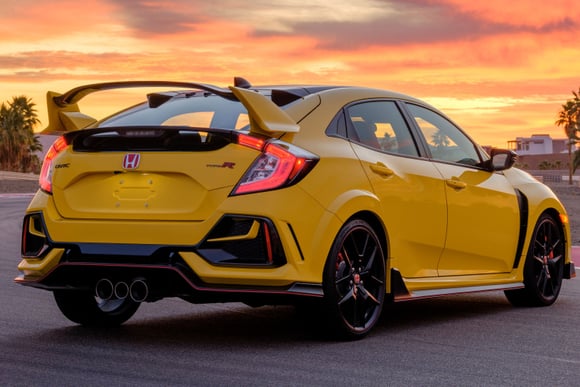
<p>Models that we find often have a markup include the <a href="/chevrolet/corvette">Chevy Corvette</a>, <a href="/honda/civic">Honda Civic Type R</a>, <a href="/hyundai/palisade">Hyundai Palisade</a>, and <a href="/kia/telluride">Kia Telluride</a>. However, markups could be especially severe in the event of an <a href="/deals-articles/why-is-there-a-car-inventory-shortage" title="Why Is There A Car Inventory Shortage?">inventory shortage</a>. In some cases, this can result in models like the <a href="/toyota/corolla">Toyota Corolla</a> having as much as a 23% markup.</p>
<p>These <a href="/deals-articles/what-are-market-adjustments-on-cars">market adjustments</a> may have lasting impacts when considering the fact that automakers are offering longer loan options. For some buyers, it <a href="/deals-articles/should-you-pay-msrp-for-a-new-car">could make sense to pay MSRP</a> for a car. Under normal circumstances, consumers are able to negotiate the selling price of a car whether they're buying or leasing.</p>
<p>Fortunately, there are <a href="/deals-articles/how-to-avoid-paying-dealer-markups" title="How To Avoid Paying Dealer Markups">ways to avoid paying a dealer markup</a>. Taking advantage of incentives can help ensure you get the best deal possible, especially when taking advantage of loyalty discounts and <a href="/deals-articles/what-are-conquest-cash-incentives">bonuses when coming from a competitor</a>. We recommend exploring all your options to get the best price possible.</p>
<p><a href="/deals"><b>Explore The Latest New Car Deals</b></a></p>
]]></content></entry><entry ><title>How to Reduce Fuel Consumption</title><link  rel="alternate" type="text/html" href="//www.carsdirect.com/car-buying/10-ways-to-lower-engine-fuel-consumption"/><id>92257</id><published>2010-03-26T18:03:11Z</published><updated>2022-03-07T21:52:00Z</updated><summary><![CDATA[With the seemingly ever-rising prices of gasoline due to market conditions and world events, engine fuel consumption is a concern for most drivers on the road these days.
Because the price at the pump is affecting more people every day, many...]]></summary><author><name>CarsDirect Staff</name><uri>/author/carsdirect-staff/</uri></author><category term=""/><content type="html" lang="en-us" base="http://www.carsdirect.com"><![CDATA[<p>With the seemingly ever-rising prices of gasoline due to market conditions and world events, engine fuel consumption is a concern for most drivers on the road these days.</p>
<p>Because the price at the pump is affecting more people every day, many are looking for ways to cut consumption and costs. This article will discuss tips to minimize fuel consumption.</p>
<p><em>Updated March 7, 2022</em></p>
<h2 id="Tips_to_Reduce_Fuel_Consumption"><span>Tips to Reduce Fuel Consumption</span></h2>
<p>Here are some tips concerning how you drive, what you have in your car, and maintenance issues that let you get as much bang for every buck you spend on fuel.</p>
<ul>
<li><strong>Drive only when needed. </strong>The most impactful way to reduce fuel consumption is to simply drive your car less. Drive your car only when you really need to. If you only need to travel a few blocks, consider walking or even riding a bicycle. Not only will you save money at the pump, but the exercise will also certainly do you some good. Is driving unavoidable? Make a plan to combine trips. You may save both gas and stress in the process.</li>
<li><strong>Avoid idling. </strong>When you do need to drive your car, make sure you avoid idling whenever possible. When your car is running, but not moving, you're effectively getting 0 miles per gallon. So if your car will remain stationary for more than a minute or so, switch the engine off if it is safe to do so.</li>
<li><strong>Accelerate (and brake) steadily. </strong>While driving, always apply steady and consistent pressure to your car's accelerator pedal. A heavy foot will always result in reduced gas mileage and poor fuel consumption. Drive a turbocharged car? Try developing a better feel to avoid having the turbo activate unnecessarily.</li>
<li><strong>Watch your speed.</strong> Try to drive at or near the speed limit. The optimal traveling speed for every make and model vehicle is different. However, the faster you drive, the worse your gas mileage and fuel consumption will be. Drive as fast as you need to in order to maintain a safe driving speed.</li>
<li><strong>Coast when possible. </strong>Constantly accelerating and braking only wastes fuel and reduces your car's fuel consumption. So, whenever possible, coast and avoid burning excess fuel. This takes a little practice but can be a great way to increase the fuel economy of your vehicle.</li>
<li><strong>Use cruise control on the highway. </strong>Cruise control means that your car will be going at a constant velocity. Controlling the acceleration reduces the amount of work your engine does, and therefore it uses less gas. Assuming it's safe to do so given driving conditions, consider using cruise control to save gas.</li>
<li><strong>Lower the drag on your car. </strong>Are you driving around town or on the freeway with a roof box or cargo carrier when you don't have to? It's a sure bet that you're cutting into your fuel economy figures with unnecessary drag. These types of accessories can have a big effect on your car's aerodynamics.</li>
<li><strong>Keep the windows closed. </strong>Keeping your windows down while driving creates more drag and wind resistance for your automobile. If you're driving at speeds of less than 35 mph, it is usually okay to keep the windows down. However, at higher speeds, you should keep the windows up in order to reduce drag and improve fuel consumption.</li>
<li><strong>Minimize air conditioning. </strong>There will be times, of course, when summer heat will cause you to use the air conditioning system. However, consider using the AC in moderation when possible. Alternatively, your vehicle's regular fan settings could provide you with ventilation to keep you comfortable.</li>
<li><strong>Replace dirty air filters. </strong>Dirty air filters force your engine to work much harder than it has to, resulting in worse fuel economy. So, make sure you follow the manufacturer's recommendation for periodically changing out the air filter. A clean air filter allows your engine to perform more efficiently and also helps you save money at the pump.</li>
<li><strong>Maintain proper tire inflation. </strong>Check your car owner's manual and always ensure your tires are inflated to the proper air pressure level. Improperly inflated tires can reduce your car's fuel economy by up to five percent in some cases. Not sure what pressure to use? Check the plate stamped on your driver's side doorjamb rather than the PSI rating on your tire's sidewall. Your local gas station will likely have an air pump that you can use if you're a paying customer. Consider buying an inexpensive pressure gauge before doing so.</li>
<li><strong>Reduce weight in the vehicle.</strong> Get rid of any unnecessary items in your car's trunk or other areas of the vehicle. For every 100 pounds of weight in the vehicle, your car's fuel economy decreases by about one or two percent. By making sure your vehicle remains as light as possible, you can improve the fuel consumption of your vehicle and save money on your fuel bill</li>
</ul>
<h2 id="Maintenance_Issues_That_Cause_Bad_Gas_Mileage"><span>Maintenance Issues That Cause Bad Gas Mileage</span></h2>
<p>Oftentimes, there are some problems with your car that cause you to have reduced gas mileage. There are five key issues that you can have your mechanic look at in order to fix your mileage problem. These issues stem from:</p>
<ul>
<li>Old spark plugs</li>
<li>Clogged air filters</li>
<li>Bad oxygen sensors</li>
<li>Fuel injection system problems</li>
<li>Poor tire condition</li>
</ul>
<p>These problems as a whole can be the biggest combined reason as to why your car is using up a lot of fuel, while not putting out a far distance. The air filters are most important because clogged air filters can reduce gas mileage by up to 20%. The tires are something easy that you can do yourself, but that will also be the lowest increase at 3-5%. If you implement a lot of these subsequent tips, these percentages add up quickly.</p>
<h2 id="Consider_A_Hybrid_or_an_EV"><span>Consider A Newer Hybrid Car or EV</span></h2>
<p>The newest hybrids get impressive fuel economy. For example, the <a href="/toyota/rav4-hybrid">Toyota RAV4 Hybrid</a> is rated at up to 40 mpg overall, and some electric cars can get over 100 MPGe. <a href="/deals-articles/evs-with-the-longest-range">EVs with the longest range</a> can offer over 300 miles of driving without a drop of gas and may qualify for a <a href="/deals-articles/how-it-works-federal-ev-tax-credit">federal tax credit</a> and state plug-in rebates.</p>
<p>Unlike internal-combustion engine (ICE) vehicles, EVs and plug-ins are often eligible for manufacturer incentives you can't get otherwise. For example, the <a href="/kia/niro-ev">Kia Niro EV</a> now offers over $9,000 in <a href="/deals-articles/how-does-lease-cash-work-on-cars">lease cash</a>. Depending on the <a href="/deals">latest car incentives</a>, you may even be able to take advantage of 0% financing when buying.</p>
<p><strong><a href="/deals-articles/best-green-car-deals">Top EV, PHEV, and Hybrid Car Deals</a></strong></p>
]]></content></entry><entry ><title>8 Main Causes Of Bad Gas Mileage</title><link  rel="alternate" type="text/html" href="//www.carsdirect.com/car-buying/8-main-causes-of-bad-gas-mileage"/><id>92224</id><published>2010-02-17T19:17:24Z</published><updated>2022-01-03T23:10:00Z</updated><summary><![CDATA[Despite advances in fuel efficiency and technology, bad gas mileage can be caused by a number of possible reasons. If you're looking to get better fuel economy on your car, truck, or SUV, there may be ways to avoid losing...]]></summary><author><name>CarsDirect Staff</name><uri>/author/carsdirect-staff/</uri></author><category term=""/><content type="html" lang="en-us" base="http://www.carsdirect.com"><![CDATA[<p>Despite advances in fuel efficiency and technology, bad gas mileage can be caused by a number of possible reasons. If you're looking to get better fuel economy on your car, truck, or SUV, there may be ways to avoid losing money at the pump. Here are some of the main causes of poor gas mileage in new &amp; used vehicles.</p>
<h2>Bad Gas Mileage Causes</h2>
<ul>
<li>Incorrect tire pressure is a common cause of bad gas mileage. It's also one of the easiest things to correct. Periodically checking your tires with an inexpensive pressure gauge is a good way to catch this. Just be sure to use your car manufacturer's recommended pressure levels stamped onto the driver's side doorplate and not the "maximum pressure" numbers shown on the tire itself.</li>
<li>Having <a href="/car-repair/how-to-tell-if-you-have-a-faulty-oxygen-sensor">bad oxygen sensors</a> and air filters can reduce your gas mileage by up to 20%. The oxygen sensors help keep the proper mixture of air and fuel, and having this imbalance can be inefficient. The air filters can get clogged and simply need to be unclogged to fix the problem. Air filters need to be cleaned so that the engine can work at its peak performance.</li>
<li>Your spark plugs are responsible for sparking combustion in your engine. If they misfire or are working poorly, this can affect your gas mileage in a negative way.</li>
</ul>
<p><img alt="" height="387" src="https://cimg3.ibsrv.net/cimg/www.carsdirect.com/580x387_85/39/2020-gmc-acadia-at4-011-651039.jpg" width="580" class="" title="" style="display: block; margin-left: auto; margin-right: auto;"></p>
<ul>
<li>Having bad fuel injectors can cause bad mileage. This is because the fuel injectors are responsible for putting fuel into the engine. If there is a leak of some sort, then less fuel will make it to the engine, and then in turn make it run less efficiently.</li>
<li>Having your air conditioner on causes gas to be wasted in powering the system. Depending on your local climate, consider turning off the air conditioner when it makes sense and ride with your windows open. At higher speeds, close the windows though to reduce drag.</li>
<li>A common cause of bad mileage is your own driving habits. If you are an aggressive driver, likely you accelerate to quickly. This causes more fuel to be used, and will use up more gas than you need. The same goes for revving your engine. It may sound cool, but it uses up gas for going nowhere.</li>
<li>Many people waste gas by idling. Idling is when you have your engine on, but you are parked and not moving. Common places where this occurs is when you are trying to warm up your car in the winter, or while you are waiting to pick someone up. Your car really doesn't need more than 30 seconds to warm up the engine. When it comes to waiting for someone, turn your car off. Since you aren't moving, you might as well save gas and the environment.</li>
<li>The type of motor oil that you are using can also affect your gas mileage up to 12%. You want to use motor oils that are high in reducing friction. Either use a <a href="/car-repair/what-is-the-difference-between-synthetic-oil-and-conventional-oil">synthetic oil</a> or the oil that the car's manual recommends.</li>
</ul>
<p>Overall, these are the major causes of bad gas mileage, but the list goes on even further than this. If you're looking to reduce or eliminate gasoline use altogether, consider a plug-in. Electric cars and plug-in hybrids (PHEVs) have come a long way over the past several years and <a href="/deals-articles/are-plug-in-hybrid-cars-worth-the-money">may be worth it</a> for certain types of drivers.</p>
<p>In addition, <a href="/deals-articles/best-green-car-deals">EV and PHEV deals</a> can offer significant savings. Despite having relatively high MSRPs on paper, plug-ins offer as much as a $7,500 <a href="/deals-articles/how-it-works-federal-ev-tax-credit">federal tax credit</a> and some of the <a href="/deals-articles/cheapest-lease-deals">cheapest lease deals</a>. The prospect of being able to drive emission-free could be compelling compared to a traditional internal-combustion car.</p>
<p><a href="/deals-articles/best-green-car-deals"><strong>Top EV, PHEV, and Hybrid Car Leases &amp; Deals</strong></a></p>
]]></content></entry><entry ><title>Car Rebates: Understanding Car Dealer Rebates and Incentives</title><link  rel="alternate" type="text/html" href="//www.carsdirect.com/car-buying/understanding-car-dealer-rebates-and-incentives"/><id>32166</id><published>2009-09-16T23:42:27Z</published><updated>2021-11-04T13:36:00Z</updated><summary><![CDATA[When shopping for a new car or truck, car dealer rebates can save you a lot of money. Car dealer or manufacturer rebates and incentives are provided by the manufacturer in order to stimulate sales of a particular make...]]></summary><author><name>CarsDirect Staff</name><uri>/author/carsdirect-staff/</uri></author><category term=""/><content type="html" lang="en-us" base="http://www.carsdirect.com"><![CDATA[<p>When shopping for a new car or truck, <a href="/deals-articles/best-new-car-deals">car dealer rebates</a> can save you a lot of money. Car dealer or manufacturer rebates and incentives are provided by the manufacturer in order to stimulate sales of a particular make and model new car or truck. However, there are a lot of misconceptions about what car rebates actually are and how they are used.</p>
<h2>Not the Dealer but the Manufacturer</h2>
<p>Many people mistakenly believe that dealer rebates come from the new car dealership &ndash; they actually come from the car manufacturer. A rebate is actually free money from the manufacturer to motivate you to buy a particular make or model of a new vehicle.</p>
<p>In fact, new-car rebates aren't discounts at all, and in many states, rebates are considered part of your down payment. Also, many dealerships use language like "well, that car is only $15,000 after a $3000 rebate." This makes it appear that the dealership is giving you a $3000 discount when they are not. If you don't have a lot of cash available for a down payment, you can often use the rebate as <a href="/auto-loans/auto-loan-providers/who-gets-my-down-payment-on-a-car-loan">your down payment</a>.</p>
<h2>How Car Rebates Work</h2>
<p>Rebates are offered by the manufacturer to consumers in order to get them to purchase a particular type of vehicle. Regardless of what the dealership may tell you, dealer rebates have nothing to do with the negotiated selling price of a new vehicle. The rebate is simply applied as a down payment in most cases.</p>
<p>However, if you have a sufficient down payment or trade-in, you can actually request that the rebate be sent to you by check from the manufacturer. Most people simply choose to use the cash rebate as part of the down payment to help reduce the <a href="https://www.carsdirect.com/auto-loans/how-much-car-loan-could-you-afford">amount of the car loan </a>that is taken out.</p>
<p>In a few states, the rebate may be subtracted from the selling price of the vehicle before taxes are added in. In this case, the rebate has the added benefit of reducing the amount of sales tax you may be required to pay on a vehicle. Therefore, you should always be aware of the laws regarding rebates in your state before you start shopping for a new car.</p>
<h2>Other Manufacturer Incentives</h2>
<p>If you have plenty of cash available for a down payment, or if your trade-in has a high enough value to avoid making a cash down payment, you may want to consider other manufacturer incentives in lieu of a cash rebate. Many times, manufacturers offer the choice of either accepting a rebate or taking advantage of low-interest financing for your new vehicle.</p>
<p>Sometimes, <a href="https://www.carsdirect.com/auto-loans/what-is-the-average-interest-rate-for-a-car-loan-with-bad-credit">interest rates</a> may even be as low as 0%. Therefore, you can possibly save thousands of dollars on the finance charges associated with a new car or truck. Of course, you need to figure out which option is best for you &ndash; cash upfront, or saving money on interest charges.</p>
<h2>Finding Car Dealer Rebates and Incentives</h2>
<p>When it comes to researching car dealer rebates and incentives, many consumers start with their local newspaper or favorite search engine. Many car producers advertise their brand-specific rebates online.</p>
<p>If you already know what make of vehicle you want, Internet searching is one of the easiest ways to find out what rebates are being offered. The search gets a little harder though if you don't know what make of vehicle you want.</p>
<p>The first step for the consumer still trying to decide what kind of automobile to purchase is to visit us at CarsDirect. Our experts produce a wealth of information on the many different vehicles available and give you the CarsDirect Target Price, so you see the deals available in your area. Car dealer rebates and incentives are really not hard to find if you know where to start &ndash; right here with us! </p>
<p><a href="/deals-articles/best-new-car-deals"><strong>See the Latest New Car Deals of the Month &raquo;</strong></a></p>
]]></content></entry><entry ><title>Types of Traffic Citations and Penalties</title><link  rel="alternate" type="text/html" href="//www.carsdirect.com/car-safety/how-to-remove-a-traffic-school-ticket-from-your-driving-record"/><id>89043</id><published>2010-02-25T01:27:42Z</published><updated>2020-06-17T15:30:57Z</updated><summary><![CDATA[Traffic citations are issued for acts that breach the traffic laws of the community or the state. Most laws governing traffic citations are local, although from time to time the federal government holds jurisdiction over several regulations. Motorists need to...]]></summary><author><name/><uri/></author><category term=""/><content type="html" lang="en-us" base="http://www.carsdirect.com"><![CDATA[<p><strong>Traffic citations</strong> are issued for acts that breach the traffic laws of the community or the state. Most laws governing traffic citations are local, although from time to time the federal government holds jurisdiction over several regulations. Motorists need to follow numerous and different kinds of traffic laws. Aside from fines and tickets, some traffic citations call for traffic school attendance.</p>
<p><strong><span>Types of Traffic Citations</span></strong><br>Traffic citations are normally divided into two types: major and minor. Minor types of traffic citations include parking violations and some driving violations. These citations are not held against a driver's record, although you may be detained for violations that go unpaid. Seat belt violations are also prevalent. Serious violations include moving violations like leaving an accident scene or reckless driving. There are also drunk driving violations.</p>
<p>Among these violations, the most prevalent is speeding. State regulations define the speed limit of an area. Most states enforce a 65-mph maximum speed limit. Speed limit violations have two kinds: fixed maximum and prima facie. The fixed maximum limit indicates that it's unlawful to go beyond the speed limit anytime and anywhere. The prima facie, on the other hand, gives drivers the liberty to justify the speed of their driving is safe and lawful. Most minor traffic citations lead to traffic school sanctions. The following citations can lead to a traffic school penalty.</p>
<ul>
<li>Speeding</li>
<li>Running a red light or a stop sign</li>
<li>Failure to follow the right-of-way or failure to provide way for a vehicle in the right lane</li>
<li>Failure to signal when changing lanes or making a turn</li>
<li>Failure to drive within a specified lane, or driving in between two lanes</li>
<li>Driving over a median, center divider or a gore</li>
<li>Driving illegally on the shoulder</li>
<li>Seat belt violations</li>
<li>Running over a pedestrian lane when stopping is required. Not giving way for a crosswalk</li>
<li>Driving past a school bus when passengers are loading or unloading</li>
</ul>
<p>Generally, all moving violations may be subjected for traffic school sanctions. Check with the local government and other federal regulations concerning traffic citations and traffic schools.</p>
<p><strong>Speeding Ticket Fines Explained &gt;&gt;</strong></p>
<p><strong><span>Traffic School Laws Regarding Out of State Tickets</span></strong><br>In most cases, your out-of-state traffic ticket will appear on your home state driving record. The ability to use online, in state, out of state or local traffic schools varies by state. In some states, you're stuck with the results, but others will allow traffic school.</p>
<p><strong><span>Admission of Guilt</span></strong><br>In most states, to be able to go to traffic school involves admitting your guilt--in other words, paying the traffic fine. This will not remove the violation but will remove the associated points. In some sense, points are hidden if you attend traffic school. However, if you have another offense within 12 months or 18 months, depending on the state, the points may reappear. These points appear in your public record, which insurance companies can see. Those visible points can and will affect your insurance premiums.</p>
<p><strong><span>Driver License Compact</span></strong><br>With the consent of the federal government, states are allowed to establish agreements with each other called interstate compacts. The Driver License Compact is such an agreement and is used between almost all states. This allows the states to use this shared information to determine courses of action. In other words, if you live in Missouri and get a traffic ticket in Colorado, it will end up on your driving record back in Missouri.</p>
<p><strong><span>Non-Resident Violator Compact</span></strong><br>Another interstate compact used by most states, the Non-Resident Violator Compact, is used by states to honor the other state's actions. For example, if you don't pay the fine on an out-of-state ticket, the other state may notify your home state and the home state will suspend your driver's license until you take care of the fine. Instances where this may not occur are when the ticket involves a minor violation, such as a parking ticket.</p>
<p><strong><span>State Examples</span></strong><br>In you live in Florida and receive a traffic ticket while in another state, that state will notify the state of Florida. You will not be given the opportunity to remove that traffic ticket from your Florida driving record by traffic school attendance. But the reverse is not true. If you are an out of state driver in Florida and get a ticket, you may be able to go to traffic school and have your points removed. You should also, in this case, check the laws in your home state to see if they honor Florida's traffic school laws.</p>
<p>California will allow you to take an approved or state certified online traffic school, as well as local traffic schools from your home state. Also check these online traffic schools for hidden fees. You don't want to attend a school that is not state certified by the state where you received the ticket.</p>
<p>The best step is to be careful. While home states generally allow you to take traffic school to reduce your points, with out of state ticket situations there is a greater chance that you will not be able to do so, and the points will be on your home state driving record.</p>
<h2 id="Multiple_Tickets_in_a_Short_Period"><span>Consequences of Multiple Tickets in a Short Period of Time</span></h2>
<p>Multiple tickets can cause your insurance premiums to rise substantially. Tickets generally fall into two classifications, non-moving violations and moving violations. Although this varies by state, non-moving violations such as a parking ticket or a headlight out will not generally affect your insurance premiums. Be sure you check your state requirements regarding traffic violations, whether moving or non-moving.</p>
<p><strong><span>Moving Violations</span></strong><br>Moving violations typically cause your insurance rates to go up and if ignored&mdash;or worse, if you are a repeat offender&mdash;can land you in jail with a suspended driver's license. The severity of the traffic violation also has an effect. In some states the break is at 15 miles per hour; in others it may be higher or lower. If you are caught speeding this much over the limit, the offense will bring stiffer penalties.</p>
<p><strong><span>Traffic School</span></strong><br>Traffic schools are designed to allow you to remove points from your public driving record to potentially lower your car insurance premiums. The advantage for the state is that by allowing this, the state is also able to provide training to offenders in the chance that more education will equate to better drivers.</p>
<p><strong><span>Repeat Offenders</span></strong><br>The state assumes that such offenders just aren't getting the message. This varies by state, but in general if you have more than one traffic citation within a 12 or 18 month window, you will not be able to get those points removed for the subsequent offenses. For example, Ohio allows you to take a defensive driving course to get a two-point credit on your record if you have more than five but less than 12 points on that record. Typically, most states only allow one traffic school per 12 to 18-month time frame.</p>
<p><strong><span>Points and Time</span></strong><br>The length of time traffic violations stay on your record also varies by state. For a regular speeding ticket, not an aggressive one, the typical duration is three years and counts as one point on your driving record. Again, verify this with your state's motor vehicle department.</p>
<p><strong><span>Aggressive Driving</span></strong><br>In some states, such as Florida, if the judge determines that you are an aggressive driver you may be required to attend an aggressive driver course to avoid having your license suspended. Typically, these courses can only be taken in person in a classroom setting. Examples of aggressive driving may include:</p>
<ul>
<li>Getting cited for road rage</li>
<li>Speeding tickets over 30 mph above the limit</li>
<li>Multiple speeding tickets in a short period of time</li>
<li>A street or drag racing citation</li>
</ul>
<p>Within such a course, the emphasis will be on the nature of your aggressive driving characteristics and how to bring these under control. These courses are not designed to help get a few points knocked off your driving record. They are designed to help you learn to control your emotions while driving.</p>
<p>As is the case in all traffic schools, be sure the course offered is approved by the state and provides a certificate of completion. You will need this to meet the state requirement that you have indeed taken and completed the training.</p>
<h2 id="Remove_a_Traffic_Ticket_from_Your_Driving_Record"><span>How to Remove a Traffic Ticket from Your Driving Record</span></h2>
<p>It is possible to get rid of a traffic ticket by attending traffic school. However by going to traffic school or a defensive driving class you are not guaranteed to erase the fine, as this is highly dependent on the state you live in. It is impossible to completely remove a ticket unless you contest it in court, but traffic school can get rid of the damage it does, preventing your insurance from going up and you being considered a higher risk driver than before.</p>
<p><strong><span>Fighting the Ticket</span></strong><br>The only way to completely remove your ticket is to contest it in court.</p>
<p><strong><span>Write Down the Circumstances of the Ticket</span></strong><br>If you plan to contest the ticket, it is important to start your defense immediately. Write down the events of the ticket as well as you can. If you can go back to the place where the incident occurred, take a picture of the speed limit sign or whatever else may support your argument. You want to use anything you can to help your defense.</p>
<p><strong><span>Make Your Court Date</span></strong><br>You have to show up on your court date. Make sure you are properly attired and you are neat, tidy and on time. Your ticket may have instructions on how to set up a court date if one has not already been appointed. You will not need a lawyer unless you had a bad accident or were driving under the influence.</p>
<p><strong><span>Plead Your Case</span></strong><br>If the officer that gave you the ticket does not appear in court, there is a very good chance that your ticket will be dropped. If the officer is there, plead not guilty and politely outline your defense. Make sure that you do not admit any guilt. The two outcomes of the ticket are that you win your case and the ticket is dismissed, or you will have to pay the fine. You may be able to attend traffic school in order for the ticket to be removed from your record.</p>
<p><strong><span>Attend Traffic School</span></strong><br>Many states allow you to attend traffic school online, as there is not actually any driving involved. It is possible to work in the classes around your schedule. Make sure the school is approved by your state DMV, otherwise it may not apply toward your ticket.</p>
<p><strong><span>Pass the Exam</span></strong><br>There is a multiple choice exam that you have to take at the end of the traffic school course. If you do not pass it the first time, don't worry as you can take it multiple times. All of the questions come directly from the course.</p>
<p><strong><span>Check Your Driving Record</span></strong><br>A few weeks after you pass the exam, make sure to check your driving record to ensure that the ticket has been erased. Some courts will erase your ticket on the same day that you pass your exam and others may take longer.</p>
<h2 id="Citations_That_Can_Be_Removed_with_Traffic_School"><span>What Kinds of Traffic Citations Can Be Removed with Traffic School?</span></h2>
<p>Each state handles traffic citations uniquely. In general, speeding citations are the ones that will get you into trouble as well as those that cause damage, threaten lives or show negligence.</p>
<p><strong><span>Points Removed or Expunged</span></strong><br>Again, this fluctuates by state. Some states allow point reductions based on attending some type of traffic school. To do so in some states you must admit guilt and pay the fine. Others allow you to expunge the ticket altogether, so once traffic school is completed the ticket is no longer on your record. Points can remain on your record from three to seven years in general. Some states may keep points on your record for up to 10 years. Check with your state to be sure.</p>
<p><strong><span>Minor or Major Citations</span></strong><br>Some violations are so minor there is no reason to remove them from your record. Some are so major that you can't remove them. Minor might be getting a parking ticket or making an illegal turn. A hit and run would be considered a major offense, as would a driving under the influence, especially if you are a repeat offender.</p>
<p><strong><span>Number of Points</span></strong><br>How many points you get for a speeding ticket also varies by state. For example, in Colorado, speeding from 5 to 9 mph over the speed limit will add one point to your record. Speeding from 10 to 19 mph over the speed limit will add four points to your record. Compare this to Illinois where one to 10 mph over the speed limit will add five points to your record, 11 to 14 mph will add 15 points, and 15 to 25 mph will add 20 points. You can see it varies quite a bit from state to state.</p>
<p><strong><span>Reduction of Points</span></strong><br>Getting points reduced, removed or expunged from your record also varies by state. Typically, states allow some form of traffic school if you have had no other citations within a 12 to 18-month window from the date of your last offense. The amount of point reduction will also vary by state. A two to three point reduction is typical. Some states make the points invisible in you public record, which companies like your insurance company see. Some states expunge or remove the record entirely.</p>
<h2 id="Tips_to_Avoid_Traffic_Tickets"><span>5 Tips to Avoid Getting a Traffic Ticket</span></h2>
<p>Obeying all of the rules of the road certainly will ensure that you never have to contend with a traffic ticket.</p>
<ul>
<li><strong>Learn the rules of the road.</strong>Learn all pertinent driving rules of the road. Visit your local department of motor vehicles for their publication on driving laws. Since there are different laws that apply to different types of vehicles, study the particular manual that is pertinent to your particular vehicle. In other words, study the car manual for a car, the motorcycle manual for motorcycles or the truck manual for trucks. Almost all driving laws apply to all vehicles; however, there are some special laws that only apply to certain vehicles. By learning the particular laws, you will know what violations to avoid</li>
<li><strong>Obey the laws.</strong>Obey all traffic laws. This may state the obvious but by always obeying all traffic laws, you can be assured that you will not be cited for any infraction or violation. Good driving should become second nature. If you do not obey the laws most of the time, you will find yourself disobeying the laws more often than not, increasing the chances of being stopped for a violation</li>
<li><strong>Be respectful.</strong>In the event you are pulled over by a police officer, remain calm and respectful. Being confrontational will almost assure you of a traffic ticket. Sometimes an officer will only give a warning depending upon your attitude. Sometimes the officer only pulled you over for a "fix-it" violation, i.e. your taillight is out or your vehicle registration tags are expired. This fix-it ticket usually only requires rectifying the violation and getting an officer to sign off on it, verifying that the violation was fixed. Take this verification to the court and pay any minimal fines and the violation will be dismissed</li>
<li><strong>Go to court.</strong>If the violations for which you are cited are more serious than a "fix-it" ticket, you will have to appear in court. Dress in business attire to show the court respect and you will receive respect in kind. Always answer politely and calmly</li>
<li><strong>Request traffic school.</strong> If you have not attended traffic school within the past 6 to 24 months, usually the request will be granted, depending upon your state. Any violations can result in points against your driver's license, which can increase your car insurance premiums or label you as a "high risk" driver. Your driver's license can also be restricted to only use for school or work or even suspended all together</li>
</ul>
<h2 id="How_to_Avoid_Points_for_Reckless_Driving"><span>How to Avoid Points on Your Record for Reckless Driving</span></h2>
<p>Reckless driving is defined as driving to endanger, or with disregard for passengers and other motorists. A speeding ticket can be issued for driving over the posted speed limit of any given area, but driving 20 to 30 mph or more over that limit may be considered reckless driving--depending upon the state in which you are issued the ticket. A citation for racing of any kind, a red light ticket or automobile accident resulting in hospitalization or severe property damage can also be considered reckless driving. You may be penalized with fines, jail time and/or be ordered to enroll in and pass a class in traffic school.</p>
<p><strong><span>Traffic School</span></strong><br>One of the most common reasons for enrolling in traffic school is due to a reckless driving ticket. A basic driver improvement course, traffic collision avoidance course or defensive driving class can be taken at any number of traffic schools found locally or online. You can opt for classroom time, videos or DVDs or an online course lasting about 4 to 12 hours. Most of these schools are accredited or approved by the National Safety Commission, but make sure before enrolling that a certificate will fulfill your obligation to the court.</p>
<p>Whether you're taking this class to remove points from your driving record, to get your driver license back, or because you were ordered to do so, you should be able to take the passing certificate to your local court clerk and get the matter handled. You may also be eligible to attend traffic school to avoid increase in auto insurance premiums, or to get an insurance policy where otherwise you would be considered too great a risk.</p>
<p><strong><span>Concerns and Considerations</span></strong><br>Traffic schools may have different rules regarding classes and a reckless driving ticket. Most often you can only enroll in the class once per year to remove points from your driving record. Additionally, you can only attend for this purpose up to a certain number of times in a certain period of years&mdash;for instance no more than five times in 10 years. If you were driving under a special license such as a CDL or other commercial license, you are not likely to be eligible for removal of points.</p>
]]></content></entry><entry ><title>How Long Do You Have to Wait to Retake a Driving Test</title><link  rel="alternate" type="text/html" href="//www.carsdirect.com/car-safety/how-long-do-you-have-to-wait-to-retake-a-driving-test"/><id>49590</id><published>2009-12-17T19:07:09Z</published><updated>2020-06-17T14:01:00Z</updated><summary><![CDATA[If you have to retake a driving test, you may not have to wait as long as you think. Every state's department of motor vehicles has a different rescheduling time. Some allow you can take the test whenever you can...]]></summary><author><name/><uri/></author><category term=""/><content type="html" lang="en-us" base="http://www.carsdirect.com"><![CDATA[<p>If you have to <strong>retake a driving test</strong>, you may not have to wait as long as you think. Every state's department of motor vehicles has a different rescheduling time. Some allow you can take the test whenever you can make an appointment; others impose a waiting period. For example: In California, you must wait six weeks before taking the test again, while in New York you may take the test the next day.</p>
<p>States do, however, limit how many times you can retake the test. This number is usually around three, but no more than five. After that, they may require you to take a driver's education course and wait a given amount of time, usually three to six months. They require this time so you can practice driving in a safe, controlled environment before your next test.</p>
<p><strong><span>Failing</span></strong><br>Whether you're taking your driving test for the first time or the fifth, it's important to avoid behaviors that earn an automatic fail. These include ignoring the instructor, offering a bribe, committing a traffic violation and refusing to abide by the rules of the test.</p>
<p><strong><span>Does Retaking a Driving Test Increase the Cost of Auto Insurance?</span></strong><br>As long as you pass the test within three attempts, you shouldn't see an increase in insurance rates. Premiums will likely rise, however, or your policy may be canceled if a series of failed tests leaves you without a valid license.</p>
<p></p>
<p></p>
<p></p>
<h2>Related Questions and Answers</h2>
<p><strong>How long must a permit-holder wait before making an appointment for a driving test?</strong></p>
<p>Once you earn your learner's permit, you may be forced to wait an allotted amount of time before you can take your <strong>driving test</strong>. Some states allow you to schedule an appointment in advance, but you must usually wait 120 to 180 days before taking the test. This delay varies by state, and you should consult your local department of motor vehicles for specific requirements and instructions.</p>
<p><strong>What three things do you need on the day of a driving test?</strong></p>
<p>You will need several items on the day of your <strong>driving test</strong>. Most importantly, you should bring your previous driver's license, or your learner's permit if you are a new driver. Also bring a vehicle in which to take your test, and proof of insurance. Lastly, it's a good idea to bring a course completion card that proves you successfully completed the written portion of the driving test.</p>
]]></content></entry><entry ><title>Used Car Price Per Mile: Understanding What's Exceptional</title><link  rel="alternate" type="text/html" href="//www.carsdirect.com/used-car-prices/used-car-price-per-mile-understanding-whats-exceptional"/><id>93050</id><published>2010-03-04T19:05:28Z</published><updated>2020-03-11T22:32:09Z</updated><summary><![CDATA[Before you decide to buy a used car, you should be aware of its used car price per mile. Used cars are less expensive than new ones because the previous owner's use of the vehicle may have resulted in problems...]]></summary><author><name/><uri/></author><category term=""/><content type="html" lang="en-us" base="http://www.carsdirect.com"><![CDATA[<p>Before you decide to buy a used car, you should be aware of its <strong>used car price per mile</strong>. Used cars are less expensive than new ones because the previous owner's use of the vehicle may have resulted in problems that lower the car's quality of condition, such as a lower number of miles per gallon, scratches on the exterior or problems with the internal machinery of the vehicle. Because of this, used car pricing is at least partially based on how many miles the car has been driven, and as the number of miles on the car increases, the price of the car decreases. This relation between how far a used car has been driven and the price it can be sold for leads to the question of how much the price of a used car should drop after it has gone a given number of miles.</p>
<h4>Price Drop in Used Cars Per Mile</h4>
<p>Since the value of a car drops much faster in a short time after you buy it (about $3,000 dollars right after you drive it off the lot!) and much slower as time goes on, the actual price drop for a used car after each mile it has been driven is not constant. For the first three thousand miles or so, cars usually drop about $5,000-$10,000, so it averages out to around $1.50 to $3 per mile. After that, the price drop is lower, and can go from around $.25 to $.5 per mile. These are only estimates, and the actual price drop also depends on the model of car you are looking at and where you are buying it.</p>
]]></content></entry><entry ><title>The Used Car Engine Price Listing: A Buyers Guide</title><link  rel="alternate" type="text/html" href="//www.carsdirect.com/used-car-prices/the-used-car-engine-price-listing-a-buyers-guide"/><id>93041</id><published>2010-04-01T18:05:08Z</published><updated>2020-03-11T22:29:23Z</updated><summary><![CDATA[If you ever need to replace the engine in a used car, engine prices will vary substantially due to the various types currently offered. The two types of engines are 1) re-built engines and 2) salvaged engines. Re-built engines are...]]></summary><author><name>Armaan Almeida</name><uri>/author/armaan-almeida/</uri></author><category term=""/><content type="html" lang="en-us" base="http://www.carsdirect.com"><![CDATA[<p>If you ever need to replace the engine in a <strong>used car, engine prices </strong>will vary substantially due to the various types currently offered. The two types of engines are 1) re-built engines and 2) salvaged engines. Re-built engines are (as the name implies), re-built by capable technicians with new piston rings, engine bearings, gaskets and seals.</p>
<p>Parts like the engine block, cylinder head and camshafts rarely need replacing, so they are inspected, cleaned and re-used in a re-built engine. Salvaged engines are original engines that no longer have use in their original applications due to theft, accidents or government-mandated limits. For example, vehicles in countries such as Japan only stay on the road for 7-8 years before they are replaced. The old vehicles are disassembled and the engines and parts are sold to shops in the United States. These engines will have documentation to support their mileage numbers, but unscrupulous re-sellers will often times not include the documents so that they can charge more for a particular engine.</p>
<p>With that, you should be aware that all engines come in two basic versions that vary considerably in price: long block engines and short block engine.</p>
<h4><strong>Long Versus Short Block Engine</strong></h4>
<p>The main difference between a long or short block version of an engine is the components that are actually included with the engine. A short block engine is an engine that comes with only the lower section included, or in other words, the engine without the cylinder heads or head gasket attached. Short blocks include the engine block, crankshaft, connecting rods, pistons, bearings and oil pan.</p>
<p>On the other hand, a long block engine is more of a complete bolt-in replacement option as it includes the cylinder head(s), camshafts (if applicable), valves, valve springs and most importantly, a brand-new head gasket. The head gasket's primary function is to separate the engine coolant from the engine oil. Head gasket failure is the #1 reason why engines eventually get replaced. The reason they fail is because of overheating. The expansion rate of the cylinder head and engine block are not the same, and as the engine temps increase, the natural tendency of that expansion slightly warps the cylinder head allowing coolant and oil to mix, which can lead to catastrophicengine failure.</p>
<p>The cost you pay for any replacement engine will directly depend on the year, make and model of your vehicle. Naturally, a long block engine will always cost more than its short block counterpart, but saves headaches and hassles with removing and re-using parts off of your old engine.</p>
<h4><strong>Prices of Popular Replacement Engines</strong></h4>
<p>While re-manufactured or used engines are available for almost any make and model vehicle that you can imagine, some engines are indeed more popular than others. The reasons that a particular engine or motor may be in high demand or popular vary as much as the types of engines that are available.</p>
<p>However, if you are searching for one of the more popular engine types, this list will give you some basic pricing information that you can used to estimate ball park figures for 3 of the best selling engine types. Just remember that the pricing information below is provided for reference purposes only and that you may find prices that or higher or lower than those listed here.</p>
<ul>
<li><strong>Chevrolet 305</strong> - This engine is definitely one of the most sought after and popular types sold on the Internet. This 5.0 liter engine was first introduced in 1976 and was used in numerous Chevrolet and GM cars and trucks until 1992. The engine can be found at websites operated by engine re-manufacturers and used engine dealers. Prices for this particular engine vary considerably; however, you will probably pay between $1000 and $3000 in most cases. However, if you require a high performance version, be prepared to pay much more.</li>
<li><strong>Ford 302</strong> - The 302 is 5.0 liter engine that was produced by Ford for use in many popular vehicles between 1968 and 2001. The popular engine was used in famed Ford muscle cars like the Mustang and 1968 Shelby GT as well as in luxury Ford vehicles like the LTD and Lincoln Continental. Because of its popularity, the engine is available from many sources. Prices for the Ford 302 range between about $800 and $3500. However, high performance versions can run you as much $10,000 - $15,000.</li>
<li><strong>Honda/Acura K20</strong> - The Honda K20 4-cylinder 2000cc engine comes in several variations that vary widely in price and availability. Popular Honda models that have used this engine include the Accord and Civic, and engines for these particular vehicles are the most popular and easiest to find. For a K20 replacement motor, you should expect to pay around $1000 for a basic re-manufactured short block engine and prepare to pay more than $7000 (or more) for highly modified versions.</li>
</ul>
<p></p>
<h2>Related Questions and Answers</h2>
<p><strong>What Part of the Engine is the Most Expensive to Replace?</strong></p>
<p>In many cases, the most expensive <strong>engine</strong> part to <strong>replace</strong> are the head gaskets. Replacing a head gasket can cost upwards of $2,000. When it comes to expensive repairs, the engine is one of the most expensive areas to have work done on. Coming in a close second, would be the transmission. Powertrain repairs can be very expensive. Rebuilding a transmission can easily run $2,000 or more. When getting your vehicle repaired, call around for estimates and check the reputation of the shop. Its important that you are confident in the work being done on your vehicle.</p>
]]></content></entry><entry ><title>Used Car Battery Price: Common Price Expectation</title><link  rel="alternate" type="text/html" href="//www.carsdirect.com/used-car-prices/used-car-battery-price-common-price-expectation"/><id>93035</id><published>2010-02-23T19:15:25Z</published><updated>2020-03-11T22:28:49Z</updated><summary><![CDATA[When considering purchasing a previously owned battery it is important to be aware of a fair used car battery price before completing a transaction. A comprehensive listing of used car part prices is oftentimes difficult to come by. Just as...]]></summary><author><name/><uri/></author><category term=""/><content type="html" lang="en-us" base="http://www.carsdirect.com"><![CDATA[<p>When considering purchasing a previously owned battery it is important to be aware of a fair <strong>used car battery price</strong> before completing a transaction. A comprehensive listing of used car part prices is oftentimes difficult to come by. Just as engine price estimation can be tricky, however, so too can the cost of a used car battery. The reason for this is there are other complicating factors that may need to be taken into consideration when planning on replacing your car's battery. Read on for some advice regarding the purchase of a used car battery, and the best way of telling if you are getting a reasonable deal on a battery for the car of your choice.</p>
<p><strong>Standard Used Car Battery Price</strong></p>
<p>There are a number of different types of car batteries used in current models of cars. Hybrid batteries function differently from standard gasoline batteries, and different makes of cars oftentimes require unique types of batteries as well. For this reason, the cost of a battery greatly fluctuates depending upon your vehicle, and oftentimes upon the age and exact type of vehicle as well. Generally, however, while new batteries may cost several hundred dollars and can range into the thousands, used batteries should be roughly 50% to 75% of that cost, depending upon their condition and quality.</p>
<p><strong>Other Used Battery Considerations</strong></p>
<p>As car batteries become used and worn down over time, the risk they will leak battery fluid and potentially become harmful to engine parts in your vehicle increases. Damaged batteries are not only potentially hurtful to your car, but they can leak fluids that are toxic to people and animals as well. This is the reason many dealers and other recycling services accept used batteries from cars in order to dispose of them safely and properly.</p>
<p>Before you purchase a used battery for your car, beware of the potential for the battery to do damage to your vehicle. If the price seems too good to be true, it is likely the battery has already been used extensively and may have lost some of its capabilities. Used batteries can also function poorly in your vehicle as well, making it difficult to start up the car or for the battery to retain a charge if you haven't used the vehicle in several days or weeks.</p>
<p><strong>Finding a Used Battery</strong></p>
<p>There are a variety of different stores that sell used car batteries for a number of different types of vehicles. Your best bet is to speak with a mechanic or dealer who specializes in your particular type of car. They may provide replacement parts such as batteries. If they do not, they'll likely be able to give you one or more names of people or companies who do sell used parts. Although you can also buy used batteries online, this mode of sale is a bit risky because you don't have the chance to inspect the battery before purchasing it.</p>
]]></content></entry><entry ><title>Canadian Used Car Prices: Do They Differ From the U.S.</title><link  rel="alternate" type="text/html" href="//www.carsdirect.com/used-car-prices/canadian-used-car-prices-do-they-differ-from-the-us"/><id>93018</id><published>2010-02-23T19:13:28Z</published><updated>2020-03-11T21:54:37Z</updated><summary><![CDATA[Selling a used car in the United States can be difficult, but transferring the sale to Canada and determining appropriate Canadian used car prices is even more confusing for many Americans. If you plan to make across the border for...]]></summary><author><name/><uri/></author><category term=""/><content type="html" lang="en-us" base="http://www.carsdirect.com"><![CDATA[<p>Selling a used car in the United States can be difficult, but transferring the sale to Canada and determining appropriate Canadian used car prices is even more confusing for many Americans. If you plan to make across the border for car sales, you'll need to be able to accurately estimate car price values in Canada as compared with the U.S. Unfortunately, the process of converting the price is not so simple as just changing from United States dollars to Canadian ones. In fact, there are some vehicles in the U.S. that cannot legally be sold in Canada at all, and vice versa. Read on for some additional information about how the pricing of used cars differs in Canada as compared to the United States.</p>
<p><strong>Determining Blue Book Value</strong></p>
<p>In the United States, the Kelley Blue Book is the single most trusted source of information for price listings of a variety of vehicles. In Canada, there is no direct equivalent of the Kelley Blue Book. The Kelley Blue Book covers motorcycles and other vehicles that are not listed in the Canadian Black Book, which is otherwise the closest equivalent to a comprehensive pricing guide in Canada. For pricing information about motorcycles and other non-standard vehicles, you'll need to refer to the Canadian Blue Book, which details prices of motorcycles, snowmobiles and other non-car vehicles as well. Don't be confused and attempt to find the price of your car on the Canadian Blue Book, as it is unlikely to list your vehicle.</p>
<p>The Canadian Black Book is the closest equivalent to the Kelley Blue Book. However, the Canadian Black Book is a publication released every two weeks to dealerships, insurance companies and auto wholesalers only. Private individuals cannot purchase the Black Book directly, so they must rely on third party companies or other assistance in calculating the most accurate used car prices. The Canadian Black Book does publish a guidebook that features high and low charges for all types of Canadian-sold automobiles; although this document is only released once per month and does not have the same degree of information.</p>
<p><strong>Depreciation and Other Concerns</strong></p>
<p>Aside from the fact the market value of cars in Canada will be different from that in the United States, the principle by which cars depreciate in value over time and with use is the same in both countries. You'll need to convert a vehicle's odometer into kilometers in order to get an accurate reading for Canadian prospective buyers. You'll also have to examine the vehicle for signs of damage and other displays of use. Generally, you can determine a fair price for the vehicle by deducting these total damage costs from the Black Book value of the vehicle. If you have any other questions about the pricing of used cars in Canada as compared with the United States, speak with a mechanic or a dealer.</p>
]]></content></entry><entry ><title>Fuel Economy Comparison: Hybrid vs Diesel vs Gas</title><link  rel="alternate" type="text/html" href="//www.carsdirect.com/car-buying/fuel-economy-comparison-hybrid-vs-diesel-vs-gas"/><id>92215</id><published>2010-02-19T19:13:30Z</published><updated>2020-03-11T21:51:27Z</updated><summary><![CDATA[Many people are interested in the fuel economy comparison between the three main fuel types of cars that are being offered: gas, diesel, and hybrids. Each has its own advantages and disadvantages. This article will provide an overview of how...]]></summary><author><name/><uri/></author><category term=""/><content type="html" lang="en-us" base="http://www.carsdirect.com"><![CDATA[<p>Many people are interested in the fuel economy comparison between the three main fuel types of cars that are being offered: gas, diesel, and hybrids. Each has its own advantages and disadvantages. This article will provide an overview of how fuel economy relates to each, as well as tips (ranging from regular automobile maintenance to the way you drive it) to increase fuel efficiency.</p>
<h2 id="The_Pros_and_Cons"><span>The Pros and Cons of Hybrid, Diesel, and Gas</span></h2>
<p>All three have their pros and cons.</p>
<p><strong><span>Gasoline Pro<br></span></strong></p>
<ul>
<li>Gas engines produce high horsepower</li>
</ul>
<h4>Gasoline Con</h4>
<ul>
<li>The fuel is more expensive</li>
</ul>
<p><strong><span>Diesel Pros<br></span></strong></p>
<ul>
<li>Diesel is cheaper than gasoline</li>
<li>Offers more torque than gas engines</li>
<li>The engine and vehicle as a whole lasts longer</li>
<li>Clean diesel technologies, like ultra-low sulfur diesel, are being looked into and implemented</li>
</ul>
<h4>Diesel Cons</h4>
<ul>
<li>Produces less horsepower than gas engines</li>
<li>Engines are loud and emit pollutants</li>
</ul>
<p><strong><span>Hybrid Pros<br></span></strong></p>
<ul>
<li>Offers the best fuel efficiency</li>
<li>Lightweight, run smoothly and quietly</li>
<li>Can also use electric power, which makes for low emissions vehicles</li>
</ul>
<h4>Hybrid Con</h4>
<ul>
<li>Pricier than regular gas counterparts</li>
</ul>
<h2 id="Gas_vs_Hybrid"><span>Gas vs Hybrid</span></h2>
<p>Many people have the debate of buying a gas car or a hybrid of the same type. Some cars that have both a hybrid and gas counterpart are the Ford Escape, the Honda Civic and the Lexus RX. The hybrid clearly gets more fuel economy than the gasoline engine--most of the time the difference is at least 25%, but often more than 33%. On the outside, it seems like the gas savings will be great. However, it may take several years to catch up to the savings on gas due to the higher base cost of a hybrid. A hybrid usually is several thousand more than the regular model, and sometimes it is much more extreme. The Escape hybrid costs $8,000 more than the base gas model, and the Lexus RX hybrid costs over $10,000 more as a hybrid. The gas savings really is not there when you look at it from an energy cost standpoint. Fuel economy-wise though, hybrids blow gasoline cars out of the water.</p>
<h2 id="Diesel_vs_Hybrid"><span>Diesel vs Hybrid</span></h2>
<p>Diesel engines typically increase gas mileage by 30 to 35% over gasoline engines--about the same as hybrids. So when it comes to fuel economy, they are actually fairly even. The break is then in the hybrids side because those cars are often ULEV, or Ultra Low Emissions Vehicles. Some diesel cars can't even be driven in certain states because they don't meet the emissions standards of those states. If you take the best hybrid vs the best diesel car, the hybrid will actually win. The Prius would be the tops in the class right now and that gets 51 miles per gallon. The best diesel car may be the Jetta TDI and that gets about 20% less at 42 miles per gallon. When you compare gas mileage between the three top types of cars, it is clear who wins. Hybrids offer the best mileage out of the three. Diesel comes in close, but other factors cause it to lose to a hybrid. Gas is in last place, and is typically the cheapest of the three.</p>
<h2 id="Tax_Incentives"><span>Tax Incentives for Buying High Fuel Economy Cars</span></h2>
<p>The price of a barrel of oil has skyrocketed over the years, and in response automakers have stepped up their efforts to met consumer demand for higher fuel economy in passenger cars and light trucks. The US Government has also stepped up their efforts to promote the innovation of cleaner, more energy-efficient vehicles by creating tax incentives to auto manufacturers and consumers who purchase new fuel-efficient vehicles. There are tax credits available under the Energy Policy Act of 2005 (extended in 2009 by the American Recovery &amp; Reinvestment Act and amended Emergency Economic Stabilization Act of 2008) that can save anywhere from $1,300 to $7,500 on a federal tax return. For consumers, the most common car tax incentives are the alternative fuel and hybrid tax credit and the plug-in electric vehicle (EV) tax credit. An easy to follow summary of the available tax credits can be found at the U.S. Department of Energy's <a href="http://www.energy.gov/taxbreaks.htm">website</a>.</p>
<h2 id="Kinetic_Energy"><span>How Kinetic Energy Can Increase Fuel Efficiency</span></h2>
<p>Automotive engineers have been working to increase fuel efficiency in automobiles for years. Developments in aerodynamics, engine technology, and light-weight materials have improved gas mileage significantly. The process of capturing kinetic energy has also proven to be a successful way in powering cars efficiently. Below you will find what kinetic energy is and how it boosts fuel economy.</p>
<p><strong><span>Kinetic Energy</span></strong><br>Any object that moves has kinetic energy. In other words, it is the energy of motion. There are different types of kinetic energy a moving car produces. For example, kinetic energy is rotational when the car wheels are revolving. Most hybrids capture this energy with a technology called regenerative braking.</p>
<p><strong><span>Regenerative Braking</span></strong><br>Most automobiles do not have regenerative braking. Non-hybrid cars are mechanically slowed and stopped by brake pads that clamp down. The rotational kinetic energy in the spinning wheels is absorbed by the brake pads and the potential energy goes unused in powering the vehicle. Hybrid cars use a combination of an electric motor and mechanical braking to slow down and stop. The electric motor slows down the car initially when the brake pedal is applied. The motor collects the kinetic energy produced by the rotating wheels and stores it in the car's batteries. Then the brake pads are put to use to complete the halting motion. Brake pads are usually applied immediately when an emergency situation occurs. After the electric motor captures the kinetic energy, the motor can utilize the batteries to power the car alone or in combination with a gasoline-powered engine.</p>
<p>Technologies like regenerative braking are some of the most important features on eco-friendly cars today. In the future, engineers will invent ways to capture other sources of energy that vehicles produce.</p>
<h2 id="Why_Fuel_Economy_Mileage_Varies_between_Drivers"><span>Why Fuel Economy Mileage Varies between Drivers</span></h2>
<p>When it comes to fuel economy mileage, it truly varies depending on the driver. First, there is a big difference between the stated highway mileage and city mileage that a car gets and the real world MPG of that same car. When the car is officially tested it is being tested is being tested under the specific testing conditions and not just in everyday driving. When the human element is brought into play, it changes many things and one of those things is the gas mileage. Everybody is different, and because of this, everyone drives differently than one another. Because of this, the gas mileage for the same car can vary between different drivers.</p>
<p>The driving conditions do affect the mileage of the car as well. If you are comparing someone who only drives in a big city like New York City, they surely will have lower mileage totals than someone who drives in an open road in Kansas. In addition to that, the way you drive also will affect the numbers. You may go the same amount of miles, but one person may use up a lot more gas due to more accelerations. They may get to their place of destination quicker, but they will use up more gas. If someone coasts there way at a constant speed, they are limiting their acceleration, and will use much less gas than someone who does the opposite. As you can see, there will be a big difference from the stated numbers by the EPA, and then another difference between the drivers of the same exact vehicle.</p>
<h2 id="Why_Fuel_Economy_Ratings_Differ_from_Actual_MPG"><span>Why Fuel Economy Ratings Differ from Actual MPG</span></h2>
<p>When it comes to official fuel economy ratings, the ratings on your car are those achieved under the specific conditions of the EPA fuel economy test. Often times the real world mpg that you achieve will be different. There are many reasons for this. First, the car they are testing is brand new and has no problems. As your car gets older, there are likely to be maintenance issues with your car that you may be unaware of. Many car parts can affect your gas mileage. Some of them are the air filters, fuel injectors, spark plugs, oxygen sensors, etc. All of these contribute to lowering your real mpg if there is something wrong with them. Another reason why you get different miles per gallon numbers is the way you drive. The cars were driven under very specific conditions during the EPA fuel economy tests.</p>
<p>When you are the driver, there are many differences. Many people are aggressive drivers meaning that they accelerate a lot, and sometimes for no good reason at all. You should always try to maintain a constant speed, but often times this doesn't happen. Another reason is that people do like to speed while driving. 55 miles per hour is an efficient speed for gas usage, but many people go faster causing their MPG ratings to drop. Lastly, in the real world there is traffic. Traffic causes many stopping and starting situations, which causes drivers to accelerate just to get up to 10 or 15 miles per hour. This wastes a lot of gas. Overall, there are many reasons that the fuel economy ratings in your manual differ from what you are actually getting.</p>
<h2 id="How_to_Improve_Fuel_Efficiency_with_Maintenance_Checks"><span>How to Improve Fuel Efficiency with Maintenance Checks</span></h2>
<p>Fuel efficiency can be kept up just by keeping your vehicle on a regular maintenance schedule, like changing your air and fuel filter, your spark plugs, checking the air pressure in your tires or doing an oil change. These are things that you should be doing already as a car owner. These four tips will help you to make sure your car runs at its best with optimum fuel efficiency.</p>
<p><strong><span>Make Sure Your Tire Inflation Is Correct</span></strong><br>Having tires that are under-inflated causes your car to work harder to maintain speed. This causes your engine to maintain higher than normal RPMs in order to counteract the resistance of the under-inflated tire. Always remember to check the owner's manual for the proper tire pressure and not the sidewall of the tire. Pressures printed on the sidewall are generally considered to be the maximum safe pressure a tire can handle, not what your car requires, and having overinflated tires can be just as bad. Never check your tire pressures after a drive, as the heat from the road makes the pressure go up. The best time to check your tire pressure is in the morning, when your car has been sitting overnight.</p>
<p><strong><span>Change Your Spark Plugs When Needed</span></strong><br>Having old or bad spark plugs can cause fuel to not burn completely inside your cylinder. This leaves carbon deposits on your cylinder walls after combustion, which can ignite new fuel too soon, causing pre-ignition and pinging. Be sure to get the spark plugs your vehicle manufacturer recommends - more expensive isn't necessarily better. In fact, in the case of spark plugs, not only could you be throwing your money away, you could be damaging your engine. In most cars, you can do this yourself in an afternoon and save money on repairs.</p>
<p><strong><span>Check Your Wheel Alignment</span></strong><br>While it might not seem like something that's related to fuel efficiency, having misaligned wheels increases the friction between your tires and the road. Doing this forces the engine to work harder to attain the same speed as a perfectly aligned vehicle. You should also never skip out and do just your front wheels. Rear wheels can become misaligned too, even though they don't do the turning on most vehicles.</p>
<p><strong><span>Change Your Oxygen Sensors</span></strong><br>Oxygen sensors (commonly called O2 sensors, or just O2s) help monitor and maintain the air to fuel ratio in your engine. An O2 sensor's life can vary significantly - anywhere from 15,000 miles to 50,000 or more, so if you notice a sharp decrease in your fuel economy, they can be a good fix. Faulty oxygen sensors are known to decrease your fuel efficiency up to a whopping 40%, but even old and worn (but still perfectly functioning) sensors can impact your gas mileage by almost 20%. Changing your O2 sensors won't increase your efficiency immediately, however. It may take two to three fill ups for your vehicle's computer to adjust to the new air to fuel ratio.</p>
<p>Fuel efficiency isn't something limited just to hybrid cars and small vehicles. Anyone can benefit from these four simple tips, whether they drive a Toyota Prius or a Chevrolet Suburban. You'll notice the savings and thank yourself every time you stop at the pump.</p>
<h2 id="New_EPA_Fuel_Economy_Stickers"><span>How to Read the New EPA Fuel Economy Stickers</span></h2>
<p>The U.S. Environmental Protection Agency has changed the criteria it uses to estimate the EPA fuel economy. When car buyers go car shopping, they find a label affixed on the car window that provides valuable information about vehicle MPG (miles per gallon). These figures reflect the number of miles a car can travel per gallon of gas. With an increase in fuel cost and vehicle emissions, the EPA has now reworked fuel economy estimates, to closely match real word driving results. The new fuel economy stickers determine the expected range any given vehicle can travel within cities and highways, and this helps budget fuel cost. The following points should be kept in mind when reading the new EPA fuel economy stickers.</p>
<ul>
<li>According to the new stickers, most vehicles will carry a lower MPG number. These new estimates take into consideration, driving at faster speeds, increased acceleration, use of air conditioners, and driving in colder temperatures. The new stickers are also designed for easier reading</li>
<li>The fuel economy labels reflect MPG estimates for city drivers and highway drivers. The number listed on the top left hand corner of the sticker displays the City MPG and the range of fuel economy for city drivers. The number listed on the top right hand corner of the sticker displays the Highway MPG and the expected range of fuel economy for most highway drivers</li>
<li>Between these two estimates, the sticker will also display the estimated annual fuel cost. This cost is based on fuel cost of $2.80 per gallon and 15,000 miles driven annually. However, this figure is just an estimate and the actual annual fuel cost will vary according to the number of miles driven, and varying fuel prices.</li>
<li>If you read the bottom half of the window sticker, you will also find out the combined fuel economy of the vehicle. This information helps you to compare the combined city-highway MPG of any vehicle, to others in the same class</li>
<li>Although these estimates are close enough to determine actual fuel cost and vehicle mileage, they serve as mere guidelines. The actual mileage of any vehicle depends on how it's driven and serviced</li>
</ul>
<p><strong><span>New Stickers</span></strong><br>The fuel economy estimates for 2007 and older vehicles weren't designed after taking into consideration aggressive acceleration, high usage of air conditioners and driving in extreme weather conditions such as wind and snow. Due to this, the new stickers display MPG values that are much lower than before. Starting from model year 2008, most vehicles will have new stickers with the revised fuel economy estimates.</p>
<p>Fuel economy is soon becoming an important factor for new car buyers, as energy efficient vehicles not only save money due to reduced fuel costs, but also reduce climate change with lower carbon emissions. The fueleconomy.gov website has a section where drivers can compare old and new MPG estimates or print out a fuel economy guide. In addition, the website provides detailed information on gasoline prices, tax incentives for new hybrid purchases and tips to reduce gas usage.</p>
<h2 id="Important_Gas_Saving_Tips">The 7 Most Important Gas Saving Tips</h2>
<p><span></span> There are many gas saving tips that you should use to improve fuel efficiency. Many people may give you tips to save gas, but there are a lot of wrong tips out there. Use this article as a checklist of things to do to help increase your MPG.</p>
<ol>
<li>The first thing you can do is go down to your mechanic and have him look over your car. There are many potential maintenance issues that can help decrease your gas mileage if they are not working properly. The fuel injection system is important to make sure the engine is getting enough fuel. However, there are sometimes leaks in this system that causes more or less gas to get to the engine, lowering your gas mileage. Your car has air filters which can get clogged. They may be the biggest culprit of gas mileage, as they decrease your fuel economy by as much as 20%. One other problem sometimes is with the spark plugs</li>
<li>While you are at the mechanic, have him fill your tires with air to the right pressure. This can improve fuel efficiency by up to 5%</li>
<li>Over 150 million gallons of gas evaporate from tanks of cars in the United States every year. The cause of this is not screwing your gas cap back tightly. Just by doing this, you can save some gas. Remember, it all adds up</li>
<li>If you like to drive with the air conditioner on, then you are wasting gas, because the air conditioning unit uses a ton of power to run. To combat it, just turn it off and open the windows for a nice breeze. Obviously if it is 90 degrees out, then turn the air on</li>
<li>Making your car lighter is another way to increase your gas mileage. This is a reason why trucks and SUVs get lower mileage, and that is their weight. If you have unnecessary items on or in your car like a roof rack, or unwanted things in your trunk, remove them to lighten the load</li>
<li>A big part of wasting gas is how you, the driver, operates the car. The faster you accelerate, the more you rev your engine, and that means more gas is being used. Often times you accelerate for no reason other than it feels like you are going slow. When you see a red light, take your foot off the gas, or if you see traffic up ahead, coast. There is no reason or benefit to catching up to the traffic. It actually detracts from your gas mileage because you have to keep starting and stopping. Avoid traffic when you can</li>
<li>Stay at a constant speed of 55 miles per hour. Anything higher and you are using more gas than you need to. A good car tool is cruise control because it can keep the car at any speed you want. Constant speeds mean no acceleration, so you get to save some gas</li>
</ol>
]]></content></entry><entry ><title>How to Find Car Invoice Prices</title><link  rel="alternate" type="text/html" href="//www.carsdirect.com/car-pricing/how-to-find-a-cars-invoice-price-online"/><id>85739</id><published>2010-02-04T19:05:28Z</published><updated>2020-03-11T21:50:35Z</updated><summary><![CDATA[A car invoice is the price at which a dealer purchases a vehicle from the manufacturer. Dealers ideally try to sell vehicles above invoice prices, to maximize profit. However, sometimes dealers will offer vehicles for near or below invoice price.
It...]]></summary><author><name/><uri/></author><category term=""/><content type="html" lang="en-us" base="http://www.carsdirect.com"><![CDATA[<p>A car invoice is the price at which a dealer purchases a vehicle from the manufacturer. Dealers ideally try to sell vehicles above invoice prices, to maximize profit. However, sometimes dealers will offer vehicles for near or below invoice price.</p>
<p>It is common for dealers to get incentives from car manufacturers for every new vehicle they sell. These incentives usually range from 1 to 3 percent of the invoice price. Thus, it is possible for car dealers to sell cars at near-invoice prices and still make a profit. Buyers should understand these facts, and look to get deals when dealerships feel pressure to get rid of excess inventory.</p>
<p>A good place to start researching a car's invoice price is Consumer Reports. They offer several types of books, magazines and online services that help consumers determine the price of new and used cars, hidden dealer charges, bottom line prices and vehicle comparison tools. Other good resources include sites such as <a href="http://edmunds.com/">Edmunds.com</a>, or our own <a href="/new_cars/search">CarsDirect search</a> page. Simply enter details such as the make, model and year, and cost and pricing information will be displayed. You will see the MSRP (the manufacturer's suggested retail price) and the car invoice price.</p>
<p>Knowing the car invoice price can give you ammunition to help lower the final price you pay for a vehicle. Being equipped with such information may help you to pay less for the vehicle of your choice. Remember to be resourceful. Use the tools at your disposal to become familiar with a car invoice, and get the best deal possible.</p>
<h2><span>How Accurate Are Websites That Show Auto Invoice Prices?</span></h2>
<p>Websites that show auto invoice prices provide important research when you are shopping for a car or truck. Despite this, there are some charges on invoices that are not accounted for by websites that detail this type of information.</p>
<p><strong><span>District Advertising Charges</span></strong> <br>Most manufacturers offer a regional advertising group that dealerships may choose to participate in. These district advertising charges are used to pay for newspaper and television advertisements. The charges for being part of a local advertising group are passed on directly to the new vehicle invoice. As regional marketing expenses vary from state to state, and even city to city, it is impossible to account for these charges when doing website research.</p>
<p><strong><span>Online Marketing Fees</span></strong> <br>Manufacturers offer web design services to dealerships, and these comprehensive online marketing tools are not free. Online marketing fees are charged directly to a dealership by way of the new vehicle invoice. Not all dealerships elect to participate in online marketing programs, so you may find that some local dealerships do not have this charge on their invoices.</p>
<p><strong><span>Mid-Year Pricing Adjustments</span></strong> <br>Manufacturers regularly adjust their prices at the halfway point of a model year. As the timing of mid-year price adjustments can be difficult to determine, and manufacturers may not always disclose this information to websites, it can be difficult for a website's pricing data to reflect such changes. If you notice that one vehicle is slightly more expensive than another, mid-year adjustments may be the reason. A mid-year adjustment is a verifiable and legitimate reason for the price of a vehicle to be increased.</p>
<p></p>
<p></p>
<p></p>
<h2>Related Questions and Answers</h2>
<p><strong>What is the Difference in Price Between Dealer Cost and Invoice Cost?</strong></p>
<p><strong>Invoice cost</strong> is the quote price that dealers estimate, and usually includes add-on options that the buyer or leaser may have requested. Promotional cars, popular cars and rare cars will affect the invoice cost. The invoice price offered by the dealer can be queried and negotiated, and comparative quotes and research is required before purchasing, as a car is an expensive investment. The dealer cost is the price the dealer will pay and this can also be researched and compared to the invoice cost before purchase. Use the Internet and other dealers to estimate the cost.</p>
<p></p>
<p><strong>What is a Dealer's Average Profit?</strong></p>
<p><strong>Av</strong><strong>erage dealer profit</strong> depends on a few factors. The make of a car, new or used, and demand will all influence how much a dealer makes. Those in the used car business will usually have various profit margins on every car. Sometimes they sell a car at double the price they got it for, while other times the mark up will be almost nil. Those selling new cars will however calculate their mark up as a percentage above the total cost. However for both new and used car dealers, an average of 5% to 10% profit is reasonable to keep them in business.</p>
<p></p>
<p><strong>What are Dealer Incentives and Holdbacks?</strong></p>
<p><strong>Dealer incentives</strong> can be a sales promotion that a salesperson gets asked to sell a certain model of a car in order to win something, or get extra commission promoting a new car. This may not be the best car for your needs, but the dealer incentives do not take this into consideration. Buyers should be careful with sales tricks and dealer incentives, and should even try to negotiate lower prices in these vehicles in order to pay less. Buyers should refuse to pay above 5 percent over the dealer's cost, as this is unnecessary. Knowledge of dealer incentives can be obtained from Internet research and media savvy, as they are usually promotions to the public.</p>
<p></p>
]]></content></entry><entry ><title>Auto Invoice: A Definition</title><link  rel="alternate" type="text/html" href="//www.carsdirect.com/car-pricing/auto-invoice-a-definition"/><id>85727</id><published>2010-01-29T19:36:26Z</published><updated>2020-03-11T21:50:18Z</updated><summary><![CDATA[The auto invoice price is what the car dealership pays to the manufacturer for a vehicle. It is typically a wholesale price as they buy more than one car at a time. The invoice price is how much the dealer...]]></summary><author><name/><uri/></author><category term=""/><content type="html" lang="en-us" base="http://www.carsdirect.com"><![CDATA[<p>The auto invoice price is what the car dealership pays to the manufacturer for a vehicle. It is typically a wholesale price as they buy more than one car at a time. The invoice price is how much the dealer is out on car. These prices are static, meaning that they do not change and they are the same for all dealers. However, there are added costs.</p>
<p>Shipping to the destination is an extra charge. This fee is also the same for all dealers. Of course, they pass that along to the consumer, but with no markup, just like shipping charges on many Internet shopping sites. Also included in the invoice price may be a built in advertising price. For example, a Cadillac dealership may have to pay a certain amount that will go towards the national advertising of Cadillac, and also possibly regional ads. This is all built into the invoice price. The invoice price is what the dealer pays in total for the car, meaning the total investment.</p>
<p><strong><span>How to Find Car Invoice Prices</span></strong><br>A good place to start researching a car's invoice price is Consumer Reports. They offer several books, magazines and online services that help consumers determine the price of new and used cars, hidden dealer charges, bottom line prices and vehicle comparison tools. Other good resources include sites such as <a href="http://edmunds.com/">Edmunds.com</a>, or our own <a href="/new_cars/search">CarsDirect search</a> page. Simply enter details such as the make, model and year, and cost and pricing information will be displayed. You will see the MSRP (the manufacturer's suggested retail price) and the car invoice price.</p>
<p>It is common for dealers to get incentives from car manufacturers for every new vehicle they sell. These incentives usually range from 1 to 3 percent of the invoice price. Thus, it is possible for car dealers to sell cars at near-invoice prices and still make a profit. Buyers should understand these facts, and look to get deals when dealerships feel pressure to get rid of excess inventory.</p>
<p>Knowing the car invoice price can give you ammunition to help lower the final price you pay for a vehicle.</p>
<h2 id="How_Accurate_Are_Online_Auto_Invoice_Prices_"><span>How Accurate Are Websites that Show Auto Invoice Prices?</span></h2>
<p>Websites that show auto invoice prices provide important research when you are shopping for a car or truck. Despite this, there are some charges on invoices that are not always accounted for by websites that detail this type of information.</p>
<p><strong><span>District Advertising Charges</span></strong><br>Most manufacturers offer a regional advertising group that dealerships may choose to participate in. These district advertising charges are used to pay for newspaper and television advertisements. The charges for being part of a local advertising group are passed on to the new vehicle invoice. As regional marketing expenses vary from state to state, and even city to city, it is impossible to account for these charges when doing website research.</p>
<p><strong><span>Online Marketing Fees</span></strong><br>Manufacturers offer web design services to dealerships, and these comprehensive online marketing tools are not free. Online marketing fees are charged directly to a dealership by way of the new vehicle invoice. Not all dealerships elect to participate in online marketing programs, so you may find that some local dealerships do not have this charge on their invoices.</p>
<p><strong><span>Mid-Year Pricing Adjustments</span></strong><br>Manufacturers regularly adjust their prices at the halfway point of a model year. The timing of mid-year price adjustments can be difficult to determine. Manufacturers may not always disclose this information, so it can be difficult for a website's pricing data to reflect such changes. If you notice that one vehicle is slightly more expensive than another, mid-year adjustments may be the reason. A mid-year adjustment is a verifiable and legitimate reason for the price of a vehicle to be increased.</p>
<h2 id="Determining_the_True_Car_Invoice_Cost"><span>Determining the True Car Invoice Cost</span></h2>
<p>While dealerships try to make as much as they can on the sale of any new vehicle, most are usually willing to sell a vehicle if there is any profit margin at all to be made. If the dealer is aware that you know the invoice amount of the vehicle, they may be willing to make a better deal. In some cases, you may even find a dealer that is willing to sell a vehicle at invoice cost, in order to improve sales numbers needed for a quota, or to get rid of a hard to sell vehicle.</p>
<p><strong><span>Base Vehicle Cost</span></strong><br>The base vehicle cost on an invoice is the dealership cost for a vehicle with no options on it. The base invoice cost is the top line on a vehicle invoice, and it does not include any optional packages or additional fees associated with purchasing a vehicle. Many websites that offer invoice pricing information list only a base vehicle cost, so you may need to use the "build a vehicle" tool to get a better approximation of the invoice and manufacturer's suggested retail prices for a vehicle with additional options on it.</p>
<p><strong><span>Pricing Information</span></strong><br>All invoices include information on the dealership's cost and the manufacturer's suggested retail price. The dealership's cost, also known as the invoice price, is an approximation of what the dealership paid the manufacturer for the vehicle. The dealership may own the vehicle for less than the invoice price, if the manufacturer pays holdback money or is offering any dealer cash incentives at the time of the sale. Comparing the invoice and MSRP pricing information allows you to determine the amount of markup on a new vehicle.</p>
<p><strong><span>Option Information</span></strong><br>All invoices include a list of major options and equipment packages on a car or truck. This information can be a useful resource if you are comparing multiple vehicles and want to make sure that they have the same equipment. A dealership may also be able to print a more detailed list of options on a car or truck.</p>
<p>Dealers try to sell a variety of options and accessories such as rust proofing, security systems, window etching, interior treatments, extended warranties and credit insurance. These items generate a large amount of profit for the dealer, and help to reclaim any profit lost by lowering the actual sale price. In addition to these optional services and accessories, the dealer may attach a variety of fees to your sale. Some of these fees include documentation and administration fees, fees for preparation and cleaning, as well as charges for securing an auto loan on your car if applicable. Other charges, such as tax, title and licensing fees, are generally unavoidable. All of these add up on your sales invoice to inflate the actual price well above just the base vehicle's value.</p>
<p>Many of the miscellaneous fees listed on your sales invoice are fees you can't do anything about. They are simply the cost of doing business with a dealership. It is important to look especially close at the various charges for optional services to ensure you are only charged for what you have agreed upon. If you find that many of these charges are missing from your invoice, it is possible they have been rolled into an inflated sticker price in order to look like a better deal.</p>
<p><strong><span>Destination Charge</span></strong><br>All invoices also itemize the destination charge for the vehicle. This amount is passed on from the manufacturer to the dealership and finally on to the purchaser of a vehicle. It is non-negotiable, and is set by the factory. This amount may not be marked up by the dealership, so the destination charge is one of the few non-negotiable items on an invoice.</p>
<p><strong><span>Advertising Charges</span></strong><br>Most manufacturers offer district advertising opportunities, to increase the exposure of local dealerships via newspaper, radio and television ads. These services are not free, and manufacturers charge the dealership directly on each invoice. You will find advertising charges itemized near the bottom of the invoice, under headings like ADV or DAA. Advertising fees can range from 1 to 3 percent of a car's base MSRP, depending on the manufacturer's standards. Advertising charges are non-negotiable, and as the charges are added to the invoice, the invoice price may be higher than you researched online.</p>
<p><strong><span>Holdback</span></strong><br>Like advertising charges, holdback is itemized near the bottom of a vehicle invoice, normally under the heading H/B. Holdback is money paid from the manufacturer to the dealership, to offset normal costs of doing business, like facilities maintenance and sales commissions. Holdback is a credit assigned to an individual vehicle in the dealership's inventory, so this money ultimately lowers the dealership's cost below invoice.</p>
<h2 id="Invoice_Costs_to_Avoid"><span>Invoice Costs to Avoid</span></h2>
<p>On the new car invoice there are three different costs to avoid. By making sure to avoid these costs, you can save significant amounts of money on your next new car purchase.</p>
<p><strong><span>Pre-Selling Maintenance Costs</span></strong><br>Dealers, especially pre-owned and used dealers, may need to perform a series of safety and mechanical checks on each vehicle prior to selling it. This may include small fixes such as filling the car with gas or oil, but can also be a bit more involved, with some cars requiring a full new set of tires or a transmission overhaul. Some dealers will try to pass these costs on to the consumer by adding them into the invoice price. Negotiate with the dealer so that they absorb this cost in their profit margin. You didn't create the need for this maintenance, so don't pay for it. Note that these costs will be minimal, if nonexistent, for new cars.</p>
<p><strong><span>Extended Warranties</span></strong><br>Many dealers will try to include the costs of an extended warranty on the vehicle, even though the factory will warranty the vehicle for a period of time following purchase. The dealer supplied warranty is of the same quality as the factory warranty, but this is often unneeded. The factory warranty covers most major repairs due to defect, so an additional warranty that covers time beyond the length of the factory warranty is fairly redundant.</p>
<p><strong><span>Features You Don't Need</span></strong><br>If you walk into a dealership and want a car without OnStar technology or without other modern conveniences, and the dealer can't offer you a vehicle without these additional "bells and whistles," offer to purchase one of the other vehicles minus the amount on the invoice for the features you won't use. Sometimes you will get lucky and the dealer will agree.</p>
]]></content></entry></feed>