<?xml version="1.0" encoding="UTF-8"?>
<?xml-stylesheet type="text/xsl" media="screen" href="/~d/styles/atom10full.xsl"?><?xml-stylesheet type="text/css" media="screen" href="http://feeds.feedburner.com/~d/styles/itemcontent.css"?><feed xmlns="http://www.w3.org/2005/Atom" xmlns:feedburner="http://rssnamespace.org/feedburner/ext/1.0">
   <title>China Law Blog</title>
   <link rel="alternate" type="text/html" href="http://www.chinalawblog.com/" />
   
   <id>tag:www.chinalawblog.com,2009://1</id>
   <updated>2009-07-14T10:40:58Z</updated>
   <subtitle>China Law For Business.  The Business of China Law.</subtitle>
   <generator uri="http://www.sixapart.com/movabletype/">Movable Type 3.35</generator>

<link rel="self" href="http://feeds.feedburner.com/ChinaLawBlog" type="application/atom+xml" /><feedburner:browserFriendly>This is an XML content feed. It is intended to be viewed in a newsreader or syndicated to another site, subject to copyright and fair use.</feedburner:browserFriendly><atom10:link xmlns:atom10="http://www.w3.org/2005/Atom" rel="hub" href="http://pubsubhubbub.appspot.com" /><entry>
   <title>China's Rio Tinto Arrests.  Everyone Just Move Along....</title>
   <link rel="alternate" type="text/html" href="http://feedproxy.google.com/~r/ChinaLawBlog/~3/Jk5FvzbZG84/chinas_rio_tinto_arrests_every.html" />
   <id>tag:www.chinalawblog.com,2009://1.3191</id>
   
   <published>2009-07-14T10:26:25Z</published>
   <updated>2009-07-14T10:40:58Z</updated>
   
   <summary>By Steve Dickinson The recent detentions of four Rio Tinto executives has caused much concern. However, the situation has been misunderstood by most in the West because of a failure to understand the legal background. The Rio Tinto employees are accused of conducting industrial espionage. Specifically, they are accused of bribery and theft of trade secrets. These acts are crimes under Chinese law. Therefore, if the accusations are factual, the four Rio Tinto employees are...</summary>
   <author>
      <name />
      <uri>www.harrismoure.com</uri>
   </author>
         <category term="Legal News" scheme="http://www.sixapart.com/ns/types#category" />
   
   
   <content type="html" xml:lang="en" xml:base="http://www.chinalawblog.com/">
      By Steve Dickinson 
The recent detentions of four Rio Tinto executives has caused much concern. However, the situation has been misunderstood by most in the West because of a failure to understand the legal background.

The Rio Tinto employees are accused of conducting industrial espionage. Specifically, they are accused of bribery and theft of trade secrets. These acts are crimes under Chinese law. Therefore, if the accusations are factual, the four Rio Tinto employees are subject to criminal sanction in China, with typical prison sentences of up to four years.

The only thing unusual about this case is the decision of the Chinese government to treat the matter not as a commercial trade secrecy violation, but rather, as a theft of state secrets. I assume the reason for this is that the allegedly stolen information is in fact highly secret and damaging to the position of the Chinese companies in the iron ore price negotiations with Rio Tinto. The Chinese are probably avoiding a criminal trial so as to better maintain the secrecy of the information. The underlying issue, however, is that if the accusations are true, the Rio Tinto employees and their collaborators committed a serious violation of Chinese law. The choice of the government to follow the state secrets route should not obscure this fundamental fact.

What does all this mean for other companies doing business in China? This proceeding is actually not a sudden shift in Chinese policy. Foreign companies need to understand the fundamental fact that if you violate Chinese law you will be arrested and punished. There is no free pass because you are foreign or because you work for a foreign company.

The market data situation is quite common in China.  The Chinese market is only partially open and operates according to rules different from the U.S. and Europe. This is particularly true with respect to free flow of information. Market information is carefully controlled by the Chinese government. Foreign companies are not permitted to do independent market analysis in China, and private Chinese companies are also strongly discouraged from providing such information.

Foreign companies operating in China therefore find the lack of market date to be a serious impediment to doing business in China. Since market data is not available from normal public sources, there is a strong temptation for foreign companies to collect data using questionable or openly illegal methods. Bribery of the target company’s accountant or bookkeeper is one of those common techniques. Though common, such practices are illegal and pose a significant risk of prosecution for a crime or worse. The Rio Tinto matter is an example of what constitutes “worse”.

Our advice is that foreign companies must strictly follow Chinese law. Commercial espionage is illegal in China. Theft of trade secrets and bribery are crimes. Many foreign business people think the worst that will happen if they engage in this activity is that they will be sued by their competitor. They are then surprised when they are greeted not by a process server but rather by a group of police officers who escort them to jail.  Once they are in jail, there is little we attorneys can do to help. No commercial advantage is worth spending even one day in a Chinese jail, let alone being subject to the tender mercies of the state security bureau.  The only sensible course of action is to avoid all such activity in China. If your business in China cannot be conducted without resorting to unlawful actions, leave China. It is that simple.

Dan's Note:  For more on business and crime in China, check out "&lt;a href="http://www.chinalawblog.com/2006/03/amazing_lawyers_and_the_crimin.html"&gt;Amazing Lawyers and The Criminal Side of China Business&lt;/a&gt;" and "&lt;a href="http://www.chinalawblog.com/2006/03/criminal_law_and_business_in_c.html"&gt;Criminal Law and Business in China -- A Strong Caution&lt;/a&gt;."  For more on the Rio Tinto case, check out this &lt;a href="http://online.wsj.com/article/SB124739959130628161.html?mod=googlenews_wsj"&gt;Wall Street Journal &lt;/a&gt;article and this &lt;a href="http://www.nytimes.com/2009/07/13/world/asia/13riotinto.html?em"&gt;New York Times article&lt;/a&gt;, both of which quote Steve on the case. 
      
   &lt;div class="feedflare"&gt;
&lt;a href="http://feeds.feedburner.com/~ff/ChinaLawBlog?a=Jk5FvzbZG84:HFRn8vm2vBg:yIl2AUoC8zA"&gt;&lt;img src="http://feeds.feedburner.com/~ff/ChinaLawBlog?d=yIl2AUoC8zA" border="0"&gt;&lt;/img&gt;&lt;/a&gt; &lt;a href="http://feeds.feedburner.com/~ff/ChinaLawBlog?a=Jk5FvzbZG84:HFRn8vm2vBg:7Q72WNTAKBA"&gt;&lt;img src="http://feeds.feedburner.com/~ff/ChinaLawBlog?d=7Q72WNTAKBA" border="0"&gt;&lt;/img&gt;&lt;/a&gt;
&lt;/div&gt;</content>
<feedburner:origLink>http://www.chinalawblog.com/2009/07/chinas_rio_tinto_arrests_every.html</feedburner:origLink></entry>
<entry>
   <title>Enforcing Contracts In China.  Way, Way Better Than You Think.</title>
   <link rel="alternate" type="text/html" href="http://feedproxy.google.com/~r/ChinaLawBlog/~3/oEHYT27aPZY/enforcing_contracts_in_china_w.html" />
   <id>tag:www.chinalawblog.com,2009://1.3184</id>
   
   <published>2009-07-13T11:23:08Z</published>
   <updated>2009-07-13T13:22:07Z</updated>
   
   <summary>By Steve Dickinson At a recent meeting of foreign businesspersons in Qingdao, I sat next to a very unhappy man who loudly stated: “Chinese contracts are not worth the paper they are written on.” I told him: “Your statement is not true. As a matter of fact, the Chinese courts do very well at enforcing clear written contracts.” As usual, I was greeted with disbelief. The problem with this person’s statement is that it becomes...</summary>
   <author>
      <name />
      <uri>www.harrismoure.com</uri>
   </author>
         <category term="Legal News" scheme="http://www.sixapart.com/ns/types#category" />
   
   
   <content type="html" xml:lang="en" xml:base="http://www.chinalawblog.com/">
      By Steve Dickinson

At a recent meeting of foreign businesspersons in Qingdao, I sat next to a very unhappy man who loudly stated: “Chinese contracts are not worth the paper they are written on.” I told him: “Your statement is not true. As a matter of fact, the Chinese courts do very well at enforcing clear written contracts.” As usual, I was greeted with disbelief. The problem with this person’s statement is that it becomes a self-fulfilling prophecy. People who think China will not enforce contracts tend to ignore the issue. They either enter into no contract at all or they enter into a poorly drafted contract or they enter into a contract that is not enforceable in China. This is the actual story for this particular individual. As he now knows, this attitude about Chinese contract enforcement is a mistake.

My view of the Chinese contract enforcement process is based on over 30 years of experience in China. However, I am clearly not the only person who has come to this conclusion. Every year the World Bank publishes its Doing Business rankings. This report ranks 181 countries by ease of doing business. The rankings can be found &lt;a href="http://www.doingbusiness.org/EconomyRankings/"&gt;here&lt;/a&gt;. As might be expected, China ranks about in the middle of this list.  It is ranked number 83 on the list.  Not the worst, but still a challenging place to do business. China gets low scores in areas that are quite familiar to me in my daily practice: Starting a Business 151, Employing Workers 111, Paying Taxes 132.

However, in the category of Enforcing Contracts, China is rated as number 18. This means that China has one of the best systems in the world for enforcement of contracts. Compare that with India, which is rated 180 out of 181 countries, or Brazil, which is rated at 100. The China rating is actually better than the United Kingdom, which comes in at 23, and better than Japan, which comes in at 21. It is therefore a serious mistake to place China in the same category as some of its developing country competitors. 

Given the facts, why do people continue to say that Chinese contracts are not worth the paper on which they are written? This appears to be based on the following three basic reasons:

1. Chinese companies have an unfortunate tendency to ignore contract terms in dealing with foreigners. They do this not so much because they believe they can prevail in any eventual lawsuit, but rather, because they assume (too often rightfully) that the foreigner will not sue.  This leads them to believe they can violate contract terms with little risk.  

2. Many contracts entered into by foreigners are simply unenforceable in China. A typical unenforceable contract is not written in Chinese, not subject to Chinese law and provides for enforcement outside of China. Such contracts are truly usually not worth the paper on which they are written, but this is &lt;strong&gt;not&lt;/strong&gt; due to a defect in China's legal system.  For more on this, check out our previous post, "&lt;a href="http://www.chinalawblog.com/2009/07/china_oem_agreements_we_like_o.html"&gt;China OEM Agreements. Why Ours Are In Chinese. Flat Out.&lt;/a&gt;"

3. Many contracts are too vague to allow for effective action by the courts. The Chinese courts are good at enforcing simple, clear contracts where the standards for default are objective and where the penalty requires little analysis. The Chinese courts are not good at making a contract for the parties, as is common in the U.S. and English legal systems. It is therefore essential to use contracts in a way that will produce a good result in court. I see many foreign parties who want to base a claim on a complex set of emails, oral communications and practice over time. This does not typically work in China. An aggressive lawsuit based on a clear written contract does work.

The Chinese court system is one of the gifts the Chinese system gives to foreign investors. Given the other obstacles and difficulties the Chinese system poses for foreign investors, it is really a big mistake not to take advantage of the Chinese court system for enforcement of contracts. 
      
   &lt;div class="feedflare"&gt;
&lt;a href="http://feeds.feedburner.com/~ff/ChinaLawBlog?a=oEHYT27aPZY:My_LzoZSRAE:yIl2AUoC8zA"&gt;&lt;img src="http://feeds.feedburner.com/~ff/ChinaLawBlog?d=yIl2AUoC8zA" border="0"&gt;&lt;/img&gt;&lt;/a&gt; &lt;a href="http://feeds.feedburner.com/~ff/ChinaLawBlog?a=oEHYT27aPZY:My_LzoZSRAE:7Q72WNTAKBA"&gt;&lt;img src="http://feeds.feedburner.com/~ff/ChinaLawBlog?d=7Q72WNTAKBA" border="0"&gt;&lt;/img&gt;&lt;/a&gt;
&lt;/div&gt;</content>
<feedburner:origLink>http://www.chinalawblog.com/2009/07/enforcing_contracts_in_china_w.html</feedburner:origLink></entry>
<entry>
   <title>Owe Money To A Chinese Company?  No Need To Pay.</title>
   <link rel="alternate" type="text/html" href="http://feedproxy.google.com/~r/ChinaLawBlog/~3/LIStDtixdQg/owe_money_to_a_chinese_company.html" />
   <id>tag:www.chinalawblog.com,2009://1.3146</id>
   
   <published>2009-07-10T04:03:22Z</published>
   <updated>2009-07-10T04:01:09Z</updated>
   
   <summary>If you owe money to a Chinese company for product and you cannot pay all of your creditors, skip out on the Chinese company. Near as I can tell, there is nearly a 100% chance they will never sue you to recover. I am NOT advocating not paying your debt, but I am saying that if you have to choose among your creditors on who to pay, the Chinese company should be your choice. I...</summary>
   <author>
      <name />
      <uri>www.harrismoure.com</uri>
   </author>
         <category term="China Business" scheme="http://www.sixapart.com/ns/types#category" />
   
   
   <content type="html" xml:lang="en" xml:base="http://www.chinalawblog.com/">
      If you owe money to a Chinese company for product and you cannot pay all of your creditors, skip out on the Chinese company.  Near as I can tell, there is nearly a 100% chance they will never sue you to recover.  

I am NOT advocating not paying your debt, but I am saying that if you have to choose among your creditors on who to pay, the Chinese company should be your choice.  I am saying this based on the following:

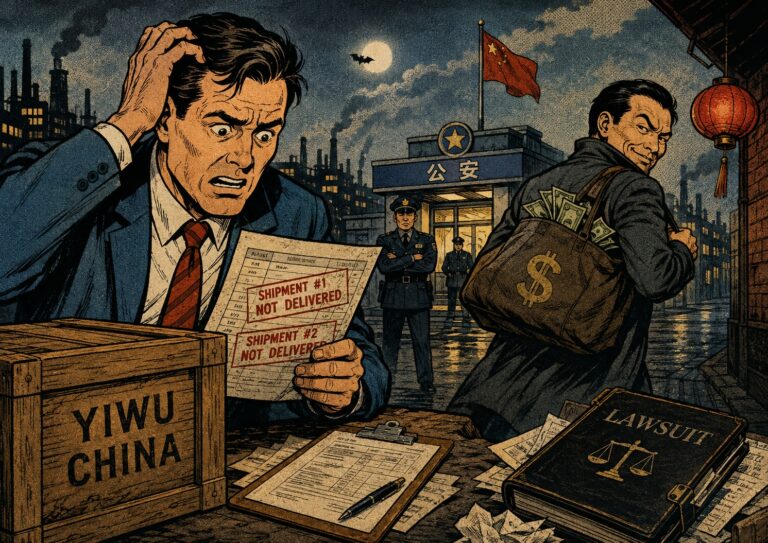
1.  About a year ago, a client had come to me for a consultation regarding a dispute it was having with its Chinese OEM supplier.  The Chinese company was threatening to sue my client for about $350,000, per its invoices.  My client was refusing to pay the Chinese company due to a spate of bad product.  My client was seeking a $150,000 credit for the bad product and the Chinese company was refusing and threatening to sue.  I advised my client not to pay anything, based on two legal maxims.  One, possession is nine-tenths of the law, and two, never fund someone who is threatening to sue you. 

So I met with this US client last week on something completely unrelated and I asked him "whatever happened with that Chinese supplier that had been threatening to sue you?"  His response was that absolutely nothing has changed.  Every few weeks, the Chinese company emails seeking its $350,000 and threatening to sue.  My client responds by offering $200,000 in full settlement and the Chinese company refuses.  We laughed and moved on.  

2.  Many years ago, my firm was retained by a Chinese company to collect on approximately $500,000 owed the Chinese company by a US company.  My firm mapped out our litigation strategy, which involved suing an Alabama based company in Washington Federal Court.  We spent an inordinately long time discussing with the client the costs involved in such litigation and the strategies we would employ.  The Chinese company hired us and sent us a decent sized retainer.  

We emailed the Chinese company to say the retainer had arrived and they emailed me back with a laundry list of things we should do on the case.  Nothing on that list corresponded to what we had told them we needed to do and one of the things on the list was flat out ridiculous.  We had a few weeks earlier told the Alabama company that if they did not pay by such and such a date, we would sue them.  Amazingly enough, item #1 on the list from the Chinese client was that I fly down to Alabama to try to talk settlement.  We wrote the Chinese company and explained that they had hired us because we were US attorneys and, as such, we know what we are doing in terms of dealing with US companies on what had now essentially become a US case.  We told the Chinese company that the absolute worst thing we could do would be to fly to Alabama to talk settlement and that doing so would be tantamount to our saying that we were not really serious about suing.  The Chinese company then confessed that they were not really serious about suing and that they just wanted us to settle the case.  I then gave them the maxim about how you have to be prepared to try a case to settle a case and they told me they had decided not to go forward with the matter and asked us to return the retainer, which we did.  

I emailed them the other day just out of curiosity to ask how their case was going and they asked us to take their case on again.  We vehemently declined and noted how they needed to retain an attorney immediately because they were now facing serious potential &lt;a href="http://en.wikipedia.org/wiki/Statute_of_limitations"&gt;statute of limitation&lt;/a&gt; problems.

3.  We were once contacted by a Chinese company owed around $300,000 by an American company.  We asked him all sorts of questions about the debt and he gave good answers so we asked him to send us the documents.  Turns out his debt was about ten years old and way past the time we could sue.  We asked him why they had waited so long and the explanation was that they had been trying to work it out.  I am not kidding.

My firm has been handling cases like these for Korean and Japanese and Russian and German and companies from other countries for years.  China is different.  Sorry.  

What are you seeing out there?  
      
   &lt;div class="feedflare"&gt;
&lt;a href="http://feeds.feedburner.com/~ff/ChinaLawBlog?a=LIStDtixdQg:d63OGfMdJ9A:yIl2AUoC8zA"&gt;&lt;img src="http://feeds.feedburner.com/~ff/ChinaLawBlog?d=yIl2AUoC8zA" border="0"&gt;&lt;/img&gt;&lt;/a&gt; &lt;a href="http://feeds.feedburner.com/~ff/ChinaLawBlog?a=LIStDtixdQg:d63OGfMdJ9A:7Q72WNTAKBA"&gt;&lt;img src="http://feeds.feedburner.com/~ff/ChinaLawBlog?d=7Q72WNTAKBA" border="0"&gt;&lt;/img&gt;&lt;/a&gt;
&lt;/div&gt;</content>
<feedburner:origLink>http://www.chinalawblog.com/2009/07/owe_money_to_a_chinese_company.html</feedburner:origLink></entry>
<entry>
   <title>Exporting To China 101</title>
   <link rel="alternate" type="text/html" href="http://feedproxy.google.com/~r/ChinaLawBlog/~3/A6sRRxz6Wt8/exporting_to_china_101.html" />
   <id>tag:www.chinalawblog.com,2009://1.3185</id>
   
   <published>2009-07-08T21:28:28Z</published>
   <updated>2009-07-08T21:44:08Z</updated>
   
   <summary>A client recently sent me a blogpost and asked me if I "thought it made sense." The post is entitled "Organizing Your Export Trial Run," and, yes I do. Not only does it make sense, but it also has a slew of very helpful links. So if you are in the business of exporting to China (or to anywhere else), you should check it out....</summary>
   <author>
      <name />
      <uri>www.harrismoure.com</uri>
   </author>
         <category term="Recommended Reading" scheme="http://www.sixapart.com/ns/types#category" />
   
   
   <content type="html" xml:lang="en" xml:base="http://www.chinalawblog.com/">
      A client recently sent me a blogpost and asked me if I "thought it made sense."  The post is entitled "&lt;a href="http://blogs.openforum.com/2009/02/13/organizing-your-export-trial-run/"&gt;Organizing Your Export Trial Run,&lt;/a&gt;" and, yes I do.  Not only does it make sense, but it also has a slew of very helpful links.  So if you are in the business of exporting to China (or to anywhere else), you should check &lt;a href="http://blogs.openforum.com/2009/02/13/organizing-your-export-trial-run/"&gt;it&lt;/a&gt; out.  
      
   &lt;div class="feedflare"&gt;
&lt;a href="http://feeds.feedburner.com/~ff/ChinaLawBlog?a=A6sRRxz6Wt8:LKnB3NmB4l0:yIl2AUoC8zA"&gt;&lt;img src="http://feeds.feedburner.com/~ff/ChinaLawBlog?d=yIl2AUoC8zA" border="0"&gt;&lt;/img&gt;&lt;/a&gt; &lt;a href="http://feeds.feedburner.com/~ff/ChinaLawBlog?a=A6sRRxz6Wt8:LKnB3NmB4l0:7Q72WNTAKBA"&gt;&lt;img src="http://feeds.feedburner.com/~ff/ChinaLawBlog?d=7Q72WNTAKBA" border="0"&gt;&lt;/img&gt;&lt;/a&gt;
&lt;/div&gt;</content>
<feedburner:origLink>http://www.chinalawblog.com/2009/07/exporting_to_china_101.html</feedburner:origLink></entry>
<entry>
   <title>Hey Sucker, We've Got Your China Trademark And Your're Goin' Down.</title>
   <link rel="alternate" type="text/html" href="http://feedproxy.google.com/~r/ChinaLawBlog/~3/5M61ZCwc2f4/free_china_legal_advice_do_not_1.html" />
   <id>tag:www.chinalawblog.com,2009://1.3015</id>
   
   <published>2009-07-08T10:51:26Z</published>
   <updated>2009-07-08T15:36:21Z</updated>
   
   <summary>Over the last six months or so, my firm's work for Chinese companies going international has zoomed, and with that, my knowledge of how Chinese companies "handle" foreign companies has zoomed as well. One of the things I have learned is that Chinese companies understand the value of trademarks -- YOUR trademark. Let me explain. I am going to have to be very vague here so as to avoid revealing any confidential information, but I...</summary>
   <author>
      <name />
      <uri>www.harrismoure.com</uri>
   </author>
         <category term="Legal News" scheme="http://www.sixapart.com/ns/types#category" />
   
   
   <content type="html" xml:lang="en" xml:base="http://www.chinalawblog.com/">
      Over the last six months or so, my firm's work for Chinese companies going international has zoomed, and with that, my knowledge of how Chinese companies "handle" foreign companies has zoomed as well.  One of the things I have learned is that Chinese companies understand the value of trademarks -- YOUR trademark.  Let me explain.

I am going to have to be very vague here so as to avoid revealing any confidential information, but I can be specific enough so you can get the gist.  Two stories:

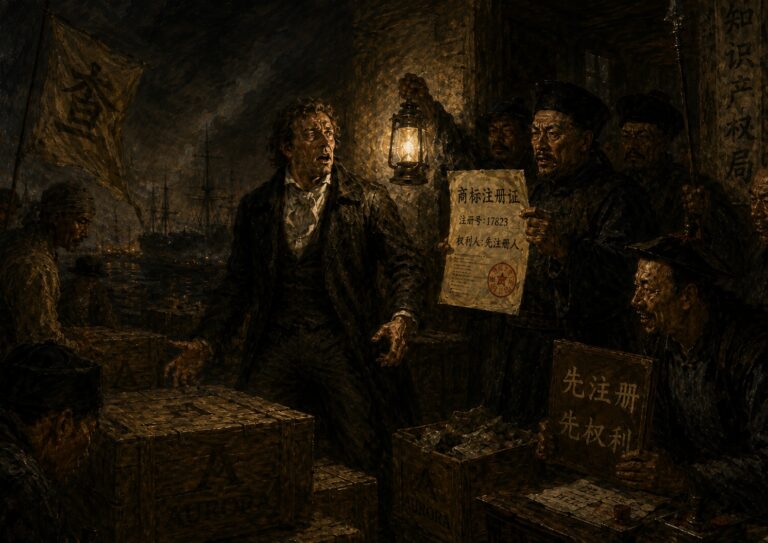
1.  Chinese company manufactures product for US company.  Product ships from China with US company name on it and US company distributes it throughout North America.  China company also sells its product in North America under its own brand name.  US company is trying to get Chinese company to lower its prices and Chinese company is balking.  US company is talking of finding another manufacturer.  Chinese company tells me that people in China "very friendly" to them registered the US company's name in China for this product years ago and so if anyone else tries to manufacture this product in US company's name, Chinese company will be able to stop them based on trademark violation.  

China company is very smart.  It knew that it could not register the trademark itself because China trademark law prohibits an agent to register the trademark of the company for whom it is acting as agent, so Chinese company did not register the trademark itself.  US company is going to be in for a very rude awakening if it ceases to use this Chinese company for its manufacturing.  Now here's the part that ought to really scare you.  I asked my Chinese client how they knew to secure the trademark and the response was "everybody in China knows about this."

2.  US Company A is in a very contentious battle with US Company B. US Company A had for many years been working with US Company B, with US Company A assisting US Company B in China.   But when things started going bad, US Company A had a Chinese company secure a China trademark for a name that is absolutely essential for US Company B.  US Company B does not know this yet as US Company A plans not to tell them unless and until things get really bad, along the lines of a loss at trial, if things ever get that far without resolution.  

Because US Company A is a US company, I was a bit concerned that its having orchestrated the registering of a China trademark of a name that is absolutely critical for Company B might somehow subject Company A to legal liability in the US.  However, I have discussed this with many US lawyers expert in this sort of thing and all of them are of the view that this is not going to be the case because Company A's actions were completely legal in China.  Amazingly enough, US Company A has a paper trail showing that it strongly advised US Company B of the need for US Company B to register its trademark in China.  

Vacuums get filled and if you are having product made in China with your name on it, you had better register your trademark in China, even if (especially if?) your China presence is through a third party.  

On the flip side of this, if you are a company that gets paid to handle China outsourcing for Western companies, you would be well advised to put something in writing somewhere (perhaps in your contract with the Western company) making clear that you are of the view that your client should be registering its trademark and that you will not be doing that for them.  Such a provision will help protect you from a negligence or breach of contract lawsuit should what I described above happen to your Western client.  
      
   &lt;div class="feedflare"&gt;
&lt;a href="http://feeds.feedburner.com/~ff/ChinaLawBlog?a=5M61ZCwc2f4:JLpP_sP_dtQ:yIl2AUoC8zA"&gt;&lt;img src="http://feeds.feedburner.com/~ff/ChinaLawBlog?d=yIl2AUoC8zA" border="0"&gt;&lt;/img&gt;&lt;/a&gt; &lt;a href="http://feeds.feedburner.com/~ff/ChinaLawBlog?a=5M61ZCwc2f4:JLpP_sP_dtQ:7Q72WNTAKBA"&gt;&lt;img src="http://feeds.feedburner.com/~ff/ChinaLawBlog?d=7Q72WNTAKBA" border="0"&gt;&lt;/img&gt;&lt;/a&gt;
&lt;/div&gt;</content>
<feedburner:origLink>http://www.chinalawblog.com/2009/07/free_china_legal_advice_do_not_1.html</feedburner:origLink></entry>
<entry>
   <title>Sex! Drugs! Prostitution!  China And The US By The Numbers.</title>
   <link rel="alternate" type="text/html" href="http://feedproxy.google.com/~r/ChinaLawBlog/~3/wzOy-ipWdlM/sex_and_drugs_and_prostitution.html" />
   <id>tag:www.chinalawblog.com,2009://1.3182</id>
   
   <published>2009-07-07T18:27:17Z</published>
   <updated>2009-07-08T04:05:17Z</updated>
   
   <summary>The Aimee Barnes Blog just did a post, entitled, "Sex, Drugs, Weapons and Cash: China vs United States," comparing the United States and China on all sorts of numbers/statistics relating mostly to sex, drugs, crime and health. It makes for fascinating reading, particularly, if (like me) you are the kind of person who remembers off the top of your head, exactly what Bob Gibson's ERA was in 1968 (1.12). Check it out....</summary>
   <author>
      <name />
      <uri>www.harrismoure.com</uri>
   </author>
         <category term="Recommended Reading" scheme="http://www.sixapart.com/ns/types#category" />
   
   
   <content type="html" xml:lang="en" xml:base="http://www.chinalawblog.com/">
      The Aimee Barnes Blog just did a post, entitled, "&lt;a href="http://www.aimeebarnes.com/blog/?p=606"&gt;Sex, Drugs, Weapons and Cash: China vs United States,&lt;/a&gt;" comparing the United States and China on all sorts of numbers/statistics relating mostly to sex, drugs, crime and health.  It makes for fascinating reading, particularly, if (like me) you are the kind of person who remembers off the top of your head, exactly what &lt;a href="http://sports.espn.go.com/espn/blackhistory2008/columns/story?page=keri/080221"&gt;Bob Gibson's&lt;/a&gt; &lt;a href="http://en.wikipedia.org/wiki/Earned_run_average"&gt;ERA&lt;/a&gt; was in 1968 (&lt;a href="http://4-3-2-5-tp.blogspot.com/2009/06/statistics-in-baseball.html"&gt;1.12&lt;/a&gt;).

Check &lt;a href="http://www.aimeebarnes.com/blog/?p=606"&gt;it&lt;/a&gt; out.  
      
   &lt;div class="feedflare"&gt;
&lt;a href="http://feeds.feedburner.com/~ff/ChinaLawBlog?a=wzOy-ipWdlM:PJ80oAH1Igs:yIl2AUoC8zA"&gt;&lt;img src="http://feeds.feedburner.com/~ff/ChinaLawBlog?d=yIl2AUoC8zA" border="0"&gt;&lt;/img&gt;&lt;/a&gt; &lt;a href="http://feeds.feedburner.com/~ff/ChinaLawBlog?a=wzOy-ipWdlM:PJ80oAH1Igs:7Q72WNTAKBA"&gt;&lt;img src="http://feeds.feedburner.com/~ff/ChinaLawBlog?d=7Q72WNTAKBA" border="0"&gt;&lt;/img&gt;&lt;/a&gt;
&lt;/div&gt;</content>
<feedburner:origLink>http://www.chinalawblog.com/2009/07/sex_and_drugs_and_prostitution.html</feedburner:origLink></entry>
<entry>
   <title>Cultural Norms As Law Enforcement Mechanism.  Why Demand Letters Still Work In China.</title>
   <link rel="alternate" type="text/html" href="http://feedproxy.google.com/~r/ChinaLawBlog/~3/jRarest7RrI/cultural_norms_as_law_enforcem.html" />
   <id>tag:www.chinalawblog.com,2008://1.2513</id>
   
   <published>2009-07-07T11:12:50Z</published>
   <updated>2009-07-12T16:19:39Z</updated>
   
   <summary>Wikipedia defines a demand letter as a "letter stating a legal claim (usually drafted by a lawyer) which makes a demand for restitution or performance of some obligation, owing to the recipients' alleged breach of contract, or for a legal wrong." Typically, these letters conclude with the lawyer threatening to sue or the non-lawyer letter writer threatening to go his or her attorney. Such letters have become so commonplace in the United States that they...</summary>
   <author>
      <name />
      <uri>www.harrismoure.com</uri>
   </author>
         <category term="Legal News" scheme="http://www.sixapart.com/ns/types#category" />
   
   
   <content type="html" xml:lang="en" xml:base="http://www.chinalawblog.com/">
      Wikipedia defines a demand letter as a "letter stating a legal claim (usually drafted by a lawyer) which makes a demand for restitution or performance of some obligation, owing to the recipients' alleged breach of contract, or for a legal wrong."   Typically, these letters conclude with the lawyer threatening to sue or the non-lawyer letter writer threatening to go his or her attorney.  

Such letters have become so commonplace in the United States that they most of the time fail to instill much fear into or much action from their recipient.  I know of some lawyers who no longer will write such letters, believing that US companies will not seriously discuss any settlement until sued.  I know of a company that manufactures a somewhat dangerous product and it receives maybe 100 lawsuit threatening letters a year from around the world.  Before I started representing this company, they would respond to every letter by seeking a quick out of court settlement.  I convinced them to change their strategy to ignore every letter and that has saved my client hundreds of thousands of dollars.  Of the 100 letters ignored, less than ten typically result in a law suit and of those ten, we typically settle nine of them for little to no more than the settlement would have been had we responded to the letter and not forced a lawsuit. These numbers are not exact, but they should give a flavor to the benefits of ignoring such letters.

China is different.  

We have a much higher rate of success in China with our demand letters than we do just about anywhere else.  Co-blogger Steve Dickinson and I have often marveled at how we so often achieve positive results by sending out demand letters to Chinese companies that owe our clients money.  We always send these letters in Chinese, sometimes under our own firms letterhead and sometimes under the letterhead of one of our affiliated Chinese law firms (with their permission and cooperation, of course).  Like a demand letter in the United States, we usually conclude by saying that if resolution is not reached within x days, we will commence a lawsuit.  

Steve and I did not know exactly why we tend to have such a high success rate with these letters (nor, on one level did we really care).  We talked about how in the US companies usually either throw such letters in the trash or just send it on to their lawyers who, typically just say something like, "let's see if these guys really have the guts and financial wherewithal to really sue...."  In China, where letters are more uncommon and companies are not nearly as joined at the hip to their lawyers as in the United States, we thought such letters are viewed as more important, unusual, and serious.  

Now I THINK I know why.  

Two Columbia Law School professors, Benjamin Liebman and Curtis Milhaupt did a study, entitled, "&lt;a href="http://www.columbialawreview.org/issues/index.cfm?volume_number=108&amp;issue_number=4"&gt;Reputational Sanctions in China’s Securities Market&lt;/a&gt; (forthcoming in the Columbia Law Review.) where they posit that the avoidance of public humiliation is a big behavior inducer in China.  And unlike in the United States where being sued is a legal matter, in China it is humiliating, as per an &lt;a href="http://www.economist.com/displayStory.cfm?story_id=10765975"&gt;Economist magazine&lt;/a&gt; article:

&lt;blockquote&gt;Over the past 18 years, China has introduced rules against market manipulation, fraud and insider dealing, but enforcement remains patchy. The China Securities Regulatory Commission seems competent but overwhelmed. Sometimes it takes years to issue penalties after lengthy investigations—and along the way cases lose relevance.In the meantime, the exchanges have quietly begun to acquire authority. The power that they wield appears flimsy—the most serious penalty they can levy is a rebuke to firms and individuals through public notices. [emphasis added] 

But it is remarkably effective in a country with a long history of punishment by humiliation—think of the cangue, a rectangular slab around the neck, in pre-Communist times and dunce caps in the Cultural Revolution. As a result of the culturally relevant and effective method of financial enforcement mechanism, Messrs Liebman and Milhaupt write that between 2001 and 2006 the exchanges publicly criticised 205 companies and almost 1,700 people. They looked at the share prices of the targeted firms both when they disclosed the conduct for which they were being criticised and when the criticism was published. The admissions typically preceded the rebukes, and in the few weeks that followed the firms’ share prices underperformed the Shanghai stockmarket by an average of up to 6% (see left-hand chart). After the criticism, there was a further lag of up to 3% on average (see right-hand chart). 

Furthermore, after an entity goes on the government “black list” through public criticism and shaming, 

[r]aising money through equity markets and banks became more costly, and sometimes impossible, for companies that had been criticised. Suppliers and customers also took a tougher line. Some people lost the right to be a director or senior manager, and suffered from pariah status in a country where there is little pity for failure. The criticisms were sometimes even a prelude to formal investigations by the regulatory authorities.

From a comparative law point of view, this study points out not only the vast differences between legal regimes that actually work for different markets but also highlights the relevance of culture in establishing them.  In the United States, being sued, investigated and/or prosecuted is pretty much a legal matter; while in China, it is more than that.  When someone gets sued, it is as if she has lost part of her integrity in the public eye.  For example, a few years ago a Chinese friend of mine was sued by his boss down in Houston, he was extremely distressed and felt humiliated by the lawsuit even though he understood that lawsuits in the United States are as common as cheese burgers.  Public shaming goes deeper into the psyche of the Chinese (in general terms) because of the fear of failure and the love and care of one’s “face.”  &lt;/blockquote&gt;

Unfortunately, however, we are finding (particularly recently with the downturn) that even threats of imminent humiliation do not work on Chinese companies that no longer exist or simply lack the funds to pay.  
      
   &lt;div class="feedflare"&gt;
&lt;a href="http://feeds.feedburner.com/~ff/ChinaLawBlog?a=jRarest7RrI:Pp6M2lyIF_I:yIl2AUoC8zA"&gt;&lt;img src="http://feeds.feedburner.com/~ff/ChinaLawBlog?d=yIl2AUoC8zA" border="0"&gt;&lt;/img&gt;&lt;/a&gt; &lt;a href="http://feeds.feedburner.com/~ff/ChinaLawBlog?a=jRarest7RrI:Pp6M2lyIF_I:7Q72WNTAKBA"&gt;&lt;img src="http://feeds.feedburner.com/~ff/ChinaLawBlog?d=7Q72WNTAKBA" border="0"&gt;&lt;/img&gt;&lt;/a&gt;
&lt;/div&gt;</content>
<feedburner:origLink>http://www.chinalawblog.com/2009/07/cultural_norms_as_law_enforcem.html</feedburner:origLink></entry>
<entry>
   <title>The China Liability Wall.  What I Meant To Say....</title>
   <link rel="alternate" type="text/html" href="http://feedproxy.google.com/~r/ChinaLawBlog/~3/MrFNrvsd6zo/the_china_liability_wall.html" />
   <id>tag:www.chinalawblog.com,2007://1.2136</id>
   
   <published>2009-07-06T10:23:59Z</published>
   <updated>2009-07-06T10:39:59Z</updated>
   
   <summary>An East Coast lawyer contacted me the other day seeking help for his client in writing an outsourcing contract with its Chinese manufacturer. We talked for maybe 10 minutes regarding these contracts and then he told me he had called me because of what I had to say about always requiring the Chinese manufacturer to agree to buy product liability insurance. I paused for an uncomfortably long time thinking about how I could not believe...</summary>
   <author>
      <name />
      <uri>www.harrismoure.com</uri>
   </author>
         <category term="Legal News" scheme="http://www.sixapart.com/ns/types#category" />
   
   
   <content type="html" xml:lang="en" xml:base="http://www.chinalawblog.com/">
      An East Coast lawyer contacted me the other day seeking help for his client in writing an outsourcing contract with its Chinese manufacturer.  We talked for maybe 10 minutes regarding these contracts and then he told me he had called me because of what I had to say about always requiring the Chinese manufacturer to agree to buy product liability insurance.  I paused for an uncomfortably long time thinking about how I could not believe I had ever said this.

Finally, I asked him what he was talking about.  He then said "in the Washington Post article."   I then said, "oh," and did a very quick Google search and came up with a very interesting &lt;strong&gt;2007 article&lt;/strong&gt; (I had never before seen), entitled, "&lt;a href="http://www.washingtonpost.com/wp-dyn/content/article/2007/07/28/AR2007072800733.html?nav=rss_business/economy"&gt;Liability Lawyers Struggle to Pierce Chinese Curtain.&lt;/a&gt;"   That article has me down for the following: 

&lt;blockquote&gt;Smaller importers are increasingly writing liability insurance into their contracts with Chinese manufacturers and paying third parties to test product quality, said Daniel P. Harris, a Seattle lawyer who writes contracts for American companies outsourcing to China.&lt;/blockquote&gt;

I explained that this was the first I had heard of the article and that I had either misspoken or been misquoted.  It is true that I have noticed a trend towards increased product quality checking even among smaller U.S. importers of product from China and it is true that I am constantly advocating to our clients the need for them to look into purchasing product liability insurance to protect themselves from bad product.  I am of the view that importers of product from China must think of themselves as product manufacturers because that is how an American jury will see them if there are no other defendants around to pay the damages incurred by the injured plaintiff before them.  

But, I have never advocated writing into the OEM (original equipment manufacturing) contract with the Chinese manufacturer the requirement that the manufacturer secure its own product liability insurance.  Well sorta.  We do sometimes put that provision in our contracts, but we always make clear to our clients that they should &lt;strong&gt;not&lt;/strong&gt; rely on it unless they first conduct serious due diligence to determine whether the Chinese manufacturer has really taken out a policy that will actually protect the US company should something go wrong.  

It is simply safer for the Western company to get its own insurance than to rely on the Chinese manufacturer to get insurance to cover the Western company.  And since, in theory at least, the Chinese company will need to charge the Western company more for product if the Chinese company is buying extra insurance, the Western company's securing its own insurance should end up costing little to no more than if the Chinese company had purchased it.  

Glad I have this forum to clarify something I may or may not have said two years ago.  
      
   &lt;div class="feedflare"&gt;
&lt;a href="http://feeds.feedburner.com/~ff/ChinaLawBlog?a=MrFNrvsd6zo:eFmQDgk1SrM:yIl2AUoC8zA"&gt;&lt;img src="http://feeds.feedburner.com/~ff/ChinaLawBlog?d=yIl2AUoC8zA" border="0"&gt;&lt;/img&gt;&lt;/a&gt; &lt;a href="http://feeds.feedburner.com/~ff/ChinaLawBlog?a=MrFNrvsd6zo:eFmQDgk1SrM:7Q72WNTAKBA"&gt;&lt;img src="http://feeds.feedburner.com/~ff/ChinaLawBlog?d=7Q72WNTAKBA" border="0"&gt;&lt;/img&gt;&lt;/a&gt;
&lt;/div&gt;</content>
<feedburner:origLink>http://www.chinalawblog.com/2009/07/the_china_liability_wall.html</feedburner:origLink></entry>
<entry>
   <title>China OEM Agreements.  Why Ours Are In Chinese.  Flat Out.</title>
   <link rel="alternate" type="text/html" href="http://feedproxy.google.com/~r/ChinaLawBlog/~3/7Tj2yAMgYnw/china_oem_agreements_we_like_o.html" />
   <id>tag:www.chinalawblog.com,2009://1.3172</id>
   
   <published>2009-07-05T18:18:18Z</published>
   <updated>2009-07-07T05:55:14Z</updated>
   
   <summary>Had a nice conversation with a potential client last week. Company has a great new product it wants made in China. Like many companies starting out in China, this one is in the process of shopping for its China lawyers and my firm was one of four suggested to it by its regular corporate counsel. Our conversation was interesting because we were the fourth law firm with whom she had spoken. This gave me an...</summary>
   <author>
      <name />
      <uri>www.harrismoure.com</uri>
   </author>
         <category term="Legal News" scheme="http://www.sixapart.com/ns/types#category" />
   
   
   <content type="html" xml:lang="en" xml:base="http://www.chinalawblog.com/">
      Had a nice conversation with a potential client last week. Company has a great new product it wants made in China.  Like many companies starting out in China, this one is in the process of shopping for its China lawyers and my firm was one of four suggested to it by its regular corporate counsel.

Our conversation was interesting because we were the fourth law firm with whom she had spoken.  This gave me an opportunity to ask how we differed from the other three firms and, not surprisingly, we really differed, both in how we bill for these things and, more importantly, how we typically handle these contracts.  

I told this company that we would almost certainly do their OEM contract in Chinese and I quoted them a flat fee for doing that, along with an English language translation.  They told me that the other law firms were saying that the contract would be in English and they would "need to" charge by the hour and it would even be impossible to estimate how long it would take due to the negotiations that would take place between this company and its Chinese manufacturer.

I think one big reason so many US law firms do not write their OEM agreements in Chinese is simply because they do not have any lawyers who can read and write Mandarin fluently.  My firm has two lawyers (and various others) who can read and write (and speak) Mandarin fluently and we usually favor putting our clients' OEM contracts in Chinese for the following reasons.  

Because international contracts are so often between parties from different countries, they commonly are written in two or more languages.  Nearly all of the contracts we draft for our Western clients doing business in China are in English and Chinese (though about ten percent of the time, we also translate them into German, Spanish, Korean, or French as well).  This duality of language can, if not handled properly, pose big problems. 

When we do a contract in both English and Chinese, we always call for the contract to specify ONE official language to control if there is a dispute.  We do not advise drafting a contract that is silent on the official language nor do we advise drafting contracts that call for both English and Chinese to apply.  Having two official languages pretty much doubles the chances for ambiguity and pretty much doubles the attorney time (and fees) that will be incurred in fighting over the meaning of the &lt;em&gt;two&lt;/em&gt; contracts.  It is expensive enough litigating on one contract; there is no benefit litigating on two. 

So the question for us comes down to whether English or Chinese should be the official language of the contract and the answer to that question requires we first decide where we would most like to see disputes resolved.  If we go for arbitration in English, then we almost certainly will want English as the official language.  But if we decide the Chinese courts will be the best place to resolve conflicts, then we want Chinese to be the official language.  

Now I know most of you think the obvious answer here is to do anything possible to avoid Chinese courts, but you would be wrong.  Let me explain.  

In determining where best to resolve conflicts on an OEM contract, the analysis has to begin with first trying to determine the most likely and the potentially most damaging disputes and then analyzing where best to handle each sort of dispute. Disputes between foreign companies and Chinese manufacturers most often involve the following:

1.  &lt;strong&gt;The Chinese company provides poor quality product.&lt;/strong&gt; To say this is common would be an understatement.  The best way to deal with a dispute involving the Chinese company providing poor product is usually to seek to work it out with the Chinese manufacturer.  If that proves impossible AND there is enough at stake to warrant suing, arbitration is likely going to be the best course of action. Not to minimize the importance of these cases, but they usually involve only one shipment and they usually involve a finite amount of money.   

Litigation outside China against a China based manufacturer usually does not make sense.  Because most Chinese companies do not have any meaningful assets outside China and because China does not enforce foreign judgments, getting a judgment outside China against the Chinese company will likely have virtually no value. Therefore, there is no point in having a contract that calls for jurisdiction in a court outside China.   For more on the difficulty/impossibility of enforcing foreign judgments in China, check out "&lt;a href="http://www.chinalawblog.com/2007/07/taking_judgments_to_china_and.html"&gt;Taking Judgments To China (And Korea), Let's Not Sue Twice.&lt;/a&gt;"

2.  &lt;strong&gt;The Chinese company manufactures the foreign company's product without the foreign company's permission and in direct violation of the OEM agreement&lt;/strong&gt;.  You have a great product and you have taken it to China for manufacturing there.  You are currently selling in just a few countries, but as your plans call for you to eventually sell into China and India and maybe even Africa some day.  All of a sudden, you learn that your Chinese manufacturer is not making just the 100,000 units you ordered, but, in fact, is making 500,000 units and shipping the extra 400,000 to India, Africa and the rest of Asia, where it is selling them for 1/5 of what you are charging. 

If your agreement calls for arbitration in Hong Kong or New York, or even Beijing . . . good luck.  What you need, and what you need fast, in these situations, is a court order (injunctive relief) requiring the Chinese manufacturer to stop making your product and to stop NOW.  And guess what, pretty much the only way you are going to get that badly needed court order is from a Chinese court.  

If your contract calls for arbitration and you sue in a Chinese court to get an injunction to stop your manufacturer from breaching your contract by manufacturing and selling your product, you almost certainly will not succeed.  The Chinese manufacturer will show the court your arbitration clause and request it decline the case in favor of resolving the dispute in arbitration.  Once you are in arbitration, you pretty much will not be able to get an injunction. 

It is possible to write your OEM contract to call for arbitration with a Chinese court "carve out" for injunctive relief, but many/most Chinese courts do not to enforce these sorts of provisions.  

For these reasons, we usually favor our OEM contracts calling for dispute resolution in the Chinese courts.  And if you are going to be in a Chinese court, you do want your contract to be in Chinese.  The reason for this is simple.  If your contract is in English, the Chinese courts will use their own translator to translate it.  Translations can be easily manipulated and it is virtually always better to have your contract translated by &lt;em&gt;your own&lt;/em&gt; law firm in advance so you know exactly what it says before you sign it, than to have it translated into Chinese by an unknown translator only &lt;em&gt;after&lt;/em&gt; you have sued on it.

3.  &lt;strong&gt;The Chinese manufacturer refuses to return the foreign company's molds after the foreign company seeks to terminate its relationship with the Chinese manufacturer.&lt;/strong&gt;  This often happens when the foreign company terminates its relationship with the Chinese supplier.  Not surprisingly, the key here is to have a contract in Chinese that makes clear that the mold belongs to you and that there will be hell to pay (in legal terms)  if the Chinese manufacturer does not return these to you pronto. But what if the manufacturer does not return your molds?  Damages are usually not what is needed. You need the molds immediately because without them you cannot manufacture your products.  Again, the best positioned foreign company is the one with a contract in Chinese who can go to a Chinese court for an injunction mandating the manufacturer return the molds.  

I also learned that we differed from all the other law firms in our pricing structure.  We gave this client a flat fee price based on the complexity of what we anticipated doing for it.  This price was to draft an OEM agreement in Chinese, with an English language translation for the client.  

None of the other law firms were willing to give a similar fee, even when the company went back to them (at my suggestion) and suggest they do so. They all begged out, claiming they had no way of knowing how long it would take and so they would "have to" charge by the hour.  This is, of course, complete &lt;a href="http://www.answers.com/topic/malarkey"&gt;malarkey&lt;/a&gt;.  (I wanted to use a much stronger word here, but since I long ago committed to writing a blog that I would not mind my now 11 year old kid reading....).  

If law firms do not know how long these OEM agreements typically take, who does?  Seriously.  

My firm has done enough of them that we know, within around 3-4 hours how long 90 percent of them will take and we are willing to take the risk on the ~5% that will take longer and grab the benefit of the ~5% that will take less time.  The real answer is that law firms are simply resistant to change and resistant to taking on any risk on behalf of their clients.  For more on how law firms are so incredibly resistant to changing their billing paradigm, check out &lt;a href="http://amlawdaily.typepad.com/amlawdaily/2009/06/study-says-law-firms-dont-want-change.html"&gt;this recent study&lt;/a&gt; resoundingly confirming this.  

What do you think?
      
   &lt;div class="feedflare"&gt;
&lt;a href="http://feeds.feedburner.com/~ff/ChinaLawBlog?a=7Tj2yAMgYnw:dlw9jWRVH7g:yIl2AUoC8zA"&gt;&lt;img src="http://feeds.feedburner.com/~ff/ChinaLawBlog?d=yIl2AUoC8zA" border="0"&gt;&lt;/img&gt;&lt;/a&gt; &lt;a href="http://feeds.feedburner.com/~ff/ChinaLawBlog?a=7Tj2yAMgYnw:dlw9jWRVH7g:7Q72WNTAKBA"&gt;&lt;img src="http://feeds.feedburner.com/~ff/ChinaLawBlog?d=7Q72WNTAKBA" border="0"&gt;&lt;/img&gt;&lt;/a&gt;
&lt;/div&gt;</content>
<feedburner:origLink>http://www.chinalawblog.com/2009/07/china_oem_agreements_we_like_o.html</feedburner:origLink></entry>
<entry>
   <title>China's Internet Censoring.  Hate To Say I Told You So, But I Told You So....</title>
   <link rel="alternate" type="text/html" href="http://feedproxy.google.com/~r/ChinaLawBlog/~3/S3LcVHT3pAE/chinas_internet_censoring_hate.html" />
   <id>tag:www.chinalawblog.com,2009://1.3171</id>
   
   <published>2009-06-30T15:07:37Z</published>
   <updated>2009-07-01T06:37:50Z</updated>
   
   <summary>Back when the media was getting all hot and heavy (sexual reference intended) on China's plans to require internet filtering software, I did a post, entitled, "Two China Things Of Which We Dare Not Speak (And Sex Is Not One of Them)." In that post, I explained why we virtually never write about proposed laws and why I had not written anything on the filtering software. I gave the following reasons: I do not like...</summary>
   <author>
      <name />
      <uri>www.harrismoure.com</uri>
   </author>
         <category term="Legal News" scheme="http://www.sixapart.com/ns/types#category" />
   
   
   <content type="html" xml:lang="en" xml:base="http://www.chinalawblog.com/">
      Back when the media was getting all hot and heavy (sexual reference intended) on China's plans to require internet filtering software, I did a post, entitled, "&lt;a href="http://www.chinalawblog.com/2009/06/the_two_china_things_we_dare_n.html"&gt;Two China Things Of Which We Dare Not Speak (And Sex Is Not One of Them).&lt;/a&gt;"  In that post, I explained why we virtually never write about proposed laws and why I had not written anything on the filtering software.

I gave the following reasons:

I do not like writing about proposed laws for the following reasons:

&lt;blockquote&gt;1. There are so many laws already on the books and being enforced that need coverage more. Laws on the books will impact you right now. Proposed laws may or may not ever come into being.

2. China has a very real habit of saying it will institute a new law and then never doing so. It floats new laws to gauge reaction. If the reaction is negative, the law oftentimes never comes into being.

3. China has a very real habit of instituting new laws and then never enforcing them. This often happens when the new law is negatively received.&lt;/blockquote&gt;

Today, China officially &lt;a href="http://www.washingtonpost.com/wp-dyn/content/article/2009/06/30/AR2009063001047.html"&gt;backed down&lt;/a&gt; (no surprise).  Or, in the words of the immortal &lt;a href="http://farnham.blogspot.com/2009/06/gilda-radner-1946-1989.html"&gt;Gilda Radner&lt;/a&gt;, &lt;a href="http://en.wikipedia.org/wiki/Emily_Litella"&gt;Never mind&lt;/a&gt;.  

China is billing it as a delay, but I can virtually guarantee this software will never be heard from again.  I say this for two reasons.  One, the people did not like it and Beijing does NOT want to go against the people on something like this.  Since there is absolutely no reason to believe the people will ever start liking something like this, there is absolutely no reason to believe the software will return.  Two, I know movement has been slow, and I know it has been in fits and starts, but if we were to draw a straight line through the rises and falls, freedom is on a fairly inexorable march in China.

We now return you to our regularly scheduled programming....

UPDATE:  E-Commerce Times interviewed me on this last week and quotes me in their story today, entitled, "&lt;a href="http://www.ecommercetimes.com/story/China-Wobbles-on-Green-Dam-67471.html?wlc=1246400597"&gt;China Wobbles on Green Dam:&lt;/a&gt;"

&lt;blockquote&gt;It was never really clear whether or not Beijing would enforce the edict, according to Dan Harris, a partner in international law firm Harris &amp; Moure and an expert on China.

"What they're doing is floating an idea and seeing what the reaction is," he told the E-Commerce Times. "In the last five years, there probably have been thousands of laws China said it's going to enact and hasn't. Or it has enacted them but hasn't implemented them." &lt;/blockquote&gt;

FURTHER UPDATE:  Sky Canaves has a great post up on the WSJ China Journal, entitled, "&lt;a href="http://blogs.wsj.com/chinajournal/2009/07/01/green-dam-and-the-politics-of-consent/"&gt;Green Dam and the Politics of Consent,&lt;/a&gt;" discussing how popular "consent" plays a huge role in China's governance.  This post nails it completely.    
      
   &lt;div class="feedflare"&gt;
&lt;a href="http://feeds.feedburner.com/~ff/ChinaLawBlog?a=S3LcVHT3pAE:3KNRAbu2SGs:yIl2AUoC8zA"&gt;&lt;img src="http://feeds.feedburner.com/~ff/ChinaLawBlog?d=yIl2AUoC8zA" border="0"&gt;&lt;/img&gt;&lt;/a&gt; &lt;a href="http://feeds.feedburner.com/~ff/ChinaLawBlog?a=S3LcVHT3pAE:3KNRAbu2SGs:7Q72WNTAKBA"&gt;&lt;img src="http://feeds.feedburner.com/~ff/ChinaLawBlog?d=7Q72WNTAKBA" border="0"&gt;&lt;/img&gt;&lt;/a&gt;
&lt;/div&gt;</content>
<feedburner:origLink>http://www.chinalawblog.com/2009/06/chinas_internet_censoring_hate.html</feedburner:origLink></entry>
<entry>
   <title>China's Labor Law.  The Bark Is The Bite.</title>
   <link rel="alternate" type="text/html" href="http://feedproxy.google.com/~r/ChinaLawBlog/~3/bpPexzDKXtA/chinas_labor_law_the_bark_is_t.html" />
   <id>tag:www.chinalawblog.com,2009://1.3170</id>
   
   <published>2009-06-29T02:47:17Z</published>
   <updated>2009-06-29T02:56:56Z</updated>
   
   <summary>Got a call last week from the HR officer of a US company. She was looking for my firm to assist her on a labor law issue. The US company's China WFOE had laid off a female employee who had come back saying she was entitled to ten months pregnancy pay. The employee gave three legitimate sounding reasons for this entitlement. I learned that this employee's yearly salary was about $3600 and that the WFOE...</summary>
   <author>
      <name />
      <uri>www.harrismoure.com</uri>
   </author>
         <category term="Legal News" scheme="http://www.sixapart.com/ns/types#category" />
   
   
   <content type="html" xml:lang="en" xml:base="http://www.chinalawblog.com/">
      Got a call last week from the HR officer of a US company.  She was looking for my firm to assist her on a labor law issue.  The US company's China WFOE had laid off a female employee who had come back saying she was entitled to ten months pregnancy pay.  The employee gave three legitimate sounding reasons for this entitlement.  

I learned that this employee's yearly salary was about $3600 and that the WFOE was in Shenzhen.  I also learned that this employee did not have a written contract and that the WFOE did not have an employee manual. I told the HR officer that for us to research whether this ex-employee was entitled to what she is seeking, we would need to research the laws of China, of Guangdong province and of Shenzhen.   I then told her that the cost of our doing that would be so close to what the employee was seeking and that I was very dubious that our research would reveal any cost savings (particularly because this employee had no written contract and this WFOE had no employee manual) that it would almost certainly not make sense for us to take on the matter.

But I also told her that if the WFOE chose to pay this ex-employee her ten months salary that it needed to have her sign an appropriate release, in Chinese, making it so that she would not be able to sue the company and win, even after receiving payment.  I told her that from what we have been hearing, foreign companies lose pretty much every time in these sorts of employee disputes and they usually lose a lot more than just the one case.  I told her that what happens is that the company loses the one case, all the other employees hear about it and then they sue as well.  I stressed again the need to contain the problems stemming from this one employee right away by means of a well-crafted written agreement in Chinese.  

She is to get back to me this week, after she talks with the company owners.
      
   &lt;div class="feedflare"&gt;
&lt;a href="http://feeds.feedburner.com/~ff/ChinaLawBlog?a=bpPexzDKXtA:XJZ-SQby0ew:yIl2AUoC8zA"&gt;&lt;img src="http://feeds.feedburner.com/~ff/ChinaLawBlog?d=yIl2AUoC8zA" border="0"&gt;&lt;/img&gt;&lt;/a&gt; &lt;a href="http://feeds.feedburner.com/~ff/ChinaLawBlog?a=bpPexzDKXtA:XJZ-SQby0ew:7Q72WNTAKBA"&gt;&lt;img src="http://feeds.feedburner.com/~ff/ChinaLawBlog?d=7Q72WNTAKBA" border="0"&gt;&lt;/img&gt;&lt;/a&gt;
&lt;/div&gt;</content>
<feedburner:origLink>http://www.chinalawblog.com/2009/06/chinas_labor_law_the_bark_is_t.html</feedburner:origLink></entry>
<entry>
   <title>China's Anti-Monopoly Law.  One Year On.</title>
   <link rel="alternate" type="text/html" href="http://feedproxy.google.com/~r/ChinaLawBlog/~3/rAFOBDBZ_oI/i_actually_began_my_legal.html" />
   <id>tag:www.chinalawblog.com,2009://1.3169</id>
   
   <published>2009-06-24T09:39:59Z</published>
   <updated>2009-06-24T12:55:39Z</updated>
   
   <summary>I actually began my legal career as an antitrust lawyer and I though there has so far been no call for it on our China matters, I have very much tried to keep up with China's slowly developing antitrust laws. So I was delighted to sit down (metaphorically speaking) with Josh Gartner Managing Editor of Publications for AmCham China for an interview on recent developments in China's anti-monopoly law. This interview can be heard as...</summary>
   <author>
      <name />
      <uri>www.harrismoure.com</uri>
   </author>
         <category term="Legal News" scheme="http://www.sixapart.com/ns/types#category" />
   
   
   <content type="html" xml:lang="en" xml:base="http://www.chinalawblog.com/">
      I actually began my legal career as an antitrust lawyer and I though there has so far been no call for it on our China matters, I have very much tried to keep up with China's slowly developing antitrust laws.  So I was delighted to sit down (metaphorically speaking) with Josh Gartner Managing Editor of Publications for AmCham China for an interview on recent developments in China's anti-monopoly law.  This interview can be heard as an iTunes podcast &lt;a href="http://tinyurl.com/lkd5t2"&gt;here&lt;/a&gt; and on AmCham's site (gosh, I'm right there with Nancy Pelosi and John Kerry) &lt;a href="http://www.amchamchina.org/article/4455"&gt;here&lt;/a&gt;.

Or you can read the transcription below, stripped of all my overly long pauses and interminable "uhmmms."  

&lt;strong&gt;Welcome to China Brief Insight. This is Josh Gartner of AmCham China. I’m very excited today to be joined by Dan Harris of Harris &amp; Moure law firm. Dan is a very well-respected lawyer. He is also well-known in China for China Law Blog, which he writes together with Steve Dickinson, who is also with his firm based out of Qingdao.&lt;/strong&gt;

&lt;strong&gt;Today, Dan and I are going to talk a little bit about the MOFCOM [Ministry of Commerce] decision to block the Coca Cola purchase of Huiyuan. Huiyuan, as you know, is one of the biggest Chinese producers of juice. This case was pretty widely watched because it is one of the first tests of China’s anti-monopoly law.
&lt;/strong&gt;

&lt;strong&gt;JG: Dan, how are you?
&lt;/strong&gt;
DH: Good. How are you Josh?

&lt;strong&gt;JG: Good. Welcome to the Podcast.
&lt;/strong&gt;
DH: Thank you for having me.

&lt;strong&gt;JG: Alright. We are going to talk about the anti-monopoly law today. And specifically China is coming up on the one-year anniversary of the implementation. In the year since China has formally put the anti-monopoly law into place, what have we learned about it? How is China using it?&lt;/strong&gt;

DH: Well, they are not using it all that often. The case that everyone talks about is the Coca Cola-Huiyuan purchase or the attempted purchase. And in that instance, China used the anti-monopoly law to prevent Coke from purchasing a large juice manufacturer. 

&lt;strong&gt;JG: And when that ruling came out and the purchase was blocked, you wrote on China Law Blog that you had been anticipating that result for awhile. Why were you so convinced that was going to be the final result?
&lt;/strong&gt;
DH: Because the brand that Coca Cola was trying to buy was simply too big, and we felt that China would not allow it to go forward because that sort of purchase would be viewed as not being in China’s national interest.

&lt;strong&gt;JG: So are you saying that it was not on the traditional grounds that people would view monopoly cases? Or is it a combination of the monopoly law and some national sentiment as well?
&lt;/strong&gt;
DH: I’m saying that it is difficult to know. The thing about monopoly is – and this is true of many instances of the law – there are a lot of ways to look at numbers, a lot of ways to look at market share. In fact, just the other day I was at a party and somebody said the local cable company is a monopoly, and I said “no,” that it was not a monopoly because there are various ways that you can get a signal to your television. And this other person kept insisting that it was a monopoly because it was the only cable company. So a lot depends on how you define the market. The reality is that I would think most countries would not have stopped Coke’s purchase on antitrust grounds, on anti-monopoly grounds, for various reasons. First, the company Coke was buying was in the juice business. I believe that the combination of Coke and that company would have – I can’t remember exactly the numbers – it would not have increased Coca Cola’s percentage. Huiyuan, I believe, had something like 40 percent of the market, and Coca Cola had a very small percentage of the juice market, so the combination would not have led to that much of an increase in market share in the juice market alone. I also think that a lot of countries would not have confined it to just the juice market. Maybe they would have looked at it more specifically and said what about grape juice, what about orange juice, what about water, what about soda, etc. A lot has to do with the concept of elasticity of demand. If orange juice all of sudden doubles in price, people are not necessarily going to continue buying orange juice. They might switch to something like grape juice, so gaining monopoly power in something like orange juice might be very difficult because you have to deal with more than just who else is in orange juice, but also grape juice, cherry juice, soda, water, etc.  So I think very few countries would have acted the same way China did with respect to the Coke deal, and I think a lot had to do with China’s overall policies regarding foreign investment.

&lt;strong&gt;JG: Are there any ways other than, specifically a monopoly on juice or a monopoly on specific type of juice, that a merger like this could create any specific monopolistic concerns?
&lt;/strong&gt;
DH: No, not really. The monopoly would come from Coke having such a large share of the market that it would be able to essentially price the product in a monopolistic way. And what that means is that it would have so much pricing power that it could raise prices and people would still have to, need to, or want to continue buying the product. There is another aspect to the purchase that we should talk about and that’s another reason why I think that it was denied, and that is the brand name. The fact is that Huiyuan is such a big brand name in China. I think that Beijing was concerned with appearing to cave in to foreigners by allowing foreigners to take over such a well-known Chinese brand name. And again that has to do with nationalistic sentiment. One thing I want to make clear here is – and you and I have talked about this previously – and that is this idea of decisions being made based on nationalism is very common throughout the world. It is not confined to China, and China could have made a similar argument with respect to some of the decisions made by the United States regarding foreigners purchasing American companies. I think the best example is the attempted purchase of UNOCAL a few years ago, which was denied by – I don’t remember if it was formally denied by the US government – but it was certainly made clear that the US government was not going to tolerate a Chinese company owning UNOCAL, which was viewed as important to national security interests.

&lt;strong&gt;JG: And for that particular deal, would you say that national security issues were the most important or was it more general protectionism and nationalism?
&lt;/strong&gt;
DH: My view was that it was protectionism and nationalism.

&lt;strong&gt;JG: Looking at more recent deals, particularly since the Huiyuan purchase was blocked, people have looked at the Rio Tinto deal to draw connections to the Huiyuan deal to see if there was some sort of fallout in Australia that even though Australia wasn’t involved in the Coca Cola-Huiyuan deal there were some questions about whether China’s reaction was enough to rouse nationalistic sentiment in Australia to block the purchase of Rio Tinto by a Chinese company. Can you talk a little about that deal?&lt;/strong&gt;

DH: Yes. Again, there is no way to know what the rationale was for what happened in Australia. But I do think nationalism and protectionism definitely played a part. And I find it very interesting that people talk about the Rio Tinto deal being a bit of backlash from the Coca Cola deal because I don’t really see that. I think that the same thing would have happened had there never been a Coca Cola deal, just like it happened when CNOOC [China National Offshore Oil Corporation] was trying to buy UNOCAL in the United States. I think that Australia was very wary of a Chinese company coming in and taking over, essentially, one of their commodities. Call it national security. Call it protectionism. Call it nationalism. I think that is a fact of life just about everywhere in the world and so what happened in Australia didn’t really surprise me either. I don’t think that the line goes to the Coke deal in China. I think the line goes to nationalist sentiment.

&lt;strong&gt;JG: Since the Rio Tinto deal basically fell through there has been a new seller, which is BHP Billiton, and China’s Ministry of Commerce or MOFCOM has begun to make some rumblings about looking into the monopolistic implications of that deal. I guess I have two questions. The first would be: How much of that – from your own personal point of view – is fallout because the Rio Tinto deal with a Chinese company fell through? How normal is it for a third party country to look at the monopolistic implications of a deal involving two foreign companies?
&lt;/strong&gt;
DH: I’m going to answer the second question first. How normal is it? It’s unusual but not unheard of.  I think the basis that China is giving for looking at that deal – the BHP-Rio Tinto deal – is legitimate or at least appears legitimate initially and that is that China is saying: “Look, these two companies are going to get together and control a huge portion of the iron ore industry. And we, China, are a huge purchaser of iron ore. Therefore we are entitled to look into this merger from a monopolistic perspective under our antimonopoly laws. Countries do that. The European Union has done that with respect to Microsoft. I can’t think of instances where the US has done that, but I’m sure they have. The justification is sound. I don’t really know enough about the numbers that will result from a BHP-Rio deal, and I don’t know enough about the numbers with respect to Chinese purchases of iron ore to really know whether under antimonopoly law – and when I say under antimonopoly law, I’m just talking in general, not necessarily under China’s antimonopoly law – if there is really something there. I do have no doubt that China is not happy about what has gone on in Australia. They are not happy about Chinalco essentially being pushed out of the deal, and I’m sure that their initial reaction to the BHP-Rio Tinto deal is based on anger, and it will be interesting to see how far they take it and what sort of valid basis they have for doing so.

&lt;strong&gt;JG: On the China side, in terms of foreign companies coming in and purchasing Chinese brands, I think the recent history shows that companies are starting to be a little more cautious about it and there is sort of an understanding that in certain cases there may be a backlash. Have you seen any developments recently that show foreign companies taking a different tact in terms of purchasing Chinese companies?&lt;/strong&gt;

DH: From my own personal perspective, no. I should talk about that briefly. My law firm tends not to represent huge companies. I shouldn’t say “tends not to.”  We do not represent huge companies in huge buyouts. We tend to represent small to medium sized companies who go into China either on their own or sometimes they buy Chinese companies. In that marketplace, these antimonopoly laws have never been a big factor, and we have never had to deal with any sort of nationalistic backlash on the scale where…. let’s say the media gets involved. There have been times when there are certain industries where we get the sense that the Chinese government would prefer that our clients not go in, but that’s probably less due to nationalism than other factors because these are not investments where they are going to make the national press in China. So from my own perspective, and that being the perspective of representing small to medium sized companies there has been absolutely no change. What I have also seen, from the perspective of an interested observer, is that there has always been and will likely continue to be the big companies who seem to understand what is going to be allowed in China in terms of purchases and act accordingly. A very recent example of that is KKR -- Kohlberg Kravis and I forget what the R stands for. I was just reading that they invested $150 million in a dairy company in Anhui province. I think they are getting a 20 percent stake in that and the press has talked a bit about how this was allowed and the Coke deal wasn’t, and the reason why is fairly obvious. The reason is that this is the kind of deal has always been allowed in China. (When I say “always,” I am talking about the last five to ten years.) The Chinese government has always pretty much encouraged foreign companies to purchase non-majority interests in Chinese companies where the foreigner coming in can add a benefit to the Chinese company – maybe a transfer of technology, management skills, access to foreign markets. That’s what I see in the KKR purchase. My guess is that China is very happy with this purchase because it views this as an opportunity to bring in foreign expertise to help tighten up the supply chain in the dairy industry.

&lt;strong&gt;JG: To clarify KKR is Kohlberg Kravis &amp; Roberts. I won’t pretend that I knew that, but I was able to look it up while you were talking through that. So you’re basically saying that when it’s a smaller stake and the foreign enterprise is able to bring in the expertise and essentially add something to industry and the economy in China that is something that tends to be more welcomed as opposed to something that might be seen as a foreign enterprise coming in and taking over a national company or a famous brand in China.&lt;/strong&gt;

DH: Absolutely. Yes. In fact, one of the reasons I am willing to take some credit for having foreseen what happened with the Coke purchase is that in the article we wrote we talked about – and I say “we” because it was with one of my partners, Steve Dickinson, who is based in China – the policies that China has with respect to foreign M&amp;A, and we set out what we saw as the kinds of purchases that would be allowed. The Coke purchase did not fit in there. We said that foreign companies would be allowed to purchase small Chinese companies that the central government is not interested in managing and those tend to be the kind of deals in which my law firm is involved -- small companies that frankly the government does not have much interest in. We said that they would be allowed to purchase large state-owned companies that are suffering from financial difficulties, provided that the foreign investor can restructure and save the Chinese company, and thereby save jobs. There were a lot of those purchases going on three or four years ago. That has seemed to die down a bit, but I remember a number of our clients would come back from China and talk about how some government official was telling them about some great company that our client should buy. Our reaction to that was always “If a Chinese government official is telling you about a great company to buy, it’s either because this Chinese government official has some friend who owns it or more likely this company is probably on its deathbed and they are hoping you can save it.” So those deals have always been encouraged by the Chinese government. Another deal that has always been permitted is – like the KKR deal – where a foreign company comes in and buys a non-majority share in a successful Chinese company but will bring some added benefit to it. But the one purchase that has generally not been allowed is – and will not generally be allowed is – buying a majority interest in a large and financially successful Chinese company. Another kind that tends to not be allowed is a smaller company that is financially sound that has what China considers a critical technology or in a really important field like military related or something like that.

&lt;strong&gt;JG: Would that latter category be under anti-monopolistic grounds or national security grounds?
&lt;/strong&gt;
DH: Not monopolistic grounds. Something more along the lines of national security grounds. As far as I know, just about every country has similar grounds. I know the United States does, China does. Countries tend not to like foreign companies buying into their airlines, buying their ports, etc. I know, for instance, in the US there are limits on foreign ownership of airlines. There are even limits on foreign ownership of fishing vessels.

&lt;strong&gt;JG: Moving back to the AML. We have had almost a year of the lobbying in place. We had a few landmark cases but not that many yet. Looking ahead, what are the kinds of deals you are looking for in terms of giving you road markers for the future?&lt;/strong&gt;

DH: What I am looking for is to see somebody bring an action against some giant state-owned entity accusing it of being a monopoly because there are definitely some of those out there, none that immediately come to mind, but it’s very interesting – the idea of having an antimonopoly law in a country where some of the biggest companies are owned by the government, so I’m looking forward to a case like that. There have been some cases brought involving price fixing. I don’t know what the results of any of those cases have been. I’m not sure there have been any results. Based on the facts, and I’m only getting the facts from the media, but based on what I’m getting from the media is that some of those cases are fairly strong. There are some companies in China that have engaged in price fixing. One of things that fascinates me about China’s antimonopoly laws is that it is essentially plopped down as it ought to be, but it was plopped down without there being any history on which lawyers and judges can go on and so that’s always going to make things difficult and what’s also going to make things difficult is that not only is there no body of case law, which will tell people what they can do and what they can’t do, but there can only be very few judges in China who are knowledgeable about antitrust law because how can such judges have been developed when the law wasn’t in existence?  I think there is going to be a lot reliance on foreigners in trying to figure out how to handle the law. I personally find that very exciting. I remember many years ago we sent over a first year associate to Sakhalin Island in Russia to represent one of the creditors in a bankruptcy case there, and it was one of the first bankruptcy cases in Russia. Our first year associate was not an experienced lawyer and he was not a bankruptcy lawyer. He had taken one bankruptcy course in law school and all these very experienced Russian lawyers and the judges were asking him how they should handle various things. I can see that same sort of thing happening – to a somewhat lesser extent – but happening in China with respect to the antimonopoly laws. 

&lt;strong&gt;JG: One last question before we let you go. You just mentioned that you are going to be watching out for cases where some Chinese companies standing as potential monopolies would be challenged. Do you have any predictions of what the outcome of those cases might be? &lt;/strong&gt;

DH: Tough question. Tough question because I haven’t thought about it much. But I guess the answer is that I suspect that because of the newness of the law and the lack of comfort that the judges will have with the law and perhaps even the fact that they will not necessarily understand the benefits of chopping up a company or preventing a merger…. I would guess, and it’s nothing but a guess, that we are not going to see much enforcement of the antimonopoly laws against domestic companies for another five years.

&lt;strong&gt;JG: Alright. Thanks so much for taking the time to talk with us, and as these cases do come to court and do get resolved. We would love to have you back on the podcast to talk about them.&lt;/strong&gt;

DH: That sounds good to me. Thank you for having me. 

&lt;strong&gt;JG: Thanks so much for listening to this AmCham China Production.
&lt;/strong&gt;
      
   &lt;div class="feedflare"&gt;
&lt;a href="http://feeds.feedburner.com/~ff/ChinaLawBlog?a=rAFOBDBZ_oI:urNfEib2I7A:yIl2AUoC8zA"&gt;&lt;img src="http://feeds.feedburner.com/~ff/ChinaLawBlog?d=yIl2AUoC8zA" border="0"&gt;&lt;/img&gt;&lt;/a&gt; &lt;a href="http://feeds.feedburner.com/~ff/ChinaLawBlog?a=rAFOBDBZ_oI:urNfEib2I7A:7Q72WNTAKBA"&gt;&lt;img src="http://feeds.feedburner.com/~ff/ChinaLawBlog?d=7Q72WNTAKBA" border="0"&gt;&lt;/img&gt;&lt;/a&gt;
&lt;/div&gt;</content>
<feedburner:origLink>http://www.chinalawblog.com/2009/06/i_actually_began_my_legal.html</feedburner:origLink></entry>
<entry>
   <title>Registering Your Trademark In The US And China On The Cheap.</title>
   <link rel="alternate" type="text/html" href="http://feedproxy.google.com/~r/ChinaLawBlog/~3/NJupfYijnrM/how_to_do_your_trademark_in_th.html" />
   <id>tag:www.chinalawblog.com,2009://1.3167</id>
   
   <published>2009-06-23T05:54:11Z</published>
   <updated>2009-06-23T05:53:41Z</updated>
   
   <summary>Many years ago, a very good client of mine (in a China related business) called me in a panic. The client had gone to its regular US corporate counsel and asked about using a trade name on product it would be importing from China. Its corporate counsel said it saw no problems and my client went ahead and imported the product. This turned out to be a bad move. A very bad move. As soon...</summary>
   <author>
      <name />
      <uri>www.harrismoure.com</uri>
   </author>
         <category term="Legal News" scheme="http://www.sixapart.com/ns/types#category" />
   
   
   <content type="html" xml:lang="en" xml:base="http://www.chinalawblog.com/">
      Many years ago, a very good client of mine (in a China related business) called me in a panic.  The client had gone to its regular US corporate counsel and asked about using a trade name on product it would be importing from China.  Its corporate counsel said it saw no problems and my client went ahead and imported the product.  This turned out to be a bad move.  A very bad move. 

As soon as the product hit the US, it was stopped at customs as counterfeit.  Within hours, my client received a fax from one of its direct (and probably most hated competitors), saying that the imported product was counterfeit and that if my client did not pay $25,000 and destroy all of the boxes with the trade name on it, it would be facing a lawsuit. For ease of reference, let's call this competitor "the enemy."  My client came to me and we met with a top flight local trademark lawyer (that same afternoon) and we all determined that the enemy was absolutely right.  My client was using the enemy's trade name and it was almost certainly liable for trademark violations and counterfeiting.  In light of this, we advised our client to do exactly as told and to then seek to recoup its costs from its lawyers.  

My client paid the enemy $25,000 and then incurred another approximately $150,000 in repackaging its product, along with another approximately $50,000 in costs having to resell the product because its original buyers were unwilling to wait for the repackaging.  My client went to its insurance company seeking reimbursement and it was not only denied coverage, but the insurance company raised its premium by approximately $25,000 a year because it had misunderstood my client's product up to that point!  In the end, this trademark error ended up costing my client around $250,000, though it was able to recoup a good portion of this from its (former) corporate law firm.

The two page letter "the enemy" wrote my client was so good that I saved it and my firm has since used it (with slight revisions, of course) a few times on opposing parties to very good effect.  Within my firm,  we even refer to using that letter as "going 'the enemy' on their ass."

Note that it was a law firm that made the mistake in the above case and note also that my firm does NOT handle US trademark matters for reasons that encompass the story above.  We refer out US trademark matters or bring in US trademark counsel to assist.  We believe US trademark law is best left to those US lawyers who focus on US trademark law.  

Yet, with the onset of this recession/near depression, I am seeing more and more companies trying to cut costs by doing their own US trademark work.  I see this as a huge mistake and it is a mistake that is starting to impact my firm's China work.  Here are two examples as to how:

1.  A company contacted us to have us help them with an OEM contract with a Chinese manufacturer and to have us register their US trademark in China.  Their US trademark is a pretty common name so I asked them to tell me more about their US trade name registration. They told me that they are the only company using that name to make their particular product, but that someone else had already registered the same trade name to make a similar, but "very different" product.  The product sounded way too similar to me and I suggested that before they pay my firm to register their US name as a Chinese trademark, they ought to first make sure their US name is valid.  They agreed and we are awaiting the results.  

2.  Someone from China very recently emailed me saying they had registered their trademark in the United States all by themselves but they had heard that one has to use an agent in China to register a trademark there.  They wrote me to see if there is a way to register one's trademark in China "cheaply."  I said the cheapest way is to register one's trademark in both the United States and in China correctly and that I worried their US trademark is invalid.  If so, registering that same trade name in China will likely be a waste of time and money.  More importantly, it could mean this company is starting off with a name that may eventually be taken from it at a cost of hundreds of thousands of dollars when someone goes "'the enemy' on their ass."   

      
   &lt;div class="feedflare"&gt;
&lt;a href="http://feeds.feedburner.com/~ff/ChinaLawBlog?a=NJupfYijnrM:BEgGPV_5HeU:yIl2AUoC8zA"&gt;&lt;img src="http://feeds.feedburner.com/~ff/ChinaLawBlog?d=yIl2AUoC8zA" border="0"&gt;&lt;/img&gt;&lt;/a&gt; &lt;a href="http://feeds.feedburner.com/~ff/ChinaLawBlog?a=NJupfYijnrM:BEgGPV_5HeU:7Q72WNTAKBA"&gt;&lt;img src="http://feeds.feedburner.com/~ff/ChinaLawBlog?d=7Q72WNTAKBA" border="0"&gt;&lt;/img&gt;&lt;/a&gt;
&lt;/div&gt;</content>
<feedburner:origLink>http://www.chinalawblog.com/2009/06/how_to_do_your_trademark_in_th.html</feedburner:origLink></entry>
<entry>
   <title>China.  The News Is Nearly Always Mixed.</title>
   <link rel="alternate" type="text/html" href="http://feedproxy.google.com/~r/ChinaLawBlog/~3/Tkdt4Cfw67o/china_the_news_is_nearly_alway.html" />
   <id>tag:www.chinalawblog.com,2009://1.3166</id>
   
   <published>2009-06-17T14:20:56Z</published>
   <updated>2009-06-19T05:10:38Z</updated>
   
   <summary>For the last couple of weeks I have been working on an outsourcing contract for a US/China company seeking to take on a very large China outsourcing project for a rapidly (even now!) growing US retailer. Negotiations have been ongoing with countless revisions. Last night, I received the following email from my client: They signed! Now I'm back in china and quarantined for possible pig flu!! Thanks for your help. Since the inception of this...</summary>
   <author>
      <name />
      <uri>www.harrismoure.com</uri>
   </author>
         <category term="China Business" scheme="http://www.sixapart.com/ns/types#category" />
   
   
   <content type="html" xml:lang="en" xml:base="http://www.chinalawblog.com/">
      For the last couple of weeks I have been working on an outsourcing contract for a US/China company seeking to take on a very large China outsourcing project for a rapidly (even now!) growing US retailer.  Negotiations have been ongoing with countless revisions.

Last night, I received the following email from my client:

&lt;blockquote&gt;They signed!  Now I'm back in china and quarantined for possible pig flu!!  Thanks for your help.
&lt;/blockquote&gt;

Since the inception of this blog, I have refrained from using the old (and badly overused) cliché on China that, "&lt;a href="http://12degreesoffreedom.blogspot.com/2007/11/in-china-everything-is-possible-but.html"&gt;Everything is possible, nothing is easy.&lt;/a&gt;"  I am using it now.  
      
   &lt;div class="feedflare"&gt;
&lt;a href="http://feeds.feedburner.com/~ff/ChinaLawBlog?a=Tkdt4Cfw67o:dAEZMKs3vXY:yIl2AUoC8zA"&gt;&lt;img src="http://feeds.feedburner.com/~ff/ChinaLawBlog?d=yIl2AUoC8zA" border="0"&gt;&lt;/img&gt;&lt;/a&gt; &lt;a href="http://feeds.feedburner.com/~ff/ChinaLawBlog?a=Tkdt4Cfw67o:dAEZMKs3vXY:7Q72WNTAKBA"&gt;&lt;img src="http://feeds.feedburner.com/~ff/ChinaLawBlog?d=7Q72WNTAKBA" border="0"&gt;&lt;/img&gt;&lt;/a&gt;
&lt;/div&gt;</content>
<feedburner:origLink>http://www.chinalawblog.com/2009/06/china_the_news_is_nearly_alway.html</feedburner:origLink></entry>
<entry>
   <title>Defective Product Recalls In China.  What's That?</title>
   <link rel="alternate" type="text/html" href="http://feedproxy.google.com/~r/ChinaLawBlog/~3/6GbGf5Jh8DQ/defective_product_recalls_in_c.html" />
   <id>tag:www.chinalawblog.com,2009://1.3165</id>
   
   <published>2009-06-16T14:22:12Z</published>
   <updated>2009-06-16T14:22:03Z</updated>
   
   <summary>I have been practicing law long enough to have seen my share of product recall disasters. The most recent was a situation involving a food company client. Our client had contracted out with another company for the manufacturing of a particular processed food product. The food product was determined to be tainted with very low levels of a potentially harmful. Our client informed its distributor of the problem and the distributor agreed it would alert...</summary>
   <author>
      <name />
      <uri>www.harrismoure.com</uri>
   </author>
         <category term="Legal News" scheme="http://www.sixapart.com/ns/types#category" />
   
   
   <content type="html" xml:lang="en" xml:base="http://www.chinalawblog.com/">
      I have been practicing law long enough to have seen my share of product recall disasters.  The most recent was a situation involving a food company client.  Our client had contracted out with another company for the manufacturing of a particular processed food product.  The food product was determined to be tainted with very low levels of a potentially harmful.  Our client informed its distributor of the problem and the distributor agreed it would alert the grocery stores at which the product was sold.  And it mostly did.  

Unfortunately, however, this distributor "forgot" to alert one very large grocery store who went on to sell all of the product before learning of the recall.  Needless to say, this very prominent and respected grocery store became very angry at my client upon learning of its not having been alerted to the recall.  This grocery store then told other grocery stores of what had happened and our client's reputation precipitously declines and all of its profits disappeared.  &lt;a href="http://thelawdogfiles.blogspot.com/2007/06/and-things-were-never-same-again.html"&gt;Things were never the same again&lt;/a&gt;.

I mention all this because the issue of product recalls/product safety is so obviously front and center these days in China.  Co-blogger Steve Dickinson recently attended a conference on this topic and he has written on it here:

The issue of how to respond to defective products is a hot issue in China. The recent &lt;a href="http://www.bloomberg.com/apps/news?pid=20601081&amp;refer=australia&amp;sid=akpIvOdJIrWU"&gt;Sanlu &lt;/a&gt;Dairy melamine contamination case highlighted that China simply does not have a clear and effective system for recalling dangerous products. Even when a company in good faith seeks to recall a defective product, such a recall is simply not a practical possibility. In response to this issue, the PRC Product Quality Commission released in September of 2008 a set of draft regulations for establishing a nationwide product recall system, the 《缺陷产品召回管理条例（征求意见稿)》Regulations for Management of Defective Product Recall: Comment Draft, which can be found &lt;a href="http://www.law-lib.com/fzdt/newshtml/20/20080922095753.htm"&gt;here&lt;/a&gt;. This draft regulation is based on the regulations concerning the recall of defective automobiles issued in 2004: 缺陷汽车产品召回管理规定, The Regulations for Recall of Defective Automobiles, which can be found &lt;a href="http://www.chinacourt.org/flwk/show.php?file_id=92515"&gt;here&lt;/a&gt;.

On Sunday, I attended a major conference here in Qingdao, hosted by the Qingdao Office of Consumer Protection and &lt;a href="http://www.wincon.com.cn/"&gt;Wincon Law Firm&lt;/a&gt;, a Chinese law firm with whom &lt;a href="www.harrismoure.com"&gt;my firm&lt;/a&gt; has a formal affiliation. Even though the conference was held on a Sunday, the meeting room was packed with over 100 participants. The participants included government officials, major consumer product companies, consumer advocates and law firms. The various presentations revealed two things. First, there is strong interest in China in using product recall as a tool for confronting the continuing problem of unsafe products within China. Second, China is a long way from developing a comprehensive product recall system.

My own comments on the draft regulations were as follows:

1. The regulations do not provide for creation of a single regulatory body similar to the U.S. Consumer Product Safety Commission. Where there is multiple and overlapping central and local jurisdiction over these kinds of issues, the result is usually chaos, not effective action. This was shown quite clearly in the Sanlu melamine situation. The proposed rules exacerbate this situation rather than improve it.

2. Manufacturers and retailers will only cooperate with product recall if they believe it is to their economic benefit to do so. The proposed regulations rely entirely on administrative sanctions to achieve compliance. However, the proposed fines are too low. Since there are numerous obstacles to product liability litigation in China, there is little to coerce or convince Chinese companies to comply with any regulations that are actually adopted.

3. A major target of the recall system is foreign manufacturers. In several recent cases in China, foreign manufacturers intended to include China in worldwide product recall campaigns. In each case, they abandoned their China recall program because of the lack of any system within China. The Chinese authorities do not want this to happen again. It is clear that the first target for effective implementation of the recall system will be foreign manufacturers, particularly manufacturers of big-ticket items like automobiles. 

As foreign manufacturers begin to have increasing success in penetrating the Chinese market, they need to be aware of the extensive and growing body of product safety laws and regulations. The new recall rules are one of many sets of rules that are likely to be enacted and enforced with particular enthusiasm against foreign manufactured products in China.

For more on food safety in China, check out Steve's Wall Street Journal article, "&lt;a href="http://online.wsj.com/article/SB123601731642111527.html"&gt;Food Fumble.&lt;/a&gt;"
      
   &lt;div class="feedflare"&gt;
&lt;a href="http://feeds.feedburner.com/~ff/ChinaLawBlog?a=6GbGf5Jh8DQ:rzNqBcGIHhw:yIl2AUoC8zA"&gt;&lt;img src="http://feeds.feedburner.com/~ff/ChinaLawBlog?d=yIl2AUoC8zA" border="0"&gt;&lt;/img&gt;&lt;/a&gt; &lt;a href="http://feeds.feedburner.com/~ff/ChinaLawBlog?a=6GbGf5Jh8DQ:rzNqBcGIHhw:7Q72WNTAKBA"&gt;&lt;img src="http://feeds.feedburner.com/~ff/ChinaLawBlog?d=7Q72WNTAKBA" border="0"&gt;&lt;/img&gt;&lt;/a&gt;
&lt;/div&gt;</content>
<feedburner:origLink>http://www.chinalawblog.com/2009/06/defective_product_recalls_in_c.html</feedburner:origLink></entry>

</feed>