<?xml version="1.0" encoding="UTF-8"?>
<feed xml:lang="en-US" xmlns="http://www.w3.org/2005/Atom" xmlns:opensearch="http://a9.com/-/spec/opensearch/1.1/" xmlns:s="http://jadedpixel.com/-/spec/shopify">
  <id>https://www.sfxc.co.uk/blogs/special-effects-coatings.atom</id>
  <link rel="alternate" type="text/html" href="https://www.sfxc.co.uk/blogs/special-effects-coatings"/>
  <link rel="self" type="application/atom+xml" href="https://www.sfxc.co.uk/blogs/special-effects-coatings.atom"/>
  <title>SFXC | Special FX Creative  - Special Effects &amp; Coatings</title>
  <updated>2019-08-30T12:18:00+01:00</updated>
  <author>
    <name>SFXC | Special FX Creative </name>
  </author>
  <entry>
    <id>https://www.sfxc.co.uk/blogs/special-effects-coatings/glow-in-the-dark-faqs</id>
    <published>2019-08-30T12:18:00+01:00</published>
    <updated>2019-09-24T14:51:56+01:00</updated>
    <link rel="alternate" type="text/html" href="https://www.sfxc.co.uk/blogs/special-effects-coatings/glow-in-the-dark-faqs"/>
    <title>Glow in the Dark FAQs</title>
    <author>
      <name>Emily Pick</name>
    </author>
    <content type="html">
      <![CDATA[<p><strong>We're getting lots of questions about our Glow in The Dark products. We've had a chat with Oliver, our Material Scientist to get all the answers you've been searching for.<br></strong></p>
<p><strong>Have a look at the FAQs below to find out:<br>How they work...<br>What they can be used for...<br>If they are safe to use...and more!<br></strong></p>
<h2><strong>HOW DOES GLOW IN THE DARK WORK?</strong></h2>
<p>Anything that glows in the dark is known as phosphorescent or photoluminescent.</p>
<p>Phosphors are chemicals that collect energy from light and store the light energy for some time making them glow for hours afterwards, even when the light source is turned off.</p>
<p>All our phosphorescent products are made using a high grade phosphor called strontium aluminate. This high strength strontium aluminate releases energy more slowly than some other phosphors, making some of the brightest and longest lasting glow-in-the-dark products on the market.</p>
<meta charset="utf-8">
<h2><strong></strong></h2>
<h2><strong>WHAT CAN I MAKE GLOW IN THE DARK?</strong></h2>
<p>You can use SFXC glow in the dark powders and pigments in lots of different ways. Glow powder can be added to any non-water based medium to create hundreds of different products and projects. Some glowing examples that our products are used in are:</p>
<ul>
<li>Photo luminescent signs; road signage and emergency exits</li>
<li>Glow in the dark arts and craft projects</li>
<li>Materials, clothing and fashion</li>
<li>Halloween products </li>
<li>Glowing Toys, stickers and bouncy balls</li>
<li>Glow in the dark clock hands and watches</li>
<li>Health and safety products</li>
</ul>
<meta charset="utf-8">
<h2><strong>WHAT IS GLOW IN THE DARK POWDER?</strong></h2>
<p>Our long lasting ultra glow powder is a phosphorescent product that can be mixed with and added to many mediums to create glow in the dark works of art, toys, clothing, paint etc!</p>
<h2><strong>WHAT CAN I MIX GLOW IN THE DARK POWDER WITH?</strong></h2>
<p>Our glow powders can be mixed with non-water based mediums. e.g. clear resins, PVA glue, solvent based paint, sealers, clear coat, varnish, lacquer and inks.</p>
<p>It is always recommended to add your chosen medium to the glow pigment rather than the pigment to the medium.</p>
<p>Try to avoid making large batches. Make the product as and when you need it to prevent the particles settling. Always remix the coating before reusing.</p>
<p>If possible, please use a viscous (thick) medium.  The glow particles are heavy for their size, and they tend to settle rather quickly. Please avoid using coloured mediums when producing a glow in the dark coating. A transparent medium is needed to increase the brightness of the glow.</p>
<p>The medium must also have low acidity. High acidity will damage the glow. You can check this with the manufacturer of the medium you are using.</p>
<p>When mixing the glow pigment in with your chosen medium, please avoid grinding or sheer force as this can damage the crystals and destroy the glow.</p>
<h2><strong>HOW MUCH GLOW POWDER SHOULD I USE?</strong></h2>
<p>Mixing ratios can be adjusted depending on the application. Please check what is recommended by the manufacturer of the medium you are using.</p>
<p><strong>For example:<span> </span></strong>If you are mixing the glow in the dark powder with clear resin you can ask the resin supplier how much of the pigment can be added. 10% pigment to 90% medium is usually sufficient.</p>
<h2><strong>WHAT CAN I USE TO MIX MY PIGMENTS AND POWDERS?</strong></h2>
<p>We recommend using plastic spatulas and mixing bowls. Please avoid using metal mixing equipment as this could react with the glow pigments.</p>
<h2><strong>CAN I MAKE GLOW IN THE DARK PAINT?</strong></h2>
<p>Yes! Our ultra glow powder can be mixed with any solvent based paint to make glow in the dark paint for art, decorating and more.</p>
<h2><strong>WHAT SHOULD I USE AS A BACKING COAT?</strong></h2>
<p>For the best results, it is always best to apply the finished glow coating to a light or white background or basecoat.  A dark background or basecoat will deplete the glow.</p>
<p>Please avoid using coloured mediums when producing a glow in the dark coating. A transparent medium is needed to increase the brightness of the glow. The medium used must also have low acidity.</p>
<h2>
<strong>ARE GLOW IN THE DARK PRODUCTS SAFE?</strong> </h2>
<p>Our glow in the dark products are totally safe when used properly, however they not cosmetically certified so should not be used for makeup or any other application that would be applied to the skin or put in the mouth.</p>
<h2><strong>HOW SHOULD I APPLY THE POWDER?</strong></h2>
<p>If you have made glow in the dark paint or varnish, apply this using a brush or a paint roller.</p>
<p>A thin layer of glow coating will not perform as well as a thick layer. A heavier build (coating thickness) is required to increase the glow time and brightness.<br>2-3 coats may be needed to increase the glow.</p>
<p>Always ensure the coating is applied to a dry surface and free from debris.</p>
<p>When you are working with the pigment or coating it can be quite hard to see.</p>
<p>Once the coating is dry, use a clear protective top coat for extra durability. </p>
<p><strong>For example:</strong><em><strong><span> </span></strong></em>If you have mixed the glow pigment with a clear solvent based varnish, you can use a pure coat of varnish to protect it.</p>
<p>Please check the manufacturers Technical Data Sheet (TDS) of the medium you are using. If you are using resin, this will give you curing times and further information.</p>
<p><strong>To view the Technical Data Sheet (TDS) and Material Safety Sheet (MSDS) please <a href="http://colourchanging.co.uk/info/?search=glowa">click here</a>.</strong></p>
<p><strong>The information supplied in this post is for guidance only. </strong></p>
<p><strong><span>Please fully test our products before print runs, projects, installations and production.</span></strong></p>
<p><strong>Colours and packaging may vary.</strong></p>
<p><strong> </strong></p>]]>
    </content>
  </entry>
  <entry>
    <id>https://www.sfxc.co.uk/blogs/special-effects-coatings/taking-on-the-worlds-largest-colour-changing-floor-for-tania-bugera-the-tate-modern</id>
    <published>2019-06-12T14:00:00+01:00</published>
    <updated>2019-09-24T15:12:56+01:00</updated>
    <link rel="alternate" type="text/html" href="https://www.sfxc.co.uk/blogs/special-effects-coatings/taking-on-the-worlds-largest-colour-changing-floor-for-tania-bugera-the-tate-modern"/>
    <title>SFXC proudly taking on the world&apos;s largest colour changing floor on behalf of Tania Bugera &amp; The Tate Modern</title>
    <author>
      <name>Emily Pick</name>
    </author>
    <summary type="html">
      <![CDATA[SFXC proud to have advised upon, reasearched for and orchestrated the worlds largest colour changing, Thermochromic floor at the Tate Modern's turbine Hall for Tania Bruguera's hyundai commision called "10,142,926" relating to mass migration within 1 year.<br>
<h1 class="article-header__fulltitle"><span class="article-header__title beta"> </span></h1><p><a class="read-more" href="https://www.sfxc.co.uk/blogs/special-effects-coatings/taking-on-the-worlds-largest-colour-changing-floor-for-tania-bugera-the-tate-modern">More</a></p>]]>
    </summary>
    <content type="html">
      <![CDATA[<p><span class="mceItemHidden">Here, at <span class="hiddenSpellError" pre="at ">SFXC</span> we are continually amazed by the far reaching and innovative uses and applications for our colour changing products, never more so than when we <span class="hiddenGrammarError" pre="we ">were approached</span> by The Tate Modern mid last year to tackle a very ambitious and unprecedented application for world-renowned Cuban installation and <span class="hiddenSpellError" pre="and ">performance</span> artist Tanya <span class="hiddenSpellError" pre="Tanya ">Bruguera</span>, we of course, took up the challenge and for a few months immersed ourselves in the exciting world of modern art!  </span></p>
<p><img src="//cdn.shopify.com/s/files/1/0761/7621/files/em_n_ollie_tate_large.jpg?v=1560344731" alt="tate modern, thermochromic ink, tania bruguera thermochromic floor" style="display: block; margin-left: auto; margin-right: auto;"><br><br><span class="mceItemHidden">The challenge was our biggest yet, to produce a colour changing floor for the Tate Moderns' gargantuan turbine hall- all 200,000 square feet of it (gulp!). This was going to take enormous volumes of product and many, many hours of research and military planning. Firstly we had to consider the fact that over the 6 months, that the installation would be seen by an estimated 1 million visitors who would pass through this area of this world class gallery. Not only passing through, but visitors would also be sitting on it, laying on it, touching it, scuffing it, rolling around on it...<br></span></p>
<p><span class="mceItemHidden">This floor had <span class="hiddenGrammarError" pre="had ">to be</span> tough and hardwearing in the <em>extreme</em>. Not only did we have to think about the long-term durability but we also had to consider the change in temperature from Autumn into Winter how these changes would affect the flooring.  From the atmospheric temperatures within the cathedral like void of The Turbine Hall itself to the temperatures within the substrate of the Turbine Hall floor, concrete, cold concrete- our work had only just begun.   </span><br><br><span class="mceItemHidden">We travelled regularly to our amazing capital city of London for research, development and implementation meetings with the wonderful team at The Tate Modern and with Tania <span class="hiddenSpellError" pre="Tania ">Bruguerra</span>, whose brainchild this was. Together we explored several colour changing ideas before finally deciding on Thermochromic, which reacts at a 'touch temperature'.</span><br><br><span class="mceItemHidden">Back at <span class="hiddenSpellError" pre="at ">SFXC</span> headquarters on the sleepy East Sussex coast we began testing, test upon test, late nights and early mornings until finally we have produced a product everyone was <span class="hiddenGrammarError" pre="was ">in agreement with, a</span> <span class="hiddenSpellError" pre="A ">Thermochromic</span> colour changing floor that responded to body temperature. The particular Thermochromic ink we used reacts to a mid range activation. So when heated to the temperature of the body, the ink clears to show what lies underneath it. Tania's idea was to have only one large image to '<span class="hiddenSuggestion" pre="to ">reveal'</span> and this would be achieved by people working together as a group using the heat from their bodies<span class="hiddenSuggestion" pre="could ">.</span></span></p>
<p><span class="mceItemHidden"><span class="hiddenSuggestion" pre="could ">The floor itself was made from hard wearing interlocking squares, the kind used in air craft hangers and industrial spaces. Next, we had to find a way to print on those tiles, at first we thought of screen printing but luckily we were able to source a large format printer able to deal with applying an image onto the very tiles themselves, it was all coming together nicely! Over the printed image we then applied Thermochromic ink, in this case we chose to use our Thermochromic sprayable system for it's hardwearing properties, only in this instance we applied the ink via rollers. We had a lot of fun tutoring the Tate moderns technical team in the application, so the whole floor was coated with a heavy duty resin top coat which would provide long lasting protection from the months of heavy traffic ahead! Now all we had to do was sit back and enjoy the show!</span></span></p>
<p><span class="mceItemHidden"><span class="hiddenSuggestion" pre="could ">You can find out more about our Thermochromic Sprayable system <a href="https://www.sfxc.co.uk/collections/thermochromic-inks/products/thermochromic-spray-system" title="Thermochromic Sprayable ink">here </a>it is available in 7 colours!</span></span></p>
<p> </p>
<p><span class="mceItemHidden"><span class="hiddenSuggestion" pre="could "><iframe src="https://www.youtube.com/embed/7reNkai8H0I" allow="accelerometer; autoplay; encrypted-media; gyroscope; picture-in-picture" allowfullscreen="" width="560" height="315" frameborder="0"></iframe><br></span></span></p>]]>
    </content>
  </entry>
  <entry>
    <id>https://www.sfxc.co.uk/blogs/special-effects-coatings/mayoral-visit-to-our-new-r-d-offices</id>
    <published>2017-08-18T14:59:52+01:00</published>
    <updated>2019-09-24T15:12:00+01:00</updated>
    <link rel="alternate" type="text/html" href="https://www.sfxc.co.uk/blogs/special-effects-coatings/mayoral-visit-to-our-new-r-d-offices"/>
    <title>Mayoral Visit to our new R &amp; D Offices</title>
    <author>
      <name>Calvin Coles</name>
    </author>
    <content type="html">
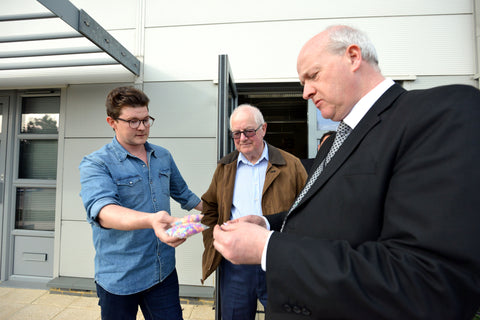
      <![CDATA[<p>We had the opportunity to welcome the Mayor and his staff of Lewes Council on their recent visit to our new offices in Newhaven.  They were met by our Research and Development Area Director Oliver Dredge, who demonstrated the effect of smart materials and in particular thermochromics, photochromics and hydrochromics, whose coatings react and change to colour with temperature, ultra violet light rays and moisture. This technology has great benefits to a number of sectors including the automobile industry, education and Health and Safety awareness – to warn of changes in temperature, and in baby safety products where they can monitor temperature and harmful UV rays using items such as wristbands and sun strength monitor cards.  They were particularly interested to see the development of our liquid crystal inks and specialised sprayable ink and paint coatings.</p>
<p style="text-align: center;"><img alt="" src="//cdn.shopify.com/s/files/1/0761/7621/files/LDC_21-4-16_44_large.jpg?2440138398988092627" style="float: none;"></p>
<p style="text-align: center;"><img alt="Thermochromic research and development" src="//cdn.shopify.com/s/files/1/0761/7621/files/LDC_21-4-16_46_large.jpg?16573221443069427500" style="float: none;"></p>]]>
    </content>
  </entry>
  <entry>
    <id>https://www.sfxc.co.uk/blogs/special-effects-coatings/cleaning-up-our-act</id>
    <published>2017-08-18T14:59:52+01:00</published>
    <updated>2019-09-24T15:11:59+01:00</updated>
    <link rel="alternate" type="text/html" href="https://www.sfxc.co.uk/blogs/special-effects-coatings/cleaning-up-our-act"/>
    <title>Cleaning up our act at the O2 Arena!</title>
    <author>
      <name>Jeremy Dredge</name>
    </author>
    <content type="html">
      <![CDATA[<p>We have often been asked if we could provide colour changing coatings for many unusual and unique ideas.<br><br>So when one of the largest music and cultural arenas in the world was chosen for a very unique project by a large cleaning company, for a colour changing urinal, we stepped up to the mark as they say! <br><br> The brief by Cif was to develop a custom sprayable thermochromic coating for the O2 Arena in London, that could adhere to the special vinyl surface it was applied to. It was no wee task, as it also had to withstand a torrent of use and be reversible, so it changed back after use.<br><br> We sell similar coatings of various colours and temperatures that can be applied to many different surfaces.</p>
<p style="text-align: center;"><img alt="Colour changing urinal that changes when you wee on it" src="//cdn.shopify.com/s/files/1/0761/7621/files/The_O2_Marketing_-13_large.jpg?8581058826838027255" style="float: none;"></p>
<p style="text-align: center;"><img alt="thermochromic colour changing toilet urinal " src="//cdn.shopify.com/s/files/1/0761/7621/files/colour_change_urinal_action_2_large.jpg?10926728686106612594" style="float: none;"></p>
<p style="text-align: center;"><img alt="Thermochromic urinal " src="//cdn.shopify.com/s/files/1/0761/7621/files/O2_colour_chnage_urinal_action_large.jpg?1513690875598846469" style="float: none;"><br>Contact us for more details.</p>]]>
    </content>
  </entry>
  <entry>
    <id>https://www.sfxc.co.uk/blogs/special-effects-coatings/our-product-went-to-space-in-this-exciting-project</id>
    <published>2017-08-18T14:59:00+01:00</published>
    <updated>2019-09-24T15:11:56+01:00</updated>
    <link rel="alternate" type="text/html" href="https://www.sfxc.co.uk/blogs/special-effects-coatings/our-product-went-to-space-in-this-exciting-project"/>
    <title>SFXC® Smart Materials in Space</title>
    <author>
      <name>Jeremy Dredge</name>
    </author>
    <content type="html">
      <![CDATA[<p style="text-align: center;">SFXC® products have been used for all kinds of innovative and crazy applications but this is definitely one of the best! </p>
<div><img alt="Glow in the dark pigments strontium aluminate" src="//cdn.shopify.com/s/files/1/0761/7621/files/sfxc-space-flight-smart-materials-glow-in-th-dark-pigments-powder_large.jpg?v=1478883001" style="float: none; display: block; margin-left: auto; margin-right: auto;"></div>
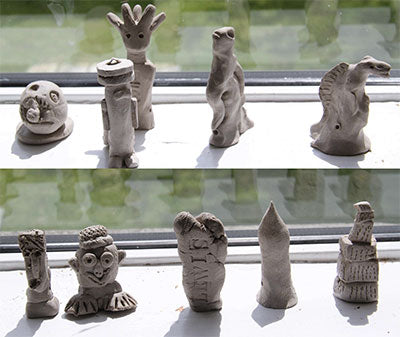
<p style="text-align: center;">Each student created their own clay avatar before covering them with SFXC® specialist coatings. These products included Thermochromic inks and strontium aluminate paints which glow in the dark.</p>
<p style="text-align: center;"> <img alt="Liquid crystal ink" src="//cdn.shopify.com/s/files/1/0761/7621/files/sfxc-glow-in-the-dark-powder_large.jpg?v=1478882895" style="float: none;"></p>
<p style="text-align: center;"> <img src="//cdn.shopify.com/s/files/1/0761/7621/files/sfxc-thermochromic-clay-statues-go-up-in-to-space-program_large.jpg?v=1478882872" alt=""></p>
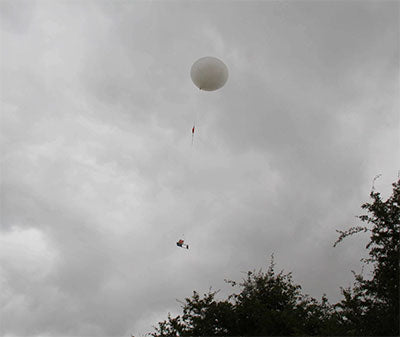
<p style="text-align: center;">The sculptures were placed on a special platform and sent up to space using a very large weather balloon filled with helium. A camera, also on the platform, filmed the whole journey.</p>
<p style="text-align: center;"> <img alt="thermographic ink goes up in to space" src="//cdn.shopify.com/s/files/1/0761/7621/files/sfxc-liquid-crystal-inks-and-coatings-go-to-space-by-weather-balloon_large.jpg?v=1478883082" style="float: none;"></p>
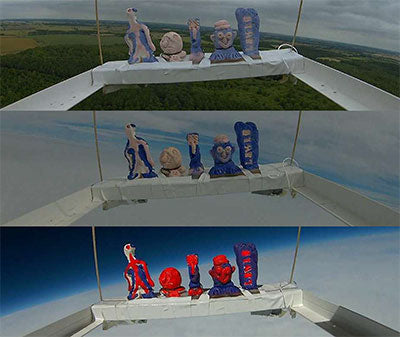
<p style="text-align: center;"> As you ascend up into space it gets incredibly cold. We saw this as a perfect application to display our Thermochromic inks. We used 2 different activation temperatures for this project in order to make the sculptures change colour at different altitudes... a Red 9°C and Blue 12°C.</p>
<p style="text-align: center;"><img alt="liquid crystal TLC inks" src="//cdn.shopify.com/s/files/1/0761/7621/files/sfxc-thermochromic-liquid-crystal-paint_large.jpg?v=1478883127" style="float: none;"></p>
<br>
<div style="text-align: center;"> </div>
<div style="text-align: center;"><iframe src="//www.youtube.com/embed/jGa-QKBbcL0?modestbranding=1&amp;showinfo=0" width="560" height="315" frameborder="0"></iframe></div>
<div style="text-align: center;"></div>
<div style="text-align: center;">
<br>Please <a href="https://www.sfxc.co.uk/collections/thermochromatic-thermochromic-pigments-ink-paint" target="_blank" title="Thermochromic liquid crystal inks paints and coatings for the weather balloon project" rel="noopener noreferrer">click here</a> to view our range of Thermochromic inks and coatings. We would love to see more amazing applications that use our smart inks. If you come up with something really cool, please send us some pictures and videos.<br><br>
</div>
<div style="text-align: center;"></div>
<div style="text-align: center;"><strong>A very big thank you to everybody that took part:</strong></div>
<p><a title="Fermynwoods Contempory Arts" target="_blank" href="http://www.fermynwoods.co.uk" rel="noopener noreferrer"><img src="//cdn.shopify.com/s/files/1/0761/7621/files/LOGO_4_small.jpg?9903593340929275168" alt="colour changing ink"><img src="//cdn.shopify.com/s/files/1/0761/7621/files/LOGO_2_small.png?9903593340929275168" alt="thermochromatic coatings and colours"></a><a title="Thermochromatic Paint" target="_blank" href="http://www.sfxc.co.uk" rel="noopener noreferrer"><img src="//cdn.shopify.com/s/files/1/0761/7621/files/Thermochromic-hydrochromic-photochromic-colour-changing-liquid-crystal-inks-and-coatings-registerd_small.jpg?9903593340929275168" alt="Thermochromic model paint"></a><a title="The Mighty Creatives" target="_blank" href="https://www.themightycreatives.com/" rel="noopener noreferrer"><img src="//cdn.shopify.com/s/files/1/0761/7621/files/LOGO_3_small.jpg?9903593340929275168" alt="thermochromatic inks and coatings" width="85" height="48"></a><a title="Colour changing coatings " target="_blank" href="http://www.greenenergyuk.com/" rel="noopener noreferrer"><img src="//cdn.shopify.com/s/files/1/0761/7621/files/LOGO_1_small.jpg?9903593340929275168" alt="Thermochromic paint for space program"></a><a title="Arts Council" target="_blank" href="http://www.artscouncil.org.uk/" rel="noopener noreferrer"><img src="//cdn.shopify.com/s/files/1/0761/7621/files/LOGO_5_small.PNG?9903593340929275168" alt="Color changing paint" width="73" height="47"></a></p>]]>
    </content>
  </entry>
  <entry>
    <id>https://www.sfxc.co.uk/blogs/special-effects-coatings/what-are-colour-changing-inks-made-from</id>
    <published>2017-08-01T16:59:00+01:00</published>
    <updated>2017-08-01T17:00:49+01:00</updated>
    <link rel="alternate" type="text/html" href="https://www.sfxc.co.uk/blogs/special-effects-coatings/what-are-colour-changing-inks-made-from"/>
    <title>What are colour changing inks made from?</title>
    <author>
      <name>Jeremy Dredge</name>
    </author>
    <content type="html">
      <![CDATA[SFXC specialises in many products which have the unique effect of changing colour. These colour changing effects can be caused by a number of different triggers and reactions, which is often linked to the colour change itself. These triggers can be used within art to create a change in colour on queue purposely. From pieces of latest fashion which change colour when in the rain, through to art which changes colour when there has been a change of temperature to reveal an entirely different effect to the piece. Special effects can completely change design and pieces of art in a fun and entertaining manner.<br><br>The two primary colour changing effects are Thermochromic and Photochromic. A shift in temperature triggers the thermochromic colour changing effects. In comparison, photochromic colour changing effects are triggered by a change in UV light- for example, sun light or artificial UV light from a lamp. As sun light which causes a photochromic reaction, is often present when the temperature is warm for thermochromic reaction, these colour changing effects to an extent are linked. On a bright summers day, colour changing effect could occur due to the sun for both a photochromic and a thermochromic colour changing effect. An object of photochromic reaction can be transition glasses, in standard inside light conditions, the lens remains clear when outside the sun and UV rays trigger the lens to darken. Mood rings are an excellent example of thermochromic reaction, the ring changes colour based upon the temperature on the outside of the ring. SFXC sells both thermochromic and photochromic ink to create colour changing effects. We sell photochromic water based printing ink in 5 different colours, photochromic plastisol screen printing ink in 6 different colours and also sell adhesive sheets for easy application. We sell a broad range of thermochromic ink, in two different variations- ink when heated becomes clear, and ink when heated changes colour. Ink which becomes clear once heated, we sell a number of different colours, and we sell different trigger temperatures- such as 15 Degrees, 31 Degrees and 47 degrees. We also sell ink in adhesive sheets to allow a user to stick thermochromic ink on a piece of work, to be able to rub and reveal their work. Our other thermochromic pigments are one colour at a regular temperature and change to a different colour at the higher temperature, for example, orange to yellow.<br><br>A rarer colour changing effect is Hyrochromic reactions. This colour changing effect is triggered by liquid- often water upon the area. There are now some umbrellas which have a hydrochromic effect, once rain hits the umbrella, the colour of the umbrella changes to highlight rain. SFXC sells hydrochomic ink for a range of materials such as fabric, paper and in adhesive sheets for easy application.]]>
    </content>
  </entry>
  <entry>
    <id>https://www.sfxc.co.uk/blogs/special-effects-coatings/i-can-see-clearly-now-the-rays-have-gone</id>
    <published>2017-06-30T16:23:00+01:00</published>
    <updated>2017-06-30T16:24:06+01:00</updated>
    <link rel="alternate" type="text/html" href="https://www.sfxc.co.uk/blogs/special-effects-coatings/i-can-see-clearly-now-the-rays-have-gone"/>
    <title>HOW PHOTOCHROMIC DYE WORKS</title>
    <author>
      <name>Oliver Dredge</name>
    </author>
    <content type="html">
      <![CDATA[<p>Photochromism is the reversible change of a substance category between two structures by the assimilation of electromagnetic radiation, where the two structures have different absorption spectra. Trivially, this can be portrayed as a reversible change of shading upon presentation to light.</p>
<p><br>SFXC® offer a broad range of organic photochromic dyes for sun and UV protection. Photochromic materials exhibit a change colour when exposed to UV rays and sunlight. This amazing technology can now be used to protect your eyes from harmful UV rays.</p>
<p style="text-align: center;"><img alt="Photochromic Optical Dye" src="https://cdn.shopify.com/s/files/1/0761/7621/files/Photochromic-optical-dye_04ecfffb-d778-4593-9e96-9c53514fb67e_large.jpg?v=1498046682" style="float: none;"></p>
<br>Photochromic dyes are used in the manufacture of UV protective film, plastics and solvent based coatings. Before the photochromic dyes function, they must first be diluted with a resin, polymer or solvent.<br><br>The following photochromic dyes are available with an MOQ of 100g:<br><br>
<ul>
<li>    Purple</li>
<li>    Blue</li>
<li>    Magenta</li>
<li>    Yellow</li>
<li>    Orange</li>
<li>    Magenta</li>
</ul>
<br><strong>For use in solvent based inks:</strong><br><br>Before the photochromic dye (white powder) can be added to the medium, it must be diluted in one of the following solvents, Toluene, Dichloromethane, Acetone, MEK, EA, IPA and DMF. Toluene and Dichloromethane are preferred for the manufacture of solvent based inks and paints. The dyes can not be used in the manufacture of water-based systems. A microencapsulated dye (photochromic pigment) must be employed in the production of water-based inks and paints.microencapsulated dye (photochromic pigment) must be used in the production of water-based inks and paints.<br><br>Concentration for inks and paints = %0.01 is required for 0.2cm of plastic thickness<br><br><strong>For use in Injection and extrusion:</strong><br><br>Photochromic dye can be directly added to any of the following carriers, PP, PE, PVC, PU, PS, ABS, TPR, Nylon, PMMA and EVA<br>Concentration for injection and extrusion = %0.01 is required for 20μm film thickness<br><br>Please thoroughly test these products before committing to production, print runs or final projects.<br><br>When UV hits the coated item, a colour will appear. The shade of colour it changes to depends on the strength of the UV index.<br><br>Please contact us for further information and pricing.<br><br>Avoid long term UV exposure.<br><br>Please view the TDS and MSDS before use.<br><br>All information if given as a guide and without warranty.<br><br>]]>
    </content>
  </entry>
  <entry>
    <id>https://www.sfxc.co.uk/blogs/special-effects-coatings/colour-changing-labels-and-interactive-printing</id>
    <published>2017-03-22T17:23:00+00:00</published>
    <updated>2017-03-27T11:58:20+01:00</updated>
    <link rel="alternate" type="text/html" href="https://www.sfxc.co.uk/blogs/special-effects-coatings/colour-changing-labels-and-interactive-printing"/>
    <title>Colour changing labels and Interactive Printing</title>
    <author>
      <name>Oliver Dredge</name>
    </author>
    <content type="html">
      <![CDATA[<div class="main-content">
<div class="blog-post">
<div class="rte post-content">
<p style="text-align: center;"><img alt="Color changing printing and labels" src="https://cdn.shopify.com/s/files/1/0761/7621/files/Thermochromic-colour-changing-labels-stickers_large.jpg?v=1490263806" style="float: none;"></p>
<p>Colour changing inks are now being incorporated into innovative printed items that can indicate changes in temperature, UV exposure and exposure to moisture.</p>
<p>This exciting print allows the receiver to interact with their items and reduces the risk of the printed item being disregarded and tossed in the bin. We are more likely to keep something if we find it interesting or if it does something cool.</p>
<p>We print using a wide range of reversible and irreversible colour changing inks. This includes coatings that change colour when touched, coatings that change colour in the sun and inks that change colour when wet.</p>
<p>Interactive prints are perfect for education, kids games, leaflets, drink coasters, magazines, leaflets, CD covers, record labels, packaging and branding.</p>
<p style="text-align: center;"><img alt="colour changing coasters" src="https://cdn.shopify.com/s/files/1/0761/7621/files/Colour-changing-labels-stickers-print_large.jpg?v=1490262587" style="float: none;"></p>
<p>We can print onto a wide range of substrates including plastic, rubber, adhesive films, card, paper and fabric.</p>
<p>Thermochromic inks change colour with temperature. Thermochromic inks can be used to hide a secret message, image or colour. This is a perfect product to use for competitions or promotional items with a twist. These products have been used by some very big companies on items such as drinks bottles, beer cans, boxes, cd covers, soup pots, coffee cups, flyers and labels.</p>
<p>Photochromic inks change colour under certain UV lights or in the sun. These inks work well when promoting UV awareness as the change in colour depends on the strength of the UV index. Photochromic inks are widely used for colour changing flyers, labels, magazines, t-shirts, hats and printed wristbands.</p>
<p>Hydrochromic inks are white when dry but then become transluscent when wet. This is another great product for hiding images, text or colours, making it a perfect product for competitions, packaging, games, labels, games, stickers and more.</p>
<p>We can print small or large runs using the very latest in printer and ink technology.</p>
<p>Please <a href="https://www.sfxc.co.uk/pages/contact" title="colour changing labels">contact us</a> is you have a project in mind or if you are interested in a free quotation with no obligation.</p>
</div>
</div>
</div>
<br>
<p> </p>]]>
    </content>
  </entry>
  <entry>
    <id>https://www.sfxc.co.uk/blogs/special-effects-coatings/glitter-the-ultimate-finishing-touch</id>
    <published>2017-02-27T07:26:00+00:00</published>
    <updated>2017-09-05T12:35:44+01:00</updated>
    <link rel="alternate" type="text/html" href="https://www.sfxc.co.uk/blogs/special-effects-coatings/glitter-the-ultimate-finishing-touch"/>
    <title>Glitter...the ultimate finishing touch!</title>
    <author>
      <name>Jeremy Dredge</name>
    </author>
    <content type="html">
      <![CDATA[<p>Glitter makes a brilliant show! Our glitters are fine pieces of light-reflecting decorative material and some are holographic, we have over 40 to choose from and we are adding more everyday!</p>
<p style="text-align: left;"><a href="https://www.sfxc.co.uk/collections/sfxc-glitter" title="sfxc_glitter_moon_stars_coatings">SFXC® glitter</a> can be used for most types of art and crafting that include scrapbooking, stamping and embossing, on textiles and many fabrics and much more. We are suppliers of <a href="https://www.sfxc.co.uk/collections/sfxc-glitter/products/sfxc-glitter-base-screen-printing-ink" title="SFXC_screen_printing_glitter_base_screenprinting_ink">SFXC® Glitter base screen printing ink</a> that is a neutral glitter screenprinting ink. It is full of tiny glitter particles that can be coloured. Our glitter fabric is ready to use and available in <a href="https://www.sfxc.co.uk/collections/sfxc-glitter/products/glitter-display-fabric" title="SFXC_glitter_fabric_textile_champagne_bbc_strictly_come-dancing_cbbc">Champagne</a> or <a href="https://www.sfxc.co.uk/collections/sfxc-glitter/products/glittering-caberet-glitter-fabric" title="SFXC_glitter_silver_fabric_textile_cbbc_bbc_strictly_come_dancing_sparkle_dust">Silver</a>. SFXC® also supply of <a href="https://www.sfxc.co.uk/collections/sfxc-glitter/products/gold-metallic-pigments-glitter-gold" title="SFXC_glitter_gold_pigment_paint_ink_coatings">Glitter Gold Pigment</a> for sale that are used by our customers use in resins, paints and plastics.</p>
<p style="text-align: left;">The uses of glitter are endless....but there are 1,000's of glitter types and materials available. Many are made for specific applications e.g. where a high temperature is required or a particular substrate is selected. This has opened the door to many uses for glitter and below are just a small number of them: Popular glitters have been used for cosmetics or makeup, including face and nail art.</p>
<p>Often called sparkle dust or fairy dust, glitter can also be mixed in with other products...For example, you can make embossing glitters by mixing glitter with embossing powder. Glitter can be mixed into pigments, varnishes or paints for an amazing sparkle effect. It can be mixed into nail varnish or on top of the varnish or mix it in to acrylic or gel. It is also used on the face by beauticians for face painting.</p>
<p>Some people sprinkle glitter on their hair and use a hair spray to keep the glitter in place until brushed out.  Most glitter is machine washable when used with a fabric glue. So you can use it on textiles, clothes or bags, cushions, quilts, greeting cards or advent calendars.</p>
<p>Glitter has been used in the making of gold and silver jewellery making and has been used for enamelling where glitter can withstand high temperatures. It is also used with lacquer to spray paint cars or motorcycles. Glitter often creates an amazing effect in Decopatch and some washable glitter is even used in fly fishing to decorate fishing flies as lures.</p>
In fact it does seem that glitter can probably be used for everything.....but it is important to read the glitter's MSDS before commencing any projects, as not all glitters are the same. By their nature though, glitter pieces are very small and care is always required in the application and an adult should always supervise the use by a child. We love our glitter, but that love affair is short lived when it goes where you don't want it....a glitter bomb on your carpet! If safely and considerately used glitter is great fun to use and can give great satisfaction creating your artistic masterpiece!
<p> <span style="border-radius: 2px; text-indent: 20px; width: auto; padding: 0px 4px 0px 0px; text-align: center; font: bold 11px/20px 'Helvetica Neue',Helvetica,sans-serif; color: #ffffff; background: #bd081c  no-repeat scroll 3px 50% / 14px 14px; position: absolute; opacity: 1; z-index: 8675309; display: none; cursor: pointer; top: 88px; left: 200px;">Save</span><span style="border-radius: 2px; text-indent: 20px; width: auto; padding: 0px 4px 0px 0px; text-align: center; font: bold 11px/20px 'Helvetica Neue',Helvetica,sans-serif; color: #ffffff; background: #bd081c  no-repeat scroll 3px 50% / 14px 14px; position: absolute; opacity: 1; z-index: 8675309; display: none; cursor: pointer; top: 646px; left: 86px;">Save</span></p>]]>
    </content>
  </entry>
  <entry>
    <id>https://www.sfxc.co.uk/blogs/special-effects-coatings/secure-a-colourful-future</id>
    <published>2017-01-23T16:19:00+00:00</published>
    <updated>2017-02-06T10:48:55+00:00</updated>
    <link rel="alternate" type="text/html" href="https://www.sfxc.co.uk/blogs/special-effects-coatings/secure-a-colourful-future"/>
    <title>Secure a colourful future</title>
    <author>
      <name>Oliver Dredge</name>
    </author>
    <content type="html">
      <![CDATA[<h2><strong></strong></h2>
<p style="text-align: center;"><strong><img alt="security coatings" src="https://cdn.shopify.com/s/files/1/0761/7621/files/Security-coatings_large.jpg?v=1485188890" style="float: none;"></strong></p>
<p><strong></strong>In this day and age, we are permanently trying to stay ahead of criminal organisations and fraudsters. We need to make it as hard as possible for the bad guys to forge objects to extort and defraud innocent people around the world. Specialist coatings are often used in the manufacture of currency and legal documentation to make it hard for criminals to copy. </p>
<p>We offer a broad range of coatings that are often used for this application:</p>
<h3>Thermochromic</h3>
<p>Thermochromic coatings will change colour when they reach certain temperatures. Thermochromic coatings can be manufactured to change colour within 1-degree increments on the Celsius temperature scale.  A Pantone reference is also used in the coatings production. A heat sensitive print or graphic can then be applied discreetly to the item that needs to be protected. The colour changing security mark is often hidden within a graphic or an image.  A small device can be used to test the security mark and make sure the correct colour and activation temperature was used for the coating. Please <a href="https://www.sfxc.co.uk/collections/thermochromatic-thermochromic-pigments-ink-paint" title="Thermochromic security coatings">click here</a> to view our thermochromic coatings. </p>
<h3>Photochromic</h3>
<p>Photochromic inks and paints change colour under certain lighting or outside in the sun (UV). These coatings can be calibrated to change colour under certain lighting conditions, making these inks extremely hard to copy. The chemicals and equipment that is used to manufacture photochromic coatings are extremely expensive. These coatings are created in a laboratory by chemists that specialise in the colour change industry. A photochromic mark can be printed onto certificates, currency or official documents to help the fight against fraud. Please <a href="https://www.sfxc.co.uk/collections/photochromic-sun-powered-collection" title="Photochromic security coatings">click here</a> to view our photochromic coatings.</p>
<h3>Holographic</h3>
<p>Holographic coatings are by far the most common coating and printing technique that is used today. You will often see a hologram protecting your cash. Holographic coatings refract light and display a rainbow effect against an often silver backing. These high tech graphics are professionally printed following a secret process that makes it extremely hard for the bad guys to follow. Holograms are an excellent security mark to have against currency as they are very durable and can withstand high temperatures and high UV exposure. Please <a href="https://www.sfxc.co.uk/products/diamond-series-holographic-pigments" title="Holographic Security Coatings">click here</a> to view our holographic coatings. <br> </p>
<span style="border-radius: 2px; text-indent: 20px; width: auto; padding: 0px 4px 0px 0px; text-align: center; font: bold 11px/20px 'Helvetica Neue',Helvetica,sans-serif; color: #ffffff; background: #bd081c  no-repeat scroll 3px 50% / 14px 14px; position: absolute; opacity: 1; z-index: 8675309; display: none; cursor: pointer; top: 33px; left: 60px;">Save</span>]]>
    </content>
  </entry>
  <entry>
    <id>https://www.sfxc.co.uk/blogs/special-effects-coatings/a-change-over-time</id>
    <published>2017-01-19T14:18:00+00:00</published>
    <updated>2017-01-23T07:04:06+00:00</updated>
    <link rel="alternate" type="text/html" href="https://www.sfxc.co.uk/blogs/special-effects-coatings/a-change-over-time"/>
    <title>A Change Over Time...</title>
    <author>
      <name>Oliver Dredge</name>
    </author>
    <content type="html">
      <![CDATA[<div style="text-align: center;"><img alt="Thermochromic ink" src="https://cdn.shopify.com/s/files/1/0761/7621/files/Thermochromic-copper-clock-that-changes-colour-to-tell-the-time_large.jpg?v=1484833404"></div>
<p><br>Thermochromic coatings have been used for a vast range of innovative and exciting applications, but this one stands to the test of time. <br><br>We recently supplied a selection of our finest thermochromic inks to a creative material application company in London called Material Evolution Lab, they frequently use our products alongside their client's applications. <br><br>On this occasion, Material Evolution Lab were commisioned by an award winning design company in the Netherlands called Commonplace Studio. Jon Stam and Simon de Bakker have created some stunning art installations in their time but this one seriously captives the imagination and our understanding of time. <br><br>The Copper Collection is a unique art installation that exhibits day to day items and our thoughts and inspirations over time, such as; daydreaming, eating and the telling of time.  All of the items within this stunning art display have been hand forged by the artists to create high-quality copper objects that tell a story.  <br><br>Thermochromic inks are used alongside conductive materials and heating elements to create this beautifully visual product that shows the time with temperature. <br><br>Please <a title="Thermochromic coatings that stand the test of time" href="https://www.sfxc.co.uk/collections/thermochromatic-thermochromic-pigments-ink-paint">click here</a> to view our full range of thermochromic coatings.</p>
<p>To view more work created by Material Evolution Lab, please <a title="Thermochromic inks and coatings" href="http://materialevolutionlab.com" target="_blank">click here</a>.</p>]]>
    </content>
  </entry>
  <entry>
    <id>https://www.sfxc.co.uk/blogs/special-effects-coatings/colour-changing-flowers</id>
    <published>2017-01-04T17:17:00+00:00</published>
    <updated>2017-01-23T07:25:39+00:00</updated>
    <link rel="alternate" type="text/html" href="https://www.sfxc.co.uk/blogs/special-effects-coatings/colour-changing-flowers"/>
    <title>Romance is Blooming with Colour Changing Flowers</title>
    <author>
      <name>Jeremy Dredge</name>
    </author>
    <content type="html">
      <![CDATA[<div style="text-align: center;">We were recently lucky enough to supply the outrageously cool Bompass and Par with our thermochromic coatings. Bompas and Par are a luxury food and drinks company in London. They not only manufacture food and beverages but also take part in some amazing art and marketing installations.</div>
<div style="text-align: center;"></div>
<div style="text-align: center;">Bompas and Par used SFXC<span class="st">®</span> thermochromic coatings for an innovative project that incorporated champagne and stylish flowers that changed colour with temperature.</div>
<div style="text-align: center;"></div>
<p style="text-align: center;"><img style="float: none;" alt="Colour changing flowers" src="//cdn.shopify.com/s/files/1/0761/7621/files/Thermochromic-liquid-crystal-colour-changing-flowers_large.gif?v=1483550055"></p>
<div style="text-align: center;">Luxurious high-end flowers, petals and blooms are coated in a top secret thermochromic layer.  They are then ignited with a flame; this activates a vibrant and remarkable colour shift.</div>
<div style="text-align: center;"></div>
<div style="text-align: center;">As if magic, the flower starts to morph through an epic floral spectrum of colour.</div>]]>
    </content>
  </entry>
  <entry>
    <id>https://www.sfxc.co.uk/blogs/special-effects-coatings/at-last-thermochromic-applications-made-easy</id>
    <published>2016-09-14T17:04:00+01:00</published>
    <updated>2019-09-24T15:10:56+01:00</updated>
    <link rel="alternate" type="text/html" href="https://www.sfxc.co.uk/blogs/special-effects-coatings/at-last-thermochromic-applications-made-easy"/>
    <title>At last! Thermochromic applications made easy!</title>
    <author>
      <name>Jeremy Dredge</name>
    </author>
    <content type="html">
      <![CDATA[<p>As a special effects and coatings company, SFXC® are often asked how to apply a thermochromic coating to a surface without using the standard methods like screen printing or spraying. It is not always easy for those with a lack of experience, as it can take time, be costly and fairly messy if you don't know what you are doing!</p>
<p style="text-align: center;"><img alt="" src="//cdn.shopify.com/s/files/1/0761/7621/files/07-SFXC-120_large.jpg?v=1473869174" style="float: none;"><br><br>If only there was a more simple way? Well, there now is.....we are delighted to say that SFXC® have developed an amazing thermochromatic film that is adhesive backed, that can be applied to most smooth flat substrates. It is ideal for those that want to see the effect of a colour changing thermochromatic material without the hassle, <br><br>It has many uses including masking secret images, colours or text and many Arts and Crafts projects. It has already been used in the production of rub and reveal packaging to great effect.</p>
<p style="text-align: center;"><img src="//cdn.shopify.com/s/files/1/0761/7621/files/07-SFXC-145_large.jpg?v=1473869269" alt=""><br><br>Our SFXC® Thermochromic Rub &amp; Reveal Film becomes translucent When the coating reaches 31°C revealing your hidden layer. This can be achieved with warm hands or by rubbing with a finger or thumb.<br><br>SFXC® Thermochromic Rub &amp; Reveal Film is safe, easy to use and has wipeable surface. Our thermochromic film can be cut to size with scissors or a guillotine. The Thermochromic film measures 300mm by 420mm.</p>
<p style="text-align: center;"><img src="//cdn.shopify.com/s/files/1/0761/7621/files/07-SFXC-RESHOOT-21_large.jpg?v=1473869226" alt=""><br><br>Please contact us for our other heat sensitive temperature ranges of thermochromic colour changing adhesive backed films<br><br>As with any adhesive-backed material the film needs to be applied carefully from the edge and lined up with the substrate it is covering to avoid air pockets forming. Peel the backing away from the film a small amount at a time. Apply the film to the surface to be covered. Gently press the surface with a smooth flat object like a plastic ruler or credit card towards the edge, being careful to remove any air bubbles. Continue to remove the backing and repeat as before. Depending on the area to be covered, applying from a corner can be helpful. It is sensible to test a small area first before applying the film to a large area. <br><br>Please read the TDS and MSDS before use.</p>]]>
    </content>
  </entry>
  <entry>
    <id>https://www.sfxc.co.uk/blogs/special-effects-coatings/98083201-joo-janta-200-super-chromatic-peril-sensitive-sunglasses</id>
    <published>2016-04-19T15:37:00+01:00</published>
    <updated>2016-04-19T15:37:55+01:00</updated>
    <link rel="alternate" type="text/html" href="https://www.sfxc.co.uk/blogs/special-effects-coatings/98083201-joo-janta-200-super-chromatic-peril-sensitive-sunglasses"/>
    <title>Joo Janta 200 Super-Chromatic Peril Sensitive Sunglasses</title>
    <author>
      <name>Jeremy Dredge</name>
    </author>
    <content type="html">
      <![CDATA[Zaphod Beeblebrox in 'The Hitchhikers Guide to the Galaxy' used Sunglasses designed to turn completely dark at the first sign of danger, thus preventing him from seeing anything that might alarm him. This does, however, mean that you see absolutely nothing, including where you're going! <br>  <br>For now of course that is fiction but it is possible to make glasses that change from transparent when inside and darken when going outside. <br>  <br>It was Corning that developed Sunglasses and prescription lenses that darken when exposed to the sun in the late 1960s.  They became popular under the name Transitions in the 90's.  Because the bran Transitions was so popular it lead to them being called transitions generally, instead of the correct term photochromic or photochromatic, as this refers to a type of chemical reaction the lenses have to (UV) or ultraviolet radiation. <br>  <br>A Photochromic lens has millions of molecules of pigments such as silver halide or silver chloride that are embedded in them. These molecules are transparent to visible light where UV light is absent, which is normal for artificial lighting. When exposed to rays of UV, for example direct sunlight, then the molecules undergoes a chemical process that causes them to change appearance. This new molecular structure absorbs parts of the visible light, which causes the lenses to darken. The intensity of the UV rays has an effect on the number of molecules that change shape. <br>  <br>When you go inside and out of the UV light, a different chemical process occurs. The absence of the UV radiation causes the molecules to literally snap back to their original shape, and this result in the loss of their light absorbing properties. The entire process back and forth happens very quickly. <br>  <br>Corning made their original PhotoBrown and PhotoGrey products of glass, and the molecules are distributed evenly throughout the entire lens. This method caused problems in prescription glasses where different parts of the lens were of varying thickness. This meant that the thicker parts of the lens would appear darker than the thinner areas. With the popularity of plastic lenses, a new method was developed. By immersing the lenses in a chemical tank, the photochromatic molecules are absorbed to a depth of about 150 microns into the plastic. This makes it much better than a simple coating, which normally would only be about 5 microns thick so would not provide enough molecules to make the lenses as dark as required. Transitions use this process on the plastic lenses and are the leading manufacturer of photochromic lenses. <br>  <br>It is important to note: because photochromic lenses react to UV light and not to visible light, there are circumstances under which the darkening of the lens will not occur. An example of this is in a car. Because the glass windshield blocks out most UV light, photochromic lenses will not darken. That is why most sunglasses with photochromic lenses also have a certain amount of tint already applied to them.]]>
    </content>
  </entry>
  <entry>
    <id>https://www.sfxc.co.uk/blogs/special-effects-coatings/94259841-a-colourful-guide-to-thermochromic-materials</id>
    <published>2016-03-23T12:24:00+00:00</published>
    <updated>2016-03-23T23:53:50+00:00</updated>
    <link rel="alternate" type="text/html" href="https://www.sfxc.co.uk/blogs/special-effects-coatings/94259841-a-colourful-guide-to-thermochromic-materials"/>
    <title>A colourful guide to Thermochromic Materials!</title>
    <author>
      <name>Jeremy Dredge</name>
    </author>
    <content type="html">
      <![CDATA[Thermochromic materials change colour at specific temperatures. One use is where they are integrated into a special ink and printed onto plastic films to create thermometers or as an indicator of temperatures.<br> <br>In many cases the thermomchromic materials are based on liquid crystal technology.<br> <br>How does it work.....?<br> At specific temperatures the liquid crystals change position and produce an apparent change of colour. The liquid crystal material is micro-encapusulated. This means that it is contained inside microscopic spherical capsules that are usually just 10 microns in diameter. It takes billions of these capsules mixed with a suitable base to make thermomchomic ink for printing or plastics that can be used in injection moulding. The pigments are made by us to produce a specific colour change to translucent at a chosen change-over target temperature. We make them in the most popular colours and target temperatures e.g. 15°C, 25°C, 27°C, 31°C, 47°C but we can produce many others to order. Please contact us for details.<br> <br>So in principle.....?<br> A 31°C thermochromic ink appears coloured at normal room temperature but at 31°C target temperature the colour would then disappear. As an example, if a black thermochromatic ink is applied to a white surface, the surface changes from black to white at the target temperature. When the temperature falls, the pigment colouring re-appears. Another example is when a 50°C yellow ink is applied to something red, the surface colour would change from yellow to red at 50°C. This is used practically in a similar way in the hot warning label sold by Colour Changing Products http://www.colourchanging.co.uk/thermometers/hot-warning-labels/hand-hot-indicators-50a-c/prod_254.html.<br> <br>Of course, a thermochromic pigment changes colour at the target temperature, so bear in mind that this change will occur if the ambient or contact temperature is the same or more than the target temperature of the pigment. Where this works well and gives the desired result, is in the case of a 15°C target temperature. For example, the blue 15°C often chosen where a translucent pigment is used to illustrate cold temperatures by chenging colour to blue. It is utilised in the production of fun clothing for cold weather and on lager cans to show when the beer is at the desired cool temperature.<br> <br>As a guide, here are examples of uses for the activation temperatures but can vary depending on users requirements:<br>Touch Activated Liquid Crystal Ink will change colour within the visible spectrum when rubbed or touched. Typical temperature range at 25-30°C.<br> Cold Activated Thermochromic Ink is used on labels and packaging to create a colour change when cooled. Typical temperature Translucent to Colour at 15°C<br> Touch Activated Thermochromic Ink is intended to temporarily vanish when rubbed or touched to reveal an image or another colour printed beneath. It is often called ‘rub and reveal’. Colour to Translucent Typical temperature at 31°C.<br>High Temperature Thermochromic Ink is designed to change colour just below the pain threshold that alerts users to a health and safety hazard and/or quality issue - Too Hot! Colour to Translucent Typical temperature at 43-47°C, with higher specialised ranges being used at 70°C and above.<br> <br>As with all our products, we recommend that relevant data information is observed and a small test area is fully trialled before buying in large quantities.]]>
    </content>
  </entry>
  <entry>
    <id>https://www.sfxc.co.uk/blogs/special-effects-coatings/91952001-its-a-kinda-magic</id>
    <published>2016-03-06T10:05:00+00:00</published>
    <updated>2016-03-07T17:16:14+00:00</updated>
    <link rel="alternate" type="text/html" href="https://www.sfxc.co.uk/blogs/special-effects-coatings/91952001-its-a-kinda-magic"/>
    <title>It&apos;s a kinda magic.....</title>
    <author>
      <name>Jeremy Dredge</name>
    </author>
    <content type="html">
      <![CDATA[<p><em>But it is not the lyrics to the song by Queen!</em></p>
<p>Have you ever walked past a car and it changes colour in front of your eyes. You move and blow me down, it has changed again! Well this could be the effect created by one of the colour shifting pigments that we sell to the automotive industry.<br><br><strong>How does it work?</strong></p>
<p>Colour shifting inks reflect various wavelengths in white light in a different way, depending on the angle of incidence to the surface. In other words depending on which way you look at it. An unaided eye will observe this effect as a change of colour when the viewing angle is changed.<br><br><strong>Is it only used on cars?</strong></p>
<p>No! These pigments can be used independently to create paints, inks, coatings, etc. When combined with pigments of other colours it can yield an exceptional range of colour shift possibilities. It is used in anti-counterfeiting measures and used on many major modern banknotes.<br><br>Keep it to yourself but you can buy this 'kinda magic' from us!<br><br>Remember to always spray a test area to check if these ratios suit your style and requirements</p>]]>
    </content>
  </entry>
  <entry>
    <id>https://www.sfxc.co.uk/blogs/special-effects-coatings/89477249-we-can-see-you-in-the-dark</id>
    <published>2016-02-24T11:02:00+00:00</published>
    <updated>2016-02-24T11:03:10+00:00</updated>
    <link rel="alternate" type="text/html" href="https://www.sfxc.co.uk/blogs/special-effects-coatings/89477249-we-can-see-you-in-the-dark"/>
    <title>We can see you in the dark!</title>
    <author>
      <name>Jeremy Dredge</name>
    </author>
    <content type="html">
      <![CDATA[You see glow in the dark things in all kinds of places, but it is most common in toys. Our customers can do practically anything with our glow in the dark products. Making a wall covering, glow aeroplane, glow in the dark fishing tackle, warning signs that need to be seen at night, for example on aircraft aisles and doorways, light switch covers, even on the hands of a watch or clock. All these things make it easy to find at night!<br><br>If you have ever seen one of these products, you know that they all have to be 'charged' by holding them up to a light. You then take them to a dark place. In the dark they will glow for several minutes. Some of the newer glow in the dark items that use our pigments, will glow for several hours.<br><br>All glow materials contain phosphors as a main component. Phosphor is a substance that radiates visible light after being energized or 'charged'. The two most common places we see phosphors are in a TV screen or computer monitor and in fluorescent lights. In a TV display screen, the phosphor is struck by an electron beam to excite it . In a fluorescent light, ultraviolet light energizes the phosphor. <br><br>Glow in the dark pigments, inks and paints respond best to sources of light that are rich in UV rays such as sunlight, black lamps. Halogen lamps are also a good source but because their UV output is low they take longer. Fluorescent lamps, provide faster excitation as they are rich in UV, when Glow materials are placed near them.<br><br>Sunlight is by far the best source for charging, but practically any light source will do. Black light is good for recharging by UV light (Glow-in-the-dark football with black lights would be good fun!).<br><br>How many times can I charge it?<br>You can recharge the paints almost indefinitely! Paints have been tested to have a shelf life of a 1 year minimum.<br><br>Chemists have created thousands of chemical substances that behave like a phosphor. Phosphors have three main characteristics: The type of energy they require to be energized; The color of the visible light that they produce; and the length of time that they glow (called persistence) after being energized.<br><br>To make an item glow in the dark, you want a phosphor that is energized by normal light and has a very long glow persistence. In toys, as an example, the phosphor would be mixed into a plastic and molded.<br><br>These incredible pigments charge in minutes and have a great glow compared to some other pigments on the market.<br><br>Our incredible Glow in the dark pigments are versatile when prepared and emit the effect over a 10 hour period and then charge in minutes. They can be used on many surfaces including drywall, wood, metals, and much more. They work amazingly well on fabrics, are flexible with the material and do not wash out under normal use.]]>
    </content>
  </entry>
  <entry>
    <id>https://www.sfxc.co.uk/blogs/special-effects-coatings/87455809-what-do-they-mean</id>
    <published>2016-02-11T13:06:00+00:00</published>
    <updated>2016-02-11T13:11:12+00:00</updated>
    <link rel="alternate" type="text/html" href="https://www.sfxc.co.uk/blogs/special-effects-coatings/87455809-what-do-they-mean"/>
    <title>What do they mean?</title>
    <author>
      <name>Jeremy Dredge</name>
    </author>
    <content type="html">
      <![CDATA[<p class="aLF-aPX-K0-aPE aLF-aPX-aLK-ayr-auR">Hydrochromic, Thermochromic, Photochromic or Glow in the Dark. But what do they actually mean in plain English? I will try to explain for those delving for the first time into this colour changing and colour shifting world? All these Smart Materials are affected by the influences of an outside effect or stimulus, that then causes a molecular change and often reversible.</p>
<p class="aLF-aPX-K0-aPE aLF-aPX-aLK-ayr-auR"><strong>Let us start with Hydrochromic:</strong></p>
<p class="aLF-aPX-K0-aPE aLF-aPX-aLK-ayr-auR">When water is applied it loses its opacity. Often used as an ink to hide hidden messages, images or colours. The hydrochromic ink is applied to your chosen surface and appears white in colour. But when water is applied, the hydrochromic ink will become translucent, revealing your hidden layer. Fortunately it is reversible and if by magic, reverses back to its original form repeatedly. Virtually the sky's the limit on the thousands of applications it can be used on. One of the fascinating products that have been produced using this ink is the umbrella that changes colour when it rains!</p>
<p class="aLF-aPX-K0-aPE aLF-aPX-aLK-ayr-auR"><strong>Thermochromic:</strong></p>
<p class="aLF-aPX-K0-aPE aLF-aPX-aLK-ayr-auR">Sensitive to changes in temperature. Often used in ink that changes colour or becomes transparent at the chosen temperature, revealing a hidden layer. This could be a colour, image or a hidden message. Often Liquid Crystal is the medium used and is often seen in thermometers. Thermochromic ink or pigments have an extremely large number of innovative applications. One of the thermochromic materials we supply called Masterbatch is used in the making of colour changing straws that change colour in cold drinks. These changes are reversible but there are cases in some safety testing products where they are required to be irreversible.</p>
<p class="aLF-aPX-K0-aPE aLF-aPX-aLK-ayr-auR"><strong>Photochromic:</strong></p>
<p class="aLF-aPX-K0-aPE aLF-aPX-aLK-ayr-auR">Changes in the sun (UV) by an often dramatic appearance of colour. Again, often used in ink; that when applied to a surface it appears to be without colour. But once subjected to direct sunlight a colour will appear. It always seems to have magical capabilities and can be used for all types of truly amazing applications. The list is almost endless and reverses back to its original form to see over and over again. The most popular and surprisingly common use seen every day, is in the use of transitional eyeglasses that darken in sunlight.</p>
<p class="aLF-aPX-K0-aPE aLF-aPX-aLK-ayr-auR"><strong>Glow in the Dark:</strong></p>
<p class="aLF-aPX-K0-aPE aLF-aPX-aLK-ayr-auR">Probably the most obvious name to describe this effect and with no batteries required! It appears white in colour during the day but leave this ink in daylight and it absorbs light. When the lights are turned off it will emit a bright green glow. This is called photoluminescence and sadly although reversible, is not the answer to permanent rechargeable light, as the frequency of the light emitted is lower than that absorbed. This product can be used for many uses but are often used in safety markers where switches and power boxes can be seen at night in the case of power failures.</p>]]>
    </content>
  </entry>
  <entry>
    <id>https://www.sfxc.co.uk/blogs/special-effects-coatings/85661505-we-want-to-help-you</id>
    <published>2016-01-31T17:43:00+00:00</published>
    <updated>2016-01-31T17:44:59+00:00</updated>
    <link rel="alternate" type="text/html" href="https://www.sfxc.co.uk/blogs/special-effects-coatings/85661505-we-want-to-help-you"/>
    <title>We want to help you.....!</title>
    <author>
      <name>Jeremy Dredge</name>
    </author>
    <content type="html">
      <![CDATA[<p>Do you want to experiment with the application of smart inks for a project before committing to buy larger quantities?  You want to purchase the best quality inks available in small quantities but with the opportunity of trying all the four most popular types in one go at the best price.  Well now you can buy these four in a new trial pack: 1) Thermochromic ink that changes colour with temperature; 2) Hydrochromic ink that changes colour when wet; 3) Photochromic ink that changes colour in the sun; 4) Super Glow ink that glows in the dark.  Now you can get all these in our SFXC Smart Ink Trial Pack from our best buy range.</p>
<p>Our SFXC <a href="http://sfxc.co.uk/collections/thermochromic-screen-printing-ink/products/smart-ink-trial-pack" target="_blank" title="Smart materials - Thermochromic, photochromic and hrdrochromic inks and coatings.">smart ink trial pack</a> is perfect for testing knowing that the experiment wont break the bank.  They can be sprayed onto a surface with a spray kit or applied by screen printing, normally with a 43T mesh screen and medium shore and square squeegee.  As a guide 35ml of SFXC smart inks will typically cover 1 square metre per coat.</p>
<p>These inks can be used on Paper &amp; Board; Canvas; Fabric; or Wood and Stone, so when you order just select one of these surfaces that you wish to apply this to from the menu to ensure we include the correct cross linker with your order.</p>]]>
    </content>
  </entry>
  <entry>
    <id>https://www.sfxc.co.uk/blogs/special-effects-coatings/82796033-how-thermochromic-inks-work</id>
    <published>2016-01-06T21:06:00+00:00</published>
    <updated>2019-09-24T14:51:56+01:00</updated>
    <link rel="alternate" type="text/html" href="https://www.sfxc.co.uk/blogs/special-effects-coatings/82796033-how-thermochromic-inks-work"/>
    <title>How Thermochromic Inks Work...</title>
    <author>
      <name>Jeremy Dredge</name>
    </author>
    <content type="html">
      <![CDATA[<p>In life, nothing stays the same. Unless it is the colour of the paint on your car! You now dislike that blue, but there is no way you would want to go to the time and vast expense of painting it.  But, sometimes the things we love, our possessions and paint can really change colour, with the help of thermochromic ink technology. Thermochromic inks use the process of thermochromism, which means materials that change their shade or hue in response to temperature. So why not paint your car and watch it morph. With the right paint on a warm day, it could change from the blue you hate to a cheery and dynamic yellow.<br><br>Thermochromic inks have been around a while and first hit the masses in the 70s, as the mood ring, that used the body heat as an indication of an emotional state.<br><br>More recently, a 'cook-it-stick' using a thermochromic coating on the tip indicated when the meat on the BBQ was cooked to perfection and safe to eat, by changing from black to red. Some beer cans had a graphic that appeared when the contents were cool enough to provide the best cold and refreshing taste.<br><br>Since the early days of the mood rings, thermochromic inks have come on leaps and bounds and evolved year by year. They can be found still in all sorts of novelty items, but have found many useful serious applications like thermometers, drink containers, shoes, clothing, baby accessories e.g. baby feeding spoons and how warning label to name just a few.<br><br>Many companies utilise these eye catching graphics to sell their products and create exciting brand awareness.<br><br><strong>Is it magic?</strong><br><br>Thermochromic inks use their magic in many ways. There are two important categories of these inks - thermochromatic liquid crystals or TLC's and leuco dyes.</p>
<p><iframe src="https://www.youtube.com/embed/q_LFXGXZvUk" allowfullscreen="" width="560" height="315" frameborder="0"></iframe><br><br><strong>Is it a liquid or a solid?</strong><br><br>Liquid crystals are in fact what their name indicates; a material that has several properties of a liquid but then crossed with structural elements characteristic to crystals. If you look through the microscope at a liquid crystal, you will see a fluid that displays textures.<br><br>Liquid crystals are vibrant and dynamic. Their property changes depending on the conditions in their environment; TLC's exhibit varying colours in response to the change in temperature. At lower temperatures, liquid crystals are mainly in a solid, crystalline form. In this lower temperature condition, TLC's don't reflect much light at all, therefore, appearing black.<br><br>Apply some warmth, increase it a little at a time, and you'll see the TLC's start to shift from black to almost every spectral colour. This is because, as temperature rises, the space between the molecules of the crystals change, so they reflect light differently.<br><br>The process to integrate TLC's onto a product to make it change colours requires a little work. This is because the liquid crystals must first be microencapsulated into millions of tiny capsules that are only a few microns in size. This process or encapsulation offers some protection for the TLC's and importantly it maintains their thermochromic properties.<br><br>These capsules are then blended with other substances and used in products, like baby room thermometers. Place the thermometer in a baby's bedroom and you'll see a rapid change of colour that is an indicatation of an accurate temperature.<br><br>This precise measurement of Temperature accuracy is a strong argument for the use of TLC's. Their colour consistency can indicate cold or heat levels to within +/- 0.5 degrees or less. It is worth noting though that TLC's performance can suffer with repeated exposure to outside influences like UV light, moisture or chemicals. In their manufacture, they do often require dedicated equipment for manufacture into various products, which can add significant expense to a manufacturer's production costs. Saying that, these costs are coming down all the time, with many organisations having ability to carry out this production.<br><br><strong>Leuco dyes and inks, though, are a different story.</strong><br><br>Thermochromic Liquid crystals can be rather difficult to incorporate into products like clothes, labels or other goods. But this is where Leuco dye inks, come into their own, as they feature more robust chemical makeup that allows product creators to employ these inks for all types of applications.<br><br>A well known applications of leuco dyes was used on cans of Coors beer. They feature a graphic of a mountain and at room temperature, the mountains appear white. But when cooled to the perfect drinking temperature (around 7 Celsius), and the mountains change colour to a bright blue. When the beer becomes warmer, the mountain again reverts back to its original colour white. This change can happen many, many times.</p>
<p> Like TLC's, the leuco dyes are also microencapsulated into tiny droplets. These are only about 3 to 5 microns in size, and that prevents them from reacting or being damaged by other chemicals.</p>
<p>Leuco dyes are coloured when they're at a cool temperature but as the heat increases, they become nearly clear or translucent. This then allows them to reveal any patterns, words or colours that may be printed on the underlying layer of the ink. In most cases, Leuco dyes can also be mixed with another colour. This means that as the temperatures changes, a two-tone colour effect occurs. For example, if you mix blue and yellow together, you have an ink that appears green at a low temperatures but yellow when the temperature rises.<br><br>I would love to say it is magic but there is a basic science behind the way the inks work. The tiny capsules contain a colourant, plus an organic acid and also a solvent. When kept at lower temperatures the solvent remains in a dense state as the colorant and acid are kept in close proximity to one another. As a result of this, they create colour by reflecting light. But as the solvent warms up, the colourant and the acid start to separate so there's no visible colour, so this in turn exposes underlying inks.<br><br>Take the cook-it-stick as an example. At room temperature, the stick shows a black tip; when warmed, the black area fades, revealing the red tip that indicates the correct cooking temperature.<br><br>With regards temperature accuracy, leuco dyes can be less accurate than TLCs. This means you cannot depend on them for applications where you really need a very precise temperature reading, like a thermometer. Nevertheless, leuco dyes can be incorporated into all sorts of fascinating and amusing products. You could almost say 'the sky's the limit!'</p>]]>
    </content>
  </entry>
  <entry>
    <id>https://www.sfxc.co.uk/blogs/special-effects-coatings/80841473-photochromic-coatings-for-printing-colour-changing-t-shirts</id>
    <published>2015-12-19T20:30:00+00:00</published>
    <updated>2019-09-24T15:10:55+01:00</updated>
    <link rel="alternate" type="text/html" href="https://www.sfxc.co.uk/blogs/special-effects-coatings/80841473-photochromic-coatings-for-printing-colour-changing-t-shirts"/>
    <title>Photochromic Coatings for Printing Colour Changing T-shirts?</title>
    <author>
      <name>Oliver Dredge</name>
    </author>
    <content type="html">
      <![CDATA[<p><strong>Photochromic inks change colour in the sun!</strong></p>
<p>SFXC sun sensitive coatings are invisible inside and colourful outside.</p>
<p>Our photochromic plastisol ink is perfect for making colour changing t-shirts. If you come up with something really cool, please send us some pics for an upcoming feature on the SFXC website.</p>
<p>Check out our new <a title="Photochromic screen ink plastisol sun changing " target="_blank" href="http://sfxc.co.uk/collections/photochromic-sun-powered-collection">photochromic coatings.</a></p>]]>
    </content>
  </entry>
  <entry>
    <id>https://www.sfxc.co.uk/blogs/special-effects-coatings/80561281-mending-underfloor-heating-cable-using-thermochromic-liquid-crystal-sheets</id>
    <published>2015-12-17T12:42:00+00:00</published>
    <updated>2019-09-24T15:10:55+01:00</updated>
    <link rel="alternate" type="text/html" href="https://www.sfxc.co.uk/blogs/special-effects-coatings/80561281-mending-underfloor-heating-cable-using-thermochromic-liquid-crystal-sheets"/>
    <title>Mending Underfloor Heating cable using Thermochromic Liquid Crystal Sheets</title>
    <author>
      <name>Jeremy Dredge</name>
    </author>
    <content type="html">
      <![CDATA[<p>If the <strong>electric underfloor heating</strong> stops working and every test shows that the fault is not above ground; then then it can be caused by a break in the cable or mat under the floor.  This can be one of the trickiest and possibly most expensive repairs if the location of failure unknown.</p>
<p><img src="//cdn.shopify.com/s/files/1/0761/7621/files/underfloor_heating_large.jpg?v=1501241408" alt="" style="display: block; margin-left: auto; margin-right: auto;"><br><br>This could mean digging up the floor until the fault is found!<br>One of the cost effective ways a flooring company specialist can use to find the break is by using one of our <strong>Liquid Crystal Thermochromic sheets</strong> that have been specially manufactured to a particular temperature range.  The sheet is laid across an area and a charge is then run through the cable heating it up.  The sheet displays a colour change around the warmer <strong>temperature</strong> areas in the cable or mat but where there is no distinct change it will also identify the cool section where the failure probably lies. Carrying out this job using electricity is a specialist job dealt with by a qualified electrician.</p>
<p> </p>
<p><img src="//cdn.shopify.com/s/files/1/0761/7621/files/sheet_large.jpg?v=1501241180" alt="" style="display: block; margin-left: auto; margin-right: auto;" width="270" height="270"><br><br>Once the break is identified, the tile above the fault can be simply dug up and the identified problem can be fixed. You can then arrange for a tiler to fit a replacement tile or you can do it yourself. Don’t forget to use flexible adhesive and grout.</p>
<span style="border-radius: 2px; text-indent: 20px; width: auto; padding: 0px 4px 0px 0px; text-align: center; font: bold 11px/20px 'Helvetica Neue',Helvetica,sans-serif; color: #ffffff; background: #bd081c  no-repeat scroll 3px 50% / 14px 14px; position: absolute; opacity: 1; z-index: 8675309; display: none; cursor: pointer; top: 109px; left: 183px;">Save</span>]]>
    </content>
  </entry>
  <entry>
    <id>https://www.sfxc.co.uk/blogs/special-effects-coatings/17131557-hydrochromic-ink-that-changes-colour-when-wet</id>
    <published>2015-02-18T16:27:00+00:00</published>
    <updated>2015-12-19T20:45:16+00:00</updated>
    <link rel="alternate" type="text/html" href="https://www.sfxc.co.uk/blogs/special-effects-coatings/17131557-hydrochromic-ink-that-changes-colour-when-wet"/>
    <title>Hydrochromic Ink That Changes Colour When Wet?</title>
    <author>
      <name>Oliver Dredge</name>
    </author>
    <summary type="html">
      <![CDATA[<p>Using hydrochromic ink supplied by SFXC, I have combined dazzle<strong> </strong>camouflage and my own camouflage design for jackets, which fold into bags that change colour when wet.  I am also working on accessories, incorporating colour changing qualities, to complement the ‘bag’ jackets.</p><p><a class="read-more" href="https://www.sfxc.co.uk/blogs/special-effects-coatings/17131557-hydrochromic-ink-that-changes-colour-when-wet">More</a></p>]]>
    </summary>
    <content type="html">
      <![CDATA[<p><strong>Hannah Sykes.......</strong></p>
<p>I am a third year fashion design student at Manchester School of Art and specialise in designing womens’ wear, with inspiration from the military and the role in war that women have played. </p>
<p>Using <strong>hydrochromic ink</strong> supplied by SFXC, I have combined dazzle<strong> </strong>camouflage and my own camouflage design for jackets, which fold into bags that change colour when wet. </p>
<p>I am also working on accessories, incorporating colour changing qualities, to complement the ‘bag’ jackets.</p>
<p>I contacted SFXC after I had bought and used faulty <strong>hydrochromic ink</strong> supplied by another company that then failed to help me.</p>
<p>My relationship with SFXC has grown, from initially sending photographs to help advertise SFXC’s inks, to helping the company develop designs for a new brand.<br><br>Colour changing garments/products are an untapped aspect of art and design, which I hope to promote in collaboration with SFXC, whilst studying and after graduation. <br><a title="Hannah Sykes" href="https://www.dropbox.com/sh/wo2ahf7q0zmdqsf/AADpQB0yabBREspipsU0UUqIa?dl=0"></a></p>
<p>Hydrochromic screen printing inks are available on the <a title="Hydrochromic wet and reveal screen printing ink paste for fabric textiles" target="_blank" href="http://sfxc.co.uk/collections/hydrochromic-ink-changes-colour-when-exposed-to-water">SFXC website.</a></p>
<p><a title="Hannah Sykes" href="https://www.dropbox.com/sh/wo2ahf7q0zmdqsf/AADpQB0yabBREspipsU0UUqIa?dl=0">My Look Book</a></p>
<h3>Please check out this video of my Hydrochromic coat.....</h3>
<p><iframe src="https://www.youtube.com/embed/2MH3wjm9CVo" allowfullscreen="" frameborder="0" height="315" width="420"></iframe></p>
<p>Hannah Recently won the Fashion Innovation award you can read more about that here <strong>http://www.manchestereveningnews.co.uk/news/greater-manchester-news/manchester-art-student-scoops-prestigious-9402662</strong></p>
<p>We are really proud of you Hannah. Please can you send in some more images of your work<br>  <br> </p>]]>
    </content>
  </entry>
</feed>