<?xml version="1.0" encoding="utf-8"?>
<feed xmlns="http://www.w3.org/2005/Atom">
    <title>CraftyGoat&apos;s Notes</title>
    <link rel="alternate" type="text/html" href="http://craftygoat.com/" />
    <link rel="self" type="application/atom+xml" href="http://craftygoat.com/atom.xml" />
   <id>tag:craftygoat.com,2025://19</id>
    <link rel="service.post" type="application/atom+xml" href="http://craftygoat.com/MT4/mt-atom.cgi/weblog/blog_id=19" title="CraftyGoat's Notes" />
    <updated>2013-11-19T15:48:58Z</updated>
    <subtitle>Sharing tips and techniques for polymer clay crafts.</subtitle>
    <generator uri="http://www.sixapart.com/movabletype/">Movable Type 4.34-en</generator>
 

<entry>
    <title>Book Review: Flourish Book One: Flora, by Christi Friesen</title>
    <link rel="alternate" type="text/html" href="http://craftygoat.com/2013/11/book_review_flourish_book_one.html" />
    <link rel="service.edit" type="application/atom+xml" href="http://craftygoat.com/MT4/mt-atom.cgi/weblog/blog_id=19/entry_id=1798" title="Book Review: Flourish Book One: Flora, by Christi Friesen" />
    <id>tag:craftygoat.com,2013://19.1798</id>
    
    <published>2013-11-19T15:20:00Z</published>
    <updated>2013-11-19T15:48:58Z</updated>
    
    <summary>My review of Christi Friesen&apos;s latest book, Flourish: Projects, Techniques, and Creative Nudgings for Polymer Clay and Mixed Media: Book One: Flora: Leaf, Flower and Plant Designs</summary>
    <author>
        <name>Angela Mabray</name>
        <uri>http://www.craftygoat.com</uri>
    </author>
    
        <category term="Reviews" />
    
    <content type="html" xml:lang="en" xml:base="http://craftygoat.com/">
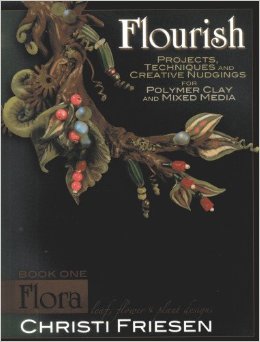
        <![CDATA[<p><a href="http://www.amazon.com/gp/product/0980231450/ref=as_li_ss_il?ie=UTF8&amp;camp=1789&amp;creative=390957&amp;creativeASIN=0980231450&amp;linkCode=as2&amp;tag=smartgoat-20"><img src="http://craftygoat.com/images/cf-flourish-book-cover.jpg" width="260" height="342" alt="Christi Friesen Flourish Book Cover" class="imgright" /></a><img src="http://ir-na.amazon-adsystem.com/e/ir?t=smartgoat-20&amp;l=as2&amp;o=1&amp;a=0980231450" width="1" height="1" border="0" alt="" style="border:none !important; margin:0px !important;" /></p>

<p>It seems like such a long time ago that I <a href="http://craftygoat.com/2009/04/review_polymer_clay_and_mixed.html">reviewed my first Christi Friesen book</a>. That was before I met her. That was before I became one of <em>those</em> folks who wouldn't pass up an opportunity to take a class &mdash; any class &mdash; from her. Christi is probably the best teacher-of-adults I've seen. She manages a classroom full of creatives amazingly. She's generous and encouraging. And her classes are just plain fun.</p>

<p>And because I've gotten to take some of her classes, Christi's latest book was especially enjoyable to me. It's got a mouthful of a title: <em><a href="http://www.amazon.com/gp/product/0980231450/ref=as_li_ss_tl?ie=UTF8&amp;camp=1789&amp;creative=390957&amp;creativeASIN=0980231450&amp;linkCode=as2&amp;tag=smartgoat-20">Flourish: Projects, Techniques, and Creative Nudgings for Polymer Clay and Mixed Media: Book One: Flora: Leaf, Flower and Plant Designs</a><img src="http://ir-na.amazon-adsystem.com/e/ir?t=smartgoat-20&amp;l=as2&amp;o=1&amp;a=0980231450" width="1" height="1" border="0" alt="" style="border:none !important; margin:0px !important;" /></em>. But you could shorten that title to <em>A Christi Friesen Class in a Book</em>, because that's what it felt like reading it. Her conversational tone in the book meant I could just about hear her chatting away. The pictures of her, sprinkled throughout the book, made it feel like she was right there guiding me as I learned.</p>

<p>Of course, if you've taken any of Christi's classes, you're probably as big a fan as I am. So you've already bought all of her books, including this one. This book review is not for you. This book review is for those of you who are wondering whether this book is worth adding to your library. And here's what I think about that...</p>

<h2>The Book</h2>]]>
        <![CDATA[<p>This is the first book in the <em>Flourish</em> series, which (per the back cover) is about "that little extra swish, that bit of curl, that touch of drama... learning how to add the extra flourishes to your polymer clay and mixed media creations." This book, <em><a href="http://www.amazon.com/gp/product/0980231450/ref=as_li_ss_tl?ie=UTF8&amp;camp=1789&amp;creative=390957&amp;creativeASIN=0980231450&amp;linkCode=as2&amp;tag=smartgoat-20">Flora</a><img src="http://ir-na.amazon-adsystem.com/e/ir?t=smartgoat-20&amp;l=as2&amp;o=1&amp;a=0980231450" width="1" height="1" border="0" alt="" style="border:none !important; margin:0px !important;" /></em>, focuses on leaves, pods, flowers, and other plant parts. There will apparently be other books in this series that will cover Fauna, Aqua and Terra.</p>

<p>One of the first things you'll notice about this book is its creative layout. There are drawings, sketches, and scribbles throughout &mdash; almost like an artist's sketchbook. The font is large-ish. The text is conversational. It all works together to give the book an informal, creativity-focused approach. Nothing feels sacred. It's all about the ideas. This is not a textbook, but a book full of, as Christi puts it, "creative nudgings." I think that's very effective.</p>

<p>After a brief intro, she directs us to turn to the "Back O' the Book" for materials, basic techniques, resources and other info. It's a nice way to allow those who are so inclined to get right into the projects, especially folks who are already familiar with polymer clay. On my first read of her Back O' the Book section, I was impressed with how concisely and conversationally she incorporated so much information. It <em>might</em> even have all the information a polymer clay beginner would need to get started on these projects, I thought.</p>

<p>But as I read through more of the book, I found that the Back O' the Book wasn't as complete as it needed to be. Christi tells folks to look there for more info on a whole host of things that aren't actually mentioned in the back of the book. For example:</p>


<ul>
<li>p. 26 says to see the back of the book for info on reducing canes (but the back of the book just says to Google more info on caning)</li>
<li>p. 30 says to see the back for carving safety/tricks</li>
<li>p. 39 says to see the back for covered vessel or wall piece details</li>
<li>p. 51 says to see the back for info on pins, channels, and hooks </li>
<li>p. 86 says to see the back for info on pin backs or hanging loops</li>
<li>p. 90 says to see the back of the book for the difference between metal leaf and metal foil</li>
</ul>


<p>[Note: Some of the things that were supposed to be in the back of the book may be elsewhere &mdash; like the channeling instructions, which I found on p. 79. But without a table of contents, just having it <em>somewhere</em> in the book is not-so-helpful.]</p>

<p>So the Back O' the Book could have been a little more complete. And Christi could use a good copy editor to catch these things. But let's go back to the front.</p>

<p>The main part of the book has sections for various portions of the plant. It starts out with leaves, then moves on to pods, fruits and berries, buds, flowers, and trees. For each of these sections, the pages include photos of real nature specimens, sketches of flora, sketches of jewelry designs incorporating flora, and photos of completed pieces by Christi Friesen and other artists. This format illustrates nicely the idea of an artist's sketchbook, showing the process from inspiration to finished project.</p>

<p>While I liked that she included photos of real plants, I felt like the quality of those photos wasn't always up to par. Some weren't clear in what they were showing. They didn't have a consistent feel, and they didn't always look professional. Not a big deal, especially if it's supposed to feel like a sketchbook, but it's something that could have been better.</p>

<p>And speaking of photos, some of the photos of Christi's work weren't big enough to see the details referred to in the text. Like the Leaf Exhibit on p. 14-15 (I had trouble locating the "added vein of clay and one of tiny pearls" in the top photo and the "teensy bit of clay in each leafy section" in the bottom left). And it was hard to discern the blue edges referred to on the "More Ferny Stuff" photo on page 28.</p>

<p>I did like the way fellow artist's pieces are shown with an "I'm inspired by..." statement. For example, on page 56, for Penni Jo Couch (hey! I know her!), Christi says, "I'm inspired by her delicacy and detail." It helps us focus our attention on something that particular artist does especially well. </p>

<h2>The Instructions</h2>

<p><a href="http://www.flickr.com/photos/craftygoat/10932626883/" title="Christi Friesen Flourish / Flora book"><img src="http://farm3.staticflickr.com/2835/10932626883_1bce1cf360.jpg" width="375" height="500" alt="Christi Friesen Flourish / Flora book" /></a></p>

<p>I like the pacing of the techniques and projects. For example, she teaches how to make several styles of leaves, then gives us a couple of leaf projects, then throws in some different materials and techniques to inspire our creativity. </p>

<p>The text just kinda flows from one project to the next, and there's no table of contents, so this list of projects is probably not complete. Still, here's an overview of the things covered in <a href="http://www.amazon.com/gp/product/0980231450/ref=as_li_ss_tl?ie=UTF8&amp;camp=1789&amp;creative=390957&amp;creativeASIN=0980231450&amp;linkCode=as2&amp;tag=smartgoat-20">Flourish Book One: Flora</a><img src="http://ir-na.amazon-adsystem.com/e/ir?t=smartgoat-20&amp;l=as2&amp;o=1&amp;a=0980231450" width="1" height="1" border="0" alt="" style="border:none !important; margin:0px !important;" />:</p>

<p><b>Instructions:</b></p>


<ul>
<li><b>Leaves</b>: Favorite, Road Kill, Generic, Forest, Mr. Fancy Leaf, Holey-er Than Thou, Round, Water Lily, Fern, Fiddleheads</li>
<li><b>Odd Pods</b></li>
<li><b>Berries</b></li>
<li><b>Buds</b>: Shy, Perky, Drama</li>
<li><b>Flowers</b>: Groovy, Superstar, Circle Fan, Chorus Line, Pressed, Chrysanthemum, Orchid, Rose, Narcissus</li>
<li><b>Trees</b>: two stylized versions</li>
</ul>


<p><b>Techniques:</b></p>


<ul>
<li>Canes: leaf, bullseye, flower petals, flower</li>
<li>Carving Ultralight Sculpey</li>
<li>Wire working</li>
<li>Carving a polymer clay reverse stamp</li>
<li>Mold-making and creative use of molds</li>
<li>Embellishments such as hot-set crystals, powders, glitter, glaze, etc.</li>
<li>Faux stone carving</li>
<li>Faux stained glass</li>
<li>Sgraffito</li>
<li>Swellegant / faux metal</li>
<li>Mosaic</li>
</ul>


<p><b>Projects:</b></p>


<ul>
<li>Leaf cluster on top of metal box</li>
<li>Water lily necklace</li>
<li>Glazed leaf tiles</li>
<li>Bead-embellished pod pendant</li>
<li>Leaf &amp; berry brooch/pendant</li>
<li>Crysanthemum fan</li>
<li>Mossy ring</li>
<li>Tree person sculpture </li>
<li>Tree mosaic</li>
</ul>


<p>The instructions are pretty clear. I like the way she uses everyday objects for measurements, telling us to use a clay "wad about the size of a hard-boiled egg yolk" or cut cane slices about as thick as a dime. </p>

<p>There are lots of photos on the project pages, though they don't exactly illustrate every step. Neither the written instructions nor the photos have numbered steps, and the layout of the photos is pretty fluid, so it's occasionally hard to match up the photo with the step it's illustrating. This, plus the fact that some steps aren't pictured, might make the book a little less ideal for a beginner who wants more step-by-step guidance.  </p>

<h2>My Results</h2>

<p>I really had a difficult time deciding which two projects to try, because several of them sounded so fun. I finally settled on the Carved Leaves (p. 22) and the Ferny Leaves (p. 25).</p>

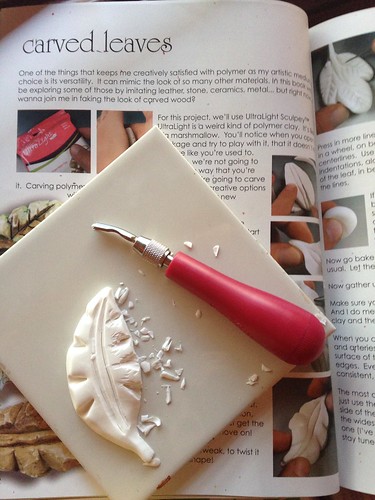
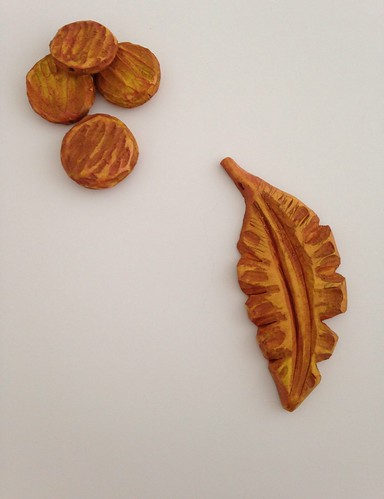
<p>I chose the carved leaves project because I love carving polymer clay, but it had never occurred to me to try carving UltraLight Sculpey. Christi says you can use your linoleum carving tool or a new craft knife blade for this project. I chose to use my lino tool, which claimed to (but didn't) have safety tips and carving tricks in the back of the book. Really, both methods should've had more safety tips &mdash; especially for carving the smaller beads. (It dawned on me after my second bandaid that taping the bead to the table with double stick tape would help keep my fingers out of harm's way. It would have been nice if that kind of tip was included.) Still, I loved the results of the carved leaf project, and I found the instructions easy to follow.</p>

<p><a href="http://www.flickr.com/photos/craftygoat/10932352395/" title="Carved Leaves from Christi Friesen's Flourish / Flora book"><img src="http://farm3.staticflickr.com/2852/10932352395_94dcb2ff8a.jpg" width="384" height="500" alt="Carved Leaves from Christi Friesen's Flourish / Flora book" /></a></p>

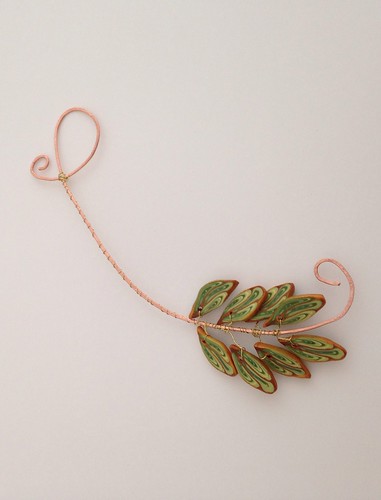
<p>After the carved leaves project, I tackled the ferny leaves project, which I chose specifically because I'm a little less comfortable with canes and wire-work. I wanted to see if I could follow her instructions on something I needed more help with. The leaf instructions could have used a little more detail: "Rip the resulting sheet of clay in half. Stack the halves, rip this again and stack again." Which direction should I stack them? Does it matter? (My previous experience with Christi tells me that it probably doesn't, but a beginner might be a little more worried, and there are no pictures to give extra hints.) And she tells us to wrap the cane with a thin sheet of clay, a technique which might not be self-explanatory for a beginner. (She steps out this technique later in the book (p. 65), so just a cross-reference here would have done the trick.) I did feel like she gave me all the instructions I needed to get through the part I was worried about, the wire-working part. I was pleased enough with my results, even though they were a tad sloppy.</p>

<p><a href="http://www.flickr.com/photos/craftygoat/10932687515/" title="Ferny Leaves from Christi Friesen's Flourish / Flora book"><img src="http://farm8.staticflickr.com/7371/10932687515_a9cf64babe.jpg" width="381" height="500" alt="Ferny Leaves from Christi Friesen's Flourish / Flora book" /></a></p>

<p>Overall, I'd say the instructions that are missing from the back of the book, plus the not-quite-step-by-step photos and instructions on many projects may make this book a tad difficult for a polymer clay first-timer. But I think it has plenty of projects, techniques, and wonderful inspiration for everyone else. This, like that first Christi Friesen book I reviewed long ago, is a book I want to have on my shelf for future reference and inspiration.</p>

<h2>Summary</h2>
<ul>
<li><b>Title:</b> <a href="http://www.amazon.com/gp/product/0980231450/ref=as_li_ss_tl?ie=UTF8&amp;camp=1789&amp;creative=390957&amp;creativeASIN=0980231450&amp;linkCode=as2&amp;tag=smartgoat-20">Flourish: Projects, Techniques, and Creative Nudgings for Polymer Clay and Mixed Media: Book One: Flora: Leaf, Flower and Plant Designs</a><img src="http://ir-na.amazon-adsystem.com/e/ir?t=smartgoat-20&amp;l=as2&amp;o=1&amp;a=0980231450" width="1" height="1" border="0" alt="" style="border:none !important; margin:0px !important;" /></li>
<li><b>Price:</b> $16.35 + shipping</li>
<li><b>Pros:</b>
<ul>
<li>The "artist sketchbook" approach is useful for artists learning to go from raw inspiration to finished project.</li>
<li>The different leaf and flower instructions make this a handy reference book for any polymer clay library.</li>
<li>The wide variety of techniques means there's something in there for just about everyone. 
<li>This book is the next best thing to actually taking a Christi Friesen class. It's filled with the same kind of fun and inspiration.</li>
</ul>
</li>
<li><b>Cons:</b>
<ul>
<li>The Back O' the Book section is missing a fair bit of the info that was supposed to be there.</li>
<li>Some photos are unclear or too small to show the details referenced in the text.</li>
<li>Polyclay beginners may find themselves a little lost without true step-by-step instructions/photos (and without that missing Back O' the Book stuff).
</ul>
</li>
<li><b>Who It's Good For:</b>
<ul>
<li>Christi Friesen fans, obviously.</li>
<li>Just about any clayer who already has the basics down will enjoy it thoroughly. Even advanced clayers will likely learn a new trick or two!</li>
</ul>
</li>
</ul>
<em>Reviewed Materials Source Disclaimer: I purchased this book. No compensation was received for my review. I always strive to be as honest and as unbiased as possible, but your results with the product may vary.</em>]]>
    </content>
</entry>

<entry>
    <title>Project: Leaf Pendant with Liquid Clay and Alcohol Inks</title>
    <link rel="alternate" type="text/html" href="http://craftygoat.com/2013/11/how_to_make_autumn_leaf_pendan.html" />
    <link rel="service.edit" type="application/atom+xml" href="http://craftygoat.com/MT4/mt-atom.cgi/weblog/blog_id=19/entry_id=1797" title="Project: Leaf Pendant with Liquid Clay and Alcohol Inks" />
    <id>tag:craftygoat.com,2013://19.1797</id>
    
    <published>2013-11-07T22:05:00Z</published>
    <updated>2013-11-07T22:06:29Z</updated>
    
    <summary>Create a faux enamel leaf pendant using rubber stamps, reverse molds, liquid polymer clay, and alcohol inks.</summary>
    <author>
        <name>Angela Mabray</name>
        <uri>http://www.craftygoat.com</uri>
    </author>
    
        <category term="Project Instructions" />
    
    <content type="html" xml:lang="en" xml:base="http://craftygoat.com/">
        <![CDATA[<p><a href="http://craftygoat.com/images/2013-11-04%2015.53.19.jpg"><img src="http://craftygoat.com/images/2013-11-04%2015.53.19-thumb-448x336-2438.jpg" width="448" height="336" alt="CraftyGoat's Notes: Leaf Pendant with Liquid Clay and Alcohol Inks" class="imgright" /></a></p>

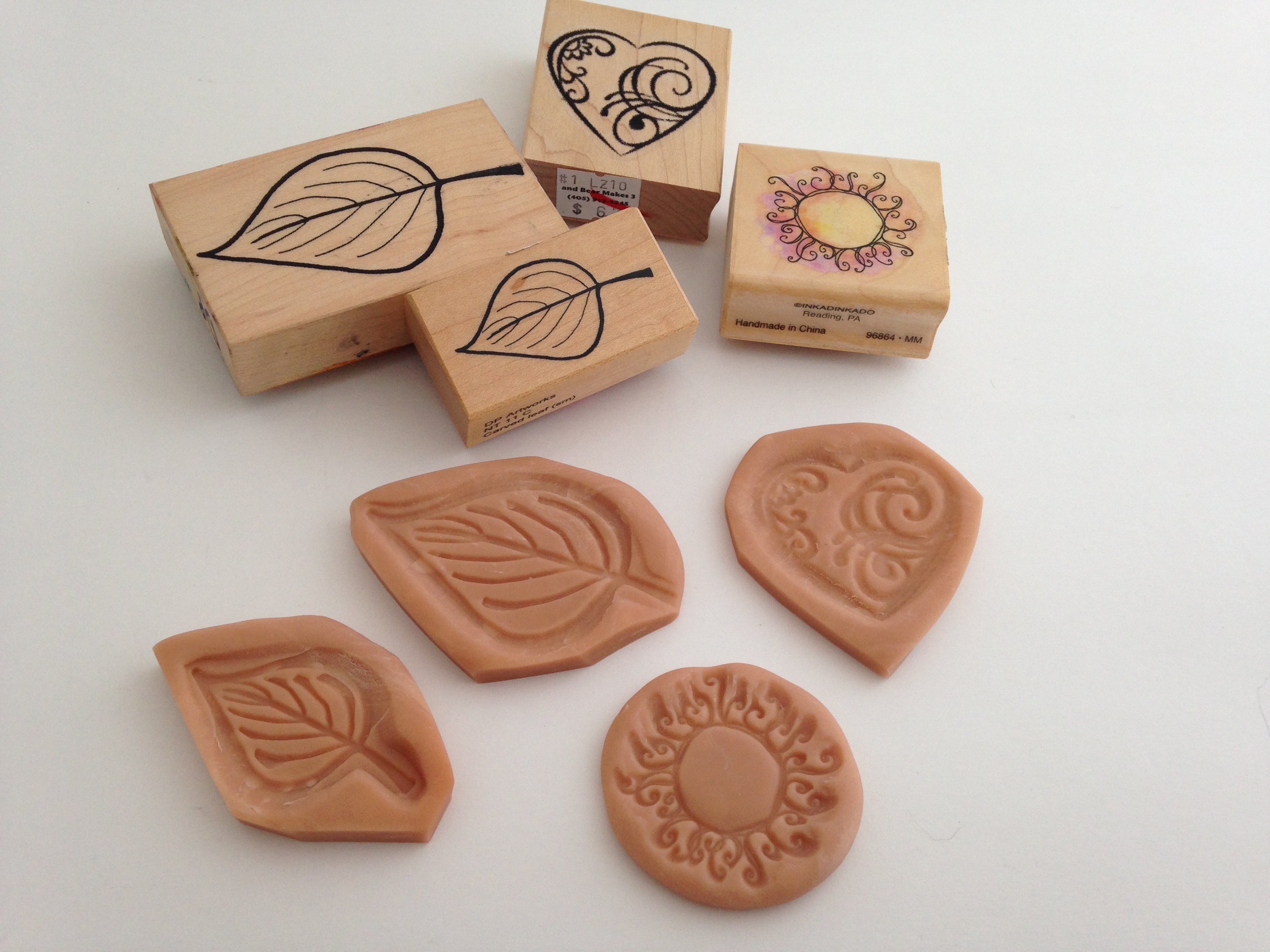
<p>I was sad to learn that my favorite local rubber stamp store was going out of business after many years. Admittedly, I hadn't visited much lately, but I'd sent many folks their way... and I just liked knowing they were there. So on their final week, I had hubby watch the kiddos while I shopped their 75% off sale. I was thrilled to get to stock up on some new colors of alcohol inks, and I found some fun new stamps.</p>

<p>I decided to combine those finds to make some pretty autumn leaf pendants in the style of Isabelle Ceramy-Debray's faux enamel from <a href="http://www.amazon.com/gp/product/1844484009?ie=UTF8&amp;tag=smartgoat-20&amp;linkCode=as2&amp;camp=1789&amp;creative=390957&amp;creativeASIN=1844484009">Polymer Clay Beaded Jewellery</a> (reviewed <a href="http://craftygoat.com/2010/05/review_polymer_clay_beaded_jew.html">here</a>). My pendants are actually serving multiple purposes here: I'm using them to decorate some autumn gift bags and pillow boxes, after which the recipients can string them onto a necklace of their choice.</p>

<p>Here's what you need to make this project:</p>]]>
        <![CDATA[
<ul>
<li>Rubber stamps (more on how to choose good stamps for this technique below)</li>
<li>Super Sculpey, or molding material of your choice</li>
<li>Water spray bottle</li>
<li>Clay blade</li>
<li>Polymer clay, any color * (see Materials Note below) </li>
<li>Pearl-Ex powders in metallic colors *</li>
<li>Paintbrush *</li>
<li>Baking tile</li>
<li>Alcohol inks</li>
<li>Liquid polymer clay, such as Translucent Liquid Sculpey (TLS) or Kato Liquid Polyclay Clear Medium</li>
<li>Toothpick</li>
<li>Straw or needle tool for creating pendant hole</li>
<li>Heat embossing gun</li>
</ul>


<p><em><b>Materials Note</b>: Some special effects clays have mica powder pre-mixed into them. While I preferred the results when I brushed Pearl Ex powders onto the clay surface, you could use a special effects clay and skip that step. I show both variations in the picture at the end of this post.</em></p>

<ol>
<li style="clear:both; padding-bottom: 20px"><a href="http://craftygoat.com/images/2013-11-03%2011.00.12.jpg"><img src="http://craftygoat.com/images/2013-11-03%2011.00.12-thumb-375x281-2428.jpg" width="375" height="281" alt="CraftyGoat's Notes: Make reverse molds of your rubber stamps using Super Sculpey" class="imgleft" /></a>
<p style="clear:both; padding-bottom: 20px"><b>Create Reverse Mold from Stamp.</b> Start by choosing a stamp. My preference is deeply cut rubber stamps &mdash; not clear acrylic, as they tend to be shallower. For this technique, a stamp with open areas is nice. These open areas are the parts you'll fill with alcohol inks.</p>
<p style="clear:both; padding-bottom: 20px">To make a reverse mold of your selected rubber stamp, first mist the rubber stamp with water. Condition a ball of Super Sculpey that's similar to the size of your stamp image. Place the clay ball on your baking surface, then press the stamp evenly and firmly into the clay. If your image isn't quite right, you can just roll the clay back out and try again. Bake your mold for the recommended time.</p></li>

<li style="clear:both; padding-bottom: 20px"><a href="http://www.flickr.com/photos/craftygoat/10714633665/" title="Press clay into reverse mold to create your pendant by CraftyGoat, on Flickr"><img src="http://farm3.staticflickr.com/2852/10714633665_f2c3cbf72b.jpg" width="375" height="500" alt="CraftyGoat's Notes: Press clay into reverse mold to create your pendant" class="imgleft" /></a>
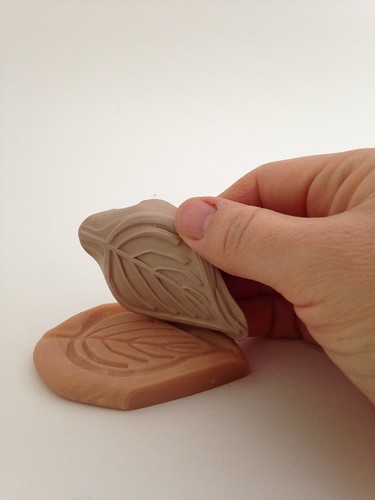
<p style="clear:both; padding-bottom: 20px"><b>Use Mold to Create Pendant.</b> Condition a small amount of polymer clay. The color of this clay doesn't much matter, since you'll be covering it with Pearl Ex powders. Spritz the baked mold with water and push in your clay, making sure you get the clay fairly flat on the back of the mold. Otherwise, you'll end up with a slope and will have a hard time getting the liquid clay to flow to all the open areas. Extra clay around the edges is fine; you can trim that off with a clay blade after you pop the clay out of the mold.</p></li>

<li style="clear:both; padding-bottom: 20px"><a href="http://www.flickr.com/photos/craftygoat/10714708894/" title="Trim pendant and brush with Pearl Ex powders by CraftyGoat, on Flickr"><img src="http://farm4.staticflickr.com/3821/10714708894_70bee0a5ea.jpg" width="375" height="500" alt="CraftyGoat's Notes: Trim pendant and brush with Pearl Ex powders" class="imgleft"  /></a>
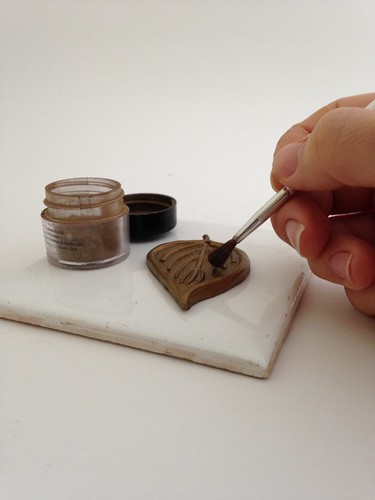
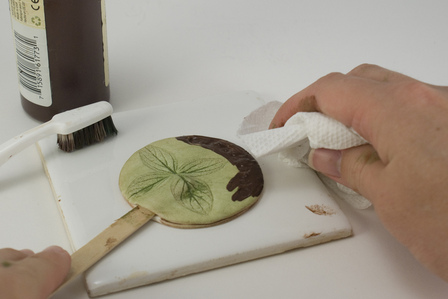
<p style="clear:both; padding-bottom: 20px"><b>Brush with Powders.</b> After trimming the excess clay, smooth the edges with your fingers. If you'll be using this for a pendant, now's the time to use a straw or needle tool to punch a small hole near the top. Next, use a paintbrush to brush Pearl Ex powders all over the unbaked clay pendant. I tried Aztec Gold, Sunset Gold, and Super Bronze, and liked the latter two best for an autumn effect. (See the labeled photo at the end of this post for results of the different powders.) I also covered the back with powder, but you may choose to texture the back of yours or finish it using a different method. Once you're happy with your pendant, bake it according to the clay manufacturer's instructions.</p></li>

<li style="clear:both; padding-bottom: 20px"><a href="http://www.flickr.com/photos/craftygoat/10714883373/" title="Drag liquid clay &amp; alcohol ink mixture onto baked polymer clay pendant by CraftyGoat, on Flickr"><img src="http://farm4.staticflickr.com/3708/10714883373_7bf326b86a.jpg" width="375" height="500" alt="CraftyGoat's Notes: Drag liquid clay &amp; alcohol ink mixture onto baked polymer clay pendant"  class="imgleft"  /></a>
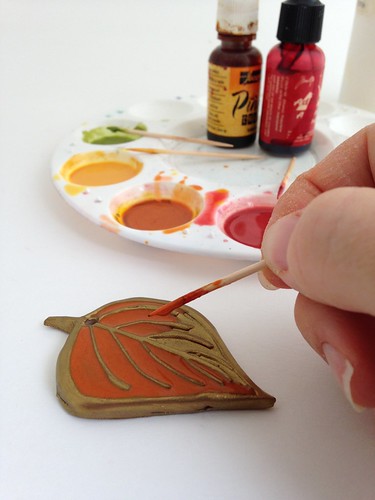
<p style="clear:both; padding-bottom: 20px"><b>Add Tinted Liquid Clay.</b> Now you're ready for the fun part &mdash; tinting your liquid polymer clay with alcohol inks. I usually use a hefty squirt of liquid polymer clay and start with 1-2 drops of alcohol ink. According to what I've read, it's best to let the drops of alcohol ink sit for a few seconds on top of the liquid clay before stirring them in. This apparently lets the alcohol part evaporate off, which helps prevent bubbles. (I've not run my own experiments, but I generally follow this advice.) Alcohol inks come in many beautiful colors, but you can certainly mix them to make your own custom colors as well.</p>

<p style="clear:both; padding-bottom: 20px">Before applying your liquid clay mixture to the baked, cooled pendant, use a clean paintbrush to dust off any excess Pearl Ex powders. Use a toothpick to drip your liquid clay mixture into the larger open (recessed) areas of your pendant. Then drag the tip of the toothpick to pull the liquid clay into the smaller open areas. If I'm doing more than one color of liquid polymer clay for a pendant, I prefer to cure between colors; otherwise it's too easy for the colors to bleed together.</p></li>

<li style="clear:both; padding-bottom: 20px"><a href="http://www.flickr.com/photos/craftygoat/10714604855/" title="Make liquid clay clear as glass by setting with heat embossing gun by CraftyGoat, on Flickr"><img src="http://farm6.staticflickr.com/5544/10714604855_6d935614fe.jpg" width="375" height="500" alt="CraftyGoat's Notes: Make liquid clay clear as glass by setting with heat embossing gun"  class="imgleft"  /></a>
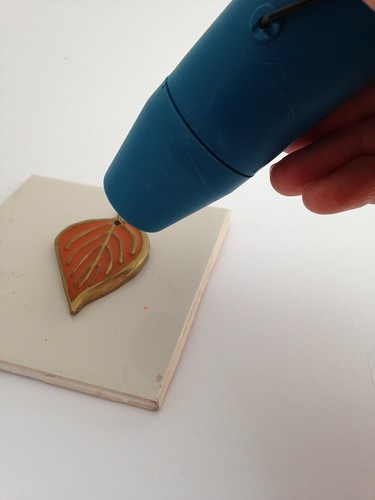
<p style="clear:both; padding-bottom: 20px"><b>Heat Emboss Liquid Clay.</b> Cure the liquid polymer clay according to the manufacturer's instructions. I usually remove my piece from the oven after its recommended cure time, and hit it as soon as possible with the heat embossing gun. Keep the heat gun about an inch away from the piece, moving it around constantly to prevent any single spot from burning. I like to keep my piece angled towards the light so I can tell when the surface appearance starts to change. The liquid clay first starts to look dull and a little white-ish, then it changes to a clear glass-like finish. </p>

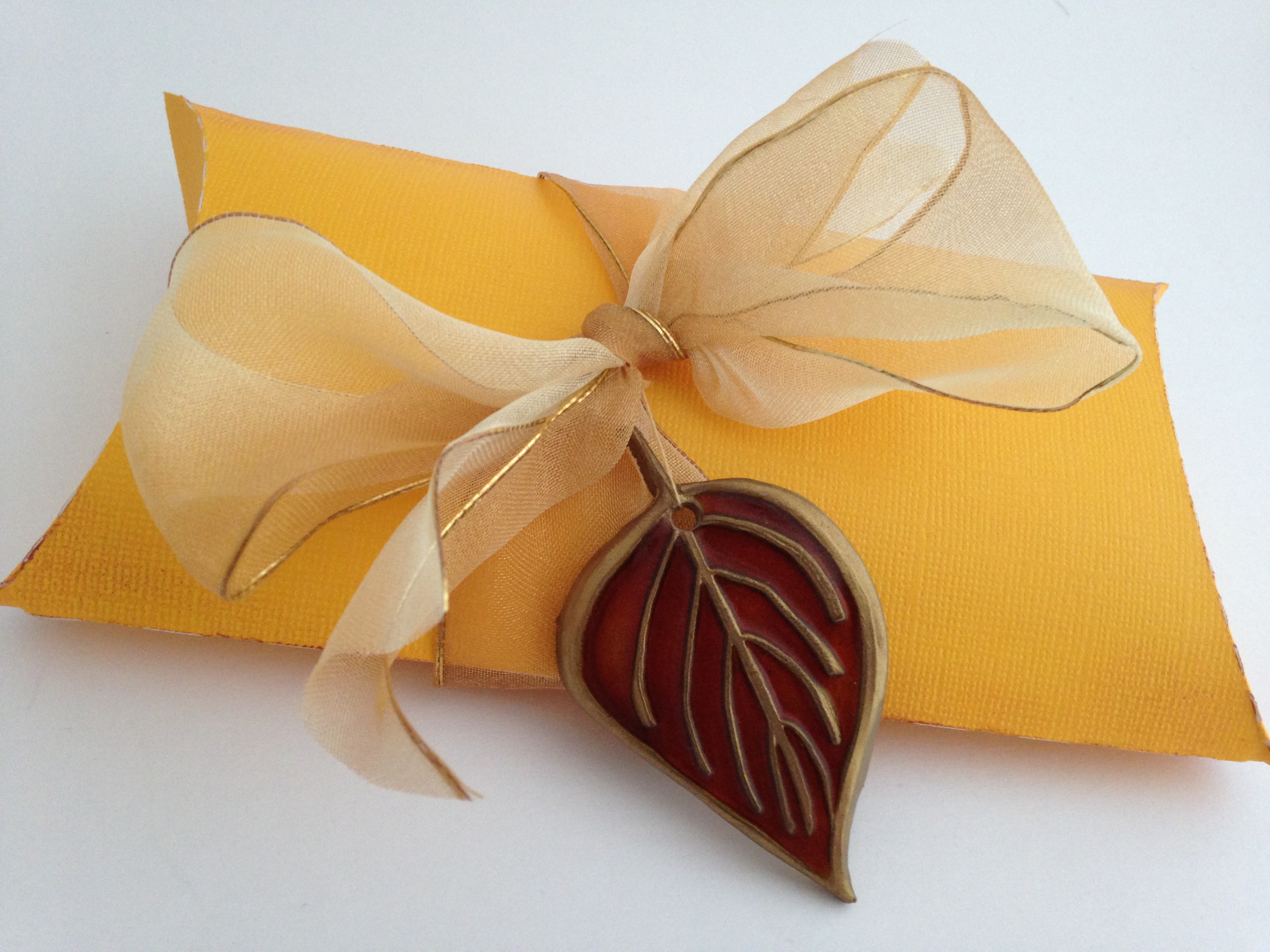
<p><a href="http://www.flickr.com/photos/craftygoat/10714720596/" title="Leaf pendant made with liquid clay and alcohol inks by CraftyGoat, on Flickr"><img src="http://farm3.staticflickr.com/2819/10714720596_b07debd27e.jpg" width="375" height="500" alt="CraftyGoat's Notes: Leaf pendant made with liquid clay and alcohol inks" class="imgleft"  /></a></p>

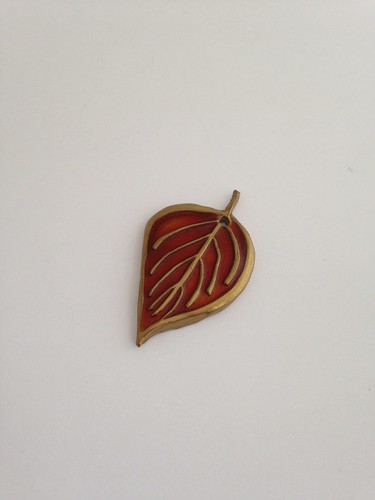
<p style="clear:both; padding-bottom: 20px">Add your finished pendant to a pretty package for a lovely hostess gift, or string it onto a ribbon or cord for a beautiful necklace. I used my Silhouette Cameo to make some textured cardstock into a pretty pillow box.</p>

<p><a href="http://craftygoat.com/images/1.jpg"><img src="http://craftygoat.com/images/1-thumb-375x500-2440.jpg" width="375" height="500" alt="CraftyGoat's Notes: Leaf Pendants with Liquid Clay and Alcohol Inks" class="imgleft" /></a></p>

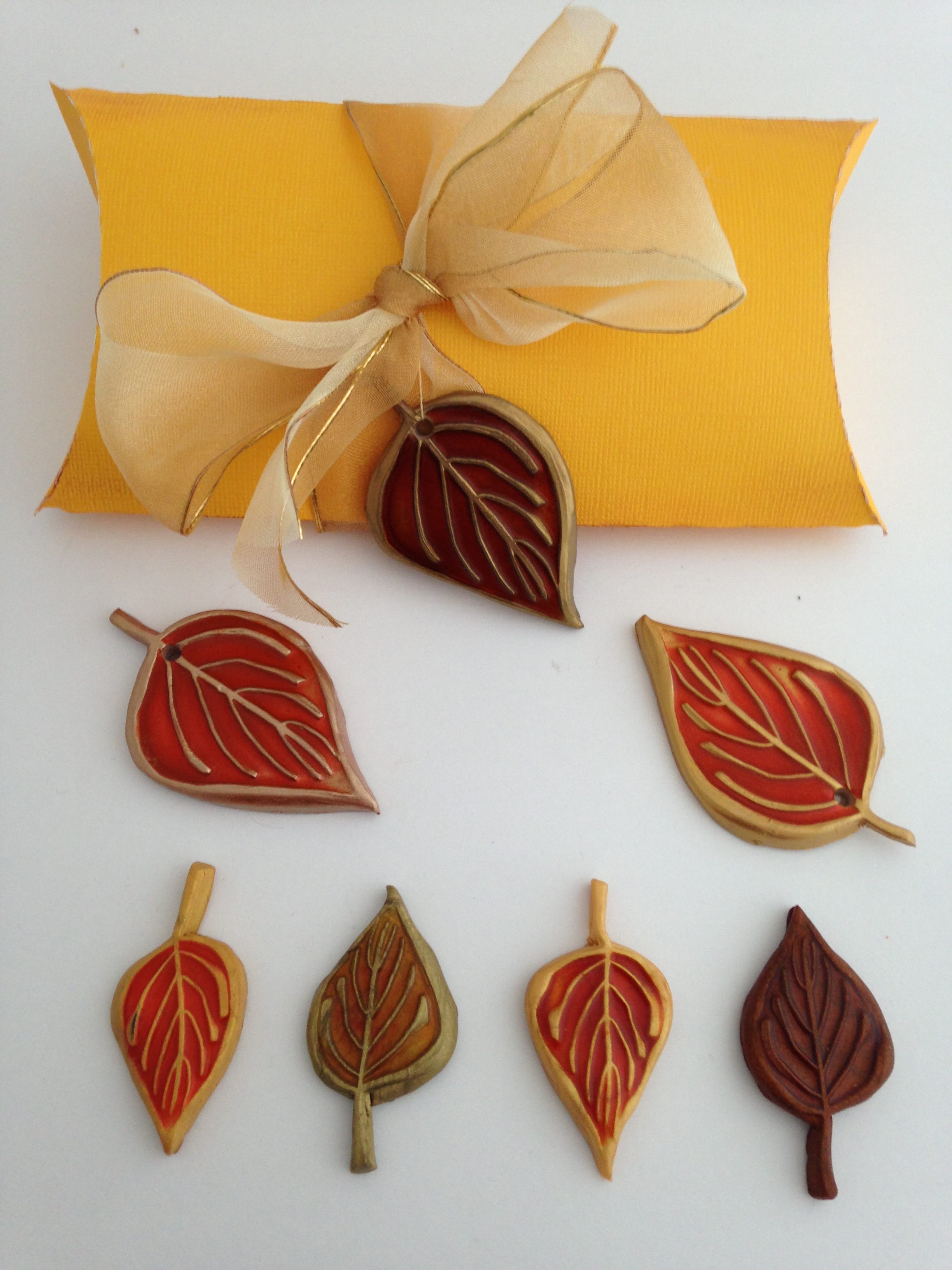
<p style="clear:both; padding-bottom: 20px">Here are the results from some of the different products I tried:</p>


<ul>
<li><b>Main top pendant (attached to pillow box):</b> Sunset Gold Pearl Ex powder on tan polymer clay; mixture of Cranberry, Santa Fe, and Red Pepper alcohol inks</li>
<li><b>Large pendant, left:</b> Super Bronze Pearl Ex powder on tan polymer clay; mixture of Terra Cotta and Tangerine alcohol inks</li>
<li><b>Large pendant, right:</b> Aztec Gold Pearl Ex powder on tan polymer clay; mixture of Terra Cotta and Tangerine alcohol inks</li>
<li><b>Small pendant, left:</b> Gold Pardo Jewellery Clay with no additional mica powders; mixture of Cranberry, Santa Fe, and Red Pepper alcohol inks</li>
<li><b>Small pendant, second from left:</b> Antique Gold Premo with no additional mica powders; mixture of Lemonade, Butterscotch, Terra Cotta and Tangerine alcohol inks</li>
<li><b>Small pendant, second from right:</b> 18K Gold Premo with no additional mica powders; Terra Cotta and Tangerine alcohol inks</li>
<li><b>Small pendant, right:</b> Tiger's Eye Pardo Jewellery Clay with no additional mica powders; mixture of Lemonade and Butterscotch alcohol inks</li>
</ul>


<p style="clear:both">I'm not sure how much it shows up in the photo, but I personally didn't think the metallic clays had the same appeal as the Pearl Ex-covered clay. Still, if you were making a big batch of these, it might be worth it to you to skip that extra step. I also found that the light-colored liquid clay mixtures really disappeared on a dark background. Still pretty... just not what I wanted here.</p></li>
</ol>

<p>I hope this month finds you with many things to be grateful for. I would love to hear from you... What are you creating?</p>]]>
    </content>
</entry>

<entry>
    <title>Polymer Clay 101</title>
    <link rel="alternate" type="text/html" href="http://craftygoat.com/2010/12/polymer_clay_101.html" />
    <link rel="service.edit" type="application/atom+xml" href="http://craftygoat.com/MT4/mt-atom.cgi/weblog/blog_id=19/entry_id=1741" title="Polymer Clay 101" />
    <id>tag:craftygoat.com,2010://4.1449</id>
    
    <published>2010-12-16T18:30:02Z</published>
    <updated>2010-12-22T16:44:01Z</updated>
    
    <summary>Polymer Clay 101, the book and DVD by Kim Otterbein and (yours truly) Angela Mabray, is now for sale! Here&apos;s an overview.</summary>
    <author>
        <name>Angela Mabray</name>
        <uri>http://www.craftygoat.com</uri>
    </author>
    
        <category term="Blog News" />
    
        <category term="CraftyGoat.com News" />
    
        <category term="Polymer Clay" />
    
    <content type="html" xml:lang="en" xml:base="http://craftygoat.com/">
        <![CDATA[<p><a href="http://www.amazon.com/gp/product/1589234707?ie=UTF8&amp;tag=smartgoat-20&amp;linkCode=as2&amp;camp=1789&amp;creative=390957&amp;creativeASIN=1589234707"><img src="http://craftygoat.com/images/51bCMf3Dh%2BL._SL160_.jpg" width="129" height="160" alt="51bCMf3Dh+L._SL160_.jpg" class="imgright" /></a><img src="http://www.assoc-amazon.com/e/ir?t=smartgoat-20&amp;l=as2&amp;o=1&amp;a=1589234707" width="1" height="1" border="0" alt="" style="border:none !important; margin:0px !important;" />It's finally here! <strong><em><a href="http://www.amazon.com/gp/product/1589234707?ie=UTF8&amp;tag=smartgoat-20&amp;linkCode=as2&amp;camp=1789&amp;creative=390957&amp;creativeASIN=1589234707">Polymer Clay 101</a><img src="http://www.assoc-amazon.com/e/ir?t=smartgoat-20&amp;l=as2&amp;o=1&amp;a=1589234707" width="1" height="1" border="0" alt="" style="border:none !important; margin:0px !important;" /></strong></em> is now in stock at various bookstores online (more on where to buy it below). I co-wrote <em>Polymer Clay 101</em> with Kim Otterbein: she wrote the basics chapter and the first 11 projects, while I did the last 10 projects and "starred" in the accompanying <span class="caps">DVD.</span></p>

<p>Book-writing is so much more solitary than blog-posting &mdash; there's a lot of hours of work and a lot of waiting without feedback. So I'm excited that I finally get to show you what I've been up to &amp; see what you think!</p>

<h3>Book Overview</h3>

<p><em>Polymer Clay 101</em> would be great for a polymer clay beginner. The first 33 pages cover all the basics &mdash; tools, techniques, color mixing, mold making, sanding &amp; polishing, etc. After that, 21 projects demonstrate major polymer clay techniques. We show how to do important things like Skinner blends and caning... but we also show some more unusual techniques like using an extruder for a filigree look, and carving baked clay. The 45-minute <span class="caps">DVD </span>shows each of these techniques in action &mdash; great for visual learners!</p>

<h3>My Review</h3>]]>
        <![CDATA[<p>(Just kidding!) I'm a little too close to this material to do a review. However, I've read quite a few polymer clay books for reviews on this site, and here are a few things that I think (hope) make <em>this</em> book stand out:</p>


<ul>
<li><b>The photos.</b> They're big and clear. They show exactly how to do each step.</li>
<li><b>The binding.</b> It may just be me, but I think all craft books (and all cookbooks) should have a spiral binding. It makes it so easy to keep the book open to the appropriate page while you're working through a project.</li>
<li><b>The <span class="caps">DVD.</span></b> While photos are very helpful for visual learners, sometimes watching it "live" is the best way to really understand what's going on. This professionally-shot <span class="caps">DVD </span>demonstrates each of the book's techniques in a very clear way. (The fact that you get a book <em>and</em> DVD for one price also makes this a great value!)</li>
<li><b>The material covered.</b> There's something here for everyone: several jewelry &amp; accessory projects (including buttons!), some home decor projects (like handles for your silverware), and quite a few gift-y items (journal covers, business card cases, and even a magnetic Tic-Tac-Toe game). While I think the beginning clayer will be able to follow the instructions, video, and large step-by-step photos, I believe the intermediate clayer will also find some new and interesting things in this book. And it includes some materials you may not have used with polymer clay before &mdash; things like fabric, Amazing Mold Putty, and Magic Glos UV Resin.</li>
</ul>


<p>But enough of what I think... I want to know what you think! Amazon reviews are especially appreciated. Blog posts, too (<a href="http://www.polyclay101.com/contact.html">contact me</a> &amp; I'll link to your review). But blog post comments and emails are also welcome. While I may be slow at giving individual responses, I will try to keep the website updated with frequently asked questions.  </p>

<h3>The Website</h3>

<p>Speaking of the website... I've set up <a href="http://www.polyclay101.com/">a new website for the Polymer Clay 101 book</a>. There's lots of info, including a <a href="http://www.polyclay101.com/dvd.html">video preview</a>, <a href="http://www.polyclay101.com/faqs-errata.html"><span class="caps">FAQ </span>and Errata page</a>, <a href="http://www.polyclay101.com/resources.html">links to polymer clay suppliers</a>, and <a href="http://www.polyclay101.com/reviews.html">links to reviews</a>. I also created <a href="http://www.flickr.com/groups/polyclay101readers/">a Flickr group</a> where you can upload photos of book-inspired projects you've made.</p>

<h3>Where To Buy</h3>

<p>While the publisher plans to have it available in some brick-and-mortar bookstores, I don't know a good way to see whether it's actually in stock yet. (Found it in your local bookstore? Your reports are welcome in the comments below!) But here are a few places you can buy it online:</p>


<ul>
<li><a href="http://www.amazon.com/gp/product/1589234707?ie=UTF8&amp;tag=smartgoat-20&amp;linkCode=as2&amp;camp=1789&amp;creative=390957&amp;creativeASIN=1589234707">Amazon</a><img src="http://www.assoc-amazon.com/e/ir?t=smartgoat-20&amp;l=as2&amp;o=1&amp;a=1589234707" width="1" height="1" border="0" alt="" style="border:none !important; margin:0px !important;" /> has the book in stock.</li>
<li><a href="http://www.polkadotcreations.com/books/detail_1589234707.html">Polka Dot Creations</a> has it, too.</li>
<li>If you want a signed copy, <a href="http://craftygoat.com/polymer-clay-101-bookdvd.html">I have a limited quantity of books on order</a>.</li>
<li>I list a couple of other online stores on my <a href="http://www.polyclay101.com/buy.html">Buy It Now</a> page, or you can always search for it (and request it if it's not available) at your favorite bookstore. Borders even offers free shipping for items that are available online but not in stock at your local store.</li>
</ul>


<h3>A Giveaway</h3>

<p><a href="http://craftside.typepad.com/craftside/2010/11/how-to-make-a-polymer-clay-bound-book-from-polymer-clay-101-master-basic-skills-and-techniques-easil.html">Craftside</a> has a free chapter from the book in their write-up. They're also giving away a copy of the book. (Sorry, giveaway ended midnight 12/21/10.) I'll be giving away a copy here, too &mdash; though I'll probably wait until after the holidays. </p>

<h3>Finally...</h3>

<p>Thank you for all your friendship and support. Make sure you read the acknowledgments, because I'm talking about <em>you</em>! :-) </p>]]>
    </content>
</entry>

<entry>
    <title>Of Fall &amp; Birdhouses</title>
    <link rel="alternate" type="text/html" href="http://craftygoat.com/2010/09/of_fall_birdhouses.html" />
    <link rel="service.edit" type="application/atom+xml" href="http://craftygoat.com/MT4/mt-atom.cgi/weblog/blog_id=19/entry_id=1735" title="Of Fall &amp; Birdhouses" />
    <id>tag:blog.craftygoat.com,2010://4.1417</id>
    
    <published>2010-09-02T18:16:00Z</published>
    <updated>2010-09-02T18:20:41Z</updated>
    
    <summary>Tales of state fair entries and birdhouses. And pregnancy hormones.</summary>
    <author>
        <name>Angela Mabray</name>
        <uri>http://www.craftygoat.com</uri>
    </author>
    
        <category term="Currently Working On..." />
    
    <content type="html" xml:lang="en" xml:base="http://craftygoat.com/">
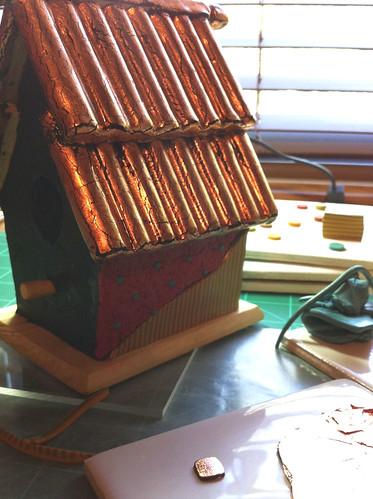
        <![CDATA[<p><a href="http://www.flickr.com/photos/craftygoat/3148207672/" title="Polymer Clay Birdhouse by CraftyGoat"><img src="http://farm4.static.flickr.com/3083/3148207672_f60f0ed762.jpg" width="375" height="500" alt="Polymer Clay Birdhouse"  title="Polymer Clay Birdhouse by CraftyGoat" class="caption imgleft" /></a></p>

<p style="clear: both">One of my favorite things about fall is the state fair. Granted, the food on a stick is hard on the body... not to mention the budget. And the crowds are even less appealing now that hubby and I are toting a toddler and a stroller. But I'm particularly fond of the fair's creative arts competition.</p>

<p>I've been entering my handmade goodies in local fairs for as long as I can remember. In fact, I'm pretty sure I still have each of the ribbons I won when I was a little girl (though I'm afraid they may be in that box that's molding in the corner of the garage). The thing that appeals to me about the contests now, though, isn't necessarily winning. It's two things:  having an excuse to create, and having a deadline. I don't have to worry about whether something is commercially viable, or whether it's something I can easily create a tutorial for. It's an chance to try out those things that have been tumbling around in my brain, just to see how they turn out.</p>

<p>As with most things I get excited about, I go a little overboard. The deadline's in 9 days, and I've finished exactly 0 of the 6 things I signed up to do. It's not unusual for me to be putting the finishing touches on an item while hubby drives me to the drop-off location 15 minutes before they close. So he kinda sighs when he finds out I've turned in my state fair form for the year. It's the same sigh he uses when I tell him we should do all handmade Christmas gifts. After 10+ years of marriage, he knows me pretty well. </p>

<p>So anyway, one of the projects-in-progress is a birdhouse, and I thought I'd give you a little sneak peak. I'm eager to see how it turns out.</p>

<p><a href="http://www.flickr.com/photos/craftygoat/4951822858/" title="Work in Progress: Birdhouse by CraftyGoat, on Flickr"><img src="http://farm5.static.flickr.com/4138/4951822858_9c2fe35d27.jpg" width="374" height="500" alt="Work in Progress: Birdhouse" /></a></p>

<p>And speaking of birdhouses, the birdhouse pictured up at the top of this post was featured in the Reader's Gallery of the October 2010 <a href="http://www.scottpublications.com/pcmag/">PolymerCAFÉ</a>, along with a rusted inro I blogged about <a href="http://blog.craftygoat.com/2008/12/review_sophisticated_finishes.html">here</a>. </p>

<p>There's a bit of a story behind that birdhouse.</p>

<p>I didn't originally post photos of the birdhouse online, because I made it as a Christmas gift. Or at least I <em>thought</em> it was supposed to be a Christmas gift...</p>]]>
        <![CDATA[<p>My mother's side of the family usually does a <a href="http://en.wikipedia.org/wiki/White_elephant_gift_exchange">Dirty Santa</a>-style gift exchange for Christmas. And two years ago, my mom informed me there would be a theme for the gifts: New Beginnings. Seemed like an odd theme, but I put together a couple of themed gift ideas with handmade items in each. One was a "new diet" themed gift: a diet book with some teensy-weensy polymer clay dishes for practicing portion control. The other was a "new hobby" themed gift: a polymer clay birdhouse with some birdseed and a book on birdwatching. I was up most of the night before our trip finishing these and various other handmade gifts.</p>

<p>Did I mention this was Christmas two years ago? Ya know, when I was seven months pregnant with my little guy? Well, I hadn't wanted to make a big deal about it, but it kinda made me sad that no one had offered to throw me a baby shower. Pregnancy hormones may have had something to do with it, but I was pretty sure it was a sign that nobody loved me.</p>

<p>You probably see where this is going.</p>

<p>There was no gift exchange that year. It was a surprise baby shower, ya know, with a <em>New Beginning</em> theme. After I got over my initial anger &mdash; that they'd let me think there wouldn't be a shower, that I'd gone to all that work to make the gifts &mdash; I realized the whole thing was exactly perfect for my family. (BTW, the gifts I'd made were used as door prizes, so the effort wasn't completely wasted.)</p>

<p>So that's the story behind the "Birdhouse of New Beginnings" that's in the latest <a href="http://www.scottpublications.com/pcmag/">PolymerCAFÉ</a>. I should note that both the birdhouse and the rusted inro are also included in tejae floyde's <a href="http://www.blurb.com/bookstore/detail/1287465">Polymer Artists Showcase</a>.</p>

<p>Hope all's well wherever you are. Would love to hear what creative things you're doing as fall approaches...</p>]]>
    </content>
</entry>

<entry>
    <title>Covering Pens with Polymer Clay: New Oven-Safe Pens</title>
    <link rel="alternate" type="text/html" href="http://craftygoat.com/2010/07/covering_pens_with_polymer_cla.html" />
    <link rel="service.edit" type="application/atom+xml" href="http://craftygoat.com/MT4/mt-atom.cgi/weblog/blog_id=19/entry_id=1734" title="Covering Pens with Polymer Clay: New Oven-Safe Pens" />
    <id>tag:blog.craftygoat.com,2010://4.1413</id>
    
    <published>2010-07-09T21:57:00Z</published>
    <updated>2012-05-27T07:08:53Z</updated>
    
    <summary>Info on covering four readily-available pens with polymer clay.</summary>
    <author>
        <name>Angela Mabray</name>
        <uri>http://www.craftygoat.com</uri>
    </author>
    
        <category term="Polymer Clay" />
    
        <category term="Supplies &amp; Tools" />
    
    <content type="html" xml:lang="en" xml:base="http://craftygoat.com/">
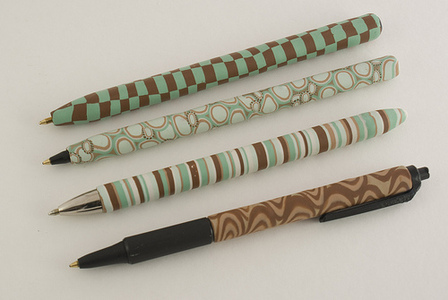
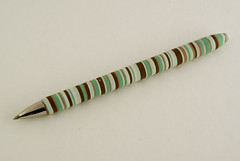
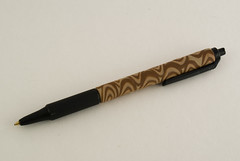
        <![CDATA[<p><a href="http://www.flickr.com/photos/craftygoat/4775178978/"><img src="http://blog.craftygoat.com/images/4775178978_98d47f10e9-thumb-448x300.jpg" width="448" height="300" alt="Cane-Covered Polymer Clay Pens by Crafty Goat" title="Cane-Covered Polymer Clay Pens by Crafty Goat" class="caption imgleft" /></a></p>

<p>If you've ever gone down the deodorant aisle searching for the same one you bought last time, you've experienced it: manufacturers' incessant focus on new and better. It seems like a product's packaging hardly ever looks the same from one purchase to the next.</p>

<p>Pen manufacturers are no different, so the pens that were "proven" oven-safe a few years ago &mdash; like my previous favorite Papermate Flexgrip Ultra &mdash; may no longer be available. And while new and better options may be out there, who has the time and money to test every new brand of pen to see if it's oven-safe?</p>

<p>Luckily, <a href="http://surfingcatclay.blogspot.com/">Surfingcat</a> did the hard work for us in her <a href="http://surfingcatclay.blogspot.com/2010/06/melting-pens.html">post about melting pens</a>. She tried eleven pens in the oven and came up with a list of six that survived at polymer clay temperatures.</p>

<p>I decided to expand on her post a bit, to give a little more info about four of those pens that are readily available here in the <span class="caps">U.S.</span>: </p>


<ul>
<li>PaperMate Comfortmate ball point pen</li>
<li>Bic Round Stic ball pen</li>
<li>PaperMate FlexGrip Elite </li>
<li>Bic SoftFeel Retractable ball pen</li>
</ul>


<p>I made a polymer clay pen with each of these brands to get a feel for how easy they are to take apart and put back together. (Read the <a href="http://blog.craftygoat.com/2007/05/polymer_clay_pens.html">basics on covering pens here</a>.) I'm including "finished" shots so you can get a feel for the aesthetic of each completed pen. My samples use cane slices since I'm practicing getting comfortable with canes (as you can tell, I have a long way to go!). But of course, you're not limited to canes. In fact, the options are pretty much endless. (For some extreme examples, take a look at <a href="http://www.amazon.com/gp/product/1596120002?ie=UTF8&amp;tag=smartgoat-20&amp;linkCode=as2&amp;camp=1789&amp;creative=390957&amp;creativeASIN=1596120002">Linda Peterson's PolyPens book</a><img src="http://www.assoc-amazon.com/e/ir?t=smartgoat-20&amp;l=as2&amp;o=1&amp;a=1596120002" width="1" height="1" border="0" alt="" style="border:none !important; margin:0px !important;" /> about making pen sets.) For each pen, I've also included photos of the packaging (so you know what to look for on the shelves... well, at least until they change that packaging!), the un-covered pen, and the pen after it's been taken apart. (Click any photo for a larger version.)</p>

<h3>The Pens</h3>]]>
        <![CDATA[<p><strong><a href="http://www.amazon.com/gp/product/B00006IE5Z/ref=as_li_ss_tl?ie=UTF8&amp;tag=smartgoat-20&amp;linkCode=as2&amp;camp=1789&amp;creative=390957&amp;creativeASIN=B00006IE5Z">Paper Mate Comfortmate</a><img src="http://www.assoc-amazon.com/e/ir?t=smartgoat-20&amp;l=as2&amp;o=1&amp;a=B00006IE5Z" width="1" height="1" border="0" alt="" style="border:none !important; margin:0px !important;" /></strong></p>

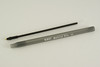
<p><a href="http://www.flickr.com/photos/craftygoat/4774538721/" title="PaperMate Comfortmate Pen: Covered with Polymer Clay by CraftyGoat"><img src="http://farm5.static.flickr.com/4077/4774538721_064dab0cf2_m.jpg" width="240" height="161" alt="PaperMate Comfortmate Pen: Covered with Polymer Clay" /></a></p>

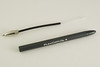
<p><a href="http://www.flickr.com/photos/craftygoat/4774531979/" title="PaperMate Comfortmate Pen Packaging"><img src="http://farm5.static.flickr.com/4097/4774531979_1688221a93_t.jpg" width="100" height="67" alt="PaperMate Comfortmate Pen Packaging" /></a>
<a href="http://www.flickr.com/photos/craftygoat/4774533233/" title="PaperMate Comfortmate Pen"><img src="http://farm5.static.flickr.com/4120/4774533233_c3cc13139f_t.jpg" width="100" height="67" alt="PaperMate Comfortmate Pen" /></a>
<a href="http://www.flickr.com/photos/craftygoat/4775173024/" title="PaperMate Comfortmate Pen: Assembly"><img src="http://farm5.static.flickr.com/4123/4775173024_923c0b18d7_t.jpg" width="100" height="67" alt="PaperMate Comfortmate Pen: Assembly" /></a></p>


<ul>
<li><b>Cost</b>: 12 pens for $7.93 on <a href="http://www.amazon.com/gp/product/B00006IE5Z/ref=as_li_ss_tl?ie=UTF8&amp;tag=smartgoat-20&amp;linkCode=as2&amp;camp=1789&amp;creative=390957&amp;creativeASIN=B00006IE5Z">Amazon</a><img src="http://www.assoc-amazon.com/e/ir?t=smartgoat-20&amp;l=as2&amp;o=1&amp;a=B00006IE5Z" width="1" height="1" border="0" alt="" style="border:none !important; margin:0px !important;" /> ($0.66 per pen)</li>
<li><b>How It Works</b>: Remove the end cap and take the pen refill out from the back. Be sure not to cover with clay the hole where the end cap goes, or the hole where the pen tip will poke through the opposite end. To reassemble after baking, push the pen refill through the opening at the end cap end, then reattach the end cap.</li>
<li><b>Notes</b>: The Comfortmate has a thin barrel (similar to the Bic Round Stic), so it's not too bulky after polymer clay is added. Its straight lines make it easy to cover.</li>
</ul>


<p><strong><a href="http://www.amazon.com/gp/product/B00006IE7L/ref=as_li_ss_tl?ie=UTF8&amp;tag=smartgoat-20&amp;linkCode=as2&amp;camp=1789&amp;creative=390957&amp;creativeASIN=B00006IE7L"><span class="caps">BIC</span> Round Stic</a><img src="http://www.assoc-amazon.com/e/ir?t=smartgoat-20&amp;l=as2&amp;o=1&amp;a=B00006IE7L" width="1" height="1" border="0" alt="" style="border:none !important; margin:0px !important;" /></strong></p>

<p><a href="http://www.flickr.com/photos/craftygoat/4775176074/" title="Bic Round Stic Pen: Covered with Polymer Clay by CraftyGoat"><img src="http://farm5.static.flickr.com/4095/4775176074_2ab3b481cc_m.jpg" width="240" height="161" alt="Bic Round Stic Pen: Covered with Polymer Clay" /></a></p>

<p><a href="http://www.flickr.com/photos/craftygoat/4774528711/" title="Bic Round Stic Pen Packaging"><img src="http://farm5.static.flickr.com/4138/4774528711_d44c310f77_t.jpg" width="100" height="67" alt="Bic Round Stic Pen Packaging" /></a>
<a href="http://www.flickr.com/photos/craftygoat/4775166602/" title="Bic Round Stic Pen"><img src="http://farm5.static.flickr.com/4096/4775166602_a6f8c8b680_t.jpg" width="100" height="67" alt="Bic Round Stic Pen" /></a>
<a href="http://www.flickr.com/photos/craftygoat/4774537741/" title="Bic Round Stic Pen: Assembly"><img src="http://farm5.static.flickr.com/4080/4774537741_cf58677fd4_t.jpg" width="100" height="67" alt="Bic Round Stic Pen: Assembly" /></a></p>


<ul>
<li><b>Cost</b>:  12 pens for $2.20 on <a href="http://www.amazon.com/gp/product/B00006IE7L/ref=as_li_ss_tl?ie=UTF8&amp;tag=smartgoat-20&amp;linkCode=as2&amp;camp=1789&amp;creative=390957&amp;creativeASIN=B00006IE7L">Amazon</a><img src="http://www.assoc-amazon.com/e/ir?t=smartgoat-20&amp;l=as2&amp;o=1&amp;a=B00006IE7L" width="1" height="1" border="0" alt="" style="border:none !important; margin:0px !important;" /> ($0.18 per pen)</li>
<li><b>How It Works</b>: Use pliers to remove the pen refill by pulling on the black plastic portion near the tip (not the pen tip itself). Re-insert after baking.</li>
<li><b>Notes</b>: The Round Stic and the Comfortmate have similar benefits and look very similar after baking... but the Round Stic is available at a much better price!</li>
</ul>


<p><strong><a href="http://www.amazon.com/gp/product/B001B0DBK4/ref=as_li_ss_tl?ie=UTF8&amp;tag=smartgoat-20&amp;linkCode=as2&amp;camp=1789&amp;creative=390957&amp;creativeASIN=B001B0DBK4">Paper Mate Flexgrip Elite</a><img src="http://www.assoc-amazon.com/e/ir?t=smartgoat-20&amp;l=as2&amp;o=1&amp;a=B001B0DBK4" width="1" height="1" border="0" alt="" style="border:none !important; margin:0px !important;" /></strong></p>

<p><a href="http://www.flickr.com/photos/craftygoat/4775177090/" title="PaperMate FlexGrip Elite Pen: Covered with Polymer Clay by CraftyGoat"><img src="http://farm5.static.flickr.com/4143/4775177090_d88f1a55c4_m.jpg" width="240" height="161" alt="PaperMate FlexGrip Elite Pen: Covered with Polymer Clay" /></a></p>

<p><a href="http://www.flickr.com/photos/craftygoat/4774526833/" title="PaperMate FlexGrip Elite Pen Packaging"><img src="http://farm5.static.flickr.com/4118/4774526833_8065aac0b6_t.jpg" width="100" height="67" alt="PaperMate FlexGrip Elite Pen Packaging" /></a>
<a href="http://www.flickr.com/photos/craftygoat/4774527601/" title="PaperMate FlexGrip Elite Pen"><img src="http://farm5.static.flickr.com/4097/4774527601_8402e3a4f0_t.jpg" width="100" height="67" alt="PaperMate FlexGrip Elite Pen" /></a>
<a href="http://www.flickr.com/photos/craftygoat/4775172090/" title="PaperMate FlexGrip Elite Pen: Assembly"><img src="http://farm5.static.flickr.com/4122/4775172090_1937b916f9_t.jpg" width="100" height="67" alt="PaperMate FlexGrip Elite Pen: Assembly" /></a></p>


<ul>
<li><b>Cost</b>: 12 pens for $8.01 on <a href="http://www.amazon.com/gp/product/B001B0DBK4/ref=as_li_ss_tl?ie=UTF8&amp;tag=smartgoat-20&amp;linkCode=as2&amp;camp=1789&amp;creative=390957&amp;creativeASIN=B001B0DBK4">Amazon</a><img src="http://www.assoc-amazon.com/e/ir?t=smartgoat-20&amp;l=as2&amp;o=1&amp;a=B001B0DBK4" width="1" height="1" border="0" alt="" style="border:none !important; margin:0px !important;" /> ($0.67 per pen)</li>
<li><b>How It Works</b>: Simply unscrew the silver cap and remove the refill before baking. Screw back on after baking.</li>
<li><b>Notes</b>: I like the fact that these are easily refillable by anyone &mdash; a big plus if you're planning to sell your polymer clay pens. I also like that the silver cap dresses it up a bit. I'm not crazy about the tapered shape on the end: it makes these pens slightly harder to cover than the pens with straight lines, and I personally don't like the look as well.</li>
</ul>


<p><strong><a href="http://www.amazon.com/gp/product/B00006IE82/ref=as_li_ss_tl?ie=UTF8&amp;tag=smartgoat-20&amp;linkCode=as2&amp;camp=1789&amp;creative=390957&amp;creativeASIN=B00006IE82"><span class="caps">BIC</span> Soft Feel Retractable</a><img src="http://www.assoc-amazon.com/e/ir?t=smartgoat-20&amp;l=as2&amp;o=1&amp;a=B00006IE82" width="1" height="1" border="0" alt="" style="border:none !important; margin:0px !important;" /></strong></p>

<p><a href="http://www.flickr.com/photos/craftygoat/4775178068/" title="Bic Soft Feel Retractable Pen: Covered with Polymer Clay by CraftyGoat"><img src="http://farm5.static.flickr.com/4073/4775178068_c38b6bee87_m.jpg" width="240" height="161" alt="Bic Soft Feel Retractable Pen: Covered with Polymer Clay" /></a></p>

<p><a href="http://www.flickr.com/photos/craftygoat/4777449621/" title="Bic Soft Feel Pens Packaging"><img src="http://farm5.static.flickr.com/4116/4777449621_41230cedac_t.jpg" width="100" height="67" alt="Bic Soft Feel Pens Packaging" /></a>
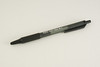
<a href="http://www.flickr.com/photos/craftygoat/4778081668/" title="Bic Soft Feel Pen"><img src="http://farm5.static.flickr.com/4074/4778081668_ff61478c86_t.jpg" width="100" height="67" alt="Bic Soft Feel Pen" /></a>
<a href="http://www.flickr.com/photos/craftygoat/4775180020/" title="Bic Soft Feel Retractable Pen: Assembly"><img src="http://farm5.static.flickr.com/4082/4775180020_ab69163fdc_t.jpg" width="100" height="67" alt="Bic Soft Feel Retractable Pen: Assembly" /></a></p>


<ul>
<li><b>Cost</b>: 12 pens for $6.86 on <a href="http://www.amazon.com/gp/product/B00006IE82/ref=as_li_ss_tl?ie=UTF8&amp;tag=smartgoat-20&amp;linkCode=as2&amp;camp=1789&amp;creative=390957&amp;creativeASIN=B00006IE82">Amazon</a><img src="http://www.assoc-amazon.com/e/ir?t=smartgoat-20&amp;l=as2&amp;o=1&amp;a=B00006IE82" width="1" height="1" border="0" alt="" style="border:none !important; margin:0px !important;" /> ($0.57 per pen)</li>
<li><b>How It Works</b>: The front part is easy enough to remove. Just twist and pull on the black padded section, then pull the pen refill out too. The retractable portion was much harder for me. I tried and tried with pliers, even breaking off one of the clips in the process. What finally worked for me was using my hands: holding the pen barrel in one hand and grasping the top edge, just to the side of the clip, with the other hand. Twist the clip (and its attached pen cap) up and to the side, until it separates from the barrel.</li>
<li><b>Notes</b>: This was my first retractable pen, and it ended up being my surprise favorite of the group. I think it looks kind of nice to have the black front section that contrasts with the polymer-clay covered section. However, I did test that each of these pen segments is oven-safe. The black padded part of the barrel is removable, so you should be able to cover the whole thing in a matching pattern. You might even be able to find a metallic washer at the hardware store to put between the sections and dress it up a bit.  </li>
</ul>


<p>Got a favorite oven-safe pen that's not listed here? I'd love to hear about it. Ditto for pen-covering suggestions!</p>]]>
    </content>
</entry>

<entry>
    <title>Polymer Clay Plant Markers... 2 Ways!</title>
    <link rel="alternate" type="text/html" href="http://craftygoat.com/2010/05/polymer_clay_garden_stakes.html" />
    <link rel="service.edit" type="application/atom+xml" href="http://craftygoat.com/MT4/mt-atom.cgi/weblog/blog_id=19/entry_id=1732" title="Polymer Clay Plant Markers... 2 Ways!" />
    <id>tag:blog.craftygoat.com,2010://4.1405</id>
    
    <published>2010-05-22T08:54:00Z</published>
    <updated>2010-05-22T20:54:34Z</updated>
    
    <summary>How to make two different styles of polymer clay plant markers.</summary>
    <author>
        <name>Angela Mabray</name>
        <uri>http://www.craftygoat.com</uri>
    </author>
    
        <category term="Polymer Clay" />
    
        <category term="Project Instructions" />
    
    <content type="html" xml:lang="en" xml:base="http://craftygoat.com/">
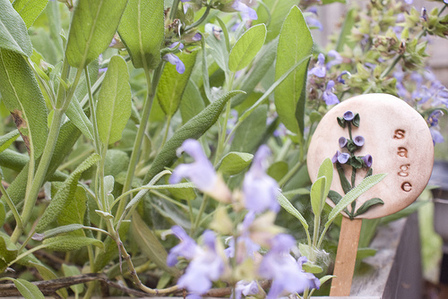
        <![CDATA[<p style="clear:both; padding-bottom: 20px"><a href="http://www.flickr.com/photos/craftygoat/4628693882/"><img src="http://blog.craftygoat.com/images/4628693882_5711d69611-thumb-448x299.jpg" width="448" height="299" alt="Sage Plant Marker in Garden" title="Sage Plant Marker in Garden, by CraftyGoat" class="caption imgleft" /></a></p>

<p>I love the <em>idea</em> of gardening. I want to snip fresh herbs to toss with pasta. Or make fresh salsa with homegrown tomatoes and peppers.</p>

<p>Unfortunately, my biological gardening clock (if there is such a thing) is a bit off. It's usually around Memorial Day weekend that it occurs to me to plant something. By this time, even the pre-started plants at the nurseries are on clearance, because (I'm guessing) everybody except me understands that it's too late to plant stuff. This does not deter me. I see an abandoned plant in a clearance bin, and I go into rescue mode. How could I just let that poor thing sit there and die, alone and unloved? So I bring home plants I shouldn't and do my best to save them from the coming blazing-hot summer days. Eventually the Oklahoma sun and dry winds win, and I give up on the poor wilted plants. But by Memorial Day of the next year, I'm ready to give it another shot.</p>

<p>A few years back, I (unintentionally) did something smart. I got some perennial herbs, oregano and sage, that have made a happy life for themselves despite my lack of gardening expertise. Both of the past two years, these herbs have come back without a bit of effort on my part. Since these plants make me so happy, I decided to make them a little gift in return.</p>

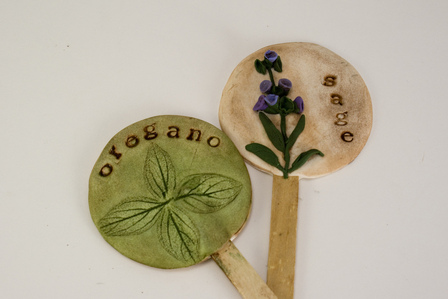
<p>These polymer clay plant markers are simple to make and they're a great way to identify your favorite plants... whether you're the type who starts them from seedlings, or &mdash; like me &mdash; just feel fortunate that the plants have chosen to grace you with their presence one more year. I'm showing you how to make two slightly different styles of plant markers. The first is a more sculpted look, and it's great for flowering plants, fruits, or veggies. The second is a more natural look, well-suited for an herb garden. Both projects start and end the same way &mdash; it's the step in the middle that make the difference.</p>

<p style="clear:both; padding-bottom: 20px"><a href="http://www.flickr.com/photos/craftygoat/4628708608/"><img src="http://blog.craftygoat.com/images/4628708608_49b16b7e1f_b-thumb-448x299.jpg" width="448" height="299" alt="Plant Markers, Complete" title="Plant Markers, by CraftyGoat" class="caption imgleft" /></a></p>

<h3 style="clear:both; padding-top: 20px">Plant Marker Instructions</h3>]]>
        <![CDATA[<ol>
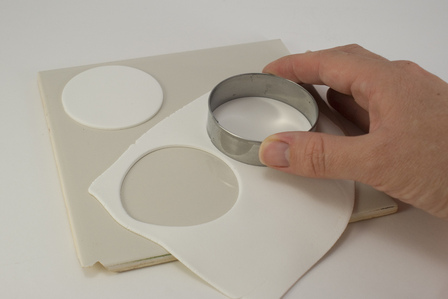
<li style="clear:both; padding-bottom: 20px"><a href="http://www.flickr.com/photos/craftygoat/4628684788/"><img src="http://blog.craftygoat.com/images/4628684788_6edda9bc21_b-thumb-448x299.jpg" width="448" height="299" alt="Step 1: Cut Out Background" class="imgright" /></a><b>Create Background.</b> I chose UltraLight Sculpey as the background for my plant marker because it's lightweight &mdash; less likely to make the wooden stakes top-heavy. Roll the clay out to a medium-thick setting on your pasta machine and cut out two copies of any shape you want. I used a round cookie cutter.</li>
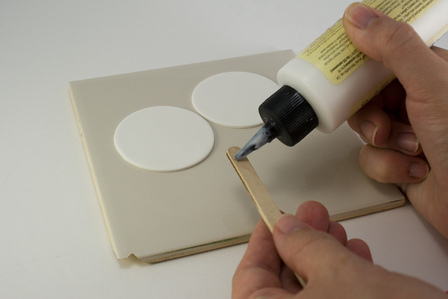
<li style="clear:both; padding-bottom: 20px"><a href="http://www.flickr.com/photos/craftygoat/4628688618/"><img src="http://blog.craftygoat.com/images/4628688618_448cca89e9_b-thumb-448x299.jpg" width="448" height="299" alt="Step 2: Add Stake" class="imgright" /></a><b>Add Stake.</b> Apply Bake and Bond bakeable adhesive to both sides of the end of a craft stick. Apply a little Bake and Bond all over one of your clay sheets, too. Then sandwich the stick between the sheets, pressing lightly to adhere everything together. I did the remainder of the project on a bakeable surface (try a ceramic tile or an index card), so I wouldn't have to move the project for baking. If you have to move it, do so carefully, sliding an aluminum scraper underneath the bottom clay layer. Don't forget and grab it by the craft stick, since this will likely pop the stick right out of the unbaked clay.<br /><br />
<b><em>Bake and Bond Note:</em></b> I like to use Bake and Bond in cases like this because it seems to have some of the properties of white glue and some of the properties of liquid polymer clay. If you don't have Bake and Bond, you can use white glue instead.</li>
<li style="clear:both; padding-bottom: 20px"><b>Decorate Marker</b>
<ul>
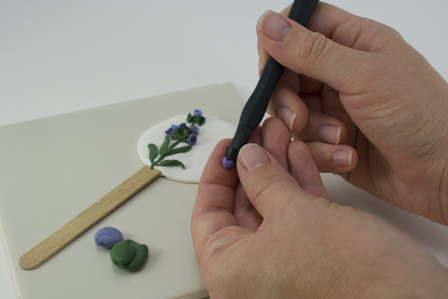
<li style="clear:both; padding-bottom: 20px"><a href="http://www.flickr.com/photos/craftygoat/4628678158/"><img src="http://blog.craftygoat.com/images/4628678158_0168b8d537_b-thumb-448x299.jpg" width="448" height="299" alt="Step 3: Decorate Sculpted Plant Marker" class="imgright" /></a><b>Sculpted Plant Marker:</b> I'm sure you have different plants than I do, so I'll just give general instructions on sculpting a plant. First, study the plant. If you don't have the plant itself in front of you &mdash; very likely if you're just starting the seedlings &mdash; then you'll have to settle for studying a seed packet, a photo from a plant book, or a botanical drawing. Look at the leaf shape, color, texture and placement. Are there always a certain number of leaves or flowers grouped together? What makes this plant unique? Understanding these things will help you create a better likeness.<br /><br />
For my sage marker, I mixed a green color consisting of 1 part each Premo Green, Sea Green, White, and Raw Sienna. I tried various methods of getting the raised dot look of a sage leaf, but I wasn't happy with any of them until I "cheated" and used an actual sage leaf for texture. For the flowers, I made tiny balls from a few different shades of lavender. I then poked my Sculpey cone tip shaper tool into the ball, and pinched out the edges to make them look like petals. I followed the same steps with green balls and wrapped those around the flowers to make the leaves at the base of the petals. </li>
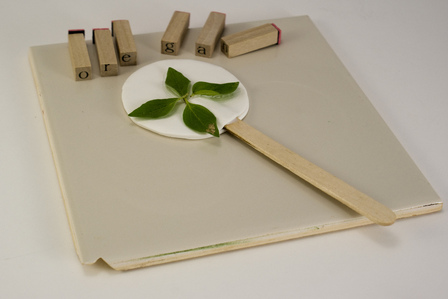
<li style="clear:both; padding-bottom: 20px"><a href="http://www.flickr.com/photos/craftygoat/4628697970/"><img src="http://blog.craftygoat.com/images/4628697970_831b829697_b-thumb-448x299.jpg" width="448" height="299" alt="Step 3: Decorate Leaf Impression Plant Marker" class="imgright" /></a><b>Leaf Impression Plant Marker:</b> You have to actually have some of the plant's leaves on hand, so this style doesn't work so well if you want to mark where you planted seedlings. (Plan ahead and make some for next year!) Pick a few fairly unblemished leaves, and press the backs of them into your clay background (the details from the leaf back usually transfer more clearly than those on the front). Once you've made a good impression in the clay, peel the leaves off.</li>
</ul>
</li>
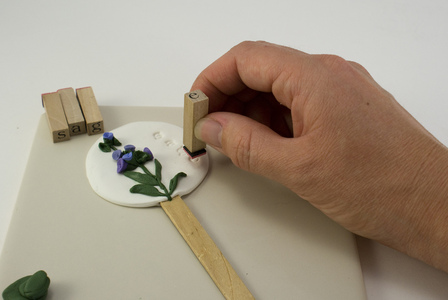
<li style="clear:both; padding-bottom: 20px"><a href="http://www.flickr.com/photos/craftygoat/4628079361/"><img src="http://blog.craftygoat.com/images/4628079361_da01733c0a_b-thumb-448x300.jpg" width="448" height="300" alt="Step 4: Label It" class="imgright" /></a><b>Label It.</b> Once you're happy with the decorative part of the plant marker, use rubber stamps to impress the name of the plant into the clay. I used an Alphabet Stamp Set by Studio G. You can also add any other texture, borders, etc. at this point.</li>
<li style="clear:both; padding-bottom: 20px"><a href="http://www.flickr.com/photos/craftygoat/4628700876/"><img src="http://blog.craftygoat.com/images/4628700876_35acfba121_b-thumb-448x299.jpg" width="448" height="299" alt="Step 5: Bake &amp; Antique" class="imgright" /></a><b>Bake and Antique It.</b> Bake the plant marker according to the clay manufacturer's instructions, keeping the craft stick in place (wood is oven safe at clay temperatures). Once it's baked and cooled, apply acrylic paint to a stiff-bristled paintbrush or an old toothbrush. Dab the paint into the letters and any other textured areas, making sure the paint gets into all the crevices. Then wipe away the paint on the surface with a paper towel. This highlights the textured areas and gives the piece an antiqued look.<br /><br />
<em><b>UltraLight Sculpey Note:</b></em> I was in for a surprise the first time I antiqued UltraLight Sculpey. The stuff is made to be paintable, so it absorbs the paint much more than a brand like Premo. If you don't work quickly when you're antiquing, you'll find the paint has become permanent.</li>
<li style="clear:both; padding-bottom: 20px"><b>Protect It.</b> Polymer clay colors can fade in the sunlight. If you're creating your plant markers for an outdoor garden, seal your clay with a topcoat that includes UV protectorant, such as  Rust-Oleum's Varathane polyurethane wood sealant.</li>
</ol>

<p>Of course, there are lots of variations. These plant markers are two-sided. Try decorating the back in a different style, or even doing an image transfer with details about the plant and its sun and watering preferences. Use an extruder to create a matching (or contrasting) polymer clay border. Change the shape and size of the background. Vary the antiquing color to make (for example) all your herb markers green, all your veggie markers yellow, etc.  </p>

<p>I'd give you more ideas for variations, but I've got a trip to make. I believe some clearance rack plants are calling my name. :-)</p>

<p><em>This post is part of the <a href="http://craftsocial.net/?p=145">Craft Social Garden Party Blog Carnival</a>. Check out the other posts for more garden-fresh inspiration!</em></p>]]>
    </content>
</entry>

<entry>
    <title>Review: Polymer Clay Beaded Jewellery by Isabelle Ceramy-Debray</title>
    <link rel="alternate" type="text/html" href="http://craftygoat.com/2010/05/review_polymer_clay_beaded_jew.html" />
    <link rel="service.edit" type="application/atom+xml" href="http://craftygoat.com/MT4/mt-atom.cgi/weblog/blog_id=19/entry_id=1728" title="Review: Polymer Clay Beaded Jewellery by Isabelle Ceramy-Debray" />
    <id>tag:blog.craftygoat.com,2010://4.1397</id>
    
    <published>2010-05-18T17:33:00Z</published>
    <updated>2010-05-22T00:29:48Z</updated>
    
    <summary>My review of Isabelle Ceramy-Debray&apos;s booklet, Polymer Clay Beaded Jewellery.</summary>
    <author>
        <name>Angela Mabray</name>
        <uri>http://www.craftygoat.com</uri>
    </author>
    
        <category term="Polymer Clay" />
    
        <category term="Reviews" />
    
    <content type="html" xml:lang="en" xml:base="http://craftygoat.com/">
        <![CDATA[<p><a href="http://www.amazon.com/gp/product/1844484009?ie=UTF8&amp;tag=smartgoat-20&amp;linkCode=as2&amp;camp=1789&amp;creative=390957&amp;creativeASIN=1844484009"><img src="http://blog.craftygoat.com/images/51hBhUpnjoL._SL160_.jpg" width="114" height="160" alt="Polymer Clay Beaded Jewellery" class="imgright" /></a><img src="http://www.assoc-amazon.com/e/ir?t=smartgoat-20&amp;l=as2&amp;o=1&amp;a=1844484009" width="1" height="1" border="0" alt="" style="border:none !important; margin:0px !important;" />I'm not a huge jewelry person... but when I do wear jewelry, I'm hopelessly matchy-matchy. I love to have earrings that match the necklace. Bonus if there's a matching bracelet, too. It affects me to the point that, even if I absolutely love a necklace in my jewelry box, if I don't have the perfect earrings for it, I find myself not wearing it.</p>

<p>I'm guessing Isabelle Ceramy-Debray, author of <em><a href="http://www.amazon.com/gp/product/1844484009?ie=UTF8&amp;tag=smartgoat-20&amp;linkCode=as2&amp;camp=1789&amp;creative=390957&amp;creativeASIN=1844484009">Polymer Clay Beaded Jewellery</a><img src="http://www.assoc-amazon.com/e/ir?t=smartgoat-20&amp;l=as2&amp;o=1&amp;a=1844484009" width="1" height="1" border="0" alt="" style="border:none !important; margin:0px !important;" /></em>, is the same way. Her new 48-page page book has instructions for creating several matching pieces for each technique &mdash; necklaces, earrings, bracelets, rings, and more. This is a nice touch for beginners who want matching jewelry but who need extra guidance to make each specific piece. There are several things, in fact, that make this book best suited for beginners. But there are also a couple of reasons I'd prefer beginners pick up a different book instead...</p>

<h3><b>The Book</b></h3>]]>
        <![CDATA[<p>This book was originally published in France in 2007. A few clunky word choices make it obvious that this is a translated version &mdash; things like keeping unbaked clay away from dust so you don't "spoil the clay," or where it says "false" instead of "faux" enamel. It's not a big deal &mdash; more the sort of thing that'll make you re-read the sentence than cause you major confusion.</p>

<p>The author starts with a brief section on polymer clay basics. I was a little surprised she recommended Sculpey <span class="caps">III, </span>but then again, beads aren't as prone to the breakage problems common with that brand. I do like the book's large photos of materials and supplies &mdash; 2.5 pages worth of very clear photos, labeled with each item's name and purpose. This is a nice touch, since beginners may not know, for example, what flat-nosed and round pliers look like and what each one is used for.</p>

<p>While these photos are very clear, there are some in the book that aren't so clear. Even some of the beauty shots are downright blurry. It makes me wonder if the out-of-focus look on the front cover is stylistic or if they just didn't have any shots that were completely in focus. Other than the problems with some of the photos, though, I liked the clean layout of the book. The beauty shots have simple props like glass vases, and they are incorporated nicely into the page design.</p>

<h3><b>The Projects</b></h3>
There are 11 different designs in the book, which she uses to make 35 different jewelry pieces:


<ul>
<li><b>Watercolor</b> (necklace, bracelet, keychain, earrings)</li>
<li><b>Savannah</b> (necklace, earrings, pendant, ring)</li>
<li><b>Marina</b> (ring, necklace, bracelet)</li>
<li><b>Primrose</b> (earrings, hanging pendant, ring)</li>
<li><b>Venice</b> (necklace, keyring, earrings)</li>
<li><b>Moonlight</b> (earrings, necklace, ring, hair clip)</li>
<li><b>Rosebud</b> (hair clip, necklace, earrings)</li>
<li><b>Coral</b> (necklace, earrings)</li>
<li><b>Trump heart</b> (hanging pendant, earrings)</li>
<li><b>Harlequin</b> (necklace, bracelet, earrings)</li>
<li><b>Tenderness</b> (keyring, necklace, bracelet, brooch)</li>
</ul>


<p>As you may notice, the names of the projects don't really tell you much. That's one of the things I dislike about this book. It does a decent job of covering polymer clay basics &mdash; things like using an extruder, making canes, adding inclusions, and doing Mokume Gane. But it does so without really acknowledging that these are all established polymer clay techniques. For example, it doesn't use the words Mokume Gane at all. So someone new to clay wouldn't know to look up that term for more ways to do it.</p>

<p>Another thing I personally disliked was the way the directions were written. Here's an example from p. 46:</p>

<blockquote><p>"Take the balls <span class="caps">B3, B4, J5, J6, R5, R6,</span> V5 and <span class="caps">V6.</span> Cut each ball in half to make one B3a and one B3b, one B4a and one B4b, one J5a and one J5b, one J6a and one J6b, one R5a and one R5b, one R6a and one R6b, one V5a and one V5b, one V6a and one V6b."</p></blockquote>

<p>It's a very specific, pattern-based way to write instructions. And perhaps it prevents misunderstandings. But I think it reminded me too much of algebra. (Oh wait, I <em>liked</em> algebra.) It was difficult to read, so my eyes glazed over and my brain resisted wrapping itself around the words. Granted, some people may prefer this very formulaic style. But to me, it just made things seem more complicated than they were. And I would imagine that would create a barrier for many beginners.</p>

<p>I had mixed feelings about the projects themselves. I liked five of them well enough to consider doing them: Watercolor (coiled extruder beads), Marina (Mokume Gane), Primrose (faux enamel), Coral (faux coral), and Trump Heart (clay inclusions). The techniques themselves weren't particularly unique on these, but I thought the color choices were pretty and the end results were nice. None of the other projects caught my eye. </p>

<p>I did discover a few new materials in the book, like copper wire sheathed in cotton. Granted, I haven't found it in local stores yet, so I don't know how difficult it will be to find. But it did look cool.</p>

<p>I mentioned that I liked having multiple jewelry pieces for each pattern. I also liked the fact that the book included several rings. Aside from <a href="http://blog.craftygoat.com/2009/07/review_ancient_modern_by_ronna.html">Ancient Modern</a> and <a href="http://blog.craftygoat.com/2009/06/review_polymer_clay_mixed_medi.html">Polymer Clay Mixed Media Jewelry</a>, I can't think of any recent polymer clay books that have ring projects.</p>

<h3><b>My Results</b></h3>
I tried the Primrose and Marina instructions, and I was pretty pleased with the results of both projects.

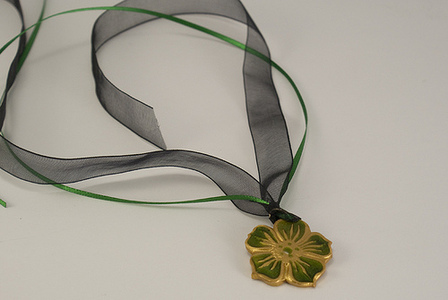
<p>I felt like the Primrose (faux enamel) project was very simple and resulted in very pretty results. The only tricky part is finding rubber stamps that work well for the technique &mdash; I suspect I'll be buying a few more stamps so I can play more with this idea. I liked the look of the ribbon necklace until I realized that she didn't include instructions for any sort of clasp. I feel like the measurements she gave for the ribbon make this necklace a little too short to tie on.</p>

<p style="clear:both"><a href="http://www.flickr.com/photos/craftygoat/4606901048/"><img src="http://blog.craftygoat.com/images/4606901048_5a3e1c6799-thumb-448x300.jpg" width="448" height="300" alt="Primrose Necklace by CraftyGoat" title="Primrose Necklace by CraftyGoat" class="caption imgleft" /></a></p>

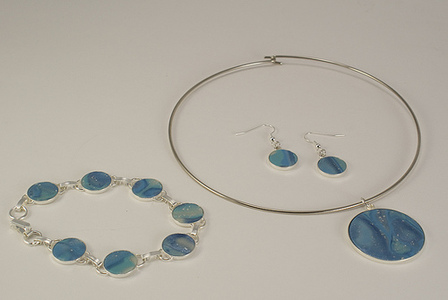
<p>The Marina project showed an easy way to do Mokume Gane &mdash; perfect for beginners eager to see good results. The places where it called for "transparent white" confused me. Just a translation thing, I'm sure, but I wasn't sure whether to use my translucent or some mixture of translucent and white. [5/21/10 Note: Sue cleared this up for me in the comments -- I wasn't aware Fimo Effect's translucent was called translucent white. Thanks Sue!] And I found myself wishing the instructions listed pasta machine settings (I have no idea what thickness 1 mm is). </p>

<p style="clear:both"><a href="http://www.flickr.com/photos/craftygoat/4606901080/"><img src="http://blog.craftygoat.com/images/4606901080_7b7773d243-thumb-448x300.jpg" width="448" height="300" alt="Marina Jewelry Set by CraftyGoat" title="Marina Jewelry Set by CraftyGoat" class="caption imgleft" /></a></p>

<p>Just a handy note for those of you who like the bracelet finding here. She recommends some findings by Eberhard Faber, which I haven't found anywhere. But I tried Premo's new <a href="http://sculpey.com/products/kit/fashion-art-round-jewelry-findings-silver">Fashion Art jewelry findings kit</a> (now available at Michael's), and it worked perfectly here. Look for a separate review of that coming soon.</p>

<h3><b>Summary</b></h3>


<ul>
<li>Title: <em><a href="http://www.amazon.com/gp/product/1844484009?ie=UTF8&amp;tag=smartgoat-20&amp;linkCode=as2&amp;camp=1789&amp;creative=390957&amp;creativeASIN=1844484009">Polymer Clay Beaded Jewellery</a><img src="http://www.assoc-amazon.com/e/ir?t=smartgoat-20&amp;l=as2&amp;o=1&amp;a=1844484009" width="1" height="1" border="0" alt="" style="border:none !important; margin:0px !important;" /></em> by Isabelle Cheramy-Debray</li>
<li>Price: $11.86 plus shipping</li>
<li>Pros:
<ul>
<li>Includes polymer clay instructions <span class="caps">AND </span>jewelry assembly instructions.</li>
<li>Has instructions for several matching jewelry pieces (necklace, earrings, etc.) for each technique.<br />
 </li>
</ul>
</li>
<li>Cons:
<ul>
<li>Not much in the way of new techniques. </li>
<li>The instructions can be difficult to read.</li>
</ul>
</li>
</ul>


<ul>
<li>Who It's Good For: 
<ul>
<li>Polymer clay beginners who want full jewelry assembly instructions and don't mind wading through meticulously-detailed instructions.</li>
</ul>
</li>
</ul>


<p><em>Reviewed Materials Source / Disclaimer: This book/product was provided by the publisher, Search Press, for review purposes. No further compensation was received for this review. I always strive to be honest and unbiased in my reviews, but your results with the book may vary.</em></p>]]>
    </content>
</entry>

<entry>
    <title>Quick Tip: Tenting with Foil</title>
    <link rel="alternate" type="text/html" href="http://craftygoat.com/2010/05/live_and_learn_more_on_how_not.html" />
    <link rel="service.edit" type="application/atom+xml" href="http://craftygoat.com/MT4/mt-atom.cgi/weblog/blog_id=19/entry_id=1729" title="Quick Tip: Tenting with Foil" />
    <id>tag:blog.craftygoat.com,2010://4.1398</id>
    
    <published>2010-05-07T15:56:00Z</published>
    <updated>2010-05-07T16:09:57Z</updated>
    
    <summary>A (longish) story to get to a quick tip about tenting with aluminum foil to avoid burning polymer clay.</summary>
    <author>
        <name>Angela Mabray</name>
        <uri>http://www.craftygoat.com</uri>
    </author>
    
        <category term="Quick Tips" />
    
    <content type="html" xml:lang="en" xml:base="http://craftygoat.com/">
        <![CDATA[<p><a href="http://www.flickr.com/photos/craftygoat/4586822662/"><img src="http://blog.craftygoat.com/images/4586822662_09787e9d7a-thumb-448x300.jpg" width="448" height="300" alt="Tenting with Foil" class="imgright" /></a>This is a tip a lot of you have heard of. I'm writing about it because, while I had <em>heard</em> of it, too, I was skeptical that it would make a difference. Turns out I was wrong...</p>

<p>My polymer clay ovens get a bit moody sometimes. And it seems like that "sometimes" is usually right in the middle of a big deadline. </p>

<p>My previously-reliable oven had started under-baking things, a fact I didn't realize until some of my "finished" clay mosaic tiles were crumbly instead of nice and strong. (My oven thermometer had fallen off the shelf onto the element below, and I kept forgetting to retrieve it when the oven was cool. My bad.) A whole day's worth of clay stuff was under-baked, a fact I found especially frustrating since I was furiously working on projects for my book deadline.</p>]]>
        <![CDATA[<p>I hate trying to find the sweet spot on an oven knob when the thermostat is off. It requires immeasurable patience: fiddle with the knob slightly, give it 10 minutes for the oven adjust its new temperature, check the thermometer, and fiddle with the knob again. It can take an hour or more to get the right temperature.</p>

<p>After messing with that process a while (and getting nowhere), I got impatient. I cranked the temperature way up and made a mental note to keep a very close eye on it, lest it overheat. Luckily for me, I also did something else. I tented the project with aluminum foil. </p>

<p>You know what's coming next. I lost my mental note and forgot to check the oven until the timer went off. I don't remember now what the exact temperature was, but I know it was above 300. I lifted the aluminum foil piece, expecting the worst. But, to my surprise, it hadn't burned or toasted. It was just fine.</p>

<p>My close call reminded me that, if I didn't have time to fiddle with an oven knob, I certainly didn't have time to lose projects to a hot oven. So I took the time to get it right. But I kept that tenting thing in the back of my mind, and decided to look into it a bit more when I had more time.</p>

<p>If you're not familiar with tenting, it's not an especially complicated process. Take aluminum foil (I use the heavy-duty stuff because it's stronger) and shape it into a pointed  shape large enough to cover your item. I re-use the same piece again and again, tweaking its shape if necessary to accommodate taller or wider items. Just place it on top of your clay tile so it sits over, but doesn't touch, the item you're baking. Leave it in place until you're done baking.</p>

<p>I'd never messed with tenting before, because it didn't seem logical that it would work. And I won't pretend that I understand now why it works. Something about the heat being indirect? But it does work for me. I've even gone so far as to put my clay pieces, tented, in the oven while it preheats... and <a href="http://blog.craftygoat.com/2008/07/polymer_clay_the_burning_quest.html">I always used to think that was a bad idea</a>. </p>

<p>It served as a reminder to me that there's more than one good way to do things... and sometimes it pays to experiment with new methods, even if they may not seem intuitive. Live and learn.</p>

<p>What about you? Have you found a better way of doing things, maybe a way that you initially resisted?</p>]]>
    </content>
</entry>

<entry>
    <title>Christmas Socks and Flocks</title>
    <link rel="alternate" type="text/html" href="http://craftygoat.com/2009/12/christmas_socks_and_flocks.html" />
    <link rel="service.edit" type="application/atom+xml" href="http://craftygoat.com/MT4/mt-atom.cgi/weblog/blog_id=19/entry_id=1719" title="Christmas Socks and Flocks" />
    <id>tag:blog.craftygoat.com,2009://4.1368</id>
    
    <published>2009-12-11T21:47:00Z</published>
    <updated>2009-12-11T21:53:48Z</updated>
    
    <summary>Tips on using flocking powder with polymer clay.</summary>
    <author>
        <name>Angela Mabray</name>
        <uri>http://www.craftygoat.com</uri>
    </author>
    
        <category term="Polymer Clay" />
    
    <content type="html" xml:lang="en" xml:base="http://craftygoat.com/">
        <![CDATA[<p><a href="http://www.flickr.com/photos/craftygoat/4176806357"><img src="http://blog.craftygoat.com/images/4176806357_cc7851f3d1-thumb-448x300.jpg" width="448" height="300" alt="Christmas Socks &amp; Flocks" class="imgright" /></a>Have you guys played with the little bottles of colored flock that are now available in craft stores' paper crafting aisle? I'm not sure how paper crafters use it (I guess glued onto a project like glitter?), but it's a lot of fun to use with polymer clay.</p>

<p>Sold under various names (<a href="http://www.amazon.com/gp/product/B002NHFCPQ?ie=UTF8&amp;tag=smartgoat-20&amp;linkCode=as2&amp;camp=1789&amp;creative=390957&amp;creativeASIN=B002NHFCPQ">Fuzzy Fun Flock</a><img src="http://www.assoc-amazon.com/e/ir?t=smartgoat-20&amp;l=as2&amp;o=1&amp;a=B002NHFCPQ" width="1" height="1" border="0" alt="" style="border:none !important; margin:0px !important;" />, <a href="http://www.amazon.com/gp/product/B001DI4IG0?ie=UTF8&amp;tag=smartgoat-20&amp;linkCode=as2&amp;camp=1789&amp;creative=390957&amp;creativeASIN=B001DI4IG0">Crushed Velvet Flock</a><img src="http://www.assoc-amazon.com/e/ir?t=smartgoat-20&amp;l=as2&amp;o=1&amp;a=B001DI4IG0" width="1" height="1" border="0" alt="" style="border:none !important; margin:0px !important;" />, <a href="http://www.amazon.com/gp/redirect.html?ie=UTF8&amp;location=http%3A%2F%2Fwww.amazon.com%2Fs%3Fie%3DUTF8%26redirect%3Dtrue%26sort%3D-price%26ref_%3Dsr%255Fnr%255Fn%255F0%26keywords%3Dflocking%2520powder%26bbn%3D1063498%26qid%3D1260453995%26rnid%3D1063498%26rh%3Dn%253A1055398%252Ck%253Aflocking%2520powder%252Cn%253A%25211063498%252Cn%253A12890711&amp;tag=smartgoat-20&amp;linkCode=ur2&amp;camp=1789&amp;creative=390957">Flocking Powder</a><img src="https://www.assoc-amazon.com/e/ir?t=smartgoat-20&amp;l=ur2&amp;o=1" width="1" height="1" border="0" alt="" style="border:none !important; margin:0px !important;" />), flock is basically tiny colored fibers. (<a href="http://blog.craftygoat.com/2008/03/3_ways_to_create_faux_polymer.html">Think dryer lint, but without all the cat fur.</a>) You can use flock a few different ways with polymer clay:</p>

<ul>
<li>Pour a small amount and mix it thoroughly into your clay for a muted mottled effect.</li>
<li>Brush a tiny bit onto the top of the unbaked clay with your finger, much as you would Pearl Ex or chalks. This gives the clay a fuzzy, fabric-like sheen.</li>
<li>Apply liquid clay to specific areas where you want a more pronounced effect. Either pour the flock over your the liquid clay like you would embossing powder, or use a paintbrush to dab the flock onto the areas you want to emphasize. You can even do this after your first baking if you want to protect other clay sections from attracting the fibers.</li>
</ul>


<p><a href="http://www.flickr.com/photos/craftygoat/4176806803/"><img src="http://blog.craftygoat.com/images/4176806803_933f16c4e1-thumb-448x286.jpg" width="448" height="286" alt="White Flock on Polymer Clay (Close Up)" class="imgright" /></a></p>

<p>I have tried several colors with each of the above methods. The fibers seem well-adhered after baking, and I haven't noticed any color change from the heat. I love that it gives the clay a softer, more fabric-like look. It's perfect for Christmas-time projects (stockings, Santa's suit, snow), or any other time you want a softer look.</p>

<p>Have you used flock? If so, I'd love to hear about your experiences!</p>]]>
        
    </content>
</entry>

<entry>
    <title>Review: Polymer Clay Color Inspirations by Lindly Haunani and Maggie Maggio</title>
    <link rel="alternate" type="text/html" href="http://craftygoat.com/2009/09/review_polymer_clay_color_insp.html" />
    <link rel="service.edit" type="application/atom+xml" href="http://craftygoat.com/MT4/mt-atom.cgi/weblog/blog_id=19/entry_id=1709" title="Review: Polymer Clay Color Inspirations by Lindly Haunani and Maggie Maggio" />
    <id>tag:blog.craftygoat.com,2009://4.1326</id>
    
    <published>2009-09-17T22:22:00Z</published>
    <updated>2009-09-17T22:23:11Z</updated>
    
    <summary>My review of Lindly Haunani and Maggie Maggio&apos;s new book, Polymer Clay Color Inspirations.</summary>
    <author>
        <name>Angela Mabray</name>
        <uri>http://www.craftygoat.com</uri>
    </author>
    
        <category term="Reviews" />
    
    <content type="html" xml:lang="en" xml:base="http://craftygoat.com/">
        <![CDATA[<p><a href="http://www.amazon.com/gp/product/0823015017?ie=UTF8&amp;tag=smartgoat-20&amp;linkCode=as2&amp;camp=1789&amp;creative=390957&amp;creativeASIN=0823015017"><img src="http://blog.craftygoat.com/images/61jf-QlrfNL._SL160_.jpg" width="130" height="160" alt="Polymer Clay Color Inspirations book" class="imgright" /></a><img src="http://www.assoc-amazon.com/e/ir?t=smartgoat-20&amp;l=as2&amp;o=1&amp;a=0823015017" width="1" height="1" border="0" alt="" style="border:none !important; margin:0px !important;" />I'm gonna let you in on a little secret. As the treasurer for my local polymer clay guild, I am responsible for ordering the books we select for our library. I am not, however, the librarian... so theoretically I'm supposed to order the books and have them shipped to the librarian. And that's usually what happens.</p>

<p>But occasionally, I'll have the books take a little detour. If it's a book I'm eager to get my hands on, I'll have it shipped to my house for a quick review, then I'll deliver it to the librarian. </p>

<p>That's what I intended to do with <em><a href="http://www.amazon.com/gp/product/0823015017?ie=UTF8&amp;tag=smartgoat-20&amp;linkCode=as2&amp;camp=1789&amp;creative=390957&amp;creativeASIN=0823015017">Polymer Clay Color Inspirations</a><img src="http://www.assoc-amazon.com/e/ir?t=smartgoat-20&amp;l=as2&amp;o=1&amp;a=0823015017" width="1" height="1" border="0" alt="" style="border:none !important; margin:0px !important;" /></em> by Lindly Haunani and Maggie Maggio. Little did I know...</p>

<p>When the book arrived, I eagerly jumped in, starting with the foreword by Cynthia Tinapple. "You may think you'll never 'get' color the way Lindly and Maggie do," it starts, "but don't let the weight and complexity of this book fool you."</p>

<p>It was at that moment that I first took a look at the weight and complexity of the book. I began to realize what I was in for. This was not a book I could read through in a couple of days, cherry-pick a few exercises to do, and write a quick review. This was a textbook that would require in-depth study and intensive lab work. And it was a book I'd probably want to keep for reference. The next day I ordered my own copy and started my first long read through the book.</p>

<h3><b>The Book</b></h3>]]>
        <![CDATA[<p>The book is 144 pages long &mdash; and while that may not sound considerably longer than your average project book, I'll warn you that many of these pages are pretty text-dense. Even the font seemed extra-small, like they needed to squeeze in extra content. </p>

<p>It starts with a color and clay basics section. The level of information they included in their "basics" section immediately gave me confidence in the expertise of these authors. For example, they compare clay to cheese or wine &mdash; products that continue to age after they leave the factory, and point out that there's therefore an optimal time to use the clay. This is something the <a href="http://blog.craftygoat.com/2009/07/polyform_qa.html">Polyform chemist alluded to</a> at this summer's <span class="caps">IPCA </span>retreat, but that I'd never seen written before. The intro also included an original method for referencing pasta machine settings, a cool pie-chart labeling system, and several Skinner blend variations.</p>

<p>But the "How Confident Are You in Working with Color?" quiz midway through the basics chapter almost changed my early opinion about the book. The reader is asked to rate various questions on a scale of 0 to 5. The questions included these that I found a little bothersome:</p>


<ul>
<li>I have taken a college-level course on designing with color.</li>
<li>I have read more than one book on color designed for artists.</li>
<li>I am never disappointed with my color choices.</li>
</ul>


<p>To be fair, the 10 questions also included seveal with a more intuitive bias. But still, why would a <em>confidence</em> quiz need to ask a question about formal arts education or how many books you've read? Confidence (and intuitive color skills) can come without any training at all, judging from untrained artists I know who confidently do amazing things with color. And is it really fair to ask a "never" question on a scale of 0 to 5? Is there anyone who's <em>never</em> disappointed with their color choices? Since the instructions told me to take the quiz once before and once after I did the exercises, I'm guessing the point is make me aware of my own shortcomings, so I can tell when I've improved on them. But instead, I ended up feeling a little insulted by the questions, like the authors were trying to justify the book's existence using some unrealistic standards.</p>

<p>And that unsure feeling stuck with me through the first chapter and half of the next. The first 30 pages read like a textbook. There were several times I struggled to keep my eyes open (granted, I do have a teething 7-month-old, so that might not be <ital>all</ital> the book's fault). I wondered if I'd make it through the whole book. I wondered when and if the book would be worth my while.</p>

<p>But just as I started to second-guess my decision to buy the book, things got better. Starting on page 31 (and continuing through the rest of the book), there starts to be a nice rhythm. They start breaking up the text with exercises and projects, giving you a few pages of reading and then lessons to apply your new knowledge. Once I got into this part of the book, I found it much more interesting. </p>

<h3><b>The Projects</b></h3>
I've used the word textbook to describe it, but perhaps it's more like a workbook. There are lots of hands-on exercises in the book to ensure you're applying the lessons. The book includes:


<ul>
<li>11 exercises: hands-on lessons in color</li>
<li>2 studio tools: exercises that create reference materials for your studio</li>
<li>10 projects: projects that allow you to apply knowledge while creating jewelry or other polymer clay pieces</li>
</ul>


<p>The exercises and projects are not illustrated with big step-by-step photos, like you might find in a beginner's project book. It's more like three steps per photo in a lot of cases. And while the instructions were overall well-written, there were a few spots where I was confused and wished there were more photos.</p>

<p>Which brings me to one of my favorite things about the book... <a href="http://www.maggiemaggio.com/color/">the website</a>. Maggie Maggio has started a weekly "Saturday School" program on her blog, where she's guiding readers through one exercise or project per week. I think it's fantastic that the authors are around to answer questions readers run into as they do the exercises &mdash; makes it simple to get clarification for any confusing parts of the book. It's also a great way to make this could-be-overwhelming book more manageable. The Saturday School concept allows the reader to take the book in bite-sized pieces, reading the background and doing one exercise per week. That pace means it'll take about 6 months to get through all of the book's exercises and projects, which seems like a long time for those of use impatient to learn and start applying the book's lessons. But just about anybody can commit to squeezing one exercise per week into their busy schedules. I think the Saturday School is a brilliant idea, and I love that they're doing it.</p>

<p>But back to the book. Each chapter's exercises and projects build on the previous chapter's, growing more and more complex as the book progresses. I like that they show both of the author's samples of each project, allowing you to see how an individual's color palette preference can change the feel of a piece.</p>

<p>Each chapter also has an artist spotlight. Some of these artists I couldn't relate to at all, while others really spoke to me. Same goes for the artist gallery pieces sprinkled throughout the book. For example, I loved this quote that accompanied Melanie West's pod beads:</p>

<blockquote><p>"I approach color the way I approach most of my life. I start with intuition and inspiration, and fine-tune with training and experience."</p></blockquote>

<p>I have mixed feelings about the exercises themselves. On the one hand, I love organizing things, experimenting with all the possibilities, and cataloging the results. In a lot of ways, these exercises with their color formulas and pie charts are right up my alley. But I'm trying to keep my studio cleared of unnecessary stuff, and this book seems to create a lot of stuff: multiple color collages, pivot tiles, tasting tiles, etc. And I won't even start on how much time will be involved in creating these things.</p>

<p>But I feel I'm only going to get the real value of the book by doing those exercises.That's really the key to this book. Browsing through it and trying a couple of projects won't give you the full benefit. You have to spend time with it. The book expects deep, textbook-like reading and lots of hands-on exercise time. It's a class &mdash; a really good value for a class &mdash; but a class nonetheless.</p>

<p>And so, this book really isn't for everyone. You have to <ital>want</ital> to study this. Maybe you're totally happy with the straight-from-the-package colors that are available (and there are some gorgeous ones!). If you're satisfied with your current level of color understanding, if you don't want to delve in further and study color theory, then by all means skip this book. Let me say this, though. This book is already becoming (and, I think, will continue to become) part of the polymer clay lexicon. Blogs and forums will reference it directly and indirectly for years. If you don't read it, you may start to feel left out.</p>

<h3><b>My Results</b></h3>
I've only tried the first couple of exercises (I'm going at their website's "Saturday School" pace). Here's a picture of my results from the first exercise, the package color testing:

<p style="clear:both"><a href="http://www.flickr.com/photos/craftygoat/3929989130/"><img src="http://blog.craftygoat.com/images/3929989130_7b427aafd7-thumb-448x336.jpg" width="448" height="336" alt="Package Color Test Results" title="Package Color Testing, by CraftyGoat" class="caption imgleft" /></a></p>

<p>I'm very eager to try the color collage exercise, as that's really the basis for pinpointing and understanding my own color preferences. Later in the book, the pattern samples (which they refer to as "brainstorming with clay") sound like a lot of fun. And various of the jewelry projects &mdash; like the Ruffle Spiral Flower Brooch and the Pinched-Petal Necklace &mdash; caught my eye in a "I-can't-believe-I'll-be-making-something-that-nice" kind of way. </p>

<p>Having just done the first two, I honestly can't say that I've learned a lot through the exercises. I did, however, find lots of value in my first read-through &mdash; with "aha!" moments about using fluorescent colors, about the definition and purpose of mud colors, about achieving color balance, and more.</p>

<h3><b>Summary</b></h3>


<ul>
<li>Title: <em><a href="http://www.amazon.com/gp/product/0823015017?ie=UTF8&amp;tag=smartgoat-20&amp;linkCode=as2&amp;camp=1789&amp;creative=390957&amp;creativeASIN=0823015017">Polymer Clay Color Inspirations: Techniques and Jewelry Projects for Creating Successful Palettes</a><img src="http://www.assoc-amazon.com/e/ir?t=smartgoat-20&amp;l=as2&amp;o=1&amp;a=0823015017" width="1" height="1" border="0" alt="" style="border:none !important; margin:0px !important;" /></em> by Lindly Haunani and Maggie Maggio</li>
<li>Price: $15 plus shipping</li>
<li>Pros:
<ul>
<li>Extremely thorough book that discusses color theory and provides hands-on exercises to help discover your personal palette</li>
<li>Great value, since it's comparable to taking an in-depth color course</li>
<li>Has appendix with worksheets and charts, which they generously encourage you to photocopy and laminate for reference</li>
</ul>
</li>
</ul>


<ul>
<li>Cons:
<ul>
<li>There's a lot of content here, making it potentially overwhelming. I recommend checking out <a href="http://www.maggiemaggio.com/color/">their website</a>, where they guide you through the book's exercises at a manageable pace.</li>
</ul>
</li>
</ul>


<ul>
<li>Who It's Good For: 
<ul>
<li>Anyone, even non-polyclay artists, serious about improving their artwork through better use of color.</li>
</ul>
</li>
</ul>

]]>
    </content>
</entry>

<entry>
    <title>Review: Pardo Jewellery Clay</title>
    <link rel="alternate" type="text/html" href="http://craftygoat.com/2009/09/review_pardo_jewellery_clay.html" />
    <link rel="service.edit" type="application/atom+xml" href="http://craftygoat.com/MT4/mt-atom.cgi/weblog/blog_id=19/entry_id=1708" title="Review: Pardo Jewellery Clay" />
    <id>tag:blog.craftygoat.com,2009://4.1323</id>
    
    <published>2009-09-09T21:16:00Z</published>
    <updated>2009-10-01T21:51:00Z</updated>
    
    <summary>My review of Viva Decor&apos;s new clay, Pardo Jewellery Clay.</summary>
    <author>
        <name>Angela Mabray</name>
        <uri>http://www.craftygoat.com</uri>
    </author>
    
        <category term="Polymer Clay" />
    
        <category term="Reviews" />
    
    <content type="html" xml:lang="en" xml:base="http://craftygoat.com/">
        <![CDATA[<p><a href="http://www.flickr.com/photos/craftygoat/3903116162/"><img src="http://blog.craftygoat.com/images/3903116162_b1b99e47ed-thumb-448x336.jpg" width="448" height="336" alt="Pardo Jewellery Clay" class="imgright" /></a>I'll be honest with you. I've had a packet of Peridot-colored Pardo Jewellery Clay sitting on my desk ever since the <span class="caps">IPCA</span> Retreat in July, just waiting for me to dig in and try it. Actually it sat on my desk a few weeks, then got demoted to my desk drawer, then to my storage cabinet. I usually enjoy trying out new clays, so even I was surprised when my <a href="http://www.okpolyclay.com">guild members</a> asked me about it, and I remembered I hadn't even opened the package.</p>

<p>My reluctance to review it here stemmed from two things. First, the cost. The Pardo clay is significantly more expensive than the brands we've already got. Second, I felt that the manufacturer was doing a really poor job with their distribution of the clay. They initially listed a contact person at one <span class="caps">U.S. </span>company, but I never got a response despite sending multiple emails. The primary <span class="caps">U.S. </span>supplier seemed to be having a hard time getting shipments in to fill her orders. So I didn't feel like it was important to review a product that was overly expensive and difficult for the average clayer to get their hands on.</p>

<p><span class="caps">BUT </span>when I saw that my local Hobby Lobby was now offering it alongside their other polymer clays, I figured I ought to give it a try.</p>

<h3>Pardo Clay Overview</h3>
In case you haven't heard of it yet, Pardo clay is made by <a href="http://www.viva-decor.de/en/index.php">Viva Decor</a>, a company in Germany. They have 70 colors, including many metallics and colors with glitter inclusions. Since it's a jewelry clay, most of their color names are based on precious metals and gemstones. A unique feature about the clay is that it includes beeswax as one of its ingredients. The clay is sold in 2 sizes: a 2.7 oz. jar and a 1.2 oz. mini-pack.

<h3>Cost</h3>]]>
        <![CDATA[<p>My Hobby Lobby has the 2.7 oz. jar for $4.99 and the 1.2 oz. Mini-Pack for $2.99. (If you don't have Hobby Lobby in your part of the country, you can order the jars from <a href="http://www.polyclayplay.com/Products/Pardo/Pardo1.htm">Poly Clay Play</a> for $4.95 plus shipping.) Since Hobby Lobby prices Premo at $2.47 for 2 oz, this means Pardo costs almost twice as much as regular-price Premo clay. (And cheap as I am, I wait for clay sales so I don't have to pay regular price for Premo!) The cost factor by itself puts Pardo out of the running to be my preferred clay brand.</p>

<h3>Colors</h3>
The range of colors is one of the things they really stress in their advertising, and I have to say I was impressed with what I saw, specifically the metallic colors. I bought a package of Tiger's Eye, and it looked almost like it had several colors of Pearl Ex powders mixed evenly throughout. It gave the clay a real depth and seemed much prettier than Premo's metallic colors. If Tiger's Eye is representative of their other metallics, I can definitely see the appeal.

<p>Keep in mind, though, that the local stores are carrying a very limited supply of colors, at least right now. Here's what my Hobby Lobby had available:</p>


<ul>
<li>1.2 oz Mini-Packs (14 Colors): 
<ul>
<li>Ivory</li>
<li>Nacre / Mother of Pearl</li>
<li>Topaz</li>
<li>Orange Calcite</li>
<li>Thulit (dark pink)</li>
<li>Ruby</li>
<li>Amazonite (green)</li>
<li>Lapislazuli / Blue Sapphire</li>
<li>Tiger's Eye</li>
<li>Agate with Gold Glitter</li>
<li>Turquoise with Gold Glitter</li>
<li>Olivine with Gold Glitter</li>
<li>Lavender Jade with Silver Glitter</li>
<li>Coral with Gold Glitter</li>
</ul>
</li>
<li>2.7 oz Jars (4 Colors)
<ul>
<li>Silver</li>
<li>Gold</li>
<li>Onyz (black)</li>
<li>Bronze</li>
</ul>
</li>
</ul>


<p>Unless local stores start carrying more colors, that means most of the color range is only available online, which adds shipping costs to an already-expensive product.</p>

<h3>Packaging</h3>
I've seen various opinions about the packaging. The jars and mini-packs are a hard plastic instead of the flimsy wrap we're used to seeing. On one hand, that offers some protection from dust and hair once you've opened a package. On the other hand, that makes multiple packages a little bulkier to store. Some folks are concerned about the plastic taking up landfill space. Granted, the plastic packages are recyclable if your city has a recycling program. Some folks even like the jars for storing other things once the clay is gone (their craft areas obviously have more space left than mine). My thoughts? If I were using this clay as my main brand, the storage would become an issue. But besides that, it doesn't matter much to me one way or the other.

<p>While we're talking about packaging, the other thing I've heard people comment on is that it comes in small balls instead of blocks. Some people seem to like that it's easier to measure small portions that way. Some people prefer slicing what they need off a block. Really makes no difference to me.</p>

<h3>Conditioning</h3>
The Pardo clay is easy to condition straight out of the package. The fact that they package it in small balls may help slightly with that, since it's easy to grab a manageable amount.

<h3>Workability &amp; Stickiness</h3>
This is a very soft clay &mdash; I found it much softer straight out of the package than Premo, and maybe even softer than Sculpey <span class="caps">III.</span> This was actually my main problem with the clay (besides the price). It distorted easily when I tried cutting with a clay knife. When I tried extruding snakes, they stuck together. And it attracted fingerprints: one would probably need to work with gloves, smooth it down before baking, and/or sand after baking to avoid a fingerprint-covered piece. It just seemed really sticky to me.

<p>On the other hand, it was a <ital>clean</ital> sticky, if there can be such a thing. When I washed my hands with soap and water after using it, my hands felt completely clean. There was no residue like I sometimes feel with other clay brands.</p>

<p>A note on the softness: I'm not much of a caner, so I didn't try that. I've read reviews saying it was too soft for caning, and I've read reviews saying people caned with it successfully. From what I've heard, Pardo's manufacturer has teamed up with Lisa Pavelka, and they're considering adding a firmer clay to their line, one more suitable for caning.</p>

<h3>Molds &amp; Textures</h3>
<a href="http://www.flickr.com/photos/craftygoat/3904786820/"><img src="http://blog.craftygoat.com/images/3904786820_ba2ff7d4c5-thumb-448x336.jpg" width="448" height="336" alt="Using Pardo Clay with Molds and Texture Sheets" class="imgright" /></a>I tried the Pardo clay in a few of my Amazing Mold Putty molds. While it took detail well, it tended to stick in even the nonstick silicone molds. The clay is not firm enough to pop out like some other clay brands would. Refrigerating a few minutes to firm it up would do the trick.

<p>Spritzing it with water before I used a texture sheet led to good results: the texture sheet didn't stick and the clay got a good impression.</p>

<h3>Transfers</h3>
<a href="http://www.flickr.com/photos/craftygoat/3904000571/"><img src="http://blog.craftygoat.com/images/3904000571_951ea0d72d-thumb-448x336.jpg" width="448" height="336" alt="Laser Toner Transfer on Pardo Clay" class="imgright" /></a> I tried a laser toner image transfer and it worked great. The transfer was nice and dark.

<h3>Cured Clay</h3>
The cured Pardo clay seems very strong. I did the bend test on a deeply-textured sample, bending it nearly in half multiple times at a weak point. I finally got a hairline crack, but it still didn't break.

<p>For more on the strength of Pardo clay, watch <a href="http://polymerclayproductions.com/videos/2009/07/lisa-pavelka-demos-pardo-clay-at-cha-2009/">Lisa Pavelka's demo at <span class="caps">CHA</span></a> (the Pardo demo starts approximately halfway through the clip). To quote one of my parent's old favorites, "You can tie it in a knot. You can tie it in a bow."</p>

<h3>Surface Treatments</h3>
<a href="http://www.flickr.com/photos/craftygoat/3904783330/"><img src="http://blog.craftygoat.com/images/3904783330_00490350b9-thumb-448x336.jpg" width="448" height="336" alt="Surface Treatments on Pardo Clay" class="imgright" /></a>I tried a variety of surface treatments and didn't notice any problems with any of them. The clay responded as expected to Future floor finish, antiquing with acrylic paints, and using alcohol inks.

<h3>Summary</h3>

<p>Overall, I think it's a pretty good clay. The metallic colors are gorgeous and have a real depth. It bakes up to a strong clay with a nice finish. Some people will really enjoy using it, and I can see the appeal.</p>

<p>I personally don't like the soft sticky feel it has straight out of the package. Of course, that could be modified by leaching and/or refrigerating it, but I don't really see the point. The clay is almost twice the price of my preferred brand and offers no big benefit. If they were able to bring down the price, I might reconsider. As it is, I might splurge on a packet of one of the metallics now and then for a special project. But for me, the price tag means it's out of consideration for my everyday clay.</p>

<h3>Additional Reviews &amp; More Info </h3>


<ul>
<li><a href="http://miniatures.about.com/od/modelingmaterials/fr/pardojewelclay.htm">Pardo Polymer Clay Review</a>: About.com's Miniatures Guide Lesley Shepherd reviews Pardo clay as it relates to miniaturists.</li>
<li><a href="http://ornamento.wordpress.com/2009/02/26/a-new-polymer-clay/">A New Polymer Clay</a>: Martha of Ornamento shares her guild's experience with Pardo based on a <span class="caps">CHA </span>sample from Robin Milne.</li>
<li><a href="http://tonjastreasures.com/wordpress/?p=162">Pardo Jewellery Clay From Germany</a>: Tonja's Polyclay Corner has a good review with several examples of work she made from Pardo clay.</li>
<li><a href="http://naamazamir.blogspot.com/2009/04/new-clay-in-neighbourhood.html">New clay in the Neighbourhood</a>: Naama Zamir reviews Pardo clay, including its usability for caning, sculpting, and texture.</li>
<li><a href="http://www.garieinternational.com.sg/clay/shop/pardo_test.htm">Testing the New Pardo Jewellery Clay</a>: Garie Sim subjects Pardo to his always-thorough flexibility, tension and translucency tests.</li>
<li> <a href="http://www.polyclayplay.com/Products/Pardo/PardoComments.htm">Pardo Polymer Clay Comments</a>: Poly Clay Play customers share their comments about Pardo clay.</li>
<li><a href="http://www.viva-decor.de/en/downloads/flyer/Pardo_engl.pdf">Pardo Jewellery Clay Colors</a> [PDF]</li>
<li><a href="http://www.polyclayplay.com/Products/Pardo/Pardo1.htm">Poly Clay Play Pardo store</a></li>
</ul>

]]>
    </content>
</entry>

<entry>
    <title>Review: Amulets and Talismans by Robert Dancik</title>
    <link rel="alternate" type="text/html" href="http://craftygoat.com/2009/08/review_amulets_and_talismans_b.html" />
    <link rel="service.edit" type="application/atom+xml" href="http://craftygoat.com/MT4/mt-atom.cgi/weblog/blog_id=19/entry_id=1705" title="Review: Amulets and Talismans by Robert Dancik" />
    <id>tag:blog.craftygoat.com,2009://4.1310</id>
    
    <published>2009-08-14T16:47:00Z</published>
    <updated>2009-08-14T16:52:27Z</updated>
    
    <summary>My review of Robert Dancik&apos;s new book, Amulets and Talismans: Simple Techniques for Creating Meaningful Jewelry.</summary>
    <author>
        <name>Angela Mabray</name>
        <uri>http://www.craftygoat.com</uri>
    </author>
    
        <category term="Reviews" />
    
    <content type="html" xml:lang="en" xml:base="http://craftygoat.com/">
        <![CDATA[<p><a href="http://www.amazon.com/gp/product/1600611613?ie=UTF8&amp;tag=smartgoat-20&amp;linkCode=as2&amp;camp=1789&amp;creative=390957&amp;creativeASIN=1600611613"><img border="0" src="http://blog.craftygoat.com/images/61nM1pPi47L._SL160_.jpg" width="122" height="160" alt="61nM1pPi47L._SL160_.jpg" class="imgright" /></a><img src="http://www.assoc-amazon.com/e/ir?t=smartgoat-20&amp;l=as2&amp;o=1&amp;a=1600611613" width="1" height="1" border="0" alt="" style="border:none !important; margin:0px !important;" />Occasionally (usually by accident) I'll read a craft book that focuses on the artist's process. These books are always full of beautiful photos of the artist's work, with the artist sharing what inspired them and why they made the choices they did. While it can be worthwhile to read about another artist's process, I'm usually disappointed with these books... often because of a misleading title. For example, I read <em><a href="http://www.amazon.com/gp/product/158180928X?ie=UTF8&amp;tag=smartgoat-20&amp;linkCode=as2&amp;camp=1789&amp;creative=390957&amp;creativeASIN=158180928X">Secrets of Rusty Things: Transforming Found Objects into Art</a><img src="http://www.assoc-amazon.com/e/ir?t=smartgoat-20&amp;l=as2&amp;o=1&amp;a=158180928X" width="1" height="1" border="0" alt="" style="border:none !important; margin:0px !important;" /></em> a couple of months ago. I went into the book thinking I was going to learn how to make art with rusty old found objects. It made me sad when I found out it was just about one particular artist and a few of the specific art pieces he made.</p>

<p>So when I heard about Robert Dancik's new book, <em><a href="http://www.amazon.com/gp/product/1600611613?ie=UTF8&amp;tag=smartgoat-20&amp;linkCode=as2&amp;camp=1789&amp;creative=390957&amp;creativeASIN=1600611613">Amulets and Talismans: Simple Techniques for Creating Meaningful Jewelry</a><img src="http://www.assoc-amazon.com/e/ir?t=smartgoat-20&amp;l=as2&amp;o=1&amp;a=1600611613" width="1" height="1" border="0" alt="" style="border:none !important; margin:0px !important;" /></em>, I was cautiously excited. I worried this was going to be another misleading title, that I really wouldn't learn about making meaningful jewelry.</p>

<p>Happily I was wrong. This book's step-by-step instructions are used alongside the author's artwork and stories to help capture both the techniques and the spirit behind the art.</p>

<h3><b>The Book</b></h3>]]>
        <![CDATA[<p>Amulets and talismans have been made and worn throughout history, with the idea that objects can have power to protect the wearer. Dancik's book mixes stories about ancient amulets with instructions on how to make modern versions. While I'm not sure I believe amulets and talismans can hold any special larger power, Dancik points out this power could just take the form of protecting a memory of special people, places, and events. I like the idea that scrapbooking isn't the only way to preserve things like ticket stubs... those memorabilia can be incorporated into jewelry and carried every day.</p>

<p>Dancik starts the book by introducing us to the techniques and tools he uses. While this book caught my attention because of its polymer clay projects, it's actually got quite a range of other materials, including: metal, Faux Bone, concrete, paper pulp mache, resin, micro-fasteners, and found objects.</p>

<p>There were a couple of things I really liked about Dancik's approach to materials and art:</p>


<ul>
<li>His encouragement to get familiar with a variety of things so you'll know how to use them when they're perfect for a piece. Don't limit yourself just because you don't know how to use a material. "Choice equals freedom." </li>
<li>His emphasis on the associations that different materials, different surface textures, and different finishes can bring to a piece. By thinking about what you want to convey &mdash; and which materials best convey that feeling &mdash; you can make your jewelry more meaningful and more personal.</li>
<li>His suggestion that you let your desired outcome guide you. If you're thinking about the piece's meaning as you work, then "it is the idea that steers the work, not the fascination with a material or showing off a technique."</li>
</ul>


<p>This book made me re-think my reliance on polymer clay. It's kinda like that old saying, "If all you've got is a hammer, everything looks like a nail." Polymer clay is a versatile medium that I enjoy working with, but it may not be the best tool for every job. Learning about other materials gives me more options.</p>

<p>Dancik's introduction section is good &mdash; it's not just the same ol', same ol'. My only complaint is that several of his recommended tools and materials were new to me, so I really would have liked more pictures. It's much easier to search the shelves at the hardware store (or raid my hubby's toolbox!) if I have some idea what I'm looking for. That's an important thing to note about this book, by the way. It's pretty tool-intensive. Most projects use sheet metal, pliers, files, a jewelry saw and a drill. If you don't already have these things, you may be in for a hunt. Various online retailers (including the author's site) carry these items, but I struck out on finding various sheet metals, a checkering file or a jewelry saw anyplace locally. </p>

<h3><b>The Projects</b></h3>

<p>The book has 20 projects. Only 3 of the projects use polymer clay. Six of the projects use Faux Bone. If you're not familiar with Faux Bone, that's because it's a fairly new material, created (surprise, surprise) by the author. Once I realized that, I was afraid the book would be one big sales pitch for the new product... but again, I think it did a good balancing act. I do think that most, if not all, of the Faux Bone projects (along with one or two of the book's other projects) could easily be made with clay... though that mindset might kinda be at odds with the whole getting-familiar-with-other-materials thing (see above).</p>

<p>The projects are laid out very stylishly. I like that each chapter starts with a story, either about the history of a particular type of amulet, or about the specific goals he had in creating his particular amulet. What strikes me about the projects is that they all seem pretty short and doable, each one just 4-5 pages long. Every step has a large photo, and the photos do a good job of communicating the information. </p>

<p>Dancik has taught extensively, and I suspect that experience really helped him write clear, helpful instructions. One small thing I appreciated is that he gave instructions for both lefties and righties when it made a difference for a particular technique. </p>

<p>The projects in the book include:</p>


<ul>
<li>Karma Bracelet (charm bracelet)</li>
<li>Minkisi (beaded tea infuser necklace)</li>
<li>Abracadabracus (beaded abacus necklace)</li>
<li>Prayer Holder Bracelet (pvc pipe inro bracelet)</li>
<li>Bound Heart Pendant (wire-wrapped Faux Bone pendant)</li>
<li>Rune Necklace (inlaid polymer clay beads carved with symbols)</li>
<li>Protection for the Traveller (copper sheet pendant with Faux Bone accents)</li>
<li>Laibon Ax Pendant (wire and Faux Bone necklace)</li>
<li>The Protective Eye (polymer clay transfer on sheet metal background)</li>
<li>Story Bracelet (Faux Bone charm bracelet)</li>
<li>Medal for Unknown Good Deed (tin can medal on Faux Bone background)</li>
<li>Finding your Way (compass and wire necklace)</li>
<li>Split Rock Power Object (paper pulp mache and resin pendant)</li>
<li>U + Eye (bottle cap and resin pendant)</li>
<li>Power is Safe in the Void (jar lid and concrete pendant)</li>
<li>Magnifying Your Path (jar lid, polymer clay and magnifying glass pendant)</li>
<li>Never Far (copper sheet pendant)</li>
<li>Closure for a Memory (mica, sheet metal, and photo pendant)</li>
<li>Looking Back Bead (plexiglas with Faux Bone topper)</li>
<li>Seeing Through (pendant with a copper sheet box and concrete)</li>
</ul>


<p>I found several new-to-me techniques in this book, both for polymer clay (used as a mold for concrete or dapping die for plexiglas) and for other materials (making your own textured hammers, folding sheet metal to make a box). I like that he used lots of found object: jar lids, bottle caps, tin cans, and more.</p>

<p>Gallery items are included at the end of each chapter, instead of presented separately at the end of the book. This made sense in some places, when the theme fit with the current chapter. Other times it seemed out of place. I really enjoyed the gallery items, though. Most of the pieces included a back story, which made them even more interesting. I like that there were many different styles of polymer clay in the book, both in the projects and in the gallery. In some cases, I didn't recognize that it was polymer clay until I read the descriptions, which is probably ideal. One thing I came away from the <span class="caps">IPCA</span> Retreat with was this piece of Christi Friesen wisdom: "If you look at the piece and immediately notice how it's made, then it needs more work. You should see the piece first, then notice its construction." The gallery items were definitely see-the-piece-first kinda work.</p>

<p>Overall, I think this book is a good read even for those who aren't into the whole amulet thing and don't plan to make any of these specific projects. It really helped me think through how the materials I use and the choices I make can give my art meaning. Its lessons on artistry and craftsmanship definitely made it worthwhile for me.</p>

<h3><b>My Results</b></h3>
While I had trouble finding the right gauge of sheet metal locally, I did have some embossing copper on hand that I used to make the book's "Protective Eye" project. It would probably be too thin for a piece of jewelry, but that's okay since I'm planning to use mine as a charm to hang in my craft room. I used an "O" letter punch to texture the piece, with the O and the open eye image representing an openness to the right opportunities. I hope this amulet will remind me to be watchful for those good opportunities while avoiding time-wasters.

<p>I particularly liked using eyelets to assemble the pendant. There's something about the strength of metal that makes me feel more proud of the piece and its craftsmanship.</p>

<p style="clear:both"><a href="http://www.flickr.com/photos/craftygoat/3820721588/"><img src="http://blog.craftygoat.com/images/3820721588_688645a5b5-thumb-448x336.jpg" width="448" height="336" alt="Open Eye Amulet, by CraftyGoat" title="Open Eye Amulet, by CraftyGoat" class="caption imgleft" /></a></p>

<h3><b>Summary</b></h3>


<ul>
<li>Title: <em><a href="http://www.amazon.com/gp/product/1600611613?ie=UTF8&amp;tag=smartgoat-20&amp;linkCode=as2&amp;camp=1789&amp;creative=390957&amp;creativeASIN=1600611613">Amulets and Talismans: Simple Techniques for Creating Meaningful Jewelry</a><img src="http://www.assoc-amazon.com/e/ir?t=smartgoat-20&amp;l=as2&amp;o=1&amp;a=1600611613" width="1" height="1" border="0" alt="" style="border:none !important; margin:0px !important;" /></em> by Robert Dancik</li>
<li>Price: $16.49 + shipping</li>
</ul>


<ul>
<li>Pros:
<ul>
<li>Good intro to a variety of tools and techniques: using jeweler's saw, cutting metal, using a butane torch to create a patina, and lots more.</li>
<li>Thought-provoking information on how the materials you use give meaning to your finished work.</li>
</ul>
</li>
</ul>


<ul>
<li>Cons:
<ul>
<li>If you're primarily looking for polymer clay projects, this book only has three.</li>
<li>The projects can be expensive if you don't already have his recommended tools.</li>
</ul>
</li>
</ul>


<ul>
<li>Who It's Good For: 
<ul>
<li>Jewelry and mixed media artists looking to add a personal touch to their artwork.</li>
</ul>
</li>
</ul>

]]>
    </content>
</entry>

<entry>
    <title>Review: Ancient Modern by Ronna Sarvas Weltman</title>
    <link rel="alternate" type="text/html" href="http://craftygoat.com/2009/07/review_ancient_modern_by_ronna.html" />
    <link rel="service.edit" type="application/atom+xml" href="http://craftygoat.com/MT4/mt-atom.cgi/weblog/blog_id=19/entry_id=1696" title="Review: Ancient Modern by Ronna Sarvas Weltman" />
    <id>tag:blog.craftygoat.com,2009://4.1289</id>
    
    <published>2009-07-10T01:35:00Z</published>
    <updated>2009-08-07T20:54:21Z</updated>
    
    <summary>My review of Ronna Sarvas Weltman&apos;s book, Ancient Modern.</summary>
    <author>
        <name>Angela Mabray</name>
        <uri>http://www.craftygoat.com</uri>
    </author>
    
        <category term="Polymer Clay" />
    
        <category term="Reviews" />
    
    <content type="html" xml:lang="en" xml:base="http://craftygoat.com/">
        <![CDATA[<p><a href="http://www.amazon.com/gp/product/1596680970?ie=UTF8&amp;tag=smartgoat-20&amp;linkCode=as2&amp;camp=1789&amp;creative=390957&amp;creativeASIN=1596680970"><img src="http://blog.craftygoat.com/images/51UpcnTiaJL._SL160_.jpg" width="151" height="160" alt="Ancient Modern" class="imgright" /></a><img src="http://www.assoc-amazon.com/e/ir?t=smartgoat-20&amp;l=as2&amp;o=1&amp;a=1596680970" width="1" height="1" border="0" alt="" style="border:none !important; margin:0px !important;" />Ever heard of National Novel Writing Month (aka <a href="http://www.nanowrimo.org/">NaNoWriMo</a>)? It's a yearly event where people sign up to write a 50,000-word novel in one month. It's exhilarating. It's crazy. And everybody should do it at least once. (When you do, read NanoWriMo founder Chris Baty's <a href="http://www.amazon.com/gp/product/0811845052?ie=UTF8&amp;tag=smartgoat-20&amp;linkCode=as2&amp;camp=1789&amp;creative=390957&amp;creativeASIN=0811845052">No Plot? No Problem!</a><img src="http://www.assoc-amazon.com/e/ir?t=smartgoat-20&amp;l=as2&amp;o=1&amp;a=0811845052" width="1" height="1" border="0" alt="" style="border:none !important; margin:0px !important;" /> first to get in the right frame of mind.) </p>
<p>While I'm sure Ronna Sarvas Weltman didn't write <em><a href="http://www.amazon.com/gp/product/1596680970?ie=UTF8&amp;tag=smartgoat-20&amp;linkCode=as2&amp;camp=1789&amp;creative=390957&amp;creativeASIN=1596680970">Ancient Modern: Polymer Clay + Wire Jewelry</a><img src="http://www.assoc-amazon.com/e/ir?t=smartgoat-20&amp;l=as2&amp;o=1&amp;a=1596680970" width="1" height="1" border="0" alt="" style="border:none !important; margin:0px !important;" /></em> in a month, there's still something about it that reminds me of NaNoWriMo. But more on that in a minute.</p>

<h3><b>The Book</b></h3>]]>
        <![CDATA[<p>The title <em><a href="http://www.amazon.com/gp/product/1596680970?ie=UTF8&amp;tag=smartgoat-20&amp;linkCode=as2&amp;camp=1789&amp;creative=390957&amp;creativeASIN=1596680970">Ancient Modern</a><img src="http://www.assoc-amazon.com/e/ir?t=smartgoat-20&amp;l=as2&amp;o=1&amp;a=1596680970" width="1" height="1" border="0" alt="" style="border:none !important; margin:0px !important;" /></em> seemed a little odd to me, especially for work that looked to me to be primarily organic. Elsewhere it described itself as "elegantly primitive," which made more sense. Regardless of what you call it, the style is not for everyone. I personally think it's beautiful &mdash; but then again, that organic look has been trending in polymer clay for a while, so I've probably acquired a taste for it. My mother, on the other hand, glanced through the book and said, "There's some really ugly stuff in there, huh?" So, yeah, not for everyone. :-)</p>

<p>The book starts with a lengthy (33 pages) intro section that covers jewelry design, wire techniques and polymer clay basics. The sections on wire and polymer clay are good. But for me, the section on jewelry was the best part of the book. She starts by talking about the 6 principles of design, the color wheel and where to find inspiration. She then jumps into jewelry mechanics, giving suggestions for weighting the elements so necklaces, bracelets and rings hang correctly. She includes really helpful charts, like the one showing the names and ranges for standard necklace sizes (I'd never seen that before). The section for jewelry by itself would make the book worthwhile to beginning and intermediate jewelry-makers.</p>

<h3><b>The Projects</b></h3>

<p>Following the intro, Sarvas Weltman jumps into the projects. There are 15 projects, including 6 necklaces, 4 bracelets, 2 earrings, 2 rings and 1 brooch. Each of the projects is then broken down into multiple parts. For example, the first necklace has instructions for making 12 different beads.</p>

<p>Which brings me to my first small gripe. Each chapter has two large museum-style beauty shots at the beginning. Later, each bead has a few step-by-step photos. But she doesn't show detailed photos of each completed bead. So I kept having to flip back and forth to the beginning of the chapter to see which bead we might be working on now (the names weren't always helpful), and how the bead should end up looking. And in some cases, the beauty shots obscured some of the beads, making it hard to tell anything about the end result. While the beauty shots really give this book a nice look, it's important for an instructional book to have <strong>clear</strong> photos in the appropriate places.</p>

<p>The step-by-step photos are pretty good. I like that they were large enough to show detail. I wish they had lined up better with the text they were illustrating. This caused me a little confusion a couple of times, but it wasn't a big deal.</p>

<p>The instructions were well-written overall, but two things bugged me. First, the NaNoWriMo thing I mentioned earlier. See, one year my husband was getting close to the end of the month, and was short on word count (the goal is 50,000). So he introduced a plot element where time was repeating itself for his main character, sorta like in the movie <em>Groundhog Day</em>. After a few cut-and-pastes, he magically passed the word count. And since it was part of the plot, it wasn't necessarily against the rules. But still...</p>

<p>In <em>Ancient Modern</em>, the instructions for the Zebra Cane are repeated &mdash; <span class="caps">THREE </span>times &mdash; word for word. The wire-ball bead instructions are also repeated. This was probably just something they overlooked in the editing process. But even though there's plenty of other information in the book to make it worthwhile, those repeats made me feel a little cheated, like they were padding the book.</p>

<p>The second thing that bugged me was the other extreme. Often, instead of writing out the steps again, the author instructs you to repeat certain steps. While this is great in small doses, sometimes it would work better to just spell things out again to prevent confusion. For example:</p>

<blockquote><p><br />
<b>Step 13:</b> Repeat Steps 1-5 (on p. 48) twice to create a Ring Bead but make the cane in Step 2 with leftover Marble Mix from Step 1 and cover it with a thin sheet of black clay. In Step 4, blend the slices into the bead by rolling the bead between your palms.</p></blockquote>

<p>This is even more confusing when the numbering gets messed up. Like where step 17 says to repeat 19-21, step 23 says to repeat 24-27, and step 19 says to repeat 19. (I'm lucky I didn't try that project, or I still might be stuck on step 19!) ;-)</p>

<p>Still, the instructions were easy to follow. It helps that the polymer clay techniques in this book are mostly pretty basic. The organic, imperfect style is always enjoyable because there really are no mistakes. It's all about creativity. So while I enjoyed making the beads, I doubt there's anything in here that an average clayer couldn't figure out on her own.</p>

<p>The average clayer might not be as familiar with the wire techniques Sarvas Weltman includes. I've always been less than enthusiastic about working with wire, and I hoped this book might help me get over that. And it might have. Unfortunately, I didn't realize good wire (she recommends sterling silver or copper) isn't available at Michaels or Hobby Lobby. (Are there other local stores that might sell this?) I'm intrigued enough by her instructions that I want to give it a try, but I haven't ordered any yet.</p>

<h3><b>My Results</b></h3>

<p>Since I couldn't find any wire &mdash; and pretty much all of the projects require wire &mdash; I just made some of the beads from the first necklace project. They were fun to make (no worries about perfection with this style), and they turned out pretty well. We'll see. I may get some wire and turn it into a necklace after all.</p>

<p style="clear:both"><a href="http://www.flickr.com/photos/craftygoat/3704873842/"><img src="http://blog.craftygoat.com/images/3704873842_07a5006568-thumb-448x336.jpg" width="448" height="336" alt="Ancient Modern beads" title="Ancient Modern beads" class="caption imgleft" /></a></p>

<h3><b>Summary</b></h3>


<ul>
<li>Title: <em><a href="http://www.amazon.com/gp/product/1596680970?ie=UTF8&amp;tag=smartgoat-20&amp;linkCode=as2&amp;camp=1789&amp;creative=390957&amp;creativeASIN=1596680970">Ancient Modern: Polymer Clay + Wire Jewelry</a></em> by Ronna Sarvas Weltman</li>
<li>Price: $15.61 plus shipping</li>
<li>Pros:
<ul>
<li>Has the best jewelry design section I've seen.</li>
</ul>
</li>
</ul>


<ul>
<li>Cons:
<ul>
<li>The clay techniques are pretty basic. Intermediate clayers could get bored.</li>
</ul>
</li>
</ul>


<ul>
<li>Who It's Good For: 
<ul>
<li>The clay techniques are definitely easy enough for beginners. </li>
<li>Intermediate clayers may find the book worthwhile for its jewelry design tips, its wire-working tips, or just for inspiration.</li>
</ul>
</li>
</ul>

]]>
    </content>
</entry>

<entry>
    <title>Review: Polymer Clay Mixed Media Jewelry by Shirley Rufener</title>
    <link rel="alternate" type="text/html" href="http://craftygoat.com/2009/06/review_polymer_clay_mixed_medi.html" />
    <link rel="service.edit" type="application/atom+xml" href="http://craftygoat.com/MT4/mt-atom.cgi/weblog/blog_id=19/entry_id=1690" title="Review: Polymer Clay Mixed Media Jewelry by Shirley Rufener" />
    <id>tag:blog.craftygoat.com,2009://4.1268</id>
    
    <published>2009-06-12T17:09:00Z</published>
    <updated>2009-06-12T17:15:50Z</updated>
    
    <summary>My review of Polymer Clay Mixed Media Jewelry by Shirley Rufener</summary>
    <author>
        <name>Angela Mabray</name>
        <uri>http://www.craftygoat.com</uri>
    </author>
    
        <category term="Polymer Clay" />
    
        <category term="Reviews" />
    
    <content type="html" xml:lang="en" xml:base="http://craftygoat.com/">
        <![CDATA[<p><a href="http://www.amazon.com/gp/product/0896896897?ie=UTF8&amp;tag=sweepsgoat-20&amp;linkCode=as2&amp;camp=1789&amp;creative=390957&amp;creativeASIN=0896896897"><img border="0" src="http://blog.craftygoat.com/images/514BG-hPD6L._BO2%2C204%2C203%2C200_PIsitb-sticker-arrow-big-search%2CTopRight%2C35%2C-76_AA240_SH20_OU01_1.jpg" width="153" height="207" alt="Polymer Clay Mixed Media Jewelry by Shirley Rufener" class="imgright" /></a><img src="http://www.assoc-amazon.com/e/ir?t=sweepsgoat-20&amp;l=as2&amp;o=1&amp;a=0896896897" width="1" height="1" border="0" alt="" style="border:none !important; margin:0px !important;" /></p>

<p>I'm embarrassed to admit it, but I'm a bit of a supply junkie. In theory, I like that all you need for polymer clay is your fingers. But in reality, I'm always tempted by the newest gadget, tool, or supply. I'll find some excuse to justify getting it &mdash; but then, more often than I like to admit, that thing will sit for months or even years unused in my craft closet. I feel guilty about it. But it doesn't stop me from doing it again the next time a really interesting-sounding product comes out.</p>

<p>I suspect it's a pretty common situation for crafters. I've known scrapbookers with stacks and stacks of patterned papers (none of which they wanted to actually use) and rubber stampers with literally thousands of stamps. As long as you're actually using those things, it's really not a problem. But collecting supplies you never use can weigh you down &mdash; and you don't want anything weighing down your creativity!</p>

<p>Shirley Rufener's <a href="http://www.amazon.com/gp/product/0896896897?ie=UTF8&amp;tag=sweepsgoat-20&amp;linkCode=as2&amp;camp=1789&amp;creative=390957&amp;creativeASIN=0896896897">Polymer Clay Mixed Media Jewelry</a><img src="http://www.assoc-amazon.com/e/ir?t=sweepsgoat-20&amp;l=as2&amp;o=1&amp;a=0896896897" width="1" height="1" border="0" alt="" style="border:none !important; margin:0px !important;" /> is just the book for supply junkies. This book's projects incorporate some of those supplies you might have bought but never gotten around to using: things like chalks, alcohol inks, metal leaf, embossing powders, custom stamp-making kits, precious metal clay, resin, and more.</p>

<p>There are a couple of things that really set this book apart. First, it has an excellent introduction. At 22 pages, it's longer than normal, but it includes instructions for using polymer clay and precious metal clay, plus the basics of jewelry assembly. I especially liked the examples of matching end cap and closures made from polymer clay. I also found the introduction to precious metal clay helpful (that's one of those supplies I've had in my closet and have been afraid to use). Rufener has instructions for working with it and firing it, plus step-by-step instructions for making your own metal clay bails. She also has a nice picture showing the different effects you can achieve using liver of sulfur patina. </p>]]>
        <![CDATA[<p>The other thing that sets this book apart is its wide variety of projects and styles. Rufener says in the intro that she included a variety of jewelry styles "in the hope that something will catch the eye of a very diverse group of readers, crafters, and artists." That's a nice goal for an author to have, and I think she succeeded. While there were some projects that didn't appeal to me at all (but presumably appeal to someone out there with different tastes), I did find several projects I really liked. She encourages readers to make the projects their own &mdash; use favorite colors and experiment with embellishments. "Allow yourself to unleash the creativity inside."</p>

<h3><b>The Projects</b></h3>

<p>The book has 18 projects. Here's a list, along with the materials and techniques each one features:</p>

<ul>
<li><strong>Altered Pastel Brooch</strong>: pastel chalks, translucent clay, and a backfilling technique</li>
<li><strong>Organic Bead Bracelet</strong>: pastel chalks, rubber stamps (I love the way she creates the domed strips on this one.)</li>
<li><strong>Chalk Pod Floral Pendant</strong>: pastel chalks, resin</li>
<li><strong>Love Letters Collage Pin</strong>: polymer clay transfer, pastel chalks, wire framing, gold leaf</li>
<li><strong>Curved Tile Bracelet</strong>: curved polymer clay transfer, pastel chalks with Fantastix applicator (I like her method for creating beading channels.)</li>
<li><strong>Etched Leaf Pin</strong>: silver leaf, alcohol inks, and a cool masking technique</li>
<li><strong>Faux Dichroic Glass Necklace</strong>: gold leaf, alcohol inks, EnviroTexLite, and a nice method for creating your own bezels</li>
<li><strong>Asian Influence Dangles</strong>: embossing powders, rubber stamping</li>
<li><strong>Sicilian Spice Bracelet</strong>: liquid clay, alcohol inks, metal leaf, and carving a mold from baked polymer clay</li>
<li><strong>Champleve Molded Earrings</strong>: liquid clay, alcohol inks, metal leaf, and molding</li>
<li><strong>Cabochon Ring</strong>: metal clay and setting crystals in polymer clay</li>
<li><strong>Champleve Seahorse Necklace</strong>: metal clay, liquid clay, alcohol inks, silver leaf, and using a custom stamp-making kit</li>
<li><strong>Lots of Dots Charm Bracelet</strong>: metal clay, silver leaf</li>
<li><strong>Mosaic Collage Bracelet</strong>: mosaic with polymer clay and rhinestones</li>
<li><strong>Bird on a Limb Mosaic</strong>: mosaic</li>
<li><strong>Mosaic Lapel Brooch</strong>: 3-D mosaic</li>
<li><strong>Felt Bead Neckpiece</strong>: polymer clay cane bead caps for felt beads</li>
<li><strong>Galaxy Bead Bracelet</strong>: gold leaf and bead roller tricks</li>
</ul>

<p>While I like many of the projects, the project instructions are just so-so. I found a lot of problems &mdash; things like typos, errors, pictures out of order, and confusing instructions. For example, there were a couple of places where I was almost sure she was telling me to sand an unbaked clay piece. Most of the unclear stuff can be figured out with a couple of re-reads, especially for folks who are familiar with polymer clay. But I think the book really would have benefited from a more thorough editing job.</p>

<p>And while supply junkies may enjoy finding projects they can use their stockpiles on, others may be a little overwhelmed at the long supply lists. I have a pretty well-stocked craft room, and there were quite a few of the supplies that even I don't have. In some cases, it seemed to go a little overboard &mdash; for example, requiring a white pencil to sketch a pattern to carve into the clay. While more experienced clayers may know of other supplies that would work just as well, I worry that beginners may feel the need to buy supplies that aren't really necessary. </p>

<p>And that's another thing. Rufener says the book is aimed at beginners and intermediate crafters (though she hopes accomplished artists will find mixed media applications and techniques too). Even with its extensive introductory info, I'm not sure this book would be good for beginners. The supply lists are awfully long, and the projects are all fairly complex. Combine that with the confusion some of the poorly-edited parts caused me, and I'm just not sure beginners will find success with these projects.</p>

<p>But I do think intermediate &mdash; and probably advanced &mdash; clayers will find something useful here. There are some really unique ideas included in the projects. She also includes various helpful tips for working with clay... some that I've figured out over the years, but others that were new to me. </p>

<h3><b>My Results</b></h3>
This book gave me the push I needed to pull out my precious metal clay kit and give it a try. Unfortunately my kit didn't have enough clay for the ring project. My attempts to make it work anyway plus my inexperience with the medium caused a minor catastrophe. But after re-reading her intro, I think I'll order more <span class="caps">PMC </span>and give it another try:

<blockquote><p>"Everyone is creative &mdash; you just have to take the time to find your niche. Part of that includes giving something a shot that you haven't tried before. More importantly, allow yourself time to get the hang of it. Don't expect perfection on your first or even second or third attempt... It's a learned art."</p></blockquote>

<p>The other projects I tried went better. I used the instructions for the Sicilian Spice Bracelet, making earrings instead. I also made the Chalk Pod Floral Pendant, and was very happy with the way it turned out (still deciding if I'll make it into a pin or a necklace, though).</p>

<p style="clear:both"><a href="http://www.flickr.com/photos/craftygoat/3618906621/"><img src="http://blog.craftygoat.com/images/3618906621_554101b667-thumb-448x336.jpg" width="448" height="336" alt="Peacock Earrings" title="Peacock Earrings" class="caption imgleft"/></a></p>

<p style="clear:both"><a href="http://www.flickr.com/photos/craftygoat/3619722600/"><img src="http://blog.craftygoat.com/images/3619722600_14aabcbd6f-thumb-448x336.jpg" width="448" height="336" alt="Floral Pastel Pendant" title="Floral Pastel Pendant" class="caption imgleft"/></a></p>

<h3 style="clear:both"><b>Summary</b></h3>


<ul>
<li>Title: <a href="http://www.amazon.com/gp/product/0896896897?ie=UTF8&amp;tag=sweepsgoat-20&amp;linkCode=as2&amp;camp=1789&amp;creative=390957&amp;creativeASIN=0896896897">Polymer Clay Mixed Media Jewelry</a><img src="http://www.assoc-amazon.com/e/ir?t=sweepsgoat-20&amp;l=as2&amp;o=1&amp;a=0896896897" width="1" height="1" border="0" alt="" style="border:none !important; margin:0px !important;" /> by Shirley Rufener</li>
<li>Price: $15.63 plus shipping</li>
<li>Pros:
<ul>
<li>Covers a nice variety of mixed media using a wide variety of projects and styles.</li>
<li>Long intro section covers polymer clay, precious metal clay and jewelry techniques.</li>
</ul>
</li>
</ul>


<ul>
<li>Cons:
<ul>
<li>Poor editing causes some parts to be confusing.</li>
<li>Extensive supply lists may make for pricey projects.</li>
</ul>
</li>
</ul>


<ul>
<li>Who It's Good For: 
<ul>
<li>Intermediate clayers interested in mixed media</li>
<li>"Supply junkies" who've bought supplies but are looking for guidance on how to use them. (If you're more of a use-what-you-have type, you may prefer <a href="http://blog.craftygoat.com/2009/04/review_polymer_clay_and_mixed.html">Christi Friesen's <em>Polymer Clay and Mixed Media &mdash; Together at Last</em></a>.)</li>
</ul>
</li>
</ul>

]]>
    </content>
</entry>

<entry>
    <title>Review: Birds of a Feather by Christi Friesen</title>
    <link rel="alternate" type="text/html" href="http://craftygoat.com/2009/05/review_birds_of_a_feather_by_c.html" />
    <link rel="service.edit" type="application/atom+xml" href="http://craftygoat.com/MT4/mt-atom.cgi/weblog/blog_id=19/entry_id=1687" title="Review: Birds of a Feather by Christi Friesen" />
    <id>tag:blog.craftygoat.com,2009://4.1238</id>
    
    <published>2009-05-19T22:57:00Z</published>
    <updated>2009-05-19T23:02:17Z</updated>
    
    <summary>My review of  Christi Friesen&apos;s book, Birds of a Feather (Beyond Projects: The CF Sculpture Series, Book 6).</summary>
    <author>
        <name>Angela Mabray</name>
        <uri>http://www.craftygoat.com</uri>
    </author>
    
        <category term="Polymer Clay" />
    
        <category term="Reviews" />
    
    <content type="html" xml:lang="en" xml:base="http://craftygoat.com/">
        <![CDATA[<p><a href="http://www.amazon.com/gp/product/0980231426?ie=UTF8&amp;tag=smartgoat-20&amp;linkCode=as2&amp;camp=1789&amp;creative=390957&amp;creativeASIN=0980231426"><img border="0" src="http://blog.craftygoat.com/images/412XdzDpRHL._SL160_.jpg" width="109" height="160" alt="Christi Friesen: Birds of a Feather" class="imgright" /></a><img src="http://www.assoc-amazon.com/e/ir?t=smartgoat-20&amp;l=as2&amp;o=1&amp;a=0980231426" width="1" height="1" border="0" alt="" style="border:none !important; margin:0px !important;" /><em>Steampunk. Oh boy, oh boy, oh boy!</em></p>

<p>That's what kept going through my head as I opened the package containing <strong>Christi Friesen</strong>'s new book, <strong><em><a href="http://www.amazon.com/gp/product/0980231426?ie=UTF8&amp;tag=smartgoat-20&amp;linkCode=as2&amp;camp=1789&amp;creative=390957&amp;creativeASIN=0980231426">Birds of a Feather</a><img src="http://www.assoc-amazon.com/e/ir?t=smartgoat-20&amp;l=as2&amp;o=1&amp;a=0980231426" width="1" height="1" border="0" alt="" style="border:none !important; margin:0px !important;" /></em></strong>.</p>

<p>You may remember <a href="http://blog.craftygoat.com/2009/04/review_polymer_clay_and_mixed.html">how disappointed I was</a> to realize Friesen's <a href="http://www.amazon.com/gp/product/1589234332?ie=UTF8&amp;tag=smartgoat-20&amp;linkCode=as2&amp;camp=1789&amp;creative=390957&amp;creativeASIN=1589234332">Polymer Clay and Mixed Media</a><img src="http://www.assoc-amazon.com/e/ir?t=smartgoat-20&amp;l=as2&amp;o=1&amp;a=1589234332" width="1" height="1" border="0" alt="" style="border:none !important; margin:0px !important;" /></strong> book didn't have any of her latest steampunk stuff. Well, <em>this</em> is the book that has it. I've been eager to try my hand at a steampunk-style project, and I admit I skipped right to that chapter when I got the book. I wasn't disappointed, either. But more about that later...</p>
<h3>The Book</h3>
At 50 pages, <em><a href="http://www.amazon.com/gp/product/0980231426?ie=UTF8&amp;tag=smartgoat-20&amp;linkCode=as2&amp;camp=1789&amp;creative=390957&amp;creativeASIN=0980231426">Birds of a Feather</a><img src="http://www.assoc-amazon.com/e/ir?t=smartgoat-20&amp;l=as2&amp;o=1&amp;a=0980231426" width="1" height="1" border="0" alt="" style="border:none !important; margin:0px !important;" /></em> is a pretty small book. But Friesen fits a lot into that space &mdash; each page is packed with pictures and text. She fits it all in beautifully, too. This book is an example of self-publishing gone very right. I love the cover (much better than <a href="http://blog.craftygoat.com/2009/04/review_polymer_clay_and_mixed.html">the last book's cover</a>), I love the illustrations... I love it all. ]]>
        <![CDATA[<p>Well, almost all. The pages seemed glossier than the average craft book, which made it a little hard for my tired eyes to read (still doing those midnight feedings for the little guy!). The book itself is a little flimsy (think pamphlet or magazine) &mdash; but on the up side, that makes it easy to keep it open on the desk while working through projects.</p>

<p>This is the 6th book in Friesen's Beyond Projects CF Sculpture Series. Don't worry if you're like me and new to the series, though. She makes mention of previous books a couple of times, but these projects don't rely on knowledge of previous projects. It's okay to jump in mid-series. (There's a pretty good possibility you'll get hooked, though, and have to work your way back. Fair warning.)</p>

<p>I like the way Friesen starts with a short intro to clay at the front of the book (just 2 pages), then puts the rest of the reference materials in the back. It makes it easy to jump right into the projects. She also puts repetitive instructions in the back &mdash; the types of instructions that are needed for multiple projects. That's part of how she packs so much information into such a short book. </p>

<p>The book is full of puns and witty writing. It's also full of fun. Friesen's books encourage folks to just have fun with clay. You can do a "Lookit" blend instead of a Skinner blend. You're "lectured" on the importance of doodles. Creatures don't have to be realistic &mdash; they can be completely made-up. She encourages you to focus on the artistic and creative process, which is a nice break from fussier technique-driven books.</p>

<h3>The Projects</h3>

<p>The book has 10 projects, including:</p>


<ul>
<li>Feather Brooch</li>
<li>Parrot Wallpiece</li>
<li>Toucan</li>
<li>Birdnest Bead</li>
<li>Steampunk Bird Focal Bead</li>
<li>Phiery, Phlat Phoenix Bead</li>
<li>Lil' Blob Birds</li>
<li>Flapping Flamingo Pendant</li>
<li>Swan Wallpiece</li>
<li>Owl Focal Bead (Partial project. <a href="http://www.cforiginals.net/downloads.html">The rest</a> is available for free on her website)</li>
</ul>


<p>I was pleasantly surprised with the variety of projects in this book. I was expecting it just to be birds. (And there <em>were</em> plenty of those.) But the feather project and bird nest project made sure things didn't get boring. And Friesen's always good about including photos of variations for each project.</p>

<p>There were lots of good techniques sprinkled in with the projects, too. Some of my faves:</p>


<ul>
<li>Parrot: Stitching with wire &mdash; interesting!</li>
<li>Toucan: Nice method for feathering the head color onto the body. </li>
<li>Birdnest: Uses twine, thread, and wires. Lots of mixed media in this book.</li>
<li>Steampunk: Suggests laying out embellishments so you have lots of choices visible. This is one of my favorite ways to work.</li>
<li>Swan: Very pretty. I like how she puts gold mica powder on top of the gold leaf.</li>
</ul>


<p>All of the projects are illustrated with a nice number of step-by-step photos. However, the photos are pretty small. Sometimes it's hard to see the details she's pointing out in the related text. Not only that, but since they're unlabeled (and scattered all over the page), it's sometimes hard to figure out which photo goes with which text. I got a little lost on one of the projects because of this.</p>

<h3>My Results</h3>

<p>Did I mention I was excited about trying the steampunk project? It didn't disappoint. I ordered some steampunk findings (Friesen lists sources in the book, or <a href="http://www.cforiginals.net/product.html">you can buy them on her site</a>), spread them out across my desk, and started playing. It was a little more tedious than I expected. I was grateful more than once that I had a magnetic tool close-by for finding tiny runaway screws. (And I didn't trust my cats alone with that stuff for a minute!) But I definitely enjoyed it.</p>

<p style="clear:both"><a href="http://www.flickr.com/photos/craftygoat/3544385679/" title="Steampunk Bird by CraftyGoat, on Flickr"><img src="http://blog.craftygoat.com/images/3544385679_b4979373b7.jpg" width="448" height="336" alt="Steampunk Bird"  title="Steampunk Bird" class="caption imgleft"/></a></p>
<p style="clear:both"><a href="http://www.flickr.com/photos/craftygoat/3545188690/" title="Feather Clay Jar by CraftyGoat, on Flickr"><img src="http://farm3.static.flickr.com/2461/3545188690_b25f98bb1a.jpg" width="379" height="500" alt="Feather Clay Jar" title="Feather Clay Jar" class="caption imgleft"/></a></p>

<h3 style="clear:both"><b>Summary</b></h3>


<ul>
<li>Title: <a href="http://www.amazon.com/gp/product/0980231426?ie=UTF8&amp;tag=smartgoat-20&amp;linkCode=as2&amp;camp=1789&amp;creative=390957&amp;creativeASIN=0980231426">Birds of a Feather (Beyond Projects: The CF Sculpture Series, Book 6)</a><img src="http://www.assoc-amazon.com/e/ir?t=smartgoat-20&amp;l=as2&amp;o=1&amp;a=0980231426" width="1" height="1" border="0" alt="" style="border:none !important; margin:0px !important;" /> by Christi Friesen</li>
<li>Price: $9.95 plus shipping</li>
<li>Pros:
<ul>
<li>Nice variety of projects and creative techniques.</li>
<li>Book is laid out beautifully and written in a fun, easy-to-read style. Encourages you to focus on creativity.</li>
<li>Good intro to steampunk.</li>
</ul>
</li>
</ul>


<ul>
<li>Cons:
<ul>
<li>It's only 50 pages long (though they're a packed 50 pages), and the book's pamphlet-like<br />
format seems a little flimsy.</li>
<li>The photos are small and unlabeled, so it can be difficult to follow along.</li>
</ul>
</li>
</ul>


<ul>
<li>Who It's Good For: 
<ul>
<li>Bird or steampunk aficionados, regardless of whether or not you've read the other books in Friesen's series.</li>
<li>Beginning clayers will enjoy the book and have good results following her instructions. Intermediate clayers will find some interesting tips and techniques, too.</li>
</ul>
</li>
</ul>

]]>
    </content>
</entry>

</feed>