<?xml version="1.0" encoding="UTF-8"?>
<?xml-stylesheet type="text/xsl" media="screen" href="/~d/styles/rss2full.xsl"?><?xml-stylesheet type="text/css" media="screen" href="http://feeds.feedburner.com/~d/styles/itemcontent.css"?><rss xmlns:content="http://purl.org/rss/1.0/modules/content/" xmlns:wfw="http://wellformedweb.org/CommentAPI/" xmlns:dc="http://purl.org/dc/elements/1.1/" xmlns:atom="http://www.w3.org/2005/Atom" xmlns:sy="http://purl.org/rss/1.0/modules/syndication/" xmlns:slash="http://purl.org/rss/1.0/modules/slash/" version="2.0">

<channel>
	<title>2¢ Worth</title>
	
	<link>http://davidwarlick.com/2cents</link>
	<description>Teaching &amp; Learning in the new information landscape...</description>
	<lastBuildDate>Thu, 24 May 2012 10:54:16 +0000</lastBuildDate>
	<language>en</language>
	<sy:updatePeriod>hourly</sy:updatePeriod>
	<sy:updateFrequency>1</sy:updateFrequency>
	<generator>http://wordpress.org/?v=3.1.4</generator>
		<atom10:link xmlns:atom10="http://www.w3.org/2005/Atom" rel="self" type="application/rss+xml" href="http://feeds.feedburner.com/davidwarlick/wkGb" /><feedburner:info xmlns:feedburner="http://rssnamespace.org/feedburner/ext/1.0" uri="davidwarlick/wkgb" /><atom10:link xmlns:atom10="http://www.w3.org/2005/Atom" rel="hub" href="http://pubsubhubbub.appspot.com/" /><item>
		<title>Becoming Future-Ready</title>
		<link>http://davidwarlick.com/2cents/?p=3550</link>
		<comments>http://davidwarlick.com/2cents/?p=3550#comments</comments>
		<pubDate>Thu, 24 May 2012 07:30:34 +0000</pubDate>
		<dc:creator>David Warlick</dc:creator>
				<category><![CDATA[education]]></category>
		<category><![CDATA[future]]></category>
		<category><![CDATA[information]]></category>
		<category><![CDATA[learning]]></category>
		<category><![CDATA[teaching]]></category>
		<category><![CDATA[warlick]]></category>
		<category><![CDATA[future-ready]]></category>
		<category><![CDATA[technology]]></category>
		<category><![CDATA[Tom Whitby]]></category>

		<guid isPermaLink="false">http://davidwarlick.com/2cents/?p=3550</guid>
		<description><![CDATA[&#8220;Future-Ready Students for the 21st Century&#8221; It&#8217;s the title of the goals document for the North Carolina State Board of Education and it begins with, &#8220;..every public school student will graduate from high school, globally competitive for work and postsecondary education and prepared for life in the 21st Century.&#8221;  I&#8217;d love to ask that appointed [...]]]></description>
			<content:encoded><![CDATA[<img style='float: left; margin-right: 10px; border: none;' src='http://www.gravatar.com/avatar.php?gravatar_id=38a3058ba22222470fcb2eb4ffb1c7b1&amp;default=http://use.perl.org/images/pix.gif' alt='No Gravatar' width=80 height=80/><p><strong>&#8220;Future-Ready Students for the 21st Century&#8221;</strong></p>
<p>It&#8217;s the title of the goals document for the North Carolina State Board of Education and it begins with, &#8220;..every public school student will graduate from high school, globally competitive for work and postsecondary education and prepared for life in the 21st Century.&#8221;  I&#8217;d love to ask that appointed body, &#8220;What does this mean and how does it translate to the &#8220;what&#8221; and &#8220;how&#8221; the children of this state are being educated?&#8221;</p>
<p>A few mornings ago, I was working in my office on a fairly redundant task, which usually affords me the opportunity to pay attention to a podcast or partial attention to a movie or TV episode, usually playing over the air to my iPhone.  The 3 1/2 inch display provides less distraction than my iPad or computer screen.</p>
<p>On that morning, I was playing <a href="http://en.wikipedia.org/wiki/2010_(film)">2010</a>, the sequel to Stanley Kubrick&#8217;s 1968 film <a href="http://en.wikipedia.org/wiki/2001:_A_Space_Odyssey_(film)">&#8220;2001: A Space Odyssey</a>. I&#8217;ve enjoyed re-watching <a href="http://en.wikipedia.org/wiki/2010_(film)">2010</a> over the years because it has more dialog and slightly more action than the original.</p>
<table style="border-left: 1px solid #ccc; margin-left: 10px; padding-left: 10px;" width="300" border="0" align="right">
<tbody>
<tr>
<td><img src="http://davidwarlick.com/images1/Pixelmator-20120509-075924.gif" alt="" width="300" /></td>
</tr>
<tr>
<td>
<p style="margin: 10px; font-size: .8em; background-color: #f6fefd; line-height: 1.1em;">Composite of the scene&#8217;s camera pan.</p>
</td>
</tr>
</tbody>
</table>
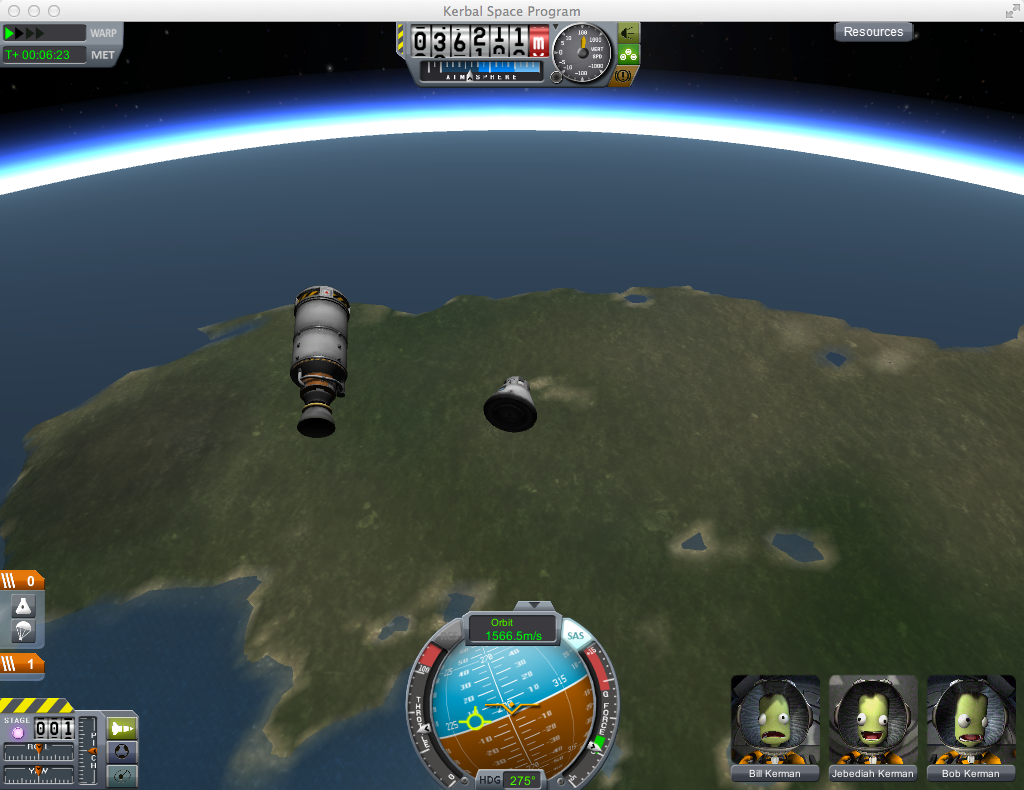
<p>What struck me that morning was a scene, where the hero scientist, <a href="http://en.wikipedia.org/wiki/Heywood_R._Floyd">Dr. Heywood Floyd</a> (<a href="http://en.wikipedia.org/wiki/Roy_Scheider">Roy Scheider</a>), is sitting on the beach preparing for his upcoming journey to Jupiter, studying reports, an issue of <a href="http://www.omnimagonline.com/">OMNI</a> <em>(which stopped publishing in 1995)</em>, and a portable computer <em>(see right &amp; below)</em>.</p>
<p>Notice the computer the former chairman of the American space Agency is using and consider that the scene depicts &#8220;mobile computing&#8221; in the year 2010 – from the perspective of a film produced in 1984.  More than anything else, the computer resembles Apple&#8217;s forgettable <a href="http://en.wikipedia.org/wiki/Mac_Portable">Mac Portable</a>, launched only five years later.  Scheider&#8217;s 21st century machine perhaps even more closely resembles its more contemporary <a href="http://en.wikipedia.org/wiki/Apple_IIc">Apple Iic</a>, with a flat four-inch display and parallel ribbon cable connecting the two.</p>
<table width="100%" cellpadding="3" style='border: 1px #666 solid; padding: 5px;'>
<tbody>
<tr>
<td width="33%" style="padding: 0px 5px 0px 5px;"><img title="" src="http://davidwarlick.com/images1/Pixelmator-20120509-081726.gif" alt="" width="100%" border="0" /></td>
<td width="33%" style="padding: 0px 5px 0px 5px;"><img title="" src="http://davidwarlick.com/images1/appleiic-20120510-071607.gif" alt="" width="100%" /></td>
<td width="33%" style="padding: 0px 5px 0px 5px;"><img title="" src="http://davidwarlick.com/images1/skitched-20120510-071712.gif" alt="" width="100%" /></td>
</tr>
<tr valign='top'>
<td style="padding: 0px 5px 0px 5px;">Predicted Mobile Computing for 2010</td>
<td style="padding: 0px 5px 0px 5px;">Apple IIc &#8211; 1984-1988</td>
<td style="padding: 0px 5px 0px 5px;">Mac Portable &#8211; 1989-1991</td>
</tr>
</tbody>
</table>
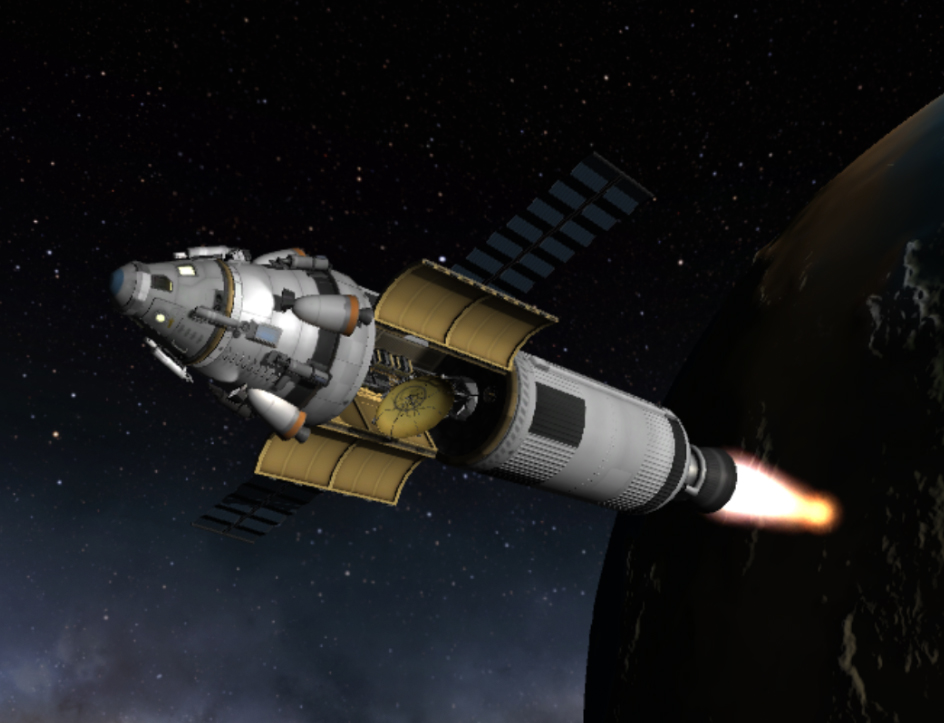
<p>It is also worth noting that the 1968 film predicted human spaceflight to Jupiter in a 460 foot spaceship by 2001.  </p>
<p><img title="Discovery I, from 2001: A Space Odessey" src="http://upload.wikimedia.org/wikipedia/en/2/23/Discovery1b.JPG" alt="" width="" height="" border="0" class="alignright" />These are two fairly unimportant and dramatized examples, but if living through half of the 20th century and a tenth of the 21st has taught me anything, it&#8217;s that most attempts to accurately describe what we will do, how we live, what&#8217;s important to know, and what we care about 30, 20, or even 10 years from now, is at best a challenging intellectual exercise, and a worse a gross display of arrogance.  </p>
<p>Yet, isn&#8217;t this what our institution of education is attempting to authoritatively do, predict what our children need to be taught today to be ready for a future we can not possibly accurately describe.</p>
<p>Tom Whitby addressed this a few days ago in <a href="http://goo.gl/TD3eW">How We Teach Trumps What We Teach</a>.  He questions our concern for content, assessment and data, saying,</p>
<blockquote>
<p>Maybe “Content is King” merged with “Data is King” does not add up to a learned individual. Maybe the focus on content, so that education can be easily assessed by Data is really the wrong thing that we should be analyzing. Maybe, how we teach, is a much more important element in learning than what we teach. Maybe the data is totally correct about what it is assessing, but what it is assessing is not what we should be looking at. </p>
</blockquote>
<p>We need to be much more willing and humble enough to say, &#8220;Maybe,&#8221; a lot more than we do in education.  But even Tom, I believe, does not go quite far enough.  He refers to becoming a &#8220;learned individual,&#8221; when Eric Hoffer&#8217;s famous quote comes much closer to my view, that..</p>
<blockquote>
<p>In times of change, learners inherit the earth, while the <em>learned</em> find themselves beautifully equipped to deal with a world that no longer exists. </p>
</blockquote>
<p>How our children learn is critical today, not so much as a point of pedagogy, but for the development of a distinct and most important skill – learning.</p>
<p>The job of education should be to wean children from the teaching, helping them to become, at graduation, independent, skilled, inspired, and responsible learners eager to adopt and adapt to changing conditions, turning uncertainty into opportunity.</p>
<p>Being future ready will not happen because of the rigor of ramped up standards.  It will happen by scaling back the standards as the education years pass, focusing on passion, and providing students with the support, opportunity and facility to learn and to make themselves experts in their shifting fields of interest, fields that educators skillfully usher them through.</p>
]]></content:encoded>
			<wfw:commentRss>http://davidwarlick.com/2cents/?feed=rss2&amp;p=3550</wfw:commentRss>
		<slash:comments>0</slash:comments>
		</item>
		<item>
		<title>David’s “Great Moments in EdTech History”</title>
		<link>http://davidwarlick.com/2cents/?p=3557</link>
		<comments>http://davidwarlick.com/2cents/?p=3557#comments</comments>
		<pubDate>Fri, 18 May 2012 10:31:45 +0000</pubDate>
		<dc:creator>David Warlick</dc:creator>
				<category><![CDATA[education]]></category>
		<category><![CDATA[information]]></category>
		<category><![CDATA[technology]]></category>
		<category><![CDATA[warlick]]></category>
		<category><![CDATA[history]]></category>

		<guid isPermaLink="false">http://davidwarlick.com/2cents/?p=3557</guid>
		<description><![CDATA[A few weeks ago, Dean Shareski wrote a blog post (Great Moments in EdTech History), where he said, I wanted to look back at my personal journey into educational technology and share a few instances of “aha moments” that I think many can relate to. I so agreed with the items on his list – [...]]]></description>
			<content:encoded><![CDATA[<img style='float: left; margin-right: 10px; border: none;' src='http://www.gravatar.com/avatar.php?gravatar_id=38a3058ba22222470fcb2eb4ffb1c7b1&amp;default=http://use.perl.org/images/pix.gif' alt='No Gravatar' width=80 height=80/><p>A few weeks ago, <a href="http://ideasandthoughts.org/">Dean Shareski</a> wrote a blog post (<a href="http://ideasandthoughts.org/2012/05/04/great-moments/">Great Moments in EdTech History</a>), where he said,</p>
<blockquote><p>I wanted to look back at my personal journey into educational technology and share a few instances of “aha moments” that I think many can relate to.</p></blockquote>
<p>I so agreed with the items on his list – except for the coffee one – that I thought I would write my own. It&#8217;s not intended to be an improvement, and I suspect that many folks will not &#8220;relate&#8221; so well with some of my moments –<em> &#8217;cause you&#8217;re just not old enough, sonny</em>.</p>
<p><strong>My First Experience with a Personal Computer and BASIC</strong></p>
<p style="margin-left: 10px;">It was a <a href="http://en.wikipedia.org/wiki/TRS-80#The_Model_I">Radio Shack Model I</a> and this was when the hottest PCs on the planet were made by Radio Shack. The &#8220;aha&#8221; for me was when I realized that this was a machine that you operated by communicating with it. You typed in instructions and it followed.  It even gave you instructions on what keys to press to do what you wanted, and you could change the functions of the keys by changing the instructions.  In the way that only a few technologies in our past had, this was going to change everything.</p>
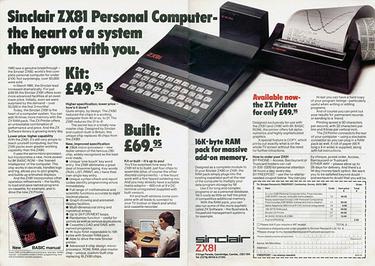
<p style="margin-left: 10px;">I had to learn to program, because when the central office purchased the first set of computers for my school (Radio Shack Model IIIs &#8211; 16 kilobytes of memory), they didn&#8217;t know that you had to purchase software.  So I learned to write <a href="http://en.wikipedia.org/wiki/BASIC">BASIC</a> code, so my students would have something to do on those computer – and that changed my life.</p>
<p><strong>My First Apple IIe</strong></p>
<p style="margin-left: 10px;">The district I became director of tech in had also used Radio Shack <a href="http://en.wikipedia.org/wiki/TRS-80">TRS-80</a> computers. But times were changing, and we wanted to step up to the modern, sleeker and more state-of-the-art <a href="http://en.wikipedia.org/wiki/Apple_IIe">Apple IIes</a>. They came with a 5 1/4 inch floppy disk that provided a tutorial for operating the machine. Booting it up I was presented with a light green pixelated outline drawing of an Apple computer. The outline of a floppy disk animated into view and the door of the external disk drive appeared to open.  The disk slid into the drive and the operating light of the drive came on &#8212;&#8211; <span style="font-weight: bold; letter-spacing: 2px;">and it was red</span>. Shudders went through my body and the earth&#8217;s crust seemed to shake under my feet. A color other than green. WOW! Anything was possible!</p>
<p><strong>My First Modem</strong></p>
<p style="margin-left: 10px;">This was actually not such a stupendous moment since it took about three months to get my Apple IIc to communicate with the Hayes 300 baud modem, for which the district had paid $500. But when it finally worked, computers communicating over a distance &#8212; well that was cool.  ..and the 300 baud was not a disappointment since it&#8217;s pretty much faster than I can read.</p>
<p style="margin-left: 10px;">A user&#8217;s group of school districts in my area (Micro 5) set up a bulletin board system (BBS) so that we could support each other through our computers.</p>
<p><strong>Al Rogers and FrEdMail</strong></p>
<div class="img alignleft" style="width:120px;">
	<img src="http://upload.wikimedia.org/wikipedia/commons/thumb/d/d8/AlRogers-FrEdWriter.jpg/220px-AlRogers-FrEdWriter.jpg" alt="" width="120"  />
	<div>Al Rogers the father of FrEdWriter and FrEdMail</div>
</div>
<p style="margin-left: 10px;">This was perhaps one of the greatest pivot points in my career. I knew of Al Rogers <em>(see left)</em> from his FrEdWriter software, a free word processor for Apple IIs. Al had developed a (BBS) whereby a district had its own bulletin board computer (Apple IIe with a 10 MB hard drive) that other modem-equipped school computers could dial into. Teachers and students could post messages (and other writings) to the BBS. In the middle of the night, the district bulletin boards (called nodes) would dial each other passing messages back and forth that were addressed to readers outside the local district. So I could write a message for a teacher in Australia, and over the night, it would be passed from node to node appear in the recipient&#8217;s mailbox the next morning.</p>
<table style="border-left: 1px solid #ccc; margin-left: 10px; padding-left: 10px;" border="0" width="120" align="right">
<tbody>
<tr>
<td><img src="http://davidwarlick.com/images1/www.globalschoolnet.org_gsnabout_history_t_lmag_25thannivreport2_may05.pdf-20120522-074805.gif" alt="" /></td>
</tr>
<tr>
<td>
<p style="margin: 10px; font-size: .8em; background-color: #f6fefd; line-height: 1.1em;">From &#8220;25 That Made their Mark&#8221; (2005) <sup><a href="#1">1</a></sup></p>
</td>
</tr>
</tbody>
</table>
<p style="margin-left: 10px;">A few weeks later our state Department of Public Instruction (DPI) called me asking if I would be willing to pilot a project for a FrEdMail network in our state, with seven other districts. We were called sysops (system operators), and it was the coolest thing ever. We did projects called HistoryLink, WeatherLink and it&#8217;s when Global Grocery List started. I joined DPI three years later and sysop&#8217;ed the state network, among other things.</p>
<p><strong>My First Presentation with a Mac</strong></p>
<p style="margin-left: 10px;">The Macintosh, with its mouse, graphical interface and 3 1/2&#8243; disk, was another game changer. But what I remember most about my first Mac production, a presentation for Micro-5 was that..<strong>..I shadowed everything!</strong></p>
<p><strong>Telnet, FTP, IRC, Gopher</strong></p>
<p style="margin-left: 10px;">One of the other consultants at DPI had been approached by a university person offering an INTERNET login through his university. She offered it to me.  I&#8217;d been able to email in and out of THE INTERNET for some time using FrEdMail. But I had not been able to actually connect. Logging in with <a href="http://en.wikipedia.org/wiki/Telnet">TelNet</a>, <a href="http://en.wikipedia.org/wiki/Ftp">FTP</a> gave me access mountains of text files located on about a hundred computers around the world. Then <a href="http://en.wikipedia.org/wiki/Gopher_(protocol)">Gopher</a> came, which provided a much more usable way of getting to files. <a href="http://en.wikipedia.org/wiki/Gopher_(protocol)">Gopher</a> was a world of interlocking menus, starting with a master menu at the University of Minnesota (go you gophers). Selecting options took you to other menus on other host computers until you ended up with the file you needed. <a href="http://en.wikipedia.org/wiki/Gopher_(protocol)">Gopher</a> meant that we no longer needed those secret incantations (ftp open 42.32.222.4, cd 97/files/, get listofearthquakes.txt) to navigate the Internet. The ideas you were looking for became your navigation.</p>
<p><strong>The World Wide Web</strong></p>
<p style="margin-left: 10px;">WWW had been around for a while before it really caught on. It wasn&#8217;t until <a href="http://en.wikipedia.org/wiki/Marc_Andreessen">Marc Andreessen</a> (as an undergraduate student at the University of Illinois &#8211; Urbana-Champlaign) created <a href="http://en.wikipedia.org/wiki/Mosaic_(web_browser)">Mosaic</a> that people started to see the potential. With the Mosaic software, you could mouse around, click on words to link to other documents, and see pictures. Now the information itself became the steering wheel for content navigation.  It was also cool that the default background color for web pages was metal gray.</p>
<p><strong>HTML</strong></p>
<p style="margin-left: 10px;">The best thing about the World Wide Web and Mosaic was that you could show it to people and they didn&#8217;t yawn.  Non-techies began to get it, that there was something potentially mainstream about this Internet thing.  One afternoon (1993), while at DPI, I&#8217;d reached a lull in my work and downloaded a tutorial for coding HTML.  I was aghast at how easy it was and by the end of there afternoon, I&#8217;d already written a web page with hyperlinks and images.  Over the next couple of months I covertly created a mock-up web site for the department and showed it to the assistant superintendent for instruction.  Even though he was not a techie and had his secretary print out his e-mails. he instantly realized the potential and assigned me to create a web site for the agency.  It was the first state department of education web site and was launched in 1994 – on the same day that our newly elected (conservative) legislature demanded a 50% reduction in staff for DPI.  I volunteered for layoff a few months later in exchange for a severance package and have not be traditionally employed since.</p>
<p><strong>Meeting an Inventor</strong></p>
<p style="margin-left: 10px;">In 1997, I was doing some consulting and training for <a href="http://en.wikipedia.org/wiki/Advanced_Network_and_Services">Advanced Network and Services</a> and their <a href="http://en.wikipedia.org/wiki/Thinkquest">ThinkQuest</a> project.  Part of my work was staffing booths at conferences and giving away ThinkQuest CDs.  Late one afternoon I was working a booth at a <a href="http://en.wikipedia.org/wiki/European_schoolnet">European SchoolNet</a> conference in Dublin and a man walked by, in something of a hurry.  He glanced over, stopped and asked, &#8220;What is ThinkQuest?&#8221;  My partner, a TQ representative from The Netherlands, and I explained it to him and he said, I&#8217;ll try to get back here after my talk,&#8221; and hurried off.  My partner turned to me and asked, &#8220;Do you know who that was?&#8221;  I shook my head (which rattled a bit).  &#8221;That was <a href="http://en.wikipedia.org/wiki/Robert_Cailliau">Robert Caillaiu</a>, one of the inventors of the World Wide Web.&#8221;</p>
<p style="margin-left: 10px;">I was impressed, though I&#8217;d never heard of Caillaiu before.  About an hour later, he came back, fast talking, energetic, possibly a little A.D.H.D., and he asked a lot of questions, and finally asked how I wrote my HTML.  I told him that I&#8217;d created a <a href="http://en.wikipedia.org/wiki/Hypercard">Hypercard</a> stack for my editor, and he said that he had done the same.  He glanced over and asked if that was my Mac laptop, and nodded, &#8220;Yes!&#8221;</p>
<p style="margin-left: 10px;">He pulled out a disk, slid it into the slot of his laptop, and copied his Hypercard HTML editor and handed me the disk, which I copied to my Mac. :-)</p>
<p style="margin-left: 10px;">Alas, my hard drive crashed a week and a half after I returned home and my dreams of framing Caillaiu&#8217;s code and mounting it on my office walls were dashed.</p>
<p><strong>PHP and MySQL</strong></p>
<p style="margin-left: 10px;">Your first inclination is to skip over this one, but these two acronyms (of which I&#8217;m not going to bore you with their complete spelling) elevated me to full wizard status.  HTML enables us to publish information on the web.  MySQL, however, collects, stores, and selectively delivers information, and PHP causes that information to behave in useful and interesting ways.  Sounds pretty tedious, but without these two, we would probably never had seen a Web 2.0.</p>
<p style="margin-left: 10px;">For me, out of these two acronyms came Citation Machine, PiNet (no longer supported), Hitchhikr (defunct), Education Podcast Network, Class Blogmeister and many others.</p>
<p><strong>Blogs, Wikis and Twitter</strong></p>
<p style="margin-left: 10px;">Web 2.0 elevated us all to new levels of experience and accomplishment, and it hasn&#8217;t slowed down yet.  But what probably impacted me the most was RSS.  I won&#8217;t go into detail, except to say that while PHP &amp; MySQL enabled us to do interesting things with information, RSS empowers us to do interesting things with conversations.</p>
<p><strong>Mobile Computing and Apps</strong></p>
<p style="margin-left: 10px;">Mobile computing has been around forever.  I own an  <a href="http://en.wikipedia.org/wiki/Apple_Newton">Apple Newton</a>, which was the coolest things on land and sea in 1993.  But <a href="http://en.wikipedia.org/wiki/Palm_(PDA)">Palm</a> was king for years, because it did about three things really well.  Then the <a href="http://en.wikipedia.org/wiki/Iphone">iPhone</a> and the <a href="http://en.wikipedia.org/wiki/Ipod_touch">iPod Touch</a> came along with their apps and a burgeoning community of talented and creative app builders – and then the <a href="http://en.wikipedia.org/wiki/Ipad">iPad</a> – and we had devices we could carry around with us that could do or become just about anything we could imagine.  These are truly personal machines that, by nature, become more than they were when they launched – and not because of the original designers, but because of people like us with useful <em>(and no limit of useless)</em> ideas and the skills to remold the machines to make them happen.</p>
<p style="border-top: 1px #999 solid; padding-top: 8px;">What&#8217;s next?  Well isn&#8217;t that what we&#8217;re about in education.  But it seems that in this time of incredible creativity, we seem defenseless against powerful interests who want to standardize education, for the production graduates who can be monetized.  Will we serve the beast or do we nurture our children and their uniquely boundless capacity to continually and freely invent futures that serve us all.</p>
<p style="border-top: 1px #999 solid; padding-top: 8px;"><sup><a name="1"></a>1</sup> <span style="color: #000000; font-family: 'Times New Roman'; font-size: 16px; font-style: normal; font-variant: normal; font-weight: normal; letter-spacing: normal; line-height: 19px; orphans: 2; text-align: -webkit-auto; text-indent: -48px; text-transform: none; white-space: normal; widows: 2; word-spacing: 0px; background-color: #ffffff; display: inline !important; float: none;">McLester, Susan. &#8220;25 That Made Their Mark.&#8221; </span><em style="color: #000000; font-family: 'Times New Roman'; font-size: 16px; font-variant: normal; font-weight: normal; letter-spacing: normal; line-height: 19px; orphans: 2; text-align: -webkit-auto; text-indent: -48px; text-transform: none; white-space: normal; widows: 2; word-spacing: 0px; background-color: #ffffff;">Technology &amp; Learning Magazine</em><span style="color: #000000; font-family: 'Times New Roman'; font-size: 16px; font-style: normal; font-variant: normal; font-weight: normal; letter-spacing: normal; line-height: 19px; orphans: 2; text-align: -webkit-auto; text-indent: -48px; text-transform: none; white-space: normal; widows: 2; word-spacing: 0px; background-color: #ffffff; display: inline !important; float: none;">. Nov 2005: 5-15. Web. 22 May. 2012. &lt;http://goo.gl/cxJFt&gt;.</span></p>
<p>&nbsp;</p>
]]></content:encoded>
			<wfw:commentRss>http://davidwarlick.com/2cents/?feed=rss2&amp;p=3557</wfw:commentRss>
		<slash:comments>4</slash:comments>
		</item>
		<item>
		<title>Learning Analytics and the Hands of Evil</title>
		<link>http://davidwarlick.com/2cents/?p=3546</link>
		<comments>http://davidwarlick.com/2cents/?p=3546#comments</comments>
		<pubDate>Sat, 05 May 2012 20:50:03 +0000</pubDate>
		<dc:creator>David Warlick</dc:creator>
				<category><![CDATA[education]]></category>
		<category><![CDATA[information]]></category>
		<category><![CDATA[learning]]></category>
		<category><![CDATA[teaching]]></category>
		<category><![CDATA[Audrey Waters]]></category>
		<category><![CDATA[data]]></category>
		<category><![CDATA[learning analytics]]></category>
		<category><![CDATA[warlick]]></category>

		<guid isPermaLink="false">http://davidwarlick.com/2cents/?p=3546</guid>
		<description><![CDATA[Who&#8217;s Afraid of the Power (cc) Flickr Photo by Emersunn I just learned about &#8220;learning analytics&#8221; from Audry Waters, a blogger/journalist whom I am reading with increasing regularity. Reporting on the recent Learning Analytics and Knowledge conference in Vancouver, Waters shared a phrase that was used often at the conference, &#8220;data exhaust.&#8221; The first time [...]]]></description>
			<content:encoded><![CDATA[<img style='float: left; margin-right: 10px; border: none;' src='http://www.gravatar.com/avatar.php?gravatar_id=38a3058ba22222470fcb2eb4ffb1c7b1&amp;default=http://use.perl.org/images/pix.gif' alt='No Gravatar' width=80 height=80/><table style="border-left: 1px solid #ccc; margin-left: 10px; padding-left: 10px;" width="300" border="0" align="right">
<tbody>
<tr>
<td><img src="http://farm4.staticflickr.com/3413/4620261477_28b66facb7.jpg" alt="" width="300" /></td>
</tr>
<tr>
<td>
<p style="margin: 10px; font-size: .8em; background-color: #f6fefd; line-height: 1.1em;">Who&#8217;s Afraid of the Power</p>
<p style="margin: 10px; font-size: .8em; background-color: #f6fefd; line-height: .9em;">(cc) Flickr Photo by Emersunn</p>
</td>
</tr>
</tbody>
</table>
<p>I just learned about &#8220;<a href="http://hackeducation.com/2012/05/04/learning-analytics-lak12/">learning analytics</a>&#8221; from <a href="http://hackeducation.com/">Audry Waters</a>, a blogger/journalist whom I am reading with increasing regularity. Reporting on the recent <a title="" href="http://lak12.sites.olt.ubc.ca/" target="_blank">Learning Analytics and Knowledge</a> conference in Vancouver, Waters shared a phrase that was used often at the conference, &#8220;data exhaust.&#8221;</p>
<p>The first time I heard digital data described as <em>exhaust,</em> was by <a href="http://en.wikipedia.org/wiki/Dave_Sifry">Dave Sifry</a>, the founder of the blog search engine, <a title="" href="http://technorati.com" target="_blank">Technorati</a>.  He said something to the effect of, &#8220;The blogosphere is the <em>exhaust</em> of the human attention stream.&#8221;  This was pre-Twitter and pre-Facebook, but it was a notion that intrigued me.  I continue to use it in some of my presentations – that we, through our varied and seemingly unceasing networked interactions, are creating an enormous and at least partly useful reservoir of content.  </p>
<p>But I wouldn&#8217;t call what we might do with that reservoir, &#8220;Learning Analytics.&#8221;</p>
<p>What appears to be coming from the conversation around this &#8220;new discipline,&#8221; as it is apparently called, has more to do with learning management than it does with learning empowerment – and that, in the right context, is not wholly unappealing to me.  The ability to collect the artifacts of ones own digital trails, visualize and analyze what we&#8217;ve learned, how we learned it, and what we&#8217;ve learned to do with it might represent a personal enticement to broaden, enrich, and more purposefully direct our own digital trails.</p>
<p><strong>Yet, like with so many things, we must ask ourselves, &#8220;What might happen if this wondrous new tool were to fall into the hands of evil?&#8221;  </strong></p>
<p>A couple of days ago, I posted on Facebook a reference to ALEC, or the <a href="http://www.alec.org/">American Legislative Exchange Council</a>.  They craft legislation of a specific philosophical leaning and get legislators elected who will pass such legislation under the guise of knee-jerk social issues, patriotic symbolism, and apple pie.</p>
<p>ALEC, which was formed in 1973, operated largely unnoticed until it was revealed that they had penned Florida&#8217;s &#8220;Stand Your Ground&#8221; legislation, resulting in George Zimmerman&#8217;s shooting and killing of an innocent teenager, Trayvon Martin, simply because Zimmerman &#8220;felt threatened.&#8221;</p>
<p>ALEC&#8217;s aim reaches far beyond hoodied youngsters and they appear to have a special interest in education.  According to a May 1 <a href="http://blogs.edweek.org/edweek/Bridging-Differences/2012/05/dear_deborah_since_the_2010.html">Diane Ravitch article</a> in <a href="http://edweek.org/">Education Week</a>, the recent..</p>
<blockquote><p>..explosion of legislation advancing privatization of public schools and stripping teachers of job protections and collective bargaining rights..</p></blockquote>
<p>..is the work of ALEC. There are so many other examples of short-sighted attacks on public education and the intellectual freedom of teachers <em>(see &#8220;<a href="http://www.citypaper.net/news/2012-05-03-whos-killing-philly-public-schools.html?viewAll=y">Who&#8217;s Killing Philly Public Schools?</a>&#8220;)</em> that I have grown fearful for our future and more than a little resentful that the learner-empowering tools that I have promoted for 30 years seem to be enabling those who would rather use them to &#8220;manage learning.&#8221;</p>
<p>When I originally sat down to write this blog post, I had in mind a list of reasons why marketplace education is so potentially destructive.  However, after including so many words into this writing already, I have come to believe that the issue is simple.  Learning, like breathing, is human.  It&#8217;s what we do and it is what has made us what we are today.  We breath, we observe, we think, and we learn.</p>
<p>Learning can&#8217;t be installed in assembly line fashion, with quality control at the end of each season.  It must be nurtured by a compassionate society and by caring individuals.   </p>
<p>Privatizing public education would be as inhuman as it would be to sell the air – though there are some (<em><a href="http://site.pfaw.org/pdf/ALEC-Education-Task-Force-July-2011.pdf">ALEC Education Taskforce July 2011</a></em>) who might like to.</p>
<p>As for Learning Analytics?  It fascinates me, because I believe that there are potent skills we might develop and share, for learning important lessons from the digital trails of a billion people.  </p>
<p><strong>But the power is not in &#8220;learning analytics.&#8221;  </strong></p>
<p><strong>The power is in ANALYTICAL LEARNING.</strong></p>
<p> So who&#8217;s afraid of the power?</p>
]]></content:encoded>
			<wfw:commentRss>http://davidwarlick.com/2cents/?feed=rss2&amp;p=3546</wfw:commentRss>
		<slash:comments>5</slash:comments>
		</item>
		<item>
		<title>The Nextbook Must Be…</title>
		<link>http://davidwarlick.com/2cents/?p=3528</link>
		<comments>http://davidwarlick.com/2cents/?p=3528#comments</comments>
		<pubDate>Mon, 02 Apr 2012 09:30:52 +0000</pubDate>
		<dc:creator>David Warlick</dc:creator>
				<category><![CDATA[education]]></category>
		<category><![CDATA[learning]]></category>
		<category><![CDATA[teaching]]></category>
		<category><![CDATA[technology]]></category>
		<category><![CDATA[textbooks]]></category>
		<category><![CDATA[warlick]]></category>
		<category><![CDATA[beyondthetextbook]]></category>
		<category><![CDATA[textbook]]></category>

		<guid isPermaLink="false">http://davidwarlick.com/2cents/?p=3528</guid>
		<description><![CDATA[&#160; (cc) janthepea For a science fiction look at textbooks, read about The Young Lady&#8217;s Illustrated Primer in The Diamond Age and Ender&#8217;s desk in Ender&#8217;s Game. If you have other suggestions, please comment. &#160; A couple of weeks ago, my friend, Tom Whitby, wrote a blog article, We Don&#8217;t Need No Stink&#8217;n Textbooks. I [...]]]></description>
			<content:encoded><![CDATA[<img style='float: left; margin-right: 10px; border: none;' src='http://www.gravatar.com/avatar.php?gravatar_id=38a3058ba22222470fcb2eb4ffb1c7b1&amp;default=http://use.perl.org/images/pix.gif' alt='No Gravatar' width=80 height=80/><table style="border-left: 1px solid #ccc; margin-left: 10px; padding-left: 10px;" border="0" width="300" align="right">
<tbody>
<tr>
<td><img src="http://farm8.staticflickr.com/7174/6496659469_4eee55e38b.jpg" alt="" width="300" /></td>
</tr>
<tr>
<td>
<p style="margin: 10px; font-size: .8em; background-color: #f6fefd; line-height: 1.3em;">&nbsp;</p>
<p style="margin-bottom: 5px;">(cc) <a href="http://www.flickr.com/photos/jeepeenyc/">janthepea</a></p>
<p>For a science fiction look at textbooks, read about <em>The Young Lady&#8217;s Illustrated Primer</em> in <span style="text-decoration: underline;">The Diamond Age</span> and Ender&#8217;s <em>desk</em> in <span style="text-decoration: underline;">Ender&#8217;s Game</span>.  If you have other suggestions, please comment.</p>
<p>&nbsp;</td>
</tr>
</tbody>
</table>
<p>A couple of weeks ago, my friend, <a href="http://tomwhitby.wordpress.com/">Tom Whitby</a>, wrote a blog article, <em><a href="http://tomwhitby.wordpress.com/2012/03/20/we-dont-need-no-stinkn-textbooks-beyondthetextbook/">We Don&#8217;t Need No Stink&#8217;n Textbooks</a></em>.  I agree with his position, and was especially impressed with the list of components he compiled from Discovery Education&#8217;s <a href="http://davidwarlick.com/2cents/?p=3524">Beyond the Textbook Forum</a>.</p>
<p>Responding to Tom&#8217;s title, though, I am growing less unhappy with calling it a textbook.  After all, we seem to have no problem calling the device I&#8217;m writing this on, something that only a few years ago would have referred, almost exclusively, to &#8220;<em>a number of sheets of writing paper, fastened together at one edge</em>.&#8221;</p>
<p>So, granting myself permission to call it a textbook, what do I think today&#8217;s <em>textbook</em> should be?</p>
<p>Today&#8217;s textbook should:</p>
<ul>
<li style="margin: 0px 0px 10px 0px;">Be a Companion (Mobile) –  The student&#8217;s textbook should never weigh more than half that of a human brain (about 3 lb.). It should be as easy to ask, as the person sitting next to you –and through it, the reader should be able to ask the person sitting in the next room, on the next continent or a radio telescope in Australia.</li>
</ul>
<ul>
<li style="margin-top: 0px; margin-right: 0px; margin-bottom: 10px; margin-left: 0px;">Be an <em>Encyclopedia Galactica</em><sup><a href="http://davidwarlick.com/2cents/?p=3528#footnote_0_3528" id="identifier_0_3528" class="footnote-link footnote-identifier-link" title="Wikipedia contributors. &amp;#8220;Encyclopedia Galactica.&amp;#8221;&nbsp;Wikipedia, The Free Encyclopedia. Wikipedia, The Free Encyclopedia, 24 Mar. 2012. Web.&nbsp;29 Mar. 2012.">1</a></sup> (Comprehensive and Cross-disciplined) – The textbook should provide content in a variety of formats (text, images, audio, video, animation), selectable by the reader.  It can be drilled into for deeper exploration, and issues of special interest to the reader will trigger seamless bleed-throughs from other disciplines (literature, mathematics, science, the social studies, health, etc.) – No seams! No walls! No boundaries!</li>
</ul>
<ul>
<li style="margin: 0px 0px 10px 0px;">Be a Player (Responsive &amp; Playful) – The textbook should be active and interactive. It both reflects and magnifies the learner, the teacher, and their world – and it adapts to its interactions with each.  It does not respond with a &#8220;right&#8221; or a &#8220;wrong.&#8221;  Instead, it causes the reader to say, &#8220;that worked&#8221; or &#8220;that didn&#8217;t work.&#8221;  The textbook will also contrive long-term narrative-puzzles that reach other readers, building communities of mutual concern.  Embedded in each textbook are hidden clues that can be exposed through the productive use of the book and shared with other members of the community – the combination of which solve the puzzle.</li>
</ul>
<ul></ul>
<ul>
<li style="margin-top: 0px; margin-right: 0px; margin-bottom: 10px; margin-left: 0px;">Be a Sandbox (Constructable &amp; Elastic) – The textbook is totally stackable.  Both teacher and learner (to age appropriate degrees) can remove elements, insert elements, re-sequence, edit and even hack elements.  The textbook will edit itself based on changes reader interest and the changing dynamic global information environment.</li>
</ul>
<ul>
<li style="margin: 0px 0px 10px 0px;">Be Provocative (fueled by questions) – The textbook should tactically and strategically leave things out.  It provokes questions, the answers of which provide mortar for the personal and participatory construction and reconstruction of the book.  It is always broken and always fixable, and the rules belong to the reader.</li>
<li style="margin: 0px 0px 10px 0px;">Be a Journal (Turn the Learner Outward) – The textbook will require the reader to observe, interact with, reflect on and work her personal environment.  The reader will talk to people, use a hammer, play a game for fun, explore a forest, and become skilled at something that does not require a computer interface.  She will report her experiences in a digital journal, which the textbook will productively adapt to, creating richer relevance for the learner.</li>
<li style="margin: 0px 0px 10px 0px;">Be a Personal Badge (Identity-builder) – There is an element of the textbook that is public, continually and cooperatively refined by the teacher, the reader, and reader&#8217;s family.  It is a demonstration of what the reader has learned, what she can do with what she&#8217;s learned, and what she cares about.</li>
<li style="margin: 0px 0px 10px 0px;">Never be turned in (Grown into a personal digital library) – The textbook grows, year after year, with new elements added, old ones edited or deleted, and continuously curated – the ongoing and ultimate goal being the construction of a personal and lifelong digital library.</li>
</ul>
<p>That&#8217;s two more cents worth!</p>
<ul></ul>
<p style="padding: 3px 3px 3px 10px; background-color: #4e9776; font-family: verdana, helvetica, sans-serif; letter-spacing: 2px; color: #ccc; height: 20px;">…Posted using BlogsyApp from my iPad<img id="blogsy-1327794719840.801" class="alignright" style="float: right;" src="http://davidwarlick.com/images/ipadL.png" alt="" width="100" height="100" /></p>
<ol class="footnotes"><li id="footnote_0_3528" class="footnote">Wikipedia contributors. &#8220;Encyclopedia Galactica.&#8221; <em>Wikipedia, The Free Encyclopedia</em>. Wikipedia, The Free Encyclopedia, 24 Mar. 2012. Web. <a href="x-apple-data-detectors://2">29 Mar.</a> 2012.</li></ol>]]></content:encoded>
			<wfw:commentRss>http://davidwarlick.com/2cents/?feed=rss2&amp;p=3528</wfw:commentRss>
		<slash:comments>12</slash:comments>
		</item>
		<item>
		<title>About Creativity from Jonah Lehrer</title>
		<link>http://davidwarlick.com/2cents/?p=3529</link>
		<comments>http://davidwarlick.com/2cents/?p=3529#comments</comments>
		<pubDate>Fri, 30 Mar 2012 15:36:20 +0000</pubDate>
		<dc:creator>David Warlick</dc:creator>
				<category><![CDATA[education]]></category>
		<category><![CDATA[learning]]></category>
		<category><![CDATA[teaching]]></category>
		<category><![CDATA[warlick]]></category>
		<category><![CDATA[creativity]]></category>
		<category><![CDATA[Jonah Lehrer]]></category>
		<category><![CDATA[quailridgebooks]]></category>

		<guid isPermaLink="false">http://davidwarlick.com/2cents/?p=3529</guid>
		<description><![CDATA[Jonah Lehrer We hurried back from Cullowhee Thursday so that I could see Jonah Lehrer talk about his new book, Imagine, at the Quail Ridge Bookstore in Raleigh.  We&#8217;d been in Cullowhee for events leading up to the installation of Western Carolina University&#8217;s new chancellor, Dr. David Belcher.  Brenda and I both graduated from WCU [...]]]></description>
			<content:encoded><![CDATA[<img style='float: left; margin-right: 10px; border: none;' src='http://www.gravatar.com/avatar.php?gravatar_id=38a3058ba22222470fcb2eb4ffb1c7b1&amp;default=http://use.perl.org/images/pix.gif' alt='No Gravatar' width=80 height=80/><div class="img alignright" style="width:300px;">
	<img src="http://davidwarlick.com/images1/skitched-20120330-122802.jpg" alt="Jonah Lehrer" width="300" height="424" />
	<div>Jonah Lehrer</div>
</div>
<p>We hurried back from Cullowhee Thursday so that I could see <a href="http://en.wikipedia.org/wiki/Jonah_Lehrer">Jonah Lehrer</a> talk about his new book, <a href="http://www.quailridgebooks.com/book/9780547386072">Imagine</a>, at the <a href="http://www.quailridgebooks.com/">Quail Ridge Bookstore</a> in Raleigh.  We&#8217;d been in Cullowhee for events leading up to the installation of Western Carolina University&#8217;s new chancellor, Dr. David Belcher.  Brenda and I both graduated from <a href="http://wcu.edu">WCU</a> more than 35 years ago &#8212; <em>&#8220;GO CATAMOUNTS.&#8221;</em></p>
<p>But I had seen some buzz about Lehrer&#8217;s new book, and I wanted to hear more.  His background is neuroscience, but he also studied 20th century literature and philosophy at Oxford University as a Rhodes Scholar.  He blogs at <a href="http://www.wired.com/wiredscience/frontal-cortex/">Frontal Cortex</a>.  Evidenty, one of Jonah&#8217;s passions is &#8220;healing the rift between sciences and humanities.&#8221;<sup><a href="http://davidwarlick.com/2cents/?p=3529#footnote_0_3529" id="identifier_0_3529" class="footnote-link footnote-identifier-link" title="Wikipedia contributors. &amp;#8220;Jonah Lehrer.&amp;#8221; Wikipedia, The Free Encyclopedia. Wikipedia, The Free Encyclopedia, 25 Mar. 2012. Web. 30 Mar. 2012.">1</a></sup>.  Also, he looks to be only a bit more than 17 years old.  But that&#8217;s OK.</p>
<p>He was not able to share much during his 30 minute lecture and what he did share had little to do with the buzz I&#8217;d gotten<em> (You have to suffer in order to create &#8211; <a href="http://www.brainpickings.org/index.php/2012/03/26/flash-rosenberg-jonah-lehrer-imagine/">link</a>)</em>.  Jonah did describe two sources of creativity.  He talked about those sudden insights that we have when struggling with a problem.  There are two features of these insights, that they seem to come from nowhere and that we intuitively know they&#8217;re right when they come. They also seem to come from a brain that is relaxed and emanating alpha waves.</p>
<blockquote><p><em style="font-size: 1.2em;">Creativity is the residue of wasted time!</em> &#8212; Einstein</p></blockquote>
<table style="border-left: 1px solid #ccc; margin-left: 10px; padding-left: 10px;" border="0" width="300" align="right">
<tbody>
<tr>
<td><a href="http://davidwarlick.com/images1/skitched-20120330-122952.jpg" rel="lightbox[3529]"><img src="http://davidwarlick.com/images1/skitched-20120330-122544.jpg" border="0" alt="" width="300" /></a></td>
</tr>
<tr>
<td>
<p style="margin: 10px; font-size: .8em; background-color: #f6fefd; line-height: 1.1em;">My notes from the lecture</p>
</td>
</tr>
</tbody>
</table>
<p>The other source was not such good news for those of us in the standing-room audience who were looking for a shortcut to creativity.  It is the GRIT factor.  He said that creativity is hard work and that it comes to people who stick with a problem long enough to combine the pieced of the non-obvious solution.  &#8221;If creativity was easy, we wouldn&#8217;t have a Bob Dylan.&#8221;  <a title="Angela Duckworth, University of Pennsylvania" href="http://www.sas.upenn.edu/~duckwort/" target="_blank">Angela Duckworth</a> was the researcher he quoted with regards to the grit trait.</p>
<p>While he signed my copy of his book, I expressed some frustration with efforts in the education world to try to teach creativity.  He told me that kids are naturally creative.  The best thing we can do is just get out of the way and encourage them to express their creativity.</p>
<ol class="footnotes"><li id="footnote_0_3529" class="footnote"><span style="color: #000000; font-family: sans-serif; font-size: 13px; font-style: normal; font-variant: normal; font-weight: normal; letter-spacing: normal; line-height: 19px; orphans: 2; text-align: -webkit-auto; text-indent: 0px; text-transform: none; white-space: normal; widows: 2; word-spacing: 0px; background-color: #ffffff; display: inline !important; float: none;">Wikipedia contributors. &#8220;Jonah Lehrer.&#8221; </span><em style="color: #000000; font-family: sans-serif; font-size: 13px; font-variant: normal; font-weight: normal; letter-spacing: normal; line-height: 19px; orphans: 2; text-align: -webkit-auto; text-indent: 0px; text-transform: none; white-space: normal; widows: 2; word-spacing: 0px; background-color: #ffffff;">Wikipedia, The Free Encyclopedia</em><span style="color: #000000; font-family: sans-serif; font-size: 13px; font-style: normal; font-variant: normal; font-weight: normal; letter-spacing: normal; line-height: 19px; orphans: 2; text-align: -webkit-auto; text-indent: 0px; text-transform: none; white-space: normal; widows: 2; word-spacing: 0px; background-color: #ffffff; display: inline !important; float: none;">. Wikipedia, The Free Encyclopedia, 25 Mar. 2012. Web. 30 Mar. 2012.</span></li></ol>]]></content:encoded>
			<wfw:commentRss>http://davidwarlick.com/2cents/?feed=rss2&amp;p=3529</wfw:commentRss>
		<slash:comments>3</slash:comments>
		</item>
		<item>
		<title>After the Beyond the Textbook Forum</title>
		<link>http://davidwarlick.com/2cents/?p=3524</link>
		<comments>http://davidwarlick.com/2cents/?p=3524#comments</comments>
		<pubDate>Tue, 20 Mar 2012 13:45:21 +0000</pubDate>
		<dc:creator>David Warlick</dc:creator>
				<category><![CDATA[education]]></category>
		<category><![CDATA[learning]]></category>
		<category><![CDATA[technology]]></category>
		<category><![CDATA[textbooks]]></category>
		<category><![CDATA[warlick]]></category>
		<category><![CDATA[beyondthetextbook]]></category>
		<category><![CDATA[teaching]]></category>
		<category><![CDATA[textbook]]></category>

		<guid isPermaLink="false">http://davidwarlick.com/2cents/?p=3524</guid>
		<description><![CDATA[Photo by Joyce Valenza, who came in spite of her broken knee I had originally intended to append yesterday&#8217;s blog post with more information about, and from the forum.  But I think that I have a little more to say than I left room for yesterday. First of all, I left the Discovery Communication Headquarters [...]]]></description>
			<content:encoded><![CDATA[<img style='float: left; margin-right: 10px; border: none;' src='http://www.gravatar.com/avatar.php?gravatar_id=38a3058ba22222470fcb2eb4ffb1c7b1&amp;default=http://use.perl.org/images/pix.gif' alt='No Gravatar' width=80 height=80/><table style="border-left: 1px solid #ccc; margin-left: 10px; padding-left: 10px;" border="0" width="300" align="right">
<tbody>
<tr>
<td><img src="http://farm8.staticflickr.com/7279/6851060214_dd95b0ff48_n.jpg" alt="" width="300" /></td>
</tr>
<tr>
<td>
<p style="margin: 10px; font-size: .8em; background-color: #f6fefd; line-height: 1.1em;">Photo by Joyce Valenza, who came in spite of her broken knee</p>
</td>
</tr>
</tbody>
</table>
<p>I had originally intended to append yesterday&#8217;s blog post with more information about, and from the forum.  But I think that I have a little more to say than I left room for yesterday.</p>
<p>First of all, I left the <a href="http://dsc.discovery.com/">Discovery Communication Headquarters</a> yesterday with one of those deliciously contradictory sensations of both exhaustion and exhilaration.  It was certainly an echo chamber of people who have the room, by choice or by definition of job, to think about and talk about the future of education.  But even though we have largely drawn the same conclusions, when you get these familiar ingredients together in the same pot and stir vigorously, new flavors often comes out.</p>
<p>I&#8217;m not going to present a comprehensive report of the conversation here.  I would point you to better reporters, Audrey Watters (<a href="http://hackeducation.com/2012/03/19/beyond-the-textbook/">Hack Education</a>) and Wes Fryer (<a href="http://www.speedofcreativity.org/2012/03/19/required-reading-for-beyondthetextbook/">here</a>, <a href="http://www.speedofcreativity.org/2012/03/19/morning-discussions-on-digital-content-textbooks-learning-beyondthetextbook/">here</a>, <a href="http://www.speedofcreativity.org/2012/03/19/synthesizing-beyondthetextbook-dialog-in-groups/">here</a> and <a href="http://www.speedofcreativity.org/2012/03/19/visualizing-beyondthetextbook/">here</a>) and others who will come linked in the <a href="http://goo.gl/KuQV1">#beyondthetextbook Twitter thread</a> that certainly continues.  Essentially, its all about rethinking education, being educated, teaching, learning, and curriculum.  I can&#8217;t add much to that.</p>
<p>Here, I want to focus in on just a few outlying ideas that I walked away with, especially from my internal efforts to put myself in the shoes of our hosts and an industry that has become one of the definers of education.</p>
<p>One of those ideas got pried loose when a Discovery person asked the un-askable, &#8220;How do we monetize this?&#8221;  It was the only time that the business of selling textbooks came up &#8212; and I can&#8217;t fault anyone for making a living.  It&#8217;s an important question, because they know that they need to be doing things differently, and I suspect that they are sincerely trying to get on the other side of just digital textbooks with animations, videos and flash games.  There were suggestions of repackaging the conversation, thinking in terms of selling pages (modules), or talking more about digital libraries that children take with them after graduation.  This intrigues me, that being educated is knowing, doing, and cultivating tools that help you to continue to learn, unlearn and relearn.</p>
<p>Much was said about resistance from many teachers.  Many feel that a classroom without a textbook starts to look like a classroom without a teacher.  In addition, few teachers have the time to construct their digital textbooks or supervise student-constructed learning materials.</p>
<p>But another barrier became evident to me that gave me – <strong>and this is going to open some eyes</strong> – a new sympathy for the textbook industry.  I&#8217;m for the kids and the future, and I don&#8217;t fault an industry for making a living from this endeavor.  Who among those of us in that room are not.  I do fault efforts to influence the shape of education in order to perpetuate a control-model that is clearly no long relevant.</p>
<p>I want to welcome anyone who wants to be a part of this new adventure.</p>
<p>My sympathy comes from the fact that the only way Discovery could run a sustainable education support business is to go where the money is, and the most uninterrupted money has traditionally been textbook budgets.  So Discovery has to frame its service as a textbook, as defined by legislation. It&#8217;s easy to say, we don&#8217;t need textbooks, that &#8220;..the Internet is the best textbook.&#8221;  But when many politicians hear, &#8220;We don&#8217;t need textbooks,&#8221; what they may be seeing another avenue for slashing education funding.  It&#8217;s one of those, &#8220;Becareful what you wish for…&#8221;</p>
<p>So, I think I may unapologetically continue to call it a &#8220;textbook.&#8221;  I could be writing this blog on my tablet (do a Google image search for tablet).</p>
<p>It just seems to me that with some imagination, a product, either commercial or open, could be designed to help children to develop the literacies of learning from their world and the authentic record of that world &#8212; and our world has never ever been so recorded.</p>
<p>I think that we could see something come out of this, that, as Steve Jobs might say, &#8220;We didn&#8217;t know we couldn&#8217;t live without,&#8221; and part of the compellingness of that product will not be so much in what it is, as in what it can become.</p>
<p>It&#8217;s what excites me about today&#8217;s tablets, their capacity to become new things.</p>
<p> </p>
<p> </p>
<p> </p>
]]></content:encoded>
			<wfw:commentRss>http://davidwarlick.com/2cents/?feed=rss2&amp;p=3524</wfw:commentRss>
		<slash:comments>10</slash:comments>
		</item>
		<item>
		<title>Beyondthetextbook Forum</title>
		<link>http://davidwarlick.com/2cents/?p=3516</link>
		<comments>http://davidwarlick.com/2cents/?p=3516#comments</comments>
		<pubDate>Sun, 18 Mar 2012 19:38:47 +0000</pubDate>
		<dc:creator>David Warlick</dc:creator>
				<category><![CDATA[education]]></category>
		<category><![CDATA[future]]></category>
		<category><![CDATA[learning]]></category>
		<category><![CDATA[teaching]]></category>
		<category><![CDATA[textbooks]]></category>
		<category><![CDATA[warlick]]></category>
		<category><![CDATA[beyondthetextbook]]></category>
		<category><![CDATA[technology]]></category>

		<guid isPermaLink="false">http://davidwarlick.com/2cents/?p=3516</guid>
		<description><![CDATA[At this moment, I&#8217;m sitting in my hotel room in Silver Spring, Maryland, and continuing to think #beyondthetextbook. I will likely continue to grow this particular blog entry as the next two days progress at the Discovery Communications Headquarters, just a couple of blocks away. Blog and Print Articles about &#8220;the other side of textbooks&#8221; [...]]]></description>
			<content:encoded><![CDATA[<img style='float: left; margin-right: 10px; border: none;' src='http://www.gravatar.com/avatar.php?gravatar_id=38a3058ba22222470fcb2eb4ffb1c7b1&amp;default=http://use.perl.org/images/pix.gif' alt='No Gravatar' width=80 height=80/><p>At this moment, I&#8217;m sitting in my hotel room in Silver Spring, Maryland, and continuing to think #beyondthetextbook.  I will likely continue to grow this particular blog entry as the next two days progress at the Discovery Communications Headquarters, just a couple of blocks away.</p>
<table style="border: 1px #999 solid;margin: 0px 0px 10px 10px;" width="300" align="right" cellpadding="5">
<tbody>
<tr>
<td style="font-size: 1.1em; padding-left: 3px;" colspan="3">Blog and Print Articles about &#8220;the other side of textbooks&#8221;</td>
</tr>
<tr valign="top">
<td style='padding-left: 5px;'><a href="http://goo.gl/Apgy0 ">Beyond the Textbook</a></td>
<td>3/13/12</td>
<td></td>
</tr>
<tr valign="top">
<td style='padding-left: 5px;'><a href="http://goo.gl/I5Cwu">The Page is Dead! Long Live Curriculum</a></td>
<td>11/29/11</td>
<td></td>
</tr>
<tr valign="top">
<td style='padding-left: 5px;'><a href="http://goo.gl/Autmn">Not Learning Managed but Learning Empowered</a></td>
<td>7/20/11</td>
<td></td>
</tr>
<tr valign="top">
<td style='padding-left: 5px;'><a href="http://goo.gl/IU9fX">So What do you Call a Textbook that isn&#8217;t a Book?</a></td>
<td>7/5/11</td>
<td></td>
</tr>
<tr valign="top">
<td style='padding-left: 5px;'><a href="http://goo.gl/QnWEu">Next Textbooks are&#8230;</a></td>
<td>6/26/11</td>
<td></td>
</tr>
<tr valign="top">
<td style='padding-left: 5px;'><a href="http://goo.gl/hfNqj">Six Reasons Why Textbooks Should Stop Being Textbooks</a></td>
<td>5/19/11</td>
<td></td>
</tr>
<tr valign="top">
<td style='padding-left: 5px;'><a href="http://goo.gl/RTv9g">Only 6 Reasons Why Tablets Are Ready for the Classroom</a></td>
<td>5/17/11</td>
<td></td>
</tr>
<tr valign="top">
<td style='padding-left: 5px;'><a href="http://goo.gl/9onPJ">TechLearning Article: Textbooks of the Future</a></td>
<td>5/15/04</td>
<td></td>
</tr>
</tbody>
</table>
<p>But right now, I thought I would post some links to blog entries I&#8217;ve written over the past few years on the subject of &#8220;what&#8217;s on the other side of the textbook.&#8221;</p>
<p>Also, the other day, I asked readers to come up with a simile for the other side of textbooks, &#8220;It will be like a…&#8221; Here are a few that plucked my imagination.</p>
<p>The TB of the future will be like a..</p>
<ul>
<li>like a quest</li>
<li>like a production studio</li>
<li>like an extension of our brains</li>
<li>like a reality game</li>
<li>like a video playlist</li>
<li>like swiss army knife</li>
<li>like a personal assistant</li>
<li>like a platform that provokes conversation</li>
<li>like a holodeck</li>
<li>like a choose your own adventure story</li>
<li>like a Palantir</li>
<li>map for a learning journey</li>
<li>like an interaction engine</li>
<li>like a Matrix up-link</li>
<li>like an aggregator that searches and updates content</li>
<li>more like a word problem than a calculation problem</li>
</ul>
<p>More to come!</p>
<p>&nbsp;</p>
]]></content:encoded>
			<wfw:commentRss>http://davidwarlick.com/2cents/?feed=rss2&amp;p=3516</wfw:commentRss>
		<slash:comments>2</slash:comments>
		</item>
		<item>
		<title>Beyond the Textbook</title>
		<link>http://davidwarlick.com/2cents/?p=3508</link>
		<comments>http://davidwarlick.com/2cents/?p=3508#comments</comments>
		<pubDate>Tue, 13 Mar 2012 14:18:56 +0000</pubDate>
		<dc:creator>David Warlick</dc:creator>
				<category><![CDATA[education]]></category>
		<category><![CDATA[information]]></category>
		<category><![CDATA[technology]]></category>
		<category><![CDATA[textbooks]]></category>
		<category><![CDATA[warlick]]></category>
		<category><![CDATA[beyondthetextbook]]></category>
		<category><![CDATA[digital]]></category>
		<category><![CDATA[textbook]]></category>

		<guid isPermaLink="false">http://davidwarlick.com/2cents/?p=3508</guid>
		<description><![CDATA[I have been invited to participate in Discovery Education&#8217;s Beyond the Textbook Forum.  I feel quite honored, especially as I&#8217;ve scanned the names of other folks who are attending.  It will be a special treat to spend some time with Steve Dembo and David Jakes, two talented thinkers and conference speakers. Loading&#8230; One thing that [...]]]></description>
			<content:encoded><![CDATA[<img style='float: left; margin-right: 10px; border: none;' src='http://www.gravatar.com/avatar.php?gravatar_id=38a3058ba22222470fcb2eb4ffb1c7b1&amp;default=http://use.perl.org/images/pix.gif' alt='No Gravatar' width=80 height=80/><p>I have been invited to participate in <a href="http://community.discoveryeducation.com/">Discovery Education&#8217;s</a> <strong>Beyond the Textbook Forum</strong>.  I feel quite honored, especially as I&#8217;ve scanned the names of other folks who are attending.  It will be a special treat to spend some time with <a href="http://www.teach42.com/">Steve Dembo</a> and <a href="http://strengthofweakties.org/">David Jakes</a>, two talented thinkers and conference speakers.</p>
<table align="right">
<tbody>
<tr>
<td><iframe src="https://docs.google.com/spreadsheet/embeddedform?formkey=dGRnV01ZMDVEMG9HbVhKU1c0TVZ6WWc6MQ" style="border: 1px #999 solid; padding: 5px;" width="250" height="225" marginwidth="0" marginheight="0" frameborder="0">Loading&#8230;</iframe></td>
</tr>
</tbody>
</table>
<table width="100" align="left">
<tbody>
<tr>
<td><img style="margin-right: 10px;" src="http://davidwarlick.com/images1/skitched-20120313-100823.png" alt="" width="100" align="left" /></td>
</tr>
</tbody>
</table>
<p>One thing that struck me about this event is the title.  When talking about my dissatisfaction with print-based textbooks, I often ask, &#8220;What will textbooks evolve into?&#8221;  This implies some assumptions, that textbooks, as we know them, will simply morph into something else that acts like a textbook.</p>
<p>The title of this event seems to be asking what the other side of textbooks might look like &#8212; and the opportunity of this wide open idea fascinates me.</p>
<p>We&#8217;ve been assigned to use our blogs and Twitter to solicit from our readers some ideas about what we might find on the other side of textbooks.  As a teacher, I need a simile.  I need to be able to say,</p>
<p>&#8220;The learning device(s) that our learners will walk into their classrooms with will be more like a ________________.</p>
<p>So, if you don&#8217;t mind, would you think for a moment about this task and fill in the text box above with no more than 150 characters that complete the sentence.  You&#8217;ll notice that I&#8217;ve changed your question a bit, &#8220;..will behave more like a…&#8221;</p>
<p>If you would like to expand on your thoughts, please feel free to post a comment.</p>
<p style="margin: 20px; padding-top: 10px; border-top: 1px #999 solid;">Added at 12:17 PM two days later – Here is a word cloud from the similes that have already been posted.</p>
<p><img src="http://davidwarlick.com/images1/Wordle_-_Create-20120315-121805.jpg" align="center"></p>
]]></content:encoded>
			<wfw:commentRss>http://davidwarlick.com/2cents/?feed=rss2&amp;p=3508</wfw:commentRss>
		<slash:comments>21</slash:comments>
		</item>
		<item>
		<title>Reflections on Neck Ties</title>
		<link>http://davidwarlick.com/2cents/?p=3503</link>
		<comments>http://davidwarlick.com/2cents/?p=3503#comments</comments>
		<pubDate>Tue, 13 Mar 2012 12:34:59 +0000</pubDate>
		<dc:creator>David Warlick</dc:creator>
				<category><![CDATA[conferences]]></category>
		<category><![CDATA[education]]></category>
		<category><![CDATA[technology]]></category>
		<category><![CDATA[warlick]]></category>
		<category><![CDATA[conference]]></category>
		<category><![CDATA[ncties]]></category>
		<category><![CDATA[ncties12]]></category>
		<category><![CDATA[ncties2012]]></category>

		<guid isPermaLink="false">http://davidwarlick.com/2cents/?p=3503</guid>
		<description><![CDATA[It&#8217;s an odd title for a blog entry, but it&#8217;s how Ken Shelton, Thursday&#8217;s keynote speaker pronounced our NCTIES conference. North Carolina&#8217;s ISTE affiliate, NCTIES has hosted what has become the primary focal event for folks interested in education, technology and other aspects of retooling classrooms in this and surrounding states. Shelton delivered a high [...]]]></description>
			<content:encoded><![CDATA[<img style='float: left; margin-right: 10px; border: none;' src='http://www.gravatar.com/avatar.php?gravatar_id=38a3058ba22222470fcb2eb4ffb1c7b1&amp;default=http://use.perl.org/images/pix.gif' alt='No Gravatar' width=80 height=80/><p>It&#8217;s an odd title for a blog entry, but it&#8217;s how <a href="http://www.edtechteam.com/team/kenshelton">Ken Shelton</a>, Thursday&#8217;s keynote speaker pronounced our <a href="http://ncties.org/">NCTIES</a> conference. North Carolina&#8217;s <a href="http://www.iste.org/welcome.aspx">ISTE</a> affiliate, <a href="http://ncties.org/">NCTIES</a> has hosted what has become the primary focal event for folks interested in education, technology and other aspects of retooling classrooms in this and surrounding states.</p>
<p>Shelton delivered a high energy and courageous keynote.  He walked up on stage with his computer bag and hooked everything up after being introduced and with us watching. Astounding!  I insist on connecting and testing everything an hour before the speech begins.</p>
<p>
<table align='left' style='margin-right: 10px;'>
<tr>
<td><div class="img " style="width:159px;">
	<a href="http://www.flickr.com/photos/davidwarlick/6816912352/in/photostream"><img src="http://farm8.staticflickr.com/7195/6816912352_f0336aa2da_m.jpg" alt="6816912352_f0336aa2da_m.jpg" width="159" height="240" /></a>
	<div>Empty Metal Chair</div>
</div></td>
</tr>
</table>
<p>The high point of the <a href="http://www.ncties.org/conference/">conference</a>, for me, was being lucky enough to get into Shelton&#8217;s photography workshop on Wednesday morning. The biggest part of the session was a photo safari along  Fayetteville Street to the old Capital Building, and then back down Salisbury street. It was wonderful being tutored while actually wandering around and <a href="http://www.flickr.com/photos/davidwarlick/tags/photosafari/"><em>taking</em> pictures</a>.</p>
<p>On Friday, Ken asked me if I&#8217;d noticed any improvement in my photos from the beginning of the walk to the end. Always taking such questions seriously, I thought hard and honestly said that I couldn&#8217;t think of anything in particular – <em>not the polite thing to say</em>. But with some reflection, I can say the my eye improved, that is to say that I got better at finding photos to be <em>made</em>, rather than snapshots to be <em>taken</em>. You&#8217;d have to have taken the workshop to understand the distinction. (Hope you&#8217;re reading this, Ken.)</p>
<p>It was great seeing and talking with some old friends from the old days, but there were not very many.  Being a conference that I have attended for many MANY years, I have a basis for impressions that seem important to me, and one of them was the youth of the <a href="http://ncties.org/">NCTIES</a> attendees.  I know that it&#8217;s partly my advanced age that causes this feeling, but someone else commented to me about the number of classroom teachers who were attending this conference – and most of them were very young.</p>
<table style="border-left: 1px solid #ccc; margin-left: 10px; padding-left: 10px;" border="0" width="300" align="right">
<tbody>
<tr>
<td><img src="http://farm8.staticflickr.com/7038/6821045786_fa7b8e1e0d_m.jpg" alt="" width="300" /></td>
</tr>
<tr>
<td>
<p style="margin: 10px; font-size: .8em; background-color: #f6fefd; line-height: 1.1em;">This conversation compelled me to post the following tweet, <em>&#8220;Sitting with P. Sheehy, L Gillispie &amp; C Lawson &amp; thinking, &#8216;Any sufficiently tech savvy teacher is indistinguishable from a wizard.&#8217;&#8221;</em></p>
</td>
</tr>
</tbody>
</table>
<p>Another thing that impressed me was the technical sophistication of most of the attendees. They were imaginative, tech-savvy educators, who were open to new ways of using their skills and their tech to create new learning experiences for their learners.  It was exciting.</p>
<p>This sense of rising sophistication was most apparent during an unconference session I facilitated on tablets in the classroom.  It was not a structured as I would like, and, as usual, I walked away feeling that I had not done my job.  I hadn&#8217;t taught anything.  I&#8217;ll never get over that.  But the ideas flew and grew and partly at the bidding of several attendees who played the <em>devil&#8217;s advocate</em> better than I could have.  The bottom-line message, to me, was that our learners deserve convenient (easy &amp; fast) access to today&#8217;s prevailing information landscape to practice relevant learning.</p>
<p>..and this brings me to the last impression I&#8217;ll report here, and that was the overwhelming prevalence of tablet computers.  I asked others, who agreed that there seemed to be more people with iPads and other tablets in their hands at the sessions and keynote than laptops.  In fact, at some points, laptops seemed to be the exception.  It&#8217;s all bringing into focus a term that I&#8217;m seeing more and more, that we are entering the <em>post-PC era</em>.  I&#8217;m not sure I entirely agree with the picture that evokes, but I do not recall seeing any tech rise in prominence so quickly.</p>
<p>Thanks to the conference committee at NCTIES&#8230;</p>
]]></content:encoded>
			<wfw:commentRss>http://davidwarlick.com/2cents/?feed=rss2&amp;p=3503</wfw:commentRss>
		<slash:comments>2</slash:comments>
		</item>
		<item>
		<title>Coolest Thing I’ve Seen in a While</title>
		<link>http://davidwarlick.com/2cents/?p=3501</link>
		<comments>http://davidwarlick.com/2cents/?p=3501#comments</comments>
		<pubDate>Mon, 05 Mar 2012 16:11:02 +0000</pubDate>
		<dc:creator>David Warlick</dc:creator>
				<category><![CDATA[conferences]]></category>
		<category><![CDATA[education]]></category>
		<category><![CDATA[infographics]]></category>
		<category><![CDATA[learning]]></category>
		<category><![CDATA[library]]></category>
		<category><![CDATA[teaching]]></category>
		<category><![CDATA[warlick]]></category>
		<category><![CDATA[ncties]]></category>
		<category><![CDATA[ncties12]]></category>
		<category><![CDATA[visualization]]></category>

		<guid isPermaLink="false">http://davidwarlick.com/2cents/?p=3501</guid>
		<description><![CDATA[I have felt bad about not blogging lately. It&#8217;s partly because of travel, but mostly because of three projects that have drawn most of my attention lately. One of those has been preparation for the NCTIES conference later this week. It&#8217;s a special event for me because NCTIES is the ISTE affiliate for my home [...]]]></description>
			<content:encoded><![CDATA[<img style='float: left; margin-right: 10px; border: none;' src='http://www.gravatar.com/avatar.php?gravatar_id=38a3058ba22222470fcb2eb4ffb1c7b1&amp;default=http://use.perl.org/images/pix.gif' alt='No Gravatar' width=80 height=80/><p>I have felt bad about not blogging lately.  It&#8217;s partly because of travel, but mostly because of three projects that have drawn most of my attention lately.  One of those has been preparation for the <a href="http://ncties.org">NCTIES</a> conference later this week.  It&#8217;s a special event for me because <a href="http://ncties.org">NCTIES</a> is the <a href="http://www.iste.org/">ISTE</a> affiliate for my home state and also because it is an especially successful conference.  This year&#8217;s featured speakers include <a href="http://www.freetech4teachers.com/">Richard Byrne</a>, <a href="http://netsquirrel.com/">Patrick Crispen</a> (regular), <a href="http://www.nextvista.org/">Rushton Hurley</a>, <a href="http://metaversedltd.com/">Peggy Sheehy</a>, <a href="http://kathyschrock.net/">Kathy Schrock</a> (regular) and <a href="http://www.tammyworcester.com/Tips/Tammys_Technology_Tips_for_Teachers.html">Tammy Worcester</a>, with a kickoff keynote by <a href="https://sites.google.com/site/gtaresources/gct-pages/kenneth-shelton">Ken Shelton</a>.</p>
<p>One of my presentations will explore instructional potentials of data visualization and infographics and in preparing for this session, I found one of the <strong>coolest things I&#8217;ve seen in a while</strong>.  I ran across the link via <span style="color: #000000; font-family: Arial, sans-serif; font-size: 15px; font-style: normal; font-variant: normal; font-weight: normal; letter-spacing: normal; line-height: 22px; orphans: 2; text-align: left; text-indent: 0px; text-transform: none; white-space: normal; widows: 2; word-spacing: 0px; background-color: #ffffff; display: inline !important; float: none;">Nathan Yau&#8217;s</span> <a href="http://flowingdata.com/">Flowing Data</a> blog, where he quoted Jeffrey Winter&#8230;</p>
<blockquote>
<p>There was an idea floating around that continuously following the first link of any Wikipedia article will eventually lead to “Philosophy.” This sounded like a reasonable assertion, one that makes a certain amount of sense in retrospect: any description of something will typically use more general terms. Following that idea will eventually lead… somewhere.</p>
</blockquote>
<p>Winter&#8217;s explanation of how he accomplished <a href="http://www.xefer.com/wikipedia">a test for this idea</a> made it sound easier than I&#8217;m sure it was.  But the outcome was an <a href="http://www.xefer.com/wikipedia">intriguing mashup</a> where you can type in a word or numerous words separated by comas, and his app will thread through the first link in each linked-to article until it reaches Philosophy.</p>
<table style="border-left: 1px solid #ccc; margin-left: 10px; padding-left: 10px;" border="0" width="300" align="right">
<tbody>
<tr>
<td><a href="http://davidwarlick.com/images1/Xefer_Wikipedia_Radial_Graph-20120305-104213.png" rel="lightbox[3501]"><img src="http://davidwarlick.com/images1/Xefer_Wikipedia_Radial_Graph-20120305-104327.png" alt="" width="300" /></a></td>
</tr>
<tr>
<td>
<p style="margin: 10px; font-size: .8em; background-color: #f6fefd; line-height: 1.1em;">Sitting in Starbucks, I looked for logical connections between Starbucks, coffee and caffeine. <em>(click img to enlarge)</em></p>
</td>
</tr>
</tbody>
</table>
<p>What struck me as I played with this data visualization, was how this operation meshes with our notions of curriculum and of libraries.</p>
<p>When information is scarce and education is defined by knowledge delivery, then the job of curriculum and of libraries is to package content into subjects and units and dewey decimal classifications.</p>
<p>When I watch seemly unrelated topics threading their way to a common subject and re-examine Boyack, Klavans and Palen&#8217;s <a href="http://www.sandia.gov/news/features/mapping_science.html">Map of Science</a>, which shows how various disciplines are interconnected by citations, it seems clear to me how schools and libraries need to become more like learning-literacy playgrounds than managed corals.</p>
<p>But that&#8217;s me!</p>
<p> </p>
]]></content:encoded>
			<wfw:commentRss>http://davidwarlick.com/2cents/?feed=rss2&amp;p=3501</wfw:commentRss>
		<slash:comments>2</slash:comments>
		</item>
		<item>
		<title>Follow that Conference</title>
		<link>http://davidwarlick.com/2cents/?p=3486</link>
		<comments>http://davidwarlick.com/2cents/?p=3486#comments</comments>
		<pubDate>Wed, 08 Feb 2012 12:50:07 +0000</pubDate>
		<dc:creator>David Warlick</dc:creator>
				<category><![CDATA[conferences]]></category>
		<category><![CDATA[education]]></category>
		<category><![CDATA[information]]></category>
		<category><![CDATA[learning]]></category>
		<category><![CDATA[warlick]]></category>
		<category><![CDATA[educon]]></category>
		<category><![CDATA[educon24]]></category>
		<category><![CDATA[otaem12]]></category>
		<category><![CDATA[teaching]]></category>

		<guid isPermaLink="false">http://davidwarlick.com/2cents/?p=3486</guid>
		<description><![CDATA[1. Type the conference tag (#otaem12) into the search box and press [Enter] 2. Look for the most prolific, sharing and insightful people and click them. 3. Learn a little more and then click to follow… It&#8217;s going to be another long day, with a morning of presentations and then traveling the rest of the [...]]]></description>
			<content:encoded><![CDATA[<img style='float: left; margin-right: 10px; border: none;' src='http://www.gravatar.com/avatar.php?gravatar_id=38a3058ba22222470fcb2eb4ffb1c7b1&amp;default=http://use.perl.org/images/pix.gif' alt='No Gravatar' width=80 height=80/><table style="padding-left: 10px; margin-left: 10px; border-left: 4px #ccc solid;" width="350" align="right">
<tbody>
<tr>
<td align="right">
<p style="margin-top: 10px;  font-size: 1.2em; margin-left: 15px; text-indent: -20px; text-align: left;">1. Type the conference tag (#otaem12) into the search box and press [Enter]</p>
<p><img src="http://davidwarlick.com/images1/twitter1-20120208-085516.png" alt="" width="350" /></p>
<p style="margin-top: 25px;  font-size: 1.2em; margin-left: 15px; text-indent: -20px; text-align: left;">2. Look for the most prolific, sharing and insightful people and click them.</p>
<p><img style="border: 1px #999 solid;" src="http://davidwarlick.com/images1/Twitter___Search_-_%23otaem12-20120208-084940.png" alt="" width="350" /></p>
<p style="margin-top: 25px;  font-size: 1.2em; margin-left: 15px; text-indent: -20px; text-align: left;">3. Learn a little more and then click to follow…</p>
<p><img src="http://davidwarlick.com/images1/Twitter___Search_-_%23otaem12-20120208-085215.png" alt="" width="300" /></td>
</tr>
</tbody>
</table>
<p>It&#8217;s going to be another long day, with a morning of presentations and then traveling the rest of the day from Oklahoma City to Seattle, where I&#8217;ll rent a car and drive on up to Vancouver tomorrow.  But today, I&#8217;m still at the <a href="http://www.oktech.org/site/default.aspx?PageID=1">Encyclomedia</a> conference in OC, and it&#8217;s an impressive thing &#8211; over 1,600 educators at the general session yesterday morning.</p>
<p>This morning I will be delivering a presentation about self-directed professional development <em>(learning networks)</em>, pretty similar to what I did at ISTE last year. But I&#8217;ve already been asked more than once here, &#8220;How do you follow the right people on Twitter?&#8221; It&#8217;s a common question for which I have never really been satisfied with my answer – look to my a twitter page and follow who I follow, or that of <a href="http://twitter.com/willrich45" target="_blank">Will Richardson</a>, or <a href="http://twitter.com/jonbecker" target="_blank">Jonathan Becker</a>.</p>
<p>But something occurred to me yesterday <em>(or perhaps last week, I&#8217;m not sure) </em>that&#8217;s probably already part of the standard practice of many of you. Rather than focusing on one person&#8217;s followings as a starting place, focus on an event, a gathering, or even an issue.</p>
<p>I will suggest to folks today that they go to Twitter and use the search box to find tweets tagged with <a href="https://twitter.com/#!/search/otaem12">#otaem12</a> (hash tag for the Encyclomedia conference).  Then look to the people who are most frequently posting messages about the conference, linking to blog posts about the conference, or linking to resources being mentioned and demonstrated at sessions. Click to their twitter pages, and follow them.</p>
<p>Another great place to start would be <a href="http://educon24.org/">Educon</a>, perhaps the single greatest concentration of insightful ideas about education on the planet. Search for <a href="https://twitter.com/#!/search/educon">#educon</a> and look for the most prolific, sharing and insightful contributors – better make a cup of coffee for this one. Understand that many of the best <em>tweople</em> engaged with the <a href="http://educon24.org/">Educon</a> event were not even there. But that may make them even more valuable to your following list.</p>
<p>It is so important to realize that a critical element of being a master learner today is the network of people you connect yourself to.</p>
<p style="padding: 3px 3px 3px 10px; background-color: #4e9776; font-family: verdana, helvetica, sans-serif; letter-spacing: 2px; color: #ccc; height: 20px;">…Posted using BlogsyApp from my iPad<img id="blogsy-1327794719840.801" class="alignright" style="float: right;" src="http://davidwarlick.com/images/ipadL.png" alt="" width="100" height="100" /></p>
]]></content:encoded>
			<wfw:commentRss>http://davidwarlick.com/2cents/?feed=rss2&amp;p=3486</wfw:commentRss>
		<slash:comments>5</slash:comments>
		</item>
		<item>
		<title>The Purpose of Education is…</title>
		<link>http://davidwarlick.com/2cents/?p=3477</link>
		<comments>http://davidwarlick.com/2cents/?p=3477#comments</comments>
		<pubDate>Fri, 03 Feb 2012 13:53:42 +0000</pubDate>
		<dc:creator>David Warlick</dc:creator>
				<category><![CDATA[conferences]]></category>
		<category><![CDATA[education]]></category>
		<category><![CDATA[future]]></category>
		<category><![CDATA[learning]]></category>
		<category><![CDATA[teaching]]></category>
		<category><![CDATA[warlick]]></category>
		<category><![CDATA[educon]]></category>
		<category><![CDATA[educon24]]></category>

		<guid isPermaLink="false">http://davidwarlick.com/2cents/?p=3477</guid>
		<description><![CDATA[One of the most interesting sessions at Educon this year was facilitated by Chad Sansing and Meenoo Rami, both of them Science Leadership Academy faculty.  The title was Hacking School: the EduCon 2.4 Hackjam.  I didn&#8217;t know what to expect – and what actually happened was beyond any expectation. They gave groups of four or [...]]]></description>
			<content:encoded><![CDATA[<img style='float: left; margin-right: 10px; border: none;' src='http://www.gravatar.com/avatar.php?gravatar_id=38a3058ba22222470fcb2eb4ffb1c7b1&amp;default=http://use.perl.org/images/pix.gif' alt='No Gravatar' width=80 height=80/><p>One of the most interesting sessions at <a href="http://educon24.org/">Educon</a> this year was facilitated by <a href="http://coopcatalyst.wordpress.com/author/chadsansing/">Chad Sansing</a> and <a href="http://blog.schoology.com/2010/08/meet-meenoo-rami-english/">Meenoo Rami</a>, both of them <a href="http://www.scienceleadership.org/">Science Leadership Academy</a> faculty.  The title was <a href="http://educon24.org/conversations/Hacking_School-the_EduCon_2-4_Hackjam">Hacking School: the EduCon 2.4 Hackjam</a>.  I didn&#8217;t know what to expect – and what actually happened was beyond any expectation.</p>
<div class="separator" style="clear: both; text-align: left; float: right; margin: 0px 0px 10px 10px;"><a style="margin-bottom: 1em; margin-right: 1em;" href="http://flickr.com/photos/19848467@N00/6802879731" target="_blank"><img id="blogsy-1328153765489.1064" class="clearleft" src="http://farm8.static.flickr.com/7149/6802879731_e96d84b6d1.jpg" alt="" width="300" /></a></div>
<p>They gave groups of four or five of us, collections of objects (tiny cotton balls, crayons, blocks, etc.) and a complete <a href="http://en.wikipedia.org/wiki/Monopoly_(game)">Monopoly</a> set. We were instructed to play the game, but told that players, as part of taking their turn, were required to change the rules in some way.  On my first turn, I was at such a loss that the best rule I could make was that if you couldn&#8217;t come up with a rule, then you had to figure out a way of wearing a colorful pipe cleaner.  Someone may have uploaded a photo to <a href="http://flickr.com">Flickr</a>.</p>
<p>The rule I took away from the game was to never play monopoly with anyone more than 40 years younger than you.  We had a great time of not taking any of it very seriously.</p>
<p>As the debriefing began, it became apparent that there was intent behind the activity that had not been communicated by the facilitators.  But, then, the conversation became part of the game, where we continued to change the rules – and our own insights – as we exchanged our exceedingly diverse experiences.</p>
<p>Then Sansing and Rami introduced us to <a href="http://hackasaurus.org/en-US/">Hackasaurus</a>, a tool that enables you to take most any web page, examine it&#8217;s underlying code, and then hack that code to change the look and content of the page.  Of course you are changing a local copy of the page, not the page itself.  Understanding the code of web publishing is the ostensible purpose.  But I kept thinking about the playful learning that might result from asking students to hack particular web pages within the context of some current topic of study in history, science, etc.</p>
<p>Then, what really kicked me in the head was when someone said, from a perspective much broader than just any computer, that</p>
<blockquote>
<p>&#8220;..anyone who is not a programmer is part of the program.&#8221;</p>
</blockquote>
<p>Sounds of thunder resounded in my skull.  Then one of those startling moments followed, where previously held notions began to breakdown and recombine into something new.</p>
<p>&#8220;What is the purpose of education?&#8221;  It&#8217;s a frequently asked question these days and I have long said and written that the purpose of education is to prepare our children for their future.  Now I believe that,</p>
<p style="margin-left: 20px; text-align: left; font-size: 1.2em;"><strong>The purpose of school is to prepare our children<br />To Own Their Future!</strong></p>
<p>Are we (educators) making programmers, or are we just making software?</p>
]]></content:encoded>
			<wfw:commentRss>http://davidwarlick.com/2cents/?feed=rss2&amp;p=3477</wfw:commentRss>
		<slash:comments>17</slash:comments>
		</item>
		<item>
		<title>Sustaining an Innovation-Friendly School – Reflection 1 from Educon 2.4</title>
		<link>http://davidwarlick.com/2cents/?p=3478</link>
		<comments>http://davidwarlick.com/2cents/?p=3478#comments</comments>
		<pubDate>Sun, 29 Jan 2012 20:43:12 +0000</pubDate>
		<dc:creator>David Warlick</dc:creator>
				<category><![CDATA[conferences]]></category>
		<category><![CDATA[education]]></category>
		<category><![CDATA[learning]]></category>
		<category><![CDATA[teaching]]></category>
		<category><![CDATA[technology]]></category>
		<category><![CDATA[warlick]]></category>
		<category><![CDATA[conference]]></category>
		<category><![CDATA[educon]]></category>
		<category><![CDATA[educon24]]></category>

		<guid isPermaLink="false">http://davidwarlick.com/2cents/?p=3478</guid>
		<description><![CDATA[Some might wonder about the sanity of taking a late afternoon flight out of Fort Worth, later arrival at the hotel, an almost descent night&#8217;s sleep, all to attend only the last day of Educon 2.4.  What I wonder about is the potential malign effects of three whole days of deep and enthrawling conversations, nearly [...]]]></description>
			<content:encoded><![CDATA[<img style='float: left; margin-right: 10px; border: none;' src='http://www.gravatar.com/avatar.php?gravatar_id=38a3058ba22222470fcb2eb4ffb1c7b1&amp;default=http://use.perl.org/images/pix.gif' alt='No Gravatar' width=80 height=80/><p>Some might wonder about the sanity of taking a late afternoon flight out of Fort Worth, later arrival at the hotel, an almost descent night&#8217;s sleep, all to attend only the last day of <a href="http://educon24.org/">Educon 2.4</a>.  What I wonder about is the potential malign effects of three whole days of deep and enthrawling conversations, nearly every one pushing my thinking in subtile or dramatically new directions.</p>
<p>I reminded Chris Lehmann, at the end of the last session, that I talk about this stuff just about every day.  Then I confessed that there was a moment during the afternoon that I realized that every contribution I had made the entire day had come from something else I&#8217;d heard at the conference.  <a href="http://educon24.org/">Educon</a> is a cauldron where our ideas about education get stirred up and mixed with those of others.  Our concepts get disassembled and recombined through  forces of attraction and repulsion that dazzle me, and every time it happened, it left me a little stunned for a moment.</p>
<p>The one complaint that I have about the Educon experience is the inability to spend at least 15 minutes reflecting after every conversation.  I am not referring to the larger conversation sessions, but every single conversation with every single person I encountered, in the sessions, in the hall, fixing coffee, checking my coat ….</p>
<p>This is what I hope to be the first of my <a href="http://educon24.org/">Educon</a> reflections about what I learned, <em>unlearned, and relearned</em>.<sup><a href="http://davidwarlick.com/2cents/?p=3478#footnote_0_3478" id="identifier_0_3478" class="footnote-link footnote-identifier-link" title="&amp;#8220;The illiterate of the future are not those that cannot read or write. They are those that cannot learn, unlearn, relearn.&amp;#8221; &amp;#8211; Alvin Toffler">1</a></sup></p>
<table style="margin: 0px 0px 10px 10px;" width="300" align="right">
<tbody>
<tr>
<td><img src="http://davidwarlick.com/images1/DSC_0058-20120131-173512.jpg" alt="" width="300" /></td>
</tr>
<tr>
<td align="right">Chris Emdin compellingly making his point</td>
</tr>
</tbody>
</table>
<p>The first formal part of the Sunday installment of Educon was the large group panel discussion, entitled, &#8220;<a href="http://educon24.org/Sunday_Panel_Discussion">How do Schools Sustain Innovation?</a>&#8221;  I found myself feeling a bit sorry for the moderator, <a title="Editor-in-Chief, Technology &amp; Learning Magazine" href="http://www.techlearning.com/index">Kevin Hogan</a>, because the panelists pretty much took off from the start and didn&#8217;t land again until Chris Lehmann had to fairly frantically call for an end.</p>
<p>It struck me during the discussion, that <em>innovation –</em> a means of finding or inventing a new and better way of accomplishing a goal (my definition) – has become &#8220;a goal.&#8221;  This is understandable within the education arena, because being an inventive, resourceful, free-thinking goal-achiever is part of the skill-set that we are coming to consider <em>basic</em>.  But <em>innovation</em> for <em>innovation&#8217;s</em> sake risks going down the same confusing road of <em>technology</em> for <em>technology&#8217;s</em> sake.  It gets taken apart, sequenced, classified, curriculumized &#8212; and it simply stops making sense.  <a title="Professor, Teachers College, Columbia Universiry and author of Urban Science Education for the Hip-Hop Generation" href="http://www.chrisemdin.com/">Chris Emdin</a> pointed this out when he suggested that innovations can get cooped, branded, and become dogma.  One of the many threads that I rode throughout the day was that there is no one-size-fits-all &#8220;vision&#8221; for schooling.</p>
<p>To me, the question at hand is, &#8220;How do we sustain an innvoation-friendly school?&#8221; and even though the general discussion was riveting, I did not get any clear message on how this is done.  So at some point, I started a branch on the <a href="http://davidwarlick.com/2cents/?p=3113">concept map I was using to take notes</a> where I added and eventually sorted a list of principles or process for sustaining an innovation-friendly environment.</p>
<p>At the heart is permission and facility.  An educational community that adapts to changing conditions grants its members permission to innovate and facilities or procedures for pursuing a better way.  It is part of the school&#8217;s culture.</p>
<p>Here is the list that I ended with.  Even though it is numbered, I now see that other arrangements are at least as appropriate as this.</p>
<ol>
<li><strong>Permission to Identify and Describe a Problem</strong></li>
<p style="margin-top: 5px;">I added permission here because several times during the day people described environments that were unwilling to admit problems or listen to those who suggested any course other than &#8220;business as usual.&#8221;</p>
<li><strong>Permission to Solve the Problem</strong></li>
<p style="margin-top: 5px;">This one might actually be tougher to allow than it seems.  Having worked in state government, I know how risky it is to do anything that jeopardizes your reputation – or that of your boss.  In some environments, it is your job to make your boss look good.</p>
<p style="margin-top: 5px;">This one might better be labeled, &#8220;Permission to take a Chance.&#8221;</p>
<li><strong>Willingness to Let Go</strong></li>
<p style="margin-top: 5px;">I suspect that many worthwhile innovations fail, because they are simply mounted on top of existing practices, rather than transforming existing practices.  This is illustrated by the three challenges, made by American education reformers, to the Finnish education model <em>(see <a href="http://davidwarlick.com/2cents/?p=3460">Finnish Miracles and American Myths</a>)</em>.  The U.S. education reform movement seems unwilling to consider letting go of government testing, school competition, and accountability.</p>
<li><strong>Awareness of Other Boxes</strong></li>
<p style="margin-top: 5px;">This is a bit of a twist from my usual reference to &#8220;outside the box&#8221; thinking.  It was actually sparked by a previous conversation with the Director of Applications Development at a large school district I recently worked in.  He told me that what he looks for in prospective hires for his programming staff is &#8220;creativity.&#8221;  He went on to say that the best part of his education was all of the history, literature, science, etc. that he took.</p>
<p style="margin-top: 5px;">I think that innovation does not necessarily come from outside the box, but from having access to other boxes that rearrange our perspectives and enable us to come at a problem from a different angle.</p>
<li><strong>Engineer a New Way</strong></li>
<p>This, I guess, is where the innovation happens, and much has been written about this by smarter people than me. I will humbly suggest that it requires research, design, collaboration, negotiation, and flexibility, to mention only a few of the skills.</p>
<li><strong>Permission to fail and re-engineer</strong></li>
<p style="margin-top: 5px;">This may well be the toughest part to accomplish.  Innovation in business and industry are easy.  Failure in the public sector is fuel to those with political agendas.  In the private sector, R &amp; D are considered a legitimate and necessary cost of doing business.  For schools, it is a waste of tax-payer money.  You can tell that I speak from some experience here.</p>
</ol>
<ol class="footnotes"><li id="footnote_0_3478" class="footnote"><span style="color: #000000; font-family: sans-serif; font-size: 13px; font-style: normal; font-variant: normal; font-weight: normal; letter-spacing: normal; line-height: 19px; orphans: 2; text-align: -webkit-auto; text-indent: 0px; text-transform: none; white-space: normal; widows: 2; word-spacing: 0px; background-color: #ffffff; display: inline !important; float: none;"><em>&#8220;The illiterate of the future are not those that cannot read or write. They are those that cannot learn, unlearn, relearn.&#8221;</em> &#8211; Alvin Toffler</span></li></ol>]]></content:encoded>
			<wfw:commentRss>http://davidwarlick.com/2cents/?feed=rss2&amp;p=3478</wfw:commentRss>
		<slash:comments>4</slash:comments>
		</item>
		<item>
		<title>Should they Know it in 20 Years?</title>
		<link>http://davidwarlick.com/2cents/?p=3451</link>
		<comments>http://davidwarlick.com/2cents/?p=3451#comments</comments>
		<pubDate>Sun, 29 Jan 2012 07:29:03 +0000</pubDate>
		<dc:creator>David Warlick</dc:creator>
				<category><![CDATA[conferences]]></category>
		<category><![CDATA[education]]></category>
		<category><![CDATA[learning]]></category>
		<category><![CDATA[teaching]]></category>
		<category><![CDATA[technology]]></category>
		<category><![CDATA[textbooks]]></category>
		<category><![CDATA[warlick]]></category>
		<category><![CDATA[educon]]></category>
		<category><![CDATA[educon24]]></category>

		<guid isPermaLink="false">http://davidwarlick.com/2cents/?p=3451</guid>
		<description><![CDATA[A couple of weeks ago, I started a blog post recalling a course that I once took as part of my Masters degree. The 1992 course was about developing applications using dBase (look it up). The buzz in tech circles at the time was about Gopher, Veronica, FTP, and something brand new called the World [...]]]></description>
			<content:encoded><![CDATA[<img style='float: left; margin-right: 10px; border: none;' src='http://www.gravatar.com/avatar.php?gravatar_id=38a3058ba22222470fcb2eb4ffb1c7b1&amp;default=http://use.perl.org/images/pix.gif' alt='No Gravatar' width=80 height=80/><p><img id="blogsy-1327794719898.2178" style="margin: 0px 0px 10px 10px;" src="http://farm5.staticflickr.com/4096/5411945096_a4922d9f3c.jpg" alt="" width="300" align="right" />A couple of weeks ago, I started a blog post recalling a course that I once took as part of my Masters degree.  The 1992 course was about developing applications using dBase (<a title="Wikipedia article" href="http://en.wikipedia.org/wiki/DBase">look it up</a>). The buzz in tech circles at the time was about<span> <a href="http://en.wikipedia.org/wiki/Gopher_(protocol)">Gopher</a>, <a href="http://en.wikipedia.org/wiki/Veronica_(search_engine)">Veronica</a>, <a href="http://en.wikipedia.org/wiki/Ftp">FTP</a>, and something brand new called the <em><a href="http://en.wikipedia.org/wiki/World_wide_web#History">World Wide Web</a></em>.  The course was mostly programming – and I loved it.  I suspect that many of my classmates <em>(mostly educators in the same degree program)</em> were not so thrilled nor the least bit interested in programming.</span></p>
<p>The gist of this story concerns the final exam.  A couple of weeks before the end of the semester, I sent an email to the professor suggesting that real programmers, as they worked, almost certainly did not rely on memory alone.  They had reference books open on their desks so that they could look up various obscure coding options and syntax that might help them solve problems peculiar to the task at hand.</p>
<p>&#8220;Shouldn&#8217;t we be tested the same way, with the book open on our desks?&#8221;</p>
<p>He bought it, announcing at our next class meeting that, &#8220;Thanks to Mr. Warlick&#8217;s suggestion,&#8221; the exam would be open book.  &#8220;Cheers!&#8221;  He added that he was changing the exam appropriately. &#8220;Silence.&#8221; I suspect that some of my classmates felt more confidence with the memory of the solutions to problems they had studied.</p>
<p>I got my &#8220;A.&#8221;  But it occurs to me now that the difference between the exam given and the one intended, was that we ended out not being tested on what we knew – that is to say, just what we&#8217;d been taught.  Instead, it tested us on what we could do with what we&#8217;d learned.</p>
<p>I initially intended for this story to promote open book or open content learning. But I want to come at this from a different angle, owing partly to several pre-<a href="http://educon24.org/">Educon</a> blog articles I&#8217;ve recently read.  You see, if I were to take the originally planned dBase test today, under the originally intended conditions (memory only test), then I would fail it miserably &#8212; and I would probably be none-the-worse for the knowledge I&#8217;d lost.</p>
<p>However, if I were to sit down and take the test the professor actually administered, with appropriate reference materials available to me, I would probably do respectably well &#8212; even 20 years later.</p>
<p>My point is this.  What should we, as educators, really care about?  Is it just what students can recall at the end of the year or the course? or is it what they can do and whom they will be 20 years later?</p>
<p>If it&#8217;s the long haul that we are about, then I wonder, as we write our final exams for the students in our class – or end-of-year state tests, shouldn&#8217;t we be willing to ask ourselves, &#8220;Can I reasonably expect these children to be able to pass this test 20 years from now?&#8221;</p>
<p>If the honest answer is, &#8220;No!&#8221; then we&#8217;re just playing a game.</p>
<p> </p>
<p style="padding: 3px 3px 3px 10px; background-color: #4e9776; font-family: verdana, helvetica, sans-serif; letter-spacing: 2px; color: #ccc; height: 20px;">…Posted using BlogsyApp from my iPad<img id="blogsy-1327794719840.801" class="alignright" style="float: right;" src="http://davidwarlick.com/images/ipadL.png" alt="" width="100" height="100" /></p>
]]></content:encoded>
			<wfw:commentRss>http://davidwarlick.com/2cents/?feed=rss2&amp;p=3451</wfw:commentRss>
		<slash:comments>20</slash:comments>
		</item>
		<item>
		<title>Finnish Miracles &amp; American Myths</title>
		<link>http://davidwarlick.com/2cents/?p=3460</link>
		<comments>http://davidwarlick.com/2cents/?p=3460#comments</comments>
		<pubDate>Thu, 19 Jan 2012 20:45:00 +0000</pubDate>
		<dc:creator>David Warlick</dc:creator>
				<category><![CDATA[education]]></category>
		<category><![CDATA[learning]]></category>
		<category><![CDATA[teaching]]></category>
		<category><![CDATA[warlick]]></category>
		<category><![CDATA[America]]></category>
		<category><![CDATA[Finland]]></category>

		<guid isPermaLink="false">http://davidwarlick.com/2cents/?p=3460</guid>
		<description><![CDATA[My work to move Citation Machine, Class Blogmeister, 2¢ Worth, et al, over to my new &#8220;uber&#8221; server is winding down. I&#8217;ve learned so many truly geeky skills – most of which I&#8217;ll probably never use again.  It&#8217;s okay.  It makes me feel young. One advantage of this kind of work is that I can [...]]]></description>
			<content:encoded><![CDATA[<img style='float: left; margin-right: 10px; border: none;' src='http://www.gravatar.com/avatar.php?gravatar_id=38a3058ba22222470fcb2eb4ffb1c7b1&amp;default=http://use.perl.org/images/pix.gif' alt='No Gravatar' width=80 height=80/><p><img style="float: right; margin-left: 10px;" src="http://davidwarlick.com/images1/skitched-20120123-073712.png" border="0" alt="skitched-20120123-072951.jpg" /></p>
<p>My work to move <em>Citation Machine</em>, <em>Class Blogmeister</em>, <em>2¢ Worth</em>, et al, over to my new &#8220;uber&#8221; server is winding down.  I&#8217;ve learned so many truly geeky skills – most of which I&#8217;ll probably never use again.  It&#8217;s okay.  It makes me feel young.</p>
<p>One advantage of this kind of work is that I can run videos on my iPad, which stands just left of my work screens – and I believe that I&#8217;ve already mentioned the thrilling tidbits I&#8217;ve been learning about prominant actors <em>(via <a href="http://en.wikipedia.org/wiki/Inside_the_Actors_Studio">Inside the Actor&#8217;s Studio</a>)</em>.</p>
<p>One of the most interesting <a href="http://news.vanderbilt.edu/2011/12/finnish-lessons/">videos</a> I watched, however, was a talk by <a href="http://www.pasisahlberg.com/">Pasi Sahlberg</a> formerly of Finland&#8217;s Ministry of Education<em> (<a href="http://www.xmind.net/share/_embed/dwarlick/education-n-finland/">notes here</a>)</em>.  He&#8217;s just published a book called &#8220;<a href="http://www.finnishlessons.com/">Finnish Lessons: What Can the World Learn from Educational Change in Finland?</a>&#8221; that apparently explains a lot about the &#8220;Finnish Miracle&#8221; in education.  Here are just a few items that resonated with me.</p>
<ul>
<li>Education has long been important in Finland.  For hundreds of years, according to Sahlberg, literacy has been a requirement for matrimony.  You can&#8217;t get married without proving that you&#8217;re literate.</li>
<p></p>
<li>Education in Finland is free – everywhere for everybody.</li>
<p></p>
<li>Students track down two branches, starting around year 10, with about 55% of students going to upper secondary school and on to university or polytechnic and 40% going to vocational schools and apprentice training.</li>
<p></p>
<li><span>Contrary to the &#8220;more is more&#8221; approach being promoted here in the U.S., Sahlberg said that Finland has followed a less is more strategy, with </span>
<ul>
<li style="margin: 5px 0px 5px 0px;"><strong>Less</strong> per-pupil spending, </li>
<li style="margin: 5px 0px 5px 0px;">Teachers spending <strong>less</strong> time in instructional supervision and </li>
<li style="margin: 5px 0px 5px 0px;">Students spending <strong>less</strong> time being taught than in the United States and other industrial countries. </li>
</ul>
</li>
<li><span>Also <strong>less</strong> attention is paid to grades<em> (it is apparently illegal to apply any grade to students before 5th grade)</em> and NO reliance on standardized tests. (Sahlberg, 2011)</span></li>
</ul>
<p><a href="http://www.anupartanen.com/home.html">Anu Partanen</a>, a Finnish journalist based in New York, wrote a piece for <a href="http://www.theatlantic.com/">the Atlantic</a>, where she confirmed some of my own observations about conflicts between Finnish education and the American institution. According to Partanen, in <a href="http://www.theatlantic.com/national/archive/2011/12/what-americans-keep-ignoring-about-finlands-school-success/250564/">What Americans Keep Ignoring About Finland&#8217;s School Success</a>, Sahlberg told her that &#8220;..<span>there are certain things nobody in America really wants to talk about.&#8221;</span></p>
<p>Our particular tinted glasses seem to be canceling out what is one of the most central elements of the Finnish solution – the most important of the top two, according to Sahlberg – <strong>equity</strong>.  There are almost no private schools in Finland and the few that do exist are financed by their government.  No one pays tuition, ever.  Even though equality is part of the American story, I sometimes wonder if we really believe in it?</p>
<p>Recently a presidential primary candidate defended his privileges in a victory speech, saying that this country (U.S.A.) is being divided by &#8220;the bitter politics of envy.&#8221;  Deciding not to include the long passionate political commentary I&#8217;d originally written here, I will simply say that we seem to believe that some people deserve a better education than others. The Finnish ideal and investment in equitable education is so foreign to our national story, that it simply does not register. This may be one of our greatest barriers.</p>
<p>Sahlberg says, according to <a href="http://www.theatlantic.com/national/archive/2011/12/what-americans-keep-ignoring-about-finlands-school-success/250564/">the Atlantic story</a>, that Americans consistently &#8220;obsess&#8221; over three questions.</p>
<ol>
<li>How can you keep track of students&#8217; performance if you don&#8217;t test them constantly?</li>
<p></p>
<li>How do you foster competition and engage the private sector? How do you provide school choice?&#8221;</li>
<p></p>
<li>How can you improve teaching if you have no accountability for bad teachers or merit pay for good teachers? (Partanen, 2011)</li>
</ol>
<p>The first of these questions puzzles me.  I left classroom teaching more than 20 years ago, but we tracked student performance the same way that teachers had for decades.  Teachers evaluated student understanding and mastery as part of the learning/teaching process.  Are our teachers no longer being prepared to evaluate the progress of their students?  Have we completely turned this over to the &#8220;testing industrial complex?&#8221;</p>
<p>Which brings us to question two.  I know that marketplace competition is part of the American narrative.  It works for apples, oil, shovels and automobiles to compete in a fair market.  But is this where I children belong?  I believe that we are forcing our schools to compete because it&#8217;s cheaper than taking the responsibility of providing the best education we can imagine for all citizens.</p>
<p>And this segues into question three.   Sahlberg says that &#8221;There&#8217;s no word for accountability in Finnish.&#8221;  He later told an audience at the Teachers College of Columbia University that,</p>
<p style="margin-left: 20px;">&#8220;Accountability is something that is left when responsibility has been subtracted.&#8221;</p>
<p>Aren&#8217;t teachers responsible for quality education in sufficiently supported schools? Isn&#8217;t that why they chose the profession? A while back I was having dinner with a group of education administrators<em> (all from union states)</em>.   They had been or were at that time school principals.  After sharing some stories about teacher&#8217;s they&#8217;d known, they all agreed that,</p>
<p style="margin-left: 20px;">&#8220;Getting rid of bad teachers is easy.&#8221;</p>
<p style="margin-left: 20px;">&#8220;What&#8217;s hard, is keeping the good ones.&#8221;</p>
<p>Can we benefit from the Finnish model.  I believe that we can.  But we will not do so by trying to fit their miracle on top of our current institution.  We must first disassemble some of our fundamental beliefs and practices, construct a new American ideal of equity and quality, and then look to the miracle in Finland.</p>
<p> </p>
<p style="border-top: 1px #999 solid;">Sahlberg, P. (Writer &amp; Performer) (2011). </span><em>Finnish lessons: What can the world learn from educational change in Finland?</em>[Web]. Retrieved from http://news.vanderbilt.edu/2011/12/finnish-lessons/</span></p>
<p>Partanen, A. (2011, December 29). What americans keep ignoring about finland&#8217;s school success. Retrieved from http://www.theatlantic.com/national/archive/2011/12/what-americans-keep-ignoring-about-finlands-school-success/250564/</p>
<p> </p>
<p> </p>
]]></content:encoded>
			<wfw:commentRss>http://davidwarlick.com/2cents/?feed=rss2&amp;p=3460</wfw:commentRss>
		<slash:comments>5</slash:comments>
		</item>
		<item>
		<title>Rolling Along…</title>
		<link>http://davidwarlick.com/2cents/?p=3456</link>
		<comments>http://davidwarlick.com/2cents/?p=3456#comments</comments>
		<pubDate>Thu, 12 Jan 2012 21:26:00 +0000</pubDate>
		<dc:creator>David Warlick</dc:creator>
				<category><![CDATA[education]]></category>

		<guid isPermaLink="false">http://davidwarlick.com/2cents/?p=3456</guid>
		<description><![CDATA[I&#8217;m writing today, simply as a way of keeping a certain amount of momentum going here. I just got back to my office from an afternoon cholesterol walk, two miles, with my camera, but nothing worth removing the lens cap. At this point, I am fairly isolated from much thought about education, beyond passing one [...]]]></description>
			<content:encoded><![CDATA[<img style='float: left; margin-right: 10px; border: none;' src='http://www.gravatar.com/avatar.php?gravatar_id=38a3058ba22222470fcb2eb4ffb1c7b1&amp;default=http://use.perl.org/images/pix.gif' alt='No Gravatar' width=80 height=80/><p>I&#8217;m writing today, simply as a way of keeping a certain amount of momentum going here.  I just got back to my office from an afternoon cholesterol walk, two miles, with my camera, but nothing worth removing the lens cap.</p>
<p>At this point, I am fairly isolated from much thought about education, beyond passing one or two things via Twitter and/or Google+.  I have several long posts in draft box, but probably will not get back to them soon.</p>
<p>It became clear during the final months of 2011, that my two web servers were not&nbsp;&nbsp;adequately&nbsp;handling the load of <strong>Citation Machine</strong> and <strong>Class Blogmeister</strong>, and certainly not the millions of readers of this blog.  So I have a new &#8220;Uber&#8221; server and only two weeks to move all of my sites over.  Trouble is that I have no idea how this move is going to go, how many of my sites it&#8217;s going to break, and how much debugging I&#8217;ll have to do to fix them.  So my head&#8217;s going to be pretty deep in code and Linux shell commands.</p>
<table style="border-right: 1px solid #ccc; margin-right: 10px; padding-right: 10px;" border="0" width="166" align="left">
<tbody>
<tr>
<td><a href="http://educon24.org/" target="_blank"><img src="http://logo.cafepress.com/2/10644492.jpg" alt="" width="166" /></a></td>
</tr>
<tr>
<td>
<p style="margin: 10px; font-size: .8em; background-color: #f6fefd; line-height: 1.1em;"><a href="http://educon24.org/">EduCon 2.4 </a><br />January 27-29 in Philadelphia</p>
</td>
</tr>
</tbody>
</table>
<p>The good part&#8230; it&#8217;s the sort of work that allows me to have some video going in the back ground, and I&#8217;ve discovered a channel on YouTube that carries old episodes of <a href="http://en.wikipedia.org/wiki/Inside_the_Actors_Studio">Inside the Actor&#8217;s Studio</a>.  Great fun and interesting to learn which actors are actually as gregarious as the parts they play.</p>
<p>Chances are that I&#8217;ll not surface again until <a href="http://educon24.org/">EduCon</a>, which I&#8217;ll attend only for the Sunday portion.  I anticipate much frustration deciding which conversations I&#8217;ll attend.</p>
]]></content:encoded>
			<wfw:commentRss>http://davidwarlick.com/2cents/?feed=rss2&amp;p=3456</wfw:commentRss>
		<slash:comments>5</slash:comments>
		</item>
		<item>
		<title>So Here’s What I’d Do</title>
		<link>http://davidwarlick.com/2cents/?p=3445</link>
		<comments>http://davidwarlick.com/2cents/?p=3445#comments</comments>
		<pubDate>Wed, 28 Dec 2011 12:43:19 +0000</pubDate>
		<dc:creator>David Warlick</dc:creator>
				<category><![CDATA[conferences]]></category>
		<category><![CDATA[education]]></category>
		<category><![CDATA[learning]]></category>
		<category><![CDATA[literacy]]></category>
		<category><![CDATA[teaching]]></category>
		<category><![CDATA[technology]]></category>
		<category><![CDATA[warlick]]></category>
		<category><![CDATA[edtech]]></category>
		<category><![CDATA[guru]]></category>
		<category><![CDATA[leadership]]></category>

		<guid isPermaLink="false">http://davidwarlick.com/2cents/?p=3445</guid>
		<description><![CDATA[I can not remember when I have thought so little about work for so many days.  It was probably 25 years ago. This has been a wonderful holiday season and I have been a relentless participant. Alas, among my gifts were an iPhone 4s and an iPad 2. I&#8217;m back to work. But I&#8217;ll insert [...]]]></description>
			<content:encoded><![CDATA[<img style='float: left; margin-right: 10px; border: none;' src='http://www.gravatar.com/avatar.php?gravatar_id=38a3058ba22222470fcb2eb4ffb1c7b1&amp;default=http://use.perl.org/images/pix.gif' alt='No Gravatar' width=80 height=80/><p>I can not remember when I have thought so little about work for so many days.  It was probably 25 years ago.  This has been a wonderful holiday season and I have been a relentless participant.  Alas, among my gifts were an iPhone 4s and an iPad 2.  I&#8217;m back to work.</p>
<p>But I&#8217;ll insert here that I&#8217;ve enjoyed this time outside my professional box and will selfishly be seeking more of it.  I&#8217;ve been practicing education for 35 years now and ed tech for 30 of it &#8212; and it&#8217;s time to start considering my next great passion &#8212; what ever that is.  :-)</p>
<p>Until them, I&#8217;m still around, and this all comes around to what got me up this morning, an article posted by Tim Holt in his <a href="http://holtthink.tumblr.com/">HOLT THINK</a> tumblr blog.  It&#8217;s number six of his <strong>10 Bad Trends in Ed Tech 2011</strong>.  He wrote it on the 21st, but I caught up yesterday, thanks to Stephanie Sandifer&#8217;s Tweet.  His sixth bad trend is &#8220;<a href="http://holtthink.tumblr.com/post/14563452025/10-bad-trends-in-ed-tech-2011-6-ed-tech-gurus" target="_blank">Ed tech gurus not offering solutions</a>.&#8221;</p>
<table style="border-left: 1px solid #ccc; margin-left: 10px; padding-left: 10px;" border="0" width="200" align="right">
<tbody>
<tr>
<td><img src="http://farm7.staticflickr.com/6117/6262976074_6dbc7259dd_m.jpg" border="0" alt="Photo of a lighthouse" width="200" /></td>
</tr>
<tr>
<td>
<p style="margin: 10px; font-size: .8em; background-color: #f6fefd; line-height: 1.1em;">A lighthouse is a tower, building, or other type of structure designed to emit light from a system of lamps and lenses or, in older times, from a fire, and used as an aid to navigation for maritime pilots at sea or on inland waterways.<sup><a href="http://davidwarlick.com/2cents/?p=3445#footnote_0_3445" id="identifier_0_3445" class="footnote-link footnote-identifier-link" title="Lighthouse. (2011, December 20). In Wikipedia, The Free Encyclopedia. Retrieved 11:57, December 29, 2011, from http://en.wikipedia.org/w/index.php?title=Lighthouse&amp;amp;oldid=466924292">1</a></sup></p>
</td>
</tr>
</tbody>
</table>
<p>I agree with some of what Holt says, but take exception with a great deal of it.  <a title="Dangerously Irrelevant" href="http://dangerouslyirrelevant.org/" target="_blank">Scott McLeod</a> expresses much of what I would add to the conversation and brings a great deal of balance.  Be sure to read the comments, to which I may add something after I&#8217;ve finished this post.</p>
<p>For <a href="http://blog.idave.us/">2¢ Worth</a>, I&#8217;d like to turn it into a challenge, &#8220;What solutions would you have, David, if you were back in that rural North Carolina school district you left 22 years ago?&#8221;</p>
<p>I would consider the following ten-action plan is based on my past and current knowledge of that school districts, and would almost surely be altered by a closer association.  But here are the solutions that this challenge brings to mind.</p>
<ol>
<li style="margin-bottom: 10px;">Eliminate paper from the budget and remove all copiers and computer printers from schools and the central office <em>(with exceptions of essential need)</em>. &#8220;On this date, everything goes digital.&#8221;</li>
<li style="margin-bottom: 10px;">Create a professional development plan where all faculty and staff learn to teach themselves within a networked, digital, and info-abundant environment &#8212; it&#8217;s about <em>Learning-Literacy</em>.  Although workshops would not completely disappear, the goal would be a culture where casual, daily, and self-directed professional development is engaged, shared, and celebrated &#8212; everyday! Then e<span>xtend the learning-literacy workshops to the greater adult community.</span></li>
<li style="margin-bottom: 10px;">Establish a group, representing teachers, staff, administration, students, and community.  Invite a &#8220;guru&#8221; or two to speak to the group about the &#8220;Why&#8221; of transforming education.  Video or broadcast the speeches to the larger community via local access, etc.  The group will then write a document that  describes the skills, knowledge, appreciations and attitudes of the person who graduates from their schools &#8212; a description of their goal graduate.  The ongoing work of writing this document will be available to the larger community for comment and suggestion. The resulting piece will remain fluidly adaptable.</li>
<li style="margin-bottom: 10px;">Teachers, school administrators, and support staff will work in appropriately assembled into overlapping teams to retool their curricula toward assuring the skills, knowledge, appreciations and attitudes of the district&#8217;s goal graduate. </li>
<li style="margin-bottom: 10px;">Classroom curricula will evolve based on changing conditions and resources. To help keep abreast of conditions, teachers and support staff will shadow someone in the community for one day at least once a year and debrief with their teams identifying the skills and knowledge they saw contributing to success, and adapt their curricula appropriately.</li>
<li style="margin-bottom: 10px;">The district budget will be re-written to exclude all items that do not directly contribute to the <em>goal graduate</em> or to supporting the institution(s) that contribute to the <em>goal graduate</em>.  Part of that budget will be the assurance that all faculty, staff, and students have convenient access to networked, digital, and abundant information and that access will be at least 1 to 1.</li>
<li style="margin-bottom: 10px;">A learning environment or platform will be selected such as Moodle, though I use that example only as a means of description.  The platform will have elements of course management system, social network and distributive portfolio. The goal of the platform will be to empower learning, facilitate assessment, and exhibit earned knowledge and skills to the community via student (and teacher) published information products that are imaginative, participatory and reflect today&#8217;s prevailing information landscape.</li>
<li style="margin-bottom: 10px;">Expand the district&#8217;s and the community&#8217;s notions of assessment to include data mining, but also formal and informal teacher, peer, and community evaluation of student produced digital products.</li>
<li style="margin-bottom: 10px;">Encourage (or require) teachers to produce imaginative information products that share their learning either related or unrelated to what they teach.  Also establish learning events where teachers and staff perform TED, or TELL (Teachers Expressing Leadership in Learning) presentations about their passions in learning to community audiences.</li>
<li>Recognize that change doesn&#8217;t end and facilitate continued adapting of all plans and documents.  No more five-year plans.  Everything is timelined to the <em>goal graduate</em>.</li>
</ol>
<p>If the institution of education is not transforming fast enough, I do not believe it is because the &#8220;gurus&#8221; are not getting their hands dirty enough fixing the problems of specific high-need school districts.  I believe that every student deserves educators who are capable of adapting to changing times.</p>
<p> </p>
<p> </p>
<ol class="footnotes"><li id="footnote_0_3445" class="footnote">Lighthouse. (2011, December 20). In Wikipedia, The Free Encyclopedia. Retrieved 11:57, December 29, 2011, from http://en.wikipedia.org/w/index.php?title=Lighthouse&amp;oldid=466924292</li></ol>]]></content:encoded>
			<wfw:commentRss>http://davidwarlick.com/2cents/?feed=rss2&amp;p=3445</wfw:commentRss>
		<slash:comments>16</slash:comments>
		</item>
		<item>
		<title>What if Curriculum was an Adventure?</title>
		<link>http://davidwarlick.com/2cents/?p=3305</link>
		<comments>http://davidwarlick.com/2cents/?p=3305#comments</comments>
		<pubDate>Sat, 03 Dec 2011 16:02:50 +0000</pubDate>
		<dc:creator>David Warlick</dc:creator>
				<category><![CDATA[education]]></category>
		<category><![CDATA[learning]]></category>
		<category><![CDATA[social networks]]></category>
		<category><![CDATA[teaching]]></category>
		<category><![CDATA[technology]]></category>
		<category><![CDATA[videogames]]></category>
		<category><![CDATA[warlick]]></category>
		<category><![CDATA[games]]></category>
		<category><![CDATA[Peggy Sheehy]]></category>
		<category><![CDATA[video games]]></category>

		<guid isPermaLink="false">http://davidwarlick.com/2cents/?p=3305</guid>
		<description><![CDATA[Rules, in game play, are traditionally static &#8212; printed on the lid of the box. Is this so in real life? How many innovations are rule-changers? I had the opportunity last week to participate in a conversation that was arranged by ISTE, exploring some of the potentially pivotal emerging issues in the ed tech and [...]]]></description>
			<content:encoded><![CDATA[<img style='float: left; margin-right: 10px; border: none;' src='http://www.gravatar.com/avatar.php?gravatar_id=38a3058ba22222470fcb2eb4ffb1c7b1&amp;default=http://use.perl.org/images/pix.gif' alt='No Gravatar' width=80 height=80/><table style="border-left: 1px solid #ccc; margin-left: 10px; padding-left: 10px;" border="0" width="300" align="right">
<tbody>
<tr>
<td><img src="http://davidwarlick.com/images1/boardgameRules-20111208-094817.jpg" alt="" width="300" /></td>
</tr>
<tr>
<td>
<p style="margin: 10px; font-size: .8em; background-color: #f6fefd; line-height: 1.1em;">Rules, in game play, are traditionally static &#8212; printed on the lid of the box.  Is this so in real life?  How many innovations are rule-changers?</p>
</td>
</tr>
</tbody>
</table>
<p>I had the opportunity last week to participate in a conversation that was arranged by <a href="http://iste.org/">ISTE</a>, exploring some of the potentially pivotal emerging issues in the ed tech and broader education domains.  I was asked to go first, as I would not be able to stay long &#8212; and was consequently put on the spot, to think quickly, and clearly articulate ideas to some really smart people.  So I blubbered something about a niche for some new and compellingly relevant digital and networked learning platform that will so effectively, efficiently, and elegantly facilitate all of the education philosophies that we are all so urgently trying to describe that it will change education as we know it.</p>
<p>Peggy Sheehy, being Peggy Sheehy<em> (and rightly so)</em> intercepted my fumbled explanation, campaigning for games as an integral part of that platform.  I understood where she was going, said so, and she acknowledged it &#8212; because we&#8217;ve had the conversation before.  But there is a frustrating problem with Peggy&#8217;s mission.  Most people still see games as play and learning as work &#8212; and although many of us have become convinced of the learning potentials of video games  and begun to promote their use, the game is still what happens after the teaching.</p>
<p>Periodically, I&#8217;m asked to do a presentation called &#8220;Video Games as Learning Engines,&#8221; which is an introduction to video games <em>(mostly for non-gamers)</em> and an attempt to show how games are actually a form of pedagogy.  Yet, I suspect that what most attendees are actually looking for directories of flash-based educational games designed to help students master their multiplication facts or identify parts of speech.  Those games are certainly out there, but they do not interest me.</p>
<p>One of the lingering mysteries that continues to intrigue me, in the waning years of my very long career, is what makes it a game &#8212; or more to the point, what makes it fun?  ..and can we unfold the elements in such a way that they become handlebars in that learning platform I was trying to describe, from which we can hang more engaging learning experiences for our students.</p>
<table style="margin: 0px 10px 10px 0px; padding: 5px; background-color: #f6fefd;" width="250" align="left" cellpadding='5' cellspacing='0'>
<tbody>
<tr>
<td colspan="3"><strong>I guess that a learning platform, integrated with games and play would be characterized by</strong></td>
</tr>
<tr valign="top">
<td></td>
<td align="center"><strong>More</strong></td>
<td align="center"><strong>Less</strong></td>
</tr>
<tr valign="top" style='border-top:1px #999 solid;'>
<td nowrap>&nbsp;&nbsp;•&nbsp;</td>
<td>Surprise</td>
<td>Predictability</td>
</tr>
<tr valign="top" style='border-top:1px #999 solid;'>
<td nowrap>&nbsp;&nbsp;•&nbsp;</td>
<td>Rules that change, can be changed and are inability</td>
<td>Static and constraining</td>
</tr>
<tr valign="top" style='border-top:1px #999 solid;'>
<td nowrap>&nbsp;&nbsp;•&nbsp;</td>
<td>Focus on accomplishing personal goals</td>
<td>Focus on achieving institutional goals</td>
</tr>
<tr valign="top" style='border-top:1px #999 solid;'>
<td nowrap>&nbsp;&nbsp;•&nbsp;</td>
<td>Frequent, meaningful and empowering rewards</td>
<td>Scheduled, symbolic rewards</td>
</tr>
</tbody>
</table>
<p>For instance, one interesting quality of the games our children play is that they do not require you to learn the rules before you play the game.  Learning about roles and rules is part of the playing, and they are often a surprise that has to be earned.  They&#8217;re a secret.  In solving a puzzle or simply exploring, the player finds a magic coin, potion, or relic.  As a result of the find, she is endowed with new powers of flight, invisibility, or speed.  The powers are a surprise and they change the rules.</p>
<p><a href="http://edu.blogs.com/edublogs/">Ewan McIntosh</a> recently <a href="http://edu.blogs.com/edublogs/2011/11/why-cant-we-have-more-secret-fun-spaces-like-this-in-school.html">described</a> a very simple but explicit illustration of this, concerning a school he is working with in Sydney, Australia.  There is a fairly nondescript and unreferenced book in a classroom that when moved, releases a switch that turns on a light.  Students find it by exploring the environment.  They explore because they expect to find secrets.  It&#8217;s an example of what <a href="http://edu.blogs.com/edublogs/">McIntosh</a> calls <em>Secret Spaces</em>, one of <a href="http://vimeo.com/15774119">Seven Spaces of Technology in School Environments</a> <em>(watch the <a href="http://vimeo.com/15774119">video</a>)</em>.</p>
<p>So what if this learning platform held hidden information switches, such that when a student references a particular document in his work, he is suddenly endowed with new powers, an opportunity to visit previously blocked resource or tool, or an invitation to formally explore a topic of personal interest, or awarded points or admin rights to further configure his profile page with options and colors that were not available before.</p>
<p>What if curriculum was an adventure, and learning was the reward?</p>
]]></content:encoded>
			<wfw:commentRss>http://davidwarlick.com/2cents/?feed=rss2&amp;p=3305</wfw:commentRss>
		<slash:comments>18</slash:comments>
		</item>
		<item>
		<title>The Page is Dead!  Long Live Curriculum</title>
		<link>http://davidwarlick.com/2cents/?p=3290</link>
		<comments>http://davidwarlick.com/2cents/?p=3290#comments</comments>
		<pubDate>Tue, 29 Nov 2011 14:32:51 +0000</pubDate>
		<dc:creator>David Warlick</dc:creator>
				<category><![CDATA[education]]></category>
		<category><![CDATA[information]]></category>
		<category><![CDATA[learning]]></category>
		<category><![CDATA[teaching]]></category>
		<category><![CDATA[textbooks]]></category>
		<category><![CDATA[warlick]]></category>
		<category><![CDATA[technology]]></category>

		<guid isPermaLink="false">http://davidwarlick.com/2cents/?p=3290</guid>
		<description><![CDATA[After keynoting the recent SchoolCIO Leadership Summit and then facilitating their &#8220;Digital Content&#8221; discussion cadre, I was asked to compile some of the highlights of our case studies and conversations into a 100 word scenario for the SchoolCIO Magazine&#8217;s followup articles. The word limit made the task feel like a job.  But it is in that [...]]]></description>
			<content:encoded><![CDATA[<img style='float: left; margin-right: 10px; border: none;' src='http://www.gravatar.com/avatar.php?gravatar_id=38a3058ba22222470fcb2eb4ffb1c7b1&amp;default=http://use.perl.org/images/pix.gif' alt='No Gravatar' width=80 height=80/><p style="color: #666666; margin-top: 0px; margin-right: 10px; margin-bottom: 30px; margin-left: 10px;"><em><br />
After keynoting</em><em> the recent <a href="http://www.schoolcio.com/article/Leadership-Summit/51737">SchoolCIO Leadership Summit</a></em><em> and then facilitating their &#8220;Digital Content&#8221; discussion cadre, I was asked to compile some of the highlights of our case studies and conversations into a 100 word scenario for the <a href="http://www.schoolcio.com/index">SchoolCIO Magazine&#8217;s</a> followup articles. The word limit made the task feel like a job.  But it is in that sort of efficient deconstruction, reflection, and reconstruction process that we gain new insights &#8212; that I learn.</em></p>
<p>One of the linchpin moments of the recent <a href="http://www.schoolcio.com/article/Leadership-Summit/51737">SchoolCIO Leadership Summit</a> was when one of the attendees, in a rather off-handed remark, said &#8212; <em>and I paraphrase:</em></p>
<blockquote><p>We should not simply be transitioning from print to digital content.</p>
<p>We should be facilitating a transformation from an old and obsolete way of teaching and learning to a new and more relevant way of preparing our children for their future.</p></blockquote>
<p>This remark brilliantly packaged a lot of the issues that had been struggling with for quite some time.  It suggests that we take a step or two back and shift our focus away from a new device for content delivery and refocus on something much broader and suggestive of how the game is changing.</p>
<table style="cursor: default; border-top-style: dashed; border-right-style: dashed; border-bottom-style: dashed; border-left-style: solid; border-top-color: #bbbbbb; border-right-color: #bbbbbb; border-bottom-color: #bbbbbb; border-left-color: #cccccc; margin-left: 10px; padding-left: 10px; border-width: 1px;" border="0" width="300" align="right">
<tbody>
<tr>
<td style="cursor: text; margin: 8px; border: 1px dashed #bbbbbb;"><a href="http://davidwarlick.com/images1/Wordle_-_Create-20111001-072923.png" rel="lightbox[3290]"><img id="blogsy-1322323683813.8848" src="http://davidwarlick.com/images1/Wordle_-_Create-20111001-073005.png" alt="" width="300" height="474" /></a></td>
</tr>
<tr>
<td style="cursor: text; margin: 8px; border: 1px dashed #bbbbbb;">
<p style="font-size: 0.8em; background-color: #f6fefd; line-height: 1.3em; margin: 10px;">A 50 word cloud, generated by Wordle, compiling more than 20 definitions of <em>curriculum</em> from the Internet</p>
</td>
</tr>
</tbody>
</table>
<p>The word <em>Curriculum</em> comes to mind as one way of labeling this broader view. Admittedly, the word is fairly slippery, already having different meanings to different people &#8212; even among professional educators.  Formal definitions range from a zoomed out departmental view, &#8220;..the subjects comprising a course of study..&#8221; to a closer micro perspective, &#8220;..a predefined series of learning events designed to meet a specific goal.&#8221; Scan the word cloud to the right.</p>
<p>But as I worked through my notes from the <a href="http://www.schoolcio.com/article/Leadership-Summit/51737">Summit</a>, struggling with the language for my scenario, it occurred to me that a precise and universally accepted definition of curriculum simply has not been very important.  Teachers had the textbook; a physical, reasonably durable, easily understood (and operated), dependable, and trustworthy tool that was carefully designed for instruction by experts.  We had a practical point of focus that rendered <em>curriculum</em>, as a term, lighter than air, floating to a high and misty place, where its Latin lineage evoked a classical aura to the profession. <em>At least that&#8217;s the way I see it.</em></p>
<p>Today, the <strong>textbook</strong>, consisting of printed pages glued or sewn together and bound in covers, is obsolete.  I believe that its role as the central, dominant, and trusted tool for instructional delivery is been based on a myth and is equally obsolete.  Our information landscape has morphed into something that is larger, more dynamic and vibrant, highly personal and yet broadly shared &#8212; and almost entirely unforeseen.</p>
<p>This new info-environment has radically changed how we learn.</p>
<p>Therefore, it must also radically change the practices of teaching and the institution of education.</p>
<table style="border-right: 1px solid #ccc; margin-right: 10px; padding-right: 5px;" border="0" width="100" align="left">
<tbody>
<tr>
<td><img src="http://davidwarlick.com/images1/phpTextbook-20111128-120755.jpg" alt="" width="100" /></td>
</tr>
<tr>
<td>
<p style="margin: 2px 5px 2px 0px; font-size: .8em; background-color: #f6fefd; line-height: 1.3em;">This is the last book that I bought in order to learn to do something (2000).  Today, the idea of buying a book to learn a new programming language seems ludicrous.  If we&#8217;re not buying textbooks to learn after school, then why should we force them on our children&#8217;s learning?</p>
</td>
</tr>
</tbody>
</table>
<p>As the textbook <em>(in the form that I used it in the 20th century) </em>declines, becoming only one optional component of an expanding and shifting array of resources and opportunities, the role of teacher will change.</p>
<p>This notion of  crafting learning experiences by orchestrating webs of content, tools, opportunities and connections implies a broad, partly informed, partly intuitive, and largely personal act of crafting curriculum. It happens as a result of education; experience; professional conversations; research; information resources, tools, and skills; a connection to the community; a genuine caring for children and their self-fulfilling future success; and a professional obligation to be a constant learner and model that practice.</p>
<p>This vision of teachers as <strong><em>curriculum curator</em></strong> is inconsistent with a central and arrogantly authoritative blueprint for everything that learners need to be doing for hours, days, and years of their childhoods and youth.</p>
<p>Curriculum should empower learning, not merely guide and filter teaching.</p>
<p>By relying on teacher currated curriculum over state-adopted textbooks, the transformation we may well see is  a shift from classrooms of compliant students to environments of skilled, resourceful, and habitual learners.</p>
<div style="padding: 10px 3px 10px 10px; background-color: #4e9776; font-family: verdana, helvetica, sans-serif; letter-spacing: 2px; color: #ccc;">
<p>&#8230;Posted using BlogsyApp from my iPad<img id="blogsy-1322323683856.588" class="alignright" src="http://davidwarlick.com/images/ipadL.png" alt="" width="100" height="100" /></p>
</div>
]]></content:encoded>
			<wfw:commentRss>http://davidwarlick.com/2cents/?feed=rss2&amp;p=3290</wfw:commentRss>
		<slash:comments>10</slash:comments>
		</item>
		<item>
		<title>12 Ways to Provoke Supportive Learning Conversations at Home</title>
		<link>http://davidwarlick.com/2cents/?p=3278</link>
		<comments>http://davidwarlick.com/2cents/?p=3278#comments</comments>
		<pubDate>Fri, 25 Nov 2011 14:28:11 +0000</pubDate>
		<dc:creator>David Warlick</dc:creator>
				<category><![CDATA[education]]></category>
		<category><![CDATA[learning]]></category>
		<category><![CDATA[teaching]]></category>
		<category><![CDATA[technology]]></category>
		<category><![CDATA[warlick]]></category>
		<category><![CDATA[family]]></category>
		<category><![CDATA[home]]></category>

		<guid isPermaLink="false">http://davidwarlick.com/2cents/?p=3278</guid>
		<description><![CDATA[I wrote a blog post last week about home conversations about school.  It ended with a question  of sorts, I wonder how a school or classroom might start that dinner table conversation by sharing everyday glimpses of teachers and learners exploring, experimenting, discovering, and sharing passionate and inventive learning. So I thought I would compile [...]]]></description>
			<content:encoded><![CDATA[<img style='float: left; margin-right: 10px; border: none;' src='http://www.gravatar.com/avatar.php?gravatar_id=38a3058ba22222470fcb2eb4ffb1c7b1&amp;default=http://use.perl.org/images/pix.gif' alt='No Gravatar' width=80 height=80/><p>I wrote a blog post last week about home conversations about school.  It ended with a question  of sorts,</p>
<blockquote><p>I wonder how a school or classroom might start that dinner table conversation by sharing everyday glimpses of teachers and learners exploring, experimenting, discovering, and sharing passionate and inventive learning.</p></blockquote>
<p>So I thought I would compile some of the responses I got, with just a few of my own insertions into this <em>12 Ways to Provoke Supportive About Learning at Home</em>.  The items are re-phrased in my own words.  Please return to that original post (<a href="http://davidwarlick.com/2cents/?p=3267">So What did You Do in School Today?</a>) to read comments in their original wording.</p>
<table style="background-color: #fff; border-left: 1px solid #ccc; margin-left: 10px; padding-left: 10px;" border="0" width="300" align="right">
<tbody>
<tr>
<td><img src="http://davidwarlick.com/images1/dinnerConversation-20111125-092219.jpg" alt="" width="300" /></td>
</tr>
<tr>
<td>
<p style="margin: 10px; font-size: .8em; background-color: #f6fefd; line-height: .8em;">(cc) <a title="Dinner Conversation" href="http://www.flickr.com/photos/flatbushgardener/306672139/in/photostream/" target="_blank">Flickr Photo</a> by Flatbush Gardener</p>
<p style="margin: 10px; font-size: .8em; background-color: #f6fefd; line-height: 1.1em;">Edited with Pixelmator</p>
</td>
</tr>
</tbody>
</table>
<p>But I want to start off with something that my nephew, Ethan Warlick, student at the University of North Carolina in Wilmington, wrote:</p>
<blockquote><p>Three years ago, when I was a senior on high school, I had nothing to tell my parents when they asked what I had learned in school. After graduating from high school though, I have noticed that I want to tell my parents what it is I have learned in college classes. I think one of the issues with my high school experience was that I was being taught rules and principles instead of life relevant problem solving tools. <em>(Ethan Warlick)</em></p></blockquote>
<p>I still don&#8217;t know how he found my blog, but his comments feed wonderfully into the first item of this list.</p>
<ol>
<li style="margin-bottom: 10px;">The first thing to do is to ask yourself the question, &#8220;What happened in my classroom today that the parents of my students would be genuinely curious about?&#8221;<em> (Ecaterina)</em></li>
<li style="margin-bottom: 10px;">Find creative and effective ways to share with parents (and the community) what is being learned this week in my class, how it is being learned, why it&#8217;s being learned, and what my students are doing with it.  Suggest questions that might be asked of children at home to provoke <em>dinner table</em><sup><a href="http://davidwarlick.com/2cents/?p=3278#footnote_0_3278" id="identifier_0_3278" class="footnote-link footnote-identifier-link" title="I&amp;#8217;m using &amp;#8220;dinner table&amp;#8221; as a generic term for any chance family members have to talk. For me, it was riding home from a family visit, in the back seat of Dad&amp;#8217;s &amp;#8217;52 Ford Wagon, with my chin resting on the back of my parent&amp;#8217;s seat&nbsp;(before we had seat belts)">1</a></sup> conversations.  This can be done via letters and newsletters.  But most of today&#8217;s parents are probably more accustomed to getting information via their computers, tablets or mobile phones. Consider a Facebook page for your class <em><span style="color: #333;">(observing safety policies)</span></em>, a Twitter feed, or daily updates to your classroom Web site.<em> (Christina C &amp; Alfonso Gonzalez)</em></li>
<li style="margin-bottom: 10px;">Ask students (periodically or on a daily basis) to take inventory of their newly gained knowledge and skills and to write a letter to someone at home describing how they are growing through learning. <em>(Christina C &amp; Cary B. Todd)</em></li>
<li style="margin-bottom: 10px;">Make learning more engaging for students by integrating the creative arts. Asking learners to express their learning through art, music, or performance helps to grant them ownership of their learning, and it gives them something to take home on paper, a thumb drive, or a web link. <em>(Christina C)</em></li>
<li style="margin-bottom: 10px;">Encourage students to engage their younger siblings in <em>dinner table</em> conversations about what they are doing in school and to share what they remember about their experiences in those grades. <em>(Jennifer T.)</em></li>
<li style="margin-bottom: 10px;">At open house, encourage parents to periodically excavate their children&#8217;s book bags for homework and test papers, letters home, unfinished art work, etc.  The artifacts that they find can raise useful entry points for family conversations about school.<em> (Jennifer T.)</em></li>
<li style="margin-bottom: 10px;">Integrate social networking into classroom and school operations <em><span style="color: #333;">(observing safety policies)</span></em>.  Encouraging students to engage in networked conversations, within the context of curriculum, and then making those conversations available to parents, can give those parents a window on the learning experiences of their children.  There may also be opportunities to invite supportive participation from parents. <em>(Ashley Bitner)</em></li>
<li style="margin-bottom: 10px;">Engage students in edgy classroom activities that will not only inspire their curiosity, but also the curiosity of their parents and the community. <em>(Sean Wheeler)</em>
<p style="margin: 3px 0px 0px 10px;"><em>Sean&#8217;s high school English class just built a chair as part of a quarter-long project.<strong style="letter-spacing: 1px;"> I&#8217;m curious as to why!</strong></em></p>
</li>
<li style="margin-bottom: 10px;">Record (video or audio) students working or performing, engaging in discussions, and other learner-active experiences, and share with parents through the classroom web site, blog or via email.  Update publishings frequently <em><span style="color: #333;">(observing safety policies)</span></em>.</li>
<li style="margin-bottom: 10px;">Look at the PBS and BBC web sites, how they often include text and other media to extend specific programs.  <a href="http://www.pbs.org/programs/">Here</a> is an alphabetical listing of PBS programs linking to web pages that expand on the issues of the program.  If students could enhance some of their reports and presentations, utilizing a full range of media, and publish these multimedia expansions as an integral part of your classroom web site, parents (and community) would want to come in and see, learn, and engage at home.</li>
<li style="margin-bottom: 10px;">Set up an ongoing online survey or Tweet out questions to parents (and grand parents) asking how the current curriculum topics connect with their work or personal experiences, drawing that information into the classroom through their children.  “Have you ever seen a volcano or experienced an earthquake?” “What were your grandparents doing during World War II?” “Do you ever use algebra?” “Do you use chemicals in your work?”</li>
<li style="margin-bottom: 10px;">Enable and empower learners to necessarily, resourcefully and responsibly teach themselves.  When they earn their knowledge and skills, they own it &#8212; and students will take home with them what they own. <em>(Heather F)</em></li>
</ol>
<ol class="footnotes"><li id="footnote_0_3278" class="footnote">I&#8217;m using &#8220;dinner table&#8221; as a generic term for any chance family members have to talk. For me, it was riding home from a family visit, in the back seat of Dad&#8217;s &#8217;52 Ford Wagon, with my chin resting on the back of my parent&#8217;s seat <em>(before we had seat belts)</em></li></ol>]]></content:encoded>
			<wfw:commentRss>http://davidwarlick.com/2cents/?feed=rss2&amp;p=3278</wfw:commentRss>
		<slash:comments>10</slash:comments>
		</item>
	</channel>
</rss>