<?xml version="1.0" encoding="UTF-8"?><feed
	xmlns="http://www.w3.org/2005/Atom"
	xmlns:thr="http://purl.org/syndication/thread/1.0"
	xml:lang="en-US"
	>
	<title type="text">GardenRant</title>
	<subtitle type="text">Uprooting the Gardening World</subtitle>

	<updated>2026-06-07T22:35:09Z</updated>

	<link rel="alternate" type="text/html" href="https://gardenrant.com/" />
	<id>https://gardenrant.com/feed/atom</id>
	<link rel="self" type="application/atom+xml" href="https://gardenrant.com/feed/atom" />

	
	<entry>
		<author>
			<name>Ben Probert</name>
							<uri>https://www.bensbotanics.co.uk</uri>
						</author>

		<title type="html"><![CDATA[Storm Goretti: Six Months On]]></title>
		<link rel="alternate" type="text/html" href="https://gardenrant.com/2026/06/storm-goretti-six-months-on.html" />

		<id>https://gardenrant.com/?p=99906</id>
		<updated>2026-06-07T17:10:35Z</updated>
		<published>2026-06-08T04:47:24Z</published>
		<category scheme="https://gardenrant.com/" term="Random Topics" /><category scheme="https://gardenrant.com/" term="Storm Goretti" /><category scheme="https://gardenrant.com/" term="storms" />
		<summary type="html"><![CDATA[<img width="1000" height="667" src="https://gardenrant.com/wp-content/uploads/2026/06/Cockpit.jpg" class="webfeedsFeaturedVisual wp-post-image" alt="The remains of a fallen tree" style="display: block; margin: auto; margin-bottom: 10px; max-width: 100%;" decoding="async" fetchpriority="high" /><p>On the night of the 8th of January 2026 my fellow gardeners down in Cornwall went home after a long day's work. There was a rare official red warning for a storm forecast that night, Storm Goretti, but nobody could foresee what would happen. The following morning was one they will remember for the rest  [...]</p>
<p>The post <a href="https://gardenrant.com/2026/06/storm-goretti-six-months-on.html">Storm Goretti: Six Months On</a> appeared first on <a href="https://gardenrant.com">GardenRant</a>.</p>
]]></summary>

					<content type="html" xml:base="https://gardenrant.com/2026/06/storm-goretti-six-months-on.html"><![CDATA[<img width="1000" height="667" src="https://gardenrant.com/wp-content/uploads/2026/06/Cockpit.jpg" class="webfeedsFeaturedVisual wp-post-image" alt="The remains of a fallen tree" style="display: block; margin: auto; margin-bottom: 10px; max-width: 100%;" decoding="async" /><p>On the night of the 8<sup>th</sup> of January 2026 my fellow gardeners down in Cornwall went home after a long day&#8217;s work. There was a rare official <i>red warning </i>for a storm forecast that night, <a href="https://gardenrant.com/2026/01/storm-goretti-carnage-in-the-gardens-of-cornwall.html" target="_blank" rel="noopener">Storm Goretti</a>, but nobody could foresee what would happen. The following morning was one they will remember for the rest of their lives; tens of thousands of trees fell in winds that gusted to 123mph.</p>
<p>Storm Goretti left chaos and destruction in its wake. It is a miracle there wasn&#8217;t greater loss of life.</p>
<h3>Six Months On</h3>
<p>It&#8217;s said that time is a great healer, and that&#8217;s certainly been the case for the Cornish gardens. The scars from the storm are still to be seen but, thanks to the hard work of gardeners and arborists, things appear to be largely back to normal.</p>
<p>A few weeks after the storm several gardeners took a break from their clear-up operations to discuss what they had learned and observed.</p>
<div id="attachment_99907" style="width: 1010px" class="wp-caption aligncenter"><img decoding="async" aria-describedby="caption-attachment-99907" class="wp-image-99907 size-full" src="https://gardenrant.com/wp-content/uploads/2026/06/Cockpit.jpg" alt="The remains of a fallen tree" width="1000" height="667"><p id="caption-attachment-99907" class="wp-caption-text">Even now there&#8217;s a lot of clearing to be done, but the new light is wonderful</p></div>
<p>One of the recurring themes of the discussion was the sense that the loss of trees, while sad, would ultimately create new opportunities. A lot of big Cornish gardens have big important trees, many of which were planted when the gardens were created. There&#8217;s no appetite for felling trees unnecessarily but if one comes down in a storm then gardeners are ready to take advantage of the situation.</p>
<p>Light now reaches places where it didn&#8217;t before. Gardeners who once relished the shade are now now enjoying pockets of sunshine, and there are indications that the understorey plants are too.</p>
<h3>A Fallen Beech</h3>
<p>A few days after Storm Goretti I was invited to visit Trewithen, a charming Cornish woodland garden I&#8217;ve mentioned here before.</p>
<p>It was sad to see a garden I knew so well suffer so many losses. As I walked around and stared blankly at fallen tree after fallen tree my thoughts started to turn to a different idea; despite the damage most of the garden was in fact still intact.</p>
<div id="attachment_99908" style="width: 1010px" class="wp-caption aligncenter"><img decoding="async" aria-describedby="caption-attachment-99908" class="wp-image-99908 size-full" src="https://gardenrant.com/wp-content/uploads/2026/06/Fagus-sylvatica-fallen.jpg" alt="Fallen beech tree in summer" width="1000" height="667"><p id="caption-attachment-99908" class="wp-caption-text">The tree lies where it fell, not quite dead but not quite alive</p></div>
<p>Quite surprising was the loss of a particular European beech (Fagus sylvatica) along the Sycamore Avenue. The sycamores – in Europe &#8216;sycamore&#8217; is the common name for Acer pseudoplatanus – were old and not in great health, yet it was a nearby beech seemingly in the best of health that fell. I don&#8217;t think for a moment that the sycamores are in better condition than expected; this was an issue of physics, the sycamores being sufficiently denuded of branches that the wind just whipped past them.</p>
<div id="attachment_99909" style="width: 1010px" class="wp-caption aligncenter"><img decoding="async" aria-describedby="caption-attachment-99909" class="wp-image-99909 size-full" src="https://gardenrant.com/wp-content/uploads/2026/06/Fagus-sylvatica-fallen9.jpg" alt="Beech leaves" width="1000" height="667"><p id="caption-attachment-99909" class="wp-caption-text">There&#8217;s just enough life for a few leaves and masts</p></div>
<p>The canopy of the beech, well-branched as it was, acted like a sail and the tree stood little chance against such strong gusts.</p>
<h3>The Defiance Of Life</h3>
<p>The tree still lies there. The hydrangeas are now in full leaf, oblivious to the chaos that occurred during their winter slumber.</p>
<p>This is not a sign of laziness but instead of a reality: gardeners cannot be in two places at once, and the garden still needed readying for its open season so any tasks that could be left until later were deferred.</p>
<p>As I looked at the tree again the memories of walking around with Trewithen&#8217;s Head Gardener came flooding back.</p>
<div id="attachment_99910" style="width: 1010px" class="wp-caption aligncenter"><img decoding="async" aria-describedby="caption-attachment-99910" class="wp-image-99910 size-full" src="https://gardenrant.com/wp-content/uploads/2026/06/Sycamore-avenue2.jpg" alt="Sycamore walk Trewithen in winter" width="1000" height="667"><p id="caption-attachment-99910" class="wp-caption-text">These trees were so bare of branches the wind went around them</p></div>
<p>It struck me that this tree represents the defiance that I had come to see from so many of my fellow gardeners. There was nothing anyone could have done to stop the storm but everyone was determined to make the best of the aftermath.</p>
<p>The beech is showing <i>some </i>signs of life. Let&#8217;s be clear and say that this tree is compromised and does not have a future, but there are just enough roots left in the ground to keep a small part of the tree alive, for now at least.</p>
<h3>Always Against The Odds</h3>
<p>Nature wants to survive. We&#8217;ve probably all seen signs of nature defying the odds. In the immediate aftermath of the storms it wasn&#8217;t the gardens that were my first concern.</p>
<div id="attachment_99911" style="width: 1010px" class="wp-caption aligncenter"><img decoding="async" aria-describedby="caption-attachment-99911" class="wp-image-99911 size-full" src="https://gardenrant.com/wp-content/uploads/2026/06/Sycamore-walk.jpg" alt="Sycamore avenue in summer" width="1000" height="667"><p id="caption-attachment-99911" class="wp-caption-text">It&#8217;s as if nothing happened, if you ignore the fallen tree on the right</p></div>
<p><i>Gardeners</i> become part of the gardens they tend. When you spend a significant amount of your time in a garden the relationship often becomes symbiotic. The best gardeners, those who garden because doing so is a part of them, are connected with the plants of the garden. Damage to the garden is like an assault on the gardener.</p>
<p>In the same way that the fallen beech is driven to survive against the odds, so gardeners make gardens against the odds. It doesn&#8217;t matter how unlikely a site; given half a chance someone will make a garden.</p>
<div id="attachment_99912" style="width: 1010px" class="wp-caption aligncenter"><img decoding="async" aria-describedby="caption-attachment-99912" class="wp-image-99912 size-full" src="https://gardenrant.com/wp-content/uploads/2026/06/Lawn2.jpg" alt="Trewithen gardens in Cornwall" width="1000" height="667"><p id="caption-attachment-99912" class="wp-caption-text">Many trees were lost, yet so many more survived and remain today</p></div>
<p>Doing so in defiance of whatever nature throws at us is all just part of the challenge. When we get knocked down we dust ourselves off and try again. It&#8217;s something intrinsic to gardeners that non-gardeners will never truly understand.</p>
<p><a href="https://gardenrant.com/2026/06/storm-goretti-six-months-on.html" rel="bookmark">Storm Goretti: Six Months On</a> originally appeared on <a href="https://gardenrant.com">GardenRant</a> on June 8, 2026.</p>
<p>The post <a href="https://gardenrant.com/2026/06/storm-goretti-six-months-on.html">Storm Goretti: Six Months On</a> appeared first on <a href="https://gardenrant.com">GardenRant</a>.</p>
]]></content>
		
					<link rel="replies" type="text/html" href="https://gardenrant.com/2026/06/storm-goretti-six-months-on.html#comments" thr:count="0" />
			<link rel="replies" type="application/atom+xml" href="https://gardenrant.com/2026/06/storm-goretti-six-months-on.html/feed/atom" thr:count="0" />
			<thr:total>0</thr:total>
			</entry>
		<entry>
		<author>
			<name>Susan Harris</name>
					</author>

		<title type="html"><![CDATA[Gardener access in garden borders &#8211; a design feature that&#8217;s forgotten or just out of fashion?]]></title>
		<link rel="alternate" type="text/html" href="https://gardenrant.com/2026/06/access-in-garden-borders.html" />

		<id>https://gardenrant.com/?p=99873</id>
		<updated>2026-06-07T22:35:09Z</updated>
		<published>2026-06-07T14:01:33Z</published>
		<category scheme="https://gardenrant.com/" term="Design Talk" /><category scheme="https://gardenrant.com/" term="Real Gardening" />
		<summary type="html"><![CDATA[<img width="1000" height="814" src="https://gardenrant.com/wp-content/uploads/2026/06/access1.jpg" class="webfeedsFeaturedVisual wp-post-image" alt="" style="display: block; margin: auto; margin-bottom: 10px; max-width: 100%;" decoding="async" /><p>When I moved to this yard 14 years ago I replaced the back lawn with mixed borders of trees, shrubs and perennials, deeper-than-usual borders like this one (coz, no more lawn).  But what I don't remember seeing mentioned in the ubiquitous instructions in how to replace lawns with something - anything - is the need  [...]</p>
<p>The post <a href="https://gardenrant.com/2026/06/access-in-garden-borders.html">Gardener access in garden borders &#8211; a design feature that&#8217;s forgotten or just out of fashion?</a> appeared first on <a href="https://gardenrant.com">GardenRant</a>.</p>
]]></summary>

					<content type="html" xml:base="https://gardenrant.com/2026/06/access-in-garden-borders.html"><![CDATA[<img width="1000" height="814" src="https://gardenrant.com/wp-content/uploads/2026/06/access1.jpg" class="webfeedsFeaturedVisual wp-post-image" alt="" style="display: block; margin: auto; margin-bottom: 10px; max-width: 100%;" decoding="async" /><p><img decoding="async" class="aligncenter wp-image-99886 size-full" src="https://gardenrant.com/wp-content/uploads/2026/06/access1.jpg" alt="" width="1000" height="814"></p>
<p>When I moved to this yard 14 years ago I replaced the back lawn with mixed borders of trees, shrubs and perennials, deeper-than-usual borders like this one (coz, no more lawn).&nbsp; But what I don&#8217;t remember seeing mentioned in the ubiquitous instructions in how to replace lawns with something &#8211; anything &#8211; is the need to provide access to the plants in those deep borders.</p>
<p>Now I&#8217;m just a gardener, but in my garden the key to success (defined as &#8220;I love it!&#8221;) is this narrow woodchip+creeping Jenny path that lets me access my oakleaf hydrangeas (to stake up low-lying limbs), remove roaming black-eyed susans, see and get to weeds, and most crucially, tie up the crossvine and coral honeysuckle I&#8217;m training on trellises, for beauty and screening/privacy.&nbsp;</p>
<p>To keep the path passable I remove more susans as needed, and tie up the Joe Pye Weed to the fence so it doesn&#8217;t flop over onto the path.&nbsp; Tying up (like limbing up shrubs) may sound like too much work but they&#8217;re one-and-done tasks that make tending my garden so much easier.&nbsp;</p>
<h4>Sign of a personality flaw?</h4>
<p>I realize this may look too neat for your taste. You might choose to let it all grow together into a much wilder look. To which I say &#8220;You be you!&#8221;</p>
<p>But it&#8217;s not okay, in my book, to sneer at people who like this more controlled design and call them (us) tight-assed and anal-retentive. I create access in my garden beds not because of some personality disorder but because <em>I&#8217;m a gardener</em> and know what it takes to keep this plant collection healthy and beautiful.</p>
<p>I speak up because increasingly, even brand new gardeners are being instructed in gardening by nongardeners, often ecologists and entomologists. The results can sure be disappointing to newbieds hoping for an eco-friendly garden that&#8217;s also manageable, and pretty.<img decoding="async" class="aligncenter size-full wp-image-99890" src="https://gardenrant.com/wp-content/uploads/2026/06/access-aug-of-2019.jpg" alt="" width="1000" height="529"></p>
<p>Here&#8217;s a large rain garden in my neighborhood, seen three years ago when it hadn&#8217;t seen any care in a long time. Actually it looked fine to me but people complained that it looked too messy.&nbsp;</p>
<p><img decoding="async" class="aligncenter size-full wp-image-99884" src="https://gardenrant.com/wp-content/uploads/2026/06/access-june-of-2022B.jpg" alt="" width="1000" height="538"></p>
<p>So all the perennials were removed, and new ones planted sparsely. I lamented at the apparent lack of design, but I understood the crew responsible for the garden wanted access, and they got it.</p>
<p><img decoding="async" class="aligncenter size-full wp-image-99895" src="https://gardenrant.com/wp-content/uploads/2026/06/IMG_0233_2-pollinator.jpg" alt="" width="1000" height="514"></p>
<p>Here it was late last summer, showing how the crew is trying to avoid another dense wall of vegetation.</p>
<p><img decoding="async" class="aligncenter size-full wp-image-99893" src="https://gardenrant.com/wp-content/uploads/2026/06/ML-collage.jpg" alt="" width="1000" height="315"></p>
<p>Next, an example of an experienced gardener creating access in her front border. Along the front wall is a 4-foot-wide mulched work area that&#8217;s extremely functional without being noticeable from the front.</p>
<h4>Even &#8220;matrix&#8221; gardens need access</h4>
<p><img decoding="async" class="wp-image-99888 size-full" src="https://gardenrant.com/wp-content/uploads/2026/06/collage-path.jpg" alt="" width="1000" height="667"></p>
<p style="text-align: justify;"><em>The National Arboretum&#8217;s Friendship Garden in late May 2026</em></p>
<p>I recently revisited the National Arboretum&#8217;s Friendship Garden designed by Claudia West. (I posted photos of this garden throughout the year in <a href="https://gardenrant.com/2025/05/how-wild-can-a-front-yard-be.html" target="_blank" rel="noopener">this Rant post</a>.)&nbsp; She and Thomas Rainer first exposed me to the notion of matrix gardening in their book <a href="https://www.thomasrainer.com/book/" target="_blank" rel="noopener">&#8220;Planting in a Post-Wild World.&#8221;</a>&nbsp;</p>
<p>Matrix design is a way of combining plants that&#8217;s honestly over my head but I understand that all soil is supposed to be covered with plants, with no visible (or functional) mulch.</p>
<p>Despite all the books, webinars and social media buzz about matrix design, I&#8217;m sticking with massing (as I <a href="https://gardenrant.com/2025/05/confused-by-matrix-design-layering-and-intermingling-ill-just-stick-with-massing-for-its-many-benefits.html" target="_blank" rel="noopener">wrote in this post)</a> and this post offers another reason for rejecting the hype &#8211; gotta have access because no matter the style, gardeners have to get in there and do stuff!</p>
<p>Gardeners like Christopher, the National Arboretum horticulturist who was tending the Friendship Garden when I visited last week. He told me he&#8217;d soon be weeding the paths acso they don&#8217;t disappear.</p>
<p><a href="https://gardenrant.com/2026/06/access-in-garden-borders.html" rel="bookmark">Gardener access in garden borders &#8211; a design feature that&#8217;s forgotten or just out of fashion?</a> originally appeared on <a href="https://gardenrant.com">GardenRant</a> on June 7, 2026.</p>
<p>The post <a href="https://gardenrant.com/2026/06/access-in-garden-borders.html">Gardener access in garden borders &#8211; a design feature that&#8217;s forgotten or just out of fashion?</a> appeared first on <a href="https://gardenrant.com">GardenRant</a>.</p>
]]></content>
		
					<link rel="replies" type="text/html" href="https://gardenrant.com/2026/06/access-in-garden-borders.html#comments" thr:count="6" />
			<link rel="replies" type="application/atom+xml" href="https://gardenrant.com/2026/06/access-in-garden-borders.html/feed/atom" thr:count="6" />
			<thr:total>6</thr:total>
			</entry>
		<entry>
		<author>
			<name>Nathan Lambstrom, Guest Ranter</name>
							<uri>https://gardenecology.us</uri>
						</author>

		<title type="html"><![CDATA[Why Do We Use War Metaphors to Discuss ‘Invasive’ Plants? Part I]]></title>
		<link rel="alternate" type="text/html" href="https://gardenrant.com/2026/06/why-do-we-use-war-metaphors-to-discuss-invasive-plants-part-i.html" />

		<id>https://gardenrant.com/?p=99875</id>
		<updated>2026-06-04T20:17:59Z</updated>
		<published>2026-06-05T04:10:45Z</published>
		<category scheme="https://gardenrant.com/" term="Ministry of Controversy" />
		<summary type="html"><![CDATA[<img width="1002" height="753" src="https://gardenrant.com/wp-content/uploads/2026/06/Nathan-L-1.jpg" class="webfeedsFeaturedVisual wp-post-image" alt="invasive garlic mustard by wall" style="display: block; margin: auto; margin-bottom: 10px; max-width: 100%;" decoding="async" /><p>Today GardenRant welcomes back garden ecologist Nathan Lambstrom, in Part I of a three-part series discussing invasive species rhetoric, and the negative effects powerful war metaphors have had on the perception and management of exotic and invasive plant species in our gardens and greater ecoregions.  The series will explore the roots of this language; the  [...]</p>
<p>The post <a href="https://gardenrant.com/2026/06/why-do-we-use-war-metaphors-to-discuss-invasive-plants-part-i.html">Why Do We Use War Metaphors to Discuss ‘Invasive’ Plants? Part I</a> appeared first on <a href="https://gardenrant.com">GardenRant</a>.</p>
]]></summary>

					<content type="html" xml:base="https://gardenrant.com/2026/06/why-do-we-use-war-metaphors-to-discuss-invasive-plants-part-i.html"><![CDATA[<img width="1002" height="753" src="https://gardenrant.com/wp-content/uploads/2026/06/Nathan-L-1.jpg" class="webfeedsFeaturedVisual wp-post-image" alt="invasive garlic mustard by wall" style="display: block; margin: auto; margin-bottom: 10px; max-width: 100%;" decoding="async" /><p><em>Today GardenRant <a href="https://gardenrant.com/2026/04/counting-the-ecological-contributions-of-non-native-plants.html">welcomes back</a> garden ecologist Nathan Lambstrom, in Part I of a three-part series discussing invasive species rhetoric, and the negative effects powerful war metaphors have had on the perception and management of exotic and invasive plant species in our gardens and greater ecoregions. &nbsp;The series will explore the roots of this language; the tangible harm it can cause; and the future of invasive management. We hope you’ll follow along and offer your thoughts in comments as he begins with the origin story of terms that have become internationally commonplace. &#8211; MW</em></p>
<p><em>&nbsp;_________________________________________</em></p>
<p>English ivy was the first plant I learned to hate.</p>
<p>As an undergrad, my first environmental studies class included a field excursion to a local woodland as part of our unit on invasive species. The forest was small, fragmented, and surrounded by centuries of development in the form of agriculture, and subsequent suburban housing. It was also home to a thriving population of English ivy, <em>Hedera helix</em>.</p>
<p>We were taught that this plant, like many other ‘exotic’ plant species, was rampant and destructive, killing native plants and dragging down trees. Fired up by this new way of categorizing the world, my classmates and I volunteered to remove English ivy on weekends. We ripped it out with abandon, filling garbage bags with piles of it and its distinctive goose-foot leaves.</p>
<p>We took a perverse pleasure in pointing out invasive plants to friends, chastising local shop owners for selling them, and making sure everyone saw this plant as a villain. There was never any plan to restore native plants after the English ivy removal, and no discussion of the conditions that led to its thriving in the first place. We just knew we had found an enemy to blame for our degraded forests.</p>
<p>From that point on, I spent many years seeing and attempting to heal wounds in the landscape – horrible invaders like tree of heaven dominating post-industrial streambanks (<a href="https://en.wikipedia.org/wiki/Ailanthus_altissima" target="_blank" rel="noopener"><em>Ailanthus altissima</em></a>), purple loosestrife destroying post-agricultural wetlands (<a href="https://en.wikipedia.org/wiki/Lythrum_salicaria" target="_blank" rel="noopener"><em>Lythrum salicaria),</em></a> and garlic mustard killing natives in fragmented woodlands (<i><a href="https://en.wikipedia.org/wiki/Alliaria_petiolata" target="_blank" rel="noopener">Alliaria petiolata</a><b>)</b></i>.</p>
<p>But the more time I spent working with these plants, studying them, and ‘battling’ them, the more I also started to question the simplistic narrative of marauding monsters destroying our native landscapes. There was a more nuanced story than ‘good vs. evil’ unfolding around me, and after graduation in the summer of 2008, I started to pay attention to it.</p>
<h2>A Weedy – But Successful &#8212; Life Strategy</h2>
<p>That summer, I monitored the spread of garlic mustard for a land trust. My job was to walk mile-long transects and record each occurrence so we knew where to send fresh volunteers to yank it and stuff it into plastic garbage bags.</p>
<p>But to my surprise, I began to notice that the seemingly ubiquitous, destructive patches of garlic mustard began to fade the farther I got from areas of human influence.</p>
<p>Roadsides and trailhead parking lots? Plenty of garlic mustard. Farm fields that had been abandoned in the last few decades? You bet. But deeper in the woods where there was less foot traffic, vehicle traffic, or consistent human influence, I found less and less garlic mustard – and instead found myself crawling through impenetrable tangles of rhododendron and mountain laurel.</p>
<div id="attachment_99881" style="width: 560px" class="wp-caption aligncenter"><img decoding="async" aria-describedby="caption-attachment-99881" class="size-medium wp-image-99881" src="https://gardenrant.com/wp-content/uploads/2026/06/Nathan-L-1-550x413.jpg" alt="invasive garlic mustard by wall" width="550" height="413"><p id="caption-attachment-99881" class="wp-caption-text">Garlic mustard growing at the base of a stone wall (photo credit: Nathan Lambstrom).</p></div>
<p>At first it seemed like the plant might be starting its invasion from those roadside patches; but the more I learned about plant ecology it became more difficult to see this plant simply as a malicious invader.</p>
<h2>Ruderals – The Opportunists</h2>
<p>Garlic mustard is a biennial: it forms leaves and taproot in year one, then draws on stored energy to form a tall flowering shoot in year two (the same strategy employed by carrots, foxgloves, and hollyhocks). After flowering in the second year, all energy in the taproot is spent and the plant dies.</p>
<p>Short-lived plants like this – mostly biennials and annuals – are called ‘ruderals.’ Ruderals guarantee the survival of their species by employing the ‘live fast, die young’ principle. Though the parent will live for a relatively short time of one to three years, it will produce abundant seeds that germinate easily <em>when the conditions are right</em>.</p>
<p>Anyone growing vegetables is familiar with ruderals. Ruderals want a low stress environment (ample sunlight, water, &amp; nutrition), and plenty of <em>disturbance</em>, usually in the form of soil agitation and removal of other plants.</p>
<p>When we farm or grow vegetables, we create the perfect low stress environment to favor ruderals, which comprise many of our agricultural weeds. Plants like chickweed and lamb’s quarters will germinate, grow, flower, and set seed rapidly, leaving plenty of seeds in the soil for the next generation.</p>
<p>What I was observing in garlic mustard populations was effectively the same strategy employed in a different environment.&nbsp;As a short-lived plant, it was simply taking advantage of openings created by <em>us</em>.</p>
<p>When we make roads or farms or trailhead parking lots, we create large disturbances which take several decades to recover. As long as resources are adequate, garlic mustard, and other ruderal plants (whether native or not), grow and reproduce quickly following these disturbances. This means those plants are <em>dependent </em>on disturbance for their continued presence in the landscape. As time without disturbance increases, long-lived plants more tolerant of stress will increase as conditions become less favorable for ruderals.</p>
<p>And what is an excellent form of disturbance? Pulling garlic mustard. Every plant we pulled disturbed the soil and created perfect conditions for germination of hundreds of garlic mustard seeds. By pulling it without planting something in its place, we were perpetuating its spread.</p>
<h2>Language Matters</h2>
<p>This simple observation piqued my curiosity. And the more I worked with invasive plants as an ecological restoration technician, and studied them as a graduate student, the more it seemed that the way we were discussing them was not reflecting ecological reality.</p>
<p>I had been taught to think of these plants as “exotic invaders” and “ecological monsters” that were destroying native plants and killing our ecosystems. Today in top media outlets they are described as “thugs” and “monsters” that can engage in “chemical warfare” and “do battle” with native plants. These may seem like harmless terms, but it’s worth noting that plants are not capable of acts of war.</p>
<p>We have spent so much time steeped in this language that we’ve lost sight of the fact that is a <em>metaphor</em>, and a very effective one, that shapes our perception of plant ecology and affects the way we respond to these plants in our landscapes.</p>
<p>This is language that leaves no room for nuance and is used to justify harmful actions in favor of eradication at all costs. It <em>feels </em>scientific and objective because it’s the language that has long been used by scientists studying these species, <a href="https://onlinelibrary.wiley.com/doi/full/10.1111/rec.13568">myself included</a>, to communicate a complicated concept, but at its core is a subjective war metaphor intentionally crafted to grab attention.</p>
<div id="attachment_99880" style="width: 560px" class="wp-caption aligncenter"><img decoding="async" aria-describedby="caption-attachment-99880" class="size-medium wp-image-99880" src="https://gardenrant.com/wp-content/uploads/2026/06/Nathan-L-2-550x172.jpg" alt="screenshot of invasive rhetoric" width="550" height="172"><p id="caption-attachment-99880" class="wp-caption-text">Invasive species rhetoric is inherently war-like.</p></div>
<h2>Origins of a War Metaphor</h2>
<p>How did we get these words if they’re not an accurate reflection of our observations?</p>
<p>The answer is <a href="https://en.wikipedia.org/wiki/Charles_Sutherland_Elton" target="_blank" rel="noopener">Charles Elton</a>, an English zoologist working during and after WWII who studied fluctuations in animal populations. During the war his work became of national importance in securing a fragile food supply and was used to manage agricultural pests like rats, mice, voles, and moles.</p>
<p>Following the war (and undoubtedly shaped by his own traumatic experiences under threat of German invasion) Elton published <em>The Ecology of Invasions by Plants and Animals</em>. Knowing that the world was still reeling, Elton used war metaphors to communicate what he considered the threat posed by species spreading rapidly outside their historically native ranges.</p>
<p>He laid out many of the foundational underpinnings of invasion biology and shaped much of our understanding of these occurrences. According to Elton (and this is the definition most commonly used by any entity determining invasiveness today) an invasive species is one that:</p>
<blockquote><p>1) is introduced outside its native range;</p>
<p>2) is spreading rapidly; and,</p>
<p>3) is causing measurable harm.</p></blockquote>
<p>This feels very tidy, but if you spend time considering plant behavior, you quickly see the edges are blurry.</p>
<h2>How Do We Measure Invasiveness?</h2>
<p>The question “what is the definition of an invasive species?” is similar to “what is the definition of a weed?” The short answer is, there isn’t a simple answer.</p>
<p>‘Weedy’ and ‘invasive,’ like ‘native’ and ‘non-native,’ are not biological categories, they are cultural-historical ones that reflect our attempts to categorize a chaotic and incredibly complex ecosystem. It may seem like we should be able to measure, in a scientific way, whether a plant is invasive or not, but it requires a great deal of subjective judgment, based on evidence, to determine invasiveness.</p>
<p>In other words, if you found yourself in an ecosystem you’d never seen before, there would be no way for you to determine which plants were invasive, because there would be no way to determine origins or harm. You could measure rate of spread, but you wouldn’t know whether it was a native plant behaving the way it evolved to behave in its ancestral home or an introduced plant running wild.</p>
<p>Similarly, harm is surprisingly difficult to quantify. You could observe that one plant replaces another over time by being more competitive, but you would still be left with the question of whether what you were seeing was ‘harmful,’ or simply the transition of an ecosystem to a further stage of succession. &nbsp;Is the transition of an abandoned farm field to a closed forest a form of ‘harm’?</p>
<div id="attachment_99879" style="width: 560px" class="wp-caption aligncenter"><img decoding="async" aria-describedby="caption-attachment-99879" class="size-medium wp-image-99879" src="https://gardenrant.com/wp-content/uploads/2026/06/Nathan-L-3-550x414.jpg" alt="photos of natural landscapes" width="550" height="414"><p id="caption-attachment-99879" class="wp-caption-text"><em>Pinus radiata</em>, Monterey Pine, is endangered in its home range and invasive elsewhere, shown here in both its home and invaded ranges (photos: Kelly Cookson, Kim Starr, Dave Richardson, Arnim Littek CC BY 4.0)</p></div>
<h2>Defining Harm</h2>
<p>Because these edges can be blurry, the definition of harm is often simplified as ‘economic harm’ – like agricultural losses or structural damage, or, increasingly, the cost to simply remove the species itself.</p>
<p>Quantifying the last of these can become troublingly circular. If we define ‘harm’ as merely the presence of an invasive species in an ecosystem where we don’t want it, then we’re relying only on its presence to justify its removal without documenting any causally linked damage. In other words, we’ve already made up our minds that it has to go just by virtue of its existing there.</p>
<p>Even within the contours of that three-part definition, we can see that certain things often called invasive should be excluded by the harm metric. It has become a popular assumption that anything ‘exotic’ (more accurately ‘introduced’) and thriving here without human assistance is invasive, but it is difficult to make a compelling case for the harm caused by plants such as dandelions or Queen Anne’s lace.</p>
<p>Conversely, it’s often assumed that invasive plants grow and behave differently than native plants; but many of us have seen Canada goldenrod spread rapidly to the detriment of other plants in a meadow. In many cases, the only thing distinguishing a competitive native plant from an evil invasive one is that the invasive one has evolutionary origins elsewhere.</p>
<p>That should not be enough to sustain it as a meaningful category.</p>
<h2>A Shift in Perspective</h2>
<p>After two decades working in field conservation, restoration ecology, and ecological horticulture, I’ve come to believe that using war metaphors to discuss invasive species has outlived its usefulness<em>.</em> From toxic chemicals sprayed to curiosity stifled, this unscientific and militaristic language has caused real harm in the way we talk about, think about, and deal with invasive species. &nbsp;</p>
<p>Does rethinking how I talk about invasive plants mean that I don’t care about native plants? Absolutely not. Recognizing the more nuanced ecological reality of invasive plants in no way diminishes the importance of native plants, and has not stopped me from loving, promoting, and planting thousands of them every year.</p>
<p>Wild native plants form the backbone of our terrestrial food webs, and they have intrinsic value in their own right – as do all living creatures. Some of them are crucial for supporting the rare but important cases where insects have extremely restricted diets, like Karner blue butterfly larvae needing <em>Lupinus perennis</em>, or <em>Andrena erigenae</em>, a small native bee, needing <em>Claytonia</em> pollen to feed their larvae. However, caring deeply about native plants doesn’t require believing that non-native or even invasive plants are ecologically useless and evil.</p>
<p>When we approach our interactions with these species as if we were at war, we are likely to incur war-like consequences: collateral damage in the form of harm to our ecosystems and to ourselves.</p>
<div id="attachment_99878" style="width: 560px" class="wp-caption aligncenter"><img decoding="async" aria-describedby="caption-attachment-99878" class="size-medium wp-image-99878" src="https://gardenrant.com/wp-content/uploads/2026/06/Nathan-L-4-550x367.jpg" alt="photo of bee on claytonia" width="550" height="367"><p id="caption-attachment-99878" class="wp-caption-text">Creating a more nuanced language around invasive plants does not negate the value of native plants, like <em>Claytonia virginica</em> providing pollen for a specialist bee (photo credit: Judy Gallagher CC BY 2.0).</p></div>
<p>_____________________</p>
<p><em>In Part II Lambstrom will discuss some of the real ecological and cultural harm that can be incurred by the most extreme forms of invasive rhetoric. Stay tuned!</em></p>
<p><a href="https://gardenrant.com/2026/06/why-do-we-use-war-metaphors-to-discuss-invasive-plants-part-i.html" rel="bookmark">Why Do We Use War Metaphors to Discuss ‘Invasive’ Plants? Part I</a> originally appeared on <a href="https://gardenrant.com">GardenRant</a> on June 5, 2026.</p>
<p>The post <a href="https://gardenrant.com/2026/06/why-do-we-use-war-metaphors-to-discuss-invasive-plants-part-i.html">Why Do We Use War Metaphors to Discuss ‘Invasive’ Plants? Part I</a> appeared first on <a href="https://gardenrant.com">GardenRant</a>.</p>
]]></content>
		
					<link rel="replies" type="text/html" href="https://gardenrant.com/2026/06/why-do-we-use-war-metaphors-to-discuss-invasive-plants-part-i.html#comments" thr:count="21" />
			<link rel="replies" type="application/atom+xml" href="https://gardenrant.com/2026/06/why-do-we-use-war-metaphors-to-discuss-invasive-plants-part-i.html/feed/atom" thr:count="21" />
			<thr:total>21</thr:total>
			</entry>
		<entry>
		<author>
			<name>Marianne Willburn</name>
							<uri>https://mariannewillburn.com</uri>
						</author>

		<title type="html"><![CDATA[Garden Building with Fresh POV]]></title>
		<link rel="alternate" type="text/html" href="https://gardenrant.com/2026/06/garden-building-with-fresh-pov.html" />

		<id>https://gardenrant.com/?p=99856</id>
		<updated>2026-06-04T19:53:55Z</updated>
		<published>2026-06-04T04:04:38Z</published>
		<category scheme="https://gardenrant.com/" term="Real Gardening" />
		<summary type="html"><![CDATA[<img width="360" height="270" src="https://gardenrant.com/wp-content/uploads/2026/06/december1.jpg" class="webfeedsFeaturedVisual wp-post-image" alt="ugly corner" style="display: block; margin: auto; margin-bottom: 10px; max-width: 100%;" decoding="async" /><p>Over time, human beings become blind to the clutter that surrounds us – particularly the clutter that masks an awkward space.  It’s the reason that right now, on a corner of my bathroom countertop that I’ve never used effectively, there is a semi-permanent pile of ugly vitamin bottles and two houseplants on the critical list.   [...]</p>
<p>The post <a href="https://gardenrant.com/2026/06/garden-building-with-fresh-pov.html">Garden Building with Fresh POV</a> appeared first on <a href="https://gardenrant.com">GardenRant</a>.</p>
]]></summary>

					<content type="html" xml:base="https://gardenrant.com/2026/06/garden-building-with-fresh-pov.html"><![CDATA[<img width="360" height="270" src="https://gardenrant.com/wp-content/uploads/2026/06/december1.jpg" class="webfeedsFeaturedVisual wp-post-image" alt="ugly corner" style="display: block; margin: auto; margin-bottom: 10px; max-width: 100%;" decoding="async" /><p>Over time, human beings become blind to the clutter that surrounds us – particularly the clutter that masks an awkward space.&nbsp; It’s the reason that right now, on a corner of my bathroom countertop that I’ve never used effectively, there is a semi-permanent pile of ugly vitamin bottles and two houseplants on the critical list.&nbsp;</p>
<p>If I was walking through my house for the first time as a bright-eyed homebuyer I’d spot them. But many years in, they are probably there until I finally give a precious day or two to ‘solving’ that space (or costly renovate the whole damn area).</p>
<p>Instead I’ve invisibled it.&nbsp;</p>
<p>And subconsciously, it still bugs me.</p>
<p>The same sort of awkwardness can be masked/ignored/left to fester in the garden, and it probably happens far more often; because most people are more concerned with the inside of their houses than the outside.</p>
<p>But for those who aren’t…and for those who have reluctantly thrown up their hands at the impossibility of ‘solving’ a certain landscape issue – and have begun steadfastly ignoring it instead – I sympathize.&nbsp;</p>
<p>It’s not that we <em>want it </em>to remain unattractive and unsolved, we just don’t know where to start; and detaching oneself from that semi-comfortable blindness – and the biases, fears, desires and annoyances that feed it – is extremely difficult.</p>
<p>After all, it is far easier to blame difficult terrain and greedy shade trees for the haphazard placement of some struggling and mismatched containers, than to finally clear them away and realize that the space is still ugly. And now it’s boring too.&nbsp;&nbsp;</p>
<div id="attachment_99861" style="width: 370px" class="wp-caption aligncenter"><img decoding="async" aria-describedby="caption-attachment-99861" class="wp-image-99861 size-full" src="https://gardenrant.com/wp-content/uploads/2026/06/december1.jpg" alt="ugly corner" width="360" height="270"><p id="caption-attachment-99861" class="wp-caption-text">Sometimes you just give up.</p></div>
<h2>POV: You&#8217;re staring at the impossible</h2>
<p>One of the best ways I know of breaking out of this difficult cycle is by harnessing the power of someone else’s point of view.</p>
<p>When you are starting to contemplate asphalt over ambiance and the budget doesn’t include a personal consultation by a top landscape designer, a friend that gardens well might be all you need.</p>
<p>Their fresh perspective on the garden that surrounds and confounds you is incredibly valuable – even if it’s <em>painful</em>. Though it’s hard to hear a friend admit that, yes, that ugly corner is in bad shape, and your landscape band-aids aren&#8217;t fooling anyone – hearing what this gardener might do in your place can prod you to think differently about it. &nbsp;</p>
<p>When I moved into my last [serious fixer-upper] home, I despaired over three levels of honeysuckle vines, poison ivy, weedy grass, and groundhog holes – with a few shovelfuls of broken glass and detritus thrown in for giggles.&nbsp; A small adjoining woods was reclaiming the property; but even in this pseudo-wild space, privacy was non-existent owing to the sheer amount of surrounding houses that stared at us, exposed at the top of a hill. I had no idea where to start.&nbsp; &nbsp;</p>
<div id="attachment_99864" style="width: 910px" class="wp-caption aligncenter"><img decoding="async" aria-describedby="caption-attachment-99864" class="wp-image-99864 size-full" src="https://gardenrant.com/wp-content/uploads/2026/06/garden-view-e1780508955319.jpg" alt="" width="900" height="627"><p id="caption-attachment-99864" class="wp-caption-text">Eventually we hid all those neighbors.</p></div>
<p>&nbsp;</p>
<h2>POV: Your friend informs you that you&#8217;re lucky</h2>
<p>A gardening friend had just taken a relatively level lot in her own small town and turned it into a space where traditional formality paired with gentle wilding and created…magic.&nbsp; I invited her over, desperate for ideas, but our properties were so different I didn’t hold out much hope. Faced with my hilly topography, carnivorous vines and greedy trees, I was fairly certain that she’d tell me to buy some iris and a swing set.</p>
<p>Surprisingly, my friend did not shudder or smirk.&nbsp; Instead, she said something that has stuck with me ever since. “I envy you your levels,” she said.&nbsp; “You can create so many different rooms in your garden.”</p>
<p>I probably laughed out loud. I was frustrated by my multi-leveled lot, awkwardly bisected by an old and ugly cinder block wall.&nbsp; But after she’d gone home to her garden and I was left with mine, I pulled out a folding chair and sat for a while with the idea of separate spaces running through my head.</p>
<h2>POV: Your wreck becomes rooms</h2>
<p>Rooms. I hadn’t thought about that.&nbsp; Instead, I had focused on the truncated spaces, the lack of traditional flat lawns and general obstacles to what I considered a ‘standard’ garden. &nbsp;My friend was challenging me to look beyond the obvious use of the space and create something a little different.</p>
<p>And by the time we left that beloved garden, that’s exactly what I did.</p>
<p>Those levels allowed me to create ‘rooms’ for the vegetables and the compost pile, a ‘room’ for the bees and soft fruit; winding paths and secret steps – and even a ‘room’ with playhouse and lawn for two children who had much more fun on winding paths and secret steps.&nbsp; A long slender stretch of grass in the front became a sunny perennial border, and a large maple provided enough cover to play with a different plant palette in a shady ‘room’ on the north side of the house.</p>
<p>All because someone else’s POV helped me see it a little differently.&nbsp; &nbsp;</p>
<div id="attachment_99865" style="width: 560px" class="wp-caption aligncenter"><img decoding="async" aria-describedby="caption-attachment-99865" class="wp-image-99865 size-medium" src="https://gardenrant.com/wp-content/uploads/2026/06/bees-and-hemero-e1780508994222-550x695.jpg" alt="bees" width="550" height="695"><p id="caption-attachment-99865" class="wp-caption-text">A room for bees.</p></div>
<h2>POV: Imagine it naked</h2>
<p>These days I try to keep my perspective fresh by playing a little game with myself when I visit someone else’s garden – especially when it’s really good.&nbsp; I squint my eyes and try to imagine the space as it once was – probably plain, possibly difficult.&nbsp;</p>
<p>Then I open them wide again and suddenly I can see the paint separated from the canvas.&nbsp; It’s just a little exercise in reclaiming perspective – but it’s always wise to keep these skills fresh for the next time I come across a rocky outcropping or an inconvenient tree and need to brainstorm the possibilities. Every garden starts somewhere.</p>
<div id="attachment_99866" style="width: 560px" class="wp-caption aligncenter"><img decoding="async" aria-describedby="caption-attachment-99866" class="wp-image-99866 size-medium" src="https://gardenrant.com/wp-content/uploads/2026/06/shade-before-550x413.jpg" alt="shade garden" width="550" height="413"><p id="caption-attachment-99866" class="wp-caption-text">First two months at Oldmeadow &#8212; Shade!?!?!?! What on earth do I do with that?!?!?!!?!??!</p></div>
<p>Human beings are highly skilled at being critical of one another, but we also have the ability to harness this power for good. &nbsp;Invite a friend over and give them carte blanche to talk about your garden till they’re blue in the face…then go get your hands dirty.&nbsp; All you need is some fresh POV.­</p>
<div id="attachment_99867" style="width: 560px" class="wp-caption aligncenter"><img decoding="async" aria-describedby="caption-attachment-99867" class="size-medium wp-image-99867" src="https://gardenrant.com/wp-content/uploads/2026/06/shade-after-550x413.jpg" alt="shade garden" width="550" height="413"><p id="caption-attachment-99867" class="wp-caption-text">Revel in the challenge. Every garden starts naked and ugly.</p></div>
<p><a href="https://gardenrant.com/2026/06/garden-building-with-fresh-pov.html" rel="bookmark">Garden Building with Fresh POV</a> originally appeared on <a href="https://gardenrant.com">GardenRant</a> on June 4, 2026.</p>
<p>The post <a href="https://gardenrant.com/2026/06/garden-building-with-fresh-pov.html">Garden Building with Fresh POV</a> appeared first on <a href="https://gardenrant.com">GardenRant</a>.</p>
]]></content>
		
					<link rel="replies" type="text/html" href="https://gardenrant.com/2026/06/garden-building-with-fresh-pov.html#comments" thr:count="10" />
			<link rel="replies" type="application/atom+xml" href="https://gardenrant.com/2026/06/garden-building-with-fresh-pov.html/feed/atom" thr:count="10" />
			<thr:total>10</thr:total>
			</entry>
		<entry>
		<author>
			<name>Jenny Price Nelson, Guest Ranter</name>
					</author>

		<title type="html"><![CDATA[Put Me in, Coach! I&#8217;m Ready to Play!]]></title>
		<link rel="alternate" type="text/html" href="https://gardenrant.com/2026/06/put-me-in-coach-im-ready-to-play.html" />

		<id>https://gardenrant.com/?p=97952</id>
		<updated>2026-06-03T19:14:48Z</updated>
		<published>2026-06-03T11:20:41Z</published>
		<category scheme="https://gardenrant.com/" term="Defiantly Uncategorical" />
		<summary type="html"><![CDATA[<img width="850" height="636" src="https://gardenrant.com/wp-content/uploads/2026/05/658ED69F-CE90-436D-AA3E-9AF8A5F0759C_1_105_c-e1779326958568.jpeg" class="webfeedsFeaturedVisual wp-post-image" alt="" style="display: block; margin: auto; margin-bottom: 10px; max-width: 100%;" decoding="async" /><p>Coralie Thomas sprang up from Great Dixter’s famous long border like an Olympic gymnast who had stuck the landing. The assistant head gardener had crossed the finish line of a backbreaking seasonal changeover at the end of a sweltering summer day. She received a polite round of applause from the gallery of nearby gardeners, and  [...]</p>
<p>The post <a href="https://gardenrant.com/2026/06/put-me-in-coach-im-ready-to-play.html">Put Me in, Coach! I&#8217;m Ready to Play!</a> appeared first on <a href="https://gardenrant.com">GardenRant</a>.</p>
]]></summary>

					<content type="html" xml:base="https://gardenrant.com/2026/06/put-me-in-coach-im-ready-to-play.html"><![CDATA[<img width="850" height="636" src="https://gardenrant.com/wp-content/uploads/2026/05/658ED69F-CE90-436D-AA3E-9AF8A5F0759C_1_105_c-e1779326958568.jpeg" class="webfeedsFeaturedVisual wp-post-image" alt="" style="display: block; margin: auto; margin-bottom: 10px; max-width: 100%;" decoding="async" /><p style="text-align: center;"><img decoding="async" class="alignnone wp-image-99637 size-medium" src="https://gardenrant.com/wp-content/uploads/2026/05/658ED69F-CE90-436D-AA3E-9AF8A5F0759C_1_105_c-550x412.jpeg" alt="" width="550" height="412"></p>
<p style="text-align: left;">Coralie Thomas sprang up from Great Dixter’s famous long border like an Olympic gymnast who had stuck the landing. The assistant head gardener had crossed the finish line of a backbreaking seasonal changeover at the end of a sweltering summer day. She received a polite round of applause from the gallery of nearby gardeners, and then she trotted off to lug hoses.</p>
<p>For all of Coralie&#8217;s wind-blown charm, what I see in this triumphant photo is not just a happy gardener with dirt under her nails, but the face of an athlete. Merriam-Webster says an athlete is &#8220;a person who is trained or skilled in exercises, sports, or games requiring physical strength, agility, or stamina.&#8221;&nbsp;&nbsp;</p>
<h3>Serious gardeners must be athletes, because gardening is a real workout.</h3>
<p>Even the experts know that. T<span style="font-size: 16px;">he American Heart Association recommends at least 150 minutes of physical activity each week</span><span style="margin: 0px; padding: 0px;">&nbsp;and lists gardening as a&nbsp;moderate-intensity aerobic activity</span>. Heavy yardwork (a.k.a. serious gardening) made their list of vigorous aerobic activities. That shouldn&#8217;t be a surprise to most gardeners. What may surprise you are the results of a 2011 South Korean study, which suggested that building and looking after a vegetable garden qualifies as moderate-intensity exercise <em>for 20-year-olds.&nbsp;</em></p>
<h3>Gardeners are not couch potatoes! We have proof!</h3>
<p><span style="font-size: 16px;">So why</span><span style="font-size: 16px;"> does the doctor roll their eyes when you tell them gardening is your exercise? If you&#8217;re like me, </span><span style="font-size: 16px;">your step count quadruples on gardening days. Sometimes it seems that gardening is the Rodney Dangerfield of athletic activities, but if g</span><span style="font-size: 16px;">ardeners don&#8217;t give themselves enough credit for all the physical effort they put into their gardens, why should physicians or anyone else? </span></p>
<p><span style="font-size: 16px;">As Dr. Sue Stuart-Smith notes in her book </span><em style="font-size: 16px;">The Well-Gardened Mind</em><span style="font-size: 16px;">, people keep track of the minutes they spend at the gym, but no one keeps track of garden time. Where&#8217;s the line in that beautiful garden journal that asks how long you worked out in the garden that day? You ought to jot it down unprompted, if only so you can pat yourself on the back when you blow past the AHA&#8217;s activity goal in a single morning.&nbsp;</span></p>
<h3>Let&#8217;s talk about garden-variety strength training.&nbsp;</h3>
<p><span style="font-size: 16px;">This is the next big thing fitness gurus want us to do more of as we age. Do you give yourself credit for hitting that twice-weekly training goal? If you don&#8217;t, you should.</span></p>
<p>Gardeners carry a lot of weight, and not all of it is around our waistlines. A bag of mulch, depending on moisture levels, may weigh more than 20 pounds. The heaping mound of compost you haul around in your trusty rusty wheelbarrow can weigh upwards of 100 pounds.</p>
<p>Heck, watering the patio plants should count. The water in a two-gallon can weighs nearly 17 pounds, not counting the can. And, while you’re carrying that sloshy monster hither and yon, you&#8217;re working your core and practicing dynamic balance skills.&nbsp;</p>
<div id="attachment_99747" style="width: 410px" class="wp-caption aligncenter"><img decoding="async" aria-describedby="caption-attachment-99747" class="size-fusion-400 wp-image-99747" src="https://gardenrant.com/wp-content/uploads/2026/05/watercan-400x533.jpg" alt="" width="400" height="533"><p id="caption-attachment-99747" class="wp-caption-text"><strong>Should&#8217;ve bought a smaller can.</strong></p></div>
<h3>If gardening is so good for us, why do we garden less as the years go by?</h3>
<p>Gardeners are rarely forced into full retirement. We do that to ourselves, or a misguided doctor does it to us. Don&#8217;t surrender without a fight. Instead, think of yourself as an athlete in recovery. Adjust the intensity level, but don&#8217;t stop playing with your plants. Regular gardening can decrease the risk of becoming frail. It can reduce osteoarthritic knee pain for seniors in their sixties. It can also be good therapy for people who suffer from chronic lower back pain, despite what your back is telling you.</p>
<p><strong><em>How</em> we do things in the garden can either help us or hinder us.</strong> Sadly, we lack guidance on the finer points of our sport. There&#8217;s no coach or team trainer around to blow the whistle. I&#8217;ve never heard of a gardener counting &#8220;reps.&#8221; Who among us would dream of shooting video to assess the biomechanical soundness of how we swing an axe or wield a hula hoe?&nbsp; We&#8217;re gardeners, not golfers. All that fancy falderal is reserved for the real athletes, the ones with the multi-year contracts.</p>
<div id="attachment_99679" style="width: 410px" class="wp-caption aligncenter"><img decoding="async" aria-describedby="caption-attachment-99679" class="wp-image-99679 size-fusion-400" src="https://gardenrant.com/wp-content/uploads/2026/05/IMG_6003-scaled-e1779800582489-400x489.jpg" alt="" width="400" height="489"><p id="caption-attachment-99679" class="wp-caption-text">Comfy chairs &amp; ice packs are the gardener&#8217;s best friends.</p></div>
<h3>Too many gardeners play hurt.</h3>
<p>There&#8217;s nothing virtuous or good about weeding while your sciatic nerve is on fire. What is it that makes us keep going when we should hit the showers?</p>
<p>Sheer stupidity, at least on my part.</p>
<p>“Suck it up, buttercup” is what I told myself before the reckoning arrived. The MRIs were bad, all three of them. I was benched, totally benched. Quitting cold turkey was tough. By day, I moped. By night, I tossed and turned. I was lost without a Hori Hori in my hand.</p>
<p>Cue the world’s tiniest violins. Tune them to the tenor of the tears that sprang to my eyes when a long-awaited box of bulbs arrived on my doorstep. I feared condemning those costly geophytes to certain death when I left them, sad and unopened, sitting on the dusty shelf on my husband’s side of the garage because I couldn’t bring myself to look at them even a moment longer.</p>
<h4>Then, fortune smiled. I had a bulb-sparing epiphany.</h4>
<p>I remembered a PBS show called <em>GardenFit, </em>produced by Madeline Hooper, a real-deal gardener. I remembered Madeline’s thoughtful posts on Instagram.</p>
<div id="attachment_99737" style="width: 252px" class="wp-caption aligncenter"><img decoding="async" aria-describedby="caption-attachment-99737" class="size-full wp-image-99737" src="https://gardenrant.com/wp-content/uploads/2026/05/social-media-tips.png" alt="" width="242" height="320"><p id="caption-attachment-99737" class="wp-caption-text"><strong>Instagram @GetGardenFit</strong></p></div>
<h3><strong>Perhaps <em>GardenFit</em> could be helpful?</strong></h3>
<p>I hoped it would. I adjusted my pillows, clicked the link I found on the <em><a href="https://gardenfit.fit/">GardenFit</a></em> website, and I settled in for a twenty-six-episode binge. I took notes. And then, I went out and planted 200 bulbs. Not all at once, but all without pain.</p>
<div id="attachment_99733" style="width: 410px" class="wp-caption aligncenter"><img decoding="async" aria-describedby="caption-attachment-99733" class="size-fusion-400 wp-image-99733" src="https://gardenrant.com/wp-content/uploads/2026/05/IMG_3829-400x300.jpeg" alt="" width="400" height="300"><p id="caption-attachment-99733" class="wp-caption-text"><strong>Tip/Trick: Don&#8217;t sit on this. Ride it like a horse.</strong></p></div>
<h3><em>GardenFit</em> got me back in the game.</h3>
<p>If not for Madeline Hooper, I would never have questioned the wisdom of the doctor who told me to quit gardening and try walking with a cane. Nor would I have found the new doc who wrote the physical therapy prescriptions I needed for my back, hips, knees, shoulders, and Achilles. And, if not for Madeline, I never would have shown my physical therapist <em>exactly </em>the kinds of moves I needed to master as a gardener athlete. Never underestimate the mood-lifting value of a well-executed chair squat.</p>
<div id="attachment_99735" style="width: 410px" class="wp-caption aligncenter"><img decoding="async" aria-describedby="caption-attachment-99735" class="size-fusion-400 wp-image-99735" src="https://gardenrant.com/wp-content/uploads/2026/05/Minnow-400x300.jpeg" alt="spring flowers, minnow daffodil" width="400" height="300"><p id="caption-attachment-99735" class="wp-caption-text">Thanks to Madeline, I have &#8216;Minnow&#8217;</p></div>
<h3>Fired up with newfound hope, I called Madeline to thank her for <em>GardenFit.</em></h3>
<p>She shared that she had once been like me, an enthusiastic gardener in pain.</p>
<p>“I gardened hunched, and I really suffered from that. I’d get up with a headache. And it got worse and worse, because I wanted to garden more and more, and I just couldn&#8217;t.”</p>
<p>On the advice of a friend, Madeline began working with Jeff Hughes, a professional trainer who tailored a program to support her functional needs as a gardener. Within a month, she felt much better.</p>
<p>“The more I worked with Jeff, the more I realized that nobody has taught gardeners that gardening is like a sport. It’s like if you want to play golf, somebody has to teach you how to swing the club.”&nbsp;</p>
<p>Madeline wanted all her gardening friends to get the help they needed, so when Jeff Hughes suggested she produce a TV show, the retired P.R. pro did exactly that. She pitched her <em>GardenFit</em> concept to PBS. They snapped it up. The program ran for two seasons, and you can still find it online at <em><a href="https://gardenfit.fit/">GardenFit</a></em>.&nbsp;</p>
<div id="attachment_99749" style="width: 410px" class="wp-caption aligncenter"><img decoding="async" aria-describedby="caption-attachment-99749" class="size-fusion-400 wp-image-99749" src="https://gardenrant.com/wp-content/uploads/2026/05/Madeline-and-Adam-join-Frances-Palmer-in-Episode-2-1-400x267.jpg" alt="" width="400" height="267"><p id="caption-attachment-99749" class="wp-caption-text"><strong>Artist and author Frances Palmer gets advice from Adam and Madeline. (Photo courtesy M. Hooper)</strong></p></div>
<p>Each <em>GardenFit</em> episode features Madeline and her fitness trainer co-hosts (Jeff Hughes-Season One/Adam Schersten-Season Two), as they tour idyllic green spaces and meet interesting gardeners. The programs are a pleasant mélange of imagery and plant talk, seasoned with practical demonstrations of how gardeners can move through garden tasks with greater comfort and ease. Madeline, as a retired professional ballroom dancer, demonstrates each helpful movement with cheerful grace.</p>
<div id="attachment_99650" style="width: 410px" class="wp-caption aligncenter"><img decoding="async" aria-describedby="caption-attachment-99650" class="wp-image-99650 size-fusion-400" src="https://gardenrant.com/wp-content/uploads/2026/05/MA-shoulder_Alice-400x267.jpeg" alt="" width="400" height="267"><p id="caption-attachment-99650" class="wp-caption-text"><strong>Farm-to-table chef Alice Waters gets good advice from Madeline and Adam</strong></p></div>
<p>The program gently leads you to believe that becoming more garden fit is possible for everyone.&nbsp;Madeline sees <em>GardenFit </em>as “a passport to gardening slightly differently, understanding a little bit more how to use your body with simple things.&#8221; She assured me, &#8220;This is not hard. These are not exercises. We recommend some stretches, but that&#8217;s really to do in between chores.”</p>
<h3>Madeline’s approach is not just a bunch of hooey.</h3>
<p>Research done in 2022 at the University of Utah demonstrated that teaching gardeners about proper posture and tool use can help them garden with less pain and strain. After working my way through somewhere in the neighborhood of 40 intensive physical therapy appointments in the past 6 months, I can vouch for many of the strategies recommended on <em>GardenFit.&nbsp;</em>The hip hinge you see on <em>GardenFit</em> is the same one I practiced in P.T. If you learn it with <em>GardenFit</em>, you can skip the insurance co-pay.</p>
<h3>If you&#8217;re in pain for any reason, get it checked out, so you can do something about it.</h3>
<p>Start with a trusted medical professional who can evaluate your symptoms. If you run across a doctor who doesn&#8217;t listen, push back. If you lack the courage to push back, borrow some moxy from <em>The Impatient Gardener</em> Erin Schanen. She posted this gold nugget on her social media.</p>
<blockquote><p><em>I had a doctor laugh out loud at me when he asked me what I do that I might need my knees for (a discussion of whether I should have surgery to fix my two torn ACLs). I wanted to pick his ass up like a 50-pound bag of soil, toss him over my shoulder and carry him to the compost pile, where I&#8217;d toss him in like I was rotating the pile for the first time of the year and then ask him what he thought I meant when I said gardening.&nbsp;</em></p></blockquote>
<h3>Don&#8217;t suffer alone.</h3>
<p>Get help building the skills and strength you need to <em>garden in the way you want to garden. </em></p>
<p>Madeline encouraged me to be patient. &#8220;You can do this. You&#8217;ll get there.&#8221;</p>
<p>No matter your age or fitness level, just watching <em>GardenFit</em> will make you feel better. It is never too late to become the kind of garden athlete you were meant to be. Madeline told me that if she could, she would love to be in your garden with you to encourage you and show you that gardening doesn&#8217;t have to hurt. She was delighted to tell me that a <em>GardenFit</em> book may be coming soon. “It really will put the whole idea of how to be <em>GardenFit</em> in people&#8217;s hands, and they can take it as far as they want to go.” For now, you can find Madeline through her website and social media. She also enjoys delivering both in-person and virtual presentations for all kinds of gardening groups.</p>
<p>I hope you&#8217;ll find something helpful from <em>GardenFit, </em>as I did,&nbsp;and then share it forward. As Madeline says, “All gardeners should know they don’t have to accept the aches and pains associated with gardening.”&nbsp;</p>
<h3>Meanwhile, stay off the sidelines!</h3>
<h3>Enjoy your garden workouts!</h3>
<p><img decoding="async" class="aligncenter wp-image-99751 size-fusion-600" src="https://gardenrant.com/wp-content/uploads/2026/05/consultphysician-600x357.jpeg" alt="" width="600" height="357"></p>
<p><a href="https://gardenrant.com/2026/06/put-me-in-coach-im-ready-to-play.html" rel="bookmark">Put Me in, Coach! I&#8217;m Ready to Play!</a> originally appeared on <a href="https://gardenrant.com">GardenRant</a> on June 3, 2026.</p>
<p>The post <a href="https://gardenrant.com/2026/06/put-me-in-coach-im-ready-to-play.html">Put Me in, Coach! I&#8217;m Ready to Play!</a> appeared first on <a href="https://gardenrant.com">GardenRant</a>.</p>
]]></content>
		
					<link rel="replies" type="text/html" href="https://gardenrant.com/2026/06/put-me-in-coach-im-ready-to-play.html#comments" thr:count="50" />
			<link rel="replies" type="application/atom+xml" href="https://gardenrant.com/2026/06/put-me-in-coach-im-ready-to-play.html/feed/atom" thr:count="50" />
			<thr:total>50</thr:total>
			</entry>
		<entry>
		<author>
			<name>Elizabeth Licata</name>
					</author>

		<title type="html"><![CDATA[Gardening AI is still not there]]></title>
		<link rel="alternate" type="text/html" href="https://gardenrant.com/2026/06/gardening-ai-is-still-not-there-yet.html" />

		<id>https://gardenrant.com/?p=99829</id>
		<updated>2026-06-02T18:58:44Z</updated>
		<published>2026-06-02T15:18:27Z</published>
		<category scheme="https://gardenrant.com/" term="Real Gardening" />
		<summary type="html"><![CDATA[<img width="768" height="1024" src="https://gardenrant.com/wp-content/uploads/2026/06/IMG_1932-768x1024.jpeg" class="webfeedsFeaturedVisual wp-post-image" alt="" style="display: block; margin: auto; margin-bottom: 10px; max-width: 100%;" decoding="async" /><p>Back in our innocent pre-ChatGBT days, we were excited about how emerging technologies could help gardeners. We were on the watch for new phone apps that could help with identification of weeds, design, watering systems and more. Those days are over. Now many gardeners simply assume that their phones have the answers to most gardening  [...]</p>
<p>The post <a href="https://gardenrant.com/2026/06/gardening-ai-is-still-not-there-yet.html">Gardening AI is still not there</a> appeared first on <a href="https://gardenrant.com">GardenRant</a>.</p>
]]></summary>

					<content type="html" xml:base="https://gardenrant.com/2026/06/gardening-ai-is-still-not-there-yet.html"><![CDATA[<img width="768" height="1024" src="https://gardenrant.com/wp-content/uploads/2026/06/IMG_1932-768x1024.jpeg" class="webfeedsFeaturedVisual wp-post-image" alt="" style="display: block; margin: auto; margin-bottom: 10px; max-width: 100%;" decoding="async" /><p><span style="font-weight: 400;"><img decoding="async" class="aligncenter size-medium wp-image-99830" src="https://gardenrant.com/wp-content/uploads/2026/06/IMG_1932-550x733.jpeg" alt="" width="550" height="733"></span></p>
<p><span style="font-weight: 400;">Back in our innocent pre-ChatGBT days, we were excited about how emerging technologies could help gardeners. We were on the watch for new phone apps that could help with identification of weeds, design, watering systems and more.</span></p>
<p><span style="font-weight: 400;">Those days are over. Now many gardeners simply assume that their phones have the answers to most gardening questions and problems.&nbsp;</span></p>
<p><span style="font-weight: 400;">First, let it be said that there are a lot of great apps out there. There are also a lot of really bad ones. The problem is that many people just grab any old app, without bothering to research first. Plant ID apps really have been tested, <a href="https://gardenrant.com/2024/01/best-plant-id-apps-free.html">as Susan reported about a year and a half ago</a>. But too many simply don’t look at that information and use the first one they find, with iffy results.</span></p>
<p><span style="font-weight: 400;">The same thing is happening with mail order, though we can’t blame a bad app for that. The research step is being skipped and the results to a google query are chosen by the sole criterion of&nbsp; lowest price. There really are bad mail order houses and don’t get me started on Etsy and eBay, where seeds for bright red and blue hostas are among some of the more flagrant offerings.&nbsp;</span></p>
<p><span style="font-weight: 400;">Mail order houses for plants &#8211; especially houseplants &#8211; have been investigated and rated. I am a big fan of New York Times Wirecutter, which is like a much cooler Consumer Reports and very, very thorough. <a href="https://www.nytimes.com/wirecutter/reviews/best-places-to-buy-plants-online/">They did houseplants recently</a>.</span></p>
<p><span style="font-weight: 400;">For outdoor plants, <a href="https://davesgarden.com/products/gwd/#b">Garden Watchdog</a> on Dave’s Garden is still around and seems up to date.&nbsp;</span></p>
<p><span style="font-weight: 400;">There are also apps that claim to diagnose and recommend treatment for plant problems, from photos. I only know these exist because a few gardeners in my area seem to be using them. One person posted pictures of 4 different plants with obvious frost damage and said her app diagnosed this as fungus (the same fungus for 4 different species) and advised treatment with baking soda. (Of course, as we all know, baking soda, vinegar and Dawn dish soap are the three powerhouses of gardening supremacy. According to their acolytes, any problem can be overcome if you’re armed with these.)</span></p>
<p><span style="font-weight: 400;">Whatever app was used analyzed pictures without context. It should come as no surprise that May saw more than a few hard frosts and even a sprinkling of snow in Western New York. We’re used to it. I fix it by simply removing the damaged foliage if it’s too terrible looking, though my standards are pretty lax. But that’s really all you can do.&nbsp;</span></p>
<p><span style="font-weight: 400;">Apps don’t know this about Western New York. Maybe someday they will &#8211; in fact, I’m sure of it. But if it means discarding all our hard-won gardening knowledge, our powers of observation and our familiarity with our local microclimates, I am not at all eager for that day.</span></p>
<p><em>(No pictures of bad gardening apps, just a scene from my May garden.)</em></p>
<p><a href="https://gardenrant.com/2026/06/gardening-ai-is-still-not-there-yet.html" rel="bookmark">Gardening AI is still not there</a> originally appeared on <a href="https://gardenrant.com">GardenRant</a> on June 2, 2026.</p>
<p>The post <a href="https://gardenrant.com/2026/06/gardening-ai-is-still-not-there-yet.html">Gardening AI is still not there</a> appeared first on <a href="https://gardenrant.com">GardenRant</a>.</p>
]]></content>
		
					<link rel="replies" type="text/html" href="https://gardenrant.com/2026/06/gardening-ai-is-still-not-there-yet.html#comments" thr:count="13" />
			<link rel="replies" type="application/atom+xml" href="https://gardenrant.com/2026/06/gardening-ai-is-still-not-there-yet.html/feed/atom" thr:count="13" />
			<thr:total>13</thr:total>
			</entry>
		<entry>
		<author>
			<name>Allen Bush</name>
							<uri>http://www.jelitto.com</uri>
						</author>

		<title type="html"><![CDATA[Mendelssohn, birdsong and rain drumming on a metal roof]]></title>
		<link rel="alternate" type="text/html" href="https://gardenrant.com/2026/06/mendelssohn-birdsong-and-rain-drumming-on-a-metal-roof.html" />

		<id>https://gardenrant.com/?p=99805</id>
		<updated>2026-06-01T15:08:54Z</updated>
		<published>2026-06-01T11:06:04Z</published>
		<category scheme="https://gardenrant.com/" term="Unusually Clever People" />
		<summary type="html"><![CDATA[<img width="1024" height="768" src="https://gardenrant.com/wp-content/uploads/2026/05/IMG_4729-1024x768.jpeg" class="webfeedsFeaturedVisual wp-post-image" alt="" style="display: block; margin: auto; margin-bottom: 10px; max-width: 100%;" decoding="async" /><p>  We finally got rain in Central Kentucky after a dry April and early May. Five inches! It may turn dry again. There is no telling. Feast or famine? There was, for one weekend at least (May 22nd-24th), a feast of music and blooms not hindered by rain. The Chamber Music Society of Lincoln Center  [...]</p>
<p>The post <a href="https://gardenrant.com/2026/06/mendelssohn-birdsong-and-rain-drumming-on-a-metal-roof.html">Mendelssohn, birdsong and rain drumming on a metal roof</a> appeared first on <a href="https://gardenrant.com">GardenRant</a>.</p>
]]></summary>

					<content type="html" xml:base="https://gardenrant.com/2026/06/mendelssohn-birdsong-and-rain-drumming-on-a-metal-roof.html"><![CDATA[<img width="1024" height="768" src="https://gardenrant.com/wp-content/uploads/2026/05/IMG_4729-1024x768.jpeg" class="webfeedsFeaturedVisual wp-post-image" alt="" style="display: block; margin: auto; margin-bottom: 10px; max-width: 100%;" decoding="async" /><p style="font-weight: 400;">&nbsp;</p>
<p style="font-weight: 400;">We finally got rain in Central Kentucky after a dry April and early May. Five inches! It may turn dry again. There is no telling. Feast or famine?</p>
<p><img decoding="async" class="size-medium wp-image-99811 aligncenter" src="https://gardenrant.com/wp-content/uploads/2026/05/IMG_4729-550x413.jpeg" alt="" width="550" height="413"></p>
<p style="font-weight: 400;">There was, for one weekend at least (May 22<sup>nd</sup>-24<sup>th</sup>), a feast of music and blooms not hindered by rain. The Chamber Music Society of Lincoln Center came to nearby Shaker Village. Nine world-class musicians, led by Wu Han and her husband David Finckel returned to Meadowview Barn for the 19th year for a classical range of Duets to Octets. These cats are pros.</p>
<p><img decoding="async" class="size-medium wp-image-99812 aligncenter" src="https://gardenrant.com/wp-content/uploads/2026/05/Shaker-Seeds-1-550x412.jpeg" alt="" width="550" height="412"></p>
<p style="font-weight: 400;">Wu Han made a point of telling the audience how much the musicians love coming to Shaker Village, surrounded by nearly 3000 acres in the rolling Bluegrass. Nowhere else in the world do they play in an old tobacco barn with a uniquely appreciative crowd.</p>
<div id="attachment_99810" style="width: 560px" class="wp-caption aligncenter"><img decoding="async" aria-describedby="caption-attachment-99810" class="size-medium wp-image-99810" src="https://gardenrant.com/wp-content/uploads/2026/05/Chamber-Music-Society-of-Lincoln-Shaker-052326Center-550x733.jpeg" alt="" width="550" height="733"><p id="caption-attachment-99810" class="wp-caption-text">(L-R): Benjamin Beilman, Sean Lee, Jonathan Swensen, Milena Pajaro-van de Stadt and Paul Neubauer following Mozart&#8217;s Quintet in B-flat major for Two Violins, Two Violas and Cello, K. 174 (1773)</p></div>
<h2 style="font-weight: 400;"><strong>Birdsong and rain drumming on a metal roof</strong></h2>
<p style="font-weight: 400;">Zoltan Kodaly&#8217;s Duo for Violin and Cello, Op. 7 &nbsp;was inspired by Hungarian folk songs that &#8220;employed a scale of five pitches that includes two large gaps between notes in the sequence and no tight half steps&#8230;”</p>
<p style="font-weight: 400;">I have no idea what this means. I can barely tune a guitar, but the Saturday piece was emotionally intense, and Sean Lee (Violin) and Jonathan Swensen (Cello) were magnificent.</p>
<div id="attachment_99814" style="width: 560px" class="wp-caption aligncenter"><img decoding="async" aria-describedby="caption-attachment-99814" class="size-medium wp-image-99814" src="https://gardenrant.com/wp-content/uploads/2026/05/Sun-after-a-rainy-day-052326-Shaker-VIlaage-Meadowview-1-550x413.jpeg" alt="" width="550" height="413"><p id="caption-attachment-99814" class="wp-caption-text">A sliver of blue sky came out behind the Meadowview Barn before the Sunday finale</p></div>
<p style="font-weight: 400;"><a href="https://www.youtube.com/watch?v=Vw1kcQ-QbZw&amp;list=RDVw1kcQ-QbZw&amp;start_radio=1" target="_blank" rel="noopener">Mendelssohn&#8217;s Octet in E-Flat major for Strings, Op. 20</a>,&nbsp;took the cake, for the late Sunday afternoon finale. Three hundred music fans and friends stood up and cheered.</p>
<p style="font-weight: 400;">Meanwhile, back in Salvisa, twenty-five minutes away, the foliage of clary sage, with flowering Sputnik Allium, prickly pear cactus, Asclepias purpurea and bear&#8217;s breeches had been soaked but looked inspired.</p>
<p>&nbsp;</p>
<p><a href="https://gardenrant.com/2026/06/mendelssohn-birdsong-and-rain-drumming-on-a-metal-roof.html" rel="bookmark">Mendelssohn, birdsong and rain drumming on a metal roof</a> originally appeared on <a href="https://gardenrant.com">GardenRant</a> on June 1, 2026.</p>
<p>The post <a href="https://gardenrant.com/2026/06/mendelssohn-birdsong-and-rain-drumming-on-a-metal-roof.html">Mendelssohn, birdsong and rain drumming on a metal roof</a> appeared first on <a href="https://gardenrant.com">GardenRant</a>.</p>
]]></content>
		
					<link rel="replies" type="text/html" href="https://gardenrant.com/2026/06/mendelssohn-birdsong-and-rain-drumming-on-a-metal-roof.html#comments" thr:count="8" />
			<link rel="replies" type="application/atom+xml" href="https://gardenrant.com/2026/06/mendelssohn-birdsong-and-rain-drumming-on-a-metal-roof.html/feed/atom" thr:count="8" />
			<thr:total>8</thr:total>
			</entry>
		<entry>
		<author>
			<name>Susan Harris</name>
					</author>

		<title type="html"><![CDATA[Cues to care in order of effectiveness, for upcoming yard inspection]]></title>
		<link rel="alternate" type="text/html" href="https://gardenrant.com/2026/05/cues-to-care-2.html" />

		<id>https://gardenrant.com/?p=99796</id>
		<updated>2026-05-31T10:56:48Z</updated>
		<published>2026-05-31T10:56:48Z</published>
		<category scheme="https://gardenrant.com/" term="Design Talk" /><category scheme="https://gardenrant.com/" term="Gardening on the Planet" />
		<summary type="html"><![CDATA[<img width="1000" height="750" src="https://gardenrant.com/wp-content/uploads/2026/05/cue.jpg" class="webfeedsFeaturedVisual wp-post-image" alt="" style="display: block; margin: auto; margin-bottom: 10px; max-width: 100%;" decoding="async" /><p>Update on cues to care: I wrote this article for the members of my townhouse co-op as we face our next spring yard inspection. Here cues to care are prioritized, because some make a huge difference and others, not so much. All the yards shown here are small. This post is for anyone considering reducing  [...]</p>
<p>The post <a href="https://gardenrant.com/2026/05/cues-to-care-2.html">Cues to care in order of effectiveness, for upcoming yard inspection</a> appeared first on <a href="https://gardenrant.com">GardenRant</a>.</p>
]]></summary>

					<content type="html" xml:base="https://gardenrant.com/2026/05/cues-to-care-2.html"><![CDATA[<img width="1000" height="750" src="https://gardenrant.com/wp-content/uploads/2026/05/cue.jpg" class="webfeedsFeaturedVisual wp-post-image" alt="" style="display: block; margin: auto; margin-bottom: 10px; max-width: 100%;" decoding="async" /><p><img decoding="async" class="aligncenter size-full wp-image-99797" src="https://gardenrant.com/wp-content/uploads/2026/05/1.png" alt="" width="696" height="373"></p>
<p><em>Update on cues to care: I wrote this article for the members of my townhouse co-op as we face our next spring yard inspection. Here cues to care are prioritized, because some make a huge difference and others, not so much. All the yards shown here are small.</em></p>
<p>This post is for anyone considering reducing or removing their lawn, but I’ll speak directly to members of the <a href="http://ghi.coop">Greenbelt Homes</a> co-op (GHI).</p>
<p>So you’re facing the yearly yard inspection soon and you may be reminded of how much you dislike all the mowing required to keep your lawn short enough. Or maybe your lawn is full of bare spots, for a variety of reasons, that you’ll need to repair. If so, and especially if your yard is small, you might consider getting rid of your lawn altogether! Here are some ways to do that AND still pass a yard inspection – by creating a yard that still looks cared for.</p>
<p>The question of how to achieve this is very timely, and not just for co-op members. Laws and rules governing residential yards are increasingly in the news, including when the owner of the Long Island, NY yard seen above was threatened with a $2,000 fine.<a href="https://nypost.com/2025/07/29/us-news/long-islander-taken-to-court-over-6-foot-tall-natural-garden-i-cant-plant-some-good-flowers/?fbclid=IwY2xjawMDErdleHRuA2FlbQIxMQABHt_jrUKMyfM6XDqcd1JC3QuF6zcKSZzG9q1wvDwyBXNDVI4aTBaBKDzpgG9V_aem_up8iwjoUW8kPDN9W25Fnkw" target="_blank" rel="noopener"> (Here’s the story in the New York Post.</a>) Many were surprised that even prominent anti-lawn, pro-native plant advocate <a href="https://www.facebook.com/MonarchGardensLLC" target="_blank" rel="noopener">Benjamin Vogt</a> criticized the homeowner for having such a messy yard, and urged her to incorporate cues to care in the yard.</p>
<p><img decoding="async" class="aligncenter size-full wp-image-99798" src="https://gardenrant.com/wp-content/uploads/2026/05/2.jpg" alt="" width="988" height="327"></p>
<figure id="attachment_41250" class="thumbnail wp-caption aligncenter"><figcaption class="caption wp-caption-text">Two GHI gardens that look designed and cared-for, but without a lawn, thanks mainly to the paths and patios.</figcaption></figure>
<h3 dir="auto">What ARE “Cues to Care”?</h3>
<div dir="auto">
<p>Vogt defines “cues to care” as “signals to other folks that the landscape is intentional and being cared for and is open to humans being in it (aka it’s physically and aesthetically accessible).”&nbsp; <a href="https://www.thenatureofcities.com/2018/08/24/cues-care-city-landowners-willing-make-eco-friendly-landscapes/" target="_blank" rel="noopener">Source.</a> As a co-op member I think that’s a fine goal – that yards (and homes) look cared for, and not JUST when neighbors are trying to sell their house. Cues to care, like seating and paths, also benefit you, the member, by increasing the time you spend outdoors in nature. (The benefits of which are <a href="https://www.apa.org/monitor/2020/04/nurtured-nature" target="_blank" rel="noopener">well documented</a>.)</p>
<p data-slot-rendered-content="true">I’ve learned that cues to care are nothing new, having been written about for 30 years, with dozens of articles online about them. From my review, these cues are the most often mentioned, in order of their effectiveness in making your garden look cared-for:</p>
</div>
<p data-slot-rendered-content="true"><img decoding="async" class="aligncenter size-full wp-image-99799" src="https://gardenrant.com/wp-content/uploads/2026/05/3.jpg" alt="" width="994" height="329"></p>
<div dir="auto">
<p data-slot-rendered-content="true">First, if you have a lawn, create a <strong>clear edge</strong> between it and your borders. Notice on the photo right above, this new GHI garden looks great even in its first year, with clear borders around a lawn. I suspect the gardener will gradually enlarge her borders and reduce the lawn or even replace it with a wood-chip path. You can edge the border with bricks, metal, etc OR make <a href="https://beyondbehnkes.com/how-to-create-natural-edging/">natural edges</a> with no materials needed.</p>
<p data-slot-rendered-content="true">If you don’t have a lawn, create <strong>clear lines</strong> between your planted areas and non-planted areas like paths and seating areas.</p>
<p data-slot-rendered-content="true"><strong>Hardscape </strong>is next in importance in making a yard look like a garden. That includes seating, patios, pathways, path edging, and structures like arbors.</p>
<p data-slot-rendered-content="true"><strong>Plant choices and arrangement</strong>. Use shorter plants (especially at the front of borders), and plant them in drifts or masses (which also helps pollinators find them). Choose plants that don’t spread aggressively, and include some evergreens to make your yard look like a garden all year long. In the photo above left, note the use of short plants along the sidewalk.</p>
<p data-slot-rendered-content="true"><strong>Extra features</strong> can add to a overall garden-like effect: yard art, pots, trellises, fountains and rain barrels, and bird baths.</p>
<p><strong>Habitat support signage. </strong>Signs (like NWF certification) help neighbors understand your intent and may inspire neighbors to follow your lead, but they’re no substitute for good design and other cues to care. Unfortunately, instead of helping the cause of gardening for wildlife, habitat certificate signs are criticized by Vogt and other native-plant advocates when they’re used to compensate for poorly designed and cared-for gardens, contributing to the commonly heard criticisms of native gardens as messy.</p>
</div>
<p><img decoding="async" class="aligncenter size-full wp-image-99800" src="https://gardenrant.com/wp-content/uploads/2026/05/4.jpg" alt="" width="1000" height="667"></p>
<div dir="auto">
<div class="x14z9mp xat24cr x1lziwak x1vvkbs xtlvy1s x126k92a">
<div dir="auto">
<div class="x14z9mp xat24cr x1lziwak x1vvkbs xtlvy1s">
<div dir="auto">
<figure id="attachment_41104" class="thumbnail wp-caption aligncenter"><figcaption class="caption wp-caption-text">Front gardens in GHI with no lawn at all, but clear signs of care and humans enjoying their space.</figcaption></figure>
</div>
<div dir="auto"><strong><br />
What about attracting pollinators?</strong></div>
<div dir="auto">Yes, it’s possible to attract lots of pollinators and still have a yard that looks cared-for and worthy of passing inspection – by combining cues to care with plants that support pollinators. (<a href="https://extension.umd.edu/resource/pollinator-gardens/" target="_blank" rel="noopener">Maryland Extension</a> has good suggestions.) And<a href="https://youtu.be/sMh6GbWMGXc?si=dBGcoxOaVdPJtoUm">&nbsp;here’s a video</a> of “pollinator action” in my tiny front garden (also seen lower left in the collage above).</div>
</div>
<div dir="auto"><img decoding="async" class="aligncenter size-full wp-image-99801" src="https://gardenrant.com/wp-content/uploads/2026/05/5.jpg" alt="" width="768" height="361"></div>
</div>
</div>
</div>
<p><a href="https://gardenrant.com/2026/05/cues-to-care-2.html" rel="bookmark">Cues to care in order of effectiveness, for upcoming yard inspection</a> originally appeared on <a href="https://gardenrant.com">GardenRant</a> on May 31, 2026.</p>
<p>The post <a href="https://gardenrant.com/2026/05/cues-to-care-2.html">Cues to care in order of effectiveness, for upcoming yard inspection</a> appeared first on <a href="https://gardenrant.com">GardenRant</a>.</p>
]]></content>
		
					<link rel="replies" type="text/html" href="https://gardenrant.com/2026/05/cues-to-care-2.html#comments" thr:count="3" />
			<link rel="replies" type="application/atom+xml" href="https://gardenrant.com/2026/05/cues-to-care-2.html/feed/atom" thr:count="3" />
			<thr:total>3</thr:total>
			</entry>
		<entry>
		<author>
			<name>Allen Bush</name>
							<uri>http://www.jelitto.com</uri>
						</author>

		<title type="html"><![CDATA[Bill Best Knows Best About The Wonders of Beans]]></title>
		<link rel="alternate" type="text/html" href="https://gardenrant.com/2026/05/best-beans.html" />

		<id>https://gardenrant.com/?p=99745</id>
		<updated>2026-05-29T11:05:33Z</updated>
		<published>2026-05-29T10:39:33Z</published>
		<category scheme="https://gardenrant.com/" term="Real Gardening" /><category scheme="https://gardenrant.com/" term="Unusually Clever People" />
		<summary type="html"><![CDATA[<img width="872" height="358" src="https://gardenrant.com/wp-content/uploads/2026/05/548148845_1292405602681799_1896868889838605228_n.png" class="webfeedsFeaturedVisual wp-post-image" alt="" style="display: block; margin: auto; margin-bottom: 10px; max-width: 100%;" decoding="async" /><p>  The Commonwealth of Kentucky has a long-distinguished history of seed selection and preservation. Before Bill Best got serious with heirloom green bean seeds, there were Native Americans who put Kentucky on the world map before there were maps: four thousand years ago. Kentucky seldom gets credit for being a world center of plant domestication,  [...]</p>
<p>The post <a href="https://gardenrant.com/2026/05/best-beans.html">Bill Best Knows Best About The Wonders of Beans</a> appeared first on <a href="https://gardenrant.com">GardenRant</a>.</p>
]]></summary>

					<content type="html" xml:base="https://gardenrant.com/2026/05/best-beans.html"><![CDATA[<img width="872" height="358" src="https://gardenrant.com/wp-content/uploads/2026/05/548148845_1292405602681799_1896868889838605228_n.png" class="webfeedsFeaturedVisual wp-post-image" alt="" style="display: block; margin: auto; margin-bottom: 10px; max-width: 100%;" decoding="async" /><p style="font-weight: 400;">&nbsp;</p>
<p style="font-weight: 400;"><img decoding="async" class=" wp-image-99744 aligncenter" src="https://gardenrant.com/wp-content/uploads/2026/05/548148845_1292405602681799_1896868889838605228_n-550x226.png" alt="" width="757" height="311"></p>
<p style="font-weight: 400;">The Commonwealth of Kentucky has a long-distinguished history of seed selection and preservation. Before Bill Best got serious with heirloom green bean seeds, there were Native Americans who put Kentucky on the world map before there were maps: four thousand years ago.</p>
<p style="font-weight: 400;">Kentucky seldom gets credit for being a world center of plant domestication, but Kentucky is right up there with Mesoamerica for corn and Africa for barley and oats.</p>
<p style="font-weight: 400;">Native Americans selected lamb&#8217;s quarters (<em>Chenopodium sp.) </em>and gourds for their bigger seeds and thinner seed coats as well as for their easier germination. They stored their seeds in the dry rock overhangs around the Red River Gorge in Eastern Kentucky. Gourd seeds didn’t win the race to the top of the food chart, but archaeological evidence suggests early breeders and seed collectors knew what they were doing.</p>
<div id="attachment_99774" style="width: 560px" class="wp-caption aligncenter"><img decoding="async" aria-describedby="caption-attachment-99774" class="size-medium wp-image-99774" src="https://gardenrant.com/wp-content/uploads/2026/05/Lambs-quarters-Chenopodium-album.-The-leaves-are-delcious-550x733.jpeg" alt="" width="550" height="733"><p id="caption-attachment-99774" class="wp-caption-text">Lamb&#8217;s quarters, Chenopodium album. Leaves are delicious.</p></div>
<p style="font-weight: 400;">There have also been Kentucky carbon-dated beans at least 1,000 years old. These could be “cut-shorts” that are still popular heirloom beans in the Southern Appalachians. They are called cut-shorts because the seeds completely fill the pods, which are squared off at the ends.</p>
<p style="font-weight: 400;">The “three sisters”—beans, corn and squash—have been staples in Southern Appalachian gardens for as long as gardens have been planted. Beans fixed nitrogen for corn that, in turn, provided support for the climbing beans.&nbsp; The ground-covering squash smothered many of the weed seedlings.</p>
<p style="font-weight: 400;">Bill Best realized that it was time to look back to a period when heirloom strains of beans were shared in a community simply because they tasted good.&nbsp;</p>
<p style="font-weight: 400;">Best has spent a long time looking to the past to save the future. He is a Berea College professor emeritus and co-founded the Sustainable Mountain Agriculture Center there.</p>
<h2 style="font-weight: 400;"><strong>The Best Quest</strong></h2>
<p style="font-weight: 400;">His goal was to search for the most flavorful homegrown regional vegetables. As a child growing up in the Blue Ridge Mountains of Haywood County, North Carolina, he had savored the taste of heirloom green beans and tomatoes.</p>
<div id="attachment_99769" style="width: 560px" class="wp-caption aligncenter"><img decoding="async" aria-describedby="caption-attachment-99769" class="size-medium wp-image-99769" src="https://gardenrant.com/wp-content/uploads/2026/05/Agrilachia-EventHeader-BillBest-550x275.jpg" alt="" width="550" height="275"><p id="caption-attachment-99769" class="wp-caption-text">Hindman Settlement School photo.</p></div>
<p style="font-weight: 400;">The more popular green bean seed strains lacked the taste that he remembered from his youth. Newer hybrids were bred for mechanical harvesting. “I couldn’t believe how bad the Blue Lake bean was.”</p>
<p style="font-weight: 400;">“The high price of cheap food kicked flavor to the curb,” Bill Best says.</p>
<p style="font-weight: 400;">Best started the non-profit<a href="http://www.heirlooms.org" target="_blank" rel="noopener"> Sustainable Mountain Agriculture Center</a> in the 1990s to prove that “products this region can produce can compete with large-scale farms based on quality… We want to use our skills and information base (developed over many decades) to bring to the forefront the importance of quality heirloom fruits and vegetables.&nbsp;It is our hope that this Center will go far toward making mountain agriculture sustainable.”</p>
<p style="font-weight: 400;">For years he has shared his seeds around the world.&nbsp;</p>
<div id="attachment_99766" style="width: 560px" class="wp-caption aligncenter"><img decoding="async" aria-describedby="caption-attachment-99766" class="size-medium wp-image-99766" src="https://gardenrant.com/wp-content/uploads/2026/05/Bill-Best-with-Leather-Britches-Dobree-photo-550x734.jpeg" alt="" width="550" height="734"><p id="caption-attachment-99766" class="wp-caption-text">Bill Best holding Leather Britches heirloom beans. Dobree Adams photo.</p></div>
<div id="attachment_99775" style="width: 560px" class="wp-caption aligncenter"><img decoding="async" aria-describedby="caption-attachment-99775" class="size-medium wp-image-99775" src="https://gardenrant.com/wp-content/uploads/2026/05/Willard-Wynn-a-yellow-bi-color-in-Bill-Bests-hand-550x733.jpeg" alt="" width="550" height="733"><p id="caption-attachment-99775" class="wp-caption-text">Willard Wynn, a yellow bi-color in Bill Best&#8217;s hand. Barbara Best Toti said, &#8220;Sold out for the season. Usually have a waiting list!&#8221;</p></div>
<p style="font-weight: 400;">Bill Best is disturbed over the monopolization of modern agricultural seed. He’s doing his best to increase options, not minimize them. He has collected over 1500 different bean seed strains to preserve for future generations and his family’s non-profit lists about 200 heirloom beans in inventory now.&nbsp;</p>
<h2 style="font-weight: 400;"><strong>Cornfield, Cut-Shorts, Greasy Beans, Fall Beans, Wax Beans and Butter beans</strong></h2>
<p style="font-weight: 400;"><em>Kentucky Heirloom Seeds—Growing, Eating, Saving</em>, written by Best with Dobree Adams, and published in 2017 by the University Press of Kentucky, is storytelling at its best. It offers good advice, also, plus an extensive reading list for further thought. Saving seeds for next year has been a traditional practice for thousands of years. And it’s not that difficult. Bill Best appreciates the gardeners and farmers who’ve learned the value of good seeds and flavorful vegetables. Available from the <a href="http://www.heirlooms.org." target="_blank" rel="noopener">Center’s website</a>,&nbsp;</p>
<p>&nbsp;</p>
<p>&nbsp;</p>
<p><img decoding="async" class="size-medium wp-image-99790 aligncenter" src="https://gardenrant.com/wp-content/uploads/2026/05/9780813183749.jpg-550x850.avif" alt="" width="550" height="850"></p>
<p style="font-weight: 400;">Dobree Adams, a mutual friend of ours, said, “Bill is a genuine heirloom himself: growing, eating, and saving heirloom vegetables, especially beans and tomatoes. Years ago, he was a co-founder&nbsp;of the hugely successful Lexington Farmers Market and started or inspired many seed swaps as well as gardeners and farmers.”</p>
<p style="font-weight: 400;">I called Bill a few weeks ago and asked how he was doing. “Okay, but still here,” he said.&nbsp; Then he began talking with the exuberance he’d shared in our last conversation in 2016. Bill is 90 now.<strong>&nbsp;</strong><strong>&nbsp;</strong></p>
<h2 style="font-weight: 400;"><strong>Bean Stories are Fascinating and Funny</strong></h2>
<p style="font-weight: 400;">The turkey craw heirloom bean seed, as legend has it, was found in the craw of a turkey. And seeds of the Mortgage Lifter tomato helped pay off a mortgage.</p>
<p style="font-weight: 400;">Bill Best appreciates the cultural significance of Jack and the Beanstalk, the English folk tale, still popular in the Southern Appalachians.</p>
<p style="font-weight: 400;">A modern version, <em>Jack and the Wonder Beans</em>, was beautifully written, in an Eastern Kentucky vernacular, by James Still in 1977. Jack makes a deal with a gypsy and receives three beans. “Not common beans. Not regular beans.” The gypsy calls them “Wonder beans.” She gives Jack simple instructions: “Sow them and they will feed your life tee-total.”</p>
<div id="attachment_99740" style="width: 560px" class="wp-caption aligncenter"><img decoding="async" aria-describedby="caption-attachment-99740" class="size-medium wp-image-99740" src="https://gardenrant.com/wp-content/uploads/2026/05/gchs-ffa_orig-550x688.png" alt="" width="550" height="688"><p id="caption-attachment-99740" class="wp-caption-text">Future Farmers of America of Gates County High School in Gatesville, North Carolina. Population 320.</p></div>
<p style="font-weight: 400;">Bill Best has turned over the reins of the non-profit Sustainable Mountain Agriculture Center to his sons and daughter. Michael Best is an Assistant Teaching Professor of Agricultural and Resource Economics at North Carolina State University. Michael finds time to return to the family home in Berea to plant seeds, trellis and harvest crops. Other bean and tomato strains are grown in North Carolina and Tennessee. Barbara Best Toti lives in Gatesville, North Carolina and is responsible for order fulfillment with help from a couple of FFA students who sort and shell beans and help with packaging. Brother David keeps the website churning. Barbara said, He’s behind the scenes and I am in front of the scene.”</p>
<p style="font-weight: 400;">Get a flavor of Bill Best and his family’s legacy from this short <a href="https://www.youtube.com/watch?v=DOgWl9xFTFk" target="_blank" rel="noopener">YouTube</a> video<a href="http://www.heirlooms.org" target="_blank" rel="noopener">.</a></p>
<p style="font-weight: 400;">&nbsp;</p>
<p><a href="https://gardenrant.com/2026/05/best-beans.html" rel="bookmark">Bill Best Knows Best About The Wonders of Beans</a> originally appeared on <a href="https://gardenrant.com">GardenRant</a> on May 29, 2026.</p>
<p>The post <a href="https://gardenrant.com/2026/05/best-beans.html">Bill Best Knows Best About The Wonders of Beans</a> appeared first on <a href="https://gardenrant.com">GardenRant</a>.</p>
]]></content>
		
					<link rel="replies" type="text/html" href="https://gardenrant.com/2026/05/best-beans.html#comments" thr:count="14" />
			<link rel="replies" type="application/atom+xml" href="https://gardenrant.com/2026/05/best-beans.html/feed/atom" thr:count="14" />
			<thr:total>14</thr:total>
			</entry>
		<entry>
		<author>
			<name>Bob Hill, Ranter Emeritus</name>
							<uri>http://hiddenhillnursery.com/</uri>
						</author>

		<title type="html"><![CDATA[My two gardening rants are both real and problematic]]></title>
		<link rel="alternate" type="text/html" href="https://gardenrant.com/2026/05/my-two-gardening-rants-are-both-real-and-problematic.html" />

		<id>https://gardenrant.com/?p=99754</id>
		<updated>2026-05-27T11:57:49Z</updated>
		<published>2026-05-27T11:57:49Z</published>
		<category scheme="https://gardenrant.com/" term="Rant&#039;s Plants" /><category scheme="https://gardenrant.com/" term="Real Gardening" />
		<summary type="html"><![CDATA[<img width="1024" height="768" src="https://gardenrant.com/wp-content/uploads/2026/05/Original-plants-in-boxes-Hill-2-1024x768.jpeg" class="webfeedsFeaturedVisual wp-post-image" alt="" style="display: block; margin: auto; margin-bottom: 10px; max-width: 100%;" decoding="async" /><p>  A – I had a big bunch of needy, gorgeous annuals and perennials sitting in plastic nursery pots in the back yard waiting further instructions. They were to be the  finishing touches of our brand-new garden. After six frantic weeks of planting, having those plants in the ground would push us over the edge  [...]</p>
<p>The post <a href="https://gardenrant.com/2026/05/my-two-gardening-rants-are-both-real-and-problematic.html">My two gardening rants are both real and problematic</a> appeared first on <a href="https://gardenrant.com">GardenRant</a>.</p>
]]></summary>

					<content type="html" xml:base="https://gardenrant.com/2026/05/my-two-gardening-rants-are-both-real-and-problematic.html"><![CDATA[<img width="1024" height="768" src="https://gardenrant.com/wp-content/uploads/2026/05/Original-plants-in-boxes-Hill-2-1024x768.jpeg" class="webfeedsFeaturedVisual wp-post-image" alt="" style="display: block; margin: auto; margin-bottom: 10px; max-width: 100%;" decoding="async" /><p style="font-weight: 400;">&nbsp;</p>
<p style="font-weight: 400;">A – I had a big bunch of needy, gorgeous annuals and perennials sitting in plastic nursery pots in the back yard waiting further instructions. They were to be the &nbsp;finishing touches of our brand-new garden. After six frantic weeks of planting, having those plants in the ground would push us over the edge to a damn near finished garden. At least for late May. Damn near, anyway.</p>
<p style="font-weight: 400;">B – It was raining, steady and sullen. The forecast – I am not making this up – was for 10 straight days of rainy weather in our Louisville-Southern Indiana area. Ten. Straight. Days. Perhaps the most rain since Noah pulled his Ark out of drydock. Ten days.</p>
<div id="attachment_99760" style="width: 545px" class="wp-caption aligncenter"><img decoding="async" aria-describedby="caption-attachment-99760" class=" wp-image-99760" src="https://gardenrant.com/wp-content/uploads/2026/05/Original-plants-Hill-1-550x413.jpeg" alt="" width="535" height="402"><p id="caption-attachment-99760" class="wp-caption-text">Ready-to-plant</p></div>
<p style="font-weight: 400;">I was lying in bed, warm and dry, &nbsp;looking out the window, and pondering the possibilities. I could feel my annuals and perennials looking back, well-watered, but neglected, wanting to be deeply planted, well rooted.</p>
<h2 style="font-weight: 400;"><strong>Guilt is a terrible thing to waste</strong></h2>
<p style="font-weight: 400;">At about 8:23 a.m. I slipped on old shoes, rain pants, sweatshirt, raincoat, old hat, clean gloves and headed out to greet &nbsp;the rainy morning.</p>
<p style="font-weight: 400;">Turned out the rain was gentle, soothing, quite welcoming. Earlier frantic rains that week had toppled neighborhood trees, flooded ditches and had all of us thanking God for our working sump pumps. I gathered my digging utensils, hand-tools and thin-bladed shovel with sharp -toothed edges, the most valuable garden tool in planting history.</p>
<p style="font-weight: 400;">Our new plants were happy to see me, a mix of old fashioned and new including marigolds, begonias, geraniums, angelonia, acanthus, rudbeckia, Gerber daisy, helianthus, heliotrope, &nbsp;and , yes, Bidens – not looking a bit sleepy. At this point in my gardening life, I just want stuff that works.</p>
<div id="attachment_99758" style="width: 560px" class="wp-caption aligncenter"><img decoding="async" aria-describedby="caption-attachment-99758" class="size-medium wp-image-99758" src="https://gardenrant.com/wp-content/uploads/2026/05/Filthy-wet-gloves-hat-and-gloves-Hill-1-550x733.jpeg" alt="" width="550" height="733"><p id="caption-attachment-99758" class="wp-caption-text">Filthy wet gloves and hat</p></div>
<p style="font-weight: 400;">As I started planting, knees squashed in wet dirt, rain dripping off my hat, I went from being a little concerned about the weather to being very happy. The work was soft-dirt easy, I was alone in it, the rain very friendly. We quickly bonded in mud.</p>
<p style="font-weight: 400;">Then I got to thinking there surely &nbsp;must be a poem or song written about planting flowers in a soft rain, being at one with the landscape, wet words, dancing flutes and piccolos. With no thoughts of forthcoming dirty laundry. So inspired, I went to work on an earthy poem/song. Please feel free to dance. Nobody’s looking.</p>
<p style="font-weight: 400;">&nbsp;</p>
<p style="font-weight: 400; text-align: center;"><em>Planting flowers in the rain</em></p>
<p style="font-weight: 400; text-align: center;"><em>It’s so easy on the brain</em></p>
<p style="font-weight: 400; text-align: center;"><em>Digging holes with little strain</em></p>
<p style="font-weight: 400; text-align: center;"><em>Who would dare to so complain.</em></p>
<p style="font-weight: 400;"><strong>&nbsp;</strong></p>
<h2 style="font-weight: 400;"><strong>That was only the first verse</strong></h2>
<p style="font-weight: 400;">I had to pause digging for a few minutes as a cardinal landed about four feet away. He looked me over, aware of my existence, but happy to feed on the numerous worms my sharp-edged shovel had just uncovered. The worms, not so much.</p>
<p style="font-weight: 400;">Rural birds – unless hummingbirds – will stay away. City birds think they own your place, which does have some truth to it. Their families were probably here before we moved in and will survive our departures. The robin hopped a few wet feet down behind a new hydrangea and went worm hunting out of sight.</p>
<p style="font-weight: 400;">My first planting project in this rain comes with a story. When Janet Hill and I married 63 years ago, we barely had a sharp-edged shovel between us. We washed clothes in a laundromat in those early romantic years. About five years into our marriage, we got an income tax return of $455. That same day we saw an ad for a washer and dryer on sale for $455. A message from God or Whirlpool.</p>
<div id="attachment_99756" style="width: 560px" class="wp-caption aligncenter"><img decoding="async" aria-describedby="caption-attachment-99756" class="size-medium wp-image-99756" src="https://gardenrant.com/wp-content/uploads/2026/05/Double-impatiens-in-washing-machine-tub-Hill-1-550x413.jpeg" alt="" width="550" height="413"><p id="caption-attachment-99756" class="wp-caption-text">&#8220;Edna-Hill Whirlpool&#8221; with double impatiens</p></div>
<p style="font-weight: 400;">We bought the pair, used it for 10 years , or so, and when the washer died, being a romantic sort, we saved the big washer tub and used it for a planter. We still do almost 60 years later. In this gentle rain, I set the tub in a semi-shady spot under a gingko tree. Then &nbsp;planted four big, pink, double-impatiens inside this nicely aged planter we have come to personalize as “Edna-Hill Whirlpool.” Nostalgia is a terrible thing to waste.</p>
<p style="font-weight: 400;">&nbsp;</p>
<p style="font-weight: 400; text-align: center;"><em>Folks think you a silly fool</em></p>
<p style="font-weight: 400; text-align: center;"><em>Others find it very cool</em></p>
<p style="font-weight: 400; text-align: center;"><em>But we still have a basic rule</em></p>
<p style="font-weight: 400; text-align: center;"><em>Love to Ms. Edna-Hill Whirlpool</em></p>
<h2 style="font-weight: 400;"><strong>The rain slowed a bit</strong></h2>
<p style="font-weight: 400;">I stuffed five more pink, double- impatiens &nbsp;in a big, bright blue porcelain pot not too far from Edna. The moment of wet serenity lingered beneath my rain-soaked hat, along with a thought that another nine days of this might not be too bad, depending on the happiness of our sump pump.</p>
<div id="attachment_99759" style="width: 560px" class="wp-caption aligncenter"><img decoding="async" aria-describedby="caption-attachment-99759" class="size-medium wp-image-99759" src="https://gardenrant.com/wp-content/uploads/2026/05/Purple-rain-plants-1-550x413.jpeg" alt="" width="550" height="413"><p id="caption-attachment-99759" class="wp-caption-text">Angelonia-purple rain plants</p></div>
<p style="font-weight: 400;">Four purple flowering Angelonia were planted over by our fence, &nbsp;creating a division line between them and what we hope someday to be our small, native-wildflower plot. Some bossier purple heliotrope were planted nearby, adding to the theme. Purple rain.</p>
<p style="font-weight: 400; text-align: center;"><em>Seeding wildflowers in the wet</em></p>
<p style="font-weight: 400; text-align: center;"><em>Could &nbsp;bring on gardening regret</em></p>
<p style="font-weight: 400; text-align: center;"><em>But let us all please not forget</em></p>
<p style="font-weight: 400; text-align: center;"><em>To be surprised at what we get.</em></p>
<p style="font-weight: 400;">All told, I was outside plotting, perusing, planting &nbsp;&nbsp;and pruning for about three hours. I finished &nbsp;happy-tired, as gardening does to all of us, but it all seemed more like a head-down 15 minutes. I took my soaked shoes off outside – they are well accustomed to that. My filthy, water-soaked gloves were hung on the outside railing for the time being, next to my drenched hat. The pants were removed three feet inside the kitchen. The washing machine lurked. My waiting breakfast-lunch was strawberries floating in oatmeal.</p>
<p style="font-weight: 400; text-align: center;"><em>Your garden starts with tiny sprout</em></p>
<p style="font-weight: 400; text-align: center;"><em>Attend it well in wet or drought.</em></p>
<p style="font-weight: 400; text-align: center;"><em>It’s what the game is all about</em></p>
<p style="font-weight: 400; text-align: center;"><em>Happiness is inside out.</em></p>
<p>&nbsp;</p>
<p style="text-align: center;"><em>I began with Gerber daisy</em></p>
<p style="font-weight: 400; text-align: center;"><em>No fear there of being lazy</em></p>
<p style="font-weight: 400; text-align: center;"><em>Not a plant to be called hazy</em></p>
<p style="font-weight: 400; text-align: center;"><em>Flowers large and slightly&nbsp; crazy.</em></p>
<p>&nbsp;</p>
<p style="font-weight: 400; text-align: center;"><em>So garden wettish when you can</em></p>
<p style="font-weight: 400; text-align: center;"><em>Fear not the local weatherman</em></p>
<p style="font-weight: 400; text-align: center;"><em>Mother Nature hatched her plan</em></p>
<p style="font-weight: 400; text-align: center;"><em>About the time our world began.</em></p>
<p><a href="https://gardenrant.com/2026/05/my-two-gardening-rants-are-both-real-and-problematic.html" rel="bookmark">My two gardening rants are both real and problematic</a> originally appeared on <a href="https://gardenrant.com">GardenRant</a> on May 27, 2026.</p>
<p>The post <a href="https://gardenrant.com/2026/05/my-two-gardening-rants-are-both-real-and-problematic.html">My two gardening rants are both real and problematic</a> appeared first on <a href="https://gardenrant.com">GardenRant</a>.</p>
]]></content>
		
					<link rel="replies" type="text/html" href="https://gardenrant.com/2026/05/my-two-gardening-rants-are-both-real-and-problematic.html#comments" thr:count="11" />
			<link rel="replies" type="application/atom+xml" href="https://gardenrant.com/2026/05/my-two-gardening-rants-are-both-real-and-problematic.html/feed/atom" thr:count="11" />
			<thr:total>11</thr:total>
			</entry>
		<entry>
		<author>
			<name>Ben Probert</name>
							<uri>https://www.bensbotanics.co.uk</uri>
						</author>

		<title type="html"><![CDATA[Baptisias On Trial]]></title>
		<link rel="alternate" type="text/html" href="https://gardenrant.com/2026/05/baptisias-on-trial.html" />

		<id>https://gardenrant.com/?p=99714</id>
		<updated>2026-05-24T20:10:44Z</updated>
		<published>2026-05-25T04:30:48Z</published>
		<category scheme="https://gardenrant.com/" term="Rant&#039;s Plants" /><category scheme="https://gardenrant.com/" term="baptisia" /><category scheme="https://gardenrant.com/" term="plant trials" />
		<summary type="html"><![CDATA[<img width="1000" height="667" src="https://gardenrant.com/wp-content/uploads/2026/05/Baptisia-Grape-Taffy-foliage4.jpg" class="webfeedsFeaturedVisual wp-post-image" alt="Baptisia foliage" style="display: block; margin: auto; margin-bottom: 10px; max-width: 100%;" decoding="async" /><p>It might just be an impression but I think British gardens have fairly few North American plants, compared to how many European, Asiatic, and even South African plants that are grown fairly widely. We have the big evergreen Magnolia grandiflora, coreopsis, rudbeckias, echinaceas, and the gorgeous amsonias that are becoming better known too. It's probably  [...]</p>
<p>The post <a href="https://gardenrant.com/2026/05/baptisias-on-trial.html">Baptisias On Trial</a> appeared first on <a href="https://gardenrant.com">GardenRant</a>.</p>
]]></summary>

					<content type="html" xml:base="https://gardenrant.com/2026/05/baptisias-on-trial.html"><![CDATA[<img width="1000" height="667" src="https://gardenrant.com/wp-content/uploads/2026/05/Baptisia-Grape-Taffy-foliage4.jpg" class="webfeedsFeaturedVisual wp-post-image" alt="Baptisia foliage" style="display: block; margin: auto; margin-bottom: 10px; max-width: 100%;" decoding="async" /><p>It might just be an impression but I think British gardens have fairly few North American plants, compared to how many European, Asiatic, and even South African plants that are grown fairly widely.</p>
<p>We have the big evergreen Magnolia grandiflora, coreopsis, rudbeckias, echinaceas, and the gorgeous amsonias that are becoming better known too. It&#8217;s probably fair to say that it&#8217;s unlikely that a developed continent with good transport links would bring something new to British gardens.</p>
<h3>Enter, The Baptisias</h3>
<p>While baptisias have been gaining traction in American and European horticulture over the last decade or more, they&#8217;re still <i>very</i> new and niche in the UK. Indeed getting hold of them at all can be challenging, let alone getting specific varieties.</p>
<p>However these American beauties are slowly becoming more available, and gardeners here are noticing them.</p>
<div id="attachment_99715" style="width: 1010px" class="wp-caption aligncenter"><img decoding="async" aria-describedby="caption-attachment-99715" class="wp-image-99715 size-full" src="https://gardenrant.com/wp-content/uploads/2026/05/Baptisia-Burgundy-Blast3.jpg" alt="Burgundy baptisia flowers" width="1000" height="667"><p id="caption-attachment-99715" class="wp-caption-text">Baptisia &#8216;Burgundy Blast&#8217;</p></div>
<p>The Royal Horticultural Society is currently trialling around 40 different baptisias at Wisley, its garden just west of London, with the intention of awarding the very best ones the coveted and internationally recognised Award of Garden Merit (AGM).</p>
<p>And every fortnight until the end of their flowering season I will make the long journey up there to join my colleagues on the judging team.</p>
<h3>Points Of View</h3>
<p>What interests me about baptisias is that they&#8217;re very <i>modern</i> plants.</p>
<p>In these times of great interest in sustainability we need plants that aren&#8217;t too demanding. Modern life is busy and few of us get to spend as much time in our gardens as we would like. We need plants that look after themselves but also reward us with flowers and multi-season interest.</p>
<p>With more extreme summers and seemingly more and more frequent restrictions on water consumption, we also need plants that are water-wise. It&#8217;s one thing to water plants when they&#8217;re just getting established but carrying buckets of water around the garden to water things every time it gets hot and dry is not sustainable for even the most dedicated gardeners.</p>
<div id="attachment_99716" style="width: 1010px" class="wp-caption aligncenter"><img decoding="async" aria-describedby="caption-attachment-99716" class="wp-image-99716 size-full" src="https://gardenrant.com/wp-content/uploads/2026/05/Baptisia-Solar-Flare-seed-pods5.jpg" alt="Baptisia seed pods" width="1000" height="667"><p id="caption-attachment-99716" class="wp-caption-text">The seed pods of some baptisias add extra interest</p></div>
<p>Baptisias are often found in grasslands at the edge of light forests. Competition from grasses and shrubs/trees is not easy for many plants, but with a root system that can reputedly, once plants are established, reach down 6ft (2m) baptisias are beautifully adapted for what can be a tough life.</p>
<p>Also, being in the pea family they&#8217;re able to host bacteria in their roots that take nitrogen from the air and turn it into a form the plant can use. This adaptation allows them to cope with very low nutrient levels in the soil.</p>
<h3>No Love Please</h3>
<p>As gardeners are becoming more and more aware of the importance of protecting soil ecosystems, and of the risks posed by making soil too rich, plants that grow bountifully without being mulched and fed are going to become more and more important.</p>
<p>It was interesting to note that many, if not most, of the baptisias added to the trial suffered issues in their first year in the ground. Mildew and flopping was an issue that largely disappeared from the second year with most varieties; what was particularly noteworthy was that newly planted plants were misbehaving immediately next to slightly older plants that were fine.</p>
<div id="attachment_99717" style="width: 1010px" class="wp-caption aligncenter"><img decoding="async" aria-describedby="caption-attachment-99717" class="wp-image-99717 size-full" src="https://gardenrant.com/wp-content/uploads/2026/05/Baptisia-pendula-Alba.jpg" alt="Baptisia pendula with no flowers" width="1000" height="667"><p id="caption-attachment-99717" class="wp-caption-text">The bushy habit of baptisias keeps their roots shaded, but flopping is not a good trait</p></div>
<p>The pattern was fascinating, and now that all of the plants are in the ground the main problem we&#8217;re having is that some of the plants are getting rather large!</p>
<p>My very strong suspicion is that the fertiliser in the compost was making the plants lax and lazy, and that now they&#8217;re fending for themselves they&#8217;re thriving. Do baptisias resent the gardener&#8217;s love for them?</p>
<p>It&#8217;s worth noting that Britain&#8217;s fairly mild and wet winter has caused issues for plants on heavier soils; it&#8217;s probably fair to say that baptisias are better adapted to extremes of drought than they are extremes of wet, at least on less than well-drained soils.</p>
<h3>Good Breeding</h3>
<p>The hardest part of judging plants in a formal trial is to set aside your own tastes. The second hardest is to tread the fine line of fairness; we don&#8217;t want to just give any old plant an award but at the same time expecting absolute perfection from living plants is a bit mean.</p>
<p>Plant breeders in Europe and the US have been working hard to raise baptisias with neat habits, plants that produce lots of flower stems on a fairly small footprint.</p>
<p>Wild baptisias and the earlier breeding efforts can be somewhat lax in habit – fine for a large garden maybe but a pain if the plant squashes its neighbours – so the efforts have been to create more floriferous and self-supporting plants.</p>
<div id="attachment_99718" style="width: 1010px" class="wp-caption aligncenter"><img decoding="async" aria-describedby="caption-attachment-99718" class="wp-image-99718 size-full" src="https://gardenrant.com/wp-content/uploads/2026/05/Baptisia-Grape-Taffy-foliage4.jpg" alt="Baptisia foliage" width="1000" height="667"><p id="caption-attachment-99718" class="wp-caption-text">I really like baptisia foliage too</p></div>
<p>Personally I quite like the bulkiness of baptisias. I can see great potential for the foliage to create seasonal &#8216;topiary&#8217; in soft planting, a bit like balls of English box (Buxus sempervirens) but less disease-prone and a better choice for colder areas. I&#8217;d probably be happy with a foliage plant for this purpose, but hey why not have flowers too?</p>
<p>A good range of colours is a big plus, although we don&#8217;t really have a really neat and tidy blue on the trial. If any baptisia breeders are reading then this is your next challenge; get us that intense cobalt blue on a compact plant!</p>
<div id="attachment_99720" style="width: 1010px" class="wp-caption aligncenter"><img decoding="async" aria-describedby="caption-attachment-99720" class="wp-image-99720 size-full" src="https://gardenrant.com/wp-content/uploads/2026/05/Baptisia-australis2.jpg" alt="Blue flowered baptisia" width="1000" height="667"><p id="caption-attachment-99720" class="wp-caption-text">I&#8217;d like this blue on a more compact plant please</p></div>
<p>But then on a personal level I don&#8217;t mind a bit of scruffiness if I enjoy the overall character of a plant. I&#8217;m making a list of plants I think are contenders for award, but the list of ones I want to grow myself doesn&#8217;t always overlap.</p>
<h3>Investing In The Future</h3>
<p>Baptisias are an <i>investment</i>.</p>
<p>You either invest lots of money in a larger plant or you invest time to get a smaller and cheaper plant up to size.</p>
<p>Sometimes you must invest both money <i>and</i> time; there seems to be a few suppliers around selling small plants for big money.</p>
<p>This will take baptisias out of the running for some gardeners. If you need fast results on a tight budget then baptisias are not going to be for you. Buying a small plant that takes five years or thereabouts to reach a decent size requires a confidence in your domestic stability that doesn&#8217;t exist for every gardener. Likewise paying big bucks for a plant that&#8217;s already a decent size might not appeal to anyone likely to move house who might not be able to take their baptisia with them.</p>
<div id="attachment_99719" style="width: 1010px" class="wp-caption aligncenter"><img decoding="async" aria-describedby="caption-attachment-99719" class="wp-image-99719 size-full" src="https://gardenrant.com/wp-content/uploads/2026/05/Baptisia-Limelight3.jpg" alt="Lemon yellow and grey baptisia flowers" width="1000" height="667"><p id="caption-attachment-99719" class="wp-caption-text">I&#8217;m nor sure about the colouring of Baptisia &#8216;Limelight&#8217; but it flowers well</p></div>
<p>There are other investment plants around too. I would argue that peonies, especially the &#8216;intersectional&#8217; or &#8216;Itoh&#8217; peonies, are investment plants too, along with many trees and shrubs of course. Whether they&#8217;re sound investments or not will depend on the gardener&#8217;s circumstances and viewpoint.</p>
<p>Are baptisias worth considering at all? I would have to say yes, subject to the suitability of the garden for them. Seed-raised baptisias can be variable even assuming you&#8217;ve got the right species, but if you&#8217;re wanting baptisias at their best then you&#8217;re probably forking out for a variety raised by a patient and diligent breeder. This comes at a cost.</p>
<p>These are big and bulky herbaceous plants – wide as well as fairly tall – and they seem to prefer being the dominant plant in their space so don&#8217;t go pairing them with big grasses and so on. Seedheads are a plus as they lose they leaves for winter, and autumn colour can be pretty good.</p>
<div id="attachment_99721" style="width: 1010px" class="wp-caption aligncenter"><img decoding="async" aria-describedby="caption-attachment-99721" class="wp-image-99721 size-full" src="https://gardenrant.com/wp-content/uploads/2026/05/Baptisia-Solar-Flare3.jpg" alt="Brown and yellow baptisia flowers" width="1000" height="667"><p id="caption-attachment-99721" class="wp-caption-text">Gardeners will have mixed opinions about Baptisia &#8216;Solar Flare&#8217;</p></div>
<p>I think this American beauty is destined to become a staple in British gardens in the coming years. The question now is which ones will receive the Award of Garden Merit?</p>
<p>For the answer to that question we must wait until next year.</p>
<p><em>(Inclusion in this article does not mean that a variety is doing well or badly in the trials, it just means that I have reasonable pictures of the plant!)</em></p>
<p><a href="https://gardenrant.com/2026/05/baptisias-on-trial.html" rel="bookmark">Baptisias On Trial</a> originally appeared on <a href="https://gardenrant.com">GardenRant</a> on May 25, 2026.</p>
<p>The post <a href="https://gardenrant.com/2026/05/baptisias-on-trial.html">Baptisias On Trial</a> appeared first on <a href="https://gardenrant.com">GardenRant</a>.</p>
]]></content>
		
					<link rel="replies" type="text/html" href="https://gardenrant.com/2026/05/baptisias-on-trial.html#comments" thr:count="19" />
			<link rel="replies" type="application/atom+xml" href="https://gardenrant.com/2026/05/baptisias-on-trial.html/feed/atom" thr:count="19" />
			<thr:total>19</thr:total>
			</entry>
		<entry>
		<author>
			<name>Susan Harris</name>
					</author>

		<title type="html"><![CDATA[Thugs, aggressive spreaders, and possible invasives in my garden and what I do about them]]></title>
		<link rel="alternate" type="text/html" href="https://gardenrant.com/2026/05/aggressive-spreaders-thugs-bullies-invasives.html" />

		<id>https://gardenrant.com/?p=99607</id>
		<updated>2026-05-24T16:44:12Z</updated>
		<published>2026-05-24T10:59:15Z</published>
		<category scheme="https://gardenrant.com/" term="Ministry of Controversy" /><category scheme="https://gardenrant.com/" term="Rant&#039;s Plants" />
		<summary type="html"><![CDATA[<img width="1024" height="569" src="https://gardenrant.com/wp-content/uploads/2026/05/rose-campion-mexican-even-primrose-1024x569.jpg" class="webfeedsFeaturedVisual wp-post-image" alt="" style="display: block; margin: auto; margin-bottom: 10px; max-width: 100%;" decoding="async" /><p>Most of the fast-spreading plants in my garden arrived as local weeds. Here they are (plus a couple that I planted deliberately) and how I'm dealing with them.  Creeping Jenny as potentially harmful, or a great garden plant  Creeping Jenny in my back yard, in spots where a taller plant wouldn't work - beneath  [...]</p>
<p>The post <a href="https://gardenrant.com/2026/05/aggressive-spreaders-thugs-bullies-invasives.html">Thugs, aggressive spreaders, and possible invasives in my garden and what I do about them</a> appeared first on <a href="https://gardenrant.com">GardenRant</a>.</p>
]]></summary>

					<content type="html" xml:base="https://gardenrant.com/2026/05/aggressive-spreaders-thugs-bullies-invasives.html"><![CDATA[<img width="1024" height="569" src="https://gardenrant.com/wp-content/uploads/2026/05/rose-campion-mexican-even-primrose-1024x569.jpg" class="webfeedsFeaturedVisual wp-post-image" alt="" style="display: block; margin: auto; margin-bottom: 10px; max-width: 100%;" decoding="async" /><p>Most of the fast-spreading plants in my garden arrived as local weeds. Here they are (plus a couple that I planted deliberately) and how I&#8217;m dealing with them.&nbsp;</p>
<h3>Creeping Jenny as potentially harmful, or a great garden plant</h3>
<div id="attachment_99614" style="width: 1010px" class="wp-caption aligncenter"><img decoding="async" aria-describedby="caption-attachment-99614" class="wp-image-99614 size-full" src="https://gardenrant.com/wp-content/uploads/2026/05/Jenny-Collage-2026-05-20-14_32_20.jpg" alt="" width="1000" height="667"><p id="caption-attachment-99614" class="wp-caption-text">Creeping Jenny in my back yard, in spots where a taller plant wouldn&#8217;t work &#8211; beneath a hydrangea, on top of a wood-chip path, and between flagstones.</p></div>
<p>My<a href="https://gardenrant.com/2026/05/chartreuse-foliage.html" target="_blank" rel="noopener"> recent post</a> extolling the eye-popping qualities of chartreuse foliage, I showed off the <a href="https://hort.extension.wisc.edu/articles/golden-creeping-jenny-lysimachia-nummularia-aurea/" target="_blank" rel="noopener">Creeping Jenny</a> growing between my flagstones and promised to research whether they&#8217;re invasive in my area and if so, what I should do about them in my garden.&nbsp; Here&#8217;s what I learned.</p>
<p>It&#8217;s not on Maryland&#8217;s invasive plant list, even as an <a href="https://mda.maryland.gov/plants-pests/Documents/List_target_spp_for_assessment_27Feb2023.pdf" target="_blank" rel="noopener">additional plant considered</a>.</p>
<h4>Next, how else to determine if it could cause harm on this site?</h4>
<p>But digging deeper, is there any way this common local weed could harm a nearby natural area? Since it spreads only by runner and would have to cross the street to get to a natural area (which itself is covered with invasives at the ground level), I say no.&nbsp;</p>
<p>But is it too thuggish for my garden? Not at first but lately it&#8217;s gained steam and I noticed it overpowering the groundcover Sedums that I want to keep alive, so I&#8217;m removing them from around the Sedums.&nbsp; That&#8217;s the only plant that&#8217;s in harm&#8217;s way (so far).</p>
<p>I do love Creeping Jenny&#8217;s color and its extremely short stature, enabling it to be grown right under shrubs without blocking air or light. And between flagstones, no other plant is short enough, and mulches just wash down the slop during heavy rains.&nbsp;&nbsp;</p>
<p>And unlike my Sedum, I can step on Creeping Jenny, which I do almost daily, without it breaking off.&nbsp;</p>
<h3>Ajuga &#8211; another one that&#8217;s slow to attack</h3>
<p><img decoding="async" class="aligncenter size-full wp-image-99690" src="https://gardenrant.com/wp-content/uploads/2026/05/ajuga-collage.jpg" alt="" width="1000" height="308"></p>
<p>For 10 years there was just one little patch of <a href="https://plants.ces.ncsu.edu/plants/ajuga-reptans/" target="_blank" rel="noopener">Ajuga</a> (planted by a previous owner) amidst a mass of Packera aurea. But this year I noticed the patch was much bigger, having killed some nearby Packera, so it has to go! (Easier said than done; it&#8217;ll take years to remove all the sneaky bits.) I did move some to a safer spot around shrubs.</p>
<h3>Groundcover comfrey &#8211; super-spreading pollinator magnet</h3>
<p><img decoding="async" class="aligncenter size-full wp-image-99617" src="https://gardenrant.com/wp-content/uploads/2026/05/comfrey.jpg" alt="" width="1000" height="594"> This <a href="https://plants.ces.ncsu.edu/plants/symphytum-grandiflorum/" target="_blank" rel="noopener">ground cover comfrey,</a> a passalong plant from a nearby woodland garden, immediately took off in mine, and I&#8217;ve loved watching bees feed on it for its long bloom period. I also loved how fast it filled in &#8211; until it became clear it would quickly cover the whole border, and maybe the whole garden.&nbsp; Above you see one of the borders it was taking over.&nbsp; I removed all but the patch on the right far.</p>
<p>Still this super-spreader is a plant I&#8217;ll keep &#8211; within bounds. Not only do bees love it; it&#8217;s beautiful and completely block out any new weeds. It&#8217;s truly one of the most effective groundcovers I&#8217;ve ever seen, and it&#8217;s happy in shade.</p>
<h3>Black-eyed Susans &#8211; the gift that keeps on giving</h3>
<p><img decoding="async" class="aligncenter size-full wp-image-99618" src="https://gardenrant.com/wp-content/uploads/2026/05/susans.jpg" alt="" width="1000" height="493">Rudbeckia hirta is <a href="https://msa.maryland.gov/msa/mdmanual/01glance/html/symbols/flower.html" target="_blank" rel="noopener">my state flower,</a> it blooms for a long time, is super-cheerful, and will fill a bed or border in no time.&nbsp; In fact, I&#8217;ve often recommended that new, empty gardens be filled in with passalong black-eyed Susans &#8211; to be edited out as other plants are added and mature.</p>
<p>That&#8217;s what happened here in my front yard after I removed the <a href="https://gardenrant.com/2019/09/i-hate-my-arborvitae-hedge.html" target="_blank" rel="noopener">horrible arborvitae hedge</a> and had lots of new space to fill. I used all the Susans I could find, but removed all but one group as I gradually increased diversity in the border. (I noticed very few insects visiting them, anyway.)</p>
<h3><a href="https://www.wildflower.org/plants/result.php?id_plant=oesp2" target="_blank" rel="noopener">Mexican evening primrose</a> and <a href="https://www.piedmontmastergardeners.org/article/rose-campion/" target="_blank" rel="noopener">Rose Campion</a> can spread all they want</h3>
<p><img decoding="async" class="aligncenter size-full wp-image-99693" src="https://gardenrant.com/wp-content/uploads/2026/05/rose-campion-mexican-even-primrose.jpg" alt="" width="1032" height="573"></p>
<p>I love these air-borne weeds and to them I say &#8220;More, please!&#8221; But they come and go on their own accord.</p>
<h3>Bronze fennel &#8211; another hit with butterflies and hummingbirds</h3>
<p><img decoding="async" class="aligncenter size-full wp-image-99702" src="https://gardenrant.com/wp-content/uploads/2026/05/fennel-2.jpg" alt="" width="1000" height="775"></p>
<p>Growing alongside a Major Wheeler coral honeysuckle, the hummers can&#8217;t resist stopping! So I&#8217;m okay with fennel&#8217;s promiscuous self-seeding in my border;</p>
<h3>Joe Pye Weed and Wood Aster seem adapted to each other&#8217;s spread</h3>
<p><img decoding="async" class="aligncenter size-full wp-image-99703" src="https://gardenrant.com/wp-content/uploads/2026/05/joe-pye-wood-aster-2.jpg" alt="" width="1000" height="646">I grow <a href="https://www.missouribotanicalgarden.org/PlantFinder/PlantFinderDetails.aspx?kempercode=b781" target="_blank" rel="noopener">&#8216;Little Joe&#8217; Joe Pye Weed</a> and<a href="https://shop.wildseedproject.net/products/white-wood-aster-eurybia-divaricata-seeds" target="_blank" rel="noopener"> wood aster</a> together in this small border and while they both spread, it&#8217;s seemingly not to the detriment of the other. It must help that they grow sequentially &#8211; the wood aster emerging early and the Joe Pye weeks later.</p>
<h3>But you&#8217;re going to hate this next one &#8211; periwinkle&nbsp;</h3>
<p>Finally, I&#8217;ll mention one plant that IS on Maryland&#8217;s invasive plant list &#8211; periwinkle, or vinca minor.&nbsp; As of 2017, sellers must display a &#8220;Tier 2 sign&#8221; about its invasiveness.&nbsp;&nbsp;</p>
<p><img decoding="async" class="aligncenter size-full wp-image-99688" src="https://gardenrant.com/wp-content/uploads/2026/05/vinca.jpg" alt="" width="800" height="487"></p>
<p>Admittedly, I DID once <a href="https://gardenrant.com/2018/09/invasive-ground-covers-and-the-case-for-allowing-periwinkle.html" target="_blank" rel="noopener">defend periwinkle</a> in places where it can&#8217;t escape &#8211; like in this spot between my garden and parking lot, surrounded by concrete and asphalt. It can&#8217;t climb trees, so the tree and the shrubs I planted there are safe.&nbsp; (Curiously, in the Maryland neighborhoods where I&#8217;ve gardened, the usual complaint about periwinkle is that it doesn&#8217;t spread enough.)</p>
<p>But in garden beds it&#8217;s a very different story! I complained in <a href="https://gardenrant.com/2022/09/update-on-periwinkle-the-sneaky-low-life-invader-i-underestimated.html" target="_blank" rel="noopener">this post</a> about its stealth nature, having not spread much my first 8 years here until suddenly it&#8217;s overtaken some plants I want to keep. Now years after deciding it had to go, I&#8217;m still finding little bits of the stuff.</p>
<p><a href="https://gardenrant.com/2026/05/aggressive-spreaders-thugs-bullies-invasives.html" rel="bookmark">Thugs, aggressive spreaders, and possible invasives in my garden and what I do about them</a> originally appeared on <a href="https://gardenrant.com">GardenRant</a> on May 24, 2026.</p>
<p>The post <a href="https://gardenrant.com/2026/05/aggressive-spreaders-thugs-bullies-invasives.html">Thugs, aggressive spreaders, and possible invasives in my garden and what I do about them</a> appeared first on <a href="https://gardenrant.com">GardenRant</a>.</p>
]]></content>
		
					<link rel="replies" type="text/html" href="https://gardenrant.com/2026/05/aggressive-spreaders-thugs-bullies-invasives.html#comments" thr:count="25" />
			<link rel="replies" type="application/atom+xml" href="https://gardenrant.com/2026/05/aggressive-spreaders-thugs-bullies-invasives.html/feed/atom" thr:count="25" />
			<thr:total>25</thr:total>
			</entry>
		<entry>
		<author>
			<name>Anne Wareham</name>
							<uri>https://veddw.com</uri>
						</author>

		<title type="html"><![CDATA[Do you visit greenhouses?]]></title>
		<link rel="alternate" type="text/html" href="https://gardenrant.com/2026/05/do-you-visit-greenhouses.html" />

		<id>https://gardenrant.com/?p=99580</id>
		<updated>2026-05-24T21:08:14Z</updated>
		<published>2026-05-21T08:33:15Z</published>
		<category scheme="https://gardenrant.com/" term="Defiantly Uncategorical" /><category scheme="https://gardenrant.com/" term="Public Gardens" /><category scheme="https://gardenrant.com/" term="greenhouses" />
		<summary type="html"><![CDATA[<img width="850" height="638" src="https://gardenrant.com/wp-content/uploads/2026/05/20250608_133544.jpg" class="webfeedsFeaturedVisual wp-post-image" alt="Conservatory at Veddw Garden" style="display: block; margin: auto; margin-bottom: 10px; max-width: 100%;" decoding="async" /><p>If you have space and resources in a garden it’s ideal to have a greenhouse. And to add a nursery to that. Having got two acres to fill with plants 39 years ago, I invested in (and we built) the greenhouse and then I built myself a nursery.  A long time ago. It was  [...]</p>
<p>The post <a href="https://gardenrant.com/2026/05/do-you-visit-greenhouses.html">Do you visit greenhouses?</a> appeared first on <a href="https://gardenrant.com">GardenRant</a>.</p>
]]></summary>

					<content type="html" xml:base="https://gardenrant.com/2026/05/do-you-visit-greenhouses.html"><![CDATA[<img width="850" height="638" src="https://gardenrant.com/wp-content/uploads/2026/05/20250608_133544.jpg" class="webfeedsFeaturedVisual wp-post-image" alt="Conservatory at Veddw Garden" style="display: block; margin: auto; margin-bottom: 10px; max-width: 100%;" decoding="async" /><p data-pm-slice="1 1 []">If you have space and resources in a garden it’s ideal to have a greenhouse. And to add a nursery to that. Having got two acres to fill with plants 39 years ago, I invested in (and we built) the greenhouse and then I built myself a nursery.</p>
<div class="captioned-image-container">
<figure>
<div class="image2-inset">
<div style="width: 860px" class="wp-caption aligncenter"><img decoding="async" class="sizing-normal" src="https://substackcdn.com/image/fetch/$s_!T048!,w_1456,c_limit,f_auto,q_auto:good,fl_progressive:steep/https%3A%2F%2Fsubstack-post-media.s3.amazonaws.com%2Fpublic%2Fimages%2Fa910032e-79fd-49ce-b21e-a916e4fbe1cf_850x638.jpeg" sizes="100vw" srcset="https://substackcdn.com/image/fetch/$s_!T048!,w_424,c_limit,f_auto,q_auto:good,fl_progressive:steep/https%3A%2F%2Fsubstack-post-media.s3.amazonaws.com%2Fpublic%2Fimages%2Fa910032e-79fd-49ce-b21e-a916e4fbe1cf_850x638.jpeg 424w, https://substackcdn.com/image/fetch/$s_!T048!,w_848,c_limit,f_auto,q_auto:good,fl_progressive:steep/https%3A%2F%2Fsubstack-post-media.s3.amazonaws.com%2Fpublic%2Fimages%2Fa910032e-79fd-49ce-b21e-a916e4fbe1cf_850x638.jpeg 848w, https://substackcdn.com/image/fetch/$s_!T048!,w_1272,c_limit,f_auto,q_auto:good,fl_progressive:steep/https%3A%2F%2Fsubstack-post-media.s3.amazonaws.com%2Fpublic%2Fimages%2Fa910032e-79fd-49ce-b21e-a916e4fbe1cf_850x638.jpeg 1272w, https://substackcdn.com/image/fetch/$s_!T048!,w_1456,c_limit,f_auto,q_auto:good,fl_progressive:steep/https%3A%2F%2Fsubstack-post-media.s3.amazonaws.com%2Fpublic%2Fimages%2Fa910032e-79fd-49ce-b21e-a916e4fbe1cf_850x638.jpeg 1456w" alt="" width="850" height="638" data-attrs="{&quot;src&quot;:&quot;https://substack-post-media.s3.amazonaws.com/public/images/a910032e-79fd-49ce-b21e-a916e4fbe1cf_850x638.jpeg&quot;,&quot;srcNoWatermark&quot;:null,&quot;fullscreen&quot;:null,&quot;imageSize&quot;:null,&quot;height&quot;:638,&quot;width&quot;:850,&quot;resizeWidth&quot;:null,&quot;bytes&quot;:547002,&quot;alt&quot;:null,&quot;title&quot;:null,&quot;type&quot;:&quot;image/jpeg&quot;,&quot;href&quot;:null,&quot;belowTheFold&quot;:false,&quot;topImage&quot;:false,&quot;internalRedirect&quot;:&quot;https://annewareham.substack.com/i/197528057?img=https%3A%2F%2Fsubstack-post-media.s3.amazonaws.com%2Fpublic%2Fimages%2Fa910032e-79fd-49ce-b21e-a916e4fbe1cf_850x638.jpeg&quot;,&quot;isProcessing&quot;:false,&quot;align&quot;:null,&quot;offset&quot;:false}"><p class="wp-caption-text">A long time ago. It was rather bleak!</p></div>
<picture><source srcset="https://substackcdn.com/image/fetch/$s_!T048!,w_424,c_limit,f_webp,q_auto:good,fl_progressive:steep/https%3A%2F%2Fsubstack-post-media.s3.amazonaws.com%2Fpublic%2Fimages%2Fa910032e-79fd-49ce-b21e-a916e4fbe1cf_850x638.jpeg 424w, https://substackcdn.com/image/fetch/$s_!T048!,w_848,c_limit,f_webp,q_auto:good,fl_progressive:steep/https%3A%2F%2Fsubstack-post-media.s3.amazonaws.com%2Fpublic%2Fimages%2Fa910032e-79fd-49ce-b21e-a916e4fbe1cf_850x638.jpeg 848w, https://substackcdn.com/image/fetch/$s_!T048!,w_1272,c_limit,f_webp,q_auto:good,fl_progressive:steep/https%3A%2F%2Fsubstack-post-media.s3.amazonaws.com%2Fpublic%2Fimages%2Fa910032e-79fd-49ce-b21e-a916e4fbe1cf_850x638.jpeg 1272w, https://substackcdn.com/image/fetch/$s_!T048!,w_1456,c_limit,f_webp,q_auto:good,fl_progressive:steep/https%3A%2F%2Fsubstack-post-media.s3.amazonaws.com%2Fpublic%2Fimages%2Fa910032e-79fd-49ce-b21e-a916e4fbe1cf_850x638.jpeg 1456w" type="image/webp" sizes="100vw"></picture>
</div>
</figure>
</div>
<div class="captioned-image-container">
<figure>
<div class="image2-inset">
<div style="width: 1466px" class="wp-caption aligncenter"><img decoding="async" class="sizing-normal" src="https://substackcdn.com/image/fetch/$s_!DHtQ!,w_1456,c_limit,f_auto,q_auto:good,fl_progressive:steep/https%3A%2F%2Fsubstack-post-media.s3.amazonaws.com%2Fpublic%2Fimages%2Fce360ced-cb25-46dc-908b-9b781cafa305_4000x3000.jpeg" sizes="100vw" srcset="https://substackcdn.com/image/fetch/$s_!DHtQ!,w_424,c_limit,f_auto,q_auto:good,fl_progressive:steep/https%3A%2F%2Fsubstack-post-media.s3.amazonaws.com%2Fpublic%2Fimages%2Fce360ced-cb25-46dc-908b-9b781cafa305_4000x3000.jpeg 424w, https://substackcdn.com/image/fetch/$s_!DHtQ!,w_848,c_limit,f_auto,q_auto:good,fl_progressive:steep/https%3A%2F%2Fsubstack-post-media.s3.amazonaws.com%2Fpublic%2Fimages%2Fce360ced-cb25-46dc-908b-9b781cafa305_4000x3000.jpeg 848w, https://substackcdn.com/image/fetch/$s_!DHtQ!,w_1272,c_limit,f_auto,q_auto:good,fl_progressive:steep/https%3A%2F%2Fsubstack-post-media.s3.amazonaws.com%2Fpublic%2Fimages%2Fce360ced-cb25-46dc-908b-9b781cafa305_4000x3000.jpeg 1272w, https://substackcdn.com/image/fetch/$s_!DHtQ!,w_1456,c_limit,f_auto,q_auto:good,fl_progressive:steep/https%3A%2F%2Fsubstack-post-media.s3.amazonaws.com%2Fpublic%2Fimages%2Fce360ced-cb25-46dc-908b-9b781cafa305_4000x3000.jpeg 1456w" alt="" width="1456" height="1092" data-attrs="{&quot;src&quot;:&quot;https://substack-post-media.s3.amazonaws.com/public/images/ce360ced-cb25-46dc-908b-9b781cafa305_4000x3000.jpeg&quot;,&quot;srcNoWatermark&quot;:null,&quot;fullscreen&quot;:null,&quot;imageSize&quot;:null,&quot;height&quot;:1092,&quot;width&quot;:1456,&quot;resizeWidth&quot;:null,&quot;bytes&quot;:3810652,&quot;alt&quot;:null,&quot;title&quot;:null,&quot;type&quot;:&quot;image/jpeg&quot;,&quot;href&quot;:null,&quot;belowTheFold&quot;:false,&quot;topImage&quot;:false,&quot;internalRedirect&quot;:&quot;https://annewareham.substack.com/i/197528057?img=https%3A%2F%2Fsubstack-post-media.s3.amazonaws.com%2Fpublic%2Fimages%2Fce360ced-cb25-46dc-908b-9b781cafa305_4000x3000.jpeg&quot;,&quot;isProcessing&quot;:false,&quot;align&quot;:null,&quot;offset&quot;:false}"><p class="wp-caption-text">But we got there!</p></div>
<picture><source srcset="https://substackcdn.com/image/fetch/$s_!DHtQ!,w_424,c_limit,f_webp,q_auto:good,fl_progressive:steep/https%3A%2F%2Fsubstack-post-media.s3.amazonaws.com%2Fpublic%2Fimages%2Fce360ced-cb25-46dc-908b-9b781cafa305_4000x3000.jpeg 424w, https://substackcdn.com/image/fetch/$s_!DHtQ!,w_848,c_limit,f_webp,q_auto:good,fl_progressive:steep/https%3A%2F%2Fsubstack-post-media.s3.amazonaws.com%2Fpublic%2Fimages%2Fce360ced-cb25-46dc-908b-9b781cafa305_4000x3000.jpeg 848w, https://substackcdn.com/image/fetch/$s_!DHtQ!,w_1272,c_limit,f_webp,q_auto:good,fl_progressive:steep/https%3A%2F%2Fsubstack-post-media.s3.amazonaws.com%2Fpublic%2Fimages%2Fce360ced-cb25-46dc-908b-9b781cafa305_4000x3000.jpeg 1272w, https://substackcdn.com/image/fetch/$s_!DHtQ!,w_1456,c_limit,f_webp,q_auto:good,fl_progressive:steep/https%3A%2F%2Fsubstack-post-media.s3.amazonaws.com%2Fpublic%2Fimages%2Fce360ced-cb25-46dc-908b-9b781cafa305_4000x3000.jpeg 1456w" type="image/webp" sizes="100vw"></picture>
</div><figcaption class="image-caption"></figcaption></figure>
</div>
<p>Charles and Angus have just rebuilt much of the nursery &#8211; being mostly wood, it had mostly rotted. And I’ve begun clearing and tidying the greenhouse. I now look at the accumulation of plants &#8211; all outdoors in the nursery now &#8211; with great pleasure. Shortly we’ll be opening the garden to visitors, and then I shut the gate to the nursery to clearly indicate that I’m not selling plants. (Sorry)</p>
<div class="captioned-image-container">
<figure>
<div class="image2-inset">
<div style="width: 860px" class="wp-caption aligncenter"><img decoding="async" class="sizing-normal" src="https://substackcdn.com/image/fetch/$s_!rPS2!,w_1456,c_limit,f_auto,q_auto:good,fl_progressive:steep/https%3A%2F%2Fsubstack-post-media.s3.amazonaws.com%2Fpublic%2Fimages%2Fd950e827-8eef-42ac-8375-7b1012f6e03c_850x638.jpeg" sizes="100vw" srcset="https://substackcdn.com/image/fetch/$s_!rPS2!,w_424,c_limit,f_auto,q_auto:good,fl_progressive:steep/https%3A%2F%2Fsubstack-post-media.s3.amazonaws.com%2Fpublic%2Fimages%2Fd950e827-8eef-42ac-8375-7b1012f6e03c_850x638.jpeg 424w, https://substackcdn.com/image/fetch/$s_!rPS2!,w_848,c_limit,f_auto,q_auto:good,fl_progressive:steep/https%3A%2F%2Fsubstack-post-media.s3.amazonaws.com%2Fpublic%2Fimages%2Fd950e827-8eef-42ac-8375-7b1012f6e03c_850x638.jpeg 848w, https://substackcdn.com/image/fetch/$s_!rPS2!,w_1272,c_limit,f_auto,q_auto:good,fl_progressive:steep/https%3A%2F%2Fsubstack-post-media.s3.amazonaws.com%2Fpublic%2Fimages%2Fd950e827-8eef-42ac-8375-7b1012f6e03c_850x638.jpeg 1272w, https://substackcdn.com/image/fetch/$s_!rPS2!,w_1456,c_limit,f_auto,q_auto:good,fl_progressive:steep/https%3A%2F%2Fsubstack-post-media.s3.amazonaws.com%2Fpublic%2Fimages%2Fd950e827-8eef-42ac-8375-7b1012f6e03c_850x638.jpeg 1456w" alt="" width="850" height="638" data-attrs="{&quot;src&quot;:&quot;https://substack-post-media.s3.amazonaws.com/public/images/d950e827-8eef-42ac-8375-7b1012f6e03c_850x638.jpeg&quot;,&quot;srcNoWatermark&quot;:null,&quot;fullscreen&quot;:null,&quot;imageSize&quot;:null,&quot;height&quot;:638,&quot;width&quot;:850,&quot;resizeWidth&quot;:null,&quot;bytes&quot;:951588,&quot;alt&quot;:null,&quot;title&quot;:null,&quot;type&quot;:&quot;image/jpeg&quot;,&quot;href&quot;:null,&quot;belowTheFold&quot;:false,&quot;topImage&quot;:false,&quot;internalRedirect&quot;:&quot;https://annewareham.substack.com/i/197528057?img=https%3A%2F%2Fsubstack-post-media.s3.amazonaws.com%2Fpublic%2Fimages%2Fd950e827-8eef-42ac-8375-7b1012f6e03c_850x638.jpeg&quot;,&quot;isProcessing&quot;:false,&quot;align&quot;:null,&quot;offset&quot;:false}"><p class="wp-caption-text">Revamped nursery</p></div>
<picture><source srcset="https://substackcdn.com/image/fetch/$s_!rPS2!,w_424,c_limit,f_webp,q_auto:good,fl_progressive:steep/https%3A%2F%2Fsubstack-post-media.s3.amazonaws.com%2Fpublic%2Fimages%2Fd950e827-8eef-42ac-8375-7b1012f6e03c_850x638.jpeg 424w, https://substackcdn.com/image/fetch/$s_!rPS2!,w_848,c_limit,f_webp,q_auto:good,fl_progressive:steep/https%3A%2F%2Fsubstack-post-media.s3.amazonaws.com%2Fpublic%2Fimages%2Fd950e827-8eef-42ac-8375-7b1012f6e03c_850x638.jpeg 848w, https://substackcdn.com/image/fetch/$s_!rPS2!,w_1272,c_limit,f_webp,q_auto:good,fl_progressive:steep/https%3A%2F%2Fsubstack-post-media.s3.amazonaws.com%2Fpublic%2Fimages%2Fd950e827-8eef-42ac-8375-7b1012f6e03c_850x638.jpeg 1272w, https://substackcdn.com/image/fetch/$s_!rPS2!,w_1456,c_limit,f_webp,q_auto:good,fl_progressive:steep/https%3A%2F%2Fsubstack-post-media.s3.amazonaws.com%2Fpublic%2Fimages%2Fd950e827-8eef-42ac-8375-7b1012f6e03c_850x638.jpeg 1456w" type="image/webp" sizes="100vw"></picture>
</div>
</figure>
</div>
<p>I was remembering the other day that some open gardens also open their greenhouses to paying visitors. Maybe not their nurseries, as those do speak loudly of <em>Sales! </em>to most garden lovers.</p>
<p data-pm-slice="1 1 []">Now, I’ve never really understood this greenhouse opening. On occasion I’ve wandered down a narrow passage looking at collections of plants on greenhouse staging and wondered why I’m doing that. Greenhouses are mostly for working in and sheltering plants from the weather, aren’t they?</p>
<p>And I’m a freaky garden person: I don’t relish just looking at plants for their own sake &#8211; I like to see them contributing to a beautiful or exciting garden scene. So this looking at plants in pots doesn’t do much for me.</p>
<div class="captioned-image-container">
<figure>
<div class="image2-inset">
<div style="width: 648px" class="wp-caption aligncenter"><img decoding="async" class="sizing-normal" src="https://substackcdn.com/image/fetch/$s_!VpCW!,w_1456,c_limit,f_auto,q_auto:good,fl_progressive:steep/https%3A%2F%2Fsubstack-post-media.s3.amazonaws.com%2Fpublic%2Fimages%2F2ef3988f-c424-4e25-98db-b68287af6ed2_638x850.jpeg" sizes="100vw" srcset="https://substackcdn.com/image/fetch/$s_!VpCW!,w_424,c_limit,f_auto,q_auto:good,fl_progressive:steep/https%3A%2F%2Fsubstack-post-media.s3.amazonaws.com%2Fpublic%2Fimages%2F2ef3988f-c424-4e25-98db-b68287af6ed2_638x850.jpeg 424w, https://substackcdn.com/image/fetch/$s_!VpCW!,w_848,c_limit,f_auto,q_auto:good,fl_progressive:steep/https%3A%2F%2Fsubstack-post-media.s3.amazonaws.com%2Fpublic%2Fimages%2F2ef3988f-c424-4e25-98db-b68287af6ed2_638x850.jpeg 848w, https://substackcdn.com/image/fetch/$s_!VpCW!,w_1272,c_limit,f_auto,q_auto:good,fl_progressive:steep/https%3A%2F%2Fsubstack-post-media.s3.amazonaws.com%2Fpublic%2Fimages%2F2ef3988f-c424-4e25-98db-b68287af6ed2_638x850.jpeg 1272w, https://substackcdn.com/image/fetch/$s_!VpCW!,w_1456,c_limit,f_auto,q_auto:good,fl_progressive:steep/https%3A%2F%2Fsubstack-post-media.s3.amazonaws.com%2Fpublic%2Fimages%2F2ef3988f-c424-4e25-98db-b68287af6ed2_638x850.jpeg 1456w" alt="" width="638" height="850" data-attrs="{&quot;src&quot;:&quot;https://substack-post-media.s3.amazonaws.com/public/images/2ef3988f-c424-4e25-98db-b68287af6ed2_638x850.jpeg&quot;,&quot;srcNoWatermark&quot;:null,&quot;fullscreen&quot;:null,&quot;imageSize&quot;:null,&quot;height&quot;:850,&quot;width&quot;:638,&quot;resizeWidth&quot;:null,&quot;bytes&quot;:803646,&quot;alt&quot;:null,&quot;title&quot;:null,&quot;type&quot;:&quot;image/jpeg&quot;,&quot;href&quot;:null,&quot;belowTheFold&quot;:false,&quot;topImage&quot;:false,&quot;internalRedirect&quot;:&quot;https://annewareham.substack.com/i/197528057?img=https%3A%2F%2Fsubstack-post-media.s3.amazonaws.com%2Fpublic%2Fimages%2F2ef3988f-c424-4e25-98db-b68287af6ed2_638x850.jpeg&quot;,&quot;isProcessing&quot;:false,&quot;align&quot;:null,&quot;offset&quot;:false}"><p class="wp-caption-text">An opened greenhouse….</p></div>
<picture><source srcset="https://substackcdn.com/image/fetch/$s_!VpCW!,w_424,c_limit,f_webp,q_auto:good,fl_progressive:steep/https%3A%2F%2Fsubstack-post-media.s3.amazonaws.com%2Fpublic%2Fimages%2F2ef3988f-c424-4e25-98db-b68287af6ed2_638x850.jpeg 424w, https://substackcdn.com/image/fetch/$s_!VpCW!,w_848,c_limit,f_webp,q_auto:good,fl_progressive:steep/https%3A%2F%2Fsubstack-post-media.s3.amazonaws.com%2Fpublic%2Fimages%2F2ef3988f-c424-4e25-98db-b68287af6ed2_638x850.jpeg 848w, https://substackcdn.com/image/fetch/$s_!VpCW!,w_1272,c_limit,f_webp,q_auto:good,fl_progressive:steep/https%3A%2F%2Fsubstack-post-media.s3.amazonaws.com%2Fpublic%2Fimages%2F2ef3988f-c424-4e25-98db-b68287af6ed2_638x850.jpeg 1272w, https://substackcdn.com/image/fetch/$s_!VpCW!,w_1456,c_limit,f_webp,q_auto:good,fl_progressive:steep/https%3A%2F%2Fsubstack-post-media.s3.amazonaws.com%2Fpublic%2Fimages%2F2ef3988f-c424-4e25-98db-b68287af6ed2_638x850.jpeg 1456w" type="image/webp" sizes="100vw"></picture>
</div>
</figure>
</div>
<p>Though, there I am, looking at my renovated nursery, full of plants waiting their turn for display or planting, thinking, that looks good. Not good enough to show anyone, but good enough to make me think that gardeners could make more of nurseries and greenhouses. A plant collection could be arranged to work as a dramatic display. There are models for this amongst the nurseries displaying their plants at garden shows, like Chelsea.</p>
<div class="captioned-image-container">
<figure>
<div class="image2-inset">
<div style="width: 1210px" class="wp-caption aligncenter"><img decoding="async" class="sizing-normal" src="https://substackcdn.com/image/fetch/$s_!LKXp!,w_1456,c_limit,f_auto,q_auto:good,fl_progressive:steep/https%3A%2F%2Fsubstack-post-media.s3.amazonaws.com%2Fpublic%2Fimages%2F66d471db-900a-487a-9524-307260868269_1200x799.jpeg" sizes="100vw" srcset="https://substackcdn.com/image/fetch/$s_!LKXp!,w_424,c_limit,f_auto,q_auto:good,fl_progressive:steep/https%3A%2F%2Fsubstack-post-media.s3.amazonaws.com%2Fpublic%2Fimages%2F66d471db-900a-487a-9524-307260868269_1200x799.jpeg 424w, https://substackcdn.com/image/fetch/$s_!LKXp!,w_848,c_limit,f_auto,q_auto:good,fl_progressive:steep/https%3A%2F%2Fsubstack-post-media.s3.amazonaws.com%2Fpublic%2Fimages%2F66d471db-900a-487a-9524-307260868269_1200x799.jpeg 848w, https://substackcdn.com/image/fetch/$s_!LKXp!,w_1272,c_limit,f_auto,q_auto:good,fl_progressive:steep/https%3A%2F%2Fsubstack-post-media.s3.amazonaws.com%2Fpublic%2Fimages%2F66d471db-900a-487a-9524-307260868269_1200x799.jpeg 1272w, https://substackcdn.com/image/fetch/$s_!LKXp!,w_1456,c_limit,f_auto,q_auto:good,fl_progressive:steep/https%3A%2F%2Fsubstack-post-media.s3.amazonaws.com%2Fpublic%2Fimages%2F66d471db-900a-487a-9524-307260868269_1200x799.jpeg 1456w" alt="" width="1200" height="799" data-attrs="{&quot;src&quot;:&quot;https://substack-post-media.s3.amazonaws.com/public/images/66d471db-900a-487a-9524-307260868269_1200x799.jpeg&quot;,&quot;srcNoWatermark&quot;:null,&quot;fullscreen&quot;:null,&quot;imageSize&quot;:null,&quot;height&quot;:799,&quot;width&quot;:1200,&quot;resizeWidth&quot;:null,&quot;bytes&quot;:1181027,&quot;alt&quot;:null,&quot;title&quot;:null,&quot;type&quot;:&quot;image/jpeg&quot;,&quot;href&quot;:null,&quot;belowTheFold&quot;:false,&quot;topImage&quot;:false,&quot;internalRedirect&quot;:&quot;https://annewareham.substack.com/i/197528057?img=https%3A%2F%2Fsubstack-post-media.s3.amazonaws.com%2Fpublic%2Fimages%2F66d471db-900a-487a-9524-307260868269_1200x799.jpeg&quot;,&quot;isProcessing&quot;:false,&quot;align&quot;:null,&quot;offset&quot;:false}"><p class="wp-caption-text">Definitely dramatic! Do not attempt this at home!</p></div>
<picture><source srcset="https://substackcdn.com/image/fetch/$s_!LKXp!,w_424,c_limit,f_webp,q_auto:good,fl_progressive:steep/https%3A%2F%2Fsubstack-post-media.s3.amazonaws.com%2Fpublic%2Fimages%2F66d471db-900a-487a-9524-307260868269_1200x799.jpeg 424w, https://substackcdn.com/image/fetch/$s_!LKXp!,w_848,c_limit,f_webp,q_auto:good,fl_progressive:steep/https%3A%2F%2Fsubstack-post-media.s3.amazonaws.com%2Fpublic%2Fimages%2F66d471db-900a-487a-9524-307260868269_1200x799.jpeg 848w, https://substackcdn.com/image/fetch/$s_!LKXp!,w_1272,c_limit,f_webp,q_auto:good,fl_progressive:steep/https%3A%2F%2Fsubstack-post-media.s3.amazonaws.com%2Fpublic%2Fimages%2F66d471db-900a-487a-9524-307260868269_1200x799.jpeg 1272w, https://substackcdn.com/image/fetch/$s_!LKXp!,w_1456,c_limit,f_webp,q_auto:good,fl_progressive:steep/https%3A%2F%2Fsubstack-post-media.s3.amazonaws.com%2Fpublic%2Fimages%2F66d471db-900a-487a-9524-307260868269_1200x799.jpeg 1456w" type="image/webp" sizes="100vw"></picture>
</div>
</figure>
</div>
<p>And it’s true that I continuously attempt to have the plants in our conservatory display well.</p>
<div id="attachment_99610" style="width: 860px" class="wp-caption aligncenter"><img decoding="async" aria-describedby="caption-attachment-99610" class="wp-image-99610 size-full" src="https://gardenrant.com/wp-content/uploads/2026/05/Conservatory-Veddw-.jpg" alt="Conservatory Veddw" width="850" height="638"><p id="caption-attachment-99610" class="wp-caption-text">Just plants? Or a display?</p></div>
<p><img decoding="async" class="aligncenter wp-image-99611 size-full" src="https://gardenrant.com/wp-content/uploads/2026/05/Conservatory-Veddw-20240728_121740.jpg" alt="Conservatory Veddw" width="850" height="634"></p>
<p>But it’s definitely part of our home:</p>
<div class="captioned-image-container">
<figure>
<div class="image2-inset">
<picture><source srcset="https://substackcdn.com/image/fetch/$s_!Ms8e!,w_424,c_limit,f_webp,q_auto:good,fl_progressive:steep/https%3A%2F%2Fsubstack-post-media.s3.amazonaws.com%2Fpublic%2Fimages%2F54ea110c-7bdf-4707-b1a2-44173f9910d8_850x638.jpeg 424w, https://substackcdn.com/image/fetch/$s_!Ms8e!,w_848,c_limit,f_webp,q_auto:good,fl_progressive:steep/https%3A%2F%2Fsubstack-post-media.s3.amazonaws.com%2Fpublic%2Fimages%2F54ea110c-7bdf-4707-b1a2-44173f9910d8_850x638.jpeg 848w, https://substackcdn.com/image/fetch/$s_!Ms8e!,w_1272,c_limit,f_webp,q_auto:good,fl_progressive:steep/https%3A%2F%2Fsubstack-post-media.s3.amazonaws.com%2Fpublic%2Fimages%2F54ea110c-7bdf-4707-b1a2-44173f9910d8_850x638.jpeg 1272w, https://substackcdn.com/image/fetch/$s_!Ms8e!,w_1456,c_limit,f_webp,q_auto:good,fl_progressive:steep/https%3A%2F%2Fsubstack-post-media.s3.amazonaws.com%2Fpublic%2Fimages%2F54ea110c-7bdf-4707-b1a2-44173f9910d8_850x638.jpeg 1456w" type="image/webp" sizes="100vw"></picture>
<div><img decoding="async" class="aligncenter size-full wp-image-99595" src="https://gardenrant.com/wp-content/uploads/2026/05/20250608_133544.jpg" alt="Conservatory at Veddw Garden" width="850" height="638"></div>
</div>
</figure>
</div>
<p>We don’t ‘open’ the conservatory when we open the garden, but we do let people who express an interest in it to look &#8211; the door is kept open. It’s a sort of after thought and it’s notable that when we’ve had the garden photographed for publication the conservatory (and the greenhouse and nursery) get left out. All these places seem to me to have a sort of ambiguous status &#8211; but then maybe gardens which open to the public do have an ambiguous status anyway? Have you ever visited a neighbour’s garden when it was open just to have a nose around? (This may be only a British practice)</p>
<div class="captioned-image-container">
<figure>
<div class="image2-inset">
<div style="width: 860px" class="wp-caption aligncenter"><img decoding="async" class="sizing-normal" src="https://substackcdn.com/image/fetch/$s_!_d6F!,w_1456,c_limit,f_auto,q_auto:good,fl_progressive:steep/https%3A%2F%2Fsubstack-post-media.s3.amazonaws.com%2Fpublic%2Fimages%2Fb6d3bdde-120a-4b3d-a198-ae37e32c07f3_850x478.jpeg" sizes="100vw" srcset="https://substackcdn.com/image/fetch/$s_!_d6F!,w_424,c_limit,f_auto,q_auto:good,fl_progressive:steep/https%3A%2F%2Fsubstack-post-media.s3.amazonaws.com%2Fpublic%2Fimages%2Fb6d3bdde-120a-4b3d-a198-ae37e32c07f3_850x478.jpeg 424w, https://substackcdn.com/image/fetch/$s_!_d6F!,w_848,c_limit,f_auto,q_auto:good,fl_progressive:steep/https%3A%2F%2Fsubstack-post-media.s3.amazonaws.com%2Fpublic%2Fimages%2Fb6d3bdde-120a-4b3d-a198-ae37e32c07f3_850x478.jpeg 848w, https://substackcdn.com/image/fetch/$s_!_d6F!,w_1272,c_limit,f_auto,q_auto:good,fl_progressive:steep/https%3A%2F%2Fsubstack-post-media.s3.amazonaws.com%2Fpublic%2Fimages%2Fb6d3bdde-120a-4b3d-a198-ae37e32c07f3_850x478.jpeg 1272w, https://substackcdn.com/image/fetch/$s_!_d6F!,w_1456,c_limit,f_auto,q_auto:good,fl_progressive:steep/https%3A%2F%2Fsubstack-post-media.s3.amazonaws.com%2Fpublic%2Fimages%2Fb6d3bdde-120a-4b3d-a198-ae37e32c07f3_850x478.jpeg 1456w" alt="" width="850" height="478" data-attrs="{&quot;src&quot;:&quot;https://substack-post-media.s3.amazonaws.com/public/images/b6d3bdde-120a-4b3d-a198-ae37e32c07f3_850x478.jpeg&quot;,&quot;srcNoWatermark&quot;:null,&quot;fullscreen&quot;:null,&quot;imageSize&quot;:null,&quot;height&quot;:478,&quot;width&quot;:850,&quot;resizeWidth&quot;:null,&quot;bytes&quot;:728104,&quot;alt&quot;:null,&quot;title&quot;:null,&quot;type&quot;:&quot;image/jpeg&quot;,&quot;href&quot;:null,&quot;belowTheFold&quot;:false,&quot;topImage&quot;:false,&quot;internalRedirect&quot;:&quot;https://annewareham.substack.com/i/197528057?img=https%3A%2F%2Fsubstack-post-media.s3.amazonaws.com%2Fpublic%2Fimages%2Fb6d3bdde-120a-4b3d-a198-ae37e32c07f3_850x478.jpeg&quot;,&quot;isProcessing&quot;:false,&quot;align&quot;:null,&quot;offset&quot;:false}"><p class="wp-caption-text">People having an NGS nose around…</p></div>
<picture><source srcset="https://substackcdn.com/image/fetch/$s_!_d6F!,w_424,c_limit,f_webp,q_auto:good,fl_progressive:steep/https%3A%2F%2Fsubstack-post-media.s3.amazonaws.com%2Fpublic%2Fimages%2Fb6d3bdde-120a-4b3d-a198-ae37e32c07f3_850x478.jpeg 424w, https://substackcdn.com/image/fetch/$s_!_d6F!,w_848,c_limit,f_webp,q_auto:good,fl_progressive:steep/https%3A%2F%2Fsubstack-post-media.s3.amazonaws.com%2Fpublic%2Fimages%2Fb6d3bdde-120a-4b3d-a198-ae37e32c07f3_850x478.jpeg 848w, https://substackcdn.com/image/fetch/$s_!_d6F!,w_1272,c_limit,f_webp,q_auto:good,fl_progressive:steep/https%3A%2F%2Fsubstack-post-media.s3.amazonaws.com%2Fpublic%2Fimages%2Fb6d3bdde-120a-4b3d-a198-ae37e32c07f3_850x478.jpeg 1272w, https://substackcdn.com/image/fetch/$s_!_d6F!,w_1456,c_limit,f_webp,q_auto:good,fl_progressive:steep/https%3A%2F%2Fsubstack-post-media.s3.amazonaws.com%2Fpublic%2Fimages%2Fb6d3bdde-120a-4b3d-a198-ae37e32c07f3_850x478.jpeg 1456w" type="image/webp" sizes="100vw"></picture>
</div>
</figure>
</div>
<p>So, I wonder, are there places which specialise in beautiful displays in these ambiguous spaces. That may be worth a trip for their own sake? A greenhouse visit rather than a garden visit? That is what the<a href="https://www.edenproject.com/" target="_blank" rel="noopener"> Eden Project</a> is, I suppose. Though, if I remember rightly, that felt more like visiting a gallery or museum than a garden. (or home) And I find the glasshouses<a href="https://www.kew.org/" target="_blank" rel="noopener"> at Kew</a> the most boring bit.&nbsp;</p>
<p>Do people visit a greenhouse or someone’s conservatory as a kind of peek into a private space, so that if they just have a random assortment of plants sitting around in them that really doesn’t matter? Just being nosey?</p>
<div class="captioned-image-container">
<figure>
<div class="image2-inset">
<div style="width: 860px" class="wp-caption aligncenter"><img decoding="async" class="sizing-normal" src="https://substackcdn.com/image/fetch/$s_!IfKg!,w_1456,c_limit,f_auto,q_auto:good,fl_progressive:steep/https%3A%2F%2Fsubstack-post-media.s3.amazonaws.com%2Fpublic%2Fimages%2F101749c7-2845-4261-998e-e3e04e5d8ff3_850x637.jpeg" sizes="100vw" srcset="https://substackcdn.com/image/fetch/$s_!IfKg!,w_424,c_limit,f_auto,q_auto:good,fl_progressive:steep/https%3A%2F%2Fsubstack-post-media.s3.amazonaws.com%2Fpublic%2Fimages%2F101749c7-2845-4261-998e-e3e04e5d8ff3_850x637.jpeg 424w, https://substackcdn.com/image/fetch/$s_!IfKg!,w_848,c_limit,f_auto,q_auto:good,fl_progressive:steep/https%3A%2F%2Fsubstack-post-media.s3.amazonaws.com%2Fpublic%2Fimages%2F101749c7-2845-4261-998e-e3e04e5d8ff3_850x637.jpeg 848w, https://substackcdn.com/image/fetch/$s_!IfKg!,w_1272,c_limit,f_auto,q_auto:good,fl_progressive:steep/https%3A%2F%2Fsubstack-post-media.s3.amazonaws.com%2Fpublic%2Fimages%2F101749c7-2845-4261-998e-e3e04e5d8ff3_850x637.jpeg 1272w, https://substackcdn.com/image/fetch/$s_!IfKg!,w_1456,c_limit,f_auto,q_auto:good,fl_progressive:steep/https%3A%2F%2Fsubstack-post-media.s3.amazonaws.com%2Fpublic%2Fimages%2F101749c7-2845-4261-998e-e3e04e5d8ff3_850x637.jpeg 1456w" alt="" width="850" height="637" data-attrs="{&quot;src&quot;:&quot;https://substack-post-media.s3.amazonaws.com/public/images/101749c7-2845-4261-998e-e3e04e5d8ff3_850x637.jpeg&quot;,&quot;srcNoWatermark&quot;:null,&quot;fullscreen&quot;:null,&quot;imageSize&quot;:null,&quot;height&quot;:637,&quot;width&quot;:850,&quot;resizeWidth&quot;:null,&quot;bytes&quot;:923370,&quot;alt&quot;:null,&quot;title&quot;:null,&quot;type&quot;:&quot;image/jpeg&quot;,&quot;href&quot;:null,&quot;belowTheFold&quot;:false,&quot;topImage&quot;:false,&quot;internalRedirect&quot;:&quot;https://annewareham.substack.com/i/197528057?img=https%3A%2F%2Fsubstack-post-media.s3.amazonaws.com%2Fpublic%2Fimages%2F101749c7-2845-4261-998e-e3e04e5d8ff3_850x637.jpeg&quot;,&quot;isProcessing&quot;:false,&quot;align&quot;:null,&quot;offset&quot;:false}"><p class="wp-caption-text">That’s a nice one. I’d like a wooden one, but wood does rot….</p></div>
<picture><source srcset="https://substackcdn.com/image/fetch/$s_!IfKg!,w_424,c_limit,f_webp,q_auto:good,fl_progressive:steep/https%3A%2F%2Fsubstack-post-media.s3.amazonaws.com%2Fpublic%2Fimages%2F101749c7-2845-4261-998e-e3e04e5d8ff3_850x637.jpeg 424w, https://substackcdn.com/image/fetch/$s_!IfKg!,w_848,c_limit,f_webp,q_auto:good,fl_progressive:steep/https%3A%2F%2Fsubstack-post-media.s3.amazonaws.com%2Fpublic%2Fimages%2F101749c7-2845-4261-998e-e3e04e5d8ff3_850x637.jpeg 848w, https://substackcdn.com/image/fetch/$s_!IfKg!,w_1272,c_limit,f_webp,q_auto:good,fl_progressive:steep/https%3A%2F%2Fsubstack-post-media.s3.amazonaws.com%2Fpublic%2Fimages%2F101749c7-2845-4261-998e-e3e04e5d8ff3_850x637.jpeg 1272w, https://substackcdn.com/image/fetch/$s_!IfKg!,w_1456,c_limit,f_webp,q_auto:good,fl_progressive:steep/https%3A%2F%2Fsubstack-post-media.s3.amazonaws.com%2Fpublic%2Fimages%2F101749c7-2845-4261-998e-e3e04e5d8ff3_850x637.jpeg 1456w" type="image/webp" sizes="100vw"></picture>
</div><figcaption class="image-caption"></figcaption></figure>
</div>
<p data-pm-slice="1 1 []">Basically: are greenhouses and other random plant places in other people&#8217;s interesting?</p>
<p><em>(By the way, if any of you wonder what a wander round our garden at Veddw would be like <a href="https://veddw.com/gallery/#video" target="_blank" rel="noopener">it is here, on&nbsp; tv,</a> in Welsh with English subtitles. Short scroll down)</em></p>
<p><a href="https://gardenrant.com/2026/05/do-you-visit-greenhouses.html" rel="bookmark">Do you visit greenhouses?</a> originally appeared on <a href="https://gardenrant.com">GardenRant</a> on May 21, 2026.</p>
<p>The post <a href="https://gardenrant.com/2026/05/do-you-visit-greenhouses.html">Do you visit greenhouses?</a> appeared first on <a href="https://gardenrant.com">GardenRant</a>.</p>
]]></content>
		
					<link rel="replies" type="text/html" href="https://gardenrant.com/2026/05/do-you-visit-greenhouses.html#comments" thr:count="17" />
			<link rel="replies" type="application/atom+xml" href="https://gardenrant.com/2026/05/do-you-visit-greenhouses.html/feed/atom" thr:count="17" />
			<thr:total>17</thr:total>
			</entry>
		<entry>
		<author>
			<name>Lorene Edwards Forkner</name>
							<uri>http://ahandmadegarden.com</uri>
						</author>

		<title type="html"><![CDATA[From Childhood Vandalism to a Life in the Garden]]></title>
		<link rel="alternate" type="text/html" href="https://gardenrant.com/2026/05/from-childhood-vandalism-to-a-life-in-the-garden.html" />

		<id>https://gardenrant.com/?p=99569</id>
		<updated>2026-05-15T00:33:59Z</updated>
		<published>2026-05-18T05:00:44Z</published>
		<category scheme="https://gardenrant.com/" term="Defiantly Uncategorical" /><category scheme="https://gardenrant.com/" term="growing gardeners" /><category scheme="https://gardenrant.com/" term="personal essay" />
		<summary type="html"><![CDATA[<img width="518" height="527" src="https://gardenrant.com/wp-content/uploads/2026/05/house.jpeg" class="webfeedsFeaturedVisual wp-post-image" alt="" style="display: block; margin: auto; margin-bottom: 10px; max-width: 100%;" decoding="async" /><p>How many of us can point to a moment in childhood when we began to become who we are today? In the mid-60s after the breakup of my parents’ marriage my dad and my brother and I moved from a small town in Southern California to Seattle. I was five, my brother was three. Dad  [...]</p>
<p>The post <a href="https://gardenrant.com/2026/05/from-childhood-vandalism-to-a-life-in-the-garden.html">From Childhood Vandalism to a Life in the Garden</a> appeared first on <a href="https://gardenrant.com">GardenRant</a>.</p>
]]></summary>

					<content type="html" xml:base="https://gardenrant.com/2026/05/from-childhood-vandalism-to-a-life-in-the-garden.html"><![CDATA[<img width="518" height="527" src="https://gardenrant.com/wp-content/uploads/2026/05/house.jpeg" class="webfeedsFeaturedVisual wp-post-image" alt="" style="display: block; margin: auto; margin-bottom: 10px; max-width: 100%;" decoding="async" /><p style="font-weight: 400">How many of us can point to a moment in childhood when we began to become who we are today?</p>
<p style="font-weight: 400"><img decoding="async" class="alignnone size-full wp-image-99570" src="https://gardenrant.com/wp-content/uploads/2026/05/dad.jpeg" alt="" width="356" height="507"><br />
In the mid-60s after the breakup of my parents’ marriage my dad and my brother and I moved from a small town in Southern California to Seattle. I was five, my brother was three. Dad was 25. The three of us lived in a basement apartment at my Aunt and Uncle’s house where even as my world was turned upside down, I always felt loved.</p>
<p style="font-weight: 400"><img decoding="async" class="alignnone size-full wp-image-99572" src="https://gardenrant.com/wp-content/uploads/2026/05/Lori.jpeg" alt="" width="363" height="527"></p>
<p style="font-weight: 400">The climate was more chilly and damp than I was used to, but that didn’t keep me from playing outside every chance that I got. I snitched chives from the neighbors’ backyard and scribbled in crayon on the trunk of an old plum tree. It was a banner day when I discovered that by zipping my fingers down a stem of cotoneaster I could strip the tiny round leaves and toss a kind of foliar confetti. Obviously, even though I was drawn to exploring I was quite hard on the landscape.</p>
<div id="attachment_99571" style="width: 528px" class="wp-caption alignnone"><img decoding="async" aria-describedby="caption-attachment-99571" class="size-full wp-image-99571" src="https://gardenrant.com/wp-content/uploads/2026/05/house.jpeg" alt="" width="518" height="527"><p id="caption-attachment-99571" class="wp-caption-text">See rhodies behind my brother &amp; I.</p></div>
<p style="font-weight: 400">One year I picked every bud that I could reach from the stout rhododendrons in front of our house. As I recall I was playing store; the buds were to be my currency. Aunt Nancy must have seen me plucking away through the picture window in the living room and quickly interrupted my unwitting vandalism. Plenty of gardeners would have been upset, and rightfully so, if they found a child nipping, quite literally in the bud, any chance of that year’s seasonal (and singular) moment of glory.</p>
<blockquote>
<h3 style="text-align: center"><strong><em>With immeasurable grace, Aunt Nancy taught me that when left to nature, buds become blooms.<br />
I probably didn’t think so at the time but I’m pretty sure in that moment I became a gardener.</em> </strong></h3>
</blockquote>
<p style="font-weight: 400">Instead, I remember my aunt walked me up the block and around the corner where she showed me a rhododendron blooming with clusters of colorful funnel-shaped blooms, some nearly the size of my young head. With immeasurable grace, Aunt Nancy taught me that when left to nature, buds become blooms. I probably didn’t think so at the time but I’m pretty sure in that moment I became a gardener. It was simply karma that I grew up to own a small specialty nursery where actual currency (and the weather) determined my seasonal success, further evidence that the Universe has a sense of humor.</p>
<p style="font-weight: 400">As buds are beginning to bloom throughout my garden, I dedicate this essay to Aunt Nancy who died last week. I’m not sure how much she understood, but I’m grateful that I got the chance to thank her for tending to a young gardener who has marveled at the natural world ever since.&nbsp;</p>
<p>&nbsp;</p>
<p><em>I wrote the above essay this past spring and had the privilege of reading it at Aunt Nancy&#8217;s memorial service. The gardeners of tomorrow are just kids today, filled with wonder and mischief. Be an encouragement, our world needs more gardeners.</em></p>
<p><a href="https://gardenrant.com/2026/05/from-childhood-vandalism-to-a-life-in-the-garden.html" rel="bookmark">From Childhood Vandalism to a Life in the Garden</a> originally appeared on <a href="https://gardenrant.com">GardenRant</a> on May 18, 2026.</p>
<p>The post <a href="https://gardenrant.com/2026/05/from-childhood-vandalism-to-a-life-in-the-garden.html">From Childhood Vandalism to a Life in the Garden</a> appeared first on <a href="https://gardenrant.com">GardenRant</a>.</p>
]]></content>
		
					<link rel="replies" type="text/html" href="https://gardenrant.com/2026/05/from-childhood-vandalism-to-a-life-in-the-garden.html#comments" thr:count="16" />
			<link rel="replies" type="application/atom+xml" href="https://gardenrant.com/2026/05/from-childhood-vandalism-to-a-life-in-the-garden.html/feed/atom" thr:count="16" />
			<thr:total>16</thr:total>
			</entry>
		<entry>
		<author>
			<name>Susan Harris</name>
					</author>

		<title type="html"><![CDATA[Flower Still Life Paintings by Rachel Ruysch were Teaming with Life &#8211; and Death]]></title>
		<link rel="alternate" type="text/html" href="https://gardenrant.com/2026/05/flower-still-life-rachel-ruysch.html" />

		<id>https://gardenrant.com/?p=99169</id>
		<updated>2026-05-24T21:11:18Z</updated>
		<published>2026-05-17T17:31:40Z</published>
		<category scheme="https://gardenrant.com/" term="Defiantly Uncategorical" />
		<summary type="html"><![CDATA[<img width="1000" height="911" src="https://gardenrant.com/wp-content/uploads/2026/05/still1.jpg" class="webfeedsFeaturedVisual wp-post-image" alt="" style="display: block; margin: auto; margin-bottom: 10px; max-width: 100%;" decoding="async" /><p>"Flower Still-Life" by Rachel Ruysch Ever hear of the Dutch Golden Age painter Rachel Ruysch? (1664–1750) I sure hadn't, until my U. Maryland art history professor showed us why she's a fan.  She explained that it was quite rare for women in that time and place to achieve great success, and the few who did  [...]</p>
<p>The post <a href="https://gardenrant.com/2026/05/flower-still-life-rachel-ruysch.html">Flower Still Life Paintings by Rachel Ruysch were Teaming with Life &#8211; and Death</a> appeared first on <a href="https://gardenrant.com">GardenRant</a>.</p>
]]></summary>

					<content type="html" xml:base="https://gardenrant.com/2026/05/flower-still-life-rachel-ruysch.html"><![CDATA[<img width="1000" height="911" src="https://gardenrant.com/wp-content/uploads/2026/05/still1.jpg" class="webfeedsFeaturedVisual wp-post-image" alt="" style="display: block; margin: auto; margin-bottom: 10px; max-width: 100%;" decoding="async" /><p><img decoding="async" class="aligncenter wp-image-99464 size-full" src="https://gardenrant.com/wp-content/uploads/2026/05/rachel2.jpg" alt="" width="870" height="1084"></p>
<p style="text-align: center;"><a href="https://smarthistory.org/ruysch-flower-still-life/" target="_blank" rel="noopener">&#8220;Flower Still-Life</a>&#8221; by Rachel Ruysch</p>
<p>Ever hear of the <a href="https://www.theartstory.org/movement/dutch-golden-age/" target="_blank" rel="noopener">Dutch Golden Age</a> painter Rachel Ruysch? (1664–1750) I sure hadn&#8217;t, until my U. Maryland art history professor showed us why she&#8217;s a fan.&nbsp; She explained that it was quite rare for women in that time and place to achieve great success, and the few who did paint stuck to the lower prestige subjects at the time &#8211; still life.&nbsp; And most still life was pretty dull.&nbsp; <a href="https://en.wikipedia.org/wiki/Dutch_Golden_Age_painting" target="_blank" rel="noopener">(Source.)</a></p>
<p><img decoding="async" class="aligncenter size-full wp-image-99565" src="https://gardenrant.com/wp-content/uploads/2026/05/ruy4.jpg" alt="" width="657" height="269"></p>
<p>But Ruysch painted floral works that avoided the usual perfection, featuring not just perfect flowers but dirt and bugs and plant detritus of all types.&nbsp; The painting above, Flower Still Life (1726) is full of examples.</p>
<section class="WDSAyb QwmCXd">
<div class="R5VDUc">
<blockquote><p>Against a dark background, in the style of flower painting from the second half of the seventeenth century,&nbsp;<a href="https://artsandculture.google.com/entity/m05mcs5" data-gacategory="annotation" data-gaaction="clicked" data-galabel="assetpage_injected_link_v1">Rachel Ruysch</a>&nbsp;composed a lush floral arrangement, including many&nbsp;<a href="https://artsandculture.google.com/entity/m0c9ph5" data-gacategory="annotation" data-gaaction="clicked" data-galabel="assetpage_injected_link_v1">flowers</a>&nbsp;that would never actually bloom at the same time. Among this array of blossoming and wilting&nbsp;<a href="https://artsandculture.google.com/entity/m05s2s" data-gacategory="annotation" data-gaaction="clicked" data-galabel="assetpage_injected_link_v1">plants</a>, a closer look reveals caterpillars crawling along the stem of a flower and browning leaves riddled with holes made by hungry&nbsp;<a href="https://artsandculture.google.com/entity/m03vt0" data-gacategory="annotation" data-gaaction="clicked" data-galabel="assetpage_injected_link_v1">insects</a>. Such vivid details suggest the fragility of the arrangement, even alluding to the fact that beauty fades and all living things must die.&nbsp; <a href="https://artsandculture.google.com/asset/flower-still-life-rachel-ruysch/wwGar7jrYK1JgQ" target="_blank" rel="noopener">Source.</a></p>
<p>Drawing inspiration from the tradition of Dutch 17th-century “forest floor” still lifes—characterized by meticulous depictions of insects, plants, and other natural elements—Ruysch developed a distinctive style that subtly evolved over her career. “The independent still life genre is ultimately where she found her niche as an artist, and she continues to paint this for the rest of her life,” shares Haboldt. <a href="https://www.tefaf.com/stories/the-floral-world-of-rachel-ruysch" target="_blank" rel="noopener">&nbsp;Source.</a></p></blockquote>
<p><img decoding="async" class="aligncenter size-full wp-image-99590" src="https://gardenrant.com/wp-content/uploads/2026/05/corn.jpg" alt="" width="538" height="683"></p>
<blockquote><p>Over the course of her career, Ruysch became celebrated for her remarkably detailed flower still lifes.&nbsp;<em>Vase of Flowers with an Ear of</em>&nbsp;<em>Corn</em> (1742), a striking composition created when the artist was nearly 80 years old, features a remarkable bouquet of roses, tulips, carnations, forget-me-nots, and a double hyacinth, accompanied by an ear of corn resting on the ledge.&nbsp;<a href="https://www.tefaf.com/stories/the-floral-world-of-rachel-ruysch" target="_blank" rel="noopener"> Source.</a></p></blockquote>
<p>Another cool painting features even more insects:&nbsp;</p>
<div id="attachment_99566" style="width: 710px" class="wp-caption aligncenter"><img decoding="async" aria-describedby="caption-attachment-99566" class="wp-image-99566 size-full" src="https://gardenrant.com/wp-content/uploads/2026/05/ruy-post-of-flowers-with-a-beetle-on-a-stone-ledge-1741.jpg" alt="" width="700" height="556"><p id="caption-attachment-99566" class="wp-caption-text">“Posy of Flowers with a Beetle on a Stone Ledge” (1741)</p></div>
<h4>Who was Rachel Ruysch&nbsp;</h4>
<blockquote><p>Ruysch&#8217;s father, a renowned anatomy and botany professor in Amsterdam, built a personal collection of natural specimens and shared it with the public. Through her father, Ruysch had access to Amsterdam’s botanical gardens, where she encountered both native and newly introduced plant species—many brought to Europe through exploration, trade, and colonization. Her paintings are masterpieces of artistic skill and scientific inquiry and reveal the profound ways in which art and science intertwined during the Scientific Revolution&#8230;</p>
<p>The most famous female painter in the Golden Age of Dutch Art, Ruysch enjoyed an international reputation over a career that lasted almost seven decades. Source: <a href="https://toledomuseum.org/news/rachel-ruysch-nature-into-art-showcases-for-the-first-time-one-of-europes-greatest-flower-painters" target="_blank" rel="noopener">Toledo museum.&nbsp;</a></p></blockquote>
<p>&nbsp;Oh, and she had 10 children! Still&#8230;</p>
<blockquote><p>Other women at this time were expected to participate in art forms more traditionally practiced by women, such as sewing and spinning. Ruysch continued to work as a painter throughout her marriage, supported by the strong demand for her flower pieces and the high prices they commanded. Her paintings often earned more than the portrait work her husband undertook, and her established reputation enabled her to maintain a professional career alongside raising a family. <sup id="cite_ref-Kehoe_2025_715–718_6-1" class="reference"></sup><a href="https://en.wikipedia.org/wiki/Rachel_Ruysch" target="_blank" rel="noopener">Wiki.</a></p></blockquote>
</div>
</section>
<section class="rw8Th QwmCXd">
<div id="metadata-wwGar7jrYK1JgQ" class="ve9nKb"><strong>Landscapes and everyday life, too</strong></div>
</section>
<p><img decoding="async" class="aligncenter size-full wp-image-99562" src="https://gardenrant.com/wp-content/uploads/2026/05/Collage-2026-05-14-14_48_59.jpg" alt="" width="812" height="386"></p>
<p>My professor shared her love of Northern European painting of that era, with subjects from everyday life and landscapes, too. Examples are &#8220;View of Delft&#8221; and &#8220;Woman with a Pearl&#8221; by Johannes Vermeer. Buyers of art were prosperous merchants.</p>
<h4>What a Contrast with Southern European Art!<img decoding="async" class="aligncenter size-full wp-image-99458" src="https://gardenrant.com/wp-content/uploads/2026/05/70996.webp" alt="" width="461" height="600"></h4>
<p>We were shown this portrait of Louis XIV by Rigaud (1701) to show how different the Dutch art we&#8217;d been studying was from art of Italy and France, where works were commissioned by royalty and the Catholic&nbsp; Church.&nbsp; The professor turned her back to this painting and said if she never saw this painting again it would be too soon.&nbsp;</p>
<p>I love a professor who&#8217;s not shy with her opinions!</p>
<p><img decoding="async" class="aligncenter size-full wp-image-99459" src="https://gardenrant.com/wp-content/uploads/2026/05/still1.jpg" alt="" width="1000" height="911"></p>
<p>The <a href="https://arthistory.umd.edu/directory/aneta-georgievska-shine" target="_blank" rel="noopener">best lecturer</a> I&#8217;ve ever had in my 14 years taking undergraduate classes is this brilliant woman with a big personality, seen from my typical seat in the lecture hall. I&#8217;m so sad the class is over.</p>
<p><a href="https://gardenrant.com/2026/05/flower-still-life-rachel-ruysch.html" rel="bookmark">Flower Still Life Paintings by Rachel Ruysch were Teaming with Life &#8211; and Death</a> originally appeared on <a href="https://gardenrant.com">GardenRant</a> on May 17, 2026.</p>
<p>The post <a href="https://gardenrant.com/2026/05/flower-still-life-rachel-ruysch.html">Flower Still Life Paintings by Rachel Ruysch were Teaming with Life &#8211; and Death</a> appeared first on <a href="https://gardenrant.com">GardenRant</a>.</p>
]]></content>
		
					<link rel="replies" type="text/html" href="https://gardenrant.com/2026/05/flower-still-life-rachel-ruysch.html#comments" thr:count="5" />
			<link rel="replies" type="application/atom+xml" href="https://gardenrant.com/2026/05/flower-still-life-rachel-ruysch.html/feed/atom" thr:count="5" />
			<thr:total>5</thr:total>
			</entry>
		<entry>
		<author>
			<name>Allen Bush</name>
							<uri>http://www.jelitto.com</uri>
						</author>

		<title type="html"><![CDATA[A Rooftop Sycamore That Could Not Be Iced]]></title>
		<link rel="alternate" type="text/html" href="https://gardenrant.com/2026/05/a-rooftop-sycamore-that-could-not-be-iced.html" />

		<id>https://gardenrant.com/?p=99532</id>
		<updated>2026-05-13T10:53:58Z</updated>
		<published>2026-05-13T10:53:57Z</published>
		<category scheme="https://gardenrant.com/" term="Defiantly Uncategorical" />
		<summary type="html"><![CDATA[<img width="1024" height="767" src="https://gardenrant.com/wp-content/uploads/2026/05/829-Logan-Street-30-1024x767.jpeg" class="webfeedsFeaturedVisual wp-post-image" alt="" style="display: block; margin: auto; margin-bottom: 10px; max-width: 100%;" decoding="async" /><p>  For several years I have admired one tree whenever I drive down Logan Street in Louisville’s East Smoketown neighborhood. The lonely sycamore is growing on the rooftop of a vacant 13-story building known as the Merchants Ice &amp; Cold Storage. The tree, perched on the edge of the rooftop, has survived hot and dry  [...]</p>
<p>The post <a href="https://gardenrant.com/2026/05/a-rooftop-sycamore-that-could-not-be-iced.html">A Rooftop Sycamore That Could Not Be Iced</a> appeared first on <a href="https://gardenrant.com">GardenRant</a>.</p>
]]></summary>

					<content type="html" xml:base="https://gardenrant.com/2026/05/a-rooftop-sycamore-that-could-not-be-iced.html"><![CDATA[<img width="1024" height="767" src="https://gardenrant.com/wp-content/uploads/2026/05/829-Logan-Street-30-1024x767.jpeg" class="webfeedsFeaturedVisual wp-post-image" alt="" style="display: block; margin: auto; margin-bottom: 10px; max-width: 100%;" decoding="async" /><p style="font-weight: 400;">&nbsp;</p>
<p style="font-weight: 400;">For several years I have admired one tree whenever I drive down Logan Street in Louisville’s East Smoketown neighborhood. The lonely sycamore is growing on the rooftop of a vacant 13-story building known as the Merchants Ice &amp; Cold Storage. The tree, perched on the edge of the rooftop, has survived hot and dry summers and the extraordinary flash freeze on Christmas Eve, 2022, when temperatures fell 50 degrees in 12 hours, to -5 F.</p>
<p style="font-weight: 400;">The sycamore fills me with wonder.</p>
<p style="font-weight: 400;">Tracey Williams, proprietress of &nbsp;Greensleeves Design, was just the person I needed to talk to. I had mentioned the remarkable rooftop sycamore to others who did not rise to the idea of the 13<sup>th</sup> floor with the same excitement I had. Tracey is a Kentucky professional gardener and designer with a fertile imagination.</p>
<div id="attachment_99514" style="width: 560px" class="wp-caption aligncenter"><img decoding="async" aria-describedby="caption-attachment-99514" class="size-medium wp-image-99514" src="https://gardenrant.com/wp-content/uploads/2026/05/829-Logan-Street-30-550x412.jpeg" alt="" width="550" height="412"><p id="caption-attachment-99514" class="wp-caption-text">Rooftop sycamore last fall</p></div>
<h2 style="font-weight: 400;"><strong>Tracey Williams rose to the occasion </strong></h2>
<p style="font-weight: 400;">She has had years of experience designing and installing gardens, green roofs, vertical walls, and rooftop gardens.</p>
<p style="font-weight: 400;">We met one sunny Friday morning in the parking lot of the abandoned Merchants Ice Tower, besides the adjacent brewery complex that once produced 75,000 barrels of beer a year, in the late 19<sup>th</sup> century. The National Prohibition Act put the skids on alcohol in early 1920. The focus shifted to cold storage. The 13-story, two million-square-foot, reinforced concrete colossus, promoted as the largest ice-storage building in the south, was opened in early 1921 and closed in 1998.</p>
<p style="font-weight: 400;">Tracey and I looked up toward the tiny speck of a tree on the rooftop.</p>
<div id="attachment_99497" style="width: 560px" class="wp-caption aligncenter"><img decoding="async" aria-describedby="caption-attachment-99497" class="size-medium wp-image-99497" src="https://gardenrant.com/wp-content/uploads/2026/05/Sycamore-rooftop-050126-550x733.jpeg" alt="" width="550" height="733"><p id="caption-attachment-99497" class="wp-caption-text">Rooftop sycamore this spring</p></div>
<p style="font-weight: 400;">The sycamore is close to ten years old, I am guessing. Trespassing graffiti taggers and their friends once walked up the stairs for rooftop parties. Gusty winds may have blown fluffy sycamore seed to the rooftop. Or it’s possible a goldfinch, chickadee, or sparrow fed on the disintegrating buttonball seed pods in late winter and defecated a few seeds on the rooftop.</p>
<p style="font-weight: 400;">Merchants Ice &amp; Cold Storage is now fenced and surveilled.</p>
<p style="font-weight: 400;">It is impossible to see from the parking lot, or from drone photos, whether there is a roof-top depression that holds a small reservoir of water for the tree’s survival. There is precious little nutrition beyond the tree absorbing the decay of its own leaf litter. Yet the sycamore defiantly expresses a will to live.</p>
<div id="attachment_99544" style="width: 560px" class="wp-caption aligncenter"><img decoding="async" aria-describedby="caption-attachment-99544" class="size-medium wp-image-99544" src="https://gardenrant.com/wp-content/uploads/2026/05/Robbie-Cooper-ICE-Tower-111226-550x732.jpeg" alt="" width="550" height="732"><p id="caption-attachment-99544" class="wp-caption-text">My nephew, Robbie Cooper, was flying out of Louisville two days ago and caught a phone photo of the Ice Tower, and the sycamore. &nbsp;Can you see a little green speck on the rooftop?</p></div>
<p style="font-weight: 400;">I think of the remarkable sycamore as acknowledgement of a local renaissance. Smoketown and the nearby neighborhood around Shelby Park—one of Louisville’s 17 Olmsted-designed parks—have blossomed in the last ten years.</p>
<h2 style="font-weight: 400;"><strong>Artists make good gardeners</strong></h2>
<p style="font-weight: 400;">While I was focused on the rooftop sycamore, Tracey Williams pointed to other spontaneous trees growing on brick buildings of the complex. Perhaps kissing cousins— the catalpa or the princess tree.</p>
<p style="font-weight: 400;">She soon began colorfully reframing the Ice Tower. The artist was riffing with ideas. She saw birds nesting in pockets along the side of the building. Tracey imagined a drone dispersing seeds, coated with a hydrogel, that would stick to the walls. She embellished her fantasy with sedums, portulacas, and mosses. The dreamy possibilities seemed endless. Tracey imagined Kentucky natives like crossvine <em>(Bignonia capreolata)—</em>a hummingbird favorite—and the Kentucky <em>Wisteria macrostachya</em> cascading down the brick walls from the roof top. I suggested <em>Forsythia suspensa.</em> And if a sycamore can grow on a roof, Japanese roof iris <em>(Iris tectorum) </em>and native prickly pear cactus <em>(Opuntia humilis) </em>might stand a chance<em>.</em> Our excitement was growing.</p>
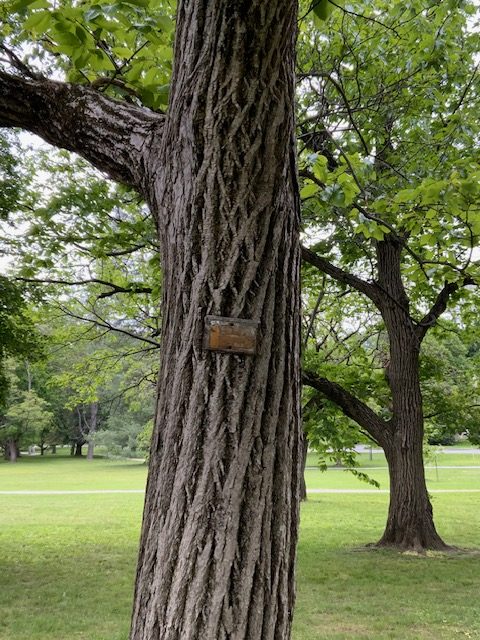
<div id="attachment_99501" style="width: 560px" class="wp-caption aligncenter"><img decoding="async" aria-describedby="caption-attachment-99501" class="size-medium wp-image-99501" src="https://gardenrant.com/wp-content/uploads/2026/05/Forsythia-suspensa-BIg-Rock-033019-550x413.jpeg" alt="" width="550" height="413"><p id="caption-attachment-99501" class="wp-caption-text">Forsythia suspensa near Big Rock in Louisville&#8217;s Cherokee Park</p></div>
<div id="attachment_99500" style="width: 560px" class="wp-caption aligncenter"><img decoding="async" aria-describedby="caption-attachment-99500" class="size-medium wp-image-99500" src="https://gardenrant.com/wp-content/uploads/2026/05/Iris-tectorum-Sun-Jiao-Wikimedia-CommonsWikimedia-Commons-550x413.jpeg" alt="" width="550" height="413"><p id="caption-attachment-99500" class="wp-caption-text">Iris tectorum, Sun Jiao/Wikimedia Commons photo.</p></div>
<div id="attachment_99499" style="width: 560px" class="wp-caption aligncenter"><img decoding="async" aria-describedby="caption-attachment-99499" class="size-medium wp-image-99499" src="https://gardenrant.com/wp-content/uploads/2026/05/Opuntia-humifusa-Hyacinth-Blue-Pearl-0426-550x733.jpeg" alt="" width="550" height="733"><p id="caption-attachment-99499" class="wp-caption-text">Prickly pear with Hyacinth &#8216;Blue Pearl&#8217;. Salvisa, Kentucky.</p></div>
<p style="font-weight: 400;">Tracey and I talked again a few weeks later. She had decided there was a simpler way. “Let the birds and bees pollinate the building’s habitat.”</p>
<p style="font-weight: 400;">During the U.S. perennial boom that launched in the late 1980s, <a href="https://gardenrant.com/2023/09/catching-up-with-green-roof-guru-citizen-scientist-ed-snodgrass.html" target="_blank" rel="noopener">Ed Snodgrass</a> &nbsp;and I broke free from weedless lawns and a boring suburban plan palate. We kept growing. Ed was always a furlong ahead of me. He emailed recently and said, “Will we see the oak leaf full of holes as the potential beauty of the butterfly even if we never see the butterfly?”</p>
<h2 style="font-weight: 400;"><strong>I like a clean border, and am skilled with a Dutch hoe.</strong></h2>
<p>But I am bordering now on a ragged edge with appreciation for the spontaneity, beauty and benefit of dandelions and butterweeds Packera (Senecio) glabella.</p>
<div id="attachment_99502" style="width: 560px" class="wp-caption aligncenter"><img decoding="async" aria-describedby="caption-attachment-99502" class="size-medium wp-image-99502" src="https://gardenrant.com/wp-content/uploads/2026/05/Packera-senecio-glabella-salvisa-041126-550x733.jpeg" alt="" width="550" height="733"><p id="caption-attachment-99502" class="wp-caption-text">Butterweed and abandoned house in Salvisa, Kentucky last month</p></div>
<p style="font-weight: 400;"><a href="https://www.gardensillustrated.com/gardens/gardeners/john-little-interview" target="_blank" rel="noopener">John Little</a> has been an influence on this notion of layering aesthetics with biodiversity. He and Ed like to share thoughts. They are seasoned green roof consultants and, more important, they share a vision of ecological optimization.</p>
<p style="font-weight: 400;">How do you optimize the Ice Tower into a unit of local ecology on land and roof?</p>
<p style="font-weight: 400;">Nature will take its course with or without human interference.</p>
<h2 style="font-weight: 400;"><strong>A little help doesn’t hurt </strong></h2>
<p style="font-weight: 400;">Take the example of Canvey Wick in Essex, England. The 93-hectare (230 acre) property was originally a grazing marshland along the Thames that was prepared as a site for an oil refinery in the 1970s. Pockets of soil were raised with dredged sediment from the river. Today the “brownfield oasis is a mosaic of flower rich grassland” with 3,200 species of invertebrates, birds, and plants.</p>
<p style="font-weight: 400;">Ed explained how the popular High Line in New York City was only reimagined after decision makers realized they could not afford to tear down the 90-year-old built-to-last trestle.</p>
<p style="font-weight: 400;">“The Merchants Ice Tower is a beautifully imposing building, so proportionally solid somehow,” Tracey Williams said.</p>
<h2 style="font-weight: 400;"><strong>Iconic also </strong></h2>
<p style="font-weight: 400;">Love Jones spoofed their image on the side of the Ice Tower. Other local icons, Muhammad Ali and Jennifer Lawrence, have banners hanging in Louisville. <a href="https://www.love-jones.com" target="_blank" rel="noopener">Love Jones</a> was tired of waiting for theirs. It did not go well.</p>
<p style="font-weight: 400;"><a href="https://www.love-jones.com/"><img decoding="async" class="size-medium wp-image-99506 aligncenter" src="https://gardenrant.com/wp-content/uploads/2026/05/Love-Jones-Merchants-043026-2-550x733.jpg" alt="" width="550" height="733"></a></p>
<div id="attachment_99505" style="width: 560px" class="wp-caption aligncenter"><img decoding="async" aria-describedby="caption-attachment-99505" class="size-medium wp-image-99505" src="https://gardenrant.com/wp-content/uploads/2026/05/Love-Jones-Merchants-043026-550x825.jpg" alt="" width="550" height="825"><p id="caption-attachment-99505" class="wp-caption-text">Photos courtesy of Love Jones</p></div>
<p style="font-weight: 400;">Rewilding the Merchants Ice Tower as a monolithic birdhouse appeals to me. It’s fun to envision walls speckled with lichen, moss, and ebony spleenwort on the east and north sides; and <em>Sedum pulchellum</em> poking out of sunny wall pockets nourished by bird droppings.</p>
<div id="attachment_99528" style="width: 560px" class="wp-caption aligncenter"><img decoding="async" aria-describedby="caption-attachment-99528" class="size-medium wp-image-99528" src="https://gardenrant.com/wp-content/uploads/2026/05/IMG_6473-550x413.jpeg" alt="" width="550" height="413"><p id="caption-attachment-99528" class="wp-caption-text">The annual widows-cross, Sedum pulchellum, Salvisa, Kentucky.</p></div>
<p style="font-weight: 400;">Crevice gardens have become popular among rock gardeners. Graffiti is old school. <a href="https://gardenrant.com/2019/11/rudbeckia-revolution.html" target="_blank" rel="noopener">Guerilla gardeners</a> might mix soil into a do-it-yourself, semi-shaded pile of brick or concrete rubble. Then sow seeds of the native annual, Miami mist <em>(Phacelia purshii)</em>. Don’t miss the commotion of small bees drawn to sweet nectar.</p>
<div id="attachment_99504" style="width: 560px" class="wp-caption aligncenter"><img decoding="async" aria-describedby="caption-attachment-99504" class="size-medium wp-image-99504" src="https://gardenrant.com/wp-content/uploads/2026/05/Miami-mist-Phacelia-purshii-050326-550x413.jpeg" alt="" width="550" height="413"><p id="caption-attachment-99504" class="wp-caption-text">Miami mist in early May in Salvisa, Kentucky.</p></div>
<p><img decoding="async" class="size-medium wp-image-99517 aligncenter" src="https://gardenrant.com/wp-content/uploads/2026/05/Trelllis-Brewing-Merchants-Ice-050126-550x733.jpeg" alt="" width="550" height="733"></p>
<p style="font-weight: 400;">Trellis Brewing, next door, was a surprise as well. While pioneering on a forsaken urban site, they have revitalized Smoketown’s brewing past with respect to the historic integrity of the complex and have allowed a few beautiful weeds to sneak in along the edges.</p>
<div id="attachment_99511" style="width: 560px" class="wp-caption aligncenter"><img decoding="async" aria-describedby="caption-attachment-99511" class="size-medium wp-image-99511" src="https://gardenrant.com/wp-content/uploads/2026/05/Sweet-clover-Melilotus-may-2026-550x733.jpeg" alt="" width="550" height="733"><p id="caption-attachment-99511" class="wp-caption-text">Sweet clover at Trellis Brewing</p></div>
<div id="attachment_99541" style="width: 560px" class="wp-caption aligncenter"><img decoding="async" aria-describedby="caption-attachment-99541" class="size-medium wp-image-99541" src="https://gardenrant.com/wp-content/uploads/2026/05/Cow-thistle-Sonchus-Trellis-050124-550x733.jpeg" alt="" width="550" height="733"><p id="caption-attachment-99541" class="wp-caption-text">Cow thistle at Trellis Brewing</p></div>
<p style="font-weight: 400;">As I was leaving, it was hard to miss a honking male Canadian goose standing guard on the rooftop of Trellis Brewing.</p>
<p style="font-weight: 400;">I hope wind and the gander seed bomb the Ice Tower and barren grounds with serendipity.</p>
<p><a href="https://gardenrant.com/2026/05/a-rooftop-sycamore-that-could-not-be-iced.html" rel="bookmark">A Rooftop Sycamore That Could Not Be Iced</a> originally appeared on <a href="https://gardenrant.com">GardenRant</a> on May 13, 2026.</p>
<p>The post <a href="https://gardenrant.com/2026/05/a-rooftop-sycamore-that-could-not-be-iced.html">A Rooftop Sycamore That Could Not Be Iced</a> appeared first on <a href="https://gardenrant.com">GardenRant</a>.</p>
]]></content>
		
					<link rel="replies" type="text/html" href="https://gardenrant.com/2026/05/a-rooftop-sycamore-that-could-not-be-iced.html#comments" thr:count="21" />
			<link rel="replies" type="application/atom+xml" href="https://gardenrant.com/2026/05/a-rooftop-sycamore-that-could-not-be-iced.html/feed/atom" thr:count="21" />
			<thr:total>21</thr:total>
			</entry>
		<entry>
		<author>
			<name>Barbara Browne</name>
					</author>

		<title type="html"><![CDATA[Where the trees have no names &#8211; just bad labels]]></title>
		<link rel="alternate" type="text/html" href="https://gardenrant.com/2026/05/where-the-trees-have-no-names-just-bad-labels.html" />

		<id>https://gardenrant.com/?p=99546</id>
		<updated>2026-05-16T15:28:36Z</updated>
		<published>2026-05-12T14:06:35Z</published>
		<category scheme="https://gardenrant.com/" term="Guest Rants" /><category scheme="https://gardenrant.com/" term="Real Gardening" />
		<summary type="html"><![CDATA[<img width="480" height="640" src="https://gardenrant.com/wp-content/uploads/2026/05/IMG_5212-rotated.jpeg" class="webfeedsFeaturedVisual wp-post-image" alt="" style="display: block; margin: auto; margin-bottom: 10px; max-width: 100%;" decoding="async" /><p>Name tags tend to be a royal pain for the person who has to wear one, but they're useful to everyone else.  This could be said of plant tags or labels as well.  We see them in most public gardens and arboreta, sometimes in parks.  They can be metal, plastic, wood, stone.  They sometimes impinge  [...]</p>
<p>The post <a href="https://gardenrant.com/2026/05/where-the-trees-have-no-names-just-bad-labels.html">Where the trees have no names &#8211; just bad labels</a> appeared first on <a href="https://gardenrant.com">GardenRant</a>.</p>
]]></summary>

					<content type="html" xml:base="https://gardenrant.com/2026/05/where-the-trees-have-no-names-just-bad-labels.html"><![CDATA[<img width="480" height="640" src="https://gardenrant.com/wp-content/uploads/2026/05/IMG_5212-rotated.jpeg" class="webfeedsFeaturedVisual wp-post-image" alt="" style="display: block; margin: auto; margin-bottom: 10px; max-width: 100%;" decoding="async" /><p><img decoding="async" class="aligncenter size-full wp-image-99587" src="https://gardenrant.com/wp-content/uploads/2026/05/IMG_5212-rotated.jpeg" alt="" width="480" height="640"></p>
<p>Name tags tend to be a royal pain for the person who has to wear one, but they&#8217;re useful to everyone else.&nbsp; This could be said of plant tags or labels as well.&nbsp; We see them in most public gardens and arboreta, sometimes in parks.&nbsp;</p>
<p>They can be metal, plastic, wood, stone.&nbsp; They sometimes impinge upon the plant they identify. But in general labels help us out when we meet and greet new plant friends.</p>
<p>Some gardens eschew them entirely, citing visual clutter.&nbsp; But for those who want to learn what they’re looking at without Google Lens or apps, plant labels are a good thing.&nbsp; And, so far as I know, there is no one “perfect” plant tag out there. Gardeners seem doomed to search eternally for the universally excellent, truly weatherproof and cost effective type of plant tag that ideally persists year after year and remains legible.</p>
<p>&nbsp;Name-tag cruelty is particularly heinous when it&#8217;s perpetrated against trees.&nbsp;</p>
<p><img decoding="async" class="aligncenter size-medium wp-image-99552" src="https://gardenrant.com/wp-content/uploads/2026/05/IMG_4130-550x413.jpeg" alt="" width="550" height="413"></p>
<p>A sadly inefficient system of tree tags was used in one of my favorite local parks.&nbsp; It consists of a plastic layer with a wood plaque and another plastic label, all affixed to the tree with two screws.&nbsp; I don’t know exactly when they were installed, but by this time most of the wooden plaques are rotting and the identifying labels have fallen off.&nbsp; This leaves only a bare piece of plastic screwed to the poor tree.&nbsp;</p>
<p>Thankfully not every single tree was labeled so some of them remain undefiled.&nbsp; But I keep hoping to find out that there is some great improvement available that could make this problem go away.&nbsp;</p>
<p><img decoding="async" class="aligncenter size-full wp-image-99549" src="https://gardenrant.com/wp-content/uploads/2026/05/IMG_4013-rotated.jpeg" alt="" width="480" height="640">When the pickleball courts are closed on Sundays, folks are going to want to take a look around and make the trees’ acquaintance.&nbsp; They are going to wonder why the trees have been defaced in this heavy-handed attempt at identification.&nbsp;</p>
<p>All you plant tag inventors out there, any solutions that will provide a kinder, gentler type of tree education?</p>
<p><a href="https://gardenrant.com/2026/05/where-the-trees-have-no-names-just-bad-labels.html" rel="bookmark">Where the trees have no names &#8211; just bad labels</a> originally appeared on <a href="https://gardenrant.com">GardenRant</a> on May 12, 2026.</p>
<p>The post <a href="https://gardenrant.com/2026/05/where-the-trees-have-no-names-just-bad-labels.html">Where the trees have no names &#8211; just bad labels</a> appeared first on <a href="https://gardenrant.com">GardenRant</a>.</p>
]]></content>
		
					<link rel="replies" type="text/html" href="https://gardenrant.com/2026/05/where-the-trees-have-no-names-just-bad-labels.html#comments" thr:count="7" />
			<link rel="replies" type="application/atom+xml" href="https://gardenrant.com/2026/05/where-the-trees-have-no-names-just-bad-labels.html/feed/atom" thr:count="7" />
			<thr:total>7</thr:total>
			</entry>
		<entry>
		<author>
			<name>Ben Probert</name>
							<uri>https://www.bensbotanics.co.uk</uri>
						</author>

		<title type="html"><![CDATA[The Perils Of International Garden Writing]]></title>
		<link rel="alternate" type="text/html" href="https://gardenrant.com/2026/05/the-perils-of-international-garden-writing.html" />

		<id>https://gardenrant.com/?p=99519</id>
		<updated>2026-05-24T21:09:11Z</updated>
		<published>2026-05-11T04:36:03Z</published>
		<category scheme="https://gardenrant.com/" term="Defiantly Uncategorical" /><category scheme="https://gardenrant.com/" term="English versus American garden writers" /><category scheme="https://gardenrant.com/" term="Garden writing" />
		<summary type="html"><![CDATA[<img width="1000" height="667" src="https://gardenrant.com/wp-content/uploads/2026/05/Iris-Kent-Pride2.jpg" class="webfeedsFeaturedVisual wp-post-image" alt="A brown iris flower" style="display: block; margin: auto; margin-bottom: 10px; max-width: 100%;" decoding="async" /><p>I've just been out planting a trough in front of my house. In it I have plants from Asia and North America, plus some British-raised snowdrops. Hopefully things will settle down well and give me a nice display through the year. I look forward to being distracted by something in flower as I head out  [...]</p>
<p>The post <a href="https://gardenrant.com/2026/05/the-perils-of-international-garden-writing.html">The Perils Of International Garden Writing</a> appeared first on <a href="https://gardenrant.com">GardenRant</a>.</p>
]]></summary>

					<content type="html" xml:base="https://gardenrant.com/2026/05/the-perils-of-international-garden-writing.html"><![CDATA[<img width="1000" height="667" src="https://gardenrant.com/wp-content/uploads/2026/05/Iris-Kent-Pride2.jpg" class="webfeedsFeaturedVisual wp-post-image" alt="A brown iris flower" style="display: block; margin: auto; margin-bottom: 10px; max-width: 100%;" decoding="async" /><p>I&#8217;ve just been out planting a trough in front of my house. In it I have plants from Asia and North America, plus some British-raised snowdrops. Hopefully things will settle down well and give me a nice display through the year. I look forward to being distracted by something in flower as I head out to work.</p>
<p>It&#8217;s a very international planting. I could have used plants from any country in the temperate world, including the UK, but chose instead to work with a plants with certain aesthetic qualities regardless of origin.</p>
<p>I&#8217;m incredibly lucky to be gardening at a time when plants are so freely available.</p>
<h3>Old Influences</h3>
<p>The big old gardens of Britain&#8217;s South West region, particularly those of Cornwall, took real advantage of the 19<sup>th</sup> century plant introductions. The climate has proven generally benign for many wonderful things, and as a result many gardens could be described as having cosmopolitan plant collections.</p>
<div id="attachment_99520" style="width: 1010px" class="wp-caption aligncenter"><img decoding="async" aria-describedby="caption-attachment-99520" class="wp-image-99520 size-full" src="https://gardenrant.com/wp-content/uploads/2026/05/Aesculus-hippocastanum8.jpg" alt="A horse chestnut tree" width="1000" height="667"><p id="caption-attachment-99520" class="wp-caption-text">Aesculus hippocastanum is an iconic tree in Britain, but it&#8217;s not British</p></div>
<p>Yet Britain hasn&#8217;t just had the advantage of 19<sup>th</sup> century introductions. Aesculus hippocastanum, a species of <i>horse chestnut, </i>is so widely grown that it surprises many people in Britain to hear that it&#8217;s not native; it was introduced from the Balkans around 400 years ago.</p>
<p>Mention an <i>English garden </i>and most gardeners will think of old houses clothed in climbing roses and opulent borders burgeoning with plants, but the English garden is a collection of plants and ideas gathered over centuries from across the globe.</p>
<h3>Modern Times</h3>
<p>By far the biggest impact has come from the Internet.</p>
<p>I can sit here at my desk in rural Devon and communicate with you wherever you are. My closest reader lives about a mile from me, maybe less, but my furthest&#8230;?</p>
<p>The Internet hasn&#8217;t found ways to email plants yet, but it does allow us to share ideas. We can talk together, electronically, with the same ease whether we&#8217;re a mile away, a hundred miles away, or much further.</p>
<p>We&#8217;ve long been able to get messages around the world on paper or via signals, but the internet took that idea one step further and added the mass-communication element; we can communicate with many others at the same time.</p>
<div id="attachment_99521" style="width: 1010px" class="wp-caption aligncenter"><img decoding="async" aria-describedby="caption-attachment-99521" class="wp-image-99521 size-full" src="https://gardenrant.com/wp-content/uploads/2026/05/Baptisia-Grape-Escape2.jpg" alt="Baptisia 'Grape Escape' in Britain" width="1000" height="667"><p id="caption-attachment-99521" class="wp-caption-text">Trialling American baptisias in Britain</p></div>
<p>It has its disadvantages of course. The Internet has created an open world where everyone and anyone with a connected device can share their thoughts and, generally, without editorial influence. I&#8217;ve covered my gripes with the likes of <a href="https://gardenrant.com/2025/07/bad-influences.html" target="_blank" rel="noopener"><i>influencers</i></a> before, and to tackle that particular subject again would be harrowing for us all.</p>
<p>A lot of gardening media, formal and social, comes from people who want to help others by providing accurate and helpful information, but with the best will in the world there is one issue that still causes issues.</p>
<h3>Location, Location, Location</h3>
<p>If I had a pound for every time someone from the US told me how terrible wisterias are and that I shouldn&#8217;t grow them I would have&#8230; well I&#8217;d have enough money for a nice weekend away.</p>
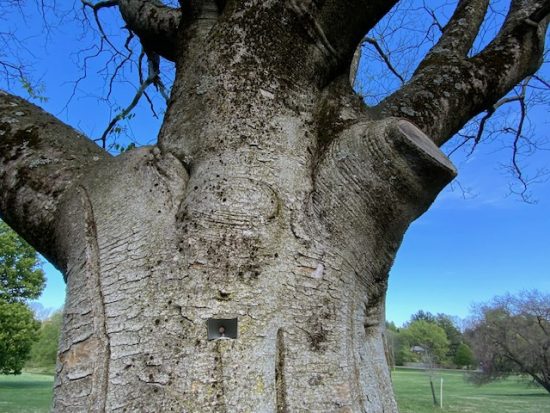
<p>Wisterias are not a problem here in the UK. They were introduced to the UK quite some time before they reached the US, and in that time have done remarkably little beyond looking fabulous growing up buildings. Yet at least in parts of the US they&#8217;re a menace.</p>
<div id="attachment_99522" style="width: 1010px" class="wp-caption aligncenter"><img decoding="async" aria-describedby="caption-attachment-99522" class="wp-image-99522 size-full" src="https://gardenrant.com/wp-content/uploads/2026/05/wisteria.jpg" alt="A purple flowered wisteria" width="1000" height="667"><p id="caption-attachment-99522" class="wp-caption-text">Wisterias are not a nuisance in the UK</p></div>
<p>And let&#8217;s not dive into English ivy! In the UK it&#8217;s an occasional problem (sometimes overhyped by those with an axe to grind) but its environment keeps it generally under control. Without those checks and balances the species can go berserk.</p>
<p>I&#8217;m an advocate for clear and accurate communication, and while I generally ignore English ivy here I do keep an eye on wisterias. Maybe one day they <i>might</i> become a problem; I disagree with the idea some have that I have a moral duty to obliterate them now on the off-chance that they might become a nuisance in the future, yet I remain aware that one day things might change.</p>
<div id="attachment_99523" style="width: 1010px" class="wp-caption aligncenter"><img decoding="async" aria-describedby="caption-attachment-99523" class="wp-image-99523 size-full" src="https://gardenrant.com/wp-content/uploads/2026/05/Rhododendron-luteum.jpg" alt="Yellow flowered azaleas" width="1000" height="667"><p id="caption-attachment-99523" class="wp-caption-text">Rhododendron luteum is potentially a nuisance in some areas</p></div>
<p>I write and post to social media from the UK and with a UK perspective, but my audience is global. Most people will, sooner or later, realise that I&#8217;m in the UK – these aren&#8217;t typos, they&#8217;re how we spell things in Britain – and make allowances for their region. I write here for an international audience, finding subjects that are of interest to all gardeners. My Substack, however, focuses on the business of managing and maintaining gardens in Britain; everyone is welcome but, beyond a few mentions of USDA hardiness zones, I stick to a UK perspective.</p>
<h3>How Can We Make Things Clearer?</h3>
<p>I had a brief and bizarre exchange with someone recently about boundary laws.</p>
<p>It was a comment on a social media post in relation to a question someone else had asked. The post was a video of someone who was definitely British (the clue is the accent) and the question was from someone in the UK, but I was being corrected by someone talking about shading Bermuda grass.</p>
<p>We don&#8217;t have Bermuda grass in the UK.</p>
<div id="attachment_99524" style="width: 1010px" class="wp-caption aligncenter"><img decoding="async" aria-describedby="caption-attachment-99524" class="wp-image-99524 size-full" src="https://gardenrant.com/wp-content/uploads/2026/05/Camassias-4.jpg" alt="Blue camassias in an English garden" width="1000" height="667"><p id="caption-attachment-99524" class="wp-caption-text">English gardens often feature American plants</p></div>
<p>I don&#8217;t think the guy was trying to be difficult, he&#8217;d just failed to appreciate that boundary laws are different in the UK. In fact a lot of things are different between gardening in the UK and the US, but while there can be confusion I hope that we all benefit from international discussions.</p>
<p>The problem is that while mass electronic communication is very general, gardening remains very specific. On social media you can just say where you are in your bio (and if people don&#8217;t look before commenting then that&#8217;s their problem), and regular GardenRant readers know that Anne and I are gardening over the other side of the Atlantic.</p>
<div id="attachment_99525" style="width: 1010px" class="wp-caption aligncenter"><img decoding="async" aria-describedby="caption-attachment-99525" class="wp-image-99525 size-full" src="https://gardenrant.com/wp-content/uploads/2026/05/Iris-Kent-Pride2.jpg" alt="A brown iris flower" width="1000" height="667"><p id="caption-attachment-99525" class="wp-caption-text">Bearded irises thrive in some parts of the UK but not everywhere</p></div>
<p>This issue isn&#8217;t new but it&#8217;s worth reflecting on. It&#8217;s incredibly difficult to be comprehensive for a local area, let alone a country or continent. We see this with gardening shows on TV and online, but also books and magazines. Advice to plant your tomatoes outside now might be sound within a 10 mile radius of my home, but some of you will have planted your tomatoes out already and others will still be cautious of cold weather. Multiply that sort of issue across the whole of gardening and then the whole of the world and you start to wonder why anyone bothers reading gardening things, let alone writing them.</p>
<p>But for all the challenges, both searching for information and supplying it, I&#8217;m eternally glad we have an international gardening community.</p>
<p><a href="https://gardenrant.com/2026/05/the-perils-of-international-garden-writing.html" rel="bookmark">The Perils Of International Garden Writing</a> originally appeared on <a href="https://gardenrant.com">GardenRant</a> on May 11, 2026.</p>
<p>The post <a href="https://gardenrant.com/2026/05/the-perils-of-international-garden-writing.html">The Perils Of International Garden Writing</a> appeared first on <a href="https://gardenrant.com">GardenRant</a>.</p>
]]></content>
		
					<link rel="replies" type="text/html" href="https://gardenrant.com/2026/05/the-perils-of-international-garden-writing.html#comments" thr:count="5" />
			<link rel="replies" type="application/atom+xml" href="https://gardenrant.com/2026/05/the-perils-of-international-garden-writing.html/feed/atom" thr:count="5" />
			<thr:total>5</thr:total>
			</entry>
		<entry>
		<author>
			<name>Susan Harris</name>
					</author>

		<title type="html"><![CDATA[Chartreuse foliage &#8211; apparently I can&#8217;t get enough of it.]]></title>
		<link rel="alternate" type="text/html" href="https://gardenrant.com/2026/05/chartreuse-foliage.html" />

		<id>https://gardenrant.com/?p=99480</id>
		<updated>2026-05-10T15:13:42Z</updated>
		<published>2026-05-10T15:13:42Z</published>
		<category scheme="https://gardenrant.com/" term="Rant&#039;s Plants" />
		<summary type="html"><![CDATA[<img width="1000" height="821" src="https://gardenrant.com/wp-content/uploads/2026/05/ch5.jpg" class="webfeedsFeaturedVisual wp-post-image" alt="" style="display: block; margin: auto; margin-bottom: 10px; max-width: 100%;" decoding="async" /><p>Here in the Mid-Atlantic Azalea Belt, our big spring show is fading fast.  Even my beloved crossvine blooms are pretty much gone. But the chartreuse leaves of my 'Ogon' Spireas? They're large statement plants already! The leaves emerge in late February/early March, will turn orange in the fall, and won't drop until Christmas week, reliably.  [...]</p>
<p>The post <a href="https://gardenrant.com/2026/05/chartreuse-foliage.html">Chartreuse foliage &#8211; apparently I can&#8217;t get enough of it.</a> appeared first on <a href="https://gardenrant.com">GardenRant</a>.</p>
]]></summary>

					<content type="html" xml:base="https://gardenrant.com/2026/05/chartreuse-foliage.html"><![CDATA[<img width="1000" height="821" src="https://gardenrant.com/wp-content/uploads/2026/05/ch5.jpg" class="webfeedsFeaturedVisual wp-post-image" alt="" style="display: block; margin: auto; margin-bottom: 10px; max-width: 100%;" decoding="async" /><p><img decoding="async" class="aligncenter size-full wp-image-99484" src="https://gardenrant.com/wp-content/uploads/2026/05/ch5.jpg" alt="" width="1000" height="821"></p>
<p>Here in the Mid-Atlantic Azalea Belt, our big spring show is fading fast.&nbsp; Even my beloved crossvine blooms are pretty much gone. But the chartreuse leaves of my &#8216;Ogon&#8217; Spireas? They&#8217;re large statement plants already! The leaves emerge in late February/early March, will turn orange in the fall, and won&#8217;t drop until Christmas week, reliably. The shrubs are also reliably full, like this one.</p>
<p>It&#8217;s seen here with blooms of crossvine, two varieties of clematis, and a coral honeysuckle, all illustrating my contention that everything goes with chartreuse. Just like purple.</p>
<p><img decoding="async" class="aligncenter size-full wp-image-99486" src="https://gardenrant.com/wp-content/uploads/2026/05/ch7.jpg" alt="" width="1000" height="722"></p>
<p>A few feet away, another &#8216;Ogon&#8217; easily hides my HVAC system &#8211; and an old white azalea. On the right is another foliage plant I adore, this one evergreen &#8211; &#8216;Goshiki&#8217; Osmanthus.&nbsp; Its mix of colors includes some chartreuse.&nbsp;</p>
<p><img decoding="async" class="aligncenter size-full wp-image-99490" src="https://gardenrant.com/wp-content/uploads/2026/05/ch-collage2.jpg" alt="" width="1000" height="667"></p>
<p>Four smaller examples, clockwise from upper let: &#8216;Lucky Devil&#8217; ninebark shrub, Sedum &#8216;Angelina&#8217; in a bird bath, Sedum sarmentosum surrounding a newly planted Profusion series zinnia, and a sweet potato vine that&#8217;ll quickly wrap around Persian Shields in both pots.<img decoding="async" class="aligncenter size-full wp-image-99488" src="https://gardenrant.com/wp-content/uploads/2026/05/ch10.jpg" alt="" width="1000" height="825">In my back garden, a &#8220;Rising Sun&#8217; redbud is a season-long focal point, and the young &#8216;Little Honey&#8217; hydrangea (lower left) is already brightening up the whole border. By mid-summer the black-eyed susans will dominate.</p>
<p>Creeping Jenny fills in between pavers and anywhere there&#8217;s bare ground. Since it&#8217;s on some invasive plant lists, I&#8217;ll be researching and blogging about whether or not it should be removed in this case.</p>
<p><img decoding="async" class="aligncenter size-full wp-image-99492" src="https://gardenrant.com/wp-content/uploads/2026/05/Ch11.jpg" alt="" width="1000" height="603">One last example of the impact of chartreuse foliage is from my co-op&#8217;s office building, where I adopted the landscape. I hear lots of comments when I&#8217;m gardening there and the &#8216;Ogon&#8217; Spireas get more compliments than any other plant. And to repeat &#8211; the color will last until Christmas!&nbsp;&nbsp;</p>
<p><a href="https://gardenrant.com/2026/05/chartreuse-foliage.html" rel="bookmark">Chartreuse foliage &#8211; apparently I can&#8217;t get enough of it.</a> originally appeared on <a href="https://gardenrant.com">GardenRant</a> on May 10, 2026.</p>
<p>The post <a href="https://gardenrant.com/2026/05/chartreuse-foliage.html">Chartreuse foliage &#8211; apparently I can&#8217;t get enough of it.</a> appeared first on <a href="https://gardenrant.com">GardenRant</a>.</p>
]]></content>
		
					<link rel="replies" type="text/html" href="https://gardenrant.com/2026/05/chartreuse-foliage.html#comments" thr:count="23" />
			<link rel="replies" type="application/atom+xml" href="https://gardenrant.com/2026/05/chartreuse-foliage.html/feed/atom" thr:count="23" />
			<thr:total>23</thr:total>
			</entry>
		<entry>
		<author>
			<name>Anne Wareham</name>
							<uri>https://veddw.com</uri>
						</author>

		<title type="html"><![CDATA[The Good, Bad and the Worrying at Veddw Garden in Spring]]></title>
		<link rel="alternate" type="text/html" href="https://gardenrant.com/2026/05/the-good-bad-and-the-worrying-at-veddw-garden-in-spring.html" />

		<id>https://gardenrant.com/?p=99349</id>
		<updated>2026-05-24T21:09:23Z</updated>
		<published>2026-05-07T08:30:07Z</published>
		<category scheme="https://gardenrant.com/" term="Rant&#039;s Plants" /><category scheme="https://gardenrant.com/" term="Real Gardening" /><category scheme="https://gardenrant.com/" term="Regular Gardens" /><category scheme="https://gardenrant.com/" term="spring garden" />
		<summary type="html"><![CDATA[<img width="850" height="478" src="https://gardenrant.com/wp-content/uploads/2026/04/20190518_183556-1.jpg" class="webfeedsFeaturedVisual wp-post-image" alt="Front Garden at Veddw Euphorbia Fireglow2" style="display: block; margin: auto; margin-bottom: 10px; max-width: 100%;" decoding="async" /><p>Spring is always hailed as a joy for gardeners and almost every gardener online, apart from our wonderfully honest Marianne, shows us delightful springing plants in the pleasant sunshine and we all go 'ahhhh'. So you may go 'ahhh' at some of Veddw's spring flowers. But it seems almost all my 'ahhhs' are accompanied by  [...]</p>
<p>The post <a href="https://gardenrant.com/2026/05/the-good-bad-and-the-worrying-at-veddw-garden-in-spring.html">The Good, Bad and the Worrying at Veddw Garden in Spring</a> appeared first on <a href="https://gardenrant.com">GardenRant</a>.</p>
]]></summary>

					<content type="html" xml:base="https://gardenrant.com/2026/05/the-good-bad-and-the-worrying-at-veddw-garden-in-spring.html"><![CDATA[<img width="850" height="478" src="https://gardenrant.com/wp-content/uploads/2026/04/20190518_183556-1.jpg" class="webfeedsFeaturedVisual wp-post-image" alt="Front Garden at Veddw Euphorbia Fireglow2" style="display: block; margin: auto; margin-bottom: 10px; max-width: 100%;" decoding="async" /><p>Spring is always hailed as a joy for gardeners and almost every gardener online, apart from our wonderfully honest Marianne, shows us delightful springing plants in the pleasant sunshine and we all go &#8216;ahhhh&#8217;. So you may go &#8216;ahhh&#8217; at some of Veddw&#8217;s spring flowers. But it seems almost all my &#8216;ahhhs&#8217; are accompanied by some anxiety, loss, or a sinking feeling about some job needing urgent attention.</p>
<h4>Here&#8217;s an anxiety:</h4>
<p><img decoding="async" class="aligncenter size-full wp-image-99351" src="https://gardenrant.com/wp-content/uploads/2026/04/20190518_183556-1.jpg" alt="Front Garden at Veddw Euphorbia Fireglow2" width="850" height="478"></p>
<p>I do love this sea of Euphorbia griffithii &#8211; Fireglow, I think. But a couple of years ago I added some Allium Purple Sensation, and although there was a rather modest amount of allium, I did think it was a sensation.</p>
<p><img decoding="async" class="aligncenter size-full wp-image-99353" src="https://gardenrant.com/wp-content/uploads/2026/04/20250518_173933.jpg" alt="Euphorbia Fireglow with Allium Purple Sensation at Veddw Garden" width="850" height="638"></p>
<p>So last autumn I asked Angus to plant some more. And this year all the euphorbia are flowering their hearts out &#8211; a month before I can expect the allium. Who said they could do <em>that</em>!???? Will the whole drama turn into a damp squib? Sigh.</p>
<p>And in the very same area, every spring I am insulted by the unpleasant colour pairing of two irremovable plants &#8211; pink clematis with the euphorbia. Never mind the bare patches on the Osmanthus. Those colours combined &#8211; yuk!</p>
<p><img decoding="async" class="alignnone wp-image-99467 size-full" src="https://gardenrant.com/wp-content/uploads/2026/05/20260503_120620.jpg" alt="Front garden at Veddw" width="849" height="640"></p>
<p>And a job? Well, I love seeing new fresh ferns:</p>
<p><img decoding="async" class="aligncenter wp-image-99357 size-full" src="https://gardenrant.com/wp-content/uploads/2026/04/20200502_143228-1.jpg" alt="Ferns at Veddw Garden" width="850" height="478"></p>
<p>But hmm.. this year there&#8217;s still a little tidying up required before there&#8217;s much pleasure. (we should have cut down the old foliage a month ago, I think &#8211; of all our ferns):</p>
<p><img decoding="async" class="aligncenter wp-image-99358 size-full" src="https://gardenrant.com/wp-content/uploads/2026/04/20260420_150022.jpg" alt="Ferns at Veddw Garden " width="850" height="638"></p>
<p>And then something has been chomping my hostas, big time!&nbsp;</p>
<p><img decoding="async" class="aligncenter wp-image-99476 size-full" src="https://gardenrant.com/wp-content/uploads/2026/05/20260505_124731.jpg" alt="Hosta damage at Veddw" width="850" height="638"></p>
<p>Snails? Or maybe a <em>crow</em>! Charles got an outside camera for Christmas, so he set it up to have a look. Though perhaps snails move too slowly to set it off. However:</p>
<p><img decoding="async" class="wp-image-99477 size-large" src="https://gardenrant.com/wp-content/uploads/2026/05/Crow-2--1024x669.jpg" alt="Crow in garden" width="1024" height="669"></p>
<p>DAMMIT!</p>
<p>But here&#8217;s good. We grow hundreds of erythroniums. Pagoda, White Beauty and Revolutum, all bouncy and doing well.</p>
<div id="attachment_99364" style="width: 860px" class="wp-caption aligncenter"><img decoding="async" aria-describedby="caption-attachment-99364" class="wp-image-99364 size-full" src="https://gardenrant.com/wp-content/uploads/2026/04/20250413_172629.jpg" alt="Erythronium Pagoda at Veddw Garden " width="850" height="638"><p id="caption-attachment-99364" class="wp-caption-text">A few of hundreds of Pagoda, planted by Charles, a hundred a year for 30 odd years&#8230;</p></div>
<p>But we&#8217;ve repeatedly failed to get any more different ones to grow for us.&nbsp; We have usually purchased them singly, at considerable expense, planted them carefully and then &#8211; they just vanish forever. However, we&#8217;ve just got one ! Here&#8217;s Joanna!</p>
<p><img decoding="async" class="aligncenter wp-image-99359 size-full" src="https://gardenrant.com/wp-content/uploads/2026/04/20260420_150235.jpg" alt="Erythronium Joanna at Veddw Garden" width="850" height="661">&nbsp;</p>
<p>Phew! (But next year??)</p>
<h4>Then there&#8217;s the Big Hunt.</h4>
<p>And this goes on for weeks. The desperate search for plants which I dote on but which have not yet shown any sign of life. I cannot show you my <a href="https://hayloft.co.uk/how-to-grow-thalictrum-splendide" target="_blank" rel="noopener">Thalictrum Splendide</a> emerging into the daylight, because it hasn&#8217;t, despite my looking <em>every day.</em> It&#8217;s not new; it&#8217;s about six years old, and this has been a very mild winter. Very wet though.. Not a single green shoot. I&#8217;ll keep looking, and hoping&#8230;.How can the ground be so empty? In summer I can&#8217;t squeeze a new plant in<em> anywhere.</em></p>
<p>And what about some newly planted <a href="https://hardygeraniumnursery.co.uk/product/geranium-patricia/" target="_blank" rel="noopener">Geranium Patricia? </a></p>
<p>This was intended to create another drama, in a bed with <a href="https://www.claireaustin-hardyplants.co.uk/products/geum-totally-tangerine" target="_blank" rel="noopener">Geum Totally Tangerine.&nbsp;</a>Could be<em> fabulous.</em> However, the geum have zoomed up and look about to flower. The geranium did pop up a single leaf per plant. Then the very next day they had all disappeared. Every one. Not a shred left. Now, about ten days later, there&#8217;s this:</p>
<p><img decoding="async" class="aligncenter wp-image-99362 size-full" src="https://gardenrant.com/wp-content/uploads/2026/04/20260420_150845-1.jpg" alt="Possible sign of a plant " width="850" height="501"></p>
<p>Should I be hoping???? Price of a wet winter = snails?? Crows???</p>
<p>Meanwhile, of course, things like ground elder are happily romping around.</p>
<h4>Last year I worried daily whether the cowslips were alright.</h4>
<p>They come into bloom gradually, several at a time, it seems. I noticed, last year, that they did all arrive in the end. So this year it has been Charles&#8217;s job to worry about them, while I have looked on complacently.&nbsp;</p>
<div id="attachment_99429" style="width: 860px" class="wp-caption aligncenter"><img decoding="async" aria-describedby="caption-attachment-99429" class="wp-image-99429 size-full" src="https://gardenrant.com/wp-content/uploads/2026/04/Camassias-and-wild-flowers-in-the-meadow-at-Veddw-Garden.jpg" alt="Camassias and wild flowers in the meadow at Veddw Garden." width="850" height="638"><p id="caption-attachment-99429" class="wp-caption-text">Cowslips with Camassias.</p></div>
<h4>Replacements?</h4>
<p>I do attempt to console myself for the absence of favourite and very important plants by investigating replacements. Only to discover they cost twice as much, or more, than I expect. The only affordable possibility seems to be bare root plants. I used to buy bare root plants in the autumn &#8211; big, healthy specimens. It&#8217;s still the way to buy trees and roses and perhaps many other things I have lots of. But these bare root plants are something else.&nbsp;</p>
<p><img decoding="async" class="aligncenter wp-image-99431 size-full" src="https://gardenrant.com/wp-content/uploads/2026/04/Geranium-bare-root.jpg" alt="Geranium bare root." width="850" height="844"></p>
<p>That is a replacement for one of my missing geraniums. (<a href="https://www.jparkers.co.uk/?gad_source=1&amp;gad_campaignid=22129428944&amp;gbraid=0AAAAAD_IAOqQKmTLHCSWdxNaO9o9V1FNw&amp;gclid=Cj0KCQjw2MbPBhCSARIsAP3jP9xTF405mA15CtSJ5rFfOVYDX-JkmP6GSZ8rc50DmbSlT62XXvUlpHsaAtMiEALw_wcB" target="_blank" rel="noopener">From here</a>) Will it grow with care and attention? Well, it&#8217;s certainly getting that. I am out there every morning hoping for a sign of life. (And yes, dear reader, I did put it in a pot and water it.)&nbsp;</p>
<h4>However, here&#8217;s good.</h4>
<p>The real spring work here is repairing and painting &#8211; woodwork, metal work, anything that can rust or rot and will rust and rot. This is Charles&#8217;s major effort and without his efforts the place would disintegrate. And we certainty wouldn&#8217;t get to sit in the garden, as our seats &#8211; and we have many &#8211; rot. We replaced one though, in a fit of extravagance, as the one we bought was said to be rot proof. Embarrassed to say it&#8217;s plastic, but it looks good.</p>
<p><img decoding="async" class="aligncenter wp-image-99433 size-full" src="https://gardenrant.com/wp-content/uploads/2026/04/20260416_143955.jpg" alt="Seat at Veddw Garden" width="850" height="638"></p>
<p>The about to rot wooden one which it replaced was then in need of a new site. We found a place in the woods.&nbsp; The reason this is worth mentioning is that we were delighted and surprised to find that it gave us two new things. The first was the view of the seat, which provided a focus in an otherwise sort of anonymous space.&nbsp;</p>
<p><img decoding="async" class="aligncenter wp-image-99434 size-full" src="https://gardenrant.com/wp-content/uploads/2026/04/20260417_184904.jpg" alt="Seat in the woods at Veddw Garden" width="850" height="638"></p>
<p>And secondly, more obviously, it gave us a new view. We hadn&#8217;t sat in that spot before.&nbsp;</p>
<p><img decoding="async" class="aligncenter wp-image-99435 size-full" src="https://gardenrant.com/wp-content/uploads/2026/04/The-Woods-at-Veddw-Garden-.jpg" alt="The Woods at Veddw Garden" width="850" height="638"></p>
<p>It was good for sitting, in the evening sun. Not so good for a photo &#8211; sorry! I wonder how often a seat could be transforming, in a garden? Especially if you then sit in it a lot. Which is a very good thing to do.</p>
<p><a href="https://gardenrant.com/2026/05/the-good-bad-and-the-worrying-at-veddw-garden-in-spring.html" rel="bookmark">The Good, Bad and the Worrying at Veddw Garden in Spring</a> originally appeared on <a href="https://gardenrant.com">GardenRant</a> on May 7, 2026.</p>
<p>The post <a href="https://gardenrant.com/2026/05/the-good-bad-and-the-worrying-at-veddw-garden-in-spring.html">The Good, Bad and the Worrying at Veddw Garden in Spring</a> appeared first on <a href="https://gardenrant.com">GardenRant</a>.</p>
]]></content>
		
					<link rel="replies" type="text/html" href="https://gardenrant.com/2026/05/the-good-bad-and-the-worrying-at-veddw-garden-in-spring.html#comments" thr:count="17" />
			<link rel="replies" type="application/atom+xml" href="https://gardenrant.com/2026/05/the-good-bad-and-the-worrying-at-veddw-garden-in-spring.html/feed/atom" thr:count="17" />
			<thr:total>17</thr:total>
			</entry>
		<entry>
		<author>
			<name>Elizabeth Licata</name>
					</author>

		<title type="html"><![CDATA[&#8216;Skip the flowers&#8217; on Mother&#8217;s Day? No thank you.]]></title>
		<link rel="alternate" type="text/html" href="https://gardenrant.com/2026/05/skip-the-flowers-on-mothers-day-no-thank-you.html" />

		<id>https://gardenrant.com/?p=99469</id>
		<updated>2026-05-06T15:01:35Z</updated>
		<published>2026-05-06T14:56:27Z</published>
		<category scheme="https://gardenrant.com/" term="Ministry of Controversy" /><category scheme="https://gardenrant.com/" term="The Indoor Gardener" />
		<summary type="html"><![CDATA[<img width="768" height="1024" src="https://gardenrant.com/wp-content/uploads/2026/05/IMG_1909-768x1024.jpeg" class="webfeedsFeaturedVisual wp-post-image" alt="" style="display: block; margin: auto; margin-bottom: 10px; max-width: 100%;" decoding="async" /><p>It happened in the run-up to Valentine’s Day and now I’m seeing it as Mother’s Day approaches. “Skip the flowers!” cry various online ads for a wide range of businesses. These vendors want you to buy different gifts for your valentine or mom or participate in activities that replace picking up a bouquet or arrangement.  [...]</p>
<p>The post <a href="https://gardenrant.com/2026/05/skip-the-flowers-on-mothers-day-no-thank-you.html">&#8216;Skip the flowers&#8217; on Mother&#8217;s Day? No thank you.</a> appeared first on <a href="https://gardenrant.com">GardenRant</a>.</p>
]]></summary>

					<content type="html" xml:base="https://gardenrant.com/2026/05/skip-the-flowers-on-mothers-day-no-thank-you.html"><![CDATA[<img width="768" height="1024" src="https://gardenrant.com/wp-content/uploads/2026/05/IMG_1909-768x1024.jpeg" class="webfeedsFeaturedVisual wp-post-image" alt="" style="display: block; margin: auto; margin-bottom: 10px; max-width: 100%;" decoding="async" /><p><span style="font-weight: 400;"><img decoding="async" class="aligncenter size-medium wp-image-99472" src="https://gardenrant.com/wp-content/uploads/2026/05/IMG_1909-550x733.jpeg" alt="" width="550" height="733"></span></p>
<p><span style="font-weight: 400;">It happened in the run-up to Valentine’s Day and now I’m seeing it as Mother’s Day approaches. “Skip the flowers!” cry various online ads for a wide range of businesses. These vendors want you to buy different gifts for your valentine or mom or participate in activities that replace picking up a bouquet or arrangement. Such gift alternatives, they claim, will be more permanent/more desirable/just plain better.&nbsp;</span></p>
<p><span style="font-weight: 400;">I don’t argue that these alternative offerings aren’t good ideas. They’re probably interesting choices, depending on the mom or the valentine. But why must flowers be sacrificed?</span></p>
<p><span style="font-weight: 400;">There’s a small business viability reason. Valentine’s Day is the most lucrative day of the year for florists, followed very closely by Mother’s Day (some put MD first). They’re both big days and those spurts of activity have to make up for some very slow times during the rest of the year. Most local florists are small, family-owned businesses. That’s something I like to support. And recently, we have more florists who are buying locally as much as they can &#8211; keeping in mind that this is Buffalo. Some are also striving for sustainable practices, like keeping away from the inappropriately named “oasis,” </span><span style="font-weight: 400;">that green stuff that’s made using toxic chemicals and persists in the environment for generations</span><span style="font-weight: 400;"> in the form of microplastics. Wire works equally well and can be reused.</span></p>
<p><span style="font-weight: 400;">Bottom line: It should be no surprise that I love flowers, but, unlike some gardeners, I also love buying cut flowers. And I especially love receiving cut flowers as gifts.</span></p>
<p><span style="font-weight: 400;">Why ask people to skip this simple pleasure? Can’t we have both &#8211; whatever alternatives businesses are trying to sell, plus flowers? I&#8217;m not defending Hallmark holidays but if it&#8217;s excuse for buying flowers, I&#8217;m onboard to some degree.</span></p>
<p><span style="font-weight: 400;">As it is, flowers have already been skipped by the Olympics. It used to be that each medal winner would get a bouquet, a tradition that evolved from the original olive branch wreaths. That tradition started changing in 2016 &#8211; with sporadic returns to bouquets &#8211;&nbsp; in the interests of sustainability. Little mementos are handed out instead. Some are made out of resin or plastic &#8211; which complicates the sustainability question, especially if the flowers can be thrown into a compost pile.</span></p>
<p><span style="font-weight: 400;">I have enjoyed reading about the Olympic flowers over the years; most had symbolic elements.</span></p>
<p><span style="font-weight: 400;">This Mother’s Day, though my mom is gone and I have no kids, I’m gonna buy myself some flowers anyway. To make up for someone who fell for that “skipping” nonsense.&nbsp; </span></p>
<p><a href="https://gardenrant.com/2026/05/skip-the-flowers-on-mothers-day-no-thank-you.html" rel="bookmark">&#8216;Skip the flowers&#8217; on Mother&#8217;s Day? No thank you.</a> originally appeared on <a href="https://gardenrant.com">GardenRant</a> on May 6, 2026.</p>
<p>The post <a href="https://gardenrant.com/2026/05/skip-the-flowers-on-mothers-day-no-thank-you.html">&#8216;Skip the flowers&#8217; on Mother&#8217;s Day? No thank you.</a> appeared first on <a href="https://gardenrant.com">GardenRant</a>.</p>
]]></content>
		
					<link rel="replies" type="text/html" href="https://gardenrant.com/2026/05/skip-the-flowers-on-mothers-day-no-thank-you.html#comments" thr:count="8" />
			<link rel="replies" type="application/atom+xml" href="https://gardenrant.com/2026/05/skip-the-flowers-on-mothers-day-no-thank-you.html/feed/atom" thr:count="8" />
			<thr:total>8</thr:total>
			</entry>
		<entry>
		<author>
			<name>Susan Harris</name>
					</author>

		<title type="html"><![CDATA[IS this a &#8220;gardening show&#8221;? I&#8217;d call it &#8220;Growing Stuff with Zach Galifinakis and Some Kids&#8221;]]></title>
		<link rel="alternate" type="text/html" href="https://gardenrant.com/2026/05/gardening-show-zach-galifinakis.html" />

		<id>https://gardenrant.com/?p=99425</id>
		<updated>2026-05-03T11:56:42Z</updated>
		<published>2026-05-03T11:56:42Z</published>
		<category scheme="https://gardenrant.com/" term="Rant Reviews" />
		<summary type="html"><![CDATA[<img width="657" height="313" src="https://gardenrant.com/wp-content/uploads/2026/05/z88.jpg" class="webfeedsFeaturedVisual wp-post-image" alt="" style="display: block; margin: auto; margin-bottom: 10px; max-width: 100%;" decoding="async" /><p>Click to watch the trailer. Have you checked out Netflix's new " gardening show" called "This is a Gardening Show" and starring comedian Zach Galifianakis?  Well, I have and I have a report. First, clear your minds of those beloved gardening shows back on HGTV (when there was a G), like "Gardener's Diary" and "Gardening  [...]</p>
<p>The post <a href="https://gardenrant.com/2026/05/gardening-show-zach-galifinakis.html">IS this a &#8220;gardening show&#8221;? I&#8217;d call it &#8220;Growing Stuff with Zach Galifinakis and Some Kids&#8221;</a> appeared first on <a href="https://gardenrant.com">GardenRant</a>.</p>
]]></summary>

					<content type="html" xml:base="https://gardenrant.com/2026/05/gardening-show-zach-galifinakis.html"><![CDATA[<img width="657" height="313" src="https://gardenrant.com/wp-content/uploads/2026/05/z88.jpg" class="webfeedsFeaturedVisual wp-post-image" alt="" style="display: block; margin: auto; margin-bottom: 10px; max-width: 100%;" decoding="async" /><p style="text-align: center;"><img decoding="async" class="aligncenter size-full wp-image-99453" src="https://gardenrant.com/wp-content/uploads/2026/05/z88.jpg" alt="" width="657" height="313"><a href="https://youtu.be/32kQ9Niy7EA?si=6RL0HhmwGEjxDnEL" target="_blank" rel="noopener">Click to watch the trailer.</a></p>
<p>Have you checked out Netflix&#8217;s new &#8221; gardening show&#8221; called &#8220;<a href="https://www.netflix.com/title/81902230">This is a Gardening Show</a>&#8221; and starring comedian Zach Galifianakis?&nbsp; Well, I have and I have a report.</p>
<p>First, clear your minds of those beloved gardening shows back on HGTV (when there was a G), like &#8220;Gardener&#8217;s Diary&#8221; and &#8220;Gardening by the Yard.&#8221; Because this sure isn&#8217;t that.</p>
<p>But the comedian IS apparently a &#8220;hobbyist gardener of 25 years,&#8221; with not one but two farms &#8211; 60 acres in North Carolina and another of undisclosed acreage off Vancouver Island, where this six-part show was filmed. Each episode &#8211; covering apples, tomatoes, foraging, root vegetables, corn or compost &#8211; is just 15 to 20 minutes.&nbsp;<sup id="cite_ref-variety_1-1" class="reference"></sup></p>
<div id="attachment_99442" style="width: 1010px" class="wp-caption aligncenter"><img decoding="async" aria-describedby="caption-attachment-99442" class="wp-image-99442 size-full" src="https://gardenrant.com/wp-content/uploads/2026/05/z-collage1.jpg" alt="" width="1000" height="361"><p id="caption-attachment-99442" class="wp-caption-text">Thoughts.</p></div>
<p>&nbsp;And kids are his co-stars.<img decoding="async" class="aligncenter size-full wp-image-99443" src="https://gardenrant.com/wp-content/uploads/2026/05/z-collage2.jpg" alt="" width="1000" height="667"></p>
<h4>Who&#8217;s the Audience?</h4>
<p>Certainly not US, adults who already garden. As one commenter on Reddit explained, &#8220;Finally, a gardening show for people who don’t garden&#8230;Part lesson, part lark, these 15-minute episodes are a total joy. They have such a deliriously light touch they will make you want to run outside and plunge your hands into the soil.&#8221;</p>
<p>That&#8217;s the point &#8211; getting people, especially kids, interested in growing something. Preferably something to eat. Who knows whether that will result but the reviews make me think the show may at least be seen.&nbsp;</p>
<ul>
<li>&#8220;Zach Galifianakis talking about gardening, dumb cute jokes with kids, AND discussing the horrors of end stage capitalism? I will watch this.&#8221;</li>
<li>&#8220;An absolute joy to watch&#8221; and &#8220;comfort television in its purest form.&#8221;</li>
<li>&#8220;A decompressing palate cleanser.&#8221;</li>
<li>An &#8220;oddball celebration of the food we eat.&#8221;</li>
<li>On Rotten Tomatoes there are eight reviews, all 100%.</li>
</ul>
<p>And where do I stand? With this reviewer, probably an actual gardener: &#8220;The name sets a high bar &#8211; it should be called &#8216;Growing stuff is easier than you think.&#8217; But I like that it&#8217;s aimed at encouraging the next generation to take an interest. It&#8217;s also pretty funny.&#8221;</p>
<p><a href="https://gardenrant.com/2026/05/gardening-show-zach-galifinakis.html" rel="bookmark">IS this a &#8220;gardening show&#8221;? I&#8217;d call it &#8220;Growing Stuff with Zach Galifinakis and Some Kids&#8221;</a> originally appeared on <a href="https://gardenrant.com">GardenRant</a> on May 3, 2026.</p>
<p>The post <a href="https://gardenrant.com/2026/05/gardening-show-zach-galifinakis.html">IS this a &#8220;gardening show&#8221;? I&#8217;d call it &#8220;Growing Stuff with Zach Galifinakis and Some Kids&#8221;</a> appeared first on <a href="https://gardenrant.com">GardenRant</a>.</p>
]]></content>
		
					<link rel="replies" type="text/html" href="https://gardenrant.com/2026/05/gardening-show-zach-galifinakis.html#comments" thr:count="3" />
			<link rel="replies" type="application/atom+xml" href="https://gardenrant.com/2026/05/gardening-show-zach-galifinakis.html/feed/atom" thr:count="3" />
			<thr:total>3</thr:total>
			</entry>
		<entry>
		<author>
			<name>Kathy Introne</name>
					</author>

		<title type="html"><![CDATA[Ignore the gardening naysayers and follow your own path]]></title>
		<link rel="alternate" type="text/html" href="https://gardenrant.com/2026/04/ignore-the-gardening-naysayers-and-follow-your-own-path.html" />

		<id>https://gardenrant.com/?p=99412</id>
		<updated>2026-04-28T15:06:03Z</updated>
		<published>2026-04-28T15:06:03Z</published>
		<category scheme="https://gardenrant.com/" term="Guest Rants" /><category scheme="https://gardenrant.com/" term="Real Gardening" />
		<summary type="html"><![CDATA[<img width="1024" height="768" src="https://gardenrant.com/wp-content/uploads/2026/04/2D89FF0D-0D2E-4C13-A5DB-E7CFFA5A5666-1-1024x768.jpeg" class="webfeedsFeaturedVisual wp-post-image" alt="" style="display: block; margin: auto; margin-bottom: 10px; max-width: 100%;" decoding="async" /><p>I wanted an alpine plant trough garden. First, I fell in love with the plants I had seen at the Philadelphia Flower Show, Wave Hill in Riverdale NY and Stonecrop Gardens in Cold Springs NY. Second, I knew the plants required sharp drainage, lean, gravely soil, and height or rocky isolation from the rest of  [...]</p>
<p>The post <a href="https://gardenrant.com/2026/04/ignore-the-gardening-naysayers-and-follow-your-own-path.html">Ignore the gardening naysayers and follow your own path</a> appeared first on <a href="https://gardenrant.com">GardenRant</a>.</p>
]]></summary>

					<content type="html" xml:base="https://gardenrant.com/2026/04/ignore-the-gardening-naysayers-and-follow-your-own-path.html"><![CDATA[<img width="1024" height="768" src="https://gardenrant.com/wp-content/uploads/2026/04/2D89FF0D-0D2E-4C13-A5DB-E7CFFA5A5666-1-1024x768.jpeg" class="webfeedsFeaturedVisual wp-post-image" alt="" style="display: block; margin: auto; margin-bottom: 10px; max-width: 100%;" decoding="async" /><p><img decoding="async" class="aligncenter size-medium wp-image-99415" src="https://gardenrant.com/wp-content/uploads/2026/04/1-550x413.jpeg" alt="" width="550" height="413"></p>
<p>I wanted an alpine plant trough garden. First, I fell in love with the plants I had seen at the Philadelphia Flower Show, Wave Hill in Riverdale NY and Stonecrop Gardens in Cold Springs NY. Second, I knew the plants required sharp drainage, lean, gravely soil, and height or rocky isolation from the rest of the garden. Third, I had no one to lug 90 lbs. of concrete and the materials needed to fashion a trough. I had no access to a coveted stone trough or sink. Fourth, I decided to design a cinder block garden on my own terms. “They” said cinder blocks were too alkaline.</p>
<p>I did the sketch and researched how to wash the blocks. I found the recipe for the gritty soil mix.</p>
<p><img decoding="async" class="aligncenter size-medium wp-image-99416" src="https://gardenrant.com/wp-content/uploads/2026/04/2-550x413.jpeg" alt="" width="550" height="413"></p>
<p>Early planting included Rhodendron wren, Rhododendron ‘Chinzan’, Arabis, Lewisia and Stachys.</p>
<p><img decoding="async" class="aligncenter size-medium wp-image-99417" src="https://gardenrant.com/wp-content/uploads/2026/04/3-550x413.jpeg" alt="" width="550" height="413"></p>
<p>The Rhododendron ‘Chinzan’ is now 10 years old still living in its cinder block.&nbsp;</p>
<p><img decoding="async" class="aligncenter size-medium wp-image-99418" src="https://gardenrant.com/wp-content/uploads/2026/04/4-550x413.jpeg" alt="" width="550" height="413"></p>
<p>Many years later I used Sedum tenatum, Antennaria (pussy toes), Stachys, Iris cristata, Lewisia (eventually eaten).</p>
<div dir="ltr"><img decoding="async" class="aligncenter size-medium wp-image-99419" src="https://gardenrant.com/wp-content/uploads/2026/04/5-550x413.jpeg" alt="" width="550" height="413"></div>
<div dir="ltr">&nbsp;</div>
<div dir="ltr">In another garden, I switched out violets and sometimes miniature bulb varieties and Tiarella cordifolia. Lilly of the valley is encroaching relentlessly.</div>
<div dir="ltr">&nbsp;</div>
<div dir="ltr">On to the roses:</div>
<div dir="ltr">&nbsp;I wanted to grow roses but “they” said roses won’t grow in the shade. Then I read Margery Fish’s Gardening In The Shade. Yes, some roses can grow in the shade and she listed varieties.</div>
<div dir="ltr">
<div dir="ltr">&nbsp;</div>
<div dir="ltr"><img decoding="async" class="aligncenter size-medium wp-image-99420" src="https://gardenrant.com/wp-content/uploads/2026/04/6-550x413.jpeg" alt="" width="550" height="413"></div>
<div dir="ltr">&nbsp;</div>
<div dir="ltr">Here’s Mdm. Gregoire Staechelin under a swamp maple, facing west. “They” said roses can’t be grown under trees as they’ll suck up the water and nutrients in the soil.</div>
<div dir="ltr">&nbsp;</div>
<div dir="ltr"><img decoding="async" class="aligncenter size-medium wp-image-99422" src="https://gardenrant.com/wp-content/uploads/2026/04/7-550x413.jpeg" alt="" width="550" height="413"></div>
<div dir="ltr">&nbsp;</div>
<div dir="ltr">Here’s Alberic Barbier under trees facing west with Mrs. Herbert Stevens to his right. “Too close to breathe and bloom.”</div>
<div dir="ltr">
<div dir="ltr"><img decoding="async" class="aligncenter size-medium wp-image-99421" src="https://gardenrant.com/wp-content/uploads/2026/04/8-550x413.jpeg" alt="" width="550" height="413"></div>
<div dir="ltr">&nbsp;</div>
<div dir="ltr">Zephirine Drouhin and Royal Gold under an oak tree, next to a neighbor’s fence, grabbing whatever sunlight they can. They” said nothing should grow around the base or create competition. I planted iris and tulips underneath.</div>
</div>
<div dir="ltr">
<div dir="ltr">&nbsp;</div>
<div dir="ltr"><img decoding="async" class="aligncenter size-medium wp-image-99423" src="https://gardenrant.com/wp-content/uploads/2026/04/9-550x413.jpeg" alt="" width="550" height="413"></div>
<div dir="ltr">&nbsp;</div>
<div dir="ltr">This is another view with &#8216;Dr. Huey &#8216;Shafter&#8217; on the left, who was a rootstock grafted on to departed rose. It is hard to see, but there&#8217;s a Lonicera, coral honeysuckle, intwined in the middle. As a side note, all the other roses are own root.</div>
<div dir="ltr">&nbsp;</div>
<div dir="ltr">“They” said never use raw vegetable material as fertilizer. A successful roses grower used vegetable/fruit scraps thrown directly on the rose bed. So I did, and the roses thrived. The scraps must keep the soil moist and fertile as they decompose.</div>
<div dir="ltr">&nbsp;</div>
<div dir="ltr">Let’s ignore the doomsayers and rigid doctrines and follow our heart’s direction, to let us sink or swim in the pleasure of our own escapades in our own personal gardens.</div>
</div>
</div>
<p><a href="https://gardenrant.com/2026/04/ignore-the-gardening-naysayers-and-follow-your-own-path.html" rel="bookmark">Ignore the gardening naysayers and follow your own path</a> originally appeared on <a href="https://gardenrant.com">GardenRant</a> on April 28, 2026.</p>
<p>The post <a href="https://gardenrant.com/2026/04/ignore-the-gardening-naysayers-and-follow-your-own-path.html">Ignore the gardening naysayers and follow your own path</a> appeared first on <a href="https://gardenrant.com">GardenRant</a>.</p>
]]></content>
		
					<link rel="replies" type="text/html" href="https://gardenrant.com/2026/04/ignore-the-gardening-naysayers-and-follow-your-own-path.html#comments" thr:count="12" />
			<link rel="replies" type="application/atom+xml" href="https://gardenrant.com/2026/04/ignore-the-gardening-naysayers-and-follow-your-own-path.html/feed/atom" thr:count="12" />
			<thr:total>12</thr:total>
			</entry>
		<entry>
		<author>
			<name>Ben Probert</name>
							<uri>https://www.bensbotanics.co.uk</uri>
						</author>

		<title type="html"><![CDATA[Conserving Plantspeople]]></title>
		<link rel="alternate" type="text/html" href="https://gardenrant.com/2026/04/conserving-plantspeople.html" />

		<id>https://gardenrant.com/?p=99399</id>
		<updated>2026-04-26T20:08:01Z</updated>
		<published>2026-04-27T04:38:08Z</published>
		<category scheme="https://gardenrant.com/" term="Rant&#039;s Plants" /><category scheme="https://gardenrant.com/" term="Real Gardening" /><category scheme="https://gardenrant.com/" term="Camellias" /><category scheme="https://gardenrant.com/" term="Gardening history" /><category scheme="https://gardenrant.com/" term="magnolias" /><category scheme="https://gardenrant.com/" term="plants" /><category scheme="https://gardenrant.com/" term="rhododendrons" />
		<summary type="html"><![CDATA[<img width="1000" height="667" src="https://gardenrant.com/wp-content/uploads/2026/04/Camellia-bench-showbench2.jpg" class="webfeedsFeaturedVisual wp-post-image" alt="Camellias lined up on a showbench" style="display: block; margin: auto; margin-bottom: 10px; max-width: 100%;" decoding="async" /><p>I've just spent an enjoyable weekend at the Royal Horticultural Society's National Rhododendron Show at Rosemoor, a lovely garden here in the South West of England. What a great show it has been this year! The show is always well supported, but in difficult years, horticulturally speaking, you tend to see the same stalwart species  [...]</p>
<p>The post <a href="https://gardenrant.com/2026/04/conserving-plantspeople.html">Conserving Plantspeople</a> appeared first on <a href="https://gardenrant.com">GardenRant</a>.</p>
]]></summary>

					<content type="html" xml:base="https://gardenrant.com/2026/04/conserving-plantspeople.html"><![CDATA[<img width="1000" height="667" src="https://gardenrant.com/wp-content/uploads/2026/04/Camellia-bench-showbench2.jpg" class="webfeedsFeaturedVisual wp-post-image" alt="Camellias lined up on a showbench" style="display: block; margin: auto; margin-bottom: 10px; max-width: 100%;" decoding="async" /><p>I&#8217;ve just spent an enjoyable weekend at the Royal Horticultural Society&#8217;s <i>National Rhododendron Show </i>at Rosemoor, a lovely garden here in the South West of England.</p>
<p>What a great show it has been this year! The show is always well supported, but in difficult years, horticulturally speaking, you tend to see the same stalwart species and varieties in each class. Not a hardship of course, but how much more exciting it is to see a big range of different things.</p>
<div id="attachment_99400" style="width: 1010px" class="wp-caption aligncenter"><img decoding="async" aria-describedby="caption-attachment-99400" class="wp-image-99400 size-full" src="https://gardenrant.com/wp-content/uploads/2026/04/Camellia-bench-showbench2.jpg" alt="Camellias lined up on a showbench" width="1000" height="667"><p id="caption-attachment-99400" class="wp-caption-text">Camellias at the show</p></div>
<p>I was judging the camellias, but afterwards was delighted to walk around and take in the beauty.</p>
<h3>Different Levels Of Enjoyment</h3>
<p>What I love about these flower shows is the different levels at which people enjoy them.</p>
<p>Some people love to discuss the finer details of different species, and compare historical information about where and when plants were collected or raised.</p>
<div id="attachment_99401" style="width: 1010px" class="wp-caption aligncenter"><img decoding="async" aria-describedby="caption-attachment-99401" class="wp-image-99401 size-full" src="https://gardenrant.com/wp-content/uploads/2026/04/Rhododendron-Coronet-Group2.jpg" alt="Rhododendron flowers" width="1000" height="667"><p id="caption-attachment-99401" class="wp-caption-text">Rhododendron Coronet Group, hybridised by Collingwood &#8216;Cherry&#8217; Ingram</p></div>
<p>Other people just love to come and look at the flowers.</p>
<p>I consider both to be incredibly important. It&#8217;s actually really important for gardeners of all levels, including the experts, to step back and enjoy the flowers. I&#8217;ve found this particularly when I&#8217;m judging the camellias; my role as judge involves being very pedantic about marks and blemishes, but there wasn&#8217;t a single flower on the bench that I would not have loved to see in my own garden.</p>
<h3>History And Heritage</h3>
<p>Behind the rows of neatly arranged blooms there are stories.</p>
<p>Stories of gardeners – some famous, some less so – who have worked with plants in decades of even centuries past. Plant hunters who travelled to remote places in search of seeds to send home. Hybridisers who saw potential in certain plants and hybridised them so that we could enjoy bigger flowers, better colours, stronger constitutions, and in some cases better perfumes.</p>
<div id="attachment_99402" style="width: 1010px" class="wp-caption aligncenter"><img decoding="async" aria-describedby="caption-attachment-99402" class="wp-image-99402 size-full" src="https://gardenrant.com/wp-content/uploads/2026/04/Rhododendron-Carclew-No.3-2.jpg" alt="Rhododendron Carclew No.3" width="1000" height="667"><p id="caption-attachment-99402" class="wp-caption-text">Known currently as Rhododendron Carclew No.3, work is underway to identify this old rhododendron variety</p></div>
<p>And then there are the other figures of the stories, generation after generation of gardeners who have acquired and grown these plants, and have passed them around so that other gardeners can benefit from them.</p>
<p>I find myself digging into the official registers of camellias and rhododendrons for research or interest, and I&#8217;m sometimes quite surprised by how long plants have been in cultivation, I was looking up an old camellia for someone called &#8216;Dewatairin&#8217; and surprised to find that it was <i>first published</i> in 1695.</p>
<div id="attachment_99403" style="width: 1010px" class="wp-caption aligncenter"><img decoding="async" aria-describedby="caption-attachment-99403" class="wp-image-99403 size-full" src="https://gardenrant.com/wp-content/uploads/2026/04/Camellia-Bokuhan.jpg" alt="Flower of Camellia 'Bokuhan'" width="1000" height="667"><p id="caption-attachment-99403" class="wp-caption-text">Just how old is Camellia &#8216;Bokuhan&#8217;?</p></div>
<p>Camellia &#8216;Bokuhan&#8217;, sometimes labelled &#8216;Tinsie&#8217; in the US; this one was <i>first published </i>in 1719, but both Camellia &#8216;Dewatairin&#8217; and Camellia &#8216;Bokuhan&#8217; are likely to be much older plants. Two camellias that have been in cultivation for over 300 years and they&#8217;re still available from nurseries today!</p>
<h3>Living History</h3>
<p>For me there is something special about having a link with gardeners from the past, people who tended gardens but who are now commemorated by old stones in a cemetery and plants in the garden.&nbsp;</p>
<p>I have a book on my shelves called <i>Who Does Your Garden Grow</i>, which gives the origins of around 100 different plant cultivars. 100 is an impressive number, but is a tiny fraction of the total number of people who have contributed to our gardens.</p>
<div id="attachment_99404" style="width: 1010px" class="wp-caption aligncenter"><img decoding="async" aria-describedby="caption-attachment-99404" class="wp-image-99404 size-full" src="https://gardenrant.com/wp-content/uploads/2026/04/Rhododendron-lindleyi-KR8635-3.jpg" alt="Rhododendron lindleyi KR8635" width="1000" height="667"><p id="caption-attachment-99404" class="wp-caption-text">Rhododendron lindleyi was named for English botanist John Lindley, who also has the Lindley Library named for him</p></div>
<p>Names of great hybridisers live on in registers, but behind particularly the aristocratic plant breeders there were teams of gardeners like me who played small but instrumental parts in the creation of plants. Their names are lost to the trees, but growing old plants keeps the essence of their existence alive.</p>
<p>Conservation efforts focus on the protection of old plant varieties, yet there is something just as important that is in need of conservation.</p>
<h3>The Plantsperson-Gardener</h3>
<p>The craft of horticulture is changing, as it always has.</p>
<p>Gone is the era of the heavily controlled – and contrived – manicured gardens. You still see a few but they&#8217;ve become a symbol of a bygone era, replaced by informal gardens built along the post-Robinsonian <i>New Naturalistic </i>lines.</p>
<p>Modern gardening is heavily guided by ecology, and while I don&#8217;t deny that sound ecological practice should be at the core of what we do we are at risk of losing our <i>plant-gardeners</i>.</p>
<p>Good, many in the <a href="http://The%20New%20Horticulture%20Movement" target="_blank" rel="noopener">New Horticulture Movement</a> will say.</p>
<p>But who will keep that horticultural heritage alive? Who will nurture a love of the plants that have been the foundation of gardening for so long?</p>
<p>In some ways modern horticulture is to be applauded for its embracing of new ideas, but there is a danger that we put so much effort into seeking a bright new future that we lose our connection with the past.</p>
<div id="attachment_99405" style="width: 1010px" class="wp-caption aligncenter"><img decoding="async" aria-describedby="caption-attachment-99405" class="wp-image-99405 size-full" src="https://gardenrant.com/wp-content/uploads/2026/04/Magnolia-Miss-Honeybee.jpg" alt="Magnolia 'Miss Honeybee'" width="1000" height="667"><p id="caption-attachment-99405" class="wp-caption-text">Magnolia &#8216;Miss Honeybee&#8217; is still fairly new, so its origins are still known</p></div>
<p>Big old buildings have fairly good protections. Buildings of architectural or historical significance end up being protected for the good of society. Buildings have plenty of advocates.</p>
<p>But plants are living things. They&#8217;re easy victims of changing fashions, and there is an assumption even among the more considerate gardeners that the loss of a plant in one garden is not a problem because the plant will live on elsewhere. It&#8217;s a dangerous assumption; without knowing what everyone is growing it&#8217;s not unknown for plant varieties to quietly disappear completely.</p>
<div id="attachment_99406" style="width: 1010px" class="wp-caption aligncenter"><img decoding="async" aria-describedby="caption-attachment-99406" class="wp-image-99406 size-full" src="https://gardenrant.com/wp-content/uploads/2026/04/Rhododendron-bench-showbench.jpg" alt="Rhododendron flowers at a show" width="1000" height="667"><p id="caption-attachment-99406" class="wp-caption-text">These aren&#8217;t just flowers, they&#8217;re links with our gardening history</p></div>
<p>And this is why we should conserve the <i>plant-gardeners</i>. Plant enthusiasts will, if given space and security to do their thing, swap and share plants that are of interest to them. Nurseries won&#8217;t be interested but a few plants shared from the back of a car at a plant event could be enough to keep old plants, and their histories, alive for the future.</p>
<p>Long live specialist plant shows, and long live the plant nerds who gather for them!</p>
<p><a href="https://gardenrant.com/2026/04/conserving-plantspeople.html" rel="bookmark">Conserving Plantspeople</a> originally appeared on <a href="https://gardenrant.com">GardenRant</a> on April 27, 2026.</p>
<p>The post <a href="https://gardenrant.com/2026/04/conserving-plantspeople.html">Conserving Plantspeople</a> appeared first on <a href="https://gardenrant.com">GardenRant</a>.</p>
]]></content>
		
					<link rel="replies" type="text/html" href="https://gardenrant.com/2026/04/conserving-plantspeople.html#comments" thr:count="15" />
			<link rel="replies" type="application/atom+xml" href="https://gardenrant.com/2026/04/conserving-plantspeople.html/feed/atom" thr:count="15" />
			<thr:total>15</thr:total>
			</entry>
		<entry>
		<author>
			<name>Susan Harris</name>
					</author>

		<title type="html"><![CDATA[State Flowers Exhibit at the U.S. Botanic Garden Reveals an Odd Assortment]]></title>
		<link rel="alternate" type="text/html" href="https://gardenrant.com/2026/04/state-flowers-exhibit-at-the-u-s-botanic-garden-reveals-an-odd-assortment.html" />

		<id>https://gardenrant.com/?p=99332</id>
		<updated>2026-04-26T11:56:20Z</updated>
		<published>2026-04-26T11:56:20Z</published>
		<category scheme="https://gardenrant.com/" term="Public Gardens" />
		<summary type="html"><![CDATA[<img width="1000" height="1000" src="https://gardenrant.com/wp-content/uploads/2026/04/state-flower.jpg" class="webfeedsFeaturedVisual wp-post-image" alt="" style="display: block; margin: auto; margin-bottom: 10px; max-width: 100%;" decoding="async" /><p>I attend every one of the U.S. Botanic  Garden's media previews of new exhibits, like their latest - America's State Flowers. Here you see Senior Communications Specialist Devin Dotson talking to the press and notice the guy in the center? He's motioning for me to move out of view! Oops.  Devin explained that the USBG  [...]</p>
<p>The post <a href="https://gardenrant.com/2026/04/state-flowers-exhibit-at-the-u-s-botanic-garden-reveals-an-odd-assortment.html">State Flowers Exhibit at the U.S. Botanic Garden Reveals an Odd Assortment</a> appeared first on <a href="https://gardenrant.com">GardenRant</a>.</p>
]]></summary>

					<content type="html" xml:base="https://gardenrant.com/2026/04/state-flowers-exhibit-at-the-u-s-botanic-garden-reveals-an-odd-assortment.html"><![CDATA[<img width="1000" height="1000" src="https://gardenrant.com/wp-content/uploads/2026/04/state-flower.jpg" class="webfeedsFeaturedVisual wp-post-image" alt="" style="display: block; margin: auto; margin-bottom: 10px; max-width: 100%;" decoding="async" /><p><img decoding="async" class="aligncenter size-full wp-image-99341" src="https://gardenrant.com/wp-content/uploads/2026/04/usbg1.jpg" alt="" width="1000" height="417"></p>
<p>I attend every one of the U.S. Botanic&nbsp; Garden&#8217;s media previews of new exhibits, like their latest &#8211; <a href="https://www.usbg.gov/visit/exhibits/americas-state-flowers-america250-celebration" target="_blank" rel="noopener">America&#8217;s State Flowers</a>. Here you see Senior Communications Specialist <a href="https://gardenrant.com/2015/04/from-ffa-superstar-to-botanic-garden-spokesman.html" target="_blank" rel="noopener">Devin Dotson</a> talking to the press and notice the guy in the center? He&#8217;s motioning for me to move out of view! Oops.&nbsp;</p>
<p>Devin explained that the USBG has collected all 56 state and territory flowers, and created this map of their locations on the grounds.&nbsp; The plants will all be on display through October 12 of this year.&nbsp;&nbsp;</p>
<p><img decoding="async" class="aligncenter size-full wp-image-99344" src="https://gardenrant.com/wp-content/uploads/2026/04/state-flower2.jpg" alt="" width="1000" height="630"></p>
<p>Find your flower here:</p>
<div id="attachment_99333" style="width: 753px" class="wp-caption aligncenter"><img decoding="async" aria-describedby="caption-attachment-99333" class="wp-image-99333 size-full" src="https://gardenrant.com/wp-content/uploads/2026/04/usbg7.jpg" alt="" width="743" height="1100"><p id="caption-attachment-99333" class="wp-caption-text">Yes, this exhibit is the USBG&#8217;s contribution to the America250 celebration and I appreciate the focus on plants rather than anything politically triggering.&nbsp;&nbsp;</p></div>
<h3>The weirdest selection process &#8211; actually, 56 different processes</h3>
<p>Bottom line &#8211; we can&#8217;t assume anything about these plants based on their having been selected. As the handout says, one &#8220;might have been selected because of its connection to major industries, relevance to state history, or prominence in the local landscape.&#8221; Devin told us one state has school children pick the winner! So maybe we should rethink the whole concept of state/territory flowers. If they serve a purpose, what is it?&nbsp;</p>
<p><img decoding="async" class="aligncenter size-full wp-image-99338" src="https://gardenrant.com/wp-content/uploads/2026/04/Collage-2026-04-21-07_52_43.jpg" alt="" width="939" height="445"></p>
<p>Here are examples of territory flowers and the information on display about each.&nbsp; Washington, DC, not a territory but a lone &#8220;district,&#8221; is also included.</p>
<h3>Where &#8220;natives-only&#8221; makes total sense&nbsp;</h3>
<p><img decoding="async" class="aligncenter size-full wp-image-99337" src="https://gardenrant.com/wp-content/uploads/2026/04/Collage-2026-04-21-07_50_42.jpg" alt="" width="1000" height="667"></p>
<p>Also from the handout: &#8220;Most selected flowers are native to North America, and many have been used for centuries as food, raw materials, or medicine.&#8221;</p>
<p>Well! I&#8217;ll just go out on a limb and say I think honorific titles like &#8220;state flower&#8221; should be granted to plants native to the state. Duh, right?&nbsp;</p>
<p>Like Maryland, with black-eyed susans as the state flower.&nbsp; Every year I spread my extra susans around town and would love to see it used in our city landscapes instead of bedding annuals and irrigation tubing.</p>
<p><strong>About Georgia</strong><br />
Also shown above is the new state flower <a href="https://www.cbsnews.com/atlanta/news/house-bill-georgia-official-flower-cherokee-rose-sweetbay-magnolia/" target="_blank" rel="noopener">chosen just this year for Georgia</a> &#8211; the sweetbay magnolia, replacing the Cherokee rose.&nbsp; The Georgia Native Plant Society can take credit for getting that change passed.</p>
<p><img decoding="async" class="aligncenter size-full wp-image-99339" src="https://gardenrant.com/wp-content/uploads/2026/04/Collage-2026-04-21-07_48_29.jpg" alt="" width="1000" height="403"></p>
<p><strong>About Ohio</strong></p>
<p>As I toured the exhibit with garden writer <a href="http://washingtongardener.com">Kathy Jentz</a>, we came upon a magnificent Buckeye and agreed that it would be a more worthy state flower than the sad little carnation that currently represents the state. Not only is the carnation nonnative; its selection was purely political. The sign says &#8220;Presidential William McKinley considered the scarlet carnation a lucky charm. It was chosen as the state flower after his assassination to represent &#8216;a token of love and reverence&#8217; for the Ohioan president.&#8221;</p>
<p><strong>About America</strong></p>
<p><img decoding="async" class="aligncenter size-full wp-image-99388" src="https://gardenrant.com/wp-content/uploads/2026/04/rose3.jpg" alt="" width="1000" height="523"></p>
<p>Speaking of plant origins, how about<a href="https://statesymbolsusa.org/symbol-or-officially-designated-item/state-flower/rose" target="_blank" rel="noopener">&nbsp;America&#8217;s Flower</a> being, you know, from the U.S.? Unlike the rose. I kinda like Senator Everett Dirksen&#8217;s proposal back in 1965 that it be the marigold, using these selling points:</p>
<ul>
<li>The marigold is a native of North America and can in truth and in fact be called an American flower.</li>
<li>It is national in character, for it grows and thrives in every one of the fifty states of this nation. It conquers the extremes of temperature. It well withstands the summer sun and the evening chill.</li>
<li>Its robustness reflects the hardihood and character of the generations who pioneered and built this land into a great nation. It is not temperamental about fertility. It resists its natural enemies, the insects. It is self-reliant and requires little attention. Its spectacular colors &#8211; lemon and orange, rich brown and deep mahogany &#8211; befit the imaginative qualities of this nation.</li>
<li>It is as sprightly as the daffodil, as colorful as the rose, as resolute as the zinnia, as delicate as the carnation, as haughty as the chrysanthemum, as aggressive as the petunia, as ubiquitous as the violet, and as stately as the snapdragon.</li>
<li>It beguiles the senses and ennobles the spirit of man. It is the delight of the amateur gardener and a constant challenge to the professional.</li>
<li>Since it is native to America and nowhere else in the world, and common to every state in the Union, I present the American marigold for designation as the national floral emblem of our country.</li>
</ul>
<p><a href="https://statesymbolsusa.org/symbol-or-officially-designated-item/state-flower/rose" target="_blank" rel="noopener">Source.</a> And you can explore all <a href="https://statesymbolsusa.org/us/symbols/state" target="_blank" rel="noopener">&#8220;state symbols&#8221; here</a>.</p>
<p>One more photo from America&#8217;s State Flowers:</p>
<p><img decoding="async" class="aligncenter size-full wp-image-99345" src="https://gardenrant.com/wp-content/uploads/2026/04/The-USBG-comissioned-custom-creations-of-the-state-flowers-from-paper-artist-Emily-Paluska-scaled.jpeg" alt="" width="825" height="1100"></p>
<p>And my favorite shots taken at the USBG that day:</p>
<p><img decoding="async" class="aligncenter size-full wp-image-99335" src="https://gardenrant.com/wp-content/uploads/2026/04/usbg11.jpg" alt="" width="1000" height="759"></p>
<p>In the Regional Garden, one of my favorite plants &#8211; the &#8216;Rising Sun&#8217; redbud, showing a mix of faded flowers and emerging chartreuse foliage. I have one of these but it&#8217;s not nearly as grand.<img decoding="async" class="aligncenter size-full wp-image-99334" src="https://gardenrant.com/wp-content/uploads/2026/04/usbg9.jpg" alt="" width="1000" height="611">Across the street I took this money shot in the Bartholdi Garden &#8211; of herbs in the kitchen garden, with a nice view of the Capitol Building. (Sorry if the sight of it triggers anyone reading this. Ya never know these days.)</p>
<p><a href="https://gardenrant.com/2026/04/state-flowers-exhibit-at-the-u-s-botanic-garden-reveals-an-odd-assortment.html" rel="bookmark">State Flowers Exhibit at the U.S. Botanic Garden Reveals an Odd Assortment</a> originally appeared on <a href="https://gardenrant.com">GardenRant</a> on April 26, 2026.</p>
<p>The post <a href="https://gardenrant.com/2026/04/state-flowers-exhibit-at-the-u-s-botanic-garden-reveals-an-odd-assortment.html">State Flowers Exhibit at the U.S. Botanic Garden Reveals an Odd Assortment</a> appeared first on <a href="https://gardenrant.com">GardenRant</a>.</p>
]]></content>
		
					<link rel="replies" type="text/html" href="https://gardenrant.com/2026/04/state-flowers-exhibit-at-the-u-s-botanic-garden-reveals-an-odd-assortment.html#comments" thr:count="10" />
			<link rel="replies" type="application/atom+xml" href="https://gardenrant.com/2026/04/state-flowers-exhibit-at-the-u-s-botanic-garden-reveals-an-odd-assortment.html/feed/atom" thr:count="10" />
			<thr:total>10</thr:total>
			</entry>
		<entry>
		<author>
			<name>Nathan Lambstrom, Guest Ranter</name>
							<uri>https://gardenecology.us</uri>
						</author>

		<title type="html"><![CDATA[Counting The Ecological Contributions of Non-Native Plants]]></title>
		<link rel="alternate" type="text/html" href="https://gardenrant.com/2026/04/counting-the-ecological-contributions-of-non-native-plants.html" />

		<id>https://gardenrant.com/?p=99371</id>
		<updated>2026-04-27T17:31:14Z</updated>
		<published>2026-04-24T04:20:48Z</published>
		<category scheme="https://gardenrant.com/" term="Gardening on the Planet" /><category scheme="https://gardenrant.com/" term="Guest Rants" /><category scheme="https://gardenrant.com/" term="Real Gardening" />
		<summary type="html"><![CDATA[<img width="1024" height="687" src="https://gardenrant.com/wp-content/uploads/2026/04/Picture1-1-1024x687.jpg" class="webfeedsFeaturedVisual wp-post-image" alt="nathan lambstrom" style="display: block; margin: auto; margin-bottom: 10px; max-width: 100%;" decoding="async" /><p>A longer version of this article was originally published in Conservation Sense and Nonsense in March of this year and brought to our attention by CSN editor, Mary McAllister.  I asked the author, garden ecologist Nathan Lambstrom, if he would write a condensed version for GardenRant, as I felt it would be of great interest  [...]</p>
<p>The post <a href="https://gardenrant.com/2026/04/counting-the-ecological-contributions-of-non-native-plants.html">Counting The Ecological Contributions of Non-Native Plants</a> appeared first on <a href="https://gardenrant.com">GardenRant</a>.</p>
]]></summary>

					<content type="html" xml:base="https://gardenrant.com/2026/04/counting-the-ecological-contributions-of-non-native-plants.html"><![CDATA[<img width="1024" height="687" src="https://gardenrant.com/wp-content/uploads/2026/04/Picture1-1-1024x687.jpg" class="webfeedsFeaturedVisual wp-post-image" alt="nathan lambstrom" style="display: block; margin: auto; margin-bottom: 10px; max-width: 100%;" decoding="async" /><p><span style="color: #008000;"><em>A longer version of this article was originally published in <a href="https://milliontrees.me/2026/03/01/obscuring-the-contributions-of-non-native-plants/" target="_blank" rel="noopener">Conservation Sense and Nonsense</a> in March of this year and brought to our attention by CSN editor, Mary McAllister.&nbsp; I asked the author, garden ecologist Nathan Lambstrom, if he would write a condensed version for GardenRant, as I felt it would be of great interest to our ecologically minded readers who witness the interaction of non-native plants with insects in their own gardens, and wish to dive deeper into available research.&nbsp; Here Lambstrom goes back to the data analysis of an oft-cited study with a scientist&#8217;s curiosity; and finds that interactions between plants and pollinators are far more nuanced than first reported.&nbsp; It&#8217;s worth your undivided attention. -MW</em></span></p>
<hr>
<p>Whether working in a home garden or creating a restoration plan, deciding what to plant is a challenging process. In addition to ensuring that the chosen species will thrive in the given environment, the current crisis facing pollinating insects means that many gardeners also wish to include plants that will provide a high level of support to those insects, particularly native bees and lepidopterans (butterflies and moths) in terms of food and habitat. The importance of native plants in providing that support is well-understood, but the contributions of introduced (non-native, naturalized) plants in supporting pollinating insects is also significant, and we should not discount it.</p>
<p>Primary research has given us better data to help inform our decisions, and also a better understanding of exactly how restricted some host preferences are. But how we read that data matters, and it may be more nuanced than we think.</p>
<h2>Which plants can feed the most insects?</h2>
<p>The most well-known papers on the subject of lepidopteran-supporting plant species come from entomologist Dr.&nbsp;Doug Tallamy, who has popularized the idea of pollinator gardening with native plants to a wide audience.</p>
<p>One of his earlier papers demonstrating the ecological value of native versus introduced plants is a meta-analysis that was published in the journal of Conservation Biology in 2009 titled&nbsp;<a href="https://conbio.onlinelibrary.wiley.com/doi/full/10.1111/j.1523-1739.2009.01202.x">“Rankin</a><a href="https://conbio.onlinelibrary.wiley.com/doi/full/10.1111/j.1523-1739.2009.01202.x">g Lepidopteran Use of Native Versus Introduced Plants.”</a>&nbsp;</p>
<p>After analyzing thousands of available records of preferred food sources of lepidopteran larvae, and ranking them by genus, Tallamy and a colleague concluded that native plants in eastern North America, and particularly native woody plants, support more native lepidopteran species on average than introduced plants or herbaceous plants generally.</p>
<p>I use <a href="https://conbio.onlinelibrary.wiley.com/doi/ftr/10.1111/j.1523-1739.2009.01202.x">the associated dataset</a> frequently to guide plant selection decisions and encourage others to do so as well. It shows that many of our beloved woody species can support an amazing diversity of native insects: some genera like our oaks (<em>Quercus</em>), birches (<em>Betula</em>), and maples (<em>Acer</em>) support larvae of hundreds of species of butterflies and moths (Fig. 1).</p>
<div id="attachment_99379" style="width: 560px" class="wp-caption aligncenter"><img decoding="async" aria-describedby="caption-attachment-99379" class="wp-image-99379 size-medium" src="https://gardenrant.com/wp-content/uploads/2026/04/Figure-1-550x420.jpg" alt="non-native and native plants chart" width="550" height="420"><p id="caption-attachment-99379" class="wp-caption-text">Fig. 1 – top-ranking woody plants and the numbers of lepidopteran species that can use them as host plants.</p></div>
<p>&nbsp;</p>
<h2>A closer look at the data</h2>
<p>However, Tallamy’s analysis of the data does not tell the entire story and may be obscuring the value of non-native plants. Here’s how:</p>
<p>In the dataset, plant genera are categorized by origin. If a genus has only native species in North America, it is labeled “native;” if it has only introduced species, it is labeled “alien.” Genera that contain both native and introduced species (oaks, maples, birches, willows, and hundreds of others) are categorized as “both.”&nbsp;</p>
<p>So far so good. Many plant genera in our region include both native and introduced species, and many species that we consider invasive have very close native relatives.</p>
<p>However, for <em>statistical analysis</em> in the Tallamy paper, <strong>all genera with both native and introduced species are re-classified as “native” only</strong> (see the “origin for analysis” column in Fig. 1).</p>
<p>The reasoning behind this is not clearly explained in the paper, but it has significant implications for our interpretation of the findings.</p>
<p>Since the data were originally collected only at the genus level (not the species level), it is impossible from this dataset to determine whether it is a native or introduced species within a genus supporting lepidopteran species, or whether they both are.</p>
<p>&nbsp;</p>
<h2>What does this mean in practice?</h2>
<p>Consider the barberries (genus&nbsp;<em>Berberis</em>), one of the most common plants labelled invasive on the east coast. This genus includes two introduced species which are quite common on forest edges in disturbed environments (<em>B. thunbergii, B. vulgaris</em>) and one rare native species that is restricted to southwestern Virginia (<em>B. canadensis</em>) (Fig. 2).</p>
<p>&nbsp;</p>
<div id="attachment_99378" style="width: 560px" class="wp-caption aligncenter"><img decoding="async" aria-describedby="caption-attachment-99378" class="size-medium wp-image-99378" src="https://gardenrant.com/wp-content/uploads/2026/04/Figure-2-550x125.jpg" alt="BONAP Barberry distribution" width="550" height="125"><p id="caption-attachment-99378" class="wp-caption-text">Fig. 2 – county-level distributions of our three barberry species in eastern North America (adapted from BONAP)</p></div>
<p>&nbsp;</p>
<p>When native lepidopteran larvae feed on non-native, naturalized barberry species (and the larvae of 11 species of butterflies and moths are known to do so), these observations are counted in the Tallamy paper as “native” because the genus also contains a native species. Thus, the contribution of the introduced barberry to lepidopterans becomes invisible in the analysis (Fig. 3).</p>
<p>&nbsp;</p>
<div id="attachment_99377" style="width: 560px" class="wp-caption aligncenter"><img decoding="async" aria-describedby="caption-attachment-99377" class="size-medium wp-image-99377" src="https://gardenrant.com/wp-content/uploads/2026/04/Figure-3-550x155.jpg" alt="Invasive plants that support lepidoptera" width="550" height="155"><p id="caption-attachment-99377" class="wp-caption-text">Fig. 3 – many of our most abundant “invasive” plants support dozens of native species of lepidopteran larvae</p></div>
<p>&nbsp;</p>
<p>Another example, clovers (genus&nbsp;<em>Trifolium</em>), are known to support 115 native lepidopteran species. There are over a dozen non-native, naturalized clovers throughout the region (quite common in lawns and post-agricultural environments) and two uncommon native ones restricted to the southeast. Categorizing clovers as ‘native’ similarly erases the ecological contributions of introduced species to lepidopterans.</p>
<p>For the purposes of the Tallamy paper, any time an insect uses an introduced plant from a genus that also contains native species, <em>that positive interaction is credited solely to native plants</em>.</p>
<h2><strong>A different story</strong></h2>
<p>If we more accurately count genera that contain both native and introduced species as ‘both’ instead of counting them as solely ‘native’, a more nuanced picture emerges. (Fig. 4). Re-analyzing the data with those contributions of non-native plants added back in shows us the following:</p>
<ul>
<li>Native woody plants still perform better on average, supporting 64 lepidopteran species (61 native) compared to mixed woody plant genera supporting 49 species (46 native). The advantage exists, but it’s much smaller than the difference reported in the original analysis.</li>
<li>For herbaceous plants, the native advantage disappears entirely. In fact, genera that include introduced herbaceous species support&nbsp;<em>more </em>lepidopteran species on average: 6 species (5 native) for these genera versus 5 species (4 native) for solely native genera.</li>
</ul>
<p>&nbsp;</p>
<div id="attachment_99376" style="width: 560px" class="wp-caption aligncenter"><img decoding="async" aria-describedby="caption-attachment-99376" class="size-medium wp-image-99376" src="https://gardenrant.com/wp-content/uploads/2026/04/Figure-4-550x124.jpg" alt="Chart on lepidopteran species" width="550" height="124"><p id="caption-attachment-99376" class="wp-caption-text">Fig. 4 – average number of lepidopteran species supported by origin and plant type</p></div>
<p>&nbsp;</p>
<p>The widespread belief that native plants are always dramatically superior to introduced plants is not a reflection of ecological reality. By treating mixed origin genera as entirely native, the ecological value of thousands of introduced plant species is misattributed to native plants, concealing the introduced species’ actual contributions to pollinator support.</p>
<p>Land managers and gardeners using this research to guide their decisions may be removing introduced plants that are, in reality, providing significant support to native insects. When we aim to eradicate naturalized plants based on the assumption that <em>only</em> native plants matter, we may be eliminating valuable resources that insects have already incorporated into their life cycles.</p>
<h2>Introduced plants are active participants in ecosystems</h2>
<p>Ignoring the contributions that introduced plants make towards supporting imperiled pollinators not only skews our perception of these plants, leading to the commonly held assumption that native plants are the only plants that support pollinators, it causes us to potentially ignore and possibly interfere with the positive contributions that many of these plants, even those labelled invasive, can make.</p>
<p>Primary research has shown us many times that introduced plants, whether in a garden or naturalized in a landscape, can provide food in the form of nectar, pollen, and larval host plants to many of our native bees, wasps, flies, beetles, butterflies, and moths (Sax et al.&nbsp;2022).</p>
<p>Not to mention the ecological value they can provide in terms of habitat, erosion control, carbon sequestration, bioremediation, etc. For instance, the introduced genus&nbsp;<em>Pyrus</em>&nbsp;(pear), which has no native species in the region, supports over 100 native lepidopterans—more than some native genera.</p>
<h2>Insects are often not confined to a single native plant species</h2>
<p>Some good news that we often don’t hear is that most of the lepidopterans (butterflies and moths) that need a specific group of plants to host their larvae are limited&nbsp;<em>not</em>&nbsp;to a single species, but to a single genus, a few genera, or an entire plant family.&nbsp;</p>
<p>A good example of this is the black swallowtail butterfly (<em>Papilio polyxenes</em>) native to much of eastern North America. The larvae of the black swallowtail feed almost exclusively on plants in family Apiaceae, the dill family.</p>
<p>Today, the most commonly encountered Apiaceae in most parts of the black swallowtail’s range are non-native garden herbs or naturalized plants (e.g. dill, parsley, fennel, and Queen Anne’s lace). Black swallowtail larvae are able to recognize these plants as food because they are chemically similar to the native plants within Apiaceae that were their historic food source.</p>
<p>Those introduced (non-native, naturalized) plants have become so common they are now the primary host plants for black swallowtail larvae. In fact, in Massachusetts there have been no confirmed sightings of black swallowtail larvae feeding on native species in the Apiaceae family since 2007 (Stitcher 2013).</p>
<p>Information like this is important for gardeners and land managers to keep in mind when making decisions about what plants to keep or remove. Wholesale eradication of naturalized plants like fennel or Queen Anne’s lace could, counterproductively, have a detrimental impact on black swallowtail populations. The abundance of introduced Apiaceae plants is actually <em>good</em> news for the butterfly, and the black swallowtail switching to an introduced food source causes no harm to the native plants since they do not rely on larval feeding to set seed and reproduce. In a rapidly changing climate, it is counter-productive to ignore or dismiss adaptations such as this.</p>
<h2>Native plants are still important</h2>
<p>These assertions should not be interpreted to mean that native plants do not matter.</p>
<p>Whenever I teach on this subject, I always take pains to point out that&nbsp;<em>native plants are extremely important</em>. We should conserve them, plant them, propagate them, and appreciate them.</p>
<p>But the importance of native plants does not mean that introduced plants have no ecological value.&nbsp;<em>Native plants are extremely important, and introduced plants have ecological value, too</em>.</p>
<p>While I find all of this information extremely useful, and use it to make plant selections, I am opposed to some degree to a utilitarian ranking of plants based solely on the number of insect species they can support. The natural world is incredibly nuanced and complex. Any overly binary system of understanding will never capture all of its beautiful, messy reality.</p>
<p>I believe every plant has value in its own right, and I still grow and appreciate plants, native or otherwise, that support few or no lepidopteran larvae. Many of our native grasses (<em>Bouteloua</em>,&nbsp;<em>Sporobolus</em>,&nbsp;<em>Koeleria</em>), wildflowers (<em>Chrysogonum, Eurybia, Vernonia</em>), and even some of our woody trees and shrubs (<em>Cladrastis, Eubotrys, Itea</em>) support a whopping 0 species of lepidopteran larvae, either native or introduced. <span style="color: #ff0000;">(**Please note that the numbers on these specific genera come directly from the original 2009 Tallamy dataset. Further clarification by the author below. &#8211;MW)</span></p>
<p>I do not think that means those plants, or any other plant that supports very few pollinators, have no value, or that we should ignore them entirely. But I do think we can use information like this to re-evaluate how plants that are often vilified are actually integrating into our ecosystems.</p>
<div id="attachment_99375" style="width: 560px" class="wp-caption aligncenter"><img decoding="async" aria-describedby="caption-attachment-99375" class="wp-image-99375 size-medium" src="https://gardenrant.com/wp-content/uploads/2026/04/Figure-5-550x413.jpg" alt="tiger moth on porcelain berry" width="550" height="413"><p id="caption-attachment-99375" class="wp-caption-text">Fig.5 – native Virginia Tiger Moth larvae feeding on an invasive Ampelopsis (Porcelain berry) vine</p></div>
<p>&nbsp;</p>
<h2>Judging plants by effects, not origins</h2>
<p>This is a deeply fascinating and thorny topic, and the more we are able to view plant behavior with curiosity, and an eye towards their effects rather than their origins, we will be better stewards of the ecosystems that are under our care.</p>
<p>I am hopeful that with more information and context we will all be able to make more informed decisions about the management of wild plants, and have a deeper appreciation of the complex, chaotic interplay of plants and animals that is always around us, native or introduced, but wild, nonetheless.</p>
<hr class="wp-block-separator has-alpha-channel-opacity">
<p><span style="color: #ff0000;">**Clarification 4/27/26:&nbsp; Please note that the cited numbers on these specific genera come directly from the original 2009 Tallamy dataset. As it focuses on eastern North America, host numbers on grasses may be lower than in the Midwest. The <em>Vernonia&nbsp;</em>listing appears to be in error, but more updated claims of larval use on&nbsp;<em>Eurybia&nbsp;</em>are likely assuming use by&nbsp;<em>Symphyotrichum&nbsp;</em>generalists, as there have been no confirmed direct observations that I can find.</span></p>
<p><span style="color: #ff0000;">I cited these genera from the dataset as they were easily recognizable and could illustrate that a single metric like lepidoptera host numbers is not explicitly linked to nativeness, nor should it be used to justify disregarding or even removing plants based on low numbers in that one metric.</span></p>
<p><span style="color: #ff0000;">As a point of interest, from the Tallamy dataset and other sources, there are numerous other native plants that have no verified observations of larval host use such as: <em>Itea</em>,&nbsp; <em>Fothergilla</em>,&nbsp; <em>Cladrastis</em>,&nbsp; <em>Xanthorhiza</em>,&nbsp; <em>Pachysanda&nbsp;</em>(<em>procumbens</em>, a native species),&nbsp; and <em>Galax</em>. There are hundreds of common and uncommon native plants that support very few to no lepidopteran species as larval hosts (ferns in particular are very good at fending them off). This does not mean they are bad plants, it means they have evolved good anti-herbivory defenses that no insect has adapted around. We sometimes forget that plants do not want to be eaten! &#8211; NL</span></p>
<hr>
<p class="wp-block-paragraph">References:</p>
<p class="wp-block-paragraph">Cech, R., &amp; Tudor, G. (2005).&nbsp;<em>Butterflies of the East Coast: an observer’s guide</em>. Princeton University Press.</p>
<p class="wp-block-paragraph">Harris, C., &amp; Ratnieks, F. L. (2022). Clover in agriculture: combined benefits for bees, environment, and farmer.&nbsp;<em>Journal of Insect Conservation</em>,&nbsp;<em>26</em>(3), 339-357.</p>
<p class="wp-block-paragraph">Sax, D. F., Schlaepfer, M. A., &amp; Olden, J. D. (2022). Valuing the contributions of non-native species to people and nature.&nbsp;<em>Trends in Ecology &amp; Evolution</em>,&nbsp;<em>37</em>(12), 1058-1066.</p>
<p class="wp-block-paragraph">Stitcher, S. (2013).&nbsp;<em>Black Swallowtail Butterfly.</em>&nbsp;The Butterflies of Massachusetts.&nbsp;<a href="https://www.butterfliesofmassachusetts.net/black-swallowtail.htm" rel="nofollow">https://www.butterfliesofmassachusetts.net/black-swallowtail.htm</a></p>
<p class="wp-block-paragraph">Tallamy, D. W., &amp; Shropshire, K. J. (2009). Ranking lepidopteran use of native versus introduced plants.&nbsp;<em>Conservation Biology</em>,&nbsp;<em>23</em>(4), 941-947.</p>
<p><a href="https://gardenrant.com/2026/04/counting-the-ecological-contributions-of-non-native-plants.html" rel="bookmark">Counting The Ecological Contributions of Non-Native Plants</a> originally appeared on <a href="https://gardenrant.com">GardenRant</a> on April 24, 2026.</p>
<p>The post <a href="https://gardenrant.com/2026/04/counting-the-ecological-contributions-of-non-native-plants.html">Counting The Ecological Contributions of Non-Native Plants</a> appeared first on <a href="https://gardenrant.com">GardenRant</a>.</p>
]]></content>
		
					<link rel="replies" type="text/html" href="https://gardenrant.com/2026/04/counting-the-ecological-contributions-of-non-native-plants.html#comments" thr:count="23" />
			<link rel="replies" type="application/atom+xml" href="https://gardenrant.com/2026/04/counting-the-ecological-contributions-of-non-native-plants.html/feed/atom" thr:count="23" />
			<thr:total>23</thr:total>
			</entry>
		<entry>
		<author>
			<name>Anne Wareham</name>
							<uri>https://veddw.com</uri>
						</author>

		<title type="html"><![CDATA[The Garden of Experience &#8211; more Marion Cran]]></title>
		<link rel="alternate" type="text/html" href="https://gardenrant.com/2026/04/the-garden-of-experience-more-marion-cran.html" />

		<id>https://gardenrant.com/?p=99265</id>
		<updated>2026-05-24T21:09:33Z</updated>
		<published>2026-04-23T08:40:51Z</published>
		<category scheme="https://gardenrant.com/" term="Defiantly Uncategorical" /><category scheme="https://gardenrant.com/" term="Rant Reviews" /><category scheme="https://gardenrant.com/" term="Real Gardening" />
		<summary type="html"><![CDATA[<img width="594" height="480" src="https://gardenrant.com/wp-content/uploads/2026/04/Screenshot-2026-04-14-4.20.21-PM.png" class="webfeedsFeaturedVisual wp-post-image" alt="" style="display: block; margin: auto; margin-bottom: 10px; max-width: 100%;" decoding="async" /><p>Well, I’m not going to start this with gardening. This bit is too good. As I’ve said before, Marion Cran (now titled ‘Mrs Cran, the author of The Garden of Ignorance') manages to introduce many discussions which are not strictly garden related. And this particular tale has to be told. Strange, violent, so much of  [...]</p>
<p>The post <a href="https://gardenrant.com/2026/04/the-garden-of-experience-more-marion-cran.html">The Garden of Experience &#8211; more Marion Cran</a> appeared first on <a href="https://gardenrant.com">GardenRant</a>.</p>
]]></summary>

					<content type="html" xml:base="https://gardenrant.com/2026/04/the-garden-of-experience-more-marion-cran.html"><![CDATA[<img width="594" height="480" src="https://gardenrant.com/wp-content/uploads/2026/04/Screenshot-2026-04-14-4.20.21-PM.png" class="webfeedsFeaturedVisual wp-post-image" alt="" style="display: block; margin: auto; margin-bottom: 10px; max-width: 100%;" decoding="async" /><p><span style="font-weight: 400;">Well, I’m not going to start this with gardening. This bit is too good. As I’ve said before, Marion Cran (now titled ‘<em>Mrs Cran, the author of The Garden of Ignorance&#8217;</em>) manages to introduce many discussions which are not strictly garden related. And this particular tale <em>has</em> to be told. Strange, violent, so much of an alien time but relatable and involving both a baby brother and a Penny Farthing bicycle.&nbsp;</span></p>
<p><em><span style="font-weight: 400;">“It had been a busy day, for first of all there was a great clatter in the household, because something crumpled appeared on a pillow, which I was told was a new brother….. I protested at being led away.</span></em></p>
<p><em><span style="font-weight: 400;">&nbsp;‘He is noisy and very ugly, ‘ I said. The nurse was horrified. ‘Not nearly as ugly as you are, she answered and for all the shortness of my six years, the idea that I was as ugly as that caused me exceeding discomfort. I went into the nursery, seized a little sister, who was pretty, and cut off her eyelashes, with a view to levelling things up; after a painful interval the mutilated beauty and I were sent to visit grandpa, who lived in the same village in a lovely house near a famous trout stream.“</span></em></p>
<p><span style="font-weight: 400;"> <img decoding="async" class="aligncenter size-full wp-image-99266" src="https://gardenrant.com/wp-content/uploads/2026/04/Garden-of-Experience-ps-96-and-97-.jpg" alt="Garden of Experience ps 96 and 97" width="850" height="638"></span></p>
<p>Let&#8217;s not pretend she actually wished to change sex in the current sense. Rather: <em>&#8220;Ridiculous and pathetic the picture of the girl child nourishing her infantile spite at being crossed; and yet on my pedestal of obstinacy, hatred and revolt, I stood, had I only known it, for all my sex; for the very spirit of my generation; and the bicycle forbidden and beckoning stood for the freedom women were long denied, and had been denied so long &#8211; so age-long.</em></p>
<p>Altogether well said.</p>
<p>Recently I read someone asking where and why the American love of sweetness began. I haven&#8217;t yet found an answer, but it dates back to Marion Cran&#8217;s time at least, it seems. In the first World War there an American serviceman was billeted in their household. And at some point some honeycomb <em>&#8221;appeared, refreshing as rain in a drought, upon the jamless, sugarless, war-breakfast table, to the extreme delight of the Californian. Like most Americans, refused all alcohol&#8230;, preferring his system to manufacture its own by supplying it with large quantities of sugar; and the shortage of &#8216;candy&#8217; hit hard at his comfort.</em>&#8221;</p>
<p>And so there had to be bees and bee hives &#8211; &#8220;One might as well have tried to cage Niagara in a bucket as stem the torrent of that man&#8217;s devastating energy&#8221; which, having started on bee hives then turned the man into a carpenter.</p>
<p><img decoding="async" class="aligncenter size-full wp-image-99271" src="https://gardenrant.com/wp-content/uploads/2026/04/20260414_160430.jpg" alt="Illustration from The Garden of Experience2" width="850" height="638"></p>
<p>But, yes, all right, we must have some gardening. As in a defence of deciduous trees and shrubs in a winter garden: an acknowledgement of &#8220;another remoter, subtler beauty, which only the stripped hour of winter discloses in the lyric confusion of its psalmody&nbsp; of twigs.&#8221;</p>
<p>Or the wonder of bulbs: &#8220;<em>There are some things I never get used to. One is the sight of an aeroplane in flight, and another a parcel of bulbs.&#8221;&#8230; &#8220;Funny little fellows, bulbs! Their small ivory bodies so clear and firm, tight swaddled in fine brown silk, still make me catch my breath &#8230;this little thing, small and silky, the pointed end of nothingness&#8230;.</em>&#8221;</p>
<p>Then there&#8217;s roots. I&#8217;m currently reading<a href="https://www.amazon.co.uk/World-Appears-Journey-Into-Consciousness/dp/0241509475/ref=sr_1_1?crid=24OUOPI3Y0Q4G&amp;dib=eyJ2IjoiMSJ9.siBL5hW5gf2_SOhbV3hjJi3qSjHJypPHvsUCqKwOywncFDCaQyw4IicpRkQnfkcGR5IWRqOm2qNyD538RcatDHEA_9CGF0qCpBiXXt3oincmxDaeeWRx0omK5xaOkzIxQYFY_5Sf-QZnqORPxwDzP6xQFXw31zH1AgAYL-agBcK3AoLlsJHkWMqa3yUfxYcJ.uB7F6BTk9q0m_I8CzWY0FUCXqMjYwDfur2KpPB0Yc00&amp;dib_tag=se&amp;keywords=a+world+appears+michael+pollan&amp;qid=1776169677&amp;sprefix=A+World+Appears%27+by+Michael+Pollan%2C%2Caps%2C321&amp;sr=8-1" target="_blank" rel="noopener"> &#8216;A World Appears, a journey into consciousness&#8217; by Michael Pollan,</a> with amazement. Among many amazing things he tells us that science is now begining to support the idea of roots being sentient, perhaps intelligent organisms. By means principally of their roots:</p>
<p data-start="635" data-end="1010"><em>&#8220;Plants can predict changes in their environment and take appropriate steps: Given a choice of soils in which to invest root growth, pea plants will pick one in which nutrient levels are increasing rather than one offering more immediate nutrients, suggesting that they can predict future conditions and prepare for them.&#8221;</em></p>
<p>What has this to do with Marion Cran? Well, she says:&nbsp;</p>
<p><em>&#8220;Scrambling away from every tree I saw myriads of tiny mouths, each making with absolute surety for the direction where food is to be found&#8230;..I was mesmerised, with a vision of the communal life of this world of roots&#8230;..and then there are the thousands of tiny annual radiculae, fibrous rootlets, &#8230;&#8230;. intelligent little travellers who wander far and wide from their first anchorage in search for means of support for the rollicking bon viveur above&#8221;</em></p>
<p>She&#8217;s not wrong. Intuitive? Or perhaps she had been reading Darwin, who had similar insights.&nbsp;</p>
<p>She offers an idea about rambler roses which I have never come across before. Disillusioned, unsurprisingly, with growing them over arches, so that they flower away out of reach at the top:</p>
<p><em>&#8220;One day I conceived of the idea of cutting the wire arches down, and edging the big path on the lawn with them. The result was a sort of scalloped effect, an avenue of wire festoons which became in time well draped with the rambling roses, and exceedingly pretty&#8230;.Everyone who walks down the garden path now, can look down on sheets of bloom, and admire the undulating decoration of half circles outlined in roses. One of the advantages of this half-arch scheme is that the wire is so completely covered&#8230;&#8230; To anyone who has a sentiment for passing under rose arches the idea will be anathema, because the only way of passing to and fro beneath my variety would be on all fours.&#8221;</em></p>
<p>There&#8217;s no picture, so I&#8217;ll leave you imagining crawling around under your roses&#8230;&#8230;</p>
<p>But here&#8217;s a picture of Marion Cran. Anything like you imagined?</p>
<div id="attachment_99272" style="width: 684px" class="wp-caption aligncenter"><img decoding="async" aria-describedby="caption-attachment-99272" class="wp-image-99272 size-full" src="https://gardenrant.com/wp-content/uploads/2026/04/Marion-Cran-portrait.png" alt="Marion Cran portrait" width="674" height="900"><p id="caption-attachment-99272" class="wp-caption-text">Butter wouldn&#8217;t melt, eh?</p></div>
<p><a href="https://gardenrant.com/2026/04/the-garden-of-experience-more-marion-cran.html" rel="bookmark">The Garden of Experience &#8211; more Marion Cran</a> originally appeared on <a href="https://gardenrant.com">GardenRant</a> on April 23, 2026.</p>
<p>The post <a href="https://gardenrant.com/2026/04/the-garden-of-experience-more-marion-cran.html">The Garden of Experience &#8211; more Marion Cran</a> appeared first on <a href="https://gardenrant.com">GardenRant</a>.</p>
]]></content>
		
					<link rel="replies" type="text/html" href="https://gardenrant.com/2026/04/the-garden-of-experience-more-marion-cran.html#comments" thr:count="4" />
			<link rel="replies" type="application/atom+xml" href="https://gardenrant.com/2026/04/the-garden-of-experience-more-marion-cran.html/feed/atom" thr:count="4" />
			<thr:total>4</thr:total>
			</entry>
		<entry>
		<author>
			<name>Bob Hill, Ranter Emeritus</name>
							<uri>http://hiddenhillnursery.com/</uri>
						</author>

		<title type="html"><![CDATA[The Buried History of Daffodils, Daylilies and Naked Ladies]]></title>
		<link rel="alternate" type="text/html" href="https://gardenrant.com/2026/04/the-buried-history-of-daffodils-daylilies-and-naked-ladies.html" />

		<id>https://gardenrant.com/?p=99317</id>
		<updated>2026-04-18T12:40:09Z</updated>
		<published>2026-04-18T12:40:09Z</published>
		<category scheme="https://gardenrant.com/" term="Real Gardening" /><category scheme="https://gardenrant.com/" term="daffodils" /><category scheme="https://gardenrant.com/" term="daylilies" /><category scheme="https://gardenrant.com/" term="nakedladies" />
		<summary type="html"><![CDATA[<img width="1024" height="768" src="https://gardenrant.com/wp-content/uploads/2026/04/Narcissus-Ice-Follies-1-1024x768.jpeg" class="webfeedsFeaturedVisual wp-post-image" alt="" style="display: block; margin: auto; margin-bottom: 10px; max-width: 100%;" decoding="async" /><p>Even while enjoying spring flowers in our yards, we tend to think of them as just former temporary residents of box stores such as Lowes or Menards, the local nursery or a UPS truck. We don’t give them their due sense of place in world history. We don’t know anything about it. I got to  [...]</p>
<p>The post <a href="https://gardenrant.com/2026/04/the-buried-history-of-daffodils-daylilies-and-naked-ladies.html">The Buried History of Daffodils, Daylilies and Naked Ladies</a> appeared first on <a href="https://gardenrant.com">GardenRant</a>.</p>
]]></summary>

					<content type="html" xml:base="https://gardenrant.com/2026/04/the-buried-history-of-daffodils-daylilies-and-naked-ladies.html"><![CDATA[<img width="1024" height="768" src="https://gardenrant.com/wp-content/uploads/2026/04/Narcissus-Ice-Follies-1-1024x768.jpeg" class="webfeedsFeaturedVisual wp-post-image" alt="" style="display: block; margin: auto; margin-bottom: 10px; max-width: 100%;" decoding="async" /><p style="font-weight: 400;">Even while enjoying spring flowers in our yards, we tend to think of them as just former temporary residents of box stores such as Lowes or Menards, the local nursery or a UPS truck. We don’t give them their due sense of place in world history. We don’t know anything about it.</p>
<p style="font-weight: 400;">I got to thinking a little deeper about that while thinning out and dividing daffodils at our new house in Jeffersonville, Indiana. They had probably been living in the same dirt near the front sidewalk for at least 20 to 30 years, once young and spry, heralding spring, leading the neighborhood&nbsp; garden parade. When we first met &#8211; with my shovel in hands &#8211; these daffodils had lost all vigor, had&nbsp; become thickly packed and droopy, only a few flowers blooming with a fat cluster of bulbs.</p>
<div id="attachment_99321" style="width: 560px" class="wp-caption aligncenter"><img decoding="async" aria-describedby="caption-attachment-99321" class="size-medium wp-image-99321" src="https://gardenrant.com/wp-content/uploads/2026/04/Narcissus-Ice-Follies-550x413.jpeg" alt="" width="550" height="413"><p id="caption-attachment-99321" class="wp-caption-text">Narcissus &#8216;Ice Follies&#8217; in spring 2027?</p></div>
<p style="font-weight: 400;">My necessary mission was to dig up that fat cluster – one of many in the yard – then salvage the best, chuck the rest. Pick the best five to seven daffodil bulbs, dig a new hole, space to breathe and grow, and replant. There is some satisfaction there, only another maybe 350 shopping days until the next renewed crop appears in spring ’27.</p>
<p style="font-weight: 400;">I had been doing much the same with totally overgrown patches of daylilies and &nbsp;“surprise lilies”—sometimes called naked ladies— <em>Lycoris squamigera,</em> an amaryllis relative, that toss up enormous heaps of leaves in spring which die back, then offering tall elegant pink flowers on thick “naked” stems in late summer.</p>
<div id="attachment_99322" style="width: 560px" class="wp-caption aligncenter"><img decoding="async" aria-describedby="caption-attachment-99322" class="size-medium wp-image-99322" src="https://gardenrant.com/wp-content/uploads/2026/04/Hemerocallis-fulva-2022-550x413.jpeg" alt="" width="550" height="413"><p id="caption-attachment-99322" class="wp-caption-text">Who knows, myaybe one of these divided clumps turns out to be the common tawny daylily? Not the worst thing in the world. At least the flower buds are edible—fresh or stir fried.</p></div>
<p style="font-weight: 400;">I felt a little guilty tossing away the hundreds of weaker, nutrition-starved plants, but did manage to give many to another gardener with way too much time on his hands.</p>
<div id="attachment_99320" style="width: 560px" class="wp-caption aligncenter"><img decoding="async" aria-describedby="caption-attachment-99320" class="size-medium wp-image-99320" src="https://gardenrant.com/wp-content/uploads/2026/04/Lycoris-squamigera-Salvisa-550x413.jpeg" alt="" width="550" height="413"><p id="caption-attachment-99320" class="wp-caption-text">Lycoris squamigera. Naked ladies. Oh, my&#8230;</p></div>
<p style="font-weight: 400;">So, I’m sitting on the back porch steps looking over that first dug patch of daffodils and began to have guilty thoughts about chucking them, needed or not. They were brave survivors, &nbsp;their central flowers bright yellow, their petals a clean white. They had been neglected. Forgotten. Not their fault.</p>
<p style="font-weight: 400;">These daffodils sitting in my lap were of an older variety. We had grown similar-sized, pure white daffodils in our former home. They were at least 75 years old, maybe even older than me, now a slightly worn 83, but also not ready for the discard pile. &nbsp;So, needing a little perspective, &nbsp;I began some research on daffodils. They are native to the Mediterranean area, going back thousands of years in Spain, Portugal and North Africa. The&nbsp; name daffodil derives the 14<sup>th</sup> century Middle English “affodil,” a type of lily. The Dutch added the “d.”</p>
<p style="font-weight: 400;">Their biological name is <em>Narcissus</em> , which recalls a very handsome young man in Greek mythology who was tricked into falling in love with his own reflection in a pool of water. The bad news is he became so consumed with himself, his image, he ignored all outside attention. He didn’t even take time to eat and died of starvation, and thirst , while perched on the edge of a pool of water. He had no sense of irony. You may know the type.</p>
<div id="attachment_99319" style="width: 560px" class="wp-caption aligncenter"><img decoding="async" aria-describedby="caption-attachment-99319" class="size-medium wp-image-99319" src="https://gardenrant.com/wp-content/uploads/2026/04/Hill-garden-spring-2026-550x724.jpg" alt="" width="550" height="724"><p id="caption-attachment-99319" class="wp-caption-text">Bob and Janet Hill&#8217;s new garden on Easter Day</p></div>
<p style="font-weight: 400;">It gets worse. Narcissus derives from the Greek “narco” or narcotics. All parts of the plant are somewhat poisonous. The plants first got to Britain carried by Roman soldiers, who planted them in remembrance of fallen comrades. At least the flowers did get to come back every year. The soldiers also thought the lethal daffodil sap would help heal wounds.</p>
<p style="font-weight: 400;">Whoops.</p>
<p style="font-weight: 400;">History matched on. The daffodils made their way from Europe to American on boats with our 18<sup>th</sup>century settlers. They found presidential homes at Mt. Vernon and Monticello, and then, as the breeders took hold, to the Brent &amp; Becky’s bulb store, if not a backyard in Southern Indiana where they multiplied mightily in place for decades. Our house is almost 100 years old. Who first planted the daffodils here? What was their story?</p>
<p style="font-weight: 400;">Meanwhile, daffodil breeding&nbsp; became a craze. There are now more than 32,000 named hybrid cultivars, although most are still variations of yellow, orange, white and salmon. Their names include Peeping Tom, Jetfire, Pinball Wizard and Spoonful. Also “Dr. Bob” and, this hurts, “Bob Minor.”</p>
<div id="attachment_99323" style="width: 560px" class="wp-caption aligncenter"><img decoding="async" aria-describedby="caption-attachment-99323" class="size-medium wp-image-99323" src="https://gardenrant.com/wp-content/uploads/2026/04/Iberis-candytuft-Salvisa-2024-550x413.jpeg" alt="" width="550" height="413"><p id="caption-attachment-99323" class="wp-caption-text">Candytuft, Iberis sempervirens. Simple, easy and evergreen</p></div>
<p style="font-weight: 400;">Growing close to those same back porch steps is a bright white patch of candytuft, &nbsp;or “Iberis” to those same Roman soldiers. It’s a spring favorite, almost radiant white and spreading nicely. It eventually got to a Southern Indiana back yard by way of Iberis near the Mediterranean Sea. It first got to England in 1587, where it became used to treat gout and rheumatism, and who know why? It became popular as an edging plant in American gardens in the Victorian Era, having arrived here as part of the historic Virginia Company. Mine came from a nursery in Ohio, slowly making its way west.</p>
<p style="font-weight: 400;">On the other side of our porch is a brightly blooming purple lily, among the oldest cultivated plants in the Northern Hemisphere, one of the images of same appeared on a fresco in Crete from around 1580 B.C.</p>
<p style="font-weight: 400;">Yet nothing adds more perennial history to my back yard than a few hundred daylilies, which have been raised in various gardens for more than 4,000 years, primarily China, Japan, Korea and, talk about hardiness, Siberia.</p>
<p style="font-weight: 400;">They made their way to Europe in the 16<sup>th</sup> century, then came over with our ancestors along the East Coast before heading inland to the Ohio River Valley. There are now more than 100,000 thousand registered cultivars, with several thousand new ones added every year.</p>
<p style="font-weight: 400;">Their names include “Primal Scream,” “Ridiculous,” and “Merry Moppet.” &nbsp;There is also a “Ranger Bob” &nbsp;selling for only $12 to $20, a major league pick.</p>
<p><a href="https://gardenrant.com/2026/04/the-buried-history-of-daffodils-daylilies-and-naked-ladies.html" rel="bookmark">The Buried History of Daffodils, Daylilies and Naked Ladies</a> originally appeared on <a href="https://gardenrant.com">GardenRant</a> on April 18, 2026.</p>
<p>The post <a href="https://gardenrant.com/2026/04/the-buried-history-of-daffodils-daylilies-and-naked-ladies.html">The Buried History of Daffodils, Daylilies and Naked Ladies</a> appeared first on <a href="https://gardenrant.com">GardenRant</a>.</p>
]]></content>
		
					<link rel="replies" type="text/html" href="https://gardenrant.com/2026/04/the-buried-history-of-daffodils-daylilies-and-naked-ladies.html#comments" thr:count="6" />
			<link rel="replies" type="application/atom+xml" href="https://gardenrant.com/2026/04/the-buried-history-of-daffodils-daylilies-and-naked-ladies.html/feed/atom" thr:count="6" />
			<thr:total>6</thr:total>
			</entry>
		<entry>
		<author>
			<name>Allen Bush</name>
							<uri>http://www.jelitto.com</uri>
						</author>

		<title type="html"><![CDATA[We Need Difficult Women Now More Than Ever]]></title>
		<link rel="alternate" type="text/html" href="https://gardenrant.com/2026/04/we-need-difficult-women-now-more-than-ever.html" />

		<id>https://gardenrant.com/?p=99308</id>
		<updated>2026-05-05T21:07:47Z</updated>
		<published>2026-04-17T10:58:28Z</published>
		<category scheme="https://gardenrant.com/" term="Unusually Clever People" /><category scheme="https://gardenrant.com/" term="olmsted" /><category scheme="https://gardenrant.com/" term="olmstedparks" />
		<summary type="html"><![CDATA[<img width="1024" height="683" src="https://gardenrant.com/wp-content/uploads/2026/04/Lz87DySA-1-1024x683.jpeg" class="webfeedsFeaturedVisual wp-post-image" alt="" style="display: block; margin: auto; margin-bottom: 10px; max-width: 100%;" decoding="async" /><p>  Louisville’s Olmsted Parks Conservancy’s recent invitation for Women Who Shape the Landscape caught my attention. I enjoy public events, especially when I am moved by people with talent and wisdom. Over three hundred park lovers gathered in the beautiful auditorium of the Women’s Club of Louisville on South 4th Street in late March. As  [...]</p>
<p>The post <a href="https://gardenrant.com/2026/04/we-need-difficult-women-now-more-than-ever.html">We Need Difficult Women Now More Than Ever</a> appeared first on <a href="https://gardenrant.com">GardenRant</a>.</p>
]]></summary>

					<content type="html" xml:base="https://gardenrant.com/2026/04/we-need-difficult-women-now-more-than-ever.html"><![CDATA[<img width="1024" height="683" src="https://gardenrant.com/wp-content/uploads/2026/04/Lz87DySA-1-1024x683.jpeg" class="webfeedsFeaturedVisual wp-post-image" alt="" style="display: block; margin: auto; margin-bottom: 10px; max-width: 100%;" decoding="async" /><p style="font-weight: 400;">&nbsp;</p>
<p style="font-weight: 400;">Louisville’s Olmsted Parks Conservancy’s recent invitation for <em>Women Who Shape the Landscape</em> caught my attention. I enjoy public events, especially when I am moved by people with talent and wisdom. Over three hundred park lovers gathered in the beautiful auditorium of the Women’s Club of Louisville on South 4<sup>th</sup> Street in late March. As it turned out, the panelists were&nbsp; difficult women. A commitment to preserving parks and protecting communities is not an easy job.</p>
<div id="attachment_99276" style="width: 560px" class="wp-caption aligncenter"><img decoding="async" aria-describedby="caption-attachment-99276" class="size-medium wp-image-99276" src="https://gardenrant.com/wp-content/uploads/2026/04/Lz87DySA-550x367.jpeg" alt="" width="550" height="367"><p id="caption-attachment-99276" class="wp-caption-text">Difficult Women of the Olmsted Parks Conservancy (L-R:) Mimi Zinniel, Susan Rademacher, Layla George, Sarah Wolff, and Mary Grissom.</p></div>
<p style="font-weight: 400;">There was a surprise in store. I hadn’t imagined that this park’s event, next door to Louisville’s&nbsp; Olmsted-designed Central Park, would feel like an uplifting revival with frequent applause and ovation.</p>
<p style="font-weight: 400;"><em>In recognition of Women&#8217;s History Month, Olmsted Parks Conservancy and the Women’s Club of Louisville invite you to an exciting evening featuring a panel discussion with four Olmsted Parks Conservancy past and present CEOs, Susan Rademacher, Mimi Zinniel, Layla George and Mary Grissom. Moderated by Louisville’s Rachel Platt This engaging panel will reflect on leadership, stewardship and long view caring for public landscapes…this event will celebrate women who have shaped not only an organization, but the enduring green spaces that shape Louisville.</em></p>
<p style="font-weight: 400;">My ears perked up when Sue Breitkopf, CEO of the <a href="https://olmsted.org" target="_blank" rel="noopener">Olmsted Network</a>, based in Washington, D.C.,&nbsp; said, “We need difficult women now more than ever.”</p>
<div id="attachment_99280" style="width: 560px" class="wp-caption aligncenter"><img decoding="async" aria-describedby="caption-attachment-99280" class="size-medium wp-image-99280" src="https://gardenrant.com/wp-content/uploads/2026/04/IXMQ5ULw-550x367.jpeg" alt="" width="550" height="367"><p id="caption-attachment-99280" class="wp-caption-text">Louisville Women&#8217;s Club</p></div>
<h2 style="font-weight: 400;"><strong>Parks don’t come free of charge</strong></h2>
<p style="font-weight: 400;">Breitkopf described the thoughtful designs of our Olmsted parks as part of a “cornerstone of democracy…There is a constant existential threat with public-private partnerships.&nbsp; These conservancies are founded on land owned by the jurisdiction whether that is the city, county, state or federal. A nonprofit raises money to fill in the infrastructure and maintenance gaps. &nbsp;You have big problem if this is violated on the nonprofit side.”</p>
<p style="font-weight: 400;">But if it&#8217;s violated on the city side, the can—general and deferred maintenance—gets kicked&nbsp; to the curb. Parks become dispensable.</p>
<p style="font-weight: 400;">Breitkopf emphasized,” I would put out there for Louisville, and for cities across the country, that we need difficult women now more than ever. Keep the charge going. Let&#8217;s protect these landscapes.”</p>
<div id="attachment_99279" style="width: 560px" class="wp-caption aligncenter"><img decoding="async" aria-describedby="caption-attachment-99279" class="size-medium wp-image-99279" src="https://gardenrant.com/wp-content/uploads/2026/04/ovWE2kqQ-550x367.jpeg" alt="" width="550" height="367"><p id="caption-attachment-99279" class="wp-caption-text">Sue Breitkopf of the Olmsted Network</p></div>
<h2 style="font-weight: 400;"><strong>Women Who Shape the Landscape</strong></h2>
<p style="font-weight: 400;">When Betsy Barlow Rogers moved with her husband to New York City in the 1970s, she found the iconic Fredrick Law Olmsted-designed Central Park in “shambles,” according to Breitkopf. “The sheep Meadow was a Dust Bowl and there was 50,000 square feet of graffiti covering every surface in the park.” Rogers founded the Central Park Conservancy in 1980. This was the beginning of the park conservancy movement.</p>
<p style="font-weight: 400;">Rogers later visited Louisville twice and encouraged the creation of their own Conservancy and helped develop a strategy.&nbsp; Money to restore and enhance Louisville’s Olmsted Parks was crucial. And still is. Louisville’s parks had suffered from insufficient funding, interference and neglect for too long. Louisville still ranks below its peer cities in per capita spending on parks.</p>
<h2 style="font-weight: 400;"><strong>There were historic political parallels in Louisville</strong></h2>
<p style="font-weight: 400;">John Charles Olmsted, upon a 1906 inspection of the firm’s projects, complained about Louisville’s park management problems. There was too much patronage, piecemeal decision-making and political meddling, instead of coherent stewardship.</p>
<p style="font-weight: 400;">Louisville’s <a href="https://www.olmstedparks.org" target="_blank" rel="noopener">Olmsted Parks Conservancy (OPC)</a> was begun in 1989. It was longtime coming.</p>
<p style="font-weight: 400;">Moderator Rachel Platt described Louisville’s Olmsted Park Conservancy’s importance. “There are 17 Olmsted-designed parks and six tree lined parkways connected by a 26-mile network. The Olmsted parks Conservancy is a nonprofit dedicated to restoring and protecting these sites and is rooted in the belief that parks are good for communities and essential to our well-being. Frederick Law Olmsted&#8217;s belief in parks as democratic spaces for all people is deeply personal to many in this room tonight…I feel like I need my sportscaster voice because this is an All-Star lineup.” Platt introduced Susan Rademacher, Mimi Zinniel, Layla George and Mary Grissom.</p>
<p><img decoding="async" class="size-medium wp-image-99278 aligncenter" src="https://gardenrant.com/wp-content/uploads/2026/04/v_JNn8fw-550x367.jpeg" alt="" width="550" height="367"></p>
<h2 style="font-weight: 400;"><strong>Four fearless park care tenders shared a lot in common</strong></h2>
<p style="font-weight: 400;">Their responses to questions were met with nods of mutual understanding and applause while the panelists talked about their leadership roles.</p>
<p style="font-weight: 400;">Susan Rademacher (1991-2007) came from a career in landscape architecture journalism. She helped develop the Conservancy’s comprehensive master plan and completed the OPC’s first capital campaign. “In the beginning was no job description and there was no warm welcome at Louisville Metro Parks. There was great suspicion that I was a spy. It was very difficult to begin to understand how an agency as complex as that works and doesn&#8217;t work. It was important to listen to people out in the field who had good ideas that weren&#8217;t going anywhere. We needed to find ways to be useful in that first year or two.&#8221; Rademacher mentioned an unfulfilled long-time goal that had been recommended in the 1994 Master Plan: “There&#8217;s a great opportunity to meet that challenge of the unfinished &nbsp;Parkway system. &nbsp;It is intended green space that links all the communities to little parks and the big parks. We have an opportunity to extend and expand those linkages.”</p>
<p style="font-weight: 400;">Mimi Zinniel (2007-2017), who spent twenty-six years at Brown Forman Distillers, brought business expertise. “I always loved non-profits. This was where my heart was. My job as the CEO was a marriage of my business background&nbsp; and all the park green space that I loved. My corporate profile and desire to protect and preserve the Olmsted Parks fit together. She made an analogy, told to her by former board member Rob Auerbach. (Rob’s mother Minx was a founding board member and his daughter Summer was the 3<sup>rd</sup> generation of OPC board members.) &nbsp;Zinniel said, “The problem here is wallpaper. You buy a house and you like the wallpaper. You keep the wallpaper and then live with it for years. Then one day, 20 years later, you notice that the wallpaper is ragged. That&#8217;s what happens to parks when the community is not actively engaged in maintenance. It’s easy to take parks&nbsp; for granted. That’s always a big threat.”</p>
<p style="font-weight: 400;">Layla George (2018-2024), who was always drawn to natural areas, came from Public Radio where fundraising was second nature. She increased the number of small OPC donors and strengthened staff roles and expanded community engagement and advocacy. George was familiar with the Olmsted Parks in Louisville’s more affluent&nbsp; East End. “This is where I grew up, but the OPC job offered an opportunity to engage more in Louisville’s predominantly West End where there where there are fewer resources for recreation and entertainment. The social justice aspect of the position appealed to me.” George also mentioned the coincidence of an overwhelming number of “green” organizations in &nbsp;the Louisville area that were started or led by women—Creasy Mahan Nature Preserve, Louisville Grows, Louisville Metro Parks, Louisville Nature Center, &nbsp;Louisville Parks Alliance, Trees Louisville, Waterfront Botanical Gardens and Waterfront Park.</p>
<p style="font-weight: 400;">Current CEO Mary Grissom (2025-present) arrived with a background in philanthropy, public policy and community engagement. “You need to be present in the Louisville community and in proximity to one another in the democratic spaces of our parks, she said.” When asked what advice &nbsp;she could give to an incoming CEO, Grissom said, “Be authentic, honest and don&#8217;t get caught up in games. It&#8217;s hard when you&#8217;re dealing with so many different entities.” &nbsp;She added, “There are decades of research that point to the importance of women&#8217;s leadership. Peace treaties last longer when women are involved, outcomes for organizations are better and I think part of that comes from the sort of soft power of inspiring and educating people and highlighting the hard work that is vital to forever protect our parks.</p>
<h2 style="font-weight: 400;"><strong>Frederick Law Olmsted Award </strong></h2>
<p style="font-weight: 400;">Dr. Aretha Fuqua was introduced. “I bring greetings not only from the Olmsted Parks Conservancy Board, but also from the West Louisville Tennis Club. We have been based in Chickasaw Park for 103 years.”</p>
<div id="attachment_99281" style="width: 560px" class="wp-caption aligncenter"><img decoding="async" aria-describedby="caption-attachment-99281" class="size-medium wp-image-99281" src="https://gardenrant.com/wp-content/uploads/2026/04/AY64gvPg-550x367.jpeg" alt="" width="550" height="367"><p id="caption-attachment-99281" class="wp-caption-text">Dr. Andrea Fuqua and Sarah Wolff</p></div>
<p style="font-weight: 400;"><em>Designed in 1923, Chickasaw Park is believed to be the only park in the country created by the Olmsted Firm for the Black community during segregation. The Park is known as Muhammad Ali’s favorite park.</em></p>
<div id="attachment_99282" style="width: 560px" class="wp-caption aligncenter"><img decoding="async" aria-describedby="caption-attachment-99282" class="size-medium wp-image-99282" src="https://gardenrant.com/wp-content/uploads/2026/04/sarah-Wolf-Olmsted-Women-2026-550x367.jpeg" alt="" width="550" height="367"><p id="caption-attachment-99282" class="wp-caption-text">Sarah Wolff—2026 Frederick Law Olmsted (FLO) Award winner</p></div>
<p style="font-weight: 400;">“It is my pleasure to present the Frederick law Olmsted (FLO) Award&nbsp; for distinguished leadership&#8230; Sarah Wolff is celebrating 21 years at the Conservancy. She has worked with the &nbsp;leadership of all four of these accomplished panelists— in natural area management, program and event development, advocacy and community engagement. &nbsp;Sarah has been a constant and unwavering champion for every neighborhood that surrounds our parks. She has worked consistently, methodically and often quietly to make sure all voices are not only heard but valued. She is someone that seeks to actively engage others… Sarah, your dedication and service have made a lasting difference for the Conservancy, and for the children, parents and the communities we serve. We are deeply grateful we love you, your commitment, your kind spirit and your ability to empathize with others. Please join me in congratulating the 2026 recipient of the FLO Award.”</p>
<p style="font-weight: 400;">Huge ovation.</p>
<p><img decoding="async" class="size-medium wp-image-99277 aligncenter" src="https://gardenrant.com/wp-content/uploads/2026/04/YkZUYs8g-550x367.jpeg" alt="" width="550" height="367"></p>
<p style="font-weight: 400;">The shared wisdom of difficult women was a joyful parks communion.</p>
<p style="font-weight: 400;">Hallelujah!</p>
<p style="font-weight: 400;"><em>All photos were taken by J. Tyler Franklin and are provided courtesy of Olmsted Parks Conservancy.</em></p>
<p style="font-weight: 400;">Disclaimer: I am an unapologetically biased Honorary Trustee of Louisville’s Olmsted Parks Conservancy.</p>
<p style="font-weight: 400;">P.S.<a href="https://www.forparkseducationfund.org" target="_blank" rel="noopener"> Dedicated Funding for Parks?</a> The news broke on Tuesday. We shouldn’t call Louisville the City of Parks if we don’t make investments. A similar measure passed in Lexington, KY. We should do the same. This is an exciting opportunity for Louisville.</p>
<p style="font-weight: 400;">&nbsp;</p>
<p style="font-weight: 400;"><strong>&nbsp;</strong></p>
<p style="font-weight: 400;">&nbsp;</p>
<p><a href="https://gardenrant.com/2026/04/we-need-difficult-women-now-more-than-ever.html" rel="bookmark">We Need Difficult Women Now More Than Ever</a> originally appeared on <a href="https://gardenrant.com">GardenRant</a> on April 17, 2026.</p>
<p>The post <a href="https://gardenrant.com/2026/04/we-need-difficult-women-now-more-than-ever.html">We Need Difficult Women Now More Than Ever</a> appeared first on <a href="https://gardenrant.com">GardenRant</a>.</p>
]]></content>
		
					<link rel="replies" type="text/html" href="https://gardenrant.com/2026/04/we-need-difficult-women-now-more-than-ever.html#comments" thr:count="3" />
			<link rel="replies" type="application/atom+xml" href="https://gardenrant.com/2026/04/we-need-difficult-women-now-more-than-ever.html/feed/atom" thr:count="3" />
			<thr:total>3</thr:total>
			</entry>
		<entry>
		<author>
			<name>Marianne Willburn</name>
							<uri>https://mariannewillburn.com</uri>
						</author>

		<title type="html"><![CDATA[Social media gardens got you down? Here’s some of my ugly to keep you sane.]]></title>
		<link rel="alternate" type="text/html" href="https://gardenrant.com/2026/04/social-media-gardens-got-you-down-heres-some-of-my-ugly-to-keep-you-sane.html" />

		<id>https://gardenrant.com/?p=99286</id>
		<updated>2026-04-16T12:34:33Z</updated>
		<published>2026-04-16T04:30:02Z</published>
		<category scheme="https://gardenrant.com/" term="Real Gardening" />
		<summary type="html"><![CDATA[<img width="768" height="1024" src="https://gardenrant.com/wp-content/uploads/2026/04/dead-wisteria-after-frost-768x1024.jpg" class="webfeedsFeaturedVisual wp-post-image" alt="dead wisteria after frost" style="display: block; margin: auto; margin-bottom: 10px; max-width: 100%;" decoding="async" /><p>I am recently returned from almost six weeks away from my garden punctuated by a short week of illness at home, where I impatiently laid in bed, sipped broth, and tragically looked out of the window at the skeletal remains of last year’s garden needing attention.  That needed some seeing to.   In that  [...]</p>
<p>The post <a href="https://gardenrant.com/2026/04/social-media-gardens-got-you-down-heres-some-of-my-ugly-to-keep-you-sane.html">Social media gardens got you down? Here’s some of my ugly to keep you sane.</a> appeared first on <a href="https://gardenrant.com">GardenRant</a>.</p>
]]></summary>

					<content type="html" xml:base="https://gardenrant.com/2026/04/social-media-gardens-got-you-down-heres-some-of-my-ugly-to-keep-you-sane.html"><![CDATA[<img width="768" height="1024" src="https://gardenrant.com/wp-content/uploads/2026/04/dead-wisteria-after-frost-768x1024.jpg" class="webfeedsFeaturedVisual wp-post-image" alt="dead wisteria after frost" style="display: block; margin: auto; margin-bottom: 10px; max-width: 100%;" decoding="async" /><p>I am recently returned from almost six weeks away from my garden punctuated by a short week of illness at home, where I impatiently laid in bed, sipped broth, and tragically looked out of the window at the skeletal remains of last year’s garden needing attention.</p>
<div id="attachment_99296" style="width: 560px" class="wp-caption aligncenter"><img decoding="async" aria-describedby="caption-attachment-99296" class="size-medium wp-image-99296" src="https://gardenrant.com/wp-content/uploads/2026/04/IMG_3756-550x733.jpg" alt="dead branches in a garden" width="550" height="733"><p id="caption-attachment-99296" class="wp-caption-text">That needed some seeing to.&nbsp;</p></div>
<p>In that time, spring has begun to tickle the ribs of the woodland that surrounds me.&nbsp; The joy of coming back from warmer climates (California and Texas) to see that I haven’t missed the full awakening is profoundly gratifying.</p>
<div id="attachment_70976" style="width: 560px" class="wp-caption aligncenter"><img decoding="async" aria-describedby="caption-attachment-70976" class="size-medium wp-image-70976" src="https://gardenrant.com/wp-content/uploads/2021/05/nest4-550x413.jpg" alt="habitat nest" width="550" height="413"><p id="caption-attachment-70976" class="wp-caption-text">Love that early spring feeling &#8212; everything is waking up. Including me &amp; Mungo.</p></div>
<p>&nbsp;</p>
<p>&nbsp;</p>
<p>I just have to keep myself away from everyone else’s profundities so I can enjoy it for what it is.</p>
<div id="attachment_99298" style="width: 470px" class="wp-caption aligncenter"><img decoding="async" aria-describedby="caption-attachment-99298" class="size-medium wp-image-99298" src="https://gardenrant.com/wp-content/uploads/2026/04/IMG_4803-460x1000.png" alt="instagram screen shot" width="460" height="1000"><p id="caption-attachment-99298" class="wp-caption-text">Very very pretty. But how #real is it?</p></div>
<p>Each year, the entire world is justifiably excited by the still-harnessed potential of a fresh, new, growing season. You only need to read a handful of the 165 million #spring posts on Instagram or flowery, navel-gazing essays on Substack to realize that we are all:</p>
<p style="padding-left: 40px;">A) Totally in love with our gardens;</p>
<p style="padding-left: 40px;">B) Convinced that we are first people/generations to ever love gardening this deeply, anywhere, anytime, and forevermore, so there; and,</p>
<p style="padding-left: 40px;">C) Anxious to share that joy (set to trending music) with anyone who made the mistake of “just checking” their phone, and who groggily emerged two hours later swimming in pansies and politics.</p>
<p>For the most part, the photos we’re scrolling through with the hand not holding the coffee mug are highly curated. Polished soft-fades, and professional angles are the order of the day. &nbsp;#Spring is no time for subtlety – or sad looking seedlings that needed to be transplanted two weeks ago and are seriously bringing down the vibe.&nbsp;</p>
<div id="attachment_99290" style="width: 560px" class="wp-caption aligncenter"><img decoding="async" aria-describedby="caption-attachment-99290" class="size-medium wp-image-99290" src="https://gardenrant.com/wp-content/uploads/2026/04/IMG_4765-550x733.jpg" alt="ugly garden" width="550" height="733"><p id="caption-attachment-99290" class="wp-caption-text">Bringing down the vibe. There&#8217;s a bed edge in there somewhere.</p></div>
<p><em>Our</em> gardens on the other hand – the ones outside the back door that started sticking last week, past the pet bowls and discarded shoes &#8212; are not curated.&nbsp; They have their spectacular moments – just like we do, but most of the time, they’re running around bare-faced in a ripped tee-shirt sorely in need of a haircut. (And not as a sexy twenty-five-year-old either.)</p>
<div id="attachment_99294" style="width: 560px" class="wp-caption aligncenter"><img decoding="async" aria-describedby="caption-attachment-99294" class="size-medium wp-image-99294" src="https://gardenrant.com/wp-content/uploads/2026/04/IMG_4800-550x413.jpg" alt="messy garden" width="550" height="413"><p id="caption-attachment-99294" class="wp-caption-text">I&#8217;ve been stepping over my weed piles for three days &#8212; but I NEEDED to get the Corydalis incisa out when I had the chance.</p></div>
<p>They are messy, and real, and authentic; which is <em>not</em> to say, #messy and #real, and #authentic – an entirely different thing altogether. Beware the #honesty which itself is carefully curated these days. From breakdowns to breakups (14.1M are #authentic) we’re rarely getting the whole picture of what things really look like between takes unless a <a href="https://www.fashiontimes.co.uk/beauty-influencer-filter-glitch-debate-1758958" target="_blank" rel="noopener">filter slips</a> or a <a href="https://www.politico.com/news/2025/10/08/katie-porter-tears-into-staffer-new-video-00598942?nid=0000014f-1646-d88f-a1cf-5f46b7bd0000&amp;nid=00000177-6f21-d412-abff-6ff78f190000&amp;nname=california-playbook-pm&amp;nname=playbook&amp;nrid=0000015e-5769-d2d2-ad5e-f77d54ba0001&amp;nrid=0000016b-9498-d307-a5ff-d59d0f160000" target="_blank" rel="noopener">news organization gets hold of the dirt</a>.&nbsp;</p>
<div id="attachment_99288" style="width: 560px" class="wp-caption aligncenter"><img decoding="async" aria-describedby="caption-attachment-99288" class="size-medium wp-image-99288" src="https://gardenrant.com/wp-content/uploads/2026/04/IMG_4736-550x733.jpg" alt="tropical plants in storage" width="550" height="733"><p id="caption-attachment-99288" class="wp-caption-text">I am about 3 weeks behind getting these poor plants out of the garage.</p></div>
<p>But our gardens are nevertheless deeply loved. And we do forgive them much when the specter of other people’s spectacular is not playing havoc in our brains. For instance, I can honestly say that I have now fully trained myself to instantly look past present moments of disappointment to the promise of ‘same time next year.’ Within seconds I’m imagining what will be instead of what is.</p>
<div id="attachment_99297" style="width: 560px" class="wp-caption aligncenter"><img decoding="async" aria-describedby="caption-attachment-99297" class="wp-image-99297 size-medium" src="https://gardenrant.com/wp-content/uploads/2026/04/dead-wisteria-after-frost-550x733.jpg" alt="dead wisteria after frost" width="550" height="733"><p id="caption-attachment-99297" class="wp-caption-text">This sucks. But I&#8217;m already thinking about next year.</p></div>
<p>And when I say ‘trained,’ I’m not sure I ever consciously thought about it. Whether that’s a function of denial or age-related wisdom I do not know, but it brings me great peace when a freeze blitzes the wisteria blossoms again. &nbsp;&nbsp;I may whine about it on <a href="https://thegardenmixer.com/" target="_blank" rel="noopener">The Garden Mixer</a> for sympathy, but inside, I’m good.&nbsp;</p>
<div id="attachment_99292" style="width: 560px" class="wp-caption aligncenter"><img decoding="async" aria-describedby="caption-attachment-99292" class="size-medium wp-image-99292" src="https://gardenrant.com/wp-content/uploads/2026/04/IMG_4798-550x413.jpg" alt="ugly front yard" width="550" height="413"><p id="caption-attachment-99292" class="wp-caption-text">Not up to usual standards&#8230;.</p></div>
<p>That is, right up until I pull up Instagram to look at what others are doing and an Influencer like <a href="https://www.instagram.com/katy_at_the_manor/" target="_blank" rel="noopener">katy_at_the_manor</a> scrolls past with a wall full of blousy, beautiful blooms and posts a perfectly nonchalant “I’m often asked how I get my wisteria to flower so profusely.”</p>
<p>And then offers her top tips.</p>
<p>From, apparently, her manor.</p>
<p>That (not-so-surprisingly) doesn&#8217;t include how to get her wisteria past a Mid-Atlantic freeze in April.&nbsp;</p>
<p>Because she has two homes in Zone 9 England.</p>
<p>Did I mention she makes beautiful lemon tarts too? &nbsp;</p>
<div id="attachment_99299" style="width: 560px" class="wp-caption aligncenter"><img decoding="async" aria-describedby="caption-attachment-99299" class="size-medium wp-image-99299" src="https://gardenrant.com/wp-content/uploads/2026/04/katy-550x308.jpg" alt="wisteria" width="550" height="308"><p id="caption-attachment-99299" class="wp-caption-text">And the table is set for friends. I really need to finish pressure washing the algae off the chairs&#8230;.</p></div>
<p>So we’ve got to protect our brains from Curation Comparison Syndrome.&nbsp; All of us. With less screentime and much more time fully experiencing the many faces of our gardens &#8212; a great deal of which only a parent could love.</p>
<p>With any luck I hope I’ve helped your case of CCS with this slew of the ugliest photos of my garden today after the resident gardener was MIA for six weeks.&nbsp; Because in places it <em>is</em> ugly, and overwhelming, and ambitious, and disorganized.</p>
<p>But it&#8217;s also the garden that at the same time, from a different angle is capable of this:</p>
<p>&nbsp;</p>
<p><img decoding="async" class="size-medium wp-image-95742" src="https://gardenrant.com/wp-content/uploads/2025/05/IMG_6342-550x733.jpg" alt="full on spring" width="550" height="733"></p>
<p>And this:</p>
<p><img decoding="async" class="aligncenter size-medium wp-image-91846" src="https://gardenrant.com/wp-content/uploads/2024/06/junipers-550x733.jpg" alt="juniper and chamaecyparis" width="550" height="733"></p>
<p>And this:</p>
<p><img decoding="async" class="size-medium wp-image-84920" src="https://gardenrant.com/wp-content/uploads/2023/03/hellebore-boxwood-lamiast-550x733.jpg" alt="joker hellebore" width="550" height="733"></p>
<p>And the resident gardener can often turn this:</p>
<p><img decoding="async" class="aligncenter size-medium wp-image-99301" src="https://gardenrant.com/wp-content/uploads/2026/04/IMG_0105-550x733.jpg" alt="" width="550" height="733"></p>
<p>Into this:</p>
<p><img decoding="async" class="aligncenter size-medium wp-image-99300" src="https://gardenrant.com/wp-content/uploads/2026/04/IMG_0104-550x733.jpg" alt="" width="550" height="733"></p>
<p>Be kind to yourself. And your beloved garden. And I’ll try to do the same. Social media is not #reallife. &#8211; MW</p>
<p><a href="https://gardenrant.com/2026/04/social-media-gardens-got-you-down-heres-some-of-my-ugly-to-keep-you-sane.html" rel="bookmark">Social media gardens got you down? Here’s some of my ugly to keep you sane.</a> originally appeared on <a href="https://gardenrant.com">GardenRant</a> on April 16, 2026.</p>
<p>The post <a href="https://gardenrant.com/2026/04/social-media-gardens-got-you-down-heres-some-of-my-ugly-to-keep-you-sane.html">Social media gardens got you down? Here’s some of my ugly to keep you sane.</a> appeared first on <a href="https://gardenrant.com">GardenRant</a>.</p>
]]></content>
		
					<link rel="replies" type="text/html" href="https://gardenrant.com/2026/04/social-media-gardens-got-you-down-heres-some-of-my-ugly-to-keep-you-sane.html#comments" thr:count="22" />
			<link rel="replies" type="application/atom+xml" href="https://gardenrant.com/2026/04/social-media-gardens-got-you-down-heres-some-of-my-ugly-to-keep-you-sane.html/feed/atom" thr:count="22" />
			<thr:total>22</thr:total>
			</entry>
		<entry>
		<author>
			<name>Lorene Edwards Forkner</name>
							<uri>http://ahandmadegarden.com</uri>
						</author>

		<title type="html"><![CDATA[The best garden design is problem solving]]></title>
		<link rel="alternate" type="text/html" href="https://gardenrant.com/2026/04/the-best-garden-design-is-problem-solving.html" />

		<id>https://gardenrant.com/?p=99235</id>
		<updated>2026-04-12T19:12:01Z</updated>
		<published>2026-04-13T05:00:57Z</published>
		<category scheme="https://gardenrant.com/" term="Design Talk" /><category scheme="https://gardenrant.com/" term="design" /><category scheme="https://gardenrant.com/" term="garden design" /><category scheme="https://gardenrant.com/" term="vegetable gardens" />
		<summary type="html"><![CDATA[<img width="1024" height="576" src="https://gardenrant.com/wp-content/uploads/2026/04/DSC_0105-1024x576.jpg" class="webfeedsFeaturedVisual wp-post-image" alt="" style="display: block; margin: auto; margin-bottom: 10px; max-width: 100%;" decoding="async" /><p>Garden design is many things: art, science, traveling through space (and time), but primarily it is an exercise in problem solving.  My knot garden 2.0 - far more sensible.  Over the years I’ve made many gardens. In truth I should say I’ve made many, many (many, many) gardens. It all began with a  [...]</p>
<p>The post <a href="https://gardenrant.com/2026/04/the-best-garden-design-is-problem-solving.html">The best garden design is problem solving</a> appeared first on <a href="https://gardenrant.com">GardenRant</a>.</p>
]]></summary>

					<content type="html" xml:base="https://gardenrant.com/2026/04/the-best-garden-design-is-problem-solving.html"><![CDATA[<img width="1024" height="576" src="https://gardenrant.com/wp-content/uploads/2026/04/DSC_0105-1024x576.jpg" class="webfeedsFeaturedVisual wp-post-image" alt="" style="display: block; margin: auto; margin-bottom: 10px; max-width: 100%;" decoding="async" /><p style="font-weight: 400">Garden design is many things: art, science, traveling through space (and time), but primarily it is an exercise in problem solving.</p>
<div id="attachment_99254" style="width: 560px" class="wp-caption alignnone"><img decoding="async" aria-describedby="caption-attachment-99254" class="size-medium wp-image-99254" src="https://gardenrant.com/wp-content/uploads/2026/04/027-550x413.jpg" alt="" width="550" height="413"><p id="caption-attachment-99254" class="wp-caption-text">My knot garden 2.0 &#8211; far more sensible.</p></div>
<p style="font-weight: 400">Over the years I’ve made many gardens. In truth I should say I’ve made many, many (many, many) gardens. It all began with a minor messing-about-outdoors dalliance which quickly progressed to more “serious” endeavors built around roses and herbs — I even had a <em>knot garden, </em>who does that. Sixteen years in the nursery trade fed an escalating plant-accumulation phase, which was perhaps inevitably followed by a period of attempting to tame the horticultural tiger I had loosed in the landscape</p>
<p style="font-weight: 400"><img decoding="async" class="alignnone size-medium wp-image-99242" src="https://gardenrant.com/wp-content/uploads/2026/04/DSC_0105-550x309.jpg" alt="" width="550" height="309"></p>
<p style="font-weight: 400">When it came time for yet another makeover (my last, I vowed) I was completely out of ideas for adapting the landscape in response to a massive building project that loomed over our lot, tearing the veil off my once private garden. You know what happens to an ant under a magnifying glass … well it wasn’t that bad, but it sure wasn’t good.</p>
<div id="attachment_99237" style="width: 560px" class="wp-caption alignnone"><img decoding="async" aria-describedby="caption-attachment-99237" class="size-medium wp-image-99237" src="https://gardenrant.com/wp-content/uploads/2026/04/IMG_1976-550x411.jpg" alt="overgrown garden" width="550" height="411"><p id="caption-attachment-99237" class="wp-caption-text">Evidence of garden betrayal. The neighbor was having a party, thus the Parking sign &#8212; but I think it adds a moody &#8220;Dexter&#8221; vibe to the landscape.</p></div>
<p style="font-weight: 400">Distracted and discouraged, I simply looked the other direction. That&#8217;s when the garden escaped all bounds of decorum. This is probably the time to mention that our city lot is a typical 60- by 120-foot property — and there’s a house on it. It’s just not that big, but I was clueless about proceeding.</p>
<p style="font-weight: 400">I knew I needed help, if not counseling. Fortunately, I consulted Seattle designer Virginia Hand to help me see past the garden(s) I’d known for decades to the possibilities of my future landscape. My wish list included privacy, a vegetable garden, room for gathering, room to dine (and nap) outdoors, and an organized workspace, with room leftover for all my favorite plants.</p>
<div id="attachment_99240" style="width: 560px" class="wp-caption alignnone"><img decoding="async" aria-describedby="caption-attachment-99240" class="size-medium wp-image-99240" src="https://gardenrant.com/wp-content/uploads/2026/04/IMG_4761-550x413.jpg" alt="" width="550" height="413"><p id="caption-attachment-99240" class="wp-caption-text">Note the diagonal line.</p></div>
<p style="font-weight: 400">Investing in a designer’s time to help us find our way forward was invaluable. When newly defined property lines (!!) took a large triangular chunk out of the back garden, Virginia taught me about how a diagonal line could energize everything that was stuck in limbo.</p>
<div id="attachment_99236" style="width: 560px" class="wp-caption alignnone"><img decoding="async" aria-describedby="caption-attachment-99236" class="size-medium wp-image-99236" src="https://gardenrant.com/wp-content/uploads/2026/04/DSC_0815-550x366.jpg" alt="interior of outdoor shed" width="550" height="366"><p id="caption-attachment-99236" class="wp-caption-text">The cozy interior of our 12 x 8 garden shelter, our haven.</p></div>
<p><img decoding="async" class="alignnone size-medium wp-image-99250" src="https://gardenrant.com/wp-content/uploads/2026/04/2015-06-11-07.02.23-550x413.jpg" alt="garden shelter" width="550" height="413"></p>
<p style="font-weight: 400">Fast forward another decade, and the garden still fits. Not too big, not too small with plenty of room for leisure — our tiny outdoor shelter was a lifesaver during the pandemic. But, as it turns out, I might as well have adopted a tiny puppy with giant feet when I took on the level of maintenance required to keep a pleached hedge in trim. But everything is forgiven in April, when the crabapples blossom. I&#8217;ve harvested countless bouquets of sweet peas as well as surprisingly generous crops of tomatoes.&nbsp;</p>
<div id="attachment_99239" style="width: 560px" class="wp-caption alignnone"><img decoding="async" aria-describedby="caption-attachment-99239" class="size-medium wp-image-99239" src="https://gardenrant.com/wp-content/uploads/2026/04/IMG_4684-550x733.jpg" alt="sweet peas" width="550" height="733"><p id="caption-attachment-99239" class="wp-caption-text">A posy of sweet peas in a family heirloom vase.</p></div>
<p style="font-weight: 400"><img decoding="async" class="alignnone size-medium wp-image-99241" src="https://gardenrant.com/wp-content/uploads/2026/04/tomatoes-550x770.jpg" alt="tomatoes basil" width="550" height="770"></p>
<p style="font-weight: 400">As I wrote in my recent book(s)*</p>
<blockquote>
<p style="font-weight: 400">Tending a garden teaches us to know our plot and our place more intimately. We become familiar with shifting sun and shade as we move through the seasons. We recover the classroom-like wonder of watching seedlings emerge or discover a favorite (and reliably productive) tomato. Whether you’re new to growing or a seasoned green thumb, cultivating a year-round garden is a continuing education as well as a nearly constant feast.</p>
<p style="font-weight: 400">Some years are more challenging or fruitful than others and sometimes the harshest seasons are the best teachers. Some years we celebrate a bountiful harvest; some years the birds get the berries. Alongside tender lettuce and tasty herbs we learn to cultivate a respect for natural systems and understand the importance of caring for the land that we have the privilege of tending.</p>
</blockquote>
<p style="font-weight: 400">* <a href="https://www.hachettebookgroup.com/imprint/timber-press/"><strong><em>Grow Great Vegetables</em></strong> is published in three versions: Washington, Oregon and British Columbia (Timber Press 2026)</a></p>
<p><a href="https://gardenrant.com/2026/04/the-best-garden-design-is-problem-solving.html" rel="bookmark">The best garden design is problem solving</a> originally appeared on <a href="https://gardenrant.com">GardenRant</a> on April 13, 2026.</p>
<p>The post <a href="https://gardenrant.com/2026/04/the-best-garden-design-is-problem-solving.html">The best garden design is problem solving</a> appeared first on <a href="https://gardenrant.com">GardenRant</a>.</p>
]]></content>
		
					<link rel="replies" type="text/html" href="https://gardenrant.com/2026/04/the-best-garden-design-is-problem-solving.html#comments" thr:count="2" />
			<link rel="replies" type="application/atom+xml" href="https://gardenrant.com/2026/04/the-best-garden-design-is-problem-solving.html/feed/atom" thr:count="2" />
			<thr:total>2</thr:total>
			</entry>
		<entry>
		<author>
			<name>Ben Probert</name>
							<uri>https://www.bensbotanics.co.uk</uri>
						</author>

		<title type="html"><![CDATA[Can Gardening Be Fun Again Please?]]></title>
		<link rel="alternate" type="text/html" href="https://gardenrant.com/2026/04/can-gardening-be-fun-again-please.html" />

		<id>https://gardenrant.com/?p=99257</id>
		<updated>2026-04-12T19:55:06Z</updated>
		<published>2026-04-13T04:38:24Z</published>
		<category scheme="https://gardenrant.com/" term="Gardening on the Planet" /><category scheme="https://gardenrant.com/" term="Ministry of Controversy" /><category scheme="https://gardenrant.com/" term="eco-friendly gardening" /><category scheme="https://gardenrant.com/" term="happiness" /><category scheme="https://gardenrant.com/" term="joy" />
		<summary type="html"><![CDATA[<img width="1000" height="667" src="https://gardenrant.com/wp-content/uploads/2026/04/Forsythia-x-intermedia-cv3.jpg" class="webfeedsFeaturedVisual wp-post-image" alt="A bug in a forsythia flower" style="display: block; margin: auto; margin-bottom: 10px; max-width: 100%;" decoding="async" /><p>Did you know that forsythias kill bees? No? I didn't know either. It could be because this fact is actually completely false. It's another one of those 'internet facts' that's bounded around by certain types of gardener, one which is – if we're kind enough no to call it nonsense – rooted in misunderstanding.   [...]</p>
<p>The post <a href="https://gardenrant.com/2026/04/can-gardening-be-fun-again-please.html">Can Gardening Be Fun Again Please?</a> appeared first on <a href="https://gardenrant.com">GardenRant</a>.</p>
]]></summary>

					<content type="html" xml:base="https://gardenrant.com/2026/04/can-gardening-be-fun-again-please.html"><![CDATA[<img width="1000" height="667" src="https://gardenrant.com/wp-content/uploads/2026/04/Forsythia-x-intermedia-cv3.jpg" class="webfeedsFeaturedVisual wp-post-image" alt="A bug in a forsythia flower" style="display: block; margin: auto; margin-bottom: 10px; max-width: 100%;" decoding="async" /><p>Did you know that forsythias kill bees? No? I didn&#8217;t know either.</p>
<p>It could be because this fact is actually completely false. It&#8217;s another one of those &#8216;internet facts&#8217; that&#8217;s bounded around by certain types of gardener, one which is – if we&#8217;re kind enough no to call it nonsense – rooted in misunderstanding.</p>
<div id="attachment_99258" style="width: 1010px" class="wp-caption aligncenter"><img decoding="async" aria-describedby="caption-attachment-99258" class="wp-image-99258 size-full" src="https://gardenrant.com/wp-content/uploads/2026/04/Forsythia-x-intermedia-cv3.jpg" alt="A bug in a forsythia flower" width="1000" height="667"><p id="caption-attachment-99258" class="wp-caption-text">If you look carefully you&#8217;ll spot the bug in one of these flowers</p></div>
<p>Individual flowers of forsythia are not generous, granted. In fact there&#8217;s a good reason why some plants are a little less generous than others; if the plant gives away too much pollen and nectar then there&#8217;s no incentive for bees to go from flower to flower, so the plant doesn&#8217;t get pollinated.</p>
<p>There is a massive difference between saying that a forsythia is frugal with its pollen and nectar (truth) and that it kills or harms bees (fallacy).</p>
<h3>Doom-mongering</h3>
<p>I would have thought that there was enough doom and gloom around in the world without looking for more, but here we are.</p>
<p>There&#8217;s an increasing fashion for a terribly pessimistic approach to gardening, and I&#8217;m running out of patience. If a plant isn&#8217;t <i>bad for the bees</i> then it&#8217;s <i>so poisonous that it will kill you even if you just look at it</i>. It&#8217;s a wonder that humans, or bees for that matter, have managed to survive this long.</p>
<div id="attachment_99259" style="width: 1010px" class="wp-caption aligncenter"><img decoding="async" aria-describedby="caption-attachment-99259" class="wp-image-99259 size-full" src="https://gardenrant.com/wp-content/uploads/2026/04/Laburnum8.jpg" alt="Laburnum tree in flower" width="1000" height="667"><p id="caption-attachment-99259" class="wp-caption-text">A laburnum tree in full flower</p></div>
<p>Of course some plants are dangerous if you consume them. Laburnum, that beautiful tree that has golden wisteria-like racemes of flowers in spring, is remarkably poisonous if you eat it. This is why we don&#8217;t eat it. Not only do we not eat it but in fact stories of how toxic it is have been passed through the generations, and in fact cases of actual laburnum poisoning are surprisingly rare.</p>
<p>What&#8217;s really sad is that so many laburnums have been removed from gardens over fears of toxicity. Children have played in gardens where laburnums grow for many decades, but for some reason modern children are deemed too careless or stupid to not eat something. Or parents have become extremely paranoid; take your pick which. I&#8217;m told by friends who have children that young children seem remarkably averse to eating fruits and vegetables, so why children should take to browsing the garden like hungry deer is beyond my understanding. Added to that the leaves, flowers and seeds of laburnum are, I&#8217;m told, very bitter.</p>
<p>Anyway&#8230;.</p>
<h3>Taking The Joy Out Of Gardening</h3>
<p>There are some very joyless people around.</p>
<p>Gardeners who see a plant and have to drone on about <i>oh if only you didn&#8217;t plant that – bad for the beeeeeeees you see. </i>Not a typo, just a tediously long drawn-out emphasis on “bees”.</p>
<div id="attachment_99260" style="width: 1010px" class="wp-caption aligncenter"><img decoding="async" aria-describedby="caption-attachment-99260" class="wp-image-99260 size-full" src="https://gardenrant.com/wp-content/uploads/2026/04/Lavender-bee.jpg" alt="Bee on a lavender " width="1000" height="667"><p id="caption-attachment-99260" class="wp-caption-text">It&#8217;s a pity this bee isn&#8217;t foraging on a native plant of course</p></div>
<p>We&#8217;re seeing a rise in a sort of eeyore-ish fundamentalism that is quite frankly unhelpful. You&#8217;ve got rid of your exotics to grow natives have you? That&#8217;s good, but it&#8217;s a pity they&#8217;re not native to your local region? Oh they are? Well it&#8217;s so sad they weren&#8217;t grown organically with a peat-free compost? They were, were they? In that case it&#8217;s a pity you used your fossil-fuel guzzling car to go and fetch them. You rode your bike? In that case it&#8217;s a pity your bike isn&#8217;t made of sustainably sourced locally grown timber, felled using traditional stone axes and planed with ancient stone tools by blind artisans.</p>
<p>I exaggerate a little, but you get what I mean.</p>
<h3>Carrot And Stick</h3>
<p>If you want to encourage others you have two choices. You can lecture them endlessly to make them feel inferior while you yourself feel oh-so-smug for being &#8216;in the know&#8217;, part of a special elite as it were, or you can actually climb down from your high horse to encourage people instead.</p>
<p>The problem with the latter, and it&#8217;s a thing that&#8217;s not appreciated by those who like to cajole us about anything and everything they don&#8217;t do themselves, is that you must meet others on their terms. Those more extremist elements have no interest in appreciating anything but their own situation and worldviews. As controversial British comedian John Cleese said several decades ago, extremism is great because it sets you up with enemies, and you can blame everything that&#8217;s wrong in the world on them while you take credit for everything that&#8217;s good.</p>
<div id="attachment_99261" style="width: 1010px" class="wp-caption aligncenter"><img decoding="async" aria-describedby="caption-attachment-99261" class="wp-image-99261 size-full" src="https://gardenrant.com/wp-content/uploads/2026/04/Killerton-summerhouse.jpg" alt="Summerhouse at Killerton" width="1000" height="667"><p id="caption-attachment-99261" class="wp-caption-text">You can garden with natives alongside exotics, just don&#8217;t tell the more extremist end of the scale</p></div>
<p>Cleese wasn&#8217;t talking about gardening but the sentiment certainly applies to a small but vocal group who have set out to lambast every single one of us who doesn&#8217;t turn to their path of enlightenment.</p>
<p>If you want gardeners to embrace ideas like growing more native plants, turning away from the use of synthetic chemicals, and embracing a more sustainable way to garden then the best way is to lead by example and find good ways to engage gardeners with new ideas.</p>
<p>But doing this means accepting and celebrating progress. Persuading a gardener who diligently mows their lawn every week to mow every other week will save 50% of fuel, and emissions, in one move. They get to mow their lawn but actually environmentally speaking significant progress has been made in that one change.</p>
<div id="attachment_99262" style="width: 1010px" class="wp-caption aligncenter"><img decoding="async" aria-describedby="caption-attachment-99262" class="wp-image-99262 size-full" src="https://gardenrant.com/wp-content/uploads/2026/04/Rosa-Remember-Me2.jpg" alt="Rose 'Remember Me'" width="1000" height="667"><p id="caption-attachment-99262" class="wp-caption-text">Double flowered roses are perfectly morally acceptable in moderation, and they&#8217;re very pretty</p></div>
<p>And of course some plants are a bit more beneficial to bees than others, but rather than moan at someone for growing a double flowered rose why not celebrate the other things, plants that are more beneficial, that they grow.</p>
<h3>Manifesto For Happiness</h3>
<p>We need to bring the joy back into gardening. Now more than ever before.</p>
<p>Gardening has made huge leaps towards sustainability and environmental awareness in the last couple of decades, but while there is more that can be done we should celebrate how far things have come. The idea that gardeners can save the planet by growing a few things is a laughable one, a joke so cynical that it could only have been dreamt up by some shadowy force hell-bent on destruction. <i>Sure your little wildflower patch will make all the difference as we build an 18-hole golf course on a pristine habitat nearby</i>.</p>
<p>In the long list of destructive things that people can do <i>modern gardening</i> doesn&#8217;t even make the top 100. There will be those who argue that tending a garden of beautiful flowers as the world slumps into yet another pit of depression is akin to Nero playing the fiddle as Rome burns, but I disagree.</p>
<div id="attachment_99263" style="width: 1010px" class="wp-caption aligncenter"><img decoding="async" aria-describedby="caption-attachment-99263" class="wp-image-99263 size-full" src="https://gardenrant.com/wp-content/uploads/2026/04/Pansies-violets.jpg" alt="Bedding violets" width="1000" height="667"><p id="caption-attachment-99263" class="wp-caption-text">Bedding violets are cheery little flowers</p></div>
<p>Seeking joy is a very human thing to do. It&#8217;s right to find happiness, and if we can find that happiness in a garden then this is good. Of course we must always be sensible and we must follow a course that is heading in a positive and helpful direction, but we must be ready to push back against those whose own personal inclinations and neuroses would see us live a joyless life like them.</p>
<p>If we fill our gardens with a diverse range of plants for all seasons then yes we will have some plants that are less beneficial to wildlife, but we will more than likely have plenty that are very helpful indeed. You can absolutely have double flowered roses in a garden filled with nectar-rich plants, or some bedding plants in a pot by your door in a garden filled with trees and shrubs for birds to nest in.</p>
<p>Fight for nature and the environment of course, but also fight for the last vestige of joy we seem to have left in these challenging times.</p>
<p><a href="https://gardenrant.com/2026/04/can-gardening-be-fun-again-please.html" rel="bookmark">Can Gardening Be Fun Again Please?</a> originally appeared on <a href="https://gardenrant.com">GardenRant</a> on April 13, 2026.</p>
<p>The post <a href="https://gardenrant.com/2026/04/can-gardening-be-fun-again-please.html">Can Gardening Be Fun Again Please?</a> appeared first on <a href="https://gardenrant.com">GardenRant</a>.</p>
]]></content>
		
					<link rel="replies" type="text/html" href="https://gardenrant.com/2026/04/can-gardening-be-fun-again-please.html#comments" thr:count="25" />
			<link rel="replies" type="application/atom+xml" href="https://gardenrant.com/2026/04/can-gardening-be-fun-again-please.html/feed/atom" thr:count="25" />
			<thr:total>25</thr:total>
			</entry>
		<entry>
		<author>
			<name>Susan Harris</name>
					</author>

		<title type="html"><![CDATA[THIS is plant material. And THESE are plants.]]></title>
		<link rel="alternate" type="text/html" href="https://gardenrant.com/2026/04/plant-material.html" />

		<id>https://gardenrant.com/?p=99230</id>
		<updated>2026-04-12T12:32:14Z</updated>
		<published>2026-04-12T12:32:14Z</published>
		<category scheme="https://gardenrant.com/" term="Real Gardening" />
		<summary type="html"><![CDATA[<img width="1000" height="412" src="https://gardenrant.com/wp-content/uploads/2026/04/plant-material-IMG_8531-plant-material.jpg" class="webfeedsFeaturedVisual wp-post-image" alt="" style="display: block; margin: auto; margin-bottom: 10px; max-width: 100%;" decoding="async" /><p>Yard waste - what I think of when I hear the term "plant material."  Have you ever noticed that people in the plant business refer to plants as "plant material"? I've heard the term used by growers, landscapers, landscape architects, and horticulturists, and it makes no sense to me. Why use five syllables  [...]</p>
<p>The post <a href="https://gardenrant.com/2026/04/plant-material.html">THIS is plant material. And THESE are plants.</a> appeared first on <a href="https://gardenrant.com">GardenRant</a>.</p>
]]></summary>

					<content type="html" xml:base="https://gardenrant.com/2026/04/plant-material.html"><![CDATA[<img width="1000" height="412" src="https://gardenrant.com/wp-content/uploads/2026/04/plant-material-IMG_8531-plant-material.jpg" class="webfeedsFeaturedVisual wp-post-image" alt="" style="display: block; margin: auto; margin-bottom: 10px; max-width: 100%;" decoding="async" /><div id="attachment_99231" style="width: 1010px" class="wp-caption aligncenter"><img decoding="async" aria-describedby="caption-attachment-99231" class="wp-image-99231 size-full" src="https://gardenrant.com/wp-content/uploads/2026/04/plant-material-IMG_8531-plant-material.jpg" alt="" width="1000" height="412"><p id="caption-attachment-99231" class="wp-caption-text">Yard waste &#8211; what I think of when I hear the term &#8220;plant material.&#8221;</p></div>
<p>Have you ever noticed that people in the plant business refer to plants as &#8220;plant material&#8221;? I&#8217;ve heard the term used by growers, landscapers, landscape architects, and horticulturists, and it makes no sense to me.</p>
<p>Why use five syllables when one works perfectly?&nbsp; I&#8217;ve even heard someone refer to &#8220;pieces of plant material,&#8221; when he could have said &#8211; again &#8211; &#8220;plants.&#8221; This is me wanting to be other people&#8217;s editor.</p>
<p>There&#8217;s also me wincing when I hear plants made fungible, like mulch or soil. Regular gardeners naturally say &#8220;plants,&#8221; never that longer term that forces us to see all plants as the same. Or am I over-reacting here?</p>
<div id="attachment_99246" style="width: 993px" class="wp-caption aligncenter"><img decoding="async" aria-describedby="caption-attachment-99246" class="wp-image-99246 size-full" src="https://gardenrant.com/wp-content/uploads/2026/04/plant-material-illinois-1.jpg" alt="" width="983" height="536"><p id="caption-attachment-99246" class="wp-caption-text">Alternative title: &#8220;Selecting the Best Trees and Shrubs&#8221;?</p></div>
<h3>Dictionaries on &#8220;plant material&#8221;</h3>
<p><a href="https://www.sciencedirect.com/topics/medicine-and-dentistry/plant-material#:~:text=Plant%20material%20is%20defined%20as,whole%2C%20fragmented%2C%20or%20powdered." target="_blank" rel="noopener">Science Direct</a>: &#8220;<span data-subtree="aimfl,mfl" data-processed="true">Plant material refers to </span>any organic matter derived from plants, including living, dead, or processed components such as leaves, stems, roots, flowers, seeds, bark, and wood. It is widely used in gardening, science, and industry, encompassing materials ranging from plant debris and soil amendments to botanical medicine components.&#8221;</p>
<p>A definition site called <a href="https://dictionary.reverso.net/english-definition/plant+material" target="_blank" rel="noopener">Reverso</a> offers two usages. In <span class="definition-example__mention-wrapper">gardening&nbsp; it means<i class="definition-example__mention-text"> &#8220;</i></span><span class="definition-example__mention-sentence">parts of plants used for specific purposes.&#8221; And in b</span><span class="definition-example__mention-wrapper">iology&nbsp; it means<i class="definition-example__mention-text"> &#8220;</i></span><span class="definition-example__mention-sentence">substance originating from plants, s in &#8220;</span>The compost is rich in plant material.&#8221;&nbsp;</p>
<div class="definition-example">
<div class="definition-example__content">
<p>At the <a href="https://www.thefreedictionary.com/plant+material">Free Dictionary</a>, it&#8217;s described as &#8220;material derived from plants.&#8221;</p>
<h4>SOME correct usages</h4>
</div>
</div>
<p>I DID notice the U.S. Forest Service writing about &#8220;the use of native plant material (seeds, cuttings, plants)&#8221;&#8230; and the USDA using &#8220;plant material&#8221; to refer to &#8220;plants,&nbsp; plant products and other items that could, introduce pests.&#8221;&nbsp;In these cases, when referring to a variety of plant parts, &#8220;plant material&#8221; makes sense. But too often, I hear it used to refer <em>just to plants</em> &#8211; like Illinois&#8217;s Extension did in the screen shot above.&nbsp; And it bugs me.&nbsp; Am I the only one?</p>
<h4>THESE are Plants</h4>
<div id="attachment_99247" style="width: 1010px" class="wp-caption aligncenter"><img decoding="async" aria-describedby="caption-attachment-99247" class="wp-image-99247 size-full" src="https://gardenrant.com/wp-content/uploads/2026/04/plant-material.jpg" alt="" width="1000" height="444"><p id="caption-attachment-99247" class="wp-caption-text">If you&#8217;re talking <em>just about plants</em> &#8211;&nbsp; but not seeds &#8211; call them &#8220;plants&#8221;!&nbsp; (An old photo of plants at Behnkes Nurseries.)</p></div>
<p><a href="https://gardenrant.com/2026/04/plant-material.html" rel="bookmark">THIS is plant material. And THESE are plants.</a> originally appeared on <a href="https://gardenrant.com">GardenRant</a> on April 12, 2026.</p>
<p>The post <a href="https://gardenrant.com/2026/04/plant-material.html">THIS is plant material. And THESE are plants.</a> appeared first on <a href="https://gardenrant.com">GardenRant</a>.</p>
]]></content>
		
					<link rel="replies" type="text/html" href="https://gardenrant.com/2026/04/plant-material.html#comments" thr:count="14" />
			<link rel="replies" type="application/atom+xml" href="https://gardenrant.com/2026/04/plant-material.html/feed/atom" thr:count="14" />
			<thr:total>14</thr:total>
			</entry>
		<entry>
		<author>
			<name>Anne Wareham</name>
							<uri>https://veddw.com</uri>
						</author>

		<title type="html"><![CDATA[The Garden of Ignorance]]></title>
		<link rel="alternate" type="text/html" href="https://gardenrant.com/2026/04/the-garden-of-ignorance.html" />

		<id>https://gardenrant.com/?p=99157</id>
		<updated>2026-04-11T22:56:39Z</updated>
		<published>2026-04-09T08:57:01Z</published>
		<category scheme="https://gardenrant.com/" term="Defiantly Uncategorical" /><category scheme="https://gardenrant.com/" term="Rant Reviews" /><category scheme="https://gardenrant.com/" term="Real Gardening" /><category scheme="https://gardenrant.com/" term="Regular Gardens" /><category scheme="https://gardenrant.com/" term="Unusually Clever People" />
		<summary type="html"><![CDATA[<img width="641" height="850" src="https://gardenrant.com/wp-content/uploads/2026/04/20260328_165249.jpg" class="webfeedsFeaturedVisual wp-post-image" alt="Cover of The Garden of Ignorance" style="display: block; margin: auto; margin-bottom: 10px; max-width: 100%;" decoding="async" /><p>OK, more Marion Cran for you. I decided we'd look at The Garden of Ignorance this time, since we can all identify with that and it takes us back to her beginnings. Including, horrors, her name at that time. It used to be common for women to adopt (which sounds voluntary but hardly) their husband's  [...]</p>
<p>The post <a href="https://gardenrant.com/2026/04/the-garden-of-ignorance.html">The Garden of Ignorance</a> appeared first on <a href="https://gardenrant.com">GardenRant</a>.</p>
]]></summary>

					<content type="html" xml:base="https://gardenrant.com/2026/04/the-garden-of-ignorance.html"><![CDATA[<img width="641" height="850" src="https://gardenrant.com/wp-content/uploads/2026/04/20260328_165249.jpg" class="webfeedsFeaturedVisual wp-post-image" alt="Cover of The Garden of Ignorance" style="display: block; margin: auto; margin-bottom: 10px; max-width: 100%;" decoding="async" /><h4>OK, more Marion Cran for you.</h4>
<p>I decided we&#8217;d look at T<a href="https://www.abebooks.co.uk/book-search/title/the-garden-of-ignorance/author/marion-cran/" target="_blank" rel="noopener">he Garden of Ignorance</a> this time, since we can all identify with that and it takes us back to her beginnings. Including, horrors, her name at that time.</p>
<p><img decoding="async" class="aligncenter size-full wp-image-99158" src="https://gardenrant.com/wp-content/uploads/2026/04/20260328_165249.jpg" alt="Cover of The Garden of Ignorance " width="641" height="850"></p>
<p>It used to be common for women to adopt (which sounds voluntary but <em>hardly</em>) their husband&#8217;s Christian name. Apparently it was part of the concept of &#8220;<span data-sfc-root="c" data-wiz-uids="dALZW_12" data-sfc-cb="" data-processed="true" data-copy-service-computed-style="font-family: &quot;Google Sans&quot;, Roboto, sans-serif; font-size: 16px; font-weight: 400; margin: 0px; text-decoration: none; border-bottom: 0px none rgb(10, 10, 10);"><a class="GI370e" href="https://www.google.com/search?q=coverture&amp;rlz=1CABDLY_enGB1185GB1185&amp;oq=why+did+women+used+to+use+their+husband%27s+christain+name&amp;gs_lcrp=EgZjaHJvbWUqCAgBEAAYFhgeMgYIABBFGDkyCAgBEAAYFhgeMg0IAhAAGIYDGIAEGIoFMg0IAxAAGIYDGIAEGIoFMgoIBBAAGKIEGIkFMgoIBRAAGKIEGIkFMgoIBhAAGKIEGIkFMgoIBxAAGIAEGKIEMgoICBAAGIAEGKIE0gEJMTgyMjhqMGo3qAIAsAIA&amp;sourceid=chrome&amp;ie=UTF-8&amp;mstk=AUtExfCoCXm0wrb9l-VqJLU4cLU--lp6OCV-PvqcbJvM_briLGWFUI7BjjRkhUJ5qDzmowD5fMKZzVM9MGRqL0Er5aGctQaezHdy0XlQyLRYgYV_-dLCUzo6rw2Dm3LTrNdKQ4lt-cJ_oxtNCkspkCSxycy_IhF6uHu0e6V6y6ce40IT4jg&amp;csui=3&amp;ved=2ahUKEwiJ8vfZ2syTAxV5dUEAHdyMFF8QgK4QegQIAxAC" data-ved="2ahUKEwiJ8vfZ2syTAxV5dUEAHdyMFF8QgK4QegQIAxAC" data-hveid="CAMQAg" data-processed="true" data-copy-service-computed-style="font-family: &quot;Google Sans&quot;, Roboto, sans-serif; font-size: 16px; font-weight: 400; margin: 0px; text-decoration: underline 8% dotted rgb(99, 99, 99); border-bottom: 0px none rgb(10, 10, 10);">coverture</a><!--TgQPHd|[]--></span>,&#8221; where a woman’s legal identity was considered merged into her husband&#8217;s. Good to see this has changed on her later books. Mind you, my mother in law never forgave me for not adopting Charles&#8217;s surname.</p>
<p>I love to see who has owned this book before me, and especially <em>when</em>:</p>
<p><img decoding="async" class="aligncenter size-full wp-image-99159" src="https://gardenrant.com/wp-content/uploads/2026/04/20260401_135420.jpg" alt="flyleaf page of The Garden of Ignorance" width="638" height="850"></p>
<p>After some thoughts about why some people must have a garden and why some don&#8217;t care, we get to:&nbsp;</p>
<p>&#8220;<em>There came a magic day when the Master rented three acres of shaggy ground in Surrey and I entered into paradise.</em>&#8221;</p>
<p>Though it took a while before the <em>garden</em> possibilities actually dawned on her &#8211;&nbsp;</p>
<p><em>&#8220;A guest:</em> &#8216;<em>What a paradise this will be after you&#8217;ve worked on it two or three years.&#8221; The idea that a garden was a canvas on which to paint a picture in flowers and trees and winding paths never occurred to me until that moment; and from that moment it has never left me. A landscape gardener was created with a sentence.'&#8221;&nbsp; </em></p>
<p>And what follows are her experiences in discovering the how to. What wonderful innocence. Today she would have, instead, to contemplate making an ideological and ecological wilderness designed to provide for every living creature, predator and prey, and to protect her mental health. Well, it was over a hundred years ago.&nbsp;</p>
<p>Then &#8220;<em>Now that I am declining on middle age I begin to perceive that I am not really so very stupid and with this pleasing idea is born the courage to say what I think. And I think most garden books are dull. Frightfully dull.</em>&#8221; Well, some things don&#8217;t change so much.&nbsp;</p>
<p>&#8220;<em>So I am going to write of gardening as I would have liked to read of it</em>&#8221; &#8211; which no doubt contributed to how she can remain readable and popular over a hundred years later.</p>
<p>And, here, she creates a delectable picture, encompassing what was a totally new to me and perhaps a potentially useful object: a <em>brasero</em>: apparently a heater once used in Spain. It was placed under a table which was covered with a cloth that extends to the floor, to provide heat for people sitting at the table. We will shortly all need one. And her use of it? for primroses &#8211;</p>
<p>&#8220;<em>They look indescribably fair among the oak and brass and copper of the cottage when gathered and arranged, with their leaves among them, in a big shallow brass bowl. A finely polished Spanish brassero, or an old refectory bowl, filled flush with newly plucked primroses, set in a dim corner of a cottage room on the glossy surface of an oaken gate-legged table, gives an effect of pure flame, a spot of glowing pallor, which does no other flower that I know of; the perfume of primroses is one of the sweetest, freshest things in the world.&#8221;&nbsp;</em></p>
<p>She objects to daffodils grown in rows or circles &#8211; now which of us ever sees that now? But she continues &#8220;<em>Used with sympathetic intelligence they are the most decorative of flowers; used stupidly, they are incredibly boresome.</em>&#8221; That&#8217;s a great word!</p>
<p>There is a chapter on colour schemes, where she acknowledges the contribution of Gertrude Jekyll: &#8220;<em>Surely never was such a gardener as she is, so patient, so sincerely alive to colour, so gentle in expression of opinion, (</em>rather unlike Marion Cran. And myself. ed<em>.), and every scheme she offers has been through the mill of her personal experience.</em>&#8221; And she declares: &#8220;<em>To get colour effect it is essential to plant in masses; many people have one of everything in their gardens and so in the sum total get nothing.&#8221;&nbsp; </em>Nothing changes, you think?</p>
<p>There are difficulties for us as fans of Marion Cran, besides her odd lapses into sentimentality. Many of the plants she mentions will no longer be available. And her notion of the size of a garden is perhaps somewhat different from ours:</p>
<p>&#8220;<em>Of all the gardens in an garden devoted to roses, surely mine is the smallest, and none in the world can give such exquisite joy as mine to me. It has twelve beds only, a row of pillar roses, and a tiny flagged centre circle with four tiled paths radiating away from it</em>.&#8221; But I love her acknowledgement: &#8220;<em>I must confess I have never really mastered the art of pruning. It is an extremely complicated science.</em>&#8221;&nbsp;</p>
<p>She is entertaining on the subject of<a href="https://cotswoldgardenflowers.co.uk/collections/kniphofia" target="_blank" rel="noopener"> Kniphofia :&nbsp;</a></p>
<p><em>&#8220;One plant made a horrid mistake last year, and sent up a splendid spike in early June. I shall never forget the astonished expression of that lorn pioneer towering among the <a href="https://www.wildlifetrusts.org/wildlife-explorer/wildflowers/columbine" target="_blank" rel="noopener">columbines</a> and <a href="https://higgledygarden.com/2025/06/07/canterbury-bells-a-brief-history-and-how-to-grow-them/" target="_blank" rel="noopener">Canterbury bells</a>, nor the obstinate courage with which it bloomed stolidly from base to tip through weeks of comment and criticism..&#8221;</em></p>
<p>And she was well geared up for our fashion for dahlias: <em>&#8220;Sometimes I dream of great groups of dahlias in every variety against the green background of imagined distant trees; little pom poms, tight and prim, and flaunting cactus or peony types. I can see them cunningly arranged to colour, white deepening to cream, cream to flame, flame to terracotta and that again to dark purplish-brown.&#8221;&nbsp; </em>However, <em>s</em>he is discouraged, hearing how they can be devastated by frost, by fellow feeling:</p>
<p><img decoding="async" class="aligncenter size-full wp-image-99215" src="https://gardenrant.com/wp-content/uploads/2026/04/20260407_130309-scaled.jpg" alt="Pages 186 and 187 from Garden of Ignorance" width="1000" height="750"></p>
<p>She continues fashionable, with an enthusiasm for keeping bees, sleeping outdoors, (or am I imagining we <em>should</em> have such a fashion?), keeping cats and dogs (and a raven), and providing a chapter on children&#8217;s gardens.</p>
<p>And spending winter absorbed by plant catalogues. So that: &#8211; &#8220;<em>I come out of the imagined garden as I have lived in it with the help of catalogues, and face reality as if it were a strange land&#8230;..So the garden becomes, like Bottom the Weaver to Titania, a peg to hang dreams on.&#8221;</em></p>
<p>Isn&#8217;t that still the case for us all?&nbsp;</p>
<p>Do you want some of her next book too???</p>
<p>&nbsp;</p>
<p><img decoding="async" class="aligncenter size-full wp-image-99217" src="https://gardenrant.com/wp-content/uploads/2026/04/A-glimpse-of-the-Garden-of-Ignorance-rotated.jpg" alt="A glimpse of the Garden of Ignorance" width="638" height="850"></p>
<p><a href="https://gardenrant.com/2026/04/the-garden-of-ignorance.html" rel="bookmark">The Garden of Ignorance</a> originally appeared on <a href="https://gardenrant.com">GardenRant</a> on April 9, 2026.</p>
<p>The post <a href="https://gardenrant.com/2026/04/the-garden-of-ignorance.html">The Garden of Ignorance</a> appeared first on <a href="https://gardenrant.com">GardenRant</a>.</p>
]]></content>
		
					<link rel="replies" type="text/html" href="https://gardenrant.com/2026/04/the-garden-of-ignorance.html#comments" thr:count="36" />
			<link rel="replies" type="application/atom+xml" href="https://gardenrant.com/2026/04/the-garden-of-ignorance.html/feed/atom" thr:count="36" />
			<thr:total>36</thr:total>
			</entry>
		<entry>
		<author>
			<name>Bob Hill, Ranter Emeritus</name>
							<uri>http://hiddenhillnursery.com/</uri>
						</author>

		<title type="html"><![CDATA[How the Callery (Bradford) pear became  a damn good bad example]]></title>
		<link rel="alternate" type="text/html" href="https://gardenrant.com/2026/04/how-the-callery-bradford-pear-became-a-damn-good-bad-example.html" />

		<id>https://gardenrant.com/?p=99193</id>
		<updated>2026-04-08T11:32:02Z</updated>
		<published>2026-04-08T11:32:02Z</published>
		<category scheme="https://gardenrant.com/" term="Ministry of Controversy" />
		<summary type="html"><![CDATA[<img width="1024" height="768" src="https://gardenrant.com/wp-content/uploads/2026/04/Frankfort-Avenue-in-the-Crescent-Hill-neighgborhood-of-Louisville-John-Nation-photo-2026Kentucky-1-1024x768.jpeg" class="webfeedsFeaturedVisual wp-post-image" alt="" style="display: block; margin: auto; margin-bottom: 10px; max-width: 100%;" decoding="async" /><p>  The Callery (Bradford) pear may be one of horticulture’s best example of a good idea gone very wrong. Could it happen again? Of course. Are there no other examples of plants that seemed perfect at the time, but couldn’t live up to the billing? I always had difficulty keeping our highly publicized, box-store-special Knock  [...]</p>
<p>The post <a href="https://gardenrant.com/2026/04/how-the-callery-bradford-pear-became-a-damn-good-bad-example.html">How the Callery (Bradford) pear became  a damn good bad example</a> appeared first on <a href="https://gardenrant.com">GardenRant</a>.</p>
]]></summary>

					<content type="html" xml:base="https://gardenrant.com/2026/04/how-the-callery-bradford-pear-became-a-damn-good-bad-example.html"><![CDATA[<img width="1024" height="768" src="https://gardenrant.com/wp-content/uploads/2026/04/Frankfort-Avenue-in-the-Crescent-Hill-neighgborhood-of-Louisville-John-Nation-photo-2026Kentucky-1-1024x768.jpeg" class="webfeedsFeaturedVisual wp-post-image" alt="" style="display: block; margin: auto; margin-bottom: 10px; max-width: 100%;" decoding="async" /><p style="font-weight: 400;">&nbsp;</p>
<p style="font-weight: 400;">The Callery (Bradford) pear may be one of horticulture’s best example of a good idea gone very wrong. Could it happen again? Of course. Are there no other examples of plants that seemed perfect at the time, but couldn’t live up to the billing? I always had difficulty keeping our highly publicized, box-store-special Knock Out roses happy at home. What’s been your favorite, over-advertised, damn good bad example in the garden? Was it not that great plantsman George&nbsp; Santayana who warned “Those who cannot remember the past are condemned to repeat it.”&nbsp; There might even be a good political lesson there.</p>
<div id="attachment_99198" style="width: 560px" class="wp-caption aligncenter"><img decoding="async" aria-describedby="caption-attachment-99198" class="size-medium wp-image-99198" src="https://gardenrant.com/wp-content/uploads/2026/04/Frankfort-Avenue-in-the-Crescent-Hill-neighgborhood-of-Louisville-John-Nation-photo-2026Kentucky-550x413.jpeg" alt="" width="550" height="413"><p id="caption-attachment-99198" class="wp-caption-text">Crescent Hill neighborhood of Louisville, Kentucky. John Nation photo.</p></div>
<p style="font-weight: 400;">I got into the subject of Bradford pears &nbsp;because I am a diligent member of the world-famous Jeffersonville Indiana Tree Board. One of our members mentioned the city parks&nbsp; department was taking chain saw to a marauding band of Bradfords. Curiosity led me to that site – and others – where Bradfords were popping up just a few feet apart like an angry herd of fat, green popsicles. I had &nbsp;missed the show, the frothy white flowers of early spring, albeit their fishy-smell, and then vibrant red purple, orange and yellow leaves of autumn. All which made it a great sales pitch.</p>
<div id="attachment_99199" style="width: 560px" class="wp-caption aligncenter"><img decoding="async" aria-describedby="caption-attachment-99199" class="size-medium wp-image-99199" src="https://gardenrant.com/wp-content/uploads/2026/04/BRADFORD-pear-Bib-HIIl-2026-550x733.jpeg" alt="" width="550" height="733"><p id="caption-attachment-99199" class="wp-caption-text">Bradford pear runs wild in Jeffersonville, Indiana. Bob Hill photo.</p></div>
<h2 style="font-weight: 400;"><strong>What could possibly go wrong?</strong></h2>
<p style="font-weight: 400;">My history of the Bradford pear was propagated from a Feb. 18, 2017,&nbsp; Arnold Arboretum article written by Theresa M. Culley entitled, almost regally, “The Rise and Fall of the Ornamental Callery Pear Tree.”</p>
<p style="font-weight: 400;">It leads off pointing out that the Bradford selection of &nbsp;Callery pear became one of the most popular trees in&nbsp; North America, only to become the scourge of landscape managers across North America. Her&nbsp; story asks, “What led to its fall from grace? To understand this fascinating story , we need to start at the beginning.”</p>
<p style="font-weight: 400;">That would be the end of the nineteenth century as farming was beginning to replace ranching in the United States, and with it a growing demand for improved crops that could survive the western climate. Thus, our government created the Foreign Seed and Plant Introduction Office. Promise. Which led to a guy named &nbsp;Frank N. Meyer spending 10 years &nbsp;walking across Asia, and China in the early 1900s looking for tough, useful plants, and sending back home hundreds of shipments of cuttings, and thousands of pounds of seeds. Not quite a precursor to 120 years later when China is now shipping us thousands of tons of laptops, computers, electrical components, lithium-ion batteries, video games and furniture.</p>
<div id="attachment_99197" style="width: 560px" class="wp-caption aligncenter"><img decoding="async" aria-describedby="caption-attachment-99197" class="size-medium wp-image-99197" src="https://gardenrant.com/wp-content/uploads/2026/04/e39d3d781761a58deaf8ae04f56c4c22-550x695.jpg" alt="" width="550" height="695"><p id="caption-attachment-99197" class="wp-caption-text">Fred Meyer, USDA photo.</p></div>
<p style="font-weight: 400;">About the time Meyer was hot footing across Asia, our edible French &nbsp;pear (<em>Pyrus communis</em>) crops in the Pacific Northwest&nbsp; were being decimated by fire blight. The call went out for resistant pear cultivars, which sent explorers back across Asia to locate new species.</p>
<h2 style="font-weight: 400;"><strong>E.H. Wilson sent back seeds of the <em>Pyrus calleryana </em>to the Arnold Arboretum</strong></h2>
<p style="font-weight: 400;">Those trees grew protective spikes, were incredibly tough in almost any site or climate, and seemed an answer. So, another 100 pounds of&nbsp; seeds were collected. With 5,000 pounds of pear fruit required to get 25 pounds of cleaned seeds. No easy pursuit, this.</p>
<p style="font-weight: 400;">OK, moving along, these seeds were planted by the thousands in USDA plant stations in Oregon and Maryland, evaluating the trees overall vigor and resistance to fire blight. Finally, in 1952, one tree growing in Glenn Dale, Maryland with thick, glossy leaves, an attractive globular form and without thick spikes was selected as the winner. One tree 40 years after a search had begun. It was named in honor of Frederick Charles Bradford, former head of the Glenn Dale &nbsp;station who had initiated the tree work.</p>
<p><img decoding="async" class="size-full wp-image-99196 aligncenter" src="https://gardenrant.com/wp-content/uploads/2026/04/91-gBKhS8uL._AC_UF350350_QL80_.jpg" alt="" width="263" height="350"></p>
<h2 style="font-weight: 400;"><strong>So far. So good. </strong></h2>
<p style="font-weight: 400;">The Bradford pear cultivar was grown and finally commercially released in 1961 to almost universal appeal. Medium size, rapid growth, frothy white spring color, shiny green leaves, fabulous fall colors and reasonably priced. Yes, what could go wrong?</p>
<p style="font-weight: 400;">The “wrong “part began noticeably showing up in the early 1980s. Sure, the Bradford’s seasonable beauty was apparent, but older trees began breaking apart during windstorms and heavy snow loads, crashing down in yards. Horticulture legend Michael Dirr blamed that on the Bradford’s branching structure, tight crotches that would literally split in half, too many limbs around a common length of trunk.</p>
<p style="font-weight: 400;">In response, the horticulture industry quickly came up with hardier calleryana cultivars, ‘Whitehouse,’ ‘Redspire,’ ‘Autumn Blaze,’ and ‘Avery Par’ among them. Which led to a still existing national epidemic of calleryana pears growing by the thousands in open fields, along roads and railroad tracks, and worse, in back yards. Invasive trees masquerading as weeds. You’ve seen them, too.</p>
<p><img decoding="async" class="size-medium wp-image-99206 aligncenter" src="https://gardenrant.com/wp-content/uploads/2026/04/77-3_03-06_d-550x488.jpg" alt="" width="550" height="488"></p>
<h2 style="font-weight: 400;"><strong>What was that all about?</strong></h2>
<p style="font-weight: 400;">Answer here. As with most pears, the Bradford could not self-pollinate. But it could heartily cross-pollinate &nbsp;with many of the new calleryana introductions. Love at first sight. The bees at work on flowers, or birds carrying fruit for miles, roosting in trees or on power lines. Defecation and millions of seedlings to follow, crowding out native trees. Parks department employees with chain saws. The Bradford pear now banned in three states, Ohio, Pennsylvania and South Carolina, with more to come. Virgina has even offered a free replacement tree in exchange for cutting down a Bradford.</p>
<p style="font-weight: 400;">And yet, drive down streets in your neighborhood in early spring and you’ll see many Bradfords still singing their song, including many downtown streets. They just haven’t fallen apart yet. Worse, Bradfords are still being sold by the thousands in some nurseries and online.</p>
<p style="font-weight: 400;">It’s a tree that still even has its defenders, as pointed out in a recent article by Jeremy Cox in the Bay Journal, a surprise&nbsp; offering from the Chesapeake Bay Watershed community. One person quoted &nbsp;made the debatable case that better to have a crowded field of Callery pears than a parking lot. The article&nbsp; pointed out the invasive trees can help stem soil erosion, while its hard, tiny pears to provide winter food for birds and wildlife – not counting defecation spread. Its proponents&nbsp; argued Bradfords do create shade, help lower urban air temperatures, and will thrive where other species will not.</p>
<p style="font-weight: 400;">Sure, just like all those damn humans.</p>
<p><a href="https://gardenrant.com/2026/04/how-the-callery-bradford-pear-became-a-damn-good-bad-example.html" rel="bookmark">How the Callery (Bradford) pear became  a damn good bad example</a> originally appeared on <a href="https://gardenrant.com">GardenRant</a> on April 8, 2026.</p>
<p>The post <a href="https://gardenrant.com/2026/04/how-the-callery-bradford-pear-became-a-damn-good-bad-example.html">How the Callery (Bradford) pear became  a damn good bad example</a> appeared first on <a href="https://gardenrant.com">GardenRant</a>.</p>
]]></content>
		
					<link rel="replies" type="text/html" href="https://gardenrant.com/2026/04/how-the-callery-bradford-pear-became-a-damn-good-bad-example.html#comments" thr:count="5" />
			<link rel="replies" type="application/atom+xml" href="https://gardenrant.com/2026/04/how-the-callery-bradford-pear-became-a-damn-good-bad-example.html/feed/atom" thr:count="5" />
			<thr:total>5</thr:total>
			</entry>
		<entry>
		<author>
			<name>Susan Harris</name>
					</author>

		<title type="html"><![CDATA[Listen Up! It&#8217;s the &#8220;In the Garden with Scott Beuerlein&#8221; Radio Show!]]></title>
		<link rel="alternate" type="text/html" href="https://gardenrant.com/2026/04/listen-up-its-the-in-the-garden-with-scott-beuerlein-radio-show.html" />

		<id>https://gardenrant.com/?p=99023</id>
		<updated>2026-04-05T14:13:14Z</updated>
		<published>2026-04-05T14:12:20Z</published>
		<category scheme="https://gardenrant.com/" term="Who&#039;s Ranting About Us" />
		<summary type="html"><![CDATA[<img width="1000" height="740" src="https://gardenrant.com/wp-content/uploads/2026/04/scott6.jpg" class="webfeedsFeaturedVisual wp-post-image" alt="" style="display: block; margin: auto; margin-bottom: 10px; max-width: 100%;" decoding="async" /><p>Scott Beuerlein on air, hosting "In the Garden with Scott Beuerlein" on WKRC out of Cincinnati.  Naturally I follow fellow GardenRanter Scott Beuerlein on Facebook, where I was pleased to read his announcement in late February of a new gig - rather, yet ANOTHER gig: Big news here. For 24 years Ron Wilson  [...]</p>
<p>The post <a href="https://gardenrant.com/2026/04/listen-up-its-the-in-the-garden-with-scott-beuerlein-radio-show.html">Listen Up! It&#8217;s the &#8220;In the Garden with Scott Beuerlein&#8221; Radio Show!</a> appeared first on <a href="https://gardenrant.com">GardenRant</a>.</p>
]]></summary>

					<content type="html" xml:base="https://gardenrant.com/2026/04/listen-up-its-the-in-the-garden-with-scott-beuerlein-radio-show.html"><![CDATA[<img width="1000" height="740" src="https://gardenrant.com/wp-content/uploads/2026/04/scott6.jpg" class="webfeedsFeaturedVisual wp-post-image" alt="" style="display: block; margin: auto; margin-bottom: 10px; max-width: 100%;" decoding="async" /><div id="attachment_99190" style="width: 1010px" class="wp-caption aligncenter"><img decoding="async" aria-describedby="caption-attachment-99190" class="wp-image-99190 size-full" src="https://gardenrant.com/wp-content/uploads/2026/04/scott6.jpg" alt="" width="1000" height="740"><p id="caption-attachment-99190" class="wp-caption-text">Scott Beuerlein on air, hosting &#8220;In the Garden with Scott Beuerlein&#8221; on WKRC out of Cincinnati.</p></div>
<p>Naturally I follow fellow GardenRanter Scott Beuerlein on Facebook, where I was pleased to read his announcement in late February of a new gig &#8211; rather, yet ANOTHER gig:</p>
<div class="xdj266r x14z9mp xat24cr x1lziwak x1vvkbs x126k92a">
<blockquote>
<div dir="auto">Big news here. For 24 years Ron Wilson has hosted &#8220;In the Garden with Ron Wilson.&#8221; Rode through all kinds of changes in the media world and continued to build an audience. Now, the show is in something like 28 markets, 55 stations, has its own website and social media, and the show is streamed as a podcast. Today, Ron retired and next week I start hosting a new show. Same time, same stations.&#8221;</div>
</blockquote>
<div dir="auto">
<p>Next came generous praise for Ron, and then:</p>
<blockquote><p>I will try to limit being bad to the bare minimum. And I hope people will bear with me as I figure things out. It will be a different show. I have to be me. I have no other choice. It&#8217;s not possible for me to be Ron Wilson and, to be honest, Ron, more than anyone else, would hate it if I tried. From day one he has insisted that this new show should have a fresh start with a new name and that I should make it my own&#8230;Tune in and enjoy my struggles until I find my groove. I&#8217;ll have lots of great guests and conversations as well.&nbsp;</p></blockquote>
</div>
<h4 dir="auto">Where to watch/listen</h4>
<div dir="auto">So the new show, airing on Saturdays from 6 to 9 a.m., is &#8220;Let&#8217;s Garden with Scott Beuerlein,&#8221; and I&#8217;m happy to report that it&#8217;s quickly posted as a <a href="https://www.iheart.com/podcast/1248-lets-garden-with-scott-be-325283929/" target="_blank" rel="noopener">podcast</a> with iHeart Radio, now available everywhere people get their podcasts.</div>
<div dir="auto">&nbsp;</div>
<div dir="auto">So far, Scott has interviewed a slew of lively experts that includes Brie Arthur, Jared Barnes, Diane Blazek, Marianne Willburn, Sam Hoadley, Ed Lyon, Kris Bachtell, Teresa Woodard, Mark Wessel, and Dr. Bill Fountain. Upcoming guests include Joseph Tykonoviech, Kelly Norris, Jeff Epping and lots more.</div>
<div dir="auto"><strong><img decoding="async" class="aligncenter size-full wp-image-99187" src="https://gardenrant.com/wp-content/uploads/2026/04/scott3.jpg" alt="" width="582" height="583"></strong></div>
<div dir="auto">
<p>The show has its own Facebook group &#8211; <a href="https://www.facebook.com/groups/305129467274" target="_blank" rel="noopener">&#8220;In the Garden&#8221;</a> &#8211;&nbsp; where I found some really fun illustrations, presumably by AI.&nbsp; (I love how the AI prompts gave him a fresh haircut and facelift and am eager to a try myself!)&nbsp;</p>
<p>Btw, in searching for the program I found this comment on Reddit: &#8220;Scott is a pretty awesome conversationalist and knows a thing or two.&#8221; Indeed!</p>
<h4>How&#8217;s it going?</h4>
<p>I asked Scott for an update after six episodes, requiring getting up at 3:30 to be ready to go on the air at 6. (!!) He responded that he&#8217;s &#8220;playing to my strengths, which is having a lot of connections in the Hort World, so I can bring in wonderful guests.</p>
</div>
</div>
<div class="x14z9mp xat24cr x1lziwak x1vvkbs xtlvy1s x126k92a">
<div dir="auto">
<blockquote><p>Another strength is that I’m second career. I can empathize with people who haven’t been around horticulture all their lives, so I know what questions to ask. And I know when the question has been adequately answered and I’m willing to jump in and get back to information that both experts and newbies will find accurate and helpful. I’m always trying to hear the show as if I were a regular—but smart—homeowner out there in radioland. &nbsp;</p></blockquote>
<h4>What else is Scott up to?</h4>
<p>Then I found Scott&#8217;s announcement of his most recent columns &#8211; in PRINT!&nbsp;&nbsp;</p>
<blockquote><p>The Spring issue of Horticulture Magazine is out and includes, as always, my two columns. The interview column is an excerpt from a longer video conversation with <span class="html-span xdj266r x14z9mp xat24cr x1lziwak xexx8yu xyri2b x18d9i69 x1c1uobl x1hl2dhg x16tdsg8 x1vvkbs"><a class="x1i10hfl xjbqb8w x1ejq31n x18oe1m7 x1sy0etr xstzfhl x972fbf x10w94by x1qhh985 x14e42zd x9f619 x1ypdohk xt0psk2 x3ct3a4 xdj266r x14z9mp xat24cr x1lziwak xexx8yu xyri2b x18d9i69 x1c1uobl x16tdsg8 x1hl2dhg xggy1nq x1a2a7pz xkrqix3 x1sur9pj x1fey0fg x1s688f" tabindex="0" role="link" href="https://www.facebook.com/brent.horvath?__cft__[0]=AZYeThZ5NzDfY3w2Ap1fhETsS3PT6rnd-uOUGUEm-6JNyuLuM4sO_wTP3qLLI9bvXt50gi0IayOB6EwIc6avoAF51VyX2GHo2m3SW-EwVS0oXDSuRC-d7sVTgiqjW6JX82ZOXCZ9PQwM9ITHXCJinGqsVUq9T7Hz829KvMG8TEWYRw&amp;__tn__=-]K-R"><span class="xt0psk2"><span class="xjp7ctv">Brent Horvath</span></span></a></span> and <span class="html-span xdj266r x14z9mp xat24cr x1lziwak xexx8yu xyri2b x18d9i69 x1c1uobl x1hl2dhg x16tdsg8 x1vvkbs"><a class="x1i10hfl xjbqb8w x1ejq31n x18oe1m7 x1sy0etr xstzfhl x972fbf x10w94by x1qhh985 x14e42zd x9f619 x1ypdohk xt0psk2 x3ct3a4 xdj266r x14z9mp xat24cr x1lziwak xexx8yu xyri2b x18d9i69 x1c1uobl x16tdsg8 x1hl2dhg xggy1nq x1a2a7pz xkrqix3 x1sur9pj x1fey0fg x1s688f" tabindex="0" role="link" href="https://www.facebook.com/lisa.hilgenberg.5?__cft__[0]=AZYeThZ5NzDfY3w2Ap1fhETsS3PT6rnd-uOUGUEm-6JNyuLuM4sO_wTP3qLLI9bvXt50gi0IayOB6EwIc6avoAF51VyX2GHo2m3SW-EwVS0oXDSuRC-d7sVTgiqjW6JX82ZOXCZ9PQwM9ITHXCJinGqsVUq9T7Hz829KvMG8TEWYRw&amp;__tn__=-]K-R"><span class="xt0psk2"><span class="xjp7ctv">Lisa Hilgenberg</span></span></a></span> from Intrinsic Perennials. You can link to that video using the bar code. Well worth doing! Very interesting peek into the world of New plant introductions. The article also includes nice write ups on some of Brent&#8217;s plants</p></blockquote>
</div>
<p>And as Scott was tackling his new radio gig, he was also organizing the latest in-person <a href="https://cincinnatizoo.org/events/sustainable-urban-landscape-symposium/" target="_blank" rel="noopener">Urban Landscape Symposium</a> at the Cincinnati Botanic Garden (and Zoo). Together with his posts to GardenRant, he certainly has the garden media landscape covered!&nbsp;</p>
<div dir="auto">
<div id="attachment_99186" style="width: 1010px" class="wp-caption aligncenter"><img decoding="async" aria-describedby="caption-attachment-99186" class="wp-image-99186 size-full" src="https://gardenrant.com/wp-content/uploads/2026/04/scott.jpg" alt="" width="1000" height="558"><p id="caption-attachment-99186" class="wp-caption-text">Who&#8217;s that guy in the center, with brown hair and other unScott-like traits I won&#8217;t mention?</p></div>
</div>
</div>
<p>Congratulations to Scott on his exciting new assignment!! We just hope he doesn&#8217;t get too busy for his Rant readers!</p>
<p><a href="https://gardenrant.com/2026/04/listen-up-its-the-in-the-garden-with-scott-beuerlein-radio-show.html" rel="bookmark">Listen Up! It&#8217;s the &#8220;In the Garden with Scott Beuerlein&#8221; Radio Show!</a> originally appeared on <a href="https://gardenrant.com">GardenRant</a> on April 5, 2026.</p>
<p>The post <a href="https://gardenrant.com/2026/04/listen-up-its-the-in-the-garden-with-scott-beuerlein-radio-show.html">Listen Up! It&#8217;s the &#8220;In the Garden with Scott Beuerlein&#8221; Radio Show!</a> appeared first on <a href="https://gardenrant.com">GardenRant</a>.</p>
]]></content>
		
					<link rel="replies" type="text/html" href="https://gardenrant.com/2026/04/listen-up-its-the-in-the-garden-with-scott-beuerlein-radio-show.html#comments" thr:count="4" />
			<link rel="replies" type="application/atom+xml" href="https://gardenrant.com/2026/04/listen-up-its-the-in-the-garden-with-scott-beuerlein-radio-show.html/feed/atom" thr:count="4" />
			<thr:total>4</thr:total>
			</entry>
		<entry>
		<author>
			<name>GardenRant Guest</name>
							<uri>https://gardenrant.com</uri>
						</author>

		<title type="html"><![CDATA[Most sustainable gardening advice doesn’t survive a real garden]]></title>
		<link rel="alternate" type="text/html" href="https://gardenrant.com/2026/04/most-sustainable-gardening-advice-doesnt-survive-a-real-garden.html" />

		<id>https://gardenrant.com/?p=99174</id>
		<updated>2026-04-02T14:31:07Z</updated>
		<published>2026-04-02T14:31:07Z</published>
		<category scheme="https://gardenrant.com/" term="Real Gardening" />
		<summary type="html"><![CDATA[<img width="1024" height="768" src="https://gardenrant.com/wp-content/uploads/2026/04/wfcg-1024x768.jpg" class="webfeedsFeaturedVisual wp-post-image" alt="" style="display: block; margin: auto; margin-bottom: 10px; max-width: 100%;" decoding="async" /><p>Guest post by Ciaran De Buitlear It sounds right: let things grow, help pollinators, step back, work with nature. But a real garden is not an idea. It is a place where things have to work. You are trying to grow food, keep paths open, stop things taking over completely, and deal with weather, time,  [...]</p>
<p>The post <a href="https://gardenrant.com/2026/04/most-sustainable-gardening-advice-doesnt-survive-a-real-garden.html">Most sustainable gardening advice doesn’t survive a real garden</a> appeared first on <a href="https://gardenrant.com">GardenRant</a>.</p>
]]></summary>

					<content type="html" xml:base="https://gardenrant.com/2026/04/most-sustainable-gardening-advice-doesnt-survive-a-real-garden.html"><![CDATA[<img width="1024" height="768" src="https://gardenrant.com/wp-content/uploads/2026/04/wfcg-1024x768.jpg" class="webfeedsFeaturedVisual wp-post-image" alt="" style="display: block; margin: auto; margin-bottom: 10px; max-width: 100%;" decoding="async" /><p><em><strong><img decoding="async" class="aligncenter size-medium wp-image-99178" src="https://gardenrant.com/wp-content/uploads/2026/04/wfcg-550x413.jpg" alt="" width="550" height="413">Guest post by Ciaran De Buitlear</strong></em></p>
<p><span style="font-weight: 400;">It sounds right: let things grow, help pollinators, step back, work with nature. But a real garden is not an idea. It is a place where things have to work.</span></p>
<p><span style="font-weight: 400;">You are trying to grow food, keep paths open, stop things taking over completely, and deal with weather, time, and whatever your body will allow you to do that week. That is where a lot of what is called sustainable gardening begins to fall apart.</span></p>
<p><span style="font-weight: 400;">I tried to do this.</span></p>
<p><span style="font-weight: 400;"><img decoding="async" class="aligncenter size-medium wp-image-99179" src="https://gardenrant.com/wp-content/uploads/2026/04/wgardenSmaller-1-550x413.jpg" alt="" width="550" height="413"></span></p>
<p><span style="font-weight: 400;">During lockdown, I was given access to a walled garden. It was an incredible piece of generosity. It gave us an outlet, a way to do something useful, something real. I thought if I approached it the right way — gently, sustainably, with good intentions — it would respond in kind.</span></p>
<p><span style="font-weight: 400;">It didn’t.</span></p>
<p><span style="font-weight: 400;">The garden pushed back, harder than I expected. Weeds didn’t stay in their place, crops didn’t behave, and things always took more time than I had. Then my back went, properly went. Work stopped whether I liked it or not. When I got back to it, I overdid it and injured my wrist as well. The greenhouse roof came off in a storm and left everything in a total mess.</span></p>
<p><span style="font-weight: 400;">At one point, I stood in the middle of it and said out loud, “feck this, I’m done.” I meant it, because this is the part that doesn’t make it into most advice: the point where the work stops working. Where the idea of it no longer matches the reality in front of you. Where everything feels like it is slipping backwards faster than you can hold it.</span></p>
<p><span style="font-weight: 400;">But I went back, not because I had a plan, or because I knew what I was doing. I went back because there was something in the place that held me there. Something that made it worth trying again, even when it wasn’t going well.</span></p>
<p><span style="font-weight: 400;">Slowly, by doing the work, something shifted — not the garden, not at first. Me.</span></p>
<p><span style="font-weight: 400;">I stopped trying to get it “right.” I stopped expecting it to behave. I stopped thinking in terms of control or abandonment.</span></p>
<p><span style="font-weight: 400;">Instead, I started paying attention to what grew easily and what didn’t, to what came back on its own, to where the soil held water and where it didn’t, and to which parts needed work and which parts were better left alone. I pulled some nettles and left others. I grew food where I could and left space where I couldn’t. I worked parts of the garden hard and let other parts stay rough.</span></p>
<p><span style="font-weight: 400;">I listened to the garden, the soil, the plants, the earth. They told me what to do.</span></p>
<p><span style="font-weight: 400;">One year I learned this the hard way with onions. They looked fine above ground: upright, green, healthy enough. But when I lifted them, they were rotten underneath. The bulbs had failed completely. Later I was told that onions had been grown in that same patch for too many years and the soil had built up disease. That was a real lesson in the difference between theory and practice. You can read all you like, but sometimes the ground tells you something only failure can teach.</span></p>
<p><span style="font-weight: 400;"><img decoding="async" class="aligncenter size-medium wp-image-99177" src="https://gardenrant.com/wp-content/uploads/2026/04/hedgie1-550x353.jpg" alt="" width="550" height="353"></span></p>
<p><span style="font-weight: 400;">It was not neat. It was not efficient. It did not look like the kind of thing you see in advice columns, but it worked — not perfectly, not consistently, but enough to keep going.</span></p>
<p><span style="font-weight: 400;">There is a version of sustainable gardening that exists in theory, and there is the version that exists in a place where you actually have to live with the results. They are not the same.</span></p>
<p><span style="font-weight: 400;">Most people are trying to find a way somewhere between controlling everything and letting it all go, but there is very little honest discussion about what that actually involves. It involves failure. It involves limits. It involves doing work that doesn’t always pay off. It involves making mistakes, learning from them, and starting again more than once.</span></p>
<p><span style="font-weight: 400;">It also involves something else. If you stay with it, if you keep going back, if you pay attention, you begin to build something that is not regimented and not completely abandoned, but somewhere in between.</span></p>
<p><span style="font-weight: 400;">It’s not that you found the right answer. There are many answers, and maybe none are completely right. But some of them are better than others. You find something that works for you and your land because you kept working at it.</span></p>
<p><span style="font-weight: 400;">That is what most advice leaves out, and that is where the real work is.</span></p>
<p>&nbsp;</p>
<p><em><a href="https://gardeningwell.ie/introduction/about-us">Ciaran De Buitlear</a> has a walled garden in Stamullen, County Meath, Ireland. He is the author of </em>Nature&#8217;s Acre<em>.</em></p>
<p><a href="https://gardenrant.com/2026/04/most-sustainable-gardening-advice-doesnt-survive-a-real-garden.html" rel="bookmark">Most sustainable gardening advice doesn’t survive a real garden</a> originally appeared on <a href="https://gardenrant.com">GardenRant</a> on April 2, 2026.</p>
<p>The post <a href="https://gardenrant.com/2026/04/most-sustainable-gardening-advice-doesnt-survive-a-real-garden.html">Most sustainable gardening advice doesn’t survive a real garden</a> appeared first on <a href="https://gardenrant.com">GardenRant</a>.</p>
]]></content>
		
					<link rel="replies" type="text/html" href="https://gardenrant.com/2026/04/most-sustainable-gardening-advice-doesnt-survive-a-real-garden.html#comments" thr:count="17" />
			<link rel="replies" type="application/atom+xml" href="https://gardenrant.com/2026/04/most-sustainable-gardening-advice-doesnt-survive-a-real-garden.html/feed/atom" thr:count="17" />
			<thr:total>17</thr:total>
			</entry>
		<entry>
		<author>
			<name>Susan Harris</name>
					</author>

		<title type="html"><![CDATA[Seeing winter burn in your garden? How about winter kill?]]></title>
		<link rel="alternate" type="text/html" href="https://gardenrant.com/2026/03/winter-burn-winter-kill.html" />

		<id>https://gardenrant.com/?p=99062</id>
		<updated>2026-03-29T12:57:23Z</updated>
		<published>2026-03-29T12:56:19Z</published>
		<category scheme="https://gardenrant.com/" term="Rant&#039;s Plants" />
		<summary type="html"><![CDATA[<img width="1000" height="667" src="https://gardenrant.com/wp-content/uploads/2026/03/burn-Collage-2026-03-24-10_05_47.jpg" class="webfeedsFeaturedVisual wp-post-image" alt="" style="display: block; margin: auto; margin-bottom: 10px; max-width: 100%;" decoding="async" /><p>After our recent winter, everyone with at least a shrub or two is belly-aching about winter burn on their evergreens. Count me in.  What IS winter burn? Wisconsin Extension's answer as the first shown on Google (after the AI junk): Winter burn is a common problem of evergreens including those with broad leaves (e.g., boxwood,  [...]</p>
<p>The post <a href="https://gardenrant.com/2026/03/winter-burn-winter-kill.html">Seeing winter burn in your garden? How about winter kill?</a> appeared first on <a href="https://gardenrant.com">GardenRant</a>.</p>
]]></summary>

					<content type="html" xml:base="https://gardenrant.com/2026/03/winter-burn-winter-kill.html"><![CDATA[<img width="1000" height="667" src="https://gardenrant.com/wp-content/uploads/2026/03/burn-Collage-2026-03-24-10_05_47.jpg" class="webfeedsFeaturedVisual wp-post-image" alt="" style="display: block; margin: auto; margin-bottom: 10px; max-width: 100%;" decoding="async" /><p><img decoding="async" class="aligncenter size-full wp-image-99117" src="https://gardenrant.com/wp-content/uploads/2026/03/burn-Collage-2026-03-24-10_05_47.jpg" alt="" width="1000" height="667"></p>
<p>After our recent winter, everyone with at least a shrub or two is belly-aching about winter burn on their evergreens. Count me in.&nbsp;</p>
<h4>What IS winter burn?</h4>
<p><a href="https://hort.extension.wisc.edu/articles/winter-burn/" target="_blank" rel="noopener">Wisconsin Extension&#8217;s</a> answer as the first shown on Google (after the AI junk):</p>
<blockquote><p>Winter burn is a common problem of evergreens including those with broad leaves (e.g., boxwood, holly, rhododendron), needles (e.g., fir, hemlock, pine, spruce, yew) and scale-like leaves (e.g., arborvitae, false cypress, juniper) grown in open, unprotected locations and exposed to severe winter conditions.&nbsp; Evergreen plants that are marginally hardy in a location (i.e., not well-adapted to local winter conditions) are at increased risk for winter burn.&nbsp; Winter burn can be so severe that affected plants may die and/or require replacement.</p></blockquote>
<h4>Why so MUCH winter damage? It&#8217;s not just the cold</h4>
<p>Seeing winter burn everywhere around me, I wondered how bad WAS our recent winter, really? And to my surprise, my county&#8217;s coldest temperature during December and January was a mere 10 degree F.&nbsp; That&#8217;s well within the normal range for the average low here in <a href="https://planthardiness.ars.usda.gov/">Zone 7B</a> of 5 to 10 F.&nbsp; (If I&#8217;m reading the map right.)</p>
<p>So if our winter wasn&#8217;t unusually COLD, what was it that did so much apparent damage to plants around here? Could be that our low temperatures, in the teens, lasted so damn long &#8211; weeks on end. Some plants were also harmed by the heavy load of ice on top of a heavy load of snow, neither of which melted for those long weeks in the teens. I call it the Icemaggeddon, a two-punch that also meant it wasn&#8217;t safe to take walks outdoors for weeks!&nbsp; It was a shocking bummer of a winter for us spoiled mild-winter types!&nbsp;</p>
<p>But as Wisconsin Extension goes on to explain, there are lots of contributing factors:</p>
<ul>
<li>Warm fall temperatures that delay the onset of plant dormancy can also contribute to winter burn.</li>
<li>Cold injury can occur mid-winter when temperatures drop sharply at sunset causing foliage that has warmed during the day to rapidly cool and freeze.&nbsp;</li>
<li>In addition, on sunny winter days, foliage (particularly foliage facing the sun) can begin to transpire (i.e., naturally lose water through the foliage).&nbsp;</li>
<li>Strong winter winds can lead to additional water loss making winter burn more severe.&nbsp;</li>
<li>Colder than normal winter temperatures and longer than normal winters can also be factors in the development of winter burn, especially if below normal temperatures occur into April.</li>
</ul>
<h4>&nbsp;Plants that took the hit</h4>
<p>Clockwise from upper left in the top photo:</p>
<p>In the top photo, upper left is a <strong><a href="https://plants.ces.ncsu.edu/plants/nandina-domestica/" target="_blank" rel="noopener">Nandina domestica</a> </strong>that looks only slightly worse than all the ones in my neighborhood.&nbsp; Its hardiness zone is 6A, so why all the leaf drop?&nbsp;</p>
<p>At <a href="https://davesgarden.meadowsfarms.com/2009/02/20/its-not-dead-just-sleeping/" target="_blank" rel="noopener">Dave&#8217;s Garden</a> I found a list of &#8220;Plants that experience winter damage in the mid-Atlantic region, writing that &#8221;&nbsp;Nandina domestica – is the most common plant to exhibit foliage damage when temperatures go below 10 degrees Fahrenheit. This variety is a semi-evergreen, meaning that it will drop leaves in a cold Winter, and stay mostly evergreen in warmer conditions. New growth begins about the same time that our native dogwoods begin to leaf after flowering around mid-April, but it can be two weeks later in a cool Spring. Within several weeks new growth opens fully and there will be little or no evidence of the problem. In most cases no pruning is needed to rejuvenate the plant since only leaves are damaged and branches and stems are not affected. &#8221;&nbsp;&nbsp;</p>
<p>The plants I&#8217;m most worried about are the 11 crossvines (<strong><a href="https://www.missouribotanicalgarden.org/PlantFinder/PlantFinderDetails.aspx?kempercode=w830" target="_blank" rel="noopener">Bignonia capreolata</a></strong>) I&#8217;m growing to provide screening.&nbsp; In this case the extensive leaf burn &#8211; over half the leaves are dead &#8211; is even more curious to me because it&#8217;s hardy to zone 5.&nbsp; That link adds this detail: &#8220;Above ground stems are not reliably winter hardy throughout USDA Zone 5 where they may die to the ground in severe winters (roots are usually hardy therein and will sprout new growth the following spring).&#8221;</p>
<p><strong><a href="https://plants.ces.ncsu.edu/plants/buxus-microphylla-var-japonica/" target="_blank" rel="noopener">Boxwoods</a> </strong>seem to exhibit a lot of winter burn but it&#8217;s actually bronzing. &#8220;Boxwood bronzing is not harmful to the plant it is just lacking chlorophyll. The chlorophyll will come back once the spring warms up more so you do not need to prune this away.&#8221; Garden coach <a href="https://www.instagram.com/p/DWE2qPFDs4W/" target="_blank" rel="noopener">Amy Powers</a> agrees, saying can trim away the bronzed bits or not &#8211; boxwoods will be fine either way.&nbsp; These boxwoods, in a common co-op area I&#8217;ve adopted, are probably Japanese, hardy to Zone 6a.&nbsp;&nbsp;</p>
<p>My <a href="https://www.missouribotanicalgarden.org/PlantFinder/PlantFinderDetails.aspx?taxonid=242053&amp;isprofile=0&amp;pt=2" target="_blank" rel="noopener"><strong>Acuba&#8217;Picturata</strong></a>&#8216; always gets some burn, and I trim away those parts.&nbsp; It&#8217;s hardy to zone 6b but they &#8220;do best in protected locations or warm micro-climates.&nbsp; Also they&#8217;re best in part or full shade and will develop burns like this in hot afternoon sun, too.</p>
<p><img decoding="async" class="aligncenter size-full wp-image-99148" src="https://gardenrant.com/wp-content/uploads/2026/03/burn-Collage-2026-03-28-09_52_26-NEW.jpg" alt="" width="1000" height="275"></p>
<p>On the left, a neighbor&#8217;s <strong><a href="https://plants.ces.ncsu.edu/plants/prunus-laurocerasus/" target="_blank" rel="noopener">Cherry laurel</a> </strong>(hardy to Zone 6a) shows lots of burn.&nbsp; If they were mine I&#8217;d trim away the burned bits.</p>
<p>Dave&#8217;s&nbsp; Garden cites cherry laurel in the Mid-Atlantic for&nbsp; having winter damage: &#8220;Many Otto luykens and Schip laurels show damage to foliage in the first year after transplant. The cherry laurels are relatively slow to establish after planting, and may have problems with late Fall planting followed by persistent cold. After the initial Winter an established plant will rarely have problems with cold weather. In most cases a light pruning will remove dead leaves and stem tips, but more severe damage can mean a much longer period for the plant to revive, and possibly determine that the plant needs replacement.&#8221;</p>
<p>On the right is <strong><a href="https://plants.ces.ncsu.edu/plants/carex-morrowii/" target="_blank" rel="noopener">&#8216;Ice Dance&#8217; carex</a> </strong>(hardy to Zone 5a), which looks like this near sidewalks where it gets salt. In some spots it looks fine.&nbsp;</p>
<h4>Loropetalum victim of winter kill?</h4>
<div id="attachment_99149" style="width: 1010px" class="wp-caption aligncenter"><img decoding="async" aria-describedby="caption-attachment-99149" class="wp-image-99149 size-full" src="https://gardenrant.com/wp-content/uploads/2026/03/burn-Collage-2026-03-28-09_51_01-NEW.jpg" alt="" width="1000" height="261"><p id="caption-attachment-99149" class="wp-caption-text">Loropetalum on the left, planted last summer, has a similar foliage color to the Ninebark on the other side of the bird bath.&nbsp; Dead Loropetalum shown on the right.</p></div>
<p>For years I&#8217;d admired Loropetalum shrubs, so popular in the South, and finally decided to give one a try &#8211; to replace a Ninebark that had slowly died, which ruined the nice symmetry in the nook garden seen here. I replaced it with a &#8216;<strong><a href="https://plants.ces.ncsu.edu/plants/loropetalum-chinense-var-rubrum-ruby/" target="_blank" rel="noopener">Ruby&#8217; Loropetalum</a>,</strong> which is hardy only to Zone 7a, but I hoped it would thrive in this protected spot.&nbsp; Nope!</p>
<p>So now I&#8217;m contemplating what WILL live in that spot and screen the ugly utility wires. I&#8217;m thinking maybe an <a href="https://www.gardenia.net/plant/osmanthus-heterophyllus-goshiki" target="_blank" rel="noopener">Osmanthus &#8216;Goshiki</a>,&#8217; hardy to zone 6 and evergreen.&nbsp;</p>
<dl>
<dd></dd>
</dl>
<p><a href="https://gardenrant.com/2026/03/winter-burn-winter-kill.html" rel="bookmark">Seeing winter burn in your garden? How about winter kill?</a> originally appeared on <a href="https://gardenrant.com">GardenRant</a> on March 29, 2026.</p>
<p>The post <a href="https://gardenrant.com/2026/03/winter-burn-winter-kill.html">Seeing winter burn in your garden? How about winter kill?</a> appeared first on <a href="https://gardenrant.com">GardenRant</a>.</p>
]]></content>
		
					<link rel="replies" type="text/html" href="https://gardenrant.com/2026/03/winter-burn-winter-kill.html#comments" thr:count="8" />
			<link rel="replies" type="application/atom+xml" href="https://gardenrant.com/2026/03/winter-burn-winter-kill.html/feed/atom" thr:count="8" />
			<thr:total>8</thr:total>
			</entry>
		<entry>
		<author>
			<name>Anne Wareham</name>
							<uri>https://veddw.com</uri>
						</author>

		<title type="html"><![CDATA[We&#8217;ve got a Snake!]]></title>
		<link rel="alternate" type="text/html" href="https://gardenrant.com/2026/03/weve-got-a-snake.html" />

		<id>https://gardenrant.com/?p=99120</id>
		<updated>2026-03-29T12:26:26Z</updated>
		<published>2026-03-26T09:50:08Z</published>
		<category scheme="https://gardenrant.com/" term="Defiantly Uncategorical" /><category scheme="https://gardenrant.com/" term="Real Gardening" />
		<summary type="html"><![CDATA[<img width="850" height="638" src="https://gardenrant.com/wp-content/uploads/2026/03/20260311_115354-1.jpg" class="webfeedsFeaturedVisual wp-post-image" alt="snake head" style="display: block; margin: auto; margin-bottom: 10px; max-width: 100%;" decoding="async" /><p>Ok, yes, we do have live ones.  Here's a grass snake swimming in the pool at Veddw  But this one though isn’t an adder or a grass snake or even a slow worm. It’s a handrail. (Great name for a snake!) How timely! Just as I get a sudden unexpected acute need for  [...]</p>
<p>The post <a href="https://gardenrant.com/2026/03/weve-got-a-snake.html">We&#8217;ve got a Snake!</a> appeared first on <a href="https://gardenrant.com">GardenRant</a>.</p>
]]></summary>

					<content type="html" xml:base="https://gardenrant.com/2026/03/weve-got-a-snake.html"><![CDATA[<img width="850" height="638" src="https://gardenrant.com/wp-content/uploads/2026/03/20260311_115354-1.jpg" class="webfeedsFeaturedVisual wp-post-image" alt="snake head" style="display: block; margin: auto; margin-bottom: 10px; max-width: 100%;" decoding="async" /><p data-pm-slice="1 1 []">Ok, yes, we do have live ones.</p>
<div class="captioned-image-container">
<figure>
<div class="image2-inset">
<div style="width: 647px" class="wp-caption aligncenter"><img decoding="async" class="sizing-normal" src="https://substackcdn.com/image/fetch/$s_!KAU6!,w_1456,c_limit,f_auto,q_auto:good,fl_progressive:steep/https%3A%2F%2Fsubstack-post-media.s3.amazonaws.com%2Fpublic%2Fimages%2F42da7381-ee28-4b77-a393-c771b615f9d5_637x400.jpeg" sizes="100vw" srcset="https://substackcdn.com/image/fetch/$s_!KAU6!,w_424,c_limit,f_auto,q_auto:good,fl_progressive:steep/https%3A%2F%2Fsubstack-post-media.s3.amazonaws.com%2Fpublic%2Fimages%2F42da7381-ee28-4b77-a393-c771b615f9d5_637x400.jpeg 424w, https://substackcdn.com/image/fetch/$s_!KAU6!,w_848,c_limit,f_auto,q_auto:good,fl_progressive:steep/https%3A%2F%2Fsubstack-post-media.s3.amazonaws.com%2Fpublic%2Fimages%2F42da7381-ee28-4b77-a393-c771b615f9d5_637x400.jpeg 848w, https://substackcdn.com/image/fetch/$s_!KAU6!,w_1272,c_limit,f_auto,q_auto:good,fl_progressive:steep/https%3A%2F%2Fsubstack-post-media.s3.amazonaws.com%2Fpublic%2Fimages%2F42da7381-ee28-4b77-a393-c771b615f9d5_637x400.jpeg 1272w, https://substackcdn.com/image/fetch/$s_!KAU6!,w_1456,c_limit,f_auto,q_auto:good,fl_progressive:steep/https%3A%2F%2Fsubstack-post-media.s3.amazonaws.com%2Fpublic%2Fimages%2F42da7381-ee28-4b77-a393-c771b615f9d5_637x400.jpeg 1456w" alt="" width="637" height="400" data-attrs="{&quot;src&quot;:&quot;https://substack-post-media.s3.amazonaws.com/public/images/42da7381-ee28-4b77-a393-c771b615f9d5_637x400.jpeg&quot;,&quot;srcNoWatermark&quot;:null,&quot;fullscreen&quot;:null,&quot;imageSize&quot;:null,&quot;height&quot;:400,&quot;width&quot;:637,&quot;resizeWidth&quot;:null,&quot;bytes&quot;:107359,&quot;alt&quot;:null,&quot;title&quot;:null,&quot;type&quot;:&quot;image/jpeg&quot;,&quot;href&quot;:null,&quot;belowTheFold&quot;:false,&quot;topImage&quot;:false,&quot;internalRedirect&quot;:&quot;https://annewareham.substack.com/i/190618530?img=https%3A%2F%2Fsubstack-post-media.s3.amazonaws.com%2Fpublic%2Fimages%2F42da7381-ee28-4b77-a393-c771b615f9d5_637x400.jpeg&quot;,&quot;isProcessing&quot;:false,&quot;align&quot;:null,&quot;offset&quot;:false}"><p class="wp-caption-text">Here&#8217;s a grass snake swimming in the pool at Veddw</p></div>
<picture><source srcset="https://substackcdn.com/image/fetch/$s_!KAU6!,w_424,c_limit,f_webp,q_auto:good,fl_progressive:steep/https%3A%2F%2Fsubstack-post-media.s3.amazonaws.com%2Fpublic%2Fimages%2F42da7381-ee28-4b77-a393-c771b615f9d5_637x400.jpeg 424w, https://substackcdn.com/image/fetch/$s_!KAU6!,w_848,c_limit,f_webp,q_auto:good,fl_progressive:steep/https%3A%2F%2Fsubstack-post-media.s3.amazonaws.com%2Fpublic%2Fimages%2F42da7381-ee28-4b77-a393-c771b615f9d5_637x400.jpeg 848w, https://substackcdn.com/image/fetch/$s_!KAU6!,w_1272,c_limit,f_webp,q_auto:good,fl_progressive:steep/https%3A%2F%2Fsubstack-post-media.s3.amazonaws.com%2Fpublic%2Fimages%2F42da7381-ee28-4b77-a393-c771b615f9d5_637x400.jpeg 1272w, https://substackcdn.com/image/fetch/$s_!KAU6!,w_1456,c_limit,f_webp,q_auto:good,fl_progressive:steep/https%3A%2F%2Fsubstack-post-media.s3.amazonaws.com%2Fpublic%2Fimages%2F42da7381-ee28-4b77-a393-c771b615f9d5_637x400.jpeg 1456w" type="image/webp" sizes="100vw"></picture>
</div>
</figure>
</div>
<p>But this one though isn’t an adder or a grass snake or even a slow worm. It’s a <em>handrail.</em> (Great name for a snake!)</p>
<p>How timely! Just as I <a href="https://annewareham.substack.com/p/how-to-be-a-good-patient" target="_blank" rel="noopener noreferrer nofollow">get a sudden unexpected acute need for support</a> in the garden, we get a rail. It was actually prompted by our feeling bad about seeing our visitors struggling to get down our steps to come and pay us or visit the loo.</p>
<p>And, I had for some time been thinking about how we could offer support in difficult places without getting to look institutional. It’s an ongoing challenge but the snake is our second solution. Here’s the first, in a rough track down a steep slope in the Coppice:</p>
<div class="captioned-image-container">
<figure>
<div class="image2-inset">
<picture><source srcset="https://substackcdn.com/image/fetch/$s_!f-ZT!,w_424,c_limit,f_webp,q_auto:good,fl_progressive:steep/https%3A%2F%2Fsubstack-post-media.s3.amazonaws.com%2Fpublic%2Fimages%2F0df8b997-1eb2-4b48-98e6-cdbb24ae3cb0_638x850.jpeg 424w, https://substackcdn.com/image/fetch/$s_!f-ZT!,w_848,c_limit,f_webp,q_auto:good,fl_progressive:steep/https%3A%2F%2Fsubstack-post-media.s3.amazonaws.com%2Fpublic%2Fimages%2F0df8b997-1eb2-4b48-98e6-cdbb24ae3cb0_638x850.jpeg 848w, https://substackcdn.com/image/fetch/$s_!f-ZT!,w_1272,c_limit,f_webp,q_auto:good,fl_progressive:steep/https%3A%2F%2Fsubstack-post-media.s3.amazonaws.com%2Fpublic%2Fimages%2F0df8b997-1eb2-4b48-98e6-cdbb24ae3cb0_638x850.jpeg 1272w, https://substackcdn.com/image/fetch/$s_!f-ZT!,w_1456,c_limit,f_webp,q_auto:good,fl_progressive:steep/https%3A%2F%2Fsubstack-post-media.s3.amazonaws.com%2Fpublic%2Fimages%2F0df8b997-1eb2-4b48-98e6-cdbb24ae3cb0_638x850.jpeg 1456w" type="image/webp" sizes="100vw"><img decoding="async" class="sizing-normal aligncenter" src="https://substackcdn.com/image/fetch/$s_!f-ZT!,w_1456,c_limit,f_auto,q_auto:good,fl_progressive:steep/https%3A%2F%2Fsubstack-post-media.s3.amazonaws.com%2Fpublic%2Fimages%2F0df8b997-1eb2-4b48-98e6-cdbb24ae3cb0_638x850.jpeg" sizes="100vw" srcset="https://substackcdn.com/image/fetch/$s_!f-ZT!,w_424,c_limit,f_auto,q_auto:good,fl_progressive:steep/https%3A%2F%2Fsubstack-post-media.s3.amazonaws.com%2Fpublic%2Fimages%2F0df8b997-1eb2-4b48-98e6-cdbb24ae3cb0_638x850.jpeg 424w, https://substackcdn.com/image/fetch/$s_!f-ZT!,w_848,c_limit,f_auto,q_auto:good,fl_progressive:steep/https%3A%2F%2Fsubstack-post-media.s3.amazonaws.com%2Fpublic%2Fimages%2F0df8b997-1eb2-4b48-98e6-cdbb24ae3cb0_638x850.jpeg 848w, https://substackcdn.com/image/fetch/$s_!f-ZT!,w_1272,c_limit,f_auto,q_auto:good,fl_progressive:steep/https%3A%2F%2Fsubstack-post-media.s3.amazonaws.com%2Fpublic%2Fimages%2F0df8b997-1eb2-4b48-98e6-cdbb24ae3cb0_638x850.jpeg 1272w, https://substackcdn.com/image/fetch/$s_!f-ZT!,w_1456,c_limit,f_auto,q_auto:good,fl_progressive:steep/https%3A%2F%2Fsubstack-post-media.s3.amazonaws.com%2Fpublic%2Fimages%2F0df8b997-1eb2-4b48-98e6-cdbb24ae3cb0_638x850.jpeg 1456w" alt="Posts for support on woodland steps." width="638" height="850" data-attrs="{&quot;src&quot;:&quot;https://substack-post-media.s3.amazonaws.com/public/images/0df8b997-1eb2-4b48-98e6-cdbb24ae3cb0_638x850.jpeg&quot;,&quot;srcNoWatermark&quot;:null,&quot;fullscreen&quot;:null,&quot;imageSize&quot;:null,&quot;height&quot;:850,&quot;width&quot;:638,&quot;resizeWidth&quot;:null,&quot;bytes&quot;:915291,&quot;alt&quot;:null,&quot;title&quot;:null,&quot;type&quot;:&quot;image/jpeg&quot;,&quot;href&quot;:null,&quot;belowTheFold&quot;:false,&quot;topImage&quot;:false,&quot;internalRedirect&quot;:&quot;https://annewareham.substack.com/i/190618530?img=https%3A%2F%2Fsubstack-post-media.s3.amazonaws.com%2Fpublic%2Fimages%2F0df8b997-1eb2-4b48-98e6-cdbb24ae3cb0_638x850.jpeg&quot;,&quot;isProcessing&quot;:false,&quot;align&quot;:null,&quot;offset&quot;:false}"></picture>
<div>&nbsp;</div>
</div>
</figure>
</div>
<p>They look wonky but they are secure. And &#8211; not institutional, I think? I love them. They are wooden. Needing regular repainting &#8211; shame about that. Perfection is elusive.</p>
<p>The steps to the lawn had us puzzling over the problem for a long time. They don’t look bad from below, but they are rough and uneven,</p>
<div class="captioned-image-container">
<figure>
<div class="image2-inset">
<picture><source srcset="https://substackcdn.com/image/fetch/$s_!7h8U!,w_424,c_limit,f_webp,q_auto:good,fl_progressive:steep/https%3A%2F%2Fsubstack-post-media.s3.amazonaws.com%2Fpublic%2Fimages%2Fd9a5f838-dd53-42b3-89d3-314ae57b3f82_840x473.jpeg 424w, https://substackcdn.com/image/fetch/$s_!7h8U!,w_848,c_limit,f_webp,q_auto:good,fl_progressive:steep/https%3A%2F%2Fsubstack-post-media.s3.amazonaws.com%2Fpublic%2Fimages%2Fd9a5f838-dd53-42b3-89d3-314ae57b3f82_840x473.jpeg 848w, https://substackcdn.com/image/fetch/$s_!7h8U!,w_1272,c_limit,f_webp,q_auto:good,fl_progressive:steep/https%3A%2F%2Fsubstack-post-media.s3.amazonaws.com%2Fpublic%2Fimages%2Fd9a5f838-dd53-42b3-89d3-314ae57b3f82_840x473.jpeg 1272w, https://substackcdn.com/image/fetch/$s_!7h8U!,w_1456,c_limit,f_webp,q_auto:good,fl_progressive:steep/https%3A%2F%2Fsubstack-post-media.s3.amazonaws.com%2Fpublic%2Fimages%2Fd9a5f838-dd53-42b3-89d3-314ae57b3f82_840x473.jpeg 1456w" type="image/webp" sizes="100vw"><img decoding="async" class="sizing-normal aligncenter" src="https://substackcdn.com/image/fetch/$s_!7h8U!,w_1456,c_limit,f_auto,q_auto:good,fl_progressive:steep/https%3A%2F%2Fsubstack-post-media.s3.amazonaws.com%2Fpublic%2Fimages%2Fd9a5f838-dd53-42b3-89d3-314ae57b3f82_840x473.jpeg" sizes="100vw" srcset="https://substackcdn.com/image/fetch/$s_!7h8U!,w_424,c_limit,f_auto,q_auto:good,fl_progressive:steep/https%3A%2F%2Fsubstack-post-media.s3.amazonaws.com%2Fpublic%2Fimages%2Fd9a5f838-dd53-42b3-89d3-314ae57b3f82_840x473.jpeg 424w, https://substackcdn.com/image/fetch/$s_!7h8U!,w_848,c_limit,f_auto,q_auto:good,fl_progressive:steep/https%3A%2F%2Fsubstack-post-media.s3.amazonaws.com%2Fpublic%2Fimages%2Fd9a5f838-dd53-42b3-89d3-314ae57b3f82_840x473.jpeg 848w, https://substackcdn.com/image/fetch/$s_!7h8U!,w_1272,c_limit,f_auto,q_auto:good,fl_progressive:steep/https%3A%2F%2Fsubstack-post-media.s3.amazonaws.com%2Fpublic%2Fimages%2Fd9a5f838-dd53-42b3-89d3-314ae57b3f82_840x473.jpeg 1272w, https://substackcdn.com/image/fetch/$s_!7h8U!,w_1456,c_limit,f_auto,q_auto:good,fl_progressive:steep/https%3A%2F%2Fsubstack-post-media.s3.amazonaws.com%2Fpublic%2Fimages%2Fd9a5f838-dd53-42b3-89d3-314ae57b3f82_840x473.jpeg 1456w" alt="" width="840" height="473" data-attrs="{&quot;src&quot;:&quot;https://substack-post-media.s3.amazonaws.com/public/images/d9a5f838-dd53-42b3-89d3-314ae57b3f82_840x473.jpeg&quot;,&quot;srcNoWatermark&quot;:null,&quot;fullscreen&quot;:null,&quot;imageSize&quot;:null,&quot;height&quot;:473,&quot;width&quot;:840,&quot;resizeWidth&quot;:null,&quot;bytes&quot;:549724,&quot;alt&quot;:null,&quot;title&quot;:null,&quot;type&quot;:&quot;image/jpeg&quot;,&quot;href&quot;:null,&quot;belowTheFold&quot;:false,&quot;topImage&quot;:false,&quot;internalRedirect&quot;:&quot;https://annewareham.substack.com/i/190618530?img=https%3A%2F%2Fsubstack-post-media.s3.amazonaws.com%2Fpublic%2Fimages%2Fd9a5f838-dd53-42b3-89d3-314ae57b3f82_840x473.jpeg&quot;,&quot;isProcessing&quot;:false,&quot;align&quot;:null,&quot;offset&quot;:false}"></picture>
<div>&nbsp;</div>
</div>
</figure>
</div>
<p>Then someone, and it may have been Charles, had an inspiration. Well, two critical things:</p>
<p><em>Have a rail down the middle. </em></p>
<p>We’d always been looking at the sides and that never seemed right. But yes, have something down the middle.</p>
<p><em>And then &#8211; a snake!! </em></p>
<p>Who wouldn’t love to hang on to a snake to steady them down the steps? (No need to answer that &#8211; we loved the idea)</p>
<p>Charles searched for a local innovative and imaginative blacksmith and<a href="https://www.danwhitcombe.co.uk/" target="_blank" rel="noopener noreferrer nofollow"> found Daniel.</a> Who came to see just what it was that we wanted. And we started working it out:</p>
<div class="captioned-image-container">
<figure>
<div class="image2-inset">
<picture><source srcset="https://substackcdn.com/image/fetch/$s_!9kJz!,w_424,c_limit,f_webp,q_auto:good,fl_progressive:steep/https%3A%2F%2Fsubstack-post-media.s3.amazonaws.com%2Fpublic%2Fimages%2F9cafa2c1-e89f-4487-9acf-5e1c62dd39ce_638x850.jpeg 424w, https://substackcdn.com/image/fetch/$s_!9kJz!,w_848,c_limit,f_webp,q_auto:good,fl_progressive:steep/https%3A%2F%2Fsubstack-post-media.s3.amazonaws.com%2Fpublic%2Fimages%2F9cafa2c1-e89f-4487-9acf-5e1c62dd39ce_638x850.jpeg 848w, https://substackcdn.com/image/fetch/$s_!9kJz!,w_1272,c_limit,f_webp,q_auto:good,fl_progressive:steep/https%3A%2F%2Fsubstack-post-media.s3.amazonaws.com%2Fpublic%2Fimages%2F9cafa2c1-e89f-4487-9acf-5e1c62dd39ce_638x850.jpeg 1272w, https://substackcdn.com/image/fetch/$s_!9kJz!,w_1456,c_limit,f_webp,q_auto:good,fl_progressive:steep/https%3A%2F%2Fsubstack-post-media.s3.amazonaws.com%2Fpublic%2Fimages%2F9cafa2c1-e89f-4487-9acf-5e1c62dd39ce_638x850.jpeg 1456w" type="image/webp" sizes="100vw"><img decoding="async" class="sizing-normal aligncenter" src="https://substackcdn.com/image/fetch/$s_!9kJz!,w_1456,c_limit,f_auto,q_auto:good,fl_progressive:steep/https%3A%2F%2Fsubstack-post-media.s3.amazonaws.com%2Fpublic%2Fimages%2F9cafa2c1-e89f-4487-9acf-5e1c62dd39ce_638x850.jpeg" sizes="100vw" srcset="https://substackcdn.com/image/fetch/$s_!9kJz!,w_424,c_limit,f_auto,q_auto:good,fl_progressive:steep/https%3A%2F%2Fsubstack-post-media.s3.amazonaws.com%2Fpublic%2Fimages%2F9cafa2c1-e89f-4487-9acf-5e1c62dd39ce_638x850.jpeg 424w, https://substackcdn.com/image/fetch/$s_!9kJz!,w_848,c_limit,f_auto,q_auto:good,fl_progressive:steep/https%3A%2F%2Fsubstack-post-media.s3.amazonaws.com%2Fpublic%2Fimages%2F9cafa2c1-e89f-4487-9acf-5e1c62dd39ce_638x850.jpeg 848w, https://substackcdn.com/image/fetch/$s_!9kJz!,w_1272,c_limit,f_auto,q_auto:good,fl_progressive:steep/https%3A%2F%2Fsubstack-post-media.s3.amazonaws.com%2Fpublic%2Fimages%2F9cafa2c1-e89f-4487-9acf-5e1c62dd39ce_638x850.jpeg 1272w, https://substackcdn.com/image/fetch/$s_!9kJz!,w_1456,c_limit,f_auto,q_auto:good,fl_progressive:steep/https%3A%2F%2Fsubstack-post-media.s3.amazonaws.com%2Fpublic%2Fimages%2F9cafa2c1-e89f-4487-9acf-5e1c62dd39ce_638x850.jpeg 1456w" alt="" width="638" height="850" data-attrs="{&quot;src&quot;:&quot;https://substack-post-media.s3.amazonaws.com/public/images/9cafa2c1-e89f-4487-9acf-5e1c62dd39ce_638x850.jpeg&quot;,&quot;srcNoWatermark&quot;:null,&quot;fullscreen&quot;:null,&quot;imageSize&quot;:null,&quot;height&quot;:850,&quot;width&quot;:638,&quot;resizeWidth&quot;:null,&quot;bytes&quot;:927800,&quot;alt&quot;:null,&quot;title&quot;:null,&quot;type&quot;:&quot;image/jpeg&quot;,&quot;href&quot;:null,&quot;belowTheFold&quot;:false,&quot;topImage&quot;:false,&quot;internalRedirect&quot;:&quot;https://annewareham.substack.com/i/190618530?img=https%3A%2F%2Fsubstack-post-media.s3.amazonaws.com%2Fpublic%2Fimages%2F9cafa2c1-e89f-4487-9acf-5e1c62dd39ce_638x850.jpeg&quot;,&quot;isProcessing&quot;:false,&quot;align&quot;:null,&quot;offset&quot;:false}"></picture>
<div>&nbsp;</div>
</div>
</figure>
</div>
<p>It all looked possible, so Daniel went off to make it. And I sent him a snake’s head I happened to have, to help:</p>
<div class="captioned-image-container">
<figure>
<div class="image2-inset">
<picture><source srcset="https://substackcdn.com/image/fetch/$s_!NXMm!,w_424,c_limit,f_webp,q_auto:good,fl_progressive:steep/https%3A%2F%2Fsubstack-post-media.s3.amazonaws.com%2Fpublic%2Fimages%2F40ea4f73-cce7-4975-af78-9d04baa4074b_642x850.jpeg 424w, https://substackcdn.com/image/fetch/$s_!NXMm!,w_848,c_limit,f_webp,q_auto:good,fl_progressive:steep/https%3A%2F%2Fsubstack-post-media.s3.amazonaws.com%2Fpublic%2Fimages%2F40ea4f73-cce7-4975-af78-9d04baa4074b_642x850.jpeg 848w, https://substackcdn.com/image/fetch/$s_!NXMm!,w_1272,c_limit,f_webp,q_auto:good,fl_progressive:steep/https%3A%2F%2Fsubstack-post-media.s3.amazonaws.com%2Fpublic%2Fimages%2F40ea4f73-cce7-4975-af78-9d04baa4074b_642x850.jpeg 1272w, https://substackcdn.com/image/fetch/$s_!NXMm!,w_1456,c_limit,f_webp,q_auto:good,fl_progressive:steep/https%3A%2F%2Fsubstack-post-media.s3.amazonaws.com%2Fpublic%2Fimages%2F40ea4f73-cce7-4975-af78-9d04baa4074b_642x850.jpeg 1456w" type="image/webp" sizes="100vw"><img decoding="async" class="sizing-normal aligncenter" src="https://substackcdn.com/image/fetch/$s_!NXMm!,w_1456,c_limit,f_auto,q_auto:good,fl_progressive:steep/https%3A%2F%2Fsubstack-post-media.s3.amazonaws.com%2Fpublic%2Fimages%2F40ea4f73-cce7-4975-af78-9d04baa4074b_642x850.jpeg" sizes="100vw" srcset="https://substackcdn.com/image/fetch/$s_!NXMm!,w_424,c_limit,f_auto,q_auto:good,fl_progressive:steep/https%3A%2F%2Fsubstack-post-media.s3.amazonaws.com%2Fpublic%2Fimages%2F40ea4f73-cce7-4975-af78-9d04baa4074b_642x850.jpeg 424w, https://substackcdn.com/image/fetch/$s_!NXMm!,w_848,c_limit,f_auto,q_auto:good,fl_progressive:steep/https%3A%2F%2Fsubstack-post-media.s3.amazonaws.com%2Fpublic%2Fimages%2F40ea4f73-cce7-4975-af78-9d04baa4074b_642x850.jpeg 848w, https://substackcdn.com/image/fetch/$s_!NXMm!,w_1272,c_limit,f_auto,q_auto:good,fl_progressive:steep/https%3A%2F%2Fsubstack-post-media.s3.amazonaws.com%2Fpublic%2Fimages%2F40ea4f73-cce7-4975-af78-9d04baa4074b_642x850.jpeg 1272w, https://substackcdn.com/image/fetch/$s_!NXMm!,w_1456,c_limit,f_auto,q_auto:good,fl_progressive:steep/https%3A%2F%2Fsubstack-post-media.s3.amazonaws.com%2Fpublic%2Fimages%2F40ea4f73-cce7-4975-af78-9d04baa4074b_642x850.jpeg 1456w" alt="snake necklace" width="642" height="850" data-attrs="{&quot;src&quot;:&quot;https://substack-post-media.s3.amazonaws.com/public/images/40ea4f73-cce7-4975-af78-9d04baa4074b_642x850.jpeg&quot;,&quot;srcNoWatermark&quot;:null,&quot;fullscreen&quot;:null,&quot;imageSize&quot;:null,&quot;height&quot;:850,&quot;width&quot;:642,&quot;resizeWidth&quot;:null,&quot;bytes&quot;:452145,&quot;alt&quot;:null,&quot;title&quot;:null,&quot;type&quot;:&quot;image/jpeg&quot;,&quot;href&quot;:null,&quot;belowTheFold&quot;:false,&quot;topImage&quot;:false,&quot;internalRedirect&quot;:&quot;https://annewareham.substack.com/i/190618530?img=https%3A%2F%2Fsubstack-post-media.s3.amazonaws.com%2Fpublic%2Fimages%2F40ea4f73-cce7-4975-af78-9d04baa4074b_642x850.jpeg&quot;,&quot;isProcessing&quot;:false,&quot;align&quot;:null,&quot;offset&quot;:false}"></picture>
<div>&nbsp;</div>
</div>
</figure>
</div>
<p>After a while, Daniel sent us a picture and asked if he was getting it right.</p>
<div class="captioned-image-container">
<figure>
<div class="image2-inset">
<picture><source srcset="https://substackcdn.com/image/fetch/$s_!gmTk!,w_424,c_limit,f_webp,q_auto:good,fl_progressive:steep/https%3A%2F%2Fsubstack-post-media.s3.amazonaws.com%2Fpublic%2Fimages%2F7a26699a-59aa-42c5-98c8-e338937e6f2f_638x850.jpeg 424w, https://substackcdn.com/image/fetch/$s_!gmTk!,w_848,c_limit,f_webp,q_auto:good,fl_progressive:steep/https%3A%2F%2Fsubstack-post-media.s3.amazonaws.com%2Fpublic%2Fimages%2F7a26699a-59aa-42c5-98c8-e338937e6f2f_638x850.jpeg 848w, https://substackcdn.com/image/fetch/$s_!gmTk!,w_1272,c_limit,f_webp,q_auto:good,fl_progressive:steep/https%3A%2F%2Fsubstack-post-media.s3.amazonaws.com%2Fpublic%2Fimages%2F7a26699a-59aa-42c5-98c8-e338937e6f2f_638x850.jpeg 1272w, https://substackcdn.com/image/fetch/$s_!gmTk!,w_1456,c_limit,f_webp,q_auto:good,fl_progressive:steep/https%3A%2F%2Fsubstack-post-media.s3.amazonaws.com%2Fpublic%2Fimages%2F7a26699a-59aa-42c5-98c8-e338937e6f2f_638x850.jpeg 1456w" type="image/webp" sizes="100vw"><img decoding="async" class="sizing-normal aligncenter" src="https://substackcdn.com/image/fetch/$s_!gmTk!,w_1456,c_limit,f_auto,q_auto:good,fl_progressive:steep/https%3A%2F%2Fsubstack-post-media.s3.amazonaws.com%2Fpublic%2Fimages%2F7a26699a-59aa-42c5-98c8-e338937e6f2f_638x850.jpeg" sizes="100vw" srcset="https://substackcdn.com/image/fetch/$s_!gmTk!,w_424,c_limit,f_auto,q_auto:good,fl_progressive:steep/https%3A%2F%2Fsubstack-post-media.s3.amazonaws.com%2Fpublic%2Fimages%2F7a26699a-59aa-42c5-98c8-e338937e6f2f_638x850.jpeg 424w, https://substackcdn.com/image/fetch/$s_!gmTk!,w_848,c_limit,f_auto,q_auto:good,fl_progressive:steep/https%3A%2F%2Fsubstack-post-media.s3.amazonaws.com%2Fpublic%2Fimages%2F7a26699a-59aa-42c5-98c8-e338937e6f2f_638x850.jpeg 848w, https://substackcdn.com/image/fetch/$s_!gmTk!,w_1272,c_limit,f_auto,q_auto:good,fl_progressive:steep/https%3A%2F%2Fsubstack-post-media.s3.amazonaws.com%2Fpublic%2Fimages%2F7a26699a-59aa-42c5-98c8-e338937e6f2f_638x850.jpeg 1272w, https://substackcdn.com/image/fetch/$s_!gmTk!,w_1456,c_limit,f_auto,q_auto:good,fl_progressive:steep/https%3A%2F%2Fsubstack-post-media.s3.amazonaws.com%2Fpublic%2Fimages%2F7a26699a-59aa-42c5-98c8-e338937e6f2f_638x850.jpeg 1456w" alt="Blacksmith's workshop" width="638" height="850" data-attrs="{&quot;src&quot;:&quot;https://substack-post-media.s3.amazonaws.com/public/images/7a26699a-59aa-42c5-98c8-e338937e6f2f_638x850.jpeg&quot;,&quot;srcNoWatermark&quot;:null,&quot;fullscreen&quot;:null,&quot;imageSize&quot;:null,&quot;height&quot;:850,&quot;width&quot;:638,&quot;resizeWidth&quot;:null,&quot;bytes&quot;:630393,&quot;alt&quot;:null,&quot;title&quot;:null,&quot;type&quot;:&quot;image/jpeg&quot;,&quot;href&quot;:null,&quot;belowTheFold&quot;:false,&quot;topImage&quot;:false,&quot;internalRedirect&quot;:&quot;https://annewareham.substack.com/i/190618530?img=https%3A%2F%2Fsubstack-post-media.s3.amazonaws.com%2Fpublic%2Fimages%2F7a26699a-59aa-42c5-98c8-e338937e6f2f_638x850.jpeg&quot;,&quot;isProcessing&quot;:false,&quot;align&quot;:null,&quot;offset&quot;:false}"></picture>
<div>&nbsp;</div>
</div>
</figure>
</div>
<p>It looked very promising. And then the day came for the installation.</p>
<p>There it is!</p>
<div class="captioned-image-container">
<figure>
<div class="image2-inset">
<picture><source srcset="https://substackcdn.com/image/fetch/$s_!W28b!,w_424,c_limit,f_webp,q_auto:good,fl_progressive:steep/https%3A%2F%2Fsubstack-post-media.s3.amazonaws.com%2Fpublic%2Fimages%2F2aa286ce-1f55-4a0e-8d95-5704befcc653_638x850.jpeg 424w, https://substackcdn.com/image/fetch/$s_!W28b!,w_848,c_limit,f_webp,q_auto:good,fl_progressive:steep/https%3A%2F%2Fsubstack-post-media.s3.amazonaws.com%2Fpublic%2Fimages%2F2aa286ce-1f55-4a0e-8d95-5704befcc653_638x850.jpeg 848w, https://substackcdn.com/image/fetch/$s_!W28b!,w_1272,c_limit,f_webp,q_auto:good,fl_progressive:steep/https%3A%2F%2Fsubstack-post-media.s3.amazonaws.com%2Fpublic%2Fimages%2F2aa286ce-1f55-4a0e-8d95-5704befcc653_638x850.jpeg 1272w, https://substackcdn.com/image/fetch/$s_!W28b!,w_1456,c_limit,f_webp,q_auto:good,fl_progressive:steep/https%3A%2F%2Fsubstack-post-media.s3.amazonaws.com%2Fpublic%2Fimages%2F2aa286ce-1f55-4a0e-8d95-5704befcc653_638x850.jpeg 1456w" type="image/webp" sizes="100vw"><img decoding="async" class="sizing-normal aligncenter" src="https://substackcdn.com/image/fetch/$s_!W28b!,w_1456,c_limit,f_auto,q_auto:good,fl_progressive:steep/https%3A%2F%2Fsubstack-post-media.s3.amazonaws.com%2Fpublic%2Fimages%2F2aa286ce-1f55-4a0e-8d95-5704befcc653_638x850.jpeg" sizes="100vw" srcset="https://substackcdn.com/image/fetch/$s_!W28b!,w_424,c_limit,f_auto,q_auto:good,fl_progressive:steep/https%3A%2F%2Fsubstack-post-media.s3.amazonaws.com%2Fpublic%2Fimages%2F2aa286ce-1f55-4a0e-8d95-5704befcc653_638x850.jpeg 424w, https://substackcdn.com/image/fetch/$s_!W28b!,w_848,c_limit,f_auto,q_auto:good,fl_progressive:steep/https%3A%2F%2Fsubstack-post-media.s3.amazonaws.com%2Fpublic%2Fimages%2F2aa286ce-1f55-4a0e-8d95-5704befcc653_638x850.jpeg 848w, https://substackcdn.com/image/fetch/$s_!W28b!,w_1272,c_limit,f_auto,q_auto:good,fl_progressive:steep/https%3A%2F%2Fsubstack-post-media.s3.amazonaws.com%2Fpublic%2Fimages%2F2aa286ce-1f55-4a0e-8d95-5704befcc653_638x850.jpeg 1272w, https://substackcdn.com/image/fetch/$s_!W28b!,w_1456,c_limit,f_auto,q_auto:good,fl_progressive:steep/https%3A%2F%2Fsubstack-post-media.s3.amazonaws.com%2Fpublic%2Fimages%2F2aa286ce-1f55-4a0e-8d95-5704befcc653_638x850.jpeg 1456w" alt="" width="638" height="850" data-attrs="{&quot;src&quot;:&quot;https://substack-post-media.s3.amazonaws.com/public/images/2aa286ce-1f55-4a0e-8d95-5704befcc653_638x850.jpeg&quot;,&quot;srcNoWatermark&quot;:null,&quot;fullscreen&quot;:null,&quot;imageSize&quot;:null,&quot;height&quot;:850,&quot;width&quot;:638,&quot;resizeWidth&quot;:null,&quot;bytes&quot;:700767,&quot;alt&quot;:null,&quot;title&quot;:null,&quot;type&quot;:&quot;image/jpeg&quot;,&quot;href&quot;:null,&quot;belowTheFold&quot;:false,&quot;topImage&quot;:false,&quot;internalRedirect&quot;:&quot;https://annewareham.substack.com/i/190618530?img=https%3A%2F%2Fsubstack-post-media.s3.amazonaws.com%2Fpublic%2Fimages%2F2aa286ce-1f55-4a0e-8d95-5704befcc653_638x850.jpeg&quot;,&quot;isProcessing&quot;:false,&quot;align&quot;:null,&quot;offset&quot;:false}"></picture>
<div>&nbsp;</div>
</div>
</figure>
</div>
<p>And the work started, involving a diamond drill, which produced these:</p>
<div class="captioned-image-container">
<figure>
<div class="image2-inset">
<picture><source srcset="https://substackcdn.com/image/fetch/$s_!-poc!,w_424,c_limit,f_webp,q_auto:good,fl_progressive:steep/https%3A%2F%2Fsubstack-post-media.s3.amazonaws.com%2Fpublic%2Fimages%2F69ee224a-e36f-423c-8f5c-e20037517363_850x638.jpeg 424w, https://substackcdn.com/image/fetch/$s_!-poc!,w_848,c_limit,f_webp,q_auto:good,fl_progressive:steep/https%3A%2F%2Fsubstack-post-media.s3.amazonaws.com%2Fpublic%2Fimages%2F69ee224a-e36f-423c-8f5c-e20037517363_850x638.jpeg 848w, https://substackcdn.com/image/fetch/$s_!-poc!,w_1272,c_limit,f_webp,q_auto:good,fl_progressive:steep/https%3A%2F%2Fsubstack-post-media.s3.amazonaws.com%2Fpublic%2Fimages%2F69ee224a-e36f-423c-8f5c-e20037517363_850x638.jpeg 1272w, https://substackcdn.com/image/fetch/$s_!-poc!,w_1456,c_limit,f_webp,q_auto:good,fl_progressive:steep/https%3A%2F%2Fsubstack-post-media.s3.amazonaws.com%2Fpublic%2Fimages%2F69ee224a-e36f-423c-8f5c-e20037517363_850x638.jpeg 1456w" type="image/webp" sizes="100vw"><img decoding="async" class="sizing-normal aligncenter" src="https://substackcdn.com/image/fetch/$s_!-poc!,w_1456,c_limit,f_auto,q_auto:good,fl_progressive:steep/https%3A%2F%2Fsubstack-post-media.s3.amazonaws.com%2Fpublic%2Fimages%2F69ee224a-e36f-423c-8f5c-e20037517363_850x638.jpeg" sizes="100vw" srcset="https://substackcdn.com/image/fetch/$s_!-poc!,w_424,c_limit,f_auto,q_auto:good,fl_progressive:steep/https%3A%2F%2Fsubstack-post-media.s3.amazonaws.com%2Fpublic%2Fimages%2F69ee224a-e36f-423c-8f5c-e20037517363_850x638.jpeg 424w, https://substackcdn.com/image/fetch/$s_!-poc!,w_848,c_limit,f_auto,q_auto:good,fl_progressive:steep/https%3A%2F%2Fsubstack-post-media.s3.amazonaws.com%2Fpublic%2Fimages%2F69ee224a-e36f-423c-8f5c-e20037517363_850x638.jpeg 848w, https://substackcdn.com/image/fetch/$s_!-poc!,w_1272,c_limit,f_auto,q_auto:good,fl_progressive:steep/https%3A%2F%2Fsubstack-post-media.s3.amazonaws.com%2Fpublic%2Fimages%2F69ee224a-e36f-423c-8f5c-e20037517363_850x638.jpeg 1272w, https://substackcdn.com/image/fetch/$s_!-poc!,w_1456,c_limit,f_auto,q_auto:good,fl_progressive:steep/https%3A%2F%2Fsubstack-post-media.s3.amazonaws.com%2Fpublic%2Fimages%2F69ee224a-e36f-423c-8f5c-e20037517363_850x638.jpeg 1456w" alt="" width="850" height="638" data-attrs="{&quot;src&quot;:&quot;https://substack-post-media.s3.amazonaws.com/public/images/69ee224a-e36f-423c-8f5c-e20037517363_850x638.jpeg&quot;,&quot;srcNoWatermark&quot;:null,&quot;fullscreen&quot;:null,&quot;imageSize&quot;:null,&quot;height&quot;:638,&quot;width&quot;:850,&quot;resizeWidth&quot;:null,&quot;bytes&quot;:746727,&quot;alt&quot;:null,&quot;title&quot;:null,&quot;type&quot;:&quot;image/jpeg&quot;,&quot;href&quot;:null,&quot;belowTheFold&quot;:false,&quot;topImage&quot;:false,&quot;internalRedirect&quot;:&quot;https://annewareham.substack.com/i/190618530?img=https%3A%2F%2Fsubstack-post-media.s3.amazonaws.com%2Fpublic%2Fimages%2F69ee224a-e36f-423c-8f5c-e20037517363_850x638.jpeg&quot;,&quot;isProcessing&quot;:false,&quot;align&quot;:null,&quot;offset&quot;:false}"></picture>
<div>&nbsp;</div>
</div>
</figure>
</div>
<p>Daniel acquired a useful helper:</p>
<div class="captioned-image-container">
<figure>
<div class="image2-inset">
<picture><source srcset="https://substackcdn.com/image/fetch/$s_!J5C3!,w_424,c_limit,f_webp,q_auto:good,fl_progressive:steep/https%3A%2F%2Fsubstack-post-media.s3.amazonaws.com%2Fpublic%2Fimages%2F56c8e199-81ff-4d20-aef0-36b13170c457_850x638.jpeg 424w, https://substackcdn.com/image/fetch/$s_!J5C3!,w_848,c_limit,f_webp,q_auto:good,fl_progressive:steep/https%3A%2F%2Fsubstack-post-media.s3.amazonaws.com%2Fpublic%2Fimages%2F56c8e199-81ff-4d20-aef0-36b13170c457_850x638.jpeg 848w, https://substackcdn.com/image/fetch/$s_!J5C3!,w_1272,c_limit,f_webp,q_auto:good,fl_progressive:steep/https%3A%2F%2Fsubstack-post-media.s3.amazonaws.com%2Fpublic%2Fimages%2F56c8e199-81ff-4d20-aef0-36b13170c457_850x638.jpeg 1272w, https://substackcdn.com/image/fetch/$s_!J5C3!,w_1456,c_limit,f_webp,q_auto:good,fl_progressive:steep/https%3A%2F%2Fsubstack-post-media.s3.amazonaws.com%2Fpublic%2Fimages%2F56c8e199-81ff-4d20-aef0-36b13170c457_850x638.jpeg 1456w" type="image/webp" sizes="100vw"><img decoding="async" class="sizing-normal aligncenter" src="https://substackcdn.com/image/fetch/$s_!J5C3!,w_1456,c_limit,f_auto,q_auto:good,fl_progressive:steep/https%3A%2F%2Fsubstack-post-media.s3.amazonaws.com%2Fpublic%2Fimages%2F56c8e199-81ff-4d20-aef0-36b13170c457_850x638.jpeg" sizes="100vw" srcset="https://substackcdn.com/image/fetch/$s_!J5C3!,w_424,c_limit,f_auto,q_auto:good,fl_progressive:steep/https%3A%2F%2Fsubstack-post-media.s3.amazonaws.com%2Fpublic%2Fimages%2F56c8e199-81ff-4d20-aef0-36b13170c457_850x638.jpeg 424w, https://substackcdn.com/image/fetch/$s_!J5C3!,w_848,c_limit,f_auto,q_auto:good,fl_progressive:steep/https%3A%2F%2Fsubstack-post-media.s3.amazonaws.com%2Fpublic%2Fimages%2F56c8e199-81ff-4d20-aef0-36b13170c457_850x638.jpeg 848w, https://substackcdn.com/image/fetch/$s_!J5C3!,w_1272,c_limit,f_auto,q_auto:good,fl_progressive:steep/https%3A%2F%2Fsubstack-post-media.s3.amazonaws.com%2Fpublic%2Fimages%2F56c8e199-81ff-4d20-aef0-36b13170c457_850x638.jpeg 1272w, https://substackcdn.com/image/fetch/$s_!J5C3!,w_1456,c_limit,f_auto,q_auto:good,fl_progressive:steep/https%3A%2F%2Fsubstack-post-media.s3.amazonaws.com%2Fpublic%2Fimages%2F56c8e199-81ff-4d20-aef0-36b13170c457_850x638.jpeg 1456w" alt="" width="850" height="638" data-attrs="{&quot;src&quot;:&quot;https://substack-post-media.s3.amazonaws.com/public/images/56c8e199-81ff-4d20-aef0-36b13170c457_850x638.jpeg&quot;,&quot;srcNoWatermark&quot;:null,&quot;fullscreen&quot;:null,&quot;imageSize&quot;:null,&quot;height&quot;:638,&quot;width&quot;:850,&quot;resizeWidth&quot;:null,&quot;bytes&quot;:883281,&quot;alt&quot;:null,&quot;title&quot;:null,&quot;type&quot;:&quot;image/jpeg&quot;,&quot;href&quot;:null,&quot;belowTheFold&quot;:false,&quot;topImage&quot;:false,&quot;internalRedirect&quot;:&quot;https://annewareham.substack.com/i/190618530?img=https%3A%2F%2Fsubstack-post-media.s3.amazonaws.com%2Fpublic%2Fimages%2F56c8e199-81ff-4d20-aef0-36b13170c457_850x638.jpeg&quot;,&quot;isProcessing&quot;:false,&quot;align&quot;:null,&quot;offset&quot;:false}"></picture>
<div>&nbsp;</div>
</div>
</figure>
</div>
<p>And the snake was installed:</p>
<div class="captioned-image-container">
<figure>
<div class="image2-inset">
<picture><source srcset="https://substackcdn.com/image/fetch/$s_!K3Jr!,w_424,c_limit,f_webp,q_auto:good,fl_progressive:steep/https%3A%2F%2Fsubstack-post-media.s3.amazonaws.com%2Fpublic%2Fimages%2Ff8849b36-0fe9-4a44-9e68-ea77c983c18f_850x638.jpeg 424w, https://substackcdn.com/image/fetch/$s_!K3Jr!,w_848,c_limit,f_webp,q_auto:good,fl_progressive:steep/https%3A%2F%2Fsubstack-post-media.s3.amazonaws.com%2Fpublic%2Fimages%2Ff8849b36-0fe9-4a44-9e68-ea77c983c18f_850x638.jpeg 848w, https://substackcdn.com/image/fetch/$s_!K3Jr!,w_1272,c_limit,f_webp,q_auto:good,fl_progressive:steep/https%3A%2F%2Fsubstack-post-media.s3.amazonaws.com%2Fpublic%2Fimages%2Ff8849b36-0fe9-4a44-9e68-ea77c983c18f_850x638.jpeg 1272w, https://substackcdn.com/image/fetch/$s_!K3Jr!,w_1456,c_limit,f_webp,q_auto:good,fl_progressive:steep/https%3A%2F%2Fsubstack-post-media.s3.amazonaws.com%2Fpublic%2Fimages%2Ff8849b36-0fe9-4a44-9e68-ea77c983c18f_850x638.jpeg 1456w" type="image/webp" sizes="100vw"><img decoding="async" class="sizing-normal aligncenter" src="https://substackcdn.com/image/fetch/$s_!K3Jr!,w_1456,c_limit,f_auto,q_auto:good,fl_progressive:steep/https%3A%2F%2Fsubstack-post-media.s3.amazonaws.com%2Fpublic%2Fimages%2Ff8849b36-0fe9-4a44-9e68-ea77c983c18f_850x638.jpeg" sizes="100vw" srcset="https://substackcdn.com/image/fetch/$s_!K3Jr!,w_424,c_limit,f_auto,q_auto:good,fl_progressive:steep/https%3A%2F%2Fsubstack-post-media.s3.amazonaws.com%2Fpublic%2Fimages%2Ff8849b36-0fe9-4a44-9e68-ea77c983c18f_850x638.jpeg 424w, https://substackcdn.com/image/fetch/$s_!K3Jr!,w_848,c_limit,f_auto,q_auto:good,fl_progressive:steep/https%3A%2F%2Fsubstack-post-media.s3.amazonaws.com%2Fpublic%2Fimages%2Ff8849b36-0fe9-4a44-9e68-ea77c983c18f_850x638.jpeg 848w, https://substackcdn.com/image/fetch/$s_!K3Jr!,w_1272,c_limit,f_auto,q_auto:good,fl_progressive:steep/https%3A%2F%2Fsubstack-post-media.s3.amazonaws.com%2Fpublic%2Fimages%2Ff8849b36-0fe9-4a44-9e68-ea77c983c18f_850x638.jpeg 1272w, https://substackcdn.com/image/fetch/$s_!K3Jr!,w_1456,c_limit,f_auto,q_auto:good,fl_progressive:steep/https%3A%2F%2Fsubstack-post-media.s3.amazonaws.com%2Fpublic%2Fimages%2Ff8849b36-0fe9-4a44-9e68-ea77c983c18f_850x638.jpeg 1456w" alt="" width="850" height="638" data-attrs="{&quot;src&quot;:&quot;https://substack-post-media.s3.amazonaws.com/public/images/f8849b36-0fe9-4a44-9e68-ea77c983c18f_850x638.jpeg&quot;,&quot;srcNoWatermark&quot;:null,&quot;fullscreen&quot;:null,&quot;imageSize&quot;:null,&quot;height&quot;:638,&quot;width&quot;:850,&quot;resizeWidth&quot;:null,&quot;bytes&quot;:887049,&quot;alt&quot;:null,&quot;title&quot;:null,&quot;type&quot;:&quot;image/jpeg&quot;,&quot;href&quot;:null,&quot;belowTheFold&quot;:false,&quot;topImage&quot;:false,&quot;internalRedirect&quot;:&quot;https://annewareham.substack.com/i/190618530?img=https%3A%2F%2Fsubstack-post-media.s3.amazonaws.com%2Fpublic%2Fimages%2Ff8849b36-0fe9-4a44-9e68-ea77c983c18f_850x638.jpeg&quot;,&quot;isProcessing&quot;:false,&quot;align&quot;:null,&quot;offset&quot;:false}"></picture>
<div>&nbsp;</div>
</div>
</figure>
</div>
<p>It rained and Daniel kept going….</p>
<div class="captioned-image-container">
<figure>
<div class="image2-inset">
<picture><source srcset="https://substackcdn.com/image/fetch/$s_!OQYK!,w_424,c_limit,f_webp,q_auto:good,fl_progressive:steep/https%3A%2F%2Fsubstack-post-media.s3.amazonaws.com%2Fpublic%2Fimages%2F342ebd51-2a79-44c0-8a8c-efaf86aac0cc_638x850.jpeg 424w, https://substackcdn.com/image/fetch/$s_!OQYK!,w_848,c_limit,f_webp,q_auto:good,fl_progressive:steep/https%3A%2F%2Fsubstack-post-media.s3.amazonaws.com%2Fpublic%2Fimages%2F342ebd51-2a79-44c0-8a8c-efaf86aac0cc_638x850.jpeg 848w, https://substackcdn.com/image/fetch/$s_!OQYK!,w_1272,c_limit,f_webp,q_auto:good,fl_progressive:steep/https%3A%2F%2Fsubstack-post-media.s3.amazonaws.com%2Fpublic%2Fimages%2F342ebd51-2a79-44c0-8a8c-efaf86aac0cc_638x850.jpeg 1272w, https://substackcdn.com/image/fetch/$s_!OQYK!,w_1456,c_limit,f_webp,q_auto:good,fl_progressive:steep/https%3A%2F%2Fsubstack-post-media.s3.amazonaws.com%2Fpublic%2Fimages%2F342ebd51-2a79-44c0-8a8c-efaf86aac0cc_638x850.jpeg 1456w" type="image/webp" sizes="100vw"><img decoding="async" class="sizing-normal aligncenter" src="https://substackcdn.com/image/fetch/$s_!OQYK!,w_1456,c_limit,f_auto,q_auto:good,fl_progressive:steep/https%3A%2F%2Fsubstack-post-media.s3.amazonaws.com%2Fpublic%2Fimages%2F342ebd51-2a79-44c0-8a8c-efaf86aac0cc_638x850.jpeg" sizes="100vw" srcset="https://substackcdn.com/image/fetch/$s_!OQYK!,w_424,c_limit,f_auto,q_auto:good,fl_progressive:steep/https%3A%2F%2Fsubstack-post-media.s3.amazonaws.com%2Fpublic%2Fimages%2F342ebd51-2a79-44c0-8a8c-efaf86aac0cc_638x850.jpeg 424w, https://substackcdn.com/image/fetch/$s_!OQYK!,w_848,c_limit,f_auto,q_auto:good,fl_progressive:steep/https%3A%2F%2Fsubstack-post-media.s3.amazonaws.com%2Fpublic%2Fimages%2F342ebd51-2a79-44c0-8a8c-efaf86aac0cc_638x850.jpeg 848w, https://substackcdn.com/image/fetch/$s_!OQYK!,w_1272,c_limit,f_auto,q_auto:good,fl_progressive:steep/https%3A%2F%2Fsubstack-post-media.s3.amazonaws.com%2Fpublic%2Fimages%2F342ebd51-2a79-44c0-8a8c-efaf86aac0cc_638x850.jpeg 1272w, https://substackcdn.com/image/fetch/$s_!OQYK!,w_1456,c_limit,f_auto,q_auto:good,fl_progressive:steep/https%3A%2F%2Fsubstack-post-media.s3.amazonaws.com%2Fpublic%2Fimages%2F342ebd51-2a79-44c0-8a8c-efaf86aac0cc_638x850.jpeg 1456w" alt="" width="638" height="850" data-attrs="{&quot;src&quot;:&quot;https://substack-post-media.s3.amazonaws.com/public/images/342ebd51-2a79-44c0-8a8c-efaf86aac0cc_638x850.jpeg&quot;,&quot;srcNoWatermark&quot;:null,&quot;fullscreen&quot;:null,&quot;imageSize&quot;:null,&quot;height&quot;:850,&quot;width&quot;:638,&quot;resizeWidth&quot;:null,&quot;bytes&quot;:830185,&quot;alt&quot;:null,&quot;title&quot;:null,&quot;type&quot;:&quot;image/jpeg&quot;,&quot;href&quot;:null,&quot;belowTheFold&quot;:false,&quot;topImage&quot;:false,&quot;internalRedirect&quot;:&quot;https://annewareham.substack.com/i/190618530?img=https%3A%2F%2Fsubstack-post-media.s3.amazonaws.com%2Fpublic%2Fimages%2F342ebd51-2a79-44c0-8a8c-efaf86aac0cc_638x850.jpeg&quot;,&quot;isProcessing&quot;:false,&quot;align&quot;:null,&quot;offset&quot;:false}"></picture>
<div>&nbsp;</div>
</div>
</figure>
</div>
<p>Until:</p>
<div class="captioned-image-container">
<figure>
<div class="image2-inset">
<picture><source srcset="https://substackcdn.com/image/fetch/$s_!Uu3c!,w_424,c_limit,f_webp,q_auto:good,fl_progressive:steep/https%3A%2F%2Fsubstack-post-media.s3.amazonaws.com%2Fpublic%2Fimages%2F4c68b800-ac2b-41d0-a72b-d39df58ceef4_850x657.jpeg 424w, https://substackcdn.com/image/fetch/$s_!Uu3c!,w_848,c_limit,f_webp,q_auto:good,fl_progressive:steep/https%3A%2F%2Fsubstack-post-media.s3.amazonaws.com%2Fpublic%2Fimages%2F4c68b800-ac2b-41d0-a72b-d39df58ceef4_850x657.jpeg 848w, https://substackcdn.com/image/fetch/$s_!Uu3c!,w_1272,c_limit,f_webp,q_auto:good,fl_progressive:steep/https%3A%2F%2Fsubstack-post-media.s3.amazonaws.com%2Fpublic%2Fimages%2F4c68b800-ac2b-41d0-a72b-d39df58ceef4_850x657.jpeg 1272w, https://substackcdn.com/image/fetch/$s_!Uu3c!,w_1456,c_limit,f_webp,q_auto:good,fl_progressive:steep/https%3A%2F%2Fsubstack-post-media.s3.amazonaws.com%2Fpublic%2Fimages%2F4c68b800-ac2b-41d0-a72b-d39df58ceef4_850x657.jpeg 1456w" type="image/webp" sizes="100vw"><img decoding="async" class="sizing-normal aligncenter" src="https://substackcdn.com/image/fetch/$s_!Uu3c!,w_1456,c_limit,f_auto,q_auto:good,fl_progressive:steep/https%3A%2F%2Fsubstack-post-media.s3.amazonaws.com%2Fpublic%2Fimages%2F4c68b800-ac2b-41d0-a72b-d39df58ceef4_850x657.jpeg" sizes="100vw" srcset="https://substackcdn.com/image/fetch/$s_!Uu3c!,w_424,c_limit,f_auto,q_auto:good,fl_progressive:steep/https%3A%2F%2Fsubstack-post-media.s3.amazonaws.com%2Fpublic%2Fimages%2F4c68b800-ac2b-41d0-a72b-d39df58ceef4_850x657.jpeg 424w, https://substackcdn.com/image/fetch/$s_!Uu3c!,w_848,c_limit,f_auto,q_auto:good,fl_progressive:steep/https%3A%2F%2Fsubstack-post-media.s3.amazonaws.com%2Fpublic%2Fimages%2F4c68b800-ac2b-41d0-a72b-d39df58ceef4_850x657.jpeg 848w, https://substackcdn.com/image/fetch/$s_!Uu3c!,w_1272,c_limit,f_auto,q_auto:good,fl_progressive:steep/https%3A%2F%2Fsubstack-post-media.s3.amazonaws.com%2Fpublic%2Fimages%2F4c68b800-ac2b-41d0-a72b-d39df58ceef4_850x657.jpeg 1272w, https://substackcdn.com/image/fetch/$s_!Uu3c!,w_1456,c_limit,f_auto,q_auto:good,fl_progressive:steep/https%3A%2F%2Fsubstack-post-media.s3.amazonaws.com%2Fpublic%2Fimages%2F4c68b800-ac2b-41d0-a72b-d39df58ceef4_850x657.jpeg 1456w" alt="" width="850" height="657" data-attrs="{&quot;src&quot;:&quot;https://substack-post-media.s3.amazonaws.com/public/images/4c68b800-ac2b-41d0-a72b-d39df58ceef4_850x657.jpeg&quot;,&quot;srcNoWatermark&quot;:null,&quot;fullscreen&quot;:null,&quot;imageSize&quot;:null,&quot;height&quot;:657,&quot;width&quot;:850,&quot;resizeWidth&quot;:null,&quot;bytes&quot;:853600,&quot;alt&quot;:null,&quot;title&quot;:null,&quot;type&quot;:&quot;image/jpeg&quot;,&quot;href&quot;:null,&quot;belowTheFold&quot;:false,&quot;topImage&quot;:false,&quot;internalRedirect&quot;:&quot;https://annewareham.substack.com/i/190618530?img=https%3A%2F%2Fsubstack-post-media.s3.amazonaws.com%2Fpublic%2Fimages%2F4c68b800-ac2b-41d0-a72b-d39df58ceef4_850x657.jpeg&quot;,&quot;isProcessing&quot;:false,&quot;align&quot;:null,&quot;offset&quot;:false}"></picture>
<div>&nbsp;</div>
</div>
</figure>
</div>
<p>Wouldn’t you love a little help from such a snake?</p>
<div class="captioned-image-container">
<figure>
<div class="image2-inset">
<picture><source srcset="https://substackcdn.com/image/fetch/$s_!kNkE!,w_424,c_limit,f_webp,q_auto:good,fl_progressive:steep/https%3A%2F%2Fsubstack-post-media.s3.amazonaws.com%2Fpublic%2Fimages%2F59b88864-ebdb-42b1-b2a4-ae2a3de1664f_850x638.jpeg 424w, https://substackcdn.com/image/fetch/$s_!kNkE!,w_848,c_limit,f_webp,q_auto:good,fl_progressive:steep/https%3A%2F%2Fsubstack-post-media.s3.amazonaws.com%2Fpublic%2Fimages%2F59b88864-ebdb-42b1-b2a4-ae2a3de1664f_850x638.jpeg 848w, https://substackcdn.com/image/fetch/$s_!kNkE!,w_1272,c_limit,f_webp,q_auto:good,fl_progressive:steep/https%3A%2F%2Fsubstack-post-media.s3.amazonaws.com%2Fpublic%2Fimages%2F59b88864-ebdb-42b1-b2a4-ae2a3de1664f_850x638.jpeg 1272w, https://substackcdn.com/image/fetch/$s_!kNkE!,w_1456,c_limit,f_webp,q_auto:good,fl_progressive:steep/https%3A%2F%2Fsubstack-post-media.s3.amazonaws.com%2Fpublic%2Fimages%2F59b88864-ebdb-42b1-b2a4-ae2a3de1664f_850x638.jpeg 1456w" type="image/webp" sizes="100vw"><img decoding="async" class="sizing-normal" src="https://substackcdn.com/image/fetch/$s_!kNkE!,w_1456,c_limit,f_auto,q_auto:good,fl_progressive:steep/https%3A%2F%2Fsubstack-post-media.s3.amazonaws.com%2Fpublic%2Fimages%2F59b88864-ebdb-42b1-b2a4-ae2a3de1664f_850x638.jpeg" sizes="100vw" srcset="https://substackcdn.com/image/fetch/$s_!kNkE!,w_424,c_limit,f_auto,q_auto:good,fl_progressive:steep/https%3A%2F%2Fsubstack-post-media.s3.amazonaws.com%2Fpublic%2Fimages%2F59b88864-ebdb-42b1-b2a4-ae2a3de1664f_850x638.jpeg 424w, https://substackcdn.com/image/fetch/$s_!kNkE!,w_848,c_limit,f_auto,q_auto:good,fl_progressive:steep/https%3A%2F%2Fsubstack-post-media.s3.amazonaws.com%2Fpublic%2Fimages%2F59b88864-ebdb-42b1-b2a4-ae2a3de1664f_850x638.jpeg 848w, https://substackcdn.com/image/fetch/$s_!kNkE!,w_1272,c_limit,f_auto,q_auto:good,fl_progressive:steep/https%3A%2F%2Fsubstack-post-media.s3.amazonaws.com%2Fpublic%2Fimages%2F59b88864-ebdb-42b1-b2a4-ae2a3de1664f_850x638.jpeg 1272w, https://substackcdn.com/image/fetch/$s_!kNkE!,w_1456,c_limit,f_auto,q_auto:good,fl_progressive:steep/https%3A%2F%2Fsubstack-post-media.s3.amazonaws.com%2Fpublic%2Fimages%2F59b88864-ebdb-42b1-b2a4-ae2a3de1664f_850x638.jpeg 1456w" alt="" width="850" height="638" data-attrs="{&quot;src&quot;:&quot;https://substack-post-media.s3.amazonaws.com/public/images/59b88864-ebdb-42b1-b2a4-ae2a3de1664f_850x638.jpeg&quot;,&quot;srcNoWatermark&quot;:null,&quot;fullscreen&quot;:null,&quot;imageSize&quot;:null,&quot;height&quot;:638,&quot;width&quot;:850,&quot;resizeWidth&quot;:null,&quot;bytes&quot;:455016,&quot;alt&quot;:null,&quot;title&quot;:null,&quot;type&quot;:&quot;image/jpeg&quot;,&quot;href&quot;:null,&quot;belowTheFold&quot;:false,&quot;topImage&quot;:false,&quot;internalRedirect&quot;:&quot;https://annewareham.substack.com/i/190618530?img=https%3A%2F%2Fsubstack-post-media.s3.amazonaws.com%2Fpublic%2Fimages%2F59b88864-ebdb-42b1-b2a4-ae2a3de1664f_850x638.jpeg&quot;,&quot;isProcessing&quot;:false,&quot;align&quot;:null,&quot;offset&quot;:false}"></picture>
<div>&nbsp;</div>
</div>
</figure>
</div>
<p>I’m <em>very</em> grateful.</p>
<p>Anyone out there have other ideas for people supports? I’d love to hear about them.</p>
<p><em>More Marion Cran next time! Promise.</em></p>
<p><a href="https://gardenrant.com/2026/03/weve-got-a-snake.html" rel="bookmark">We&#8217;ve got a Snake!</a> originally appeared on <a href="https://gardenrant.com">GardenRant</a> on March 26, 2026.</p>
<p>The post <a href="https://gardenrant.com/2026/03/weve-got-a-snake.html">We&#8217;ve got a Snake!</a> appeared first on <a href="https://gardenrant.com">GardenRant</a>.</p>
]]></content>
		
					<link rel="replies" type="text/html" href="https://gardenrant.com/2026/03/weve-got-a-snake.html#comments" thr:count="30" />
			<link rel="replies" type="application/atom+xml" href="https://gardenrant.com/2026/03/weve-got-a-snake.html/feed/atom" thr:count="30" />
			<thr:total>30</thr:total>
			</entry>
		<entry>
		<author>
			<name>Elizabeth Licata</name>
					</author>

		<title type="html"><![CDATA[Visit a city where gardening is required]]></title>
		<link rel="alternate" type="text/html" href="https://gardenrant.com/2026/03/summer-is-coming-and-so-is-this-insiders-garden-weekend-in-buffalo.html" />

		<id>https://gardenrant.com/?p=99126</id>
		<updated>2026-03-25T13:37:18Z</updated>
		<published>2026-03-25T12:00:17Z</published>
		<category scheme="https://gardenrant.com/" term="Public Gardens" /><category scheme="https://gardenrant.com/" term="Regular Gardens" />
		<summary type="html"><![CDATA[<img width="1000" height="750" src="https://gardenrant.com/wp-content/uploads/2026/03/350958_751a7b5892064c898b1cb27c29d07484mv2.jpg" class="webfeedsFeaturedVisual wp-post-image" alt="" style="display: block; margin: auto; margin-bottom: 10px; max-width: 100%;" decoding="async" /><p>My fellow Ranter Susan Harris said it best: “Buffalo had lots of doubters, but boy did that city shut them up!” She’s referring to the Garden Comm conference that was held in Buffalo in 2017, but Susan has been here a few other times. My posts about the Buffalo garden scene -  including of course  [...]</p>
<p>The post <a href="https://gardenrant.com/2026/03/summer-is-coming-and-so-is-this-insiders-garden-weekend-in-buffalo.html">Visit a city where gardening is required</a> appeared first on <a href="https://gardenrant.com">GardenRant</a>.</p>
]]></summary>

					<content type="html" xml:base="https://gardenrant.com/2026/03/summer-is-coming-and-so-is-this-insiders-garden-weekend-in-buffalo.html"><![CDATA[<img width="1000" height="750" src="https://gardenrant.com/wp-content/uploads/2026/03/350958_751a7b5892064c898b1cb27c29d07484mv2.jpg" class="webfeedsFeaturedVisual wp-post-image" alt="" style="display: block; margin: auto; margin-bottom: 10px; max-width: 100%;" decoding="async" /><p><img decoding="async" class="size-medium wp-image-99133" src="https://gardenrant.com/wp-content/uploads/2026/03/350958_685ed4b08e3744869262245bb25770a3mv2-550x367.jpg" alt="" width="550" height="367"></p>
<p><span style="font-weight: 400;">My fellow Ranter Susan Harris said it best: “</span><i><span style="font-weight: 400;">Buffalo had lots of doubters, but boy did that city shut them up!”</span></i></p>
<p><span style="font-weight: 400;">She’s referring to the Garden Comm conference that was held in Buffalo in 2017, but Susan has been here a few other times. My posts about the Buffalo garden scene &#8211;&nbsp; including of course Garden Walk Buffalo, our gigantic free annual garden tour &#8211; had piqued her curiosity long before 2017.&nbsp;</span></p>
<p><span style="font-weight: 400;">But it did take some doing to get the garden communicators to settle on Buffalo for their annual event, which includes tours of gardens as well as seminars and presentations. And partying.&nbsp;</span></p>
<div id="attachment_99131" style="width: 560px" class="wp-caption aligncenter"><img decoding="async" aria-describedby="caption-attachment-99131" class="size-medium wp-image-99131" src="https://gardenrant.com/wp-content/uploads/2026/03/350958_4fe4b123c1a74249bf55f33eb748ace0mv2-550x288.jpg" alt="" width="550" height="288"><p id="caption-attachment-99131" class="wp-caption-text">The Draves Arboretum is part of Sunday morning&#8217;s tour.</p></div>
<p><span style="font-weight: 400;">Why not see what they saw for yourself? We’re inviting those who blog/post on social media about gardening to Buffalo for a different kind of get-together, with no seminars, just tours and socializing. It’s <a href="https://www.gardenfling.org/">The Fling</a>, </span><span style="font-weight: 400;">a yearly three-day tour of gardening destinations throughout the U.S. and Canada (2015) that was started in 2008, with a trip to Austin.</span></p>
<div id="attachment_99132" style="width: 560px" class="wp-caption aligncenter"><img decoding="async" aria-describedby="caption-attachment-99132" class="size-medium wp-image-99132" src="https://gardenrant.com/wp-content/uploads/2026/03/350958_751a7b5892064c898b1cb27c29d07484mv2-550x413.jpg" alt="" width="550" height="413"><p id="caption-attachment-99132" class="wp-caption-text">An Amherst property we&#8217;ll be visiting.</p></div>
<p><span style="font-weight: 400;">It was held in Buffalo in 2010 and is <a href="https://www.gardenfling.org/post/a-buffalo-fling-is-like-no-other">returning in 2026</a>, July 9-12. (We’ve been doing this event for so many years that we’ve started to go back to former destinations.) But if you came in 2010 and even if you came in 2016, there is plenty you never saw. Those tours largely focused on the smaller urban gardens included in Garden Walk Buffalo. We’ll be visiting some lovely GWB gardens again, but this time, we’re also spending three successive mornings in Buffalo’s surrounding towns and villages, checking out &#8211; for the most part &#8211; larger suburban and rural spaces that can’t participate in GWB.&nbsp;</span></p>
<div id="attachment_99129" style="width: 560px" class="wp-caption aligncenter"><img decoding="async" aria-describedby="caption-attachment-99129" class="size-medium wp-image-99129" src="https://gardenrant.com/wp-content/uploads/2026/03/350958_d3fe413995d44d00a8249f07f87a1833mv2-550x368.jpg" alt="" width="550" height="368"><p id="caption-attachment-99129" class="wp-caption-text">Some will recognize Kathy Guest&#8217;s creekside terrace in the Southtowns.</p></div>
<p><span style="font-weight: 400;">Thankfully, they aren’t that far away, so we won’t be traveling more than a few miles to get to them. We’re also seeing a lovely newish arboretum and a hosta farm. But mainly, it will be gardens.&nbsp;</span></p>
<p><span style="font-weight: 400;">That’s our concept: bus trips between gardens north, south and east of Buffalo during the morning and then a welcome opportunity for leg-stretching during the afternoon, as Flingers make their way between top urban gardens in Buffalo’s Allentown, Elmwood and Cottage Districts.&nbsp;</span></p>
<p><span style="font-weight: 400;">Included in the registration fee: a welcome reception on Thursday and a dinner for all on Friday &#8211; we may add more social events &#8211; and lunch every day. Our hotel is located in a waterfront entertainment district that didn’t exist in 2010: Canalside.&nbsp;</span></p>
<p><span style="font-weight: 400;">There are a few spots left, though registration has been brisk. <a href="https://docs.google.com/forms/d/e/1FAIpQLSc_8aHr3S45dEj2pGW2cxo1Bc2N7i_gRWvrAnb6-PwtltcgrA/viewform">Go here first</a> to indicate your blogging and/or social media credentials and then you’ll be emailed a registration form.</span></p>
<p><span style="font-weight: 400;">Here are a few other comments we’ve gleaned from the 2017 GC visit and from GWB:</span></p>
<p><em><span style="font-weight: 400;"><strong>Ellen Zachos and C.L. Fornari:</strong> </span></em><i><span style="font-weight: 400;">“The GWA meeting was held in Buffalo in 2017, just one week after </span></i><a href="https://gardensbuffaloniagara.com/events/garden-walk-buffalo/"><i><span style="font-weight: 400;">GardenWalk Buffalo</span></i></a><i><span style="font-weight: 400;">. Man oh man were we impressed. The people of Buffalo rock! And the gardens? Well, you have to go. The homeowners who open their properties during this event are creative, generous, and clearly have a wonderful time creating with color.&nbsp;</span></i></p>
<p><i><span style="font-weight: 400;"><strong>Consultant Andrea Whitely:</strong> “Here are some great homes from Buffalo New York, the owners have embraced bright colours and I just adore it. That’s it, I’m inspired…I’m off to the hardware store to pick up some paint</span></i></p>
<p><i><span style="font-weight: 400;"><strong>Susan Mulvihill, Susan’s in the Garden:</strong> “I couldn’t get over how many eye-catching gardens were in each neighborhood — all on tiny city lots — and each was unique.”&nbsp;</span></i></p>
<p><i><span style="font-weight: 400;"><strong>Karen Chapman, Fine Foliage</strong>: “I’m just back after a whirlwind tour of Buffalo, New York – boy do those folks know how to do foliage!”&nbsp;</span></i></p>
<p><i><span style="font-weight: 400;"><strong>Derek Flack, BlogTO:</strong> “When I visited Buffalo this summer, the annual Garden Walk event was taking place. Basically you can go exploring all incredible backyards around some of the city’s oldest and architecturally significant neighbourhoods…As cool as getting the behind the scenes peek afforded by the event, the thing that struck me is how nice it was to explore Elmwood Village. The landscaping and architecture here puts Toronto to shame…”</span></i></p>
<p><span style="font-weight: 400;">Questions? Rather than ask in comments, it might be best to email buffalofling(at)</span><a href="http://gmail.com"><span style="font-weight: 400;">gmail.com</span></a><span style="font-weight: 400;">. </span></p>
<p><span style="font-weight: 400;">I hope to see you. </span></p>
<p><a href="https://gardenrant.com/2026/03/summer-is-coming-and-so-is-this-insiders-garden-weekend-in-buffalo.html" rel="bookmark">Visit a city where gardening is required</a> originally appeared on <a href="https://gardenrant.com">GardenRant</a> on March 25, 2026.</p>
<p>The post <a href="https://gardenrant.com/2026/03/summer-is-coming-and-so-is-this-insiders-garden-weekend-in-buffalo.html">Visit a city where gardening is required</a> appeared first on <a href="https://gardenrant.com">GardenRant</a>.</p>
]]></content>
		
					<link rel="replies" type="text/html" href="https://gardenrant.com/2026/03/summer-is-coming-and-so-is-this-insiders-garden-weekend-in-buffalo.html#comments" thr:count="0" />
			<link rel="replies" type="application/atom+xml" href="https://gardenrant.com/2026/03/summer-is-coming-and-so-is-this-insiders-garden-weekend-in-buffalo.html/feed/atom" thr:count="0" />
			<thr:total>0</thr:total>
			</entry>
		<entry>
		<author>
			<name>Ben Probert</name>
							<uri>https://www.bensbotanics.co.uk</uri>
						</author>

		<title type="html"><![CDATA[Do You Have The Daffodil Disorder?]]></title>
		<link rel="alternate" type="text/html" href="https://gardenrant.com/2026/03/do-you-have-the-daffodil-disorder.html" />

		<id>https://gardenrant.com/?p=99109</id>
		<updated>2026-03-22T20:02:57Z</updated>
		<published>2026-03-23T04:07:08Z</published>
		<category scheme="https://gardenrant.com/" term="Rant&#039;s Plants" /><category scheme="https://gardenrant.com/" term="Real Gardening" /><category scheme="https://gardenrant.com/" term="daffodildoodah" /><category scheme="https://gardenrant.com/" term="daffodils" /><category scheme="https://gardenrant.com/" term="narcissus" />
		<summary type="html"><![CDATA[<img width="1000" height="667" src="https://gardenrant.com/wp-content/uploads/2026/03/Narcissus-Brush-Fire.jpg" class="webfeedsFeaturedVisual wp-post-image" alt="Narcissus &#039;Brush Fire&#039; at RHS Rosemoor" style="display: block; margin: auto; margin-bottom: 10px; max-width: 100%;" decoding="async" /><p>I spent last weekend at a small but excellent local flower show. I was there in various capacities – judge, helper, clean-up crew – for both days. It was nice to see friends from the gardening world and to be surrounded by flowers after what has felt like a long and dismal winter. I brought  [...]</p>
<p>The post <a href="https://gardenrant.com/2026/03/do-you-have-the-daffodil-disorder.html">Do You Have The Daffodil Disorder?</a> appeared first on <a href="https://gardenrant.com">GardenRant</a>.</p>
]]></summary>

					<content type="html" xml:base="https://gardenrant.com/2026/03/do-you-have-the-daffodil-disorder.html"><![CDATA[<img width="1000" height="667" src="https://gardenrant.com/wp-content/uploads/2026/03/Narcissus-Brush-Fire.jpg" class="webfeedsFeaturedVisual wp-post-image" alt="Narcissus &#039;Brush Fire&#039; at RHS Rosemoor" style="display: block; margin: auto; margin-bottom: 10px; max-width: 100%;" decoding="async" /><p>I spent last weekend at a small but excellent local flower show. I was there in various capacities – judge, helper, clean-up crew – for both days. It was nice to see friends from the gardening world and to be surrounded by flowers after what has felt like a long and dismal winter.</p>
<p>I brought home a book of old garden writing, a few hundred photographs, and quite the doozy of a viral cold. For several days I&#8217;ve been struggling through sneezing fits, aching muscles, a blocked nose and tiredness from poor sleep.</p>
<div id="attachment_99110" style="width: 1010px" class="wp-caption aligncenter"><img decoding="async" aria-describedby="caption-attachment-99110" class="wp-image-99110 size-full" src="https://gardenrant.com/wp-content/uploads/2026/03/Narcissus-bench2.jpg" alt="Daffodil show display" width="1000" height="667"><p id="caption-attachment-99110" class="wp-caption-text">It&#8217;s nice to see flowers again after a long winter</p></div>
<p>Aren&#8217;t you glad your computer has <i>anti-virus</i> software&#8230;?</p>
<p>I&#8217;m also wondering if the cold is masking another underlying condition. I seem to be increasingly drawn to daffodils. Have I developed <i>daffodil-itis?</i></p>
<h3>Daffodil-itis: The Symptoms</h3>
<p><i>Daffodil-itis</i> is quite common across the temperate areas of the Northern Hemisphere, although there are plenty of sufferers below the equator too.</p>
<p>Symptoms include a profound longing for spring, restless pacing while examining the ground for signs of new shoots from below, and a pathological affinity for daffodil flowers, books and catalogues. Many sufferers have supportive – or at least tolerant – loved ones who understand the condition, but others live in fear of people finding out.</p>
<div id="attachment_99111" style="width: 1010px" class="wp-caption aligncenter"><img decoding="async" aria-describedby="caption-attachment-99111" class="wp-image-99111 size-full" src="https://gardenrant.com/wp-content/uploads/2026/03/Narcissus-Brush-Fire.jpg" alt="Narcissus 'Brush Fire' at RHS Rosemoor" width="1000" height="667"><p id="caption-attachment-99111" class="wp-caption-text">Narcissus &#8216;Brush Fire&#8217;</p></div>
<p>The latter group work hard to hide their symptoms; they hide in the bathroom to read their catalogues without judgement, try to stifle their excitement when their beloved flowers are out, and even sneak downstairs to browse the formidable <a href="https://daffseek.org/" target="_blank" rel="noopener">Daffseek resource</a> at night when everyone else has gone to bed.</p>
<p>Symptoms are often seasonal, peaking in spring, but can also develop when boxes of bulbs arrive in the autumn and there are forced daffodils in winter.</p>
<h3>The Cure</h3>
<p>There is no cure for <i>daffodil-itis.</i></p>
<p>It&#8217;s highly unlikely that there ever will be either, although sufferers may moderate their symptoms by developing interests in other bulbs in addition to daffodils.</p>
<div id="attachment_99112" style="width: 1010px" class="wp-caption aligncenter"><img decoding="async" aria-describedby="caption-attachment-99112" class="wp-image-99112 size-full" src="https://gardenrant.com/wp-content/uploads/2026/03/Narcissus-bench.jpg" alt="Daffodil show benches" width="1000" height="667"><p id="caption-attachment-99112" class="wp-caption-text">All ready for inspection</p></div>
<p>Other ways to control the symptoms include a &#8216;tough love&#8217; approach, such as loved ones hiding the car keys when there&#8217;s a really good daffodil show on, or booking some mandatory activity that prevents sufferers attending events where daffodils will be present.</p>
<h3>Managing Daffodil-itis</h3>
<p>A lot of gardeners develop short bursts of <i>daffodil-itis</i> around spring. It&#8217;s similar to the occasional bout of hayfever many of us have at certain times of the year, yet don&#8217;t suffer really badly with it.</p>
<p>Severe cases can be challenging but the condition isn&#8217;t actually fatal to humans, only to bank balances.</p>
<div id="attachment_99113" style="width: 1010px" class="wp-caption aligncenter"><img decoding="async" aria-describedby="caption-attachment-99113" class="wp-image-99113 size-full" src="https://gardenrant.com/wp-content/uploads/2026/03/Narcissus-miniature-daffodils2.jpg" alt="Miniature daffodils at a flower show" width="1000" height="667"><p id="caption-attachment-99113" class="wp-caption-text">Collecting miniature daffodils could be financially unwise; you&#8217;re hardly going to run out of space!</p></div>
<p>It can be helpful for <i>daffodil-itis</i> sufferers to meet up at dedicated events, like the one I attended. There can be a competitive element but this is seldom problematic.</p>
<p>Indeed I know a man who suffers quite strongly with <i>daffodil-itis. </i>Adrian Scamp&#8217;s condition has reached the point where he has taken over the family&#8217;s traditional daffodil business in Cornwall from his father, Ron.</p>
<p>I&#8217;ve had bulbs from <a href="https://scampsbulbs.co.uk/product-category/daffodils/" target="_blank" rel="noopener">Scamp&#8217;s nursery</a> – great big things the size of small apples rather than the little bulbs you get from the hardware store – and I suspect this might well have been when I developed the condition. Since then my own symptoms have become stronger, although I find myself wavering between the miniature and the large full-size varieties.</p>
<p>I&#8217;d like to grow them all, in large drifts under apple trees, and wander among them each year to celebrate spring.</p>
<div id="attachment_99114" style="width: 1010px" class="wp-caption aligncenter"><img decoding="async" aria-describedby="caption-attachment-99114" class="wp-image-99114 size-full" src="https://gardenrant.com/wp-content/uploads/2026/03/Scamp3.jpg" alt="Scamps Nursery daffodil show display" width="1000" height="667"><p id="caption-attachment-99114" class="wp-caption-text">The Scamp&#8217;s Nursery display is always like a flower show all on its own!</p></div>
<p>I know that my <i>daffodil-itis</i> isn&#8217;t as strong as others have it, but there are also worse things to suffer from.</p>
<p>Like viral colds that make you feel miserable and sick when the sun is shining and the garden is coming back to life, for example.</p>
<h3>Further Help And Information</h3>
<p>If you or anyone you know might be suffering from <i>daffodil-itis </i>you can reach out to the <a href="https://daffodilusa.org/" target="_blank" rel="noopener">American Daffodil Society</a>, or in the UK to <a href="https://thedaffodilsociety.com/" target="_blank" rel="noopener">The Daffodil Society</a>.</p>
<p><a href="https://gardenrant.com/2026/03/do-you-have-the-daffodil-disorder.html" rel="bookmark">Do You Have The Daffodil Disorder?</a> originally appeared on <a href="https://gardenrant.com">GardenRant</a> on March 23, 2026.</p>
<p>The post <a href="https://gardenrant.com/2026/03/do-you-have-the-daffodil-disorder.html">Do You Have The Daffodil Disorder?</a> appeared first on <a href="https://gardenrant.com">GardenRant</a>.</p>
]]></content>
		
					<link rel="replies" type="text/html" href="https://gardenrant.com/2026/03/do-you-have-the-daffodil-disorder.html#comments" thr:count="20" />
			<link rel="replies" type="application/atom+xml" href="https://gardenrant.com/2026/03/do-you-have-the-daffodil-disorder.html/feed/atom" thr:count="20" />
			<thr:total>20</thr:total>
			</entry>
		<entry>
		<author>
			<name>Allen Bush</name>
							<uri>http://www.jelitto.com</uri>
						</author>

		<title type="html"><![CDATA[The Lost Garden of Karaj and Iran&#8217;s Forgotten Dream]]></title>
		<link rel="alternate" type="text/html" href="https://gardenrant.com/2026/03/the-lost-garden-of-karaj-and-irans-forgotten-dream.html" />

		<id>https://gardenrant.com/?p=99093</id>
		<updated>2026-04-08T13:22:33Z</updated>
		<published>2026-03-20T12:30:08Z</published>
		<category scheme="https://gardenrant.com/" term="Unusually Clever People" />
		<summary type="html"><![CDATA[<img width="1024" height="476" src="https://gardenrant.com/wp-content/uploads/2026/03/Alborz-Zagros-Mountains-Range-Topography-Map-Iran-1500-1024x476.jpg" class="webfeedsFeaturedVisual wp-post-image" alt="" style="display: block; margin: auto; margin-bottom: 10px; max-width: 100%;" decoding="async" /><p>Karaj—a town west of Tehran—was heavily bombed one week into “Operation Epic Fury.” Few readers would know Karaj for any gardening significance or for the presence of Iranian Revolutionary Guard outposts—targets of the bombing. Yet an epic rock garden was begun near Karaj in the mid-1970s. Will Ingwersen, an English nurseryman, had been a consultant.  [...]</p>
<p>The post <a href="https://gardenrant.com/2026/03/the-lost-garden-of-karaj-and-irans-forgotten-dream.html">The Lost Garden of Karaj and Iran&#8217;s Forgotten Dream</a> appeared first on <a href="https://gardenrant.com">GardenRant</a>.</p>
]]></summary>

					<content type="html" xml:base="https://gardenrant.com/2026/03/the-lost-garden-of-karaj-and-irans-forgotten-dream.html"><![CDATA[<img width="1024" height="476" src="https://gardenrant.com/wp-content/uploads/2026/03/Alborz-Zagros-Mountains-Range-Topography-Map-Iran-1500-1024x476.jpg" class="webfeedsFeaturedVisual wp-post-image" alt="" style="display: block; margin: auto; margin-bottom: 10px; max-width: 100%;" decoding="async" /><p style="font-weight: 400;"><img decoding="async" class="size-medium wp-image-99072 aligncenter" src="https://gardenrant.com/wp-content/uploads/2026/03/Alborz-Zagros-Mountains-Range-Topography-Map-Iran-1500-550x256.jpg" alt="" width="550" height="256"></p>
<p style="font-weight: 400;">Karaj—a town west of Tehran—was heavily bombed one week into “Operation Epic Fury.” Few readers would know Karaj for any gardening significance or for the presence of Iranian Revolutionary Guard outposts—targets of the bombing. Yet an epic rock garden was begun near Karaj in the mid-1970s. Will Ingwersen, an English nurseryman, had been a consultant.</p>
<p><img decoding="async" class="size-medium wp-image-99079 aligncenter" src="https://gardenrant.com/wp-content/uploads/2026/03/853331285-550x368.jpeg" alt="" width="550" height="368"></p>
<p style="font-weight: 400;">I was privileged to prick out seedlings and pot up alpines for three months in the summer of 1979 at the Ingwersen’s Birch Farm Nursery, located on the back of William Robinson’s Gravetye Estate in West Sussex. The Iranian Revolution coincided that year with the 50<sup>th</sup>&nbsp;anniversary of the nursery and the publication of Will Ingwersen’s&nbsp;<em>Manual of Alpine Plants</em>.</p>
<div id="attachment_99074" style="width: 560px" class="wp-caption aligncenter"><img decoding="async" aria-describedby="caption-attachment-99074" class="size-medium wp-image-99074" src="https://gardenrant.com/wp-content/uploads/2026/03/The-Ingwersens-Birch-Farm-Nursery-staff-August-1979-550x371.jpeg" alt="" width="550" height="371"><p id="caption-attachment-99074" class="wp-caption-text">Will Ingwersen on the far right, his brother Paul is 2nd from left, 28-year-old Allen Bush is 5th from left, and the Birch Farm Nursery staff in 1979.</p></div>
<p style="font-weight: 400;">Ground-hugging alpine dionysias and saxifragas had been a brief obsession when I lived and gardened in England. I was introduced to a wide world of rock garden and alpine plants through the Royal Botanic Gardens at Kew, as well as from extraordinary displays from nurseries and enthusiasts at the Royal Horticultural Society (RHS) flower shows at Vincent Square, 1978-1979.</p>
<div id="attachment_99078" style="width: 560px" class="wp-caption aligncenter"><img decoding="async" aria-describedby="caption-attachment-99078" class="size-medium wp-image-99078" src="https://gardenrant.com/wp-content/uploads/2026/03/Dionysia-aretoides-is-a-species-of-the-Primulaceae-family-native-to-the-Alborz-mountains-of-Iran-and-a-recipient-of-the-Royal-Horticultural-Societys-Award-of-Garden-Merit-550x733.jpg" alt="" width="550" height="733"><p id="caption-attachment-99078" class="wp-caption-text">Dionysia aretoides is an Iranian species of the Primulaceae family and a recipient of the Royal Horticultural Society&#8217;s Award of Garden Merit. Kew Science photo.</p></div>
<p style="font-weight: 400;">There to behold was a level of horticultural expertise I could never have imagined. Names like the Ingwersens, Joe Elliott, Jack Drake, Kate Dryden, and Tony Hall were glittering stars of my new galaxy. They grew littler plants, native to alpine mountains, plucked from cold frames and glass houses, and grown to perfection in shallow terra cotta bulb pans for RHS shows. They brought familiar woodland ephemerals like trilliums and lady slippers, too. I was pleased that the hot and humid Ohio Valley and southern Appalachians—my neck of the woods—were well represented.</p>
<h2 style="font-weight: 400;"><strong>Alpine plants were in a different class altogether&nbsp;</strong></h2>
<p style="font-weight: 400;">I had never set foot anywhere close to these cute buns. (You won’t find buns like these in the bakery.) My world view expanded. These “high” enthusiasts got around. They loved their little plants. I enjoyed, hearing tales of adventurous explorers harvesting a few seeds from alpine plants growing on the rocky crevices of high peaks around the world. I was hooked.</p>
<p style="font-weight: 400;">Mr. Ingwersen invited me to his home one evening in late August before I returned to the U.S. in the late summer of 1979. He showed slides of a fantasy garden cut short. &nbsp;I was mesmerized. Nothing had been mentioned of this for the three months prior, not even among the staff.</p>
<div id="attachment_99073" style="width: 560px" class="wp-caption aligncenter"><img decoding="async" aria-describedby="caption-attachment-99073" class="size-medium wp-image-99073" src="https://gardenrant.com/wp-content/uploads/2026/03/Pearl_Palace_2022Wikimedia-Commons-550x413.jpg" alt="" width="550" height="413"><p id="caption-attachment-99073" class="wp-caption-text">Pearl Palace. Wikimedia Commons photo.</p></div>
<p style="font-weight: 400;">The award-winning plantsman, and pipe-smoking raconteur, was asked in the mid-1970s, by the Shah’s half-sister, Fatemeh Pahlavi, to come to Iran and lay out a rock garden. (The Shah&#8217;s sister, Shams Pahlavi, owned an estate in Mehrshahr near Karaj that included the modernist Shams Palace, known as the Pearl Palace, designed in part by architects associated with the Frank Lloyd Wright Foundation.)</p>
<h2 style="font-weight: 400;"><strong>A price was agreed upon&nbsp;</strong></h2>
<p style="font-weight: 400;">Princess Fatemeh Pahlavi sent a private jet to London Gatwick to pick up Ingwersen.</p>
<p style="font-weight: 400;">The odd couple met at her royal retreat in the foothills of the Alborz (Elburz) mountains at the edge of the Tehran plain. Ingwersen asked what she had in mind. Princess Fatemeh said she was thinking about a 50-acre (20 hectare) rock garden. Ingwersen, whose modest jewel-box nursery consisted of less than an acre, was stunned. Such an enormous project would exceed – by far – the total acreage of the world’s largest and best rock gardens at Wisley, Kew, and Edinburgh in the United Kingdom, Nymphenburg in Munich, or the Denver Botanic Gardens in Colorado. (Ingwersen’s father, Walter, built the rock garden at Wisley while he was under house arrest during&nbsp; the First World War—on the suspicion, because of Danish ancestry, that he might be sympathetic to the Germans.)</p>
<div id="attachment_99222" style="width: 453px" class="wp-caption aligncenter"><img decoding="async" aria-describedby="caption-attachment-99222" class="size-full wp-image-99222" src="https://gardenrant.com/wp-content/uploads/2026/03/Princess_Fatemeh_Pahlavi.jpg" alt="" width="443" height="524"><p id="caption-attachment-99222" class="wp-caption-text">Princess Fatemeh Pahlavi in the 1970s</p></div>
<p style="font-weight: 400;">Ingwersen questioned the Shah’s half-sister to see if she had any idea what was required of her fantasy besides imperial hubris. He mentioned rocks: she pointed to the Alborz mountains. He said they would need to build roads: she assured him it would be done. He said he needed huge road building trucks to haul the rocks: she asked, how many? Money was no object. The garden was begun and might have been completed except for the Iranian revolution in 1979. The Shah’s family went into exile, and garden making took a back seat to Allah and authoritarian rule.</p>
<h2 style="font-weight: 400;"><strong>Years passed, and I occasionally wondered about the rock garden.</strong></h2>
<p style="font-weight: 400;">Harry Jans tipped me off at a 2014 plant conference in Grünberg, Germany. A friend had seen the rock garden. &nbsp;John Mitchell clued me in. He is the Alpine Supervisor at the Edinburgh Botanic Garden in charge of their Rock Garden, Woodland Garden, and Alpine Area. I wondered how big the unfinished garden was. Mitchell responded “The garden was quite large, not sure about hectares,” and sent a photo</p>
<div id="attachment_99075" style="width: 560px" class="wp-caption aligncenter"><img decoding="async" aria-describedby="caption-attachment-99075" class="size-medium wp-image-99075" src="https://gardenrant.com/wp-content/uploads/2026/03/Iranian-Rock-Garden-John-Mitchell-photo-550x354.jpeg" alt="" width="550" height="354"><p id="caption-attachment-99075" class="wp-caption-text">The rock garden in 2005. John Mitchell photo.</p></div>
<p style="font-weight: 400;">I vividly remember my August 1979 dinner with Mr. and Mrs. Ingwersen, and the slide show that followed. I was seduced by Will Ingweren’s twinkling eyes and photos. The crazy notion of a massive rock garden paradise of beautiful alpine, herbaceous, and woody plants from Iran and around the word didn’t seem so farfetched at the time. And apparently it was.</p>
<p style="font-weight: 400;">I could find no evidence of Princess Fatemeh Pahlavi’s rock garden online. I have only John Mitchell’s photo from 2005.</p>
<p style="font-weight: 400;">The future of the epic Iranian rock garden remains unclear as bombs fall nearby. But the citizenry is not giving up. Today (March 20, 2026) is the Persian New Year and <a href="https://x.com/NahidPoureisa/status/2034563880739823671?s=20">Tehran’s gardens are being decorated with flowers.</a></p>
<h2>I received an email a few days after this updated story was published</h2>
<p>I had hoped there was someone &nbsp;who could fill in historic gaps since the &nbsp;March 20th publication. William Bessler stumbled across my recent Garden Rant story. The rock garden was far less than the 20 hectare/ 50 acre size that Mr. Ingwersen had mentioned. but still quite substantial. Perhaps Princess Fatemeh had bigger dreams. We may never know. I have edited my exchange with William Bessler for clarity and conciseness.</p>
<p style="font-weight: 400;"><strong>Bessler:</strong> By sheer coincidence I came across your website today while trying to gather information about the Ariamehr Botanical Garden near Karaj now known as the National Botanical Garden of Iran. There seems to be some confusion about Will Ingwersen’s involvement with any garden work at the Pearl Palace at Karaj.I was the landscape architect appointed in 1975 to prepare a new master plan for the Botanic garden. Will ingwersen had already started building the vast rock garden six months before my arrival under the auspices of our patroness Princess Fetemeh and Eskandar Firouz, minister of environment. I was able to work on site with Will Ingwersen for the remaining few weeks of his stay who taught me how to put rocks together. I was able to complete the project in his style and to plant the many alpine plants that were shipped from his nursery in the UK. The total area of the rock project with a waterfall was no more than 11,000 square meters (1.1 hectares/2.7 acres). I believe it was Princess Fatemeh who recommended Will Ingwersen and I’m sure if he had any involvement with Princess Shams, he would have mentioned it.</p>
<p style="font-weight: 400;"><strong>Bush:</strong> The&nbsp;patroness Princess Fetemeh and Eskandar Firouz, minister of environment—were behind the rock garden. Mr. Ingwersen mentioned that his nursery supplied plants for the rock garden, but his very small Birch Farm Nursery could not have supplied enough alpine plants for 11,000 sq. metres.</p>
<p style="font-weight: 400;">Who was behind the National Botanical Garden? How many hectares? What has happened to it?</p>
<p style="font-weight: 400;"><strong>Bessler:</strong> Let me put you further into the picture. First, there was no connection of Shams’s palace (Pearl Palace) at Karaj which is located near the centre of town. The National Botanic Garden (formally the Ariamehr Botanic Garden) consisting of 141.84 hectares (350 acres) is located on the north side of the Tehran/Karaj highway approximately 8 kms further west from the Mehr Abad airport. You can find it on Google.&nbsp;</p>
<p style="font-weight: 400;">The project was inspired by the then minister for the Department of environment, Eskandar Firouz who persuaded the government to establish a botanical garden and herbarium for scientific research and to include horticultural education. The existing site was acquired and a prolific British writer by the name of Edward Hyams was invited in 1974 to come to propose a master plan. Hymes wrote about everything but notably a book on Botanical Gardens of the world and I assume this is why he was invited. Unfortunately, he was no designer and proposed a circle in the middle of the site with radiating paths to the outer edges rather like the spokes of a bicycle wheel. Firouz decided to employ a landscape architect and contacted Kew, and I was lucky to be recommended. I arrived in May 1975 and worked on the project until the last moment in December 1978 after the revolution began when we had to flee. In mid 1975, my first task was to prepare a new master plan for the garden and after many days of discussion with the botanist Per Wendelbo and others, I developed a sketch proposal which was approved at a meeting with Firouz and Princess Fatemeh in early 1976. Ingwersen’s rock garden and lake I included in the horticultural display section.&nbsp;</p>
<p style="font-weight: 400;">Eskandar Firouz was a brilliant, far-sighted man but was fired by the shah in 1977 for criticizing his brother for hunting an endangered species of animal. &nbsp;As you may know many of the shahs’ top men were executed by Khomeini, including the Prime Minister Amir-Abbas Hoveydah. Firouz’s life was spared simply for opposing the shah’s brother but was imprisoned for about 7 years, I think. During this time, he wrote several books on the wildlife of Iran and his autobiography. He died in 2020 aged 93. &nbsp;</p>
<p style="font-weight: 400;">I have recently been helping someone connected to Kew with information who has written Firouz’s biography to be launched this July.&nbsp;</p>
<p style="font-weight: 400;">On leaving Iran at the time of the revolution, I was unable to gather up much of my drawings and reports, but I do have a few somewhat faded drawings and sketches which I will try to copy you with this email. Unfortunately, I do not have a copy of the completed master plan but only the original sketch proposal which was approved. If you Google the National Botanical Garden of Iran you will see that the existing layout, in principle, almost follows my original design.&nbsp;</p>
<div id="attachment_99211" style="width: 560px" class="wp-caption aligncenter"><img decoding="async" aria-describedby="caption-attachment-99211" class="size-medium wp-image-99211" src="https://gardenrant.com/wp-content/uploads/2026/04/National-Botanical-Garden-Iran-Bessler-550x413.jpeg" alt="" width="550" height="413"><p id="caption-attachment-99211" class="wp-caption-text">William Bessler&#8217;s landscape design of National Botanical Garden of Iran. The rock garden and pond are in the middle left section.</p></div>
<p style="font-weight: 400;">…To follow up on my last email yesterday and to answer your questions which I failed to comment on. The rock garden is in the NBG of Iran and consists of Ingwersen’s initial input for the intended purposes of displaying alpine plants and ground cover shrubs. Over the course of the following years, I was able to supervise more rock work and water features to display marginal aquatic plants and herbaceous plants. All our original plant material came from Ingwersen’s nursery and &nbsp;the woody plants came from Hilliers in Hampshire. As soon as plant material was shipped, it was potted up and tended in the temporary nursery where propagation began as soon as suitable material was mature enough. This was supervised by our horticulturist, George Cobham who had a huge task on his hands. Of course, one shipment from Will Ingwersen’s nursery was not enough to fill the entire rock area. It took several years to propagate enough, while the rock garden was continuing to expand. This work continued right up to the time of the revolution in Nov/Dec 1978. If you look at some of the recent photos posted on Google, the entire rock garden and waterfall is overgrown with massive trees and shrubs, and I doubt if many of Will’s precious and delicate alpine plants have survived.&nbsp;</p>
<p>I hope Will Ingwersen&#8217;s rock garden and National Botanical Gardens of Iran survive the current war.</p>
<p><em>This is an update from the original 2012 Human Flower Project.</em></p>
<p><a href="https://gardenrant.com/2026/03/the-lost-garden-of-karaj-and-irans-forgotten-dream.html" rel="bookmark">The Lost Garden of Karaj and Iran&#8217;s Forgotten Dream</a> originally appeared on <a href="https://gardenrant.com">GardenRant</a> on March 20, 2026.</p>
<p>The post <a href="https://gardenrant.com/2026/03/the-lost-garden-of-karaj-and-irans-forgotten-dream.html">The Lost Garden of Karaj and Iran&#8217;s Forgotten Dream</a> appeared first on <a href="https://gardenrant.com">GardenRant</a>.</p>
]]></content>
		
					<link rel="replies" type="text/html" href="https://gardenrant.com/2026/03/the-lost-garden-of-karaj-and-irans-forgotten-dream.html#comments" thr:count="15" />
			<link rel="replies" type="application/atom+xml" href="https://gardenrant.com/2026/03/the-lost-garden-of-karaj-and-irans-forgotten-dream.html/feed/atom" thr:count="15" />
			<thr:total>15</thr:total>
			</entry>
		<entry>
		<author>
			<name>Lorene Edwards Forkner</name>
							<uri>http://ahandmadegarden.com</uri>
						</author>

		<title type="html"><![CDATA[When a Gardener Goes “Professional,” More Plants Die]]></title>
		<link rel="alternate" type="text/html" href="https://gardenrant.com/2026/03/when-a-gardener-goes-professional-more-plants-die.html" />

		<id>https://gardenrant.com/?p=99027</id>
		<updated>2026-03-15T11:48:40Z</updated>
		<published>2026-03-16T05:00:53Z</published>
		<category scheme="https://gardenrant.com/" term="Real Gardening" /><category scheme="https://gardenrant.com/" term="a life in plants" /><category scheme="https://gardenrant.com/" term="gardening" />
		<summary type="html"><![CDATA[<img width="768" height="1024" src="https://gardenrant.com/wp-content/uploads/2026/03/food-768x1024.jpg" class="webfeedsFeaturedVisual wp-post-image" alt="tomatoes and calendula" style="display: block; margin: auto; margin-bottom: 10px; max-width: 100%;" decoding="async" /><p>In the face of our increasingly warming and drying climate in the Pacific Northwest, my front garden is planted to reduce time at the end of a hose.  While I’m a lifelong gardener, it wasn’t until the mid 90s when I got a job at a neighborhood nursery that I truly met “my  [...]</p>
<p>The post <a href="https://gardenrant.com/2026/03/when-a-gardener-goes-professional-more-plants-die.html">When a Gardener Goes “Professional,” More Plants Die</a> appeared first on <a href="https://gardenrant.com">GardenRant</a>.</p>
]]></summary>

					<content type="html" xml:base="https://gardenrant.com/2026/03/when-a-gardener-goes-professional-more-plants-die.html"><![CDATA[<img width="768" height="1024" src="https://gardenrant.com/wp-content/uploads/2026/03/food-768x1024.jpg" class="webfeedsFeaturedVisual wp-post-image" alt="tomatoes and calendula" style="display: block; margin: auto; margin-bottom: 10px; max-width: 100%;" decoding="async" /><div id="attachment_99030" style="width: 560px" class="wp-caption alignnone"><img decoding="async" aria-describedby="caption-attachment-99030" class="wp-image-99030 size-medium" src="https://gardenrant.com/wp-content/uploads/2026/03/front-garden-550x413.jpg" alt="Mixed garden in PNW" width="550" height="413"><p id="caption-attachment-99030" class="wp-caption-text">In the face of our increasingly warming and drying climate in the Pacific Northwest, my front garden is planted to reduce time at the end of a hose.</p></div>
<p style="font-weight: 400">While I’m a lifelong gardener, it wasn’t until the mid 90s when I got a job at a neighborhood nursery that I truly met “my people.” Folks like me for whom every blossom, bulb, twig and blade of grass was a constant source of wonder and possibility. Thus began (at the end of a hose) a career in horticulture that’s occupied my days ever since — plenty of those continue to be spent at the end of a hose.</p>
<p style="font-weight: 400">A few years later, along with a couple of talented plantswomen, I opened Fremont Gardens. For 13 years I tended my tiny nursery on a triangular lot in an industrial area of Seattle surrounded by crab pots, car repair shops and a car wash. Daily contact with plant loving gardeners was a dream — taxes and cash flow, not so much. But the best part of nursery life was the growing community of loyal customers, employees and plant growers. Those were the glory days of independent and specialty nurseries; I was in such good company.</p>
<p style="font-weight: 400"><img decoding="async" class="alignnone size-medium wp-image-99032" src="https://gardenrant.com/wp-content/uploads/2026/03/IMG_0857-550x474.jpg" alt="newspaper photo of Fremont Garden" width="550" height="474"></p>
<p style="font-weight: 400">The nursery’s monthly newsletter was my entrée to writing. My garden gave me a language for telling stories that connected with others. It taught me about germination, growth, love and loss, you know — life. My garden taught me to be flawed but generous, willing to face failure, and to always begin again. There’s a reason our motto at Fremont Gardens was “<strong>Grow it, Kill it, Know it</strong>.” Even (especially?) plant experts kill a lot of plants.</p>
<div id="attachment_99034" style="width: 560px" class="wp-caption alignnone"><img decoding="async" aria-describedby="caption-attachment-99034" class="size-medium wp-image-99034" src="https://gardenrant.com/wp-content/uploads/2026/03/PCH-iris-550x733.jpg" alt="Bronze PCH iris" width="550" height="733"><p id="caption-attachment-99034" class="wp-caption-text">This rootbeer-colored PCH Iris has been with me since my nursery days.</p></div>
<div id="attachment_99031" style="width: 560px" class="wp-caption alignnone"><img decoding="async" aria-describedby="caption-attachment-99031" class="size-medium wp-image-99031" src="https://gardenrant.com/wp-content/uploads/2026/03/growing-550x366.jpg" alt="garden" width="550" height="366"><p id="caption-attachment-99031" class="wp-caption-text">The back garden in Seattle at peak summer.</p></div>
<div id="attachment_99029" style="width: 560px" class="wp-caption alignnone"><img decoding="async" aria-describedby="caption-attachment-99029" class="wp-image-99029 size-medium" src="https://gardenrant.com/wp-content/uploads/2026/03/food-550x733.jpg" alt="tomatoes and calendula" width="550" height="733"><p id="caption-attachment-99029" class="wp-caption-text">Orange &#8216;Jaunne Flamme&#8217; tomatoes are a reliable producer in the mild climate of the Pacific Northwest.</p></div>
<div id="attachment_99035" style="width: 560px" class="wp-caption alignnone"><img decoding="async" aria-describedby="caption-attachment-99035" class="size-medium wp-image-99035" src="https://gardenrant.com/wp-content/uploads/2026/03/permission-550x733.jpg" alt="fuschia begonia" width="550" height="733"><p id="caption-attachment-99035" class="wp-caption-text">My home garden grants me permission to play with color, even if that means pairing hot pink fuschia (&#8216;Dying Embers&#8217;) with orange begonias (&#8216;Sutherlandii&#8217;)</p></div>
<div id="attachment_99028" style="width: 560px" class="wp-caption alignnone"><img decoding="async" aria-describedby="caption-attachment-99028" class="size-medium wp-image-99028" src="https://gardenrant.com/wp-content/uploads/2026/03/cutflowers-550x413.jpg" alt="Bouquet of Cosmos" width="550" height="413"><p id="caption-attachment-99028" class="wp-caption-text">Every growing season is another opportunity to experiment with growing cutflowers from seed.</p></div>
<p style="font-weight: 400">If memory serves me (and it never does), over the years I’ve created many iterations of my home garden. I&#8217;ve grown used to my husband repeatedly asking, “Didn’t we just do this?” Isn’t that adorable? Nevertheless, he always helped me dig, haul, plot and plant.</p>
<p style="font-weight: 400">Capricious days of garden reinvention are behind me. I’d like to think that I’ve settled into my forever garden, but my garden education never ends. I’d love to see a world where the best parts of tending a garden — nurturing and connection — become a part of the fabric of society. Beauty is a seductive invitation to tend to the larger world. Plant the world, grow yourself.</p>
<div id="attachment_99033" style="width: 560px" class="wp-caption alignnone"><img decoding="async" aria-describedby="caption-attachment-99033" class="size-medium wp-image-99033" src="https://gardenrant.com/wp-content/uploads/2026/03/LEF-back-garden-550x366.jpg" alt="pollinator garden" width="550" height="366"><p id="caption-attachment-99033" class="wp-caption-text">My garden intentions = plants + productivity + pollinators</p></div>
<p><a href="https://gardenrant.com/2026/03/when-a-gardener-goes-professional-more-plants-die.html" rel="bookmark">When a Gardener Goes “Professional,” More Plants Die</a> originally appeared on <a href="https://gardenrant.com">GardenRant</a> on March 16, 2026.</p>
<p>The post <a href="https://gardenrant.com/2026/03/when-a-gardener-goes-professional-more-plants-die.html">When a Gardener Goes “Professional,” More Plants Die</a> appeared first on <a href="https://gardenrant.com">GardenRant</a>.</p>
]]></content>
		
					<link rel="replies" type="text/html" href="https://gardenrant.com/2026/03/when-a-gardener-goes-professional-more-plants-die.html#comments" thr:count="11" />
			<link rel="replies" type="application/atom+xml" href="https://gardenrant.com/2026/03/when-a-gardener-goes-professional-more-plants-die.html/feed/atom" thr:count="11" />
			<thr:total>11</thr:total>
			</entry>
		<entry>
		<author>
			<name>Susan Harris</name>
					</author>

		<title type="html"><![CDATA[The worst landscaping mistakes that Redditors wish they&#8217;d avoided]]></title>
		<link rel="alternate" type="text/html" href="https://gardenrant.com/2026/03/the-worst-landscaping-mistakes-redditors-that-wish-theyd-avoided.html" />

		<id>https://gardenrant.com/?p=99041</id>
		<updated>2026-03-16T18:14:42Z</updated>
		<published>2026-03-15T12:41:24Z</published>
		<category scheme="https://gardenrant.com/" term="Rant&#039;s Plants" /><category scheme="https://gardenrant.com/" term="Real Gardening" />
		<summary type="html"><![CDATA[<img width="972" height="1024" src="https://gardenrant.com/wp-content/uploads/2026/03/size-972x1024.jpg" class="webfeedsFeaturedVisual wp-post-image" alt="" style="display: block; margin: auto; margin-bottom: 10px; max-width: 100%;" decoding="async" /><p>I've been following Reddit for a while and for gardening content it's the most interesting of all my social accounts, with SO many real yards needing help and getting advice. Plus bog post ideas. Today's example? The answers to this question that was recently posted to the Landscaping subreddit and received 505 responses so far:  [...]</p>
<p>The post <a href="https://gardenrant.com/2026/03/the-worst-landscaping-mistakes-redditors-that-wish-theyd-avoided.html">The worst landscaping mistakes that Redditors wish they&#8217;d avoided</a> appeared first on <a href="https://gardenrant.com">GardenRant</a>.</p>
]]></summary>

					<content type="html" xml:base="https://gardenrant.com/2026/03/the-worst-landscaping-mistakes-redditors-that-wish-theyd-avoided.html"><![CDATA[<img width="972" height="1024" src="https://gardenrant.com/wp-content/uploads/2026/03/size-972x1024.jpg" class="webfeedsFeaturedVisual wp-post-image" alt="" style="display: block; margin: auto; margin-bottom: 10px; max-width: 100%;" decoding="async" /><p><img decoding="async" class="aligncenter size-full wp-image-99053" src="https://gardenrant.com/wp-content/uploads/2026/03/Collage-2026-03-15-08_01_02.jpg" alt="" width="1000" height="707"></p>
<p>I&#8217;ve been <a href="https://gardenrant.com/2025/11/gardening-and-everything-else-on-reddit.html" target="_blank" rel="noopener">following Reddit</a> for a while and for gardening content it&#8217;s the most interesting of all my social accounts, with SO many real yards needing help and getting advice. Plus bog post ideas.</p>
<p>Today&#8217;s example? The answers to this question that was recently posted to the <a href="https://www.reddit.com/r/landscaping/" target="_blank" rel="noopener">Landscaping subreddit</a> and received 505 responses so far: &#8220;For people who have worked on their yard or outdoor space, what&#8217;s one landscaping decision you regret or wish you did differently? Could be plant choices, layout, drainage, patio placement, anything really.&#8221; Responders included DIYers and professionals, too.&nbsp; I bet you can guess the most popular answer:</p>
<ul>
<li>The most mentioned mistake was <strong>landscape fabric</strong>, also known as weed cloth. No other mistake came close! When someone commented that he was happy with the result after year two, he was told to &#8220;Wait until year 7&#8221;!&nbsp; (The <a href="https://gardenprofessors.com/landscape-fabric-a-cautionary-tale/" target="_blank" rel="noopener">Gardens Professors</a> and many other experts explain the problem.)&nbsp;</li>
</ul>
<div id="attachment_99050" style="width: 1010px" class="wp-caption aligncenter"><img decoding="async" aria-describedby="caption-attachment-99050" class="wp-image-99050 size-full" src="https://gardenrant.com/wp-content/uploads/2026/03/IMG_0167-gravel-3.jpg" alt="" width="1000" height="743"><p id="caption-attachment-99050" class="wp-caption-text">Soon after installation, pea gravel is going everywhere.</p></div>
<ul>
<li>Second most-mentioned mentioned: <strong>Rocks!</strong> Including lava rock. Pea gravel is called &#8220;demonic&#8221;! When used as mulch, rocks are &#8220;hot, of no benefit to the soil, and weeds grow right through them.&#8221;&nbsp;</li>
<li>Other <strong>mulch</strong>-related mistakes include rubber mulch (natch!) and using &#8220;gorilla hair mulch&#8221; which gets called &#8220;nasty&#8221; because it &#8220;clings to dogs&#8217; fur.&#8221; Never heard of such a thing!</li>
<li>Lots of people planted things in the <strong>wrong places</strong>.&nbsp; E.g., when the future size of the plant isn&#8217;t taken into account. And lots of &#8220;Planted too close to the house,&#8221; with one landscaper saying he&#8217;d been hired to fix eight &#8216;Nellie Stevens&#8217; hollies planted 6 inches from the house! &#8220;That was an oversized job to fix.&#8221;</li>
</ul>
<p><img decoding="async" class="aligncenter size-full wp-image-99047" src="https://gardenrant.com/wp-content/uploads/2026/03/Collage-2026-03-15-07_43_48.jpg" alt="" width="1000" height="707"></p>
<p>This is a common mistake in my community because the use of privacy screens is so limited by our rules that people rely on plants to provide screening, creating big problems in such small spots.</p>
<div id="attachment_99049" style="width: 1010px" class="wp-caption aligncenter"><img decoding="async" aria-describedby="caption-attachment-99049" class="wp-image-99049 size-full" src="https://gardenrant.com/wp-content/uploads/2026/03/size.jpg" alt="" width="1000" height="1054"><p id="caption-attachment-99049" class="wp-caption-text">&nbsp;No comment!</p></div>
<div id="attachment_99051" style="width: 1010px" class="wp-caption aligncenter"><img decoding="async" aria-describedby="caption-attachment-99051" class="wp-image-99051 size-full" src="https://gardenrant.com/wp-content/uploads/2026/03/plateau-bamboo-escaping-yard.jpg" alt="" width="1000" height="544"><p id="caption-attachment-99051" class="wp-caption-text">Bamboo that&#8217;s escaped from yards into a natural area. Photo by Catherine Plaisant.</p></div>
<ul>
<li><strong>Plants</strong> that take over got lots of mentions, starting with bamboo (the winner!), mint, Rose of Sharon (termed &#8220;aggro&#8221;), vinca, pachysandra, Bradford pear, English ivy, black-eyed Susans, orange trumpet vine, sweet autumn clematis, sea oats, and &#8220;natives that get wild quick, spread more than I&#8217;d like and have more maintenance than say a regular old bush.&#8221;&nbsp; I wonder if that commenter knows that &#8220;regular old bushes&#8221; are low-maintenance when pruned correctly.</li>
<li>On the contrary, a commenter wished they&#8217;d &#8220;<strong>stopped planting perennials</strong> and switched to trees and shrubs. Perennials die over time or take over the place.&#8221; Some valid points! (I&#8217;m in the tree+shrub camp for low-maintenance gardens.)</li>
<li>Some <strong>design mistakes</strong>, like &#8220;Planting in pairs instead of 3s.&#8221; And having no plan, so &#8220;my yard looks neurodivergent,&#8221; a &#8220;mishmash of impulse buys.&#8221;&nbsp; I love &#8220;neurodivergent yard.&#8221;</li>
<li>Not planting <strong>sooner</strong>, especially the trees.&nbsp;&nbsp;</li>
<li><strong>Pruning</strong> mistakes, like &#8220;cutting back an unsightly hedge and realizing it was giving me privacy.&#8221;</li>
<li><strong>Knock-out roses</strong> because one commenter&#8217;s &#8220;$500 worth of KOs&#8221; got rosette disease. In response, it was suggested they get OSO Easy roses instead.</li>
<li><strong>Basic gardening mistakes:</strong> Not getting a soil test. Rototilling. &#8220;Using salt and vinegar on my soil.&#8221; A homeowner trying to remove a stump by themselves.</li>
<li>Flower<strong> seed mixes.</strong></li>
<li><strong>Sprinkler</strong> system &#8211; a &#8220;complete waste of $$$.&#8221;</li>
<li><strong>Mail order</strong> plants &#8220;small and weak.&#8221;</li>
<li>Under-estimating work to &#8220;<strong>regrade</strong>.&#8221;</li>
<li>Making their <strong>patio</strong> too small.</li>
<li>Not removing <strong>poison ivy.</strong></li>
<li>And there&#8217;s a tip for professionals in this complaint: &#8220;Allowing a <strong>landscape architect</strong> (a gift from my MIL) to ignore my desires and must-haves.&#8221;</li>
</ul>
<h3>What are YOUR biggest mistakes?&nbsp;</h3>
<p>A few of mine:&nbsp;</p>
<div id="attachment_99048" style="width: 1010px" class="wp-caption aligncenter"><img decoding="async" aria-describedby="caption-attachment-99048" class="wp-image-99048 size-full" src="https://gardenrant.com/wp-content/uploads/2026/03/Collage-2026-03-15-07_46_49.jpg" alt="" width="1000" height="707"><p id="caption-attachment-99048" class="wp-caption-text">My former home in 1985 when I bought it, then years later when the English ivy fully covered the fence, then finally with a new fence and ivy-free.</p></div>
<ul>
<li>After buying this Sears bungalow in 1985, I mistakenly kept the <strong>chainlink fence</strong> and covered it with the <strong>English ivy</strong> growing at its base. (Creating what some call a &#8220;fedge,&#8221; combination fence/hedge.) The ivy was SUCH a pain to keep confined to the fence, I finally, after 20+ years, had the damn ivy and ugly fence removed.&nbsp; The replacement fence, designed and installed by a friend, was praised by the <a href="https://www.washingtonpost.com/wp-dyn/content/article/2008/02/27/AR2008022701048.html" target="_blank" rel="noopener">Washington Post&#8217;s garden columnist</a> when he came to interview me, which was nice. But he had nothing AT ALL to say about my garden. I tried to convince myself the problem was the season &#8211; late winter.&nbsp;</li>
<li>In my current garden, not realizing much sooner that I needed some <strong>constructed screens</strong> for privacy, that plants alone wouldn&#8217;t do the job. (See oversized evergreens above.)</li>
<li>Plant-wise, my biggest mistake over the decades has been <strong>giving up on perennials</strong> after two or even one season, not realizing that many of them don&#8217;t look like much until year three.</li>
</ul>
<p><a href="https://gardenrant.com/2026/03/the-worst-landscaping-mistakes-redditors-that-wish-theyd-avoided.html" rel="bookmark">The worst landscaping mistakes that Redditors wish they&#8217;d avoided</a> originally appeared on <a href="https://gardenrant.com">GardenRant</a> on March 15, 2026.</p>
<p>The post <a href="https://gardenrant.com/2026/03/the-worst-landscaping-mistakes-redditors-that-wish-theyd-avoided.html">The worst landscaping mistakes that Redditors wish they&#8217;d avoided</a> appeared first on <a href="https://gardenrant.com">GardenRant</a>.</p>
]]></content>
		
					<link rel="replies" type="text/html" href="https://gardenrant.com/2026/03/the-worst-landscaping-mistakes-redditors-that-wish-theyd-avoided.html#comments" thr:count="17" />
			<link rel="replies" type="application/atom+xml" href="https://gardenrant.com/2026/03/the-worst-landscaping-mistakes-redditors-that-wish-theyd-avoided.html/feed/atom" thr:count="17" />
			<thr:total>17</thr:total>
			</entry>
		<entry>
		<author>
			<name>Marianne Willburn</name>
							<uri>https://mariannewillburn.com</uri>
						</author>

		<title type="html"><![CDATA[Cultivating Informed Debate on Growing Greener Podcast]]></title>
		<link rel="alternate" type="text/html" href="https://gardenrant.com/2026/03/cultivating-informed-debate-on-growing-greener-podcast.html" />

		<id>https://gardenrant.com/?p=99013</id>
		<updated>2026-03-11T18:04:33Z</updated>
		<published>2026-03-13T04:04:45Z</published>
		<category scheme="https://gardenrant.com/" term="Ministry of Controversy" />
		<summary type="html"><![CDATA[<img width="750" height="1000" src="https://gardenrant.com/wp-content/uploads/2025/12/amsonia-and-spirea.jpg" class="webfeedsFeaturedVisual wp-post-image" alt="Amsonia and Spirea in a spring garden" style="display: block; margin: auto; margin-bottom: 10px; max-width: 100%;" decoding="async" /><p>“Science, including the study of ecology is based not only on individual research…Informed debate and even controversy are fundamental to the advancement of scientific thinking.”   -Thomas Christopher, Growing Greener Podcast   A huge hooray from me to Ranter Emeritus and Growing Greener podcast host Thomas Christopher, who recently interviewed garden designer and Professor Emeritus of  [...]</p>
<p>The post <a href="https://gardenrant.com/2026/03/cultivating-informed-debate-on-growing-greener-podcast.html">Cultivating Informed Debate on Growing Greener Podcast</a> appeared first on <a href="https://gardenrant.com">GardenRant</a>.</p>
]]></summary>

					<content type="html" xml:base="https://gardenrant.com/2026/03/cultivating-informed-debate-on-growing-greener-podcast.html"><![CDATA[<img width="750" height="1000" src="https://gardenrant.com/wp-content/uploads/2025/12/amsonia-and-spirea.jpg" class="webfeedsFeaturedVisual wp-post-image" alt="Amsonia and Spirea in a spring garden" style="display: block; margin: auto; margin-bottom: 10px; max-width: 100%;" decoding="async" /><blockquote><p><em>“Science, including the study of ecology is based not only on individual research…Informed debate and even controversy are fundamental to the advancement of scientific thinking.”&nbsp; &nbsp;&#8211;<span style="color: #008000;">Thomas Christopher, Growing Greener Podcast</span></em></p></blockquote>
<p>&nbsp;</p>
<p>A huge hooray from me to <a href="https://gardenrant.com/author/thomas-christopher">Ranter Emeritus</a> and <a href="https://www.thomaschristophergardens.com/podcast" target="_blank" rel="noopener">Growing Greener</a> podcast host Thomas Christopher, who recently interviewed garden designer and Professor Emeritus of Horticultural Ecology at Sheffield University, <a href="https://sheffield.ac.uk/architecture-landscape/people/academic/james-hitchmough" target="_blank" rel="noopener">James Hitchmough</a>, after finding himself personally challenged by the native/non-native ideas Hitchmough discussed in a recent lecture Christopher attended.</p>
<p>I not only wanted to direct GardenRant readers to <a href="https://www.thomaschristophergardens.com/podcasts/a-british-horticultural-ecologist-challenges-the-us-consensus" target="_blank" rel="noopener">this podcast episode</a>, but highlight the greater example that both Christopher and Hitchmough set – that of civil and enjoyable debate.</p>
<h2>There&#8217;s Nothing Like Informed Debate</h2>
<p>I make no bones about the fact that <a href="https://gardenrant.com/2026/02/in-defense-of-the-gardeners-voice.html">I am weary of the absolutism</a> displayed over the last 10 years in many native plant circles in the United States (particularly on social media), and its effect on inexperienced gardeners.</p>
<p>I am also irritated by [clever but incorrect] reframing that terms any pushback on rigid orthodoxy as hostile and confrontational, and does not recognize the rampant hostility directed at everyday gardeners that don&#8217;t subscribe to that orthodoxy.</p>
<p>But well beyond my frustration with data interpretation, directed research, and lack of an openminded, nuanced, and scientific approach to the study of BOTH non-native and native flora in this country, is my sadness that we are losing the ability to discuss important topics and disagree with one another without contemptuously characterizing our opponents as anti-science, morally wrong, elitists or attacking them <em>ad hominem</em>.&nbsp; &nbsp;Robust and fruitful discussion cannot exist within that environment.</p>
<p>Debate clubs in schools used to teach us to argue logically and cleverly, and there is great value in this; but a truly informed debate seeks more than winning for winning&#8217;s sake. It seeks a greater understanding of the opposing position (and ultimately greater truth) through directed questions and careful listening. And it requires a much deeper understanding of your own position that goes beyond shouting parroted words and research paper abstracts at one’s opponent.&nbsp;</p>
<h2>Let&#8217;s Have More of This, Not Less</h2>
<p>That is why I wanted to take a few words to say thank you to Thomas Christopher. Not only for taking the time to interview Hitchmough on Growing Greener, but for illustrating what we all should be doing in every aspect of our lives – engaging with different opinions in the pursuit of greater understanding.</p>
<p>Hitchmough&#8217;s observations and cited research were equally impressive, as was his good-natured approach that puts everyone at ease. There were too many topics to do justice to here with any brevity; but I can&#8217;t help but point out one: Hitchmough calls modern intensive agricultural practices and their effect on biodiversity and species decline as the elephant in the room.&nbsp; In effect he feels we are “polishing the silver as the Titanic sinks.” I couldn’t agree more. Brilliant.</p>
<p>So, huge kudos all round and let’s have more of this – a return to RESPECTFUL open discussion.&nbsp; I urge Rant readers to take 30 minutes and <a href="https://www.thomaschristophergardens.com/podcasts/a-british-horticultural-ecologist-challenges-the-us-consensus" target="_blank" rel="noopener">listen to this excellent episode</a>.&nbsp; -MW</p>
<p><a href="https://gardenrant.com/2026/03/cultivating-informed-debate-on-growing-greener-podcast.html" rel="bookmark">Cultivating Informed Debate on Growing Greener Podcast</a> originally appeared on <a href="https://gardenrant.com">GardenRant</a> on March 13, 2026.</p>
<p>The post <a href="https://gardenrant.com/2026/03/cultivating-informed-debate-on-growing-greener-podcast.html">Cultivating Informed Debate on Growing Greener Podcast</a> appeared first on <a href="https://gardenrant.com">GardenRant</a>.</p>
]]></content>
		
					<link rel="replies" type="text/html" href="https://gardenrant.com/2026/03/cultivating-informed-debate-on-growing-greener-podcast.html#comments" thr:count="13" />
			<link rel="replies" type="application/atom+xml" href="https://gardenrant.com/2026/03/cultivating-informed-debate-on-growing-greener-podcast.html/feed/atom" thr:count="13" />
			<thr:total>13</thr:total>
			</entry>
		<entry>
		<author>
			<name>Anne Wareham</name>
							<uri>https://veddw.com</uri>
						</author>

		<title type="html"><![CDATA[The Story of My Ruin: by Marion Cran]]></title>
		<link rel="alternate" type="text/html" href="https://gardenrant.com/2026/03/the-story-of-my-ruin-by-marion-cran.html" />

		<id>https://gardenrant.com/?p=99000</id>
		<updated>2026-05-24T21:09:42Z</updated>
		<published>2026-03-12T09:40:55Z</published>
		<category scheme="https://gardenrant.com/" term="Defiantly Uncategorical" /><category scheme="https://gardenrant.com/" term="Real Gardening" /><category scheme="https://gardenrant.com/" term="garden books" />
		<summary type="html"><![CDATA[<img width="1024" height="681" src="https://gardenrant.com/wp-content/uploads/2026/03/20260218_154143-1024x681.jpg" class="webfeedsFeaturedVisual wp-post-image" alt="Photo of work at Coggers" style="display: block; margin: auto; margin-bottom: 10px; max-width: 100%;" decoding="async" /><p>I’ve been feeling the pull of the past quite profoundly these last few days, since our recent 44th year anniversary. And that date suddenly took me back further. Well, to my early days at Veddw, but then to a hundred years ago, when Marion Cran was writing about garden making. She had quite some life  [...]</p>
<p>The post <a href="https://gardenrant.com/2026/03/the-story-of-my-ruin-by-marion-cran.html">The Story of My Ruin: by Marion Cran</a> appeared first on <a href="https://gardenrant.com">GardenRant</a>.</p>
]]></summary>

					<content type="html" xml:base="https://gardenrant.com/2026/03/the-story-of-my-ruin-by-marion-cran.html"><![CDATA[<img width="1024" height="681" src="https://gardenrant.com/wp-content/uploads/2026/03/20260218_154143-1024x681.jpg" class="webfeedsFeaturedVisual wp-post-image" alt="Photo of work at Coggers" style="display: block; margin: auto; margin-bottom: 10px; max-width: 100%;" decoding="async" /><p data-pm-slice="1 1 []">I’ve been feeling the pull of the past quite profoundly these last few days, since our recent 44th year anniversary. And that date suddenly took me back further. Well, to my early days at Veddw, but then to a hundred years ago, when Marion Cran was writing about garden making.</p>
<p data-pm-slice="1 1 []"><img decoding="async" class="aligncenter size-full wp-image-99011" src="https://gardenrant.com/wp-content/uploads/2026/03/Screenshot-2026-03-11-12.43.28-PM.png" alt="Marion Cran portrait" width="640" height="821"></p>
<p>She had quite some life for her time &#8211; <a href="https://thegardenhistory.blog/2017/02/18/marion-cran/" target="_blank" rel="noopener noreferrer nofollow">here’s her stor</a>y, written and illustrated. Days out in our beginnings at Veddw often became focused on efforts to find her books in secondhand bookshops. I bought ‘The Story of My Ruin’, written 102 years ago, for 75p. ($1.01) Here’s how it begins:</p>
<div class="captioned-image-container">
<figure>
<div class="image2-inset">
<picture><source srcset="https://substackcdn.com/image/fetch/$s_!Qub0!,w_424,c_limit,f_webp,q_auto:good,fl_progressive:steep/https%3A%2F%2Fsubstack-post-media.s3.amazonaws.com%2Fpublic%2Fimages%2F932521fe-fd8e-4959-879d-4e32dce54dc1_2736x3767.jpeg 424w, https://substackcdn.com/image/fetch/$s_!Qub0!,w_848,c_limit,f_webp,q_auto:good,fl_progressive:steep/https%3A%2F%2Fsubstack-post-media.s3.amazonaws.com%2Fpublic%2Fimages%2F932521fe-fd8e-4959-879d-4e32dce54dc1_2736x3767.jpeg 848w, https://substackcdn.com/image/fetch/$s_!Qub0!,w_1272,c_limit,f_webp,q_auto:good,fl_progressive:steep/https%3A%2F%2Fsubstack-post-media.s3.amazonaws.com%2Fpublic%2Fimages%2F932521fe-fd8e-4959-879d-4e32dce54dc1_2736x3767.jpeg 1272w, https://substackcdn.com/image/fetch/$s_!Qub0!,w_1456,c_limit,f_webp,q_auto:good,fl_progressive:steep/https%3A%2F%2Fsubstack-post-media.s3.amazonaws.com%2Fpublic%2Fimages%2F932521fe-fd8e-4959-879d-4e32dce54dc1_2736x3767.jpeg 1456w" type="image/webp" sizes="100vw"><img decoding="async" class="sizing-normal aligncenter" src="https://substackcdn.com/image/fetch/$s_!Qub0!,w_1456,c_limit,f_auto,q_auto:good,fl_progressive:steep/https%3A%2F%2Fsubstack-post-media.s3.amazonaws.com%2Fpublic%2Fimages%2F932521fe-fd8e-4959-879d-4e32dce54dc1_2736x3767.jpeg" sizes="100vw" srcset="https://substackcdn.com/image/fetch/$s_!Qub0!,w_424,c_limit,f_auto,q_auto:good,fl_progressive:steep/https%3A%2F%2Fsubstack-post-media.s3.amazonaws.com%2Fpublic%2Fimages%2F932521fe-fd8e-4959-879d-4e32dce54dc1_2736x3767.jpeg 424w, https://substackcdn.com/image/fetch/$s_!Qub0!,w_848,c_limit,f_auto,q_auto:good,fl_progressive:steep/https%3A%2F%2Fsubstack-post-media.s3.amazonaws.com%2Fpublic%2Fimages%2F932521fe-fd8e-4959-879d-4e32dce54dc1_2736x3767.jpeg 848w, https://substackcdn.com/image/fetch/$s_!Qub0!,w_1272,c_limit,f_auto,q_auto:good,fl_progressive:steep/https%3A%2F%2Fsubstack-post-media.s3.amazonaws.com%2Fpublic%2Fimages%2F932521fe-fd8e-4959-879d-4e32dce54dc1_2736x3767.jpeg 1272w, https://substackcdn.com/image/fetch/$s_!Qub0!,w_1456,c_limit,f_auto,q_auto:good,fl_progressive:steep/https%3A%2F%2Fsubstack-post-media.s3.amazonaws.com%2Fpublic%2Fimages%2F932521fe-fd8e-4959-879d-4e32dce54dc1_2736x3767.jpeg 1456w" alt="First page of The Story of my Ruin by Marion Cran." width="1456" height="2005" data-attrs="{&quot;src&quot;:&quot;https://substack-post-media.s3.amazonaws.com/public/images/932521fe-fd8e-4959-879d-4e32dce54dc1_2736x3767.jpeg&quot;,&quot;srcNoWatermark&quot;:null,&quot;fullscreen&quot;:null,&quot;imageSize&quot;:null,&quot;height&quot;:2005,&quot;width&quot;:1456,&quot;resizeWidth&quot;:null,&quot;bytes&quot;:2541161,&quot;alt&quot;:null,&quot;title&quot;:null,&quot;type&quot;:&quot;image/jpeg&quot;,&quot;href&quot;:null,&quot;belowTheFold&quot;:false,&quot;topImage&quot;:false,&quot;internalRedirect&quot;:&quot;https://annewareham.substack.com/i/188381387?img=https%3A%2F%2Fsubstack-post-media.s3.amazonaws.com%2Fpublic%2Fimages%2F932521fe-fd8e-4959-879d-4e32dce54dc1_2736x3767.jpeg&quot;,&quot;isProcessing&quot;:false,&quot;align&quot;:null,&quot;offset&quot;:false}"></picture>
<div>&nbsp;</div>
</div>
</figure>
</div>
<p>Opening the book again after many years I’m drawn in all over again. It’s a great read for a romantically inclined garden maker. And what it is, to share so many concerns, so intimately, with someone so long gone. Someone with no experience of AI or the internet, but absolutely relatable: a garden maker. Maybe the first Influencer. That part is embarrassing, as you can imagine.</p>
<div class="captioned-image-container">
<figure>
<div class="image2-inset">
<div style="width: 997px" class="wp-caption aligncenter"><img decoding="async" class="sizing-normal" src="https://substackcdn.com/image/fetch/$s_!NC02!,w_1456,c_limit,f_auto,q_auto:good,fl_progressive:steep/https%3A%2F%2Fsubstack-post-media.s3.amazonaws.com%2Fpublic%2Fimages%2F24c360cb-a8c4-485e-bb13-6521af061eda_987x717.png" sizes="100vw" srcset="https://substackcdn.com/image/fetch/$s_!NC02!,w_424,c_limit,f_auto,q_auto:good,fl_progressive:steep/https%3A%2F%2Fsubstack-post-media.s3.amazonaws.com%2Fpublic%2Fimages%2F24c360cb-a8c4-485e-bb13-6521af061eda_987x717.png 424w, https://substackcdn.com/image/fetch/$s_!NC02!,w_848,c_limit,f_auto,q_auto:good,fl_progressive:steep/https%3A%2F%2Fsubstack-post-media.s3.amazonaws.com%2Fpublic%2Fimages%2F24c360cb-a8c4-485e-bb13-6521af061eda_987x717.png 848w, https://substackcdn.com/image/fetch/$s_!NC02!,w_1272,c_limit,f_auto,q_auto:good,fl_progressive:steep/https%3A%2F%2Fsubstack-post-media.s3.amazonaws.com%2Fpublic%2Fimages%2F24c360cb-a8c4-485e-bb13-6521af061eda_987x717.png 1272w, https://substackcdn.com/image/fetch/$s_!NC02!,w_1456,c_limit,f_auto,q_auto:good,fl_progressive:steep/https%3A%2F%2Fsubstack-post-media.s3.amazonaws.com%2Fpublic%2Fimages%2F24c360cb-a8c4-485e-bb13-6521af061eda_987x717.png 1456w" alt="" width="987" height="717" data-attrs="{&quot;src&quot;:&quot;https://substack-post-media.s3.amazonaws.com/public/images/24c360cb-a8c4-485e-bb13-6521af061eda_987x717.png&quot;,&quot;srcNoWatermark&quot;:null,&quot;fullscreen&quot;:null,&quot;imageSize&quot;:null,&quot;height&quot;:717,&quot;width&quot;:987,&quot;resizeWidth&quot;:null,&quot;bytes&quot;:591293,&quot;alt&quot;:null,&quot;title&quot;:null,&quot;type&quot;:&quot;image/png&quot;,&quot;href&quot;:null,&quot;belowTheFold&quot;:false,&quot;topImage&quot;:false,&quot;internalRedirect&quot;:&quot;https://annewareham.substack.com/i/188381387?img=https%3A%2F%2Fsubstack-post-media.s3.amazonaws.com%2Fpublic%2Fimages%2F24c360cb-a8c4-485e-bb13-6521af061eda_987x717.png&quot;,&quot;isProcessing&quot;:false,&quot;align&quot;:null,&quot;offset&quot;:false}"><p class="wp-caption-text">Let’s overlook this. We must always endeavour to be kind.</p></div>
<picture><source srcset="https://substackcdn.com/image/fetch/$s_!NC02!,w_424,c_limit,f_webp,q_auto:good,fl_progressive:steep/https%3A%2F%2Fsubstack-post-media.s3.amazonaws.com%2Fpublic%2Fimages%2F24c360cb-a8c4-485e-bb13-6521af061eda_987x717.png 424w, https://substackcdn.com/image/fetch/$s_!NC02!,w_848,c_limit,f_webp,q_auto:good,fl_progressive:steep/https%3A%2F%2Fsubstack-post-media.s3.amazonaws.com%2Fpublic%2Fimages%2F24c360cb-a8c4-485e-bb13-6521af061eda_987x717.png 848w, https://substackcdn.com/image/fetch/$s_!NC02!,w_1272,c_limit,f_webp,q_auto:good,fl_progressive:steep/https%3A%2F%2Fsubstack-post-media.s3.amazonaws.com%2Fpublic%2Fimages%2F24c360cb-a8c4-485e-bb13-6521af061eda_987x717.png 1272w, https://substackcdn.com/image/fetch/$s_!NC02!,w_1456,c_limit,f_webp,q_auto:good,fl_progressive:steep/https%3A%2F%2Fsubstack-post-media.s3.amazonaws.com%2Fpublic%2Fimages%2F24c360cb-a8c4-485e-bb13-6521af061eda_987x717.png 1456w" type="image/webp" sizes="100vw"></picture>
</div>
</figure>
</div>
<p>Let me share some of the book. You can still get a copy if you search the web and get there before all the other eager readers who’ll have read this post.</p>
<p>So, having been ditched by her last husband and needing a new home, alone, Marion finds her ruin. And after despairing of a place so decrepit: “<em>a sodden, tottering ruin</em>”, she goes on searching but not forgetting it, and then treks back again by public transport. And &#8211; you’ve guessed it! Decides to have it. <a href="https://www.geograph.org.uk/photo/1709598" target="_blank" rel="noopener noreferrer nofollow">This is it &#8211; it still exists!</a></p>
<div id="attachment_99001" style="width: 1010px" class="wp-caption aligncenter"><img decoding="async" aria-describedby="caption-attachment-99001" class="size-full wp-image-99001" src="https://gardenrant.com/wp-content/uploads/2026/03/Screenshot-2026-03-10-12.31.00-PM.png" alt="Coggers 16 years ago" width="1000" height="649"><p id="caption-attachment-99001" class="wp-caption-text">A stolen photo, I confess, 16 years old. The house in better condition than when Marion discovered(and saved) it.</p></div>
<p>Somehow it all happens and the work begins:</p>
<div class="captioned-image-container">
<figure>
<div class="image2-inset">
<picture><source srcset="https://substackcdn.com/image/fetch/$s_!epQC!,w_424,c_limit,f_webp,q_auto:good,fl_progressive:steep/https%3A%2F%2Fsubstack-post-media.s3.amazonaws.com%2Fpublic%2Fimages%2Ff0d2d1ce-8cc8-4c59-88e9-52c825c3be09_2868x3729.jpeg 424w, https://substackcdn.com/image/fetch/$s_!epQC!,w_848,c_limit,f_webp,q_auto:good,fl_progressive:steep/https%3A%2F%2Fsubstack-post-media.s3.amazonaws.com%2Fpublic%2Fimages%2Ff0d2d1ce-8cc8-4c59-88e9-52c825c3be09_2868x3729.jpeg 848w, https://substackcdn.com/image/fetch/$s_!epQC!,w_1272,c_limit,f_webp,q_auto:good,fl_progressive:steep/https%3A%2F%2Fsubstack-post-media.s3.amazonaws.com%2Fpublic%2Fimages%2Ff0d2d1ce-8cc8-4c59-88e9-52c825c3be09_2868x3729.jpeg 1272w, https://substackcdn.com/image/fetch/$s_!epQC!,w_1456,c_limit,f_webp,q_auto:good,fl_progressive:steep/https%3A%2F%2Fsubstack-post-media.s3.amazonaws.com%2Fpublic%2Fimages%2Ff0d2d1ce-8cc8-4c59-88e9-52c825c3be09_2868x3729.jpeg 1456w" type="image/webp" sizes="100vw"><img decoding="async" class="sizing-normal aligncenter" src="https://substackcdn.com/image/fetch/$s_!epQC!,w_1456,c_limit,f_auto,q_auto:good,fl_progressive:steep/https%3A%2F%2Fsubstack-post-media.s3.amazonaws.com%2Fpublic%2Fimages%2Ff0d2d1ce-8cc8-4c59-88e9-52c825c3be09_2868x3729.jpeg" sizes="100vw" srcset="https://substackcdn.com/image/fetch/$s_!epQC!,w_424,c_limit,f_auto,q_auto:good,fl_progressive:steep/https%3A%2F%2Fsubstack-post-media.s3.amazonaws.com%2Fpublic%2Fimages%2Ff0d2d1ce-8cc8-4c59-88e9-52c825c3be09_2868x3729.jpeg 424w, https://substackcdn.com/image/fetch/$s_!epQC!,w_848,c_limit,f_auto,q_auto:good,fl_progressive:steep/https%3A%2F%2Fsubstack-post-media.s3.amazonaws.com%2Fpublic%2Fimages%2Ff0d2d1ce-8cc8-4c59-88e9-52c825c3be09_2868x3729.jpeg 848w, https://substackcdn.com/image/fetch/$s_!epQC!,w_1272,c_limit,f_auto,q_auto:good,fl_progressive:steep/https%3A%2F%2Fsubstack-post-media.s3.amazonaws.com%2Fpublic%2Fimages%2Ff0d2d1ce-8cc8-4c59-88e9-52c825c3be09_2868x3729.jpeg 1272w, https://substackcdn.com/image/fetch/$s_!epQC!,w_1456,c_limit,f_auto,q_auto:good,fl_progressive:steep/https%3A%2F%2Fsubstack-post-media.s3.amazonaws.com%2Fpublic%2Fimages%2Ff0d2d1ce-8cc8-4c59-88e9-52c825c3be09_2868x3729.jpeg 1456w" alt="" width="1456" height="1893" data-attrs="{&quot;src&quot;:&quot;https://substack-post-media.s3.amazonaws.com/public/images/f0d2d1ce-8cc8-4c59-88e9-52c825c3be09_2868x3729.jpeg&quot;,&quot;srcNoWatermark&quot;:null,&quot;fullscreen&quot;:null,&quot;imageSize&quot;:null,&quot;height&quot;:1893,&quot;width&quot;:1456,&quot;resizeWidth&quot;:null,&quot;bytes&quot;:3156695,&quot;alt&quot;:null,&quot;title&quot;:null,&quot;type&quot;:&quot;image/jpeg&quot;,&quot;href&quot;:null,&quot;belowTheFold&quot;:false,&quot;topImage&quot;:false,&quot;internalRedirect&quot;:&quot;https://annewareham.substack.com/i/188381387?img=https%3A%2F%2Fsubstack-post-media.s3.amazonaws.com%2Fpublic%2Fimages%2Ff0d2d1ce-8cc8-4c59-88e9-52c825c3be09_2868x3729.jpeg&quot;,&quot;isProcessing&quot;:false,&quot;align&quot;:null,&quot;offset&quot;:false}"></picture>
<div>&nbsp;</div>
</div>
</figure>
</div>
<p>It goes on for so long (you see &#8211; lots of things don’t change) that she gives up her rented rooms in the local village and moves into the house, with no windows or running water, while the builders go on and on.</p>
<p>She goes into fascinating detail about what making a kitchen involved then &#8211; her hatred of contemporary British stoves, the necessity of knife cleaning, and the joy of an <a href="https://www.antiquestobuy.co.uk/listings/massive-oak-easiwork-kitchen-cabinet/" target="_blank" rel="noopener noreferrer nofollow">‘Easiwork cabinet’</a>. (I had something similar in an early rented place).</p>
<p>She contemplates the garden: <em>“Indeed it is no light matter to start a garden from the raw! If there is much happiness there is generally also a premonitory sense of fatigue in starting a great task all over again.</em>” But there are many interesting digressions on the way. I love the digressions &#8211; it’s a casual, human style which I think has recently been re-introduced into garden writing, online and where we&#8217;re free of editors.</p>
<p>This is one digression which fascinated me when I first read of it.</p>
<p>She passes through a village one day: “<em>where every garden grew <a href="https://en.wikipedia.org/wiki/Lilium_candidum" target="_blank" rel="noopener noreferrer nofollow">Madonna lilies</a> &#8211; many of them in large quantities….. That whole village loved lilies &#8211; either because they grew particularly well in its soil, or because some artist in landscape gardening lived there and taught people how to plant in broad effects</em>”.</p>
<p>She persuades her own new (to her) village of Benenden to grow daffodils and roses. And she dreams of villages everywhere doing the same, to “<em>settle on a flower to grow for a communal picture, so that in time people will speak of this one as the village of lupins, that, the village of roses, another the village of irises and so on…..that every single garden should grow at least one of the chosen flower, and then those who love it very much…will make a fine display of it…</em>”</p>
<p>I fell in love with this idea when I first read this book. Discussing it though, I only got scorn. People want many different plants, not a specialism. Don’t they? It’s still a wonderful idea &#8211; I would dream that the drama of it might possibly shake the plant potpourri obsession.</p>
<p>It is good, I find, to read a book which is not telling us how to do things except incidentally, and which is passionate in opinions without being preachy. She has a great turn of phrase and excellent opinions.</p>
<p>About hedges:</p>
<p>“<em>The top of this perfect hedge is rounded so exquisitely by the man who planted it and who loves it, that you feel you could rub your hand along it with the smooth pleasure one feels in running a billiard ball through the hands…. I do not exaggerate. Every time I pass the village green I look upon that hedge and marvel, but do not covet it. Its awful tidiness terrifies me; it is without reproach.” </em>She continues with a description of a nearby hedge of Rosa rugosa: <em>“There is something satisfying to my heart, though not always to my colour taste, in that rugosa hedge. It is free to express itself, which is more than can be said of its smug and faultless neighbour.</em>”</p>
<p>And her visit to a garden, loved and praised relentlessly by a friend, makes me feel less alone in the world.</p>
<p>“<em>So, the mood of of journeying was all it should be for a garden’s journey’s end; kind and happy, receptive and sympathetic.</em>” But &#8211; the garden was, as gardens often are, horrid:</p>
<p>“<em>I was so staggered that I utterly lost courage to explain how I felt to the mortified dear soul by my side. I could only admit that O’rthewell was not to my liking and leave it at that. You can’t express yourself in clear and critical manner when your teeth are on edge and you want to get away and forget the thing that did it.”…….&#8221;I had to re-adjust many values, realising how far she must move out of herself to seek me and my simple ways and how little after all I could give to her. It was a most soul searching day</em>”.</p>
<p>The book is full of my markers. I think that with a little encouragement I will continue this in another post &#8211; and this is just one of her many books. I will end this post though with another (non garden) digression:</p>
<div id="attachment_99010" style="width: 1010px" class="wp-caption aligncenter"><img decoding="async" aria-describedby="caption-attachment-99010" class="size-full wp-image-99010" src="https://gardenrant.com/wp-content/uploads/2026/03/William-Benjamin-Shearn-florist-and-vegetarian-Photo-Public-domain.png" alt="William Benjamin Shearn, florist and vegetarian. Photo: Public domain. Portrait" width="1000" height="748"><p id="caption-attachment-99010" class="wp-caption-text">William Benjamin Shearn, florist and vegetarian. Photo: Public domain.&nbsp;</p></div>
<p data-pm-slice="1 1 []">Marion refers to a fruit seller (Shearns) in Tottenham Court Road (<a href="https://fitzrovianews.com/2025/07/16/the-pathway-to-health-shearns-fruitarian-saloon-231-tottenham-court-road-1905-1961/" target="_blank" rel="noopener">see above and this link</a>!!!) &nbsp;that she passed one day when she was pregnant:</p>
<p><em>“I walked past his shop at the close of a day’s work, long, long ago on a hot August afternoon… There were baskets of grapes displayed &#8211; large grapes, green and velvety. My eye caught their bloomy coolth; I stayed and asked their price. I could not afford them and went on. </em></p>
<p><em>When I had gone some way, the man who told me the price ran after me, panting, and put a bag in my hand.</em></p>
<p><em>‘Take these. It’s all right. I have too many of this kind.’</em></p>
<p><em>Speechlessly shy, I took his gift. That exquisite act of humanity out of the dust of Tottenham Court Road has dwelt in my heart and refreshed it ever since….Just as the cool, delicious muscats refreshed my tired blood that evening.”</em></p>
<p>I love &#8216;bloomy coolth&#8217;.</p>
<p><img decoding="async" class="aligncenter size-full wp-image-99004" src="https://gardenrant.com/wp-content/uploads/2026/03/The-Story-of-my-Ruin-.jpg" alt="" width="638" height="850"></p>
<p>If you liked this, you may like this too, if you missed it:&nbsp;<strong>https://gardenrant.com/2024/10/garden-rant-a-hundred-years-ago.html</strong></p>
<p><a href="https://gardenrant.com/2026/03/the-story-of-my-ruin-by-marion-cran.html" rel="bookmark">The Story of My Ruin: by Marion Cran</a> originally appeared on <a href="https://gardenrant.com">GardenRant</a> on March 12, 2026.</p>
<p>The post <a href="https://gardenrant.com/2026/03/the-story-of-my-ruin-by-marion-cran.html">The Story of My Ruin: by Marion Cran</a> appeared first on <a href="https://gardenrant.com">GardenRant</a>.</p>
]]></content>
		
					<link rel="replies" type="text/html" href="https://gardenrant.com/2026/03/the-story-of-my-ruin-by-marion-cran.html#comments" thr:count="27" />
			<link rel="replies" type="application/atom+xml" href="https://gardenrant.com/2026/03/the-story-of-my-ruin-by-marion-cran.html/feed/atom" thr:count="27" />
			<thr:total>27</thr:total>
			</entry>
		<entry>
		<author>
			<name>Ben Probert</name>
							<uri>https://www.bensbotanics.co.uk</uri>
						</author>

		<title type="html"><![CDATA[A Plantsman&#8217;s Confession]]></title>
		<link rel="alternate" type="text/html" href="https://gardenrant.com/2026/03/a-plantsmans-confession.html" />

		<id>https://gardenrant.com/?p=98990</id>
		<updated>2026-03-08T19:50:43Z</updated>
		<published>2026-03-09T04:31:55Z</published>
		<category scheme="https://gardenrant.com/" term="Real Gardening" /><category scheme="https://gardenrant.com/" term="Regular Gardens" /><category scheme="https://gardenrant.com/" term="Bedding plants" /><category scheme="https://gardenrant.com/" term="pansies" /><category scheme="https://gardenrant.com/" term="Plantsmanship" />
		<summary type="html"><![CDATA[<img width="1000" height="667" src="https://gardenrant.com/wp-content/uploads/2026/03/Pansy.jpg" class="webfeedsFeaturedVisual wp-post-image" alt="Purple-red pansies" style="display: block; margin: auto; margin-bottom: 10px; max-width: 100%;" decoding="async" /><p>I don't think it's right to call yourself a plantsperson. It's one of those those words that has a sort of status to it but no actual firm meaning. Is a plantsperson a plant expert, or do they just own more plants than other gardeners? Personally I think a plantsperson is someone who lives and  [...]</p>
<p>The post <a href="https://gardenrant.com/2026/03/a-plantsmans-confession.html">A Plantsman&#8217;s Confession</a> appeared first on <a href="https://gardenrant.com">GardenRant</a>.</p>
]]></summary>

					<content type="html" xml:base="https://gardenrant.com/2026/03/a-plantsmans-confession.html"><![CDATA[<img width="1000" height="667" src="https://gardenrant.com/wp-content/uploads/2026/03/Pansy.jpg" class="webfeedsFeaturedVisual wp-post-image" alt="Purple-red pansies" style="display: block; margin: auto; margin-bottom: 10px; max-width: 100%;" decoding="async" /><p>I don&#8217;t think it&#8217;s right to call yourself a <i>plantsperson</i>. It&#8217;s one of those those words that has a sort of status to it but no actual firm meaning. Is a <i>plantsperson</i> a plant expert, or do they just own more plants than other gardeners?</p>
<p>Personally I think a <i>plantsperson</i> is someone who lives and breathes plants and gardens is knowledgeable and also keen to share that knowledge with others. I guess I probably am describing myself here, but maintain that the title of <i>plantsperson</i> should be conferred by others not awarded to oneself.</p>
<p>I rarely use the word to describe myself, even though quite a few of my fellow gardeners seem happy to use it to describe me. It just feels awkward, like awarding myself a prize. I suppose the best thing to do would be to make sure I deserve the kindness and respect of others.</p>
<h3>A Plantsman&#8217;s Journey</h3>
<p>I started my gardening journey the wrong way round.</p>
<p>I should have started with a few fairly easy and common plants, then built myself up to the rarer, more obscure, and harder to grow things. Instead I started with the rare plants and had to learn about more common plants as I began my career in horticulture.</p>
<div id="attachment_98991" style="width: 1010px" class="wp-caption aligncenter"><img decoding="async" aria-describedby="caption-attachment-98991" class="wp-image-98991 size-full" src="https://gardenrant.com/wp-content/uploads/2026/03/Arisarum-proboscideum4.jpg" alt="Arisarum proboscideum" width="1000" height="667"><p id="caption-attachment-98991" class="wp-caption-text">Not everyone likes weird obscure plants</p></div>
<p>Not everyone likes rare and weird plants. Fortunately I had the good sense to realise this very early in my career.</p>
<p>A great number of gardeners love what some less charitable <i>plantspeople</i> might scornfully term <i>the common plants</i>. I had a startling realisation that <i>common</i> plants are actually very good.</p>
<p><i>Common </i>plants are the ones that are easy to grow. They&#8217;re easy for nurseries to grow, they&#8217;re easy for gardeners to grow. These plants not only live but also perform well in a wide range of situations. They ask little but give a lot back.</p>
<div id="attachment_98992" style="width: 1010px" class="wp-caption aligncenter"><img decoding="async" aria-describedby="caption-attachment-98992" class="wp-image-98992 size-full" src="https://gardenrant.com/wp-content/uploads/2026/03/IMG_0274.jpg" alt="Tregrehan Garden, Cornwall" width="1000" height="667"><p id="caption-attachment-98992" class="wp-caption-text">My sort of garden, but it&#8217;s not very colourful</p></div>
<p>Common garden plants are the ones that have stood the test of time. How many new plants coming onto the market, with their bold labels and even bolder promises, will still be grown in five years time, let alone 10? The persistence of plants in cultivation comes down to gardener after gardener after gardener growing them, enjoying them, and recommending them to others.</p>
<h3>A Plantsman&#8217;s Confession</h3>
<p>As my knowledge has changed over the years, so have my tastes.</p>
<p>This shifting of tastes is a fundamental part of gardening for us all, with the possible exception of those who have their gardens built for them by a garden designer and who, for some utterly bizarre reason, feel that they cannot allow their gardens to evolve. Gardeners are drawn to new plants; some appeal because they&#8217;re perfect with what we&#8217;ve got already, while others appeal because they&#8217;re very different.</p>
<div id="attachment_98993" style="width: 1010px" class="wp-caption aligncenter"><img decoding="async" aria-describedby="caption-attachment-98993" class="wp-image-98993 size-full" src="https://gardenrant.com/wp-content/uploads/2026/03/Podocarpus-salignus6.jpg" alt="Podocarpus salignus fruits" width="1000" height="667"><p id="caption-attachment-98993" class="wp-caption-text">Not all plants are conspicuously beautiful</p></div>
<p>Because my gardening journey has been the wrong way round it feels as though I&#8217;m filling in gaps, both in my knowledge of and appreciation for different groups of plants. Right now I&#8217;m coming to appreciate pansies and bedding violets.</p>
<p>It&#8217;s taken me the best part of 30 years to appreciate why others find them appealing.</p>
<p>The range of colours, from white to blue, reddish-purple to yellow, covers most tastes. Modern varieties have come about as the result of decades, if not centuries, of diligent plant breeding.</p>
<div id="attachment_98994" style="width: 1010px" class="wp-caption aligncenter"><img decoding="async" aria-describedby="caption-attachment-98994" class="wp-image-98994 size-full" src="https://gardenrant.com/wp-content/uploads/2026/03/bedding3.jpg" alt="Orange bedding violets" width="1000" height="667"><p id="caption-attachment-98994" class="wp-caption-text">Cheap and cheerful</p></div>
<p>The pansies are among the most liberated of garden plants. They&#8217;re fairly inexpensive, and you <i>know</i> that when you&#8217;re buying them that you won&#8217;t have them forever. They represent the very antithesis of my usual plant choices.</p>
<p>And above all they&#8217;re extraordinarily cheerful.</p>
<h3>Pansies For The Future</h3>
<p>In these ecologically enlightened times it&#8217;s a miracle that bedding plants haven&#8217;t been singled out for the wrath of the more extremist elements creeping into the world of gardening.</p>
<p>Certainly their popularity is declining; massed displays of bedding plants are now largely a thing of the past, but they are still used extensively in container gardening.</p>
<p>The question is how long container gardening will remain morally acceptable. Containers need watering and feeding by gardeners, but more fundamentally container gardening represents a very temporary, short-lived sort of gardening. Many bedding plants are quite demanding at the nursery – even hardier plants like pansies are pushed on to give them the longest flowering season – but are then thrown away months, or even weeks later. Not exactly <i>sustainable</i>.</p>
<div id="attachment_98995" style="width: 1010px" class="wp-caption aligncenter"><img decoding="async" aria-describedby="caption-attachment-98995" class="wp-image-98995 size-full" src="https://gardenrant.com/wp-content/uploads/2026/03/Pansy.jpg" alt="Purple-red pansies" width="1000" height="667"><p id="caption-attachment-98995" class="wp-caption-text">Pansies are very cheerful plants, but not particularly sustainable</p></div>
<p>One day the hard-line ecological gardening movement will turn its attention to the bedding plant growers and these plants will probably end up crushed to oblivion.</p>
<p>But I do hope that bedding plants like pansies and primroses continue long into the future. With all the pearl-clutching that goes on in the gardening world these plants, especially with their gaudy colours, represent a sense of cheery optimism and joy that we so desperately need.</p>
<p><a href="https://gardenrant.com/2026/03/a-plantsmans-confession.html" rel="bookmark">A Plantsman&#8217;s Confession</a> originally appeared on <a href="https://gardenrant.com">GardenRant</a> on March 9, 2026.</p>
<p>The post <a href="https://gardenrant.com/2026/03/a-plantsmans-confession.html">A Plantsman&#8217;s Confession</a> appeared first on <a href="https://gardenrant.com">GardenRant</a>.</p>
]]></content>
		
					<link rel="replies" type="text/html" href="https://gardenrant.com/2026/03/a-plantsmans-confession.html#comments" thr:count="20" />
			<link rel="replies" type="application/atom+xml" href="https://gardenrant.com/2026/03/a-plantsmans-confession.html/feed/atom" thr:count="20" />
			<thr:total>20</thr:total>
			</entry>
		<entry>
		<author>
			<name>Susan Harris</name>
					</author>

		<title type="html"><![CDATA[Garden photos for winter blues and general hysteria]]></title>
		<link rel="alternate" type="text/html" href="https://gardenrant.com/2026/03/garden-photos-winter-blues-general-hysteria.html" />

		<id>https://gardenrant.com/?p=98973</id>
		<updated>2026-03-08T15:45:56Z</updated>
		<published>2026-03-08T15:42:12Z</published>
		<category scheme="https://gardenrant.com/" term="Regular Gardens" />
		<summary type="html"><![CDATA[<img width="955" height="654" src="https://gardenrant.com/wp-content/uploads/2026/03/IMG_6079a.jpg" class="webfeedsFeaturedVisual wp-post-image" alt="" style="display: block; margin: auto; margin-bottom: 10px; max-width: 100%;" decoding="async" /><p>Exhausted by a particularly bad winter? News-addicted and over-the-top anxious? Me, too! But I actually had a few moments of real bliss last week, and they cost me nothing but some time. It started with not remembering what the hell the pink-blooming shrubs are in the photo above. I planted them in the fall and  [...]</p>
<p>The post <a href="https://gardenrant.com/2026/03/garden-photos-winter-blues-general-hysteria.html">Garden photos for winter blues and general hysteria</a> appeared first on <a href="https://gardenrant.com">GardenRant</a>.</p>
]]></summary>

					<content type="html" xml:base="https://gardenrant.com/2026/03/garden-photos-winter-blues-general-hysteria.html"><![CDATA[<img width="955" height="654" src="https://gardenrant.com/wp-content/uploads/2026/03/IMG_6079a.jpg" class="webfeedsFeaturedVisual wp-post-image" alt="" style="display: block; margin: auto; margin-bottom: 10px; max-width: 100%;" decoding="async" /><p><img decoding="async" class="aligncenter size-full wp-image-98974" src="https://gardenrant.com/wp-content/uploads/2026/03/IMG_4364a.jpg" alt="" width="940" height="1100">Exhausted by a particularly bad winter? News-addicted and over-the-top anxious? Me, too! But I actually had a few moments of real bliss last week, and they cost me nothing but some time.</p>
<p>It started with not remembering what the hell the pink-blooming shrubs are in the photo above. I planted them in the fall and right now they&#8217;re just sticks. So I started browsing my photo archives, found a shot of the shrubs in leaf and flower, and got my answer &#8211; &#8216;Wine and Roses&#8217; Weigelas.</p>
<p>But I couldn&#8217;t stop there because browsing for that one photo got me HOOKED on photos that show me WHAT&#8217;S COMING SOON! And HOW F&#8217;ING EXCITING THESE PLANTS ARE! Including the tableau of shrubs, groundcover, and vine in the scene above from last spring.</p>
<p>(In between the Weigelas, in all her chartreuse party-girl glory, is a &#8216;Lucky Devil&#8217; Ninebark &#8211; a stunning contrast. The groundcover comfrey is in bloom, and attached to the wires above is some crossvine (Bignonia capreolata).&nbsp; There are yellow blooms of &#8216;John Clayton&#8217; coral honeysuckle on the left.&nbsp; Through the wires you see my neighbor&#8217;s garden furniture, painted to match the poles that hold the vines. She&#8217;s an artist.)</p>
<p><img decoding="async" class="aligncenter size-full wp-image-98976" src="https://gardenrant.com/wp-content/uploads/2026/03/BANNER.jpg" alt="" width="820" height="307"></p>
<p>Another photo that I stopped to enjoy shows lots more crossvine blooms, plus the similarly colored blooms of &#8216;Major Wheeler&#8217; coral honeysuckle in the center. I uploaded this photo as my new Facebook profile image, explaining to followers that it&#8217;s COMING SOON in real life.&nbsp; (Sorry, I&#8217;m in an all-caps mood.)&nbsp;</p>
<p>After a good hour of this kind of browsing I realized that it&#8217;s these intensely colored images that lift my mood, that make me stop and just look and remember.&nbsp; Nothing muted and approved by today&#8217;s design elite did the trick.&nbsp; (More proof that I&#8217;m a <a href="https://gardenrant.com/2025/03/does-loving-garden-to-the-max-book-make-me-a-maximalist.html" target="_blank" rel="noopener">maximalist</a> in the garden?)<br />
<img decoding="async" class="aligncenter size-full wp-image-98975" src="https://gardenrant.com/wp-content/uploads/2026/03/IMG_6079a.jpg" alt="" width="955" height="654"></p>
<p>Apparently lushness makes me happy, too. This photo of the same tiny front yard thrilled me to see because it&#8217;s SO FULL, SO ALIVE, at several levels.&nbsp; Its fullness also provides privacy from the passersby and a cozy feeling of enclosure.&nbsp;</p>
<p>The image also reminded me of the sounds of pollinators on the flowers in this border.&nbsp; SO many of them.&nbsp; It&#8217;s a happy place for them, and me, too.&nbsp;</p>
<p>Oh and can you feel the heat from that mid-day sun on a cloudless August day?</p>
<p>(This year I&#8217;m not using Lantana in these pots, switching to the &#8216;Profusion&#8217; zinnias I&#8217;ve heard such good things about.&nbsp; I adore trying some new annuals every year for their critter-enticing powers. Back when I bought only trendy perennials and turned up my nose at annuals, I was missing out on a lot of fun.&nbsp; And blooms!)</p>
<h4>Garden photos, especially colorful ones, seem to work better than gummies&nbsp; &nbsp;</h4>
<p>And I&#8217;ve learned that garden photos don&#8217;t even have to be good ones. Even uninspiring closes-ups, mediums and wide shots and panoramas are helpful in lots of ways, beyond their mood-altering effects &#8211; in plant choices and design decisions especially.&nbsp; I try to remember to just RECORD THE GARDEN throughout the season.&nbsp;</p>
<p>But my photo failures were revealed: I don&#8217;t have photos of every part of the garden every year.&nbsp; And because I change plants here so much, there may be no evidence of that plant I tried last year and quickly killed.&nbsp;</p>
<p>So why am I neglecting to take photos I may need later?&nbsp; It&#8217;s not that my camera isn&#8217;t nearby &#8211; my phone is always on me &#8211; but because only beautiful subjects prompt me to photograph them, not the boring or even ugly sights that might be helpful to remember.&nbsp; So it takes free will to snap unflattering photos of my own (or any?) garden.&nbsp;</p>
<p>The worst photo omissions I&#8217;ve ever made fall into the category of &#8220;Before&#8221; photos, which are SO much more impressive than sad descriptions of what a space used to look like. Thankfully, I have early photos of this garden, taken in October 2011 when I first saw it.&nbsp; (The facade of house has gotten a <a href="https://gardenrant.com/2020/07/quick-year-round-color-in-the-garden-with-paint.html" target="_blank" rel="noopener">make-over,</a> too.) In the back, construction began right away on my porch and I missed my chance to take proper &#8220;Before&#8221; shots.&nbsp;</p>
<p><img decoding="async" class="aligncenter size-full wp-image-98985" src="https://gardenrant.com/wp-content/uploads/2026/03/new-yard.jpg" alt="" width="1000" height="665"></p>
<p><strong>Could winter here be OVER?</strong></p>
<p>A week has passed since I went photo-browsing and thanks to warming weather and the chance to do some GARDENING, I&#8217;m feeling markedly less desperate.&nbsp; It&#8217;s no surprise that being IN the garden is more uplifting than looking at it on my 24-inch monitor.</p>
<p><a href="https://gardenrant.com/2026/03/garden-photos-winter-blues-general-hysteria.html" rel="bookmark">Garden photos for winter blues and general hysteria</a> originally appeared on <a href="https://gardenrant.com">GardenRant</a> on March 8, 2026.</p>
<p>The post <a href="https://gardenrant.com/2026/03/garden-photos-winter-blues-general-hysteria.html">Garden photos for winter blues and general hysteria</a> appeared first on <a href="https://gardenrant.com">GardenRant</a>.</p>
]]></content>
		
					<link rel="replies" type="text/html" href="https://gardenrant.com/2026/03/garden-photos-winter-blues-general-hysteria.html#comments" thr:count="9" />
			<link rel="replies" type="application/atom+xml" href="https://gardenrant.com/2026/03/garden-photos-winter-blues-general-hysteria.html/feed/atom" thr:count="9" />
			<thr:total>9</thr:total>
			</entry>
		<entry>
		<author>
			<name>Allen Bush</name>
							<uri>http://www.jelitto.com</uri>
						</author>

		<title type="html"><![CDATA[Unpacking J.C. Raulston’s Chlorophyll]]></title>
		<link rel="alternate" type="text/html" href="https://gardenrant.com/2026/03/j-c-raulston-biography.html" />

		<id>https://gardenrant.com/?p=98944</id>
		<updated>2026-03-06T06:43:45Z</updated>
		<published>2026-03-06T06:43:45Z</published>
		<category scheme="https://gardenrant.com/" term="Unusually Clever People" /><category scheme="https://gardenrant.com/" term="jcraulston" />
		<summary type="html"><![CDATA[<img width="1024" height="711" src="https://gardenrant.com/wp-content/uploads/2026/03/J.C.-Raulston-Richard-Olsen-May-1996-1-1024x711.jpeg" class="webfeedsFeaturedVisual wp-post-image" alt="" style="display: block; margin: auto; margin-bottom: 10px; max-width: 100%;" decoding="async" /><p>  I have for several years been divesting books. Many have gone to good homes. The inspiration to declutter—a bit—came from an essay written in 1931 by German philosopher Walter Benjamin, who appraised the joy and challenge of a career with books in his essay: “Unpacking My Library.” While unpacking my garden library, I found  [...]</p>
<p>The post <a href="https://gardenrant.com/2026/03/j-c-raulston-biography.html">Unpacking J.C. Raulston’s Chlorophyll</a> appeared first on <a href="https://gardenrant.com">GardenRant</a>.</p>
]]></summary>

					<content type="html" xml:base="https://gardenrant.com/2026/03/j-c-raulston-biography.html"><![CDATA[<img width="1024" height="711" src="https://gardenrant.com/wp-content/uploads/2026/03/J.C.-Raulston-Richard-Olsen-May-1996-1-1024x711.jpeg" class="webfeedsFeaturedVisual wp-post-image" alt="" style="display: block; margin: auto; margin-bottom: 10px; max-width: 100%;" decoding="async" /><p style="font-weight: 400;">&nbsp;</p>
<p style="font-weight: 400;">I have for several years been divesting books. Many have gone to good homes. The inspiration to declutter—a bit—came from an essay written in 1931 by German philosopher Walter Benjamin, who appraised the joy and challenge of a career with books in his essay: “Unpacking My Library.”</p>
<p>While unpacking my garden library, I found myself returning to Bobby Ward&#8217;s biography of J.C. Raulston, <em>Chlorophyll in His Veins</em>.</p>
<p style="font-weight: 400;">My small garden library holds decades of memories. There are books and journals that have been read and reread. Some weren’t worth keeping after a single reading. Others shame me because they are preserved but not read. (Caroline Dorman’s <em>Natives Preferred</em> may be read before the end of this year&#8230;)</p>
<p><img decoding="async" class="size-medium wp-image-98957 aligncenter" src="https://gardenrant.com/wp-content/uploads/2026/03/Bush-bookshelf-Raulston-2026-550x413.jpeg" alt="" width="550" height="413"></p>
<p style="font-weight: 400;">Fairchild, and Hinkley—the plant explorers—are there on my bookshelves. So are favorite garden writers—Jenks Farmer, Pamela Harper, Allen Lacy, Panayoti Kelaidis, Elizabeth Lawrence, and Christopher Lloyd.</p>
<p style="font-weight: 400;">Bobby Ward has unpacked J.C. Raulston’s (1940-1996) restless and remarkable life. First published in 2009, the revised and updated version of <em>Chlorophyll in His Veins: J.C. Raulston, Horticultural Ambassador </em>will be released later this month, including nearly 50 images featuring 25 color plates that had not appeared in the first edition.</p>
<p><img decoding="async" class="size-medium wp-image-98962 aligncenter" src="https://gardenrant.com/wp-content/uploads/2026/03/Book-cover-Chlorophyll-Ward-Raulston-550x830.jpeg" alt="" width="550" height="830"></p>
<p style="font-weight: 400;">Ward’s excellent book will remain on my bookshelf. I cannot look at the first edition’s green binding without thinking about the call I got the morning after J.C. died in 1996. Ward knew J.C. and many of his friends.</p>
<h2 style="font-weight: 400;"><strong>J.C. Raulston was beloved </strong></h2>
<p style="font-weight: 400;">He was, as Joe Eck and Wayne Winterowd said, “the glue that held the horticultural community together. Nurseryman friend, Marion Redd, joked that J.C. could have been the lovechild of North Carolina writers Elizabeth Lawrence and William Lanier Hunt. Raulston possessed a will of his own.</p>
<p style="font-weight: 400;">James Chester Raulston was raised in small-town Lucid, Oklahoma, surrounded by a spare native landscape of red cedar, Osage orange, scrub oak, and cottonwood. His perfectionist father was an oil company mechanic who grew wheat and raised beef cattle on the side. His doting mother was a homemaker who encouraged her precocious only child to read and provided a “safe haven” in the family’s garden. J.C.’s fertile imagination was stoked. He had his first growing success at age eight with sweet peas.</p>
<div id="attachment_98951" style="width: 560px" class="wp-caption aligncenter"><img decoding="async" aria-describedby="caption-attachment-98951" class="size-medium wp-image-98951" src="https://gardenrant.com/wp-content/uploads/2026/03/Age-four-with-mother-in-wheat-field.-Courtesy-of-J.-C.-Raulston-Estate.--550x511.jpg" alt="" width="550" height="511"><p id="caption-attachment-98951" class="wp-caption-text">Age four with his mother in the family&#8217;s Oklahoma wheat field. Courtesy of J. C. Raulston Estate.</p></div>
<div id="attachment_98952" style="width: 560px" class="wp-caption aligncenter"><img decoding="async" aria-describedby="caption-attachment-98952" class="size-medium wp-image-98952" src="https://gardenrant.com/wp-content/uploads/2026/03/Age-thirteen-eighth-grade-class-photo.-Courtesy-of-J.-C.-Raulston-Estate-550x550.jpeg" alt="" width="550" height="550"><p id="caption-attachment-98952" class="wp-caption-text">Age thirteen, eighth grade class photo. Courtesy of J. C. Raulston Estate</p></div>
<div id="attachment_98955" style="width: 560px" class="wp-caption aligncenter"><img decoding="async" aria-describedby="caption-attachment-98955" class="size-medium wp-image-98955" src="https://gardenrant.com/wp-content/uploads/2026/03/Graduate-school-for-PhD-at-University-of-Maryland.-Courtesy-of-J.-C.-Raulston-Estate.--550x609.jpg" alt="" width="550" height="609"><p id="caption-attachment-98955" class="wp-caption-text">Age 28, graduate school, University of Maryland. Courtesy of the J.C. Raulston Estate.</p></div>
<div id="attachment_98950" style="width: 560px" class="wp-caption aligncenter"><img decoding="async" aria-describedby="caption-attachment-98950" class="size-medium wp-image-98950" src="https://gardenrant.com/wp-content/uploads/2026/03/J.-C.-with-long-hair-beard-and-mustache-University-of-Florida-1972.-Courtesy-of-J.-C.-Raulston-Estate.--550x822.jpeg" alt="" width="550" height="822"><p id="caption-attachment-98950" class="wp-caption-text">University of Florida (1972.) Courtesy of J. C. Raulston Estate.</p></div>
<h2 style="font-weight: 400;"><strong>Professor Raulston directed students with far more than plants</strong>&nbsp;</h2>
<p>Years later, in lectures, J.C. would mention Frances Hodgson’s <em>The Secret Garden</em> as a life-long influence. Others confided to J.C. that <em>The Secret Garden</em> had also been an early inspiration.</p>
<p>His students could be indulged with banana split parties and road trips to visit gardens and nurseries with unexpected stops. A roadside stand with fresh peaches or chili peppers was never passed up.</p>
<div id="attachment_98949" style="width: 560px" class="wp-caption aligncenter"><img decoding="async" aria-describedby="caption-attachment-98949" class="size-medium wp-image-98949" src="https://gardenrant.com/wp-content/uploads/2026/03/J.-C.-at-Great-Wall-of-China-1981.-Courtesy-of-JCRA-Digital-Collection-at-NCSU-550x825.jpeg" alt="" width="550" height="825"><p id="caption-attachment-98949" class="wp-caption-text">Great Wall of China (1981). Courtesy of JCRA Digital Collection at NCSU.</p></div>
<div id="attachment_98954" style="width: 560px" class="wp-caption aligncenter"><img decoding="async" aria-describedby="caption-attachment-98954" class="size-medium wp-image-98954" src="https://gardenrant.com/wp-content/uploads/2026/03/J.-C.-photographing-a-garden-in-the-U.K.-1988.-Courtesy-of-Marion-Redd-550x375.jpeg" alt="" width="550" height="375"><p id="caption-attachment-98954" class="wp-caption-text">Photographing a garden in the U.K. (1988) Courtesy of Marion Redd</p></div>
<div id="attachment_98953" style="width: 560px" class="wp-caption aligncenter"><img decoding="async" aria-describedby="caption-attachment-98953" class="size-medium wp-image-98953" src="https://gardenrant.com/wp-content/uploads/2026/03/J.-C.-meeting-plantsman-Roy-Lancaster-U.K.-1995.-Courtesy-of-Darrin-Duling-550x527.jpg" alt="" width="550" height="527"><p id="caption-attachment-98953" class="wp-caption-text">Meeting plantsman Roy Lancaster in the U.K. (1995). Courtesy of Darrin Duling</p>
<dd class="wp-caption-dd"></p></div>
<h2 style="font-weight: 400;"><strong>J.C. primed the pump with his own money</strong></h2>
<p style="font-weight: 400;">Begun in 1976, The North Carolina State University Arboretum in Raleigh, North Carolina, was restrained initially by faculty headwinds and a small budget. Naysayers said J.C. was an “idealist.” The eight-acre arboretum couldn’t survive, they said. A tiny, devoted staff and dozens of volunteers pressed on.</p>
<p style="font-weight: 400;">For years the <em>Friends of the NCSU Arboretum Newsletter,</em> often notoriously late, was essential reading. J.C prefaced each edition with an amusing apology for its tardiness. Topics covered his extensive and exhausting travels, thoughts, and news from the garden, concluding with his signature quote: <em>Plan and Plant for a Better World.</em></p>
<p style="font-weight: 400;">J.C. was renowned for freely distributing new plants to plant growers. A few weeks before his death in December 1996, he sent his last connoisseur plant distribution list to arboretum friends and donors with a selection of 101 new plants. Each form letter was personalized with a handwritten note.</p>
<p style="font-weight: 400;">Renamed the J.C. Raulston Arboretum after his death, the garden remains a horticultural you-don’t-want-to miss-this destination.</p>
<h2 style="font-weight: 400;"><strong>There are several popular J.C lectures included in Chlorophyll in His Veins</strong></h2>
<p style="font-weight: 400;">“The Fifty Most Fascinating Plants I’ve Ever Met” was presented in 1993 to the Oklahoma Greenhouse Growers and Oklahoma Nurserymen’s associations. He speaks of plants he has encountered from childhood throughout his life.” These include Emotion/Memory Plants to Show/Spectacle Plants. “No gardener can possibly ever find &amp; have every plant lusted after—but no one will ever stop trying either.”</p>
<p style="font-weight: 400;">“Joys of Horticultural Deviance: Tweaking the Solemnity of Mainstream Gardening” compares the ends of the spectrum, from those who spend little or nothing on their gardens to the hardcore who dig in without restraint. In a 1995 Seattle lecture to the North American Rock Garden Society, illustrating deviance, J.C. said, “Your group is truly deviant. You pile rocks up in piles when everybody else in gardening digs the rocks out and carries them away until their soil is stone free.”</p>
<h2 style="font-weight: 400;"><strong>J.C. would be proud</strong>&nbsp;</h2>
<p style="font-weight: 400;">Tony Avent, a student of J.C.’s, who co-founded the popular Plant Delights Nursery, wrote a new foreword in this year’s revised edition of Chlorophyll. Avent has plans to turn over his Juniper Level Botanic Garden into a public garden in association with the J.C. Raulston Arboretum. The garden’s director, Mark Weathington, wrote a new afterword.</p>
<p style="font-weight: 400;">There are few North Americans who have left the indelible, horticultural (green) impression that J.C. Raulston did.</p>
<div id="attachment_98946" style="width: 560px" class="wp-caption aligncenter"><img decoding="async" aria-describedby="caption-attachment-98946" class="size-medium wp-image-98946" src="https://gardenrant.com/wp-content/uploads/2026/03/J.C.-Raulston-Richard-Olsen-May-1996-550x382.jpeg" alt="" width="550" height="382"><p id="caption-attachment-98946" class="wp-caption-text">J.C. Raulston and former student Richard Olsen at the NCSU Arboretum Garden Gala (1996). Olsen is now the Director of the National Arboretum in Washington, D.C. Courtesy of JCRA Digital Collection at NCSU.</p></div>
<p style="font-weight: 400;">Set aside a few evenings for <em>Chlorophyll in His Veins: J.C. Raulston, Horticultural Ambassador. </em>Bobby Ward’s biography should be read by anyone with an interest in a charismatic, yet personally modest crusader who inspired a generation of ornamental plant growers and garden makers.</p>
<p style="font-weight: 400;"><em>The book can be pre-ordered now with a 30% discount if purchased through <a href="https://uncpress.org/9781469695068/chlorophyll-in-his-veins/">UNC Press </a>using this promo code at checkout: 01SOCIAL30. (See link below.) The book will be officially launched at the JC Raulston Arboretum on Thursday, April 9, 2026, at 6:30 p.m.</em></p>
<p style="font-weight: 400;">&nbsp;</p>
</dd>
<p><a href="https://gardenrant.com/2026/03/j-c-raulston-biography.html" rel="bookmark">Unpacking J.C. Raulston’s Chlorophyll</a> originally appeared on <a href="https://gardenrant.com">GardenRant</a> on March 6, 2026.</p>
<p>The post <a href="https://gardenrant.com/2026/03/j-c-raulston-biography.html">Unpacking J.C. Raulston’s Chlorophyll</a> appeared first on <a href="https://gardenrant.com">GardenRant</a>.</p>
]]></content>
		
					<link rel="replies" type="text/html" href="https://gardenrant.com/2026/03/j-c-raulston-biography.html#comments" thr:count="19" />
			<link rel="replies" type="application/atom+xml" href="https://gardenrant.com/2026/03/j-c-raulston-biography.html/feed/atom" thr:count="19" />
			<thr:total>19</thr:total>
			</entry>
		<entry>
		<author>
			<name>Marianne Willburn</name>
							<uri>https://mariannewillburn.com</uri>
						</author>

		<title type="html"><![CDATA[Choosing To Be Curious in The Garden]]></title>
		<link rel="alternate" type="text/html" href="https://gardenrant.com/2026/03/choosing-to-be-curious-in-the-garden.html" />

		<id>https://gardenrant.com/?p=98908</id>
		<updated>2026-02-24T02:48:01Z</updated>
		<published>2026-03-05T05:30:29Z</published>
		<category scheme="https://gardenrant.com/" term="Real Gardening" />
		<summary type="html"><![CDATA[<img width="1024" height="652" src="https://gardenrant.com/wp-content/uploads/2026/02/Untitled-design-8-1024x652.jpg" class="webfeedsFeaturedVisual wp-post-image" alt="girl looking at phone" style="display: block; margin: auto; margin-bottom: 10px; max-width: 100%;" decoding="async" /><p>Tell me, what is it you plan to do with your one wild and precious life?” asked the poet, Mary Oliver in her 1990 poem “The Summer Day” “Catastrophizing.” Says the Modern, looking up from desk or device, oblivious to the tangible, observable, intoxicating natural world that Oliver inhabited for 83 years as a student.  [...]</p>
<p>The post <a href="https://gardenrant.com/2026/03/choosing-to-be-curious-in-the-garden.html">Choosing To Be Curious in The Garden</a> appeared first on <a href="https://gardenrant.com">GardenRant</a>.</p>
]]></summary>

					<content type="html" xml:base="https://gardenrant.com/2026/03/choosing-to-be-curious-in-the-garden.html"><![CDATA[<img width="1024" height="652" src="https://gardenrant.com/wp-content/uploads/2026/02/Untitled-design-8-1024x652.jpg" class="webfeedsFeaturedVisual wp-post-image" alt="girl looking at phone" style="display: block; margin: auto; margin-bottom: 10px; max-width: 100%;" decoding="async" /><p>Tell me, what is it you plan to do with your one wild and precious life?” asked the poet, Mary Oliver in her 1990 poem “The Summer Day”</p>
<p>“Catastrophizing.” Says the Modern, looking up from desk or device, oblivious to the tangible, observable, intoxicating natural world that Oliver inhabited for 83 years as a student. &nbsp;How could it be possible to consume just as voraciously as she did, and remain ever-hungry? Yet we do. And we are.</p>
<p><img decoding="async" class="aligncenter size-medium wp-image-98909" src="https://gardenrant.com/wp-content/uploads/2026/02/Untitled-design-8-550x350.jpg" alt="girl looking at phone" width="550" height="350"></p>
<p>Each year, the fascinating, in-between month of March offers us hundreds of opportunities to stake claim to that precious life by first recognizing its worth – and this is only possible if we intentionally choose to be curious each time we are faced with both miracle, and misfortune.</p>
<h3>Gardeners Have a Front Row Seat</h3>
<p>While gardeners are positioned more advantageously than others to recognize and rejoice in the subtle signs of change that remind us of the cyclical nature of all things; we are not immune to the technological forces in other parts of our lives (social media, weather apps, 24-hour news, hyper-novel systems) that keep us in a heightened state of anxiety and imperceptibly separate us from each other and from the natural world. All for the purposes of commodifying our attention.</p>
<div id="attachment_34014" style="width: 371px" class="wp-caption aligncenter"><img decoding="async" aria-describedby="caption-attachment-34014" class="size-full wp-image-34014" src="https://gardenrant.com/wp-content/uploads/2020/01/mungo3.jpg" alt="muddy dog" width="361" height="480"><p id="caption-attachment-34014" class="wp-caption-text">Dogs know how to immerse in the natural world.</p></div>
<p>We are also not immune to those forces making a profound impact on our capacity to be curious by cleverly providing a false sense of same.</p>
<p>We can believe ourselves to be curious even as we absorb and are satiated by performatively asked questions in echo chambers of algorithm. That isn’t the curiosity we must cultivate to move into a changing climate with positivity and resilience.&nbsp;</p>
<p>Without curiosity we cannot contemplate adaptation.&nbsp; We cannot view our challenges creatively. Or see beyond the boundaries of what we already know. &nbsp;Not only is this not healthy, it’s not a happy way to live, and it certainly does not support the discovery of that one wild and precious life Mary Oliver entreats us to find before it is over.</p>
<h2>One Flower, Two Journeys</h2>
<p>This month for instance, the gardener may see a late-season daffodil like ‘Thalia’ emerge and bloom earlier than normal.&nbsp; This is worth noting.&nbsp; How to react?</p>
<div id="attachment_84919" style="width: 560px" class="wp-caption aligncenter"><img decoding="async" aria-describedby="caption-attachment-84919" class="size-medium wp-image-84919" src="https://gardenrant.com/wp-content/uploads/2023/03/thalia-daff-hellebore-foli-550x413.jpg" alt="thalia and hellebores" width="550" height="413"><p id="caption-attachment-84919" class="wp-caption-text">Happy times with Thalia. But each year is different.</p></div>
<p>The non-curious gardener, however unintentionally, might smother the instinctive joy felt in that emergence, by focusing instead on the much larger and less resolvable issue of climate change.</p>
<p>Perhaps he snaps a picture and posts it online with a concerned caption “Beautiful, but…” Commenters seeking communion or approval are quick to reiterate the angst, and may invoke anger and divisiveness by adding a political slant, or questioning the moral implications of planting a non-native daffodil in the first place. &nbsp;&nbsp;</p>
<p>There is no learning here. It is merely a space to reinforce one’s opinions, cultivate anxiety and bring everyone along for the ride.&nbsp;&nbsp;</p>
<p>Meanwhile, the curious gardener next door recognizes the new timing even as he recognizes the miracle and beauty of a daffodil breaking through the frozen earth, unfurling its flower, and offering itself to the elements.&nbsp; Perhaps it has altered a historically sound pairing in his garden which will mean a new bedfellow. Inconvenient, but not insurmountable. What else is blooming in tandem? Has it happened before?</p>
<p>Other factors will have contributed to this emergence. Can he mitigate for them in future springs?&nbsp; He must ask himself questions, answer honestly, and take notes.&nbsp; Memory is notoriously unreliable.</p>
<p style="padding-left: 40px;">Is the daffodil newly planted?</p>
<p style="padding-left: 40px;">How long has he gardened here?</p>
<p style="padding-left: 40px;">Is this a wetter or a drier space? In winter? In summer?</p>
<p style="padding-left: 40px;">How does the sun lie on this stretch of soil?</p>
<p style="padding-left: 40px;">How is the same daffodil progressing in another area of the yard?</p>
<p>He may also see an insect responding in some way to this early flower he previously thought of little ecological value. Is the interaction significant or trivial? Finding the answer to that question may prompt him to look around at other similar species over the next few years.</p>
<p><img decoding="async" class="size-medium wp-image-95253" src="https://gardenrant.com/wp-content/uploads/2025/04/daff-pollen-550x729.jpg" alt="narcissus bulbicodium" width="550" height="729"></p>
<p>To be curious in what one is seeing, and evaluate it in the pursuit of greater understanding, is the most logical step if the aim is to move forward, not backward.&nbsp; It is not merely the observation of the emerging plant, but the <em>why</em> of it.&nbsp; Why is it emerging in this spot, not that one?&nbsp; Why is it stronger here, not there? Curiosity precedes action and experimentation, not inaction and immobilization.</p>
<h2>Choosing to move forward</h2>
<p>This March, it may be very warm, but it may also be very cold. Temperatures may fluctuate drastically. Again, that is inconvenient, but it is not insurmountable. What is consistently struggling in that new environment and what appears to take it on the chin?</p>
<p>March may bring ice. Where is it melting first in your garden?&nbsp; Is that a place where early ephemerals like <em>Erythronium</em> and <em>Sanguinaria</em> might find an easier foothold?</p>
<p>March may bring heavy snow. Which early flowers spring back after a smothering blanket? Which bend and don’t get up again?</p>
<p><img decoding="async" class="aligncenter size-medium wp-image-98910" src="https://gardenrant.com/wp-content/uploads/2026/02/winter-hellebores-550x124.jpg" alt="hellebore in the snow" width="550" height="124"></p>
<p>March may bring heavy rains. Where is your drainage plan weak?&nbsp; Where is it effective?</p>
<h2>Choosing light</h2>
<p>Activating curiosity in ourselves switches on the light in a darkened maze. Certainly we can choose to sit uncomfortably in darkness, or decide that there is no way out; but reaching for that switch signals our intention to explore and to solve – even if we’re not quite sure which way to go.</p>
<p>“I do know how to pay attention…” says Oliver. “…Tell me, what else should I have done?”</p>
<p>March is full of miracles. I&#8217;m looking forward to finding them. – MW</p>
<p><a href="https://gardenrant.com/2026/03/choosing-to-be-curious-in-the-garden.html" rel="bookmark">Choosing To Be Curious in The Garden</a> originally appeared on <a href="https://gardenrant.com">GardenRant</a> on March 5, 2026.</p>
<p>The post <a href="https://gardenrant.com/2026/03/choosing-to-be-curious-in-the-garden.html">Choosing To Be Curious in The Garden</a> appeared first on <a href="https://gardenrant.com">GardenRant</a>.</p>
]]></content>
		
					<link rel="replies" type="text/html" href="https://gardenrant.com/2026/03/choosing-to-be-curious-in-the-garden.html#comments" thr:count="13" />
			<link rel="replies" type="application/atom+xml" href="https://gardenrant.com/2026/03/choosing-to-be-curious-in-the-garden.html/feed/atom" thr:count="13" />
			<thr:total>13</thr:total>
			</entry>
	</feed>