<?xml version="1.0" encoding="UTF-8"?>
<?xml-stylesheet type="text/xsl" media="screen" href="/~d/styles/rss2full.xsl"?><?xml-stylesheet type="text/css" media="screen" href="http://feeds.feedburner.com/~d/styles/itemcontent.css"?><rss xmlns:content="http://purl.org/rss/1.0/modules/content/" xmlns:wfw="http://wellformedweb.org/CommentAPI/" xmlns:dc="http://purl.org/dc/elements/1.1/" xmlns:atom="http://www.w3.org/2005/Atom" xmlns:sy="http://purl.org/rss/1.0/modules/syndication/" xmlns:slash="http://purl.org/rss/1.0/modules/slash/" xmlns:feedburner="http://rssnamespace.org/feedburner/ext/1.0" version="2.0">

<channel>
	<title>Logic Nest</title>
	
	<link>http://www.logicnest.com</link>
	<description>The site of Ian Luke Kane. Thoughts on mathematics, logic, and life. The beauty therein and the strangeness of it all.</description>
	<lastBuildDate>Sun, 06 Jan 2013 18:58:43 +0000</lastBuildDate>
	<language>en-US</language>
	<sy:updatePeriod>hourly</sy:updatePeriod>
	<sy:updateFrequency>1</sy:updateFrequency>
	<generator>http://wordpress.org/?v=3.5.1</generator>
		<atom10:link xmlns:atom10="http://www.w3.org/2005/Atom" rel="self" type="application/rss+xml" href="http://feeds.feedburner.com/logicnest/cvbT" /><feedburner:info uri="logicnest/cvbt" /><atom10:link xmlns:atom10="http://www.w3.org/2005/Atom" rel="hub" href="http://pubsubhubbub.appspot.com/" /><item>
		<title>Poincaré Conjecture: Controversy and Eccentricity</title>
		<link>http://feedproxy.google.com/~r/logicnest/cvbT/~3/d3ZhDbhCGc8/711</link>
		<comments>http://www.logicnest.com/archives/711#comments</comments>
		<pubDate>Fri, 08 Jan 2010 15:06:42 +0000</pubDate>
		<dc:creator>Ian Luke Kane</dc:creator>
				<category><![CDATA[Logic/Math]]></category>
		<category><![CDATA[Grigori Perelman]]></category>
		<category><![CDATA[Poincaré Conjecture]]></category>

		<guid isPermaLink="false">http://www.logicnest.com/?p=711</guid>
		<description><![CDATA[Evidently there&#8217;s a newish biography out about Grigori Perelman, the man primarily responsible for solving the Poincaré Conjecture. Masha Gessen, a ...]]></description>
				<content:encoded><![CDATA[<p>Evidently there&#8217;s a newish biography out about Grigori Perelman, the man primarily responsible for solving the Poincaré Conjecture. <a href="http://en.wikipedia.org/wiki/Masha_Gessen" target="_self">Masha Gessen</a>, a Russian journalist and author, has released <a href="http://search.barnesandnoble.com/Perfect-Rigor/Masha-Gessen/e/9780151014064/?itm=1&amp;USRI=Perfect+Rigor">&#8220;Perfect Rigor: A Genius + the Mathematical Breakthrough of the Century&#8221;</a>, a work about the life of the curious mathematician who has vanished from the professional math community. She explains her work in an <a href="http://www.failuremag.com/index.php/site/print/million_dollar_math_problem/" target="_self">interview with failuremag.com</a>, in which she describes the rationale behind the work, and gives some insights into both the Poincaré<em> </em>Conjecture and the life of Perelman.</p>
<p>There&#8217;s no doubt that Perelman&#8217;s response to solving one of math&#8217;s longest standing problems is part of what is so intriguing to the lay reader. He turned down a Field&#8217;s medal and withdrew from professional mathematics. Pieces on him tend to accentuate his eccentricities. Part of what makes the story so very interesting is Perelman&#8217;s response, as well as the other cast of characters involved in the solving of the problem. Though it came out in mid-2006, the New Yorker has a fantastic <a href="http://www.newyorker.com/archive/2006/08/28/060828fa_fact2?currentPage=all" target="_self">article</a> about the solving of the Poincaré Conjecture and the controversy surrounding it. If you&#8217;d like to understand to a greater extent Perelman&#8217;s response to his solution, read this article. It&#8217;s long, but extremely informative and complete.</p>
<img src="http://feeds.feedburner.com/~r/logicnest/cvbT/~4/d3ZhDbhCGc8" height="1" width="1"/>]]></content:encoded>
			<wfw:commentRss>http://www.logicnest.com/archives/711/feed</wfw:commentRss>
		<slash:comments>0</slash:comments>
		<feedburner:origLink>http://www.logicnest.com/archives/711</feedburner:origLink></item>
		<item>
		<title>Crossword Puzzle Copies?</title>
		<link>http://feedproxy.google.com/~r/logicnest/cvbT/~3/dDmHDiT3qzo/703</link>
		<comments>http://www.logicnest.com/archives/703#comments</comments>
		<pubDate>Fri, 08 Jan 2010 07:53:57 +0000</pubDate>
		<dc:creator>Ian Luke Kane</dc:creator>
				<category><![CDATA[Entertainment]]></category>
		<category><![CDATA[Crossword Puzzle]]></category>

		<guid isPermaLink="false">http://www.logicnest.com/?p=703</guid>
		<description><![CDATA[Matt Gaffney, a 15 year veteran of professional crossword puzzle writing, wrote an article in late November for Slate about ...]]></description>
				<content:encoded><![CDATA[<p><a href="http://crosswordcontest.blogspot.com/" target="_self">Matt Gaffney</a>, a 15 year veteran of professional crossword puzzle writing, wrote an article in late November for <a href="http://www.slate.com/articles/technology/gaming/2009/11/it_themes_somehow_familiar.html">Slate</a> about the likeliness of two crossword puzzle creators replicating the same, or approximately the same, puzzle. Crosswords exhibit 180-degree rotational symmetry, meaning that &#8220;if you turn the grid upside down, the pattern of black squares will look the same as it does right-side up.&#8221; Couple that with a specifically themed puzzle (e.g. Halloween and Edgar Allen Poe), a certain number of long word entries, and general crossword rules (e.g. no two letter words are allowed), the probability may be higher than you think.</p>
<p>In a nutshell, Gaffney found that he had inadvertently used many similar aspects of a puzzle that had been released earlier in the year, and thus traces several reasons why this may have been the case. One interesting twist to the story is what happens when Gaffney asks a third crossword creator to write a similarly themed puzzle. Do you think that this third puzzle turned out to have similar entries to the first two? Read to find out!</p>
<img src="http://feeds.feedburner.com/~r/logicnest/cvbT/~4/dDmHDiT3qzo" height="1" width="1"/>]]></content:encoded>
			<wfw:commentRss>http://www.logicnest.com/archives/703/feed</wfw:commentRss>
		<slash:comments>0</slash:comments>
		<feedburner:origLink>http://www.logicnest.com/archives/703</feedburner:origLink></item>
		<item>
		<title>Self-Interacting Machines</title>
		<link>http://feedproxy.google.com/~r/logicnest/cvbT/~3/GXiWkv6WvdM/697</link>
		<comments>http://www.logicnest.com/archives/697#comments</comments>
		<pubDate>Thu, 07 Jan 2010 21:58:31 +0000</pubDate>
		<dc:creator>Ian Luke Kane</dc:creator>
				<category><![CDATA[Art]]></category>
		<category><![CDATA[Claude Shannon]]></category>
		<category><![CDATA[Michael Kontopoulos]]></category>
		<category><![CDATA[Ultimate Machine]]></category>

		<guid isPermaLink="false">http://www.logicnest.com/?p=697</guid>
		<description><![CDATA[As I look through articles that I&#8217;ve bookmarked over the last many months, I realized that I had saved two ...]]></description>
				<content:encoded><![CDATA[<p>As I look through articles that I&#8217;ve bookmarked over the last many months, I realized that I had saved two that concerned machines that were built to interact with themselves in novel ways. I find this self-interaction quite entertaining for a reason I can&#8217;t quite pinpoint. Perhaps it&#8217;s because I generally think of a machine as a black box that takes an input and produces an output. I tend to segregate the input and the output entirely from the black box. But these machines are built only with the purpose of performing an action on themselves. They are input, output, and black box. And I find that extremely entertaining.</p>
<p>First, take this iteration of <a href="http://en.wikipedia.org/wiki/Claude_Shannon#Hobbies_and_inventions" target="_self">Claude Shannon&#8217;s &#8220;Ultimate Machine&#8221;</a>, whose sole purpose when turned on is to immediately turn itself back off again:</p>
<p><object width="425" height="344" classid="clsid:d27cdb6e-ae6d-11cf-96b8-444553540000" codebase="http://download.macromedia.com/pub/shockwave/cabs/flash/swflash.cab#version=6,0,40,0"><param name="allowFullScreen" value="true" /><param name="allowScriptAccess" value="always" /><param name="src" value="http://www.youtube.com/v/Z86V_ICUCD4&amp;color1=0x6699&amp;color2=0x54abd6&amp;hl=en_US&amp;feature=player_embedded&amp;fs=1" /><param name="allowfullscreen" value="true" /><param name="allowscriptaccess" value="always" /><embed width="425" height="344" type="application/x-shockwave-flash" src="http://www.youtube.com/v/Z86V_ICUCD4&amp;color1=0x6699&amp;color2=0x54abd6&amp;hl=en_US&amp;feature=player_embedded&amp;fs=1" allowFullScreen="true" allowScriptAccess="always" allowfullscreen="true" allowscriptaccess="always" /></object></p>
<p>As the video explains, you can find plans for building your own machine of the same type at <a href="http://www.instructables.com/id/The-Most-Useless-Machine/" target="_self">Instructables</a>. It should be said that I was introduced to this machine via<a href="http://www.boingboing.net" target="_self"> Boing Boing</a> much earlier when they directed me <a href="http://leavemealonebox.com/welcome.html" target="_self" class="broken_link">here</a>. These folks call the machine the &#8220;Leave Me Alone Box&#8221;, and there are several videos on the site devoted to showing different fan-made machines in action. It looks like this site will also eventually sell a kit which allows you to build your own box. Kevin Kelly also has an <a href="http://www.kk.org/thetechnium/archives/2008/03/the_unspeakable.php" target="_self">article</a> that gives some history about this &#8220;Ultimate Machine&#8221;.</p>
<p>Secondly, take <a href="http://www.mkontopoulos.com/" target="_self">Michael Kontopoulos&#8217;</a> machines that are built only with the task of nearly knocking themselves over:</p>
<p><object width="400" height="267" classid="clsid:d27cdb6e-ae6d-11cf-96b8-444553540000" codebase="http://download.macromedia.com/pub/shockwave/cabs/flash/swflash.cab#version=6,0,40,0"><param name="allowfullscreen" value="true" /><param name="allowscriptaccess" value="always" /><param name="src" value="http://vimeo.com/moogaloop.swf?clip_id=1609126&amp;server=vimeo.com&amp;show_title=1&amp;show_byline=1&amp;show_portrait=0&amp;color=&amp;fullscreen=1" /><embed width="400" height="267" type="application/x-shockwave-flash" src="http://vimeo.com/moogaloop.swf?clip_id=1609126&amp;server=vimeo.com&amp;show_title=1&amp;show_byline=1&amp;show_portrait=0&amp;color=&amp;fullscreen=1" allowfullscreen="true" allowscriptaccess="always" /></object></p>
<p><a href="http://vimeo.com/1609126">Machines that Almost Fall Over</a> from <a href="http://vimeo.com/user685206">Michael Kontopoulos</a> on <a href="http://vimeo.com">Vimeo</a>.</p>
<p>The artist explains his intentions on his website as trying &#8220;to capture and sustain the exact moment of impending catastrophe and endlessly repeat it.&#8221; I love it! So close to falling, and yet so far away! There are lots of other interesting projects to find on Michael&#8217;s website as well.</p>
<img src="http://feeds.feedburner.com/~r/logicnest/cvbT/~4/GXiWkv6WvdM" height="1" width="1"/>]]></content:encoded>
			<wfw:commentRss>http://www.logicnest.com/archives/697/feed</wfw:commentRss>
		<slash:comments>1</slash:comments>
		<feedburner:origLink>http://www.logicnest.com/archives/697</feedburner:origLink></item>
		<item>
		<title>Alice, Wonderland, and Math</title>
		<link>http://feedproxy.google.com/~r/logicnest/cvbT/~3/fPcuyXsq_Bs/691</link>
		<comments>http://www.logicnest.com/archives/691#comments</comments>
		<pubDate>Thu, 07 Jan 2010 15:39:48 +0000</pubDate>
		<dc:creator>Ian Luke Kane</dc:creator>
				<category><![CDATA[Art]]></category>
		<category><![CDATA[Alice]]></category>
		<category><![CDATA[Alice in Wonderland]]></category>
		<category><![CDATA[Lewis Carol]]></category>
		<category><![CDATA[Math]]></category>
		<category><![CDATA[Wonderland]]></category>

		<guid isPermaLink="false">http://www.logicnest.com/?p=691</guid>
		<description><![CDATA[Having just completed both of Lewis Carol&#8217;s books concerning Alice and her adventures in Wonderland, the recent Boing Boing post ...]]></description>
				<content:encoded><![CDATA[<p>Having just completed both of Lewis Carol&#8217;s books concerning Alice and her adventures in Wonderland, the recent Boing Boing <a href="http://www.boingboing.net/2009/12/16/mathematical-mockery.html" target="_self">post</a> about Melanie Bayley and her research into the idea that scenes were added into the narrative after the initial draft in order to mock new math of the day, namely symbolic algebra. As one example, Bayley likens the Mad Hatter tea party scene to the concept of the <a href="http://en.wikipedia.org/wiki/Quaternion" target="_self">quaternion</a> introduced by <a href="http://en.wikipedia.org/wiki/William_Rowan_Hamilton" target="nsarticle">William Rowan Hamilton</a>. Without giving away the punchline, Bayley paints an interesting picture of why the three guests at the tea party are stuck at their table, constantly swapping seats. Read the full article at New Scientist <a href="http://www.newscientist.com/article/mg20427391.600-alices-adventures-in-algebra-wonderland-solved.html?full=true" target="_self">here</a>, which gives many more examples of how Carol lampooned the so-called &#8220;new math&#8221;. Who likes imaginary numbers, anyway?</p>
<img src="http://feeds.feedburner.com/~r/logicnest/cvbT/~4/fPcuyXsq_Bs" height="1" width="1"/>]]></content:encoded>
			<wfw:commentRss>http://www.logicnest.com/archives/691/feed</wfw:commentRss>
		<slash:comments>0</slash:comments>
		<feedburner:origLink>http://www.logicnest.com/archives/691</feedburner:origLink></item>
		<item>
		<title>Babbage’s Difference Engine</title>
		<link>http://feedproxy.google.com/~r/logicnest/cvbT/~3/ai56i6rJopI/684</link>
		<comments>http://www.logicnest.com/archives/684#comments</comments>
		<pubDate>Thu, 07 Jan 2010 07:01:02 +0000</pubDate>
		<dc:creator>Ian Luke Kane</dc:creator>
				<category><![CDATA[Art]]></category>
		<category><![CDATA[Charles Babbage]]></category>
		<category><![CDATA[Difference Engine]]></category>

		<guid isPermaLink="false">http://www.logicnest.com/?p=684</guid>
		<description><![CDATA[My mother-in-law made me privy to a story that aired on NPR about a group of people who built a ...]]></description>
				<content:encoded><![CDATA[<p>My mother-in-law made me privy to <a href="http://www.npr.org/templates/story/story.php?storyId=121206408" target="_self">a story that aired on NPR</a> about a group of people who built a copy of Charles Babbage&#8217;s Difference Engine using only materials available from the Victorian age, which is a feat which alluded the mathematician during his lifetime. This machine is the second of two that has been built, and is on display at the <a href="http://www.computerhistory.org/">Computer History Museum</a> in Mountain View, Calif. through the end of 2010. Concerning the physical dimensions of the machine:</p>
<blockquote><p>&#8220;The Difference Engine fills half a gallery and stands taller than most men. It&#8217;s 5 tons of cast iron, steel and bronze woven together from 8,000 distinct parts. Though it looks like it could be a sculpture, the machine is essentially a giant calculator.&#8221;</p></blockquote>
<p>In other words, it&#8217;s gigantic. And it works. It was the best computer that money could buy in 1840, which is probably why it was never actually built. Way too complex and way too much money. It&#8217;s worth checking out the NPR story just to see the photos of this monstrous machine. There&#8217;s also a video of the machine in action on the Computer History Museum webpage for the Babbage Engine exhibit <a href="http://www.computerhistory.org/babbage/" target="_self">here</a>.</p>
<img src="http://feeds.feedburner.com/~r/logicnest/cvbT/~4/ai56i6rJopI" height="1" width="1"/>]]></content:encoded>
			<wfw:commentRss>http://www.logicnest.com/archives/684/feed</wfw:commentRss>
		<slash:comments>0</slash:comments>
		<feedburner:origLink>http://www.logicnest.com/archives/684</feedburner:origLink></item>
		<item>
		<title>Book Review: Logicomix</title>
		<link>http://feedproxy.google.com/~r/logicnest/cvbT/~3/jLu_on81fFE/679</link>
		<comments>http://www.logicnest.com/archives/679#comments</comments>
		<pubDate>Wed, 06 Jan 2010 21:11:33 +0000</pubDate>
		<dc:creator>Ian Luke Kane</dc:creator>
				<category><![CDATA[Art]]></category>
		<category><![CDATA[Bertrand Russell]]></category>
		<category><![CDATA[Graphic Novel]]></category>
		<category><![CDATA[Logicomix]]></category>

		<guid isPermaLink="false">http://www.logicnest.com/?p=679</guid>
		<description><![CDATA[Ever since I heard about Logicomix, a graphic novel about the 20th century search for the foundations of mathematics, I ...]]></description>
				<content:encoded><![CDATA[<p><img class="alignleft size-full wp-image-678" title="logicomix" src="http://www.logicnest.com/wp-content/uploads/2010/01/logicomix.jpg" alt="" width="120" height="173" />Ever since I heard about <a href="http://www.logicomix.com" target="_self">Logicomix</a>, a graphic novel about the 20th century search for the foundations of mathematics, I was extremely excited to read it. And I&#8217;m happy to say that now I&#8217;ve finished it, it most certainly met, and exceeded, my rather high expectations.</p>
<p>First, I think it&#8217;s appropriate to explain what Logicomix is, and what it is not. First, it is a work of fiction. The authors are clear on this point, and explicitly spell it out in the epilogue. This graphic novel is meant to be a piece of art, not a pristine account of history. But its account of history will definitely give the reader an accurate outline of what happened in mathematics in the 20th century, even if the details aren&#8217;t entirely accurate, and even if certain liberties are taken in order to present a story which engages the reader in its narrative format.</p>
<p>Logicomix tells the story of 20th century mathematics by using Bertrand Russell as a narrator. The story is framed as a talk which Russell is giving to an audience directly before Britain&#8217;s entrance into World War II. He traces his life&#8217;s story from childhood through his work as an activist, and along the way we meet the familiar set of characters from that day, including Frege, Whitehead, Gödel, Wittgenstein, Cantor, etc.</p>
<p>The story is compelling. The authors, <a href="http://www.apostolosdoxiadis.com/en/index.php">Apostolos Doxiadis</a> and <a href="http://www.eecs.berkeley.edu/~christos/" target="_self">Christos Papadimitriou</a>, do an amazing job of following Russell&#8217;s career, and of showing the personality and human struggle behind a quest centered around the abstract notion of truth. While most of the characters are obsessed with matters of the brain, the story also focuses on the heart as well. For instance, Logicomix does a good job explaining Russell&#8217;s obsession with madness, and his fear associated with it. There is also an aspect of meta-story in Logicomix, whereby the authors themselves appear throughout to drive home points and debate various tidbits of the story. This is an interesting aspect that mirrors to some extent Gödel&#8217;s meta-logical statements. I thought this was a good touch.</p>
<p>The art, done by <a href="http://alecospapadatos.blogspot.com/" target="_self">Alecos Papadatos</a> and Annie Di Donna, is stunning. As a material object, this graphic novel is <strong>beautiful</strong>. I&#8217;m a huge proponent of quality, and everything about the novel breathes quality. From the art to the color to the fonts to even the dimensions of the page and panels, Logicomix is extremely well engineered. Kudos to them both!</p>
<p>As a work of historical fiction, this story should appeal both to lovers of logic and mathematics as well as those who enjoy a fantastic story. The authors are using history to drive home what I believe to be an accurate and well-stated point, which I will not divulge here. If there are any flaws, I would point out two. First, Gödel is treated somewhat like a <a href="http://en.wikipedia.org/wiki/Deus_ex_machina" target="_self">deus ex machina</a>. Rather than providing more exposition into his life, the authors are content to have him come and go quite quickly, though I must admit that I LOVED the first panel in which he appears. It&#8217;s probably my favorite panel in the entire work. Secondly, there&#8217;s nothing about Turing, other than to mention him in the meta-story toward the end. One cannot truly understand logic without knowing something about computability. Granted, it seems that a sequel may be a possibility which begins with Turing and ends in the 21st century, but only time will tell. Until then, Logicomix comes as highly suggested.</p>
<img src="http://feeds.feedburner.com/~r/logicnest/cvbT/~4/jLu_on81fFE" height="1" width="1"/>]]></content:encoded>
			<wfw:commentRss>http://www.logicnest.com/archives/679/feed</wfw:commentRss>
		<slash:comments>1</slash:comments>
		<feedburner:origLink>http://www.logicnest.com/archives/679</feedburner:origLink></item>
		<item>
		<title>Comics and Math</title>
		<link>http://feedproxy.google.com/~r/logicnest/cvbT/~3/cxIlG4mpNS4/424</link>
		<comments>http://www.logicnest.com/archives/424#comments</comments>
		<pubDate>Wed, 07 Oct 2009 01:36:15 +0000</pubDate>
		<dc:creator>Ian Luke Kane</dc:creator>
				<category><![CDATA[Logic/Math]]></category>
		<category><![CDATA[Comics]]></category>

		<guid isPermaLink="false">http://www.logicnest.com/?p=424</guid>
		<description><![CDATA[There have been a few posts I&#8217;ve seen recently about math related comics. First, Boing Boing clued me into The ...]]></description>
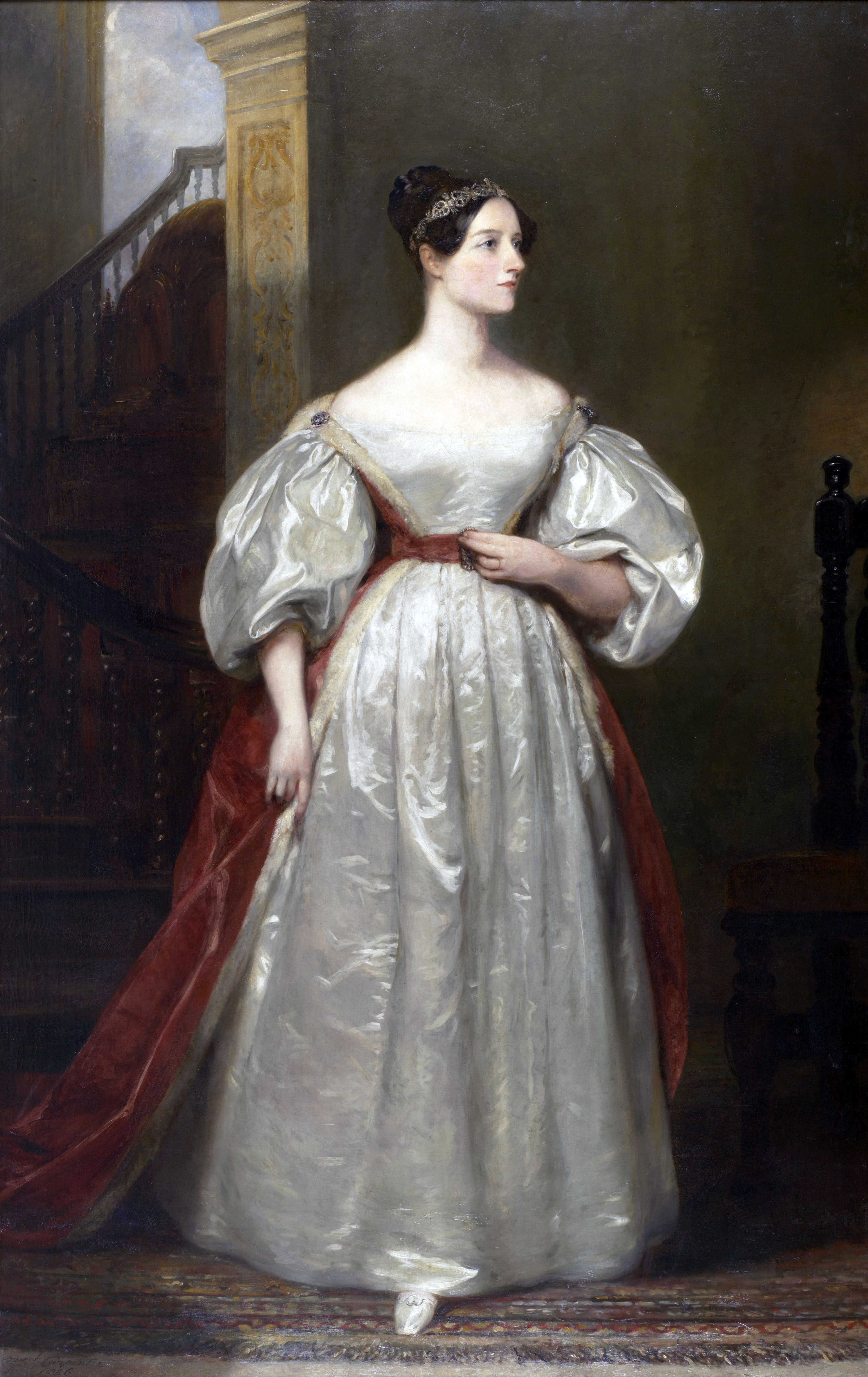
				<content:encoded><![CDATA[<p>There have been a few posts I&#8217;ve seen recently about math related comics. First, <a href="http://www.boingboing.net/2009/10/05/comic-about-ada-love.html" target="_blank">Boing Boing</a> clued me into <a href="http://sydneypadua.com/2dgoggles/stories/" target="_blank">The Thrilling Adventures of Lovelace and Babbage</a>, which is pretty much exactly what is sounds like. This webcomic gives some great info (both truth and pseudo-truth) about both Charles and Ada. Sydney Padua, the author of the comic, explains:</p>
<blockquote><p>It’s a punchline.  As in “Wouldn’t it be hee-larious if there was a comic about Ada Lovelace and Charles Babbage fighting crime? Thanks, I’ll be here all week!”  The imaginary comic was the punchline to <a href="http://sydneypadua.com/2dgoggles/lovelace-the-origin-2/">Lovelace: The Origin</a>, drawn because my good buddy <a href="http://chocolateandvodka.com/">Suw Charman</a> got me drunk started a Noble Enterprise called <a href="http://findingada.com/">Ada Lovelace Day</a>.</p></blockquote>
<p>Secondly, Jim Holt wrote a <a href="http://www.nytimes.com/2009/09/27/books/review/Holt-t.html?_r=2&amp;emc=eta1">book review</a> last Sunday that introduced me to <a href="http://www.logicomix.com/en/" target="_blank">Logicomix</a>, which the official website describes as follows:</p>
<blockquote><p>Covering a span of sixty years, the graphic novel Logicomix was inspired by the epic story of the quest for the Foundations of Mathematics.</p>
<p>This was a heroic intellectual adventure most of whose protagonists paid the price of knowledge with extreme personal suffering and even insanity. The book tells its tale in an engaging way, at the same time complex and accessible. It grounds the philosophical struggles on the undercurrent of personal emotional turmoil, as well as the momentous historical events and ideological battles which gave rise to them.</p>
<p>The role of narrator is given to the most eloquent and spirited of the story&#8217;s protagonists, the great logician, philosopher and pacifist Bertrand Russell. It is through his eyes that the plights of such great thinkers as Frege, Hilbert, Poincaré, Wittgenstein and Gödel come to life, and through his own passionate involvement in the quest that the various narrative strands come together.</p></blockquote>
<p>VERY cool. I&#8217;ll definitely be picking this up before too long. The art looks fantastic, and I&#8217;m sure the story matches up! Check out the review linked to above for a fuller introduction to the story.</p>
<img src="http://feeds.feedburner.com/~r/logicnest/cvbT/~4/cxIlG4mpNS4" height="1" width="1"/>]]></content:encoded>
			<wfw:commentRss>http://www.logicnest.com/archives/424/feed</wfw:commentRss>
		<slash:comments>1</slash:comments>
		<feedburner:origLink>http://www.logicnest.com/archives/424</feedburner:origLink></item>
		<item>
		<title>Apology to Alan Turing</title>
		<link>http://feedproxy.google.com/~r/logicnest/cvbT/~3/hZjCf-R1tH4/418</link>
		<comments>http://www.logicnest.com/archives/418#comments</comments>
		<pubDate>Tue, 06 Oct 2009 21:22:51 +0000</pubDate>
		<dc:creator>Ian Luke Kane</dc:creator>
				<category><![CDATA[Logic/Math]]></category>
		<category><![CDATA[Alan Turing]]></category>

		<guid isPermaLink="false">http://www.logicnest.com/?p=418</guid>
		<description><![CDATA[I&#8217;m rather late on the draw in regard to this note, but I just wanted to say that I was ...]]></description>
				<content:encoded><![CDATA[<p>I&#8217;m rather late on the draw in regard to this note, but I just wanted to say that I was profoundly glad to hear that the Prime Minister of England released a <a href="http://news.bbc.co.uk/2/hi/8249792.stm" target="_blank">letter of apology</a> on September 10 recognizing <a href="http://en.wikipedia.org/wiki/Alan_Turing" target="_blank">Alan Turing</a> for his monumental &#8220;contribution to humankind&#8221;, including work in computation, mathematics, and code-breaking.</p>
<p>Despite his contributions, Turing was convicted under English homophobic laws and sentenced to chemical castration. As PM Brown writes, &#8220;In 1952, he was convicted of &#8216;gross indecency&#8217; &#8211; in effect, tried for being gay.&#8221; Given the choice between going to prison and undergoing hormone treatments, he chose the latter. Less than three years later Turing was found dead, apparently the result of a cyanide overdose. His death was judged to be a suicide.</p>
<p>While the note obviously cannot change the past, I&#8217;m glad to see the British government deliver the note. And I&#8217;m extremely proud of those individuals who lobbied the government to acknowledge this terrible mistake. Again, as PM Brown wrote, &#8220;So on behalf of the British government, and all those who live freely thanks to Alan&#8217;s work I am very proud to say: we&#8217;re sorry, you deserved so much better.&#8221; So very true.</p>
<img src="http://feeds.feedburner.com/~r/logicnest/cvbT/~4/hZjCf-R1tH4" height="1" width="1"/>]]></content:encoded>
			<wfw:commentRss>http://www.logicnest.com/archives/418/feed</wfw:commentRss>
		<slash:comments>0</slash:comments>
		<feedburner:origLink>http://www.logicnest.com/archives/418</feedburner:origLink></item>
		<item>
		<title>Edgar Allan Poe and Cryptography</title>
		<link>http://feedproxy.google.com/~r/logicnest/cvbT/~3/XNvlTJa4eP8/411</link>
		<comments>http://www.logicnest.com/archives/411#comments</comments>
		<pubDate>Tue, 06 Oct 2009 15:58:29 +0000</pubDate>
		<dc:creator>Ian Luke Kane</dc:creator>
				<category><![CDATA[Entertainment]]></category>
		<category><![CDATA[Cryptography]]></category>
		<category><![CDATA[Edgar Allan Poe]]></category>

		<guid isPermaLink="false">http://www.logicnest.com/?p=411</guid>
		<description><![CDATA[I&#8217;m trying to fill this autumn with plenty of seasonal activities, and so I&#8217;ve decided to try to read the ...]]></description>
				<content:encoded><![CDATA[<p>I&#8217;m trying to fill this autumn with plenty of seasonal activities, and so I&#8217;ve decided to try to read the complete works of <a href="http://en.wikipedia.org/wiki/Edgar_Allan_Poe#Cryptography" target="_blank">Edgar Allan Poe</a> during the month of October. I&#8217;ve also been reading some biographical information about the writer, and must admit that I had never heard about the cryptographic challenge that Poe issued to readers in the <em>Alexander&#8217;s Weekly Messenger </em>in December 1839. R. Morelli has a fantastic overview of this cipher challenge <a href="http://starbase.trincoll.edu/~crypto/historical/poe.html" target="_self" class="broken_link">here</a>. In sum, Poe proposed that &#8220;he could solve any simple substitution cipher that readers of the magazine cared to submit. A <a href="http://starbase.trincoll.edu/~crypto/historical/substitution.html" class="broken_link">simple substitution cipher</a> is one in which the same symbol stands for the same letter of the alphabet in the concealed message.&#8221;</p>
<p>It appears that Poe did very well with the challenge.</p>
<p>Also, fans of Poe&#8217;s writing will know about the short story <em><a href="http://en.wikipedia.org/wiki/The_Gold-Bug" target="_self">The Gold Bug</a><span style="font-style: normal;">, and how this story of a treasure hunt relies on the solving of a cryptogram. Poe&#8217;s works are in the public domain, so it&#8217;s possible to read this story online through Google Books <a href="http://books.google.com/books?id=_B8eAAAAMAAJ&amp;dq=the%20gold%20bug%20edgar%20allan%20poe&amp;pg=PA7#v=onepage&amp;q=&amp;f=false">here</a>, or to download the story (amongst others) from Project Gutenberg <a href="http://www.gutenberg.org/etext/2147" target="_self" class="broken_link">here</a>.</span></em></p>
<img src="http://feeds.feedburner.com/~r/logicnest/cvbT/~4/XNvlTJa4eP8" height="1" width="1"/>]]></content:encoded>
			<wfw:commentRss>http://www.logicnest.com/archives/411/feed</wfw:commentRss>
		<slash:comments>1</slash:comments>
		<feedburner:origLink>http://www.logicnest.com/archives/411</feedburner:origLink></item>
		<item>
		<title>Mathematical Typesetting in Wolfram Alpha</title>
		<link>http://feedproxy.google.com/~r/logicnest/cvbT/~3/mrh2Lpm5wtE/391</link>
		<comments>http://www.logicnest.com/archives/391#comments</comments>
		<pubDate>Thu, 09 Jul 2009 17:30:18 +0000</pubDate>
		<dc:creator>Ian Luke Kane</dc:creator>
				<category><![CDATA[LaTeX]]></category>
		<category><![CDATA[Logic/Math]]></category>
		<category><![CDATA[Typesetting]]></category>

		<guid isPermaLink="false">http://www.logicnest.com/?p=391</guid>
		<description><![CDATA[I came across a great little tip on David Bau&#8217;s blog today about using Wolfram Alpha to create quick GIF ...]]></description>
				<content:encoded><![CDATA[<p>I came across a great little <a href="http://davidbau.com/archives/2009/07/08/easy_math_typesetting.html" target="_self">tip</a> on <a href="http://davidbau.com/" target="_self">David Bau&#8217;s blog</a> today about using <a href="http://www00.wolframalpha.com/" target="_self">Wolfram Alpha</a> to create quick GIF images of mathematical formulae to be included in a blog. For example, by typing &#8220;integrate sin x dx from x=0 to pi&#8221; into the Wolfram Alpha search box, you&#8217;re presented with both of graph of the curve as well as a typeset version:</p>
<p><img class="alignnone size-full wp-image-393" title="wolframalpha2" src="http://www.logicnest.com/wp-content/uploads/2009/07/wolframalpha2.gif" alt="wolframalpha2" width="200" height="119" /></p>
<p><img class="alignnone size-full wp-image-392" title="wolframalpha1" src="http://www.logicnest.com/wp-content/uploads/2009/07/wolframalpha1.gif" alt="wolframalpha1" width="109" height="35" /></p>
<p>I&#8217;ve written a few times about using LaTeX in WordPress, but this is certainly an easy way to include typeset equations in a blog. I&#8217;m not sure why this hadn&#8217;t occurred to me when I first started playing with Wolfram Alpha, but I suppose that&#8217;s why people like David write great tips like this!</p>
<img src="http://feeds.feedburner.com/~r/logicnest/cvbT/~4/mrh2Lpm5wtE" height="1" width="1"/>]]></content:encoded>
			<wfw:commentRss>http://www.logicnest.com/archives/391/feed</wfw:commentRss>
		<slash:comments>0</slash:comments>
		<feedburner:origLink>http://www.logicnest.com/archives/391</feedburner:origLink></item>
		<item>
		<title>Carnival of Mathematics @ Todd and Vishal’s Blog</title>
		<link>http://feedproxy.google.com/~r/logicnest/cvbT/~3/m7GomTt9GMc/388</link>
		<comments>http://www.logicnest.com/archives/388#comments</comments>
		<pubDate>Mon, 06 Jul 2009 22:42:47 +0000</pubDate>
		<dc:creator>Ian Luke Kane</dc:creator>
				<category><![CDATA[Logic/Math]]></category>
		<category><![CDATA[Carnival of Mathematics]]></category>

		<guid isPermaLink="false">http://www.logicnest.com/?p=388</guid>
		<description><![CDATA[I rarely post to issues of the Carnival of Mathematics from my blog, and I really don&#8217;t have a good ...]]></description>
				<content:encoded><![CDATA[<p>I rarely post to issues of the <a href="http://carnivalofmathematics.wordpress.com/" target="_self">Carnival of Mathematics</a> from my blog, and I really don&#8217;t have a good reason for it. The 54th edition was released yesterday on Todd and Vishal&#8217;s blog <a href="http://topologicalmusings.wordpress.com/2009/07/05/the-54th-carnival-of-mathematics/" target="_self">here</a>, and there are some interesting posts. First, I enjoyed the post and the comments on the Gödel&#8217;s ontological proof, which <a href="http://en.wikipedia.org/wiki/G%C3%B6del%27s_ontological_proof">Wikipedia</a> tells us &#8220;is a formalization of <a title="Anselm of Canterbury" href="http://en.wikipedia.org/wiki/Anselm_of_Canterbury">Saint Anselm&#8217;s</a> <a title="Ontological argument" href="http://en.wikipedia.org/wiki/Ontological_argument">ontological argument</a> for God&#8217;s existence.&#8221; Secondly, there is a link to The Lebombo Bone, which may be the oldest mathematical artifact in the world. Good stuff. Check out the carnival itself for links to these posts.</p>
<p>I must admit that the contents of these carnivals I enjoy the most are ones that take an interesting piece of the math world and make it accessible to a wide reaching audience. Which, I suppose, is generally what I try to do on this blog. The hardcore math is also good, but I like the immediate mystery present in the more accessible posts. I suppose this is because the mystery drew me to math in the first place. Alas.</p>
<img src="http://feeds.feedburner.com/~r/logicnest/cvbT/~4/m7GomTt9GMc" height="1" width="1"/>]]></content:encoded>
			<wfw:commentRss>http://www.logicnest.com/archives/388/feed</wfw:commentRss>
		<slash:comments>0</slash:comments>
		<feedburner:origLink>http://www.logicnest.com/archives/388</feedburner:origLink></item>
		<item>
		<title>The Summit of Math Education: Statistics, not Calculus</title>
		<link>http://feedproxy.google.com/~r/logicnest/cvbT/~3/MB7Flm5MOhQ/377</link>
		<comments>http://www.logicnest.com/archives/377#comments</comments>
		<pubDate>Tue, 30 Jun 2009 00:46:30 +0000</pubDate>
		<dc:creator>Ian Luke Kane</dc:creator>
				<category><![CDATA[Logic/Math]]></category>
		<category><![CDATA[Statistics]]></category>
		<category><![CDATA[Education]]></category>
		<category><![CDATA[Math]]></category>

		<guid isPermaLink="false">http://www.logicnest.com/?p=377</guid>
		<description><![CDATA[The following TED video, given by mathemagician and professor Arthur Benjamin (about whom I&#8217;ve previously blogged about here), embodies the ...]]></description>
				<content:encoded><![CDATA[<p>The following <a href="http://www.ted.com" target="_self">TED</a> video, given by mathemagician and professor Arthur Benjamin (about whom I&#8217;ve previously blogged about <a href="http://www.logicnest.com/archives/102">here</a>), embodies the best idea I&#8217;ve heard about math education in a LONG time. Perhaps ever. Just as I recently <a href="http://www.logicnest.com/archives/303" target="_self">posted</a> about how games like backgammon embody the 21st century in replacement of games like chess for the 20th, statistics is the central branch of mathematics for the 21st century rather than the calculus centric view of the 20th century. If you&#8217;re into math and math education, this will probably be the best 3 minutes you&#8217;ll spend today.</p>
<p><object width="446" height="326" classid="clsid:d27cdb6e-ae6d-11cf-96b8-444553540000" codebase="http://download.macromedia.com/pub/shockwave/cabs/flash/swflash.cab#version=6,0,40,0"><param name="allowFullScreen" value="true" /><param name="wmode" value="transparent" /><param name="bgColor" value="#ffffff" /><param name="flashvars" value="vu=http://video.ted.com/talks/embed/ArthurBenjamin_2009-embed_high.flv&amp;su=http://images.ted.com/images/ted/tedindex/embed-posters/ArthurBenjamin-2009.embed_thumbnail.jpg&amp;vw=432&amp;vh=240&amp;ap=0&amp;ti=587" /><param name="src" value="http://video.ted.com/assets/player/swf/EmbedPlayer.swf" /><param name="allowfullscreen" value="true" /><embed width="446" height="326" type="application/x-shockwave-flash" src="http://video.ted.com/assets/player/swf/EmbedPlayer.swf" allowFullScreen="true" wmode="transparent" bgColor="#ffffff" flashvars="vu=http://video.ted.com/talks/embed/ArthurBenjamin_2009-embed_high.flv&amp;su=http://images.ted.com/images/ted/tedindex/embed-posters/ArthurBenjamin-2009.embed_thumbnail.jpg&amp;vw=432&amp;vh=240&amp;ap=0&amp;ti=587" allowfullscreen="true" /></object></p>
<img src="http://feeds.feedburner.com/~r/logicnest/cvbT/~4/MB7Flm5MOhQ" height="1" width="1"/>]]></content:encoded>
			<wfw:commentRss>http://www.logicnest.com/archives/377/feed</wfw:commentRss>
		<slash:comments>3</slash:comments>
		<feedburner:origLink>http://www.logicnest.com/archives/377</feedburner:origLink></item>
		<item>
		<title>Game Theory, Money, and Rationality</title>
		<link>http://feedproxy.google.com/~r/logicnest/cvbT/~3/leWakhZpySM/372</link>
		<comments>http://www.logicnest.com/archives/372#comments</comments>
		<pubDate>Mon, 29 Jun 2009 23:55:27 +0000</pubDate>
		<dc:creator>Ian Luke Kane</dc:creator>
				<category><![CDATA[Games]]></category>
		<category><![CDATA[Economics]]></category>
		<category><![CDATA[Game Theory]]></category>
		<category><![CDATA[Money]]></category>
		<category><![CDATA[Rationality]]></category>

		<guid isPermaLink="false">http://www.logicnest.com/?p=372</guid>
		<description><![CDATA[Ars Technica has an interesting article today about a paper about to be released in the Proceedings of the National ...]]></description>
				<content:encoded><![CDATA[<p style="text-align: left;">Ars Technica has an interesting <a href="http://arstechnica.com/science/news/2009/06/irrational-markets-people-reject-free-money-out-of-anger.ars" target="_self">article</a> today about a paper about to be released in the <a href="http://www.pnas.org/" target="_self">Proceedings of the National Academy of Sciences</a> (PNAS) about variations to an experiment in Game Theory called the Ultamatum Game. As the Ars article explains,</p>
<blockquote style="text-align: left;"><p>The basic rules of the Ultimatum Game are simple. One person is given a stack of cash, and told to divide it between themselves and a second party. That second party is then given the chance to accept or reject the offer; if it&#8217;s rejected, neither of them get any money. Clearly, any of this free money should be better than nothing, so under assumptions of strictly rational behavior, you might expect all offers to be accepted.</p></blockquote>
<p style="text-align: left;">It turns out that tweaking some of the premises of this game leads to some interesting results in terms of human rationality, economic systems, and guilt. I highly recommend reading the article in its entirety. Also, if you&#8217;re interested in reading the abstract of actual paper itself, it&#8217;s available on the PNAS website <a href="http://www.pnas.org/content/early/2009/06/26/0900636106.abstract">here</a>. It also looks like the full paper is available in PDF format if you&#8217;d like to read it. Not sure how long it will be available, but it&#8217;s there now. Toshio Yamagishi, the lead author, has a website <a href="http://lynx.let.hokudai.ac.jp/members/yamagishi/english/">here</a>.</p>
<img src="http://feeds.feedburner.com/~r/logicnest/cvbT/~4/leWakhZpySM" height="1" width="1"/>]]></content:encoded>
			<wfw:commentRss>http://www.logicnest.com/archives/372/feed</wfw:commentRss>
		<slash:comments>0</slash:comments>
		<feedburner:origLink>http://www.logicnest.com/archives/372</feedburner:origLink></item>
		<item>
		<title>Backgammon and the 21st Century</title>
		<link>http://feedproxy.google.com/~r/logicnest/cvbT/~3/MOAvQG3e98w/303</link>
		<comments>http://www.logicnest.com/archives/303#comments</comments>
		<pubDate>Wed, 24 Jun 2009 10:53:36 +0000</pubDate>
		<dc:creator>Ian Luke Kane</dc:creator>
				<category><![CDATA[Logic/Math]]></category>
		<category><![CDATA[21st Century]]></category>
		<category><![CDATA[Backgammon]]></category>
		<category><![CDATA[Chess]]></category>
		<category><![CDATA[Probability]]></category>

		<guid isPermaLink="false">http://www.logicnest.com/?p=303</guid>
		<description><![CDATA[In 1997, chess champion Gary Kasparov was beaten in a 6-point match against a computer. It was the first time ...]]></description>
				<content:encoded><![CDATA[<p>In 1997, chess champion Gary Kasparov was beaten in a 6-point match against a computer. It was the first time this had ever happened. The computer, named <a href="http://en.wikipedia.org/wiki/Deep_Blue_(chess_computer)" target="_self">Deep Blue</a>, was developed by IBM after some Carnegie Mellon University graduates joined the company. Here&#8217;s what Wikipedia has to say about the hardware computing power of Deep Blue:</p>
<blockquote><p>The system derived its playing strength mainly out of <a title="Brute-force search" href="http://en.wikipedia.org/wiki/Brute-force_search">brute force</a> computing power. It was a <a title="Massively parallel" href="http://en.wikipedia.org/wiki/Massively_parallel">massively parallel</a>, <a title="IBM Scalable POWERparallel" href="http://en.wikipedia.org/wiki/IBM_Scalable_POWERparallel">RS/6000 SP Thin P2SC</a>-based system with 30-nodes, with each node containing a 120 MHz <a title="POWER2" href="http://en.wikipedia.org/wiki/POWER2#P2SC">P2SC</a> <a title="Microprocessor" href="http://en.wikipedia.org/wiki/Microprocessor">microprocessor</a> for a total of 30, enhanced with 480 special purpose <a title="Very-large-scale integration" href="http://en.wikipedia.org/wiki/Very-large-scale_integration">VLSI</a> chess chips. Its chess playing program was written in <a title="C (programming language)" href="http://en.wikipedia.org/wiki/C_%28programming_language%29">C</a> and ran under the <a class="mw-redirect" title="AIX operating system" href="http://en.wikipedia.org/wiki/AIX_operating_system">AIX</a> <a title="Operating system" href="http://en.wikipedia.org/wiki/Operating_system">operating system</a>. It was capable of evaluating 200 million positions per second&#8230;In June 1997, Deep Blue was the 259th most powerful <a title="Supercomputer" href="http://en.wikipedia.org/wiki/Supercomputer">supercomputer</a> according to the <a title="TOP500" href="http://en.wikipedia.org/wiki/TOP500">TOP500</a> list, achieving 11.38 <a class="mw-redirect" title="GFLOPS" href="http://en.wikipedia.org/wiki/GFLOPS">GFLOPS</a> on the High-Performance <a title="LINPACK" href="http://en.wikipedia.org/wiki/LINPACK">LINPACK</a> benchmark.</p></blockquote>
<p>Brute force. That&#8217;s how the computer got the job done. Of course, it&#8217;s never that simple. But there is one thing that can be said for certain: If you lose a game of chess, it is because you were outplayed. Plain and simple. And I think it&#8217;s for this reason that chess became an apt metaphor for modernist notions of intelligence. Stereotypically speaking, if you ask a person the question of what game smart people play, I would guess that chess would be the most common answer in the western world (perhaps Go in the eastern world). The fate of this game is in the hand of the players entirely. There is no chance involved, with the one exception of which player plays first.</p>
<p>As a child, I had a hard time enjoying games that involved a substantial amount of probability. &#8220;What&#8217;s the point,&#8221; I thought, &#8220;of playing a game skillfully if it&#8217;s possible for me to lose at the last possible moment due to a bad roll of the dice or a badly dealt card?&#8221; But as I&#8217;ve grown older, I&#8217;ve come to enjoy games like this MORE on average than straightforward skill games like chess. Enter backgammon.</p>
<p>For those of you who don&#8217;t know backgammon, I suggest checking out the Wikipedia page <a href="http://en.wikipedia.org/wiki/Backgammon">here</a>. Backgammon has been played for 5,000 years, and has evolved substantially over that time. For example, of the additions to the game, the doubling cube, drastically changed play and was introduced less than 100 years ago. Backgammon is not like chess. In a single game of backgammon, it&#8217;s quite possible for a novice to beat a master due to elements of chance. Said another way, it&#8217;s possible to play the best possible game of backgammon you can based on your dice rolls and still lose. And this is the aspect of the game that makes it an apt metaphor for the 21st century. While the 20th century dealt with certainty, the 21st will deal with probability.</p>
<p>And this is not to say that games like backgammon are somehow more subjective than games like chess. There are some amazing machine learning techniques used to study the game (e.g. <a href="http://www.cs.ualberta.ca/~sutton/book/11/node2.html" target="_self">TD-Gammon</a>), and there are quite a few computer programs, such as <a href="http://www.gnubg.org/" target="_self">GNU Backgammon</a>, that use these techniques to outplay human opponents. Poker games like <a href="http://en.wikipedia.org/wiki/Texas_hold_%27em" target="_self">Texas Hold&#8217;em</a> also involve an element of probability, and have grown wildly popular over the last many years. And those of you who know poker know that there are rules that govern &#8220;right&#8221; playing. Though the cards dictate play, there are strategies that maximize gain and minimize risk. The same is true of backgammon. And with the game popping up in popular culture a bit more, like in the television show <a href="http://lostpedia.wikia.com/wiki/Main_Page" target="_self">Lost</a>, I can only see backgammon growing in popularity.</p>
<img src="http://feeds.feedburner.com/~r/logicnest/cvbT/~4/MOAvQG3e98w" height="1" width="1"/>]]></content:encoded>
			<wfw:commentRss>http://www.logicnest.com/archives/303/feed</wfw:commentRss>
		<slash:comments>3</slash:comments>
		<feedburner:origLink>http://www.logicnest.com/archives/303</feedburner:origLink></item>
		<item>
		<title>Flickr: Mathematics Photos</title>
		<link>http://feedproxy.google.com/~r/logicnest/cvbT/~3/Ci32Pvm5jd8/257</link>
		<comments>http://www.logicnest.com/archives/257#comments</comments>
		<pubDate>Wed, 24 Jun 2009 00:11:16 +0000</pubDate>
		<dc:creator>Ian Luke Kane</dc:creator>
				<category><![CDATA[Art]]></category>
		<category><![CDATA[Creative Commons]]></category>
		<category><![CDATA[Flickr]]></category>
		<category><![CDATA[Math]]></category>
		<category><![CDATA[Math Art]]></category>
		<category><![CDATA[Photography]]></category>
		<category><![CDATA[Probability]]></category>

		<guid isPermaLink="false">http://www.logicnest.com/?p=257</guid>
		<description><![CDATA[As an artistic diversion, I decided to search Flickr for the words &#8220;mathematics&#8221;, &#8220;math&#8221;, and &#8220;probability&#8221; on Creative Commons licensed ...]]></description>
				<content:encoded><![CDATA[<p>As an artistic diversion, I decided to search <a href="http://www.flickr.com" target="_self">Flickr</a> for the words &#8220;mathematics&#8221;, &#8220;math&#8221;, and &#8220;probability&#8221; on <a href="http://creativecommons.org/" target="_self">Creative Commons</a> licensed photographs. The results were wonderful. Some of my favorites are below. Click on the photos to see explanations from the authors or to see more of their work!</p>
<p><a href="http://www.flickr.com/photos/sveinhal/2081201200/in/set-72157603779762835/"><img class="size-full wp-image-328 alignnone" title="Klein_Art" src="http://www.logicnest.com/wp-content/uploads/2009/06/Klein_Art.jpg" alt="Klein_Art" width="500" height="335" /></a></p>
<p>Klein bottle (procrastination), by <a title="Link to Pragmagraphr's photostream" href="http://www.flickr.com/photos/sveinhal/">Pragmagraphr</a></p>
<p>&#8212;&#8211;</p>
<p><a href="http://www.flickr.com/photos/lost_archetype/438145938/"><img class="alignnone size-full wp-image-331" title="love_math" src="http://www.logicnest.com/wp-content/uploads/2009/06/love_math.jpg" alt="love_math" width="500" height="380" /></a></p>
<p>Love &amp; Mathematics, by <a title="Link to Lost Archetype's photostream" href="http://www.flickr.com/photos/lost_archetype/" rel="dc:creator cc:attributionURL">Lost Archetype</a></p>
<p>&#8212;&#8211;</p>
<p><a href="http://www.flickr.com/photos/anroir/323863905/"><strong><img class="alignnone size-full wp-image-332" title="veggie_math" src="http://www.logicnest.com/wp-content/uploads/2009/06/veggie_math.jpg" alt="veggie_math" width="500" height="394" /></strong></a></p>
<p>Vegetable Meets Mathematics, by <a href="http://www.flickr.com/photos/anroir/">anroir</a></p>
<p>&#8212;&#8211;</p>
<p><a href="http://www.flickr.com/photos/jantik/271992932/"><img class="alignnone size-full wp-image-335" title="nnplusone" src="http://www.logicnest.com/wp-content/uploads/2009/06/nnplusone.jpg" alt="nnplusone" width="500" height="375" /></a></p>
<p>n(n+1), by <a href="http://www.flickr.com/photos/jantik/">Jan Tik</a><br />
&#8212;&#8211;</p>
<p><a href="http://www.flickr.com/photos/sbprzd/1602346161/"><img class="alignnone size-full wp-image-341" title="torus" src="http://www.logicnest.com/wp-content/uploads/2009/06/torus.jpg" alt="torus" width="500" height="375" /></a></p>
<p>Torus with pairs of Villarceau circles, by <a href="http://www.flickr.com/photos/sbprzd/">Seb Przd</a></p>
<p>&#8212;&#8211;</p>
<p><a href="http://www.flickr.com/photos/adamcha/396207885/"><img class="alignnone size-full wp-image-343" title="railroad" src="http://www.logicnest.com/wp-content/uploads/2009/06/railroad.jpg" alt="railroad" width="500" height="291" /></a></p>
<p>Railroad Math, by <a href="http://www.flickr.com/photos/adamcha/">Adamcha</a></p>
<p>&#8212;&#8211;</p>
<p><a href="http://www.flickr.com/photos/derricksphotos/247141694/"><img class="alignnone size-full wp-image-345" title="portraitprob" src="http://www.logicnest.com/wp-content/uploads/2009/06/portraitprob.jpg" alt="portraitprob" width="500" height="375" /></a></p>
<p>The Portrait of Conditional Probability, With A Third Ear Maybe, by <a href="http://www.flickr.com/photos/derricksphotos/" target="_self">DerrickT</a></p>
<p>&#8212;&#8211;</p>
<p><img class="alignnone size-full wp-image-348" title="onebillion" src="http://www.logicnest.com/wp-content/uploads/2009/06/onebillion.jpg" alt="onebillion" width="500" height="375" /></p>
<p>One in a billion, by <a href="http://www.flickr.com/photos/msittig/">Micah Sittig</a></p>
<img src="http://feeds.feedburner.com/~r/logicnest/cvbT/~4/Ci32Pvm5jd8" height="1" width="1"/>]]></content:encoded>
			<wfw:commentRss>http://www.logicnest.com/archives/257/feed</wfw:commentRss>
		<slash:comments>0</slash:comments>
		<feedburner:origLink>http://www.logicnest.com/archives/257</feedburner:origLink></item>
	</channel>
</rss><!-- Dynamic page generated in 1.277 seconds. --><!-- Cached page generated by WP-Super-Cache on 2013-05-20 23:57:10 -->