Opus2026-08-18T13:26:59-05:00https://opus.ing/feedJason Moreheadhttps://opus.ing/p/all-things-in-commonAll Things in Common2026-08-15T16:17:00-05:002026-08-15T16:17:18-05:00Jason Moreheadhttps://opus.ing/
How does the Book of Acts relate to a culture that’s as individualistic and decentralized as ours?
My wife and I recently began working our way through the Book of Acts, which chronicles the earliest days of the Church following Jesus’s ascension. Near the end of chapter two, the author of Acts highlights the fellowship of believers, noting specifically that “all who believed were together and had all things in common.”
It’s tempting to read those verses from within our 21st-century socio-political context. Which explains why even the briefest of internet searches will return numerous discussions concerning whether or not Acts is advocating a communal, and even communist way of living, especially in light of verse 45: “And they were selling their possessions and belongings and distributing the proceeds to all, as any had need.”
The Bible should certainly influence a Christian’s political thinking, but aligning Scripture with any political ideology is a fraught endeavor that can easily result in abuse and misunderstanding. Still, it’s striking that one of the defining characteristics of the early Church was that they had “all things in common.” Acts’ account seems to be not just a historical statement, but a normative one, as well, that describes how Christians should live, as befitting Christ’s “new commandment” in John’s gospel: “By this all people will know that you are my disciples, if you have love for one another.”
But what does it mean to have “all things in common” in a culture that’s as individualistic and decentralized as ours, where personal freedom and autonomy are some of the chief values? I’ve long-believed that Christians tend to over-think and over-spiritualize the answers to such questions. We want our faith to feel epic and momentous, and as a result, we risk missing out on the significance — and goodness — of the ordinary and mundane.
But when you choose to not overlook the ordinary stuff of life, then having “all things in common” starts look a lot more like:
A friend texting you out of the blue to ask if they can bake you some cinnamon rolls.
Picking up a friend from the airport at a moment’s notice.
Being so trusted by your friend’s toddler that when they take a tumble and Mom’s not around, they immediately run to you for comfort.
Faithfully hosting a regular game night for years on end, and generously ensuring a wide assortment of drinks and snacks every single time.
Giving rides to and from church, every Sunday, to individuals living in a group home.
Helping people out with their yard work.
Delivering clothes that your kids have outgrown to younger families in the church.
Bringing mercy meals to families who’ve just had a new baby or are experiencing illness or hardship.
Restocking the little free pantry in your church’s neighborhood.
Blessing church events with your elite-level BBQ or making French toast for the entire congregation on Easter Sunday.
Braving the cold to shovel the church sidewalk in the winter.
Cleaning someone’s house as they get ready to move and/or helping them load and unload the moving truck.
Not being able to tell where one family ends and another begins as they sit beside each other in the pews.
Taking turns hosting a monthly community dinner with other church folks who live nearby.
Cheering on another churchgoer’s kid at their soccer match.
And of course, church potlucks.
Some of these are things that my family has personally experienced and benefited from, while others are things that I’ve witnessed others do, or have heard about from those who’ve been blessed by them. And at first, they might not seem all that special. Of course people are going to help their friends move, you might say, or bring them a meal when they’ve just had a baby, so why make a big deal about it?
First off, pushing back against our culture’s increasing isolation and fragmentation (e.g., the much-reported male loneliness epidemic and political divisions), and striving to create more community, is an inherently good thing. After all, God did not intend for us to be alone and entirely self-sufficient. We need each other, and intentional, consistent community is a key indicator of a healthy, more flourishing and fulfilling life.
Second, I fear that dismissing such actions as mundane makes it easier to not do them in the first place precisely because they’re (seemingly) unimportant or unimpressive. But in my experience, people benefit from the mundane far more than we realize (see James 2:15 – 16).
When we had our first child, we were overwhelmed by people bringing us mercy meals. I don’t think we had to cook a single meal for ourselves during the first two weeks or so after we came home from the hospital, which was a true mercy because we could barely get enough sleep at the time, let alone summon the wits to make dinner. And people didn’t just bring piddly little casseroles, either, but lavished us with incredible dishes. Suffice to say, we ate well during those weeks… and each meal was tangible reminder that our little family was known, seen, and loved by our community.
Finally, it’s true that one need not be a Christian to pick up a friend from the airport or help a family member move. Those are all part of simply being a decent human being. But I’m reminded of an anecdote about C. S. Lewis — unfortunately, I couldn’t find the original source — that when he became a Christian, he was surprised to discover that much of what it meant to “live as a Christian” was just doing many of things that he’d done prior to his conversion, albeit with a different mindset and focus.
So yes, one might be quick to help a friend or family member move into a new house, but when one helps another churchgoer that they hardly know, two things happen. First, it provides an opportunity for new friendship. Second, and more importantly, it’s a simple reminder — so simple, in fact, that it’s easy to miss entirely — that we belong to a community that transcends and supersedes genetics, language, culture, social status, aesthetic preferences, political affiliations, and every other earthly distinction that unites — and more often than not, separates — us.
To have “all things in common,” therefore, is to remember that you are not your own. For Christians, our gifts, talents, possessions, and privilege do not ultimately belong to us. Such things are not to be gathered greedily or jealously protected. Rather, they are gifts from God to be stewarded and wisely used for the furthering of His kingdom and the blessing of those around us.
]]>https://opus.ing/p/light-in-realitys-shadow-desiderii-marginis“Light in Reality’s Shadow” by Desiderii Marginis2026-08-14T20:39:00-05:002026-08-14T20:41:12-05:00Jason Moreheadhttps://opus.ing/
Listen to the first song from Johan Levin’s upcoming Mark Rothko-inspired album.
I wrote about Desiderii Marginis’s Live in Zagreb earlier this month, and what does Johan Levin do less than two weeks later? He announces a new album titled Tragedy Ecstasy Doom and drops the first song from it. Not that I’m complaining, mind you. To my ears, Levin is arguably the finest practitioner of dark ambience currently working today, and I’m always ready for more of his immersive soundscapes.
And “Light in Reality’s Shadow” is plenty immersive, even as it skews a bit from Levin’s usual sound palette. It’s still as dark and majestically ominous as anything you’ll hear all year long, but there’s a decided lack of melancholy chants and industrial clanks and clangs — which could be due to the album’s inspiration. As Levin posted on Facebook, “This is an album I’ve been wanting to make for a long time. An album of long, deep, immersive and meditative drones inspired by the work of american painter Mark Rothko.”
In any case, it’s still the work of a master. Listen closely, and you’ll hear Levin’s supreme control of his sonics, which he employs to create a slab of ambience that reveals new depths and details the more closely you listen to it.
Tragedy Ecstasy Doom will be released digitally on September 11, 2026.
]]>https://opus.ing/p/flawed-swervedriver“Flawed” by Swervedriver2026-08-11T16:56:00-05:002026-08-11T17:13:14-05:00Jason Moreheadhttps://opus.ing/
The shoegaze legends are releasing the original demo recordings for their 1991 debut album.
Swervedriver’s debut album, Raise, turns 35 this year, and to mark the occasion, the shoegaze legends are releasing the album’s original demos. The Bandcamp notes contain a mini-essay about the recording process and experience, which took place during the fall and winter of 1990 and 1991.
So, what you hold in your hands in the results of all those weeks’ work. The audio quality is not pristine but considering our rudimentary recording skills and the technology available at the time, it was never going to be. You may hear an occasional bum note, or a dropped beat here and there. You will definitely hear the hiss of amplifiers and the buzz of FX pedals but most importantly what you will also hear are the songs as they first emerged, fresh and to all intents and purposes, played live. Some would undergo further refinement as the album recording progressed but this particular release is a time capsule, a document of a crucial period in the band’s development and as such it deserves to be shared. It contains the best moments of those original Portastudio tapes expertly tidied up, restored and balanced by persons eminently more qualified than ourselves. However, the result is still raw and immediate and takes you straight into that grimey rehearsal room in Camden Town during the winter of 1990/91.
To tease the demos’ release, Swervedriver have premiered “Flawed,” which didn’t actually appear on Raise, but rather, on 1991’s Sandblasted EP. Much like everything else on Raise, though, it’s a driving track that’s rowdier and more raucous than anything you’d have heard from Swervedriver’s fellow ‘gazers at the time.
The Raise demos will be released on October 23, 2026.
In related news, Swervedriver will also be embarking on a “Raise at 35″ tour throughout the U.S. and Canada. The first leg of the tour will be later this month, with the second leg following in December.
]]>https://opus.ing/p/morning-haze-julia-andersson“Morning Haze” by Julia Andersson2026-08-11T13:04:00-05:002026-08-11T13:04:35-05:00Jason Moreheadhttps://opus.ing/
The Finnish pianist’s upcoming album is inspired by the forests of her homeland.
Although she’s been quite active over the last 5 – 6 years, Finnish pianist and composer Julia Andersson has only released one album to date: 2023’s excellent Dröm. Which makes it exciting that Moderna Records has just announced her second full-length, titled Forever the Forest Sings.
According to Moderna, Andersson’s latest is “a collection of piano pieces inspired by the Finnish forest, the changing seasons, and the emotional landscapes they so often reflect.” Of course, musicians finding inspiration in nature is nothing new, but as expected from Andersson, her own particular style of nature-inspired music is serene and contemplative.
Recorded on her home piano, “Morning Haze” is a showcase for Andersson’s gracefully intuitive playing, which feels both restrained and deeply emotional at the same time. As befitting its title, it’s the perfect song for the early morning hours, when the house is still dark and quiet and you’re reflecting on — or perhaps steeling yourself for — the day that lies ahead.
Forever the Forest Sings will be released by Moderna Records on October 23, 2026. In the meantime, you can buy the song’s sheet music from Andersson’s website.
]]>https://opus.ing/p/live-in-zagreb-desiderii-marginis“Live in Zagreb” by Desiderii Marginis2026-08-07T22:59:00-05:002026-08-07T22:59:26-05:00Jason Moreheadhttps://opus.ing/
A live performance by one of dark ambient music’s true and undisputed masters.
Recorded earlier this year at the Ambientalika listening event in Zagreb, Croatia, Live in Zagreb is a 41-minute dark ambient masterclass from one of the genre’s true and undisputed masters: Johan Levin, aka Desiderii Marginis.
The recording begins and ends with songs from what is arguably Levin’s finest album to date, 2021’s darkly sublime Bathe in Black Light (my review). Between them are four improvised pieces that flow seamlessly into each other and showcase Levin’s skill at creating soundscapes that are at once haunting, ominous, and otherworldly.
Thanks to Hollywood, we all probably think we know what medieval duels looked like, with two combatants parrying and thrusting whilst dancing about (and, of course, exchanging some witty repartee). The truth — as seen in this video by YouTuber Dequitem, who specializes in filming non-choreographed duels that use historically accurate combat techniques — was almost certainly a good deal messier and uglier.
I don’t recall, for example, ever seeing any Hollywood knight hold their sword the way that Dequitem’s combatants do, nor have I ever seen a move like the one at the 1:08 mark, where one of the combatants uses their sword more like a club or a hammer. To the Hollywood-trained eye, that looks kind of silly, and not at all very knightly. But as it turns out, that was an actual technique called mordschlag that was taught by the German school of fencing.
]]>https://opus.ing/p/man-called-sun-verve“Man Called Sun” by The Verve2026-08-06T17:18:00-05:002026-08-06T17:18:16-05:00Jason Moreheadhttps://opus.ing/
One of The Verve’s earliest tunes finds the band at their most blissed out and psychedelic.
When I posted those birthday lists ofmy favorite songs earlier this year, I knew I was leaving off some obvious choices. Case in point, “Man Called Sun,“ one of The Verve’s earliest tunes. Originally released as a bonus track on the CD and 12” editions of their 1992 debut single “All in the Mind,” it’s just about as blissed out as Richard Ashcroft and Co. ever got. (Which is no real surprise given the band’s frequent LSD usage at the time, as also evidenced by their debut album, 1993’s A Storm in Heaven.)
Simon Jones’s loping bass line immediately settles into the song’s foundation upon emerging from Nick McCabe’s guitar mirage. Peter Salisbury’s light, brushed drumming adds to the song’s airy feel, while Ashcroft practically sighs the lyrics (“He lifts you up, he shines/And then he’s gone/But you know you need him more/When he’s gone”). The song’s laidback feel is further enhanced throughout by McCabe’s guitar. Although he could certainly unleash massive walls of sound, here McCabe remains comfortably in the background, producing chiming cascades and effects-laden riffs that swirl about in a manner that practically ensures a contact high for listeners.
I’ve always preferred this phase of The Verve, when they fully embraced the psychedelic and let their music expand and fill your ears with all kinds of gorgeously trippy tones and atmospherics. As for McCabe, he’s long been one of my favorite guitarists, and “Man Called Sun” provides ample proof of his ability to exercise restraint and still create some mind-altering sounds.
]]>https://opus.ing/p/donald-trump-kisses-golden-crucifix-truth-socialDonald Trump Kisses a Golden Crucifix on Truth Social2026-08-04T17:25:00-05:002026-08-04T17:25:05-05:00Jason Moreheadhttps://opus.ing/
Donald Trump loves nothing and no one as much as he loves himself.
In the years to come, historians and scholars will have a wealth of imagery to aid them in their efforts to make sense of Donald Trump’s political legacy (and mental state), thanks in large part to the man’s self-aggrandizement and social media habits. Trump is prone to fits and bursts of posting activity during which he’ll share a slew of bizarre images and videos — many of them AI-generated — that flow directly out of his ego, vanity, and hubris.
Like so many things related to Trump, it’s tacky and gaudy, the hollow aesthetic of man so pre-occupied with projecting wealth and power that he leaves no room for beauty, dignity, or taste. But as with his other religious-themed posts, Trump’s crucifix-kissing AI slop is disturbing on a deeper level for the extent to which it co-opts Christian symbolism for blatantly political and self-serving ends.
Ex Voto’s Karen Elizabeth Park has done an excellent job unpacking the various aspects of Trump’s crucifix image. After explaining the significance behind the crucifix and its veneration, she turns to Trump’s image and its layout, and specifically, how Trump is positioned relative to the crucifix.
Trump does not lower himself before the crucified Christ. Instead, he grasps (grabs?) the crucifix, much as he grasped the flag at CPAC, and brings it to himself, remaining physically above Christ throughout. It may seem like a small compositional detail, but it fundamentally changes the theological meaning of the image. Height, gesture, and posture all communicate relationships of authority and devotion, and since Trump never lowers himself it is Christ who must appear beneath Trump — not the other way around.
Also, the kiss itself is significant. In the Good Friday liturgy, the traditional focus of veneration is the crucified body, especially the wounds of the feet. But here Trump affectionately kisses Christ on the head, like one would do to a pet or a child.
Park also addresses the fact that the image features Trump embracing both the crucifix and the American flag. (You might recall that Trump already has a history of kissing the flag.)
[T]he crucifix is universal. It has nothing to do with national identity. Catholics in Nigeria, Poland, Brazil, India, Mexico, and the United States all venerate the same crucified Christ. The cross belongs to no single nation because it points beyond them all. But the American flag marks the boundaries of a particular nation and a particular political community. So when Trump places the crucifix in front of the American flag, he changes what they signify. Instead of the nation standing beneath the cross, the cross is absorbed into the nation. In this image, the universal becomes national and therefore it should be understood as part of a broader effort within Christian nationalism to recast Christianity as an American phenomenon rather than a universal one.
Her conclusion? Trump’s image “borrows the outward appearance of Christian (Catholic) devotion while fundamentally altering its meaning. Instead of drawing the viewer into the suffering of Christ, every element of this AI composition returns us to not to Christ on the cross, but to the man holding the golden object” (emphasis mine).
In a more sane and less-interesting time, Trump’s social media slop would be little more than humorous meme-fodder. In our present timeline, however, they’re the sad ramblings of a man who’s clearly gone off the deep end, and who doesn’t have anyone in his life who’s willing to call him out or speak wisdom and caution into his ear. (At the very least, one would hope that Trump’s own Faith Office would instruct him even just a little bit on decorum concerning Christian imagery, and especially imagery involving the cross and Christ’s crucifixion.)
Sadder still, there will undoubtedly be many self-professing Christians who will see Trump’s image as something to praise and celebrate. They’ll cite it as proof of Trump’s Christian faith and his support for Christianity instead of acknowledging the truth: that Trump’s image (A) seeks to conflate the Christian faith with the United States of America and (B) provides further proof that Donald Trump loves nothing and no one as much as he loves himself.
]]>https://opus.ing/p/pagecord-thoughtfully-simple-blogging-platformPagecord Is a Thoughtfully Simple Blogging Platform2026-08-03T20:50:00-05:002026-08-03T20:50:01-05:00Jason Moreheadhttps://opus.ing/
A fantastic option for people who just want to start blogging with minimal fuss or set-up.
This probably isn’t a surprise for longtime Opus readers, but I’m something of a CMS junkie. I’m forever fascinated by the many tools and platforms used to publish content on the web. Some of this is due to my own work as a UI/UX developer for a CMS; I find it both interesting and inspiring to see how others approach the various facets of content management. But some of it’s also due to my experience as a blogger, and as someone who firmly believes that the more options people have for creating their own online platforms independent of the social media giants, the better.
Back in 2024, I wrote about several excellent alternatives to WordPress, arguably the world’s most popular blogging tool, albeit one that’s steadily moved away from its blogging roots. At the time, I was completely unaware of Olly Headey’s Pagecord, which he had just launched a few months beforehand. Indeed, I didn’t discover Pagecord until earlier this year, after Headey released v3.0 of his platform, and it’s clearly come a long way.
I get the same vibe from Pagecord that I get from Pika. Both are “simple” blogging platforms, not in the sense that they lack features, but that they strip away a lot of cruft in order to create a pleasant blogging experience that’s powerful enough for “pro” bloggers without being intimidating for newbies. It’s a fine line, but I think Headey does a good job of walking it.
Upon logging into your Pagecord admin area, you’ll see options to manage your posts and pages, as well your blog’s settings. Creating posts and pages is done via a straightforward WYSIWYG editor. When editing a post, you can schedule it and assign tags, just as you’d expect from a modern blogging tool. However, you don’t have to use Pagecord’s web editor if you don’t want to; you can publish posts via email, instead.
Settings-wise, you can customize your blog’s appearance (e.g., colors, fonts, layout), navigation, basic SEO, etc. But if you want more customization options, you can subscribe to Pagecord’s “Premium” tier for just $39/year. Premium users get access to custom CSS, unlimited image and media uploads, and a custom domain, as well as analytics and the ability to send out email newsletters. Premium users can also publish to their blog via desktop apps like iA Writer and Obsidian or, if they’re feeling super geeky, via computer terminal.
Headey has packed a lot into Pagecord, though it might not seem like it at first blush. And reading through Pagecord’s homepage, I have to say that I really like Headey’s principled approach to blogging, web design, and site ownership (e.g., embracing “boring” web standards, offering easy exports). What’s more, Pagecord’s software is open source, meaning you can install and host it on your own server if you’re feeling particularly ambitious.
I also appreciate Headey’s own enthusiasm for his platform (almost as much as his taste in music). Headey sends out email updates on a regular basis that chronicle Pagecord’s development, as well as the process behind his decisions. It’s readily apparent that a lot of thought and consideration has gone into every facet of Pagecord, and that Headey is committed to the platform for the long haul — all of which bodes well for those seeking a solid, easy-to-use platform that’ll help them carve out their own little corner of the web.
]]>https://opus.ing/p/amazon-announces-new-warhammer-40000-animated-seriesAmazon Announces a New Warhammer 40,000 Animated Series2026-08-03T20:27:00-05:002026-08-03T20:27:05-05:00Jason Moreheadhttps://opus.ing/
The series will be a spin-off from the Secret Level animated anthology series.
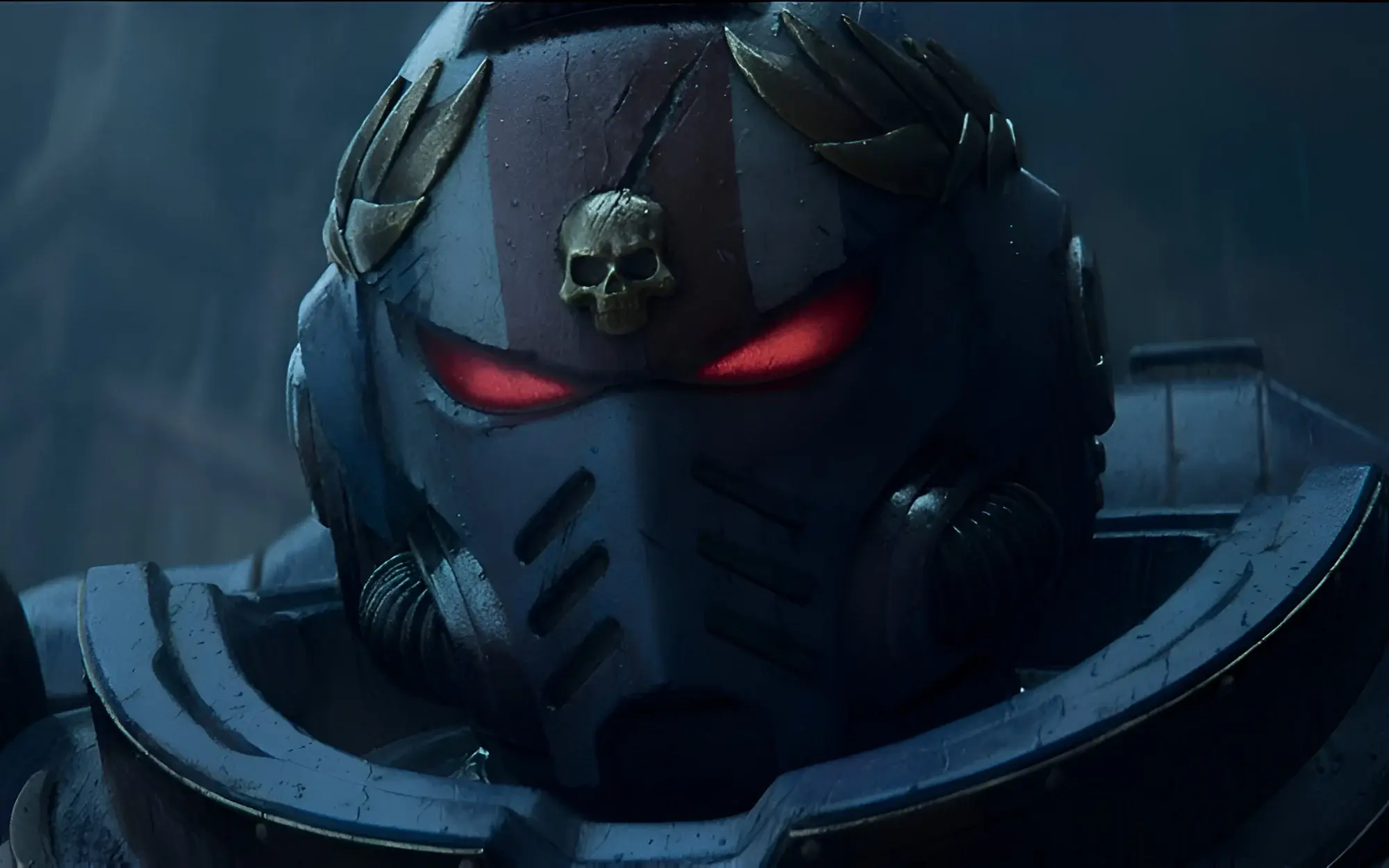
Although Amazon’s Secret Level animated anthology highlighted a bunch of popular games, including Dungeons & Dragons, Mega Man, and even Pac-Man, the series’ best episode was, far and away, “And They Shall Know No Fear,” which plunged viewers into the grimdark future of Warhammer 40,000. The short followed a group of Space Marines tasked with destroying a Chaos cult, and it did so with incredible animation and ultra-bloody action as befitting the Warhammer franchise.
If you watched “And They Shall Know No Fear” and found yourself wishing for an entire series like that, well, you’re in luck. Variety recently announced that Amazon is working on a spinoff from “And They Shall Know No Fear” that will be developed by the original short’s director, Dave Wilson, as well as John Orloff (Masters of the Air, Band of Brothers). One of the new series’ producers will be Henry Cavill, who is also working on a live-action Warhammer 40,000 series for Amazon.
No plot details have been announced, but Variety’s article claims that it’ll focus on the Deathwatch, an elite group of Space Marines tasked with defending the Imperium of Man from alien threats. Interestingly, the highly anticipated second season of Astartes is also expected to focus on the Deathwatch, so we’ll have to see if and how the two series complement each other. No release date for Amazon’s series has been announced, but Astartes 2 is slated to land sometime later this year.
]]>https://opus.ing/posts/my-cultural-diet-july-2026My Cultural Diet (July 2026): Halo, The Odyssey, Evangelion, House, Escape from New York2026-08-03T08:00:00-05:002026-07-31T17:51:07-05:00Jason Moreheadhttps://opus.ing/
A quick rundown of last month’s cultural experiences.
In order to better track my various cultural experiences (e.g., movies, TV shows, books, restaurants), I’ve created the Cultural Diet. Think of it as my own personal Goodreads, Letterboxd, and Yelp, all rolled into one (more info here). Every month, I recap everything that I watched, read, etc., in the previous month.
]]>https://opus.ing/posts/best-streaming-titles-august-2026August 2026’s Best Streaming Titles: Reacher, Ted Lasso, Lanterns, Jurassic Park, Knight Rider2026-08-01T00:00:00-05:002026-08-01T00:09:19-05:00Jason Moreheadhttps://opus.ing/
Alan Ritchson, A.F.C. Richmond, Green Lantern’s light, velociraptors, the Knight Industries Two Thousand, and more.
As Netflix, Hulu, Amazon Prime, et al. add more content, it can be difficult to know what to look for amidst all of the new titles. Every month, I compile a list of particularly noteworthy and interesting movies and TV shows to add to your streaming queues.
The Adventures of Buckraoo Banzai Across the 8th Dimension
(Aug 1)
Dr. Buckaroo Banzai is many things: physicist, neurosurgeon, test pilot, rock star. He’ll need all of those talents, as well as his brave comrades in the Hong Kong Cavaliers, to save Earth from the evil Red Lectroids, who’ve been trapped in the 8th dimension by the Black Lectroids of Planet 10. If any part of that description sounds like the best movie ever, then you’ve probably already watched this multiple times. If you haven’t, then you’re in for a treat: Buckaroo Banzai is cult cinema par excellence.
Fargo
(Aug 1)
Featuring cinema’s most infamous wood chipper scene, the Coen brothers’ Fargo is yet another twisted moral tale told with a sense of humor as black as the film’s wintry setting is white. When a hapless car salesman (played to perfection by William H. Macy) contracts with a couple of goons to hold his wife for ransom, he sets in a motion a twisted tragicomedy of errors that pulls in one of the Coens’ noblest and purest heroes, police chief Marge Gunderson (Frances McDormand).
Interstellar
(Aug 1)
I don’t mean this as an insult, but Christopher Nolan’s Interstellar is worth watching for the visuals alone. Of course, it has an emotional storyline, as an astronaut is forced to leave his family in order to find a new home for humanity. And Hans Zimmer’s score has become increasingly iconic. But the film’s visuals are simply jaw-dropping. Fun fact: Nolan worked with theoretical physicist Kip Thorne to make the black hole effects as realistic as possible, which ultimately advanced the scientific understanding of black holes and led to the publishing of several scientific papers on the topic.
Pulp Fiction
(Aug 1)
I was a college freshman when Pulp Fiction arrived in theaters, and it was everywhere. Tarantino’s twisty, twisted morality play about hitmen, gangsters, drug addicts, boxers, and a mysterious briefcase blew everyone away with its snappy dialog, retro aesthetic, and celebrated performances (including John Travolta in a career-resurrecting performance). The diner conversation between Jules and Vincent is one of my favorite movie scenes of all time (read my review).
Quigley Down Under
(Aug 1)
This 1990 western stars Tom Selleck as Matthew Quigley, an American sharpshooter who’s hired by an Australian land baron (Alan Rickman). But when he learns that he’s been hired to kill the indigenous Aboriginal population, Quigley refuses and instead, opts to use his deadly skills to take on the baron and his men. Quigley Down Under also stars Laura San Giacomo and Ben Mendelsohn.
RoboCop
(Aug 1)
On its surface, RoboCop seems like a pretty straightforward action/sci-fi movie: dedicated cop gets gunned down by vicious thugs and is reborn as an unstoppable cybernetic enforcer. But this being a Paul Verhoeven movie, it’s no surprise that RoboCop also packs a darkly satirical edge that skewers corporate greed.
The Usual Suspects
(Aug 1)
Even after you know the big twist, The Usual Suspects is still a fun noir film to watch due to powerhouse performances from Gabriel Byrne, Chazz Palminteri, and of course, Kevin Spacey. But if you don’t know the big twist, then you’re in for a treat. And once you’ve seen the twist, you’re going to want to rewatch it, just to see how the film put everything together leading up to that sublime “A ha!” moment.
Reacher, Season Four
(Aug 12)
The latest season of Reacher adapts 2009’s Gone Tomorrow, and finds Reacher embroiled in a mystery after witnessing a woman commit suicide on the New York subway. Of course, that shocking event turns out to be something far more sinister and convoluted, and eventually, Reacher’s just going to have to start punching bad guys in the face — and I can’t wait to watch him do it.
Everyone’s favorite soccer coach is back for another season of warm-hearted humanism. By the end of season three, Lasso had returned back to the States, but in season four, he’s back in the UK. Only this time, he’s coaching the Lady Greyhounds, a second-division women’s team. Although much of the series’ cast won’t be returning — sorry, no more Jamie Tartt — it’s safe to say that we’ll see another colorful cast of characters out there on the pitch.
Dark Matter, Season Two
(Aug 28)
Adapted from Blake Crouch’s best-selling 2016 novel, Dark Matter’s first season found physicist Jason Dessen trying to desperately get back to his family after a version of him from another universe took over his life. In the second season, Dessen must try and save the entire multiverse from another one of his doppelgangers even as his beloved family starts to fall apart.
Michael Winterbottom’s film explores the Manchester music scene of the late ’70s and early ’80s, and in particular, the rise of the influential Factory Records label, which was home to such iconic acts as Joy Division, New Order, The Durutti Column, and Happy Mondays. Steve Coogan stars as Factory founder Tony Wilson, whose unorthodox approaches create a vibrant music scene while, at the same, threaten to undermine it. 24 Hour Party People consistently breaks the fourth wall, making for a very unique — and meta — experience.
Amadeus
(Aug 1)
The devout Salieri has dedicated his life to becoming a great composer, only to be upstaged by the young and rebellious Wolfgang Amadeus Mozart — who immediately becomes his great rival. Based on Peter Shaffer’s play, Amadeus may play fast and loose with the historical facts of Mozart’s life, but it also delivers a fascinating story about art, faith, and artistic struggles. Since its release 1984, when it received numerous accolades and awards (including “Best Picture” and “Best Director” at the Oscars), Amadeus has come to be recognized as one of the greatest movies of all time.
The Night of the Hunter
(Aug 1)
After their mother is wooed by a charismatic preacher, her two young children soon realize that he’s up to no good and only searching for their father’s buried treasure. What follows is a truly remarkable film, filled with chilling performances — especially Robert Mitchum as the evil preacher and Lillian Gish as the children’s only hope — and striking, dreamlike visuals that imbue the film with a fairy tale-ish vibe (read my review).
Over the course of two seasons, Star Wars: Visions presented us with some very interesting animated takes on the Star Wars galaxy. One of the most acclaimed was “The Ninth Jedi,” which chronicles a Force-sensitive girl’s efforts to stay ahead of the Sith, and it serves as the basis for The Ninth Jedi’s eight episodes. Anime fans will note that the series is directed by Kenji Kamiyama and produced by Production I.G, the man and studio behind the excellent Ghost in the Shell: Standalone Complex series.
The Double Deuce is the rowdiest bar around, filled with violence and corruption, and it’s going to take a special man to bring things under control. Enter Dalton, whose as quick with a roundhouse kick as he is a nugget of Zen wisdom. Forget about Dirty Dancing. Road House is Patrick Swayze’s most iconic performance, and I’m pretty sure Andy Dwyer would agree with me (read my review).
Sicario
(Aug 1)
Before he directed a string of the best sci-fi films in recent memory, including the recent Dune films, Denis Villeneuve directed this taut action thriller about an FBI agent (Emily Blunt) who teams up with the CIA to bring down a violent Mexican drug cartel. Upon its release in 2015, the film was widely praised, and nominated for several Oscars. The film also stars Benicio del Toro, Josh Brolin, and Daniel Kaluuya, and was the screenwriting debut of Taylor Sheridan, who would later go on to create Yellowstone.
Stand by Me
(Aug 1)
Based on Stephen King’s The Body novella from 1982, this coming of age drama stars Wil Wheaton, River Phoenix, Corey Feldman, and Jerry O’Connell as a group of best friends who set out on a journey that will forever change their lives. King has called Stand by Me his favorite adaptation of any of his works, which is high praise indeed.
Lanterns, Season One
(Aug 16)
Aaron Pierre, who killed it in Netflix’s Rebel Ridge, stars as John Stewart, a new recruit into the Green Lantern Corps, an interstellar police organization. Unfortunately, his mentor, John Stewart (played by Kyle Chandler) doesn’t really seem to want him to succeed. Which proves potentially deadly when the pair investigate a murder with extraterrestrial implications. The live-action series is part of DC’s newly revamped DCU alongside Creature Commandos and James Gunn’s Superman.
Scientists figure out a way to clone extinct dinosaurs, and the first thing they do? Why, create an amusement park on a remote island, of course. What can go wrong? Plenty, as it turns out, and it’s up to some paleontologists and Jeff Goldblum’s chaos mathematician to find a way to survive when life, uh, finds a way. Jurassic Park is a summer blockbuster in the best way possible.
Men in Black
(Aug 1)
Released at the height of Will Smith’s box office dominance in the ’90s, Men in Black stars Smith as the latest recruit of a shadowy organization that monitors extraterrestrial life on Earth. Paired with a veteran agent (played with cranky glee by Tommy Lee Jones), he must prevent an alien menace from destroying the world. Men in Black is topnotch Hollywood blockbuster entertainment, filled with sci-fi action, imaginative alien designs, and most importantly, Smith and Jones’ wise-cracking comedy chemistry.
Sonic the Hedgehog
(Aug 1)
2020’s Sonic the Hedgehog was, to be perfectly honest, far more enjoyable than it probably had any right to be. After the titular groundhog escapes to Earth from his own planet, he does his best to live in secret and under the radar. But when his super speed catches the eye of an evil scientist — played by Jim Carrey in all of his scene-chewing glory — he must use his powers to protect his new friends. The first Sonic movie was successful enough to inspire a sequel in 2022, and a third one’s on its way.
Southland Tales
(Aug 1)
For his followup to 2001’s Donnie Darko, writer/director Richard Kelly created the even more bizarre Southland Tales. Set in a post-WW3 America where everyone is under surveillance, a film star, an Iraq War veteran, Neo-Marxist revolutionaries, and a whole lot more get mixed up in alternate realities and timelines. At times, Kelly’s film defies description and confused audiences and critics alike upon its release in 2006.
Keanu Reeves officially became an action movie star in this thriller about a SWAT officer (Reeves) trying to stop a mad bomber (Dennis Hopper) threatening the Los Angeles. When the bomber’s latest ploy is a bus that will explode if it slows down below 50 miles/hour, Reeves must find a way to stop him and save the passengers. Thanks to its strong performances, taut set pieces, and thrilling twists, Speed was one of 1994’s most successful movies, commercially and critically, and its status has only grown over time (read my review).
The Last House
(Aug 7)
Greta Lee and Wagner Moura star in this sci-fi thriller about a family who find themselves sealed inside their house with no possible exit. As their resources begin to dwindle, they grow increasingly desperate to escape even as they discover that some horrific force might be awaiting them outside. The Last House is directed by Louis Leterrier, who first came to fame on the strength of action films like The Transporter and Unleashed.
The Whisper Man
(Aug 28)
After a young child is abducted, a man reconnects with his estranged police detective father in order to track him down. The two soon discover that this abduction bears a striking similarity to a decades-old case involving a convicted serial killer. The Whisper Man is directed by James Ashcroft and stars Adam Scott, Robert De Niro, Michelle Monaghan, and Michael Keaton.
Over the years, news of a Blade Runner sequel has always been met with trepidation and skepticism. However, Blade Runner 2049 was about as perfect a sequel as fans could’ve hoped for. Directed by Denis Villeneuve, Blade Runner 2049 may not reach the original’s mythic-ness, but it’s certainly of a piece thanks to its contemplative pacing, gorgeous effects and world-building, and a storyline that builds on the original’s themes.
Equilibrium
(Aug 1)
In Equilibrium, a totalitarian government has outlawed emotions in order to prevent humanity from succumbing to its worst impulses. It’s a corny premise, but Christian Bale brings gravitas to his “tortured lawman” role and the movie’s efficient plot, slick style, and modest scale makes it a fun dystopic ride. Special credit goes to the movie’s martial arts-influenced approach to gun fights, aka “gun kata,” which adds an interesting wrinkle to the many action sequences.
Gravity
(Aug 1)
Sandra Bullock stars in this sci-fi thriller as Dr. Ryan Stone, an astronaut who suddenly finds herself stranded in space after a freak accident destroys the Space Shuttle. Utilizing award-winning visual effects to communicate Stone’s impossible situation, Alfonso Cuarón’s film was one of 2013’s most critically and commercially successful films.
The Lego Movie
(Aug 1)
I’ll admit, I had very low expectations for The Lego Movie when it was originally announced. But I need not have worried: The Lego Movie turned out to be way more delightful, inventive, and affecting than I could’ve expected. When a lowly Lego guy named Emmet Brickowski (voiced by Chris Pratt) finds himself in possession of a powerful relic, he’s drawn into a conflict between freedom fighters and an evil overlord that will completely change his view of the world. The Lego Movie also features the voice talents of Will Arnett, Elizabeth Banks, Alison Brie, Will Ferrell, and Morgan Freeman (to name a few).
Where the Wild Things Are
(Aug 1)
Spike Jonze’s fantastical adaptation of Maurice Sendak’s best-selling children’s book follows the adventures of Max, a young boy who runs away and ends up on an island of monsters after an argument with his mom. Filled with Jonze’s imaginative visuals and remarkable special effects, Where the Wild Things Are truly looks like nothing else. The movie was a box office failure when it was released in 2009, and launched some debates concerning its appropriate-ness for children, but it appeared on numerous “best of” lists by the year’s end.
Tim Burton is, to put it mildly, an eccentric director. But Big Fish finds him channelling those eccentricities into one of his most straightforward and charming movies, about a man who discovers that there might be some truth to all of his father’s tall tales. Both of Burton’s parents died in the years leading up to his work on Big Fish, which almost certainly informs its storyline and gives it some emotional heft.
The Good, The Bad and the Ugly
(Aug 1)
The third film in Sergio Leone’s “Dollars” trilogy, The Good, The Bad and the Ugly finds three gunslingers — Clint Eastwood, Lee Van Cleef, and Eli Wallach — racing against time and each other to find a hidden cache of Confederate gold in the midst of the Civil War. Leone’s film was notable for its striking cinematography and stylized violence, as well as Ennio Morricone’s iconic theme. Although critics initially dismissed it upon its release in 1966, The Good, The Bad and the Ugly is now considered one of the greatest films of all time, and the definitive spaghetti Western (read my review).
High Noon
(Aug 1)
One of the greatest westerns ever made. Gary Cooper’s straight-arrow sheriff is set to retire with his lovely new bride when he learns that a vicious outlaw gang is arriving in town at noon. His attempts to form a posse to meet the gang all fail, so he must face them all by himself. High Noon is the quintessential “man against the world” film, and features one of the most iconic shots in film history. It was also quite controversial in its day, and seen by many as a response to the Hollywood communist blacklisting that occurred in the ’40s and ’50s.
Knight Rider
(Aug 1)
One of the all-time great ’80s series, Knight Rider follows the adventures of Michael Knight, a former cop, and his talking car companion, KITT, as they traverse the nation righting wrongs and meting out justice. The series made David Hasselhoff a star, but everyone knows that Knight Rider’s real star was KITT, an artificially intelligent and nigh-indestructible Pontiac Trans Am. The series ran for four seasons in the early-to-mid ’80s and was followed by several sequels and spin-offs.
Last Action Hero
(Aug 1)
Danny Madigan loves action movies, and in particular, the movies featuring L.A. super-cop Jack Slater. But fiction suddenly becomes reality when Danny is sucked into Jack Slater’s world and inexplicably made his partner. Released in 1993, Last Action Hero was a box office bomb compared to Arnold Schwarzenegger’s previous film, Terminator 2: Judgment Day, due in part to being released the week after Jurassic Park, but also because audiences probably weren’t prepared for its ultra-meta humor and over-the-top parody of action movie clichés. But Last Action Hero has since developed a cult following.
The Last Boy Scout
(Aug 1)
On the one hand, The Last Boy Scout is a nihilistic, misanthrophic, and violent film with almost no redeeming qualities. On the other hand, it’s an awful lot of fun to watch, as Bruce Willis’ jaded private eye and Damon Wayans’ disgraced football player make for an interesting dynamic while taking on corrupt politicians. There’s something almost gleeful about the film’s cynicism, which is elevated by the atmospheric, noir-ish direction and cinematography.
Lethal Weapon
(Aug 1)
One of the great buddy cop movies. No, scratch that… Lethal Weapon is the buddy cop movie. Written by Shane Black and directed by Richard Donner, this movie has it all: a by-the-books officer close to retirement, his new partner (who happens to be unhinged), a crazy conspiracy that pushes them to the edge of the law and beyond. Basically, it created the template for all buddy cop movies to follow… and it’s still the best one ever.
Looper
(Aug 1)
Bruce Willis and Joseph Gordon-Levitt star opposite each other in this thriller about a hitman who squares off against his future self as they both search for a powerful psychic who could alter the future. Written and directed by Rian Johnson, Looper injects some clever new twists into the tried and true time travel formula. Johnson previously worked with Gordon-Levitt in 2005’s Brick.
Rush Hour
(Aug 1)
On paper, the combination of Jackie Chan and Chris Tucker seems terrible, or at the very least, terribly annoying. But in Rush Hour, the two became a surprisingly effective comedic duo as they race to save the kidnapped daughter of a Chinese dignitary with a combination of fast talking and martial arts mayhem.
]]>https://opus.ing/p/your-shadow-at-morning-durutti-column“Your Shadow at Morning” by The Durutti Column2026-07-31T17:09:00-05:002026-07-31T17:09:03-05:00Jason Moreheadhttps://opus.ing/
The Durutti Column’s first album in 16 years is a true rebirth, as evidenced by this standout track.
Manchester’s Vini Reilly is one of the greatest guitarists you’ve probably never heard of. But whereas a lot of so-called guitar gods focus on technical prowess (e.g., frenetic fretwork, fiery solos), Reilly’s deft and delicate guitar-playing has always been more about texture and ambience. But not too long ago, it looked like Reilly’s musical career — which has influenced everyone from Johnny Marr (The Smiths) to Harry Styles — was basically finished after a series of strokes and struggles with arthritis left him unable to play. Even as recently as 2023, Reilly seemed ready to part permanently with his six-string; “I really can’t play guitar. It looks ridiculous. It sounds ridiculous,” he told The Guardian’s Daniel Dylan Wray.
Which makes the title of the new Durutti Column album, Renascent (lit., “renaissance”) all the more apropos. Not only does it represent a career renaissance, being the first Durutti Column album in 16 years, but Renascent also feels like a rebirth for a man who’s not only survived strokes and arthritis, but also bankruptcy, homelessness, and mental illness. Even if Reilly’s playing may no longer be up to his own personal standards, it’s nevertheless sublime on the album, and nowhere more so than “Your Shadow at Morning.”
Arguably the album’s most haunting piece, “Your Shadow at Morning” features Reilly’s trademark finger-picking set alongside plaintive drones and soft synth melodies. The song’s title might seem romantic, but its melancholy tone suggests something much more introspective, mournful, and even trepidatious. In other words, the sort of song written by a man who has probably spent more than a few mornings feeling like a shadow of his former self thanks to the predations of time and illness. The song is never maudlin, though, a testament to Reilly’s skill, as well as that of his collaborators (including longtime manager, drummer, and friend Bruce Mitchell). Rather, it’s deeply affecting, and it sets the stage for the rest of the remarkable album.
]]>https://opus.ing/p/pines-in-summer-static-zake-coppice-halifax“Pines in Summer Static” by Zakè and Coppice Halifax2026-07-30T21:23:00-05:002026-07-30T21:23:47-05:00Jason Moreheadhttps://opus.ing/
Subtly gorgeous ambient techno that envisions a blend of the natural and the technological.
When I think of “tree grid,” the first thing that comes to mind is something solarpunk-y, or perhaps an arboreal version of the cyber-worlds glimpsed in movies like Tron. I suspect, however, that Zach Frizzell and Brian Grainger (aka, Zakè and Coppice Halifax) probably had something far less tech-y in mind when they began the collaboration that ultimately begat Tree Grid. That is, if song titles like “Forestry Service Road” and “Old Growth” are any indication.
Still, I’d like to think that “Pines in Summer Static“ ‘s amorphous drones and textures are capable of supporting multiple interpretations, including one that envisions a blend of the natural and the technological. Obviously, technology was involved in the song’s creation — this is ambient techno, after all — but it nevertheless unfurls at an unhurried pace that suggests the movements of nature: clouds passing by high overhead, leaves drifting down from trees, tall grass rustling in the wind.
Even as the beats grow increasingly prominent near its mid-point, “Pines in Summer Static” never loses its graceful nature, which fully manifests in the denouement as a trumpet’s plaintive tones resound throughout the song’s spacious environment. At times reminiscent of Aphex Twin’s landmark work on Selected Ambient Works, Volume II, Zakè and Coppice Halifax have created a subtle masterpiece that, for all of its subdued sonics — or more likely, precisely because of them — has remained stuck in my head all week long.
Tree Grid is currently available via Zakè Drone Recordings.
]]>https://opus.ing/p/grain-at-protocol-instagram-alternativeGrain Is the AT Protocol’s Instagram Alternative2026-07-28T00:05:00-05:002026-07-28T13:57:23-05:00Jason Moreheadhttps://opus.ing/
A simpler, photo-first alternative to the current ad and algorithm-saturated social media landscape.
Earlier this month, I wrote about several blogging platforms that are part of the so-called Atmosphere, an ecosystem of apps made possible by the AT Protocol. However, blogging isn’t the only sort of publishing that’s possible via the Atmosphere. Originally launched last year, Grain is a photo-first social media platform built and developed by Chad Miller.
Instagram is the most obvious point of comparison, and at first glance, the two platforms seem pretty similar in terms of layout and function. Grain’s UI is far cleaner and simpler, though, and free of ads and “recommended” posts. Grain does offer a “For You” feed that’s presumably algorithmic, but it’s not the default. (That would be a chronological listing, as God intended.) Grain only allows photos in posts, so no videos or reels. You can share stories that exist for 24 hours, but those are photo-only, as well. And I’m sure photographers will appreciate that Grain displays EXIF data (e.g., the camera type and settings used to take a photo).
Grain posts can contain up to 10 photos, along with a title and description. You can mention other users, include hashtags, specify content warnings, and if you’ve signed in with a Bluesky account, whether or not your post should be shared to your Bluesky profile. All of which is pretty standard, expected stuff. But one thing that I really like about Grain is that you can include links in post descriptions (example).
As part of their efforts to keep you on their platform as long as possible, Instagram doesn’t allow links in posts; you can only add them to your profile, and that can only be done via the Instagram app. (Instagram is reportedly testing the inclusion of links in posts, but only for users who’ve paid for a “Meta Verified” badge, and even then, they’ll be limited to a max of 10 links/month.) Link support seems like a trivial thing, but it’s in keeping with the open nature of Bluesky and the AT Protocol, and I appreciate that.
I’ve been using Grain for only a few days now, but I like it (view my profile). I don’t expect it to supplant Instagram as people’s photo-sharing platform of choice, or even to become a serious challenger in terms of popularity. (As of last September, Instagram has 3 billion monthly active users.) But I like that platforms like Grain exist via the AT Protocol, platforms that give people who are tired of the current ad and algorithm-saturated social media landscape a viable alternative.
]]>https://opus.ing/posts/review-roundup-halo-studios-halo-campaign-evolvedReview Roundup: Halo Studios’ Halo: Campaign Evolved2026-07-27T18:47:00-05:002026-07-27T18:47:28-05:00Jason Moreheadhttps://opus.ing/
What are critics saying about this modern remake of one of the greatest video games of all time?
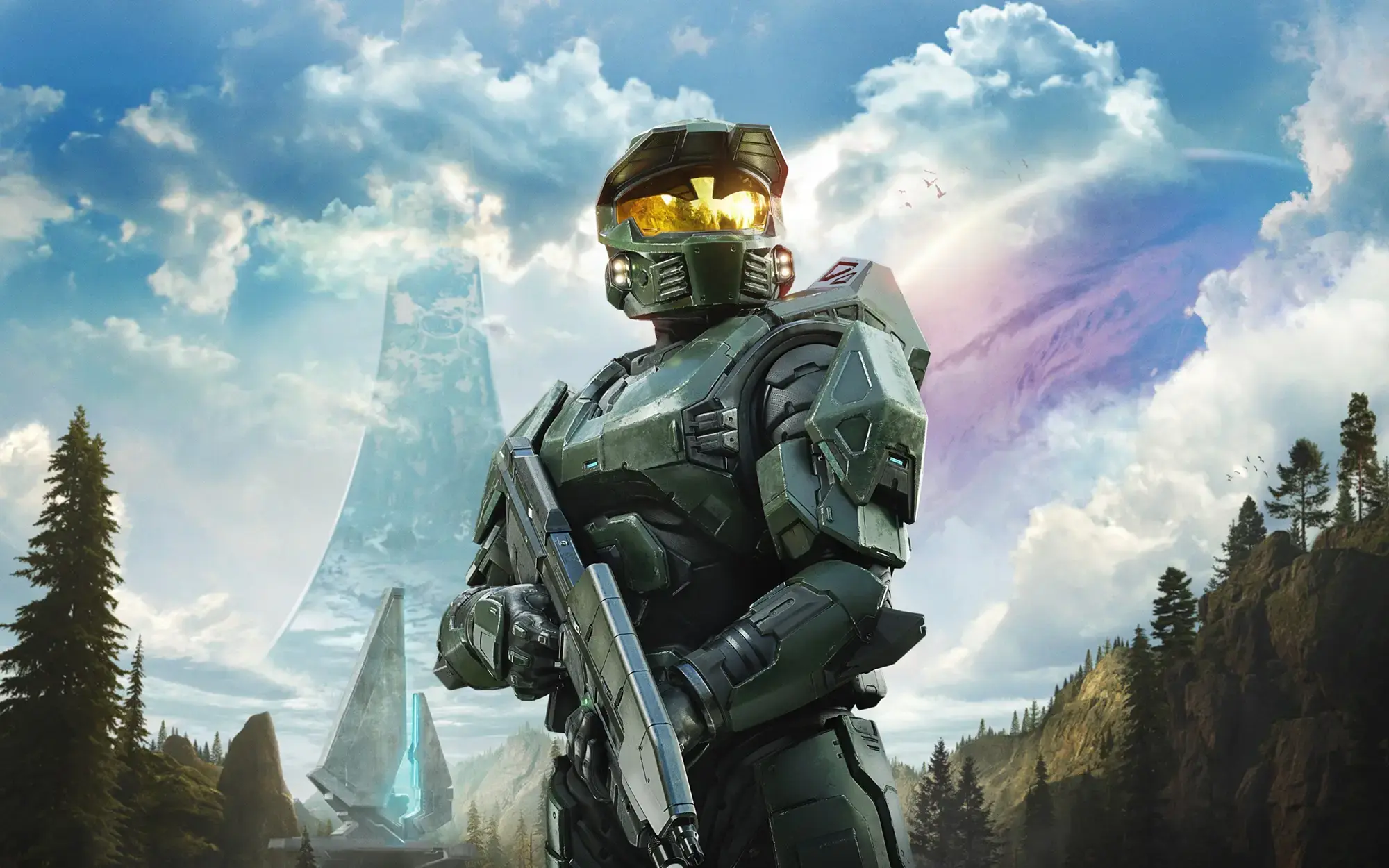
Although it wasn’t the first first-person shooter, Halo: Combat Evolved definitely elevated the genre when it was released in 2001, blending thrilling action and compelling level design with an epic storyline filled with twists and turns. Building on their experience from making the Marathon trilogy, Bungie delivered a top-tier classic that remains one of the greatest video games of all time, and helped establish Microsoft’s Xbox platform.
Halo: Combat Evolved spawned multiple sequels, some of them far better than others. Sadly, what was once a video game juggernaut has floundered in recent years due in part to studio upheavals and a decided lack of vision. 2021’s Halo Infinite was billed as the franchise’s next evolutionary step. Despite beginning on a promising note, 343 Industries — which took over Halo after Bungie left its Microsoft partnership — was unable to deliver on many of Halo Infinite’s promises, and so Zeta Halo’s secrets remain.
Thus, it makes sense for Halo Studios (formerly 343 Industries) to go back to the franchise’s beginnings with a redo of Halo: Combat Evolved that utilizes modern development tools (specifically, Unreal Engine 5) and updates the gameplay accordingly. So does Halo: Campaign Evolved represent a fresh start for the iconic video game franchise? Or is it little more than just a fresh coat of paint? Read on for a selection of critical reactions to the latest Halo effort.
👍 Ian Dean, “Almost everything fans could hope for”
As much as I love Halo, I was lukewarm to the idea of remaking the original; after all, we had a good Anniversary remaster in 2011, and it’s backwards compatible on Xbox Series X; what more could there be? Well, I’m playing on PlayStation 5, which feels unique, and it’s beautifully reimagined in UE5. When the Gregorian chanting starts, the orchestra swells, the Halo ring stretches out in front of me, and suddenly I’m right back where I was all those years ago, staring at that impossible alien landscape; I can’t resist, I need to play again.
👍 Scott Duwe, “Thrives off of the series’ nostalgia”
Campaign Evolved is mostly a one-to-one recreation of the original game, but with vastly enhanced visuals and audio. Utilizing Unreal Engine 5, the game is gorgeous, especially on PS5 Pro (yeah, I had to be that guy and play Halo on PS5 because it’s just hard to fathom it happened). The dialogue has been fully re-recorded, too, making this feel like an actual remake as opposed to just an upscaling of graphics.
👍 Ford James, “One of the best remakes of all time”
If you’ve never played a Halo game before, but you know you enjoy shooters, Halo: Campaign Evolved is the perfect place to start. If you’re a Halo fan, but it’s been a few years since you’ve played Combat Evolved, Campaign Evolved does just enough to feel like an entirely new game. And if you’re a Halo diehard, this really is as good as it gets. Remake or not, if this is the start of Halo’s new era, the future’s bright.
👎 Michael Higham, “We’ve been down this road many times before”
But as much as I adore Halo’s campaign, with its simple yet thoughtful combat design, you can only play the hits so often. When the base game, the Anniversary Edition, and the Master Chief Collection are all readily available in 2026, it’s easy to see this remake as more of an Unreal Engine test than anything. There’s a new batch of Skulls and three prequel missions to sweeten the deal, which are a fun few hours to blast through — but the changes outside the graphical overhaul are otherwise subtle, and as a whole, neither definitively improve nor detract from what I played 25 years ago. So, while it’s great to see how well Halo has aged, we’ve been down this road many times before.
Halo: Campaign Evolved does a phenomenal job of capturing what made the 2001 original so much fun while updating certain elements to better suit modern sensibilities. The core game shows its age in some notable ways, but there’s no mistaking the magic that made this formula work all those years ago is still very much intact.
👎 Morgan Park, “A neat, but fundamentally flawed remake”
What we have here is the other type of remake — the kind that goes all in on modernization, offering perceived upgrades to an otherwise unchanged foundation. Halo Studios has no discernably new take on Bungie’s landmark FPS, other than a desire to make Combat Evolved look and play more like its later Halos. The “faithful” treatment sets an admirable goal, but that also means Campaign Evolved positions itself as a replacement for, or at least in competition with, the original.
First and foremost, it’s great to see such an epic experience on newer hardware. Even the iconic menu and menu music look and sound great. That’s one area where Halo Studios has succeeded here: the graphical fidelity and the sound of the game. Whether you remember sound bites or some of the music, it’s undeniable that many moments of epic gameplay are backed by the original’s audio excellence. From Grunts yelling “save yourself” to Elites laughing when they kill Chief, to the satisfying reload sounds and engine roars; it’s all here.
The original Halo is a work of archival significance, a watershed moment for first-person shooters and video games as a whole. Halo Studios had an impossible task in being asked to improve on (or even reinvent) perfection. Campaign Evolved represents a diligent effort — at least at reinvention, if not truly accurate reproduction — and a worthy addition to Halo canon. But it also lives in the long shadow cast by the monolithic status of Combat Evolved.
Through its first two generations of existence, Xbox held its own against its more established rivals Nintendo and Sony, and a big reason for that was Halo. Bungie’s shooter coupled a grand sci-fi story with nearly pitch-perfect action and single-handedly created a reason to buy an Xbox. Now, the game has gotten a full remake, reimagining the same core experience for modern audiences. In a testament to the original design, Halo remains a thrilling game more than two decades after it debuted. But the remake is also a reminder of just how far Xbox has strayed from its initial promise.
If you’ve never played Halo before and think the original game looks too old, this is a good option. If you want to play Halo with your PlayStation 5 pals, this is, well, the only option. For everyone else, I’d suggest asking yourself how big a Halo fan you are and if you really need to spend more money on replaying the first game again. Again. Again.
Halo: Campaign Evolved will be released on July 28, 2026. Watch the trailer below.
]]>https://opus.ing/p/apples-neuromancer-adaptation-teaserApple’s Neuromancer Adaptation Finally Gets a Teaser2026-07-26T13:53:00-05:002026-07-26T14:21:37-05:00Jason Moreheadhttps://opus.ing/
The “unfilmable” cyberpunk classic is finally coming to the screen after 40+ years of failed efforts.
Along with Ridley Scott’s Blade Runner, William Gibson’s 1984 novel Neuromancer is the urtext for modern cyberpunk. Although it wasn’t the first cyberpunk novel, there’s no denying that Neuromancer’s vision of all-powerful megacorps, console cowboys who traverse cyberspace with their minds, and sleekly augmented street samurai is what most people think of when they think of the genre.
Over the last 40+ years, there have been several attempts at a Neuromancer film. Back in the early ’00s, Chris Cunningham signed on to write and direct an adaptation, with Aphex Twin providing the soundtrack. Although Cunningham’s script received Gibson’s blessing, the film never materialized, making it one of cinema’s great “What if?” projects. But in February 2024, Apple announced a 10-episode Neuromancer TV series that will sit alongside their other sci-fi adaptations (Foundation, Dark Matter, Silo). Here’s the official synopsis:
Neuromancer follows a damaged, top-rung super-hacker named Case (Callum Turner) who is thrust into a web of digital espionage and high-stakes crime with his partner Molly (Briana Middleton), a razor-girl assassin, as they pull off a heist on a corporate dynasty with untold secrets.
The above teaser gives us our first real look at Apple’s vision of Chiba City, and it’s definitely promising. They seem to be leaning into the dystopian aspects and I appreciate that it looks like they’re not trying to modernize the novel’s tech or make it more “realistic.” (I’ve always liked Neuromancer’s nigh-fantastical approach to cyberspace; Gibson famously had no idea how computers actually worked when he wrote the novel.) We catch a few glimpses of Molly, the deadly “razorgirl” with the mirror shades and razor blades, as well as Case’s visions of cyberspace.
I am curious to see how Apple’s adaptation will approach the topic of AI, which figures heavily into the novel’s storyline but has obviously become a hot-button topic these days. We’ll find out when Neuromancer — which also stars Mark Strong, Peter Sarsgaard, Dane DeHaan, and Emma Laird — begins streaming on Apple TV on January 22, 2027.
]]>https://opus.ing/p/souls-refrain-yoko-takahashi“Soul’s Refrain” by Yoko Takahashi2026-07-25T10:34:00-05:002026-07-25T10:34:25-05:00Jason Moreheadhttps://opus.ing/
Though less well-known than “A Cruel Angel’s Thesis,” Neon Genesis Evangelion’s second theme is an equally great anthem for the storied anime franchise.
Neon Genesis Evangelion’s “A Cruel Angel’s Thesis,” composed by Hidetoshi Sato and sung by Yoko Takahashi, is one of the all-time great anime themes. And not just because it’s both catchy and anthemic. The song possesses a deep irony, as well: its bright J-Pop arrangements and upbeat lyrics (e.g., “You shine brighter than anyone else/Young boy, become the legend!”) stand in stark contrast to Evangelion’s dark themes and apocalyptic storyline. (Apparently, lyricist Neko Oikawa didn’t really know what Evangelion was actually about when she began work on the song.)
“A Cruel Angel’s Thesis” is, as the kids would say, a total banger. But it wasn’t until my recent viewing of Neon Genesis Evangelion: Death & Rebirth when I realized that the storied anime franchise had yet another banger. Also sung by Takahashi, “Soul’s Refrain” — which appeared on her 1996 album, Li-La, and was written by Toshiyuki O’mori and Oikawa — eschews the J-pop stylings of “A Cruel Angel’s Thesis” for something even more anthemic.
The song starts off gently enough, with Takahashi’s powerful, dramatic voice set against a backdrop of plucked strings and gentle ambience. But then it kicks into high gear with driving beats and pulsing synths. Wonderful melodic twists keep your attention and hint at deeper emotional stakes while the guitarist (whose name I’ve been unable to find) unleashes a variety of fiery riffs. And for good measure, “Soul’s Refrain” also features some otherworldly choral elements that feel quite apropos given Evangelion’s preponderance of Christian imagery.
All in all, “Soul’s Refrain” is a high-energy theme that immediately pumps you up to battle the next Angel that decides to invade Tokyo-3. Not surprisingly, it’s Takahashi’s best-selling single of all time, even more so than “A Cruel Angel’s Thesis.” It’s also been covered by several other Japanese artists, including Babymetal, who absolutely destroyed in this 2013 performance.
]]>https://opus.ing/p/first-balloon-to-nice-moose“First Balloon to Nice” by Moose2026-07-22T23:59:00-05:002026-07-22T23:59:31-05:00Jason Moreheadhttps://opus.ing/
A breezy earworm from an unsung member of the ’90s UK indie/alternative scene.
The bands that emerged from the UK indie/alternative scene in the ’80s and ’90s had all sorts of evocative and intriguing names. Slowdive. Catherine Wheel. Kitchens of Distinction. The Stone Roses. The House of Love. And then there was Moose. Now, I don’t know if that name choice had anything to do with it, but I’ve always felt that Moose — which formed in London in 1990 — flew under the radar during their decade-long existence. Which is a shame because the band certainly knew how to write earworms.
For proof of that, look no further than “First Balloon to Nice,” which appeared on 1995’s Live a Little Love a Lot (Play It Again Sam Records). The song is just about as breezy as they come, thanks to Andrew Blick’s trumpet and K.J. McKillop’s string arrangements (both of which are reminiscent of Eric Matthews’ Sub Pop albums). Moose pack a lot into the song’s sub-three-minute runtime, but it never feels overstuffed or top-heavy.
Although Moose might’ve flown under the general public’s radar, they still occupied a pretty sweet spot in the scene. For example, they became close friends with Cocteau Twins. Elizabeth Fraser lent her voice to Live a Little Love a Lot’s opening track, “Play God,” while Moose bassist Lincoln Fong would become the Twins’ live sound engineer and help them build their studio. Lincoln’s brother, Russell — who played guitar on Moose’s 1992 album, …XYZ — would also collaborate with the Twins, and build some of the guitars and 5-string basses that Robin Guthrie and Simon Raymonde played on tour.
]]>https://opus.ing/p/friends-theme-joy-divisionThe Friends Theme But It’s Joy Division2026-07-21T23:12:00-05:002026-07-21T23:12:31-05:00Jason Moreheadhttps://opus.ing/
Just what it says on the tin, and just as good you might hope it’d be.
When the producers of Friends failed to get the rights to R.E.M.‘s “Shiny Happy People,” they recruited The Rembrandts to record “I’ll Be There for You,” and the rest was history. “I’ll Be There for You” is undoubtedly one of the most well-known TV theme songs of all time, and for good reason: it’s catchy as all get-out, and its jangly guitars and handclaps instantly worm their way into your subconscious.
Sure, it’s kind of gimmicky, but it works surprisingly well, especially when Woo takes to his Telecaster. Indeed, it sounds like something that could’ve emerged from the current crop of post-punk revivalists. As one commenter put it, it’s the sort of song that Interpol has made a career out of.
]]>https://opus.ing/posts/new-subscriber-playlist-artoffacts-of-soundNew Subscriber Playlist: “Artoffacts of Sound”2026-07-21T08:13:00-05:002026-07-21T08:13:15-05:00Jason Moreheadhttps://opus.ing/
This month’s subscriber-only playlist and podcast episode celebrate the post-punk and industrial acumen of Toronto’s Artoffact Records.
For well over two decades now, Artoffact Records has established itself as one of the world’s premier labels when it comes to the darker music genres. Launched in the late ’90s, the Toronto-based label has released music by some of the most influential names in the noise and industrial scenes, while also promoting newer generations of exciting artists.
This month’s playlist, titled “Artoffacts of Sound,” highlights just a few of the notable goth, post-punk, noise, industrial, synth-pop, and EBM titles that Artoffact Records has released over the years.
Accompanying the playlist is the latest episode of my “Playlist Breakdown” podcast, in which I spotlight one of the playlist’s songs and why it’s so special, interesting, and/or meaningful. This month’s episode focuses on “Faith,” a surprisingly sacred song from experimental outfit Controlled Bleeding.
Both of these are little bonuses for subscribers who support Opus financially. If you’d like to get access to them (and more), subscribe to Opus for just $5.00/month or $50/year. (You can also subscribe for free and get my weekend newsletter.)
]]>https://opus.ing/p/fragment-astoria“Fragment” by Astoria2026-07-20T20:38:00-05:002026-07-20T20:38:46-05:00Jason Moreheadhttps://opus.ing/
The Norwegian duo’s latest single is a gorgeous and emotional slice of slow-burning post-rock.
Norway’s Astoria spent the last three years working on the songs that would become their new EP, Colder Than Before. That effort is readily apparent in the EP’s first single, “Fragment,” as the post-rock duo employ surging guitars, ceremonial percussion, and slow-burning arrangements with great patience and attention to detail.
The resulting emotional effect reminds me why I originally fell in love with this sort of musical sturm und drang back in the early days of Godspeed You! Black Emperor, Mogwai, and Sigur Rós. And speaking of Sigur Rós, Edvard Mortensholm employs the same sort of lilting vocalizations as Jónsi Birgisson, which work perfectly with the brooding music, especially when he sings “I’ll cry with you” against delicate guitar cascades.
To their credit, Astoria don’t stick with the tried and true post-rock template for all of Colder Than Before. To be sure, all five of the EP’s songs are cut from the same tonal cloth, but Mortensholm and bandmate Henrik Nilsen Mortensholm also employ plenty of electronics that, at times, given their music an almost synth-pop edge — in case you were ever wondering what a Depeche Mode/Mono collaboration might sound like.
Colder Than Before will be released on August 7, 2026.
]]>https://opus.ing/posts/review-roundup-christopher-nolan-odysseyReview Roundup: Christopher Nolan’s The Odyssey2026-07-16T07:00:00-05:002026-07-15T22:08:17-05:00Jason Moreheadhttps://opus.ing/
Critics respond to the Oppenheimer director’s adaptation of Homer’s epic tale.
When Christopher Nolan announced that his next film would be an adaptation of Homer’s Odyssey, I’m sure that raised more than several eyebrows. But Nolan is one of the few filmmakers in the world who basically has carte blanche to make whatever film he darn well pleases, so a journey to ancient Greece it is.
Even after nearly three millennia, Homer’s story about the brave and cunning Odysseus’s decades-long journey home after fighting in the Trojan War remains one of civilization’s foundational epics. And the trailers have made it very clear that Nolan is approaching the story with all of his usual skill and gusto, not to mention a deeply talented cast that includes Matt Damon, Tom Holland, Anne Hathaway, Robert Pattinson, Lupita Nyong’o, Charlize Theron, and many, many more.
So does Nolan’s Odyssey live up to Homer’s epic legacy? Or should he have chosen a different story to adapt? Read on for a selection of critical reactions to Nolan’s latest film.
Introspective and haunting, The Odyssey feels like Nolan is turning a new page in his filmography; a film that continues the soul-searching introspection that his Oscar-winning Oppenheimer grappled with, and deepens our understanding of one of the oldest stories in history. But it’s also a crowdpleaser in every sense of the word, a rousing and spectacular feat of blockbuster entertainment that wrestles with monsters and myths in equally dazzling ways.
The mark of a good adaptation is not that it plays every note, but that it honours every beat. But a great adaptation takes the material and makes something new from it, and so it is that Nolan does what I believe Homer did with the songs and folktales of his region. The Odyssey is an urgent diagnosis of who we are as a species at this point in our social evolution. Crucially, Nolan, like Homer, uses the key art form of his time to tell his version, in the largest format currently available. He has made a quarter-of-a-billion-dollar horror movie about how the moral abomination of “winning” has destroyed our notions of morality, along with our essential decency.
Yes, it’s straightforward — but it’s also Nolan, at the height of his power, using every skill, trick, technique, and ounce of Hollywood cred at his disposal to tell a story that’s both awe-inspiring and shockingly unambiguous.
With The Odyssey, director Christopher Nolan tries to thread a particularly difficult needle — as if Odysseus, on his long journey home from the Trojan War, had attempted to sail between the whirlpool and the six-headed Scylla. Nolan takes Homer’s ancient tale of a fabled warrior and molds it into a moral awakening about the ruin of warfare. It’s essentially Odysseus as J. Robert Oppenheimer.
👍 Kyle Logan, “[Nolan’s] most politically potent film”
Beyond imploring viewers to be kind and welcome immigrants, Nolan seems to be asking us to reckon with what horrors we have accepted to remain comfortable, to take stock of these things and to do what we can to make things right in the future. It’s a surprisingly nuanced and emotionally impactful political argument for a major summer blockbuster.
As a feat of pure adaptation, Nolan has achieved something I admittedly thought was near impossible. His stamp is all over the film — this is intellectual, brutalist, muscular Hollywood fare — yet it never wavers in its commitment to, and comprehension of, its source text. There’s not a single decision here that’s been thoughtlessly made, nor that I imagine Nolan himself couldn’t easily defend, much to the imagined chagrin of certain lawless parts of the internet.
It takes audiences on an incredible ride. A ride that, we believe, happens to be a little smoother in some places, and a little bumpier at others. In the end, it’s an awesome, fully satisfying film, but one that’s just a tad less than the perfection we’re all expecting.
One of the foundational stories of the Western canon has a grand, sweeping, meticulously diligent new version in writer/director Christopher Nolan’s epic version, bristling with Oscar-winning talent and impressive seriousness of purpose. It is, with a few significant exceptions, true to Homer’s story dating back to at least 300 BC and probably earlier. But there are also vestigial reflections of Nolan’s previous film, Oppenheimer, both about men who must grapple with the consquences of their destructive, even ruthless, acts during wartime.
For all its monsters, gods, armies, and thunder, The Odyssey finds its grandest image in a man confronting the dark mirror of what he has wrought. Nolan’s massive achievement understands that home is a place, a family, a memory, and a judgment. Odysseus may still recognize Ithaca when he reaches its shores. The more frightening question is whether Ithaca will recognize him.
This is the best part of Nolan’s commitment to (mostly) analog filmmaking, including the shot-on-film part: it makes you feel physically connected to onscreen events, in ways you can’t with slovenly, weightless “miracles” slapped together with ones and zeros in an entertainment factory.
The Odyssey arrives in theaters on July 17, 2026. Watch the trailer below.
]]>https://opus.ing/p/stranger-things-ten-years-laterStranger Things, Ten Years Later2026-07-15T08:59:00-05:002026-07-15T08:59:18-05:00Jason Moreheadhttps://opus.ing/
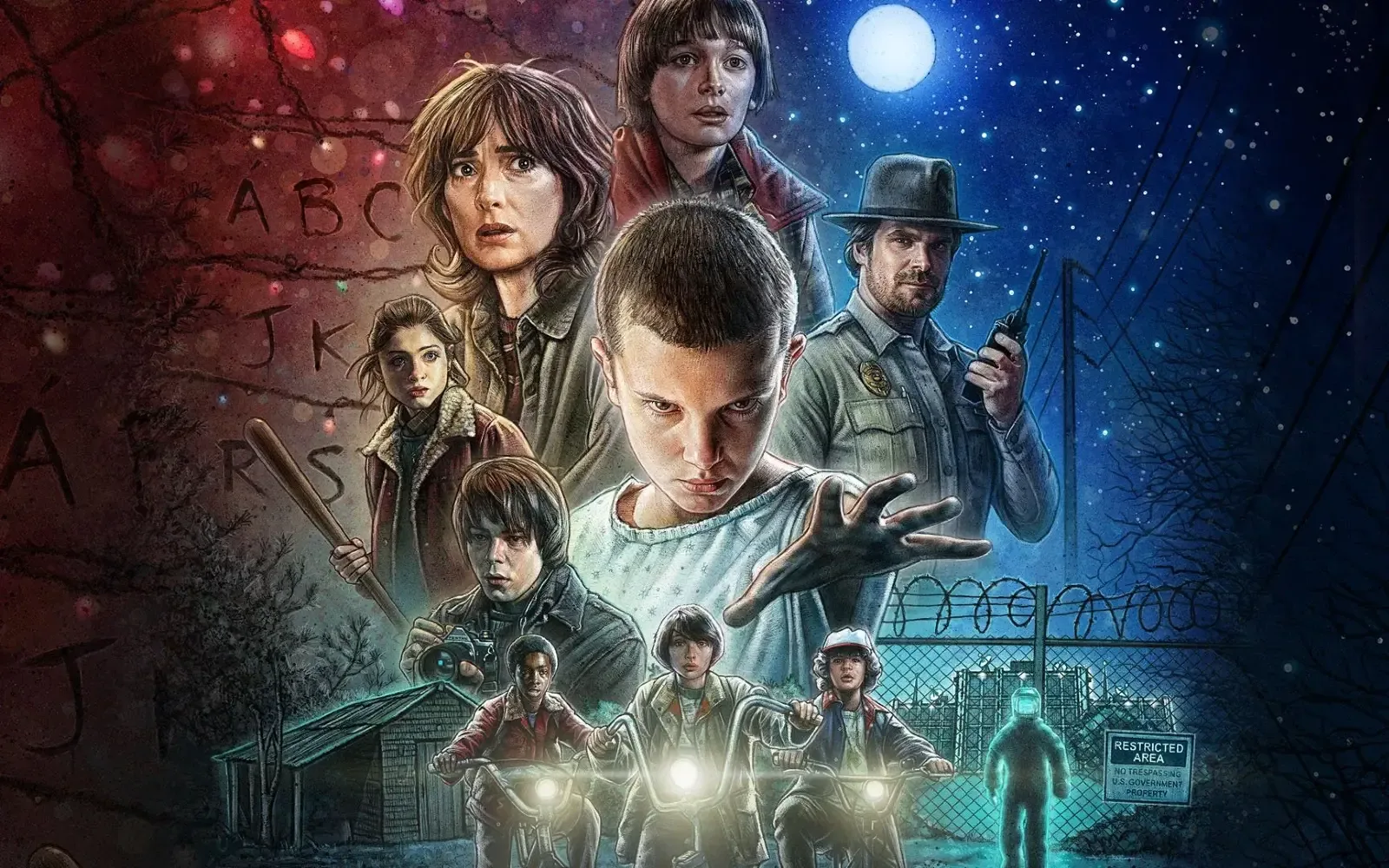
Stranger Things’s massive success is due to more than just ’80s nostalgia and D&D references (though those are pretty great).
Ten years ago today, Netflix took us to Hawkins, a sleepy little Indiana town where stranger things were afoot. This story about a group of kids battling an unspeakable, otherworldly evil would ultimately span five seasons, create a cultural phenomenon, and become one of Netflix’s biggest hits.
The reasons for Stranger Things’ success are many: a deep and abiding sense of ’80s nostalgia; beloved characters and coming-of-age melodrama; a killer score by Survive’s Michael Stein and Kyle Dixon as well as the inclusion of classic era-appropriate tunes; incredible production design and eye-popping effects; and loads of nerdy callouts, most notably Dungeons & Dragons.
The ’80s nostalgia and nerdy callouts in particular were what resonated with me. Say what you want about the series as a whole, and it was certainly uneven at times (season three, I’m looking at you), but Stranger Things’ first season remains a near-perfect TV experience for me. This might sound strange (npi), but I’ve rarely felt so seen by a TV series. As I wrote in my review of the first season:
Not since Donnie Darko have I felt so strongly that some filmmakers had tapped directly into my subconscious with the express purpose of hitting all of my favorite tropes and narrative ideas (e.g., shadowy government experiments, role-playing games, scientists meddling where they shouldn’t be meddling, otherworldly monsters, coming-of-age stories, ’80s pop culture). Or, as my friend Jeremy put it, “It’s like the Duffer Brothers are us!”
But there’s another reason for the series’ success and broad cultural resonance, one that goes a little deeper than nostalgia. Stranger Things possessed a sincerity and lack of cynicism that, though occasionally awkward and on the nose, remained steadfast right up to its final, bittersweet scenes. And I think Emily St. James did a fantastic job of summing it up in her review of the series’ second season:
One of fiction’s most powerful functions is the way it allows us to tell stories about what we do and don’t value, the kinds of people we want to be and the kinds of people we want to see in the world. I don’t need to someone to explain to me that the best way to win somebody’s heart is to treat them like a human being, because I’m past that phase of my life. But many of those who watch Stranger Things do need to hear that, and I’m glad there’s a show willing to talk to them, too.
The world we live in might be complicated and full of bad choices, but some things remain easy to understand: Treat other people the way you would like to be treated. Remind yourself that other people are the authors of their own stories as surely as you are the author of your own. Don’t ever treat anybody as if they exist solely to help you get what you want.
Too many stories of the past several years have flirted with the idea that any or all of the above values might not be sound. Even if Stranger Things isn’t 100 percent to my taste, I like knowing that one of the most popular series of our time doesn’t just embrace said values, but shouts them from the rooftops.
Even in its weakest moments, Stranger Things never ceased wearing its heart on its sleeve. Sure, that occasionally led to some Big Emotional Moments™ that made you roll your eyes. At the same time, however, I was almost never not caught up in the characters and their stories, be it Eleven’s struggle to overcome her trauma even while battling extra-dimensional horrors, Steve’s maturation from bully and pretty boy to the best damn babysitter of all time, or Hopper battling his demons of grief and loss.
From my review of the fifth and final season: “Stranger Things’ emphasis on friendship above all else might’ve been too earnest for its own good at times, but it was also a welcome respite from the cynicism that floods our world these days.” I suspect I’ll eventually make a return trip to Hawkins some day, when I need to experience that respite again, and I highly doubt that I’ll be the only one making such a journey in the years to come.