<?xml version="1.0" encoding="UTF-8"?><feed
	xmlns="http://www.w3.org/2005/Atom"
	xmlns:thr="http://purl.org/syndication/thread/1.0"
	xml:lang="en-US"
	>
	<title type="text">rathwjj&#039;s blog</title>
	<subtitle type="text">diary, journal, no detail just concept thinking</subtitle>

	<updated>2025-06-03T14:00:38Z</updated>

	<link rel="alternate" type="text/html" href="http://rathwjj.gfxtm.com" />
	<id>http://rathwjj.gfxtm.com/feed/atom/</id>
	<link rel="self" type="application/atom+xml" href="http://rathwjj.gfxtm.com/feed/atom/" />

	<generator uri="https://wordpress.org/" version="6.9.1">WordPress</generator>
	<entry>
		<author>
			<name>rathwjj</name>
							<uri>http://rathwjj.gfxtm.com</uri>
						</author>

		<title type="html"><![CDATA[Certification]]></title>
		<link rel="alternate" type="text/html" href="http://rathwjj.gfxtm.com/certification/" />

		<id>http://rathwjj.gfxtm.com/?p=4364</id>
		<updated>2025-06-03T14:00:38Z</updated>
		<published>2025-06-03T14:00:38Z</published>
		<category scheme="http://rathwjj.gfxtm.com" term="diary" />
		<summary type="html"><![CDATA[I love learning about programming languages, but I don’t think I’d enjoy working full-time as a programmer. I’m also passionate about AI and large language models (LLMs), but I don’t consider myself a strong machine learning programmer either. What truly drives me is learning new skills to fuel my passion for problem-solving. I’m especially interested &#8230; <p class="link-more"><a href="http://rathwjj.gfxtm.com/certification/" class="more-link">Continue reading<span class="screen-reader-text"> "Certification"</span></a></p>]]></summary>

					<content type="html" xml:base="http://rathwjj.gfxtm.com/certification/"><![CDATA[
<p>I love learning about programming languages, but I don’t think I’d enjoy working full-time as a programmer.</p>


<p>I’m also passionate about AI and large language models (LLMs), but I don’t consider myself a strong machine learning programmer either.</p>


<p>What truly drives me is learning new skills to fuel my passion for problem-solving. I’m especially interested in areas like Universal Access, Automation, Domotics, and IoT. I believe these are foundational skills I need to acquire. By improving my core abilities, I hope to create better solutions — and in the long run, help my customers achieve better outcomes.</p>


<p>And thank you — especially if you are one of my customers.</p>
]]></content>
		
			</entry>
		<entry>
		<author>
			<name>rathwjj</name>
							<uri>http://rathwjj.gfxtm.com</uri>
						</author>

		<title type="html"><![CDATA[Healthcare Automation &#124; Large-Scale Data Systems &#124; Transformation Consultant &#124; AI Learner for Smarter Workflows]]></title>
		<link rel="alternate" type="text/html" href="http://rathwjj.gfxtm.com/healthcare-automation-large-scale-data-systems-transformation-consultant-ai-learner-for-smarter-workflows/" />

		<id>http://rathwjj.gfxtm.com/?p=4361</id>
		<updated>2025-05-14T17:23:52Z</updated>
		<published>2025-05-14T17:23:52Z</published>
		<category scheme="http://rathwjj.gfxtm.com" term="diary" />
		<summary type="html"><![CDATA[This is collection of articles on My LinkedIn: What Are Automation and Digital Transformation? In the modern business landscape, many new ideas are constantly being explored to improve efficiency and competitiveness. Two powerful approaches that I’ve worked closely with are Automation and Digital Transformation. What is Automation? Automation, or more precisely process automation, refers to &#8230; <p class="link-more"><a href="http://rathwjj.gfxtm.com/healthcare-automation-large-scale-data-systems-transformation-consultant-ai-learner-for-smarter-workflows/" class="more-link">Continue reading<span class="screen-reader-text"> "Healthcare Automation &#124; Large-Scale Data Systems &#124; Transformation Consultant &#124; AI Learner for Smarter Workflows"</span></a></p>]]></summary>

					<content type="html" xml:base="http://rathwjj.gfxtm.com/healthcare-automation-large-scale-data-systems-transformation-consultant-ai-learner-for-smarter-workflows/"><![CDATA[
<p>This is collection of articles on My LinkedIn:</p>


<p><strong>What Are Automation and Digital Transformation?</strong></p>


<p>In the modern business landscape, many new ideas are constantly being explored to improve efficiency and competitiveness. Two powerful approaches that I’ve worked closely with are <strong>Automation</strong> and <strong>Digital Transformation</strong>.</p>


<p><strong>What is Automation?</strong></p>


<p><strong>Automation</strong>, or more precisely <strong>process automation</strong>, refers to the use of technology to streamline workflows across departments with minimal manual intervention. The goal is to reduce friction between units, eliminate repetitive tasks, and increase overall operational efficiency.</p>


<p>By integrating software and hardware solutions, automation supports frontline staff, administrative functions, and management teams alike. The result is faster execution, fewer errors, and lower operational costs.</p>


<p>Examples include:</p>


<ul class="wp-block-list">
<li>Automating data entry between systems</li>


<li>Setting up alerts and workflows for approvals</li>


<li>Using bots to manage routine customer service tasks</li>
</ul>


<p><strong>What is Digital Transformation?</strong></p>


<p><strong>Digital Transformation</strong> goes beyond automating individual tasks. It’s the strategic use of digital technologies to fundamentally change how an organization operates and delivers value. This includes improving <strong>Confidentiality</strong>, <strong>Integrity</strong>, and <strong>Availability</strong> (the <strong>CIA triad</strong>) of data and services.</p>


<p>Digital transformation often leverages:</p>


<ul class="wp-block-list">
<li><strong>Cloud computing</strong> for scalable infrastructure</li>


<li><strong>Mobile services</strong> for better accessibility</li>


<li><strong>AI and machine learning</strong> to enhance decision-making and personalization</li>
</ul>


<p>It enables seamless collaboration across departments and improves interactions with customers by providing more consistent, data-driven, and accessible services</p>


<p></p>


<p></p>


<p><strong>Office Automation vs. Healthcare Automation</strong></p>


<p><strong>Office automation</strong> typically focuses on internal processes such as resource management, scheduling and appointments, document handling, reporting and analytics, and security management. In contrast, <strong>healthcare automation</strong> spans a broader range of activities—from data collection and patient monitoring via various sensors to inventory control and clinical resource management.</p>


<p>In recent years, healthcare automation has advanced significantly, particularly in diagnostics and treatment. With the help of machine learning and digital tools, more automation is being integrated into clinical workflows. Despite challenges such as limited resources, the aim remains the same: to reduce friction at every step and improve both efficiency and care quality.</p>


<hr class="wp-block-separator has-alpha-channel-opacity"/>


<p><strong>Do You Need Healthcare Automation?</strong></p>


<p>No—you don&#8217;t need it… <strong>if</strong> your current process is flawless.</p>


<p>That means:</p>


<ul class="wp-block-list">
<li>You experience zero delays or errors.</li>


<li>Your team has enough time and resources to handle every task smoothly.</li>


<li>Your budget allows for optimal efficiency without compromise.</li>
</ul>


<p>If that’s your reality, then healthcare automation is just another tool—not a necessity.</p>


<p>But for most organizations, automation can offer critical improvements in reliability, consistency, and workload reduction. It’s not about replacing people—it’s about supporting them to do better work.</p>


<hr class="wp-block-separator has-alpha-channel-opacity"/>


<p><strong>A Practical Example: Hemodialysis Automation</strong></p>


<p>Based on my experience of over ten years in hemodialysis, here’s a simplified example of how automation can improve care delivery.</p>


<p>Patients typically come for dialysis two or three times a week. The process includes:</p>


<ol start="1" class="wp-block-list">
<li><strong>Patient Identification</strong>: Using ID or hospital number (HN ID) upon arrival.</li>


<li><strong>Pre-treatment Checks</strong>: Nurses record the patient’s weight, blood pressure, and temperature, comparing them to the previous session.</li>


<li><strong>Machine Preparation</strong>: Equipment is set up, and if anomalies appear in patient records, nurses consult with a doctor.</li>


<li><strong>During Dialysis</strong>: Nurses monitor the dialysis machine every 15 minutes. They may need to administer iron, zinc, or other minerals to address nutrient deficiencies. Sugar and sodium levels must be continuously monitored to ensure the patient’s safety and progress.</li>
</ol>


<p>Now, how many of these steps could be improved—or even automated?</p>


<ul class="wp-block-list">
<li><strong>Smart patient identification</strong> can reduce clerical errors.</li>


<li><strong>Automated vitals monitoring</strong> can ensure consistency and flag issues in real-time.</li>


<li><strong>AI-driven decision support</strong> can help nurses and doctors act faster with more accurate data.</li>


<li><strong>IoT-enabled dialysis machines</strong> can log performance and patient reactions continuously without manual input.</li>
</ul>


<p>Better processes lead to better outcomes—for both staff and patients. Tools like <strong>IoT devices</strong>, <strong>machine learning</strong>, and <strong>digital sensors</strong> are not luxury add-ons—they are part of a sustainable and cost-effective future.</p>


<p>Even if you can’t replace your medical instruments overnight, integrating smart technologies can <strong>extend equipment lifespan</strong>, <strong>reduce operational costs</strong>, and most importantly, <strong>improve patient care</strong>.</p>


<p></p>


<p></p>


<p><strong>Large-Scale Data vs. Big Data</strong></p>


<p>What are “large-scale data” systems, and how do they differ from “big data” systems?</p>


<p>In short, <em>big data</em> refers to all types of data—structured, semi-structured, and unstructured. It emphasizes the <em>variety</em>, <em>volume</em>, and <em>velocity</em> of data from diverse sources. Meanwhile, <em>large-scale data</em> typically refers to <em>structured</em> data that accumulates continuously at a high rate. In such systems, analysis often relies on capturing <em>snapshots</em> of the data rather than processing it all in real time due to its size and complexity.</p>


<hr class="wp-block-separator has-alpha-channel-opacity"/>


<p><strong>Healthcare Data Management</strong></p>


<p>Traditionally, healthcare data is managed in structured database systems. Most patient records, lab results, and medical histories are stored in well-defined formats. Even non-textual data like X-rays, CT scans, and video monitoring footage can be considered structured in this context, as the expected data patterns and formats are known and consistent.</p>


<p>In many cases, managing this data is straightforward, and third-party database software solutions are sufficient for traditional healthcare needs.</p>


<p>However, there&#8217;s a growing trend toward integrating artificial intelligence into healthcare data systems. This includes combining data from multiple departments or systems to support advanced analytics, diagnostics, and decision-making. As a result, <em>in-house</em> data management strategies are becoming more important for handling integration, security, and performance.</p>


<p>One major concern in modern healthcare data management is the handling of Personally Identifiable Information (PII). When sharing data with third parties—for research, marketing, or inventory analysis—it’s crucial to address privacy concerns and comply with regulations. This is especially important when publishing or outsourcing healthcare data.</p>


<hr class="wp-block-separator has-alpha-channel-opacity"/>


<h3 class="wp-block-heading">Anonymization vs. Authentication</h3>


<p><strong>Anonymization</strong> and <strong>authentication</strong> are both important for protecting private information, particularly in sensitive domains like healthcare. While they serve complementary goals, their concepts and implementations are fundamentally different.</p>


<hr class="wp-block-separator has-alpha-channel-opacity"/>


<h3 class="wp-block-heading">What Is Anonymization?</h3>


<p><strong>Anonymization</strong> is the process of permanently removing or modifying personal identifiers from data so that individuals cannot be identified—directly or indirectly. Once anonymized, the data cannot be traced back to a specific person.</p>


<p>In <strong>healthcare</strong>, anonymization is especially important when patient data is shared outside the original care team—for example:</p>


<ul class="wp-block-list">
<li>When lab results are sent to third-party testing services</li>


<li>When data is used for clinical research</li>


<li>During inter-hospital patient transfers or referrals</li>
</ul>


<hr class="wp-block-separator has-alpha-channel-opacity"/>


<h3 class="wp-block-heading">How Is Healthcare Data Anonymized?</h3>


<p>There are several techniques used to anonymize healthcare data:</p>


<ul class="wp-block-list">
<li><strong>Removal of direct identifiers</strong>: such as names, ID numbers, phone numbers, or addresses</li>


<li><strong>Generalization of data</strong>: for example, replacing exact birthdates with age ranges</li>


<li><strong>Pseudonymization</strong>: replacing identifiable information with a pseudonym (e.g., patient ID codes) that allows data to be linked without revealing the actual identity</li>
</ul>


<h4 class="wp-block-heading">What Is Pseudonymization?</h4>


<p><strong>Pseudonymization</strong> is a privacy-enhancing technique where personal identifiers are replaced with coded values or artificial identifiers. While the data is no longer directly identifiable, it can still be linked back to the individual if necessary—under strict controls.</p>


<p>This method is widely used in medical research and patient tracking scenarios. When combined with <strong>artificial intelligence</strong>, pseudonymized data can be safely analyzed and used without compromising patient privacy. It also helps reduce costs and improve operational efficiency in large-scale healthcare systems.</p>


<hr class="wp-block-separator has-alpha-channel-opacity"/>


<h3 class="wp-block-heading">What Is Authentication?</h3>


<p><strong>Authentication</strong>, on the other hand, is the process of verifying the identity of a user or device before granting access to systems, applications, or data. It ensures that only authorized individuals can access sensitive information.</p>


<p>Typical authentication methods include:</p>


<ul class="wp-block-list">
<li>Passwords or PINs</li>


<li>Biometric scans (e.g., fingerprints or facial recognition)</li>


<li>Two-factor or multi-factor authentication</li>
</ul>


<hr class="wp-block-separator has-alpha-channel-opacity"/>


<h3 class="wp-block-heading">Summary</h3>


<ul class="wp-block-list">
<li><strong>Anonymization</strong> protects data <strong>after collection</strong>, ensuring it can be shared or analyzed without exposing identities.</li>


<li><strong>Authentication</strong> protects data <strong>before access</strong>, ensuring only authorized users can reach sensitive systems.</li>
</ul>


<p>Both are essential components of a secure and privacy-respecting data management strategy, especially in healthcare environments where data is both critical and highly sensitive.</p>


<p></p>


<h3 class="wp-block-heading">Artificial Intelligence, Internet of Things, and Process Automation in Healthcare</h3>


<p>Traditionally, healthcare staff were responsible for manually recording all patient measurements into hospital databases—a time-consuming and error-prone task. Today, however, an increasing number of medical devices can transmit data directly to software systems, reducing manual effort and improving accuracy.</p>


<p>Despite these advancements, many devices still cannot be replaced or upgraded. This is often due to budget constraints, legacy infrastructure, or specific clinical requirements.</p>


<h3 class="wp-block-heading">How AI and IoT Help Bridge the Gap</h3>


<p><strong>The Internet of Things (IoT)</strong>, combined with <strong>camera technologies</strong> and <strong>artificial intelligence (AI)</strong>, has enabled innovative ways to retrofit existing medical equipment. These solutions allow data to be captured and transmitted even from devices that lack built-in digital connectivity.</p>


<p>However, using cameras and sensors raises important <strong>privacy concerns</strong>, especially when capturing patient-related data.</p>


<h3 class="wp-block-heading">The Role of Anonymization and Pseudonymization</h3>


<p>To address these concerns, <strong>anonymization</strong> and <strong>pseudonymization</strong> techniques are applied. One effective approach is <strong>one-time, token-based pseudonymization</strong>, which replaces identifiable information with a non-reversible token. This ensures that data cannot be traced back to the individual, protecting patient privacy while still allowing meaningful analysis.</p>
]]></content>
		
			</entry>
		<entry>
		<author>
			<name>rathwjj</name>
							<uri>http://rathwjj.gfxtm.com</uri>
						</author>

		<title type="html"><![CDATA[ChatGPT API]]></title>
		<link rel="alternate" type="text/html" href="http://rathwjj.gfxtm.com/chatgpt-api/" />

		<id>http://rathwjj.gfxtm.com/?p=4356</id>
		<updated>2025-05-06T15:17:25Z</updated>
		<published>2025-05-06T15:01:14Z</published>
		<category scheme="http://rathwjj.gfxtm.com" term="diary" />
		<summary type="html"><![CDATA[After I did test many database with ChatGPT I would like to share the &#8220;ChatGPT API&#8221;. I put the image version in LinkedIn, and I would like to put the full version here. OpenAI API Platform / API Description Free / Paid chat/completions ChatGPT-style conversation Paid completions Legacy GPT-3 completions Paid embeddings Text embeddings Paid &#8230; <p class="link-more"><a href="http://rathwjj.gfxtm.com/chatgpt-api/" class="more-link">Continue reading<span class="screen-reader-text"> "ChatGPT API"</span></a></p>]]></summary>

					<content type="html" xml:base="http://rathwjj.gfxtm.com/chatgpt-api/"><![CDATA[
<p>After I did test many database with ChatGPT I would like to share the &#8220;ChatGPT API&#8221;. </p>


<p>I put the image version in LinkedIn, and I would like to put the full version here.</p>


<style>
  .chatgpt-api-table {
    width: 100%;
    border-collapse: collapse;
  }
  .chatgpt-api-table th, .chatgpt-api-table td {
    border: 1px solid #ddd;
    padding: 8px;
  }
  .chatgpt-api-table th {
    background-color: #f2f2f2;
    font-weight: bold;
    text-align: left;
  }
  .chatgpt-api-table .section {
    background-color: #e6e6e6;
    font-weight: bold;
    text-align: left;
    padding-top: 10px;
    padding-bottom: 10px;
  }
  .paid {
    color: #0066cc;
    font-weight: bold;
  }
  .free {
    color: #00aa55;
    font-weight: bold;
  }
</style>

<table class="chatgpt-api-table">
  <tr><td colspan="3" class="section">OpenAI API</td></tr>
  <tr><th>Platform / API</th><th>Description</th><th>Free / Paid</th></tr>
  <tr><td>chat/completions</td><td>ChatGPT-style conversation</td><td class="paid">Paid</td></tr>
  <tr><td>completions</td><td>Legacy GPT-3 completions</td><td class="paid">Paid</td></tr>
  <tr><td>embeddings</td><td>Text embeddings</td><td class="paid">Paid</td></tr>
  <tr><td>moderations</td><td>Content filtering</td><td class="free">Free</td></tr>
  <tr><td>audio/transcriptions</td><td>Speech to text (Whisper)</td><td class="paid">Paid</td></tr>
  <tr><td>audio/translations</td><td>Audio to English</td><td class="paid">Paid</td></tr>
  <tr><td>images/generations</td><td>DALL·E image generation</td><td class="paid">Paid</td></tr>
  <tr><td>images/edits, images/variations</td><td>Image editing/variations</td><td class="paid">Paid</td></tr>
  <tr><td>fine-tuning</td><td>Custom model tuning</td><td class="paid">Paid</td></tr>
  <tr><td>assistants</td><td>Tool-integrated AI assistant</td><td class="paid">Paid</td></tr>
  <tr><td>threads</td><td>Manage chat sessions</td><td class="paid">Paid</td></tr>
  <tr><td>files</td><td>File uploads for assistant</td><td class="paid">Paid</td></tr>
  <tr><td>function calling / tool use</td><td>Execute external functions</td><td class="paid">Paid</td></tr>

  <tr><td colspan="3" class="section">ChatGPT Web App</td></tr>
  <tr><td>GPT-3.5 (default model)</td><td>Basic chatbot</td><td class="free">Free</td></tr>
  <tr><td>GPT-4 (gpt-4-turbo)</td><td>Advanced reasoning model</td><td class="paid">Paid</td></tr>
  <tr><td>Code Interpreter</td><td>Python tool / Data analysis</td><td class="paid">Paid</td></tr>
  <tr><td>DALL·E image generation</td><td>Generate images from prompts</td><td class="paid">Paid</td></tr>
  <tr><td>Browsing tool</td><td>Live web access</td><td class="paid">Paid</td></tr>
  <tr><td>Memory</td><td>Remembers user preferences</td><td class="paid">Paid</td></tr>
  <tr><td>File upload and analysis</td><td>Understand uploaded documents</td><td class="paid">Paid</td></tr>
  <tr><td>Custom GPTs</td><td>Create personal assistants</td><td class="paid">Paid</td></tr>

  <tr><td colspan="3" class="section">Other Platforms and Integrations</td></tr>
  <tr><td>Microsoft Copilot</td><td>GPT in Word, Excel, etc.</td><td class="paid">Paid</td></tr>
  <tr><td>Azure OpenAI API</td><td>OpenAI access via Azure</td><td class="paid">Paid</td></tr>
  <tr><td>LangChain / SDKs</td><td>Tooling frameworks</td><td class="paid">Depends (Usage Paid)</td></tr>
</table>


<table>
    <caption>OpenAI API Endpoints (Free vs. Paid)</caption>
    <thead>
      <tr>
        <th>API Service</th>
        <th>Endpoint</th>
        <th>Description</th>
        <th>Free / Paid</th>
      </tr>
    </thead>
    <tbody>

      <tr>
        <td>Chat Completions</td>
        <td>POST /v1/chat/completions</td>
        <td>Generates conversational responses</td>
        <td>Paid</td>
      </tr>
    
      <tr>
        <td>Completions (Legacy)</td>
        <td>POST /v1/completions</td>
        <td>Generates text completions using legacy models</td>
        <td>Paid</td>
      </tr>
    
      <tr>
        <td>Embeddings</td>
        <td>POST /v1/embeddings</td>
        <td>Generates vector embeddings for text</td>
        <td>Paid</td>
      </tr>
    
      <tr>
        <td>Moderations</td>
        <td>POST /v1/moderations</td>
        <td>Classifies content for policy violations</td>
        <td>Free</td>
      </tr>
    
      <tr>
        <td>Audio &#8211; Transcriptions</td>
        <td>POST /v1/audio/transcriptions</td>
        <td>Transcribes audio to text using Whisper</td>
        <td>Paid</td>
      </tr>
    
      <tr>
        <td>Audio &#8211; Translations</td>
        <td>POST /v1/audio/translations</td>
        <td>Translates audio to English text</td>
        <td>Paid</td>
      </tr>
    
      <tr>
        <td>Images &#8211; Generations</td>
        <td>POST /v1/images/generations</td>
        <td>Creates images from text prompts</td>
        <td>Paid</td>
      </tr>
    
      <tr>
        <td>Images &#8211; Edits</td>
        <td>POST /v1/images/edits</td>
        <td>Edits images using text instructions</td>
        <td>Paid</td>
      </tr>
    
      <tr>
        <td>Images &#8211; Variations</td>
        <td>POST /v1/images/variations</td>
        <td>Generates variations of images</td>
        <td>Paid</td>
      </tr>
    
      <tr>
        <td>Fine-tuning</td>
        <td>POST /v1/fine-tunes</td>
        <td>Creates fine-tuning job for models</td>
        <td>Paid</td>
      </tr>
    
      <tr>
        <td>List Fine-tunes</td>
        <td>GET /v1/fine-tunes</td>
        <td>Lists fine-tuning jobs</td>
        <td>Paid</td>
      </tr>
    
      <tr>
        <td>Retrieve Fine-tune</td>
        <td>GET /v1/fine-tunes/{id}</td>
        <td>Retrieves fine-tune job status</td>
        <td>Paid</td>
      </tr>
    
      <tr>
        <td>Cancel Fine-tune</td>
        <td>POST /v1/fine-tunes/{id}/cancel</td>
        <td>Cancels a fine-tune job</td>
        <td>Paid</td>
      </tr>
    
      <tr>
        <td>Upload File</td>
        <td>POST /v1/files</td>
        <td>Uploads a file for use</td>
        <td>Paid</td>
      </tr>
    
      <tr>
        <td>List Files</td>
        <td>GET /v1/files</td>
        <td>Lists all uploaded files</td>
        <td>Paid</td>
      </tr>
    
      <tr>
        <td>Retrieve File</td>
        <td>GET /v1/files/{file_id}</td>
        <td>Retrieves file info</td>
        <td>Paid</td>
      </tr>
    
      <tr>
        <td>Delete File</td>
        <td>DELETE /v1/files/{file_id}</td>
        <td>Deletes a file</td>
        <td>Paid</td>
      </tr>
    
      <tr>
        <td>Create Assistant</td>
        <td>POST /v1/assistants</td>
        <td>Creates an assistant</td>
        <td>Paid</td>
      </tr>
    
      <tr>
        <td>Retrieve Assistant</td>
        <td>GET /v1/assistants/{id}</td>
        <td>Fetch assistant details</td>
        <td>Paid</td>
      </tr>
    
      <tr>
        <td>Update Assistant</td>
        <td>POST /v1/assistants/{id}</td>
        <td>Updates an assistant</td>
        <td>Paid</td>
      </tr>
    
      <tr>
        <td>Delete Assistant</td>
        <td>DELETE /v1/assistants/{id}</td>
        <td>Deletes an assistant</td>
        <td>Paid</td>
      </tr>
    
      <tr>
        <td>List Assistants</td>
        <td>GET /v1/assistants</td>
        <td>Lists assistants</td>
        <td>Paid</td>
      </tr>
    
      <tr>
        <td>Create Thread</td>
        <td>POST /v1/threads</td>
        <td>Starts a conversation thread</td>
        <td>Paid</td>
      </tr>
    
      <tr>
        <td>Retrieve Thread</td>
        <td>GET /v1/threads/{id}</td>
        <td>Gets thread info</td>
        <td>Paid</td>
      </tr>
    
      <tr>
        <td>Delete Thread</td>
        <td>DELETE /v1/threads/{id}</td>
        <td>Deletes a thread</td>
        <td>Paid</td>
      </tr>
    
      <tr>
        <td>Create Message</td>
        <td>POST /v1/threads/{thread_id}/messages</td>
        <td>Adds message to thread</td>
        <td>Paid</td>
      </tr>
    
      <tr>
        <td>List Messages</td>
        <td>GET /v1/threads/{thread_id}/messages</td>
        <td>Lists messages in thread</td>
        <td>Paid</td>
      </tr>
    
      <tr>
        <td>Create Run</td>
        <td>POST /v1/threads/{thread_id}/runs</td>
        <td>Starts assistant processing</td>
        <td>Paid</td>
      </tr>
    
      <tr>
        <td>Retrieve Run</td>
        <td>GET /v1/threads/{thread_id}/runs/{run_id}</td>
        <td>Gets run info</td>
        <td>Paid</td>
      </tr>
    
      <tr>
        <td>List Runs</td>
        <td>GET /v1/threads/{thread_id}/runs</td>
        <td>Lists thread runs</td>
        <td>Paid</td>
      </tr>
    
      <tr>
        <td>Cancel Run</td>
        <td>POST /v1/threads/{thread_id}/runs/{run_id}/cancel</td>
        <td>Cancels a run</td>
        <td>Paid</td>
      </tr>
    
      <tr>
        <td>List Run Steps</td>
        <td>GET /v1/threads/{thread_id}/runs/{run_id}/steps</td>
        <td>Lists run steps</td>
        <td>Paid</td>
      </tr>
    
      <tr>
        <td>Retrieve Run Step</td>
        <td>GET /v1/threads/{thread_id}/runs/{run_id}/steps/{step_id}</td>
        <td>Gets step detail</td>
        <td>Paid</td>
      </tr>
    
    </tbody>
  </table>
]]></content>
		
			</entry>
		<entry>
		<author>
			<name>rathwjj</name>
							<uri>http://rathwjj.gfxtm.com</uri>
						</author>

		<title type="html"><![CDATA[Result of testing LLM for my old projects.]]></title>
		<link rel="alternate" type="text/html" href="http://rathwjj.gfxtm.com/result-of-testing-llm-for-my-old-projects/" />

		<id>http://rathwjj.gfxtm.com/?p=4353</id>
		<updated>2025-05-05T14:19:44Z</updated>
		<published>2025-05-05T14:16:32Z</published>
		<category scheme="http://rathwjj.gfxtm.com" term="diary" />
		<summary type="html"><![CDATA[AI is the new electricity and will transform and improve nearly all areas of human lives.This is the theme of DeepLearning.ai. The one site that I took for many courses about AI lately. I think I understand more about AI, so this is some parts of conclusion that I want to share. Note: I use &#8230; <p class="link-more"><a href="http://rathwjj.gfxtm.com/result-of-testing-llm-for-my-old-projects/" class="more-link">Continue reading<span class="screen-reader-text"> "Result of testing LLM for my old projects."</span></a></p>]]></summary>

					<content type="html" xml:base="http://rathwjj.gfxtm.com/result-of-testing-llm-for-my-old-projects/"><![CDATA[
<p><strong>AI is the new electricity and will transform and improve nearly all areas of human lives.</strong><br>This is the theme of DeepLearning.ai. The one site that I took for many courses about AI lately.</p>


<p>I think I understand more about AI, so this is some parts of conclusion that I want to share.</p>


<ol class="wp-block-list">
<li>Good Transform result need quite a lot of compute power. If you have not much of continuous work to transform, using Public AI may get you better result, with cheaper cost.</li>


<li>Some of business need to comply PII. I recommended doing local LLM for anonymization. eg, liquification and health related. In case you have budget enough. Doing rent part of large Public AI LLM to be Private AI LLM may still cheaper than provide all structure by yourself.</li>


<li>One more conclusion I get from my test project, I need to learn docker. As I use to work in older environment, understand better in docker help a lot. </li>
</ol>


<p>Note: I use to works in docker environment when work with HAAS (Home Assistant) before. However HAAS work in local environment and no need to do cloud part. I took two courses in this for compensate that kind of lack of knowledge.</p>


<p>For my lesson learn on this, I think the kind of work I am looking for now related some level to AI, as know AI should be in most part of the work. Need some advanced level of database and network knowledge. Applying on cloud-based and need a lot of dedication.</p>


<p>I will put this to LinkedIn too in case some one want to learn more about this.</p>
]]></content>
		
			</entry>
		<entry>
		<author>
			<name>rathwjj</name>
							<uri>http://rathwjj.gfxtm.com</uri>
						</author>

		<title type="html"><![CDATA[AI train (myself) and test (AI train).]]></title>
		<link rel="alternate" type="text/html" href="http://rathwjj.gfxtm.com/ai-train-myself-and-test-ai-train/" />

		<id>http://rathwjj.gfxtm.com/?p=4351</id>
		<updated>2025-05-01T13:51:55Z</updated>
		<published>2025-05-01T13:51:55Z</published>
		<category scheme="http://rathwjj.gfxtm.com" term="diary" />
		<summary type="html"><![CDATA[I am learning &#8220;Artificial Intelligent&#8221; LLMs from Cisco and Deeplearning.AI, and want to know if this can apply on my old project. I had 2 large-scale database projects: one was from dialysis, and another was from liquidation project. both took me around 2-3 years to finish them. I wish to see if I can use &#8230; <p class="link-more"><a href="http://rathwjj.gfxtm.com/ai-train-myself-and-test-ai-train/" class="more-link">Continue reading<span class="screen-reader-text"> "AI train (myself) and test (AI train)."</span></a></p>]]></summary>

					<content type="html" xml:base="http://rathwjj.gfxtm.com/ai-train-myself-and-test-ai-train/"><![CDATA[
<p>I am learning <strong>&#8220;Artificial Intelligent&#8221;</strong> LLMs from Cisco and Deeplearning.AI, and want to know if this can apply on my old project.</p>


<p>I had 2 large-scale database projects: one was from dialysis, and another was from liquidation project. both took me around 2-3 years to finish them. I wish to see if I can use LLMs to do these projects in more efficient ways. I know all step to do that manually, however for <strong>pretrain</strong>, and <strong>pair program with database</strong> more new ways of work need to be explored.</p>


<p>So don&#8217;t wonder if you see me take a lot of AI courses, I still testing and learning how to make this faster than I was done that. If you still see I took a lot of courses that mean I still learn to adapt and want to be more efficient.</p>


<p>For my profile please check: <a href="https://www.linkedin.com/in/rathwjj/">https://www.linkedin.com/in/rathwjj/</a></p>
]]></content>
		
			</entry>
		<entry>
		<author>
			<name>rathwjj</name>
							<uri>http://rathwjj.gfxtm.com</uri>
						</author>

		<title type="html"><![CDATA[ground hog day (revisited)]]></title>
		<link rel="alternate" type="text/html" href="http://rathwjj.gfxtm.com/ground-hog-day-revisited/" />

		<id>http://rathwjj.gfxtm.com/?p=4348</id>
		<updated>2025-04-26T02:53:02Z</updated>
		<published>2025-04-26T02:53:02Z</published>
		<category scheme="http://rathwjj.gfxtm.com" term="diary" />
		<summary type="html"><![CDATA[I loved &#8220;ground hog day&#8221; (movie) a lot. I remembered mentioned about that several times. and now again I will mention about this again. The situation that you can do nothing. Only one way left is to improve yourself. You don&#8217;t know in long run that improvement will help or not. However you still improve &#8230; <p class="link-more"><a href="http://rathwjj.gfxtm.com/ground-hog-day-revisited/" class="more-link">Continue reading<span class="screen-reader-text"> "ground hog day (revisited)"</span></a></p>]]></summary>

					<content type="html" xml:base="http://rathwjj.gfxtm.com/ground-hog-day-revisited/"><![CDATA[
<p><strong>I loved &#8220;ground hog day&#8221; (movie) a lot.</strong></p>


<p>I remembered mentioned about that several times. and now again I will mention about this again.</p>


<p>The situation that you can do nothing. Only one way left is to improve yourself.</p>


<p>You don&#8217;t know in long run that improvement will help or not.</p>


<p>However you still improve yourself.</p>


<p>I need to mention about <strong>Database Analysis</strong> skill. I have some background in this. (18 years +).<br>Learning new database skill is good. I know how my knowledge lack behind from <strong>SPSS</strong> day to <strong>tableau</strong>.</p>


<p>Moreover I have background in <strong>python</strong> as here and there, python quite everywhere. Still I see that I have a lot to learn when enrolled on course. Many thing you think you know but the knowledge always update. You learn new thing even with the old knowledge you think you have quite well experience.</p>


<p></p>
]]></content>
		
			</entry>
		<entry>
		<author>
			<name>rathwjj</name>
							<uri>http://rathwjj.gfxtm.com</uri>
						</author>

		<title type="html"><![CDATA[General Workflow to Run and Fine-Tune a Local LLM]]></title>
		<link rel="alternate" type="text/html" href="http://rathwjj.gfxtm.com/general-workflow-to-run-and-fine-tune-a-local-llm/" />

		<id>http://rathwjj.gfxtm.com/?p=4340</id>
		<updated>2025-04-21T13:28:44Z</updated>
		<published>2025-04-20T01:15:12Z</published>
		<category scheme="http://rathwjj.gfxtm.com" term="diary" />
		<summary type="html"><![CDATA[I did enroll in many LLM courses for confirm this. I see that I needed to understand step by step more than show all the step, below is what summary on each step. Step 1: Set Up Your Environment.Choose your hardwareInstall dependenciesSet up GPU acceleration (CUDA) (optional). If you use Mac M series or Arm &#8230; <p class="link-more"><a href="http://rathwjj.gfxtm.com/general-workflow-to-run-and-fine-tune-a-local-llm/" class="more-link">Continue reading<span class="screen-reader-text"> "General Workflow to Run and Fine-Tune a Local LLM"</span></a></p>]]></summary>

					<content type="html" xml:base="http://rathwjj.gfxtm.com/general-workflow-to-run-and-fine-tune-a-local-llm/"><![CDATA[
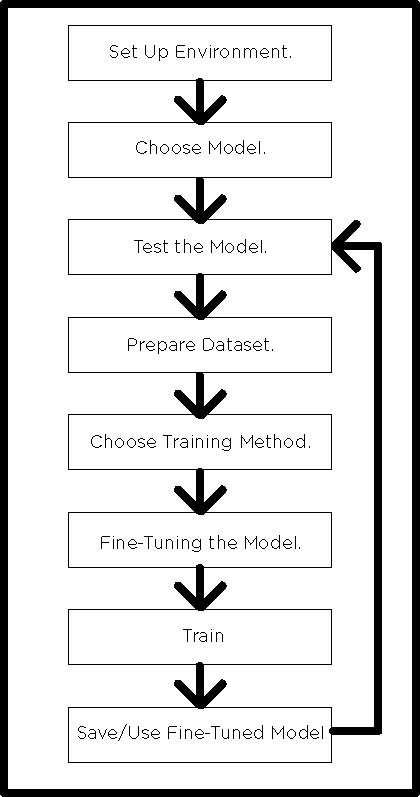
<p>I did enroll in many LLM courses for confirm this. I see that I needed to understand step by step more than show all the step, below is what summary on each step.</p>


<p>Step 1: <strong>Set Up Your Environment</strong>.<br>Choose your hardware<br>Install dependencies<br><em>Set up GPU acceleration (CUDA) (optional)</em>.  <em>If you use Mac M series or Arm based this may be not possible.</em></p>


<p>Step 2: <strong>Choose Your Model</strong>.<br>There were a lot of Pretrained model that you can choose, choose both model and parameters size (B).</p>


<p>eg. LLaMA (Meta), Mistral / Mixtral, Falcon, Gemma (Google), Phi (Microsoft).</p>


<p>Step 3: <strong>Test the Model</strong> <em>(Inference Only)<strong>.</strong></em></p>


<p>Step 4: <strong>Prepare Your Dataset</strong> (for training).</p>


<p>Step 5: <strong>Choose Training Method</strong></p>


<p>eg. Full fine-tuning, quantized, Parameter-Efficient Fine-Tuning (PEFT).</p>


<p>Step 6: <strong>Fine-Tuning the Model</strong></p>


<p>Step 7: <strong>Train</strong> <em>(by the dataset in step 4).</em></p>


<p>Step 8: <strong>Save + Use Your Fine-Tuned Model</strong> </p>


<p>And then back to Step 3: <strong>Test the Model</strong> <em>(Inference Only)<strong>.</strong></em></p>


<div class="wp-block-image">
<figure class="aligncenter size-full"><img fetchpriority="high" decoding="async" width="420" height="797" src="http://rathwjj.gfxtm.com/wp-content/uploads/flowchart.png" alt="" class="wp-image-4344" srcset="http://rathwjj.gfxtm.com/wp-content/uploads/flowchart.png 420w, http://rathwjj.gfxtm.com/wp-content/uploads/flowchart-158x300.png 158w" sizes="(max-width: 420px) 100vw, 420px" /><figcaption class="wp-element-caption"><em>simplified flowchart</em></figcaption></figure>
</div>


<p>You will continue to do prepare new Data set <strong>(step 4)</strong> and continue to <strong>step 8</strong> and back to <strong>step 3</strong> again until the result suit you.</p>
]]></content>
		
			</entry>
		<entry>
		<author>
			<name>rathwjj</name>
							<uri>http://rathwjj.gfxtm.com</uri>
						</author>

		<title type="html"><![CDATA[Portfolio 2025]]></title>
		<link rel="alternate" type="text/html" href="http://rathwjj.gfxtm.com/portfolio-2025/" />

		<id>http://rathwjj.gfxtm.com/?p=4329</id>
		<updated>2025-04-16T00:58:38Z</updated>
		<published>2025-04-15T00:35:35Z</published>
		<category scheme="http://rathwjj.gfxtm.com" term="diary" />
		<summary type="html"><![CDATA[Update version of Portfolio.]]></summary>

					<content type="html" xml:base="http://rathwjj.gfxtm.com/portfolio-2025/"><![CDATA[
<p>Update version of Portfolio.</p>


<iframe src="https://1drv.ms/x/c/c20e55f58b0681a0/IQRMT02ayDqvSJjhIDtuocy6AcJxNFz9wgUL28OIlQihBoU" width="2000" height="346" frameborder="0" scrolling="yes"></iframe>


<pre class="wp-block-code"><code></code></pre>


<p></p>
]]></content>
		
			</entry>
		<entry>
		<author>
			<name>rathwjj</name>
							<uri>http://rathwjj.gfxtm.com</uri>
						</author>

		<title type="html"><![CDATA[LLaMA 3.x Deep Dive: Full Comparison, Best Use Cases &#038; Deployment Strategy]]></title>
		<link rel="alternate" type="text/html" href="http://rathwjj.gfxtm.com/llama-3-x-deep-dive-full-comparison-best-use-cases-deployment-strategy/" />

		<id>http://rathwjj.gfxtm.com/?p=4324</id>
		<updated>2025-04-11T02:57:56Z</updated>
		<published>2025-04-11T02:42:29Z</published>
		<category scheme="http://rathwjj.gfxtm.com" term="diary" />
		<summary type="html"><![CDATA[Before I forget I want to talk about model with B. &#8220;B&#8221; in model names (like 7B, 70B) signifies billion. It indicates the number of parameters (weights and biases) in the model. A larger number of parameters (e.g., 70B) generally means a larger and more complex model with a greater capacity to learn and produce &#8230; <p class="link-more"><a href="http://rathwjj.gfxtm.com/llama-3-x-deep-dive-full-comparison-best-use-cases-deployment-strategy/" class="more-link">Continue reading<span class="screen-reader-text"> "LLaMA 3.x Deep Dive: Full Comparison, Best Use Cases &#38; Deployment Strategy"</span></a></p>]]></summary>

					<content type="html" xml:base="http://rathwjj.gfxtm.com/llama-3-x-deep-dive-full-comparison-best-use-cases-deployment-strategy/"><![CDATA[
<p>Before I forget I want to talk about model with B.</p>


<p><strong>&#8220;B&#8221;</strong> in model names<em> (like 7B, 70B)</em> signifies billion. It indicates the number of parameters <em>(weights and biases) </em>in the model. A larger number of parameters (e.g., 70B) generally means a larger and more complex model with a greater capacity to learn and produce sophisticated outputs, but also requires more resources to train and run.</p>


<p>We didn&#8217;t point anything about LLAMA 3.3 yet so now we will head on LLAMA 3.3 first.<br><br><strong>LLaMA 3.3</strong></p>


<h4 class="wp-block-heading"><strong>Pros</strong></h4>


<ul class="wp-block-list">
<li><strong>Instruction-tuned</strong>: follows prompts better than earlier versions.</li>


<li><strong>128K token context</strong>: excellent for long conversations or document summarization.</li>


<li><strong>Multilingual</strong>: Supports English, Spanish, German, French, Hindi, Thai, etc.</li>


<li><strong>Resource efficiency</strong>: Competes with LLaMA 3.1 405B, but runs on much less hardware.</li>


<li><strong>Open weights</strong>: Available for local hosting and fine-tuning.</li>
</ul>


<h4 class="wp-block-heading"><strong>Cons</strong></h4>


<ul class="wp-block-list">
<li><strong>Only available in 70B (as of now)</strong>: No lightweight 13B or 7B options.</li>


<li><strong>Higher system requirements</strong>: 64GB RAM and ~24GB VRAM minimum.</li>


<li><strong>Limited community optimization</strong>: Since it&#8217;s newer, fewer extensions/quantizations exist yet.</li>
</ul>


<h4 class="wp-block-heading">Note:</h4>


<p><em>It claims multilingual support, but <strong>fine-tuning on other languages</strong> still may be necessary for fluency.</em><br><em>While LLaMA 3.3 is efficient <strong>for its size</strong>, it&#8217;s still heavy for many local users.</em><br><em>Open weights encourage local use, but <strong>only a 70B version</strong> limits accessibility.</em></p>


<div class="wp-block-columns is-layout-flex wp-container-core-columns-is-layout-9d6595d7 wp-block-columns-is-layout-flex">
<div class="wp-block-column is-layout-flow wp-block-column-is-layout-flow" style="flex-basis:100%">
<figure class="wp-block-table is-style-stripes"><table class="has-fixed-layout"><tbody><tr><td><strong>Version</strong></td><td><strong>Key Model Sizes</strong> (B)</td><td><strong>Pros</strong></td><td><strong>Cons</strong></td><td><br><strong>Best For</strong></td></tr><tr><td>3.0</td><td>8 / 65</td><td>Simple</td><td>Lack optimize</td><td>early experiment.</td></tr><tr><td>3.1</td><td>13/ 70</td><td>Improved alignment, <br>multitasking</td><td>More resource need, more complex.</td><td>Chatbots, general assistants</td></tr><tr><td>3.2</td><td>13/ 70</td><td>Code performance boost</td><td>Slight more memory usages.</td><td><br>Coding, dev copilots, <br>Token based.</td></tr><tr><td>3.3</td><td>70 (instruction-  tuned)</td><td>Multilingual, 128k context, code support, resource-optimized</td><td>Resource usages. <br>Still lack lower model.</td><td>Long documents, multilingual agents, enterprise</td></tr></tbody></table></figure>
</div>
</div>


<p><em><strong>Note:</strong> If you’re just starting out or want something smaller, <strong>LLaMA 3.1 or 3.2 at 13B</strong> still offer excellent performance for local use.</em></p>


<h3 class="wp-block-heading"><em><strong>Best Deployment Options for</strong> LLAMA 3.3</em></h3>


<figure class="wp-block-table is-style-stripes"><table class="has-fixed-layout"><thead><tr><th class="has-text-align-left" data-align="left">Deployment Type</th><th class="has-text-align-left" data-align="left">Ideal When</th><th class="has-text-align-left" data-align="left">Notes</th></tr></thead><tbody><tr><td class="has-text-align-left" data-align="left"><strong>Local Deployment</strong></td><td class="has-text-align-left" data-align="left">Need full control, offline use, or high privacy</td><td class="has-text-align-left" data-align="left">Use Ollama or LM Studio for hosting</td></tr><tr><td class="has-text-align-left" data-align="left"><strong>Cloud API (AWS/Novita)</strong></td><td class="has-text-align-left" data-align="left">Want quick deployment, don&#8217;t have local GPU</td><td class="has-text-align-left" data-align="left">Scales faster but less control</td></tr><tr><td class="has-text-align-left" data-align="left"><strong>Edge Deployment (Quantized)</strong></td><td class="has-text-align-left" data-align="left">Low-power hardware</td><td class="has-text-align-left" data-align="left">Use <code>gguf</code> format + llama.cpp</td></tr></tbody></table></figure>


<hr class="wp-block-separator has-alpha-channel-opacity"/>


<h3 class="wp-block-heading"><strong>Fine-Tuning &amp; Optimization</strong></h3>


<ul class="wp-block-list">
<li>Use <strong>Unsloth or QLoRA</strong> for memory-efficient fine-tuning</li>


<li>Recommended to run <strong>quantized (4-bit or 5-bit GGUF/<strong>Generative Generalized Universal Framework</strong> )</strong> for local use</li>


<li>Apply <strong>FlashAttention 2</strong> or <strong>PagedAttention</strong> for better throughput</li>
</ul>


<hr class="wp-block-separator has-alpha-channel-opacity"/>


<h3 class="wp-block-heading"><strong>Enterprise-Grade Local Use</strong></h3>


<p>If you&#8217;re an organization needing strict control over data:</p>


<ul class="wp-block-list">
<li><strong>Local LLaMA 3.3 + Air-Gapped System</strong> = Ideal for healthcare, finance, legal</li>


<li>Use <strong>embedding + retrieval</strong> pipeline for private knowledge base agents</li>


<li>Encrypt local disk/cache and apply sandboxing (e.g., Docker, Firejail)</li>
</ul>


<hr class="wp-block-separator has-alpha-channel-opacity"/>


<p><em>Note</em><strong>:  Generative Generalized Universal Framework</strong> <a href="https://www.modular.com/ai-resources/introduction-to-gguf-models-what-they-are-and-how-they-work">reference.</a></p>


<p></p>
]]></content>
		
			</entry>
		<entry>
		<author>
			<name>rathwjj</name>
							<uri>http://rathwjj.gfxtm.com</uri>
						</author>

		<title type="html"><![CDATA[Choosing the Right AI Engine: What You Need to Know Before Training]]></title>
		<link rel="alternate" type="text/html" href="http://rathwjj.gfxtm.com/choosing-the-right-ai-engine-what-you-need-to-know-before-training/" />

		<id>http://rathwjj.gfxtm.com/?p=4320</id>
		<updated>2025-04-10T03:10:29Z</updated>
		<published>2025-04-10T02:25:00Z</published>
		<category scheme="http://rathwjj.gfxtm.com" term="diary" />
		<summary type="html"><![CDATA[There are several factors you need to consider before starting to train an AI engine. One of the most important is the engine itself — including its version and model. While the engine can be updated or changed later, selecting the right one from the start can make your training process smoother and your operations &#8230; <p class="link-more"><a href="http://rathwjj.gfxtm.com/choosing-the-right-ai-engine-what-you-need-to-know-before-training/" class="more-link">Continue reading<span class="screen-reader-text"> "Choosing the Right AI Engine: What You Need to Know Before Training"</span></a></p>]]></summary>

					<content type="html" xml:base="http://rathwjj.gfxtm.com/choosing-the-right-ai-engine-what-you-need-to-know-before-training/"><![CDATA[
<p>There are several factors you need to consider before starting to train an AI engine.</p>


<p>One of the most important is the <strong>engine itself — including its version and model</strong>. While the engine can be updated or changed later, selecting the right one from the start can make your training process smoother and your operations more efficient.</p>


<p>For my setup, I chose <strong><a href="https://ollama.com/" data-type="link" data-id="https://ollama.com/">Ollama</a></strong> as the open-source engine portal. It’s important to understand that <strong>not all AI processes are created equal</strong> — your needs for local AI may differ significantly depending on your specific function. For example, <strong>data cleanup and data processing</strong> consume different amounts of resources.</p>


<p>Having a clear understanding of these differences can save you time, prevent bottlenecks, and help ensure a successful training process.</p>


<p>As 2025-03-15.</p>


<p><em><strong>Version: LLaMA 3.0</strong></em><br><em>Model Sizes:</em> 8B / 70B</p>


<p><em>Pros:</em><br>Solid baseline performance in text generation.<br>Efficient and lightweight compared to later versions.<br>Accessible for many hardware setups.</p>


<p><em>Cons</em>:<br><em>Limited context window (e.g., shorter memory in conversations or documents).</em><br><em>No multimodal capability (text-only).</em><br>N<em>o advanced reasoning or tool-calling abilities.</em><br><em>Less multilingual coverage.</em></p>


<p><strong>Note<em>:</em></strong><em><br>Great starting point for experimentation and understanding transformer-based LLMs.<br>Works well for general use, like summarization, chat, or translation, with low cost.</em></p>


<p><em>Short context limits use in legal/academic analysis.<br>Lacks competitive features like function calling or memory.<br>Can&#8217;t be integrated into multimodal workflows (e.g., images + text).</em></p>


<p><strong><em>Version: LLaMA 3.1</em></strong><br>Model Sizes: 70B / 405B</p>


<p><em>Pros:</em><br><em>Extended context window (up to 128K tokens).</em><br><em>Improved multilingual support (trained with 8% multilingual </em>tokens).<br><em>Tool-use readiness: Function calling and agent optimization.</em><br><em>Excellent reasoning ability (per benchmark tests like <strong>MMLU </strong>/ Massive Multitask Language Understanding).</em></p>


<p><em>Cons:</em><br><em>High resource demand (especially 405B).</em><br><em>Still lacks multimodal capabilities (text-only).</em><br><em>Limited real-world tool integrations out-of-the-box (requires engineering).</em></p>


<p><strong>Note:</strong><br><em>Long context enables better document understanding and continuous conversations.</em><br><em>Tool use (e.g., calling APIs) makes it closer to AI agent frameworks.</em><br><em>Multilingual improvement makes it usable globally.</em></p>


<p><em>You need enterprise-level GPUs or clusters for 405B — not suitable for most local deployments. </em><br><em>Despite function calling, it doesn’t yet natively support all agent behaviors like memory chaining or retrieval-augmented generation (RAG).</em></p>


<p><em>Marketed for tool use, but actual implementation requires external scaffolding (e.g., LangChain).</em></p>


<p><strong><em>Version: LLaMA 3.2</em></strong><br>Model Sizes: 1B / 3B / 11B / 90B</p>


<p><em>Pros:</em><br><em>Multimodal support (text + image input). </em><br><em>Mobile &amp; edge optimized (1B, 3B). </em><br><em>High-resolution image handling (up to 1120×1120). </em><br><em>Lightweight deployment options for phones and IoT.</em></p>


<p><em>Cons:</em><br><em>Limited documentation and benchmarks. </em><br><em>Multimodal models still under testing in many platforms. </em><br><em>1B/3B models lack deep reasoning power. </em><br><em>Limited fine-tuning resources available at this point.</em></p>


<p><strong>Note:</strong><br>Opens doors to multimodal workflows — chat with images, visual document Q&amp;A, etc.<br>Makes AI possible on small devices and real-time environments.<br>Ideal for apps, on-device copilots, or smart cameras.</p>


<p>Edge-ready models compromise deep understanding for speed.<br>Hard to scale for large business logic unless paired with server-based inference.<br>Promoted as &#8220;mobile ready,&#8221; yet the image processing resolution suggests heavier needs in memory and power.<br>High-res image input but limited memory in small models can lead to failure in vision-based reasoning.</p>


<p><strong>Cross-Version Note.</strong><br><br>Smaller is better vs bigger is better Small models (1B–8B) are efficient but often underperform in complex reasoning. Larger models (70B–405B) are better at logic and context but require expensive hardware.<br>Tool readiness vs real integration 3.1 promotes tool use, but it still needs external frameworks like <em>LangChain</em> or <em>LlamaIndex</em> to fully realize this.<br>Multilingual improvement vs global usability While multilingual token percentage increased in 3.1, it&#8217;s still not fully fluent in low-resource or regional dialects.<br>Multimodal claims vs hardware limitations 3.2 claims edge-compatibility, yet high-res image support suggests mid-range devices may struggle.<br></p>


<p>3.0 = Best for learning and basic applications.</p>


<p>3.1 = Most powerful for deep context, multilingual tasks, and agent tooling (if you have the hardware).</p>


<p>3.2 = Cutting-edge for vision + text workflows, mobile apps, and embedded AI.</p>


<p>Choosing the right model depends on your goals, hardware, and level of integration needed.</p>
]]></content>
		
			</entry>
	</feed>