<?xml version="1.0" encoding="UTF-8"?>
<?xml-stylesheet type="text/xsl" media="screen" href="/~d/styles/atom10full.xsl"?><?xml-stylesheet type="text/css" media="screen" href="http://feeds.feedburner.com/~d/styles/itemcontent.css"?><feed xmlns="http://www.w3.org/2005/Atom" xmlns:feedburner="http://rssnamespace.org/feedburner/ext/1.0">
    <title>Russian strategic nuclear forces</title>
    <link rel="alternate" type="text/html" href="http://russianforces.org/" />
    
    <id>tag:russianforces.org,2007-10-31://1</id>
    <updated>2013-05-23T08:11:35Z</updated>
    
    <generator uri="http://www.sixapart.com/movabletype/">Movable Type Pro 4.31-en</generator>

<atom10:link xmlns:atom10="http://www.w3.org/2005/Atom" rel="self" type="application/atom+xml" href="http://feeds.feedburner.com/russianforces" /><feedburner:info uri="russianforces" /><atom10:link xmlns:atom10="http://www.w3.org/2005/Atom" rel="hub" href="http://pubsubhubbub.appspot.com/" /><link rel="license" type="text/html" href="http://creativecommons.org/licenses/by-nc-nd/2.0/" /><feedburner:emailServiceId>russianforces</feedburner:emailServiceId><feedburner:feedburnerHostname>http://feedburner.google.com</feedburner:feedburnerHostname><entry>
    <title>Two Project 941 submarines to be eliminated  </title>
    <link rel="alternate" type="text/html" href="http://feedproxy.google.com/~r/russianforces/~3/bh3_iffaggY/two_project_941_submarines_to.shtml" />
    <id>tag:russianforces.org,2013://1.1734</id>

    <published>2013-05-23T08:00:45Z</published>
    <updated>2013-05-23T08:11:35Z</updated>

    <summary>Russia appears to have made a final decision to eliminate two Project 941 Typhoon submarines - TK-17 Arkhangelsk and TK-20 Severstal. This decision has been expected for quite some time - the submarine division that included these submarines was disbanded...</summary>
    <author>
        <name>Pavel Podvig</name>
        <uri>http://russianforces.org</uri>
    </author>
    
        <category term="Navy" scheme="http://www.sixapart.com/ns/types#category" />
    
    
    <content type="html" xml:lang="en" xml:base="http://russianforces.org/">
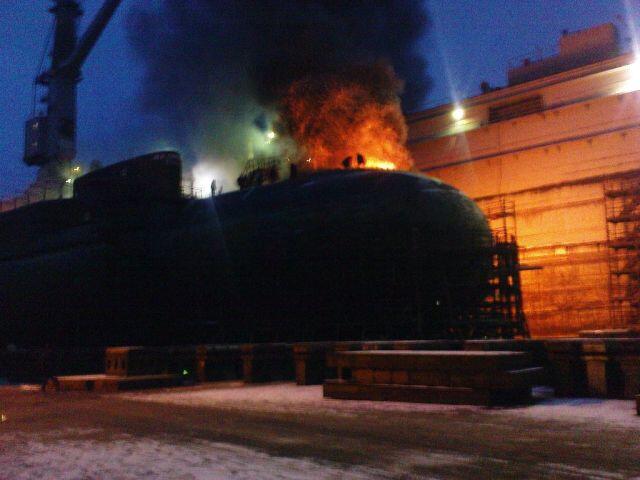
        &lt;p&gt;Russia appears to have made a final &lt;a href="http://www.bellona.ru/news/news_2013/1369226640.97"&gt;decision to eliminate&lt;/a&gt; two Project 941 Typhoon submarines - TK-17 Arkhangelsk and TK-20 Severstal. This decision has been expected for quite some time - the submarine division that included these submarines &lt;a href="http://russianforces.org/blog/2004/04/typhoon_submarines_decommissio.shtml"&gt;was disbanded in 2004&lt;/a&gt; and in September 2012 Russia and the United States &lt;a href="http://russianforces.org/blog/2012/09/elimination_of_r-39ss-n-20_mis.shtml"&gt;announced&lt;/a&gt; that the CTR program had completed elimination of R-39 missiles that were deployed on these submarines. The Russian Navy tried to come up with &lt;a href="http://russianforces.org/blog/2009/07/typhoon_submarines_will_stay.shtml"&gt;other uses for the submarines&lt;/a&gt;, but apparently none of the options worked.&lt;/p&gt;

&lt;p&gt;The third submarine of the Project 941 class - TK-208 Dmitry Donskoy - has been converted to a test bed for Bulava SLBMs. It is expected to remain in service until 2017.&lt;/p&gt;
        
    &lt;div class="feedflare"&gt;
&lt;a href="http://feeds.feedburner.com/~ff/russianforces?a=bh3_iffaggY:A7DMUQQ7XnU:yIl2AUoC8zA"&gt;&lt;img src="http://feeds.feedburner.com/~ff/russianforces?d=yIl2AUoC8zA" border="0"&gt;&lt;/img&gt;&lt;/a&gt; &lt;a href="http://feeds.feedburner.com/~ff/russianforces?a=bh3_iffaggY:A7DMUQQ7XnU:F7zBnMyn0Lo"&gt;&lt;img src="http://feeds.feedburner.com/~ff/russianforces?i=bh3_iffaggY:A7DMUQQ7XnU:F7zBnMyn0Lo" border="0"&gt;&lt;/img&gt;&lt;/a&gt; &lt;a href="http://feeds.feedburner.com/~ff/russianforces?a=bh3_iffaggY:A7DMUQQ7XnU:qj6IDK7rITs"&gt;&lt;img src="http://feeds.feedburner.com/~ff/russianforces?d=qj6IDK7rITs" border="0"&gt;&lt;/img&gt;&lt;/a&gt; &lt;a href="http://feeds.feedburner.com/~ff/russianforces?a=bh3_iffaggY:A7DMUQQ7XnU:gIN9vFwOqvQ"&gt;&lt;img src="http://feeds.feedburner.com/~ff/russianforces?i=bh3_iffaggY:A7DMUQQ7XnU:gIN9vFwOqvQ" border="0"&gt;&lt;/img&gt;&lt;/a&gt;
&lt;/div&gt;&lt;img src="http://feeds.feedburner.com/~r/russianforces/~4/bh3_iffaggY" height="1" width="1"/&gt;</content>
<feedburner:origLink>http://russianforces.org/blog/2013/05/two_project_941_submarines_to.shtml</feedburner:origLink></entry>

<entry>
    <title>Details of the RDS-1 device</title>
    <link rel="alternate" type="text/html" href="http://feedproxy.google.com/~r/russianforces/~3/l9H1Wzf-8Mw/detailed_description_of_the_rd.shtml" />
    <id>tag:russianforces.org,2013://1.1731</id>

    <published>2013-05-07T21:55:00Z</published>
    <updated>2013-05-08T14:12:49Z</updated>

    <summary>Archival documents contain all kind of interesting information, especially when they are published in full. A while ago, someone discovered that the Russian Federal Archival Agency published a collection of documents on the early days of the Soviet nuclear weapon...</summary>
    <author>
        <name>Pavel Podvig</name>
        <uri>http://russianforces.org</uri>
    </author>
    
        <category term="Nuclear complex" scheme="http://www.sixapart.com/ns/types#category" />
    
    
    <content type="html" xml:lang="en" xml:base="http://russianforces.org/">
        &lt;p&gt;&lt;a href="http://rusarchives.ru/school/images/atomny-proekt-ispytanie-78-1.jpg"&gt;&lt;img alt="atomny-proekt-ispytanie-78-1a.jpg" src="http://russianforces.org/assets_c/2013/05/atomny-proekt-ispytanie-78-1a-thumb-240x380-204.jpg" width="240" height="380" class="mt-image-left" style="float: left; margin: 0 20px 20px 0;" /&gt;&lt;/a&gt;Archival documents contain all kind of interesting information, especially when they are published in full. A while ago, someone discovered that the Russian Federal Archival Agency published a collection of documents on the early days of the Soviet nuclear weapon project as part of their project "Archives - to schools." The &lt;a href="http://rusarchives.ru/school/atomnyj-proekt-sssr.shtml"&gt;collection itself&lt;/a&gt; is very interesting, but one document definitely stands out. It is the &lt;a href="http://rusarchives.ru/school/atomny-proekt-ispytanie-78.shtml"&gt;draft of a Council of Ministers decree "On conducting a test of the atomic bomb."&lt;/a&gt; The draft was handwritten by Igor Kurchatov and dated 18 August 1949. The test of the bomb, known as RDS-1, was conducted some days later, on 29 August 1949, at the Semipalatinsk test site.&lt;/p&gt;

&lt;p&gt;Among other things, the copy that was published there at some point contained previously unpublished data on the details of the first Soviet atomic device. Here is the translation of the relevant parts:&lt;/p&gt;

&lt;p&gt;&lt;em&gt;&lt;blockquote&gt;a) Plutonium charge:&lt;/p&gt;

&lt;blockquote&gt;mass of the charge: 6403.39 grams,&lt;br&gt;
outer diameter: 93 millimeters,&lt;br&gt;
inner diameter: 28 millimeters;
&lt;/blockquote&gt;
b) expected efficiency of the charge: =~ 10%, which is equivalent to an explosion of ~10,000 tonnes of TNT;

&lt;p&gt;c) expected probability of an explosion with decreased efficiency is =~10% (of which in the 5% of cases expected yield of the explosion is equivalent to an explosion of 10,000 to 3,000 tonnes of TNT and in the 5% of cases - less than 3,000 tonnes, but not less than 300 tonnes of TNT).&lt;br /&gt;
&lt;/blockquote&gt; &lt;br /&gt;
&lt;/em&gt;&lt;br /&gt;
These are the numbers that have never been published before. Indeed, the copy of the document has pencil marks around the numbers with handwritten instructions to take them out. But someone apparently didn't follow the instructions. The numbers were taken out a few days after the document was "discovered," but the information has already got out. At this point, of course, these numbers have mostly a historical value, but they are quite interesting anyway. And not only for the history of the Soviet program - since RDS-1 was a copy of the U.S. plutonium devices, these numbers also provide some insight into the first U.S. nuclear weapons.&lt;/p&gt;

&lt;p&gt;At 6.4 kg, the RDS-1 core was a bit heavier than that of Trinity, which reportedly used 6.1 kilogram of plutonium (see footnote on p. 184 in &lt;a href="http://scienceandglobalsecurity.org/archive/2009/10/explosive_properties_of_reacto.html"&gt;this paper&lt;/a&gt;). The RDS-1 dimensions are most likely also very close to those of Trinity, but it's hard to tell - I don't think the size of the Trinity core has ever been disclosed.&lt;/p&gt;

&lt;p&gt;The data show that the density of the material used in the RDS-1 core was 15.6 g/cm&lt;sup&gt;3&lt;/sup&gt;, which is consistent with the plutonium-gallium alloy with about 1.4 wt percent of Ga added to stabilize plutonium in the δ phase. Trinity &lt;a href="http://www.egr.msu.edu/~boehlert/GROUP/publications/03-327-Amet%20trans%20paper.pdf"&gt;reportedly used 1 wt percent of Ga&lt;/a&gt;.&lt;/p&gt;

&lt;p&gt;The efficiency estimates are very interesting as well. The 10% estimate assumes fission of about 640 g of plutonium, which would be equivalent to about 13 kt. The first measurements, conducted after the test, suggested that RDS-1 produced an explosion with a yield of about 10 kt, which was a bit lower than the expected value, but not inconsistent with it. However, that initial estimate was apparently based on the energy of the blast wave, so the total energy release was probably higher. The &lt;a href="http://www.iss-atom.ru/sssr1/3_11.htm"&gt;official account of Soviet nuclear tests&lt;/a&gt; lists RDS-1 as having the yield of 22 kt. But it's a somewhat different story.&lt;/p&gt;

&lt;p&gt;Now to the probability of a fizzle. Kurchatov's estimates appear to be consistent with the analysis that is based on &lt;a href="http://scienceandglobalsecurity.org/archive/2009/10/explosive_properties_of_reacto.html"&gt;Carson Mark's paper on the explosive properties of reactor-grade plutonium&lt;/a&gt;. Figure A-1 on p. 183 there suggests that one would get 10% probability of a less than nominal yield at Pu-240 concentrations of about 0.5%. This is consistent with the Soviet plutonium production records - according to the data in &lt;a href="http://scienceandglobalsecurity.org/archive/2011/04/the_history_of_plutonium_produ.html"&gt;Anatoli Diakov's paper on the Soviet plutonium&lt;/a&gt;, the first batch of about 10 kg of plutonium was produced in a 100 MW reactor during a campaign that lasted about 100 days (the reactor core contained about 120 tonnes of natural uranium, see pp. 32-33). My quick estimate showed that this plutonium would contain about 0.7% of Pu-240 [Update: I corrected my estimate - it's 0.7%, not 0.35%].&lt;/p&gt;

&lt;p&gt;A more careful look at these numbers could probably tell more about parameters of the RDS-1 implosion process. However, one should be careful about interpreting these data - as it turned out, Kurchatov's estimates used wrong values for the neutron background - the Soviet scientists discovered in 1950-1951 that the neutron source that they were using in 1949 to calibrate their instruments was actually about 20% stronger than they thought. Accordingly, the measured values, which were used in calculations, underestimated the actual neutron background. The fizzle probabilities were recalculated in 1951, but we don't know what the new values are (we know, however, that they were still within the acceptable limits).&lt;/p&gt;

&lt;p&gt;My final note would be that this document is clearly a very unusual find (as was &lt;a href="http://russianforces.org/blog/2012/10/interesting_document_on_soviet.shtml"&gt;the one discovered last year&lt;/a&gt; - my special thanks to those who helped discover these documents and combed through books on the history of the Soviet program to find other information used in this post). But one does not have to rely on these accidental discoveries to get a good picture of the Soviet nuclear weapon program - a lot of documents have been properly declassified and published. I hope one day someone will put together a detailed technical history of the Soviet nuclear effort that would make full use of that information. There is a lot of interesting data out there.&lt;/p&gt;
        
    &lt;div class="feedflare"&gt;
&lt;a href="http://feeds.feedburner.com/~ff/russianforces?a=l9H1Wzf-8Mw:oCVIHmhpyx0:yIl2AUoC8zA"&gt;&lt;img src="http://feeds.feedburner.com/~ff/russianforces?d=yIl2AUoC8zA" border="0"&gt;&lt;/img&gt;&lt;/a&gt; &lt;a href="http://feeds.feedburner.com/~ff/russianforces?a=l9H1Wzf-8Mw:oCVIHmhpyx0:F7zBnMyn0Lo"&gt;&lt;img src="http://feeds.feedburner.com/~ff/russianforces?i=l9H1Wzf-8Mw:oCVIHmhpyx0:F7zBnMyn0Lo" border="0"&gt;&lt;/img&gt;&lt;/a&gt; &lt;a href="http://feeds.feedburner.com/~ff/russianforces?a=l9H1Wzf-8Mw:oCVIHmhpyx0:qj6IDK7rITs"&gt;&lt;img src="http://feeds.feedburner.com/~ff/russianforces?d=qj6IDK7rITs" border="0"&gt;&lt;/img&gt;&lt;/a&gt; &lt;a href="http://feeds.feedburner.com/~ff/russianforces?a=l9H1Wzf-8Mw:oCVIHmhpyx0:gIN9vFwOqvQ"&gt;&lt;img src="http://feeds.feedburner.com/~ff/russianforces?i=l9H1Wzf-8Mw:oCVIHmhpyx0:gIN9vFwOqvQ" border="0"&gt;&lt;/img&gt;&lt;/a&gt;
&lt;/div&gt;&lt;img src="http://feeds.feedburner.com/~r/russianforces/~4/l9H1Wzf-8Mw" height="1" width="1"/&gt;</content>
<feedburner:origLink>http://russianforces.org/blog/2013/05/detailed_description_of_the_rd.shtml</feedburner:origLink></entry>

<entry>
    <title>Successful launch of Cosmos-2485 - Glonass-M satellite </title>
    <link rel="alternate" type="text/html" href="http://feedproxy.google.com/~r/russianforces/~3/WKL7nTIdeHA/successful_launch_of_cosmos-24.shtml" />
    <id>tag:russianforces.org,2013://1.1730</id>

    <published>2013-04-26T08:53:45Z</published>
    <updated>2013-05-01T09:01:56Z</updated>

    <summary>At 09:23:41 MSK on April 26, 2013 (03:23:41 UTC), the Space Forces conducted a successful launch of a Soyuz-2.1b launcher from the launch pad No. 4 of the launch complex No. 43 of the Plesetsk launch site. The launcher, equipped...</summary>
    <author>
        <name>Pavel Podvig</name>
        <uri>http://russianforces.org</uri>
    </author>
    
        <category term="Space" scheme="http://www.sixapart.com/ns/types#category" />
    
    
    <content type="html" xml:lang="en" xml:base="http://russianforces.org/">
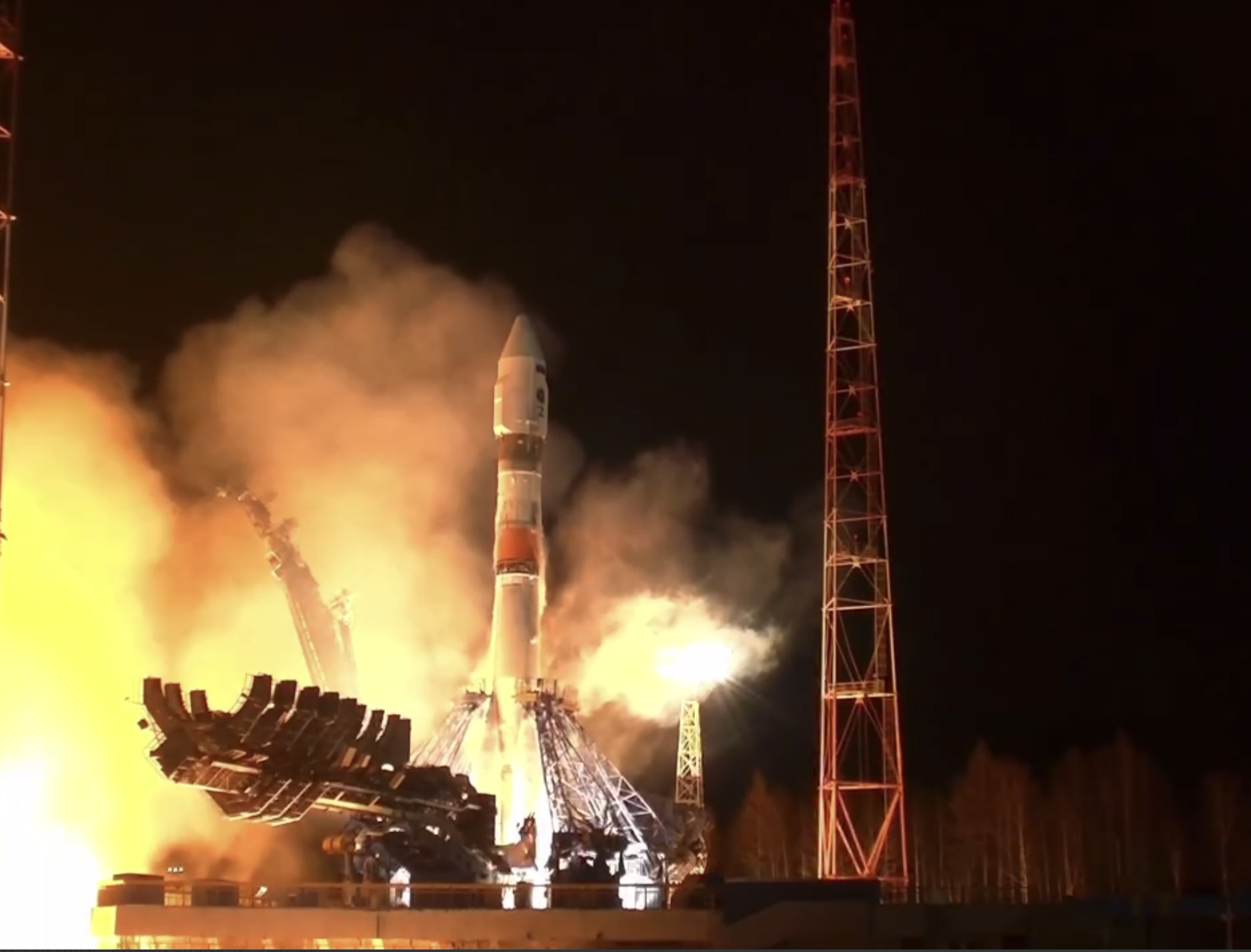
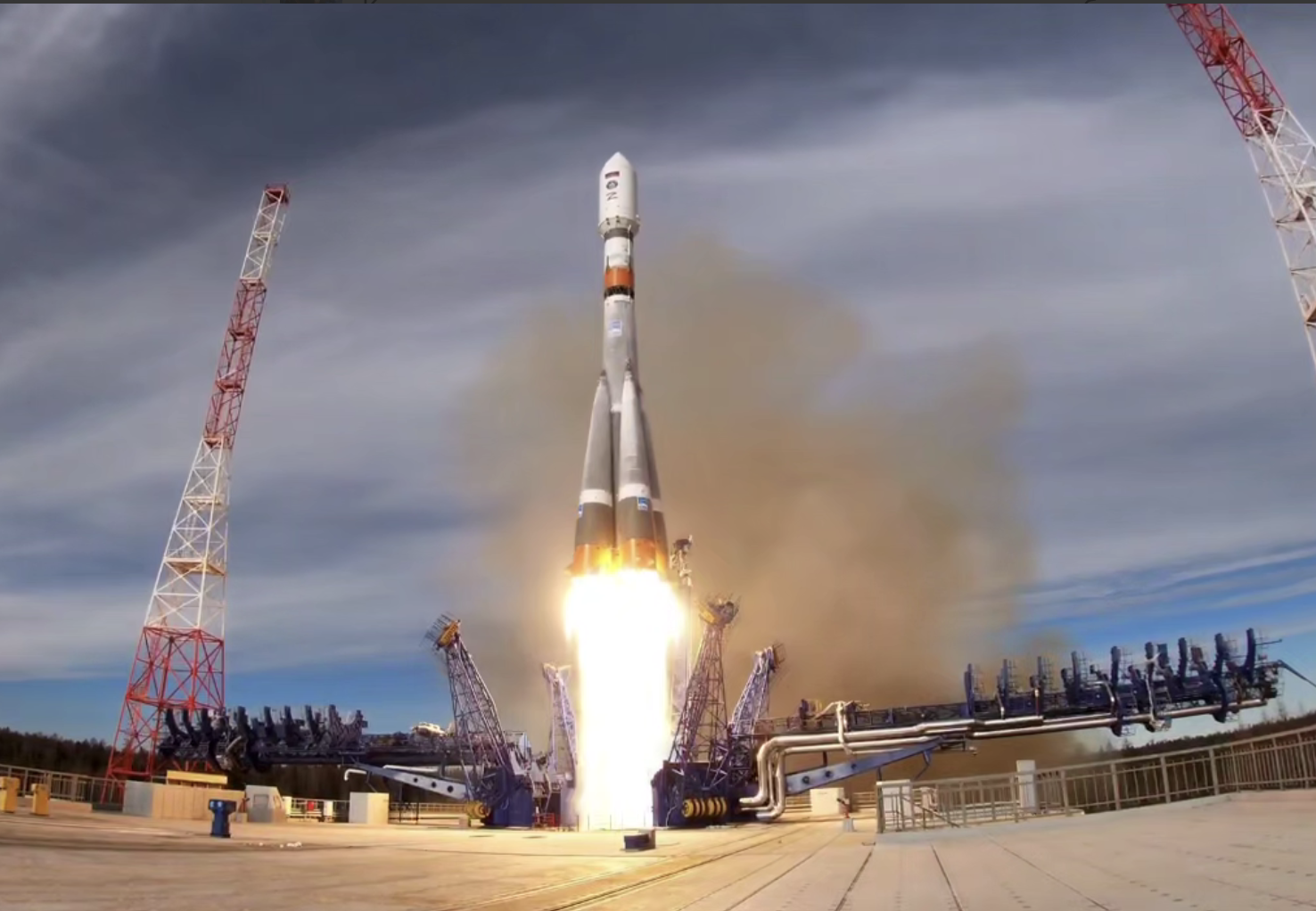
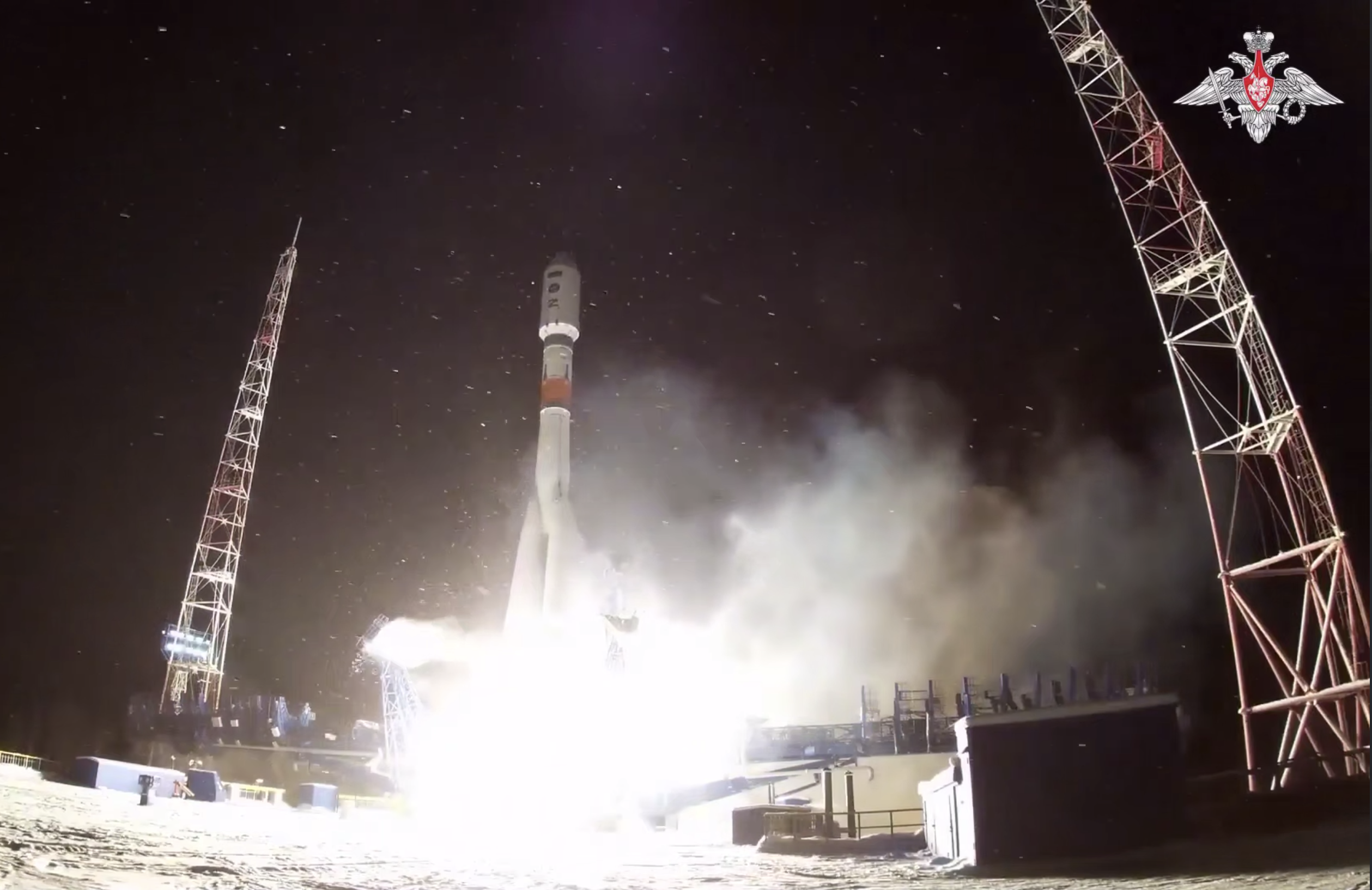
        &lt;p&gt;At 09:23:41 MSK on April 26, 2013 (03:23:41 UTC), the Space Forces &lt;a href="http://novosti-kosmonavtiki.ru/news/7659/"&gt;conducted a successful launch&lt;/a&gt; of a Soyuz-2.1b launcher from the launch pad No. 4 of the launch complex No. 43 of the Plesetsk launch site. The launcher, equipped with a Fregat-M boost stage, successfully delivered into orbit a Glonass-M navigation satellite.&lt;/p&gt;

&lt;p&gt;The satellite has been given Cosmos-2485 designation. It received international designation 2013-019A and NORAD number 39155. The internal number of the satellite is 747. The new satellite was deployed in the first orbital plane of &lt;a href="http://russianforces.org/space/navigation/glonass.shtml"&gt;the Glonass constellation&lt;/a&gt;.&lt;/p&gt;

&lt;p&gt;Previous Glonass launch took place &lt;a href="http://russianforces.org/blog/2011/11/glonass_system_is_almost_compl.shtml"&gt;on 28 November 2011&lt;/a&gt;.&lt;/p&gt;
        
    &lt;div class="feedflare"&gt;
&lt;a href="http://feeds.feedburner.com/~ff/russianforces?a=WKL7nTIdeHA:tKAeu6oI4iQ:yIl2AUoC8zA"&gt;&lt;img src="http://feeds.feedburner.com/~ff/russianforces?d=yIl2AUoC8zA" border="0"&gt;&lt;/img&gt;&lt;/a&gt; &lt;a href="http://feeds.feedburner.com/~ff/russianforces?a=WKL7nTIdeHA:tKAeu6oI4iQ:F7zBnMyn0Lo"&gt;&lt;img src="http://feeds.feedburner.com/~ff/russianforces?i=WKL7nTIdeHA:tKAeu6oI4iQ:F7zBnMyn0Lo" border="0"&gt;&lt;/img&gt;&lt;/a&gt; &lt;a href="http://feeds.feedburner.com/~ff/russianforces?a=WKL7nTIdeHA:tKAeu6oI4iQ:qj6IDK7rITs"&gt;&lt;img src="http://feeds.feedburner.com/~ff/russianforces?d=qj6IDK7rITs" border="0"&gt;&lt;/img&gt;&lt;/a&gt; &lt;a href="http://feeds.feedburner.com/~ff/russianforces?a=WKL7nTIdeHA:tKAeu6oI4iQ:gIN9vFwOqvQ"&gt;&lt;img src="http://feeds.feedburner.com/~ff/russianforces?i=WKL7nTIdeHA:tKAeu6oI4iQ:gIN9vFwOqvQ" border="0"&gt;&lt;/img&gt;&lt;/a&gt;
&lt;/div&gt;&lt;img src="http://feeds.feedburner.com/~r/russianforces/~4/WKL7nTIdeHA" height="1" width="1"/&gt;</content>
<feedburner:origLink>http://russianforces.org/blog/2013/04/successful_launch_of_cosmos-24.shtml</feedburner:origLink></entry>

<entry>
    <title>New START as a model for transparency in nuclear disarmament</title>
    <link rel="alternate" type="text/html" href="http://feedproxy.google.com/~r/russianforces/~3/ux3GoNooHg0/new_start_as_a_model_for_trans.shtml" />
    <id>tag:russianforces.org,2013://1.1729</id>

    <published>2013-04-17T12:00:23Z</published>
    <updated>2013-04-17T12:47:41Z</updated>

    <summary>Later this week five nuclear weapon states will meet in Geneva for their now regular P5 meeting. The meeting is taking place right before the NPT PrepCom, which is also held in Geneva this year. One issue that will probably...</summary>
    <author>
        <name>Pavel Podvig</name>
        <uri>http://russianforces.org</uri>
    </author>
    
        <category term="Arms control" scheme="http://www.sixapart.com/ns/types#category" />
    
    
    <content type="html" xml:lang="en" xml:base="http://russianforces.org/">
        &lt;p&gt;&lt;a href="http://nuclearforces.org"&gt;&lt;img alt="a-new-start-model-for-transparency-in-nuclear-disarmament-411.jpg" src="http://russianforces.org/assets_c/2013/04/a-new-start-model-for-transparency-in-nuclear-disarmament-411-thumb-180x255-200.jpg" width="180" height="255" class="mt-image-left" style="float: left; margin: 0 20px 20px 0;" /&gt;&lt;/a&gt;Later this week five nuclear weapon states will meet in Geneva for their now regular P5 meeting. The meeting is taking place right before the NPT PrepCom, which is also held in Geneva this year. One issue that will probably come up at the meeting is the transparency of nuclear arsenals. The five addressed transparency in the past, but the best they came up with was a working group that is supposed to develop a glossary of nuclear terms. This is, of course, a very useful product, but it is a rather small step as far as transparency is concerned. The P5 is widely expected to do more - one of the items in the action plan adopted by the 2010 NPT Review Conference encourages nuclear-weapon states to agree on a standard reporting form that would be used to provide information on their "systematic and progressive efforts to reduce nuclear weapons."  The UN even created a &lt;a href="http://www.un.org/disarmament/WMD/Nuclear/Repository"&gt;web page&lt;/a&gt; where it will publish the information provided by the nuclear weapon states. The P5 states are expected to report on the progress they made on the disarmament front at the 2014 PrepCom, so there is some pressure on them (albeit not particularly strong) to get something done by then. Transparency seems like a good area where progress might be possible.&lt;/p&gt;

&lt;p&gt;There are a number of proposals designed to address transparency. For example, the Non-Proliferation and Disarmament Initiative, a group of ten non-nuclear weapon states, developed &lt;a href="http://www.reachingcriticalwill.org/images/documents/Disarmament-fora/npt/prepcom12/documents/WP12.pdf"&gt;a fairly detailed reporting form&lt;/a&gt; that it submitted to the P-5 Paris meeting in 2011, only to be met with silence. There are other proposals as well, some of them asking for quite a bit of information - down to serial numbers of warheads and warhead production and dismantlement history going all the way back to the first nuclear devices. This, of course, would be nice to have, but we are probably a long way from the point when nuclear weapon states would be able to agree to release this kind of information. As someone described the P-5 discussions, "some states are more interested in transparency than others," which is a way of saying that some are probably not interested in it at all. &lt;/p&gt;

&lt;p&gt;Aside from the reluctance of states to make information about their nuclear arsenals public, there is a practical issue of defining what should be included in the report. For example, the NPDI form asks for things like "number of strategic or non-strategic deployed nuclear warheads," but to answer this kind of request one would need to agree on what is a warhead, when it is strategic and when it is not, and at what point a warhead is deployed. This are all good questions that would have to be answered some day, but at this point these questions just hold the process back.&lt;/p&gt;

&lt;p&gt;This is where it would make sense to turn to the experience of Russia and the United States who have been dealing with the issues of definitions and reporting for several decades as part of their arms control and disarmament talks. Even if you don't count the early treaties, the START agreement, which included very comprehensive reporting provisions, is more than 20 years old. The treaty that is currently in force, New START, also includes detailed data exchange among its many provisions. One particularly important element of the treaty is that it defines quite clearly what it is dealing with. For example, in New START the concept of a strategic deployed nuclear warhead has a fairly precise meaning - these warheads are counted and their number can be verified. Purists could say that New START definitions are not perfect, but in the end the treaty does give a reasonably good picture of the number of operationally deployed nuclear warheads in Russia and the United States (and that, by the way, includes all warheads, as there are few, if any, deployed non-strategic warheads). Overall, what New START provides is a well-developed and thoroughly tested data exchange mechanism that could be used as a starting point in the effort to bring universal transparency to nuclear disarmament. &lt;/p&gt;

&lt;p&gt;Last year UNIDIR launched a project that looked into the practicalities of this kind of data exchange and I'm glad to report that we are ready to present the results. The project has a dedicated web site &lt;a href="http://nuclearforces.org"&gt;NuclearForces.org&lt;/a&gt; that has all the links, maps, and Google Earth files that show where the bases and other facilities in China, France, Russia, United Kingdom, and the United States are. Please visit the site, read the report, and take a look at the model New START data exchange documents in the supplement.&lt;/p&gt;

&lt;p&gt;The basic idea of the project was to look at how New START-type reports from all NPT weapon states would look like. The table below shows aggregate numbers reported in New START format for all five NPT nuclear weapon states:&lt;/p&gt;

&lt;div id="table"&gt;
&lt;table&gt;
&lt;tbody&gt;
&lt;tr&gt;
&lt;td width="40%"&gt; &lt;/td&gt;
&lt;td style="text-align: center;"&gt;&lt;strong&gt;China&lt;/strong&gt;&lt;/td&gt;
&lt;td style="text-align: center;"&gt;&lt;strong&gt;&amp;nbsp;France&lt;/strong&gt;&lt;/td&gt;
&lt;td style="text-align: center;"&gt;&lt;strong&gt;Russia&lt;/strong&gt;&lt;/td&gt;
&lt;td style="text-align: center;"&gt;&lt;strong&gt;United&lt;br&gt;Kingdom&lt;/strong&gt;&lt;/td&gt;
&lt;td style="text-align: center;"&gt;&lt;strong&gt;United&lt;br&gt;States&lt;/strong&gt;&lt;/td&gt;
&lt;/tr&gt;
&lt;tr&gt;
&lt;td width="40%"&gt;Deployed ICBMs, deployed SLBMs, and deployed heavy bombers&lt;/td&gt;
&lt;td style="text-align: center;"&gt;60&lt;/td&gt;
&lt;td style="text-align: center;"&gt;48&lt;/td&gt;
&lt;td style="text-align: center;"&gt;491&lt;/td&gt;
&lt;td style="text-align: center;"&gt;24&lt;/td&gt;
&lt;td style="text-align: center;"&gt;806&lt;/td&gt;
&lt;/tr&gt;
&lt;tr&gt;
&lt;td width="40%"&gt;Warheads on deployed ICBMs, on deployed SLBMs, and nuclear warheads counted for deployed heavy bombers&lt;/td&gt;
&lt;td style="text-align: center;"&gt;0&lt;/td&gt;
&lt;td style="text-align: center;"&gt;288&lt;/td&gt;
&lt;td style="text-align: center;"&gt;1,499&lt;/td&gt;
&lt;td style="text-align: center;"&gt;88&lt;/td&gt;
&lt;td style="text-align: center;"&gt;1,722&lt;/td&gt;
&lt;/tr&gt;
&lt;tr&gt;
&lt;td width="40%"&gt;Deployed and non-deployed launchers of ICBMs, deployed and non-deployed launchers of SLBMs, and deployed and non-deployed heavy bombers&lt;/td&gt;
&lt;td style="text-align: center;"&gt;109&lt;/td&gt;
&lt;td style="text-align: center;"&gt;64&lt;/td&gt;
&lt;td style="text-align: center;"&gt;884&lt;/td&gt;
&lt;td style="text-align: center;"&gt;64&lt;/td&gt;
&lt;td style="text-align: center;"&gt;1,034&lt;/td&gt;
&lt;/tr&gt;
&lt;/tbody&gt;
&lt;/table&gt;
&lt;/div&gt;
 &lt;br&gt;
 It is important to note that it reflects the status of forces on 1 September 2012 (the date of one of the most recent data exchanges) - the numbers would change somewhat if a different date is chosen. There are few surprises here, but a couple of things are worth highlighting. China would report zero deployed warheads as we assumed that no warheads are actually mounted on China's ballistic missiles. Under New START definition that means exactly that China has no warheads on deployed ICBMs or SLBMs (we assume that no SLBMs are deployed). China, however, has deployed ICBMs and also non-deployed launchers that provide a good sense of what the size of its nuclear force might be. Another interesting feature of this table is that the number of warheads deployed on U.K. SLBMs is fairly low - only 88. It is a result of the timing of the report - in September 2012 only two U.K. submarines had missiles on board, as &lt;em&gt;Vengeance&lt;/em&gt; was in overhaul and &lt;em&gt;Vigilant&lt;/em&gt;, which was emerging from overhaul, was in Kings Bay, waiting for her missiles to loaded. Go to &lt;a href="http://nuclearforces.org"&gt;NuclearForces.org&lt;/a&gt; and download the reports to see a more detailed discussion.

&lt;p&gt;The model data exchange reports provide more information about nuclear forces of all states. For example, it is clear that the U.S. practice to remove coordinates of missile silos and other facilities from the unclassified version of the report is a bit silly - it may have made sense in 1991, when this practice started, but now all that information is easily accesible on Google Earth. Russia could also release its report in full without problems - most of the contents can be easily reconstructed from the open data (as it turned out, internet forums where parents discuss military service of their sons has very much all you need to know and more - which missile regiments are active, how to get there, and what is the cell phone number of the regiment commander). France and the United Kingdom should be able to release their complete New START-type reports tomorrow - very much everything that would be included there is already open knowledge. In the U.K. case, even the unique IDs of the missiles that are on U.K. submarines are known to Russia, so there are no secrets there. The number of deployed warheads would be the only piece of information that is not available in the open, but it's hard to see why publishing this number would do any harm to either country. I don't think anyone really cares whether France has 200 or 288 deployed warheads.&lt;/p&gt;

&lt;p&gt;China, of course, is an outlier - it's difficult to get a good picture of where its bases and facilities are. But not entirely impossible. Also, as I understand, with all the skepticism about openness, China might be looking for ways to do something about transparency of its nuclear forces. Releasing a New START-type report, maybe limited to aggregate numbers at first, could be a step in that direction. Then, in a detailed report China would have to release information about its non-deployed missiles - a good way to put to rest the speculations about tunnels with thousands of missiles in them.&lt;/p&gt;

&lt;p&gt;The results of our project show that New START does indeed provide a practical way of bringing transparency to the nuclear disarmament process. It is, of course, just a starting point, but it has the advantage of having two states with decades of experience and a very elaborate legal and institutional framework behind it.&lt;/p&gt;

&lt;p&gt;Before I conclude, I must say that I am very glad I had Tamara Patton and Phillip Schell as my collaborators - SIPRI is very lucky to have them. For those of you who are in Geneva next week, we will present our report to the PrepCom on Tuesday, April 23rd, 13:15-14:45 at Room XI of the Palais des Nations. If you couldn't come, visit the project web site, &lt;a href="http://nuclearforces.org"&gt;NuclearForces.org&lt;/a&gt;, look at the data, and download the report and the documents to see how New START would work in practice. I think it would do pretty well.&lt;/p&gt;
        
    &lt;div class="feedflare"&gt;
&lt;a href="http://feeds.feedburner.com/~ff/russianforces?a=ux3GoNooHg0:QLMvYXx1pPM:yIl2AUoC8zA"&gt;&lt;img src="http://feeds.feedburner.com/~ff/russianforces?d=yIl2AUoC8zA" border="0"&gt;&lt;/img&gt;&lt;/a&gt; &lt;a href="http://feeds.feedburner.com/~ff/russianforces?a=ux3GoNooHg0:QLMvYXx1pPM:F7zBnMyn0Lo"&gt;&lt;img src="http://feeds.feedburner.com/~ff/russianforces?i=ux3GoNooHg0:QLMvYXx1pPM:F7zBnMyn0Lo" border="0"&gt;&lt;/img&gt;&lt;/a&gt; &lt;a href="http://feeds.feedburner.com/~ff/russianforces?a=ux3GoNooHg0:QLMvYXx1pPM:qj6IDK7rITs"&gt;&lt;img src="http://feeds.feedburner.com/~ff/russianforces?d=qj6IDK7rITs" border="0"&gt;&lt;/img&gt;&lt;/a&gt; &lt;a href="http://feeds.feedburner.com/~ff/russianforces?a=ux3GoNooHg0:QLMvYXx1pPM:gIN9vFwOqvQ"&gt;&lt;img src="http://feeds.feedburner.com/~ff/russianforces?i=ux3GoNooHg0:QLMvYXx1pPM:gIN9vFwOqvQ" border="0"&gt;&lt;/img&gt;&lt;/a&gt;
&lt;/div&gt;&lt;img src="http://feeds.feedburner.com/~r/russianforces/~4/ux3GoNooHg0" height="1" width="1"/&gt;</content>
<feedburner:origLink>http://russianforces.org/blog/2013/04/new_start_as_a_model_for_trans.shtml</feedburner:origLink></entry>

<entry>
    <title>Security research and Russia's new treason laws</title>
    <link rel="alternate" type="text/html" href="http://feedproxy.google.com/~r/russianforces/~3/kEBaKz-dWdo/security_research_and_russias_new_treason_laws.shtml" />
    <id>tag:russianforces.org,2013://1.1728</id>

    <published>2013-04-06T13:15:04Z</published>
    <updated>2013-04-06T14:32:24Z</updated>

    <summary>As I was reading a new report by Alexei Arbatov and Vladimir Dvorkin, The Great Strategic Triangle, published by the Carnegie Moscow Center in April 2013, I noticed a small footnote that tells something about how things have changed in...</summary>
    <author>
        <name>Pavel Podvig</name>
        <uri>http://russianforces.org</uri>
    </author>
    
        <category term="Government" scheme="http://www.sixapart.com/ns/types#category" />
    
    
    <content type="html" xml:lang="en" xml:base="http://russianforces.org/">
        &lt;p&gt;As I was reading a new report by Alexei Arbatov and Vladimir Dvorkin, &lt;a href="http://carnegie.ru/2013/04/01/great-strategic-triangle/fvbx#"&gt;The Great Strategic Triangle&lt;/a&gt;, published by the Carnegie Moscow Center in April 2013, I noticed a small footnote that tells something about how things have changed in Russia in the past year. Here is the footnote in full (it's footnote 6 in the report):&lt;/p&gt;

&lt;blockquote&gt;In consideration of the new amendments to the Criminal Code of the Russian Federation adopted on November 14, 2012, that extended the definition of "high treason" to "the provision of financial, material, technical, consulting or other assistance to a foreign state ... in activities directed against the security of the Russian Federation...." all the factual information presented in this work is derived from Russia's official sources, or from foreign official or unofficial sources that by definition cannot be classified as state secrets of Russia. Data from numerous Russian expert materials are not used in order to avoid accidental disclosure of classified information (authors' note).&lt;/blockquote&gt;

&lt;p&gt;All the numbers in the reports have indeed been taken from official or foreign sources. This didn't really affect the quality of the report, but it is still something that a careful reader would  notice. I'm sure it was done out of an overabundance of caution, but the problem is that the change in the criminal code is quite real. The definition, in fact, is a bit broader than the quote in the footnote suggests. The new criminal code defines high treason as:&lt;/p&gt;

&lt;blockquote&gt;"the provision of financial, material, technical, consulting or other assistance to a foreign state, international or foreign organization or their representatives in their activities directed against the security of the Russian Federation."
&lt;/blockquote&gt;

&lt;p&gt;In the past, to be accused of treason one would have to be either passing classified information to states or foreign organizations in their activities that are "hostile" (враждебная) to Russia or collecting information under a direct assignment from a foreign intelligence. Not that the Russian security services ever had any problems extending that definition to any activity they didn't like. But the new law makes this task much easier. As the things stand today, the FSB would have no problem stating in the Russian court ("Russian" is an operative word here) that, say, Carnegie Endowment is a foreign organization involved in "activities directed against the security of the Russian Federation." After all, it would be the FSB that would define what security is.&lt;/p&gt;

&lt;p&gt;I don't think this law will be applied in practice - it would be a scandal if Russia indeed accused a respected international organization of fostering treason in court, even if it's a Russian court. But that's not how the law is supposed to operate - the idea is to create the atmosphere of fear and uncertainty in the society that makes it easier for the FSB types to control people and institutions. At the moment, it seems that they are succeeding.&lt;/p&gt;
        
    &lt;div class="feedflare"&gt;
&lt;a href="http://feeds.feedburner.com/~ff/russianforces?a=kEBaKz-dWdo:-Y4F1ehImPs:yIl2AUoC8zA"&gt;&lt;img src="http://feeds.feedburner.com/~ff/russianforces?d=yIl2AUoC8zA" border="0"&gt;&lt;/img&gt;&lt;/a&gt; &lt;a href="http://feeds.feedburner.com/~ff/russianforces?a=kEBaKz-dWdo:-Y4F1ehImPs:F7zBnMyn0Lo"&gt;&lt;img src="http://feeds.feedburner.com/~ff/russianforces?i=kEBaKz-dWdo:-Y4F1ehImPs:F7zBnMyn0Lo" border="0"&gt;&lt;/img&gt;&lt;/a&gt; &lt;a href="http://feeds.feedburner.com/~ff/russianforces?a=kEBaKz-dWdo:-Y4F1ehImPs:qj6IDK7rITs"&gt;&lt;img src="http://feeds.feedburner.com/~ff/russianforces?d=qj6IDK7rITs" border="0"&gt;&lt;/img&gt;&lt;/a&gt; &lt;a href="http://feeds.feedburner.com/~ff/russianforces?a=kEBaKz-dWdo:-Y4F1ehImPs:gIN9vFwOqvQ"&gt;&lt;img src="http://feeds.feedburner.com/~ff/russianforces?i=kEBaKz-dWdo:-Y4F1ehImPs:gIN9vFwOqvQ" border="0"&gt;&lt;/img&gt;&lt;/a&gt;
&lt;/div&gt;&lt;img src="http://feeds.feedburner.com/~r/russianforces/~4/kEBaKz-dWdo" height="1" width="1"/&gt;</content>
<feedburner:origLink>http://russianforces.org/blog/2013/04/security_research_and_russias_new_treason_laws.shtml</feedburner:origLink></entry>

<entry>
    <title>Tu-95MS bomber lost to a fire</title>
    <link rel="alternate" type="text/html" href="http://feedproxy.google.com/~r/russianforces/~3/9BJemsMgov4/tu-95ms_bomber_lost_to_a_fire.shtml" />
    <id>tag:russianforces.org,2013://1.1726</id>

    <published>2013-04-06T06:25:23Z</published>
    <updated>2013-04-10T12:32:01Z</updated>

    <summary>A story in Kommersant daily describes a fire that destroyed one of Russia's Tu-95MS strategic bomber. According to the story, the fire took place at the Dyagilevo base (Combat Use and Pilot Training Center) near Ryazan on 24 26 February...</summary>
    <author>
        <name>Pavel Podvig</name>
        <uri>http://russianforces.org</uri>
    </author>
    
        <category term="Aviation" scheme="http://www.sixapart.com/ns/types#category" />
    
    
    <content type="html" xml:lang="en" xml:base="http://russianforces.org/">
        &lt;p&gt;A &lt;a href="http://www.kommersant.ru/doc/2162877"&gt;story in Kommersant daily&lt;/a&gt; describes a fire that destroyed one of Russia's Tu-95MS strategic bomber. According to the story, the fire took place at the Dyagilevo base (Combat Use and Pilot Training Center) near Ryazan on &lt;strike&gt;24&lt;/strike&gt; 26 February 2013. The bomber, Tu-95MS with the tail number 21 (red), was preparing for take off when the fire started. The crew promptly left the aircraft and the fire was extinguished, but the damage was quite extensive, so the plane has been deemed non-salvageable. The Kommersant reports that this aircraft has just returned from an overhaul - it entered service on 28 December 2012.   &lt;/p&gt;
        
    &lt;div class="feedflare"&gt;
&lt;a href="http://feeds.feedburner.com/~ff/russianforces?a=9BJemsMgov4:vWkQeqrbPvo:yIl2AUoC8zA"&gt;&lt;img src="http://feeds.feedburner.com/~ff/russianforces?d=yIl2AUoC8zA" border="0"&gt;&lt;/img&gt;&lt;/a&gt; &lt;a href="http://feeds.feedburner.com/~ff/russianforces?a=9BJemsMgov4:vWkQeqrbPvo:F7zBnMyn0Lo"&gt;&lt;img src="http://feeds.feedburner.com/~ff/russianforces?i=9BJemsMgov4:vWkQeqrbPvo:F7zBnMyn0Lo" border="0"&gt;&lt;/img&gt;&lt;/a&gt; &lt;a href="http://feeds.feedburner.com/~ff/russianforces?a=9BJemsMgov4:vWkQeqrbPvo:qj6IDK7rITs"&gt;&lt;img src="http://feeds.feedburner.com/~ff/russianforces?d=qj6IDK7rITs" border="0"&gt;&lt;/img&gt;&lt;/a&gt; &lt;a href="http://feeds.feedburner.com/~ff/russianforces?a=9BJemsMgov4:vWkQeqrbPvo:gIN9vFwOqvQ"&gt;&lt;img src="http://feeds.feedburner.com/~ff/russianforces?i=9BJemsMgov4:vWkQeqrbPvo:gIN9vFwOqvQ" border="0"&gt;&lt;/img&gt;&lt;/a&gt;
&lt;/div&gt;&lt;img src="http://feeds.feedburner.com/~r/russianforces/~4/9BJemsMgov4" height="1" width="1"/&gt;</content>
<feedburner:origLink>http://russianforces.org/blog/2013/04/tu-95ms_bomber_lost_to_a_fire.shtml</feedburner:origLink></entry>

<entry>
    <title>Combined flight tests of new solid-propellant ICBM to begin in 2014</title>
    <link rel="alternate" type="text/html" href="http://feedproxy.google.com/~r/russianforces/~3/IHYYBOLt-6o/combined_flight_tests_of_new_s.shtml" />
    <id>tag:russianforces.org,2013://1.1725</id>

    <published>2013-04-05T07:05:50Z</published>
    <updated>2013-04-05T07:27:48Z</updated>

    <summary>Development of the new solid-propellant ICBM, which was last tested in October 2012, appears to be on schedule. A number of reports in the Russian press quote General Yesin as saying that the new missile will enter the so-called combined...</summary>
    <author>
        <name>Pavel Podvig</name>
        <uri>http://russianforces.org</uri>
    </author>
    
        <category term="Rocket Forces" scheme="http://www.sixapart.com/ns/types#category" />
    
    
    <content type="html" xml:lang="en" xml:base="http://russianforces.org/">
        &lt;p&gt;Development of the new solid-propellant ICBM, which was last tested &lt;a href="http://russianforces.org/blog/2012/10/new_icbm_tested_in_kapustin_ya.shtml"&gt;in October 2012&lt;/a&gt;, appears to be on schedule. A number of &lt;a href="http://lenta.ru/news/2013/04/04/missile1/"&gt;reports in the Russian press&lt;/a&gt; quote General Yesin as saying that the new missile will enter the so-called combined flight tests in 2014 (these tests combine development and acceptance by a state commission). Earlier, the Rocket Forces &lt;a href="http://russianforces.org/blog/2012/11/deployment_of_new_solid-propel.shtml"&gt;suggested&lt;/a&gt; that the missile will be accepted for service in 2015.&lt;/p&gt;

&lt;p&gt;The missile was earlier &lt;a href="http://russianforces.org/blog/2012/11/deployment_of_new_solid-propel.shtml"&gt;described&lt;/a&gt; as a "medium-class" ICBM "with a new type of combat payload." It is sometimes called Avangard, but that designation has not been officially confirmed.  This missile appears to be a deep modification of the Topol-M-RS-24 Yars line.&lt;/p&gt;
        
    &lt;div class="feedflare"&gt;
&lt;a href="http://feeds.feedburner.com/~ff/russianforces?a=IHYYBOLt-6o:v4ECPGU1z7I:yIl2AUoC8zA"&gt;&lt;img src="http://feeds.feedburner.com/~ff/russianforces?d=yIl2AUoC8zA" border="0"&gt;&lt;/img&gt;&lt;/a&gt; &lt;a href="http://feeds.feedburner.com/~ff/russianforces?a=IHYYBOLt-6o:v4ECPGU1z7I:F7zBnMyn0Lo"&gt;&lt;img src="http://feeds.feedburner.com/~ff/russianforces?i=IHYYBOLt-6o:v4ECPGU1z7I:F7zBnMyn0Lo" border="0"&gt;&lt;/img&gt;&lt;/a&gt; &lt;a href="http://feeds.feedburner.com/~ff/russianforces?a=IHYYBOLt-6o:v4ECPGU1z7I:qj6IDK7rITs"&gt;&lt;img src="http://feeds.feedburner.com/~ff/russianforces?d=qj6IDK7rITs" border="0"&gt;&lt;/img&gt;&lt;/a&gt; &lt;a href="http://feeds.feedburner.com/~ff/russianforces?a=IHYYBOLt-6o:v4ECPGU1z7I:gIN9vFwOqvQ"&gt;&lt;img src="http://feeds.feedburner.com/~ff/russianforces?i=IHYYBOLt-6o:v4ECPGU1z7I:gIN9vFwOqvQ" border="0"&gt;&lt;/img&gt;&lt;/a&gt;
&lt;/div&gt;&lt;img src="http://feeds.feedburner.com/~r/russianforces/~4/IHYYBOLt-6o" height="1" width="1"/&gt;</content>
<feedburner:origLink>http://russianforces.org/blog/2013/04/combined_flight_tests_of_new_s.shtml</feedburner:origLink></entry>

<entry>
    <title>March 2013 New START data</title>
    <link rel="alternate" type="text/html" href="http://feedproxy.google.com/~r/russianforces/~3/Fo333OgO7FE/march_2013_new_start_data.shtml" />
    <id>tag:russianforces.org,2013://1.1724</id>

    <published>2013-04-03T18:07:50Z</published>
    <updated>2013-04-03T18:22:43Z</updated>

    <summary>The State Department released New START aggregate data for Russia and the United States. As of 1 March 2013, Russia had 492 deployed strategic delivery systems, 1480 accountable operational warheads, and the total of 900 launchers. The U.S. March 2013...</summary>
    <author>
        <name>Pavel Podvig</name>
        <uri>http://russianforces.org</uri>
    </author>
    
        <category term="Arms control" scheme="http://www.sixapart.com/ns/types#category" />
    
    
    <content type="html" xml:lang="en" xml:base="http://russianforces.org/">
        &lt;p&gt;The State Department &lt;a href="http://www.state.gov/t/avc/rls/207020.htm"&gt;released&lt;/a&gt; New START aggregate data for Russia and the United States. As of 1 March 2013, Russia had 492 deployed strategic delivery systems, 1480 accountable operational warheads, and the total of 900 launchers. The U.S. March 2013 numbers are 792, 1654, and 1028 respectively.&lt;/p&gt;

&lt;p&gt;In the &lt;a href="http://russianforces.org/blog/2012/10/september_2012_new_start_data.shtml"&gt;previous data exchange&lt;/a&gt;, reflecting the status of the strategic forces as of 1 September 2012, Russia declared 491 deployed delivery systems, 1499 warheads, and 884 deployed and non-deployed launchers.&lt;/p&gt;

&lt;p&gt;The 16 launchers that were added to the total could be the launch tubes of the Vladimir Monomakh submarine that was launched (entered water) &lt;a href="http://russianforces.org/blog/2012/12/two_project_955_submarines_-_v.shtml"&gt;in December 2012&lt;/a&gt; - once it happened, the tubes are counted against the non-deployed launchers limit.&lt;/p&gt;
        
    &lt;div class="feedflare"&gt;
&lt;a href="http://feeds.feedburner.com/~ff/russianforces?a=Fo333OgO7FE:y3-CvVdwDLc:yIl2AUoC8zA"&gt;&lt;img src="http://feeds.feedburner.com/~ff/russianforces?d=yIl2AUoC8zA" border="0"&gt;&lt;/img&gt;&lt;/a&gt; &lt;a href="http://feeds.feedburner.com/~ff/russianforces?a=Fo333OgO7FE:y3-CvVdwDLc:F7zBnMyn0Lo"&gt;&lt;img src="http://feeds.feedburner.com/~ff/russianforces?i=Fo333OgO7FE:y3-CvVdwDLc:F7zBnMyn0Lo" border="0"&gt;&lt;/img&gt;&lt;/a&gt; &lt;a href="http://feeds.feedburner.com/~ff/russianforces?a=Fo333OgO7FE:y3-CvVdwDLc:qj6IDK7rITs"&gt;&lt;img src="http://feeds.feedburner.com/~ff/russianforces?d=qj6IDK7rITs" border="0"&gt;&lt;/img&gt;&lt;/a&gt; &lt;a href="http://feeds.feedburner.com/~ff/russianforces?a=Fo333OgO7FE:y3-CvVdwDLc:gIN9vFwOqvQ"&gt;&lt;img src="http://feeds.feedburner.com/~ff/russianforces?i=Fo333OgO7FE:y3-CvVdwDLc:gIN9vFwOqvQ" border="0"&gt;&lt;/img&gt;&lt;/a&gt;
&lt;/div&gt;&lt;img src="http://feeds.feedburner.com/~r/russianforces/~4/Fo333OgO7FE" height="1" width="1"/&gt;</content>
<feedburner:origLink>http://russianforces.org/blog/2013/04/march_2013_new_start_data.shtml</feedburner:origLink></entry>

<entry>
    <title>Shooting down the Star Wars myth</title>
    <link rel="alternate" type="text/html" href="http://feedproxy.google.com/~r/russianforces/~3/OVjnorCJKes/shooting_down_the_star_wars_my.shtml" />
    <id>tag:russianforces.org,2013://1.1723</id>

    <published>2013-04-02T18:21:26Z</published>
    <updated>2013-04-02T18:24:55Z</updated>

    <summary>The Bulletin Online BY PAVEL PODVIG | 2 APRIL 2013 It has been 30 years since US President Ronald Reagan called for development of a missile defense system that was supposed to make nuclear weapons "impotent and obsolete." The Strategic...</summary>
    <author>
        <name>Pavel Podvig</name>
        <uri>http://russianforces.org</uri>
    </author>
    
        <category term="Arms control" scheme="http://www.sixapart.com/ns/types#category" />
    
        <category term="Missile defense" scheme="http://www.sixapart.com/ns/types#category" />
    
        <category term="Strategic forces" scheme="http://www.sixapart.com/ns/types#category" />
    
    
    <content type="html" xml:lang="en" xml:base="http://russianforces.org/">
        &lt;p&gt;&lt;a href="http://thebulletin.org/web-edition/columnists/pavel-podvig/shooting-down-the-star-wars-myth"&gt;The Bulletin Online&lt;/a&gt;&lt;/p&gt;

&lt;p&gt;BY PAVEL PODVIG | 2 APRIL 2013&lt;/p&gt;

&lt;p&gt;It has been 30 years since US President Ronald Reagan called for development of a missile defense system that was supposed to make nuclear weapons "impotent and obsolete." The Strategic Defense Initiative (SDI) launched by &lt;a href="http://pierretristam.com/Bobst/library/wf-241.htm"&gt;Reagan's famous "Star Wars" speech&lt;/a&gt; in March 1983 has survived to the present day, but with ever-lower expectations. Long gone is the vision of a missile defense system that could "counter the awesome Soviet missile threat." That has been replaced with the hope that a few dozen interceptors with a spotty test record will protect the United States from an attack by a few nonexistent missiles from North Korea or Iran. What has not changed is the controversy that surrounds missile defense and its role in the nuclear age.&lt;/p&gt;

&lt;p&gt;SDI shaped the waning years of the Cold War and set in motion developments that still dominate -- and indeed poison -- efforts to stop the spread of nuclear weapons. A program as ambitious and politically charged as SDI was bound to create a rich mythology, and in fact quite a bit of misinformation from its early days still persists. One reason: Until quite recently, almost no one had a good picture of the Soviet side of the story. Most of the Soviet memoirs and testimonies were quite ambiguous and left plenty of room for ideologically driven interpretation.&lt;/p&gt;

&lt;p&gt;The situation changed after researchers gained access to Soviet archival documents from the time. David Hoffman first described them in his prize-winning book The Dead Hand, which questioned the role of SDI in ending the Cold War. I also undertook a detailed and technical look at the documents in an attempt to reconstruct the Soviet response to SDI. As I conclude in a &lt;a href="http://russianforces.org/podvig/2013/03/did_star_wars_help_end_the_col.shtml"&gt;new working paper&lt;/a&gt;, far from hastening the arrival of a more peaceful era, Star Wars made the transition from arms race to nuclear disarmament much more difficult that it needed to be.&lt;/p&gt;

&lt;p&gt;One common misperception holds that Washington's advanced missile defense system helped bring Moscow to the negotiating table and make it agree to dramatic reductions in its nuclear arsenal. Indeed, at the Reykjavik summit in 1986 between Reagan and Soviet leader Mikhail Gorbachev, Gorbachev appeared willing to surrender the Soviet ballistic missile force (and agree to complete nuclear disarmament) in exchange for limits on US missile defense. The deal fell through when Reagan refused to give up his favorite program.&lt;/p&gt;

&lt;p&gt;But while this episode is often presented as proof that the Soviet Union feared Star Wars would give the United States superiority in the nuclear arms race, the documents show that Gorbachev insisted on curbing the program for different reasons. He was serious about ending the arms race and reducing nuclear arsenals, but he could not get any support for this position inside the Soviet bureaucracy. The Soviet defense industry was telling him there was no way the Soviet Union could agree to any reductions as long as SDI remained in place. Moreover, the Soviet military-industrial complex was quite enthusiastic about the United States taking the lead on missile defense, as this allowed it to reinvigorate its own similar projects -- a massive program along these lines was approved in July 1985. By trying to get the United States to negotiate on SDI, Gorbachev in effect tried to get US help in restraining his own military-industrial complex, with the hopes of moving to the nuclear reductions he really wanted. Instead he found that US politicians and military officials were every bit as rigid as their Soviet counterparts.&lt;/p&gt;

&lt;p&gt;The archival documents also help dispel the notion that the Star Wars program pushed the Soviet Union closer to the brink of an economic collapse. No one would argue that the Soviet economy was in good shape, and military spending was one of the factors dragging it down. But the cost of the arms race was very far down the Soviet leadership's list of concerns at the time of the Reykjavik summit. Rather, it was the danger of a continuing nuclear buildup that motivated Gorbachev and his advisers to seek negotiated weapons reductions. While the Soviet Union did have a plan to respond to SDI with a similar program of its own, the documents show that work on that plan wound down long before the Soviet leaders came to appreciate the expense associated with missile defense.&lt;/p&gt;

&lt;p&gt;US missile defense was never really an effective economic stressor on the Soviets -- according to their estimates, technical counter-measures to defeat missile defenses would have cost no more than five percent of their SDI-like program. With these estimates in hand by the summer of 1987, the Soviet leadership felt confident that it could drop its opposition to Star Wars and go ahead with treaty negotiations and later disarmament talks. Although SDI remained a contentious political issue for many more years, the documents show that the Soviets did not believe it posed a danger to their nuclear forces, even after significant reductions in their arsenal.&lt;/p&gt;

&lt;p&gt;Finally, the Soviet documents very clearly demonstrate the fallacy of the "dissuasion" argument advanced by American missile defense proponents. One of the ideas that emerged from the Star Wars debate and still circulates involves introducing uncertainty into calculations about the potential effectiveness of ballistic missiles. By creating such uncertainty, this argument goes, SDI demonstrated to the Russians that investing in missiles was futile. Instead, Star Wars had exactly the opposite effect. Far from being dissuaded from investing in missiles, the Soviet Union launched a number of projects in the mid-1980s that were designed to build new and better intercontinental ballistic missiles (ICBMs) that would be able to counter an SDI-like system.&lt;/p&gt;

&lt;p&gt;In the end, the Strategic Defense Initiative proved to be a major distraction that undermined nuclear disarmament efforts every step of the way. It failed in almost every one of its missions: It never produced anything that would resemble a workable defense system, it was counterproductive as a bargaining chip, and it did not bring the end of the Cold War any closer. Where it succeeded was in creating the illusion that missile defense is somehow an answer to the security problems of the nuclear world. It is not, although it might take another 30 years for politicians to admit this.&lt;/p&gt;
        
    &lt;div class="feedflare"&gt;
&lt;a href="http://feeds.feedburner.com/~ff/russianforces?a=OVjnorCJKes:x-hMWoVTJAM:yIl2AUoC8zA"&gt;&lt;img src="http://feeds.feedburner.com/~ff/russianforces?d=yIl2AUoC8zA" border="0"&gt;&lt;/img&gt;&lt;/a&gt; &lt;a href="http://feeds.feedburner.com/~ff/russianforces?a=OVjnorCJKes:x-hMWoVTJAM:F7zBnMyn0Lo"&gt;&lt;img src="http://feeds.feedburner.com/~ff/russianforces?i=OVjnorCJKes:x-hMWoVTJAM:F7zBnMyn0Lo" border="0"&gt;&lt;/img&gt;&lt;/a&gt; &lt;a href="http://feeds.feedburner.com/~ff/russianforces?a=OVjnorCJKes:x-hMWoVTJAM:qj6IDK7rITs"&gt;&lt;img src="http://feeds.feedburner.com/~ff/russianforces?d=qj6IDK7rITs" border="0"&gt;&lt;/img&gt;&lt;/a&gt; &lt;a href="http://feeds.feedburner.com/~ff/russianforces?a=OVjnorCJKes:x-hMWoVTJAM:gIN9vFwOqvQ"&gt;&lt;img src="http://feeds.feedburner.com/~ff/russianforces?i=OVjnorCJKes:x-hMWoVTJAM:gIN9vFwOqvQ" border="0"&gt;&lt;/img&gt;&lt;/a&gt;
&lt;/div&gt;&lt;img src="http://feeds.feedburner.com/~r/russianforces/~4/OVjnorCJKes" height="1" width="1"/&gt;</content>
<feedburner:origLink>http://russianforces.org/blog/2013/04/shooting_down_the_star_wars_my.shtml</feedburner:origLink></entry>

<entry>
    <title>Project 955A submarines to carry 16 missiles</title>
    <link rel="alternate" type="text/html" href="http://feedproxy.google.com/~r/russianforces/~3/GLnHvb_9bDM/project_955a_submarines_to_car.shtml" />
    <id>tag:russianforces.org,2013://1.1720</id>

    <published>2013-02-21T11:41:22Z</published>
    <updated>2013-02-21T11:49:34Z</updated>

    <summary>According to a source in the Military-Industrial Commission, quoted by RIA Novosti, Project 955A submarines will carry 16 Bulava SLBMs, not 20, as most reports previously stated. Construction of the lead submarine of the Project 955A class, Knyaz Vladimir, was...</summary>
    <author>
        <name>Pavel Podvig</name>
        <uri>http://russianforces.org</uri>
    </author>
    
        <category term="Navy" scheme="http://www.sixapart.com/ns/types#category" />
    
    
    <content type="html" xml:lang="en" xml:base="http://russianforces.org/">
        &lt;p&gt;According to a source in the Military-Industrial Commission, &lt;a href="http://ria.ru/defense_safety/20130220/923813018.html"&gt;quoted by RIA Novosti&lt;/a&gt;, Project 955A submarines will carry 16 Bulava SLBMs, not 20, as most reports previously stated.&lt;/p&gt;

&lt;p&gt;Construction of the lead submarine of the Project 955A class, Knyaz Vladimir, was formally started &lt;a href="http://russianforces.org/blog/2012/07/construction_of_first_project.shtml"&gt;in July 2012&lt;/a&gt; (although substantial amount of work on the hull had been already done by then). Unlike the three Project 955 submarines, Knyaz Vladimir does not use components of previously build ships.&lt;/p&gt;
        
    &lt;div class="feedflare"&gt;
&lt;a href="http://feeds.feedburner.com/~ff/russianforces?a=GLnHvb_9bDM:15ScAcHzsuc:yIl2AUoC8zA"&gt;&lt;img src="http://feeds.feedburner.com/~ff/russianforces?d=yIl2AUoC8zA" border="0"&gt;&lt;/img&gt;&lt;/a&gt; &lt;a href="http://feeds.feedburner.com/~ff/russianforces?a=GLnHvb_9bDM:15ScAcHzsuc:F7zBnMyn0Lo"&gt;&lt;img src="http://feeds.feedburner.com/~ff/russianforces?i=GLnHvb_9bDM:15ScAcHzsuc:F7zBnMyn0Lo" border="0"&gt;&lt;/img&gt;&lt;/a&gt; &lt;a href="http://feeds.feedburner.com/~ff/russianforces?a=GLnHvb_9bDM:15ScAcHzsuc:qj6IDK7rITs"&gt;&lt;img src="http://feeds.feedburner.com/~ff/russianforces?d=qj6IDK7rITs" border="0"&gt;&lt;/img&gt;&lt;/a&gt; &lt;a href="http://feeds.feedburner.com/~ff/russianforces?a=GLnHvb_9bDM:15ScAcHzsuc:gIN9vFwOqvQ"&gt;&lt;img src="http://feeds.feedburner.com/~ff/russianforces?i=GLnHvb_9bDM:15ScAcHzsuc:gIN9vFwOqvQ" border="0"&gt;&lt;/img&gt;&lt;/a&gt;
&lt;/div&gt;&lt;img src="http://feeds.feedburner.com/~r/russianforces/~4/GLnHvb_9bDM" height="1" width="1"/&gt;</content>
<feedburner:origLink>http://russianforces.org/blog/2013/02/project_955a_submarines_to_car.shtml</feedburner:origLink></entry>

<entry>
    <title>Did Russian early-warning system see the meteorite?</title>
    <link rel="alternate" type="text/html" href="http://feedproxy.google.com/~r/russianforces/~3/gBniXNsg8D8/did_russian_early-warning_syst.shtml" />
    <id>tag:russianforces.org,2013://1.1719</id>

    <published>2013-02-17T12:03:29Z</published>
    <updated>2013-02-20T06:36:08Z</updated>

    <summary>The meteorite that exploded over Chelyabinsk on February 15, 2013, was a pretty big thing - NASA estimated that it was about 15-17 meters in size and weighed 7-10 thousand tonnes. Surely it should have been detected by someone. Quite...</summary>
    <author>
        <name>Pavel Podvig</name>
        <uri>http://russianforces.org</uri>
    </author>
    
        <category term="Early warning" scheme="http://www.sixapart.com/ns/types#category" />
    
    
    <content type="html" xml:lang="en" xml:base="http://russianforces.org/">
        &lt;p&gt;&lt;a href="http://russianforces.org/Chelyabinsk_EW.png"&gt;&lt;img alt="Chelyabinsk_EW.png" src="http://russianforces.org/assets_c/2013/02/Chelyabinsk_EW-thumb-520x343-194.png" width="520" height="343" class="mt-image-center" style="text-align: center; display: block; margin: 0 auto 20px;" /&gt;&lt;/a&gt;The meteorite that exploded over Chelyabinsk on February 15, 2013, was a pretty big thing - &lt;a href="http://www.jpl.nasa.gov/asteroidwatch/newsfeatures.cfm?release=2013-061"&gt;NASA estimated&lt;/a&gt; that it was about  15-17 meters in size and weighed 7-10 thousand tonnes. Surely it should have been detected by someone. Quite a few commentators in Russia indeed asked why the country needs all these early-warning radars if they could not detect something that large and threatening - it's worth keeping in mind that the explosion that accompanied disintegration of the meteorite was equivalent to about 500 kt.&lt;/p&gt;

&lt;p&gt;As far as I can tell, the early-warning radars never had a chance, but it wasn't their fault - the problem was that they were never supposed to detect objects that are coming from outer space. The picture above shows the estimated trajectory of the meteorite and fans of the Daryal radar in Pechora and Dnepr in Mishelevka. The fan of the Don-2N radar of the Moscow missile defense system can be seen as well (for other radars, see &lt;a href="http://russianforces.org/blog/2013/01/status_of_the_russian_early-warning.shtml"&gt;this post&lt;/a&gt;). It's better to see this in Goolge Earth - &lt;a href="http://russianforces.org/ChelyabinskMeteoriteWeb.kmz"&gt;here is the kmz file&lt;/a&gt;.&lt;/p&gt;

&lt;p&gt;I assumed for simplicity that the meteorite flew along a straight line - that's not quite correct, but should work for the purposes of this analysis. The &lt;a href="http://blogs.agi.com/agi/2013/02/15/russian-meteor-crash-animation-from-agi-unrelated-to-asteroid-2012-da14-close-approach/"&gt;AGI simulation&lt;/a&gt; of the trajectory based on the Meteosat-9 data shows that the meteorite came from the azimuth of about 60 degrees (they got the meteorite path wrong, in fact - it passed to the south of Chelyabinsk, not to the north). &lt;a href="http://ogleearth.com/2013/02/reconstructing-the-chelyabinsk-meteors-path-with-google-earth-youtube-and-high-school-math/"&gt;A different estimate&lt;/a&gt; suggests that the azimuth could be about 100 degrees, but that doesn't matter much in the end. The re-entry angle is taken to be about 15 degrees - this is what various photos show.&lt;/p&gt;

&lt;p&gt;As can be seen from the picture, the meteorite was out of the field of view of the Pechora radar and it was below the horizon as seen from Moscow, so the Don-2N radar could not see it either. The Dnepr radar in Mishelevka might have detected the meteorite if it looked up, but it didn't - as an early-warning radar its mission is to search the narrow strip of space just above the horizon, which a ballistic missile would cross if it ever comes. They don't (and shouldn't) much care about anything else. These radars are not supposed to search the entire sky on a continuous basis - it would be a waste of energy and would decrease the effective detection range. An early-warning radar could see objects at higher elevations (up to 34.5 degrees in the case of Dnepr) and does so if it is asked to track a satellite. But you have to ask and since nobody saw the meteorite coming nobody did.&lt;/p&gt;

&lt;p&gt;&lt;a href="http://russianforces.org/ChelyabinskMeteoriteWeb.kmz"&gt;The Google Earth file&lt;/a&gt; also includes a fan of the Krasnoyarsk radar, which was supposed to close the proverbial "Eastern gap" in the Soviet early-warning radar coverage. As one can see, that radar would not have been able to see the meteorite either.&lt;/p&gt;

&lt;p&gt;The bottom line is that there is nothing wrong with the Russian early-warning system. The  reason the meteorite was not detected by the Russian early-warning radars is very simple - it was not a ballistic missile.&lt;/p&gt;

&lt;p&gt;It still leaves an interesting question - what happens if you see a 500-kt explosion on (or above) your soil and have no idea what it is and where it came from. I guess we know now what the Russians do - they would rush to upload their dashboard camera videos to YouTube.&lt;/p&gt;
        
    &lt;div class="feedflare"&gt;
&lt;a href="http://feeds.feedburner.com/~ff/russianforces?a=gBniXNsg8D8:_PmTioWvSmE:yIl2AUoC8zA"&gt;&lt;img src="http://feeds.feedburner.com/~ff/russianforces?d=yIl2AUoC8zA" border="0"&gt;&lt;/img&gt;&lt;/a&gt; &lt;a href="http://feeds.feedburner.com/~ff/russianforces?a=gBniXNsg8D8:_PmTioWvSmE:F7zBnMyn0Lo"&gt;&lt;img src="http://feeds.feedburner.com/~ff/russianforces?i=gBniXNsg8D8:_PmTioWvSmE:F7zBnMyn0Lo" border="0"&gt;&lt;/img&gt;&lt;/a&gt; &lt;a href="http://feeds.feedburner.com/~ff/russianforces?a=gBniXNsg8D8:_PmTioWvSmE:qj6IDK7rITs"&gt;&lt;img src="http://feeds.feedburner.com/~ff/russianforces?d=qj6IDK7rITs" border="0"&gt;&lt;/img&gt;&lt;/a&gt; &lt;a href="http://feeds.feedburner.com/~ff/russianforces?a=gBniXNsg8D8:_PmTioWvSmE:gIN9vFwOqvQ"&gt;&lt;img src="http://feeds.feedburner.com/~ff/russianforces?i=gBniXNsg8D8:_PmTioWvSmE:gIN9vFwOqvQ" border="0"&gt;&lt;/img&gt;&lt;/a&gt;
&lt;/div&gt;&lt;img src="http://feeds.feedburner.com/~r/russianforces/~4/gBniXNsg8D8" height="1" width="1"/&gt;</content>
<feedburner:origLink>http://russianforces.org/blog/2013/02/did_russian_early-warning_syst.shtml</feedburner:origLink></entry>

<entry>
    <title>Object 370, Project 4202 and construction in Dombarovskiy</title>
    <link rel="alternate" type="text/html" href="http://feedproxy.google.com/~r/russianforces/~3/ZIIbSvEK6Y8/object_370_project_4202_and_co.shtml" />
    <id>tag:russianforces.org,2013://1.1718</id>

    <published>2013-02-06T13:43:47Z</published>
    <updated>2013-04-04T14:01:50Z</updated>

    <summary>In April 2010, Rosnadzor, the regulatory body of the Russian government, issued a directive that ordered an environmental assessment of a very interesting project - "construction of facilities of the A35-71 launcher with a space head section at the Object...</summary>
    <author>
        <name>Pavel Podvig</name>
        <uri>http://russianforces.org</uri>
    </author>
    
        <category term="Arms control" scheme="http://www.sixapart.com/ns/types#category" />
    
        <category term="Rocket Forces" scheme="http://www.sixapart.com/ns/types#category" />
    
        <category term="Space" scheme="http://www.sixapart.com/ns/types#category" />
    
        <category term="Strategic forces" scheme="http://www.sixapart.com/ns/types#category" />
    
    
    <content type="html" xml:lang="en" xml:base="http://russianforces.org/">
        &lt;p&gt;In April 2010, Rosnadzor, the regulatory body of the Russian government, issued a directive that ordered an environmental assessment of a very interesting project - "construction of facilities of the A35-71 launcher with a space head section at the Object 307 site ("создание комплекса ракеты-носителя А35-71 с космической головной частью на объекте 370"). This very brief phrase in a routine bureaucratic document raises quite a few questions - what are exactly the "A35-71 launcher", its "space head section", and "Object 370"? The short answer is that we don't really know. But we could guess (with a lot of help from my readers and some combing through the internet).&lt;/p&gt;

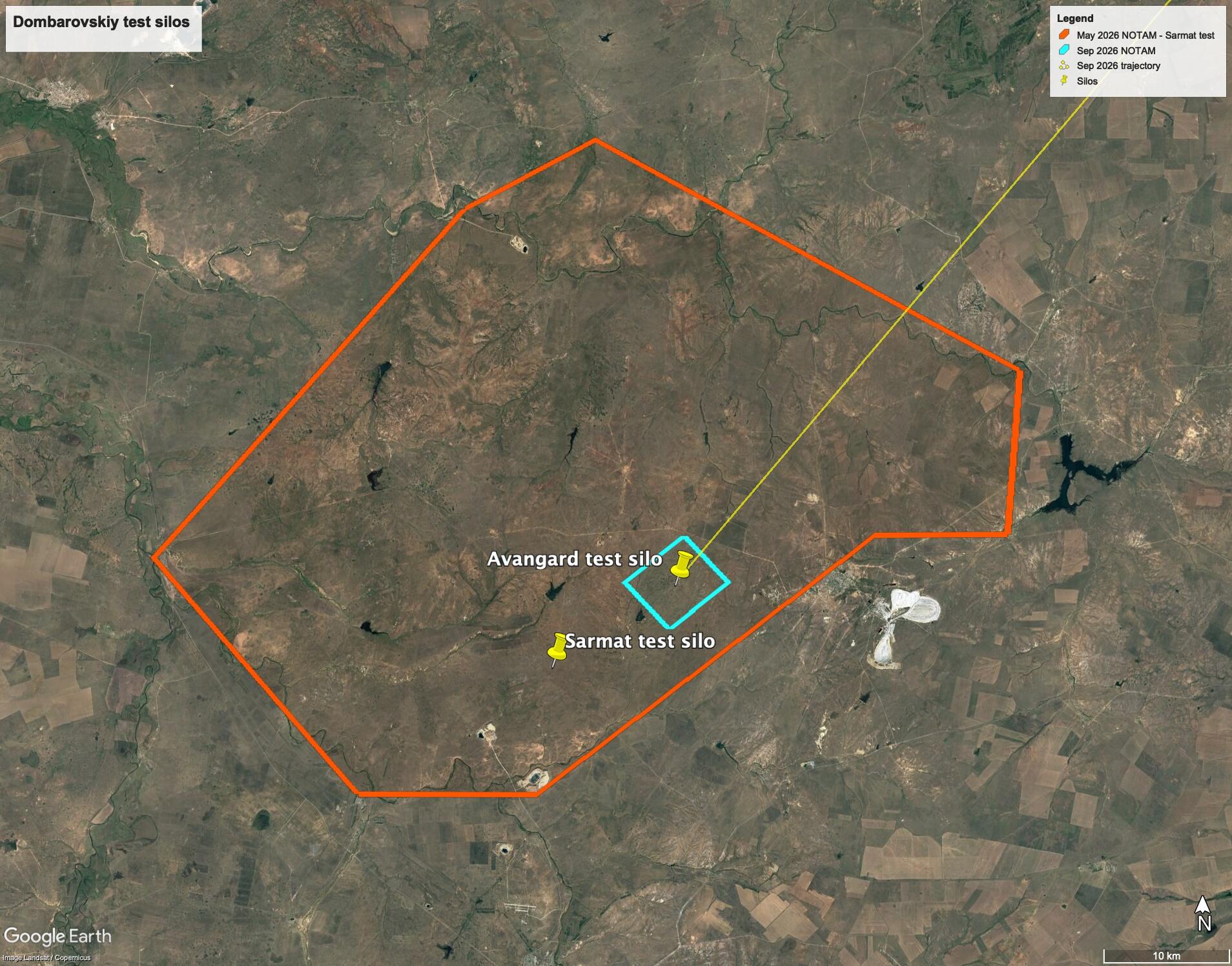
&lt;p&gt;Object 307 is apparently a large construction project at a site 7 km away from Yasnyy. There are two R-36M silos of the Dombarovskiy missile division that are located at that distance from Yasnyy. One, &lt;a href="http://maps.google.com/maps?q=+51%C2%B0+5'36.53%22N,+++59%C2%B050'40.52%22E&amp;hl=en&amp;ie=UTF8&amp;ll=51.093699,59.844589&amp;spn=0.007803,0.018497&amp;sll=51.04938,59.896088&amp;sspn=0.124965,0.295944&amp;t=h&amp;z=16"&gt;to the north of the town&lt;/a&gt;, has been converted to the Yasnyy space launch site that supports launches of the Dnepr system, so it is already in use.  The other one, &lt;a href="http://maps.google.com/maps?q=+51%C2%B0+2'12.40%22N,++59%C2%B057'32.35%22E&amp;hl=en&amp;ie=UTF8&amp;ll=51.037144,59.958959&amp;spn=0.007812,0.018497&amp;sll=37.0625,-95.677068&amp;sspn=40.188298,75.761719&amp;t=h&amp;z=16"&gt;to the east&lt;/a&gt;, is just a regular silo, which looks more suitable for a new project. The construction at the Object 370 site appears to be quite intensive - the site includes an "experimental testing base" as well as a number of buildings and extensive support infrastructure, including a new railroad link to Yasnyy. &lt;/p&gt;

&lt;p&gt;The most interesting part of the construction activity appears to involve conversion of the old R-36M silo - SKTB-16, a design bureau with a long history of work on ICBM silos, &lt;a href="http://federalbook.ru/files/Reestr/Company/OPK-5/7515OPK5-SKTB-16.pdf"&gt;mentions&lt;/a&gt; "conversion of P718 facility to P771 facility" as one of its projects. Now, P718 is apparently the 15P718, a standard R-36M silo; the missile itself has an index 15A18. So, P771 most likely refers to a silo that would house the A35-71 launcher, whatever it is (we'll get to the A35-71 in a moment). I couldn't find a direct connection between the SKTB-16 work and the Object 370, but there are not very many R-36M silos that could be converted. &lt;a href="http://russianforces.org/blog/2005/05/silos_for_a_rainy_day.shtml"&gt;The Rocket Forces has kept some of these silos&lt;/a&gt; - there may be some in Uzhur and there are definitely a few in Dombarovskiy. Given the level of activity in Dombarovskiy, it is likely that the Object 370 is indeed the place where the silo conversion takes place.&lt;/p&gt;

&lt;p&gt;The index A35-71 probably refers to some modification of the 15A35 missile system, otherwise known as UR-100NUTTH or SS-19. The index seems to suggest that the missile itself has not changed very much and the most important modification is the new "space head section" (космическая головная часть). I must admit it is really no more than a guess, but it seems to be reasonably consistent with other bits and pieces of information. So, what is this new "head section" and why the missile that carries it could not be deployed in old UR-100NUTTH/SS-19 silos?&lt;/p&gt;

&lt;p&gt;The SKTB-16 report mentions that the conversion is done as part of the Project 4202 (в интересах темы "4202"). This is something new we could work with. As it turns out, Project 4202 is &lt;a href="http://www.npomash.ru/press/ru/tribuna281212.htm"&gt;"one of the most important projects"&lt;/a&gt;  of NPO Mashinostroyeniya - the old Chelomey design bureau that designed the UR-100NUTTH missile. A search through the NPOMash site reveals that this work involves manufacturing of something that has several sections of a fairly complex shape and uses some non-metallic and anti-radar materials - not a bad candidate for the new "head section" of the "A35-71 launcher."&lt;/p&gt;

&lt;p&gt;A few more dots to connect - in 2004, NPOMash demonstrated what was described as a "hypersonic maneuverable warhead" &lt;a href="http://russianforces.org/blog/2004/02/russian_strategic_forces_took.shtml"&gt;that was flown on a UR-100NUTTH missile&lt;/a&gt;. Could that be the new "space head section"? I would say it's quite possible. It is a bit strange that it would be described as a "space" warhead, but it does seem to travel through space for a significant part of its flight, so it won't be much of a stretch. If this is indeed what the Project 4202 is about, it explains why its deployment requires modification of a silo - as I understand, this warhead is rather big, so it won't fit into a standard UR-100NUTTH silo. The R-36M silos are much deeper - the missile is about 9 meters longer than UR-100NUTTH - so it could probably accommodate the bigger "head section" as well. But the silos may need some modification - unlike R-36M family, UR-100NUTTH is a "hot launch" missile. I'm not sure this would be the main reason why the conversion is necessary, though - there might be others.&lt;/p&gt;

&lt;p&gt;The "hypersonic warhead" is not the only possible explanation for the activity at the Object 370. The description of the A35-71 as a "launcher" (ракета-носитель) seems to imply that it would be used to deliver payload into space. I thought that &lt;a href="http://russianforces.org/blog/2007/01/is_china_repeating_the_old_sov.shtml"&gt;the Naryad-V ASAT system&lt;/a&gt; is a reasonably good candidate as well - it was supposed to be deployed on UR-100NUTTH missiles. But a colleague who spent some serious time researching Project 4202 assured me that it's not Naryad-V. Another argument against Naryad is that an ASAT kill vehicle is unlikely to need anti-radar coating or a complex shape. Also, there is a possibility that Object 370 has nothing to do with the Project 4202.&lt;/p&gt;

&lt;p&gt;Another question about this whole enterprise is whether it makes sense to develop a new payload for the UR-100NUTTH missile, which will turn 40 years old in a few years. One possible answer to that is that Russia may be planning to resume production of UR-100NUTTH or build a derivative of this missile - there are signs that something like this is under consideration. It's also possible that the new payload could be deployed on Topol-M, although this does not seem to be part of the current plan.&lt;/p&gt;

&lt;p&gt;If all this activity is indeed about deployment of a new system that would carry some kind of a "space head section" it could raise a few questions about whether this new system should be covered by the New START treaty. The treaty defines a ballistic missile as a "a missile that is a weapon-delivery vehicle that has a ballistic trajectory over most of its flight path." This definition would probably exempt some of the systems that the United States wants to deploy as part of its Prompt Global Strike program. The U.S., of course, &lt;a href="http://guests.armscontrolwonk.com/archive/3385/new-start-and-new-kinds"&gt;would argue that these systems should not be considered "new kinds of strategic offensive arms"&lt;/a&gt; as they do not meet the definition of the treaty - they are not ballistic missiles, for example. Russia might be happy to agree with that position, since that would leave its own systems outside of the treaty as well. But unlike the U.S., Russia might want to deploy them with nuclear warheads - this would probably give the United States a pause. &lt;/p&gt;

&lt;p&gt;I should say I remain quite skeptical about all these fancy systems - it is unlikely that in terms of delivered payload or the ability to penetrate missile defenses (probably a big selling point in Russia) they would outperform ICBMs. But that's never been the point of these kind of projects anyway.&lt;br /&gt;
 &lt;br /&gt;
In the end, I think the long answer to the questions about Object 370, A35-71, and Project 4202 is very much similar to the short one - we don't really know. But there is something interesting (if not quite reasonable) going on at Dombarovskiy. My guess is that we'll soon hear more about it.  &lt;/p&gt;
        
    &lt;div class="feedflare"&gt;
&lt;a href="http://feeds.feedburner.com/~ff/russianforces?a=ZIIbSvEK6Y8:Z0L4fIT-wIQ:yIl2AUoC8zA"&gt;&lt;img src="http://feeds.feedburner.com/~ff/russianforces?d=yIl2AUoC8zA" border="0"&gt;&lt;/img&gt;&lt;/a&gt; &lt;a href="http://feeds.feedburner.com/~ff/russianforces?a=ZIIbSvEK6Y8:Z0L4fIT-wIQ:F7zBnMyn0Lo"&gt;&lt;img src="http://feeds.feedburner.com/~ff/russianforces?i=ZIIbSvEK6Y8:Z0L4fIT-wIQ:F7zBnMyn0Lo" border="0"&gt;&lt;/img&gt;&lt;/a&gt; &lt;a href="http://feeds.feedburner.com/~ff/russianforces?a=ZIIbSvEK6Y8:Z0L4fIT-wIQ:qj6IDK7rITs"&gt;&lt;img src="http://feeds.feedburner.com/~ff/russianforces?d=qj6IDK7rITs" border="0"&gt;&lt;/img&gt;&lt;/a&gt; &lt;a href="http://feeds.feedburner.com/~ff/russianforces?a=ZIIbSvEK6Y8:Z0L4fIT-wIQ:gIN9vFwOqvQ"&gt;&lt;img src="http://feeds.feedburner.com/~ff/russianforces?i=ZIIbSvEK6Y8:Z0L4fIT-wIQ:gIN9vFwOqvQ" border="0"&gt;&lt;/img&gt;&lt;/a&gt;
&lt;/div&gt;&lt;img src="http://feeds.feedburner.com/~r/russianforces/~4/ZIIbSvEK6Y8" height="1" width="1"/&gt;</content>
<feedburner:origLink>http://russianforces.org/blog/2013/02/object_370_project_4202_and_co.shtml</feedburner:origLink></entry>

<entry>
    <title>Another old anti-satellite system resurfaces</title>
    <link rel="alternate" type="text/html" href="http://feedproxy.google.com/~r/russianforces/~3/2yh01xDdeKM/another_old_anti-satellite_sys.shtml" />
    <id>tag:russianforces.org,2013://1.1716</id>

    <published>2013-01-25T10:04:12Z</published>
    <updated>2013-01-25T13:11:16Z</updated>

    <summary>One should always be careful about reports in the Russian press (and, I was told, about reports on military matters in Izvestia in particular), but this one may be worth noting - according to Izvestia, Russia appears to be working...</summary>
    <author>
        <name>Pavel Podvig</name>
        <uri>http://russianforces.org</uri>
    </author>
    
        <category term="Early warning" scheme="http://www.sixapart.com/ns/types#category" />
    
        <category term="Missile defense" scheme="http://www.sixapart.com/ns/types#category" />
    
    
    <content type="html" xml:lang="en" xml:base="http://russianforces.org/">
        &lt;p&gt;One should always be careful about reports in the Russian press (and, I was told, about reports on military matters in Izvestia in particular), but this one may be worth noting - &lt;a href="http://izvestia.ru/news/543550"&gt;according to Izvestia&lt;/a&gt;, Russia appears to be working on elements of an aircraft-based anti-satellite system, which will be tested later this year. &lt;/p&gt;

&lt;p&gt;Strictly speaking, the project that is discussed in the paper does not involve an actual anti-satellite component. It appears that at this point it involves only testing communication between the ground-based satellite tracking system, Krona, and an aircraft. However, the idea is that the aircraft could eventually be armed with an interceptor. But it doesn't look like an interceptor is under development today.&amp;nbsp;&lt;/p&gt;

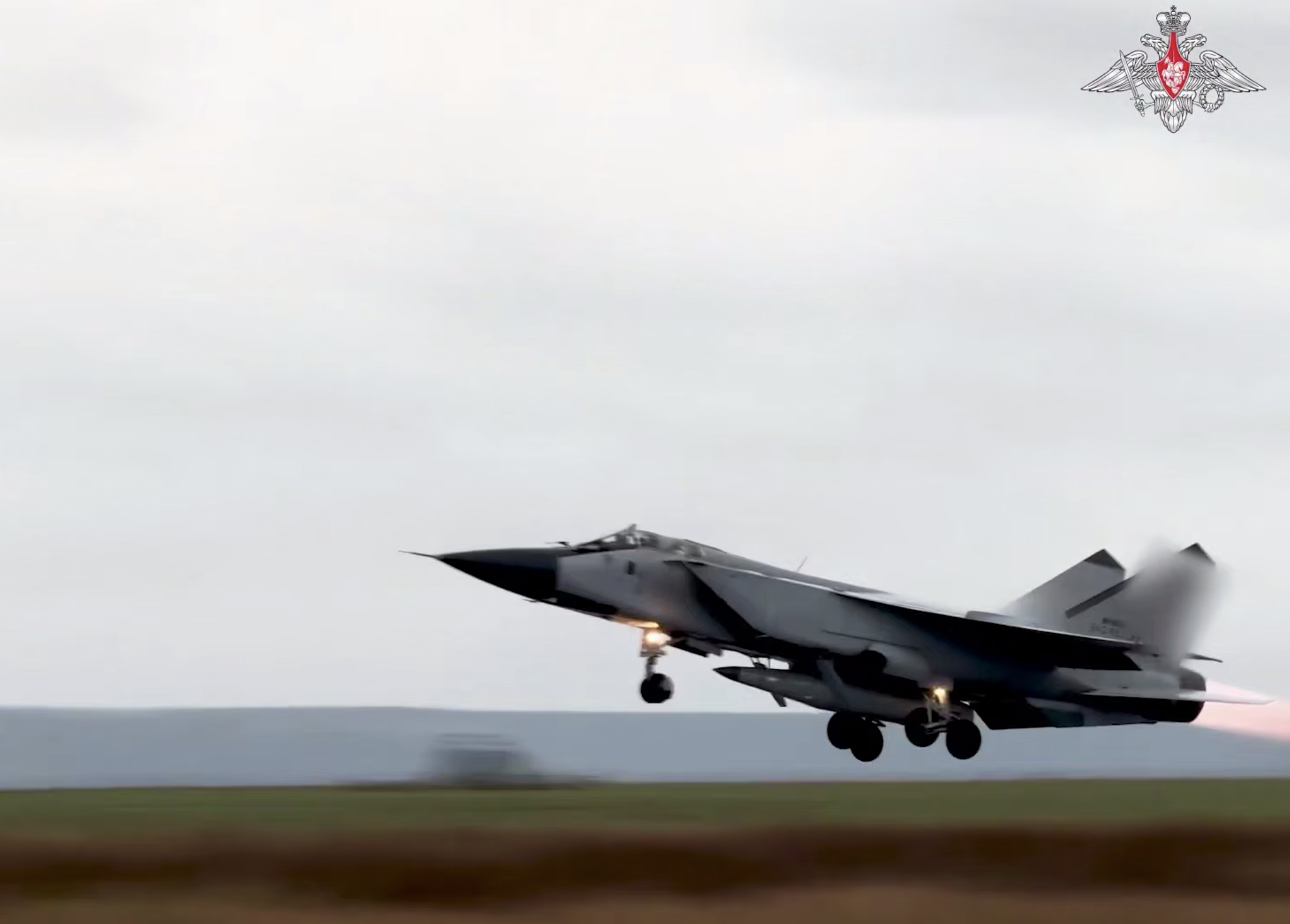
&lt;p&gt;Development of the original aircraft-based ASAT system, known as Kontakt, was approved almost 30 years ago, in November 1984 (as a direct response to the U.S. system that was first tested in 1984). The ground-based component was supposed to include the radio-optical Krona (45Zh6) complex as well as a command complex. The interceptor was carried by a modified MiG-31D aircraft (&lt;a href="http://militaryrussia.ru/blog/topic-699.html"&gt;MilitaryRussia.ru&lt;/a&gt; has good photos of the radar and the aircraft). A three-stage interceptor was designed to hit targets at altitudes of 120-600 km (and up to 1500 km after the second stage of the project was completed). The system was supposed to attack up to 24 satellites within a 36-hour period (documents also mention 20-40 satellites in 24 hours).&lt;/p&gt;

&lt;p&gt;The work on the Kontakt system was suspended around 1989, apparently before it reached the stage of flight tests. However, elements of the Krona complex were deployed at a &lt;a href="http://maps.google.com/?ll=43.82556,41.34306&amp;amp;spn=0.019599,0.02841&amp;amp;t=h&amp;amp;z=15"&gt;site near Zelenchukskaya&lt;/a&gt;&amp;nbsp;- the 20Zh6 Krona radar and the 30Zh6 LOL "laser optical locator" (prototypes were also deployed at the Sary-Shagan test site). Both facilities are used for space surveillance and can be seen in &lt;a href="http://russianforces.org/blog/2013/01/status_of_the_russian_early-warning.shtml"&gt;a table from the SKKP control center&lt;/a&gt; that lists space surveillance assets.  Here is the relveant part of the original table:&lt;/p&gt;

&lt;div id="table"&gt;
&lt;table style="border-collapse: collapse" border="0" cellspacing="0" bordercolor="#030606" cellpadding="2" width="540"&gt;
&lt;tbody&gt;       

&lt;tr&gt;
     &lt;td style="border-bottom: 1px solid"&gt;           &lt;div&gt;&lt;b&gt;Station&lt;/b&gt;&lt;/div&gt;         &lt;/td&gt;          
     &lt;td style="border-bottom: 1px solid"&gt;           &lt;div&gt;&lt;b&gt;Radar&lt;/b&gt;&lt;/div&gt;         &lt;/td&gt;          
     &lt;td style="border-bottom: 1px solid"&gt;           &lt;div&gt;&lt;b&gt;Range&lt;/b&gt;&lt;/div&gt;         &lt;/td&gt;       
     &lt;td style="border-bottom: 1px solid"&gt;           &lt;div&gt;&lt;b&gt;Altitudes&lt;/b&gt;&lt;/div&gt;         &lt;/td&gt;       
     &lt;td style="border-bottom: 1px solid"&gt;           &lt;div&gt;&lt;b&gt;Elevations&lt;/b&gt;&lt;/div&gt;         &lt;/td&gt;       
     &lt;td style="border-bottom: 1px solid"&gt;           &lt;div&gt;&lt;b&gt;Azimuths&lt;/b&gt;&lt;/div&gt;         &lt;/td&gt;       
     &lt;td style="border-bottom: 1px solid"&gt;           &lt;div&gt;&lt;b&gt;Inclinations&lt;/b&gt;&lt;/div&gt;         &lt;/td&gt;       
&lt;/tr&gt;    

&lt;tr&gt;         
	&lt;td style="border-top: 1px solid"&gt;           &lt;div&gt;Zelenchukskaya&lt;/div&gt;         &lt;/td&gt;          
	&lt;td style="border-top: 1px solid"&gt;           &lt;div&gt;Krona&lt;/div&gt;         &lt;/td&gt;          
	&lt;td style="border-top: 1px solid"&gt;           &lt;div&gt;120-3200&lt;/div&gt;        &lt;/td&gt;       
    &lt;td style="border-top: 1px solid"&gt;           &lt;div&gt;120-3200&lt;/div&gt;         &lt;/td&gt;       
    &lt;td style="border-top: 1px solid"&gt;           &lt;div&gt;3-90&lt;/div&gt;         &lt;/td&gt;       
    &lt;td style="border-top: 1px solid"&gt;           &lt;div&gt;0-360&lt;/div&gt;         &lt;/td&gt;       
    &lt;td style="border-top: 1px solid"&gt;           &lt;div&gt;35-145&lt;/div&gt;         &lt;/td&gt;       
&lt;/tr&gt;     

&lt;tr&gt;         
	&lt;td style="border-bottom: 1px solid"&gt;           &lt;div&gt;&lt;br /&gt;&lt;/div&gt;         &lt;/td&gt;          
	&lt;td style="border-bottom: 1px solid"&gt;           &lt;div&gt;LOL&lt;/div&gt;         &lt;/td&gt;          
	&lt;td style="border-bottom: 1px solid"&gt;           &lt;div&gt;120-40000&lt;/div&gt;         &lt;/td&gt;       
    &lt;td style="border-bottom: 1px solid"&gt;           &lt;div&gt;120-40000&lt;/div&gt;         &lt;/td&gt;       
    &lt;td style="border-bottom: 1px solid"&gt;           &lt;div&gt;10-90&lt;/div&gt;         &lt;/td&gt;       
    &lt;td style="border-bottom: 1px solid"&gt;           &lt;div&gt;0-360&lt;/div&gt;         &lt;/td&gt;       
    &lt;td style="border-bottom: 1px solid"&gt;           &lt;div&gt;0-180&lt;/div&gt;         &lt;/td&gt;       
&lt;/tr&gt;   

&lt;/tbody&gt;
&lt;/table&gt;&lt;br /&gt;
Krona (and Okno) was &lt;a href="http://russianforces.org/blog/2008/01/more_on_space_surveillance_okn.shtml"&gt;described by Allen Thomson&lt;/a&gt; some time ago. He also prepared an interesting compilation of sources on the &lt;a href="http://russianforces.org/blog/2008/01/space_monitoring_facilities.shtml"&gt;Altay Optical Center&lt;/a&gt;.&lt;br /&gt;&lt;br /&gt;
&lt;/div&gt;&lt;br /&gt;
&lt;p&gt;&lt;/p&gt;
        
    &lt;div class="feedflare"&gt;
&lt;a href="http://feeds.feedburner.com/~ff/russianforces?a=2yh01xDdeKM:o2YIGvHxdro:yIl2AUoC8zA"&gt;&lt;img src="http://feeds.feedburner.com/~ff/russianforces?d=yIl2AUoC8zA" border="0"&gt;&lt;/img&gt;&lt;/a&gt; &lt;a href="http://feeds.feedburner.com/~ff/russianforces?a=2yh01xDdeKM:o2YIGvHxdro:F7zBnMyn0Lo"&gt;&lt;img src="http://feeds.feedburner.com/~ff/russianforces?i=2yh01xDdeKM:o2YIGvHxdro:F7zBnMyn0Lo" border="0"&gt;&lt;/img&gt;&lt;/a&gt; &lt;a href="http://feeds.feedburner.com/~ff/russianforces?a=2yh01xDdeKM:o2YIGvHxdro:qj6IDK7rITs"&gt;&lt;img src="http://feeds.feedburner.com/~ff/russianforces?d=qj6IDK7rITs" border="0"&gt;&lt;/img&gt;&lt;/a&gt; &lt;a href="http://feeds.feedburner.com/~ff/russianforces?a=2yh01xDdeKM:o2YIGvHxdro:gIN9vFwOqvQ"&gt;&lt;img src="http://feeds.feedburner.com/~ff/russianforces?i=2yh01xDdeKM:o2YIGvHxdro:gIN9vFwOqvQ" border="0"&gt;&lt;/img&gt;&lt;/a&gt;
&lt;/div&gt;&lt;img src="http://feeds.feedburner.com/~r/russianforces/~4/2yh01xDdeKM" height="1" width="1"/&gt;</content>
<feedburner:origLink>http://russianforces.org/blog/2013/01/another_old_anti-satellite_sys.shtml</feedburner:origLink></entry>

<entry>
    <title>Three military communication satellites are in orbit</title>
    <link rel="alternate" type="text/html" href="http://feedproxy.google.com/~r/russianforces/~3/hVA3IaLIJ-8/three_military_communication_s.shtml" />
    <id>tag:russianforces.org,2013://1.1715</id>

    <published>2013-01-15T18:34:33Z</published>
    <updated>2013-05-15T10:53:10Z</updated>

    <summary>On January 15, 2013 at 20:24:59 MSK (16:24:59 UTC) the Space Forces conducted a successful launch of a Rockot space launcher with Briz-KM booster stage from the launch pad No. 3 of the launch complex No. 133 of the Plesetsk...</summary>
    <author>
        <name>Pavel Podvig</name>
        <uri>http://russianforces.org</uri>
    </author>
    
        <category term="Space" scheme="http://www.sixapart.com/ns/types#category" />
    
    
    <content type="html" xml:lang="en" xml:base="http://russianforces.org/">
        &lt;p&gt;On January 15, 2013 at 20:24:59 MSK (16:24:59 UTC) the Space Forces conducted a successful launch of a Rockot space launcher with Briz-KM booster stage from the launch pad No. 3 of the launch complex No. 133 of the Plesetsk test site. The rocket successfully delivered to orbit &lt;a href="http://www.russianspaceweb.com/rodnik.html"&gt;three military communication satellites of the Rodnik type&lt;/a&gt;.  According to &lt;a href="http://novosti-kosmonavtiki.ru/news/4345/"&gt;Novosti Kosmonavtiki&lt;/a&gt;, these are Rodnik-S/14F132 satellites.&lt;/p&gt;

&lt;p&gt;The satellites received designations Cosmos-2482, Cosmos-2483, and Cosmos-2484 and were catalogued by NORAD as 39057, 39058, and 39059. They received international designations 2013-01A, 2013-01B, and 2013-01C. Satellites were deployed in nearly circular orbits with altitude of about 1500 km, inclination of 82.5 degrees, and orbital period of about 116 minutes.&lt;/p&gt;

&lt;p&gt;Rodnik is a successor of Strela-3 communication satellites. it is sometimes referred to as Strela-3M. The first launch of a Rodnik took place &lt;a href="http://russianforces.org/blog/2005/12/launch_of_two_communication_sa.shtml"&gt;in December 2005&lt;/a&gt;.&lt;/p&gt;

&lt;p&gt;UPDATE 05/15/2013: According to Russian &lt;a href="http://vpk-news.ru/news/15913"&gt;press reports&lt;/a&gt;, the launch was only partially successful. Because of a malfunction of the Briz-KM booster stage, the satellites did not reach their nominal orbits and one satellite (39058) was eventually lost. At the same time, Roskosmos &lt;a href="http://ria.ru/science/20130515/937453351.html"&gt;insists&lt;/a&gt; that the launch was successful.&lt;/p&gt;
        
    &lt;div class="feedflare"&gt;
&lt;a href="http://feeds.feedburner.com/~ff/russianforces?a=hVA3IaLIJ-8:zPHI0Ykz2VQ:yIl2AUoC8zA"&gt;&lt;img src="http://feeds.feedburner.com/~ff/russianforces?d=yIl2AUoC8zA" border="0"&gt;&lt;/img&gt;&lt;/a&gt; &lt;a href="http://feeds.feedburner.com/~ff/russianforces?a=hVA3IaLIJ-8:zPHI0Ykz2VQ:F7zBnMyn0Lo"&gt;&lt;img src="http://feeds.feedburner.com/~ff/russianforces?i=hVA3IaLIJ-8:zPHI0Ykz2VQ:F7zBnMyn0Lo" border="0"&gt;&lt;/img&gt;&lt;/a&gt; &lt;a href="http://feeds.feedburner.com/~ff/russianforces?a=hVA3IaLIJ-8:zPHI0Ykz2VQ:qj6IDK7rITs"&gt;&lt;img src="http://feeds.feedburner.com/~ff/russianforces?d=qj6IDK7rITs" border="0"&gt;&lt;/img&gt;&lt;/a&gt; &lt;a href="http://feeds.feedburner.com/~ff/russianforces?a=hVA3IaLIJ-8:zPHI0Ykz2VQ:gIN9vFwOqvQ"&gt;&lt;img src="http://feeds.feedburner.com/~ff/russianforces?i=hVA3IaLIJ-8:zPHI0Ykz2VQ:gIN9vFwOqvQ" border="0"&gt;&lt;/img&gt;&lt;/a&gt;
&lt;/div&gt;&lt;img src="http://feeds.feedburner.com/~r/russianforces/~4/hVA3IaLIJ-8" height="1" width="1"/&gt;</content>
<feedburner:origLink>http://russianforces.org/blog/2013/01/three_military_communication_s.shtml</feedburner:origLink></entry>

<entry>
    <title>Status of the Russian early-warning radar network</title>
    <link rel="alternate" type="text/html" href="http://feedproxy.google.com/~r/russianforces/~3/nXeHfdxtkCs/status_of_the_russian_early-warning.shtml" />
    <id>tag:russianforces.org,2013://1.1714</id>

    <published>2013-01-13T13:10:07Z</published>
    <updated>2013-02-25T11:57:54Z</updated>

    <summary> Construction of new early-warning radars in Russia has really taken off in the last few years. With new radars coming online and some retiring, the shape of the radar network has changed quite dramatically since the last update. Also,...</summary>
    <author>
        <name>Pavel Podvig</name>
        <uri>http://russianforces.org</uri>
    </author>
    
        <category term="Early warning" scheme="http://www.sixapart.com/ns/types#category" />
    
    
    <content type="html" xml:lang="en" xml:base="http://russianforces.org/">
        &lt;p&gt;&lt;a href="http://russianforces.org/Russian%20early%20warning%20radars%20Jan%202013.png"&gt;&lt;img alt="Russian early warning radars Jan 2013.png" src="http://russianforces.org/assets_c/2013/01/Russian early warning radars Jan 2013-thumb-240x179-190.png" width="240" height="179" class="mt-image-left" style="float: left; margin: 0 20px 20px 0;" /&gt;&lt;/a&gt; Construction of new early-warning radars in Russia has really taken off in the last few years. With new radars coming online and some retiring, the shape of the radar network has changed quite dramatically since the &lt;a href="http://russianforces.org/blog/2007/07/updated_map_of_earlywarning_ra.shtml"&gt;last update&lt;/a&gt;. Also, some new good information has come out - for example, &lt;a href="http://wolfschanze.livejournal.com/1028802.html"&gt;this story&lt;/a&gt; that described a visit to the Main Space Situational Awareness Center has a &lt;a href="http://wolfschanze.users.photofile.ru/photo/wolfschanze/96613491/xlarge/125657533.jpg"&gt;nice photo&lt;/a&gt; of a chart that lists early-warning and space surveillance assets that were operational in September 2011 (thanks to AS for this and other tips).&lt;/p&gt;&lt;p&gt;Key characteristics of the radars that are involved in early warning are in the table below. The ranges apparently assume some standard radar cross-section of a target - in the space surveillance context this would be a satellite. It would be different (smaller) against warheads.&lt;/p&gt;

&lt;div id="table"&gt;
&lt;table style="border-collapse: collapse" border="0" cellspacing="0" bordercolor="#030606" cellpadding="2" width="540"&gt;
&lt;tbody&gt;       

&lt;tr&gt;
     &lt;td style="border-bottom: 1px solid"&gt;           &lt;div&gt;&lt;b&gt;Station&lt;/b&gt;&lt;/div&gt;         &lt;/td&gt;          
     &lt;td style="border-bottom: 1px solid"&gt;           &lt;div&gt;&lt;b&gt;Radar&lt;/b&gt;&lt;/div&gt;         &lt;/td&gt;          
     &lt;td style="border-bottom: 1px solid"&gt;           &lt;div&gt;&lt;b&gt;Range&lt;/b&gt;&lt;/div&gt;         &lt;/td&gt;       
     &lt;td style="border-bottom: 1px solid"&gt;           &lt;div&gt;&lt;b&gt;Altitudes&lt;/b&gt;&lt;/div&gt;         &lt;/td&gt;       
     &lt;td style="border-bottom: 1px solid"&gt;           &lt;div&gt;&lt;b&gt;Elevations&lt;/b&gt;&lt;/div&gt;         &lt;/td&gt;       
     &lt;td style="border-bottom: 1px solid"&gt;           &lt;div&gt;&lt;b&gt;Azimuths&lt;/b&gt;&lt;/div&gt;         &lt;/td&gt;       
     &lt;td style="border-bottom: 1px solid"&gt;           &lt;div&gt;&lt;b&gt;Inclinations&lt;/b&gt;&lt;/div&gt;         &lt;/td&gt;       
&lt;/tr&gt;    

&lt;tr&gt;         
	&lt;td style="border-top: 1px solid"&gt;           &lt;div&gt;Olenegorsk&lt;/div&gt;         &lt;/td&gt;          
	&lt;td style="border-top: 1px solid"&gt;           &lt;div&gt;Dnepr&lt;/div&gt;         &lt;/td&gt;          
	&lt;td style="border-top: 1px solid"&gt;           &lt;div&gt;250-4600&lt;/div&gt;        &lt;/td&gt;       
    &lt;td style="border-top: 1px solid"&gt;           &lt;div&gt;100-3400&lt;/div&gt;         &lt;/td&gt;       
    &lt;td style="border-top: 1px solid"&gt;           &lt;div&gt;5.5-34.5&lt;/div&gt;         &lt;/td&gt;       
    &lt;td style="border-top: 1px solid"&gt;           &lt;div&gt;280-340&lt;/div&gt;         &lt;/td&gt;       
    &lt;td style="border-top: 1px solid"&gt;           &lt;div&gt;60-72&lt;/div&gt;         &lt;/td&gt;       
&lt;/tr&gt;     

&lt;tr&gt;         
	&lt;td style="border-bottom: 1px solid"&gt;           &lt;div&gt;Pechora&lt;/div&gt;         &lt;/td&gt;          
	&lt;td style="border-bottom: 1px solid"&gt;           &lt;div&gt;Daryal&lt;/div&gt;         &lt;/td&gt;          
	&lt;td style="border-bottom: 1px solid"&gt;           &lt;div&gt;300-7200&lt;/div&gt;         &lt;/td&gt;       
    &lt;td style="border-bottom: 1px solid"&gt;           &lt;div&gt;100-6600&lt;/div&gt;         &lt;/td&gt;       
    &lt;td style="border-bottom: 1px solid"&gt;           &lt;div&gt;2-55&lt;/div&gt;         &lt;/td&gt;       
    &lt;td style="border-bottom: 1px solid"&gt;           &lt;div&gt;305-55&lt;/div&gt;         &lt;/td&gt;       
    &lt;td style="border-bottom: 1px solid"&gt;           &lt;div&gt;73.5-84.3&lt;/div&gt;         &lt;/td&gt;       
&lt;/tr&gt;   

&lt;tr&gt;         
	&lt;td&gt;           &lt;div&gt;Mishelevka&lt;/div&gt;         &lt;/td&gt;          
	&lt;td&gt;           &lt;div&gt;Dnepr&lt;/div&gt;         &lt;/td&gt;          
	&lt;td&gt;           &lt;div&gt;250-4600&lt;/div&gt;         &lt;/td&gt;       
    &lt;td&gt;           &lt;div&gt;100-3400&lt;/div&gt;         &lt;/td&gt;       
    &lt;td&gt;           &lt;div&gt;5.5-34.5&lt;/div&gt;         &lt;/td&gt;       
    &lt;td&gt;           &lt;div&gt;41-219&lt;/div&gt;         &lt;/td&gt;       
    &lt;td&gt;           &lt;div&gt;46.9-52.9&lt;/div&gt;         &lt;/td&gt;       
&lt;/tr&gt;        

&lt;tr&gt;         
	&lt;td style="border-bottom: 1px solid;"&gt;           &lt;div&gt;&lt;/div&gt;         &lt;/td&gt;          
	&lt;td style="border-bottom: 1px solid;"&gt;           &lt;div&gt;Voronezh-VP&lt;/div&gt;         &lt;/td&gt;          
	&lt;td style="border-bottom: 1px solid;"&gt;           &lt;div&gt;&lt;br /&gt;&lt;/div&gt;         &lt;/td&gt;       
    &lt;td style="border-bottom: 1px solid"&gt;           &lt;div&gt;&lt;br /&gt;&lt;/div&gt;         &lt;/td&gt;       
    &lt;td style="border-bottom: 1px solid"&gt;           &lt;div&gt;2-70&lt;/div&gt;         &lt;/td&gt;       
    &lt;td style="border-bottom: 1px solid"&gt;           &lt;div&gt;70-110&lt;/div&gt;         &lt;/td&gt;       
    &lt;td style="border-bottom: 1px solid"&gt;           &lt;div&gt;&lt;br /&gt;&lt;/div&gt;         &lt;/td&gt;       
&lt;/tr&gt;        

&lt;tr&gt;         
	&lt;td&gt;           &lt;div&gt;Lekhtusi&lt;/div&gt;         &lt;/td&gt;          
	&lt;td&gt;           &lt;div&gt;Voronezh-M&lt;/div&gt;         &lt;/td&gt;          
	&lt;td&gt;           &lt;div&gt;100-4200&lt;/div&gt;         &lt;/td&gt;       
    &lt;td&gt;           &lt;div&gt;150-4000&lt;/div&gt;         &lt;/td&gt;       
    &lt;td&gt;           &lt;div&gt;2-70&lt;/div&gt;         &lt;/td&gt;       
    &lt;td&gt;           &lt;div&gt;245-355&lt;/div&gt;         &lt;/td&gt;       
    &lt;td&gt;           &lt;div&gt;53-127&lt;/div&gt;         &lt;/td&gt;       
&lt;/tr&gt;        

&lt;tr&gt;         
	&lt;td&gt;Armavir&lt;/td&gt;          
	&lt;td&gt;Voronezh-DM&lt;/td&gt;          
	&lt;td&gt;100-4200&lt;/td&gt;       
    &lt;td&gt;           &lt;div&gt;150-4000&lt;/div&gt;         &lt;/td&gt;       
    &lt;td&gt;           &lt;div&gt;2-60&lt;/div&gt;         &lt;/td&gt;       
    &lt;td&gt;           &lt;div&gt;165-295&lt;/div&gt;         &lt;/td&gt;       
    &lt;td&gt;           &lt;div&gt;34.5-145.5&lt;/div&gt;         &lt;/td&gt;       
&lt;/tr&gt;        


&lt;tr&gt;         
	&lt;td style="border-bottom: 1px solid;"&gt;Armavir&lt;/td&gt;          
	&lt;td style="border-bottom: 1px solid;"&gt;Voronezh-DM&lt;/td&gt;          
	&lt;td style="border-bottom: 1px solid;"&gt;100-4200&lt;/td&gt;       
    &lt;td style="border-bottom: 1px solid"&gt;           &lt;div&gt;150-4000&lt;/div&gt;         &lt;/td&gt;       
    &lt;td style="border-bottom: 1px solid"&gt;           &lt;div&gt;2-60&lt;/div&gt;         &lt;/td&gt;       
    &lt;td style="border-bottom: 1px solid"&gt;           &lt;div&gt;55-185&lt;/div&gt;         &lt;/td&gt;       
    &lt;td style="border-bottom: 1px solid"&gt;           &lt;div&gt;&lt;br /&gt;&lt;/div&gt;         &lt;/td&gt;       
&lt;/tr&gt;        

&lt;tr&gt;         
	&lt;td&gt;Kaliningrad &lt;/td&gt;          
	&lt;td&gt;Voronezh-DM&lt;/td&gt;          
	&lt;td&gt;100-4200&lt;/td&gt;       
    &lt;td&gt;           &lt;div&gt;150-4000&lt;/div&gt;         &lt;/td&gt;       
    &lt;td&gt;           &lt;div&gt;2-60&lt;/div&gt;         &lt;/td&gt;       
    &lt;td&gt;           &lt;div&gt;187.5-292.5&lt;/div&gt;         &lt;/td&gt;       
    &lt;td&gt;           &lt;div&gt;&lt;br /&gt;&lt;/div&gt;         &lt;/td&gt;       
&lt;/tr&gt;

&lt;tr&gt;         
	&lt;td&gt;Eniseysk&lt;/td&gt;          
	&lt;td&gt;&lt;br /&gt;&lt;/td&gt;          
	&lt;td&gt;&lt;br /&gt;&lt;/td&gt;       
    &lt;td&gt;           &lt;div&gt;&lt;br /&gt;&lt;/div&gt;         &lt;/td&gt;       
    &lt;td&gt;           &lt;div&gt;&lt;br /&gt;&lt;/div&gt;         &lt;/td&gt;       
    &lt;td&gt;           &lt;div&gt;&lt;br /&gt;&lt;/div&gt;         &lt;/td&gt;       
    &lt;td&gt;           &lt;div&gt;&lt;br /&gt;&lt;/div&gt;         &lt;/td&gt;       
&lt;/tr&gt;
        
&lt;tr&gt;         
	&lt;td style="border-bottom: 1px solid;"&gt;Barnaul &lt;/td&gt;          
	&lt;td style="border-bottom: 1px solid;"&gt;Voronezh-DM&lt;/td&gt;          
	&lt;td style="border-bottom: 1px solid;"&gt;&lt;br /&gt;&lt;/td&gt;       
    &lt;td style="border-bottom: 1px solid"&gt;           &lt;div&gt;&lt;br /&gt;&lt;/div&gt;         &lt;/td&gt;       
    &lt;td style="border-bottom: 1px solid"&gt;           &lt;div&gt;&lt;br /&gt;&lt;/div&gt;         &lt;/td&gt;       
    &lt;td style="border-bottom: 1px solid"&gt;           &lt;div&gt;&lt;br /&gt;&lt;/div&gt;         &lt;/td&gt;       
    &lt;td style="border-bottom: 1px solid"&gt;           &lt;div&gt;&lt;br /&gt;&lt;/div&gt;         &lt;/td&gt;       
&lt;/tr&gt;

&lt;tr&gt;         
	&lt;td&gt;           &lt;div&gt;Balkhash&lt;/div&gt;         &lt;/td&gt;          
	&lt;td&gt;           &lt;div&gt;Dnepr&lt;/div&gt;         &lt;/td&gt;          
	&lt;td&gt;           &lt;div&gt;385-4600&lt;/div&gt;         &lt;/td&gt;       
    &lt;td&gt;           &lt;div&gt;100-3400&lt;/div&gt;         &lt;/td&gt;       
    &lt;td&gt;           &lt;div&gt;5.5-34.5&lt;/div&gt;         &lt;/td&gt;       
    &lt;td&gt;           &lt;div&gt;91-151&lt;/div&gt;         &lt;/td&gt;       
    &lt;td&gt;           &lt;div&gt;41.4-26.8&lt;/div&gt;         &lt;/td&gt;       
&lt;/tr&gt;                

&lt;tr&gt;         
	&lt;td&gt;           &lt;div&gt;Gabala&lt;/div&gt;         &lt;/td&gt;          
	&lt;td&gt;           &lt;div&gt;Daryal&lt;/div&gt;         &lt;/td&gt;          
	&lt;td&gt;           &lt;div&gt;300-7200&lt;/div&gt;         &lt;/td&gt;       
    &lt;td&gt;           &lt;div&gt;100-6600&lt;/div&gt;         &lt;/td&gt;       
    &lt;td&gt;           &lt;div&gt;2-55&lt;/div&gt;         &lt;/td&gt;       
    &lt;td&gt;           &lt;div&gt;115-205&lt;/div&gt;         &lt;/td&gt;       
    &lt;td&gt;           &lt;div&gt;30-150&lt;/div&gt;         &lt;/td&gt;       
&lt;/tr&gt;        

&lt;tr&gt;         
	&lt;td style="border-bottom: 1px solid;"&gt;Baranovichi&lt;/td&gt;          
	&lt;td style="border-bottom: 1px solid;"&gt;Volga&lt;/td&gt;          
	&lt;td style="border-bottom: 1px solid;"&gt;300-6500&lt;/td&gt;       
    &lt;td style="border-bottom: 1px solid"&gt;           &lt;div&gt;100-4320&lt;/div&gt;         &lt;/td&gt;       
    &lt;td style="border-bottom: 1px solid"&gt;           &lt;div&gt;3-80&lt;/div&gt;         &lt;/td&gt;       
    &lt;td style="border-bottom: 1px solid"&gt;           &lt;div&gt;190-310&lt;/div&gt;         &lt;/td&gt;       
    &lt;td style="border-bottom: 1px solid"&gt;           &lt;div&gt;43.6-136.4&lt;/div&gt;         &lt;/td&gt;       
&lt;/tr&gt;

&lt;tr&gt;         
	&lt;td&gt;           &lt;div&gt;Pushkino&lt;/div&gt;         &lt;/td&gt;          
	&lt;td&gt;           &lt;div&gt;Don-2N&lt;/div&gt;         &lt;/td&gt;          
	&lt;td&gt;           &lt;div&gt;120-3700&lt;/div&gt;         &lt;/td&gt;       
    &lt;td&gt;           &lt;div&gt;100-3000&lt;/div&gt;         &lt;/td&gt;       
    &lt;td&gt;           &lt;div&gt;1-90&lt;/div&gt;         &lt;/td&gt;       
    &lt;td&gt;           &lt;div&gt;0-360&lt;/div&gt;         &lt;/td&gt;       
    &lt;td&gt;           &lt;div&gt;45-135&lt;/div&gt;         &lt;/td&gt;       
&lt;/tr&gt;        

&lt;tr&gt;         
	&lt;td style="border-bottom: 1px solid;"&gt;Chekhov&lt;div&gt;&lt;/div&gt;         &lt;/td&gt;          
	&lt;td style="border-bottom: 1px solid;"&gt;           &lt;div&gt;Dunay-3U&lt;/div&gt;         &lt;/td&gt;          
	&lt;td style="border-bottom: 1px solid;"&gt;           &lt;div&gt;300-4500&lt;/div&gt;         &lt;/td&gt;       
    &lt;td style="border-bottom: 1px solid"&gt;           &lt;div&gt;50-3900&lt;/div&gt;         &lt;/td&gt;       
    &lt;td style="border-bottom: 1px solid"&gt;           &lt;div&gt;1-49&lt;/div&gt;         &lt;/td&gt;       
    &lt;td style="border-bottom: 1px solid"&gt;           &lt;div&gt;257-305&lt;/div&gt;         &lt;/td&gt;       
    &lt;td style="border-bottom: 1px solid"&gt;           &lt;div&gt;52.9-51.1&lt;/div&gt;         &lt;/td&gt;       
&lt;/tr&gt;        

&lt;/tbody&gt;
&lt;/table&gt;
&lt;br /&gt;
&lt;/div&gt;

In addition to the radars listed in the original chart, the table has information about radars that are not listed there - &lt;a href="http://russianforces.org/blog/2009/02/two_radars_at_armavir.shtml"&gt;second Voronezh-DM in Armavir&lt;/a&gt;, &lt;a href="http://russianforces.org/blog/2011/11/voronezh-dm_radar_near_kalinin.shtml"&gt;Voronezh-DM in Kaliningrad&lt;/a&gt; and &lt;a href="http://russianforces.org/blog/2012/05/voronezh-m_radar_in_mishelevka_1.shtml"&gt;Voronezh-VP in Mishelevka&lt;/a&gt;. The radars in Armavir and Kaliningrad are assumed to be similar to the first Armavir radar. Orientation of the East-facing Armavir radar can be seen &lt;a href="http://www.kosmosnimki.ru/#x=40.985010&amp;amp;y=44.926085&amp;amp;z=14&amp;amp;fullscreen=true&amp;amp;mode=satellite"&gt;at Kosmosnimki.ru&lt;/a&gt;. The Kaliningrad radar is seen on Google Earth. The Voronezh-VP radar in Mishelevka is expected to be more powerful than Voronezh-M deployed in Lekhtusi - VP stands for "high potential" - so its range is probably larger than 4200 km. The radar is not yet seen on Google Earth, so its exact orientation is not known, but the radar fan can be seen on &lt;a href="http://novosti-kosmonavtiki.ru/upload/iblock/79a/IMG_8494.jpg_Thumbnail0.jpg"&gt;this photo&lt;/a&gt;, published in Novosti Kosmonavtiki.&amp;nbsp;&lt;div id="table"&gt;&lt;br /&gt;&lt;/div&gt;&lt;div id="table"&gt;Russia has recently &lt;a href="http://russianforces.org/blog/2012/12/russia_suspended_operations_of.shtml"&gt;discontinued&lt;/a&gt; the use of the Daryal radar in Gabala, but I kept it in the table, if only because it was mentioned in the context of potential U.S.-Russian cooperation.&lt;/div&gt;&lt;div id="table"&gt;&lt;br /&gt;&lt;/div&gt;&lt;div id="table"&gt;With so many radars in operation, making a reasonable map of coverage is not that easy. I did, however, put together a Google Earth file that shows the radar fans. You could download it&amp;nbsp;&lt;a href="http://russianforces.org/Russian%20early%20warning%20radars%20Jan%202013.kmz"&gt;here&lt;/a&gt;. The photo above gives a sense of what's in the file.&lt;/div&gt;&lt;div&gt;&lt;br /&gt;&lt;/div&gt;&lt;div&gt;UPDATE: One more radar &lt;a href="http://ria.ru/defense_safety/20130106/917210790.html"&gt;will be built in Orenburg region&lt;/a&gt;. It will be another Voronezh-type radar, but at this point it's not clear what type of Voronezh.&lt;/div&gt;
        
    &lt;div class="feedflare"&gt;
&lt;a href="http://feeds.feedburner.com/~ff/russianforces?a=nXeHfdxtkCs:n7WHkNnI2Kk:yIl2AUoC8zA"&gt;&lt;img src="http://feeds.feedburner.com/~ff/russianforces?d=yIl2AUoC8zA" border="0"&gt;&lt;/img&gt;&lt;/a&gt; &lt;a href="http://feeds.feedburner.com/~ff/russianforces?a=nXeHfdxtkCs:n7WHkNnI2Kk:F7zBnMyn0Lo"&gt;&lt;img src="http://feeds.feedburner.com/~ff/russianforces?i=nXeHfdxtkCs:n7WHkNnI2Kk:F7zBnMyn0Lo" border="0"&gt;&lt;/img&gt;&lt;/a&gt; &lt;a href="http://feeds.feedburner.com/~ff/russianforces?a=nXeHfdxtkCs:n7WHkNnI2Kk:qj6IDK7rITs"&gt;&lt;img src="http://feeds.feedburner.com/~ff/russianforces?d=qj6IDK7rITs" border="0"&gt;&lt;/img&gt;&lt;/a&gt; &lt;a href="http://feeds.feedburner.com/~ff/russianforces?a=nXeHfdxtkCs:n7WHkNnI2Kk:gIN9vFwOqvQ"&gt;&lt;img src="http://feeds.feedburner.com/~ff/russianforces?i=nXeHfdxtkCs:n7WHkNnI2Kk:gIN9vFwOqvQ" border="0"&gt;&lt;/img&gt;&lt;/a&gt;
&lt;/div&gt;&lt;img src="http://feeds.feedburner.com/~r/russianforces/~4/nXeHfdxtkCs" height="1" width="1"/&gt;</content>
<feedburner:origLink>http://russianforces.org/blog/2013/01/status_of_the_russian_early-warning.shtml</feedburner:origLink></entry>

</feed>