<?xml version="1.0" encoding="UTF-8"?>
<?xml-stylesheet type="text/xsl" media="screen" href="/~d/styles/atom10full.xsl"?><?xml-stylesheet type="text/css" media="screen" href="http://feeds.feedburner.com/~d/styles/itemcontent.css"?><feed xmlns="http://www.w3.org/2005/Atom" xmlns:thr="http://purl.org/syndication/thread/1.0" xml:lang="en" xml:base="http://singleservingphoto.com/wp-atom.php">
	<title type="text">Single-Serving Photo</title>
	<subtitle type="text">Photography in Small Doses</subtitle>

	<updated>2012-01-06T00:58:08Z</updated>

	<link rel="alternate" type="text/html" href="http://singleservingphoto.com" />
	<id>http://singleservingphoto.com/feed/atom/</id>
	

	<generator uri="http://wordpress.org/" version="3.3.2">WordPress</generator>
		<atom10:link xmlns:atom10="http://www.w3.org/2005/Atom" rel="self" type="application/atom+xml" href="http://feeds.feedburner.com/singleservingphoto/atom" /><feedburner:info xmlns:feedburner="http://rssnamespace.org/feedburner/ext/1.0" uri="singleservingphoto/atom" /><atom10:link xmlns:atom10="http://www.w3.org/2005/Atom" rel="hub" href="http://pubsubhubbub.appspot.com/" /><entry>
		<author>
			<name>Aaron</name>
						<uri>http://gallery.aaronbieber.com</uri>
					</author>
		<title type="html"><![CDATA[Happy New Year!]]></title>
		<link rel="alternate" type="text/html" href="http://singleservingphoto.com/2012/01/05/happy-new-year-2012/" />
		<id>http://singleservingphoto.com/?p=1270</id>
		<updated>2012-01-06T00:58:08Z</updated>
		<published>2012-01-06T00:56:08Z</published>
		<category scheme="http://singleservingphoto.com" term="Articles" /><category scheme="http://singleservingphoto.com" term="art" /><category scheme="http://singleservingphoto.com" term="pinhole" /><category scheme="http://singleservingphoto.com" term="technique" /><category scheme="http://singleservingphoto.com" term="Toronto" />		<summary type="html"><![CDATA[First and foremost, a happy new year to all of you, my lovely readers. Whether you check in now and then or have been a reader for several years, it is solely for you that I do this. Believe me, when I talk to myself I don&#8217;t do nearly as much editing. Anyway, what better [...]]]></summary>
		<content type="html" xml:base="http://singleservingphoto.com/2012/01/05/happy-new-year-2012/"><![CDATA[	<p><a href="http://singleservingphoto.com/wp-content/uploads/2012/01/705b87dd4321b6babfd4bb4febeb.jpeg" rel="lightbox[1270]"><img src="http://singleservingphoto.com/wp-content/uploads/2012/01/705b87dd4321b6babfd4bb4febeb-300x181.png" alt="" title="Michael Chrisman&#039;s year-long photo" width="300" height="181" class="alignright size-medium wp-image-1271" /></a></p>

	<p>First and foremost, a happy new year to all of you, my lovely readers. Whether you check in now and then or have been a reader for several years, it is solely for you that I do this. Believe me, when I talk to myself I don&#8217;t do nearly as much editing.</p>

	<p>Anyway, what better way to ring in the new year and to step back from the commotion of life, if only for a moment, to appreciate the bigger picture than&#8230; With a picture? A picture exactly one year in the making, in fact.</p>

	<p>Michael Chrisman, a 31-year-old photographer living in Toronto, set up a small pinhole camera on January 1, 2010, overlooking the city&#8217;s skyline. On new year&#8217;s eve, he collected it. The developed picture is shown to the right, and I have to say, I love it.</p>

	<p>In the image you can clearly see the trails of the sun across the sky, each one tracing a slightly different path as the Earth tilts on its axis through the course of the year. You can see the reflections in the water, and you can easily make out the CN Tower, Toronto&#8217;s most distinct fixture.</p>

	<p>Think about this for a minute. A tiny pinhole sat open for 31.5 million seconds, sending beams of light toward a piece of photographic paper, capturing an image that by itself represents a year of activity. Three hundred and sixty five revolutions of our planet around its sun.</p>

	<p>It&#8217;s a great way to put life in perspective, I think. I wish you all the best in 2012, stay tuned for more photography talk in the coming weeks.</p>

	<p>Please read more about Michael&#8217;s creation on thestar.com: <a href="http://www.thestar.com/news/article/1109339--photographer-michael-chrisman-s-year-long-exposure-of-toronto-s-skyline-produces-dreamy-image-of-city">Year-long exposure of Toronto skyline produces &#8216;dreamy&#8217; image</a></p>]]></content>
		<link rel="replies" type="text/html" href="http://singleservingphoto.com/2012/01/05/happy-new-year-2012/#comments" thr:count="1" />
		<link rel="replies" type="application/atom+xml" href="http://singleservingphoto.com/2012/01/05/happy-new-year-2012/feed/atom/" thr:count="1" />
		<thr:total>1</thr:total>
	</entry>
		<entry>
		<author>
			<name>Aaron</name>
						<uri>http://gallery.aaronbieber.com</uri>
					</author>
		<title type="html"><![CDATA[&#8220;Man on Fire&#8221; Light Painting How-To]]></title>
		<link rel="alternate" type="text/html" href="http://singleservingphoto.com/2011/12/17/man-on-fire-light-painting-how-to/" />
		<id>http://singleservingphoto.com/?p=1262</id>
		<updated>2011-12-17T15:08:19Z</updated>
		<published>2011-12-17T15:03:02Z</published>
		<category scheme="http://singleservingphoto.com" term="Articles" /><category scheme="http://singleservingphoto.com" term="light" /><category scheme="http://singleservingphoto.com" term="light painting" /><category scheme="http://singleservingphoto.com" term="links" /><category scheme="http://singleservingphoto.com" term="night" /><category scheme="http://singleservingphoto.com" term="technique" />		<summary type="html"><![CDATA[Dennis Calvert shares a really neat light painting technique on his blog that he calls &#8220;Man on Fire.&#8221; It basically involves creating a darkened silhouette by firing a remote flash behind a subject to overexpose the background behind them, and then &#8220;painting&#8221; in the silhouetted area with some neat little light wands. I&#8217;m sure you [...]]]></summary>
		<content type="html" xml:base="http://singleservingphoto.com/2011/12/17/man-on-fire-light-painting-how-to/"><![CDATA[	<p><img src="http://singleservingphoto.com/wp-content/uploads/2011/12/Screen-shot-2011-12-17-at-10.png" alt="&quot;Man on Fire&quot;" title="&quot;Man on Fire&quot;" width="384" height="374" class="alignright size-full wp-image-1263" /></p>

	<p>Dennis Calvert shares a really neat light painting technique on his blog that he calls &#8220;Man on Fire.&#8221; It basically involves creating a darkened silhouette by firing a remote flash behind a subject to overexpose the background behind them, and then &#8220;painting&#8221; in the silhouetted area with some neat little light wands.</p>

	<p>I&#8217;m sure you could do this with subjects other than people and with light wands other than the ones Dennis uses. The result, I think, is pretty spectacular. Because the background is blown out, bits of light trail that go outside of the silhouette area become wispy and look very cool.</p>

	<p>Believe it or not, the image is straight out of the camera, no post-processing or alterations at all.</p>

	<p>Go check out the whole article <a href="http://denniscalvert.net/blog/?p=118#comment-16">on Dennis&#8217;s blog</a> where you will also find a time-lapse video of the making of the image, which is pretty neat in its own right.</p>]]></content>
		<link rel="replies" type="text/html" href="http://singleservingphoto.com/2011/12/17/man-on-fire-light-painting-how-to/#comments" thr:count="0" />
		<link rel="replies" type="application/atom+xml" href="http://singleservingphoto.com/2011/12/17/man-on-fire-light-painting-how-to/feed/atom/" thr:count="0" />
		<thr:total>0</thr:total>
	</entry>
		<entry>
		<author>
			<name>Aaron</name>
						<uri>http://gallery.aaronbieber.com</uri>
					</author>
		<title type="html"><![CDATA[Learning About Lens Quality]]></title>
		<link rel="alternate" type="text/html" href="http://singleservingphoto.com/2011/12/07/learning-about-lens-quality/" />
		<id>http://singleservingphoto.com/?p=1228</id>
		<updated>2011-12-08T00:32:04Z</updated>
		<published>2011-12-08T00:32:04Z</published>
		<category scheme="http://singleservingphoto.com" term="Articles" /><category scheme="http://singleservingphoto.com" term="equipment" /><category scheme="http://singleservingphoto.com" term="lenses" /><category scheme="http://singleservingphoto.com" term="mtf" /><category scheme="http://singleservingphoto.com" term="optics" /><category scheme="http://singleservingphoto.com" term="research" /><category scheme="http://singleservingphoto.com" term="shopping" /><category scheme="http://singleservingphoto.com" term="tutorial" />		<summary type="html"><![CDATA[Today on Single-Serving Photo I&#8217;m bringing you something a little bit different. Instead of news stories about amazing photographers, press releases about equipment you can&#8217;t afford, or overbearing pontifications on the usefulness of HDR as a medium for artistic expression&#8230; Drumroll please&#8230; Graphs. To be more specific, graphs of modulation transfer functions. Dry-sounding? Absolutely! Exciting? [...]]]></summary>
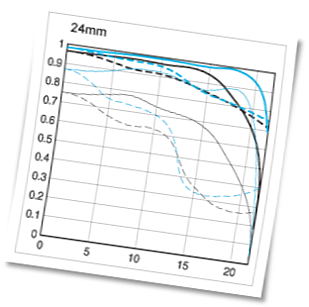
		<content type="html" xml:base="http://singleservingphoto.com/2011/12/07/learning-about-lens-quality/"><![CDATA[	<p><a href="http://singleservingphoto.com/wp-content/uploads/2011/12/Screen-shot-2011-12-05-at-7.png" rel="lightbox[1228]"><img src="http://singleservingphoto.com/wp-content/uploads/2011/12/Screen-shot-2011-12-05-at-7-150x150.png" alt="MTF at 24mm" title="MTF at 24mm" width="150" height="150" class="alignright size-thumbnail wp-image-1247" /></a></p>

	<p>Today on Single-Serving Photo I&#8217;m bringing you something a little bit different. Instead of news stories about amazing photographers, press releases about equipment you can&#8217;t afford, or overbearing pontifications on the usefulness of <span class="caps">HDR</span> as a medium for artistic expression&#8230; Drumroll please&#8230; <em>Graphs</em>.</p>

	<p>To be more specific, graphs of <em>modulation transfer functions.</em> Dry-sounding? Absolutely! Exciting? I sure hope so!<span id="more-1228"></span></p>

	<p>As the title suggests, today&#8217;s episode is concerned with lens quality. To be more precise, metrics that measure lens quality. To be yet more precise, metrics that measure sharpness, which is universally regarded to be a major factor in lens quality.</p>

	<p>In this day and age, though it&#8217;s useful to hold equipment in your hands, to hear the sounds it makes, to feel its controls and its weight, nobody buys a professional camera or lens on the basis of a visit to the shop. That is, unless they&#8217;re quite wealthy and don&#8217;t mind making expensive errors in judgment.</p>

	<p>No, no, this is the <em>information age</em>, the age of <em>silicon</em> and <em>fiber optics</em> and <em>space travel</em> and <em>ray guns</em> and&#8230; Well, not ray guns. But <em>computers</em> and <em>cell phones</em> and <em>quartz watches</em> and, oh yeah, that other little thing called <em>the Internet</em>.</p>

	<p>That&#8217;s the Internet with a capital &#8220;I,&#8221; the one that connects computers worldwide, that connects my incoherent ramblings to you in the comfort of your own home at this very moment, and not least of all, that allows you to meticulously research every purchase you want to make, no matter how insignificant.</p>

	<p>When it comes to researching lenses, if you&#8217;ve ever been down this road, you&#8217;ve probably come across one of my favorite sites, <a href="http://www.dpreview.com">dpreview.com</a>. Digital Photography Review (as it&#8217;s formally named) is probably the most technically thorough camera and lens review site in existence. They aren&#8217;t going to give you a whole lot of aesthetic or subjective fluff. Instead, they&#8217;re going to give you boat loads of data, and if you&#8217;re reading their lens reviews one of the first things you&#8217;re going to notice is the interactive lens sharpness tool.</p>

	<p>What dpreview has done is created their own interactive tool for viewing the data points produced by many, many combined <em>modulation transfer function</em> graphs, which allows you to choose different focal lengths (on zoom lenses) and f-stops and observe the sharpness performance of the lens based on their measurements.</p>

	<p>By looking at <span class="caps">MTF</span> measurements made by reviewers, you can determine the &#8220;sweet spot&#8221; aperture setting and focal length for a given lens and use that to produce images of a sufficient sharpness that you will be able to print them out at obscene dimensions and wave them around in front of your friends boasting about the clarity and detail you&#8217;ve been able to achieve.</p>

	<p>After all, that&#8217;s what friends are for, right?</p>

	<p>Now, if you want to know more about the mechanics of <span class="caps">MTF</span> calculations and how these measurements are taken and what they mean (which is truly interesting stuff), I highly recommend that you take a look at <a href="http://www.cambridgeincolour.com/tutorials/lens-quality-mtf-resolution.htm">Camera Lens Quality: <span class="caps">MTF</span>, Resolution &amp; Contrast</a> written by Sean McHugh on the awesome Cambridge in Colour site. This is one of the more detailed explanations I&#8217;ve seen with attractive and understandable illustrations (which is the only way I can ever understand anything; you have to draw me a picture).</p>

	<p>If you want to peruse some lens reviews and play with interactive <span class="caps">MTF</span> graphs, start by reading dpreview&#8217;s announcement of their new lens reviews and how their interactive tool works: <a href="http://www.dpreview.com/news/2008/1/29/dpreviewlensreviews">Dpreview launches lens reviews</a>.</p>]]></content>
		<link rel="replies" type="text/html" href="http://singleservingphoto.com/2011/12/07/learning-about-lens-quality/#comments" thr:count="0" />
		<link rel="replies" type="application/atom+xml" href="http://singleservingphoto.com/2011/12/07/learning-about-lens-quality/feed/atom/" thr:count="0" />
		<thr:total>0</thr:total>
	</entry>
		<entry>
		<author>
			<name>Aaron</name>
						<uri>http://gallery.aaronbieber.com</uri>
					</author>
		<title type="html"><![CDATA[NAPP Presents Retouching Week]]></title>
		<link rel="alternate" type="text/html" href="http://singleservingphoto.com/2011/12/05/napp-presents-retouching-week/" />
		<id>http://singleservingphoto.com/?p=1237</id>
		<updated>2011-12-05T16:19:06Z</updated>
		<published>2011-12-05T16:17:05Z</published>
		<category scheme="http://singleservingphoto.com" term="Articles" /><category scheme="http://singleservingphoto.com" term="art" /><category scheme="http://singleservingphoto.com" term="industry" /><category scheme="http://singleservingphoto.com" term="instruction" /><category scheme="http://singleservingphoto.com" term="lightroom" /><category scheme="http://singleservingphoto.com" term="photoshop" /><category scheme="http://singleservingphoto.com" term="scott kelby" /><category scheme="http://singleservingphoto.com" term="tips" /><category scheme="http://singleservingphoto.com" term="video" />		<summary type="html"><![CDATA[You remember the National Association of Photoshop Professionals? NAPP? Their president, Scott Kelby, is like the Photoshop guy, he teaches Photoshop and Lightroom and travels all around the world doing seminars and evangelizing for Adobe (in an indirect way, as a representative of over 30,000 people who use Photoshop professionally). He&#8217;s as close to a [...]]]></summary>
		<content type="html" xml:base="http://singleservingphoto.com/2011/12/05/napp-presents-retouching-week/"><![CDATA[	<p><a href="http://singleservingphoto.com/wp-content/uploads/2011/12/the_photoshop_guys.png" rel="lightbox[1237]"><img src="http://singleservingphoto.com/wp-content/uploads/2011/12/the-photoshop-guys-300x207.png" alt="The Photoshop Guys" title="The Photoshop Guys" width="300" height="207" class="alignright size-medium wp-image-1238" /></a></p>

	<p>You remember the National Association of Photoshop Professionals? <span class="caps">NAPP</span>? Their president, Scott Kelby, is like <em>the</em> Photoshop guy, he teaches Photoshop and Lightroom and travels all around the world doing seminars and evangelizing for Adobe (in an indirect way, as a representative of over 30,000 people who use Photoshop professionally). He&#8217;s as close to a Photoshop guru as you can realistically get before you become Thomas Knoll or Russell Brown.</p>

	<p>What I&#8217;m trying to say here is that you really couldn&#8217;t learn Photoshop (or Lightroom) from any better folks than Scott Kelby and his Photoshop crew (Corey Barker, Pete Collins, RC Concepcion, and of course Matt Kloskowski). Normally this type of instruction costs a few bucks or at least a trip somewhere. But not this week.</p>

	<p>This week only, presented in a live format, Scott and his crew (he calls them &#8220;The Photoshop Guys&#8221;) are doing a series of retouching presentations that you can watch for free. This starts tonight at 6 PM <span class="caps">EST</span>. The presentations are, in order:</p>

	<ul>
		<li>Wedding Retouching (tonight, Dec. 5)</li>
		<li>Digital Makeup (Dec. 6)</li>
		<li>The Next Level of Retouching (Dec. 7)</li>
		<li><span class="caps">LIVE</span> Show &#8211; Audience Participation in Q&amp;A (Dec. 8)</li>
		<li>Tips from the Industry (Dec. 9)</li>
	</ul>

	<p>My understanding is that the fourth presentation is the only time that The Photoshop Guys will take any questions directly from the digital audience, but all five presentations will be streamed live.</p>

	<p>To tune in, just visit <a href="www.photoshopuser.com/retouching-week">Retouching Week on Photoshop User</a>. It looks like the video and chat feeds are having some problems at the moment, but since the event has not yet started I&#8217;m sure the IT screw at Photoshop User will be able to work out all the bugs before it gets underway tonight at 6.</p>

	<p>I don&#8217;t know about you guys but I&#8217;ll be tuned in!</p>]]></content>
		<link rel="replies" type="text/html" href="http://singleservingphoto.com/2011/12/05/napp-presents-retouching-week/#comments" thr:count="2" />
		<link rel="replies" type="application/atom+xml" href="http://singleservingphoto.com/2011/12/05/napp-presents-retouching-week/feed/atom/" thr:count="2" />
		<thr:total>2</thr:total>
	</entry>
		<entry>
		<author>
			<name>Aaron</name>
						<uri>http://gallery.aaronbieber.com</uri>
					</author>
		<title type="html"><![CDATA[Controlling Lightroom with Physical Knobs]]></title>
		<link rel="alternate" type="text/html" href="http://singleservingphoto.com/2011/12/02/controlling-lightroom-with-physical-knobs/" />
		<id>http://singleservingphoto.com/?p=1226</id>
		<updated>2011-12-02T18:03:13Z</updated>
		<published>2011-12-02T18:03:13Z</published>
		<category scheme="http://singleservingphoto.com" term="Articles" /><category scheme="http://singleservingphoto.com" term="lightroom" /><category scheme="http://singleservingphoto.com" term="news" /><category scheme="http://singleservingphoto.com" term="plug-in" /><category scheme="http://singleservingphoto.com" term="software" /><category scheme="http://singleservingphoto.com" term="workflow" />		<summary type="html"><![CDATA[Using Lightroom is a joy compared to Photoshop. But it isn&#8217;t a joy compared to, for example, cheesecake. It&#8217;s definitely nice to be able to adjust nearly every aspect of an image with convenient sliders, to have all of the settings right in front of you without having to open lots of dialog boxes. At [...]]]></summary>
		<content type="html" xml:base="http://singleservingphoto.com/2011/12/02/controlling-lightroom-with-physical-knobs/"><![CDATA[	<p>Using Lightroom is a joy compared to Photoshop. But it isn&#8217;t a joy compared to, for example, cheesecake. It&#8217;s definitely nice to be able to adjust nearly every aspect of an image with convenient sliders, to have all of the settings right in front of you without having to open lots of dialog boxes. At the same time, though, your mouse hand can get pretty tired, and that never happens with cheesecake, now does it?</p>

	<p>Never fear, there is finally a solution. Well, the beginning of a solution. A solution in the early stages of beta testing, but a solution nonetheless, and it doesn&#8217;t involve uninstalling Lightroom and eating more cheesecake. Although you are welcome to eat more cheesecake anyway if that&#8217;s your thing.<span id="more-1226"></span></p>

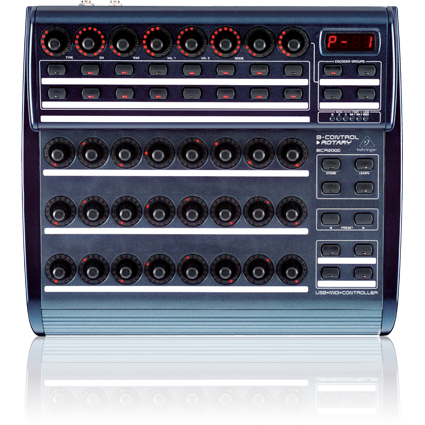
	<p><a href="http://singleservingphoto.com/wp-content/uploads/2011/12/BCR2000_P0245_Reflective_web.png" rel="lightbox[1226]"><img src="http://singleservingphoto.com/wp-content/uploads/2011/12/BCR2000-P0245-Reflective-web-300x295.png" alt="" title="Behringer BCR2000" width="300" height="295" class="alignright size-medium wp-image-1231" /></a></p>

	<p>No, friends, what I&#8217;m talking about is <strong>Knobroom</strong>. What is Knobroom? Knobroom is a plug-in for Lightroom written by Jarno Heikkinen. Now hold on, I know what you&#8217;re going to ask: &#8220;What is that picture to the right?&#8221; It&#8217;s a good question. That is a Behringer B-Control Rotary BCR2000 32-channel <span class="caps">MIDI</span> encoder panel.</p>

	<p>Oh, you want to know what Knobroom does! You haven&#8217;t guessed yet? Knobroom connects the sliders in Lightroom to <span class="caps">MIDI</span> control channels. <span class="caps">MIDI</span> stands for Musical Instrument Digital Interface and is essentially the standard by which electronic instruments communicate with one another (and with computers). The Behringer shown on the right is just one example of a <span class="caps">MIDI</span> control panel that would commonly be used to control volume, pan, vibrato, loudness, and other such attributes in music software.</p>

	<p>Of course, it&#8217;s just a <span class="caps">USB</span> device that communicates through the well-documented <span class="caps">MIDI</span> protocol, so Jarno wrote a plug-in that takes that information and allows you to say &#8220;when knob 1 is turned, change the exposure slider.&#8221; This allows you to move settings up and down with the knobs without having to move the mouse or even have the appropriate panels in the develop module <em>open</em>.</p>

	<p>How cool is that?!</p>

	<p>I&#8217;m seriously considering the purchase of a Behringer BCR2000 as that is the model Max Edin used in his demonstration video, which sort of proves that it works. There are some issues and the software is in a beta stage of development so you have to expect some bumps in the road, but it looks very promising.</p>

	<p>Read more on Max Edin&#8217;s blog: <a href="http://maxedin.net/2011/11/using-hardware-controllers-with-lightroom/">Using Hardware Controllers with Lightroom</a>. Check out the <a href="http://www.knobroom.com/">Knobroom home page</a> for more of the gritty details.</p>]]></content>
		<link rel="replies" type="text/html" href="http://singleservingphoto.com/2011/12/02/controlling-lightroom-with-physical-knobs/#comments" thr:count="0" />
		<link rel="replies" type="application/atom+xml" href="http://singleservingphoto.com/2011/12/02/controlling-lightroom-with-physical-knobs/feed/atom/" thr:count="0" />
		<thr:total>0</thr:total>
	</entry>
		<entry>
		<author>
			<name>Aaron</name>
						<uri>http://gallery.aaronbieber.com</uri>
					</author>
		<title type="html"><![CDATA[Scott Kelby Stands Up For Photoshop Users (As He Should)]]></title>
		<link rel="alternate" type="text/html" href="http://singleservingphoto.com/2011/11/22/scott-kelby-stands-up-for-photoshop-users-as-he-should/" />
		<id>http://singleservingphoto.com/?p=1188</id>
		<updated>2011-11-23T04:00:15Z</updated>
		<published>2011-11-23T03:59:17Z</published>
		<category scheme="http://singleservingphoto.com" term="Articles" /><category scheme="http://singleservingphoto.com" term="marketplace" /><category scheme="http://singleservingphoto.com" term="photoshop" /><category scheme="http://singleservingphoto.com" term="scott kelby" /><category scheme="http://singleservingphoto.com" term="software" /><category scheme="http://singleservingphoto.com" term="upgrade" />		<summary type="html"><![CDATA[Photoshop. The program that became a verb, a lifestyle, an indispensable tool. The first time I ever used Photoshop, it didn&#8217;t have layers. Now it feels like the third hand I never knew I wanted but couldn&#8217;t reasonably live without. I have used it seriously and continuously since version 4 and as much as I [...]]]></summary>
		<content type="html" xml:base="http://singleservingphoto.com/2011/11/22/scott-kelby-stands-up-for-photoshop-users-as-he-should/"><![CDATA[	<p>Photoshop. The program that became a verb, a lifestyle, an indispensable tool. The first time I ever used Photoshop, it didn&#8217;t have layers. Now it feels like the third hand I never knew I wanted but couldn&#8217;t reasonably live without. I have used it seriously and continuously since version 4 and as much as I love free and open source software, there is absolutely no replacement for it.</p>

	<p><img src="http://singleservingphoto.com/wp-content/uploads/2011/11/scott-k1.png" alt="Scott Kelby" title="Scott Kelby" width="347" height="257" class="alignright size-full wp-image-1189" /></p>

	<p>Few people in the world know any of this better than Scott Kelby. As the president of the National Association of Photoshop Professionals (by the way, you know your software is influential when a 70,000-member association springs up around it), he is intimately in touch with the pulse of the Photoshop user and the photography industry.<span id="more-1188"></span></p>

	<p>As a sidebar here, let me just say, from my personal experience through the years, that Adobe is a stand-up company, at least as far as publicly traded software companies go. This article is not meant to be open season on Adobe. I believe Photoshop Lightroom to be one of the greatest tools any photographer has ever had access to, and little could change that at this point.</p>

	<p>Nevertheless, sometimes publicly traded companies make strange decisions. Strange as in, well, let&#8217;s just come out and say stupid. Stupid decisions. Such as Adobe&#8217;s recent decision to change their upgrade path for the upcoming version of Photoshop and Creative Suite (of which Photoshop is a component). The next version, which will ostensibly be 6, will no longer be available at an upgrade discount to users of any version prior to 5 or 5.5.</p>

	<p>In other words, if you wanted to upgrade from Photoshop CS4 to Photoshop CS6, Adobe would essentially say to you, at least to the extent that a multinational corporation can speak, &#8220;No.&#8221; Or maybe it would use a more casual phrasing, like &#8220;No way, Jose!&#8221;</p>

	<p>Adobe has always offered upgrade pricing for each new version of their software and, with few exceptions, if you had a valid license for a previous version you were eligible to upgrade to whatever the new version happened to be. Now, not so much.</p>

	<p>To our aid, as though through the clouds like a spandex-clad superhero, flies in none other than Scott Kelby with a politely but firmly worded <a href="http://www.scottkelby.com/blog/2011/archives/22903">open letter to Adobe</a> asking them to establish a more, how can I put it, <em>reasonable</em> upgrade path that accommodates folks who have been loyal and valuable customers to Adobe but who couldn&#8217;t see through to purchase Creative Suite CS5 or 5.5 because, let&#8217;s be honest, <em>it&#8217;s freakin&#8217; expensive</em>.</p>

	<p>If any single person out there holds enough sway with Adobe to really get something done about this, it&#8217;s Scott. One time, and I don&#8217;t mean to gloat or anything, but one time, Scott linked to an article here on my blog in a very routine &#8220;link round-up&#8221; article on <em>his</em> blog, and on that day alone I received over 2,000 unique views. It was a good day for me, personal victories, and all that.</p>

	<p>What I&#8217;m saying is, people listen to him, they respect him, and that&#8217;s just us regular Photoshop users and photographers, the unwashed masses of the Internet. People inside of Adobe listen to him, too. We&#8217;ll soon find out, though, what that really means&#8230;</p>]]></content>
		<link rel="replies" type="text/html" href="http://singleservingphoto.com/2011/11/22/scott-kelby-stands-up-for-photoshop-users-as-he-should/#comments" thr:count="0" />
		<link rel="replies" type="application/atom+xml" href="http://singleservingphoto.com/2011/11/22/scott-kelby-stands-up-for-photoshop-users-as-he-should/feed/atom/" thr:count="0" />
		<thr:total>0</thr:total>
	</entry>
		<entry>
		<author>
			<name>Aaron</name>
						<uri>http://gallery.aaronbieber.com</uri>
					</author>
		<title type="html"><![CDATA[Lenskirt, What a Neat Idea]]></title>
		<link rel="alternate" type="text/html" href="http://singleservingphoto.com/2011/11/21/lenskirt-what-a-neat-idea/" />
		<id>http://singleservingphoto.com/?p=1125</id>
		<updated>2011-11-22T01:57:39Z</updated>
		<published>2011-11-22T01:57:39Z</published>
		<category scheme="http://singleservingphoto.com" term="Articles" /><category scheme="http://singleservingphoto.com" term="lenskirt" /><category scheme="http://singleservingphoto.com" term="product" /><category scheme="http://singleservingphoto.com" term="shopping" /><category scheme="http://singleservingphoto.com" term="tom anderson" /><category scheme="http://singleservingphoto.com" term="trey ratcliff" />		<summary type="html"><![CDATA[Right, so I&#8217;m following Tom Anderson on Google Plus. You remember Tom? There is a fairly good chance that if you were on the Internet around 2003 or so, you were friends with Tom. Well, OK, you&#8217;ve probably never gone to lunch with him, or shaken his hand, or talked to him, or met him. [...]]]></summary>
		<content type="html" xml:base="http://singleservingphoto.com/2011/11/21/lenskirt-what-a-neat-idea/"><![CDATA[	<p>Right, so I&#8217;m following Tom Anderson on Google Plus. You remember Tom? There is a fairly good chance that if you were on the Internet around 2003 or so, you were friends with Tom. Well, OK, you&#8217;ve probably never gone to lunch with him, or shaken his hand, or talked to him, or met him. But you were friends with him on MySpace&#8230; Because everyone was.</p>

	<p><a href="http://singleservingphoto.com/wp-content/uploads/2011/11/l.png" rel="lightbox[1125]"><img src="http://singleservingphoto.com/wp-content/uploads/2011/11/l-150x147.png" alt="" title="Tom Anderson" width="150" height="147" class="alignright size-thumbnail wp-image-1126" /></a></p>

	<p>Tom Anderson was the first president of MySpace and the guy who was automatically added to your friend list the moment you joined. Yeah, <em>that Tom</em>. There he is over there on the right, you remember that guy? With his judgment-free smile and his own whiteboard to sit in front of? When you&#8217;re the president of the first truly successful social network you can have your <em>own</em> whiteboard. You can put it right next to your desk if you want to.</p>

	<p>Of course, absolutely none of this matters. I should get to the point.<span id="more-1125"></span></p>

	<p>Tom Anderson left MySpace in 2009 and now he&#8217;s just like this sort of semi-iconic tech nerd floating around posting funny videos on Google Plus and doing whatever it is successful former dot com presidents do. Like get recognized by people in restaurants and take photographs.</p>

	<p>Oh yes, Tom likes to take photographs, and word has it he&#8217;s getting pretty good at it. Anyway, he occasionally posts some photos on his Google Plus stream and the other day I saw one he took of downtown San Francisco at night, <em>through a hotel window</em>.</p>

	<p>If you&#8217;re anything like me, first of all I&#8217;m so sorry, but if you are anything like me you are probably thinking, &#8220;Oh no, photographing through a window is a terrible idea,&#8221; and you&#8217;re right. I mean, it usually is, because of the reflections on your side of the window. These ruin photographs.</p>

	<p>But of course Tom was with his buddy Trey Ratcliff, the prolific author and photographer who more or less pioneered <span class="caps">HDR</span> photography in the early &#8217;00s and has written best-selling volumes on the subject (I&#8217;m suddenly feeling self-conscious about my own friends and their distinct lack of notoriety). Anyway, Trey happened to have this neat toy&#8212;and this is where I will finally get to the point of the article, I promise&#8212;the Lenskirt with him.</p>

	<p><a href="http://singleservingphoto.com/wp-content/uploads/2011/11/lenskirt__19654_zoom-e1321926912358.jpg" rel="lightbox[1125]"><img src="http://singleservingphoto.com/wp-content/uploads/2011/11/lenskirt-19654-zoom-300x209.png" alt="" title="Lenskirt" width="300" height="209" class="alignleft size-medium wp-image-1127" /></a></p>

	<p>Such a simple idea, Lenskirt. It suction cups to the window and then attaches to your lens barrel with a sort of draw string deal. This creates a pitch black, reflection-free zone all around and (more importantly) in front of your lens. You almost wish you had come up with the idea yourself so you could sell these things for <em>fifty bucks a pop</em>. <em>Plus shipping</em>.</p>

	<p>But, you didn&#8217;t, and none of your friends are famous, so you should probably just buy one from the Lenskirt people (there is a link below). It looks like it&#8217;s well made, and hey, Trey Ratcliff allegedly owns one, so that has to count for something, doesn&#8217;t it?</p>

	<ul>
		<li><a href="https://plus.google.com/u/0/112063946124358686266/posts/fL9RmUd9bkg">Tom&#8217;s photo of San Francisco through a hotel window</a>, via Google Plus</li>
		<li><a href="http://www.lenskirt.com/">Lenskirt</a></li>
	</ul>]]></content>
		<link rel="replies" type="text/html" href="http://singleservingphoto.com/2011/11/21/lenskirt-what-a-neat-idea/#comments" thr:count="0" />
		<link rel="replies" type="application/atom+xml" href="http://singleservingphoto.com/2011/11/21/lenskirt-what-a-neat-idea/feed/atom/" thr:count="0" />
		<thr:total>0</thr:total>
	</entry>
		<entry>
		<author>
			<name>Aaron</name>
						<uri>http://gallery.aaronbieber.com</uri>
					</author>
		<title type="html"><![CDATA[Dear Stock Photographers, Please Stop This]]></title>
		<link rel="alternate" type="text/html" href="http://singleservingphoto.com/2011/11/21/dear-stock-photographers-please-stop-this/" />
		<id>http://singleservingphoto.com/?p=1161</id>
		<updated>2011-11-22T01:07:17Z</updated>
		<published>2011-11-22T01:07:17Z</published>
		<category scheme="http://singleservingphoto.com" term="Articles" /><category scheme="http://singleservingphoto.com" term="article" /><category scheme="http://singleservingphoto.com" term="business" /><category scheme="http://singleservingphoto.com" term="creativity" /><category scheme="http://singleservingphoto.com" term="stock photography" />		<summary type="html"><![CDATA[Stock photography has officially achieved critical mass in the absurdity department. I grant you, stock photographers are as much instruments of the marketplace as any other professional service provider and are therefore subject to the whims of the focus groups, the advertising big wigs, the ebb and flow of the dollars that keep them knee-deep [...]]]></summary>
		<content type="html" xml:base="http://singleservingphoto.com/2011/11/21/dear-stock-photographers-please-stop-this/"><![CDATA[	<p><a href="http://singleservingphoto.com/wp-content/uploads/2011/11/102173.jpg" rel="lightbox[1161]"><img src="http://singleservingphoto.com/wp-content/uploads/2011/11/102173-254x300.jpg" alt="" title="Women with kiwis on their eyes" width="254" height="300" class="alignright size-medium wp-image-1164" /></a></p>

	<p>Stock photography has officially achieved <em>critical mass</em> in the absurdity department. I grant you, stock photographers are as much instruments of the marketplace as any other professional service provider and are therefore subject to the whims of the focus groups, the advertising big wigs, the ebb and flow of the dollars that keep them knee-deep in lenses and strobes. But when was the last time you saw a product advertised by a stock photograph and thought to yourself, <em>That could totally be me in that picture</em>?</p>

	<p>There you are, holding a slice of kiwi in front of each eye, like any normal Tuesday, right? You look so happy about this kiwi you could make a <em>coke addict</em> jealous. The look on your face is one of such unbridled joy, such boundless euphoria, it would be hard for any bystander not to want your life at that moment.</p>

	<p>Dear stock photographers&#8230; Quit it!<span id="more-1161"></span></p>

	<p>I&#8217;m not going to try to say that pictures of women ecstatically eating salad, men jumping up in the air in business suits, or families in pastel clothing not looking at each other are unnecessary or devoid of value. Quite to the contrary, if the market demands photos of people just about to take a bite of something delicious with a look of drug-induced bliss on their perfectly lit faces, that is what the market shall receive.</p>

	<p>No, I&#8217;m only saying, really, seriously, don&#8217;t we have enough of these yet? Where&#8217;s the originality, where&#8217;s the inspiration? Where&#8217;s the <em>creativity</em>, people?!</p>

	<p>The ad agencies are just as much to blame for this, flipping through their iStockPhoto dot coms and their Getty libraries and always choosing the group of conveniently diverse people huddled around a clipboard with blank paper on it instead of something, oh I don&#8217;t know, <em>realistic</em>.</p>

	<p>Cracked does a phenomenal job of pointing out just how ridiculous and profuse some of these archetypical images have become, in the article linked below. Just a word of warning: there is some coarse language, which is uncommon for my blog, and is the only reason I mention it.</p>

	<ul>
		<li><a href="http://www.cracked.com/blog/the-12-most-baffling-genres-stock-photo-explained/">The 12 Most Baffling Genres of Stock Photo, Explained</a>, via Cracked.com</li>
	</ul>

	<p>Have you run across some ridiculous stock photography lately? Do you make ridiculous stock photography? Leave a comment and tell us all about it.</p>]]></content>
		<link rel="replies" type="text/html" href="http://singleservingphoto.com/2011/11/21/dear-stock-photographers-please-stop-this/#comments" thr:count="0" />
		<link rel="replies" type="application/atom+xml" href="http://singleservingphoto.com/2011/11/21/dear-stock-photographers-please-stop-this/feed/atom/" thr:count="0" />
		<thr:total>0</thr:total>
	</entry>
		<entry>
		<author>
			<name>Aaron</name>
						<uri>http://gallery.aaronbieber.com</uri>
					</author>
		<title type="html"><![CDATA[Google Celebrates Louis Daguerre&#8217;s Birthday]]></title>
		<link rel="alternate" type="text/html" href="http://singleservingphoto.com/2011/11/18/google-celebrates-louis-daguerres-birthday/" />
		<id>http://singleservingphoto.com/?p=1136</id>
		<updated>2011-11-23T15:31:38Z</updated>
		<published>2011-11-18T23:50:41Z</published>
		<category scheme="http://singleservingphoto.com" term="Articles" /><category scheme="http://singleservingphoto.com" term="Featured Posts" /><category scheme="http://singleservingphoto.com" term="art" /><category scheme="http://singleservingphoto.com" term="daguerreotype" /><category scheme="http://singleservingphoto.com" term="history" /><category scheme="http://singleservingphoto.com" term="news" /><category scheme="http://singleservingphoto.com" term="technology" />		<summary type="html"><![CDATA[Today is Louis Daguerre&#8217;s birthday, and Google is helping to celebrate it by devoting their logo to him. Happy 224th, buddy! Wait, are you really about to ask me who Louis Daguerre was? Hey, it&#8217;s OK, to be fair the guy has been dead for about 160 years&#8230; Even so, in this line of work [...]]]></summary>
		<content type="html" xml:base="http://singleservingphoto.com/2011/11/18/google-celebrates-louis-daguerres-birthday/"><![CDATA[	<p><a href="http://singleservingphoto.com/wp-content/uploads/2011/11/google_daguerre.png" rel="lightbox[1136]"><img src="http://singleservingphoto.com/wp-content/uploads/2011/11/google-daguerre-300x162.png" alt="" title="Google&#039;s Louis Daguerre Logo (Thumb)" width="300" height="162" class="alignright size-medium wp-image-1138" /></a></p>

	<p>Today is Louis Daguerre&#8217;s birthday, and Google is helping to celebrate it by devoting their logo to him. Happy 224th, buddy!</p>

	<p>Wait, are you really about to ask me who Louis Daguerre was? Hey, it&#8217;s OK, to be fair the guy has been dead for about 160 years&#8230; Even so, in this line of work I sort of expected more from you. Maybe you&#8217;ve heard the word <em>Daguerreotype</em> before? Even my browser spell-checker knows that word. That&#8217;s right, it&#8217;s a photographic process; that&#8217;s probably close enough for most tabletop trivia games.</p>

	<p>Unfortunately, this blog is not interested in tidbits of trivia, so get ready for facts. Lots of facts. With historical <em>context</em>.<span id="more-1136"></span></p>

	<p>Returning to the topic at hand, Daguerre&#8217;s eponymous method was the first silver-based imaging process and one of the first techniques for creating a photographic image <em>ever</em>. So before you start wagging your tongue and making noises that sound like &#8220;why does this guy deserve a Google logo?&#8221;, remember that Louis has done more for photography than all of your hiking through the backwoods of Yosemite with a full-frame digital <span class="caps">SLR</span> has ever done. Or will ever do, because you are not an inventor. Seriously, assembling an <span class="caps">IKEA</span> coffee table is not the same thing as inventing something.</p>

	<p>Poor, poor Louis Daguerre. He might have lived longer if making a Daguerreotype didn&#8217;t involve boiling mercury until its steam envelops a copper plate treated with iodine vapor. Yes, the Daguerreotype was the first commercially viable photographic process, but it was also a great way to accidentally poison yourself and die. Like that one popular song put it, &#8220;Shake it, shake it&#8230; Shake it like a poisonous picture&#8230;&#8221; No, hang on, that doesn&#8217;t sound right&#8230; Either way, iodine vapor and boiling mercury are among the worst things to get all over your hands and face, and this was <em>the eighteen thirties</em>. You think they had respirators and fume hoods back then? (For trivia buffs: they did not).</p>

	<p>Anyway, flip the calendar back a bit and meet Nicephore Niepce (born Joseph Niepce), a French inventor with a totally unpronounceable name who had been fiddling with photographic reproduction since 1793. You see, Niepce liked to reproduce engravings, and the way you reproduced an image in the late 18th century was to point a <em>camera obscura</em> at it and trace the projected image. Niepce had an unsteady hand and couldn&#8217;t trace the images well, so he set about his search for a chemical process that might capture the light from the projection.</p>

	<p>Ultimately, he was successful, and Niepce is acknowledged by historians as the creator of the first ever photographic image, but his lavender oil-based process (now called &#8220;heliography&#8221;) had plenty of issues. Like, you know, the eight-hour exposure time. &#8220;Please hold still, Madam. Just another six hours.&#8221; This is why he only made images of other art or of landscapes. Things that generally hold still all day long.</p>

	<p>Niepce began collaborating with artist Louis Daguerre in 1829. After Niepce&#8217;s death in 1833, Daguerre continued their work and eventually created the Daguerreotype, a process hardly resembling heliography in method and which overcame many of its challenges. So good was this process that Daguerre was able to <em>sell it</em> to the <em>French government</em> in return for a stipend of 6,000 Francs each year <em>for the rest of his life</em>. Laughing all the way to the bank, Daguerre went down in history as the inventor of the first photographic method that produced results of any lasting value, and Daguerreotypes from that period remain intact to this day, even in spite of their fragility.</p>

	<p>In fairness, Daguerre got the French government to give Niepce&#8217;s estate 4,000 Francs a year for his contribution to the development of the process, so it wasn&#8217;t as though he stole <em>all</em> the glory, although Niepce never got a Google logo dedicated to him. That, I feel, is the true measure of one&#8217;s significance within the larger tapestry of history; has Google recognized your contributions by commissioning a logo in your honor that will appear on their main page for one day? No? Then you are nothing.</p>

	<p>In that respect, Louis Daguerre joins the ranks of such other consequential people as Charles Darwin, Marie Curie, Fyodor Dostoevsky, and Earth Day. OK, so Earth Day isn&#8217;t a person, it&#8217;s my blog and I like Earth Day so sue me.</p>

	<p>The next time you pick up your fancy shmancy digital camera to go out and take 4,000 photographs in an afternoon, I want you to remember M. Louis Daguerre and his iodine- and mercury-coated hands that labored for many hours to create a single image on a copper plate, and who couldn&#8217;t even share it on Flickr, because he didn&#8217;t have a computer.</p>]]></content>
		<link rel="replies" type="text/html" href="http://singleservingphoto.com/2011/11/18/google-celebrates-louis-daguerres-birthday/#comments" thr:count="1" />
		<link rel="replies" type="application/atom+xml" href="http://singleservingphoto.com/2011/11/18/google-celebrates-louis-daguerres-birthday/feed/atom/" thr:count="1" />
		<thr:total>1</thr:total>
	</entry>
		<entry>
		<author>
			<name>Aaron</name>
						<uri>http://gallery.aaronbieber.com</uri>
					</author>
		<title type="html"><![CDATA[We Stand at the Crossroads of Creativity]]></title>
		<link rel="alternate" type="text/html" href="http://singleservingphoto.com/2011/11/09/we-stand-at-the-crossroads-of-creativity/" />
		<id>http://singleservingphoto.com/?p=1106</id>
		<updated>2011-11-18T23:53:58Z</updated>
		<published>2011-11-09T23:11:38Z</published>
		<category scheme="http://singleservingphoto.com" term="Articles" /><category scheme="http://singleservingphoto.com" term="art" /><category scheme="http://singleservingphoto.com" term="creativity" /><category scheme="http://singleservingphoto.com" term="equipment" /><category scheme="http://singleservingphoto.com" term="leica" /><category scheme="http://singleservingphoto.com" term="news" /><category scheme="http://singleservingphoto.com" term="opinion" /><category scheme="http://singleservingphoto.com" term="philosophy" />		<summary type="html"><![CDATA[It is easy to say that we are &#8220;standing at the crossroads.&#8221; Occasionally it&#8217;s even true, but the expression sounds so important, it evokes such responsibility, that it&#8217;s hard for scientists, technologists, journalists, historians, economists, and futurists to hold back the urge, even if the decision to be made is minor, the outcome arbitrary. So [...]]]></summary>
		<content type="html" xml:base="http://singleservingphoto.com/2011/11/09/we-stand-at-the-crossroads-of-creativity/"><![CDATA[	<p><a href="http://singleservingphoto.com/wp-content/uploads/2011/11/lytro.png" rel="lightbox[1106]"><img src="http://singleservingphoto.com/wp-content/uploads/2011/11/lytro-300x262.png" alt="Lytro" title="Lytro" width="300" height="262" class="alignright size-medium wp-image-1107" /></a></p>

	<p>It is easy to say that we are &#8220;standing at the crossroads.&#8221; Occasionally it&#8217;s even true, but the expression sounds so important, it evokes such responsibility, that it&#8217;s hard for scientists, technologists, journalists, historians, economists, and futurists to hold back the urge, even if the decision to be made is minor, the outcome arbitrary.</p>

	<p>So recognize that it is with a full understanding that I say to you, right now, <em>we stand at the crossroads of creativity</em>. We&#8217;ve stood here before, we will stand here again, but I can say categorically that we stand here now and it is an important and exciting time to be a photographer.<span id="more-1106"></span></p>

	<p>To our left lies the path toward a technological utopia, a world where anything can be achieved in post-processing, where your creative vision can be phoned in from the desktop. On October 19th, Lytro announced the release of the Lytro &#8220;light field&#8221; camera. A digital camera smaller than a TV remote that allows you to take a picture and choose a focal point later.</p>

	<p><a href="http://singleservingphoto.com/wp-content/uploads/2011/11/steel-grey.png" rel="lightbox[1106]"><img src="http://singleservingphoto.com/wp-content/uploads/2011/11/steel-grey-300x226.png" alt="Leica M9" title="Leica M9" width="300" height="226" class="alignleft size-medium wp-image-1108" /></a></p>

	<p>The Lytro camera adds &#8220;focal point&#8221; to the list of characteristics that can be changed through software long after the photo has been taken. Among those are now white balance, tone curve, color balance, overexposure (to a degree), lens distortion, and likely more that I&#8217;m having trouble coming up with right now.</p>

	<p>To our right lies the path toward a simpler time, toward the nexus of art and craft where technology assists in some small fashion the mind and hands of the artist, whose vision is crisp and whose execution is informed by experience. In September of last year, Leica released their second digital camera, the M9, a camera with so few features it seems, at first glance, a cataclysmic engineering gaffe.</p>

	<p>The M9 is an 18 megapixel digital camera with no auto-focus, no single-lens reflex or through-the-lens view, and a metering system that barely qualifies as a &#8220;system&#8221; at all. It essentially puts a <span class="caps">NASA</span>-quality full-frame 35mm sensor behind a camera from the 1950s.</p>

	<p>Though these two events do not precisely coincide on the calendar, they are so perfectly juxtaposed as to appear planned. The Lytro asks a photographer to think less&#8212;about focus, at least&#8212;and provides the software tools to create images with perfect focus. The Leica M9 asks a photographer to take back the responsibilities that have been held firmly by technology for the past decade or more and gives the photographer nothing beyond exquisite glass and one of the best digital sensors on the market.</p>

	<p>To accept the Lytro as the future of photography is to embrace an art practically devoid of error. Conversely, to accept the Leica M9 as the future of photography is to embrace human imperfection.</p>

	<p>Creativity has never been, and surely will never be, stifled by progress. No tool, not even the Lytro, can extinguish the creative spirit. Light field technology joins the ranks of tools like <span class="caps">RAW</span> format and Photoshop, neither of which suffocated any artist that I know of. Quite to the contrary, precision has historically led to new frontiers of expression as Ansel Adams demonstrated by forming his <em>f/64</em> group and defying the unfocused, painterly style prevalent at the time with his staggeringly sharp and detailed images.</p>

	<p>Nevertheless, and at the risk of sounding unintentionally critical of Ansel Adams, there is always a human element in art and the less you can perceive of the craft, the further a work creeps from an embodiment of human spirit to a science of human mind. Surely an image of social gravity executed with infinite precision, lacking nearly any flaw, is nevertheless the vision of its creator. But is content, devoid of interpretation, the sole measure by which expression should be judged?</p>

	<p>The Lytro camera is a tool that frees the artist from one more shackle, but does it also take away one more opportunity for the artist to express their humanity?</p>

	<p>The Leica M9 is a tool that says to the artist, <em>Realize your vision, control for yourself nearly every aspect of your work&#8217;s creation, and when you fail to perform at the level of a machine, burn the machine.</em> It is a camera for those who see beauty in the flaws, and there is a purity and a nobility to that.</p>

	<p>Descending from the clouds for a moment, I should also mention that the Lytro camera is now on sale for about $400 ($500 if you want it in bright red), and that the Leica M9 can be found for almost $7,000, without a lens. I mention this because I expect people to call me out for comparing apples to oranges. Believe me, I already know.</p>

	<p>But you don&#8217;t have to take my word for it:</p>

	<ul>
		<li><a href="https://www.lytro.com/camera">The Lytro camera</a>, from Lytro.com</li>
		<li><a href="http://theonlinephotographer.typepad.com/the_online_photographer/2011/10/lytro-launches.html">Lytro Launches</a>, via The Online Photographer</li>
		<li><a href="http://forums.dpreview.com/news/0909/09090909leicam9.asp">Leica M9 Hands-on Review</a>, from dpreview</li>
		<li><a href="http://www.luminous-landscape.com/reviews/cameras/m9-paris.shtml">An M9 in Paris</a>, via Luminous Landscape, an in-depth review</li>
	</ul>]]></content>
		<link rel="replies" type="text/html" href="http://singleservingphoto.com/2011/11/09/we-stand-at-the-crossroads-of-creativity/#comments" thr:count="1" />
		<link rel="replies" type="application/atom+xml" href="http://singleservingphoto.com/2011/11/09/we-stand-at-the-crossroads-of-creativity/feed/atom/" thr:count="1" />
		<thr:total>1</thr:total>
	</entry>
	</feed>