<?xml version="1.0" encoding="UTF-8" standalone="no"?><feed xmlns="http://www.w3.org/2005/Atom" xmlns:thr="http://purl.org/syndication/thread/1.0" xml:lang="en">
	<title type="text">The Family CEO</title>
	<subtitle type="text">Make your family's finances your business.</subtitle>

	<updated>2026-04-17T03:09:13Z</updated>

	<link href="https://www.thefamilyceoblog.com" rel="alternate" type="text/html"/>
	<id>https://www.thefamilyceoblog.com/feed/atom/</id>
	<link href="https://www.thefamilyceoblog.com/feed/atom/" rel="self" type="application/atom+xml"/>

	<generator uri="https://wordpress.org/" version="6.9.4">WordPress</generator>
<icon>https://www.thefamilyceoblog.com/wp-content/uploads/2020/09/cropped-TFCEOBLOG-Favicon-32x32.png</icon>
	<entry>
		<author>
			<name>Jackie</name>
							<uri>https://thefamilyceoblog.com</uri>
						</author>

		<title type="html"><![CDATA[How Early Learning Centres Help Children Transition Confidently to School]]></title>
		<link href="https://www.thefamilyceoblog.com/how-early-learning-centres-help-children-transition-confidently-to-school/" rel="alternate" type="text/html"/>

		<id>https://www.thefamilyceoblog.com/?p=654</id>
		<updated>2026-04-17T03:09:13Z</updated>
		<published>2026-04-17T03:09:12Z</published>
		<category scheme="https://www.thefamilyceoblog.com" term="Education"/><category scheme="https://www.thefamilyceoblog.com" term="School"/><category scheme="https://www.thefamilyceoblog.com" term="Teacher"/><category scheme="https://www.thefamilyceoblog.com" term="Teaching"/>
		<summary type="html"><![CDATA[Starting school is a big milestone, and for many families it comes with a mix of excitement and worry. Will your child be ready to follow routines, make friends, speak up in class, and cope with a more structured day? Those concerns are common, and they matter because a positive start at school is linked ... <a title="How Early Learning Centres Help Children Transition Confidently to School" class="read-more" href="https://www.thefamilyceoblog.com/how-early-learning-centres-help-children-transition-confidently-to-school/" aria-label="Read more about How Early Learning Centres Help Children Transition Confidently to School">Read more</a>]]></summary>

					<content type="html" xml:base="https://www.thefamilyceoblog.com/how-early-learning-centres-help-children-transition-confidently-to-school/"><![CDATA[
<p>Starting school is a big milestone, and for many families it comes with a mix of excitement and worry. Will your child be ready to follow routines, make friends, speak up in class, and cope with a more structured day? Those concerns are common, and they matter because a positive start at school is linked with stronger academic and social outcomes later on. Early learning centres can play an important role here by helping children build confidence, independence and a sense of belonging before that first day arrives.&nbsp;</p>


<p>A strong transition is not just about recognising letters or numbers. Research and guidance from Australian education bodies show that school readiness is broader than academics alone. It includes emotional maturity, social competence, communication, physical wellbeing, curiosity and the ability to adapt to new environments. When early learning centres focus on these areas, children are better prepared for the practical and emotional realities of school life.&nbsp;</p>


<h2 class="wp-block-heading"><strong>Table of contents</strong></h2>


<ul class="wp-block-list">
<li>Why the transition to school can feel so big </li>


<li>What children really need before starting school </li>


<li>How early learning centres build confidence </li>


<li>Why routines and relationships matter </li>


<li>The role of play in school readiness </li>


<li>What parents can look for in a transition-focused setting </li>
</ul>


<h2 class="wp-block-heading"><strong>Why the transition to school can feel so big</strong></h2>


<p>For a young child, starting school means stepping into a new world. There are unfamiliar adults, larger groups, different rules, new spaces, and higher expectations around independence. Even confident children can find that shift tiring or overwhelming at first. NSW Department of Education guidance notes that children must adapt to new rules, new ways of learning, and the different expectations of a school day.&nbsp;</p>


<p>That is why transition support works best when it starts before school begins. Rather than treating readiness as a last-minute checklist, good early learning centres build the foundations gradually through everyday experiences.</p>


<p>A structured approach, such as <a href="https://www.youngacademics.com.au/programs/transition-to-school-program-3-5yrs/" target="_blank" rel="noreferrer noopener"><strong>school transition programs</strong></a>, can help children become familiar with the kinds of routines, communication, and self-management skills they will need in the classroom. When those skills are introduced in a supportive environment, the move to school tends to feel less abrupt.</p>


<h2 class="wp-block-heading"><strong>What children really need before starting school</strong></h2>


<p>There is a common assumption that school readiness is mainly about early reading and counting. Those things can help, but they are only one part of the picture. Evidence from the Australian Early Development Census and transition research points to five broad developmental areas that shape how children cope when they start school.&nbsp;</p>


<figure class="wp-block-table"><table class="has-fixed-layout"><tbody><tr><td><strong>Area</strong></td><td><strong>Why it matters at school</strong></td></tr><tr><td>Social competence</td><td>Helps children join group activities, share, take turns and build friendships</td></tr><tr><td>Emotional maturity</td><td>Supports coping with frustration, change and separation from parents</td></tr><tr><td>Communication skills</td><td>Helps children express needs, ask questions and follow instructions</td></tr><tr><td>Physical wellbeing</td><td>Supports stamina, coordination and participation in daily routines</td></tr><tr><td>Language and cognitive development</td><td>Helps children engage with early literacy, numeracy and problem-solving</td></tr></tbody></table></figure>


<p>In practice, this means a child benefits from learning how to wait, listen, manage belongings, ask for help, and recover from small setbacks. Harvard’s work on executive function also highlights the importance of self-regulation, flexible thinking and working memory in later learning.&nbsp;</p>


<p>These abilities usually do not develop through worksheets alone. They are built through responsive relationships, repetition, play, and guided practice over time.</p>


<p>That is why many families value an <a href="https://www.youngacademics.com.au/programs/evolution-program-0-3-years/"><strong>early childhood learning program</strong></a> that supports development from the early years onwards, rather than waiting until the preschool year to focus on readiness.</p>


<h2 class="wp-block-heading"><strong>How early learning centres build confidence</strong></h2>


<p>Confidence grows when children feel capable. Early learning centres help create that feeling by giving children regular opportunities to practise small but meaningful tasks on their own.</p>


<p>This often includes:</p>


<ul class="wp-block-list">
<li>unpacking their bag </li>


<li>washing hands independently </li>


<li>following simple instructions </li>


<li>joining group discussions </li>


<li>solving minor problems with guidance </li>


<li>making choices during play and learning </li>
</ul>


<p>These moments may look ordinary, but they matter. The NSW transition guide notes that children benefit from environments where their decisions are valued, where they are encouraged to express needs and feelings, and where adults help them master small steps.&nbsp;</p>


<p>Think of it like riding a bike with stabilisers. Children do not become confident because someone tells them they are ready. They become confident because they have already practised balancing in a safe setting.</p>


<h2 class="wp-block-heading"><strong>Why routines and relationships matter</strong></h2>


<p>Confidence is closely tied to predictability. When children know what comes next, they feel safer and more in control. This is one reason orientation visits, consistent daily rhythms, and familiar rituals can make such a difference before school starts. Raising Children Network recommends helping children get familiar with school routines, spaces and expectations in the lead-up to starting primary school.&nbsp;</p>


<p>Early learning centres support this by introducing patterns that mirror school life, such as:</p>


<ul class="wp-block-list">
<li>group times </li>


<li>transitions between activities </li>


<li>packing away materials </li>


<li>sitting for shared meals </li>


<li>participating in cooperative play </li>
</ul>


<p>Relationships matter just as much. According to the NSW Department of Education, strong collaboration between children, families, educators and teachers helps make the transition smoother for everyone involved.&nbsp;</p>


<p>When children trust the adults around them and feel connected to peers, they are more likely to approach change with confidence rather than fear.</p>


<h2 class="wp-block-heading"><strong>The role of play in school readiness</strong></h2>


<p>One of the most overlooked truths about school preparation is that play is not separate from learning. It is one of the main ways young children develop the skills school demands.</p>


<p>The NSW transition guide states that play-based learning promotes discovery, creativity, imagination and problem-solving, while supporting cognitive, social, emotional and physical development. It also notes that developmentally appropriate, play-based learning can ease the move from early childhood education to primary school.&nbsp;</p>


<p>Here is what that can look like in practice:</p>


<figure class="wp-block-table"><table class="has-fixed-layout"><tbody><tr><td><strong>Play experience</strong></td><td><strong>Skill being developed</strong></td></tr><tr><td>Building with blocks</td><td>Problem-solving, persistence, spatial thinking</td></tr><tr><td>Pretend play</td><td>Language, cooperation, emotional understanding</td></tr><tr><td>Group games</td><td>Turn-taking, listening, self-control</td></tr><tr><td>Drawing and mark-making</td><td>Fine motor skills, early literacy habits</td></tr><tr><td>Outdoor play</td><td>Resilience, confidence, coordination</td></tr></tbody></table></figure>


<p>This is why good early learning settings do not rush children into formal learning at the expense of everything else. They use play to prepare children for formal learning.</p>


<h2 class="wp-block-heading"><strong>What parents can look for in a transition-focused setting</strong></h2>


<p>Not every early learning environment approaches school readiness in the same way. If you are comparing options, it helps to look beyond broad promises and ask how confidence is actually built day to day.</p>


<p>Useful signs include:</p>


<ul class="wp-block-list">
<li>a clear focus on social and emotional development, not just academics </li>


<li>opportunities for children to practise independence </li>


<li>play-based learning that encourages curiosity and problem-solving </li>


<li>regular communication with families </li>


<li>transition activities that introduce school-like routines </li>


<li>educators who understand each child’s individual strengths and support needs </li>
</ul>


<p>The strongest settings recognise that school readiness is shared work. It involves children, families, educators and schools all helping to create continuity rather than a sudden jump. Research from the Australian Education Research Organisation also highlights belonging and continuity of learning as central to effective transition.&nbsp;</p>


<h2 class="wp-block-heading"><strong>Helping children feel ready, not rushed</strong></h2>


<p>A confident start to school does not happen by accident. It grows from many small experiences that help children feel secure, capable and curious about what comes next. Early learning centres can make that transition gentler by building routines, relationships, independence and resilience long before the first school bell rings.&nbsp;</p>


<p>The goal is not to rush children into being “school-like”. It is to help them arrive feeling that they can cope, connect and learn. And for most children, that sense of confidence is one of the best gifts a strong early learning experience can give.</p>
]]></content>
		
			</entry>
		<entry>
		<author>
			<name>Jackie</name>
							<uri>https://thefamilyceoblog.com</uri>
						</author>

		<title type="html"><![CDATA[Sustainable Landscaping Solutions for Modern Homeowners]]></title>
		<link href="https://www.thefamilyceoblog.com/sustainable-landscaping-solutions-for-modern-homeowners/" rel="alternate" type="text/html"/>

		<id>https://www.thefamilyceoblog.com/?p=646</id>
		<updated>2026-01-14T03:34:32Z</updated>
		<published>2026-01-14T03:34:32Z</published>
		<category scheme="https://www.thefamilyceoblog.com" term="Life"/>
		<summary type="html"><![CDATA[Transforming your outdoor space through sustainable landscaping not only elevates the beauty of your home but also supports environmental health. Modern homeowners are increasingly seeking eco-friendly practices that conserve resources, lower maintenance costs, and ensure their gardens and lawns thrive naturally. By choosing guidance and services from&#160;local landscape companies, it becomes easier to adopt regionally ... <a title="Sustainable Landscaping Solutions for Modern Homeowners" class="read-more" href="https://www.thefamilyceoblog.com/sustainable-landscaping-solutions-for-modern-homeowners/" aria-label="Read more about Sustainable Landscaping Solutions for Modern Homeowners">Read more</a>]]></summary>

					<content type="html" xml:base="https://www.thefamilyceoblog.com/sustainable-landscaping-solutions-for-modern-homeowners/"><![CDATA[
<p>Transforming your outdoor space through sustainable landscaping not only elevates the beauty of your home but also supports environmental health. Modern homeowners are increasingly seeking eco-friendly practices that conserve resources, lower maintenance costs, and ensure their gardens and lawns thrive naturally. By choosing guidance and services from&nbsp;<a href="https://barerootsgardening.com/landscape-contractors-columbia-sc/local-landscape-companies/" rel="noreferrer noopener" target="_blank">local landscape companies</a>, it becomes easier to adopt regionally appropriate and environmentally friendly techniques that create a paradise right outside your door. Sustainable landscaping incorporates thoughtful planning, responsible resource usage, and a commitment to supporting native wildlife. Prioritizing native plants, implementing smart water management, and utilizing innovative materials are just a few of the steps homeowners are taking to create lasting outdoor sanctuaries. Eco-conscious design not only benefits the planet—it also makes yard care more straightforward and more cost-effective in the long term. Today’s approach to landscaping emphasizes working with, rather than against, nature. From reducing water waste to improving biodiversity, each element in a sustainable landscape is designed for resilience, beauty, and environmental stewardship. As interest in sustainable living grows, modern landscapes blend form, function, and responsibility. Professionals who specialize in&nbsp;<a href="https://barerootsgardening.com/landscaping-design-installation-columbia-sc/" rel="noreferrer noopener" target="_blank">landscaping design &amp; installation</a>&nbsp;can help turn eco-friendly plans into reality, taking local climate, soil, and biodiversity into account for stunning results that require minimal intervention year after year.</p>


<h2 class="wp-block-heading">Embracing Native Plants</h2>


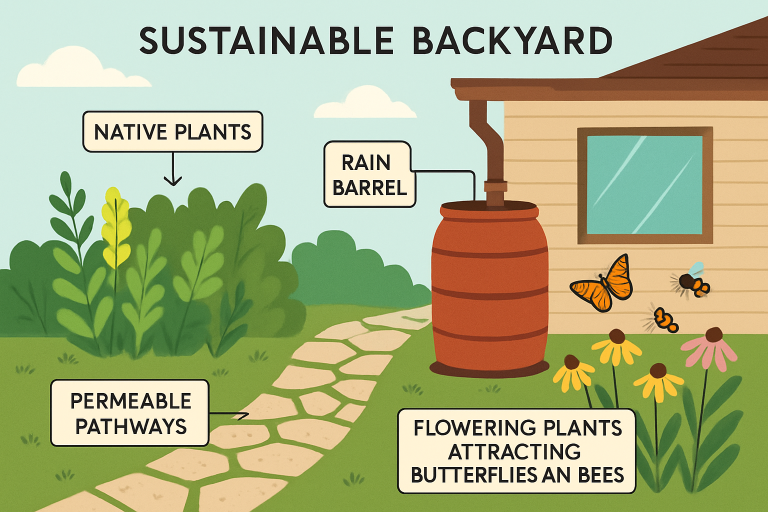
<p>One of the most impactful sustainable landscaping practices is selecting native plants for your garden design. Native plants are naturally acclimated to regional climate and soil conditions, which means they thrive with less supplemental water and fewer chemical fertilizers or pesticides. Species selection varies by region, but some common choices include coneflowers, black-eyed Susans, and regional grasses. For residents in drier climates, xeriscaping with drought-tolerant succulents and wildflowers yields resilient and colorful outdoor spaces that resist harsh conditions. The benefits of native plant gardening extend to soil stabilization and the creation of habitats that support local beneficial wildlife. According to the&nbsp;<a href="https://www.audubon.org/content/why-native-plants-matter" rel="noreferrer noopener" target="_blank">National Audubon Society</a>, native plants provide critical food and shelter for birds and pollinators while reducing the need for synthetic fertilizers.</p>


<h2 class="wp-block-heading">Implementing Smart Irrigation Systems</h2>


<p>Intelligent irrigation systems are transforming landscape water usage. Outfitted with soil moisture sensors and weather-based controllers, these systems automatically adjust watering schedules based on real-time environmental data. The result is up to 40% less water usage compared to conventional irrigation, allowing homeowners to use water more efficiently while maintaining healthy <a href="https://www.thefamilyceoblog.com/the-fascinating-world-of-bees-and-their-importance-in-our-ecosystem/">lawns and gardens</a>. Besides lowering utility bills, these systems prevent common issues like overwatering and root rot. For those looking to minimize water use even further, drip irrigation delivers water directly to plant roots, eliminating wasteful runoff and evaporation.</p>


<h2 class="wp-block-heading">Incorporating Permeable Hardscaping Materials</h2>


<p>Replacing traditional pavement with permeable hardscaping is a crucial step toward achieving landscape sustainability. Permeable pavers, gravel, and natural stone paths allow rainwater to filter into the soil, thereby recharging local groundwater supplies and reducing the risk of flooding. This natural stormwater management approach prevents pollutants from entering waterways and helps mitigate urban heat island effects. Integrating permeable materials can transform driveways, patios, and walkways, enhancing the usability and visual interest of an outdoor area while remaining eco-friendly. According to the&nbsp;<a href="https://www.epa.gov/soakuptherain/soak-rain-permeable-pavement" rel="noreferrer noopener" target="_blank">U.S. Environmental Protection Agency</a>, permeable pavements significantly cut down stormwater runoff, promote groundwater recharge, and support local climate adaptation strategies.</p>


<h2 class="wp-block-heading">Designing Pollinator-Friendly Gardens</h2>


<p>Habitat loss has led to steep declines in pollinator populations worldwide; however, homeowners can make a positive difference by designing pollinator gardens. Planting a variety of flowering native species—such as milkweed, lavender, and bee balm—ensures that bees, butterflies, and hummingbirds have a year-round supply of nectar and refuge. Leaving patches of soil bare for native ground-nesting bees and providing shallow water sources further sustains these vital creatures. Pollinator-friendly gardens not only enhance biodiversity but also support fruit and seed production across the landscape.</p>


<figure class="wp-block-image"><img decoding="async" src="https://vazoo.la/content/images/2025/12/22/6949cb6943d21.png" alt=""/></figure>


<h2 class="wp-block-heading">Utilizing Recycled and Reclaimed Materials</h2>


<p>Incorporating reused materials into landscaping elevates both ecological value and visual interest. Using reclaimed wood for raised garden beds, repurposed brick for walkways, or crushed recycled glass as mulch helps conserve natural resources and minimizes landfill waste. These elements create a one-of-a-kind look that reflects sustainability values and personal style. Salvaged materials are often more durable and unique than their new counterparts, making them ideal for eco-conscious projects.</p>


<h2 class="wp-block-heading">Rainwater Harvesting Techniques</h2>


<p>Harvesting rainwater for landscape use is an ancient yet highly effective practice that conserves potable water. Simple setups use rain barrels attached to downspouts, while expansive systems rely on underground cisterns to collect large quantities. This stored water can irrigate gardens, refill ponds, or clean outdoor furniture—significantly reducing reliance on municipal sources. Even in regions with irregular rainfall, captured rainwater provides a free and reliable supply for outdoor needs, making it a practical option for eco-minded homeowners.</p>


<h2 class="wp-block-heading">Integrating Edible Landscaping</h2>


<p>Blending beauty and utility, edible landscaping introduces fruit trees, berries, vegetable patches, and herb borders into residential gardens. Rather than planting solely ornamental varieties, homeowners create vibrant spaces that yield fresh, organic produce. Edible plants can replace traditional ground covers, line walkways, or accent garden beds, contributing to local food security and reducing transportation-related emissions. This approach brings a new layer of value and enjoyment to outdoor living.</p>


<h2 class="wp-block-heading">Creating Low-Maintenance Landscapes</h2>


<p>Designing a landscape that requires less care begins with selecting plants that are hardy and native to local conditions. Ground covers, mulches, and boulders can suppress weeds and reduce watering needs, while well-placed hardscaping minimizes the need for mowing and edging. Choosing sustainable materials and thoughtful layouts can provide years of low-effort beauty. Low-maintenance gardens free up your time for relaxation and enjoyment, allowing your landscape to thrive with little intervention while supporting ecological health. Implementing&nbsp;<a href="https://www.udel.edu/academics/colleges/canr/cooperative-extension/fact-sheets/sustainable-landscape-materials-and-practices/" rel="noreferrer noopener" target="_blank">sustainable landscaping practices</a>&nbsp;enhances your home’s curb appeal while supporting global environmental goals. From water-wise plant choices and smart irrigation to the use of recycled materials and support for pollinators, each step leads to healthier, more resilient landscapes and communities.</p>
]]></content>
		
			</entry>
		<entry>
		<author>
			<name>Jackie</name>
							<uri>https://thefamilyceoblog.com</uri>
						</author>

		<title type="html"><![CDATA[Designing a Family-Friendly Bathroom]]></title>
		<link href="https://www.thefamilyceoblog.com/designing-a-family-friendly-bathroom/" rel="alternate" type="text/html"/>

		<id>https://www.thefamilyceoblog.com/?p=634</id>
		<updated>2025-12-21T16:21:00Z</updated>
		<published>2025-12-21T16:21:00Z</published>
		<category scheme="https://www.thefamilyceoblog.com" term="Family"/>
		<summary type="html"><![CDATA[Creating a bathroom that works for every member of the family is no small task. Families need a space that balances safety, practicality, and comfort while also maintaining a polished and modern design. With careful planning and smart design choices, it’s possible to achieve a bathroom that is functional, attractive, and adaptable as family needs ... <a title="Designing a Family-Friendly Bathroom" class="read-more" href="https://www.thefamilyceoblog.com/designing-a-family-friendly-bathroom/" aria-label="Read more about Designing a Family-Friendly Bathroom">Read more</a>]]></summary>

					<content type="html" xml:base="https://www.thefamilyceoblog.com/designing-a-family-friendly-bathroom/"><![CDATA[
<p><a href="https://www.thefamilyceoblog.com/enhance-your-bathroom-experience-with-new-fixtures/">Creating a bathroom</a> that works for every member of the family is no small task. Families need a space that balances safety, practicality, and comfort while also maintaining a polished and modern design. With careful planning and smart design choices, it’s possible to achieve a bathroom that is functional, attractive, and adaptable as family needs change.</p>


<p><strong>Smart Layouts to Reduce Stress</strong></p>


<p>In households with multiple people, bathroom bottlenecks are almost inevitable. One effective way to minimize chaos is by adding dual sinks. With two stations, family members can get ready at the same time, cutting down wait periods and easing morning or evening routines. Contemporary double vanities not only solve functional challenges but also add sophistication, enhancing the bathroom’s overall appeal.</p>


<p><strong>Storage That Keeps Everyone Organized</strong></p>


<p>Bathrooms often become cluttered quickly, especially in busy households. Tiered shelving, pull-out drawers, and labeled bins are excellent tools for keeping essentials within reach. Installing hooks at various heights ensures that adults and kids alike can store towels or robes with ease. For larger families, a mix of open shelving for easy access and closed cabinets for discreet storage can keep the space both tidy and visually pleasing.</p>


<p><strong>Safety Features That Blend With Design</strong></p>


<p>Because bathrooms are high-moisture areas, safety is a top priority. Slip-resistant flooring options such as textured porcelain tile or treated vinyl help reduce accidents while still offering stylish finishes. Complementing these choices with washable mats and moisture-resistant grout further enhances safety without compromising aesthetics.</p>


<p><strong>Adding Personality and Fun</strong></p>


<p>Bathrooms don’t have to feel sterile. Playful design elements, like colorful accents, removable wall decals, or themed accessories, can bring warmth and character to the space. Incorporating pieces that are easy to swap out ensures the design can evolve <a href="https://www.ksl.com/article/15762831/tips-for-potty-training-an-older-child" target="_blank" rel="noreferrer noopener">as children grow</a> or family preferences change.</p>


<p><strong>Making the Most of Modern Features</strong></p>


<p>Today’s <a href="https://www.bathconcepts.com/" target="_blank" rel="noreferrer noopener">bathroom solutions</a> are designed with families in mind. Handheld showerheads make bath time easier for kids and more convenient for parents. Fold-down shower seats and built-in niches offer added comfort and storage. Motion-sensor lighting enhances safety while reducing energy use, adding a modern touch that benefits everyone.</p>


<hr class="wp-block-separator has-alpha-channel-opacity"/>


<p><strong>Conclusion</strong><br>By blending functionality, safety, and thoughtful design, families can enjoy a bathroom that meets practical needs while still feeling like a stylish retreat. With the right combination of multipurpose features, organizational tools, and flexible décor, the bathroom becomes a space that grows with the family—supporting both everyday routines and long-term enjoyment.</p>


<img src=https://lh3.googleusercontent.com/d/1LN2rTDNaluzyg3imEsDO2usksBT9bN1K=s0?authuser=0>
]]></content>
		
			</entry>
		<entry>
		<author>
			<name>Jackie</name>
							<uri>https://thefamilyceoblog.com</uri>
						</author>

		<title type="html"><![CDATA[Confronting Teacher Turnover in K–12 Education]]></title>
		<link href="https://www.thefamilyceoblog.com/confronting-teacher-turnover-in-k-12-education/" rel="alternate" type="text/html"/>

		<id>https://www.thefamilyceoblog.com/?p=631</id>
		<updated>2025-12-21T16:17:51Z</updated>
		<published>2025-12-14T16:14:11Z</published>
		<category scheme="https://www.thefamilyceoblog.com" term="Education"/>
		<summary type="html"><![CDATA[Teacher retention has become one of the most urgent challenges facing K–12 schools today. As educators leave classrooms at increasing rates, schools are left navigating disruptions that affect students, staff, and long-term educational outcomes. While turnover is often viewed as a staffing issue, its effects reach much further, influencing learning continuity, financial stability, and school ... <a title="Confronting Teacher Turnover in K–12 Education" class="read-more" href="https://www.thefamilyceoblog.com/confronting-teacher-turnover-in-k-12-education/" aria-label="Read more about Confronting Teacher Turnover in K–12 Education">Read more</a>]]></summary>

					<content type="html" xml:base="https://www.thefamilyceoblog.com/confronting-teacher-turnover-in-k-12-education/"><![CDATA[
<p>Teacher retention has become one of the most urgent challenges facing<a href="https://en.wikipedia.org/wiki/K%E2%80%9312" target="_blank" rel="noreferrer noopener"> K–12 </a>schools today. As educators leave classrooms at increasing rates, schools are left navigating <a href="https://www.thefamilyceoblog.com/the-benefits-of-private-kindergarten-education/">disruptions that affect students</a>, staff, and long-term educational outcomes. While turnover is often viewed as a staffing issue, its effects reach much further, influencing learning continuity, financial stability, and school culture.</p>


<p>For students, the loss of a teacher can be deeply unsettling. Educators provide consistency, guidance, and familiarity that help students feel secure and supported. When that relationship is interrupted, students must adapt to new teaching styles, expectations, and routines. These transitions can slow academic progress and increase stress, particularly for younger learners and students in communities already facing educational inequities.</p>


<p>The broader school environment also absorbs the impact. Recruiting and training new teachers requires substantial time and resources. Districts must allocate funds for advertising, onboarding, and professional development, often at the expense of programs that directly benefit students. Meanwhile, remaining teachers may be asked to cover additional classes, mentor new hires, or take on extra responsibilities. Over time, these added demands can contribute to fatigue and disengagement, further increasing the risk of turnover.</p>


<p>The reasons educators leave are varied and interconnected. Many point to compensation that does not align with the workload, limited opportunities for advancement, and a lack of consistent administrative support. Teachers in specialized roles such as special education, science, or language instruction often face higher expectations and additional certification requirements, making retention even more difficult. In diverse school settings, educators may also shoulder the challenge of addressing cultural and linguistic differences without sufficient resources or training.</p>


<p>Addressing teacher turnover requires more than short-term solutions. Schools and districts must work intentionally to create environments where educators feel respected and supported. Fair pay and benefits are essential, but so are meaningful professional development opportunities and pathways for leadership. Mentorship programs that connect new teachers with experienced colleagues can provide guidance, reduce isolation, and improve confidence during the early years of teaching.</p>


<p>Supporting teacher well-being is equally critical. Access to mental health resources, realistic workloads, and policies that encourage balance can help educators sustain their commitment to the profession. Strong communication and collaborative leadership further reinforce a sense of trust and shared purpose within schools.</p>


<p>Stabilizing the teaching workforce is vital to maintaining high-quality education. By investing in teachers and addressing the factors that drive turnover, schools can build stronger learning environments where educators are empowered to stay and students can thrive.</p>


<p>For more on this, check out the infographic below from Xceed Preparatory Academy, a <a href="https://www.xceedprep.org/ft-lauderdale/" target="_blank" rel="noreferrer noopener">private school in Fort Lauderdale</a>.</p>


<img src=https://lh3.googleusercontent.com/d/103GEiIWwpqswNh-MYFg6_OWl4nXnX93E=s0?authuser=0>


<p></p>
]]></content>
		
			</entry>
		<entry>
		<author>
			<name>Jackie</name>
							<uri>https://thefamilyceoblog.com</uri>
						</author>

		<title type="html"><![CDATA[Why Moms Need More Than Just a “Family Car”]]></title>
		<link href="https://www.thefamilyceoblog.com/why-moms-need-more-than-just-a-family-car/" rel="alternate" type="text/html"/>

		<id>https://www.thefamilyceoblog.com/?p=627</id>
		<updated>2025-09-16T21:16:27Z</updated>
		<published>2025-09-16T21:16:27Z</published>
		<category scheme="https://www.thefamilyceoblog.com" term="Family"/>
		<summary type="html"><![CDATA[For today’s moms, choosing a “family car” is far more than space and seats. While minivans and SUVs check the boxes for roominess, modern mothers want vehicles that combine safety, tech, flexibility, and style. They’re not just riding along; they’re leading the buying process and reshaping what makes a car truly family-friendly. With packed schedules ... <a title="Why Moms Need More Than Just a “Family Car”" class="read-more" href="https://www.thefamilyceoblog.com/why-moms-need-more-than-just-a-family-car/" aria-label="Read more about Why Moms Need More Than Just a “Family Car”">Read more</a>]]></summary>

					<content type="html" xml:base="https://www.thefamilyceoblog.com/why-moms-need-more-than-just-a-family-car/"><![CDATA[
<p>For today’s moms, choosing a “family car” is far more than space and seats. While minivans and SUVs check the boxes for roominess, modern mothers want vehicles that combine safety, tech, flexibility, and style. They’re not just riding along; they’re leading the buying process and reshaping what makes a car truly family-friendly. With packed schedules and diverse responsibilities, today’s moms need a vehicle that works as hard as they do, without sacrificing comfort or personality.&nbsp;<a href="https://www.shakerscdjr.com/" rel="noreferrer noopener" target="_blank">Learn more</a>&nbsp;from trusted automotive experts to explore smart options that fit your lifestyle.&nbsp; Today’s buyers also consider long-term value, from fuel efficiency to resale potential, making the decision more strategic than ever. Cars are no longer just tools for transportation—they’ve become extensions of lifestyle and identity. In many ways, the modern family car reflects not only where moms are going but also who they are.</p>


<h2 class="wp-block-heading">Safety and Practicality Still Come First</h2>


<p>Nearly 73% of mothers are the primary decision-makers when shopping for a vehicle, and their first question is always the same: <em>Is it safe for my family?</em> Crash-test ratings, advanced airbags, driver-assistance systems, and automatic emergency braking provide peace of mind that every trip—whether a quick school run or a long road trip—offers maximum protection. But safety isn’t the only requirement; practicality is equally important. Moms look for everyday conveniences like easy-to-fold seating, hands-free liftgates when juggling groceries, and smart cargo compartments that adapt to strollers, sports gear, and shopping bags. These combined features make the car not just a mode of transport but a reliable partner in the daily balancing act of family life.</p>


<h2 class="wp-block-heading">Technology That Keeps Families Moving</h2>


<p>In today’s connected world, moms expect their vehicles to do more than just drive. Rear-seat entertainment systems keep kids occupied on long journeys, while teen drivers benefit from safety apps that track driving behavior and set speed alerts. Smartphone integration and hands-free controls allow moms to manage calls, navigation, and even grocery pickups without ever taking their eyes off the road. Multiple USB ports and wireless charging stations prevent arguments over devices, while built-in Wi-Fi ensures homework, music, or movies are always within reach. Together, these innovations transform the family car into a mobile hub where everyone stays entertained, connected, and on schedule.</p>


<h2 class="wp-block-heading">Efficiency Meets Eco-Consciousness</h2>


<p>Rising fuel costs and increased environmental awareness mean efficiency is a must-have, not a luxury. Modern moms are leaning toward hybrid and electric vehicles that lower fuel expenses while <a href="https://lifebeyondnumbers.com/ways-reduce-carbon-footprint/" target="_blank" rel="noreferrer noopener">reducing the family’s carbon footprint</a>. These vehicles prove that eco-consciousness doesn’t mean sacrificing comfort, space, or performance—many models offer the same cargo room and power as their gas-only counterparts. For moms, it’s about striking the right balance: saving money at the pump, teaching kids about responsible choices, and driving a car that reflects their commitment to a healthier planet. Whether choosing a plug-in hybrid for daily commutes or a fully electric SUV for the long haul, moms are embracing eco-smart solutions that fit their lifestyles and values.</p>


<h2 class="wp-block-heading">The New Family Car: Smart, Stylish, and Strong</h2>


<p>Gone are the days when the “mom car” was seen as bland or predictable. Today’s moms are opting for vehicles that reflect their individuality, blending sleek design with family-first functionality. <a href="https://www.thefamilyceoblog.com/how-the-right-car-can-keep-your-family-safe-and-comfortable/">Modern SUVs and crossovers</a> now feature bold exteriors, luxurious interiors, and cutting-edge tech—without compromising space or strength. These cars don’t just carry families; they make a statement, showing that motherhood and style can go hand in hand. Whether it’s weekend adventures, professional commutes, or school pickups, today’s family car is built to handle it all while still turning heads. By choosing vehicles that are as dynamic and adaptable as they are, moms are reshaping what family transportation looks like in the modern era.</p>


<h2 class="wp-block-heading">Driving Forward: The Future of Family Vehicles</h2>


<p>As moms continue to play a leading role in the car-buying process, the industry is taking note. Automakers are designing vehicles that go beyond function, reflecting the values, ambitions, and busy lifestyles of modern families. Expect to see even more advancements in driver-assist technology, greater availability of hybrids and EVs, and interiors that prioritize comfort, customization, and family-friendly innovation. The future of family vehicles is one where safety, connectivity, and sustainability seamlessly come together—delivering not just a car, but a lifestyle solution. Moms aren’t just influencing trends; they’re driving them forward, proving that the modern family vehicle must evolve alongside the unstoppable force that is today’s mother.</p>
]]></content>
		
			</entry>
		<entry>
		<author>
			<name>Jackie</name>
							<uri>https://thefamilyceoblog.com</uri>
						</author>

		<title type="html"><![CDATA[How Bail Bonds Operate: Facts Everyone Should Know]]></title>
		<link href="https://www.thefamilyceoblog.com/how-bail-bonds-operate-facts-everyone-should-know/" rel="alternate" type="text/html"/>

		<id>https://www.thefamilyceoblog.com/?p=623</id>
		<updated>2025-09-05T19:34:00Z</updated>
		<published>2025-09-05T19:33:59Z</published>
		<category scheme="https://www.thefamilyceoblog.com" term="Life"/><category scheme="https://www.thefamilyceoblog.com" term="Lawyer"/>
		<summary type="html"><![CDATA[What Is a Bail Bond and Why Does It Exist? Bail bonds act as financial guarantees enabling defendants to await court proceedings outside jail. When someone is charged with a crime, a judge typically sets a bail amount to ensure the defendant’s future appearance in court. In many cases, the set bail is too high ... <a title="How Bail Bonds Operate: Facts Everyone Should Know" class="read-more" href="https://www.thefamilyceoblog.com/how-bail-bonds-operate-facts-everyone-should-know/" aria-label="Read more about How Bail Bonds Operate: Facts Everyone Should Know">Read more</a>]]></summary>

					<content type="html" xml:base="https://www.thefamilyceoblog.com/how-bail-bonds-operate-facts-everyone-should-know/"><![CDATA[
<h2 class="wp-block-heading">What Is a Bail Bond and Why Does It Exist?</h2>


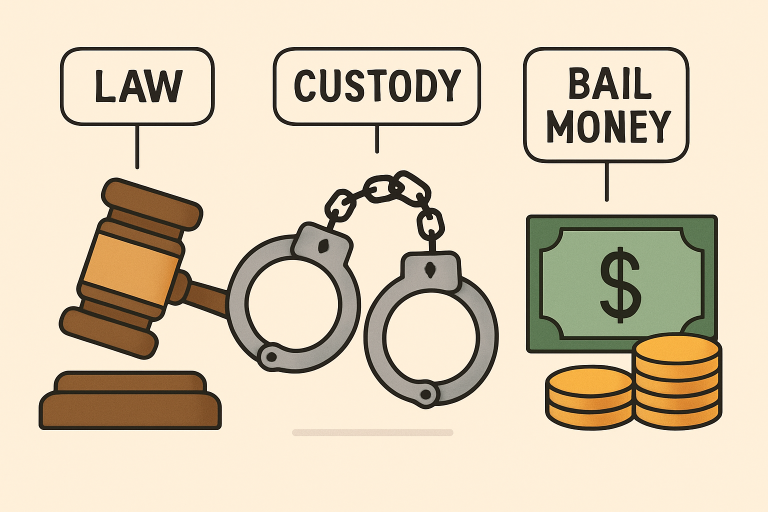
<p>Bail bonds act as financial guarantees enabling defendants to await court proceedings outside jail. When someone is charged with a crime, a judge typically sets a bail amount to ensure the defendant’s future appearance in court. In many cases, the set bail is too high for the defendant or their family to pay out of pocket. This is where working with a&nbsp;<a href="https://www.ajsbailbonds.co/Contact.html" rel="noreferrer noopener" target="_blank">surety bail bondsman Yadkin, NC</a>&nbsp;becomes crucial, as they can cover the bond for a fee, allowing the defendant to regain their freedom while their legal matters are pending.</p>


<p>The core purpose of the bail bond system is to strike a balance between upholding public safety and <a href="https://www.thefamilyceoblog.com/what-are-some-common-examples-of-wrongful-death-cases/">protecting an individual&#8217;s right to prepare their defense from home</a>, whenever appropriate. Bail bonds ensure the defendant’s release is conditional on legal compliance, not contingent on their financial resources alone. If the defendant adheres to all court-mandated appearances and requirements, the process concludes smoothly for all parties involved.</p>


<h2 class="wp-block-heading">The Role of Bail Bond Agents</h2>


<p>A bail bond agent is an essential bridge between the accused and the courts. When the defendant or their loved ones cannot afford the full bail amount, the agent offers a surety bond to the court as a promise that the defendant will comply with all judicial directives. The agent charges a non-refundable percentage of the&nbsp;<a href="https://www.dfs.ny.gov/consumers/bail" rel="noreferrer noopener" target="_blank">total bail amount</a>&nbsp;for taking on this risk. Regulatory oversight at the state and federal levels helps protect the interests of defendants and the broader public by enforcing ethical conduct and business practices among bondsmen.</p>


<h2 class="wp-block-heading">Step-By-Step Guide to the Bail Bond Process</h2>


<ol class="wp-block-list">
<li><strong>Arrest and Booking:</strong> The accused is taken into custody, and law enforcement records personal and case details.</li>


<li><strong>Bail Hearing:</strong> A judge determines whether bail is appropriate and, if so, the amount, considering factors like the defendant’s criminal history, risk to others, and likelihood of fleeing.</li>


<li><strong>Contacting a Bail Bond Agent:</strong> When the bail amount exceeds what the defendant’s family can reasonably pay, friends or family reach out to a licensed agent.</li>


<li><strong>Payment and Paperwork:</strong> The agent requires a fee and sometimes collateral (often property or assets). Once paperwork is complete, the agent issues a bond to the court to guarantee the defendant’s return.</li>


<li><strong>Release:</strong> The defendant is released from custody, provided they commit to future court dates and any additional conditions imposed by the court or bondsman.</li>
</ol>


<h2 class="wp-block-heading">Common Myths About Bail Bonds Debunked</h2>


<p>Misinformation about bail bonds can lead to costly mistakes. One common myth is that agents can negotiate a discounted fee or refund part of their service charge. In reality, regulations standardize the percentage charged (typically 10-15% of the bail), and these fees are always non-refundable. Another misconception is that bail money goes back to the defendant if they are found not guilty; in cases involving an agent, the fee compensates the agent for assuming risk, not as a deposit against the bail amount. Failure to attend court appointments can result in severe consequences, including loss of bail funds or pledged collateral, and potentially additional criminal charges.&nbsp;<img decoding="async" src="https://vazoo.la/content/images/2025/08/27/68af5bbd89818.png"></p>


<h2 class="wp-block-heading">Bail Bonds and the Legal System: A Delicate Balance</h2>


<p>Bail bonds are pivotal in balancing a defendant&#8217;s constitutional rights against the need for judicial accountability and public protection. For nonviolent or low-risk offenders, these bonds enable a return to normalcy—continued employment, family obligations, and the ability to participate more fully in legal defense. However, critics point out systemic inequalities, especially for lower-income communities. Many states now consider policy reforms or pilot alternative solutions to address these disparities, such as risk-based assessments.</p>


<h2 class="wp-block-heading">Tips for Choosing a Bail Bond Agent</h2>


<ul class="wp-block-list">
<li>Verify the agent’s licensing and accreditation as mandated by your state.</li>


<li>Read recent client reviews and consider requesting direct references.</li>


<li>Insist on clarity—ensure all terms, conditions, and costs are discussed and documented before signing any contract.</li>


<li>Be wary of agents who promise extraordinary discounts or outcome guarantees.</li>


<li>Shop around to compare agents and fees, making an informed decision that aligns with your needs and budget.</li>
</ul>


<h2 class="wp-block-heading">What Happens After Posting Bail?</h2>


<p>Posting bail is just the start of the journey. The defendant is legally required to attend every scheduled court appearance—missing even one can result in immediate forfeiture of any bail or collateral pledged, and additional legal troubles may follow. Courts or agents often impose further conditions, such as regular check-ins with the bondsman, travel limitations, or completion of court-mandated programs. Meticulous organization and prompt communication with your bondsman and legal representative are essential for fulfilling these responsibilities and minimizing future risk.</p>


<h2 class="wp-block-heading">Looking Ahead: Trends and Future Considerations</h2>


<p>The bail bond landscape is undergoing significant evolution. Recent national and local reforms are designed to counteract financial inequity while holding defendants accountable. Technology is making its mark, too; many jurisdictions now use platforms for automated court reminders or allow online processing of bail payments. Empowering defendants and families with knowledge of these trends is vital as new practices and regulations emerge. Staying informed and working closely with experienced bail professionals ensures the best possible outcomes in an ever-shifting legal environment.</p>
]]></content>
		
			</entry>
		<entry>
		<author>
			<name>Jackie</name>
							<uri>https://thefamilyceoblog.com</uri>
						</author>

		<title type="html"><![CDATA[Fentanyl Addiction Treatment: Finding Hope and Healing]]></title>
		<link href="https://www.thefamilyceoblog.com/fentanyl-addiction-treatment-finding-hope-and-healing/" rel="alternate" type="text/html"/>

		<id>https://www.thefamilyceoblog.com/?p=620</id>
		<updated>2025-09-05T03:27:29Z</updated>
		<published>2025-09-05T03:27:29Z</published>
		<category scheme="https://www.thefamilyceoblog.com" term="Wellness"/><category scheme="https://www.thefamilyceoblog.com" term="Family support"/><category scheme="https://www.thefamilyceoblog.com" term="Life"/>
		<summary type="html"><![CDATA[When facing the devastating impact of opioid abuse, nothing is more urgent than getting the right help as quickly as possible. That’s why Fentanyl addiction treatment is designed to provide compassionate, evidence-based care that gives individuals the best possible chance at long-term recovery. This article explores what makes fentanyl so dangerous, why specialized treatment is ... <a title="Fentanyl Addiction Treatment: Finding Hope and Healing" class="read-more" href="https://www.thefamilyceoblog.com/fentanyl-addiction-treatment-finding-hope-and-healing/" aria-label="Read more about Fentanyl Addiction Treatment: Finding Hope and Healing">Read more</a>]]></summary>

					<content type="html" xml:base="https://www.thefamilyceoblog.com/fentanyl-addiction-treatment-finding-hope-and-healing/"><![CDATA[
<p>When facing the devastating impact of opioid abuse, nothing is more urgent than getting the right help as quickly as possible. That’s why <a href="https://opustreatment.com/fentanyl-detox-in-costa-mesa/" target="_blank" rel="noreferrer noopener"><strong>Fentanyl addiction treatment</strong></a> is designed to provide compassionate, evidence-based care that gives individuals the best possible chance at long-term recovery.</p>


<p>This article explores what makes fentanyl so dangerous, why specialized treatment is essential, and how a comprehensive recovery program can help people reclaim their lives.</p>


<h2 class="wp-block-heading"><strong>The Growing Crisis of Fentanyl</strong></h2>


<p>Fentanyl is a synthetic opioid developed for legitimate medical use, primarily for managing severe pain. It is up to 100 times stronger than morphine, which makes it both highly effective and incredibly dangerous. While it has a place in hospital settings, illicit fentanyl is <a href="https://www.bbc.com/news/world-us-canada-66826895" target="_blank" rel="noreferrer noopener">now widely distributed on the street</a>, often mixed with heroin, cocaine, or counterfeit pills.</p>


<p>The problem? <a href="https://www.thefamilyceoblog.com/what-to-do-if-you-think-your-child-is-taking-drugs/">Many people don’t know they’re consuming</a> fentanyl. Even a minuscule dose can cause a fatal overdose. According to the CDC, fentanyl has become the leading driver of opioid-related deaths in the United States. Families and communities across the nation continue to feel the devastating toll of this epidemic.</p>


<h2 class="wp-block-heading"><strong>Why Fentanyl Addiction Is Different</strong></h2>


<p>Unlike some substances that allow for a gradual taper, fentanyl dependency escalates quickly because of its potency. The body adapts rapidly, requiring higher doses to achieve the same effect. This leads to severe withdrawal symptoms when use is reduced or stopped.</p>


<p>Common withdrawal symptoms include:</p>


<ul class="wp-block-list">
<li>Intense cravings<br></li>


<li>Severe body aches and muscle pain<br></li>


<li>Nausea, vomiting, and diarrhea<br></li>


<li>Chills and cold sweats<br></li>


<li>Insomnia and restlessness<br></li>


<li>Anxiety and depression<br></li>
</ul>


<p>These symptoms are not only extremely uncomfortable but also dangerous. Many individuals relapse during withdrawal because the discomfort is overwhelming, and the risk of overdose after relapse is significantly higher.</p>


<h2 class="wp-block-heading"><strong>Why Professional Detox Is Critical</strong></h2>


<p>Attempting to quit fentanyl without medical supervision can be life-threatening. Unlike a simple detox from less potent substances, fentanyl withdrawal requires specialized care to manage both the physical and psychological symptoms.</p>


<p>At Opus Treatment, medical detox provides:</p>


<ul class="wp-block-list">
<li><strong>24/7 supervision</strong> from trained professionals<br></li>


<li><strong>Medication-assisted treatment (MAT)</strong> to reduce withdrawal intensity<br></li>


<li><strong>Emergency medical support</strong> if complications arise<br></li>


<li><strong>A safe, structured environment</strong> away from triggers and temptations<br></li>
</ul>


<p>This first stage is not about “curing” addiction—it’s about stabilizing the body and preparing the mind for the next steps in recovery.</p>


<h2 class="wp-block-heading"><strong>Comprehensive Fentanyl Addiction Treatment at Opus Treatment</strong></h2>


<p>While detox is essential, recovery cannot stop there. Opus Treatment offers a holistic and evidence-based approach to healing that extends far beyond withdrawal management.</p>


<h3 class="wp-block-heading"><strong>1. Personalized Care Plans</strong></h3>


<p>Every individual comes into treatment with unique needs, experiences, and challenges. Opus Treatment designs customized recovery plans that reflect the client’s personal circumstances, co-occurring mental health conditions, and long-term goals.</p>


<h3 class="wp-block-heading"><strong>2. Medication-Assisted Treatment (MAT)</strong></h3>


<p>MAT combines FDA-approved medications such as buprenorphine, methadone, or naltrexone with therapy and counseling. These medications reduce cravings and normalize brain chemistry, giving clients a stable foundation for recovery.</p>


<h3 class="wp-block-heading"><strong>3. Evidence-Based Therapies</strong></h3>


<p>Behavioral therapies address the underlying causes of addiction and equip clients with healthier coping strategies. These include:</p>


<ul class="wp-block-list">
<li><strong>Cognitive Behavioral Therapy (CBT)</strong> for managing thought patterns<br></li>


<li><strong>Dialectical Behavior Therapy (DBT)</strong> for emotional regulation<br></li>


<li><strong>Trauma-informed therapy</strong> for those with past adverse experiences<br></li>


<li><strong>Family therapy</strong> to rebuild trust and strengthen support systems<br></li>
</ul>


<h3 class="wp-block-heading"><strong>4. Holistic Wellness Programs</strong></h3>


<p>Healing from fentanyl addiction is not only about stopping drug use—it’s about rebuilding a meaningful, balanced life. Opus Treatment integrates wellness practices such as:</p>


<ul class="wp-block-list">
<li>Yoga and meditation<br></li>


<li>Nutritional counseling<br></li>


<li>Fitness and movement therapies<br></li>


<li>Creative outlets like art and music therapy<br></li>
</ul>


<h3 class="wp-block-heading"><strong>5. Relapse Prevention and Aftercare</strong></h3>


<p>Sustainable recovery requires long-term planning. Opus Treatment supports clients with relapse prevention education, alumni programs, ongoing counseling, and community resources. Aftercare ensures that clients stay connected to a supportive network even after leaving structured treatment.</p>


<h2 class="wp-block-heading"><strong>The Dangers of Delaying Treatment</strong></h2>


<p>With fentanyl, there is no safe level of recreational use. Because it is often laced into other substances, even first-time or occasional users are at high risk of overdose. The longer someone waits to seek help, the more dangerous their situation becomes.</p>


<p>Delaying treatment often results in:</p>


<ul class="wp-block-list">
<li>Increased risk of overdose and death<br></li>


<li>Worsening mental health conditions<br></li>


<li>Strained or broken family relationships<br></li>


<li>Financial, legal, and social consequences<br></li>
</ul>


<p>Taking the step toward treatment may feel daunting, but it is always safer than waiting.</p>


<h2 class="wp-block-heading"><strong>The Role of Family in Recovery</strong></h2>


<p>Addiction doesn’t only affect the person struggling—it impacts the entire family. That’s why family involvement is a cornerstone of fentanyl addiction treatment at Opus Treatment. Families are educated on the science of addiction, provided with therapy to address communication breakdowns, and encouraged to be active participants in the recovery journey.</p>


<p>By engaging families, treatment not only heals the individual but also helps repair the broader support system.</p>


<h2 class="wp-block-heading"><strong>Building a New Life Beyond Addiction</strong></h2>


<p>Recovery from fentanyl addiction is not simply about removing the drug from a person’s system—it’s about creating a sustainable, fulfilling lifestyle that no longer requires substances to cope. This means:</p>


<ul class="wp-block-list">
<li>Developing new coping skills<br></li>


<li>Building a sober support network<br></li>


<li>Establishing healthy daily routines<br></li>


<li>Pursuing meaningful goals and passions<br></li>
</ul>


<p>At Opus Treatment, clients are empowered to rediscover who they are without drugs. This transformation is what makes recovery lasting.</p>


<h2 class="wp-block-heading"><strong>Why Choose Opus Treatment?</strong></h2>


<p>With so many treatment options available, what makes Opus Treatment stand out?</p>


<ul class="wp-block-list">
<li><strong>Expertise in fentanyl and opioid treatment</strong><strong><br></strong></li>


<li><strong>Comprehensive care</strong> from detox to aftercare<br></li>


<li><strong>Personalized attention</strong> with small client-to-staff ratios<br></li>


<li><strong>Holistic healing</strong> that addresses body, mind, and spirit<br></li>


<li><strong>Proven outcomes</strong> rooted in evidence-based practices<br></li>
</ul>


<p>Opus Treatment is not just about surviving addiction—it’s about thriving in recovery.</p>


<h2 class="wp-block-heading"><strong>Final Thoughts</strong></h2>


<p>The fentanyl epidemic continues to devastate communities, but there is a proven path forward. Through medically supervised detox, evidence-based therapies, holistic healing, and strong aftercare, fentanyl addiction treatment at <a href="https://opustreatment.com/" target="_blank" rel="noreferrer noopener"><strong>Opus Treatment</strong></a> provides hope where it often feels lost.</p>


<p>Recovery may be challenging, but it is possible—and every day without fentanyl is a step toward freedom, health, and renewed purpose.</p>
]]></content>
		
			</entry>
		<entry>
		<author>
			<name>Jackie</name>
							<uri>https://thefamilyceoblog.com</uri>
						</author>

		<title type="html"><![CDATA[How Smart Technology Is Shaping the Future of Modern Vehicles]]></title>
		<link href="https://www.thefamilyceoblog.com/how-smart-technology-is-shaping-the-future-of-modern-vehicles/" rel="alternate" type="text/html"/>

		<id>https://www.thefamilyceoblog.com/?p=616</id>
		<updated>2025-08-26T01:40:29Z</updated>
		<published>2025-08-26T01:40:29Z</published>
		<category scheme="https://www.thefamilyceoblog.com" term="Life"/><category scheme="https://www.thefamilyceoblog.com" term="Lifestyle"/>
		<summary type="html"><![CDATA[Introduction Innovative technology is revolutionizing how we drive, making vehicles safer, more efficient, and increasingly autonomous. As the automotive industry rapidly embraces digital innovation, intelligent features are now central to consumer and commercial vehicles. Whether you&#8217;re interested in advanced safety, seamless connectivity, or the excitement of cutting-edge tech, today&#8217;s modern cars differ fundamentally from those ... <a title="How Smart Technology Is Shaping the Future of Modern Vehicles" class="read-more" href="https://www.thefamilyceoblog.com/how-smart-technology-is-shaping-the-future-of-modern-vehicles/" aria-label="Read more about How Smart Technology Is Shaping the Future of Modern Vehicles">Read more</a>]]></summary>

					<content type="html" xml:base="https://www.thefamilyceoblog.com/how-smart-technology-is-shaping-the-future-of-modern-vehicles/"><![CDATA[
<h2 class="wp-block-heading">Introduction</h2>


<p>Innovative technology is revolutionizing how we drive, making vehicles safer, more efficient, and increasingly autonomous. As the automotive industry rapidly embraces digital innovation, intelligent features are now central to consumer and commercial vehicles. Whether you&#8217;re interested in advanced safety, seamless connectivity, or the excitement of cutting-edge tech, today&#8217;s modern cars differ fundamentally from those of just a decade ago.&nbsp;<a href="https://www.lafontainehyundailivonia.com/new-vehicles/" rel="noreferrer noopener" target="_blank">Learn more</a>&nbsp;about how the latest vehicles integrate innovative features and drive the transformation.</p>


<p>Smart vehicles leverage sensors, artificial intelligence, and real-time data exchange to improve every aspect of driving. As more automakers introduce features like predictive maintenance and AI-powered navigation, drivers benefit from advanced safety, superior convenience, and greener operation. These innovations are not reserved for luxury models—mainstream vehicles rapidly adopt innovative technology as standard equipment, making the benefits widely accessible. For an in-depth look at these transformative trends, let’s explore how smart technology reshapes modern vehicles.</p>


<h2 class="wp-block-heading">Advanced Driver Assistance Systems (ADAS)</h2>


<p>Among the most impactful&nbsp;<a href="https://www.chicagolawyer.com/blog/advancements-in-automobile-safety/" rel="noreferrer noopener" target="_blank">advancements in automotive safety</a>&nbsp;has been the widespread adoption of Advanced Driver Assistance Systems (ADAS). Using a network of sensors, cameras, and onboard computers, ADAS helps drivers avoid danger by providing real-time alerts and automated responses. Features such as Automatic Emergency Braking (AEB), Lane Departure Warning (LDW), and Adaptive Cruise Control (ACC) monitor road conditions and traffic patterns, intervening when necessary to prevent collisions.</p>


<p>Insurance industry data has shown that Forward Collision Warning systems can reduce rear-end collisions by up to 27%, and the addition of automatic braking boosts that reduction to 50%. These systems are designed to be more than passive safety features—they actively prevent accidents, easing the burden on drivers and emergency response teams. As automakers refine these systems, the promise of near-zero traffic fatalities draws closer to reality. For additional context, the National Highway Traffic Safety Administration discusses ADAS technologies and their ongoing impact.</p>


<h2 class="wp-block-heading">Vehicle-to-Everything (V2X) Communication</h2>


<p><a href="https://www.itskrs.its.dot.gov/success-strategies/snapshot/vehicle-everything-v2x-communications" rel="noreferrer noopener" target="_blank">V2X communication</a>—where vehicles securely exchange data with each other and with roadway infrastructure—represents a leap forward in how cars interact with the broader environment. This technology enables vehicles to instantly share information about traffic jams, accidents, and hazardous conditions, giving drivers and autonomous systems a heightened awareness of the road ahead. As V2X networks expand, everyone will have safer, smoother, faster commutes.</p>


<p>According to the U.S. Department of Transportation, the widespread use of V2X could help prevent as many as 439,000 crashes annually, improving individual safety and the efficiency of the entire transportation system. Cities are beginning to experiment with connected intersections and bright traffic lights, which can dynamically adjust signal timing based on real-time traffic flows and emergency vehicle presence. Forbes explores how connected car technology redefines mobility&nbsp;and paves the way for the next generation of transportation infrastructure.</p>


<h2 class="wp-block-heading">Artificial Intelligence in Autonomous Vehicles</h2>


<p>Artificial intelligence is the foundation of the self-driving vehicle revolution. By analyzing vast sensor data streams, AI algorithms can identify objects, make split-second decisions, and even anticipate the actions of pedestrians and other drivers. Major companies, including Waymo and Tesla, are actively deploying autonomous vehicle technology in cities, continually refining their software using data gathered from real-world driving.</p>


<p>The path to fully autonomous vehicles may still face regulatory and public adoption challenges, but the technology is progressing remarkably. AI&#8217;s primary benefit is its ability to minimize human error, a leading cause of accidents worldwide. As AI becomes more ingrained in vehicle systems, everything from route selection to collision avoidance will become increasingly efficient and reliable.</p>


<h2 class="wp-block-heading">Connected Car Technologies</h2>


<p>Connectivity is another defining feature of modern vehicles, enabling everything from real-time traffic alerts to remote software updates. Many cars now possess embedded cellular networks, supporting over-the-air updates that keep software current without driver intervention. This connectivity also allows for remote diagnostics, enabling service teams to anticipate needed repairs and drivers to receive proactive maintenance reminders, dramatically reducing downtime and repair costs.</p>


<p>The rollout of 5G networks promises to amplify these capabilities, providing faster, more reliable links between cars, infrastructure, and cloud-based services. As connectivity improves, automakers will unlock additional services, such as remote control via smartphone apps and real-time hazard reporting, helping drivers navigate more confidently.</p>


<h2 class="wp-block-heading">Predictive Maintenance and AI Diagnostics</h2>


<p>AI-driven predictive maintenance is changing the way vehicles are serviced. Advanced systems continuously evaluate data from sensors monitoring engine performance, tire condition, brake wear, and more. By detecting anomalies early, these platforms can warn drivers before a minor issue becomes a major repair, maximizing vehicle uptime and lifespan.</p>


<p>This proactive approach saves money and contributes to safety—fewer breakdowns mean fewer roadside emergencies. As more automakers embrace AI diagnostics, routine maintenance is evolving into a seamless, largely automated process supporting individual vehicle owners and fleet managers.</p>


<h2 class="wp-block-heading">Environmental Benefits and Sustainability</h2>


<p>Innovative technology enhances performance and convenience and pushes the automotive industry toward greater sustainability. AI-powered systems, including advanced battery management and regenerative braking, help electric vehicles (EVs) run more efficiently and maximize driving range. Vehicle-to-grid technology allows EVs to share unused energy with the power grid, supporting renewable energy and cutting emissions further.</p>


<p>The shift toward intelligent charging, integrated energy planning, and precision route optimization makes transportation cleaner and greener. Automakers are increasingly held to higher environmental standards, and innovative technologies are key to surpassing these goals, aligning with international efforts to reduce traffic-related carbon footprints.</p>


<h2 class="wp-block-heading">Final Thoughts</h2>


<p>Innovative technology is transforming the future of transportation by weaving together automation, connectivity, artificial intelligence, and data-driven insights. <a href="https://www.thefamilyceoblog.com/transforming-your-vehicle-a-comprehensive-guide-to-modern-automotive-styling/">Modern vehicles</a> are safer, more reliable, and more sustainable than ever. As these features become commonplace, consumers can expect an era of driving defined by innovation, efficiency, and unprecedented convenience. Whether you’re looking to upgrade to a smart vehicle today or want to stay informed about these exciting advancements, the future of driving is already taking shape on roads around the globe.</p>
]]></content>
		
			</entry>
		<entry>
		<author>
			<name>Jackie</name>
							<uri>https://thefamilyceoblog.com</uri>
						</author>

		<title type="html"><![CDATA[How Scrap Metal Recycling Benefits the Environment]]></title>
		<link href="https://www.thefamilyceoblog.com/how-scrap-metal-recycling-benefits-the-environment/" rel="alternate" type="text/html"/>

		<id>https://www.thefamilyceoblog.com/?p=612</id>
		<updated>2025-08-05T02:19:21Z</updated>
		<published>2025-08-05T02:19:20Z</published>
		<category scheme="https://www.thefamilyceoblog.com" term="Life"/>
		<summary type="html"><![CDATA[Introduction Scrap metal recycling is more than just a responsible waste management practice—it is crucial for protecting the environment. By reprocessing old metal products, recycling diminishes the need for raw material extraction, helps conserve valuable resources, and reduces pollution associated with traditional mining and manufacturing. Businesses and communities across urban areas, such as those seeking ... <a title="How Scrap Metal Recycling Benefits the Environment" class="read-more" href="https://www.thefamilyceoblog.com/how-scrap-metal-recycling-benefits-the-environment/" aria-label="Read more about How Scrap Metal Recycling Benefits the Environment">Read more</a>]]></summary>

					<content type="html" xml:base="https://www.thefamilyceoblog.com/how-scrap-metal-recycling-benefits-the-environment/"><![CDATA[
<h2 class="wp-block-heading">Introduction</h2>


<p>Scrap metal recycling is more than just a responsible waste management practice—it is crucial for protecting the environment. By reprocessing old metal products, recycling diminishes the need for raw material extraction, helps conserve valuable resources, and reduces pollution associated with traditional mining and manufacturing. Businesses and communities across urban areas, such as those seeking services for&nbsp;<a href="https://cccscrap.com/" rel="noreferrer noopener" target="_blank">scrap metal Queens</a>, are increasingly turning to recycling for both environmental stewardship and economic advantage.</p>


<p>Incorporating scrap metal recycling into our daily practices lessens landfill contributions and provides opportunities to recover and reuse materials, supporting the global shift toward <a href="https://www.thefamilyceoblog.com/the-fascinating-world-of-bees-and-their-importance-in-our-ecosystem/">sustainability</a>. As public awareness grows and technological advancements in recycling continue, the significance of these efforts becomes even more apparent.</p>


<h2 class="wp-block-heading">Conservation of Natural Resources</h2>


<p>Metals like steel and aluminum are finite, and the extraction of these materials from the earth comes at a considerable environmental cost. Recycling is instrumental in conserving natural resources by minimizing the demand for virgin ore. For example, recycling one ton of steel conserves approximately 2,500 pounds of iron ore, 1,400 pounds of coal, and 120 pounds of limestone. This preservation safeguards ecosystems, helps maintain biodiversity, and reduces the strains caused by ongoing mining activities.</p>


<h3 class="wp-block-heading">Reducing Habitat Destruction</h3>


<p>By choosing recycling over extraction, the widespread destruction of landscapes and habitats is markedly reduced. Mining removes topsoil and disrupts local flora and fauna, issues that are mitigated when recycling is prioritized.</p>


<h2 class="wp-block-heading">Energy Savings and Emission Reductions</h2>


<p>One of the most striking environmental benefits of recycling metals is the significant reduction in energy required compared to manufacturing metals from raw ores. Recycling aluminum, for instance, saves up to 95% of the energy, while steel recycling saves about 60%. These savings not only lower energy bills, but they also cut&nbsp;<a href="https://www.theguardian.com/environment/2025/jul/18/the-big-emitters-which-countries-are-holding-back-climate-action-and-why" rel="noreferrer noopener" target="_blank">greenhouse gas emissions</a>, key contributors to climate change. As referenced by National Geographic, these energy and emission reductions have a compounding effect, leading to cleaner air and healthier communities.</p>


<h2 class="wp-block-heading">Reduction of Landfill Waste</h2>


<p>Metals account for a significant portion of the waste stream in landfills. Discarded appliances, vehicles, and construction debris can occupy vast landfill space for decades, if not centuries. By routing scrap metals to recycling facilities, society not only diverts waste from overburdened landfills but also prevents hazardous substances, such as heavy metals and chemicals, from leaching into the soil and groundwater. The U.S. Environmental Protection Agency has underscored the importance of recycling to mitigate the risk of environmental contamination.</p>


<h2 class="wp-block-heading">Economic Benefits and Job Creation</h2>


<p>The economic contributions of the scrap metal recycling industry are immense. In the United States alone, the sector generates more than $117 billion annually and supports over half a million jobs, according to industry reports. Recycling-related occupations span from collection and sorting to advanced processing and logistics, offering career opportunities for skilled and entry-level workers. This economic activity strengthens local economies, encourages investment in technological innovation, and provides a reliable domestic supply of raw materials.</p>


<h2 class="wp-block-heading">Support for Sustainable Manufacturing</h2>


<p>The role of recycled metals in contemporary manufacturing cannot be underestimated. Construction, automotive, and electronics industries rely heavily on recycled materials to keep production costs low while minimizing environmental impacts. For example, using recycled steel in building projects can significantly reduce the environmental burden associated with primary steel production, leading to measurable energy savings and emission reductions.</p>


<h2 class="wp-block-heading">Promotion of a Circular Economy</h2>


<p>Scrap metal recycling exemplifies the circular economy model, in which products and materials are reused, remanufactured, or recycled, keeping waste to a minimum. This approach not only conserves valuable resources but also reduces environmental impact. By closing the loop—recovering metals from used products and returning them into production cycles—industries and communities maximize the lifetime value of finite resources. This shift is essential for achieving long-term environmental sustainability and reducing society’s carbon footprint.</p>


<h2 class="wp-block-heading">Conclusion</h2>


<p>Embracing scrap metal recycling substantially benefits the environment and the economy. It conserves vital natural resources, reduces greenhouse gas emissions, diverts waste from landfills, and supports sustainable manufacturing and job growth. Adopting recycling practices at every level, from individuals to industries, can help pave the way for a greener, more sustainable future.</p>
]]></content>
		
			</entry>
		<entry>
		<author>
			<name>Jackie</name>
							<uri>https://thefamilyceoblog.com</uri>
						</author>

		<title type="html"><![CDATA[Navigating Your Post-College Career Path: A Comprehensive Guide]]></title>
		<link href="https://www.thefamilyceoblog.com/navigating-your-post-college-career-path-a-comprehensive-guide/" rel="alternate" type="text/html"/>

		<id>https://www.thefamilyceoblog.com/?p=608</id>
		<updated>2025-07-15T01:52:34Z</updated>
		<published>2025-07-15T01:52:34Z</published>
		<category scheme="https://www.thefamilyceoblog.com" term="Business"/><category scheme="https://www.thefamilyceoblog.com" term="Education"/><category scheme="https://www.thefamilyceoblog.com" term="Career"/>
		<summary type="html"><![CDATA[Graduation marks a pivotal moment, a thrilling transition from the structured world of academia to the vast, often uncertain, landscape of professional life. For many, this period is filled with excitement and anticipation, but also with anxieties about finding the &#8220;right&#8221; job, building a career, and achieving financial independence. The truth is, there isn&#8217;t one ... <a title="Navigating Your Post-College Career Path: A Comprehensive Guide" class="read-more" href="https://www.thefamilyceoblog.com/navigating-your-post-college-career-path-a-comprehensive-guide/" aria-label="Read more about Navigating Your Post-College Career Path: A Comprehensive Guide">Read more</a>]]></summary>

					<content type="html" xml:base="https://www.thefamilyceoblog.com/navigating-your-post-college-career-path-a-comprehensive-guide/"><![CDATA[
<p><a href="https://www.thefamilyceoblog.com/making-your-college-graduation-unforgettable-from-ceremony-to-celebration/">Graduation marks a pivotal moment</a>, a thrilling transition from the structured world of academia to the vast, often uncertain, landscape of professional life. For many, this period is filled with excitement and anticipation, but also with anxieties about finding the &#8220;right&#8221; job, building a career, and achieving financial independence. The truth is, there isn&#8217;t one single &#8220;right&#8221; path; rather, it&#8217;s a journey of exploration, learning, and adaptation. This guide will walk you through key considerations and actionable strategies to confidently chart your post-college career.</p>


<h2 class="wp-block-heading">Embrace the Journey, Not Just the Destination</h2>


<p>One of the most liberating perspectives you can adopt is viewing your career as a marathon, not a sprint. The idea of a linear career progression with a single, lifelong job is largely a relic of the past. Today&#8217;s professional world is dynamic, requiring continuous learning and flexibility. Your first job out of college is rarely your last, nor does it define your ultimate potential. It&#8217;s a stepping stone, an opportunity to gain experience, develop skills, and discover what truly resonates with you.</p>


<p>Don&#8217;t feel pressured to have all the answers immediately. It’s perfectly normal to feel uncertain. Many successful professionals have non-linear career paths, often pivoting based on new interests, market demands, or unforeseen opportunities. Focus on collecting experiences, even if they seem minor or unrelated at first. Every role, every project, and every interaction contributes to your professional growth.</p>


<h2 class="wp-block-heading">Self-Reflection: Your Compass for Career Exploration</h2>


<p>Before diving headfirst into job applications, take time for deep self-reflection. Understanding your interests, strengths, values, and even your weaknesses will serve as your internal compass. Ask yourself:</p>


<ul class="wp-block-list">
<li><strong>What genuinely excites you?</strong> What subjects or activities make you lose track of time?</li>


<li><strong>What are you good at?</strong> Identify your core skills, both hard (technical) and soft (interpersonal, problem-solving, communication).</li>


<li><strong>What kind of impact do you want to make?</strong> Do you prioritize innovation, helping others, creative expression, or something else?</li>


<li><strong>What kind of work environment thrives for you?</strong> Do you prefer fast-paced or stable, collaborative or independent, office-based or remote?</li>


<li><strong>What are your non-negotiables?</strong> Consider work-life balance, salary expectations, and geographic location.</li>
</ul>


<p>This introspection can help you narrow down potential industries and roles that align with your authentic self. It’s about discovering what you <em>want</em> to do, not just what you <em>should</em> do.</p>


<h2 class="wp-block-heading">Strategic Job Searching in a Dynamic Market</h2>


<p>The job market is constantly evolving, influenced by global events, technological advancements like AI, and economic shifts. Your approach to job searching needs to be strategic and multifaceted.</p>


<ol class="wp-block-list">
<li><strong>Optimize Your Professional Presence:</strong>
<ul class="wp-block-list">
<li><strong>Resume and Cover Letter:</strong> Tailor your resume and cover letter for each application, highlighting relevant skills and experiences. Even if you don&#8217;t have direct work experience in a field, emphasize transferable skills gained from academic projects, volunteer work, or part-time jobs.</li>


<li><strong>LinkedIn:</strong> Maintain a strong, up-to-date LinkedIn profile. Use relevant keywords in your headline and &#8220;About&#8221; section. Actively engage on the platform by sharing insights and connecting with professionals. Many recruiters use LinkedIn to find candidates.</li>
</ul>
</li>


<li><strong>Networking is Non-Negotiable:</strong> This is arguably the most critical component of a successful job search.
<ul class="wp-block-list">
<li><strong>Leverage Your Alma Mater:</strong> Your college&#8217;s career services center is a valuable resource, often offering alumni networking events, job boards, and mentorship programs. Reach out to professors who have industry connections.</li>


<li><strong>Informational Interviews:</strong> Connect with professionals in fields that interest you. Request brief &#8220;coffee chats&#8221; (virtual or in-person) to learn about their day-to-day responsibilities, industry trends, and career paths. This is about gathering information and building relationships, not asking for a job.</li>


<li><strong>Professional Associations:</strong> Join organizations related to your desired field. These offer excellent opportunities for networking, mentorship, and staying current with industry news.</li>
</ul>
</li>


<li><strong>Explore Diverse Opportunities:</strong> Don&#8217;t limit yourself to traditional full-time roles immediately.
<ul class="wp-block-list">
<li><strong>Internships and Apprenticeships:</strong> These can provide invaluable experience, particularly in competitive fields, and often lead to full-time employment.</li>


<li><strong>Freelancing or Contract Work:</strong> Platforms like Upwork or Fiverr can help you build a portfolio and gain experience while exploring different areas.</li>


<li><strong>Volunteer Opportunities:</strong> Volunteering allows you to develop new skills, expand your network, and contribute to causes you care about, all while beefing up your resume.</li>


<li><strong>Gap Year or Travel:</strong> If feasible, taking time off to travel or pursue personal goals can offer unique perspectives, enhance problem-solving skills, and foster resilience, making you a more well-rounded candidate.</li>
</ul>
</li>
</ol>


<h2 class="wp-block-heading">Continuous Learning and Skill Development</h2>


<p>The learning doesn&#8217;t stop after graduation; it merely shifts gears. Lifelong learning is essential for career longevity and advancement.</p>


<ul class="wp-block-list">
<li><strong>Upskill and Reskill:</strong> Identify in-demand skills in your target industry and actively pursue opportunities to acquire them. This could involve online courses (Coursera, edX), coding bootcamps, professional certifications (e.g., in marketing, finance, tech), or workshops.</li>


<li><strong>Stay Informed:</strong> Subscribe to industry newsletters, follow thought leaders on social media, and attend webinars or conferences. Being knowledgeable about trends and major announcements shows your commitment and passion.</li>


<li><strong>Mentorship:</strong> Seek out mentors who can provide guidance, support, and insights based on their experience. A good mentor can help you navigate challenges, refine your goals, and unlock new opportunities.</li>
</ul>


<h2 class="wp-block-heading">Beyond the Job Hunt: Life and Licensing</h2>


<p>Your post-college journey isn&#8217;t just about finding a job; it&#8217;s also about managing your personal life and, for some professions, navigating complex licensing requirements.</p>


<p>For those involved in Greek life during college, graduation doesn&#8217;t mean the end of your connection. Organizations like <a href="https://greekgraduate.com/" target="_blank" rel="noreferrer noopener">Greek Graduate</a> can help you celebrate your fraternity or sorority affiliation with apparel and accessories, allowing you to carry your pride into your professional life.</p>


<p>If your career path leads you into specialized fields, such as those involving outdoor design or environmental work, you might consider partnering with experts. For instance, <a href="https://coeaspen.com/" target="_blank" rel="noreferrer noopener">Colorado Outdoor Environments</a> offers specialized irrigation design, showcasing how focused expertise can lead to a successful business.</p>


<p>Finally, for some professions, particularly those requiring specific certifications or adherence to regulatory standards, navigating licensing issues can be a significant hurdle. Should you encounter any challenges with professional licenses, understanding where to turn for legal guidance is crucial. Firms like <a href="https://bestutahlawyer.com/professional-license-defense/" target="_blank" rel="noreferrer noopener">Greg Smith &amp; Associates</a> specialize in helping professionals address licensing concerns, ensuring that your career aspirations are not derailed by regulatory complexities.As you embark on this exciting new chapter, remember that the &#8220;perfect&#8221; career path is often built step-by-step, not discovered fully formed. Be patient, be persistent, and embrace the learning that comes with every experience. For more general advice on navigating your early career, resources like <a href="https://www.themuse.com/" target="_blank" rel="noreferrer noopener">The Muse</a> offer valuable insights and practical tips to help you thrive. Your post-college career path is uniquely yours to define, filled with endless possibilities and opportunities for growth.</p>
]]></content>
		
			</entry>
	</feed>