<?xml version="1.0" encoding="UTF-8"?><feed
	xmlns="http://www.w3.org/2005/Atom"
	xmlns:thr="http://purl.org/syndication/thread/1.0"
	xml:lang="en-US"
	>
	<title type="text">The Sheaf &#8211; The University of Saskatchewan Newspaper Since 1912</title>
	<subtitle type="text">The University of Saskatchewan’s main campus is situated on Treaty 6 Territory and the Homeland of the Métis.</subtitle>

	<updated>2026-06-08T04:33:23Z</updated>

	<link rel="alternate" type="text/html" href="https://thesheaf.com" />
	<id>https://thesheaf.com/feed/atom/</id>
	<link rel="self" type="application/atom+xml" href="https://thesheaf.com/feed/atom/" />

	<generator uri="https://wordpress.org/" version="6.9.4">WordPress</generator>
	<entry>
		<author>
			<name>Emily Mainprize</name>
					</author>

		<title type="html"><![CDATA[Where Saskatoon Music Comes Alive]]></title>
		<link rel="alternate" type="text/html" href="https://thesheaf.com/2026/06/08/where-saskatoon-music-comes-alive/?utm_source=rss&#038;utm_medium=rss&#038;utm_campaign=where-saskatoon-music-comes-alive" />

		<id>https://thesheaf.com/?p=45429</id>
		<updated>2026-06-08T04:33:23Z</updated>
		<published>2026-06-08T12:00:00Z</published>
		<category scheme="https://thesheaf.com" term="Culture" />
		<summary type="html"><![CDATA[Inside the Saskatchewan Jazz Festival]]></summary>

					<content type="html" xml:base="https://thesheaf.com/2026/06/08/where-saskatoon-music-comes-alive/?utm_source=rss&#038;utm_medium=rss&#038;utm_campaign=where-saskatoon-music-comes-alive"><![CDATA[
<figure class="wp-block-gallery has-nested-images columns-default is-cropped wp-block-gallery-1 is-layout-flex wp-block-gallery-is-layout-flex">
<figure class="wp-block-image size-large"><img fetchpriority="high" decoding="async" width="937" height="850" data-id="45430" src="https://thesheaf.com/wp-content/uploads/2026/06/2026-06-08-Jazz-Fest-937x850.png" alt="Sask Jazz Fest redesigned Logo | @saskjazz" class="wp-image-45430" srcset="https://thesheaf.com/wp-content/uploads/2026/06/2026-06-08-Jazz-Fest-937x850.png 937w, https://thesheaf.com/wp-content/uploads/2026/06/2026-06-08-Jazz-Fest-480x436.png 480w, https://thesheaf.com/wp-content/uploads/2026/06/2026-06-08-Jazz-Fest-220x200.png 220w, https://thesheaf.com/wp-content/uploads/2026/06/2026-06-08-Jazz-Fest-768x697.png 768w, https://thesheaf.com/wp-content/uploads/2026/06/2026-06-08-Jazz-Fest-250x227.png 250w, https://thesheaf.com/wp-content/uploads/2026/06/2026-06-08-Jazz-Fest-550x499.png 550w, https://thesheaf.com/wp-content/uploads/2026/06/2026-06-08-Jazz-Fest-800x726.png 800w, https://thesheaf.com/wp-content/uploads/2026/06/2026-06-08-Jazz-Fest-198x180.png 198w, https://thesheaf.com/wp-content/uploads/2026/06/2026-06-08-Jazz-Fest-331x300.png 331w, https://thesheaf.com/wp-content/uploads/2026/06/2026-06-08-Jazz-Fest-551x500.png 551w, https://thesheaf.com/wp-content/uploads/2026/06/2026-06-08-Jazz-Fest.png 1081w" sizes="(max-width: 937px) 100vw, 937px" /><figcaption class="wp-element-caption">Sask Jazz Fest redesigned Logo | @saskjazz</figcaption></figure>
</figure>


<p style="font-size:21px"><strong>Inside the Saskatchewan Jazz Festival</strong></p>


<p style="font-size:19px">Every summer, thousands of music fans gather in Saskatoon to celebrate live music, community and culture at one of the city’s most recognizable events: the Saskatchewan Jazz Festival.&nbsp;</p>


<p>For more than three decades, the festival has brought together musicians, audiences and communities from across Canada and around the world. The event has become a major highlight of Saskatchewan’s cultural calendar and brings together a community of music lovers.&nbsp;</p>


<p>Since its founding in 1987, the festival has grown from a modest local event into one of the largest music festivals in Western Canada, attracting tens of thousands of attendees each year.</p>


<p>While the name suggests a focus solely on jazz music, the festival today showcases a wide variety of musical styles, including blues, funk, pop, folk and world music. This diversity has helped the event reach broader audiences while still maintaining its roots in jazz traditions.</p>


<p>What began as a small event aimed at promoting jazz music in the province quickly grew in scale and reputation. Over the years, the festival has expanded its programming and begun hosting artists from around the world.</p>


<p>In 1992, the festival became formally incorporated as a nonprofit organization owned by The Saskatoon Jazz Society. The society continues to oversee the festival today, ensuring it maintains its mission of promoting jazz and supporting musicians in Saskatchewan.&nbsp;</p>


<p>As attendance increased, the festival established itself as a central cultural event in the province, and it is now considered one of the largest jazz festivals in Western Canada, featuring amazing artists every year.</p>


<p>Each year, the festival hosts dozens of artists and hundreds of performances. Some editions have featured well-known musicians alongside emerging local performers, creating opportunities for Saskatchewan artists to share the stage with internationally recognized acts.</p>


<p>The performers for this year are still currently being announced, but so far the headliners are:&nbsp;</p>


<p><strong>Modest Mouse</strong> is an American indie rock band known for its distinctive sound, philosophical lyrics and lasting influence on alternative music. Formed in the early 1990s in Issaquah, Washington, the band gradually grew from a small underground act into one of the most recognizable indie rock groups in the United States.</p>


<p><strong>Noah Cyrus</strong> is an American singer and songwriter known for her emotional pop music, raw lyrics and distinctive voice. Although she grew up in a famous entertainment family, Cyrus has worked to build her own identity in the music industry, developing a sound that blends pop, indie and folk influences.</p>


<p><strong>Bruce Cockburn </strong>is a Canadian singer-songwriter and guitarist known for his poetic lyrics, complex guitar work and commitment to social and political issues. Over a career spanning more than five decades, Cockburn has become one of Canada’s most respected musicians, blending folk, rock, jazz and world music influences into a unique and powerful style.</p>


<p>Other performers include The Naysayers, Snacktime, Ka Lok, SheBad, Eileen Laverty and Royal Wood, some of whom are Canadian musicians. Be sure to check out the website <a href="http://www.saskjazz.com">www.saskjazz.com</a> to keep up to date on who will be performing and when. You can also get your tickets to the festival on the site if you are interested in attending.</p>


<p>Shannon Josdal, the executive director of the Saskatchewan Jazz Fest, emphasized the importance of having a space for artists from Saskatchewan to showcase their talents. “So many young artists who are coming from this province are incredible, and it’s really important that we have a place for them.”</p>


<p>One of the defining characteristics of the festival is its outdoor setting. For many years, the main stage was located at the gardens behind the historic Delta Bessborough, one of the city’s most recognizable landmarks.&nbsp;</p>


<p>The scenic location created an intimate and memorable atmosphere for both performers and audiences. The festival often spreads across several venues throughout downtown Saskatoon, including clubs, theatres and smaller stages that host both ticketed shows and free performances.</p>


<p>Beyond entertainment, the Saskatchewan Jazz Festival plays an important role in Saskatoon’s cultural and economic life. Each summer, the event attracts visitors from across Canada and beyond, bringing tourism revenue to local businesses such as restaurants, hotels and shops. It’s also an important event for small vendors who will be at the events and selling many things.</p>


<p>A major reason the festival has continued to thrive is the strong community support behind it. Hundreds of volunteers assist with everything from stage management to ticketing and hospitality. These volunteers help create the welcoming atmosphere that many attendees associate with the event.&nbsp;</p>


<p>Many volunteers return year after year, not just for the music, but also for the sense of community that the event provides. They also receive festival passes and are able to attend the events outside of their volunteering.</p>


<p>Josdal discussed the importance of volunteers, especially students. “If you’re a university student and you are interested in live events, interested in the music industry or any of these things, please come sign up and volunteer.”</p>


<p>In addition, the festival provides educational and professional opportunities for musicians. It allows many emerging artists the opportunity to perform and collaborate with many other artists, both from the Saskatchewan area and beyond, in order to gain exposure and experience within the music industry.</p>


<p>Like many cultural events, the festival has faced challenges in recent years. The COVID-19 pandemic forced the cancellation of the 2020 festival, and the 2021 event returned in a smaller format featuring mainly Canadian artists due to travel restrictions. Despite this, the festival has rebounded and endured as a cultural staple.</p>


<p>For nearly four decades, the Saskatchewan Jazz Festival has brought music lovers together in Saskatoon to experience live performances, discover new artists and celebrate the power of music. From its humble beginnings in 1987 to its status today as a major regional festival, the event reflects the vibrant artistic spirit of the province.</p>


<p>More than just a music festival, it has become a tradition for many residents and visitors alike. Whether attending a major concert under the summer sky or discovering a local band on a small stage, festival-goers share in a collective experience that highlights the importance of arts and culture in the community.</p>


<p style="font-size:19px">As the festival continues to evolve, it remains a symbol of Saskatoon’s creative energy and an annual reminder that music has the power to bring people together.</p>
]]></content>
		
					<link rel="replies" type="text/html" href="https://thesheaf.com/2026/06/08/where-saskatoon-music-comes-alive/?utm_source=rss&#038;utm_medium=rss&#038;utm_campaign=where-saskatoon-music-comes-alive#comments" thr:count="0" />
			<link rel="replies" type="application/atom+xml" href="https://thesheaf.com/2026/06/08/where-saskatoon-music-comes-alive/feed/atom/" thr:count="0" />
			<thr:total>0</thr:total>
			</entry>
		<entry>
		<author>
			<name>Kurt Chavez</name>
					</author>

		<title type="html"><![CDATA[Party Central]]></title>
		<link rel="alternate" type="text/html" href="https://thesheaf.com/2026/06/05/party-central/?utm_source=rss&#038;utm_medium=rss&#038;utm_campaign=party-central" />

		<id>https://thesheaf.com/?p=45425</id>
		<updated>2026-06-05T14:22:32Z</updated>
		<published>2026-06-05T12:00:00Z</published>
		<category scheme="https://thesheaf.com" term="Features" /><category scheme="https://thesheaf.com" term="News" />
		<summary type="html"><![CDATA[Party Central by Kurt Chavez]]></summary>

					<content type="html" xml:base="https://thesheaf.com/2026/06/05/party-central/?utm_source=rss&#038;utm_medium=rss&#038;utm_campaign=party-central"><![CDATA[
<figure class="wp-block-image size-large"><img decoding="async" width="1100" height="767" src="https://thesheaf.com/wp-content/uploads/2026/06/2026-06-05-PARTY-CENTRAL-1100x767.png" alt="by Kurt Chavez" class="wp-image-45426" srcset="https://thesheaf.com/wp-content/uploads/2026/06/2026-06-05-PARTY-CENTRAL-1100x767.png 1100w, https://thesheaf.com/wp-content/uploads/2026/06/2026-06-05-PARTY-CENTRAL-480x335.png 480w, https://thesheaf.com/wp-content/uploads/2026/06/2026-06-05-PARTY-CENTRAL-287x200.png 287w, https://thesheaf.com/wp-content/uploads/2026/06/2026-06-05-PARTY-CENTRAL-768x535.png 768w, https://thesheaf.com/wp-content/uploads/2026/06/2026-06-05-PARTY-CENTRAL-1536x1071.png 1536w, https://thesheaf.com/wp-content/uploads/2026/06/2026-06-05-PARTY-CENTRAL-2048x1427.png 2048w, https://thesheaf.com/wp-content/uploads/2026/06/2026-06-05-PARTY-CENTRAL-250x174.png 250w, https://thesheaf.com/wp-content/uploads/2026/06/2026-06-05-PARTY-CENTRAL-550x383.png 550w, https://thesheaf.com/wp-content/uploads/2026/06/2026-06-05-PARTY-CENTRAL-800x558.png 800w, https://thesheaf.com/wp-content/uploads/2026/06/2026-06-05-PARTY-CENTRAL-258x180.png 258w, https://thesheaf.com/wp-content/uploads/2026/06/2026-06-05-PARTY-CENTRAL-430x300.png 430w, https://thesheaf.com/wp-content/uploads/2026/06/2026-06-05-PARTY-CENTRAL-717x500.png 717w" sizes="(max-width: 1100px) 100vw, 1100px" /></figure>


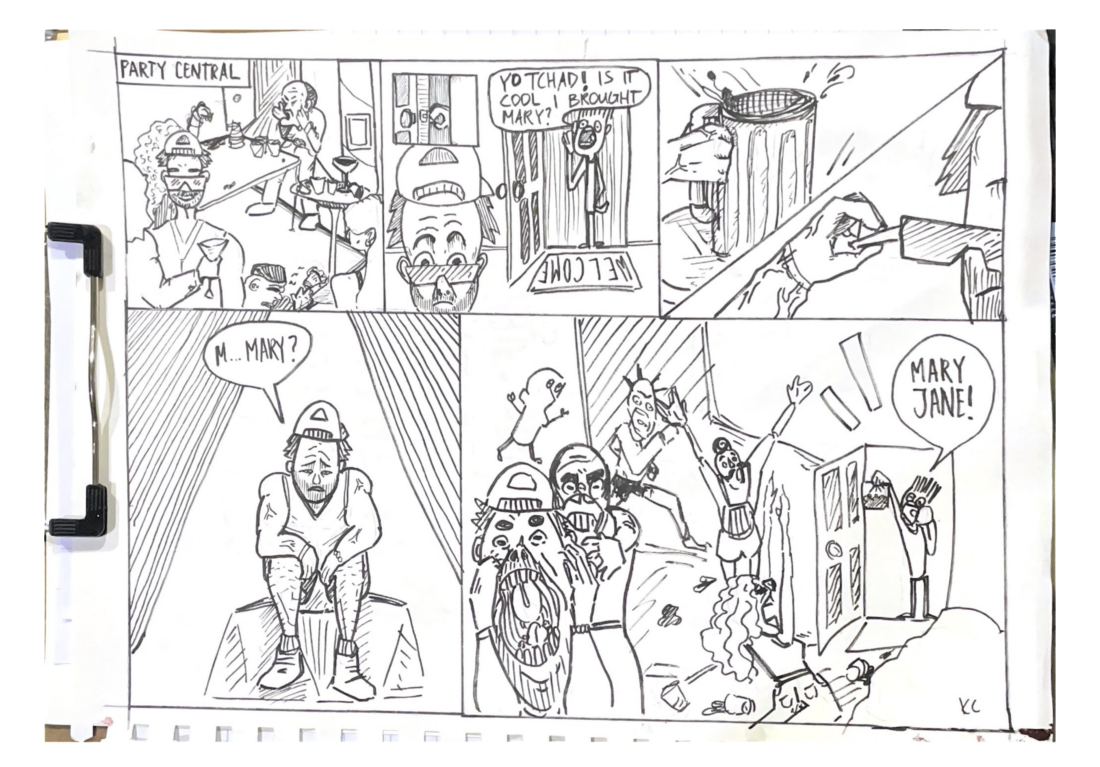
<p style="font-size:21px">Party Central by Kurt Chavez</p>
]]></content>
		
					<link rel="replies" type="text/html" href="https://thesheaf.com/2026/06/05/party-central/?utm_source=rss&#038;utm_medium=rss&#038;utm_campaign=party-central#comments" thr:count="0" />
			<link rel="replies" type="application/atom+xml" href="https://thesheaf.com/2026/06/05/party-central/feed/atom/" thr:count="0" />
			<thr:total>0</thr:total>
			</entry>
		<entry>
		<author>
			<name>Katherine Walcer</name>
					</author>

		<title type="html"><![CDATA[The Emotional Weight Of Unanswered Emails]]></title>
		<link rel="alternate" type="text/html" href="https://thesheaf.com/2026/06/04/the-emotional-weight-of-unanswered-emails/?utm_source=rss&#038;utm_medium=rss&#038;utm_campaign=the-emotional-weight-of-unanswered-emails" />

		<id>https://thesheaf.com/?p=45422</id>
		<updated>2026-06-04T13:56:42Z</updated>
		<published>2026-06-04T12:00:00Z</published>
		<category scheme="https://thesheaf.com" term="Opinions" />
		<summary type="html"><![CDATA[Why something so small can feel so heavy]]></summary>

					<content type="html" xml:base="https://thesheaf.com/2026/06/04/the-emotional-weight-of-unanswered-emails/?utm_source=rss&#038;utm_medium=rss&#038;utm_campaign=the-emotional-weight-of-unanswered-emails"><![CDATA[
<figure class="wp-block-gallery has-nested-images columns-default is-cropped wp-block-gallery-2 is-layout-flex wp-block-gallery-is-layout-flex">
<figure class="wp-block-image size-large"><img decoding="async" width="1100" height="642" data-id="45423" src="https://thesheaf.com/wp-content/uploads/2026/06/2026-06-04-Emails-1100x642.png" alt="Sending emails through laptop with modern technology | Sebastian Moldoveanu | Canva Pro" class="wp-image-45423" srcset="https://thesheaf.com/wp-content/uploads/2026/06/2026-06-04-Emails-1100x642.png 1100w, https://thesheaf.com/wp-content/uploads/2026/06/2026-06-04-Emails-480x280.png 480w, https://thesheaf.com/wp-content/uploads/2026/06/2026-06-04-Emails-300x175.png 300w, https://thesheaf.com/wp-content/uploads/2026/06/2026-06-04-Emails-768x448.png 768w, https://thesheaf.com/wp-content/uploads/2026/06/2026-06-04-Emails-250x146.png 250w, https://thesheaf.com/wp-content/uploads/2026/06/2026-06-04-Emails-550x321.png 550w, https://thesheaf.com/wp-content/uploads/2026/06/2026-06-04-Emails-800x467.png 800w, https://thesheaf.com/wp-content/uploads/2026/06/2026-06-04-Emails-309x180.png 309w, https://thesheaf.com/wp-content/uploads/2026/06/2026-06-04-Emails-514x300.png 514w, https://thesheaf.com/wp-content/uploads/2026/06/2026-06-04-Emails-857x500.png 857w, https://thesheaf.com/wp-content/uploads/2026/06/2026-06-04-Emails.png 1200w" sizes="(max-width: 1100px) 100vw, 1100px" /><figcaption class="wp-element-caption">Sending emails through laptop with modern technology | Sebastian Moldoveanu | Canva Pro</figcaption></figure>
</figure>


<p style="font-size:21px"><strong>Why something so small can feel so heavy</strong></p>


<p style="font-size:19px">There is a particular kind of stress that comes with an unanswered email. It isn&#8217;t loud or urgent in the way a missed phone call can be, and it doesn&#8217;t buzz insistently like a text message demanding attention. Instead, it lingers quietly in your inbox, bolded and timestamped, waiting. The longer it sits there, the heavier it seems to become.&nbsp;</p>


<p>What makes this strange is that emails are, objectively, small things. Most of them take only a few minutes to answer. Yet, replying can feel disproportionately difficult. For many of us, it&#8217;s not the content of the email that creates stress, but the expectation surrounding how we respond.&nbsp;</p>


<p>Email exists in an awkward middle ground. It isn&#8217;t as casual as texting, but it isn&#8217;t as ceremonious as writing a formal letter. Still, it carries a sense of professionalism that texting does not. When we text, we write quickly and naturally. We use fragments, emojis, voice notes and shorthand. Our tone feels instinctive.&nbsp;</p>


<p>Email, however, often feels like stepping onto a small stage. Suddenly, we are concerned about formatting, greetings, punctuation and how our words might be interpreted. We reread sentences. We adjust phrasing. We debate whether “hi” sounds too abrupt or whether “dear” feels overly stiff.&nbsp;</p>


<p>This shift in tone requires mental energy. It asks us to move from casual communication to curated communication, and that transition can feel surprisingly draining, especially when we&#8217;re already balancing school, work, relationships and the everyday demands of life. Even if the message itself is simple, the act of crafting a response that feels clear, polite and professional can feel overwhelming.&nbsp;</p>


<p>Part of the stress also comes from the fear of being misunderstood. In text messages, the other person often knows us well enough to hear our voice in their head. Email can feel more exposed. Without facial expressions or immediate back-and-forth clarification, we worry that our tone might be misread. We don&#8217;t want to sound cold, careless or incompetent. In academic or professional settings, this fear can intensify because emails often shape how others perceive us. A message to a professor, supervisor or potential employer can feel like a reflection of our capability and character.&nbsp;</p>


<p>For students and young professionals, especially, this pressure can turn a simple reply into a miniature performance. We aren&#8217;t just answering a question; we are presenting ourselves. That pressure can lead to procrastination. We open the email, begin drafting a response, second-guess our wording, and then decide to return to it later. Later turns into tomorrow. Tomorrow turns into next week. Suddenly, the emotional weight has doubled, not only do we have to respond, but we have to respond late.&nbsp;</p>


<p>There&#8217;s also the cumulative effect of emails. Unlike texts, which tend to demand immediate attention, emails accumulate quietly. They sit in folders and inboxes, each one representing a small responsibility. Some require clarification. Some require attachments. Some require decisions. When several stack up at once, they can begin to feel like a list of unfinished obligations rather than simple conversations.&nbsp;</p>


<p>This buildup often triggers guilt. The longer an email goes unanswered, the more it whispers in the back of our minds. We tell ourselves we&#8217;re being rude. We assume the sender is waiting impatiently. We start to interpret the delay as a personal flaw instead of what it usually is, a moment of limited bandwidth. That guilt makes it harder to reply, not easier. Avoidance feeds anxiety, and anxiety feeds avoidance.&nbsp;</p>


<p>There&#8217;s also a generational layer to this tension. Many of us were taught how to write essays in school, but not necessarily how to write everyday professional emails. We learned structure and citation styles, but not anything for routine communication. At the same time, texting became second nature. It feels deliberate. It feels measured. In a world that values quick responses and constant availability, that deliberateness can feel like friction.&nbsp;</p>


<p>Adding to this is the fact that email no longer lives exclusively at a desk. It travels with us on our phones, appearing during dinner, before bed or in the middle of a weekend. The boundary between work or school and personal life blurs. Even when we&#8217;re resting, the reminder of an unanswered message can surface and create subtle stress.&nbsp;</p>


<p>When we step back, it becomes clear that many emails do not require the level of precision we assign to them. A professional email does not have to be flawless. It means respectful and clear. A short, direct message is often exactly what the situation calls for. The expectation we feel is often louder in our own minds than in others.&nbsp;</p>


<p>Reframing email as a conversation rather than performance can ease some of this tension. At its core, an email is one person reaching out and another responding. It does not have to be a literary achievement. It simply needs to communicate what is necessary.&nbsp;</p>


<p>Practical strategies can also help lighten the load. Allowing ourselves to write imperfect first drafts reduces the pressure to get everything right immediately. Using simple templates for common responses can reduce decision-making pressure at times. Setting aside a short, focused block of time to answer emails can prevent them from accumulating into something larger than they are. Most importantly, reminding ourselves that others are managing their own inboxes and likely experiencing similar stress can restore perspective.&nbsp;</p>


<p>Extending grace to ourselves is essential. An unanswered email is not evidence of irresponsibility or a failure. More often, it reflects a moment when our mental capacity was already stretched thin. We live in a time of constant communication, and managing it all is not effortless.&nbsp;</p>


<p>There is a quiet relief that comes with finally pressing “send” on a message we&#8217;ve been avoiding. The sense of release is often greater than the task itself warranted. The weight was monumental, but because we faced it.&nbsp;</p>


<p>Perhaps if we allowed emails to be more human and more forgiving, more conversational, they would feel lighter. Perhaps we could recognize that clarity matters more than perfection, and that responsiveness does not require self-criticism.&nbsp;</p>


<p style="font-size:19px">In the end, an email is just a small exchange between two people. It does not define our worth, our intelligence or our professionalism. Sometimes, the bravest and most freeing thing we can do is write the reply, keep it simple and trust that it is enough.</p>
]]></content>
		
					<link rel="replies" type="text/html" href="https://thesheaf.com/2026/06/04/the-emotional-weight-of-unanswered-emails/?utm_source=rss&#038;utm_medium=rss&#038;utm_campaign=the-emotional-weight-of-unanswered-emails#comments" thr:count="0" />
			<link rel="replies" type="application/atom+xml" href="https://thesheaf.com/2026/06/04/the-emotional-weight-of-unanswered-emails/feed/atom/" thr:count="0" />
			<thr:total>0</thr:total>
			</entry>
		<entry>
		<author>
			<name>Nammi Nguyen</name>
					</author>

		<title type="html"><![CDATA[2025–26 Huskie Athletics Season Recap]]></title>
		<link rel="alternate" type="text/html" href="https://thesheaf.com/2026/06/03/2025-26-huskie-athletics-season-recap/?utm_source=rss&#038;utm_medium=rss&#038;utm_campaign=2025-26-huskie-athletics-season-recap" />

		<id>https://thesheaf.com/?p=45418</id>
		<updated>2026-06-03T13:12:31Z</updated>
		<published>2026-06-03T12:00:00Z</published>
		<category scheme="https://thesheaf.com" term="Sports &amp; Health" />
		<summary type="html"><![CDATA[A year of banners, breakthroughs and defining moments across every program. The]]></summary>

					<content type="html" xml:base="https://thesheaf.com/2026/06/03/2025-26-huskie-athletics-season-recap/?utm_source=rss&#038;utm_medium=rss&#038;utm_campaign=2025-26-huskie-athletics-season-recap"><![CDATA[
<figure class="wp-block-gallery has-nested-images columns-default is-cropped wp-block-gallery-3 is-layout-flex wp-block-gallery-is-layout-flex">
<figure class="wp-block-image size-large"><img loading="lazy" decoding="async" width="1100" height="733" data-id="45419" src="https://thesheaf.com/wp-content/uploads/2026/06/2026-06-03-Huskie-Season-Recap-1100x733.png" alt="Huskie Salute 2026 | Huskie Athletics" class="wp-image-45419" srcset="https://thesheaf.com/wp-content/uploads/2026/06/2026-06-03-Huskie-Season-Recap-1100x733.png 1100w, https://thesheaf.com/wp-content/uploads/2026/06/2026-06-03-Huskie-Season-Recap-480x320.png 480w, https://thesheaf.com/wp-content/uploads/2026/06/2026-06-03-Huskie-Season-Recap-300x200.png 300w, https://thesheaf.com/wp-content/uploads/2026/06/2026-06-03-Huskie-Season-Recap-768x512.png 768w, https://thesheaf.com/wp-content/uploads/2026/06/2026-06-03-Huskie-Season-Recap-150x100.png 150w, https://thesheaf.com/wp-content/uploads/2026/06/2026-06-03-Huskie-Season-Recap-250x167.png 250w, https://thesheaf.com/wp-content/uploads/2026/06/2026-06-03-Huskie-Season-Recap-550x367.png 550w, https://thesheaf.com/wp-content/uploads/2026/06/2026-06-03-Huskie-Season-Recap-800x533.png 800w, https://thesheaf.com/wp-content/uploads/2026/06/2026-06-03-Huskie-Season-Recap-270x180.png 270w, https://thesheaf.com/wp-content/uploads/2026/06/2026-06-03-Huskie-Season-Recap-450x300.png 450w, https://thesheaf.com/wp-content/uploads/2026/06/2026-06-03-Huskie-Season-Recap-750x500.png 750w, https://thesheaf.com/wp-content/uploads/2026/06/2026-06-03-Huskie-Season-Recap.png 1200w" sizes="auto, (max-width: 1100px) 100vw, 1100px" /><figcaption class="wp-element-caption">Huskie Salute 2026 | Huskie Athletics</figcaption></figure>
</figure>


<p style="font-size:21px"><strong>A year of banners, breakthroughs and defining moments across every program.</strong></p>


<p style="font-size:19px">The 2025–26 season was another remarkable year for Huskie Athletics, marked by championships, record‑breaking performances and defining moments across eight varsity programs. Huskie student‑athletes, coaches and support staff left their mark on conference and national stages. Here’s a full look back at the year!</p>


<p style="font-size:21px"><strong>Women’s Soccer</strong></p>


<p>The Huskies put together an 8‑5‑1 campaign, extending their playoff streak to 13 seasons. As the Prairie Division’s fourth seed, they travelled to Vancouver to face the two‑time defending national champion UBC Thunderbirds. Saskatchewan held their own in a gritty battle but ultimately fell 1–0 to the top seed.</p>


<p><em><strong>Canada West Awards</strong></em></p>


<ul class="wp-block-list">
<li>Jenna Steacy – Second Team All‑Star</li>


<li>Isabelle Lachance – All‑Rookie Team</li>
</ul>


<p><em><strong>U SPORTS Awards</strong></em></p>


<ul class="wp-block-list">
<li>Isabelle Lachance – All‑Rookie Team (first in program history)</li>
</ul>


<p style="font-size:21px"><strong>Men’s Soccer</strong></p>


<p>A rebuilding Huskies squad finished 3‑7‑4 but showed resilience throughout the year. Highlights included a road win over the University of Calgary and closing the season with back‑to‑back 1–1 draws against the University of Alberta and MacEwan University. Graduating players Misgana Killoh and Ryan Ko each scored their first U SPORTS goals in each match, respectively — a fitting send‑off.</p>


<p><em><strong>Canada West Awards</strong></em></p>


<ul class="wp-block-list">
<li>Dante Molina – All‑Rookie Team</li>


<li>Tristao Hein – All‑Rookie Team</li>
</ul>


<p style="font-size:21px"><strong>Women’s Cross Country</strong></p>


<p>At Canada West, the Huskies packed tightly through the middle of the field, led by Morgan Tiede in 25th, followed by Brooklyn Roney (28th), Angelina Beveridge‑Warick (30th), Nathalie Toledo (34th) and Petra Tymko (35th). At U SPORTS, the team placed 10th, with Tiede again leading the way in 83rd.</p>


<p><em><strong>Canada West Awards</strong></em></p>


<ul class="wp-block-list">
<li>Attleigh Maloney – Student‑Athlete Community Service Award</li>
</ul>


<p style="font-size:21px"><strong>Men’s Cross Country</strong></p>


<p>The men narrowly missed defending their Canada West bronze, finishing fourth. Anthony Antaya (4th) and Alexander Webster (6th) delivered top‑tier performances to earn All‑Star honours. At U SPORTS, the Huskies placed 16th, with Antaya finishing 30th and Webster 53rd.</p>


<p><em><strong>Canada West Awards</strong></em></p>


<ul class="wp-block-list">
<li>Anthony Antaya – All‑Star</li>


<li>Alexander Webster – All‑Star, Student‑Athlete Community Service Award</li>
</ul>


<p><em><strong>U SPORTS Awards</strong></em></p>


<ul class="wp-block-list">
<li>Alexander Webster – Student‑Athlete Community Service Award</li>
</ul>


<p style="font-size:21px"><strong>Football</strong></p>


<p>Saskatchewan rolled through the regular season at 7‑1 and handled UBC 26‑7 in the Canada West semifinal. The Hardy Cup became an instant classic: trailing by 16 in the fourth quarter, the Huskies stormed back, capped by Lukas Scott’s 25‑yard field goal with 25 seconds left to defeat the University of Regina 25‑24 and claim the program’s 22nd conference title.</p>


<p>A 22‑11 win over Queen’s University in the Mitchell Bowl sent the Huskies back to the Vanier Cup, where they fell 30‑16 to Université de Montréal despite a strong start and a packed Mosaic Stadium crowd.</p>


<p><em><strong>Canada West All‑Stars  </strong></em></p>


<ul class="wp-block-list">
<li><em>Offence:</em> Daniel Wiebe, Ryker Frank, Anton Amundrud</li>


<li><em>Defence:</em> Seth Hundeby, Charlie Parks, Reece McCormick, Ansu Latmore</li>


<li><em>Special Teams:</em> Daniel Kubongo</li>
</ul>


<p><em><strong>Canada West Major Awards</strong></em></p>


<ul class="wp-block-list">
<li>Daniel Wiebe – Player of the Year</li>


<li>Charlie Parks – Outstanding Lineman</li>


<li>Seth Hundeby – Outstanding Defensive Player</li>


<li>Scott Flory – Coach of the Year</li>
</ul>


<p><em><strong>U SPORTS Awards</strong></em></p>


<ul class="wp-block-list">
<li>Seth Hundeby – Defensive Player of the Year, First Team All‑Canadian</li>


<li>Daniel Wiebe – First Team All‑Canadian</li>


<li>Charlie Parks – First Team All‑Canadian</li>


<li>Reece McCormick – Second Team All‑Canadian</li>
</ul>


<p style="font-size:21px"><strong>Women’s Volleyball</strong></p>


<p>Saskatchewan posted a strong 12‑8 regular season, clinching sixth place and a first‑round bye after defeating provincial rivals Regina. In the quarterfinals, they faced perennial powerhouse Trinity Western University, where their season ended in a competitive two‑match sweep.</p>


<p><em><strong>Canada West Awards</strong></em></p>


<ul class="wp-block-list">
<li>Taryn Hannah – Second Team All‑Star</li>
</ul>


<p style="font-size:21px"><strong>Men’s Volleyball</strong></p>


<p>The Huskies finished 9‑11 and entered playoffs as the seventh seed. In the play‑in round, they defeated defending national champion Brandon University with a 2‑0 sweep at home. Their run ended in the quarterfinals against Trinity Western.</p>


<p><em><strong>Canada West Awards</strong></em></p>


<ul class="wp-block-list">
<li>Emmett Graham – First Team All‑Star</li>
</ul>


<p style="font-size:21px"><strong>Women’s Basketball</strong></p>


<p>The defending national champions had an undefeated regular season, going 20-0 and contributing to a 51‑game win streak that began in 2024 before being upset by Calgary in the Canada West quarterfinals. However, Saskatchewan secured the wildcard berth and made the most of it — defeating UBC, host Université Laval and the University of New Brunswick to reclaim the Bronze Baby and capture another U SPORTS title. Senior Ella Murphy Wiebe also claimed tournament MVP.&nbsp;</p>


<p><em><strong>Canada West Awards</strong></em></p>


<ul class="wp-block-list">
<li>Gage Grassick – Player of the Year, First Team All‑Star</li>


<li>Maya Flindall – Second Team All‑Star</li>


<li>Lisa Thomaidis – Coach of the Year (8th career)</li>
</ul>


<p><em><strong>U SPORTS Awards</strong></em></p>


<ul class="wp-block-list">
<li>Gage Grassick – First Team All‑Canadian</li>


<li>Lisa Thomaidis – Coach of the Year</li>
</ul>


<p style="font-size:21px"><strong>Men’s Basketball</strong></p>


<p>The Huskies finished 5‑15 but delivered one of the season’s biggest upsets with a 71‑59 win over second‑place Alberta, powered by Emmanuel Bonsu’s 17 points and Easton Thimm’s game‑high 19. Thimm continued his rise from last year’s All‑Rookie nod to earn Second Team All‑Star recognition.</p>


<p><em><strong>Canada West Awards</strong></em></p>


<ul class="wp-block-list">
<li>Easton Thimm – Second Team All‑Star</li>
</ul>


<p style="font-size:21px"><strong>Men’s Wrestling</strong></p>


<p>Saskatchewan reclaimed the Canada West title for the first time since 2020, ending Alberta’s four‑year run. The Huskies dominated with five gold medalists — Donovan Neudorf (65kg), Nathan Kowal (68kg), Takis Sembalerus (72kg), Matthew Yong (100kg) and Yuel Kebrom (61kg), who also earned Rookie of the Year. The team swept every conference meet this season.</p>


<p>At U SPORTS, the men&#8217;s team earned bronze. Neudorf won silver, while Kebrom, Sembalerus and Yong each added bronze.</p>


<p><em><strong>Canada West Awards</strong></em></p>


<ul class="wp-block-list">
<li>Yuel Kebrom – Rookie of the Year</li>


<li>Daniel Olver – Coach of the Year</li>


<li>Donovan Neudorf – Student‑Athlete Community Service Award</li>
</ul>


<p><em><strong>U SPORTS Awards</strong></em></p>


<ul class="wp-block-list">
<li>Donovan Neudorf – Men’s Community Service Award</li>
</ul>


<p style="font-size:21px"><strong>Women’s Wrestling</strong></p>


<p>The women placed third at Canada West, led by Myah Phillips’ gold at 83kg. At U SPORTS, Phillips earned silver and Sierra Mullin added bronze at 53kg.</p>


<p style="font-size:21px"><strong>Track &amp; Field</strong></p>


<p><strong>Canada West</strong></p>


<p>The Huskie women extended their dynasty with an eighth straight conference title. Saskatchewan opened with three golds on day one — Hannah Hagerty (long jump), Nicole Ostertag (60m hurdles) and Hailee Woodhouse (300m). Day two brought more hardware, including Kailee Woitas’ 60m win and Olamide Olaloku’s triple jump gold, which broke an 18‑year‑old conference record.</p>


<p>The women’s 4x200m relay team of Hailee Woodhouse, Emma Egert, Selena Keyowski and Grace Igbiki shattered both the conference and national records in 1:35.75. The 4x400m squad of Jaedyn McLaughlin, Hannah Hagerty, Igbiki and Egert added another gold. The women totalled 13 medals by the end of the meet — seven golds, three silvers and three bronzes.&nbsp;</p>


<p>The Huskie men put together a strong showing at the Canada West Championships, finishing fourth overall and delivering three gold‑medal performances. Gold medallists included Liam Oster in the 60m hurdles, Ashwin Witt in pole vault and Nathan Pinno in shot put. In addition to the three gold medals, they also earned three silvers and three bronzes.</p>


<p><em><strong>Canada West Awards</strong></em></p>


<ul class="wp-block-list">
<li>Hailee Woodhouse – Women’s Rookie of the Year</li>


<li>Joshua Tam – Men’s Community Service Award</li>


<li>Jason Reindl – Women’s Coach of the Year</li>
</ul>


<p><strong>U SPORTS</strong></p>


<p>The women’s 4x200m relay team again delivered a record‑setting performance, winning gold in 1:35.24. Olaloku broke her own program record to win the triple jump, while Ostertag edged Calgary’s Sienna MacDonald in a marquee 60m hurdles final for gold. The 4&#215;400 team and Hannah Hagerty in the long jump earned silver and Grace Igbiki added a bronze medal in the 300m.</p>


<p><em><strong>U SPORTS Awards</strong></em></p>


<ul class="wp-block-list">
<li>Hailee Woodhouse – Rookie of the Year</li>
</ul>


<p style="font-size:21px"><strong>Women’s Hockey</strong></p>


<p>The Huskies finished 10‑10‑2‑6 and closed the season with a dramatic Senior Night comeback, scoring three third‑period goals to defeat first‑place Mount Royal University. Seniors Sara Kendall and Jayde Cadieux both scored, along with second‑year forward Kathleen Wisener. Finnish rookie Peppi Vertanen made an immediate impact in her debut season.</p>


<p><em>Canada West Awards</em></p>


<ul class="wp-block-list">
<li>Peppi Vertanen – All‑Rookie Team</li>
</ul>


<p style="font-size:21px"><strong>Men’s Hockey</strong></p>


<p>Saskatchewan went 19‑7‑2 and captured their second straight Canada West title, becoming the first team in conference history to go 6‑0 through the postseason. They swept Mount Royal in the final to claim their 13th conference banner. At nationals, the Huskies erased a 3‑0 deficit to force overtime but fell to host Saint Mary’s University in the quarterfinal.</p>


<p><em><strong>Canada West Awards</strong></em></p>


<ul class="wp-block-list">
<li>Conner Roulette – Rookie of the Year, All‑Rookie Team</li>


<li>Landon Kosior – First Team All‑Star</li>


<li>Dawson Holt – Second Team All‑Star</li>


<li>Chantz Petruic – Second Team All‑Star</li>
</ul>


<p><em><strong>U SPORTS Awards</strong></em></p>


<ul class="wp-block-list">
<li>Conner Roulette – Clare Drake Award (National Rookie of the Year)</li>


<li>Landon Kosior – All‑Canadian</li>
</ul>


<p style="font-size:19px">Congratulations to all athletes, coaches and staff on an incredible year!</p>
]]></content>
		
					<link rel="replies" type="text/html" href="https://thesheaf.com/2026/06/03/2025-26-huskie-athletics-season-recap/?utm_source=rss&#038;utm_medium=rss&#038;utm_campaign=2025-26-huskie-athletics-season-recap#comments" thr:count="0" />
			<link rel="replies" type="application/atom+xml" href="https://thesheaf.com/2026/06/03/2025-26-huskie-athletics-season-recap/feed/atom/" thr:count="0" />
			<thr:total>0</thr:total>
			</entry>
		<entry>
		<author>
			<name>Hannah Ha</name>
					</author>

		<title type="html"><![CDATA[The Myth of AI: Checking in on the AI Industry and its Rhetoric]]></title>
		<link rel="alternate" type="text/html" href="https://thesheaf.com/2026/06/02/the-myth-of-ai-checking-in-on-the-ai-industry-and-its-rhetoric/?utm_source=rss&#038;utm_medium=rss&#038;utm_campaign=the-myth-of-ai-checking-in-on-the-ai-industry-and-its-rhetoric" />

		<id>https://thesheaf.com/?p=45415</id>
		<updated>2026-06-02T14:13:37Z</updated>
		<published>2026-06-02T12:00:00Z</published>
		<category scheme="https://thesheaf.com" term="Analysis" />
		<summary type="html"><![CDATA[Is AI as bad as it’s been made out to be… or even as good as it’s been made out to be?]]></summary>

					<content type="html" xml:base="https://thesheaf.com/2026/06/02/the-myth-of-ai-checking-in-on-the-ai-industry-and-its-rhetoric/?utm_source=rss&#038;utm_medium=rss&#038;utm_campaign=the-myth-of-ai-checking-in-on-the-ai-industry-and-its-rhetoric"><![CDATA[
<figure class="wp-block-gallery has-nested-images columns-default is-cropped wp-block-gallery-4 is-layout-flex wp-block-gallery-is-layout-flex">
<figure class="wp-block-image size-large"><img loading="lazy" decoding="async" width="1100" height="550" data-id="45416" src="https://thesheaf.com/wp-content/uploads/2026/06/2026-06-02-AI-1100x550.png" alt="Artificial intelligence concept | Metamoworks from Getty Images | Canva Pro" class="wp-image-45416" srcset="https://thesheaf.com/wp-content/uploads/2026/06/2026-06-02-AI-1100x550.png 1100w, https://thesheaf.com/wp-content/uploads/2026/06/2026-06-02-AI-480x240.png 480w, https://thesheaf.com/wp-content/uploads/2026/06/2026-06-02-AI-300x150.png 300w, https://thesheaf.com/wp-content/uploads/2026/06/2026-06-02-AI-768x384.png 768w, https://thesheaf.com/wp-content/uploads/2026/06/2026-06-02-AI-250x125.png 250w, https://thesheaf.com/wp-content/uploads/2026/06/2026-06-02-AI-550x275.png 550w, https://thesheaf.com/wp-content/uploads/2026/06/2026-06-02-AI-800x400.png 800w, https://thesheaf.com/wp-content/uploads/2026/06/2026-06-02-AI-360x180.png 360w, https://thesheaf.com/wp-content/uploads/2026/06/2026-06-02-AI-600x300.png 600w, https://thesheaf.com/wp-content/uploads/2026/06/2026-06-02-AI-1000x500.png 1000w, https://thesheaf.com/wp-content/uploads/2026/06/2026-06-02-AI.png 1200w" sizes="auto, (max-width: 1100px) 100vw, 1100px" /><figcaption class="wp-element-caption">Artificial intelligence concept | Metamoworks from Getty Images | Canva Pro</figcaption></figure>
</figure>


<p style="font-size:21px"><strong>Is AI as bad as it’s been made out to be… or even as good as it’s been made out to be?</strong></p>


<p style="font-size:19px">AI has not left public conversation in years. AI is bad, AI is profit, AI will replace us all, AI is the future, AI is killing the planet.&nbsp;</p>


<p>Arguments against AI defend human intelligence, pushing for integrity behind art and the human touch. Arguments promoting AI claim convenience and technological revolution, marketing it as highly profitable. AI is integrated into every app and search engine, yet it seems that people are spending more time managing AI tools than they actually save by using them.&nbsp;</p>


<p>Attitudes are very divided: the industry side is optimistic and investing heavily, while public sentiment is one of AI fatigue. So, after the last few years of supposed “innovation,” what is there to show for it? What are we mistaking as advancement, and what happens when the smoke clears?&nbsp;</p>


<p style="font-size:21px"><strong>Wait, What is AI?</strong></p>


<p>Science fiction novels and Black Mirror episodes often forewarn of AI gaining sentience and replacing humans. Tech companies also play along with this idea of rapid development of a tool that can replace humans in the workforce, selling this promise of innovation to investors.</p>


<p>It is important to dissect these narratives and understand what AI actually is. AI is not an overnight invention growing beyond control; it has been used in machine learning models in the past for many professional and scientific fields. It enables systems to learn patterns from data, gradually improving performance by training itself. Autocorrect on a Word Document uses these traditional machine learning models, placing that squiggly red line under a misspelled word or suggesting the next word based on the user’s most frequent typing patterns.</p>


<p>Under the umbrella of machine learning are large language models (LLMs), used for chatbots like ChatGPT and Gemini. LLMs are designed to recognize patterns in text and generate human-like responses. They don’t think, feel or possess awareness. What is often mistaken for “intelligence” is just prediction and pattern recognition.&nbsp;</p>


<p>When given an input, LLMs calculate the most likely next word based on training data. There’s no inner experience, intention or understanding behind it. The myth of intelligence and expertise persists because LLMs are very good at mimicking conversation, creating the illusion of personality or consciousness. However, this is less like a human mind and more like autocomplete on a keyboard.&nbsp;</p>


<p style="font-size:21px"><strong>The AI Boom and Bubble</strong></p>


<p>When Wall Street told tales of exponential profit in the stock market, it crashed and led to the Great Depression. When widespread confidence in the U.S. housing market proved to be wrong, it led to the 2008 housing crisis. NFTs and cryptocurrency saw the same hype and sharp fall, leaving investors out to dry.&nbsp;</p>


<p>Economic bubbles are a market phenomenon that describes rapid increases in asset prices,&nbsp; where the promised value of an asset does not match the asset’s actual intrinsic value. It usually plays out like so: inflated prices caused by optimism in market behaviour and speculative investment, causing an eventual burst of these bubbles when market sentiment catches up and firms and investors bail and incite rapid sell-off.&nbsp;</p>


<p>Many economists noticed a similar trend surrounding the AI industry. The AI bubble hypothesizes that the massive hype and investment surrounding the AI industry exceeds actual profit, similar to previous economic bubbles. Companies are now participating in an AI arms race of sorts, investing heavily in AI by building data centers, launching startups and racing to adopt new tools, all driven by fear of missing out.&nbsp;</p>


<p>Despite this investment, firms like OpenAI are burning cash. In<em> </em>2025 Open AI collected $4.3 billion in revenue while still posting a net loss of $13.5 billion during that six month period<em>.</em> OpenAI is not the only one. An economic report from MIT concluded that despite investing US$30-$40 billion into GenAI, 95 per cent of organizations are not seeing returns on their investments. The same companies are cycling the same investments amongst themselves, creating an illusion of profit and abundance within the industry.&nbsp;</p>


<p>This is where cyclical investment patterns come in that explain the illusion of endless growth in the AI sector. In the early phase of a tech boom, companies overspend on infrastructure like data centers, chips and capacity, anticipating explosive future demand. At the beginning, this can look like growth and a promising industry. That’s exactly what firms have begun to do in this AI boom, stockpiling to avoid falling behind in AI. If everyone is spending, there must be a good reason, right?&nbsp;</p>


<p>The risk is that this turns into overinvestment. If demand doesn’t keep pace or if companies realize they’ve built more capacity than they can profitably use, spending slows sharply. This has been observed in other tech bubbles, where there is intense buildup, followed by a cooling-off period when reality catches up to expectations.&nbsp;</p>


<p>The AI boom has created a bottleneck that runs straight through the AI chip maker NVIDIA. Most modern AI systems depend on powerful graphics processing units to train and run models. Whether it’s startups or Big Tech firms like Microsoft, they’re all buying the same core ingredient: NVIDIA chips. The entire AI industry is stacked on top of a single supplier, causing their profits to surge. In this AI digital gold rush, many are saying that NVIDIA is selling the shovels.&nbsp;</p>


<p>With the sale of its AI chips, NVIDIA’s total profits for the fiscal year was USD$120 billion in 2025, which has grown hugely since the $4.4 billion of profit that they saw in 2023. This means that the entire tech industry is investing in physical infrastructure and supporting the growth of one firm, which also happens to be the only firm to see any profit in this AI boom.&nbsp;</p>


<p style="font-size:21px"><strong>Public Perception</strong></p>


<p>Over the last few years, AI has developed and improved at a rate that was hard to foresee, with regulations lagging behind. In the early days of OpenAI and DeepSeek, the public met generative AI with curiosity but skepticism. Many were immediately against a tool so inaccurate and dysregulated. Others were excited by the consumer-level access to services like ChatGPT and, seemingly overnight, being able to generate texts and images at the drop of a hat. Though intrigued by its ability to mimic human speech, generative AI engines did not yet have the access to information needed to maintain accuracy, nor flawlessly mimic human speech.&nbsp;</p>


<p>Today, AI is an educator’s worst nightmare; teachers rush to reel in AI usage among students while AI continues to improve and better mimic human speech but not necessarily factual accuracy. Government regulation has also not moved as fast as the development of AI, which has led to society working around it rather than effectively integrating it. According to a 2025 study by Abacus Data, 51 per cent of Canadians distrust AI, and 55 per cent reportedly never or rarely engage with it.&nbsp;</p>


<p>Despite the narrative that AI is a magic wand that the public and professional sectors will integrate, there is major distrust and skepticism stemming from a lack of regulation and exploitative data gathering. According to the study, the top five concerns of the Canadian public regarding AI are malicious uses of AI, spread of misinformation and fake content, loss of privacy, safety and security concerns, as well as increased unemployment.&nbsp;</p>


<p>On the other hand, the leading perceived benefits of AI are increased efficiency and productivity, reduced human error, enhanced convenience, improved healthcare and medical advances and better access to information and education. The study found that 45% of Canadians use AI tools on a regular basis. This means that for some, AI is a neutral tool that has become a part of everyday life. This is true for younger Canadians especially: the study found that 72% of those aged 18 to 29 and 62% of those aged 30 to 44 regularly use AI tools in their everyday lives.</p>


<p style="font-size:21px"><strong>AI’s Achilles Heel&nbsp;</strong></p>


<p>Though there is distrust, public perception agrees that the potential is there. An article by&nbsp;&nbsp;</p>


<p>The Kuwait College of Science and Technology published in 2025 looks at how students and faculty apply AI tools in post secondary education.&nbsp;</p>


<p>Titled “Integrating artificial intelligence in higher education: perceptions, challenges, and strategies for academic innovation”, the study found that both students and faculty recognize AI’s potential in enhancing teaching and learning, while simultaneously distrusting its reliability and ethics. The article argues that while AI tools have value in settings like the classroom, barriers to AI integration exist because of a lack of ethical guidelines and training.&nbsp;</p>


<p>Clearly, AI is undeniably powerful but currently highly capitalized; privatization and subsequent smoke and mirrors surrounding AI is impeding its value in making meaningful changes in the way it was promised.&nbsp;</p>


<p>The good news is that the technology is still very real. The artificial intelligence models are undergoing real advancements that have undeniable gains. This means that without market forces and lack of regulation, AI can live up to the expectations of providing net benefit in sectors like research and healthcare.&nbsp;</p>


<p>While other economic bubbles and fads burst as fast as they ballooned, AI’s trajectory may more closely resemble the dot-com bubble during the 2000s. The dot-com bubble occurred when the tech industry theorized that the internet would change the world. Though those predictions panned out to be correct in the long haul, the timeline and returns promised to investors were highly inflated at the time, causing stock markets to crash and a majority of tech startups to go under. However, after the bubble burst, the technology and infrastructure was what remained, and the world relies on the internet to this day.&nbsp;</p>


<p style="font-size:19px">AI has the potential to be everything it was promised to us, without the ethical concerns, the lack of integrity and the dysregulation and that it has thus far turned out to be. The first step is to understand where these inflated narratives are stemming from, so we might understand not only the real harms but also real advantages. With proper government regulations and ethical guidelines on both usage and development of AI, the industry might begin to course correct in the right direction. By addressing the barriers that challenge AI has all the potential to add, rather than subtract from humanity.&nbsp;</p>
]]></content>
		
					<link rel="replies" type="text/html" href="https://thesheaf.com/2026/06/02/the-myth-of-ai-checking-in-on-the-ai-industry-and-its-rhetoric/?utm_source=rss&#038;utm_medium=rss&#038;utm_campaign=the-myth-of-ai-checking-in-on-the-ai-industry-and-its-rhetoric#comments" thr:count="0" />
			<link rel="replies" type="application/atom+xml" href="https://thesheaf.com/2026/06/02/the-myth-of-ai-checking-in-on-the-ai-industry-and-its-rhetoric/feed/atom/" thr:count="0" />
			<thr:total>0</thr:total>
			</entry>
		<entry>
		<author>
			<name>Laila Haider</name>
					</author>

		<title type="html"><![CDATA[Finally Free … Falling?]]></title>
		<link rel="alternate" type="text/html" href="https://thesheaf.com/2026/06/01/finally-free-falling/?utm_source=rss&#038;utm_medium=rss&#038;utm_campaign=finally-free-falling" />

		<id>https://thesheaf.com/?p=45411</id>
		<updated>2026-06-01T13:56:18Z</updated>
		<published>2026-06-01T12:00:00Z</published>
		<category scheme="https://thesheaf.com" term="Opinions" />
		<summary type="html"><![CDATA[Reflections on graduation, and everything it’s taken to get here.]]></summary>

					<content type="html" xml:base="https://thesheaf.com/2026/06/01/finally-free-falling/?utm_source=rss&#038;utm_medium=rss&#038;utm_campaign=finally-free-falling"><![CDATA[
<figure class="wp-block-gallery has-nested-images columns-default is-cropped wp-block-gallery-5 is-layout-flex wp-block-gallery-is-layout-flex">
<figure class="wp-block-image size-large"><img loading="lazy" decoding="async" width="1100" height="733" data-id="45413" src="https://thesheaf.com/wp-content/uploads/2026/06/2026-06-01-Free-Falling-1100x733.png" alt="Graduation day | PBXStudio| Canva Pro" class="wp-image-45413" srcset="https://thesheaf.com/wp-content/uploads/2026/06/2026-06-01-Free-Falling-1100x733.png 1100w, https://thesheaf.com/wp-content/uploads/2026/06/2026-06-01-Free-Falling-480x320.png 480w, https://thesheaf.com/wp-content/uploads/2026/06/2026-06-01-Free-Falling-300x200.png 300w, https://thesheaf.com/wp-content/uploads/2026/06/2026-06-01-Free-Falling-768x512.png 768w, https://thesheaf.com/wp-content/uploads/2026/06/2026-06-01-Free-Falling-150x100.png 150w, https://thesheaf.com/wp-content/uploads/2026/06/2026-06-01-Free-Falling-250x167.png 250w, https://thesheaf.com/wp-content/uploads/2026/06/2026-06-01-Free-Falling-550x367.png 550w, https://thesheaf.com/wp-content/uploads/2026/06/2026-06-01-Free-Falling-800x533.png 800w, https://thesheaf.com/wp-content/uploads/2026/06/2026-06-01-Free-Falling-270x180.png 270w, https://thesheaf.com/wp-content/uploads/2026/06/2026-06-01-Free-Falling-450x300.png 450w, https://thesheaf.com/wp-content/uploads/2026/06/2026-06-01-Free-Falling-750x500.png 750w, https://thesheaf.com/wp-content/uploads/2026/06/2026-06-01-Free-Falling.png 1200w" sizes="auto, (max-width: 1100px) 100vw, 1100px" /><figcaption class="wp-element-caption">Graduation day | PBXStudio| Canva Pro</figcaption></figure>
</figure>


<p style="font-size:21px"><strong>Reflections on graduation, and everything it’s taken to get here.</strong></p>


<p style="font-size:19px">It’s strange how something you’ve been working toward for years — something that you’ve dreamt of like a form of salvation — can arrive so suddenly. Graduation, that looming, abstract milestone, has a way of feeling both impossibly far away and then all at once, unavoidably here. A paradoxical paradise and prison wrapped up in a pretty bow. One minute you’re figuring out where your classes are, and the next you’re standing at the edge of something that feels much bigger than a ceremony and 10 times as heavy as your cap and gown.</p>


<p>There’s excitement, of course. How could there not be? Graduation is proof of your endurance. It’s the amalgamation of your late nights and early mornings, stress and burnout and those small moments of clarity that you strung together with your own blood, sweat and tears into something that resembles achievement. It’s the satisfaction of knowing you made it through — through assignments you thought would break you, through exams that felt insurmountable, through entire semesters where motivation seemed like a theoretical concept. There is a real, undeniable pride in reaching the end.</p>


<p>Sitting alongside that excitement, however, is something less concrete and harder to name. A kind of unease. A feeling that this moment, which is supposed to feel like a conclusion, doesn’t quite wrap things up as neatly as you might have hoped.</p>


<p>How can one event possibly encompass years’ worth of effort?</p>


<p>It’s difficult not to reduce everything to the symbolism of it all: a stage, a handshake and a piece of paper. The simplicity of the ceremony feels almost at odds with the complexity of what it represents. Years of learning, of changing and growing into someone new — condensed into a few seconds of recognition. Just enough time for you to cross the stage, pose for a photograph and hear your loved ones cheer. It raises a question that lingers longer than expected: Is a degree really representative of everything you’ve done?</p>


<p>At first, the answer to that seems simple, instinctive. Obviously not. How could a piece of paper and two minutes of a three-hour-long ceremony reflect your years of gruelling academic hardships?</p>


<p>A degree doesn’t capture the moments that didn’t make it into your transcripts. It says nothing of the deep conversations you’ve had with professors and peers that completely shifted your perspective, the failures that forced you to lock in, the friendships that became foundational to who you’ve become. It doesn’t reflect the version of yourself that arrived on campus, meek, uncertain and tentative, compared to the one that’s leaving, weathered, weary and shaped by experience in ways that are difficult to verbalize.</p>


<p>Yet, that brief moment, when your name is called in a hall full of hundreds, means something. Even if it’s imperfect, even if it simplifies something that cannot be simplified, it still stands as a symbol. Not of everything, but of enough. A symbol that tells the world that you were capable. That you had enough persistence, enough discipline, enough willingness to keep going when stopping would have been easier.</p>


<p>There’s also something undeniably liberating about graduation. The thought creeps in almost immediately — hooray, I’m finally free! Free from deadlines, from readings, from the constant undercurrent of dread — something needing to be done, but not being able to put a finger on what exactly that is. Free from structuring your life around a syllabus and your professor’s office hours. There’s a lightness in imagining a life that’s not dictated by academic calendars or exam schedules any longer.</p>


<p>However,&nbsp; that freedom is complicated.</p>


<p>Because right behind it comes another thought, smaller but scarier — what comes next?</p>


<p>University has a way of providing structure, even when it feels chaotic. There are expectations, timelines and clear markers of progress. You know what you’re working toward, even if you’re not entirely sure why. It acts as a shield between you and distant relatives who ask what you’re up to these days. It gives you a sense of abstract purpose. A goal you’re slowly working towards.&nbsp;</p>


<p>Graduation disrupts that. It removes the support scaffolding that you’ve unknowingly built your life upon without immediately replacing it. Suddenly, your path forward in life feels less defined, more open in a way that is both exciting and deeply petrifying.</p>


<p>There is pressure in that openness. The idea that now, more than ever, you are responsible for shaping what comes next. Your life is truly in your own hands. The choices you make carry a different kind of weight. It’s no longer about choosing classes or majors, but about choosing directions, careers and identities.</p>


<p>What if you don’t know?</p>


<p>That uncertainty can feel like failure, even though it isn’t. There’s an unspoken expectation that graduation should come with clarity, with a plan neatly mapped out guiding you towards your inevitable finish line. However, for many, it doesn’t. Instead, it comes with questions. Am I ready? Did I make the right choices? Did I pick the wrong degree? What if I change my mind?</p>


<p>In that sense, graduation is less of an ending and more of a transition into a different kind of ambiguity.</p>


<p>It’s also a moment that invites reflection in ways that are difficult to avoid. Looking back becomes almost inevitable. You think about who you were when you first enrolled, what you thought these years would look like. You remember the things that mattered to you then and compare them to what matters now. More often than not, they’re not the same at all.</p>


<p>You come to the realization that growth doesn’t always look the way you expect it to. It’s not always visible or linear. Sometimes it’s minute, almost imperceptible until you’re forced to look at it all at once. Graduation creates that moment. It forces you to pause and acknowledge that everything has changed, even if you can’t fully articulate how.</p>


<p>At the same time, there’s a sense of loss that threads through the excitement. University is not just a place of learning, but a space where a particular version of life exists. One where your primary responsibility is to learn, to explore, to experiment with who you are and who you might become. Leaving that behind means letting go of a certain kind of freedom, even as you gain another.</p>


<p>It means saying goodbye to routines that once felt tedious but are now strangely comforting. To spaces that became familiar without you realizing it. To people who may not be as present in your life moving forward.</p>


<p>Graduation, then, becomes a collection of contradictions. It is both an ending and a beginning. Both relief and anxiety. Both pride and doubt. It is the culmination of years of effort and the starting point of something that feels far less certain.</p>


<p>Maybe that’s why it feels so difficult to fully come to terms with.</p>


<p>Because it isn’t just one thing. It isn’t just a celebration, or a conclusion or a stepping stone. It’s all of those things at once. It’s a moment that can’t be simplified, even as it’s packaged into a ceremony that tries to do exactly that.</p>


<p>So yes, a piece of paper cannot fully represent everything you’ve done. It cannot capture the complexity of your experience or the depth of your growth. But it doesn’t have to.&nbsp;</p>


<p>It’s not supposed to be the whole trip — it’s more like the souvenir you got from it.</p>


<p>What matters more is everything that exists beyond it. The knowledge that you carry with you, the resilience you’ve built and the ways you’ve learned to navigate uncertainty. Those things don’t end at graduation. If anything, they become even more important.</p>


<p>But maybe that’s the point.</p>


<p>Graduation isn’t about neatly tying together the past or providing clear answers about the future. It’s about standing in the vast canyon between the two and acknowledging what you’ve done while stepping into what you don’t yet know.</p>


<p>It’s exciting. It’s terrifying. It’s freeing. It’s overwhelming. It’s everything, all wrapped up together in a pretty bow, all at once.</p>


<p style="font-size:19px">Congratulations to the class of 2026! To everyone who’s still chipping away at the stone — enjoy your time while it lasts, the workforce is coming for you, too.</p>
]]></content>
		
					<link rel="replies" type="text/html" href="https://thesheaf.com/2026/06/01/finally-free-falling/?utm_source=rss&#038;utm_medium=rss&#038;utm_campaign=finally-free-falling#comments" thr:count="0" />
			<link rel="replies" type="application/atom+xml" href="https://thesheaf.com/2026/06/01/finally-free-falling/feed/atom/" thr:count="0" />
			<thr:total>0</thr:total>
			</entry>
		<entry>
		<author>
			<name>Sarah Ha</name>
					</author>

		<title type="html"><![CDATA[Comic]]></title>
		<link rel="alternate" type="text/html" href="https://thesheaf.com/2026/05/29/comic-2026-05-29/?utm_source=rss&#038;utm_medium=rss&#038;utm_campaign=comic-2026-05-29" />

		<id>https://thesheaf.com/?p=45408</id>
		<updated>2026-05-29T04:06:54Z</updated>
		<published>2026-05-29T12:00:00Z</published>
		<category scheme="https://thesheaf.com" term="Features" />
		<summary type="html"><![CDATA[]]></summary>

					<content type="html" xml:base="https://thesheaf.com/2026/05/29/comic-2026-05-29/?utm_source=rss&#038;utm_medium=rss&#038;utm_campaign=comic-2026-05-29"><![CDATA[
<figure class="wp-block-image size-large"><img loading="lazy" decoding="async" width="1100" height="371" src="https://thesheaf.com/wp-content/uploads/2026/05/2026-05-29-Comic-1100x371.jpeg" alt="Sarah Ha" class="wp-image-45409" srcset="https://thesheaf.com/wp-content/uploads/2026/05/2026-05-29-Comic-1100x371.jpeg 1100w, https://thesheaf.com/wp-content/uploads/2026/05/2026-05-29-Comic-480x162.jpeg 480w, https://thesheaf.com/wp-content/uploads/2026/05/2026-05-29-Comic-300x101.jpeg 300w, https://thesheaf.com/wp-content/uploads/2026/05/2026-05-29-Comic-768x259.jpeg 768w, https://thesheaf.com/wp-content/uploads/2026/05/2026-05-29-Comic-1536x519.jpeg 1536w, https://thesheaf.com/wp-content/uploads/2026/05/2026-05-29-Comic-2048x692.jpeg 2048w, https://thesheaf.com/wp-content/uploads/2026/05/2026-05-29-Comic-250x84.jpeg 250w, https://thesheaf.com/wp-content/uploads/2026/05/2026-05-29-Comic-550x186.jpeg 550w, https://thesheaf.com/wp-content/uploads/2026/05/2026-05-29-Comic-800x270.jpeg 800w, https://thesheaf.com/wp-content/uploads/2026/05/2026-05-29-Comic-533x180.jpeg 533w, https://thesheaf.com/wp-content/uploads/2026/05/2026-05-29-Comic-888x300.jpeg 888w, https://thesheaf.com/wp-content/uploads/2026/05/2026-05-29-Comic-1481x500.jpeg 1481w" sizes="auto, (max-width: 1100px) 100vw, 1100px" /><figcaption class="wp-element-caption">Sarah Ha</figcaption></figure>


<p></p>
]]></content>
		
					<link rel="replies" type="text/html" href="https://thesheaf.com/2026/05/29/comic-2026-05-29/?utm_source=rss&#038;utm_medium=rss&#038;utm_campaign=comic-2026-05-29#comments" thr:count="0" />
			<link rel="replies" type="application/atom+xml" href="https://thesheaf.com/2026/05/29/comic-2026-05-29/feed/atom/" thr:count="0" />
			<thr:total>0</thr:total>
			</entry>
		<entry>
		<author>
			<name>Katherine Walcer</name>
					</author>

		<title type="html"><![CDATA[The Coldest Machine On Campus: Inside USask’s Quantum Leap]]></title>
		<link rel="alternate" type="text/html" href="https://thesheaf.com/2026/05/28/the-coldest-machine-on-campus-inside-usasks-quantum-leap/?utm_source=rss&#038;utm_medium=rss&#038;utm_campaign=the-coldest-machine-on-campus-inside-usasks-quantum-leap" />

		<id>https://thesheaf.com/?p=45358</id>
		<updated>2026-05-28T14:46:32Z</updated>
		<published>2026-05-28T12:00:00Z</published>
		<category scheme="https://thesheaf.com" term="News" />
		<summary type="html"><![CDATA[A conversation with Professor Steven Rayan on qubits, cutting-edge research and why USask is betting big on the future of computing]]></summary>

					<content type="html" xml:base="https://thesheaf.com/2026/05/28/the-coldest-machine-on-campus-inside-usasks-quantum-leap/?utm_source=rss&#038;utm_medium=rss&#038;utm_campaign=the-coldest-machine-on-campus-inside-usasks-quantum-leap"><![CDATA[
<figure class="wp-block-gallery has-nested-images columns-default is-cropped wp-block-gallery-6 is-layout-flex wp-block-gallery-is-layout-flex">
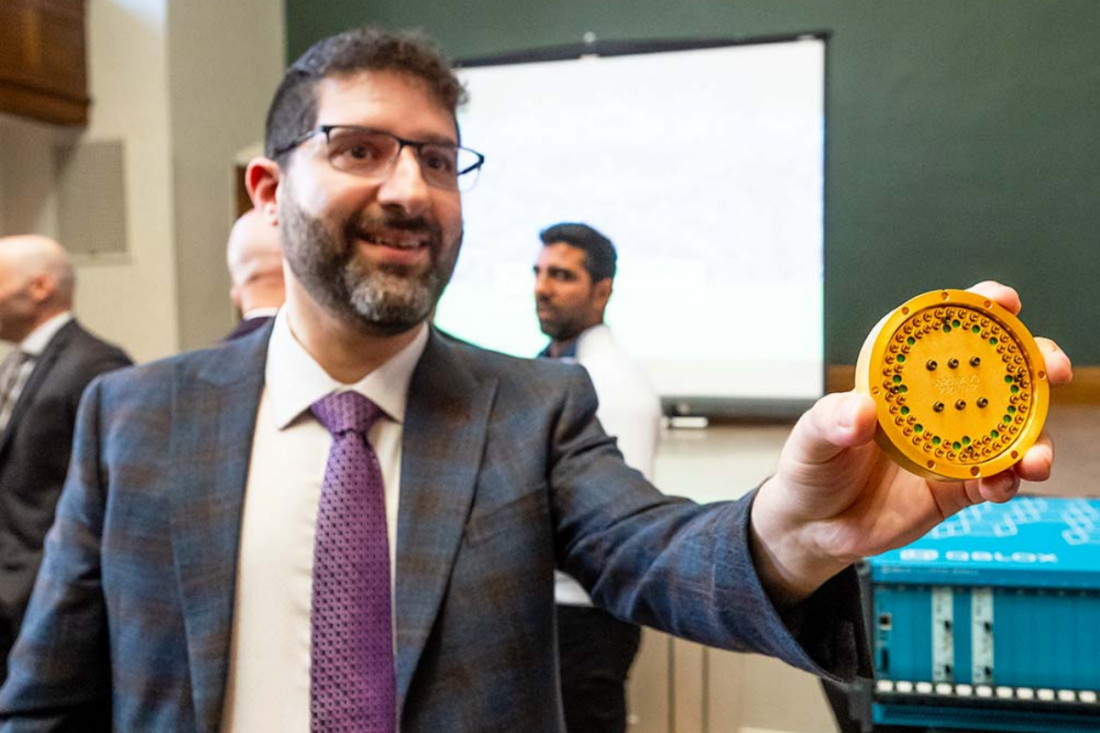
<figure class="wp-block-image size-large"><img loading="lazy" decoding="async" width="1100" height="733" data-id="45404" src="https://thesheaf.com/wp-content/uploads/2026/05/2026-05-28-Quantum-1100x733.png" alt="Dr. Steven Rayan showcases the chip at the core of the University of Saskatchewan’s first quantum computing system | Matt Smith" class="wp-image-45404" srcset="https://thesheaf.com/wp-content/uploads/2026/05/2026-05-28-Quantum-1100x733.png 1100w, https://thesheaf.com/wp-content/uploads/2026/05/2026-05-28-Quantum-480x320.png 480w, https://thesheaf.com/wp-content/uploads/2026/05/2026-05-28-Quantum-300x200.png 300w, https://thesheaf.com/wp-content/uploads/2026/05/2026-05-28-Quantum-768x512.png 768w, https://thesheaf.com/wp-content/uploads/2026/05/2026-05-28-Quantum-150x100.png 150w, https://thesheaf.com/wp-content/uploads/2026/05/2026-05-28-Quantum-250x167.png 250w, https://thesheaf.com/wp-content/uploads/2026/05/2026-05-28-Quantum-550x367.png 550w, https://thesheaf.com/wp-content/uploads/2026/05/2026-05-28-Quantum-800x533.png 800w, https://thesheaf.com/wp-content/uploads/2026/05/2026-05-28-Quantum-270x180.png 270w, https://thesheaf.com/wp-content/uploads/2026/05/2026-05-28-Quantum-450x300.png 450w, https://thesheaf.com/wp-content/uploads/2026/05/2026-05-28-Quantum-750x500.png 750w, https://thesheaf.com/wp-content/uploads/2026/05/2026-05-28-Quantum.png 1200w" sizes="auto, (max-width: 1100px) 100vw, 1100px" /><figcaption class="wp-element-caption">Dr. Steven Rayan showcases the chip at the core of the University of Saskatchewan’s first quantum computing system | Matt Smith</figcaption></figure>
</figure>


<p style="font-size:21px"><strong>A conversation with Professor Steven Rayan on qubits, cutting-edge research and why USask is betting big on the future of computing</strong></p>


<p style="font-size:19px">It&#8217;s not every day that a university announces it&#8217;s bringing one of the most advanced computing systems in the world onto campus, let alone one that operates colder than outer space. But that&#8217;s exactly what&#8217;s happening at USask, where a fully built quantum computer, the first of its kind to be added to a Canadian university campus, is set to redefine not only research but what students can access and experience during their degrees.&nbsp;&nbsp;</p>


<p>To understand what this means for students and for the future of technology, <em>The Sheaf</em> spoke with Steven Rayan, Director of the Centre for Quantum Topology and its Applications (quanTA) and Professor of Mathematics, who is helping lead the initiative.&nbsp;</p>


<p>As Rayan explains, “A quantum computer is a revolutionary type of computing device that uses quantum physics … to process information in powerful new ways.” Traditional computers rely on bits like the familiar 1s and 0s that represent “on” and “off”. However, complex problems can take enormous amounts of time and computational power because they must be processed step by step.&nbsp;</p>


<p>Quantum computers, however, change the rules.&nbsp;</p>


<p>Instead of bits, they use “qubits,” which behave less like simple switches and more like dimmers. “They can be 1 or 0 or anything in between,” Rayan explains. This “in between” state is known as superposition, meaning a quantum computer can explore many possible solutions at once instead of checking them one at a time. For certain types of problems, that difference is massive.&nbsp;</p>


<p>That power has real-world implications. “When we ask for something very complicated, such as modelling how a new drug might impact our immune system, these computations might cycle through many trillions of bits over a long period: it may be hours, days, or weeks before we get answers,” Rayan says. Problems that might take classical computers days, weeks, or even longer could potentially be solved much faster. “We’ll be able to solve problems more rapidly as a result, especially the most complicated ones that affect us globally,” he says, pointing to areas like climate management and advanced medical research.&nbsp;</p>


<p>While the quantum computer has the potential to revolutionize research at USask, it won’t just be reserved for tenured profs.</p>


<p>“Students will be able to learn the technological skills of tomorrow by interacting with a real-life quantum computer today,” Rayan says. That access is what makes this project stand out. While researchers around the world currently rely on remotely accessible quantum platforms, having a machine physically on campus opens up entirely new opportunities for hands-on learning.&nbsp;</p>


<p>Even more striking is how rare this is. Very few universities globally have their own quantum computer, and USask is positioning itself as a national leader. According to Rayan, it will be “the first in Canada to own and operate a vendor-supported, open architecture quantum computer at a university.”</p>


<p>That leadership isn&#8217;t just about prestige, it&#8217;s about shaping the future of research and innovation.&nbsp;</p>


<p>“The University of Saskatchewan aims to be a leader in quantum science and technology in the country,” he says. With initiatives like quanTA and a broader signature area of research in Quantum Innovation, the university has already been building momentum in this space. The addition of an on-campus quantum computer takes that work “to the next level — where we can start turning theory into deliverables that will make a real difference.”</p>


<p>So what does that actually look like in practice?</p>


<p>Right now, researchers at USask are already exploring how quantum computing can tackle complex, real-world challenges. “We are already pursuing research … in managing electrical grids in an optimal way or discovering new medical innovations such as vaccines,” Rayan explains. These are problems with enormous numbers of variables, exactly the kind quantum systems are designed to handle.&nbsp;</p>


<p>The difference is scale and speed. Having a local machine means those research efforts could accelerate significantly. Instead of relying on limited remote access, researchers and potentially students will be able to experiment more freely and frequently.&nbsp;</p>


<p>For students wondering if this technology is accessible to them, the answer is encouraging: yes, but with context. It&#8217;s not quite like booking a study room in the library. Access will likely be structured through courses, labs, and research programs where students can meaningfully engage with the system.&nbsp;</p>


<p>“The quantum computer will be free for use for students who are taking courses or participating in research projects that require it,” Rayan says.&nbsp;</p>


<p>Thanks to a $2.5 million investment from Prairies Economic Development Canada, Innovation Saskatchewan and VIDO, the university does not need to pass costs onto students. Instead, the focus can remain on education and research opportunities.&nbsp;</p>


<p>When asked by a student about potential applications, Rayan responded: “Anything is possible!”&nbsp;</p>


<p>“Complicated problems with many variables [are] what quantum computers were built for.” While that doesn&#8217;t mean every problem is instantly solvable, it does highlight the machine’s potential in fields like engineering, physics and beyond.&nbsp;</p>


<p>However, a machine this advanced doesn&#8217;t come without challenges, especially when it comes to actually housing it.&nbsp;</p>


<p>Unlike a regular computer, a quantum computer is an extremely sensitive instrument. Its qubits must be kept at incredibly low temperatures to function properly. In fact, the system operates below 10 millikelvin — colder than -273 Celsius, and even colder than the vacuum of space.&nbsp;</p>


<p>“If you find yourself near the quantum computer, please know that you are standing next to the coldest point in the universe!” Rayan says.&nbsp;</p>


<p>Because of these requirements, the exact location of the machine on campus is still being finalized. “There are many factors to consider, including ease of access, research alignment, the availability of suitable spaces … and finally, security,” he explains.&nbsp;</p>


<p>For now, the timeline is also still unfolding. Students eager to see the system in action won&#8217;t have to wait forever, though.&nbsp;</p>


<p>“Once the system is fully ready in late 2026 or very early 2027, we hope to have live demonstrations of how it works and what it is capable of,” Rayan says.&nbsp;</p>


<p style="font-size:19px">That means in the near future, students could witness firsthand how quantum computing operates, bridging the gap between abstract theory and tangible experience.</p>
]]></content>
		
					<link rel="replies" type="text/html" href="https://thesheaf.com/2026/05/28/the-coldest-machine-on-campus-inside-usasks-quantum-leap/?utm_source=rss&#038;utm_medium=rss&#038;utm_campaign=the-coldest-machine-on-campus-inside-usasks-quantum-leap#comments" thr:count="0" />
			<link rel="replies" type="application/atom+xml" href="https://thesheaf.com/2026/05/28/the-coldest-machine-on-campus-inside-usasks-quantum-leap/feed/atom/" thr:count="0" />
			<thr:total>0</thr:total>
			</entry>
		<entry>
		<author>
			<name>Hajra Ghuman</name>
					</author>

		<title type="html"><![CDATA[The Ending Was Never Going to Be Good Enough]]></title>
		<link rel="alternate" type="text/html" href="https://thesheaf.com/2026/05/27/the-ending-was-never-going-to-be-good-enough/?utm_source=rss&#038;utm_medium=rss&#038;utm_campaign=the-ending-was-never-going-to-be-good-enough" />

		<id>https://thesheaf.com/?p=45356</id>
		<updated>2026-05-27T13:17:25Z</updated>
		<published>2026-05-27T12:00:00Z</published>
		<category scheme="https://thesheaf.com" term="Opinions" />
		<summary type="html"><![CDATA[Our frustration with the endings of shows and movies reveals more about our expectations and imagination than about the stories themselves.]]></summary>

					<content type="html" xml:base="https://thesheaf.com/2026/05/27/the-ending-was-never-going-to-be-good-enough/?utm_source=rss&#038;utm_medium=rss&#038;utm_campaign=the-ending-was-never-going-to-be-good-enough"><![CDATA[
<figure class="wp-block-image size-large"><img loading="lazy" decoding="async" width="1100" height="458" src="https://thesheaf.com/wp-content/uploads/2026/05/2026-05-27-Endings-Cropped-1100x458.png" alt="Canva Pro" class="wp-image-45401" srcset="https://thesheaf.com/wp-content/uploads/2026/05/2026-05-27-Endings-Cropped-1100x458.png 1100w, https://thesheaf.com/wp-content/uploads/2026/05/2026-05-27-Endings-Cropped-480x200.png 480w, https://thesheaf.com/wp-content/uploads/2026/05/2026-05-27-Endings-Cropped-300x125.png 300w, https://thesheaf.com/wp-content/uploads/2026/05/2026-05-27-Endings-Cropped-768x320.png 768w, https://thesheaf.com/wp-content/uploads/2026/05/2026-05-27-Endings-Cropped-250x104.png 250w, https://thesheaf.com/wp-content/uploads/2026/05/2026-05-27-Endings-Cropped-550x229.png 550w, https://thesheaf.com/wp-content/uploads/2026/05/2026-05-27-Endings-Cropped-800x333.png 800w, https://thesheaf.com/wp-content/uploads/2026/05/2026-05-27-Endings-Cropped-432x180.png 432w, https://thesheaf.com/wp-content/uploads/2026/05/2026-05-27-Endings-Cropped-720x300.png 720w, https://thesheaf.com/wp-content/uploads/2026/05/2026-05-27-Endings-Cropped.png 1200w" sizes="auto, (max-width: 1100px) 100vw, 1100px" /></figure>


<p style="font-size:21px"><strong>Our frustration with the endings of shows and movies reveals more about our expectations and imagination than about the stories themselves.</strong></p>


<p style="font-size:19px">Why do people hate endings?</p>


<p>It seems like such a small question, but it speaks to a broader phenomenon about how we experience stories, expectations and even life itself.&nbsp;</p>


<p>Every time a television show ends, a movie concludes or a long-running series wraps up, the same reaction follows: People are mad, disappointed or both. Many say the ending ruined everything. Discussions online are filled with arguments about how the writers failed, how the characters were betrayed or how the show should have stopped seasons earlier.</p>


<p>Underneath all that frustration is a deeper discomfort with endings themselves.</p>


<p>There is an old phrase people like to repeat that we all have heard many times in our lives: “All good things must come to an end.” Is that true? What does that even mean?</p>


<p>The phrase sounds comforting, yet it is strangely vague. Why must good things end? Why do we accept that idea as inevitable? A different way to think about it might be that for things to begin, some things must end. Stories begin when situations change. Characters move forward because a previous chapter of their life has closed. The same pattern appears in real life as well. Transitions happen because something before them has finished.</p>


<p>This discomfort with endings may change if people view them not as conclusions, but as conditions for beginnings to occur.</p>


<p>Watching a show or movie highlights this relationship with endings differently. When watching a show, you know that the ending is near. A sense of expectedness appears in the experience.&nbsp;</p>


<p>Sometimes, that expectedness can be a letdown when it does not live up to what it is supposed to be.</p>


<p>The same dynamic exists in real life. People often imagine how certain moments should conclude. A job should end with a promotion or a celebration. A relationship should end with clarity. A chapter of life should close with some kind of meaningful resolution. Reality rarely cooperates with those expectations. Life moves in uneven directions. Some endings arrive suddenly, while others fade slowly without any clear conclusion.</p>


<p>Yet endings are exactly what make life a unique experience for us all.</p>


<p>An ending signals that time has passed and that something meaningful occurred during that time. Fear surrounding endings makes sense.&nbsp; A story closing its final chapter can feel like losing something familiar.</p>


<p>The next time you feel mad about an ending, it might help to think about the chapters in your own life that have ended. Did they always go as planned? Most people would probably say no.</p>


<p>That lack of perfect closure does not mean those chapters lacked value. In many cases, the imperfections are exactly what make them memorable.</p>


<p>Frustration with endings often comes from how stories are structured. A common complaint appears when people believe the ending ruins the foundation of the show or movie. Years of character development and storytelling lead viewers to expect a conclusion that feels earned. When the ending contradicts those expectations, disappointment quickly follows.</p>


<p>Characters represent another major reason people become upset about endings. Growth and change are natural parts of storytelling. Characters evolve through the events they experience. Problems arise when characters suddenly behave in ways that feel out of character. Viewers spend years understanding who a character is and what motivates them. A sudden decision that contradicts that history can make the entire story feel unstable.</p>


<p>The result is a strange cultural habit where people begin recommending only parts of a show. For instance, someone might say to watch the early seasons of <em>Grey’s Anatomy</em> but stop before the later ones. Another person might suggest skipping out on the last season of <em>New Girl</em>. The message behind these recommendations is that the story eventually lost its way.</p>


<p>There are practical reasons why this happens.</p>


<p>Writers change. Show runners move on to different projects. Producers shift creative directions. Networks cancel or renew shows with little warning. Many creators do not know whether a show will receive another season while they are writing the current one.</p>


<p>These circumstances create a difficult situation for storytelling.</p>


<p>A balancing act should exist in how a show or movie is structured. If creators do not know whether a show or movie will be renewed, or whether another installment will come out, the story should still feel complete while allowing space for continuation. A season finale should not feel like a dead end, yet it should not rely entirely on another season that might never happen.</p>


<p>Leaving some things up in the air can actually strengthen a story. Not every character needs a definitive ending because life does not work that way. People disappear from each other’s lives without explanation. Questions remain unanswered, making uncertainty a part of the experience.</p>


<p>Audiences often struggle with this, with people tending to fill in gaps themselves. Fan fiction grows from those gaps. YouTube videos attempt to explain how directors really should have gone about a certain plot. Entire communities on Reddit form around interpreting hidden meanings or alternative possibilities.</p>


<p>Those interpretations can become so detailed that they reshape expectations about the ending.</p>


<p>When the actual ending arrives, it must compete with every imagined version created by the audience. Disappointment becomes likely when those imagined endings feel more satisfying than the real one.</p>


<p>The beauty of storytelling lies in the fact that it could have panned out differently with a different perspective or interpretation of the characters. Every viewer brings a unique understanding to the story. A decision that feels wrong to one viewer might feel perfectly logical to another.</p>


<p>Time also shapes expectations in powerful ways. Years can pass between seasons or movies. Fans spend that time developing theories and predictions. Small details become clues in elaborate explanations about what will happen next. Anticipation builds slowly during those waiting periods.</p>


<p>The actual ending eventually arrives and must confront years of imagination.</p>


<p>The reality of the ending rarely matches every expectation that formed during that time. Theories never live up to what was always going to happen.</p>


<p>People become mad about endings partly because those endings reveal the limits of imagination. The story reaches a conclusion that closes the possibilities viewers had constructed in their minds.</p>


<p>This realization may explain why endings feel so emotional, since they force people to accept that a narrative has stopped evolving. The possibilities that existed during the middle of the story shrink into nothing.</p>


<p>At the same time, endings also create meaning. A story without an ending would simply continue without structure.&nbsp;</p>


<p>These stories mirror life in that way. Chapters close, even when the closure is imperfect. New chapters begin, even when people are not fully ready for them.</p>


<p>Endings are uncomfortable, yet they are also what make stories memorable.</p>


<p>Perhaps the frustration people feel toward endings reflects something deeper about how individuals experience their own lives. People hope that conclusions will make sense, but reality often offers something less tidy.</p>


<p style="font-size:19px">This imperfection may be the most authentic part of any story, whether it is fictional or not.</p>
]]></content>
		
					<link rel="replies" type="text/html" href="https://thesheaf.com/2026/05/27/the-ending-was-never-going-to-be-good-enough/?utm_source=rss&#038;utm_medium=rss&#038;utm_campaign=the-ending-was-never-going-to-be-good-enough#comments" thr:count="1" />
			<link rel="replies" type="application/atom+xml" href="https://thesheaf.com/2026/05/27/the-ending-was-never-going-to-be-good-enough/feed/atom/" thr:count="1" />
			<thr:total>1</thr:total>
			</entry>
		<entry>
		<author>
			<name>Nammi Nguyen</name>
					</author>

		<title type="html"><![CDATA[Grace Igbiki: From Walk-On to National Champion and Record Holder]]></title>
		<link rel="alternate" type="text/html" href="https://thesheaf.com/2026/05/26/grace-igbiki-from-walk-on-to-national-champion-and-record-holder/?utm_source=rss&#038;utm_medium=rss&#038;utm_campaign=grace-igbiki-from-walk-on-to-national-champion-and-record-holder" />

		<id>https://thesheaf.com/?p=45354</id>
		<updated>2026-05-26T16:13:47Z</updated>
		<published>2026-05-26T12:00:00Z</published>
		<category scheme="https://thesheaf.com" term="Sports &amp; Health" />
		<summary type="html"><![CDATA[Grace Igbiki claims a trifecta of medals at the U SPORTS Track and Field National Championship.]]></summary>

					<content type="html" xml:base="https://thesheaf.com/2026/05/26/grace-igbiki-from-walk-on-to-national-champion-and-record-holder/?utm_source=rss&#038;utm_medium=rss&#038;utm_campaign=grace-igbiki-from-walk-on-to-national-champion-and-record-holder"><![CDATA[
<figure class="wp-block-gallery has-nested-images columns-default is-cropped wp-block-gallery-7 is-layout-flex wp-block-gallery-is-layout-flex">
<figure class="wp-block-image size-large"><img loading="lazy" decoding="async" width="1100" height="733" data-id="45395" src="https://thesheaf.com/wp-content/uploads/2026/05/2026-05-26-Electric-Umbrella-Derek-Elvin-1100x733.jpg" alt="Electric Umbrella | Derek Elvin" class="wp-image-45395" srcset="https://thesheaf.com/wp-content/uploads/2026/05/2026-05-26-Electric-Umbrella-Derek-Elvin-1100x733.jpg 1100w, https://thesheaf.com/wp-content/uploads/2026/05/2026-05-26-Electric-Umbrella-Derek-Elvin-480x320.jpg 480w, https://thesheaf.com/wp-content/uploads/2026/05/2026-05-26-Electric-Umbrella-Derek-Elvin-300x200.jpg 300w, https://thesheaf.com/wp-content/uploads/2026/05/2026-05-26-Electric-Umbrella-Derek-Elvin-768x512.jpg 768w, https://thesheaf.com/wp-content/uploads/2026/05/2026-05-26-Electric-Umbrella-Derek-Elvin-150x100.jpg 150w, https://thesheaf.com/wp-content/uploads/2026/05/2026-05-26-Electric-Umbrella-Derek-Elvin-250x167.jpg 250w, https://thesheaf.com/wp-content/uploads/2026/05/2026-05-26-Electric-Umbrella-Derek-Elvin-550x367.jpg 550w, https://thesheaf.com/wp-content/uploads/2026/05/2026-05-26-Electric-Umbrella-Derek-Elvin-800x533.jpg 800w, https://thesheaf.com/wp-content/uploads/2026/05/2026-05-26-Electric-Umbrella-Derek-Elvin-270x180.jpg 270w, https://thesheaf.com/wp-content/uploads/2026/05/2026-05-26-Electric-Umbrella-Derek-Elvin-450x300.jpg 450w, https://thesheaf.com/wp-content/uploads/2026/05/2026-05-26-Electric-Umbrella-Derek-Elvin-750x500.jpg 750w, https://thesheaf.com/wp-content/uploads/2026/05/2026-05-26-Electric-Umbrella-Derek-Elvin.jpg 1280w" sizes="auto, (max-width: 1100px) 100vw, 1100px" /><figcaption class="wp-element-caption">Electric Umbrella | Derek Elvin</figcaption></figure>


<figure class="wp-block-image size-large"><img loading="lazy" decoding="async" width="1100" height="733" data-id="45393" src="https://thesheaf.com/wp-content/uploads/2026/05/2026-05-26-Mike-Still-University-of-Manitoba-1100x733.jpg" alt="Grace Igbiki | Rachel Alertson Huskie Athletics" class="wp-image-45393" srcset="https://thesheaf.com/wp-content/uploads/2026/05/2026-05-26-Mike-Still-University-of-Manitoba-1100x733.jpg 1100w, https://thesheaf.com/wp-content/uploads/2026/05/2026-05-26-Mike-Still-University-of-Manitoba-480x320.jpg 480w, https://thesheaf.com/wp-content/uploads/2026/05/2026-05-26-Mike-Still-University-of-Manitoba-300x200.jpg 300w, https://thesheaf.com/wp-content/uploads/2026/05/2026-05-26-Mike-Still-University-of-Manitoba-768x512.jpg 768w, https://thesheaf.com/wp-content/uploads/2026/05/2026-05-26-Mike-Still-University-of-Manitoba-1536x1024.jpg 1536w, https://thesheaf.com/wp-content/uploads/2026/05/2026-05-26-Mike-Still-University-of-Manitoba-2048x1366.jpg 2048w, https://thesheaf.com/wp-content/uploads/2026/05/2026-05-26-Mike-Still-University-of-Manitoba-150x100.jpg 150w, https://thesheaf.com/wp-content/uploads/2026/05/2026-05-26-Mike-Still-University-of-Manitoba-250x167.jpg 250w, https://thesheaf.com/wp-content/uploads/2026/05/2026-05-26-Mike-Still-University-of-Manitoba-550x367.jpg 550w, https://thesheaf.com/wp-content/uploads/2026/05/2026-05-26-Mike-Still-University-of-Manitoba-800x533.jpg 800w, https://thesheaf.com/wp-content/uploads/2026/05/2026-05-26-Mike-Still-University-of-Manitoba-270x180.jpg 270w, https://thesheaf.com/wp-content/uploads/2026/05/2026-05-26-Mike-Still-University-of-Manitoba-450x300.jpg 450w, https://thesheaf.com/wp-content/uploads/2026/05/2026-05-26-Mike-Still-University-of-Manitoba-750x500.jpg 750w" sizes="auto, (max-width: 1100px) 100vw, 1100px" /><figcaption class="wp-element-caption">Grace Igbiki | Rachel Alertson Huskie Athletics</figcaption></figure>
</figure>


<p style="font-size:21px"><strong>Grace Igbiki claims a trifecta of medals at the U SPORTS Track and Field National Championship.</strong></p>


<p style="font-size:19px">Fourth‑year health studies student Grace Igbiki capped off this past season with a U SPORTS gold medal in the 4x200m relay, a silver in the 4x400m and a bronze in the 300m — a remarkable finish for an athlete who began her Huskie career as a walk‑on.</p>


<p>Growing up in Calgary, Igbiki always gravitated toward running.</p>


<p>“I always just liked running. In elementary school, I would race the boys and win, and I loved that. When I got to junior high, I wanted to join the track team and make it official. My best friend at the time also did track. So we both joined [a club] together.”</p>


<p>Despite her passion, competing in university wasn’t originally part of her plan, but the chance she took would eventually lead to excellence.</p>


<p>“I was a walk‑on. I knew [USask] had a team because I had emailed Jason [Huskie track and field head coach], but I never searched up anything. I just showed up.”</p>


<p>Igbiki admits her first year was overwhelming.</p>


<p>“I didn’t know what I was doing. I had no idea what U SPORTS was. I had no idea what CanWest was. I was just happy to be here … It’s been a gradual process.”</p>


<p>Her second year brought momentum until an injury cut her season short. Her third year was difficult, and she entered this season determined to reclaim her form.</p>


<p>“My second year went really well until I had a foot injury. My third year was a down season. This year I felt like I had to come back … At the beginning of the year, I thought this could be my last year, and I wanted to leave it all on the track. My coaches always told me I could run these times. Believing in those words and believing I could get it done — which is not always the easiest — that was the thing. Trusting the process and trusting that I’m going to peak at the right time.”</p>


<p>There were moments during her journey where she questioned whether she wanted to continue.</p>


<p>“My first year, I didn’t know if I really wanted to be here anymore. Sometimes when you’re having a down season where things are not looking good, you think, ‘I suck at this, I’m ready to wrap it up.’ [This year], I started off my season slower than I have since I was a rookie. I thought, ‘What is going on? It makes no sense.’ That’s the weird part of track.”</p>


<p>Academic pressure added another layer of stress.</p>


<p>“Sometimes it’s hard to want to do track because of the pressure of school and thinking about graduate programs. I have to think about whether my average is good enough, reference letters, things like that. It sometimes takes away from the joy of being in the sport. I want to be here and have fun with my teammates, but I’m thinking about school even when I’m here. It feels like sometimes you can’t have both.”</p>


<p>Living in Saskatoon without family support has also been challenging.</p>


<p>“The most challenging part, especially living away from home, is the eating part. We have practice, and then we lift, and then I come home and have to cook my own meal or think about buying my own meal. That part is annoying.”</p>


<p>“I don’t have my parents coming to watch. Calgary is close, but my parents are busy, and I have siblings at home. It’s not easy.”</p>


<p>On the track, it’s also a mental game, staying positive.</p>


<p>“It’s hard not to compare yourself because everyone on our team is so good. When you’re having a down season, it’s hard to still be there for your teammates and give them their flowers. Everything depends on you.”</p>


<p>To cope, she focuses inward.</p>


<p>“I make a point not to compare and realize I have my own strengths and other people have theirs. Tunnel‑visioning on myself has helped me a lot. One race not going well is not the end of the world. There’s still time to improve.”</p>


<p>Coming from a small club and joining a large university team was an adjustment.</p>


<p>“I had a really small club, so [there weren’t]t a lot of us. When I came here, I thought, wow, there’s a lot of people. I found it challenging because I can’t talk to everyone, and I don’t know everyone. We train at different times or in different parts of the track. But I found my people, and that has been really fun.”</p>


<p>One of the most meaningful relationships she’s built is with assistant coach Franz Kwame‑Smith.</p>


<p>“He’s honestly a track dad to me. In my first year, when I felt pushed to the side, he said he saw my talent, and we were going to work on it. I understand the way he talks, and he understands me. I don’t have to over‑explain.”</p>


<p>The Huskie women claimed their eighth consecutive Canada West championship this season, a dynasty that Igbiki feels doesn’t always get its due.</p>


<p>“Sometimes I feel like that gets overlooked. Even outside of U SPORTS, track is undervalued globally. It’s hard to go pro, and very few people make a lot of money in this sport.”</p>


<p>At the U SPORTS championship in Manitoba, Igbiki and teammates Hailee Woodhouse, Emma Egert and Selena Keyowski delivered a historic performance, breaking the Canadian record in the prelims and then breaking their own record in the final to win gold.</p>


<p>“Our team has been getting better and better. In the prelims, we broke the Canadian record. After we did that, I thought, okay, we can’t lose now. There was pressure, but we had confidence. We knew exactly what we were doing, and we had been working on it for a while. It was good to finally do it.”</p>


<p>She credits relay coach Karlyn Wells for the group’s success.</p>


<p>“We were able to lock in and focus on our handoffs and communication. Karlyn has really believed in us from the beginning. She’s very dedicated to it. That’s what separates us from other teams. Other schools see relay as a secondary thing, and she hones in [on the fact] that this is just as important as your individual event. All the girls are committed to winning.”</p>


<p>Igbiki also earned a U Sports silver medal with the 4&#215;400 medal team consisting of Jaedyn McLaughlin, Hailee Woodhouse and Emma Egert alongside her.</p>


<p>She rounded out her event medals with an individual U Sport bronze in the 300m. This one might have meant the most to her as she’s been chasing it since her very first year.&nbsp;</p>


<p>In Igbiki’s second year, she was projected to medal in the event, which was also in Winnipeg.</p>


<p>“It honestly felt like a full circle moment because I was at the exact same track where I genuinely left in tears …&nbsp; I didn&#8217;t make the finals even though I was projected to win, and then I literally sat down in the corner and cried.”</p>


<p>This time around at nationals, she knew she was capable of doing something, but not sure to what extent after what to her, was a disappointing CanWest run that she knew she could improve upon.</p>


<p>“I am someone who can rise to the occasion. I think almost all my PB&#8217;s have been at national meets. Last year, when nationals were in Windsor, I came fourth and it was also a PB. So that was a bittersweet moment because I was just so close to being on the podium. I knew that this year that chance was there but I would really have to work.”</p>


<p>In her preliminary heat, she ran a personal best of 38.15 seconds. Going into the finals, she was scared and felt a lot of pressure. Her starting lane also placed her far behind her competitors.&nbsp;</p>


<p>“I felt like I had to go out immediately. There was no time for reserving anything. And crossing the line, I was just like I hope I did everything I needed to do. I looked at the time and what is funny is that the girl who ran in the heat before me had just ran 0.01 seconds slower than me so I got third with a 38.16. She ran 38.17.”</p>


<p>The elation she felt celebrating with her teammates after she realized she had gotten bronze was unmatched.&nbsp;</p>


<p>“It was such a surreal moment. All my teammates came and [gave] me hugs … It&#8217;s my medal but I was doing this for so many other people as well so it really did mean a lot.&nbsp; And to see that I finally have established my name in the U Sports environment as well, was big.”</p>


<p>“The Lord really does his thing, and he&#8217;s really helped me to see that even though things might not go the way I wanted at first, there&#8217;s always something greater and there&#8217;s always something more to look forward to. At the same track that I was crying before, I&#8217;m now celebrating.”</p>


<p><br>To top it all off, the Huskies Women’s Track &amp; Field claimed an overall team silver at U Sports — their best finish since 2022.</p>


<p>Following a hugely successful season, Igbiki hopes to enter a graduate program and return for her final year of eligibility.</p>


<p>She ends with gratitude for her coaches and teammates.</p>


<p>“I definitely want to shout out Franz because he’s been my number one coach since I started. He took me under his wings. He’s a motivator and encouraged me in faith as well, and that helped me a lot. And Karlyn has put in a lot of time and dedication, especially for the relay. I’m so happy we were able to deliver it and execute it exactly how it needed to be done.</p>


<p>“I&#8217;m so grateful. I did not know what to expect coming in here to Sask, but it has been nothing but blessings, unexpected surprises and amazing coaches and amazing girls who are really dedicated to not only being the best but also supporting each other. The team has such a bright future, so I am very excited.”</p>


<p style="font-size:19px">Congratulations, Grace and we’ll be cheering you on next year!</p>
]]></content>
		
					<link rel="replies" type="text/html" href="https://thesheaf.com/2026/05/26/grace-igbiki-from-walk-on-to-national-champion-and-record-holder/?utm_source=rss&#038;utm_medium=rss&#038;utm_campaign=grace-igbiki-from-walk-on-to-national-champion-and-record-holder#comments" thr:count="0" />
			<link rel="replies" type="application/atom+xml" href="https://thesheaf.com/2026/05/26/grace-igbiki-from-walk-on-to-national-champion-and-record-holder/feed/atom/" thr:count="0" />
			<thr:total>0</thr:total>
			</entry>
	</feed>