<?xml version="1.0" encoding="UTF-8"?>
<feed xml:lang="en" xmlns="http://www.w3.org/2005/Atom" xmlns:opensearch="http://a9.com/-/spec/opensearch/1.1/" xmlns:s="http://jadedpixel.com/-/spec/shopify">
  <id>https://www.incase.com/blogs/blog.atom</id>
  <link rel="alternate" type="text/html" href="https://www.incase.com/blogs/blog"/>
  <link rel="self" type="application/atom+xml" href="https://www.incase.com/blogs/blog.atom"/>
  <title>Incase.com - The Leaf</title>
  <updated>2022-03-09T10:59:18-08:00</updated>
  <author>
    <name>Incase.com</name>
  </author>
  <entry>
    <id>https://www.incase.com/blogs/blog/ideas-protected-behind-the-scenes-with-devin-carlson</id>
    <published>2022-03-09T10:59:18-08:00</published>
    <updated>2025-06-10T10:23:40-07:00</updated>
    <link rel="alternate" type="text/html" href="https://www.incase.com/blogs/blog/ideas-protected-behind-the-scenes-with-devin-carlson"/>
    <title>Ideas Protected: Behind the scenes with Devin Carlson</title>
    <author>
      <name>Jennifer Suarez</name>
    </author>
    <summary type="html">
      <![CDATA[<meta charset="utf-8"><span data-mce-fragment="1">Inspired by the simplicity of Minimalism, his travels, and the diverse, vibrant street culture of Downtown LA, we sat down with Carlson to discuss the state of design today and his renaissance revival.</span><p><a class="read-more" href="https://www.incase.com/blogs/blog/ideas-protected-behind-the-scenes-with-devin-carlson">More</a></p>]]>
    </summary>
    <content type="html">
      <![CDATA[<p> </p>
<p class="p1"><span class="s1"></span>As a creative director, designer, entrepreneur, and restaurateur in Downtown Los Angeles, Devin Carlson is redefining the boundaries of what enduring, experience-driven design means. After years in the fashion and apparel industry, he’s now the co-proprietor of 9th St. Ramen—a futuristic, Blade Runner-inspired shop serving Japanese style ramen, natural wine, and sake—as well as the creative force behind Suplex, a design/build agency specializing in immersive, transportive environments meant to be visually consumed. </p>
<p class="p1" style="text-align: center;"><iframe title="YouTube video player" src="https://www.youtube.com/embed/YOME0rXffzw?si=RCKWHYf5HuEAR5Bz" height="315" width="560"></iframe></p>
<p> </p>
<p> </p>
<h2 style="text-align: center;"><em>“Output is everything, especially in the time we’re in now. If you’re not putting your ideas out into the world, you’re wasting your time.”</em></h2>
<p> </p>
<p> </p>
<h3>Inspired by the simplicity of Minimalism, his travels, and the diverse, vibrant street culture of Downtown LA, we sat down with Carlson to discuss the state of design today and his renaissance revival. </h3>
<p> </p>
<p><strong>INCASE</strong>: Tell us about who you are, where you come from and how you got here.<br><strong>DEVIN CARLSON</strong>: I’m Devin Carlson, I live in Downtown Los Angeles and, to give you a little bit of a backstory, I started out in apparel when I was 23. I’ve always been drawn to and drawn inspiration from the Minimalism movement of the 70’s. I have a design agency called Suplex and, my friend and I, kind of stupidly decided to buy a restaurant. Stupidly might be the wrong word, but through that experience I rediscovered my pasion for furniture, interior design, and architecture. That’s when I left fashion and started Suplex.</p>
<p><strong>INCASE</strong>: Why did you leave fashion?<br><strong>DC</strong>: When I left clothing, I felt like I had gotten to a place where I wanted to be and I felt extremely confident in my abilities and where I was at in life. When I got into the world of design, I felt so unsure. I didn’t know how to speak to it, I didn’t know how to talk to any of my friends, or to people I had worked with in the past. It’s only now that I’m starting to feel comfortable.<br>One of the biggest things I’ve ever learned, though, is that you really are only as good as your last idea. It doesn’t matter if you had a great idea you executed on before. What’s going to keep you going and keep you successful, in whatever avenue you’re in, is to constantly come up with new ideas and new ways to navigate your current situation.</p>
<div style="text-align: center;"><img src="https://cdn.shopify.com/s/files/1/0040/6015/1843/files/Incase_Devin_Shoot_9C2A1353_600x600.jpg?v=1646855518" width="491" height="277" style="float: none;" alt="carlson editing a design"></div>
<div style="text-align: center;"><img src="https://cdn.shopify.com/s/files/1/0040/6015/1843/files/Incase_Devin_Shoot_9C2A1542.jpg?v=1646855557" width="492" height="277" style="float: none;" alt="carlson on the phone"></div>
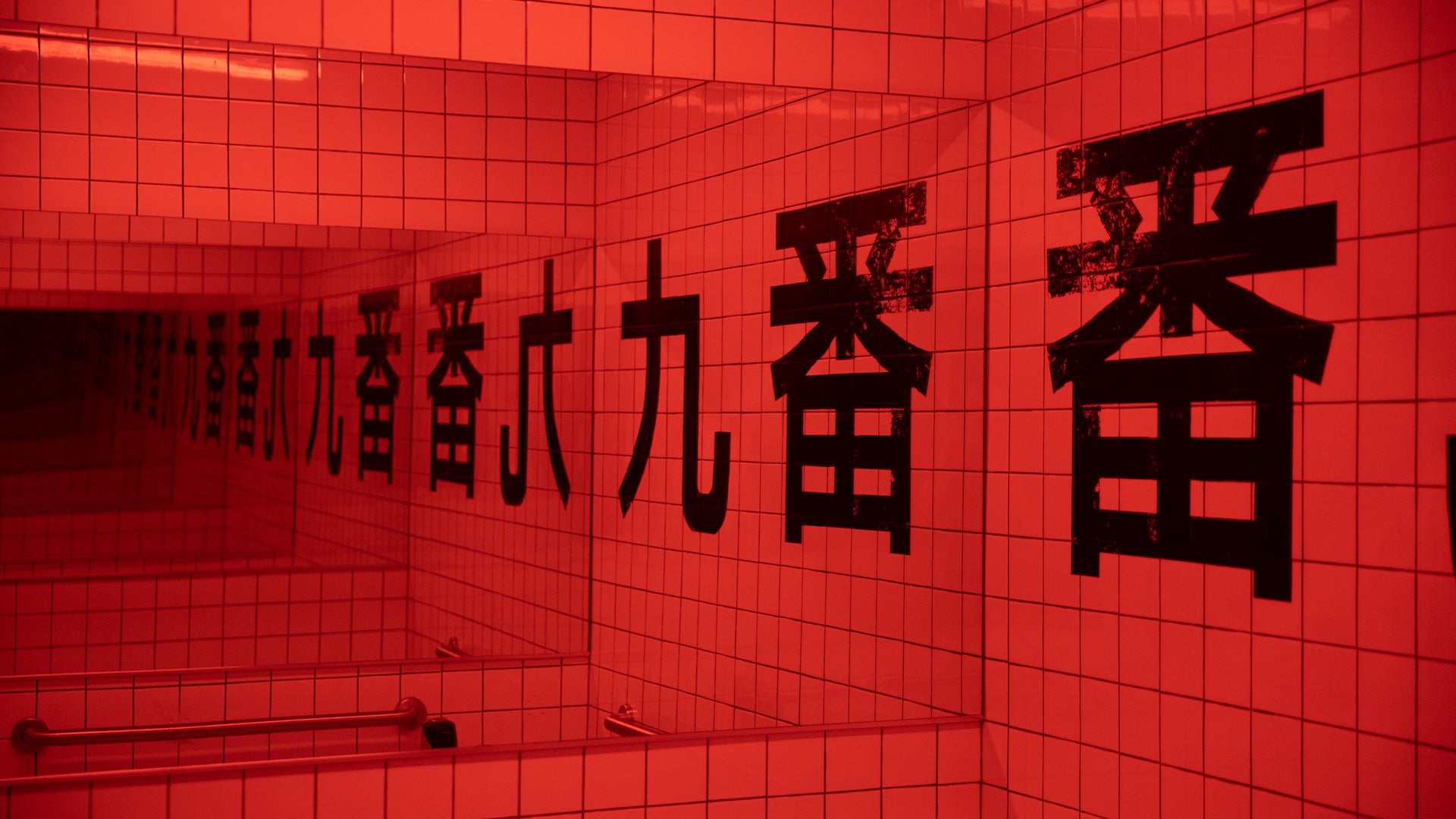
<div style="text-align: center;"><img src="https://cdn.shopify.com/s/files/1/0040/6015/1843/files/Incase_Devin_Shoot_9C2A1591.jpg?v=1646855595" width="491" height="276" style="float: none;" alt="red room with opposite reflecting mirrors"></div>
<p><em>“To keep a creative mindset, it’s so important to slow down. We’re ingrained to think we need to be doing everything so fast.”</em></p>
<p> </p>
<p> </p>
<p><strong>INCASE</strong>: Can you talk to us about how you keep a creative mindset and where you find inspiration?<br><strong>DC</strong>: There are a few couple things that are super important to me when I’m trying to keep a creative mindset and one is slowing down. I feel like we’re so ingrained to think we have to do everything so fast. I have a reminder on my phone every few hours that says, “Slow down. Count to eight.”<br><br>Also, travel. Travel has played a huge influence on my design aesthetic. Speaking specifically to the restaurant, it’s completely influenced by travel and film—from my countless trips to Tokyo and Hong Kong. Downtown LA is a huge inspiration, too. I’ve lived down here for what seems like forever and I’ve really see it grow.</p>
<p><br><strong>INCASE</strong>: What makes DTLA so vibrant and special?<br><strong>DC</strong>: For me, I think the best part of living down here is that you can walk to so many different things. My studio is a half block from the restaurant and being able to walk to different things has only really come around in the last couple of years, but it’s made me like living down here a lot more. What’s really kept me down here, and something I take for granted, is all the multiple areas I can pull inspiration from.<br><br>There’s so much going on from fashion to the amazing architecture. It feels very fast paced and it feels very city and I thrive off that.</p>
<p><span></span><img src="https://cdn.shopify.com/s/files/1/0040/6015/1843/files/Incase_Devin_Shoot_9C2A1577_f835d0fb-3ab9-4180-a40e-78fcfeb00e84.jpg?v=1646864699" alt=""></p>
<blockquote>
<h4 class="p1">
<span></span><em>“Minimalism is subtle; it allows you to form your own opinions about it.”</em>
</h4>
<h4>
<meta charset="utf-8">
<br>
</h4>
</blockquote>
<p class="p1"><strong>INCASE</strong><span>: You’ve mentioned Minimalism, what is it about it that inspires you?<br><strong>DC</strong>: For me, the thing that drew me to it is that it’s subtle. It allows you to form your own opinions about it—whether you’re talking about clothing or art—it’s the power of simplicity and that’s what I strive for in everything I design.<br><br><strong>INCASE</strong>: How do you go about designing a space?<br><strong>DC</strong>: For me, it’s about experience. I love designing spaces because they’re so much more permanent than clothing—whether it’s furniture or architecture, there’s something there that can stand the test of time. When you walk into 9th St. Ramen, there are so many design elements that instinctively bring you off the street and into our world. Your mood immediately changes when you walk in and that kind of opens people up to being more engaged with the people they’re with.<br><br><strong>INCASE</strong>: Any thoughts on where design’s at now?<br><strong>DC</strong>: The new wave of design is here. There’s an excitement that hasn’t been felt before and people are feeling alive. Output is everything, especially in the times we’re in now. If you’re not putting your ideas out into the world, you’re wasting your time</span><span>.</span></p>
<div style="text-align: center;"><img style="float: none;" alt="" src="https://cdn.shopify.com/s/files/1/0040/6015/1843/files/Incase_Devin_Shoot_9C2A1489.jpg?v=1646855787"></div>
<div style="text-align: center;"><img style="float: none;" alt="" src="https://cdn.shopify.com/s/files/1/0040/6015/1843/files/Incase_Devin_Shoot_9C2A1106-ext.jpg?v=1646855818"></div>
<div style="text-align: center;"><img style="float: none;" alt="" src="https://cdn.shopify.com/s/files/1/0040/6015/1843/files/Incase_Devin_Shoot_9C2A1311.jpg?v=1646855851"></div>
<p><span></span>To learn more about Devin Carlson, Suplex, and 9th St Ramen, visit:<br><br><a href="https://www.instagram.com/suplexagency/">https://www.instagram.com/suplexagency/</a><br><a href="https://suplexagency.com/">https://suplexagency.com/</a><br><br><a href="https://www.instagram.com/9thstramen/">https://www.instagram.com/9thstramen/</a><br><a href="https://9thstramen.com/">https://9thstramen.com/</a> <br> </p>
<h2 class="p1" style="text-align: center;"><a href="https://incase.com/collections/ideas-protected-with-devin-carlson" title="Shop the Story: Ideas Protected with Devin Carlson" target="_blank"><span class="s1">Shop the story.</span></a></h2>]]>
    </content>
  </entry>
  <entry>
    <id>https://www.incase.com/blogs/blog/bionic-process</id>
    <published>2021-04-01T07:29:05-07:00</published>
    <updated>2024-11-21T21:09:33-08:00</updated>
    <link rel="alternate" type="text/html" href="https://www.incase.com/blogs/blog/bionic-process"/>
    <title>Transforming plastic waste into everyday products.</title>
    <author>
      <name>Jennifer Suarez</name>
    </author>
    <content type="html">
      <![CDATA[<h2 class="p1">Incase x BIONIC</h2>
<h2><meta charset="UTF-8"></h2>
<p class="p1">From the very start Incase has strived to deliver a better experience through good design. Over time that philosophy has evolved to include a commitment to responsible design initiatives. That includes creating some of our products from innovative fabrics consisting of sustainable, recyclable materials, generated by emission-saving production practices. Our BIONIC collection is a great example. Why? Because it’s our — and everyone’s — responsibility to do what we can to reduce our impact on the environment and make the planet a better place to live.</p>
<p><span style="color: #ffffff;"><a href="https://www.youtube.com/watch?v=J09OWTmXnP8" style="color: #ffffff;">https://www.youtube.com/watch?v=J09OWTmXnP8</a></span></p>
<p> </p>
<p>That’s why we’re proud to partner with BIONIC®, a material engineering company supplying consumer and industrial markets with fully traceable, high-grade textiles and polymers made with plastic recovered from coastal communities. The high-performance yarns, fabrics and textiles BIONIC creates from this discarded waste has revolutionized its industry, while simultaneously helping clean up marine environments.</p>
<p> </p>
<p>Together, Incase and BIONIC are issuing a call to action to the global community to get tougher, more resilient and more united in our efforts to clean up the environment. Part of that is knowing what the things you buy and use are made of and where the materials come from. That’s why it’s imperative to BIONIC that their raw materials are fully traceable, so they know exactly where they come from—the country, the community, and often the very beach. They know because they were there when they were recovered, which means YOU know too. Following are the key steps necessary to transforming discarded plastic waste into superior materials, like those used in Incase’s BIONIC collection.</p>
<div style="text-align: start;"><img alt="" src="https://cdn.shopify.com/s/files/1/0040/6015/1843/files/Bionic-Screengrabs1.jpg?v=1617045149"></div>
<div style="text-align: start;"><img alt="" src="https://cdn.shopify.com/s/files/1/0040/6015/1843/files/Bionic-Screengrabs5_bad799d1-566d-47de-89cd-7ee885dcb831.jpg?v=1617045214"></div>
<div style="text-align: start;"><img alt="" src="https://cdn.shopify.com/s/files/1/0040/6015/1843/files/Bionic-Screengrabs2.jpg?v=1617045247"></div>
<div style="text-align: start;"></div>
<p> </p>
<p><strong>STEP ONE: Outreach &amp; Recovery</strong></p>
<p>BIONIC starts by identifying a coastline in need of cleanup and reaching out to the local community to rally support. That includes families, friends, school groups, non-profit organizations; anyone interested in a cleaner coast. Recycling stations are set up and commercial collection points are designated, operated by BIONIC employees, but the actual clean-up work is typically a community effort. Together they closely and methodically comb the chosen beach and coastal area for plastic products and other forms of waste. BIONIC requires PET and HDPE plastics (soda bottles, milk jugs, etcetera), but they pick up all forms of plastics, glass and recyclables and send them to appropriate recycling centers. Because the best thing for the planet is to eradicate all the waste, not just some of it.</p>
<p> </p>
<p><span><img alt="" src="https://cdn.shopify.com/s/files/1/0040/6015/1843/files/MSH__X6A6772.jpg?v=1617045748"></span></p>
<p><span><img alt="" src="https://cdn.shopify.com/s/files/1/0040/6015/1843/files/DJI_0033-scaled.jpg?v=1617045766"></span></p>
<p><span><img alt="" src="https://cdn.shopify.com/s/files/1/0040/6015/1843/files/MSH__X6A6840.jpg?v=1617045781"></span></p>
<h3><strong>STEP TWO: Sorting, Processing &amp; Pelletizing</strong></h3>
<p>Step two is the amazing transformation of recovered plastic into useful material. It begins at a BIONIC-built regional facility located near the recovery site, where the plastic is sorted by type and color, compacted, and ground into flakes. The flakes are shipped to another facility to be cleaned of contaminants, like sand and label remnants, then melted together and passed through a device called a spinneret. The spinneret restructures the plastic into polymer and extrudes it in long threads that are cut into small pellets, which form the base material of every high-tech yarn and thread BIONIC makes -- including what Incase uses for our BIONIC Collection.</p>
<p><img alt="" src="https://cdn.shopify.com/s/files/1/0040/6015/1843/files/Spinning2.jpg?v=1617045884"></p>
<p><img alt="" src="https://cdn.shopify.com/s/files/1/0040/6015/1843/files/Spinning-scaled.jpg?v=1617045899"></p>
<p><img alt="" src="https://cdn.shopify.com/s/files/1/0040/6015/1843/files/red_weave-1-scaled.jpg?v=1617045923"></p>
<h3><strong>STEP THREE: Creating a Stronger Thread</strong></h3>
<p>The final step is where the real magic happens. It occurs at the many partner mills BIOINIC employs worldwide, where the polymer pellets are again melted and extruded in long filaments that are spun into three yarns — FLX, DPX and HLX. FLX is 100% recycled plastic. DPX blends recycled plastic with natural and synthetic fibers for a softer texture. HLX uses extra fibers for a three-layer construction with a recycled-plastic heart. BIONIC can weave an almost infinite array of textiles with these three yarns, including the high-performance fabrics used for Incase’s BIONIC collection.</p>
<p> </p>
<p>The value of the above three-step process can’t be underestimated. BIONIC turns pollution into a positive, which aligns cleanly with Incase’s commitment to using sustainable materials whenever we can. The result -- a cleaner, better environment and pleasing, high-performing products</p>
<p><img height="" width="" alt="" src="https://cdn.shopify.com/s/files/1/0040/6015/1843/files/IncasexBionic-Process-2000.jpg?v=1594935461"></p>
<p> </p>
<p>Content provided by <a tabindex="-1" title="https://bionicyarn.com/" href="https://bionicyarn.com/" target="_blank">https://bionicyarn.com/</a></p>
<h2 class="p1"><span class="s1">Shop the story...</span></h2>
<p><a href="https://incase.com/collections/bionic">https://incase.com/collections/bionic</a></p>
<p> </p>
<meta charset="UTF-8">
<div></div>]]>
    </content>
  </entry>
  <entry>
    <id>https://www.incase.com/blogs/blog/ideas-protected-a-studio-visit-with-designer-raul-diaz</id>
    <published>2021-02-09T13:14:18-08:00</published>
    <updated>2024-11-21T21:15:35-08:00</updated>
    <link rel="alternate" type="text/html" href="https://www.incase.com/blogs/blog/ideas-protected-a-studio-visit-with-designer-raul-diaz"/>
    <title>Ideas Protected: A Studio Visit with Designer, Raul Diaz </title>
    <author>
      <name>Jennifer Suarez</name>
    </author>
    <content type="html">
      <![CDATA[<p class="p1">At the forefront of a creative renaissance, Raul Diaz is a self-described interdisciplinary creative, architect, designer, builder and businessman specializing in a modern, minimalistic aesthetic. You’ll often find him at <a href="https://www.kuarto.co/">KUARTO</a>, a shop in Long Beach, Calif. he co-owns with his brother Diego. Besides its inventory, home goods, and apparel of the brothers’ own design, there’s a full-service coffee bar and on-site barber should you need a cold brew, a trim, or both.</p>
<p><a href="https://www.youtube.com/watch?v=G1VOP4V_w9w&amp;feature=youtu.be">https://www.youtube.com/watch?v=G1VOP4V_w9w&amp;feature=youtu.be</a></p>
<p> </p>
<h2 style="text-align: center;" data-mce-style="text-align: center;"><em>“I feel like there’s a lot of noise out there. We try to create needed silence in everyday life.”</em></h2>
<p class="p1"><img src="https://cdn.shopify.com/s/files/1/0040/6015/1843/files/RD-blog-post-images8.jpg?v=1612830594" alt=""></p>
<p class="p1"> </p>
<p class="p1">KUARTO is likewise home base to Raul’s flourishing interior design-build business, <a href="https://www.outofoffice.studio/home">The Out of Office Company</a>, which keeps him on the move, re-imaging and designing interiors across cafés, coffee shops, boutiques and some well-known fashion retailer’s flagship stores.</p>
<p><strong><em>INCASE: How would you describe yourself and how you got where you are today?</em></strong></p>
<p>RD: You could say I’m a creative entrepreneur, a self-taught architect and an industrial designer. I came to be self-taught through curiosity. First, I learned carpentry and welding from my dad. I was even a member of the carpentry union for a year. The creative part came after that, which led my brother Diego and I to start an interior design-build company called KUARTO, which is like a multi-channel case study of our lives, and is a hub of creativity for us. We have a physical, brick-and-mortar store that allows us to really show people the story of our interior-design eye.</p>
<p><img src="https://cdn.shopify.com/s/files/1/0040/6015/1843/files/RD-blog-post-images4.jpg?v=1612830098" alt=""></p>
<p> </p>
<p><strong><em>INCASE: KUARTO’s website says your brand “aims to help declutter the noise we’re surrounded by in today’s consumer landscape.” What do you mean by that?</em></strong></p>
<p>RD: We’re guided by our belief that numerous parts of life need to be minimalized. I feel like there’s a lot of noise out there. We try to create needed silence in everyday life. We envision our brand imparting various touchpoints throughout a person’s day, from waking in the morning, getting in your car and going to work, getting home from work after a long day and lighting incense.</p>
<p> </p>
<p><strong><em>INCASE: In addition to minimalization you also admire staying power. Share your thoughts on the interplay of minimalization and longevity as it applies to your design work.</em></strong></p>
<p>RD: We often see everyday things like furniture, maybe a coffee table, that are overly designed or overly produced. For me, as a designer and product developer, I see such things as an opportunity to make it fit into life’s flow. In terms of longevity, I feel that part of my duty as a designer is to make things last long instead of being thrown out every year. I want to create pieces that combine minimal design and long-lasting materials that people want to hold onto for a long time.</p>
<div style="text-align: start;" data-mce-style="text-align: start;"><img src="https://cdn.shopify.com/s/files/1/0040/6015/1843/files/RD-blog-post-images2_600x600.jpg?v=1612829813" alt="" style="float: none;" data-mce-style="float: none;"></div>
<div style="text-align: start;" data-mce-style="text-align: start;"><img src="https://cdn.shopify.com/s/files/1/0040/6015/1843/files/RD-blog-post-images3_600x600.jpg?v=1612829938" alt="" style="float: none;" data-mce-style="float: none;"></div>
<div style="text-align: start;" data-mce-style="text-align: start;"><img src="https://cdn.shopify.com/s/files/1/0040/6015/1843/files/RD-blog-post-images5_600x600.jpg?v=1612830141" alt="" style="float: none;" data-mce-style="float: none;"></div>
<p><strong><em>INCASE: Your business keeps you busy and on the move. Describe the importance of organization and protection for keeping your workflow streamlined.</em></strong></p>
<p>RD: Being a traveling entrepreneur-slash-creative, I’m always on the go between client meetings and job sites, so it’s really key to have products and pieces that help me stay organized, where I can throw my tools into one bag and I know where they are, and I know it’s durable and it’s going to last. It allows me to maintain what I call an “organized mess,” where I can pull a bunch of material samples out of my bag and lay them on a table and move them around to see what goes together for the client. It helps you drown out the extra, unwanted noise of being unorganized. It helps create a calm environment which, for me, is huge to feeling creative and cultivating a flow.</p>
<p><strong><em>INCASE: Artists and designers draw inspiration from many people, places and things. What’s a specific example of something that inspires you?</em></strong></p>
<p>RD: I’m definitely inspired by visiting architectural sites that have elements of surprise, as far as the materials used and how it interacts with nature. I’m constantly trying to bring nature indoors. I try to rationalize and interpret how the materials are used and how to incorporate them into a project or product. I’ve made many trips to Palm Springs to observe the mid-century modern architecture there. I love how they used breeze blocks to combine airflow with appealing aesthetic materials.</p>
<p>I incorporated something like that into a restaurant design I just finished in Costa Mesa, Calif. I used it for the aesthetic purpose as a room divider and some benching for outdoors. I made it the focal point so now people will notice them more. I think things like that should be seen and elevated, because they’re too often ignored with topics ranging from the need to create silence in everyday life, the challenge of designing for “life’s flow,” and the importance of managing an “organized mess” to succeeding as an on-the-go creative.</p>
<p> </p>
<blockquote>
<h2 style="text-align: center;" data-mce-style="text-align: center;"><em>“Everyday things that are overly designed I see as an opportunity to make them fit into life’s flow.”</em></h2>
</blockquote>
<p><img src="https://cdn.shopify.com/s/files/1/0040/6015/1843/files/RD-blog-post-images.jpg?v=1612829775" alt=""></p>
<p> </p>
<p><strong><em>INCASE: How important to your work is community? Do you feel the need to reach and inspire your community, both real and virtual?</em></strong></p>
<p>RD: With our brick-and-mortar shop we’re definitely trying to impact the community around us and surrounding communities. We want people to come into our store, get a haircut, and see and feel the aesthetic of the place, and hopefully try to take some of that with them to elevate their homes. Virtually, I think Instagram is the biggest community; it has such a large outreach. If you just post what you’re doing you’re inspiring so many people in different states, different countries. I think it’s important to keep up to date, and to be transparent and relatable with your social platforms, so people can really understand who you are and how much more you can impact them.</p>
<p><strong><em>INCASE: Like most creatives who work for themselves, some of the projects offered to you are interesting and others are mundane. How do you achieve a balance between projects you’re passionate about and straightforward contract work? </em></strong></p>
<p>RD: The older I’ve gotten the more I’ve just sat with myself and decided to take on fewer straight construction projects even though I know there’s a dollar amount there that’s enticing. Instead, I like taking on projects where there’s passion. Luckily, I’m being hired mostly now for the aesthetic I’ve honed and developed, so most of my projects are passion projects. That’s been amazing and I’m grateful for it.</p>
<p> </p>
<meta charset="UTF-8">
<blockquote>
<h2 style="text-align: center;" data-mce-style="text-align: center;">“KUARTO is a multi-channel case study of our lives and is a hub of creativity for us.”</h2>
</blockquote>
<p><img src="https://cdn.shopify.com/s/files/1/0040/6015/1843/files/RD-blog-post-images6_600x600.jpg?v=1612830500" alt=""></p>
<p><img src="https://cdn.shopify.com/s/files/1/0040/6015/1843/files/RD-blog-post-images9_600x600.jpg?v=1612830636" alt=""></p>
<p><img src="https://cdn.shopify.com/s/files/1/0040/6015/1843/files/RD-blog-post-images7_600x600.jpg?v=1612830536" alt=""></p>
<p><strong><em>To follow along with Raul’s recent work and inspiration, follow along : </em></strong></p>
<p><a href="https://www.instagram.com/kuarto.co/?hl=en">https://www.instagram.com/kuarto.co</a></p>
<p><a href="https://www.instagram.com/rauldiaz.studio">https://www.instagram.com/rauldiaz.studio</a></p>
<p class="p1"> </p>
<h2>Shop the story...</h2>
<p><a href="https://incase.com/collections/ideas-protected">https://incase-sandbox.myshopify.com/collections/ideas-protected</a></p>]]>
    </content>
  </entry>
  <entry>
    <id>https://www.incase.com/blogs/blog/designing-the-incase-x-bionic-collection-with-kenji-okada</id>
    <published>2021-01-29T09:03:21-08:00</published>
    <updated>2024-11-21T20:48:25-08:00</updated>
    <link rel="alternate" type="text/html" href="https://www.incase.com/blogs/blog/designing-the-incase-x-bionic-collection-with-kenji-okada"/>
    <title>Designing the Incase x BIONIC Collection: with Kenji Okada</title>
    <author>
      <name>Jennifer Suarez</name>
    </author>
    <content type="html">
      <![CDATA[<p class="p1">Interview by <a href="https://www.carryology.com/sponsored/designing-incase-x-bionic-collection/">Carryology</a></p>
<p class="p1">Taylor Welden, Senior Editor of the influential online publication <a href="https://www.carryology.com/sponsored/designing-incase-x-bionic-collection/">Carryology</a> recently spent an afternoon with INCASE Design Director Kenji Okada to get his take on a variety of topics including the growing impact of sustainability on product design and what it was like being on the team that guided the recently launched <a href="https://incase.com/pages/bionic">INCASE x BIONIC Collection</a> from inspiration to execution.</p>
<p>Here’s what Kenji had to say :</p>
<p class="p1"><img height="" width="" alt="" src="https://cdn.shopify.com/s/files/1/0040/6015/1843/files/Body_Images_0007_IMG_2405.jpg?v=1599762522"></p>
<div></div>
<div><strong></strong></div>
<div></div>
<h5 class="p1"><span>CARRYOLOGY: I’m stoked to be interviewing you and to get to know you. Can you tell me a little about who you are? Where’d you grow up? Where else have you worked? What are some of your other passions and interests?</span></h5>
<p class="p1">KO: I grew up in Orange County, California and went to school in Long Beach. Design was almost a second career. I worked at a golf shop for like ten years first, then did a little furniture design for a while. I’ve been with the Incipio Group now for seven years, with Incase exclusively for about four, so just long enough to feel rooted. Incase was like a dream job for me. I always collected bags and I was a fan of the brand. Coming in on day one I felt like I had already been there for a long, long time.</p>
<h5 class="p1">
<span>CARRYOLOGY: What kinds of themes or concepts have inspired your design work? Have they matured or gone a different direction</span>?</h5>
<p>KO: In school you’re trying to do the craziest things to stand out, so you’re constantly over-designing. As I got into the professional world, especially working in furniture, I followed a more sculptural, artistic kind of vibe. Like most designers I’ve always been drawn towards minimalism, but I also try to look beyond it and towards the evolution of it. Incase has been built around very Bauhaus*-rooted principles, but we also strive to come up with newer ways to solve problems. By looking at new ways to do things we can retain a basis that is still very function-driven but executed in a way that breathes new life through design. Whether respecting materials and the way that they naturally want to react, like in the fashion world with draping, or being able to manipulate and give structure to textiles. You can add a lot of texture and intrigue but, from a form language standpoint, still keep that minimalism vibe to it.</p>
<p><em>*The most basic tenet of the Bauhaus design movement is that form follows function.*</em></p>
<p><span>[standout-image image2]</span></p>
<p><span><img height="" width="" alt="" src="https://cdn.shopify.com/s/files/1/0040/6015/1843/files/Body_Images_0002_IMG_2603.jpg?v=1599771239"></span></p>
<p><strong>"By looking at new ways to do things we can retain a basis that is still very function-driven but executed in a way that breathes new life through design."</strong></p>
<p> </p>
<h5 class="p1">
<span>CARRYOLOGY: Has sustainability always been a primary focus of yours? Did it take joining Incase to really start exploring that idea</span>?</h5>
<p class="p1">KO: It was always a thought; I just didn’t know how to do it in an impactful way. I can put it on my Instagram or a website but there’s no follow-through. Now I’m in a position to have a little bit broader of an impact and take those conversations and bring them out to more of a mass market. Incase has been utilizing sustainable materials in our products since 2012, but always gone about it in their own way; a little more behind the scenes. For example, Incase has been utilizing great materials like <a href="https://incase.com/pages/ecoya"><span>Ecoya</span></a> in our designs for years now but in a subtle way. These types of fabrics and their dyeing practices help conserve water without compromising the end result of the product. These types of practices and designing with more eco-friendly materials is what really opened me up to where we can take sustainability.</p>
<p class="p1"><em>*Greenwashing, also called "green sheen", is a form of marketing spin in which green PR and green marketing are deceptively used to persuade the public that an organization's products, aims and policies are environmentally friendly and therefore “better."</em></p>
<p class="p1"><img height="" width="" alt="" src="https://cdn.shopify.com/s/files/1/0040/6015/1843/files/Carousel_0005_IMG_2559.jpg?v=1599765992"></p>
<div style="text-align: start;"><img height="" width="" alt="" src="https://cdn.shopify.com/s/files/1/0040/6015/1843/files/Carousel_0001_IMG_2628.jpg?v=1599765899"></div>
<p class="p1"><img height="" width="" alt="" src="https://cdn.shopify.com/s/files/1/0040/6015/1843/files/Carousel_0000_IMG_2653.jpg?v=1599765862"></p>
<p class="p1"><img height="" width="" alt="" src="https://cdn.shopify.com/s/files/1/0040/6015/1843/files/Carousel_0006_IMG_2539.jpg?v=1599766016"></p>
<p class="p1"><img height="" width="" alt="" src="https://cdn.shopify.com/s/files/1/0040/6015/1843/files/Carousel_0007_IMG_2405.jpg?v=1599766044"></p>
<p class="p1"><strong>"As sustainable materials are getting better and more accessible, how do we integrate those into our assortment and other parts of our process? We looked to our partnership with BIONIC this year as a natural evolution of that."</strong></p>
<p class="p1"> </p>
<h5 class="p1"><span>CARRYOLOGY: There’s a lot of cynicism in the sustainability space because of brands that are kind of greenwashing. * How can a brand go beyond greenwashing and what’s an actual sustainable strategy?</span></h5>
<p class="p1">KO: We want to do it in a responsible way, with a full strategy in place. As sustainable materials are getting better and more accessible, how do we integrate those into our assortment and other parts of our process? We looked to our <a href="https://incase.com/pages/bionic"><span>partnership with BIONIC </span></a>this year as a natural evolution of that. Bringing them on as a partner to help create intentional products from ocean waste is just the beginning of the story. <span>Their community outreach with the Waterkeeper Alliance engages in coastal communities in Costa Rica to recycle and sort plastic debris – a true activation. It’s that kind of holistic approach that takes things to the next level – there is an actual movement behind the product.</span></p>
<p class="p1"><span>Making sure the material is right and that it’s going to last is also where I put a lot of focus, because for me sustainability also means simply throwing away less stuff, right? If we can make a bag that lasts five-plus years, I feel like that is also a form of sustainability. And maybe the original consumer sells it off to some other person and that’s going to last him or her another few years. It’s not as flashy and as attractive as other sustainable stories, but it’s actually having an impact.</span></p>
<h5 class="p1">
<span>CARRYOLOGY: Do you feel it’s possible for a massive brand to be successful with 100% products made from non-virgin, recycled, sustainable materials? Or do you think there’s always going to be a requirement for virgin materials</span>?</h5>
<p class="p1">KO: I think eventually we can get there. I’ve personally looked at companies like Patagonia and their approach to sustainability. They are proof that a responsible approach to product and business can work. It’s definitely a challenge, but consider exterior textiles and how much stronger and durable they are now, and what we can now achieve with them. We tested different materials a while back – the strength wasn’t there. But now, the quality of the product is similar to that of virgin materials at a price we can offer without a giant premium. So, I think there will come a point when we can get there. And the more educated the public becomes the more the demand will grow. It’s all about education and an uncompromised product that will last.</p>
<h5 class="p1">
<span>CARRYOLOGY: Why does Incase care about the earth? This is a costly venture. Why not ignore it</span>?</h5>
<p class="p1">KO: We work off design principles that we’ve built on for years, way before my time. One of our main pillars is “delivering a better experience through good design.” That has evolved. It’s very subjective, right? What is good design and what is a better experience? Our customers have evolved too. They’ve become more educated and aware of the impact that we have on the environment. And that awareness and responsibility are now embedded in our brand ethos. <span>We understand that we have a responsibility to take these steps in an authentic way while not sacrificing the experience of the product. It’s pushing to make a sustainable solution that strives to be better than a non-sustainable version.</span></p>
<p class="p1"><span>[standout-image image3]</span></p>
<p class="p1"><img height="" width="" alt="" src="https://cdn.shopify.com/s/files/1/0040/6015/1843/files/Body_Images_0000_IMG_2653.jpg?v=1599766547"></p>
<h5 class="p1"><span>CARRYOLOGY: If there’s one driving force or idea behind the whole Bionic collection, what is it?</span></h5>
<p class="p1">KO: <span>For me it’s not just the sustainability aspect of creating products from recycled plastics, but the community activation surrounding BIONIC. They go about sustainability not only from a recycled textiles point of view, but also work with the Waterkeeper Alliance to set up a proper recycling infrastructure in developing territories. The end result is an actual purpose-driven call to action that helps these coastal communities.</span> This mission is what we found most attractive about working with the Bionic team. As a collection, it’s the idea of encapsulating these great initiatives into products that are equally as great.</p>
<h5 class="p1">
<span>CARRYOLOGY: From the start to where you’re at now, how long did this project take to develop</span>?</h5>
<p class="p1">KO: Since the conversation started with BIONIC, we are right on two years. It’s been a long process mainly because we wanted to get it right, not force it, and to execute in an organic way. We worked closely with BIONIC and their different materials to find the textile that was suitable for our application. A lot went into just the material development before we got into designing the products. Once we aligned on the final weave development BIOINIC was able to dial in proper fibers that offered the perfect amount of strength and other key properties we wanted.</p>
<p class="p1"><span><img height="" width="" alt="" src="https://cdn.shopify.com/s/files/1/0040/6015/1843/files/Body_Images_0003_IMG_2591.jpg?v=1599770420"></span></p>
<p style="text-align: left;" class="p1"><strong>"We work off design principles that we’ve built on for years, way before my time. One of our main pillars is “delivering a better experience through good design.” That has evolved."</strong></p>
<p class="p1"> </p>
<h5 class="p1">
<span>CARRYOLOGY: Did Bionic ever tell you that your ideas weren’t possible</span>?</h5>
<p class="p1">KO: Not BIONIC. They were always really open and willing to work with us, which was great. We had other mills that said, “No, we can’t do this,” or “We can and here’s the price.” Or the lead times were insane. BIONIC wanted to develop what was a true partnership through the entire process. In the beginning we researched different mills by looking for answers to simple questions. What’s their vision? Are we aligned? What kind of enthusiasm do they have? And again, it goes back to that holistic approach and BIONIC’s overall mission, which is “Stronger Thread, Greater Good.” They’re really doing things genuinely to make a difference by helping upcycle plastic pollution while helping different communities.</p>
<h5 class="p1">TW: Were there any failures throughout this process?</h5>
<p class="p1">We failed early. We failed fast and we failed hard. We got through a lot of that early on and I think because we worked so hard at getting the material right from the beginning. After that it was more just trying to figure out what the assortment was going to look like and why these pieces. During the early days there were a bunch of different pieces that were kind of floating in and out of this collection that just didn’t make sense. What came from these trials was our final three-piece collection; a laptop sleeve, an accessory organizer and this classic tombstone bag. A collection that all worked together as a cohesive system created from traceable plastics recovered from our oceans.</p>
<p class="p1"><span>[standout-image image5]</span></p>
<p class="p1"><span><img height="" width="" alt="" src="https://cdn.shopify.com/s/files/1/0040/6015/1843/files/Body_Images_0004_IMG_2579.jpg?v=1599770490"></span></p>
<p style="text-align: center;" class="p1"><strong>"Buy meaningful things that last."</strong></p>
<p class="p1"> </p>
<h5 class="p1"><strong><span></span></strong></h5>
<h5 class="p1">
<span>CARRYOLOGY: There’s only so much that you as a designer and Incase as a brand can do. In your opinion, what can the average person do to make an impact on their own</span>?</h5>
<p class="p1">KO: Read your labels and research your products. Learn about who the company is, what they make and how they make it. Remember it’s not always the companies making the loudest noise and the most commotion that are doing the most. Also, how you consume products and turn over or get rid of them has a huge impact. Buy meaningful things that last.</p>
<p><a href="https://www.carryology.com/bags/best-backpacks-reviewed/incase-bionic-the-most-well-rounded-sustainable-carry-system/"><span>Head over to Carryology.com to r</span><span>ead their first hand look of the Incase x BIONIC </span>collection.</a></p>
<h2 class="p1"><span class="s1">Shop the story...</span></h2>
<p><a href="https://incase.com/collections/bionic">https://incase-sandbox.myshopify.com/collections/bionic</a></p>]]>
    </content>
  </entry>
  <entry>
    <id>https://www.incase.com/blogs/blog/icon-backpack-behind-the-design</id>
    <published>2021-01-29T09:02:58-08:00</published>
    <updated>2024-11-21T20:48:43-08:00</updated>
    <link rel="alternate" type="text/html" href="https://www.incase.com/blogs/blog/icon-backpack-behind-the-design"/>
    <title>ICON Backpack: Behind the design.</title>
    <author>
      <name>Jennifer Suarez</name>
    </author>
    <content type="html">
      <![CDATA[<meta charset="utf-8">
<p class="p1"><span class="s1"></span>How the ICON became iconic.</p>
<p class="p1"><span class="s1">Since we released the ICON Backpack in 2014, it has not only been one of our bestsellers and most sought out by creatives all over the world, but it has also gone on to win covetable industry awards. Although we didn’t necessarily anticipate the gracious accolades, we did know that we were creating a backpack like no other, a signature backpack for our brand—an “icon” that truly represents a better experience through good design, and something we’re extremely proud of.</span></p>
<p class="p1"><span class="s1">The ICON Backpack is the ultimate tech-optimized, intentional carrying solution—exactly what we set out to do when creating its original version: The Tech Backpack. Our heritage design was a game-changer—it was the first backpack that truly embodied the mobile office. We carefully crafted it into a truly intentional, tech-forward form with superior, integrated comfort features for carrying and intelligent storage and organization for MacBook, iPad, iPhone, tech and office accessories, documents and much more. And, unlike other backpacks, our design was fully structured, so it stands upright without flopping over, enhancing its ease of use.</span></p>
<p style="text-align: center;" class="p1"><img style="float: none;" src="//cdn.shopify.com/s/files/1/0040/6015/1843/files/ICON_BTD_Leaf_cut1.jpg?v=1578096590" alt=""></p>
<blockquote>
<p class="p1"><strong>"Our heritage design was a game-changer—it was the first backpack that truly embodied the mobile office."</strong></p>
</blockquote>
<p class="p1"><span>But what really set this innovative bag apart is the incorporation of an interior protective lining foreign to backpack design at the time. We took learnings from our experience in designing guitar bags (including an exclusive collaboration with musician John Mayer) and applied it to MacBook protection. It clicked: Just like a guitar is an artistic instrument for the musician, a MacBook is an artistic instrument for the creative; and each must be equally and carefully protected. So, we took the soft, faux-fur lining you commonly see in guitar (and other musical instrument) cases and integrated it into our backpack design as a way to gently cushion devices. And now this plush protective feature has become the industry standard.</span></p>
<p style="text-align: left;" class="p1"><img style="float: none;" src="//cdn.shopify.com/s/files/1/0040/6015/1843/files/ICON_BTD_Leaf_slider1.jpg?v=1578096632" alt=""></p>
<p style="text-align: left;" class="p1"><img style="float: none;" src="//cdn.shopify.com/s/files/1/0040/6015/1843/files/ICON_BTD_Leaf_slider2.jpg?v=1578096644" alt=""></p>
<p style="text-align: left;" class="p1"><img style="float: none;" src="//cdn.shopify.com/s/files/1/0040/6015/1843/files/ICON_BTD_Leaf_slider3.jpg?v=1578096649" alt=""></p>
<p style="text-align: left;" class="p1"><img style="float: none;" src="//cdn.shopify.com/s/files/1/0040/6015/1843/files/ICON_BTD_Leaf_slider4.jpg?v=1578097217" alt=""></p>
<p style="text-align: left;" class="p1"><img style="float: none;" src="//cdn.shopify.com/s/files/1/0040/6015/1843/files/ICON_BTD_Leaf_slider5.jpg?v=1578097237" alt=""></p>
<p style="text-align: left;" class="p1"><img style="float: none;" src="//cdn.shopify.com/s/files/1/0040/6015/1843/files/ICON_BTD_Leaf_slider6.jpg?v=1578097253" alt=""></p>
<blockquote>
<p class="p1"><strong>"We optimized the backpack for the modern Apple ecosystem and perfected every feature and function while extracting the superfluous."</strong></p>
</blockquote>
<p class="p1"><span class="s1"><span>In 2013, as a small team of three designers, we took the iconic Tech Backpack and officially transformed it into the present-day ICON. As our sole focus for a full year and through multiple iterations of refinement, we optimized the backpack for the modern Apple ecosystem and perfected every feature and function while extracting the superfluous. In fact, it took us 10 rounds of sampling designs to get it to where it needed to be (other companies commonly cap out at around four rounds). To us, that’s not indicative of getting it wrong too many times; it’s a sign that we weren’t willing to stop until we got it exactly right. We believe in the iteration process in order to create a premium, high-quality product that will not only make a big impact on the user, but will last for an extraordinarily long time and, therefore, not make a big impact on the environment. We are not fast fashion, so our products will not need to be replaced often, if ever.</span></span></p>
<p class="p1"><span class="s1"><span>Of course, aesthetic is also key. The exterior design of the ICON is classic, minimal with outstanding comfort features. Internally, the ICON is intentional, intricate yet intuitive. We did the math: It takes 219 parts and 239 steps to produce the ICON Backpack. It’s a genuine labor of love, all to ensure the end user has the best experience possible.</span></span></p>
<p class="p1"><span class="s1"><span><img alt="" src="//cdn.shopify.com/s/files/1/0040/6015/1843/files/ICON_BTD_Leaf_cut3_large.jpg?v=1578097286"></span></span></p>
<p class="p1"> </p>
<h2 class="p1"><span class="s1">Shop the story...</span></h2>
<p><a href="/collections/icon-collection">/collections/icon-collection</a></p>]]>
    </content>
  </entry>
  <entry>
    <id>https://www.incase.com/blogs/blog/the-design-ethos-of-our-macbook-hardshell-6</id>
    <published>2021-01-29T09:02:50-08:00</published>
    <updated>2024-11-21T20:40:55-08:00</updated>
    <link rel="alternate" type="text/html" href="https://www.incase.com/blogs/blog/the-design-ethos-of-our-macbook-hardshell-6"/>
    <title>The design ethos of our MacBook Hardshell.</title>
    <author>
      <name>Jennifer Suarez</name>
    </author>
    <content type="html">
      <![CDATA[<meta charset="utf-8">
<p class="p1">Ideas are always worth protecting.</p>
<p class="p1">We look to Apple as inspiration. And we maintain our design ethos to continue innovating. It’s exactly how we’ve evolved our original MacBook Hardshell since 2009. Because, first and foremost, we believe ideas are always worth protecting.</p>
<p class="p1"><span class="s1">By sharing the same values as Apple design and taking inspiration from the MacBook platform itself, we aim to provide robust protection. We keep true to the clean minimalism and attention to details. </span><span class="s1">Always.</span></p>
<p class="p1"> </p>
<p class="p1"><img style="float: none;" src="https://cdn.shopify.com/s/files/1/0040/6015/1843/files/post-image.png?v=1571403203" alt=""></p>
<p class="p1"> </p>
<blockquote></blockquote>
<h4 style="text-align: center;" class="p1"><span style="color: #666666;"><span class="s1"><b>Ideas are always worth protecting.</b></span></span></h4>
<p class="p1"> </p>
<p style="text-align: left;" class="p1"><img style="float: none;" src="//cdn.shopify.com/s/files/1/0040/6015/1843/files/incase_mb_history_slider1_large.jpg?v=1578695115" alt=""></p>
<p style="text-align: left;" class="p1"><img style="float: none;" src="//cdn.shopify.com/s/files/1/0040/6015/1843/files/incase_mb_history_slider2_large.jpg?v=1578695093" alt=""></p>
<p style="text-align: left;" class="p1"><img style="float: none;" src="//cdn.shopify.com/s/files/1/0040/6015/1843/files/incase_mb_history_slider3_large.jpg?v=1578695134" alt=""></p>
<p style="text-align: left;" class="p1"><img style="float: none;" src="//cdn.shopify.com/s/files/1/0040/6015/1843/files/incase_mb_history_slider4_large.jpg?v=1578695503" alt=""></p>
<p style="text-align: left;" class="p1"><img style="float: none;" src="//cdn.shopify.com/s/files/1/0040/6015/1843/files/incase_mb_history_slider5_large.jpg?v=1578695152" alt=""></p>
<p style="text-align: left;" class="p1"><img style="float: none;" src="//cdn.shopify.com/s/files/1/0040/6015/1843/files/incase_mb_history_slider6_large.jpg?v=1578695168" alt=""></p>
<p style="text-align: left;" class="p1"> </p>
<h4 style="text-align: center;" class="p1">
<span style="color: #666666;"><b>"Innovate by looking beyond what is expect</b></span><span style="color: #666666;"><b>ed."</b></span>
</h4>
<p> </p>
<p class="p1"><span>Form follows form. Since the beginning, we’ve allowed the form of MacBook determine our design output and the final hardshell form we create. It’s absolutely crucial to us that the exact device we are protecting guides our design process—every angle, contour and port. We intend to accentuate the Apple platform first by complementing their design ethos. We eliminate the superfluous and dismiss embellishment, leaving the essential and ensuring every element performs at the highest level.</span></p>
<p class="p1"> </p>
<p style="text-align: left;" class="p1"><img style="float: none;" src="//cdn.shopify.com/s/files/1/0040/6015/1843/files/incase_mb_history_cut3.jpg?v=1578695259" alt=""></p>
<p class="p1"> </p>
<h4 style="text-align: center;"><span style="color: #666666;" class="s1"> <b>"We eliminate the superfluous and dismiss embellishment, leaving the essential and ensuring every element performs at the highest level."</b></span></h4>
<p class="p1"><span>Technology is persistently evolving at a rapid pace, and we are forever inspired by Apple. At the same time, we continue to search for ways to innovate by looking beyond what is expected. That can lead us to fields not at all related to tech. Inspiration can come from the most random fields of study and everyday moments. As designers, we foster an open mindset, stay curious, and continually connect the dots that lead to design/innovation solutions. Ideas created yesterday have the ability to continue to shape society 300 years after tomorrow.</span></p>
<p class="p1"> </p>
<h2 class="p1"><span class="s1">Shop the story...</span></h2>
<p><a href="https://incase-sandbox.myshopify.com/collections/macbook-cases">https://incase-sandbox.myshopify.com/collections/macbook-cases</a></p>]]>
    </content>
  </entry>
  <entry>
    <id>https://www.incase.com/blogs/blog/manvsmachine</id>
    <published>2021-01-29T09:02:40-08:00</published>
    <updated>2024-11-18T11:41:50-08:00</updated>
    <link rel="alternate" type="text/html" href="https://www.incase.com/blogs/blog/manvsmachine"/>
    <title>A visit with ManvsMachine.</title>
    <author>
      <name>Jennifer Suarez</name>
    </author>
    <content type="html">
      <![CDATA[<meta charset="utf-8">
<p class="p1"><span class="s1">[blog-marquee]</span></p>
<div class="inc-leaf-post-banner">
<div class="inc-leaf-post-banner-holder">
<div class="inc-leaf-post-banner-subtitle">Glimpse the inner workings of this award-winning design and motion studio.</div>
</div>
</div>
<div class="inc-leaf-post-section inc-leaf-post-section-1">
<div class="inc-leaf-post-content-container"></div>
</div>
<p class="p1">[/blog-marquee]</p>
<p class="p1">By simply skimming their Instagram, you’ll quickly learn that <a href="https://mvsm.com/">ManvsMachine</a>—a multidimensional creative studio based in London and L.A.—is on the cutting edge of motion design. Their body of work is truly mind-blowing (see it <a href="https://www.instagram.com/man.vs.machine/">@man.vs.machine</a>), and their list of clients is just as impressive (Nike, Apple, Pepsi and Squarespace to name a few)—a list that’s a testament to their effective, innovative talent.</p>
<p class="p1">As creatives ourselves, we’re fascinated with everything the MvsM team produces and wanted to learn more about their origin story, creative process, what inspires them and more. Fortunately, the team of creative specialists invited us over to their L.A. studio to see their setup first-hand and to get some one-on-one time with cofounder and chief creative officer Mike Alderson.</p>
<p class="p1"> </p>
<p class="p1" style="text-align: center;"><em><span style="color: #666666;"><strong>"…a thinker-who-makes or a maker-who-thinks…"</strong></span></em></p>
<p class="p1" style="text-align: center;"> </p>
<p class="p1"><span class="s1">[standout-image]</span></p>
<p class="p1" style="text-align: center;"><img src="//cdn.shopify.com/s/files/1/0040/6015/1843/files/MVM_Leaf_1.jpg?v=1583542999" alt="MVM Leaf"></p>
<p class="p1">[/standout-image]</p>
<p class="p1"> </p>
<p class="p1">Here’s what Alderson shared with us:</p>
<p class="p1"> </p>
<h5 class="p1">What is ManvsMachine?</h5>
<p class="p1">ManvsMachine is a multidimensional creative company founded in Shoreditch, East London by me and Tim Swift in 2007. We have since expanded with a second studio in the U.S. where I am now based. We operate predominantly in and around the fields of moving image; be it design, brand identity, film, animation or visual effects. The name represents our ethos of embracing the collision point between conceptual and technical.</p>
<h5 class="p1">When did ManvsMachine make the decision to expand into the U.S.?</h5>
<p class="p1">We discussed it for a couple of years prior to actually opening the second studio in 2016, but it was a natural progression as our client base became equally strong in the U.S. (particularly the west coast) as it was in Europe. After considering various options, including New York and San Francisco, we landed on Los Angeles, as it just felt like the right fit for us.</p>
<h5 class="p1">How does having a studio in L.A. and London play a role in your teams’ process/creativity?</h5>
<p class="p1">The dynamic between the two studios is a constant evolution, and I suspect it always will be. We work both separately and collaboratively depending on the projects at any given moment. No matter how hard you might try to implement a predetermined culture or DNA, any creative studio is ultimately just a collective expression of the people working within it, and I’m extremely fortunate to work across both teams every day.</p>
<p class="p1"><span>[standout-image image2]</span></p>
<p class="p1"><span><img src="//cdn.shopify.com/s/files/1/0040/6015/1843/files/MVM_Leaf_2.jpg?v=1583543463" alt="MVM Leaf"></span></p>
<p class="p1"><span>[/standout-image image2]</span></p>
<p class="p1" style="text-align: center;"><span style="color: #666666;"><em><strong>"Always allow yourself room to grow and evolve."</strong></em></span></p>
<p class="p1"><span class="s1">[carousel</span>]</p>
<p class="p1"><img src="//cdn.shopify.com/s/files/1/0040/6015/1843/files/MVM_Leaf_Slider_1.jpg?v=1583544081" alt="MVM Leaf Slider"></p>
<h5 class="p1"><img src="//cdn.shopify.com/s/files/1/0040/6015/1843/files/MVM_Leaf_Slider_2.jpg?v=1583544116" alt="MVM Leaf Slider"></h5>
<h5 class="p1"><img src="//cdn.shopify.com/s/files/1/0040/6015/1843/files/MVM_Leaf_Slider_3.jpg?v=1583544164" alt="MVM Leaf Slider"></h5>
<p><img src="//cdn.shopify.com/s/files/1/0040/6015/1843/files/MVM_Leaf_Slider_4.jpg?v=1583544179" alt="MVM Leaf Slider"></p>
<p>[/carousel]</p>
<h5 class="p1"></h5>
<h5 class="p1">Tell us about the progression of the studio and what direction it’s headed.</h5>
<p class="p1">It’s definitely heading in an exciting direction, but we’ll continue to focus on the work and let you know where we’re going when we get there!</p>
<h5 class="p1">Where does your team pull inspiration from?</h5>
<p class="p1">We’re always absorbing what’s happening around us, but it comes largely from within the studio. That’s one of the huge benefits of our carefully curated staff model; we’re constantly surrounded by inspiring thinkers and makers with very diverse points of view.</p>
<h5 class="p1">With clients like Apple, Nike and Pepsi, how does your team approach a large-scale<br>project?</h5>
<p class="p1">Large-scale projects became our normal very quickly by a combination of design and good fortune. The first brief ManvsMachine ever took was a full-scale rebrand for a major TV network. One thing I would say is it’s really important to be honest, and by that, I mean knowing your weaknesses as well as (if not better than) your strengths. Under promise, over deliver.</p>
<p class="p1"> </p>
<div class="p1" style="text-align: center;"><span style="color: #666666;"><em><strong>"Under promise, over deliver."</strong></em></span></div>
<div class="p1" style="text-align: center;"><span style="color: #666666;"><em><strong></strong></em></span></div>
<p class="p1"><span>[standout-image image3]</span></p>
<p class="p1" style="text-align: left;"><img src="//cdn.shopify.com/s/files/1/0040/6015/1843/files/MVM_Leaf_3.jpg?v=1583543831" alt="MVM- Leaf"></p>
<p class="p1"><span>[/standout-image image3]</span></p>
<h5 class="p1">Tell us about the progression of the studio and what direction it’s headed.</h5>
<p class="p1">Our focus has always been on getting experimental visuals out there into the mainstream rather than just trying to satisfy ourselves or our peers. I think that’s a large part of what still drives us after 12 years.</p>
<h5 class="p1">What advice do you have for young creatives and their career path?</h5>
<p class="p1">Stay curious. Always allow yourself room to grow and evolve. Any creative individual at ManvsMachine can be described as either a thinker-who-makes or a maker-who-thinks…and that’s enough of a distinction for us.</p>
<h5 class="p1">How does organization and protection play a role in your teams’ work?</h5>
<p class="p1">I guess it comes back to my point earlier about the conceptual and technical being equally important. We protect our brains and ideas pretty carefully, so it makes sense to protect the hardware we use to develop and execute those ideas with equal care.</p>
<h5 class="p1">Why is MacBook such an important tool for your teams’ success?</h5>
<p class="p1">As a creative director who travels a fair amount, it’s vital. As long as I’ve got my passport, iPhone and my MacBook in full working order, I can do my job from any location.</p>
<p class="p1"><span>[standout-image image4]</span></p>
<p class="p1" style="text-align: center;"><img src="//cdn.shopify.com/s/files/1/0040/6015/1843/files/MVM_Leaf_4.jpg?v=1583543992" alt="MVM Leaf"></p>
<p class="p1"><span>[/standout-image image4]</span></p>
<p class="p1"> </p>]]>
    </content>
  </entry>
  <entry>
    <id>https://www.incase.com/blogs/blog/creation-of-the-kanso</id>
    <published>2021-01-29T09:02:34-08:00</published>
    <updated>2024-11-18T11:41:53-08:00</updated>
    <link rel="alternate" type="text/html" href="https://www.incase.com/blogs/blog/creation-of-the-kanso"/>
    <title>Creation of the Kanso.</title>
    <author>
      <name>Jennifer Suarez</name>
    </author>
    <content type="html">
      <![CDATA[<meta charset="utf-8">
<p class="p1"><span class="s1">[blog-marquee]</span></p>
<p class="p1"><span class="s1">Behind the design: Origin. Inspiration. Details. </span></p>
<p class="p1"><span class="s1">[/blog-marquee]</span></p>
<p class="p1"><span class="s1">To us, a bag is never just a bag. What is the meaning and influence behind the design? What is the solution it provides? How is it carried? We think deep when we concept a new bag, and we never include a feature that doesn’t serve a purpose when we create it.</span></p>
<p class="p1"><span class="s1">At the heart of the Kanso Convertible Brief is the specific design principles it was created upon. From the outset, our intention was to create a carry solution that focused on versatility and simplicity—two elements that seem to contradict one another, yet the Kanso achieved it. </span></p>
<p class="p1"> </p>
<p class="p1"><span class="s1"><span>[standout-image]</span></span></p>
<p class="p1"><span class="s1"><span><img src="//cdn.shopify.com/s/files/1/0040/6015/1843/files/Kanso_Process_Leaf1.jpg?v=1579642977" alt=""></span></span></p>
<p class="p1" style="text-align: left;"> </p>
<p class="p1">[/standout-image]</p>
<p class="p1"> </p>
<p class="p1"><span class="s1">Here’s how we made it a reality:</span></p>
<p class="p1"><strong><span class="s1">Origin.</span></strong></p>
<p class="p1"><span class="s1">Since the moment we began concepting the Kanso Convertible Brief, we focused on versatility. The modern city commuter sees a variety of types of transportation and environments throughout the day. Having a bag that can easily make those transitions with them would make a world of difference every day.</span></p>
<p class="p1"><span class="s1">We looked east, to Japan, for inspiration and to keep a global perspective. We found that convertible bags were widely used in the metropolitan areas—a style that would fill a void, while fitting right in, here in the U.S.</span></p>
<p class="p1"><span class="s1">The three carrying options we landed on with the Kanso provide the sophistication of a brief for the office, while the shoulder and backpack options are perfect for navigating the city.</span></p>
<p class="p1"> </p>
<p class="p1"><span class="s1"><span>[standout-image image2]</span></span></p>
<p class="p1"><span class="s1"><span><img src="//cdn.shopify.com/s/files/1/0040/6015/1843/files/Kanso_Process_Leaf2.jpg?v=1579644420" alt=""></span></span></p>
<p class="p1"><span class="s1"><span>[/standout-image]</span></span></p>
<p class="p1"> </p>
<h4 class="p1" style="text-align: center;"><span style="color: #666666;"><b>"Kanso is a Japanese word that means simplicity or elimination of clutter"</b></span></h4>
<p class="p1"> </p>
<p class="p1"><strong>Inspiration.</strong></p>
<p class="p1">Incase was built around Dieter Rams Ten Principles for Design. Kanso takes its inspiration from the sixth principle: Good design is honest. And we named our design Kanso to complement the aesthetic—“Kanso” is a Japanese word that means “simplicity” or “elimination of clutter”. We interpret this as a product expressed in a plain, simple, natural manner. It reminds us to not think in terms of decoration but in terms of clarity, a kind of clarity that may be achieved through omission or exclusion of the non-essential.</p>
<p class="p1">By taking this style approach, especially the internal organization, we created a bag that is timeless and versatile. We also analyzed the function and needs of the user to bring clarity to the organization of the bag, which in turn creates clarity of use. The bag’s internal compartments are logical and easy to use, as well as being adaptable to a variety of carry needs—all intentional design decisions.</p>
<p class="p1"> </p>
<p class="p1"><span>[standout-image image3]</span></p>
<p class="p1"><span><img src="//cdn.shopify.com/s/files/1/0040/6015/1843/files/Kanso_Process_Leaf3.jpg?v=1579645592" alt=""></span></p>
<p class="p1"><span>[/standout-image]</span></p>
<p class="p1"> </p>
<p class="p1"><strong><span class="s1">Details.</span></strong></p>
<p class="p1">Design, organize, protect. Our designs always hit all three. And the user is always at the forefront of our designs. Extensive testing and trials went into every touchpoint when designing the Kanso.</p>
<p class="p1">From first grab, each handle went through multiple types of webbing and foam padding to ensure a secure and comfortable grip. Since zippers are a point of constant use and stress, we decided on metal for the zippers and hardware because of its inherent strength, durability and how it wears over time—the metal hardware will slightly change aesthetically over time, but the function won’t.</p>
<p class="p1">Lastly, the tight weave of our weather-resistant Flight Nylon shell allows the bag to blend into any environment and still have excellent durability.</p>
<p class="p1"><span>[carousel]</span></p>
<p class="p1" style="text-align: left;"><img src="//cdn.shopify.com/s/files/1/0040/6015/1843/files/Kanso_Process_Leaf_Slider_1_large.jpg?v=1579645732" alt=""></p>
<p class="p1" style="text-align: left;"><img src="//cdn.shopify.com/s/files/1/0040/6015/1843/files/Kanso_Process_Leaf_Slider_2_large.jpg?v=1579645759" alt=""></p>
<p class="p1" style="text-align: left;"><img src="//cdn.shopify.com/s/files/1/0040/6015/1843/files/Kanso_Process_Leaf_Slider_3_new_large.jpg?v=1579645779" alt=""></p>
<p class="p1" style="text-align: left;">[/carousel]</p>
<h4 class="p1" style="text-align: center;"><span style="color: #666666;"><b></b></span></h4>
<p class="p1"> </p>]]>
    </content>
  </entry>
  <entry>
    <id>https://www.incase.com/blogs/blog/crafting-the-envelope-sleeve-in-denim</id>
    <published>2021-01-29T09:02:28-08:00</published>
    <updated>2024-11-18T11:41:46-08:00</updated>
    <link rel="alternate" type="text/html" href="https://www.incase.com/blogs/blog/crafting-the-envelope-sleeve-in-denim"/>
    <title>Crafting the Envelope Sleeve in Denim.</title>
    <author>
      <name>Jennifer Suarez</name>
    </author>
    <content type="html">
      <![CDATA[<p class="p1"><span class="s1">[blog-marquee]</span></p>
<p><span>We closely followed the creation of this Apple-exclusive.</span></p>
<p><span>[/blog-marquee]</span></p>
<p class="p1"><span>We’re proud to share that we had the opportunity to design an exclusive denim MacBook sleeve for </span><a href="https://www.apple.com/us-hed/shop/product/HMB52ZM/A/incase-13-envelope-sleeve-in-denim-for-macbook-pro-thunderbolt-3-port-usb-c?fnode=9e&amp;fs=f%3Dincase%26fh%3D4598%252B3301">Apple</a><span>. It was not only an incredible honor, but also a fantastic experience because we worked with Cone Denim—an authentic, innovative denim fabric supplier with an impressively long history (since 1891)— throughout the entire creation process.</span></p>
<p>[standout-image]</p>
<p class="p1"><img src="https://cdn.shopify.com/s/files/1/0040/6015/1843/files/Denim_Sleeve_Leaf_Post1.jpg?v=1610479653" alt=""></p>
<p class="p1">[/standout-image]</p>
<p class="p1"><span>The Envelope Sleeve in Denim is precisely crafted with the same hand techniques used to make your favorite jeans. From hand sanding and stone washing to a custom cut and sew, it’s not commonly known just how many meticulous steps it takes to make those jeans and, in our case, the Envelope Sleeve in Denim. A lot went into perfecting this denim sleeve and it’s all very fascinating, so we filmed the process to provide a way for you to experience it for yourself.</span></p>
<p class="p1"><span></span><span>[standout-image image2]</span></p>
<p><img src="https://cdn.shopify.com/s/files/1/0040/6015/1843/files/Denim_Sleeve_Leaf_Post2.jpg?v=1610480057" alt=""></p>
<p class="p1">[/standout-image image2]</p>
<p class="p1">For a little more detail on the process for the Envelope Sleeve in Denim for MacBook, our product design team broke it down:</p>
<p><span style="color: #808080;"><em>The Envelope Sleeve may look visually simple (yet aesthetically pleasing), but it actually has a very precise and crafted treatment that goes into each sleeve.</em></span></p>
<p><span style="color: #808080;"><em>We started by selecting the desired wash at Cone Denim. By referencing countless vintage-wash denim samples, we were able to narrow it down to the one perfect wash for our MacBook sleeve—a wash that’s sophisticated and universal.</em></span></p>
<p><span style="color: #808080;"><em>From there, as you can see in the video and photos, we carefully crafted this thoughtfully designed sleeve. You can see each step, including actual hand sanding, conducting multiple washing stages, custom cutting and sewing, all the way to one last stage of hand sanding for that final touch.</em></span></p>
<p><span style="color: #808080;"><em>Each step perfected the final wash and details you’ll see on your Envelope Sleeve in Denim—and it’ll wear just like the pair of jeans you always throw on.</em></span>  </p>
<h4 class="p1"></h4>
<p class="p1"><span>[carousel]</span></p>
<p class="p1"><img src="https://cdn.shopify.com/s/files/1/0040/6015/1843/files/Denim_Sleeve_Leaf_Slider1.jpg?v=1610487142" alt=""></p>
<div style="text-align: start;"><img src="https://cdn.shopify.com/s/files/1/0040/6015/1843/files/Denim_Sleeve_Leaf_Slider2.jpg?v=1610487212" alt=""></div>
<p class="p1"><img src="https://cdn.shopify.com/s/files/1/0040/6015/1843/files/Denim_Sleeve_Leaf_Slider3.jpg?v=1610487231" alt=""></p>
<p class="p1"><img src="https://cdn.shopify.com/s/files/1/0040/6015/1843/files/Denim_Sleeve_Leaf_Slider4.jpg?v=1610487252" alt=""></p>
<p class="p1"><img src="https://cdn.shopify.com/s/files/1/0040/6015/1843/files/Denim_Sleeve_Leaf_Slider5.jpg?v=1610487279" alt=""></p>
<p class="p1"><span>[/carousel]</span></p>
<blockquote>
<h2 style="text-align: center;"><span style="color: #808080;"><strong><em>"We carefully crafted this thoughtfully designed sleeve."</em></strong></span></h2>
</blockquote>
<p><span>[standout-image image3]</span></p>
<p><span><img src="https://cdn.shopify.com/s/files/1/0040/6015/1843/files/Denim_Sleeve_Leaf_Post3.jpg?v=1610488016" alt=""></span></p>
<p><span>[/standout-image image3]</span></p>
<meta charset="UTF-8">
<h2 style="text-align: center;">
<span><strong><em>"I</em></strong></span><strong><em>t’ll wear just like the pair of jeans you always throw on."</em></strong>
</h2>
<p>[video-player video1]</p>
<p><a href="https://www.youtube.com/watch?v=Ols5LNdPA_I">https://www.youtube.com/watch?v=Ols5LNdPA_I</a></p>]]>
    </content>
  </entry>
  <entry>
    <id>https://www.incase.com/blogs/blog/allroute</id>
    <published>2021-01-29T09:02:22-08:00</published>
    <updated>2024-11-21T20:48:05-08:00</updated>
    <link rel="alternate" type="text/html" href="https://www.incase.com/blogs/blog/allroute"/>
    <title>The creative process behind AllRoute.</title>
    <author>
      <name>Jennifer Suarez</name>
    </author>
    <content type="html">
      <![CDATA[<p class="p1">From early sketches to the final product.</p>
<div class="inc-leaf-post-section inc-leaf-post-section-1">
<div class="inc-leaf-post-content-container"></div>
</div>
<p class="p1">When we decide to create and release a new product, we are meticulous with our intentions. Are we providing a solution for what’s lacking in the market? Are we expanding our collection with a product that’s different than what we’ve done before and better than similar products out there? To us, the answer should always be yes to either of these questions. We don’t ever launch product without meaning, which is why we are extremely careful about how many we release each year and why we take our time to develop each style and never rush to release.</p>
<p class="p1">With AllRoute, our intention was to create bag options that could easily transition from being used during your workweek commuting to a weekend adventure outside of the city limits — bags that weren’t only for the adventurer or only for the workday warrior, but a solution for both.</p>
<p class="p1">Kenji Okada, our director of soft goods design, spearheaded the creation of AllRoute from concept to final product. The progression of perfecting the idea was long but worthwhile — and he’s sharing his creative process behind it all.</p>
<p class="p1"><img height="" width="" alt="" src="https://cdn.shopify.com/s/files/1/0040/6015/1843/files/AllRoute_Scroll1.jpg?v=1599779002"></p>
<p class="p1"><img height="" width="" alt="" src="https://cdn.shopify.com/s/files/1/0040/6015/1843/files/AllRoute_Scroll2.jpg?v=1599779024"></p>
<p class="p1"><img height="" width="" alt="" src="https://cdn.shopify.com/s/files/1/0040/6015/1843/files/AllRoute_Scroll3.jpg?v=1599779049"></p>
<p class="p1"><img height="" width="" alt="" src="https://cdn.shopify.com/s/files/1/0040/6015/1843/files/AllRoute_Scroll4.jpg?v=1599779071"></p>
<p class="p1"><img height="" width="" alt="" src="https://cdn.shopify.com/s/files/1/0040/6015/1843/files/AllRoute_Scroll5.jpg?v=1599779092"></p>
<p class="p1"><img height="" width="" alt="" src="https://cdn.shopify.com/s/files/1/0040/6015/1843/files/AllRoute_Scroll6.jpg?v=1599779116"></p>
<p class="p1"><img height="" width="" alt="" src="https://cdn.shopify.com/s/files/1/0040/6015/1843/files/AllRoute_Scroll7.jpg?v=1599779135"></p>
<p class="p1"><img height="" width="" alt="" src="https://cdn.shopify.com/s/files/1/0040/6015/1843/files/AllRoute_Scroll8.jpg?v=1599779156"></p>
<blockquote>
<p style="text-align: center;" class="p1"><strong>"It all starts with a sketch."</strong></p>
</blockquote>
<p class="p1">We wanted to strip the standard bag down to the essentials and only add features that would improve all aspects of the bag experience. Our process involves continually simplifying through each prototype and focusing on the essential elements—a constant refinement so we rid the bag of unnecessary features and end up with a clear and intentional product. We don't add features just to add them; we study our users and how they use the bag to create a purposeful end result.<br>It all starts with a sketch. Through sketches, we are able to establish form and proportions. As we move into sampling, we can refine the function of the bag. And through extensive testing, we can eliminate the frivolous and focus in on the essential elements of the bag.</p>
<p class="p1"><img height="" width="" alt="" src="https://cdn.shopify.com/s/files/1/0040/6015/1843/files/AllRoute_Blog1.jpg?v=1599779333"></p>
<p style="text-align: left;" class="p1"><span class="s1"><strong>"Establishing the form of the bag and understanding how the materials would react and take shape was paramount."</strong></span></p>
<p class="p1"><span class="s1"><span><img height="" width="" alt="" src="https://cdn.shopify.com/s/files/1/0040/6015/1843/files/AllRoute_Blog2.jpg?v=1599779496"></span></span></p>
<p class="p1"><span class="s1"><span>When navigating through the city or weekend adventures, comfort is vital. Creating straps that properly contour to a wide range of body shapes and sizes was an exhaustive process that paid off in the end. From multiple shapes, angles and types of padding, we were able to create a solution that disperses the load, comfortably sits on the body and is able to promote airflow.</span></span></p>
<p class="p1"><span class="s1"><span><img height="" width="" alt="" src="https://cdn.shopify.com/s/files/1/0040/6015/1843/files/AllRoute_Blog3.jpg?v=1599779594"></span></span></p>
<p class="p1"> </p>
<p class="p1"><span class="s1"><span><img height="" width="" alt="" src="https://cdn.shopify.com/s/files/1/0040/6015/1843/files/AllRoute_Blog4.jpg?v=1599779639"></span></span></p>
<p class="p1"><span class="s1"><span>[/standout-image image5]</span></span></p>
<p class="p1"><span class="s1"><span>[standout-image image6]</span></span></p>
<p class="p1"><span class="s1"><span><img height="" width="" alt="" src="https://cdn.shopify.com/s/files/1/0040/6015/1843/files/AllRoute_Blog5.jpg?v=1599779696"></span></span></p>
<p class="p1"> </p>
<h2 class="p1"><span class="s1">Shop the story...</span></h2>
<p><a href="https://incase.com/collections/allroute">/collections/allroute</a></p>]]>
    </content>
  </entry>
  <entry>
    <id>https://www.incase.com/blogs/blog/a-day-in-the-life-of-a-creative-david-clark</id>
    <published>2021-01-29T09:02:11-08:00</published>
    <updated>2024-11-21T20:47:50-08:00</updated>
    <link rel="alternate" type="text/html" href="https://www.incase.com/blogs/blog/a-day-in-the-life-of-a-creative-david-clark"/>
    <title>A day in the life of a creative: David Clark.</title>
    <author>
      <name>Jennifer Suarez</name>
    </author>
    <content type="html">
      <![CDATA[<p class="p1">In search of the perfect desert-sky shot.</p>
<div class="inc-leaf-post-section inc-leaf-post-section-1">
<div class="inc-leaf-post-content-container"></div>
</div>
<p class="p1">When you encounter the work from a creative like lifestyle/outdoor photographer David Clark, you’re grateful to be experiencing such striking visual art—and you want to share it with others so that they can experience it too. We’ve appreciated Clark’s photography from afar for a while, but we recently connected with him and are proud to support his work with our products, including our recent release: The Camera Pro Pack.</p>
<p class="p1"> </p>
<p class="p1"><img src="https://cdn.shopify.com/s/files/1/0040/6015/1843/files/DavidClark_Blog_01.jpg?v=1599780809" alt="" width="" height=""></p>
<p class="p1">As an artist we believe in, we asked Clark to share with our readers what a day in his life as a photographer was like. He picked a day in which he went in search of the ideal subject within his home state of Arizona: The Milky Way in the desert sky. We hope his brief story will give you a good glimpse into the mind of a creative—from the ordinary moments to the inspired.</p>
<p class="p1"><span class="s1"><span><img src="https://cdn.shopify.com/s/files/1/0040/6015/1843/files/DavidClark_Slider_01.jpg?v=1599780994" alt="" width="" height=""></span></span></p>
<p class="p1"><span class="s1"><span><img src="https://cdn.shopify.com/s/files/1/0040/6015/1843/files/DavidClark_Slider_02.jpg?v=1599781013" alt="" width="" height=""></span></span></p>
<p class="p1"><span class="s1"><span><img src="https://cdn.shopify.com/s/files/1/0040/6015/1843/files/DavidClark_Slider_03.jpg?v=1599781038" alt="" width="" height=""></span></span></p>
<p class="p1"><span class="s1"><span><img src="https://cdn.shopify.com/s/files/1/0040/6015/1843/files/DavidClark_Slider_04.jpg?v=1599781071" alt="" width="" height=""></span></span></p>
<p class="p1"><span class="s1"><span></span></span><span class="s1"><span>Here’s what Clark had to say:<br><br>I’m still trying to figure out Arizona. I’ve lived here for a year now, and for the most part, stepping foot outdoors between June and October is pretty much out of the question. We’ve had a few weeks straight of 115 degrees, even breaking a few records this year at 118. Is that even habitable? And I know what you’re thinking, “Sure, but doesn’t it get cool at night?” Nope. It doesn’t. Might drop down to a balmy 105. But there’s yet another wrench Mother Nature likes to throw in the mix. July and August are monsoon months, which means thunderstorms, dust storms and cloudy skies out of nowhere—when all other indications point towards calm, clear skies. This is great for a variety of reasons, but not for trying to find the Milky Way. Enough besmirching Arizona though. Don’t let these summer months fool you, Arizona is beautiful year-round. It’s just sometimes easier to experience it November through May.<br><br>A few weeks ago, we had one “clear” night, which happened to fall on the new moon, so I planned to go out. I’m new to Arizona, but I know from experience that a clear night according to the forecast can change in an instant, so I hoped to find a good window. I filled my Camera Pro Pack with pretty much every piece of equipment I have and loaded it into my truck. Two bodies, five lenses, my tripod, a book of empty SD cards and a drone. The majority of which, I realized at the time, I likely wouldn’t use, but there’s nothing worse than thinking in the moment, “I should have brought ‘blank’”. I threw in some dog treats and extra water for Chauncey, my companion for the evening, and headed out to Saguaro Lake. We get a lot of light pollution living even 30 minutes outside of Phoenix, so a 45-minute drive really helps clear up the night sky. You’ll see, however, on the right side of some of the night frames, the ambient city light bleeding into the edges of the images.</span></span></p>
<p class="p1"><span class="s1"><span><img src="https://cdn.shopify.com/s/files/1/0040/6015/1843/files/DavidClark_Blog_02.jpg?v=1599781262" alt="" width="" height=""></span></span></p>
<p class="p1"> </p>
<p class="p1"><span class="s1"><span>I knew with the chance of cloud cover that I wanted to do something a little different than I normally do. So, I did a little map recon and found what looked like a little bend in the highway passing the lake where I might capture the taillights of cars leaving the lake and the Milky Way in the same frame. I pulled up, parked and walked under the light of a headlamp with Chauncey only to discover a huge, impassable ravine between me and where I planned to shoot from. Sometimes aerial maps can let you down. I changed up my plan and scrambled up a little knoll to another location and just worked with what I had. Chauncey did a great job of keeping away rattlesnakes, tarantulas and who knows what else, letting me focus on getting the shot. When I got back, my wife Amber teased, “You were scared, weren’t you?”. But how can you be? There’s something majestic, almost spiritual, about being under the stars in complete darkness and seeing the inanimate come to life in a long exposure. I don’t think Chauncey understands, but he’s happy to tag along.<br><br>The circumstances of this outing weren’t ideal, and within minutes I had clouds rolling in which disrupted the shoot. But I did what I could with what I had and loved every minute of it. So, pack up your bag and just get out. Even if you don’t get the frame you want, you won’t regret it.<br><br>Words by David Clark.</span></span></p>
<h2 class="p1"><span class="s1">Shop the story...</span></h2>
<p><a href="/collections/camera-pro-pack">/collections/camera-pro-pack</a></p>
<p> </p>]]>
    </content>
  </entry>
  <entry>
    <id>https://www.incase.com/blogs/blog/the-nylon-accessory-organizer-how-do-you-pack-it-1</id>
    <published>2021-01-29T09:01:55-08:00</published>
    <updated>2024-11-18T11:41:36-08:00</updated>
    <link rel="alternate" type="text/html" href="https://www.incase.com/blogs/blog/the-nylon-accessory-organizer-how-do-you-pack-it-1"/>
    <title>The Nylon Accessory Organizer: How do you pack it?</title>
    <author>
      <name>Jennifer Suarez</name>
    </author>
    <content type="html">
      <![CDATA[<p class="p1"><span class="s1">[blog-marquee]</span></p>
<meta charset="UTF-8"><meta charset="UTF-8"><meta charset="UTF-8">
<p>Three Incase employees show us how they pack their organizers.</p>
<p class="p1"><span class="s1">[/blog-marquee]</span></p>
<meta charset="UTF-8">
<p>The Nylon Accessory Organizer—one small bag with a whole lot of function. Tech accessories, art supplies, sewing supplies—you can use it to store virtually anything that fits. You never have to worry about finding items in the depth of your backpacks, briefs, totes or messengers ever again.</p>
<p>[standout-image]</p>
<p class="p1"><img src="https://cdn.shopify.com/s/files/1/0040/6015/1843/files/TAOIncaseEmployee_Blog1.gif?v=1611948659" alt=""></p>
<p class="p1">[/standout-image] </p>
<meta charset="UTF-8">
<p><strong>Tiffany Vo-Ly</strong></p>
<p>1.Tell us about your work life: How long you’ve been with Incase, your title and main responsibilities.</p>
<p> </p>
<p>I’ve been with Incase since May 2016—about two years now. I was brought into Incase as a graphic designer, but eventually worked my way up to senior designer. As a senior designer, I work closely with different clients to conceptualize, design and produce print-ready product packaging files and other digital brand collateral pieces. I present design solutions for new packaging formats and product categories. I partner with members from the marketing and creative departments to incorporate necessary details, product information and marketing communications on final packaging for review. I Interface with the production team and print vendors—domestic and international—to ensure design intent and print mechanicals are well received and understood.</p>
<p> </p>
<p>2.How long have you been illustrating? What do you love most about it?</p>
<p> </p>
<p>Ever since I was able to pick up a pencil, I started doodling and making cute notes for my family and friends. I love that it lets me be creative and express myself on paper. I loved it so much that I had to major in design in college. It’s always been a hobby of mine, but now it’s a part of my work life. Today, I make line drawings for work and illustration puns as my hobby.</p>
<p> </p>
<p>3.What are your three must-have items for your workspace? Why?</p>
<p>[standout-image image2]</p>
<p><img src="https://cdn.shopify.com/s/files/1/0040/6015/1843/files/TAOIncaseEmployee_Blog2.gif?v=1611948724" alt=""></p>
<p><span>[/standout-image image2]</span></p>
<p><strong>Kenji Okada</strong></p>
<ol>
<li>Tell us about your work life: How long you’ve been with Incase, your title and main responsibilities.</li>
</ol>
<p>I have been with Incase for two years. I am the director of design for soft goods. My main responsibility is working with the design team to design and create bags and other cut-and-sew accessories.</p>
<ol start="2">
<li>Have you always been into design and fashion? What do you love most about each one?</li>
</ol>
<p>Design and product have always been important to me, though I didn't necessarily understand it at the time. Growing up I played a lot of sports, but the ones that interested me the most were the ones that required a lot of equipment. It was never about having the newest or most expensive pieces; it was about what helped me play better and look a certain way. At the time I didn’t understand my gravitation towards certain aesthetics, but now I see it as the foundation for my design sense. Fashion came into my life a little later, but it was a similar attraction. I am drawn towards the details and technical aspects. My style is pretty subdued, and most of the details I like are very small and usually only evident to the user. But the thought and care that went into them is what draws me to the piece.</p>
<ol start="3">
<li>Is there anything unusual you always carry with you?</li>
</ol>
<p>Thread snips. I always have them in my travel organizer but never use them. It’s something that I always think will come in handy. Maybe someday they will.</p>
<p><span>[standout-image image3]</span></p>
<p><span><img src="https://cdn.shopify.com/s/files/1/0040/6015/1843/files/TAOIncaseEmployee_Blog3.gif?v=1611948808" alt=""></span></p>
<p><span>[/standout-image image3]</span></p>
<p><strong>Mike Quinones</strong></p>
<ol>
<li>Tell us about your work life: How long you’ve been with Incase, your title and main responsibilities.</li>
</ol>
<p>I’ve been with Incase for almost two beautiful years.<span>  </span>My current title is global creative director, and I’ve recently been concentrating on overall brand alignment across all departments to create a cohesive user experience and message.</p>
<p> </p>
<ol start="2">
<li>Have you always been involved with cycling and active living? What do you love most about it?</li>
</ol>
<p>I have loved mountain biking for a few years now, but never cycling. I only picked up cycling because of the insane traffic in Los Angeles—it’s faster for me to ride my bike the nearly nine-mile commute than to drive it. Getting the blood moving and flowing is a great way to start the day as well as end it. I mostly continue to do it because I have actually come to hate it! Pushing myself to be in uncomfortable positions or situations I don’t want to be in is good practice for those times when it might not be a choice.</p>
<p> </p>
<ol start="3">
<li>What is the one item in your Travel Accessory Organizer you don’t go anywhere without and why?</li>
</ol>
<p>My Lightning cable for my iPhone—that thing is always running out of juice!</p>
<p> </p>
<p>[video-player video1 sound]</p>
<p><a href="https://www.youtube.com/watch?v=b_Lp-fwi4eY" title="https://www.youtube.com/watch?v=b_Lp-fwi4eY">https://www.youtube.com/watch?v=b_Lp-fwi4eY</a></p>
<p><span>[/video-player video1 sound]</span></p>
<p> </p>]]>
    </content>
  </entry>
  <entry>
    <id>https://www.incase.com/blogs/blog/sound-speed-action</id>
    <published>2021-01-29T09:01:42-08:00</published>
    <updated>2024-11-18T11:41:35-08:00</updated>
    <link rel="alternate" type="text/html" href="https://www.incase.com/blogs/blog/sound-speed-action"/>
    <title>Sound, speed, action.</title>
    <author>
      <name>Jennifer Suarez</name>
    </author>
    <content type="html">
      <![CDATA[<p class="p1"><span class="s1">[blog-marquee]</span></p>
<meta charset="UTF-8"><meta charset="UTF-8"><meta charset="UTF-8">
<p>A behind-the-scenes look at ProConnected.</p>
<p class="p1"><span class="s1">[/blog-marquee]</span></p>
<meta charset="UTF-8">
<p>Imagine a room—four walls, a ceiling and a floor. There are no doors. Everything is white; clean, untouched and isolated. There are no outlets. The only thing in the room is a white terminal bench and a contrasting black ProConnected 4-Wheel Hubless Roller. Before we get too deep into the behind-the-scenes look at our ProConnected video, let’s quickly refresh our memories.</p>
<meta charset="UTF-8">
<p><span>[video-player video1 sound]</span></p>
<p><a href="https://www.youtube.com/watch?v=WoRbTw5ngFc">https://www.youtube.com/watch?v=WoRbTw5ngFc</a></p>
<p><span>[/video-player video1 sound]</span></p>
<p>Now that we’re up to speed, let’s begin. The ProConnected video is an important milestone for Incase as we continue to develop and execute branded content. Steering away from the most literal demonstrations of product features and benefits, it sets a precedent for more inventive, artistic representations that define the “what”, “why” and the problems our products are solving.</p>
<p>[standout-image]</p>
<p class="p1"><img src="https://cdn.shopify.com/s/files/1/0040/6015/1843/files/ProConnectedBTS_Blog1.jpg?v=1611946161" alt=""></p>
<p class="p1">[/standout-image] </p>
<meta charset="UTF-8">
<p><strong>The concept.</strong></p>
<p>The concept driving the video is isolation. None of us are strangers to the scarcity of outlets in airports—especially when we need them most. Without any power source, we lose connectivity. The set design—developed in part by the film’s director, the Incase studio art director and Incase global creative director—consists of a completely white room that forces the viewer to reconcile with a space devoid of anything but the white terminal bench and ProConnected inhabiting it.</p>
<p> </p>
<p><strong>The choreography.</strong></p>
<p>Precise, exact yet natural, every movement in the video took detailed planning—beginning with a shot list. The first challenge was deciding the hierarchy of product features and where they would fall in the lineup. Once determined, “we were able to set the order of precedence for demonstrating every feature,” explains Incase Studio Art Director, Nick Fillipini. Developed by the film’s director, Seth Kupersmith, the choreography mimics organic movements and interactions typically seen in airport terminals—looking around for an outlet, fidgeting with your technology, moving your luggage or tapping your feet. In doing so, the models’ motions never break from ordinary, yet clearly tell the ProConnected story.</p>
<p class="p1"> </p>
<meta charset="UTF-8">
<h5 class="p1"><span></span></h5>
<p><span>[carousel]</span></p>
<p><img src="https://cdn.shopify.com/s/files/1/0040/6015/1843/files/ProConnectedBTS_Scroll1.jpg?v=1611946234" alt=""></p>
<p><img src="https://cdn.shopify.com/s/files/1/0040/6015/1843/files/ProConnectedBTS_Scroll2.jpg?v=1611946249" alt=""></p>
<p><img src="https://cdn.shopify.com/s/files/1/0040/6015/1843/files/ProConnectedBTS_Scroll3.jpg?v=1611946263" alt=""></p>
<p><img src="https://cdn.shopify.com/s/files/1/0040/6015/1843/files/ProConnectedBTS_Scroll4.jpg?v=1611946274" alt=""></p>
<p><img src="https://cdn.shopify.com/s/files/1/0040/6015/1843/files/ProConnectedBTS_Scroll5.jpg?v=1611946286" alt=""></p>
<p><img src="https://cdn.shopify.com/s/files/1/0040/6015/1843/files/ProConnectedBTS_Scroll6.jpg?v=1611946296" alt=""></p>
<p>[/carousel]</p>
<meta charset="UTF-8">
<p><strong>The equipment.</strong></p>
<p>Using the ARRI Alexa Mini and a ZEISS Standard Prime Cine lens set, we were able to capture incredible details, crisp textures and the richness of a completely white set with all-white costuming. But there’s more to the equipment than the camera and lenses themselves—a camera dolly and its track, lights, diffusion panels, balance cards, monitors, cords, etc. With each piece a part of an intricate puzzle, the crew rearranged the set scene by scene, keeping the production running smoothly. With every scene change, the bench was placed first, then the rest of the equipment was built outward.</p>
<p>[standout-image image2]</p>
<p><img src="https://cdn.shopify.com/s/files/1/0040/6015/1843/files/ProConnectedBTS_Blog2.jpg?v=1611946335" alt=""></p>
<p><span>[/standout-image image2]</span></p>
<p><strong>The challenges.</strong></p>
<p>It wouldn’t be production if there weren’t any challenges. The first challenge encountered was the choreography. One of our actors happened to also be a professional choreographer and assisted in making each bag manipulation strong enough for the camera while maintaining a natural look. The second challenge was timing—we needed to keep pace with the track overlay added in post-production. Our actor/choreographer helped keep the correct tempo throughout the prep stages, so the filming schedule stayed on track. Lastly, the lighting presented a couple difficulties—sometimes reflecting hard on the props or falling off too much. Our gaffer was always ready to reorient and readjust any lighting as necessary. Thanks to an amazing crew, with even better synergy, we tackled any obstacle as soon it appeared.</p>
<p> </p>]]>
    </content>
  </entry>
  <entry>
    <id>https://www.incase.com/blogs/blog/the-inaugural-casestudies-with-mark-oblow</id>
    <published>2021-01-29T09:01:34-08:00</published>
    <updated>2025-06-09T11:47:32-07:00</updated>
    <link rel="alternate" type="text/html" href="https://www.incase.com/blogs/blog/the-inaugural-casestudies-with-mark-oblow"/>
    <title>The inaugural CaseStudies with Mark Oblow.</title>
    <author>
      <name>Jennifer Suarez</name>
    </author>
    <content type="html">
      <![CDATA[<p class="p1"><span class="s1">[blog-marquee]</span></p>
<meta charset="UTF-8"><meta charset="UTF-8">
<p>Oblow shares how skateboarding—from the ‘80s to present day—has defined him as an artist.</p>
<p class="p1"><span class="s1">[/blog-marquee]</span></p>
<p><strong>Helms Design Center, Los Angeles.</strong> Located in the historic Helms Bakery building, the Helms Design Center is anything but subtle. This mecca of modern design is just that—a destination for creators of all mediums. It’s only fitting that the inaugural CaseStudies event occupied a space as significant as the occasion. Tall, double glass panels make a grand entry, giving way to a long, light and airy space with tall white walls that lead to wide, beaming skylights scattered around a buttress ceiling with exposed wood. Bold spherical lamps of various sizes hang staggered, filling the room with warm light while videos play on opposing sides of the room, proudly displaying photographer/artist Mark Oblow and our partnership with AIGA LA.</p>
<p> </p>
<p>At 6:45pm, the doors opened and the room filled with Oblow’s friends and followers, Incase fans, AIGA LA members and, of course, the next generation of creative professionals. Everyone mingled, then sat down; the lights dimmed soon after. Incase marketing manager Billy Garner took the mic to officially kick off our first CaseStudies event and introduce the inspiring artist the audience had been waiting for: Mark Oblow.</p>
<p>[standout-image]</p>
<p class="p1"><img src="https://cdn.shopify.com/s/files/1/0040/6015/1843/files/CaseStudiesxMarkOblow_Blog1.jpg?v=1611793331" alt=""></p>
<p class="p1">[/standout-image] </p>
<meta charset="UTF-8">
<p>As the perfect opening, Oblow played a slideshow of his photography over the years—from skateboarding shots, candids and models to capturing some of the most famous celebrities. A quick two-minute glimpse into his incredible journey that got him to where he is today in his career—and now, in the seat at the front of this room in LA full of people inspired by his work.</p>
<p> </p>
<p>Serving as the moderator, Oblow’s longtime friend and managing partner Yong-Ki Chang began the conversation with Oblow, who then took the spotlight and brought the audience into his world—how skateboarding has always influenced his creativity and how it opened up a wealth of opportunity he may have never otherwise received.</p>
<p class="p1"> </p>
<meta charset="UTF-8">
<h5 class="p1"><span></span></h5>
<p><span>[carousel]</span></p>
<p><img src="https://cdn.shopify.com/s/files/1/0040/6015/1843/files/CaseStudiesxMarkOblow_Scroll1.jpg?v=1611793412" alt=""></p>
<p><img src="https://cdn.shopify.com/s/files/1/0040/6015/1843/files/CaseStudiesxMarkOblow_Scroll2.jpg?v=1611793427" alt=""></p>
<p><img src="https://cdn.shopify.com/s/files/1/0040/6015/1843/files/CaseStudiesxMarkOblow_Scroll3.jpg?v=1611793438" alt=""></p>
<p><img src="https://cdn.shopify.com/s/files/1/0040/6015/1843/files/CaseStudiesxMarkOblow_Scroll5.jpg?v=1611793461" alt=""></p>
<p><img src="https://cdn.shopify.com/s/files/1/0040/6015/1843/files/CaseStudiesxMarkOblow_Scroll6.jpg?v=1611793474" alt=""></p>
<p><img src="https://cdn.shopify.com/s/files/1/0040/6015/1843/files/CaseStudiesxMarkOblow_Scroll7.jpg?v=1611793488" alt=""></p>
<p><img src="https://cdn.shopify.com/s/files/1/0040/6015/1843/files/CaseStudiesxMarkOblow_Scroll8.jpg?v=1611793501" alt=""></p>
<p><img src="https://cdn.shopify.com/s/files/1/0040/6015/1843/files/CaseStudiesxMarkOblow_Scroll9.jpg?v=1611793513" alt=""></p>
<p><img src="https://cdn.shopify.com/s/files/1/0040/6015/1843/files/CaseStudiesxMarkOblow_Scroll10.jpg?v=1611793530" alt=""></p>
<p><img src="https://cdn.shopify.com/s/files/1/0040/6015/1843/files/CaseStudiesxMarkOblow_Scroll11.jpg?v=1611793543" alt=""></p>
<p><img src="https://cdn.shopify.com/s/files/1/0040/6015/1843/files/CaseStudiesxMarkOblow_Scroll12.jpg?v=1611793560" alt=""></p>
<p><img src="https://cdn.shopify.com/s/files/1/0040/6015/1843/files/CaseStudiesxMarkOblow_Scroll13.jpg?v=1611793571" alt=""></p>
<p><img src="https://cdn.shopify.com/s/files/1/0040/6015/1843/files/CaseStudiesxMarkOblow_Scroll14.jpg?v=1611793588" alt=""></p>
<p>[/carousel]</p>
<meta charset="UTF-8">
<p>Oblow explained that growing up in Oahu, Hawaii in the ‘80s immersed him in the surf and skate culture from the start—and he quickly found that skateboarding was a way of expressing himself through the actions of surfing, like how to ride a wave, how to get barreled; stuff he could do in his own neighborhood on a skateboard. And Hawaii was the perfect place because it’s a skater’s paradise 24/7; there are ditches, hills and lots of pools that could be emptied. The ‘80s skateboard scene was welcoming and all-inclusive—with such a small community of skateboarders, everyone easily connected with each other through this mutual love.</p>
<p> </p>
<p>During that time, Oblow’s close friends were some of the best skateboarders on the planet (he was even sponsored himself) and his inspiration for everything. And once he got his first camera (a gift from his mom), it all came together: He knew he needed to capture this whole world around him.</p>
<p> </p>
<p>As Oblow spoke about his start in photography, Chang brought up <em>Thrasher Magazine</em>: Oblow sold two photos to the publication that were featured in a couple issues—all when Oblow was a young teen who had never taken a photography class.</p>
<meta charset="UTF-8">
<h5 class="p1"><span></span></h5>
<p><span>[standout-image image2]</span></p>
<p><img src="https://cdn.shopify.com/s/files/1/0040/6015/1843/files/CaseStudiesxMarkOblow_Blog2.jpg?v=1611793663" alt=""></p>
<p><span>[/standout-image image2]</span></p>
<p>Eventually, at school during his senior year, he was able to get into a photo lab to print his own photos, and his purpose became even clearer. “I couldn’t get out of there…I was in heaven,” Oblow said. “It was a whole new world to me. That’s when I started to realize…[art, photography] is something that is for me; this is something that I can lose myself in. I could do a stipple drawing for hours and think of nothing else and not stress and not have any other worries. That was the beginning of the freedom of the mind.”</p>
<p> </p>
<p>With the audience completely intrigued, Oblow went on to explain the connection between skateboarding and art. In the ‘80s, brands dedicated to making skate shoes or apparel didn’t exist, so skaters just started making their own stuff and creating their own brands. They did things their own way and made it all theirs without worrying or caring what everyone else thought or letting anyone tell them “no”.</p>
<p> </p>
<p>“I’ve never seen another sport where guys and girls can flow into all these different artistic paths and places,” Oblow said. “Photographer, designer or graphic artist. There are so many different avenues that can come from this. It’s always been an outlet.”</p>
<p> </p>
<p><span>[video-player video1 sound]</span></p>
<p><a href="https://www.youtube.com/watch?v=RPHGMjGXY2k&amp;t=337s">https://www.youtube.com/watch?v=RPHGMjGXY2k&amp;t=337s</a></p>
<p><span>[/video-player video1 sound]</span> </p>
<p>As the discussion continued, Oblow took the audience through more of his photos—telling a compelling story behind each shot and digging deeper into all the various people, places and things that have inspired him over the years.</p>
<p> </p>
<p>Throughout the evening, Oblow was able to describe his career trajectory from being recruited by Quiksilver to shoot for the brand and having his photos printed in major publications to becoming the creative director for several surf and skate brands, then going on to travel the world to photograph big celebrities (like David Beckham). Ultimately, he got to the point where it was too much and decided to refocus his efforts and get back to what inspired him from the beginning: skateboarding. Since then, he’s been taking photos for brands and subjects he’s passionate about, creating art in new ways (poetry, painting, etc.) and starting his own skate brand, called Together Together, with a friend.</p>
<p> </p>
<p>At the end of the night during the Q&amp;A, Oblow was asked what has helped him get to where he is today. He said, “Hawaii made me very humble. Where you just put your head down and go. If you really believe in [your art] and you really have pride and ownership and you feel like you’ve worked hard, you can feel proud about having done all that.”</p>
<p>[standout-image image3]</p>
<p><img src="https://cdn.shopify.com/s/files/1/0040/6015/1843/files/CaseStudiesxMarkOblow_Blog3.jpg?v=1611793902" alt=""></p>
<p><span>[/standout-image image3]</span> </p>
<p> </p>]]>
    </content>
  </entry>
  <entry>
    <id>https://www.incase.com/blogs/blog/the-kickback-x-pathways-to-education</id>
    <published>2021-01-29T09:01:26-08:00</published>
    <updated>2024-11-18T11:41:37-08:00</updated>
    <link rel="alternate" type="text/html" href="https://www.incase.com/blogs/blog/the-kickback-x-pathways-to-education"/>
    <title>The Kickback x Pathways to Education.</title>
    <author>
      <name>Jennifer Suarez</name>
    </author>
    <content type="html">
      <![CDATA[<p class="p1"><span class="s1">[blog-marquee]</span></p>
<meta charset="UTF-8"><meta charset="UTF-8">
<p>We teamed up with photogapher Jamal Burger to donate 25 of our Path Backpacks to Pathways to Education .</p>
<p class="p1"><span class="s1">[/blog-marquee]</span></p>
<p>"Growing up, it's difficult to understand that coming from a place that lacks in opportunity doesn't mean you lack in dreams", Jamal Burger explains. The now hugely successful photographer spent his childhood in Regent Park, a low-income neighborhood in the greater metropolitan area of Toronto, Canada. In ninth grade, Burger learned about Pathways to Education-an organization dedicated to providing a comprehensive set of academic, financial, social and one-on-one support to youth-and instantly enrolled. Burger seized his opportunity, recognized his potential and sought to achieve his ambitions. Now, Burger created his own program to support kids in areas with low opportunity areas, called The Kickback, and we couldn't be more thrilled to join him in donating educational resources to Pathways to Education.</p>
<p>[standout-image]</p>
<p class="p1"><img src="https://cdn.shopify.com/s/files/1/0040/6015/1843/files/Kickback_Blog1.jpg?v=1611790094" alt=""></p>
<p class="p1">[/standout-image] </p>
<meta charset="UTF-8">
<p>The greatest barrier to education and success for a lot of kids in Toronto's downtown core is a lack of resources-a shortcoming that prevents kids from exploring, experimenting and discovering their passions. Burger points out that "you don't always hear that you can do anything". Emphasis is placed on avoiding the negative instead of focusing on empowerment and influencing adolescents to chase their full potential. When Burger enrolled, he received the support to pursue academia-a stipend for school supplies, lunch and commuting to and from school, as well as tutelage and mentorship. Pathways to Education opened the door to a different life for Burger, one where he knew he could pursue any career he desired.</p>
<p class="p1"><span>[carousel]</span></p>
<p class="p1"><span><img src="https://cdn.shopify.com/s/files/1/0040/6015/1843/files/Kickback_Scroll1.jpg?v=1611790393" alt=""></span></p>
<p class="p1"><span><img src="https://cdn.shopify.com/s/files/1/0040/6015/1843/files/Kickback_Scroll2.jpg?v=1611790414" alt=""></span></p>
<p class="p1"><span><img src="https://cdn.shopify.com/s/files/1/0040/6015/1843/files/Kickback_Scroll3.jpg?v=1611790429" alt=""></span></p>
<p class="p1"><span><img src="https://cdn.shopify.com/s/files/1/0040/6015/1843/files/Kickback_Scroll4.jpg?v=1611790443" alt=""></span></p>
<p class="p1"><span><img src="https://cdn.shopify.com/s/files/1/0040/6015/1843/files/Kickback_Scroll5.jpg?v=1611790458" alt=""></span></p>
<p class="p1"><span><img src="https://cdn.shopify.com/s/files/1/0040/6015/1843/files/Kickback_Scroll6.jpg?v=1611790475" alt=""></span></p>
<p class="p1"><span><img src="https://cdn.shopify.com/s/files/1/0040/6015/1843/files/Kickback_Scroll7.jpg?v=1611790489" alt=""></span></p>
<p class="p1"><span><img src="https://cdn.shopify.com/s/files/1/0040/6015/1843/files/Kickback_Scroll8.jpg?v=1611790501" alt=""></span></p>
<p class="p1"><span><img src="https://cdn.shopify.com/s/files/1/0040/6015/1843/files/Kickback_Scroll9.jpg?v=1611790512" alt=""></span></p>
<p class="p1"><span><img src="https://cdn.shopify.com/s/files/1/0040/6015/1843/files/Kickback_Scroll10.jpg?v=1611790523" alt=""></span></p>
<p>[/carousel]</p>
<meta charset="UTF-8">
<p><strong>The program.</strong><br>Sometimes you just have to paint the picture for kids and show them they have limitless potential. It leaves the most profound impact. Why? Because you believe in them-someone believes in them. That's why Burger created The Kickback, a program focused on empowering kids with the resources and knowledge to help them achieve what they've been told is not only improbable, but impossible. We partnered with The Kickback on their “What's in your bag?” campaign to support Pathways to Education. We donated 25 of our Path Backpacks to carefully selected Pathways students who demonstrated their steadfast resolve toward achieving what they've been told they cannot. Enclosed in each bag is an array of school supplies with positive messages attached-like an eraser to signify that it's okay to make mistakes, and a ruler to signify that success is measured in all shapes and sizes. Each donation represents more than the supplies it's providing; it stands for a whole that is drastically greater than the sum of its parts- a pathway guiding students toward attaining their dreams.</p>
<p> </p>
<p>Learn more about Pathways to Education.<br>Follow Jamal Burger on Instagram @jayscale </p>
<p>[video-player video1 sound]</p>
<p><a href="https://www.youtube.com/watch?v=HagUYG8l0-Y">https://www.youtube.com/watch?v=HagUYG8l0-Y</a></p>
<p>[/video-player video1 sound]</p>
<p> </p>]]>
    </content>
  </entry>
  <entry>
    <id>https://www.incase.com/blogs/blog/interview-ryan-duggan-and-elizabeth-kovach</id>
    <published>2021-01-29T09:01:17-08:00</published>
    <updated>2024-11-21T20:51:40-08:00</updated>
    <link rel="alternate" type="text/html" href="https://www.incase.com/blogs/blog/interview-ryan-duggan-and-elizabeth-kovach"/>
    <title>Interview: Ryan Duggan and Elizabeth Kovach</title>
    <author>
      <name>Jennifer Suarez</name>
    </author>
    <content type="html">
      <![CDATA[<p class="p1">Make art. Find love.</p>
<p class="p1">When a lot of people think about screen printing, they go from zero to Andy Warhol almost instantaneously—namely, Warhol’s immortalization of the famed Marilyn Monroe in the Marilyn Diptych. What most people don’t think of? The booming screen-printing revival that’s taken hold in Chicago, Illinois; a movement allowing multitudes of creatives to pursue artistic careers and make money while doing it. And it’s entirely accessible from both ends—you can get a basic screen-printing setup going for less than $75, or you can buy an amazing piece of screen-printed art for around $20 (prices vary, of course). From politically charged prints for social movements to concert posters, screen prints can serve as intentional messages rich with information concerning events, socio-political commentary, or (on a smaller level) fine art.</p>
<p class="p1"><img alt="" src="https://cdn.shopify.com/s/files/1/0040/6015/1843/files/RyanAndElizabeth_Blog1.jpg?v=1611783696"></p>
<meta charset="UTF-8">
<p>Enter Ryan Duggan and Elizabeth Kovach—the dynamic design and screen-printing couple that lives, works and collaborates together with unrestrained enthusiasm in nearly every aspect of their lives, especially their professional passion. Screen printing brought them together, and screen printing continues to bring them closer. “We met at Renegade Craft Fair here in Chicago,” Elizabeth recounted. Ryan chimed in, “She was working for an artist I knew…slowly we started working together more and more because I had printed everything up to that point on my own.” It’s important to note that Ryan creates the designs and illustrations, whereas Elizabeth does most of the printing (“the labor and the sweating” she likes to joke). Read on to learn more about Ryan, Elizabeth and the burgeoning screen-printing scene in Chicago.</p>
<p class="p1"><img alt="" src="https://cdn.shopify.com/s/files/1/0040/6015/1843/files/RyanAndElizabeth_Blog2.jpg?v=1611783733"></p>
<meta charset="UTF-8">
<h5 class="p1">
<span>Q: </span><span>Tell me about yourselves. Have you always lived in Chicago? How did you get involved with design and screen printing</span>?</h5>
<meta charset="UTF-8"><meta charset="UTF-8">
<p><strong>Ryan</strong>: I started screen printing in 2006 after graduating from college, spending time with friends in bands and playing in bands. I learned to screen print in high school, but never practiced until my early 20s. I lived with a friend of mine who was in a band called Maps and Atlases a long time ago. I created graphics for them, and someone else would screen print. I started screen printing again to cut out the middle man. Over time, other bands Maps and Atlases performed with saw my poster and reached out, spreading by word of mouth. Since then, I only grew busier, moving to full-time freelance in 2013 almost five years ago. <br><br><strong>Elizabeth</strong>: I don’t do any design—mostly the labor and the sweating. I went to art school and toward the end of my art education, I asked myself what every art school graduate candidate asks themselves, “How am I going to make money creating art”? So, I got a job at a print shop. I worked in print shops for about five years before transitioning to self-employment. I print for artists who don’t know how to screen print or don’t have the facility to do it.</p>
<h5 class="p1">
<span>Q: How did you and Elizabeth meet</span>?</h5>
<meta charset="UTF-8"><meta charset="UTF-8"><meta charset="UTF-8">
<p><strong>Elizabeth</strong>: We met at Renegade Craft Fair here in Chicago. It was my second day working for my new boss. Ryan came by our booth and introduced himself. <br> <br><strong>Ryan</strong>: Chicago has a pretty big screen-printing scene. There’s a lot of us here. We sort of just crossed paths. She worked for an artist I knew. We started working together more and more because I had printed everything up to that point on my own.</p>
<meta charset="UTF-8">
<p><span><strong>Elizabeth</strong>:</span> I stole it away from him, basically.</p>
<meta charset="UTF-8">
<h5 class="p1">
<span>Q: Tell us about your progression as an artist. In what direction is it headed</span>?</h5>
<meta charset="UTF-8">
<p>Emilio: For me, painting is a lifestyle, so I’m always thinking about paintings and imagining rhythms and colors for future pieces, but it’s hard to say where it’ll end up. Right now, I’ve been thinking about moving into a fuller figurative direction. Painting the nude is very classical—a traditional direction that I’ve never really explored. Recently, I had two nightmares that have sparked a direction for the work. I’ve started some sketches on paper, but we’ll see if they end up on canvas.</p>
<p><span><img alt="" src="https://cdn.shopify.com/s/files/1/0040/6015/1843/files/RyanAndElizabeth_Blog3.jpg?v=1611784328"></span></p>
<p><span>"Step 1) Create the art. Step 2) Separate the art into layers that you print one at a time. Step 3) Print the art."</span></p>
<meta charset="UTF-8">
<h5 class="p1"><span></span></h5>
<h5 class="p1">
<span>Q: How do you guys involve each other in projects? Does Elizabeth give you work or do you refer clients to her</span>?</h5>
<meta charset="UTF-8">
<p><span><strong>Ryan</strong>:</span> A fair amount of people contact me for printing work for other artists because they think I print all kinds of stuff. I only print my own work, so I send a lot of people looking for print jobs to Elizabeth. There isn’t a lot of collaboration the other way around. I help Elizabeth do some of the digital stuff—setting up films and things like that.</p>
<h5 class="p1">
<span>Q: Can you walk me through the process of creating a print from the design stage all the way through to laying it on the drying rack</span>?</h5>
<p><strong>Ryan: </strong>I’ll make the films by hand, then make the screens from that. Otherwise, I draw everything by hand, so there isn’t a whole lot of computer work. I’ll start on paper, scan it, then output one film for each color that the poster will have. One screen must be made for each color by exposing a photo-sensitive emulsion to light.</p>
<p><strong>Elizabeth:</strong> Essentially, it’s the most rudimentary from of dark room photography. When I get the files, people tell me what colors they want me to mix, [which she does by hand] and I match to the pantones they give me.</p>
<meta charset="UTF-8">
<p><span><strong>Ryan</strong>: </span>It’s usually three steps: 1) Create the art. 2) Separate the art into layers that you print one at a time. 3) Print the art. If you see a poster with 10 colors on it, that poster went under the press 10 separate times, one color per time.</p>
<h5 class="p1">
<span>Q</span><span>: Tell me about your studio space? Do you and Elizabeth share a studio or maintain separate studios</span>?</h5>
<meta charset="UTF-8">
<p><span><strong>Elizabeth</strong>: </span>We don’t have a shared space right now. We’re looking to combine our studios since we regularly collaborate. Right now, I have a separate studio with a semi-automatic press, so I can do really large editions. I learned to use these types of presses when I worked in print shops after college, so when I became self-employed, I started shopping around for one. The press I have now already lived in my studio space; I knew the guy that owned it and reached out since he wasn’t printing anymore. I asked if I could buy it, and I ended up taking over the whole studio, press and all. Talk about serendipity. Ryan works out of the house and has a small hand-printing setup.</p>
<p><img alt="" src="https://cdn.shopify.com/s/files/1/0040/6015/1843/files/RyanAndElizabeth_Scroll1.jpg?v=1611784693"></p>
<p><img alt="" src="https://cdn.shopify.com/s/files/1/0040/6015/1843/files/RyanAndElizabeth_Scroll2.jpg?v=1611784706"></p>
<p><img alt="" src="https://cdn.shopify.com/s/files/1/0040/6015/1843/files/RyanAndElizabeth_Scroll3.jpg?v=1611784719"></p>
<p><img alt="" src="https://cdn.shopify.com/s/files/1/0040/6015/1843/files/RyanAndElizabeth_Scroll4.jpg?v=1611784762"></p>
<p><img alt="" src="https://cdn.shopify.com/s/files/1/0040/6015/1843/files/RyanAndElizabeth_Scroll5.jpg?v=1611785211"></p>
<p><img alt="" src="https://cdn.shopify.com/s/files/1/0040/6015/1843/files/RyanAndElizabeth_Scroll6.jpg?v=1611785224"></p>
<p><img alt="" src="https://cdn.shopify.com/s/files/1/0040/6015/1843/files/RyanAndElizabeth_Scroll7.jpg?v=1611785266"></p>
<p><img alt="" src="https://cdn.shopify.com/s/files/1/0040/6015/1843/files/RyanAndElizabeth_Scroll8.jpg?v=1611785279"></p>
<p><img alt="" src="https://cdn.shopify.com/s/files/1/0040/6015/1843/files/RyanAndElizabeth_Scroll9.jpg?v=1611785289"></p>
<meta charset="UTF-8">
<h5 class="p1">
<span>Q: </span><span>What are the stories behind your studio names “Drug Factory Press” and “Salty Broad Press”, respectively</span>?</h5>
<meta charset="UTF-8">
<p><strong>Ryan</strong>: When I first started printing, it was a pretty rudimentary operation. I exposed stuff in my closet, washed it out in my shower and printed on my dining room table. I just had junk everywhere. Early on, I started calling it “Drug Factory Press” because my studio started looking like what I’d assume a certain type of illegal drug lab to look like—*cough cough* Walter White. “Breaking Bad” was very good, Elizabeth jokes. <br><br><strong>Elizabeth</strong>: You could say that I have a little bit of a salty demeanor, and I wanted people to know that my studio is woman-owned.</p>
<meta charset="UTF-8">
<h5 class="p1">
<span>Q: Where do you think the screen-printing industry is headed in Chicago and in the industry as a whole</span>?</h5>
<meta charset="UTF-8">
<p><strong>Elizabeth</strong>: More millennials seem more interested in learning skills, which is part of the reason it’s growing here in Chicago and across the industry as a whole. You can buy a screen print for $20 rather than a really expensive painting. It’s helped a lot of artists make a career out of art since they’re actually able to make money. <br><br><strong>Ryan</strong>: I don’t how much it’s ebbed and flowed since the ‘90s, but the screen-printing scene wavered in the mid-2000s. Now, we have such a big scene in Chicago that it’s hard to think about it not being popular. We know so many people here that live and work in screen printing. There’s an event called Flatstock where we all come together that always coincides with music festivals—one in Austin during SXSW, in Chicago during Pitchfork, and others in Seattle, Barcelona and Hamburg. SXSW is coming up and approximately 200 vendors come through. It’s set up like a car show, so you can browse around, check out people’s work and purchase it too. We always do the Flatstock in Austin and Chicago, but we want to branch out to others, like Barcelona—but it takes a tremendous amount of planning. <br><br><strong>Elizabeth</strong>: Screen printing has a lot of variety. There isn’t really a lot of direction because it’s so accessible. You can get a screen-printing setup for about $50. Obviously, I have a press, which is a different investment, but we definitely would love to see more diversity and inspire others to get started.</p>
<p><strong>Ryan</strong>: Screen printing will always be tied to music because poster creation for shows and albums is so strong, but artists still produce fine-art prints as well.</p>
<p><span><img alt="" src="https://cdn.shopify.com/s/files/1/0040/6015/1843/files/RyanAndElizabeth_Blog4.jpg?v=1611785658"></span></p>
<p><span>"More millennials seem more interested in learning skills, which is part of the reason it’s growing here in Chicago and across the industry as a whole. You can buy a screen print for $20 rather than a really expensive painting. It’s helped a lot of artists make a career out of art since they’re actually able to make money."</span></p>
<p> </p>
<meta charset="UTF-8">
<h5 class="p1">
<span>Q</span><span>: </span><span>Chicago has multiple full-time designers and printers. Why do you think there is such a big screen-printing scene in Chicago in this digital age? Does LA or NYC come close to what is going on in Chicago</span>?</h5>
<meta charset="UTF-8">
<p><strong>Elizabeth</strong>: In the ‘90s, the screen-printing resurgence started in Chicago.<br><br><strong>Ryan</strong>: And it all coincided with the music scene. In Chicago, the music industry is really big (and still is) and a lot of people who work in screen printing have origins in music. In general, poster art and screen printing occurred because you were either a graphic designer or in a band—a 50/50 shot. Bands need posters, and it provided a starting point for a lot of people, including myself. <br><br><strong>Elizabeth</strong>: I also believe Chicago prides itself on physical labor—more than LA at least. We know people in LA who are involved in screen printing, but we don’t know anyone involved with it in New York.</p>
<meta charset="UTF-8">
<h5 class="p1">
<span>Q</span><span>: What projects are you currently working on</span>?</h5>
<p><strong>Ryan</strong>: One year, I did a series called “The Treasury of Shitting Dogs”, and it was all these picturesque, outdoor scenes, but somewhere in the background a dog was taking a dump. This year, I decided to bring that back. [“Everybody loves it” Elizabeth quickly interjects.] So, that’s what I’m working on today since I need to get the February print done.</p>
<p><br><strong>Elizabeth</strong>: I’m working on a series called, “The Bumper Crop”. The goal is to get more women involved in screen printing, so I’m reaching out to a lot of female artists that I admire and producing limited-edition prints for them.</p>
<meta charset="UTF-8">
<h5 class="p1">
<span>Q</span><span>: What do you find influences your work the most? Where do you draw inspiration</span>?</h5>
<p><strong>Ryan</strong>: The climate of the world you live in always seeps into your work, but I love looking at old packaging and illustrations. I like browsing around on eBay looking for ideas and inspiration from old, simple packaging from the ‘40s, ‘50s and ‘60s. I love including a payoff in my work. If you look at the image long enough, there’s something else to it—whether it’s a shitting dog or something less subversive. I like to build an image rather than draw something nice looking.</p>
<p><br><strong>Elizabeth</strong>: Ryan aims to include humor in his work, and he’s pretty successful at it.</p>
<p><img alt="" src="https://cdn.shopify.com/s/files/1/0040/6015/1843/files/RyanAndElizabeth_Blog5.jpg?v=1611786217"></p>
<p>"Developing a style comes with time—whether it’s drawing or however you make work. Dedicating a lot of time to it is crucial. It can be hard to develop, so keep doing it and you’ll have one."</p>
<p> </p>
<meta charset="UTF-8">
<h5 class="p1">
<span>Q</span><span>: How do you guys use social media as a tool</span>?</h5>
<p><strong>Elizabeth</strong>: Ryan does a really great job using social media as a business tool. I always seem to slip into posting what I had for brunch or things like that.</p>
<p><br><strong>Ryan</strong>:I think it’s a really great tool for artist visibility, especially selling things to people. Social media can be kind of creepy in a lot of ways, like how it’s pervading every aspect of our lives. On the flip side, we’ve met artists that way, as well as people that we’ve worked with that found us through some form of social media.</p>
<p><strong>Elizabeth</strong><span>: </span>It’s been a really great networking device for us.</p>
<meta charset="UTF-8">
<h5 class="p1">
<span>Q</span><span>: Screen printing seems to be very accessible and easy to get involved with. What advice do you have for aspiring screen printers out there</span>?</h5>
<p><strong>Ryan</strong>: It’s easy enough to go to an art store and spend $75 on a screen, emulsion and squeegee and just start figuring it out. At first, a lot of artists assume they will immediately be self-employed. I did this stuff on nights and weekends on top of a full-time graphic design job, up until I had enough work to sustain myself. It came slow, and my style built up over time. My early stuff is all over the place, not necessarily resembling any of my current work, but you have to just do it. You start off finding inspiration in others’ work before you really develop your own voice and identity.</p>
<p><strong>Elizabeth</strong><span>: </span><span>Developing a style comes with time—whether it’s drawing or however you make work. Dedicating a lot of time to it is crucial. It can be hard to develop, so keep doing it and you’ll have one. I would suggest that any budding poster artists sign up for Flatstock or at least attend to check out the scene</span>.</p>
<meta charset="UTF-8">
<h5 class="p1"><span></span></h5>
<meta charset="UTF-8">
<h5 class="p1">
<span>Q</span><span>: What kind of Incase product do you have? How do you use it in your day-to-day</span>?</h5>
<p><strong>Elizabeth </strong>: Ryan just got a suitcase, which was extremely useful on the vacation we just took. Those spinning wheels are a dream. I use my iPad with your case to look at artwork and match color pantones with what I’m mixing. It may be covered with ink, but it’s protected.</p>
<p><strong>Ryan</strong><span>: </span>We have your phone cases, a carry-on and an iPad case. We use a lot of tech in the studio, and in a place covered in hard surfaces, it’s really nice to have those cases.</p>
<p> </p>
<p>See more of Ryan and Elizabeth at <a href="http://drugfactorypress.bigcartel.com/">http://drugfactorypress.bigcartel.com/</a> and <a href="http://www.saltybroadpress.com/">www.saltybroadpress.com</a></p>
<h2 class="p1"><span class="s1">Shop the story...</span></h2>
<p><a href="https://incase.com/collections/shop-emilio-villalba">https://incase.com/collections/shop-emilio-villalba</a></p>
<p> </p>]]>
    </content>
  </entry>
  <entry>
    <id>https://www.incase.com/blogs/blog/interview-emilio-villalba</id>
    <published>2021-01-29T09:01:12-08:00</published>
    <updated>2024-11-21T20:50:09-08:00</updated>
    <link rel="alternate" type="text/html" href="https://www.incase.com/blogs/blog/interview-emilio-villalba"/>
    <title>Interview: Emilio Villalba</title>
    <author>
      <name>Jennifer Suarez</name>
    </author>
    <content type="html">
      <![CDATA[<p class="p1">Seeing noise and recognizing perspective.</p>
<p class="p1">Noise is defined as a loud, confused or senseless outcry. Any sound that is undesired or interferes with one’s hearing of something. But Emilio Villalba doesn’t hear noise—he sees it. He’s inspired by it. He paints it. Villalba allows noise to shed its traditional, uncontained rationale, exploring its visual dimension with textures, colors, angles and negative space in a contained canvas medium. The result is a dissonant one—a peculiar, yet abrupt, reflection that details the distortion and impact of extraneous forces in day-to-day reality. In other words: a loud, confused and senseless perspective of the human condition.</p>
<p><img src="https://cdn.shopify.com/s/files/1/0040/6015/1843/files/EmilioVillalba_Blog1.jpg?v=1611781332" alt=""></p>
<meta charset="UTF-8">
<p>In Villalba’s daily routine, external force acts as a creative stoke continually feeding and influencing his work. Always motivated by the likes of masters Goya, Manet, Picasso and Velázquez, he finds now that his “influences are in transition” from exposure to “many different cultures coexisting” where he resides in San Francisco. He immerses himself in the rich diversity of the Mission District, where he hosts workshops and instructs collegiate-level fine art. Villalba affirms that working so closely with the next generation of artists is more than just a job—it’s a lifestyle. He loves “sharing as much as [he] can to help others achieve their goals”. Whether he’s lugging his gear around to different classes and workshops with his TRACTO Roller Duffel, inspiring the young minds of tomorrow, or using social media to engage and interact, Villalba lives in synchronicity with his art—growing, learning and always offering a different vantage point of reality. Read the full interview below.</p>
<p class="p1"><img src="https://cdn.shopify.com/s/files/1/0040/6015/1843/files/EmilioVillalba_Blog2.jpg?v=1611781655" alt=""></p>
<p class="p1">"I’ve always seen my work relatively abstract in comparison to most figurative artists, especially the ones I went to school with. I started as an abstract major, and from the very beginning, I learned I liked noise, but not just any noise—contained noise."</p>
<p> </p>
<h5 class="p1">
<span>Q: What is the story behind your first painting? What was it, and what served as your inspiration</span>?</h5>
<meta charset="UTF-8"><meta charset="UTF-8">
<p>Emilio: I’ve been painting off and on for about 10 years, but for the last three, I have consistently painted without many breaks. The first paintings acted merely as a warm-up to get the ideas flowing. When I painted my first “distorted” portrait, there wasn’t necessarily a concept for what the image should look like, but rather a process. I’d paint a portrait in black and white, redraw the same portrait from a different perspective on top, then paint that layer in color. I’d stop about halfway through the color step of the painting and call it finished. I enjoyed the mystery of the incomplete, and the black-and-white layer complemented the color well.</p>
<h5 class="p1">
<span>Q: Your paintings are laden with dissonance by distortion. Can you detail the evolution of this perspective from its origin to present</span>?</h5>
<meta charset="UTF-8"><meta charset="UTF-8"><meta charset="UTF-8">
<p><span>Emilio: I’ve always seen my work relatively abstract in comparison to most figurative artists, especially the ones I went to school with. I started as an abstract major, and </span>from the very beginning, I learned I liked noise; but not just any noise—contained noise. In this case, the portrait becomes the noise where I can experiment and play around with placement of eyes and features, as well as other elements of design—color, shape, etc. Then, on the outside, the background would be flat. For me, the challenge is finding balance on the canvas between the noise and the flat in a pleasing way for myself. What I find pleasing to look at changes every week [Emilio laughs]</p>
<meta charset="UTF-8">
<h5 class="p1">
<span>Q: Tell us about your progression as an artist. In what direction is it headed</span>?</h5>
<meta charset="UTF-8">
<p>Emilio: For me, painting is a lifestyle, so I’m always thinking about paintings and imagining rhythms and colors for future pieces, but it’s hard to say where it’ll end up. Right now, I’ve been thinking about moving into a fuller figurative direction. Painting the nude is very classical—a traditional direction that I’ve never really explored. Recently, I had two nightmares that have sparked a direction for the work. I’ve started some sketches on paper, but we’ll see if they end up on canvas.</p>
<meta charset="UTF-8">
<h5 class="p1"><span></span></h5>
<p><span>[carousel]</span></p>
<p><img src="https://cdn.shopify.com/s/files/1/0040/6015/1843/files/EmilioVillalba_Scroll2.jpg?v=1611782123" alt=""></p>
<p><img src="https://cdn.shopify.com/s/files/1/0040/6015/1843/files/EmilioVillalba_Scroll3.jpg?v=1611782159" alt=""></p>
<p><img src="https://cdn.shopify.com/s/files/1/0040/6015/1843/files/EmilioVillalba_Scroll4.jpg?v=1611782183" alt=""></p>
<p><img src="https://cdn.shopify.com/s/files/1/0040/6015/1843/files/EmilioVillalba_Scroll5.jpg?v=1611782199" alt=""></p>
<p><img src="https://cdn.shopify.com/s/files/1/0040/6015/1843/files/EmilioVillalba_Scroll6.jpg?v=1611782214" alt=""></p>
<p><img src="https://cdn.shopify.com/s/files/1/0040/6015/1843/files/EmilioVillalba_Scroll7.jpg?v=1611782229" alt=""></p>
<p><img src="https://cdn.shopify.com/s/files/1/0040/6015/1843/files/EmilioVillalba_Scroll8.jpg?v=1611782257" alt=""></p>
<p><img src="https://cdn.shopify.com/s/files/1/0040/6015/1843/files/EmilioVillalba_Scroll9.jpg?v=1611782269" alt=""></p>
<meta charset="UTF-8">
<h5 class="p1">
<span>Q: Who inspires your work now, and how does living in San Francisco play a role</span>?</h5>
<meta charset="UTF-8">
<p>Emilio: At the moment, I think my influences are in transition. I’ll always have my main heroes, like Velázquez, Goya, Picasso, and Manet (etc.), but I’m discovering new direction everywhere. I’m very easily influenced and can immerse myself in a genre and be sucked right up. Living in San Francisco is amazing for that. I love my neighborhood (the Mission District), and it’s a perfect example of so many different cultures coexisting in a small area. My recent body of work was initially inspired by the neighborhood and its rich diversity.</p>
<meta charset="UTF-8">
<h5 class="p1">
<span>Q: You teach fine art at the collegiate level, as well as several painting workshops. What does leading and inspiring the next generation of artists mean to you</span>?</h5>
<meta charset="UTF-8">
<p>Emilio: I love teaching, and hopefully I can teach for the rest of my life. I still feel like a student myself, and I’m constantly teaching what I have just learned to my students. I have no secret methods or techniques and love sharing as much as a I can to help others achieve their goals. Like I said earlier, painting for me is a lifestyle—it’s more about being in the moment and creating, rather than being solely picture oriented. I love meeting other artists capable of sitting in front of a canvas for hours without distraction.</p>
<meta charset="UTF-8">
<h5 class="p1">
<span>Q</span><span>: How do you use social media? What’s your overall point of view on it</span>?</h5>
<meta charset="UTF-8">
<p>Emilio: Social media has become a platform to showcase my work and to engage with people that show interest in it all over the world. It’s been a huge blessing and I’m so thankful and honored to see people reacting to the work in a positive way. For art, I think social media is amazing. I’m able to follow and connect with artists from all over and see what they are working on immediately without having to wait for a publication or exhibition. It’s made art more accessible to the masses and has become more of a household idea versus before, when most people would have to go out of their way to engage with art.</p>
<p><img src="https://cdn.shopify.com/s/files/1/0040/6015/1843/files/EmilioVillalba_Blog3.jpg?v=1611782391" alt=""></p>
<p>"I love teaching, and hopefully I can teach for the rest of my life. I still feel like a student myself, and I’m constantly teaching what I have just learned to my students."</p>
<p> </p>
<h5 class="p1">
<span>Q: How do your shows impact future projects</span>?</h5>
<p>Emilio: A show is similar to a music album, there is a concept, theme or direction, and includes some deep cuts as well as some singles. I really like the idea of showcasing a body of work in an intimate space. Seeing my work together like that completes the idea and purpose of art. I am making art for myself, but with the idea that it will be presented as a collection for people. I always think about what I would like to see in a collection—then, try to achieve it.<span> </span></p>
<meta charset="UTF-8">
<h5 class="p1"><span>Q: Do you have an upcoming show? Tell us about its context and overarching message.</span></h5>
<meta charset="UTF-8"><meta charset="UTF-8">
<p>Emilio: My upcoming show is on March 31 at Booth Gallery in New York City. I will have around 30 pieces, and it’s titled ‘No One’. The concept loosely revolves around the idea of the self in context to all the other “selves” out there. A community of eyes to create one emotion. The overall characters created are inspired by my day-to-day experiences and emotions living in San Francisco, specifically the Mission District. There is a lot going on here, with so many different lives leading different directions, all contributing to the character of the neighborhood.</p>
<p><img src="https://cdn.shopify.com/s/files/1/0040/6015/1843/files/EmilioVillalba_Blog4.jpg?v=1611782496" alt=""></p>
<p>"Social media is amazing. I’m able to follow and connect with artists from all over and see what they are working on immediately without having to wait for a publication or exhibition. It’s made art more accessible to the masses…"</p>
<meta charset="UTF-8">
<h5 class="p1"><span>Q: Are there any other projects you’re involved in?</span></h5>
<p>Emilio: I recently designed a series of paintings for the album design for Mint Field, a band from Tijuana, Mexico. The album “Pasar de las Luces” is out late February, and the music is absolutely stunning! They are a proper shoegaze band with influence taken from bands like <span>Neu!</span> and <span>Pink Floyd</span>. They have a minimal design approach to the work, and they really focus on the textures and rise and fall of the songs.<span> </span>The album is very beautiful, and I’m so grateful that I was asked to be a part of it.<span> </span></p>
<h5 class="p1">
<span>Q: How does your Incase equipment play a role in your work? What is your favorite item</span>?</h5>
<meta charset="UTF-8"><meta charset="UTF-8">
<p class="p1">Emilio: The Incase gear immediately elevated my technology game, which was terrible to non-existent before. The TRACTO Roller Duffel is my favorite piece of equipment that I own at the moment. I love how I can stuff all of my art supplies and clothes in one when I travel to teach a workshop.<span> </span>It looks sleek, and I feel comfortable showing up to each workshop with it, instead of trying to hide my luggage. It’s definitely clutch.</p>
<p><strong>Like what you see? </strong></p>
<p>See more of Emilio Villalba on Instagram at <a href="https://www.instagram.com/emilio_villalba/?hl=en">@emilio_villalba</a> or online at <a href="https://emiliovillalbaart.com">emiliovillalbaart.com</a></p>
<p class="p1">See more of photographer Jose Aguirre on Instagram at <a href="https://www.instagram.com/_joe_aguirre_/?hl=en">@_joe_aguirre_ </a>or online at <a href="http://www.joeaguirrephotography.com/">http://www.joeaguirrephotography.com</a></p>
<h2 class="p1"><span class="s1">Shop the story...</span></h2>
<p><a href="https://incase.com/collections/shop-emilio-villalba">https://incase.com/collections/shop-emilio-villalba</a></p>
<p> </p>]]>
    </content>
  </entry>
  <entry>
    <id>https://www.incase.com/blogs/blog/interview-jamal-burger</id>
    <published>2021-01-29T09:01:08-08:00</published>
    <updated>2024-11-18T11:41:45-08:00</updated>
    <link rel="alternate" type="text/html" href="https://www.incase.com/blogs/blog/interview-jamal-burger"/>
    <title>Interview: Jamal Burger</title>
    <author>
      <name>Jennifer Suarez</name>
    </author>
    <content type="html">
      <![CDATA[<p class="p1"><span class="s1">[blog-marquee]</span></p>
<meta charset="UTF-8">
<p><span>Finding success in a social media society. </span></p>
<p class="p1"><span class="s1">[/blog-marquee]</span></p>
<p>Born and raised in Toronto, Canada, Jamal Burger’s hometown holds more than the sentiment of his upbringing; it’s gripped with his unrelenting pursuit of photography—a journey he did not take alone. Burger identifies that success, in whatever capacity you define it, is never the work of a single man or woman, but an aggregate of all influences surrounding you. For Burger, mentors maintained a critical role while coming into his own as a photographer. From the acquisition of his first camera to his career move in photographing the LA Lakers, Burger’s mentors passed on more than motivation or business and creative savvy—they instilled an innate sense of duty to pass his knowledge and experience gained to the next generation of aspiring creative professionals.</p>
<p>[standout-image]</p>
<p class="p1"><img src="https://cdn.shopify.com/s/files/1/0040/6015/1843/files/JamalInterview_Blog1.jpg?v=1611777494" alt=""></p>
<p class="p1">[/standout-image] </p>
<p>Burger recognizes social media forced him to alter his view of content creation, and he hopes to use it as a tool to not only inspire others, but also teach a valuable lesson—one he had to learn on his own.</p>
<p> </p>
<p>“It’s possible to live a purpose-filled life in and outside the context of your posts, so long as your content is geared toward real people versus impressions”.</p>
<p> </p>
<p>He relates that social media engagement can be your best friend or your worst influence. It’s a platform of constant information and endless noise. “Focus on the reason first—the lesson, the greater purpose,” he explains, “it holds the most significance.”</p>
<p class="p1"><span>[standout-image image2]</span></p>
<p class="p1"><span><img src="https://cdn.shopify.com/s/files/1/0040/6015/1843/files/JamalInterview_Blog2.jpg?v=1611777624" alt=""></span></p>
<meta charset="UTF-8">
<p class="p1"><span>[/standout-image</span>image2]</p>
<p class="p1">"<span>My first camera was a Fuji X-E1. I sold about 10–15 pairs of sneakers I collected throughout high school. I used the money I made to purchase the Fuji, along with a MacBook Air</span>."</p>
<p> </p>
<h5 class="p1">
<span>Q: What is the story behind acquiring your first camera</span>?</h5>
<meta charset="UTF-8">
<p>Jamal: My first camera was a Fuji X-E1. I sold about 10–15 pairs of sneakers I collected throughout high school. I used the money I made to purchase the Fuji, along with a MacBook Air. <span><br><br></span>My first professional camera was purchased for me by the owner of Livestock, a Canadian apparel and footwear boutique. He reached out to me with an opportunity, so I proposed something long term, and he believed in the idea. His generosity was the pivotal moment where my lifelong dream turned into the start of a reality</p>
<h5 class="p1">
<span>Q: How did you find your niche in photography, especially in shooting basketball</span>?</h5>
<meta charset="UTF-8"><meta charset="UTF-8">
<p><span>Jamal: When I started taking photos, my pictures were shot free range, or very broad. Over the last two years, I’ve gained a lot of experience, learning especially to focus on what I love. Basketball is indubitably a top contender. <br></span></p>
<meta charset="UTF-8">
<h5 class="p1">
<span>Q: Your photos are imbued with such intrinsic, raw beauty. What inspired you to keep the majority of your work black and white</span>?</h5>
<p><span>Jamal:</span>The idea of temporality or lack thereof. All of my favourite photographs were taken prior to the ‘80s, and I take inspiration from pioneers such as Henri-Cartier Bresson, Elliott Erwitt and Werner Bischof. There are too many to name them all.</p>
<p><span><br>I set the bar for myself. I want to leave something meaningful behind with photos that convey intended emotion for today, tomorrow and as far down as 30 years from now. Hopefully then they will hold even more significance. </span></p>
<meta charset="UTF-8">
<h5 class="p1"><span></span></h5>
<p><span>[carousel]</span></p>
<p><span><img src="https://cdn.shopify.com/s/files/1/0040/6015/1843/files/JamalInterview_Scroll1.jpg?v=1611777944" alt=""></span></p>
<p><span><img src="https://cdn.shopify.com/s/files/1/0040/6015/1843/files/JamalInterview_Scroll2.jpg?v=1611777966" alt=""></span></p>
<p><span><img src="https://cdn.shopify.com/s/files/1/0040/6015/1843/files/JamalInterview_Scroll3.jpg?v=1611778340" alt=""></span></p>
<p><span><img src="https://cdn.shopify.com/s/files/1/0040/6015/1843/files/JamalInterview_Scroll4.jpg?v=1611778494" alt=""></span></p>
<p><span><img src="https://cdn.shopify.com/s/files/1/0040/6015/1843/files/JamalInterview_Scroll5.jpg?v=1611778511" alt=""></span></p>
<p><span><img src="https://cdn.shopify.com/s/files/1/0040/6015/1843/files/JamalInterview_Scroll6.jpg?v=1611778528" alt=""></span></p>
<p><span>[/carousel]</span></p>
<meta charset="UTF-8">
<h5 class="p1">
<span>Q: From the time you first started shooting to today, how has your creative vision evolved</span>?</h5>
<meta charset="UTF-8">
<p>Jamal: Every day I learn more and more about the layers of a photograph. You start with the basics, like exposure and aperture. Then, you start to think about composition, and when you get there, you learn to separate profession from passion. Now I’m in a place trying to learn how I can capture what means the most to me while taking my past experience into account.</p>
<meta charset="UTF-8">
<h5 class="p1">
<span>Q: </span><span>During our photoshoot, you mentioned social media has been a great vessel to reach a larger audience, but has also changed the way you think about content creation. How do you see yourself utilizing social outlets in the future</span>?</h5>
<meta charset="UTF-8">
<p>Jamal: Social media provides a platform where information and noise is endless. It can be your best friend, or it can be your worst influence. I’ve experienced both. Now with anything personal, I focus on the reason first—the lesson and the greater purpose. I use social media as a vessel to demonstrate that it’s possible to live a purpose-filled life in and outside the context of their posts, so long as your content is geared towards real people versus impressions. It holds the most significance.</p>
<meta charset="UTF-8">
<h5 class="p1">
<span>Q: From shooting the streets and sneakers to now shooting the NBA, how did you recently find yourself with the LA Lakers</span>?</h5>
<p>Jamal: We all start somewhere. When I first started taking pictures, I only had my phone, so I made the most of that. Nowadays, I focus on documenting my travels and shooting sport for work. Finding balance is never easy, so I strive for it every day.</p>
<p> </p>
<p>I ended up in Los Angeles thanks to the family at SLAM. They gave me the opportunity to shoot Kobe Bryant’s retirement, and it was great—a 2017 highlight for sure.</p>
<p><span>[standout-image image3]</span></p>
<p><img src="https://cdn.shopify.com/s/files/1/0040/6015/1843/files/JamalInterview_Blog3.jpg?v=1611778745" alt=""></p>
<p><span>[/standout-image image3]</span></p>
<p>"Anyone whose day-to-day work revolves around their passion has beneficial insight for others. That knowledge should be shared daily, especially when somebody takes the initiative to reach out for advice."</p>
<p> </p>
<h5 class="p1">
<span>Q: You work closely with your community, especially the youth. In a world where personal and hidden agendas consume its citizens, how important is it for creative leaders to be involved with the next generation? Why</span>?</h5>
<p>Jamal: Anyone whose day-to-day work revolves around their passion has beneficial insight for others. That knowledge should be shared daily, especially when somebody takes the initiative to reach out for advice.</p>
<meta charset="UTF-8">
<h5 class="p1">
<span>Q: Any plans to take your craft to the next level? A creative agency perhaps or even a studio</span>?</h5>
<meta charset="UTF-8">
<p>Jamal: My close friends and I started something together early 2017. It’s in the works, but great progress is being made.</p>
<p><span>[standout-image image4]</span></p>
<p><img src="https://cdn.shopify.com/s/files/1/0040/6015/1843/files/JamalInterview_Blog4.jpg?v=1611778873" alt=""></p>
<p><span>[/standout-image image4]</span> </p>
<p>"The DSLR Pro Pack. It holds all my lenses, my laptop, a couple books—and the compartmentalization is on point." </p>
<h5 class="p1"><span>Q: Do you have plans for a book?</span></h5>
<p class="p1"><span>Jamal: All I can say is that I wake up and work on chasing my dreams every day.</span></p>
<h5 class="p1">
<span>Q: How did you get involved with Incase</span>?</h5>
<meta charset="UTF-8">
<p class="p1">Jamal: I reached out to Incase Creative Director Mike Quinones with an idea surrounding a video concept. He responded saying, “We were actually going to hit you back with the idea of something long term!”<br><br>It was music to my ears. We hopped on the phone and all was good. To this day, the DSLR Pro Pack is the bag I always have on me, even before the call with Quinones. That’s the best part.</p>
<meta charset="UTF-8">
<h5 class="p1">
<span>Q: As a brand, we design solutions that meet the demands of today’s creatives. What are some of your favorite Incase products, and how do they help you execute throughout your day to day</span>?</h5>
<meta charset="UTF-8">
<p class="p1"><span>Jamal: The DSLR Pro Pack. It holds all my lenses, my laptop, a couple books—and the compartmentalization is on point.</span></p>
<p class="p1"> </p>]]>
    </content>
  </entry>
  <entry>
    <id>https://www.incase.com/blogs/blog/20-years-of-incase</id>
    <published>2021-01-29T09:00:59-08:00</published>
    <updated>2024-11-21T21:07:48-08:00</updated>
    <link rel="alternate" type="text/html" href="https://www.incase.com/blogs/blog/20-years-of-incase"/>
    <title>20 years of Incase.</title>
    <author>
      <name>Jennifer Suarez</name>
    </author>
    <content type="html">
      <![CDATA[<p class="p1">From humble beginnings in a Northern California garage to a global stronghold in Los Angeles.</p>
<p class="p1">In 1997, an idea was born: design solutions that not only protect, but also empower those creating on the Apple platform by fostering a community of inclusivity and self-expression. Two decades later, the same idea still remains true.</p>
<p class="p1"><span class="s1">Paying tribute to our California heritage and most iconic form, we reflect on the past twenty years with a redefinition of the iconic Classic Sleeve. A true commemoration of our rich brand heritage, the 20 Year Anniversary Classic Sleeve represents the core of Incase.<br><br>We are writers. We are designers. We are photographers, artists, and illustrators. We are explorers seeking the unknown. We are adventurers hungry to create, inspire, and change. We are curators with a responsibility to deliver the best possible experience when you do what you love, whether it’s passion or profession.</span></p>
<p class="p1"><img alt="" src="https://cdn.shopify.com/s/files/1/0040/6015/1843/files/20yrblog_blog1.jpg?v=1610565599"></p>
<h2 style="text-align: center;" class="p1">
<strong></strong><span style="color: #808080;">"Ideas are always worth protecting."</span>
</h2>
<p class="p1">From humble beginnings in a Northern California garage to a global stronghold in downtown Los Angeles, we provide a unique experience that enhances the relationship between the user and their devices. Because technology is more than an iPhone, iPad or MacBook. Technology means communication. Communication means expression. It transcends arbitrary physical boundaries, national borders and geographic barriers, allowing us to create ideas, collaborate and share them instantly, spanning the entire globe.<br><br>Ideas are always worth protecting. They aren’t bound by temporal constraints. Ideas created yesterday have the ability to continue to shape society 300 years after tomorrow. It’s worth ten years of developing, redeveloping and redefining. It’s worth embracing performance and mobility from unexpected material innovations –faux-fur, neoprene, TENSASERLITE™.</p>
<p> </p>
<p><img alt="" src="https://cdn.shopify.com/s/files/1/0040/6015/1843/files/20yrblog_blog3.jpg?v=1610565929"></p>
<p> </p>
<p class="p1">To celebrate 20 years of ideas, 20 years of collaboration and 20 years of good design, we developed of new take on the Classic Sleeve, now with TENSAERLITE™ protection technology. Here’s a look at how we got here.<br><br>1. Form follows form.<br>Complementing Apple since day one, we share a fundamental understanding in the principles of good design.<br><br>2. Function before fashion.<br>Fashion changes form one season to the next. Rise above trend. Remain timeless in form and utility.<br><br>3. Less, but better.<br>We eliminate the superfluous and dismiss embelishment, leaving the essential and ensuring every element performs at the highest level.</p>
<p class="p1"> </p>
<p class="p1"><span><img alt="" src="https://cdn.shopify.com/s/files/1/0040/6015/1843/files/20yrblog_scroll1.jpg?v=1610566018"></span></p>
<p class="p1"><span><img alt="" src="https://cdn.shopify.com/s/files/1/0040/6015/1843/files/20yrblog_scroll3.jpg?v=1610567075"></span></p>
<p class="p1"><span><img alt="" src="https://cdn.shopify.com/s/files/1/0040/6015/1843/files/20yrblog_scroll4.jpg?v=1610567331"></span></p>
<p class="p1"><span><img alt="" src="https://cdn.shopify.com/s/files/1/0040/6015/1843/files/20yrblog_scroll5.jpg?v=1610567351"></span></p>
<p class="p1"><span><img alt="" src="https://cdn.shopify.com/s/files/1/0040/6015/1843/files/20yrblog_scroll6.jpg?v=1610567370"></span></p>
<p class="p1"><span><img alt="" src="https://cdn.shopify.com/s/files/1/0040/6015/1843/files/20yrblog_scroll7.jpg?v=1610567387"></span></p>
<p class="p1"><span><img alt="" src="https://cdn.shopify.com/s/files/1/0040/6015/1843/files/20yrblog_scroll8.jpg?v=1610567408"></span></p>
<p class="p1"><span><img alt="" src="https://cdn.shopify.com/s/files/1/0040/6015/1843/files/20yrblog_scroll9.jpg?v=1610567424"></span></p>
<h2 style="text-align: center;" class="p1"><span style="color: #808080;">"We eliminate the superfluous and dismiss embellishment, leaving the essential and ensuring every element performs at the highest level".</span></h2>
<p class="p1">2007-2010: The Classic Sleeve releases for the first-edition MacBook. It headlines with a padded, faux-fur lining inspired by the interior of Fender Guitar cases, used to prevent damage while traveling or commuting with your instruments. The exterior consists of neoprene, inspired by California heritage and love of surf. Its excellent impact absorbing ability was instrumental in establishing the industry precedent for protection. The perimeter features a micro-perforation that expels moisture, keeping your MacBook dry.<br><br>2011-2013: Advances in material technology allows us to remove the micro-perforation lining while achieving the same breathability and moisture-wicking effect. The interior faux-fur remains, continuing to protect MacBook while in transit.</p>
<p class="p1"><span>[standout-image image3]</span></p>
<p class="p1"><span><img alt="" src="https://cdn.shopify.com/s/files/1/0040/6015/1843/files/20yrblog_scroll2.jpg?v=1610566044"></span></p>
<h2 style="text-align: center;" class="p1"><span style="color: #808080;">"Ideas created yesterday have the ability to continue to shape society 300 years after tomorrow". </span></h2>
<p><span style="color: #000000;">2014-2016: The faux-fur interior transitions from color to a sleek black and the zipper pulls evolve from round to square form. The neoprene exterior remains the same.<br><br>2017: Constructed from the same reliable neoprene with a colored faux-fur and micro-perforation revival, we present the20 Year Anniversary Classic Sleeve, now with TENSAERLITE. It’s flexible, but strong. Durable, but slim. TENSAERLITE™ technology is the pinnacle of impact absorption, fused with near-weightless construction, resulting in slimmer, more adaptive and more resilient protection for 13” and 15” MacBook.</span></p>]]>
    </content>
  </entry>
</feed>