<?xml version="1.0" encoding="UTF-8"?>
<feed xml:lang="en" xmlns="http://www.w3.org/2005/Atom" xmlns:opensearch="http://a9.com/-/spec/opensearch/1.1/" xmlns:s="http://jadedpixel.com/-/spec/shopify">
  <id>https://www.almokha.com/blogs/news.atom</id>
  <link rel="alternate" type="text/html" href="https://www.almokha.com/blogs/news"/>
  <link rel="self" type="application/atom+xml" href="https://www.almokha.com/blogs/news.atom"/>
  <title>Al Mokha - Al Mokha Blog</title>
  <updated>2019-06-21T17:49:00-04:00</updated>
  <author>
    <name>Al Mokha</name>
  </author>
  <entry>
    <id>https://www.almokha.com/blogs/news/mocha-java</id>
    <published>2019-06-21T17:49:00-04:00</published>
    <updated>2025-11-20T00:13:56-05:00</updated>
    <link rel="alternate" type="text/html" href="https://www.almokha.com/blogs/news/mocha-java"/>
    <title>The Secret to the Best Possible Mocha-Java Blend</title>
    <author>
      <name>Anda Greeney</name>
    </author>
    <summary type="html">
      <![CDATA[<p>If you’ve been hanging out with us at Al Mokha for some time, you know that "Mocha" or "Mo<span style="text-decoration: underline;">k</span>ha" means coffee from Yemen. And you’ve heard the story before: coffee cultivation started in Yemen circa 1450 and shipped from the port city of Al Mokha; and that’s how place name became synonymous with product.</p>
<p>Similarly, if you scratch your head a moment, you may think, <em>hmm…maybe "java" literally means coffee from the Indonesian island of Java</em>. And you’d be right.</p>
<p>Not only that, but you would be putting your finger on the “world’s <em>second</em> coffee™”. In about 1699, the Dutch East India Company began cultivating and exporting coffee from Java. This new origin ended Yemen's 250-year monopoly.</p>
<p>So there you go, and it’s pretty obvious how you would end up with a blend. Take Mokha + Java—i.e. world’s first and second coffee—and voila, "Mocha-Java," the World’s First Blend™. This is hardly a complex mathematical equation.</p><p><a class="read-more" href="https://www.almokha.com/blogs/news/mocha-java">More</a></p>]]>
    </summary>
    <content type="html">
      <![CDATA[<p>If you’ve been hanging out with us at Al Mokha for some time, you know that "Mocha" or "Mo<span style="text-decoration: underline;">k</span>ha" means coffee from Yemen. And you’ve heard the story before: coffee cultivation started in Yemen circa 1450 and shipped from the port city of Al Mokha; and that’s how place name became synonymous with product.</p>
<p>Similarly, if you scratch your head a moment, you may think, <em>hmm…maybe "java" literally means coffee from the Indonesian island of Java</em>. And you’d be right.</p>
<p>Not only that, but you would be putting your finger on the “world’s <em>second</em> coffee™”. In about 1699, the Dutch East India Company began cultivating and exporting coffee from Java. This new origin ended Yemen's 250-year monopoly.</p>
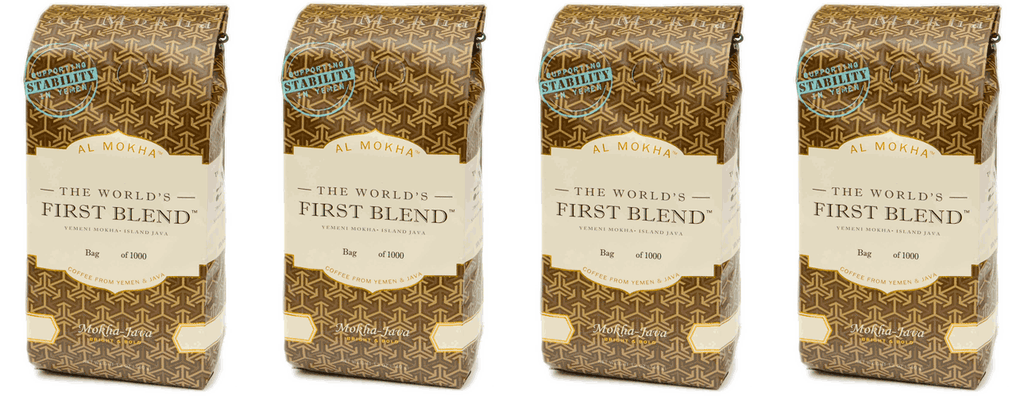
<p>So there you go, and it’s pretty obvious how you would end up with a blend. Take Mokha + Java—i.e. world’s first and second coffee—and voila, <a href="https://www.almokha.com/collections/all/products/mokha-java" rel="noopener noreferrer" target="_blank">Mokha-Java, the World’s First Blend™</a>. This is hardly a complex mathematical equation.</p>
<p>You may have heard of a Mokha-Java, but if not, understand that it’s the most famous coffee blend out there.</p>
<p>At Al Mokha we keep things straight forward: <a href="https://www.almokha.com/collections/all/products/mokha-java" rel="noopener noreferrer" target="_blank">our "Mocha-Java</a>" is a 50/50 mixture.</p>
<p>You might be asking yourself, <em>if this blend is so darn famous and the first one of them all, why have I never heard of it / why is it so hard to find?</em></p>
<p>There’s really two reasons for this. First, coffee from Yemen is kinda hard to procure these days, so that tips the scale towards imitations. In my opinion, however, that’s hardly an excuse. If the recipe is Champagne and sunshine, then get me some capital-C Champagne and sunshine! (Sparkling wine is good, too, but don't tell me it's Champagne!) </p>
<p>The second reason why the blend is nearly impossible to find is <em>way</em> more important. Hold on tight.</p>
<p>"Mocha" + Java is simple enough, but as you know, these words are rather hard to pin down. If you went into your local coffee shop and ordered a "mocha" you’d end up with some sort of coffee and chocolate mixture. And if you ordered some java, you’d get a generic cup of coffee. Yet if you ordered a "Mocha-Java" you'd get a <em>Yemen-inspired + Java-inspired</em><i> </i> cup of coffee; this, rather than a blend of the coffee-chocolate mixture + generic coffee. Ahhh!</p>
<p>Let's pause a second. You may have noticed me vacillating between spelling things "mocha" vs "Mokha". For clarity (and by fiat) "Mokha" with a "K" means coffee from Yemen. Thus, Mokha-Java has only one possible recipe. In contrast, "mocha" (and lowercase "java") has complicated baggage and ambiguous meaning.</p>
<div><a href="https://cdn.shopify.com/s/files/1/0847/6636/files/How-coffee-spread-around-the-world-The-Historic-Distribution-of-Coffea-Arabica.jpg?21" rel="noopener noreferrer" title="Enlarge image" target="_blank"><img alt="World map showing how coffea arabica spread around the world" src="https://cdn.shopify.com/s/files/1/0847/6636/files/How-coffee-spread-around-the-world-The-Historic-Distribution-of-Coffea-Arabica_1024x1024.jpg?v=1560541196" style="float: none;"></a></div>
<div style="text-align: center;">
<a href="https://cdn.shopify.com/s/files/1/0847/6636/files/How-coffee-spread-around-the-world-The-Historic-Distribution-of-Coffea-Arabica.jpg?21" rel="noopener noreferrer" target="_blank"></a><br>
</div>
<p style="text-align: center;"><span style="color: #666666;"><em><span color="#666666" style="color: #666666;">Commercial coffee cultivation spread from Yemen to Java, with intermediate non-commercial stops in India and Ceylon.</span></em></span></p>
<p> </p>
<p>Somehow, these Mokha and Java words describing origin abandoned their geographic roots, and we have to create new spellings of "mocha" to circle back to the original meaning.</p>
<p>If I want to make this linguistic frustration sound exciting and subversive, imagine a poorly organized cabal of coffee exporters, wholesalers, and retailers. To make more money, they spent the last three centuries leveraging the brand names of Mokha and Java by slapping these names on coffees not from these places.</p>
<p><span>Here's one example of pushing back against such a practice. In 1906, the U.S. Congress established the Pure Food and Drug Act. This act required that </span><u>coffee be labeled by its port of departure</u><span>. Good for Yemen, right? However, I want you to think like a subversive businessman. The obvious work-around is to ship, say, Brazilian coffee </span><em>via </em><span>the port of Mokha. This sleight of hand means the final port of departure was…Mokha. Enjoy your "Mokha" coffee.</span></p>
<p>And your game of whack-a-mole continues.</p>
<p>This dilution of meaning for Mokha and Java is why the real thing is hard to find: the ingredients are expensive, and linguistically, as Mocha and Java changed meaning, the recipe changed as well.</p>
<p>That’s how you end up with such “inspired blends”. You take these Mokha + Java impersonators and blend them together. Most frequently, roasters go with an Ethiopian + Sumatran. The Ethiopian will (should!) be a dry processed coffee like Yemen’s. And the Sumatran will come from the island of Sumatra, a mere ferry ride from Java. This is simple enough, but occasionally you’ll end up with wacky things like Colombian beans in the blend.</p>
<p>You can imagine where I am going. If you want the real thing, shop with Al Mokha. <a href="https://www.almokha.com/collections/all/products/mokha-java">Our Mokha-Java</a> is authentic and geographically accurate. </p>
<p>But no, no, no! It's not that easy. <em>Let’s assume that getting the ingredients right—rather than being the end point—<strong>is the starting point!</strong></em></p>
<p>Once there, how do you get the Mokha-Java blend to take flight? I’m talking the kind of coffee that not only tastes amazing, but inspires as well. That’s a tall order for some bean juice, but let me give it a go.</p>
<p>When I approach the philosophy of blending, it’s not just about historical accuracy. If it were, I’d source the proper historical origins and then I’d huddle over a historic open fire or antique cast iron stove. I would sweat profusely while stirring some coffee beans as they roasted unevenly and pungent smoke filled the coffee shop. For extra authenticity, I’d surround myself with arguing men wielding the best political pamphlets and broadsides of the day. <em>Long live King George!</em> You could bring the kids to this historical reenactment, circa 1720, pre-industrial revolution London. The proper quote to describe the coffee would be, “<em>blacke as soote and tasting not much unlike it</em>” (the English poet, George Sandys).</p>
<p style="text-align: center;"><a href="https://cdn.shopify.com/s/files/1/0847/6636/files/Historic-Coffee-Shop-Drawing-17th-Century-London.jpg?21" rel="noopener noreferrer" title="Enlarge image" target="_blank"><img alt="Busy 17th Century Coffee Shop, colorful drawing" src="https://cdn.shopify.com/s/files/1/0847/6636/files/Historic-Coffee-Shop-Drawing-17th-Century-London_1024x1024.jpg?v=1560457071" style="float: none;"></a><span style="color: #666666;"><em>London coffee shop, circa 1700, replete with open flame. On the left the coffee brews, and on the right the conversation stews.</em></span></p>
<p>This looks and sounds amazing, and is in some ways where I take inspiration.</p>
<p>Imagine that roasting process. For say a given “Yemeni Medium” you can imagine some of the beans would more closely align with a light or dark roast—or maybe even unroasted or blackened with heat. Magical for sure, but we can do better than that heterogeneous blend of light, medium, and blackened coffee that tastes like soote.</p>
<p>In our Al Mokha blends, we’ve cleaned things up, and we start with purely roasted light, medium, and dark. From there we curate the heterogeneous blend rather than leaving it to chance. This means multi-layered, cleaner and more resonant flavors in the cup. In effect, the bean takes center stage rather than the roasting process. So that's one way to get from 18th-century inspiration to a 21st-century blend.</p>
<p>Beyond that, we of course benefit from a <a href="https://cdn.shopify.com/s/files/1/0847/6636/files/coffee-infographic-supply-chain.png?17434146491542358961" rel="noopener noreferrer" target="_blank">supply chain</a> that's far faster and more reliable than 300 years ago. The coffee quality is excellent.</p>
<p>There are so many ways to get from then to now, and we've only dipped our toe in the English Channel of the 1720s. How about the 1820s and 1920s as we travel around the world? In future blends, we will keep exploring how to get a Mokha-Java blend to take flight…or to take to the sea in a steamship, the newest technology of the 1840s!</p>
<p> </p>
<p><span>That's about it. The secret to the best possible mocha-java blend is following the recipe of Mokha + Java and translating that London cafe </span><a href="https://cdn.shopify.com/s/files/1/0847/6636/files/Historic-Coffee-Shop-Drawing-17th-Century-London.jpg?21" rel="noopener noreferrer" target="_blank">headline drawing</a><span> into a roasting style. Enjoy!</span></p>
<p style="text-align: center;"><a href="https://www.almokha.com/collections/all/products/mokha-java" rel="noopener noreferrer" target="_blank"><img alt="Four mocha-java coffee bags" src="https://cdn.shopify.com/s/files/1/0847/6636/files/Mocha-Java-coffee-light-medium-dark_1024x1024.png?v=1561149067" style="float: none;"></a></p>
<div style="text-align: center;"><a href="https://www.almokha.com/collections/all/products/mokha-java" class="action_button">Shop Mokha-Java options</a></div>]]>
    </content>
  </entry>
  <entry>
    <id>https://www.almokha.com/blogs/news/is-a-1-billion-dollar-coffee-sector-in-yemen-a-good-idea</id>
    <published>2016-10-12T13:38:00-04:00</published>
    <updated>2025-11-20T00:14:23-05:00</updated>
    <link rel="alternate" type="text/html" href="https://www.almokha.com/blogs/news/is-a-1-billion-dollar-coffee-sector-in-yemen-a-good-idea"/>
    <title>Is a $1 Billion Coffee Sector in Yemen a Good Idea?</title>
    <author>
      <name>Erin Fletcher</name>
    </author>
    <summary type="html">
      <![CDATA[<p>In my last post, I talked about numbers, about progress and about impact we could measure at Al Mokha. Economists tend to get wrapped up in numbers. This group of people is richer, you might say, and an economist wants to know, okay, but how do measure “rich”? Is it how much money or how many assets they have; is it how much they earn? How do you get a representative sample to answer your questions? How do you know that someone’s observable (or unobservable) characteristics aren’t influencing the way they perceive the question?</p>
<p><span>Economists have largely settled these questions. With a little effort, you could get to a point where you could measure “rich” satisfactorily, where you could answer the question of who is richest. </span></p>
<p><span>But some questions are simply unanswerable within the paradigm of statistical causality. Some of those questions are ones that Al Mokha wants to answer.</span></p>
<p><span>For instance, is coffee the <em>best</em> answer to Yemen’s woes? </span></p><p><a class="read-more" href="https://www.almokha.com/blogs/news/is-a-1-billion-dollar-coffee-sector-in-yemen-a-good-idea">More</a></p>]]>
    </summary>
    <content type="html">
      <![CDATA[<h3>Is a $1 Billion Coffee Sector in Yemen a Good Idea?</h3>
<p><em><span style="font-size: 10pt; color: #666666;">This post is Part 4 of a five-part series on measuring Al Mokha's impact in Yemen. (Links to <a href="http://www.almokha.com/blogs/news/174855111-yemens-mocha-coffee-can-spark-economic-growth" rel="noopener noreferrer" target="_blank">Part 1</a>, <a href="http://www.almokha.com/blogs/news/181455047-meet-al-mokhas-economist-who-we-stole-from-harvard" rel="noopener noreferrer" target="_blank">Part 2</a>, &amp; <a href="http://www.almokha.com/blogs/news/measureable-y-stuff-how-mocha-coffee-can-boost-yemens-gdp-by-1-billion" rel="noopener noreferrer" target="_blank">Part 3</a>)</span></em></p>
<p><span>In my last post, I talked about numbers, about progress and about impact we could measure at Al Mokha. Economists tend to get wrapped up in numbers. This group of people is richer, you might say, and an economist wants to know, okay, but how do measure “rich”? Is it how much money or how many assets they have; is it how much they earn? How do you get a representative sample to answer your questions? How do you know that someone’s observable (or unobservable) characteristics aren’t influencing the way they perceive the question?</span></p>
<p><span>Economists have largely settled these questions. With a little effort, you could get to a point where you could measure “rich” satisfactorily, where you could answer the question of who is richest. </span></p>
<p><span>But some questions are simply unanswerable within the paradigm of statistical causality. Some of those questions are ones that Al Mokha wants to answer.</span></p>
<p><span>For instance, is coffee the <em>best</em> answer to Yemen’s woes? </span></p>
<p>The government of Yemen certainly thinks it’s an important part of the equation:</p>
<blockquote>Coffee production and export is a vital contributor to Yemen's economy, with tens of thousands of families relying on it for income. Yet, the recent waves of conflict have challenged the sustainability of many of these farms, as the frequent shortage of water, lack of access to transportation, and the absence of an infrastructural support system have drastically affected production and output. Hence, post-conflict agricultural rehabilitation will need to address the revival of coffee production as an integral economic sector. <span style="color: #999999;">(Abdulrahman Al-Eryani, Economic Development Officer, Embassy of Yemen in the US, <a href="http://www.yemenpeaceproject.org/podcast/episode25/" rel="noopener noreferrer" target="_blank">podcast</a>).</span>
</blockquote>
<p><img alt="" src="https://cdn.shopify.com/s/files/1/0847/6636/files/men-yemen-optimism.jpg?v=1469696360" style="float: none;"></p>
<p><span>So, clearly a big deal, but does agricultural investment and revitalization represent the best way to jumpstart Yemen’s GDP growth? To employ those who might otherwise engage in terrorism? To increase the welfare of Yemen’s farmers and citizens? Will increasing demand for coffee lead to more coffee production, or are there other associated outcomes that are actually more favorable?</span></p>
<p><span>Best is a really tough word for economists. In order to really answer these questions, I’d ideally want two identical Yemens, one in which Al Mokha goes in and injects a bunch of demand into the coffee sector perhaps along with some other programming, perhaps not, and one in which Al Mokha never existed. This Al Mokha-less world would be our counterfactual. Without a counterfactual, I can’t say from a statistical or causal standpoint that Al Mokha coffee is doing great things for Yemen or for the United States’ foreign policy goals. The old correlation is not causation cliché is very important here.</span></p>
<p><span>But that’s just one counterfactual. To get the “best” answer, I’d probably also need a couple of other Yemens. One where someone goes in and injects cash into tourism, another into foreign aid, another into call centers, and really any number or combination of other development strategies. After we played out all the scenarios, I’d measure things like terrorism and farmer incomes, and all sorts of other outcomes and see which Yemen came out on top. And we'd have to do all this before any intervention, too, because we need a baseline. This is clearly not going to happen, not least of all because it would take some supremely awesome bending of space and time, but also because it wouldn’t be ethical to take Yemenis through the ringer like that.</span></p>
<p><span>If we’re unable to answer the question of whether this is the best model, can we at least determine whether is it a good model?</span></p>
<p><span>I think the answer is yes. </span></p>
<p><span><strong>First</strong>, we can look at what other people have said. Lots of smart economists, organizations, and thinkers have written about how to improve farmers’ lots in the developing the world. A growing literature shows how fair trade might not be all that great for farmers. Higher prices don’t necessarily offset lower yields and while some Fair Trade households in Mexico saw greater schooling for girls, there wasn’t much effect for boys (e.g., <a href="http://webapps.towson.edu/cbe/economics/workingpapers/2010-14.pdf" rel="noopener noreferrer" target="_blank">Gitter</a>, <a href="http://ch.fairtrade.he-hosting.de/fileadmin/CH/Was_ist_Fairtrade_/Wirkungsstudien/2014_Dragusanu_FT_Economics.pdf" rel="noopener noreferrer" target="_blank">Nunn</a>). Maybe farmers just need <a href="http://www.econthatmatters.com/2016/09/an-experimental-approach-to-food-storage-and-packaging-interventions-in-international-food-aid-part-2/" rel="noopener noreferrer" target="_blank">better access to storage for their products to smooth out prices over time.</a> <br></span></p>
<p><span>We can also look at how individuals respond to incentives. For instance, farmers may change their crops when faced with the <a href="http://www.nber.org/papers/w22276" rel="noopener noreferrer" target="_blank">possibility to reduce price volatility</a>. These farmers like stable prices and so will choose crops that give them that (or at least more of that). If we think about how this applies to Al Mokha’s model, we can ask questions like: Are coffee prices stable right now? Can Al Mokha help stabilize them through increased demand? How much demand is needed? </span></p>
<p><span>We can use these insights to shape our model. </span></p>
<p><span><strong>Second</strong>, we need to decide what are Al Mokha’s goals? These are often not so easy to measure. There are lots of metrics we might want to think about: Are Yemenis happy? Are farmers (subjectively or objectively) better off? Is violence less extreme or affecting commerce less? Is the United States government happy with Yemen’s policy progress?</span></p>
<p><span>From there, we can go back to the original intent of Anda (Founder of Al Mokha): to promote a development model based on exports of Yemeni coffee where Yemenis are decision-makers about how that market develops. To hear him describe it, he knows deep in his gut that this is the way to go, but he also wants to know that he's on the right track. That's the hard-to-measure part.</span></p>
<p><span>If we can’t measure everything we would like to either due to inability to collect data or a fundamental “unmeasurability” of some metric, then perhaps we should go back to those experts, those papers. Does Al Mokha make a compelling case for fomenting development through a relatively hands-off model of building up the coffee sector?</span><span></span></p>
<p><span>For that, we must ask, Who are the relevant stakeholders and experts to whom we can pose this fundamental question? Do we care about the opinions of policymakers? Diplomats? Consumers? People in the military? Economists? Yemeni farmers? Other Yemenis? And what about ideology? Does a strategy based in free-market, neoclassical economics appeal to people at different ends of the political spectrum? Does it matter?</span></p>
<p>Right now, we are moving forward on the basis of this two-pronged approach:<br>we tap the wisdom of experts and stakeholders and we scrutinize and apply the latest economic research. To that we add entrepreneurial optimism and strive towards coffee's <a href="https://www.almokha.com/blogs/news/yemens-1-billion-coffee-opportunity" rel="noopener noreferrer" target="_blank">$1 billion opportunity for Yemen</a>.</p>
<p style="text-align: center;"><img alt="Anda confidently holding stability sign" src="https://cdn.shopify.com/s/files/1/0847/6636/files/anda-greeney-stability_large.jpg?v=1475593108" style="float: none;"></p>
<p style="text-align: center;">"I'm positive I'm right" (Anda)</p>
<p><span>But that's a lot of generalities. You want specifics. How will Al Mokha show it is improving lives? How will Al Mokha show it is making Yemen stable?</span></p>
<p><span>In the next post you'll hear from Anda as he declares with bravado, "I'm positive I'm right" and you'll hear from me as I say, "Prove it".</span></p>
<p style="text-align: center;"><img alt="Erin wearing nerd glasses" src="https://cdn.shopify.com/s/files/1/0847/6636/files/Erin-Fletcher-Portrait-glasses_large.jpg?v=1475764076" style="float: none;"></p>
<p style="text-align: center;">"Prove it" (Erin, <span style="color: #999999;">photo courtesy of</span> <a href="http://www.breytphotography.com/" rel="noopener noreferrer" target="_blank">Breyt Photography</a>)</p>
<p style="float: left;"><span>For now, I’ll leave you with this: From deep in our guts and to our most logical, quantitative rebuttal, we're thinking hard about how to make sure that Al Mokha has an impact that is large, positive, and scalable.</span></p>
<p><span style="font-size: 10pt; color: #666666;">Those interested in trying Al Mokha's coffee can shop at <a href="http://www.almokha.com/">www.almokha.com</a></span></p>
<p><span style="font-size: 10pt; color: #666666;"><a href="http://www.erinkfletcher.com/" rel="noopener noreferrer" target="_blank">Erin </a>is Al Mokha's Board Advisor in developmental economics. She has no financial interests in Al Mokha and has received no compensation for this post.</span></p>]]>
    </content>
  </entry>
  <entry>
    <id>https://www.almokha.com/blogs/news/yemens-1-billion-coffee-opportunity</id>
    <published>2016-07-12T17:42:00-04:00</published>
    <updated>2021-05-04T19:23:51-04:00</updated>
    <link rel="alternate" type="text/html" href="https://www.almokha.com/blogs/news/yemens-1-billion-coffee-opportunity"/>
    <title>Yemen&apos;s $1 billion Coffee Opportunity</title>
    <author>
      <name>Erin Fletcher</name>
    </author>
    <summary type="html">
      <![CDATA[<meta charset="utf-8">
<p>As a development economist with interests that are a little outside the norm, I spend a lot of my day thinking about how to measure unmeasurable things. How prevalent is a certain belief? And how does it affect people’s behavior? Can one violent event, or experience, be objectively seen as worse or more violent than another? And if so, what determines that violence—scope, tenor, frequency? How do we fix it?</p>
<p>So, when Anda told me he wanted to start thinking more about impact and measurement at Al Mokha, I jumped up and down with glee. From the moment he and I first talked development and coffee in Cambridge almost a year ago, I’d been questioning, "cool, but how do you measure that?"</p><p><a class="read-more" href="https://www.almokha.com/blogs/news/yemens-1-billion-coffee-opportunity">More</a></p>]]>
    </summary>
    <content type="html">
      <![CDATA[<p><em><span style="font-size: 10pt; color: #666666;">This post is Part 3 of a five-part series on measuring Al Mokha's impact in Yemen. (Links to <a href="http://www.almokha.com/blogs/news/174855111-yemens-mocha-coffee-can-spark-economic-growth" target="_blank" rel="noopener noreferrer">Part 1</a> &amp; <a href="http://www.almokha.com/blogs/news/181455047-meet-al-mokhas-economist-who-we-stole-from-harvard" target="_blank" rel="noopener noreferrer">Part 2</a>)</span></em></p>
<p>As a development economist with interests that are a little outside the norm, I spend a lot of my day thinking about how to measure unmeasurable things. How prevalent is a certain belief? And how does it affect people’s behavior? Can one violent event, or experience, be objectively seen as worse or more violent than another? And if so, what determines that violence—scope, tenor, frequency? How do we fix it?</p>
<p>So, when Anda told me he wanted to start thinking more about impact and measurement at Al Mokha, I jumped up and down with glee. From the moment he and I first talked development and coffee in Cambridge almost a year ago, I’d been questioning, "cool, but how do you measure that?"</p>
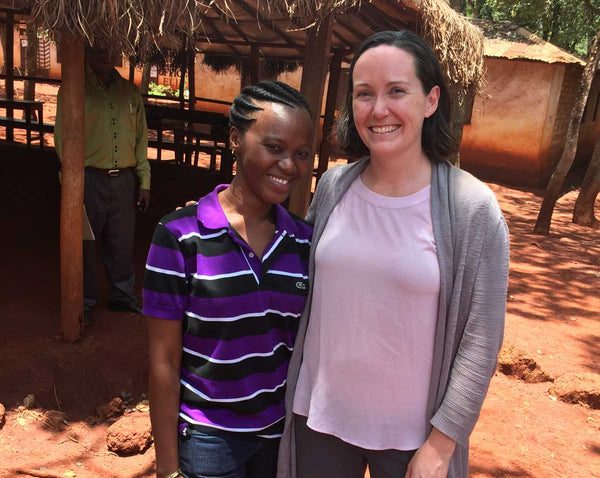
<p style="text-align: center;"><span style="font-size: 10pt; color: #666666;"><em><img src="//cdn.shopify.com/s/files/1/0847/6636/files/erin-fletcher-tanzania_grande.jpg?8936459222658457606" alt="Erin and a Tanzanian woman smiling with an orange dirt background"><br>Author (on right) in Nyarugusu, Tanzania, during a project for the International Rescue Committee </em></span></p>
<p>As an aside, when I tell someone I’m an economist, there are a few common tropes that people immediately fall back on. There’s often an immediate question of whether I can do their taxes (I could probably hack it, but you’re better off with a CPA) or help them pick stocks (I am the last person you want doing that).</p>
<p>And then there’s the belief that I must work with GDP and trade or exchange rates.</p>
<p>I don’t do any of those things, but I do think that GDP is a great place to start thinking about measuring Al Mokha’s impact. Al Mokha doesn’t want to just sell coffee; it wants to fundamentally change Yemen’s economy by revitalizing a sector that has been decimated. And if you can revitalize a sector that at one point dominated an economy, you should be able to see change at the GDP-level.</p>
<p><img src="//cdn.shopify.com/s/files/1/0847/6636/files/GDP-word-graphic.jpg?16694680128054271885" alt="GDP word graphic with jumbled mess of economics terms" style="display: block; margin-left: auto; margin-right: auto;"></p>
<p>GDP is deceptively simple. When you hear about it on the news, GDP is a single number, maybe a few numbers if someone talks about year-over-year growth and growth in a particular quarter, but usually just one number. That number, however, is made up of literally thousands of numbers, of transactions between people and firms and countries and governments. In many countries, as in the US, there is an entire government agency devoted simply to measuring GDP, to making the rules about what counts in GDP and what doesn’t.</p>
<p>Yemen has been seriously suffering in the GDP department. According to the Yemeni Ministry of Planning, Yemen’s GDP is projected to <em>shrink</em> by almost 35% in 2016. Compare that to a paltry 1% shrinkage seen during the Global 2008 Recession in the US.</p>
<p>If the (or one) goal is to grow Yemen’s economy rather than to shrink it, what would it take to increase Yemen’s GDP via coffee? The most straightforward way would be to increase the size of the coffee sector. Economists like to think about questions like this as changing extensive or intensive margins. The extensive margin would be to increase the number of acres planted. But we can increase the size of the coffee sector without planting one more coffee plant, if the price of coffee beans from Yemen simply goes up, or yields are higher due to better fertilizer use or some other factor (the intensive margin).</p>
<p style="text-align: center;"><img alt='"Coffee Up" word graphic with U a coffee cup' src="//cdn.shopify.com/s/files/1/0847/6636/files/coffee-gdp-growth_59d9f662-6f5d-4256-a020-10050441637f.jpg?15371774076263763613" style="float: none;"></p>
<p>So, we started by asking a simple question, how do we raise GDP? And with one logical step, we already have four or five different outcomes we could try to measure (either separately or in tandem with GDP):</p>
<ol>
<li>acres of coffee planted</li>
<li>kilograms of beans harvested in total</li>
<li>coffee prices</li>
<li>coffee yields (kilos of beans per acre)</li>
</ol>
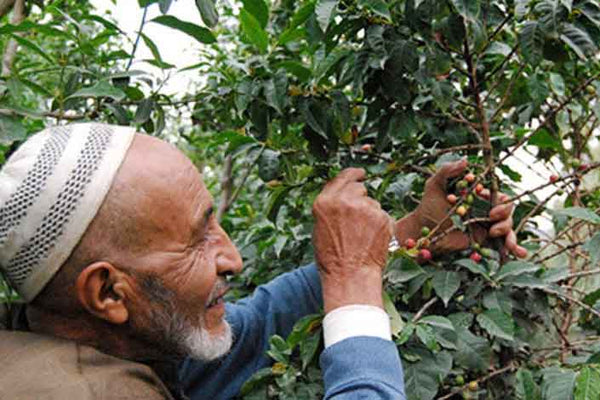
<p>And inside each one of those is also a list of measurable outcomes. For instance, do higher coffee prices lead to higher incomes for farmers? Or middlemen? And which is desirable (or is it both)? We went from one seemingly simple number to lots of measurable outcomes. Al Mokha is trying to figure out which ones it cares about.</p>
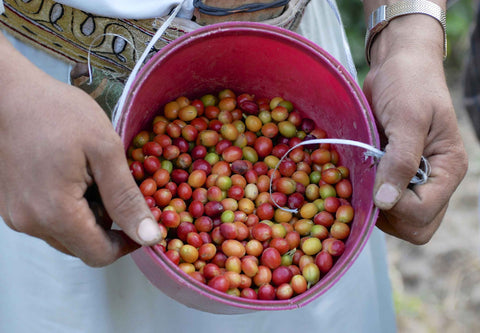
<p style="text-align: center;"><img alt="Yemen coffee farmer picking coffee cherries" src="//cdn.shopify.com/s/files/1/0847/6636/files/yemen-man-picking-coffee_grande.jpg?3709307085033709107" style="float: none;"></p>
<p>Finally, we also have to think about what may come out of this project that isn’t so good. “Unintended consequences” is kind of a loaded term right now if you’re following elections in the United States, but economists use the term a lot. We also call them <strong>externalities</strong>. While Al Mokha’s goals are to promote economic growth and diminish the appeal of violent insurgency, some may see pumping money into a failing state as foolish. It’s possible that any extra income going to farmers could be siphoned off by insurgent groups. Or that kids will be taken out of school to work in the fields. Or that creating demand for coffee will reduce agricultural space devoted to food, which is problematic in a country that is considered extremely food insecure by the World Food Program.</p>
<p>Some of the above are measurable, albeit with a lot of effort. We can examine what (little) data is coming out of Yemen from the government and international organizations. We can poll farmers who are supplying coffee about how much they are planting and earning. We can add up all the coffee production in the country and show how it changes year over year, and from there do a little back-of-the-envelope calculation on GDP change. We could show how higher prices of coffee offset negative welfare impacts (<a href="http://marcfbellemare.com/wordpress/11813" target="_blank" rel="noopener noreferrer">ala this paper on Quinoa in Peru by Bellemare, et. al.</a>). Not that any of these is particularly easy in practice, but there’s at least a path to understanding them.</p>
<p style="text-align: center;"><img alt="Yemeni man holding basket of bright red coffee cherries" src="//cdn.shopify.com/s/files/1/0847/6636/files/yemen-coffee-al-mokha_large.jpg?15371774076263763613" style="float: none;"></p>
<p>Furthermore, lots of outcomes Al Mokha hopes to achieve are not measureable. I’m going to save that for my next post, the nebulous and qualitative, and leave you with this: <strong>deciding what to measure and how to measure it is an ongoing process.</strong> GDP is a great place to start. It is a number that is widely recognized as a measure of economic success, and an area that is visibly and severely suffering in Yemen right now. GDP-level change is the kind of change we're hoping to accomplish.</p>
<p>So what does a change in GDP actually look like? I did a quick back-of-the-envelope calculation: <strong>doubling Yemen’s current coffee production (of 19,800 tons in 2013) will increase GDP somewhere between 0.30 and 3.73 percent.</strong> That may sound small, but it's not. That's <strong>$109 million - $1.3 billion </strong>﻿(calculation below).</p>
<p>It's clear there's huge potential to increasing coffee production at an economy-wide level and big picture, we're focused on that. But there's all those components, too. We're going to keep digging down, into yields and acres planted, into where the money ends up and how it is spent, and into how it changes outcomes for families. We believe that impact is important. Al Mokha is trying to sell coffee, but with a purpose, and a seemingly simple goal to sell coffee will have many disparate impacts all over the economy, from the very biggest measurement, to the smallest.</p>
<blockquote>
<p><span style="font-size: 10pt; color: #666666;">Calculation, for those nerdy enough to care: First, note that good numbers from recent years are hard to come by, so these are estimates, but they do leave us with answers that are generally on the same order of magnitude. If coffee production is 19,800 tons (2,200 pounds a ton, 2013 estimate from the Yemen Ministry of Agriculture), and farmers receive $2.50 per pound, doubling production would mean an extra $109 million in the economy, which is about 0.30% of 2013 GDP estimate of $35 billion (World Bank). However, GDP only counts finished goods, so if we take the US consumer price of Al Mokha coffee, at $30/pound, you end up with an extra $1.3 billion in the economy, a 3.73 percent change.</span></p>
<p><span style="font-size: 10pt; color: #666666;">The reality is probably somewhere in the middle in terms of what would get counted in Yemen’s GDP as it is unlikely that farm-gate green coffee prices or U.S. consumer prices are the relevant metric. Also, beans are priced differently according to quality with ultimate benefits to farmers and Yemen depending on how much value-add is done in-country and how much is exported. But even lower estimates of prices and current production yield effects on the same order of magnitude. If we assume exporters are getting $6/lb., that yields <strong>$261 million for a 0.75% increase in GDP</strong>.</span></p>
</blockquote>
<p>Those interested in trying Al Mokha's coffee can shop at <a href="http://www.almokha.com/">www.almokha.com</a></p>
<p><a href="http://www.erinkfletcher.com/" target="_blank" rel="noopener noreferrer">Erin </a>is Al Mokha's Board Advisor in developmental economics. She has no financial interests in Al Mokha and has received no compensation for this post.</p>]]>
    </content>
  </entry>
  <entry>
    <id>https://www.almokha.com/blogs/news/181455047-meet-al-mokhas-economist-who-we-stole-from-harvard</id>
    <published>2016-06-12T15:23:00-04:00</published>
    <updated>2017-08-29T15:19:21-04:00</updated>
    <link rel="alternate" type="text/html" href="https://www.almokha.com/blogs/news/181455047-meet-al-mokhas-economist-who-we-stole-from-harvard"/>
    <title>Meet Al Mokha&apos;s Economist who we stole from Harvard</title>
    <author>
      <name>Erin Fletcher</name>
    </author>
    <summary type="html">
      <![CDATA[<p>In <a href="http://www.almokha.com/blogs/news/174855111-yemens-mocha-coffee-can-spark-economic-growth" target="_blank" rel="noopener noreferrer">Part I</a>, Anda wrote about the perils of trying to be a salesperson / academic, and how that duality plays out in the business: investors want to see sales growth whereas economists (me!) want to see real, measureable change in things like poverty levels, in coffee production, in anything we can quantify with data.</p>
<p>So we're working towards that. In this post, Part 2, I introduce myself and in parts III- V we tackle some tough questions.</p>
<meta charset="utf-8">
<p><span>Well, who am I? If you're here frequently you know </span><a href="http://www.almokha.com/blogs/news/87632647-1-cow-3-economists-al-mokha" target="_blank" rel="noopener noreferrer">Anda</a><span> and you've heard </span><a href="http://www.almokha.com/blogs/news/89809351-i-got-a-c-in-macroeconomics" target="_blank" rel="noopener noreferrer">mention of some of his advisors</a><span> (as he spins tales of sinking all his time into a startup). I'm the nerdy PhD obsessed with data and development. I have a doctoral degree in economics. I spend most of my time reading and </span><a href="https://scholar.google.com/citations?user=qeprlloAAAAJ&amp;hl=en" target="_blank" title="Erin's Google Scholar page" rel="noopener noreferrer">writing papers</a><span> on </span><a href="http://www.girleffect.org/media?id=3046" target="_blank" rel="noopener noreferrer">violence against women and children</a><span> and </span><a href="http://www.adb.org/sites/default/files/publication/158480/women-workforce-unmet-potential.pdf">female labor force participation</a><span>. In the headline photo that's me doing research for the IRC in Nyarugusu, Tanzania. Basically, I spend a lot of time thinking about very economist-y things like incentives.</span></p><p><a class="read-more" href="https://www.almokha.com/blogs/news/181455047-meet-al-mokhas-economist-who-we-stole-from-harvard">More</a></p>]]>
    </summary>
    <content type="html">
      <![CDATA[<p><em><span style="font-size: 10pt; color: #666666;">This post is Part 2 of a five-part series on measuring Al Mokha's impact in Yemen.</span></em></p>
<p>In <a href="http://www.almokha.com/blogs/news/174855111-yemens-mocha-coffee-can-spark-economic-growth" target="_blank" rel="noopener noreferrer">Part I</a>, Anda wrote about the perils of trying to be a salesperson / academic, and how that duality plays out in the business: investors want to see sales growth whereas economists (me!) want to see real, measureable change in things like poverty levels, in coffee production, in anything we can quantify with data.</p>
<p>So we're working towards that. In this post, Part 2, I introduce myself and in parts III- V we tackle some tough questions.</p>
<p>Well, who am I? If you're here frequently you know <a href="http://www.almokha.com/blogs/news/87632647-1-cow-3-economists-al-mokha" target="_blank" rel="noopener noreferrer">Anda</a> and you've heard <a href="http://www.almokha.com/blogs/news/89809351-i-got-a-c-in-macroeconomics" target="_blank" rel="noopener noreferrer">mention of some of his advisors</a> (as he spins tales of sinking all his time into a startup). I'm the nerdy PhD obsessed with data and development. I have a doctoral degree in economics. I spend most of my time reading and <a href="https://scholar.google.com/citations?user=qeprlloAAAAJ&amp;hl=en" target="_blank" title="Erin's Google Scholar page" rel="noopener noreferrer">writing papers</a> on <a href="http://www.girleffect.org/media?id=3046" target="_blank" rel="noopener noreferrer">violence against women and children</a> and <a href="http://www.adb.org/sites/default/files/publication/158480/women-workforce-unmet-potential.pdf">female labor force participation</a>. In the headline photo that's me doing research for the IRC in Nyarugusu, Tanzania. Basically, I spend a lot of time thinking about very economist-y things like incentives.</p>
<p>For a while, I did this thinking and writing at Harvard’s Kennedy School. That’s actually where Anda and I met. Over beers at Shay’s in Cambridge, he was quick to tell me he didn’t want to talk about work (and thus didn’t want to talk about Al Mokha). Faced with a real-live economist, though, he couldn’t keep quiet long, and we spent the evening having a super nerdy academic discussion about development economics, foreign policy, and reducing violence. We talked about famous development scholars like <a href="http://scholar.princeton.edu/deaton/home" target="_blank" rel="noopener noreferrer">Angus Deaton</a>, and making lists of other economists he should read, like <a href="http://marcfbellemare.com/wordpress/" target="_blank" rel="noopener noreferrer">Marc F. Bellemare</a>.</p>
<p>These days, I do similar work for international organizations. I’ve worked with UNICEF to model what a fully functioning child protection system would look like in Zimbabwe. I’ve advised the United Kingdom's Department For International Development (DFID) and the Nike Foundation on social norms. And in a room full of experts on evidence for the UN Population Fund (UNFPA), I've found consensus on evidence in programming for adolescent girls. I’ve written and administered surveys to better understand poverty, disease, and violence in Nepal for Engineers Without Borders, and Kurdistan and Tanzania for the International Rescue Committee (IRC). These may seem like disparate topics, but I think what they reveal is that I like thinking big—about varieties of programs, about outlandish ideas, about what the best model is to solve a problem in development.</p>
<p>At Al Mokha, this is also my job. Anda and I share a vision of development that is big. It is, however, nestled in the details, of course: I read articles about agriculture and development, but with each paragraph, I’m highlighting what I think is relevant to Al Mokha's model, whether it helps or hurts the plan to revitalize Yemen’s coffee sector. We talk about how new research supports or hurts the underlying motivation and theory behind the business. What makes this big? What makes this different? Currently, we’re also spending a lot of time thinking about measurement, which is really what this blog series is about.</p>
<blockquote>
<p><span>Can coffee actually stem terrorism? Can we foster a big enough market for Yemeni coffee to actually have an effect on poverty and people's general wellbeing? Is it even possible to build up an export business in what people are calling a failed state?</span></p>
</blockquote>
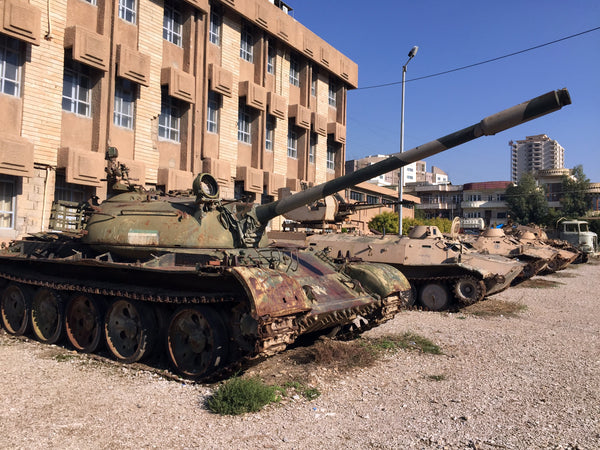
<p style="text-align: center;"><img alt="Old Kurdistani tank and other army vehicles" src="//cdn.shopify.com/s/files/1/0847/6636/files/kurdistan-tank-memorial_grande.JPG?9671286228525030374" style="float: none;"><br><span style="font-size: 10pt; color: #666666;"><em>War memorial in Kurdistan (taken by author, 2015)</em></span></p>
<p>I don't know if coffee can bring peace to earth, or even to Yemen. The <a href="http://chicagopolicyreview.org/2015/12/15/creating-jobs-to-end-war/" target="_blank" rel="noopener noreferrer">evidence on how economic activity</a> affects terrorism and violence is mixed. Some say that agriculture and people getting training and jobs can reduce violence, but the programs that have been tested are complex and require a lot of inputs. It's also messy and full of endogeneity problems. I'm not really sure what the best way to measure peace is. I also don't know if boosting the coffee sector is the right thing to do for Yemen's economy. Could money and effort be better spent on technology or some other industry?</p>
<p>But there’s also a lot of promise in the idea. Yemen’s embassy in DC and Yemen's Ministry of Agriculture, for example, see coffee as an engine for rehabilitating Yemen. This particular coffee is really good. And creating a stable market for a commodity could <a href="http://www.nber.org/papers/w22276" target="_blank" rel="noopener noreferrer">reduce price volatility</a> for coffee, encouraging farmers to plant more. Okay, I already got more technical than I intended for this post, but I promise we’ll come back to price volatility.</p>
<p>So, who’s right? And what does it take to show that Al Mokha works? What does “work” even mean in this context? What can we learn? I have lots of questions, and a few might have come to your mind as well. There are probably many more I haven't even thought of. But that's super exciting to me; there’s so much to find out.</p>
<p>Over the next three weeks, I'm going to write more about Al Mokha's impact and how we are going to measure that. It's something we expect to evolve as the company does and we hope to get some of you involved in our research and thinking about how we go about it.</p>
<p>It might get a little nerdy. You’ve been warned. Stay tuned!</p>
<p><span style="font-size: 10pt; color: #666666;">Those interested in trying Al Mokha's coffee can shop at <a href="http://www.almokha.com/">www.almokha.com</a></span></p>
<p><span style="font-size: 10pt; color: #666666;"><a href="http://www.erinkfletcher.com/" target="_blank" rel="noopener noreferrer">Erin </a>is Al Mokha's Board Advisor in developmental economics. She has no financial interests in Al Mokha and has received no compensation for this post.</span></p>]]>
    </content>
  </entry>
  <entry>
    <id>https://www.almokha.com/blogs/news/174855111-yemens-mocha-coffee-can-spark-economic-growth</id>
    <published>2016-06-01T14:47:00-04:00</published>
    <updated>2025-11-20T00:12:43-05:00</updated>
    <link rel="alternate" type="text/html" href="https://www.almokha.com/blogs/news/174855111-yemens-mocha-coffee-can-spark-economic-growth"/>
    <title>Yemen&apos;s Mocha Coffee Can Spark Economic Growth</title>
    <author>
      <name>Anda Greeney</name>
    </author>
    <summary type="html">
      <![CDATA[<p><em><span></span></em>Two years ago, I founded a two-pronged enterprise with goals to be a successful coffee retailer and an entity that used our economic engine for the benefit of the people of Yemen. We call ourselves <a href="http://www.almokha.com/" target="_blank" title="Shop Al Mokha's Worlds First Coffee" rel="noopener noreferrer">Al Mokha, Public Benefit Corp.</a> and we source and market Yemen's <a href="http://www.almokha.com/collections/shop" target="_blank" rel="noopener noreferrer">World’s First Coffee</a>™.</p>
<p>It has taken me two years to wrap my head around Al Mokha’s identity. Was I a coffee company? A development organization for a third world country? The reality is we are both, a startup with two faces; just like the Roman god Janus.</p>
<p>Let me illuminate.</p>
<p>We have two customers. The first is you, the consumer, and our product is our World’s First Coffee™. Our second customer is implied, and that’s the people of Yemen. If you turn our World’s First Coffee™ inside out, our product is life changing jobs. And here we can disappear down an academic rabbit hole.</p><p><a class="read-more" href="https://www.almokha.com/blogs/news/174855111-yemens-mocha-coffee-can-spark-economic-growth">More</a></p>]]>
    </summary>
    <content type="html">
      <![CDATA[<p><em><span style="font-size: 10pt; color: #666666;">This post is Part I of a five-part series on measuring Al Mokha's impact in Yemen.</span></em></p>
<p style="text-align: left;">Two years ago, I founded a two-pronged enterprise with goals to be a successful coffee retailer and an entity that used our economic engine for the benefit of the people of Yemen. We call ourselves <a href="http://www.almokha.com/" title="Shop Al Mokha's Worlds First Coffee" rel="noopener noreferrer" target="_blank">Al Mokha, Public Benefit Corp.</a> and we source and market Yemen's <a href="http://www.almokha.com/collections/shop" rel="noopener noreferrer" target="_blank">World’s First Coffee</a>™.</p>
<p>It has taken me two years to wrap my head around Al Mokha’s identity. Was I a coffee company? A development organization for a third world country? The reality is we are both, a startup with two faces; just like the Roman god Janus.</p>
<p>Let me illuminate.</p>
<p>We have two customers. The first is you, the consumer, and our product is our World’s First Coffee™. Our second customer is implied, and that’s the people of Yemen. If you turn our World’s First Coffee™ inside out, our product is life changing jobs. And here we can disappear down an academic rabbit hole.</p>
<p>A couple months ago I spoke with an investor who, after looking at Al Mokha’s meek sales numbers, tore me apart. She told me, “You’re an academic not a salesperson.” Put the books away and start selling! And go take a business course at a community college and meet with a business advisor at an SBA office.</p>
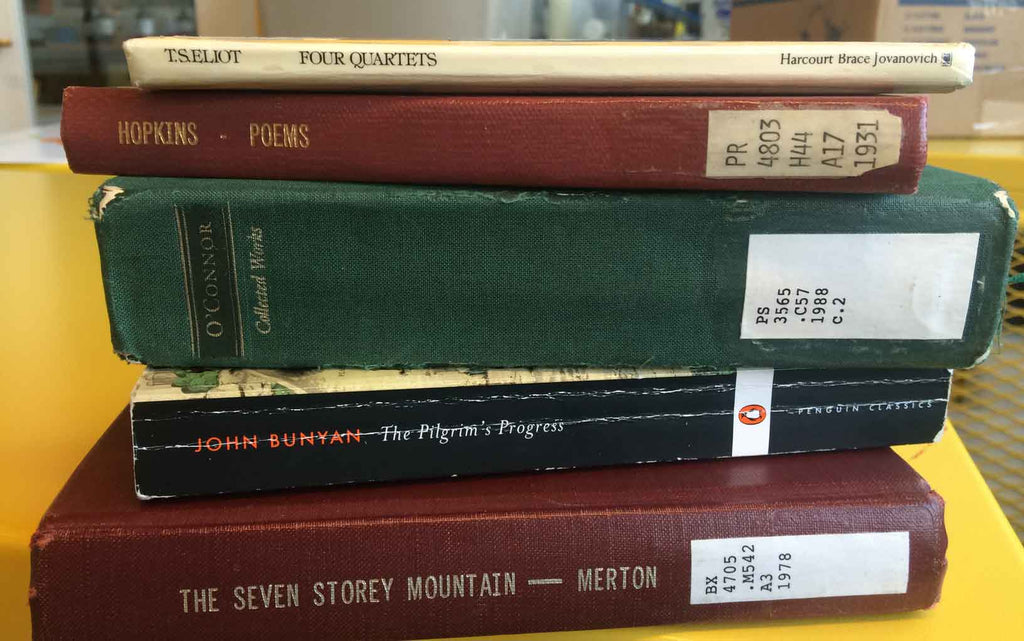
<p style="text-align: center;"><img alt="Stack of books, Classics of Christian Literature, Harvard" src="https://cdn.shopify.com/s/files/1/0847/6636/files/classics-of-christian-literature-harvard_1024x1024.jpg?4758076619986809548" style="float: none;"></p>
<p>Never mind that I spent a year in-residence at the <a href="https://i-lab.harvard.edu/prototype/venture-incubation/" rel="noopener noreferrer" target="_blank">Harvard Innovation Lab</a> and I have a Harvard Business School / McKinsey consultant on my advisory board.</p>
<p>But here’s the remarkable thing about being an entrepreneur: name brand education and working hard doesn’t matter. It’s about results. Everything else is failure. You learned something? Whoop-dee-doo. You put in a ton of effort? Cool man. The business flourishes on sales that grow and the business starves on hard work that goes nowhere.</p>
<p>The investor was right. She looked at Al Mokha and frowned at our sales of $1000 per month.</p>
<p>For a business two-years-old our bottom line seems to mumble "maybe we'll be something someday." The investor rightly tore me a new one.</p>
<p>In her eyes, and in the words of the eminently hilarious HBO show <a href="http://www.hbo.com/silicon-valley" rel="noopener noreferrer" target="_blank">Silicon Valley</a>, Al Mokha’s product is our stock price and our purpose is driving it upwards.</p>
<p>Her attack—vicious if I lacked thick skin—captured precisely one-half of our double-bottom line.</p>
<p style="text-align: center;"><img alt="Supporting Stability in Yemen logo" src="https://cdn.shopify.com/s/files/1/0847/6636/files/yemen-coffee-logo_grande.jpg?7733522213622334800" style="float: none;"></p>
<p>The other half of Al Mokha is our <a href="http://www.almokha.com/pages/mission" rel="noopener noreferrer" target="_blank">social mission</a>. And true to form, I have wolves prowling around the fringe there too, snarling at any sign of weakness. Michel, one of Al Mokha’s advisors, repeats himself when he says, “I’m just not sure about your claim on <em>every single coffee bag.</em> You claim ‘Supporting stability in Yemen’ but what proof do you have?” Or the words of <a href="https://usaidlearninglab.org/users/olsong" rel="noopener noreferrer" target="_blank">Greg Olson</a>, a USAID Implementing Partner Manager for a landmark <a href="https://cdn.shopify.com/s/files/1/0847/6636/files/Moving_Yemen_Coffee_Forward.pdf?12493281943097037601" rel="noopener noreferrer" target="_blank">2005 survey of the coffee sector in Yemen</a>. In an email he said, “My concern is how you are using the approaches identified in the past to strengthen the coffee value chain.”</p>
<p>Every direction I step there seems to be thorns.</p>
<p>But that’s not the whole story; I’m also surrounded by roses. Just today a random 500-word email from <a href="http://www.pillartopost.org/" rel="noopener noreferrer" target="_blank">Tom Shess</a>, an adoring customer. Here’s a tiny excerpt: “As a coffee lover, I have a list of favorites and your Yemen grown beans are among my top three.”</p>
<p>Or <a href="https://www.linkedin.com/in/hananyazid" rel="noopener noreferrer" target="_blank">Hanan Yazid</a>, a Yemeni American: “As a Yemeni woman who understands the power of business as a formidable tool to build bridges between people and to foster peace, understanding and harmony, I would like to commend you for thinking outside the box.” She gets it, our social mission.</p>
<p>What I failed miserably at explaining to the investor were the two faces of Al Mokha. As I, in her words, am an academic, let me call this our Janus business model. Yes, <a href="https://en.wikipedia.org/wiki/Janus" rel="noopener noreferrer" target="_blank">Janus</a> the Roman god that has two faces and has given us the month of “January”. Janus is known for looking to the future and drawing from the past, and is the god of transitions. Our view of development is that our customers (you and your farming counterpart!) are inseparable, with Al Mokha in the middle.</p>
<p>As a development startup our role is tricky. In some ways we can consider our role as an intervention we are fine tuning. We know that markets can create wealth for both of our customers, the question is how do we operate in the middle.</p>
<p>One model is Fair Trade. But sometimes that leaves farmers and/or their <a href="https://cdn.shopify.com/s/files/1/0847/6636/files/nicaragua-coffee-sector-profits-and-poverty.pdf?14164988677635915348" rel="noopener noreferrer" target="_blank">workers poorer</a> than their “Free Trade” <a href="http://sprudge.com/study-finds-nicaragua-fair-trade-farmers-end-up-poorer-9738.html" rel="noopener noreferrer" target="_blank">peers</a>.</p>
<p>Another model is Direct Trade. But is that scalable? And perhaps it’s like farmers markets in the US where I can attest you work your butt off and hardly make a decent wage.</p>
<p>A third, turbo-charged model might be capitalism. In Vietnam communism fell and the coffee sector rocketed from virtually zero to the second largest in the world. While Vietnam produces <em>Robusta</em> coffee and Yemen <em>Arabica</em> coffee, the takeaway is much the same: under the right model, rapid growth is possible.</p>
<p>If Yemen could replicate Vietnam's feat they would <strong>double their GDP</strong>.</p>
<p>Or consider a final model: In 1450, Yemen introduced coffee to the world. Al Mocha was the home port and now coffee is everywhere. Let’s harness that magic.</p>
<p>Al Mokha’s purpose in Yemen is life changing jobs—notably it’s not <em>coffee </em>jobs. Our focus is durable economic growth <em>sparked</em> by coffee. In this sense, our job <em>is </em>academic. As a startup, we must apply cutting-edge economic research and cutting edge technical innovations to something very old.</p>
<p>Our job is leveraging your desire for good coffee so it has maximum impact. We want a longer lever. Whereas one development model might have a 1x social return another model might have a 10x impact. Our business model is searching for this impact. We really do want your bag of coffee to change the world.</p>
<p><span style="font-size: 10pt; color: #666666;">Those interested in trying Yemen's coffee can shop at <a href="http://www.almokha.com/" rel="noopener noreferrer" target="_blank">www.almokha.com</a></span></p>
<p><span style="font-size: 10pt; color: #666666;">Anda is the Founder of Al Mokha, Public Benefit Corp. He is a graduate student at Harvard University Extension and Air Force veteran. Part II - V of this series will be written by <a href="http://epod.cid.harvard.edu/people/erin-fletcher" rel="noopener noreferrer" target="_blank">Erin Fletcher</a>, Al Mokha's Board Advisor in developmental economics.</span></p>]]>
    </content>
  </entry>
  <entry>
    <id>https://www.almokha.com/blogs/news/113697095-corporate-strategy-why-i-downsized-from-60-pairs-of-pants-to-four</id>
    <published>2016-03-06T16:21:00-05:00</published>
    <updated>2025-02-24T13:44:58-05:00</updated>
    <link rel="alternate" type="text/html" href="https://www.almokha.com/blogs/news/113697095-corporate-strategy-why-i-downsized-from-60-pairs-of-pants-to-four"/>
    <title>Corporate Strategy (why I downsized from 60 pairs of pants to four)</title>
    <author>
      <name>Anda Greeney</name>
    </author>
    <summary type="html">
      <![CDATA[<p>A few years ago I read a fascinating study of <a href="https://newrepublic.com/article/89377/poverty-escape-psychology-self-control" target="_blank" rel="noopener noreferrer">poverty and decision fatigue</a> in India. In the study researchers offered poor and wealthy buyers name-brand soap at a steep discount. The wealthy buyers made the purchase without second thought. It was a great deal. The poor buyers, however, agonized over the decision. The name-brand soap was truly a good deal but the soap still exceeded the price of generic. For those poor buyers the deal became a conundrum of brand-name prestige against money for food. The decision was tiring. But not only that, it left less energy for other decisions. Aha! Decision fatigue.</p>
<p>I shortly applied this decision lens to my own behavior. I observed how navigating life with little income was tiring. Every decision takes energy. Take the bus or walk or take a cab. Purchase name brand OJ on sale for $2.50 or store brand OJ slightly cheaper at $2.29? Should I buy a subscription to the Economist? These conundrums may appear petty but I began to realize their cost. Lack of resources meant less time and energy for bigger decisions.</p><p><a class="read-more" href="https://www.almokha.com/blogs/news/113697095-corporate-strategy-why-i-downsized-from-60-pairs-of-pants-to-four">More</a></p>]]>
    </summary>
    <content type="html">
      <![CDATA[<p style="text-align: left;">A few years ago I read a fascinating study of <a href="https://newrepublic.com/article/89377/poverty-escape-psychology-self-control" rel="noopener noreferrer" target="_blank">poverty and decision fatigue</a> in India. In the study researchers offered poor and wealthy buyers name-brand soap at a steep discount. The wealthy buyers made the purchase without second thought. It was a great deal. The poor buyers, however, agonized over the decision. The name-brand soap was truly a good deal but the soap still exceeded the price of generic. For those poor buyers the deal became a conundrum of brand-name prestige against money for food. The decision was tiring. But not only that, it left less energy for other decisions. Aha! Decision fatigue.</p>
<p style="float: right;">I shortly applied this decision lens to my own behavior. I observed how navigating life with little income was tiring. Every decision takes energy. Take the bus or walk or take a cab. Purchase name brand OJ on sale for $2.50 or store brand OJ slightly cheaper at $2.29? Should I buy a subscription to the Economist? These conundrums may appear petty but I began to realize their cost. Lack of resources meant less time and energy for bigger decisions.</p>
<p style="float: right;">Or consider another angle, habits of Mark Zuckerberg. He wears a <a href="https://www.google.com/search?q=mark+zuckerberg&amp;safe=off&amp;espv=2&amp;biw=1364&amp;bih=707&amp;source=lnms&amp;tbm=isch&amp;sa=X&amp;ved=0ahUKEwijtv-ur5bLAhXLGB4KHeakDCcQ_AUIBigB" title="Google image search" rel="noopener noreferrer" target="_blank">grey t-shirt all the time</a>. You know why? Such a shortcut frees energy for other pursuits. He can focus on running a company rather than sartorial decisions.</p>
<p>Indeed, those sartorial decisions take energy. I used to work in fashion in New York and would plan my outfits a week in advance. I enjoyed it, the art form. I even managed to earn the nick-name <em>Diana Ross</em> for my penchant for going home at the lunch hour and changing my look. But why not? I had a collection of pants 60 pairs extensive that needed celebration. All this shopping and fashion designing had its trade-off though<span>—</span>I didn't run a billion-dollar company. But I did look great.</p>
<p>These stories are a lengthy introduction into today, 4:45 pm on a Friday. I'm in Cove, a co-working space in Columbia Heights in Washington, DC. Despite a lifestyle of decision fatigue, I'm here having navigated a decision minefield. The question posed to me and to Al Mokha, P.B.C. is <em>Where should the business be located?</em> Since graduating from the Harvard Innovation Lab, fellow food startups such as <a href="http://www.tomatojos.net/" rel="noopener noreferrer" target="_blank">Tomato Jos</a>, <a href="http://www.rumispice.com/" rel="noopener noreferrer" target="_blank">Rumi Spice</a>, and <a href="http://www.sixfoods.com" rel="noopener noreferrer" target="_blank">Six Foods</a> have relocated to Nigeria, Chicago, and San Francisco, respectively. This is a big decision. Where will each company have the greatest chance of success? And it's one of many decisions. As a startup, I question every, single, assumption. What time should I start work when I wake up late? Should I work on the weekend? Is my development model sound? Is $89 a good price for four hours/day at Cove co-working space? Around every corner it feels lurks mistakes with opportunity hiding somewhere. My job is navigating this maze. And what's particularly cool is this maze has multiple levels. Staircases! I think I just faced one and climbed up to level two. That big, booming, <em>corporate strategy</em> decision was <em>Where must Al Mokha reside?</em></p>
<p>I announce to you our new home: <em>Washington, District of Columbia</em>. Come visit our World Headquarters, a standing desk among others on 14th street.</p>
<p style="float: right;">In selecting DC I decided that being close to policy makers mattered most. We've been here nearly four weeks and in my gut I made a good decision. Since arriving I've strengthened my relationship with the Yemen embassy. In fact, just today they called me saying, <em>we need Al Mokha coffee! Today! In two hours!</em> And last week I spent a couple days at a Yemen cultural <img alt="Yemeni Cappuccinos #YemenCoffeeBreak" src="https://cdn.shopify.com/s/files/1/0847/6636/files/2015-12-24_11.29.07_medium.jpg?7128343615140125112" style="float: right;">event hosted at the World Bank (see headline photo<span>)</span>. During that event Al Mokha served coffee to upwards of 250 leaders (bureaucrats?) in the field of development. There you see Yemen's ambassador to the United States checking out Al Mokha. Not bad for a scrappy startup. We also did $1000 in sales. Clearly the thirst for good coffee knows no boundaries. This might be what has me particularly excited for Al Mokha. Every morning over 100 million Americans wakeup and have a cup of coffee. In that indulgent routine (no decision fatigue here) is our chance to share coffee from Yemen directly into your home. There is this intimate moment, at home, kitchen table, quiet, maybe a newspaper, where Al Mokha can tell a story. Coffee from Yemen is the best. You may open the paper and read of difficulty in the latest global hotspot, but our message of hope has reached you first. Good morning!</p>

<p style="float: right;">In other news, I'm down to four pairs of pants and fewer decisions. Next step a gray t-shirt and black turtle neck. Outfit of champions.  </p>]]>
    </content>
  </entry>
  <entry>
    <id>https://www.almokha.com/blogs/news/89809351-i-got-a-c-in-macroeconomics</id>
    <published>2015-12-15T16:30:00-05:00</published>
    <updated>2017-08-29T15:28:24-04:00</updated>
    <link rel="alternate" type="text/html" href="https://www.almokha.com/blogs/news/89809351-i-got-a-c-in-macroeconomics"/>
    <title>I Got a C+ in Macroeconomics</title>
    <author>
      <name>Anda Greeney</name>
    </author>
    <summary type="html">
      <![CDATA[<meta charset="utf-8">
<p>Two years ago I had $500 and an idea to change the world. Today I have a $5000 hole, the website and branding you're looking at now, and the same idea to change the world. Speaking to my<span> </span><a href="https://history.wisc.edu/grad_sgr.htm" target="_blank" rel="noopener noreferrer">younger sister</a><span> </span>in regards to my progress, she said, "previously there was nothing and now there is something. That's pretty cool. I'll send your web address to my friends."</p>
<p>In her casual comment, she hit on two remarkable aspects of entrepreneurship: one, I had created something out of thin air; and two, in doing so, I had created a company that we could call my child. I've often heard that no one cares more about a company than the founder.<span> </span></p>
<br>
<div></div><p><a class="read-more" href="https://www.almokha.com/blogs/news/89809351-i-got-a-c-in-macroeconomics">More</a></p>]]>
    </summary>
    <content type="html">
      <![CDATA[<p style="float: left;">Two years ago I had $500 and an idea to change the world. Today I have a $5000 hole, the website and branding you're looking at now, and the same idea to change the world. Speaking to my <a href="https://history.wisc.edu/grad_sgr.htm" target="_blank" rel="noopener noreferrer">younger sister</a> in regards to my progress, she said, "previously there was nothing and now there is something. That's pretty cool. I'll send your web address to my friends."</p>
<p style="float: left;">In her casual comment, she hit on two remarkable aspects of entrepreneurship: one, I had created something out of thin air; and two, in doing so, I had created a company that we could call my child. I've often heard that no one cares more about a company than the founder. Yes, I've brought Al Mokha, Public Benefit Corp. into the world and its success or failure rests entirely on me. This is frightening. Not the thought of trying to create a small coffee company but rather the thought of creating a multi-national development organization that will cause us to re-imagine how we conduct foreign policy. It's madness thinking I can do this but for whatever reason my brain is hardwired for such extreme optimism. And with it, not only do I feel pressure but I also must out-compete the likes of other organizations in Yemen including USAID with their $25 million and the World Bank with their $38 million. My plan? A national company that sets Yemeni Mokha on the world stage.</p>
<p>In the morning, I drink Mokha, in the afternoon I sell Mokha, and in the evening I write Mokha. At night when I should be dreaming Mokha I instead lie awake in bed worrying about Mokha. All this expenditure of energy yet my billion-dollar idea still pays no salary after two-years of work. My mind plays tricks on me, that somehow, among my competition to change the world, I can outcompete what is almost definitely my fate, namely failure. I draw strength, I suppose, knowing that I am snubbing the doubters even though they have probability to their name. My mother among them says to me, "Anda, get a real job." It's funny. The problem with doing something impossible is that everyone tells you it's impossible.</p>
<p>This past Sunday I was meeting with my team and discussing how we should communicate Mokha. As an ENTP, if I'm lucky, I'm a visionary. If I'm wrong, I'm a dreamer. My balancing act is thinking big but also sounding credible. Visionary and crackpot live on the same street and I don't know at whose address I reside.</p>
<p>Michel, one of my advisory board members said, "be honest. Write about it on the blog." Good advice, seemingly, but Al Mokha is not my personification, it is in fact me. I probably bleed coffee. I want loyal, adoring, customers. I want to protect and coddle what has been built. The moment I air my views, Mokha is no longer neutral and protected; rather it has edges, an opinion, and rests not in airy theory but in public reality that will scrutinize my self-worth. Michel, who's Dutch, said, "how about that crazy guy on your side of the Atlantic. Trump. Look at his views. Put yourself out there." Alright Mr. Advisory Board, Trump is a crazy entertainer—nevertheless, let's get this coffee show on the road.</p>
<p>I've been scared from day one. They say fake it until you make it but that grows tiring after a couple years. The progress I've made, after nearly $20,000 in sales and not paying myself a salary, is I'm tired of faking it. The good news is that I'm fine admitting this. That's progress and perhaps confidence that faking is no longer necessary because this company is for real.</p>
<p>Sitting at the helm of a startup is absurd. I have a company that's worth only the money I've put in, I'm a "Chief Executive Officer" of a vision, and I don't have the skills to run a multi-national yet I have the pressure to run a multi-national unless I want to call Al Mokha washed up. In some ways, I could take the journey of <a href="https://bluebottlecoffee.com/" target="_blank" rel="noopener noreferrer">Blue Bottle Coffee</a>: start small with a coffee cart in San Francisco and then by accident scale the mountain of venture capital funding. My problem is I've thought ahead and I aim for the moon. This makes me an aspiring cosmonaut.</p>
<p>I believe strongly that development premised on charity is broken. Go see the film <a href="http://www.povertyinc.org/" target="_blank" rel="noopener noreferrer">Poverty, Inc.</a> The company <a href="http://www.toms.com/" target="_blank" rel="noopener noreferrer">Tom's</a> shoes, built on their idea of "Buy One, Give One" provides footwear in the third-world for free. But doing so puts local entrepreneurs dealing in shoes out of business. In an ethical conundrum a week after seeing the film, I found myself in Urban Outfitters where Tom's shoes were on clearance for $10 a pop. I hate missing a good deal. I bought a pair. The reality is markets are really good at creating wealth and allocating resources. The premise of Al Mokha is harnessing my desire and your desire to consume.</p>
<p>When I debate economics I'm a bit of a crank who got a C+ in macro my freshman year of college. That's the last econ class I took. Nevertheless, I'm good at coloring and connecting the dots. This year Angus Deaton won a Nobel Prize in economics. <a href="https://cdn.shopify.com/s/files/1/0847/6636/files/Angus-Deaton-the-great-escape-excerpt-al-mokha.pdf?13116121290258546056" target="_blank" rel="noopener noreferrer">Here's a fingertip 30-second excerpt</a> and two quotes: "Most external aid is doing more harm than good" and "Economic growth is the surest and most lasting solution to poverty". I'm a poor econ student but I have a <a href="http://epod.cid.harvard.edu/people/erin-fletcher" target="_blank" rel="noopener noreferrer">board Advisor </a>who's a development and labor economist. That's a start to connecting smart minds to a business solution. And better yet, she's skeptical of Al Mokha's theory of change. That's right, we have internal dissension. But she also believes that the model might work. In that sense, she's identical to me: I'm skeptical of my ability to create a viable business and she's skeptical of what the precise impact it will have in Yemen. I don't see this as a condemnation of the business but simply a starting point of inquiry. As a startup, we seek business solutions and as a public benefit corporation we seek social solutions. We reserve the right to pivot and pirouette as we learn.</p>
<p>But let's talk about mothers. The econ debate can wait. When I was in the 7th grade I sold Blow-Pops lollipops out of my backpack. I would purchase them on sale at CVS for 12.5 cents and then sell them for a quarter. Business was pretty good until my mother called the Middle School alerting them that I was selling candy. For reasons that allude me, this shut me down. Twenty years later I'm an adult and can ignore my mother's advice. Here's to business attempt #2. From candy we get coffee.</p>]]>
    </content>
  </entry>
  <entry>
    <id>https://www.almokha.com/blogs/news/87632647-1-cow-3-economists-al-mokha</id>
    <published>2015-12-11T14:54:00-05:00</published>
    <updated>2017-08-29T15:29:58-04:00</updated>
    <link rel="alternate" type="text/html" href="https://www.almokha.com/blogs/news/87632647-1-cow-3-economists-al-mokha"/>
    <title>3 Economists + 1 Cow  = Al Mokha</title>
    <author>
      <name>Anda Greeney</name>
    </author>
    <summary type="html">
      <![CDATA[<meta charset="utf-8"><span>In 2007 my classmates and I almost bought a cow in Tanzania. We were Americans studying Public Policy in Sweden and had just finished reading </span>The End of Poverty<span>. The essential premise is if only governments spent more money on foreign aid, poverty could be cured in </span><span>our day. This blew me away. And in typical American bravado, I said, "let's fund-raise". I put $100 in the pot and my classmates and professor another $730.</span><p><a class="read-more" href="https://www.almokha.com/blogs/news/87632647-1-cow-3-economists-al-mokha">More</a></p>]]>
    </summary>
    <content type="html">
      <![CDATA[<h3>3 Economists + 1 Cow  = Al Mokha</h3>
<p>The Founder's Story: While I was a study-abroad student at Stockholm University I immersed myself in international development; and while serving in the U.S. Air Force I lived national security. Combining this background and armed with idealism and pragmatism, I stumbled upon Yemeni coffee by accident.</p>
<p style="text-align: left;"><img alt="Anda Greeney practicing Air Force combatives" src="//cdn.shopify.com/s/files/1/0847/6636/files/anda-greeney-combat-air-force_large.jpg?9956635790576707859" style="float: none;" width="453" height="341"></p>
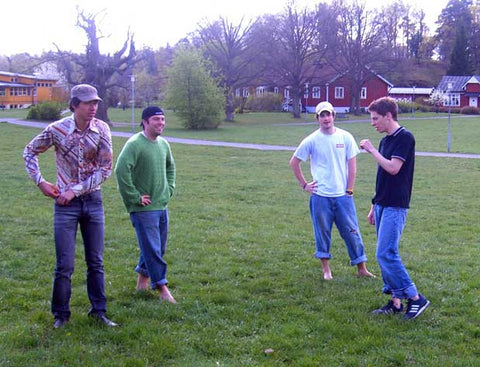
<p style="float: left;">In 2007 my classmates and I almost bought a cow in Tanzania. We were Americans studying Public Policy in Sweden and had just finished reading <a href="http://www.amazon.com/End-Poverty-Economic-Possibilities-Time/dp/0143036580/ref=sr_1_1?s=books&amp;ie=UTF8&amp;qid=1449801494&amp;sr=1-1&amp;keywords=the+end+of+poverty" target="_blank" rel="noopener noreferrer">The End of Poverty</a>. The essential premise is if only governments spent more money on foreign aid, poverty could be cured in <img alt="Sweden in the Spring" src="//cdn.shopify.com/s/files/1/0847/6636/files/study-abroad-sweden_66733c7e-37bb-492c-ae4f-e021696bb9bc_large.jpg?13627237339289397319" style="margin-right: 10px; float: left;">our day. This blew me away. And in typical American bravado, I said, "let's fund-raise". I put $100 in the pot and my classmates and professor another $730. Not bad—academic study meets a get-it-done attitude. We skipped the cow, however, and instead donated our cow-money to the <a href="http://www.economist.com/blogs/feastandfamine/2012/05/jeffrey-sachs-and-millennium-villages" target="_blank" rel="noopener noreferrer">Millennium Villages Project</a>, the organization recommended in the book (that dealt in cows and other things). We felt pretty good for our accomplishment.</p>

<p>Two months later, however, my <a href="https://history.wisc.edu/grad_sgr.htm" target="_blank" rel="noopener noreferrer">younger sister</a> proved me wrong. She sent me a <a href="http://www.nytimes.com/2007/07/01/books/review/Ferguson-t.html?_r=2" target="_blank" rel="noopener noreferrer">New York Times book review</a> that had the following harsh words about Jeffrey Sachs, our cow-instigator: <em>"There is indeed something faintly Victorian about Sachs's messianic yet parsimonious conviction that Africa can be saved with $75 billion a year in Western aid."</em> Oh no. Bested by my sibling? Perhaps our $830 was Victorian cow patties. This was my first lesson in economics—it's darn complicated to predict cause and effect. Cow purchase good or bad?</p>
<p>Ever the idealist, I sought out a second economist. Voila, Paul Collier, author of <a href="http://www.amazon.com/The-Bottom-Billion-Poorest-Countries/dp/0195373383" target="_blank" rel="noopener noreferrer">The Bottom Billion</a>. His solution? Aid dollars should not be given away as charity; instead, they must be invested to encourage good governance and discourage civil war. War is horrendous for economies. In this year alone, during Yemen's civil war, the economy has contracted 35%. Hmm, how can cows prevent war? I had an idea but duty called.</p>
<p style="float: right;">In 2010, I was a newly minted Air Force second lieutenant. I had just graduated Officer Training School <img alt="Anda Greeney Air Force" src="//cdn.shopify.com/s/files/1/0847/6636/files/anda-greeney-air-force_large.jpg?9956635790576707859" style="float: right; margin-left: 10px;"><br>and was attending the Air and Space Basic Course in Montgomery, Alabama. During the day we split our time training both mind and body: we studied the role of air power in joint operations and we trained in combatives, learning the rear-naked choke and building our warrior ethos. The whole experience was both fascinating and frequently frustrating. The military was a world unto itself—especially for someone like me that preferred defying rather than complying with authority. Nevertheless, and like many before me, I adapted. And the military changed me. I'm a skeptic yet serving in the armed forces has a way of attenuating that. I wouldn't call myself a patriot but I do recognize that the U.S., as the most powerful country in the world, has thrust upon it, a certain responsibility. Indeed and obviously, the military is a required tool of foreign policy. Knowing this, however, didn't make it any easier to imagine going into combat (which I never did). But it did give added urgency to my war-preventing bovine.</p>
<p>The missing link I found in the work of a third economist, William Easterly, who I read once the training day was over. His argument was that predicting the future doesn't work. Solutions aren't implemented but rather they are discovered, like any pivoting and pirouetting entrepreneur will tell you. Correct, anti-war cows don't exit, but anti-war market opportunities that <em>magnify the opportunity cost of war</em>, always do. And whether you are economist #1, #2, or #3, there is agreement that jobs are good. The disagreement is how to create them.</p>
<p>I got out of the military and sent Collier an email asking if I could come visit him at Oxford University and help with his research. I didn't get an answer. I also emailed some folk in Yemen, to which I was told, Yes! Create jobs! We're sick of NGOs and their job training. We do it and then there's no work. So Al Mokha is about flipping that interaction. As a company, we skip the job training but create jobs. We will purchase your coffee at a fair price and will work with Yemeni agronomists, graphic designers, photographers, and videographers, providing not job training, but real, tangible jobs. We look forward to meeting you in the middle.</p>]]>
    </content>
  </entry>
</feed>